Dr. James Montgomery Boice on God’s Amazing Grace

There is no difference, for all have sinned and fall short of the glory of God, and are justified freely by his grace through the redemption that came by Christ Jesus. –Romans 3:22-24 (condensed)

In the last study I introduced four doctrines found in Romans 3:21–31:

(1) God has provided a righteousness of his own for men and women, a righteousness we do not possess ourselves;

(2) this righteousness is by grace;

(3) it is the work of the Lord Jesus Christ in dying for his people, redeeming them from their sin, that has made this grace on God’s part possible; and

(4) this righteousness, which God has graciously provided, becomes ours through simple faith. We have already looked at the first of these four doctrines: the righteousness that God has made available to us apart from law. Now we will examine the second doctrine: that this righteousness becomes ours by the grace of God alone, apart from human merit.

That is the meaning of grace, of course. It is God’s favor to us apart from human merit. Indeed, it is favor when we deserve the precise opposite. D. Martyn Lloyd-Jones has written, “There is no more wonderful word than ‘grace.’ It means unmerited favor or kindness shown to one who is utterly undeserving.… It is not merely a free gift, but a free gift to those who deserve the exact opposite, and it is given to us while we are ‘without hope and without God in the world.’ ”

But how are we to do justice to this great concept today? We have too high an opinion of ourselves even to understand grace, let alone to appreciate it. We speak of it certainly. We sing, “Amazing grace—how sweet the sound—That saved a wretch like me!” But we do not think of ourselves as wretches needing to be saved. Rather, we think of ourselves as quite worthy. One teacher has said, “Amazing grace is no longer amazing to us.” In our view, it is not even grace.

There is No Difference

This is why the idea expressed in Romans 3:23 is inserted at this point. For many years, whenever I came to this verse, I had a feeling that it was somehow in the wrong place. It was not that Romans 3:23 is untrue. Obviously it is, for that is what Romans 1:18–3:20 is all about. What bothered me is that the verse did not seem to belong here. I felt that the words “there is no difference, for all have sinned and fall short of the glory of God” belonged with that earlier section. The verse seemed somehow an intrusion here, because Romans 3:21–31 is not talking about sin but about the way of salvation.

I think differently now, however. And the reason I think differently is that I now understand the connection between this verse and grace. The reason we do not appreciate grace is that we do not really believe Romans 3:23. Or, if we do, we believe it in a far lesser sense than Paul intended.

Let me use a story to explain what I mean. In his classic little book All of Grace, Charles Haddon Spurgeon begins with the story of a preacher from the north of England who went to call on a poor woman. He knew that she needed help. So, with money from the church in his hand, he made his way through the poor section of the city to where she lived, climbed the four flights of stairs to her tiny attic apartment, and then knocked at the door. There was no answer. He knocked again. Still no answer. He went away. The next week he saw the woman in church and told her that he knew of her need and had been trying to help her. “I called at your room the other day, but you were not home,” he said.

“At what time did you call, sir?” she asked.

“About noon.”

“Oh, dear,” she answered. “I was home, and I heard you knocking. But I did not answer. I thought it was the man calling for the rent.”

This is a good illustration of grace and of our natural inability to appreciate it. But isn’t it true that, although most of us laugh at this story, we unfortunately also fail to identify with it? In fact, we may even be laughing at the poor woman rather than at the story, because we consider her to be in a quite different situation from ourselves. She was unable to pay the rent. We know people like that. We feel sorry for them. But we think that is not our condition. We can pay. We pay our bills here, and we suppose (even though we may officially deny it) that we will be able to pay something—a down payment even if not the full amount—on our outstanding balance in heaven. So we bar the door, not because we are afraid that God is coming to collect the rent, but because we fear he is coming with grace and we do not want a handout. We do not consider our situation to be desperate.

But, you see, if the first chapters of Romans have meant anything to us, they have shown that spiritually “there is no difference” between us and even the most destitute of persons. As far as God’s requirements are concerned, there is no difference between us and the most desperate or disreputable character in history.

I have in my library a fairly old book entitled Grace and Truth, written by the Scottish preacher W. P. Mackay. Wisely, in my judgment, the first chapter of the book begins with a study of “there is no difference.” I say “wisely,” because, as the author shows, until we know that in God’s sight there is no difference between us and even the wildest profligate, we cannot be saved. Nor can we appreciate the nature and extent of the grace needed to rescue us from our dilemma.

Mackay illustrates this point with an anecdote. Someone was once speaking to a rich English lady, stressing that every human being is a sinner. She replied with some astonishment, “But ladies are not sinners!”

“Then who are?” the person asked her.

“Just young men in their foolish days,” was her reply.

When the person explained the gospel further, insisting that if she was to be saved by Christ, she would have to be saved exactly as her footman needed to be saved—by the unmerited grace of God in Christ’s atonement—she retorted, “Well, then, I will not be saved!” That was her decision, of course, but it was tragic.

If you want to be saved by God, you must approach grace on the basis of Romans 1:18–3:20—on the grounds of your utter ruin in sin—and not on the basis of any supposed merit in yourself.

Common Grace

It is astonishing that we should fail to understand grace, of course, because all human beings have experienced it in a general but nonsaving way, even if they are not saved or have not even the slightest familiarity with Christianity. We have experienced what theologians call “common grace,” the grace that God has shown to the whole of humanity. Jesus spoke of it when he reminded his listeners that God “causes his sun to rise on the evil and the good, and sends his rain on the righteous and the unrighteous” (Matt. 5:45b).

When Adam and Eve sinned, the race came under judgment. No one deserved anything good. If God had taken Adam and Eve in that moment and cast them into the lake of fire, he would have been entirely just in doing so, and the angels could still have sung with great joy: “Holy, holy, holy is the Lord God Almighty, who was, and is, and is to come” (Rev. 4:8). Or, if God had spared Adam and Eve, allowing them to increase until there was a great mass of humanity in the world and then had brushed all people aside into everlasting torment, God would still have been just. God does not owe us anything. Consequently, the natural blessings we have are due not to our own righteousness or abilities but to common grace.

Let me try to state this clearly once more. If you are not a believer in Jesus Christ, you are still a recipient of God’s common grace, whether you acknowledge it or not. If you are alive and not in hell at this moment, it is because of God’s common grace. If you are in good health and not wasting away in some ward of hopeless patients in a hospital, it is because of common grace. If you have a home and are not wandering about on city streets, it is because of God’s grace. If you have clothes to wear and food to eat, it is because of God’s grace. The list could be endless. There is no one living who has not been the recipient of God’s common grace in countless ways. So, if you think that it is not by grace but by your merits alone that you possess these blessings, you show your ignorance of spiritual matters and disclose how far you are from God’s kingdom.

Unmerited Grace

But it is not common grace that Paul is referring to in our Romans text, important as common grace is. It is the specific, saving grace of God in salvation, which is not “common” (in the sense that all persons experience it regardless of their relationship to God), but rather is a gift received only by some through faith in Jesus Christ, apart from merit.

This is the point we need chiefly to stress, of course, for it takes us back to the story of the preacher’s visit to the poor woman and reminds us that the reason we do not appreciate grace is that we think we deserve it. We do not deserve it! If we did, it would not be grace. It would be our due, and we have already seen that the only thing rightly due us in our sinful condition is a full outpouring of God’s just wrath and condemnation. So I say again: Grace is apart from good works. Grace is apart from merit. We should be getting this by now, because each of the blessings enumerated in this great chapter of Romans is apart from works, law, or merit—which are only various ways of saying the same thing.

The righteousness of God, which is also from God, is apart from works.

Grace, which is the source of that righteousness, is apart from works.

Redemption, which makes grace possible, is apart from works.

Justification is apart from works.

Salvation from beginning to end is apart from works. In other words, it is free. This must have been the chief idea in Paul’s mind when he wrote these verses, for he emphasizes the matter by repeating it. He says that we are “justified freely by his grace through the redemption that came by Christ Jesus” (v. 24, italics mine).

One of the most substantial works on grace that I have come across is by Lewis Sperry Chafer, the founder of Dallas Theological Seminary, and it goes by that title: Grace. In the very first chapter Chafer has a section captioned “Seven Fundamental Facts About Grace.” I am not happy with everything he says in this section, particularly the last two of these points. But I refer to him here because of what he says about grace and demerit:

1.      “Grace is not withheld because of demerit” and

2.      “Grace cannot be lessened because of demerit.”

These are important points, since they emphasize the bright side of what usually appears to us as undesirable teaching.

Most of us resent the thought of “free” grace. We want to earn our own way, and we resent the suggestion that we are unable to scale the high walls of heaven by our own devices. We must be humbled before we will even give ear to the idea.

But if we have been humbled—if God has humbled us—the doctrine of grace becomes a marvelous encouragement and comfort. It tells us that the grace of God will never be withheld because of anything we may have done, however evil it was, nor will it be lessened because of that or any other evil we may do. The self-righteous person imagines that God scoops grace out of a barrel, giving much to the person who has sinned much and needs much, but giving only a little to the person who has sinned little and needs little. That is one way of wrongly mixing grace with merit. But the person who is conscious of his or her sin often imagines something similar, though opposite in direction. Such people think of God’s withholding grace because of their great sin, or perhaps even putting grace back into his barrel when they sin badly.

Thank God grace is not bestowed on this principle! As Chafer says:

God cannot propose to do less in grace for one who is sinful than he would have done had that one been less sinful. Grace is never exercised by him making up what may be lacking in the life and character of a sinner. In such a case, much sinfulness would call for much grace, and little sinfulness would call for little grace. [Instead] the sin question has been set aside forever, and equal exercise of grace is extended to all who believe. It never falls short of being the measureless saving grace of God. Thus, grace could not be increased, for it is the expression of his infinite love; it could not be diminished, for every limitation that human sin might impose on the action of a righteous God has, through the propitiation of the cross, been dismissed forever.

Grace humbles us, because it teaches that salvation is apart from human merit. At the same time, it encourages us to come to God for the grace we so evidently need. There is no sin too great either to turn God from us or to lessen the abundance of the grace he gives.

Abounding Grace

That word abundance leads to the final characteristic of grace to be included in this study. It is taught two chapters further on in a verse that became the life text of John Newton: Romans 5:20. Our version reads, “.… But where sin increased, grace increased all the more.” But the version Newton knew rendered this, “But where sin abounded, grace did much more abound,” (kjv.)

John Newton was an English clergyman who lived from 1725 to 1807. He had a wide and effective ministry and has been called the second founder of the Church of England. He is best known to us for his hymns.

Newton was raised in a Christian home in which he was taught many great verses of the Bible. But his mother died when he was only six years old, and he was sent to live with a relative who mocked Christianity. One day, at an early age, Newton left home and joined the British Navy as an apprenticed seaman. He was wild and dissolute in those years, and he became exceedingly immoral. He acquired a reputation of being able to swear for two hours without repeating himself. Eventually he deserted the navy off the coast of Africa. Why Africa? In his memoirs he wrote that he went to Africa for one reason only and that was “that I might sin my fill.”

In Africa he fell in with a Portuguese slave trader in whose home he was cruelly treated. This man often went away on slaving expeditions, and when he was gone the power in the home passed to the trader’s African wife, the chief woman of his harem. This woman hated all white men, and she took out her hatred on Newton. He tells us that for months he was forced to grovel in the dirt, eating his food from the ground like a dog and beaten unmercifully if he touched it with his hands. For a time he was actually placed in chains. At last, thin and emaciated, Newton made his way through the jungle, reached the sea, and there attracted a British merchant ship making its way up the coast to England.

The captain of the ship took Newton aboard, thinking that he had ivory to sell. But when he learned that the young man knew something about navigation as a result of his time in the British Navy, he made him ship’s mate. Even then Newton fell into trouble. One day, when the captain was ashore, Newton broke out the ship’s supply of rum and got the crew drunk. He was so drunk himself that when the captain returned and struck him in the head, Newton fell overboard and would have drowned if one of the sailors had not grabbed him and hauled him back on deck in the nick of time.

Near the end of the voyage, as they were approaching Scotland, the ship ran into bad weather and was blown off course. Water poured in, and she began to sink. The young profligate was sent down into the hold to pump water. The storm lasted for days. Newton was terrified, sure that the ship would sink and he would drown. But there in the hold of the ship, as he pumped water, desperately attempting to save his life, the God of grace, whom he had tried to forget but who had never forgotten him, brought to his mind Bible verses he had learned in his home as a child. Newton was convicted of his sin and of God’s righteousness. The way of salvation opened up to him. He was born again and transformed. Later, when the storm had passed and he was again in England, Newton began to study theology and eventually became a distinguished evangelist, preaching even before the queen.

Of this storm William Cowper, the British poet who was a close friend of John Newton’s, wrote:

God moves in a mysterious way,

His wonders to perform;

He plants his footsteps in the sea

And rides upon the storm.

And Newton? Newton became a poet as well as a preacher, writing some of our best-known hymns. This former blasphemer wrote:

How sweet the Name of Jesus sounds

In a believer’s ear!

It soothes his sorrows, heals his wounds,

And drives away his fear.

He is known above all for “Amazing Grace”:

Amazing grace—how sweet the sound—

That saved a wretch like me!

I once was lost, but now am found—

Was blind, but now I see.

’Twas grace that taught my heart to fear,

And grace my fears relieved;

How precious did that grace appear

The hour I first believed.

Through many dangers, toils, and snares,

I have already come;

’Tis grace has brought me safe thus far,

And grace will lead me home.

Newton was a great preacher of grace. And no wonder! He had learned what all who have ever been saved have learned: namely, that grace is from God, apart from human merit. He deserved nothing. But he found grace through the work of Jesus.

 About the Author:
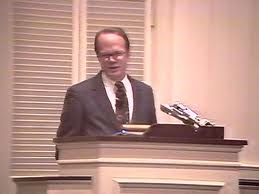
James Montgomery Boice, Th.D., (July 7, 1938 – June 15, 2000) was a Reformed theologian, Bible teacher, and pastor of Tenth Presbyterian Church in Philadelphia from 1968 until his death. He is heard on The Bible Study Hour radio broadcast and was a well known author and speaker in evangelical and Reformed circles. He also served as Chairman of the International Council on Biblical Inerrancy for over ten years and was a founding member of the Alliance of Confessing Evangelicals.The article/sermon above was adapted from Dr. James Montgomery Boice. The Boice Commentary Series: Romans Expositions vol. 1: Justification by Faith. Grand Rapids: Baker, 2005 (reprinted). Pages 355-362.

Dave Kraft on The Key Ingredients of Leadership

Christian Leadership Defined:

 “A Christian leader is a humble, God-dependent, team-playing servant of God who is called by God to shepherd, develop, equip, and empower a specific group of believers to accomplish an agreed-upon vision from God.” – Dave Kraft

 The Key Ingredients of Leadership:

Christian leaders are, first and foremost, servants (bond slaves) of the Lord, and second, servants of those they are leading.

They are characterized by humility, dependence, and team-playing, rather than being a loner or one-man show.

Christian leaders are called by God into leadership. They do not decide for themselves to be a leader. They are not pushed into leadership by well-meaning supporters, nor do they ar­rive at leadership because no one else will do it.

Christian leaders are moving toward a specific destination.

Christian leaders are creating and sustaining an agreed-upon vision. There is an initial buy-in and a growing ownership of the vision among those being led.

 Christian Leaders Have 4 Major Responsibilities:

Shepherding—a leader loves and cares for those be­ing led.

Developing—a leader helps those being led in their personal walk with Jesus Christ to become fully de­voted followers.

Equipping—a leader trains those being led for ministry.

Empowering—a leader inspires, encourages, affirms, believes in, and frees people up to serve out of their gifting.

Contrasting Past and Future/Current Leaders

PAST LEADERS:

FUTURE LEADERS

Organizational

Relational

Operate in committees

Operate in teams

Command and control

Permission-giving

Degreed and elected

Gifted and called

Linear and pyramidal

Overlapping circles

Share propositional truth

Tell stories

People of the written page

People of the screen

Tightly structured

Highly flexible

Emphasize position

Emphasize empowerment

 About The Author:

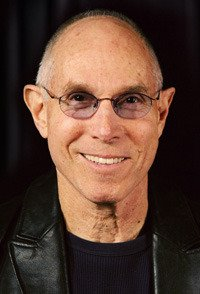
Dave is originally from the LA area. He is definitely a Southern California boy. Dave has been married to Susan for 42 years. They have four adult children and six grand children.

He served with The Navigators for 38 years leaving that organization in the fall of 2005. In those years with The Navigators, Dave had assignments in Southern and Northern California, Sweden, Colorado and Washington State.

He served as Pastor of Coaching and Leadership Development Mars Hill Church in Seattle & currently in Orange County, CA.

In addition to his work at Mars Hill, Dave is a Life Coach with Ministry Coaching International with headquarters in Bend, Oregon. Dave has the joy of coaching pastors around the country in developing a Life Plan to stay strong and healthy in their personal and family life. Building upon this, Dave helps each pastor think through their specific vision for their ministry and their game plan for building a team to help them carry it out. Visit this link to have Dave Kraft spend a weekend at your church.

http://bit.ly/g4F3Rg

When not recruiting training and placing leaders, which he truly loves, Dave likes to read, jog, listen to music and watch movies.

The excerpts above are from the introduction to his excellent book pictured above and published by Crossway Books in Wheaton, ILL., entitled Leaders Who Last, 2009.

Dr. Paul David Tripp on God’s Plan For Your LIfe

That I may dwell in the house of the LORD all the days of my life, to gaze upon the beauty of the LORD and to inquire in his temple. – PSALM 27:4

Now, admit it—you love yourself, and you have a wonderful plan for your life. Somehow, someway we all are too focused on our own lives. All of us get captured by what we want, what we feel, and what we have determined we need. Every one of us is a dreamer. We have all been given the amazing capacity to envision the future and to plan toward it. A dream is imagination coupled with desire and projected into the future. There are things that you would love to have as part of your life. There are things that you would like to accomplish. There are locations you would love to experience. There are relationships you would like to enjoy. There are situations you would like to avoid. Every day you get up and you work toward some kind of dream.

But dreamers don’t just dream their dream; they also dream to be sovereign. In some way, at some time, all of us have wished that we had enough control over our lives to guarantee that we could experience the things we have dreamed. We would like to control people and situations just enough to ensure that the “good things” we’ve dreamed would actually come true. What does the Bible call all of this? The Bible calls it worship.

You see, you and I are worshipers. This is one of the things that separates us from the rest of creation. As worshipers we are always living for something. Something is always laying claim to the affection and rulership of our hearts. There is always something that commands our dreams. There is something that we look to for identity, meaning, and purpose, and that inner sense of well-being that everyone seeks.

Scripture says that there are only two choices (Rom. 1:25). Either you are living in pursuit of the creation or you are living in pursuit of the Creator. You are looking for your satisfaction and meaning in the physical, created world, or you are finding it in the Lord.

This means that there is a war of dreams that rages in our hearts, and in the middle of the fog of this war it is so easy to get it wrong. It is so easy to think that because we have our theology in the right place, because we are biblically literate and functioning members of a good church, that our lives are shaped by worship of the Lord. But that may not be the case at all. On closer inspection, it may actually be the case that underneath all of those things we are driven by personal success, or material things, or the respect of others, or power and control. I am deeply persuaded that there’s a whole lot of idolatrous Christianity out there. The most dangerous idols are those that fit well within the culture of external Christianity.

It’s here that Psalm 27 is so helpful and convicting. What is David’s dream for his life? What is his plan? Well, the answer sounds so spiritual as to be impractical, but it gets right to the heart of why we were created in the first place. David says, in Old Testament language, “I want to spend my life in worship of the Lord. I want to dwell in his temple and gaze upon his beauty.” The shekinahglory presence of the Lord filled the holy place of the temple, like a cloud. It was a physical picture of God dwelling with his people. David was saying, “I want to be where God is. I want to do what I was created to do.”

No, David isn’t some super-spiritual mystic. David gets it right. His quest is for a life shaped and directed by a daily worship of the Lord. David knows who he is: a creature created for worship. David knows who God is: the only “thing” in the universe truly worthy of worship. His dream is the best dream that you could ever dream. Far from being impractical, this dream, if lived out at street level, will bring purity and peace to your life.

What is your plan for your life? How close is your plan to the plan God had for you when he gave you life and breath? Is there, perhaps, something in your plan that competes for the place that only God should have?

May your plan for you be identical to his plan for you!

 Take a Moment

1. How close is your dream for your life to the plan for life to which God has called you?

2. Is God calling you to let go of a dream so that his plan for you may flourish?
*The article above adapted from the excellent book by Paul David Tripp. A Shelter in the Time of Storm: Meditations on God and Trouble. Wheaton: Good News Publishers/Crossway Books. 2009, pp. 149-150.

 About the Author:

Dr. Paul David Tripp is the president of Paul Tripp Ministries (www.paultrippministries.org), a nonprofit organization, whose mission statement is “Connecting the transforming power of Jesus Christ to everyday life.” This mission leads Paul to weekly speaking engagements around the world. In addition to being a gifted communicator and sought after conference speaker with Paul Tripp Ministries, Paul is the Executive Director of the Center for Pastoral Life and Care in Fort Worth, Texas, and has taught at respected institutions worldwide. As an author, Paul has written many books on Christian Living that are read and distributed internationally. He has been married for many years to Luella and they have four grown children.

 He is the author of the following excellent Christ-centered books:

Dangerous Calling: Confronting The Unique Challenges of Pastoral Ministry. Wheaton: Crossway Books, 2012.

Forever: Why You Can’t Live Without It. Grand Rapids: Zondervan, 2011.

What Did You Expect? Redeeming The Realities of Marriage. Wheaton: Crossway, 2010.

The Power of Words and the Wonder of God (contributor). Wheaton: Crossway, 2009.

A Shelter in the Time of Storm: Meditations on God and Trouble. Wheaton: Crossway, 2009.

Broken Down House: Living Productively in a World Gone Bad. Shepherd Press, 2009.

Helping People Change (with Timothy S. Lane). Greensboro, N.C.: New Growth Press, 2008.

Whiter Than Snow: Meditations on Sin and Mercy. Wheaton: Crossway, 2008.

Helping Your Adopted Child. Greensboro, N.C.: New Growth Press, 2008.

Peer Pressure. Greensboro, N.C.: New Growth Press, 2008.

A Quest for More: Living For Something Bigger Than You. Greensboro, N.C.: New Growth Press, 2007.

Grief: Finding Hope Again. Greensboro, N.C.: New Growth Press, 2005.

Lost in the Middle: Midlife and the Grace of God. Shepherd Press, 2004.

Pastoral Leadership for Manhood and Womanhood (contributor). Wheaton: Crossway, 2003.

Instruments in the Redeemer’s Hands: People in Need of Change Helping People in Need of Change. Phillipsburg, NJ: P&R, 2002.

Age of Opportunity: A Biblical Guide to Parenting Teens. Phillipsburg, NJ: P&R, 2001.

War of Words: Getting to the Heart of Communication Struggles. Phillipsburg, NJ P&R, 2001.

What Books Have Influenced Christian Leaders?

What we read affects us deeply, with long-term results. What books have influenced you the most? The following are the responses given to a survey of Christian leaders, sent out by R. Kent Hughes (*note that many of these leaders have entered into the presence of God).

 Specific questions asked on the survey were:

(1) What are the five books, secular or sacred, which have influenced you the most?

(2) Of the spiritual/sacred books which have influenced you, which is your favorite?

(3) What is your favorite novel?

(4) What is your favorite biography?

 JOHN W. ALEXANDER

(1) Charles Sheldon, In His Steps; H. B. Wright, The Will of God and a Man’s Life Work; H. J. Carnell, An Introduction to Christian Apologetics; William Manchester, American Caesar; Garth Lean, God’s Politician.

(2) H.J. Carnell, An Introduction to Christian Apologetics.

(3) Charles Dickens, David Copperfield.

(4) William Manchester, American Caesar

 HUDSON T. ARMERDING

(1) The Bible; Calvin’s Institutes; J. I. Packer, Knowing God; J. O. Buswell, A Systematic Theology of the Christian Religion; S. E. Morison, History of the U.S. Navy in World War Two.

(2) After the Bible, Calvin’s Institutes.

(3) Dostoyevski, Crime and Punishment and Ernest Gordon, Through the Valley of the Kwai.

(4) Pollock, Hudson Taylor.

JAMES M. BOICE

(1) John Calvin, Institutes of the Christian Religion (2 vols.); B. B. Warfield, Inspiration and Authority of the Bible; T. M. Lindsay, History of the Reformation (2 vols.); John Stott, Basic Christianity; Donald Grey Barnhouse, Romans (10 vols.- most recently issued in 4 vols.).

(2) Calvin’s Institutes.

(3) Ernest Hemingway, Over the River and into the Trees.

(4) Arnold Dallimore, George Whitefield (2 vols).

BRYAN CHAPELL

(1) C. S. Lewis, Mere Christianity

(2) Calvin’s Institutes.

(3) J. Oliver Buswell, A Systematic Theology of Christian Religion.

(4) John Bunyan, Pilgrim’s Progress.

(5) Sidney Greidanus, Sola Scriptura.

 RICHARD CHASE

(1) Charles Colson, Loving God; Werner Jaegei Paideia: The Ideals of Greek Culture (3 vols.); Sir Robert Anderson, The Silence of God; David J. Hassel, City of Wisdom; Nathan Hatch, The Democritization of American Christianity.

(2) Charles Colson, Loving God.

(3) Mary Stewart’s novels: The Crystal Cave, The Hollow Hills, The Last Enchantment (favorite).

(4) Charles Colson, Born Again.

 CHARLES COLSON

(1 & 2) C. S. Lewis, Mere Christianity; St. Augustine, Confessions; Armando Valladares, Against All Hope; Alexander Solzhenitsyn, The Gulag Archipelago; Richard John Neuhaus, The Naked Public Square; Donald Bloesch, Crumbling Foundations; Harry Blamires, The Christian Mind; Dietrich Bonhoeffer, The Cost of Discipleship; St. Augustine, The City of God; Jonathan Edwards, Treatise on Religious Affections; R. C. Sproul, Knowing Scripture; William Wilberforce, Real Christianity; Jacques Ellul, The Political Illusion and The Presence of the Kingdom; J. I. Packer, Knowing God; Paul Johnson, Modern Times; John Bunyan, Pilgrim’s Progress.

(3) John Bunyan, Pilgrim’s Progress.

(4) St. Augustine, Confessions

 JAMES C. DOBSON

Rather than select several books which exceed all others in their impact on my life, I prefer to commend the authors whose collection of writings are most highly prized. This is easier because the best writers require several books to state their cases and leave their mark. First, I admire the memory of Dr. Francis Schaeffer and the anthology he left to us. Second, I have great appreciation for the writings of Chuck Colson. His best book, I believe, is Loving God. His life is a demonstration of its theme.

 LYLE DORSETT

(1) Besides the Bible, which I would, of course, rank #1, E. M. Bounds, Power Through Prayer; George Muller, A Life of Trust; G. K. Chesterton, Orthodoxy; Oswald Chambers, My Utmost for His Highest; Robert E. Coleman, The Master Plan of Evangelism.

(2) Oswald Chambers, My Utmost for His Highest.

(3) C. S. Lewis, The Great Divorce.

(4) Catherine Marshall, A Man Called Peter.

 ELISABETH ELLIOT

(1) Romano Guardini, The Lord; George MacDonald, Salted with Fire; Amy Carmichael, Toward Jerusalem; Janet Erskine Stuart, Life and Letters; Evelyn Underhill, The Mystery of Charity.

(2) Impossible to say.

(3) Sigrid Undeset, Kristin Lavransdatter.

(4) St. Augustine, Confessions.

 LTG. HOWARD G. GRAVES

The Bible; Oswald Chambers, My Utmost for His Highest; Francis Schaeffer, How Should We Then Live?; J. I. Packer, Knowing God; James Stockdale, A Vietnam Experience, Ten Years of Reflection; Charles Swindoll, Growing Strong in the Seasons of Life.

(2) Oswald Chambers, My Utmost for His Highest.

(3) Herman Wouk’s series, Winds of War and Remembrance.

(4) The Personal Memoirs of U. S. Grant.

 HOWARD G. HENDRICKS

(1) C. S. Lewis, Mere Christianity.

(2) Adler Mortimer, How to Read a Book.

(3) Calvin’s Institutes.

(4) Lewis Sperry Chafer, He That Is Spiritual.

(5) A.W. Tozer, The Pursuit of God.

 CARL F. H. HENRY

The Bible; James Orr, The Christian View of God and the World; John Calvin, The Institutes of the Christian Religion (this is all Dr. Henry provided).

 DAVID M. HOWARD

(1) John Stott, The Baptism and Fulness of the Holy Spirit; Earle Cairns, Christianity Through the Centuries; Alexander Whyte, Bible Characters; Carolina Maria de Jesus, Child of the Dark; Dwight Eisenhower Crusade in Europe.

(2) Earle Cairns, Christianity Through the Centuries.

(3) Leo Tolstoy, Anna Karenina.

(4) Elisabeth Elliot, Shadow of the Almighty.

 JERRY JENKINS

(1) Roger Kahn, The Boys of Summer.

(2) Charles Colson, How Now Shall We Live?

(3) Charles Colson, Born Again.

(4) Elisabeth Elliot, Shadow of the Almighty.

(5) Elisabeth Elliot, Through Gates of Splendor.

 KENNETH S. KANTZER

(1) St. Augustine, The City of God; John Calvin, Institutes; Jonathan Edwards, The Distinguishing Marks of a Revival of the Spirit of God; James Orr, The Christian View of God and the World; Leo Tolstoy, Anna Karenina.

(2) St. Augustine, The City of God.

(3) Leo Tolstoy, Anna Karenina.

(4) Carl E H. Henry, The Confessions of a Theologian.

 JAY KESLER

(1) Jacques Ellul, The Presence of the Kingdom; John Bright, The Kingdom of God; Alan Paton, Too Late the Phalarope; Carl Sandburg, Lincoln; C. S. Lewis, Mere Christianity; Fyodor Dostoyevski, Crime and Punishment.

(2) Jacques Ellul, The Presence of the Kingdom.

(3) Alan Paton, Too Late the Phalarope.

(4) Carl Sandburg, Lincoln; see also Lee, Jefferson, Sadat, Wesley, Judson, Truman, Churchill.

 DENNIS F. KINLAW

(1) Clarence Hall, Portrait of a Prophet: The Life of Samuel Logan Brengle; Hudson Taylor’s Spiritual Secret; The Standard Sermons of John Wesley; Yehekel Kaufmann, The Religion of Israel; A. W. Tozer, The Pursuit of God.

(2) The Standard Sermons of John Wesley.

(3) Charles Dickens, A Tale of Two Cities.

(4) Clara H. Stuart, Latimer, Apostle to the English.

 HAROLD LINDSELL

(1) John Calvin, Institutes; Oswald Chambers, My Utmost for His Highest; Philip Schaff, History of the Christian Church; Matthew Henry, Commentary; Martyn Lloyd-Jones, Spiritual Depression – Its Causes and Its Cure.

(2) Oswald Chambers, My Utmost for His Highest.

(3) None.

(4) Hudson Taylor, Spiritual Secrets.

DUANE LITFIN

 (Most influential authors rather than most influential books)

(1) C. S. Lewis, The Great Divorce; Mere Christianity; God in the Dock.

(2) A. W. Tozer, The Pursuit of God.

(3) J. I. Packer, Knowing God.

(4) St. Augustine, De Doctrina Christiana (On Christian Doctrine).

(5) Haddon Robinson, Biblical Preaching.

 WAYNE MARTINDALE

C. S. Lewis, The Great Divorce; C. S. Lewis, The Problem of Pain; C. S. Lewis, Mere Christianity; Charles Sheldon, In His Steps; Elisabeth Elliot, Through Gates of Splendor.

Elisabeth Elliot, Through Gates of Splendor.

Fyodor Dostoyevski, Brothers Karamazov.

Elisabeth Elliot, Through Gates of Splendor.

 ROBERTSON MCCUILKIN

(1) Romans, John, Luke, 2 Timothy; C. S. Lewis, Miracles; Warfield, Inspiration and Authority of Scripture; Johnstone, Operation World; Pollock, Course of Time.

(2) Pollock, Course of Time.

(3) C. S. Lewis, Till We Have Faces; Tolkien, Lord of the Rings; many of Shakespeare’s plays.

(4) Robert McQuilkin, Always in Triumph.

 CALVIN MILLER

(1) Dallas Willard, The Spirit of the Disciplines; Bill Moyers, World of Ideas II; Virginia Stem Owens, If You Do Love Old Men; Larsen, Passions; Williams, Islam.

(2) Jean Pierre de Causade, The Sacrament of the Present Moment or Mother Teresa’s Life in the Spirit.

(3) War and Peace, Anna Karenina, anything by Dickens, Dostoyevski, Tolkien.

(4) Troyat’s Tolstoy or Massie’s Nicholas and Alexandra.

 HAROLD MYRA

(1) C. S. Lewis, Mere Christianity; C. S. Lewis, Perelandra; Paul Tourniet, The Meaning of Persons; Helmut Thielicke, The Waiting Father; Thomas a Kempis, The Imitation of Christ; Oswald Chambers books.

(2) C. S. Lewis, Perelandra.

(3) Fyodor Dostoyevski, Brothers Karamazov.

(4) William Manchester, The Last Lion.

 STEPHEN F. OLFORD

(1) Alvin Toffler, Future Shock; Carl Henry, God, Revelation and Authority; Thomas a Kempis, The Imitation of Christ; A. J. Gordon, The Ministry of the Spirit; John Stott, The Cross of Christ.

(2) Dr. and Mrs. Howard Taylor, Hudson Taylor in the Early Years: The Growth of a Soul.

(3) Lloyd Douglas, The Robe and Lew Wallace, Ben Hur.

(4) Dr. and Mrs. Howard Taylor, Hudson Taylor in the Early Years: The Growth of a Soul.

 J. I. PACKER

(1) John Calvin, Institutes; John Bunyan, Pilgrim’s Progress; Goold, John Owen Works (Vols. 3, 6, 7); Richard Baxter, Reformed Pastor; Luther, Bondage of the Will.

(2) John Bunyan, Pilgrim’s Progress.

(3) Fyodor Dostoyevski, The Brothers Karamazov.

(4) Arnold Dallimore, George Whitefield (2 vols.).

PAIGE PATTERSON

(1) F. W. Krummacher, The Suffering Savior.

(2) Leonard Verduin, The Reformers and Their Stepchildren.

(3) Courtney Anderson, To the Golden Shore.

(4) Roland Bainton, Here I Stand.

(5) Francis Schaeffer, Escape from Reason.

 EUGENE H. PETERSON

(1) Karl Barth, Epistle to the Romans; Fyodor Dostoyevski, The Idiot; Charles Williams, Descent of the Dove; Herman Melville, Moby Dick; George Herbert, Country Parson and the Temple.

(2) Karl Barth, Epistle to the Romans.

(3) Fyodor Dostoyevski, The Brothers Karamazov.

(4) Meriol Trevor, 2 volumes on Newman: The Pillar of the Cloud and Light in Winter.

 C. WILLIAM POLLARD

(1) C. S. Lewis, Mere Christianity.

(2) C. S. Lewis, Surprised by joy.

(3) Francis Schaeffer, How Should We Then Live?

(4) Dorothy Sayers, The Mind of the Maker.

(5) Peter Drucker, Managing for Results and Managing for the Future.

 JIM REAPSOME

W. H. Griffith Thomas, Christianity Is Christ; C. S. Lewis, Mere Christianity; A. W. Tozer, The Pursuit of God; Dr. and Mrs. Hudson Taylor, Hudson Taylor’s Spiritual Secret; D. Martyn Lloyd-Jones, Spiritual Depression – Its Causes and Its Cure.

HADDON ROBINSON

(1) Richard C. Halverson, Christian Maturity; H. Grady Davis, Design for Preaching; S. I. Hayakawa, Language in Thought and Action; Robert Alter, The Art of Biblical Narrative; C. S. Lewis, Mere Christianity.

(2) James Stuart, Heralds of God.

(3) Olov Hartman, Holy Masquerade.

(4) Stockford Brooks, Life and Letters of E W Robertson.

 R.C. SPROUL

(1) Jonathan Edwards, Freedom of the Will; M. Luther, Bondage of the Will; J. Calvin, Institutes of the Christian Religion; James Collins, God and Modern Philosophy; William Simon, A Time for Truth; Ben Hogan, Power Golf.

(2) Martin Luther. Bondage of the Will because of its theological insight and its literary style.

(3) H. Melville, Moby Dick.

(4) W. Manchester, American Caesar.

 CHARLES R. SWINDOLL

John Bunyan, Pilgrim’s Progress; A. W. Tozer, The Pursuit of God; J. I. Packer, Knowing God; Elisabeth Elliot, Through Gates of Splendor; J. Oswald Sanders, Spiritual Leadership; Charles H. Spurgeon, Lectures to My Students; Philip Yancey, Where Is God When It Hurts?

 BILL WALDROP

(1) The Bible; A. W. Tozer, The Pursuit of God; A. W. Tozer, Knowledge of the Holy; Elisabeth Elliot, Shadow of the Almighty; Richard Foster, Celebration of Discipline.

(2) A.W. Tozer, Knowledge of the Holy.

(3) Leo Tolstoy, War and Peace.

(4) William Manchester, The Last Lion.

 WARREN WIERSBE

(1) A.W. Tozer, The Pursuit of God; Jill Morgan, Campbell Morgan, A Man and the Word; Thomas a Kempis, The Imitation of Christ; Henry David Thoreau, Walden; Phillips Brooks, Yale Lectures on Preaching.

(2) Thomas a Kempis, The Imitation of Christ.

(3) Herman Melville, Moby Dick.

(4) Boswell’s Life of Samuel Johnson.

 OTHER THAN THE BIBLE, BOOKS MENTIONED MORE THAN ONCE

C. S. Lewis, Mere Christianity (10)

John Calvin, Institutes of the Christian Religion (8)

A.W. Tozer, The Pursuit of God (6)

Oswald Chambers, My Utmost for His Highest (5)

Fyodor Dostoyevski, Brothers Karamazov (5)

Leo Tolstoy, Anna Karenina (5)

John Bunyan, Pilgrim’s Progress (5)

Elisabeth Elliot, Shadow of the Almighty (4)

Dr. and Mrs. Howard Taylor, Hudson Taylor’s Spiritual Secret (3)

Thomas a Kempis, The Imitation of Christ (3)

C. S. Lewis, The Great Divorce (3)

J.I. Packer, Knowing God (3)

Charles Sheldon, In His Steps (2)

James Orr, The Christian View of God and the World (2)

William Manchester, American Caesar (2)

William Manchester, The Last Lion (2)

The Article/Listing of favorite books above was adapted from “Appendix C” in R. Kent Hughes. Disciplines of a Godly Man. Wheaton: Crossway Books, 2001, p. 241.

Why and How to Have a “Quiet Time”

How To Have A Daily Quiet Time

A daily quiet time is a private meeting each day between a disciple and the Lord Jesus Christ. It should not be impromptu. We can commune with the Lord on a spur-of-the-moment basis many times each day, but a quiet time is a period of time we set aside in advance for the sole purpose of a personal meeting with our Savior and Lord. A daily quiet time consists of at least three components.

(1) Reading the Bible with the intent not just to study but to meet Christ through the written Word.

(2) Meditating on what we have read so that biblical truth begins to saturate our minds, emotions and wills. “This Book of the Law shall not depart from your mouth, but you shall meditate on it day and night, so that you may be careful to do according to all that is written in it. For then you will make your way prosperous, and then you will have good success” (Joshua 1:8).

(3) Praying to (communing with) God: praising, thanking and adoring him as well as confessing our sins, asking him to supply our needs and interceding for others. 

WHY IS IT IMPORTANT?

Why should we have a daily quiet time? There are at least three reasons:

(1) It pleases the Lord. Even if there were no other consequences, this would be sufficient reason for private daily communion with God. Of all the Old Testament sacrifices there was only one that was daily-the continual burnt offering. What was its purpose? Not to atone for sin but to provide pleasure (a sweet-smelling aroma) to the Lord. The New Testament directs us to continually offer up a sacrifice of praise to God, “the fruit of lips that confess his name” (Hebrews 13:15). It may astonish us to realize that God is seeking people who will do just that: “They are the kind of worshipers the Father seeks” (John 4:23). One indicator of the depth of our relationship with the Lord is our willingness to spend time alone with him not primarily for what we get out of it but for what it means to him as well.

(2) We receive benefits. The psalmist had this in mind when he wrote, “As the deer pants for streams of water, so my soul pants for you, 0 God. My soul thirsts for God, for the living God” (Psalm 42:1-2).

(3) Jesus had a quiet time. “Very early in the morning, while it was still dark, Jesus got up, left the house and went off to a solitary place, where he prayed” (Mark 1:35). If our Lord found it necessary to meet privately with his Father, surely his example gives us a good reason to do likewise. The question is whether we will be mediocre Christians or growing Christians. A major factor in determining the answer is whether or not we develop the discipline of a daily quiet time.

 4 Benefits of a Quiet Time:

(1) Information. We learn about Christ and his truths when we spend time with him and his Word. Before we can obey him we need to know what he commands. Before we can understand what life is all about we need to know what he has taught.

(2) Encouragement. At times we get discouraged. There is no better source for inspiration than the Lord Jesus Christ.

(3) Power. Even when we know what we should be and do we lack the strength to be that kind of person and do those kinds of works. Christ is the source of power, and meeting with him is essential to our receiving it.

(4) Pleasure. Being alone with the person we love is enjoyable, and as we spend time with Christ we experience a joy unavailable anywhere else.

 HOW TO BEGIN A QUIET TIME

 Once you desire to begin a daily quiet time, what can you do to start? – 7 Steps:

(1) Remember the principle of self-discipline: do what you should do when you should, the way you should, where you should and for the correct reasons. In other words, self-discipline is the wise use of your personal resources (such as time and energy).

(2) Set aside time in advance for your quiet time. A daily quiet time should take place each day at the time when you are most alert. For some this will be in the morning, perhaps before breakfast; for others it will be another time of the day or evening. Though it is not a hard and fast rule, the morning is a preferable time since it begins before the rush of thoughts and activities of the day. An orchestra does not tune its instruments after the concert.

How much time should you spend? This will vary from person to person, but a good plan to follow is to start with ten minutes a day and build up to approximately thirty minutes. This regularly scheduled chunk of time can be a major factor in strengthening self-discipline. Here’s a suggestion: pause while reading this and make a decision-now-about when and for how long, beginning tomorrow, you will meet the Lord Jesus Christ for a daily quiet time.

(3) Plan ahead. Go to bed early enough so that you can awaken in a refreshed condition to meet Christ. The battle for the daily quiet time is often lost the night before. Staying up too late hampers our alertness, making us bleary-eyed and numb as we meet the Lord, or else we oversleep and skip the quiet time altogether.

(4) Make your quiet time truly a quiet time. Psalm 46:10 speaks to this: “Be still, and know that I am God.” Turn off your radio or television. Find as quiet a place as possible and make sure your location and position are conducive to alertness. Get out of bed. Sit erect. If you are stretched out in bed or reclining in a chair that is too comfortable you might be lulled into drowsiness.

(5) Pray as you start your time with God. Ask the Holy Spirit to control your investment of time and to guide your praising, confessing, thanking, adoring, interceding, petitioning and meditating, as well as to help you get into the Bible. Open your mind and heart to Scripture.

(6) Keep a notebook/journal handy. Write down ideas you want to remember and questions you can’t answer. Expression deepens impression-and writing is a good mode of expression.

(7) Share your plans and goals with a friend. Tell him or her you are trying to develop the discipline of a daily quiet time. Request his or her prayer that God will enable you to succeed with your objectives.

 COMMON PITFALLS YOU WILL ENCOUNTER

 Following are some common problems that are often encountered along the way:

I know I ought to have a daily quiet time, but I don’t want to.

Solution: Ask the Holy Spirit to plant within you the desire to have a daily quiet time. Nobody else can do this for you. You cannot generate the desire, and no other person can produce it for you.

I don’t feel like having a daily quiet time today.

Solution: Have your quiet time anyway and honestly admit to Christ that you don’t feel like meeting him but that you know he nevertheless is worth the investment of your time. Ask him to improve your feelings and try to figure out why you feel this way. Then work on the factors that produce such failings.

My mind wanders.

Solution: Ask the Holy Spirit to give you strength to set your mind on Christ and his Word. Use your self-discipline to direct your mind so that it wanders less and less. If you are in a quiet place, singing, praying and reading out loud will give a sense of dialogue. Your mind will wander less when you write things down, like making an outline for prayer or study notes while reading the Bible.

I miss too many quiet times.

Solution: Ask the Lord to strengthen your desire and to give you power to discipline your use of time. Share with another Christian friend your desire to have a daily quiet time and allow your friend to hold you accountable for it. Don’t let an overactive conscience or the accusations of the devil play on your guilt. Confess that you have failed to keep your appointment with Jesus, ask his forgiveness and renew your relationship.

My daily quiet time is a drag.

Solution: Pray that the joy of the Lord would be restored to your private meeting with Christ (Psalm 51:12). Put some variety into your approach. Sing a hymn for a change, or try a different form of Bible study.

There are two major reasons it is so difficult to develop the discipline of a daily quiet time.

First is the influence of the flesh. Keep in mind that your old nature is opposed to daily quiet time (and to every other discipline that would please Christ; see Galatians 5:16-17). Pray that the Holy Spirit will enable your new nature to overcome your old nature in this battle.

The second reason is resistance by Satan. The devil opposes your every effort to please Christ. His strategy is to rob you of daily quiet time joy, to complicate your time schedule by keeping you up late at night and making it hard for you to get up in the morning, to make you drowsy during your time with the Lord, to make your mind wander, and otherwise to disrupt your meeting with Christ. Ask the Holy Spirit to restrain the devil.

 DON’T WAIT: DO IT NOW!

Plan now for your daily quiet time tomorrow-and every tomorrow. If you miss a morning, do not quit. Deny the devil the pleasure of defeating you. Ask the Lord to forgive you for missing the meeting and to help you make it next time. You will doubtless miss several times, and it will take repeated beginnings before you succeed in developing this discipline. Indeed, it takes some people months to mature to the point where they develop the habit of a daily quiet time. For some it is a lifelong battle. In any case, don’t quit when you miss. With God’s help determine that you will grow to be a committed disciple who meets Christ regularly in meaningful daily quiet times.

*The article above is adapted from various sources: a pamphlet published in 1973 entitled “Lord of the Universe, Lord of My Life,” published by IVP: Downers Grove, Ill; Richard Foster’s acclaimed book: Celebration of Discipline; Robert Munger’s booklet: My Heart Christ’s Home; and Greg Ogden’s phenomenal workbook: Discipleship Essentials, C3.

Dr. Tom Nelson on A Theology of Work

“CREATED TO WORK”


“All vocations are intended by God to manifest His love in the world.” – Thomas Merton (Quoted in William C. Placher, ed., Callings: Twenty Centuries of Christian Wisdom on Vocation. Grand Rapids, MI: Eerdmans, 2005. 426).

The animated movie WALL-E is a cute story of a curious robot whose job is to clean up a trashed earth. While humans once inhabited the earth, we soon discover that they have been evacuated from earth with the hopes of returning one day after robots clean up the mess. Though a hardworking robot,

WALL-E has a rather lonely existence. But that changes when WALL-E meets another robot by the name of Eve. WALL-E quickly gains a fondness for his newfound friend whose name evokes a biblical image of creation.

WALL-E enthusiastically pursues EVE to the point of making an unplanned journey, via spaceship, to a high-tech space station where humans who have made a real mess of planet Earth are now living a “utopian,” carefree, work-free existence. As residents of the space station, humans are waited on hand and foot by robots attending to their every whim and desire. As a result, the pampered humans have become self-indulgent, bored couch potatoes. With the passage of time, adult humans now resemble giant babies with soft faces, rounded torsos, and stubby, weak limbs—the tragic deforming and atrophying result of human beings doing nothing but cruising around on cushy, padded, reclining chairs, their eyes fixed on video screens, taking in large amounts of calories, and sipping from straws sticking out of giant cups.

As a movie watcher, the high-tech space station filled with human couch potatoes is anything but appealing. The creators of WALL-E explore many important themes, but possibly none more compelling than what it means to be human. WALL-E reminds us that a do-nothing couch potato existence is actually repulsive and dehumanizing. But why is this? As human beings we were not created to be do-nothings; we were created with work in mind.

 CREATED WITH WORK IN MIND

As human beings, we have been designed not only to rest and to play but also to work. From the very beginning of Scripture we see that the one true God is not a couch potato God, nor did he create a couch potato world. As the Genesis storyline opens, we read, “In the beginning, God created the heavens and the earth.” Here we are immediately introduced to God as a thoughtful and creative worker. At first glance we observe the triune God as an active deity. The Spirit of God is hovering over the waters. God’s infinite creativity, omnipotence, and omniscience are unleashed, and he is intimately engaged in his good creation.

As God’s work of creation unfolds, humankind—the crown of creation—emerges on the literary landscape. God the Creator places a distinguishing stamp of uniqueness on human beings, one that sets humanity apart from the rest of creation. Then God said,  “Let us make man in our image, after our likeness. And let them have dominion over the fish of the sea and over the birds of the heavens and over the livestock and over every creeping thing that creeps on the earth.” So God created man in his own image, in the image of God he created him; male and female he created them. And God blessed them. And God said to them, “Be fruitful and multiply and fill the earth and subdue it, and have dominion over the fish of the sea and over the birds of the heavens and over every living thing that moves on the earth” (Gen. 1:26–28).

The Genesis writer wants us to grasp the unique place of human beings in creation. We observe this uniqueness in two foundational ways.

First, humans are designed by God to exercise proper dominion over creation, which is a divinely delegated stewardship role.

Second, humans are designed by God to be his image-bearers, to uniquely reflect who God is to his good world. The repeated use of the word image by the Genesis writer tells us of the importance of this concept for our understanding of what it means to be human.

IMAGE-BEARERS OF GOD

As God’s image-bearers, we were created to mirror the glory and excellence of the triune God. An image-bearer is designed to reflect the image of another. I was reminded of this truth as my wife, Liz, and I were cheering on our Kansas City Royals baseball team. While enjoying a beautiful summer evening at Kauffman Stadium, we had a delightful conversation with the wife of a professional baseball player whose present work and vocational calling is being a mom and raising her children. Sitting in the row right in front of us were two of her beautiful children whom we had not seen for a couple of years. The last time we had seen them they were still infants, and now at three and five years old, their budding personalities and appearances were emerging. As I looked at their five-year-old son, I was simply stunned at how much he was like his dad. The closer I looked, the more amazed I became. His physical appearance remarkably resembled his dad, though on a smaller scale. The boy’s voice

sounded the same. Even as a five-year-old he had similar mannerisms, and like his dad he was already into baseball. I couldn’t help but comment to my wife, Liz, “Look at him; he is the spitting image of his dad!”

I am not in any way suggesting that we are somehow little gods or that we will ever be God, but as human beings we were created to reflect our heavenly Father. In a sense we were created to be his spitting image. We were created to worship God and to display a glimpse of God’s glory to a vast and expanding universe. This glimpse of God’s glory reveals many things about the character and magnificence of the one true God, and at a very foundational level, we must recognize our image-bearing reveals that God is a creator, a worker. God is not some cosmic do-nothing deity.

 WHY DO WE WORK?

While While commuting to my office, on more than one occasion I have seen a bumper sticker that provides one answer to this question of why we work: “I owe, I owe, it’s off to work I go.” Paying the many bills that come to us each month is no small matter. We can all give testimony to the high cost of modern-day living, but is economic transaction the foundational reason why we work?

Scripture tells us that the most bedrock answer to the question of why we work is that we were created with work in mind. Being made in God’s image, we have been designed to work, to be fellow workers with God. To be an image-bearer is to be a worker. In our work we are to show off God’s excellence, creativity, and glory to the world. We work because we bear the image of One who works. This is why the apostle Paul writes to a group of first-century followers of Jesus who have embraced the gospel, “If anyone is not willing to work, let him not eat” (2 Thess. 3:10). At first blush, Paul’s rather blunt words seem cold and lacking Christian compassion, but upon further theological reflection, Paul’s words convey to us some needed insight. Paul does not rebuke those who, for various legitimate reasons, cannot work, but he does say that an unwillingness to work is no trivial thing. For anyone to refuse to work is a fundamental violation of God’s creation design for humankind.

When we grasp what God intended for his image-bearers, it is not surprising that throughout the book of Proverbs the wise are praised for their diligence and the foolish are rebuked for their laziness. When we hear the word fool, we often think of someone who is mentally deficient. However, a foolish person in Scripture is not necessarily one who lacks intelligence but rather one who lives as if God does not exist. The psalmist puts it this way: “The fool says in his heart, ‘There is no God’ ” (Ps. 14:1). A fool is one who rejects not only the Creator but also creation design, including the design to work. Throughout Scripture slothfulness is rightly viewed in a negative light. A slothful Christian is a contradiction in terms. We should not be shocked to see that the Christian church throughout history has reflected negative sentiments about slothfulness. Sloth finds a prominent place in Pope Gregory the Great’s listing of the seven deadly sins. The Protestant Reformers spoke of the poverty of slothfulness and laziness. Consistently they made the connection that those who spend their time in idleness and ease should rightly doubt the sincerity of their Christian commitment.

God could have placed Adam and Eve in the garden of Eden and made it much like the world of humans in WALL-E, where they could sit around with food coming to them, sipping their life-giving nutrients out of giant cups. This was not God’s desire or his design for his good world. Because God himself is a worker, and because we are his image-bearers, we were designed to reflect who God is in, through, and by our work. The work we are called to do every day is an important part of our image-bearing nature and stewardship. As human beings we were created to do things. In this sense we are not only human beings, we are also human doings. We have been created to contribute to God’s good world.

CREATED TO CONTRIBUTE

First and foremost, work is not about economic exchange, financial remuneration, or a pathway to the American Dream, but about God-honoring human creativity and contribution. Our work, whatever it is, whether we are paid for it, is our specific human contribution to God’s ongoing creation and to the common good. Work is an integral aspect of being human, an essential aspect of loving God and his created world, and a vital part of loving our neighbor as ourselves. Gilbert Meilaender presses into the rich implications of the truths presented to us in the Genesis account. He writes, “To regard work as a calling is to suggest that we live to work, that our work is of central significance for our person. Still more, the calling gives to work a religious significance which it is not likely to acquire in any other way” (Quoted in Mark R. Schwehn and Dorothy C. Bass, eds., Leading Lives That Matter. Grand Rapids, MI: Eerdmans, 2006. 237). For us to view work outside a theological framework is to inevitably devalue both work and the worker.

The creation account recorded for us in Genesis 2 emphasizes God’s design for humanity and the significant contribution the crown of creation is to make in his good world. Prior to God forming man from the dust of the earth and breathing life into him, before sin entered the world, the Genesis writer raises a tension regarding the incompleteness of God’s creation. In Genesis chapter 2:5 we read that “there was no man to work the ground.” In other words, God created humans not only to worship him and to delight in him, but to make an important ongoing contribution to his creation. From Genesis 2 we see that the earth itself was created in order to be cultivated and shaped by humankind. Unspoiled pristine nature is not necessarily a preferred state. God desired that there would be harmonious human cooperation within the creation order. Not only would the crown of creation have joyful intimacy with their Creator, but they would also be given the joyful privilege of contributing to the work of God in his good world.

As Genesis chapter 2 continues, we get a further picture of a human being as a worker. We observe work as it was originally designed to be, before sin and death entered the world. In Genesis 2:15 we read these words, “The LORD God took the man and put him in the garden of Eden to work it and keep it.” The Lord God takes the initiative and places humankind in the garden of Eden with a particular task in mind. The emphasis here is not about personal human choice but rather divine initiative and divine calling.

Already in Genesis we see that vocation is not something we ultimately choose for ourselves; it is something to which God calls us. Contrary to much of our present cultural emphasis that deifies personal choice, a biblical worldview begins not with human choice, but with a good and sovereign God who is not only the Creator but also the Caller. Here in the Genesis narrative, before humanity’s fall into sin and resulting corruption of the world and our work, we are given two bedrock truths regarding human work and vocation: we were created with an important stewardship in mind, to cultivate creation and to keep it; and we are commissioned by God to nurture, care for, and protect his creation.

A STEWARDSHIP POSTURE

Humankind, the crown of creation, was created for the glory of God and entrusted with a remarkable stewardship exercising dominion over the earth. A vital aspect of this stewardship is the essential work not only of tending things and making things but also of cultivating and creating culture. Andy Crouch convincingly undermines the rationale for both Christian withdrawal from the common culture and for Christian hubris that projects a kind of utopian triumphalism of changing the world. Crouch suggests Christians adopt a stewardship posture anchored in cultivation and creation, what he often refers to as culture making. The stewardship of culture making involves both cultivators and creators. Crouch

 describes cultivators as “people who tend and nourish what is best in human culture, who do the hard and painstaking work to preserve the best of what people before us have done.” Creators, he says, are “people who dare to think and do something that has never been thought or done before, something that makes the world more welcoming and thrilling and beautiful” (Quoted in Gideon Strauss, “Making It New: Andy Crouch Proposes a Different Way for Christians to Engage Culture” Books & Culture, September–October 2008).

Andy Crouch makes an important point. Humanity’s creative work is varied, broad and far reaching. We not only make things or fix things, but also we are actively involved in creating and cultivating human culture itself.

 AVODAH

The language of work as cultivation and creation in Genesis 2:15 is embedded in the Hebrew word avodah, which is behind the English translation “to cultivate.” The Hebrew word avodah is translated in various ways in the Old Testament. It is rendered as “work,” “service,” or “craftsmanship” in many instances, yet other times it is translated as “worship.” Avodah is used to describe the back-breaking hard work of God’s covenant people making bricks as slaves in Egypt (Ex. 1:14), the artisans building the tabernacle (Ex. 35:24), and the fine craftsmanship of linen workers (1 Chron. 4:21). Avodah also appears in the context of Solomon dedicating the temple. Solomon employs this word as he instructs the priests and Levites regarding their service in leading corporate worship and praise of the one true God (2 Chron. 8:14). Whether it is making bricks, crafting fine linen, or leading others in corporate praise and worship, the Old Testament writers present a seamless understanding of work and worship. Though there are distinct nuances to avodah, a common thread of meaning emerges where work, worship, and service are inextricably linked and intricately connected. The various usages of this Hebrew word found first in Genesis 2:15 tell us that God’s original design and desire is that our work and our worship would be a seamless way of living. Properly understood, our work is to be thoughtfully woven into the integral fabric of Christian vocation, for God designed and intended our work, our vocational calling, to be an act of God-honoring worship.

 WORK AS AN ACT OF WORSHIP

So often we think of worship as something we do on Sunday and work as something we do on Monday. However, this dichotomy is not what God designed nor what he desires for our lives. God designed work to have both a vertical and horizontal dimension. We work to the glory of God and for the furtherance of the common good. On Sunday we say we go to worship and on Monday we say we go to work, but our language reveals our foggy theological thinking. That our work has been designed by God to be an act of worship is often missed in the frenzied pace of a compartmentalized modern life.

One of our favorite family vacations was visiting England. Touring beautiful Westminster Abbey and Christopher Wren’s truly breathtaking St. Paul’s Cathedral was one of my personal highlights. As I walked through these beautiful and inspiring architectural works of art, I was reminded of the apocryphal story of the three stone masons who were engaged in conversation by a visitor. “What are you doing?” the visitor asked the first mason. “I am cutting stone,” the mason replied. A second mason chimed in, “I’m making a living.” “And how about you?” the visitor asked the third mason. “Me, I’m building a cathedral for God and his people.” What a difference our perspective on work makes!

 AN AUDIENCE OF ONE

When our children were young, my wife, Liz, and I tried to impress on them that we live and work before an Audience of One (Os Guinness, The Call: Finding and Fulfilling the Central Purpose of Your Life. Thomas Nelson, 2003. 70). Our line of thought went something like this: If God is aware and cares for every sparrow that falls, then we know that our loving heavenly Father watches over us wherever we are and whatever we are doing. Nothing we think, say, or do ever escapes God’s loving, caring, and watchful eye. Living before an Audience of One also means that all we do and say is to be an act of God-honoring worship. Of course we all fell short many times in keeping this perspective in mind, but, as a gymnast, our daughter, Sarah, latched on to this transforming truth. Over the many years of her devotion to the sport of gymnastics,

Sarah encountered the daily hard work of preparation, the exhilaration of victory, and the agony of defeat. Through the good and the bad times, Sarah remained remarkably focused and resilient. Sadly, Sarah’s gymnastics career was cut short due to a severe ankle injury. Years later we were reminiscing about her years of being a competitive gymnast. I asked Sarah how it was that she stayed so buoyant during those years. She looked at me and said, “Dad, remember you and mom taught me to live before an Audience of One.”

Doing our work before an Audience of One changes what we do and how we do it. Living with this mind-set helps us connect our faith with our work, for we live before the same Audience on Monday at work as we do on Sunday at worship. Dorothy Sayers, a contemporary of C. S. Lewis, gave a lot of thought to how followers of Christ who have embraced the gospel ought to see their work. She also spoke in a compelling way about how the church has so often dropped the ball when it comes to connecting our Sunday faith with Monday work. In a thoughtful essay simply titled “Why Work?” Sayers writes, “The Church’s approach to an intelligent carpenter is usually confined to [moral instruction and church attendance]. What the Church should be telling him is this: that the very first demand that his religion makes upon him is that he should make good tables. . . .” (Dorothy Sayers, “Why Work?” in Mark R. Schwehn and Dorothy C. Bass, eds., Leading Lives That Matter: What We Should Do and Who We Should Be. Grand Rapids, MI: Eerdmans, 2006, 195).

Dorothy Sayers is not saying that offering moral instruction and inspiring worship services is unimportant. Clearly this is an important stewardship of any gospel preaching and Christ-honoring local church. But what we must not miss in her insightful words is the importance of the church in teaching each one of us that our work, whatever it is, is to be an act of worship. With remarkable insight Sayers continues, “Let the church remember this: that every maker and worker is called to serve God in his profession or trade—not outside it. . . . The only Christian work is good work well done” (Ibid).

So often we use the language of Christian work to refer exclusively to ecclesiastical, missionary, or parachurch callings, but this distorted understanding exposes our inadequate grasp of the transforming truths of Christian vocation. It is hard to imagine how our understanding of work and the quality of our work would change if we would truly live before an Audience of One and fully embrace the truth that the only Christian work is good work well done. Dorothy Sayers is not being novel; she is simply saying what the apostle Paul penned to the first century local church at Colossae: “Whatever you do, work heartily, as for the Lord and not for men, knowing that from the Lord you will receive the inheritance as your reward. You are serving the Lord Christ” (Col. 3:23–24).

RETHINKING WORK

Though our work may be difficult and at times exasperating, we do not have to hate our work or merely live for the weekends. We need to rethink how we think about our work. When we begin to embrace how work ought to be, then we begin to see what we do each and every day as an integral part of our worship of God. If you understand that God designed you to contribute to his creation, you will take seriously how and where you are called to make your important contribution in the world. When we thoughtfully reflect on God’s original design for our work, we are inspired with its beauty and grandeur, but we also realize that work and the workplaces we inhabit in our present world are not as God designed them to be.

You may be thinking, Tom, this reflection on God’s design for our work all sounds well and good, but you don’t know the difficulty of my work or the pressures of my workplace or what a difficult boss I work for! And you are right in the sense that I don’t know all that you are facing in this competitive, fast-paced world. I may not know the particularities of your work, but over the years I have interacted with many people about their work, and I do know that for each one of us who desires to connect our Sunday faith with our Monday work, the ongoing challenges are ever present and significant.

 THE OFFICE

I must confess I am an enthusiastic fan of the television show The Office. Each week the Dunder Mifflin gang makes their way into our living room. The Scranton division of a fictitious paper company by the name of Dunder Mifflin and the cast of characters have become a lasting fixture in our imaginations. The Office, at first glance, gives a humorous depiction of work and workplace antics, but the more you enter into the lives of these characters and the workplace they inhabit, the more painfully broken it seems. On display every week for the entire world to see is the ongoing drama of very broken individuals who daily bump into each other in the workplace. Though the writers of The Office sometimes go over the edge for my tastes, each week they remind a watching world that work is an important part of what it means to be human. The Office says to us that we were created to work, yet unresolved tensions fill the air of every episode, and we are left to ponder that work now is not what it really ought to be. Daily we are confronted by a sobering reality that our work, the workers we work with, and the workplaces in which we work are not as God originally designed them. In a myriad of ways we are painfully reminded each and every day that we live and work in a fallen and corrupted world. Like many other things in life, work in this less-than-perfect world is a mixed bag. This is the inescapable reality to which we will turn our attention next.

A Prayer for Our Work

 Let your work be shown to your servants, and your glorious power to their children. Let the favor of the Lord our God be upon us, and establish the work of our hands upon us; yes, establish the work of our hands! (Ps. 90:16–17)

Questions for Reflection and Discussion:

How does knowing that you are created in the image of a God who works change the way you view work?

In what ways does your work serve to create and cultivate culture?

What would change in your work if you maintained the mindset that you live and work before an Audience of One?

How might you do your work as a God-honoring act of worship?

 
ABOUT THE AUTHOR:

Dr. Tom Nelson (DMin, Trinity Evangelical Divinity School) has served as senior pastor of Christ Community Church in Leawood, Kansas, for more than twenty years. He is the author of Five Smooth Stones and Ekklesia as well as a member of The Gospel Coalition. The article above was adapted from Chapter One his fabulous theology on work entitled: Work Matters. Wheaton: Crossway Books, 2011.

The Road Jesus Walked: The Cost and Rewards of Discipleship

A disciple is one who responds in faith and obedience to the gracious call to follow Jesus Christ. Being a disciple is a lifelong process of dying to self while allowing Jesus Christ to come alive in us. – Greg Ogden

“Life is difficult.” That is the way M. Scott Peck begins his very helpful book The Road Less Traveled.’ Most people do not see this truth. Most people believe that life should be easy. The road most traveled is the road of moaning and grumbling about life’s difficulties. The road less traveled is the road of accepting life’s difficulties and meeting them head-on. What Peck says about life in general is even more true about life with Jesus Christ.

Discipleship is difficult. Following Jesus Christ is costly. In his Sermon on the Mount Jesus made it very clear that living with him meant walking a road less traveled. “Enter through the narrow gate,” he said, “for wide is the gate and broad is the road that leads to destruction, and many enter through it. But small is the gate and narrow the road that leads to life, and only a few find it” (Matthew 7:13-14). Jesus promises to give anyone who will follow him abundant life (John 10:10), but he makes it very clear from the beginning that to follow him is difficult and costly. He calls us to follow him on the road less traveled.

JESUS’ TRUE IDENTITY

Mark 8:27-35 may be the hardest of the hard sayings of Jesus. Jesus and his disciples were traveling through the villages around Caesarea Philippi, a city north of the Sea of Galilee. Caesarea Philippi was a pluralistic city, a city of rich and diverse religious and philosophic heritage. Up to this point in his ministry Jesus had done and said things that had stimulated the question “Who is this man?” In Caesarea Philippi Jesus asked his disciples, “Who do people say I am?” After receiving various answers, Jesus then asked the disciples, “Who do you say I am?” Peter, speaking for the twelve, said, “You are the Christ” (v. 29; Matthew 16:16). Jesus accepted their answer, but he immediately began to fill those terms-Messiah and Son of God-with unexpected meaning. “The Son of Man,” Jesus’ favorite way of referring to himself, “must suffer many things and be rejected by the elders, chief priests and teachers of the law, and that he must be killed and after three days rise again” (v. 31). Jesus knew he must leave Caesarea Philippi and make his way to Jerusalem. And he knew that in Jerusalem he must suffer. And not only suffer but be rejected. And not only be rejected but be killed, crucified. And then be raised.

Peter could not handle Jesus’ words. “Never, Lord!” he said. “This shall never happen to you!” (Matthew 16:22). Suffering and death did not fit Peter’s concept of the Messiah. The Messiah comes in glory and power. Peter also knew the implication for himself of Jesus’ concept of Messiahship. Just as there would be no resurrection for Jesus without crucifixion, so there would be no resurrection for the disciples without crucifixion. Peter had become the mouthpiece of the tempter, repeating the temptation Jesus had resisted in the wilderness.

JESUS’ DIFFICULT ROAD LESS TRAVELED

From that day Jesus walked and taught the road less traveled, the road that leads to Easter but that goes right through the cross. There are all kinds of forks in the road offering another way, a way around the cross, but each of them eventually ends in a cul-de-sac. There is only one road to life. This road ends on the other side of the empty tomb, and we do not get there except through the cross. Jesus gave this hard saying not only to his disciples but also to the multitudes. William Barclay rightly observed, “No one could ever say that he was induced to follow Jesus by false pretenses. Jesus never tried to bribe men by the offer of an easy way.” Jesus was up-front with any would-be follower: “If anyone would follow me-and I hope you will because I can give life abundantly-this is what you are in for” (see Mark 8:34-35).

Notice he uses the word “if.” That if reflects Jesus’ acknowledging our freedom to choose. A certain rich man heard Jesus’ call to discipleship, and he walked away (Mark 10:17-22). He heard what he was in for and judged it too costly. Mark tells us that Jesus looked at the man and loved him (v. 21), still knowing what his choice would be. But Jesus did not run after him or change the terms of the call. Jesus said, “Estimate the cost” (Luke 14:28). “You call Me Messiah, Christ. You wish to follow Me? If so, you should realize quite clearly where I am going, and understand that by following Me, you will be going there too.” Jesus uses three vivid phrases to describe the road less traveled: deny yourself, take up your cross, and lose your life for my sake.

Deny yourself. This is probably one of the most misunderstood and misapplied commands of our Lord. The word Mark uses in 8:34 means “to resist,” “to reject” or “to refuse,” in short, to say no. The phrase deny yourself is used in a number of important New Testament texts. For example, in Mark 14:71 Jesus had been arrested, and Peter was standing outside the courtroom warming himself by a fire. Peter was confronted three times and accused of having known Jesus. He began to curse and swear, saying, “I don’t know this man you’re talking about.” Peter denied that he even knew who Jesus was.

To deny yourself is to say, “I do not know the person.” Denying yourself may involve denying things, but this is not what Jesus is getting at. Neither does it mean denying your self-worth. Denying yourself does not mean denying your feelings.

And although some would say if you are enjoying following Jesus, something must be wrong, in truth it is not about denying yourself happiness. Finally, denying yourself does not mean deny your brains. To deny yourself means to deny your self-lordship. It means saying no to the god who is me, to reject the demands of the god who is me, to refuse to obey the claims of the god who is me. A decisive no-“I do not know Lord Me-I do not bow down to him or her anymore.” Jesus calls us to say no to ourselves so we can say yes to him.

Take up your cross. This phrase has also been misunderstood and misapplied. Many people use it to refer to enduring an illness or disability, a negative experience or bothersome relationship: “This is the cross I must bear.” But Jesus’ words mean much more. “Jesus’ statement must have sounded repugnant to the crowd and the disciples alike.”‘ The phrase would evoke the picture of a criminal forced to carry a cross beam upon which he was to be publicly executed.

A criminal picked up his cross only after receiving the death sentence. When a criminal carried his cross through the streets, for all practical purposes he was a dead man. His life had ended. A man on his way to public crucifixion “was compelled to abandon all earthly hopes and ambitions.” Jesus calls his followers to think of ourselves as already dead, to bury all our earthly hopes and dreams, to bury the plans and agendas we made for ourselves. He will either resurrect our dreams or replace them with dreams and plans of his own.

This is a hard saying, but a liberating saying as well. Human bondage in all its forms is the result of being our own gods. Freedom comes when we lay down the ill-gotten, false crown, when we say no, when we live as though the gods who are us have already died.

Lose your life for my sake. Herein lies the paradox of the road less traveled: we finally find ourselves when we lose ourselves for Jesus’ sake. And how do we lose our lives for him? By investing all that we are and have for him and his gospel. By saying to him, “Here is my home, my checkbook, my talents and gifts, my brain, my heart, my hands, my feet, my mouth. Here-it’s all yours. Use it all to glorify yourself and further your purpose on earth.” This a risky thing to say according to the world’s wisdom. But in the end, when history is completed, what will really matter? Nothing except the kingdom of God. The only investments that pay off in the end are the investments made in the kingdom now. Those who walk the road less traveled, the road of losing everything for Jesus’ sake, end up gaining everything that finally matters. Jim Elliot summarized it well: “He is no fool who gives what he cannot keep to gain what he cannot lose.”

That is why Paul told the Philippians, with great joy, Whatever was to my profit I now consider loss for the sake of Christ…. I consider everything a loss compared to the surpassing greatness of knowing Christ Jesus my Lord, for whose sake I have lost all things. I consider them rubbish, that I may gain Christ…. I want to know Christ and the power of his resurrection and the fellowship of sharing in his sufferings, becoming like him in his death, and so, somehow, to attain to the resurrection from the dead. (Philippians 3:7-11)

 ACCEPTING THE CHALLENGE

What are some of the signs that we have not yet met Jesus’ challenge head-on? The signs abound in churches today and manifest themselves as jealousy-not having what others have. competition-trying to achieve more than the next person; argumentative spirits-needing to have our own way; oversensitivity-becoming resentful when not recognized for our work or wanting it to be noticed that we’ve lost it all for Christ. We believe that we deserve the things we have-the nice homes and new cars. We plan our future without reference to the kingdom of God and spend the resources we have to improve our own kingdom. We use the gifts of God to advance our own name, our own reputation. But “unless a kernel of wheat falls to the ground and dies, it remains only a single seed. But if it dies, it produces many seeds” (John 12:24). The road to Easter goes through Good Friday. The road to new life goes through the death of the old. The road to resurrection goes through crucifixion. Jesus calls us to walk that road, the road he walked.

*Some of the readings above were written by Dr. Darrell Johnson – associate professor of pastoral theology, Regent College, Vancouver, B.C. and Dr. Greg Ogden discipleship expert and author of Discipleship Essentials (the article above is adapted from Chapter 2) and Leadership Essentials.


Dr. Tim Keller on The Correlation Between the Gospel and Prayer

Prayer and the Gospel

Principles: One of the most basic things that the gospel does is change prayer from mere petition to fellowship and the praise of his glory. Galatians 4:6-7 teaches us that when we believe the gospel, we not only become God’s children legally, but we receive the Spirit in order to experience our sonship. The Spirit leads us to call out passionately to God as our tender and loving Father. The Spirit calls out ‘Abba’ (4:7). In the very next verse Paul refers to this experience as “knowing God” (4:8). We do not just know and believe that God is holy and loving, but we actually experience contact with his holiness and his love in personal communion with him.

No one had a deeper insight into the gospel and prayer than Jonathan Edwards. Edwards concluded the most essential difference between a Christian and a moralist is that a Christian obeys God out of the sheer delight in who he is. The gospel means that we are not obeying God to get anything but to give him pleasure because we see his worth and beauty. Therefore, the Christian is able to draw power out of contemplation of God. Without the gospel, this is impossible. We can only come and ask for things- petition. Without the gospel, we may conceive of a holy God who is intimidating and who can be approached with petitions if we are very good. Or we may conceive of a God who is mainly loving, and regards all positively. To approach the first “God” is fearsome; to approach the second is no big deal. Thus without the gospel, there is no possibility of passion and delight to praise and approach God.

There are two fairly common distortions of prayer that arise from a lack of orientation to the gospel in our prayer lives. Here is a more practical description.

1. On the one hand, our prayer can have “light without heat.”
 There can be long lists of things that we pray for, and long lists of Bible verses we read, and long lists of things we thank him for. Yet there is no fire. Why? If we lose focus on the glory of God in the gospel as the solution to all our problems, then we devolve into a set of “grocery list” prayers, made rather desperately. When we are done, we only feel more anxious than before. The presence of God is not sensed because God is really just being used – he is not being worshipped.

Instead, we should always remember that the first thing we need is a new perspective on our needs and problems. We should always intertwine with repentance over our unbelief and indifference to God’s grace. On the one hand, we must “pray into” ourselves that the thing we are asking for is not our Savior or God or glory! But, (on the other hand) after we repent and refine our desire, we should “pray into” ourselves that God is our Father and wants to give us good things, so we can ask in confidence. Also, intertwined with our petitions should be praise and marveling that we are able to approach God, and be welcomed in Christ.

This is gospel-centered prayer, rather than anxious petitioning. Our desires are always idolatrous to some degree, and when we pray without dealing with that first, we find our prayers only make us more anxious. Instead, we should always say, in effect, “Lord, let me see your glory as I haven’t before, let me be so ravished with your grace that worry and self-pity and anger and indifference melt away!” Then, when we turn to ask God for admission to grad school or healing of an illness, those issues will be put in proper perspective. We will say, “Lord, I ask for this because I think it will glorify you – so help me get it, or support me without it.” If the overall focus of the prayer is on God’s glory and the gospel, our individual petitions will be made with great peace and confidence.

2. On the other hand, our prayer can have “heat without light.”
Unlike the “light without heat” prayer, focused on anxious personal petitions, there is a kind of prayer which is its direct opposite – “heat without light.” This is prayer with lots of “fire” and emotion. It focuses on boldly claiming things in Jesus’ name. A lot of military and conflict imagery is usually used. Often the prayers themselves are said (either in your head or out loud) in a very unnatural, dramatic kind of voice and language.

Now, if (as stated above) prayer focuses on the gospel and glory of God, and if by the Spirit’s help, that glory becomes real to us as we contemplate it, there will be passion, and maybe strong and dramatic emotion. But “heat without light” prayer always begins with a lot of drama and feeling automatically. I think that many people who pray like that are actually reacting against the very limp kind of prayer meetings that result from anxious personal petition. But they respond by simply trying to directly inject emotion and drama into prayer.

This kind of prayer is also not gospel-centered. Just as the anxious-petitioning is often legalistic and fails to base itself on God’s grace, so the bold-claiming is sometimes legalistic and fails to base itself on God’s grace. There is a sense that “if I pray long and without any doubts at all then God will surely hear me.” Many people believe that they must suppress all psychological doubts and work up tremendous confidence if they are to get answered.

In addition, often personal problems are treated abstractly. People may say: “Lord, I ask you to come against the strongholds of worry in my life.” Or “Lord, I claim the victory over bitterness,” instead of realizing that it is faith in the gospel that will heal our worry and bitterness. Ironically, this is the same thing that the “anxious petitioner” does. There is no understanding of how to “bathe” the needs and petitions in contemplating the glory of God in the gospel until the perspective on the very petition is combined with joyful yet profound repentance, e.g. “Lord, I am experiencing such fear – but you are the stronghold of my life. Magnify your name in my sight. Let your love and glory ravish me till my fear subsides. You said you will never forsake me, and it is sheer unbelief that brings me to deny it. Forgive and heal me.”

So, ironically, we see that “heat without light” prayer and “light without heat” prayer both stem from the same root. They come from works-righteousness, a conviction that we can earn God’s favor, and a loss of orientation with respect to our free justification and adoption.

Practice: How can we very practically move toward a gospel-centered prayer life that aims primarily at knowing God? Meditation and communion.

This essential discipline is meditation on the truth. Meditation is a “crossing” of two other disciplines: Bible study and prayer. Meditation is both yet it is not just moving one to another – it is a blending of them. Most of us first study our Bible, and then move to the prayer list, but the prayer is detached from the Bible you just studied. But meditation is praying the truth (just studied) deep into your soul till it catches “fire.” By “fire” we mean – until it makes all sorts of personal connections – with YOU personally, so it shapes the thinking, it moves the feelings, and it changes the actions. Meditation is working out the truth personally.

The closest analogy to meditating on the truth is the way a person eagerly reads a love letter. You tear it open and you weigh every word. You never simply say, “I know that” but “what does this mean? What did he or she really mean by that?” You aren’t reading it quickly just for information – you want to know what lies deep in the clauses and phrases. And more important, you want the letter to sink in and form you.

Augustine saw meditation, “the soul’s ascent into God,” as having three parts: retentio, contemplatio, dilectio.

First, retentio means the distillation of the truths of Scripture and holding them centrally in the mind. This means study and concentration on a passage of scripture to simply understand it, so you see its thrust. “Retentio” is thus learning what a passage says. The many books on Bible study and interpretation can help us here.

Second, contemplatio, means “gazing at God through this truth.” It is to pose and answer questions such as:

What does this tell me about God; what does it reveal about him?

How can I praise him for and through this?

How can I humble myself before him for and through this?

If he is really like this, what difference does this particular truth make to how I live today?

What wrong behavior, harmful emotions, false attitudes result in me when I forget he is like this?

How would my neighborhood, my family, my church, my friends be different if they saw it deeply?

Does my life demonstrate that I am remembering and acting out of this?

Lord, what are you trying to tell me about you, and why do you want me to know it now, today?

Above all, the purpose of contemplatio is to move from a kind of objective analytical view of things to a personal dealing with God as he is. It is to deal with God directly, to stretch every nerve to turn this “knowing about” into knowing – to move from knowing a fact about him to actually “seeing” him with the heart – to adore, to marvel, to rest in, or to be troubled by, to be humbled by him. It is one thing to study a piece of music and another to play it. It is one thing to work on a diamond, cutting and polishing it; it is another to stand back and let it take your breath away.

Third, dilectio means delighting and relishing the God you are looking at. You begin to actually praise and confess and aspire toward him on the basis of the digested and meditated truth. If you have moved from learning to personal meditation, then, depending on your spiritual sharpness, the circumstances of your life at that time, and God’s sovereign Spirit, you begin to experience him. Sometimes it is mild, sometimes strong, and sometimes you are very dry. But whenever you are meditating (“contemplatio”) and you suddenly find new ideas coming to you and flowing in, then write them down and move to direct praising and confessing and delighting. That is (as Luther would say) the “Holy Spirit preaching to you.”

*Original article from 2007. Where the article first appeared unknown.

About The Author:

In 1989 Dr. Timothy J. Keller, his wife and three young sons moved to New York City to begin Redeemer Presbyterian Church. In 20 years it has grown to meeting for five services at three sites with a weekly attendance of over 5,000. Redeemer is notable not only for winning skeptical New Yorkers to faith, but also for partnering with other churches to do both mercy ministry and church planting.  Redeemer City to City is working to help establish hundreds of new multi-ethnic congregations throughout the city and other global cities in the next decades.

Dr. Tim Keller is the author of several phenomenal Christo-centric books including:

Every Good Endeavor: Connecting Your Work to God’s Plan for the World. New York, Penguin Publishing, November, 2012.

Center Church: Doing Balanced, Gospel-Centered Ministry in Your City. Grand Rapids: Zondervan, September, 2012.

The Freedom of Self Forgetfulness. New York: 10 Publishing, April 2012.

Generous Justice: How God’s Grace Makes Us Just. New York: Riverhead Trade, August, 2012.

The Gospel As Center: Renewing Our Faith and Reforming Our Ministry Practices (editor and contributor). Wheaton: Crossway, 2012.

The Meaning of Marriage: Facing the Complexities of Commitment with the Wisdom of God. New York, Dutton, 2011.

The Prodigal God. New York, Dutton, 2011.

King’s Cross: The Story of the World in the Life of Jesus. New York, Dutton, 2011.

Counterfeit Gods: The Empty Priorities of Money, Sex, and Power, and the Only Hope That Matters. New York, Riverhead Trade, 2011.

The Reason For God: Belief in an Age of Skepticism. New York, Dutton, 2009.

Worship By The Book (contributor). Grand Rapids: Zondervan, 2002.

Ministries of Mercy: The Call of the Jericho Road. Phillipsburg: P&R Publishing, 1997.

John Piper on 10 Ways NOT to Waste Your CANCER

“Don’t Waste Your Cancer” by John Piper

[Editor’s Note: Our friend, David Powlison, of the Christian Counseling and Education Foundation, who also was recently diagnosed with prostate cancer, has added some helpful expansions to John Piper’s ten points. Indented paragraphs beginning with “DP:” are written by David Powlison]

I write this on the eve of prostate surgery. I believe in God’s power to heal—by miracle and by medicine. I believe it is right and good to pray for both kinds of healing. Cancer is not wasted when it is healed by God. He gets the glory and that is why cancer exists. So not to pray for healing may waste your cancer. But healing is not God’s plan for everyone. And there are many other ways to waste your cancer. I am praying for myself and for you that we will not waste this pain.

DP: I (David Powlison) add these reflections on John Piper’s words the morning after receiving news that I have been diagnosed with prostate cancer (March 3, 2006). The ten main points and first paragraphs are his; the second paragraphs are mine.

1. You will waste your cancer if you do not believe it is designed for you by God.

It will not do to say that God only uses our cancer but does not design it. What God permits, he permits for a reason. And that reason is his design. If God foresees molecular developments becoming cancer, he can stop it or not. If he does not, he has a purpose. Since he is infinitely wise, it is right to call this purpose a design. Satan is real and causes many pleasures and pains. But he is not ultimate. So when he strikes Job with boils (Job 2:7), Job attributes it ultimately to God (2:10) and the inspired writer agrees: “They . . . comforted him for all the evil that the Lord had brought upon him” (Job 42:11). If you don’t believe your cancer is designed for you by God, you will waste it.

DP: Recognizing his designing hand does not make you stoic or dishonest or artificially buoyant. Instead, the reality of God’s design elicits and channels your honest outcry to your one true Savior. God’s design invites honest speech, rather than silencing us into resignation. Consider the honesty of the Psalms, of King Hezekiah (Isaiah 38), of Habakkuk 3. These people are bluntly, believingly honest because they know that God is God and set their hopes in him. Psalm 28 teaches you passionate, direct prayer to God. He must hear you. He will hear you. He will continue to work in you and your situation. This outcry comes from your sense of need for help (28:1-2). Then name your particular troubles to God (28:3-5). You are free to personalize with your own particulars. Often in life’s ‘various trials’ (James 1:2), what you face does not exactly map on to the particulars that David or Jesus faced – but the dynamic of faith is the same. Having cast your cares on him who cares for you, then voice your joy (28:6-7): the God-given peace that is beyond understanding. Finally, because faith always works out into love, your personal need and joy will branch out into loving concern for others (28:8-9). Illness can sharpen your awareness of how thoroughly God has already and always been at work in every detail of your life.

2. You will waste your cancer if you believe it is a curse and not a gift.

“There is therefore now no condemnation for those who are in Christ Jesus” (Romans 8:1). “Christ redeemed us from the curse of the law by becoming a curse for us” (Galatians 3:13). “There is no enchantment against Jacob, no divination against Israel” (Numbers 23:23). “The Lord God is a sun and shield; the Lord bestows favor and honor. No good thing does he withhold from those who walk uprightly” (Psalm 84:11).

DP: The blessing comes in what God does for us, with us, through us. He brings his great and merciful redemption onto the stage of the curse. Your cancer, in itself, is one of those 10,000 ‘shadows of death’ (Psalm 23:4) that come upon each of us: all the threats, losses, pains, incompletion, disappointment, evils. But in his beloved children, our Father works a most kind good through our most grievous losses: sometimes healing and restoring the body (temporarily, until the resurrection of the dead to eternal life), always sustaining and teaching us that we might know and love him more simply. In the testing ground of evils, your faith becomes deep and real, and your love becomes purposeful and wise: James 1:2-5, 1 Peter 1:3-9, Romans 5:1-5, Romans 8:18-39.

3. You will waste your cancer if you seek comfort from your odds rather than from God.

The design of God in your cancer is not to train you in the rationalistic, human calculation of odds. The world gets comfort from their odds. Not Christians. Some count their chariots (percentages of survival) and some count their horses (side effects of treatment), but we trust in the name of the Lord our God (Psalm 20:7). God’s design is clear from 2 Corinthians 1:9, “We felt that we had received the sentence of death. But that was to make us rely not on ourselves but on God who raises the dead.” The aim of God in your cancer (among a thousand other good things) is to knock props out from under our hearts so that we rely utterly on him.

DP: God himself is your comfort. He gives himself. The hymn “Be Still My Soul” (by Katerina von Schlegel) reckons the odds the right way: we are 100% certain to suffer, and Christ is 100% certain to meet us, to come for us, comfort us, and restore love’s purest joys. The hymn “How Firm a Foundation” reckons the odds the same way: you are 100% certain to pass through grave distresses, and your Savior is 100% certain to “be with you, your troubles to bless, and sanctify to you your deepest distress.” With God, you aren’t playing percentages, but living within certainties.

4. You will waste your cancer if you refuse to think about death.

We will all die, if Jesus postpones his return. Not to think about what it will be like to leave this life and meet God is folly. Ecclesiastes 7:2 says, “It is better to go to the house of mourning [a funeral] than to go to the house of feasting, for this is the end of all mankind, and the living will lay it to heart.” How can you lay it to heart if you won’t think about it? Psalm 90:12 says, “Teach us to number our days that we may get a heart of wisdom.” Numbering your days means thinking about how few there are and that they will end. How will you get a heart of wisdom if you refuse to think about this? What a waste, if we do not think about death.

DP: Paul describes the Holy Spirit is the unseen, inner ‘downpayment’ on the certainty of life. By faith, the Lord gives a sweet taste of the face-to-face reality of eternal life in the presence of our God and Christ. We might also say that cancer is one ‘downpayment’ on inevitable death, giving one bad taste of the reality of of our mortality. Cancer is a signpost pointing to something far bigger: the last enemy that you must face. But Christ has defeated this last enemy: 1 Corinthians 15. Death is swallowed up in victory. Cancer is merely one of the enemy’s scouting parties, out on patrol. It has no final power if you are a child of the resurrection, so you can look it in the eye.

5. You will waste your cancer if you think that “beating” cancer means staying alive rather than cherishing Christ.

Satan’s and God’s designs in your cancer are not the same. Satan designs to destroy your love for Christ. God designs to deepen your love for Christ. Cancer does not win if you die. It wins if you fail to cherish Christ. God’s design is to wean you off the breast of the world and feast you on the sufficiency of Christ. It is meant to help you say and feel, “I count everything as loss because of the surpassing worth of knowing Christ Jesus my Lord.” And to know that therefore, “To live is Christ, and to die is gain” (Philippians 3:8; 1:21).

DP: Cherishing Christ expresses the two core activities of faith: dire need and utter joy. Many psalms cry out in a ‘minor key’: we cherish our Savior by needing him to save us from real troubles, real sins, real sufferings, real anguish. Many psalms sing out in a ‘major key’: we cherish our Savior by delighting in him, loving him, thanking him for all his benefits to us, rejoicing that his salvation is the weightiest thing in the world and that he gets last say. And many psalms start out in one key and end up in the other. Cherishing Christ is not monochromatic; you live the whole spectrum of human experience with him. To ‘beat’ cancer is to live knowing how your Father has compassion on his beloved child, because he knows your frame, that you are but dust. Jesus Christ is the way, the truth, and the life. To live is to know him, whom to know is to love.

6. You will waste your cancer if you spend too much time reading about cancer and not enough time reading about God.

It is not wrong to know about cancer. Ignorance is not a virtue. But the lure to know more and more and the lack of zeal to know God more and more is symptomatic of unbelief. Cancer is meant to waken us to the reality of God. It is meant to put feeling and force behind the command, “Let us know; let us press on to know the Lord” (Hosea 6:3). It is meant to waken us to the truth of Daniel 11:32, “The people who know their God shall stand firm and take action.” It is meant to make unshakable, indestructible oak trees out of us: “His delight is in the law of the Lord, and on his law he meditates day and night. He is like a tree planted by streams of water that yields its fruit in its season, and its leaf does not wither. In all that he does, he prospers” (Psalm 1:2). What a waste of cancer if we read day and night about cancer and not about God.

DP: What is so for your reading is also true for your conversations with others. Other people will often express their care and concern by inquiring about your health. That’s good, but the conversation easily gets stuck there. So tell them openly about your sickness, seeking their prayers and counsel, but then change the direction of the conversation by telling them what your God is doing to faithfully sustain you with 10,000 mercies. Robert Murray McCheyne wisely said, “For every one look at your sins, take ten looks at Christ.” He was countering our tendency to reverse that 10:1 ratio by brooding over our failings and forgetting the Lord of mercy. What McCheyne says about our sins we can also apply to our sufferings. For every one sentence you say to others about your cancer, say ten sentences about your God, and your hope, and what he is teaching you, and the small blessings of each day. For every hour you spend researching or discussing your cancer, spend 10 hours researching and discussing and serving your Lord. Relate all that you are learning about cancer back to him and his purposes, and you won’t become obsessed.

7. You will waste your cancer if you let it drive you into solitude instead of deepen your relationships with manifest affection.

When Epaphroditus brought the gifts to Paul sent by the Philippian church he became ill and almost died. Paul tells the Philippians, “He has been longing for you all and has been distressed because you heard that he was ill” (Philippians 2:26-27). What an amazing response! It does not say they were distressed that he was ill, but that he was distressed because they heard he was ill. That is the kind of heart God is aiming to create with cancer: a deeply affectionate, caring heart for people. Don’t waste your cancer by retreating into yourself.

DP: Our culture is terrified of facing death. It is obsessed with medicine. It idolizes youth, health and energy. It tries to hide any signs of weakness or imperfection. You will bring huge blessing to others by living openly, believingly and lovingly within your weaknesses. Paradoxically, moving out into relationships when you are hurting and weak will actually strengthen others. ‘One anothering’ is a two-way street of generous giving and grateful receiving. Your need gives others an opportunity to love. And since love is always God’s highest purpose in you, too, you will learn his finest and most joyous lessons as you find small ways to express concern for others even when you are most weak. A great, life-threatening weakness can prove amazingly freeing. Nothing is left for you to do except to be loved by God and others, and to love God and others.

8. You will waste your cancer if you grieve as those who have no hope.

Paul used this phrase in relation to those whose loved ones had died: “We do not want you to be uninformed, brothers, about those who are asleep, that you may not grieve as others do who have no hope” (1 Thessalonians 4:13). There is a grief at death. Even for the believer who dies, there is temporary loss—loss of body, and loss of loved ones here, and loss of earthly ministry. But the grief is different—it is permeated with hope. “We would rather be away from the body and at home with the Lord” (2 Corinthians 5:8). Don’t waste your cancer grieving as those who don’t have this hope.

DP: Show the world this different way of grieving. Paul said that he would have had “grief upon grief” if his friend Epaphroditus had died. He had been grieving, feeling the painful weight of his friend’s illness. He would have doubly grieved if his friend had died. But this loving, honest, God-oriented grief coexisted with “rejoice always” and “the peace of God that passes understanding” and “showing a genuine concern for your welfare.” How on earth can heartache coexist with love, joy, peace, and an indestructible sense of life purpose? In the inner logic of faith, this makes perfect sense.

In fact, because you have hope, you may feel the sufferings of this life more keenly: grief upon grief. In contrast, the grieving that has no hope often chooses denial or escape or busyness because it can’t face reality without becoming distraught. In Christ, you know what’s at stake, and so you keenly feel the wrong of this fallen world. You don’t take pain and death for granted. You love what is good, and hate what is evil. After all, you follow in the image of “a man of sorrows, acquainted with grief.” But this Jesus chose his cross willingly “for the joy set before him.” He lived and died in hopes that all come true. His pain was not muted by denial or medication, nor was it tainted with despair, fear, or thrashing about for any straw of hope that might change his circumstances. Jesus’ final promises overflow with the gladness of solid hope amid sorrows: “My joy will be in you, and your joy will be made full. Your grief will be turned to joy. No one will take your joy away from you. Ask, and you will receive, so that your joy will be made full. These things I speak in the world, so that they may have my joy made full in themselves” (selection from John 15-17).

9. You will waste your cancer if you treat sin as casually as before.

Are your besetting sins as attractive as they were before you had cancer? If so you are wasting your cancer. Cancer is designed to destroy the appetite for sin. Pride, greed, lust, hatred, unforgiveness, impatience, laziness, procrastination—all these are the adversaries that cancer is meant to attack. Don’t just think of battling against cancer. Also think of battling with cancer. All these things are worse enemies than cancer. Don’t waste the power of cancer to crush these foes. Let the presence of eternity make the sins of time look as futile as they really are. “What does it profit a man if he gains the whole world and loses or forfeits himself?” (Luke 9:25).

DP: Suffering really is meant to wean you from sin and strengthen your faith. If you are God-less, then suffering magnifies sin. Will you become more bitter, despairing, addictive, fearful, frenzied, avoidant, sentimental, godless in how you go about life? Will you pretend it’s business as usual? Will you come to terms with death, on your terms? But if you are God’s, then suffering in Christ’s hands will change you, always slowly, sometimes quickly. You come to terms with life and death on his terms. He will gentle you, purify you, cleanse you of vanities. He will make you need him and love him. He rearranges your priorities, so first things come first more often. He will walk with you. Of course you’ll fail at times, perhaps seized by irritability or brooding, escapism or fears. But he will always pick you up when you stumble. Your inner enemy – a moral cancer 10,000 times more deadly than your physical cancer – will be dying as you continue seeking and finding your Savior: “For your name’s sake, O Lord, pardon my iniquity, for it is very great. Who is the man who fears the Lord? He will instruct him in the way he should choose” (Psalm 25).

10. You will waste your cancer if you fail to use it as a means of witness to the truth and glory of Christ.

Christians are never anywhere by divine accident. There are reasons for why we wind up where we do. Consider what Jesus said about painful, unplanned circumstances: “They will lay their hands on you and persecute you, delivering you up to the synagogues and prisons, and you will be brought before kings and governors for my name’s sake. This will be your opportunity to bear witness” (Luke 21:12 -13). So it is with cancer. This will be an opportunity to bear witness. Christ is infinitely worthy. Here is a golden opportunity to show that he is worth more than life. Don’t waste it.

DP: Jesus is your life. He is the man before whom every knee will bow. He has defeated death once for all. He will finish what he has begun. Let your light so shine as you live in him, by him, through him, for him. One of the church’s ancient hymns puts it this way:

Christ be with me, 
Christ within me, 
Christ behind me, 
Christ before me, 
Christ beside me, 
Christ to win me, 
Christ to comfort and restore me, 
Christ beneath me, 
Christ above me, 
Christ in quiet, 
Christ in danger, 
Christ in hearts of all that love me, 
Christ in mouth of friend and stranger
(from “I bind unto myself the name”).

In your cancer, you will need your brothers and sisters to witness to the truth and glory of Christ, to walk with you, to live out their faith beside you, to love you. And you can do same with them and with all others, becoming the heart that loves with the love of Christ, the mouth filled with hope to both friends and strangers.

Remember you are not left alone. You will have the help you need. “My God will supply every need of yours according to his riches in glory in Christ Jesus” (Philippians 4:19).

Pastor John Piper

Material is from Don’t Waste Your Cancer by John Piper, copyright©2012 Desiring God Foundation. Website: desiringGod.org

 About the Author:

Dr. John Piper is the Pastor for Preaching at Bethlehem Baptist Church in Minneapolis, Minnesota. He grew up in Greenville, South Carolina, and studied at Wheaton College, where he first sensed God’s call to enter the ministry. He went on to earn degrees from Fuller Theological Seminary (B.D.) and the University of Munich (D.theol.). For six years he taught Biblical Studies at Bethel College in St. Paul, Minnesota, and in 1980 accepted the call to serve as pastor at Bethlehem. John is the author of more than 30 books, including Desiring God, The Pleasures of God, Recovering Biblical Manhood and Womanhood, What Jesus Demands from the World, and Don’t Waste Your Life. DesiringGod.org provides a huge selection of God-centered resources from the prolific ministry of John Piper with free audio and video sermons, books, conference teachings, and articles like this one.

9 Characteristics of Leaders God Uses to Bring About Revival

What kind of human leaders has god used to influence the church when He is pleased to send revival?

In every period of history God has given gifts to the church in the form of servants who are a great blessing to that age. Some periods seem to have a good number of people while others only have a few. Horatius Bonar, the famous Scottish minister in the 19th century wrote a small tract called True Revivals and Men God Uses. In this tract Bonar listed nine characteristics of the kinds of leaders God used in seasons of revival.

Horatius Bonar asks the question this way: “What weapons did they employ?”

1) They were in earnest about the great work of the ministry on which they had entered.

2) They were bent on success.

3) They were men of faith.

4) They were men of labor.

5) They were men of patience.

6) They were men of boldness and determination.

7) They were men of prayer.

8) They were men whose doctrines were of the most decided kind, both as respects law and gospel.

9) They were men of solemn deportment and deep spirituality of soul.

About the Author:

Dr. John H. Armstrong is a former pastor and church-planter, of more than twenty years, the author/editor of eleven books, and the author of hundreds of magazine, journal, and Web based articles. Besides this ministry of writing Dr. Armstrong serves as an adjunct professor of evangelism at Wheaton College Graduate School, teaches in various seminaries and colleges as a guest lecturer, and is a seminar and conference speaker in the United States and abroad. He is the founder and president of ACT 3, based in Carol Stream, Illinois. John and Anita, his wife of thirty-eight years, have two adult married children. Their son Matthew is engaged in a ministry of evangelism and discipleship and is a church planter, while their daughter Stacy is an administrative assistant for ACT 3. John and Anita have two granddaughters, Gracie and Abbie.

John was born in Lebanon, Tennessee (March 1, 1949). He is the youngest of two sons of the late Dr. Thomas H. and Marie F. Armstrong. John’s dad was a dentist and the editor of the Tennessee State Dental Journal. He also served on the faculty of the University of Tennessee Dental School in Memphis for nearly fifteen years. John’s brother is a family physician in Huntsville, Alabama. He attended Castle Heights Military Academy in Lebanon, Tennessee, where he was an ROTC cadet officer and graduated cum honore in 1967. He attended the University of Alabama from 1967-1969, studying journalism and history. In 1969 he transferred to Wheaton College, were he received the B. A. in history (1971) and the M. A. in theology and missions (1973). He did further study at Trinity Evangelical Divinity School, Deerfield, Illinois, and Northern Baptist Seminary, Lombard, Illinois. He earned the D. Min degree (1979) at Luther Rice Seminary, Atlanta, Georgia.

John is the author of Five Great Evangelists (Christian Focus Publications, 1997), The Catholic Mystery (Harvest House, 1999), True Revival: What Happens When God’s Spirit Moves (Harvest House, 2000), and The Stain That Stays: The Church’s Response to the Sexual Misconduct of It’s Leaders (Christian Focus, 2000). He is the general editor of Roman Catholicism: Evangelical Protestants Analyze What Unites and Divides Us (Moody Press, 1994), The Coming Evangelical Crisis (Moody Press, 1996), Reforming Pastoral Ministry (Crossway, 2001), and The Glory of Christ (Crossway, 2002), Understanding Four Views on Baptism (Zondervan, 2007) and Understanding Four Views on the Lord’s Supper (Zondervan, 2007) He has contributed single chapters, theological and historical introductions, and forewords to a dozen or more volumes, and has been published in Christianity Today, Christian History and similar popular Christian periodicals.

John is a member of several fellowships and societies, including the World Reformed Fellowship, the Karl Barth Society, the John Calvin Society and the Abraham Lincoln Forum. John’s hobbies include baseball, with a love for the Atlanta Braves which goes back to the 1957 Milwaukee Braves who won the World Series, and book collecting. He also enjoys reading great literature, art, movies and walking/biking. He remains an avid college football fan, following his beloved Crimson Tide of Alabama. John and Anita have a special place in their home for Neo, the Armstrong’s miniature dachshund. John and Anita’s grandchildren, Gracie and Abbie, bring very special joy to their busy lives through regular visits.