Christ-Centered Expositional Commentary Series Coming in the Spring of 2013!

Dr. Danny Akin Commenting on a New Exciting Biblical Commentary Series

At the SBC in Phoenix last year, David Platt, Tony Merida and I sat down with the great folks at Broadman & Holman to dream and brainstorm about the possibility of an expositor’s preaching commentary that would be both expositional and Christ-centered. In other words we talked about how faithful, verse by verse, exposition of the whole Bible could properly point to Christ as Jesus Himself taught us in text like John 5:39, Luke 24:25-27 and Luke 24:44-47. Well, that vision has come to fruition.

In the spring 2013 the 1st of a 40-volume preacher’s commentary entitled “Christ-Centered Exposition” will be published. David Platt, Tony Merida and I have the great honor of serving as the editors of the project as well as authoring together the first volume. The initial volume will be “Exalting Jesus in the Pastoral Epistles.” David will produce 1 Timothy, Tony will write 2 Timothy and I will pen Titus. The goal is for the entire series to be complete in 10 years! We certainly need your prayers for that goal to be met!!!

By God’s grace we have enlisted an incredible array of contributors for the series. We thought you might be encouraged and excited by the list of authors who are currently assigned to help us in this significant project, so I have listed them below. It will be apparent that the authors are all committed evangelicals, the majority are Southern Baptists, and most are on the younger side when it comes to age. That was by intention. Further, the Southern Baptists contributors represent the healthy diversity of theological perspectives that exist within our convention of churches within the parameters of the BF&M 2000. And, 6 of the contributors are African-Americans which is a real plus in my judgment.

Now, we recognize in a project of this magnitude there may be some adjustments along the way, but as of today those are the men who will participate and the book(s) they have been assigned.

Our goals in all of this are several. Above all we want to exalt and honor King Jesus. Second, we want to model faithful, biblical exposition. In this context we are excited to show the appropriate differences that exist within in this preaching model. Third, we want a strong missional thread running throughout the series. Building Christ’s Church and extending the gospel to all the nations will be a consistent focus of this series. Finally, for all who preach and teach the Bible, it is our hope and prayer you will be helped in your own ministry of the Word. These are exciting days for the Church of the Lord Jesus. The faithful preaching of His Word, as always, is essential to the health and vibrancy of His Body. May our Lord by His grace and for His glory, use this series for the fame of His Name and the great good of His people.

                                      The Old Testament

Genesis  Volume I Russ Moore
Genesis Volume II Russ Moore
Exodus Tony Merida
Leviticus Allan Moseley
Numbers David Prince
Deuteronomy Al Mohler
Joshua Robert Smith
Judges / Ruth Eric Redmond / David Platt
1 & 2 Samuel J. D. Greear / Heath Thomas
1 & 2 Kings Tony Merida / Jim Hamilton
1 & 2 Chronicles Danny Akin / Adam Dooley
Ezra / Nehemiah Tony Merida  / Jim Hamilton
Esther Jimmy Scroggins
Job Tullian Tchvidjian
Psalms  Volume I Danny Akin / Josh Smith
Psalms Volume II David Platt/ Jim Shaddix
Psalms Volume III Danny Akin / Tony Merida/ Johnny Hunt
Proverbs Jon Akin / Danny Akin
Ecclesiastes Darrin Patrick
Song of Solomon Danny Akin
Isaiah Andy Davis
Jeremiah / Lamentations Steven Smith
Ezekiel Landon Dowden
Daniel Danny Akin
Hosea / Joel Kevin Smith
Amos / Obadiah Greg Heisler
Jonah / Micah Eric Redmond / Bill Curtis
Nahum / Habakkuk Ken Fentress
Zephaniah / Haggai Micah Fries
Zechariah / Malachi Stephen Rummage / Robby Gallaty


The New Testament

Matthew David Platt
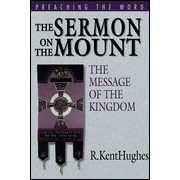
Sermon on the Mount Tony Merida
Mark Danny Akin
Luke Thabiti Anyabwile
John Matt Carter
Acts David Platt / Jimmy Scroggins
Romans David Platt
1 Corinthians James Merritt / Danny Akin
2 Corinthians Eric Mason
Galatians Tony Merida / David Platt
Ephesians Tony Merida
Philippians Tony Merida
Colossians / Philemon Matt Chandler / Danny Akin
1&2 Thessalonians Mark Howell
1&2 Timothy / Titus Tony Merida / David Platt / Danny Akin
Hebrews Al Mohler
James David Platt / Francis Chan
1 Peter Mark Dever
2 Peter / Jude Mark Dever / Danny Akin
1st, 2nd, 3rd John Danny Akin
Revelation Danny Akin

About Danny Akin: Daniel L. Akin [follow on Twitter] is the president of Southeastern Baptist Theological Seminary, where he teaches courses in theology, preaching, and hermeneutics. Danny was previously the senior vice president for academic administration and dean of the School of Theology at The Southern Baptist Theological Seminary. He is the author or editor of a number of books, including A Theology of the Church, God on Sex, and the volume dedicated to 1, 2, 3 John in the New American Commentary Series. He also contributed a chapter to The Great Commission Resurgence: Fulfilling God’s Mandate in Our Time. Danny is married to Charlotte, is the father of four boys, and is a proud grandfather of four. The Akins are members of Wake Cross Roads Baptist Church in Raleigh, North Carolina. Danny’s personal website can be found at DanielAkin.com. The article above is adapted from the June 12, 2012 edition of http://betweenthetimes.com/index.php/2012/06/12/excited-to-announce-the-launch-of-christ-centered-exposition-exalting-jesus-in-every-book-of-the-bible/

Dr. Ken Boa on The Importance of Teamwork in Ministry

The Importance of Teamwork

Perhaps brief would be the best word to describe a good kettledrum solo. Even the best musicians in the world would have a difficult time coaxing variety out of the huge mother of all percussion instruments. A flute or trumpet makes for much more pleasing and melodious sounds. Still, there are few solo instruments that can sustain our interests for long periods of time. We tend to think of instruments like the guitar or the piano because they can play more than one note at a time.

The long-term attraction of a good orchestra is not its solos, but its symphony. Music is most moving when it blends and balances the voices of many individual players. Mix a melodious violin with the thunderous boom of a tuba, add the melancholy cello and the warm French horn – and the minutes turn into hours without our even noticing. Such individually diverse instruments come together to make a sound like no other and sweep us along with them into another place.

This same principle that brings success in the concert hall holds true in the kitchen as well. A good chef mixes ingredients like flour, raw eggs or lard – things that by themselves are unappealing; but properly blended, they become mouth-watering dishes.

Likewise, a great leader must know how to bring together diverse elements and create a productive group. Few skills are more important in leadership than the ability to build a team. A mark of a great leader is how many great people will join his or her lineup. The greatest king of Israel, David, had a team comprised of “mighty men”:

These are the names of David’s mighty men:

Josheb-Basshebeth, a Tahkemonite, was chief of the Three; he raised his speak against eight hundred men, whom he killed in one encounter.

Next to him was Eleazar son of Dodai the Ahohite. As one of the three mighty men, he was with David when they taunted the Philistines gathered at Pas Dammim for battle. Then the men of Israel retreated, but he stood his ground and struck down the Philistines till his hand grew tired and froze to the sword. The Lord brought about a great victory that day. The troops returned to Eleazar, but only to strip the dead.

Next to him was Shammah son of Agee the Hararite. When the Philistines banded together at a place where there was a field full of lentils, Israel’s troops fled from them. But Shammah took his stand in the middle of the field. He defended it and struck the Philistines down, and the Lord brought about a great victory. – 2 Samuel 23:8-12

Because David attempted mighty things, only the mighty could keep up with him. Those who could not keep pace could not join the team.

You Can’t Do It Alone

Don Bennett was on top of the world. He was wealthier than most of us will ever imagine. He owned a ranch, a ski chalet and an eight-bedroom waterfront home on Seattle’s Mercer Island. And then everything changed. On a beautiful sunny day in August of 1972, Don was boating with his children when he fell overboard and the propeller of the boat ran over both of his legs. He nearly bled to death but managed to survive. His left leg took 480 stitches to close. His right leg was gone completely above the knee.

To make matters even worse, while he was in the hospital recovering, his business fell to pieces. Don felt like he had lost everything – except his determination. Amazingly, Don taught himself to ski again. Eventually, he would teach other amputees to ski on one leg. He started another business, Video Training Center, which listed such clients as Boeing and Weyerhauser. He started kayaking, and it was then that he began to dream of climbing mountains again.

Don had climbed Mt. Rainer in 1970. He decided to do it again, but he knew he couldn’t do it alone. He hopped five miles a day on his crutches. With a team of four others, he made it within 400 feet from the top before they were forced off by whiteout conditions and screaming winds. Four months later, he was training again with his team captain. They trained together for another year before returning to the mountain. He climbed for five days, 14 hours a day, sometimes hopping, sometimes crawling up the incline on one leg, and on July 15, 1982, Don Bennet touched the summit at 14,410 feet. He was the first amputee to climb Mt. Rainer.

When asked about the most important lesson he learned during the entire ordeal, his response was simple: “You can’t do it on your own.” He described how during one very difficult trek across an ice field his daughter stayed at his side and with each hop told him, “You can do it, Dad. You’re the best dad in the world. You can do it, Dad.” He told his interviewers that there was no way he would quit hopping to the top with his daughter yelling words of love and encouragement in his ear.1

You can’t do it alone. That makes a lot of sense! Few, if any, truly outstanding accomplishments can be achieved alone. That’s a fact that most of us are aware of. But what is not immediately obvious is that not just anyone can help. Don Bennett did not recruit his helpers in a nursing home. He built a team of people who wanted to climb a 14,410-foot peak and, perhaps more importantly, who could climb a 14,410-foot peak. One who attempts mighty feats had better be capable of recruiting a mighty team of willing and able participants.

King David did just that. His was one of the most celebrated teams in the entire Old Testament. This group was the all-star team of his battle-hardened warriors, celebrated for their valiant efforts. These men were ready, willing and able to step into the battle and lay their lives on the line for the man they knew was God’s chosen leader.

Several things stand out as we consider how David pulled his team together.

First, he spent time with them in battle. These men were welded to David by the hot fires of battle. His inner circle consisted of those men who had fought alongside him. Men, more so than women, tend to be seriously bonded together by shared experiences. It is especially true that as men struggle together and endure fierce opposition they are most tightly knit. Men who train for battle as a unit understand that they are their brother’s keeper. No one fights a battle alone; they move and succeed or fail as a unit. David knew these men and their capabilities, because he had seen what they could do with his own eyes.

Second, knowing that they were willing to make sacrifices for him, David made sure that they knew he was willing to do the same for them. When three of his mighty men risked their lives to obtain drinking water for him during a battle, David refused to drink it, choosing instead to pour it out onto the ground:

During harvest time, three of the thirty chief men came down to David at the cave of Adullam, while a band of Philistines was encamped in the Valley of Rephaim. At that time David was in the stronghold, and the Philistine garrison was at Bethlehem. David longed for water and said, “Oh, that someone would get me a drink of water from the well near the gate of Bethlehem!” So the three mighty men broke through the Philistine lines, drew water from the well near the gate of Bethlehem and carried it back to David. But he refused to drink it; instead, he poured it out before the Lord. “Far be it from me, O Lord, to do this!” he said. “Is it not the blood of men who went at the risk of their lives?” And David would not drink it. – 2 Samuel 23:13-17

Such were the exploits of the three mighty men.

This was by no means intended to degrade their act. Rather, David meant to dignify it. He poured the water out before the Lord almost as a drink offering. His act of sacrifice communicated a depth of devotion and love that had to have impressed those warriors.

Third, they celebrated victory together. Time and again David and his mighty men faced seemingly insurmountable odds and saw God deliver them. Through these amazing victories, David and his mighty men began to experience the truth that the Apostle Paul would later share with the church in Rome: “If God is for us, who can be against us?” (Romans 8:31b). Knowing that God would be faithful to deliver his anointed leader from dangerous circumstances, afforded these men great confidence in the battles they faced.

Finally, David honored his friends. These men were well known throughout the land as “David’s Mighty Men.” That phrase served as a banner that set them apart as extraordinary. They weren’t merely known as mighty men; they were David’s mighty men. A group’s strong sense of identity allows them to stand firm in the face of mounting pressure. As we read this account, one thing becomes clear: David knew he couldn’t do it alone.

The early church had this same mindset. In Acts 2:42-47, we read that the body of Christ viewed itself as a synergistic team:

They devoted themselves to the apostles’ teaching and to the fellowship, to the breaking of bread and to prayer. Everyone was filled with awe, and many wonders and miraculous signs were done by the apostles. All the believers were together and had everything in common. Selling their possessions and goods, they gave to anyone as he had need. Every day they continued to meet together in the temple courts. They broke bread in their homes and ate together with glad and sincere hearts, praising God and enjoying the favor of all the people. And the Lord added to their number daily those who were being saved.

There was a tangible sense of teamwork in the early church. These Christ-followers shared their possessions, met together regularly and ate “glad and sincere hearts.” Notice that Luke uses the word “devoted” to describe the early Christians. This is one of his favorite words in the book of Acts. Its roots are found in the idea of a steadfast pledge or a binding promise. Not only were these believers devoted to God, they were devoted to one another.

Teamwork and the Trinity

Strong teams functioning at their best reflect similarities to the relationship that exists within the divine Trinity. Scripture records the work of the divine trinity in the creation of the cosmos (see Genesis 1:1-2; John 1:1-3; Colossians 1:15-17). Thus, when a team works together in an other-centered manner, it mirrors, albeit dimly, the creativity and mutual regard that is derived from God himself. As Gilbert Bilezikian has written, “Whatever community exists as a result of God’s creation, it is only a reflection of an eternal reality that is intrinsic to the being of God.”2

The three persons of the Godhead are never independent but always work together in concert. One needn’t read very far in the Bible to discover this. In the very first verse (Genesis 1:1), we are introduced to God as the initiator and designer of all creation. The second verse describes the Spirit of God hovering over the created world. Notice that the Spirit does not construct the created world; he merely hovers over it – suggesting the role of protector or overseer. Finally, in the third verse, we find the Word of God as the executor of God’s will – the agent of creation.3

This perfect and harmonious interaction, though obvious from the beginning of the Bible, was especially evident in how God made it possible for people who were formerly alienated from him to be transformed into his beloved children (Ephesians 1:3-14). This passage, which in the original language of the Bible is actually one long run-on sentence, beautifully extols the work of each member of the Trinity in God’s scheme of redemption, work which corresponds to what we have just seen in the first three verses of Genesis 1.

Paul first spoke of the work of the Father in accomplishing our salvation:

Praise be to the God and Father of our Lord Jesus Christ, who has blessed us in the heavenly realms with every spiritual blessing in Christ. For he chose us in him before the creation of the world to be holy and blameless in his sight. In love, he predestined us to be adopted as his sons through Jesus Christ, in accordance with his pleasure and will – to the praise of his glorious grace, which he has freely given us in the One he loves. – Ephesians 1:3-6

The Father chose us before the creation of the world and sent his Son into the world so that through him we could be adopted into his family. He planned all this out very carefully and initiated it at just the right time. God the Father is the initiator and designer of our salvation.

Second, the apostle focused on the work of the Son:

In him we have redemption through his blood, the forgiveness of sins, in accordance with the riches of God’s grace that he lavished on us with all wisdom and understanding. And he made known to us the mystery of his will according to his good pleasure, which he purposed in Christ, to be put into effect when the times will have reached their fulfillment – to bring all things in heaven and on earth together under one head, even Christ.

In him we were also chosen, having been predestined according to the plan of him who works out everything in conformity with the purpose of his will, in order that we, who were the first to hope in Christ, might be for the praise of his glory. – vv. 7-12

The Son makes the Father’s plan a reality. In his incarnation, he becomes the God-man, the mediator between God and man. His blood sacrifice on our behalf paid the penalty for our sins so that we could enjoy forgiveness and lay hold of God’s purpose for our lives. God the Son is the agent of our salvation.

Third, the work of the Holy Spirit seals and guarantees our spiritual inheritance:

And you also were included in Christ when you heard the word of truth, the gospel of your salvation. Having believed, you were marked in him with a seal, the promised Holy Spirit, who is a deposit guaranteeing our inheritance until the redemption of those who are God’s possession – to the praise of his glory. – vv. 13-14

The Holy Spirit applies the righteousness of Christ to all those who are in Christ. He has anointed us, holding us as a pledge until we see Christ face-to-face. The Spirit of God is the protector of our salvation.

Thus, the Father initiated salvation, the Son accomplished it and the Holy Spirit makes it real in our lives. At the end of each of these three sections the phrase “to the praise of his glory” appears. All three are to be praised for their work in bringing us to salvation. The Father, Son and Holy Spirit perform distinct roles, but they work together in perfect harmony and agreement.

There is much talk about how to build unity among diverse people. If we go back to the analogy of an orchestra, you may recall how that orchestra tunes itself before the performance. The oboist plays the concert pitch (an A above middle C [440 Hz.]), then the first violinist plays the A, and the other instruments tune to that pitch. What follows can only be described as a bizarre cacophony at first, as you hear them make that strange sound only an orchestra can make. But once it’s calmed down, they’re all tuned to one another by tuning to the same instrument.

Jesus Christ is our guiding instrument. His incarnation sounded the concert pitch for all of us. As we yield to the transforming power of the Holy Spirit, we find our own instruments coming more and more into the same key as Jesus. As a byproduct of this, we find that we are all in tune with one another as well.

The Power of Synergy

A team is capable of accomplishing things that no individual, no matter how multi-talented, could do alone. Let’s take a little quiz. Don’t worry, there is only one question: If two horses can pull 9,000 pounds, how many pounds can four horses pull?

Here’s a hint: it’s not 9,000 pounds. In fact, it’s not 18,000 pounds. Believe it or not, four horses can pull more than 30,000 pounds! If that doesn’t compute, it’s because you don’t understand the concept of synergism.

Synergy is the energy or force that is generated through the working together of various parts or processes. Synergism can be defined as the interaction of elements that, when combined, produce an effect that is greater than the sum of the individual parts. Synergy is a joint action that increases the effectiveness of each member of a team. To function well, a team must be committed to a common vision and purpose, and it must be willing to work in unity for the improvement of the whole rather than the advancement of any one member.

From a large pool of disciples who were following him, Jesus designated only 12 men who would become his apostles. This was such a significant decision that the Lord prayed all night to prepare for it: “One of those days Jesus went out to a mountainside to pray, and spent the night praying to God. When morning came, he called his disciples to him and chose twelve of them, whom he also designated apostles” (Luke 6:12-13). Mark 3:14 adds that Jesus appointed these 12 apostles “that they might be with him and that he might send them out.”

Jesus knew that this was the team that would be with him for the rest of his ministry, and he was prepared to pour himself unreservedly into their lives. He would still teach the crowds, but in private sessions he now begins to pour out his plans and his character into these 12 men. Even in the midst of his greatest popularity, Jesus realized that the way to turn the world upside-down is to invest heavily in a few.

Nearly 2,000 years later, we are here to attest to that fact that it worked. Eleven of these 12 men became the foundation of the church, built on the cornerstone of Christ (Ephesians 2:19-20). Jesus’ actions, the unshakable reality of the resurrection and the indwelling power of the Holy Spirit turned a group of men who were characterized by confusion, infighting and self-interest into a genuinely synergistic team with (and this is perhaps the greatest miracle of all time) an authentic fondness for one another.

Today the church, the body of Christ on earth, is not an organization but an organism that manifests both unity and diversity. We’re each a part of something; there are to be no spiritual loners in God’s family. We are people who journey along the way with other people to whom we’re called into a covenant of relationship. When we come to God, helpless and battered, nothing in our hands, and receive his gift of forgiveness and salvation, we are buying into a package deal. God says, “If you love me, you must love my people as well.”

We live in an individualistic culture, but we are called to be people in relationship. We are not called to be the persons of God but the people of God.

One phrase that is easily overlooked in all this is the first part of verse 14: Jesus set these men apart “that they might be with him.” Before they were sent out to engage the world in ministry, they were called to a personal experience with Jesus. Wisely, Christ never wants anyone to talk about Christianity like a salesman but as a witness, someone who has experienced firsthand what he is talking about. There is something about a person who has been with Jesus that is distinctive.

Most of us would agree: being alive when Jesus comes would be optimal. We pray, with the saints throughout the ages, “Maranatha! Even so, come Lord Jesus.” However, is anyone of us willing to be presumptuous and assume that we will be alive when he comes? Can we be so certain that his return will come during our own lifetime?

It is wise for us to see how we can invest into other people so that the things we have learned, the things we value, the things we have built our lives around will live on after we are gone. A prudent mind is always building succession. A prudent mind is always mentoring another who will rise to positions of leadership in the future. An old folk parable says that a wise man is willing to plant shade trees even though he knows he will never enjoy the shade. He’s planting them for his children and his children’s children.

We see a great example of the relationship between synergy, mentoring and teambuilding in sports. Many of the great coaches of our era once played for and coached under the great coaches of yesteryear. In the 2002 World Series, the Anaheim Angels squared off against the San Francisco Giants. Remarkably, both teams were managed by former teammates Mike Scioscia and Dusty Baker. Both men are among the finest managers in professional baseball, and they will tell you the wonderful experience it was to play for the legendary Tommy Lasorda. Byron Scott coached the New Jersey Nets to back-to-back NBA finals. He directly attributes much of his success to playing under the tutelage of Pat Riley. As the coach of the San Francisco Forty-Niners, Bill Walsh revolutionized the game of football with his “West Coast Offense.” At least seven of those who were his assistant coaches have now been head coaches in the National Football League.

A Team of Specialists

Teams are comprised of positional specialists. These individuals have been recruited on the basis of individual ability and expected contribution. But they aren’t a solid team until their individual strengths combine to produce an outcome which no single member alone could have produced. High performance teams are tough to build. So we look to the Master Teacher for a demonstration of how to recruit and mold a world-class team.

Jesus formed the most important team ever assembled. This team was developed to continue his work on earth (Acts 1:8-9). Luke recorded the continuing story of the apostles in the book of Acts. The church they led exploded out of Jerusalem, around the world and across nearly 2,000 years of history. Mark 2:14-17 recounts a seemingly insignificant event – the calling of Matthew, also known as Levi:

As [Jesus] walked along, he saw Levi son of Alphaeus sitting at the tax collector’s booth. “Follow me,” Jesus told him, and Levi got up and followed him.

While Jesus was having dinner at Levi’s house, many tax collectors and “sinners” were eating with him and his disciples, for there were many who followed him. When the teachers of the law who were Pharisees saw him eating with the “sinners” and tax collectors, they asked his disciples: “Why does he eat with tax collectors and ‘sinners’?”

On hearing this, Jesus said to them, “It is not the healthy who need a doctor, but the sick. I have not come to call the righteous, but sinners.”

Levi may seem like an arbitrary choice, but as we saw earlier, Jesus spent all night in prayer before making his choices. In other words, he chose Matthew intentionally, because he wanted to show us something. By choosing a tax collector, Jesus demonstrated two important principles of team building.

First, he recruited specific people for specific reasons. Teams are made up of players. Players have positions. They are expected to contribute something they do well – ideally better than anyone else on the team.

Second, Jesus recruited an “odd” player. He began with a group of Galileans – working men, mostly fishermen, all with strong Jewish backgrounds. Then he inexplicably added Matthew, a tax collector and hated publican, to the mix. As far as the apostles go, this was the most unlikely candidate. As a tax collector, he would have been violently opposed by orthodox Judaism. In fact, the Hebrew word for tax collector (mokhes) seems to have as its root meaning “oppression” and “injustice.” The Jews simply hated this oppressive system of Roman taxation. They hated the high percentage of taxes. They hated the sheer number of taxes: Polls, bridges, roads, harbors, income, town, grain, wine, fish, fruit, etc. They hated how their money was spent on immoral and idolatrous activities. But most of all, they hated what Roman taxation represented: Roman domination of the people of God.

Consequently, any Jew who worked for the Roman “IRS” was viewed as a traitor of the worst sort. Matthew is therefore ostracized from all forms of Jewish life, especially their synagogue services. J.W. Shepard notes, “His money was considered tainted and defiled anyone who accepted it. He could not serve as a witness. The rabbis had no word of help for the publican, because they expected him by external conformity to the law to be justified before God.”4

Interestingly, as the writer of the first Gospel, we learn more from Matthew about Old Testament prophecies and Jewish traditions than from any other writer. Reading his book we would think that he was a Jew’s Jew. What are we to make of this? Perhaps Matthew longed for his Jewish roots and yet was hard-pressed by his job security. Likely in solitude he studied the Scriptures, coming to independent conclusions and an individual hope of the Messiah. We should learn from Matthew that those on the sidelines who look so antagonistic might just be the greatest members of our team.

As Jesus passed by, he looked at Levi. Most people would have tried to ignore the tax man or sneak past him. Jesus was different. He met Levi eyeball-to-eyeball and called him to immediate discipleship.

Matthew responded immediately and radically. Likely Levi was familiar with Jesus. The Sea of Galilee, especially this shore near Capernaum, is Jesus’ “headquarters.” Undoubtedly he had heard Jesus preach. He may even have witnessed Jesus’ call to the four fishermen. Certainly he had collected plenty of taxes from them, especially after the great miraculous catch (Luke 5:4-7). Though the text is a bit confusing on this point, Matthew probably closed up shop and then settled accounts with the Roman authorities over him. To do less would have been irresponsible and even dangerous, thus jeopardizing the ministry of Jesus.

It is one thing for four fishermen to leave their private business in the hands of their father. They always had the option to return. In fact, after the resurrection, the apostles returned to Galilee and spent their time fishing as they waited for Jesus. However, Levi’s situation was different. He had not other options. He was a small member of a large corporate structure. There were eager young publicans itching to sit in his lucrative seat. When he left, he knew he was leaving for good.

In addition to Matthew the tax collector, Jesus also recruited Simon the Zealot, who was at the opposite end of the political spectrum from Matthew. Jesus taught his team of individuals to understand, appreciate and love each other. Jesus molded his team into a tightly-knit unit. But he recruited each of them on the basis of their individual strengths. He recruited people who would contribute to the other members of the team and to the team’s overall objectives.

Teams, by their nature, require specialists. Specialists often differ in personality and views. Team members combine their strengths to help one another to grow and to change their world. Such a diversified team may be tougher to lead – but then training lions is more exciting than feeding goldfish!

Trusting Your Team

Every competent leader knows the importance of building a team. But how is this accomplished? Once again, Jesus provides us with an example:

When Jesus came to the region of Caesarea Philippi, he asked his disciples, “Who do people say the Son of Man is?” 

They replied, “Some say John the Baptist; others say Elijah; and still others Jeremiah or one of the prophets.” 

“But what about you?” he asked. “Who do you say I am?”

Simon Peter answered, “You are the Christ, the Son of the living God.”

Jesus replied, “Blessed are you, Simon son of Jonah, for this was not revealed to you by man, but by my Father in heaven. And I tell you that you are Peter, and on this rock I will build my church, and the gates of Hades will not overcome it. I will give you the keys to the kingdom of heaven; whatever you bind will be bound in heaven, and whatever you loose on earth will be loosed in heaven.” Then he warned his disciples not to tell anyone that he was the Christ. – Matthew 16:13-20

There’s one factor that may be more important to effective leadership than leadership qualities or extensive training. According to Jon R. Katzenbach and Douglas K. Smith, effective leaders, “simply need to believe in their purpose and their people.”5 Katzenbach and Smith contend that the stronger this belief, the more it will enable leaders to instinctively strike the right balance between action and patience as they work to build effective teams.

Nobody illustrated this principle more effectively than Jesus. When Jesus asked Peter, “Who do you say I am?”, he wasn’t engaging the fisherman in an intellectual exercise. If Peter was to lead the church, he would have to have a grasp on the identity of Christ and his purpose. Peter didn’t blink an eyelid before answering. He boldly declared that Jesus was “the Christ, the Son of the living God.” When Peter confessed that Jesus was the “Christ,” he exhibited an understanding of the Lord’s purpose. He was the Christ, the Messiah, the Savior. He had come to save all who would trust in him.

Jesus responded not only by affirming Peter’s God-given insight, but also by expressing his confidence in the disciple’s future role in leading the church. While theologians may debate about the exact meaning of Jesus’ words, one thing is clear: Jesus entrusted Peter with a key leadership role. And that step was crucial to the future development of the team of men and women who were to storm the Roman Empire with the gospel.

1Adapted from James M. Kouzes and Barry A. Posner, The Leadership Challenge: How to Keep Getting Extraordinary Things Done in Organizations (San Francisco: Jossey-Bass, 1995).

2Gilbert Bilezikian, Community 101: Reclaiming the Local Church as Community of Oneness (Grand Rapids: Zondervan, 1997), p. 16.

3Adapted from Bilekizian, Community 101, pp. 16-17.

4J. W. Shepard, The Christ of the Gospels (Grand Rapids: Eerdmans, 1939), p. 143.

5John R. Katzenbach and Douglas K. Smith, The Wisdom of Teams: Creating the High-Performance Organization (Boston: Harvard Business School Press, 1993), pp. 138-139.

Dr. D.A. Carson on 12 Principles of Biblical Interpretation

MUST I LEARN HOW TO INTERPRET THE BIBLE?

 by D. A. Carson

Hermeneutics is the art and science of interpretation; biblical hermeneutics is the art and science of interpreting the Bible. At the time of the Reformation, debates over interpretation played an enormously important role. These were debates over ―interpretation, not just over ―interpretations. In other words, the Reformers disagreed with their opponents not only over what this or that passage meant, but over the nature of interpretation, the locus of authority in interpretation, the role of the church and of the Spirit in interpretation, and much more.

During the last half century, so many developments have taken place in the realm of hermeneutics that it would take a very long article even to sketch them in lightly. Sad to say, nowadays many scholars are more interested in the challenges of the discipline of hermeneutics than in the interpretation of the Bible—the very Bible that hermeneutics should help us handle more responsibly. On the other hand, rather ironically there are still some people who think that there is something slightly sleazy about interpretation. Without being crass enough to say so, they secretly harbor the opinion that what others offer are interpretations, but what they themselves offer is just what the Bible says.

Carl F. H. Henry is fond of saying that there are two kinds of presuppositionalists: those who admit it and those who don‘t. We might adapt his analysis to our topic: There are two kinds of practitioners of hermeneutics: those who admit it and those who don‘t. For the fact of the matter is that every time we find something in the Bible (whether it is there or not!), we have interpreted the Bible. There are good interpretations and there are bad interpretations; there are faithful interpretations and there are unfaithful interpretations. But there is no escape from interpretation.

This is not the place to lay out foundational principles, or to wrestle with the ―new hermeneutic (now becoming long in the tooth) and with ―radical hermeneutics and ―postmodern hermeneutics. [For more information and bibliography on these topics, and especially their relation to postmodernism and how to respond to it, see my book The Gagging of God: Christianity Confronts Pluralism, esp. chaps. 2 and 3 (Grand Rapids: Zondervan, 1996 – in this article will be referred to as GOG).] I shall focus instead on one ―simple problem, one with which every serious Bible reader is occasionally confronted. The issue is this: What parts of the Bible are binding mandates for us, and what parts are not?

Consider some examples. “Greet one another with a holy kiss: the French do it, Arab believers do it, but by and large we do not. Are we therefore unbiblical? Jesus tells his disciples that they should wash one another‘s feet (John 13:14), yet most of us have never done so. Why do we “disobey” that plain injunction, yet obey his injunction regarding the Lord‘s Table (“This do, in remembrance of me)? If we find reasons to be flexible about the “holy kiss (GOG, 19), how flexible may we be in other domains? May we replace the bread and wine at the Lord‘s Supper with yams and goat‘s milk if we are in a village church in Papua New Guinea? If not, why not? And what about the broader questions circulating among theonomists regarding the continuing legal force of law set down under the Mosaic covenant? Should we as a nation, on the assumption that God graciously grants widespread revival and reformation, pass laws to execute adulterers by stoning? If not, why not? Is the injunction for women to keep silent in the church absolute (1 Cor. 14:33–36)? If not, why not? Jesus tells Nicodemus that he must be born again if he is to enter the kingdom; he tells the rich young man that he is to sell all that he has and give it to the poor. Why do we make the former demand absolute for all persons, and apparently fudge a little on the second?

Obviously I have raised enough questions for a dissertation or two. What follows in this article is not a comprehensive key to answering all difficult interpretive questions, but some preliminary guidelines to sorting such matters out. The apostolic number of points that follow are not put into any order of importance.

(1) As conscientiously as possible, seek the balance of Scripture, and avoid succumbing to historical and theological disjunctions.

Liberals have often provided us with nasty disjunctions: Jesus or Paul, the charismatic community or the ―early catholic‖ church, and so forth. Protestants sometimes drop a wedge between Paul‘s faith apart from works (Rom. 3:28) and James‘s faith and works (Jas. 2:4); others absolutize Gal. 3:28 as if it were the controlling passage on all matters to do with women, and spend countless hours explaining away 1 Tim. 2:12 (or the reverse!).

Historically, many Reformed Baptists in England between the middle of the eighteenth century and the middle of the twentieth so emphasized God‘s sovereign grace in election that they became uncomfortable with general declarations of the gospel. Unbelievers should not be told to repent and believe the gospel: how could that be, since they are dead in trespasses and sin, and may not in any case belong to the elect? They should rather be encouraged to examine themselves to see if they have within themselves any of the first signs of the Spirit‘s work, any conviction of sin, any stirrings of shame. On the face of it, this is a long way from the Bible, but a large number of churches thought it was the hallmark of faithfulness. What has gone wrong, of course, is that the balance of Scripture has been lost. One element of biblical truth has been elevated to a position where it is allowed to destroy or domesticate some other element of biblical truth.

In fact, the “balance of Scripture” is not an easy thing to maintain, in part because there are different kinds of balance in Scripture. For example, there is the balance of diverse responsibilities laid on us (e.g. praying, being reliable at work, being a biblically faithful spouse and parent, evangelizing a neighbor, taking an orphan or widow under our wing, and so forth): these amount to balancing priorities within the limits of time and energy. There is the balance of Scripture‘s emphases as established by observing their relation to the Bible‘s central plot-line (more on this in the 12th point); there is also the balance of truths which we cannot at this point ultimately reconcile, but which we can easily distort if do not listen carefully to the text (e.g. Jesus is both God and man; God is both the transcendent sovereign and yet personal; the elect alone are saved, and yet in some sense God loves horrible rebels so much that Jesus weeps over Jerusalem and God cries, “Turn, turn, why will you die? For the Lord has no pleasure in the death of the wicked). In each case, a slightly different kind of biblical balance comes into play, but there is no escaping the fact that biblical balance is what we need.

(2) Recognize that the antithetical nature of certain parts of the Bible, not least some of Jesus’ preaching, is a rhetorical device, not an absolute. The context must decide where this is the case.

Of course, there are absolute antitheses in Scripture that must not be watered down in any way. For example, the disjunctions between the curses and the blessings in Deut. 27–28 are not mutually delimiting: the conduct that calls down the curses of God and the conduct that wins his approval stand in opposite camps, and must not be intermingled or diluted. But on the other hand, when eight centuries before Christ, God says, “For I desire mercy, not sacrifice, and acknowledgment of God rather than burnt offerings” (Hos. 6:6), the sacrifical system of the Mosaic covenant is not thereby being destroyed. Rather, the Hebrew antithesis is a pointed way of saying, “If push comes to shove, mercy is more important than sacrifice. Whatever you do, you must not rank the marks of formal religion—in this case, burnt offerings and other mandated ritual sacrifices—with fundamental acknowledgment of God, or confuse the extent to which God cherishes compassion and mercy with the firmness with which he demands the observance of the formalities of the sacrificial system” (GOG, 20).

Similarly, when Jesus insists that if anyone is to become his disciple, he must hate his parents (Lk. 14:26), we must not think Jesus is sanctioning raw hatred of family members. What is at issue is that the claims of Jesus are more urgent and binding than even the most precious and prized human relationships (as the parallel in Mt. 10:37 makes clear).

Sometimes the apparent antithesis is formed by comparing utterances from two distant passages. On the one hand, Jesus insists that the praying of his followers should not be like the babbling of the pagans who think they are heard because of their many words (Mt. 6:7). On the other hand, Jesus can elsewhere tell a parable with the pointed lesson that his disciples should pray perseveringly and not give up (Lk. 18:1–8). Yet if we imagine that the formal clash between these two injunctions is more than superficial, we betray not only our ignorance of Jesus‘ preaching style, but also our insensitivity to pastoral demands. The first injunction is vital against those who think they can wheedle things out of God by their interminable prayers; the second is vital against those whose spiritual commitments are so shallow that their mumbled one-liners constitute the whole of their prayer life.

(3) Be cautious about absolutizing what is said or commanded only once.

The reason is not that God must say things more than once for them to be true or binding. The reason, rather, is that if something is said only once it is easily misunderstood or misapplied. When something is repeated on several occasions and in slightly different contexts, readers will enjoy a better grasp of what is meant and what is at stake.

That is why the famous “baptism for the dead passage (1 Cor.15:29) is not unpacked at length and made a major plank in, say, the Heidelberg Catechism or the Westminster Confession. Over forty interpretations of that passage have been offered in the history of the church. Mormons are quite sure what it means, of course, but the reason why they are sure is because they are reading it in the context of other books that they claim are inspired and authoritative.

This principle also underlies one of the reasons why most Christians do not view Christ‘s command to wash one another‘s feet as a third sacrament or ordinance. Baptism and the Lord‘s Supper are certainly treated more than once, and there is ample evidence that the early church observed both, but neither can be said about footwashing. But there is more to be said.

(4) Carefully examine the biblical rationale for any saying or command.

The purpose of this counsel is not to suggest that if you cannot discern the rationale you should flout the command. It is to insist that God is neither arbitrary nor whimsical, and by and large he provides reasons and structures of thought behind the truths he discloses and the demands he makes. Trying to uncover this rationale can be a help in understanding what is of the essence of what God is saying, and what is the peculiar cultural expression of it.

Before I give a couple of examples, it is important to recognize that all of Scripture is culturally bound. For a start, it is given in human languages (Hebrew, Aramaic, Greek), and languages are a cultural phenomenon. Nor are the words God speaks to be thought of as, say, generic Greek. Rather, they belong to the Greek of the Hellenistic period (it isn‘t Homeric Greek or Attic Greek or modern Greek). Indeed, this Greek changes somewhat from writer to writer (Paul does not always use words the same way that Matthew does) and from genre to genre (apocalyptic does not sound exactly like an epistle). None of this should frighten us. It is part of the glory of our great God that he has accommodated himself to human speech, which is necessarily time-bound and therefore changing. Despite some postmodern philosophers, this does not jeopardize God‘s capacity for speaking truth. It does mean that we finite human beings shall never know truth exhaustively (that would require omniscience), but there is no reason why we cannot know some truth truly. Nevertheless, all such truth as God discloses to us in words comes dressed in cultural forms. Careful and godly interpretation does not mean stripping away such forms to find absolute truth beneath, for that is not possible: we can never escape our finiteness. It does mean understanding those cultural forms, and by God‘s grace discovering the truth that God has disclosed through them.

So when God commands people to rend their clothes and put on sackcloth and ashes, are these precise actions so much of the essence of repentance (GOG, 21) that there is no true repentance without them? When Paul tells us to greet one another with a holy kiss, does he mean that there is no true Christian greeting without such a kiss?

When we examine the rationale for these actions, and ask whether or not ashes and kissing are integratively related to God‘s revelation, we see the way forward. There is no theology of kissing; there is a theology of mutual love and committed fellowship among the members of the church. There is no theology of sackcloth and ashes; there is a theology of repentance that demands both radical sorrow and profound change.

If this reasoning is right, it has a bearing on both footwashing and on head-coverings. Apart from the fact that footwashing appears only once in the New Testament as something commanded by the Lord, the act itself is theologically tied, in John 13, to the urgent need for humility among God‘s people, and to the cross. Similarly, there is no theology of head- coverings, but there is a profound and recurrent theology of that of which the head-coverings were a first-century Corinthian expression: the proper relationships between men and women, between husbands and wives.

(5) Carefully observe that the formal universality of proverbs and of proverbial sayings is only rarely an absolute universality. If proverbs are treated as statutes or case law, major interpretive—and pastoral!—errors will inevitably ensue.

Compare these two sayings of Jesus: (a) “He who is not with me is against me, and he who does not gather with me scatters (Mt.12:30). (b) “. . . for whoever is not against us is for us(Mk. 9:40; cf. Lk. 9:50). As has often been noted, the sayings are not contradictory if the first is uttered to indifferent people against themselves, and the second to the disciples about others whose zeal outstrips their knowledge. But the two statements are certainly difficult to reconcile if each is taken absolutely, without thinking through such matters.

Or consider two adjacent proverbs in Prov. 26. (a) “Do not answer a fool according to his folly . . .(26:4). (b) “Answer a fool according to his folly . . . (26:5). If these are statutes or examples of case law, there is unavoidable contradiction. On the other hand, the second line of each proverb provides enough of a rationale that we glimpse what we should have seen anyway: proverbs are not statutes. They are distilled wisdom, frequently put into pungent, aphoristic forms that demand reflection, or that describe effects in society at large (but not necessarily in every individual), or that demand consideration of just how and when they apply.

Let us spell out these two proverbs again, this time with the second line included in each case: (a) “Do not answer a fool according to his folly, or you will be like him yourself. (b) “Answer a fool according to his folly, or he will be wise in his own eyes. Side by side as they are, these two proverbs demand reflection on when it is the part of prudence to refrain from answering fools, lest we be dragged down to their level, and when it is the part of wisdom to offer a sharp, “foolish rejoinder that has the effect of pricking the pretensions of the fool. The text does not spell this out explicitly, but if the rationales of the two cases are kept in mind, we will have a solid principle of discrimination.

So when a well-known para-church organization keeps quoting “Train up a child in the way he should go, and when he is old he will not depart from it as if it were case law, what are we to think? This proverbial utterance must not be stripped of its force: it is a powerful incentive to responsible, God-fearing, child-rearing. Nevertheless, it is a proverb; it is not a covenantal promise. Nor does it specify at what point the children will be brought into line. Of course, many children from Christian homes go astray because the parents really have been very foolish or unbiblical or downright sinful; but many of us have witnessed the burdens of unnecessary guilt and shame borne by really godly parents when their grown (GOG, 22) children are, say, 40 years of age and demonstrably unconverted. To apply the proverb in such a way as to engender or reinforce such guilt is not only pastorally incompetent, it is hermeneutically incompetent: it is making the Scriptures say something a little different from what can safely be inferred. Aphorisms and proverbs give insight as to how culture under God works, how relationships work, what are priorities should be; they do not put in all the footnotes as to whether there are any individual exceptions, and under what circumstances, and so forth.

(6) The application of some themes and subjects must be handled with special care, not only because of their intrinsic complexity, but also because of essential shifts in social structures between biblical times and our own day.

“Everyone must submit himself to the governing authorities, for there is no authority except that which God has established. The authorities that exist have been established by God. Consequently, he who rebels against the authority is rebelling against what God has instituted, and those who do so will bring judgment on themselves (Rom.13:1–2). Some Christians have reasoned from this passage that we must always submit to the governing authorities, except in matters of conscience before God (Acts 4:19). Even then, we “submitto the authorities by patiently bearing the sanctions they impose on us in this fallen world. Other Christians have reasoned from this passage that since Paul goes on to say that the purpose of rulers is to uphold justice (Rom.13:3–4), then if rulers are no longer upholding justice the time may come when righteous people should oppose them, and even, if necessary, overthrow them. The issues are exceedingly complex, and were thought through in some detail by the Reformers.

But there is of course a new wrinkle added to the fabric of debate when one moves from a totalitarian régime, or from an oligarchy, or from a view of government bound up with an inherited monarchy, to some form of democracy. This is not to elevate democracy to heights it must not occupy. It is to say, rather, that in theory at least a democracy allows you to “overthrow” a government without violence or bloodshed. And if the causes of justice cannot do so, it is because the country as a whole has slid into a miasma that lacks the will, courage, and vision to do what it has the power to do, but chooses not to do (for whatever reason). What, precisely, are the Christian‘s responsibilities in that case (whatever your view of the meaning of Rom.13 in its own context)?

In other words, new social structures beyond anything Paul could have imagined, though they cannot overturn what he said, may force us to see that valid, thoughtful, application demands that we bring into the discussion some considerations he could not have foreseen. It is a great comfort, and epistemologically important, to remember that God did foresee them—but that does not itself reduce the hermeneutical responsibilities we have.

(7) Determine not only how symbols, customs, metaphors, and models function in Scripture, but also to what else they are tied.

We may agree with conclusions already drawn about sackcloth and ashes, and about holy kissing. But is it then acceptable to lead a group of young people in a California church in a celebration of the Lord‘s Table using coke and chips? And how about yams and goat‘s milk in Papua New Guinea? If in the latter case we use bread and wine, are we not subtly insisting that only the food of white foreigners is acceptable to God?

The problem is one not only of churchmanship, but of linguistic theory: Bible translators face it continuously. How should we translate “bread and “wine in the words of institution? Or consider a text such as Isa.1:18: “Though your sins are like scarlet, they shall be as white as snow; though they are red as crimson, they shall be like wool.Suppose the target group for which you are translating the Bible lives in equatorial rain forests and has never seen snow: would it be better to change the simile? Suppose that the only “wool they have seen is the dirty dun-colored stuff from village goats: could not “faithful’ translation be misleading, while culturally sensitive translation that is nevertheless more distant from the original succeed in communicating the point that God speaking through Isaiah was getting across?

A lot can be said in favor of this sort of flexibility. Certainly in the case of “snow, not a lot seems to be at stake. You might want to check out the other seven biblical occurrences of “white as snow to make sure you are not unwittingly running into some awkward clash or other. But in the case of bread and wine at the Lord‘s Supper, the situation is more complicated. This is because the elements are tied in with other strands of the Bible, and it is almost impossible to disentangle them. Having changed “bread to, say, “yams” in order to avoid any cultural imperialism, what shall we do with the connections between the Lord‘s Supper and the Passover, where only “unleavened bread was to be eaten: can we speak of “unleavened yams?! How about the connection between bread and manna, and then the further connection drawn between bread/manna and Jesus (John.6)? Is Jesus (I say this reverently) now to become the yam of God? And I have not yet begun to exhaust the complications connected with this one.

So what begins as a charitable effort in cross-cultural communication is leading toward major interpretive problems a little farther down the road. Moreover, Bible translations have a much longer shelf-life than the original translators usually think. Fifty years later, once the tribe has become a little more familiar with cultures beyond their own forests, and it seems best in a revision to return to a greater degree of literalism, try and change “yams to “bread and see what kind of ecclesiastical squabbles will break out. The “KJV” of the rain forests has “yams”. . . .

All of these sorts of problems are bound up with the fact that God has not given us a culturally neutral revelation. What he has revealed in words is necessarily tied to specific places and cultures. Every other culture is going to have to do some work to understand what God meant when he said certain things in a particular language at a specific time and place and in a shifting idiom. In the case of some expressions, an analogous idiom may be the best way to render something; in other expressions, especially those that are deeply tied to other elements in the Bible‘s story-line, it is best to render things more literally, and then perhaps include an explanatory note. In this case, for example, it might be wise to say that “bread was a staple food of the people at the time, as yams are to us. A slightly different note would have to be included when leaven or yeast is introduced.

There is almost nothing to be said in favor of California young people using chips and coke as the elements. (I‘m afraid this is not a fictitious example.) Unlike the people of the rain forests, they do not even have in their favor that they have never heard of bread. Nor can it be said that chips and coke are their staples (though doubtless some of them move in that direction). What this represents is the whimsy of what is novel, the love of the iconoclastic, the spirituality of the cutesy—with no connections with either the Lord‘s words or with two thousand years of church history.

(8) Thoughtfully limit comparisons and analogies by observing near and far contexts.

“Jesus Christ is the same yesterday and today and forever (Heb.13:8). Since he never finally refused to heal anyone who approached him during the days of his flesh, and since he is the same yesterday and today and forever, therefore he will heal all who approach him for healing today. I have had that argument put to me more than once. By the same token, of course, Heb.13:8 could be used to prove that since he was mortal before the cross, he must still be mortal today; or since he was crucified by the Romans, and he is the same yesterday and today and forever, he must still be being crucified by the Romans today.

The fact of the matter is that comparisons and analogies are always self-limiting in some respect or other. Otherwise, you would not be dealing with comparisons and analogies, but with two or more things that are identical. What makes a comparison or an analogy possible is that two different things are similar in certain respects. It is always crucial to discover the planes on which the parallels operate—something that is usually made clear by the context—and to refuse further generalization.

A disciple is to be like his master; we are to imitate Paul, as Paul imitates Christ. In what respects? Should we walk on water? Should we clean the local temple with a whip? Should we infallibly heal those who are ill and who petition us for help? Should we miraculously provide food for thousands out of some little boy‘s lunch? Should we be crucified? Such questions cannot all be answered with a simple “yes” or “no.” It is worth observing that most of the injunctions in the Gospels to follow Jesus or to do what he does are bound up with his self- abnegation: e.g. as he is hated, so we must expect to be hated (Jn.15:18); as he takes the place of a servant and washes his disciples‘ feet, so we are to wash one another‘s feet (Jn.13); as he goes to the cross, so we are to take our cross and follow him (Mt.10:38; 16:24; Lk.14:27). Thus the answer to the question, “Should we be crucified?”, is surely ‘yes” and “no”: no, not literally, most of us will have to say, and yet that does not warrant complete escape from the demand to take up our cross and follow him. So in this case the answer is “yes,” but not literally.

(9) Many mandates are pastorally limited by the occasion or people being addressed.

For example, Jesus unambiguously insists, “Do not swear at all: either by heaven, for it is God‘s throne; or by the earth, for it is his footstool; or by Jerusalem, for it is the city of the Great King. . . . Simply let your Yes‘ be ‘Yes,‘ and your  No,‘  No‘; anything beyond this comes from the evil one(Mt. 6:34–36). Yet we find Paul going well beyond a simple “Yes or “No (e.g. Rom. 9:1; 2 Cor. 11:10; Gal. 1:20). In fact, God puts himself under an oath (Heb. 6:17–18). Won‘t pedants have a wonderful time with this?

Yet the particular language of Jesus‘ prohibition, not to mention the expanded parallel in Mt. 23:16–22, shows that what Jesus was going after was the sophisticated use of oaths that became an occasion for evasive lying—a bit like the schoolboy who tells whoppers with his fingers crossed behind his back, as if this device exonerated him from the obligation to tell the truth. At some point, it is best to get to the heart of the issue: simply tell the truth, and let your “Yes” be “Yes” and your “No” be “No.” In other words, the pastoral context is vital. By contrast, the context of Heb. 6–7 shows that when God puts himself under an oath, it is not because otherwise he might lie, but for two reasons: first, to maintain the typological pattern of a priesthood established by oath, and second, to offer special reassurance to the weak faith of human beings who otherwise might be too little inclined to take God‘s wonderful promises seriously.

There are many examples in Scripture of the importance of pastoral context. Paul can say it is good for a man not to touch a woman (1 Cor. 7:1—NIV‘s “not to marry is an unwarranted softening of the Greek). But (he goes on to say) there are also good reasons to marry, and finally concludes that both celibacy and marriage are gifts from God, charismata (1 Cor. 7:7—which I suppose makes us all charismatics). It does not take much reading between the lines to perceive that the church in Corinth included some who were given to asceticism, and others in danger of promiscuity (cf. 1 Cor. 6:12–20). There is a pastoral sensitivity to Paul‘s “Yes, but” argument, one that he deploys more than once in this letter (e.g. 1 Cor. 14:18–19). In other words, there are pastoral limitations to the course advocated, limitations made clear by the context.

In the same way, what Paul says to encourage Christian assurance to the Romans at the end of chap. 8 is not what he says to the Corinthians in 2 Cor. 13:5. Which particular elements of a full-blooded, nuanced, and even complex doctrine need to be stressed at any particular time will be determined, in part, by a pastoral diagnosis of the predominant current ailments.

(10) Always be careful how you apply narratives.

Nowadays most of us are familiar with “postmodern” voices that advocate open-ended meaning—meaning, finally, that you or your interpretive community “finds,” not meaning that is necessarily in the text, and only accidentally what the author intended. Not surprisingly, when these postmodern voices turn to the Bible, they are often attracted to narrative portions, since narratives are generically more open to diverse interpretation than discourse. Admittedly, these narrative portions are usually pulled out of their contexts in the books in which they are embedded, and made to stand on their own. Without the contextual constraints, the interpretive possibilities seem to multiply—which is, of course, what the postmodernists want. Narratives have other virtues, of course: they are evocative, affective, image-enhancing, memorable. But unless care is taken, they are more easily misinterpreted than discourse.

In fact, little narratives should not only be interpreted within the framework of the book in which they are embedded, but within the corpus, and ultimately within the canon. Take, for instance, Gen. 39, the account of Joseph‘s early years in Egypt. One can read that narrative and draw from it excellent lessons on how to resist temptation (e.g. Joseph refers to sexual sin to which he is enticed by Potiphar‘s wife as “sin against God, not some mere weakness or foible; he avoids the woman‘s company, at the crunch, because his purity is more important to him than his prospects). But a careful reading of the opening and closing verses of the chapter also shows that one of the important points of the narrative is that God is with Joseph and blesses him even in the midst of the most appalling circumstances: neither the presence of God nor the blessing of God are restricted to happy lifestyles. Then read the chapter in the context of the preceding narrative: now Judah becomes a foil for Joseph. The one is tempted in circumstances of comfort and plenty, and succumbs to incest; the other is tempted in circumstances of slavery and injustice, and retains his integrity. Now read the same chapter in the context of the book of Genesis. Joseph‘s integrity is bound up with the way God providentially provides famine relief not only for countless thousands, but for the covenant people of God in particular. Now read it within the context of the Pentateuch. The narrative is part of the explanation for how the people of God find themselves in Egypt, which leads to the Exodus. Joseph‘s bones are brought out when the people leave. Enlarge the horizon now to embrace the whole canon: suddenly Joseph‘s fidelity in small matters is part of the providential wisdom that preserves the people of God, leads to the exodus that serves as a type of a still greater release, and ultimately leads to Judah‘s (!) distant son David, and his still more distant son, Jesus.

So if you are applying Gen. 39, although it may be appropriate to apply it simply as a moralizing account that tells us how to deal with temptation, the perspective gained by admitting the widening contexts discloses scores of further connections and significances that thoughtful readers (and preachers) should not ignore.

(11) Remember that you, too, are culturally and theologically located.

In other words, it is not simply a case of each part of the Bible being culturally located, while you and I are neutral and dispassionate observers. Rather, thoughtful readers will acknowledge that they, too, are located in specific culture—they are awash in specific language, unacknowledged assumptions, perspectives on time and race and education and humor, notions of truth and honor and wealth. In postmodern hands, of course, these realities become part of the reason for arguing that all interpretations are relative. I have argued elsewhere that although no finite and sinful human being can ever know exhaustive truth about anything (that would require omniscience), they can know some truth truly. But often this requires some self-distancing of ourselves from inherited assumptions and perspectives.

Sometimes this is achieved unknowingly. The person who has read her Bible right through once or twice a year, loves it dearly, and now in her eightieth year reads it no less, may never have self-consciously engaged in some process of self-distancing from cultural prejudice. But she may now be so steeped in biblical outlooks and perspectives that she lives in a different “world” from her pagan neighbors, and perhaps even from many of her more shallow and less well-informed Christian neighbors. But the process can be accelerated by reading meditatively, self-critically, humbly, honestly, thereby discovering where the Word challenges the outlooks and values of our time and place. It is accelerated by the right kinds of small-group Bible studies (e.g. those that include devout Christians from other cultures), and from the best of sermons.

Does our Western culture place so much stress on individualism that we find it hard to perceive, not only the biblical emphasis on the family and on the body of the church, but also the ways in which God judges entire cultures and nations for the accumulating corruptions of her people? Are the biblical interpretations advanced by ―evangelical feminists‖ compromised by their indebtedness to the current focus on women‘s liberation, or are the interpretations of more traditional exegetes compromised by unwitting enslavement to patriarchal assumptions? Do we overlook some of the ―hard‖ sayings about poverty simply because most of us live in relative wealth?

The examples are legion. But the place to begin is by acknowledging that no interpreter, including you and me, approaches the text tabula rasa, like a razed slate just waiting to have the truth inscribed on them. There is always a need for honest recognition of our biases and assumptions, and progressive willingness to reform them and challenge them as we perceive that the Word of God takes us in quite a different direction. As our culture becomes progressively more secular, the need for this sort of reading is becoming more urgent. How it is done—both theoretically and practically—cannot be elucidated here. But that it must be done if we are not to domesticate Scripture to our own worlds cannot be doubted.

(12) Frankly admit that many interpretive decisions are nestled within a large theological system, which in principle we must be willing to modify if the Bible is to have the final word.

This is, of course, a subset of the preceding point, yet it deserves separate treatment.

Some Christians give the impression that if you learn Greek and Hebrew and get your basic hermeneutics sorted out, then you can forget about historical theology and systematic theology: simply do your exegesis and you will come out with the truth straight from the Word of God. But of course, it is not quite that simple. Inevitably, you are doing your exegesis as an Arminian, or as a Reformed Presbyterian, or as a dispensationalist, or as a theonomist, or as a Lutheran—and these are only some of the predominant systems among believers. Even if you are so ignorant of any one tradition that you are a bit of an eclectic, that simply means your exegesis is likely to be a little more inconsistent than that of others.

Systems are not inherently evil things. They function to make interpretation a little easier and a little more realistic: they mean that you do not have to go back to basics at each point (i.e. inevitably you assume a whole lot of other exegesis at any particular instance of exegesis). If the tradition is broadly orthodox, then the system helps to direct you away from interpretations that are heterodox. But a system can be so tightly controlling that it does not allow itself to be corrected by Scripture, modified by Scripture, or even overturned by Scripture. Moreover, not a few interpretative points of dispute are tied to such massive interlocking structures that to change one‘s mind about the detail would require a change of mind on massive structures, and that is inevitably far more challenging a prospect. This is also why a devout Reformed Presbyterian and a devout Reformed Baptist are not going to sort out what Scripture says about, say, baptism or church government, simply by taking out a couple of lexica and working over a few texts together during free moments some Friday afternoon. What is at stake, for both of them, is how these matters are nestled into a large number of other points, which are themselves related to an entire structure of theology.

And yet, and yet. . . . If this is all that could be said, then the postmodernists would be right: the interpretive community determines everything. But if believers are in principle willing to change their minds (i.e. their systems!), and are humbly willing to bring everything, including their systems, to the test of Scripture, and are willing to enter courteous discussion and debate with brothers and sisters who are similarly unthreatened and are similarly eager to let Scripture have final authority, then systems can be modified, abandoned, reformed.

The number of topics affected by such considerations is very large—not only the old chestnuts (e.g. baptism, the significance of Holy Communion, the understanding of covenant, Sabbath/Sunday issues) but more recent questions as well (e.g. theonomy, the place of “charismatic” gifts). For our purposes, we note that some of these manifold topics have to do with what is mandated of believers today.

Let us take a simple example. In recent years, a number of Christians have appealed to Acts 15:28 (“It seemed good to the Holy Spirit and to us . . .) to serve as a model for how the church comes to difficult decisions involving change in disputed areas—in the case of Acts, circumcision and its significance, and in the modern case, the ordination of women. Is this a fair usage of Acts 15:28? Does it provide a definitive model for how to change things formerly accepted in the church?

But believers with any firm views on the exclusive authority of the canon, or with any sophisticated views on how the new covenant believers were led in the progress of redemption history to re-think the place of circumcision in the light of the cross and resurrection, will not be easily persuaded by this logic. Has every change introduced by various churches across the centuries been justified, simply because it was blessed with the words “it seemed good to the Holy Spirit and to us? Does the church now have the right to change things established in and by the canon in the way that the early church changed things established in and by the Old Testament canon, as if we were similarly located at a strategic turning point in redemptive history? The mind boggles at the suggestions. But what is clear in any case is that such issues cannot properly be resolved without thinking through, in considerable detail, how the parameters of the interpretive decisions are tied to much more substantial theological matters.

One final word: By advancing these dozen points, am I in danger of elevating certain hermeneutical controls above Scripture, controls which themselves serve to domesticate Scripture? Had I time and space, I think I could demonstrate that each of these twelve points is itself mandated by Scripture, whether explicitly or as a function of what Scripture is. It might be a useful exercise to work through the twelve points and think through why this is so. But that would be another essay.

About the Author: Dr. D. A. Carson teaches New Testament at Trinity Evangelical Divinity School and has more than twenty books to his credit. Among them are Showing the Spirit, Exegetical Fallacies, Divine Sovereignty and Human Responsibility, How Long O Lord: Reflections on Suffering and Evil, and Matthew in The Expositor’s Bible Commentary. Article above adapted from: “Must I Learn How to Interpret the Bible?” Modern Reformation 5:3 (May/June 1996): 18–22. Updated 2003.

Notes

1. Allan Bloom, The Closing of The American Mind (Simon & Schuster, 1987), p. 56–57

2. J. Gresham Machen, What Is Faith? (Banner of Truth, 1925), p. 21.

Dr. Tim Keller on the Consistency of the Biblical Message in the Old and New Testaments

“Old Testament Law and The Charge of Inconsistency”

I find it frustrating when I read or hear columnists, pundits, or journalists dismiss Christians as inconsistent because “they pick and choose which of the rules in the Bible to obey.” What I hear most often is “Christians ignore lots of Old Testament texts—about not eating raw meat or pork or shellfish, not executing people for breaking the Sabbath, not wearing garments woven with two kinds of material and so on. Then they condemn homosexuality. Aren’t you just picking and choosing what they want to believe from the Bible?”

It is not that I expect everyone to have the capability of understanding that the whole Bible is about Jesus and God’s plan to redeem his people, but I vainly hope that one day someone will access their common sense (or at least talk to an informed theological advisor) before leveling the charge of inconsistency.

First of all, let’s be clear that it’s not only the Old Testament that has proscriptions about homosexuality. The New Testament has plenty to say about it, as well. Even Jesus says, in his discussion of divorce in Matthew 19:3-12 that the original design of God was for one man and one woman to be united as one flesh, and failing that, (v. 12) persons should abstain from marriage and from sex.

However, let’s get back to considering the larger issue of inconsistency regarding things mentioned in the OT that are no longer practiced by the New Testament people of God. Most Christians don’t know what to say when confronted about this. Here’s a short course on the relationship of the Old Testament to the New Testament:

The Old Testament devotes a good amount of space to describing the various sacrifices that were to be offered in the tabernacle (and later temple) to atone for sin so that worshippers could approach a holy God. As part of that sacrificial system there was also a complex set of rules for ceremonial purity and cleanness. You could only approach God in worship if you ate certain foods and not others, wore certain forms of dress, refrained from touching a variety of objects, and so on. This vividly conveyed, over and over, that human beings are spiritually unclean and can’t go into God’s presence without purification.

But even in the Old Testament, many writers hinted that the sacrifices and the temple worship regulations pointed forward to something beyond them. (cf. 1 Samuel 15:21-22; Psalm 50:12-15; 51:17; Hosea 6:6). When Christ appeared he declared all foods ‘clean’ (Mark 7:19) and he ignored the Old Testament clean laws in other ways, touching lepers and dead bodies.

But the reason is made clear. When he died on the cross the veil in the temple was ripped through, showing that the need for the entire sacrificial system with all its clean laws had been done away with. Jesus is the ultimate sacrifice for sin, and now Jesus makes us “clean.”

The entire book of Hebrews explains that the Old Testament ceremonial laws were not so much abolished as fulfilled by Christ. Whenever we pray ‘in Jesus name’, we ‘have confidence to enter the Most Holy Place by the blood of Jesus’ (Hebrews 10:19). It would, therefore, be deeply inconsistent with the teaching of the Bible as a whole if we were to continue to follow the ceremonial laws.

The New Testament gives us further guidance about how to read the Old Testament. Paul makes it clear in places like Romans 13:8ff that the apostles understood the Old Testament moral law to still be binding on us. In short, the coming of Christ changed how we worship but not how we live. The moral law is an outline of God’s own character—his integrity, love, and faithfulness. And so all the Old Testament says about loving our neighbor, caring for the poor, generosity with our possessions, social relationships, and commitment to our family is still in force. The New Testament continues to forbid killing or committing adultery, and all the sex ethic of the Old Testament is re-stated throughout the New Testament (Matthew 5:27-30; 1 Corinthians 6:9-20; 1 Timothy 1:8-11.) If the New Testament has reaffirmed a commandment, then it is still in force for us today.

Further, the New Testament explains another change between the Testaments. Sins continue to be sins—but the penalties change. In the Old Testament things like adultery or incest were punishable with civil sanctions like execution. This is because at that time God’s people existed in the form of a nation-state and so all sins had civil penalties.

But in the New Testament the people of God are an assembly of churches all over the world, living under many different governments. The church is not a civil government, and so sins are dealt with by exhortation and, at worst, exclusion from membership. This is how a case of incest in the Corinthian church is dealt with by Paul (1 Corinthians 5:1ff. and 2 Corinthians 2:7-11.) Why this change? Under Christ, the gospel is not confined to a single nation—it has been released to go into all cultures and peoples.

Once you grant the main premise of the Bible—about the surpassing significance of Christ and his salvation—then all the various parts of the Bible make sense. Because of Christ, the ceremonial law is repealed. Because of Christ the church is no longer a nation-state imposing civil penalties. It all falls into place. However, if you reject the idea of Christ as Son of God and Savior, then, of course, the Bible is at best a mish-mash containing some inspiration and wisdom, but most of it would have to be rejected as foolish or erroneous.

So where does this leave us? There are only two possibilities. If Christ is God, then this way of reading the Bible makes sense and is perfectly consistent with its premise. The other possibility is that you reject Christianity’s basic thesis—you don’t believe Jesus was the resurrected Son of God—and then the Bible is no sure guide for you about much of anything. But the one thing you can’t really say in fairness is that Christians are being inconsistent with their beliefs to accept the moral statements in the Old Testament while not practicing other ones.

One way to respond to the charge of inconsistency may be to ask a counter-question—“Are you asking me to deny the very heart of my Christian beliefs?” If you are asked, “Why do you say that?” you could respond, “If I believe Jesus is the resurrected Son of God, I can’t follow all the ‘clean laws’ of diet and practice, and I can’t offer animal sacrifices. All that would be to deny the power of Christ’s death on the cross. And so those who really believe in Christ must follow some Old Testament texts and not others.”

About the Author: Dr. Tim Keller was born and raised in Pennsylvania, and educated at Bucknell University, Gordon-Conwell Theological Seminary, and Westminster Theological Seminary. He was first a pastor in Hopewell, Virginia. In 1989 he started Redeemer Presbyterian Church in Manhattan with his wife, Kathy, and their three sons. Today, Redeemer has more than five thousand regular attendees at five services, a host of daughter churches, and is planting churches in large cities throughout the world. He is the author of The Prodigal God, Counterfeit Gods, and the New York Times bestseller The Reason for God. The article above was adapted from the June, 2012 Newsletter of Redeemer Presbyterian Church in Manhatten, N.Y.: http://redeemer.com/new

Garbage in, Garbage Out!

An Excellent Illustration of Philippians 4:8

“Finally, brothers, whatever is true, whatever is honorable, whatever is just, whatever is pure, whatever is lovely, whatever is commendable, if there is any excellence, if there is anything worthy of praise, think about these things.”

Leslie Flynn tells of a mother who was peeling vegetables for a salad when her daughter, home from college, casually mentioned she was going to a questionable movie that evening. The mother suddenly picked up a handful of garbage and threw it in the salad. “Mother!” said the shocked girl. “You’re putting garbage in the salad.”

“I know,” replied the mother, “but I thought that if you didn’t mind garbage in your mind, you certainly wouldn’t mind a little in your stomach.”

What Did Jesus Say About Divorce?

“Jesus’ Teaching on Divorce” in Matthew 5:31-32

(This excellent sermon has been excerpted from Chapter 14 in R. Kent Hughes excellent book of sermons [pictured below] from  Matthew 5-7 entitled: The Sermon On The Mount: The Message of the KIngdom. Wheaton: Crossway Books, 2001.

A Sermon From R. Kent Hughes

“It was also said, ‘Whoever divorces his wife, let him give her a certificate of divorce.’ But I say to you that everyone who divorces his wife, except on the ground of sexual immorality, makes her commit adultery, and whoever marries a divorced woman commits adultery.” – Matthew 5:31–32

The February 1973 issue of McCall’s magazine carried an article entitled, “Is Anyone Faithful Anymore?” in which the author included the following story. A young wife was at lunch with eleven of her friends, who had been meeting together regularly to study French since their children had been in nursery school. As they conversed, one of the women, the group’s leader, asked, “How many of you have been faithful throughout your marriage?” Only one woman at the table raised her hand. That evening when the young wife told her husband about the conversation, she revealed that she was not the one who had raised her hand. He was shocked and devastated. “But I have been faithful,” she added. “Then why didn’t you raise your hand?” She replied, “I was ashamed.”

Times have changed, have they not? It used to be that most people would go to extremes to hide their infidelity, but today many people are ashamed of their fidelity. We live in a day when some experts speak of “healthy adultery” and the married faithful are less vocal than the unfaithful in promoting their ways.

I think no one would disagree that our contemporary culture is not intrinsically receptive to Biblical teaching regarding sexual relationships, marriage, and divorce. Because of this hostility, some preachers seem reluctant to speak out on these issues. Other ministers hesitate to address these topics because there is major disagreement about divorce in the church. Because there are numerous opinions as to what the Bible means, because the subject is complex, and because contemporary marital relationships are often incredibly tangled mazes, the subject becomes overwhelming. Sadly, we sometimes find it easier to just leave it unaddressed.

Some surveys indicate that eight of ten people are either directly or indirectly affected by divorce. The mere mention of the word divorce is painful to some. Many have been deeply wounded by broken marriages, and a discussion of the subject brings up memories and feelings they would like to forget. For these reasons preachers find little joy in preaching on the subject. But since Jesus brought it up right in the middle of the Sermon on the Mount, the greatest sermon ever preached, he obviously thinks it is an important subject, one we dare not ignore. To see this matter through Jesus’ eyes is good for us as individuals, good for the church, and good for society.

What is to be the Christian’s attitude regarding divorce? Is divorce always forbidden? Or is it sometimes allowable? What is the Christian position amidst the marital tragedy that surrounds us? As we answer these questions, I will try to be sensitive to those who are hurting. But at the same time I will do my best to be Biblical. The bottom line in all of this is, what does God’s Word say?

To understand our Lord’s statements on divorce, we must know something of the controversial social and theological context in which he made them. The controversy centered over the interpretation of a phrase in Deuteronomy 24:1, the stated ground of divorce: “If a man marries a woman who becomes displeasing to him because he finds something indecent about her, and he writes her a certificate of divorce …”

That verse taught that a husband could divorce his wife if he found “something indecent” in her, and that is where the controversy lay. The burning question in Jesus’ day was, what does “something indecent” mean?” Those in the very liberal rabbinical school of Hillel interpreted “indecent” in the widest manner possible. They said a man could divorce his wife if she spoiled his dinner! They also extended “indecent” to mean a wife’s walking around with her hair down, speaking to men in the streets, or speaking disrespectfully of her husband’s parents in his presence. A wrong word about a mother-in-law and a woman could be out on the street! Rabbi Akiba, who was of this school of thought, went even further, saying that the phrase “becomes displeasing to him” (“she find no favor in his eyes,” kjv) meant that a man could divorce his wife if he found a woman who was more beautiful. Such husbands were bigoted and arrogant.

Fortunately, they were opposed by the school of Shammai, which limited “indecent” to offenses of marital impropriety short of adultery. “Indecent” did not refer to adultery, which was punished by execution, but rather suggested other types of sexual misconduct such as shameful exposure.

This conservative-liberal controversy over the meaning of “indecent” as a grounds for divorce was the backdrop of the Pharisees’ coming to Jesus about this matter. Matthew 19:3 describes the situation: “Some Pharisees came to test him. They asked, ‘Is it lawful for a man to divorce his wife for any and every reason?’ ” They were obviously trying to draw Jesus into the long-standing debate and then exploit his response for their own ends. Some even think they were hoping to use Jesus’ answer to get him in trouble with Herod because a negative answer would publicly align him with the point of view that caused John the Baptist to be beheaded. Significantly, Jesus did not begin by directly answering their question but took the conversation back to God’s creation design, giving us the most extensive teaching on divorce in the New Testament.

Jesus’ Teaching on Divorce (Matthew 19:4–12)

Jesus began by stating the ideal:

“Haven’t you read,” he replied, “that at the beginning the Creator ‘made them male and female,’ and said, ‘For this reason a man will leave his father and mother and be united to his wife, and the two will become one flesh’?” (vv. 4, 5)

In the beginning divorce was inconceivable—and impossible. Jesus quoted lines from Genesis 2:23, 24 to emphasize two things. First, the intimacy of the marriage relationship. He says “the two will become one flesh.” There is no other intimacy like it. It is deeper than one’s relationship to one’s own children. When my children were born, there was an amazing bonding that took place when I saw those babies. In the ensuing months and years the bonding increased, and my wife and I are close to our children, interwoven with them. But we are not one flesh with them. The Scripture says that a man becomes “one flesh” with his wife. Marriage is the deepest human relationship.

After intimacy, the emphasis is on permanence. There was no thought of divorce—ever! God’s ideal was, and is, monogamous, intimate, enduring marriage. This is what he approves of. Anything less is a departure from the divine model. And the Fall did not change that ideal. We all know that some things possible before the Fall were not possible afterward. But regarding divorce, God’s standard did not change. We not only see this in the very first book of the Old Testament but also in the very last one:

“Why has God abandoned us?” you cry. I’ll tell you why; it is because the Lord has seen your treachery in divorcing your wives who have been faithful to you through the years, the companions you promised to care for and keep. You were united to your wife by the Lord. In God’s wise plan, when you married, the two of you became one person in his sight. And what does he want? Godly children from your union. Therefore guard your passions! Keep faith with the wife of your youth. For the Lord, the God of Israel, says he hates divorce.… (Malachi 2:14–16, tlb)

God hates divorce! Whenever divorce occurs, it is an aberration. It is something that was not meant to be. All of this talk about “creative divorce” is pseudoscientific and pseudo-liberated baloney. Those who become tired of their marriage because it is solid, predictable, and not very exciting should cast away their fantasies. Besides, there is nothing more boring than evil and its fruit.

The conversation between the Pharisees and Jesus is most enlightening. The Pharisees have alluded to the controversy in Deuteronomy 24, asking if a man may divorce his wife for any reason at all. Jesus has responded by saying divorce is not God’s ideal. Now the Pharisees respond with another reference to Deuteronomy 24: “ ‘Why then,’ they asked, ‘did Moses command that a man give his wife a certificate of divorce and send her away?’ ” (Matthew 19:7). The idea is this: “Moses made provision for divorce in Deuteronomy 24:1. How then can you say it is not part of the ideal?” Note Jesus’ answer in verse 8: “Jesus replied, ‘Moses permitted you to divorce your wives because your hearts were hard. But it was not this way from the beginning.’ ”

Jesus’ answer corrects the Pharisees, for Moses only permitted divorce—he didn’t command it as the Pharisees asserted. What Moses did command was the granting of a divorce certificate for the woman’s protection. Without a certificate she could be subject to exploitation, even recrimination. The certificate also prevented the man from marrying her again. Thus she could not be treated like chattel. Marriage was not something one could walk in and out of. The reason God allowed divorce was the hardness of heart to which the men of Israel had succumbed. It was a divine concession to human weakness—reluctant permission at best!

Understanding this, we come to the very center of Christ’s teaching and the heart of our study—Jesus’ explanation as to when and why divorce is permitted: “And I say to you, whoever divorces his wife, except for immorality, and marries another woman commits adultery” (Matthew 19:9, nasb, emphasis mine).

Here everything rests upon the correct interpretation of the phrase “except for immorality”—and especially the single word, “immorality.” The Greek word here is porneia, from which we derive the English word pornography. The Greek dictionaries tell us that porneia means unchastity, fornication, prostitution, or other kinds of unlawful intercourse. When porneia is applied to married persons, it means marital unfaithfulness, illicit intercourse that may involve adultery, homosexuality, bestiality, and the like. We should note (and this is very important!) that all these offenses were originally punished by death under Mosaic Law. These sins terminated marriage not by divorce but by death. However, by Jesus’ time the Roman occupation of the country and its legal system had made the death sentence very difficult to obtain. Jewish practice had therefore substituted divorce for death. Thus the rabbinical schools of Hillel and Shammai were not discussing whether divorce was permissible for adultery. That was taken for granted by everyone. The point is, Jesus was far stricter than Hillel and Shammai because he superseded the teaching of Deuteronomy 24 and said that the only ground for which one may divorce his or her spouse is marital unfaithfulness. This is the simple, plain meaning of Jesus’ words in verse 9: “And I say to you, whoever divorces his wife, except for immorality, and marries another woman commits adultery.” That is, divorce is allowed if your mate is guilty of marital unfaithfulness. But if you divorce for any other reason and remarry, it is you who commits adultery. This is likewise the meaning of Jesus’ similar statement in the Sermon on the Mount:

“But I tell you that anyone who divorces his wife, except for marital unfaithfulness, causes her to become an adulteress [if she remarries], and anyone who marries the divorced woman [a woman who has been divorced for something short of unchastity] commits adultery.” (Matthew 5:32)

Jesus’ teaching is clear. Some of the interpretations of these texts are unbelievably convoluted, but we must hold to the plain, unadorned sense of the text. Jesus meant what he said!

Some object that these exception clauses don’t jibe with Jesus’ teaching in two other Gospel passages, Mark 10:11, 12 and Luke 16:18, which contain no exception clauses. For instance, Mark records:

He answered, “Anyone who divorces his wife and marries another woman commits adultery against her. And if she divorces her husband and marries another man, she commits adultery.”

No exception clauses! Because of this, some have argued that Mark represents the earlier and pure teaching of Jesus, but Matthew contains a scribal addition of the exception clause and is thus unauthentic. However, we must hold that it is authentic because none of the ancient manuscripts omit it—all of them have it. Why the difference between the Gospels of Matthew and Mark then? John Stott gives the answer:

It seems far more likely that its [the exception clause’s] absence from Mark and Luke is due not to their ignorance of it but to their acceptance of it as something taken for granted. After all, under the Mosaic Law adultery was punishable by death (although the death penalty for this offense seems to have fallen into disuse by the time of Jesus); so nobody would have questioned that marital unfaithfulness was a just ground for divorce.

The Lord Jesus Christ permitted divorce and remarriage on one ground and one ground only—marital unfaithfulness.

But notice that he permitted it—he did not command it. If you learn that your mate has been having an adulterous affair, it does not follow that you have license to seek a divorce. Too often men and women eagerly pounce on the infidelity of their mates as the opportunity to get out of a relationship they wanted to end anyway. It is so easy to minimize one’s own behavior and to maximize the sins of the other party. Many look for a way out instead of a way through the problems. I want to be careful not to minimize the sin of adultery like the man who said to his wife, “I don’t understand why you’re so disturbed. All I did was have an affair.” Yet I believe (this is my personal opinion) that we should not regard a one-time affair in the same way as a mate who persists in his or her adulterous ways and refuses to repent. Jesus’ exception clauses should be viewed like this: No matter how rough things are, regardless of the stress and strain, whatever is said about compatibility and temperament, nothing allows for divorce except unfaithfulness—and even then it is not to be used as an excuse to get out of the relationship.

The Radicalness of Jesus’ Teaching (Matthew 19:10–12)

Jesus’ teaching was radical. He had done away completely with the Mosaic divorce provision (Deuteronomy 24:1). This was revolutionary. The disciples’ response indicates just how radical Jesus’ teaching was: “The disciples said to him, ‘If this is the situation between a husband and wife, it is better not to marry.’ ” They were blown away. If the only ground for divorce was unfaithfulness, if none of the exceptions suggested by Hillel and Shammai were valid, it was better to stay single! The radicalness of what Jesus taught is further underlined in Matthew 5 by its being one of the six statements that begin with variations of “You have heard it said, but I tell you,” demonstrating the superior righteousness of Christ. The point of these statements is: This is the way a righteous person lives! Thus his or her marital relationship is supremely sacred. Nothing can sever it but unrepentant unfaithfulness—and then it is not an excuse for ending the marriage but is the sorrowful ground of divorce.

Such teaching is radical today. It is out of sync with our culture. Today even Christian counselors are recommending divorce and remarriage on grounds that are in opposition to the clear teachings of Christ. The sanctity of marriage has been corrupted by Christ’s own church and his authority flouted. Marriage has been trivialized into a provisional sexual union that dissolves when our puny love gives out. But this is not the way the righteous person approaches marriage. According to Christ, marriage demands total commitment that only death or the most flagrant, ongoing sexual infidelity can bring to an end.

Having seen Christ’s teaching, the question now is, does the Bible say anything else about divorce? The answer is yes.

Jesus’ Teaching and Paul’s (1 Corinthians 7:8–16)

In 1 Corinthians 7:8–16 the Apostle Paul gives consecutive advice, first to the unmarried (vv. 8, 9), then to married believers (vv. 10, 11), and finally to those who have mixed marriages—when one’s spouse is not a believer (vv. 12–16). It is on this final category that we will focus.

Paul begins his teaching by saying in verse 12, “To the rest I say this (I, not the Lord) …” which has been misunderstood by some as meaning that Paul is saying that his teaching is not as authoritative as Christ’s. What he really means, however, is that what he is going to say was not said by Jesus in his earthly ministry but is now being said by Paul as part of his apostolic teaching. “He is saying in effect, ‘I am now going to deal with cases on which the Lord Himself did not give a verdict.’ ” Paul speaks with full apostolic authority. Notice what he says:

To the rest I say this (I, not the Lord): If any brother has a wife who is not a believer and she is willing to live with him, he must not divorce her. And if a woman has a husband who is not a believer and he is willing to live with her, she must not divorce him. (vv. 12, 13)

Paul knew that in Corinth there were many marriages in which either the husband or wife had become a Christian after marriage, thus producing a spiritually mixed marriage. His advice was that the Christian must not leave his or her pagan spouse—it was not permitted. Then in verse 14 he gives the reason:

For the unbelieving husband has been sanctified through his wife, and the unbelieving wife has been sanctified through her believing husband. Otherwise your children would be unclean, but as it is, they are holy.

The reason for staying together is that the unbeliever and the children will be influenced toward Christ by the life of the believer. I find this fascinating because we often think of the believer being corrupted by the unbeliever, and indeed sometimes this happens. But Paul lays down that it is generally otherwise! If you are in an unequal union, take heart! The general thrust is that you and your faith will prevail—though, sadly, not always.

Then in verse 15 we have Paul’s new teaching: “But if the unbeliever leaves, let him do so. A believing man or woman is not bound in such circumstances; God has called us to live in peace.”

The sense is, if the unbeliever deserts and is determined not to come back, let him or her go. The Christian is “not bound in such circumstances,” which means that the believer is free from the marriage because the unbeliever has broken the marriage bond. The result is that the believer is free to divorce and remarry. The consistent use of the word “bound” in this passage and others means “is not bound in marriage.” There is no need to seek some other interpretation. This is the plain sense—this is what it means.

A Summation of Biblical Teaching

So we see that the Bible allows divorce for two reasons—marital unfaithfulness such as adultery and homosexuality, and the desertion of a believer by an unbelieving spouse.

As to the question of remarriage, the Scriptures allow it in three instances.

First, if one’s mate is guilty of sexual immorality and is unwilling to repent and live faithfully with the marriage partner, divorce and remarriage are permissible.

Second, when a believer is deserted by an unbelieving spouse, divorce and remarriage are again permitted.

And third, as an extension of the allowance for divorce and remarriage when deserted by an unbeliever, I personally believe that when someone has been married and divorced before coming to Christ, remarriage is allowed. Second Corinthians 5:17 says, “Therefore, if anyone is in Christ, he is a new creation; the old has gone, the new has come!” “New” here (kainos) means new in quality. “New” means what it says—really new, as contrasted to the old. The same word is used of the “new man” in Ephesians 2:15 and the “new self” in Ephesians 4:24. Not only are believers really new, but Paul says that “the old has gone, the new has come.” A new believer is completely forgiven. I believe that among the old things that have passed away are all sins, including divorce prior to salvation. If it were otherwise, divorce would be the only sin for which Christ did not atone, and that would be inconceivable.

I hope no one misunderstands me, for divorce is not the ideal. It is a divine concession to human weakness. God hates divorce! We must realize that divorce (and remarriage) according to the Biblical guidelines is not sin—though it is due to sin. We must mourn every divorce!

How foreign to the Biblical mind are phrases like “creative divorce” or “the magic of divorce” or the ad that appeared on the back of a TV Guide: “Order your DIVORCE RING BAND today.… Now is the time to celebrate your new beginning.”

We have discussed the issues primarily with the non-offending party in view. What advice is there for the offending party? Here I can do no better than quote the concluding words of Dr. Martyn Lloyd-Jones:

“Have you nothing to say about others?” asks someone. All I would say about them is this, and I say it carefully and advisedly, and almost in fear lest I give even a semblance of a suggestion that I am saying anything that may encourage anyone to sin. But on the basis of the gospel and in the interest of truth I am compelled to say this: Even adultery is not the unforgivable sin. It is a terrible sin, but God forbid that there should be anyone who feels that he or she has sinned himself or herself outside the love of God or outside His kingdom because of adultery. No; if you truly repent and realize the enormity of your sin and cast yourself upon the boundless love and mercy and grace of God, you can be forgiven and I assure you of pardon. But hear the words of our blessed Lord: “Go and sin no more.”

Finally, what do we say to the church, to ourselves?

First, we must resist the permissiveness of our culture and solidly take our stand against divorce or remarriage on any grounds other than those taught in God’s Word.

Next, we must refrain from self-righteous judgmentalism. All of us are adulterers in heart. We must exercise our dealings with those who have fallen, realizing that we are ourselves under Christ’s omniscient dictum: “But I tell you that anyone who looks at a woman lustfully has already committed adultery with her in his heart” (Matthew 5:28).

Finally, toward those who have fallen to or suffered divorce, we must be forgiving, like our Lord. We must not call unclean that which he has called clean (Acts 10:15). We must endeavor to share the suffering of those ravaged by divorce. And lastly, the church should make provision for the remarriage of those who have Biblically divorced.

About The Preacher: Dr. Kent Hughes

Dr. Hughes’s thirty-five years of ministry divides evenly into ten years as a youth pastor, five years as a church planter, and twenty years as senior pastor of College Church in Wheaton, IL. He is the author of more than twenty-five books, among which are Disciplines of a Godly Man and Liberating Ministry From the Success Syndrome. He is in the midst of a life-long project of completing the Preaching the Word commentary series of the entire New Testament, and is the editor of the Old Testament for the same series. College Church is noted for its world-wide missions outreach, because half of its total budget goes to world missions. The Hughes are the parents of four children and fourteen grandchildren.

Education

  • D.D. 1991, Biola University, La Miradad, CA
  • D.Min. 1981, Trinity Evangelical Divinity School, Deerfield, IL
  • M.Div. 1972, Talbot Seminary, La Mirada, CA
  • B.A. 1964, Whittier College, Whittier, CA

Professional Experience

  • 1979 to present: served as Senior Pastor of College Church in Wheaton, noted for its missions program. Presently, the missions budget is approximately 1.6 million annually.
  • 1974-79 founded a new church in the Orange County area of Southern California, and served as an adjunct professor at Talbot Seminary, teaching Greek and homiletics.
  • 1963-74 ministered on the staff of Granada Heights Friends Church, serving for seven years as High School Pastor and three years as Associate pastor and Minster to Collegians.
  • 1960-61 served as Youth for Christ Club Director.

In addition to regular pastoral, administrative and preaching duties at College Church, Pastor Hughes ministers to several outside conferences each year. He is a Staley lecturer, and in addition speaks at spiritual emphasis weeks for many Christian colleges and universities. Pastor and Mrs. Hughes speak regularly at pastors’ conferences.

Pastor Hughes has served on the Board of Americans United for Life (the legal arm of the pro-life movement), the Board of Trustees of World Radio Missionary Fellowship (HCJB), and the board of Operation Mobilization. Presently he is a member of the Board of Crossway Books.

Dr. Hughes is also a Former senior editor of Christianity Today.

Books Published

  • Behold the Lamb, (Exposition of John 1-10), Victor Books, 1984.
  • Behold the Man, (Exposition of John 11-21), Victor Books, 1984.
  • The Christian Wedding Planner, Muzzy/Hughes, Tyndale House, 1984.
  • Blessed Are the Born Again, (The Beatitudes as a checklist for authentic Christianity), Victor Books, 1986.
  • Abba Father: The Lord’s Pattern for Prayer, Crossway Books, 1986.
  • Living on the Cutting Edge: Joshua and the Challenge of Spiritual Leadership, Crossway Books, 1987.
  • Liberating Ministry From the Success Syndrome, Tyndale House, 1988, co-authored with Mrs. Hughes
  • Mastering the Pastoral Role, Paul Cedar, R. Kent Hughes, Ben Patterson, Multnomah, 1991.
  • Disciplines of a Godly Man, Crossway Books, 1991.
  • Disciplines of Grace, Crossway Books, 1993.
  • The Gift, Crossway Books, 1994.
  • Are Evangelicals Born Again?, Crossway Books, 1995.
  • Common Sense Parenting, Tyndale House, 1995, co-authored with Mrs. Hughes.
  • The Saviour, Crossway Books, 1995.
  • 1001 Great Stories & “Quotes”, Tyndale House, 1998

Preaching the Word Series, Crossway Books

  • Colossians and Philemon, The Supremacy of Christ, 1989.
  • Mark, Jesus Servant and Savior, Vol. 1, 1989.
  • Mark, Jesus Servant and Savior, Vol. 2, 1989.
    Note: The Mark volumes were presented the E.C.P.A. Gold Medallion Book Award for the best commentary of 1990.
  • Ephesians, The Mystery of the Body of Christ, 1990.
  • Romans, Righteousness from God, 1991.
  • James, Faith that Works, 1991.
  • Hebrews, An Anchor for the Soul, Vol. 1, 1993.
  • Hebrews, An Anchor for the Soul, Vol. 2, 1993.
  • Acts, The Church Afire, 1996.
  • Luke, That You May Know the Truth, Vol. 1, 1998.
  • Luke, That You May Know the Truth, Vol. 2, 1998.
  • John, That You May Believe, 1999.
  • 1 and 2 Timothy and Titus, Guard the Deposit, with Bryan Chapell, 2000
  • The Sermon on the Mount, The Message of the Kingdom, 2001.

Book Review: Change Your Life Not Your Wife – Marriage Saving Advice for Success Driven People by Tony Ferretti and Peter J. Weiss

Good Solutions to Common Marriage Problems By Dr. David P. Craig

Tony Ferretti and Peter J. Weiss have combined their efforts to write a very readable and practically helpful handbook on marriage for success driven people. Early into the book the author’s write their thesis: “The power failure syndrome happens because the same traits that propel people to the top in business cause turmoil in their personal lives.”

I’ve witnessed this reality time and time again as a pastor and life coach. It’s mind boggling to me how many men and women are successful in their careers and woefully unsuccessful in their relationships at home with their spouse and children. The bulk of this book is designed to counteract this trend by honing in on four key areas in a marriage: 1) Working toward the marriage you want to have – it does take work; 2) Achieving balance between your career and your relationships; 3) Establishing an ease in your relationships; and 4) All you need to do is change yourself!

The main aspects of deteriorization in a marriage result from trying to bring two personalities together; having differing expectations; and being unable to talk through conflict resolution. This results in conflicts growing, frustration being built; chronic anger being developed; resentments being formed and intensified; and ultimately detachment and crisis.

The author’s give many real life examples of how marriages deteriorate, as well as steps that can be taken in order to avert a crisis, and even develop a successful and happy marriage. They talk about relational killers, and give wonderful advice in the areas of communication and nurturing your marriage. I recommend this book as a good guidebook for couples to detect their emotional and character blind spots. They have provided many practical questions, assessments, and strategies throughout the book.

The one weakness of the book relates to not addressing the worldview of the couple. For example – My wife and I are Christians and thus share the same Biblical values, goals, purposes, objectives, etc. So in our roles as a husband and wife, as well as in our parenting, and balancing all aspects of life we have the same worldview foundation. I think the danger of this book is that it focuses too much on behavioral changes (symptoms – fruit) without getting at the cause or the foundations of behavior (cause/sin/idolatry/selfishness/root of all problems).

Therefore, my recommendation would be to read this book along with a marriage book that has a good basis and foundation for marriage like R.C. Sproul’s “The Intimate Marriage,” or Tim Keller’s “The Meaning of Marriage.” Overall, it’s well written, full of practical help, and recommended for pre and post married couples of all ages.

About the Author’s of Change Your Life, Not Your Wife:

Dr. Tony Ferretti is a licensed psychologist who has helped clients recognize the addictive nature of power, control, and “success” for over twenty years. A Ph.D. graduate of the University of Southern Mississippi, he’s appeared on Dr. Phil and hosted his own popular radio talk show, “Talk to Tony.”

Dr. Peter Weiss is a physician and healthcare executive with a passion for helping others to health and wellness. A graduate of Washington University in St. Louis, Dr. Weiss currently serves as an executive for the Adventist Health System in Orlando, Florida.

Dr. Paul David Tripp on “Why Does God Ask Us To Wait?”

Spiritual Muscle Development by Paul David Tripp

So, what happens inside of you when you are asked to wait? Is waiting, for you, a time of strengthening or weakening? Have you ever stopped to consider why God asks you to wait?  Let me point you to one of his purposes.

Waiting Is Giving You Time

When God asks you to wait, what happens to your spiritual muscles? While you wait, do your spiritual muscles grow bigger and stronger or do they grow flaccid and atrophied? Waiting for the Lord isn’t about God forgetting you, forsaking you, or being unfaithful to his promises. It’s actually God giving you time to consider his glory and to grow stronger in faith. Remember, waiting isn’t just about what you are hoping for at the end of the wait, but also about what you will become as you wait.

Waiting always presents me with a spiritual choice-point. Will I allow myself to question God’s goodness and progressively grow weaker in faith, or will I embrace the opportunity of faith that God is giving me and build my spiritual muscles? (see Psalm 27:4)

It’s so easy to question your belief system when you are not sure what God is doing. It’s so easy to give way to doubt when you are being called to wait. It’s so easy to forsake good habits and to take up habits of unfaith that weaken the muscles of the heart. Let me suggest some habits of unfaith that cause waiting to be a time of increasing weakness rather than of building strength. These are bad habits that all of us are tempted to give way to.

Habits of Unfaith

Giving way to doubt. There’s a fine line between the struggle to wait and giving way to doubt. When you are called to wait, you are being called to do something that wasn’t part of your plan and is therefore something that you struggle to see as good. Because you are naturally convinced that what you want is right and good, it doesn’t seem loving that you are being asked to wait. You can see how tempting it is then to begin to consider questions of God’s wisdom, goodness, and love.  It is tempting, in the frustration of waiting, to actually begin to believe that you are smarter than God.

Giving way to anger. It’s very easy to look around and begin to think that the bad guys are being blessed and the good guys are getting hammered (see Psalm 73). There will be times when it simply doesn’t seem right that you have to wait for something that seems so obviously good to you. It will feel that you are being wronged, and when it does, it seems right to be angry. Because of this, it’s important to understand that the anger you feel in these moments is more than anger with the people or circumstances that are the visible cause for your waiting. No, your anger is actually anger with the One who is in control of those people and those circumstances. You are actually giving way to thinking that you have been wronged by God.

Giving way to discouragement. This is where I begin to let my heart run away with the “If only_____,” the “What if_____,” and the “What will happen if_____.” I begin to give my mind to thinking about what will happen if my request isn’t answered soon, or what in the world will happen if it’s not answered at all. This kind of meditation makes me feel that my life is out of control. And I am able to think my life is out of control because I have forgotten God’s wise and gracious contol over very part of my existence. Rather than my heart being filled with joy, my heart gets flooded with worry and dread. Free mental time is spent considering my dark future, with all the resulting discouragement that will always follow.

Giving way to envy. When I am waiting, it’s very tempting to look over the fence and wish for the life of someone who doesn’t appear to have been called to wait. It’s very easy to take on an “I wish I were that guy” way of living. You can’t give way to envy without questioning God’s wisdom and his love. Here is the logic: if God really loves you as much as he loves that other guy, you would have what the other guy has. Envy is about feeling forgotten and forsaken, coupled with a craving to have what your neighbor enjoys.

Giving way to inactivity. The result of giving way to all of these things is inactivity. If God isn’t as good and wise as I once thought he was, if he withholds good things from his children, and if he plays favorites, then why would I continue to pursue him? Maybe all those habits of faith aren’t helping me after all; maybe I’ve been kidding myself.

Sadly, this is the course that many people take as they wait. Rather than growing in faith, their motivation for spiritual exercise is destroyed by doubt, anger, discouragement, and envy, and the muscles of faith that were once robust and strong are now atrophied and weak.

One of His Primary Shaping Tools

The reality of waiting is that it’s an expression of God’s goodness not empirical evidence against it. He is wise and loving. His timing is always right, and his focus isn’t so much on what you will experience and enjoy, but on what you will become. He is committed to using every tool at his disposal to rescue you from yourself and to shape you into the likeness of his Son. The fact is that waiting is one of his primary shaping tools.

So, how do you build your spiritual muscles during the wait? Well, you must commit yourself to resisting those habits of unfaith and with discipline pursue a rigorous routine of spiritual exercise.

What is the equipment in God’s gym of faith? Here are the things that he has designed for you to build the muscles of your heart and strengthen your resolve: the regular study of his Word; consistent godly fellowship; looking for God’s glory in creation every day; putting yourself under excellent preaching and teaching of Scripture; investing your quiet mental time in meditating on the goodness of God (e.g., as you are going off to sleep); reading excellent Christian books; and spending ample time in prayer. All of these things will result in spiritual strength and vitality.

Is God asking you to wait? So, what is happening to your muscles?

About the Author: Paul David Tripp is the president of Paul Tripp Ministries, a nonprofit organization whose mission statement is “Connecting the transforming power of Jesus Christ to everyday life.” Tripp is also professor of pastoral life and care at Redeemer Seminary in Dallas, Texas, and executive director of the Center for Pastoral Life and Care in Fort Worth, Texas. Tripp has written many books on Christian living that are read and distributed internationally. He has been married for many years to Luella, and they have four grown children. There are very few people today who can apply the gospel to every aspect of life as practically as Dr. Tripp. The article above is adapted from: http://www.desiringgod.org/blog/posts/spiritual-muscle-development, January 26, 2011.

Dr. R.C. Sproul Answers The Question: “Why Don’t We Know God?”

WHY WE DO NOT KNOW GOD

In order to speak to the question, “Why don’t we know God?” we must first grant that we do, in a sense, know God. So we can hardly speak to the question, “Why don’t we?” without making the kind of distinction that Dr. Packer makes. Dr. Packer distinguishes between the different ways in which we may know God. He speaks of the distinction between notitia and cognitio, that is, the difference between an intellectual awareness or mental apprehension of something and a more profound or deep relational knowledge of someone or something.

Obviously, the Bible uses the verb “to know” in at least these two ways and perhaps even more widely. There are different levels, degrees, or ways in which we can know things and persons. That is why the Scriptures say on some occasions that men do not know God, that men are in darkness concerning God, yet on other occasions that men do know God. Unless the Bible is speaking with a forked tongue, or unless we violate radically the Reformed principle of the coherency of Scripture, we have to conclude that the Bible is speaking from different perspectives about different kinds of knowledge. Perhaps we can circumvent the dilemma by making these distinctions. But one thing is certain: no one knows God at the depth to which it is possible to know God. And that is the question with which we must wrestle: Why do we not know God as intimately, deeply, personally and comprehensively as it is possible for us to know him?

Willful Ignorance

The answer to that question does not require an extended dissertation. The reason that we do not know God as intimately, deeply, personally, and comprehensively as we possibly could is because we do not want to know God intimately, deeply and comprehensively. Moreover, even though we may be redeemed, even though we may be “the elite of the elect,” there still remains within us the residual elements of our fallenness. Our natures have been regenerated, but the sin that dwells within us has not been eradicated and will not be, this side of glory. So as long as there remains any disposition within us to sin there is a propensity toward ignorance of the things of God. I would like to focus our attention on a detailed analysis of why men do not know God to the degree that it is possible to know him. The basis for this analysis is the first chapter of Romans, beginning at verse 18.

In the part of the prologue that is found in verses 16, 17 and 18, Paul maintains that he is not ashamed of the gospel, for it is the power of God for salvation to everyone who has faith. Then we find the thematic statement of the Epistle: “For therein [that is, ‘in the gospel’] is the righteousness of God revealed from faith to faith: as it is written, The just shall live by faith.” This is the topic sentence for the whole Epistle: the righteousness of God is revealed through faith. So, in a word, Paul is concerned with revelation. But notice, he begins in verse 18, not with the revelation of God’s mercy, grace, or justification, but with the revelation of God’s wrath: “For the wrath of God is revealed from heaven against all ungodliness and unrighteousness of men.”

What we find here, as always in Scripture, is that God’s wrath is never arbitrary, capricious, irrational or demonic, but that it is always a response to something evil. God’s wrath is revealed against unrighteousness and ungodliness. It is not a wrath revealed against righteousness, godliness or piety, but against unrighteousness and ungodliness. Unrighteousness and ungodliness are general terms—wide-sweeping, wide-encompassing descriptive terms. But we must not stop here, for Paul moves from the general to the particular. He does not leave us to wonder about what particular form of unrighteousness, what specific kind of ungodliness is provoking the wrath of God. Rather, Paul names the child. He mentions it in the second clause of the sentence: “For the wrath of God is revealed from heaven against all ungodliness and unrighteousness of men, who hold [that is, ‘suppress’] the truth in unrighteousness.” The specific provocation of God’s wrath is human suppression of truth.

If you go to different translations of the Bible, you will find a wide variety of English phrases used to translate the last part of verse 18. The old King James Version says, “who hold the truth in unrighteousness.” Some translations say, “hindering the truth.” One translator has preferred to say “repress the truth.”

Let us go back to the old King James Version: “holding the truth in unrighteousness.” That whole phrase seems a bit archaic, does it not? How does one hold truth? Truth is an abstract thing; truth is not quantitative. How can we use tactile, empirical terms to describe truth? We do not hold truth; we hold a wristwatch, or we hold onto something. But there are different ways to hold things. If I hold a wristwatch, that is one kind of holding. If I hold onto a lectern, that is another kind of holding. If I hold my wife, hopefully that is an altogether different kind of holding. What kind of holding does the apostle have in mind here? Well, notice that we can hold something up, or we can hold something down. The verb used here literally means “to hold down, to incarcerate, to hold back,” and it suggests the notion that one must use force to repress a counterforce. The way I like to think of “holding down” is of a giant spring compressed to its point of highest tension. In order to hold that spring in place, one must exert all kinds of counterpressure to keep it compressed; otherwise it will spring up by its own tension and perhaps even injure the one who is seeking to hold it back.

So why is Paul using this verb with respect to truth? He is talking about the human effort that brings the wrath of God upon man. It is man’s active, positive resistance to God’s truth.

Sufficient Revelation

The reason that God is angry is further elucidated in verse 19, where Paul says, “Because that which may be known of God is manifest in them; for God has shown it unto them.” If Paul had merely said, “What could have been known about God was available to man,” that would have been reason enough for God to reveal his wrath against those who did not avail themselves of a divinely given opportunity to know him. That in itself would have been a serious sin against our Creator. But Paul is not simply saying: God has made knowledge of himself available to men and men have never made use of this opportunity. No, he is saying that the knowledge of God which he has revealed to all men has been made plain, not obscure, and that mankind has rejected it.

Let me comment on that with an illustration from the academic world. There are different ways in which you can bring students to a state of knowledge. You can say to them, “Look, we have a course in the Doctrine of God. I am the professor in this course, but I am not going to teach you anything; I am simply going to moderate the course. Each student is responsible to lecture. If you want to know about the Doctrine of God, just go to the library and find those books that have something to say about the Doctrine of God and then come in and give your paper.” That is one way I could do it. Or I could say, “Look, I want you to do heavy research about the Doctrine of God. So I am going to take all the books in the library that deal with the Doctrine of God and put them together in one place on the reserve shelf. I am going to make it easy for you to discover this information.” In other words, I would be facilitating the student’s efforts to learn something about the Doctrine of God. Or, finally, I could go even further. I could put those books on the reserve shelf, and then I could take the student by the hand, march him over to the library, show him where the reserve shelf is, take each book off the shelf, open it up to the first page, and say to him, “Listen to this,” and start to read it.

I think that Paul is getting at something like this last illustration. God does not just make the knowledge available. He shows himself to us, as the apostle says. How thoroughly that knowledge has been received remains a question. But one thing is certain: God has revealed himself to all men with sufficient clarity and with sufficient content as to render men inexcusable. He has presented himself with enough clarity, with enough revelation, to remove the cry of ignorance as a justifying reason for a person’s rejection of him.

Assured Results

Paul goes onto say that when men refuse to honor God and refuse to acknowledge him even though they know he is there, their thinking becomes “foolish” and their minds “darkened.” Have you ever read the works of David Hume? Have you ever read the works of Jean-Paul Sartre? These men are great thinkers. David Hume, I think, is one of the most formidable opponents that the Christian faith has ever had to wrestle with. How can men who have clearly and blatantly denied the existence of God be so scholarly, so knowledgeable, and manifest such high gifts of intelligence? The answer is in this text. Once a man refuses to acknowledge what he knows to be true he can go on to construct magnificent systems of philosophy. He can manifest gifts of intellectual acumen and brilliance. But if he is consistent, if his starting point in the procedure involves an obstinate rejection of what he knows to be true, his system can end only in futility. Imagine the scientist who starts his scientific endeavor by denying what he knows to be the basic facts. The only way such a scientist can arrive at any kind of truth is by a happy inconsistency, by compounding his errors to such a degree that possibly he will be fortunate enough to stumble onto some truth.

The pagan adds insult to injury, Paul continues, for not only does he begin his systematic approach by refusing to acknowledge what he knows to be true and thereby working continuously with a darkened mind but, having done this, he tells the world that he is wise. Paul says, “ … professing themselves to be wise, they became fools.” Sinful man, after he repudiates what he knows to be true, then has the audacity to say to God and to the world, “I am a wise man.” But God says that the wisdom of sinful man is foolishness!

In the Scriptures the designation “fool” is not primarily an intellectual evaluation. When God says that a man is a fool, he is not saying that he is dull-witted. He is not saying that he has a low I.Q. or that he is a poor student. The term “fool” is a judgment of man’s character. It is more of a moral evaluation than an intellectual one. It is the fool who says in his heart, “There is no God.”

Foolishness is in many of the catalogues of serious sins in the New Testament, along with adultery and murder and things like that. Foolishness is a moral refusal to deal honestly with truth.

Undefined Anxiety

We notice next that men’s foolishness of compounded. Claiming to be wise, they became fools, and exchanged “the glory of the incorruptible God” for images resembling mortal man, birds, animals or reptiles. Therefore, “God also gave them up to uncleanness through the lusts of their own hearts, to dishonor their own bodies between themselves, who exchanged the truth of God for a lie, and worshiped and served the creature more than the Creator, who is blessed forever.”

What happens after the truth is held down, after the truth is repressed? Is there a vacuum? No! Immediately an exchange takes place. Substitution occurs.

It is valuable to talk about this in contemporary psychological terms. Johannes Spavink, the Dutch scholar, finds in this text a statement about man’s psychological prejudice. Spavink asks: Why do men repress or suppress things? He says that knowledge which is most likely to be suppressed is knowledge which comes to us in the framework of the traumatic. We try to push down knowledge that frightens us or is unpleasant. We have a kind of psychocybernetic system with which we screen from our conscious mind those things which are unpleasant. But the question I ask you in modern psychological terms is this: Is the memory of a threatening or traumatic experience destroyed by our repression? I do not know of any psychologist or biochemist who would say that those memory notions or images are destroyed. Rather, we bury them or push them down.

So, our present state of consciousness is dark, but the knowledge has not been destroyed. For example, let us say that I have repressed negative feelings about my mother. I am not even conscious of these feelings. But I begin to have undefined anxiety. I begin to worry, and I do not know why I am worried. When I begin to experience restlessness I go to a psychologist to help me work through my anxiety state.

The doctor says, “What’s the matter?”

I say, “I have anxiety.”

“Why do you have anxiety?”

“I don’t know. That’s why I came to see you. I’m worried, and I don’t know why I’m worried. Help me to find out.”

The doctor begins to probe my inner man to see where the injury is and how I can be brought again to health and wholeness. As he goes through my medical history he does not pay attention simply to the words I say. He is also carefully observant of my mannerisms, my gestures, and every kind of symbolic activity with which I am communicating my deepest feelings. Eventually in our discussions he notices that every time he asks me about my mother, or every time I say something about my mother, I twitch my shoulder. So he thinks, “Every time Sproul says something about his mother he has this awful twitch.” He asks, “Do you have any kind of bad feelings about your mother?”

“My mother?” (Twitch) I ask in astonishment. “I don’t feel anything bad about my mother!” (Twitch)

But he knows that somewhere in the past I have had a bad experience with my mother, and he knows that this knowledge has not been destroyed but that it is only exchanged for the gesture. In this way it is (perhaps) still a problem but not quite as threatening as the original experience. In the same way, most people do not say simply, “There is no God”; rather they create a new God, one who is less threatening, less terrifying, less of a problem.

Let me illustrate this. A few years ago I was watching the David Frost show, and he was interviewing Madalyn Murray O’Hair. They began discussing whether or not there is a God, and David Frost suddenly became a great champion of the Christian faith, defending it against O’Hair. The discussion got so out of hand that Frost became angry and decided to determine the controversy by a show of hands. He turned to the studio audience and asked, “How many of you believe in some kind of supreme being, some kind of higher power, something greater than yourselves?” Almost everybody in the audience raised his hand.

I waited breathlessly to see what Madalyn Murray O’Hair would say to that kind of response. She said, “Well, what do you expect from the masses who come to this studio? What do they know? Give them time to catch up with modern knowledge, and this myth will disappear.” That is the tack she took. I thought that if she had been clever she would have said, “Just a minute, Mr. Frost. Let me pose the question.” Then, turning to the audience, she would say something like this. “I know that some of you believe in something higher than yourself, some higher power, some faceless, nameless, contextless, unknown god who makes no claims on your existence, who never stands in judgment over your morality, who does not demand the sacrifice of your life. Anybody can believe in that kind of god. But do you believe in Yahweh, the Lord God of Israel, who thunders from Sinai, ‘You will have no other gods before me’? Do you believe in a god who demands obedience to his perfect law and who calls men to repentance? How many of you believe in a god who makes absolute demands upon your life?” What do you suppose the vote would have been like?

The “Supreme Being,” the “Ground of Being,” “Ultimate Concern”—all these titles are nonthreatening. They have no substance. They represent our most sophisticated efforts at idolatry, in which we exchange the truth of God for a lie, a nonthreatening lie. They speak of a God who never judges us, who never calls us to repentance, a cosmic grandfather who says, “Boys will be boys.” That is the kind of God we have, not only in the secular world but in our churches.

The Immutable God

When I was writing the book Psychology of Atheism, I worked through three great attributes of God: holiness, sovereignty, and omniscience. But then I remembered a sermon I had read years before by Jonathan Edwards entitled, “Man Naturally God’s Enemy.” I wondered what Edwards had to say about why men hate God. So I went back to read that sermon. At the beginning Edwards said, “There are four things about God that make men hate him.” I thought, “Four things? What did I miss?” And I wondered if Edwards had found the same things I had found.

He said, “The first thing that terrifies man is God’s holiness.”

I said, “Aha! I got one right!”

Then he said, “The second thing man hates about God is his omniscience.” By this time my opinion of Edwards as a scholar was rising.

He went on, “The third thing that men hate about God is his sovereignty.” I could hardly believe that I had put my finger on the same things. But what was the fourth one? What had I missed?

I turned the page and read, “Perhaps you are wondering what the fourth one is?” Edwards had stolen the words right out of my mouth. Then I read: “The fourth thing about God that men hate is his immutability.” Immutability? Why would that be so threatening? Why should that bother us? Edwards explained. “Man faces this dilemma: Not only does he know and know clearly that God is holy and omniscient and sovereign, but he knows that God will always be holy, he will always be omniscient, he will always be sovereign. And there is nothing we can possibly do to make him less holy, less omniscient, or less sovereign. These attributes are not open to negotiation. We cannot find God involved in a process of change whereby he can enter into certain mutations to compromise with us.”

From age to age, the hound of heaven brings his light into a world of darkness; but men love the darkness rather than the light because their deeds are evil.

About the Author: Dr. R.C. Sproul is the founder and chairman of Ligonier Ministries, an international Christian education ministry located near Orlando, Florida. His teaching can be heard on the program Renewing Your Mind, which is broadcast on hundreds of radio outlets in the United States and in 40 countries worldwide. He is the executive editor of Tabletalk magazine and general editor of The Reformation Study Bible, and the author of more than seventy books (including some of my all time favorites: The Holiness of God; Chosen By God; Reason to Believe; Essential Truths Of The Christian Faith;  Knowing Scripture; Willing to Believe;  Intimate Marriage; Pleasing God; If There’s A God, Why Are There Atheists?, and Defending The Faith) and scores of articles for national evangelical publications. Dr. Sproul also serves as president of Ligonier Academy of Biblical and Theological Studies and Reformation Bible College. He currently serves as Senior Minister of preaching and teaching at Saint Andrew’s in Sanford, FL.  The article above was adapted from the chapter entitled “Why We Do Not Know God” from the book: Our Sovereign God: Addresses Presented to the Philadelphia Conference on Reformed Theology, 1974-1976. James M. Boice, ed. Grand Rapids: Baker, 1977.

Have You Developed an Intentional Life Plan?

[The very helpful resource below is similar to the Vertical Life Plan that I have developed to help people live more intentionally with Christ at the center of all of life for the ultimate glory of God. I highly recommend that you get a Bible, a journal, and slip away to a quiet place to work through this Life Plan. Ideally, if you can get away for a day or two in a quiet place where you will have minimal disturbances or distractions you will find that God can really meet you in a powerful way and release you on a rejuvenating and reinvigorating journey with Him and for Him. I would also highly recommend that you go through this inventory with a trusted friend, pastor, life-coach, or mentor for some honest accountability and encouragement to give your life focus, direction, and faithfulness to God’s calling on your life – DPC]


 “LIFE PLAN” by Dr. Martin Sanders

It’s been called “MIDLIFE crisis,” “midlife reevaluation,” “midcourse adjustment,” “crunch-time” and many other things. When you reach a place in your life where it becomes clear either to you or to the people around you that it’s time for you to do an assessment, where do you start?

This tool is designed for self-evaluation and reflection. You may want to have others [like a professional life coach, pastor, or trusted friend] assist you in the process. Realize that not every section will be the most pertinent for you, but seek to go through each of them in a thoughtful and reflecting manner. This process may take you a few hours or, for some, a few days. It may cause you to reflect, find hope or maybe even shed some tears. It is designed to assist you in more effectively evaluating the best of who you are and how to reach your life dream in life.

Whether it’s time for a change in lifestyle or career or simply a time for you to reevaluate how to do what you do more effectively and more efficiently, this life plan is designed to help you move from your original dream through the developmental stages of assessment to finally arrive as a future dream.

Original Dream

Describing your original dream takes you to a place of ultimate impact and fulfillment. It’s a place where your life has maximum meaning. Almost everyone has a dream, but the fear of failure and concern about finances are often limitations. The purpose of this exercise is to help you figure our what it is that really captures your imagination, how you can be used the most and then how you can take steps to fulfill that original dream.

(1)  God back to a time in your life—high school, college or some other time—when you were dreaming your original dream. Begin to define or describe that dream.

(2)  What really excites you about your dream?

(3)  Do you possess the necessary resources—education, experience, discipline, courage, confidence, finances, etc., –to fulfill your dream? If not, can you secure them?

(4)  Do you think in terms of success n life or personal significance and influence? Do you think in terms of financial success or personal or spiritual impact?

(5)  How clear is your sense of dream? Is it very undefined? Is there a general sense to it? Are there general steps for it to be accomplished?

(6)  What are two or three steps you could take to get you started on defining, discovering and fulfilling your original dream?

Your Gifts And Calling

Gifts/Passions. When you assess your areas of gifting, it’s not just about reflecting on what you’ve done. It’s also important to look at areas that you’ve not yet developed. Look past successes and failures. Look at issues of confidence, or lack thereof, to see if they are holding you back. Also, look not only at your experiences, but also at your passion and your dreams. Then look at issues of your temperament, the time availability you have and your personal and spiritual maturity. This will help you figure out what your gifting and passion are and how you can best invest your life.

(1)  What do you like to do?

(2)  What have you been successful at?

(3)  What is the primary passion of your life? What do you dream about when you give yourself time and permission to dream?

(4)  Of the experiences you have had in the last five years, which ones have captured your imagination most?

(5)  If you were guaranteed that success and money were not an issue, what would you do with your life?

(6)  Do you feel trapped, or is there fulfillment in what you do? Can you see yourself there for the long-term or even the rest of your life?

(7)  When you look at how you are investing or have invested your time, energy and gifting, is this the best use of who you are? Is this as good as it gets for you?

Kingdom Investment of Your Life

It is important that, once you have discovered the particular gifts and abilities that God has given you, you examine whether you only use them to enjoy them or if you use them in ways that bring glory to Him.

(1)  Have you figured out how to take the best of who you are and invest it in God’s kingdom in such a way that it reproduces dividends that last for eternity?

(2)  Do you intentionally look for ways to take those gifts and abilities and use them in a way that other people can benefit from them?

(3)  Are you confident in taking the best of what God has given you and using it as widely as possible, or do you simply use it in formats that are comfortable for you?

(4)  Do you see ways that God would like to use you that you don’t feel confident doing now?

(5)  Are there times when you know that you’re supposed to do something but don’t have the courage or want to take the time to do it?

(6)  If you could be given one or two things that would help you take the best of who you are and invest it more completely, what would it be? Do you need courage, confidence, education, financial resources, empowerment, or someone to walk you through the process? Do you need a mentor, friend, spiritual director, or life coach? Do you need someone to pray with you and listen to you?

(7)  Think through any limitations that hold you back from investing the best of who you are. Begin to address those.

(8)  Interview several other people. Ask them ways they have seen God use you. Why did he use you in this way? Did it happen just once, or is there a pattern? Don’t overlook old friends, members of churches you have been a part of, family members and ministers you have known. They can help you with this.

Calling, Clarification, Leading, Direction

 There are three different types of calling:

The first type is the general calling to be holy as God is holy and to love the Lord God with all your heart, soul, mind and strength. It’s a general sense of leaving what you have to follow Christ completely.

The second kind of call comes to specific people, such as the disciples of Jesus, who were called to leave their locations and their livelihoods to follow Him completely with their time and receive financial support for their sustenance.

The third kind of call is a very specific one of which there are plenty of examples in the Bible: See the stories of Moses, Samson, Isaiah, Jeremiah, John the Baptist, Jesus and Saul of Tarsus. These individuals were singled out. They were often told that they had a purpose from before their birth. Their whole lives’ purpose was to fulfill a particular destiny or calling that God had for them. Be careful about assuming that this third type of call is normative. It does still happen today, but if we only have a dozen or so examples recorded in the Bible, then we know that their occurrence is somewhat limited.

The key aspect of calling is clarification. Am I being called by God to follow Him with the totality of my life? Or is it also with the totality of my time, whereby I leave my current vocation and take on a ministerial vocation where I am paid by kingdom finances and resources?

A second aspect of calling is leading. One can have multiple leadings over his or her lifetime, all of which will fit under some kind of vocational ministry. For example, I know a man who has been a pastor, a missionary a supervisor of a thousand missionaries, a denominational executive, a college professor, dean and president and ultimately, president of a denomination.

A final aspect is direction. Direction is, “Where do I live this out? What are some concrete ways to live out my sense of calling and leading? For example, if I am called to follow God completely and I am led to be a teacher, is God going to lead me in the direction of working with children, youth or adults? Is my work going to be spiritual development or also educational and academic development? Is it going to be at a college level or a graduate level? Is it going to be here in the United States or is it going to be overseas? Is it going to be in the urban core or is it going to be in suburbia or someplace in the heartland? As you look at your life, it is significant to clarify issues of calling, leading and direction.

(1)  Do you have a clear sense that God is leading you to resign from your career in order to use the full extent of your time and energies in serving Him?

(2)  If everyone is called to follow God completely, do you have a sense that He is asking you to follow Him with the totality of your life? Are you convinced that you would do that best by giving Him the totality of your time as well?

(3)  Do you have a sense that God wants you to stay in your career or location to serve Him? Or are you to leave behind that career or location and receive financial support from kingdom monies in order to follow Him completely with your time as well as your life?

Your Career

There are a number of assessments that are helpful in determining a job or career. A popular book written to help in this area is What Color Is Your Parachute? By Nelson Bolles. A detailed career assessment tool called IDAK is also extremely useful in helping you discover for what career or job you are most suited. (An IDAK assessment will take you approximately eight to ten hours.) Ask yourself the following questions:

(1)  What do I fantasize about?

(2)  What is my dream job?

(3)  What will bring me the most fulfillment?

(4)  How do I invest my life in a way that counts the most?

(5)  What are the outcomes of my life that I want to celebrate?

(6)  When I’m old and sitting on a porch in a rocking chair, looking back over my life, what do I want to have the greatest memories about?

(7)  When I near the end of my life, what will I wish I would have explored and gone for that I hesitated about and didn’t pursue?

(8)  What can I do in life that brings me the greatest sense of accomplishment, fulfillment, satisfaction and peace that also makes a difference in the kingdom?

Getting There

Intentionality. Looking at your life purpose and intentionality with which you approach your life will really be the key to the fulfillment of your life plan. Begin to think in terms of how intentional and purposeful you are with your life, your giftedness and how you invest the best of yourself, your time and your resources each day. Look at your current situation and do some honest evaluation of where you are currently and how you arrived there.

(1)  How much of your life currently is a response to an intentional design or pattern of decision-making?

(2)  Do you feel particularly directed by God to this situation?

(3)  Have you been systematically discipled?

(4)  Has your spiritual development been, or is it now, an intentional direction?

(5)  How intentional have you been with spending time with God? With key friends in your life? With developing relationships with family?

(6)  In your spiritual life, have you sought to replicate your giftedness, reproducing it in other people so they can benefit from it?

(7)  Is your current life purpose and vocation something that has grown out of thoughtfulness and intentional development, or have you just happened to stumble into what you’re currently doing?

(8)  Do you thoughtfully dream and think about what your life is and could become or do you simply do what is required of you each day to get through it?

Other Key Questions to ask:

(1)  Have you participated in the intentional development of other people in your life?

(2)  Why did they choose you?

(3)  What did they see in you that they saw as either necessary or useful?

(4)  How did they impact you?

(5)  What’s been their ongoing influence in your life?

(6)  How has the influence changed your life?

(7)  How have you or can you pass that on to other people?

Proper Motives. Some people do the right things for the wrong reasons. To discover why you do what you do, it is important to regularly check your motives. The following are some key questions to as. Often nothing will show up. It is essential, however, that you do not try to answer these solely in your own mind, but that you have someone probe a bit into other aspects of why you do what you do. This should preferably be done with a mentor or an older, trusted friend with some wisdom who will ask you questions to clarify your purposes. A therapist’s help may even be beneficial. It’s important to note your idiosyncrasies here [a pastor or life coach can also be extremely helpful here].

(1)  Why are you the way you are? What are the life experiences and decisions that have formed you as the person you are becoming?

(2)  Why do you do what you do? Why is it important to you? What are the key motivational factors for you?

(3)  What criteria have you used to make decisions?

(4)  Do you do what you do for the right reasons?

(5)  Who benefits the most from what you do?

(6)  Are there any improper motives that need to be checked?

(7)  Is there any way that you are trying to fulfill your life plan in such a way that it will ultimately hurt, harm, limit or even destroy you or someone else?

(8)  What are your temptations to do things that will make you look better in the public eye? Do you take too much responsibility for how well you did? Do you give credit where credit is due?

(9)  Do you have any ‘dark-side’ temptations? Sexuality, addiction or addictive traits? (Again, to have a mentor, an older, wise friend or even a therapist [pastor or life coach] help you with these regularly is helpful).

(10) Who asks you tough questions about your motives? Who speaks truth to you? Who is someone in your life who can tell you that you have made a wrong decision and to whom you will listen?

(11) Do you have any patterns or tendencies to discredit people who do not agree with you? Do you discredit them or your opponents or do you take their advice and attempt to understand its implications for you?

Assessments help you create a personal profile of why you are the way you are and why you do the things you do. They will help you understand and see more objectively your preferences, the kind of person you are and God’s work in your life and help you figure out how to develop from there. In choosing assessments, it is crucial to look at personality, temperament, preference, vocational contexts and leadership management styles. Here is a short list of recommended assessments and the areas they assessment:

  • 16PF: Personality Profile
  • Uniquely You: DISC profile, temperament analysis, spiritual gift assessment and summary profile
  • IDAK: career assessment
  • LEAD: leadership style
  • Management Style Diagnostic Inventory: managerial style
  • Networking: complete spiritual gift analysis and spiritual gift profile

Focus. There is an old adage: “Very few people in life plan to fail; they just fail to plan.” This is a time to take a good look at your life and figure out what is holding you back and keeping you from fulfilling your life purpose. Ask yourself the following questions. You may also find it useful to pursue people in your life who will answer these questions for you.

(1)  How do you get a focus to your life?

(2)  What distractions in your life need to be addressed?

(3)  Are you a dabbler? Do you enjoy many things without focusing on one?

(4)  Do you have tendencies to over commit and do more things than you can do well?

(5)  Are you aware of the things you do best? Are you confident in them? Do they bring you a sense of satisfaction?

(6)  What are clutter issues in your life? Timing? Relationships? Emotional or spiritual deprivation needs?

(7)  If you were to ask the person closest to you, “What is the thing that keeps me from being successful or impacting others?” what would he or she highlight as the clutter that keeps you from experiencing success in your life?

(8)  What would that same person say was “good” in your life but was keeping you from doing your best?

(9)  How would the person who works closest with you but dislikes you answer the previous questions?

(10) If you take stock in your life today, assuming that the current pattern will continue for the rest of your life, will you be happy with the outcome?

(11) Is this the time for you to get a clearer focus and rid your life of some “stuff”?

Areas to Develop. Don’t forget that sometimes your greatest successes can become limitations. Sometimes you celebrate them too much and forget to keep a clear focus on priorities. Consider the three to five things in your life that you want to do most successfully and the values that drive you. Focus for a moment on any potential or perceived limitations to achieving your goal.

(1)  Do you take stock of your life in your emerging life plan?

(2)  What are the areas of your life that still need to be developed in order for you to fulfill this life dream, calling and life mission?

(3)  What areas need to be addressed with clear intentionality?

(4)  What areas of depth of wisdom, insight, relationship, spiritual understanding and understanding motivations that need to be developed?

(5)  Is there anything holding you back?

(6)  Have you let a minor setback keep you from experimenting or trying something else?

(7)  Have you focused too much on one strength without pursuing additional strengths to accompany it?

(8)  Have you simply become accustomed to what you do? Although you are comfortable in your current situation, is it possible that it’s not the best use of the totality of your strengths?

(9)  How do you maintain your passion?

(10)  How do you stay on the right road? How do you keep a clear focus and ensure that this isn’t another tangent or another “to do” in your life, but really the purpose, direction and focus of your life?

After you have done this assessment for yourself, find some other people to help you. Utilize friends, family members, counselors, pastors, life coaches, mentors and spiritual directors to ask questions like:

(1)  What are some areas in my life that are yet to be developed?

(2)  What are the developmental steps needed for me to develop them?

(3)  How do I move from where I am to actually fulfilling my life plan?

Future Dreams

As you look at future dreams, ask yourself the following questions. All of these come together to create a life plan for you. The goal is to invest the life you have been given in such a way that it creates the greatest impact on the kingdom of God and in eternity.

(1)  What else it there for me?

(2)  Is there one more big challenge? I there a mission or task that I need to undertake that I have nor yet done?

(3)  Is there something that no one else is doing that I can do?

(4)  What maturity and development do I need in order to be able to do it?

(5)  Do I have a unique perspective, calling or purpose in life that could be used in ways I have not thought of? In ways that perhaps others have not thought of, either?

(6)  What will be the lasting impact of my life? How can I begin to plan for it now?

(7)  What resources do I need in order to fulfill my missions(s)? People resources? Financial resources? Experiential resources?

A lot has gone into making you the person you are now. Some things you have just assumed, a few you have regretted. But they have all gone into making you the person you are today. Attempt to see your life with the greatest outcomes in view, and attempt to see your life from God’s perspective. He does have a dream for your life. He is on your side. He is working with you to accomplish it. May your life fulfill both your dream and His for you.

About the Author: Dr. Martin Sanders is a professor at Alliance Theological Seminary in Nyack, New York. He also serves as president of Global Leadership, Inc. through which he develops leaders, national pastors and missionaries in over 30 countries. Dr. Sanders is married and has four adult children. He is the author of the highly recommended book The Power of Mentoring: Shaping People Who Will Shape the World. Christian Publications, Inc., Camp Hill, PA, 2004 from which the article above is adapted – Appendix 1 (pp. 173-187). He is has also written a very good book on the family entitled: How to Get the Family You’ve Always Wanted.