Learning Scripture Memory From One Who Mastered The Bible: Dr. John G. Mitchell

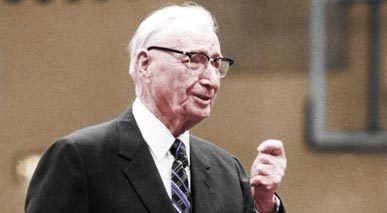
I had the privilege of attending Multnomah University (was Multnomah School of the Bible) from 1985-1988. I went there at the recommendation of Luis Palau and was drawn by their motto, “If it’s Bible you want, then you want Multnomah.” One of the highlights for me as a student at Multnomah was taking classes like “Spiritual Life,” and “Acts and Romans” from an old Scottish preacher (and the founder of the school) by the name of Dr. John G. Mitchell. I had never been around a man that was so in love with Jesus, and that loved the Bible like him. I was glad to see the article below by a fellow Multnomah and Talbot alumnus on memorizing Scripture based on advice from Dr. Mitchell. I had the same conversation with Dr. Mitchell that Dr. Berding had as a student. I don’t know that there is any greater need of the moment than the two things that Dr. Mitchell stood for and modeled: a love for Jesus and for his Word. I hope that you will join me in heeding these words of wisdom by one of the greatest men of God who ever walked on this planet (and that’s no exaggeration whatsoever). He was great because he was humbled and awed by the greatness of His God – and he lived to tell others of His Majesty. Dr. Mitchell was very special to me because he not only mastered the Bible, but more importantly, the Bible for God’s glory mastered him. Dr. Berding gives a very helpful strategy for memorizing Scripture based on principles gleaned from Dr. Mitchell in this excellent article. (Dr. Mitchell pictured above). – Dr. David P. Craig

 “The Easiest Way to Memorize the Bible”

One of my professors in college was really old. I can hear everyone asking: “How old was he?” (No, his social security number wasn’t 7 …) Let’s put it this way: he was the founder of the college at which I was studying (Multnomah in Portland, Ore.), and the school was celebrating the half-century mark of its founding while I was there! In fact, Dr. John Mitchell was over the age of 90 when he taught the two classes I took from him. He continued to teach well into his mid-90’s.

Not surprisingly, he was getting forgetful about some things by the time I had him as a teacher, but what he definitely was not forgetting were the Bible verses he had memorized. His ability to recall Bible verses was astounding. I do not know this for a fact, but I would guess that he had all of the New Testament and large sections of the Old Testament committed to memory. All of his students were profoundly impacted by his immersion in the Scriptures.

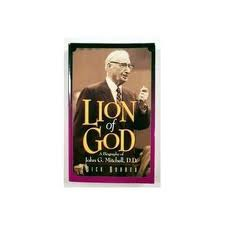
I only had one opportunity to sit and talk with him while I was a student. I had a single question to ask him that day: “How did you come to memorize so much of the Bible?” he answered, “Well, I never really tried to memorize.” (Oh no, I thought, this isn’t going to be very helpful …) “But before I prepare to preach a series of sermons on a book of the Bible, I first read it aloud *50 times before preaching it.” (OK, this might be helpful.) “Since I preached a lot in my younger years,” (now that is an understatement; read his biography! [Dick Bohrer. Lion of God: A biography of John G. Mitchell, D.D. Portland, OR: Multnomah Bible College, 1994], book cover and Dr. Mitchell pictured on left). “I had lots of opportunities to read passages over and over again.”

Dr. Mitchell’s comments that day were a helpful turning point for me in my own commitment to memorize the Scriptures. I had already tackled some large chunks of the Bible and committed them to memory, but the process of getting there had been rather painful. Rote memory (“look at the verse, cover it with your hand, look into the air and try to quote it by memory, uncover the verse with your hand to see what you missed, fix whatever mistakes you made, try again”) was hard work, and the results were not always satisfying from a long-term, remember-what-you-memorized standpoint.

After that single conversation with Dr. Mitchell, I changed tactics. From then on, before traveling down the “rote road,” I would read the passage I wanted to memorize 50 times out loud with great emphasis. Then – and only then – I would try the rote method.

I learned three things by doing it this way:

(1) I discovered that I had already memorized most of the passage I was trying to learn  before I ever really started to try to memorize it.

(2) I found out that the process of reading a passage over and over again in-and-of itself became a wonderful means of God working his grace in my life. I wasn’t just learning words, I was thinking about where the passage was going. God used it to help me understand the passage better, to think about its implications in my life, and to impact my actions and affections.

(3) I discovered that this process helped immensely in holding in my long-term memory the passages I had memorized. It is a far better process for retention. So, why don’t you try it yourself? Here is a summary of the process.

STEP 1: Begin by selecting a passage of Scripture that takes approximately 15 minutes to read out loud. Here is a short list of New Testament passages that would fall into this category that also would probably yield you a lot of personal spiritual fruit: Matthew 5-7; John 14-17; Romans 6-8; Philippians (all); Colossians (all); 2 Timothy (all); Hebrews 11-13; James (all); 1 Peter (all); 1 John (though this one is tough because of how cyclical it is).

STEP 2: Read your passage through once or twice a day aloud. Keep track of how how many times you have read it through.

STEP 3: Once you have read it aloud 50 times, then try to rote memorize it. Keep working on it faithfully until you can get through the entire passage by memory.

STEP 4: Quote through it at least 25 times without looking to fix it in your memory. An additional step you can take that would ease the process would be to read your passage onto a digital recorder and listen to it whenever you can as you drive, walk, cook or wait for something. Your own recorded voice will work a little better than someone else’s voice, since it will match the intonation of your daily oral readings, but you can use a prerecorded section if you prefer.

I’ll close with this thought: If you started today, red aloud through Philippians once a day for 50 days, spent the following 15 days doing the rote-memory thing, reviewed for another 25 days, you could have all of Philippians memorized in three or four months by only spending a relatively painless 15 minutes a day doing it. Wouldn’t that be amazing?

This column [adapted] above was first published in thegoodbookblog.com on January 28, 2012 & again in the Biola University Magazine, Spring Edition 2012, 39.

About the Author: Ken Berding is a professor of New Testament at Talbot School of Theology and the author of several books, most recently Walking in the Spirit (Crossway, 2011). He holds an M.A from Talbot, and a Ph.D. in hermeneutical and biblical interpretation from Westminster Seminary in Philadelphia.

*Note: Dr. Mitchell told me when I was at Multnomah that he learned this from the great preacher from Westminster Chapel in London – G. Campbell Morgan – the great preacher that preceded and handpicked Dr. David Martyn Lloyd-Jones [DPC])

John MacArthur’s Recommended First 750 Books For an Expositor of God’s Word

The First 750 Books for an Expositor’s Library

After the previous discussion of the importance of a solid library for an expository preacher, it seems appropriate to include a suggested list of materials and thereby identify a model library for one who has this goal. The works listed here are only suggestions. Each person will need to adapt the list to fit his own needs. “Books are like clothes: what fits one person’s needs and style may not fit another person’s at all.” Also, this list is limited to a basic collection in the fields of biblical studies and theology, and does not identify other items that an expositor may wish to acquire. The expositor should acquire a number of important items on current biblical and theological issues to assist him in his study and keep himself current. The purpose of this list is to assist a new generation of aspiring expository preachers in gathering a collection of tools for this worthy task. It includes books which have or will stand the test of time and tries to avoid items based on current theological speculation.

The list has a wider purpose, however. It is for a wide spectrum of readers who are seeking to assemble a well-rounded library. Serious expositors should consider the entire list as a model library. A reasonable goal is to acquire the 750 volumes in ten years. The first items to purchase have been marked with an asterisk (*). These same ones can serve as a basic list for a serious layman or devoted pastor who wishes to accumulate fewer than the proposed 750 for assistance in Bible study. The following are clarifications regarding the list:

1.   Some of the volumes listed under individual commentaries are parts of sets that are also included in the list. They have not been counted twice.

2.   When entire sets are recommended, it is understood that individual volumes within each set are of uneven quality because of a variety of authors. The expositor should sometimes buy selectively from sets with this in mind. In other cases, he should own entire sets so that he has resources on the whole Bible.

3.   The expositor may choose to wait to purchase commentaries on individual books of the Bible until he needs them. He should remember, however, that books are in and out of print and that he may not always have the time or be in the right place to secure good materials. The key to building a good library is a good “want list” carefully pursued over a period of time. Books tend to show up when least expected and often cannot be found when needed! They are often cheaper when the need for them is not so urgent.

4.   The list can also be used as a study guide for those with access to a theological library. It can also be modified and made suitable as a basis for a church library in biblical studies.

I. Bibliographic Tools

Badke, William B. The Survivor’s Guide to Library Research. Zondervan, 1990.

*Barber, Cyril J. The Minister’s Library. Moody, 1985–. 2 vols. plus supplements.

*Barker, Kenneth L., Bruce K. Waltke, Roy B. Zuck. Bibliography for Old Testament Exegesis and Exposition. Dallas Theological Seminary, 1979.

Bollier, John A. The Literature of Theology: A Guide for Students and Pastors. Westminster, 1979.

*Carson, D. A. New Testament Commentary Survey. Baker, 1986.

Childs, Brevard S. Old Testament Books for Pastor and Teacher. Westminster, 1977.

Kiehl, Erich H. Building Your Biblical Studies Library. Concordia, 1988.

Martin, Ralph P. New Testament Books for Pastor and Teacher. Westminster, 1984.

*Rosscup, James E. Commentaries for Biblical Expositors. Author, 1983.

Spurgeon, Charles H. Commenting and Commentaries. Banner of Truth, 1969.

*Wiersbe, Warren W. A Basic Library for Bible Students. Baker, 1981.

II. Bibles

American Standard Version. Nelson, 1901.

The Amplified Bible. Zondervan, 1965.

*King James Version (or Authorized Version). Various publishers.

The Living Bible, Paraphrased. Tyndale, 1971.

*New American Standard Bible. Lockman, 1977.

New English Bible. Oxford/Cambridge, 1970.

*New International Version. Zondervan, 1978.

New King James Version. Nelson, 1982.

New Century Version. Word, 1991.

The New Scofield Reference Bible. Oxford, 1967.

The New Testament in Modern English. Macmillan, 1973.

The NIV Study Bible. Zondervan, 1985.

*Ryrie Study Bible. Moody, 1978.

The Scofield Reference Bible. Oxford, 1917.

III. Biblical Texts

*Aland, Kurt. The Greek New Testament. 3d ed. UBS, 1983.

———. The Text of the New Testament. Eerdmans, 1987.

*Biblia Hebraica Stuttgartensia. Ed. by Karl Elliger and Wilhelm Rudolph; Deutsche Biblestiftung, 1984.

*Bruce, F. F. The Books and the Parchments. Revell, 1984.

*———. The Canon of the Scripture. InterVarsity, 1988.

———. History of the English Bible in English. 3d ed. Revell, 1978.

Greenlee, J. Harold. Introduction to New Testament Textual Criticism. Eerdmans, 1964.

*Harris, R. Laird. Inspiration and Canonicity of the Bible. Zondervan, 1969.

Lewis, Jack P. The English Bible From KJV to NIV, A History of Evaluation. Baker, 1982.

Metzger, Bruce M. The Canon of the New Testament. Oxford, 1987.

———. The Text of the New Testament: Its Transmission, Corruption, and Restoration. Oxford, 1968.

*———. A Textual Commentary on the Greek New Testament. UBS, 1971.

*Nestle-Aland. Novum Testamentum Graece. 26th ed. Deutsche Bibelstiftung, 1979.

*Rahlfs, Alfred. Septuaginta. Wuerttembergische, 1962.

Roberts, B. J. The Old Testament Text and Versions. Wales, 1951.

Swete, Henry B. An Introduction to the Old Testament in Greek. KTAV, 1968.

Wurthwein, Ernst. The Text of the Old Testament. Eerdmans, 1979.

IV. Old Testament Tools

*Armstrong, Terry A., Douglas L. Busby, and Cyril F. Carr. A Reader’s Hebrew and English Lexicon of the Old Testament. Zondervan, 1989.

Botterweck, G. Johannes, and Helmer Ringgren, eds. Theological Dictionary of the Old Testament. Vols. 1–. Eerdmans, 1974–.

*Brown, Francis, Samuel R. Driver, and Charles A. Briggs. A Hebrew and English Lexicon of the Old Testament. Oxford, 1907.

Einspahr, Bruce. Index to Brown, Driver, and Briggs Hebrew Lexicon. Moody, 1977.

*The Englishmen’s Hebrew and Chaldee Concordance of the Old Testament. Zondervan, 1970.

*Even-Shoshan, Abraham. A New Concordance of the Old Testament. Baker, 1989.

Girdlestone, Robert Baker. Synonyms of The Old Testament. Eerdmans.

*Harris, R. Laird, Gleason L. Archer, and Bruce K. Waltke, eds. Theological Wordbook of the Old Testament. 2 vols. Moody, 1980.

Hatch, Edwin, and Henry A. Redpath. A Concordance to the Septuagint and the Other Greek Versions of the Old Testament. 2 vols. Akademische, 1955.

*Holladay, William. A Concise Hebrew and Aramaic Lexicon of the Old Testament. Eerdmans, 1971.

Koehler, Ludwig, and Walter Baumgartner. Lexicon in Verteris Testament Libros. 2 vols. Brill, 1958.

Liddell, Henry G., and Robert Scott. A Greek English Lexicon. 9th ed., rev. by. H. S. Jones and R. McKenzie. Oxford, 1968.

*Owens, John Joseph. Analytical Key to the Old Testament. 4 vols. Baker, 1989–.

Seow, C. L. A Grammar for Biblical Hebrew. Abingdon, 1987.

Unger, Merrill F., and William White. Nelson’s Expository Dictionary of the Old Testament. Nelson, 1980.

Waltke, Bruce K. An Intermediate Hebrew Grammar. Eisenbrauns, 1984.

Waltke, Bruce K., and M. O’Connor. An Introduction to Biblical Hebrew Syntax. Eisenbrauns, 1990.

*Weingreen, Jacob. Practical Grammar for Classical Hebrew. Oxford, 1959.

Wilson, William. Old Testament Word Studies. Kregel, 1978.

V. New Testament Tools

*Abbot-Smith, George. A Manual Greek Lexicon of the New Testament. T. & T. Clark, 1936.

Alsop, John R., ed. An Index to the Revised Bauer-Arndt-Gingrich Greek Lexicon. 2d ed. by F. Wilbur Gingrich and Frederick W. Danker. Zondervan, 1981.

Balz, Horst, and Gerhard Schneider, eds. Exegetical Dictionary of the New Testament. Eerdmans, 1978.

Barclay, William. New Testament Words. Westminster, 1974.

*Bauer, Walter, W. F. Arndt, F. W. Gingrich, and F. W. Danker. A Greek-English Lexicon of the New Testament and Other Early Christian Literature. 2d ed. University of Chicago, 1979.

Blass, F. W., A. Debrunner, and Robert W. Funk. A Grammar of New Testament and Other Early Christian Literature. University of Chicago, 1961.

Bromiley, Geoffrey. Theological Dictionary of the New Testament. Ed. by Gerhard Kittel and Gerhard Friedrich. Trans. by Geoffrey W. Bromiley. Abridged in 1 vol. Eerdmans, 1985.

*Brown, Colin, ed. The New International Dictionary of New Testament Theology. 4 vols. Zondervan, 1975–86.

Burton, Ernest DeWitt. Syntax of the Moods and Tenses in New Testament Greek. T. & T. Clark, 1898.

Cremer, Hermann. Biblico-Theological Lexicon of New Testament Greek. 4th ed. T. & T. Clark, 1962.

Dana, H. E., and Julius R. Mantey. A Manual Grammar of the Greek New Testament. Macmillan, 1955.

Gingrich, F. W. A Shorter Lexicon of the Greek Testament. 2d ed. Rev. by Frederick W. Danker. University of Chicago, 1983.

Hanna, Robert. A Grammatical Aid to the Greek New Testament. Baker, 1983.

Kittel, Gerhard, and Gerhard Friedrich. The Theological Dictionary of the New Testament. Trans. by Geoffrey Bromiley. 10 vols. Eerdmans, 1964–76.

Liddell, H. G., and R. Scott, A Greek-English Lexicon. 8th ed. Clarendon, 1897.

*Machen, J. Gresham. New Testament Greek for Beginners. Macmillan, 1923.

Moule, C. F. D. An Idiom Book of the New Testament Greek. Cambridge, 1963.

Moulton, James Hope. A Grammar of New Testament Greek. 4 vols. T. & T. Clark, 1908–.

——— and George Milligan. The Vocabulary of the Greek New Testament Illustrated from the Papyri and Other Non-Literary Sources. Hodder and Stoughton, 1952.

Moulton, William, and A. S. Geden. A Concordance to the Greek Testament. 5th ed. Rev. by H. K. Moulton. T. & T. Clark, 1978.

Richards, Lawrence O. Expository Dictionary of Bible Words. Zondervan, 1985.

*Rienecker, Fritz. A Linguistic Key to the Greek New Testament. Zondervan, 1980.

Robertson, A. T. A Grammar of the Greek New Testament in the Light of Historical Research. Broadman, 1923.

Smith, J. B. Greek-English Concordance to the New Testament. Herald, 1955.

*Thayer, Joseph H. Greek-English Lexicon of the New Testament. Zondervan, 1962.

Trench, Richard Chenevix. Synonyms of the New Testament. Eerdmans, 1953.

Turner, Nigel. Christian Words. Nelson, 1981.

———. Grammatical Insights into the New Testament. T. & T. Clark, 1977.

*Vine, W. E., Merrill F. Unger, and William White. An Expository Dictionary of Biblical Words. Nelson, 1984.

*Wingram, George V. The Englishman’s Greek Concordance of the New Testament. 9th ed. Zondervan, 1970.

Zerwick, Max, and Mary Grosvenor. A Grammatical Analysis of the Greek New Testament. Biblical Institute, 1981.

VI. Hermeneutics and Exegesis

Ferguson, Duncan S. Biblical Hermeneutics, an Introduction. John Knox, 1986.

Kaiser, Walter C., Jr. Toward an Exegetical Theology. Baker, 1981.

Mickelsen, A. Berkeley. Interpreting the Bible. Eerdmans, 1963.

*Ramm, Bernard. Protestant Biblical Interpretation. Baker, 1970.

Sproul, R. C. Knowing Scripture. InterVarsity, 1977.

*Tan, Paul Lee. The Interpretation of Prophecy. BMH, 1974.

*Terry, Milton S. Biblical Hermeneutics. Zondervan, 1974.

*Thomas, Robert L. Introduction to Exegesis. Author, 1987.

Traina, Robert A. Methodical Bible Study. Author, 1952.

Virkler, Henry A. Hermeneutics, Principles and Processes of Biblical Interpretation. Baker, 1981

VII. General Reference Works

*Bromiley, Geoffrey W., ed. The International Standard Bible Encyclopedia. 4 vols. Eerdmans, 1979–88.

Buttrick, George A., and K. Crim, eds. The Interpreter’s Dictionary of the Bible. 5 vols. Abingdon, 1962–76.

Douglas, J. D., ed. The New Bible Dictionary. 2nd ed. Tyndale, 1982.

——— and E. E. Cairns, eds. The New International Dictionary of the Christian Church. Zondervan, 1978.

———, ed. New 20th-Century Encyclopedia of Religious Knowledge. Baker, 1990.

Elwell, Walter A., ed. Encyclopedia of the Bible. 2 vols. Baker, 1988.

*———, ed. Evangelical Dictionary of Theology. Baker, 1984.

Ferguson, Sinclair B., David F. Wright, and J. I. Packer. New Dictionary of Theology. InterVarsity, 1988.

Harrison, R. K. Encyclopedia of Biblical and Christian Ethics. Nelson, 1987.

Hastings, James, ed. Dictionary of the Apostolic Church. 2 vols. T. & T. Clark, 1915.

———. Dictionary of the Bible. 5 vols. T. & T. Clark, 1898.

———. Dictionary of Christ and the Gospels. T. & T. Clark, 1906.

McClintock, John, and James Strong, eds. Cyclopedia of Biblical Theological, and Ecclesiastical Literature. 12 vols. Baker, 1981.

*Orr, James, ed. International Standard Bible Encyclopedia. 5 vols. Eerdmans, 1939.

Reid, Daniel G. Dictionary of Christianity in America. InterVarsity, 1990.

*Tenney, Merrill C., ed. The Zondervan Pictorial Encyclopedia of the Bible. 5 vols. 1975.

*Unger, Merrill F. The New Unger’s Bible Dictionary. Rev. and updated edition. Ed. by R. K. Harrison. Moody, 1988.

VIII. Concordances

Anderson, Ken. The Contemporary Concordance of Bible Topics. Victor, 1984.

Elder, F., ed. Concordance to the New English Bible: New Testament. Zondervan, 1964.

Goodrick, Edward, and John Kohlenberger III. The NIV Complete Concordance. Zondervan, 1981.

———. The NIV Exhaustive Concordance. Zondervan, 1990.

Hill, Andrew E., comp. Baker’s Handbook of Bible Lists. Baker, 1981.

*Monser, Harold E. Topical Index and Digest of the Bible. Baker, 1983.

*Nave, Orville J., ed. Nave’s Topical Bible. Nelson, 1979.

The Phrase Concordance of the Bible. Nelson, 1986.

*Strong, James. Exhaustive Concordance of the Bible. Abingdon, 1980.

*Thomas, Robert L., ed. New American Standard Exhaustive Concordance of the Bible. Holman, 1981.

*Torrey, R. A. The Treasury of Scripture Knowledge. Bagster, n.d.

*———. The New Topical Textbook. Revell, n.d.

*Young, Robert., ed. Analytial Concordance to the Bible. Rev. ed. Nelson, 1980.

IX. Works on Archaeology, Geography, and History

Aharoni, Yohanan. The Land of the Bible: A Historical Geography of the Bible. Westminster, 1979.

*———. The Macmillan Bible Atlas. Macmillan, 1977.

Baly, Denis. The Geography of the Bible. New and rev. ed. Harper, 1974.

Barrett, C. K. The New Testament Background: Selected Documents. S.P.C.K., 1958.

Beitzel, Barry J. The Moody Atlas of Bible Lands. Moody, 1985.

Blaiklock, E. M., and R. K. Harrison, eds. The New International Dictionary of Biblical Archaeology. Zondervan, 1983.

Bouquet, A. C. Everyday Life in New Testament Times. Scribner, 1953.

Bruce, F. F. Israel and the Nations. Eerdmans, 1963.

*———. New Testament History. Doubleday, 1971.

*Edersheim, Alfred. Bible History. 2 vols. Eerdmans, 1954.

*———. The Life and Times of Jesus the Messiah. 2 vols. Eerdmans, 1954.

*Gower, Ralph. The New Manners and Customs of Bible Times. Moody, 1987.

Harrison, Roland K., ed. Major Cities of the Biblical World. Nelson, 1985.

*———. Old Testament Times. Eerdmans, 1990.

Heaton, E. W. Everyday Life in Old Testament Times. Scribner’s, 1956.

Jeremias, Joachim. Jerusalem in the Times of Jesus. Fortress, 1969.

Josephus, Flavius. Complete Works. Kregel, 1960.

Lohse, Eduard. The New Testament Environment. Abingdon, 1976.

Merrill, Eugene H. Kingdom of Priests. Baker, 1987.

Metzger, Bruce Manning. The New Testament, Its Background, Growth, and Content. Abingdon, 1965.

Miller, Madeleine S., and J. Lane. Harper’s Encyclopedia of Bible Life. Rev. by Boyce M. Bennett and David Scott. Harper, 1978.

*Pfeiffer, Charles F. The Biblical World. Baker, 1966.

*———. Old Testament History. Baker, 1973.

*——— and Howard F. Vos. The Wycliffe Historical Geography of Bible Lands. Moody, 1967.

Reicke, Bo. The New Testament Era. Fortress, 1968.

Schultz, Samuel J. The Old Testament Speaks. 3d ed. Harper, 1980.

*Tenney, Merrill C. New Testament Times. Eerdmans, 1965.

Thompson, J. A. The Bible and Archaeology. Eerdmans, 1972.

*———. Handbook of Life in Bible Times. InterVarsity, 1986.

Vos, Howard F. Archaeology in Biblical Lands. Moody, 1987.

Wood, Leon. Israel’s United Monarchy. Baker, 1979.

———. The Prophets of Israel. Baker, 1979.

*———. A Survey of Israel’s History. Rev. by David O’Brien. Zondervan, 1986.

Yamauchi, Edwin M. Pre-Christian Gnosticism. 2d ed. Baker, 1983.

X. Survey and Introduction

*Alexander, David, and Pat Alexander. Eerdman’s Handbook to the Bible. Eerdmans, 1973.

Andrews, Samuel J. The Life of Our Lord Upon the Earth. Zondervan, 1954.

*Archer, Gleason L. A Survey of Old Testament Introduction. Rev. ed. Moody, 1974.

*Bruce, A. B. The Training of the Twelve. Zondervan, 1963.

Bruce, F. F. The Letters of Paul and Expanded Paraphrase. Eerdmans, 1965.

———. Paul: Apostle of the Heart Set Free. Eerdmans, 1977.

Bullock, C. Hassell. An Introduction to the Old Testament Poetic Books. Moody, 1988.

Conybeare, W. J., and J. S. Howsen. The Life and Epistles of Saint Paul. Eerdmans, 1954.

Craigie, Peter C. The Old Testament, Its Background, Growth, and Content. Abingdon, 1986.

*Culver, Robert D. The Life of Christ. Baker, 1976.

Farrar, Frederic W. The Life of Christ. 2 vols. Cassell, 1874.

———. The Life and Work of St. Paul. 2 vols. Cassell, 1879.

Foakes Jackson, F. J., and Kirsopp Lake. The Beginnings of Christianity. 5 vols. Macmillan, 1920.

*Freeman, Hobart E. An Introduction to the Old Testament Prophets. Moody, 1968.

*Gromacki, Robert. New Testament Survey. Baker, 1974.

*Gundry, Robert H. A Survey of the New Testament. Zondervan, 1981.

Guthrie, Donald. The Apostles. Zondervan, 1975.

———. Jesus the Messiah. Zondervan, 1972.

*———. New Testament Introduction. Rev. ed. InterVarsity, 1990.

*Harrison, Everett F. Introduction to the New Testament. Eerdmans, 1964.

Harrison, Roland K. Introduction to the Old Testament. Eerdmans, 1969.

*Hiebert, D. Edmond. An Introduction to the New Testament. 3 vols. Moody, 1975–77.

Kaiser, Walter C. Classical Evangelical Essays in Old Testament Interpretation. Baker, 1972.

Kidner, Derek. An Introduction to Wisdom Literature, The Wisdom of Proverbs, Job, and Ecclesiastes. InterVarsity, 1985.

Kistemaker, Simon. The Parables of Jesus. Baker, 1980.

*LaSor, William Sanford, David Hubbard, and Frederic Bush. Old Testament Survey. Eerdmans, 1982.

Morgan, G. Campell. The Crises of the Christ. Revell, n.d.

———. The Parables and Metaphors of Our Lord. Revell, n.d.

———. The Teaching of Christ. Revell, n.d.

Pentecost, J. Dwight. The Words and Works of Jesus Christ. Zondervan, 1981.

Ramsay, William. The Church in the Roman Empire. Baker, 1954.

———. The Cities of Saint Paul. Baker, 1960.

———. Saint Paul the Traveler and Roman Citizen. Baker, 1949.

Robertson, A. T. A Harmony of the Gospels for Students of the Life of Christ. Harper, 1950.

Schultz, Samuel J. The Old Testament Speaks. Harper, 1970.

Scroggie, William Graham. A Guide to the Gospels. Revell, 1948.

*———. Know Your Bible. Pickering, 1940.

———. The Unfolding Drama of Redemption. Zondervan, 1970.

Shepard, J. W. The Life and Letter of Saint Paul. Eerdmans, 1950.

*Tenney, Merrill C. New Testament Survey. Rev. by Walter M. Dunnett. Eerdmans, 1985.

*Thomas, Robert L., and Stanley N. Gundry. A Harmony of the Gospels with Explanations and Essays. Harper, 1978.

———. The NIV Harmony of the Gospels. Harper, 1988.

Trench, R. C. Notes on the Parables. Pickering, 1953.

Unger, Merrill F. Introductory Guide to the Old Testament. Zondervan, 1951.

*———. Unger’s Guide to the Bible. Tyndale, 1974.

Young, Edward J. An Introduction to the Old Testament. Eerdmans, 1960.

XI. Theological Works

*Berkhof, L. Systematic Theology. Eerdmans, 1941.

Bruce, F. F. New Testament Development of Old Testament Themes. Eerdmans, 1968.

Buswell, James Oliver. A Systematic Theology of the Christian Religion. Zondervan, 1962.

Chafer, Lewis Sperry. Systematic Theology. 8 vols. Dallas Seminary, 1947.

*Erickson, Millard J. Christian Theology. 3 vols. Baker, 1983–85.

Feinberg, Charles L. Millennialism: The Two Major Views. 3d ed. Moody, 1980.

Gill, John. Body of Divinity. Lassetter, 1965.

Guthrie, Donald. New Testament Theology. InterVarsity, 1981.

Hodge, Charles. Systematic Theology. 3 vols. Clarke, 1960.

*Kaiser, Walter C. Toward an Exegetical Theology: Biblical Exegesis for Preaching and Teaching. Baker, 1981.

———. Old Testament Theology. Zondervan, 1978.

*McClain, Alva J. The Greatness of the Kingdom. Moody, 1959.

Murray, John. Collected Writings of John Murray. 4 vols. Banner of Truth, 1976–82.

Oehler, Gustav Friedrich. Theology of the Old Testament. Funk and Wagnalls, 1884.

Packer, J. I., ed. The Best in Theology. Vol. 1 of multi-volume series. Christianity Today, 1987–.

Payne, J. Barton. Encyclopedia of Biblical Prophecy. Harper, 1973.

*Pentecost, J. Dwight. Things to Come: A Study in Biblical Eschatology. Zondervan, 1958.

Ridderbos, Herman. Paul: An Outline of His Theology. Eerdmans, 1975.

Ryrie, Charles C. Biblical Theology of the New Testament. Moody, 1959.

Shedd, William G. T. Dogmatic Theology. 3 vols. Zondervan, (reprint) n.d..

Vos, Gerhardus. Biblical Theology. Eerdmans, 1948.

Warfield, Benjamin B. Biblical and Theological Studies. Presbyterian and Reformed, 1968.

———. Selected Shorter Writings of Benjamin B. Warfield. 2 vols. Presbyterian and Reformed, 1970.

XII. One-Volume Commentaries

Guthrie, Donald, J. A. Motyer, A. M. Stibbs, and D. J. Wiseman, eds. The New Bible Commentary: Revised. 3d ed. Eerdmans, 1970.

*Harrison, E. F., and Charles F. Pfeiffer. The Wycliffe Bible Commentary. Moody, 1962.

XIII. Commentary Sets

*Alford, Henry. The Greek Testament. 4 vols. Moody, 1958.

Barclay, William F. The Daily Bible Series. Rev. ed. 18 vols. Westminster, 1975.

Barker, Kenneth L. The Wycliffe Exegetical Commentary. 56 vols. when complete. Moody, 1988–.

Bruce, F. F., ed. New International Commentary on the New Testament. 20 vols. so far. Eerdmans.

Calvin, John. Calvin’s Commentaries. 22 vols. Baker, 1981.

*Gaebelein, Frank E., general ed. The Expositor’s Bible Commentary. 12 vols. when complete. Zondervan, 1978–.

Harrison, R. K., ed. New International Commentary on the Old Testament. 15 vols. so far. Eerdmans.

*Hendriksen, William, and Simon J. Kistemaker. New Testament Commentary. 12 vols. so far. Baker, 1954–.

*Henry, Matthew. Matthew Henry’s Commentary on the Whole Bible. 6 vols. Revell, n.d.

Hubbard, David, and Glenn W. Barker. Word Biblical Commentary. 52 vols. when complete. Word.

*Keil, C. F., and F. Delitzsch. Biblical Commentary on the Old Testament. 11 vols. Eerdmans, 1968.

Lange, John Peter. Commentary on the Holy Scriptures, Critical, Doctrinal and Homiletical. 12 vols. Zondervan, 1960.

Lenski, R. C. H. Interpretation of the New Testament. 12 vols. Augsburg, 1943.

*MacArthur, John. The MacArthur New Testament Commentary. Moody, 1983–.

Meyer, H. A. W. Critical and Exegetical Handbook to the New Testament. 11 vols. Funk and Wagnalls, 1884.

*Morris, Leon, ed. Tyndale New Testament Commentaries. Various eds. 20 vols. InterVarsity.

*Nicoll, William Robertson. The Expositor’s Greek New Testament. 5 vols. Eerdmans, 1970.

Perowne, J. J. S., gen ed. Cambridge Bible for Schools and Colleges. 60 vols. Cambridge, 1880–.

*Robertson, A. T. Word Pictures in the New Testament. 6 vols. Broadman, 1930.

Vincent, Marvin R. Word Studies in the New Testament. 4 vols. Eerdmans, 1946.

*Walvoord, John F., and Roy B. Zuck. The Bible Knowledge Commentary. 2 vols. Victor, 1983.

*Wiseman, D. J., ed. The Tyndale Old Testament Commentaries. 21 vols. so far. InterVarsity.

Wuest, Kenneth S. Wuest’s Word Studies From the Greek New Testament. 3 vols. Eerdmans, 1973.

XIV. Individual Book Commentaries

Genesis

*Davis, John J. Paradise to Prison. Baker, 1976.

Leupold, H. C. Exposition of Genesis. Baker, 1963.

Stigers, Harold G. A Commentary on Genesis. Zondervan, 1976.

Exodus

Bush, George. Notes, Critical and Practical on the Book of Exodus. 2 vols. Klock and Klock, 1976.

Childs, Brevard. The Book of Exodus: A Critical, Theological Commentary. Westminster, 1974.

*Davis, John J. Moses and the Gods of Egypt. 2d ed. Baker, 1986.

Leviticus

Bonar, Andrew. A Commentary on the Book of Leviticus. Zondervan, 1959.

Bush, George. Notes, Critical and Practical on the Book of Leviticus. Klock and Klock, 1976.

*Wenham, Gordon J. The Book of Leviticus. New International Commentary on the Old Testament. Eerdmans, 1979.

Numbers

Bush, George. Notes, Critical and Practical on the Book of Numbers. Klock and Klock, 1976.

Gray, George G. A Critical and Exegetical Commentary on Numbers. International Critical Commentary. T. & T. Clark, 1912.

*Harrison, R. K. The Wycliffe Exegetical Commentary: Numbers. Moody, 1990.

Deuteronomy

*Craigie, Peter C. The Book of Deuteronomy. New International Critical Commentary on the Old Testament. Eerdmans, 1976.

Driver, S. R. A Critical and Exegetical Commentary on Deuteronomy. International Critical Commentary. T. & T. Clark, 1902.

Reider, Joseph. The Holy Scriptures: Deuteronomy. Jewish Publication Society, 1937.

Joshua

Davis, John J. Conquest and Crisis. Baker, 1969.

Pink, Arthur. Gleanings in Joshua. Moody, 1964.

*Woudstra, Marten H. The Book of Joshua. New International Commentary on the Old Testament. Eerdmans, 1981.

Judges

Bush, George. Notes, Critical and Practical on the Book of Judges. Klock and Klock, 1976.

Moore, George F. A Critical and Exegetical Commentary on Judges. International Critical Commentary. T. & T. Clark, 1901.

*Wood, Leon J. Distressing Days of the Judges. Zondervan, 1975.

Ruth

Atkinson, David. The Message of Ruth. InterVarsity, 1983.

Barber, Cyril J. Ruth: An Expositional Commentary. Moody, 1983.

*Hubbard, Robert L. The Book of Ruth. New International Commentary on the Old Testament. Eerdmans, 1988.

Morris, Leon. Ruth, an Introduction and Commentary. Tyndale Old Testament Commentaries. InterVarsity, 1968.

1 & 2 Samuel

Anderson, A. A. Word Biblical Commentary: II Samuel. Word, 1989.

*Davis, John J., and John C. Whitcomb. A History of Israel: From Conquest to Exile. Baker, 1980.

Gordon, Robert P. I & II Samuel: A Commentary. Zondervan, 1986.

Keil, C. F., and F. Delitzsch. Biblical Commentary on the Books of Samuel. Eerdmans, 1971.

Klein, Ralph W. Word Biblical Commentary: I Samuel. Word, 1983.

1 & 2 Kings

DeVries, Simon J. Word Biblical Commentary: I Kings. Word, 1985.

Hobbs, T. R. Word Biblical Commentary: II Kings. Word, 1985.

*Keil, C. F. Biblical Commentary on the Old Testament: The Books of the Kings. Eerdmans, 1971.

Montgomery, James A. The Book of Kings. International Critical Commentary; T. & T. Clark, 1951.

Newsome, James D., ed. A Synoptic Harmony of Samuel, Kings and Chronicles. Baker, 1986.

1 & 2 Chronicles

Braun, Roddy. Word Biblical Commentary: I Chronicles. Word, 1986.

Dillard, Raymond B. Word Biblical Commentary: II Chronicles. Word, 1987.

*Keil, C. F. Biblical Commentary on the Old Testament: The Book of the Chronicles. Eerdmans, 1971.

Wilcock, Michael. The Message of Chronicles. InterVarsity, 1987.

Ezra, Nehemiah, and Esther

Barber, Cyril J. Nehemiah and the Dynamics of Effective Leadership. Loizeaux, 1976.

Cassel, Paulus. An Explanatory Commentary on Esther. Edinburg, 1881.

Keil, C. F. The Books of Ezra, Nehemiah, and Esther. Eerdmans, 1970.

*Kidner, Derek. Ezra and Nehemiah, An Introduction and Commentary. Tyndale Old Testament Commentaries; InterVarsity, 1979.

*Whitcomb, John C. Esther: Triumph of God’s Sovereignty. Moody, 1979.

Williamson, H. G. M. Word Biblical Commentary: Ezra, Nehemiah. Word, 1985.

Job

*Anderson, Francis I. Job. Tyndale Old Testament Commentaries; InterVarsity, 1976.

Delitzsch, Franz. Biblical Commentary on the Book of Job. 2 vols. Eerdmans, 1970.

Dhorme, Edouard. A Commentary on the Book of Job. Nelson, 1967.

Psalms

Alexander, J. A. The Psalms Translated and Explained. Zondervan, n.d.

Leupold, H. C. Exposition on the Psalms. Baker, 1969.

Scroggie, W. Graham. The Psalms. Pickering, 1965.

*Spurgeon, C. H. The Treasury of David. 3 vols. Zondervan, 1966.

Proverbs

*Alden, Robert L. Proverbs. Baker, 1983.

Bridges, Charles. A Commentary on Proverbs. Banner of Truth, 1968.

Delitzsch, Franz. Biblical Commentary on the Proverbs of Solomon. 2 vols. Eerdmans, 1970.

McKane, William. Proverbs. Old Testament Library; Westminster, 1970.

Ecclesiastes

Eaton, Michael. Ecclesiastes: An Introduction and Commentary. InterVarsity, 1983.

*Kaiser, Walter C. Ecclesiastes: Total Life. Moody, 1979.

Leupold, H. C. Exposition of Ecclesiastes. Baker, 1952.

Song of Solomon

Burrowes, George. A Commentrary on The Song of Solomon. Banner of Truth, 1973.

*Carr, G. Lloyd. The Song of Solomon. InterVarsity, 1984.

Durham, James. The Song of Solomon. Banner of Truth, 1982.

Isaiah

Alexander, Joseph A. Isaiah, Translated and Explained. Zondervan, 1974.

Morgan, G. Campbell. The Prophecy of Isaiah. The Analyzed Bible. 2 vols. Hodder and Stoughton, 1910.

*Young, Edward J. The Book of Isaiah. 3 vols. Eerdmans, 1965–72.

Jeremiah

*Feinberg, Charles L. Jeremiah, A Commentary. Zondervan, 1982.

Laetsch, Theodore. Jeremiah. Concordia, 1952.

Morgan, G. Campbell. Studies in the Prophecy of Jeremiah. Revell, 1969.

Lamentations

*Harrison, R. K. Jeremiah and Lamentations. Tyndale Old Testament Commentaries; InterVarsity, 1973.

Jensen, Irving L. Jeremiah and Lamentations. Moody, 1974.

Kaiser, Walter C., Jr. A Biblical Approach to Personal Suffering. Moody, 1982.

Ezekiel

*Feinberg, Charles L. The Prophecy of Ezekiel. Moody, 1969.

Keil, Carl Friedrich. Biblical Commentary on the Prophecies of Ezekiel. 2 vols. Eerdmans, 1970.

Taylor, John B. Ezekiel, An Introduction and Commentary. Tyndale Old Testament Commentaries; InterVarsity, 1969.

Daniel

*Walvoord, John F. Daniel, The Key to Prophetic Revelation. Moody, 1971.

Wood, Leon J. Commentary on Daniel. Zondervan, 1972.

Young, Edward J. The Messianic Prophecies of Daniel. Eerdmans, 1954.

Minor Prophets

*Feinberg, Charles L. The Minor Prophets. Moody, 1976.

Keil, C. F., and Franz Delitzsch. The Twelve Minor Prophets. 2 vols. Eerdmans, 1961.

Laetsch, Theodore. The Minor Prophets. Concordia, 1956.

Pusey, E. B. The Minor Prophets, a Commentary. Baker, 1956.

Matthew

Broadus, John A. Commentary on the Gospel of Matthew. American Baptist, 1886.

Hendriksen, William. The Gospel of Matthew. Baker, 1973.

MacArthur, John F., Jr. The MacArthur New Testament Commentary: Matthew. 4 vols. Moody, 1985–89.

Morgan, G. Campbell. The Gospel According to Matthew. Revell, n.d.

*Toussaint, Stanley D. Behold the King, A Study of Matthew. Multnomah, 1980.

Mark

Hendriksen, William. The Gospel of Mark. Baker, 1975.

*Hiebert, D. Edmond. Mark, A Portrait of the Servant. Moody, 1974.

Morgan, G. C. The Gospel According to Mark. Revell, n.d.

Swete, Henry Barclay. The Gospel According to Saint Mark. Eerdmans, 1952.

Luke

Hendriksen, William. The Gospel of Luke. Baker, 1978.

Morgan, G. Campbell. The Gospel According to Luke. Revell, n.d.

*Morris, Leon. The Gospel According to St. Luke. Tyndale New Testament Commentaries; Eerdmans, 1974.

Plummer, Alfred. A Critical and Exegetical Commentary on the Gospel According to St. Luke. International Critical Commentary; T. & T. Clark, 1922.

John

Hendriksen, William. Exposition of the Gospel According to John. Baker, 1961.

Morgan, G. Campell. The Gospel According to John. Revell, n.d..

*Morris, Leon. Commentary on the Gospel of John. New International Commentary on the New Testament; Eerdmans, 1970.

Westcott, B. F. The Gospel According to Saint John. Eerdmans, 1950.

Acts

Bruce, F. F. The Book of Acts. New International Commentary on the New Testament; Eerdmans, 1956.

*Harrison, Everett F. Acts: The Expanding Church. Moody, 1976.

Kistemaker, Simon J. New Testament Commentary, Exposition of the Acts of the Apostles. Baker, 1990.

Morgan, G. Campbell. The Acts of the Apostles. Revell, n.d.

Romans

*Cranfield, C. E. B. A Critical and Exegetical Commentary on the Epistle to the Romans. 2 vols. International Critical Commentary; T. & T. Clark, 1975–77.

Lloyd-Jones, D. Martyn. Romans. 6 vols. Zondervan, 1971–76.

MacArthur, John F., Jr. The MacArthur New Testament Commentary: Romans. Multi-volume. Moody, 1991–.

McClain, Alva J. Romans, the Gospel of God’s Grace. Moody, 1973.

Murray, John. The Epistle to the Romans. New International Commentary on the New Testament; Eerdmans, 1968.

1 Corinthians

*Fee, Gordon D. The First Epistle to the Corinthians. New International Commentary on the New Testament; Eerdmans, 1987.

Godet, Franz. Commentary on the First Epistle to the Corinthians. Zondervan, 1957.

MacArthur, John F., Jr. The MacArthur New Testament Commentary: 1 Corinthians. Moody, 1984.

Robertson, Archibald, and A. Plummer. A Critical and Exegetical Commentary on the First Epistle to the Corinthians. International Critical Commentary; T. & T. Clark, 1914.

2 Corinthians

*Hughes, Philip E. Commentary on the Second Epistle to the Corinthians. New International Commentary on the New Testament; Eerdmans, 1962.

Kent, Homer A. A Heart Opened Wide: Studies in II Corinthians. Baker, 1982.

Plummer, Alfred. A Critical and Exegetical Commentary on the Second Epistle to the Corinthians. International Critical Commentary; T. & T. Clark, 1915.

Galatians

Bruce, F. F. The Epistle to the Galatians, A Commentary on the Greek Text. Eerdmans, 1982.

*Kent, Homer A., Jr. The Freedom of God’s Sons: Studies in Galatians. Baker, 1976.

Lightfoot, Joseph Barber. The Epistle of St. Paul to the Galatians. Zondervan, 1966.

MacArthur, John F., Jr. The MacArthur New Testament Commentary: Galatians. Moody, 1987.

Ephesians

*Bruce, F. F. The Epistles to the Colossians, to Philemon, and to the Ephesians. New International Commentary on the New Testament; Eerdmans, 1984.

Hendriksen, William. Epistle to the Ephesians. Baker, 1966.

Lloyd-Jones, D. Martyn. Expositions on Ephesians. 8 vols. Baker, 1972–82.

MacArthur, John F., Jr. The MacArthur New Testament Commentary: Ephesians. Moody, 1986.

Salmond, S. D. F. “The Epistle to the Ephesians.” Vol 3. in Expositor’s Greek Testament. Eerdmans, 1970.

Philippians

Hendriksen, William. A Commentary on the Epistle to the Philippians. Baker, 1962.

*Lightfoot, Joseph B. Commentary on the Epistle of St. Paul Philippians. Zondervan, 1953.

Vincent, Marvin R. A Critical and Exegetical Commentary on the Epistles to the Philippians and to Philemon. International Critical Commentary; T. & T. Clark, 1897.

Colossians

*Bruce, F. F. The Epistles to the Colossians, to Philemon, and to the Ephesians. New International Commentary on the New Testament; Eerdmans, 1984.

Hendriksen, William. Exposition of Colossians and Philemon. Baker, 1964.

Lightfoot, Joseph Barber. St. Paul’s Epistles to the Colossians and to Philemon. Zondervan, 1959.

Philemon

See Philippians and Colossians listings, above.

1 & 2 Thessalonians

Hendriksen, William. Exposition of I and II Thessalonians. Baker, 1955.

Hiebert, D. Edmond. The Thessalonian Epistles. Moody, 1971.

Morris, Leon. The First and Second Epistles to the Thessalonians. New International Commentary on the New Testament; Eerdmans, 1959.

*Thomas, Robert L. “1, 2 Thessalonians.” Vol. 11 in Expositor’s Bible Commentary. Zondervan, 1978.

1 & 2 Timothy, Titus

Fairbairn, Patrick. Commentary on the Pastoral Epistles. Zondervan, 1956.

Hendriksen, William. Exposition of The Pastoral Epistles. Baker, 1957.

*Kent, Homer A. The Pastoral Epistles. Moody, 1982.

Simpson, E. K. The Pastoral Epistles. Tyndale, 1954.

Hebrews

Bruce, F. F. The Epistles to the Hebrews. New International Commentary on the New Testament. Rev. ed. Eerdmans, 1990.

Hughes, Philip Edgcumbe. A Commentary on the Epistle to the Hebrews. Eerdmans, 1977.

*Kent, Homer A. The Epistle to the Hebrews. Baker, 1972.

MacArthur, John F., Jr. The MacArthur New Testament Commentary: Hebrews. Moody, 1983.

Westcott, Brooke Foss. The Epistle to the Hebrews. Eerdmans, 1970.

James

Adamson, James B. The Epistle of James. New International Commentary on the New Testament; Eerdmans, 1976.

———. James, the Man and His Message. Eerdmans, 1989.

*Hiebert, D. Edmond. The Epistle of James, Tests of a Living Faith. Moody, 1979.

Mayor, Joseph Bickersteth. The Epistle of St. James. Zondervan, 1954.

1 Peter

*Hiebert, David Edmond. First Peter. Moody, 1984.

Kistemaker, Simon J. Exposition of the Epistles of Peter and of the Epistle of Jude. Baker, 1987.

Selwin, Edward Gordon. First Epistle of Saint Peter. Macmillan, 1961.

2 Peter, Jude

*Hiebert, David Edmond. Second Peter and Jude. Unusual Publications, 1989.

Kistemaker, Simon J. Exposition of the Epistles of Peter and of the Epistle of Jude. Baker, 1987.

Lawlor, George Lawrence. The Epistle of Jude, a Translation and Exposition. Presbyterian and Reformed, 1972.

Mayor, James B. The Epistle of St. Jude and the Second Epistle of St. Peter. Macmillan, 1907.

1, 2, 3 John

Candlish, Robert Smith. The First Epistle of John. Zondervan, n.d.

Findlay, George G. Fellowship in the Life Eternal. Eerdmans, 1955.

*Kistemaker, Simon J. Exposition of the Epistle of James and the Epistles of John. Baker, 1986.

Westcott, Brooke Foss. The Epistles of Saint John. Eerdmans, 1966.

Revelation

Beckwith, Isbon T. The Apocalypse of John. Macmillan, 1919.

*Swete, Henry Barclay. The Apocalypse of St. John. Eerdmans.

Thomas, Robert L. Revelation 1–7, An Exegetical Commentary. Vol. 1 of 2 vols. Moody, 1992.

Walvoord, John F. The Revelation of Jesus Christ. Moody, 1966.

The Book recommendations above from John MacArthur. Rediscovering Expository Preaching. Dallas: Word, 1997, 108-208.

About the Author: Dr. John MacArthur is the pastor-teacher of Grace Community Church in Sun Valley, California. Grace Church has grown from 450 members in 1969, when MacArthur accepted the pastorate, to over 12,000 today. He is also the president of The Master’s College and Seminary in Newhall, California, a prolific author of more than two dozen books, and the speaker on the worldwide radio broadcast, Grace to You, heard over 700 times daily–every half hour, day and night, somewhere around the world. 

The primary emphasis of MacArthur’s ministry has always been the expository preaching and teaching of God’s Word through a verse-by-verse exposition of the Scripture. His studies pay particular attention to the historical and grammatical aspects of each biblical passage. MacArthur’s recently published book, How to Get the Most from God’s Word, released in conjunction with The MacArthur Study Bible, is designed to fill what he sees as “an increased hunger for the meat of the Word.” He assures the reader that the Bible is trustworthy and that an understanding of Scripture is available to everyone. He then provides guidance on how to study the Bible and how to discern the meaning of Scripture for oneself. Dr. MacArthur explains that the book and the Study Bible have been “in the works for 30 years…the product of 32 hours a week, 52 weeks a year…dedicated to the study of God’s Word.” He asserts that “God’s Word is the only thing that satisfies my appetite, but it also arouses an even deeper hunger for more.”

Among MacArthur’s other books are The MacArthur New Testament Commentary seriesThe Gospel According to JesusThe Master’s Plan for the ChurchSaved Without a DoubtThe Glory of HeavenLord Teach Me to PrayUnleashing God’s Word in Your LifeSafe in the Arms of GodThe Second ComingWhy One Way?, and Truth for Today, and Slave: The Hidden Truth About Your Identity in Christ. His books have been translated into Chinese, Czechoslovakian, French, Finnish, Hungarian, Korean, Polish, Romanian, Spanish, and several Indian languages. Though occasionally viewed by some groups as a controversial figure for strong critiques of freudian psychology, trends in the modern charismatic movement as well as the self-esteem movement, John MacArthur is seen by many as a champion of correcting many of the ills of evangelical Christianity. He is also a champion of helping believers grow stronger in their relationship with God through the committed study of the Word and personal commitment to the local church.
MacArthur spent his first two years of college at Bob Jones University, completed his undergraduate work at Los Angeles Pacific College, and studied for the ministry at Talbot Theological Seminary. John and his wife, Patricia, live in Southern California. They have four grown children — Matt, Marcy, Mark, and Melinda–and eight grandchildren.

Tim Keller on 7 Ministry Applications of the Gospel

These wonderful excerpts from a sermon on 1 Peter 1:1-12 and 1:22-2:12 were given in “The Spurgeon Fellowship Journal – Spring 2008.” I appreciate the wonderful abilities that Tim Keller has to explain, elucidate, and illuminate on the gospel of our Lord and Savior Jesus Christ. There is great food for thought here, and wonderful implications for living out the gospel in ministry – enjoy! – Dr. David P. Craig

 Tim Keller on Gospel-Centered Ministry

I am here to talk to you about what ministry shaped by the gospel, profoundly shaped by the gospel, really looks like . . .

In this letter, Peter was not writing to the same type of situation Paul addressed in his letter to the Corinthians. Paul was writing into a situation where there were doctrinal fractions, divisions, and party divisiveness . . . Peter was speaking to a persecuted church – a church which was both passively and actively persecuted . . . they were being beset by a culture around them with very different values that they do not know how to relate to. So, of course, you can never divide the doctrinal from the practical issues. However, I would say that Peter here was less concerned about expounding on the content of the gospel as Paul was in 1 Corinthians 15. I’ll show how the gospel should shape the way in which we live, our ministry, and how the church operates as a community.

When I was looking through 1 Peter 1 and 2, I found seven features that Peter uses to describe the gospel . . . Since everything in these seven points has already been explicated in the previous sermon, I am simply going to draw out the implications for ministry. I am going to read a nice long section: 1 Peter 1:1-12, 1:22-2:12. Chapters one and two are remarkable at giving you all the features of the gospel and helping us to understand the ministry implications:

“Peter, an apostle of Jesus Christ, to those who are elect exiles of the dispersion in Pontus, Galatia, Cappadocia, Asia, and Bithynia, according to the foreknowledge of God the Father, in the sanctification of the Spirit, for obedience to Jesus Christ and for sprinkling with his blood: may grace and peace be multiplied to you. Blessed be the God and Father of our Lord Jesus Christ!

According to his great mercy, he has caused us to be born again to a living hope through the resurrection of Jesus Christ from the dead, to an inheritance that is imperishable, undefiled, and unfading, kept in heaven for you, who by God’s power are being guarded through faith for a salvation ready to be revealed in the last time. In this you rejoice, though now for a little while, if necessary, you have been grieved by various trials, so that the tested genuineness of your faith— more precious than gold that perishes though it is tested by fire—may be found to result in praise and glory and honor at the revelation of Jesus Christ.

Though you have not seen him, you love him. Though you do not now see him, you believe in him and rejoice with joy that is inexpressible and filled with glory, obtaining the outcome of your faith, the salvation of your souls. Concerning this salvation, the prophets who prophesied about the grace that was to be yours searched and inquired carefully, inquiring what person or time the Spirit of Christ in them was indicating when he predicted the sufferings of Christ and the subsequent glories. It was revealed to them that they were serving not themselves but you, in the things that have now been announced to you through those who preached the good news to you by the Holy Spirit sent from heaven, things into which angels long to look.

Having purified your souls by your obedience to the truth for a sincere brotherly love, love one another earnestly from a pure heart, since you have been born again, not of perishable seed but of imperishable, through the living and abiding word of God; for “All flesh is like grass and all its glory like the flower of grass. The grass withers, and the flower falls, but the word of the Lord remains forever.” And this word is the good news that was preached to you. So put away all malice and all deceit and hypocrisy and envy and all slander. Like newborn infants, long for the pure spiritual milk, that by it you may grow up into salvation— if indeed you have tasted that the Lord is good. As you come to him, a living stone rejected by men but in the sight of God chosen and precious, you yourselves like living stones are being built up as a spiritual house, to be a holy priesthood, to offer spiritual sacrifices acceptable to God through Jesus Christ. For it stands in Scripture:

“Behold, I am laying in Zion a stone, a cornerstone chosen and precious, and whoever believes in him will not be put to shame.” So the honor is for you who believe, but for those who do not believe, “The stone that the builders rejected has become the cornerstone,” and “A stone of stumbling, and a rock of offense.” They stumble because they disobey the word, as they were destined to do. But you are a chosen race, a royal priesthood, a holy nation, a people for his own possession, that you may proclaim the excellencies of him who called you out of darkness into his marvelous light. Once you were not a people, but now you are God’s people; once you had not received mercy, but now you have received mercy. Beloved, I urge you as sojourners and exiles to abstain from the passions of the flesh, which wage war against your soul. Keep your conduct among the Gentiles honorable, so that when they speak against you as evildoers, they may see your good deeds and glorify God on the day of visitation.”

I hate to do what I am about to do, which is a “fly-over.” I hate to go by some of these verses. These verses are deep wells, as we know. I know at least three or four men of God who would probably base their entire lives on one or two of these verses. I thought of Ed Clowney as I went by verses 2 and 9. Nevertheless, we are here for an overview. And therefore, I would suggest to you that Peter shows us in these two chapters that there are seven features of the gospel that we have to tease out of the ministry. I will say them here so you can write them down.

The gospel is: (1) historical, (2) doxological, (3) Christocentrical, (4) personal, (5) cultural, to quote Don Carson, (6) “massively transformational,” and (7) wonderful. Each one has a ministry implication.

(1) The gospel is historical . . . The word “gospel” shows up twice. Gospel actually means “good news.” You see it spelled out a little bit when it says “he has caused us to be born again to a living hope through the resurrection of Jesus Christ”. Why do we say that the gospel is good news? Some years ago, I heard a tape series I am sure was never put into print by Dr. Martin Lloyd-Jones. It was an evening sermon series on 1 Corinthians 15. He clarified how the Gospel is based on historical events in how the religion got its start. He said there was a big difference between advice and news. The Gospel, he would say, is good news, but not good advice. Here’s what he said about that: “Advice is counsel about something that hasn’t happened yet, but you can do something about it. News is a report about something that has happened which you can’t do anything about because it has been done for you and all you can do is to respond to it.”

So he says think this out: here’s a king, and he goes into a battle against an invading army to defend his land. If the king defeats the invading army, he sends back to the capital city messengers, envoys, and very happy envoys. He sends back good newsers. And what they come back with is a report. They come back and they say: It’s been defeated and it’s been all done. Therefore respond with joy and now go about your lives in this peace which has been achieved for you. But if he doesn’t defeat the invading army, and the invading army breaks through, the king sends back military advisers and says . . . “Marksmen over here and the horseman over there, and we will have to fight for our lives.”

Dr. Martin Lloyd-Jones says that every other religion sends military advisers to people. Every other religion says that if you want to achieve salvation, you will have to fight for your life. Every other religion is sending advice saying, “here are the rites, here are the rituals, here’s the transformation of the consciousness and here are the laws and the regulations. Marksmen over here and horsemen over there and we are going to fight for our lives.” We send heralds; we send messengers and not military advisers. Isn’t that clarifying? It’s just incredibly clarifying. And it’s not like there’s nothing to do about it, my goodness. Both the messenger and the military adviser get an enormous response. One is a response of joy and the other one is a response of fear. All other religions give advice and they drive everything you do with fear . . . as you know, when you hear the gospel, when you hear the message that it’s all been done for you, it’s a historical event that has happened, your salvation is accomplished for you, what do you want to do? You want to obey the Ten Commandments, you want to pray, and you want to please the one that did this for you.

If, on the other hand, military advisers say you have to live a really good life if you want to get into heaven, what do you do? You want to pray and you want to obey the Ten Commandments. It looks the same, doesn’t it? But for two radically different reasons: One is joy and the other one is fear. In the short run, they look alike. But in the long run, over here we have burn out and self-righteousness and guilt and all sorts of problems. And that’s fascinating.

But having said that, what’s the ministry implication? The ministry implication is this: the significance of preaching, of proclamation, of declarative preaching, is irreplaceably central in Gospel ministry. Declarative preaching is irreplaceably central.

Why? If basically we are sending people “how to”, if we are saying here’s the “how to” to live the right way, if that’s the primary message, I am not sure words are necessarily the best thing to send. You want to send a model. If I were to teach an advanced seminar on preaching (and I never have) I would make everybody read CS Lewis’ Studies in Words. It’s amazing because we are wordsmiths and he shows you how important it is to craft your words properly. The last chapter is called “At the Fringe of Language” and he says language can’t do everything. He says that one of the things language cannot do is describe complex operations. On the other hand, when it comes to describing how, to explain to somebody that Joshua Chamberlain, without any ammunition, charged down Little Round Top in an incredible, risky adventure at the height of the Battle of Gettysburg, and as a result changed the course of history. You don’t show people that, you tell them that. It’s something that happened, you describe it. You tell them that. If you are going to give them how-tos, very often what you want is modeling and dialogue, action and reflection and so forth.

Therefore, if you believe the gospel is good news, declarative preaching (verbal proclaiming) will always be irreplaceably central to what we do. However, if you subscribe to the assertion that the gospel is simply good advice on how to live a life that changes people and connects to God . . . dialogue would be alright. Stories and modeling and reflection would be more important. In other words, you would believe what some people would quip: “proclaim the gospel, use words if necessary”. You’ve probably heard that. That shows, I think, that they don’t quite understand what the gospel is all about.

(2) The gospel is Doxological. The purpose of the gospel is not merely forgiveness of individuals, but to bring people to full flourishing through glorious worship. Now where do you see that?

Karen Jobs, in her commentary of 1 Peter, points out what all commentators point out, but I like the way she titled it. Chapter 1 verse 3 to verse 12 is all one sentence in Greek. Therefore, there is a main clause. All that follows are subordinate clauses to the main clause. Here is the main clause: “Praise be to the God and Father and our Lord Jesus Christ”. She entitled the whole section, (and that’s what I like about it), “Doxology and Basis for the Christian Life,” because everything in there, even the new birth, is to the praise of the glory of God. Now why is this so important?

One of the most life-changing and especially ministry-changing things in my life was reading Martin Luther’s “Larger Catechism” a few years ago. In “Larger Catechism,” he lays out his understanding of the Ten Commandments. Luther says that the first commandment is first because (he thinks) all the other commandments are based on it. In other words, when you break any of the commandments two through ten, you have already broken or are in the process of breaking commandment one. So, Martin Luther says you don’t lie unless you have already made something else more than God your functional savior; something else is your greatest joy. Why do you lie? You lie either because the approval of other people is more important than God’s or because money is more than the security you have in God. So you wouldn’t lie unless you already have first made something else more important than God in your life . . . something more fundamental to your meaningless in life or happiness or joy. And then Luther went one step further and said underneath every sin is idolatry in general. And underneath every idolatry in general is always some form of work-righteousness in general, in particular some kind of self-salvation project . . . whenever you make something more important than God, that thing is essentially a savior of your making.

Martin Luther says of the first commandment, you have to believe the Gospel. You can’t look to anything else for your justification . . . you have to believe in the Gospel and you can’t look to anything else for your justification . . . If he were here today, he would say that underneath everything from eating disorders to racism is a self-salvation project, a failure to believe in the Gospel, and is some form of idolatry. You have either made an idol of thinness . . . or of your race and your blood . . . your heart’s imagination is captured. Your heart is essentially adoring and dotting on something other than God . . .

Some years ago . . . I was talking to a young woman, a fifteen year-old girl in my church in Virginia . . . she was really struggling and said this: “I really understand this, I am a Christian. I have clothed myself in the righteousness of Christ, I have a guaranteed place in heaven, and I am the delight of the Father. But what good is that when the boys in high school won’t even look at me?” She was absolutely honest. You might say: is she even a Christian? Of course she was a Christian, as far as I can tell. If I look back on it and she looks back on it, there have been changes. Here’s the point: boys were on video, and God was on audio . . . if you have an audio and video happening at the same time, you know which one wins. Right?

Jonathan Edwards would say that the ultimate purpose of preaching is not just to make the truth clear, but also to make it real. Of course for it to be real, it’s got to be clear. If it’s confused . . . sorry, no worship happens. But you can’t stop there. We are, I think, afraid of the spirit of the age, of subjectivism, because we believe in objective truth. As a result, our expository messages are too cognitive. Jonathan Edwards did not tell stories, he was incredibly rational. But he was also unbelievably vivid. He was incredibly logical, and precise, and clear because he knew that unless the truth is clear, it will never be real. It’s got to be crystal clear, amazingly clear. But it also has to be vivid.

I don’t think this is going to be very easy. I see the narrative preaching approach which works superficially on people’s emotions. And you have a kind of an expository preaching that tends to be like a Bible commentary that works more on the head. But the heart is not exclusively the emotions, and certainly not just the intellect . . . Therefore, the preaching has to be gripping . . .

What I love about Edwards is how incredibly rational he is, how logical and persuasive he is and yet at the same time, so vivid. You go into his messages and there’s the sun, the moon, and the stars. There are mountains and dandelions . . . it’s just astounding . . . he understood that telling stories to tweak the emotions, is like putting dynamite on the face of the rock, blowing it up and shearing off the face but not really changing the life.

One the other hand, if you bore down into it with the truth, and put dynamite in there, if you are able to preach Christ vividly, and you are able to preach the truth practically and you are able to preach it out of a changed life and heart in yourself (which obviously isn’t the easiest thing by any means) then when there is an explosion, it really changes people’s lives. I don’t think we have the right end of the stick in general, either in the movement of the people who are working towards telling stories because they want to get people emotionally or working towards giving people the truth because they want to be sure that people are doctrinally sound.

The Doctor, Martyn Lloyd-Jones, was not a touchy-feely type . . . based on his understanding of Edwards, he asserts that the first and primary object of preaching is not to give information. It is, as Jonathan Edwards said, to produce an impression. This is the Doctor, now. It is the impression at the time that matters, even more than what you can remember subsequently. Edwards, in my opinion, understood the true notion of preaching. It is not primarily to impart information . . . while you write your notes, you may be missing something that will impact your spirit.

As preachers, we must not forget this. We should tell our people to read books at home and to take notes at home; the business of preaching is to make such knowledge live. Now, by the way, I don’t mind if people are taking notes in my sermons, in the first part of the sermon. But if you are still taking notes at the end of the sermon, I don’t think that I have made it home . . .

Thomas Chalmers puts it like this:

“It is seldom that any of our bad habits or flaws disappear by a mere nature process of natural extinction. At least it is very seldom it is done by the instrumentality of reasoning or by the force of mental determination. What cannot be destroyed however may be dispossessed. One case may be made to give away to another and to lose its power entirely has the reigning affect of the mind. Here’s an example: A youth may cease to idolize sensual pleasure but it is because of the idol of wealth. The desire to make money has gotten ascendancy, so he becomes disciplined. But the love of money might have ceased to be in his heart if he was draw to ideology and politics. Now he is lorded over by the love of power and moral superiority instead of wealth. But there is not one of these transformations in which the heart is left without an object. The human heart’s desire for one particular object is conquered. But its desire to have some object of adoration is unconquerable. The only way to dispossess the heart of all its affection is by the explosive power of a new one. Thus is it not enough to hold out to the world the mirror of its own imperfections, it is not enough to come forth with the demonstration . . . of the character of their enjoyment, it is not enough to just simply speak the conscience, to speak its follies. Rather, you must seek, as a preacher, every legitimate method of finding access to the heart for the love of Him who is greater than the world.”

(3) The gospel is Christocentrical. The gospel, as Don [D.A. Carson] pointed out, in a certain sense, the gospel is just Jesus. What is the gospel? It is who Jesus is and what He did for us. The Gospel is Jesus. Of course, you see this in 1 Peter 1:10 where it says, “About which salvation the prophets sought out and searched out, prophesying concerning the grace for you; searching for what, or what manner of time, the Spirit of Christ made clear within them, testifying beforehand of the sufferings of Christ, and the glories that should follow.”

What’s intriguing to me is this: reading in Luke and Acts how Jesus got His disciples together during the forty days before He ascended after He was resurrected. What was He doing? I am sure He was doing more than what we are told. But if you look in Luke 24, it looks like He was giving them a New Testament hermeneutical seminar. This should give professors a lot of hope . . . even Jesus thought running a seminar on hermeneutics was a good idea! If he was running them in those forty days, maybe it is a good idea to run them now. Basically, He was saying that everything in the Old Testament points to Him . . .

He told Cleopas and the other disciples on the road to Emmaus and in the upper room that everything in the Prophets and the Psalms and the Law points to Him. It’s intriguing, we see that in Luke and now here in 1 Peter we have an echo of it. Peter was in on that seminar . . . now he is explaining that concerning this salvation, the salvation of the gospel of Christ, the Prophets had the Holy Spirit in them pointing them towards Jesus . . . Peter is saying what Jesus was saying . . . that everything pointed towards Jesus. Every text in the Old Testament was pointing toward Jesus.

Now my ministry implication is this: The basic subject of every sermon ought to be Jesus, regardless of what passage is at hand. It doesn’t matter whether it is Old or New Testament; it’s got to be about Jesus. By the way, you might say this is only about Old Testament hermeneutics; no, you need to know that my friend Sinclair Ferguson says most evangelical ministers don’t preach Christ. Not only do they not preach Christ in the Old Testament . . . they don’t preach Christ in the New Testament. I will get back to this in a second.

I know this is somewhat of an internal debate here and I’ve got to be careful. I don’t want to be a party guy and say, “I follow Chapell, or I follow Goldsworthy.” And you know there are people who say that you preach everything in the Bible pointing to Jesus and there are other good men that just don’t think that’s right. You shouldn’t preach Christ from Jacob wrestling with God . . . you should preach about wrestling with God in prayer or suffering or something like that. Honestly, I believe those good and sincere men are wrong on the basis of reading the Bible and the understanding of hermeneutics and so on.

But part of this goes back, I remember, some years ago, to when I sat down with my wife. You know what that’s like – on the way home – after the sermon. First you are hoping she will say: “Great sermon, honey.” But if she doesn’t say anything, you fear the worst. I remember one day we really got into it. I said, “Let me ask you, how often do you think it was a great sermon? How many weeks out of the month?” And she said “no more than one in every four or five weeks.” So, we sat down and here’s what she said: “For a good part of your sermon, your sermons are great. They are rational and biblical, and they are exegetical. They show me how I should live, and what I should believe. But every so often – suddenly at the end – Jesus shows up. And when Jesus shows up, it suddenly becomes not a lecture but a sermon for me, because when you say this is what you ought to do, I think to myself, ‘I know, I know, okay. Now I am a little clearer about it and I am a little more guilty about it. Fine.’ But sometimes you get to the place where you say, ‘This is what you ought to do, though you really probably can’t do it; but there is one who did. And because He did it on our behalf, and because He did it in our place, we believe in Him. We will begin to be able to do it.’” This is true only to the degree that we understand what He did for us. And she says: “That’s different. One time out of four or five, your lecture becomes a sermon when Jesus shows up and I want to do that. I have hope. And I begin to see how I can do it.”

I really didn’t understand . . . but basically, now I do. Here’s the thing. Your preaching will never be doxological and it won’t be central unless it is Christocentric. Here’s why: if you tell people they need to be generous, and ask why they aren’t being more generous . . . I happen to know about people being generous. Sometimes you don’t know about the lust in someone’s heart week to week, but you know if people are being generous week to week.

Why aren’t people being more generous? Are they just being sinners? Let’s go back to Martin Luther. Let’s go back to the catechism. If you are not being generous, then there is something going on there, is there not? You are saying your status or your security, which is based on money, is very important to you. You need to be able to buy certain cloths and live in certain circles and go to certain places. Human approval, security, there’s idols underneath the lack of generosity. The money is more than just money. It’s security, it’s significance, it’s status. You’ve got to make more money, and then you will give it away.

How do you do that? You have to show that Jesus Christ is their true wealth. You have to show them what their idols are. You have to get to Jesus. As a result, if you don’t get there, you are going to find that you are wailing on people’s wills. You are beating on wills. Sinclair Ferguson wrote a book . . . called Preaching Christ in the Old Testament. And this is what he says: Not only do most ministers not preach Christ in the Old Testament; they don’t preach Christ from the New Testament. The preacher has looked into the text, even in the New Testament, to find himself and the congregation . . . not to find Christ. You can do this even in the New Testament, in the Gospels. The sermon, therefore, is consequently about the people in the Gospels and not the Christ in that Gospel. The more fundamental issue is this question: What is the Bible really about? Is the Bible basically about me and what I must do or is it about Jesus and what He has done? Is the Bible about the objective and indicative?

Here’s an example. Hermeneutics is important. You can’t just find Jesus in every little twig. And there needs to be a way where you are following the trajectory of the text no matter what that text is to Jesus. You have to show how Jesus is the ultimate fulfillment of that particular trajectory of the text. You’ve got to be responsible. And yet, like Sinclair said, it’s more like an instinct. It’s not so much just the right hermeneutical principles; it’s an instinct. Do you believe the Bible is basically about you or basically about Him? Is David and Goliath basically about you and how you can be like David and Goliath or about Him, the One that took on the only giants in life who can kill us? You see. And His victory is imputed on us. Who is this all about? That’s the fundamental question.

And when that happens, you start to read the bible anew. Jesus is the true and better Adam who passed the test in the garden. His garden is a much tougher garden and his obedience is imputed on us. Jesus is the true and better Abel, who though innocently slain has blood that cries out: not for our condemnation but for our acquittal. Jesus is the true and better Abraham, who answers the call of God, who leaves all the familiar comforts of the world into the void, not knowing where He went. Jesus is the true and better Isaac who is not only offered by his father on the mount but who was truly sacrificed for us all. While God said to Abraham: “Now I know you truly love me, because you did not withhold your son, your only son, from me.” Now we, at the foot of the cross, can say to God: “Now we know you love us because you did not withhold your Son, your only Son, whom you love, from us.”

Jesus is the true and better Jacob, who wrestled and took the blows of justice that we deserved so we like Jacob only receive the wounds of grace that wake us up and disciple us. Jesus is the true and better Joseph, who is at the right hand of the king, and forgives those who betrayed and sold him and uses his power to save them. Jesus is the true and better Moses, who stands in the gap between the people and the LORD and mediates the new covenant. Jesus is the true and better rock of Moses who struck with the rod of God’s justice now gives us water in the desert. Jesus is the true and better Job, He is the truly innocent sufferer who then intercedes for and saves His stupid friends. Is that a type? That’s not typology. That’s an instinct.

Jesus is the true and better David, whose victory becomes the people’s victory even though they didn’t lift a stone to accomplish it themselves. Jesus is the true and better Esther, who didn’t just risk losing an earthly palace but lost ultimately the heavenly one, who didn’t just risk His life but gave His life, who didn’t say if I perish I perish but when I perish, I perish for them . . . to save my people. Jesus is the true and better Jonah who was cast out into the storm so we can be brought in. He’s the real Passover Lamb; He’s the true temple, the true prophet, the true priest, the true king, the true sacrifice, the true lamb, the true life, the true bread. The Bible is not about you. And that’s an instinct.

Until that shows up in your sermons, it will be lectures and not sermons. It won’t be doxological, it won’t be central.

(4) The gospel is personal and individual. Don [D.A. Carson] already said this. In 1 Peter 1 and 2, we see a lot of references to the new birth. What does the new birth mean – think about the metaphor of the birth – you can’t make yourself a Christian? You can make yourself a Buddhist. You can make yourself a Muslim. You can make yourself an Atheist. But you can’t make yourself a Christian. To become a Christian, you have to be converted . . . notice that’s a passive. You don’t convert yourself, something happens to you. Through faith you’re born again. You are confronted with you sin in front of a holy and jealous God. And you see the provision. Now, that’s individual conversion. This is very important, at this moment, in all our lives as Christians, especially in North America, but I am sure in other places as well. There is an erosion in the confidence of the thing that I just said. It is the idea that we have sinned against a holy and jealous God, the wrath of God has to be satisfied, Jesus Christ stood in our place, substitutionary atonement is provided, and when we believe in this, both in His suffering and obedience is imputed to us . . .

J.I. Packer, in his little chapter on grace in Knowing God, said there are two things you have to know in order to understand the concept of grace. Grace isn’t the opposite of Law. First of all, you have to understand how lost you are, how bad you are, how dire your condition is, and how big the debt is. You have to understand that . . .

Now if somebody says, “I believe Jesus died for me, He shed His blood for me and I have given my life to Christ. I accepted Him; I walked forward and invited Him into my life,” but you don’t see any change in that person’s life, you don’t see identify shifting, behavior transformation and joy, what’s the problem? It’s clear that this person doesn’t understand the size of the debt, and therefore the size of the payment . . . Jim Packer used to say to understand grace, and for grace to be transforming, first you have to understand the debt.

The second thing you have to understand, besides the size of the debt, is the magnitude of the provision. There are people who do understand that they are pretty bad. They do understand how flawed they are. They do understand how far short they fall. But they aren’t convinced of the magnitude, sufficiency, freeness, and fullness of the provision. They may only believe that Jesus died the death that we should have died. And maybe they also don’t believe Jesus lived the life that we should have lived . . . And you also see Pharisees – people who are really under the burden of guilt. As a result, they are withdrawn and hostile and moralistic and legalistic. And we look at these two groups of people and the evangelical world is filled with them. Easy-Believeism is really deadly. The Cost of Discipleship book by Bonhoeffer explains why Easy-Believeism was the reason Nazism could come into power. That’s pretty dangerous. Why Easy-Believesim? Why the Moralism? Because they don’t understand the gospel; the old gospel, the historic gospel. The gospel of salvation by grace through faith and the work of Jesus Christ alone, and substitutionary atonement . . . they don’t get it.

So what’s the solution to all the Easy-Believeism? Why is it that we don’t have people living the life they ought to live? Why do we see people culturally withdraw, being really negative and narrow? Because people think the solution is “let’s change the gospel” . . . I can’t imagine that anybody is going to write a hymn that goes like this: “my chains fell off and my heart was free, I rose forth and followed thee.” It’s just not going to happen . . .

(5) The gospel is cultural. What do I mean by cultural? The gospel creates a culture called The Church. It’s not just an aggregation of saved individuals. It’s a culture. The gospel is so different in what it says about God, you, and your standing with God. It’s so identity transforming; every other religion or system motivates you through fear and pride to do the right thing. Only the gospel motivates you through joy . . . the fear and trembling joy . . . the fear of God joy. That doesn’t mean that now we are a bunch of saved individuals with wonderful internal fulfillment. It means that when we get together we want to do things differently. We will do everything differently. The gospel is massively transformational and it creates a counter culture but it also makes us as people relate to the culture around us. And this comes out especially in 1 Peter 2. I will be brief on this but it’s crucial.

Those of us who believe in that individual gospel often miss the communal aspects of the gospel. And in 1 Peter 2:12, he says “Keep your conduct among the Gentiles honorable, so that when they speak against you as evildoers, they may see your good deeds and glorify God on the day of visitation.” Right before this, he says, “Beloved, I urge you as aliens and strangers.” In 1 Peter 1:1, “Peter, an apostle of Jesus Christ, To God’s elect, strangers in the world.” There’s been a lot of discussion about this. There’s pretty much a consensus. The word “strangers” there means not a tourist who’s just passing through the world briefly, but not a citizen of the world either. Somebody who’s going to be there a long time whose true citizenship and value belongs somewhere else.

Peter makes an amazingly balanced statement and we have to understand this. The gospel, I believe, is radical. The nature of the gospel, on the one hand, does say “you need to engage” to the legalists who are afraid to be polluted by the culture and have the tendency to bolster their fragile sense of righteousness by feeling superior to the sinners around them. On the other hand, the gospel also confronts the secular, irreligious, liberal Christian, who asserts that we really can’t believe in sin or the holiness of God and hell because it offends people.

The gospel says that there are dangers on both sides: cultural accommodation, culture withdrawal. Most of us as Christians today think that most of the dangers today are on one side. We tend to get together with a group of people and say: the main danger, the main danger today is cultural accommodation. On the other side, there are Christians who think the main danger is cultural isolation and irrelevance. No one will see the good deeds of those who withdraw from the world and just hate the world. They don’t glorify God. They are not involved with caring for the poor; they are not engaged. On the other hand, people who accommodate the culture are never persecuted. How do we know that the radical gospel is turning us into a counter-culture for the common good? This counter-culture should be distinct, very different from the side we have inside of us, but a side that shows that we love the world and care about the world. We love our enemies because we are saved by a man who died loving His enemies.

Therefore, this balance is awfully hard to maintain. In Jeremiah 29, the exiles, wanted to stay outside of Babylon and remain pure. The Babylonians wanted to come in to Babylon, and lose their cultural identity. God told them through Jeremiah to do the hardest thing possible. In a sense, He said, “I don’t want you to stay out and be different. I don’t want you to go in and become like them. I want you to go deeply in and stay very different.” And that’s exactly what 1 Peter is talking about. Peter calls them exiles. He knows that the relationship with the culture around them has to be the same relationship as the Jewish exiles had with the Babylonians. We need to seek the welfares of the city. We need to care about that. We need to follow in the footsteps of the one who serves His enemies and forgave His enemies and died for His enemies.

At the same time, we have to be telling people that they are going to hell. Now, generally speaking, by and large, the people who want to be prophetic don’t want to be priestly. The people that want to talk about going to hell do not just sacrificially pour out themselves and say we are going to love you and we are going to serve you, whether you really like what we do or not. And the people who are serving like that are afraid of talking about things like hell or wrath. I don’t know whether we can become a movement of people who understand what 1 Peter is saying: that the gospel creates a counter culture, but a culture that engages the community around us at the expense of persecution . . .

New Yorkers love what the Bible says about forgiveness and reconciliation and caring about the poor. They hate what it says about sex and gender and family. Go on to the Middle East and find people who love what the Bible says about sex and gender and family, but abhor the idea of forgiving people, 70 times 7. I think what 1 Peter 2:12 is trying to say is in every single culture, if you actually live distinctively in an engaged way, you will get persecution AND you will get approval. It will always be different depending on the culture. You will attract people, you will influence people. You will be salt and light and at the same time you will get punched in the mouth.

If you are only getting punched in the mouth, or if you are only getting praise, you are not living the gospel life. Either you are falling into legalism and withdrawal or you are falling into accommodation.

(6) The gospel is massively transformational. When I say the gospel is massively transformational, I am just saying the gospel creates a worldview, a basis of worldview that actually touches every area of life; the way you do business, the way you do art, the way you conduct your family life. What do I mean when I say the gospel is wonderful? 1 Peter 1:12, “It was revealed to them that they were not serving themselves but you, when they spoke of the things that have now been told you by those who have preached the gospel to you by the Holy Spirit sent from heaven. Even angels long to look into these things.”

Angels love to look into the gospel. They never get tired of it. So what does that mean? It means gospel ministry is endlessly creative. It means you can preach the gospel and never have to be afraid of boring people . . .

(7) The gospel is wonderful. Isn’t that amazing? The gospel is not the ABC’s of Christianity, it’s A to Z. It’s not just the elementary and introductory truths. The gospel is what drives everything that we do. The gospel is pretty much the solution to every problem. The gospel is what every theological category should be expounding when we do our systematic theology. It should be very much a part of everything.

Even angels long to look into it. And you should. Let’s pray.

About Dr. Tim Keller: He was born and raised in Pennsylvania, and educated at Bucknell University, Gordon-Conwell Theological Seminary, and Westminster Theological Seminary. He was first a pastor in Hopewell, Virginia. In 1989 he started Redeemer Presbyterian Church in Manhattan with his wife, Kathy, and their three sons. Today, Redeemer has more than five thousand regular attendees at five services, a host of daughter churches, and is planting churches in large cities throughout the world. He is the author of a study of Mark entitled King’s Cross; The Prodigal God based on Luke 15; The Freedom of Self-Forgetfulness; Generous Justice; Counterfeit Gods; Ministries of Mercy: The Call of the Jericho RoadThe Meaning of Marriage; a wonderful small group study entitled Gospel In Life; and the New York Times bestseller The Reason for God; & the forthcoming Center Church (August 2012). Tim has a passion for Jesus Christ, making the Gospel clear, church planting, and reaching cities for Christ. If you really want to understand the gospel, and how grace applies to all of life I urge you to devour his books and sermons!

How Does Dr. Tim Keller Write His Sermons?

Dr. Tim Keller on Writing a Sermon

“Two weeks ahead I sit down with a text of the passage of the Bible I’m going to preach on and I spend about four hours figuring out what the outline of the text is. I also spend some time figuring out the meaning of the text and sometimes it’s necessary for me to look up in some commentaries verses that may be problematic. I usually come up with an exegetical outline of the passage itself. I then writes this up and send it to my musicians so they can be preparing the music for worship, and so they can get my outline in the bulletin. I also send my outline to other preachers that I know who will be preaching from the same text.

Then three days before Sunday I sit down with my outline and I seek to turn the Bible study [exegetical work] into a sermon. The Bible study is more abstract – here I’m asking the question “What does the text say?” The sermon I’m asking a question that is more life related “What does this text mean to me?”

So I spend four hours two weeks ahead of time on the text, then another four hours turning it into a life related sermon. And that’s usually on the Friday before the sermon is preached. And then on Saturday I spend another six hours working on the sermon. I’m seeking to make it shorter. It’s always initially too long unless I take the time to make it shorter. In total I spend between 14-16 hours writing the sermon. And then on Sunday I spend all day preaching it because I deliver it four times on a Sunday.

Therefore, I spend approximately 25 hours per week in order to produce one public sermon…before I do anything else in my job as a pastor.

This is a transcript of a 2:02 video from You Tube entitled “Tim Keller on Writing a Sermon” based on his answering the question “What is the process you use when writing a sermon?”

About Dr. Tim Keller: He was born and raised in Pennsylvania, and educated at Bucknell University, Gordon-Conwell Theological Seminary, and Westminster Theological Seminary. He was first a pastor in Hopewell, Virginia. In 1989 he started Redeemer Presbyterian Church in Manhattan with his wife, Kathy, and their three sons. Today, Redeemer has more than five thousand regular attendees at five services, a host of daughter churches, and is planting churches in large cities throughout the world. He is the author of a study of the Gospel of Mark entitled King’s Cross; The Prodigal God based on Luke 15; Generous Justice; Counterfeit Gods; Ministries of Mercy: The Call of the Jericho RoadThe Meaning of Marriage; a wonderful small group study entitled Gospel In Life;  and the New York Times bestseller The Reason for God; The Freedom of Self-Forgetfulness & the forthcoming Center Church (August 2012). Tim has a passion for Jesus Christ, making the Gospel clear, church planting, and reaching cities for Christ. If you really want to understand the gospel, and how grace applies to all of life I urge you to devour his books and sermons!

Wisdom on Bible Study and Biblical Peaching From John R.W. Stott

An Interview With John Stott and Albert Mohler on Preaching Today

John R.W. Stott was arguably one of the most able preachers of the late 2oth into the 21st century until his death in July of 2011. Here is a very good interview with the President of Southern Baptist Seminary – Dr. Albert Mohler (an excellent preacher in his own right) and John Stott. A lot of the material in this interview can be gleaned from Stott’s classic text book on preaching enitled “Between Tow World’s.” Though this interview took place over twenty years ago – it doesn’t change the wisdom herein contained for preachers, and those who love to study, hear, and seek to obey God’s Word – great stuff from Stott and Mohler – enjoy! – Dr. David P. Craig

“Between Two Worlds”

[Albert Mohler: In honor of John Stott (who passed away on July 11, 2011 and would have been 91 on this day – April 27, 2012), I here republish an interview I conducted with the great preacher in 1987. The interview was first published in Preaching magazine, for which I was then Associate Editor.]

John R. W. Stott has emerged in the last half of the twentieth century as one of the leading evangelical preachers in the world. His ministry has spanned decades and continents, combining his missionary zeal with the timeless message of the Gospel.

For many years the Rector of All Souls Church, Langham Place, in London, Stott is also the founder and director of the London Institute for Contemporary Christianity. His preaching ministry stands as a model of the effective communication of biblical truth to secular men and women.

The author of several worthy books, Stott is perhaps best known in the United States through his involvement with the URBANA conferences. His voice and pen have been among the most determinative forces in the development of the contemporary evangelical movement in the Church of England and throughout the world.

Preaching Associate Editor R. Albert Mohler interviewed Stott during one of the British preacher’s frequent visits to the United States.

Mohler: You have staked your ministry on biblical preaching and have established a world-wide reputation for the effective communication of the gospel. How do you define ‘biblical preaching’?

Stott: I believe that to preach or to expound the scripture is to open up the inspired text with such faithfulness and sensitivity that God’s voice is heard and His people obey Him. I gave that definition at the Congress on Biblical Exposition and I stand by it, but let me expand a moment.

My definition deliberately includes several implications concerning the scripture. First, it is a uniquely inspired text. Second, the scripture must be opened up. It comes to us partially closed, with problems which must be opened up.

Beyond this, we must expound it with faithfulness and sensitivity. Faithfulness relates to the scripture itself. Sensitivity relates to the modern world. The preacher must give careful attention to both.

We must always be faithful to the text, and yet ever sensitive to the modern world and its concerns and needs. When this happens the preacher can come with two expectations. First, that God’s voice is heard because He speaks through what He has spoken. Second, that His people will obey Him – that they will respond to His Word as it is preached.

Mohler: You obviously have a very high regard for preaching. In Between Two Worlds you wrote extensively of the glory of preaching, even going so far as to suggest that “preaching is indispensable to Christianity.”

We are now coming out of an era in which preaching was thought less and less relevant to the church and its world. Even in those days you were outspoken in your affirmation of the preaching event and its centrality. Has your mind changed?

Stott: To the contrary! I still believe that preaching is the key to the renewal of the church. I am an impenitent believer in the power of preaching.

I know all the arguments against it: that the television age has rendered it useless; that we are a spectator generation; that people are bored with the spoken word, disenchanted with any communication by spoken words alone. All these things are said these days.

Nevertheless, when a man of God stands before the people of God with the Word of God in his hand and the Spirit of God in his heart, you have a unique opportunity for communication.

I fully agree with Martyn Lloyd-Jones that the decadent periods in the history of the church have always been those periods marked by preaching in decline. That is a negative statement. The positive counterpart is that churches grow to maturity when the Word of God is faithfully and sensitively expounded to them.

If it is true that a human being cannot live by bread only, but by every word which proceeds out of the mouth of God, then it also is true of churches. Churches live, grow, and thrive in response to the Word of God. I have seen congregations come alive by the faithful and systematic unfolding of the Word of God.

The Text Means What the Author Meant

Mohler: You have pictured the great challenge of preaching as creating a bridge between two worlds – the world of the biblical text and the world of the contemporary hearer. That chasm seems ever more imposing in the modern world. How can the preacher really bridge that chasm?

Stott: Any bridge, if it is to be effective, must be firmly grounded on both sides of the canyon. To build a bridge between the modern world and the biblical world we must first be careful students of both. We must be ever engaged in careful biblical exegesis, conscientiously and continually, and yet also involved in careful study of the contemporary context. Only this will allow us to relate one to the other.

I find it helpful in my own study to ask two questions of the text – and in the right order. First, “What does it mean?” and second, “What does it say?”

The answer to the first is determined by the original author. I am fond of citing E. D. Hirsch in his book Validity in Interpretation, when he wrote: “The text means what its author meant.”

That is my major quarrel with the existentialists, who say that the text means what it means to me – the reader – independent of what the author meant. We must say “no” to that. A text means primarily what its author meant. It is the author who establishes the meaning of the text.

Beyond that, we must accept the discipline of grammatical and historical exegesis, of thinking ourselves back into the historical, geographical, cultural, and social situation in which the author was writing. We must do this to understand what the text means. It cannot be neglected.

The second question moves us from the original meaning of the text to its contemporary message – “What does it say?” If we ask the first question without asking the second, we lapse into antiquarianism, unrelated to modern reality.

On the other hand, if we leap to the second question, “What does it say today?,” we lapse into existentialism, unrelated to the reality of biblical revelation. We have to relate the past revelation of God to the present reality of the modern world.

Mohler: That requires a double exegesis – an exegesis of the text and also an exegesis of life. Is it your opinion that most evangelicals are better exegetes of the text than they are of life?

Stott: Oh, I am sure of it. I am myself and always have been a better student of scripture than of the present reality. We love the Bible, read it and study it, and all of our preaching comes out of the Bible. Very often it does not land on the other side of that chasm, it is never earthed in reality.

The attractiveness of liberal or radical preaching, whatever it is called these days, is that it tends to be done by genuinely modern people who live in the modern world, understand it, and relate to it. But their message often does not come from the Bible. Their message is never rooted in the textual side of the chasm. We must combine the two relevant questions.

Mohler: Most of us think of ourselves as modern persons, and yet we may lack a suitable hermeneutic of the contemporary. What have you found to be helpful as you seek to be a better student of the contemporary world?

Stott: I mentioned in Between Two Worlds how very helpful I found involvement in a reading group I founded about fifteen years ago. They are graduates and professional people – doctors, an architect, an attorney, teachers and so on. All are committed to Christ and the Scripture and yet anxious to be modern and contemporary people. We meet every month or so when I am in London.

We decide to read a particular book, or see a particular play or exhibition, and spend the evening discussing it. We give most attention to books. We go around the circle and give our immediate impression before eventually turning and asking “Now, what has the Gospel to say to this?” I have found it enormously helpful to be forced to think biblically about modern issues.

Mohler: So you would point biblical preachers not only to the biblical text, but to a very wide reading?

Stott: Absolutely. I think wide reading is essential. We need to listen to modern men and women and read what they are writing. We need to go to the movies, to watch television, to go to the theater. The modern screen and stage are mirrors of the modern world. I seldom go on my own. I go with friends committed to the same kind of careful understanding.

Mohler: You have made it clear that you see preaching as a glorious calling and vocation. What do you see as the greatest contemporary need in preaching? Where is biblical preaching falling tragically short?

Stott: Well, in the more liberal churches, it falls woefully short of being fully biblical. Amongst the evangelical churches it falls short by being less than fully contemporary. I can only repeat the great need of struggling to understand the issues of the modern world. Nevertheless, there is a tremendous correlation between the issues of the biblical world and the modern world.

People are actively seeking the very answers Jesus provides. People are asking the very questions Jesus can answer, if only we understand the questions the world is asking.

I Began with a Very Strong Commitment to Scripture

Mohler: Your service over many years at All Souls Church in London had a tremendous impact throughout much of the world. There, in the midst of London’s busiest retail area, you presented the gospel with great effectiveness and power. Did your preaching change at all during your ministry at All Souls?

Stott: I began with a very strong commitment to Scripture, a very high view of its authority and inspiration. I have always loved the Word of God – ever since I was converted. Therefore, I have always sought to exercise an expository or exegetical ministry.

In my early days I used to think that my business was to expound and exegete the text; I am afraid I left the application to the Holy Spirit. It is amazing how you can conceal your laziness with a little pious phraseology! The Holy Spirit certainly can and does apply the Word for the people. But it is wrong to deny our own responsibility in the application of the Word.

All great preachers understand this. They focus on the conclusion, on the application of the text. This is what the Puritans called “preaching through to the heart.” This is how my own preaching has changed. I have learned to add application to exposition – and this is the bridge-building across the chasm.

Mohler: You have recently published a major volume on the cross [The Cross of Christ, InterVarsity Press, 1986]. This has always been central to your preaching – and all genuinely Christian preaching. Do you perceive an inadequate focus on the cross in the pulpit today?

Stott: Indeed, so far as I can see, it is inadequate. I think we need to get back to the fact that the cross is the center of biblical Christianity. We must not allow those on the one hand to put the incarnation as primary, nor can we allow those on the other hand to put the primary focus on the resurrection.

Of course, the cross, the incarnation, and the resurrection belong together. There could have been no atonement without the incarnation or without the resurrection. The incarnation prepares for the atonement and the resurrection endorses the atonement, so they belong always together.

Yet the New Testament is very clear that the cross stands at the center. It worries me that some evangelicals do not focus on Christ crucified as the center. Of course, we preach the whole of biblical religion, but with the cross as central.

One of the surprises which came as a product of the research for the book was the discovery that most books on the cross focus only on the atonement. There is much the New Testament has to say about the cross which is not focused on the atonement.

We are told, for example, to take up our cross and follow Christ. Communion is a cross-centered festival. There is the whole question of balance in the modern world. The problems of suffering and self-image are addressed by the cross. These issues appear quite differently when our world-view is dominated by the cross.

We Belong in a Study, Not an Office

Mohler: You are probably as well known in America as in England. Furthermore, you know America – its churches and its preachers. What would be your word to the Servants of the Word on this side of the Atlantic?

Stott: I think my main word to American preachers is, as Stephen Olford has often said, that we belong in a study, not in an office. The symbol of our ministry is a Bible – not a telephone. We are ministers of the Word, not administrators, and we need to relearn the question of priority in every generation.

The Apostles were in danger of being diverted from the ministry to which they had been called by Jesus – the ministry of Word and prayer. They were almost diverted into a social ministry for squabbling widows.

Now both are important, and both are ministries, but the Apostles had been called to the ministry of the Word and not the ministry of tables. They had to delegate the ministry of the tables to other servants. We are not Apostles, but there is the work of teaching that has come to us in the unfolding of the apostolic message of the New Testament. This is our priority as pastors and preachers.

Jesus preached to the crowds, to the group, and to the individual. He had the masses, the disciples, and individuals coming to Him. He preached to crowds, taught the disciples, and counseled individuals. We must also have this focus. It is all in the ministry of the Word.

Adapted from R. Albert Mohler Jr.’s weblog at www.albertmohler.com.

R. Albert Mohler, Jr. is president of The Southern Baptist Theological Seminary in Louisville, Kentucky. For more articles and resources by Dr. Mohler, and for information on The Albert Mohler Program, a daily national radio program broadcast on the Salem Radio Network, go to www.albertmohler.com. For information on The Southern Baptist Theological Seminary, go to www.sbts.edu. Send feedback to mail@albertmohler.com. Original Source: www.albertmohler.com.

14 Things To Pray For – By Dr. David P. Craig

(1) Pray for the glory of the LORD and that His glory may fill our land:

“Ascribe to the LORD, O clans of the peoples, ascribe to the LORD glory and strength! Ascribe to the LORD the glory due His name; bring an offering and come before Him! Ascribe to the LORD the glory due his name and worship the LORD in the splendor of holiness…Surely His salvation is near those who fear Him, that glory may dwell in our land”  (1 Chronicles 16:28-29; Psalm 29:2; 85:9).

(2) Pray that God’s name would be made Holy:

“Our Father in heaven, hallowed be your name” (Matthew 6:9).

(3) Pray that God’s kingdom will come:

“Your kingdom come” (Matthew 6:10a).

(4) Pray that God’s people would do God’s will on earth:

“Your will be done, on earth as it is in heaven” (Matthew 6:10b).

(5) Pray for God to meet your daily provision:

“Give us this day our daily bread” (Matthew 6:11).

(6) Pray that God will forgive you of your sins:

“And forgive us our debts, as we also have forgiven our debtors…if we confess our sins He is faithful and just to forgive us of our sins and to cleanse us from all unrighteousness” (Matthew 6:12 & 1 John 1:9).

(7) Pray that God will deliver you from doing evil:

“And lead us not into temptation but deliver us from evil” (Matthew 6:13).

(8) Pray that God would open doors and empower believers to declare the gospel:

“At the same time, pray also for us, that God may open to us a door for the word, to declare the mystery of Christ…that I may make it clear, which is how I ought to speak…and also for me, that words may be given to me in opening my mouth boldly to proclaim the mystery of the gospel…that I may declare it boldly, as I ought” (Colossians 4:3-4 & Ephesians 6:19, 20b).

(9) Pray that all kinds of people (from rulers to servants) will be saved:

“First of all, then, I urge that supplications, prayers, intercessions, and thanksgivings be made for all people, for kings and all who are in high positions, that we may lead a peaceful and quiet life, godly and dignified in every way. This is good, and it is pleasing in the sight of God our Savior, who desires all people to be saved and to come to the knowledge of the truth” (1 Timothy 2:1-4).

(10) Pray for your enemies:

“But I [Jesus] say to you, Love your enemies and pray for those who persecute you” (Matthew 5:44; see Stephen’s example in Acts 7:59-60; and Jesus’ example in Luke 23:34).

(11) Pray for sick believers to be healed:

“He heals the brokenhearted and binds up their wounds…Is anyone among you sick? Let him call for the elders of the church, and let him pray over him, anointing him with oil in the name of the Lord. And the prayer of faith will save the one who is sick, and the Lord will raise him up. And if he has committed sins, he will be forgiven” (Psalm 147:3; James 5:14-15).

(12) Pray for one another’s sins:

“Therefore, confess your sins to one another and pray for one another, that you may be healed. The prayer of a righteous person has great power as it is working” (James 5:16).

(13) Pray for Israel:

“Pray for the peace of Jerusalem! May they be secure who love you!” (Psalm 122:6)

(14) Pray for justice and deliverance for Christian martyrs:

“They cried out with a loud voice, “O Sovereign Lord, holy and true, how long before you will judge and avenge our blood on those who dwell on the land?” (Revelation 6:10)

3 Principles To Remember Concerning Trials By George Sweeting

“Count it all joy, my brothers, when you meet trials of various kinds, for you know that the testing of your faith produces steadfastness. And let steadfastness have its full effect, that you may be perfect and complete, lacking in nothing.” – James 1:2-4

“When you pass through the waters, I will be with you; and through the rivers, they shall not overwhelm you; when you walk through fire you shall not be burned, and the flame shall not consume you. For I am the LORD your God, the Holy One of Israel, your Savior.” – Isaiah 43:2-3a

“In this you rejoice, though now for a little while, if necessary, you have been grieved by various trials, so that the tested genuineness of your faith–more precious than gold that perishes though it is tested by fire–may be found to result in praise and glory and honor at the revelation of Jesus Christ.” – 1 Peter 1:6-7

(1) Trials are a common experience of all of us. No one is immune. Trials are a part of living.

(2) Trials are transitory. Greek scholar C.B. Williams translates 1 Peter 1:6 this way: “In such a hope keep on rejoicing, although for a little while you must be sorrow-stricken with various trials.” Trials, though difficult, are “for a little while.”

(3) Trials are lessons that shouldn’t be wasted. Though not enjoyable or necessarily good in themselves, trials constitute a divine work for our ultimate good. Jesus never promised an easy journey, but He did promise a safe landing.

“God incarnate is the end of fear; and the heart that realizes that He is in the midst…will be quiet in the middle of alarm.” – F.B. Meyer

“Adversities do not make a man frail. They show what sort of man he is.” – Thomas A Kempis

“Sometimes your medicine bottle has on it, “Shake well before using.” That is what God has to do with some of His people. He has to shake them well before they are ever usable.” – Vance Havner

“We are always on the anvil; by trials God is shaping us for higher things.” H. W. Beecher

“Pressure produces! As we face the pressures of life, let it not just be a passive acceptance, but rather a positive cooperation with God’s purpose for our lives.” – George Sweeting


About the author: DR. GEORGE SWEETING is a former president and chancellor of the Moody Bible Institute He received a diploma from Moody Bible Institute, his B.A. from Gordon College, and his Doctor of Divinity from Gordon-Conwell Theological Seminary. Dr. Sweeting has served as a pastor in several churches, including Grace Church, Madison Avenue Baptist Church, and The Moody Church and also spent nine years traveling the world as an evangelist. Dr. Sweeting has written numerous books, including The Joys of Successful Aging, Too Soon to Quit, Lessons from the Life of Moody, and Don’t Doubt in the Dark. He is the host of the radio program Climbing Higher and a former columnist for Moody Magazine. The above three points were adapted from one of his sermons on the purpose of trials in a Christian’s life.

Dr. James M. Boice on “Whatever Happened To God?”

A Strong Call To Reformation in Our Churches By Dr. James Boice

In any discussion of reformation in doctrine one must come to the realization that the real problem of our time is that there is hardly any doctrine at all to reform. So when we talk about reformation we must focus on a recovery of theology, period. Certainly in the liberal churches there is a lack of exposition of Scripture and sound doctrine, and unfortunately, this is rapidly becoming the case in evangelical circles as well.

Now you might ask which doctrines are missing? I argue that primarily what we need is a recovery of the doctrine of God. You have to have some kind of starting point and that’s the point where I think we should begin. People have lost any real sense of the fact that when we come to church we come to worship and learn about God. Years ago I spoke at a conference and my topic was on a number of the attributes of God. Later I got some feedback from a gentleman who was listening to my presentation. He had been in the church for thirty years, and in fact was now an elder, and that was the first time that he ever heard a series of messages on the attributes of God. And after hearing this his friend asked him, ‘Well, whom did you think you were worshiping all that time?’ But he hadn’t really thought about those things and I’m convinced that we have literally thousands of people in our churches today who really seldom, if ever, think about who it is they are worshiping, if they think about God at all.

Now, I think there are some reasons for this. One reason is the terrible impact of television on our culture which has produced a virtually mindless age. Television is not a medium which shares information well, it is primarily an entertainment medium. It puts pictures on the screen onto which people project their own aspirations and desires, and because it works so powerfully and is so pervasive it has the tendency to transform anything it touches into entertainment, and it does it very quickly. One of the most significant books I’ve read in the last few years in terms of what is actually happening to the mind is Neil Postman’s, Amusing Ourselves to Death: Public Discourse in the Age of Show-Business. It’s not that entertainment itself is bad. But television is most damaging when it tries to be serious. So when you put news on TV, you get brief little sound bites encased in slick images, and this is not really information, it is entertainment.

This happens to politics, it happens to education, and according to Postman, it happens to religion. Postman even raises the question of what one loses when one puts religion on television. It is obvious what there is to gain: a mass audience, money. But what do you lose? He argues you lose everything that is important: tradition, creeds, theology, etc. And he says above all, you lose a sense of the transcendent. And what he means is that you lose a sense of the presence of God. When Christians meet together to worship God, whether it is in a cathedral or a simple chapel, typically there will be prayers and open Bibles for the study of God’s Word. There is a sense that God is present in these activities. And you lose that when religion is put on TV. All you have on television is the picture of the star of the show who is the ‘entertainer.’ Postman says God necessarily, in that kind of medium, comes out second banana. And when the preacher becomes the star of the show he begins to think and act as if he is a Hollywood star then you have the kind of tragedies that we’ve seen in the industry. Postman has a very serious comment at this point. He says, ‘Now, I’m not a theologian and maybe I don’t have the right word for it, but I think the word for it is ‘blasphemy.”

All of this would be irrelevant if it were not for the fact that all this has a significant impact on our churches. So just as God is absent from televised religion, there is tremendous pressure to push him out of our church services in favor of a more upbeat entertainment-oriented Sunday morning visit. We do all kinds of things to fill in that vacuum, but as Augustine said, “we are made for God and our hearts are restless until they rest in him.” In my judgment, we have a hollow core at the heart of evangelicalism, and that is the cause of all the restlessness.

 The Sovereignty of God

If we want to recover the doctrine of God we have to recover the attributes of God, and one attribute that is sorely missing in our time is the attribute of God’s sovereignty. What happens in the Christian world if you don’t give attention to the sovereign God? Human sovereignty comes in to take the true God’s place. Idols always replace the true if the true is not kept there. So you have human beings becoming sovereign in their own estimation in a variety of ways.

Theologically: we are the ones who elect God rather than God electing us.

Programmatically: we are the ones who determine what should be done in our worship rather than following the statements of Scripture.

In this sort of business God gets relegated to the sidelines, we really don’t need him. But really, when you think about it, this is secularism.

I think the best illustration of this in the Bible is the story of Nebuchadnezzar when he stood on the roof of his palace in Babylon and he looked over that magnificent city with its famous hanging gardens and he said, ‘Is not this the great Babylon I have built as the royal residence, by my mighty power and for the glory of my majesty?’ That is probably the best statement in all of literature of what we call secular humanism, because he is claiming that the world he observed was of him, by him and for his own glory. But the sad thing is that it is not just secular humanism, but is becoming ‘evangelical’ humanism as well. If we’re the ones who conceive of what should be done and we’re the ones who accomplish it by our skills, whatever they may be, often without prayer (because we are not a prayerful people), then I guess the glory should go to ourselves. So we find ourselves right back where Nebuchadnezzar was, right around the time God judged him with insanity. And as I look at the evangelical world I’d say a lot of it is insane. In addition, Nebuchadnezzar was driven out to live with the animals to behave in a bestial way. And when I read the polls that tell me that evangelicals behave virtually no different from their secular counter-parts, and I recognize the bestial manner that the world around us is behaving, I think that maybe the judgment of Nebuchadnezzar has come home to us as well.

Fortunately, Nebuchadnezzar got the message. For his final testimony reads:

At the end of that time, I, Nebuchadnezzar, raised my eyes toward heaven, and my sanity was restored. Then I praised the Most High; I honored and glorified him who lives forever. His dominion is an eternal dominion; his kingdom endures from generation to generation. All the peoples of the earth are regarded as nothing. He does as he pleases with the powers of heaven and the peoples of the earth. No one can hold back his hand or say to him: ‘What have you done?’ …Now I, Nebuchadnezzar, praise and exalt and glorify the King of heaven, because everything he does is right and all his ways are just. And those who walk in pride he is able to humble. (Dan 4:34-35, 37)

God is not only able to humble them. He does humble them, and perhaps that ought to be a good starting point for renewal in our churches. We evangelicals need it especially.

The Holiness of God

If there is any doctrine that rivals God’s sovereignty in importance it is the holiness of God. But do we have any sense or appreciation of the holiness of God in our churches today? David Wells writes that God’s holiness weighs ‘lightly upon us.’ Why? Holiness involves God’s transcendence. It involves majesty, the authority of sovereign power, stateliness or grandeur. It embraces the idea of God’s sovereign majestic will, a will that is set upon proclaiming himself to be who he truly is: God alone, who will not allow his glory to be diminished by another. Yet we live in an age when everything is exposed, where there are no mysteries and no surprises, where even the most intimate personal secrets of our lives are blurted out over television to entertain the masses. We are contributing to this frivolity when we treat God as our celestial buddy who indulges us in the banalities of our day-to-day lives.

Perhaps the greatest problem of all in regard to our neglect of God’s holiness is that holiness is a standard against which human sin is exposed, which is why in Scripture exposure to God always produces feelings of shame, guilt, embarrassment and terror in the worshiper. These are all painful emotions, and we are doing everything possible in our culture to avoid them. One evidence of this is the way we have eliminated sin as a serious category for describing human actions. Karl Menninger asked the question years ago with his classic book, Whatever Became of Sin? He answered his own question by arguing that when we banished God from our cultural landscape we changed sin into crime (because it is now no longer an offense against God but rather an offense against the state) and then we changed crimes into symptoms. Sin is now something that is someone else’s fault. It is caused by my environment, my parents or my genes.

But once again, this is not simply a problem outside the church. We too have bought into today’s therapeutic approach so that we no longer call our many and manifold transgressions sin or confront sin directly, calling for repentance before God. Instead we send our people to counselors to work through why they are acting in an ‘unhealthy’ manner, to find ‘healing.’

David Wells claims that ‘holiness fundamentally defines the character of God.’ But ‘robbed of such a God, worship loses its awe, the truth of his Word loses its ability to compel, obedience loses its virtue, and the church loses its moral authority.’ It is time for the evangelical churches to recover the Bible’s insistence that God is holy above all things and explore what that must mean for our individual and corporate lives. To begin with we need to preach from those great passages of the Bible in which people were exposed to God’s awe-inspiring majesty and holiness. If nothing else, we need to preach the Law without which preaching the Gospel loses its power and eventually even its meaning.

Reformation in Worship

John R. W. Stott has written a book on some essentials of evangelical religion in which he affirms “that true worship is the highest and noblest activity of which man, by the grace of God, is capable.” But that highlights our weakness, namely, that for large segments of the evangelical church, perhaps the majority, true worship is almost non-existent.

A. W. Tozer, a wise pastor and perceptive Bible student, saw the problem nearly fifty years ago. He wrote in 1948, “Thanks to our splendid Bible societies and to other effective agencies for the dissemination of the Word, there are today many millions of people who hold ‘right opinions,’ probably more than ever before in the history of the church. Yet I wonder if there was ever a time when true spiritual worship was at a lower ebb. To great sections of the church the art of worship has been lost entirely, and in its place has come that strange and foreign thing called the ‘program.’ This word has been borrowed from the stage and applied with sad wisdom to the type of public service which now passes for worship among us.”

It is not unusual to read in books dealing with worship that worship is hard to define, but I do not find that actually to be the case. I think it is very easy to define. The problems-and there are many of them-are in different areas.

To worship God is to ascribe to Him supreme worth, for He alone is supremely worthy. Therefore, the first thing to be said about worship is that it is to honor God. Worship also has bearing on the worshiper. It changes him or her, which is the second important thing to be said about it.

William Temple defined worship very well:

“To worship is to quicken the conscience by the holiness of God,

to feed the mind with the truth of God,

to purge the imagination by the beauty of God,

to open the heart to the love of God,

to devote the will to the purpose of God.”

In defining worship, William Temple also gives us a good description of the true godliness throughout the Christian life.

John H. Armstrong is editor of a journal called Reformation and Revival, and he devoted the 1993 winter issue to worship. In the introduction Armstrong calls what passes for the worship of God today ‘Mc-Worship,’ meaning that worship has been made common, cheap or trivial. What is the problem? Why is so little of that strong worship that characterized past ages seen among us? There are several reasons.

First, ours is a trivial age, and the church has been deeply affected by this pervasive triviality. Ours is not an age for great thoughts or even great actions. Our age has no heroes. It is a technological age, and the ultimate objective of our popular technological culture is entertainment.

I argue that the chief cause of today’s mindlessness is television, as I discussed earlier. Because it is so pervasive-the average American household has the television on more than seven hours a day-it is programming us to think that the chief end of man is to be entertained. How can people whose minds are filled with the brainless babble of the evening sitcoms have anything but trivial thoughts when they come to God’s house on Sundays morning if, in fact, they have thoughts of God at all? How can they appreciate his holiness if their heads are full of the moral muck of the afternoon talk shows? All they can look for in church, if they look for anything, is something to make them feel good for a short while before they go back to the television culture.

Second, ours is a self-absorbed, man-centered age, and the church has become sadly, even treasonously, self-centered. We have seen something like a Copernican revolution. In the past true worship may not have taken place all the time or even often. It may have been crowded out by the ‘program,’ as Tozer maintained it was in his day. But worship was at least understood to be the praise of God and to be something worth aiming at. Today we do not even aim at it, at least not much or in many places.

Pastor R. Kent Hughes, the former Senior Pastor of the College Church in Wheaton, is on target when he says, “The unspoken but increasingly common assumption of today’s Christendom is that worship is primarily for us-to meet our needs. Such worship services are entertainment focused, and the worshipers are uncommitted spectators who are silently grading the performance.”

From this perspective preaching becomes a homiletics of consensus-preaching to felt needs-man’s conscious agenda instead of God’s. Such preaching is always topical and never textual. Biblical information is minimized, and the sermons are short and full of stories. Anything and everything that is suspected of making the marginal attender uncomfortable is removed from the service, whether it be a registration card or a ‘mere’ creed. Taken to the nth degree, this philosophy instills a tragic self-centeredness. That is, everything is judged by how it affects man. This terribly corrupts one’s theology.

As I have been arguing all along, we are oblivious to God. In recent years, as I have traveled around the country speaking in various churches, I have noticed the decreasing presence and in some cases the total absence of service elements that have always been associated with the worship of God. These desperately need to be recovered.

Whatever Happened to Prayer?

It is almost inconceivable to me that something that is called a worship service can be held without any significant prayer, but that is precisely what is happening. I mean really, what do you go to a church service for if it is not to pray? And yet, you can go to evangelical services filled with thousands of people and hear virtually no prayers at all. There is usually a very short prayer at the beginning of the service and another prayer at the time the offering is received. But longer prayers-pastoral prayers-have all but vanished. Whatever happened to the ACTS acrostic in which ‘A’ stands for adoration, ‘C’ for confession of sin, ‘T’ for thanksgiving, and ‘S’ for supplication? Now and then a few supplications are tacked onto the offering prayer, but most all other prayers have been thrown out. How can we say we are worshipping when we do not even pray?

The Reading of the Word

The reading of any substantial portion of the Bible is also vanishing. In the Puritan age ministers regularly read one long chapter of the Old Testament and one chapter of the New Testament in every service. In some services I’ve attended there are no Scripture readings at all, other times it is a reading of only one or two verses. Sometimes it just precedes the sermon and very often it is only a pretext because the sermon has nothing whatsoever to do with the passage. I’m not talking about liberal churches, mind you. I’m talking about the lack of Scripture readings in our evangelical churches. We must again recover the apostle’s command to ‘devote [ourselves] to the public reading of Scripture’ (1Tim. 4:13).

The Exposition of the Word

In this television age of ours, preachers are expected to be charming and entertaining. And so your sermons have to be shortened because people have short attention spans, they are funny if they can be, and you have to eliminate any theological material that would cause people to think, and you most certainly do not bring up negative theological material like sin because that makes people feel uncomfortable. Preachers want to be liked, and in order to be liked today you have to be entertaining. I am reminded of Jesus’ harsh words to the Pharisees about wanting to be popular, seeing the smiles from the folks in the market place. As our Lord said, ‘They have their reward.’ But for pastors who are looking for more than smiles, and parishioners who are looking for more than to have their ears tickled, our Lord gave a very simple explanation of what the exposition of the Word is really all about. ‘You search the Scriptures thinking that in them you have eternal life: yet these are they which testify of me’ (John 5:39). The preaching of God’s Word is about Christ, and him crucified. This central message is food for our souls. But we are settling for junk food.

Confession of Sin

Who confesses sin today-anywhere, not to mention in church as God’s humble, repentant people? It is not happening, because there is so little awareness of both God and sin. Instead of coming to church to admit our transgressions and seek forgiveness, we come to church to be told that we are really all right, we want to be affirmed.

Hymns

One of the saddest features of contemporary worship is that the great hymns of the church are on the way out. They are not gone entirely, but they are going. And in their place have come trite jingles that have more in common with contemporary advertising ditties than the psalms. Now, not all of them are bad and I would even argue that there is a place for some of them, like when you’re having a fun night with the Jr. High. But what place do they have in serious worship? The problem here is not so much the style of the music, though trite words fit best with trite tunes and harmonies. Rather it is with the content of the songs. The old hymns expressed the theology of the church in profound and perceptive ways and with winsome memorable language. Today’s songs reflect only our shallow or non-existent theology and do almost nothing to elevate one’s thoughts about God.

Worst of all are songs that merely repeat a trite idea, word or phrase over and over again. Songs like this are not worship, though they may give the churchgoer a religious feeling. They are mantras, which belong more in a gathering of New Agers than among the worshipping people of the triune God.

Reformation in The Church

The disaster that has overtaken the church in our day in regard to worship is not going to be cured overnight. But we ought to make a beginning, and one way to begin is to study what Jesus said about worship. He had been traveling with his disciples and had stopped at the well of Sychar while the disciples went into the city to buy food. A woman came to draw water and Jesus got into a discussion with her. As the discussion progressed he touched on her loose moral life, revealing his insight into her way of living, and she tried to change the topic by asking him a religious question. ‘Sir,’ she said, ‘I can see that you are a prophet. Our fathers worshipped on this mountain, but you Jews claim that the place where we must worship is in Jerusalem’ (John 4:20).

Jesus’ answer is the classic biblical statement of what worship is all about: ‘Believe me, woman, a time is coming when you will worship the Father neither on this mountain nor in Jerusalem. You Samaritans worship what you do not know; we worship what we do know, for salvation is from the Jews. Yet a time is coming and has now come when the true worshipers will worship the Father in spirit and truth, for they are the kind of worshipers the Father seeks. God is spirit, and his worshipers must worship in spirit and in truth’ (vv. 21-24). There are several important things about this.

First, there is but one true God, and true worship must be of this true God and none other. This is the point of Jesus saying that the Samaritans did not know whom they were worshipping but that the Jews did, that ‘salvation is from the Jews.’ He meant that the true God is the God who had revealed himself to Israel at Mount Sinai and who established the only acceptable way of worshipping him, which is what much of the Old Testament is about. Other worship is invalid, because it is worship of an imaginary god.

We need to think about this carefully because we live in an age in which everyone’s opinion about anything, especially his or her opinion about God, is thought to be as valid as any other. That is patently impossible. If there is a God, which is basic to any discussion about worship, then God is what he is. That is, he is one thing and not another. So the question is not whether any or all opinions are valid but rather what this one true existing God is like. Who is he? What is his name? What kind of a God is he? Christianity teaches that this one true God has made himself known through creation, at Mount Sinai, through the subsequent history of the Jewish people, and in the incarnation, life, death and resurrection of his Son Jesus Christ. In addition, he has given us a definitive revelation of what he is like and what he requires of us in the Bible. So that is the point at which we start. There is one God, and he has revealed himself to us. That is why there can be no true worship of God without a faithful teaching of the Bible.

Second, the only way this one true God can be truly worshipped is ‘in spirit and in truth.’ Jesus was indicating a change in worship when he said this. Before this time worship was centered in the temple at Jerusalem. Every Jew had to make his way there three times annually for the festivals. What took place in the local synagogues was more like a Bible school class than a worship service. But this has been changed. Jesus has come. He has fulfilled all that the temple worship symbolized. Therefore, until the end of the age worship is not to be by location, either in Jerusalem or Samaria, but in spirit and according to the truth of God.

Worship should not be confused with feelings. It is true that the worship of God will affect us, and one thing it will frequently affect is our emotions. At times tears will fill our eyes as we become aware of God’s great love and grace toward us. Yet it is possible for our eyes to fill with tears and for there still to be no real worship simply because we have not come to a genuine awareness of God and a fuller praise of God’s nature and ways.

True worship occurs only when we actually meet with God and find ourselves praising him for his love, wisdom, beauty, truth, holiness, compassion, mercy, grace, power, and all his other attributes.

Reformation in Life

Surveys of contemporary Christian conduct tell us that most Christians do not act significantly different from non-Christian people. This is not surprising since little contemporary preaching teaches anything that might actually make a difference. But we obviously should be different, at least if we take the Bible seriously. Christians are to be the new humanity, a community of those who “love…God, even to the contempt of self’ as opposed to those who ‘love…self, even to the contempt of God” (Augustine).

Where should we start? The scope of this subject is analogous to that of the reformation of the church in doctrine with which this article began. I asked what doctrines needed to be recovered, and I answered ‘all the major doctrines of all the creeds.’ Here I ask, what areas of Christian life and conduct need to be recovered, and the answer is: all areas of life both for ourselves as individuals and the church. We need the Ten Commandments, the Sermon on the Mount and the ethical teaching of the epistles. It is all needed. In short, we need to recover what it means to ‘love the Lord your God with all your heart and with all your soul and with all your mind’ and to ‘love your neighbor as yourself’ since ‘all the Law and the Prophets hang on these two commandments’ (Matt. 22:37-40). We need to live out our faith, not to obtain grace, but because we have obtained God’s grace in Christ.

To God Alone Be Glory

This article began with God, and it is appropriate that it end with God, too, for a recovery of the sense of the reality, presence, will and glory of God is what it is about. It is significant that Paul’s conclusion to the great doctrinal section of the book of Romans ends with a doxology. The last words are: “For from him and through him and to him are all things. To him be the glory forever! Amen (Rom. 11:36).

Moreover, after the closing application section of the letter, the entire epistle ends similarly: “To the only wise God be glory forever through Jesus Christ! Amen” (Rom. 16:27).

I would argue that the reason the evangelical church is so weak today and why we do not experience renewal, though we talk about our need for it, is that the glory of God has been largely forgotten by the church. We are not likely to see revival again until the truths that exalt and glorify God in salvation are recovered. How can we expect God to move among us until we can again truthfully say, ‘To God alone be the glory’?

The world cannot say this. It is concerned for its own glory instead. Like Nebuchadnezzar, it says, ‘Look at this great Babylon I have built by my power and for my glory.’ Arminians cannot say it. They can say, ‘to God be glory,’ but they cannot say, ‘to God alone be glory,’ since Arminian theology takes some of the glory of God in salvation and gives it to man. Even those in the Reformed camp cannot say it if what they are chiefly trying to do in their ministries is build their own kingdoms and become important people on the religious scene. We will never experience renewal in doctrine, worship and life until we are honestly able to say, ‘to God alone be glory’ in all that we do.

To those who do not know God that is perhaps the most foolish of all statements. But to those who do know God, to those who are being saved, it is not only a right statement, it is a happy, true, inescapable, necessary and highly desirable confession.


Author: *James Montgomery Boice, Th.D., (July 7, 1938 – June 15, 2000) was a Reformed theologian, Bible teacher, and pastor of Tenth Presbyterian Church in Philadelphia from 1968 until his death. He is heard on The Bible Study Hour radio broadcast and was a well known author and speaker in evangelical and Reformed circles. He also served as Chairman of the International Council on Biblical Inerrancy for over ten years and was a founding member of the Alliance of Confessing Evangelicals. He is the author of numerous Bible expositions and one of my favorite Systematic Theologies called Foundations of the Christian Faith.

©1996, 1999 Alliance of Confessing Evangelicals

Is The Gospel Assumed or Explicit in Your Life?

*The Gospel Assumed or Explicit? By Josh Patterson

Is the gospel assumed in your relationships? Or, is the gospel explicit? I have been thinking about this distinction for a few days now. Those who live life under the banner of an assumed gospel simply navigate the waters of life with an underlying foundation that is personal and meaningful. An assumed gospel often means that a person deeply values the gospel and tries to live life according to the gospel.

The issue with an assumed gospel is that it is often too personal and, therefore, becomes private. The person who lives under the assumption of the gospel often knows how it relates to their life, but nobody else does. Their kids never see how the gospel affects decisions, arguments, finances, etc. Their neighbors never hear of the hope within. Their co-workers are left to wonder about what makes them different. Those who live under the assumed gospel often find it awkward to bring it up and talk about the work of Christ. Why? Because they never bring it up and learn to articulate the implications of Christ’s work and their life.

On the contrary, those who are explicit about the gospel in their relationships have a different effect. By living out the gospel and speaking about the gospel and working through the gospel (verbally), they are helping to connect the dots for those around them. Their kids hear how the gospel relates to the family finances or time or relationships or arguments. Their neighbors hear about the hope within. Co-workers are privy to the reality that this person is not simply a moral guy/girl, but one who is forgiven and transformed by the death and resurrection of Christ.

I want to encourage you to begin, and with some of you, continue to make the gospel explicit in your relationships. Don’t waste life by living an assumed gospel; rather, flesh it out and connect the dots for yourself and those around you. Talk with your spouse about how Christ’s Person and work relates to everything. Pass this on to your kids. Mention Christ. Talk about Christ. Point to Christ. Relate to Christ. Oftentimes where the gospel is assumed, it is quickly lost.

*Josh Patterson is the Executive Pastor at the Village Church in Flower Mound, Texas. This article is from the Appendix in The Explicit Gospel by Matt Chandler, and is from the August 4, 2009 posting from the web site: http://fm.thevillagechurch.net/blog/pastors/?p=308.

Book Review: The Explicit Gospel by Matt Chandler

The Antidote to Gospel Inoculation

When Saint Augustine was living a life of licentiousness many generations ago he was hearing some children playing near where he was seated, playing a game with the refrain “Take up and read, take up and read.” He picked up his Bible and opened it to the book of Romans and proceeded to read about his sin and his desperate need of the provision of Christ’s imputed righteousness by faith in his death, burial, and resurrection in exchange for his sin. He was convicted of his sin and powerfully drawn by the work of the Holy Spirit toward faith and repentance in the person and work of Christ.

Whether you are a rebel, or someone who has heard the gospel (or what may pass for the gospel today) – you are well advised to take up this book and read it. In the past men like Augustine, Luther, and Calvin understood with passion and clarity our need to comprehend the richness and depth of the gospel, and proclaim it with passionate urgency – because souls are hanging in the balance. In this book Chandler definitively understands and articulates the power of the gospel and the desperate need we all have to understand the depth of our sin before a Holy God, and the just requirements He has that we have failed to meet, and thus our desperate need for what Christ came to save us from and unto.

In three parts Chandler clearly articulates the gospel essentials (God, Man, Christ, and our response); the gospel’s theological underpinnings (Creation, Fall, Reconciliation, and Consummation); and lastly its implications and applications for all of the aspects of our lives. The author is to be commended for writing a book that is passionate about the gospel; clearly articulates the gospel; calls for a response to the gospel; and demonstrates how to communicate and live out the gospel.

I highly recommend this book especially for preachers who proclaim the word of God week in and week out. He will inspire you to NOT compromise the gospel and to rest in the work of the Holy Spirit in applying it’s power in the lives of your people. My hope and prayer is that in reading this book your passion will be stirred to unflinchingly proclaim the gospel powerfully in truth and love – resulting in the saving of many lives. I think that the Apostle Paul would wholeheartedly agree with all that Chandler articulates in this book and would add, “For I am not ashamed of the gospel (as conveyed in this book), for it is the power of God for salvation to everyone who believes, to the Jew first and also to the Greek” (Rom. 1:16).

Matt Chandler is the lead pastor of The Village Church, a multi-campus church in the Dallas metroplex of over 10,000 people. He has recently taken the post as President of the Acts 29 Church Planting Network. His sermons are among the top selling (free) podcasts on itunes and he speaks at conferences worldwide. Prior to accepting the pastorate at The Village, Matt had a vibrant itinerant ministry for over ten years where he spoke to hundreds of thousands of people in America and abroad about the glory of God and beauty of Jesus. He lives in Texas with his wife, Lauren, and their three children: Audrey, Reid and Norah.