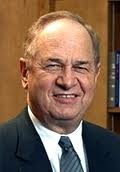
12 Ways To Prepare Yourself For Listening to Biblical Preaching by Dr. David P. Craig

(1) Only those who have been saved from sin by grace through faith in Christ can truly understand the truth of God’s Word.

“Test yourselves to see if you are in the faith” … “The natural person does not accept the things of the Spirit of God, for they are folly to him, and he is not able to understand them because they are spiritually discerned. The spiritual person judges all things, but is himself to be judged by no one. For who has understood the mind of the Lord so as to instruct him? But we have the mind of Christ. – 2 Corinthians 13:5 & 1 Corinthians 2:14-16

(2) A Commitment to listening to Biblical Preaching helps you grow spiritually.

“Make them pure and holy by teaching them your words of truth.” – John 17:17

“You must crave pure spiritual milk so that you can grow into the fullness of your salvation. Cry out for nourishment as a baby cries for milk.” – 1 Peter 2:2

“And we also thank God continually because, when you received the word of God, which you heard from us, you accepted it not as the word of men, but as it actually is, the word of God, which is at work in you who believe.” – 1 Thessalonians 2:13

(3) Confess and Forsake your sins continually.

“If we confess our sins, he is faithful and just to forgive us our sins and to cleanse us from all unrighteousness.” – 1 John 1:9

(4) Through prayer and disciplined thought, adjust your attitude prior to the service so that you expect to hear exciting and life-changing truths from God’s Word.

“Open my eyes to see the wonderful truths in your law. I long to obey your commandments! Renew my life with your commandments. Give discernment to me, your servant; then I will understand your decrees. I rejoice in your word like one who finds great treasure.” -Psalm 119:18, 40, 125, 162

(5) Eliminate any potential distractions that might hinder your attentiveness during the message.

“But put on the Lord Jesus Christ, and make no provision for the flesh, to gratify its desires.” – Romans 13:14

(6) Make a concerted effort during the worship service to understand and retain as much as you can from the teaching by taking notes and writing down in your own words the primary lessons you learn and the questions raised in your mind.

“I have hidden your Word in my heart that I might not sin against You.” – Psalm 119:11

(7) Practice and develop your skills of discernment by examining the teaching carefully, but remember to maintain a humble, teachable spirit.

“Now these [Bereans] were more noble than those in Thessalonica; they received the Word with all eagerness, examining the Scriptures daily to see if these things were so.” – Acts 17:11

(8) Discuss the message after the service & throughout the week with other Christians, asking them questions and sharing the encouragement and challenges you received.

“I am fully convinced, dear brothers and sisters, that you are full of goodness. You know these things so well that you are able to teach others all about them.” – Romans 15:14

“Think of ways to encourage one another to outbursts of love and good deeds.” – Hebrews 10:24

(9) Study the passage or topic further by discussing it with the teacher/preacher or another knowledgeable Christian, and by referring to commentaries or other reference books on the topic.

“Do your best to present yourself to God as one approved, a worker who has no need to be ashamed, rightly handling the word of truth.” – 2 Timothy 2:15

(10) Purpose in your heart to make any changes necessary as a result of what you have learned, pray about those changes and practice them daily (see James 1:22-25; Hebrews 13:7-17)

“But be doers of the word, and not hearers only, deceiving yourselves.” – James 1:22

(11) Devote yourself to supporting those who teach you.

“Anyone who receives instruction in the word must share all good things with his teacher.” Galatians 6:6

“Christian workers should be paid by those they serve.” – 1 Corinthians 9:10b

“Devote yourselves to prayer with an alert mind and a thankful heart. Don’t forget to pray for us, too, that God will give many opportunities to preach about His secret plan—that is also for you Gentiles. That’s why I am here in chains. Pray that I will proclaim this message as clearly as I ought.” – Colossians 4:2-4

(12) Prepare yourself for the message the night before by getting to bed early. Also, by rising early enough to have plenty of time to get ready for a smooth ride to church (plan for a peaceful rather than a stressful rushed morning).

Book Review – Heralds of the King: Christ-Centered Sermons in the Tradition of Edmund P. Clowney, Edited by Dennis E. Johnson

Sermons that Manifest the Centrality of the Person, Work, and Presence of Christ

 One of my greatest concerns in the times in which we are living is seeing more pastors, theologians, and the rank and file Christian allowing cultural pressures to influence them more than the influence of Christ from the Scriptures. As I am currently looking for a church to become a part of I am astounded by how many “protestant” pastors can preach a sermon that neither begins or ends with Christ. As a matter of fact, most of the sermons I’m hearing could be preached by a non-Christian, and in what even passes for “church” God doesn’t even have to show up at all.

I would urge, plead, and even pay preachers to read this book. What people need – including Christians – is more of Jesus – His death, life, teachings, work as Prophet, Priest, and King – in short His person and work. Jesus said that all of the Scriptures pointed to Him (that means all of the Old Testament and New Testament, see John 5 and Luke 24).

In this book we have some excellent examples of former students of Dr. Edmund P. Clowney who preach in the Christ-centered mold. The book has a good balance in that it incorporates sermons from the Law, the Prophets, the Psalms, and Several New Covenant genres. Before each sermon begins there is a brief tribute to Edmund Clowney demonstrating how he influenced the preacher in his pursuit of personally loving Christ and preaching sermons that show us the Savior’s Person and work on our behalf.

In Part 1: “The Law” we have the following sermons –

“Living in the Gap” based on Genesis 17:1-14 by Joseph V. Novenson

“The Girl Nobody Wanted” based on Genesis 29:15-35 by Tim Keller (this is my favorite sermon in the book – it is a masterpiece on how to preach Christ from the Old Testament and how to apply it to our lives in the 21st century)

“Lord and Servant” from Genesis 43 by Brian Vos

“Rock of Ages” based on Exodus 17:1-7 by Julius J. Kim

In Part 2: “The Prophets” we have these sermons –

“Surprising Love:” on 2 Samuel 9 by Charles D. Drew

“Thorns and Fir Trees” based on Isaiah 55:13 by the late Harvie M. Conn

“No Condemnation” from Zechariah 3 by Iain M. Duguid

In Part 3: “The Psalms” we have only one sermon (I would have liked to have had at least two or three from this large section of Scripture including “Lament” and “Praise” genres) –

“Beauty in the Sand” by William Edgar based on Psalm 90

Part 4: “The New Covenant” we have the following sermons –

From Luke 1:5-25 “When God Promises the Impossible” by Dennis E. Johnson

“Soul-Ravishing Sightings” based on Luke 9:28-36 by Joseph F. Ryan

Arturo G. Azurdia III preaches the final sermon in the book based on Hebrews 1:1-3 entitled “The Greatness of God’s Ultimate Word.”

I highly recommend this book for all preachers, and for those who listen to preachers and love Jesus. I would encourage you if you are reading this review, to ask your pastor if he has read this book, and if not, to get him a copy – to encourage him in preaching in a more Christ-centered manner. Christ-centered preaching is hard work. However, when you hear it, or do it – you sense the presence of God in a powerful way. When I started preaching in Christ-centered manner it was as if a huge millstone was taken off my back. I think most preachers want to please God and help their flock from God’s Word – but they have not been well trained in Biblical Theology, or in Christo-centric preaching.

Edmund Clowney and all the preachers represented in this book are preaching to give glory to God and to let their hearers experience Jesus in worship. I think most preachers today are preaching to be liked, and meet felt needs – but no one can meet our needs like Jesus – and what we need more than anything is what these preachers do in this book – lead us to worshipping Jesus!

I constantly find myself when listening to modern preachers asking the question, “Where’s Jesus in this message?” Edmund Clowney always asked, “Where is my Savior?” His primary concern was always to reveal the presence of Christ in all of the Scriptures – since this is what Jesus mandated. I believe that if you ask these questions of yourself, or your preacher and Jesus is nowhere to be found, then it is not “Christian” preaching. What we desperately need today is to hear Jesus speaking to us from the Word of God by the voice of his heralds. All the preachers in this book do a wonderful job of leading us to the presence of Jesus and to worshipping Him.

Other Books that I would recommend to help you in Christo-centric preaching are:

Edmund P. Clowney’s: “Preaching Christ in All of Scripture;” “The Unfolding Mystery: Discovering Christ in the Old Testament;” and “How Jesus Transforms The Ten Commandments.”

Alec Motyer’s “Look to the Rock: An Old Testament Background to Our Understanding of Christ.”

All of Tim Keller’s books (e.g. “King’s Cross” based on his expositions on the Gospel of Mark). And anything by Sidney Greidanus (e.g., “Preaching Christ from the Old Testament”), or Graeme Goldsworthy (e.g.,“Preaching the Whole Bible as Christian Scripture”).

I hope that this movement of Christ-centered preaching continues to spread, and grow and bring about a new reformation of the gospel, and the desperately needed revival that is needed around the globe.

Book Review: The Elements of Preaching by Warren W. Wiersbe and David Wiersbe

Very Helpful Primer on the Basics of Preaching

 This helpful handbook by father and son preaching veterans – Warren and David Wiersbe is divided into two sections. There are twenty-six preaching principles and fourteen preaching prohibitions that are developed. Each chapter is only one to two pages in length. They really pack this book in with great quotes, wisdom, and the type of advice that you can only get from preachers that have put a lot of mileage in the pulpit.

In the preaching principles section the Wiersbe’s remind us  “Methods are many, principles are few. Methods always change, Principles never do.” Here are just ten of the twenty-six topics they develop:

Preaching is the communicating of God’s truth by God’s servant to meet the needs of people.

The Preacher is a part of the message.

Preaching is an act of worship.

A sermon must have both intent and content if it is to be effective.

The sermon should be based on the essentials of the text and not the accidentals of the translation you are using.

Build your outline on the unique features of the text.

Keep your preaching within the bounds of what the text says and what the people can receive.

Preach to express, not to impress.

Sermons preached as part of a series must be independent and yet related.

Speak the truth in love.

Never be satisfied with your preaching.

At the end of the book they include a very helpful checklist for “Taking Inventory of the Message:”

  1. Is the message solidly based on Scripture?
  2. Does it exalt the Person and work of Jesus Christ?
  3. Will it meet the needs of the people?
  4. Is the theme a timeless truth worth talking about?
  5. Is the message organized so that I can preach it clearly and the people understand it easily? Is there a concise and clear statement of purpose? Is there a clear plan of development? Is there practical application that makes the message personal?
  6. Are all Scripture references and historical facts accurate?
  7. Is the message real to me personally so that I may make it real to others?
  8. Does the message fit into the total “preaching plan” for this church and into the context of the church’s ministry at this time?
  9. Does the message fit into the ministry of the Church at large and Christ’s concern to save a lost world?
  10. Is the message worth preaching again?

I have used this little book (approximately 100 pages) as a refresher, idea generator, and kick-starter for years. It’s well worth having for beginning, intermediate and experienced preachers of the Word. Perhaps the most important asset of this book is the encouragement it will give you from two men who have been faithfully delivering God-centered sermons in the trenches for years.

*Warren W. Wiersbe is the Distinguished Professor of Preaching at Grand Rapids Baptist Seminary, Warren Wiersbe is the author of more than 100 books. Billy Graham calls him “one of the greatest Bible expositors of our generation.” Interestingly, Warren’s earliest works had nothing to do with scriptural interpretation. His interest was in magic, and his first published title was Action with Cards (1944).

“It was sort of imbecilic for a fifteen-year-old amateur magician to have the audacity to write a book and send it to one of the nation’s leading magic houses,” Warren says. But having a total of three books published by the L.L. Ireland Magic Company—before the age of 20—gave him a surge of confidence. In later years, he applied his confidence and writing talent to the Youth for Christ (YFC) ministry.

Warren wrote many articles and guidebooks for YFC over a three-year period, but not all his manuscripts were seen by the public eye. One effort in particular, The Life I Now Live, based on Galations 2:20, was never published. The reason, Warren explains with his characteristic humor, is simple: it was “a terrible book…Whenever I want to aggravate my wife, all I have to say is, ‘I think I’ll get out that Galations 2:20 manuscript and work on it.’” Fortunately, Warren’s good manuscripts far outnumbered the “terrible” ones, and he was eventually hired by Moody Press to write three books.

The much-sought-after author then moved on to writing books for Calvary Baptist Church. It was during his ten years at Calvary that Expository Outlines on the New Testament and Expository Outlines on the Old Testament took shape. These two works later became the foundation of Warren’s widely popular Bible studies known as the Be series, featuring such titles as Be Loyal (a study on Matthew) and Be Delivered (a study on Exodus). Several of these books have been translated into Spanish.

His next avenue of ministry was Chicago’s Moody Memorial Church, where he served for seven years. He wrote nearly 20 books at Moody before moving to Lincoln, Nebraska, where he and his wife, Betty, now live. Prior to relocating, he had been the senior pastor of Moody Church, a teacher at Trinity Evangelical Divinity School, and a producer of the Back to the Bible radio program.

During all these years of ministry, Warren held many more posts and took part in other projects too numerous to mention. His accomplishments are extensive, and his catalog of biblical works is indeed impressive and far-reaching (many of his books have been translated into other languages). But Warren has no intention of slowing down any time soon, as he readily explains: “I don’t like it when people ask me how I’m enjoying my ‘retirement,’ because I’m still a very busy person who is not yet living on Social Security or a pension. Since my leaving Back to the Bible, at least a dozen books have been published, and the Lord willing, more are on the way.”

Wiersbe’s recent books include Your Next MiracleThe 20 Essential Qualities of a Child of GodThe Bumps are What You Climb OnClassic Sermons on the Fruit of the SpiritClassic Sermons on Jesus the ShepherdKey Words of the Christian LifeLonely PeopleA Gallery of GraceReal Peace: Freedom and Conscience in the Christian Life, and On Being a Leader for God.

Book Review: Preaching and Teaching the Last Things by Walter Kaiser

Walter Kaiser is a gifted Old Testament scholar who has the keen ability to be able to communicate well among lay people and scholars alike. In this new offering Dr. Kaiser does not disappoint. This book is especially geared toward pastors, but is also extremely helpful for all those who teach and desire to understand the Old Testament and it’s connections to the New Testament and the ultimate promise plan of God.

Dr. Kaiser lands somewhere between a “covenant” and “dispensational” theologian – in my opinion he is very balanced and makes an excellent case for each passage he exegetes. He definitely leans dispensational – taking passages and promises to Israel literally unless there is a textual indicator deeming otherwise.

The book is composed of six parts – covering different aspects of the end times. Each of these parts contains two or three passages of Scripture, and is broken down in this way:

1)   A discussion of the topic.

2)   Specific exegetical and sermonic helps for the specific passage being taught including: the text; title; focal point; homiletical key word; interrogative question; and teaching aim.

3)   A teaching outline for the passage.

4)   An exegetical discussion of the passage.

5)   Practical conclusions based on a thorough exegesis of the passage.

Here are the topics that Kaiser addresses in the book with thorough exegetical and insightful precision:

Part 1: The Individual and General Eschatology of the Old Testament

  1. Life and Death in the Old Testament (Psalm 49:1-20)
  2. The resurrection of Mortals in the Old Testament (Job 19:21-27)

Part 2: The Nation of Israel in Old Testament Eschatology

  1. The Everlasting Promises made to Israel (Jeremiah 32:27-44)
  2. The Future Resurrection and Reunification of the Nation (Ezekiel 37:1-28)
  3. The Future Return of Israel to the Land of Promise (Zechariah 10:2-12)

Part 3: The New Davidic King and the City of the great King in the Old Testament

  1. The Branch of the Lord and the New Zion (Isaiah 2:2-5; 4:2-6)
  2. The Extent of Messiah’s Rule and Reign (Psalm 72:1-17)

Part 4: The Day of the Lord and the Beginning of the Nations’ Struggle with Israel

  1. The Arrival of the Day of the Lord (Joel 2:28-3:21)
  2. God and Magog (Ezekiel 38-39)

Part 5: The Events of the Last Seven Years and the Arrival of the Western Confederacy

10. The Seventy Weeks of Daniel (Daniel 9:24-27)

11. The New Coming Third Temple in Jerusalem (Ezekiel 40:1-41:26; 43:1-11)

12. The Coming Antichrist (Daniel 11:36-45)

13. The Battle of Armageddon (Zechariah 14:1-21)

Part 6: The Coming Millennial Rule of Christ and the Arrival of the Eternal State

14. The Millennial Rule and Reign of God (Isaiah 24:1-23)

15. The New Creation (Isaiah 65:17-25; 66:18-24)

I think this book is a welcome addition to any Bible student’s collection – especially due to the neglect of roughly 20-25% of the Bible being of a prophetic nature. Those of us who teach and preach God’s Word are required to teach the “whole counsel of God.” My only complaint is that I would have liked to have seen him draw more parallels in the passages to Christ and how the gospel applies to believers in the here and now – and not solely in the past or future (read Tim Keller or Paul Tripp for excellence in this matter). Overall, I think it’s an excellent resource with wise insights into God’s Word and how His promise plan will ultimately be fulfilled.

*Walter C. Kaiser Jr. (PhD, Brandeis University) is the distinguished professor emeritus of Old Testament and president emeritus of Gordon-Conwell Theological Seminary in South Hamilton, Massachusetts. Dr. Kaiser has written over 40 books, including Toward an Exegetical Theology: Biblical Exegesis for Preaching and Teaching; A History of Israel; The Messiah in the Old Testament; Recovering the Unity of the Bible; The Promise-Plan of God; Preaching and Teaching The Last Things; and coauthored (with Moises Silva) An Introduction to Biblical Hermeneutics. Dr. Kaiser and his wife, Marge, currently reside at Kerith Farm in Cedar Grove, Wisconsin. Dr. Kaiser’s website: www.walterckaiserjr.com