SUNDAY OT SERMON: Views of Creation – Evolution – Genesis 1:1-2 by Dr. James M. Boice

Genesis 1-11 vol 1 Boice

SERIES: GENESIS – PART 5

In the beginning God created the heavens and the earth. Now the earth was formless and empty, darkness was over the surface of the deep, and the Spirit of God was hovering over the waters. – Genesis 1:1-2

When Charles Darwin published The Origin of Species in 1859, he received more abuse than perhaps any modern scientist. To be sure, even Einstein originally objected to Slipher’s discovery of an expanding universe. He wrote, “This circumstance irritates me” (Jastrow, God and the Astronomers, 28). Others also objected. But none of these heaped personal abuse on Slipher. Darwin, by contrast, was greeted with: “Rotten fabric of speculation. … Utterly false. … Deep in the mire of folly [and] … I laughed till my sides were sore” (Jastrow, Until the Sun Dies, 19). The remarkable thing, however, is that the theory that became the laughing stock and then eventually the battleground of the second half of the nineteenth century has now become widely accepted, not only by scientists but also by a wide variety of people from most walks of life.

This is not to say that evolution is the only theory going. It is merely the dominant view today and is therefore the one with which any discussion of the theory of origins should start. Actually, our discussion in this and the following sermons is going to take us over five competing theories: 1) atheistic evolution, 2) theistic evolution, 3) the so-called “gap theory” popularized by C. I. Scofield, 4) six-day creationism, and finally 5) progressive creationism. We are going to see what each of these theories has to commend it and then also explore its weaknesses.

Let us say at the beginning that a final answer as to how the universe came into being may not be attainable now. We may exclude some possibilities, both as Christians and as scientists. As Christians we may exclude even more. But this still falls short of a full answer to the “how.” Indeed, even taking the explanations of origins in the order proposed above does not necessarily imply that the latter positions are better than the earlier ones. They are taken in this order simply because they have appeared in this order historically.

The Evolutionary Theory

We begin by noting that in spite of the association of evolution with the name of Charles Darwin, evolution itself is nothing new. It existed among the ancient Greeks, for example. Thales, Anaximander, Anaximenes, Epicurus, and Lucretius were all evolutionists. So also was Aristotle (384–322 b.c.), who believed in a complete gradation in nature accompanied by a perfecting principle. This was imagined to have caused gradation from the imperfect to the perfect. Man, of course, stood at the highest point of the ascent.

Again, there were evolutionists in more modern times before Darwin. Some early precursors were Francis Bacon (1561–1626), René Descartes (1596–1650), and Immanuel Kant (1724–1804). The first biologist to make a contribution to evolutionary thought was George Louis Leclerc de Buffon (1707–1788), the French naturalist. Another was Erasmus Darwin (1731–1802), the grandfather of Charles Darwin. The first fairly complete theory of evolution was by Chevalier de Lamarck (1744–1829), who became a professor in zoology at the Museum of Natural History in Paris and later popularized his views in Philosophie Zoologique.

It was Charles Darwin, however, who rightly captured the world’s attention. His theory was developed to a degree that none of the others were and, perhaps even more importantly, it was supported by an impressive array of observations collected initially on the world-encircling tour of the HMS Beagle from 1831 to 1836. Darwin’s theory may be arranged in these postulates and conclusions.

Postulate number one: variation. There are variations within individuals of the same species.

Postulate number two: overproduction. In most cases, more individuals are born to a species than can possibly survive to maturity.

Conclusion number one: struggle for existence. In order to survive individuals must compete with other members of the same species.

Postulate number three: survival of the fittest. In a competitive environment only those individuals best fitted to survive will survive.

Postulate number four: inheritance of favorable characteristics. Fit individuals pass their “good” characteristics to their descendants.

Final conclusion: New species arise by the continued survival and reproduction of the individuals best suited to their particular environment (This summary of Darwin’s theory is taken from John W. Klotz, Genes, Genesis, and Evolution. St. Louis, Concordia, 1970, 34-35).

What has happened to this theory in the one hundred or so years since the publication of Darwin’s Origin? For the most part it is still held, though much work has been done in the one area that presents a flaw in the argument. As anyone can see, the chief mechanism of evolution according to Darwin’s theory is “natural selection,” the impersonal preference given to a certain variation in a species permitting one individual rather than another to survive. This is supposed to explain how the variety of forms we know came about. But this is precisely what it does not do. Natural selection may explain how certain individuals have more offspring than others and therefore survive, or survive and have offspring while other less favored individuals do not. But it does not tell us how there came to be the various organisms or “good” characteristics of organisms in the first place.

Thomas Bethell, editor of the Washington Monthly, has written of this problem in an article for Harper’s Magazine. He observes, “There is, then, no ‘selection’ by nature at all. Nor does nature ‘act’ as it so often is said to do in biology books. One organism may indeed be ‘fitter’ than another from an evolutionary point of view, but the only event that determines this fitness is death (or infertility). This, of course, is not something which helps create the organism, but is something that terminates it” (Harper’s Magazine, February 1976, 70-75).

To deal with this problem evolutionists have come to speak of mutations as the primary source of variations. This was proposed first by a Dutch botanist, Hugo de Vries, in a work entitled Species and Varieties: Their Origin by Mutation (1905). It has since been suggested that mutations are caused by cosmic radiations, the latter being perhaps far more intense than in modern times.

The Fossil Record

What are we to say of Darwin’s theory? We must begin by noting that there is no question on the part of any informed thinker or writer that there are varieties within a given species. This is simply to say that all individuals are not alike. Some are tall, some short. Some are strong, others weak, and so on. The question is whether these acknowledged variations are sufficient to account for the development of entirely different species and, second, whether such development has in fact occurred. (The possibility of the development of species in this manner does not prove that this is the way it happened.)

At this point we have to turn to the evidence for evolution, and when we do we must acknowledge that the only true historical evidence is the evidence of fossils. There are other things that might be seen as supporting evolution: the possibility of classifying organisms from the simple to the more complex, similarities of structure in “related” species, the existence of vestigial organs (that is, organs like the human appendix for which no present function is known), similar blood types between some species. But these are all circumstantial arguments, and in some cases they are also ambiguous (See Klotz, Genes, Genesis, and Evolution, 120-73). The only truly historical evidence—evidence that evolution has actually occurred—is fossils.

The fossil remains may be evidence of evolution, but what is not adequately said today is that they do not prove evolution and are in fact highly questionable when applied to evolutionary theory. Let us begin with positive statements. First, although very fragmentary, the fossils do lend themselves to a historical sequence in which the more simple forms of life may be dated earlier (because found in older rock) and more complex forms of life may be dated later. Thus, although the very ancient dates given may be wrong, it does seem that algae, protozoa, and sponges came first. After that are fish, reptiles, and amphibians, then the land animals, including the dinosaurs. Finally, there are the animals we know today, and then man. Another positive statement is that some species have become extinct, the dinosaurs being the most notable example. The combination of these two sets of observations suggests that new forms of life develop and that others become extinct—according to Darwin.

But it is not that simple. There are problems in fitting the fossil record into an evolutionary system. Moreover, these are so great as to bring the entire theory into question.

For example, if evolution is true, what we should expect to find in the fossil record is finely graded and generally continuous development from the simplest forms to the higher forms. Although this is often claimed for the fossil record, it is not what is in fact found when we study it closely. Certainly there are simpler forms in (presumably) earlier rocks. Higher forms (like man) come relatively late. But there are no gradual developments. On the contrary, the major groups appear suddenly, and there is little or no evidence of transition. Everett C. Olson, a well-known evolutionist, mentions this difficulty: “More important, however, are the data revealed by the fossil record. There are great spatial and temporal gaps, sudden appearances of new major groups, equally sudden appearances of old, including very rapid extinctions of groups that had flourished for long periods of time. There were mass extinctions marked by equally simultaneous death of several apparently little associated groups of organisms. At the time the record first is seen with any real clarity [in Cambrian rock strata], the differentiation of phyla is virtually complete. As far as major groups are concerned, we see little clear evidence of time succession in differentiation with the simpler first and the more complex later” (Everett C. Olson, “The Role of Paleontology in the Formation of Evolutionary Thought,” Bioscience 16, 1966: 39. Quoted by L. Duane Thuman, How to Think about Evolution & Other Bible-Science Controversies (Downers Grove, Ill.: InterVarsity Press, 1978, 103. Thuman discusses the problems raised by the fossil record at some length, as do also J. Kerby Anderson and Harold G. Coffin, Fossils in Focus. Grand Rapids: Zondervan, 1977).

It may be argued at this point—indeed, it is argued by evolutionists—that the fossil record is simply incomplete, that if fossils for every prior form of life existed, such gaps would be filled. But in a hundred years of study the tendency has not been this way, and it is hard to convince oneself today that this will yet happen. It is not just a question of several missing links. There are hundreds of missing links. Moreover, the grouping of major species in certain past periods of earth’s history works strongly against this argument. Christians can argue, even if they cannot fully prove, that special creation is a far better explanation.

A second major problem with the use of fossils to support evolution is the subjective nature of arranging fossil histories. It might be argued by one who has seen the difficulty just mentioned that there is nevertheless evidence for development within one of the ancient time periods, even if not from one to the other. The supposed development of the horse from the Eocene period to modern times is an oft-cited example. During 60 million or so years the horse is supposed to have increased in size, lengthened its limbs, reduced and then eventually discarded toes, and become a grazer. Many museums have skeletons or pictures that are supposed to represent this development. But the fossils do not prove this development. They may suggest it, and the development they suggest may in fact be right. But there is still no evidence that one supposed form of the horse gave place to another. In actuality the skeletons may have come from similar but otherwise unrelated animals. Moreover, even if the fossils of these horselike animals prove a development, it is still not an example of the development of new species but only of a change within a species.

Mutations

Another area of difficulty for evolution is the mechanism used to explain the emergence of significant variations in the species, chiefly mutations (sudden unexpected changes brought about by otherwise unexplained alterations in the organism’s genes). This was the solution to the problem of “newness” proposed by Hugo de Vries. De Vries did his work with the evening primrose, a weed that he found in a potato field. He bred this plant over a period of several generations in the course of which he noticed a number of abrupt changes that he called mutations. He concluded that these were developments of such magnitude that the process itself could explain the emergence of new species.

Unfortunately, the new “species” of de Vries were not new species but simply varieties within the same species. Moreover, they were not produced by mutations in the sense of that word today but rather by breeding out recessive characteristics. In other words, de Vries produced nothing that was not in the plant originally.

De Vries’s failure does not entirely discredit the theory, however, for mutations do occur and can be passed down from generation to generation. The question is whether these mutations are sufficient to account for new species. Are they? Many evolutionists would say yes at this point. But it is important to note that no one has as yet demonstrated this to be so. In fact, there is important evidence to the contrary. Walter Lammerts is a rose breeder from southern California and the author of the books Why Not Creation? and Scientific Studies in Creation. He tells of attempts to breed roses with more petals or less petals, using every imaginable technique including radiation. He acknowledges that it is possible to use radiation to create roses with a significant increase in petals. But here is the point: there is a limit beyond which the increase in petals apparently will not go. If a rose has forty-four petals, for example, it may be reduced to thirty-two or increased to fifty-six. But that is all. Moreover, if the hybrid rose is left to mix with others from that point on, it does not retain its new characteristics but soon loses them. In fact, all the hybrid roses we have would soon turn to wild roses if left to them-selves—because they are bred from the wild roses originally. And if that in itself is not enough to cast doubt on the theory, there is the fact that the “improved” roses did not attain their improved form naturally but rather through the concentrated and prolonged efforts of Lammerts and other breeders. In other words, even in so limited a matter as this there is need for a design and a designer, a planner and a plan (For a fuller discussion of mutations as a possible mechanism for evolution see Klotz, Genes, Genesis, and Evolution, 256–91).

The Crucial Areas

An essay such as this can only begin to suggest a few of the problems the theory of evolution poses. But even in such a short study, concentrating on the basic scientific evidence for and against evolution, we can hardly pass over the far greater and (from the point of view of the Christian) unsolvable problems that exist where the crucial points of evolution are concerned. There are four of them.

First, even were we to grant the truthfulness of the evolutionary system as currently put forth, we still have the problem of the origin of the matter from which the later forms sprang. Evolution implies matter by the very meaning of the word, for in order for something to evolve there must be something there in the first place to evolve, and that first something cannot evolve but rather must be either eternally present or created. Since the eternity of matter is today increasingly untenable, as we saw in a previous study, we must have God as Creator. And this obviously nudges us toward the Christian position, whatever our opinions of a greater or lesser degree of evolutionary development may be.

Second, there is the form of matter. We may speak of “mere” matter as if it were a simple irreducible entity, but we do not actually know of any such “simple” matter and cannot in fact even conceive of it. Everything we know, however simple, already has a form—generally a highly complex form. Even hydrogen, the basic building block of everything according to astrophysics, is not simple. It has a proton, neutron, and electron, all operating according to fixed laws. Where did this fixed form and laws come from? They did not evolve. They are in matter to start with.

Third, there is the emergence of life. This is a complex problem, and much has been done to develop laboratory models according to which life could have arisen on earth during the early ages of the planet. The most acceptable model is a three-stage process involving: 1) the origin of bio-organics (amino acids, sugars) from inorganic compounds (hydrogen, water, ammonia, carbon dioxide, methane); 2) the origin of biopolymers (large molecules such as proteins) from the bio-organics; and finally 3) the origin of primordial life (simple plant or algaelike cells) from the biopolymers. But this is an extremely complex process, even assuming that this is how life came about, and therefore has an extremely low level of probability. True, scientists have achieved the first two of these stages in carefully controlled laboratory experiments. But the crucial third stage is elusive. And even in the second stage, the polymers seem to deteriorate faster than they would normally be created in anything approaching a natural environment. Again, it is not a matter of a single event of low probability. It is a matter of a long series of events, each with a very small probability, so that, as one writer says, “for all practical purposes the probability of this series of events may safely be regarded as zero” (Donald England, A Christian View of Origins. Grand Rapids: Baker, 1972, 97).

Two scientists, who nevertheless believe in the spontaneous generation of life, write, “The macromolecule-to-cell transition is a jump of fantastic dimensions, which lies beyond the range of testable hypothesis. In this area, all is conjecture. The available facts do not provide a basis for postulating that cells arose on this planet” (D. E. Green and R. F. Goldberg, Molecular Insights into the Living Process. New York: Academic Press, 1967, 407. Quoted by England, Christian View, 94. England discusses the problems with a theory of the spontaneous generation of life on pp. 33–100).

The fourth of the truly great problems for an atheistic theory of evolution is the emergence of personality in man, or to be more specific, the emergence of the soul, spirit, or God-consciousness. What caused non-man to become man? One writer asks, “Where did the soul of man come from? Why is it that the highest and best animals are unable to pray? They are unable to communicate in a rational way. They are unable to do the things that man is able to do. The lowest type of man upon the face of the earth is far higher than the highest of the animals, because he has the capacity to worship God and can be brought to be a child of God, able to live in the glory of God through Jesus Christ, and that is true of none of the animals.” This writer concludes, “I am not ashamed to say that I believe in the first chapter of Genesis, but I should be ashamed to say that I held to any form of evolution” (E. J. Young, In the Beginning, 56–57).

Why Evolution?

I conclude with this question. Why is it, if the theory of evolution is as weak as it seems to be, that it has the popular appeal acknowledged at the beginning of this sermon? Why is it that evolution is today’s dominant view and not one of the other views mentioned? I think there are four answers, three of which I want to put in the form of statements and one of which I want to put in the form of a question.

The statements are these.

First, according to evolution, everything—absolutely everything—is knowable, and this has obvious appeal. Everything comes from something else, and we can trace the developments back. It is a closed system. There is no need for anything outside. Above all, there is no need for God who by the very definition of that word is One who is unknowable and who does not need to give an account of himself.

Second, according to evolution, there is one explanation for everything. Everything evolves: matter, life, ideas, even religion. We can project this framework from our own small world throughout the universe.

Third, and this is perhaps the chief reason, if creation of the world by God is eliminated (as many clearly wish to do), evolution is the only other option.

On the basis of those three statements I now ask my question: Is it not possible, then, that in the last analysis the appeal of evolution is in its elimination of God and its exaltation of man? In this system man does not merely become the highest point of creation, which Christians would themselves willingly affirm. He becomes the god of creation. Consequently, to challenge evolution is to blaspheme against man, and blasphemy against man is the sin for which there is now no pardon. Algernon Charles Swinburne gives expression to this spirit in his Hymn of Man.

But God, if a God there be, is the

Substance of men which is Man.

Thou art smitten, thou God, thou art smitten;

Thy death is upon thee, O Lord.

And the love-song of earth as thou diest

Resounds through the wind of her wings—

Glory to Man in the highest!

For Man is the master of things.

Is man the master? If he is, then he can go his way and devise any theory of origins he chooses. But if he is not—if there is a God—then he is the creation of this God and owes this God allegiance.

About the Preacher

Boice JM in pulpit

James Montgomery Boice, Th.D., (July 7, 1938 – June 15, 2000) was a Reformed theologian, Bible teacher, and pastor of Tenth Presbyterian Church in Philadelphia from 1968 until his death. He is heard on The Bible Study Hour radio broadcast and was a well-known author and speaker in evangelical and Reformed circles. He also served as Chairman of the International Council on Biblical Inerrancy for over ten years and was a founding member of the Alliance of Confessing Evangelicals. James Boice was one of my favorite Bible teachers. Thankfully – many of his books and expositions of Scripture are still in print and more are becoming available. The sermon above was adapted from Chapter 5 in Genesis 1-11: An Expositional Commentaryvol. 1: Creation and Fall. Grand Rapids: Baker, 2006.

Under Dr. Boice’s leadership, Tenth Presbyterian Church became a model for ministry in America’s northeastern inner cities. When he assumed the pastorate of Tenth Church there were 350 people in regular attendance. At his death the church had grown to a regular Sunday attendance in three services of more than 1,200 persons, a total membership of 1,150 persons. Under his leadership, the church established a pre-school for children ages 3-5 (now defunct), a high school known as City Center Academy, a full range of adult fellowship groups and classes, and specialized outreach ministries to international students, women with crisis pregnancies, homosexual and HIV-positive clients, and the homeless. Many of these ministries are now free-standing from the church.

Dr. Boice gave leadership to groups beyond his own organization. For ten years he served as Chairman of the International Council on Biblical Inerrancy, from its founding in 1977 until the completion of its work in 1988. ICBI produced three classic, creedal documents: “The Chicago Statement on Biblical Inerrancy,” “The Chicago Statement on Biblical Hermeneutics” and “The Chicago Statement on the Application of the Bible to Contemporary Issues.” The organization published many books, held regional “Authority of Scripture” seminars across the country, and sponsored the large lay “Congress on the Bible I,” which met in Washington, D.C., in September 1987. He also served on the Board of Bible Study Fellowship.

He founded the Alliance of Confessing Evangelicals (Alliance) in 1994, initially a group of pastors and theologians who were focused on bringing the 20th and now 21st century church to a new reformation. In 1996 this group met and wrote the Cambridge Declaration. Following the Cambridge meetings, the Alliance assumed leadership of the programs and publications formerly under Evangelical Ministries, Inc. (Dr. Boice) and Christians United for Reformation (Horton) in late 1996.

Dr. Boice was a prodigious world traveler. He journeyed to more than thirty countries in most of the world’s continents, and he taught the Bible in such countries as England, France, Canada, Japan, Australia, Guatemala, Korea and Saudi Arabia. He lived in Switzerland for three years while pursuing his doctoral studies.

Dr. Boice held degrees from Harvard University (A.B.), Princeton Theological Seminary (B.D.), the University of Basel, Switzerland (D. Theol.) and the Theological Seminary of the Reformed Episcopal Church (D.D., honorary).

A prolific author, Dr. Boice had contributed nearly forty books on a wide variety of Bible related themes. Most are in the form of expositional commentaries, growing out of his preaching: Psalms (1 volume), Romans (4 volumes), Genesis (3 volumes), Daniel, The Minor Prophets (2 volumes), The Sermon on the Mount, John (5 volumes, reissued in one), Ephesians, Phillippians and The Epistles of John. Many more popular volumes: Hearing God When You Hurt, Mind Renewal in a Mindless Christian Life, Standing on the Rock, The Parables of Jesus, The Christ of Christmas, The Christ of the Open Tomb and Christ’s Call to Discipleship. He also authored Foundations of the Christian Faith a 740-page book of theology for laypersons. Many of these books have been translated into other languages, such as: French, Spanish, German, Japanese, Chinese and Korean.

He was married to Linda Ann Boice (born McNamara), who continues to teach at the high school they co-founded.

Sources: Taken directly from the Aliance of Confessing Evangelicals’ Website

Boice’s Books:

from the Tenth Presbyterian Church website
Books
1970 Witness and Revelation in the Gospel of John (Zondervan)
1971 Philippians: An Expositional Commentary (Zondervan)
1972 The Sermon on the Mount (Zondervan)
1973 How to Live the Christian Life (Moody; originally, How to Live It Up,
Zondervan)
1974 Ordinary Men Called by God (Victor; originally, How God Can Use
Nobodies)
1974 The Last and Future World (Zondervan)
1975-79 The Gospel of John: An Expositional Commentary (5 volumes,
Zondervan; issued in one volume, 1985; 5 volumes, Baker 1999)
1976 “Galatians” in the Expositor’s Bible Commentary (Zondervan)
1977 Can You Run Away from God? (Victor)
1977 Does Inerrancy Matter? (Tyndale)
1977 Our Sovereign God, editor (Baker)
1978 The Foundation of Biblical Authority, editor (Zondervan)
1979 The Epistles of John: An Expositional Commentary (Zondervan)
1979 Making God’s Word Plain, editor (Tenth Presbyterian Church)
1980 Our Savior God: Studies on Man, Christ and the Atonement, editor (Baker)
1982-87 Genesis: An Expositional Commentary (3 volumes, Zondervan)
1983 The Parables of Jesus (Moody)
1983 The Christ of Christmas (Moody)
1983-86 The Minor Prophets: An Expositional Commentary (2 volumes,
Zondervan)
1984 Standing on the Rock (Tyndale). Reissued 1994 (Baker)
1985 The Christ of the Open Tomb (Moody)
1986 Foundations of the Christian Faith (4 volumes in one, InterVarsity
Press; original volumes issued, 1978-81)
1986 Christ’s Call to Discipleship (Moody)
1988 Transforming Our World: A Call to Action, editor (Multnomah)
1988, 98 Ephesians: An Expositional Commentary (Baker)
1989 Daniel: An Expositional Commentary (Zondervan)
1989 Joshua: We Will Serve the Lord (Revell)
1990 Nehemiah: Learning to Lead (Revell)
1992-94 Romans (4 volumes, Baker)
1992 The King Has Come (Christian Focus Publications)
1993 Amazing Grace (Tyndale)
1993 Mind Renewal in a Mindless Age (Baker)
1994-98 Psalms (3 volumes, Baker)
1994 Sure I Believe, So What! (Christian Focus Publications)
1995 Hearing God When You Hurt (Baker)
1996 Two Cities, Two Loves (InterVarsity)
1996 Here We Stand: A Call from Confessing Evangelicals, editor with
Benjamin E. Sasse (Baker)
1997 Living By the Book (Baker)
1997 Acts: An Expositional Commentary (Baker)
1999 The Heart of the Cross, with Philip Graham Ryken (Crossway)
1999 What Makes a Church Evangelical?
2000 Hymns for a Modern Reformation, with Paul S. Jones
2001 Matthew: An Expositional Commentary (2 volumes, Baker)
2001 Whatever Happened to the Gospel of Grace? (Crossway)
2002 The Doctrines of Grace, with Philip Graham Ryken (Crossway)
2002 Jesus on Trial, with Philip Graham Ryken (Crossway)

Chapters

1985 “The Future of Reformed Theology” in David F. Wells, editor,
Reformed Theology in America: A History of Its Modern Development
(Eerdmans)
1986 “The Preacher and Scholarship” in Samuel T. Logan, editor, The
Preacher and Preaching: Reviving the Art in the Twentieth Century
(Presbyterian and Reformed)
1992 “A Better Way: The Power of Word and Spirit” in Michael Scott
Horton, editor, Power Religion: The Selling Out of the Evangelical Church?
(Moody)
1994 “The Sovereignty of God” in John D. Carson and David W. Hall,
editors, To Glorify and Enjoy God: A Commemoration of the 350th
Anniversary of the Westminster Assembly (Banner of Truth Trust)

John Piper on “Thanksgiving Toward the Past, Faith Toward the Future”

Piper J famous quote

A Parable: The Anvil

Isaiah 40:8, “The grass withers, the flower fades, but the word of our God will stand forever.”

Let’s begin with a parable today. Once upon a time in land before there were any cars or modern machines – a time when horses and carriages and wagons were common on the dirt roads – there was a blacksmith shop with a large, heavy, well-worn anvil. One day a little farm boy, who had never left the farm, came with his father to town for the first time. Everything was new and different. As he walked with his father down the unpaved main street, he heard a loud clang . . . clang . . . clang. He said to his father, “What’s that?” His father said, “Come, I’ll show you.” He took his son to the door of the blacksmith’s shop. And there the boy saw a huge man, a strong man, lifting a big, heavy hammer with a long handle and a large head on it high in the air, as if to chop down a tree, and then crashing it down on a glowing piece of metal on top of the anvil. He hit the anvil so hard that it made the boy wince with every blow. His father explained to him that this was a blacksmith who made all kinds of metal pieces for wagons and carriages and plows and tools and horseshoes.

But the little boy was fixed on one thing: the long, heavy hammer and the great metal anvil. They met each other with such a loud sound and with such a force that he thought surely this anvil could not last long. The big, strong blacksmith paused for a moment to catch his breath, and saw the boy standing in the doorway. “Aren’t you going to break that thing?” the boy asked, pointing at the anvil. But the blacksmith smiled and said, “This anvil is a hundred years old and has worn out many hammers.”

The Bible: Forged in the Furnace of Truth

Here’s the point of the parable. The Bible is an anvil that has worn out a thousand hammers. In every generation, new, huge, heavy hammers are forged against the truth of the Bible. And strong men lift the hammers and pound on the Scriptures. People with no historical perspective – like little boys who’ve never been to town – see it and say, “Surely the Bible will be destroyed.” But others who know their history a little better say, “This Bible was forged in the furnace of divine truth and has worn out many hammers.”

In the Old Testament, the prophet Isaiah said, “The grass withers, the flower fades, but the word of our God stands forever” (Isaiah 40:8). And Jesus said, “Heaven and earth will pass away, but My words will not pass away” (Matthew 24:35).

Why is this? Why has the Bible worn out a thousand hammers? Why does the Bible survive generation after generation as a living and powerful book in the lives of millions of people? The answer can be found in two observations: one is that God endures from generation to generation. And the other is that the Bible is the Word of God.

In Psalm 90:1-2 Moses says, “Lord, You have been our dwelling place in all generations. Before the mountains were born, or You gave birth to the earth and the world, even from everlasting to everlasting, You are God.” And in the New Testament, Hebrews 13:8 says, “Jesus Christ is the same yesterday and today and forever.” The reason the Bible has worn out a thousand hammers is because it is the Word of God who endures from everlasting to everlasting, and because its central character is Jesus Christ who is the same yesterday, today and forever.

Bubbles and Fads

There are two reasons why I point this out. One is that I want to build my life on something that lasts. And I think most of you would share this desire. I don’t want to build my life on sand. I don’t want to spend my life chasing bubbles that shimmer with beauty and pop as soon as you catch them. I want to build my life on something durable – something like an anvil that breaks a thousand hammers.

The other reason why I point out the indestructible toughness of the Bible is to contrast it with the incredibly short shelf-life of the ever-changing remedies and treatments and schemes of hope in our day. Schemes of hope that leave out of account God and Christ and sin and salvation and repentance and death and heaven and hell. They leave these great realities out of consideration as if they were non-realities or inconsequential, like unicorns and Cyclopses and flat-earth theories. These treatments and remedies and schemes of hope put themselves forward with great forcefulness. But how many people notice how short is the life of God-neglecting promises of hope?

Let me illustrate what I mean, and I give credit here to David Powlison in an article titled “Biological Psychiatry” (The Journal of Biblical Counseling, 17/3, Spring, 1999, pp. 2-8). I don’t know if you have noticed yet, but there has been a sea change in the world of mental health in the last five years or so. When was the last time you heard anybody talking about codependency? Just twelve years ago this was all the rage. Melody Beattie’s Codependent No More and John Bradshaw’s Homecoming were best-sellers. Wherever you turned, from books to talk shows to seminars, the diagnosis of our problems was the same: dysfunctional families of origin. Past emotional pain and emptiness were the primal causes of our present misery and misbehavior. And the remedy? Psychotherapy with sensitive non-judgmental counselors and support groups with those who felt your pain and understood your woundedness.

That was in its heyday of the eighties. But then something changed. Something always changes. Diagnoses and remedies that are not built on the full embrace of God’s Word must always fade. These things slip up on you. And you suddenly realize: hmm, those kinds of books aren’t being written any more. People don’t seem to be talking with the same confidence they used to about the dynamics of the wounded soul. What ever became of codependency?

What’s happened? Well, there’s a new excitement, a new scheme of hope. The new scheme is more biological and less psychological. In the place of the needy, hurting, wounded soul has now arisen the dysfunctional brain. It’s not the family of origin now that has center stage, but hormones and genes and chemicals and neurotransmitters. And what are the new books today? Harold Koplewicz’s It’s Nobody’s Fault, that explains the problems of human life in terms of neurotransmitter shortages; and Peter Kramer’s Listening to Prozac, that says we have entered an era of “cosmetic psychopharmacology.”

Here’s the way David Powlison describes the shift:

The world did change in the mid-90s. The action is now in your body. It’s what you got from Mom and Dad, not what they did to you. The excitement is about brain functions, not family dysfunctions. The cutting edge is in the hard science medical research and psychiatry, not squishy soft, philosophy-of-life, feel-your-pain psychologies.

Psychiatry’s back. . . . Biology is suddenly hot. Psychiatry has suddenly broken forth, a blitzkrieg sweeping away all opposition. The insurance companies love it because drugs seem more like “medicine,” seem to be cheaper than talk, and promise more predictable results. Psychotherapy professionals are on the defensive. (Powlison, “Biological Psychiatry,” p. 3)

The point is this: I want my life to be built on something more durable than a 15-year-long therapeutic fad. And make no mistake: the present craze with genes and hormones and neurotransmitters and the Human Genome Project and genomic mapping and chemical therapies – this excitement too will fade and we will move on to something else. And in its wake will be left vast disillusionment. No fulfilled life. No fountain of youth. No utopia. No comfort at death. And millions of people will be left with the question: is there a more durable hope to build my life on? Is there a diagnosis of my condition and a remedy for my flaws and a promise for the future that will not pass by like a fad in one generation, and leave me feeling like an out-of-date fool using leeches to cure my headache?

Or to ask it another way: When Ritalin has calmed you down and Prozac has cheered you up, then what? The promise of these things seems so big, when it fact the pay-off is so small. All the things that never change, all the things that last, all the really big things in life and eternity still wait to be addressed: God, Christ, sin, redemption, repentance, faith, forgiveness, death, heaven, hell, eternal life.

The Eternal Realities of the Bible

Which brings us back to where we started: there is a rugged, unchanging, solid anvil called the Bible. It has outlived all fads and broken a thousand hammers of criticism. It doesn’t sweat the small stuff very much; its message deals with the big things that never change from generation to generation. And what is the message?

The message of the Bible is this. It has to do with four great realities: God, sin, Christ, faith.

1. God

“In the beginning God . . .” – the first verse of the Bible: “In the beginning God created the heavens and the earth” (Genesis 1:1). There is a personal, infinite, eternal, just, loving, holy God who made this universe and everything in it to reflect his glory – his greatness and beauty and power and wisdom and justice and mercy. He had no beginning. He is absolute Reality. He depends on nothing. He says that his name is simply, “I am” (Exodus 3:14). This great, personal, eternal God made you to know him and to enjoy him and display him in the world. The prophet Isaiah said, “Bring My sons from afar and My daughters from the ends of the earth, everyone who is called by My name, and whom I have created for My glory, whom I have formed, even whom I have made” (Isaiah 43:7). The first great reality is God, who made us to enjoy and display his glory.

2. Sin

But the second great reality that the Bible teaches us about is sin. If the purpose of our existence is to know and enjoy and reflect the glory of God as our highest value, then sin is our failure to do that. The apostle Paul puts it like this in the greatest letter ever written, “All have sinned and fall short of the glory of God” (Romans 3:23). Notice two things: sin is about everybody and sin is about God. All of us have sinned. There is no exception. And sin mainly has to do with our relationship to God, not man. Sin hurts people. But that’s not the main reason it is evil. The main reason is that God is worthy of our trust and obedience and worship and our joy, but we treat him like a raincoat, leaving him in the closet forgotten until it rains hard enough outside. God is not a raincoat for bad days. He is the Giver of the sunlight and the Creator of the clouds and the Sustainer of every breath you take and the Judge of all the living and the dead.

Therefore, our neglect of God is a great evil and we are guilty of sin in his presence. The Bible says, “The wages of sin is death” (Romans 6:23). We are under the sentence of God’s eternal judgment. And we will perish unless God himself provides a Redeemer to save us from our sin and from his wrath.

3. Christ

Which brings us to the third great reality of the Scriptures: the central character of history, Jesus Christ. O for a thousand tongues to describe the greatness of the God-Man Christ Jesus! “In the beginning was the Word, and the Word was with God, and the Word was God. He was in the beginning with God; all things were made through him, and without him was not anything made that was made. . . . And the Word became flesh and dwelt among us, full of grace and truth; we have beheld his glory, glory as of the only Son from the Father” (John 1:1-3, 14).

Jesus Christ is the Son of God, eternal, without beginning, but with the Father from everlasting to everlasting, truly God. And yet, he was made flesh, that is, became human. Why? Because without a human nature he couldn’t die. But his aim in coming was to die. He lived to die. Why? Why would God send his Son to die? Because God’s heart toward us is not only wrath flowing from his justice, but also mercy flowing from his love. And to satisfy both justice and love, God substituted his Son to die in our place. Jesus said, “The Son of Man did not come to be served, but to serve, and to give His life a ransom for many” (Mark 10:45). He came to give his life as a ransom to rescue sinners from hell.

This is the center of Christianity. God sent his own Son to provide a substitute for all who would be saved from sin. A substitute life, and a substitute death. Jesus Christ lived a perfect life of faith and obedience to God. And he died a totally undeserved, horrific, and obedient death by crucifixion. Therefore, all of us who are saved by him from the wrath of God are saved because our sin is laid on him, and his righteousness is credited to us. “All we like sheep have gone astray; we have turned every one to his own way; and the LORD has laid on him the iniquity of us all” (Isaiah 53:6). “For our sake [God] made him to be sin who knew no sin, so that in him we might become the righteousness of God” (2 Corinthians 5:21).

This is the center and heart of Christianity. This is the deepest need of every human being that no medicine and no therapy will ever touch.

4. Faith

Which leaves one last great Biblical reality to mention. What must I do to be saved by Jesus Christ from my sin? How can I obtain forgiveness and acceptance with God? How can I prepare to die so that on the other side of this life I will have everlasting joy in the presence of God – and in that hope become the kind of risk-taking, humble, loving, sacrificial person that the world so desperately needs?

The answer of the Bible is: Trust Christ. “For God so loved the world that he gave his only Son, that whoever believes in him [that is, trusts in him] should not perish but have eternal life” (John 3:16). Trust him that everything he says he has done, he has done; and everything he says he will do, he will do; and everything he says he is, he is. Trust him, and you will be saved.

And you will live the rest of your life in the place of greatest healing. Where is that? It is the solid, durable, invincible, anvil-like place between thankfulness toward the past and faith toward the future. The aim of psychotherapy and the aim of medicine is to give us healing. But there is no place of greater, deeper, more lasting healing than to be in Christ with sins forgiven and heaven secured, living moment by moment looking back with thankfulness on all that God has done for us, and looking forward at all God promises to do for us because of Christ.

It’s a great place to live. I invite you, I urge you, trust Christ and take your eternal place between bygone grace and future grace where gratitude and faith, thankfulness and confidence fill the soul and make it well.

©2013 Desiring God Foundation. Used by Permission. SERMON PREACHED ON NOVEMBER, 21, 1999

SOURCE: http://www.desiringgod.org/resource-library/sermons/thanksgiving-toward-the-past-faith-toward-the-future

Permissions: You are permitted and encouraged to reproduce and distribute this material in its entirety or in unaltered excerpts, as long as you do not charge a fee. For Internet posting, please use only unaltered excerpts (not the content in its entirety) and provide a hyperlink to this page. Any exceptions to the above must be approved by Desiring God.

Please include the following statement on any distributed copy: By John Piper. ©2013 Desiring God Foundation. Website: desiringGod.org

SUNDAY OT SERMON: “God The Creator” by James Montgomery Boice on Genesis 1:1

Genesis 1-11 vol 1 Boice

SERIES: GENESIS – PART 4

In the beginning God created the heavens and the earth.

In the message last week I referred to a question that has been thought to be profound but actually is not: Why is there something rather than nothing? This is not profound for the reason that it is not even a true question. The question seems to offer us a choice between something and nothing. But what is nothing? As soon as we answer that, saying, “Nothing is … ,” nothing ceases to be nothing and becomes something. If nothing really is nothing, nothing defies description. In fact, it defies mental conception of any kind. So the question really boils down to: Why is there something?

In this form the question is not meaningless. On the contrary, it is one of the truly big philosophical questions. It can be stated in different forms—Where did the universe come from? Who made the atom? How did everything get to be as it is?—but in essence these are the same basic questions. Something is there—an immense, intricate, and orderly something. It was there before we were, for we cannot even imagine our existence without it. But how did it get there? And how did it get to be as we detect it?

Genesis 1:1 is the answer to these questions. It tells us that “in the beginning God created the heavens and the earth.”

The Christian Answer

There are other answers to the question of the origins of the universe, however, and it is these plus the Christian answer that we now want to consider. How many answers are there? Like all truly big questions, the possibilities are not numerous. In this case, there are just four.

First, there is the view that the universe had no origin. That is, there was no origin because in some form the universe always existed. Matter existed. This has been the dominant view of both ancient and modern science until relatively recent times, and it is still held by some.

Second, there is the view that everything has a beginning and that this beginning was the work of a good personal being. This is the Christian view.

Third, everything came into existence through the work of a personal being who is evil.

Fourth, there is now and there always has been a dualism. This last view takes several forms depending on whether one is thinking of a personal or impersonal, moral or immoral dualism, but the views are related. This was the outlook of the ancient cosmologies referred to earlier, of which the Babylonian Epic is an example. It is still the characteristic view of the eastern religions and mysticism.

What are we to say concerning these four possibilities? The easiest to dismiss is number three, which gives a personal but evil origin to the universe. It says, in effect, that Satan is the creator. This is easiest to dismiss because it does not give an adequate explanation of the origin of the good. Evil can be conceived as a corruption of the good—Satan can rebel against the Christian God—but it is not really possible to think of good as having emerged out of evil. In the former case, evil can be a misuse of otherwise good traits or abilities. But in the second case, there is no place for the good to come from. We may state the problem in a slightly different way. For a power to be evil it (or he) must possess the attributes of intelligence and will. But since these attributes are in themselves good, he must be getting them from a good power. And this means that the good power must have existed previously and that the evil power is therefore not the origin of all things.

The fourth possibility, a dualism, is unsatisfactory too, although this is not as quickly apparent as in number three. The reason is that, although belief in a dualism has often been quite popular and has endured for long periods of history, it does not stand up under close analysis. For having stated the dualism, we immediately want to pass behind it to some type of unity that includes the dualism. Or else we choose one part of the dualism and make it prominent over the other, in which case we are really easing into one of the other possibilities.

C. S. Lewis has written about this problem, pointing to what he calls the “catch” in the system. According to dualism, two powers (spirits or gods), one good and one evil, are supposed to be quite independent and eternal. Neither is responsible for the other, and each has an equal right to call itself God. Each presumably thinks that it is good and the other bad. But Lewis asks, What do we mean when we say, as we do in stating this dualism, that the one power is good and the other bad? Do we mean merely that we prefer the one to the other? If that is all we mean, then we must give up any real talk about good or evil, and if we do that, then the moral dimension of the universe vanishes entirely and we are left with nothing more than matter operating in certain ways. We cannot mean that and still hold to the dualism. We have fallen back to possibility number one.

But if, on the contrary, we mean that one power really is good and the other really is bad, then we are actually introducing some third thing into the universe, “some law or standard or rule of good which one of the powers conforms to and the other fails to conform to.” And this standard, rather than the other, will turn out to be the true God. Lewis concludes, “Since the two powers are judged by this standard, then this standard, or the Being who made this standard, is farther back and higher up than either of them, and he will be the real God. In fact, what we meant by calling them good and bad turns out to be that one of them is in a right relation to the real, ultimate God and the other in a wrong relation to him.”

So neither an evil origin for the universe, from which good arose, nor a dualism adequately accounts for reality as we know it. The real alternative is between the view that holds to an eternity of matter and the view that sees everything as having come into existence through the personal will of an eternal and moral God.

Let us look at Christianity’s chief competitor, materialism. The origins of this view are lost in the past, but the view is clearly very ancient. It is found in the scientism of the Greek philosopher Epicurus, who taught that everything is composed of small building blocks of matter, conceived of as hard, indestructible particles. Epicurus called them atoms, which is where our word “atom” comes from. He probably derived his ideas from Democritus of Abdera who in turn was indebted to the little-known philosopher Leucippus. Leucippus may have gotten his ideas from a Phoenician philosopher named Moschus, who lived prior to 1000 b.c.

Today this view is the dominant philosophy of western civilization, although not in the form Epicurus gave to it. For one thing, we know that the atom can be divided. We have done it. Again, we have been taught by Einstein that energy and mass are interchangeable, which is mind-boggling. Knowledge of this should in itself shake the presuppositions of materialism, but for the most part it has not seriously shaken them, and the western world continues to be philosophically materialistic.

Today’s materialism usually does not deny that there is personality in the universe, but it conceives this as having arisen out of impersonal substance. It does not deny the complexity of the universe—even including such things as the intricacy of the atom—but it supposes that complexity came from that which was less complex and that in turn from something still less complex until eventually we arrive back at that which is ultimately simple, that is, to mere matter. Matter, it is supposed, always existed—because there is no further explanation. This view lies beneath most thought concerning evolution.

But this description of the origin of the universe has already introduced problems that the theory itself apparently has no means of solving. First, we have spoken of a form to matter and then of more complex forms. But where does form come from? Form means organization and perhaps purpose, too. But how can organization and purpose come from mere matter? Some would insist that organization and purpose were in the matter inherently, like genes in an egg or spermatozoa. But in addition to making nonsense of the theory—this is no longer mere matter—the basic question still remains unanswered, for the problem is how the organization and purpose even got there. At some level, either early or late, we have to account for the form; and, if this is the case, we soon find ourselves looking for the Former, Organizer, or Purposer.

Moreover, we have introduced the idea of the personal, and if we begin with an impersonal universe, there is no explanation for the emergence of personality. Francis Schaeffer writes: “The assumption of an impersonal beginning can never adequately explain the personal beings we see around us, and when men try to explain man on the basis of an original impersonal, man soon disappears.”

Genesis begins with the opposite answer. It maintains that the universe exists with form and personality because it has been brought into existence by an orderly and personal God. God was there before the universe came into existence, and he was and is personal. He created all we know, including ourselves. Consequently, the universe naturally bears the mark of his personality.

God’s Creation

But we may be missing something at this point. We are arguing for the Christian view of origins, which is not at all unimportant. But in the very act of arguing we are likely to miss (or postpone) a true wonder at God’s creation, which is what a proper contemplation of these themes should cause. Biblical writers never fall into this pit. Consequently, when they look at creation they inevitably end up praising God, and when they praise God, one of the things they praise him for is creation.

You are worthy, our Lord and God, to receive glory and honor and power, for you created all things, and by your will they were created and have their being. – Revelation 4:11

Can we not do that too? Our text tells us that God created “the heavens and the earth.” As we contemplate these great canvases of God’s work, are we not led to praise him?

How vast the heavens are! When we look up into the sky on a clear night we see perhaps 10,000 points of light. A few of these are the planets of our solar system that shine by reflected light. Thousands belong to the special grouping of stars known as the Milky Way, to which our sun belongs. Other thousands are entire galaxies, which shine as one point because they are so distant. We say 10,000 points because that is what we can see with unaided eyes. But these 10,000 are only the tiniest fraction of the existing stars. A typical galaxy contains billions of individual stars—our galaxy alone contains 200 billion stars. Its form is of a giant spiral rotating majestically in space, its glowing arms trailing behind it like the distended points of a pinwheel. Our sun is in one arm of the spiral. It makes a complete rotation in 250 million years. These figures are staggering. But this is only our galaxy. There are thousands of others visible to the naked eye and billions more within range of the 200-inch telescope on California’s Palomar Mountain.

As revealed to us by time exposure photography, these distant galaxies of stars display a seemingly unending array of beauty. Some are spirals like ours. Others are nearly spherical clusters. Others are flattened out like pancakes. Still others are irregular. All the stars in the heavens are clustered together in these intricate and beautiful groupings.

Again, the galaxies are scattered about in an irregular pattern. Between them there are vast amounts of space. The distance from one edge of an average galaxy to the other edge is approximately 600 thousand trillion miles. The average distance from one galaxy to another is 20 million trillion miles. If these numbers were to be written out in zeros, they would fill up several lines of type. So to avoid such large numbers astronomers generally use a unit of distance called the light-year, that is, the distance light travels in one year at the speed of 186,000 miles per second. A light-year is approximately 6 trillion miles. Translated into these terms, the size of an average galaxy is 100 thousand light-years, and the distance between them is 3 million light-years approximately.

The Andromeda Galaxy is the galaxy closest to our own Milky Way. It is separated from us by 2 million light-years. This means that the light coming to us now from Andromeda has taken 2 million years to get here. Put in other terms, it means that when we look at Andromeda what we see is the galaxy as it existed, not a moment ago, but 2 million years in the past.

Moreover, the galaxies are not fixed in space but rather are moving away from each other at tremendous speeds. Vesto Melvin Slipher, the first to discover this fact, found that the galaxies he could observe were moving away from the earth at several million miles per hour. His scientific followers, Milton Humason and Edwin Hubble, showed that the most distant galaxies were retreating from us at the rate of 100 million miles per hour. Moreover, everything is retreating from everything. Nothing is coming toward us, nor is anything coming toward any other galaxy. This means that the universe is expanding. By working backward from the present position of the galaxies and their known speed, astronomers have placed the origins of the universe approximately 15 to 20 billion years in the past.

We turn to the stars themselves and find equal evidence of variety, design, beauty, and mystery. Not all stars are alike, though they seem to follow a similar pattern as they are born, burn, grow old, and eventually die.

At any given moment millions of stars are being born in space. They are born as clouds of interstellar gas contract under the force of gravity acting between the atoms that compose them. As they contract the temperature rises. Finally, at the critical temperature of 20 million degrees Fahrenheit, the hydrogen within the ball of condensed gas ignites in reactions similar to those that occur in the explosion of a hydrogen bomb. The release of this energy halts any further condensing of the gas, and the star continues to burn in that fashion for many billions of years. Our sun is at this stage.

Eventually the hydrogen in the star begins to be used up. It starts to swell and redden. Such stars are called red giants. As the last of its fuel is burned off, the star begins its final collapse under the force of gravity. If it is relatively small, it condenses to a tightly compressed sphere called a white dwarf. In one of these dead stars a few cubic centimeters of matter weigh a ton. If the star is large, a different fate envelops it. Instead of compressing quietly, it blows itself up, thereby scattering its elements—now containing carbon, oxygen, iron, gold, and others—throughout the universe where they are eventually picked up by other suns or planets.

The heavens declare the glory of God; the skies proclaim the work of his hands. Day after day they pour forth speech; night after night they display knowledge. There is no speech or language where their voice is not heard. Their voice goes out into all the earth, their words to the ends of the world. – Psalm 19:1–4

And what of the earth? We need not consider the earth and its marvels fully at this point. We have looked at the heavens carefully since this is the last point in Genesis at which the heavens are mentioned for themselves. From this point the chapter passes on to consider God’s acts of creation on earth. (The sun, moon, and stars are mentioned only in regard to their giving light to the earth.) In a sense everything that occurs from this point on is about the earth. But we can note in passing that the marvels of the macrocosm (the world of large things) are repeated in the microcosm (the world of small things). Here we are confronted with electrons, protons, neutrons, neutrinos, and a seemingly endless variety of particles barely understood. The distances between these particles, proportionate to their size, are comparable to some of the distances involved in the solar system. If we were to take the simplest of atoms, the hydrogen atom, and blow it up billions upon billions of times to where the proton at its center would now be the size of a ten-inch soccer ball, the electron that circles this nucleus would now be the size of a golf ball and would be circling the proton at a distance of five miles. There would be nothing else within the circle!

To God Be the Glory

On the basis of the first verse of Genesis we can define God as the One who creates. We cannot create. We often use the word of human endeavors, and human beings are creative in the sense we give to that word. But if we are to be precise, we will say that at the best we only form or fashion things in imaginative ways, and even then, it is the case that we get our imagination as well as all other physical, mental, and spiritual gifts from God. Strictly speaking, we are craftsmen. We use preexisting material. But God does create, and he does so on what is to us a vast and incomprehensible scale. We do not know how God has done it. But he has willed creation, and as a result all we know, see, and are have come into being.

If God were not the Creator, he would be only a part of the world process, coming and going, waxing and waning. He could not help us. E. J. Young has written, “If he is only a little bigger than we are, if he is only a big brother and nothing more, if he is only a part of the whole, then we are all in it together, God, you and I, and then there are no standards. There is no absolute. It is every man for himself, and all modern philosophies and ideas that are being spread in our days—new morality, new theology, and so on—are all perfectly admissible if God is only a part of the world process. If it is so, it does not matter whether he is dead or alive. … Let us live for the moment, let us live for our enjoyment; there is no absolute; there us no standard of morality, for all changes. What may be right today may be wrong tomorrow; so let us get through life as best we can.”

But this is not the God of Genesis. “The Bible does not so speak. It tells us that God has created all things. That is why there is meaning in life, and why there are absolute standards that do not change. God tells us what is right and what is wrong, and that is why there is meaning in life. That is why you and I who believe in this God can very well say that our chief reason for existence is to glorify him and enjoy him forever.”

About the Preacher

Boice JM in pulpit

James Montgomery Boice, Th.D., (July 7, 1938 – June 15, 2000) was a Reformed theologian, Bible teacher, and pastor of Tenth Presbyterian Church in Philadelphia from 1968 until his death. He is heard on The Bible Study Hour radio broadcast and was a well-known author and speaker in evangelical and Reformed circles. He also served as Chairman of the International Council on Biblical Inerrancy for over ten years and was a founding member of the Alliance of Confessing Evangelicals. James Boice was one of my favorite Bible teachers. Thankfully – many of his books and expositions of Scripture are still in print and more are becoming available. The sermon above was adapted from Chapter 4 in Genesis 1-11: An Expositional Commentaryvol. 1: Creation and Fall. Grand Rapids: Baker, 2006.

Under Dr. Boice’s leadership, Tenth Presbyterian Church became a model for ministry in America’s northeastern inner cities. When he assumed the pastorate of Tenth Church there were 350 people in regular attendance. At his death the church had grown to a regular Sunday attendance in three services of more than 1,200 persons, a total membership of 1,150 persons. Under his leadership, the church established a pre-school for children ages 3-5 (now defunct), a high school known as City Center Academy, a full range of adult fellowship groups and classes, and specialized outreach ministries to international students, women with crisis pregnancies, homosexual and HIV-positive clients, and the homeless. Many of these ministries are now free-standing from the church.

Dr. Boice gave leadership to groups beyond his own organization. For ten years he served as Chairman of the International Council on Biblical Inerrancy, from its founding in 1977 until the completion of its work in 1988. ICBI produced three classic, creedal documents: “The Chicago Statement on Biblical Inerrancy,” “The Chicago Statement on Biblical Hermeneutics” and “The Chicago Statement on the Application of the Bible to Contemporary Issues.” The organization published many books, held regional “Authority of Scripture” seminars across the country, and sponsored the large lay “Congress on the Bible I,” which met in Washington, D.C., in September 1987. He also served on the Board of Bible Study Fellowship.

He founded the Alliance of Confessing Evangelicals (Alliance) in 1994, initially a group of pastors and theologians who were focused on bringing the 20th and now 21st century church to a new reformation. In 1996 this group met and wrote the Cambridge Declaration. Following the Cambridge meetings, the Alliance assumed leadership of the programs and publications formerly under Evangelical Ministries, Inc. (Dr. Boice) and Christians United for Reformation (Horton) in late 1996.

Dr. Boice was a prodigious world traveler. He journeyed to more than thirty countries in most of the world’s continents, and he taught the Bible in such countries as England, France, Canada, Japan, Australia, Guatemala, Korea and Saudi Arabia. He lived in Switzerland for three years while pursuing his doctoral studies.

Dr. Boice held degrees from Harvard University (A.B.), Princeton Theological Seminary (B.D.), the University of Basel, Switzerland (D. Theol.) and the Theological Seminary of the Reformed Episcopal Church (D.D., honorary).

A prolific author, Dr. Boice had contributed nearly forty books on a wide variety of Bible related themes. Most are in the form of expositional commentaries, growing out of his preaching: Psalms (1 volume), Romans (4 volumes), Genesis (3 volumes), Daniel, The Minor Prophets (2 volumes), The Sermon on the Mount, John (5 volumes, reissued in one), Ephesians, Phillippians and The Epistles of John. Many more popular volumes: Hearing God When You Hurt, Mind Renewal in a Mindless Christian Life, Standing on the Rock, The Parables of Jesus, The Christ of Christmas, The Christ of the Open Tomb and Christ’s Call to Discipleship. He also authored Foundations of the Christian Faith a 740-page book of theology for laypersons. Many of these books have been translated into other languages, such as: French, Spanish, German, Japanese, Chinese and Korean.

He was married to Linda Ann Boice (born McNamara), who continues to teach at the high school they co-founded.

Sources: Taken directly from the Aliance of Confessing Evangelicals’ Website

Boice’s Books:

from the Tenth Presbyterian Church website
Books
1970 Witness and Revelation in the Gospel of John (Zondervan)
1971 Philippians: An Expositional Commentary (Zondervan)
1972 The Sermon on the Mount (Zondervan)
1973 How to Live the Christian Life (Moody; originally, How to Live It Up,
Zondervan)
1974 Ordinary Men Called by God (Victor; originally, How God Can Use
Nobodies)
1974 The Last and Future World (Zondervan)
1975-79 The Gospel of John: An Expositional Commentary (5 volumes,
Zondervan; issued in one volume, 1985; 5 volumes, Baker 1999)
1976 “Galatians” in the Expositor’s Bible Commentary (Zondervan)
1977 Can You Run Away from God? (Victor)
1977 Does Inerrancy Matter? (Tyndale)
1977 Our Sovereign God, editor (Baker)
1978 The Foundation of Biblical Authority, editor (Zondervan)
1979 The Epistles of John: An Expositional Commentary (Zondervan)
1979 Making God’s Word Plain, editor (Tenth Presbyterian Church)
1980 Our Savior God: Studies on Man, Christ and the Atonement, editor (Baker)
1982-87 Genesis: An Expositional Commentary (3 volumes, Zondervan)
1983 The Parables of Jesus (Moody)
1983 The Christ of Christmas (Moody)
1983-86 The Minor Prophets: An Expositional Commentary (2 volumes,
Zondervan)
1984 Standing on the Rock (Tyndale). Reissued 1994 (Baker)
1985 The Christ of the Open Tomb (Moody)
1986 Foundations of the Christian Faith (4 volumes in one, InterVarsity
Press; original volumes issued, 1978-81)
1986 Christ’s Call to Discipleship (Moody)
1988 Transforming Our World: A Call to Action, editor (Multnomah)
1988, 98 Ephesians: An Expositional Commentary (Baker)
1989 Daniel: An Expositional Commentary (Zondervan)
1989 Joshua: We Will Serve the Lord (Revell)
1990 Nehemiah: Learning to Lead (Revell)
1992-94 Romans (4 volumes, Baker)
1992 The King Has Come (Christian Focus Publications)
1993 Amazing Grace (Tyndale)
1993 Mind Renewal in a Mindless Age (Baker)
1994-98 Psalms (3 volumes, Baker)
1994 Sure I Believe, So What! (Christian Focus Publications)
1995 Hearing God When You Hurt (Baker)
1996 Two Cities, Two Loves (InterVarsity)
1996 Here We Stand: A Call from Confessing Evangelicals, editor with
Benjamin E. Sasse (Baker)
1997 Living By the Book (Baker)
1997 Acts: An Expositional Commentary (Baker)
1999 The Heart of the Cross, with Philip Graham Ryken (Crossway)
1999 What Makes a Church Evangelical?
2000 Hymns for a Modern Reformation, with Paul S. Jones
2001 Matthew: An Expositional Commentary (2 volumes, Baker)
2001 Whatever Happened to the Gospel of Grace? (Crossway)
2002 The Doctrines of Grace, with Philip Graham Ryken (Crossway)
2002 Jesus on Trial, with Philip Graham Ryken (Crossway)

Chapters

1985 “The Future of Reformed Theology” in David F. Wells, editor,
Reformed Theology in America: A History of Its Modern Development
(Eerdmans)
1986 “The Preacher and Scholarship” in Samuel T. Logan, editor, The
Preacher and Preaching: Reviving the Art in the Twentieth Century
(Presbyterian and Reformed)
1992 “A Better Way: The Power of Word and Spirit” in Michael Scott
Horton, editor, Power Religion: The Selling Out of the Evangelical Church?
(Moody)
1994 “The Sovereignty of God” in John D. Carson and David W. Hall,
editors, To Glorify and Enjoy God: A Commemoration of the 350th
Anniversary of the Westminster Assembly (Banner of Truth Trust)

SUNDAY NT SERMON: Tim Keller on “The Presence of the King”

Series: The King and the Kingdom Part 3 – Acts 4:23–37

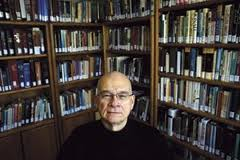
Tim Keller teaching at RPC image

Preached in Manhattan, NY on August 6, 1989

Our Scripture reading is found in the book of Acts 4, and we’re going to read from verses 23–37. Just keep in mind the apostles have just been interrogated by the civil authorities, and they’ve been warned not to preach the gospel upon the peril of their lives. We pick it up at verse 23.

23 On their release, Peter and John went back to their own people and reported all that the chief priests and elders had said to them. 24 When they heard this, they raised their voices together in prayer to God. “Sovereign Lord,” they said, “you made the heaven and the earth and the sea, and everything in them.

25 You spoke by the Holy Spirit through the mouth of your servant, our father David: ‘Why do the nations rage and the peoples plot in vain? 26 The kings of the earth take their stand and the rulers gather together against the Lord and against his Anointed One.’ 27 Indeed Herod and Pontius Pilate met together with the Gentiles and the people of Israel in this city to conspire against your holy servant Jesus, whom you anointed.

28 They did what your power and will had decided beforehand should happen. 29 Now, Lord, consider their threats and enable your servants to speak your word with great boldness. 30 Stretch out your hand to heal and perform miraculous signs and wonders through the name of your holy servant Jesus.”

31 After they prayed, the place where they were meeting was shaken. And they were all filled with the Holy Spirit and spoke the word of God boldly. 32 All the believers were one in heart and mind. No one claimed that any of his possessions was his own, but they shared everything they had. 33 With great power the apostles continued to testify to the resurrection of the Lord Jesus, and much grace was upon them all.

34 There were no needy persons among them. For from time to time those who owned lands or houses sold them, brought the money from the sales 35 and put it at the apostles’ feet, and it was distributed to anyone as he had need. 36 Joseph, a Levite from Cyprus, whom the apostles called Barnabas (which means Son of Encouragement), 37 sold a field he owned and brought the money and put it at the apostles’ feet.

In just a few weeks, we’re going to be launching a new church, and I believe it’s fair and right that these last weeks of the summer we would spend our time looking at what the church is, see what it ought to be, and see what it can be. Now what I’d like to do tonight is very simple, and it had better be. There is one central fact, one central principle, one great essence of the church, and when you’re talking about the church, it is so easy to run and immediately begin discussing what the church should do. What does the church do?

When we talk about what the church does, we immediately get into the lists of functions and duties and responsibilities, and that’s all important, but before we talk about what the church does, we have to understand very clearly what it is, because you see, if you look at what it does and not what it is, you can really go astray. If you define a human being in terms of what he or she does, you might come up with an android. You know, an android can do everything a human being does, but it’s not a human being because the android doesn’t have the essence of a human being, whatever that is.

In the same way, it is very possible to have very busy churches; the only thing I can call them is robotic. Robotic churches that have focused in on the functions, and they’ve learned and decided what the church is supposed to do, but they haven’t got a good grip on what it is, and that’s very important. I think we need to be very honest about the condition of the church today, and it’s very easy when a church is brand new or when a church hasn’t even started to throw rocks at the way other churches are, and I don’t want to do that.

It’s a little bit like running for office when you have no record. It’s very easy to lash the incumbent, you see. Yet, we have to see what the Scripture says. In 1 Peter 1:8, Peter writes to a church and he says, “Though you have not seen him … you rejoice [in him] with joy unspeakable and full of glory.” Now here is Peter and he’s writing to a whole congregation, and he’s able to confidently assume every one of them has a joy in Christ that leaves them speechless. He can write them, and he says, “I know you’re in that condition. Why? You’re the church.”

Or you go to Acts 2, which we’re going to look at next week, and at the very end of Acts 2, it says the church was “enjoying the favor of all the people [of the city]. And the Lord added to their number daily those who were being saved.” Here was a church full of people and those people were so radiant, so compassionate, so responsible, and yet so unassuming the church was the praise of the whole city. Every day the church added people. Now how many churches are like that?

The normal church Peter was writing to … the normal church Acts 2:47 is talking about … how many churches are like that? Maybe those of you who have come and are either intending to come or just considering coming to this church are very happy because you might have found a church (and it’s only maybe; I admit it) you can bring friends to and not be embarrassed, and you think you’ve come across something cool. (Well, not tonight.) You’re excited. Friends, give up your small ambitions.

The glory, the brilliance, and the stupendous nature of what the church is … That is what I want to look at tonight and the next few weeks. The thing that’s going to be so hard is every one of us is going to look at what the Bible says the church is supposed to be through spectacles, and do you know what those spectacles are? They’re the spectacles of your own experience in the church. Some of you have had bad experiences. Many of you (most of us) have had mediocre experiences.

We’ve been stifled by mediocrity for years in the church, so when you read what the Bible says the church ought to be, you have these spectacles on, and what you tend to do is twist it and make it look like what you already expect. You see things the Bible says, and you whittle it down and say, “Well, I know what it’s talking about.” No, we don’t! We don’t, or what Peter said would be normal. The Acts church would be normal. It’s not, so I want to ask you tonight and the next few weeks if you’re able to come not to be passive.

If I just lay out what the Bible says here, you’re going to read it through the spectacles of your own experience and you’re going to filter out half of what is there. You have to help me. You have to help yourselves. You have to listen, grasp, and get a vision for what the church is supposed to be. Tonight, one thing I want to show you is the essence of the church. It’s in verse 31. This is the heart. This is the essence of what the church is. This is the central fact without which all the rest of the ministries and functions of the church are nothing but android operations.

Do you know what the central fact of the church is? It’s in verse 31. No, it’s not what you think. You think I’m going to say they were filled with the Spirit. That’s not what I’m going to say. That’s a symptom. That’s a result. What was the cause? The shaking. Realize that was the answer. In verse 29 (in fact, that whole passage) what are the apostles praying for? They’re praying that they might do the church’s ministry. They’re saying, “Oh, Lord, make us your servants,” they say in verse 29. They say, “Help us to preach the Word.” They say, “Help us to do all the things the church is supposed to do.”

How does God answer that? He answers it with the shaking. They prayed, and here is the answer. “… the place where they were meeting was shaken. And [as a result] they were all filled with the Holy Spirit and they spoke the word of God boldly.” Now what is the shaking? That’s a very important thing. Is this a Steven Spielberg special effect? Is it just a nice touch God put in there? Maybe it was a thunderclap. Maybe it was a bolt of lightning. That would be a nice effect. No. It’s not an effect. It’s the heart of things.

The shaking is a theophany. It means a visible representation of the presence of God. In Exodus 19, when God came down on Mount Sinai, his presence came down on the mountain, the mountain was crowned with smoke and fire, and the mountain shook. Hebrews 12:26 says on that day the earth shook with his voice. Whenever God comes down there is an earthquake. Israel never forgot him coming down on Mount Sinai, and they constantly prayed, “Oh, Lord, come back.”

For example, Isaiah 64:1. Listen to this prayer. “Oh that thou wouldest rend the heavens, that thou wouldest come down, that the mountains might flow down at thy presence.” The presence of God is so powerful, Isaiah is saying, that the timelessness of the mountains looks like brevity compared to this presence. The solidity of the mountains looks like liquid compared to the presence. Whenever God comes down, he shakes things. In Hebrews 12 we read about a commentary on Exodus 19. Listen to this.

It’s talking about Mount Sinai. The Hebrew writer says, “At that time his voice shook the earth, but now he has promised, ‘Once more I will shake not only the earth but also the heavens.’ The words ‘once more’ indicate the removing of what can be shaken—that is, created things—so that what cannot be shaken may remain. Therefore, since we are receiving a kingdom that cannot be shaken, let us be thankful, and so worship God acceptably with reverence and awe, for our ‘God is a consuming fire.’ ”

What is that saying? It’s saying whenever God shows up (when his presence descends) there is a shaking because next to God everything else that looks so strong and so solid is revealed as being shaky. Do you see? When the presence of God comes down, when his reality is clear, when we’re seeing him face to face, then things that look solid suddenly appear very shaky. Now that’s very important. Next to God’s power, all other things that impressed you as power are just popguns. Next to God’s love, all the things that look like love are very pale.

Why do you think the people who experienced the presence of God, like David, like Moses, like Jacob, were so bold? Why do you think people are able to die for their faith? Why is it that many of us in this room, if we were honest, would say, “I’m not sure I would die for my faith?” David, who saw the presence of God, had a very interesting verse that explained it. He said, “… thy loving kindness is better than life …” You’ve heard that. There is a song that says, “Thy loving kindness is better than life.”

Do you know what you’re saying when you sing that? You’re singing the loving kindness of God (the love of God) is that solid, and that’s more important than anything else in my physical life, my prosperity, and my goods. Everything else is shaky. It’s expendable. In the light of God’s face, I see what is really solid and what is shaky, and that’s why in the Old Testament Isaiah was saying, “Oh, I want your presence.” That’s why Moses was saying, “I want to see your face.” That’s why they prayed for that presence, because anyone who saw the face of God became unshakable.

Their love couldn’t be broken. Their courage couldn’t be broken. They wanted that! Some of you, if you’re thinking, and I hope some of you are thinking still, might say, “Now wait a minute. This presence of God stuff … I thought God was everywhere. How can you talk about coming into the presence of God? You might say, The only time I have felt the presence of God was when I was on the lip of the Grand Canyon and I was just overwhelmed with the beauty of nature, and I recognized God was in all of this, and I felt close to God. Isn’t that experiencing the presence of God?”

Not really. There is an Eastern concept of God that says, “God is everywhere. God is in everything.” The presence of God means coming to see that you are part of God and God is everything. Now friends, the Bible says that is only half true. The Bible says God is definitely everywhere because he’s a spirit, but the Bible also teaches God is not only a spirit, but a person. The Eastern view of God says he’s a spirit. Period. The biblical view says he’s not only a spirit; he’s a person, which means you can’t experience him at the Grand Canyon.

But because he’s a person, you don’t want to just experience God; you want to meet him. You don’t want to just experience God; you want to see him. You want to know him face to face. I’m not a computer expert, but maybe somebody out here is. Suppose I said to you, “Hey, listen. I have a friend named Jack, who is a terrific computer expert, and he designed this computer.” You started to look into it, and you noticed the design, and you began to say, “Man, this was a brilliant guy. I have never seen anything like this. Oh, look! He must be into this, and he must have read so and so. Oh, look! He’s done this.”

You’re deciphering this computer in a way I can’t. When you’re done, do you know anything about my friend, Jack? A lot. Have you learned about him? Have you experienced him? Yes, you know a whole lot about him. Do you know him face to face? Absolutely not. You can stick your head in there with the microchips and say, “Jack, Jack. Are you in there, Jack?” You can stick your head in the Grand Canyon but you won’t meet the Creator that way. You can’t!

The glory of the gospel is just this: Yes, God is everywhere because he’s a spirit, but there is also a royal throne-room presence. Everybody in this room is in the presence of everybody else. I don’t know how many people are in here. It looks like 90 or 100 people. You’re in the presence of 90 or 100 other people, and yet, the only person you’re facing right now (I think) is me. So because I’m a person, the fact that you’re facing me means there is a sense in which you’re in the presence of everyone else in the room, and yet you’re in my presence to a heightened degree?

There is greater communication, except some of you are poking each other and saying, “Gee, what do you think of that?” But most of you are looking at me, and if somebody would walk up here and sit down so our faces were closer together and we were talking one to one, you’d have to move our face-to-face knowledge, our communication, our intimacy up another notch. If you’re a person, face-to-face meeting is subject to degrees. The Bible says though you can kind of know God from the backside, from a distance, sort of the way I know there are a lot of people out there in New York …

I’m living in the presence of 18 million people, but I don’t know them. You can live in the presence of God in a general, backside way, but the Bible says there is a way to know him personally, and that’s what the Old Testament saints wanted. That’s what Jacob wanted, and when Jacob woke up after he had his dream and there was a stairway and the angels came back and forth, that was a theophany, because wherever the angels are there is the presence of God. God came down the stairway and talked with Jacob, and when Jacob woke up, what did he say?

“Boy, that was fun?” “Boy, he promised me a wife and kids. I always wanted to know if I was going to get married.” No. He said, “How awesome is this place!” “This is the [very] gate of heaven.” “This is Bethel, the house of God.” Now do you know why he talked like that? Because all the ancient people in Mesopotamia built these pyramids. They were called ziggurats, and the ziggurats had steps on them. You probably have seen pictures of them, but do you know archaeologists have dug those things up and found the steps were far too big for human beings to use?

What were they there for? Well, they were landing pads for the gods. They were trying to establish a link between heaven and earth. See, even the pagans wanted to come into the presence of the gods. When Jacob woke up, what did he say? He said, “Guess what? This is the stairway to heaven. This is Bethel. I’ve seen God face to face, and I’ll never be the same,” and yet, sad to say, if any of us had gone back to that spot to try to see God, would we have done it? Could we have met him face to face? No.

This is where the New Testament comes in. The New Testament makes a claim that is astonishing, and that is … now listen … the presence of God that was available sporadically, occasionally to the great men of the Old Testament (Moses, David, Jacob) … The presence of God that was fatal to people …

When God came down on Mount Sinai, no one could touch the mountain because his holiness and power and majesty were so great. They couldn’t even listen to him. That power, that presence, that reality which was available sporadically is now available continually to all those who know Christ as Savior and who gather in his name for worship.

When Jesus Christ was gathering his disciples, he talked to Nathaniel. Nathaniel had never met Christ. He went to Nathaniel and said, “Nathaniel, I saw you under the fig tree.” Now Nathaniel falls off his chair, but we don’t know why. Nobody really knows why. Obviously, Nathaniel was doing something under that fig tree that was either very bad or something very, very important happened to him there. Whatever it was, Jesus was showing Nathaniel he knew what really made him tick.

What did Nathaniel do? Nathaniel said, “Rabbi, you are the Son of God; you are the King of Israel.” “I can’t believe it. You’re clairvoyant. It’s a miracle.” What did Jesus say? A weird thing. He said, “You believe because I told you I saw you under the fig tree. You shall see greater things than that.” “I tell you the truth, you shall see heaven open, and the angels of God ascending and descending on the Son of Man.” Real clear, right? Do you know what he’s saying? “You get excited by a miracle. Big deal. Wait till you see. I am the gate. I am the stairway of heaven.

The thing Jacob had for a moment, I am the axis mundi, the axis of the world. I am the link between heaven and earth. I bring the presence of God into your midst. You will see angels ascending and descending on the Son of Man.” In John 3, Jesus told Nicodemus, “You must be born again.” Nicodemus said, “How? How can you be born again?” He said, “You must believe me because I’m the only one who both descended and ascended to heaven.” Do you know what he’s saying?

He’s again saying, “The reason you can be born again is I’m the stairway. Through me, the presence of God that made Mount Sinai smoke and tremble, that killed cattle and killed people, can come right into your life, transforming you, and you can know it continually.” Then in the book of Hebrews, you have this absolutely, incredible passage without which you can’t understand the gospel, really. Hebrews 12. It’s the latter part of chapter 12 and goes like this:

“You have not come to a mountain that can be touched and that is burning with fire …” “The sight was so terrifying that Moses said, ‘I am trembling with fear.’ But you have come to Mount Zion, to the heavenly Jerusalem, the city of the living God. You have come to thousands upon thousands of angels in joyful assembly … You have come to God … to the spirits of righteous men made perfect, to Jesus the mediator of a new covenant … and to the sprinkled blood that speaks a better word than the blood of Abel.”

Do you get that? Can I translate? It says there was a mountain that could be touched, and it was burning and smoking with the presence of God, but now you’ve come to a mountain just as real, a presence just as real, though you can’t touch the mountain. You come right into God’s presence. You’re right there with the angels.

Every time Christians meet to worship, the same presence of God that was on the mountain that could be touched is present here. It’s available. How could that be? Because of the mediator, Jesus Christ, whose blood speaks more graciously than the blood of Abel. You remember when Cain killed Abel, his blood spilled on the ground, and God came to Cain and said, “Your brother’s blood cries out to me from the ground.”

It cries out vengeance and revenge. But Jesus’ blood cries out grace, and the minute Jesus died, the veil in the temple that separated the presence of God in the Holy of Holies from the people outside was ripped. It’s the death of Christ. Those of us who have come in under his blood, those of us who have just asked him to be our Savior, the presence of God is now safe for us.

It’s no longer a terrific thing. It’s no longer a terrible thing because we’re covered by the blood. Because of the mediation of Christ, we can come right into the presence of God, and that is the central fact of the church. Aren’t you glad I only have one point tonight? This is it. Everything the Bible says about the church hinges on this, and you’re going to be a cynic if you don’t understand this, and if you understand this, you cannot live in cynicism. How many of you are cynics? “What do you mean? I live in New York.”

First Corinthians 14:24–25 says when an unbeliever comes into your worship and sees us worshipping, “he will be convinced by all that he is a sinner … the secrets of his heart will be laid bare. So he will fall down and worship God, exclaiming, ‘God is really among you!’ ” That is saying in worship the presence of God is so real, even an unbeliever walking in, though he cannot account for it, will be forced to acknowledge it. Does that happen? You see, there’s the claim for ministry.

Paul, the apostle, writes the Ephesians. The Ephesians were Greek people, and they lived far away from Palestine, and he said Christ, “… came and preached peace to you …,” therefore, you believed. Now we know for a fact Jesus Christ did not come and preach to the Ephesians while he was on earth. Then what could Paul mean? What he means is when any of us who are Christians receive the presence of God into us, when we go minister we’re not ministering out of our own power, but Christ is ministering through us.

That’s the only reason Christ could say to people when he was on earth, “You will do greater works than I.” That is a promise. “You will do greater works than I.” That is only possible if the very presence of God is in our midst. That’s the thing that is promised, and because of the shaking, which happens again and again (not once) in Acts 2, 4, 12, 13, 14, and so on (then again 400 years like in the Old Testament), continually. God descended. In verse 31, it says when that happens the result is people are filled with the Holy Spirit.

Fortunately, those of you who don’t have much of a church background (there are plenty of you, and that’s great) haven’t heard about all those controversies, but, you know, Christians argue a whole lot about what it means to be filled with the Spirit. Let me tell you what I think. People who are aware of the presence of God, who are living in the presence of God, are filled with the Spirit. Period. To be in the presence of God means reality.

When I’m talking to my kids and I’m driving along (I just did 10 hours of that yesterday) and I want to say something to one of my children … “You have to stop picking on your brother.” My face is looking out the windshield. The kids are back there. Maybe they don’t get the point. I stop the car. I turn around. I put my face in the child’s face, and I say, “Go ahead. Make my day.” Now what I’ve done at that point is I’ve filled his vision and filled his attention and filled his focus and attention with me and my word. What I say has more reality than any of his little impulses.

My friends, to be in the presence of God means always his power is so real you’re not intimidated by anything else. His love is so real you’re not swayed or wooed by any higher loyalty. Now the fact is the presence of God is subject to degrees. I said so. Some of you are in my presence now, but you could walk forward and be more in my presence. It’s natural. An experience in the presence of God, which is available to all Christians, is something we have to seek continually because it’s available continually.

Sometimes it comes through with incredible power. Jonathan Edwards, some of you have heard of him. He was a Congregational minister in New England 200 years ago. Listen to this little note from his prayer diary: “Once, as I rode out into the woods for my health, in 1737 … I had a view that was for me extraordinary. [The inward eyes of my heart were opened and I saw the] glory of the Son of God … and his wonderful, great … pure and sweet grace and love.

The person of Christ appeared ineffably excellent with an excellency great enough to swallow up all thought and conception, which continued as near as I could judge [as a condition of me, for] about an hour, which kept me the greater part of the time in a flood of tears and weeping aloud. I felt an ardency of soul to be … full of Christ alone; to love him with a holy and pure love; to trust in him; to live upon him; to serve … him.”

Now I don’t know about you, but when I read a statement like that, this is what I think. “Is this guy in the same religion I’m in?” Maybe I’m in the international league, and he’s in the big leagues or something. Don’t be discouraged. He was experiencing the presence of God at a heightened degree, and the presence of God is something you cannot push buttons and experience to the same degree when you go before him in your private prayer or when you come together and go before him corporately, but what the Scripture teaches is we expect far too little of this. We expect so little reality in our lives.

The people of the church experienced this, and you see in verses 33 and 37 a lot of interesting descriptions, but they all boil down to two things, and they’re both in verse 33: Great power and great grace. Power and grace. If you see God’s power, if it’s real to you (you know, it’s up in your face) first of all you will stop being a coward about a lot of things. You’re not afraid. That’s why every time in the book of Acts where it says they were filled with the Spirit, they got bold. Because you see God and you say, “What in the heck am I afraid of? This is for me.” It also means, when you see the power of God, you stop being cynical.

I warned you I was going to get to this. Let me push this button. Cynicism is a condition where shaky things look solid to you. Things that are shaky, things that can come down, the habits in your life you haven’t been able to kick, the people in your life you know you’ve given up on … they’ll never change … who are either too powerful and together to ever, ever be reached for Christ or the people who are too messed up and weird and twisted to ever be helped by Christ, the cultural trends that will never, never change and reverse.

All these things make you cynical. You don’t expect much. You are not living in the presence of God. It’s impossible to have any kind of a grip on his power and be cynical. Repent! I know starting up here, at least 80 to 90 percent of us tonight ought to respond to this passage by going home and repenting for the cynicism we have in our lives. Do you hear that? If you don’t do that, if you don’t even think about it … You can always say, “Oh, well, it was awfully hot and it was hard to really concentrate that night.”

The other thing that always is a result of being in the presence of God besides great power is great grace. You see, there is a hardness and a toughness that come from seeing God, and there is an intimacy, because to be in the presence of God means his love washes over you. The effect of that is to make you generous. That’s why these people were incredibly generous with their money and with their time. In fact, I want you to know the early Romans thought Christians were unbelievably strange in two major ways.

Christians stood out completely in the Roman Empire because of their sexual purity and because of their incredible financial generosity. Those were the two things that set them completely apart from their society. On the one hand, they believed sex was something exclusively for the marriage covenant. Period. On the other hand, they were anti-materialistic, incredibly generous, and deeply involved in helping the needs of the poor.

You see, I think when you see somebody who is incredibly licentious in their personal life but wonderfully altruistic in their social action or when you see somebody who is unbelievably upright and moral in their personal life but proud and greedy and materialistic when it comes to their social ethics, you cannot see in either of those mirrors God, because anyone who sees God is both full of great power and great grace. Without God, you can be a barbarian or you can be a wimp, but you can’t be …

A person who is being transformed into the image of Jesus Christ … The more we look at him face to face … You know, the medieval concept of chivalry (the Knights of the Round Table) was a Christian concept, because knights were not just supposed to be fierce; they were also supposed to be meek and cultured. They weren’t a compromise between fierceness and meekness, sort of a happy medium; they were fierce to the nth degree and they were meek to the nth degree.

That is a picture of what a Christian is. It’s a picture of what the church is, and a church that is continually living in the presence of God will constantly be looked at as weird, because on the one hand, we won’t be a legalistic church, always talking about repentance without any talk of grace and compassion, nor will we be an inspirational church always talking about positive, wonderful self-esteem without ever calling people to the bad news of the gospel. Do you see that? If we live in the presence of God, we’ll be weird.

All right. In the next few weeks, I’ll talk to you a quite a bit more about how you get there, but let me just say this. If you look to see how the apostles got into this condition, I will challenge you to look at two things. First, they did not form a committee. They prayed, and it’s a long prayer. It takes up the whole chapter. You know, when I was getting ready to preach on this thing, I wanted to find points in this. You see, a good preacher wants to find points in his text.

Well, the whole point is they prayed, and they prayed, and they prayed, and they prayed. It goes on verse after verse, and then God came down. I said, “Gosh! There is only one point.” Actually, there are two. They prayed and they prayed. They didn’t form a committee. They didn’t jump to what the church does. They started with what the church is, and they filled their minds with it and they prayed. The prayer is completely unselfish. They’re not praying for themselves at all. They don’t say, “Oh, Lord, protect us. Protect our kids.”

They don’t say, “Oh, Lord, when the new election comes in, bring a mayor in and an administration that will be more open to religious freedom.” They say, “Oh, Lord, just don’t let us chicken out.” They pray. It is kingdom centered. It’s corporate. It’s prevailing. But the other thing they do is they make themselves a living sacrifice. Now this is another sermon, so I can just summarize. In the Old Testament, whenever God’s fire came down it was because somebody put a sacrifice there, and the bigger the sacrifice (the more goats and sheep and oxen, and all that) the bigger the fire.

The lavish sacrifices, the most extravagant and expensive sacrifices, brought down the biggest fire. These apostles made themselves living sacrifices in that prayer. If you look carefully, what they’re saying is, “Oh, Lord, take us. We don’t care if we’re killed. We go flat-out for you. We make ourselves a living sacrifice.” Do you know how they did it? They said, “We’re going to obey you, and we’re going to trust you, and no matter what happens, we’re going to obey and trust you and make our lives a sacrifice.”

Until you do that, you can forget about experiencing the presence of God and being people of power and grace. Until a group of people does this, you can forget about the church ever being anything remarkable. Don’t you see? What does it mean to make yourself a sacrifice? What does it mean to put yourself on the altar? It means, number one, to give him your agenda. Some of you have agendas you won’t give up. You believe the basic Christian principles, you come to church, you try to be moral, but do you know what your agenda is?

You’ve decided your life has to go a certain way, and if God is going to be loving and kind and good to you, he’s going to give you that agenda you have set, and you’re going to take that agenda or nothing at all. You’re watching God to see whether he does it, and some of you are pretty upset because he’s way behind your schedule. You sacrifice your agenda or you’re not a sacrifice. You have to say, “Lord, your agenda, not mine.” You have to say, “My time, my money, my will,” and if you give him those things, he turns it to gold.

I’ll just finish with a story. It was an old beggar … (This can’t be a true story. Who cares?) Years ago, there was an old beggar who lived back when there was a king. The king came to town, and the beggar lifted his plate to him. It was full of foodstuffs and things that had been put in there by people who had been donating all day. He lifted it to the king, and the king said, “Oh, no. I’m not going to give you anything. I want you to give me something.”

The beggar said, “Wait a minute. This isn’t very democratic,” but he put his head down and reached in and pulled out all the rice that was in there: five grains. There were a lot of other things in there, but he pulled out five grains of rice and put it in the king’s hand. The king said, “Thank you.”

That night, the fairy tale goes, the beggar came back and looked into his bowl, and he found five nuggets of gold in there with the carrots and potatoes, and he looked down and said … This is how the fairy tale ends, and it’s not a Christian fairy tale, but I’m making it that, you know. “Oh, that I had given him all!” No sacrifice, no fire. No power, no grace. The only way to receive a King into your life is to give him the key to the house, to the life. Let’s bow in prayer.

Our Father, all we ask is that you would enable us to see we cannot lose anything worth keeping if we give ourselves to you totally. Corporately, we need to do that as a body, but individually, first of all, we need to do that. Many of us are holding on to our agendas. Many of us are holding on to our time, holding on to many things we believe we cannot lose, but Father, we have to put everything on that altar and then we will gain you yourself. Enable every person here to do that. We pray it in Jesus’ name, amen.

ABOUT THE PREACHER

In 1989 Dr. Timothy J. Keller, his wife and three young sons moved to New York City to begin Redeemer Presbyterian Church. In 20 years it has grown to meeting for five services at three sites with a weekly attendance of over 5,000. Redeemer is notable not only for winning skeptical New Yorkers to faith, but also for partnering with other churches to do both mercy ministry and church planting.  Redeemer City to City is working to help establish hundreds of new multi-ethnic congregations throughout the city and other global cities in the next decades.

Dr. Tim Keller is the author of several phenomenal Christo-centric books including:

Joy for the World: How Christianity Lost Its Cultural Influence and Can Begin Rebuilding It (co-authored with Greg Forster and Collin Hanson (February or March, 2014).

Encounters with Jesus:Unexpected Answers to Life’s Biggest Questions. New York, Dutton (November 2013).

Walking with God through Pain and Suffering. New York, Dutton (October 2013).

Judges For You (God’s Word For You Series). The Good Book Company (August 6, 2013).

Galatians For You (God’s Word For You Series). The Good Book Company (February 11, 2013).

Every Good Endeavor: Connecting Your Work to God’s Plan for the World. New York, Penguin Publishing, November, 2012.

Center ChurchDoing Balanced, Gospel-Centered Ministry in Your City. Grand Rapids: Zondervan, September, 2012.

The Freedom of Self Forgetfulness. New York: 10 Publishing, April 2012.

Generous Justice: How God’s Grace Makes Us Just. New York: Riverhead Trade, August, 2012.

The Gospel As Center: Renewing Our Faith and Reforming Our Ministry Practices (editor and contributor). Wheaton: Crossway, 2012.

The Meaning of Marriage: Facing the Complexities of Commitment with the Wisdom of God. New York, Dutton, 2011.

King’s Cross: The Story of the World in the Life of Jesus (Retitled: Jesus the KIng: Understanding the Life and Death of the Son of God). New York, Dutton, 2011.

Gospel in Life Study Guide: Grace Changes Everything. Grand Rapids, Zondervan, 2010.

The Reason For God: Belief in an Age of Skepticism. New York, Dutton, 2009.

Counterfeit Gods: The Empty Priorities of Money, Sex, and Power, and the Only Hope That Matters. New York, Riverhead Trade, 2009.

Heralds of the King: Christ Centered Sermons in the Tradition of Edmund P. Clowney (contributor). Wheaton: Crossway Books, 2009.

The Prodigal God. New York, Dutton, 2008.

Worship By The Book (contributor). Grand Rapids: Zondervan, 2002.

Ministries of Mercy: The Call of the Jericho Road. Phillipsburg: P&R Publishing, 1997.


SUNDAY OT SERMON: Dr. James Montgomery Boice “In The Beginning God”

Genesis 1-11 vol 1 Boice

SERIES: GENESIS – PART 3

In the beginning God created the heavens and the earth.

When we say that Genesis is to be understood historically—as fact rather than fiction—we do not mean that we can understand it fully just because we are historical creatures. Genesis is history, but some of it is beyond us. This is nowhere more apparent than in its first four words.

I say “four words.” But in the Hebrew the words corresponding to our phrase “In the beginning God” are just two: BerashethElohim. Yet, as the late distinguished physicist Arthur Compton once said, these words are “the most tremendous ever penned” (Quoted by Herschel H. Hobbs. The Origin of All Things: Studies in Genesis. Waco, Texas: Word, 1975, 9). Another scholar, John Gerstner, of Pittsburgh Theological Seminary, has written that even if all other evidences for the doctrine were lacking, “the first four words of the Book of Genesis are sufficient proof of the Bible’s inspiration” (John Gerstner, “Man as God Made Him,” in Our Savior: Man, Christ, and the Atonement, ed. James Boice. Grand Rapids: Baker, 1980, 20).  Why? It is because of the statement’s profundity. The ancient Jewish people were not scientists. They were not even profound theologians or philosophers. So the fact that a relatively primitive people have bequeathed us a book embodying the most profound wisdom—the case with these opening words, as well as other passages—should convince us at the beginning that the book has been given to us by God.

In his study of this verse, Gerstner reflects on a statement made one day in his high school physics class. The professor said, “The greatest question which has ever been asked is why there is something rather than nothing.” At the time the young student was impressed. But he gradually came to see that this is not a profound question at all. In fact, it is not even a true question. Because if nothing really is nothing, then nothing defies conception and the choice vanishes. What is “nothing”? If you think you can answer that question, you are the person least qualified to answer it. As soon as you say, “Nothing is … ,” nothing ceases to be nothing and becomes something. “Nothing is what the sleeping rocks dream of,” said Jonathan Edwards. Therefore, as Gerstner observes, “Anyone who thinks he knows what nothing is must have those rocks in his head” (Ibid).

What was “in the beginning”? If the alternative is between God and nothing, there is really no choice. For nothing is nothing, and we are left with the statement “In the beginning God.”

An Objection

We must deal with an objection. Some modern translations of Genesis begin differently from the New International Version and the King James Version, and the casual reader as well as the technical scholar might therefore ask whether everything we have said so far is wrongheaded. In some modern translations the opening words of Genesis are treated as a dependent or temporal clause rather than an independent clause, which changes the statement from an affirmation that God was in the beginning before all things to a statement that at some indefinite point in the past both God and matter existed and that God then began to form matter into the universe we know today. We see this translation in a footnote to the Revised Standard Version, which reads, “When God began to create. …” We see it in the New English Bible: “In the beginning of creation, when God made heaven and earth. …” Even the Living Bible says, “When God began creating the heavens and the earth, the earth was at first a shapeless, chaotic mass. …”

The implications of these translations are clear. Whether or not they are accurate—we will come to that question in a moment—they clearly deny (or at least overlook) an absolute creation. They make matter preexistent and therefore do not give us an absolute beginning at all.

What shall we say about this interpretation? It is a possible translation, otherwise we would not have it in even some of our Bibles. The word bereʾshith can be taken as a construct. But the fact that this is a possible translation does not mean that it is correct. In fact, when we begin to look into the matter deeply there are several reasons why the older translation should be preferred.

First, there is the normal simplicity of the Hebrew sentence. If the opening clause of Genesis 1 is dependent, then the sentence actually concludes in verse 3 where God speaks and light comes into existence. This means that the sentence is quite long, possessing not one but two subordinate parts (the second being a multiple subordinate clause), and the real flow of the sentence would be: “When God began to create the heavens and the earth—the earth being at that time formless and empty, darkness being over the surface of the deep, and the spirit of God hovering over the waters—God said, ‘Let there be light,’ and there was light.” This is unlike a true Hebrew sentence, especially an introductory sentence. It is often the case in German that a series of dependent clauses will begin a sentence and the verb will come twenty or thirty words later at the end, a feature of the language that Mark Twain once described as “falling down stairs.” But this is not the case with Hebrew. Certainly there are dependent clauses. But these are not complex, and one is hard-pressed to believe that, in this case especially, a complicated initial sentence is intended to begin the simple and classically straightforward account of creation that occurs in this chapter. Julius Wellhausen was no conservative—he was, in fact, one of the key figures in the development of the documentary theory of the Pentateuch—but he called the translation we are objecting to “desperate” (E.J. Young, In The Beginning. Young discusses the translation on pages 20-25. He offers a more technical treatment in Studies in Genesis One, “An International Library of Philosophy and Theology,” Philadelphia: P&R, 1976, 1-14).

Second, as has often been shown, the word “create” (the second word of the sentence in Hebrew) is used of God alone and characteristically refers to his bringing into being something that is entirely new. Of course, God also forms things from existing material, but when that happens another word (usually “make” or “made”) is used. “Create” refers to the production of new things from nothing. It is an inappropriate word if the creation referred to in these verses is merely the formation of the earth from preexistent matter.

Third, Genesis is a book of beginnings. But in telling us of these beginnings it has clearly failed at the most crucial point if, in fact, the best it can say is that at the very start matter just happened to be around.

Why is it that so many modern scholars and even some translators prefer to subordinate the first clause? E. J. Young suggests that the real reason is that the Babylonian Epic of Creation, which I referred to in the last sermon, begins this way and that these scholars have a prejudicial desire to have the Genesis account conform to it. The Babylonian account begins: “When on high the heavens were not named, and below the earth had not a name. …” It goes on in that vein for seven lines, introduces another temporal clause, and then gets to the main clause. By subordinating the opening clauses of Genesis 1, the scholars succeed in making Genesis somewhat parallel to the Babylonian account. But, as I have argued, Genesis does not begin that way. It begins by speaking of that absolute beginning of all things, which is God, and then provides us with the most profound insight into the question of origins. It overwhelms us with the profoundly simple statement: “In the beginning God.”

A Set of Denials

The phrase also instructs us concerning the nature of God who alone is the origin of all things. It suggests some negative statements and some positive statements.

The clearest negative statement is the denial of atheism. If God was in the beginning, then there was and is a God. How can it be otherwise? To say less would be to say God is dependent on creation, being subject to the same laws, and therefore could not be at the beginning of creation as Genesis says he was.

A second denial is materialism. When the text says that God was in the beginning, before creation, it sets him apart from creation and therefore apart from the matter of which all else is made. Ours is not an entirely materialistic universe. Moreover, since God created matter, matter did not always exist, which is what a true philosophy of materialism teaches.

Finally, the opening statements of Genesis deny pantheism. Pantheism is the philosophy that God is in matter or is matter. It underlies most pagan or animalistic religions. But if God created matter, then he is separate from it and is superior to it. Any religion that worships matter is idolatrous.

These and many other false philosophies err because they begin with man or matter and work up to God, if indeed they go so far. But Genesis stands against them all when it begins with God and sets him forth as the originator of all things.

The Bible’s God

It is not only through the suggestion of these negatives about God that Genesis 1:1 instructs us. It also suggests some very important positive characteristics.

First, when Genesis begins with the words “In the beginning God,” it is telling us that God is self-existent. This is not true of anything else. Everything else depends on some other thing or person and ultimately on God. Without these prior causes, the thing would not exist. We recognize this truth when we speak of the laws of “cause and effect.” Every effect must have an adequate cause. But God is the ultimate cause and is himself uncaused. God has no origins; this means: first, that as he is in himself he is unknowable, and second, that he is answerable to no one.

Why should God’s self-existence mean he is unknowable? It is because everything we see, smell, hear, taste, or touch has origins and consequently we can hardly think of anything except in these categories. We argue that anything we observe must have a cause adequate to explain it, and we look for such causes. But if God is the cause beyond everything, then he cannot be explained or known as other objects can. Like Robert Jastrow, whom we quoted in the sermon two weeks ago, A. W. Tozer has pointed out that this is one reason why philosophy and science have not always been friendly toward the idea of God. These disciplines are dedicated to the task of accounting for things and are impatient with anything that refuses to give an account of itself. The scientist will admit that there is much he or she does not know. But it is quite another thing to admit that there is something that we can never know and which, in fact, we do not even have a technique for discovering. To avoid this the scientist may attempt to bring God down to his level, defining him as “natural law,” “evolution,” or some such principle. But God eludes him.

Perhaps, too, this is why even Bible-believing people seem to spend so little time thinking about God’s person and character. Tozer writes, “Few of us have let our hearts gaze in wonder at the I AM, the self-existent Self, back of which no creature can think. Such thoughts are too painful for us. We prefer to think where it will do more good—about how to build a better mousetrap, for instance, or how to make two blades of grass grow where one grew before. And for this we are now paying a too heavy price in the secularization of our religion and the decay of our inner lives” (A.W. Tozer, The Knowledge of the Holy. New York: Harper & Row, 1961, 34).

God’s self-existence also means that he is not answerable to us, and we do not like that. We want God to give an account of himself, to defend his actions. But while he sometimes explains things to us, he does not have to and often does not. God does not have to explain himself to anyone.

Second, that God existed “in the beginning” means that he is self-sufficient. Self-existence means that God has no origins. Self-sufficiency means that God has no needs and therefore depends on no one. This is not true of us. We depend on countless other things—oxygen, for example. If our supply of oxygen is cut off, even for a few moments, we die. We are also dependent on light and heat and gravity and the laws of nature. If even one of these laws should cease to operate, we would all die immediately. But this is not true of God. These things could go—in fact, everything could go—yet God would still exist.

Here we run counter to a widespread and popular idea of God that says God cooperates with man and man with God, each thereby supplying something lacking in the other. It is imagined, for example, that God lacked glory and created us to supply it. Or again, that God needed love and therefore created us to love him. Some talk about creation as if God were lonely and created us to keep him company. But God does not need us.

God does not need worshipers. Arthur W. Pink, who writes on this theme in The Attributes of God, says, “God was under no constraint, no obligation, no necessity to create. That he chose to do so was purely a sovereign act on his part, caused by nothing outside himself, determined by nothing but his own mere good pleasure; for he ‘worketh all things after the counsel of his own good will’ (Eph. 1:11). That he did create was simply for his manifestative glory. … God is no gainer even from our worship. He was in no need of that external glory of his grace which arises from his redeemed, for he is glorious enough in himself without that. What was it [that] moved him to predestinate his elect to the praise of the glory of his grace? It was, Ephesians 1:5 tells us, ‘according to the good pleasure of his will.’ … The force of this is [that] it is impossible to bring the Almighty under obligations to the creature; God gains nothing from us” (A.W. Pink, The Attributes of God. Grand Rapids: Baker, n.d., 2-3).

Some will conclude that the value of men and women is thereby lessened, but this is not the case. It is merely located where alone it is possible to sustain our value. According to our way of thinking, we have value because of what we imagine we can do for God. This is prideful, foolish, and vain. According to the biblical perspective, we have value because God grants it to us. Our worth is according to the grace of God in creation and to his election of us to salvation.

God does not need helpers. This truth is probably harder for us to accept than almost any other, for we imagine God as a friendly, but almost pathetic grandfather figure, bustling about to see whom he can find to help him in managing the world and saving the world’s race. This is a travesty. To be sure, God has entrusted a work of management to us. He said to the original pair in Eden, “Be fruitful and increase in number; fill the earth and subdue it. Rule over the fish of the sea and the birds of the air and over every living creature that moves on the ground” (Gen. 1:28). He has given those who believe on him a commission to “go and make disciples of all nations, baptizing them in the name of the Father and of the Son and of the Holy Spirit, and teaching them to obey everything I have commanded you” (Matt. 28:19–20). But none of these aspects of God’s ordering of his creation has a necessary grounding in himself. He has chosen to do things in this way, but he did not have to. Indeed, he could have done them in any one of a million other ways. That he did choose to do things thus is solely dependent on his own free will and does not give us any inherent value to him.

God does not need defenders. We have opportunities to speak for God before those who would dishonor his name and malign his character. We ought to do so. But even if we do not, we must not think that God is deprived by it. God does not need to be defended, for he is as he is and will remain so regardless of the sinful and arrogant attacks of evil men. A God who needs to be defended is a God who can defend us only when someone is defending him. He is of no use at all. The God of the Bible is the self-existent One who is the true defender of his people.

All this is of great importance, for when we notice that God is the only truly self-sufficient One, we may begin to understand why the Bible has so much to say about the need for faith in God alone and why unbelief in God is such sin. Tozer writes: “Among all created beings, not one dare trust in itself. God alone trusts in himself; all other beings must trust in him. Unbelief is actually perverted faith, for it puts its trust not in the living God but in dying men” (Tozer, KOTH, 42). If we refuse to trust God, what we are actually saying is that either we or some other person or thing is more trustworthy. This is a slander against the character of God, and it is folly, for nothing else is all-sufficient. On the other hand, if we begin by trusting God (by believing on him), then we have a solid foundation for all of life.

Because God is sufficient, we may begin by resting in that sufficiency and so work effectively for him. God does not need us. But the joy of coming to know him is in learning that he nevertheless stoops to work in and through his children.

Third, the truth that God was “in the beginning” means that he is eternal. It means that God is, has always been, and will always be, and that he is ever the same in his eternal being. We discover this attribute of God everywhere in the Bible. Abraham knew God as “the Eternal God” (Gen. 21:33). Moses wrote, “Lord, you have been our dwelling place throughout all generations. Before the mountains were born or you brought forth the earth and the world, from everlasting to everlasting you are God” (Ps. 90:1–2). The Book of Revelation describes him as “the Alpha and the Omega, the Beginning and the End” (Rev. 21:6; cf. 1:8; 22:13). The same book tells us that the four living creatures that surround the throne of God call out day and night, “Holy, holy, holy is the Lord God Almighty, who was, and is, and is to come” (Rev. 4:8).

That God is eternal has two major consequences for us. First, he can be trusted to remain as he has revealed himself to be. God is unchangeable in his attributes. So we need not fear, for example, that although he has shown his love towards us once in Christ he may nevertheless somehow change his mind and cease to love us in the future. God is always love. Similarly, we must not think that although he has shown himself to be holy he may nevertheless somehow cease to be holy and therefore change his attitude toward our transgressions. Sin will always be sin, because it is “any want of conformity unto, or transgression of, the law of God” (Westminster Shorter Catechism, A. 14), who is unchangeable. We may extend this by saying that God will always be holy, wise, gracious, just, and everything else that he reveals himself to be. Nothing that we do will ever change him. Again, God is unchangeable in his eternal counsel or will. He does what he has determined beforehand to do, and his will never varies. This is a source of great comfort to God’s people. If God were like us, he could not be relied on. He would change, and as a result of that his will and promises would change. We could not depend on him. But God is not like us. He does not change. Consequently, his purposes remain fixed from generation to generation.

The second major consequence for us of God being eternal is that he is inescapable. If he were a mere man and if we did not like either him or what he was doing, we might ignore him, knowing that he might change his mind, move away from us, or die. But God does not change his mind. He does not move away. He will not die. Consequently, we cannot escape him. If we ignore him now, we must reckon with him in the life to come. If we reject him now, we must eventually face the One we have rejected and come to know his own eternal rejection of us.

The God Who is There

In this lies the profundity of the first verse in the Bible. Indeed, we can go farther and say that in some sense this verse may even be the most important verse in the Bible, for at the outset it brings us face-to-face with the God with whom we have to do. This God is not an imaginary god. He is not a god of our own inventions. He is the God who is—the One who is “infinite, eternal, and unchangeable, in his being, wisdom, power, holiness, justice, goodness, and truth” (Westminster Shorter Catechism, A. 4).

Sometimes we wish we could change him. We are like the man who was climbing up a steep mountain on his way to the summit when he began to slip. Unable to stop himself, he slid back down the treacherous incline toward a cliff that plunged a thousand feet to the canyon floor. He was sure he would be killed. But just as he was about to go over the edge he threw his hands out and managed to catch a small branch. There he hung. He had saved himself. But he could not get back onto the incline, and he knew it was just a matter of time until his grip loosened and he fell. He was not a very religious man. But this was obviously the time to become one, if ever. So he looked up to heaven and called out, “Is there anyone up there who can help me?”

He did not expect an answer. So he was greatly surprised when a deep voice came back, saying, “Yes, I am here, and I can help you. But first you are going to have to let go of that branch.”

A long pause! Then the man looked up and called out again, “Is there anybody else up there who can help me?”

There is no one else. There is only God, the One who was in the beginning and who ever shall be. But he is able to help. More than that, he is willing to help and even urges his help on us. How wonderful it is that we meet him at the beginning. Genesis 1 gives us a chance to come to terms with him and receive the help he offers, knowing that we will certainly meet him at the end.

About the Preacher

Boice JM in pulpit

James Montgomery Boice, Th.D., (July 7, 1938 – June 15, 2000) was a Reformed theologian, Bible teacher, and pastor of Tenth Presbyterian Church in Philadelphia from 1968 until his death. He is heard on The Bible Study Hour radio broadcast and was a well-known author and speaker in evangelical and Reformed circles. He also served as Chairman of the International Council on Biblical Inerrancy for over ten years and was a founding member of the Alliance of Confessing Evangelicals. James Boice was one of my favorite Bible teachers. Thankfully – many of his books and expositions of Scripture are still in print and more are becoming available. The sermon above was adapted from Chapter 3 in Genesis 1-11: An Expositional Commentaryvol. 1: Creation and Fall. Grand Rapids: Baker, 2006.

Under Dr. Boice’s leadership, Tenth Presbyterian Church became a model for ministry in America’s northeastern inner cities. When he assumed the pastorate of Tenth Church there were 350 people in regular attendance. At his death the church had grown to a regular Sunday attendance in three services of more than 1,200 persons, a total membership of 1,150 persons. Under his leadership, the church established a pre-school for children ages 3-5 (now defunct), a high school known as City Center Academy, a full range of adult fellowship groups and classes, and specialized outreach ministries to international students, women with crisis pregnancies, homosexual and HIV-positive clients, and the homeless. Many of these ministries are now free-standing from the church.

Dr. Boice gave leadership to groups beyond his own organization. For ten years he served as Chairman of the International Council on Biblical Inerrancy, from its founding in 1977 until the completion of its work in 1988. ICBI produced three classic, creedal documents: “The Chicago Statement on Biblical Inerrancy,” “The Chicago Statement on Biblical Hermeneutics” and “The Chicago Statement on the Application of the Bible to Contemporary Issues.” The organization published many books, held regional “Authority of Scripture” seminars across the country, and sponsored the large lay “Congress on the Bible I,” which met in Washington, D.C., in September 1987. He also served on the Board of Bible Study Fellowship.

He founded the Alliance of Confessing Evangelicals (Alliance) in 1994, initially a group of pastors and theologians who were focused on bringing the 20th and now 21st century church to a new reformation. In 1996 this group met and wrote the Cambridge Declaration. Following the Cambridge meetings, the Alliance assumed leadership of the programs and publications formerly under Evangelical Ministries, Inc. (Dr. Boice) and Christians United for Reformation (Horton) in late 1996.

Dr. Boice was a prodigious world traveler. He journeyed to more than thirty countries in most of the world’s continents, and he taught the Bible in such countries as England, France, Canada, Japan, Australia, Guatemala, Korea and Saudi Arabia. He lived in Switzerland for three years while pursuing his doctoral studies.

Dr. Boice held degrees from Harvard University (A.B.), Princeton Theological Seminary (B.D.), the University of Basel, Switzerland (D. Theol.) and the Theological Seminary of the Reformed Episcopal Church (D.D., honorary).

A prolific author, Dr. Boice had contributed nearly forty books on a wide variety of Bible related themes. Most are in the form of expositional commentaries, growing out of his preaching: Psalms (1 volume), Romans (4 volumes), Genesis (3 volumes), Daniel, The Minor Prophets (2 volumes), The Sermon on the Mount, John (5 volumes, reissued in one), Ephesians, Phillippians and The Epistles of John. Many more popular volumes: Hearing God When You Hurt, Mind Renewal in a Mindless Christian Life, Standing on the Rock, The Parables of Jesus, The Christ of Christmas, The Christ of the Open Tomb and Christ’s Call to Discipleship. He also authored Foundations of the Christian Faith a 740-page book of theology for laypersons. Many of these books have been translated into other languages, such as: French, Spanish, German, Japanese, Chinese and Korean.

He was married to Linda Ann Boice (born McNamara), who continues to teach at the high school they co-founded.

Sources: Taken directly from the Aliance of Confessing Evangelicals’ Website

Boice’s Books:

from the Tenth Presbyterian Church website
Books
1970 Witness and Revelation in the Gospel of John (Zondervan)
1971 Philippians: An Expositional Commentary (Zondervan)
1972 The Sermon on the Mount (Zondervan)
1973 How to Live the Christian Life (Moody; originally, How to Live It Up,
Zondervan)
1974 Ordinary Men Called by God (Victor; originally, How God Can Use
Nobodies)
1974 The Last and Future World (Zondervan)
1975-79 The Gospel of John: An Expositional Commentary (5 volumes,
Zondervan; issued in one volume, 1985; 5 volumes, Baker 1999)
1976 “Galatians” in the Expositor’s Bible Commentary (Zondervan)
1977 Can You Run Away from God? (Victor)
1977 Does Inerrancy Matter? (Tyndale)
1977 Our Sovereign God, editor (Baker)
1978 The Foundation of Biblical Authority, editor (Zondervan)
1979 The Epistles of John: An Expositional Commentary (Zondervan)
1979 Making God’s Word Plain, editor (Tenth Presbyterian Church)
1980 Our Savior God: Studies on Man, Christ and the Atonement, editor (Baker)
1982-87 Genesis: An Expositional Commentary (3 volumes, Zondervan)
1983 The Parables of Jesus (Moody)
1983 The Christ of Christmas (Moody)
1983-86 The Minor Prophets: An Expositional Commentary (2 volumes,
Zondervan)
1984 Standing on the Rock (Tyndale). Reissued 1994 (Baker)
1985 The Christ of the Open Tomb (Moody)
1986 Foundations of the Christian Faith (4 volumes in one, InterVarsity
Press; original volumes issued, 1978-81)
1986 Christ’s Call to Discipleship (Moody)
1988 Transforming Our World: A Call to Action, editor (Multnomah)
1988, 98 Ephesians: An Expositional Commentary (Baker)
1989 Daniel: An Expositional Commentary (Zondervan)
1989 Joshua: We Will Serve the Lord (Revell)
1990 Nehemiah: Learning to Lead (Revell)
1992-94 Romans (4 volumes, Baker)
1992 The King Has Come (Christian Focus Publications)
1993 Amazing Grace (Tyndale)
1993 Mind Renewal in a Mindless Age (Baker)
1994-98 Psalms (3 volumes, Baker)
1994 Sure I Believe, So What! (Christian Focus Publications)
1995 Hearing God When You Hurt (Baker)
1996 Two Cities, Two Loves (InterVarsity)
1996 Here We Stand: A Call from Confessing Evangelicals, editor with
Benjamin E. Sasse (Baker)
1997 Living By the Book (Baker)
1997 Acts: An Expositional Commentary (Baker)
1999 The Heart of the Cross, with Philip Graham Ryken (Crossway)
1999 What Makes a Church Evangelical?
2000 Hymns for a Modern Reformation, with Paul S. Jones
2001 Matthew: An Expositional Commentary (2 volumes, Baker)
2001 Whatever Happened to the Gospel of Grace? (Crossway)
2002 The Doctrines of Grace, with Philip Graham Ryken (Crossway)
2002 Jesus on Trial, with Philip Graham Ryken (Crossway)

Chapters

1985 “The Future of Reformed Theology” in David F. Wells, editor,
Reformed Theology in America: A History of Its Modern Development
(Eerdmans)
1986 “The Preacher and Scholarship” in Samuel T. Logan, editor, The
Preacher and Preaching: Reviving the Art in the Twentieth Century
(Presbyterian and Reformed)
1992 “A Better Way: The Power of Word and Spirit” in Michael Scott
Horton, editor, Power Religion: The Selling Out of the Evangelical Church?
(Moody)
1994 “The Sovereignty of God” in John D. Carson and David W. Hall,
editors, To Glorify and Enjoy God: A Commemoration of the 350th
Anniversary of the Westminster Assembly (Banner of Truth Trust)


SUNDAY OT SERMON: Dr. James Montgomery Boice on “FACT OR FICTION?” – Genesis 1:1

Genesis 1-11 vol 1 Boice

SERIES: GENESIS – PART 2

In the beginning God created the heavens and the earth.

Genesis raises many questions. One is whether it is to be understood as fact or fiction. This is a question we must settle early, for our views about the nature of the book will determine how we interpret it.

If the story of the fall of Adam and Eve into sin is fiction, perhaps “theological fiction,” as some would call it, it may be intended to give insight into what is basically wrong with us as individuals. It may show our frailty, sin, even our attitude of rebellion against God. But if it is not historical, if there was no literal fall, then there was no previous state of innocence and no guilt for having fallen from it. In other words, we are not sinful because of our own willful rebellion against God. We are simply sinful. We need a helper, perhaps a Savior. But we do not need to confess our sin and repudiate it. Similarly, if the flood is not history but only a myth created to teach certain eternal truths, the story may teach that God does not like sin. But it loses the fearful truth that God intervenes in history to judge sin and will judge it totally and perfectly at the end of time.

Is Genesis fact or fiction? Is it to be understood as a recounting of literal events? Or is it something like inspired poetry in which “spiritual” but not “historical” truths are taught? There are many who opt for fiction. Liberals have done this for years, calling Genesis “myth” or “fable.” Recently even some prominent evangelicals have been willing to take this position.

All Scripture from God

The starting point for answering whether Genesis is fact or fiction—though it does not settle everything—is that Genesis is a part of Holy Scripture and has therefore been given to us by God and speaks with his authority. We think here of 2 Timothy 3:16: “All Scripture is God-breathed and is useful for teaching, rebuking, correcting and training in righteousness.” When Paul wrote those words he had Genesis in mind as much as any other portion of Scripture. So if we accept his teaching, as all Christians should and must, this will have bearing on how we view Genesis.

The inspiration of Genesis does not settle everything concerning whether it is fact or fiction, for God can inspire fiction (for his own holy purposes) as well as he can inspire historical narration. Poetry is not always factually true, yet God inspired the poetry of the psalms. Our Lord told parables, which are stories told to make a clear spiritual point. Still, the inspiration of Genesis is not without bearing on the matter at hand in that it at least tells us that the book is the revelation of God to men (through the agency of the human writer) and not the gropings of any single man or men after the meaning of God or creation. When liberals talk of myth, fable, or fiction it is the latter conception they have in mind. They are putting Genesis on a level with any other document that may have come down to us from ancient times. But it is not like any other document if it is truly given to us by revelation.

E. J. Young, former professor of Old Testament at Westminster Theological Seminary (until his death in 1968), stated the matter succinctly: “The Bible is either a revelation of God, or it is simply the gropings of the Hebrew nation and the presentation of the best that they could find.” If it is a revelation from God, then “God has told us about the creation, and we [should] believe that it is historical, that is, that it actually took place, because God has so spoken.”

The Assumption of Scripture

The second point bearing on our question is the teaching—or, perhaps more accurately, the assumption (since the issue is not handled in a formal way)—of the rest of Scripture that Genesis is historical. Put as a question the issue is: Does the rest of the Bible view the Book of Genesis as fiction, or does it view it as fact?

This is the point with which Francis Schaeffer begins his short study of Genesis in Space and Time. His position is that the mentality of the whole Scripture is that “creation is as historically real as the history of the Jews and our own present moment of time. Both the Old and the New Testaments deliberately root themselves back into the early chapters of Genesis, insisting that they are a record of historical events.” As a case in point, Schaeffer cites the 136th psalm, which praises God for his enduring love. The psalm begins with a doxology but then passes on to the reasons why we should praise him. The first of these reasons is his work of creation:

who by his understanding made the heavens,

His love endures forever.

who spread out the earth upon the waters,

His love endures forever.

who made the great lights—

His love endures forever.

the sun to govern the day,

His love endures forever.

the moon and stars to govern the night;

His love endures forever.

verses 5–9

Without any apparent break and certainly without any indication that he is now beginning to write in a historical rather than in a poetical or less than literal vein, the poet then goes on to list a second reason why God should be praised: his work of delivering Israel from Egypt:

to him who struck down the firstborn of Egypt

His love endures forever.

and brought Israel out from among them

His love endures forever.

with a mighty hand and outstretched arm;

His love endures forever.

verses 10–12

The psalm continues to speak of the dividing of the Red Sea, God’s leading of the people through the wilderness, the defeat of the kings who had been occupying the land into which they came (Sihon king of the Amorites and Og king of Bashan—it cites them by name), the gift of the land, and then finally, the blessings of God to Israel in what was then the present time:

to the One who remembered us in our low estate

His love endures forever.

and freed us from our enemies,

His love endures forever.

and who gives food to every creature.

His love endures forever.

verses 23–25

What is involved here? Obviously a view of history and of God’s specific acts in history according to which there is natural continuity between the acts of God in creation and the events of the present day. This means that the Genesis account is to be taken as history.

A person may still say, “I believe that Genesis is put forth in the Bible as if it were history, but I do not believe its account.” This would be an honest person holding to convictions. But what we cannot say is, “I believe that the Genesis account is profoundly and spiritually true and that the Bible teaches this; it is poetry.” The one who says that is either dishonest or else is a faulty interpreter of the Bible’s teaching.

The Teaching of Jesus

A special aspect of the attitude of Scripture to Genesis is the teaching of Jesus Christ. This obviously carries special weight. We do not suggest that if Jesus did not specifically teach that the events and personages of Genesis were real events and real personages that the teaching of the rest of the Bible could therefore be abandoned. But it is surely of interest to those who profess to follow Jesus as their Lord to know what he said. His teaching has special weight if only because we revere the Lord highly.

Did Jesus consider the accounts of Genesis historical? Indeed he did! He quoted them as fact to prove other points in contention. When the Pharisees came to Jesus to ask a question about divorce—“Is it lawful for a man to divorce his wife for any and every reason?”—Jesus replied by a specific reference to Genesis 1:27 and 2:24. He said, “Haven’t you read … that at the beginning the Creator ‘made them male and female,’ and said, ‘For this reason a man will leave his father and mother and be united to his wife, and the two will become one flesh’? So they are no longer two, but one. Therefore what God has joined together, let man not separate” (Matt. 19:3–6). Jesus’ reply assumes God to be the Creator of the first man and woman, Adam and Eve, as well as being the One who instituted marriage. In fact, it shows Christ’s belief in the compatibility of the two parallel accounts of creation (in Genesis 1 and 2), since his reply contains a mutually supportive reference from each chapter.

In Mark 13:19, Jesus spoke of “the beginning, when God created the world.”

The Ancient Cosmologies

None of this will have much weight with those who consider the Genesis accounts to be mere versions of those clearly mythical accounts of creation that circulated in the ancient east both before and after the time Genesis was written. There are the Babylonian Epic of Creation and the cosmologies of Egypt and Phoenicia. These have similarities to the accounts in Genesis. If Genesis is merely one of them, must we not think that Jesus was mistaken in his view of creation or at least (some have suggested this) merely adapted his teaching to the viewpoints of his day, though he himself knew better, being God?

The opinion of the recognized dean of archaeologists, William F. Albright, is helpful at this point. Albright was not an evangelical—though he became increasingly conservative as his studies progressed—yet he spoke openly about the lack of similarity between Genesis and the other ancient accounts. His own view was that Israel was a “rarely endowed people” who selected “the most vital elements in their religious literatures,” combined them into “a new and richer synthesis,” purified them by “the monotheism of Moses, and spiritualized [them] by the inspired insight of the Prophets.” In other words, it was an almost purely human process. Yet in spite of this basic humanistic orientation, Albright argued that it is difficult to see how this early “mythological structure can be connected in any direct way whatsoever with the biblical story.”

Albright argued that the Babylonian Epic does have certain superficial resemblances to the Genesis account. It has seven tables, while the Jewish account represents creation as having taken place over a period of seven days. At some points the language is similar. But beyond that, hardly anything is the same. The Hebrew account is monotheistic. Its language is terse. The Babylonian account is polytheistic, verbose, and crassly mythological.

At the beginning there are two monsters, represented as dragons: Apsu, the freshwater subterranean ocean, and his consort Tiamat, the saltwater ocean that surrounds the earth. From these two spring a generation of deities, the last of which become so powerful that Apsu and Tiamat plot to destroy them. The result is a titanic struggle in which Tiamat is slain. Her body is split in two. The upper half is formed into the heavens. The lower half is formed into the earth. Men and women are made from the blood of Qingu, Tiamat’s chief minister. The text says, “Punishment they imposed on him, his blood-vessels they cut open, with his blood they created mankind.” Albright maintains, and I agree with him, that nearly anyone can see the vast gulf separating this obviously mythological account from the serious, historical account in Genesis.

Don’t scholars still argue that the Genesis account is myth? Yes, some do. But I am reminded of a remark made by C. S. Lewis. He said that when some learned scholar tells him that portions of the biblical narrative are myth, he does not want to know what his credentials are in the area of his biblical scholarship but rather how many myths he has read. Myths were Lewis’s business, and it was his testimony that the biblical accounts were not among them.

Some will still argue that we are missing the point. For whether the language of Genesis 1 is mythical or not, these will still think it inadequate for giving a truly factual (by which they mean “scientific”) account of creation. Let us think this through. The account of creation might have been written in one of three ways: 1) in scientific language, 2) in straightforward historical prose, or 3) in poetry. Poetry is out, for the reason that it does not go far enough. It does not tell us what we most want to know. This leaves scientific language and historical prose.

What would it take for the account of creation to be written in scientific language? My opinion is not worth much at this point, but I quote from Frederick A. Filby who has been a professor of chemistry in England for many years. He has registered his convictions in Creation Revealed.

The sciences which probe most deeply into the ultimate facts of matter and life are probably astro- and nuclear physics and biochemistry. But these sciences are written, not so much in languages as in symbols. It takes many pages of symbols to discuss the nature of a single atom of hydrogen. It has been estimated that to give a complete account of the position of the groups and bonds in a single virus of “molecular weight 300 million” would take a 200-page book.

If the scientific description of a single hydrogen atom, or of a virus too small to be seen without a microscope, takes a book, what hope is there of ever giving a scientific account of the creation of man and the universe? Yet Genesis 1 in its original form uses only 76 different root words. If Genesis 1 were written in absolute scientific language to give an account of creation, there is no man alive, nor ever has there been, who could understand it. If it were written in any kind of scientific language, only the favored few could comprehend it. It would have to be rewritten every generation to conform to the new views and terms of science. It could not be written in our mid-twentieth century scientific language, for no earlier generation could have grasped its meaning, and to our children it would be out-of-date. The scientific description of the “how” of the universe is beyond the understanding of any human brain, but Genesis 1 was written for all readers, not for none. …

What then would be the best method for the Creator to use for (1) making a beginning to his book and (2) establishing that the God of the Bible is also the God of creation—in language simple enough for all men in all time?

The answer is … Genesis 1 … the most amazing composition in all the world’s literature, using only 76 different word-forms fundamental to all mankind, arranged in a wonderful poetical pattern yet free from any highly colored figures of speech. It provides the perfect opening to God’s book and establishes all that men really need to know of the facts of creation. No man could have invented it: it is as great a marvel as a plant or a bird. It is God’s handiwork, sufficient for Hebrew children or Greek thinkers or Latin Christians; for medieval knights or modern scientists or little children; for cottage dwellers or cattle ranchers or deep sea fishermen; for Laplanders or Ethiopians, East or West, rich or poor, old or young, simple or learned … sufficient for all! Only God could write such a chapter … and he did.

I find that statement of conviction by a well-trained scientist compelling. Moreover, it is to the point, for the most fundamental of all issues is whether or not God has spoken in Scripture as the Bible claims he has. In the last message, I spoke of origins and beginnings, many of which are dealt with in Genesis. But Genesis serves another purpose, and that is to force us back to origins in the matter of our own thought values. It forces us to this: Has God spoken? Has he spoken here? Answer that in the negative, and all is chaos. Answer yes, and all that follows will become increasingly clear.

About the Preacher

Boice JM in pulpit

James Montgomery Boice, Th.D., (July 7, 1938 – June 15, 2000) was a Reformed theologian, Bible teacher, and pastor of Tenth Presbyterian Church in Philadelphia from 1968 until his death. He is heard on The Bible Study Hour radio broadcast and was a well-known author and speaker in evangelical and Reformed circles. He also served as Chairman of the International Council on Biblical Inerrancy for over ten years and was a founding member of the Alliance of Confessing Evangelicals. James Boice was one of my favorite Bible teachers. Thankfully – many of his books and expositions of Scripture are still in print and more are becoming available. The sermon above was adapted from Chapter 2 in Genesis 1-11: An Expositional Commentaryvol. 1: Creation and Fall. Grand Rapids: Baker, 2006.

SUNDAY NT SERMON: “CHRIST OUR PROPHET” BY DR. TIMOTHY KELLER

SERIES: THE KING AND THE KINGDOM – PART 2 – ACTS 3:17-26

Tim Keller preaching image

“And now, brothers, I know that  you acted in ignorance, as did also your rulers. But what God foretold by the mouth of all the prophets, that his Christ would suffer, he thus fulfilled. Repent therefore, and turn back, that  your sins may be blotted out, that times of refreshing may come from the presence of the Lord, and that he may send the Christ   appointed for you, Jesus, whom heaven must receive until the time for restoring all the things about which God spoke by the mouth of his holy prophets long ago. Moses said, ‘The Lord God will raise up for you a prophet like me from your brothers. You shall listen to him in whatever he tells you. And it shall be that every soul who does not listen to that prophet  shall be destroyed from the people.’ And all the prophets who have spoken, from Samuel and those who came after him, also proclaimed these days. You are the sons of the prophets and of  the covenant that God made with your fathers, saying to Abraham,  ‘ And in your offspring shall all the families of the earth be blessed.’ God, having raised up his servant, sent him to you first, to bless you by turning every one of you from your wickedness.” (ACTS 3:17-26 – ESV).

We have a famous resident of New York, Leonard Bernstein, who in the 1950s was the host for one of the most famous television specials in history. On that television show Leonard Bernstein said something about Beethoven’s Fifth. You can still see those great words often printed on the back of the album jackets of Bernstein’s rendition of Beethoven’s Fifth. In that special he said, “Beethoven … leaves us … with the feeling that something is right in the world, that something checks throughout, something that follows its own laws consistently, something we can trust, that will never let us down.”

Now if you asked Leonard Bernstein (I haven’t, but I know), “Do you believe there is a God who has spoken and given us a body of truth, God’s words are absolutely right, they are perfectly internally consistent, they check out throughout, they are completely trustworthy, and they cannot let us down?” If you asked Bernstein if he believed in a God like that or if he believed there was truth like that, I know he’d say, “No.” Yet the one area he knows the best, music, the one area he knows very well draws him inexorably to truth like that, something that checks throughout. Absolutely consistent. Absolutely trustworthy. It can never let us down. It’s the one area where he knows the best, he is drawn to it, and yet intellectually he denies it.

Why does Bernstein feel like that? Because all of us want a God who speaks. Not just a god, not just a George Lucas/Steven Spielberg god (“The Force”), but a God who can talk to you, a God to whom you can talk. But that’s not all. We also want a God who can talk back and a God who speaks. We really want this deeply.

If you think about it, it’s one of the deepest qualities or characteristics of the human species. We want to talk to other people besides us. Our literature has filled the world with talking animals and talking trees and people from outer space. We don’t want to believe we’re alone. We want to talk to someone else. There is somebody out there to talk to, but it’s not an animal, silly. It’s God.

The best and most plausible reason why Bernstein feels the way he does, why we all feel the way we do is because we were created by a God who speaks.

That’s what this text is about. It’s about the fact that God speaks, and he speaks fully through Jesus Christ. This is critical to understand because Christianity is quite different than most of the other religions you can see or you can hear about. Christianity is not just talking about union with God, some kind of God-consciousness, or some kind of mystical experience. Of course Christianity brings experience, but Christianity is a relationship between God and man based on communication, acceptance, reliance on, and feeding on truth.

As a result of that, the Bible is constantly talking to us about God’s talk. You can’t know Jesus in some general way without listening to what he says. That’s the reason why on the Mount of Transfiguration when some of the apostles were up there, they saw Jesus transfigured, and God spoke out of heaven, what did he say? He didn’t say, “This is my beloved son. Love him.” He said, “This is my beloved Son: hear him.” “Listen to him.”

There is that strange and scary place in Luke 6 where Jesus says, “Why do you call me, ‘Lord, Lord,’ and do not do what I say?” Jesus, in that statement, is remarking on the fact that there are plenty of people who are talking to him but who are not listening. “Why do you call me? Why are you talking to me? Why do you call me, ‘Lord, Lord,’ but you’re not listening to me?”

It is critical and crucial in the Christian view of things that you understand God has spoken. He is a God who speaks. He uses words that come especially through Jesus Christ. The only way to relate to God through Jesus Christ is by accepting, feeding on, taking into yourself, and relying and standing on truth.

We’re told a lot of things about Jesus Christ here, actually. I had to get up this morning and cut half the sermon out. I was tossing in bed in the morning, and I said, “This is too long. This sermon is too long.” I’m just giving you a little inside view of the torments of being a preacher. I got up and said, “The passage says five, six, or seven things about how Jesus brings us truth, but I only have time for three.” So I’m only going to talk to you about three. The passage tells you more.

The Bible tells us here first of all that Jesus brings the truth, secondly that Jesus is the truth, and thirdly that Jesus heals us with his truth. Did you get that? He brings the truth, he is the truth, and he heals us with the truth. Let’s go through one at a time.

1. Jesus Christ brings the truth

In verse 22 we’re told Jesus Christ is a prophet. “Moses said, ‘The Lord your God will raise up for you a prophet like me from among your own people; you must listen to everything he tells you.’ ” Jesus Christ is a prophet.

Now what is a prophet? Unfortunately the only thing the word prophecy means today to the average American is someone who foretells the future, but in the Bible foretelling the future is only peripheral to being a prophet. The word prophet is pretty simple. Two little words: pro and phemi. Prophecy. Pro. Phemi. It literally means to be for speak. It means to stand before (pro) and to speak for somebody else. Very simple.

In fact, it’s so simple you can see it in particular in Exodus 7 where God comes to Moses and says, “Moses, I want you to communicate to Pharaoh, but I want Aaron to communicate for you. Moses, I will make you as God to Pharaoh, and I will make Aaron as a prophet to you so whatever you speak Aaron will speak to the Pharaoh.”

Now that shows very clearly what the Bible means by the word prophecy. A prophet is someone who simply takes the words of someone else and brings them. In other words, what the prophet says, God says. If you wrote down what the prophet says, what you have on the page if it’s prophecy are God’s words. What the Scripture says (since it’s a word of prophecy), God says.

Now at this point I must contrast this view of truth with the views of truth that are prevalent in our culture today. Very important. Just take a moment. I don’t have time to go in and explain these two worldviews, but today in our society there are two worldviews, two ways of looking at life and understanding reality, two different ways that are vying for ascendancy. They are vying to be the main view of our society. I have no idea which one is going to win, but let me just outline them for you quickly.

One view is prevalent in the areas of science and technology. The view basically says, “There is no God, or if there is one, we can’t know him. The only thing that’s important, the only thing we really can know about, the only thing that really is is what you can taste, touch, hear, see, and smell. Therefore, there are scientific facts we can learn through science, but there is no truth. There is no such thing as truth that tells you your purpose in life, what’s right and wrong, your identity, or the essence of what the human critter is. There is no such thing as truth, just scientific facts. There is no truth.”

Now a great proponent of this particular worldview was a man named Bertrand Russell, the philosopher. He puts it, “Man is the product … of accidental collocations of atoms … all the noonday brightness of human genius [is] destined to extinction in the vast death of the solar system … Only within the scaffolding of these truths, only on the firm foundation of unyielding despair, can the soul’s habitation … be safely built.”

He says, “The only way you can really make it in life is if you start with these facts: You’re just an accident. You’re going to die. The whole universe is going to die. There is nothing to you but matter. There is nothing to you but what you can taste, touch, hear, see, and smell. There is no truth, just scientific facts. You have to start with that and make sure you build your life on those facts.”

Now there is another view, and this other view seems radically different. In many ways it is. This view doesn’t say, “There is no God. There is no truth.” The second view says, “We’re all God. All of us are God. God is everything, and here’s how you find truth. We have to get in touch with the fact that we are divinity, that we are radiance, that we are perfection, that we are part of everything, we are part of God, and we are God. Truth means going into yourself, knowing yourself, and coming to see through new states of consciousness that you’re part of this glorious reality. Truth is not something you can write on a piece of paper. It’s not something outside of you. It’s subjective experience.”

Here’s a lady who wrote like this. Now I could have chosen a lot of different people. I could have chosen Shirley MacLaine, who says that. I could have chosen Oprah Winfrey, who says that. Here’s a lady named Beverly Galyean. This isn’t particularly profound; this is just very typical of this view. She says, “Once we begin to see that we are all God, that we all have the attributes of God, then I think the whole purpose of human life is to reown the Godlikeness within us; the perfect love, the perfect wisdom, the perfect understanding … and when we do that, we create back to that old, that essential oneness which is consciousness.”

Now what Russell said there and what Beverly said there sound pretty blunt, but the fact is that both of these views are extremely prevalent. Virtually everything that is not based on the Bible and based on conscious Christian roots grows out of one view or the other. One says, “There is no truth.” The other says, “Truth is inside you.” They seem completely radically opposed to each other, but actually the bottom line is they’re the same. Do you know what they’re saying? They’re both saying, “When you get up tomorrow, there is nobody to obey. There is nobody to obey. There is no such thing as truth that is out here, outside of you, that you have to submit to.”

Both of these views completely get rid of the discipline of obedience, because obedience means submitting yourself to something, submitting yourself to truth. They get rid of it. Both of them are saying, “You are your own prophet. You are your own truth-bringer and truth-finder because there is no God, or there is no God who speaks to us words we have to obey. Because we don’t have a God who speaks or who we have to obey, you are your own prophet.” Do you see that?

This is utterly different than the view the Bible has of truth. It’s categorical. Look, verses 22 and 23. Maybe you don’t like to hear it, but here it is. “For Moses said, ‘The Lord your God will raise up for you a prophet …’ ” He is talking about Jesus. “ ‘… you must listen to everything he tells you. Anyone who does not listen to him will be completely cut off from among his people.’ ”

Don’t you see? We’re talking here about hard copy. The Bible’s understanding of truth is utterly different. When the prophets spoke in the Bible, they didn’t say, “Well here, let me throw a few ideas out for us to kick around.” They said, “Thus saith the Lord.” Jeremiah says, “There is a fire in my bones. I have something I have to tell you. It’s not my idea. I wish it wasn’t true, but it is.”

Paul says, “Here’s the truth. Here’s the gospel. If an angel from heaven appears, if an angel of light appears to you, you see that angel, his brightness and effulgence blast your senses, and he says something other than what I have given you as the truth …” What does Paul say to do? Does he say, “Ah, you’re obviously having a tremendous experience?” What he says is (I’m paraphrasing), “You take that angel by the seat of his effulgent pants, and you kick him out.” How could Paul say something like that? How did he know what altered state of consciousness a person might go through? Because of his understanding of truth.

Truth is hard copy. It’s outside of us. It’s something we have to submit to. It can be brought in and it can transform us, but it doesn’t begin in there. It comes from outside of us. It’s objective. It’s absolute. How else could it be what Bernstein deep down wants? How could you rely on something unless it was outside of you?

How could you rely on it if it was you? How can you lean on something if it is you? Have you ever heard about pulling yourself up from your bootstraps? Go stand in quicksand sometime and try to pull yourself up by your own bootstraps. You can’t do it, can you? How can you do it? There has to be something else you’re standing on beside you to pull yourself up.

The Bible talks about this kind of truth: not the truth of just scientific facts, but absolute truth. Not the truth of subjective experience, but absolute truth. The Bible tells us it comes through Jesus Christ. Jesus Christ has brought this truth with him. But it goes further. It doesn’t just say Jesus brings the truth.

2. Jesus Christ is the truth

This is very remarkable, and therefore, I’m going to remark on it. In verse 18 it says, “This is how God fulfilled what he had foretold through all the prophets …” That word all is very important. He is saying here that though there have been prophets for years and years and years, and they’ve been giving God’s words, they were all talking about one thing basically. Down further in verse 24 it says, “Indeed, all the prophets from Samuel on, as many as have spoken, have foretold these days. And you are heirs of the prophets and of the covenant …”

Which means everything the prophets talked about has come true in what? In Jesus. This is a remarkable statement. I’ll give you another remark. In the beginning of the book of Hebrews, in Hebrews 1:1–2, it says, “In the past God spoke to our forefathers through the prophets at many times and in various ways, but in these last days he has spoken to us by his Son …” It’s great because of two little Greek words. It says, “In many ways [polymerōs] and in many manners [polytropōs] …” “In many ways, in bits and pieces God has spoken to you, but now Jesus Christ is the prophet to end all prophets.”

Why? Why can’t there be any other prophets after Jesus? Because all of the prophets were talking about Jesus. Let’s put it into a statement. Jesus Christ doesn’t just bring us truth; he is the truth. Jesus Christ doesn’t just tell us how to live; he is the life. Jesus Christ doesn’t just give us God’s words; the Bible says he is the Word.

Now he does tell us how to live. He does tell you you should forgive your neighbor. He does tell you you should be generous to the poor. He does tell you many things about how to live, but this passage is telling us that beneath all of that it goes deeper. Jesus Christ doesn’t just tell us how to live; he is the life. He doesn’t just give us God’s words; he is the Word.

John 1:1: “In the beginning was the Word, and the Word was with God, and the Word was God.” The Greek word John uses there is logos. Jesus Christ is the logos. Now when John, the gospel writer, wrote that word he was using a term that was a loaded philosophical term. For centuries the Greek philosophers had been after the logos. Did you know that? The Greek philosophers had said, “There’s a truth, there’s a principle, that gives us the reason, the purpose, and the logic for everything. It would show us meaning in life.”

Basically the word logos meant, “What is the meaning of life? What is the one principle, the truth everything is going toward, that would make sense out of things, that would show us the logic of things?” For centuries the great philosophers had argued. Some said, “This is the logos.” Others said, “This is the logos.” By the time of Christ, they had given up looking. They had given up looking. Heraclitus said there is no unifying point, there is nothing absolute, everything is change, everything is relative, so live any way you want.

By the time of Jesus, the only Greek philosophy schools that were in existence anymore were the Stoics and the Epicureans. What were they? The Stoic says, “Hey, there is no truth, so you make up your own truth. Keep a stiff upper lip, just choose your standards, and do them. That’s how you find truth.” The Epicureans said, “Everything is relative, so live the way you want. Have as much fun as you possibly can. Just don’t overdo it.”

John comes along and drops a bombshell. The gospel writer says not just, “Hey fellas, there is a man who has come who has the truth, who found the logos, who can tell you all about it.” No, he goes further. He says, “There is someone who has brought the truth. No, beyond that he is the truth. That is, Jesus Christ, through his life and his death, because he suffered …” See it’s right there in verses 17, 18, and 19. “… can wipe away our sins and bring us the refreshment, the power, the life of God into our lives.

Because of that, yes, we need to know how to live, but we need to receive him personally. We need to live for him. We need to serve him. That’s how we find our purpose. That’s how we find our logos. That’s how we find our meaning. Jesus Christ doesn’t just give us truths we can order our lives according to. Don’t you see? He is the truth, and we have to live for him. Then all the truths find their places.”

Christianity, my dear friends, is not a philosophy. It’s true that it gives rise to a philosophy. You can talk about philosophy that rises out of Christian belief, but it’s not a philosophy; it’s a dynamic force that transforms every department of life, because it’s a person. Christianity is Christ. Because Jesus Christ comes and because through him and through him only can we find our logos, our meaning, we can say he is the truth. That’s what it’s talking about right here. Now Jesus Christ is not an abstract bit of truth; he is your Alpha and he is your Omega. He is the thing you were created by, and he is the thing you’re created for. That’s what gives you meaning.

I ought to say something right here. There have to be some people out there who are saying, “I think I’ve stepped into a time machine here. You must be joking. You’re talking about the Bible as if it’s a book of absolute, unquestioned truths when we know the Bible now is just one religious book among many.” You’re talking to me now inside. “You want to turn the clock back to that time of history where civilizations would just have blind faith in all of the religious dogmas and propositions of a particular religion. We just can’t live like that anymore.”

I say to you, “Okay. You have a right to that opinion, of course, but I wish you would own up to the real consequences of it. I wish you would see what it means to live consistently with that.” Some people turn it into black humor, and I like it. You have Woody Allen, who in the immortal words of Woody Allen said, “Not only is there no God, but try getting a plumber on weekends.” You can turn it into black humor, but I’d rather you looked at it seriously.

Here’s a man, Jacques Monod, who was a French molecular biologist and a Nobel Prize winner. He says, “The universe was not pregnant with life nor the biosphere with man. Our number came up in the Monte Carlo game. Is it any wonder if, like the person who has just made a million at the casino we feel a little strange and unreal?”

Let me put it this way. If there is no truth, if there is no logos, if there is no absolute truth outside of us, if there is no God or there is no God we can speak to who can tell us truth, then I want you to realize where that puts you. Because if God is not speaking to us, if that’s what you believe, you can’t speak to each other. We can’t speak to each other.

What do I mean? You may think the way for mankind to go is through love. Love. We need love. That will make the society better. Or you may have had an experience of God-consciousness, and you know love is the way to go. Here somebody else over here has another God experience, and he says, “I see the way for us to go. We need to kill 6 million Jews. We need to enslave blacks.” This person is talking like that.

You’re outraged, right? Why? On what basis are you outraged? You say, “That’s wrong.” Oh no, I’m sorry. You can say, “It doesn’t feel right to me,” but you have no basis on which to say it is wrong because the only way you can call something wrong is by pointing to an objective standard of right and wrong that exists outside of you and him. Don’t you see that? There is no other way to call a person wrong. You can’t do it.

You have nothing further to appeal to than your own mind. In fact, in a way you have nothing more to appeal to higher than your own feelings, your own digestive system. Here you are. You don’t know where you came from. You don’t know what you’re here for. You don’t know how to get rid of the guilt you feel. You don’t even know why in the world you would feel guilt if there isn’t any. Dear friends, live up to what is really the problem, and don’t forget there is no basis for heroism anymore. If you really want to say, “There is no truth and there is no way we can know any truth,” there is no heroism.

One of my great heroes was Athanasius of all people. Now those of you raised in Episcopal churches, for example, Romans Catholic churches may only know there is this thing that every so often you’d read in your Book of Prayer called the Athanasian Creed.

Let me tell you … Athanasius was a dwarf who lived some 1,300 or 1,400 years ago. He was a great Christian. He lived during a period in which there was a great controversy. A particular man named Arias decided something we have found today, and that is if you get enough followers behind you and you have enough personal charisma, religion is a great way to make a lot of money and gain a lot of power if you can just get some kind of rallying cry.

Arias decided Jesus Christ was not God, and he began to teach this. Because he was so charismatic, because he was so great, and because he was so persuasive, large numbers of the church began to follow him and began to completely remake historic Christian doctrine. The church was in danger of turning into something other than the church, because as we’ve seen, Jesus Christ doesn’t just bring the truth … he could do that if he was just a prophet … he is the truth. That radically changes Christianity.

Athanasius went to the mat for it. Athanasius says, “No, this is wrong. Our faith is at stake. This is one of the articles on which the church stands or falls.” Because he constantly spoke up for it, he was constantly getting persecuted. He was constantly getting exiled by this bishop and that bishop. He was exiled to that place, and then he would come back and he was exiled to that place. He was constantly penniless. He was constantly badgered. Eventually he won. He won. The Athanasian Creed was a creed that on the basis of his work the whole church affirmed. It affirmed who Jesus Christ really was.

When he died, on his grave they put (because they all spoke Latin back then), “Athanasius contra mundum.” Do you know what that means? Come on, somebody out there knows. “Athanasius against the world.” That’s our idea of a hero, isn’t it? Somebody who looks at the world, and the whole world is arrayed against them. A hero is somebody who spits in the eye of the world and says, “I don’t care what you say. I know what is right. I know what is true. I know what is just. I’m willing to die for it. I’m willing to stand up against you for it.” If there is no such thing as truth, you can forget heroism. It’s gone, and it was never there. It’s an illusion.

You could never call the majority wrong. If the majority of people say, “This is okay. It’s all right to enslave this group of people,” who are you to say it’s wrong? Where do you appeal? On the basis of either of the prevalent worldviews in this culture, there is no basis for heroism at all except through escapist fantasy. What’s very funny is all the movies that make money have heroes in them. Luckily, they’re just movies. This sort of thing can’t happen in real life because we can’t stand up for anything anymore; nothing is worth dying for. Friends, don’t you see the real problem?

By the way, the only alternative to not having a logos, the logos, the truth, is you create your own little one. New York is great for that. It’s unbelievable. You can find all kinds of little meanings in life, things that drive you, things you work for, things that give your life unification. What you have to do is you have to find a job or a career or something that gives your life meaning.

But look out. Dr. David Martyn Lloyd-Jones was a great Welsh preacher in London who is now dead. When he was first grappling with Christianity … He was a great surgeon, by the way. A great surgeon. He was a young man. He was still grappling with the claims of Christ over his life. One day he was in a hospital or some kind of place where the doctors lived, maybe even like a dormitory or even like a club. It was a great mansion for many of these renowned surgeons. One of the greatest surgeons in the world came walking in.

Lloyd-Jones saw him sit down in front of the fire, stare at that fire for two and a half hours, never budge, and never say a word to anybody. Lloyd-Jones found out later this man, with all of his worldly greatness, had fallen in love with a woman, and she had rejected him. Lloyd-Jones watched him and knew what was happening. He said, “At that minute I suddenly said to myself, ‘What in the world is worldly greatness anyway? What hope does this man have?’ ” This man had a logos which was finite. This man had a truth, something that gave meaning to his life, that crumbled. Everything crumbles but Jesus.

You can get, for a period of time, meaning or logos, you might say, out of your looks. You might be good enough looking for that, but you’ll wrinkle. You might get logos, you might get meaning, you might get truth out of relationships. There might be a couple of people in your life on whom you build your whole life, but you are going to be a bitter person because those are human beings. They are not the Word. They are going to disappoint you. You may build your life on financial security or financial independence. I don’t care what it is. You are destined for a long stare at the fire. You are.

Jesus Christ doesn’t just give us truths; he is the truth. Jesus Christ is the prophet to end all prophets. He gives us hard-copy words from God, truths on which we can build our lives, truths we have to submit to, truths we have to obey, and truths we have to build our lives on, but he himself is the truth. The core and the center of all the laws and all the regulations and all the words of God we have in the Word is, “… Jesus Christ, and him crucified.” Jesus Christ is Lord.

3. Jesus Christ heals us with the truth

Look at this verse 26, the last verse we read. “When God raised up his servant, he sent him first to you to bless you by turning each of you from your wicked ways.” To bless you. Now first of all that shows what we’ve already said. Christianity is not a philosophy because this prophet, this Jesus who has been raised up has come to turn you from your ways. That’s your life. That’s the way you live. That’s not just your thinking. He doesn’t come to give you a seminar, but rather he comes to change your ways.

Then it says, “… to bless you …” This word bless, as we’ve continually said and will say again, in the Bible it means utter fulfillment. Deep fulfillment and satisfaction. This statement, verse 26, is saying when you submit to the words of God, when you submit and obey what Jesus has told you, you don’t feel like a slave. You don’t feel trodden down. You don’t feel dehumanized. Instead, you find your true self.

Jesus has promised it somewhere else, John 8, where he says, “If you continue in my Word … you will know the truth and the truth will set you free.” An incredible claim, but absolutely at the heart of what the Bible says. In fact, there are some of you out there who know things the Bible teaches and you’re afraid to get underneath them. You’re afraid to bring yourself in underneath Jesus Christ because you’re afraid there are some things he will tell you to do, either stop doing or start doing, that will cramp your style. You do not know what you’re talking about. It can’t happen.

Think of freedom. Think of blessedness. Freedom. What is freedom? Look at how freedom exists out in the world anywhere. If you want to fly, look at how airplanes fly. How do airplanes fly? Because somebody obeyed the laws of aerodynamics. Somebody built the plane in just such a way and shaped it in such a way and the pilot flies it in such a way so the air pressure underneath it is heavier than the air pressure above.

I don’t understand how it works. It’s incredible every time I get on an airplane. I say, “This will never get off the ground. Tons and tons of metal. It’s ridiculous to think this will ever fly,” but it does because someone fastidiously obeyed certain laws.

What about sailing? I wish I could sail. How do you know the freedom of sailing? First of all somebody built the boat and obeyed the rules of the wind so the keel has to be at a certain ratio to the mast height. Then the sailor has to obey the laws of the wind. When you submit to the laws of the wind and submit to the laws of the design of the boat, when the sailor submits to the design of the boat, the power of the tide and the wind belong to the boat, right?

Now hear this. What is freedom? Freedom is doing what you were designed to do. It’s obeying your own design. “Well,” somebody says, “that makes no sense at all. As far as I know, freedom is doing what you want.” Let’s go with that definition for a while. Do you realize that’s okay to say? Freedom is doing what you want, but would you please admit how many conflicting wants you have?

I have two wants that are constantly butting heads against each other. I want ice cream. I want all the ice cream in the world. I want to be healthy and slender. Now which desire, which want is a liberating one? You tell me. Well the liberating one will be the desire that checks out with my physical nature.

Right now some of you know you ought to forgive somebody. You’re having a quarrel with somebody, and you ought to go and say, “I was wrong.” There is a desire in you to go make it straight. But every time you even get close to it, there is another desire that says, “Don’t you dare. Look what she has done to you. It’s true you started it, but she finished it. Let her come to you.” Which of those two desires should you obey? Which one will liberate you? Which one checks out with your nature?

My friends, it is true freedom is doing what you want, but the Bible says it’s not as simple as that. Freedom is when you fulfill your deepest longings. You were built, the Bible says, for Jesus. He is the Alpha and the Omega. You were built to serve him. Only the creator who built you and knows your body, knows your brain, knows your heart, and knows your relationships can tell you, can help you sort out which of those desires are liberating ones and which are not.

Do you know the liberty of obedience, friends? Do you know the freedom that comes from having Jesus Christ as your prophet? He brought you the words, and in the Spirit he comes to you and helps sort through (if you’re a Christian) which of your desires to ditch and which of your desires to hold on to. He sorts through these things, and he helps you to change. He refines you. You become who you are designed to be. That’s freedom.

Freedom is when you’re obeying your design, and only your designer, only the owner’s manual right here can tell you what you’re designed to do. Only the designer who can speak to you can sort out all those conflicting desires and tell you which ones are liberating one and which ones are enslaving. Yeah, freedom is doing what you want … what you really want, what you really at the deepest level long for.

All of our problems come ultimately from what? From refusing the truth, from refusing to take it into ourselves, and from refusing to listen to our prophet. Jesus says it himself. Do you know what it says in Matthew 6? He says, “… do not be anxious …” That’s easy for him to say, but he doesn’t stop there. Jesus would never be so insensitive as just say to somebody, “… do not be anxious …” He wouldn’t do that. He tells you how.

He says, “… do not be anxious … Consider the lilies of the field, how they grow: they neither toil nor spin, yet I tell you, even Solomon in all his glory was not arrayed like one of these.” He goes on and says, “God will take care of you. Look at the birds of the air. God takes care of them. How much more will he take care of you? You’re worth much more than a flower. You’re worth much more than a lily. You’re worth much more than a bird.”

What is he saying? He says, “The reason you have anxiety is you’re not thinking.” What did you think faith was? It was an absence of thinking? No, doubt is an absence of thinking. Jesus says, “Have no anxiety, but think about the truth, about what I told you about God, and about the nature of things.” It’s the same with depression. It’s the same with guilt. It’s the same all the way through. When you know the joy of obedience, when you know the blessedness of listening to the prophet.

Some of you are saying, “Well, I’ve started to obey, but it doesn’t feel all that free yet.” It takes time. It says in John 8, “If you continue in my Word … you will know the truth and the truth will set you free.” Larry Bird knew the freedom I will never know. I hope he comes back. I don’t know what you think, but I hope Larry Bird comes back. Here’s one of the greatest basketball players ever, and there’s a freedom to being a dominating player. There has to be a freedom to be able to go out there like this, go swish, and get three-pointers in like that. There has to be a freedom to know when he really wants to reach down deep he can just take over a game.

The freedom of outpacing the field, the freedom great athletes know … Where did that come from? Larry Bird spent thousands of hours throwing in tens and hundreds of thousands of shots in the gymnasium. There is the discipline of obedience before there is the freedom of obedience. I’d love to be able to sit down and play the way Maurice plays. I imagine if you’re happy or if you’re sad you can sit down and just play on that piano, but I never went through the incredible discipline of scales. I didn’t want to do that. Before there is the freedom of obedience, there is the discipline of obedience.

If you submit to the prophet, the joy of a bird flying through the air (which I wish I knew) or a boat sailing along (which I wish I knew) or an athlete outpacing the field (which I wish I knew) is nothing. It’s just a dim reflection compared to the freedom and the joy of obedience. “If you continue in my Word … you will know the truth and the truth will set you free.” I don’t know where you are, friends, with all regard to this, but let me just close with a remark to two kinds of people here.

There are some of you who really have never given your obedience to the Lord Jesus Christ. You’ve played around with Jesus. You’ve prayed to him in hard times. You took Religion 101 that got you totally confused. Every so often like a good New Yorker you read some book on religion or meaning or something like that. You know darn well you have never in your whole life said, “Lord Jesus Christ, you’re my truth. I submit myself to you totally. I put myself under your words. Whatever you say to me I will do.” Have you ever done that? Then of course you’re not going to know the freedom we’re talking about.

But let me say to you if you really want to obey Jesus, you have to obey the gospel, not just the Law. The Law says, “Don’t kill. Don’t lie. Don’t cheat. Don’t commit adultery.” You must obey that, but the gospel says, “Don’t you dare think by obeying you can be made right with God. You can disobey God by trying to obey in such a way as to hope that earns your acceptance with him.” Oh no. It says right here in verse 19, “Jesus suffered so your sins could be wiped out, so you could know the refreshing of God’s life in your life.” It doesn’t say, “You must try as hard as you possibly can so your sins can be wiped out, so you can know the refreshing of God in your life.” No way.

It could be the reason obediences always look like a drudgery to you. It could be the reason obediences always look like death to you. It’s because you haven’t grasped at the heart of the gospel: grace. Jesus Christ suffered that your sins might be wiped away. You have to receive him as Savior, and then obedience is no longer a drudgery; it’s just a life of grateful joy.

Now there is another group of you. There are those of you who, yes, have received Christ as Savior and Lord, but you got pretty uncomfortable (right?) when I started talking to you about all this great joy, of freedom, of knowing you’re changing, you’re becoming the person you were meant to be. You say, “Ugh.” I’m afraid if I ask the people who know you best and say, “Has this person really changed? Is this person less grumpy than they were last year? Less worried? Less anxious? More generous? More loving? More kind? More patient?” What would they say?

The answer is Colossians 3:16: “Let the Word of Christ dwell in you richly …” The Word here, friends, is not just something you read every so often when you need a pickup. Every day you take the Word of God, and you have to fight to get it back into your center, to get the truth of God into your center. Don’t be discouraged. It says right here, “When God raised up his servant, he is living again. His job is to come to you and bless you by helping you to obey.”

Look at Jesus Christ. Every time he was in trouble he used the Word of God. When he was tempted he used the Word. When he was suffering on the cross he used the Word. You’re wondering why you can’t handle your troubles and your suffering, and why I can’t.

*Sermon delivered by Dr. Timothy Keller at Redeemer Presbyterian Church in Manhattan, N.Y. on July 16, 1989.

ABOUT THE PREACHER

In 1989 Dr. Timothy J. Keller, his wife and three young sons moved to New York City to begin Redeemer Presbyterian Church. In 20 years it has grown to meeting for five services at three sites with a weekly attendance of over 5,000. Redeemer is notable not only for winning skeptical New Yorkers to faith, but also for partnering with other churches to do both mercy ministry and church planting.  Redeemer City to City is working to help establish hundreds of new multi-ethnic congregations throughout the city and other global cities in the next decades.

Dr. Tim Keller is the author of several phenomenal Christo-centric books including:

Joy for the World: How Christianity Lost Its Cultural Influence and Can Begin Rebuilding It (co-authored with Greg Forster and Collin Hanson (February or March, 2014).

Encounters with Jesus:Unexpected Answers to Life’s Biggest Questions. New York, Dutton (November 2013).

Walking with God through Pain and Suffering. New York, Dutton (October 2013).

Judges For You (God’s Word For You Series). The Good Book Company (August 6, 2013).

Galatians For You (God’s Word For You Series). The Good Book Company (February 11, 2013).

Every Good Endeavor: Connecting Your Work to God’s Plan for the World. New York, Penguin Publishing, November, 2012.

Center ChurchDoing Balanced, Gospel-Centered Ministry in Your City. Grand Rapids: Zondervan, September, 2012.

The Freedom of Self Forgetfulness. New York: 10 Publishing, April 2012.

Generous Justice: How God’s Grace Makes Us Just. New York: Riverhead Trade, August, 2012.

The Gospel As Center: Renewing Our Faith and Reforming Our Ministry Practices (editor and contributor). Wheaton: Crossway, 2012.

The Meaning of Marriage: Facing the Complexities of Commitment with the Wisdom of God. New York, Dutton, 2011.

King’s Cross: The Story of the World in the Life of Jesus (Retitled: Jesus the KIng: Understanding the Life and Death of the Son of God). New York, Dutton, 2011.

Gospel in Life Study Guide: Grace Changes Everything. Grand Rapids, Zondervan, 2010.

The Reason For God: Belief in an Age of Skepticism. New York, Dutton, 2009.

Counterfeit Gods: The Empty Priorities of Money, Sex, and Power, and the Only Hope That Matters. New York, Riverhead Trade, 2009.

Heralds of the King: Christ Centered Sermons in the Tradition of Edmund P. Clowney (contributor). Wheaton: Crossway Books, 2009.

The Prodigal God. New York, Dutton, 2008.

Worship By The Book (contributor). Grand Rapids: Zondervan, 2002.

Ministries of Mercy: The Call of the Jericho Road. Phillipsburg: P&R Publishing, 1997.

SUNDAY OT SERMON: Dr. James Montgomery Boice on “IN THE BEGINNING” – Genesis 1:1

Genesis 1-11 vol 1 Boice

SERIES: GENESIS – PART 1

In the beginning God created the heavens and the earth.

These are exciting days in which to be studying Genesis. They are especially exciting for theologians and other students of the Bible, for much has recently been written on Genesis and there is new openness to looking at the book in the light of scientific data and theories as well as at science in the light of the Bible. They are also exciting from the viewpoint of recent developments in science, particularly those bearing on the origins of the universe.

Science has undergone what can almost be described as a revolution. For generations the prevailing view of the universe had been what is known as the steady state theory. That is, the universe has always been and will always be. It is ungenerated and indestructible. Such a view was materialistic and atheistic. It contained no place for God. In recent years this view has given way to the theory that the universe actually had an instant of creation. It came into being 15 to 20 billion years ago in a gigantic fireball explosion that sent suns and planets tumbling outward from this center into the form we observe them now. Moreover, they are still moving outward. In contrast to the steady state idea, this is called the big bang theory in reference to the instant of creation.

The change in scientific thinking goes back to 1913, when an astronomer at the Lowell Observatory in Flagstaff, Arizona, Vesto Melvin Slipher, discovered through his study of the shifting light spectrum of very distant stars that the galaxies in which these stars were found appeared to be receding from the earth at tremendous speeds—up to 2 million miles per hour. Six years later, in 1919, another American astronomer, Edwin Hubble, used Slipher’s findings to formulate a law for an expanding universe, which pointed to a moment of creation. Meanwhile, Albert Einstein’s theories of relativity were shaking Newtonian physics. And two Bell Telephone laboratory scientists, Arno Penzias and Robert Wilson, were using new and sophisticated electronic equipment to pick up background radiation from all parts of the universe, which they now identified as the leftover “noise” of that first great explosion.

To be sure, there are still many problems. Current scientific theory puts the origin of the universe at a point approaching 20 billion years ago, which some Christians find unacceptable. Again the big bang theory, even if true, tells us nothing about the thing or One who caused it. Nor does it throw light on why the universe has such astonishing complexity and order or how life originated or many other things. Yet this is still exciting if for no other reason than that “the Big Bang theory sounds very much like the story that the Old Testament has been telling all along,” as Time magazine wrote.

Robert Jastrow, Director of the National Aeronautics and Space Admin-istration’s Goddard Institute, puts it even more strongly. He is known for two very popular books, Red Giants and White Dwarfs and Until the Sun Dies. Now, in God and the Astronomers, he writes of the dismay of scientists who are brought by their own method back to a point beyond which they cannot go. “There is a kind of religion in science; it is the religion of a person who believes there is order and harmony in the Universe. Every event can be explained in a rational way as the product of some previous event. … This religious faith of the scientist is violated by the discovery that the world had a beginning under conditions in which the known laws of physics are not valid, and as a product of forces or circumstances we cannot discover. … At this moment it seems as though science will never be able to raise the curtain on the mystery of creation. For the scientist who has lived by his faith in the power of reason, the story ends like a bad dream. He has scaled the mountains of ignorance; he is about to conquer the highest peak; as he pulls himself over the final rock, he is greeted by a band of theologians who have been sitting there for centuries.”

None of this should make the theologians smug, however. They should remember that they have not been without difficulties in their attempts to understand Genesis and that the ancient Hebrews were not without wisdom when they forbade anyone under thirty to expound the first chapter to others.

Roots

The significance of Genesis is not in its proof or disproof of scientific theories, however, any more than the significance of science is in its proof or disproof of the Bible. It is important for its teaching about the origin of all things, which is what the word “Genesis” means. Genesis takes us back to the beginnings, and this is very important because our sense of worth as human beings depends in part on our origins.

In a smaller but very dramatic way, we have recently witnessed something like this in American pop culture. In early 1977 a serialized presentation of Alex Haley’s Roots, a book in which this distinguished black author traced the historical origins of his family back through their days of slavery in the old South to his African progenitors, was first aired on American television. This series was a success of such proportions that it astonished planners and producers alike. By the end of its seven-night run, Roots commanded 66 percent of the television audience—about 130 million people—and had become the most watched television program ever. It has been rebroadcast, both here and abroad, and has caused hundreds of colleges to provide Roots courses. In the aftermath of that historical week in January, thousands of Americans scrambled into libraries to search out their own family origins. The National Archives in Washington found itself flooded with requests for ancestral information. What caused this astonishing phenomenon? Some have suggested that it was Haley’s frank and wise handling of the racial issue. But Haley did not think this was the explanation, nor do many others.

The reason for the popularity of Roots is that it discovered a sense of present dignity and meaning for one black family by tracing its link to the past and thus also providing a direction for the future. In this it gave a sense of meaning to us all.

In an earlier age this would not have been so important, because many people at least still had a sense of history. They knew where they had come from and hence had an optimistic outlook on what the future would hold. But that has evaporated in current culture so that, as a number of writers have correctly pointed out, this has become the “now” generation in which any firm anchor to the past has been lost. We have been told that the past is meaningless. Everything is focused on the present. We are told by the advertisers that “we only go around once.” We should forget about the past and not worry about the future. It sounds like good philosophy. But the loneliness and anxiety of a philosophy like that is almost intolerable. Consequently, when Roots came along many identified with Haley’s search for the past and for dignity.

R. C. Sproul, founder of Ligonier Valley Study Center, has analyzed this in terms of secularism, which means “living within the bounds of this age” (from the Latin saeculum, meaning age). It is to live with our outlook confined to this period alone—without the past, without a future, above all without God, who is in both past and future and controls them. He writes of the secular man,

Man in the twentieth century has been busily engaged in a quest for dignity. It is a very earnest quest. The civil rights movement developed the cry, “We are human beings; we are creatures of dignity; we want to be treated as beings of dignity.” So also have others. But the existentialist tells us that our roots are in nothingness, that our future is in nothingness, and he asks, “Think, man, if your origins are in nothing and your destiny is in nothing, how can you possibly have any dignity now?” …

If our past history tells us that we have emerged from the slime, that we are only grown-up germs, what difference can it possibly make whether we are black germs or white germs, whether we are free germs or enslaved germs? Who cares? We can sing of the dignity of man, but unless that dignity is rooted substantially in that which has intrinsic value, all our songs of human rights and dignity are so much whistling in the dark. They are naïve, simplistic and credulous. And the existentialist understands that. He says, “You’re playing games when you call yourselves creatures of dignity. If all you have is the present, there is no dignity, only nothingness.”

This is what Alex Haley saw and what those many thousands of Americans saw who took their clue from Haley and began to search through libraries for their history. It is what makes Genesis important. Genesis is important because it gives us our origins—not merely the origins of one particular family but the origins of matter, life, values, evil, grace, the family, nations, and other things—in a way that unites us all.

Without the teachings of this book, life itself is meaningless. There are even parts of the Bible that are meaningless. Without this book, the Bible would be like the last acts of a play without the first act, or a meeting of a corporation’s trustees with no agenda. Henry M. Morris has written, “The books of the Old Testament, narrating God’s dealings with the people of Israel, would be provincial and bigoted, were they not set in the context of God’s developing purposes for all mankind, as laid down in the early chapters of Genesis. The New Testament, describing the execution and implementation of God’s plan for man’s redemption, is redundant and anachronistic, except in the light of man’s desperate need for salvation, as established in the record of man’s primeval history, recorded only in Genesis. … A believing understanding of the Book of Genesis is therefore prerequisite to an understanding of God and his meaning to man.”

All Things Wise and Wonderful

In our study of Genesis we are going to look at each of these matters in detail, but as we start we can cast our eyes ahead over a few of them. They are a part of those many things both “wise and wonderful” that confront us in the Word of God.

1. The first great matter of the Bible, the one related most directly to our origins, is God, who has no beginnings at all. He is the first subject mentioned: “In the beginning God created the heavens and the earth.”

This sentence is among the most profound statements ever written, which we shall see when we come to study it in greater detail. But even here we must see that these words already take us beyond the farthest point that can be viewed by science. Science can take us back to the big bang, to the moment of creation. But if that original, colossal explosion obliterated anything that came before it, as science suggests, then nothing before that point can be known scientifically, including the cause of the explosion. The Bible comes forward at this point to tell us simply, “In the beginning God. …” We may want to bring God down into our little microscope where we can examine him and subject him to the laws of matter, of cause and effect, which we can understand. But fret as we might, God does not conform to our desires. He confronts us as the One who was in existence before anything we can even imagine and who will be there after anything we can imagine. Ultimately it is he alone with whom we have to do.

2. The opening chapters of Genesis also tell us the origin of man, the matter we have been looking at most closely in this message. Without this revelation we may look to ourselves in this present moment and conclude, as did the French philosopher René Descartes, “I think; therefore I am.” But beyond that even the simplest philosophical question confounds us. Our son or daughter asks, “Daddy, where did I come from?” and we answer with an explanation of human reproduction. “Yes, but where did you and Mommy come from? … Where did Grandma come from?” The questions baffle us apart from the divine revelation.

John H. Gerstner, professor of church history at Pittsburgh Theological Seminary, tells a story concerning Arthur Schopenhauer, the famous nineteenth-century philosophical pessimist. Schopenhauer did not always dress like a product of Bond Street—he often dressed more like a bum—and he was sitting in a park in Berlin one day when his appearance aroused the suspicions of a policeman. The policeman asked who he thought he was. Schopenhauer replied, “I would to God I knew.” As Gerstner points out, the only way he could have learned who he was would have been to find out from God, who has revealed this to us in Genesis.

3. Genesis gives the origin of the human family that is—moderns especially must take note—not something that has been dreamed up by fallen men and women but something established by God even before the fall for our good. People have added to God’s provision, but not by way of improvement. They have added polygamy, prostitution, promiscuity, divorce, and homosexuality. But these are corruptions of God’s original order and bring frustration, misery, and eventual judgment on those who practice them. People are blessed only as they return to God’s original plan for the home, the ordering of the sexes, and the responsibilities within marriage of both husband and wife.

4. Genesis tells us of the origins of evil, at least so far as man is concerned. I give this qualification for two reasons. First, because the account of the fall involves temptation by the serpent and we are not told by Genesis where the serpent came from. (There are hints of it elsewhere.) Second, because there are philosophical questions about how evil could even come into a world created by a good and holy God.

This much is told us in Genesis: The evil that involves mankind is the product of our own choice, expressed as a rebellion against God, and it has affected us so totally that there is now nothing we can do to restore ourselves or regain that position of privilege and responsibility that we lost by rebellion. It is as if we had jumped into a pit. Before the jump we had the capacity for self-determination. We could use that capacity to remain on the edge of the pit or to jump in. But once we had exercised our freedom of choice in the matter by jumping, our choice was gone in that area and thereafter there was nothing we could do to restore our former state of blessedness. Moreover, because it was our choice and not that of another, we are guilty for what we have done and now quite rightly stand under the inevitable judgment of God.

5. We can do nothing. But God can—God can do anything—and the wonder of the gospel appears in the promise of One who would come to undo the results of Adam’s transgression. The origins of salvation are therefore also to be found in this book.

This is true in two senses. First, there are promises of a Savior to come, as I have indicated. When Adam and Eve sinned and God came to them in the garden, he first rebuked the sin. But then he spoke of hope in the person of One who should crush the head of Satan. Speaking to the serpent he said, “He will crush your head, and you will strike his heel” (Gen. 3:15). As the book goes on, this cryptic statement is elaborated and explained. God spoke to Abraham of a descendant who would be the source of divine blessing to all nations: “Your descendants will take possession of the cities of their enemies, and through your offspring [singular] all nations on earth will be blessed” (Gen. 22:17–18; cf. Gal. 3:8). Still later, Jacob spoke of him as a descendant of the tribe of Judah: “The scepter will not depart from Judah, nor the ruler’s staff from between his feet, until he comes to whom it belongs and the obedience of the nations is his” (Gen. 49:10).

The second way Genesis foreshadows the coming of Christ is by its record of the institution and performance of the sacrifices, which he alone fulfilled.

6. A sixth and very important origin in Genesis is the doctrine of justification by faith, clearly seen first in the experience of Abraham. We are told: “Abram believed the Lord, and he credited it to him as righteousness” (Gen. 15:6). If righteousness was “credited” to Abraham, then Abraham had none of his own. It was the gift of God. Moreover, it was credited to him not on the basis of his works, love, service, or obedience, but on the basis of his faith, that is, on the basis of his taking God’s word in the matter of salvation. In reference to this statement Paul later wrote, “The words ‘it was credited to him’ were written not for him alone, but also for us, to whom God will credit righteousness—for us who believe in him who raised Jesus our Lord from the dead. He was delivered over to death for our sins and was raised to life for our justification” (Rom. 4:23–25).

7. Genesis also contains the first teaching in the Bible of the sovereign election of God in salvation. When Adam and Eve sinned, they did not come to God. They hid from him. He took the initiative in seeking them out and in beginning to teach the means of salvation through the death of the Mediator. It was the same with Abraham. Abraham did not seek God. He did not even know who the true God was. But God called Abraham and made him the father of a favored nation through whom the Redeemer should come. God chose Isaac and not Ishmael. He chose Jacob and not Esau. In the New Testament Paul uses these examples to show that salvation does not “depend on man’s desire or effort, but on God’s mercy. … God has mercy on whom he wants to have mercy, and he hardens whom he wants to harden” (Rom. 9:16, 18).

8. Finally there are the origins of divine judgment. In the story of God’s encounter with fallen Eve and Adam, we see accountability and a certain degree of judgment, but for the most part judgment is set aside or postponed. This is not so in the judgment of the flood under Noah, through which all but Noah and his immediate family perished. This is brought forward in the New Testament as a reminder of the reality and inescapability of the final judgment (2 Peter 3:3–10).

Back and Forward

When the secularists came along in the middle of the last century and cut the society of their day off from any sense of history, the deed was greeted with cries of joyous appreciation and great glee. To be freed from the past, particularly from the biblical past with its God of moral standards and threats of judgment, seemed to be true liberation. Man was free! And if he was free, he could do as he pleased—which is what he had wanted to do all along—without fear of God or judgment! Unfortunately, secular man did not see at what price this ghost of liberty had been won. Free of the past? Yes! And of the future too! But now man was adrift on a great sea of nothingness, a bubble on the deep, having come from nothing and drifting to a meaningless shore. No wonder that contemporary man is empty, miserable, frustrated. He is on the verge of a monumental breakdown. He gained freedom (so-called) but at the loss of value, meaning, and true dignity. No wonder he is searching for his roots, as Haley’s video phenomenon reminds us.

Fortunately, men and women can go back … and forward too. But the past and future are not in Haley. They are in the Bible where we find ourselves as we truly are—made in the image of almighty God, hence, creatures of value; fallen tragically, yet redeemable by God through the power and grace displayed in Jesus Christ.

About the Preacher

Boice JM in pulpit

James Montgomery Boice, Th.D., (July 7, 1938 – June 15, 2000) was a Reformed theologian, Bible teacher, and pastor of Tenth Presbyterian Church in Philadelphia from 1968 until his death. He is heard on The Bible Study Hour radio broadcast and was a well-known author and speaker in evangelical and Reformed circles. He also served as Chairman of the International Council on Biblical Inerrancy for over ten years and was a founding member of the Alliance of Confessing Evangelicals. James Boice was one of my favorite Bible teachers. Thankfully – many of his books and expositions of Scripture are still in print and more are becoming available. The sermon above was adapted from Chapter 1 in Genesis 1-11: An Expositional Commentary. vol. 1: Creation and Fall. Grand Rapids: Baker, 2006.


SUNDAY SERMON: Dr. Tim Keller on “CHRIST OUR HEAD”

SERIES: THE KING AND THE KINGDOM – PART 1 – EPHESIANS 1:15-23

Tim Keller preaching image

15 For this reason, ever since I heard about your faith in the Lord Jesus and your love for all the saints, 16 I have not stopped giving thanks for you, remembering you in my prayers. 17 I keep asking that the God of our Lord Jesus Christ, the glorious Father, may give you the Spirit of wisdom and revelation, so that you may know him better. 18 I pray also that the eyes of your heart may be enlightened in order that you may know the hope to which he has called you, the riches of his glorious inheritance in the saints, 19 and his incomparably great power for us who believe.

That power is like the working of his mighty strength, 20 which he exerted in Christ when he raised him from the dead and seated him at his right hand in the heavenly realms, 21 far above all rule and authority, power and dominion, and every title that can be given, not only in the present age but also in the one to come. 22 And God placed all things under his feet and appointed him to be head over everything for the church, 23 which is his body, the fullness of him who fills everything in every way.

I keep reading articles and books about New York. This week I read that whereas New York has to compete with Los Angeles as media capital of the world, has to compete with Tokyo as financial capital of the world, has to compete with London as theater capital of the world, and has to compete with Paris as fashion capital of the world, there is one area where there is no competition.

The article said New York is the power capital of the world, not just because it’s the only city that competes in all those categories, but because this is the place where people who want power and where the people who have power come to live. When I looked up the word power in the dictionary, I found all the dictionaries say the same thing. Power is the ability to act, the ability to do. This week again I saw an interesting quote that said people do not come to New York City to think or to reflect; they come to do.

In fact, when I read the interviews of famous people around here and I listen to what they’re saying, the interviewers are basically trying to find what makes you tick. When it comes down to it, though there are hundreds of different answers, I think you can reduce them. Basically the people are saying, “Do you know what makes me tick? Power. Why do I build this skyscraper? Why do I throw this party? Why do I hold this concert? I want to show you what I can do. Look what I can do. Look at the power I have. Look how I count.”

Paul here talks about power that makes all the power of New York combined look like a pop gun, a power that makes all of the power of New York comparatively look like a soggy paper airplane. It says here in verse 19 (and this is what the passage is about) God has “incomparably great power.” That’s a great phrase. Great power in Greek is completely understandable in English. Did you know that? The word greatness is the word megethos, and the word power is the word dunameōs. So what you have there is the megaton dynamite of God. It’s a great phrase, and everybody knows what it’s talking about. It doesn’t need translation. It talks about the megaton dynamite of God.

The real kicker word is the word incomparably. If you have an older translation, it might say, “The exceeding power of God.” The word incomparably is a good word. What Paul is saying is, “It can’t be compared.” Ordinarily the way in which we would measure or try to describe power is we try to describe it by comparing it to something else you know. So you can say, “A hurricane has one thousandth of the power of a nuclear warhead. A nuclear warhead has one millionth of the power of an explosion on the surface of the sun. The sun has one billionth of the power of an exploding supernova.”

How do we describe the power of God? Do we say, “His power is the power of 100 supernovas, a million supernovas, or a billion billion?” Paul is saying here, “No, no, no. God is not at the top of a scale. God has never been on the scale, so he is not even off the scale. He utterly transcends scales.” The reason for that we’re told again and again in the Psalms. The Psalms tell us, “… power belongs to God.” Now look at that. Look and wonder. “… power belongs to God” means not that God has more power than anything or anyone else, but that anyone or anything that has even an atom of power has it because God has delegated it to him. God has all the power.

Now this is an extremely practical teaching. How could Jesus Christ look Pilate right in the eye with calmness and with serenity when he knew Pilate was about to tear him apart and he had the power? Did he have the power? That’s what Pilate was saying: “I have the power to crush you.” Jesus looks at him calmly, not flippantly, because he knew Pilate had power. What did he say? Where did he get his calmness? He said, “You would have no power over me if it were not given to you from above.” Jesus says, “I know you have power. I respect that power, but you don’t have one atom more of it than what has been given to you.” All power belongs to him. That’s what we’re being told here. It’s incomparably great power.

Take a look at all the big power brokers of the world. I don’t mean the ones even now. Look at Alexander the Great, absolute monarch of all the Western world. Look at all the Caesars. Look at Hitler. Look at the incredibly wealthy people we’ve had in the history of the world. Do they really have power? Can they really determine the course of events in the world? It says here, “Jesus Christ is above every title.” Isaiah 40: “He brings the rulers to nothing.” Now that’s power. That’s power.

Friends, my question to you here is … Do you believe that? Now most of you have backgrounds where you have heard this. I think many of you probably do. If your background is Jewish, if your background is Roman Catholic, if your background is Protestant, you’ve heard this. That’s not what Paul is praying for here. Do you see what Paul is praying for? He is saying, “I pray also that the eyes of your heart may be enlightened in order that you may know the hope … the riches … and his incomparably great power.”

You might know about this power, but do you know it the way Jesus knew it? Do you grasp it? Has it sunk in? Do you act on it? Does it affect the way in which you deal with powerful people? Does it affect the way in which you deal with your fears? Has it radically changed your priorities?

Even further, is it flowing through you? Because it says here in verse 19, “… his incomparably great power for us who believe.” For us. It’s the little Greek word eis, which means through or within. Paul means here that the power of God can come through us. You can thrill under it. It can surge through you, and you can become effective, because that’s what power is: the ability to act, the ability to bring about effect, the ability to bring about impact. Now the question is … Do you know this and not just know about it? That’s a pretty good question. Could you look at Pilate in the eye like Jesus did?

If you’re going to know it, you need to take a look at the passage. The passage tells you a lot, but it tells you three things we’re going to look at tonight. Those three things are first of all this is resurrection power. Secondly, it tells us this is headship power. It only comes to people through the headship of Jesus. Thirdly, it’s power that only comes to people born again by the Spirit. It’s resurrection power, it’s headship power, and it’s spiritual power. I’ll explain that as we go along. Let’s roll.

1. Resurrection power

Paul says, “Let me tell you about the incomparably great power of God. This is the power he used to do what? To raise Jesus Christ from the dead and seat him at the right hand above all rule and authority and power and dominion.” Now why does Paul use that illustration? After all, why didn’t he say, “This is the great power God used to put the planets in orbit?” Now that’s pretty powerful. “This is the power God used to scatter the stars across the heavens.” That’s pretty powerful.

No, he goes to the resurrection of Jesus, and here’s why. Of all the powers you can find in the world, there is no power like death. Why does a hurricane have power at all? Why do we say a hurricane is powerful? Because it has some of the power of death. It can kill. Mankind can harness some of the power of creation. We can split the atom. We can do all that, but we will always die.

Don’t you realize, therefore, death is the main power that is arrayed against us? The Bible calls it the last enemy. If you could lick that power, the power of death, don’t you realize there would be no other power that would be a match for you? If you could lick the power of death … do you want a sunny vacation? You could go to the sun and camp out there for the weekend. If you licked that, there would be no other power.

That’s exactly what God did. He snapped the power of death. In Acts 2, Peter says, “But God raised him from the dead, freeing him from the agony of death, because it was impossible for death to keep its hold on him.” It was impossible. That’s why Paul can say, “O death, where is thy sting? O grave, where is thy victory?” That is a taunt, and that is incredible. That’s absolutely incredible that someone can taunt death. There are all kinds of other things which are very, very powerful. A supernova is nothing like death.

This is a letter from a young Lutheran German minister who was put to death in a Nazi death camp. This letter was published after the war. He is not famous. You’ve never heard of him. His name is Hermann. This is what he wrote to his parents the day he died. Listen to this.

When this letter comes into your hands I shall no longer be among the living. The thing that has occupied our thoughts constantly for many months … is now about to happen. If you ask me what state I am in I can only answer: I am, first, in a joyous mood and, second, filled with a great anticipation. ‘God shall wipe away every tear from their eyes.’ What consolation, what marvelous strength emanates from Christ. I am amazed. In Christ I have put my faith, and precisely today I have faith in him more firmly than ever.

My parents, look up the following passages: 1 Corinthians 15 and Romans 14:8. Look anywhere you want in the Bible, and everywhere I find jubilation over the grace that makes us children of God. What can really happen to a child of God? Of what indeed should I be afraid? Everything that till now I have done, struggled for, and accomplished, has at bottom been directed to this one goal, whose barrier I shall penetrate today. “Eye hath not seen nor ear heard, neither has entered into the heart of man the things which God has prepared for them that love him.”

For me, believing will become seeing; hope will become possession, and I shall forever share in Him who is love. Should I not, then, be filled with anticipation? What is it all going to be like? The things that up to this time I have been permitted to preach about, I shall now see. There will be no more secrets nor tormenting puzzles. Today is the great day … From the very beginning I have put everything into the hands of God, and now he demands this end of me. Good. His will be done. And so, until we meet again above, in the presence of the Father of light. Your joyful, Hermann.

I don’t know. I hope I could write a letter like that. What kind of power can enable a human being to laugh in the face of death? When Paul says, “O death, where is thy sting? O grave, where is thy victory?” that’s mockery. That is scorn. That’s humor. That’s incredible. That’s why Paul picks out the resurrection.

Here’s the weird part, and here’s the staggering part. He is trying to show us that the power that is working eis (in us, through us), that’s surging through us if we have Jesus Christ as our Savior, is this resurrection power. What Paul is saying is, “This is the way you measure it. The resurrection is the unit by which you can measure the power in us.” That is incredible.

A unit of measurement is important. If I say, “Do you know how much this book weighs?” and you say, “How much?” and I say, “It weighs five,” that doesn’t help you much, does it? You say, “I want to know what your terms of measurement are. Do you mean five ounces? Do you mean five tons? Wow. Do you mean five pounds?” You have to know what the unit of measurement is.

Paul is saying right here, “This is the unit. This is the only way you can measure it. Death-breaking resurrection power, the same stuff that raised Jesus from the dead when death itself, with all of its fury and all of its power and all of its inevitable strength, tried to bind Jesus up. He broke the bands of death like a thread. That’s what’s in your life now. It’s the only way to measure it.”

That means the things of death in your life, the decay, the destructive emotions and habits, the addictions, the confusions, the brokenness … Even though the power of death is gradually being broken so sometimes it’s here, sometimes it’s greater, and sometimes it’s less, eventually the power of the resurrection will be ascendant in your life.” Will be ascendant in your life.

Why do you think Paul can write the whole Philippian church and he can say, “[I am sure] that he who began a good work in you will carry it on to completion until the day of Christ Jesus?” How can he be so sure about that? A lot of you aren’t sure at all about that, are you? You say, “I know God began a good work in me, but I have screwed up so badly. I don’t have the confidence God will ever bring it to completion.”

Do you know why? Do you know why Paul is sure and why you’re not? Because Paul knows the power of God, the incomparably great power of God, and you don’t. At least you’re not thinking it out. You might know about it, but you don’t know it. Do you rejoice in that? Do you understand that? Do you realize that’s what’s in you? Death-breaking power?

2. Headship power

Verse 22: “And God placed all things under his feet and appointed him to be head over everything for the church, which is his body, the fullness of him who fills everything in every way.” If you look carefully you’ll see something very interesting. Jesus is said here to be a head over the world and over the church. It says here he is ruling over everything. He is head over all things for us. So there is a sense in which he is directing everything for us. Yet this verse also tells us we are part of his body. It’s talking about the very important Pauline teaching that Jesus is the head and we are part of his body, the church.

So we see here two kinds of power. There’s a power God exercises for us by ordering everything in the world for us, and there’s a power God exercises in us. There’s an external kind of power, and there’s an internal kind. There’s a power he operates in the world, and there’s a power he operates in us. Look at those. They’re both kinds of headship.

First of all, do you see what it says? Let’s drink this one in. “God placed all things under his feet and appointed him to be head over everything for the church …” This is nothing less than Romans 8:28, that great promise, “All things work together for good to them that love God, to them who are the called according to his purpose.” All things work together for good. This is saying if you belong to him, everything that happens out there is happening is for you.

Now it’s very seldom we can see how that works. Occasionally God pulls the curtain back and we get a glimpse of him. I remember when I first came to my first church in Virginia. It was a little Presbyterian church that was struggling, and they were so happy to get a pastor. I was so desperate that I took the church. They were just amazed they got a pastor. Of course there were just one or two desperate enough people to take it.

I remember one day getting up, trying to explain this passage, and saying to them, “Listen, friends, do you know why I’m here? I’m glad I’m here. You’re glad I’m here. I’m glad I’m here. It has worked out beautifully. It’s because at the very end of my seminary career I decided to become a Presbyterian. That’s why I could go to a Presbyterian church. Do you know why I decided to be Presbyterian?

Because I fell under the influence of a particular teacher my last semester at seminary. Do you know why I fell under that man’s influence? He came from England after having tremendous visa problems (and probably wasn’t going to get there until the following year). At the last minute somebody cut through the red tape. He came, and I fell under his influence. Do you know why the red tape was cut? The dean of my seminary was on his knees praying about how we were going to get this guy over here when Mike Ford, Gerald Ford’s son, walked in and asked him what he was praying for. Mike Ford was a student at the seminary at that time.

Do you know why Mike Ford was able to cut the red tape? Because his father was the president. Do you know why his father was the president? Because Nixon had resigned. Do you know why Nixon resigned? Because of the Watergate scandal. Do you know why there was a Watergate scandal? Because one day a guard noticed in the Watergate building a particular door ajar that should have been closed.

Who knows why? Maybe that day he took a drink at the water fountain he shouldn’t have, and he just happened to notice it.” I looked at my people, and I said, “What am I doing here? Watergate was for you. Watergate was for me.” Occasionally God rips aside the veil, and you begin to see this very fact: All things happen for you. All things. Everything is knit together.

Christianity is a unique religion. The Bible tells us the way in which God operates is utterly different than what either Western religions or Eastern religions say. Just give me a minute about this. That’s all. Western religions in general have said, “You are in charge of your own destiny. You make your choices. If they’re good choices you ascend; if they’re bad choices you descend.” The people who really like that approach to life say, “Yeah. I get where I get because of my choices.” The successful, famous, and well-off people have always believed that, and of course poor people have always been uptight about that.

Have any of you been reading the New York Times magazine recently? There was an interesting article about Oprah Winfrey a few weeks ago. She said, “I got up there because I made the right choices. I got in touch with who I was.” Just this week there have already been letters saying, “She is giving us the impression that those of us who haven’t come to the top just weren’t as wonderful and as in touch with ourselves as she was.”

The people who have always hit that free will stuff and said, “Yeah, it’s all a matter of free will,” are always the ones on the top. The people who are underneath realize an awful lot of it seems to be breaks, an awful lot of it seems to be who you know, where you were, where you born, who your parents were and all that, and they get irked at that theory of why some people are on the top and some people are on the bottom.

Eastern religions have always been very fatalistic. They’ve always had a tendency to say, “Look. There is this great thing called fate. Nobody can do anything about it. All your choices are for naught because where you go is just determined by the faceless fate.” Christianity will have neither of those things.

Christianity says, “The answer to what Oprah Winfrey is talking about, the answer to what the Eastern religions are talking about, the thing that liberates and brings it all together is the incomparably great power of God.” God is so great that he works out a plan, a plan to work everything out for your good if you belong to him, and his glory, which takes into consideration your choices, and still works his plan out infallibly.

Jacob lied to his father, Isaac, and wanted his birthright. He cheated his older brother out of it. Because he cheated, because he lied, he had to flee from his family. Was he guilty? Yes. Did he experience pain in his life because of that choice? Yes. Was he punished for it? Yes. But because he sinned he went and found his wife, Rachel, through whom the Messiah came. Was it all right then that he sinned?

No, but don’t you see because Jacob sinned, though God held him responsible for that choice, did that put him on an eternal plan B? Did he say, “I’ve ruined it from now on because of this sin. God will never give me the best?” My friends, no. When he sinned he went into the best for him. God is far greater than your stupid choices.

Peter says in Acts 2:23 to the people he is talking to, “[Jesus Christ] was handed over to you by God’s set purpose and foreknowledge; and you, with the help of wicked men, put him to death …” Now wait a minute. You’re wicked for putting him to death, and yet it was all purposed by God. How could they both be? Because we don’t have a mechanistic, impersonal universe; we have a God who’s infinitely wise and incomparably powerful, who is able to work all things together for you.

Now my friends, don’t you see? Yeah, you can scratch your head a little bit and say, “I don’t see how it all connects,” but this liberates, because if I really thought it was all a matter of my choices, that all of my destiny, everything that happened depended on my good choices, I wouldn’t get out of bed in the morning. I’d be afraid. “Which side of the bed should I get up out of?” The guard who found the Watergate door open … That was just because maybe he was 10 seconds later that day or something. I’d be scared to death. If I thought it was all fate, why get out of bed? If I feel like killing and maiming and raping, why not do that? Who cares?

By the way those famous people, when you see them interviewed, go one side or the other. They either say, “It was because I was so brilliant and I made the right choices,” or they’ll say, “I was destined for greatness.” Neither of those is a Christian understanding. Neither of those takes into consideration the incomparably great power of God. Fear gnaws those people because if it was because of your great choices, you ought to always be scared. What if you can’t keep it up? If you’ve made it as a great comic, you ought to be always gnawed with fear because what if tomorrow you can’t think of any more good jokes?

On the other hand, if you think it’s just destiny, you would be always gnawed with fear because what happens if fate just turns you away? “Is it me or is it impersonal fate?” It’s the incomparably great power of God, and that power is bent on your joy and benefit. “All things work together for good …” That gives us responsibility, but man does that give us security. Do you know the power of God? Do you not just know about it? Do you build your life on it? Do you draw your strength from it? That’s what Paul is talking about here. Do you see he is head over all things for the church? Do you have that?

There is another kind of headship: We are his body. That is something amazing. This image is my head, my body. I know it’s not a really good example, but it’s the one I have in hand. The head relates to the body, first of all in the sense of authority. Of course your body does what your head tells you. If it doesn’t it’s a disease. It’s a pathology. But that’s not all headship means.

Headship doesn’t just mean authority; it also means intimacy, because the body and the head participate in the same life. A head is not sewn on to the body nor a body sewn on to a head. It’s not stapled together, but it’s combined by living tissue. Now this gets to the essence of what a Christian is. I don’t know what you think the essence of a Christian is. I’ll tell you what it’s not. Some people say, “The essence of being a Christian is being American or European or Western.”

There are international people who come here all the time to study, and they come to church. Why? Because they’re studying American culture. They say, “Well I come from a Muslim land,” or, “I come from a Hindu land, and you’re in a Christian land. So if I want to understand your culture, I have to understand your religion,” because they see Christianity as being an aspect of culture. Not at all. Christianity can be the heart of any culture, but Christianity is not simply a sociological phenomenon.

Some people think the essence of Christianity is to believe the truth. Of course that is a big part of being a Christian, but there are plenty of people who are orthodox in their doctrine all for the wrong reasons. I know plenty of people who were taught good theology and doctrine as children. They grew up, and the reason I believe they adhere to that doctrine is because of nostalgia. It reminds them of a time when they were cared for. They think of their parents, and so they just feel good listening to the words come out. “I believe in the Ten Commandments. I believe in the Sermon on the Mount. I believe in the Bible.” There is no power in the person’s life.

Some people say, “Being a Christian is following the ideals of Christ.” That’s part of it too, but none of these things get at the essence of what it means to be a Christian. It’s silly to say, “A Christian is someone who follows Jesus’ example or who believes Jesus’ words,” as to say, “A doctor is somebody who wears a white coat.” Now it’s true that a lot of doctors wear white coats, but that’s not the definition of a doctor because there are a lot of other people who wear white coats besides doctors. It’s an incidental thing.

The essence of being a Christian is you’re in the body. I’ll put it another way. There was an old Scotsman named Scougal who wrote a book 200 years ago titled The Life of God in the Soul of Man. That is the essence of being a Christian. The essence of Christianity is the life of God, the power of God, the nature of God, has actually come into your life.

It says in 2 Peter 1:4, “[We are made] partakers of the divine nature …” Now that’s incredible. That means the lifeblood of God comes in. That’s the reason the Bible sometimes talks about Christians being people who are reborn, regenerated, living. The lifeblood, the life-substance of God comes into our lives so we’re renewed. It’s so stupid to do what some people do, and that is to talk about two kinds of Christians. You have the kind who believe and they follow the teachings of Christ, and then there are the “born again” variety. The “born again” variety is the intense types who insist on an emotional experience.

My friends, the Bible says you’re not a Christian at all unless he is your head. That means his life has come into you so his heart now beats through your heart so you feel what he feels, you love what he loves, and you hate what he hates. His mind penetrates your mind so you see what he sees with clarity. His character comes in so you begin to act like him. He is your head. The power comes through. That’s the only kind of Christian there is, and that’s the essence of it: the life of God in the soul of man.

That’s the reason why you have this incredible word right here: “… which is his body, the fullness of him who fills everything in every way.” Do you know what that is? Fullness is the word pleroma. The best way I can do this quickly is to tell you fullness means we are his glory. One of the best ways to translate it is to say, “He comes into his own through us.” When you say, “A ballplayer has come into his own,” what you mean is his talent was always there, but now everybody sees it. He has come into his own. What this is saying is Jesus Christ is glorified by revealing who he is through us. That is a remarkable statement. That’s scary.

Here’s the best illustration I can give you. When your children do something that is praiseworthy (if you haven’t had children, you have no idea), it astonishes you how good you feel about yourself. It’s totally irrational, but you feel, “Hey, it makes me feel great. They’re beautiful. I feel beautiful.” When your children do something shameful, you’re so cast down because if your children are ugly, it says to the world, “He is ugly.” If your children are beautiful, it says to the world, “He is beautiful.” There is that link. “They’re my fullness.”

This claim is both exciting and also scary. It means, on the one hand, God can reproduce Jesus’ glory in you, breath of Spirit, infectious joy. Nobility and love can happen in you. It also means the way in which you act tells the world what Jesus looks like. He chooses for it to be like that. That means when you’re ugly you’re saying to the world, “This is what Jesus is like.” Let me underline something … let me even say it loud. To the extent that you grasp this truth, you will receive power not to sin. Do you hear it? I have to get your attention. I know it’s late here. To the extent that you understand that and grasp that truth, you receive power not to sin. Fullness.

Paul says, “I don’t want you to just know about this; I want you to know it.” Do you know how you know something? You work it in two ways. Number one, you work it in by thinking it out, living in a holy consciousness of it, praying over it, and reflecting it until your heart gets big with it.

I’ll tell you another way in which you know something is you step out and act on it. Philippians 2 says, “… work out your salvation with fear and trembling, for it is God who works in you to will and to act according to his good purpose.” What that means is don’t sit here and say, “I’ll do it as soon as I feel the power surge.” It says, “Work out, for God is at work.” It says, “Go do it. Step out. The power comes in the doing. Don’t wait to feel the power. The power comes in the obedience.”

In Romans and in Hebrews when Abraham was told by God to offer Isaac up, we’re told Abraham looked and he was persuaded that God had the power to raise Isaac up from the dead. So he gave glory to God, and he did not stagger at the Word of God. Now what do you think Abraham did there? Do you feel like Abraham got up that morning ready to sacrifice his son and said, “Ah, I just feel the power of God surging through me. I can’t wait to get up there and see what God is going to do in the mountain?” No. What he did was he thought about it.

This is what you have to do. There is no excuse here. Don’t you dare go away saying, “Look, this is a lot of great talk, but frankly I know about the power of God. It’s all abstract, but I don’t know this kind of power in my life. I guess I’ll just have to wait around until the bolt hits.” No. We’re told Abraham got up and he was persuaded. He thought it out. He saw how God’s power bore on his situation, and he acted on it.

Do you think he felt good? It wasn’t until he got to the mountain. When he got up there, he was about to sacrifice Isaac, God showed him the provision, and he gave him the ram to sacrifice instead of Isaac, they named that place The Lord Will Provide. What is that? Jehovah-jireh. In the mouth of the Lord it will be revealed. You won’t find the power until you get to the mountain. You have to be willing to go. You have to be willing to act. Stretch, act.

If you do, you’ll know an honor you’ve never known before. You’ll see growth you’ve never known before. This is the power of God in you, and it has his holiness in you. I don’t care how bad your problems are. I don’t care how bad your habits are. This life that comes in is potent. It’s omnipotent. It’s like acid. Acid must turn whatever it touches into its own image. The holy life of God must overcome the distorted and the evil parts of you.

3. Spiritual power

Friends, this power belongs to those who do what I said, but also it belongs only to people who are born again by the Spirit. Let me just read you verses 15 and 16. Paul says, “… since I heard about your faith in the Lord Jesus … I have not stopped giving thanks for you … I keep asking that the God of our Lord Jesus Christ, the glorious Father, may give you the Spirit of wisdom and revelation …”

Do you see he doesn’t pray for them and he is not praying for you until he heard about their faith in Jesus Christ? Don’t you see this is only for people with faith in Jesus? What does that mean? It’s nothing mysterious. Some churches teach if you want to be right with God you need Jesus and the sacraments. Some say you need Jesus and good works. Some say you need Jesus and my course on how to be filled with God. Paul says, “It’s faith in Jesus. A Christian is somebody who says, ‘Jesus is my all. The reason I belong to God is because of what Jesus did for me and nothing else.’ If that’s your condition, this is available. It’s available.”

Not one of his promises will fall to the ground because of this power. His promises are so strange. They say, “I’ll give you the bright morning star. All things work out together for good to them who love God. Anyone who gives up lands and family and riches on earth, I’ll give you land and family and riches here and in the world to come, eternal life.” All these promises are incredible, and frankly I don’t know what the heck they mean. But who cares? We’ll never find out what they mean until we trust. The reason they look so strange to us is because we’re sitting back and waiting. Do you know the incomparably great power of God?

*Sermon delivered at Redeemer Presbyterian Church on July 9, 1989.

ABOUT THE PREACHER

In 1989 Dr. Timothy J. Keller, his wife and three young sons moved to New York City to begin Redeemer Presbyterian Church. In 20 years it has grown to meeting for five services at three sites with a weekly attendance of over 5,000. Redeemer is notable not only for winning skeptical New Yorkers to faith, but also for partnering with other churches to do both mercy ministry and church planting.  Redeemer City to City is working to help establish hundreds of new multi-ethnic congregations throughout the city and other global cities in the next decades.

Dr. Tim Keller is the author of several phenomenal Christo-centric books including:

Joy for the World: How Christianity Lost Its Cultural Influence and Can Begin Rebuilding It (co-authored with Greg Forster and Collin Hanson (February or March, 2014).

Encounters with Jesus:Unexpected Answers to Life’s Biggest Questions. New York, Dutton (November 2013).

Walking with God through Pain and Suffering. New York, Dutton (October 2013).

Judges For You (God’s Word For You Series). The Good Book Company (August 6, 2013).

Galatians For You (God’s Word For You Series). The Good Book Company (February 11, 2013).

Every Good Endeavor: Connecting Your Work to God’s Plan for the World. New York, Penguin Publishing, November, 2012.

Center ChurchDoing Balanced, Gospel-Centered Ministry in Your City. Grand Rapids: Zondervan, September, 2012.

The Freedom of Self Forgetfulness. New York: 10 Publishing, April 2012.

Generous Justice: How God’s Grace Makes Us Just. New York: Riverhead Trade, August, 2012.

The Gospel As Center: Renewing Our Faith and Reforming Our Ministry Practices (editor and contributor). Wheaton: Crossway, 2012.

The Meaning of Marriage: Facing the Complexities of Commitment with the Wisdom of God. New York, Dutton, 2011.

King’s Cross: The Story of the World in the Life of Jesus (Retitled: Jesus the KIng: Understanding the Life and Death of the Son of God). New York, Dutton, 2011.

Gospel in Life Study Guide: Grace Changes Everything. Grand Rapids, Zondervan, 2010.

The Reason For God: Belief in an Age of Skepticism. New York, Dutton, 2009.

Counterfeit Gods: The Empty Priorities of Money, Sex, and Power, and the Only Hope That Matters. New York, Riverhead Trade, 2009.

Heralds of the King: Christ Centered Sermons in the Tradition of Edmund P. Clowney (contributor). Wheaton: Crossway Books, 2009.

The Prodigal God. New York, Dutton, 2008.

Worship By The Book (contributor). Grand Rapids: Zondervan, 2002.

Ministries of Mercy: The Call of the Jericho Road. Phillipsburg: P&R Publishing, 1997.

SUNDAY SERMON: Dr. Martyn Lloyd-Jones on “The Person of the Holy Spirit”

GDOTB Lloyd-Jones

THE PERSON OF THE HOLY SPIRIT

In our consideration of these biblical doctrines, our method has been to follow the order and the plan of salvation, so we come now, by a logical sequence, to the great doctrine of the Holy Spirit. Now I cannot begin to talk about this doctrine without pausing for a moment to express again my sense of wonder and amazement at the plan of salvation. I believe that people who are not interested in the plan of salvation as such, are robbing themselves of a great deal. When you try to stand back and look at it as a whole, you must at once be impressed by its glory, its greatness, its perfection in every part; each doctrine leads to the next until there it is, the complete whole.

It is a very good thing in the Christian life to stand back periodically and look at this great plan. That is why I think it is important to observe Christmas Day and Good Friday and Easter Sunday, and to preach on those days. They are convenient occasions for reminding ourselves of the whole plan of salvation. Look at it as a whole, look at the separate parts; but always remember that the parts must be kept in their relationship to the whole.

So it is very important that we should be studying the Bible in this particular way. I would always recommend that you read the Bible chapter by chapter, that you go steadily through it—that is also good. But in addition I do suggest that it is of vital importance to take out the great doctrines that are taught there, and look at them according to the plan or the scheme of salvation. The Church has done this from the very beginning, and it is a tragedy that it is done so infrequently at this present time because if you are content only with reading through the Scriptures, there is a danger of missing the wood for the trees. As you read through, you become so immersed in the details, getting the right translation, and so on, that you tend to forget the big, outstanding doctrines. So the reason for taking a series like this is to remind ourselves that the purpose of the Bible is to tell us God’s plan for the salvation of this world.

Another thing which I must emphasise is this: I know nothing which is such a wonderful proof of the unique, divine inspiration of the Scriptures as the study of Christian doctrine because we see then that this book is one, that it has one message though it was written at different times by different men in different circumstances. There is great unity in the message, one theme running from the beginning to the end. From the moment mankind fell, God began to put the plan of salvation into operation, and we can follow the steps and the stages right through the Bible. And so as we come to consider the doctrine of the Holy Spirit, we are reminded that here again is a doctrine that appears both in the Old and the New Testaments. We find a reference to the Holy Spirit in the second verse of the Bible, and the teaching goes right the way through. This amazing unity, I repeat, is proof of the unique, divine inspiration and infallibility of the Scriptures.

So, then, we find that in this great plan the Holy Spirit is the applier of salvation. It is His work to bring to us, and to make actual in us, in an experiential manner, that great salvation which we have been considering together and which the Son of God came into the world in order to work out. In the Godhead, the Holy Spirit is the executive, the executor. I shall have to come back to this again when we deal particularly and specifically with His work, but that is His great function in the plan.

Now it is a remarkable and an astonishing thing that this doctrine of the Holy Spirit, His person and His work, has been so frequently neglected in the Church—yet that is an actual fact of history. It is quite clear that the first Christians believed the doctrine, they almost took it for granted. Then you come to the early centuries of the Christian era and you find very little reference, comparatively speaking, to this doctrine. That is not surprising, in fact it was more or less inevitable, because the Church was constantly engaged, in those first centuries, in defending the doctrine concerning the Son. The Son of God had become incarnate: He had been here in this world. Jesus was preached, Jesus as the Christ, and, of course, the enemy was constantly attacking the person of Christ. This was the linchpin in the whole of the gospel and if it could be discredited, the whole scheme would collapse. So the attack was upon the person of the Son and the Church had to give herself in defence of that doctrine in order to establish it.

Tragically, the result was that the doctrine of the Holy Spirit was comparatively neglected, until the time of the Protestant Reformation. Now it is our custom to say that the Protestant Reformation is primarily the epoch in the history of the Church in which the great doctrine of justification by faith only was rediscovered in the Bible, and that is perfectly true. But let us never forget that it is equally true that the doctrine of the Holy Spirit was also rediscovered in a most amazing manner, and the great Dr B. B. Warfield is surely right when he says that John Calvin was the great theologian of the Holy Spirit. With the whole Roman system the Holy Spirit was ignored; the priesthood, the priests, the Church, Mary and the saints were put into the position of the Holy Spirit.

So the Protestant Reformation rediscovered this mighty doctrine; and let us, in Britain, take partial credit for that. The doctrine of the Holy Spirit was, beyond any question whatsoever, worked out most thoroughly of all by a Puritan divine who lived in this country in the seventeenth century. There is still no greater work on the doctrine of the Holy Spirit than the two volumes by the mighty Dr John Owen, who preached in London and who was also at one time, during the period of Cromwell, the Vice Chancellor of the University of Oxford. And not only John Owen. Thomas Goodwin and other Puritans also worked out the doctrine of the Holy Spirit. It has never been done so thoroughly since, and certainly had never been done before.

Now generally speaking, the position today is that the doctrine of the Holy Spirit is either neglected or it tends to be emphasised and exaggerated in a false manner. And I have no doubt at all that the second is partly the cause of the first. The doctrine of the Holy Spirit is neglected because people are so afraid of the spurious, the false and the exaggerated that they avoid it altogether. No doubt this is why many people also neglect the doctrine of prophecy, the last things and the second coming. ‘The moment you start on that,’ they say, ‘you get into these extravagances and these disputes.’ So they leave the whole thing alone and the doctrine is entirely neglected.

So it is with the doctrine of the Holy Spirit. Because of certain exaggerations, excesses and freak manifestations, and the crossing of the border line from the spiritual to the scientific, the political and the merely emotional, there are many people who are afraid of the doctrine of the Holy Spirit, afraid of being too subjective. So they neglect it altogether. I would also suggest that others have neglected the doctrine because they have false ideas with regard to the actual teaching concerning the person of the Holy Spirit.

In view of all this, therefore, it is obviously essential that we should consider this great doctrine very carefully. If we had no other reason for doing so, this is more than enough—that it is a part of the great doctrine of the blessed Holy Trinity. Let me put it very plainly like this: you would all agree that to neglect or to ignore the doctrine about the Father would be a terrible thing. We would all agree that it is also a terrible thing to neglect the doctrine and the truth concerning the blessed eternal Son. Do we always realise that it is equally sinful to ignore or neglect the doctrine of the blessed Holy Spirit? If the doctrine of the Trinity is true—and it is true—then we are most culpable if in our thinking and in our doctrine we do not pay the same devotion and attention to the Holy Spirit as we do to the Son and to the Father. So whether we feel inclined to do so or not, it is our duty as biblical people, who believe the Scripture to be the divinely inspired word of God, to know what the Scripture teaches about the Spirit. And, furthermore, as it is the teaching of the Scripture that the Holy Spirit is the one who applied salvation, it is of the utmost practical importance that we should know the truth concerning Him. I am very ready to agree with those who say that the low spiritual life of the Church, today or at any time, is largely due to the fact that so many fail to realise the truth concerning the person and the work of the Holy Spirit.

One other thing under this heading. I wonder whether you have ever noticed, those of you who are interested in hymns and in hymnology, that in most hymnbooks no section is so weak as the section devoted to the Holy Spirit? Here the hymns are generally weak, sentimental and subjective. For that reason, I have always found myself in great difficulties on Whit Sunday. We are lacking in great doctrinal hymns concerning the Holy Spirit and His work. Indeed, there are those who would say (and I am prepared to agree with them) that in many hymnbooks a vast majority of the hymns under the section of the Holy Spirit—these hymns that beseech Him to come into the Church and to come upon us, and to do this and that—are thoroughly unscriptural. That is another way of showing you again that this great doctrine has been neglected, that people have fought shy of it, and there is confusion concerning it.

The best way to approach the doctrine of the Holy Spirit is to start by noticing the names or the descriptive titles that are given to this blessed person. First of all, there are the many names that relate Him to the Father; let me enumerate some of them: the Spirit of God (Gen. 1:2); the Spirit of the Lord (Luke 4:18); the Spirit of our God (1 Cor. 6:11). Then another is, the Spirit of the Lord God, which is in Isaiah 61:1. Our Lord speaks, in Matthew 10:20, of the Spirit of your Father, while Paul refers to the Spirit of the living God (2 Cor. 3:3). My Spirit, says God, in Genesis 6:3, and the psalmist asks, ‘Whither shall I go from thy Spirit?’ (Ps. 139:7). He is referred to as his Spirit—God’s Spirit—in Numbers 11:29; and Paul, in Romans 8:11, uses the phrase the Spirit of him [God the Father] that raised up Jesus from the dead. All these are descriptive titles referring to the Holy Spirit in terms of His relationship to the Father.

In the second group are the titles that relate the Holy Spirit to the Son. First, ‘If any man have not the Spirit of Christ he is none of his’ (Rom. 8:9), which is a most important phrase. The word ‘Spirit’ here refers to the Holy Spirit. In Philippians 1:19, Paul speaks about the Spirit of Jesus Christ, and in Galatians 4:6 he says, ‘God hath sent forth the Spirit of his Son’. Finally He is referred to as the Spirit of the Lord (Acts 5:9).

Finally, the third group comprises the direct or personal titles, and first and foremost here, of course, is the name Holy Spirit or Holy Ghost. Some people are confused by these two terms but they mean exactly the same thing. The English language is a hybrid which has borrowed from other languages, and ‘Ghost’ is an old Anglo-Saxon word while ‘Spirit’ is derived from the Latin spiritus.

A second title in this group is the Spirit of holiness. Romans 1:4 reads, ‘Declared to be the Son of God with power, according to the spirit of holiness, by the resurrection from the dead.’ A further title is the Holy One: ‘But ye have an unction from the Holy One’ (1 John 2:20). In Hebrews 9:14 He is referred to as the eternal Spirit and Paul says in Romans 8:2, ‘For the law of the Spirit of life in Christ Jesus hath made me free from the law of sin and death.’ In John 14:17 He is called the Spirit of truth, and in chapters 14, 15 and 16 of John’s Gospel, He is referred to as the Comforter.

Those, then, are the main names, or descriptive titles, that are applied to Him. But have you ever thought of asking why He is called the Holy Spirit? Now if you put that question to people, I think you will find that they will answer, ‘He is described like that because He is holy.’ But that cannot be the true explanation because the purpose of a name is to differentiate someone from others, but God the Father is holy and God the Son is equally holy.

Why, then, is He called holy? Surely, the explanation is that it is His special work to produce holiness and order in all that He does in the application of Christ’s work of salvation. His objective is to produce holiness and He does that in nature and creation, as well as in human beings. But His ultimate work is to make us a holy people, holy as the children of God. It is also probable that He is described as the Holy Spirit in order to differentiate Him from the other spirits—the evil spirits. That is why we are told to test the spirits and to prove them, and to know whether they are of God or not (1 John 4:1).

Then the next great question is the personality or the person of the Spirit. Now this is vital because it is essential that I should put it like this. The person of the Holy Spirit is not only forgotten by those whom we describe as liberals or modernists in their theology (that is always true of them), but we ourselves are often guilty of precisely the same thing. I have heard most orthodox people referring to the Holy Spirit and His work as ‘it’ and ‘its’ influence and so on, as if the Holy Spirit were nothing but an influence or a power. And hymns, too, frequently make the same mistake. There is a confusion about the Holy Spirit and I am sure there is a sense in which many of us find it a little more difficult to conceive of the third person in the blessed Holy Trinity than to conceive of the Father or the Son. Now why is that? Why is there this tendency to think of Him as a force, or an influence, or an emanation?

There are a number of answers to that question. They are not good reasons, but we must consider them. The first is that His work seems to be impersonal, because it is a kind of mystical and secret work. He produced graces and fruits; He gives us gifts and He gives us various powers. And because of that, we tend to think of Him as if He were some influence. I am sure that this is a great part of the explanation.

But, furthermore, the very name and title tends to produce this idea. What does Spirit mean? It means breath or wind or power—it is the same word—and because of that, I think, we tend, almost inevitably and very naturally, unless we safeguard ourselves, to think of Him as just an influence rather than a person.

Then a third reason is that the very symbols that are used in speaking of Him and in describing Him tend to encourage us in that direction. He descended upon our Lord, as John baptised Him in the Jordan, in the semblance of a dove (Matt. 3:16). And again, the symbols that are used to describe Him and His work are oil and water and fire. In particular, there is the phrase in the prophecy of Joel, which was quoted by Peter in Jerusalem, on the Day of Pentecost, about the Spirit being poured out (Acts 2:17). That makes us think of liquid, something like water, something that can be handled—certainly not a person. So unless we are very careful and remember that we are dealing with the symbols only, the symbolic language of the Scripture tends to make us think of Him impersonally.

Another reason why it is that we are frequently in difficulties about the personality of the Holy Spirit is that very often, in the preliminary salutations to the various New Testament epistles, reference is made to the Father and the Son, and the Holy Spirit is not mentioned. Our Lord in the great high priestly prayer says, ‘And this is life eternal, that they might know thee, the only true God, and Jesus Christ, whom thou hast sent’ (John 17:3)—He makes no specific reference to the Holy Spirit. And then John says the same thing in his first epistle: ‘And truly our fellowship is with the Father, and with His Son Jesus Christ’ (1 John 1:3). He does not mention the Spirit specifically at that point.

Then also, the word Spirit in the Greek language is a neuter word, and, therefore, we tend to think of Him and of His work in this impersonal, neutral sense. And for that reason, the King James Version, I am sorry to say, undoubtedly fell into the trap at this point. In Romans 8:16 we have that great statement which reads, ‘The Spirit itself beareth witness with our Spirit, that we are the children of God.’ You notice the word ‘itself’, not ‘Himself’. Again in the same chapter we read, ‘Likewise the Spirit also helpeth our infirmities: for we know not what we should pray for as we ought; but the Spirit itself maketh intercession for us’ (Rom. 8:26). At this point the Revised Version is altogether superior since in both instances it gives the correct translation: ‘Himself’, even though in the Greek the pronoun, as well as the noun, is in the neuter.

And thus we have, it seems to me, these main reasons why people have found it difficult to realise that the Holy Spirit is a person. People have argued—many theologians would argue—that the Scripture itself says the ‘Spirit of Christ’. The Holy Spirit, they say, is not a distinct person; He is the Spirit of Christ, the Spirit of the Son, or of the Father, and thus they deny His personality.

How, then, do we answer all this? What is the scriptural reply to these reasons that are often adduced? Well, first of all, the personal pronoun is used of Him. Take John 16:7–8 and 13–15 where the masculine pronoun ‘He’ is used twelve times with reference to the Holy Spirit. Now that is a very striking thing. Jesus says, ‘Howbeit when he, the Spirit of truth, is come, he will guide you into all truth’ (v. 13)—and so on. And this, of course, is of particular importance when we remember that the noun itself is a neuter noun, so the pronoun attached to it should be in the neuter. Now this is not always the case but it is in the vast majority of instances. It is most interesting and it shows how important it is to realise that the inspiration of Scripture goes down even to words like pronouns! So that is the first argument, and those who do not believe in the person of the Spirit will have to explain why almost the whole Scripture uses the masculine pronoun.

The second reply to those who query the personality of the Spirit is that the Holy Spirit is identified with the Father and the Son in such a way as to indicate personality.

There are two great arguments here; the first is the baptismal formula: ‘baptizing them in the name of the Father, and of the Son, and of the Holy Ghost’ (Matt. 28:19). Here He is associated with the Father and the Son in a way that of necessity points to His personality. And notice, incidentally, that this baptismal formula does not say, ‘baptizing them in the names’ but ‘in the name’. It uses the unity of the three Persons—the Three in One—one name, one God, but still Father, Son and Holy Spirit. And so if you do not believe in the person and personality of the Holy Spirit, and think that He is just a power or a breath, you would have to say, ‘Baptizing them in the name of the Father, and of the Son, and of the breath’ or of ‘the power’. And at once it becomes impossible. The second argument is based on the apostolic benediction in 2 Corinthians 13:14: ‘The grace of the Lord Jesus Christ, and the love of God, and the communion of the Holy Ghost …’—obviously the Holy Spirit is a person in line with the person of the Father and of the Son.

The third reply is that in a most interesting way we can prove the personality of the Spirit by showing that He is identified with us, with Christians, in a way that indicates that He is a person. In Acts 15:28 we read, ‘For it seemed good to the Holy Ghost, and to us, to lay upon you no greater burden than these necessary things.’ This was a decision arrived at by members of the early Church, and as they were persons, so He must be a person. You cannot say, ‘It seemed good to a power and to us,’ because the power would be working in us. But here is someone outside us—‘It seemed good to him and to us’.

The fourth reply is that personal qualities are ascribed to Him in the Scriptures. He is said, for example, to have knowledge. Paul argues, ‘For what man knoweth the things of a man, save the spirit of man which is in him? even so the things of God knoweth no man, but the Spirit of God’ (1 Cor. 2:11).

But—and this is very important—He has a will also, a sovereign will. Read carefully 1 Corinthians 12 where Paul is writing about spiritual gifts, and the diversity of the gifts. This is what we are told: ‘But all these worketh that one and the selfsame Spirit, dividing to every man severally as he will’ (v. 11). Now that is a very important statement in the light of all the interest in spiritual healing. People say, ‘Why have we not got this gift in the Church, and why has every Christian not got it?’ To which the simple answer is that this is not a gift that anybody should claim. It is the Spirit who gives and who dispenses these gifts, according to His own will. He is a sovereign Lord, and he decides to whom and when and where and how and how much to give His particular gifts.

Then the next point is that He clearly has a mind. In Romans 8:27 we read, ‘And he that searcheth the hearts knoweth what is the mind of the Spirit’—this is in connection with prayer. He is also one who loves, because we read that ‘the fruit of the Spirit is love’ (Gal. 5:22); and it is His function to shed abroad the love of God in our hearts (Rom. 5:5). And, likewise, we know He is capable of grief, because in Ephesians 4:30, we are warned not to ‘grieve’ the Holy Spirit. The doctrine of the Holy Spirit, and especially this aspect of the doctrine which emphasises His personality, is of supreme importance. The ultimate doctrine about the Spirit, from the practical, experiential standpoint, is that my body is the temple of the Holy Spirit, so that whatever I do, wherever I go, the Holy Spirit is in me. I know nothing which so promotes sanctification and holiness as the realisation of that. If only we realised, always, in anything we do with our bodies, the Holy Spirit is involved! Remember, also, that Paul teaches that in the context of a warning against fornication. He writes, ‘Know ye not that your body is the temple of the Holy Ghost which is in you …?’ (1 Cor. 6:19). That is why fornication should be unthinkable in a Christian. God is in us, in the Holy Spirit: not an influence, not a power, but a person whom we can grieve.

So we are going through all these details not out of an academic interest, nor because I may happen to have a theological type of mind. No, I am concerned about these things, as I am a man trying myself to live the Christian life, and as I am called of God to be a pastor of souls, and feel the responsibility for the souls and the conduct and behavior of others. God forbid that anybody should regard this matter as remote and theoretical. It is vital, practical doctrine. Wherever you are, wherever you go, if you are a Christian, the Holy Spirit is in you and if you really want to enjoy the blessings of salvation, you do so by knowing that your body is His temple.

ABOUT THE PREACHER:

Lloyd-Jones preaching at WC London images

Dr. David Martyn Lloyd-Jones (1899-1981) [hereafter – DMLJ] was a British evangelical born and brought up within Welsh Calvinistic Methodism, he is most noted for his pastorate and expository preaching career at Westminster Chapel in London.

In addition to his work at Westminster Chapel, he published books and spoke at conferences and, at one point, presided over the Inter-Varsity Fellowship of Students (now known as UCCF). Lloyd-Jones was strongly opposed to the liberal theology that had become a part of many Christian denominations in Wales and England.

DMLJ’s most popular writings are collections of his sermons edited for publication, as typified by his multi-volume series’ on ActsRomansEphesians1 John, and Philippians. My favorite writings are his expositions on the Sermon on the MountRevivalJoy UnspeakableSpiritual Depression; and his recently revised 40th Anniversary edition of Preaching and Preachers. The sermon above is from Volume Two, Chapter One  in the compilation of sermons entitled Great Doctrines of the Bible.

Born in Wales, Lloyd-Jones was schooled in London. He then entered medical training at Saint Bartholomew’s Hospital, better known simply as Bart’s. Bart’s carried the same prestige in the medical community that Oxford did in the intellectual community. Martyn’s career was medicine. He succeeded in his exams so young that he had to wait to take his MD, by which time he was already chief clinical assistant to Sir Thomas Horder, one of the best and most famous doctors of the day. By the age of 26 he also had his MRCP (Member of the Royal College of Physicians).

Although he had considered himself a Christian, the young doctor was soundly converted in 1926. He gave up his medical career in 1927 and returned to Wales to preach and pastor his first church in Sandfields, Aberavon.

In 1935, Lloyd-Jones preached to an assembly at Albert Hall. One of the listeners was 72-year-old Dr. Campbell Morgan, pastor of Westminster Chapel in London. When he heard Martyn Lloyd-Jones, he wanted to have him as his colleague and successor in 1938. But it was not so easy, for there was also a proposal that he be appointed Principal of the Theological College at Bala; and the call of Wales and of training a new generation of ministers for Wales was strong. In the end, however, the call from Westminster Chapel prevailed and the Lloyd-Jones family finally committed to London in April 1939.

After the war, under Lloyd-Jones preaching, the congregation at Westminster Chapel grew quickly. In 1947 the balconies were opened and from 1948 until 1968 when he retired, the congregation averaged perhaps 1500 on Sunday mornings and 2000 on Sunday nights.

In his 68th year, he underwent a major medical operation. Although he fully recovered, he decided to retire from Westminster Chapel. Even in retirement, however, Lloyd-Jones worked as a pastor of pastors an itinerant speaker and evangelist. “The Doctor”, as he became known, was one of the major figureheads of British evangelicalism and his books and published sermons continue to be appreciated by many within the United Kingdom and beyond. DMLJ believed that the greatest need of the church was revival.