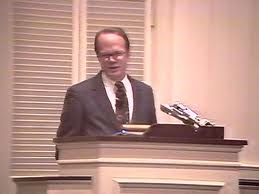
“Where Is Your Faith?” Dr. David Martyn Lloyd-Jones Exposition on Luke 8:22-25

(*Disclaimer: There is much that Lloyd-Jones writes here and elsewhere that is to be commended. However, in this case I wholeheartedly disagree with his view that a Christian should “never be depressed.” Many godly men and women have battled with depression their entire lives – Martin Luther and Charles H. Spurgeon to name two (not to mention – David and Moses in the Bible). I think that certain personalities are prone to depression and some people are clinically depressed and can be helped tremendously with the aid of medication and biblically based counseling. If you are severely depressed and have battled chronic depression I think you would be wise to seek medical attention. I agree with Lloyd-Jones that the Holy Spirit is powerful to help anyone overcome anything, and that all Christians can and should grow in their faith in the Omnipotence, Omniscience, and Omnipresence of God. The reality is that yes, Christians should never sin, but we do; and thanks to the work of the Trinity we are saved by grace and sanctified by grace. Sanctification is a journey of ups and downs and God-willing this sermon will help you to increase your faith – no matter what your doubts and struggles may be! – DPC) 
One day he got into a boat with his disciples, and he said to them, “Let us go across to the other side of the lake.” So they set out, and as they sailed he fell asleep. And a windstorm came down on the lake, and they were filling with water and were in danger. And they went and woke him, saying, “Master, Master, we are perishing!” And he awoke and rebuked the wind and the raging waves, and they ceased, and there was a calm. He said to them, “Where is your faith?” And they were afraid, and they marveled, saying to one another, “Who then is this, that he commands even winds and water, and they obey him?” – Luke 8:22-25

I WANT to call attention particularly to this question which was addressed by our Lord and Savior Jesus Christ to the disciples. He said to them: `Where is your faith?’ Indeed I would call your attention to this entire incident as a part of our consideration of the subject of spiritual depression. We have already considered a number of causes of the condition and this particular incident in the life and ministry of our Lord brings us face to face with yet another cause.

The one that is dealt with here is the whole problem and question of the nature of faith. In other words, there are many Christians who get into difficulty and are unhappy from time to time because they clearly have not understood the nature of faith. `Well’, you may say, `if they have not understood the nature of faith, how can they be Christians?’ The answer is that what makes one a Christian is that one is given the gift of faith. We are given the gift of faith by God through the Holy Spirit and we believe on the Lord Jesus Christ and that saves us; but that does not mean that we have fully understood the nature of faith. So it comes to pass that, while we may be truly Christian and genuinely saved through receiving this gift of faith, we may subsequently get into trouble with our spiritual experience because we have not understood what faith really is. It is given as a gift, but from there on we have to do certain things about it.

Now this very striking incident brings out the vital importance of distinguishing between the original gift of faith and the walk of faith, or the life of faith which comes subsequently. God starts us off in this Christian life and then we have to walk in it. `We walk by faith, not by sight’, is the theme that we are now considering.

Before I come actually to that particular theme, I must say a few words about this great incident in and of itself. Looked at from any standpoint it is a very interesting and important incident. It has a great deal to tell us, for instance, about the Person of our Lord Himself. It brings us face to face with what is described as a paradox, the seeming contradiction in the Person of our Lord Jesus Christ. There He was, weary and tired, so tired, in fact, that He fell asleep. Now this incident is recorded by the three so-called synoptic Gospels, Matthew, Mark and Luke, and it is really important from the standpoint of understanding the Person of the Lord Jesus Christ. Look at Him. There is no doubt about His humanity, He is fatigued, He is tired and weary, so much so that He just falls asleep, and, though the storm has arisen, He still goes on sleeping. He is subject to infirmity, He is a man in the body and flesh like all the rest of us. Ah, yes, but wait a minute. They came to Him and awoke Him saying:

`Master, carest Thou not that we perish?’ Then He arose and rebuked the wind and the raging of the sea, and they ceased and there was a calm-one of the others describes it as `a great calm’. Now it is not surprising that the disciples, seeing all this, wondered and said one to another: `What manner of Man is this! For He commandeth even the winds and water and they obey Him’.

Man, and yet obviously God. He could command the elements, He could silence the wind and stop the raging of the sea. He is the Lord of nature and of creation, He is the Lord of the universe. This is the mystery and the marvel of Jesus Christ-God and Man, two natures in One Person, two natures unmixed yet resident in the same Person.

We must start here, because if we are not clear about that there is no purpose in our going on. If you do not believe in the unique deity of the Lord Jesus Christ, you are not a Christian, whatever else you may be. We are not looking at a good Man only, we are not interested merely in the greatest Teacher the world has ever seen; we are face to face with the fact that God, the Eternal Son, has been in this world and that He took upon Him human nature and dwelt amongst us, a Man amongst men-God-Man. We are face to face with the mystery and the marvel of the Incarnation and of the Virgin Birth. It is all here, and it shines out in all the fullness of its amazing glory. `What manner of Man is this?’ He is more than Man. That is the answer-He is also God.

However, that is not, it seems to me, the special purpose of this particular incident. You get that revelation in other places also, it shines out right through all the Gospels; but the separate particular incidents in which it is seen, generally also have some special and peculiar message of their own to teach us. In this case there can be no doubt that that message is the lesson with regard to the disciples and their condition at this point-it is the great lesson concerning faith and the nature or the character of faith. I do not know what you feel, but I never cease to be grateful to these disciples. I am grateful for the record of every mistake they ever made, and for every blunder they ever committed, because I see myself in them. How grateful we should be to God that we have these Scriptures, how grateful to Him that He has not merely given us the gospel and left it at that. How wonderful it is that we can read accounts like this and see ourselves depicted in them, and how grateful we should be to God that it is a divinely inspired Word which speaks the truth, and shows and pictures every human frailty.

So we find our Lord rebuking these men. He rebukes them because of their alarm, because of their terror, because of their lack of faith. Here they were in the boat with Him, and the storm arose, and soon they were in difficulties. They baled out the water, but the boat was filling up and they could see that in a few moments it was going to sink. They had done everything they could but it did not seem to be of any avail, and what amazed them was that the Master was still sleeping soundly in the stern of the vessel. So they awoke Him and said: `Master, Master, carest Thou not that we perish?’ -are You unconcerned about it all? And He arose, and having rebuked the wind and the sea, He rebuked them.

Now we must be careful to observe this rebuke and to understand what He was saying. In the first place, He was rebuking them for being in such a state at all. `Where is your faith?’ He says. Matthew puts it: `O ye of little faith!’ Here as elsewhere `He marvelled at their unbelief’. He rebuked them for being in that state of agitation and terror and alarm while He was with them in the boat.

That is the first great lesson we have to apply to ourselves and to one another. It is very wrong for a Christian ever to be in such a condition. I do not care what the circumstances may be, the Christian should never be agitated, the Christian should never be beside himself like this, the Christian should never be at his wit’s end, the Christian should never be in a condition in which he has lost control of himself. That is the first lesson, a lesson we have emphasized before because it is an essential part of the New Testament teaching. A Christian should never, like the worldly person, be depressed, agitated, alarmed, frantic, not knowing what to do. It is the typical reaction to trouble of those who are not Christian, that is why it is so wrong to be like that.

The Christian is different from other people, the Christian has something which the non-Christian does not possess, and the ideal for the Christian is that which is stated so perfectly by the Apostle Paul in the fourth chapter of the Epistle to the Philippians : `I have learned, in whatsoever state I am, therewith to be content . . . I can do all things through Christ which strengtheneth me’. That is the Christian position, that is what the Christian is meant to be like. The Christian is never meant to be carried away by his feelings, whatever they are-never. That is always wrong in a Christian. He is always to be controlled, as I hope to show you. The trouble with these men was that they were lacking in self-control. That is why they were miserable, that is why they were unhappy, that is why they were alarmed and agitated, though the Son of God was with them in the boat. I cannot emphasize this point too strongly. I lay it down as a simple proposition that a Christian should never lose self-control, should never be in a state of agitation or terror or alarm, whatever the circumstances. That is obviously our first lesson.

The position of these people was alarming. They were in jeopardy and it looked as if they were going to be drowned the next moment, but our Lord says in effect: `You should not be in that condition. As My followers you have no right to be in such a state even though you are in jeopardy’. That is the first great lesson, and the second is, that what is so wrong about being in this condition is that it implies a lack of trust and of confidence in Him. That is the trouble and that is why it is so reprehensible. That is why He reprimanded these men at that point. He said in effect: `Do you feel like this in spite of the fact that I am with you? Do you not trust Me?’ Mark reports them as saying: `Master, carest Thou not that we perish?’ Now I do not think that they were referring only to themselves or to their own safety. I do not think that they were so self-centred.

I do not think that they simply meant: Don’t You care that we are going to drown? without considering Him at all. I believe they were including Him as well, that they thought they were all going to be drowned. `Master, carest Thou not that we perish?’ But still, this agitation and alarm always carries with it a lack of implicit trust and confidence in Him. It is a lack of faith in His concern for us and in His care for us. It means that we take charge and are going to look after the situation ourselves, feeling either that He does not care, or perhaps that He cannot do.

It means that we take charge and are going to look after the situation ourselves, feeling either that He does not care, or perhaps that He cannot do anything. That is what makes this so terrible, but I wonder whether we always realize it. It seems obvious as we look at it objectively in the case of these disciples; but when you and I are agitated or disturbed and do not know what to do, and are giving the impression of great nervous tension, anybody looking at us is entitled to say : `That person has not much faith in his or her Lord. There does not seem to be much point in being a Christian after all, there is not much value in Christianity as I see it in that person’.

Now during the war we were all subject to these trials in an exceptional way, but even now in days of peace anything that comes across our path and puts us in difficulty, at once shows whether we believe in Him and trust in Him, by our response and reaction to it. There seems to me, therefore, on the very surface to be these two great lessons.

We must never allow ourselves to be agitated and disturbed whatever the circumstances because to do so implies a lack of faith, a lack of trust, a lack of confidence in our blessed Lord and God. However, let us look at the passage in detail, let us now draw some general principles out of the incident and its great teaching.

First of all, in looking at this whole question of faith, let me say a word about what I might call `the trial of faith’. Scripture is full of this idea of the trial of one’s faith. Take the eleventh chapter of the Epistle to the Hebrews. That is, in a sense, nothing but a great exposition of this theme of the trial of faith. Every one of those men was tried. They had been given great promises and they had accepted them, and then everything seemed to go wrong. It is true of all of them. Think of the trial of a man like Noah, the trial of a man like Abraham, the trials that men like Jacob and especially Moses had to endure. God gives the gift of faith and then the faith is tried.

Peter, in his First Epistle in the first chapter, says exactly the same thing. He says : `Though ye are in heaviness for a season’ because of certain circumstances, the object of that is `that the trial of your faith which is more precious than of gold that perisheth, though it be tried with fire, might be found unto praise and honor and glory at the appearing of Jesus Christ’. That is the theme of all the Scriptures. You find it in the history of the Patriarchs and of all the Old Testament saints, you find it running through the New Testament. Indeed, it is peculiarly the theme of the last book of the Bible, the Book of Revelation.

Let us then be clear about this. We must start by understanding that we may well find ourselves in a position in which our faith is going to be tried. Storms and trials are allowed by God. If we are living the Christian life, or trying to live the Christian life, at the moment, on the assumption that it means just come to Christ and you will never have any more worry in the whole of your life, we are harboring a terrible fallacy. In fact it is a delusion and it is not true. Our faith will be tried, and James goes so far as to say: `Count it all joy when ye fall into divers temptations (trials)’ (James 1:2). God permits storms, He permits difficulties, He permits the wind to blow and the billows to roll, and everything may seem to be going wrong and we ourselves to be in jeopardy. We must learn and realize that God does not take His people and lead them into some kind of Elysium in which they are protected from all `the slings and arrows of outrageous fortune’. Not at all, we are living in the same world as everybody else. Indeed, the Apostle Paul seems to go further than that.

He tells the Philippians: `Unto you it is given in the behalf of Christ, not only to believe on Him, but also to suffer for His sake’ (Philippians 1. 29). `In the world’, says our Lord, `ye shall have tribulation but be of good cheer; I have overcome the world’ (John 16:33) `Be of good cheer’-yes, but remember that you will have the tribulation. Paul and Barnabas going on their missionary journey visited the churches and warned them, `that we must through much tribulation enter into the Kingdom of God’ (Acts 14:22).

We must start by realizing that `to be forewarned is to be forearmed’ in this matter. If we have a magical conception of the Christian life, we are certain to find ourselves in trouble, because, when difficulties come, we shall be tempted to ask: `Why is this allowed?’ And we should never ask such a question. If we but realized this fundamental truth, we never would ask it. Our Lord goes to sleep and allows the storm to come. The position may indeed become quite desperate and we may appear to be in danger of our lives. Everything may seem to be against us, yet-well here it is, a Christian poet has said it for us:

`When all things seem against us To drive us to despair’ .. .

But it does not drive him to despair because he goes on to say:

`We know one gate is open One ear will hear our prayer’.

But things may be desperate: `All things seem against us, to drive us to despair’. Let us then be prepared for that. Yes, but we must go further. While all this is happening to us, our Lord appears to be utterly unconcerned about us. That is where the real trial of faith comes in. The wind and the billows were bad enough and the water coming into the ship. That was terrible, but the thing that to them was most terrible of all was His apparent unconcern. Still sleeping and not apparently caring. `Master, carest Thou not that we perish?’ He appears to be unconcerned, unconcerned about us, unconcerned about Himself, unconcerned about His cause, unconcerned about His Kingdom.

Just imagine the feelings of these men. They had followed Him and listened to His teaching about the coming of the Kingdom, they had seen His miracles and were expecting marvelous things to happen; and now it looked as if everything was going to come to an end in shipwreck and drowning. What an anti-climax and all because of His unconcern! We must be very young indeed in the Christian life if we do not know something about this. Do we not all know something of this position of trial and difficulty, yes, and of a feeling that God somehow does not seem to care? He does not do anything about it. `Why does He allow me, a Christian, to suffer at the hands of a non-Christian?’ says many a person. `Why does He allow things to go wrong with me and not with the other person?’ `Why is that man successful while I am unsuccessful? Why does not God do something about it?’ How often do Christian people ask such questions. They have asked it about the whole state of the Church today. `Why does He not send revival? Why does He allow these rationalists and atheists to take the ascendancy? Why does He not break in and do something, and revive His work?’ How often we are tempted to say such things, exactly as these disciples in the boat were!

The fact that God permits these things and that He often appears to be quite unconcerned about it all really constitutes what I am describing as the trial of faith. Those are the conditions in which our faith is tried and tested, and God allows it all, God permits it all. James even tells us to `count it all joy’ when these things happen to us. This is a great subject-the trial of faith. We do not talk much about it these days, do we? But if we went back to the seventeenth or eighteenth century we would find that it was then a very familiar theme. I suppose that in many ways it was the central theme of the Puritans. It was certainly prominent later on in the evangelical awakening of the eighteenth century. The trial of man’s faith and how to overcome these things, the walk of faith, and the life of faith, was their constant theme.

Let us now go on to the second question–What is the nature of faith, the character of faith? This is above everything the particular message of this incident and I feel that it is brought out especially clearly in this record of it in the Gospel according to St. Luke. That is why I am taking the incident from that particular Gospel and emphasizing the way in which our Lord puts the question: `Where is your faith?’ There is the key to the whole problem. You observe our Lord’s question. It seems to imply that He knows perfectly well that they have faith. The question He asks them is: `Where is it? You have got faith, but where is it at this moment? It ought to be here, where is it?’ Now that gives us the key to the understanding of the nature of faith.

Let me first of all put it negatively. Faith, obviously, is not a mere matter of feeling. It cannot be, because one’s feelings in this kind of condition can be very changeable. A Christian is not meant to be dejected when everything goes wrong. He is told to `rejoice’. Feelings belong to happiness alone, rejoicing takes in something much bigger than feelings; and if faith were a matter of feelings only, then when things go wrong and feelings change, faith will go. But faith is not a matter of feelings only, faith takes up the whole man including his mind, his intellect and his understanding. It is a response to truth, as we shall see.

The second thing is still more important. Faith is not something that acts automatically, faith is not something that acts magically. This, I think, is the blunder of which we have all, at some time or another, been guilty. We seem to think that faith is something that acts automatically. Many people, it seems to me, conceive of faith as if it were something similar to those thermostats which you have in connection with a heating apparatus, you set your thermostat at a given level, you want to maintain the temperature at a certain point and it acts automatically. If the temperature is tending to rise above that, the thermostat comes into operation and brings it down; if you use your hot water and the temperature is lowered, the thermostat comes into operation and sends it up, etc. You do not have to do anything about it, the thermostat acts automatically and it brings the temperature back to the desired level automatically. Now there are many people who seem to think that faith acts like that. They assume that it does not matter what happens to them, that faith will operate and all will be well. Faith, however, is not something that acts magically or automatically. If it did, these men would never have been in trouble, faith would have come into operation and they would have been calm and quiet and all would have been well. But faith is not like that and those are utter fallacies with respect to it.

What is faith? Let us look at it positively. The principle taught here is that faith is an activity, it is something that has to be exercised. It does not come into operation itself, you and I have to put it into operation. It is a form of activity.

Now let me divide that up a little. Faith is something you and I have to bring into operation. That is exactly what our Lord said to these men. He said: `Where is your faith?’ which means, `Why are you not taking your faith and applying it to this position?’ You see, it was because they did not do so, because they did not put their faith into operation, that the disciples had become unhappy and were in this state of consternation. How then does one put faith into operation? What do I mean by saying that faith is something we have to apply? I can divide my answer in this way. The first thing I must do when I find myself in a difficult position is to refuse to allow myself to be controlled by the situation. A negative, you see. These men were in the boat, the Master was asleep and the billows were rolling, the water was coming in, and they could not bale it out fast enough. It looked as if they were going to sink, and their trouble was that they were controlled by that situation. They should have applied their faith and taken charge of it, and said: `No, we are not going to panic’. They should have started in that way, but they did not do so. They allowed the position to control them.

Faith is a refusal to panic. Do you like that sort of definition of faith? Does that seem to be too earthly and not sufficiently spiritual? It is of the very essence of faith. Faith is a refusal to panic, come what may. Browning, I think had that idea when he defined faith like this: `With me, faith means perpetual unbelief kept quiet, like the snake ‘neath Michael’s foot’. Here is Michael and there is the snake beneath his foot, and he just keeps it quiet under the pressure of his foot. Faith is unbelief kept quiet, kept down. That is what these men did not do, they allowed this situation to grip them, they became panicky. Faith, however, is a refusal to allow that. It says: `I am not going to be controlled by these circumstances-I am in control’. So you take charge of yourself, and pull yourself up, you control yourself. You do not let yourself go, you assert yourself.

That is the first thing, but it does not stop at that. That is not enough, because that may be nothing but resignation. That is not the whole of faith. Having taken that first step, having pulled yourself up, you then remind yourself of what you believe and what you know. That again is something these foolish disciples did not do. If only they had stopped a moment and said:

`Now then what about it? Is it possible that we are going to drown with Him in the boat? Is there anything He cannot do? We have seen His miracles, He turned the water into wine, He can heal the blind and the lame, He can even raise the dead, is it likely that He is going to allow us and Himself to be drowned in this way? Impossible! In any case He loves us, He cares for us, He has told us that the very hairs of our head are all numbered!’ That is the way in which faith reasons. It says: `All right, I see the waves and the billows but’-it always puts up this `but’. That is faith, it holds on to truth and reasons from what it knows to be fact. That is the way to apply faith.

These men did not do that and that is why they became agitated and panic stricken. And you and I will become panic stricken and agitated if we fail to do the same. Whatever the circumstances, therefore, stand, wait for a moment. Say: `I admit it all, but–‘ But what? But God! but the Lord Jesus Christ! But what? The whole of my salvation! That is what faith does. All things may seem to be against me `to drive me to despair’, I do not understand what is happening; but I know this, I know that God has so loved me that He sent His only begotten Son into this world for me, I know that while I was an enemy, God sent His only Son to die on the Cross on Calvary’s Hill for me. He has done that for me while I was an enemy, a rebellious alien. I know that the Son of God `loved me and gave Himself for me’. I know that at the cost of His life’s blood I have salvation and that I am a child of God and an heir to everlasting bliss. I know that. Very well, then, I know this, that `if when we were enemies, we were reconciled to God by the death of His Son, much more, being reconciled, we shall be saved by His life’ (Romans 5:10). It is inevitable logic, and faith argues like that. Faith reminds itself of what the Scripture calls ‘the exceeding great and precious promises’.

Faith says: ‘I cannot believe that He who has brought me so far is going to let me down at this point. It is impossible, it would be inconsistent with the character of God’. So faith, having refused to be controlled by circumstances, reminds itself of what it believes and what it knows.

And then the next step is that faith applies all that to the particular situation. Again, that was something these men did not do, and that is why our Lord puts it to them in this way: `Where is your faith?’ –`You have got it, why don’t you apply it, why don’t you bring all you know to bear on this situation, why don’t you focus it on this particular problem?’ That is the next step in the application of faith. Whatever your circumstances at this moment, bring all you know to be true of your relationship to God to bear upon it. Then you will know full well that He will never allow anything to happen to you that is harmful. `All things work together for good to them that love God.‘ Not a hair of your head shall be harmed, He loves you with an everlasting love.

I do not suggest that you will be able to understand everything that is happening. You may not have a full explanation of it; but you will know for certain that God is not unconcerned. That is impossible. The One who has done the greatest thing of all for you, must be concerned about you in everything, and though the clouds are thick and you cannot see His face, you know He is there. `Behind a frowning providence He hides a smiling face.’ Now hold on to that. You say that you do not see His smile. I agree that these earthborn clouds prevent my seeing Him, but He is there and He will never allow anything finally harmful to take place. Nothing can happen to you but what He allows, I do not care what it may be, some great disappointment, perhaps, or it may be an illness, it may be a tragedy of some sort, I do not know what it is, but you can be certain of this, that God permits that thing to happen to you because it is ultimately for your good. `Now no chastening for the present seemeth to be joyous, but grievous; nevertheless afterward it yieldeth the peaceable fruit of righteousness’ (Hebrews 12:11).

That is the way faith works. But you and I have to exercise it. It does not come into operation automatically. You have to focus your faith on to events and say: `All right, but I know this about God, and because that is true I am going to apply it to this situation. This, therefore, cannot be what I think it is, it must have some other explanation’. And you end by seeing that it is God’s gracious purpose for you, and having applied your faith, you then hold on. You just refuse to be moved. The enemy will come and attack you, the water will seem to be pouring into the boat, but you say: `It is all right, let the worst come to the worst’. You stand on your faith. You say to yourself: `I believe this, I am resting on this, I am certain of this and though I do not understand what is happening to me I am holding on to this!’

That brings me to my final word, which is my third principle –the value of even the weakest or smallest faith. We have looked at the trial of faith, we have looked at the nature of faith, let me say a closing word on the value of even the weakest and smallest faith. However poor and small and however incomplete the faith of these disciples was on this occasion, they at any rate had a sufficient amount of faith to make them do the right thing in the end. They went to Him. Having been agitated and distressed and alarmed and exhausted, they went to Him. They still had some kind of feeling that He could do something about it, and so they woke Him and said: `Master, are you not going to do something about it?’ That is very poor faith you may say, very weak faith, but it is faith, thank God. And even faith `like a grain of mustard seed’ is valuable because it takes us to Him. And when you do go to Him this is what you will find. He will be disappointed with you and He will not conceal that. He will rebuke you, He will say: `Why did you not reason it out, why did you not apply your faith, why do you appear agitated before that worldly person, why do you behave as if you were not a Christian at all, why didn’t you apply your faith as you should have done? I would have been so pleased if I could have watched you standing like a man in the midst of the hurricane or stormy why didn’t you?’ He will let us know that He is disappointed in us and He will rebuke us; but, blessed be His Name, He will nevertheless still receive us. He does not drive us away. He did not drive these disciples away, He received them and He will receive us. Yes, and He will not only receive us, He will bless us and He will give us peace. `He rebuked the wind and the sea and there was a great calm.’ He produced the condition they were so anxious to enjoy, in spite of their lack of faith. Such is the gracious Lord that you and I believe in and follow. Though He is disappointed in us often and though He rebukes us, He will never neglect us; He will receive us, He will bless us, He will give us peace, indeed He will do for us what He did for these men.

With this peace He gave them a still greater conception of Himself than they had had before. They marveled, and were full of amazement at His wonderful power. He, as it were, threw that into the bargain on top of all the blessings. If you find yourself in this position of trial and trouble and testing, take it as a wonderful opportunity of proving your faith, of showing your faith, of manifesting your faith and bringing glory to His great and Holy Name. But if you should fail to do that, if you should apparently be too weak to apply your faith, if you are being so besieged and attacked by the devil and by hell and by the world, well, then, I say, just fly to Him at once and He will receive you and will bless you, He will give you deliverance, He will give you peace. But remember always that faith is an activity, it is something that has to be applied. `Where is your faith?’ Let us make certain that it is always at the place and at the point of need and of testing.

The Article/Sermon above was adapted from Chapter 10 in the Classic book of Sermons by Dr. David Martyn Lloyd-Jones. Spiritual Depression: It’s Causes and Cure. Grand Rapids: Eerdmans, 1965.

 About the Preacher:

Dr. David Martyn Lloyd-Jones (1899-1981) [hereafter – DMLJ] was a British evangelical born and brought up within Welsh Calvinistic Methodism, he is most noted for his pastorate and expository preaching career at Westminster Chapel in London.

In addition to his work at Westminster Chapel, he published books and spoke at conferences and, at one point, presided over the Inter-Varsity Fellowship of Students (now known as UCCF). Lloyd-Jones was strongly opposed to the liberal theology that had become a part of many Christian denominations in Wales and England.

DMLJ’s most popular writings are collections of his sermons edited for publication, as typified by his multi-volume series’ on Acts, Romans, Ephesians, 1 John, and Philippians. My favorite writings are his expositions on the Sermon on the Mount; Revival; Joy Unspeakable; Spiritual Depression; and his recently revised 40th Anniversary edition of Preaching and Preachers.

Born in Wales, Lloyd-Jones was schooled in London. He then entered medical training at Saint Bartholomew’s Hospital, better known simply as Bart’s. Bart’s carried the same prestige in the medical community that Oxford did in the intellectual community. Martyn’s career was medicine. He succeeded in his exams so young that he had to wait to take his MD, by which time he was already chief clinical assistant to Sir Thomas Horder, one of the best and most famous doctors of the day. By the age of 26 he also had his MRCP (Member of the Royal College of Physicians).

Although he had considered himself a Christian, the young doctor was soundly converted in 1926. He gave up his medical career in 1927 and returned to Wales to preach and pastor his first church in Sandfields, Aberavon.

In 1935, Lloyd-Jones preached to an assembly at Albert Hall. One of the listeners was 72-year-old Dr. Campbell Morgan, pastor of Westminster Chapel in London. When he heard Martyn Lloyd-Jones, he wanted to have him as his colleague and successor in 1938. But it was not so easy, for there was also a proposal that he be appointed Principal of the Theological College at Bala; and the call of Wales and of training a new generation of ministers for Wales was strong. In the end, however, the call from Westminster Chapel prevailed and the Lloyd-Jones family finally committed to London in April 1939.

After the war, under Lloyd-Jones preaching, the congregation at Westminster Chapel grew quickly. In 1947 the balconies were opened and from 1948 until 1968 when he retired, the congregation averaged perhaps 1500 on Sunday mornings and 2000 on Sunday nights.

In his 68th year, he underwent a major medical operation. Although he fully recovered, he decided to retire from Westminster Chapel. Even in retirement, however, Lloyd-Jones worked as a pastor of pastors an itinerant speaker and evangelist. “The Doctor”, as he became known, was one of the major figureheads of British evangelicalism and his books and published sermons continue to be appreciated by many within the United Kingdom and beyond. DMLJ believed that the greatest need of the church was revival.
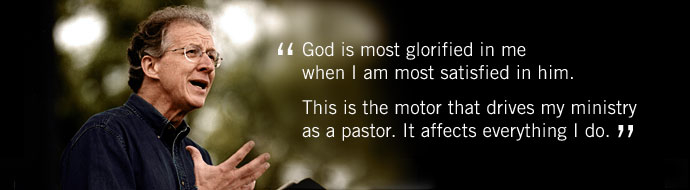
Dr. John Piper on Why Christians are Called to Suffer

“Called to Suffer and Rejoice: That We Might Gain Christ” 

A Sermon Delivered by Dr. John Piper on August 23, 1992

“Finally, my brethren, rejoice in the Lord. To write the same things again is no trouble to me, and it is a safeguard for you. Beware of the dogs, beware of the evil workers, beware of the false circumcision; for we are the true circumcision, who worship in the Spirit of God and glory in Christ Jesus and put no confidence in the flesh, although I myself might have confidence even in the flesh. If anyone else has a mind to put confidence in the flesh, I far more: circumcised the eighth day, of the nation of Israel, of the tribe of Benjamin, a Hebrew of Hebrews; as to the law, a Pharisee; as to zeal, a persecutor of the church; as to the righteousness which is in the law, found blameless. But whatever things were gain to me, those things I have counted as loss for the sake of Christ. More than that, I count all things to be loss in view of the surpassing value of knowing Christ Jesus my Lord, for whom I have suffered the loss of all things, and count them but rubbish in order that I may gain Christ, and may be found in him, not having a righteousness of my own derived from the Law, but that which is through faith in Christ, the righteousness which comes from God on the basis of faith, that I may know him, and the power of his resurrection and the fellowship of his sufferings, being conformed to his death; in order that I may attain to the resurrection from the dead. Not that I have already obtained it, or have already become perfect, but I press on in order that I may lay hold of that for which also I was laid hold of by Christ Jesus. Brethren, I do not regard myself as having laid hold of it yet; but one thing I do: forgetting what lies behind and reaching forward to what lies ahead, I press on toward the goal for the prize of the upward call of God in Christ Jesus.” – Philippians 3:1-14

 The Bible Promises Suffering for God’s People

We are focusing in these weeks on the need to prepare for suffering. The reason for this is not just my sense that the days are evil and the path of righteousness costly, but the promise of the Bible that God’s people will suffer.

For example,

Acts 14:22 says that Paul told all his young churches, “Through many tribulations we must enter the kingdom.”

And Jesus said, “If they persecuted me, they will persecute you” (John 15:20).

And Peter said, “Do not be surprised at the fiery ordeal among you, which comes upon you for your testing, as though some strange thing were happening to you” (1 Peter 4:12). In other words it is not strange; it is to be expected.

And Paul said (in 2 Timothy 3:12), “Indeed, all who desire to live godly in Christ Jesus will be persecuted.”

So I take it to be a biblical truth that the more earnest we become about being the salt of the earth and the light of the world, and reaching the unreached peoples of the world, and exposing the works of darkness, and loosing the bonds of sin and Satan, the more we will suffer. That’s why we should prepare. And that’s why I am preaching in these weeks from texts that will help us prepare.

The messages deal with four purposes that God has in our suffering in his service. One is the moral or spiritual purpose: in suffering we come to hope more fully in God and put less confidence in the things of the world. Second, there is the intimacy purpose: we come to know Christ better when we share his sufferings. That is our focus today.

The Purpose of Greater Intimacy with Christ

God helps us prepare for suffering by teaching us and showing us that through suffering we are meant to go deeper in our relationship with Christ. You get to know him better when you share his pain. The people who write most deeply and sweetly about the preciousness of Christ are people who have suffered with him deeply.

Suffering in the Life of Jerry Bridges

For example, Jerry Bridges’ book, Trusting God, Even When Life Hurts, is a deep and helpful book about suffering and going deep with God through affliction. And so it’s not surprising to learn that when he was 14 years old, he heard his mother call out in the next room, totally unexpectedly, and arrived to see her take her last breath. He also has physical conditions that keep him from normal sports. And just a few years ago his wife died of cancer. Serving God with the Navigators has not spared him pain. He writes with depth about suffering because he has gone deep with Christ in suffering.

Suffering in the Life of Horatius Bonar

Over a hundred years ago Horatius Bonar, the Scottish pastor and hymn-writer, wrote a little book called Night of Weeping, or, “When God’s Children Suffer.” In it he said his goal was, “to minister to the saints . . . to seek to bear their burdens, to bind up their wounds, and to dry up at least some of their many tears.” It is a tender and deep and wise book. So it’s not surprising to hear him say,

It is written by one who is seeking himself to profit by trial, and trembles lest it should pass by as the wind over the rock, leaving it as hard as ever; by one who would in every sorrow draw near to God that he may know Him more, and who is not unwilling to confess that as yet he knows but little.

Bridges and Bonar show us that suffering is a path deep into the heart of God. God has special revelations of his glory for his suffering children.

The Words of Job, Stephen, and Peter

After months of suffering, Job finally says to God, “I had heard of Thee by the hearing of the ear, but now my eye sees Thee” (Job 42:5). Job had been a godly and upright man, pleasing to God, but the difference between what he knew of God in prosperity and what he knew of him through adversity was the difference between hearing about and seeing.

When Stephen was arrested and put on trial for his faith and given a chance to preach, the upshot was that the religious leaders were enraged and ground their teeth at him. They were just about to drag him out of the city and kill him. At just that moment, Luke tells us, “Stephen was full of the Holy Spirit and gazed into heaven and saw the glory of God and Jesus standing at the right hand of God” (Acts 7:55). There is a special revelation, a special intimacy, prepared for those who suffer with Christ.

Peter put it this way, “If you are reproached for the name of Christ, you are blessed, because the Spirit of glory and of God rests upon you” (1 Peter 4:14). In other words God reserves a special coming and resting of his Spirit and his glory on his children who suffer for his name.

Three Observations from the Text (Philippians 3:5-11)

So the focus of today’s message is on this intimacy factor in suffering. One of the purposes of the suffering of the saints is that their relationship with God might become less formal and less artificial and less distant, and become more personal and more real and more intimate and close and deep.

In our text (Philippians 3:5–11) I want us to see at least three things:

  1. First, Paul’s preparation to suffer by reversing his values;
  2. Second, Paul’s experience of suffering and loss as the cost of his obedience to Christ;
  3. Third, Paul’s aim in all of this, namely, to gain Christ: to know him and be in him and fellowship with more intimacy and reality than he knew with his best friends Barnabas and Silas.

Paul’s Preparation to Suffer

In verses 5 and 6 Paul lists the distinctives he enjoyed before he became a Christian. He gives his ethnic pedigree as a thoroughbred child of Abraham, a Hebrew of Hebrews. This brought him great gain, a great sense of significance and assurance. He was an Israelite. Then he mentions three things that go right to the heart of Paul’s life before he was a Christian (at the end of verse 5): “as to the law, a Pharisee; as to zeal, a persecutor of the church; as to the righteousness which is in the law, found blameless.”

Paul’s Values Before He Met Christ

This was Paul’s life. This was what gave him meaning and significance. This was his gain, his fortune, his joy. Different strokes for different folks—and Paul’s was that he belonged to the upper-echelon of law-keepers, the Pharisees, and that among them he was so zealous that he led the way in persecuting the enemies of God, the church of Jesus, and that he kept the law meticulously. He got strokes from belonging, he got strokes from excelling, he got strokes from God—or so he thought—for his blameless law-keeping.

And then he met Christ, the Son of the living God, on the Damascus road. Christ told him how much he would have to suffer (Acts 9:16). And Paul prepared himself.

Paul Counted His Prior Values as Loss

The way he prepared himself is described in verse 7. “But whatever things were gain to me, those things I have counted as loss for the sake of Christ.” Paul looks at his standing in the upper-echelons of religious society, the Pharisees; he looks at the glory of being at the very top of that group with all its strokes and applause; he looks at the rigor of his law-keeping and the sense of moral pride he enjoyed; and he prepares to suffer by taking his whole world and turning it upside down, by reversing his values: “Whatever things were gain to me [that’s verses 5–6], those things I have counted as loss.”

Before he was a Christian he had a ledger with two columns: one that said, gains, and another that said, losses. On the gain side was the human glory of verses 5–6. On the loss side was the terrible prospect that this Jesus movement might get out of hand and Jesus prove real and win the day. When he met the living Christ on the Damascus road, Paul took a big red pencil and wrote “LOSS” in big red letters across his gains column. And he wrote “GAIN” in big letters over the loss column that only had one name in it: Christ.

And not only that, the more Paul thought about the relative values of life in the world and the greatness of Christ, he moved beyond the few things mentioned in verses 5–6 and put everything but Christ in that first column: Verse 8: “More than that, I count all things to be loss in view of the surpassing value of knowing Christ Jesus my Lord.” He started by counting his most precious accomplishments as loss, and he ended by counting everything as loss, except Christ.

Normal Christianity

That’s what it meant for Paul to become a Christian. And lest anyone of us think he was unique or peculiar, notice that in verse 17 he says with his full apostolic authority, “Brethren, join in following my example.” This is normal Christianity.

What Paul is doing here is showing how the teaching of Jesus is to be lived out. For example, Jesus said, “The kingdom of heaven is like a treasure hidden in a field, which a man found and hid; and from joy over it he goes and sells all that he has, and buys that field” (Matthew 13:44). Becoming a Christian means discovering that Christ (the King) is a Treasure Chest of holy joy and writing “LOSS” over everything else in the world in order to gain him. “He sold all that he had to buy that field.”

Or again in Luke 14:33 Jesus said, “No one of you can be my disciple who does not take leave of all his own possessions.” In other words, becoming a disciple of Jesus means writing “LOSS” in big red letters over all your possessions—and everything else this world offers.

What This Means Practically

Now what does that mean practically? I think it means four things

  1. It means that whenever I am called upon to choose between anything in this world and Christ, I choose Christ.
  2. It means that I will deal with the things of this world in ways that draw me nearer to Christ so that I gain more of Christ and enjoy more of him by the way I use the world.
  3. It means that I will always deal with the things of this world in ways that show that they are not my treasure, but rather show that Christ is my treasure.
  4. It means that if I lose any or all the things this world can offer, I will not lose my joy or my treasure or my life, because Christ is all.

Now that was the reckoning that Paul reckoned in his soul (v. 8): “I count all things to be loss in view of the surpassing value of knowing Christ Jesus my Lord.” Christ is all and all else is loss.

Why Is This a Way of Preparing to Suffer?

Now let’s stand back a minute and get our bearings. I am still dealing with the first point: namely, that this is Paul’s way of preparing to suffer. Why do I say that? Why is becoming a Christian, and writing “LOSS” across everything in your life but Christ a way of preparing to suffer?

The answer is that suffering is nothing more than the taking away of bad things or good things that the world offers for our enjoyment—reputation, esteem among peers, job, money, spouse, sexual life, children, friends, health, strength, sight, hearing, success, etc. When these things are taken away (by force or by circumstance or by choice), we suffer. But if we have followed Paul and the teaching of Jesus and have already counted them as loss for the surpassing value of gaining Christ, then we are prepared to suffer.

If when you become a Christian you write a big red “LOSS” across all the things in the world except Christ, then when Christ calls you to forfeit some of those things, it is not strange or unexpected. The pain and the sorrow may be great. The tears may be many, as they were for Jesus in Gethsemane. But we will be prepared. We will know that the value of Christ surpasses all the things the world can offer and that in losing them we gain more of Christ.

Paul’s Experience of Suffering

So in the second half of verse 8 Paul moves from preparing for suffering to actual suffering. He moves from counting all things as loss in the first half of verse 8 to actually suffering the loss of all things in the second half of the verse. “…for whom [that is, Christ] I have suffered the loss of all things, and count them as rubbish in order that I might gain Christ.” We are going to see this next week: Paul had experienced so much actual loss of the normal benefits and comforts of the world that he could say that he was not merely counting things loss; he was suffering loss. He had prepared by turning his values upside down, and now he was being tested. Did he value Christ above all?

Paul’s Goal (and God’s Purpose) in Suffering

So let me close by riveting our attention on Paul’s goal and God’s purpose in this suffering. Why did God ordain and Paul accept the losses that it meant for him to be a Christian?

Paul gives the answer again and again in these verses so that we cannot miss the point. He is not passive in this suffering loss. He is purposive. And his purpose is to gain Christ.

Verse 7: “I counted them loss for the sake of Christ.”

Verse 8a: “I count all things to be loss for the surpassing value of knowing Christ Jesus my Lord.”

Verse 8b: “For him I have suffered the loss of all things.”

Verse 8c: “And I count them but rubbish in order that I may gain Christ…”

Verse 9: “…and that I may be found in him [so as to have God’s righteousness, not my own]…”

Verse 10a: (still giving his aim in accepting the loss of all things) “…that I may know him”

Verses 10b–11: (followed by four specifics of what it means to know Christ)

  1. ” . . . [to know] the power of his resurrection”; and
  2. “the fellowship of his sufferings”;
  3. “being conformed to his death”;
  4. “in order that I may attain to the resurrection from the dead.”

In other words, what sustains Paul in suffering the loss of all things is the confidence that in his losing precious things in the world he is gaining something more precious—Christ.

And two times that gaining is called a knowing—verse 8a: “…in view of the surpassing value of knowing Christ Jesus my Lord.” Verse 10: “That I might know him.” This is the intimacy factor in suffering. Do we want to know him? Do we want to be more personal with him and deep with him and real with him and intimate with him—so much so that we count everything as loss to gain this greatest of all treasures?

If we do, we will be ready to suffer. If we don’t, it will take us by surprise and we will rebel. May the Lord open our eyes to the surpassing worth of knowing Christ!

Sermon/ Article Above Used by Permission. By Dr. John Piper. © 2012 Desiring God Foundation. Website: desiringGod.org


Dr. James M. Boice on the Importance of God’s Wrath in The Gospel

“For the wrath of God is revealed from heaven against all ungodliness and unrighteousness of men, who by their unrighteousness suppress the truth.” – Romans 1:18

“The Angry God” – A Biblical Exposition of Romans 1:18 – Dr. James M. Boice

Today’s preaching is deficient at many points. But there is no point at which it is more evidently inadequate and even explicitly contrary to the teachings of the New Testament than in its neglect of “the wrath of God.” God’s wrath is a dominant Bible teaching and the point in Romans at which Paul begins his formal exposition of the gospel. Yet, to judge from most contemporary forms of Christianity, the wrath of God is either an unimportant doctrine, which is an embarrassment, or an entirely wrong notion, which any enlightened Christian should abandon.

Weakness of Contemporary Preaching

Where do most people begin when making a presentation of Christian truth, assuming that they even speak of it to others? Where does most of today’s Christian “preaching” begin?

Many begin with what is often termed “a felt need,” a lack or a longing that the listener will acknowledge. The need may involve feelings of inadequacy; a recognition of problems in the individual’s personal relationships or work or aspirations; moods; fears; or simply bad habits. The basic issue may be loneliness, or it may be uncontrollable desires. According to this theory, preaching should begin with felt needs, because this alone establishes a point of contact with a listener and wins a hearing. But does it? Oh, it may establish a contact between the teacher and the listener. But this is not the same thing as establishing contact between the listener and God, which is what preaching is about. Nor is it even necessarily a contact between the listener and the truth, since felt needs are often anything but our real needs; rather, they can actually be a means of suppressing them.

Here is the way Paul speaks of a felt need in another letter: “For the time will come when men will not put up with sound doctrine. Instead, to suit their own desires, they will gather around them a great number of teachers to say what their itching ears want to hear” (2 Timothy 4:3). “What their itching ears want to hear” is a classic example of a felt need. In this passage the apostle warns Timothy not to cater to it. Obviously he himself did not structure the presentation of his gospel around such “needs.”

Another way we present the gospel today is by promises. We offer them like a carrot, a reward to be given if only the listener accepts Jesus. Through this approach, becoming a Christian is basically presented as a means of getting something. Sometimes this is propounded in a frightfully unbiblical way, so that what emerges is a “prosperity gospel” in which God is supposed to be obliged to grant wealth, health, and success to the believer.

We also commonly offer the gospel by the route of personal experience, stressing what Jesus has done for us and commending it to the other person for that reason.

The point I am making is that Paul does not do this in Romans, and in this matter he rebukes us profitably. D. Martyn Lloyd-Jones puts it like this:

Why is he [Paul] ready to preach the gospel in Rome or anywhere else? He does not say it is because he knows that many of them [the Romans] are living defeated lives and that he has got something to tell them that will give them victory. He does not say to them, “I want to come and preach the gospel to you in Rome because I have had a marvelous experience and I want to tell you about it, in order that you may have the same experience—because you can if you want it; it is there for you.”

This is not what Paul does.… There is no mention here of any experience. He is not talking in terms of their happiness or some particular state of mind, or something that might appeal to them, as certain possibilities do—but this staggering, amazing thing, the wrath of God! And he puts it first; it is the thing he says at once (D. M. Lloyd-Jones, Romans: An Exposition of Chapter 1, The Gospel of God. Grand Rapids: Zondervan, 1985, p. 325).

The reason, of course, is that Paul was God-centered, rather than man-centered, and he was concerned with that central focus. Most of us are weak, fuzzy, or wrong at this point. Paul knew that what matters in the final analysis is not whether we feel good or have our felt needs met or receive a meaningful experience. What matters is whether we come into a right relationship with God. And to have that happen we need to begin with the truth that we are not in a right relationship to him. On the contrary, we are under God’s wrath and are in danger of everlasting condemnation at his hands.

Wrath: A Biblical Idea

There is a problem at this point, of course, and the problem is that most people think in human categories rather than in the terms of Scripture. When we do that, “wrath” inevitably suggests something like capricious human anger or malice. God’s wrath is not the same thing as human anger, of course. But because we fail to appreciate this fact, we are uneasy with the very idea of God’s wrath and think that it is somehow unworthy of God’s character. So we steer away from the issue.

The biblical writers had no such reticence. They spoke of God’s wrath frequently, obviously viewing it as one of God’s great “perfections”—alongside his other attributes. Says J. I. Packer, “One of the most striking things about the Bible is the vigor with which both Testaments emphasize the reality and terror of God’s wrath.” Arthur W. Pink wrote, “A study of the concordance will show that there are more references in Scripture to the anger, fury, and wrath of God than there are to His love and tenderness” (J.I Packer. Knowing God. Downers Grove, ILL.: IVP, 1973, pp.134-35; A.W. Pink. The Attributes of God. Grand Rapids: Baker, 1975, p. 82).

In the Old Testament more than twenty words are used to refer to God’s wrath. (Other, very different words relate to human anger.) There are nearly six hundred important passages on the subject. These passages are not isolated or unrelated, as if they had been added to the Old Testament at some later date by a particularly gloomy redactor. They are basic and are integrated with the most important themes and events of Scripture.

The earliest mentions of the wrath of God are in connection with the giving of the law at Sinai. The first occurs just two chapters after the account of the giving of the Ten Commandments: “[The Lord said,] ‘Do not take advantage of a widow or an orphan. If you do and they cry out to me, I will certainly hear their cry. My anger [wrath] will be aroused, and I will kill you with the sword; your wives will become widows and your children fatherless’” (Exodus 22:22-24).

Ten chapters later in Exodus, in a very important passage about the sin of Israel in making and worshiping the golden calf (a passage to which we will return), God and Moses discuss wrath. God says, “Now leave me alone so that my anger [wrath] may burn against them and that I may destroy them.…” But Moses pleads, “Why should your anger burn against your people, whom you brought out of Egypt with great power and a mighty hand? Why should the Egyptians say, ‘It was with evil intent that he brought them out, to kill them in the mountains and to wipe them off the face of the earth’? Turn from your fierce anger; relent and do not bring disaster on your people” (Exodus 32:10-12).

In this early and formative passage, Moses does not plead with God on the grounds of some supposed innocence of the people—they were not innocent, and Moses knew it—nor with the fantasy that wrath is somehow unworthy of God’s character. Rather Moses appeals only on the grounds that God’s judgment would be misunderstood and that his name would be dishonored by the heathen.

There are two main words for wrath in the New Testament. One is thymos, from a root that means “to rush along fiercely,” “to be in a heat of violence,” or “to breathe violently.” We can capture this idea by the phrase “a panting rage.” The other word is orgē which means “to grow ripe for something.” It portrays wrath as something that builds up over a long period of time, like water collecting behind a great dam.

In his study of The Apostolic Preaching of the Cross, Leon Morris notes that apart from the Book of Revelation, which describes the final outpouring of God’s wrath in all its unleashed fury, thumos is used only once of God’s anger. The word used in every other passage is orgẽ. Morris observes, “The biblical writers habitually use for the divine wrath a word which denotes not so much a sudden flaring up of passion which is soon over, as a strong and settled opposition to all that is evil arising out of God’s very nature” (Leon Morris, The Apostolic Preaching of the Cross. Grand Rapids: Eerdmans, 1955, pp. 162, 163).

John Murray describes wrath in precisely this way when he writes in his classic definition: “Wrath is the holy revulsion of God’s being against that which is the contradiction of his holiness” (John Murray. The Epistle to the Romans. Grand Rapids: Eerdmans. 1968, p. 35).

We find this understanding of the wrath of God in Romans. In this letter Paul refers to wrath ten times. But in each instance the word he uses is orgẽ, and his point is not that God is suddenly flailing out in petulant anger against something that has offended him momentarily, but rather that God’s firm, fearsome hatred of all wickedness is building up and will one day result in the eternal condemnation of all who are not justified by Christ’s righteousness. Romans 1:17 says, on the basis of Habakkuk 2:4, that “the righteous will live by faith.” But those who do not live by faith will not live; they will perish. Thus, in Romans 2:5 we find Paul writing, “Because of your stubbornness and your unrepentant heart, you are storing up wrath against yourself for the day of God’s wrath, when his righteous judgment will be revealed.”

Wrath Revealed

But it is not only a matter of God’s wrath being “stored up” for a final great outpouring at the last day. There is also a present manifesting of this wrath, which is what Paul seems to be speaking of in our text when he says, using the present rather than the future tense of the verb, “The wrath of God is being revealed from heaven against all the godlessness and wickedness of men who suppress the truth by their wickedness.” How is this so? In what way is the wrath of God currently being made manifest?

Commentators on Romans suggest a number of observations at this point, listing ways in which God’s wrath against sin seems to be disclosed. Charles Hodge speaks of three such manifestations: “the actual punishment of sin,” “the inherent tendency of moral evil to produce misery,” and “the voice of conscience” (Charles Hodge, A Commentary on Romans. Edinburgh and Carlisle, Pa.: The Banner of Truth Trust, 1972, p. 35. Original edition – 1935).

D. Martyn Lloyd-Jones lists “conscience,” “disease and illness,” “the state of creation,” “the universality of death,” “history,” and (the matter he thinks Paul mainly had in view) “the cross” and “resurrection of Christ” (Lloyd-Jones. Romans: An Exposition of Chapter One, pp. 342-350).

Robert Haldane has a comprehensive statement:

The wrath of God … was revealed when the sentence of death was first pronounced, the earth cursed and man driven out of the earthly paradise, and afterward by such examples of punishment as those of the deluge and the destruction of the cities of the plain by fire from heaven, but especially by the reign of death throughout the world. It was proclaimed by the curse of the law on every transgression and was intimated in the institution of sacrifice and in all the services of the Mosaic dispensation. In the eighth chapter of this epistle the apostle calls the attention of believers to the fact that the whole creation has become subject to vanity and groaneth and travaileth together in pain. This same creation which declares that there is a God, and publishes his glory, also proves that he is the enemy of sin and the avenger of the crimes of men.… But above all, the wrath of God was revealed from heaven when the Son of God came down to manifest the divine character, and when that wrath was displayed in his sufferings and death in a manner more awful than by all the tokens God had before given of his displeasure against sin (Robert Haldane. An Exposition of the Epistle to the Romans. MacDill AFB: MacDonald Publishing, 1958, pp. 55, 56).

Each of these explanations of the present revelation of the wrath of God is quite accurate. But in my opinion Paul has something much more specific in view here, the matter that Charles Hodge alone mentions specifically: “the inherent tendency of moral evil to produce misery.” This is what Paul goes on to develop in Romans 1. In verses 21 through 32 Paul speaks of a downward inclination of the race by which the world, having rejected God and therefore being judicially abandoned by God, is given up to evil. It is set on a course that leads to perversions and ends in a debasement in which people call good evil and evil good. Human depravity and the misery involved are the revelation of God’s anger.

A number of years ago, Ralph L. Keiper was speaking to a loose-living California hippie about the claims of God on his life. The man was denying the existence of God and the truths of Christianity, but he was neither dull nor unperceptive. So Keiper directed him to Romans 1, which he described as an analysis of the hippie’s condition. The man read it carefully and then replied, “I think I see what you’re driving at. You are saying that I am the verifying data of the revelation.”

That is exactly it! The present revelation of God’s wrath, though limited in its scope, should be proof to us that we are indeed children of wrath and that we need to turn from our present evil path to the Savior.

Turning Aside God’s Wrath

Here I return to that great Old Testament story mentioned earlier. Moses had been on the mountain for forty days, receiving the law. As the days stretched into weeks, the people waiting below grew restless and prevailed upon Moses’ brother Aaron to make a substitute god for them. It was a golden calf. Knowing what was going on in the valley, God interrupted his giving of the law to tell Moses what the people were doing and to send him back down to them.

It was an ironic situation. God had just given the Ten Commandments. They had begun: “I am the Lord your God, who brought you out of Egypt, out of the land of slavery. You shall have no other gods before me. You shall not make for yourself an idol in the form of anything in heaven above or on the earth beneath or in the waters below. You shall not bow down to them or worship them; for I, the Lord your God, am a jealous God, punishing the children for the sin of the fathers to the third and fourth generation of those who hate me, but showing love to thousands who love me and keep my commandments” (Exodus 20:2–6). While God was giving these words, the people whom he had saved from slavery were doing precisely what he was prohibiting. Not only that, they were lying, coveting, dishonoring their parents, committing adultery, and no doubt also breaking all the other commandments.

God declared his intention to judge the people immediately and totally, and Moses interceded for them in the words referred to earlier (Exodus 32:11–12).

At last Moses started down the mountain to deal with the people. Even on a human level, quite apart from any thought of God’s grace, sin must be judged. So Moses dealt with the sin as best he knew how. First he rebuked Aaron publicly. Then he called for any who still remained on the side of the Lord to separate themselves from the others and stand beside him. The tribe of Levi responded. At Moses’ command they were sent into the camp to execute the leaders of the rebellion. Three thousand men were killed, approximately one-half of one percent of the six hundred thousand who had left Egypt at the Exodus (Exodus 32:28; cf. 12:37—with women and children counted, the number may have been more than two million). Moses also destroyed the golden calf. He ground it up, mixed it with water, and made the people drink it.

From a human standpoint, Moses had dealt with the sin. The leaders were punished. Aaron was rebuked. The allegiance of the people was at least temporarily reclaimed. But Moses stood in a special relationship to God, as Israel’s representative, as well as to the people as their leader. And God still waited in wrath on the mountain. What was Moses to do?

For theologians sitting in an ivory-tower armchair, the idea of the wrath of God may seem to be no more than an interesting speculation. But Moses was no armchair theologian. He had been talking with God. He had heard his voice. He had receive his law. Not all the law had been given by this time, but Moses had received enough of it to know something of the horror of sin and of the uncompromising nature of God’s righteousness. Had God not said, “You shall have no other gods before me”? Had he not promised to punish sin to the third and fourth generation of those who disobey him? Who was Moses to think that the judgment he had imposed would satisfy a God of such holiness?

Night passed, and the morning came when Moses was to ascend the mountain again. He had been thinking, and during the night a way that might possibly divert the wrath of God had come to him. He remembered the sacrifices of the Hebrew patriarchs and the newly instituted rites of the Passover. God had shown by such sacrifices that he was prepared to accept an innocent substitute in place of the just death of the sinner. God’s wrath could sometimes fall on the substitute. Moses thought, “Perhaps God would accept.… ”

When morning came, Moses ascended the mountain with great determination. Reaching the top, he began to speak to God. It must have been in great anguish, for the Hebrew text is uneven and Moses’ second sentence breaks off without ending (indicated by a dash in the middle of Exodus 32:32). This is the strangled sob welling up from the heart of a man who is asking to be damned if his own judgment could mean the salvation of those he had come to love. The text reads: “So Moses went back to the Lord and said, ‘Oh, what a great sin these people have committed! They have made themselves gods of gold. But now, please forgive their sin—but if not, then blot me out of the book you have written” (Exodus 32:31–32). Moses was offering to take the place of the people and accept judgment on their behalf.

On the preceding day, before Moses had come down from the mountain, God had said something that could have been a great temptation. If Moses would agree, God would destroy the people and start again to make a new Jewish nation from Moses (Exodus 32:10). Even then Moses had rejected the offer. But, after having been with his people and being reminded of his love for them, his answer, again negative, rises to even greater heights. God had said, “I will destroy the people and save you.”

Now Moses replies, “Rather destroy me and save them.”

Moses lived in the early years of God’s revelation and at this point probably had a very limited understanding of God’s plan. He did not know, as we know, that what he prayed for could not be. He had offered to go to hell for his people. But Moses could not save even himself, let alone Israel. He, too, was a sinner. He, too, needed a savior. He could not die for others.

But there is One who could. Thus, “But when the time had fully come, God sent his Son, born of a woman, born under law, to redeem those under law, that we might receive the full rights of sons” (Gal. 4:4–5). That person is Jesus, the Son of God. His death was for those who deserve God’s wrath. And his death was fully adequate, because Jesus did not need to die for his own sins—he was sinless—and because, being God, his act was of infinite magnitude.

That is the message Paul will expound in this epistle. It is the Good News, the gospel. But the place to begin is not with your own good works, since you have none, but by knowing that you are an object of God’s wrath and will perish in sin at last, unless you throw yourself upon the mercy of the One who died for sinners, even Jesus Christ (Material in this article sometimes closely parallels the chapter on “The Wrath of God” in James Montgomery Boice. Foundations of the Christian Faith: A Comprehensive and Readable Theology. Downers Grove, Ill.: InterVarsity Press, 1986, pp. 246–255).

 About the Author:

James Montgomery Boice, Th.D., (July 7, 1938 – June 15, 2000) was a Reformed theologian, Bible teacher, and pastor of Tenth Presbyterian Church in Philadelphia from 1968 until his death. He is heard on The Bible Study Hour radio broadcast and was a well known author and speaker in evangelical and Reformed circles. He also served as Chairman of the International Council on Biblical Inerrancy for over ten years and was a founding member of the Alliance of Confessing Evangelicals. The article/sermon above was adapted from Chapter 14 in Dr. James Montgomery Boice. The Boice Commentary Series: Romans Expositions vol. 1: Justification by Faith. Grand Rapids: Baker, 2005 (reprinted).

Dr. James Montgomery Boice on God’s Amazing Grace

There is no difference, for all have sinned and fall short of the glory of God, and are justified freely by his grace through the redemption that came by Christ Jesus. –Romans 3:22-24 (condensed)

In the last study I introduced four doctrines found in Romans 3:21–31:

(1) God has provided a righteousness of his own for men and women, a righteousness we do not possess ourselves;

(2) this righteousness is by grace;

(3) it is the work of the Lord Jesus Christ in dying for his people, redeeming them from their sin, that has made this grace on God’s part possible; and

(4) this righteousness, which God has graciously provided, becomes ours through simple faith. We have already looked at the first of these four doctrines: the righteousness that God has made available to us apart from law. Now we will examine the second doctrine: that this righteousness becomes ours by the grace of God alone, apart from human merit.

That is the meaning of grace, of course. It is God’s favor to us apart from human merit. Indeed, it is favor when we deserve the precise opposite. D. Martyn Lloyd-Jones has written, “There is no more wonderful word than ‘grace.’ It means unmerited favor or kindness shown to one who is utterly undeserving.… It is not merely a free gift, but a free gift to those who deserve the exact opposite, and it is given to us while we are ‘without hope and without God in the world.’ ”

But how are we to do justice to this great concept today? We have too high an opinion of ourselves even to understand grace, let alone to appreciate it. We speak of it certainly. We sing, “Amazing grace—how sweet the sound—That saved a wretch like me!” But we do not think of ourselves as wretches needing to be saved. Rather, we think of ourselves as quite worthy. One teacher has said, “Amazing grace is no longer amazing to us.” In our view, it is not even grace.

There is No Difference

This is why the idea expressed in Romans 3:23 is inserted at this point. For many years, whenever I came to this verse, I had a feeling that it was somehow in the wrong place. It was not that Romans 3:23 is untrue. Obviously it is, for that is what Romans 1:18–3:20 is all about. What bothered me is that the verse did not seem to belong here. I felt that the words “there is no difference, for all have sinned and fall short of the glory of God” belonged with that earlier section. The verse seemed somehow an intrusion here, because Romans 3:21–31 is not talking about sin but about the way of salvation.

I think differently now, however. And the reason I think differently is that I now understand the connection between this verse and grace. The reason we do not appreciate grace is that we do not really believe Romans 3:23. Or, if we do, we believe it in a far lesser sense than Paul intended.

Let me use a story to explain what I mean. In his classic little book All of Grace, Charles Haddon Spurgeon begins with the story of a preacher from the north of England who went to call on a poor woman. He knew that she needed help. So, with money from the church in his hand, he made his way through the poor section of the city to where she lived, climbed the four flights of stairs to her tiny attic apartment, and then knocked at the door. There was no answer. He knocked again. Still no answer. He went away. The next week he saw the woman in church and told her that he knew of her need and had been trying to help her. “I called at your room the other day, but you were not home,” he said.

“At what time did you call, sir?” she asked.

“About noon.”

“Oh, dear,” she answered. “I was home, and I heard you knocking. But I did not answer. I thought it was the man calling for the rent.”

This is a good illustration of grace and of our natural inability to appreciate it. But isn’t it true that, although most of us laugh at this story, we unfortunately also fail to identify with it? In fact, we may even be laughing at the poor woman rather than at the story, because we consider her to be in a quite different situation from ourselves. She was unable to pay the rent. We know people like that. We feel sorry for them. But we think that is not our condition. We can pay. We pay our bills here, and we suppose (even though we may officially deny it) that we will be able to pay something—a down payment even if not the full amount—on our outstanding balance in heaven. So we bar the door, not because we are afraid that God is coming to collect the rent, but because we fear he is coming with grace and we do not want a handout. We do not consider our situation to be desperate.

But, you see, if the first chapters of Romans have meant anything to us, they have shown that spiritually “there is no difference” between us and even the most destitute of persons. As far as God’s requirements are concerned, there is no difference between us and the most desperate or disreputable character in history.

I have in my library a fairly old book entitled Grace and Truth, written by the Scottish preacher W. P. Mackay. Wisely, in my judgment, the first chapter of the book begins with a study of “there is no difference.” I say “wisely,” because, as the author shows, until we know that in God’s sight there is no difference between us and even the wildest profligate, we cannot be saved. Nor can we appreciate the nature and extent of the grace needed to rescue us from our dilemma.

Mackay illustrates this point with an anecdote. Someone was once speaking to a rich English lady, stressing that every human being is a sinner. She replied with some astonishment, “But ladies are not sinners!”

“Then who are?” the person asked her.

“Just young men in their foolish days,” was her reply.

When the person explained the gospel further, insisting that if she was to be saved by Christ, she would have to be saved exactly as her footman needed to be saved—by the unmerited grace of God in Christ’s atonement—she retorted, “Well, then, I will not be saved!” That was her decision, of course, but it was tragic.

If you want to be saved by God, you must approach grace on the basis of Romans 1:18–3:20—on the grounds of your utter ruin in sin—and not on the basis of any supposed merit in yourself.

Common Grace

It is astonishing that we should fail to understand grace, of course, because all human beings have experienced it in a general but nonsaving way, even if they are not saved or have not even the slightest familiarity with Christianity. We have experienced what theologians call “common grace,” the grace that God has shown to the whole of humanity. Jesus spoke of it when he reminded his listeners that God “causes his sun to rise on the evil and the good, and sends his rain on the righteous and the unrighteous” (Matt. 5:45b).

When Adam and Eve sinned, the race came under judgment. No one deserved anything good. If God had taken Adam and Eve in that moment and cast them into the lake of fire, he would have been entirely just in doing so, and the angels could still have sung with great joy: “Holy, holy, holy is the Lord God Almighty, who was, and is, and is to come” (Rev. 4:8). Or, if God had spared Adam and Eve, allowing them to increase until there was a great mass of humanity in the world and then had brushed all people aside into everlasting torment, God would still have been just. God does not owe us anything. Consequently, the natural blessings we have are due not to our own righteousness or abilities but to common grace.

Let me try to state this clearly once more. If you are not a believer in Jesus Christ, you are still a recipient of God’s common grace, whether you acknowledge it or not. If you are alive and not in hell at this moment, it is because of God’s common grace. If you are in good health and not wasting away in some ward of hopeless patients in a hospital, it is because of common grace. If you have a home and are not wandering about on city streets, it is because of God’s grace. If you have clothes to wear and food to eat, it is because of God’s grace. The list could be endless. There is no one living who has not been the recipient of God’s common grace in countless ways. So, if you think that it is not by grace but by your merits alone that you possess these blessings, you show your ignorance of spiritual matters and disclose how far you are from God’s kingdom.

Unmerited Grace

But it is not common grace that Paul is referring to in our Romans text, important as common grace is. It is the specific, saving grace of God in salvation, which is not “common” (in the sense that all persons experience it regardless of their relationship to God), but rather is a gift received only by some through faith in Jesus Christ, apart from merit.

This is the point we need chiefly to stress, of course, for it takes us back to the story of the preacher’s visit to the poor woman and reminds us that the reason we do not appreciate grace is that we think we deserve it. We do not deserve it! If we did, it would not be grace. It would be our due, and we have already seen that the only thing rightly due us in our sinful condition is a full outpouring of God’s just wrath and condemnation. So I say again: Grace is apart from good works. Grace is apart from merit. We should be getting this by now, because each of the blessings enumerated in this great chapter of Romans is apart from works, law, or merit—which are only various ways of saying the same thing.

The righteousness of God, which is also from God, is apart from works.

Grace, which is the source of that righteousness, is apart from works.

Redemption, which makes grace possible, is apart from works.

Justification is apart from works.

Salvation from beginning to end is apart from works. In other words, it is free. This must have been the chief idea in Paul’s mind when he wrote these verses, for he emphasizes the matter by repeating it. He says that we are “justified freely by his grace through the redemption that came by Christ Jesus” (v. 24, italics mine).

One of the most substantial works on grace that I have come across is by Lewis Sperry Chafer, the founder of Dallas Theological Seminary, and it goes by that title: Grace. In the very first chapter Chafer has a section captioned “Seven Fundamental Facts About Grace.” I am not happy with everything he says in this section, particularly the last two of these points. But I refer to him here because of what he says about grace and demerit:

1.      “Grace is not withheld because of demerit” and

2.      “Grace cannot be lessened because of demerit.”

These are important points, since they emphasize the bright side of what usually appears to us as undesirable teaching.

Most of us resent the thought of “free” grace. We want to earn our own way, and we resent the suggestion that we are unable to scale the high walls of heaven by our own devices. We must be humbled before we will even give ear to the idea.

But if we have been humbled—if God has humbled us—the doctrine of grace becomes a marvelous encouragement and comfort. It tells us that the grace of God will never be withheld because of anything we may have done, however evil it was, nor will it be lessened because of that or any other evil we may do. The self-righteous person imagines that God scoops grace out of a barrel, giving much to the person who has sinned much and needs much, but giving only a little to the person who has sinned little and needs little. That is one way of wrongly mixing grace with merit. But the person who is conscious of his or her sin often imagines something similar, though opposite in direction. Such people think of God’s withholding grace because of their great sin, or perhaps even putting grace back into his barrel when they sin badly.

Thank God grace is not bestowed on this principle! As Chafer says:

God cannot propose to do less in grace for one who is sinful than he would have done had that one been less sinful. Grace is never exercised by him making up what may be lacking in the life and character of a sinner. In such a case, much sinfulness would call for much grace, and little sinfulness would call for little grace. [Instead] the sin question has been set aside forever, and equal exercise of grace is extended to all who believe. It never falls short of being the measureless saving grace of God. Thus, grace could not be increased, for it is the expression of his infinite love; it could not be diminished, for every limitation that human sin might impose on the action of a righteous God has, through the propitiation of the cross, been dismissed forever.

Grace humbles us, because it teaches that salvation is apart from human merit. At the same time, it encourages us to come to God for the grace we so evidently need. There is no sin too great either to turn God from us or to lessen the abundance of the grace he gives.

Abounding Grace

That word abundance leads to the final characteristic of grace to be included in this study. It is taught two chapters further on in a verse that became the life text of John Newton: Romans 5:20. Our version reads, “.… But where sin increased, grace increased all the more.” But the version Newton knew rendered this, “But where sin abounded, grace did much more abound,” (kjv.)

John Newton was an English clergyman who lived from 1725 to 1807. He had a wide and effective ministry and has been called the second founder of the Church of England. He is best known to us for his hymns.

Newton was raised in a Christian home in which he was taught many great verses of the Bible. But his mother died when he was only six years old, and he was sent to live with a relative who mocked Christianity. One day, at an early age, Newton left home and joined the British Navy as an apprenticed seaman. He was wild and dissolute in those years, and he became exceedingly immoral. He acquired a reputation of being able to swear for two hours without repeating himself. Eventually he deserted the navy off the coast of Africa. Why Africa? In his memoirs he wrote that he went to Africa for one reason only and that was “that I might sin my fill.”

In Africa he fell in with a Portuguese slave trader in whose home he was cruelly treated. This man often went away on slaving expeditions, and when he was gone the power in the home passed to the trader’s African wife, the chief woman of his harem. This woman hated all white men, and she took out her hatred on Newton. He tells us that for months he was forced to grovel in the dirt, eating his food from the ground like a dog and beaten unmercifully if he touched it with his hands. For a time he was actually placed in chains. At last, thin and emaciated, Newton made his way through the jungle, reached the sea, and there attracted a British merchant ship making its way up the coast to England.

The captain of the ship took Newton aboard, thinking that he had ivory to sell. But when he learned that the young man knew something about navigation as a result of his time in the British Navy, he made him ship’s mate. Even then Newton fell into trouble. One day, when the captain was ashore, Newton broke out the ship’s supply of rum and got the crew drunk. He was so drunk himself that when the captain returned and struck him in the head, Newton fell overboard and would have drowned if one of the sailors had not grabbed him and hauled him back on deck in the nick of time.

Near the end of the voyage, as they were approaching Scotland, the ship ran into bad weather and was blown off course. Water poured in, and she began to sink. The young profligate was sent down into the hold to pump water. The storm lasted for days. Newton was terrified, sure that the ship would sink and he would drown. But there in the hold of the ship, as he pumped water, desperately attempting to save his life, the God of grace, whom he had tried to forget but who had never forgotten him, brought to his mind Bible verses he had learned in his home as a child. Newton was convicted of his sin and of God’s righteousness. The way of salvation opened up to him. He was born again and transformed. Later, when the storm had passed and he was again in England, Newton began to study theology and eventually became a distinguished evangelist, preaching even before the queen.

Of this storm William Cowper, the British poet who was a close friend of John Newton’s, wrote:

God moves in a mysterious way,

His wonders to perform;

He plants his footsteps in the sea

And rides upon the storm.

And Newton? Newton became a poet as well as a preacher, writing some of our best-known hymns. This former blasphemer wrote:

How sweet the Name of Jesus sounds

In a believer’s ear!

It soothes his sorrows, heals his wounds,

And drives away his fear.

He is known above all for “Amazing Grace”:

Amazing grace—how sweet the sound—

That saved a wretch like me!

I once was lost, but now am found—

Was blind, but now I see.

’Twas grace that taught my heart to fear,

And grace my fears relieved;

How precious did that grace appear

The hour I first believed.

Through many dangers, toils, and snares,

I have already come;

’Tis grace has brought me safe thus far,

And grace will lead me home.

Newton was a great preacher of grace. And no wonder! He had learned what all who have ever been saved have learned: namely, that grace is from God, apart from human merit. He deserved nothing. But he found grace through the work of Jesus.

 About the Author:

James Montgomery Boice, Th.D., (July 7, 1938 – June 15, 2000) was a Reformed theologian, Bible teacher, and pastor of Tenth Presbyterian Church in Philadelphia from 1968 until his death. He is heard on The Bible Study Hour radio broadcast and was a well known author and speaker in evangelical and Reformed circles. He also served as Chairman of the International Council on Biblical Inerrancy for over ten years and was a founding member of the Alliance of Confessing Evangelicals.The article/sermon above was adapted from Dr. James Montgomery Boice. The Boice Commentary Series: Romans Expositions vol. 1: Justification by Faith. Grand Rapids: Baker, 2005 (reprinted). Pages 355-362.

Dr. Tim Keller on The Girl Nobody Wanted: A Christo-centric Gem

The Girl Nobody Wanted by Tim Keller (Genesis 29:15-35)

[15] Then Laban said to Jacob, “Because you are my kinsman [relative], should you therefore serve me for nothing? Tell me, what shall your wages be?” [16] Now Laban had two daughters. The name of the older was Leah, and the name of the younger was Rachel. [17] Leah’s eyes were weak, but Rachel was beautiful in form and appearance. [18] Jacob loved Rachel. And he said, “I will serve you seven years for your younger daughter Rachel.” [19] Laban said, “It is better that I give her to you than that I should give her to any other man; stay with me.” [20] So Jacob served seven years for Rachel, and they seemed to him but a few days because of the love he had for her.

[21] Then Jacob said to Laban, “Give me my wife that I may go in to her, for my time is completed.” [22] So Laban gathered together all the people of the place and made a feast. [23] But in the evening he took his daughter Leah and brought her to Jacob, and he went in to her. [24] (Laban gave his female servant Zilpah to his daughter Leah to be her servant.) [25] And in the morning, behold, it was Leah! And Jacob said to Laban, “What is this you have done to me? Did I not serve with you for Rachel? Why then have you deceived me?” [26] Laban said, “It is not so done in our country, to give the younger before the firstborn. [27] Complete the week of this one, and we will give you the other also in return for serving me another seven years.” [28] Jacob did so, and completed her week. Then Laban gave him his daughter Rachel to be his wife. [29] (Laban gave his female servant Bilhah to his daughter Rachel to be her servant.) [30] So Jacob went in to Rachel also, and he loved Rachel more than Leah, and served Laban for another seven years. [31] When the LORD saw that Leah was hated, he opened her womb, but Rachel was barren. [32] And Leah conceived and bore a son, and she called his name Reuben, for she said, “Because the LORD has looked upon my affliction; for now my husband will love me.” [33] She conceived again and bore a son, and said, “Because the LORD has heard that I am hated, he has given me this son also.” And she called his name Simeon. [34] Again she conceived and bore a son, and said, “Now this time my husband will be attached to me, because I have borne him three sons.” Therefore his name was called Levi. [35] And she conceived again and bore a son, and said, “This time I will praise the LORD.” Therefore she called his name Judah. Then she ceased bearing. Gen. 29:15-35

There is no book, I believe, less sentimental about marriage and the family then the Bible. It is utterly realistic about how hard it is not to be married; and it is utterly realistic about how hard it is to be married. Out in the world, especially in the culture outside the church, there are a lot of people who are cynical about marriage. They don’t trust marriage, so they avoid it altogether or give themselves an easy escape by living together. Then there are people inside the church who are very much the opposite. They think, “Marriage, family, white picket fences—that is what family values are all about. That’s how you find fulfillment. That is what human life is all about.”

The Bible shows us marriage and the family, with all of its joys and all of its difficulties, and points us to Jesus and says, “This is who you need, this is what you need, to have a fulfilled life.” What the Bible says is so nuanced, so different, so off the spectrum. One of the places you see this is in this fascinating story—the account of Jacob’s search for his one true love. I would like you to notice three things in the story:

First, this overpowering human drive to find one true love [Key Theme – a hope];

Secondly, the devastation and disillusionment that ordinarily accompanies the search for true love;

[Third], and finally, what we can do about this longing – what will fulfill it.

 1) THE HUMAN DRIVE TO FIND ONE TRUE LOVE

At the beginning of the passage, Laban says to Jacob, “Just because you are a kinsmen [relative] of mine, should you work for me for nothing? Tell me what your wages should be” (v. 15). Before continuing, let me give you the back-story.

Two generations earlier, God had come to Abraham, Jacob’s grandfather, and said, “Abraham, look at the misery, the death, and the brokenness. I am going to do something about it. I am going to redeem this world, and I am going to do it through your family, through one of your descendents. And therefore, in every generation of your descendents, one child will bear the Messianic line. That child will walk before me and be the head of the clan and pass the true faith on to the next generation. Then there will be another child that bears the Messianic line [seed] and another, until one day, one of your descendents will be the Messiah himself, the King of kings.”

Abraham fathered Isaac, the first in the line Messianic forebears, and when Isaac’s wife, Rebekah, became pregnant with twins, God spoke to Rebekah through and said, “The elder will serve the younger.” That was God’s way of saying that the second twin born would be the chosen one, to carry on the Messianic hope. Esau is born first and then Jacob, but in spite of the prophecy, Isaac set his heart on the oldest son. He set his heart on Esau and favored him all through his life. As a result, he distorted his entire family. Esau grew up proud, spoiled, willful, and impulsive; Jacob grew up rejected and resentful and turned into a schemer; Rebekah favored her younger son and became alienated from her husband Isaac.

Finally, the time came for the aged Isaac to give the blessing to the head of the clan, which was to be Esau; but Jacob dressed up as Esau, went in, and got the blessing. When Esau found out about it, he became determined to kill Jacob, and Jacob had to flee into the wilderness. Now everything was ruined. Jacob’s life was ruined. Not only did he no longer have a family to be the head of; he no longer had a family or an inheritance at all, and he had to flee for his life. Jacob did not know whether Esau messed up or he messed up or Isaac or maybe even God, but now his life was in ruins and he would never fulfill his destiny. Just to survive, he was forced to flee to the other side of the Fertile Crescent.

Jacob escaped to his mother’s family, and they took him in as a kind of charity case. Laban, his uncle, allowed him to be a shepherd. Laban realized that Jacob had tremendous ability as a shepherd and a manager. He figured out that he could make a lot of money if Jacob were in charge of his flocks. That is how we get to this question: “How much can I pay you to be in charge of my flocks?”

Jacob’s answer [vv. 16-18] is basically one word: Rachel.  He wanted Rachel as his bride, and was willing to work seven years for her. What do we know about Rachel? The text comes right out and says that Rachel was lovely in form and beautiful. The Hebrew word translated “form” is quite literal it means exactly what you think. It is talking about her figure. Rachel had a great figure. She had a beautiful face and was absolutely gorgeous. I want to give credit where credit is due and say that Robert Alter, the great Hebrew literature scholar at Berkeley, has helped me understand this text a lot. Alter says there are all sorts of signals in the text about how over-the-top, intensely lovesick and overwhelmed Jacob is with Rachel. There is the poignant but telling statement where the text says, “Jacob served seven years for Rachel, and they seemed to him but a few days because of the love he had for her (v.20).”

More interesting is the next verse: “Then Jacob said to Laban, “Give me my wife that I may go in to her, for my time is completed.” Of course that means he wants to have sex with her. Alter says that this statement is so blunt, so graphic, so sexual, so over-the-top and inappropriate and non-customary that, over the centuries, Jewish commentators have had to do all kinds of backpedaling to explain it. But he says it is not that hard to explain the meaning. He says that the narrator is showing us a man driven by and overwhelmed with emotional and sexual longing for one woman.

What is going on here? Jacob’s life was empty. He never had his father’s love. Now he didn’t even have his mother’s love, and he certainly had no sense of God’s love. He had lost everything—no family, no inheritance, no nothing. And then he saw Rachel, the most beautiful woman he had ever seen, the most beautiful woman for miles around, and he said to himself, “If I had her, finally, something would be right in my lousy life. If I had her, life would have meaning. If I had her, it would fix things.” If he found his one true love, life would finally be okay.

All the longings of the human heart for significance, for security, and for meaning—he had no other object for them—they were all fixed on Rachel.

Jacob was somewhat unusual for his time. Cultural historians will tell you that in ancient times people didn’t generally marry for love (that is actually a relatively recent phenomenon). They married for status. Nevertheless, he is not rare today.

Ernest Becker was a secular man, an atheist, who won the Pulitzer Prize in the 1970’s for his book The Denial of Death. In the book, he talks about how secular people deal with the fact that they don’t believe in God. He says that one of the main ways secular culture has dealt with the God vacuum is through apocalyptic sex and romance. Our secular culture has loaded its desire for transcendence into romance and love. Talking about the modern secular person, he says:

He still needed to feel heroic, to know that his life mattered in the scheme of things…He still had to merge himself with some higher, self-absorbing meaning, in trust and gratitude…If he no longer had God, how was he to do this? One of the first ways that occurred to him, as [Otto] Rank saw, was the “romantic solution.” …The self-glorification that he needed in the innermost nature he now looked for in the love partner. The love partner becomes the divine ideal within which to fulfill one’s life…

After all, what is it that we want when we elevate the love partner to the position of God? We want redemption—nothing less. We want to be rid of our faults, of our feelings of nothingness. We want to be justified, to know that our creation has not been in vain. … That is exactly what Jacob did. And that is what people are doing all over the place. That is what our culture is begging us to do—to load all of the deepest needs of our hearts for significance, security, and transcendence into romance and love, into finding that one true love. That will fix my lousy life!

Let me tell you something you notice when you live in New York City. It is a tough town; everybody looks so cool and pulled together. But the amount of money people spend on their appearance shows they are desperate. They cannot imagine living without apocalyptic romance and love. The human longing for one true love has always been around, but in our culture now, it has been magnified to an astounding degree. But where does it lead?

 2) The Disillusionment That Comes

Secondly, let’s look at the disillusionment and devastation that almost always accompanies a search for that one true love. We begin with Laban’s plot. Laban knew that Jacob offered to serve seven years for Rachel. He knew what that meant. At that time, when you wanted to marry someone, you paid the father a bride price, and it was somewhere around thirty to forty-five shekels. Robert Alter says that a month’s wages was equal to one and a half shekels, and therefore, you can see that Jacob, right out of the box is absolutely lovesick. He is a horrible bargainer; he is immediately offered three to four times the normal bride price. Laban knew he had him. He knew this man was vulnerable.

Commentators say there are indicators in the text that Laban immediately came up with a plan, realizing he could get even more out of this deal. Notice the conversation between Jacob and Laban. The text says, “Jacob loved Rachel. And he said, “I will serve you seven years for your younger daughter Rachel.” (v.18). Look at how Laban responds. He never says, “Yes”! He does not say, “Yes, seven years. It is a deal.” No! Laban said, “It is better that I give her to you than that I should give her to any other man; stay with me” (v.19).

Jacob wants it to be a yes, so he hears a yes. But it is not a yes. Laban is just saying, “Yea, okay, if you want to marry Rachel, it is a good idea.”

Seven years pass; now Jacob says, “Give me my wife.” As customary, there is a great feast. In the middle of the feast, the bride is brought heavily veiled to the groom. She was given to him, and he took her into the tent. He was inebriated, as was also the custom; and in that dark tent, Jacob lay with her. The text tells us, “When morning came, there was Leah!” (v. 25). Jacob looked and discovered that he had married Leah, and had had sex with Leah, and he had consummated the marriage with Leah. Jacob, rightfully angry, goes to Laban and says, “What is this you have done to me? I served you for Rachel, didn’t I? Why have you deceived me? (v. 25). Laban replies that it is customary for the older girl to be married before the younger girl.

I must say I have read this text for thirty years or more and I have never understood why Jacob basically says, “Oh, okay.” I have never figured it out. He is obviously angry and the situation is absolutely ridiculous. Why doesn’t Jacob kill him? Why doesn’t he throttle him? Again, Robert Alter is very helpful here. He suggests something that I think is rather profound.

First of all, what Laban literally says is: “It is not the custom here to put the younger before the older.”

Second, Alter points out that when Jacob said, “Why have you deceived me?” the word translated “deceived” is the same Hebrew word that was used in chapter 27 to describe what Jacob did to Isaac. [What goes around comes around; sowing…and reaping]

Alter says (this is surmise, but what surmise!) that it must have occurred to Jacob that Laban had only done to him what he had done to his father. In the dark, he thought he was touching Rachel, as his father in the dark of his blindness had thought he was touching Esau. Alter then quotes an ancient rabbinical commentator who imagines the conversation the next day between Jacob and Leah. Jacob says to Leah: “I called out ‘Rachel’ in the dark and you answered. Why did you do that to me?” And Leah says to him, “Your father called out ‘Esau’ in the dark and you answered. Why did you do that to him?” Fury dies on his lips. Cut to the quick. Suddenly the evil he has done has come to Jacob. And he sees what it is like to be manipulated and deceived, and meekly he picks up and works another seven years.

We leave Jacob in his devastation (I don’t have a better word for it), and then we see what it has done to Leah. Now, who is Leah? We are told that Leah is the older daughter, but the only detail we are given about her is that she has weak eyes. Nobody quite knows what “weak eyes” means; some commentators have assumed it means she has bad eyesight. But the text does not say that Leah had weak eyes, but Rachel could see a long way. Weakness probably means cross-eyed; it could mean something unsightly. But here is the point: Leah was particularly unattractive, and she had to live all of her life in the shadow of her sister who was absolutely stunning.

As a result, Laban knew no one was ever going to marry her or offer any money for her. He wondered how he was going to get rid of her, how was he going to unload her. And then he saw his chance, he saw an opening and he did it. And now the girl that Laban, her father, did not want has been given to a husband who doesn’t want her either. She is the girl nobody wants. Leah has a hollow in her heart every bit as the hollow in Jacob’s heart. Now she begins to do to Jacob what Jacob had done to Rachel and what Isaac had done to Esau. She set her heart on Jacob. You see the evil and the pathology in these families just ricocheting around again and again from generation to generation.

The last verses here are some of the most plaintive [sad] I have ever read in the Bible (most English translations tell you a little about what the words actually mean). [she uses Hebrew words that express her longing for Jacob] Leah gave birth to her first child, a boy and she named him Reuben. Reuben means, “to see” and she thought, “Now maybe my husband will see me; maybe I won’t be invisible anymore.” But she had a second son, and she named him Simeon, which has to do with hearing: “Now maybe my husband will finally listen to me.” But he didn’t. She had a third son and named him Levi, which means “to be attached,” and she said, “Maybe finally my husband’s heart will be attached to me.”

What was she doing? She was trying to get an identity through traditional family values. Having sons, especially in those days, was the best way to do that; but it was not working. She had set her heart, all of her hopes and dreams, on her husband. She thought, “If I have babies and if I have sons and my husband loves me, then finally something will be fixed in my lousy life.” Instead, she was just going down into hell. And the text says—it is sort of like the summary statement—Jacob loved Rachel more than Leah. That meant she was condemned every single day. This is what I mean by hell—every single day she was condemned to see the man she most longed for in the arms of the one in whose shadow she had lived all her life. Every day was like another knife in the heart.

All we see here is devastation, right? No, that is actually not the way the text ends. But before we look at how the text ends, let me field two objections and draw two lessons.

The first objection has to do with all these ancient practices. Some people who read the text or listen to a sermon on it are thinking, Why are you telling me this story—men buying and selling women, primogeniture [pry-mo-gen-i-turr], sexual slavery—what is this about? I am offended by this kind of old primitive culture. I know they existed, but thank goodness we don’t live in a culture like that anymore. Why do we have to know about it?

First, it is important to see (and this comes from what Robert Alter says), if you read the book of Genesis, and you think it is condoning primogeniture [the right of succession belonging to the firstborn child], polygamy, and bride purchase—if you think it is condoning these things, you have not yet learned how to read. Because in absolutely every single place where you see polygamy or primogeniture, it always wreaks devastation. It never works out. All you ever see is the misery these patriarchal institutions cause in families. Alter says if you think the book of Genesis is promoting those things, you have no idea what is being said. He says these stories are subversive [seeking or intended to subvert an established system or institution] to all those ancient patriarchal institutions. Just read!

You might also be thinking, Thank goodness we don’t live in a culture in which a woman’s value is based on her looks. Thank goodness we don’t live in a culture where a woman looks in a mirror and says, “Look at me I am a size 4, I can get a rich husband.” Hundreds of years ago, people used to do that but nobody does that anymore. Really?

I am sorry, I shouldn’t be sarcastic, but what in the world makes you think that we are in a less brutal culture? We are and we aren’t. Besides that, what the Bible says about the human heart is always true, it is always abiding. If anything, what we are saying is truer today than it was before.

The second objection people have has to do with the moral of the story. They ask, “Where are all the spiritual heroes in this text? Who am I supposed to be emulating? Who is the good guy? What is the moral of the story? I don’t see any! What is going on here?

The answer is: That is absolutely correct. You are starting to get it. You are starting to get the point of the Bible. What do I mean? The Bible doesn’t give us a god at the top of a moral ladder saying, “Look at the people who have found God through their great performance and their moral record. Be like them!” Of course not! Instead, over and over again, the Bible gives us absolutely weak people who don’t seek the grace they need and who don’t deserve the grace they get.

They don’t appreciate it after they get it, and continue to screw up and abuse it even after they have it. And yet, the grace keeps coming! The Bible is not about a god who gives us accounts or moral heroes. It is about grace, and that is what this story is about. So what do we learn from this story? Is there any moral? I wouldn’t put it that way, but here are two things I would want you to see?

First, we learn that through all of life there runs a ground note of cosmic disappointment. You are never going to lead a wise life, no matter who you are, unless you understand that. Here is Jacob, and he says, “If I can just get Rachel, everything will be okay.” And he goes to bed with someone whom he thinks is Rachel, and then, literally, the Hebrew says, “But in the morning, behold, it was Leah.” What does this show us? Listen, I love Leah; I really do. I have been thinking about this text for a long time, and I love her and I want to protect her, so I hope you don’t think I am being mean to her in what I am trying to say. But I want you to know that—  when you get married, no matter how great you think that marriage is going to be; when you get a career, no matter how great you think your career is going to be; when you go off to seminary, no matter how much you think it is going to make you into a man or a woman of God—in the morning, it is always Leah!You think you are going to bed with Rachel, and it in the morning, it is always Leah. Nobody has ever said this better than C. S. Lewis in Mere Christianity:

Most people, if they have really learned to look into their own hearts, would know that they do want, and want acutely, something that cannot be had in this world. There are all sorts of things in this world that offer to give it to you, but they never quite keep their promise. The longings which arise in us when we first fall in love, or first think of some foreign country, or first take up some subject that excites us, are longings which no marriage, no travel, no learning, can really satisfy. I am not now speaking of what would be ordinarily called unsuccessful marriages, or holidays, or learned careers. I am speaking of the best possible ones. There was something we have grasped at, in that first moment of longing, which just fades away in the reality. I think everyone knows what I mean. The souse may be a good spouse, and the hotels and scenery may have been excellent, and chemistry may be a very interesting job: but something has evaded us.

You have got to understand that it is always Leah! Why? Because if you get married, if you have families, if you go into the ministry, and say that “finally this is going to fix my life” (you don’t really think you are doing it until you do it)—those things will never do what you think they will do. In the morning, it is always Leah.

If you get married, and in any way do as Jacob does and put that kind of weight on the person you are marrying, you are going to crush him or her. You are going to kill each other. You are going to think you have gone to bed with Rachel, but you get up and it is Leah. As time goes on, eventually you are going to know that this is the case; that everything disappoints, that there is a note of cosmic disappointment and disillusionment in everything, in all things into which we most put our hopes. When you finally find that out, there are four things you can do.

One, you can blame the things and drop them and go try new ones, better ones. That is the fool’s way.

The second thing you can do is blame yourself and beat yourself up and say, “I have been a failure. I see everybody else happy. I don’t know why I’m not happy. There is something wrong with me.” So you blame yourself and you become a self-hater.

Third, you can blame the world and get cynical and hard. You say, “Curses on the entire opposite sex” or whatever, in which case you dehumanize yourself.

Lastly, you can, as C. S. Lewis says at the end of his great chapter on hope, change the entire focus of your life. He concludes, “If I find in myself a desire which no experience in this world can satisfy, the most probable explanation is that I was made for another world [something supernatural and eternal].

We see that both the liberal mindset and the conservative mindset are wrong when it comes to romance, sex, and love.

Neither serves us well. In fact, you can almost see it in Jacob and Leah. Jacob, with a liberal mindset, is after an apocalyptic hookup. He says, “Give me my wife! I want sex!” he actually says that. On the other hand, here is Leah, and what is she doing? She is the conservative. She is having babies. She is not out having a career. She is trying to find her identity in being a wife—“Now my husband will love me.”

Guess what? They are both wrong. They are not going anywhere. Their lives are a mess. That is the reason why Ernest Becker says so beautifully, “No human relationship can bear the burden of godhood… However much we idolize him [the love partner], he inevitably reflects earthly decay and imperfection. And as he is our ideal measure of value, this imperfection falls back upon us. If your partner is you “All’ then any shortcoming in him becomes a major threat to you.” – Becker, Denial of Death, 166. As Becker said, what we want when we elevate the love partner to the position of God is to be rid of our faults, to be justified to know our existence has not been in vain. We are after redemption. He then adds, “Needless to say, human partners can’t do this.” You might think that is pretty obvious; but we done believe it. We thought the Bible was a source of family values. Well, it is, in a sense, but how realistic it is! So what are we going to do? We are all creatures of our culture. We have this drive in us for one true love. What are we going to do with it? Here is the answer.

3) What We Can Do about This Longing

I want you to see what God does in Leah and for Leah. Leah is the first person to get it; she does begin to see what you are supposed to do.

Look first at what God does in her. As we have said, every time she has a child, she puts all of her hopes in her husband now loving her. And yet, one of the things scholars notice that is very curious is that even though she is clearly making a functional idol out of her husband and her family, she is calling on the Lord. She doesn’t talk about God in some general way or invoke the name of Elohim. She  uses the name Yahweh. In verse 32, it says, “And Leah conceived and bore a son, and she called his name Reuben, for she said, “Because the LORD [Yahweh] has looked upon my affliction.” How does she know about Yahweh?

Elohim was the generic word for God back then. All creatures at that time had some general idea of God or gods; they were gods at the top of a ladder, and you had to get up to the top through rituals or through transformations of consciousness or moral performance. Everyone understood God in that sense, but Yahweh was different. Yahweh was the God who came down the ladder, the one who entered into a personal covenantal relationship and intervened to save. Certainly they didn’t know all he was going to do, but Abraham and Isaac knew something about it, and Jacob would have known about it as well. It is interesting that Leah must have learned about Yahweh from Jacob. Even though she is still in the grip of her functional idolatry, somehow she is trying, she is calling out, she is reaching out to a God of grace. She has grasped the concept.

You might say that she has got a theology of sorts, as advanced as it was at the time, but she is having trouble connecting it. She is calling him the Lord, and yet she is treating him like a “god.” Do you follow me?

She is saying, “God can help me save myself through childbearing. God can help me save myself by getting my husband’s love. So she is using God, and yet she not call him God [Elohim]; she calls him Lord [Yahweh]. She is beginning to get it, and what is intriguing is that, at the very end, something happens. The first time she gives birth she says, ‘Now maybe my husband will see me. Now maybe my husband will love me.” And when she gives birth to her third son, she says, “Now maybe my husband will be attached to me.”

Finally, it says that she conceived for the fourth time, and when she gave birth to Judah, she said, “This time!” Isn’t that defiant? It is totally different; no mention of husband, no mention of child. There is some kind of breakthrough. She says, “This time I will praise the LORD.”

At that point, she has finally taken her heart’s deepest hopes off of the old way, off of her husband and her children, and she has put them in the Lord.

Here is what I believe is going on. Jacob and Laban had stolen Leah’s life, but when she stopped giving her heart to a good thing that she had turned into an ultimate thing and gave it to the Lord, she got her life back.

May I respectfully ask you: What good thing in your life are you treating as an ultimate thing?

What do you need to stop giving your heart to if you are going to get your life back?

There are a lot of things I am certain about, but I am absolutely certain that everybody in this room has got something.

Do you know what it is?

If you have no idea, you need to think about it. Something happened to Leah; God did something in her. There was a breakthrough. She began to understand what you are supposed to do with your desire for one true love. She turned her heart toward the only real beauty, the only real lover who can satisfy those cosmic needs.

But we shouldn’t just look at what God did in her. We have to also look for what God has done for her—because God has done something for her. I believe that she had some consciousness, although it might have been semi-consciousness or just intuition, that there was something special about this last child. It would probably be reading too much into the text to say she understood, but I believe she sensed that God had done something for her. And he had.

The writer of Genesis knows what God has done. This child is Judah, and who is Judah? The writer of Genesis tells us in chapter 49 that it is through Judah that Shiloh will come, and it is through Shiloh that the King will come. This is the line! This is the Messianic line! God has come to the girl that nobody wanted, the unloved, and made her the mother of Jesus—not beautiful Rachel, but the homely one, the unwanted one, the unloved one.

Why did God do that? Does he just like the underdog? He did it because of his person and because of his work.

First, because of his person. It says that when the Lord saw Leah was not loved, he loved her. God is saying, “I am the real bridegroom. I am the husband of the husbandless. I am the father of the fatherless.” What does that  mean?

He is attracted to the people that the world is not attracted to. He loves the unwanted. He loves the unattractive. He loves the weak, the ones the world doesn’t want to be like. God says, “If nobody else is going to be the spouse of Leah, I will be her spouse.”

Guess what? It is not just those of you without spouses who need to see God as your ultimate spouse, but those of us with spouses have got to see God as our ultimate spouse as well. You have to demote the person you are married to out of first place in your heart to second place behind God or you will end up killing each other. You will put all of your freight, all the weight of all your hopes, on that person. And of course, they are human beings, they are sinners, just like you are. God says you must see him as what he is: the great bridegroom, the spouse for the spouseless. He is not just a king and we are the subjects; he is not just a shepherd and we are the sheep. He is a husband and we are his lovers. He loves us! He is ravished with us—even those of us whom no one else is ravished with; especially those of us whom no one else is ravished with. That is his person. But that is not all.

The second reason why he goes after Leah and not Rachel, why he makes the girl who nobody wanted into the mother of Jesus, the bearer of the Messianic line, the bearer of salvation to the world, is not just that he likes the underdog, but because that it the gospel.

When God came to earth in Jesus Christ, he was the son of Leah. Oh yes, he was! He became the man nobody wanted. He was born in a manger. He had no beauty that we should desire him. He came to his own and his own received him not. And at the end, nobody wanted him. Everybody abandoned him. Even his Father in heaven didn’t want him. Jesus cried out on the cross: “My God, my God, why have you forsaken me?”

Why did he become Leah’s son? Why did he become the man nobody wanted? For you and for me! Here is the gospel: God did not save us in spite of the weakness that he experienced as a human being but through it.  And you don’t actually get that salvation into your life through strength; it is only for those who admit they are weak. And if you cannot admit that you are a hopeless moral failure and a sinner and that you are absolutely lost and have no hope apart from the sheer grace of God, then you are not weak enough for Leah and her son and the great salvation that God has brought into the world.

God chose Leah because he is saying, “This is how salvation works. This is the upside-down way that my people will live, at least in relationship to the world, when they receive my salvation.”

Now the way up is down. The way to become rich is to give your money away. The way to become rich is to give your money away. The way to power is to serve God, when he came to earth, as the son of Leah. God made Leah, the girl nobody wanted into the mother of Jesus. Why?

Because he chooses the foolish things to shame the wise; he chooses the weak things to shame the strong; he chooses even the things that are not to bring to nothing the things that are, so that no one will boast in his presence (1 Cor. 1:27-29).

In conclusion, let me give you a few practical applications.

First, if there is anyone with a Laban in their life right now, don’t be bitter and don’t beat them up. Don’t let them take advantage of you either if you can; but remember, God can use that person in your life to make you a better person in your life if you don’t become bitter.

Second, are you somebody who has been rejected, betrayed, maybe recently divorced, and you didn’t want to be? Are you a Leah? Remember, God knows what it is like to be rejected. He didn’t just love Leah, but he actually became Leah. He became the son of Leah. He came to his own and his own received him not.

He understands rejection, and if anything, he is, from what we can tell in the Scripture, attracted to people in your condition. It is his nature, so don’t worry. He knows and he cares.

Third, please don’t let marriage throw you. I have been saying this all along: in the morning, it will always be Leah. And if you understand that, it will make some of you less desperate in your marriage-seeking, and it will make some of you less angry at your spouse for his imperfections.

Last, you may believe you have messed up your life; that your life is on plan B. You should have done this or that, and now it is too late. Think about it:

Should Jacob have deceived Isaac and Esau? No.

Should Isaac have shown the favoritism that turned Jacob into a liar? No.

Everybody sinned. There are no excuses. They shouldn’t have done what they did. They blew up their lives. But if those things hadn’t happened, would Jacob have met the love of his life, Rachel?

Jesus Christ, who is a result of Jacob’s having to flee to the other side of the Fertile Crescent, isn’t plan B! You can’t mess up your life. You can’t mess up God’s plan for you. You will find that no matter how much you do to mess it up, all you are doing is fulfilling his destiny for you.

That does not mean what they did was okay. The devastation and the unhappiness and the misery that happens in your life because of your sins are your fault. You are responsible, you shouldn’t do them; and yet, God is going to work through you. Those two things are together. It is an antinomy, a paradox.

Remember, it is never too late for God to work in your life! Never! You can’t put yourself on plan B. Go to him. Start over now. Say it: “This time, no matter what else I have done, I will praise the Lord!”

*[Delight yourself in the LORD, and He will give you the desires of your heart – Psalm 37:4]

The sermon manuscript by Dr. Timothy Keller above was adapted and excerpted in parts from the original sermon and from the printed manuscript that can be found in the excellent book of sermons edited by Dr. Dennis E. Johnson entitled: Heralds of the King: Christ-Centered Sermons in the Tradition of Edmund P. Clowney. Wheaton: Crossway Books, 2009.

 About The Author/Preacher:

In 1989 Dr. Timothy J. Keller, his wife and three young sons moved to New York City to begin Redeemer Presbyterian Church. In 20 years it has grown to meeting for five services at three sites with a weekly attendance of over 5,000. Redeemer is notable not only for winning skeptical New Yorkers to faith, but also for partnering with other churches to do both mercy ministry and church planting.  Redeemer City to City is working to help establish hundreds of new multi-ethnic congregations throughout the city and other global cities in the next decades.

Dr. Tim Keller is the author of several phenomenal books including:

Every Good Endeavor: Connecting Your Work to God’s Plan for the World. New York, Penguin Publishing, November, 2012.

Center Church: Doing Balanced, Gospel-Centered Ministry in Your City. Grand Rapids: Zondervan, September, 2012.

The Freedom of Self Forgetfulness. New York: 10 Publishing, April 2012.

Generous Justice: How God’s Grace Makes Us Just. New York: Riverhead Trade, August, 2012.

The Gospel As Center: Renewing Our Faith and Reforming Our Ministry Practices (editor and contributor). Wheaton: Crossway, 2012.

The Meaning of Marriage: Facing the Complexities of Commitment with the Wisdom of God. New York, Dutton, 2011.

The Prodigal God. New York, Dutton, 2011.

King’s Cross: The Story of the World in the Life of Jesus. New York, Dutton, 2011.

Counterfeit Gods: The Empty Priorities of Money, Sex, and Power, and the Only Hope That Matters. New York, Riverhead Trade, 2011.

The Reason For God: Belief in an Age of Skepticism. New York, Dutton, 2009.

Worship By The Book (contributor). Grand Rapids: Zondervan, 2002.

Ministries of Mercy: The Call of the Jericho Road. Phillipsburg: P&R Publishing, 1997.

Dr. James M. Boice Makes An Excellent Case For Premillennialism

A Presbyterian Who Was Premillennial!

“Earth’s Golden Age: The Future Coming Kingdom Reign of Christ on Earth”

[James Boice was one of my favorite Bible teachers. Thankfully – many of his books and expositions of Scripture are still in print and more are becoming available. He was one of only a handful of reformed theologians (that I know of, Steven J. Lawson, John MacArthur, Erwin W. Lutzer, S. Lewis Johnson, Rodney Stordtz, John Hannah and John Piper also come to mind) that was premillennial in his eschatology. However, what makes him really unique is that he was not Historic Premillennial – but Dispensational (Held to a pre-tribulation rapture) as well. This article was adapted from Chapter Two in one of the first of James Boice’s plethora of books (currently out of print), and is entitled: The Last and Future World, Grand Rapids, MI.: Zondervan, 1974. Though this book was written almost 40 years ago – it is just as relevant today as when it was first written since most of the prophecies taught in the Scriptures and addressed by Dr. Boice in this book have yet to be fulfilled – DPC] 

What The Bible Has To Say About The Future: Part 2 in a Series of 9

 By Dr. James M. Boice

At the heart of biblical prophecy lies the statement that the same Jesus of Nazareth who came to this earth to die for salvation will one day come again to establish perfect social order – a golden age. To be sure, His coming is a complex affair, as we shall see. His return, in part, will be to take his followers to be with Him in heaven. Shortly after that He will appear on earth bodily to set up an earthly kingdom. He will appear once again as a judge of men and nations. Nevertheless, at the heart of these prophecies lies the promise of a golden age for mankind which will be established by the Lord Jesus Christ at His coming.

This thought should be of great interest to us all, of course, for one of the dreams shared by thinking people from all periods of history and all cultures is of an age in which men and women can live in peace and prosperity and find life meaningful.

The idea of a golden age exists in the philosophical writings and myths of most of the world’s great civilizations. Plato wrote of a perfect age in his Republic. Virgil popularized the theme for the Romans in his Fourth Eclogue. In more recent history the dream of a utopia has been voiced by Thomas More, Samuel Butler, and Edward Bellamy, as well as by Henry David Thoreau, Robert Owen, and Leo Tolstoy, all of whom actually tried to create one. In our day communists express the same vision as “the classless state,” by western governments in terms of material prosperity, and by the youth of most countries as a time of universal love, brotherhood, peace, and understanding. The difficulty is that no person or culture has ever achieved this ideal and even the future, which has always been the bright hope of dreamers, does not look promising.

Even though men dream of a golden age and have some idea of what it should be like, nothing in actual history gives us any ground for hoping that anything like a utopia is forthcoming. One writer concluded:

The rule of man…has been characterized with irreconcilable ambitions and conflicts of interests. The brains of man have been dedicated to the production of military machines and accouterments for the scattering of death and desolation among the inhabitants of the earth. The highest considerations and culture of the race have been blown to pieces by the withering blasting of bursting shells. Man has looked for peace and found war. He has talked of brotherhood and love and seen hatred and persecution. He has boasted of his civilization, enlightenment, and progress, and the so-called heathen have upbraided him for his godless practices. He has bowed down to the god of gold and broken the backs of old and young, and starved millions to get it. He has spent billions of dollars for war; millions for pleasure; and only a few paltry thousands of spreading the gospel of Christ. He has professedly worshiped in his mosques, cathedrals, temples, synagogues, and churches, and over many of them God has since written “Ichabod”—“the glory of God has departed,” due to formalism and ritualism, which have been substituted for the blood of Christ, and to the sinful denials of the faith. Everywhere and in every age, the rule of man has been characterized by greed, avarice, covetousness, robbery, plunder, rebellion, confusion, pride, presumption, boastings, poverty, pestilence, disease, suffering, and sin. It is no better now and gives no promise of improvement. As it was, so it is, and will be until the King comes back. There has not been a period since the fall of man in which the race has enjoyed or witnesses the condition which prophecy declares shall obtain in the Kingdom of the Lord Jesus Christ  (Note 1: Quoted in W.H. Rogers, The End From the Beginning. New York: Arno C. Gaebelein, Inc., 1938, 262-263).

Some people would think these words too harsh. But they are a far more accurate description today than in the day when they were written. For Rogers wrote in 1938, before World War II, the Korean War, the Vietnamese conflict, or any of the other social upheavals and problems that characterize our time. We dream of a golden age. But if there is ever to be such an age, it seems certain that God Himself must establish it.

 God’s Rule

This, of course, is exactly what we find in the Bible. One of the prophets who had the clearest vision of the golden age was Isaiah. He lived in a period of great social upheaval, witnessing the overthrow of the southern kingdom of Judah by the Babylonians in 586 B.C. In Isaiah’s day events were growing worse and worse. Yet even as they did, he wrote prophetically of a better and, indeed, perfect day to come.

The theme first occurs in the second chapter of Isaiah’s prophecy.

It shall come to pass in the latter days

that the mountain of the house of the Lord

shall be established as the highest of the mountains,

and shall be lifted up above the hills;

and all the nations shall flow to it,

and many peoples shall come, and say:

“Come, let us go up to the mountain of the Lord,

to the house of the God of Jacob,

that he may teach us his ways

and that we may walk in his paths.”

For out of Zion shall go the law,

and the word of the Lord from Jerusalem.

He shall judge between the nations,

and shall decide disputes for many peoples;

and they shall beat their swords into plowshares,

and their spears into pruning hooks;

nation shall not lift up sword against nation,

neither shall they learn war anymore. (Isaiah 2:2-4)

According to these verses, there will come a time when God Himself will rule the earth from Jerusalem and war will cease.

In chapter 4 Isaiah speaks of the golden age again, referring on this occasion to the rule of the messiah, whom he terms “the branch of the Lord” (v.2). Chapter 9, which speaks of the birth of this Messiah, also foretells His eventual reign.

Then, in chapter 11, the theme is developed in much greater detail.

There shall come forth a shoot from the stump of Jesse,

and a branch from his roots shall bear fruit.

And the Spirit of the Lord shall rest upon him,

the Spirit of wisdom and understanding,

the Spirit of counsel and might,

the Spirit of knowledge and the fear of the Lord.

And his delight shall be in the fear of the Lord.

He shall not judge by what his eyes see,

or decide disputes by what his ears hear,

but with righteousness he shall judge the poor,

and decide with equity for the meek of the earth;

and he shall strike the earth with the rod of his mouth,

and with the breath of his lips he shall kill the wicked.

Righteousness shall be the belt of his waist,

and faithfulness the belt of his loins.

The wolf shall dwell with the lamb,

and the leopard shall lie down with the young goat,

and the calf and the lion and the fattened calf together;

and a little child shall lead them.

The cow and the bear shall graze;

their young shall lie down together;

and the lion shall eat straw like the ox.

The nursing child shall play over the hole of the cobra,

and the weaned child shall put his hand on the adder’s den.

They shall not hurt or destroy

in all my holy mountain;

for the earth shall be full of the knowledge of the Lord

as the waters cover the sea. (Isaiah 11:1-9)

From this point on the idea of a golden age is repeated again and again, almost as leitmotif throughout the prophecy (in chapters 25, 32, 42, 49, and 52), until near the end of the book the tempo picks up again.

Arise, shine, for your light has come,

and the glory of the Lord has risen upon you.

For behold, darkness shall cover the earth,

and thick darkness the peoples;

but the Lord will arise upon you,

and his glory will be seen upon you.

And nations shall come to your light,

and kings to the brightness of your rising. (Isaiah 60:1-3)

In these final chapters the prosperity of the earth under the rule of the Messiah is emphasized, as well as the special blessing that will come upon the Jewish nation.

It is impossible to give here all the references in Scripture to the coming age of God’s rule. But in addition to these full prophecies of Isaiah, several other significant passages should be mentioned.

First, in the Book of Micah there is a prophecy of great material prosperity during the same period. Micah writes, “But they shall sit every man under his vine and under his fig tree, and not one shall make them afraid, for the mouth of the LORD of hosts has spoken” (Micah 4:4). This is Micah’s way of describing individual prosperity in an age when neither life not possessions will be threatened by warfare.

Second, in Jeremiah 33 there is a lengthy description of the blessing that will come upon Jerusalem in that age. The special and solemn emphasis upon the literal nature f the promises is noteworthy. The opening verses say that God will return the captivity of Judah—that is, He will bring those who were exiled from Judah back to their own land – and He will cleanse them of sin. The middle verses speak of the rule of the Messiah. Then God says, “If you can break my covenant with the day and my covenant with the night, so that day and night will not come at their appointed time, then also my covenant with David my servant may be broken, so that he shall not have a son to reign on his throne, and my covenant with the Levitical priests my ministers” (Jeremiah 33:20-21). In other words, God vows by the regularity of the day and night that the promise to David of an heir to reign upon his throne forever will be fulfilled.

The third passage that deserves special mention is in Revelation 20. In this chapter two new ideas are introduced. First, the chapter tells us that in the golden age the devil, who has long deceived the nations, will be bound that he might do no more harm. And adds that this binding of Satan will last one thousand years, after which he will be loosed for a little time. “Then I saw an angel coming down from heaven, holding in his hand the key to the bottomless pit and a great chain. And he seized the dragon, that ancient serpent, who is the devil and Satan, and bound him for a thousand years, and threw him into the pit, and shut it and sealed it over him, so that he might not deceive the nations any longer, until the thousand years were ended. After that he must be released for a little while” (Revelation 20:1-3). This phrase “thousand years” occurs six times in the first seven verses of this chapter and has given us, as an Anglicization of the Latin word for thousand, the important theological term “millennium.”

A Literal Millennium?

At this point we must stop and ask a question which has become prominent in biblical interpretation: Is the promise of a golden age to be understood literally or is it only a symbol of something spiritual? In discussions about the millennium there have been three major views, two of which regard the millennium as literal and one which sees it as symbolic. They are premillennial, postmillennial, and amillennial interpretations.

Literally, the term postmillennial means that Jesus Christ will return after the millennium. But the heart of the postmillennial position lies in its view of history. According to those who have held this view, the church will, little by little, bring truth and righteousness to the whole earth so that all will eventually be converted. During this time Jesus will reign in and through the church. He will return to the earth bodily as judge only after the church’s mission is accomplished. The great Catholic theologian Thomas Aquinas and reformed theologians Charles Hodge and B.B. Warfield were proponents of this view.

One who holds the view in our day is Loraine Boettner, author of the valuable studies The Reformed Doctrine of Predestination, Studies in Theology, Immortality, and The Millennium. Several years ago in an article for Christianity Today he wrote,

The redemption of the world, then, is a long, slow process, extending through the centuries, yet surely approaching an appointed goal. We live in the day of advancing victory and see the conquest taking place. From the human viewpoint there are many apparent setbacks, and it often looks as though the forces of evil are about to gain the upper hand. But as one age succeeds another, there is progress. Looking back across the nearly two thousand years that have elapsed since the coming of Christ, we see that there has been marvelous progress. All over the world, pagan religions have had their day and are disintegrating. None of them can stand the open competition of Christianity. They wait only the coup de grace of an aroused and energetic Christianity to send them into oblivion…The Church must conquer the world, or the world will destroy the Church. Christianity is the system of truth, the only one that through the ages has had the blessing of God upon it. We shall not expect the final fruition within our lifetime, nor within this century. But the goal is certain and the outcome sure. The future is as bright as the promises of God. The great requirement is faith that the Great Commission of Christ will be fulfilled through the outpouring of the Holy Spirit and preaching of the everlasting Gospel (Note 2: Quoted from Loraine Boettner, “Christian Hope and the Millennium,’ Christianity Today, September 29, 1958, p. 14).

What should be said about this view? One objection to it is clearly that this does not seem to be happening, as Boettner admits. In fact, the pagan religions are actually experiencing a resurgence, though they were not in 1958 when these words were written. One may argue, as Boettner does, that we must judge by faith rather than sight. But the reply is surely that the kingdom, even according to postmillennialists, is literal and therefore must be literally seen. If we do not see it, it is not irreligious or faithless to doubt that it is coming.

A second objection to the postmillennial position is that, if these views are right, then all the promises of literal blessing upon Israel in the future age (some of which we have outlined) must either be forgotten or else spiritualized; that is, applied not to Israel but to the church.

The third, and, in my opinion, the decisive objection is that the Scriptures themselves teach something entirely different for the course of this age. For instance, Jesus warned the disciples against supposing that, as the result of their preaching, the whole world would eventually come to believe in the Gospel and that, therefore, truth and righteousness would prevail.

In Matthew 13 is a collection of parables called “the parables of the kingdom,” by which Jesus forecast the developments of the church during the present church age. The first parable is the parable of the sower. A certain man went out to sow seed, and the seed fell on different types of soil. Some of it fell by the wayside where it was quickly eaten up by the birds. Some seed fell on stony ground where it sprang up quickly, only to be scorched by the sun. Some fell among thorns and the growing plants were choked. The rest fell on good ground and produced in some cases a hundred bushels of grain for one bushel of seed and, in others, sixty for one or thirty for one (v.8).

Jesus then explained the parable, showing that the seed stood for the Gospel. The Gospel would always be received in four distinct ways by those who heard it. The devil would quickly snatch away the seed of the Gospel from those without understanding. Others who heard the Gospel would apparently receive it with joy, but it would not penetrate deeply and so would easily be scorched out by persecution. For still others, the cares of the world would choke out the message. Only a fourth part would actually hear the Gospel and have it take root and produce fruit in them.

This parable must mean that the church age is to be a seed-growing age in which only a part of the preaching of the Gospel will be successful. This parable alone dispels the idea that the preaching of the Gospel will be more and more successful as time goes on and that it will eventually bring a total triumph for the church.

The second parable makes the same point. It is the story of a man who had sowed grain in his field but discovered that an enemy had come and sown tares. The servants of the owner of the field wanted to root out the tares, but they were told not to do so lest they tear up some of the wheat in their zeal to exterminate the weeds. Instead, they were to let both grow together until the harvest, at which time the entire field would be harvested, the wheat separated from the chaff and gathered into the barns, and the tares burned. When Jesus explained this parable to the disciples, He showed that the field was the world and that the world would always contain believers and unbelievers mixed together until the day of His judgment.

The rest of Christ’s parables in this chapter are unexplained. The explanation of the first two, however, gives us the clue by which the rest of the parables are to be understood. Thus, the parable of the mustard seed points to the unnatural growth of church structures. The parable of the leaven shows that in this age the kingdom of heaven will always have evil present within it, since leaven is a symbol of evil in the Bible. The stories of the field with treasure in it and the pearl of great price tell of the sacrifice Jesus made to redeem a people for Himself, while implying at the same time that He did not die to save everyone. Finally, the parable of the dragnet points to the day in which Jesus will be the judge of all men, separating those who have been made righteous through His death and resurrection from those who have not and who will be put away from Him forever.

In our age God is calling out a group of people to Himself – people from every walk of life and with every imaginable ethnic and intellectual background – and is changing them into men and women who are becoming more and more like the Lord Jesus Christ.

It is worth adding that whatever our particular view of Christ’s parables, this was nevertheless the message that got through to the disciples. For there is very little in their writing that can be interpreted as optimistic regarding the course of human history. Thus Peter wrote of the last days: “But false prophets also arose among the people, just as there will be false teachers among you, who will secretly bring in destructive heresies, even denying the Master who bought them, bringing upon themselves swift destruction. And many will follow their sensuality, and because of them the way of truth will be blasphemed” (2 Peter 2:1-2). Jude wrote “In the last time there will be scoffers, following their own ungodly passions” (Jude 18). Paul declared, “Now the Spirit expressly says that in later times some will depart from the faith by devoting themselves to deceitful spirits and teachings of demons, through the insincerity of liars whose consciences are seared” (1 Timothy 4:1-2). He added later, “For the time is coming when people will not endure sound teaching, but having itching ears they will accumulate for themselves teachers to suit their own passions, and will turn away from listening to the truth and wander off into myths” (2 Timothy 4:3-4).

None of these verses envisions an increasingly successful expansion of the gospel message. Rather, they encourage a faithful adherence to and preaching of the Gospel in spite of the fact that it will not be universally received and that there will be a period of increasing unbelief and lawlessness. It is significant that the period of recent history culminating in two world wars has witnessed the death of any widespread enthusiasm for the postmillennial position.

Amillennialism

In the place of the old postmillennialism, there developed in some important circles a new interest in a view known to be amillennialism. This means there is to be no literal millennium, as we have already indicated. There were individuals who spoke along such lines previously, but many of them assumed the amillennial position non-critically. That is, they tended to be amillennial by default. It is not until fairly recent times that this view has had any great development (Note 3: The Reformers were apparently amillennialists, but their views on prophecy must not be overstated inasmuch as they tended to view most prophetic ideas as referring to the struggles of their own day. Thus, the Pope became the Antichrist, the Roman Catholic Church became the great whore of Babylon, and so on. Augustine has also been cited as an amillennialist, largely due to his heavy polemic against the Chiliasts, who were excessively literal in their views. However, since he went on to identify the millennium with the history of the church on earth – in his City of God – he seems to me much more of a post-millennialist).

According to amillennialists, much of what has been said in criticism of the postmillennial position is right. There will be no gradually unfolding triumph for the church militant before Christ’s return. But, on the other hand, there will be no literal reign of Christ either. According to this view, the millennium (if it is even right to speak of it as “the” millennium) must be spiritualized.

Now we must say that most amillennialists hold to important doctrines of conservative biblical theology. The doctrine of man is correct. There is a genuine expectation of Christ’s literal, second coming. Salvation is of grace. The period of the offer of God’s grace is followed by judgment. All this is good. Yet I cannot help but feel that the spiritualizing of the prophecies concerning Christ’s rule is inadequate.

The amillennial view cannot answer the problem of unfulfilled prophecy, for example, the promise of God to Abraham that his descendents would possess the land from the river of Egypt to the Euphrates. This promise is contained in Genesis 15 and is set in the context of the most solemn and unconditional pledge of the truth of the promise to Abraham. We are told that God commanded Abraham to prepare animals in the form of a ceremony often used in antiquity (“And the men who transgressed my covenant and did not keep the terms of the covenant that they made before me, I will make them like the calf that they cut in two and passed between its parts—the officials of Judah, the officials of Jerusalem, the eunuchs, the priests, and all the people of the land who passed between the parts of the calf. And I will give them into the hand of their enemies and into the hand of those who seek their lives. Their dead bodies shall be food for the birds of the air and the beasts of the earth” – Jeremiah 34:18-20).

He then appeared to Abraham to renew His promises and to forecast the next four hundred years of Jewish history. The Lord reiterated His promise of blessing, saying, “On that day the Lord made a covenant with Abram, saying, “To your offspring I give this land, from the river of Egypt to the great river, the river Euphrates, the land of the Kenites, the Kenizzites, the Kadmonites, the Hittites, the Perizzites, the Rephaim, the Amorites, the Canaanites, the Girgashites and the Jebusites” (Genesis 15:18-21).

It is not possible to identify precisely all the territory possessed by the people listed in these verses, but it is certain that it covered an enormous expanse of land involving at least all of what we would today call Sinai, Israel, Jordan, Lebanon, Iran, Iraq, and portions of Turkey, and it is fairly certain that the Jews have never literally possessed all of it (Note 4: it has been argued persuasively by proponents of the amillennial position that Israel has possessed the land promised to Abraham, as a comparison of Genesis 15:18-21 with 1 Kings 4:20, 21 and 2 Chronicles 9:26 is supposed to show. We may agree that there is a resemblance between these descriptions of the borders of the land possessed by Solomon and God’s original promises of the land to Abraham. However, there are three difficulties:

(1) even at the height of his great power Solomon did not actually possess all the land described in these verses but only a part of it, receiving tribute from the rest;

(2) the word used for “river” in the phrase “the river of Egypt” does not mean “wadi” or “stream” [there is another word in Hebrew for that] but actually denotes a river. Thus the reference is to the Nile rather than the Wadi el Arish, and this marks off territory which Israel has never possessed;

(3) if the land of the Hittites is in view in Genesis 15:18-20, then this area also lies outside any land previously occupied by the Jewish nation. This point is negated, of course, if the reference is only to the Hittite people or there were Hittites in Canaan [Exodus 3:8; Deut. 7:1; 20:17]).

What are we to do with such promises? We cannot dismiss them, for there is nothing in the words of God to Abraham to suggest that they were conditional, as some other promises were. We cannot apply them to the church, for there is no relationship between these precise geographic boundaries and the church’s nature, growth, or commission. The promises must be literal. Thus, if they have not yet been fulfilled in history, then they must be fulfilled in the future. The obvious time for that is in the period immediately following the return of the Lord Jesus Christ in power at the end of this age.

God’s Rule

The third of the three major views on the millennium is premillennialism. Premillennialists hold that the millennium is literal, that Christ will rule, and that this will follow and indeed be the direct result of His return in power to this earth, as He has promised.

Some of my reasons for interpreting the promises concerning the earth’s golden age in this way are already obvious.

First, there is an obligation to interpret Scripture as literally as possible; that is, to take a passage in the literal sense unless it is demonstrably poetic or unless it simply will not bear a literal interpretation. Thus, to give one example, when this principle is applied to Revelation 20, it is hard to escape the feeling that a definite time sequence is envisioned, whatever one may think of the actual figure of one thousand years. We come to the chapter after a description of the proclamation of the marriage supper of the Lamb (Rev. 19:7-10), the vision of the Lord Jesus Christ riding forth in glory to conquer the nations (Rev. 19:11-16), and the account of Armageddon (Rev. 19:17-21). The description of this period is then followed by an account of the final judgment and of the establishment of a new heaven and a new earth (Rev. 20:11-22:5). Clearly, there is no reason why this cannot be a listing of a series of literal events.

The second reason for anticipating a literal millennium has already been given in part. It is the unfulfilled nature of some of the promises made to Israel during the Old Testament period. It is true, of course, that some of the promises made are conditional; but not all of them are. Among these unconditional promises are some that have not been fulfilled, such as the promises regarding the land. We may remind ourselves here that Paul lived after Jesus Christ’s first coming and was quite aware of the fact that, temporarily at least, Israel had forfeited her heritage. But it was Paul above all the other New Testament writers who stressed a future period of national blessing for Israel (Rom. 11:26-32).

To my mind, however, the best and ultimate reason why there must be a literal millennium is that only in a literal millennium do we have a meaningful culmination of world history.

We must realize at this point that one of the reasons for the continuation of history as we know it is God’s desire to demonstrate man’s utter ruin in sin and man’s total responsibility for the state of the world as we find it. God has told us that before Him “every mouth will be stopped” (Rom. 3:19), and yet men’s mouths have never yet stopped finding excuses for themselves and for encouraging sin.

The first obvious excuse men had for their conduct must have been voiced shortly after Cain had killed Abel and God had responded by marking Cain so no one would kill him (Gen. 4:15). We are told that the state of affairs in the world then grew so bad there were multiple murders and other evil acts. Now if God had approached men at this time and had asked them, “What have you done? Why is there so much wickedness?” men could have replied by throwing the blame back upon God. They could have said, “It’s your fault, God. When Cain killed his brother, You protected him. Since nothing happened to Cain, others thought they could get away with murder too, and that’s why things are as they are. Why, if You had let us make an example of Cain, we’d have dealt so roughly with him that no one would ever have done such a thing again!”

“Well,” God may have said then, “we’ll try it your way. We’ll institute capital punishment.” So we read several chapters later in God’s message to Noah after the flood, “Whoever sheds the blood of man, by man shall his blood be shed, for God made man in his own image” (Genesis 9:6). Obviously conditions did not improve. Thus, while capital punishment may be a deterrent to crime in some instances, no one would dare to argue that even the most rigid enforcement of capital punishment would bring in the age we long for.

At this point men had what we could call the powers of human government. But when the world did not improve by the exercise of such powers, there was “True, we now have the power. But the difficulty lies in the fact that we do not know where to apply it. In short, we do not know what You want us to do.”

“All right,” says God, “I’ll tell you what to do.” So the law of Moses was given, but  the unanimous and united testimony of the race is that law, even the law of Moses, cannot bring the millennium.

“Well,” says another, “the problem now is that the law is abstract. It is full of do’s and don’ts. If only we could see an example of what You want to be done.” So God sent the Lord Jesus Christ, the only perfect Man who ever lived, the Man who could say to His enemies and leave them speechless, “Which of you can convict me of sin?” And what was the result? Christ so exposed the moral and spiritual failures of even the best men of His day that they hated Him for it and eventually had Him executed on false charges.

Following the death of Jesus Christ and His resurrection, God gave His own Spirit to those who believed in Christ, so that today we may be said to be living in an age of great grace out of which God provides for all the needs of His children. But still men will not accept God’s way and continue to devise their excuses.

Some of the excuses are merely repetitions of those which have already been given, but there is one excuse that has not been exposed. Today, while men can no longer truly blame God for the present state of the world – and will not blame themselves – a little thought will show anyone who really seeks an escape that he can still blame the devil. “Satan must be responsible,” he can argue. Those who know the Bible know, of course, that is untrue. James, the Lord’s brother, wrote his brief letter, “What causes quarrels and what causes fights among you? Is it not this, that your passions are at war within you?” (James 4:1). Jesus Himself declared, “For from within, out of the heart of man, come evil thoughts, sexual immorality, theft, murder, adultery, coveting, wickedness, deceit, sensuality, envy, slander, pride, foolishness. All these evil things come from within, and they defile a person” (Mark 7:21-23). The Bible clearly declares that the blame lies on man. And yet, men still have a chance to blame the devil and the environment they declare he created.

The millennium, then, will be the final proof of man’s total depravity and full responsibility. God says He will establish a perfect age, a golden age. He will begin by eliminating the devil as a factor in world affairs (Rev. 20:2,3). Satan will be bound for one thousand years. God will establish a perfect government on this earth under Jesus Christ, who will rule in and through the redeemed of all ages. The earth itself will be transformed, experiencing an increase in fertility.

That will mean the abolition of the “curse” to which the earth was subjected as the result of God’s initial judgments upon sin (Rom. 8:19-23). It will mean the end of the predatory nature of the animal kingdom (Isa. 11:6-9). Out of this change great prosperity will come. There will be no more war. All the desirable elements that the philosophers, sociologists, historians, theologians, and dreamers have ever envisioned for the earth’s golden age will appear – literally and abundantly. There should then be total and eternal gratitude to the Lord Jesus Christ, who has brought such conditions to the earth. And yet, to prove the totally perverse nature of the human heart, when Satan is released at the end of the thousand years, men will immediately cry out upon seeing him, “Thank God for the devil.” And they will rebel against Christ.

This rebellion is the great purpose of the millennium. We know from the scriptural account that this final, great rebellion will not succeed. In fact, we know it will be brief and will be followed at once by God’s final judgment upon sin and by the entrance of all things into the eternal state. Nevertheless, the fact will have been demonstrated. Men cannot run their affairs by themselves and are, in fact, themselves the reason why they cannot.

Teaching for Today

We must not lose sight of the fact that several important doctrines for the present follow from this millennium teaching. First, if we really understand the purpose of the millennium, as I have outlined it, then called in reformed the “total depravity” of man. We will do what we can in this world. We will always work to see that truth and righteousness prevail. Nevertheless, we will not be fooled by the futile belief that men will solve their own problems; men are the source of their problems. So they need a Savior.

Second, we will be increasingly dependent upon God. Salvation does not come by men or through men. So if they will ever be even a limited amount of truth and righteousness in this age, it will come only through those whose lives are yielded to God. This gives us a great present role as His children.

Third, it teaches us patience. It is true that history has continued without significant moral change for thousands of years. It may continue much longer. But if it does, we may be sure that God has His own definite purposes in it all. What are these purposes?

One of them is to draw out people to Himself. If you are a Christian, aren’t you glad that the Lord Jesus did not return to establish His reign before you were born and grew old enough to understand these things and become a thinking believer? That is exactly what Peter was talking about in his second letter when he wrote, “The Lord is not slow to fulfill his promise as some count slowness, but is patient toward you, not wishing that any should perish, but that all should reach repentance” (2 Peter 3:9). That does not mean that all men will be saved, but that God is delaying the return of Jesus Christ until all whom He has chosen in Christ will be born and be saved. You are among this great company if you are a Christian.

On the other hand, if you have not yet believed, the very fact that Christ has not returned is your hope. Won’t you turn to Him who alone is your Savior? Commit yourself to Him. Say, “Lord Jesus Christ, I admit that I have fallen short of what You require, that I am a sinner; but I also know that You died for me and are able to give me new life. Take me now as one of Your children and give me assurance of salvation.”

About the Author: James Montgomery Boice, Th.D., (July 7, 1938 – June 15, 2000) was a brilliant Reformed theologian, Bible teacher, and pastor of Tenth Presbyterian Church in Philadelphia from 1968 until his death. He is heard on The Bible Study Hour radio broadcast and was a well-known author and speaker in evangelical and Reformed circles. He also served as Chairman of the International Council on Biblical Inerrancy for over ten years and was a founding member of the Alliance of Confessing Evangelicals. He is the author of numerous Bible expositions and one of my favorite Systematic Theologies called Foundations of the Christian Faith.

Dr. Steven J. Lawson on What To Do, When You’d Rather Die Than Live!

[The article below is adapted from the fantastic book of sermons on the Book of Job by Steven J. Lawson entitled When All Hell Breaks Loose: You May Be Doing Something Right – Surprising insights from the life of Job. Colorado Springs: NavPress, 1993, pp. 57-70]


“I Just Want To Lie Down and Die”

 [Based on The Book of Job Chapters 1-3]

 Have you ever had a time in your life when you wished that you could die? I sure have.

For me, one of those times occurred when I graduated from college. I was twenty-two years old and had just moved back home for the summer. While away at college, I had become used to coming in late at night. There would be many nights—now, I never got in any trouble, mind you—that I would just drive around late with my buddies. We would go to a drive-through, order food, cruise around town, and listen to music.

So when I moved back home, it was a difficult adjustment to live under the same roof with Mom and Dad again. Very likely an adjustment for them, as well!

I remember one night. I was on a date. Not just any date. A very special date. This girl was a knockout. (Can I say that in a Christian book [article]) She had been our homecoming queen in high school and our head cheerleader. I had waited five or six years to have a date with this girl, just waiting for the competition to kill itself off. Finally, the opportunity was there to go out with her and, needless to say, I was walking on clouds. So it was late at night—well past midnight—and we went to her parents’ house. We were just talking, listening to music, and sitting on the sofa I her den with the lights down low. (Honest, we were just talking!)

As we were sitting on the sofa together. I heard a rustling in the bushes outside. Hmmmm. It stopped, so I didn’t think anything about it. Probably just the wind blowing. We kept talking, but, in a little bit, I heard some more rustling in the bushes. I thought. I think there’s something in the bushes.

In a few seconds, I heard a knock on the pane-glass window. “Tap, tap, tap.” Like someone knocking on it. “Tap, tap, tap.” There it was again. “Hey,” I said, “Somebody is knocking on your window.”

So I turned around, pulled back the curtains, and looked through the large, plate-glass window over the sofa. There, to my total astonishment, was the head of a man peering through the hedges and looking right at me. It was . . . my father! And he was pointing to his watch.

Here it is after midnight and this grown man—a professor in medical school mind you—looking like a camouflaged “tree man” with his head peering out of the hedge. He is motioning in the direction of our house, “informing” me of the lateness of the hour and that I needed to head home!

I can’t tell you how embarrassed I was. Humiliated! (For some reason, it’s funnier now then it was then.) I could have just died. If I could have been raptured to Heaven at that moment, I would have gladly gone. “Beam me up, Scottie!”

I remember turning back around to my date, shrugging my shoulders and saying, “I’ve never seen that man before in my life!”

Well, I think that is something of how Job is now feeling. He just wants to die. Not out of embarrassment. But out of deep pain and acute suffering. In a far greater way than my embarrassment—in a way that’s really not funny—Job felt as if he wanted to die.

For Job, his life has gone up in smoke. Satan has burned him. Well-done and crisp. The Devil has inflicted him with adversity that few of us can fully fathom. In one fell swoop, his family has been stripped away, his possessions reduced to rubble, and his fortune decimated. Then—as if that were not enough—Satan, with permission from God, has ravaged his skin from the top of his head to the bottom of his feet. The man is devastated financially, physically, and emotionally.

When the first onslaught occurred, Job responded with faith. ‘The Lord gives and the Lord takes away, blessed be the name of the Lord.”

But, with blast after blast, his strength has been eroded and his soul eaten away. All his suffering has not been without profound impact. Job is down; he is discouraged; he is ready to throw in the towel.

Have you ever felt that way? Have you ever hurt so bad that you simply wished you could go to Heaven? I have.

Every person has a breaking point. A point at which he or she can become deeply discouraged. Even depressed. Such despair can cause a person to want to give up on life. Either we want Jesus to come back right now and take us home, or we want to give up on life and die. Either way, we just want to graduate to glory to escape life’s pain.

Maybe this is where you are. Maybe you are tired of the constant pain and suffering. Maybe you are worn down by the heaviness of trials. It just won’t go away.

That is precisely where Job is. He is longing for relief. Any kind of relief. He just wants to get out of this life and into the next. Job doesn’t want to take his own life. Instead, he wants God to take his life.

Job has no life left in him. Except pain, torment, suffering, and misery. No reason to live.

He is looking for immediate relief.

I WISH I WAS NEVER BORN!

In Job 3 we now see what it’s like for a person who loves God to go through the dark night of his soul. The downward spiral begins when Job says, “I wish I had never been born.”

It has been a period of time since we last saw Job. Perhaps weeks. Maybe months. But sufficient time for his faith to begin to erode. Remember, his three friends have been sitting there with him, silently observing, waiting for Job to break his silence:

Afterward Job opened his mouth and cursed the day of his birth.

And Job said,

“Let the day perish on which I was to be born,

And the night which said,

‘A boy is conceived.’” (Job 3:1-3)

Job is undergoing the darkest of miseries in his innermost heart. He literally thinks, I wish I had never been born so I wouldn’t have to experience the suffering that I am going through. He wants to give up on life. For him, the day he was conceived should never have existed.

Job wishes to eradicate his very conception. Erase his beginning. If God would take that date off the calendar, it would be all right with him. For Job, that day should be annihilated. Obliterated. If only that day had never existed, all this misery would go away.

Then Job’s mood takes a step into the abyss of despair. Notice the rejoicing in hell. The evil prince and his hideous hordes think they have him.

Let that day be darkness!

May God above not seek it,

nor light shine upon it.

Let gloom and deep darkness claim it.

Let clouds dwell upon it;

let the blackness of the day terrify it.

That night—let thick darkness seize it!

Let it not rejoice among the days of the year;

let it not come into the number of the months. (Job 3:4-6)

Five times in this brief comment Job speaks of darkness, black gloom, or blackness. That precisely reflects his feelings on the inside. Who can blame him? To have never been born would have been fine with Job. God should have just skipped that day and gone on to the next. Ripped it out of the eternal calendar.

Behold, let that night be barren;

let no joyful cry enter it.

Let those curse it who curse the day,

who are ready to rouse up Leviathan. (Job 3:7-8)

Job summons the ancient soothsayers to curse his birthday. I don’t believe Job personally believed in their mystical power, nor was he committing himself to them. Rather, he is simply communicating vividly: “I wish I could call upon those who make their living pronouncing curses to put a curse on the day I was born. I wish they would rouse Leviathan [a monster that devoured great objects in the sea]. I want a sorcerer to conjure up a sea monster that would gobble up that day from the past so that I could have not been born.”

Have you ever been that low? So low that you are ready for any way out, desperately grabbing for any relief?

Let the stars of its dawn be dark;

let it hope for light, but have none,

nor see the eyelids of the morning, (Job 3:9)

Job wishes that the day on which he was born had just waited and waited and waited. He wishes the sin had never come up. That the light of day had never broken. Why?

because it did not shut the doors of my mother’s womb,

nor hide trouble from my eyes. (Job 3:10)

Job’s reaction is not uncommon. Pain, tragedy, and suffering can cause us to lose perspective on life. We make exaggerated comments we don’t really mean, but we feel: “Nobody loves me. This isn’t worth it. Nobody cares about me. If I died, nobody would come to my funeral.” Job’s emotional state has now come to acute depression.

I WISH I HAD DIED AT BIRTH!

Job now goes a step further.

First, he says, I wish I had never been born.” Now, he says, “All right, I was conceived. Since I had to be born, that day is on God’s calendar. But I wish I had died at birth. If I had to born, then I wish I had died at birth.”

“Why did I not die at birth,

come out from the womb and expire? (Job 3:11)

Job now shifts gears and asks God why. Have you ever asked God why? Job did.

It’s not wrong to ask the Lord why. It’s only wrong to demand that God answer you. God may choose to reveal His reason. Or He may not. But he doesn’t owe you an answer.

Jesus Himself asked God why. When He died on the cross, He asked the Father why. “My God, My God, why have You forsaken me?” (Matthew 27:46).

Why is a very natural question to ask the Lord—especially in a time of heartache. But it is a question that must be asked humbly, without a demanding spirit toward God. It’s a request for hope. Not a demand for relief.

The amazing thing throughout Job’s entire experience is that God never does give him an explanation. All God does is reveal Himself. He shows Job who, not why. Knowing God is what we need to endure the crunch. Not why.

Let me illustrate. When you break a leg and they rush you into the emergency room of the hospital, they take an x-ray of your broken limb. There you are, lying in one of those cubicles, in deep pain. The doctor brings the x-ray of your broken limb. There you are, lying in one of those cubicles in deep pain. The doctor brings the x-ray and puts it up on the screen. He flicks on the light and shows you why the break occurred. Does knowing why really take away the pain? No, not really. But so often, we think if we just knew why, our heart would be healed. But really, we need to know who and not why.

As Warren Wiersbe says, “We don’t live our Christian lives on explanations; we live them on promises.”

Job continues,

“Why did the knees receive me?

Or why the breasts, that I should nurse?” (Job 3:12)

It was common practice during Job’s time to take a little child, just from the womb, and put him on his father’s knee. “Why did that ever happen to me?” Job asks. “Why dod my mother continue to give me nourishment and life only for this to happen to me? I’ve been set up for a fall.”

Job gives us his multifaceted view of death. A profound thinker. Job views death as a rest (verse 13), a reunion (verse 14-15), a relief (verses 17-19), and a reward (verse 21). You know what? Job is right. Death is each of these realities.

First, Job begins by picturing death as a rest.

“For then I would have lain down and been quiet;

I would have slept; then I would have been at rest,” (Job 3:13)

He is saying, “If I could have just died when I was born, I could have lain down and gone to sleep and found rest. But instead of rest, I get only misery, affliction, and torment. Death would have an afternoon nap.”

Second, he pictures death as a reunion. With whom?

“with kings and counselors of the earth

who rebuilt ruins for themselves,

or with princes who had gold,

who filled their houses with silver.” (Job 3:14-15)

Job reasons, “If I could have just died at birth, I would have graduated to glory. I would have been promoted to glory. I would have been promoted onto the same level with kings and princes in the next world. There would have been a reunion in Heaven with all the mighty kings, counselors, and princes.

Third, Job views death as a relief.

Or why was I not as a hidden stillborn child,

as infants who never see the light?

There the wicked cease from troubling,

and there the weary are at rest.

There the prisoners are at ease together;

they hear not the voice of the taskmaster.

The small and the great are there,

and the slave is free from his master.” (Job 3:16-19)

Job wishes he had been stillborn at birth. He says death would have brought him relief from the pain and the torment of this life. The wicked cease from raging in death. In death man ceases from sinning. That’s true. In Heaven, our sin nature will be eradicated. And we will be like our true image in Christ.

In death, the Job says there will be relief from punishment because then “the prisoners are at ease together.” In other words, death is like a jailbreak from the imprisonment of suffering. Right now, we are imprisoned in our circumstances. Only death will free us from this prison house. Only in death will we have relief.

Death blots out the voice of the slave driver. We hear pain’s voice no longer. In death, we prisoners no longer hear the voice of our cruel taskmaster. Only in death do we have relief from pain. We will be no longer enslaved to life’s torment. Both the small and the great will have the relief of death one day. We will be free from the affliction of this life. If we can just escape, we will have relief from life’s pain.

But Job has not yet hit the bottom. First he says, “I wish I had never been born.” Next, he says, “I wish that I had died at birth.” Since neither of those has happened, he wishes for today—“I wish I could die right now.”

I WISH I COULD DIE NOW!

I don’t believe Job is saying, “I want to commit suicide.” Not at all. He doesn’t want to take his own life. He wants God to take his life. There is a vast difference.

Have you ever felt such despair? Have you ever thought, I just wish Jesus would come back today and rapture me out of this dilemma? I have. You may have thought that this morning. I think that’s where Job is. He’s not contemplating suicide. He just wants to check out of this life. This world is full of misery, suffering, and heartache. The longer we live, the more pain we suffer. That is what Job is saying. That’s what most of us feel at one time or another.

Maybe you heard about the man who went to his doctor for a checkup. He came back the next day to get the results from the tests.

“Doc, how do I look?”

The doctor said, “I have good news and bad news and bad news. Which do you want first?”

The man said, “Let me hear the good news first.”

The doctor said, “Well, the good news is, you have twenty-four hours to live.”

“Good grief! That’s the good news?” The man gasped. “I’ve got twenty-four hours to live? Then, what’s the bad news?”

The doctor replied, “The bad news is I was supposed to tell you yesterday.”

That’s where Job is. This is bad news to Job. Why? Because Job wants to die today. He has sunk so low as to say,

“Why is light given to him who is in misery,

and life to the bitter in soul,

who long for death, but it comes not,

and dig for it more than for hidden treasures,

who rejoice exceedingly

and are glad when they find the grave?” (Job 3:20-22)

Again, Job asks God why. “Why does God continue to give light to the one who suffers?” To give extended life to one who suffers seems cruel and pointless.

Job is a candidate for Dr. Doom’s Death Machine. Death would be a welcome release. If it could be found, it would be better than discovering a valuable treasure chest in the ground. That’s why Job is aggressively pursuing death. If he could just find it, there would be riches of relief for him.

A casket in the ground would be like a treasure chest buried beneath the surface. Death is that treasure chest—that welcomed reward.

Why is light given to a man whose way is hidden,

whom God has hedged in? (Job 3:23)

Why does God continue to give life to a man who can’t even see his way to navigate through his affliction? He’s trapped in an intricate maze with no way out. Whichever way he turns, he runs into a wall. No way out. Why does God hedge him in? To Job, it seems that God is cruel to keep him alive in this inescapable maze.

Before Job’s catastrophes, Satan said, “God, no wonder Job serves You. You’ve built a hedge, a wall of protection, around him. I can’t get to him.” God said, “All right, I’ll remove the hedge. You can come at him. You can do anything except take his life.”

As Satan invaded Job’s life and brought great harm, God had built another hedge around Job’s life. But this hedge is to keep Job from escaping his trials. He is now locked in. Instead of a wall of protection to keep Satan out, now there is a wall of affliction that keeps Job in.

Have you ever wanted your problems to just go away? Surely you have. So did Job. But God had hedged Job into his problems and he couldn’t get out.

For my sighing comes instead of my bread,

and my groanings are poured out like water.” (Job 3:24)

Job’s stomach is in such a knot, he can’t even eat. He has lost his appetite and food is repulsive. He can’t eat, he is so eaten up with despair. He “cries” like a lion (Job 4:10). He sounds like a roaring lion in the jungle as he groans in the night and pours out his anguished heart to God. The anguish pours out.

“For the thing that I fear comes upon me,

and what I dread befalls me.” (Job 3:25)

Job fears that there is “no escape” from his misery. “I wake up in the morning hoping that this was just a nightmare, and I wake up to the grim reality that, yes, my children were taken. Yes, my fortune was taken. Yes, my health has been taken. Yes, I am hurting very deeply. And there is no end in sight and no way out of my problems. My worst fears have become a reality.”

I am not at ease, nor am I quiet;

I have no rest, but trouble comes.” (Job 3:26)

In the aching of his heart, Job says, “I have no peace and I have no rest. All I have are problems and heartaches and despair.”

Have you ever been there?

Maybe that’s where you are right now. Or, perhaps somebody you know. Take heart, all is not lost. I want to give you some steps to overcome such despair. I don’t want to leave you here.

OVERCOMING DESPAIR: GOD’S WAY

Despair is very real. I’ve been there and so have you. How can we overcome deep discouragement? Let me give you some steps.

First, realize that even the strongest believer can become discouraged. Not one of us is Superman. Nor the Bionic Woman. None of us is exempt from such discouragement.

Remember, Job was the most righteous man on the earth when God said to Satan, “Have you considered Job? There is no one like him.” I think He was saying, “Listen, Job is my Mount Everest. He stands taller than anyone else on the earth in his love and devotion to Me.”

Job has sunk into a dark, black pit of depression. Despite being strong in his faith, he bears all the marks of someone who is depressed: gloom, anger, anxiety, bitterness, confusion, fatigue, cynicism, fear, hopelessness, insomnia, dejection, sadness, pessimism.

Can a believer be depressed? Yes. Most of us have been or will be depressed.

The Apostle Paul experienced it. In 2 Corinthians 1, he says, “We were burdened excessively, beyond our strength, so that we despaired even of life; indeed, we had the sentence of death within [us]” (verses 8-9). King David of Israel enjoyed the heights of worship. But he also hit the valleys of despair.

Warren Wiersbe, who has written some great biographical books on walking and talking with giants of the faith, points to a clear theme woven through the lives of many devout servants of God. At times they all were overcome with oppression and discouragement and even depression in their ministry and service for God.

Even such a stalwart of the Christian faith as Martin Luther experienced such deep depression. He wrote of his grief: “For more than a week I was close to the gates of death and hell. I trembled in all my members. Christ was wholly lost. I was shaken by desperation and blasphemy of God” (Roland Bainton. Here I Stand. Nashville: Abingdon, 1950, page 36).

Second, we can suffer deeply on many levels at one time. I see Job suffering on four different levels simultaneously. He’s suffering physically. We know that from the end of the previous chapter. Added to that, Job says, “I can’t eat and I’m crying. I’m knotted up, physically, on the inside.”

He is suffering intellectually as his mind is flooded with “Why? Why?, Why, God?” He is confused and bewildered.

He is suffering emotionally. He says in verse 26, “I am not at ease, I am not at rest, I am not quiet in my heart, I am full in turmoil.”

Job is suffering spiritually as well. He is realizing that God has hedged him in, and he wishes God had never allowed him to be born.

There are times in our lives when we will go through the dark night of adversity in which we suffer physically, intellectually, emotionally, and spiritually all at the same time—and this will touch the deepest recesses of our souls.

Third, discouragement can cause us to lose perspective. That’s what is happening to Job here. He is losing his perspective of God. He is overreacting and making exaggerated statements. He is jumping to wrong conclusions and he has lost sound judgment.

Depression affects your whole view of life. It gives a twisted perception of reality. It produces a distorted view of God and self, often yielding an inaccurate and unhealthy negative self-image.

When you and I become discouraged over an extended period of time, we can lose perspective on life and we, too, can begin to draw wrong conclusions, to make exaggerated statements, and to see life in an irrational perspective that is not right.

Often when people are discouraged they say, “I’m going to quit and go to another church” or “I’m going to divorce my wife” or “We’re just going to leave town.” In the midst of your discouragement when you have lost perspective, you’ll make your worst decisions.

Fourth, don’t keep your deep pain to yourself. Share your hurt with someone else.

One of the things that crushed Job’s spirit as he and his friends sat in the garbage dump was his own silence. All they have done so far is simply to stare at one another. All the while, Job could have been pouring out his heart and sharing his burdens with them. But he kept it on the inside. And Job became like a teakettle on a stove and the pressure built up and up and up so that when finally released, it came spewing out. Eruption. Gusher. Explosion. Job could have prevented this by exposing his heart all along. We need our friends to help us bear our heavy loads.

Galatians says, “Bear one another’s burdens.” Romans says, “Weep with those who weep.”

Job should have freely shared what he was going through. So should you.

Fifth, remember that God always has a purpose behind suffering.

As long as you are alive, God has a purpose for your being here on the earth. And until the moment we die, we are still in the process of fulfilling that purpose. Therefore, we need to stay here upon the earth until God determines our time is over. God will not take us home until we have fulfilled our purpose.

Jesus said, “We must work the works of Him who sent Me, as long as it is day; night is coming, when no man can work” (John 9:4). While we have life and while we have opportunity, we need to do what God has called us to do.

Sixth, when discouraged, take proper steps to avoid depression.

May I give you several things that I share with counselees who are deeply afflicted and discouraged and even depressed? These are practical steps on how to overcome deep discouragement.

Memorize and meditate on Scripture. The Word of God can be a soothing balm to a breaking heart.

Listen to Christian music. God inhabits the praises of His people (so try some praise music). And God has designed us so that praise should lift our hearts to God. One of the greatest things you can do is listen to Christian music that elevates God and Christ with celebration. David played the heart for Saul. It softened, if only for a time, Saul’s bitter soul. I’d wager David also played his heart for himself. And it was a soothing comfort.

Stay plugged in to Christian fellowship. You need the strength that others provide. Don’t isolate yourselves from others. You need to allow others to affirm you and to communicate value to you. We all need to be around others as they laugh and enjoy life. Charles Swindoll has said that the Christian life should include some outrageous joy. Look for that kind of contagious fellowship.

Find someone else to encourage. One way to work through problems is take your focus off yourself and put it onto others. Begin to serve others who are in need, and it will help heal your own heart.

Have a prayer partner. Find someone you can pour your heart out to and share your needs with. Someone who will pray for you and with you. Someone who is truly trustworthy. There is something powerful about hearing another person’s voice pray for you and offer your requests up to God, perhaps at a time when you are so weak you can barely even bring your heart before God’s throne. To hear someone else pray on your behalf can lift your battered spirit.

Remember that God is sovereign. He is in control. As we see in Job’s life, God was in control of Satan and He had a master plan. He allows our suffering for a greater purpose to help weave that marvelous tapestry that He will one day reveal and that will bring glory to Himself. Remember that nothing will come into your life except that which is either allowed or sent by a sovereign God.

Maintain physical exercise. You need to walk, you need to jog, you need to ride a bike, you need to plant a garden, you need to go walk the golf course (then again, that may be why you’re depressed—that back none). Physical exercise is critical.

HELP IS ON THE WAY

Long ago, in the very days of sailing ships, a terrible storm arose and a ship was lost in a very deserted area. Only one crewman survived, washed up on a small, uninhabited island. In his desperation, the castaway daily prayed to God for help and deliverance from his lonely existence.

Each day, he looked for a passing ship and saw nothing. Eventually, he managed to build a very crude hut in which he stored the few things he had recovered from the wreck, and those things he was able to make to help him.

One day, as the sailor was returning from his daily search for food, he saw a column of smoke. As he ran to it, he saw that it was arising from his hut, which was in flames.

All was lost.

Now, not only was he alone, but he had nothing to help him in his struggle for survival. He was stunned and overcome with grief and despair. He fell into a deep depression and spent many a sleepless night wondering what was to become of him and questioning whether life itself was even worth the effort.

Then one morning, he arose early and went down to the sea. There to his amazement, he saw a ship lying offshore, and a small rowboat coming toward him.

When this once-marooned man met the ship’s captain, he asked him, “How did you know to send help? How did you know I was here?

The captain replied, “Why, we saw your smoke signal last week. But, by the time we could turn our ship around and sail against the wind, it had taken us several days to get to you. But here we are.”

Calamity may strike, but we must remember that God can use that calamity as means to bring greater blessing to our lives.

Right now, you may feel as if your life has gone up in smoke. You may feel as if your heart is going through fiery trials. I want you to know that your trial may be used by God as the very instrument that will bring you closer to Him and bring blessing from His hand.

That reality would eventually become true in Job’s life. God drew Job closer to Himself than ever before.

God will use our times of testing and trials to bring us even closer to Himself.

About the Author: Dr. Steven J. Lawson is the Senior Pastor of Christ Fellowship Baptist Church in Mobile, Alabama, having served as a pastor in Arkansas and Alabama for the past twenty-nine years. He is a graduate of Texas Tech University (B.B.A.), Dallas Theological Seminary (Th.M.), and Reformed Theological Seminary (D. Min.).

The focus of Dr. Lawson’s ministry is the verse-by-verse exposition of God’s Word. The overflow of this study and preaching has led to his authoring fifteen books, his newest being The Unwavering Resolve of Jonathan Edwards. His other recent books include The Expository Genius of John Calvin, Foundations of Grace 1400 BC-AD 100, volume one of a multi-volume series, and three volumes in the Holman Old Testament Commentary Series, Job, Psalms Volume I (Psalms 1-75), and Volume II (Psalms 76-150).

He has contributed to John Calvin: A Heart for Devotion, Doctrine, and Doxology, work celebrating the 500 year anniversary of the birth of John Calvin. He is the Series Editor for A Long Line of Godly Men Profile, a series of biographies of noted Christian leaders.

Dr. Lawson has also authored Famine in the Land: A Passionate Call to Expository Preaching, Made In Our Image, Absolutely Sure, The Legacy, When All Hell Breaks Loose, and Faith Under Fire. His books have been translated into various languages around the world, including Russian, Italian, Portuguese, Spanish, German, Albanian, Korean, Dutch, and the Indonesian language.

He has contributed several articles to Bibliotheca Sacra, The Southern Baptist Journal of Theology, The Faith and Mission, Decision Magazine, and Discipleship Magazine, among other journals and magazines.

Dr. Lawson’s pulpit ministry takes him around the world, preaching in such places as Russia, the Ukraine, Scotland, Wales, England, Ireland, Germany, Japan, New Zealand, Switzerland, Italy and many conferences in the United States, including The Shepherd’s Conference and the Resolved Conference at Grace Community Church, Sun Valley, California, the Ligonier National and Pastor’s Conference, and the Philadelphia Conference on Reformed Theology.

He is president of New Reformation, a ministry designed to bring about biblical reformation in the church today. He serves on the Executive Board of The Master’s Seminary and College and is a Teaching Fellow with Ligonier Ministries and a Visiting Professor at the Ligonier Academy, teaching Expository Preaching and Evangelism and Missions in the Doctor of Ministry program. Dr. Lawson taught in the Distinguished Scholars Lecture Series at The Master’s Seminary, lecturing in 2004 on “Expository Preaching of the Psalms.” He also serves on the Advisory Council for Samara Preachers’ Institute & Theological Seminary, Samara, Russia.

Steve and his wife Anne have three sons, Andrew, James, and John, and a daughter, Grace Anne.

How C.H. Spurgeon Would Have Ended Up In A Lunatic Asylum!

The following excerpt is from “Men Bewitched,” a sermon preached at some indeterminate time in the Metropolitan Tabernacle in London.

hen I was about fifteen or sixteen years of age, I wanted a Savior, and I heard the gospel preached by a poor man, who said in the name of Jesus—”Look unto me and be ye saved, all the ends of the earth.” It was very plain English, and I understood it, and obeyed it and found rest.

I owe all my happiness since then to the same plain doctrine.

Now, suppose that I were to say, “I have read a great many books, and there are a great many people willing to hear me. I really could not preach such a commonplace gospel as I did at the first. I must put it in a sophisticated way, so that none but the elite can understand me.”

I should be—what should I be? I should be a fool, writ large.

I should be worse than that, I should be a traitor to my God; for if I was saved by a simple gospel, then I am bound to preach that same simple gospel till I die, so that others too may be saved by it.

When I cease to preach salvation by faith in Jesus put me into a lunatic asylum, for you may be sure that my mind is gone.

About Charles Haddon Spurgeon – one of the greatest Christian thinkers of all time and undoubtedly the most celebrated preacher of the 19th century, began his ministry as a country-boy with only a year of formal education. But even without much training, his brilliant mind and depth of spiritual insight quickly became legendary throughout the world. During his lifetime Spurgeon is estimated to have preached, in person, to over ten million people. He published over 3,500 sermons, totaling between 20 and 25 million words and more than 38,000 pages. Today, over a century after his death, his sermons and devotional texts continue to challenge and touch Christians and non-Christians alike. It is no wonder that this country-boy became known as the “Prince of Preachers.”

Born on June 19, 1834 in Kelvedon, England, Spurgeon wouldn’t become a Christian until the age of fifteen. It happened one Sunday morning when a snowstorm kept him from reaching the church he usually attended. He ducked down a side street and stumbled across a small building with a sign that read, “Artillery Street Primitive Methodist Chapel.” Regardless of his own misgivings, he entered the small church and while listening to a Methodist layman comment on Isaiah 45:22, he “Saw at once the way of salvation!” Spurgeon immediately committed his life to Christ and became a zealous servant of God.

Desiring to share his new faith, Spurgeon began preaching. He preached his first sermon in 1851, at the age of sixteen, to a group of farmers and wives gathered in the village of Teversham. His text was 1 Peter 2:7, “Unto you therefore which believe he is precious.” Audiences were held spellbound by the young Spurgeon’s speaking power, and he was offered his first pastorate at the Baptist Chapel in Waterbeach when he was only seventeen. The church, which had about ten members when he arrived, was soon bursting at its doors with over four hundred in the congregation. His inspiring style had caught the interest of many, and soon after his twentieth birthday, the country-preacher was called to be the new pastor of the prominent New Park Street Baptist Church in London. New Park Street was a church that had formerly been pastored by such spiritual giants as Benjamin Keach, John Gill, and John Rippon.

In a day when preaching was considered not only a source of spiritual nourishment, but also of entertainment and political commentary, Spurgeon’s powerful and stimulating sermons drew enormous crowds. On a single night in London, preaching at the Crystal Palace, he preached to a congregation of 23, 654 without the use of a microphone! His sermons were published weekly in the “Penny Pulpit,” from 1855 until 1917, twenty-four years after his death. He published many religious books, including Lectures to My Students and Treasury of David, a seven-volume devotional-commentary on the Psalms. He also founded and served as president of the Pastor’s College in London, established the Stockwell Orphanages for boys and girls, and oversaw dozens of evangelistic and charitable enterprises. Spurgeon preached his final sermon at the Metropolitan Tabernacle in June of 1891.

Spurgeon married Susannah Thompson in January of 1856 and late in the following year they had twin sons, Thomas and Charles. Unlike Spurgeon’s mother who had seventeen children, nine of whom died in childbirth, Charles and Susannah had only the two boys.

Charles Spurgeon died at the relatively young age of 57, in January of 1892. His funeral service was held a week later, on February ninth, at the Metropolitan Tabernacle. Over 60,000 people waited in line to file past his casket.

Dr. Tim Keller on How To Fight Sin

(The following post has been transcribed and edited from Tim Keller’s sermon “Sin as Slavery,” which can be downloaded for free here.)

Every one of our sinful actions has a suicidal power on the faculties that put that action forth. When you sin with the mind, that sin shrivels the rationality. When you sin with the heart or the emotions, that sin shrivels the emotions. When you sin with the will, that sin destroys and dissolves your willpower and your self-control. Sin is the suicidal action of the self against itself. Sin destroys freedom because sin is an enslaving power.

In other words, sin has a powerful effect in which your own freedom, your freedom to want the good, to will the good, and to think or understand the good, is all being undermined. By sin, you are more and more losing your freedom. Sin undermines your mind, it undermines your emotions, and it undermines your will.

Sin Is Addiction

All sin is addiction. Whether it’s bitterness, whether it’s envy, whether it’s materialism, whether it’s laziness, whether it’s impurity — every sinful action becomes an addiction. And every sinful action brings into your life a power that operates exactly like addiction cycles and addiction dynamics begin to operate.

In other words, in the specific addictions of alcohol or drug addiction, or voyeurism, or exhibitionism, or sexual addictions, you actually have a microcosm of how sin works in general.

You know how addiction works. It starts like this: There’s some kind of disappointment or distress in your life. As a result you choose to deal with that distress with an agent; it might be sex, it might be drugs, it might be alcohol. The agent promises transcendence. The agent promises freedom, a sense of being in control, a sense of being above all this, a sense of being liberated, a sense of escape. And so you do it. But when you do it, when you take the addicting agent as a way of dealing with life, the trap is set.

The trap is set because three things begin to happen:

1. Tolerance. You get trapped into what the experts call the “tolerance effect.” In other words, the tolerance effect is that today this or that amount of alcohol or drugs, or this kind of sexual experience, will pale in comparison to your desires tomorrow. The same activity will not give you that same experience any more, and you will find you need more and more and more. What brought you joy yesterday will not be enough to give you joy tomorrow, because your emotions are shriveling and numbing. There’s a tolerance effect.

2. Denial. Addiction destroys because of denial. We all know part of addiction patterns is that your craving makes you rationalize and justify. It twists your thinking. You become selective in your reasoning, selective about your memory. You’ll do all sorts of tortured rationalizations, but you refuse to think clearly and objectively. You can’t.

3. Defeat. Addictions destroy willpower. You know you are an addict when you are trying to escape your distress with the very thing that brought you your distress. And when you are in that spiral, you are stuck forever — down and down and down and down.

Sin in general operates like that. When you think disobedience to God is going to bring freedom, the very act that promises freedom is taking the freedom. The very act that you think is putting you in the driver’s seat of your life is taking you out of the driver’s seat of your life.

Playing With Fire

The Bible defines sin as craving something more than God. Sin is making something more important than God. If you’re just religious occasionally, if God is on the outskirts of your life, that is the essence of sin, and that sin grows.

Jonathan Edwards says sin turns the heart into a fire. Just as there has never been a fire that said, “Enough fuel, I’m fine now,” so there has never been a sinful heart that said, “I have had enough success. I’ve had enough love. I’ve had enough approval. I’ve had enough comfort.” Oh, no. The more fuel you put into the fire, the hotter it burns, and the hotter it burns, the more it needs, the more oxygen it is sucking and the more fuel it requires.

And this is the heart of the fire. Next time you are crabby, or grumpy, or irritable, or scared to death, or in the pits, ask yourself: What am I telling myself would make me happy if only I had it? There is an if only at the bottom of this. Whatever is your if only, that becomes your slave master. It destroys your will.

This explains how lies necessitate other lies. Envy necessitates more envy. Racism necessitates more racist thoughts. Jealously necessitates more jealous thoughts. Bitterness necessitates more bitter thoughts. In the beginning when you first tell a lie you still have an appetite for the truth, but it won’t take long. Sin is a power. And the things you crave become your slave masters because in your heart those things burn with this idea: if only. Everything would be fine if only I had that. This creates a suction in your life. The more you throw in, the more it wants.

Winning the Firefight

If you are a Christian and you are dealing with enslaving habits, it’s not enough to say, “Bad Christian, stop it.” And it is not enough to beat yourself up or merely try harder and harder and harder.

The real reason that you’re having a problem with an enslaving habit is because you are not tasting God. I’m not talking about believing God or even obeying God, I’m saying tastingtasting God.

The secret to freedom from enslaving patterns of sin is worship. You need worship. You need great worship. You need weeping worship. You need glorious worship. You need to sense God’s greatness and to be moved by it — moved to tears and moved to laughter — moved by who God is and what he has done for you. And this needs to be happening all the time.

This type of worship is the only thing that can replace the little if only fire burning in your heart. We need a new fire that says, “If only I saw the Lord. If only he was close to my heart. If only I could feel him to be as great as I know him to be. If only I could taste his grace as sweet as I know it to be.”

And when that if only fire is burning in your heart, then you are free.

About the Author: Dr. Tim Keller is the founding pastor of Redeemer Presbyterian Church in Manhattan, New York, and the author of numerous books including The Reason for God: Belief in an age of Skepticism (In my opinion the best book to date on apologetics for a postmodern culture—I think this book will do for post moderns what Mere Christianity by C.S. Lewis did for moderns); and The Prodigal God (in my opinion the most clear presentation of the gospel for a post modern culture based on Luke 15). He is also one of the founders of The Gospel Coalition.

John Piper on How To Pray For a Desolate Church

A Sermon Based on Daniel 9:1-23
In the first year of Darius the son of Ahasuerus, by descent a Mede, who was made king over the realm of the Chaldeans— 2 in the first year of his reign, I, Daniel, perceived in the books the number of years that, according to the word of the Lord to Jeremiah the prophet, must pass before the end of the desolations of Jerusalem, namely, seventy years.

3 Then I turned my face to the Lord God, seeking him by prayer and pleas for mercy with fasting and sackcloth and ashes. 4 I prayed to the Lord my God and made confession, saying, “O Lord, the great and awesome God, who keeps covenant and steadfast love with those who love him and keep his commandments, 5 we have sinned and done wrong and acted wickedly and rebelled, turning aside from your commandments and rules. 6 We have not listened to your servants the prophets, who spoke in your name to our kings, our princes, and our fathers, and to all the people of the land. 7 To you, O Lord, belongs righteousness, but to us open shame, as at this day, to the men of Judah, to the inhabitants of Jerusalem, and to all Israel, those who are near and those who are far away, in all the lands to which you have driven them, because of the treachery that they have committed against you. 8 To us, O Lord, belongs open shame, to our kings, to our princes, and to our fathers, because we have sinned against you. 9 To the Lord our God belong mercy and forgiveness, for we have rebelled against him 10 and have not obeyed the voice of the Lord our God by walking in his laws, which he set before us by his servants the prophets. 11 All Israel has transgressed your law and turned aside, refusing to obey your voice. And the curse and oath that are written in the Law of Moses the servant of God have been poured out upon us, because we have sinned against him. 12 He has confirmed his words, which he spoke against us and against our rulers who ruled us, by bringing upon us a great calamity. For under the whole heaven there has not been done anything like what has been done against Jerusalem. 13 As it is written in the Law of Moses, all this calamity has come upon us; yet we have not entreated the favor of the Lord our God, turning from our iniquities and gaining insight by your truth. 14 Therefore the Lord has kept ready the calamity and has brought it upon us, for the Lord our God is righteous in all the works that he has done, and we have not obeyed his voice. 15 And now, O Lord our God, who brought your people out of the land of Egypt with a mighty hand, and have made a name for yourself, as at this day, we have sinned, we have done wickedly.

16 “O Lord, according to all your righteous acts, let your anger and your wrath turn away from your city Jerusalem, your holy hill, because for our sins, and for the iniquities of our fathers, Jerusalem and your people have become a byword among all who are around us. 17 Now therefore, O our God, listen to the prayer of your servant and to his pleas for mercy, and for your own sake, O Lord, make your face to shine upon your sanctuary, which is desolate. 18 O my God, incline your ear and hear. Open your eyes and see our desolations, and the city that is called by your name. For we do not present our pleas before you because of our righteousness, but because of your great mercy. 19 O Lord, hear; O Lord, forgive. O Lord, pay attention and act. Delay not, for your own sake, O my God, because your city and your people are called by your name.”

20 While I was speaking and praying, confessing my sin and the sin of my people Israel, and presenting my plea before the Lord my God for the holy hill of my God, 21 while I was speaking in prayer, the man Gabriel, whom I had seen in the vision at the first, came to me in swift flight at the time of the evening sacrifice. 22 He made me understand, speaking with me and saying, “O Daniel, I have now come out to give you insight and understanding. 23 At the beginning of your pleas for mercy a word went out, and I have come to tell it to you, for you are greatly loved. Therefore consider the word and understand the vision (ESV).

The reason I titled this message “How to Pray for a Desolate Church” is that I see much of the Christian church today as desolate. The ruin of Jerusalem and the captivity of Israel in Babylon are pictures of the church today in many places around the world. There are pockets of life and purity and depth and faithfulness and power and zeal around the world. God will never give up on his people and he will get his global purposes done, even if he has to use a remnant to do it.

But much of the Christian movement today has become a desolation of disobedience and disunity and dishonor to the name of Christ. So the way Daniel prays for the desolation of his people is a pointer for how we can pray for the desolation of ours.

Three Aspects of the Desolation of God’s People

Let me mention three aspects of the desolation of God’s people in this text to see if you won’t agree that it sounds like much of the Christian movement today.

1. The People Are Captive to Godless Forces

Two times, verses 11 and 13, Daniel says that this calamity of Babylonian captivity was warned against in the law of Moses. For example, in Deuteronomy 28:36 Moses says that if the people forsake God, “The Lord will bring you . . . to a nation that neither you nor your fathers have known; and there you shall serve other gods.” Now that had come true in Babylon.

In 1520, Martin Luther wrote an essay which he called “The Babylonian Captivity of the Church.” What he meant was that forces and powers that were foreign to Christ and to his Word had captured the mind and heart of the church. She was in bondage to godless forces.

That is the situation in much of the church today. Millions of church-goers today think the way the world thinks. The simple assumptions that govern behavior and choices come more from what is absorbed from our culture than from the Word of God. The church shares the love affair of the world with prosperity and ease and self. Many groups of Christians are just not that different from the spirit of Babylon, even though the Lord says that we are aliens and exiles and that we are not to be conformed to this age. So, like Israel of old, much of God’s church today is captive to godless forces.

2. The People Are Guilty and Ashamed

Daniel spends most of his prayer confessing the sin of the people. For example, verse 5: “We have sinned and done wrong and acted wickedly and rebelled, turning aside from thy commandments.” In other words, we have great guilt before God. And because of this real guilt there is real shame. This is mentioned in verses 7 and 8. The RSV has the phrase “confusion of face”—”To us belongs confusion of face.” Literally it means, “To us belongs shame of face.” What we have done is so terrible and so known that our face turns red and we want to cover it and run away. That is the way Daniel felt about the people of God. Their guilt and their shame were great.

Today in the church there is an uneasy conscience. There is the deep sense that we are to be radically different, living on the brink of eternity with counter-cultural values and behaviors of love and justice and risk-taking service that show our citizenship is in heaven. But then, we look in the mirror and we see that the church does not look that way. And the result is a sense of shame based on the real guilt of unbelief and disobedience. So we slink through our days with faces covered, and scarcely anyone knows we are disciples of Jesus.

3. The People Were a Byword Among the Nations

Verse 16b: “Jerusalem and thy people have become a byword among all who are round about us.” “Byword” (in the RSV) means reproach, or object of scorn. It means that the nations look at the defeated and scattered Israelites and they laugh. They mock Israel’s God.

That is the way it is with the Christian church in many places. She has made the name of Jesus an object of scorn by her duplicity—trying to go by the name Christian and yet marching to the drum of the world. So the world sees the name “Christian” as nothing radically different—perhaps a nice way to add a little component of spirituality to the other parts of life that basically stay the same.

So when Daniel prays for the desolations of the people of Israel, I hear a prayer for the desolations of the Christian church—captive to godless forces, guilty and ashamed, and a byword among the nations.

Four Ways to Pray for a Desolate Church

Now how do we pray for such a church?

1. Go to the Bible

First, we pray for a desolate church by beginning where Daniel began. We go to the books.

Verse 2: “In the first year of [Darius’s] reign, I, Daniel, perceived in the books . . . ” The books are the prophet Jeremiah and other biblical books. Prayer begins with the Bible.

George Mueller said that for years he tried to pray without starting in the Bible in the morning. And inevitably his mind wandered. Then he started with the Book, and turned the Book into prayer as he read, and for 40 years he was able to stay focused and powerful in prayer.

Without the Bible in our prayers, they will be just as worldly as the church we are trying to free from worldliness. Daniel’s prayer begins with the Bible and it is saturated with the Bible. Phrase after phrase comes right out of the Scriptures. There are allusions to Leviticus (26:40) and Deuteronomy (28:64) and Exodus (34:6) and Psalms (44:14) and Jeremiah (25:11). The prayer brims with a biblical view of reality, because it brims with the Bible.

What I have seen is that those whose prayers are most saturated with Scripture are generally most fervent and most effective in prayer. And where the mind isn’t brimming with the Bible, the heart is not generally brimming with prayer. This is not my idea. Jesus was pointing to it in John 15:7 when he said, “If you abide in me, and my words abide in you, ask whatever you will, and it shall be done for you” (John 5:7). When he says, “If my words abide in you . . . ,” he means, “If my words saturate your mind . . . if my words shape your way if thinking . . . if my words are memorized and just as likely to come to your mind as advertising jingles . . . then you will pray so as to heal the desolations of the church.”

So the first way to pray for a desolate church is to go to the Book. Saturate your mind with the Bible. Pray the Scripture.

2. Confess Our Sin

The second way to pray for a desolate church is to confess our sin.

About 12 verses of Daniel’s prayer is confession: verses 4–15. This means being truthful about God and about sin.

It means recognizing sin as sin and calling it bad names, not soft names: things like wickedness and rebellion and wrong (v. 5) and treachery and shameful (v. 7) and disobedience (v. 10). It means recognizing God as righteous (v. 7) and great and fearful (v. 4) and merciful and forgiving (v. 9). It means feeling broken and remorseful and guilty (v. 8) before God.

Before God! There is a difference between feeling miserable because sin has made our life miserable and feeling broken because our sin has offended the holiness of God and brought reproach on his name. Daniel’s confession—biblical confession—is God-centered. The issue is not admitting that we have made our life miserable. The issue is admitting that there is something much worse than our misery, namely, the offended holiness and glory of God.

So we pray for a desolate church by going to the Book and by confessing our sins.

3. Remember Past Mercies Knowing God Never Changes

The way to pray for a desolate church is to remember past mercies, and be encouraged that God never changes.

Verse 15: “And now, O Lord our God, who didst bring thy people out of the land of Egypt with a mighty hand . . . ” Daniel knew that the reason God saved Israel from Egypt was not because Israel was so good. Psalm 106:7–8,

Our fathers, when they were in Egypt, did not consider thy wonderful works; they did not remember the abundance of thy steadfast love, but rebelled against the Most High at the Red Sea. Yet he saved them for his name’s sake, that he might make known his mighty power.

Prayer for a desolate church is sustained by the memory of past mercies. Jesus Christ is the same yesterday, today, and forever (Hebrews 13:8). If God saved a rebellious people once at the Red Sea, he can save them again. So when we pray for a desolate church, we can remember brighter days that the church has known, and darker days from which she was saved.

This is why church history is so valuable. There have been bad days before that God had turned around. The papers this week have been full of statistics of America’s downward spiral into violence and corruption. Church history is a great antidote to despair at times like this. For example, to read about the moral decadence and violence of 18th century England before God sent George Whitefield and John Wesley is like reading today’s newspapers. For example,

Only five or six members of parliament even went to church . . . The plague, small pox, and countless diseases we call minor today had no cures . . . Clothing was expensive, so many of the cities’ poor wore rags that were like their bedding, full of lice . . . The penalties for crimes seem barbaric today (hanging for petty thievery) . . . Young boys, and sometimes girls, were bound over to a master for seven years of training. They worked six days a week, every day from dawn to dusk and often beyond . . . If you were unlucky and starving, you might fall foul of the law and be packed off to the stench of New Gate Prison. From there, you might have the chance to go to the New World in a boat loaded with prisoners of all sorts . . . [Drunkenness was rampant] and gin was fed to the babies too, to keep them quiet, with blindness and often death as a result [did you think crack babies were a new thing?] . . . The people’s love of tormenting animals at bull-baitings was equaled only by their delight in a public execution. (“Revival and Revolution,” Christian History 2, pp. 7–8)

All that and more, including a desolate and corrupt and powerless church. Yet God moved with a great awakening. And to add hope upon hope for our prayers, he used two men who could not agree on some significant theological points and one of them was overweight and the other was 5′ 3″ tall and weighed 128 pounds.

We pray for a desolate church by remembering past mercies, past triumphs of grace. We remember that history is not a straight line down any more than it is a straight line up.

4. Appeal to God’s Zeal for the Glory of His Own Name

Finally, we pray for a desolate church by appealing to God’s zeal for the glory of his own name.

Look how the prayer comes to its climax in verses 18b–19: “We do not present our supplications before thee on the ground of our righteousness but on the ground of thy great mercy. 19) O Lord, hear; O Lord, forgive; O Lord, give heed and act; delay not, for thy own sake, O my God, because thy city and thy people are called by thy name.”

The people of God are known by his name. And God has an infinite zeal for his own name. He will not let it be reproached and made a byword indefinitely. That is our deepest confidence. God is committed to God. God is committed with explosive passion to the glory of his name and the truth of his reputation.

So that’s the bottom of our prayer for a desolate church. We are called by your name. We live by your name. Not to us, O Lord, not to us, but to your name give glory. For your name’s sake, O Lord, save. For your name’s sake, revive. For your name’s sake purify and heal and empower your church, O Lord. For we are called by your name.

Sermon above: By Dr. John Piper, January 5, 1992. ©2012 Desiring God Foundation. Website: desiringGod.org.

About the Author: John Piper is pastor for preaching and vision at Bethlehem Baptist Church in the Twin Cities of Minnesota. He grew up in Greenville, South Carolina, and studied at Wheaton College, Fuller Theological Seminary (B.D.), and the University of Munich (D.theol.). For six years he taught Biblical Studies at Bethel College in St. Paul, Minnesota, and in 1980 accepted the call to serve as pastor at Bethlehem. John is the author of more than 40 books and more than 30 years of his preaching and teaching is available free at desiringGod.org. John and his wife, Noel, have four sons, one daughter, and twelve grandchildren.