Dr. James Boice on How We Can Find Fulfillment and Happiness in Life

The sermon below “The Fast Lane or the Right Path” was excerpted from James Boice. Psalms 1-41: An Exposition of the Psalms. Grand Rapids: Baker, Grand Rapids, 2003. Today, July 7th is Dr. Boice’s birthday in Heaven!

“The Fast Lane or the Right Path” – A Sermon on Psalm 1

Blessed is the man who does not walk in the counsel of the wicked

or stand in the way of sinners

or sit in the seat of mockers.

But his delight is in the law of the Lordand on his law he meditates day and night.

He is like a tree planted by streams of water,

which yields its fruit in season

and whose leaf does not wither.

Whatever he does prospers.

Not so the wicked!

They are like chaff

that the wind blows away.

Therefore the wicked will not stand in the judgment,

nor sinners in the assembly of the righteous.

For the Lord watches over the way of the righteous,

but the way of the wicked will perish. – Psalm 1:1-6

The first psalm is among the best known, if not the best known, psalm in the entire Psalter, and rightly so, for it stands as a magnificent gateway to this extraordinary ancient collection of Hebrew religious verse. To use another image, it is a text of which the remaining psalms are essentially exposition. Psalm 1 is a practical psalm. Since it leads the collection, we are taught at once that study of the Psalter must have practical effects if the psalms are to achieve the purpose for which God gave them to us. Psalm 1 introduces us to the way in which we may find happiness and fulfillment in life. It is by meditation on and delight in the law of God. The psalm also warns us of sure, eventual, and eternal ruin if we do not.

Divergent Ways

Psalm 1 introduces us to the doctrine of the two ways, which is a very common concept. Most Americans are acquainted with Robert Frost’s use of the idea in the poem “The Road Not Taken.”

Two roads diverged in a wood, and I—

I took the one less traveled by,

And that has made all the difference.

Those who know literature a bit more thoroughly are aware that the idea of paths diverging in a wood is also found in Dante Alighieri, the Florentine poet of the Middle Ages, whose Divine Comedy begins,

Midway this way of life we’re bound upon,

I woke to find myself in a dark wood,

Where the right road was wholly lost and gone.

But there are biblical examples too. The most important is the use of the idea by Jesus toward the end of the Sermon on the Mount as recorded by Matthew. The last section of the sermon lists a series of contrasts, between which choices must be made: two gates and two roads, two trees and their two types of fruit, two houses and two foundations. The part regarding the two ways says, “Enter through the narrow gate. For wide is the gate and broad is the road that leads to destruction, and many enter through it. But small is the gate and narrow the road that leads to life, and only a few find it” (Matt. 7:13–14). Psalm 1 is the clearest, most carefully developed, and first full expression of this idea in the Bible.

But let me back up slightly.

The psalms have been classified in a variety of types or genres, about seven of them, and one of them is “wisdom psalm,” which is what this is. It portrays the way the wise man chooses. But Psalm 1 is more than this. It is the father of all the wisdom psalms. Saint Jerome, the translator of the Latin Vulgate, calls Psalm 1 “the preface of the Holy Spirit” to the Psalter. The great Baptist preacher Charles Haddon Spurgeon, who also calls Psalm 1 a “Preface Psalm,” adds, “It is the psalmist’s desire to teach us the way to blessedness, and to warn us of the sure destruction of sinners. This then, is the matter of the first psalm, which may be looked upon in some respects, as the text upon which the whole of the psalms make up a divine sermon.”

In his helpful introduction to the psalms Tremper Longman III, an associate professor of Old Testament at Westminster Theological Seminary, writes, “Psalm 1 deliberately [draws] two portraits in our minds: the portrait of the wicked man and the portrait of the wise man. The question then is posed: Which are we? As we enter the sanctuary of the psalms to worship and petition the Lord, whose side are we on?”

The Two Ways Described

The first verse of Psalm 1, and therefore also the first verse of the Psalter, begins with the word blessed. This is important certainly, for it is a way of saying that the psalms (as well as all Scripture) have been given to us by God to do us good. Blessed means supremely happy or fulfilled. In fact, in Hebrew the word is actually a plural, which denotes either a multiplicity of blessings or an intensification of them. The verse might correctly be translated, “O the blessednesses of the man who does not walk in the counsel of the wicked.”

At first glance it might seem surprising that the idea of the blessed or the happy man is followed immediately by a description of the wicked man, particularly since a description of the way of the wicked also appears later in verses 4 and 5. But it is actually an excellent device. By starting in this way the poet achieves three important things.

First, he begins where we are. None of us automatically starts out being righteous. We start out being sinners, and if we do eventually enter by the straight gate upon the narrow road that leads to life, it is by God’s grace. No one, either in the Old Testament or in the New Testament period, was saved in any other way.

Second, the poet is able to introduce the doctrine of the two ways from the start. We do not have to wait until verse 4 to read that there is a way other than the way of the godly.

Third and finally, the author says something important about godliness. He is going to present godliness positively as the way of the one who delights in the law of the Lord. But any positive affirmation, to have meaning, must have a negative to go with it. Thus, in order to say what the way of the godly man is, we must also be able to say what it is not, and that is what the first verse of the first psalm accomplishes.

How beautifully it does it! The most striking feature of Hebrew poetry is what is known as parallelism, that is, saying the same thing or a variety of the same thing, in two linked lines. That is what we have here, only in this verse there are three linked lines and there are three parallel terms in each line: set 1, “walk, stand, sit”; set 2, “counsel, way, seat”; and set 3, “wicked, sinners, mockers.”

Because of this common feature of Hebrew poetry, a number of writers are reluctant to see any special progression in these terms. But it is hard to believe that the phrases are not saying that the way of the wicked is downhill and that sinners always go from bad to worse. Certainly Spurgeon thought so. He said, “When men are living in sin they go from bad to worse. At first they merely walk in the counsel of the careless and ungodly, who forget God—the evil is rather practical than habitual—but after that, they become habituated to evil, and they stand in the way of open sinners who willfully violate God’s commandments; and if let alone, they go one step further, and become themselves pestilent teachers and tempters of others, and thus they sit in the seat of the scornful. They have taken their degree in vice, and as true Doctors of Damnation they are installed.”

This interpretation is built into the psalm. The psalm does not merely describe the lifestyle of the wicked; it shows the fruit of that way of life and its end. To the unsaved, “the way of sinners” may seem wonderful and exciting. It is the track they want to be on. But the psalmist warns that it is actually a fast track to emptiness and frustration here as well as judgment in the life to come.

What about the other way, the way of the righteous? We might expect, since the wicked man has been described in terms of his associations, that the godly man will now be described in terms of his associations too, that is, as a person who associates with the godly. But that is not the case. Instead, he is described as one whose “delight is in the law of the Lord” on which “he meditates day and night” (v. 2).

That is a powerful expression: to “delight” in the law of the Lord. But it is also somewhat puzzling, at least at first glance. The British scholar and Christian apologist C. S. Lewis found it to be so. In Reflections on the Psalms he describes how at first he found the psalmist’s delight in God’s law “utterly bewildering” and “mysterious.” Lewis said he could understand how one could delight in God’s mercies, visitations, and attributes, but not how one could delight in God’s law. You do not delight in law, not really. Rather law is something you respect and (one hopes) obey.

I would argue that it is possible to delight in a good law, one that is both well written and effective in promoting righteousness. But I think Lewis is also right when he suggests that more than this is involved. He finds the clue to the psalmist’s meaning in the idea of meditation on God’s law. This makes the law a subject of the righteous man’s study. So, for the ancient Jew, saying that he delights in the law is much like what we might mean if we said that we love history or physics or archaeology. But, of course, it is even more than that. For when we study the Bible—the word law is used to refer to the whole of God’s inscripturated revelation—we are really learning, not about human beings or nature primarily (which is what the other disciplines teach us), but about God. And, as Lewis says, “The Order of the Divine mind, embodied in the Divine Law, is beautiful.” The language of the poet is “not priggery nor even scrupulosity; it is the language of a man ravished by a moral beauty.”

John R. W. Stott adds wisely that this delight “is an indication of the new birth, for ‘… the sinful mind is hostile to God. It does not submit to God’s law, nor can it do so’ (Rom. 8:7). As a result of the inward, regenerating work of the Holy Spirit, however, the godly find that they love the law of God simply because it conveys to them the will of their God. They do not rebel against its exacting demands; their whole being approves and endorses it. … Delighting in it, the godly will meditate in it, or pore over it, constantly, day and night.”

The contrast between the two ways may be put like this. It is the difference between those who are in love with sin and those who love God. The first class love sin’s ways and follow it. The second love God and seek him in Scripture, where he may be found.

Flourishing or Fruitless

When most people think of the results of upright or godly living they think of rewards. That is, they think that if they do what God tells them to do, he will reward them, but that if they do not, they will be punished. There is an element of truth in this; it is what is involved in the doctrine of the final judgment. But what the psalmist actually says here is quite different. He is talking about “blessedness,” the blessedness of the man “who does not stand in the way of sinners” but whose “delight is in the law of the Lord.” His point is that this is not a reward but rather “the result of a particular type of life.”

The poet uses two images to show the result of these two ways. The first is a fruitful tree. It describes the man who delights in the law of God and draws his spiritual nourishment from it as a tree that draws its nourishment from an abundantly flowing stream. The land about might be quite dry and barren. The winds might be hot. But if the tree is planted by the stream, so that it can sink its roots down and draw nourishment, it will prosper and yield fruit. This is the godly man.

He is like a tree planted by streams of water,

which yields its fruit in season

and whose leaf does not wither.

Whatever he does prospers.

Years ago a couple who had gone to China as missionaries used this image to describe their life there after the communists had taken over China at the end of the Second World War. Their name was Matthews, and they were the last missionaries of the China Inland Mission to escape from that country. They were under communism for two years, during which time they lived with their young daughter Lilah in a small room. Their only furniture was a stool. They could not contact their Christian friends for fear of getting them into trouble. Except for the smallest trickle, their funds were cut off by the government. Heat came from a small stove which they lit once a day to boil rice for dinner. The only fuel they had was dried animal refuse that Art Matthews collected from the streets. These were indeed dry times. But afterward, when they wrote their testimony to God’s grace in the midst of such privations, they called their book Green Leaf in Drought Time, because they found that those who delight in the Word of God do not wither but instead produce the Holy Spirit’s fruit.

The second illustration the psalmist uses is chaff, to which he compares the wicked. The picture here is of a threshing floor at the time of the grain harvest. The threshing floors of Palestine are on hills that catch the best breezes. Grain is brought to them, is crushed by animals or by threshing instruments that are drawn over it, then is pitched high into the air where the wind blows the chaff away. The heavier grain falls back to the threshing floor and is collected. The chaff is scattered or burned, and it is what the psalmist says those who live wickedly are like.

The wicked are like chaff in two senses. Chaff is worthless, and chaff is burned. This pictures the futile, empty, worthless life of the godless, as well as their inevitable judgment.

If only those who are running away from God could see this! But they cannot, because they will not listen to God and the world is shouting the exact opposite of the Bible’s teaching. The world says that to be religious is foolishness. Religious people never have any fun or accomplish anything, the wicked say. If you want to amount to something and enjoy yourself doing it, get on the fast track of sin, reach out for whatever you want, and take it. Be happy. That is what the world teaches. But it is all a lie, which is exactly what Paul calls it in Romans 1 where he analyzes this fast downward spiral (v. 25).

In Eden, the devil told Eve that if she disobeyed God by eating of the forbidden tree, her eyes would be “opened” and she would be “like God, knowing good and evil” (Gen. 3:5). But she did not become like God; she became like Satan. And her eyes were not opened; they had been open. Now she (and her husband) became blind to spiritual realities.

Do not believe the devil’s lie. Do not follow the world when it tries to draw you from righteous living by beguiling falsehoods.

Two Final Ends

Verse 6 is a fitting end to the psalm and a proper thematic statement from which to proceed on into the Psalter. It distinguishes between the final end of the righteous and the final end of the wicked, saying,

For the Lord watches over the way of the righteous, but the way of the wicked will perish.

The verse describes the destiny of these two groups of people. Wise King Solomon wrote,

There is a way that seems right to a man, but in the end it leads to death (Prov. 14:12).

That is the way of the wicked. The way of the righteous is the way of the Lord Jesus Christ, who described himself as “the way and the truth and the life” (John 14:6) and promised to keep those who follow him (Matt. 28:20).

I do not want to read too much prophecy into the psalms, though there is some, and I do not want to suggest that the author of this psalm, whoever he may have been, was looking forward to the coming of the Lord Jesus Christ when he wrote it. I do not believe he was. Nevertheless, it is hard not to notice, as Arno C. Gaebelein, an excellent devotional writer on the psalms, has said, that “the perfect man portrayed in the opening verses … is … the Lord Jesus.” He is the only one who was really like this.

Let me close with this story. Harry Ironside, the Bible teacher, told of a visit to Palestine years ago by a man named Joseph Flacks. He had an opportunity to address a gathering of Jews and Arabs and took for the subject of his address the first psalm. He read it and then asked the question: “Who is this blessed man of whom the psalmist speaks? This man never walked in the counsel of the wicked or stood in the way of sinners or sat in the seat of mockers. He was an absolutely sinless man.”

Nobody spoke. So Flacks said: “Was he our great father Abraham?”

One old man said, “No, it cannot be Abraham. He denied his wife and told a lie about her.”

“Well, how about the lawgiver Moses?”

“No,” someone said. “It cannot be Moses. He killed a man, and he lost his temper by the waters of Meribah.”

Flacks suggested David. It was not David.

There was silence for a long while. Then an elderly Jew arose and said, “My brothers, I have a little book here; it is called the New Testament. I have been reading it; and if I could believe this book, if I could be sure that it is true, I would say that the man of the first Psalm was Jesus of Nazareth.”

Jesus is that man, of course. He is the only perfect man who ever lived, and he is the sinner’s Savior. It is he who stands at the portal of this book to show us the way to live and help us do it.

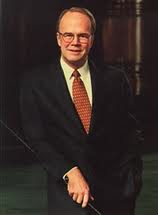
Author: James Montgomery Boice, Th.D., (July 7, 1938 – June 15, 2000) was a Reformed theologian, Bible teacher, and pastor of Tenth Presbyterian Church in Philadelphia from 1968 until his death. He is heard on The Bible Study Hour radio broadcast and was a well known author and speaker in evangelical and Reformed circles. He also served as Chairman of the International Council on Biblical Inerrancy for over ten years and was a founding member of the Alliance of Confessing Evangelicals. He is the author of numerous Bible expositions and one of my favorite Systematic Theologies called Foundations of the Christian Faith.

What Did Jesus Say About Divorce?

“Jesus’ Teaching on Divorce” in Matthew 5:31-32

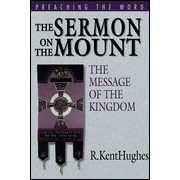
(This excellent sermon has been excerpted from Chapter 14 in R. Kent Hughes excellent book of sermons [pictured below] from  Matthew 5-7 entitled: The Sermon On The Mount: The Message of the KIngdom. Wheaton: Crossway Books, 2001.

A Sermon From R. Kent Hughes

“It was also said, ‘Whoever divorces his wife, let him give her a certificate of divorce.’ But I say to you that everyone who divorces his wife, except on the ground of sexual immorality, makes her commit adultery, and whoever marries a divorced woman commits adultery.” – Matthew 5:31–32

The February 1973 issue of McCall’s magazine carried an article entitled, “Is Anyone Faithful Anymore?” in which the author included the following story. A young wife was at lunch with eleven of her friends, who had been meeting together regularly to study French since their children had been in nursery school. As they conversed, one of the women, the group’s leader, asked, “How many of you have been faithful throughout your marriage?” Only one woman at the table raised her hand. That evening when the young wife told her husband about the conversation, she revealed that she was not the one who had raised her hand. He was shocked and devastated. “But I have been faithful,” she added. “Then why didn’t you raise your hand?” She replied, “I was ashamed.”

Times have changed, have they not? It used to be that most people would go to extremes to hide their infidelity, but today many people are ashamed of their fidelity. We live in a day when some experts speak of “healthy adultery” and the married faithful are less vocal than the unfaithful in promoting their ways.

I think no one would disagree that our contemporary culture is not intrinsically receptive to Biblical teaching regarding sexual relationships, marriage, and divorce. Because of this hostility, some preachers seem reluctant to speak out on these issues. Other ministers hesitate to address these topics because there is major disagreement about divorce in the church. Because there are numerous opinions as to what the Bible means, because the subject is complex, and because contemporary marital relationships are often incredibly tangled mazes, the subject becomes overwhelming. Sadly, we sometimes find it easier to just leave it unaddressed.

Some surveys indicate that eight of ten people are either directly or indirectly affected by divorce. The mere mention of the word divorce is painful to some. Many have been deeply wounded by broken marriages, and a discussion of the subject brings up memories and feelings they would like to forget. For these reasons preachers find little joy in preaching on the subject. But since Jesus brought it up right in the middle of the Sermon on the Mount, the greatest sermon ever preached, he obviously thinks it is an important subject, one we dare not ignore. To see this matter through Jesus’ eyes is good for us as individuals, good for the church, and good for society.

What is to be the Christian’s attitude regarding divorce? Is divorce always forbidden? Or is it sometimes allowable? What is the Christian position amidst the marital tragedy that surrounds us? As we answer these questions, I will try to be sensitive to those who are hurting. But at the same time I will do my best to be Biblical. The bottom line in all of this is, what does God’s Word say?

To understand our Lord’s statements on divorce, we must know something of the controversial social and theological context in which he made them. The controversy centered over the interpretation of a phrase in Deuteronomy 24:1, the stated ground of divorce: “If a man marries a woman who becomes displeasing to him because he finds something indecent about her, and he writes her a certificate of divorce …”

That verse taught that a husband could divorce his wife if he found “something indecent” in her, and that is where the controversy lay. The burning question in Jesus’ day was, what does “something indecent” mean?” Those in the very liberal rabbinical school of Hillel interpreted “indecent” in the widest manner possible. They said a man could divorce his wife if she spoiled his dinner! They also extended “indecent” to mean a wife’s walking around with her hair down, speaking to men in the streets, or speaking disrespectfully of her husband’s parents in his presence. A wrong word about a mother-in-law and a woman could be out on the street! Rabbi Akiba, who was of this school of thought, went even further, saying that the phrase “becomes displeasing to him” (“she find no favor in his eyes,” kjv) meant that a man could divorce his wife if he found a woman who was more beautiful. Such husbands were bigoted and arrogant.

Fortunately, they were opposed by the school of Shammai, which limited “indecent” to offenses of marital impropriety short of adultery. “Indecent” did not refer to adultery, which was punished by execution, but rather suggested other types of sexual misconduct such as shameful exposure.

This conservative-liberal controversy over the meaning of “indecent” as a grounds for divorce was the backdrop of the Pharisees’ coming to Jesus about this matter. Matthew 19:3 describes the situation: “Some Pharisees came to test him. They asked, ‘Is it lawful for a man to divorce his wife for any and every reason?’ ” They were obviously trying to draw Jesus into the long-standing debate and then exploit his response for their own ends. Some even think they were hoping to use Jesus’ answer to get him in trouble with Herod because a negative answer would publicly align him with the point of view that caused John the Baptist to be beheaded. Significantly, Jesus did not begin by directly answering their question but took the conversation back to God’s creation design, giving us the most extensive teaching on divorce in the New Testament.

Jesus’ Teaching on Divorce (Matthew 19:4–12)

Jesus began by stating the ideal:

“Haven’t you read,” he replied, “that at the beginning the Creator ‘made them male and female,’ and said, ‘For this reason a man will leave his father and mother and be united to his wife, and the two will become one flesh’?” (vv. 4, 5)

In the beginning divorce was inconceivable—and impossible. Jesus quoted lines from Genesis 2:23, 24 to emphasize two things. First, the intimacy of the marriage relationship. He says “the two will become one flesh.” There is no other intimacy like it. It is deeper than one’s relationship to one’s own children. When my children were born, there was an amazing bonding that took place when I saw those babies. In the ensuing months and years the bonding increased, and my wife and I are close to our children, interwoven with them. But we are not one flesh with them. The Scripture says that a man becomes “one flesh” with his wife. Marriage is the deepest human relationship.

After intimacy, the emphasis is on permanence. There was no thought of divorce—ever! God’s ideal was, and is, monogamous, intimate, enduring marriage. This is what he approves of. Anything less is a departure from the divine model. And the Fall did not change that ideal. We all know that some things possible before the Fall were not possible afterward. But regarding divorce, God’s standard did not change. We not only see this in the very first book of the Old Testament but also in the very last one:

“Why has God abandoned us?” you cry. I’ll tell you why; it is because the Lord has seen your treachery in divorcing your wives who have been faithful to you through the years, the companions you promised to care for and keep. You were united to your wife by the Lord. In God’s wise plan, when you married, the two of you became one person in his sight. And what does he want? Godly children from your union. Therefore guard your passions! Keep faith with the wife of your youth. For the Lord, the God of Israel, says he hates divorce.… (Malachi 2:14–16, tlb)

God hates divorce! Whenever divorce occurs, it is an aberration. It is something that was not meant to be. All of this talk about “creative divorce” is pseudoscientific and pseudo-liberated baloney. Those who become tired of their marriage because it is solid, predictable, and not very exciting should cast away their fantasies. Besides, there is nothing more boring than evil and its fruit.

The conversation between the Pharisees and Jesus is most enlightening. The Pharisees have alluded to the controversy in Deuteronomy 24, asking if a man may divorce his wife for any reason at all. Jesus has responded by saying divorce is not God’s ideal. Now the Pharisees respond with another reference to Deuteronomy 24: “ ‘Why then,’ they asked, ‘did Moses command that a man give his wife a certificate of divorce and send her away?’ ” (Matthew 19:7). The idea is this: “Moses made provision for divorce in Deuteronomy 24:1. How then can you say it is not part of the ideal?” Note Jesus’ answer in verse 8: “Jesus replied, ‘Moses permitted you to divorce your wives because your hearts were hard. But it was not this way from the beginning.’ ”

Jesus’ answer corrects the Pharisees, for Moses only permitted divorce—he didn’t command it as the Pharisees asserted. What Moses did command was the granting of a divorce certificate for the woman’s protection. Without a certificate she could be subject to exploitation, even recrimination. The certificate also prevented the man from marrying her again. Thus she could not be treated like chattel. Marriage was not something one could walk in and out of. The reason God allowed divorce was the hardness of heart to which the men of Israel had succumbed. It was a divine concession to human weakness—reluctant permission at best!

Understanding this, we come to the very center of Christ’s teaching and the heart of our study—Jesus’ explanation as to when and why divorce is permitted: “And I say to you, whoever divorces his wife, except for immorality, and marries another woman commits adultery” (Matthew 19:9, nasb, emphasis mine).

Here everything rests upon the correct interpretation of the phrase “except for immorality”—and especially the single word, “immorality.” The Greek word here is porneia, from which we derive the English word pornography. The Greek dictionaries tell us that porneia means unchastity, fornication, prostitution, or other kinds of unlawful intercourse. When porneia is applied to married persons, it means marital unfaithfulness, illicit intercourse that may involve adultery, homosexuality, bestiality, and the like. We should note (and this is very important!) that all these offenses were originally punished by death under Mosaic Law. These sins terminated marriage not by divorce but by death. However, by Jesus’ time the Roman occupation of the country and its legal system had made the death sentence very difficult to obtain. Jewish practice had therefore substituted divorce for death. Thus the rabbinical schools of Hillel and Shammai were not discussing whether divorce was permissible for adultery. That was taken for granted by everyone. The point is, Jesus was far stricter than Hillel and Shammai because he superseded the teaching of Deuteronomy 24 and said that the only ground for which one may divorce his or her spouse is marital unfaithfulness. This is the simple, plain meaning of Jesus’ words in verse 9: “And I say to you, whoever divorces his wife, except for immorality, and marries another woman commits adultery.” That is, divorce is allowed if your mate is guilty of marital unfaithfulness. But if you divorce for any other reason and remarry, it is you who commits adultery. This is likewise the meaning of Jesus’ similar statement in the Sermon on the Mount:

“But I tell you that anyone who divorces his wife, except for marital unfaithfulness, causes her to become an adulteress [if she remarries], and anyone who marries the divorced woman [a woman who has been divorced for something short of unchastity] commits adultery.” (Matthew 5:32)

Jesus’ teaching is clear. Some of the interpretations of these texts are unbelievably convoluted, but we must hold to the plain, unadorned sense of the text. Jesus meant what he said!

Some object that these exception clauses don’t jibe with Jesus’ teaching in two other Gospel passages, Mark 10:11, 12 and Luke 16:18, which contain no exception clauses. For instance, Mark records:

He answered, “Anyone who divorces his wife and marries another woman commits adultery against her. And if she divorces her husband and marries another man, she commits adultery.”

No exception clauses! Because of this, some have argued that Mark represents the earlier and pure teaching of Jesus, but Matthew contains a scribal addition of the exception clause and is thus unauthentic. However, we must hold that it is authentic because none of the ancient manuscripts omit it—all of them have it. Why the difference between the Gospels of Matthew and Mark then? John Stott gives the answer:

It seems far more likely that its [the exception clause’s] absence from Mark and Luke is due not to their ignorance of it but to their acceptance of it as something taken for granted. After all, under the Mosaic Law adultery was punishable by death (although the death penalty for this offense seems to have fallen into disuse by the time of Jesus); so nobody would have questioned that marital unfaithfulness was a just ground for divorce.

The Lord Jesus Christ permitted divorce and remarriage on one ground and one ground only—marital unfaithfulness.

But notice that he permitted it—he did not command it. If you learn that your mate has been having an adulterous affair, it does not follow that you have license to seek a divorce. Too often men and women eagerly pounce on the infidelity of their mates as the opportunity to get out of a relationship they wanted to end anyway. It is so easy to minimize one’s own behavior and to maximize the sins of the other party. Many look for a way out instead of a way through the problems. I want to be careful not to minimize the sin of adultery like the man who said to his wife, “I don’t understand why you’re so disturbed. All I did was have an affair.” Yet I believe (this is my personal opinion) that we should not regard a one-time affair in the same way as a mate who persists in his or her adulterous ways and refuses to repent. Jesus’ exception clauses should be viewed like this: No matter how rough things are, regardless of the stress and strain, whatever is said about compatibility and temperament, nothing allows for divorce except unfaithfulness—and even then it is not to be used as an excuse to get out of the relationship.

The Radicalness of Jesus’ Teaching (Matthew 19:10–12)

Jesus’ teaching was radical. He had done away completely with the Mosaic divorce provision (Deuteronomy 24:1). This was revolutionary. The disciples’ response indicates just how radical Jesus’ teaching was: “The disciples said to him, ‘If this is the situation between a husband and wife, it is better not to marry.’ ” They were blown away. If the only ground for divorce was unfaithfulness, if none of the exceptions suggested by Hillel and Shammai were valid, it was better to stay single! The radicalness of what Jesus taught is further underlined in Matthew 5 by its being one of the six statements that begin with variations of “You have heard it said, but I tell you,” demonstrating the superior righteousness of Christ. The point of these statements is: This is the way a righteous person lives! Thus his or her marital relationship is supremely sacred. Nothing can sever it but unrepentant unfaithfulness—and then it is not an excuse for ending the marriage but is the sorrowful ground of divorce.

Such teaching is radical today. It is out of sync with our culture. Today even Christian counselors are recommending divorce and remarriage on grounds that are in opposition to the clear teachings of Christ. The sanctity of marriage has been corrupted by Christ’s own church and his authority flouted. Marriage has been trivialized into a provisional sexual union that dissolves when our puny love gives out. But this is not the way the righteous person approaches marriage. According to Christ, marriage demands total commitment that only death or the most flagrant, ongoing sexual infidelity can bring to an end.

Having seen Christ’s teaching, the question now is, does the Bible say anything else about divorce? The answer is yes.

Jesus’ Teaching and Paul’s (1 Corinthians 7:8–16)

In 1 Corinthians 7:8–16 the Apostle Paul gives consecutive advice, first to the unmarried (vv. 8, 9), then to married believers (vv. 10, 11), and finally to those who have mixed marriages—when one’s spouse is not a believer (vv. 12–16). It is on this final category that we will focus.

Paul begins his teaching by saying in verse 12, “To the rest I say this (I, not the Lord) …” which has been misunderstood by some as meaning that Paul is saying that his teaching is not as authoritative as Christ’s. What he really means, however, is that what he is going to say was not said by Jesus in his earthly ministry but is now being said by Paul as part of his apostolic teaching. “He is saying in effect, ‘I am now going to deal with cases on which the Lord Himself did not give a verdict.’ ” Paul speaks with full apostolic authority. Notice what he says:

To the rest I say this (I, not the Lord): If any brother has a wife who is not a believer and she is willing to live with him, he must not divorce her. And if a woman has a husband who is not a believer and he is willing to live with her, she must not divorce him. (vv. 12, 13)

Paul knew that in Corinth there were many marriages in which either the husband or wife had become a Christian after marriage, thus producing a spiritually mixed marriage. His advice was that the Christian must not leave his or her pagan spouse—it was not permitted. Then in verse 14 he gives the reason:

For the unbelieving husband has been sanctified through his wife, and the unbelieving wife has been sanctified through her believing husband. Otherwise your children would be unclean, but as it is, they are holy.

The reason for staying together is that the unbeliever and the children will be influenced toward Christ by the life of the believer. I find this fascinating because we often think of the believer being corrupted by the unbeliever, and indeed sometimes this happens. But Paul lays down that it is generally otherwise! If you are in an unequal union, take heart! The general thrust is that you and your faith will prevail—though, sadly, not always.

Then in verse 15 we have Paul’s new teaching: “But if the unbeliever leaves, let him do so. A believing man or woman is not bound in such circumstances; God has called us to live in peace.”

The sense is, if the unbeliever deserts and is determined not to come back, let him or her go. The Christian is “not bound in such circumstances,” which means that the believer is free from the marriage because the unbeliever has broken the marriage bond. The result is that the believer is free to divorce and remarry. The consistent use of the word “bound” in this passage and others means “is not bound in marriage.” There is no need to seek some other interpretation. This is the plain sense—this is what it means.

A Summation of Biblical Teaching

So we see that the Bible allows divorce for two reasons—marital unfaithfulness such as adultery and homosexuality, and the desertion of a believer by an unbelieving spouse.

As to the question of remarriage, the Scriptures allow it in three instances.

First, if one’s mate is guilty of sexual immorality and is unwilling to repent and live faithfully with the marriage partner, divorce and remarriage are permissible.

Second, when a believer is deserted by an unbelieving spouse, divorce and remarriage are again permitted.

And third, as an extension of the allowance for divorce and remarriage when deserted by an unbeliever, I personally believe that when someone has been married and divorced before coming to Christ, remarriage is allowed. Second Corinthians 5:17 says, “Therefore, if anyone is in Christ, he is a new creation; the old has gone, the new has come!” “New” here (kainos) means new in quality. “New” means what it says—really new, as contrasted to the old. The same word is used of the “new man” in Ephesians 2:15 and the “new self” in Ephesians 4:24. Not only are believers really new, but Paul says that “the old has gone, the new has come.” A new believer is completely forgiven. I believe that among the old things that have passed away are all sins, including divorce prior to salvation. If it were otherwise, divorce would be the only sin for which Christ did not atone, and that would be inconceivable.

I hope no one misunderstands me, for divorce is not the ideal. It is a divine concession to human weakness. God hates divorce! We must realize that divorce (and remarriage) according to the Biblical guidelines is not sin—though it is due to sin. We must mourn every divorce!

How foreign to the Biblical mind are phrases like “creative divorce” or “the magic of divorce” or the ad that appeared on the back of a TV Guide: “Order your DIVORCE RING BAND today.… Now is the time to celebrate your new beginning.”

We have discussed the issues primarily with the non-offending party in view. What advice is there for the offending party? Here I can do no better than quote the concluding words of Dr. Martyn Lloyd-Jones:

“Have you nothing to say about others?” asks someone. All I would say about them is this, and I say it carefully and advisedly, and almost in fear lest I give even a semblance of a suggestion that I am saying anything that may encourage anyone to sin. But on the basis of the gospel and in the interest of truth I am compelled to say this: Even adultery is not the unforgivable sin. It is a terrible sin, but God forbid that there should be anyone who feels that he or she has sinned himself or herself outside the love of God or outside His kingdom because of adultery. No; if you truly repent and realize the enormity of your sin and cast yourself upon the boundless love and mercy and grace of God, you can be forgiven and I assure you of pardon. But hear the words of our blessed Lord: “Go and sin no more.”

Finally, what do we say to the church, to ourselves?

First, we must resist the permissiveness of our culture and solidly take our stand against divorce or remarriage on any grounds other than those taught in God’s Word.

Next, we must refrain from self-righteous judgmentalism. All of us are adulterers in heart. We must exercise our dealings with those who have fallen, realizing that we are ourselves under Christ’s omniscient dictum: “But I tell you that anyone who looks at a woman lustfully has already committed adultery with her in his heart” (Matthew 5:28).

Finally, toward those who have fallen to or suffered divorce, we must be forgiving, like our Lord. We must not call unclean that which he has called clean (Acts 10:15). We must endeavor to share the suffering of those ravaged by divorce. And lastly, the church should make provision for the remarriage of those who have Biblically divorced.

About The Preacher: Dr. Kent Hughes

Dr. Hughes’s thirty-five years of ministry divides evenly into ten years as a youth pastor, five years as a church planter, and twenty years as senior pastor of College Church in Wheaton, IL. He is the author of more than twenty-five books, among which are Disciplines of a Godly Man and Liberating Ministry From the Success Syndrome. He is in the midst of a life-long project of completing the Preaching the Word commentary series of the entire New Testament, and is the editor of the Old Testament for the same series. College Church is noted for its world-wide missions outreach, because half of its total budget goes to world missions. The Hughes are the parents of four children and fourteen grandchildren.

Education

  • D.D. 1991, Biola University, La Miradad, CA
  • D.Min. 1981, Trinity Evangelical Divinity School, Deerfield, IL
  • M.Div. 1972, Talbot Seminary, La Mirada, CA
  • B.A. 1964, Whittier College, Whittier, CA

Professional Experience

  • 1979 to present: served as Senior Pastor of College Church in Wheaton, noted for its missions program. Presently, the missions budget is approximately 1.6 million annually.
  • 1974-79 founded a new church in the Orange County area of Southern California, and served as an adjunct professor at Talbot Seminary, teaching Greek and homiletics.
  • 1963-74 ministered on the staff of Granada Heights Friends Church, serving for seven years as High School Pastor and three years as Associate pastor and Minster to Collegians.
  • 1960-61 served as Youth for Christ Club Director.

In addition to regular pastoral, administrative and preaching duties at College Church, Pastor Hughes ministers to several outside conferences each year. He is a Staley lecturer, and in addition speaks at spiritual emphasis weeks for many Christian colleges and universities. Pastor and Mrs. Hughes speak regularly at pastors’ conferences.

Pastor Hughes has served on the Board of Americans United for Life (the legal arm of the pro-life movement), the Board of Trustees of World Radio Missionary Fellowship (HCJB), and the board of Operation Mobilization. Presently he is a member of the Board of Crossway Books.

Dr. Hughes is also a Former senior editor of Christianity Today.

Books Published

  • Behold the Lamb, (Exposition of John 1-10), Victor Books, 1984.
  • Behold the Man, (Exposition of John 11-21), Victor Books, 1984.
  • The Christian Wedding Planner, Muzzy/Hughes, Tyndale House, 1984.
  • Blessed Are the Born Again, (The Beatitudes as a checklist for authentic Christianity), Victor Books, 1986.
  • Abba Father: The Lord’s Pattern for Prayer, Crossway Books, 1986.
  • Living on the Cutting Edge: Joshua and the Challenge of Spiritual Leadership, Crossway Books, 1987.
  • Liberating Ministry From the Success Syndrome, Tyndale House, 1988, co-authored with Mrs. Hughes
  • Mastering the Pastoral Role, Paul Cedar, R. Kent Hughes, Ben Patterson, Multnomah, 1991.
  • Disciplines of a Godly Man, Crossway Books, 1991.
  • Disciplines of Grace, Crossway Books, 1993.
  • The Gift, Crossway Books, 1994.
  • Are Evangelicals Born Again?, Crossway Books, 1995.
  • Common Sense Parenting, Tyndale House, 1995, co-authored with Mrs. Hughes.
  • The Saviour, Crossway Books, 1995.
  • 1001 Great Stories & “Quotes”, Tyndale House, 1998

Preaching the Word Series, Crossway Books

  • Colossians and Philemon, The Supremacy of Christ, 1989.
  • Mark, Jesus Servant and Savior, Vol. 1, 1989.
  • Mark, Jesus Servant and Savior, Vol. 2, 1989.
    Note: The Mark volumes were presented the E.C.P.A. Gold Medallion Book Award for the best commentary of 1990.
  • Ephesians, The Mystery of the Body of Christ, 1990.
  • Romans, Righteousness from God, 1991.
  • James, Faith that Works, 1991.
  • Hebrews, An Anchor for the Soul, Vol. 1, 1993.
  • Hebrews, An Anchor for the Soul, Vol. 2, 1993.
  • Acts, The Church Afire, 1996.
  • Luke, That You May Know the Truth, Vol. 1, 1998.
  • Luke, That You May Know the Truth, Vol. 2, 1998.
  • John, That You May Believe, 1999.
  • 1 and 2 Timothy and Titus, Guard the Deposit, with Bryan Chapell, 2000
  • The Sermon on the Mount, The Message of the Kingdom, 2001.

Dr. R.C. Sproul Answers The Question: “Why Don’t We Know God?”

WHY WE DO NOT KNOW GOD

In order to speak to the question, “Why don’t we know God?” we must first grant that we do, in a sense, know God. So we can hardly speak to the question, “Why don’t we?” without making the kind of distinction that Dr. Packer makes. Dr. Packer distinguishes between the different ways in which we may know God. He speaks of the distinction between notitia and cognitio, that is, the difference between an intellectual awareness or mental apprehension of something and a more profound or deep relational knowledge of someone or something.

Obviously, the Bible uses the verb “to know” in at least these two ways and perhaps even more widely. There are different levels, degrees, or ways in which we can know things and persons. That is why the Scriptures say on some occasions that men do not know God, that men are in darkness concerning God, yet on other occasions that men do know God. Unless the Bible is speaking with a forked tongue, or unless we violate radically the Reformed principle of the coherency of Scripture, we have to conclude that the Bible is speaking from different perspectives about different kinds of knowledge. Perhaps we can circumvent the dilemma by making these distinctions. But one thing is certain: no one knows God at the depth to which it is possible to know God. And that is the question with which we must wrestle: Why do we not know God as intimately, deeply, personally and comprehensively as it is possible for us to know him?

Willful Ignorance

The answer to that question does not require an extended dissertation. The reason that we do not know God as intimately, deeply, personally, and comprehensively as we possibly could is because we do not want to know God intimately, deeply and comprehensively. Moreover, even though we may be redeemed, even though we may be “the elite of the elect,” there still remains within us the residual elements of our fallenness. Our natures have been regenerated, but the sin that dwells within us has not been eradicated and will not be, this side of glory. So as long as there remains any disposition within us to sin there is a propensity toward ignorance of the things of God. I would like to focus our attention on a detailed analysis of why men do not know God to the degree that it is possible to know him. The basis for this analysis is the first chapter of Romans, beginning at verse 18.

In the part of the prologue that is found in verses 16, 17 and 18, Paul maintains that he is not ashamed of the gospel, for it is the power of God for salvation to everyone who has faith. Then we find the thematic statement of the Epistle: “For therein [that is, ‘in the gospel’] is the righteousness of God revealed from faith to faith: as it is written, The just shall live by faith.” This is the topic sentence for the whole Epistle: the righteousness of God is revealed through faith. So, in a word, Paul is concerned with revelation. But notice, he begins in verse 18, not with the revelation of God’s mercy, grace, or justification, but with the revelation of God’s wrath: “For the wrath of God is revealed from heaven against all ungodliness and unrighteousness of men.”

What we find here, as always in Scripture, is that God’s wrath is never arbitrary, capricious, irrational or demonic, but that it is always a response to something evil. God’s wrath is revealed against unrighteousness and ungodliness. It is not a wrath revealed against righteousness, godliness or piety, but against unrighteousness and ungodliness. Unrighteousness and ungodliness are general terms—wide-sweeping, wide-encompassing descriptive terms. But we must not stop here, for Paul moves from the general to the particular. He does not leave us to wonder about what particular form of unrighteousness, what specific kind of ungodliness is provoking the wrath of God. Rather, Paul names the child. He mentions it in the second clause of the sentence: “For the wrath of God is revealed from heaven against all ungodliness and unrighteousness of men, who hold [that is, ‘suppress’] the truth in unrighteousness.” The specific provocation of God’s wrath is human suppression of truth.

If you go to different translations of the Bible, you will find a wide variety of English phrases used to translate the last part of verse 18. The old King James Version says, “who hold the truth in unrighteousness.” Some translations say, “hindering the truth.” One translator has preferred to say “repress the truth.”

Let us go back to the old King James Version: “holding the truth in unrighteousness.” That whole phrase seems a bit archaic, does it not? How does one hold truth? Truth is an abstract thing; truth is not quantitative. How can we use tactile, empirical terms to describe truth? We do not hold truth; we hold a wristwatch, or we hold onto something. But there are different ways to hold things. If I hold a wristwatch, that is one kind of holding. If I hold onto a lectern, that is another kind of holding. If I hold my wife, hopefully that is an altogether different kind of holding. What kind of holding does the apostle have in mind here? Well, notice that we can hold something up, or we can hold something down. The verb used here literally means “to hold down, to incarcerate, to hold back,” and it suggests the notion that one must use force to repress a counterforce. The way I like to think of “holding down” is of a giant spring compressed to its point of highest tension. In order to hold that spring in place, one must exert all kinds of counterpressure to keep it compressed; otherwise it will spring up by its own tension and perhaps even injure the one who is seeking to hold it back.

So why is Paul using this verb with respect to truth? He is talking about the human effort that brings the wrath of God upon man. It is man’s active, positive resistance to God’s truth.

Sufficient Revelation

The reason that God is angry is further elucidated in verse 19, where Paul says, “Because that which may be known of God is manifest in them; for God has shown it unto them.” If Paul had merely said, “What could have been known about God was available to man,” that would have been reason enough for God to reveal his wrath against those who did not avail themselves of a divinely given opportunity to know him. That in itself would have been a serious sin against our Creator. But Paul is not simply saying: God has made knowledge of himself available to men and men have never made use of this opportunity. No, he is saying that the knowledge of God which he has revealed to all men has been made plain, not obscure, and that mankind has rejected it.

Let me comment on that with an illustration from the academic world. There are different ways in which you can bring students to a state of knowledge. You can say to them, “Look, we have a course in the Doctrine of God. I am the professor in this course, but I am not going to teach you anything; I am simply going to moderate the course. Each student is responsible to lecture. If you want to know about the Doctrine of God, just go to the library and find those books that have something to say about the Doctrine of God and then come in and give your paper.” That is one way I could do it. Or I could say, “Look, I want you to do heavy research about the Doctrine of God. So I am going to take all the books in the library that deal with the Doctrine of God and put them together in one place on the reserve shelf. I am going to make it easy for you to discover this information.” In other words, I would be facilitating the student’s efforts to learn something about the Doctrine of God. Or, finally, I could go even further. I could put those books on the reserve shelf, and then I could take the student by the hand, march him over to the library, show him where the reserve shelf is, take each book off the shelf, open it up to the first page, and say to him, “Listen to this,” and start to read it.

I think that Paul is getting at something like this last illustration. God does not just make the knowledge available. He shows himself to us, as the apostle says. How thoroughly that knowledge has been received remains a question. But one thing is certain: God has revealed himself to all men with sufficient clarity and with sufficient content as to render men inexcusable. He has presented himself with enough clarity, with enough revelation, to remove the cry of ignorance as a justifying reason for a person’s rejection of him.

Assured Results

Paul goes onto say that when men refuse to honor God and refuse to acknowledge him even though they know he is there, their thinking becomes “foolish” and their minds “darkened.” Have you ever read the works of David Hume? Have you ever read the works of Jean-Paul Sartre? These men are great thinkers. David Hume, I think, is one of the most formidable opponents that the Christian faith has ever had to wrestle with. How can men who have clearly and blatantly denied the existence of God be so scholarly, so knowledgeable, and manifest such high gifts of intelligence? The answer is in this text. Once a man refuses to acknowledge what he knows to be true he can go on to construct magnificent systems of philosophy. He can manifest gifts of intellectual acumen and brilliance. But if he is consistent, if his starting point in the procedure involves an obstinate rejection of what he knows to be true, his system can end only in futility. Imagine the scientist who starts his scientific endeavor by denying what he knows to be the basic facts. The only way such a scientist can arrive at any kind of truth is by a happy inconsistency, by compounding his errors to such a degree that possibly he will be fortunate enough to stumble onto some truth.

The pagan adds insult to injury, Paul continues, for not only does he begin his systematic approach by refusing to acknowledge what he knows to be true and thereby working continuously with a darkened mind but, having done this, he tells the world that he is wise. Paul says, “ … professing themselves to be wise, they became fools.” Sinful man, after he repudiates what he knows to be true, then has the audacity to say to God and to the world, “I am a wise man.” But God says that the wisdom of sinful man is foolishness!

In the Scriptures the designation “fool” is not primarily an intellectual evaluation. When God says that a man is a fool, he is not saying that he is dull-witted. He is not saying that he has a low I.Q. or that he is a poor student. The term “fool” is a judgment of man’s character. It is more of a moral evaluation than an intellectual one. It is the fool who says in his heart, “There is no God.”

Foolishness is in many of the catalogues of serious sins in the New Testament, along with adultery and murder and things like that. Foolishness is a moral refusal to deal honestly with truth.

Undefined Anxiety

We notice next that men’s foolishness of compounded. Claiming to be wise, they became fools, and exchanged “the glory of the incorruptible God” for images resembling mortal man, birds, animals or reptiles. Therefore, “God also gave them up to uncleanness through the lusts of their own hearts, to dishonor their own bodies between themselves, who exchanged the truth of God for a lie, and worshiped and served the creature more than the Creator, who is blessed forever.”

What happens after the truth is held down, after the truth is repressed? Is there a vacuum? No! Immediately an exchange takes place. Substitution occurs.

It is valuable to talk about this in contemporary psychological terms. Johannes Spavink, the Dutch scholar, finds in this text a statement about man’s psychological prejudice. Spavink asks: Why do men repress or suppress things? He says that knowledge which is most likely to be suppressed is knowledge which comes to us in the framework of the traumatic. We try to push down knowledge that frightens us or is unpleasant. We have a kind of psychocybernetic system with which we screen from our conscious mind those things which are unpleasant. But the question I ask you in modern psychological terms is this: Is the memory of a threatening or traumatic experience destroyed by our repression? I do not know of any psychologist or biochemist who would say that those memory notions or images are destroyed. Rather, we bury them or push them down.

So, our present state of consciousness is dark, but the knowledge has not been destroyed. For example, let us say that I have repressed negative feelings about my mother. I am not even conscious of these feelings. But I begin to have undefined anxiety. I begin to worry, and I do not know why I am worried. When I begin to experience restlessness I go to a psychologist to help me work through my anxiety state.

The doctor says, “What’s the matter?”

I say, “I have anxiety.”

“Why do you have anxiety?”

“I don’t know. That’s why I came to see you. I’m worried, and I don’t know why I’m worried. Help me to find out.”

The doctor begins to probe my inner man to see where the injury is and how I can be brought again to health and wholeness. As he goes through my medical history he does not pay attention simply to the words I say. He is also carefully observant of my mannerisms, my gestures, and every kind of symbolic activity with which I am communicating my deepest feelings. Eventually in our discussions he notices that every time he asks me about my mother, or every time I say something about my mother, I twitch my shoulder. So he thinks, “Every time Sproul says something about his mother he has this awful twitch.” He asks, “Do you have any kind of bad feelings about your mother?”

“My mother?” (Twitch) I ask in astonishment. “I don’t feel anything bad about my mother!” (Twitch)

But he knows that somewhere in the past I have had a bad experience with my mother, and he knows that this knowledge has not been destroyed but that it is only exchanged for the gesture. In this way it is (perhaps) still a problem but not quite as threatening as the original experience. In the same way, most people do not say simply, “There is no God”; rather they create a new God, one who is less threatening, less terrifying, less of a problem.

Let me illustrate this. A few years ago I was watching the David Frost show, and he was interviewing Madalyn Murray O’Hair. They began discussing whether or not there is a God, and David Frost suddenly became a great champion of the Christian faith, defending it against O’Hair. The discussion got so out of hand that Frost became angry and decided to determine the controversy by a show of hands. He turned to the studio audience and asked, “How many of you believe in some kind of supreme being, some kind of higher power, something greater than yourselves?” Almost everybody in the audience raised his hand.

I waited breathlessly to see what Madalyn Murray O’Hair would say to that kind of response. She said, “Well, what do you expect from the masses who come to this studio? What do they know? Give them time to catch up with modern knowledge, and this myth will disappear.” That is the tack she took. I thought that if she had been clever she would have said, “Just a minute, Mr. Frost. Let me pose the question.” Then, turning to the audience, she would say something like this. “I know that some of you believe in something higher than yourself, some higher power, some faceless, nameless, contextless, unknown god who makes no claims on your existence, who never stands in judgment over your morality, who does not demand the sacrifice of your life. Anybody can believe in that kind of god. But do you believe in Yahweh, the Lord God of Israel, who thunders from Sinai, ‘You will have no other gods before me’? Do you believe in a god who demands obedience to his perfect law and who calls men to repentance? How many of you believe in a god who makes absolute demands upon your life?” What do you suppose the vote would have been like?

The “Supreme Being,” the “Ground of Being,” “Ultimate Concern”—all these titles are nonthreatening. They have no substance. They represent our most sophisticated efforts at idolatry, in which we exchange the truth of God for a lie, a nonthreatening lie. They speak of a God who never judges us, who never calls us to repentance, a cosmic grandfather who says, “Boys will be boys.” That is the kind of God we have, not only in the secular world but in our churches.

The Immutable God

When I was writing the book Psychology of Atheism, I worked through three great attributes of God: holiness, sovereignty, and omniscience. But then I remembered a sermon I had read years before by Jonathan Edwards entitled, “Man Naturally God’s Enemy.” I wondered what Edwards had to say about why men hate God. So I went back to read that sermon. At the beginning Edwards said, “There are four things about God that make men hate him.” I thought, “Four things? What did I miss?” And I wondered if Edwards had found the same things I had found.

He said, “The first thing that terrifies man is God’s holiness.”

I said, “Aha! I got one right!”

Then he said, “The second thing man hates about God is his omniscience.” By this time my opinion of Edwards as a scholar was rising.

He went on, “The third thing that men hate about God is his sovereignty.” I could hardly believe that I had put my finger on the same things. But what was the fourth one? What had I missed?

I turned the page and read, “Perhaps you are wondering what the fourth one is?” Edwards had stolen the words right out of my mouth. Then I read: “The fourth thing about God that men hate is his immutability.” Immutability? Why would that be so threatening? Why should that bother us? Edwards explained. “Man faces this dilemma: Not only does he know and know clearly that God is holy and omniscient and sovereign, but he knows that God will always be holy, he will always be omniscient, he will always be sovereign. And there is nothing we can possibly do to make him less holy, less omniscient, or less sovereign. These attributes are not open to negotiation. We cannot find God involved in a process of change whereby he can enter into certain mutations to compromise with us.”

From age to age, the hound of heaven brings his light into a world of darkness; but men love the darkness rather than the light because their deeds are evil.

About the Author: Dr. R.C. Sproul is the founder and chairman of Ligonier Ministries, an international Christian education ministry located near Orlando, Florida. His teaching can be heard on the program Renewing Your Mind, which is broadcast on hundreds of radio outlets in the United States and in 40 countries worldwide. He is the executive editor of Tabletalk magazine and general editor of The Reformation Study Bible, and the author of more than seventy books (including some of my all time favorites: The Holiness of God; Chosen By God; Reason to Believe; Essential Truths Of The Christian Faith;  Knowing Scripture; Willing to Believe;  Intimate Marriage; Pleasing God; If There’s A God, Why Are There Atheists?, and Defending The Faith) and scores of articles for national evangelical publications. Dr. Sproul also serves as president of Ligonier Academy of Biblical and Theological Studies and Reformation Bible College. He currently serves as Senior Minister of preaching and teaching at Saint Andrew’s in Sanford, FL.  The article above was adapted from the chapter entitled “Why We Do Not Know God” from the book: Our Sovereign God: Addresses Presented to the Philadelphia Conference on Reformed Theology, 1974-1976. James M. Boice, ed. Grand Rapids: Baker, 1977.

What Satan Doesn’t Want You To Know!

Hell’s Best Kept Secret by Ray Comfort

In the late seventies, God very graciously opened an itinerant ministry to me. As I began to travel, I found that I had access to church growth records, and found to my horror that something like 80 to 90% of those making a decision for Christ were falling away from the faith. That is, modern evangelism with its methods is creating something like 80 to 90 of what we commonly call backsliders for every hundred decisions for Christ.

Let me make it more real for you. In 1991, in the first year of the decade of harvest, a major denomination in the U.S. was able to obtain 294,000 decisions for Christ. That is, in one year, this major denomination of 11,500 churches was able to obtain 294,000 decisions for Christ. Unfortunately, they could only find 14,000 in fellowship, which means they couldn’t account for 280,000 of their decisions, and this is normal, modern evangelical results, and something I discovered way back in the late seventies; it greatly concerned me. I began to study the book of Romans intently and, specifically, the gospel proclamation of men like Spurgeon, Wesley, Moody, Whitfield, Luther, and others that God used down through the ages, and I found they used a principle which is almost entirely neglected by modern evangelical methods. I began teaching that principle; I was eventually invited to base our ministry in southern California, the city of Bellflower, specifically to bring this teaching to the church of the U.S.

Things were quiet for the first three years, until I received a call from Bill Gothard, who had seen the teaching on video. He flew me to San Jose in northern California; I shared it with a thousand pastors. Then in 1992 he screened that video to 30,000 pastors. The same year David Wilkerson called from New York. He called from his car. (He had been listening to the teaching in his car and called me on his car phone.) Immediately, he flew me 3,000 miles from L.A. to New York to share the one-hour teaching with his church; he considered it to be that important. And recently I heard of a pastor who had listened to the audio tape 250 times. I’d be happy if you’d listen just once to this teaching which is called “Hell’s Best Kept Secret.”

The Bible says in Psalm 19, verse 7, The law of the Lord is perfect converting the soul.” What is it that the Bible says is perfect and actually converts the soul? Why scripture makes it very clear: “The law of the Lord is perfect converting the soul.” Now to illustrate the function of God’s law, let’s just look for a moment at civil law. Imagine if I said to you, “I’ve got some good news for you: someone has just paid a $25,000 speeding fine on your behalf.”

You’d probably react by saying, “What are you talking about? That’s not good news: it doesn’t make sense. I don’t have a $25,000 speeding fine.” My good news wouldn’t be good news to you: it would seem foolishness. But more than that, it would be offensive to you, because I’m insinuating you’ve broken the law when you don’t think you have. However, if I put it this way, it may make more sense: “On the way to this meeting, the law clocked you at going 55 miles an hour through an area set aside for a blind children’s convention. There were ten clear warning signs stating that fifteen miles an hour was the maximum speed, but you went straight through at 55 miles an hour. What you did was extremely dangerous; there’s a $25,000 fine. The law was about to take its course, when someone you don’t even know stepped in and paid the fine for you. You are very fortunate.”

Can you see that telling you precisely what you’ve done wrong first actually makes the good news make sense. If I don’t clearly bring instruction and understanding that you’ve violated the law, then the good news will seem foolishness; it will seem offensive. But once you understand that you’ve broken the law, then that good news will become good news indeed.

Now in the same way, if I approach an impenitent sinner and say, “Jesus Christ died on the cross for your sins,” it will be foolishness and offensive to him. Foolishness because it won’t make sense. The Bible says that: “The preaching of the cross is to them that perish foolishness” (1Cor. 1:18). And offensive because I’m insinuating he’s a sinner when he doesn’t think he is. As far as he’s concerned, there are a lot of people far worse than him.

But if I take the time to follow in the footsteps of Jesus, it may make more sense. If I take the time to open up the divine law, the ten commandments, and show the sinner precisely what he’s done wrong, that he has offended God by violating His law, then when he becomes, as James says, “convinced of the law as a transgressor (Jam. 2:9), the good news of the fine being paid for will not be foolishness, it will not be offensive, it will be the power of God unto salvation (Rom. 1:16).

Now, with those few thoughts in mind by way of introduction, let’s now look at Romans 3, verse 19. We’ll look at some of the functions of God’s law for humanity. Romans 3, verse 19: “Now we know that whatsoever things the law says, it says to them who are under the law that every mouth may be stopped and all the world may become guilty before God.” So one function of God’s law is to stop the mouth. To stop sinners justifying themselves and saying, “There’s plenty of people worse than me. I’m not a bad person. Really.” No, the law stops the mouth of justification and leaves the whole world, not just the Jews, but the whole world guilty before God. Romans 3, verse 20: “Therefore by the deeds of the law there shall no flesh be justified in his sight: for by the law is the knowledge of sin.” So God’s law tells us what sin is. 1 John 3:4 says, “Sin is transgression of the law.”

Romans 7, verse 7: “What shall we say then?” says Paul. Is the law sin? God forbid! No, I had not known sin but by the law.” Paul says, “I didn’t know what sin was until the law told me.” In Galatians 3:24, “Wherefore, the law was our schoolmaster to bring us to Christ that we might be justified by faith.” God’s law acts as a schoolmaster to bring us to Jesus Christ that we might be justified through faith in His blood. The law doesn’t help us; it just leaves us helpless. It doesn’t justify us; it just leaves us guilty before the judgment bar of a holy God.

And the tragedy of modern evangelism is because around the turn of the century when it forsook the law in its capacity to convert the soul, to drive sinners to Christ, modern evangelism had to, therefore, find another reason for sinners to respond to the gospel. And the issue that modern evangelism chose to attract sinners was the issue of “life enhancement”. The gospel degenerated into “Jesus Christ will give you peace, joy, love, fulfillment, and lasting happiness.” Now to illustrate the unscriptural nature of this very popular teaching, I’d like you to listen very carefully to this following anecdote, because the essence of what I’m saying pivots on this particular illustration; so please listen carefully.

Two men are seated in a plane. The first is given a parachute and told to put it on as it would improve his flight. He’s a little skeptical at first because he can’t see how wearing a parachute in a plane could possibly improve the flight. After a time he decides to experiment and see if the claim is true. As he puts it on he notices the weight of it upon his shoulders and he finds that he has difficulty in sitting upright. However, he consoles himself with the fact that he was told the parachute would improve the flight.

So, he decides to give the thing a little time. As he waits he notices that some of the other passengers are laughing at him, because he’s wearing a parachute in a plane. He begins to feel somewhat humiliated. As they begin to point and laugh at him and he can stand it no longer, he slinks in his seat, unstraps the parachute, and throws it to the floor. Disillusionment and bitterness fill his heart, because, as far as he was concerned, he was told an outright lie.

The second man is given a parachute, but listen to what he’s told. He’s told to put it on because at any moment he’d be jumping 25,000 feet out of the plane. He gratefully puts the parachute on; he doesn’t notice the weight of it upon his shoulders, nor that he can’t sit upright. His mind is consumed with the thought of what would happen to him if he jumped without that parachute.

Let’s analyze the motive and the result of each passenger’s experience. The first man’s motive for putting the parachute on was solely to improve his flight. The result of his experience was that he was humiliated by the passengers; he was disillusioned and somewhat embittered against those who gave him the parachute. As far as he’s concerned it’ll be a long time before anyone gets one of those things on his back again.

The second man put the parachute on solely to escape the jump to come, and because of his knowledge of what would happen to him without it, he has a deep-rooted joy and peace in his heart knowing that he’s saved from sure death. This knowledge gives him the ability to withstand the mockery of the other passengers. His attitude towards those who gave him the parachute is one of heart-felt gratitude.

Now listen to what the modern gospel says. It says, “Put on the Lord Jesus Christ. He’ll give you love, joy, peace, fulfillment, and lasting happiness.” In other words, “Jesus will improve your flight.” So the sinner responds, and in an experimental fashion, puts on the Savior to see if the claims are true. And what does he get? The promised temptation, tribulation, and persecution. The other passengers mock him. So what does he do? He takes off the Lord Jesus Christ, he’s offended for the word’s sake (Mark 4:17), he’s disillusioned and somewhat embittered, and quite rightly so. He was promised peace, joy, love, fulfillment, and lasting happiness, and all he got were trials and humiliation. His bitterness is directed toward those who gave him the so-called “good news”. His latter end becomes worse than the first: another inoculated and bitter backslider.

Saints, instead of preaching that Jesus improves the flight, we should be warning the passengers they’re going to have to jump out of the plane. That it’s “appointed unto man once to die, but after this the judgment” (Heb. 9:27). And when a sinner understands the horrific consequences of breaking God’s law, then he will flee to the Savior solely to escape the wrath that’s to come. And if we’re true and faithful witnesses, that’s what we’ll be preaching. That there is wrath to come; that God “commands all men everywhere to repent” (Acts 17:30). Why? “Because He has appointed a day, in which He will judge the world in righteousness” (vs. 31). You see, the issue isn’t one of happiness, but one of righteousness. It doesn’t matter how happy a sinner is, how much he’s enjoying “the pleasures of sin for a season” (Heb. 11:25). Without the righteousness of Christ, he’ll perish on the day of wrath. “Riches profit not on the day of wrath, but righteousness delivers from death” (Prov. 11:4).

Peace and joy are legitimate fruits of salvation, but it’s not legitimate to use these fruits as a draw card for salvation. If we continue to do so, sinners will respond with an impure motive lacking repentance. Now, can you remember why the second passenger had joy and peace in his heart? It was because he knew that parachute was going to save him from sure death. And as a believer, I have, as Paul says, “joy and peace in believing” (Rom. 15:13), because I know that the righteousness of Christ is going to deliver me from the wrath that’s to come.

Now with that thought in mind, let’s take a close look at an incident on board the plane. We have a brand new stewardess. She’s carrying a tray of boiling hot coffee. It’s her first day; she wants to leave an impression on the passengers, and she certainly does. Because as she’s walking down the aisle, she trips over someone’s foot and slops that boiling hot coffee all over the lap of our second passenger. Now what’s his reaction as that boiling liquid hits his tender flesh? Does he go, “Ssssfffff! Man that hurt”? Mmm-hhh. He feels the pain. But then does he rip the parachute from his shoulders, throw it to the floor and say, “The stupid parachute!”? No. Why should he? He didn’t put the parachute on for a better flight. He put it on to save him from the jump to come. If anything, the hot coffee incident causes him to cling tighter to the parachute and even look forward to the jump.

Now if you and I have put on the Lord Jesus Christ for the right motive, to flee from the wrath that’s to come, when tribulation strikes, when the flight gets bumpy, we won’t get angry at God; we won’t lose our joy and peace. Why should we? We didn’t come to Jesus for a happy lifestyle: we came to flee from the wrath that’s to come. And if anything, tribulation drives the true believer closer to the Savior. And sadly we have literally multitudes of professing Christians who lose their joy and peace when the flight gets bumpy. Why? They’re the product of a man-centered gospel. They came lacking repentance, without which you can’t be saved.

I was in Australia recently ministering; Australia is a small island off the coast of New Zealand. And I preached sin, law, righteousness, holiness, judgment, repentance, and hell, and I wasn’t exactly crushed by the amount of people wanting to “give their hearts to Jesus.” In fact, the air went very tense. After the meeting, they said, “There’s a young guy down in the back who wants to give his life to Christ.” I went down the back and found a teenage lad who could not pray the sinner’s prayer because he was weeping so profusely.

Now, for me it was so refreshing, because for many years I suffered from the disease of “evangelical frustration”. I so wanted sinners to respond to the gospel I unwittingly preached a man-centered message. The essence of which was this: “You’ll never find true peace without Jesus Christ; you’ve a God-shaped vacuum in your heart that only God can fill.” I’d preach Christ crucified; I’d preach repentance. A sinner would respond to the alter; I’d open an eye and say, “Oh no. This guy wants to give his heart to Jesus and there’s an 80% chance he’s going to backslide. And I am tired of creating backsliders. So I’d better make sure this guy really means it. He’d better be sincere!” So I’d approach the poor guy in a Gestapo spirit. I’d walk up and say, “Vhat do you vant?” He’d say, “I’m here to become a Christian.” I’d say, “Do you mean it?” He’d say, “Yeah.” I’d say, “Do you REALLY MEAN IT!?” He’d say, “Yeah, I reckon.” “Okay, I’ll pray with you, but you’d better mean it from your heart.” He said, “Okay, okay.” “Now you repeat this prayer sincerely after me and mean it from your heart sincerely and really mean it from your heart sincerely and make sure you mean it. ‘Oh, God, I’m a sinner.’ ” He’d say, “Uh…oh, God, I’m a sinner.” And I’d think, “Man, why isn’t there a visible sign of contrition. There’s no outward evidence the guy is inwardly sorry for his sins.” Now, if I could have seen his motive, I would have seen he was 100% sincere. He really did mean his decision with all his heart. He sincerely wanted to give this Jesus thing a go to see if he could get a buzz out of it. He had tried sex, drugs, materialism, alcohol. “Why not give this Christian bit a go and see if it’s as good as all these Christians say it is: peace, joy, love, fulfillment, lasting happiness.”

He wasn’t fleeing from the wrath that was to come, because I hadn’t told him there was wrath to come. There was this glaring omission from my message. He wasn’t broken in contrition, because the poor guy didn’t know what sin was. Remember Romans 7, verse 7? Paul said, “I had not known sin but by the law.” How can a man repent if he doesn’t know what sin is? Any so-called “repentance” would be merely what I call “horizontal repentance”. He’s coming because he’s lied to men, he’s stolen from men.

But when David sinned with Bathsheba and broke all ten of the ten commandments (when he coveted his neighbor’s wife, lived a lie, stole his neighbor’s wife, committed adultery, committed murder, dishonored his parents, and thus dishonored God), he didn’t say “I’ve sinned against man.” He said, Against you, and you only, have I sinned, and done this evil in your sight” (Ps. 51:4). When Joseph was tempted sexually, he said, “How can I do this thing and sin against God?” (Gen. 39:9). The prodigal son said, “I’ve sinned against heaven” (Luke 15:21). Paul preached “repentance toward God” (Acts 20:21). And the Bible says, “Godly sorrow works repentance” (2 Cor. 7:10). And when a man doesn’t understand that his sin is primarily vertical, he’ll merely come and exercise superficial, experimental, and horizontal repentance, and fall away when tribulation, temptation, and persecution come.

A.B. Earl said, “I have found by long experience that the severest threatenings of the law of God have a prominent place in leading men to Christ. They must see themselves lost before they will cry for mercy; they’ll not escape danger until they see it.” Now I’d like you to do something a little unusual. I’ll not embarrass you; I give you my word. But I would like to ask, how many of you were thinking of something else when I was reading that quote from A.B. Earl? Now, I want to admit something to you. I was thinking of something else when I was reading that quote from A.B. Earl: I was thinking, “Nobody’s listening to me; they’re thinking of something else.” So, to make a very important point, I’d like you to be really honest. If you were thinking of something else and you haven’t got a clue what A.B. Earl said, could you raise your hand up nice and high…up nice and high.

It’s usually half to two- thirds and we’ve got that here tonight. Let’s try again….God bless you, Pastor, for your honesty. A.B. Earl was a famous evangelist of the last century who had 150,000 converts to substantiate his claims. Satan doesn’t want you to get a grip of this, so listen very closely. A.B. Earl said, “I have found by long experience [that’s the true test] that the severest threatenings of the law of God have a prominent place in leading men to Christ. They must see themselves lost before they will cry for mercy; they’ll not escape danger until they see it.”

You see, you try and save a man from drowning when the man doesn’t believe he’s drowning, he’ll not be too happy with you. You see him swimming out in the lake; you think, “I think he’s drowning. Yes, I believe he is.” You dive in, pull him to the shore, without telling him anything. He’s not going to be very happy with you. He won’t want to get saved until he sees that he’s in danger. They’ll not escape danger until they see it. You see, if you came to me and said, “Hey, Ray,” and I said, “Yeah.” You said, “This is a cure to Groaninzin’s disease; I sold my house to raise the money to get this cure. I’m giving it to you as a free gift.” I’d probably react something like this: “What? Cure to what? Groaninzin’s disease? You sold your house to raise the money to get this cure? You’re giving it to me as a free gift? Why, thanks a lot. Bye….That guy’s a nut.” I mean, that’s probably how I’d react if you sold your house to raise the money to get a cure for a disease I’d never heard of and your giving it to me as free gift, I’d think you’re rather strange.

But instead, if you came to me and said, “Ray, you’ve got Groaninzin’s disease. I can see ten clear symptoms on your flesh. You’re going to be dead in two weeks.” And I became convinced I had the disease (the symptoms were so evident), and said, “Oh! What shall I do?” And then you said, “Don’t worry. This is a cure to Groaninzin’s disease. I sold my house to raise the money to get this cure. I’m giving it to you as a free gift.” I’m not going to despise your sacrifice; I’m going to appreciate it and I’m going to appropriate it. Why? Because I’ve seen the disease that I might appreciate the cure.

And sadly, what’s happened in the U.S. and the Western world is that we have preached the cure without first convincing of the disease. We have preached a gospel of grace without first convincing men of the law, that they’re transgressors; and, consequently, almost everyone I try and witness to in southern California or around the Bible belt has been born-again six or seven times. You say, “You need to give your life to Jesus Christ.” “Uh, I did that when I was seven, eleven, seventeen, twenty-three, twenty-five, twenty-eight, thirty-two…”

You know the guy’s not a Christian. He’s a fornicator. He’s a blasphemer, but he thinks he’s saved because he’s been “born-again”. What’s happening? He’s using the grace of our God for an occasion of the flesh. He doesn’t esteem the sacrifice. For him it’s not a bad thing to trample the blood of Christ underfoot (Heb. 10:29). Why? Because he’s never been convinced of the disease that he might appreciate the cure.

Biblical evangelism is always, without exception, law to the proud and grace to the humble. Never will you see Jesus giving the gospel, the good news, the cross, the grace of our God, to a proud, arrogant, self-righteous person. No, no. With the law he breaks the hard heart and with the gospel he heals the broken heart. Why? Because He always did those things that please the Father. God “resists the proud and gives grace to the humble” (Jam. 4:6; 1Pet. 5:5). “Everyone who is proud of heart,” Scripture says, “is an abomination to the Lord” (Prov. 16:5).

Jesus told us whom the gospel is for. He said, “The spirit of the Lord is upon me because he has anointed me to preach the gospel to the poor, the broken-hearted, the captives and the blind” (Luke 4:18). Now, they are spiritual statements. The poor in spirit (Mat. 5:3). The broken hearted are the contrite ones (Is. 57:15). The captives are those of whom Satan has taken captive to do his will (2Tim. 2:26); and the blind are those of whom the god of this world has blinded lest the light of the gospel should shine on them (2Cor. 4:4). Only the sick need a physician (Mark 2:17), and only those who are convinced of the disease will appreciate and appropriate a cure.

So we’re going to now very briefly look at examples of law to the proud and grace to the humble in Luke 10:24…Luke 10:24. And when I give you a reference from the pulpit I’ll give it twice, because I know that men are present, and men need to be told things twice….Men need to be told things twice. This can be backed up biblically.

When God speaks to men in the Bible he uses their name twice. “Abraham, Abraham…Saul, Saul…Moses, Moses…Samuel, Samuel…” Because men need to be told things twice. Women once. I don’t know how many times I’ve sat in a pew, preacher said, “Ah, Luke 10:25.” I turn to my wife and say, “What’d he say?” She says, “Luke 10:25.” I say, “Thank you, dear.” HELP-MATE. That’s why God created women, because men could not handle it on their own. The whole thing is: men lose things, women find things. “Where’s the keys love?” “Hangin’ on your nose, Dear.” I mean, I don’t know how many times I’ve opened the cupboard, “There’s no honey here, Honey!” She says, “Here is here, Dear.” Where would man be without women? Mm? Still in the Garden of Eden. Eve found the tree. Adam didn’t really know what was going on. In fact, if you look at the creation of woman, to create woman the Bible says God put man into a deep sleep. And Scripture doesn’t say he ever came out of it.

In Luke 10:25 we see a certain lawyer stood up and tempted Jesus. This is not an attorney, but a professing expert on God’s law. He stood up and he said to Jesus, “How can I get everlasting life?” Now, what did Jesus do? He gave him law. Why? Because he was proud, arrogant, self-righteous. Here we have a professing expert on God’s law tempting the Son of God. And the spirit of his question was, “And what do you think we’ve got to do to get everlasting life?” So Jesus gave him law. He said, “What is written in the law? What is your reading of it?” He says, “Ah, you should love the Lord your God with all your heart, mind, soul, and strength; love your neighbor as yourself.” And Jesus said, “This do and you shall live.”

And then the Scripture says, “But He, willing to justify Himself, said to Jesus, ‘Who’s my neighbor?’ ” The Living Bible brings out more clearly the effect of the law on the man. It said, “The man wanted to justify his lack of love for some kinds of people; so he asked, ‘Which neighbors?’ ” See, he didn’t mind Jews, but he didn’t like Samaritans. So Jesus then told him the story of what we call the “good Samaritan” who was not “good” at all. In loving his neighbor as much as he loved himself, he merely obeyed the basic requirements of God’s law. And the effect of the essence of the law, the spirituality of the law (of what the law demands in truth), was that that man’s mouth was stopped. See, he didn’t love his neighbor to that degree. The law was given to stop every mouth and leave the whole world guilty before God.

Similarly, in Luke 18, verse 18, the rich, young ruler came to Jesus. He said, “How can I get everlasting life?” I mean, how would most of us react if someone came up and said, “How can I get everlasting life?” We’d say, “Oh…quickly say this prayer before you change your mind.” But what did Jesus do with His potential convert? He pointed Him to the law. He gave him five horizontal commandments, commandments to do with his fellow men. And when he said, “Ah, I’ve kept those from my youth,” Jesus said, “One thing you lack.” And he used the essence of the first of the ten commandments: “I am the Lord your God…You shall have no other Gods before me” (Ex. 20:2– 3). He showed this man that His god was His money, and you cannot serve God and mammon” (Mt. 6:24). Law to the proud.

Then we see grace being given to the humble in the case of Nicodemus (John 3). Nicodemus was a leader of the Jews. He was a teacher in Israel. Therefore, he was thoroughly versed in God’s law. He was humble of heart, because he came to Jesus and acknowledged the Deity of the Son of God. A leader in Israel? “We know that you’ve come from God for no man can do these miracles that you do unless God is with Him.”

So Jesus gave the sincere seeker of truth, who had a humble heart and a knowledge of sin by the law, the good news of the fine being paid for and “For God so loved the world that He gave his only begotten Son.” And it was not foolishness to Nicodemus but the “power of God to salvation.” Similarly, in the case of Nathaniel (John 1:43–51). Nathaniel was an Israelite brought up under the law in deed, not just in word, in whom there was no guile; there was no deceit in his heart. Obviously the law was a schoolmaster to bring this godly Jew to Christ.

Similarly with the Jews on the day of Pentecost (Acts 2). They were devout Jews, godly Jews, who, therefore, ate, drank, and slept God’s law. Matthew Henry, the Bible commentator, said the reason they were gathered together on the day of Pentecost was to celebrate the giving of God’s law on Mt. Sinai. So when Peter stood up to preach to these godly Jews, he didn’t preach wrath. No, the law works wrath; they knew that. He didn’t preach righteousness or judgment. No, no. He just told them the good news of the fine being paid for, and they were pricked in their hearts and cried, “Men and brethren, what shall we do?” (vs. 37).

The law was a schoolmaster to bring them to Christ that they might be justified through faith in His blood. And the hymn-writer said, “By God’s word at last my sin I learned; then I trembled at the law I’d spurned, till my guilty soul imploring turned to Calvary.”

1 Timothy, chapter 1, verse 8, says, “But we know that the law is good if it used lawfully for the purpose for which it was designed.” God’s law is good if it’s used lawfully for the purpose for which it was designed. Well, what was the law “designed” for? The following verse tells us: “The law was not made for a righteous man but for sinners.” It even lists the sinners: homosexuals, fornicators. If you want to bring a homosexual to Christ, don’t get into an argument with him over his perversion; he’s ready for you with his boxing gloves on. No, no. Give him the ten commandments.

The law was made for homosexuals. Show him that he is damned despite his perversion. If you want to bring a Jew to Christ, lay the weight of the law upon him; let it prepare his heart for grace as happened on the day of Pentecost. If you want to bring a Moslem to Christ, give him the law of Moses; they accept Moses as a prophet. Well, give them the law of Moses and strip them of their self-righteousness and bring them to the foot of a blood-stained cross. I heard of a Moslem reading our book Hell’s Best Kept Secret, and God soundly saved him purely through reading the book. Why? Because the law of the Lord is perfect converting the soul.

Think of the woman caught in the act of adultery (John 8:1–11). Violation of the seventh commandment. The law called for her blood (Lev. 20:10). She found herself in between a rock and a hard place. She had no avenue but to fling herself at the feet of the Son of God for mercy; and that is the function of God’s law. Paul spoke of being shut up under the law (Gal. 3:23). It condemns. You say, “You can’t condemn sinners.” Saints, they’re already condemned. John 3, verse 18: “He that believes not is condemned already.” All the law does is show him himself in his true state.

Ladies, you might recognize this. Your table needs dusting in your living room. So you dust it clean; all the dust is gone. Then you draw back the curtains and let in the early morning sunlight. What do you see on the table? Dust. What do you see in the air? Dust. Did the light create the dust? No, the light merely exposed the dust. And when you and I take the time to draw back the curtains of the holy of holies and let the light of God’s law shine upon the sinner’s heart, all that happens, is that he sees himself in truth. “The commandment is a lamp and the law is light” (Prov. 6:23). That’s why Paul said, “By the law is the knowledge of sin” (Rom. 3:20). That’s why he said, “By the commandment sin became exceedingly sinful” (Rom. 7:13). In other words, the law showed him sin in its true light.

Now, normally at this stage of this teaching I go through the ten commandments one by one, but what I’ll do is share with you how I witness personally because I think it would be more beneficial. Now, I’m a strong believer in following in the footsteps of Jesus. Never, ever, would I approach someone and say, “Jesus loves you.” Totally unbiblical; there’s no precedent for that in Scripture. Neither would I go up to someone and say, “I’d like to talk to you about Jesus Christ.” Why? Because if I wanted to awaken you from a deep sleep, I wouldn’t use a flashlight in your eyes. That will offend you. I’d turn on the light dimmer very gently.

First, the natural, then the spiritual. Why? Because “the natural man receives not the things of the spirit of God; neither can he know them. They are foolishness to him because they are spiritually understood” (1 Cor. 2:14). The precedent in Scripture is given in John 4 for personal witness. You can see Jesus’ example with the woman at the well. He started in the natural realm, swung to the spiritual, brought conviction using the seventh commandment, and then revealed Himself as the Messiah. So, when I meet someone, I’ll talk about the weather, I’ll talk about sport: let them feel a little bit of sanity. Get to know them; maybe joke here and there and then deliberately swing from the natural to the spiritual. Now, the way I do this is that I use gospel tracts. We have something like 24, 25 different tracts; we’re a ministry to the body of Christ. We’ve printed millions and millions of tracts and our tracts are unusual. If you get a hold of them, what you’ll have to do is have a stack on you because people chase you and ask for more. Let me give you an example.

This is our optical illusion tract. Which looks bigger, if you can see? Does the pink look bigger? Can you see that? For those listening by tape…They’re the same size; it’s an optical illusion. I say, “It’s actually a gospel tract; instructions are on the back…how to get saved, actually.” I say, “You can keep that.” He says, “Hey…thanks a lot! This is neat…Whoa!” “Got another gift for you.” And out of my pocket I get a pressed penny with the ten commandments on it.

We have a machine that does this. We buy the pennies new from the bank; nice golden-looking pennies and we feed them into this machine and it presses them, or it will do your thumbnail if you want to hold still. But it presses them with the ten commandments. It’s legal to do this: this is considered art. It’s not defacing a penny. So I say, “Here’s a gift.” He says, “Oh…what is it?” I say, “It’s a penny with the ten commandments on it; I did it with my teeth….I do the i’s with my eye teeth but the e’s are really difficult.”

Now, what I’m doing is putting out a feeler to see if he’s open to spiritual things. If he negatively says, “Ten commandments? Thanks a lot,” he’s not open. But the usual reaction is, “Ten commandments…Hey, thanks! I appreciate this.” I say, “Ah, do you think you’ve kept the ten commandments?” He says, “Ah, yeah…pretty much.” I say, “Let’s go through them. Ever told a lie?” He says, “Ah, yeah…yeah, one or two.” I say, “What does that make you?” He says, “A sinner.” I say, “No, no. Specifically, what does it make you?” He says, “Well, man, I’m not a liar.” I say, “How many lies, then, do you have to tell to be a liar? Ten and a bell rings and ‘ppppbbbbtttt’ across your forehead? Isn’t it true if you tell one lie, it makes you a liar?” He says, “Yeah…I guess you’re right.”

I say, “Have you ever stolen something?” He says, “No.” I say, “Come on; you’ve just admitted to me you’re a liar.” I say, “Ever stolen something, even if its small?” and he says, “Yeah.” I say, “What does that make you?” He says, “A thief.” I say, “Jesus said, ‘If you look at a woman and lust after her, you commit adultery with her in your heart’ (Mat. 5:28). Ever done that?” He says, “Yeah, plenty of times.” “Then from your own admission, you’re a lying, thieving, adulterer at heart, and you have to face God on judgment day; and we’ve only looked at three of the ten commandments. There’s another seven with their cannons pointed at you. Have you used God’s name in vain?”

“Yeah…I’ve been trying to stop.” “You know what you’re doing? Instead of using a four-letter filth word beginning with ‘s’ to express disgust, you’re using God’s name in its place. That’s called blasphemy; and the Bible says, ‘Every idle word a man speaks he’ll give account thereof on the day of judgment’ (Mat. 12:36). ‘The Lord will not hold him guiltless who takes his name in vain’ (Ex. 20:7).

The Bible says “if you hate someone, you are a murderer” (1 John 3:15). Now the wonderful thing about God’s law is that God has taken the time to write it upon our heart. Romans 2, verse 15: “…which show the work of the law written in their hearts, their conscience bearing witness…” Now, conscience means “with knowledge.” Con is “with,” science is “knowledge.” Conscience. So when he lies, lusts, fornicates, blasphemes, commits adultery, he does it with knowledge that it’s wrong.

God has given light to every man. The Holy Spirit convicts them of sin, righteousness, and judgment (John 16:8). Sin which is transgression of the law (1 John 3:4); righteousness which is of the law (Rom. 10:5; Philip. 3:9); judgment which is by the law. His conscience accuses him—the work of the law written on his heart (Rom. 2:15)—and the law condemns him. So I say, “So if God judges you by this standard on the day of judgment, are you going to be innocent or guilty?” He says, “Guilty.” I say, “Well, do you think you’ll go to heaven or hell?” And the usual answer is, “Heaven.”

A product of the modern gospel. I say, “Why do you feel like that? Is it because you think God is good and he’ll overlook your sins?” He says, “Yeah, that’s it. He’ll overlook my sins.” “Yeah, well, try that in a court of law. You’ve committed rape, murder, drug pushing—very serious crimes. The judge says, ‘You’re guilty. All the evidence is here. Have you anything to say before I pass sentence?’ And you say, ‘Yes, Judge. I’d like to say I believe you’re a good man and you’ll overlook my crimes.’ The judge would probably say, ‘You’re right about one thing. I am a good man, and because of my goodness, I’m going to see that justice is done. Because of my goodness, I’m going to see that you’re punished.’ ”

And the very thing sinners are hoping will save them on the day of judgment, the goodness of God, will be the very thing that will condemn them. Because if God is good, He must by nature punish murderers, rapists, thieves, liars, fornicators, and blasphemers. God is going to punish sin wherever it’s found. So with this knowledge, he’s now able to understand. He now has light that his sin is primarily vertical: that he has “sinned against heaven” (Luke 15:21). That he has violated God’s law and that He has angered God and the wrath of God abides upon Him (John 3:36). He can now see that He is “weighed in the balance” of eternal justice and “found wanting” (Dan. 5:27).

He now understands the need for a sacrifice. “Christ redeemed from the curse of the law being made a curse for us” (Gal. 3:13). “God commended His love toward us in that while we were yet sinners Christ died for us” (Rom. 5:8). We broke the law; he paid the fine. It’s as simple as that. And if a man will repent, if a woman will repent and put their faith in Jesus, God will remit their sins so that on the day of judgment, when their court case comes up, God can say, “Your case is dismissed through lack of evidence.” “Christ redeemed from the curse of the law being made a curse for us.” And, therefore, exercise repentance towards God, faith toward our Lord Jesus Christ (Acts 20:21), put his hand to the plough and not look back because he’s fit for the kingdom (Luke 9:62). That word fit means “ready for use”. The soil of his heart has been turned that he might receive the engrafted word which is able to save his soul (Jam. 1:21).

Now, I haven’t got time to share these quotes with you, but they’re in our literature. I’m sure you’ll recognize these names. John Wycliffe, the Bible translator. He said, “The highest service to which a man may obtain on earth is to preach the law of God.” Why? Because it will drive sinners to faith in the Savior, to everlasting life.

Martin Luther said, “The first duty of the gospel preacher is to declare God’s law and to show the nature of sin.” In fact, as we read these quotes, these men have so much conviction you can feel their teeth grit. They say things like, “If you do not use the law in gospel proclamation, you will fill the church with false converts.” Stony ground hearers who will receive the word with joy and gladness.

Listen to what Martin Luther said. He said, “Satan, the god of all dissension stirs up daily new sects. And last of all which of all others I should never have foreseen or once suspected, he has raised up a sect such as teach that men should not be terrified by the law, but gently exhorted by the preaching of the grace of Christ.” So what’s Luther saying? He saying, “Listen, guys. There’s a demonic, Satanic sect that’s just risen up. Man, I never, ever would have believed this could happen. He’s raised up a sect such as teach that men should not be terrified by the law, but gently exhorted by the preaching of the grace of Christ,” which perfectly sums up most of our evangelism.

John Wesley said to a friend, in writing to a young evangelist, “Preach 90 percent law and 10 percent grace.” And you say, “90 percent law and 10 percent grace? Pretty heavy. Couldn’t it be 50-50.” Think of it like this. I’m a doctor; you’re a patient. You have a terminal disease. I have a cure, but it’s absolutely essential that you are totally committed to this cure; if you’re not 100 percent committed, it will not work. How am I going to handle it? Probably like this. “Come in here. Sit down. I’ve some very serious news for you: you have a terminal disease.” I see you begin to shake. I think to myself, “Good. He’s beginning to see the seriousness of this situation.”

I bring out charts; I bring out x-rays. I show you the poison seeping through your system. I speak to you for ten whole minutes about this terrible disease. How long, then, do you think I’m going to have to talk about the cure? Not long at all. When you’re sitting there trembling after ten minutes, I say, “By the way, here’s the cure.” You grab it and gulp it down.

Your knowledge of the disease and its horrific consequence has made you desire the cure. You see, before I was a Christian, I had as much desire for righteousness as a four-year-old boy has for the word “bath.” What’s the point? See, Jesus said, “Blessed are those who hunger and thirst for righteousness.” How many non-Christians do you know who are hungering and thirsting after righteousness? The Bible says, “There is none who seek after God” (Rom. 3:11). It says they love the darkness, they hate the light; neither will they come to the light least there deeds be exposed (John 3:19–20). The only thing they drink in is iniquity like water (Job 15:16). But the night I was confronted with the spiritual nature of God’s law and understood that God requires truth in the inward parts (Ps. 51:6), that He saw my thought-life and considered lust to be the same as adultery, hatred the same as murder, I began to say, “I can see I’m condemned. What must I do to be made right?” I began to thirst for righteousness.

The law put salt on my tongue. It was a schoolmaster to bring me to Christ. Charles Spurgeon said, “They will never accept grace until they tremble before a just and holy law.” D.L. Moody, John Bunyan, John Newton, who wrote “Amazing Grace” (and if anyone had a grip on grace it was Newton), he said that “the correct understanding of the harmony between law and grace is to preserve oneself from being entangled by errors on the right hand and on the left.” And Charles Finney said, “Evermore the law must prepare the way for the gospel.” He said, “To overlook this in instructing souls is almost certain to result in false hope, the introduction of a false standard of Christian experience, and to fill the church with false converts.”

Saints, the first thing David Wilkerson said to me when he called me on his car phone was, “I thought I was the only one who didn’t believe in follow-up.” Now, I believe in feeding a new convert; I believe in nurturing him. I believe in discipling him—biblical and most necessary. But I don’t believe in following him. I can’t find it in Scripture.

The Ethiopian eunuch was left without follow-up. How could he survive? All he had was God and the Scriptures. You see, follow-up…now let me explain follow-up for those of you who don’t know. Follow-up is when we get decisions, either through crusades or local church, and we take laborers from the harvest field, who are few as it is, and give them this disheartening task of running after these decisions to make sure they’re going on with God.

What it is, is a sad admission of the amount of confidence we have in the power of our message and in the keeping power of God. If God has saved them, God will keep them. If they’re born of God, they’ll never die. If He’s begun a good work in them, He’ll complete it to that day (Philip. 1:6); if He’s the author of their faith, He’ll be the finisher of their faith (Heb. 12:2). He’s able to save to the uttermost them that come to God by Him (Heb. 7:25). He’s able to keep them from falling and present them faultless before the presence and glory with exceeding joy (Jude 24). Jesus said, No one will pluck you from my father’s hand” (John 10:29).

You see, saints, the problem is that Lazarus is four days dead (John 11). We can run in the tomb, we can pull him out, we can prop him up, we can open his eyes, but “he stinketh” (vs. 39). He needs to hear the voice of the Son of God. And the sinner is four days dead in his sins. We can run up and say, “Say this prayer.” Still, he needs to hear the voice of the Son of God, or there is no life in him; and the thing that primes the sinner’s ear to hear the voice of the Son of God is the law. It’s a schoolmaster to bring him to Christ that he might be justified through faith (Gal. 3:24). Saints, the law works; it converts the soul (Ps. 19:7). It makes the person a new creature in Christ. That old things pass away; behold, all things are become new (2 Cor. 5:17). So find yourself a sinner, and experiment on him. But as you do so, remember this one anecdote.

You’re sitting on a plane, sipping you’re coffee, biting a cookie, and watching a movie. It’s a good flight, very pleasurable, when suddenly you hear, “This is your captain speaking. I have an announcement to make. As the tail section has just fallen off of this plane, we’re about to crash. There’s a 25,000 foot drop. There’s a parachute under your seat; we’d appreciate it if you’d put it on. Thank you for your attention, and thank you for flying with this airline.”

You say, “What!? 25,000 feet!? Man, am I glad to be wearing this parachute!” You look next to you; the guy next to you is biting his cookie, sipping his coffee, and watching the movie. You say, “Excuse me, did you hear the captain? Put the parachute on.” He turns to you and says, “Oh, I really don’t think the captain means it. Besides, I’m quite happy as I am, thanks.” Don’t turn to him in sincere zeal and say, “Oh, please, put the parachute on. It will be better than the movie.” Now, that doesn’t make sense. If you tell him that somehow the parachute will improve his flight, he’s going to put it on for a wrong motive. If you want him to put it on and keep it on, tell him about the jump. You say, “Excuse me, ignore the captain if you wish. Jump without a parachute…SPLAT!” He says, “I’m sorry; I beg your pardon.” “I said, if you jump without a parachute, law of gravity. ‘Ppppbbbbtttt’ on the ground.” “Ah! Goodness me! I see what you’re saying! Thank you very much!”

And as long as that man has knowledge he has to pass through the door and face the consequences of breaking the law of gravity, there’s no way you’re going to get that parachute off his back, because his very life depends on it. Now, if you look around you, you’ll find there are plenty of passengers enjoying the flight. They’re enjoying the pleasures of sin for a season. Go up and say, “Excuse me. Did you hear the command from our Captain about salvation, ‘Put on the Lord Jesus Christ.’” He turns to you and says, “Oh, I really don’t think God means it. God is love. Besides, I’m quite happy as I am, thanks.” Don’t turn to him in sincere zeal without knowledge and say, “Please, put on the Lord Jesus Christ. He’ll give you love, joy, peace, fulfillment, and lasting happiness. You’ve got a God-shaped vacuum in your heart only God can fill. If you have a marriage problem, drug problem, alcohol problem, just give your heart to Jesus.” No. You’ll give him the wrong motive for his commitment.

Instead say, “Oh, God, give me courage!” and tell him about the jump. Just say, “Hey, it’s appointed to man once to die. If you die in your sins, God will be forced to give you justice, and His judgment is going to be so thorough. Every idle word a man speaks he’ll give account thereof on the day of judgment; if you’ve lusted, you’ve committed adultery. If you’ve hated someone, you’ve committed murder. And Jesus warned that justice will be so thorough, the fist of eternal wrath will come upon you and [SMACK] grind you to powder. God bless.”

Now saints, I’m not talking about hell-fire preaching. Hell-fire preaching will produce fear-filled converts. Using God’s law will produce tear-filled converts. This one comes because why? He wants to escape the fires of hell. But in his heart, he thinks God is harsh and unjust, because the law hasn’t been used to show him the exceeding sinful nature of sin. He doesn’t see hell as being his just desert, that he deserves hell.

Therefore, he doesn’t understand mercy or grace; and, therefore, he lacks gratitude to God for His mercy. And gratitude is the prime motivation for evangelism. There’ll be no zeal in the heart of a false convert to evangelize. But this one comes knowing he has sinned against heaven. That God’s eye is in every place beholding the evil and the good and God has seen darkness, as though it were pure light. He’s seen his thought life. If God in His holiness on the day of wrath made manifest all the secret sins of his heart, all the deeds done in darkness, if he made manifest all the evidence of his guilt, God could pick him up as an unclean thing and cast him into hell and do that which is just. But instead of giving him justice, he’s given him mercy. He’s commended his love toward him in that while he’s yet a sinner Christ died for him. He falls on his knees before that blood-stained cross, and he says, “Oh, God, if You do that for me, I’ll do anything for You. I delight to do Your will, oh, my God. Your law is written upon my heart.” And like the man who knew he had to pass through the door and face the consequences of breaking the law of gravity and would never take his parachute off because his very life depended on it, so he who comes to the Savior, knowing he has to face a holy God on the day of wrath, would never forsake the righteousness of God in Christ because His very life depends on it.

Let me see if I can coagulate this teaching as we draw it to a close. I was in a store some time ago, and the owner of the store was serving a customer and using God’s name in blasphemy. Now, if somebody used my wife’s name in blasphemy, I would be extremely offended if they used her name as a curse word in that sense. But this guy was using God’s name as a curse word, when God had given him life, his eyes, the ability to think, his children, his food; every pleasure he’s ever had was given to him by the goodness of God, and he’s using God’s name as a curse word. Indignantly, between him and his customer, I leaned and said, “Excuse me. Is this a religious meeting?” The guy says, “What? H-E-L-L no!” “Yes it is, because now you’re talking about hell. Let me get you one of my books.”

So I went out to my car and got a book that I’ve written called God Doesn’t Believe in Atheists: Proof the Atheist Doesn’t Exist. And it’s a book which uses logic, humor, reason, and rationalism to prove the existence of God, which you can do in two minutes without the use of faith. It’s a very simple thing to conclusively, absolutely prove God’s existence; and it proves also that the atheist doesn’t exist. In fact, let me show you our bumper sticker. “National Atheist’s Day: April 1.” So I gave him this book, and two months later I went in and gave him another book I’ve written called My Friends Are Dying! A book which is a true and gripping story about the ministering of the gospel in the most murderous portion of Los Angeles; a book which also uses humor in its presentation. I gave him those books and he called me and told me what had happened. He told me his wife kept giving him filthy looks, because there he was reading a book called My Friends Are Dying! and laughing every two minutes. But he was cleaning out his room and he picked up God Doesn’t Believe in Atheists. He said, “Ah,” and he opened it up and read the first page and then he read the whole book, 260 pages. He said, “It was weird because I hate reading.”

Then he read My Friends Are Dying!, gave his life to Christ, bought himself a Bible, came around to say, “Hi,” and told me after two days of being a Christian, in his Bible he was already up to what he called the book of “Lev-ih-tie- kus.” And I guess he was going to read “Palms” and then John. But up until his commitment, the man was a practicing witch. “The law of the Lord is perfect, converting the soul.”

And it’s as though God looked down upon me, as for many years I open-air preached, and as I fought off the enemy with the feather duster of modern evangelism, it’s as though God said, “What are you doing? My weapons are not carnal but mighty through God to the pulling down of strongholds (2 Cor. 10:4). Here are ten great cannons.” And as I lined up the ten cannons of God’s law, no longer did sinners scoff and mock. No, their faces went pale; they lifted their hands and said, “I surrender all! All to Jesus I freely give!” They came across to the winning side never to become deserters.

Such converts become soul winners, not pew warmers, laborers, not layabouts, assets, not liabilities for the local church. And now saints, with every head raised and every eye open, and no music playing, let me challenge you as to the validity of your salvation. Modern evangelism says, “Never question your salvation.” The Bible says the exact opposite. It says, “Examine yourself and see if you’re in the faith” (2 Cor. 13:5). Better now than on the day of judgment. The Bible says “make your calling and election sure” (2 Pet. 1:10), and some of you know that something is radically wrong in your Christian walk.

You lose your peace and joy when the flight gets bumpy. There is a lack of zeal to evangelize. You never fell on your face before Almighty God and said, “I’ve sinned against You, oh God! Have mercy upon me!” You’ve never fled to Jesus Christ and His blood for cleansing, in desperation crying out, “God be merciful to me a sinner!” And there’s a lack of gratitude; there’s not a burning zeal for the lost. You can’t say you’re on fire for God; in fact, you’re in danger of being one of the ones that are called “lukewarm” and will be spewed out of the mouth of Christ on the day of judgment (Rev. 3:16) when multitudes will cry out to Jesus, “Lord, Lord.” And he’ll say, “Depart form me you worker of iniquity—lawlessness: I never knew you” (Mat. 7:22–23). No regard to the divine law.

The Bible says, “Let everyone who names the name of Christ depart from iniquity”—lawlessness (2Tim. 2:19). So today you need to readjust the motive for your commitment. Friend, don’t let your pride stop you. I would like to pray for you: I’ll remain up here, you remain in your seat. And if you’d like to be included in this prayer, I’d like for you to slip up your hand, but remember this. If you say, “Well, I should put my hand up but what will people think?” that’s pride. You prefer the praises of men to the praises of God (John 12:43). Everyone who is proud of heart is an abomination to the Lord (Prov. 16:5). God resists the proud but gives grace to the humble. So humble yourself before the mighty hand of God; He’ll exalt you in due time (1Pet. 5:5–6). Call it are committal; call it a committal. But whatever you call it, make your calling and election sure.

*This message was first preached in August 1982.  “Hell’s Best Kept Secret” is non-copyrighted, duplication is encouraged.  http://www.LivingWaters.com – Living Waters Publications, P.O. Box 1172, Bellflower, CA  90706 – Order line: 1-800-437-1893

About the Author/Speaker: Ray Comfort is the best-selling author of more than 70 books, including The Evidence Bible (2002 Gold Medallion Book Awards finalist). He is the co-host of an award-winning television program (with actor Kirk Cameron), blogs daily to hundreds of atheists at “Atheist Central” (http://raycomfortfood.blogspot.com), has debated atheistic evolution on ABC’s Nightline and on the BBC. His “Atheist Test” booklet has sold more than one million copies. He lives with his wife, Sue, in Southern California where they have three grown children.

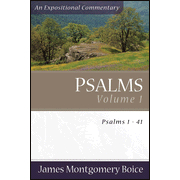
“A Kingdom Which Cannot Be Shaken” A Sermon on Hebrews 12:27-29 by Dr. D.M. Lloyd-Jones

[This sermon was preached by Dr. Martyn Lloyd-Jones on 24th May 1978 in Rhymney, Wales, at the induction services of David Norman Jones who now is a minister in Tasmania – It’s hard to believe this sermon was given on this day in May 34 years ago! When you read this sermon you will see that aside from some of the archaic language – Lloyd-Jones spoke ahead of his time, and that his message is just as appropriate and relevant today – well into the 21st century – the Bible contains a timeless message that will be relevant for eternity]

In order that we may remind one another of the ultimate object and purpose of these two gatherings today and the coming together of these two churches under the ministry of our dear friend and brother, I would call your attention to the last three verses in the portion of Scripture that has been read to us.

“And this word, Yet once more, signifies the removing of those things that are shaken, as of things that are made that those things which cannot be shaken may remain. Wherefore we receiving a kingdom which cannot be moved, let us have grace, whereby we may serve God acceptably with reverence and godly fear: For our God is a consuming fire” [Hebrews 12:27-29].

A time of grave and terrible crisis

I need not tell you that we are meeting together tonight in a time of great confusion, a time of grave and terrible crisis. Everybody is aware of this; you cannot read a paper, you cannot listen to a news bulletin without hearing of some added crisis, some new problem, some fresh tragedy. The world is in an alarming state and condition. We are truly in an age of exceptional crisis. But I want to put to you that we are not only in a time and age of crisis, we are living in a time when all of us are being tested, all of us have been sifted and examined and proved. What I mean by that is this, that the state of the world tonight is testing the outlook, the point of view, of every one of us who is in this congregation. indeed of everybody that is in the world. Everybody has got some view of life, even the most thoughtless people, people who scarcely ever think at all, they have got a kind of philosophy and their philosophy is not to think. What is the use of thinking?’ they say. So they have got their point of view, their point of view is ‘Let us eat drink and be merry, for tomorrow we die’. So I am saying that everybody’s point of view, everybody’s attitude towards life, is on trial at the moment.

Questions requiring an answer

Let me show you what I mean. Take this first question: Are you surprised that the world is as it is at this moment?

Are you surprised that we have had two world wars already in this century? Are you surprised at the piling of these horrible armaments? Are you surprised at the confusion, the collapse, of so many institutions at this present time? Does it surprise you? Does it surprise you that in this sophisticated age of ours, in 1978, that the world is in such terrible trouble? I ask my question because there are many people who are very surprised at this; they are amazed at it-and for this reason, that their view of life was that the world is getting better and better. And therefore finding things getting worse and worse, they are confounded, they are surprised, they are amazed and they do not understand it.

So I put that as my first question: Are you surprised at the fact that the world is as it is at this very moment? Or, let me phrase that in a slightly different way: Are you disappointed that the world is as it is? Not only surprised but disappointed, because again there are many people in the world who are grievously disappointed at the present state of affairs. And they are disappointed for this reason, that having adopted the kind of idealistic philosophy, or view of life, which was very popular in the last century – you know that idea that believed in evolution, or progress and development, the view which said that as the result of popular education which came in 1870 and all the marvellous scientific advances and discoveries, more travel, ability to mix with other nations – they were very confident that the twentieth century was going to be the golden century, the crowning century of all the centuries!

Did not Tennyson write about the coming of the parliament of men and the federation of the world, of the days when men would beat their swords into ploughshares and war would be no more? War, we were told – and they taught this, not only the poets but the philosophers and the politicians – war, they said, was due to the fact that people did not know one another. But the moment when they got to know one another as the result of the invention of the steam engine and travel and still more by the coming of the aeroplane, the moment when people got to know one another, they would never fight again, they would realise that we were all brothers. They had forgotten, you see, that Cain and Abel were brothers. They had forgotten all about that, but they were quite sure that as the result of travel and the increase of knowledge and so on and so forth, that the world was going to be paradise-and with William Blake they talked about building the new Jerusalem in England’s green and pleasant land. It was all going to be done by the advance of knowledge and culture, by passing Acts of Parliament and by all the ameliorations that were taking place and were going to take place in social conditions.

Christians who were shaken

Well these men were confident about this. So you see when the First World War came, they were shaken, they were surprised. It was not according to the theory-but they still held on to it. Then when the Second World War came, well they were not only surprised and disappointed, they were aghast. They could not understand it and they were utterly confounded. I can illustrate what I am saying by one man. No man believed so firmly in this idea of development and of progress than the late Mr. H. G. Wells, the popular novelist. He was a great scientific humanist and he really believed that as the result of the advance of knowledge and of culture and of science in particular, that the world really was going to be paradise. So when the Second World War came, he wrote his last book and he gave it a very significant title, Mind At the End of Its Tether. He could not understand it. How was it possible with all our advances and developments that there should be a Second World War in this one century, before the half of the century had passed? So I ask my question to you my friend tonight, Are you disappointed that the world is as it is? Are you astonished and are you amazed at it? Or does it fit in with your philosophy and your outlook and your point of view?

Why Is The World As It is Today?

But let me ask a third question, Do you understand why the world is as it is tonight? Can you explain it? The Christian, the true Christian, is not surprised that the world is as it is and he can understand why it is as it is. Can you? This is a very vital question. You see the trouble is that people refuse to think. They just wring their hands, they say, ‘Is it not terrible!’ But they must explain it, why is it that things are as they are in spite of all our amazing advances and developments in so many realms and spheres. Can you understand it? Can you explain it? If not, there is something wrong with your point of view.

And let me put my last question, Have you any hope at all with regard to the future? Do you see any light anywhere? Is there any message of deliverance? Now I put it to you that if we claim to be thinkers at all, we are bound to face these crucial questions. Here we are in this world with these things happening. Does it tally with what we have always believed, that on which we have pinned our faith?

Now those are the questions I want to consider with you and I want to do so in the light of these verses that I have just read to you. This man was writing to a number of people who were known as Hebrew Christians; that means that they had been brought up as Jews but having heard the Christian Gospel they had left their old religion and the Temple and the ceremonial and the priesthood and they had espoused this new teaching, this new doctrine; they had become Christians. And for a while they were very happy. But then difficulties arose; they were persecuted; they were molested; they were tried grievously in many ways; and the result was that the faith of some of them was being shaken and they were beginning to look back with longing eyes to the old religion of their fathers. And this man writes to them because of that. He says, you are not going back to that! That was only the type, that was only the preliminary, that has been shaken, that has been removed, that was only temporary. Do not go back to the temporary which can be shaken-hold on to the final, the ultimate, that which can never be moved and never be shaken.

A world which will be shaken

But he goes beyond that and he reminds them, and through them he reminds us, that a day is coming when everything in this world that can be shaken is going to be shaken and that we all of us belong either to some kind of kingdom that can be shaken and removed, or we are citizens of a kingdom which cannot be shaken and which can never be moved. And in putting it like that, of course, this man is really giving us a summary of the message of the whole of the Bible from beginning to end. The Bible is a book which calls upon us all to make a decision. It tells us that there are two ways before us in this life and in this world. We can either build upon foundations which can be shaken and removed or else we can build on a foundation which can never be moved. Or its alternative is we can belong to kingdoms that can be shaken and moved or else we can be citizens of this kingdom which can never be moved. Now this is the great message of the Bible and it puts it like this, that all the trouble in the long story of the human race is due to the fact that mankind in its blindness and its folly is misled by the powers of evil, is always making the wrong choice, is holding on to things that can be shaken and rejecting the one thing that can never be shaken and never be moved. And it goes on putting this before us. It says it either has to be God or mammon. You either enter by a strait gate onto a narrow way or you go with the crowd through the wide gate and the broad way that leadeth to destruction. And right the way through it puts the two possibilities before us, shows us the folly of the wrong choice and pleads with us to accept the true, the only way that leads to peace here in this world and a hope of glory for all eternity.

Well now let me put this to you. This is the business of my friend who is going to minister here in Rhymney as well as in Crickhowell. This is the business of all of us worthy of the name of Christian ministers at all – we are here to address people in this age of collapse, this age of confusion, this age in which so many things have been shaken before our eyes, this climactic period through which we are passing. And I want to put it in terms of this biblical message. Man’s ultimate fallacy, as I have said, is that he always chooses to belong to kingdoms that can be shaken and removed. Man is very fond of building kingdoms. The history of mankind, if you like, is a history of men building kingdoms for themselves-refusing the kingdom of God and setting up their own kingdoms, which they think are going to be durable and everlasting and they have done this in many different ways.

The kingdoms of men – in all their variety – come and go

The old way, and it is still true, you find it in the Bible, you find it in secular history, the commonest of all the ways has been that man has tried is to set up military kingdoms, great military kingdoms. You have a number of them described here in the Bible. Think of a great kingdom like the kingdom of Babylon. That was an amazing kingdom, great wealth, great power, great armies and they conquered practically every country and at the head of this great kingdom of Babylon there was a man called Nebuchadnezzar. And he was such a conqueror, such a military genius, that he began to think that he was almost a god. And the people agreed with him. And he set up a great image to himself and commanded his people to bow down and worship. He really believed he was a semi-god if not a god. He had built this great kingdom, you see. But according to the Bible – and this is sheer history – it was not a kingdom that was going to last for ever, as he thought. It began to shake and we are given an account of this mighty dictator in a field one day and his nails had grown into talons and his hair was as long as the hairs of an animal and he was eating grass in a field-humbled by God. This man who had inflated himself to heaven-humbled, his kingdom shaken.

And quite soon it was conquered by another mighty kingdom that came along, called the Medo-Persian kingdom. Now this is biblical and secular history. The Medo-Persian kingdom came along and this again was a mighty kingdom, conquered Babylon, conquered others and it seemed to be invincible and everlasting and people were beginning to worship it.

It did not last very long. Another kingdom came along, the kingdom of Greece and this was an amazing kingdom. The head of this kingdom was a man whom we still know as Alexander the Great and he was of course one of the greatest military geniuses that the world has ever known. He conquered everywhere, conquered Egypt, built Alexandria, named after him; he conquered all the then known and civilised world and he set up this kingdom that really did seem to be indestructible and invincible, great in every respect. But do you know what happened? While he was yet in the thirties, he died and his kingdom was destroyed and divided up. I will never forget reading a book during the last war by a Swiss theologian, on the book of the prophet Daniel. All I remember of the book was this phrase, I have never forgotten it; it was so true, so striking. He said the man whom the world knows as Alexander the Great is known in the Bible as a he-goat. That is the biblical view of him. ‘Great’, says the world: ‘he-goat’ says God, says the Bible. And you and I now read books on the Glory that was Greece and we go and visit the ruins, the kingdom has vanished and has disappeared.

Why? Well another kingdom came up, the kingdom of Rome, the Roman Empire. And again this was one of the most astonishing phenomena that the world has ever seen. You remember how Rome again conquered all the then civilised world; but it was not only great in a military sense but in a legal sense and in every other sense. They came and conquered this country, as they conquered most other countries. Here at last there did seem to be a kingdom that could never be shaken and never removed. And the capital of course was the city of Rome. What did they call Rome? Is it not interesting, they called Rome ‘the Eternal City’? The Eternal City – not for a time – Eternal City. But you remember the story; in a few centuries barbarians, Goths and Vandals from northern Europe came down in hordes; they sacked the Eternal City and they conquered and brought to an end the great Roman Empire.

And so you see it has continued throughout ancient history. Kingdom after kingdom has come up and men have claimed for it that it is everlasting and eternal – suddenly it vanishes and disappears. But, you say, that is ancient history. All right, let us come up to modern times. I am not going to keep you in describing to you great kingdoms in Egypt, the mighty empire that was once governed by Spain and many other mighty kingdoms, mighty empires. Come nearer to our own time. Most of you can still remember a man whose name was Adolf Hitler. He came into power in 1933; what was he going to do? Well, he told us so often – heard him saying it many a time on the wireless – he said he was going to set up the Third Reich which was going to last a thousand years. The Third Reich – and Hitler dominated the world like some Colossus, striding the world like a Colossus. And when we heard he was going to speak on the wireless, we began to tremble – the word of a Hitler, this mighty man with a mighty empire to last a thousand years. How long did it last? Twelve years and Hitler and his empire vanished and disappeared.

But let us be honest, my friends, I suppose most people would say that the greatest empire the world has ever known was the British Empire and this was the empire of which our fathers boasted-that it was the empire on which the sun never set, owning a quarter of the globe. What an empire, the British Empire, on which the sun never sets! Durable, lasting, eternal! Where is it tonight, my friends? There is no such thing as the British Empire. We try to talk feebly about some British Commonwealth of nations but the empire is gone and the man who believed in it most of all, who said that he had not been appointed by destiny to preside over the dissolution of the British Empire, had to do so. The great British Empire has collapsed and vanished before our very eyes. You see the biblical message is being verified. All these kingdoms that men have erected and built up, they have all been shaken and they will all be removed. But that is only one example. This is so important I am going to give you many examples, my friend that we may see the truth of this message.

Take another empire that man has been very fond of building. What is that? Well the empire of the mind, what is called philosophy. What is philosophy? Well it is the love of wisdom – yes, but its idea is this – that what matters most of all is reason. Now you know a hundred years ago the chapels in this town and other towns were full. But then people began to say, Oh, well religion it is sob stuff. It is emotionalism! They meet together, they pull down the blinds, they do not read, they do not think, they are not aware of what is happening in the world. This is all emotionalism, folklore, fairy tale, fantasy. What we need, they said, was reason. They reject revelation, they do not believe in God-reason! We are going to govern the world by reason. And that became very popular towards the middle of the last century. It came over from Germany and it came into this country. Reason, the kingdom of reason. 
What has happened to this?

Now let us face the facts – one of the greatest dangers in this world at this moment is irrationality, which means men and women refusing to think. Do you know where this irrationality has come from? It is most interesting. It started in one of the greatest universities in the United States of America – Harvard University. There was a professor there of the name of Timothy Leary. And Timothy Leary and others began to say the mistake that we have been making is that we have lived too much in the realm of reason and understanding and of mind. We have neglected sensation, we have neglected feel mg and that is where we have been fools and we have brought our world into trouble. He said, we must reason less and less, what we need is experience. How are we to get experience? Well, he said, the quickest way to get experience is take certain drugs and this present wave of drug addiction was started by Professor Timothy Leary in Harvard University in America. There is a revolt against reason. There are students in large numbers saying we must go back to the land, back to a primitive kind of life. Novelists like D H Lawrence thought exactly the same thing. There is a revolt against reason and people are out for sensation. That is why they drink and drug themselves with alcohol and other drugs. That is why they shout and dance in a rhythmical manner with their music. They stop thinking and they have a pleasant feeling. It is one of the major problems in the world at this moment. The kingdom of reason has been shaken.

Let me give you another, it comes under the same category as reason-the kingdom of science. Now I suppose that most people today who are not Christians would give as their reasons for not being Christians that they adopt the scientific attitude and the scientific point of view. They say science says so-and-so, science proves so-and-so-science, the kingdom of science. Men have been very busy erecting this now for two centuries and they were absolutely confident concerning it. You are not going to believe these stories – you must have scientific facts, something that you can really depend upon and live upon. And they were so sure about this that they used the term laws. Now when I was a student, some sixty years ago, we were taught about Newton’s laws, not Newton’s theories but Newton’s laws. Cause and effect, laws of motion, they were absolutes, they were certainties. You cannot name a single great scientist in the world tonight who believes in Newton’s laws. A man called Einstein came along and what did he introduce? Not laws, but a theory of relativity – possibility, probability. Everything is in a state of uncertainty. You see, Newton believed that matter was solid; we know by today that is not; it is energy. It is all energy, it is in constant movement. So you believe now not in certainty and in laws but in possibility and probability. And so these great kingdoms have crashed one after another.

Let me tell you another law that I used to be taught when I was a boy and a young student. We were taught what was called Dalton’s law. What was Dalton’s law? Well, Dalton’s law taught this, that the smallest particle of matter is an atom and that an atom is indivisible. Dalton’s law not his theory – it was a fact, not like this stuff that is in the Bible! No, no, Dalton’s law – smallest particle of matter, the atom and an atom is indivisible. Would to God that Dalton had been right and that the atom was indivisible! You and I have been in the world when they divided the atom, hence the atomic and the hydrogen bombs, hence the possibility of a third World War that will put an end to civilisation and perhaps to the world itself. But they were taught as laws, absolutes, certainties, kingdoms which cannot be moved. They have all been shaken in our own age and generation.

And there are many other kingdoms that I could mention. Another was of course democracy. We were told that the ultimate form of government was democracy. We had got rid of oligarchies, we must get rid of monarchies and so on-and one is in great sympathy with most of these teachings and most of these ideas. Those terrible days of tyranny, of monarchs, of Lords in this country, people with power, money – power, landowners and others. Now, they said, we must get rid of all that. What we need is democracy, government of the people and by the people. This is the ultimate in government, democracy. But somebody said, well what if people do not agree? If you give power to the people what if people do not agree, what happens then? Ah, they said, everybody will respect the rule of law; that is an absolute. Of course if they do not respect the rule of law well then there is going to be a collapse. But everybody, they said, will respect the rule of law – so democracy is going to be the ultimate in society and it is coming in the twentieth century. What of this kingdom? Do you not read constantly of these dictatorships in various parts of the world, some of them on the right, some of them on the left? Democracy is in jeopardy at this very moment, we are in danger of dictatorships in most countries of the world. Democracy as such seems to be breaking down before our eyes.

I must mention one other because it was so popular in this country, the kingdom of industry. The proud boast was not only that the British Empire was a great military empire and kingdom, its greatness really depended upon its industry and its industrial power. The first industrial nation, the great trading nation of the world, the empire of the industry and this was something on which you could bank and on which you could build. This was not the precarious life of the farmer, the agricultural man – industry, it is solid, and we built up our great industry. And we were so sure of it that if we wanted in ordinary conversation to say that something was absolutely safe and sure and certain, what we said was ‘It is as safe as the Bank of England!’ Nothing can be safer. Safe as the Bank of England, safe as the pound sterling. An empire built on the pound sterling and the Bank of England. The pound sterling, what is happening to it? Well, I gather that it is floating at the present time and that the Bank of England has had to borrow money from some sheikhs in the Middle East. Your kingdom which could never be moved, pound sterling, Bank of England, they are shaking they are collapsing-and so it is with every other kingdom.

Even the earth

Wait a minute, says some one, what about the earth round and about us? What about the Beacons, the great mountains and the valleys and the rivers, surely these are durable and certain? Are they? Let off your hydrogen bombs and they will soon have vanished. As the Bible has prophesied centuries ago, ‘the elements shall melt with a fervent heat’ (2 Peter 3:10). Even creation is not durable; everything is being shaken. Man himself who has been worshipping himself, what is he? According to scientists he is nothing but chemistry and physics, he is nothing but a bundle of sensations. All our kingdoms are collapsing before our eyes. They can all be hurt, they can all be moved and yet men bank on them. They laugh at religion, they ignore the Bible, they do not believe in God. These are the kingdoms they believe in and yet they are collapsing before our very eyes. That is the message of the Bible.

But why do they collapse? Sinfulness, finitude and judgment

But why do they collapse? Why is all that I have been saying been so true? And this man tells us. The certainty you see with all these kingdoms is that they are made. ‘And this word, Yet once more, signifieth the removing of those things that are shaken, as of things that are made,’ These are man-made kingdoms and the tragedy of man is that he is too small to be a kingdom builder. Man is finite, he is limited, he is small. This is the final folly of man, that he thinks he knows everything. He thinks he can encompass the whole cosmos with his little mind. How small he is, he is finite, he is limited, he lacks the capacity to see things as a whole. He only sees little sectors of reality. Things that are made-man!

Yes, but even worse than that, according to the Bible, man is not only finite, man is also sinful-and this is what bedevils all his great efforts. Every one of us is sinful. What does that mean? It means that we are selfish. it means that we are self-centred. It means that we are subjects of jealousy and envy and malice and spite and hatred. We want things for ourselves – let the other man get on with it. This is in the heart of man, everything he touches, everything he makes therefore has got the seed of decay in it. That is why our Lord said: ‘Lay not up for yourselves treasures upon earth, where moth and rust doth corrupt, and where thieves break through and steal: But lay up for yourselves treasures in heaven, where neither moth nor rust doth corrupt, and where thieves do not break through nor steal’ [Matthew 6:19-20]. But man keeps on doing this and everything collapses. Why? Moth and rust, this element of evil. You cannot trust anybody. You may think that you have got a man who will fight with you to the end-he will desert you at the very moment that you need him most of all. He is a false friend, he lets you down. You see it in the political parties and everywhere else, they all seem to be carrying a dagger in their hip pockets and they are attacking one another. No man trusts anybody, why? We are all sinners, we are all selfish, we are in no condition to build empires.

But the Bible gives a third and a crowning reason for all this failure and it is this: that God blows upon it. We are living in a universe that we have not made; it is made by God. And God will not give His glory to another. He said so throughout the centuries. And when men rise up and establish their great kingdoms God allows them to go so far and then He suddenly strikes them as He did Nebuchadnezzar and down they go. ‘The wrath of God is revealed from heaven against all ungodliness and unrighteousness of men, who hold down the truth in unrighteousness’ [Romans 1:18]. It is the law and history proves it. Whatever man may do, whatever he may strive to do – it all is shaken and it collapses and disappears. And of course not only is it the Bible that says this, the really great thinkers of every century have seen this and seen it quite clearly.

Take a man like Shakespeare; I do not think Shakespeare was a Christian but he was a great man and he was a deep thinker and he saw this truth that I am putting to you about the fact that all these kingdoms can be shaken. And he put it in those immortal words that he put into the mouth of Prospero, in The Tempest. Here they are-they had been having some kind of revels, some kind of pageantry:

‘Our revels now are ended.
And like the baseless fabric of this vision,
The cloud-capped towers, the gorgeous palaces,
The solemn temples, the great globe itself
Yea, all which it shall inherit, shall dissolve;
And like this insubstantial pageant faded
Leave not a rack behind. We are such stuff
As dreams are made of and our little life
Is rounded with a sleep.’

That is Shakespeare; he had seen it, ‘the cloud capped towers, the gorgeous palaces, the solemn temples, the great globe itself, yea, all which it shall inherit, shall dissolve’ – and we are witnessing it. And he is absolutely right there. He is right until the last statement: ‘We are such stuff as dreams are made of and our little life is rounded with a sleep.’ He thought that death was the end and that is where he is wrong. It is not the end, it is appointed as this man says in chapter nine: ‘it is appointed unto men once to die, but after this the judgment’ [Hebrews 9:27] – God!

Another kingdom based on another word

Very well, there is the great negative message of the Bible, that man will never succeed in building a durable and a lasting and a solid kingdom. These things can all be shaken as we are witnessing it and worse is going to happen. There is one kingdom that cannot be moved, that cannot be shaken. ‘Wherefore we receiving a kingdom which cannot be shaken, let us have grace’. What is this? Here we are now in our proper world. We know not what tomorrow may bring forth. What are we to do? Is there any message? Is there anything that comes anywhere to give me some understanding and a word of hope? There is. What is it, what can I bank on tonight? What should I listen to and hold on to when everything is collapsing round and about me?

This man says, it is a word, ‘this word. Yet once more, He has already 
said: ‘See that ye refuse not him that speaketh’ [Hebrews 12:25]. This man’s message is this, that amidst the babel of voices in our world, there is another word-and the essence of wisdom is to listen to this word. It is the word that was spoken by Jesus Christ and which made him say: ‘Heaven and earth shall pass away, but my words shall not pass away’ [Matthew 24:35]. Or which the Apostle Peter quoted in these words, it is the same thing but in the graphic manner of the Apostle Peter. He tells these Christians that they have become Christians ‘by the word of God, which liveth and abideth forever’ [I Peter 1:23]. Then listen: ‘For all flesh is as grass, and all the glory of man’ – British Empire and every other glory
- ‘all the glory of man as the flower of grass. The grass withereth, and the flower thereof falleth away: But the word of the Lord endureth for ever. And this is the word which by the gospel is preached unto you’ [I Peter 1:24,25]. It is the word I am preaching to you now, it is the word my friend is going to preach, the word, this word.

What is it? Why is this word durable? Why is this word better than the word of the philosophers, the scientists, the politicians, the sociologists, the educationalist? Why is this the only word I should listen to? The answer is, it is the word of the Lord; it is the word of God. My dear friends, are you not tired of the words of men? We have been bombarded with them throughout this century. The promises they have dangled before us, what has happened to them? Are we happy? Are we all at ease? Are we looking forward to a glorious future? The words of men – are you not tired of them? Our business is to invite men and women to listen to the word of God. Why? Well, because God is not a man. We are finite, we are limited, we can put up theories and suppositions and hypotheses and they are falsified and we have nothing-but God, God is from everlasting to everlasting, the great I AM. I am that I am; I am that I shall be; without beginning, without end. The God who at the beginning said, ‘Let there be light and there was light.’ The God who brought these great old mountains and everything into existence and who sustains it by the word of His power. GOD.

Frail as summer ‘s flowers we flourish,
Blows the wind and it is gone,
But while mortals rise and perish,
God endures unchanging on.
We blossom and flourish
Like leaves on the tree;
And wither and perish
But nought changeth Thee.

I have heard some great orators in this present century and we half worshipped them in our folly. And one of them promised us that the First World War was the war to end wars and he was going to give us a land fit for heroes to live in. And the second one said very much the same thing, about some broad uplands on which humanity was going to look for some promised land. The words of men-we have forgotten them, have we not; we have forgotten their words and we are forgetting the men. Like leaves on the tree, they come, they cut a great feather, but they vanish and they go
- but God endures. Unchanging God, the God who spoke to your grandfathers and great-great-grandfathers here in Rhymney, the last century and the one before it. The God of the ages, the God whose history runs through this book and who has been guiding it ever since and who erupts into it, at every moment of crisis saving the possibilities for mankind. It is the Word of God. I am not preaching my own theories, I am submitting myself to this Word. I am expounding this Word, I have not put a single theory of my own before you; it is my business and that of every preacher, not to give you some of my ideas – but to preach this Word until men want what God says about our life – and what does He say?

God the Creator

Well, this Book tells you, this is the word of God. He tells us about God, Himself. As I told you He is the creator, He is the sustainer of everything. Yes, and He made man. Man is not an accident, you know, it is an insult to say that man is a creature that has evolved from the animal. It is not true. The Bible tells me that man has a dignity that makes him the lord of creation. Why? He has been created in the image and the likeness of God. We have an animal part but God has put something of Himself into us. When He came to make man He said, ‘Let us make man in our own image and likeness.’ He gave us reason, understanding, certain faculties and propensities that none of the animals have. And man is able to look on at himself and evaluate himself. Man! Yes and he is a responsible being to God. The popular theory is, as I say, that when a man dies that is the end. He is finished with. No! No! says the Bible. Man is bigger than the universe, he has these qualities and potentialities in him. God has put them there and God holds man responsible and He is going to ask man at the end, ‘What have you done with the soul that I gave you? You may have made a lot of money, you may have garnered a lot of knowledge-what have you done with the soul that part of you that was meant to commune with Me and to be my companion? What have you done with it?’ God is going to ask us-that is the judgment.

God the rule giver

But not only that and we can be certain of this-God not only tells us that He has made us in His own image and likeness and that we are responsible beings, He has told us how to live. Here is the great problem, ‘Why is the world as it is? Why the drunkenness and the immorality and the vice and the dishonesty and the chicanery and the battling? What is the matter, what is the cause of it all? There is a simple answer according to the Bible – that man instead of living according to God’s laws, is living according to His own ideas. But God has told us how to live. Where does He tell us? In what are called the Ten Commandments – if only everybody in the world lived according to the Ten Commandments tonight, our world would be paradise! What are they? Well, we are told that we must start by all submitting to God. We are not gods, that is the trouble in the world, there are too many gods in it. Everyman is a god, everyman sets himself up; he is the authority, he is the god. ‘This is what I say’, he says and he is insubordinate. That is the folly, there is only one God and He has told us that we must live to His glory. ‘And thou shalt love the Lord thy God with all thy heart, and with all thy soul, and with all thy mind, and with all thy strength …. And Thou shalt love thy neighbour as thyself’ [Mark 12:30-31]. And you will never love your neighbour as yourself until you have submitted yourself to God. Then you will see yourself as you are and you will see your neighbour as he is and you will see that you are both failures and you are both helpless and you are both hopeless – and you will love him for the first time, as you love yourself.

But then God goes on and these are the particulars-thou shalt not kill, thou shalt not commit adultery, thou shalt not steal, thou shalt not bear false witness against thy neighbour, thou shalt not covet thy neighbour’s ox, or his ass, or his manservant or his maidservant or his wife (Exodus 20:13-17); Those are the ten commandments – if only everybody lived according to God’s commandments! There would be no infidelity, there would be no promiscuity, there would be no separations, no divorces, no little children breaking their hearts because father and mother have gone their own selfish ways, leaving their little hearts to suffer. There would be an end to that. There would be no theft and dishonesty, there would be no drunkenness, there would be no drug addiction, there would be no atomic bombs, there would be no need of all these conferences to try and produce some precarious peace. There would be peace if only everybody in the world lived as God has told us to live. This Word is still true tonight, that is the way to live.

The Penalties which come with a Broken Law

Then He goes on to say this, that if we do not live according to His commandments – and this is an absolute certainty-if we do not live according to His commandments we shall suffer. ‘The way of transgressors is hard’ [Proverbs 13:15]. ‘There is no peace, saith my God, to the wicked’ [Isaiah 57:21]. And it does not matter how wealthy this wicked man is, how learned he may be – as long as he is wicked he will never know peace. Some of the most miserable restless people in the world tonight are multi-millionaires; these wretched people you read about them in the popular newspapers who get married five, six, seven times – do they know peace, is that the life of the film-star, the pop-star, or your multimillionaire? Oh, the tragedy of these miserable people who think you can buy peace and tranquillity and happiness with money. No, No, God has said that it cannot be done. There is not peace, saith my God, to the wicked. And while the people of this world are wicked there will be wars and rumours of wars. Nations are but individuals writ large and if a man cannot live with his neighbour why do you expect a country to live with its neighbour? God has told us this. These are absolutes, my friends, you cannot get away from them. The world is proving the truth of them tonight. This is God’s Word and there is not peace, saith my God, to the wicked.

God the Judge

Then he goes on, as I have told you already, to say that everyone of us will have to stand before Him in judgment and give an account of the deeds done in the body. ‘That is terrible!’ you say. I say it is a great compliment that God thinks I am such a being that He holds me responsible and accountable and I have to stand before Him – and every one of you will have to stand before Him. And believe me your television will not help you on your deathbed, and your drugs will not help you then, and your drink will not help you then, and your money will not help you then. Your soul will be naked. ‘Naked came I out of my mother’s womb and naked shall I return thither’ [Job 1:21]. We stand stripped before God and He will ask us, ‘What have you done with that precious thing I gave you – the soul?’ There is to be a final judgment upon the whole world of men.

God’s Unshakeable Kingdom

What else does this word tell us? Well thank God it does not leave us at that. If it had left us at that every one of us would be doomed and damned to all eternity. There would be no hope for any one of us – ‘For we have all sinned, and come short of the glory of God’. ‘There is none righteous, no, not one’ [Romans 3:23,10]. Thank God I have a light here, I have a hope here. What is it? Well, it is this that while men in their folly have been vainly trying to build their durable kingdoms and empires, God has been bringing in His kingdom: ‘Wherefore we receiving a kingdom which cannot be moved’, God’s kingdom. This is the way to understand history-forget all about kings and princes and queens and births and marriages and deaths and pomp and ceremony and all the ritual – forget it all! Concentrate on this 
what God has been doing – God has been bringing in His kingdom. Even when man failed at the beginning in the Garden of Eden, Cod came down and He gave him a promise of a kingdom. He said that there is going to be strife between the seed of the woman and the seed of the serpent – but the seed of the woman shall bruise the serpent’s head. God is going to bring order into the disorder, He is going to undo the misery and the folly of man. He is setting up a kingdom.

The Old Testament account is just of God, as this man says in his first chapter, in diverse parts and portions. bits and pieces, bringing in His kingdom to pass. He took hold of a man whose name was Abraham, he was a pagan living in Ur of the Chaldees, and he said, Come out, lam going to turn you into a nation. And from you and your seed all the nations of the world are going to be blessed. That was the origin of the Jews; they are God’s people; while the rest of the world were living in darkness and paganism, these people were given this revelation of the only true and living God. And God said, I am going to make a people of you and I am going to add to it. And He said I am going to send the King of the kingdom into the world amongst men. ‘But when the fulness of the time was come, God sent forth his Son, made of a woman, made under the law, To redeem them that were under the law’ [Galatians 4:4-5]. A babe was born in a stable, not in a king’s palace, in a stable in a place called Bethlehem.

Why was He born in a stable? Because there was no room for them in the inn. Everybody booked their rooms in the hostelries, in the inns and though a poor pregnant woman comes along on the verge of giving birth to a baby, nobody would vacate the room. They would not do it then, they would not do it now! They said, ‘She should have booked her room earlier! Why should I go out!’ The selfishness of mankind. So the babe was born amidst the straw in a stable and the little child was put into a manger because there was no crib. Who is this? This is God’s eternal Son. They called Him Jesus, but He is very God of very God. God has visited and redeemed His people! ‘God so loved the world’ that had rebelled against Him and spat in His face as it were. ‘God so loved the world, that he gave his only begotten Son. that whosoever believeth in him should not perish, but have everlasting life’ [John 3:16]. He is the King of the kingdom and He says so. He heals in the name of the kingdom, He invites people to come into His kingdom. ‘Come unto me’, He says, ‘all ye that labour and are heavy laden, and I will give you rest’ [Matthew 11:28]. And He has and He does and He alone can do so and the whole story of true Christianity is of this kingdom being extended. Men and women in every age and generation being added unto it. The kingdom of God is going on.

There are times like the present when it almost seems to be invisible-but it is still there and when men begin to deliver their obituary orations over the death of the Christian church, God revives her again and on she goes and thousands are added and the kingdom is going on and on and on-and it will go on until it is finally completed and the kingdoms of this world shall have become the kingdoms of our Lord, and of his Christ. (Revelation 11:15). Thank God in spite of all that is happening in this world tonight, and it is black and it is dark, but as certainly as we are here God’s purposes are ever sure and Christ is going to reign over the whole world from shore to shore and pole to pole-and nothing will be able to resist Him. It is an absolute.

I must give you another absolute – there is only one way into this kingdom of God. It is the whole message of this epistle. Only one way. What is it? It is through believing that Jesus of Nazareth is the Son of God. It is by believing that He has taken our sins upon Himself and borne our punishment and thereby reconciled us to God and opened to us the gate of the kingdom, the kingdom of God and the kingdom of heaven. There is no other way. This man says, you foolish people, are you going back to your burnt offerings and sacrifices? Are you still going to believe that the blood of bulls and of goats and the ashes of an heifer can cleanse the conscience from dead works? It is impossible! There is only one, the blood of Jesus Christ His Son. There is only one way, he says in chapter 10, into the holiest of all, it is by the blood of Jesus (v.19). No church can save you. No priest can save you, the virgin Mary cannot save you, no ceremonial can save you. No, No! There is only one way of salvation, only one way to know God and to spend your eternity with Him – it is this – to believe the message concerning His Son, that the babe of Bethlehem is the eternal Son of God and that He died on the cross, not the death of a pacifist, He is the Lamb of God that taketh away the sin of the world. God hath laid on Him the iniquity of us all. He has punished Him instead of us and gives us His righteousness and we are clothed in it and we are children of God and heirs of eternal bliss.

The Only Way

My friends, there is no other way; this is an incomparable gospel. Hinduism will not get you into the kingdom, Confucianism will not, Buddhism will not. These things are coming into this country; none of them will bring you into the kingdom of God. There is only one way. Christ said, I am the light of the world. I am the way, the truth and the life. No man cometh unto the Father but by me. There is none other name under heaven given amongst men whereby we must be saved. It is exclusive, it is God’s own Son. So the world religions are of no value. This and this alone does what it promises to do.

But I must not keep you. This man tells us that if we believe this message and become citizens of the kingdom of God, we will be surrounded by the promises of God. He tells us that God, in order to comfort Abraham, swore an oath. He swore twice over, so that by two immutable things, he might have this certain hope. And we have it, God promises to bless us because we are His children. He won’t until we are; while we rebel against Him He will not bless us. And I describe the state of the world today as being entirely due to the fact that God’s wrath is upon us. In its folly mankind began to say one hundred years ago that we could make a perfect world without God. I believe that what God is saying in this century is this, ‘You say that you can make a perfect world without me! Get on with it! Get on with it!’ and He is withdrawing His restraining influences and He has allowed us to get on with it. And what have we done? Two world wars, atomic bombs, collapse of society at the present time. Oh, my dear friends, until we believe in simplicity this message, we have no right to expect God to bless us. But you become a citizen of His kingdom and you will be surrounded with exceeding great and precious promises. He says in the next chapter, I will never leave thee nor forsake thee-and in the light of that I can say, the Lord is my helper and I will not fear what men shall do unto me. He will be with me in life, He will be with me in death, He will be with me to all eternity.

Very well, what do I do about it all? This man tells us: ‘Wherefore we receiving a kingdom which cannot be moved, let us have grace’, which means this, let us thank Him. Let us thank God that He has not abandoned the world. Why He has not I do not know – I do, it is because His Name is love! I would have abandoned this world long ago, so would you but God is love and it is His world and He has not abandoned it. He sent His only Son into it to teach us, to die for us, to rise for our justification and to lead us on by His Spirit within us. Let us thank Him; let us have grace, which means let us thank Him-and let us serve God acceptably with reverence and godly fear, remembering that our God is a consuming fire.

One or the other – which?

My dear friend you are in some kingdom or other at this moment. Are you in the kingdom of God? If not, you are in one or other of the kingdoms of men. They are already collapsing before your eyes and when you come to die-and we have all got to, every one of us – the National Health Service cannot cure death; we have all got to die. My dear friends, I have got to die. I am older than most of you and I will have to die probably before you but I have got to die and give an account. Those kingdoms of men will have nothing to give you then. H G Wells, as I have quoted, admitted it. Many others have admitted it still more recently. They are getting old and they are failing and their faculties are failing. They no longer have got their good looks, their friends are dying and they are bereft and solitary and hopeless – and they have nothing.

What must I do?

Do you belong to one of those kingdoms? See the unutterable folly of doing so. The whole of history condemns it. Look at this other kingdom, all you have to do is to acknowledge your failure, to acknowledge your desperate need and just as you are without understanding it at first, just to say, ‘I believe, help Thou my unbelief’. Ask God to have mercy upon you and to give you enlightenment and understanding. Ask Him to have pity upon you and He will do so. It is a gospel for anybody-whosoever believeth, it does not postulate any great brain or great wealth or great learning or anything else. The common people heard Him gladly, I read about Jesus Christ. Why? Because He understood them, He sympathized with them, He loved them. He had come into the world, laying aside the insignia of His eternal glory, in order that He might redeem them. This is all He asks of us-and the moment you enter into this kingdom, you will be amazed at the change. Are you ready to say with me
tonight:

My hope is built on nothing less,

Than Jesus’ blood and righteousness;

I dare not trust the sweetest frame,

But wholly lean on Jesus’ Name.

On Christ, the solid Rock, I stand,

All other ground is sinking sand.

When darkness seems to hide His face,

I rest on His unchanging grace;

In every high and stormy gale,

My anchor holds within the veil.

His oath, His cov’nant, and His blood,

Support me in the whelming flood;
When all around my soul gives way,

He only is my hope and stay.

On Christ, the solid Rock, I stand;

All other ground is sinking sand.

Do you know how I look out at life tonight, it is this: ‘Change and decay in all around I see’. I have preached in chapels in Rhymney that are no longer here, the people I knew here when I first came nearly fifty years ago, they have gone. ‘Change and decay in all around I see: Oh Thou who changest not, abide with me.’ And He will, He will be with me in life, in death and He will present me before the presence of God’s glory, with exceeding joy and I look forward to a day that is coming when out of this world and beyond it I shall see Him as He is and be made like unto Him. And I shall dwell with Him in that new heavens and new earth wherein dwelleth righteousness. Make certain my dear friend that you belong to the kingdom of God, which cannot be shaken, which cannot be moved.

Amen

About the Preacher: Dr. David Martyn Lloyd-Jones (1899-1981)[hereafter – DMLJ] was a British evangelical born and brought up within Welsh Calvinistic Methodism, he is most noted for his pastorate and expository preaching career at Westminster Chapel in London.

In addition to his work at Westminster Chapel, he published books and spoke at conferences and, at one point, presided over the Inter-Varsity Fellowship of Students (now known as UCCF). Lloyd-Jones was strongly opposed to the liberal theology that had become a part of many Christian denominations in Wales and England.

DMLJ’s most popular writings are collections of his sermons edited for publication, as typified by his multi-volume series’ on Acts, Romans, Ephesians, 1 John, and Philippians. My favorite writings are his expositions on the Sermon on the Mount; Revival; Joy Unspeakable; Spiritual Depression; and his recently revised 40th Anniversary edition of Preaching and Preachers.

Born in Wales, Lloyd-Jones was schooled in London. He then entered medical training at Saint Bartholomew’s Hospital, better known simply as Bart’s. Bart’s carried the same prestige in the medical community that Oxford did in the intellectual community. Martyn’s career was medicine. He succeeded in his exams so young that he had to wait to take his MD, by which time he was already chief clinical assistant to Sir Thomas Horder, one of the best and most famous doctors of the day. By the age of 26 he also had his MRCP (Member of the Royal College of Physicians).

Although he had considered himself a Christian, the young doctor was soundly converted in 1926. He gave up his medical career in 1927 and returned to Wales to preach and pastor his first church in Sandfields, Aberavon.

In 1935, Lloyd-Jones preached to an assembly at Albert Hall. One of the listeners was 72-year-old Dr. Campbell Morgan, pastor of Westminster Chapel in London. When he heard Martyn Lloyd-Jones, he wanted to have him as his colleague and successor in 1938. But it was not so easy, for there was also a proposal that he be appointed Principal of the Theological College at Bala; and the call of Wales and of training a new generation of ministers for Wales was strong. In the end, however, the call from Westminster Chapel prevailed and the Lloyd-Jones family finally committed to London in April 1939.

After the war, under Lloyd-Jones preaching, the congregation at Westminster Chapel grew quickly. In 1947 the balconies were opened and from 1948 until 1968 when he retired, the congregation averaged perhaps 1500 on Sunday mornings and 2000 on Sunday nights.

In his 68th year, he underwent a major medical operation. Although he fully recovered, he decided to retire from Westminster Chapel. Even in retirement, however, Lloyd-Jones worked as a pastor of pastors an itinerant speaker and evangelist. “The Doctor”, as he became known, was one of the major figureheads of British evangelicalism and his books and published sermons continue to be appreciated by many within the United Kingdom and beyond. DMLJ believed that the greatest need of the church was revival.

Tim Keller on “The Call To Discipleship”

There is a growing recognition in churches today about the need for discipleship. In what follows I would like to describe, from the Gospel of Luke, what it means to be a disciple of Jesus Christ. Luke has some helpful insights about discipleship. The first eight chapters are focused on “who is Jesus?” But there’s a shift in chapter 9, where Peter with the help of the Holy Spirit realizes that Jesus is not one more in a succession of prophets and teachers. Peter says, “You are the Christ of God” – you are the Messiah, the one who is bringing the ruling power of God back into the world to heal and repair all the brokenness—whether it’s spiritual, psychological, social, or physical.

From the time Jesus’ identity is revealed, he begins to say, “Follow me.” If he is who he says he is, what does it mean to follow him? Being a disciple of Jesus Christ means setting a new priority, finding a new identity, and living a new mercy. All three are critical; they all fit together. Let’s look at them.

Setting a New Priority

(1) Being a disciple means setting a new priority. In Luke 9:57–62 Jesus meets three eager men, all willing to follow him. Jesus’ responses to them are surprisingly blunt. The first man says, “I will follow you wherever you go.” Jesus says, “Foxes have holes and birds of the air have nests, but the Son of Man has no place to lay his head.” It’s as if Jesus is saying, “There’s nothing wrong with what you just said, but I discern a wrong attitude underneath your statement. Do you know what kind of Savior I am? I’m not the kind that rallies constituents, pulls together armies, and then triumphs. I am a Savior who saves through being condemned, through dying, through giving my heart to be broken. Let’s apply this to one area of your life: I see that you have a home, a nice standard of living. Are you willing to put me before that? Are you willing to lose those things for me?”

Then Jesus addresses two other men, similarly concerned with their families. One says, “I’d love to come with you, but first I have to bury my father.” The other says, “First let me go back and say goodbye to my family.” There is nothing wrong with having a funeral for your father or going back to see your family, but behind these requests Jesus sees a wrong attitude of heart. He’s saying, “I know you. For you specifically to go to your father’s funeral—or back home—would be a bad idea. I must come first.” Notice their language. In both cases they say, “Lord, first, let me do this.” Jesus says there can’t be any but first. “I must be your first priority.” That’s what he means when he says: “No one who puts his hand to the plow and looks back is fit for service in the kingdom of God.”

Anyone who plows a field must be completely focused on plowing. And following Jesus is no different, “My disciple has to be utterly focused on me.” By the way, “fit for the kingdom” is an unfortunate translation; the word there means “useful.” You might think he’s saying, “Unless you’re totally committed, you don’t qualify for my kingdom.” Of course no one qualifies for Jesus’ kingdom. It’s all by grace. He’s saying: Unless delighting Jesus, resembling him, serving him, and knowing him is your highest priority, the healing power of the kingdom of God will not be flowing through you. You will not be a useful vehicle for it.

The second and more cryptic line is, “Let the dead bury their own dead.” Obviously physically dead people can’t dig graves, so the first noun must refer to the spiritually dead. To be spiritually dead means to be as blind and insensitive to spiritual reality as a physical body is to physical reality. You may be saying, “Well, I believe in Jesus, but I can’t put him first right now. I’ve got my career; I’ve got to wait till my parents die, because they would be unhappy if I became a Christian . . . I see who he is and what he’s done, but I’m not going to put him first just yet. Someday I will.” When someone says, “I understand Christianity. I’m just not ready to put it at the central place in my life,” then that person really doesn’t understand it yet! Jesus says: Putting anything before me reveals spiritual deadness. Let the dead bury their dead. If you put your father before me, there’s a spiritual deadness in your life.

Talking this harshly is not my style, but I’m afraid to mute the smelling–salts-ness of Jesus’ message: Let the dead bury the dead! No one who looks back is fit for the kingdom of God! Foxes have holes, birds have nests . . . But “I have to be the first priority in your life, or you’re not a disciple; if you don’t put me first in your life, it’s not that you’re just uncommitted or lazy, disorganized or undisciplined. No, you just don’t get it! You don’t really see who I am and what I’ve done; you don’t understand the meaning of my life and work. You need to wake up!”

Let me illustrate. In 1971 I heard a talk—two illustrations—that changed my life. The woman who gave the talk, named Barbara Boyd, said, “If somebody says to me, ‘Come on in, Barbara, but stay out, Boyd,’ it’s a bit of a problem, because I can’t separate them. It’s not like the top half of me is Barbara, and the bottom half of me is Boyd. So if you won’t have Boyd, you can’t get Barbara. If you’re going to keep the Boyd out, I can’t come in at all!” She continued: “To say, ‘Jesus, come into my life, forgive my sins, answer my prayers; do this for me, do that for me—but don’t be the absolute master of my life; Jesus, Savior, come in; but Lord, stay out,’ how can he come in at all? Because he’s all Savior, and he’s all Lord. He’s Lord because he’s Savior. He’s Savior because he’s Lord.”

I remember her second illustration: “If the distance between the Earth and the sun, which is 92 million miles, was the thickness of a piece of paper, the diameter of our galaxy would be a stack of papers 310 miles high. And our galaxy is less than a speck of dust in the part of the universe that we can see. And that part of the universe might just be a speck of dust compared to all the universe. And if Jesus is the Son of God who holds all this together with the power of his word, is this the kind of person you ask into your life to be your personal assistant?” Then she asked us all to go outside and for one hour say nothing. “Just think about what this means to you.”

She was expanding on Jesus’ message:  If you intellectually assent, “Yes, I think Jesus is probably the Son of God; I think he probably died for our sins,” but he is not the center of your life, then you may think you understand, but you really don’t. It’s not just a matter of commitment or lack of discipline, there’s spiritual deadness; you don’t really see it, understand it, get it. Wake yourself up!

Finding a New Identity

(2) Discipleship is not just a matter of bending your will to Jesus’ will; it’s melting your heart into a whole new shape. A disciple is not someone who simply sets a new priority; a disciple finds a new identity. We see this in Luke 9:23–25. At first sight verse 23 looks like it’s just another way of saying set a new priority: “If anyone would come after me, he must deny himself and take up his cross daily and follow me.” But there’s more to it than that. In Semitic literature, the second and third sentences often restate the first. And here the second and third sentences say, “For whoever wants to save his life will lose it, and whoever loses his life for me will save it.” The word life is not the word for physical life. There’s a good Greek word for that: bios, from which we get our word biology. The Greek word that’s translated “life” here is psyche, meaning “self.” He’s talking—pretty radically—about the psychological, inner life. “Your old way of having an identity, of gaining a sense of self, has got to end. In a sense you have to die to it. And I can give you a whole new identity. You’ll get a whole new true self.”

Let’s look at this more closely. Verses 24 and 25 show what he’s not saying. He’s not taking the typical Eastern or Western approach to identity. In Buddhism the deepest consciousness of enlightenment is losing all sense that you are an individual self. The boundaries between you and the rest of reality disappear. The Eastern way to humility, to peace, is to actually lose the sense of an individual self.

But Jesus doesn’t stop at, “I want you to lose yourself.” He says, “Lose yourself to find yourself,” which means, “I want you to die to your old approach to identity, and get a new sense of individual self.” He’s not going the Eastern way. But he’s sure not going the Western way either.

W. H. Auden wrote a work called The Age of Anxiety in which he satirizes the modern Western obsession with “finding yourself.” In it there’s a great line that reads: “Miserable wicked me, / How interesting I am.” Others have also noted our obsession with finding and fulfilling your deepest desires as the main thing you’re supposed to do in life. It almost seems that Jesus has us in mind when he says, “You’re never going to find out who you really are by trying to find out who you really are. You’re going to have to lose yourself in serving me.” Some things happen only as a byproduct, and identity is one of them.

“What good is it for a man to gain the whole world?” (9:25). Gaining things from the world is the normal way we try to get a self. In fact, the three men at the end of Luke 9 are examples of this. Some people say you’re nobody unless you have a lucrative career. People in more traditional cultures say you’re nobody unless you have a family. But Jesus is saying, “If you get the whole world, it cannot give you a stable self.” He says, “If you lose yourself for me . . .” In other words, “Instead of trying to gain a self by gaining things, build everything in your life on me, on who I am, on what I have done, then finally you’ll have a true self that is stable, because you were built to know me.”

A disciple is not only someone who has set a new priority, but someone whose entire identity has been reshaped and forged. But how is that possible?

Living a New Mercy

(3) The key to setting a new priority and finding a new identity is in living a new mercy. And this is also evident in Luke 9. Jesus is on his way to Jerusalem, and, it says in verse 52, “He sent messengers on ahead, who went into a Samaritan village to get things ready for him; but the people there did not welcome him.” They rejected him. “When the disciples James and John saw this, they asked, ‘Lord, do you want us to call fire down from heaven to destroy them?’”

Let’s try to understand them. Remember that there was a prophet, named Elijah, who called down fire upon some soldiers who were seeking to arrest him. And on the Mount of Transfiguration, Jesus had appeared—to James and John—with Elijah and Moses. The message of the Transfiguration (Luke 9:28–36) was that Jesus was even greater than Moses and Elijah.

So think of the logic of the disciples: You’re greater than Elijah. These people have rejected you, and that’s even worse than rejecting Elijah. That adds even more effrontery to the godhead. Shall we not bring down fire and destroy them?

This would be the kind of prophet the world can relate to. But Jesus Christ doesn’t rebuke the unbelieving Samaritans; he rebukes the disciples! He is the absolute un-Elijah. Can you imagine their continued perplexity if they still believe he’s greater than Elijah? The soldiers come after Jesus to kill him—in the Garden—and what does he do? He heals an ear that was cut during a skirmish. Later on, the soldiers are pounding nails into his hands, and what does he say? Father, forgive them; they really don’t understand what they’re doing.

Why doesn’t fire come down on the Samaritans? On the soldiers? The answer comes in Luke 12, where Jesus says, “I have come to bring fire on the earth, and how I wish it were already kindled.” That’s very interesting for two reasons. One is that fire, in biblical imagery, always means the judgment of God. Second, he says he comes to bring fire on the earth! This is perplexing because, after all, he has just rejected Elijah’s fiery approach. Ah! Semitic literature: the second sentence is a restatement of the first; this is what he actually says, in Luke 12:49–50: “I have come to bring fire on the earth, and how I wish it were already kindled! But I have a baptism to undergo, and how distressed I am until it is completed!” He’s already been baptized with water, so he’s clearly talking about something else. “I’ve come to bring fire. How constrained I am until it’s completed. I have come to undergo a baptism, how crushed I am until it’s over.” Why didn’t the fire come down on the Samaritans or later on the soldiers? Because the fire came down on him. He was baptized. He was the one immersed in the judgment of God. He got what we deserved. This is the answer to all the riddles.

Look back over the years, and you will see that when people want to atone for their sins and be forgiven, they put a sacrifice on the altar and burn it with fire. There’s something inside us that intuitively says, “That can’t be enough to put away sins.” That’s right. All those fires were pointing to this fire. It didn’t come down on the Samaritans or the soldiers, because it came down on Jesus Christ. He came to take it. He came to bear it. Luke 9:22 says, “The Son of Man must suffer many things and be rejected . . . and on the third day be raised to life.” They rejected him; shouldn’t they be rejected? He’s rejected for them. The Son of Man came to be rejected and to be killed. This is the secret to the change of identity. You have to be melted and amazed and astounded that he took the fire, the punishment, for you. And that’s the key to everything else.

Here’s the reason: You cannot change your identity without a radical experience of mercy; without a radical experience of grace; without a radical experience of love.

I’ve heard people say, “You’re right. I probably should change my identity, build my identity on God.” But you can’t change your identity by just deciding. It’s not an act of the will. A person can’t just say, “You know, I’m having a problem in my life because I built my identity on my parents’ expectations. I think I’ll build my identity on my career and accomplishments.” You can’t do that! That’s not transformation; that’s acting. Your heart is not a computer in which you can just install a program. There’s only one way that the root of your personality can be changed, and that is by an experience of love. Only when your heart experiences love from a new source beyond anything it’s ever known before will your heart start to move toward that source, and begin to be deeply changed.

Thomas Chalmers, the well-known Scottish preacher, in his famous sermon, “The Expulsive Power of a New Affection,” says it all: Seldom do any of our habits or flaws disappear by a process of extinction through reasoning or “by the mere force of mental determination.” Reason and willpower are not enough. “But what cannot be destroyed may be dispossessed… The only way to dispossess [the heart] of an old affection is by the expulsive power of a new one.” A young man, for example, may “cease to idolize pleasure, but it is only because the idol of wealth has become the stronger and gotten the ascendancy,” and is enabling him to discipline himself for prosperous business. “Even the love of money ceases to have the mastery over the heart” if it’s drawn into another world of ideology and politics, “and he is now lorded over by the love of power.” But “there is not one of these [identity] transformations in which the heart is left without an object. Its desire for one particular object may be conquered, but . . . its desire for having some one object” of absolute love “is unconquerable.” It is only when admitted “into the number of God’s children through the faith that is in Jesus Christ [that] the spirit of adoption is poured out upon us. It is then that the heart, brought under the mastery of one great and predominate affection, is delivered from the tyranny of its former desires, in the only way that deliverance is possible.” So it isn’t enough to hold out a “mirror of its imperfections” to your soul. It’s not enough to lecture your conscience. Rather, you must “try every legitimate method of finding access to your hearts for the love of him who is greater than the world.”

Until you’re melted by the amazing sight, knowledge, and sense of Jesus taking the fire for you, you can’t have that transformation of identity. You can’t just decide, “I think I’m going to change my identity.” It can’t be done. It has to be an experience of love.

Jesus is saying that your career can’t buy it for you. Even the best parents can’t give it to you. “Don’t give the title deed of your heart to anyone but me. Don’t have any other master but me, because I’m the only one that will never leave you, and if you fail me, will forgive you.”

So you have to have all three. There must be an experience of this new, radical mercy, which leads you to find a new identity, which in turn helps you set a new priority.

Being a Disciple

Notice three practical things about being a disciple.

First, discipleship is not an option.

Jesus says that if anyone would come after me, he must follow me. If you want to come after me—it’s a general term—if you want to have any experience of me, any relationship with me, you have to be a disciple. There are not two kinds of Christians: regular Christians and people who are really disciples. There’s only one: to be a Christian is to be a disciple. To have anything to do with me is to follow me in the way I define it: setting a new priority, finding a new identity, experiencing living out of a new mercy.

Second, having said that it’s not an option—on the other hand, it is a journey.

It’s rhetorically brilliant of Luke to note this. In verse 51 Jesus sets out on a journey toward Jerusalem. It’s Jesus’ journey of discipleship, “He sets his face to go to Jerusalem.” And it’s from the moment he begins his journey toward the cross that he begins all his teaching about discipleship. All the next nine chapters, all the teaching on discipleship, comes as he’s going on a journey. This is Luke’s way of saying that discipleship is a journey. In other words, on the one hand, there is a decisive point. You have to leave. Have you left? To go on the journey means saying, “I take my hands off my life.” To go on the journey means saying, “I give up my right to self-determination.” To go on the journey means saying, “I will obey you, Lord, and I’ll get rid of all the if’s. Not “I’ll obey you if,” but obey. Period. “I drop my conditions. I drop the if’s; they’re gone!” Not until you say that have you begun the journey. However, after your decisive beginning, the fact remains that it’s a journey. It’s a process that takes time. You’re not going to have it all together. It’s very important to keep that in mind, because if you think that discipleship is the way you’re saved—that by being committed and focused and giving Jesus the priority you’re going to please God and that will get you saved—you’re missing the point. Look at the order. He doesn’t say, “If you follow me, I’ll go to the cross for you.” He says, “I’m going to the cross for you, so follow me.” You’re not saved because you’re a disciple; you’re a disciple if and only if you understand what he has done to save you.

There is one last thing. The sign of true, growing, gospel disciples is their gentleness.

What really amazes me about the heart of this passage is that the disciples say, “We’re going to show you how intensely committed we are to you. Look at those people rejecting you. Don’t you want us to bring fire down on them?!” And what does Jesus say? “You don’t get it.” And here’s why.

My experience is that committed disciples of any religion, philosophy, or political cause are hard on themselves and on other people too. They’re committed to the cause, so why aren’t you committed to the cause? You should all be committed to the cause; what’s the matter with you? But the gospel is utterly different. The harder you are on yourself and the gospel, the easier you are on other people. Jesus Christ is saying: My disciples are not terrorists. My disciples know they’re saved by grace, so when they look at people who aren’t doing it right, they don’t say, “Why aren’t you as good as we are? Why aren’t you as committed as we are?” They don’t call fire down from heaven. Jesus says to his disciples: You don’t understand yet. You haven’t had the transformation of identity, because you don’t yet understand my mercy. You don’t know what I’ve done for you, because as yet you can’t, but someday you will. These disciples are probably racist; notice this: they’re calling down fire on the half-breed Samaritans. A lot of Israelites have done a lot of things to reject Jesus, but this is the first time any of his followers wanted fire to come down. Perhaps there’s racism; there’s definitely self-righteousness. Superiority, bigotry, stridency, harshness—they go away, the more you become a disciple. They go away as you become aware that Jesus took the fire for you, as it becomes more central in your heart. And that’s a sign that you’re not just trying to save yourself, not just being religious.

Are you becoming more gentle? More tolerant? More gracious with people around you? More kind? Follow Jesus. He’ll give you what you need. He’s a wonderful counselor. One guy comes and says, “I’m ready to follow you wherever you go.” Jesus says, “Go home and think about it.” Another guy says, “I want to go home and think about it.” Jesus says, “Follow me.” Why? Because he’s the perfect counselor. All other counseling theories look flat next to his, because he never gives you a template. He gives you exactly what you need. Follow him, and he will love you singularly. He will love the real you, and love you into a whole new identity. He will give you exactly what you need.

Sermon by Dr. Tim Keller given February 9, 2003, at Redeemer Presbyterian Church, New York. Edited and transcribed by the C.S. Lewis Institute.

About the Preacher: DR. TIMOTHY KELLER was born and raised in Pennsylvania, and educated at Bucknell University, Gordon-Conwell Theological Seminary, and Westminster Theological Seminary. He was first a pastor in Hopewell, Virginia. In 1989 he started Redeemer Presbyterian Church in Manhattan with his wife, Kathy, and their three sons. Today, Redeemer has more than five thousand regular attendees at five services, a host of daughter churches, and is planting churches in large cities throughout the world. He is the author of King’s Cross (on the Gospel of Mark), Counterfeit God’s, The Prodigal God (on Luke 15), the New York Times bestseller The Reason for God & the forthcoming Center Church (August 2012).

Tim Keller on 7 Ministry Applications of the Gospel

These wonderful excerpts from a sermon on 1 Peter 1:1-12 and 1:22-2:12 were given in “The Spurgeon Fellowship Journal – Spring 2008.” I appreciate the wonderful abilities that Tim Keller has to explain, elucidate, and illuminate on the gospel of our Lord and Savior Jesus Christ. There is great food for thought here, and wonderful implications for living out the gospel in ministry – enjoy! – Dr. David P. Craig

 Tim Keller on Gospel-Centered Ministry

I am here to talk to you about what ministry shaped by the gospel, profoundly shaped by the gospel, really looks like . . .

In this letter, Peter was not writing to the same type of situation Paul addressed in his letter to the Corinthians. Paul was writing into a situation where there were doctrinal fractions, divisions, and party divisiveness . . . Peter was speaking to a persecuted church – a church which was both passively and actively persecuted . . . they were being beset by a culture around them with very different values that they do not know how to relate to. So, of course, you can never divide the doctrinal from the practical issues. However, I would say that Peter here was less concerned about expounding on the content of the gospel as Paul was in 1 Corinthians 15. I’ll show how the gospel should shape the way in which we live, our ministry, and how the church operates as a community.

When I was looking through 1 Peter 1 and 2, I found seven features that Peter uses to describe the gospel . . . Since everything in these seven points has already been explicated in the previous sermon, I am simply going to draw out the implications for ministry. I am going to read a nice long section: 1 Peter 1:1-12, 1:22-2:12. Chapters one and two are remarkable at giving you all the features of the gospel and helping us to understand the ministry implications:

“Peter, an apostle of Jesus Christ, to those who are elect exiles of the dispersion in Pontus, Galatia, Cappadocia, Asia, and Bithynia, according to the foreknowledge of God the Father, in the sanctification of the Spirit, for obedience to Jesus Christ and for sprinkling with his blood: may grace and peace be multiplied to you. Blessed be the God and Father of our Lord Jesus Christ!

According to his great mercy, he has caused us to be born again to a living hope through the resurrection of Jesus Christ from the dead, to an inheritance that is imperishable, undefiled, and unfading, kept in heaven for you, who by God’s power are being guarded through faith for a salvation ready to be revealed in the last time. In this you rejoice, though now for a little while, if necessary, you have been grieved by various trials, so that the tested genuineness of your faith— more precious than gold that perishes though it is tested by fire—may be found to result in praise and glory and honor at the revelation of Jesus Christ.

Though you have not seen him, you love him. Though you do not now see him, you believe in him and rejoice with joy that is inexpressible and filled with glory, obtaining the outcome of your faith, the salvation of your souls. Concerning this salvation, the prophets who prophesied about the grace that was to be yours searched and inquired carefully, inquiring what person or time the Spirit of Christ in them was indicating when he predicted the sufferings of Christ and the subsequent glories. It was revealed to them that they were serving not themselves but you, in the things that have now been announced to you through those who preached the good news to you by the Holy Spirit sent from heaven, things into which angels long to look.

Having purified your souls by your obedience to the truth for a sincere brotherly love, love one another earnestly from a pure heart, since you have been born again, not of perishable seed but of imperishable, through the living and abiding word of God; for “All flesh is like grass and all its glory like the flower of grass. The grass withers, and the flower falls, but the word of the Lord remains forever.” And this word is the good news that was preached to you. So put away all malice and all deceit and hypocrisy and envy and all slander. Like newborn infants, long for the pure spiritual milk, that by it you may grow up into salvation— if indeed you have tasted that the Lord is good. As you come to him, a living stone rejected by men but in the sight of God chosen and precious, you yourselves like living stones are being built up as a spiritual house, to be a holy priesthood, to offer spiritual sacrifices acceptable to God through Jesus Christ. For it stands in Scripture:

“Behold, I am laying in Zion a stone, a cornerstone chosen and precious, and whoever believes in him will not be put to shame.” So the honor is for you who believe, but for those who do not believe, “The stone that the builders rejected has become the cornerstone,” and “A stone of stumbling, and a rock of offense.” They stumble because they disobey the word, as they were destined to do. But you are a chosen race, a royal priesthood, a holy nation, a people for his own possession, that you may proclaim the excellencies of him who called you out of darkness into his marvelous light. Once you were not a people, but now you are God’s people; once you had not received mercy, but now you have received mercy. Beloved, I urge you as sojourners and exiles to abstain from the passions of the flesh, which wage war against your soul. Keep your conduct among the Gentiles honorable, so that when they speak against you as evildoers, they may see your good deeds and glorify God on the day of visitation.”

I hate to do what I am about to do, which is a “fly-over.” I hate to go by some of these verses. These verses are deep wells, as we know. I know at least three or four men of God who would probably base their entire lives on one or two of these verses. I thought of Ed Clowney as I went by verses 2 and 9. Nevertheless, we are here for an overview. And therefore, I would suggest to you that Peter shows us in these two chapters that there are seven features of the gospel that we have to tease out of the ministry. I will say them here so you can write them down.

The gospel is: (1) historical, (2) doxological, (3) Christocentrical, (4) personal, (5) cultural, to quote Don Carson, (6) “massively transformational,” and (7) wonderful. Each one has a ministry implication.

(1) The gospel is historical . . . The word “gospel” shows up twice. Gospel actually means “good news.” You see it spelled out a little bit when it says “he has caused us to be born again to a living hope through the resurrection of Jesus Christ”. Why do we say that the gospel is good news? Some years ago, I heard a tape series I am sure was never put into print by Dr. Martin Lloyd-Jones. It was an evening sermon series on 1 Corinthians 15. He clarified how the Gospel is based on historical events in how the religion got its start. He said there was a big difference between advice and news. The Gospel, he would say, is good news, but not good advice. Here’s what he said about that: “Advice is counsel about something that hasn’t happened yet, but you can do something about it. News is a report about something that has happened which you can’t do anything about because it has been done for you and all you can do is to respond to it.”

So he says think this out: here’s a king, and he goes into a battle against an invading army to defend his land. If the king defeats the invading army, he sends back to the capital city messengers, envoys, and very happy envoys. He sends back good newsers. And what they come back with is a report. They come back and they say: It’s been defeated and it’s been all done. Therefore respond with joy and now go about your lives in this peace which has been achieved for you. But if he doesn’t defeat the invading army, and the invading army breaks through, the king sends back military advisers and says . . . “Marksmen over here and the horseman over there, and we will have to fight for our lives.”

Dr. Martin Lloyd-Jones says that every other religion sends military advisers to people. Every other religion says that if you want to achieve salvation, you will have to fight for your life. Every other religion is sending advice saying, “here are the rites, here are the rituals, here’s the transformation of the consciousness and here are the laws and the regulations. Marksmen over here and horsemen over there and we are going to fight for our lives.” We send heralds; we send messengers and not military advisers. Isn’t that clarifying? It’s just incredibly clarifying. And it’s not like there’s nothing to do about it, my goodness. Both the messenger and the military adviser get an enormous response. One is a response of joy and the other one is a response of fear. All other religions give advice and they drive everything you do with fear . . . as you know, when you hear the gospel, when you hear the message that it’s all been done for you, it’s a historical event that has happened, your salvation is accomplished for you, what do you want to do? You want to obey the Ten Commandments, you want to pray, and you want to please the one that did this for you.

If, on the other hand, military advisers say you have to live a really good life if you want to get into heaven, what do you do? You want to pray and you want to obey the Ten Commandments. It looks the same, doesn’t it? But for two radically different reasons: One is joy and the other one is fear. In the short run, they look alike. But in the long run, over here we have burn out and self-righteousness and guilt and all sorts of problems. And that’s fascinating.

But having said that, what’s the ministry implication? The ministry implication is this: the significance of preaching, of proclamation, of declarative preaching, is irreplaceably central in Gospel ministry. Declarative preaching is irreplaceably central.

Why? If basically we are sending people “how to”, if we are saying here’s the “how to” to live the right way, if that’s the primary message, I am not sure words are necessarily the best thing to send. You want to send a model. If I were to teach an advanced seminar on preaching (and I never have) I would make everybody read CS Lewis’ Studies in Words. It’s amazing because we are wordsmiths and he shows you how important it is to craft your words properly. The last chapter is called “At the Fringe of Language” and he says language can’t do everything. He says that one of the things language cannot do is describe complex operations. On the other hand, when it comes to describing how, to explain to somebody that Joshua Chamberlain, without any ammunition, charged down Little Round Top in an incredible, risky adventure at the height of the Battle of Gettysburg, and as a result changed the course of history. You don’t show people that, you tell them that. It’s something that happened, you describe it. You tell them that. If you are going to give them how-tos, very often what you want is modeling and dialogue, action and reflection and so forth.

Therefore, if you believe the gospel is good news, declarative preaching (verbal proclaiming) will always be irreplaceably central to what we do. However, if you subscribe to the assertion that the gospel is simply good advice on how to live a life that changes people and connects to God . . . dialogue would be alright. Stories and modeling and reflection would be more important. In other words, you would believe what some people would quip: “proclaim the gospel, use words if necessary”. You’ve probably heard that. That shows, I think, that they don’t quite understand what the gospel is all about.

(2) The gospel is Doxological. The purpose of the gospel is not merely forgiveness of individuals, but to bring people to full flourishing through glorious worship. Now where do you see that?

Karen Jobs, in her commentary of 1 Peter, points out what all commentators point out, but I like the way she titled it. Chapter 1 verse 3 to verse 12 is all one sentence in Greek. Therefore, there is a main clause. All that follows are subordinate clauses to the main clause. Here is the main clause: “Praise be to the God and Father and our Lord Jesus Christ”. She entitled the whole section, (and that’s what I like about it), “Doxology and Basis for the Christian Life,” because everything in there, even the new birth, is to the praise of the glory of God. Now why is this so important?

One of the most life-changing and especially ministry-changing things in my life was reading Martin Luther’s “Larger Catechism” a few years ago. In “Larger Catechism,” he lays out his understanding of the Ten Commandments. Luther says that the first commandment is first because (he thinks) all the other commandments are based on it. In other words, when you break any of the commandments two through ten, you have already broken or are in the process of breaking commandment one. So, Martin Luther says you don’t lie unless you have already made something else more than God your functional savior; something else is your greatest joy. Why do you lie? You lie either because the approval of other people is more important than God’s or because money is more than the security you have in God. So you wouldn’t lie unless you already have first made something else more important than God in your life . . . something more fundamental to your meaningless in life or happiness or joy. And then Luther went one step further and said underneath every sin is idolatry in general. And underneath every idolatry in general is always some form of work-righteousness in general, in particular some kind of self-salvation project . . . whenever you make something more important than God, that thing is essentially a savior of your making.

Martin Luther says of the first commandment, you have to believe the Gospel. You can’t look to anything else for your justification . . . you have to believe in the Gospel and you can’t look to anything else for your justification . . . If he were here today, he would say that underneath everything from eating disorders to racism is a self-salvation project, a failure to believe in the Gospel, and is some form of idolatry. You have either made an idol of thinness . . . or of your race and your blood . . . your heart’s imagination is captured. Your heart is essentially adoring and dotting on something other than God . . .

Some years ago . . . I was talking to a young woman, a fifteen year-old girl in my church in Virginia . . . she was really struggling and said this: “I really understand this, I am a Christian. I have clothed myself in the righteousness of Christ, I have a guaranteed place in heaven, and I am the delight of the Father. But what good is that when the boys in high school won’t even look at me?” She was absolutely honest. You might say: is she even a Christian? Of course she was a Christian, as far as I can tell. If I look back on it and she looks back on it, there have been changes. Here’s the point: boys were on video, and God was on audio . . . if you have an audio and video happening at the same time, you know which one wins. Right?

Jonathan Edwards would say that the ultimate purpose of preaching is not just to make the truth clear, but also to make it real. Of course for it to be real, it’s got to be clear. If it’s confused . . . sorry, no worship happens. But you can’t stop there. We are, I think, afraid of the spirit of the age, of subjectivism, because we believe in objective truth. As a result, our expository messages are too cognitive. Jonathan Edwards did not tell stories, he was incredibly rational. But he was also unbelievably vivid. He was incredibly logical, and precise, and clear because he knew that unless the truth is clear, it will never be real. It’s got to be crystal clear, amazingly clear. But it also has to be vivid.

I don’t think this is going to be very easy. I see the narrative preaching approach which works superficially on people’s emotions. And you have a kind of an expository preaching that tends to be like a Bible commentary that works more on the head. But the heart is not exclusively the emotions, and certainly not just the intellect . . . Therefore, the preaching has to be gripping . . .

What I love about Edwards is how incredibly rational he is, how logical and persuasive he is and yet at the same time, so vivid. You go into his messages and there’s the sun, the moon, and the stars. There are mountains and dandelions . . . it’s just astounding . . . he understood that telling stories to tweak the emotions, is like putting dynamite on the face of the rock, blowing it up and shearing off the face but not really changing the life.

One the other hand, if you bore down into it with the truth, and put dynamite in there, if you are able to preach Christ vividly, and you are able to preach the truth practically and you are able to preach it out of a changed life and heart in yourself (which obviously isn’t the easiest thing by any means) then when there is an explosion, it really changes people’s lives. I don’t think we have the right end of the stick in general, either in the movement of the people who are working towards telling stories because they want to get people emotionally or working towards giving people the truth because they want to be sure that people are doctrinally sound.

The Doctor, Martyn Lloyd-Jones, was not a touchy-feely type . . . based on his understanding of Edwards, he asserts that the first and primary object of preaching is not to give information. It is, as Jonathan Edwards said, to produce an impression. This is the Doctor, now. It is the impression at the time that matters, even more than what you can remember subsequently. Edwards, in my opinion, understood the true notion of preaching. It is not primarily to impart information . . . while you write your notes, you may be missing something that will impact your spirit.

As preachers, we must not forget this. We should tell our people to read books at home and to take notes at home; the business of preaching is to make such knowledge live. Now, by the way, I don’t mind if people are taking notes in my sermons, in the first part of the sermon. But if you are still taking notes at the end of the sermon, I don’t think that I have made it home . . .

Thomas Chalmers puts it like this:

“It is seldom that any of our bad habits or flaws disappear by a mere nature process of natural extinction. At least it is very seldom it is done by the instrumentality of reasoning or by the force of mental determination. What cannot be destroyed however may be dispossessed. One case may be made to give away to another and to lose its power entirely has the reigning affect of the mind. Here’s an example: A youth may cease to idolize sensual pleasure but it is because of the idol of wealth. The desire to make money has gotten ascendancy, so he becomes disciplined. But the love of money might have ceased to be in his heart if he was draw to ideology and politics. Now he is lorded over by the love of power and moral superiority instead of wealth. But there is not one of these transformations in which the heart is left without an object. The human heart’s desire for one particular object is conquered. But its desire to have some object of adoration is unconquerable. The only way to dispossess the heart of all its affection is by the explosive power of a new one. Thus is it not enough to hold out to the world the mirror of its own imperfections, it is not enough to come forth with the demonstration . . . of the character of their enjoyment, it is not enough to just simply speak the conscience, to speak its follies. Rather, you must seek, as a preacher, every legitimate method of finding access to the heart for the love of Him who is greater than the world.”

(3) The gospel is Christocentrical. The gospel, as Don [D.A. Carson] pointed out, in a certain sense, the gospel is just Jesus. What is the gospel? It is who Jesus is and what He did for us. The Gospel is Jesus. Of course, you see this in 1 Peter 1:10 where it says, “About which salvation the prophets sought out and searched out, prophesying concerning the grace for you; searching for what, or what manner of time, the Spirit of Christ made clear within them, testifying beforehand of the sufferings of Christ, and the glories that should follow.”

What’s intriguing to me is this: reading in Luke and Acts how Jesus got His disciples together during the forty days before He ascended after He was resurrected. What was He doing? I am sure He was doing more than what we are told. But if you look in Luke 24, it looks like He was giving them a New Testament hermeneutical seminar. This should give professors a lot of hope . . . even Jesus thought running a seminar on hermeneutics was a good idea! If he was running them in those forty days, maybe it is a good idea to run them now. Basically, He was saying that everything in the Old Testament points to Him . . .

He told Cleopas and the other disciples on the road to Emmaus and in the upper room that everything in the Prophets and the Psalms and the Law points to Him. It’s intriguing, we see that in Luke and now here in 1 Peter we have an echo of it. Peter was in on that seminar . . . now he is explaining that concerning this salvation, the salvation of the gospel of Christ, the Prophets had the Holy Spirit in them pointing them towards Jesus . . . Peter is saying what Jesus was saying . . . that everything pointed towards Jesus. Every text in the Old Testament was pointing toward Jesus.

Now my ministry implication is this: The basic subject of every sermon ought to be Jesus, regardless of what passage is at hand. It doesn’t matter whether it is Old or New Testament; it’s got to be about Jesus. By the way, you might say this is only about Old Testament hermeneutics; no, you need to know that my friend Sinclair Ferguson says most evangelical ministers don’t preach Christ. Not only do they not preach Christ in the Old Testament . . . they don’t preach Christ in the New Testament. I will get back to this in a second.

I know this is somewhat of an internal debate here and I’ve got to be careful. I don’t want to be a party guy and say, “I follow Chapell, or I follow Goldsworthy.” And you know there are people who say that you preach everything in the Bible pointing to Jesus and there are other good men that just don’t think that’s right. You shouldn’t preach Christ from Jacob wrestling with God . . . you should preach about wrestling with God in prayer or suffering or something like that. Honestly, I believe those good and sincere men are wrong on the basis of reading the Bible and the understanding of hermeneutics and so on.

But part of this goes back, I remember, some years ago, to when I sat down with my wife. You know what that’s like – on the way home – after the sermon. First you are hoping she will say: “Great sermon, honey.” But if she doesn’t say anything, you fear the worst. I remember one day we really got into it. I said, “Let me ask you, how often do you think it was a great sermon? How many weeks out of the month?” And she said “no more than one in every four or five weeks.” So, we sat down and here’s what she said: “For a good part of your sermon, your sermons are great. They are rational and biblical, and they are exegetical. They show me how I should live, and what I should believe. But every so often – suddenly at the end – Jesus shows up. And when Jesus shows up, it suddenly becomes not a lecture but a sermon for me, because when you say this is what you ought to do, I think to myself, ‘I know, I know, okay. Now I am a little clearer about it and I am a little more guilty about it. Fine.’ But sometimes you get to the place where you say, ‘This is what you ought to do, though you really probably can’t do it; but there is one who did. And because He did it on our behalf, and because He did it in our place, we believe in Him. We will begin to be able to do it.’” This is true only to the degree that we understand what He did for us. And she says: “That’s different. One time out of four or five, your lecture becomes a sermon when Jesus shows up and I want to do that. I have hope. And I begin to see how I can do it.”

I really didn’t understand . . . but basically, now I do. Here’s the thing. Your preaching will never be doxological and it won’t be central unless it is Christocentric. Here’s why: if you tell people they need to be generous, and ask why they aren’t being more generous . . . I happen to know about people being generous. Sometimes you don’t know about the lust in someone’s heart week to week, but you know if people are being generous week to week.

Why aren’t people being more generous? Are they just being sinners? Let’s go back to Martin Luther. Let’s go back to the catechism. If you are not being generous, then there is something going on there, is there not? You are saying your status or your security, which is based on money, is very important to you. You need to be able to buy certain cloths and live in certain circles and go to certain places. Human approval, security, there’s idols underneath the lack of generosity. The money is more than just money. It’s security, it’s significance, it’s status. You’ve got to make more money, and then you will give it away.

How do you do that? You have to show that Jesus Christ is their true wealth. You have to show them what their idols are. You have to get to Jesus. As a result, if you don’t get there, you are going to find that you are wailing on people’s wills. You are beating on wills. Sinclair Ferguson wrote a book . . . called Preaching Christ in the Old Testament. And this is what he says: Not only do most ministers not preach Christ in the Old Testament; they don’t preach Christ from the New Testament. The preacher has looked into the text, even in the New Testament, to find himself and the congregation . . . not to find Christ. You can do this even in the New Testament, in the Gospels. The sermon, therefore, is consequently about the people in the Gospels and not the Christ in that Gospel. The more fundamental issue is this question: What is the Bible really about? Is the Bible basically about me and what I must do or is it about Jesus and what He has done? Is the Bible about the objective and indicative?

Here’s an example. Hermeneutics is important. You can’t just find Jesus in every little twig. And there needs to be a way where you are following the trajectory of the text no matter what that text is to Jesus. You have to show how Jesus is the ultimate fulfillment of that particular trajectory of the text. You’ve got to be responsible. And yet, like Sinclair said, it’s more like an instinct. It’s not so much just the right hermeneutical principles; it’s an instinct. Do you believe the Bible is basically about you or basically about Him? Is David and Goliath basically about you and how you can be like David and Goliath or about Him, the One that took on the only giants in life who can kill us? You see. And His victory is imputed on us. Who is this all about? That’s the fundamental question.

And when that happens, you start to read the bible anew. Jesus is the true and better Adam who passed the test in the garden. His garden is a much tougher garden and his obedience is imputed on us. Jesus is the true and better Abel, who though innocently slain has blood that cries out: not for our condemnation but for our acquittal. Jesus is the true and better Abraham, who answers the call of God, who leaves all the familiar comforts of the world into the void, not knowing where He went. Jesus is the true and better Isaac who is not only offered by his father on the mount but who was truly sacrificed for us all. While God said to Abraham: “Now I know you truly love me, because you did not withhold your son, your only son, from me.” Now we, at the foot of the cross, can say to God: “Now we know you love us because you did not withhold your Son, your only Son, whom you love, from us.”

Jesus is the true and better Jacob, who wrestled and took the blows of justice that we deserved so we like Jacob only receive the wounds of grace that wake us up and disciple us. Jesus is the true and better Joseph, who is at the right hand of the king, and forgives those who betrayed and sold him and uses his power to save them. Jesus is the true and better Moses, who stands in the gap between the people and the LORD and mediates the new covenant. Jesus is the true and better rock of Moses who struck with the rod of God’s justice now gives us water in the desert. Jesus is the true and better Job, He is the truly innocent sufferer who then intercedes for and saves His stupid friends. Is that a type? That’s not typology. That’s an instinct.

Jesus is the true and better David, whose victory becomes the people’s victory even though they didn’t lift a stone to accomplish it themselves. Jesus is the true and better Esther, who didn’t just risk losing an earthly palace but lost ultimately the heavenly one, who didn’t just risk His life but gave His life, who didn’t say if I perish I perish but when I perish, I perish for them . . . to save my people. Jesus is the true and better Jonah who was cast out into the storm so we can be brought in. He’s the real Passover Lamb; He’s the true temple, the true prophet, the true priest, the true king, the true sacrifice, the true lamb, the true life, the true bread. The Bible is not about you. And that’s an instinct.

Until that shows up in your sermons, it will be lectures and not sermons. It won’t be doxological, it won’t be central.

(4) The gospel is personal and individual. Don [D.A. Carson] already said this. In 1 Peter 1 and 2, we see a lot of references to the new birth. What does the new birth mean – think about the metaphor of the birth – you can’t make yourself a Christian? You can make yourself a Buddhist. You can make yourself a Muslim. You can make yourself an Atheist. But you can’t make yourself a Christian. To become a Christian, you have to be converted . . . notice that’s a passive. You don’t convert yourself, something happens to you. Through faith you’re born again. You are confronted with you sin in front of a holy and jealous God. And you see the provision. Now, that’s individual conversion. This is very important, at this moment, in all our lives as Christians, especially in North America, but I am sure in other places as well. There is an erosion in the confidence of the thing that I just said. It is the idea that we have sinned against a holy and jealous God, the wrath of God has to be satisfied, Jesus Christ stood in our place, substitutionary atonement is provided, and when we believe in this, both in His suffering and obedience is imputed to us . . .

J.I. Packer, in his little chapter on grace in Knowing God, said there are two things you have to know in order to understand the concept of grace. Grace isn’t the opposite of Law. First of all, you have to understand how lost you are, how bad you are, how dire your condition is, and how big the debt is. You have to understand that . . .

Now if somebody says, “I believe Jesus died for me, He shed His blood for me and I have given my life to Christ. I accepted Him; I walked forward and invited Him into my life,” but you don’t see any change in that person’s life, you don’t see identify shifting, behavior transformation and joy, what’s the problem? It’s clear that this person doesn’t understand the size of the debt, and therefore the size of the payment . . . Jim Packer used to say to understand grace, and for grace to be transforming, first you have to understand the debt.

The second thing you have to understand, besides the size of the debt, is the magnitude of the provision. There are people who do understand that they are pretty bad. They do understand how flawed they are. They do understand how far short they fall. But they aren’t convinced of the magnitude, sufficiency, freeness, and fullness of the provision. They may only believe that Jesus died the death that we should have died. And maybe they also don’t believe Jesus lived the life that we should have lived . . . And you also see Pharisees – people who are really under the burden of guilt. As a result, they are withdrawn and hostile and moralistic and legalistic. And we look at these two groups of people and the evangelical world is filled with them. Easy-Believeism is really deadly. The Cost of Discipleship book by Bonhoeffer explains why Easy-Believeism was the reason Nazism could come into power. That’s pretty dangerous. Why Easy-Believesim? Why the Moralism? Because they don’t understand the gospel; the old gospel, the historic gospel. The gospel of salvation by grace through faith and the work of Jesus Christ alone, and substitutionary atonement . . . they don’t get it.

So what’s the solution to all the Easy-Believeism? Why is it that we don’t have people living the life they ought to live? Why do we see people culturally withdraw, being really negative and narrow? Because people think the solution is “let’s change the gospel” . . . I can’t imagine that anybody is going to write a hymn that goes like this: “my chains fell off and my heart was free, I rose forth and followed thee.” It’s just not going to happen . . .

(5) The gospel is cultural. What do I mean by cultural? The gospel creates a culture called The Church. It’s not just an aggregation of saved individuals. It’s a culture. The gospel is so different in what it says about God, you, and your standing with God. It’s so identity transforming; every other religion or system motivates you through fear and pride to do the right thing. Only the gospel motivates you through joy . . . the fear and trembling joy . . . the fear of God joy. That doesn’t mean that now we are a bunch of saved individuals with wonderful internal fulfillment. It means that when we get together we want to do things differently. We will do everything differently. The gospel is massively transformational and it creates a counter culture but it also makes us as people relate to the culture around us. And this comes out especially in 1 Peter 2. I will be brief on this but it’s crucial.

Those of us who believe in that individual gospel often miss the communal aspects of the gospel. And in 1 Peter 2:12, he says “Keep your conduct among the Gentiles honorable, so that when they speak against you as evildoers, they may see your good deeds and glorify God on the day of visitation.” Right before this, he says, “Beloved, I urge you as aliens and strangers.” In 1 Peter 1:1, “Peter, an apostle of Jesus Christ, To God’s elect, strangers in the world.” There’s been a lot of discussion about this. There’s pretty much a consensus. The word “strangers” there means not a tourist who’s just passing through the world briefly, but not a citizen of the world either. Somebody who’s going to be there a long time whose true citizenship and value belongs somewhere else.

Peter makes an amazingly balanced statement and we have to understand this. The gospel, I believe, is radical. The nature of the gospel, on the one hand, does say “you need to engage” to the legalists who are afraid to be polluted by the culture and have the tendency to bolster their fragile sense of righteousness by feeling superior to the sinners around them. On the other hand, the gospel also confronts the secular, irreligious, liberal Christian, who asserts that we really can’t believe in sin or the holiness of God and hell because it offends people.

The gospel says that there are dangers on both sides: cultural accommodation, culture withdrawal. Most of us as Christians today think that most of the dangers today are on one side. We tend to get together with a group of people and say: the main danger, the main danger today is cultural accommodation. On the other side, there are Christians who think the main danger is cultural isolation and irrelevance. No one will see the good deeds of those who withdraw from the world and just hate the world. They don’t glorify God. They are not involved with caring for the poor; they are not engaged. On the other hand, people who accommodate the culture are never persecuted. How do we know that the radical gospel is turning us into a counter-culture for the common good? This counter-culture should be distinct, very different from the side we have inside of us, but a side that shows that we love the world and care about the world. We love our enemies because we are saved by a man who died loving His enemies.

Therefore, this balance is awfully hard to maintain. In Jeremiah 29, the exiles, wanted to stay outside of Babylon and remain pure. The Babylonians wanted to come in to Babylon, and lose their cultural identity. God told them through Jeremiah to do the hardest thing possible. In a sense, He said, “I don’t want you to stay out and be different. I don’t want you to go in and become like them. I want you to go deeply in and stay very different.” And that’s exactly what 1 Peter is talking about. Peter calls them exiles. He knows that the relationship with the culture around them has to be the same relationship as the Jewish exiles had with the Babylonians. We need to seek the welfares of the city. We need to care about that. We need to follow in the footsteps of the one who serves His enemies and forgave His enemies and died for His enemies.

At the same time, we have to be telling people that they are going to hell. Now, generally speaking, by and large, the people who want to be prophetic don’t want to be priestly. The people that want to talk about going to hell do not just sacrificially pour out themselves and say we are going to love you and we are going to serve you, whether you really like what we do or not. And the people who are serving like that are afraid of talking about things like hell or wrath. I don’t know whether we can become a movement of people who understand what 1 Peter is saying: that the gospel creates a counter culture, but a culture that engages the community around us at the expense of persecution . . .

New Yorkers love what the Bible says about forgiveness and reconciliation and caring about the poor. They hate what it says about sex and gender and family. Go on to the Middle East and find people who love what the Bible says about sex and gender and family, but abhor the idea of forgiving people, 70 times 7. I think what 1 Peter 2:12 is trying to say is in every single culture, if you actually live distinctively in an engaged way, you will get persecution AND you will get approval. It will always be different depending on the culture. You will attract people, you will influence people. You will be salt and light and at the same time you will get punched in the mouth.

If you are only getting punched in the mouth, or if you are only getting praise, you are not living the gospel life. Either you are falling into legalism and withdrawal or you are falling into accommodation.

(6) The gospel is massively transformational. When I say the gospel is massively transformational, I am just saying the gospel creates a worldview, a basis of worldview that actually touches every area of life; the way you do business, the way you do art, the way you conduct your family life. What do I mean when I say the gospel is wonderful? 1 Peter 1:12, “It was revealed to them that they were not serving themselves but you, when they spoke of the things that have now been told you by those who have preached the gospel to you by the Holy Spirit sent from heaven. Even angels long to look into these things.”

Angels love to look into the gospel. They never get tired of it. So what does that mean? It means gospel ministry is endlessly creative. It means you can preach the gospel and never have to be afraid of boring people . . .

(7) The gospel is wonderful. Isn’t that amazing? The gospel is not the ABC’s of Christianity, it’s A to Z. It’s not just the elementary and introductory truths. The gospel is what drives everything that we do. The gospel is pretty much the solution to every problem. The gospel is what every theological category should be expounding when we do our systematic theology. It should be very much a part of everything.

Even angels long to look into it. And you should. Let’s pray.

About Dr. Tim Keller: He was born and raised in Pennsylvania, and educated at Bucknell University, Gordon-Conwell Theological Seminary, and Westminster Theological Seminary. He was first a pastor in Hopewell, Virginia. In 1989 he started Redeemer Presbyterian Church in Manhattan with his wife, Kathy, and their three sons. Today, Redeemer has more than five thousand regular attendees at five services, a host of daughter churches, and is planting churches in large cities throughout the world. He is the author of a study of Mark entitled King’s Cross; The Prodigal God based on Luke 15; The Freedom of Self-Forgetfulness; Generous Justice; Counterfeit Gods; Ministries of Mercy: The Call of the Jericho RoadThe Meaning of Marriage; a wonderful small group study entitled Gospel In Life; and the New York Times bestseller The Reason for God; & the forthcoming Center Church (August 2012). Tim has a passion for Jesus Christ, making the Gospel clear, church planting, and reaching cities for Christ. If you really want to understand the gospel, and how grace applies to all of life I urge you to devour his books and sermons!

Where is the Best Place to Go When You Need Encouragement and Hope?

“The Encouragement of the Scriptures”

By Dr. James Montgomery Boice

For everything that was written in the past was written to teach us, so that through endurance and the encouragement of the Scriptures we might have hope. – Romans 15:4 (pictured at left – the Alps in Switzerland – James Boice received his Doctorate in Theology in Basel, Switzerland)

A number of years ago a German theologian named Juergen Moltmann wrote a book entitled The Theology of Hope. His point, which meant a great deal to Bible scholars at the time, was that eschatology (the doctrine of the last things) should not be an appendix to Christian theology—something tacked on at the end and perhaps even dispensable to Christian thought—but should be the starting point of everything. He said that it is confidence in what God is going to do in the future that must determine how we think and act now.

I am not sure that is entirely right. I would call the cross of Christ, not eschatology, the center, arguing that we must take our ideas even of the future from the cross. But Moltmann was correct in stressing that hope is important for living well now. To have hope is to look at the future optimistically. So to some extent a person must have hope to live. The Latin word for hope is spes, from which the French derived the noun espoir and the Spanish, esperanza. But put the particle de in front of those words, and the resulting word is despair, literally “without hope.” People who despair do not go on. When John Milton wanted to depict the maximum depth to which Satan fell when he was cast out of heaven, he has him say to the other fallen spirits in hell, “Our final hope is flat despair.”

How can any sane person have hope in the midst of the desperate world in which we live? The frivolous can, because they do not think about the future at all. Thinking people find the future grim. Winston Churchill, one of the most brilliant and influential people of his age, died despairing. His last words were, “There is no hope.”

Our text says that a Christian can have hope and that the way to that sound and steadfast hope is through the Bible.

In The Wizard of Oz, Dorothy and her friends—the scarecrow, the tin man, and the cowardly lion—make their way down a yellow brick road to find their future. Our text likewise gives us a road to hope. That road leads first through teaching, second through patient endurance, and third through encouragement. The text says, “For everything that was written in the past was written to teach us, so that through endurance and the encouragement of the Scriptures we might have hope” (Rom. 15:4).

The Teaching of the Scriptures

The first and most important stop along this important road leading to hope is teaching, because it is through the teaching of the Scriptures that the other elements, endurance and encouragement, come. Christianity is a teaching religion, and our text is the Bible. It is true that those whose minds have been enlightened by the Bible often go on to learn in other areas too. Some of the greatest scholars in the world have been Christians, and many have traced their love of learning to their Christian roots. Moreover, wherever the gospel has gone throughout the world, schools and colleges and other institutions of higher learning have gone with it. Still, Christians maintain that however much a person may come to know in other areas, if he or she does not know what God has revealed about himself and the way of salvation in the Bible, that person is ignorant and remains a great fool.

Paul said of the Gentile Christians at Ephesus, among whom there must have been many learned persons, that before they had been taught about Jesus and had received him as their Savior, they were “excluded from citizenship in Israel and foreigners to the covenants of the promise, without hope and without God in the world” (Eph. 2:12). They may have been educated, but they were ignorant of the things that matter most. After they had been taught and came to faith in Christ, however, they had hope of “the riches of [God’s] glorious inheritance in the saints,” which was future, and “his incomparably great power for us who believe,” which was present (Eph. 1:18–19).

Our text in Romans is about the teaching of the Scriptures and tells us at least three important things about the Bible:

(1) The Bible is from God. When Paul says that everything written in the past “was written to teach us,” he is not saying that when Moses wrote the Pentateuch, the first five books of the Bible, he did so intending that the church in future ages might be blessed by his writings, or that David wrote the psalms so that we might profit by them. His point is that God caused the human writers of the Bible to write as they did, because what he had in mind was the edification and encouragement of his people through the ages, whether or not the human writers understood this.

This also flows from the context. We remember that Paul has just quoted Psalm 69:9, applying it to Jesus Christ, whom he brought forward as an example for our right conduct. Some may object, “How can you imagine that David was writing about Jesus Christ, who was born so many hundred of years after his own age, or that this has anything to do with us?” Paul is answering, in effect, as F. Godet suggests, “If I thus apply this saying of the psalmist to Christ and ourselves, it is because, in general, all Scripture was written to instruct and strengthen us.”

Of course, many other verses say the same thing. Peter wrote, “Above all, you must understand that no prophecy of Scripture came about by the prophet’s own interpretation. For prophecy never had its origin in the will of man, but men spoke from God as they were carried along by the Holy Spirit” (2 Peter 1:20–21).

Similarly, Paul told Timothy, “All Scripture is God-breathed and is useful for teaching, rebuking, correcting and training in righteousness, so that the man of God may be thoroughly equipped for every good work” (2 Tim. 3:16–17). The reason the Scriptures are so valuable is that they are unlike other books written by mere human beings. They are from God; therefore they have the authority and power of God within them. Besides, God has promised to bless them to the ends for which they have been given (Isa. 55:10–11).

(2) Everything in the Bible is for our good and is profitable. The second important teaching about the Scriptures in Romans 15:4 is that all Scripture is for our good and is profitable. In 2 Timothy 3:16, Paul wrote, “All Scripture is God-breathed and is useful.…” In our text he uses the words “everything that was written,” but he means the same thing in both passages.

This is not an endorsement of every piece of ancient literature, as if the words “everything that was written in the past” refer to the writings of the ancient Babylonians, Egyptians, Greeks, or Romans. Paul is not writing about secular literature, but about the writings that are “God-breathed.” Other books may instruct and even charm us wonderfully, but only the Bible gives us a sure ground for hope, since only it speaks with full authority and trustworthiness about what God did to save us from sin and give us eternal life.

Paul’s statement is, however, an endorsement of all of the Bible. That is, he is informing us that “all Scripture … is profitable” and “everything that was written in the past was written to teach us.”

Some critics of the Bible have found things in it that they do not like and have therefore argued either that the Bible is from men only, not from God, or that it is a mixture of the two—some parts being from God and some from man. The parts that are from God are then regarded as authoritative, but the parts said to be from human beings only are discarded as error-prone and nonauthoritative. This is a convenient way of pretending to submit to the Bible’s authority while at the same time avoiding anything in the Bible that is convicting or contrary to the critic’s thought. This is not the Bible’s teaching. It is not historic Christianity. The Bible teaches that everything in it is the true Word of God and that it is binding upon the minds and consciences of all persons. Therefore, if we are being led by God’s Holy Spirit, we will conform our thoughts and actions to whatever we find in his Word.

(3) Nothing in the Bible is without value. Paul’s third point is that not only is everything in the Bible for our good and profitable, but nothing that is in the Bible is without value.

John Calvin was strong in this conviction: “This notable passage shows us that the oracles of God contain nothing vain or unprofitable.… It would be an insult to the Holy Spirit to imagine that he had taught us anything which it is of no advantage to know. Let us also know that all that we learn from Scripture is conducive to the advancement of godliness. Although Paul is speaking of the Old Testament, we are to hold the same view of the writings of the apostles. If the Spirit of Christ is everywhere the same, it is quite certain that he has accommodated his teaching to the edification of his people at the present time by the apostles, as he formerly did by the prophets.”

Patient Endurance

The second checkpoint we must pass along the road to hope is endurance, which some versions of the Scriptures translate patience (King James Version), perseverance (New American Standard Bible) or even patient endurance, since the word involves both passively accepting what we cannot change and actively pressing on in faithful obedience and discipleship. This word (hypomonê) occurs thirty-two times in the New Testament, sixteen times in Paul’s writings, six of which are in Romans.

Is Paul saying that endurance comes from the Bible—that is, from knowing the Bible? I raise that question because a detail of the Greek text provokes it. Paul uses the word for through (dia) twice, once before the word endurance and once before the word encouragement (the New International Version omits it the second time). According to the strictest rules of Greek grammar, that should mean that endurance is separated from encouragement with the result that the words “of the Scriptures” should be attached to encouragement only. In other words, Paul would be saying that it is through our own personal enduring as well as through the encouragement that we have in studying the Bible that we find hope.

Leon Morris is a fine Greek scholar, and he is led to this position by his grammatical sensitivity. “[Paul’s] construction seems to show that only encouragement is here said to derive from the Bible,” he says.

In my judgment this is a place where it may be wrong to read too much into a fine point of grammar. Grammatically Morris is right. But in terms of the flow of thought it is hard to suppose that Paul is not thinking of the role the Scriptures have in producing endurance too. For one thing, he links the two ideas together in verse 5, saying, “May the God who gives endurance and encouragement.… ” Again, in verse 4 both terms follow Paul’s opening words about the use of the Scriptures for teaching: “For everything that was written in the past was written to teach us, so that…” Or again, even apart from what Paul is saying, elsewhere we are taught that endurance comes from reading how God has kept and preserved other believers even in terrible circumstances.

James wrote, “Brothers, as an example of patience in the face of suffering, take the prophets who spoke in the name of the Lord. As you know, we consider blessed those who have persevered. You have heard of Job’s perseverance and have seen what the Lord finally brought about. The Lord is full of compassion and mercy” (James 5:10–11). He is saying that we learn to endure by reading about the way God helped others before us.

Although they recognize the grammatical issue, a large number of other writers nevertheless see the matter as I have outlined it here. Among these are John Murray, Charles Hodge and F. Godet.

Encouragement

The third checkpoint along the road to hope is encouragement, which also comes to us through Scripture. Encouragement (paraklêsis) is found twenty times in Paul’s writings out of twenty-nine occurrences in the whole New Testament. It occurs three times in Romans.

The interesting thing about this word is that it is virtually the same one Jesus used to describe the work of the Holy Spirit among believers, saying, “It is for your good that I am going away. Unless I go away, the Counselor will not come to you; but if I go, I will send him to you” (John 16:7; see 14:26; 15:26), and that the apostle John used to describe the work of Jesus himself: “My dear children, I write this to you so that you will not sin. But if anybody does sin, we have one who speaks to the Father in our defense—Jesus Christ, the Righteous One” (1 John 2:1). The word Counselor and the phrase “one who speaks … in our defense” translate the same Greek word paraklêtos, which is also sometimes translated advocate. The literal meaning is “one who comes alongside of another person to help him or her,” to back the person up or defend him. So together the passages teach that Jesus himself does this for us, the Holy Spirit does it, and the Scriptures do it too. Indeed, it is through the Scriptures that the Holy Spirit chiefly does his work.

The end result of this is hope. In our text the article is present before the word hope (“the hope”), meaning the Christian hope. This is not just optimism that Paul is writing about, not a hope founded on something the world thinks possible. Also, the verb have is in the present tense, meaning that hope is a present possession. As Calvin says, “The particular service of the Scriptures is to raise those who are prepared by patience and strengthened by consolation to the hope of eternal life, and to keep their thoughts fixed upon it.”

An Example from History

But enough analysis! If we are to travel the road of endurance and encouragement to hope by learning from the Scriptures, we should study how it actually works.

There are hundreds of examples of this in the Bible, of course, but let’s examine the familiar story of Joseph. Joseph was the next-to-youngest son of Jacob, and he was favored by his father because he was born of his much-beloved wife Rachel and also perhaps because he was an extraordinary young man. His brothers hated him for his virtue so they threw him into a cistern and then sold him to Midianite traders who were on their way to Egypt. Joseph was just seventeen years old. In Egypt he became a slave of a rich man named Potiphar. Joseph served the man well, and he was placed in charge of his entire household. Then Potiphar’s wife was attracted to Joseph and tried to seduce him. When Joseph refused to sleep with her, the proud, angry woman denounced him falsely to her husband, and Joseph was thrown into prison.

Joseph languished in prison for two years. Once when he had correctly and favorably interpreted the dream of Pharaoh’s cupbearer, predicting that he would be taken from the prison where he too had been confined and restored to his previous position, Joseph asked the man to remember him when he was released and speak a good word to Pharaoh to get him out of prison. But the cupbearer forgot.

The years dragged on. One day God gave a dream to Pharaoh. No one in the palace could interpret it, but the cupbearer remembered Joseph and his ability to interpret dreams and told the king about him. Pharaoh sent for the young man, and Joseph interpreted the dream, predicting seven years of prosperity to be followed by seven years of severe famine. He recommended that the king appoint a wise man to save grain during the good years so that the people would not starve when the years of scarceness came.

You know the story. Pharaoh appointed Joseph to the task. Joseph served well. The land was saved, and in time, when the famine drove Joseph’s wicked brothers to Egypt to buy grain, God used Joseph to bring the brothers to repentance. The family was reconciled, and Jacob moved all of them to Egypt, where the people stayed and prospered for many years.

The climax of this great story comes in the final chapter of Genesis, when Jacob dies and the brothers come to plead with Joseph not to take revenge on them. They had completely misunderstood him. He had no intention of doing any of them any harm. “Don’t be afraid,” he exclaimed. “Am I in the place of God? You intended to harm me, but God intended it for good to accomplish what is now being done, the saving of many lives” (Gen. 50:19–20). The story teaches that God is sovereign even in such terrible circumstances as those that overtook Joseph. And from it we learn to trust God’s sovereignty, endure in hardship, be encouraged, and so grow strong in hope.

I have picked this particular story because of Psalm 105, which refers to it. It may have been written by King David, but whoever the writer was, he was a man who needed encouragement. He found it in Joseph’s story:

Give thanks to the Lord, call on his name; make known among the nations what he has done.…

He [God] called down famine on the land and destroyed all their supplies of food;

and he sent a man before them—Joseph, sold as a slave.

They bruised his feet with shackles, his neck was put in irons,

till what he foretold came to pass, till the word of the Lord proved him true.

The king sent and released him, the ruler of peoples set him free.

He made him master of his household, ruler over all he possessed,

to instruct his princes as he pleased and teach his elders wisdom. – Psalm 105:1, 16–22

This writer clearly knew that “everything that was written in the past was written to teach us, so that through endurance and the encouragement of the Scriptures we might have hope.” Do you know that? If you do, you will study what God has spoken and move ahead boldly for him and with hope.

About the Author: James Montgomery Boice, Th.D., (July 7, 1938 – June 15, 2000) was a Reformed theologian, Bible teacher, and pastor of Tenth Presbyterian Church in Philadelphia from 1968 until his death. He is heard on The Bible Study Hour radio broadcast and was a well known author and speaker in evangelical and Reformed circles. He also served as Chairman of the International Council on Biblical Inerrancy for over ten years and was a founding member of the Alliance of Confessing Evangelicals. He is the author of numerous Bible expositions and one of my favorite Systematic Theologies called Foundations of the Christian Faith. The article above was adapted from James M. Boice. Romans, vol. 4. Grand Rapids: Baker, 1991, 1803-1809).

Is The Bible Trustworthy For All of Life? By Dr. R.C. Sproul

One of the biggest issues of our day revolves around the trustworthiness and the authority of the Scriptures for all of life – private and public. This is a classic sermon by one of the most influential theologians living today. Though given in the late 70’s during the beginning stages of the development of the International Council of Biblical Inerrancy – it is just as pertinent, relevant, and needed today. R.C. teaches with absolute clarity and expositional and theological precision that the Scriptures are indeed authoritative and sufficient for all of life and practice privately and publicly. Enjoy this wonderful sermon by Dr. R.C. Sproul.

Now the serpent was more crafty than any other beast of the field that the LORD God had made. He said to the woman, “Did God actually say, (“hath God said” in KJV) ‘You shall not eat of any tree in the garden’?” – Genesis 3:1

“Hath God Said?” By Dr. R.C. Sproul

I think that we are all not only aware, but in many cases painfully aware, of the continued academic, technical, and intellectual difficulties that we face when we make an affirmation of the inerrancy of Holy Scripture. I trust that we have not been bathed in obscurantism to a degree that makes us ignorant of the avalanche of criticism that has been directed toward the church’s classic position over the last two hundred years. And I hope that we recognize that much of that criticism may not be lightly dismissed. To do so, of course, would not be wise.

I think we are aware that it is our duty and the urgent need of the Christian community of our day, not to rest merely on the splendid statements of our fathers in defense of the authority of Scripture. Surely our generation is called to face the new issues that have been raised in academic circles. What I am saying simply is this: that there exist problems of an academic and intellectual nature with respect to the confessions that we are so bold to make. But that’s not what I am concerned to focus our attention on this morning.

For in addition to these questions of an intellectual nature, which at times indeed may be excruciating, there are other facets to this question that must never be overlooked. There is an emotional dimension. There is a psychological dimension. There is a theological, or perhaps what we may call a religious dimension that touches the heart of this issue.

As you recall a few months ago, I had the privilege in behalf of the International Council on Biblical Inerrancy to be involved in dialogue with a group of very respected theologians and biblical scholars in this country. It was a behind-closed-door session of question and discussion, clarification of our position, vis-à-vis theirs. The discussions went for an intense period of seven hours. And at no time during that discussion did it become one of vituperative or vitriolic exchange. It was a sanguine atmosphere and the discussion was carried on in the spirit of cordiality. But it was intensely academic in nature, and I believe that we were all weary at the end of it. What I recall was that after the discussions were over and we were moving to the parking lot, one of the elder statesmen of the other group who has been a friend and colleague of mine for years came up to me, not in a paternalistic way, but in a genuine fatherly gesture. He put his arm around me and said, “R.C., why do you get so exercised over this question? Why are you devoting so much of your time to the question of biblical inerrancy? Why can’t we leave that aside and move on the real issues of reaching the fallen people of this generation?”

I’m sure that this man’s primary concern was precisely that we get on with the business of the work of the church and of Christ and not be paralyzed by internal disputes and debates about matters like these. He was expressing genuine concern over my particular career as a teacher. And he was almost weeping as he raised that question.

As I stepped out of the academic and intellectual atmosphere that had characterized the previous hours and looked at him, I answered his question as emotionally as he asked it. And I said, “I can’t help it. Scriptures are my life. I am not a second generation Christian. I came to Jesus Christ from the streets, and that’s what brought me into the kingdom of God, the words from this Book. I love it. The contents, the message broke through the recalcitrance of my pagan heart and brought me into the kingdom of God and showed me the loveliness and sweetness of Christ.”

And then in a statement of perhaps characteristic belligerence, I said to him, “No one will ever take this Book from me.” And I had to admit candidly that I am somewhat prejudiced and emotionally involved in this question. I raised this point with him. “I understand,” I said, “the difficulties that criticism has raised, and I know that many feel that as a matter of intellectual integrity they must set aside this doctrine, that they cannot cling to it merely for emotional or sentimental reasons. I must agree with the integrity of that.” But I said to him, “What I would like to see when that happens, is that our Christian brothers and scholars who have abandoned this point lay it down with tears. And I haven’t seen that.”

I would think that if we came to the conclusion that this point of the faith of our fathers indicates an error of our tradition, and that we must abandon inerrancy, that if we did, in fact, come to that conclusion, that we would do it with tears, rather than in the attitude or spirit we have seen in some circles. I don’t see this in evangelical circles, but in some circles there seems to be a certain delight and glee in finding difficulties in the text of Scripture. At that point it becomes religious, moral, and I think that we are facing the problem not only of the academic but the problem of enormous pressure to conform to contemporary drifts of opinion. Many have said quite candidly, “It is not expedient for us to take such a stand in this day and age.”

Again another candid and private conversation I had with a pastor for whom I have great respect and love. He said, “R.C., I am not a scholar. I am not an academician. I am not a trained and skilled apologist. I am a pastor and my concerns are pastoral in nature. Now, R.C., in my heart I believe in the inerrancy of Scripture, but I simply cannot defend it. I do not have the tools, the erudition necessary in this sophisticated era to make a good defense. And so I prefer not to stand for the doctrine.” It was only a few months later that this pastor was asked in a public situation, “Do you, sir, affirm the inerrancy of Scripture?” and his response publicly was, “I do not.”

Now it’s possible that the man changed his mind in the intervening months between our private conversation and his public statement. But I am also recognizing the real possibility that the intimidation that he was experiencing was more than he could bear in his humanity. And who of us has not had to face that kind of pressure? Who of us has not succumbed to it at one point or another in our lives? We have sinned and do sin, my brothers and sisters, and we must be careful in this concern that we not give the idea that we are the ones who maintain a pristine purity of Christian life and obedience, while others have easily and quickly capitulated and negotiated the faith of Jesus Christ. We all have participated at one time or another in such capitulation.

We are often put to the test, and the test of our faith is very infrequently couched in terms of strict theological affirmation such as, “Do you believe in God?” We all confess that we believe in God, but the point at which we negotiate is a different question. “Do you believe God?” That’s the issue. And that’s where the point of testing is focused in our day. Now the idea of a test at the point of believing God is nothing new. And it’s not an experience that we are facing as a first generation of the tested, but rather to God that is the test of fidelity.

Let me say it another way. The two greatest tests in the history of mankind focus the term of the test precisely on the point of whether or not the ones being tested believed God. I am referring, of course, to the test of our original parents in paradise and the test of our Redeemer in the wilderness. And I would like to direct your attention in the time that is remaining to an examination again of the terms and the circumstances and the outcome of those two critically important moments of test.

Let’s look at the third chapter of Genesis. It begins with three words that appear to be innocuous in the text, but which the late E. J. Young throws into bold relief in his commentary as having interesting and significant import. Those three words are, “Now the serpent … ” E. J. Young rhapsodizes on the significance of those three words as they introduce the third chapter of Genesis. Everything that has preceded those three words is a majestic statement of God’s acts of creation. Everything is so positive and so lovely and so good and so true about God and his created order, until that note of dissonance is introduced into biblical history.

“Now the serpent … ” It sort of suggests that something sinister and negative is about to be unfolded. And the words continue, “Now the serpent was more subtle than any of the other of the wild beasts of the field that God had created.” This draws attention to the subtlety or craftiness of the creature being introduced. We read that this subtle serpent comes and speaks to the woman and asks what appears to be at the outset a harmless question, a request for information.

“Did God say, ‘You shall not eat of any of the trees in the garden’?” The question again in the ancient version is, “Hath God said, ‘You shall not eat of any of the trees in the garden’?” It’s a very, very interesting question. You might wonder why the serpent raised the question in the first place. Was he just saying in “Columbo” fashion, “There’s just one thing that I’m not quite sure about; do you mind if I ask you a personal question? Let’s see if I have it right here. Did God say that you shall not eat of any of the trees of the garden? Is that what he said? Just wanted to get the record straight.” Perhaps Adam and Eve were to assume that the serpent was doing a job of recording the facts for posterity.

I don’t think that’s what it was about here. But before I suggest what it was about, let me indicate another alternative. Do you think that the serpent did not know what God had said? Do you think that the serpent was ignorant of the terms of the probationary test that God had put before his creatures? I think the serpent knew very well what God had said. But listen to the subtlety of the question. “Hath God said, ‘You shall not eat of any of the trees of the garden’?” What’s the suggestion there? Satan knew very well that was not the case. They say, “No. In fact, God said we could eat freely of all the trees of the garden, but one. And that one, of course, he said if we touched, we would surely die.”

Existentialist Jean Paul Sartre in the twentieth century has made it a matter of evangelistic zeal to maintain that unless man is utterly and completely autonomous, he is not, in fact, free. Sartre gives one of the most fascinating and clever arguments against the existence of God I have ever read. Traditionally we have argued, if there is man, and we have to explain and account for his creation, then there must be a God. Sartre turns that around; he says, “If man is, God cannot be. Because intrinsic to our notion of humanity is the concept of human subjectivity and freedom. And if there is a God to whom we are ultimately accountable and responsible, a God who has sovereignty over us, then we do not have autonomy. If we do not have autonomy, we do not have freedom. If we do not have freedom, we do not have subjectivity. If we do not have subjectivity, we do not have humanity.” Ergo. “Since we do have these things, there is no God.”

The point is very subtle; unless you are utterly and completely free you are not free at all, and Satan is raising that very point here. “Hath God said, ‘You shall not eat of any of the trees of the garden’?” Every one of us has encountered this question of freedom in our own lives, particularly those of us who are parents. My daughter comes and asks, “Daddy, can I go to this rock concert in Pittsburgh on Friday night?” I say, “I’m sorry, honey, I have to say, ‘No.’” And what do you suppose her response is? “You never let me do anything!” Put that one restriction there and the natural reaction is, “I’m not free at all.” Unless I can have total freedom, absolute autonomy, I’m not really free; and that’s the subtlety of the serpent that is being repeated again and again and again, even down to this very day.

But the test shifts from matters of subtlety to a direct contradiction and denial of what God in fact had said. Now the serpent leaves his “Columbo” methodology, becomes very straightforward, and says, “You shall not die, but you shall be as gods.” I say that because so frequently I have heard it said that the initial slogan of humanism was the famous statement from Protagoras: Homo neusura—Man, the measure. Man is the measure of all things. No, my friends, the irony of history is that humanism’s slogan does not begin with Protagoras; it begins with the serpent in Genesis who said, “You shall be as gods.” An irony of ironies: the father of humanism was not even human.

Now it becomes a test of whom to believe. God says, “You’ll die.” The serpent says, “You will not die.” Today some have said that’s all right; they contradict but contradiction is the hallmark of truth. We say contradiction is the hallmark of the lie. Imagine the theory that contradiction is the hallmark of truth in this situation. Adam and Eve are wrestling with the dialectic. “God says, ‘You will die,’ whatever that means. This one says “we will not die.”

“Now that’s a contradiction,” says Adam. “And contradiction’s a hallmark of truth, so this serpent must be the ambassador of the truth. And if God is the truth, then this must be God’s ambassador who is now abrogating and setting aside the earlier prohibition. So let’s go to the tree. It looks sweet; it’s delightful; let’s help ourselves.” The issue in the Fall was the issue of believing God’s Word.

Now let’s go to the New Testament to the new Adam, and to the work that he performs immediately following his baptism. We read, “Jesus, full of the Holy Spirit, returned from the Jordan and was driven (or led) by the Spirit into the wilderness.” Now, before we consider the content of the test of Jesus, let’s take a moment to examine the scenario in terms of the differences between the temptation of the second Adam and the conditions under which the first Adam received his test.

The first Adam was subjected to a test of righteousness and obedience in the midst of a lush garden, a garden that provided for him all of the resources and benefits that he required to sustain his bodily needs. In fact, if I understand the test correctly, he was in a gourmet’s paradise. Whatever he wanted to eat was there, readily available to him.

But the circumstance and the context of the test of Jesus was that of a fast. Not a three-day fast, but a forty-day fast during which Jesus ate nothing.

Jesus is not in paradise, but he was driven into the wilderness, outside the camp into the outer darkness into that desert place, which to be sure in one sense is the traditional meeting place between God and his people; yet at the same time, it symbolizes that threatening, ominous state of fear and solitude. Solitude is quite significant for our consideration, because the test that is given to Adam and Eve is given to them in the context of a supportive community, indeed the most supportive community that God has ever instituted, namely that of marriage. When Adam underwent a test, he had at least the support of a helpmate that was suitable for him, who stood next to him, shoulder to shoulder. And as the evil one came to seduce them, to cause them to negotiate and compromise their loyalty and devotion to God, they had each other for mutual consolation and support. But Jesus was alone.

Again I take you back to the original account of creation where in every aspect of creation, after God does his work, he pronounces a benediction: “That’s good.” And yet the first malediction of biblical history comes when God sees something that is not good.

It is not good that man should be alone. God understands the anguish that is involved with one who is sentenced to solitude. Kierkegaard is eloquent on this point when he discusses the problem of existential solitude, pointing out that one of the worst punitive measures we can enact against a criminal is to place him in a situation of solitary confinement. Yes, indeed, there are moments when we crave our privacy, and even Jesus at times sought the respite of solitude, but how many of us could stand it for day after day after day? And then have to face temptation when we are alone.

But when we as Christians come together and sing together and work together, I feel a sense of encouragement welling up, a challenge to stand firm where I might, if left to myself, be quite willing to compromise my faith. And most of the sins of which we are most deeply ashamed are done in secret, things we would keep from the scrutiny and the knowledge of the community. There is a sense in which solitude gives us a certain freedom to do things that we might not do publicly.

This is not the sense in which Jesus is saying, “OK. I’ve just come out of the Jordan River and here publicly John the Baptist has sung the Agnus Dei. He has declared me to be the Lamb of God who taketh away the sins of the world. He said such marvelous things: that he is not worthy to untie my shoe laces. And now I’m being put to the test in front of the public.” In that situation it would be difficult for Jesus to compromise. But now, it’s off in the wilderness, by himself, no wife, no support system, utterly alone, no one there to offer restraints in terms of public opinion, and along comes that same serpent. And the point is not so much the contrast, but the similarity.

But … the issue is precisely the same. I have heard sermons on this many, many times, and I hear the text frequently read like this, “If you are the Son of God, change these stones into bread.” The preacher focuses on the agony and anguish of Jesus’ hunger, which, indeed, must have been great, but I think the point is in the beginning of this thing. “If you are the Son of God, change the stones into bread.” Jesus is not confronted with the statement by Satan, “Jesus, since you are the Son of God, go ahead and change the stones into bread,” or “Because you are the Son of God, go ahead and change the stones into bread.” But he says, “If you are the Son of God.”

Ah, there’s that subtlety again. What were the last words, as far as we know from the biblical record, that Jesus had heard from the mouth of God? When he came up out of the Jordan River after his baptism, the heavens opened and the dove descended and a voice was heard saying, “This is my beloved Son.” God had declared it. He had made an utterance to the effect that Jesus of Nazareth was his son. Now I suspect that if God, in this day, in this room, opened up the heavens and spoke to us directly and immediately, not through the medium of human authorship of the Scriptures or anything like that, but directly and immediately, and said, “This Book is the inerrant Word of God,” the debates would be over.

But it wasn’t over with Christ, because Satan came and said, “If you are the Son of God.” I wonder. I don’t want to be a heretic here and maybe wander to the rim of heresy to even ask the question, but I wonder if during that ordeal that Jesus suffered, the thought may have come into his mind, “If I am the Son of God, why am I going through this hunger? I am happy to do it, Lord, I’ll hold out to the end, and I won’t play with the stones; I won’t eat; I won’t break the fast. I’ll do all those things, but this seems to be a very strange way for the Son of God to have to live.” But that’s the way Satan comes on. “If you are the Son of God.” He is suddenly suggesting that maybe what God said at Jesus’ baptism was not altogether true.

But Jesus responded quite differently from Adam and Eve. He said, “Satan, it is written.” (I think it has been demonstrated once and for all that this has the force of a technical formula, by which the biblical authors are referring to sacred Scripture.) “It is written, ‘Man shall not live by bread alone, but by every Word that proceedeth forth from the mouth of God.’ Satan, the Bible says that I am not to live merely by bread. Now I am hungry. I would love to have a piece of bread. There is nothing I would like better than a piece of bread. but I don’t live by bread alone, and you’ve forgotten that it is my duty to live by every word that proceeds from the mouth of God.”

Our doctrine of inspiration confesses that the words of Scripture proceed ultimately from the mouth of God. We grant the mediation of human authorship and all the qualifications that are made, but we are speaking in terms of inspiration of the origin of this Word, as having been breathed out by God. And it is my duty, says the Lord, to live by that Word. Now let’s look at Luke’s version of the temptation rather than Matthew’s—the progression is different. (It’s one of those problems we have to deal with.) “And the devil took him up, and showed him all the kingdoms of the world in a moment of time, and said to him, ‘To you I will give all this authority and their glory; for it has been delivered to me, and I give it to whom I will. If you, then, will worship me, it shall all be yours’” (Luke 4:5–7).

The devil is saying: “I know the Father has promised you a blessing, if you go through your humiliation. You probably have some idea that exultation is at the end of the road, that all glory and power and dominion will be yours. But you have to go the via dolorosa, and this would make it so much easier, so much more expedient for you, since the end is the same. What difference does it make what means we use to get there? I can give you the same thing that God can give you: the kingdom. I can give you a kingdom here and all you have to do is genuflect ever so slightly. Bow one knee, that’s all; we are out here in the wilderness and nobody’s going to see you. John the Baptist will never know it. The multitudes who are to hear your sermon on the mount will have no report of it. Just one slight action of homage and it’s yours.”

And Jesus said, “That sounds so easy. But there’s something you have overlooked. You’ll have to excuse me, Satan, if I tend to be a bit rigid on this point, but it is written, it is written. You see, Satan, it says here, ‘you shall worship the Lord your God and him only shall you serve.’”

And Satan says, “That’s all right, you can still serve him. I’m not asking you to quit serving God; I am just asking you momentarily to give me a little homage. Why can’t you serve us both? Oh, I guess I didn’t read that text right, did I? ‘Him only shall you serve.’”

“Satan, I can’t serve two masters, and what you’ve asked me to do is to choose this day whom I will serve, and the choice is clear. I go by what is written.”

Satan responds, “But that was written so long ago. Is it really relevant to this live situation in which you are finding yourself today? Come on, certainly, Jesus, you have been a victim of the errors of your day and you are restricted by your human knowledge and living on the basis of Midrashic tradition and the like; certainly we don’t have to enforce that ancient prohibition that wasn’t written by Moses in the first place.”

Now very shortly Satan began to get the idea that this tactic was not working, so his subtlety became even more intense. “And he took him to Jerusalem, and set him on the pinnacle of the temple” (v. 9). For you see, Satan perceived that Jesus was a very religious man. So he took him out of that isolated circumstance of the wilderness, out of the arena of profanity, and brought him into the temple’s dominion itself. Indeed, to the pinnacle of the temple. It was comfortable, his Father’s house. And then Satan says again, “If you are the Son of God, throw yourself down from here, for it is written … OK, Jesus, you have come after me all the time with this ‘It-is-written’ stuff, so let me give it back to you. I read the Bible too. I know what it says. Now look.” Now it becomes a question of hermeneutics. “It is written,” says Satan, “‘He will give his angels charge of you, to guard you,’ and ‘On their hands they will bear you up, lest you strike your foot against a stone’” (vv. 10, 11).

Jesus said, “I know what’s in that Book. But does it not also say, ‘You shall not tempt the Lord your God’? And, Satan, we must not set Scripture against Scripture.”

What’s Jesus saying here? He is saying that the Scripture prohibits us from putting God to a test of fidelity. “God has said as you have pointed out, Satan, that he will give his angels charge over me. Now at the present time I can look all around the temple and I can go back to the wilderness and look behind every bush, and I have to confess I haven’t seen an angel in the whole forty days I have been here. I know that God says that he will give his angels charge, and I haven’t seen any. So you want me really to see if God meant what he said. You want me to see if God’s Word is trustworthy for this particular life situation I am in. You want me to jump off the temple and see if the angels catch me in their arms. Well, you see, there is something that you don’t understand, Satan. What’s going on here is not a test of God, but God is testing me.”

Some have interpreted this text to suggest that Jesus is saying that Satan is inappropriate in testing Jesus, as touching his divine nature. And this is cryptically a confession of Jesus’ deity by Jesus himself, saying, “You should not tempt the Lord your God, and since you are here tempting, or testing me, you are doing something that is quite diabolical which is your nature, namely: to suggest that I as the Lord God incarnate, may be tempted.” I don’t think that is the point at all in the context. Remember that this test is being done to Christ as the second Adam. Jesus is representing man. I don’t want to divide the two natures obviously, but I think that we can safely distinguish them at times, and here Jesus is saying, “I have no right touching my humanity, as one undergoing a test, as the second Adam, to turn that test around and throw it in God’s lap. Why should God be put to the test? Has not the whole redemptive history demonstrated again and again that our God is a God of truth? Our God never violates his covenant. Our God never breaks his Word. The question of loyalty is not one that we can raise about God. The question that history raises is the loyalty of man. I am the one who is to be tested, not the Father. So go away, with your distorted applications of Scripture.”

And we read that, “Satan departed from him until he could find a more opportune or convenient moment.”

I want to conclude with one more contrast between them. Jesus believed God’s Word indicating that he was the Son of God. Jesus believed God that angels would be given charge over him. Now we read in the Scriptures in Matthew’s account that as soon as Satan departed, what happened? The angels appeared and embraced Jesus. They nourished his broken, mutilated physical body that had gone through this struggle and trial. I suggest that Jesus’ physical appearance by the end of that forty days must have resembled that of a Mahatma Gandhi after a hunger strike. He must have experienced the ravages of the lack of food on his frame, and the angels came and embraced him and nourished him and applauded his triumph.

What happened when the tempter left the original Adam? There we read that the serpent left, and “God came back into the garden.” Before, when our parents heard the voice, they walked in the cool of the evening. They were delighted and their souls were thrilled. They couldn’t wait to go up and speak and have direct and intimate fellowship with God, but after their test, God came into their presence, and they fled and hid. They were naked; they were aware of their nakedness. They were ashamed. They were embarrassed to be in the presence of God because they had denied God.

Do you remember Peter standing outside of the judgment hall where his test came? Even after he had been warned as to what was at hand and prepared for it, when the test came, not by the princes of the church or the accrediting educational institutions … but some washerwoman came up and said, “Do you know the man?” not only did Peter say, “I don’t know the man,” but he began to swear he didn’t know him.

And just as Jesus was being led from one of the places of judgment, as they were escorting him under arrest, the Scriptures tell us, “His eyes fell upon Peter.” He didn’t say anything. He just looked at him. That was the most painful moment of Peter’s life, when he looked into the eyes of Christ, who even at that moment was going to deliver himself to the forces of hell rather than betray his Father. And Jesus looked at him and knew that Peter had failed the test.

“Do you believe God?” This must never be seen as a purely academic question. This is a matter that touches our faith in Jesus Christ. Faith, not in the sense of assent, but faith in the sense of fidelity. Do we live, or do we not live by every word that proceeds forth from the mouth of God?

I am weak, and you are weak. We are all too susceptible to subtle pressures and temptations to compromise on this point. But it is a real test. And it requires in our lives nothing less than a dependence on the grace of God from moment to moment and a clear recognition that we understand that our feet are of clay and that our frames are of dust and that we must cling tenaciously to that grace that God has given us. If left to ourselves, there would be no perseverance. And not only do we need the grace of God, but part of that grace and its outworking in this world is the support of the Christian brotherhood, the fellowship of the church, the communion of the saints. We are told again and again in Scripture, “Encourage one another.” What we need in this hour is not simply knowledge and erudition, but I am convinced what we need is moral courage. And so I ask you to encourage me and to encourage each other and to encourage the church and even the world that God’s Word is true.

Article adapted from R.C. Sproul’s chapter entitled “Hath God Said? Genesis 3:1” in the book Can We Trust the Bible? Earl D. Radmacher, ed. Wheaton: Tyndale, 1979.


About the Author: Dr. R.C. Sproul is the founder and chairman of Ligonier Ministries, an international Christian education ministry located near Orlando, Florida. His teaching can be heard on the program Renewing Your Mind, which is broadcast on hundreds of radio outlets in the United States and in 40 countries worldwide. He is the executive editor of Tabletalk Magazine and general editor of The Reformation Study Bible, and the author of more than seventy books (including some of my all time favorites: THE HOLINESS OF GOD; CHOSEN BY GOD; KNOWING SCRIPTURE; WILLING TO BELIEVE; REASON TO BELIEVE; and PLEASING GOD) and scores of articles for national evangelical publications. Dr. Sproul also serves as president of Ligonier Academy of Biblical and Theological Studies and Reformation Bible College. He currently serves as senior minister of preaching and teaching at Saint Andrew’s in Sanford, FL.

Will Everyone Ultimately Be Saved? Sermon Outline on Colossians 1:20 – May 1, 2011 – Dr. David P. Craig Preached at Whidbey Evangelical Free Church

Universalism states that sooner or later all people will be saved. This position holds that the concepts of hell and punishment are inconsistent with a loving God. The older form of universalism, originating in the second century, taught that salvation would come after a temporary period of punishment. The newer form of universalism declares that all men are now saved, though all do not realize it. – Ron Rhodes (Christian Apologist and author of the “Reasoning With…” series of books)

Here Are Some Excerpts from Robb Bell that Suggest Universalism

“A staggering number of people have been taught that a select few Christians will spend forever in a peaceful, joyous place called heaven, while the rest of humanity spends forever in torment and punishment in hell with no chance for anything better…. This is misguided and toxic and ultimately subverts the contagious spread of Jesus’ message of love, peace, forgiveness, and joy that our world desperately needs to hear.”

“As soon as the door is opened to Muslims. Hindus, Buddhists, and Baptists from Cleveland, many Christians become very uneasy, saying that then Jesus doesn’t matter anymore, the cross is irrelevant, it doesn’t matter what you believe, and so forth.”

“Not true. Absolutely, unequivocally, unalterably not true…What Jesus does is declare that he, and he alone, is saving everybody. And then he leaves the door way, way open. Creating all sorts of possibilities. He is as narrow as himself and as wide as the universe.”

“People come to Jesus in all sorts of ways…Sometimes people use his name; other times they don’t…Some people have so much baggage with regard to the name “Jesus” that when they encounter the mystery present in all of creation–grace, peace, love, acceptance, healing, forgiveness–the last thing they are inclined to name it is ‘Jesus.'”

“What we see Jesus doing again and again–in the midst of constant reminders about the seriousness of following him living like him, and trusting him–is widening the scope and expanse of his saving work.” – Robb Bell in Love Wins.

The Bible and Universalism

1)    Universalism teaches that sooner or later all people will be saved.

2)    The verse at hand: “and through him to reconcile to himself all things, whether on earth or in heaven, making peace by the blood of his cross.” Col. 1:20

3)    There is no hope for reconciliation and peace with God apart from the blood of the cross of Christ (Acts 4:12; John 14:6; Romans 5:1-2)

Acts 4:12, “And there is salvation in no one else, for there is no other name [“This Jesus” from v. 11] under heaven given among men by which we must be saved.”

John 14:6, Jesus said to him, “I am the way, and the truth, and the life. No one comes to the Father except through me.”

Romans 5:1-2, “Therefore, since we have been justified by faith, we have peace with God through our Lord Jesus Christ. Through him we have also obtained access by faith into this grace in which we stand, and we rejoice in hope of the glory of God.”

4)    Reconciliation is the finished work of God bringing men from the position and attitude of enmity to the position of attitude and amity by the work of Christ on the cross – propitiation (God-ward) and redemption (sin-ward) result in reconciliation (man-ward). – S. Lewis Johnson (see Romans 5:10-11)

Romans 5:10-11, “For if while we were enemies we were reconciled to God by the death of his Son, much more, now that we are reconciled, shall we be saved by his life. More than that, we also rejoice in God through our Lord Jesus Christ, through whom we have now received reconciliation.”

5)    Paul is not speaking about universal salvation here, but simply of the universal sovereignty of Jesus Christ (Matt. 28:18).

Matthew 28:18, And Jesus came and said to them, [His disciples] “All authority in heaven and earth has been given to me.

6)    By virtue of the fact of His death and resurrection, Christ as the last Adam is Lord over all that was lost by the First Adam (cf. 1 Cor. 15:45-49).

1 Corinthians 15:45-49, Thus it is written, “The first man Adam became a living being”; the last Adam became a life-giving spirit. But it is not the spiritual that is first but the natural, and then the spiritual. The first man was from was from the earth, a man of dust; the second man is from heaven.

As was the man of dust, so also are those who are of the dust, and as is the man of heaven, so also are those who are of heaven. Just as we have been born of the image of the man of dust, we shall also bear the image of the man of heaven.

7)    The Scriptures continually make a distinction between the saved and the lost (see Matt. 7:13-14; 25:41; Rev. 20:10-15; Luke 16:19-31; 2 Thess. 1:7-9)

Matthew 7:13-14, “Enter by the narrow gate. For the gate is wide and the way is easy that leads to destruction, and those who enter by it are many. For the gate is narrow and the way is hard that leads to life, and those who find it are few.”

Paul used similar language in Ephesians 1:10 when he described God’s eternal purpose as the “summing up” or the “uniting” of “all things” in Christ, “things in heaven and things on earth” (1:10). His final purpose will have been achieved:

1) God’s grace and mercy will have been glorified by the salvation of his people,

2) God’s holiness and justice will have been glorified by the condemnation of his enemies ,

3) and heaven and earth will have been restored under God’s created and determined order, the universe placed once again under His reign without the corruption of sin (Romans 8:19-23).

Romans 8:19-23, “For the creation waits with eager longing for the revealing of the sons of God. For the creation was subjected to futility, not willingly, but because of him who subjected it, in hope that the creation itself will be set free from its bondage to corruption and obtain the freedom of the glory of the children of God. For we know that the whole creation has been groaning together in the pains of childbirth until now. And not only the creation, but we ourselves, who have the firstfruits of the Spirit, groan inwardly as we wait eagerly for adoption as sons, the redemption of our bodies.”

“However we may describe it in the various designations Scripture provides, is one from which all conflict, enmity, disharmony, warfare will be excluded; it will mean the final triumph of righteousness and peace, in a word, of reconciliation. The powers of darkness will be cast out and by the judgment executed made to ‘confess that Jesus Christ is Lord to the glory of God the Father’ (Phil. 2:11). Bowing the knee in compulsive submission, this will be the reconciliation as it bears upon them; it will constitute the ultimate unconditional surrender, the confessed defeat of age-long assault upon the kingdom of God. We can and must see in this grand climax of victory the fruit of the blood of Christ’s cross” (Dr. John Murray, “The Reconciliation,” Westminster Theological Journal, 9).

“Paul thinks cosmically, the whole world is out of proper adjustment since the fall.  There are, in heaven, beings that are fallen beings, who are enemies of God and hostile to him, Satan and the evil angels, the demons.  All of these intelligences in this universe, as well as the physical universe itself, are touched by the saving work of the Lord Jesus Christ on Calvary’s cross.  What a cosmic event the cross really was, touching not simply men, not simply the creation about us, but all of the intelligences of the universe.  So reconciliation then refers, ultimately, to the bringing into proper harmony all of God’s creation.” – S. Lewis Johnson

We remember the words of Jesus when he said, “Enter by the narrow gate. For the gate is wide and the way is easy that leads to destruction, and those who enter by it are many. For the gate is narrow and the way is hard that leads to life, and those who find it are few (Matthew 7:13-14).”

What kind of a God would have such a narrow gate? The question implies a serious accusation; that God has not done enough to provide redemption for mankind. Let us examine the accusation from a hypothetical perspective. Let us suppose that there is a God who is altogether holy and righteous. Suppose that God freely creates mankind and gives to mankind the gift of life.

Suppose He sets His creatures in an ideal setting and gives them the freedom to participate in all of the glories of the created order with freedom. Suppose, however, that God imposes one small restriction upon them, warning them that if they violate that restriction, they will die. Would such a God have the right to impose such a restriction with the penalty of forfeiture of the gift of life if His authority is violated?

Suppose that for no just cause the ungrateful creatures disobeyed the restriction the moment God’s back was turned. Suppose when He discovered their violation instead of killing them, He redeemed them. Suppose the descendents of the first transgressors broadly and widely increased their disobedience and hostility toward their creator to the point that the whole world became rebellious to God, and each person in it, “did what was right in his own eyes” (Judg. 21:25).

Suppose God still determined to redeem these people and freely gave special gifts to one nation of people in order that, through them, the whole world would be blessed. Suppose God delivered this people from poverty and enslavement to a ruthless Egyptian Pharoah. Suppose this privileged nation, as soon as it was liberated, rose up in further rebellion against their God and their liberator. Suppose they took His law and violated it consistently.

Suppose that God, still intent upon redemption, sent specially endowed messengers or prophets to plead with His people to return to Him. Suppose the people killed the divine messengers and mocked their message. Suppose the people then began to worship idols of stone and things fashioned by their own hands. Suppose these people invented religions that were contrary to the real God and worshiped creatures rather than the Creator.

Suppose in an ultimate act of redemption God Himself became incarnate in the person of His Son. Suppose this Son came into the world not to condemn the world, but to redeem the world. But suppose this Son of God were rejected, slandered, mocked, tortured, and murdered. Yet, suppose that God accepted the murder of His own Son as punishment for the sins of the very persons who murdered Him.

Suppose this God offered to His Son’s murderers total amnesty, complete forgiveness, transcendent peace that comes with the cleansing of all guilt, victory over death and an eternal life of complete felicity.

Suppose God gave these people as a free gift the promise of a future life that would be without pain, without sickness, without death, and without tears. Suppose that God said to these people, “There is one thing that I demand. I demand that you honor my only-begotten Son and that you worship and serve Him alone.” Suppose God did all of that, would you be willing to say to Him, “God, that’s not fair, you haven’t done enough”?

If man has in fact committed cosmic treason against God, what reason could we possibly have that God should provide any way of redemption? In light of the universal rebellion against God, the issue is not why is there only one way, but why is there any way at all? I know of no way of answering that question. (R.C. Sproul, Reason to Believe, pp. 41-43).

Guide For Community Group Discussion: Will Everyone Ultimately Be Saved?

May 1, 2011 – Colossians 1:20

1)    Certain passages – John 12:32, Colossians 1:20, Philippians 2:11, and 1 Timothy 2:4 – are typically twisted out of context in support of universalism. Look each of these up and interpret them in their context (as well as in the light of other Scriptures) – how would you answer a Universalist based on these passages – one-by-one?

2)    The Scriptures consistently categorize people into one of two classes (saved/unsaved, also called believers/unbelievers), and portray the final destiny of every person as being one of two realities (heaven or hell). Write a brief summary of these passages:

  • Matthew 7:13-14; 13:30, 49
  • Matthew 25:32, 41
  • Luke 16:19-31
  • 2 Thess. 1:7-9

3)    What do the following passages have to say about Hell?

  • Rev. 14:9-11; 20:11-15
  • Matt. 5:21-22, 27-30
  • Matt. 23:15, 33
  • Matt. 25:41,46

4)    Read Col. 1:13-23 and then the following passages. Why does the Bible teach that Jesus is the only way that God provided for us to be saved?

  • John 14:6; Acts 4:12 & 16:31
  • Romans 5:1-2
  • Romans 10:9-13
  • Hebrews 9:27-28
  • 2 Cor. 5:10-21