Is God Tolerant?

No One Is More Tolerant Than God by Jonathan Parnell

Gay rights activists across the country plan to descend upon Chick-fil-A this evening (August 3,, 2012)  in response to Wednesday’s “Appreciation Day.” Here will be a real-life test of tolerance for many professing Christians.

Now, as political and newsy as it may seem, the main thing to understand about tolerance is this: It is profoundly theological. Yes, tolerance is defensible on the basis of mere reason, and no, you don’t have to be a Christian to practice it — or even a theist. But the firmest ground for why we would bother being tolerant goes back to God. We look to the one who has revealed himself ultimately in Jesus Christ and authoritatively in the Bible.

God is the most tolerant being ever. Not in terms of the “new tolerance,” but as Don Carson points out, according to the truest and best notions of tolerance. Think about God’s patience and forbearance. Carson explains that God has ordained a world in which “conflict, idolatry, confrontation, and wildly disparate systems of thought, even about God himself, persist” (Tolerance of Intolerance, 5).

In other words, God tolerates a world of bad ideas (among other things). He doesn’t have to do this. It’s his prerogative to shut the whole thing down anytime he wants. Yet he hasn’t. He endures it. He puts up with it in his perfect timing and patience. God forbears the foolishness and restrains his wrath. And a God that holy with a world this unholy requires more tolerance than we can quantify.

But why? Why does God do this? Here are two swings, one from Scripture and one as a good and necessary consequence.

For Our Sake

First, God is tolerant for our sake. The Bible is clear: God is patient so that we sinners would repent (2 Peter 3:9). He is kind and forbearing so that we would turn to him (Romans 2:4). We still have time to believe. And there are still many who will, God willing.

With the cross in view, God is able to righteously endure the sin of his unregenerate elect (and even the indwelling sin of the regenerate). Jesus absorbed the wrath we deserved so God could stop “passing over” the former sins of his people. Our sins were atoned for, God’s anger propitiated. Now, because of the cross, he is “just and the justifier of the one who has faith in Jesus” (Romans 3:24–27). He is tolerant now because he knows he doesn’t have to be tolerant forever. In the end, his wrath will be satisfied, either at the cross or in the lake of fire. Jesus died, God endures, we believe — he is tolerant for our sake.

For His Glory

Secondly, God is tolerant for his glory. He tolerates “wildly disparate systems of thought” because he is seen as great when he trumps the wisdom of man (1 Corinthians 1:20). This means that if God will trump worldly wisdom, he must forbear its existence. God tolerates man’s wisdom to show his foolishness is wiser; God tolerates man’s strength to show his weakness is stronger (1 Corinthians 1:25).

The point is the contrast. It’s one of the many ways God accommodates the knowledge of his worth to our little minds. He gets more glory in a world of differing ideas and disparate beliefs because against this background his beauty and worth is more clearly manifest. A creation full of almost innumerable ideas puts more money in the pot for that one “good idea” that outlasts the rest. And yes, there is one — one message of good news that gets God all the glory.

For our sake and his glory, no one is more truly tolerant than God.

The article above was posted on August 3, 2012 on the Desiring God Website: http://www.desiringgod.org/blog/posts/no-one-is-more-tolerant-than-god.

About the Author: Jonathan Parnell (@jonathanparnell) is a content strategist and blogger at Desiring God. He lives in the Twin Cities with his wife, Melissa, and their three children: Elizabeth, Hannah, and Micah.


Dr. Tim Keller on The Bible and Homosexuality – What’s The Big Deal?

How Should Christians Handle Objections from the Media?

[The article below is a masterful presentation by Tim Keller in helping Christians understand how the Old Testament laws need to be understood today – I am reposting this article under a different title from my June 12 posting –  because it’s so helpful Christians in answering the argument that is continually posed by the left concerning contemporary issues like homosexuality – Last night I was watching Fox News with a discussion of Chick-Fil-A and the boycott from many on the left – the liberal commentator made this statement “Dan Truett is a hypocrite for his statements” and then she proceeded to say that “Christians pick and choose what they adhere to from the Bible, and that we are against homosexuality but that we eat what we want and wear materials outlawed in the Old Testament – Christians are full of inconsistencies.” Is this true? Tim Keller wisely demonstrates how to handle the Scriptures in dealing with issues like homosexuality and why the Bible teaches what it does in both the OT and NT consistently – DPC]

Are Christians Consistent With the Biblical Message in the OT and NT?

I find it frustrating when I read or hear columnists, pundits, or journalists dismiss Christians as inconsistent because “they pick and choose which of the rules in the Bible to obey.” What I hear most often is “Christians ignore lots of Old Testament texts—about not eating raw meat or pork or shellfish, not executing people for breaking the Sabbath, not wearing garments woven with two kinds of material and so on. Then they condemn homosexuality. Aren’t you just picking and choosing what they want to believe from the Bible?”

It is not that I expect everyone to have the capability of understanding that the whole Bible is about Jesus and God’s plan to redeem his people, but I vainly hope that one day someone will access their common sense (or at least talk to an informed theological advisor) before leveling the charge of inconsistency.

First of all, let’s be clear that it’s not only the Old Testament that has prescriptions about homosexuality. The New Testament has plenty to say about it, as well. Even Jesus says, in his discussion of divorce in Matthew 19:3-12 that the original design of God was for one man and one woman to be united as one flesh, and failing that, (v. 12) persons should abstain from marriage and from sex:

(3) And Pharisees came up to him and tested him by asking, “Is it lawful to divorce one’s wife for any cause?” (4) He answered, “Have you not read that he who created them from the beginning made them male and female, (5) and said, ‘Therefore a man shall leave his father and his mother and hold fast to his wife, and the two shall become one flesh’? (6) So they are no longer two but one flesh. What therefore God has joined together, let not man separate.” (7) They said to him, “Why then did Moses command one to give a certificate of divorce and to send her away?” (8) He said to them, “Because of your hardness of heart Moses allowed you to divorce your wives, but from the beginning it was not so. (9) And I say to you: whoever divorces his wife, except for sexual immorality, and marries another, commits adultery.”

(10) The disciples said to him, “If such is the case of a man with his wife, it is better not to marry.” (11) But he said to them, “Not everyone can receive this saying, but only those to whom it is given. (12) For there are eunuchs who have been so from birth, and there are eunuchs who have been made eunuchs by men, and there are eunuchs who have made themselves eunuchs for the sake of the kingdom of heaven. Let the one who is able to receive this receive it.”

However, let’s get back to considering the larger issue of inconsistency regarding things mentioned in the OT that are no longer practiced by the New Testament people of God. Most Christians don’t know what to say when confronted about this. Here’s a short course on the relationship of the Old Testament to the New Testament:

The Old Testament devotes a good amount of space to describing the various sacrifices that were to be offered in the tabernacle (and later temple) to atone for sin so that worshippers could approach a holy God. As part of that sacrificial system there was also a complex set of rules for ceremonial purity and cleanness. You could only approach God in worship if you ate certain foods and not others, wore certain forms of dress, refrained from touching a variety of objects, and so on. This vividly conveyed, over and over, that human beings are spiritually unclean and can’t go into God’s presence without purification.

But even in the Old Testament, many writers hinted that the sacrifices and the temple worship regulations pointed forward to something beyond them:

1 Samuel 15:21-22 – But the people took of the spoil, sheep and oxen, the best of the things devoted to destruction, to sacrifice to the Lord your God in Gilgal.” And Samuel said,

“Has the Lord as great delight in burnt offerings and sacrifices,

as in obeying the voice of the Lord?

Behold, to obey is better than sacrifice,

and to listen than the fat of rams.”

Psalm 50:12-15 – “If I were hungry, I would not tell you,

for the world and its fullness are mine. Do I eat the flesh of bulls

or drink the blood of goats? Offer to God a sacrifice of thanksgiving,

and perform your vows to the Most High, and call upon me in the day of trouble; I will deliver you, and you shall glorify me.”

Psalm 51:17 – “The sacrifices of God are a broken spirit;

a broken and contrite heart, O God, you will not despise.”

Hosea 6:6 – For I desire steadfast love and not sacrifice,

the knowledge of God rather than burnt offerings.”

When Christ appeared he declared all foods ‘clean’ (Mark 7:19) and he ignored the Old Testament clean laws in other ways, touching lepers and dead bodies.

But the reason is made clear. When he died on the cross the veil in the temple was ripped through, showing that the need for the entire sacrificial system with all its clean laws had been done away with. Jesus is the ultimate sacrifice for sin, and now Jesus makes us “clean.”

The entire book of Hebrews explains that the Old Testament ceremonial laws were not so much abolished as fulfilled by Christ. Whenever we pray ‘in Jesus name’, we ‘have confidence to enter the Most Holy Place by the blood of Jesus’ (Hebrews 10:19). It would, therefore, be deeply inconsistent with the teaching of the Bible as a whole if we were to continue to follow the ceremonial laws.

The New Testament gives us further guidance about how to read the Old Testament. Paul makes it clear in places like Romans 13:8ff that the apostles understood the Old Testament moral law to still be binding on us. In short, the coming of Christ changed how we worship but not how we live. The moral law is an outline of God’s own character—his integrity, love, and faithfulness. And so all the Old Testament says about loving our neighbor, caring for the poor, generosity with our possessions, social relationships, and commitment to our family is still in force. The New Testament continues to forbid killing or committing adultery, and all the sex ethic of the Old Testament is re-stated throughout the New Testament:

Matthew 5:27-30 – “You have heard that it was said, ‘You shall not commit adultery.’  But I say to you that everyone who looks at a woman with lustful intent has already committed adultery with her in his heart. If your right eye causes you to sin, tear it out and throw it away. For it is better that you lose one of your members than that your whole body be thrown into hell. And if your right hand causes you to sin, cut it off and throw it away. For it is better that you lose one of your members than that your whole body go into hell.”

1 Corinthians 6:9-20Or do you not know that the unrighteous will not inherit the kingdom of God? Do not be deceived: neither the sexually immoral, nor idolaters, nor adulterers, nor men who practice homosexuality, nor thieves, nor the greedy, nor drunkards, nor revilers, nor swindlers will inherit the kingdom of God. And such were some of you. But you were washed, you were sanctified, you were justified in the name of the Lord Jesus Christ and by the Spirit of our God.

“All things are lawful for me,” but not all things are helpful. “All things are lawful for me,” but I will not be dominated by anything. “Food is meant for the stomach and the stomach for food”—and God will destroy both one and the other. The body is not meant for sexual immorality, but for the Lord, and the Lord for the body. And God raised the Lord and will also raise us up by his power.

Do you not know that your bodies are members of Christ? Shall I then take the members of Christ and make them members of a prostitute? Never!

Or do you not know that he who is joined to a prostitute becomes one body with her? For, as it is written, “The two will become one flesh.” But he who is joined to the Lord becomes one spirit with him. Flee from sexual immorality. Every other sin a person commits is outside the body, but the sexually immoral person sins against his own body. Or do you not know that your body is a temple of the Holy Spirit within you, whom you have from God? You are not your own, for you were bought with a price. So glorify God in your body.

1 Timothy 1:8-11 – Now we know that the law is good, if one uses it lawfully, understanding this, that the law is not laid down for the just but for the lawless and disobedient, for the ungodly and sinners, for the unholy and profane, for those who strike their fathers and mothers, for murderers, the sexually immoral, men who practice homosexuality, enslavers, liars, perjurers, and whatever else is contrary to sound doctrine, in accordance with the gospel of the glory of the blessed God with which I have been entrusted.

If the New Testament has reaffirmed a commandment, then it is still in force for us today.

Further, the New Testament explains another change between the Testaments. Sins continue to be sins—but the penalties change. In the Old Testament things like adultery or incest were punishable with civil sanctions like execution. This is because at that time God’s people existed in the form of a nation-state and so all sins had civil penalties.

But in the New Testament the people of God are an assembly of churches all over the world, living under many different governments. The church is not a civil government, and so sins are dealt with by exhortation and, at worst, exclusion from membership. This is how a case of incest in the Corinthian church is dealt with by Paul:

1 Corinthians 5:1ff. and 2 Corinthians 2:7-11: It is actually reported that there is sexual immorality among you, and of a kind that is not tolerated even among pagans, for a man has his father’s wife…so you should rather turn to forgive and comfort him, or he may be overwhelmed by excessive sorrow. So I beg you to reaffirm your love for him. For this is why I wrote, that I might test you and know whether you are obedient in everything. Anyone whom you forgive, I also forgive. Indeed, what I have forgiven, if I have forgiven anything, has been for your sake in the presence of Christ, so that we would not be outwitted by Satan; for we are not ignorant of his designs.”

Why this change? Under Christ, the gospel is not confined to a single nation—it has been released to go into all cultures and peoples.

Once you grant the main premise of the Bible—about the surpassing significance of Christ and his salvation—then all the various parts of the Bible make sense. Because of Christ, the ceremonial law is repealed. Because of Christ the church is no longer a nation-state imposing civil penalties. It all falls into place. However, if you reject the idea of Christ as Son of God and Savior, then, of course, the Bible is at best a mish-mash containing some inspiration and wisdom, but most of it would have to be rejected as foolish or erroneous.

So where does this leave us? There are only two possibilities.

(1)  If Christ is God, then this way of reading the Bible makes sense and is perfectly consistent with its premise.

(2)  The other possibility is that you reject Christianity’s basic thesis—you don’t believe Jesus was the resurrected Son of God—and then the Bible is no sure guide for you about much of anything. But the one thing you can’t really say in fairness is that Christians are being inconsistent with their beliefs to accept the moral statements in the Old Testament while not practicing other ones.

One way to respond to the charge of inconsistency may be to ask a counter-question—“Are you asking me to deny the very heart of my Christian beliefs?” If you are asked, “Why do you say that?” you could respond, “If I believe Jesus is the resurrected Son of God, I can’t follow all the ‘clean laws’ of diet and practice, and I can’t offer animal sacrifices. All that would be to deny the power of Christ’s death on the cross. And so those who really believe in Christ must follow some Old Testament texts and not others.”

About the Author: In 1989 Dr. Timothy J. Keller, his wife and three young sons moved to New York City to begin Redeemer Presbyterian Church. In 20 years it has grown to meeting for five services at three sites with a weekly attendance of over 5,000. Redeemer is notable not only for winning skeptical New Yorkers to faith, but also for partnering with other churches to do both mercy ministry and church planting.  Redeemer City to City is working to help establish hundreds of new multi-ethnic congregations throughout the city and other global cities in the next decades.

Dr. Tim Keller is the author of several phenomenal books including:

Every Good Endeavor: Connecting Your Work to God’s Plan for the World. New York, Penguin Publishing, November, 2012.

Center Church: Doing Balanced, Gospel-Centered Ministry in Your City. Grand Rapids: Zondervan, September, 2012.

The Freedom of Self Forgetfulness. New York: 10 Publishing, April 2012.

Generous Justice: How God’s Grace Makes Us Just. New York: Riverhead Trade, August, 2012.

The Gospel As Center: Renewing Our Faith and Reforming Our Ministry Practices (editor and contributor). Wheaton: Crossway, 2012.

The Meaning of Marriage: Facing the Complexities of Commitment with the Wisdom of God. New York, Dutton, 2011.

King’s Cross: The Story of the World in the Life of Jesus. New York, Dutton, 2011.

Counterfeit Gods: The Empty Priorities of Money, Sex, and Power, and the Only Hope That Matters. New York, Riverhead Trade, 2011.

The Reason For God: Belief in an Age of Skepticism. New York, Dutton, 2009.

The Prodigal God. New York, Dutton, 2008.

Worship By The Book (contributor). Grand Rapids: Zondervan, 2002.

Ministries of Mercy: The Call of the Jericho Road. Phillipsburg: P&R Publishing, 1997.


Dr. Tim Keller on How To Fight Sin

(The following post has been transcribed and edited from Tim Keller’s sermon “Sin as Slavery,” which can be downloaded for free here.)

Every one of our sinful actions has a suicidal power on the faculties that put that action forth. When you sin with the mind, that sin shrivels the rationality. When you sin with the heart or the emotions, that sin shrivels the emotions. When you sin with the will, that sin destroys and dissolves your willpower and your self-control. Sin is the suicidal action of the self against itself. Sin destroys freedom because sin is an enslaving power.

In other words, sin has a powerful effect in which your own freedom, your freedom to want the good, to will the good, and to think or understand the good, is all being undermined. By sin, you are more and more losing your freedom. Sin undermines your mind, it undermines your emotions, and it undermines your will.

Sin Is Addiction

All sin is addiction. Whether it’s bitterness, whether it’s envy, whether it’s materialism, whether it’s laziness, whether it’s impurity — every sinful action becomes an addiction. And every sinful action brings into your life a power that operates exactly like addiction cycles and addiction dynamics begin to operate.

In other words, in the specific addictions of alcohol or drug addiction, or voyeurism, or exhibitionism, or sexual addictions, you actually have a microcosm of how sin works in general.

You know how addiction works. It starts like this: There’s some kind of disappointment or distress in your life. As a result you choose to deal with that distress with an agent; it might be sex, it might be drugs, it might be alcohol. The agent promises transcendence. The agent promises freedom, a sense of being in control, a sense of being above all this, a sense of being liberated, a sense of escape. And so you do it. But when you do it, when you take the addicting agent as a way of dealing with life, the trap is set.

The trap is set because three things begin to happen:

1. Tolerance. You get trapped into what the experts call the “tolerance effect.” In other words, the tolerance effect is that today this or that amount of alcohol or drugs, or this kind of sexual experience, will pale in comparison to your desires tomorrow. The same activity will not give you that same experience any more, and you will find you need more and more and more. What brought you joy yesterday will not be enough to give you joy tomorrow, because your emotions are shriveling and numbing. There’s a tolerance effect.

2. Denial. Addiction destroys because of denial. We all know part of addiction patterns is that your craving makes you rationalize and justify. It twists your thinking. You become selective in your reasoning, selective about your memory. You’ll do all sorts of tortured rationalizations, but you refuse to think clearly and objectively. You can’t.

3. Defeat. Addictions destroy willpower. You know you are an addict when you are trying to escape your distress with the very thing that brought you your distress. And when you are in that spiral, you are stuck forever — down and down and down and down.

Sin in general operates like that. When you think disobedience to God is going to bring freedom, the very act that promises freedom is taking the freedom. The very act that you think is putting you in the driver’s seat of your life is taking you out of the driver’s seat of your life.

Playing With Fire

The Bible defines sin as craving something more than God. Sin is making something more important than God. If you’re just religious occasionally, if God is on the outskirts of your life, that is the essence of sin, and that sin grows.

Jonathan Edwards says sin turns the heart into a fire. Just as there has never been a fire that said, “Enough fuel, I’m fine now,” so there has never been a sinful heart that said, “I have had enough success. I’ve had enough love. I’ve had enough approval. I’ve had enough comfort.” Oh, no. The more fuel you put into the fire, the hotter it burns, and the hotter it burns, the more it needs, the more oxygen it is sucking and the more fuel it requires.

And this is the heart of the fire. Next time you are crabby, or grumpy, or irritable, or scared to death, or in the pits, ask yourself: What am I telling myself would make me happy if only I had it? There is an if only at the bottom of this. Whatever is your if only, that becomes your slave master. It destroys your will.

This explains how lies necessitate other lies. Envy necessitates more envy. Racism necessitates more racist thoughts. Jealously necessitates more jealous thoughts. Bitterness necessitates more bitter thoughts. In the beginning when you first tell a lie you still have an appetite for the truth, but it won’t take long. Sin is a power. And the things you crave become your slave masters because in your heart those things burn with this idea: if only. Everything would be fine if only I had that. This creates a suction in your life. The more you throw in, the more it wants.

Winning the Firefight

If you are a Christian and you are dealing with enslaving habits, it’s not enough to say, “Bad Christian, stop it.” And it is not enough to beat yourself up or merely try harder and harder and harder.

The real reason that you’re having a problem with an enslaving habit is because you are not tasting God. I’m not talking about believing God or even obeying God, I’m saying tastingtasting God.

The secret to freedom from enslaving patterns of sin is worship. You need worship. You need great worship. You need weeping worship. You need glorious worship. You need to sense God’s greatness and to be moved by it — moved to tears and moved to laughter — moved by who God is and what he has done for you. And this needs to be happening all the time.

This type of worship is the only thing that can replace the little if only fire burning in your heart. We need a new fire that says, “If only I saw the Lord. If only he was close to my heart. If only I could feel him to be as great as I know him to be. If only I could taste his grace as sweet as I know it to be.”

And when that if only fire is burning in your heart, then you are free.

About the Author: Dr. Tim Keller is the founding pastor of Redeemer Presbyterian Church in Manhattan, New York, and the author of numerous books including The Reason for God: Belief in an age of Skepticism (In my opinion the best book to date on apologetics for a postmodern culture—I think this book will do for post moderns what Mere Christianity by C.S. Lewis did for moderns); and The Prodigal God (in my opinion the most clear presentation of the gospel for a post modern culture based on Luke 15). He is also one of the founders of The Gospel Coalition.

Dr. Erwin Lutzer on One of The Biggest Lies Moderns Believe About God

 LIE BELIEVED: “God Is More Tolerant Than He Used to Be”

“I’M GLAD NO ONE REALLY BELIEVES the Bible anymore, or they’d stone us.” Those were the words of a gay activist, replying to a Christian who was using the Bible to condemn homosexuality. The activist’s argument was clear: Since the penalty for homosexuality in the Old Testament was death, how can you say you believe the Bible? And if you don’t believe it, then don’t use it to argue against homosexuality!

How do we answer those who insist that God is more tolerant today than He was in the days of the Old Testament? Back then, the law dictated that homosexuals be stoned to death, along with adulterers, children who cursed their parents, witches, and blasphemers. I have discovered about a dozen different sins or transgressions that Jewish law considered capital crimes in Old Testament times.

Today everything has changed. Homosexuals are invited into our churches; parents are told to love their rebellious children unconditionally; adulterers are given extensive counseling. Yes, murder and incest are still crimes, but witches are allowed to get rich practicing sorcery in every city in America.

We hear no more stories of Nadab and Abihu, struck dead for offering “unauthorized fire.” We read no more documented accounts of people like Uzzah who touched the ark contrary to God’s instructions and was instantly killed (2 Sam. 6:6-7). Today people can be as irreverent or blasphemous as they wish and live to see old age. As R. C. Sproul has observed, if Old Testament penalties for blasphemy were in effect today, every television executive would have been executed long ago.

Is God more tolerant than He used to be?

We need to answer this question for two reasons. First, we want to know whether we are free to sin with a minimum of consequences. Can we now live as we please, with the assurance that God will treat us with compassion and not judgment? A young Christian woman confided to me that she chose a life of immorality in part because she was sure that “God would forgive her anyway.” She had no reason to fear His wrath, for Christ had borne it all for her. Her statement begs the question: can conduct that in the Old Testament received strong rebuke or even the death penalty now be chosen with the sure knowledge that God is forgiving, showering us with “unconditional love”?

At one time Christians in America might have been described as legalists, adhering to the letter of the law. No one would accuse us of that today. We are free—free to ski in Colorado and romp on the beach in Hawaii, but also free to watch risqué movies, gamble, free to be as greedy as the world in which we work—free to sin. Is it safer for us to sin in this age than it was in the days of the Old Testament?

There is a second reason we want an answer: we want to know whether it is safer for others to do wrong today. If you have been sinned against, you want to know whether you can depend on God to “even the score.” The girl who has been raped, the child who has been abused, the person who was chiseled out of his life’s savings by an unscrupulous salesman—all of these victims and a hundred like them want to know whether God is so loving that He will overlook these infractions. What is the chance that these perpetrators will face justice? We want God to judge us with tolerance; however, we hope that He will not extend the same patience to those who have wronged us. So we wonder: can we depend on God to be lenient or harsh, merciful or condemning?

Many people decry God’s apparent silence today in the face of outrageous and widespread sin. The question is, how shall we interpret this silence? Is God indifferent, or biding His time? Has he changed?

In a PBS program hosted by Bill Moyers, Genesis: A Living Conversation, the participants agreed that there was development in God. He sent the flood to the world, but then, like a child who builds a sandcastle only to destroy it in anger, God regretted what He had done, felt duly chastised, and so gave the rainbow with a promise to never do that again. Most of the panelists agreed that the Flood was evil; it had no redeemable value. Choose almost any human being at random, and he/she would have been more benevolent than God, they said.

The panel assumed, of course, that the Bible is only a record of what people throughout the centuries have thought about God. So as we evolved to become more tolerant, our conception of God became more tolerant. Thus the New Testament, with its emphasis on love, is a more mature, gracious representation of God. This surely would explain the apparent difference between the Old and New Testaments.

Other religious liberals believe that the Bible reveals two Gods: the wrathful God of the Old Testament and the more loving, inclusive God of the New. Again, this is based on the same premise: as humanity changes, so our ideas about God change. In primitive times men’s ideas of God were harsh and unrelenting; in more enlightened times, men’s conceptions are more tolerant and loving. This, as we have already learned, is building a concept of God beginning with man and reasoning upward.

There is another possibility. We can affirm that God has not changed, His standards are the same, but He has chosen to interact with people differently, at least for a time. In fact, in this chapter we will discover that the attributes of God revealed in the Old Testament are affirmed in the New. Even in the Old Testament we see the severity of God, but also His goodness; we see His strict judgments, but also His mercy.

The neat division sometimes made between the Old Testament with its wrath and the New Testament with its mercy is not a fair reading of the text. Yes, there were strict penalties in the Old Testament, but there also was grace; in fact, looked at carefully, God appears tolerant. Note David’s description of his “Old Testament God”:

The LORD is compassionate and gracious, slow to anger, abounding in love. He will not always accuse, nor will he harbor his anger forever; he does not treat us as our sins deserve or repay us according to our iniquities. For as high as the heavens are above the earth, so great is his love for those who fear him; as far as the east is from the west, so far has he removed our transgressions from us. (Ps. 103:8-12)

The fact is, the same balance of attributes is found in both Testaments. There are compelling reasons to believe that God has not changed a single opinion uttered in the Old Testament; the New Testament might emphasize grace more than law, but in the end God reveals Himself with amazing consistency. Properly understood, the penalties also have not changed. And thankfully, His mercy also remains immutable.

Join me on a journey that will probe the nature and works of God; we will see the magnificent unity between the Old Testament and the New. And when we are finished we will worship as perhaps never before.

 GOD UNCHANGING

Who made God? You’ve heard the question, probably from the lips of a child, or for that matter, from the lips of a skeptic who wanted to argue that believing the universe is eternal is just as rational as believing that God is eternal. If we don’t know where God came from, the argument goes, then we don’t have to know where the universe came from.

Of course there is a difference: the universe does not have within itself the cause of its own existence. The living God, and not the universe, has always existed, for He is, as theologians say, “the uncaused cause.” We can’t get our minds around the concept of an uncaused being, but both the Bible and logic teach that if there were no “uncaused being,” nothing would ever have existed, for out of nothing, nothing can arise.

Scripture tells us, “Before the mountains were born or you brought forth the earth and the world, from everlasting to everlasting you are God” (Ps. 90:2). From eternity past to eternity future, God exists, and as we shall see, He does not change.

 God’s Nature Does Not Change

God cannot grow older; he does not gain new powers nor lose ones He once had. He does not grow wiser, for He already knows all things. He does not become stronger; He already is omnipotent, powerful to an infinite degree. “He cannot change for the better,” wrote A. W. Pink, “for he is already perfect; and being perfect, he cannot change for the worse” (A.W. Pink quoted in J.I. Packer, Knowing God. Downers Grove, Ill.: InterVarsity Press, 1973, 63). “Every good and perfect gift is from above, coming down from the Father of the heavenly lights, who does not change like shifting shadows” (James 1:17).

God’s Truth Does Not Change

Sometimes we say things we do not mean, or we make promises we cannot keep. Unforeseen circumstances make our words worthless. Not so with God: “The grass withers and the flowers fall, but the word of our God stands forever” (Isa. 40:8). David agreed when he wrote, “Your word, O LORD, is eternal; it stands firm in the heavens…. Long ago I learned from your statutes that you established them to last forever” (Ps. 119:89, 152). God never has to revise His opinions or update His plans. He never has had to revamp His schedule. Yes, there are a few passages of Scripture that speak of God as regretting a decision and changing His mind (Gen. 6:6-7; 1 Sam. 15). In these passages Scripture shows God changing His response to people because of their behavior. But there is no reason to think that this reaction was either unforeseen or not a part of His eternal plan. As J. I. Packer put it, “No change in His eternal purpose is implied when He begins to deal with a man in a new way” (Packer, Knowing God, 72).

 God’s Standards Do Not Change

The Ten Commandments are not just an arbitrary list of rules; they are a reflection of the character of God and the world that He chose to create. We should not bear false witness because God is a God of truth; we should not commit adultery because the Creator established the integrity of the family. “Be holy, because I am holy” is a command in both Testaments (Lev. 11:44; 1 Pet. 1:16). God intended that the commandments hold His standard before us. “Love your enemies, do good to them, and lend to them without expecting to get anything back. Then your reward will be great, and you will be sons of the Most High, because he is kind to the ungrateful and wicked” (Luke 6:35).

The command to love the unlovable is rooted in the very character of God. God’s attributes are uniquely balanced. He combines compassion with a commitment to strict justice, describing Himself as “the LORD, the compassionate and gracious God, slow to anger, abounding in love and faithfulness, maintaining love to thousands, and forgiving wickedness, rebellion and sin. Yet he does not leave the guilty unpunished; he punishes the children and their children for the sin of the fathers to the third and fourth generation” (Exod. 34:6-7).

Though we die, nothing in God dies; He unites the past and the future. The God who called Abraham from Ur of the Chaldees called me into the ministry. The Christ who appeared to Paul en route to Damascus saved me. The Holy Spirit who visited the early church with great blessing and power indwells those of us who have received salvation from Christ. The Bible could not state it more clearly: God has not changed and will not change in the future. The prophet Malachi recorded it in six words: “I the LORD do not change” (Mal. 3:6).

Reverend Henry Lyte had to leave the pastorate in Devonshire, England, because of poor health. As he bade farewell to his beloved congregation, he shared these words, which many of us have often sung.

Abide with me: fast falls the eventide;

The darkness deepens; Lord, with me abide:

When other helpers fail, and comforts flee,

O Thou who changest not, abide with me. (Abide with Me)

At the Moody Church where I serve, there is a motto in the front of the sanctuary that reads, “Jesus Christ: the same yesterday, today and forever” (see Heb. 13:8). Yes, the One who changes not abides with us.

 GOD’S ADMINISTRATION HAS CHANGED

How then do we account for the difference between the consequences of disobedience in the Old and the New Testaments? If God cannot be more tolerant than He used to be, why are the Old Testament penalties not carried out? Why does it appear to be so safe to sin today? God’s judgments abide, but His method of managing them has changed. He relates to us differently without altering either His opinions or requiring less of us. He is neither more tolerant nor more accommodating to our weaknesses. Let me explain. When a four-year-old boy was caught stealing candy from a store, his father gave him a spanking. Let us suppose that the same lad were to steal candy at the age of twelve; the father might choose not to spank him but to give him some other form of punishment, such as a loss of privileges or a discipline regime. If the boy repeated the practice at age twenty, there might not be any immediate consequences pending a future date in court. My point is simply that the parents’ view of thievery does not change, but they would choose to deal with this infraction differently from one period of time to another. Rather than lessen the penalty as the child grows older and has more knowledge, his parents might exact a more serious penalty. Just so, we shall discover that God’s opinions have not changed; His penalties are yet severe. But there is a change in the timetable and method of punishment.

The more carefully we look at the Scriptures, the more we become aware of the unwavering consistency of God and His intention to punish sin. He hates it just as much today as ever. Thankfully, He offers us a remedy for it. In Hebrews 12:18-29 we see the unity of God reflected in both Mount Sinai and Mount Calvary. Here, like a diamond, the fuller range of God’s attributes are on display. We see that God has not lowered His standards; He will in the end prove that He has not mellowed with age. Those who are unprepared to meet Him face a future of unimaginable horror. No, He has not changed.

This change in management can be represented in three ways. Stay with me—the contrast between Sinai andCalvary will give us the answers we seek.

 The Earthly versus the Heavenly

The author of Hebrews gave a vivid description of the mount at Sinai when he reminded his readers: You have not come to a mountain that can be touched and that is burning with fire; to darkness, gloom and storm; to a trumpet blast or to such a voice speaking words that those who heard it begged that no further word be spoken to them, because they could not bear what was commanded: “If even an animal touches the mountain, it must be stoned.” The sight was so terrifying that Moses said, “I am trembling with fear” (Heb. 12:18-21).

On Mount Sinai God’s glory humbled Moses and Aaron into silence and worship. God called Moses to the top of the mountain to see the fire, lightning, and smoke. Moses then returned to tell the people that they would be struck down if they came too close to the mountain. The physical distance between the people and the mountain symbolized the moral distance between God and mankind. Not even Moses was able to see God directly, though he was given special privileges. The word to the people was, “Stay back or be killed!” Imagine the power needed to shake a mountain! Even today we see the power of God in tornadoes, hurricanes, and earthquakes. God accompanied this special revelation with a physical act that would remind the people of His power and judgment. They were to stand back because He is holy. There was also a vertical distance between God and man. God came down out of heaven as a reminder that we are from below, creatures of the earth. He is separated; He exceeds the limits. To quote Sproul, “When we meet the Infinite, we become acutely conscious that we are finite. When we meet the Eternal, we know we are temporal. To meet God is a study in contrasts” (R.C. Sproul. The Holiness of God. Wheaton: Tyndale. 1985, 63).

Imagine a New Ager standing at Mount Sinai, engulfed in bellows of fire and smoke, saying, “I will come to God on my own terms. We can all come in our own way!” Sinai was God’s presence without an atonement, without a mediator. It pictures sinful man standing within range of God’s holiness. Here was the unworthy creature in the presence of his most worthy Creator. Here was a revelation of the God who will not tolerate disobedience, the God who was to be feared above all gods. Now comes an important contrast. The writer of Hebrews affirms, “But you have come to Mount Zion, to the heavenly Jerusalem, the city of the living God” (Heb. 12:22). When David conquered Jerusalem and placed the ark on Mount Zion, this mountain was considered the earthly dwelling place of God and later the word Zion was applied to the entire city. Centuries passed and Christ came and died outside of its walls, fulfilling the prophecies that salvation would come from Zion.

Mount Zion represents the opening of heaven, and now we are invited to enjoy six privileges. Look at Hebrews 12:22-24.

First, we come to “the heavenly Jerusalem” (v. 22). As believers we are already citizens of heaven. As we have learned, we are invited into the “Most Holy Place” by the blood of Jesus.

Second, the writer says we come to the presence of hundreds of millions of angels “in joyful assembly” (v. 22). We come to celebrating angels whom we join in praising God. Don’t forget that angels were present at Sinai too (Gal. 3:19), but the people were not able to join them there; these heavenly beings were blowing the trumpets of judgment. Like God, they were unapproachable. But now we can join them, not for fellowship, but for rejoicing over God’s triumphs in the world. Whereas Sinai was terrifying, Zion is inviting and gracious. Sinai is closed to all, for no one can keep the demands of the law; Zion is open to everyone who is willing to take advantage of the sacrifice of Christ. In Jesus the unapproachable God becomes approachable.

Third, we come to the “church of the firstborn, whose names are written in heaven,” that is, the body of Christ (v. 23). Jesus said that the disciples should not rejoice because the angels were subject to them, but rather because their names were “written in heaven” (Luke 10:20). The names of all believers are found there in the Book of Life; all listed there are members of the church triumphant.

Fourth, we come to God, “the judge of all men” (v. 23), for the veil of the temple was torn in two and we can enter “the Most Holy Place by the blood of Jesus” (Heb. 10:19).

Fifth, we come to “the spirits of righteous men made perfect” (v. 23), which probably refers to the Old Testament saints who could only look forward to forgiveness, pardon, and full reconciliation with God. In Christ we receive in a moment what they could only anticipate. In a sense they had to wait for us (Heb. 11:40). The bottom line is that we will be united with Abraham and a host of other Old Testament saints. What a family!

Finally, and supremely, we come to “Jesus the mediator of a new covenant, and to the sprinkled blood that speaks a better word than the blood of Abel” (v. 24). God accepted Abel’s sacrifice, but his shed blood could not atone for his sin, much less for the sin of his brother. Jesus’ blood, however, is sufficient for us all. The contrast is clear. Sinai was covered with clouds; Zion is filled with light. Sinai is symbolic of judgment and death; Zion is symbolic of life and forgiveness. The message of Sinai was “Stand back!” The message of Zion is “Come near!” Look at a calendar and you will agree that Christ splits history in two—we have B.C. and A.D.—but He also splits salvation history in two, even as the veil of the temple was torn from top to bottom. Now that His blood is shed, we can come to God in confidence. Does this mean that God’s hatred for sin has been taken away? Has Christ’s coming made the Almighty more tolerant? It’s too early in our discussion to draw any conclusions. Let’s continue to study the passage, and our questions will be answered. There is a second way to describe this change of administration. The Old Covenant versus the New Covenant Jesus, we have learned, is the mediator of “a new covenant” (v. 24). What does this mean? If He gave us a new covenant, what was the old covenant?

In Old Testament times God made a covenant with the entire nation of Israel. He chose to rule directly through kings and prophets, revealing his will step by step, and expecting them to follow His instructions. The prophets could say, “The word of the Lord came to me” and tell the kings what God’s will was. There was no separation between religion and the state, as we know it; the state existed to implement the divine will of God. Obviously, there was no freedom of religion in the Old Testament era. Death was the punishment for idolatry. “You shall have no other gods before me” was the first of the Ten Commandments given to the nation Israel. If people did not obey, the penalties were immediate and, from our standpoint, severe. Jesus brought with Him a radical teaching, the idea that it would be possible for His followers to live acceptably under a pagan government. He did not come to overthrow the Roman occupation of Israel; indeed, His kingdom was not of this world. When faced with the question of whether taxes should be paid to the pagan Romans, Christ replied, “Give to Caesar what is Caesar‘s, and to God what is God’s” (Luke 20:25). Yes, believers could pay taxes to a corrupt government, and yes, they could fulfill their obligations to God as well. There are two major changes inherent in Jesus’ teaching.

First, God would no longer deal with one nation, but with individuals from all nations. He would now call out from among the nations a transnational group comprised of every tribe, tongue, and people, to form a new gathering called the church. These people would live, for the most part, in political regimes that were hostile to them. But we who are a part of this program are to continue as salt and light, representing Him wherever we find ourselves.

Second, in our era, we are to submit, as far as possible, to worldly authorities; we are to do their bidding unless such obligations conflict with our conscience. Indeed, Paul, writing from a jail cell in Rome, said that we must submit to the governing authorities (in his case, Nero) because they were established by God (see Rom. 13:1). Our agenda as a church is not to take over nations, politically speaking. Of course Christians should be involved in government as good citizens, but our primary message is the transformation of nations through the transformation of individuals.

The early disciples had all of our national woes and more, and yet without a political base, without a voting block in the Roman senate, they changed their world, turning it “upside down,” as Luke the historian put it (Acts 17:6, NLT). When Paul came to the immoral city of Corinth, he taught what surely must have appeared a novel idea, namely,that it was not the responsibility of the church to judge the unbelieving world with regard to their morals, but only to judge them in relation to the gospel, which is “the power of God” (1 Cor. 1:18).

To the church he wrote: “I have written you in my letter not to associate with sexually immoral people—not at all meaning the people of this world who are immoral, or the greedy and swindlers, or idolaters. In that case you would have to leave this world. But now I am writing you that you must not associate with anyone who calls himself a brother but is sexually immoral or greedy, an idolater or a slanderer, a drunkard or a swindler. With such a man do not even eat. What business is it of mine to judge those outside the church? Are you not to judge those inside? God will judge those outside. “Expel the wicked man from among you” (1 Cor. 5:9-12).

If you work in the unbelieving world and decide not to eat with those who are immoral, greedy, or idolaters, you just might have to eat your lunch alone! Of course we can eat with such people if they do not claim to be believers in Christ. But if a Christian lives this way and we have fellowship with him over a meal, or if we enjoy his company, we are in some sense approving of his sin. To help such see the error of their ways, Paul says don’t even eat with them.

Now we are ready to understand why we do not put people to death today as was done in the Old Testament. We have no authority to judge those who are outside the fellowship of believers; the state is to penalize those who commit certain crimes, and those laws must be upheld. But—and this is important—all the behaviors that merited the death penalty in the Old Testament are infractions for which we now discipline believers within the church.

We do not have the right to take a life, we do not have the right to inflict physical death, but we can announce spiritual death to those who persist in their sins. Paul instructed the Corinthian church to put the immoral man not to death but out of the congregation (1 Cor. 5:5). Such discipline is our duty. It is foolish for us to think that we can sin with impunity just because Christ has come. The purpose of redemption
was to make possible our holy lives. It is blessedly true, of course, that God does forgive, but our sin, particularly deliberate sin, always invites the discipline of God. We are to pursue holiness, for “without holiness no one will see the Lord” (Heb. 12:14).

God has not revised His list of offenses.

A woman said to her pastor, “I am living in sin, but it’s different because I am a Christian.” The pastor replied, “Yes, it is different. For a Christian, such sin is much more serious.” Indeed, God takes our disobedience so seriously that the Scriptures warn: “My son, do not make light of the Lord’s discipline, and do not lose heart when he rebukes you, because the Lord disciplines those he loves, and he punishes everyone he accepts as a son” (Heb. 12:5-6). There is a final and important way to describe the contrast between Sinai and Calvary, and at last we will specifically answer the question of whether God is more tolerant than He used to be. Immediate, Physical Judgment versus Future, Eternal Judgment Continue to read this breathtaking passage. See to it that you do not refuse him who speaks. If they did not escape when they refused him who warned them on earth, how much less will we, if we turn away from him who warns us from heaven? At that time his voice shook the earth, but now he has promised, “Once more I will shake not only the earth but also the heavens.” The words “once more” indicate the removing of what can be shaken—that is, created things—so that what cannot be shaken may remain. (Heb. 12:25-27)

We can’t miss it: if God judged the people for turning away from Him when He spoke at Sinai, just think of the greater judgment that will come to those who turn away from the voice that comes out of heaven, from Mount Zion! The Jews who heard God speak at Sinai did not get to enter the promised land but died in the wilderness. Their primary punishment was physical death, though for the rebellious there was eternal spiritual death as well. Today God does not usually judge people with immediate physical death, but the judgment of spiritual death remains, with even greater condemnation. If God judged the Jews, who had a limited understanding of redemption, think of what He will do to those who have heard about the coming of Christ, His death, and His resurrection!

If the first did not enter the promised land, those today who reject Christ will forfeit spiritual blessings in this life and will assuredly be severely judged by an eternal death. Imagine their fate! At Sinai God shook the earth. From Zion He is going to shake the whole universe. “Once more I will shake not only the earth but also the heavens” (v. 26). The phrase is borrowed from Haggai 2:6, where the prophet predicts that God will judge the earth (see Rev. 6:12-14). Everything that can be shaken, which denotes the whole physical order, will be destroyed and only eternal things will remain (see 2 Pet. 3:10). Don’t miss the first principle: the greater the grace, the greater the judgment for refusing it. The more God does for us, the greater our responsibility to accept it.

The judgment of the Old Testament was largely physical; in the New Testament it is eternal. If you, my friend, have never transferred your trust to Christ for salvation, the terrors of Calvary are much greater than the terrors of Sinai could ever be! Elsewhere, the author of Hebrews faces directly the question of whether God has relaxed His judgments as we move from the past to the present. If we keep in mind that the law at Sinai is spoken of as accompanied by angels, we will understand his argument, “For if the message spoken by angels was binding, and every violation and disobedience received its just punishment, how shall we escape if we ignore such a great salvation?” (2:2-3,). He argues from the lesser to the greater: if the law demanded exacting penalties, think of the more severe punishment for those who refuse grace!

In a sense we can say that the harsh penalties of the Old Testament demonstrated an overabundance of grace: by seeing these punishments immediately applied, the people had a visual demonstration of why they should fear God. In our day, these penalties are waived, and as a result people are free to misinterpret the patience of God as laxity or indifference. Today God allows sins to accumulate and delays their judgment. Paul, writing to those who had hardened their hearts against God, said, “Because of your stubbornness and your unrepentant heart, you are storing up wrath against yourself for the day of God’s wrath, when his righteous judgment will be revealed” (Rom. 2:5).

Retribution and justice have not escaped God’s attention. Grace gives the illusion of tolerance and, if not properly interpreted, can be construed as a license to sin. Indeed, the New Testament writer Jude warned that there “are godless men, who change the grace of our God into a license for immorality and deny Jesus Christ our only Sovereign and Lord” (Jude 4). They confuse the patience of God with the leniency of God. A second principle: we should never interpret the silence of God as the indifference or God. God’s long-suffering is not a sign of either weakness or indifference; it is intended to bring us to repentance. “The Lord is not slow in keeping his promise, as some understand slowness. He is patient with you, not wanting anyone to perish, but everyone to come to repentance” (2 Pet. 3:9). It would be a mistake to think that His “slowness” means that He is letting us skip our day of judgment.

Solomon in Ecclesiastes warned that a delay in applying punishment encourages wrongdoing: “When the sentence for a crime is not quickly carried out, the hearts of the people are filled with schemes to do wrong” (Eccles. 8:11). How easily we misinterpret divine patience as divine tolerance! In the end, all penalties will be exacted; retribution will be demanded; nothing will be overlooked.

At the Great White Throne judgment, the unbelievers of all ages will be called into account and meticulously judged. Those who see a difference between the severity of the Old Testament and the tolerance of the New should study this passage carefully: “The sea gave up the dead that were in it, and death and Hades gave up the dead that were in them, and each person was judged according to what he had done. Then death and Hades were thrown into the lake of fire. The lake of fire is the second death. If anyone’s name was not found written in the book of life, he was thrown into the lake of fire” (Rev. 20:13-15). Nothing that terrifying occurs in the Old Testament.

Is it safe to sin? In The Lion, the Witch, and the Wardrobe, C. S. Lewis tells the story of four children who encounter

a magical world through the back of an old attic wardrobe. In this land, Narnia, animals talk, and one especially glorious creature, a majestic lion, represents Christ. Some beavers describe the lion to Lucy, Susan, and Peter, who are newcomers to Narnia, and they fear meeting Asian. The children ask questions that reveal their apprehension. “Ooh!” said Susan, “I’d thought he was a man. Is he—quite safe? I shall feel rather nervous about meeting a lion.” “That you will, dearie, and no mistake,” said Mrs. Beaver, “if there’s anyone who can appear before Asian without their knees knocking, they’re either braver than most or else just silly.” “Then he isn’t safe?” said Lucy. “Safe?” said Mr. Beaver. “Don’t you hear what Mrs. Beaver tells you? Who said anything about safe? ‘Course he isn’t safe. But he’s good. He’s the King, I tell you” (C.S. Lewis. The Lion, the Witch, and the Wardrobe. New York: Macmillan, 1950, 75-76).

Is God safe? Of course not. “It is a dreadful thing to fall into the hands of the living God” (Heb. 10:31). But thankfully, He is good, and if we respond to Him through Christ, He will save us. If we still think that God is more tolerant of sin in the New Testament than in the Old, let us look at what His Son endured at Calvary; imagine Him as He languishes under the weight of our sin. There we learn that we must either personally bear the penalty for our sins, or else it must fall on the shoulders of Christ. In either case, the proper and exact penalties shall be demanded. And because we ourselves cannot pay for our sins, we shall have to live with them for all of eternity—unless we come under the shelter of Christ’s protection. Only Christ can turn away the wrath of God directed toward us.

Is it true that justice delayed is justice denied? For human courts this is so, for as time passes evidence is often lost and the offender is freed. But this does not apply to the Supreme Court of heaven; with God, no facts are lost, no circumstances are capable of misinterpretation. The whole earthly scenario can be re-created so that scrupulous justice can be satisfied. Judicial integrity will prevail, and we shall sing forever, “Salvation and glory and power belong to our God, for true and just are his judgments” (Rev. 19:1-2).

Is Jesus only, as the old rhyme goes, “meek and mild”? In the same C. S. Lewis story I quoted above, the children meet Aslan the Lion. Lucy observes that his paws are potentially very inviting or very terrible. They could be as soft as velvet with his claws drawn in, or as sharp as knives with his claws extended. Christ is both meek and lowly, but also fierce and just.

Read this description of Christ, and you will agree that the warnings of the New Testament are as terrifying as the Old: “With justice he judges and makes war. His eyes are like blazing fire, and on his head are many crowns. He has a name written on him that no one knows but he himself. He is dressed in a robe dipped in blood, and his name is the Word of God. The armies of heaven were following him, riding on white horses and dressed in fine linen, white and clean. Out of his mouth comes a sharp sword with which to strike down the nations. “He will rule them with an iron scepter.” He treads the wine-press of the fury of the wrath of God Almighty. On his robe and on his thigh he has this name written: KING OF KINGS AND LORD OF LORDS” (Rev. 19:1-6).

What follows in this passage is an unbelievable description of the carnage that takes place after Jesus executes His judgment. With sword in hand, He smites His enemies and leaves them dying on the battlefield. Even if we appropriately grant that the account is symbolic, it can mean nothing less than the revelation of the vengeance of God Almighty. The Lord God of Sinai is the Lord God of Zion. Finally, figuratively speaking, we must come to Sinai before we come to Zion.

We must see our sin before we can appreciate grace. In the allegory called Pilgrim’s Progress, a man named Christian travels with the weight of sin on his shoulders, but the burden proves too much for him. Thankfully, he comes to Calvary, and there his load is rolled onto the shoulders of the one Person who is able to carry it. To his delight the terrors of Sinai are borne by the Son at Calvary. What a tragedy to meet people who are comfortable with who they are, people who have not felt the terrors of God’s holy law. Since they do not see themselves as lost, they need not be redeemed; absorbed in themselves, they have lost the capacity to grieve over their sin. To those aware of their need, we say, “Come!” Come to Mount Zion to receive mercy and pardon. Stand at Mount Sinai to see your sin, then come to linger at Calvary to see your pardon. “Therefore, since we are receiving a kingdom that cannot be shaken, let us be thankful, and so worship God acceptably with reverence and awe, for our ‘God is a consuming fire’” (Heb. 12:28-29). There was fire at Sinai; there will also be fire at the final judgment. A consuming fire!

Donald McCullough writes: “Fire demands respect for its regal estate. It will not be touched, it will be approached with care, and it wields its scepter for ill or for good. With one spark it can condemn a forest to ashes and a home to a memory as ghostly as the smoke rising from the charred remains of the family album. Or with a single flame it can crown a candle with power to warm a romance and set to dancing a fireplace blaze that defends against the cold. Fire is dangerous to be sure, but we cannot live without it; fire destroys but it also sustains life” (McCullough, The Trivialization of God, 20).

There is a story that comes to us from the early days, when a man and his daughter spotted a prairie fire in the distance. Fearing being engulfed by the flames, the father suggested they build a fire right where they stood. They burned one patch of grass after another, in an ever-widening circle. Then when the distant fire came near, the father comforted his terrified daughter by telling her that flames would not come to the same patch of ground twice; the father and daughter would be safe if they stood where the fire had already been. When we come to Mount Zion, we come to where the fire of Sinai has already struck. We come to the only place of safety; we come to the place where we are welcome. There we are sheltered from terrifying judgment. God’s Son endured the fire that was headed in our direction. Only those who believe in Him are exempt from the flames.

A PERSONAL RESPONSE

There is a story about some members of a synagogue who complained to a rabbi that the liturgy did not express what they felt. Would he be willing to make it more relevant? The rabbi told them that the liturgy was not intended to express what they felt; it was their responsibility to learn to feel what the liturgy expressed.

There is a lesson here. In our day some have so emphasized “felt needs” in worship that they have forgotten that in a future day our most important “felt need” will be to stand before God covered by the righteousness of Christ. The real issue is not how we feel, but rather how God feels. Our responsibility is to “learn to feel” what God does. Let us worship at both of the mountains that are symbolic of the two covenants. We must first come to Mount Sinai as a reminder of our sinfulness; then we stand at Mount Calvary as a reminder of grace. On the morning of the third day there was thunder and lightning, with a thick cloud over the mountain, and a very loud trumpet blast. Everyone in the camp trembled. Then Moses led the people out of the camp to meet with God, and they stood at the foot of the mountain. Mount Sinai was covered with smoke, because the LORD descended on it in fire. The smoke billowed up from it like smoke from a furnace, the whole mountain trembled violently, and the sound of the trumpet grew louder and louder. Then Moses spoke and the voice of God answered him. The LORD descended to the top of Mount Sinai and called Moses to the top of the mountain.

So Moses went up and the LORD said to him, “Go down and warn the people so they do not force their way through to see the LORD and many of them perish.” (Exod. 19:16-21) And now we turn to Mount Calvary.

At the sixth hour darkness came over the whole land until the ninth hour. And at the ninth hour Jesus cried out in a loud voice,“Eloi, Eloi, lama sabachthani?”—which means, “My God, my God, why have you forsaken me?” When some of those standing near heard this, they said, “Listen, he’s calling Elijah.” One man ran, filled a sponge with wine vinegar, put it on a stick, and offered it to Jesus to drink. “Now leave him alone. Let’s see if Elijah comes to take him down,” he said. With a loud cry, Jesus breathed his last. The curtain of the temple was torn in two from top to bottom. And when the centurion, who stood there in front of Jesus, heard his cry and saw how he died, he said, “Surely this man was the Son of God!” (Mark 15:33-39)

Let us join with the centurion and say, “Surely He was the Son of God!”

About the Author:

Erwin Lutzer image

Since 1980, Erwin W. Lutzer has served as senior pastor of the world-famous Moody Church in Chicago, where he provides leadership to Chicago pastors. Dr. Lutzer earned his B.Th. from Winnipeg Bible College, a Th.M. from Dallas Theological Seminary, an M.A. in philosophy from Loyola University, an LL.D. from Simon Greenleaf School of Law, and a D.D. from Western Conservative Baptist Seminary.

Dr. Lutzer is a featured radio speaker on the Moody Broadcasting Network and the author of numerous books, including The Vanishing Power of Death, Cries from the Cross, the best-selling One Minute Before You Die and Hitler’s Cross, which received the Evangelical Christian Publishers Association (EPCA) Gold Medallion Book Award. He speaks both nationally and internationally at Bible conferences and tours and has led tours of the cities of the Protestant Reformation in Europe. The article above was adapted from Chapter 3 in the excellent book by Dr. Erwin Lutzer. 10 Lies About God: And the Truths That Shatter Deception. Grand Rapids: Kregel, 2009.

Dr. J.I. Packer on Freedom in Christ and What It Really Means

ANTINOMIANISM: WE ARE NOT SET FREE TO SIN

Dear children, do not let anyone lead you astray. He who does what is right is righteous, just as he [Christ] is righteous. – 1 JOHN 3:7

Antinomianism, which means being “anti-law,” is a name for several views that have denied that God’s law in Scripture should directly control the Christian’s life.

Dualistic antinomianism appears in the Gnostic heretics against whom Jude and Peter wrote (Jude 4-19; 2 Pet. 2). This view sees salvation as for the soul only, and bodily behavior as irrelevant both to God’s interest and to the soul’s health, so one may behave riotously and it will not matter.

Spirit-centered antinomianism puts such trust in the Holy Spirit’s inward prompting as to deny any need to be taught by the law how to live. Freedom from the law as a way of salvation is assumed to bring with it freedom from the law as a guide to conduct. In the first 150 years of the Reformation era this kind of antinomianism often threatened, and Paul’s insistence that a truly spiritual person acknowledges the authority of God’s Word through Christ’s apostles (1 Cor. 14:37; cf. 7:40) suggests that the Spirit-obsessed Corinthian church was in the grip of the same mind-set.

Christ-centered antinomianism argues that God sees no sin in believers, because they are in Christ, who kept the law for them, and therefore what they actually do makes no difference, provided that they keep believing. But 1 John 1:8–2:1 (expounding 1:7) and 3:4-10 point in a different direction, showing that it is not possible to be in Christ and at the same time to embrace sin as a way of life.

Dispensational antinomianism holds that keeping the moral law is at no stage necessary for Christians, since we live under a dispensation of grace, not of law. Romans 3:31 and 1 Corinthians 6:9-11 clearly show, however, that law-keeping is a continuing obligation for Christians. “I am not free from God’s law but am under Christ’s law,” says Paul (1 Cor. 9:21).

Dialectical antinomianism, as in Barth and Brunner, denies that biblical law is God’s direct command and affirms that the Bible’s imperative statements trigger the Word of the Spirit, which when it comes may or may not correspond exactly to what is written. The inadequacy of the neo-orthodox view of biblical authority, which explains the inspiration of Scripture in terms of the Bible’s instrumentality as a channel for God’s present-day utterances to his people, is evident here.

Situationist antinomianism says that a motive and intention of love is all that God now requires of Christians, and the commands of the Decalogue and other ethical parts of Scripture, for all that they are ascribed to God directly, are mere rules of thumb for loving, rules that love may at any time disregard. But Romans 13:8-10, to which this view appeals, teaches that without love as a motive these specific commands cannot be fulfilled. Once more an unacceptably weak view of Scripture surfaces.

It must be stressed that the moral law, as crystallized in the Decalogue and opened up in the ethical teaching of both Testaments, is one coherent law, given to be a code of practice for God’s people in every age. In addition, repentance means resolving henceforth to seek God’s help in keeping that law. The Spirit is given to empower law-keeping and make us more and more like Christ, the archetypal law-keeper (Matt. 5:17). This law-keeping is in fact the fulfilling of our human nature, and Scripture holds out no hope of salvation for any who, whatever their profession of faith, do not seek to turn from sin to righteousness (1 Cor. 6:9-11; Rev. 21:8).

Article above adapted from J.I. Packer. Concise Theology. Wheaton: Tyndale, 1993, pp. 178-180.

About the Author: James Innell Packer (born in Gloucester, England) is a British-born Canadian Christian theologian in the Calvinistic Anglican tradition. He currently serves as the Board of Governors’ Professor of Theology at Regent College in Vancouver, British Columbia. He is considered to be one of the most important evangelical theologians of the late 20th century.

The son of a clerk for the Great Western Railway, Packer won a scholarship to Oxford University. He was educated at Corpus Christi College, obtaining the degrees of Bachelor of Arts (1948), Master of Arts (1952), and Doctor of Philosophy (1955).

It was as a student at Oxford where he first met C.S. Lewis whose teachings would become a major influence in his life. In a meeting of the Oxford Inter-Collegiate Christian Union, Packer committed his life to Christian service.

He spent a brief time teaching Greek at Oak Hill Theological College in London, and in 1949 entered Wycliffe Hall, Oxford to study theology. He was ordained a deacon (1952) and priest (1953) in the Church of England, within which he became recognized as a leader in the Evangelical movement. He was Assistant Curate of Harborne Heath in Birmingham 1952-54 and Lecturer at Tyndale Hall, Bristol 1955-61. He was Librarian of Latimer House, Oxford 1961-62 and Principal 1962-69. In 1970 he became Principal of Tyndale Hall, Bristol, and from 1971 until 1979 he was Associate Prinicipal of Trinity College, Bristol, which had been formed from the amalgamation of Tyndale Hall with Clifton College and Dalton House-St Michael’s.

In 1978, he signed the Chicago Statement on Biblical Inerrancy, which affirmed a conservative position on Biblical inerrancy.

In 1979, Packer moved to Vancouver to take up a position at Regent College, eventually being named the first Sangwoo Youtong Chee Professor of Theology, a title he held until his retirement. A prolific writer and frequent lecturer, although best known for a single book, “Knowing God,” Packer is widely regarded in conservative Protestant circles as one of the most important theologians of the modern era. He is a frequent contributor to and an executive editor of Christianity Today. Since arriving at Regent he has published a book every year. Together his books have sold more than three million copies. His wife Kit is quick to point out the source of his success, “His devotion to the Lord is the reason for everything he’s done. His writing, his preaching, his lecturing, his living are all centered on the Lord.”

Packer served as general editor for the English Standard Version of the Bible (2001), an Evangelical revision of the Revised Standard Version of 1971. He is now at work on his magnum opus, a systematic theology.

To read more about Packer, a recent biography by Alister McGrath, entitled J. I. Packer, gives a careful and sensitive examination of his life.

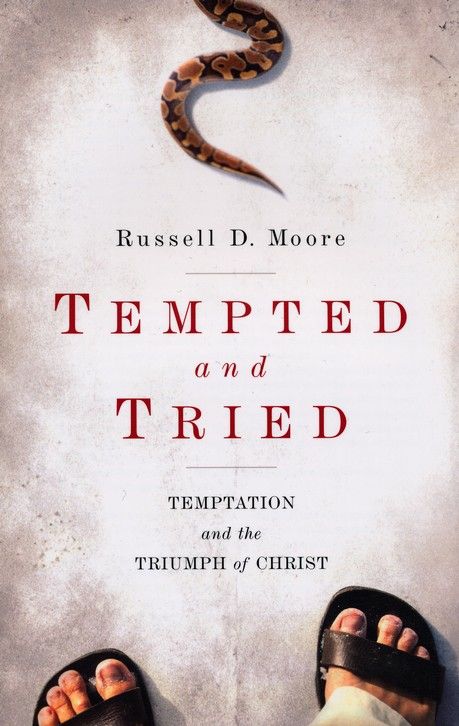
Dr. Russell D. Moore on What Satan Fears Most

What was at Stake in the Third Temptation by Satan?

by Dr. Russel D. Moore

What was at stake in the third temptation was the gospel. Think about the implications of this offer. If Jesus had accepted it, Satan would have surrendered his reign of terror. Jesus could have directed the kingdoms of the world however he wanted. No more babies would be miscarried. No more women would die in childbirth. Ended immediately would be all human slavery, all genocide, all disease, all poverty, all torture, and all ecological catastrophes. The rows and rows of crosses across the highway of the Roman Empire would suddenly be gone. There would never be a Nero or a Napoleon or a Hitler or a Stalin, or at least you would never hear the infamy of those names. There would be no world of divorce courts and abortion clinics and electric chairs and pornographic images.

Whatever is troubling you right now would be gone, centuries before you were ever conceived. This sounds like paradise. Satan was willing to give all of this up because he doesn’t fear Christianity. He certainly doesn’t fear “Christian values.” Satan fears Christ. Remember that Satan holds power only through accusation and condemnation. As long as there is no atoning sacrifice for sin, Satan is quite willing to allow conformity to the external law, even to the law of Christ ruling visibly over the nations from Jerusalem. The accuser simply wants his opportunity to indict his human would-be supplanting powers before the judgment seat, with no shed blood to redeem them back. This is what Jesus’ followers couldn’t understand as he moved down the Roman roads toward the place of the skull. It was there, and only there, as Jesus carried on himself the sins of the world, that he could say, “Now is the judgment of this world; now will the ruler of this world be cast out” (John 12:31). It is only in his triumphant resurrection from the demonic grip of death that Jesus could have “angels, authorities, and powers” subjected to his rule (1 Pet. 3:21–22). A crossless Christianity isn’t just a deficient Christianity; it’s the same old satanism of human striving.

In every generation the church faces cross-evading liberation theologies of both the Left and the Right. The liberation theology of the Left wants a Barabbas to fight off the oppressors, as though the ultimate problem is the reign of Rome and not the reign of death. The liberation theology of the Right wants a golden calf to represent religion and “traditional values” in the public square and to remind us of all the economic security we could have in Egypt. Both want a Caesar or a Pharaoh, not a Messiah. We will always be tempted to bypass the problem behind the problems—captivity to sin, bondage to the accusations of the demonic powers, the sentence of death. Where there is no gospel, something else will fill the void—therapy, consumerism, racial resentment, utopian politics, crazy conspiracy theories of the Left, crazy conspiracy theories of the Right; anything will do. Where there is something other than Christ preached, there is no freedom.

There may be shouts of affirmation or silently nodding heads. There may be left-wing politics or right-wing politics. There may be culturally liberal psychotherapy or culturally conservative psychotherapy. There may be almost anything people think they want, but there’s nothing but judgment in the air. The Devil doesn’t mind “family values” as long as what you ultimately value is the family. Satan doesn’t mind “social justice” as long as you see justice as most importantly social. Satan does not tremble at a “Christian worldview” as long as your ultimate goal is to view the world. Satan doesn’t even mind born-again Christianity as long as the new birth is preached apart from the blood of the cross and the life of the resurrection. Pastor, Satan doesn’t mind if you preach on the decrees of God with fervor and passion, reconciling all the tensions between sovereignty and freedom, as long as you don’t preach the gospel. Homeschooling mom, Satan doesn’t mind if your children can recite the catechism and translate the “Battle Hymn of the Republic” from English to Latin, as long as they don’t hear the gospel. Churches, Satan doesn’t care if your people vote for pro-life candidates, stay married, have sex with whom they’re supposed to, and tear up at all the praise choruses, as long as they don’t see the only power that cancels condemnation—the gospel of Christ crucified. Satan so fears that gospel, he was willing to surrender his entire empire just to stave it off. He still is.

The first step of any kind of Christian engagement with the outside world then is to focus on the primary arena of Christ’s reign—his church. We threaten the rulers and authorities in the heavenly places by our life together, by being the kind of alternative community that demonstrates that the blood of Christ has triumphed, making those who were at odds into one new reality in Christ …

Excerpt above: From the excellent book Tempted and Tried: Temptation and the Triumph of Christ by Russell D. Moore. Wheaton: Crossway Books. 2011.

About the Author: Russell D. Moore is the dean of the School of Theology and senior vice-president for academic administration at The Southern Baptist Theological Seminary in Louisville, Kentucky. The grandson of a Mississippi Baptist preacher, Dr. Moore also serves as a preaching pastor at Highview Baptist Church, where he ministers weekly at the congregation’s Fegenbush location.

Dr. Moore writes and speaks frequently on topics ranging from the kingdom of God to the mission of adoption to a theology of country music. He is a senior editor of Touchstone: A Journal of Mere Christianity, and also blogs regularly at Moore to the Point (www.russellmoore.com). He is the author of several books, including “The Kingdom of Christ,” “Adopted for Life,” and most recently of “Tempted and Tried.”

Dr. Walt Russell on the Corporate Dimension of Biblical Interpretation: An Exegetical Study of Romans 7:7-25

Insights From Postmodernism’s Emphasis On Interpretive Communities In The Interpretation of Romans 7

In reaction to modernism’s radical individualism and lack of emphasis on group identities, the recent rise of postmodernism has helped to regain an appreciation for both the corporate dimension of the self and the influence of one’s group or interpretive community on the interpretive process (The term “postmodernism” is notoriously difficult and slippery to define. The existence of numerous and conflicting definitions adds to this confusion. The definition that I will work with in this essay is from D. Harvey, The Condition of Postmodernity. Cambridge/Oxford: Basil Blackwell, 1990. 44- 45. Harvey notes that postmodernism is at root a metaphysical and epistemological skepticism: “To begin with, we find writers like Foucault and Lyotard explicitly attacking any notion that there might be a meta-language, meta-narrative, or meta-theory through which all things can be connected or represented. Universal and eternal truths, if they exist at all, cannot be specified. Condemning meta-narratives [broad interpretative schemas like those deployed by Marx or Freud] as ‘totalizing,’ they insist upon the plurality of ‘power-discourse’ formations [Foucault], or of ‘language games’ [Lyotard]. Lyotard in fact defines the postmodern condition simply as ‘incredulity towards meta-narratives.’”).  This essay is an attempt to glean some of the positive benefits from this postmodern emphasis and to apply these insights to the interpretation of the notorious crux interpretum, Romans 7:7–25.

I. The Conception Of Interpretive Communities

Within the diverse and multidisciplinary reaction to modernism known as postmodernism there are various and sundry expressions of the concept of interpretive communities. Certainly two of the best known and most influential expressions are those set forth by Thomas S. Kuhn in the history of science and Stanley Fish in literary criticism (T. S. Kuhn, The Structure of Scientific Revolutions. 2d ed.; University of Chicago, 1970; The Essential Tension: Selected Studies in a Scientific Tradition and Change. Chicago: University of Chicago, 1977; S. Fish, Is There a Text in This Class? Cambridge: Harvard University, 1980; Doing What Comes Naturally: Change, Rhetoric, and the Practice of Theory in Literary and Legal Studies. Oxford: Clarendon, 1989).   While others have added their voices to this perspective, Kuhn’s and Fish’s have been the most formative. Kuhn has helped us see the importance of the interpretive paradigm within which scientists work and carry out their scientific research. In other words, Kuhn has asserted that there is a sociology of knowledge that is a significant interpretive factor in the handling of the data of science. In this sense no data are raw, uninterpreted data. Rather, scientists interpret the data with some sense of a preunderstanding or paradigm that significantly affects their perceptions. This nuancing of the role of scientists regarding their network of relations corrects the mechanistic Enlightenment view of the totally objective scientist/interpreter. It also adds appropriate weight to the role of one’s interpretive community in the scientific enterprise.

In a parallel manner, Fish has made the same point about the perceptions of the interpreters of texts. He thereby dislodges texts from the center of authority in favor of readers within their respective interpretive communities:

The notion of “interpretive communities,” which had surfaced occasionally in my discourse before, now becomes central to it. Indeed, it is interpretive communities, rather than either the text or the reader, that produce meanings and are responsible for the emergence of formal features. Interpretive communities are made up of those who share interpretive strategies not for reading but for writing texts, for constituting their properties. In other words these strategies exist prior to the act of reading and therefore determine the shape of what is read rather than, as is usually assumed, the other way around (Fish, Is There a Text).

While Kuhn and Fish have provoked significant discussion in their respective fields, in a very real sense they simply joined the ongoing dialogue among those working within the field of the sociology of knowledge. In particular, almost thirty years ago Berger and Luckmann made a definitive statement about the social dimension of the interpretive process (P. L. Berger and T. Luckmann, The Social Construction of Reality. Garden City: Doubleday, 1966).  This perspective has now been present within academia for over a generation (Kuhn’s first edition was in 1962). But the full effects of these interpretive insights are only now being felt.

It is beyond the scope of this paper to critique the fundamental flaws of this emphasis on interpretive communities. Others have done that far more eloquently elsewhere (In particular see J. F. Harris, Against Relativism: A Philosophical Defense of Method. LaSalle: Open Court, 1992, esp. 73-94 on Kuhn and 95–122 on hermeneutics).  Therefore let me simply note the weaknesses of this perspective regarding its problematic philosophy of language, its inconsistent treatment of the conventional basis of words and meanings, and the enormous leap that is made from legitimate interpretive impediments to epistemological dogma about perception and reality. Such difficulties make unwise the wholesale adoption of the relativistic stance of Kuhn, Fish and others (For a devastating and insightful treatment of Fish’s theories and those of other socio-pragmatic hermeneutical advocates see A. C. Thiselton, New Horizons in Hermeneutics. Grand Rapids: Zondervan, 1992, 535-5500. Note also that Kuhn modified his earlier views in his later work, Essential Tension).

In enumerating these criticisms of the perspective of interpretive communities, however, I would not want to say that significant insights into the interpretive process are not to be gained from attending to this viewpoint. Since interpretation does involve a network of relations that encompasses interpreters and their communities, these must be addressed in the interpretive process. Additionally, since there is a corporate dimension to the self and no person interprets as a self in individualistic isolation, this adds a corporate dimension to meaning (For a defense of the corporate dimension of the self see Selves, People, and Person: What Does It Mean to Be a Self ? (ed. L. S. Rouner; Notre Dame: University of Notre Dame, 1992).  Also, it is beyond question that our individual perceptions are enormously influenced by our social settings. Therefore as I turn to the formation of the traditional interpretation of Romans 7 it is inevitable that I must address the formation of the interpretive community (or communities) that shaped and sustained this interpretation for well over a millennium.

II. The Traditional Interpretation Of Rom 7:7-25

 7What shall we say then? Is the Law sin? May it never be! On the contrary, I would not have come to know sin except through the Law; for I would not have known about coveting if the Law had not said, “You shall not covet.” 8But sin, taking opportunity through the commandment, produced in me coveting of every kind; for apart from the Law sin is dead. 9And I was once alive apart from the Law; but when the commandment came, sin became alive, and I died; 10and this commandment, which was to result in life, proved to result in death for me; 11for sin, taking opportunity through the commandment, deceived me, and through it killed me. 12So then, the Law is holy, and the commandment is holy and righteous and good. 

13Therefore, did that which is good become a cause of death for me? May it never be! Rather, it was sin, in order that it might be shown to be sin by effecting my death through that which is good, that through the commandment sin might become utterly sinful. 14For we know that the Law is spiritual; but I am of flesh, sold into bondage to sin. 15For that which I am doing, I do not understand; for I am not practicing what I would like to do, but I am doing the very thing I hate. 16But if I do the very thing I do not wish to do, I agree with the Law, confessing that it is good. 17So now, no longer am I the one doing it, but sin which indwells me. 18For I know that nothing good dwells in me, that is, in my flesh; for the wishing is present in me, but the doing of the good is not. 19For the good that I wish, I do not do; but I practice the very evil that I do not wish. 20But if I am doing the very thing I do not wish, I am no longer doing it, but sin which dwells in me. 21I find then the principle that evil is present in me, the one who wishes to do good. 22For I joyfully concur with the Law of God in the inner man, 23but I see a different law in the members of my body, waging war against the law of my mind, and making me a prisoner of the law of sin which is in my members. 24Wretched man that I am! Who will set me free from the body of this death? 25Thanks be to God through Jesus Christ our Lord! So then, on the one hand I myself with my mind am serving the Law of God, but on the other, with my flesh the law of sin (This translation follows the NASB except for three exceptions: I follow the paragraph divisions of UBSGNT, I start a new paragraph at v. 13, and I capitalize the “L” in the “law” of God in vv. 22, 25).

The issue that Paul addresses in Romans 7 is the Jewish issue of the authority of the Law (Torah) over a person now that the Messiah has come and died and been resurrected (e.g. 7:4–6). These kinds of Jewish issues and their relevance to Gentile believers in Christ were of great significance during the NT era and demanded the Church’s intense attention from time to time (e.g. Matthew 5–7; Acts 15; Galatians). But after the two Jewish revolts in AD 66–74 and AD 135, very few Jewish people believed in Jesus as the Messiah for several hundred years. This is why writings like the Dialogue with Trypho by Justin Martyr (AD 110–165) are somewhat rare by the second century of the Church era.

The resulting shift among Christian interpreters was away from a perspective that was sensitive to Jewish-Gentile relations within the Church to a perspective that was essentially Gentile in its orientation. While it is perfectly normal that certain issues may become culturally irrelevant as time passes, it appears that much of the apostle Paul’s concern about Jewish-Gentile relations quickly became archaic because of the essential disappearance of the Jewish part of the Church. Consequently issues involving Jewish-Gentile relationships became uninteresting and irrelevant. When this kind of cultural irrelevance sets in, it seems to demand a change in the perspective of the interpretive community if the ongoing relevance of the Word of God is to be maintained in various passages. This appears to be the case from early in the second century onward.

For example, it appears that in the second century the main interpretive question that was asked on Romans 7 was whether Paul was describing his experience as a non-Christian (i.e., in his Jewish, pre-converted state) or as a Christian. Obviously, such an interpretive question only gives two possible answers. Therefore it is understandable that the early Church was divided in its interpretation primarily between these two views.

The early Greek fathers generally followed the view that Paul’s autobiographical language referred to his pre-converted, Jewish state. This interpretation has generally been championed by German interpreters in this century who have largely followed the lead of W. G. Kümmel (W. G. Kümmel, Römer 7 und die Bekehrung des Paulus (UNT 17; Leipzig: J. D. Hinrichs, 1929. For a lengthy list of German interpreters see D. B. Garlington, “Romans 7:14–25 and the Creation Theology of Paul,” Trinity Journal. 1990, 198, n. 5).

The interpretation that the “I” of Romans 7 refers to Paul as a Christian was championed by the Greek father Methodius (Methodius Ex libro resurrectione. PG 18 cols. 299) and the Latin fathers Ambrose and Ambrosiaster (Ambrose De Abraham 2.6.27. PL 14 col. 467; Ambrosiaster Commentaria in XIII epistolas beati Pauli. PL 17 col. 111–116).   But it was Augustine’s later view that Paul was describing himself as a Christian (a clear retraction of his earlier view of Paul speaking in the name of unregenerate persons) that was so powerful in helping to form the broad-based medieval view (For Augustine’s earlier, unregenerate view see PL 35 col. 2071; for his later, Christian view see PL 32 cols. 620 ff., 629 ff).  This is the view that Thomas Aquinas championed (T. Aquinas, Super epistolas S. Pauli lectura. 8th ed.; ed. R. Cai; Turin: 1953).  It is also the view adopted by the majority of the sixteenth-century Reformers, especially Martin Luther and John Calvin (M. Luther, Lectures on Romans. London: 1961: 200 ff.; J. Calvin, The Epistles of Paul the Apostle to the Romans and to the Thessalonians. Edinburgh: 1961).

At present there are at least five major views of Rom 7:7–25 that have flowed out of the two ancient interpretations. While there is some disparity among these views, they nevertheless are products of the same ancient interpretive community that was formed during the second century. These views are in continuity with one another because of their relationship to the major interpretive question asked of Romans 7: “Is Paul describing his pre-Christian or Christian state?”

(1) The “I” is Paul as a non-Christian viewed from his later Christian perspective (Cf. e.g. H. Ridderbos, Paul: An Outline of His Theology. Grand Rapids: Eerdmans, 1975: 126-130).

(2) The “I” is the representative experience of all, Christian or non-Christian, who try to live under law (i.e. try to be righteous and holy by their own efforts – (Cf. e.g. R. N. Longenecker, Paul: Apostle of Liberty. New York: Harper, 1964: 88-95).

(3) The “I” refers to Adam, or to humanity in Adam, with the Genesis 3 narrative being viewed as paradigmatic (Cf. e.g. E. Käsemann, Commentary on Romans. Grand Rapids: Eerdmans, 1982: 192-197).

(4) The “I” refers to Paul in the years immediately following his conversion when he still tried to live under the Law before learning to live by the Spirit (this view is often called “the victorious Christian life” view – Cf. e.g. W. D. Lawrence, “The Traitor in the Gates: The Christian’s Conflict with the Flesh,” Essays in Honor of J. Dwight Pentecost (ed. S. D. Toussaint and C. H. Dyer; Chicago: Moody, 1986: 115-131).

(5) The “I” is representative of Paul and any normal Christian who is simultaneously justified, yet still a sinner and struggling with the normal tension between living in two ages at the same time (Many who hold this view understand Rom 7:7–13 as Paul’s description of himself in his pre conversion Jewish state – aorist tense; and 7:14–25 as his description of himself in his present Christian condition – present tense).

Central to the ancient paradigm or interpretive community of Paul’s theology in general (and Romans 7 in particular) is the understanding of Paul from the perspective of guilt and legalism. In other words Paul was viewed as a typical first-century Pharisee in that he struggled with a sense of guilt before God and sought to allay his guilt by doing the works of Torah in a legalistic manner. In particular the late-medieval and Reformation understanding developed this interpretive paradigm to its fullest form. Luther’s introductory comments in his 1535 lectures on Galatians vividly express this interpretive grid in his inimitable style:

But such is human weakness and misery that in the terrors of conscience and in the danger of death we look at nothing except our own works, our worthiness, and the Law. When the Law shows us our sin, our past life immediately comes to our mind. Then the sinner, in his great anguish of mind, groans and says to himself: “Oh, how damnably I have lived! If only I could live longer! Then I would amend my life.” Thus human reason cannot refrain from looking at active righteousness, that is, its own righteousness; nor can it shift its gaze to passive, that is, Christian righteousness. So deeply is this evil rooted in us, and so completely have we acquired this unhappy habit! Taking advantage of the weakness of our nature, Satan increases and aggravates these thoughts in us (Luther’s Works. St. Louis: Concordia, 1963).

The Reformers advanced the medieval paradigm by emphasizing the divine antidote to humanity’s guilt problem: justification by faith, rather than justification by works. Of course Luther and others were powerfully impacted by Paul’s emphasis on faith-righteousness versus works-righteousness. In fact those epistles that emphasized justification by faith (Galatians and Romans) became the lens through which the rest of Paul’s epistles, the remainder of the NT, and even the whole Bible was viewed and interpreted. As many have noted, this perspective became Luther’s “canon within the canon.”

The vulnerability of paradigms, according to Kuhn, is that they can be overturned when they are no longer sufficient to deal with an overwhelming number of anomalies. We are presently witnessing the subverting of the traditional interpretive paradigm of Paul’s theology and the attempt to replace it with a new perspective on the apostle. My goal is to demonstrate that the traditional interpretation of Rom 7:7–25 is one of the anomalies that supports this replacement.

III. The Formation Of The New Pauline Interpretive Community

If Augustine of Hippo (AD 354–430) is viewed as the informal yet primary shaper of the traditional interpretive community for Pauline theology (This is K. Stendahl’s opinion in “The Apostle Paul and the Introspective Conscience of the West,” HTR 56. 1963: 199-215, reprinted in Stendahl, Paul Among Jews and Gentiles. Philadelphia: Fortress, 1976: 78-96), then his formative work has certainly withstood the rigors of centuries of theologizing. The last twenty-five years, however, have brought profound changes in the very foundations of Pauline theology.

The primary change that has occurred in interpreting Pauline theology does not even directly deal with Paul but with first-century Judaism. Specifically, recent scholars have asserted that “Judaism of the first century was not a religion based on earning acceptance with God through the merit of righteousness based on the works of Law-obedience” (I am indebted to D. A. Hagner for his insights into the new perspective on Paul in “Paul and Judaism—The Jewish Matrix of Early Christianity: Issues in the Current Debate,” Bulletin for Biblical Research 3. 1993: 111-130).  In other words the legalistic context in which Paul was supposed to have been immersed as a Pharisee is now being hotly contested. Interestingly enough, earlier scholars had made this point with great fervor (Cf. e.g. G. F. Moore, Judaism in the First Centuries of the Christian Era. Cambridge: Harvard University, 1927–30, esp. 1.110–121, 520–545; R. T. Herford, Judaism in the New Testament Period. London: Lindsey, 1928; C. G. Montefiore, Rabbinic Literature and Gospel Teaching. 1930; reprinted, New York: Ktav, 1970).  But it was not until the recent works by E. P. Sanders appeared that the so-called Copernican revolution in Pauline studies began.

Those who are reshaping our understanding of Paul’s theology assert not only that first-century Judaism was not the legalistic religion that Christians for centuries have believed it was but that justification by faith is not the center of Paul’s theology (nor the center of the NT nor of the whole Bible). Rather, they follow the earlier conclusion of Albert Schweitzer: “The doctrine of righteousness by faith is therefore a subsidiary crater, which has formed within the rim of the main crater—the mystical doctrine of redemption through being-in-Christ” (A. Schweitzer, The Mysticism of Paul the Apostle. New York: Seabury, 1931: 225).

The answer to the question “How could the Church so fundamentally have misunderstood and misinterpreted Paul’s theology and first-century Judaism for over a millennium and a half?” brings us back to the issue of interpretive communities. The beginning of this misunderstanding of Paul and first-century Judaism is rooted in the disappearance of Jewish believers from the Church and the redefining of Paul’s concerns in largely Gentile categories. In other words the early Church formed a distorted interpretive community regarding these issues because of the seeming irrelevance of Paul’s original categories. In the words of E. D. Hirsch, Jr., they formed a generic conception of the whole of Paul’s theology and of the matrix of first-century Judaism, which then entrapped them in a hermeneutical circle:

Thus, the distressing unwillingness of many interpreters to relinquish their sense of certainty is the result not of native close-mindedness but of imprisonment in a hermeneutic circle. Literary and biblical interpreters are not by nature more willful and un-self-critical than other men. On the contrary, they very often listen patiently to contrary opinions, and after careful consideration, they often decide that the contrary hypotheses “do not correspond to the text.” And of course they are right. The meanings they reject could not possibly arise except on the basis of a quite alien conception of the text. It is very difficult to dislodge or relinquish one’s own genre idea, since that idea seems so totally adequate to the text. After all, since the text is largely constituted by the hypothesis, how could the hypothesis fail to seem inevitable and certain? (E. D. Hirsch, Jr., Validity in Interpretation. New Haven: Yale University, 1967: 166)

Given the early Church’s comfort with its Gentile conception of Paul’s theology, it is not difficult to imagine how Luther could build on this interpretive foundation and found his theology upon the long-standing view of Paul and the Judaism that spawned him. In fact this is now one of the primary critiques of the traditional interpretive community of Pauline theology. Specifically the criticism is that Paul’s theology has been misunderstood in recent centuries because it has been read through the lens of Luther and the Reformation. In this context the term “the Lutheran view of Paul” has a pejorative ring to it. As Krister Stendahl and others have noted, Luther’s view of Paul as a person struggling with agonizing personal guilt and the burden of self-justification probably tells us more about late medieval piety than it does about the apostle (Stendahl, Paul Among Jews).

While there are several major corollaries that flow out of this revised view of Paul and first-century Judaism, one is particularly important for our purposes. This has to do with Paul’s main concern. Rather than being focused on the universal human problem with guilt (as understood by Augustine and Luther), it appears that Paul’s main concern was the terms of conversion for the Gentiles and how they would relate to Jews within the body of Christ. Again, given the disappearance of Jewish believers in Christ after the two Jewish revolts in AD 66–74 and 135, this central concern of Paul soon became a nonissue in the ancient Church. Therefore the very core of Pauline theology was reshaped according to more culturally relevant concerns. The Jewish Christian missionary Paul was reshaped in the image of the Gentile Christian interpretive community. It is this ancient distortion that Luther and the other Reformers simply enhanced and extended.

When applied to the interpretation of Romans 7, the traditional paradigm assumed that Paul’s main categories were that of “Christian” and “non-Christian,” and the major interpretations have fallen on one side or the other of this divide. Additionally the focus has tended to center on the guilt that Paul expresses in the passage, not just regarding the Mosaic Law but now in relation to God’s demands in general. In other words the passage’s very specific concern with obedience to the Mosaic Law is generally broadened to any kind of legalistic efforts on the part of religious persons to justify themselves before God. The centrality of the works-righteousness/justification-by-faith lens is readily observable in this interpretation. For those who interpret Paul’s remarks in Romans 7 as representative of a Christian, “the Law” is also assumed to be something more generic than the Mosaic Law. It is usually understood as God’s more general demands and the Christian’s agonizing struggle to satisfy divine expectations. Since Augustine’s time the focus is generally on the inner turmoil that this struggle engenders.

IV. Romans 7:7-25 And The New Pauline Interpretive Community

While I would not go so far as many in the newly-emerging Pauline interpretive community who cast out any concern by Paul about Jewish legalism (Cf. e.g. Sanders, Paul and Palestinian Judaism), I would agree with the new paradigm that this is not Paul’s primary focus in Romans 7. Rather, Paul’s concern in this passage more closely aligns with those one would expect from a Jewish Christian missionary and pioneer church planter among the Gentiles (For a development of this perspective within the whole epistle to the Romans see P. S. Minear, The Obedience of Faith: The Purposes of Paul in the Epistle to the Romans. SBT 18; Naperville: Allenson, 1971).  This is why Paul’s bifurcation of humanity in this epistle is not into Christians and non-Christians but into Jews and Gentiles. In fact this latter set of terms occurs more in Romans than in all the rest of Paul’s epistles combined. Central to Paul’s understanding of “the gospel”—the main theme of Romans—is how this good news distinctly intersects Jewish and Gentile cultures and yet unites these diverse racial and cultural entities into the one people of God.

This uniting of Jewish and Gentile believers in Christ was of immediate interest to the Christians in Rome when Paul wrote his epistle. Most agree that Paul is writing from Greece (probably Corinth) as Acts 20:1–3 records. The three months Paul spent there were during the winter of AD 56–57. This date is significant because it was only two years after the Jews (including Jewish Christians) had been allowed to assemble again within the confines of Rome. Claudius Caesar had issued an edict in 49 that essentially expelled all Jews from Rome (e.g. Acts 18:1–2 – According to the Roman historian Suetonius, Claudius did this because of “Jews who persisted in rioting at the instigation of Chrestus” – Life of Claudius 25.2).  It was not until Nero became Caesar that this edict was lifted in 54. These events were immensely significant to the church in Rome because it had apparently been started by Roman Jews who may have been converted at Pentecost (Acts 2:10). This means that the Jewish Christians in Rome were probably the senior members of the church, and it probably reflected a large amount of Jewish culture. In fact the church in Rome may still have been meeting in a number of the Roman synagogues on the first day of the week until the Jews were expelled.

During the five years of Jewish absence (AD 49–54) the Roman church was apparently “gentilized,” perhaps even dispersing into the homes of some of the wealthier Gentile members (e.g. Rom 16:3–16 – See W. Marxsen, Introduction to the New Testament: An Approach to Its Problems. Oxford: Basil Blackwell, 1968: 95-104).  When some of the Jewish Christians returned, one can imagine their horror at how the church had been changed or, from their perspective, ruined. Additionally, many of the more culturally conservative Jewish Christians may never have set foot in a Gentile home. Therefore they were doubly horrified at the new setting of the assembly. By the time Paul wrote his epistle the Roman Christians have had two years of racial and cultural tension. Therefore a significant part of Paul’s intention in this letter is to address this internal tension and defuse the Jew/Gentile polarization (The Gentile Christians in Rome also had to contend with a particularly rabid anti-Semitism that was erupting in the Roman empire at this time. See W. Wiefel, “The Jewish Community in Ancient Rome and the Origins of Roman Christianity,” The Romans Debate. rev. ed.; ed. K. P. Donfried; Peabody: Hendrickson, 1991: 85-101). Some even see this as the main purpose of the epistle.  This helps explain why Paul’s bifurcation of humanity in Romans is one of Jews and Gentiles, not Christians and non-Christians.

Within the struggle between Jewish and Gentile Christians in Rome, the Jewish Christians may have believed that they had the ultimate equalizer because they were the ones who knew the Law and would therefore always be needed to teach Torah to the Gentile Christians. In the first six chapters of Romans, Paul addressed this issue only obliquely. But he made some statements that must have raised concern among his fellow Jewish Christians. In particular he asserted that the gospel (not Torah) is both the power of God and the righteousness of God that is presently being revealed (1:16–17; 3:21–23). He leveled the ground under both Jewish and Gentile peoples in 2:11–16 by emphasizing doing the Law, not just possessing it. He also asserted that by works of the Law would no flesh be justified (3:19–20). Paul also spoke of the Law bringing wrath (4:13–16) and being introduced so that transgression might increase (5:20). The most disturbing thing that Paul may have said, however, was that sin was master over his readers when they were under Torah, but that mastery had now been broken because they are now under grace, not Torah (6:14). The time had now arrived for Paul to address this issue of the present role of the Mosaic Law in the life of God’s people in a straightforward and systematic manner.

Romans 7 is, in fact, Paul’s clarification to the Jewish Christians in Rome about what role Torah is to play in the restraining of God’s people from sinning. This topic had been rhetorically introduced in Rom 6:1. The issue is “What restrains God’s people from sinning willfully?” The Jewish Christians had a ready answer: Torah. Paul turns to them in 7:1 and forthrightly addresses this issue.

We know that Paul is addressing the Jewish Christians on this issue because of three factors. (1) The vocative address of 7:1 is to the “brethren,” whom Paul then specifies in a partitive manner: “For I am speaking to those who know the Law.” (2) This law must be Torah, not Roman law or law in general, because the specific example in 7:2–3 was a debated point of Torah. Additionally, Paul’s use of the Torah to make the point that death immediately severs the marriage bond was not true under Roman law. Widows were required by Roman law to mourn and remain unmarried for one year after their husband’s death, lest they lose all that was to come to them from their husband’s estate (See P. E. Corbett, The Roman Law of Marriage. Oxford: Clarendon, 1930; reprinted 1969: 249).  Also, Paul’s previous forty uses of the term “law” all directly refer to the Mosaic Law or play off of that obvious identity that had already been established within the context (e.g. 2:12–15). (3) Paul’s application about the Law in 7:4–6 clearly points to the Mosaic covenant because this is Paul’s typical old-covenant/new-covenant contrast (cf. 2 Cor 3:1–11). In other words the marriage illustration is underscoring that God’s people have moved from one covenant relationship (the Mosaic covenant) to another under Christ (the new covenant) by dying to the first. The first relationship bore fruit to death (7:5), and now the second offers the hope of bearing fruit for God (7:4). But this will only happen when they serve in newness of the Spirit, not in oldness of the letter of the Law (7:6).

What is the specific point that Paul makes with his Jewish Christian recipients in Rom 7:1–6? It is that to advocate the use of the Mosaic Law as a restraint or guide in the Christian life is inappropriate. It is as inappropriate as continuing to live under a previous mate’s authority after he is dead and the covenantal relationship has been dissolved. Hence for them to advocate that they and the Gentile Christians must live under the authority of the Mosaic Torah is totally inappropriate. In fact, why would they want to continue to live under the authority of Torah, given the inadequacy of Torah’s restraining abilities when they were in the flesh? “For while we were in the flesh, the sinful passions, which were aroused by the Law, were at work in the members of our body to bear fruit to death” (Rom 7:5 NASB). Life under the new covenant, however, stands in vivid contrast to life under the old: “But now we have been released from the Law, having died to that by which we were bound, so that we serve in newness of the Spirit and not in oldness of the letter” (7:6 NASB; italics mine).

Paul now turns to successive development of these brief capsulizations of life under the old and new covenants. The old covenant lifestyle is described in Rom 7:7–25, and the new covenant way of life is expanded upon in 8:1–7. It is to his revealing depiction of the Mosaic Law’s inadequacy to control the flesh in 7:7–25 that we now turn.

V. Romans 7:7-25: A Different Interpretation

Paul’s basic point about life under the oldness of the Mosaic Law in Rom 7:7–25 is not that Torah is sinful (for it is holy and spiritual) but that the Law is nevertheless an inadequate means for bodily restraint because of its designed purpose and its powerlessness over the flesh. In 7:7–13 Paul reminds his recipients that the Mosaic law’s designed purpose was to show how utterly sinful sin was through Torah’s holy standard and to make the Israelites constantly aware that indwelling sin brought death. In 7:14–25 Paul vividly portrays how the Law’s powerlessness over flesh was obvious to pious Israelites during the era of the Mosaic Law because of the wretched dividedness they experienced between their inner persons and their bodies, due to the latter being under indwelling sin’s mastery.

These two subdivisions of Rom 7:7–25 are marked off by a shift from the undefined Greek aorist tense in 7:7–13 (these events are simply noted as having happened) to the Greek present tense in 7:14–25 (giving these struggles a certain timelessness). This shift also creates a certain backgrounding and foregrounding sense. Specifically the coming of the Mosaic Law in 7:7–13 is established as the background with the use of the unspecified aorist tense (Among those who interpret “when the commandment came” in Rom 7:9 as the coming of the Mosaic Law to Israel at Mount Sinai is D. J. Moo, “Israel and Paul in Romans 7:7–12, ” NTS 32. 1986: 122-135).  This sets the stage for the more vivid present tense in 7:14–25, which places in the foreground the consistent struggle that occurred among pious Israelites throughout Israel’s post-Sinai history.

Additionally, the entire section of 7:7–25 is characterized by a rather rare use of the first-person-singular voice. But it is interesting to note thatthe two paragraphs within this “I” section are each begun with a first-person plural (“we” in 7:7, 14). Such a shifting between the first-person singular and plural also exists in Gal 2:14–22, where Paul begins in the plural (2:14–17) and adroitly shifts to the singular (2:18–21). It is no coincidence that both of these passages are dealing with Jewish Christians’ use of the Mosaic Law. This then raises the issue of the meaning of Paul’s use of “I” in Romans 7.

Since the monograph on Romans 7 by Kümmel in 1929,  most interpreters have understood Paul’s use of “I” as representational language. In other words he is not just describing his own experience under the Mosaic Law but is speaking as a representative of a larger group of people. Of course the debate centers around what group of people Paul is representing. There have been two main identifications that have come out of the traditional interpretive community. The first is that Paul is representing “non-Christians”: either all humans who try to live under law/legalism, or all Jews seeking to justify themselves by works of the Law. The second identification is that Paul is representing “Christians”: either those who are abnormally failing in living the Christian life because of relying upon the law, or those who are experiencing the normal struggles of the “two-age tension” of the Christian life. This latter view is the predominant one and can be traced back to Augustine, Aquinas, Luther and Calvin among its main adherents.

Three points are worth noting in response to the reasoning of the traditional interpretive community:

(1) The representational language is an accurate understanding according to first-century standards. First-century Mediterranean cultures were not individualistic in their orientation, as western cultures have increasingly become in recent generations. Rather, they derived their identity from the group in which they were embedded:

To such a social pattern, a concept of selfhood which marks public identity contextually and relativistically, but yet does so in terms—tribal, territorial, linguistic, religious, familial—which grow out of the more private and settled arenas of life and have a deep and permanent resonance there, would seem particularly appropriate. Indeed the social pattern would seem virtually to create this concept of selfhood (C. Geertz, “From the Native’s Point of View’: On the Nature of Anthropological Understanding,” Meaning in Anthropology. ed. K. H. Basso and H. A. Selby; Albuquerque: University of New Mexico, 1976: 234).

(2) In such a culture, individual experience that is unique is uninteresting and irrelevant since both identity and appropriate standards of behavior are derived from group, not individual, norms. While this does not eliminate the possibility that Paul was describing his individual experience, it does demand that his experience be representative of his group identity if it is to be meaningful to his recipients. Therefore the most likely group identification that Paul would have in light of those he is addressing in Romans 7 (“those who know the Law” in 7:1) is that of an Israelite who also knows the Law and has lived under its authority. Therefore Paul’s “I” in Rom 7:7–25 is most likely representative of both his experience and that of all pious Israelites. This is why Paul apparently felt the freedom to move back and forth between his individual experience and that of his group in both Romans 7 and Galatians 2.

(3) If Paul is speaking as a representative of his people Israel’s reception of the Law at Sinai (7:7–13) and as a representative of their struggle under its diagnostic and condemning function throughout their history (7:14–25), then the experience of Rom 7:7–25 transcends Paul’s own personal experience. Clearly Paul was only representationally present when the commandment came at Sinai (7:9). Therefore the death he experienced at that time was through solidarity with the generation of Israelites that left Egypt. This is an obvious but important point to make about this passage because it reveals the emphasis of Paul’s focus. While recent western interpretation of Romans 7 has tended to focus upon the psychology of the struggle of the “I” in 7:14–25, this is a misplaced emphasis. Granted, it is a possible interpretation of the data, but an unlikely one. Paul’s transcendent emphasis points in a different direction.

Our interest in the west in the internal struggle of the persons represented in this passage has caused us to make rather facile leaps in interpreting key terms within the passage. For example, those who see the Genesis 3 narrative in the background nimbly expand the sense of “law” to include God’s instruction to Adam and Eve. Those who see all humanity represented in the struggle with law/legalism make the same leap beyond Israel’s Law in this context. The same expansion of “law” to any kind of divine restriction or any kind of legalism is made by those who see Christians represented in the struggle of Romans 7. In other words an implicit universalizing of Paul’s terminology is rather widespread. There seems to be little hesitation in abstracting Paul’s use of “law” in any one of several directions. Of course this flies in the face of his previous forty uses of nomos in Romans 1–6 that focused on the Mosaic Law and in the face of the Mosaic Law focus in 8:1–4. But it appears that such context-specific information is ignored when confronted with a broader interpretive paradigm. Again, our Gentile eyes have not seen the Jewish elements within this passage.

Equally problematic are the theological problems that accompany the traditional interpretive paradigm. For one thing, the interpretations that see non-Christians represented in Rom 7:7–25 are hard-pressed to explain how 7:21–22 can describe the innermost desires of non-Christians: “I find then the principle that evil is present in me, the one who wishes to do good. For I joyfully concur with the Law of God in the inner man.” Is this how Paul would describe those apart from God—even the most earnest of unbelievers? Is this what the very core (inner person) of those who do not know God is like? If this is so, then it is very difficult to square with Paul’s overt discussion of Jews and Gentiles under sin in Rom 3:9–20.

The same theological incredulity surfaces, however, when one encounters those interpretations that see Christians represented in Romans 7. Is it really likely that Paul can be describing the experience of Christians when he describes the person of 7:14 as being “of flesh, sold into bondage to sin”? This is particularly difficult to accept following the robust declaration of the opposite in Romans 6: Christians are freed from sin’s bondage (6:2, 4, 6–7, 11, 14–15, 17–18, 20, 22). Additionally, Paul follows the morose description of spiritual bondage and impotence in 7:7–25 with an equally antithetical statement of the Christians’ freedom from sin’s bondage in Romans 8 (e.g. vv. 2–4, 9, 11, 12–13). Is the apostle swinging schizophrenically between contradictory descriptions of the spiritual state of Christians? Is he “nuancing” the freedom from sin that he asserts Christians possess in Romans 6 and 8 by stating that they really do not possess such freedom at all in Romans 7? I find such explanations both untenable and unconvincing.

Therefore the most satisfying conclusion to the identity of the persons represented in Rom 7:7–25 is that they are neither non-Christians nor Christians but pious, believing Israelites. They are not unbelievers because they represent the best and truest believers in Israel during the old- covenant era. They are true believers during the Mosaic Law era who did earnestly wish to do good (7:21) and did joyfully concur with the Law of God in the core of their being (7:22). But the difficulty they experienced was that they were still under the mastery of sin because they were still under the Law (6:14). They were true, old-covenant believers before Christ, but they were still “of flesh, sold in bondage to sin” (7:14b). This is because sin’s bondage over human beings was not broken until Jesus came and died substitutionally for his people and rose again (8:1–4). It is only in his saving acts that sin’s mastery was broken (cf. 6:1–11). The Mosaic Law could not do this because of the weakness of the flesh (8:31). Therefore God did it in the sending of his Son in the likeness of sinful flesh (8:3b).

Paul’s twofold point in Romans 7 to “those who know the Law” is that it is inappropriate as a new-covenant restraint for God’s people (7:1–6) and it was always inadequate as an old-covenant constraint for God’s people (7:7–25). The problem was not with the Law’s lack of holiness but with the power of sin’s mastery over God’s people during the Law era. This is why Paul’s main point in 7:7–25 is not so much about the psychological frustration of those being represented as about the broader contours of that era regarding sin’s dominion. Sin’s dominion paralleled Law’s dominion in the Mosaic era. Those who were “in Moses” were, unfortunately, still “in Adam.” Therefore being “in Moses” was not enough to offset being “in Adam.” This is why Paul’s declaration in 8:1 is so triumphant: “There is therefore now no condemnation for those who are in Christ Jesus.” Therefore the Jewish Christians in Rome should not attempt to foist the Mosaic Law as a means of Christian constraint upon the Gentile Christians. God has provided a far more appropriate and adequate way to deal with our struggle to control our bodies.

Paul’s point in Rom 8:1–17 is that “in Christ” we have been freed from the wretchedness and condemnation that characterized life in the flesh under the Mosaic Law. We have been given the appropriate and adequate means for bodily discipline in the person of the indwelling Holy Spirit. In 8:1–11 Paul asserts that bodily discipline is appropriately achieved by walking according to the standard of the Spirit, not according to the standard of the Mosaic Law of the flesh, because only the resurrecting Spirit of God can give life to our mortal body. In 8:12–17 the apostle concludes that we adequately achieve bodily discipline by putting to death the deeds of our body by depending upon the Holy Spirit who leads the children of God and produces an inner sense of family intimacy with God our Father.

To heighten the contrast between life in the flesh/under the Mosaic covenant (7:5/7:7–25) and life in the Spirit/under the new covenant (7:6/8:1–17), Paul scrupulously avoids any mention of the ministry of the Holy Spirit in 7:7–25. It is not that the Spirit was not involved in the life of God’s people during the whole Mosaic Law era. Reading the OT testifies to his presence and ministry in the life of Israel. But the old-covenant era is not characterized by the work of the Holy Spirit like the new-covenant era is (e.g. Ezek 36:24–27). Rather, by contrast, the old-covenant era is characterized by Paul as an era of bodily frailty and weakness. The tandem term to “Law” that Paul uses to express this frailty is “flesh” (sarx). The Law era was the flesh era, and Paul uses these two terms interchangeably throughout these types of discussion (e.g. Rom 8:3–4; cf. Gal 5:16–18). Therefore to be under the Mosaic Law was to be “in the flesh.” The believer in Jesus Christ has been delivered from both the authority of the Law and from the frailty of the sphere of the flesh: “However, you are not in the flesh but in the spirit, if indeed the Spirit of God dwells in you. But if anyone does not have the Spirit of Christ, he does not belong to Him” (Rom 8:9, NASB).

In contexts such as Romans 7–8 and Galatians 3–6, which center on the classification of the contrast between the old and new covenants for Jewish Christians, “flesh/Law” and “Spirit” are representative of these respective covenants/eras. This is why Paul can definitively state in Rom 8:9 that Christians have their identity in the sphere or era of the Spirit, not in the sphere or era of the flesh. One cannot have it both ways. The distinctive mark of our sonship is having the Spirit of God (8:14). Christians have left behind the identity of bodily frailty that “flesh” connotes. We have entered a new covenant and thereby a new era in God’s program. Our lives are not to be characterized primarily by human frailty but by divine enablement.

These are classic Pauline distinctions, and he is remarkably consistent in his usage of this antithesis between flesh and Spirit. This is why Paul’s statement in 7:14b (“but I am of flesh, sold into bondage to sin”) cannot possibly be true of the new-covenant believer. Rather, it is a definitive description that repeats Paul’s description in 7:5 of life under the old covenant: “For while we were in the flesh, the sinful passions, which were aroused by the Law, were at work in the members of our body to bear fruit to death.” The contrast in 7:6 is of life under the new covenant, which is life apart from the flesh and the Law: “But now we have been released from the Law, having died to that by which we were bound, so that we served in newness of the Spirit and not in oldness of the letter.” But once again our ignorance of the significance of this whole discussion for the Jewish Christians whom it addresses leads us in wrong interpretive directions.

VI. The Significance Of Interpretive Communities
In The Interpretation Of Romans 7

We have now reached the end of this lengthy discussion of the role of interpretive communities in the understanding of Rom 7:7–25. My premise has been that the early Church took a wrong turn on this significant passage because of a change in the cultural makeup of the people of God. The result has been over 1500 years of theologizing that seems to have been wrongheaded. This is a bold statement. But if it is accurate it should be vindicated. This vindication should be underscored by the further establishing of the new paradigm or interpretive community of Pauline theology, which should give us better insights into the racial and cultural concerns of the apostle Paul.

In saying this, however, one should not get the idea that the interpretation advocated here is a very recent one in the history of the Church. On the contrary, it is a very ancient, though a scant minority, understanding of this passage. Standing virtually alone in the ancient Church, John Chrysostom (AD 344/354–407), the bishop of Constantinople and most distinguished of the Greek patristic preachers, understood the “I” of Rom 7:7–13 as referring to Israel in its encounter with the Law at Mount Sinai (Saint Chrysostom: Homilies on the Acts of the Apostles and the Epistle to the Romans. NPNF 9.416- 439).  A few other Pauline scholars have followed in his path (Cf. e.g. E. Stauffer, “ego,” TDNT 2.358–362; J. Lambrecht, “Man before and without Christ: Romans 7 and Pauline Anthropology,” LS 5. 1974: 18-33; N. T. Wright, The Messiah and the People of God: A Study in Pauline Theology with Particular Reference to the Argument of the Epistle to the Romans. dissertation; Oxford: Oxford University, 1980: 145-146). But the vast majority of those in the Church have followed the traditional interpretive community and have filtered Israel out of their interpretation.

The existence of this traditional interpretive community for over a millennium and a half warrants two final observations about the dynamic of interpretive communities. (1) Without embracing a relativistic understanding of texts and meaning we should nevertheless be far more sensitive and healthily self-conscious about our interpretive assumptions. These assumptions are a major factor in the interpretive process, and we can no longer pretend that they do not exist. Rather, we should accept their existence as a very real part of our finite human experience. Nowhere is this truer than in the interpretation of very ancient and culturally distant texts like the Bible. This does not place the understanding of these texts beyond our reach. But it does demand a stronger emphasis on understanding those means that bridge these temporal and cultural gaps—that is, the genres of the Bible and the generic conceptions of each Biblical book and its various sections. This places a significant educational burden on the teachers of the Church to prepare God’s people to read the Bible with these kinds of sensitivities and with these kinds of interpretive skills. This task is complicated when many in the Church do not realize or value the need for such skills.

(2) Perhaps God’s people can be persuaded more readily of the value of understanding the genres of the Bible and the structure of a Biblical book’s argument if these insights provide even greater edification of the Church. Hopefully this has been demonstrated in my treatment of Rom 7:7–25. Contrary to the predominant interpretation that understands the Christian life to be characterized by a divided and debilitating struggle with sin, I believe that Romans 7 teaches that such a struggle has been superseded by the work of Jesus Christ and by the indwelling Holy Spirit. This is not to say that Christians no longer struggle with sin in their lives (e.g. Rom 6:12–14; 8:12–13). But it is to say that this struggle is a battle that we are well equipped to win because of our definitive break with the mastery of sin and because of the indwelling Holy Spirit. If this understanding of the passage is correct, then the experience of Rom 7:7–25 is not worthy to be brought under the banner of the new covenant. Rather, it is a depiction of an earlier, preparatory era in God’s program. To confuse this with life in Christ is to impoverish the Church theologically. As in the case with the ancient Church and this passage, such an interpretation tells us more about the interpreters than it does about the text. Such problems are legion when we ignore the role that our interpretive communities play in the interpretive process.

About the Author: Dr. Walt Russell is associate professor of New Testament at Talbot School of Theology, 13800 Biola Avenue, La Mirada, CA 90639. The article above “Insights From Postmodernism’s Emphasis On Interpretive Communities In The Interpretation of Romans 7” was adapted from Vol. 37: Journal of the Evangelical Theological Society Volume 37. 1994 (4) (510). Lynchburg, VA: The Evangelical Theological Society.

Dr. John Feinberg on “Why I Still Believe in Christ, in Spite of Evil and Suffering”

The Problem of Evil Is A Problem For Everyone

Probe an atheist or agnostic deeply enough about why they doubt God’s existence, and he or she will likely recount for you the problem of evil. This problem keeps many from faith in God altogether and rattles the faith of even the staunchest believers. It is an intellectual problem that has occupied much of my attention for all of my adult life. Even more, for the last thirteen years, wrestling with the reality of evil has been a personal challenge for me and my family. Things have happened that I must deal with every day for the rest of my life.

Though many religious believers and nonbelievers struggle with this problem, it is especially acute for adherents of a religion such as evangelical Christianity, which believes in an all-powerful and all-loving God. How can a God with those traits allow evil to beset his creatures? If evil is retribution for some horrendous sin, then perhaps its presence in the world is understandable. But even in cases of the most egregious sinners, some punishments seem to exceed the crime by quite a bit. For those who live a godly life, suffering from certain afflictions seems especially unjustified. In light of these things and my own experiences with suffering, you may wonder why I still believe in God at all, let alone remain a Christian. In the pages that follow, I want to explain why, but before I can, I must raise several preliminary items.

Preliminary Considerations

I have argued at length elsewhere that the usual conception of the problem of evil is too simplistic. Traditionally, this problem is portrayed as a dilemma centering on the logical consistency of three propositions: (1) God is all-loving; (2) God is all-powerful; and (3) evil exists in a world created by this God. Philosophers and theologians have assumed that this problem is the only problem of evil and that it confronts equally all theological systems that believe in an omnipotent and all-loving God. I have argued that this is not so, for there are many different problems of evil. I needn’t recount all of them here, but I should distinguish several of them.

First, there is a difference between the strictly intellectual questions that evil raises and the more personal crises of faith it precipitates. Those dealing with the intellectual questions of evil usually question whether evil’s existence is logically consistent with Christian doctrine about God. One could pose such questions in complete abstraction from actual evils being suffered. One could even ask these questions if one didn’t believe there is a God or that evil exists in our world. These are the problems that professional theologians and philosophers write about and debate. There are distinct intellectual questions raised by the existence of any evil, the amounts of evil in our world, the intensity of certain evils, and the apparent purposelessness of some evils. If theists cannot successfully answer such questions, continuing to believe in God (and holding to theologies that cannot solve these problems) seems unwarranted.

In contrast to the intellectual questions is the personal struggle that people have with suffering and affliction. Such experienced evils precipitate a crisis of faith. The afflicted person asks how a God of love can allow this to happen when he or she has faithfully followed God all of his or her life. Since God doesn’t remove the evil, it is difficult to worship him and even more difficult to serve him. Clearly, the relationship this person has with God is strained, and it isn’t likely that it can be restored merely by offering the afflicted information about how the experienced evil is consistent with an all-loving, all-powerful God, let alone simple platitudes about how God knows that this is ultimately for the best.

A further distinction relates to the intellectual problems. In recent decades, philosophers have argued that these questions can be posed in either a logical form or an evidential form. The former is the more traditional way the problem of evil has been conceived. In that case, the critic accuses a theistic system of containing views that collectively contradict one another. If any two of the three key propositions for theism mentioned above are true, the third must be false. Of course, any set of ideas that is internally self-contradictory cannot as a whole be true. Hence, if theistic systems are guilty of this error, they are false and should be abandoned. Since the charge of contradiction means there is no possible way the set of propositions can all be true, the theist needs only to show that there is a possible way for the three central propositions about God and evil to be true. Thus, it hasn’t been shown that the theist contradicts himself.

In recent years, largely because of the work of Alvin Plantinga in elaborating and defending the freewill defense, many atheists as well as theists have agreed that it is possible to hold the three propositions central to theism without contradicting oneself. However, critics have launched the attack on a second front. Even if a theological system isn’t guilty of contradicting itself over its views on God and evil, critics still argue that the mere facts of evil in our world make it unlikely that theism is true. Because instances of evil are seen as evidence against theism, this form of the problem of evil is called the evidential problem. Moreover, because the evidential problem claims that evil makes theism improbable, this form of the problem is also called the probabilistic problem of evil. In contrast to the logical problem of evil, one doesn’t explain why one’s theology is self-consistent. Instead, the theist must explain why, despite the evil in our world, theism isn’t improbable.

As shown elsewhere, the kind of answers appropriate for the logical problem are different from those needed to solve the evidential problem. Due to space limitations, I cannot respond to both forms of the problem in this essay. Since the logical problem is the one with the longest history and is most frequently discussed, I will focus on it. Moreover, the problem most frequently raised throughout the history of this discussion is the problem of moral evil. That question asks why an all-loving and omnipotent God allows moral evil, sin, in our world. Exactly how this problem confronts a given theological system depends on its account of metaphysics and ethics. Before turning to that matter, however, I should pause to clarify the basic strategy that most defenses and theodicies follow when attempting to solve the various intellectual problems of evil in their logical form. It is a fourfold strategy.

Strategy of Defenses and Theodicies

First, for the theist divine omnipotence means that God has power to do all things logically possible for a being with his attributes. Actualizing contradictory states of affairs isn’t logically possible. Moreover, given God’s nature, he can’t sin, catch a cold, fail a test, and so on. But the crucial point in defining omnipotence is to exclude the logically impossible. If a theist believes that God can actualize contradictory states of affairs, then the language used to describe our world (the theist’s theology) will, of course, contain contradictions, but that will in no way prove that his system succumbs to the problem of evil. Hence, in order for the logical problem to be a significant challenge to the theist’s views, the theist must hold that no one, including God, can do the logically contradictory.

Second, the theist appeals to a commonly held moral principle: No one can be held morally accountable for failing to do what they couldn’t do or for doing what they couldn’t fail to do. That is, moral praise or blame can be correctly assessed only to someone who acts freely. In God’s case, if he can’t do something, he can’t be held morally culpable for failing to do it.

Third, the theist offers an explanation as to why God can’t (isn’t free to) both remove moral evil and accomplish some other valuable goal in our world. In other words, when contemplating which world to create, God could have chosen either a world with no moral evil or a world with some other value. According to the theist, God couldn’t have done both conjointly without generating a contradiction. The two options were mutually exclusive. Therefore, God could have done one or the other but not both. Depending on the theology in question, this other value might be creating the best of a possible world, making creatures with libertarian free will, or building the souls of his human creatures so that they grow from mere creaturehood to children of God.

The definition of omnipotence excludes the logically contradictory. God can’t actualize both of these values (removing moral evil and the other value) at the same time. But the ethical principle says that if one can’t do something, one isn’t guilty for failing to do it. It appears, therefore, that God is justified, but not quite. Critics may grant that God couldn’t conjointly remove evil and put some other value in our world, but they may complain that God chose the lesser of the two values for our world, and hence, he still isn’t justified. At that point, the theist adds the final element in the strategy. He argues that the item God put in our world is a value of such great magnitude that it either counterbalances or outweighs the moral evil that accompanies that value. Hence, God has done nothing wrong in creating our world; it is a good world.

Answers to the Logical Problem of Moral Evil

Given this strategy, how might one solve the problem of moral evil in its logical form? As suggested above, the problem confronts each theology differently. There are as many of these problems of moral evil as there are theological systems committed to the ideas that God is all-loving and omnipotent and that evil exists. Each theology has its own account of God and evil, and since the problem in its logical form is about whether the theist’s system contradicts itself, we must first clarify the system’s views on God and evil (i.e., its metaphysic and ethics).

While many distinct theologies fall under the rubric of evangelical Christianity, for our purposes I want to show how a traditional Arminian system and a moderate Calvinistic system (my own) would solve the logical problem of moral evil. Both theologies have the same general metaphysic and account of ethics, which I have elsewhere labeled modified rationalism, though they do differ in their understanding of free will.

Modified rationalism holds that God’s existence is the highest good in and of itself. Hence, by creating a world, God in no way enhances his value, for he is already the supreme value. On the other hand, God is free either to create or not create a world. Creating is a fitting thing for God to do, but not the only fitting thing; a decision to create nothing would in no way have decreased God’s value. In addition, modified rationalists believe that there is an infinite number of contingent, finite, possible worlds. Some are inherently evil, and God had better not create any of them, but more than one of those possible worlds is a good world. God is free either to create one of the good worlds or refrain from creating altogether. Modified rationalists reject the idea of a best possible world. Finally, according to modified rationalism, some things can be known by pure reason alone, whereas others can be known only by revelation. Many forms of evangelical Christianity incorporate a system of modified rationalist metaphysics.

As to ethics, modified rationalist systems hold one of two broad kinds, consequentialism or non-consequentialism. Consequentialist theories determine which acts are right or wrong on the basis of the results of the action. Non-consequentialist theories hold that something other than consequences (e.g., God commands it; therefore, it is our duty) makes an act morally right or wrong. As this relates to the problem of evil, a consequentialist theory says that the world as created had evil in it. However, that produces no moral stain on God, for he will ultimately use evil to maximize good. Non-consequentialism demands that the world as created contained no evil. Evil was introduced instead by the actions of God’s creatures.

Given such a metaphysic and an account of ethics, we can now specify exactly how the logical problem of moral evil would arise for a modified rationalist theology. The problem can be posed as the following question: Is the evil in our world (“evil” as the modified rationalist defines it) such as to refute the claim that our world is one of the good possible worlds God could have created? If the answer is yes, then the theological system is guilty of contradicting itself. On the other hand, if ours is a good world, despite the evil in it, then God’s goodness and power are consistent with the existence of evil.

Modified rationalists defend their theology by pointing to some feature of our world that shows it is one of the good possible worlds God could have created. In line with the four-step strategy already described, the modified rationalist argues that the aspect of our world that makes it a good world also makes it logically impossible for God to remove moral evil. Since he can’t both remove evil and create a world with the positive value to which the theologian points, he isn’t guilty for failing to do so. In what follows, I will present two such defenses to show that modified rationalists can in fact solve this problem in its logical form. One will be a defense a theological Arminian could use, and the other a defense a Calvinist could use.

The Freewill Defense

Perhaps the most frequently used Christian defense is the freewill defense. In contemporary discussions, its ablest defender has been Alvin Plantinga. Though this defense has its detractors, it successfully answers the problem of moral evil that confronts an Arminian theology. Many Calvinists have also invoked the freewill defense, but its notion of free will doesn’t fit Calvinistic systems committed to a strong sense of divine sovereignty.

The freewill defense presupposes a modified rationalist metaphysic and is nonconsequentialist in its ethics. Hence, it holds that God didn’t originate evil—the introduction of sin into our world is entirely due to God’s creatures, human and angelic. These evil deeds weren’t done or caused by God but were performed by the free acts of his creatures.

Some critics complain that even though humans in particular are responsible for sin in our world, God must also bear some responsibility, for he must have foreseen that we would abuse our free will to do evil, and yet he gave it to us anyway. Freewill defenders have a ready reply. For one thing, it is possible that free creatures will use their freedom to choose good, but there are no guarantees with creatures who possess genuine freedom. Good or evil acts must always be possible, and sadly, humans have frequently chosen to do evil. However, God knew when he gave us freedom that we could also use our freedom to do good. God reasoned that it is better to have creatures who do what is right (including love and obey him) freely because they want to, rather than doing right because they are forced or determined to do what is right. Hence, free will is a value of the highest order, one that God was surely right in putting into this world. Free will makes ours a good world, but, of course, if humans are genuinely free, there are no guarantees that they will never use their freedom to sin. God, therefore, cannot both give us free will and guarantee that there will be no sin, and since he can’t do both, he isn’t guilty for failing to do both.

Atheists such as J. L. Mackie aren’t convinced that the freewill defense succeeds. Since Mackie’s objection helps us understand the freewill defense better, it is worth raising. The freewill defense rests on the idea that there are no guarantees that humans will not sin if humans have genuine freedom. Mackie thinks otherwise. It is possible that someone will do moral good on one occasion. Freewill defenders grant this, but Mackie adds that it must also be possible that someone will use his or her free will on every occasion to do moral good. This is also possible, but then Mackie adds that this is possible for all human beings. If so, however, then an omnipotent God should be able to make it the case that all of us always freely choose to do what is morally good. The freewill defense says that if humans are truly free, there are no guarantees that they will do only good. Mackie’s objection says otherwise.

Though the answers to Mackie offered by Plantinga and other freewill defenders are quite intricate, they rest on a fundamental idea that seems difficult to resist. If God makes it the case or brings it about that we do anything, then we don’t do it freely. In essence, this suggests that Mackie’s proposal doesn’t incorporate “real” freedom (or that somehow he has misunderstood what freedom means). We might be inclined to leave the matter, merely thinking that Mackie has incorrectly defined “free will,” but the issue is more subtle than this. The fact is that Mackie’s notion of freedom differs from the freewill defender’s concept.

The concept of freedom espoused by the freewill defense is known as libertarian, contra-causal, or incompatibilistic free will. This notion of freedom holds that genuine free human action is incompatible with causal determinism. Hence, in spite of the direction causal forces point in a given situation, and in spite of how strong or weak the causes are, the agent can always do other than he or she does. The only way to guarantee a particular outcome is to causally determine the agent to do one thing or another. Since determinism rules out libertarian free will, however, no one, including God, can guarantee that someone will do moral good freely. Therefore, assuming that God gave us libertarian free will, without overturning our freedom, he can’t also guarantee that we will never sin. Did God do something wrong in giving us this kind of freedom? Not at all, since we can use it to love and obey him. Further, since nothing moves us to do good but ourselves, we know that our good deeds are what we really want to do. They aren’t forced upon us.

In contrast to libertarian free will, Mackie’s brand of freedom is known as compatibilism or soft deterministic free will. According to this definition of freedom, genuine free human action is compatible with causal conditions that decisively incline the will, so long as those conditions don’t constrain the will. To act without constraint means that one acts in accord with one’s wishes or desires. Acting under constraint means that one acts contrary to one’s wishes. It should be clear now why Mackie thinks God could bring it about that humans freely do good. According to compatibilism, factors decisively incline the will in one direction or another; there can be guarantees about what we do. But as long as we act in agreement with our wishes or desires, our act is free even though causally determined.

Based on the preceding, several things should be clear. First, compatibilism and incompatibilism contradict one another. Second, any theological position that holds that God is absolutely sovereign and exercises that sovereignty to decree and accomplish whatever he wills cannot at the same time hold that our actions are done with libertarian free will. If God exercises his sovereign power to guarantee certain outcomes, then many actions must be causally determined, which rules out libertarian free will. Most typically, Calvinistic theologies hold this strong notion of divine sovereign control over the world.

This discussion of different notions of free will raises another issue, and it is crucial for the logical problem of evil. Since the logical problem is about whether the theist contradicts himself, we must ask what views freewill defenders hold. Do they hold Mackie’s compatibilistic free will? Not at all; they are incompatibilists. But then it should be clear that if one defines freedom as freewill defenders do, Mackie’s objection has broken the ground rules for handling the logical problem of evil. Mackie attributes his notion of freedom to the freewill defense and then accuses it of failing. Indeed, if freewill defenders are compatibilists, their freewill defense doesn’t work for precisely the reason Mackie stated. But since Mackie’s view of freedom isn’t the same as that of the freewill defender, Mackie hasn’t shown that freewill defenders contradict themselves. The message is clear: If one holds incompatibilism and offers the freewill defense as the answer to the logical problem of moral evil, one’s system is logically consistent. The freewill defense solves this problem for systems committed to libertarian free will.

Integrity of Humans Defense

The freewill defense answers the logical problem of moral evil for theologies that incorporate libertarian free will, but what if one’s theology is Calvinistic and/or incorporates compatibilistic free will? My Calvinistic theology presupposes modified rationalism and non-consequentialist ethics. There are three stages to this defense.

I begin by asking what sort of beings God intended to create when he made humans. Here I am referring to the basic abilities and capacities God gave human beings. At a minimum, I believe he intended to create beings with the ability to reason, with emotions, with wills that are compatibilistically free (although freedom isn’t the emphasis of this defense), with desires, with intentions, and with the capacity for bodily movement. God did not intend for individuals to be identical in respect to these capacities. God also intended to make beings who are finite both metaphysically and morally (as to the moral aspect, our finitude doesn’t necessitate doing evil but only that we don’t have God’s infinite moral perfection). Thus, human beings are not superhuman beings or even gods. Moreover, God intended for us to use our capacities to live and function in a world suited to beings like us. Hence, he created our world, which is run according to the natural laws we observe, and he evidently didn’t intend to annihilate what he had created once he created it.

None of these features were removed by the race’s fall into sin, but because of our fall into sin, these capacities don’t function as well as they would have without sin. Likewise, the fall didn’t overturn the basic laws of nature and physics by which our world runs. The fundamental features of humanity and the world are still as God created them.

How do I know this is what God intended? By looking at the sort of being he created when he created us, and by noting that the world in which we live is suited to our capacities. Some might think this same line of thinking could be used to show that God also intended to create moral evil, because it exists. However, that is not so. Moral evil is not something God created. God created substances, including the world and the people in it. God intended for us to act, for he made us capable of acting. But he neither created our actions nor does he perform them. Hence, we cannot say God intended for moral evil to exist. God intended to create and did create agents who can act; he didn’t create their acts (good or evil).

How do we know, though, by looking at what God did that he really intended to do it? Don’t people at times act without fully understanding their intentions? While human beings don’t always know what they intend to do, that is not true of an omniscient being. By seeing what God did, we can be sure what he intended to do.

If humans are the type of creatures I have described, how do they come to do moral evil (sin)? This brings us to the second stage of the defense: consideration of the ultimate source of evil actions. In accord with James 1:13–15, I hold that morally evil actions stem from human desires. Desires in and of themselves aren’t evil, nor do they perform the evil. James says, however, that desires (epithumia) are carried away (exelkomenos) and enticed (deleazomenos) to the point where sin is actually committed (conceived). Many moral philosophers would agree that the point of “conception” is when a person wills to do the act if he or she could. Once that choice is made, it remains only for that person to translate the choice into overt public action.

Morally evil acts, then, ultimately begin with our desires. Desires in and of themselves aren’t evil, but when they are aroused to lead us to disobey God’s prescribed moral norms, then we have sinned. Desires are not the only culprit, however, for will, reason, and emotion, for example, also enter into the process. But James says that individual acts of sin ultimately stem from desires that go astray.

If humans are the sort of creatures described, and if moral evil arises as suggested, what would God have to do to get rid of moral evil? This brings us to the final stage of the defense. Clearly, if removing moral evil is God’s only goal, he can accomplish it. However, my view of divine omnipotence doesn’t allow God to actualize contradictions. Hence, if by removing evil God contradicts some other goal(s) he wants to accomplish, that explains why God can’t remove evil.

It is my contention that if God did what is necessary to remove moral evil from the world, he would (1) contradict his intentions to create human beings and the world as he has, causing us to wonder if he has one or more of the attributes ascribed to him, and/or (2) do something we would not expect or want him to do, because it would produce greater evil than there already is. To see this, let’s consider how God might get rid of moral evil.

Some may think all God needs to do to remove moral evil is arrange affairs so that his compatibilistically free creatures are causally determined to have desires only for good and to choose only good without being constrained at all. For each of us, God should know what it would take, and he should be powerful enough to do it.

However, this isn’t as simple as it sounds. If people are naturally inclined to do what God wants, God may need to do very little rearranging of our world to accomplish this goal. If people are stubborn and resist his will, it may take a great deal more rearranging. God would have to do this for every one of us every time we resist his will. But changes in circumstances for one of us would affect circumstances for others. What might be necessary to get us to do good might disrupt others’ lives, constrain them to do something that serves God’s purposes in regard to us, and perhaps even turn them toward doing evil. Upholding everyone’s freedom may be more difficult than we suppose. It is likely that the free will of many will be abridged as a result of God’s attempts to convince certain people to do good.

There is another reason why it may be more difficult than we think for God to get us to do right. God didn’t create us with an inclination toward sin, but even Adam in ideal surroundings and circumstances sinned. According to biblical teaching, the race inherited from Adam a sin nature that disposes us toward evil. In light of that sin nature, it isn’t likely that a minimal rearranging of events, actions, and circumstances would achieve the goal of getting us to do good without constraining us. God would have to constrain many people in order to rearrange circumstances to convince a few of us to do the right thing without constraining us. Of course, that would contradict compatibilistic free will. We may begin to wonder how wise this God is if he must do all this just to bring it about that his human creatures do good. Why not make a different creature who would be unable to do evil? But, of course, this would contradict God’s decision to make humans, not subhumans or superhumans.

There is yet a further problem with this method of getting rid of evil. It assumes that if God rearranged the world, all of us would draw the right conclusion from our circumstances and do right. Our desires, intentions, emotions, and will would all fall into place as they should without abridging freedom at all. This is most dubious, given our finite minds and wills as well as the sin nature within us that inclines us toward evil.

Perhaps there is a simpler, more direct way for God to get rid of evil. First, he could remove moral evil by doing away with humankind. Not only is this a drastic solution none of us would think acceptable, but it would also contradict his intention to create humans who aren’t annihilated by his further actions.

Second, God could eliminate all objects of desire. Without objects of desire, humans would not be led astray to do moral evil. However, to eradicate all objects of desire, God would have to destroy the world and everything in it.

Since sin ultimately stems from desires, a third way for God to remove moral evil would be to remove human desires. Problems with this solution again are obvious. God intended to create creatures who have desires, but if he removed all human desires, such an act would contradict his intentions about the creature he wanted to create. Moreover, removing desires would also remove the ultimate basis of action so that people wouldn’t act. This would contradict God’s intention to create beings who perform the various actions necessary to remain alive.

Fourth, God could allow us to have desires but never allow them to be aroused to the point at which we would do moral evil. If God chose this option, he could accomplish it in one of two ways. He could perform a miracle to stop our desires whenever they started to run rampant, or he could give us the capacity to have desires that can be aroused only to a certain degree, a degree that would never be or lead to evil.

I shall address the former option when I discuss in general the option of God removing evil by performing a miracle. As for the second option, there are several problems. For one thing, it contradicts God’s intention to create people who aren’t stereotypes of one another. Whenever someone’s desires would be allured in regard to something forbidden, those desires could be enticed only up to a point that would not be or lead to evil. What would be true of one person would be true of all. In every case, we would have to be preprogrammed to squelch the desire before it went too far.

There is another problem with God making us this way. When a desire would start to run amuck, one would have to stop having the desire (or at least not follow it), change desires, and begin a new course of action. A person’s daily routine would be constantly interrupted (if not stopped altogether) and new courses of action implemented only to be interrupted again. Life as we know it would come to a standstill, contradicting God’s intention to create us so as to function in this world.

Perhaps the greatest objection to this option is that for us to function this way God would have to make us superhuman both morally and intellectually. We would have to be willing to squelch our desires whenever they would lead to evil, and we would also need to know when desires would lead to evil so that we could stop them from being overly enticed. To do so, we would need to be more than human. Of course, such a situation would contradict God’s intention to make non-glorified human beings, not superhuman beings.

Fifth, God could remove evil by removing intentions that lead to evil in either of the ways mentioned for handling evil-producing desires (by miracles or by making us so we would never develop intentions that lead to evil). However, this option creates the same problems raised with respect to desires.

Sixth, God could eliminate evil by removing any act of the will that would produce evil. We could will good things freely, but whenever we willed evil, the willing would be eliminated. God could do this either by miraculous intervention or by making us so we would never will evil. However, this option again faces the same objections that confront the desire and intention options.

Seventh, God could eliminate moral evil by stopping our bodily movement whenever we try to carry out evil. He could do this either by a miracle or by making us in such a way that we would stop our bodily movement when it would lead to evil. The same problems result as with the desire, intention, and will options.

If all of these options are problematic, perhaps God could remove evil through miraculous intervention. Several problems beset this method, however. First, if God did this, it would greatly change life as we know it. At any moment, God could miraculously stop desires, intentions, acts of the will, or bodily movements if he knew they would lead to evil. Since we wouldn’t always know when our actions would lead to evil, we wouldn’t always know when to expect God to interfere. We might become too afraid to do, try, or even think anything, realizing that at any moment our movements or thoughts could be eliminated. Under those circumstances, life as we know it would come to a standstill, contradicting God’s desire to create people who live and function in this world.

Second, it is one thing to speak of God miraculously intervening to prevent evil, but it is another to specify exactly what that means. Take bodily movement, for instance. God would probably have to paralyze a person as long as necessary to stop bodily movements that would carry out an evil act. Of course, such an act would alter the nature of life altogether and again contradict God’s intention to make creatures who can live and function in this world.

In addition, it is difficult to imagine what miracle God would have to perform to remove a desire, an intention, or an act of willing that would lead to evil. Would God have to knock us unconscious or take away our memory for as long and as often as needed to remove evil-producing thoughts? Such acts would bring life to a standstill and be inconsistent with God’s intention to make us so that we can live and function in this world.

A final objection to removing evil miraculously is that it would give us reason to question God’s wisdom. Would a wise God go to all the trouble to make human beings as they are and then perform miracles to counteract them when they express that humanness in ways that would produce evil? Of course, had God made us differently so that he wouldn’t have to remove evil by miracles, that would contradict his intention to make the sort of beings he has made. So either God must perform miracles and thereby cause us to question his wisdom, or he must change our nature as human beings. But that would contradict his goal of making humans rather than superhumans or subhumans.

This discussion about what God would have to do to remove moral evil shows that God cannot remove it without contradicting his intentions to make the kind of creatures and world he has made, which would cause us to doubt his wisdom.

Someone may suggest that God could avoid these problems if he made creatures without desires, intentions, will, and bodily movement. This would likely remove moral evil, but it would also remove human beings as we know them. Anyone who thinks there is any worth in being human would find this option unacceptable.

Someone else might suggest that moral evil could be avoided if God made us superhuman. But humans as we know them are a value of the first order. Scripture says humans are created in God’s image (Gen. 1:26–27). When God finished his creative work, he saw that all of it, including human beings, was very good (Gen. 1:31). Psalm 8:5–8 speaks of God crowning us with glory and honor and giving us dominion over his creation. In light of this evaluation by God, who are we to say that human beings as created by God aren’t valuable?

As a modified rationalist, all I need to show is that our world is one of those good possible worlds God could have created. It seems clear that a world with human beings in it is a good world. Neither I nor any other modified rationalist needs to show that our world is the best or even better than some other good world God might have created. We need only show that ours is one of those good worlds God could have created. I have done that by pointing to human beings and arguing that God cannot both create them and remove evil. Hence, I have solved my theology’s logical problem of moral evil.

Can God remove moral evil from our world? I believe he can, if he creates creatures different from human beings. He also can if he creates humans and then removes evil in any of the ways described above. But we have seen the problems that arise if God follows any of those options.

Has God done something wrong in creating human beings? Not at all, when we consider the great value human beings have and the great worth God places on us. We can say that moral evil has come as a concomitant of a world populated with non-glorified human beings. Still, it is one of those good possible worlds God could have created. God is a good God. Our world with human beings demonstrates his goodness.

The Religious Problem of Evil

In the preceding pages, we have seen that it is possible to solve the intellectual problem of moral evil in its logical form and to do so for more than one theology. Because this and other intellectual problems of evil are capable of solution, I see no reason to reject Christianity on the grounds that it succumbs to these intellectual problems. However, that isn’t the end of the story. What about the experience of evil? Is Christianity sufficient to see someone through even the most difficult of trials? Is Christianity religiously bankrupt at a moment of personal crisis?

These questions have confronted me in vivid and unpleasant ways over the last ten to fifteen years. I have been interested in the problem of evil for much of my life, and in various degree programs I wrote theses and dissertations addressing the intellectual problems evil raises for a theist. For many years, I thought the intellectual answers I had constructed would be sufficient for someone in the midst of trials and afflictions. All of that changed for me in 1987 when my wife was diagnosed with Huntington’s disease.

Huntington’s disease is a genetically transmitted disease that attacks both mind and body and involves the premature deterioration of the caudate nucleus of the brain. On the physical side, the symptoms involve a growing inability to control voluntary movements. Among other things, this results in a loss of balance, difficulty in swallowing, slurred speech, and involuntary twitches in various parts of the body. Psychological symptoms can include memory loss, deterioration of attention span and mental function, depression, hallucination, and finally paranoid schizophrenia. The disease develops slowly, but over a period of decades it takes its toll, and it is fatal. In my wife’s case, symptoms first appeared when she was twenty-eight. As bad as this is, however, just as bad is the fact that Huntington’s is controlled by a dominant gene, so each of our children has a 50–50 chance of getting the disease. At the time we received this diagnosis, we already had three children. Since that time, progress has been made in research about this disease, but to date there is still no cure.

When news of this disease came, a host of emotions came with it: bewilderment, a sense of hopelessness and helplessness, a feeling of abandonment, and anger. As a Christian, I knew we aren’t promised exemption from problems and trials, but I never expected something like this. With one diagnosis, a dark cloud had formed above my family that would not dissipate for the rest of our lives. At that point, the problem of evil moved from an intellectual problem that I could calmly reflect on in the solitude of my study to a real-life trauma that has to be confronted every day of my life.

One of the reasons for my confusion over what was happening was the previous thinking and writing I had done about the problem of evil. If anyone should have been ready for this crisis, it was I. But during this time of emotional and spiritual turmoil, none of the intellectual answers proved to be even the least comforting. As I thought about that, I came to an important realization. The religious problem of evil, the crisis of faith precipitated by suffering, at rock bottom is not primarily an intellectual question but an emotional problem. There are, of course, intellectual questions that the sufferer asks, and at an appropriate point in the grieving process when the afflicted is ready to hear the answers, it is appropriate to offer them. However, that point rarely comes during the shock of the terrible news. At that point, the sufferer needs comfort and care, not a dissertation on the logical consistency of God’s existence and evil.

While there are many things one can say and do that won’t help the afflicted cope with trials, other things can and do help. In what follows, I will present what helped in my case, not as a how-to for comforting the afflicted but rather as a personal testimony and explanation of why I am still a Christian in spite of the evil that has befallen my family.

One of the first things that helped came in a conversation with my father. I was bemoaning the fact that this had happened and that I had no idea how I would be able to cope as my wife’s condition became progressively worse. My dad responded, “John, God never promises us tomorrow’s grace for today. He only promises today’s grace, and that is all you need.” Though at the time I wasn’t handling well the reality of my wife’s situation, I hadn’t completely collapsed. More importantly, my wife was still quite capable of functioning. Part of the grace for those early days was finding out the diagnosis at a time when the full burden of my wife’s care didn’t fall on me.

With this reminder from my dad, I began to readjust my focus from imagining what the disease would be like in the future to dealing with it in the present. I began to ask God each morning for the grace I would need to make it through that day. As I saw those prayers answered each day, I became more confident that when things got worse, I would still need only one day’s grace at a time, and it would be there.

At other times during my struggles with this disease, I am reminded that despite what is happening, God has been gracious to us in other ways. First Peter 5:7 tells us to cast our problems on God, because he cares for us. At times it doesn’t seem this is true, but it is. In our case, I realize that despite my wife’s disease, there are other problems that God has kept from us. Some people lose their spouse to cancer or a heart attack or in an automobile accident, but that has not happened to us. God doesn’t owe us such protection, but he has graciously given it to us. That is a sign that he really does care.

There is another realization that is difficult to swallow, but it is true. When tragedy strikes, we often blame God, but God didn’t give my wife this disease. In Romans 5:12, Paul explains that through Adam sin entered the human race, and death resulted from sin. In other words, people die as a consequence of sin. I am not suggesting that this has happened to my wife as recompense for being a horrendous sinner. Rather, we live in a fallen world, and death is a consequence of sin. The particular death that befalls a person doesn’t come from a specific sin he or she commits, but rather from the fact that the human race as a whole has fallen into sin. But if people die because of sin, they must die of something. One of the causes is disease, and some of those diseases are genetically controlled.

So while it is human nature to blame God for what happens, Scripture is clear that these things happen because we live in a fallen, sinful world. If we are going to be angry, our anger should be directed toward sin, not God. Our problem ultimately stems from not seeing the gravity of sin. But when we stand at the graveside of a relative or friend, or when we receive a diagnosis, we begin to see just how serious a matter sin is. The realization that something bad has happened because we live in a fallen world is not likely to comfort the afflicted, but it can help to assuage our anger at God, and it should help us redirect that anger to the proper target.

Some may grant the point about the cause of affliction but still object that an all-loving, all-powerful, all-gracious God should prevent evil from happening. Such a suggestion reflects a misunderstanding of what God’s attributes obligate him to do. Many think that because God is all-loving, he is obligated to do every loving thing possible. His grace obligates him to do every gracious thing possible, and so on. However, this is an incorrect assessment of God’s obligations. In my judgment, it would be very loving for God to make us all multimillionaires, but I can’t think of anything that obligates him to do so. God’s love doesn’t obligate him to do every loving thing possible. Rather, everything he chooses to do (though he isn’t obliged to do everything he can do) must exhibit his attribute of love. As to God’s grace, at most it means that the things he chooses to do will exhibit his grace, but even here we must be careful. Grace as undeserved favor is by definition never owed, so we can hardly demand that God act graciously toward us. The key point is that before we mount a case against God for failing to do what his character requires, we must be sure that we understand what he is obligated to do.

In spite of this point about God’s attributes, I still felt something was amiss. Granted, my wife’s disease resulted from the sinfulness of the human race, and granted, God didn’t owe us exemption from this problem because of his attributes, but still, not everyone has to deal with such a burden, so why should we? It seems God has been unfair in letting this burden fall on us when others escape such problems.

I believe this complaint is at the heart of why many believers and nonbelievers alike turn from God in the midst of affliction and feel justified in doing so. God hasn’t treated them fairly, so he doesn’t deserve their worship and devotion. As I reflected on this matter, several things came to mind. First, as I reflected on God’s fairness or justice, I began to think of my philosophical training about matters of justice. Philosophers often distinguish between distributive and egalitarian justice. Distributive justice gives to each person exactly what they are owed, reward or punishment. Egalitarian justice requires that each person receive exactly the same thing.

With this distinction in hand, I realized the nature of my complaint. I was angry because God gave me something different from what he gave others. Egalitarian justice requires that each of us get the same thing. Others escape such problems, so we should have too. As logical as this sounds, no matter how hard I tried, I couldn’t think of any biblical or nonbiblical principle that requires God to deal with us according to egalitarian justice.

In contrast, Scripture teaches that God functions in his relations with us in accord with distributive justice. Distributive justice is about what we have earned—what we deserve and what is owed to us. If we want God to treat us justly, that means we want what we deserve. But what do we deserve? Given God’s moral governance of our world and the fact that we have broken his laws, we deserve punishment. None of us deserves exemption from problems and punishment for sin, for all of us have sinned against God. We may chafe under this system of moral government, but God as Creator has a right to set things up this way. And given this setup, he has done nothing unjust by not exempting my family from this affliction. If we are speaking in terms of justice, God owes none of us egalitarian justice, and in terms of distributive justice, he owes none of us blessing.

Still, I harbored residual anger toward God. Though I came to see that my desire for egalitarian justice was wrong and that according to distributive justice I didn’t merit exemption from affliction, it seemed unfair that others who don’t deserve exemption from problems have not been asked to bear this burden. Eventually I came to see that my complaint was that God has dealt with others in grace, and I felt that I should get the same grace.

As I pondered such thoughts, however, I came to see how wrong they are. I was demanding grace as though God owed it to me because he gave it to others. But grace is unmerited, undeserved, unearned favor. That is, you get something good that you don’t deserve, haven’t merited, and aren’t owed. Grace is not given to reward good deeds or upright character; it’s not a reward at all. It is given out of the generosity of God’s heart. As unmerited blessing, grace is never owed—that’s why it’s grace and not justice. So God has done nothing wrong if he gives you grace that he doesn’t give me.

One of Jesus’ parables beautifully illustrates this principle. In the parable of the workers in the vineyard (Matt. 20:1–16), a landowner hired workers at various times in the day. Those hired early in the day were promised a denarius for the day’s work. Others were promised only that the owner would do right by them, and still other workers were simply told to go to work. At quitting time, those hired last were paid first. The landowner paid them each a denarius, even though they had been hired a mere hour or two before the end of the day. In fact, he paid every worker a denarius. When the landowner paid those hired first the denarius he had promised, they were angry. They had worked the entire day, but those hired near the end of the day had received the same wage. Their complaint amounted to the following: Somebody got a better deal than I did, and that’s not fair!

The landowner replied that he had not treated them unfairly. They had made a deal, and he had given them exactly what he had promised. Justice says you give people what they earn and what you owe. But if the landowner wanted to be generous with the others, what’s wrong with that? If he wanted to extend them grace, why is that wrong? Whose money (whose grace) is it anyway? The message of the parable is clear: Our standing in the kingdom of heaven depends on God’s grace, and God has a right to give grace and withhold it as he chooses. Never begrudge someone the grace that God gives them, especially when he doesn’t give you the same grace.

Coming to this realization about whether God owed me exemption from this trial was a major breakthrough in my experience. It made me realize that if I were to mount a complaint against God over what he had or hadn’t done, I had no ground for such a case. I had been angry at God without adequate reason. While this realization did not remove the affliction, it made me feel more comfortable with God. After all, he had not caused the affliction, and he didn’t owe me release from it. But he hadn’t abandoned me either. He gives me grace to sustain me through each day. I don’t deserve that either, but it is there!

A final major factor in helping me adjust to what had happened and removing my anger were the many tangible signs of God’s love and care for us. Many people displayed generosity and kindness, showing us that there are people who care and who will help when things grow worse. But why do these people show us this love and concern? I know it is ultimately because God moves them to do so, and hence, we have periodic reminders that God cares for us and loves us.

There is much more to our story and many other things that also helped me cope with this affliction. I would not delude myself into thinking that everyone’s situation is like mine or that what I have said will solve the personal crises of faith others confront. However, much of what I have said touches on very common, human themes, so others may find it helpful.

Though the intellectual problems of evil and the experience of affliction can be major detriments to belief in God, they needn’t be. Of course, one can choose to remain angry at God, but I hope this chapter will help you to see that in the face of the intellectual and personal problems of evil, one need not sacrifice intellect to continue believing in God, nor does one need to hold on to God in blind faith without any explanation as to why afflictions happen and without any comfort or relief of the pain. Undoubtedly, it is easier to write about these things than to live them, but through God’s sustaining grace, it is possible to cope with evils and to do so in ways that are pleasing to God and a positive testimony to others.

About the Author: Dr. John S. Feinberg is Professor of Biblical and Systematic Theology and Chairman of that department at Trinity Evangelical Divinity School. He is the author of several books, including Crossway’s No One Like Him: The Doctrine of God; Ethics for a Brave New World (with Paul D. Feinberg) and The Many Faces of Evil (For a  more thorough treatment of what is covered in this article see this EXCELLENT BOOK – pictured above), and is general editor of Crossway’s Foundations of Evangelical Theology series. The article above was excepted from the book edited by Norman L. Geisler and P.K. Hoffman entitled Why I am a Christian: Leading thinkers explain why they believe (237-254). Grand Rapids: Baker Books, 2006.

Dr. Tim Keller on the Consistency of the Biblical Message in the Old and New Testaments

“Old Testament Law and The Charge of Inconsistency”

I find it frustrating when I read or hear columnists, pundits, or journalists dismiss Christians as inconsistent because “they pick and choose which of the rules in the Bible to obey.” What I hear most often is “Christians ignore lots of Old Testament texts—about not eating raw meat or pork or shellfish, not executing people for breaking the Sabbath, not wearing garments woven with two kinds of material and so on. Then they condemn homosexuality. Aren’t you just picking and choosing what they want to believe from the Bible?”

It is not that I expect everyone to have the capability of understanding that the whole Bible is about Jesus and God’s plan to redeem his people, but I vainly hope that one day someone will access their common sense (or at least talk to an informed theological advisor) before leveling the charge of inconsistency.

First of all, let’s be clear that it’s not only the Old Testament that has proscriptions about homosexuality. The New Testament has plenty to say about it, as well. Even Jesus says, in his discussion of divorce in Matthew 19:3-12 that the original design of God was for one man and one woman to be united as one flesh, and failing that, (v. 12) persons should abstain from marriage and from sex.

However, let’s get back to considering the larger issue of inconsistency regarding things mentioned in the OT that are no longer practiced by the New Testament people of God. Most Christians don’t know what to say when confronted about this. Here’s a short course on the relationship of the Old Testament to the New Testament:

The Old Testament devotes a good amount of space to describing the various sacrifices that were to be offered in the tabernacle (and later temple) to atone for sin so that worshippers could approach a holy God. As part of that sacrificial system there was also a complex set of rules for ceremonial purity and cleanness. You could only approach God in worship if you ate certain foods and not others, wore certain forms of dress, refrained from touching a variety of objects, and so on. This vividly conveyed, over and over, that human beings are spiritually unclean and can’t go into God’s presence without purification.

But even in the Old Testament, many writers hinted that the sacrifices and the temple worship regulations pointed forward to something beyond them. (cf. 1 Samuel 15:21-22; Psalm 50:12-15; 51:17; Hosea 6:6). When Christ appeared he declared all foods ‘clean’ (Mark 7:19) and he ignored the Old Testament clean laws in other ways, touching lepers and dead bodies.

But the reason is made clear. When he died on the cross the veil in the temple was ripped through, showing that the need for the entire sacrificial system with all its clean laws had been done away with. Jesus is the ultimate sacrifice for sin, and now Jesus makes us “clean.”

The entire book of Hebrews explains that the Old Testament ceremonial laws were not so much abolished as fulfilled by Christ. Whenever we pray ‘in Jesus name’, we ‘have confidence to enter the Most Holy Place by the blood of Jesus’ (Hebrews 10:19). It would, therefore, be deeply inconsistent with the teaching of the Bible as a whole if we were to continue to follow the ceremonial laws.

The New Testament gives us further guidance about how to read the Old Testament. Paul makes it clear in places like Romans 13:8ff that the apostles understood the Old Testament moral law to still be binding on us. In short, the coming of Christ changed how we worship but not how we live. The moral law is an outline of God’s own character—his integrity, love, and faithfulness. And so all the Old Testament says about loving our neighbor, caring for the poor, generosity with our possessions, social relationships, and commitment to our family is still in force. The New Testament continues to forbid killing or committing adultery, and all the sex ethic of the Old Testament is re-stated throughout the New Testament (Matthew 5:27-30; 1 Corinthians 6:9-20; 1 Timothy 1:8-11.) If the New Testament has reaffirmed a commandment, then it is still in force for us today.

Further, the New Testament explains another change between the Testaments. Sins continue to be sins—but the penalties change. In the Old Testament things like adultery or incest were punishable with civil sanctions like execution. This is because at that time God’s people existed in the form of a nation-state and so all sins had civil penalties.

But in the New Testament the people of God are an assembly of churches all over the world, living under many different governments. The church is not a civil government, and so sins are dealt with by exhortation and, at worst, exclusion from membership. This is how a case of incest in the Corinthian church is dealt with by Paul (1 Corinthians 5:1ff. and 2 Corinthians 2:7-11.) Why this change? Under Christ, the gospel is not confined to a single nation—it has been released to go into all cultures and peoples.

Once you grant the main premise of the Bible—about the surpassing significance of Christ and his salvation—then all the various parts of the Bible make sense. Because of Christ, the ceremonial law is repealed. Because of Christ the church is no longer a nation-state imposing civil penalties. It all falls into place. However, if you reject the idea of Christ as Son of God and Savior, then, of course, the Bible is at best a mish-mash containing some inspiration and wisdom, but most of it would have to be rejected as foolish or erroneous.

So where does this leave us? There are only two possibilities. If Christ is God, then this way of reading the Bible makes sense and is perfectly consistent with its premise. The other possibility is that you reject Christianity’s basic thesis—you don’t believe Jesus was the resurrected Son of God—and then the Bible is no sure guide for you about much of anything. But the one thing you can’t really say in fairness is that Christians are being inconsistent with their beliefs to accept the moral statements in the Old Testament while not practicing other ones.

One way to respond to the charge of inconsistency may be to ask a counter-question—“Are you asking me to deny the very heart of my Christian beliefs?” If you are asked, “Why do you say that?” you could respond, “If I believe Jesus is the resurrected Son of God, I can’t follow all the ‘clean laws’ of diet and practice, and I can’t offer animal sacrifices. All that would be to deny the power of Christ’s death on the cross. And so those who really believe in Christ must follow some Old Testament texts and not others.”

About the Author: Dr. Tim Keller was born and raised in Pennsylvania, and educated at Bucknell University, Gordon-Conwell Theological Seminary, and Westminster Theological Seminary. He was first a pastor in Hopewell, Virginia. In 1989 he started Redeemer Presbyterian Church in Manhattan with his wife, Kathy, and their three sons. Today, Redeemer has more than five thousand regular attendees at five services, a host of daughter churches, and is planting churches in large cities throughout the world. He is the author of The Prodigal God, Counterfeit Gods, and the New York Times bestseller The Reason for God. The article above was adapted from the June, 2012 Newsletter of Redeemer Presbyterian Church in Manhatten, N.Y.: http://redeemer.com/new

Dr. R.C. Sproul Answers The Question: “Why Don’t We Know God?”

WHY WE DO NOT KNOW GOD

In order to speak to the question, “Why don’t we know God?” we must first grant that we do, in a sense, know God. So we can hardly speak to the question, “Why don’t we?” without making the kind of distinction that Dr. Packer makes. Dr. Packer distinguishes between the different ways in which we may know God. He speaks of the distinction between notitia and cognitio, that is, the difference between an intellectual awareness or mental apprehension of something and a more profound or deep relational knowledge of someone or something.

Obviously, the Bible uses the verb “to know” in at least these two ways and perhaps even more widely. There are different levels, degrees, or ways in which we can know things and persons. That is why the Scriptures say on some occasions that men do not know God, that men are in darkness concerning God, yet on other occasions that men do know God. Unless the Bible is speaking with a forked tongue, or unless we violate radically the Reformed principle of the coherency of Scripture, we have to conclude that the Bible is speaking from different perspectives about different kinds of knowledge. Perhaps we can circumvent the dilemma by making these distinctions. But one thing is certain: no one knows God at the depth to which it is possible to know God. And that is the question with which we must wrestle: Why do we not know God as intimately, deeply, personally and comprehensively as it is possible for us to know him?

Willful Ignorance

The answer to that question does not require an extended dissertation. The reason that we do not know God as intimately, deeply, personally, and comprehensively as we possibly could is because we do not want to know God intimately, deeply and comprehensively. Moreover, even though we may be redeemed, even though we may be “the elite of the elect,” there still remains within us the residual elements of our fallenness. Our natures have been regenerated, but the sin that dwells within us has not been eradicated and will not be, this side of glory. So as long as there remains any disposition within us to sin there is a propensity toward ignorance of the things of God. I would like to focus our attention on a detailed analysis of why men do not know God to the degree that it is possible to know him. The basis for this analysis is the first chapter of Romans, beginning at verse 18.

In the part of the prologue that is found in verses 16, 17 and 18, Paul maintains that he is not ashamed of the gospel, for it is the power of God for salvation to everyone who has faith. Then we find the thematic statement of the Epistle: “For therein [that is, ‘in the gospel’] is the righteousness of God revealed from faith to faith: as it is written, The just shall live by faith.” This is the topic sentence for the whole Epistle: the righteousness of God is revealed through faith. So, in a word, Paul is concerned with revelation. But notice, he begins in verse 18, not with the revelation of God’s mercy, grace, or justification, but with the revelation of God’s wrath: “For the wrath of God is revealed from heaven against all ungodliness and unrighteousness of men.”

What we find here, as always in Scripture, is that God’s wrath is never arbitrary, capricious, irrational or demonic, but that it is always a response to something evil. God’s wrath is revealed against unrighteousness and ungodliness. It is not a wrath revealed against righteousness, godliness or piety, but against unrighteousness and ungodliness. Unrighteousness and ungodliness are general terms—wide-sweeping, wide-encompassing descriptive terms. But we must not stop here, for Paul moves from the general to the particular. He does not leave us to wonder about what particular form of unrighteousness, what specific kind of ungodliness is provoking the wrath of God. Rather, Paul names the child. He mentions it in the second clause of the sentence: “For the wrath of God is revealed from heaven against all ungodliness and unrighteousness of men, who hold [that is, ‘suppress’] the truth in unrighteousness.” The specific provocation of God’s wrath is human suppression of truth.

If you go to different translations of the Bible, you will find a wide variety of English phrases used to translate the last part of verse 18. The old King James Version says, “who hold the truth in unrighteousness.” Some translations say, “hindering the truth.” One translator has preferred to say “repress the truth.”

Let us go back to the old King James Version: “holding the truth in unrighteousness.” That whole phrase seems a bit archaic, does it not? How does one hold truth? Truth is an abstract thing; truth is not quantitative. How can we use tactile, empirical terms to describe truth? We do not hold truth; we hold a wristwatch, or we hold onto something. But there are different ways to hold things. If I hold a wristwatch, that is one kind of holding. If I hold onto a lectern, that is another kind of holding. If I hold my wife, hopefully that is an altogether different kind of holding. What kind of holding does the apostle have in mind here? Well, notice that we can hold something up, or we can hold something down. The verb used here literally means “to hold down, to incarcerate, to hold back,” and it suggests the notion that one must use force to repress a counterforce. The way I like to think of “holding down” is of a giant spring compressed to its point of highest tension. In order to hold that spring in place, one must exert all kinds of counterpressure to keep it compressed; otherwise it will spring up by its own tension and perhaps even injure the one who is seeking to hold it back.

So why is Paul using this verb with respect to truth? He is talking about the human effort that brings the wrath of God upon man. It is man’s active, positive resistance to God’s truth.

Sufficient Revelation

The reason that God is angry is further elucidated in verse 19, where Paul says, “Because that which may be known of God is manifest in them; for God has shown it unto them.” If Paul had merely said, “What could have been known about God was available to man,” that would have been reason enough for God to reveal his wrath against those who did not avail themselves of a divinely given opportunity to know him. That in itself would have been a serious sin against our Creator. But Paul is not simply saying: God has made knowledge of himself available to men and men have never made use of this opportunity. No, he is saying that the knowledge of God which he has revealed to all men has been made plain, not obscure, and that mankind has rejected it.

Let me comment on that with an illustration from the academic world. There are different ways in which you can bring students to a state of knowledge. You can say to them, “Look, we have a course in the Doctrine of God. I am the professor in this course, but I am not going to teach you anything; I am simply going to moderate the course. Each student is responsible to lecture. If you want to know about the Doctrine of God, just go to the library and find those books that have something to say about the Doctrine of God and then come in and give your paper.” That is one way I could do it. Or I could say, “Look, I want you to do heavy research about the Doctrine of God. So I am going to take all the books in the library that deal with the Doctrine of God and put them together in one place on the reserve shelf. I am going to make it easy for you to discover this information.” In other words, I would be facilitating the student’s efforts to learn something about the Doctrine of God. Or, finally, I could go even further. I could put those books on the reserve shelf, and then I could take the student by the hand, march him over to the library, show him where the reserve shelf is, take each book off the shelf, open it up to the first page, and say to him, “Listen to this,” and start to read it.

I think that Paul is getting at something like this last illustration. God does not just make the knowledge available. He shows himself to us, as the apostle says. How thoroughly that knowledge has been received remains a question. But one thing is certain: God has revealed himself to all men with sufficient clarity and with sufficient content as to render men inexcusable. He has presented himself with enough clarity, with enough revelation, to remove the cry of ignorance as a justifying reason for a person’s rejection of him.

Assured Results

Paul goes onto say that when men refuse to honor God and refuse to acknowledge him even though they know he is there, their thinking becomes “foolish” and their minds “darkened.” Have you ever read the works of David Hume? Have you ever read the works of Jean-Paul Sartre? These men are great thinkers. David Hume, I think, is one of the most formidable opponents that the Christian faith has ever had to wrestle with. How can men who have clearly and blatantly denied the existence of God be so scholarly, so knowledgeable, and manifest such high gifts of intelligence? The answer is in this text. Once a man refuses to acknowledge what he knows to be true he can go on to construct magnificent systems of philosophy. He can manifest gifts of intellectual acumen and brilliance. But if he is consistent, if his starting point in the procedure involves an obstinate rejection of what he knows to be true, his system can end only in futility. Imagine the scientist who starts his scientific endeavor by denying what he knows to be the basic facts. The only way such a scientist can arrive at any kind of truth is by a happy inconsistency, by compounding his errors to such a degree that possibly he will be fortunate enough to stumble onto some truth.

The pagan adds insult to injury, Paul continues, for not only does he begin his systematic approach by refusing to acknowledge what he knows to be true and thereby working continuously with a darkened mind but, having done this, he tells the world that he is wise. Paul says, “ … professing themselves to be wise, they became fools.” Sinful man, after he repudiates what he knows to be true, then has the audacity to say to God and to the world, “I am a wise man.” But God says that the wisdom of sinful man is foolishness!

In the Scriptures the designation “fool” is not primarily an intellectual evaluation. When God says that a man is a fool, he is not saying that he is dull-witted. He is not saying that he has a low I.Q. or that he is a poor student. The term “fool” is a judgment of man’s character. It is more of a moral evaluation than an intellectual one. It is the fool who says in his heart, “There is no God.”

Foolishness is in many of the catalogues of serious sins in the New Testament, along with adultery and murder and things like that. Foolishness is a moral refusal to deal honestly with truth.

Undefined Anxiety

We notice next that men’s foolishness of compounded. Claiming to be wise, they became fools, and exchanged “the glory of the incorruptible God” for images resembling mortal man, birds, animals or reptiles. Therefore, “God also gave them up to uncleanness through the lusts of their own hearts, to dishonor their own bodies between themselves, who exchanged the truth of God for a lie, and worshiped and served the creature more than the Creator, who is blessed forever.”

What happens after the truth is held down, after the truth is repressed? Is there a vacuum? No! Immediately an exchange takes place. Substitution occurs.

It is valuable to talk about this in contemporary psychological terms. Johannes Spavink, the Dutch scholar, finds in this text a statement about man’s psychological prejudice. Spavink asks: Why do men repress or suppress things? He says that knowledge which is most likely to be suppressed is knowledge which comes to us in the framework of the traumatic. We try to push down knowledge that frightens us or is unpleasant. We have a kind of psychocybernetic system with which we screen from our conscious mind those things which are unpleasant. But the question I ask you in modern psychological terms is this: Is the memory of a threatening or traumatic experience destroyed by our repression? I do not know of any psychologist or biochemist who would say that those memory notions or images are destroyed. Rather, we bury them or push them down.

So, our present state of consciousness is dark, but the knowledge has not been destroyed. For example, let us say that I have repressed negative feelings about my mother. I am not even conscious of these feelings. But I begin to have undefined anxiety. I begin to worry, and I do not know why I am worried. When I begin to experience restlessness I go to a psychologist to help me work through my anxiety state.

The doctor says, “What’s the matter?”

I say, “I have anxiety.”

“Why do you have anxiety?”

“I don’t know. That’s why I came to see you. I’m worried, and I don’t know why I’m worried. Help me to find out.”

The doctor begins to probe my inner man to see where the injury is and how I can be brought again to health and wholeness. As he goes through my medical history he does not pay attention simply to the words I say. He is also carefully observant of my mannerisms, my gestures, and every kind of symbolic activity with which I am communicating my deepest feelings. Eventually in our discussions he notices that every time he asks me about my mother, or every time I say something about my mother, I twitch my shoulder. So he thinks, “Every time Sproul says something about his mother he has this awful twitch.” He asks, “Do you have any kind of bad feelings about your mother?”

“My mother?” (Twitch) I ask in astonishment. “I don’t feel anything bad about my mother!” (Twitch)

But he knows that somewhere in the past I have had a bad experience with my mother, and he knows that this knowledge has not been destroyed but that it is only exchanged for the gesture. In this way it is (perhaps) still a problem but not quite as threatening as the original experience. In the same way, most people do not say simply, “There is no God”; rather they create a new God, one who is less threatening, less terrifying, less of a problem.

Let me illustrate this. A few years ago I was watching the David Frost show, and he was interviewing Madalyn Murray O’Hair. They began discussing whether or not there is a God, and David Frost suddenly became a great champion of the Christian faith, defending it against O’Hair. The discussion got so out of hand that Frost became angry and decided to determine the controversy by a show of hands. He turned to the studio audience and asked, “How many of you believe in some kind of supreme being, some kind of higher power, something greater than yourselves?” Almost everybody in the audience raised his hand.

I waited breathlessly to see what Madalyn Murray O’Hair would say to that kind of response. She said, “Well, what do you expect from the masses who come to this studio? What do they know? Give them time to catch up with modern knowledge, and this myth will disappear.” That is the tack she took. I thought that if she had been clever she would have said, “Just a minute, Mr. Frost. Let me pose the question.” Then, turning to the audience, she would say something like this. “I know that some of you believe in something higher than yourself, some higher power, some faceless, nameless, contextless, unknown god who makes no claims on your existence, who never stands in judgment over your morality, who does not demand the sacrifice of your life. Anybody can believe in that kind of god. But do you believe in Yahweh, the Lord God of Israel, who thunders from Sinai, ‘You will have no other gods before me’? Do you believe in a god who demands obedience to his perfect law and who calls men to repentance? How many of you believe in a god who makes absolute demands upon your life?” What do you suppose the vote would have been like?

The “Supreme Being,” the “Ground of Being,” “Ultimate Concern”—all these titles are nonthreatening. They have no substance. They represent our most sophisticated efforts at idolatry, in which we exchange the truth of God for a lie, a nonthreatening lie. They speak of a God who never judges us, who never calls us to repentance, a cosmic grandfather who says, “Boys will be boys.” That is the kind of God we have, not only in the secular world but in our churches.

The Immutable God

When I was writing the book Psychology of Atheism, I worked through three great attributes of God: holiness, sovereignty, and omniscience. But then I remembered a sermon I had read years before by Jonathan Edwards entitled, “Man Naturally God’s Enemy.” I wondered what Edwards had to say about why men hate God. So I went back to read that sermon. At the beginning Edwards said, “There are four things about God that make men hate him.” I thought, “Four things? What did I miss?” And I wondered if Edwards had found the same things I had found.

He said, “The first thing that terrifies man is God’s holiness.”

I said, “Aha! I got one right!”

Then he said, “The second thing man hates about God is his omniscience.” By this time my opinion of Edwards as a scholar was rising.

He went on, “The third thing that men hate about God is his sovereignty.” I could hardly believe that I had put my finger on the same things. But what was the fourth one? What had I missed?

I turned the page and read, “Perhaps you are wondering what the fourth one is?” Edwards had stolen the words right out of my mouth. Then I read: “The fourth thing about God that men hate is his immutability.” Immutability? Why would that be so threatening? Why should that bother us? Edwards explained. “Man faces this dilemma: Not only does he know and know clearly that God is holy and omniscient and sovereign, but he knows that God will always be holy, he will always be omniscient, he will always be sovereign. And there is nothing we can possibly do to make him less holy, less omniscient, or less sovereign. These attributes are not open to negotiation. We cannot find God involved in a process of change whereby he can enter into certain mutations to compromise with us.”

From age to age, the hound of heaven brings his light into a world of darkness; but men love the darkness rather than the light because their deeds are evil.

About the Author: Dr. R.C. Sproul is the founder and chairman of Ligonier Ministries, an international Christian education ministry located near Orlando, Florida. His teaching can be heard on the program Renewing Your Mind, which is broadcast on hundreds of radio outlets in the United States and in 40 countries worldwide. He is the executive editor of Tabletalk magazine and general editor of The Reformation Study Bible, and the author of more than seventy books (including some of my all time favorites: The Holiness of God; Chosen By God; Reason to Believe; Essential Truths Of The Christian Faith;  Knowing Scripture; Willing to Believe;  Intimate Marriage; Pleasing God; If There’s A God, Why Are There Atheists?, and Defending The Faith) and scores of articles for national evangelical publications. Dr. Sproul also serves as president of Ligonier Academy of Biblical and Theological Studies and Reformation Bible College. He currently serves as Senior Minister of preaching and teaching at Saint Andrew’s in Sanford, FL.  The article above was adapted from the chapter entitled “Why We Do Not Know God” from the book: Our Sovereign God: Addresses Presented to the Philadelphia Conference on Reformed Theology, 1974-1976. James M. Boice, ed. Grand Rapids: Baker, 1977.