Dr. R.C. Sproul on Where Do Babies Go When They Die?

When a baby dies or is aborted, where does its soul go?

The way this question is worded indicates a certain ambiguity about the relationship between abortion and death. If life begins at conception, then abortion is a type of death. If life does not begin until birth, then obviously abortion does not involve death. The classical view is that life begins at conception. If that is so, the question of infant death and prenatal death involve the same answer. Any time a human being dies before reaching the age of accountability (which varies according to mental capacity), we must look to special provisions of God’s mercy.

Most churches believe that there is such a special provision in the mercy of God. This view does not involve the assumption that infants are innocent. David declared that he was both born in sin and conceived in sin (Ps. 51:5, “Behold, I was brought forth in iniquity, and in sin did my mother conceive me.”). By this he was obviously referring to the biblical notion of original sin. Original sin does not refer to the first sin of Adam and Eve, but to the result of that initial transgression. Original sin refers to the condition of our fallenness, and it affects all human beings.

We are not sinners because we sin; rather, we sin because we are sinners. That is, we sin because we are born with sinful natures. Though infants are not guilty of actual sin, they are tainted with original sin. That is why we insist that the salvation of infants depends not on their presumed innocence but on God’s grace. My particular church (note: R.C. Sproul is ordained in the PCA church) believes that the children of believers who die in infancy go to heaven by the special grace of God. What happens to the children of unbelievers is left to the realm of mystery. There may be a special provision of God’s grace for them as well. We can certainly hope for that.

Even though we hope for such grace, there is little specific biblical teaching on the matter. Jesus’ words, “Let the little children come to Me; for of such is the kingdom of heaven” (Matt. 19:14), give us some consolation but do not offer a categorical promise of infant salvation. When the son of David and Bathsheba was taken by God, David lamented, “While the child was alive, I fasted and wept; for I said, `Who can tell whether the LORD will be gracious to me, that the child may live?’ But now he is dead; why should I fast? Can I bring him back again? I shall go to him, but he shall not return to me” (2 Sam. 12:22-23). Here David declared his confidence that “I shall go to him.” Though this could have referred merely to David’s eventual death, it is more likely a thinly veiled reference to his hope of future reunion with his son. This hope of a future reunion is a glorious hope, one that is buttressed by the New Testament teaching on the resurrection.

*The article above was adapted from the Appendix of Question and Answers in the excellent book by R. C. Sproul. Surprised by Suffering: The Role of Pain and Death in The Christian Life. Orlando, FL.: Reformation Trust Publishing (Most recently re-printed in 2012).

 About the Author:

Dr. R.C. Sproul has taught theology to hundreds of thousands of people through books, radio, audiotapes, videotapes, seminars, sermons, seminary classes and other forums.

Sproul has written approximately sixty books (and counting). In addition to many volumes designed to teach theology, apologetics, and ethics to laymen through expository prose, he has written a novel, a biography, and several childrens books. He has also edited several volumes, including a festschrift for John H. Gerstner, a seminary textbook, and the New Geneva Study Bible. He has written one of the top classics of the 20th century – The Holiness of God; and perhaps the best book to explain God’s sovereignty in our salvation for laymen entitled Chosen by God.

Sproul founded Ligonier Ministries in 1971, a teaching ministry to assist the church in nurturing believers and equipping them for the ministries to which God has called them. Ligonier sponsors a radio program, “Renewing Your Mind,” which features Sproul and is broadcast nationally, five days a week.

Ligonier Ministries sponsors several seminars each year, the largest one in Orlando every winter. Ligonier publishes a monthly periodical, Tabletalk, and has its own web site (http://www.gospelcom.net).

Sproul has taught theology and apologetics at several seminaries. He earned a B.A. degree from Westminster College, a B.D. from Pittsburgh Theological Seminary, and a Drs. from the Free University of Amsterdam. He is ordained in the Presbyterian Church in America.

In 1994 Christianity Today asked a select list of “critics,” “What theologian or biblical scholar has most shaped your Christian life?” Third on the list (and the only American in the top four) was R.C. Sproul.

Dr. Tim Keller on Suffering

Dr. Tim Keller on Dealing With The Question “Why Me?”

[This article first appeared in edited form on CNN and is printed below in its entirety. The article is adapted from the City to City Blog of Redeemer Presbyterian Church in New York on August 6, 2012: http://redeemercitytocity.com/blog/view.jsp?Blog_param=446%5D

When I was diagnosed with cancer, the question “Why me?” was a natural one. Later, when I survived but others with the same kind of cancer died, I also had to ask, “Why me?”

Suffering and death seem random, senseless. The recent Aurora shootings—in which some people were spared and others lost—is the latest, vivid example of this, but there are plenty of others every day: from casualties in the Syria uprising to victims of accidents on American roads. Tsunamis, tornadoes, household accidents—the list is long. As a minister, I’ve spent countless hours with suffering people crying: “Why did God let this happen?” In general I hear four answers to this question—but each is wrong, or at least inadequate.

The first answer is, “This makes no sense—I guess this proves there is no God.” But the problem of senseless suffering does not go away if you abandon belief in God. Dr. Martin Luther King, Jr., in his Letter from Birmingham Jail, said that if there was no higher divine Law, there would be no way to tell if any particular human law was unjust or not. If there is no God, then why have a sense of outrage and horror when suffering and tragedy occur? The strong eat the weak—that’s life—so why not? When Friedrich Nietzsche heard that a natural disaster had destroyed Java in 1883, he wrote a friend: “Two hundred thousand wiped out at a stroke—how magnificent!” Nietzsche was relentless in his logic. Because if there is no God, all value judgments are arbitrary. All definitions of justice are just the results of your culture or temperament. As different as they were in other ways, King and Nietzsche agreed on this point. If there is no God or higher divine Law, then violence is perfectly natural. So abandoning belief in God doesn’t help with the problem of suffering at all, and as we will see, it removes many resources for facing it.

The second answer is, “If there is a God, senseless suffering proves that God is not completely in control of everything. He couldn’t stop this.”  As many thinkers have pointed out—both devout believers as well as atheists—such a being, whatever it is, doesn’t really fit our definition of God. And this leaves you with the same problems mentioned above. If you don’t believe in a God powerful enough to create and sustain the whole world, then the world came about through natural forces, and that means, again, that violence is natural. Or if you think that God is an impersonal life force and this whole material world is just an illusion, again you remove any reason to be outraged at evil and suffering or to resist it.

The third answer to seemingly sudden, random death is, “God saves some people and lets others die because he favors and rewards good people.” But the Bible forcefully rejects the idea that people who suffer more are worse people than those who are spared suffering. This was the self-righteous premise of Job’s friends in that great Old Testament book. They sat around Job, who was experiencing one sorrow in life after another, and said, “the reason this is happening to you and not us is because we are living right and you are not.” At the end of the book, God expresses his fury at Job’s “miserable comforters.” The world is too fallen and deeply broken to issue in neat patterns of good people having good lives and bad people having bad lives.

The fourth answer is, “God knows what he’s doing, so be quiet and trust him.” This is partly right, but inadequate. It is inadequate because it is cold and because the Bible gives us more with which to face the terrors of life.

God did not create a world with death and evil in it. It is the result of humankind turning away from him. We were put into this world to live wholly for him, and when instead we began to live for ourselves everything in our created reality began to fall apart—physically, socially, and spiritually. Everything became subject to decay. But God did not abandon us. Of all the world’s major religions, only Christianity teaches that God came to earth (in Jesus Christ) and became subject to suffering and death himself—dying on the Cross to take the punishment our sins deserved—so that some day he can return to earth to end all suffering without ending us.

Do you see what this means? Yes, we don’t know the reason God allows evil and suffering to continue, or why it is so random, but now at least we know what the reason isn’t—what it can’t be. It can’t be that he doesn’t love us! It can’t be that he doesn’t care. He is so committed to our ultimate happiness that he was willing to plunge into the greatest depths of suffering himself.

He understands us, he’s been there, and he assures us that he has a plan to eventually to wipe away every tear, to make “everything sad come untrue,” as J.R.R. Tolkien put it at the end of his Christian allegory The Lord of the Rings.

Someone might say, “But that’s only half an answer to the question ‘Why?'” Yes, but it is the half that we need.

If God actually explained all the reasons why he allows things to happen as they do, it would be too much for our finite brains. Think of small children and their relationship to their parents. Three-year-olds can’t understand most of what their parents allow and disallow for them. But though they aren’t capable of comprehending their parents’ reasons, they are capable of knowing their parents’ love, and therefore capable of trusting them and living securely. That is what they really need. Now the difference between God and human beings would be infinitely greater than the difference between a thirty-year-old parent and a three-year-old child. So we should not expect to be able to grasp all God’s purposes, but through the Cross and gospel of Jesus Christ, we can know his love. And that is what we need most.

In Ann Voskamp’s book One Thousand Gifts, she shares her journey to understand the senseless death of her sister, crushed by a truck at the age of two. In the end, she concludes that the primary issue is whether we trust God’s character. Is he really loving? Is he really just? Her conclusion:

“[God] gave us Jesus… If God didn’t withhold from us His very own Son, will God withhold anything we need? If trust must be earned, hasn’t God unequivocally earned our trust with the bark on the raw wounds, the thorns pressed into the brow, your name on the cracked lips? How will he not also graciously give us all things He deems best and right? He’s already given the incomprehensible.”

 About The Author:

In 1989 Dr. Timothy J. Keller, his wife and three young sons moved to New York City to begin Redeemer Presbyterian Church. In 20 years it has grown to meeting for five services at three sites with a weekly attendance of over 5,000. Redeemer is notable not only for winning skeptical New Yorkers to faith, but also for partnering with other churches to do both mercy ministry and church planting.  Redeemer City to City is working to help establish hundreds of new multi-ethnic congregations throughout the city and other global cities in the next decades.

Dr. Tim Keller is the author of several phenomenal books including:

Every Good Endeavor: Connecting Your Work to God’s Plan for the World. New York, Penguin Publishing, November, 2012.

Center Church: Doing Balanced, Gospel-Centered Ministry in Your City. Grand Rapids: Zondervan, September, 2012.

The Freedom of Self Forgetfulness. New York: 10 Publishing, April 2012.

Generous Justice: How God’s Grace Makes Us Just. New York: Riverhead Trade, August, 2012.

The Gospel As Center: Renewing Our Faith and Reforming Our Ministry Practices (editor and contributor). Wheaton: Crossway, 2012.

The Meaning of Marriage: Facing the Complexities of Commitment with the Wisdom of God. New York, Dutton, 2011.

The Prodigal God. New York, Dutton, 2011.

King’s Cross: The Story of the World in the Life of Jesus. New York, Dutton, 2011.

Counterfeit Gods: The Empty Priorities of Money, Sex, and Power, and the Only Hope That Matters. New York, Riverhead Trade, 2011.

The Reason For God: Belief in an Age of Skepticism. New York, Dutton, 2009.

Worship By The Book (contributor). Grand Rapids: Zondervan, 2002.

Ministries of Mercy: The Call of the Jericho Road. Phillipsburg: P&R Publishing, 1997.

Tim Keller and David Powlison’s Questions For Pastoral Self-Evaluation

Pastor’s Self-Evaluation Questionnaire 

“Pay close attention both to yourself and to your teaching; persevere in these things; for as you do this you will save both yourself and those who hear you.” – 1 Timothy 4:16

The questions that follow help you to pay close attention to yourself and to your teaching. The purpose is to bless you and those you seek to love and serve. For the vast majority of readers, it will help you set a positive, personal agenda for growth as God’s instrument. The Great Shepherd of the sheep will by His grace continue to develop you in His image. Conduct your self-evaluation in the light of His love.

Perhaps for a few readers it will prove to be a pass-fail test for your current ministry. Perhaps God has not given you certain gifts. Perhaps you are walking in some disqualifying pattern of sin. Even in these cases the questionnaire serves a positive purpose. The Lord has another place for those gifts that He has given you. The Lord has a way of repentance and renewal for sins that sabotage pastoral integrity and effectiveness. Remember the grace of the gospel.

So set your heart on Christ, on His gospel of mercy, on His high call, on His abounding riches of grace, on His honor in your life and His church. Here are some suggestions on how to profit from this study.

Read the questions carefully. The questions are posed first, followed by work-sheets. The questions range widely over the pastor’s role. If you are not a pastor, you can still profit. Ignore the questions that do not apply to your situation.

Think hard. Answer each question honestly after taking time to ponder. Set aside a day or several evenings to reflect on your life and ministry. Wherever possible give concrete examples of fruitfulness or failure, of growth or struggle.

Pray. Pray for wisdom to know God and yourself better. Pray for wisdom to serve God more effectively. Pray to know yourself before the eyes of the God who is both light and love.

Seek counsel from others. Many of the questions are difficult to answer about yourself. This self-evaluation questionnaire will be most useful when you combine it with feedback from others. Ask other leaders, friends, spouse, coworkers on a ministry team, and so forth.

Plan. The work-sheets will guide you in practical planning.

Acknowledge that others have gifts that complement yours. The second half of the questionnaire deals with pastoral skills. You may have limitations which God covers by providing others on the pastoral team with complementary gifts. In acknowledging personal weaknesses, ask yourself whether or not your pastoral team as a whole is covering all the bases.

Remember, the goal of this self-evaluation is to guide you in the path of growing holiness and growing pastoral skill. The questions are divided into these two major sections: personal holiness and pastoral skills. Effective ministers demonstrate holiness by humility, love, integrity and spirituality. Effective ministers are skilled in nurture, communication, leadership and mission.

Under each category you will find several questions. Notice that each question is two-sided. This captures that you fail either by omission or by commission. For example, biblical love is neither careless detachment from others nor obsession with others. You will likely find that you tend towards one side of each question. Let the questions stimulate you to ask further questions. They are not exhaustive. Some will apply to you; some won’t.

Part I. Personal Qualifications of Effective Ministers: Holiness

A. Humility

1. Do you acknowledge your limitations and needs out of confidence in Christ’s gracious power?

Are you honest enough? Do you demonstrate a willingness to admit your limits, mistakes, sins and weaknesses? Are you defensive, guarded, hypersensitive? Do you model that the Christian life is the open life? Do you demonstrate that the Christian life is a work in process rather than a completed product? Do you deal forthrightly with the common temptations you face: anger, anxiety, escapism, love of pleasure, self-love, materialism, perfectionism, and the like?

Are you too open? Do you wear your heart on your sleeve, indulging and wallowing in your limits, mistakes, sins and weaknesses? Are you morbidly or ‘exhibitionistically’ confessional? Or have you learned to speak of your weaknesses in ways that (1) point to your confidence in Christ, (2) genuinely seek help from people who can help, and (3) edify others?

2. Do you demonstrate a flexible spirit out of confidence in God’s control over all things, God’s authority over you, and God’s presence with you?

Are you flexible enough? Do you adapt faithfully, flexibly and creatively to the unexpected? Do you value and encourage the ideas and gifts of others? Do you insist on your own way, whether forcefully or through subtle manipulation? Do you exemplify confidence in the sovereign control of God down to the details of life? Are you caught up in the various aggressions and fears produced by a drive to ensure your own control?

Are you willing to try things experimentally and then reevaluate and make changes? Are you evidently a learner?

Are you too flexible? Do you bend too much? Do you blow in the wind of others’ opinions and get overwhelmed by people’s demands and agendas? Do you compromise, under-assert, seek to please, fail to push things that need to be pushed? Do you let people or circumstances control you rather than the Lord?

B. Love

1. Do you have a positive approach to people because of confidence in the power and hope of the Gospel of Jesus Christ?

Do you give grace to others? Do you love and encourage persons, even when under stress or in the face of an attack? Do you exhibit core biblical virtues: love for enemies, gentleness with opponents, patience with people and circumstances when undergoing trial or suffering? Are you able to confront the failings of others—to discipline your children, to admonish wanderers, to conduct church discipline—in a way that is not punitive, irritable, or censorious but breathes the invitations of God’s grace? Can you say hard things lovingly? Is your “speaking the truth” harsh, opinionated, idiosyncratic? Do you create problems by making mountains out of molehills? Do you contribute to destructive conflict or to peacemaking?

Are you too tolerant? Are you naively optimistic about people? Do you massage people’s egos with praise and “unconditional positive regard”? Is your “love” limp and truthless? Do you whitewash or minimize problems rather than tackle them? Because of biblical love are you willing to enter into constructive conflict? Are you a peace-lover and conflict-avoider rather than a peacemaker?

2. Do you show a servant’s heart to people because you are first and foremost a servant of the Lord?

Do you serve willingly? Do you serve yourself or others primarily? Do you truly serve the well-being of others and shepherd them under the Lord? Do you strive for personal glory either aggressively (compulsively driven “on an ego trip”) or passively (preoccupied with your “low self-esteem”)? Do you manifest the combination of forcefulness and sensitivity, commitment and flexibility, which characterizes servants of the Lord’s glory? Do you lord it over other people? Do you resist or avoid serving and loving others?

Do you serve compulsively? Do you serve other people slavishly, kowtowing to their demands, expectations, and whims? Do you let others lord it over you? Are you confused about what it means to serve and love others? Do you know how to say “No” realistically, firmly and graciously? Do you regularly rest and lay aside your work?

C. Integrity

1. Are you responsible to God first and foremost?

Are you irresponsible? Do you follow through on convictions and commitments? Do you speak the truth firmly, confidently, faithfully? Do you “trim” the truth or waffle on your commitments because of convenience or social pressures? Do you fail to demand of yourself and others things that God demands? Do you follow your impulses, moods, and feelings? Are you walking in the grip of a sin: e.g., greed, lust, outbursts of anger, fear of man, drunkenness, pride?

Are you overly demanding? Do you behave in a rigid manner? Do you sledgehammer people because of your commitment to principle? Are you legalistic in your commitments and nit-picking in your convictions? Do you major in minors? Do you make demands of yourself and others which God does not make?

2. Do you demonstrate a disciplined lifestyle under the Lordship of Jesus?

Are you undisciplined? Is your visible life and behavior disciplined, consistent and attractive? Do you manifest the joy, humility, and winsomeness of wisdom and holiness? Would people want to imitate what they see of your faith, your faithfulness, your character? What would people see if they could tag along with you for a week? Do you work diligently or are you lazy?

Are you too rigid? Are you too disciplined, organized, “perfect” on the outside? Does your visible example actually discourage or intimidate people? Are you in effect playing the role of “pastor” or “mature Christian”? Is your visible discipline a mask for hypocrisy, a cover for ignorance of yourself or a denial of a deviant inner life? Are you humbled by conscious awareness that you fight the common besetting temptations of every human heart: pride, fear of man, attachment to money, sexual lust, preoccupation with your own performance, control, judgmentalism, love of various pleasures, and the like? Do you have an active sense of humor? Do you take time to rest or are you consumed with anxious toil?

3. Are your family commitments a proper priority under the Lord?

Do you give yourself to your family? Are you over-committed to your ministry and under-committed to your family? Do you love your family in such a way that they willingly become committed to your ministry and really stand with and behind you? Are they being sacrificed to “ministry”? Are they being dragged along behind you? Do you give to them significantly, substantially, willingly?

Are you over-involved in your family? Are you over-committed to your family so that they provide an improper refuge, distraction and excuse to avoid ministry? Is family life an excuse for selfishness?

D. Spirituality

1. Do you demonstrate personal piety and vigor in your relationship with God?

Is your piety genuine? Is your communion with God rich and growing? Is your personal prayer life both spontaneous and disciplined or are you mostly a public pray-er? Do you apply the Bible searchingly and encouragingly to yourself or only to your hearers? Do you praise, enjoy and thank God with heartfelt integrity? Do you know God, rely on God, seek God, praise God genuinely? What does Christ mean in your life on a day-in, day-out basis? Are you significantly prayer-less, Bible-less, praise-less, God-less, Christ-less?

Are you ‘pietistic’? Do you escape into pious clichés and misuse the spiritual disciplines? Do you use “I’ll pray about it” or “I need to study the Bible” in order to avoid problems for which you feel inadequate? Do you pray too much (Matthew 6:7) or self-centeredly (James 4:3) because you do not know God very well? Is your Bible, praise and prayer life a hypocritical diversion in a life far from God?

2. Do you demonstrate faithfulness to the Bible and sound doctrines?

Are you biblically and theologically careful? Are you orthodox, faithful to the whole counsel of God? Do you have clear, definite, and thought-out biblical positions on the central issues of life? Do you have theological quirks or hobby-horses which upset the balance of truth? Do you articulate core biblical truth clearly and consistently, with a working feel for its personal and pastoral application? Are you ignorant? Fuzzy? In error? Unbalanced?

Are you a theological nit-picker? Are your theological convictions abstract, theoretical, and scholastic? Are you narrowly dogmatic, combative, critical, reductionistic, overly precise in your interpretations and applications of Scripture? Are you simplistic or superficial in your understanding of contemporary life and of human nature? Do you recognize the broad range of questions on which Scripture bears? Do you recognize the many variables which influence the application of Scripture to particular situations?

Part II. Functional Qualifications of Effective Ministers: Pastoral Skill

A. Nurture

1. Do you show involved caring that comes from genuine love in Christ for your brothers and sisters?

Do you involve yourself with the needs of others? Do you keep people at a distance? Are you able to develop relationships of honesty and trust through which you can comfort and challenge persons? Are you approachable? Do you create frequent conflict? Do you approach people warmly? Do you communicate care for people in ways they can sense?

Do you become overly absorbed in people? Do you become overly involved with people, caring too much because of a desire to be liked or a savior-complex or a fear of failure? Do you seek relationships as an end in themselves rather than as a component of pastoring people unto godliness?

2. Do you counsel people the Lord’s way?

Do you counsel biblically? Are you skilled in helping people respond to and solve personal problems using biblical principles? Do you counsel biblically both informally and formally? Do you use unbiblical conceptual categories and methods? Is what you say in your office congruent both with what you say in the pulpit and with how you yourself live? Do you get involved constructively with troubled people, or do you disdain them, refer them, avoid them? Are individuals encouraged in godliness, amid their sufferings and sins, through your personal ministry?

Do you go overboard on counseling? Do you become overly centered on problem people and focus on one-on-one remedial counseling to the detriment of more positive, preventive, building-up and corporate aspects of the ministry? Do you tend to turn the church into a counseling center or therapy group?

3. Do you discipline others into maturity in Christ and use of their gifts?

Do you help others productively serve the Lord? Do you demonstrate skills in nurturing growth in grace in individuals and in developing their gifts? Does your ministry have a positive, equipping thrust to it? Do you develop leaders and team ministries?

Do you focus too much on activism and productivity? Does your focus on gifts and discipleship have an elitist flavor? Are Christians with minimal gifts and energies neglected? Are there certain kinds of gifts which you recognize and encourage to the neglect of other kinds of gifts? Do you tend to move only with the movers?

4. Do you give yourself to discipline and to patrolling the boundaries of the church which God bought with His own blood?

Do you protect Christ’s honor in the church? Are you committed to church discipline? Are you able to confront winsomely and persistently? Do you recognize the limits of the edification ministries of counseling, care and discipling? Do you stand courageously against real errors and falsehoods which encroach into the body of Christ that you shepherd? Are you realistic that the ministry is a savor both of life and death? Do you try to be so positive that you cannot be properly and biblically negative?

Are you over-absorbed in border patrol? Do you demonstrate a nit-picking, sectarian, vigilante spirit? Are you uncompassionate of people’s failings, negativistic rather than upbuilding? Do you create in others a fear of failure and a fear of being found wrong, rather than creating love for ongoing growth in the Lord and love for ever-deepening truth?

B. Communication

1. Do you preach the whole counsel of God?

Are you preaching and teaching the Word of God? Are you skillful in expounding the Word of God publicly so that people are convicted, encouraged, and edified? Do you use the pulpit effectively? Do you downplay the importance of the pulpit and teaching in your attitudes, practice, and theory of ministry? Is what you say in the pulpit congruent both with what you say in your office and with how you yourself live? Do you take adequate time and work hard at preparation, or are you casual and presumptuous?

Are you overly absorbed in your pulpit? Are you overly concerned with pulpit ministry to the detriment of other aspects of pastoral care? Does pride puff you up or does the fear of men tie you in knots? Do you envision yourself as a “pulpiteer,” to the harm of reaching people where they live? Do you take too much time to prepare for public ministry because of perfectionism, self-trust, or fear?

2. Do you provide education for God’s many kinds of people?

Do you educate all? Are you skilled in identifying Christian Education needs and in helping people learn? Does your philosophy of Christian Education reach all age groups and all different kinds of needs? Is biblical and doctrinal knowledge undervalued? Do you tend to ignore, despise, or belittle the educational needs of certain kinds of people? Does your approach to Christian Education effectively combine truth and practice?

Do you overeducate? Do you tend to turn your church into a school? Is education and factual or doctrinal knowledge overvalued in comparison with other aspects of the Christian life? Is the teacher-pupil role the dominant one in the church or only one role among many?

3. Do you lead others to worship the Lord?

Do you lead others to worship God in truth? Do you lead people into the presence of God? Is your worship perfunctory and rote? Do you yourself worship God as you lead, or does worship become a performance and task? Do you undervalue worship, viewing it only as a glorified warm-up for the message?

Are you overly absorbed in worship? Do you over-emphasize the “worship experience” to the detriment of truth and the other aspects of church life? Are you overly subjective, gauging the Christian life by emotions and sentiment? Do you use words, music, and staging to manipulate experience? Is God at the center of your worship or do you worship the worship?

C. Leadership

1. Do you lead God’s people into effective work together?

Do you lead groups of people well? Do you help groups develop a biblical vision, and do you motivate them towards biblical goals? Are you confused about what the goals of groups should be? Are you overly absorbed either in personal one-on-one work with people or in impersonal programs and public ministry? Do you function constructively in groups, or do you hamper and divert groups from achieving God’s ends? Do you value groups and encourage them to take on significant responsibilities?

Are you overly absorbed in groups? Do you tend to see groups, committees, and task forces as a panacea or a substitute for other aspects of ministry? Does a task orientation sabotage other biblical goals such as prayer, worship, caring, and counseling?

2. Do you administer well, creating a church that is wise in its stewardship?

Are you a good administrator? Are you skilled in using time, money, and people efficiently to achieve biblical goals in the church? Do you neglect or despise administration?

Are you overly absorbed in administration? Do you tend to over-administer or retreat to administrative tasks because they are easier or are the squeaky wheel?

3. Do you mediate fellowship among God’s people?

Do you help people come together? Are you skilled in stimulating the congregation to mutual ministry in love? Does your ministry create one-anothering opportunities and activities among God’s people? Do you enhance a family atmosphere in the church? Are you able to teach people how to make significant friendships through your teaching, manner, and example?

Are you overly absorbed with the church’s social life? Are you so oriented towards “fellowship and family feeling” that the church’s fellowship with God and orientation to mission are lost?

4. Do you create cooperative and team ministry within the church and between churches that honor Christ?

Are you a team player? Do you work well as part of a ministry or pastoral team, or do you always insist on leading (in overt or covert ways)? Do you tend to stake out turf? Is your leadership based on true biblical wisdom or on personal drive, clerical status, and political savvy? Do you build unity and mutual respect among different parts of the body of Christ? Can you cooperate with other evangelical churches and pastors, or do you have sectarian instincts? Are you committed in practical ways to see the work of the local congregation as part of the larger work of Christ? Are you too independent and not enough of a “churchman”?

Do you allow the team to shield you from the front lines of ministry? Do you shirk leadership responsibilities out of diffidence or laziness and seek to embed yourself safely within a niche? Do you put your attention too much into the work of presbyteries, synods, general assemblies, conferences, associations, conventions, ministeriums, school boards and the like? Are you a politician and too much a “churchman” rather than a pastor?

D. Mission

1. Do you evangelize those outside of Jesus Christ?

Are you active in evangelism? Are you skilled both in effectively sharing the gospel and in leading the church in outreach? Are you committed in theory and personal practice to evangelize the lost? Do you believe with all your heart that people without Christ remain under the wrath of God? Do you neglect evangelism out of ignorance, love of comfort, fear, prejudice, bad experiences? Do you lead your people to support worldwide missionary efforts?

Are you overly committed to evangelism? Do you overemphasize evangelism or one evangelistic technique to the detriment of the church’s overall ministry? Do you create ministry activists rather than godly people? Do you play a numbers game with evangelism? Do your evangelistic methods hold the message of salvation in Christ in proper balance with God’s sovereignty in grace and with the call for us to demonstrate genuine love for each other and the lost? Are missionaries idolized as a higher species of Christian?

2. Do you show social concern for the many needs of people that God desires to address?

Do you care for the whole person? Are you skilled in applying the resources of the church to the social and material needs of mankind? Do you value diaconal work and the mercy gifts? Do you believe that the gospel addresses the whole man, or do you drift towards a gospel that is a bare verbal message? Do you care in practical ways for justice, or do you tacitly accept the status quo? Can you identify the social needs of your community and mobilize effective modes of addressing these needs?

Are you overly involved in social needs? Do you overemphasize social concerns and drift towards a “social gospel”? Do you ride the hobby-horse or one particular point of view or one particular social policy issue? Do you tend to view people through the eyes of politics, economics or sociology rather than through the eyes of the God of the Bible?

 Application Work Sheet

Part I. Personal Qualifications of Effective Ministers: Holiness

A. Humility

1. Do you acknowledge your limitations and needs out of confidence in Christ’s gracious power?

2. Do you demonstrate a flexible spirit out of confidence in God’s control over all things, God’s authority over you, and God’s presence with you?

B. Love

1. Do you have a positive approach to people because of confidence in the power and hope of the Gospel of Jesus Christ?

2. Do you show a servant’s heart to people because you are first and foremost a servant of the Lord?

C. Integrity

1. Are you responsible to God first and foremost?

2. Do you demonstrate a disciplined lifestyle under the Lordship of Jesus?

3. Are your family commitments a proper priority under the Lord?

D. Spirituality

1. Do you demonstrate personal piety and vigor in your relationship with God?

2. Do you demonstrate faithfulness to the Bible and sound doctrine?

Part II: Functional Qualifications of Effective Ministers: Pastoral Skill

A. Nurture

1. Do you show involved caring that comes from genuine love in Christ for your brothers and sisters?

2. Do you counsel people the Lord’s way?

3. Do you disciple others into maturity in Christ and use of their gifts?

4. Do you give yourself to discipline and to patrolling the boundaries of the church which God bought with His own blood?

B. Communication

1. Do you preach the whole counsel of God?

2. Do you provide education for God’s many kinds of people?

3. Do you lead others to worship the Lord?

C. Leadership

1. Do you lead people into effective work together?

2. Do you administer well, creating a church that is wise in its stewardship?

3. Do you mediate fellowship among God’s people?

4. Do you create cooperative and team ministry within the church and between churches that honor Christ?

D. Mission

1. Do you evangelize those outside of Jesus Christ?

2. Do you show social concern for the many needs of people whom God desires to address?

You have looked at yourself, hopefully through God’s eyes. Now work with what you have seen.

If you could change in one area in the next year, which would it be? Where do you most need to mature in wisdom? What changes in you would bring the greatest glory to God and greatest blessing to other people?

Confess your sins and failings to God. Jesus Christ is your faithful high priest and shepherd. He is the Pastor of pastors. “Come with confidence to the throne of His grace that you may receive mercy and grace to help you in your time of need” (Hebrews 4:16). Believe it and do it. The Lord’s strength is made perfect in your weakness.

Now what must you do? Prayerfully set goals. How will you become a more godly person and pastor? Are there people you must ask to pray for you and hold you accountable? Are there Bible passages or books you must study? Are there plans you must make? Do you need advice from a wise Christian about how to go about changing?

About the Authors: Dr. Tim Keller is the pastor of Redeemer Presbyterian Church in New York City. He is the author of numerous helpful books including: The Prodigal God; Counterfeit Gods; The Meaning of Marriage; The Reason for God & Center Church: Doing Balanced, Gospel-Centered Ministry in Your City. Dr. David Powlison is the editor of The Journal of Biblical Counseling and served for many years as a professor at Westminster Theological Seminary. David is currently faculty member at CCEF and a counselor with over thirty years of experience. He has written many counseling articles, booklets, and books including Seeing with New Eyes; Speaking Truth in Love; and Power Encounters.

Two sources in which these evaluation questions have appeared are The Journal of Biblical Counseling, Vol. XII, No. 1, Fall 1993 & The Appendix in Curtis C. Thomas. Practical Wisdom for Pastors: Words of Encouragement and Counsel for a Lifetime of Ministry. Wheaton: Crossway Books, 2001.


Great Questions to Ask Your Mentoree/Disciple

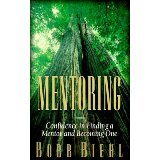
[Bobb Biehl is a personal and organizational leadership expert – below are some great questions to go over = personally; with your staff, team, mentoree, small group, disicple/s, etc.]

(Adapted from Bobb Biehl, Mentoring, pp. 201-202)

 DREAMING…about the Future in a Practical Way

  1. God: What three changes in me would most please our Eternal God in His Holy Heaven?
  1. Dream/Purpose: What can I do to make the most significant difference for God in my lifetime? Why am I on the earth? What is the very best organizational context for my dream?
  1. Primary Result: What is the single best measurable indicator that I am making progress with my dream?
  1. Life Priorities: If I could accomplish only three measurable priorities before I die, what would I accomplish?
  1. Ten-Year Focus: If I could accomplish only three measurable priorities in the next ten years what would make a 50% difference in my life-long contribution, what would I accomplish?
  1. Annual Focus:
    • Focus – What single word best captures the focus of my next year?
    • Opportunity – Where was my greatest unexpected success last year? Why? What three steps could I take now to take full advantage of this “Window of Opportunity” this coming year?
    • Land Mines – What three land mines or roadblocks need my immediate attention? What have I been praying most about in the past 30 days? What three changes could reduce my “risk” by 50%?
    • 30/10/50% – If I could only accomplish three measurable priorities in the next twelve months that would make a 50% difference in my contribution in the next ten years, which 3 things would I most want to accomplish?
  1. Quarterly Focus: What three measurable priorities could I accomplish in the next ninety days to make a 50% difference in the results I see by the end of the year?
  1. Organization: What three categories could I make to see a 50% difference in our morale as a family or team?
  1. Cash: If I had to cut my budget 21%, what would be the first three things to go? If I got a surprise gift of 21% of my budget, what three things would I do immediately?
  1. Quality: What three changes could improve the quality of my work by 50% in the next twelve months?

Bobb Biehl is an executive mentor. He graduated from Michigan State University (psychology major) in 1964 and received a Master’s degree (counseling) from Michigan State in 1966.

In 1976, Bobb founded Masterplanning Group International. As its president, he has consulted personally with over 400 clients. In that time, he has met one-on-one with over 3,500 executives (board members, senior executives, and staff members) and invested an estimated 40,000 hours in private sessions with some of the finest leaders of our generation. His clients are primarily large or fast-growing churches, nonprofit organizations, for profit corporations, and government agencies.

Based on these thousands of hours of practical “rubber-meets-the-runway” experience, Bobb has originated 35 resources (books, tapes, notebooks) in the area of personal and organizational development. These resources include published books entitled Boardroom Confidence, Dreaming, Leading with Confidence, Masterplanning, Mentoring, Stop Setting Goals, and Why You Do What You Do. His latest book, Dreaming Big, is co-authored with Dr. Paul Swets.

Bobb is a founding member of the board of directors of Focus on the Family. He is also a member of the board of directors of Liquid Metal (publicly traded). Prior to starting Masterplanning Group, Bobb was on the executive staff of World Vision International. While at World Vision he designed and developed the Love Loaf program, which has raised millions of dollars worldwide.

Bobb and his wife, Cheryl, have been married since 1964.

Is There Any Evidence for Life After Death? By Dr. R.C. Sproul

Objection #10 Answered: “When You’re Dead You’re Dead! There Is No More!”

 (This is #10 in a series of book excerpts from Objections to Christianity derived from Chapter 10 in *Dr. R.C. Sproul’s fantastic book Reason To Believe, [originally entitled Objections Answered] Grand Rapids: Zondervan, 1982)

Death is obscene. It runs counter to the vibrant flow of life. When we encounter it we shrink from it in horror. We use our finest cosmetics to disguise its impact. When death strikes it always leaves the question, “Is this the end?” Is there absolutely nothing more to hope for?

Perhaps the most ancient question of all is the question, “Is there life after death?” We think of Job in the throes of his misery crying out, “When a man dies, will he live again?” (See Job 14:14). We think of Hamlet musing over the question of suicide in his classic soliloquy, “To be, or not to be?” He contemplates the mystery of the grave and weighs the burdens of the alternatives of life and death. He retreats from suicide asking if man would “rather bear those ills we have than fly to others we know not of?” (Hamlet, act 3, sc.1). From Job to Hamlet to the present day the question persists, “Is there life after death?”

A negative spirit of skepticism has made itself felt in the cultural atmosphere of our age. A sense of despair and hopelessness characterizes much of our culture. We hear such statements as “When you’re dead, you’re dead”; “This is the Pepsi generation, the now generation.” The television commercial exhorts to live our lives with gusto because we only go around once. Those who persist in their hope of a future life are regarded as weaklings who are clinging to naïve superstitions that are outmoded. Christians have received their share of scorn and ridicule for hoping in fantasies of “pie in the sky.” But the issue is not simply a religious question. The issue is far more significant than that. It is the issue of the meaning of all of life. If death is ultimate then life becomes a cruel and mocking joke.

From ancient times the keenest minds of mankind have sought intellectual evidence for the survival of the soul or spirit beyond the grave. Charlatans and magicians have plied their arts couching their tricks in a garb of pseudo-intellectualism. Scholars have given the question serious attention because it is the most serious of all questions. But for the most careful and sober scholar the issue of death has strong emotional overtones. No one can face the question dispassionately for it touches each one of us in a final way.

 Does Nature Teach that There Is Life After Death?

Plato faced the question in a deeply personal way when he visited his beloved mentor, Socrates, in his prison cell. As Socrates prepared himself for execution by enforced drinking of hemlock he discussed the question of immorality with his students. The Socratic argument for life after death is recorded by Plato in his famous Phaedo Dialogue.

Plato explored the question primarily from the vantage point of analogies found in nature. He detected a kind of cycle that was common to nature. He noted that spring follows winter which in turn moves inexorably toward another winter. Winter does not terminate in itself but yields again to spring. The cycle goes on as day follows night and heat follows cold. The pattern continues. He examined the drama of the germination of the seed into flowering life. For the seed to bring forth its life it must first go through a process of rotting. The shell of the seed must decay and die before the life that is locked within it can emerge. He saw here an analogy to life and death. Just as a seed must die and disintegrate before the flower emerges, so the human body must die before the life of the soul can come forth.

Plato looked beyond the realm of flowers to the animal kingdom and was stimulated by the drama of metamorphosis. The beauty of the butterfly begins in the grotesque form of the caterpillar. The caterpillar appears as a worm, bound to the earth, virtually immobile and unattractive. The worm forms for itself an insulated cocoon, withdrawing from the outside world. The cocoon remains dormant and inert for a season. In time the drama mounts as a new creature begins to scratch and stretch its way out of the cocoon. Wings and a body begin to appear and suddenly the woven prison yields a magnificent soaring creature of multicolored beauty. From the “death” of the caterpillar comes the new life of the butterfly!

These analogies from Plato do not present compelling evidence for life beyond the grave. Plato understood that they were but analogies that provide hope in the face of mystery. He was aware that butterflies do not live forever, but he pointed to the complexities of the various forms of life that surround us to cause us to move with caution in the face of unbridled skepticism.

Must We Live as If There is a God?

In later times another philosopher approached the question form a different perspective. Immanuel Kant was perhaps the most weighty and significant philosopher of all time. Certainly his massive work has been a watershed for the development of modern thinking. Though skeptical about man’s ability to prove immortality by reason alone, he offered an ingenious argument for life after death. His argument offers practical “evidence” for the existence of God and for life after death.

Kant observed that all people seem to have some concern for ethics. Though morality differs from person to person and society to society, all people wrestle with questions of right and wrong. All human beings have some sense of moral duty. Kant asked, “What would be necessary for this human sense of duty to make sense?” Are our moral senses merely the by-product of parental discipline or the imposition of society’s standards? Kant thought it went deeper than that. Still the question of the origin of moral sense is different from its ultimate meaning. He noticed that we have a sense of duty and asked what would make it meaningful? Kant answered his own question by saying that ultimately for ethics to be meaningful there must be justice. From a coldly practical perspective he asked, “Why be ethical if justice does not prevail?”

Kant saw justice as an essential ingredient for a meaningful ethic. But he noticed at the same time that justice does not always prevail in this world. He observed what countless others have observed, that the righteous do suffer and the wicked do often prosper in this life. His practical reasoning continued by arguing that since justice does not prevail here in this world there must be a place where it does prevail. For justice to exist ultimately there must be several factors accounted for.

We must survive the grave. For there to be justice, there must be people o receive it. Since we do not receive it in this world, we must survive the grave. Justice demands life beyond death, if ethics are to be practical.

There must be a judge. Justice requires judgment and judgment requires a judge. But what must the judge be like to insure that his judgment is just? Kant answered that the judge himself must be just. If the judge is unjust then he would be prone to pervert justice rather than establish it. The judge must be utterly and completely just to insure ultimate justice. But even just judges are capable of perpetrating injustice if they make a mistake. Honest judges have convicted innocent people who were framed or surrounded by an overwhelming amount of circumstantial evidence. Our just judge must be incapable of such mistakes. To render perfect justice, he must have a perfect knowledge of all the facts and mitigating circumstances. A perfect judge must be nothing less than omniscient.

There must be a judgment. A perfectly just and omniscient judge is necessary for justice but it is not enough to insure it. Once the perfect judge offers his perfect verdict, the sentence must be carried out. If proper rewards and punishments are to be meted out, the judge must have authority and the power to carry them out. If our just and omniscient judge is impotent then we have no guarantee of justice. Perhaps an evil power would prevent the judge from carrying out justice. Thus the judge would have to have perfect power of omnipotence.

Thus, for Kant, practical ethics require life after death and a judge whose description sounds very much like that of the God of Christianity. Kant recognized that his arguments were of a practical nature. He did not think that he had provided an airtight case for the existence of God or for life after death. But he did reduce the practical options for man to two. He said we have either full-bodied theism with life after death or we have no meaningful basis ultimately for our ethical decisions and actions. Without ethics life is chaos and ultimately impossible. Without God ethics are meaningless. Thus Kant’s conclusion was: “We must live as though the were a God.” For Kant, life was intolerable without a solid basis for ethics. If death is ultimate then no ethical mandate is really significant.

What If Life is Meaningless?

Kant’s practical optimism was not universally welcomed. The existentialists of modern culture have taken the option Kant refused. They’ve dared to ask the unaskable question: “What if life is meaningless?” Shakespeare’s Macbeth says despairingly:

Life’s but a walking shadow, a poor player

That struts and frets his hour upon the stage

And then is heard no more. It is a tale

Told by an idiot, full of sound and fury,

Signifying nothing (Macbeth, act 5, sc. 5).

Maybe there is no justice. Maybe there is only the tale of the idiot. Perhaps ultimately so much sound and fury that is empty and void of significance. Why should we live as though there is a God if in fact there is no God? These are the penetrating questions of modern man. All attempts to maintain faith in God and faith in life after death may be only exercises of wish fulfillment for those not courageous enough to face the grim facts or our sound and fury.

Ingmar Bergman states the dilemma of modern man in a dialogue contained in his film The Seventh Seal. Here a conversation ensues between Knight and Death:

Knight: “Do you hear me?”

Death: “Yes, I hear you.”

Knight: “I want knowledge, not faith, not supposition, but knowledge. I want God to stretch out his hand towards me, to reveal himself and speak to me.”

Death: “But he remains silent.”

Knight: “I call out to him in the dark, but no one seems to be there.”

Death: “Perhaps no one is there.”

Knight: “Then life is an outrageous horror. No one can live it in the face of death knowing that all is nothing” (Taken from Donald J. Drew, Images of Man: A Critique of the Contemporary Cinema, Downers Grove, IL: Inter-Varsity Press, 1974, 74).

Long before existentialism was in vogue and playwrights and novelists began to flood our nation with cries of despair, America listened to the painful poetry of Edgar Allen Poe. Some say he was brilliant; others that he was demented. Still others maintain that he was a little of both. One thing is certain; he had a unique ability to express the anguish of the human soul who experiences the loss of a loved one. His poetry is filled with mournful groans of the bereaved. Consider his short poems such as “Annabel Lee” or “Ulalume.” But it is in “The Raven” that the urgency of the issue of life after death is most clearly expressed. The poem begins:

Once upon a midnight dreary, while I pondered, weak and weary,

Over many a quaint and curious volume of forgotten lore,

While I nodded, nearly napping suddenly there came a tapping,

As of some one gently rapping, rapping at my chamber door.

“ ‘Tis some visitor,” I muttered, “tapping at my chamber door;

Only this and nothing more.”

Ah, distinctly I remember, it was in the bleak December,

And each separate dying ember wrought its ghost upon the floor.

Eagerly I wished the morrow; vainly I had sought to borrow

From my books surcease of sorrow, sorrow for the lost Lenore,

Nameless here forevermore.

In the introduction Poe sets the scene of his midnight remorse crushed by his loneliness and the fear of the morrow. With the appearance of his nocturnal visitor who comes from the shores of hell, the poet asks the burning question, “Will I ever see Lenore again?” The reply of the fiendish bird is always the same, “Nevermore.” The poem moves along to the point where the tormented man screams in anger at the visitor:

“Prophet!” said I “think of evil!—prophet still, if bird or devil!

Whether tempter sent, or whether tempest tossed thee here ashore,

Desolate, yet all undaunted, on this desert land enchanted—

On this home by horror haunted—tell me truly, I implore:

Is there—is there balm in Gilead?—tell me—tell me I implore.”

Quoth the raven, “Nevermore!”

And the raven, never flitting, still is sitting, still is sitting

On the pallid bust of Pallas just above my chamber door;

And his eyes have all the seeming of a demon’s that is dreaming;

And the lamplight o’er him streaming throws his shadow on the floor;

And my soul from out that shadow that lies floating on the floor

Shall be lifted—nevermore!

The poem ends in despair. No hope is given for the future. Such an ending is intolerable for many. The current rage of occult films and deep fascination with parapsychology are evidence of the protest of modern man to the prophets of despair. New interest in the recollections of people resuscitated from clinical death have spawned hope that tangible evidence of survival may be available from science.

What is the Biblical Case for Life After Death?

The strongest and most cogent case for life after death comes to us from the New Testament. At the heart of the proclamation of the ancient Christian community is the staggering assertion that Jesus of Nazareth has survived the grave.

Christ was resurrected from the dead. In a classic treatment of the question of life after death, the apostle Paul summarizes the evidence for the resurrection of Christ in his first letter to the Corinthians. His Epistle comes partly in response to skepticism that arises in the Corinthian church. Note how he deals with the question:

Now if Christ is preached as raised from the dead, how can some of you say there is no resurrection of the dead? But if there is no resurrection of the dead, then Christ has not been raised (1 Corinthians 15:12,13).

The logic of this assertion is almost humorously simple. If Christ is raised, then obviously there is such a thing as resurrection from the dead.

On the other hand, if there is no resurrection from the dead, then Christ cannot be raised. The question of Christ’s resurrection is crucial to the entire issue of life after death. The apostle follows with an interesting line of reasoning. He considers the alternatives to the resurrection of Christ. He uses the “if-then” formula of logical progression.

If Christ has not been raised, then our preaching I in vain and your faith [also] is in vain (1 Corinthians 15:14).

Paul gets to the heart of the matter quickly. If Christ is not raised then it is clear that the preaching of the early church is an exercise in futility. The preaching becomes empty words and the faith that follows is worthless.

Moreover we are even found to be false witnesses of God, because we witnessed against God that He raised Christ, whom He did not raise, if in fact the dead are not raised. For if the dead are not raised, not even Christ has been raised; and if Christ has not been raised, your faith is worthless; you are still in your sins. Then those who also have fallen asleep in Christ have perished (1 Corinthians 15:15-18).

The implications of the Corinthians’ skepticism continue. If Christ is not raised then the apostolic witness is a false one. God has been implicated in a spurious historical claim. Again Paul mentions the futility of faith and adds to it the serious result that man is still without a redeemer. Then, almost as an afterthought, Paul touches the emotional nerve of his readers by reminding them of the fate of their departed loved ones. They have perished. At this point the apostle sounds a bit like the “Raven.” He is saying that, without resurrection, death is final.

The madness of the concept of the finality of death came home to me in somewhat unusual fashion. On July 1, 1965, my wife gave birth to our son. I remember the exhilarating experience of observing him through the nursery window at the hospital. All of the dynamism of life seemed to be captured in the animated action of this newborn child. I was thrilled to behold one who was “flesh of my flesh and bone of my bone.” I experienced the inordinate pride that so often attends fatherhood.

The experience of birth was by no means unique or even unusual. What followed, however, was not commonplace. The first visitor to the hospital was my mother. Her delight witnessing her grandson was unbounded. I took her home from the hospital and spent the night in her house. The following morning I went into her bedroom to awaken for breakfast. There was no response, no movement. As I touched her hand to rouse her, I felt the chill of death. Her body was hard and cold. She had died during the night. Within the space of a few hours I witnessed the birth of my son and the corpse of my mother. As I stood stunned by her bedside, a sense of surreal came over me. I thought, “This is absurd. A short time ago she was a living, breathing, dynamic human being, filled with warmth and vitality. Now there is only coldness and silence.”

But as Paul points out, if Christ is not raised then our loved ones have perished. The Raven has the last word.

Paul continues his discourse by saying, “If we have only hope in Christ in this life, we are of all men most to be pitied” (1 Corinthians 15:19).

Perhaps you are not a Christian. Maybe Christians tend to annoy you. Perhaps you become angry when Christians try to force their religion upon you. But if you do not believe that Christ has been raised, don’t be angry with poor deluded Christians. Pity them. They have put all their eggs in a basket that cannot hold any eggs. If all the Christian has is hope with no historical reality to undergird that hope, he is committed to a life of futility. Christians need your sympathy, not your hostility.

Paul concludes his exercise in “what if” thinking by saying, “If the dead are not raised, ‘Let us eat and drink, for tomorrow we die’” (1 Cor. 15:32). No resurrection? Then we may as well sleep in tomorrow. Eat, drink, and be merry while you can. Get your gusto now before it’s too late.

There is a striking similarity between the way apostle Paul approaches life after death and the approach of Kant. Both are keenly aware of the grim alternatives to life after death. However, Paul does not leave us where Kant does. Kant reduces the options to two and then encourages us to choose the more optimistic one. Paul examines the grim alternatives to resurrection but does not build his case on those frightening options.

Rather he says:

For I delivered to you as of first importance what I also received, that Christ died for our sins according to the Scriptures, that he was buried, that he was raised on the third day in accordance with the Scriptures, and that he appeared to Cephas, then to the twelve. Then he appeared to more than five hundred brethren at one time, most of whom are still alive, though some have fallen asleep. Then he appeared to James, then to all the apostles. Last of all, as to one untimely born, he appeared also to me (1 Cor. 15:3-8).

Now Paul speaks in a fashion that moves beyond speculation. He doesn’t play with the occult or rest his case on analogies drawn from nature. He offers two kinds of evidence: First, he appeals to the prophetic predictions of the Old Testament Scripture that are fulfilled with uncanny accuracy in the person of Christ. Secondly, he offers the testimony of numerous eyewitnesses to the event. Christ does not appear on one occasion to a secret audience, but manifests Himself on several different occasions. One occasion involves an audience of over 500 persons. Paul’s final appeal is that he beheld the risen Christ with his own eyes. As John remarks everywhere, “We declare to you what we see with our eyes and hear with our ears” (see John 1:1-3). Paul then rehearses the history of his personal life following his sight of the risen Christ. He speaks of his trials, his imprisonments, his labors, all of which give credence to the impact his visual experience of the resurrected Jesus had on him.

The best argument for life after death is the record of history. The act of resurrection is as well attested to as any event from antiquity. Those who deny it do so invariably from the perspective of a philosophy that would rule the evidence out arbitrarily. Jesus Himself predicted it and spoke in an authoritative way concerning our own future life. He said, “In my father’s house are many mansions, I go to prepare a place for you. If it were not so I would have told you” (see John 14:2). For those who think Christ credible, His words are overpowering. “If it were not so—“ Jesus is saying in this discourse had his disciples believed in an empty hope for the future, Jesus would not hesitate to correct it. The victorious implications of Christ’s resurrection are summarized by Paul:

Lo! I tell you a mystery. We shall not all sleep, but we shall be changed, in a moment, in the twinkling of an eye, at the last trumpet. For the trumpet will sound, and the dead will be raised imperishable, and we shall be changed. For this perishable nature must put on the imperishable, and this mortal nature must put on the imperishable, and the mortal puts on immortality, then shall come to pass the saying that is written: “Death is swallowed up in victory. O death, where is thy sting?” The sting of death is sin, and power of sin is the law (1 Cor. 15:51-56).

Your labor is not in vain. That is the essence of the New Testament message. Death is not ultimate. The answer of the Raven is “Nevermore.” The answer of Christ is “Forevermore.”

Key Points To Remember:

(1) Nature, as Plato suggests, offers analogies that give evidence and hope for future life.

(2) Kant argued for life after death out of a practical concern for ethics. His argument says that universal moral sense would be meaningless apart from ultimate justice: we must survive the grave; there must be a judge; there must be a judgment.

(3) If death is final then life has no ultimate meaning. How we deal with the question of death will reveal how seriously we regard life. Existentialism and the poetry of Poe illustrate man’s sense of hopelessness and futility.

(4) The Bible definitely says, “Yes, there is life after death.” Without Christ, men are without hope. Jesus said, “I am the resurrection and the life; he who believes in me, though he die, yet shall he live” (John 11:25).

(5) The biblical claim for life after death rests on credible eyewitness testimony of historical event. The eyewitnesses were men whose work reflects sober judgment, judgment, whose contemporaries offered to refutation and whose conviction of the truth of their testimony made them willing to die for it.

(6) The ongoing power of Christ to transform human lives gives corroborative evidence to the assertion that He lives in a more real and powerful way than as an inspiring memory.

Dr. R.C. Sproul is the founder and chairman of Ligonier Ministries, an international Christian education ministry located near Orlando, Florida. His teaching can be heard on the program Renewing Your Mind, which is broadcast on hundreds of radio outlets in the United States and in 40 countries worldwide. He is the executive editor of Tabletalk Magazine and general editor of The Reformation Study Bible, and the author of more than seventy books (including some of my all time favorites: THE HOLINESS OF GOD; CHOSEN BY GOD; KNOWING SCRIPTURE; WILLING TO BELIEVE; REASON TO BELIEVE; and PLEASING GOD) and scores of articles for national evangelical publications. Dr. Sproul also serves as president of Ligonier Academy of Biblical and Theological Studies and Reformation Bible College. He currently serves as senior minister of preaching and teaching at Saint Andrew’s in Sanford, FL.

15 Great Questions for Personal Evaluation by Carson Pue

(Adapted from *Carson Pue, Mentoring Leaders, Grand Rapids, MI: Baker, 2005, p. 243)

 Spiritual Questions

Distractions: Have you used anything other than God in an attempt to meet your emotional or spiritual needs this week?

God’s Word: Have you been purposefully filling your mind with the knowledge of God’s Word daily? If not, how often? How do you plan to change?

Fasting: Have you fasted and prayed in the last month? If not, when was the last time? When have you next scheduled these disciplines?

Obedience: Is your conscience clear? If not, why? How do you plan to attain a clear conscience?

 Physical Health Questions

Sleep: Are you getting enough sleep each night? If not, how much are you getting? How do you plan to change?

Exercise: Are you exercising daily? If not, how often are you exercising? How do you plan to change?

Eating: Are you eating properly? If not, what are you eating/not eating? How do you plan to change?

Substances: Are you abusing harmful substances? If not, when and how often have you taken them? How do you plan to change?

 Action Oriented Questions

Finances: Where are you financially right now? Are things under control? Are you feeling anxious? Is there any great debt? How are you planning to proceed in this area of your life?

Purity: Have you kept your mind pure (thoughts of anger, bitterness, movies, magazines, Internet pornography, other)? If not, when did you fall?

What temptations need to be removed or precautions taken to prevent it?

Material Goods: Do you have anything that is used for evil needing to be destroyed or removed? If so, what? When and how will you (we) destroy or remove them?

Control: Have you lost control either verbally or otherwise since we last met? If so, when? When and how will you do something to restore and correct your actions?

Relational Questions

Deposits: Have you made positive emotional and spiritual deposits with your kids and your spouse? If not, why? What might you be able to do to make this a natural response?

Family: Have you offended any family member since we last met? If so, when? When and how will you restore and correct those actions?

Truthfulness: Have you told the whole truth in your answers to the questions I have asked you? If not, what do you need to correct? What actions do we need to take to stay and remain accountable?

Process: Is the asking of any of these questions adequate for you? If not, what changes are needed? Who else needs to be a part of this process?

*Carson Pue is the Executive Director at First Baptist Church right smack in the heart of downtown Vancouver, Canada. He describes the church this way, “Congregating in this historic stone building in the very heart of the downtown is a community. We are young, old and in-between, rich, poor, employed and re-training, multicultural, families and singles, Bible scholars, seekers. All share a heart for the city.”

For fourteen years Carson served as CEO of Arrow Leadership a ministry recognized as a global leader in Christian leadership development. Arrow develops leaders worldwide “to be led more by Jesus, lead more like Jesus, and to lead more to Jesus.” They have been highly successful in transforming and enriching the lives and  leadership of men and women who are now deployed around the world.

Recognized as a leader of leaders Carson has an ability to identify leaders and invest wisdom into their development through mentoring, teaching and spiritual guidance.He is also best-selling author: “Mentoring Leaders: Wisdom for Developing Character, Calling and Competency” by Baker Books and his new  Mentoring Wisdom: Living and leading well. Carson is known through his speaking at conferences, published articles, national radio programs and commentaries. Through referrals over 50,000 leaders benefit from his monthly leadership emails “To the Point” “Mentoring Questions” and magazine columns.

With his encouraging style, creative ideas, engaging humor and ministry experience, people find Carson well fitted for his role. In a straightforward manner Carson shares both from success and failure in ministry, believing that leaders learn from both. He is a popular keynote speaker on themes around leadership, spiritual development and the realities of being a pastor today.Carson extends his leadership by serving on the board of directors for World Vision,  Crossroad Communications and CTS Television Network. In addition he is an advisor for the boards of The Billy Graham CenterTruefaced, and the Entrepreneurial Leaders Organization.  He is a trusted advisor to Christian leaders across Canada and the USA and connects globally with The Lausanne Movement and World Evangelical Alliance.

When not traveling the world encouraging leaders, he loves sailing with his BFF and first mateBrenda whom he has been married to since 1976. He loves time with his three sons, two daughters by marriage and three grandsons. He is also restored by laughter, sailing, Ireland, writing and spiritual retreats.

Preachers: 10 Questions To Ask in Taking Inventory of Your Sermon by David and Warren Wiersbe

(Adapted form Elements of Biblical Preaching by David and Warren Wiersbe, Wheaton: Tyndale House, 1986)

(1) Is the message solidly based on Scripture?

(2) Does it exalt the Person and work of Jesus Christ?

(3) Will it meet the needs of the people?

(4) Is the theme a timeless truth worth talking about?

(5) Is the message organized so that I can preach it clearly and the people understand it easily? Is there a concise and clear statement of purpose? Is there a clear plan of development? Is there practical application that makes the message personal?

(6) Are all Scripture references and historical facts accurate?

(7) Is the message real to me personally so that I may make it real to others?

(8) Does the message fit into the total “preaching plan” for this church and into the context of the church’s ministry at this time?

(9) Does the message fit into the ministry of the Church at large and Christ’s concern to save a lost world?

(10) Is the message worth preaching again?

*Warren W. Wiersbe is the Distinguished Professor of Preaching at Grand Rapids Baptist Seminary, Warren Wiersbe is the author of more than 100 books. Billy Graham calls him “one of the greatest Bible expositors of our generation.” Interestingly, Warren’s earliest works had nothing to do with scriptural interpretation. His interest was in magic, and his first published title was Action with Cards (1944).

“It was sort of imbecilic for a fifteen-year-old amateur magician to have the audacity to write a book and send it to one of the nation’s leading magic houses,” Warren says. But having a total of three books published by the L.L. Ireland Magic Company—before the age of 20—gave him a surge of confidence. In later years, he applied his confidence and writing talent to the Youth for Christ (YFC) ministry.

Warren wrote many articles and guidebooks for YFC over a three-year period, but not all his manuscripts were seen by the public eye. One effort in particular, The Life I Now Live, based on Galations 2:20, was never published. The reason, Warren explains with his characteristic humor, is simple: it was “a terrible book…Whenever I want to aggravate my wife, all I have to say is, ‘I think I’ll get out that Galations 2:20 manuscript and work on it.’” Fortunately, Warren’s good manuscripts far outnumbered the “terrible” ones, and he was eventually hired by Moody Press to write three books.

The much-sought-after author then moved on to writing books for Calvary Baptist Church. It was during his ten years at Calvary that Expository Outlines on the New Testament and Expository Outlines on the Old Testament took shape. These two works later became the foundation of Warren’s widely popular Bible studies known as the Be series, featuring such titles as Be Loyal (a study on Matthew) and Be Delivered (a study on Exodus). Several of these books have been translated into Spanish.

His next avenue of ministry was Chicago’s Moody Memorial Church, where he served for seven years. He wrote nearly 20 books at Moody before moving to Lincoln, Nebraska, where he and his wife, Betty, now live. Prior to relocating, he had been the senior pastor of Moody Church, a teacher at Trinity Evangelical Divinity School, and a producer of the Back to the Bible radio program.

During all these years of ministry, Warren held many more posts and took part in other projects too numerous to mention. His accomplishments are extensive, and his catalog of biblical works is indeed impressive and far-reaching (many of his books have been translated into other languages). But Warren has no intention of slowing down any time soon, as he readily explains: “I don’t like it when people ask me how I’m enjoying my ‘retirement,’ because I’m still a very busy person who is not yet living on Social Security or a pension. Since my leaving Back to the Bible, at least a dozen books have been published, and the Lord willing, more are on the way.”

Wiersbe’s recent books include Your Next MiracleThe 20 Essential Qualities of a Child of GodThe Bumps are What You Climb OnClassic Sermons on the Fruit of the SpiritClassic Sermons on Jesus the ShepherdKey Words of the Christian LifeLonely PeopleA Gallery of GraceReal Peace: Freedom and Conscience in the Christian Life, and On Being a Leader for God.