SCHOLARSHIP AND WARMTH: AN INTERVIEW WITH BRUCE WALTKE

Interview Originally Conducted on May 8, 2013 with Darryl Dash

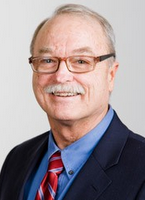
Dr, Bruce Waltke is a preeminent Old Testament scholar. His teaching career has earned him a reputation of being a master teacher with a pastoral heart. Dr. Waltke has also pastored several churches, lectured at many evangelical seminaries in North America and has spoken at numerous Bible conferences.

130508a.jpg

I’ve been impressed by Dr. Waltke’s scholarship, as well as his pastoral warmth. I’m grateful to Dr. Waltke for agreeing to answer some of my questions.

As Professor of Old Testament, what brings you the greatest joy? Is it studying, writing, teaching, or something else?

I wish I could say that I find my greatest joy in my students.  Though I do delight in them and in their ministries, I find my greatest joys in writing and publishing and in teaching. I used to get the most joy out of teaching and preaching, but as I got older I realized more and more how transitory verbal ministries are. As I got older I came to value teaching more and more for  what it built into the lives of my students and its multiplication and its continuation in their ministries. That reward, however, is less direct and seemingly more restricted  than that of writing, for writings touch more lives for more time than students in a classroom. But writings, like all things, will pass away, as publishers undoubtedly will cease to publish my dated works. But unlike Qoheleth I know there will always be a residue of eternal profit, for all ministry participates in the eternal kingdom of God.

Your exegetical work seems to me to combine scholarship and worship, which aren’t found together as often as one might wish. How have you been able to maintain both together?

Others note an alleged combination of scholarship and worship. It must be relative, for I am unconscious of it.  My scholarship always seems to be inadequate because knowledge is always imperfect–there is always another book to read on a subject or is being written on it.  As for worship,  though I do not know the full depths of my depravity, I know it well enough to know that my motives are always tarnished by self-interest, not by worship. My spiritual flaw is a carnal perfectionism. I believe God is taking that flaw and sanctifying it by his Spirit in me.  Quintillius said:  “Ambition is a vice but it can be the mother of virtue.”  To become a vrtue must be the work of God’s grace.  I have nothing of which to boast. This process of holiness is true of all healthy Christians, isn’t it?

Pastors often feel pushed away from theology to be more “practical.” What advice would you give to a pastor who aspires to be a pastor and scholar?

I cannot distinguish between theology and practical theology.  If my theology does not change my life, it is not good theology, but an idol. I hope every pastor who stands behind the sacred lectern is a scholar.  By that I mean, I hope the teacher of God’s Word will teach it as responsibly as possible within the time available.  Very few are so gifted they can be both an academic in a university or seminary and a pastor. There is by the restraint of time and being human a less than perfect scholarship and of pastoring. What is needed is both humility, a recognition of our limitations, and a commitment to give God the best of what he has given to us. We need to keep our priorities straight, lest we make Success our god. It’s hard not to envy those who worship Success and receive worldly rewards.

Knowledge is both a virtue and a vice.  It is necessary and certainly better than ignorance.  Paul frequently says he doesn’t want us to be ignorant.  On the other hand, it is a vice: it always puffs up and is imperfect.  By God’s grace I overcome its endemic tendency to pride the pure virtue of love and its imperfection by the pure virtues of faith and hope.

It’s a joy to see the warmth between you and your friend Haddon Robinson. It’s a good example of friendship maintained through years of life and ministry. How have friendships like this sustained you?

130508b.jpg

Photo courtesy of Chris Brauns

Haddon is so uniquely gifted that I feel unworthy of his friendship.  His warm friendship toward our family  is a mark of his truly godly character. His brilliant conversation always refreshes me.  Bonnie’s love is peerless. Elaine and I treasure their friendship.  The sustenance of their friendship brings delight, psychic joy that cannot be fully verbalized. When the four of us are together we  seem to feed on each others thoughts, commitments and basic disposition toward God and others, though Elaine is now suffering dementia. Haddon or Bonnie never interpret us negatively; they truly believe and hope all things;  I do not think they ever think of enduring us.

How can we pray for you?

I have taken a leave of absence from teaching at Knox, to test how I can best serve God without a contract to teach. Pray that I will finish well and have the wisdom to prioritize my time well in this new context.

Source: http://dashhouse.com/dashhouse/2013/5/8/scholarship-and-warmth-an-interview-with-bruce-waltke

ABOUT BRUCE WALTKE

Bruce K. Waltke is an Old Testament scholar and Professor Emeritus of Old Testament Studies at Regent College. He has doctorates from Dallas Theological Seminary (ThD) and Harvard University (PhD). He has had a distinguished career as Professor of Old Testament at Dallas Theological Seminary, Westminster Theological Seminary, Reformed Theological Seminary (Orlando), and Regent College (Vancouver).

Waltke’s writings and publications include, Introduction to Biblical Hebrew SyntaxFinding the Will of God: A Pagan Notion? and commentaries on the books of Micah, Genesis, and Proverbs. He served as Old Testament editor for the “Expositor’s Bible Commentary”, the “New Geneva Study Bible”, the “Spirit of the Reformation Study Bible”, and co-edited the Theological Wordbook of the Old Testament. Waltke is also a member of the translation committee for TNIV and served a term as president of the Evangelical Theological Society.

Selected publications

  • A Commentary on Micah. Eerdmans, 2007. ISBN 0802849334
  • An Old Testament Theology: A Canonical and Thematic Approach, Zondervan, 2006. ISBN 0310218977
  • The Book of Proverbs: 15-31, NICOT. Eerdmans, 2005.
  • The Book of Proverbs: 1-15, NICOT. Eerdmans, 2004.
  • Theological Wordbook of the Old Testament (co-author) Moody, 2003. ISBN 0802486495
  • Finding the Will of God: A Pagan Notion?. Eerdmans, 2002. ISBN 0802839746
  • Genesis: A Commentary, with Cathi J. Fredricks. Zondervan, 2001. ISBN 0310224586
  • Knowing the Will of God, with Jerry MacGregor. Harvest House, 1998.
  • An Introduction to Biblical Hebrew Syntax. Eisenbrauns, 1990. ISBN 0931464315
  • Creation and chaos: An exegetical and theological study of biblical cosmogony. Western Conservative Baptist Seminary, 1981.

Jonathan Merritt Interview with Jefferson Bethke on Faith and Culture

On Faith & Culture

‘Jesus (still) hates religion’: An interview with YouTube sensation Jefferson Bethke with Jonathan Merritt on October 8, 2013

YouTube sensation Jefferson Bethke answers his critics and explains why he still hates religion.

Yes, he’s from Tacoma, Washington. Yes, he played baseball in college. Yes, he loves Frosted Flakes. But, if you’re like over 25 million other YouTube viewers, you probably know Jefferson Bethke from his viral video, “Why I Hate Religion, But Love Jesus.” Bethke’s new book, Jesus > Religion: Why He is So Much Better Than Trying Harder, Doing More and Being Good Enough explores some of the themes from the 2012 sensation. Here, we talk about religion, his critics, and why he still thinks Jesus hates religion.

JM: Jeff, your spoken word YouTube video has had over 25 million views.  Why do you think it resonated with so many?

JB: That’s a great question. I still am not entirely sure. But if I had to speculate I think it resonated because I think there’s this constantly growing chasm in the 21st century western evangelicalism and this vibrant, beautiful, revolutionary, new creation oriented world Jesus launched at the resurrection you see more predominantly in the scriptures. Even though it seems like a caricature, reading YouTube comments on many religious oriented videos, would show that many people’s Christianity doesn’t go much farther than “don’t get tattoos, don’t drink beer, and never swear or curse.” I think my generation has constantly felt this almost awkward vibe when reading the New Testament and then looking up into the landscape of modern evangelicalism and saying, “really? This is the same thing?”

JM: Not every Youtube sensation can or should write a book like you have. Can you say something about the thinkers who have influenced you and why people should listen to what you have to say?

JB: Amen to that first sentence! And to be honest I thought that same thing about myself at first. But when I dug around in my own heart, passions, and desires, I realized the reason I did poetry in the first place was because I love to teach. In school, I studied politics and government and my plan was to be a lawyer, and then that evolved into becoming a high school social studies teacher. So I love to teach and think analytically (I’m left handed, which makes me a little corky as well). I think poetry is an outflow of that, rather than my main passion. In fact, I don’t know how much longer I’ll do spoken word, as I don’t think it’s necessarily my gift or passion. Writing seems more up my alley.

Some of the thinkers who’ve shaped my faith pretty significantly have been Tim Keller, Dietrich Bonhoeffer, NT Wright, A.W. Tozer, Charles Spurgeon, C.S. Lewis, Ann Voskamp, Francine Rivers, Watchman Nee, Francis Schaeffer, Beth Moore, and Andrew Murray. I really owe each of them for particular seasons of life, struggles, joys and events. Their writings have all given me a unique perspective about Jesus and His message that I hadn’t seen before and that had a profound impact on this book.

JM: How do you see today’s 20-somethings taking a new approach to faith? Has there been a cultural shift among this demographic in your opinion?

Book cover courtesy of Thomas Nelson

Book cover courtesy of Thomas Nelson

JB: Well, I think if you study church history you definitely see each generation having to figure it out on their own. It seems to be the way God has weaved mystery into depths of Christian faith. It’s every generation’s job to figure out what it means to follow Jesus in that particular context and culture. If you simply adopt your parent’s methodology and don’t wrestle it out yourself, it almost self destructs. So yes, I’d definitely say there is a shift.

There’s issues our parents raved about that we might not seem to be making much of a big deal of, and then there are some things that might have not been championed by our parents that we are taking a keen interest in. When I look out at the landscape of my peers, I see a lot of desire for authenticity. I think because of systemic injustices like fatherlessness being more prevalent in our generation than ever before, we’re keenly aware of fakery and deceit. We can tell if someone is authentic or the real deal pretty quickly.

Also, with the wide spread nature of technology, news, and the internet, it’s impossible for my generation to turn a blind eye to the suffering of the world (both in our back yards and abroad). It’s too much in our face to not care, which is why you see the idea of justice and setting the world to right, and joining God in his redemptive mission, as another key component of the 20-somethings faith.

The one thing that does scare me though is our complacency about community. I see a lot of 20-somethings, myself included, who are okay with living in isolation. We substitute Facebook, Twitter, and email for real face-to-face interaction. We forget the importance of sharing meals together, which has been a deep sacred rhythm in the Christian faith since the beginning, and serving one another. So I pray that we’d come to grips with the depth and need for community. For life on life existences. For reflecting the image of God when we gather as the people of God—loving, serving, giving to one another. That’s a thing our parents did well. We need to realize that our faith is built on their shoulders, and we need to learn from them.

JM: Can you say something about how faith-messages are communicated today?  How has rise of social media impacted conversations about faith?

JB: Technology is a double-edged sword. I think social media, and YouTube specifically, has really forced the Church to cultivate and reclaim it’s creativity. We have the Creator as our Dad, so we should have the uttermost creativity. Social media has a very harsh “weeding out” aspect. If it’s dry and unengaging, then no one will listen or engage with it. But the other side is that we continually are reducing the size of our messages to fit shrinking attention spans. I know for me, social media is great but I also have to just completely shut down sometimes because it prevents me from doing simple things like quieting down, reading, studying the scriptures and journaling for more than 30 seconds. Social media has transformed the Bible from a beautiful narrative, written over thousands of years, by different authors, ranging from poetry to historical narrative, to 140 characters or less.

JM: You contrast “moralistic man-made religion” and a “divinely-designed relationship of grace.” What are the signs of a moralistic man-made religion?

JB: One thing I’d say first is what they are not. Moralistic man-made religion is not the same as discipline, church attendence, rhythms, and routine. There’s this weird sphere, especially among my age group, where if something requires grace-driven discipline then someone cries “legalism.” That’s simply not true. I mean Hebrews goes as far to say that Jesus learned obedience through suffering. But, signs of true man-made religion would be pride, power grabbing (usually through violence—physically or of the heart), and making yourself the center of the story rather than Jesus. Jesus didn’t seem to get so upset with the Pharisees over their basic theology or Torah interpretation. But he got pretty upset over them for how they applied it or added to it–the reflection they were giving of who God is and what God is like.

JM: Some criticized your video saying it was theologically inaccurate and filled with false dichotomies. How do you respond?

JB: The initial craze and critique of the video taught me so many things. I’m so thankful for it and how much it taught me, shaped me, and made me think about things I wouldn’t otherwise consider. And if I can be honest, when I read most of the critiques, I couldn’t help but say, “Amen!” I think technology has completely flattened any sense of geographical or regional contextualization. The word “religion” might mean something different to someone in Seattle than it does someone in Nashville. Or Bangkok for that matter. So for me, when someone comes up to me and says they hate religion, I want to first know what they mean by “religion.” That pretty much gives away their trajectory.

In my context, there is a good group of people that use the word to describe moral behaviors that place you in right standing with God. And if that’s the case, well that seems pretty upside-down of what Jesus came to preach. His gospel is about Him doing something we couldn’t. But, all-in-all my critics taught me that language is multi-faceted, it can mean different things to different people, and before I critique someone I first like to ask, “What do you mean by that?” before I start pushing further.

– See more at: http://jonathanmerritt.religionnews.com/2013/10/08/jesus-still-hates-religion-interview-youtube-sensation-jefferson-bethke/#sthash.COjOmr3M.dpuf

John Stott Interview with Al Mohler on Preaching Between Two Worlds

Between Two Worlds: An Interview with John R. W. Stott

[The funeral for John R. W. Stott, one of the most famous evangelical preachers of the last century, will be held today in London at All Souls Church [August 8, 2011], Langham Place, where he served with distinction for so many decades of ministry. In honor of John Stott, I here republish an interview I conducted with the great preacher in 1987. The interview was first published in Preaching magazine, for which I was then Associate Editor.]

John R. W. Stott has emerged in the last half of the twentieth century as one of the leading evangelical preachers in the world. His ministry has spanned decades and continents, combining his missionary zeal with the timeless message of the Gospel.

For many years the Rector of All Souls Church, Langham Place, in London, Stott is also the founder and director of the London Institute for Contemporary Christianity. His preaching ministry stands as a model of the effective communication of biblical truth to secular men and women.

The author of several worthy books, Stott is perhaps best known in the United States through his involvement with the URBANA conferences. His voice and pen have been among the most determinative forces in the development of the contemporary evangelical movement in the Church of England and throughout the world.

Preaching Associate Editor R. Albert Mohler interviewed Stott during one of the British preacher’s frequent visits to the United States.

Mohler: You have staked your ministry on biblical preaching and have established a world-wide reputation for the effective communication of the gospel. How do you define ‘biblical preaching’?

Stott: I believe that to preach or to expound the Scripture is to open up the inspired text with such faithfulness and sensitivity that God’s voice is heard and His people obey Him. I gave that definition at the Congress on Biblical Exposition and I stand by it, but let me expand a moment.

My definition deliberately includes several implications concerning the scripture. First, it is a uniquely inspired text. Second, the Scripture must be opened up. It comes to us partially closed, with problems which must be opened up.

Beyond this, we must expound it with faithfulness and sensitivity. Faithfulness relates to the Scripture itself. Sensitivity relates to the modern world. The preacher must give careful attention to both.

We must always be faithful to the text, and yet ever sensitive to the modern world and its concerns and needs. When this happens the preacher can come with two expectations. First, that God’s voice is heard because He speaks through what He has spoken. Second, that His people will obey Him — that they will respond to His Word as it is preached.

Mohler: You obviously have a very high regard for preaching. In Between Two Worlds you wrote extensively of the glory of preaching, even going so far as to suggest that “preaching is indispensable to Christianity.”

We are now coming out of an era in which preaching was thought less and less relevant to the church and its world. Even in those days you were outspoken in your affirmation of the preaching event and its centrality. Has your mind changed?

Stott: To the contrary! I still believe that preaching is the key to the renewal of the church. I am an impenitent believer in the power of preaching.

I know all the arguments against it: that the television age has rendered it useless; that we are a spectator generation; that people are bored with the spoken word, disenchanted with any communication by spoken words alone. All these things are said these days.

Nevertheless, when a man of God stands before the people of God with the Word of God in his hand and the Spirit of God in his heart, you have a unique opportunity for communication.

I fully agree with Martyn Lloyd-Jones that the decadent periods in the history of the church have always been those periods marked by preaching in decline. That is a negative statement. The positive counterpart is that churches grow to maturity when the Word of God is faithfully and sensitively expounded to them.

If it is true that a human being cannot live by bread only, but by every word which proceeds out of the mouth of God, then it also is true of churches. Churches live, grow, and thrive in response to the Word of God. I have seen congregations come alive by the faithful and systematic unfolding of the Word of God.

The Text Means What the Author Meant

Mohler: You have pictured the great challenge of preaching as creating a bridge between two worlds — the world of the biblical text and the world of the contemporary hearer. That chasm seems ever more imposing in the modern world. How can the preacher really bridge that chasm?

Stott: Any bridge, if it is to be effective, must be firmly grounded on both sides of the canyon. To build a bridge between the modern world and the biblical world we must first be careful students of both. We must be ever engaged in careful biblical exegesis, conscientiously and continually, and yet also involved in careful study of the contemporary context. Only this will allow us to relate one to the other.

I find it helpful in my own study to ask two questions of the text — and in the right order. First, “What does it mean?” and second, “What does it say?”

The answer to the first is determined by the original author. I am fond of citing E. D. Hirsch in his book Validity in Interpretation, when he wrote: “The text means what its author meant.”

That is my major quarrel with the existentialists, who say that the text means what it means to me — the reader — independent of what the author meant. We must say “no” to that. A text means primarily what its author meant. It is the author who establishes the meaning of the text.

Beyond that, we must accept the discipline of grammatical and historical exegesis, of thinking ourselves back into the historical, geographical, cultural, and social situation in which the author was writing. We must do this to understand what the text means. It cannot be neglected.

The second question moves us from the original meaning of the text to its contemporary message — “What does it say?” If we ask the first question without asking the second, we lapse into antiquarianism, unrelated to modern reality.

On the other hand, if we leap to the second question, “What does it say today?,” we lapse into existentialism, unrelated to the reality of biblical revelation. We have to relate the past revelation of God to the present reality of the modern world.

Mohler: That requires a double exegesis — an exegesis of the text and also an exegesis of life. Is it your opinion that most evangelicals are better exegetes of the text than they are of life?

Stott: Oh, I am sure of it. I am myself and always have been a better student of Scripture than of the present reality. We love the Bible, read it and study it, and all of our preaching comes out of the Bible. Very often it does not land on the other side of that chasm, it is never earthed in reality.

The attractiveness of liberal or radical preaching, whatever it is called these days, is that it tends to be done by genuinely modern people who live in the modern world, understand it, and relate to it. But their message often does not come from the Bible. Their message is never rooted in the textual side of the chasm. We must combine the two relevant questions.

Mohler: Most of us think of ourselves as modern persons, and yet we may lack a suitable hermeneutic of the contemporary. What have you found to be helpful as you seek to be a better student of the contemporary world?

Stott: I mentioned in Between Two Worlds how very helpful I found involvement in a reading group I founded about fifteen years ago. They are graduates and professional people — doctors, an architect, an attorney, teachers and so on. All are committed to Christ and the Scripture and yet anxious to be modern and contemporary people. We meet every month or so when I am in London.

We decide to read a particular book, or see a particular play or exhibition, and spend the evening discussing it. We give most attention to books. We go around the circle and give our immediate impression before eventually turning and asking “Now, what has the Gospel to say to this?” I have found it enormously helpful to be forced to think biblically about modern issues.

Mohler: So you would point biblical preachers not only to the biblical text, but to a very wide reading?

Stott: Absolutely. I think wide reading is essential. We need to listen to modern men and women and read what they are writing. We need to go to the movies, to watch television, to go to the theater. The modern screen and stage are mirrors of the modern world. I seldom go on my own. I go with friends committed to the same kind of careful understanding.

Mohler: You have made it clear that you see preaching as a glorious calling and vocation. What do you see as the greatest contemporary need in preaching? Where is biblical preaching falling tragically short?

Stott: Well, in the more liberal churches, it falls woefully short of being fully biblical. Amongst the evangelical churches it falls short by being less than fully contemporary. I can only repeat the great need of struggling to understand the issues of the modern world. Nevertheless, there is a tremendous correlation between the issues of the biblical world and the modern world.

People are actively seeking the very answers Jesus provides. People are asking the very questions Jesus can answer, if only we understand the questions the world is asking.

I Began with a Very Strong Commitment to Scripture

Mohler: Your service over many years at All Souls Church in London had a tremendous impact throughout much of the world. There, in the midst of London’s busiest retail area, you presented the gospel with great effectiveness and power. Did your preaching change at all during your ministry at All Souls?

Stott: I began with a very strong commitment to Scripture, a very high view of its authority and inspiration. I have always loved the Word of God — ever since I was converted. Therefore, I have always sought to exercise an expository or exegetical ministry.

In my early days I used to think that my business was to expound and exegete the text; I am afraid I left the application to the Holy Spirit. It is amazing how you can conceal your laziness with a little pious phraseology! The Holy Spirit certainly can and does apply the Word for the people. But it is wrong to deny our own responsibility in the application of the Word.

All great preachers understand this. They focus on the conclusion, on the application of the text. This is what the Puritans called “preaching through to the heart.” This is how my own preaching has changed. I have learned to add application to exposition — and this is the bridge-building across the chasm.

Mohler: You have recently published a major volume on the cross [The Cross of Christ, InterVarsity Press, 1986]. This has always been central to your preaching — and all genuinely Christian preaching. Do you perceive an inadequate focus on the cross in the pulpit today?

Stott: Indeed, so far as I can see, it is inadequate. I think we need to get back to the fact that the cross is the center of biblical Christianity. We must not allow those on the one hand to put the incarnation as primary, nor can we allow those on the other hand to put the primary focus on the resurrection.

Of course, the cross, the incarnation, and the resurrection belong together. There could have been no atonement without the incarnation or without the resurrection. The incarnation prepares for the atonement and the resurrection endorses the atonement, so they belong always together.

Yet the New Testament is very clear that the cross stands at the center. It worries me that some evangelicals do not focus on Christ crucified as the center. Of course, we preach the whole of biblical religion, but with the cross as central.

One of the surprises which came as a product of the research for the book was the discovery that most books on the cross focus only on the atonement. There is much the New Testament has to say about the cross which is not focused on the atonement.

We are told, for example, to take up our cross and follow Christ. Communion is a cross-centered festival. There is the whole question of balance in the modern world. The problems of suffering and self-image are addressed by the cross. These issues appear quite differently when our world-view is dominated by the cross.

We Belong in a Study, Not an Office

Mohler: You are probably as well known in America as in England. Furthermore, you know America — its churches and its preachers. What would be your word to the Servants of the Word on this side of the Atlantic?

Stott: I think my main word to American preachers is, as Stephen Olford has often said, that we belong in a study, not in an office. The symbol of our ministry is a Bible — not a telephone. We are ministers of the Word, not administrators, and we need to relearn the question of priority in every generation.

The Apostles were in danger of being diverted from the ministry to which they had been called by Jesus — the ministry of Word and prayer. They were almost diverted into a social ministry for squabbling widows.

Now both are important, and both are ministries, but the Apostles had been called to the ministry of the Word and not the ministry of tables. They had to delegate the ministry of the tables to other servants. We are not Apostles, but there is the work of teaching that has come to us in the unfolding of the apostolic message of the New Testament. This is our priority as pastors and preachers.

Jesus preached to the crowds, to the group, and to the individual. He had the masses, the disciples, and individuals coming to Him. He preached to crowds, taught the disciples, and counseled individuals. We must also have this focus. It is all in the ministry of the Word.

 This interview is republished by the kind permission of Preaching magazine, Dr. Michael Duduit, editor. See http://www.preaching.com

An Interview with Author Richard F. Lovelace on Revival

An Interview with Author Richard Lovelace & Christian Book Distributors (CBD)

RAAWOL Lovelace

“Revival is an infusion of new spiritual life imparted by the Holy Spirit to existing parts of Christ’s body.”
-Richard Lovelace

Richard F. Lovelace (Th. D., Princeton), professor emeritus of church history at Gordon-Conwell Theological Seminary, is the author of Homosexuality and the Church,The American Pietism of Cotton Mather, and Dynamics of Spiritual Life. He has written numerous articles and has recently written Renewal as A Way of life.

Richard F. Lovelace


The following comments were made by Richard Lovelace in an interview with Christianbook.com on August 26th 1999. 

CBD: Could you describe yourself, your background, your hobbies and interests?

Lovelace:  Ok. This is sort of a first!  I am 68 years old.  I am a graduate of Yale College with a BA in philosophy, as well as a Graduate of Westminster Seminary and of Princeton Theological Seminary. I am emeritus professor of Church History at Gordon-Conwell Seminary, a writer, and still teaching.  I am married [and have] three children.

I have a great interest in music. I was a classical DJ for a year on Boston’s WBAQ before we moved, and I would still be doing that if there were a place to.  I am an avid fisherman.  My son has converted me to fly fishing trout!

CBD: Could you describe the overall premise of your book The Dynamics of Spiritual life, as well as your current book Renewal as a Way of Life ?

Lovelace: Certainly.  I would encourage people to read the second book as well, which can be downloaded on the web athttp://www.overit.com/lovelace/lovelacebooks/index.html I wroteThe Dynamics of Spiritual Life, published in 1978, because I wanted to set forth what I call the unified field theory of Christian Spirituality that would make use of insights particularly on the Reformation, the Puritans, the Great Awakening movements, catholic spirituality, and other areas.  It is a very catholic book.  It really endeavors to reach out everywhere to come upon Biblical principles of spirituality. It is a book on what is called spiritual theology or the historical theology of Christian experience. I started out my own Christian life absorbed in a Christian community which was an offshoot tracing back to the Welsh Revival—the overcomer conference in England. The name of the group was Peniel, it’s still in existence, and I am still working in it.  It has devoted itself to the production of pastoral theology, and practical theology of the Christian life. It was there that I got interested in the subject of spiritual awakening, revival, and renewal in the Church.  The Dynamics of Spiritual life book attempts to set forth both a Biblical portrayal of individual spiritual life, but it also attempts to deal with the great movements of spiritual awakening, because in my opinion these things are related. You can pursue individual spiritual growth but inevitably you will come up with the realization that there is a corporate aspect to this. Christians grow as they are immersed in currents of spiritual life that are larger than individual or local congregations for instance.

CBD: Could you give a definition of what you think revival is, and what it would be distinguished by?

Lovelace: As used by all the historians of revivals, it means an infusion of new spiritual life imparted by the Holy Spirit to existing parts of Christ’s body.  In other words, it happens to a church or community that has already been brought into spiritual life in the past in which that life is ebbing or is at a low ebb.  These are also simply communities that are in covenant with God. I would say that God’s covenant embraces over the generations groups of persons moving through history in what are called denominations. So that in the Presbyterian or Baptist churches for example, you have a collection of people whose grandparents were vital Christians, and God is faithful to his covenant and will strike again and again [to ignite revival] in those lines.

In my own denomination, the Presbyterian Church, we were born half-dead in America.  People with a somewhat dead orthodoxy came over and a powerful movement of Revival through the Log Collegemen (people trained in William Tennent’s in New Jersey) carried the message of not just having orthodox beliefs, but also being born again, and having the vital presence of the Holy Spirit. That divided the Presbyterian Church for 17 years, but it also was a powerful movement of multiplying Christians and the church reunited and that was the first great Awakening from about the 1730’s and 1740’s.  There was another powerful movement again in the congregational and Presbyterian Church’s called the Second Great Awakening from about 1795 to roughly 1838. You see splits occur again and again in revival periods. Yet, I don’t see this to be an evidence of revival nor an end goal. This is a very counter theory to the idea that you become more and more revived the more you split. I don’t see that in history although everything that splits is still on the board, still operating.  If you take a great movement such as the Anglican Communion, there are still streams of life pouring into it, especially from Africa.  You could do this with a local congregational history too. If you could go back to a local congregation that started in 1745, which would be in the middle of the First Great Awakening, you would find that it went though periods of decline in renewal.

CBD: In your book you see great prospects for either Christian Revival or anti-Christian movements. How important is Revival in terms of the outcome?

Lovelace : This depends on what is called your eschatology.  Whether you are pre mill, post mill, a mill, or don’t even know what mill is.  But during the 18th and 19th century it didn’t matter what you were, pre-mill or post-mill or a-mill, everybody expected a triumphant increase.  Just think of the Hymn “Jesus Shall Reign from Shore to Shore.”  That is a declaration of war on the powers of darkness. That is according to Psalm 72 that the gospel will spread to the ends of the earth.  Jesus says  “the gospel will be preached in every nation and then will come the end.  Generally, during the 18 th and 19th centuries people believed that there would be increasing degeneracy as the end drew near, ultimately seen in the coming of many Anti-Christs and then the Anti-Christ.  But also, they believed that there would be great outpourings of the Holy Spirit as Joel predicts and simply on the basis of Acts 2; that as Christians pray, they will be equipped and enabled to move out and advance the kingdom. The great historical example of that was the early Church in the first four centuries. They really did not expect that they would conquer the Roman Empire.  God didn’t let on that they were going to do it either.  Nevertheless, it occurred. Christianity became so powerful a force that the people at the top had to change.  We see that happen over and over again in History. We have seen this bring a quiet infusion of life in the Church that has brought about at least nominal Christianity to a lot of places. Right now, we are sitting here looking at I don’t now how much of the planet under the veil of Islam, the Moslems, that’s where I would expect Spiritual Awakening to spread to. If you are going to say that the Gospel is preached to every nation, I would say a powerful lot of Web site, internet, or radio and TV communication would have to take place in the Moslem area. Also there is China, in which one recent figure said that 28,000 Christians are being made there everyday. If you project that for a decade or so, it will mean a very powerful spread of the gospel there.

CBD: What specifically is your eschatology and your current view of the prospects for Revival?

Lovelace: Here is my eschatology basically.  It is a quote from a conference held in 1801.  “The world is coming to either Christ or to Beelzebub, and the parties are arming on both sides.”  In other words, what is seen as a decline in American culture, is just an extremely obnoxious upsurge of the Beelzebub party so to speak, which is much smaller than it appears at times.  What happens in such an upsurge is usually that the people of God began to call out to God in prayer for a revival.  That is what is happening today.  The most exciting things going on today are with David Bryant’s prayer ministry, and other things related to the prayer movements that are bubbling up everywhere on the planet.  There are huge numbers of these that are now interlocked by the Web.  This is also seen in Bill Bright’s movements of fasting and prayer for revival.  The Bryant people are trying to get a praying area called a lighthouse for every one of those nine digit zip codes in America.  This is human methodology, but it reflects a tremendous upsurge in a burden for revival.  I would say where you see this kind of fireplace being built there is going to be a fire.  There already is a fire.

CBD: A current modern day revival is documented in Jim Cymbala’s book Fresh Wind, Fresh Fire. The striking note of his account is the dominant role of prayer in the church ministry of the Brooklyn Tabernacle.  How is revival linked to the prayer ministry?

Yes, also you have areas of this planet in which simultaneously horrific disasters are occurring, in Africa particularly where the AIDS virus is just ravaging the continent, but also there is every evidence of very, very deep spirituality and growing Christian influence there.  In all of this, one of the things to bear in mind for today is Jonathan Edwards prediction which was that just as the printing press was a catalyst for the Reformation, so new methods of communication and travel  would be used by the Holy Spirit in a great outpouring.

CBD: That’s fascinating!

Lovelace: What we are dealing with today on the Internet is this: it is changing everything.  It is changing business, it is changing the economy, and what happening there is literally a big footrace between the “Beelzebub forces,” and the “Christian forces.”  The question is, how much good stuff can we get out there on the Internet because of course it is accessible all over the planet. Everybody speaks English.  They have to in order to do business.   In addition to this, one can easily translate languages- for example I have this $99 program that translates Swahili web sites!

CBD: In your work you speak of Jonathan Edwards, Distinguishing Marks of a Work of the Spirit of God.  Among those, where do you see the Church going?

Lovelace: Jonathan Edwards said a work of the Holy Spirit will have a strong renewed interest and emphasis on Jesus Christ. It will renew faithful reading of Scripture.  It will damage the Kingdom of darkness.  It will lead to a rebuilding of strong Orthodox theology, and it will generate love towards God and man.  He later revised those to some degree in his treatise on the Religious Affections. Basically, there was a strong emphasis through Evangelicals on solid Biblical study and orthodox Reformation theology.  Evangelicals have not been so strong on experience.  They tend to be rationalistic at times.

The Wesleyan quadrilateral, which is like a baseball diamond, has Scripture as its home plate.  The first base is tradition.  The second base is reason, and the third base is experience. According to Albert Outler in John Wesley, you had to run around that diamond and keep coming back to Scripture.  So, it starts with Scripture, followed by tradition, which is orthodox theology. Then reason, that is applying things to what we know now, and experience—that’s the impact of the Holy Spirit in your life.  Finally, you come back to Scripture.

Evangelicals are very strong on Scripture, tradition, and reason. Charismatics and Pentecostals have been real strong on experience, to some degree also on Scripture. They have not been at all involved deeply in tradition, and sometimes don’t make enough use of reason. But what I see coming is a balance of all of this.  My hope is that we will not have glossolalic and non-glossolalic communities all absolutely isolated from one another, but that we will have communities in which the nine gifts in 1 Corinthians 12 are displayed. Evangelicals could use some of these, words of knowledge, words of wisdom.  I see more of a vanilla-fudge mixture coming in the future, where you can’t tell the Charismatics from the Evangelicals. You have a lot people in the Roman Catholic Church who can’t tell what they are either, but when they talk you listen.

What I am expecting is a stronger emphasis on the doctrine of the Holy Spirit, but also a renewed Christology. This is where the battle lines are being drawn in the mainline denominations now.  There are these skirmishes over homosexuality and sexuality in general, but the real skirmish is over the deity and salvific work of Christ, and also over Scripture. All of those things, you are going to see the screen come into better focus if God continues to give us a reviving work.

Incidentally, I wrote an article which so far has not been published, in which I analyze the last forty years and I consider that a low key but real revival has taken place during this time. That has especially proceeded from the work of the likes of Billy Graham, Bill Bright, and Intervarsity for example.  There’s been a lot of proliferation of real Christians during this time.  Christians may currently be partially disarmed or unarmed for Christian warfare, but if they tensed up the society would feel the brunt of this.

CBD :  If Christians were to “tense up”, react, and take their stand, what kind of responses would you suggest should take place?

Lovelace:  Well, historically the Second Awakening was the high water mark of cultural impact of Protestantism.  In that awakening decades of evangelistic growth was the basis of what ever occurred.  Out of that came home and foreign missions as a first level or phase.

¨ The first phase of response is seen in the great missions movement and great number of Evangelicals who fill pulpits in America. This is evident in the Presbyterian movement, which has been colonized with people from Gordon-Conwell and Fuller Seminary.

¨ The second phase is the production of edifying literature, some of which is not so edifying, but Christian writings could totally absorb the New York Times book review all the time.

¨ Thirdly, there is an educational movement.  This is occurring all over the place, especially as it is seen in the homeschooling movement.  This is also evident in the proliferation of lower level Christian schools.  We haven’t yet created major Christian Universities, but I really like what Regent University has done.  We have colonized the Notre Dame department.  This is amazing!  They are all Evangelicals there. If you are going to see this whole society revived the way it was in the first fifty years of the 19th century (1800-1850), you are going to have to have a massive educational revival.  Because if you are going to find one toxic drip that has been dripping into us, it is our school systems.

¨ Fourthly, great solid crusades against moral depravity must take place.  We have had a couple of groups take a whack at this, but they often appear to be the Republican party at prayer, which is not a broad enough base.

¨ The fifth phase would be great crusades for social justice, where a mass of born again Catholics, Evangelicals, Charismatics, and Pentecostals, get mad at some things that are wrong. I have a list of things that are really bad in this country, from campaign finance reform to the gun situation, from our education, to a whole bunch of other stuff. The generation of righteous indignation in the 19th century abolished slavery. .  We are not doing well with this. Probably because our leaders have been told that you can’t manage social reform, you just have to evangelize. Maybe that was right for a while. But when you get enough Christians that are alive and they get mad about something like abortion, or other deformities on the scene. They are probably going to start praying about it and there are going to be changes.

Some people have said that the anti-abortion crusade is the equivalent of the anti-slavery crusade. The evangelicals in England whipped out slavery essentially. Other issues in need of attention would be the low level of health care in this country. There are so many poor people who don’t have it. That’s an atrocity. What are we going to do? Let all the humanists in Sweden beat us on this?  So, I do see those five phases that we might expect or aim at.

CBD:  What additional thoughts have you contributed to The Dynamics of Spiritual Life in your recent book Renewal as a Way of Life?

Lovelace: The one thing I did do in Renewal, is to develop more a theology of renewal based on the Kingdom of God, or the Kingdom of Christ. I tried to make it kingdom centered prayer and renewal.  Recently, I was out in Holland Michigan, the land of what is sometimes called “frozen chosen,” and I discovered that they weren’t all frozen. There were people translating Abraham Kuyper and Herman Baavinck.  I read some Kuyper and I was amazed at the spiritual vitality of Kuyper. It was like reading Andrew Murray or Mrs. Penn Lewis.  There was a real strong sense of spiritual conflict and the Holy Spirit’s operation in history.  Kuyper has a very positive attitude towards culture, event the French revolution which is a black beast for him had elements in the revolution which to him reflected elements of the resurrection.  We would not have what we have in the Western world had it not been for Christ’s resurrection.

Kuyper went to Keswick, a great spiritual growth center in England.  He was spiritually hungry and said that got fed there, but there are a couple of places there that are not running on all cylinders.  One of them is that they have become somewhat introverted in their spirituality, and they don’t realize the necessity to conquer in the realm of ideas.  The famous statement that he made was that “there isn’t a square inch of territory in this planet in which Jesus Christ is not Lord now.”  He says that we have got to be able to out think the forces that are broadcasting material inimical to Christ. So, firstly we have to get our minds filled with the spirit, and secondly, Kuyper said, we cannot surrender any areas of our society to the forces of darkness without putting up a fight in prayer.  Kuyper started up a newspaper, a University, a Political part, and he is elected premier of Holland for decades.  It is a case study of what happens when there is a real spirit filled renewal in a local area.  What happens, as Phillip Schaff and Alexis de Tocqueville in the 19th century said when they came to America.  “This is amazing! There are no established churches, but Christianity in all these denominations, they hand together enough to make Christianity rule the roost.  Back in 1850 we ran the store in this country.  I hope to see at least a movement in that direction in the next century.

CBD: Thank you for sharing these comments with us.

Don’t Waste Your Cancer: An Interview With Matt Chandler

Tabletalk (The Monthly Magazine of R.C. Sproul’s – Ligonier Ministries) And Matt Chandler on His Battle with Brain Cancer

Tabletalk: By way of offering a brief introduction of yourself and your family, when was God’s call to serve His people confirmed for you (Matt, cancer free, recently pictured above with his wife Lauren and their three children)?

Matt Chandler: I think my story is a bit strange in that my awareness of God’s call on my life to serve His people was a bit lost in me serving His people. I’ll try and explain that. I was very frustrated with my church experiences heading into college. I loved sharing the gospel and loved the God of the Bible, but it appeared to me (probably my immaturity) that my church and I were seeing different things in the Scriptures. I saw atonement and the fear of the Lord, and at church they were teaching us not to drink beer and not to have sex. To be truthful, I wasn’t drinking beer or having sex, and could see that drunkenness was sinful and that God had a plan for sex in marriage. Yet it appeared to me that those were secondary issues that should be addressed after the atoning work of Christ was communicated and understood. I started teaching at an ecumenical gathering while I was in college and assumed I would finish school, become a good lawyer, and teach Sunday school at the local Baptist church wherever I settled (I was hoping for the West Coast). The Bible study blew up numerically, and we were running around one thousand to fifteen hundred students every week. A young woman from that study asked me when I received the “call of ministry.” I was honestly confused by her question. I thought she was asking if the Baptists had literally called me on the phone and let me teach the Bible study. She clarified her question, and it sent all my dreams and plans into another direction altogether. It was at this time that I came to understand that I wouldn’t be spending my life doing law and teaching Sunday school but rather teaching and leading God’s people into maturity by the Spirit’s power and by the proclamation of the Word.

TT: What counsel would you give to a believer on the day he or she is diagnosed with cancer? How about six months after the diagnosis?

MC: One of God’s big mercies in all of this has been allowing me to pastor a young church. I have done multiple funerals every year I have been here, and only one has been for a person over the age of fifty. I learned very early that people need to have a good grasp of God’s goodness and God’s sovereignty. On the day that a person is diagnosed, I try to encourage them in God’s knowledge — that this hasn’t surprised Him or caught Him off guard. I want to remind them that this isn’t punitive, but rather that God is on the move and He can be trusted. Six months after the diagnosis is harder to answer because cancer can go one of two ways. If the man or woman is still in a real fight, I want to draw his or her attention to Hebrews 11 or the story of Abraham being promised a son or even David being anointed king and then running from Saul for all those years before sitting on the throne. I think it’s important to remind people after the initial shock of diagnosis wears off and the wear and tear of treatment settles in that victory for those who are children of God is guaranteed, although difficulty, pain, and waiting might all be very present.

TT: In what ways has your cancer sanctified you?

MC: It’s made me look long and hard at my motives and has drawn me deeply into God in prayer. I am an excellent studier and researcher, and before all this began, I would say a decent man of prayer; but I learned after they told me I only had two to three years left that I knew much more about God than I actually knew Him. The bulk of my sanctification through this ordeal has been the birth of a deep desire for intimacy with our great God and King.

TT: How do you counsel Christians to face death and disease (both those who are personally facing such crises and those who are currently enjoying robust health)?

MC: I simply have tried to point out that we shouldn’t be surprised by death and disease because the Bible is filled with it. As I stated above, an understanding of God’s goodness and His sovereign power are necessary to cope with life in a fallen world. I want to teach people that life is extremely fragile and that there isn’t a person in our sanctuary or listening to a podcast who can’t have his or her whole world change with a phone call or, as in my case, getting up one morning and getting a cup of coffee. Those are heavy truths, and I know they don’t make for feel-good sermons, but it’s better to know these truths than to pretend it’s not reality.

TT: You’ve written that if you had not heard John Piper’s answer to the question “For whom did Christ die?” at the 1997 Passion conference, you would not have had ground to stand on years later when you heard the words “brain cancer.” How did your understanding of the atonement help you deal with such a devastating diagnosis?

MC: Actually, I think my wife, Lauren, said that in a blog she wrote after my prognosis was given to us. That sermon was significant for both of us because up until that point, I’m not sure we grasped the size and holiness of God. That sermon changed the trajectory of both our lives in that it shifted how we saw God and understood Him.

TT: You’ve also written that there were moments last year when you felt you were “punched in the soul” but that you were reminded nevertheless that the disease with which you’re dealing “isn’t punitive but somehow redemptive.” Could you unpack that a little?

MC: I have been very blessed by God in my life. My cancer has honestly been one of the more difficult things to deal with. Lauren and I have tried to trust the Lord in everything, and when we’ve stepped out in faith He has been beyond gracious to us. People come to hear; they give generously to the church, and almost every “idea” we’ve had God has blessed and grown. I can honestly say that ministry and life were pretty easy for us up until Thanksgiving 2009. After I had the seizure and they found the tumor, I thought it would be like everything else had been — easy and would end well. When I first met my neurosurgeon on the Tuesday after Thanksgiving, I was ignorantly and maybe even arrogantly thinking that nothing would come of it and that we would just need to watch this thing and see.

I was caught completely off guard when Dr. Barnett told me that it didn’t look good and that we needed to do surgery immediately. That was one of the first times in my life, if not the first time, that things went “worst-case scenario” on me. The Holy Spirit was quick to remind me of great passages on God’s sovereignty and goodness in difficulty. I thought of Romans 8, Hebrews 11, and several others. I wasn’t being punished with brain cancer because I didn’t tell that guy at the gym about Jesus or because I hadn’t read Piper’s latest book, but rather God was at work. He was doing something, and I could be sure that He loved me and in the end I would have increased joy and He would be glorified. Here we are over a year later and that’s exactly what’s happened.

TT: How has dealing with your disease affected your view of God’s sovereignty (or, how has your view of God’s sovereignty affected how you view your disease)?

MC: (Pictured above Matt on a video update to his church after chemo treatment – having lost his hair – which has since grown back) I believe the Scriptures teach that God is aware of every act at every level of the universe. From a star exploding to the rate at which our planet spins to a cell dividing, He knows. I don’t believe in the end that God gave me cancer, but He certainly could have stopped it and didn’t. So I have to believe like Joseph, John the Baptist, and Paul had to believe when they were in prison — that God is working, and what the enemy means for evil, He will turn to good. There have been multiple occasions when God has used this tremendously. The Associated Press let me preach the gospel in an article that ran worldwide. The story has caught the imagination of the media here in Dallas, and we’ve been able to talk about the atoning work of Christ on TV as well as in newspaper articles. That has led to a ton of men and women surrendering their lives to Christ after wanting to talk with me through their own sufferings. If my life gets “cut short” but we get to see new births in the kingdom, then I don’t feel slighted or robbed in the least.

TT: In the late summer/early fall of 2010, you went to Sudan. How did that trip impact your life?

MC: I was deeply moved by my trip to Sudan. I’ve traveled quite a bit internationally but have never seen anything like it. It isn’t even a Third World country. That’s what they want to be. We are connected with some extremely godly men there, and the opportunities for the advancement of a Christ-centered, biblically-strong faith growing in southern Sudan are very real. On a side note, if I had not been diagnosed with cancer, I would not have been able to make the trip. The original diagnosis had us clear my external speaking schedule and opened that time frame for us to go.

Article Information:

From: Tabletalk Magazine – From Ligonier Ministries and R.C. Sproul. © Tabletalk magazine. Website: http://www.ligonier.org/tabletalk. Email: tabletalk@ligonier.org. Toll free: 1-800-435-4343. Interview published on July 1st, 2011.

 About Matt Chandler:

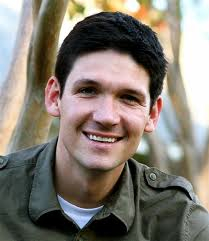
Matt Chandler serves as lead pastor of the Village Church in Flower Mound, Texas. He has become a leader in the evangelical world through his ministry at the Village Church, the Acts 29 Church Planting Network, and his teaching at multiple conferences. Matt is known to a wider audience most recently through his faithful witness to Jesus Christ while battling a malignant brain tumor. Chandler is also the author of the teaching series Philippians: To Live Is Christ & to Die Is Gain; and his excellent first book published by Crossway, entitled: The Explicit Gospel.

Do We Have Souls? Lee Strobel interviews Dr. J.P. Moreland

(The interview below is “heady” stuff – but very important. There is a huge movement of “scientism” in our culture that denies the reality and existence of the soul. One of my favorite teachers when I was at Talbot School of Theology was Dr. J.P. Moreland. What I love about Moreland is that he is a deep thinker and yet he has the ability to explain complex truths in a way that lay people can understand. Like anything Moreland writes or says, this interview will be challenging, enlightening, and clarifying – I hope that you will be able to better understand the reality of the soul and the overwhelming evidence for the existence of God as you read this interview with former atheist – turned Christian – Lee Strobel. Reading this article will exercise your mind and bring joy to your soul, and will be well worth your serious attention – enjoy! David P. Craig)
 

The Evidence of Consciousness: The Enigma of the Mind

When I pulled up to J. P. Moreland’s house on a cool and foggy morning, he was outside with a cup of coffee in his hand, having just walked home from a chat with some neighbors. His graying hair was close-cropped, his mustache neatly trimmed, and he was looking natty in a red tie, blue shirt, and dark slacks. “Good to see you again,” he said as we shook hands. “Come on in.” We walked into his living room, where he settled into a floral-patterned chair and I eased into an adjacent couch. The setting was familiar to me, since I had previously interviewed him on other challenging topics for The Case for Christ and The Case for Faith (See: “The Circumstantial Evidence” in: Lee Strobel, The Case for Christ, 244–57, and “Objection #6: A Loving God Would Never Torture People in Hell,” in: Lee Strobel, The Case for Faith, 169–94).

Both times I found him to have an uncanny ability to discuss abstract issues and technical matters in understandable but accurate language. That’s unusual for a scientist, uncommon for a theologian, and downright rare for a philosopher! Moreland’s science training came at the University of Missouri, where he received a degree in chemistry. He was subsequently awarded the top fellowship for a doctorate in nuclear chemistry at the University of Colorado but declined the honor to pursue a different career path. He then earned a master’s degree in theology at Dallas Theological Seminary and a doctorate in philosophy at the University of Southern California. Moreland developed an early interest in issues relating to human consciousness, returning to that theme time after time in his various books. He has written, edited, or coauthored Christianity and the Nature of Science, Body and Soul, The Life and Death Debate, Beyond Death, Does God Exist? Christian Perspectives on Being Human, The Creation Hypothesis, Scaling the Secular City, Love Your God with All Your Mind, Naturalism: A Critical Analysis, and many other books.

Also, he has authored more than fifty technical articles for Perspectives on Science and Christian Faith, Philosophy and Phenomenological Research, American Philosophical Quarterly, Journal of Psychology and Theology, Metaphilosophy, and a host of other journals. Moreland’s memberships include national scientific, philosophical, and theological societies. Currently, he’s a professor in the highly respected philosophy program at the Talbot School of Theology, where he teaches on numerous topics, including philosophy of mind. As we began our interview, I thought it would be a good idea to get straight on some key definitions—something that’s not always easy when discussing consciousness.

 REGAINING CONSCIOUSNESS

U.S. Supreme Court Justice Potter Stewart once said it may be difficult to define pornography, “but I know it when I see it” (Justice Potter Stewart [concurring], Jacobellis v. Ohio, 378 U.S. 198,1964). Similarly, consciousness can be a challenging concept to describe, even though our own conscious thoughts are quite tangible to ourselves. As J. R. Smythies of the University of Edinburgh put it: “The consciousness of other people may be for me an abstraction, but my own consciousness is for me a reality” (J. R. Smythies, “Some Aspects of Consciousness,” in Arthur Koestler and J. R. Smythies, editors, Beyond Reductionism. London: Hutchinson, 1969, 235, quoted in Arthur C. Custance, The Mysterious Matter of Mind, 35).

“What is consciousness?” Moreland said, echoing the opening question that I had just posed to him. “Well, a simple definition is that consciousness is what you’re aware of when you introspect. When you pay attention to what’s going on inside of you, that’s consciousness.” He looked at me and apparently could see from my expression that I needed a fuller description. “Think of it like this,” he continued. “Suppose you were having an operation on your leg, and suddenly you begin to be aware of people talking about you. Someone says, ‘I think he’s recovering.’ You start to feel an ache in your knee. You say to yourself, ‘Where am I? What’s going on?’ And you start to remember you were operated on. What you’re doing is regaining consciousness. In short, consciousness consists of sensations, thoughts, emotions, desires, beliefs, and free choices that make us alive and aware.”

“What if consciousness didn’t exist in the world?” I asked. “I’ll give you an example,” Moreland replied. “Apples would still be red, but there would be no awareness of red or any sensations of red.” “What about the soul?” I asked. “How would you define that?” “The soul is the ego, the ‘I,’ or the self, and it contains our consciousness. It also animates our body. That’s why when the soul leaves the body, the body becomes a corpse. The soul is immaterial and distinct from the body.” “At least,” I observed, “that’s what the Bible teaches.” “Yes, Christians have understood this for twenty centuries,” he said. “For example, when Jesus was on the cross, he told the thief being crucified next to him that he would be with Jesus immediately after his death and before the final resurrection of his body (Luke 23:43: “Today you will be with me in paradise”).

Jesus described the body and soul as being separate entities when he said, ‘Do not be afraid of those who kill the body but cannot kill the soul’ (Matthew 10:28). The apostle Paul says that “to be absent from the body is to be present with the Lord” (2 Corinthians 5:8).

I was curious about whether belief in the soul is a universal phenomenon. “What about beyond Christianity?” I asked. “Is this concept present in other cultures as well?” “We know that dualism was taught by the ancient Greeks, although, unlike Christians, they believed the body and soul were alien toward each other,” he explained. “In contemporary terms, I’d agree with physicalist Jaegwon Kim, who acknowledged that ‘something like this dualism of personhood, I believe, is common lore shared across most cultures and religious traditions’” (Jaegwon Kim, “Lonely Souls: Causality and Substance Dualism,” in Kevin Corcoran, editor, Soul, Body, and Survival. Ithica, NY: Cornell Univ. Press, 2001).

Still, there are those who deny dualism and instead believe we are solely physical beings who are, as geneticist Francis Crick said, “no more than the behavior of a vast assembly of nerve cells and their associated molecules” (Francis Crick, The Astonishing Hypothesis. New York: Scribner’s, 1994, 3). To explore this issue, I decided to take an unusual approach in my interview with Moreland by asking him to imagine—for just a few minutes—that these physicalists are right.

 WHAT IF PHYSICALISM IS TRUE?

“Let’s face it,” I said, “some people flatly deny that we have an immaterial soul. John Searle said, ‘In my worldview, consciousness is caused by brain processes’ (“What Is Consciousness?” in Closer to Truth).  In other words, they believe consciousness is purely a product of biology. As brain scientist Barry Beyerstein said, just as the kidneys produce urine, the brain produces consciousness” (“Do Brains Make Minds?” on Closer to Truth).

Moreland was listening carefully as I spoke, his head slightly cocked. I continued by saying, “Do me a favor, J. P. —assume for a moment that the physicalists are right. What are the logical implications if physicalism is true?” His eyes widened. “Oh, there would be several key ones,” he replied.

“Give me three,” I said. Moreland was more than willing. “First, if physicalism is true, then consciousness doesn’t really exist, because there would be no such thing as conscious states that must be described from a first-person point of view,” he said. “You see, if everything were matter, then you could capture the entire universe on a graph—you could locate each star, the moon, every mountain, Lee Strobel’s brain, Lee Strobel’s kidneys, and so forth. That’s because if everything is physical, it could be described entirely from a third-person point of view. And yet we know that we have first-person, subjective points of view—so physicalism can’t be true.” Clearly, Moreland was warming up to this exercise.

“The second implication,” he continued, “is that there would be no free will. That’s because matter is completely governed by the laws of nature. Take any physical object,” he said as he glanced out the window, where the fog was breaking up. “For instance, a cloud,” he said. “It’s just a material object, and its movement is completely governed by the laws of air pressure, wind movement, and the like. So if I’m a material object, all of the things I do are fixed by my environment, my genetics, and so forth. “That would mean I’m not really free to make choices. Whatever’s going to happen is already rigged by my makeup and environment. So how could you hold me responsible for my behavior if I wasn’t free to choose how I would act? This is one of the reasons we lost the Vietnam War.” I was following him until that last statement, which seemed oddly incongruous to me. “What has this got to do with Vietnam?” I asked. Moreland explained: “I heard a former advisor to the president say that B. F. Skinner’s behaviorism influenced the Pentagon’s strategy. Skinner believed that we’re just physical objects, so you can condition people, just like you can condition a laboratory animal by applying electric shocks. Keep doing certain things over and over, and you can change behavior. So in Vietnam, we bombed, we came back, we bombed, we came back, we bombed, and so forth. We assumed that after we gave the North Vietnamese shock after shock, pretty soon we could manipulate their behavior. After all, they’re just physical objects responding to stimuli. Eventually they had to give in.” “But they didn’t,” I said. “That’s right. It didn’t work.” “Why?” “Because there was more to the Vietnamese than their physical brains responding to stimuli. They have souls, desires, feelings, and beliefs, and they could make free choices to suffer and to stand firm for their convictions despite our attempt to condition them by our bombing.

“So if the materialists are right, kiss free will good-bye. In their view, we’re just very complicated computers that behave according to the laws of nature and the programming we receive. But, Lee, obviously they’re wrong—we do have free will. We all know that deep down inside. We’re more than just a physical brain.

“Third, if physicalism were true, there would be no disembodied intermediate state. According to Christianity, when we die, our souls leave our bodies and await the later resurrection of our bodies from the dead. We don’t cease to exist when we die. Our souls are living on. “This happens in near-death experiences. People are clinically dead, but sometimes they have a vantage point from above, where they look down at the operating table that their body is on. Sometimes they gain information they couldn’t have known if this were just an illusion happening in their brain. One woman died and she saw a tennis shoe that was on the roof of the hospital. How could she have known this? “If I am just my brain, then existing outside the body is utterly impossible. When people hear of near-death experiences, they don’t think that if they looked up at the hospital ceiling, they’d see a pulsating brain with a couple of eyeballs dangling down, right? When people hear near-death stories, Lee, they are intuitively attributing to that person a soul that could leave the body. And clearly these stories make sense, even if we’re not sure they’re true. We’ve got to be more than our bodies or else these stories would be ludicrous to us.” Moreland seemed to be sidestepping this issue a bit. “How about you personally?” I asked. “Do you think near-death experiences are true?” “We have to be careful with the data and not overstate things, but I do think they provide at least a minimalist case for consciousness surviving death,” he said. “In fact, as far back as 1965, psychologist John Beloff wrote in The Humanist that the evidence of near-death experiences already indicates ‘a dualistic world where mind or spirit has an existence separate from the world of material things.’ He conceded that this could ‘present a challenge to humanism as profound in its own way as that which Darwinian evolution did to Christianity a century ago.’ ” (Cited in David Winter, Hereafter: What Happens after Death? Wheaton, Ill.: Harold Shaw, 1972, 33–34).

Moreland paused before adding one other comment. “Regardless of what anyone thinks about near-death experiences, we do have confirmation that Jesus was put to death and was later seen alive by credible eyewitnesses,” he said. “Not only does this provide powerful historical corroboration that it’s possible to survive after the death of our physical body, but it also gives Jesus great credibility when he teaches that we have both a body and an immaterial spirit” (For a short description of the evidence for the Resurrection, see Gary R. Habermas and J. P. Moreland, Beyond Death, 111–54).

THE INNER AND PRIVATE MIND

At this point, having considered Moreland’s critique of physicalism, I wanted to hear his affirmative case that consciousness and the soul are immaterial entities. “What positive evidence is there that consciousness and the self are not merely a physical process of the brain?” I asked. “We have experimental data, for one thing,” he replied. “For example, neurosurgeon Wilder Penfield electrically stimulated the brains of epilepsy patients and found he could cause them to move their arms or legs, turn their heads or eyes, talk, or swallow. Invariably the patient would respond by saying, ‘I didn’t do that. You did.’ (See: Wilder Penfield, The Mystery of the Mind, 76–77).

According to Penfield, ‘the patient thinks of himself as having an existence separate from his body.’ (Wilder Penfield, “Control of the Mind” Symposium at the University of California Medical Center, San Francisco, 1961, quoted in Arthur Koestler, Ghost in the Machine. London: Hutchinson, 1967, 203).
“No matter how much Penfield probed the cerebral cortex, he said, ‘There is no place . . . where electrical stimulation will cause a patient to believe or to decide.’ (Wilder Penfield, The Mystery of the Mind, 77–78).

That’s because those functions originate in the conscious self, not the brain. “A lot of subsequent research has validated this. When Roger Sperry and his team studied the differences between the brain’s right and left hemispheres, they discovered the mind has a causal power independent of the brain’s activities. This led Sperry to conclude materialism was false (See: Roger W. Sperry, “Changed Concepts of Brain and Consciousness: Some Value Implications,” Zygon, March 1985).

“Another study showed a delay between the time an electric shock was applied to the skin, its reaching the cerebral cortex, and the self-conscious perception of it by the person (Laurence W. Wood, “Recent Brain Research and the Mind-Body Dilemma,” The Asbury Theological Journal, vol. 41, no. 1,1986). This suggests the self is more than just a machine that reacts to stimuli as it receives them. In fact, the data from various research projects are so remarkable that Laurence C. Wood said, ‘many brain scientists have been compelled to postulate the existence of an immaterial mind, even though they may not embrace a belief in an after-life.’””(Ibid).

“What about beyond the laboratory?” I asked. “There are valid philosophical arguments as well,” he said. “For instance, I know that consciousness isn’t a physical phenomenon because there are things that are true of my consciousness that aren’t true of anything physical.” “For instance . . . ,” I said, prompting him further. “For example, some of my thoughts have the attribute of being true. Tragically, some of my thoughts have the attribute of being false—like the Chicago Bears are going to go to the Super Bowl,” he said with a chuckle. “However, none of my brain states are true or false. No scientist can look at the state of my brain and say, ‘Oh, that particular brain state is true and that one’s false.’ So there’s something true of my conscious states that are not true of any of my brain states, and consequently they can’t be the same thing. “Nothing in my brain is about anything. You can’t open up my head and say, ‘You see this electrical pattern in the left hemisphere of J. P. Moreland’s brain? That’s about the Bears.’ Your brain states aren’t about anything, but some of my mental states are. So they’re different.

“Furthermore, my consciousness is inner and private to me. By simply introspecting, I have a way of knowing about what’s happening in my mind that is not available to you, my doctor, or a neuroscientist. A scientist could know more about what’s happening in my brain than I do, but he couldn’t know more about what’s happening in my mind than I do. He has to ask me.” When I asked Moreland for an illustration of this, he said, “Have you heard of Rapid Eye Movement?” “Sure,” I replied. “What does it indicate?” “Dreaming.” “Exactly. How do scientists know that when there is a certain eye movement that people are dreaming? They’ve had to wake people and ask them. Scientists could watch the eyes move and read a printout of what was physically happening in the brain, so they could correlate brain states with eye movements. But they didn’t know what was happening in the mind. Why? Because that’s inner and private. “So the scientist can know about the brain by studying it, but he can’t know about the mind without asking the person to reveal it, because conscious states have the feature of being inner and private, but the brain’s states don’t.”

THE REALITY OF THE SOUL

For centuries, the human soul has enchanted poets, intrigued theologians, challenged philosophers, and dumbfounded scientists. Mystics, like Teresa of Åvila in the sixteenth century, have described it eloquently: “I began to think of the soul as if it were a castle made of a single diamond or of very clear crystal, in which there are many rooms, just as in heaven there are many mansions” (Mark Water, compiler, The New Encyclopedia of Christian Quotations.Grand Rapids, Mich.: Baker, 2000), 972. Teresa’s reference to mansions is an allusion to John 14:2).

Moreland was understandably more precise in analyzing the soul, though unfortunately less poetic. He had already clarified that the soul contains our consciousness. Still, he hadn’t offered any reason to believe that the soul is an actual entity. It was time, I felt, to press him on this
issue. “What makes you think that the soul is real?” I asked.

Moreland replied by saying, “First, we’re aware that we’re different from our consciousness and our body. We know that we’re beings who have consciousness and a body, but we’re not merely the same thing as our conscious life or our physical life. “Let me give you an illustration of how we’re not the same thing as our personality traits, our memories, and our consciousness. I had a student a few years ago whose sister had a terrible accident on her honeymoon. She was knocked unconscious and lost all of her memories and a good bit of her personality. She did not believe she had been married. As she began to recover, they showed her videos of the wedding to convince her that she had actually married her husband. She eventually got to the point where she believed it, and she got remarried to him.

“Now, we all knew this was the same person all along.” This was Jamie’s sister. She was not a different person, though she was behaving differently. But she had totally different memories. She had lost her old memories and she didn’t even have the same personality. What that proves is you can be the same person even if you lose old memories and gain new memories, or you lose some of your old personality traits and gain new personality traits. “Now, if I were just my consciousness, when my consciousness was different, I’d be a different person. But we know that I can be the same person even though my consciousness changes, so I can’t be the same thing as my consciousness. I’ve got to be the ‘self,’ or soul, that contains my consciousness.

“Same with my body. I can’t be the same thing as my body or brain. There was a story on television about an epileptic who underwent an operation in which surgeons removed fifty-three percent of her brain. When she woke up, nobody said, ‘We have forty-seven percent of a person here.’ A person can’t be divided into pieces. You are either a person or you’re not. But your brain and your body can be divided. So that means I can’t be the same thing as my body.”

Those illustrations helped, though I said, “The fact that the soul and consciousness are invisible makes it difficult to conceptualize them.” “Sure, that’s true,” he replied. “My soul and my consciousness are invisible, though my body is visible. That’s another distinction. In fact, I remember the time when my daughter was in the fifth grade and we were having family prayers. She said, ‘Dad, if I could see God, it would help me believe in him.’ I said, ‘Well, honey, the problem isn’t that you’ve never seen God. The problem is that you’ve never seen your mother.’ And her mother was sitting right next to her! “My daughter said, ‘What do you mean, Dad?’ I said, ‘Suppose without hurting your mom, we were able to take her apart cell by cell and peek

inside each one of them. We would never come to a moment where we would say, ‘Look—here’s what Mommy’s thinking about doing the rest of the day.’ Or ‘Hey, this cell contains Mommy’s feelings.’ Or ‘So this is what Mom believes about pro football.’ We couldn’t find Mommy’s thoughts, beliefs, desires, or her feelings. “‘Guess what else we would never find? We’d never find Mommy’s ego or her self. We would never say, ‘Finally, in this particular brain cell, there’s Mommy. There’s her ego, or self.’ That’s because Mommy is a person, and persons are invisible. Mommy’s ego and her conscious life are invisible. Now, she’s small enough to have a body, while God is too big to have a body—so let’s pray!’ “The point is this, Lee: I am a soul, and I have a body. We don’t learn about people by studying their bodies. We learn about people by finding out how they feel, what they think, what they’re passionate about, what their worldview is, and so forth. Staring at their body might tell us whether they like exercise, but that’s not very helpful. That’s why we want to get ‘inside’ people to learn about them. “So my conclusion is that there’s more to me than my conscious life and my body. In fact, I am a ‘self,’ or an ‘I,’ that cannot be seen or touched unless I manifest myself through my behavior or my talk. I have free will because I’m a ‘self,’ or a soul, and I’m not just a brain.”

OF COMPUTERS AND BATS

Moreland’s denial that the brain produces consciousness made me think of the debate over whether future computers can become sentient. I decided to ask him to weigh in on the issue—although his ultimate conclusion was never in doubt. “If a machine can achieve equal or greater brain power as human beings, then some physicalists say the computer would become conscious,” I said. “I assume you would disagree with that.” Moreland chuckled. “One atheist said that when computers reach the point of imitating human behavior, only a racist would deny them full human rights. But of course that’s absurd.

Nobel-winner John Eccles said he’s ‘appalled by the naiveté’ of those who foresee computer sentience. He said there’s ‘no evidence whatsoever for the statement made that, at an adequate level of complexity, computers also would achieve self-consciousness’ (Quoted in Robert W. Augros and George N. Stanciu, The New Story of Science, 170).

“Look, we have to remember that computers have artificial intelligence, not intelligence. And there’s a huge difference. There’s no ‘what it’s like to be a computer.’ A computer has no ‘insides,’ no awareness, no first-person point of view, no insights into problems. A computer doesn’t think, ‘You know what? I now see what this multiplication problem is really like.’ A computer can engage in behavior if it’s wired properly, but you’ve got to remember that consciousness is not the same as behavior. Consciousness is being alive; it’s what causes behavior in really conscious beings. But what causes behavior in a computer is electric circuitry.

“Let me illustrate my point. Suppose we had a computerized bat that we knew absolutely everything about from a physical point of view. We would have exhaustive knowledge of all its circuitry so that we could predict everything this bat would do when it was released into the environment. “Contrast that with a real bat. Suppose we knew everything about the organs inside the bat—its blood system, nervous system, brain, heart, lungs. And suppose that we could predict everything this bat would do when released into the environment. There would still be one thing that we would have no idea about: what it’s like to be a bat. What it’s like to hear, to feel, to experience sound and color. That stuff involves the ‘insides’ of the bat, its point of view. That’s the difference between a conscious, sentient bat and a computerized bat. “So in general, computers might be able to imitate intelligence, but they won’t ever have consciousness. We can’t confuse behavior with what it’s like to be alive, awake, and sentient. A future superintelligent computer might be programmed to say it’s conscious or even behave as if it were conscious, but it can never truly become conscious, because consciousness is an immaterial entity apart from the brain.” Moreland’s choice of a bat for his illustration was an oblique reference to New York University philosopher Thomas Nagel’s famous 1974 essay “What Is it Like to Be a Bat?” (See: Thomas Nagel, “What Is It Like to Be a Bat?” Philosophical Review 83, October, 1974).

Thinking about life from a bat’s perspective prompted me to briefly pursue another line of inquiry on a tangential topic. “What about animals—do they have souls or consciousness?” I asked. “Absolutely,” came his quick answer. “In several places the Bible uses the word ‘soul’ or ‘spirit’ when discussing animals. For example:

Genesis 1:30, “And to every beast of the earth and to every bird of the heavens and to everything that creeps on the earth, everything that has the breath of life, I have given every green plant for food.” And it was so.”

Leviticus 24:18, “Whoever takes an animal’s life shall make it good, life for life.”

Ecclesiastes 3:19, “For what happens to the children of man and what happens to the beasts is the same; as one dies, so dies the other. They all have the same breath, and man has no advantage over the beasts, for all is vanity.”

Revelation 8:9, “A third of the living creatures in the sea died, and a third of the ships were destroyed.”

Animals are not simply machines. They have consciousness and points of view. But the animal soul is much simpler than the human soul. For example, the human soul is capable of free moral action, but I think the animal soul is determined. Also, Augustine said animals have thoughts, but they don’t think about their thinking. And while we have beliefs about our beliefs, animals don’t. “You see, the human soul is vastly more complicated because it’s made in the image of God. So we have self-reflection and self-thinking. And while the human soul survives the death of its body, I don’t think the animal soul outlives its body. I could be wrong, but I think the animal soul ceases to exist at death.” Bad news, it seems, for the bat.

CONSCIOUSNESS AND EVOLUTION

Moreland had made a cogent case for consciousness and the soul being independent of our brain and body. “How does this present a problem for Darwinists?” I asked. Moreland glanced down at some notes he had brought along. “As philosopher Geoffrey Medell said, ‘The emergence of consciousness, then, is a mystery, and one to which materialism fails to provide an answer.’ Atheist Colin McGinn agrees. He asks, ‘How can mere matter originate consciousness? How did evolution convert the water of biological tissue into the wine of consciousness? Consciousness seems like a radical novelty in the universe, not prefigured by the aftereffects of the Big Bang. So how did it contrive to spring into being from what preceded it?’ ”

Moreland looked squarely at me. “Here’s the point: you can’t get something from nothing,” he declared. “It’s as simple as that. If there were no God, then the history of the entire universe, up until the appearance of living creatures, would be a history of dead matter with no consciousness. You would not have any thoughts, beliefs, feelings, sensations, free actions, choices, or purposes. There would be simply one physical event after another physical event, behaving according to the laws of physics and chemistry.”

Moreland stopped for a moment to make sure this picture was vivid in my mind. Then he leaned forward and asked pointedly: “How, then, do you get something totally different—conscious, living, thinking, feeling, believing creatures—from materials that don’t have that? That’s getting something from nothing! And that’s the main problem. “If you apply a physical process to physical matter, you’re going to get a different arrangement of physical materials. For example, if you apply the physical process of heating to a bowl of water, you’re going to get a new product—steam—which is just a more complicated form of water, but it’s still physical. And if the history of the universe is just a story of physical processes being applied to physical materials, you’d end up with increasingly complicated arrangements of physical materials, but you’re not going to get something that’s completely nonphysical. That is a jump of a totally different kind. “At the end of the day, as Phillip Johnson put it, you either have ‘In the beginning were the particles,’ or ‘In the beginning was the Logos,’ which means ‘divine mind.’ If you start with particles, and the history of the universe is just a story about the rearrangement of particles, you may end up with a more complicated arrangement of particles, but you’re still going to have particles. You’re not going to have minds or consciousness.

“However—and this is really important—if you begin with an infinite mind, then you can explain how finite minds could come into existence. That makes sense. What doesn’t make sense—and which many atheistic evolutionists are conceding—is the idea of getting a mind to squirt into existence by starting with brute, dead, mindless matter. That’s why some of them are trying to get rid of consciousness by saying it’s not real and that we’re just computers.” He smiled after that last statement, then added: “However, that’s a pretty difficult position to maintain while you’re conscious!”

THE EMERGENCE OF THE MIND

“Still,” I protested, “some scientists maintain that consciousness is just something that happens as a natural byproduct of our brain’s complexity. They believe that once evolution gave us sufficient brain capacity, consciousness inexorably emerges as a biological process.”

“Let me mention four problems with that,” Moreland insisted. “First, they are no longer treating matter as atheists and naturalists treat matter—namely, as brute stuff that can be completely described by the laws of chemistry and physics. Now they’re attributing spooky, soulish, or mental potentials to matter.” “What do you mean by ‘potentials’?” “They’re saying that prior to this level of complexity, matter contained the potential for mind to emerge—and at the right moment, guess what happened? These potentials were activated and consciousness was sparked into existence.” “What’s wrong with that theory?” “That is no longer naturalism,” he said. “That’s panpsychism.” That was a new term to me. “Pan what?” “Panpsychism,” he repeated. “It’s the view that matter is not just inert physical stuff, but that it also contains proto-mental states in it. Suddenly, they’ve abandoned a strict scientific view of matter and adopted a view that’s closer to theism than to atheism. Now they’re saying that the world began not just with matter, but with stuff that’s mental and physical at the same time. Yet they can’t explain where these pre-emergent mental properties came from in the first place. And this also makes it hard for them to argue against the emergence of God.”

“The emergence of God?” I asked. “What do you mean by that?” “If a finite mind can emerge when matter reaches a certain level of complexity, why couldn’t a far greater mind—God—emerge when millions of brain states reach a greater level of consciousness? You see, they want to stop the process where they want it to stop—at themselves—but you can’t logically draw that line. How can they know that a very large God hasn’t emerged from matter, because, after all, haven’t a lot of people had religious experiences with God?” “That wouldn’t be the God of Christianity,” I pointed out. “Granted,” he replied. “But this is still a problem for atheists.

And there’s a second problem: they would still be stuck with determinism, because if consciousness is just a function of the brain, then I’m my brain, and my brain functions according to the laws of chemistry and physics. To them, the mind is to the brain as smoke is to fire. Fire causes smoke, but smoke doesn’t cause anything. It’s just a byproduct. Thus, they’re locked into determinism.

“Third, if mind emerged from matter without the direction of a superior Intelligence, why should we trust anything from the mind as being rational or true, especially in the area of theoretical thinking? “Let me give you an analogy. Let’s say you had a computer that was programmed by random forces or by nonrational laws without a mind being behind it. Would you trust a printout from that machine? Of course not. Well, same with the mind—and that’s a problem for Darwinists. And by the way, you can’t use evolution as an explanation for why the mind should be considered trustworthy, because theoretical thinking does not contribute to survival value.”

Moreland’s comments reminded me of the famous quote from British evolutionist J. B. S. Haldane: “If my mental processes are determined wholly by the motions of the atoms in my brain, I have no reason to suppose that my beliefs are true . . . and hence I have no reason for supposing my brain to be composed of atoms” (J. B. S. Haldane, “When I am Dead,” in Possible Worlds and Other Essays. London: Chatto and Winduw, 1927, 209, quoted in C. S. Lewis, Miracles. London: Fontana, 1947, 19).

“Here’s the fourth problem,” Moreland went on, “If my mind were just a function of the brain, there would be no unified self. Remember, brain function is spread throughout the brain, so if you cut the brain in half, like the girl who lost fifty-three percent of her brain, then some of that function is lost. Now you’ve got forty-seven percent of a person. Well, nobody believes that. We all know she’s a unified self, because we all know her consciousness and soul are separate entities from her brain.

“There’s one other aspect of this, called the ‘binding problem.’ When you look around the room, you see many things at the same time,” he said, gesturing around at various objects in our field of vision. “You see a table, a couch, a wall, a painting in a frame. Every individual thing has light waves bouncing off of it and they’re striking a different location in your eyeball and sparking electrical activity in a different region of the brain. That means there is no single part of the brain that is activated by all of these experiences. Consequently, if I were simply my physical brain, I would be a crowd of different parts, each having its own awareness of a different piece of my visual field. “But that’s not what happens. I’m a unified ‘I’ that has all of these experiences at the same time. There is something that binds all of these experiences and unifies them into the experience of oneself—me—even though there is no region of the brain that has all these activation sites. That’s because my consciousness and my ‘self’ are separate entities from the brain.”

Moreland was on a roll, but I jumped in anyway. “What about recent brain studies that have shown activity in certain areas of the brain during meditation and prayer?” I asked. “Don’t those demonstrate that there’s a physical basis for these religious experiences, as opposed to an immaterial basis through the soul?” “No, it doesn’t. All it shows is a physical correlation with religious experiences,” he replied. “You’ll have to explain that,” I said. “Well, there’s no question that when I’m praying, smelling a rose, or thinking about something, my brain still exists. It doesn’t pop out of existence when I’m having a conscious life, including prayer. And I would be perfectly happy if scientists were to measure what was going on in my brain while I’m praying, feeling forgiveness, or even thinking about lunch. But remember: just because there is a correlation between two things, that doesn’t mean they’re the same thing. Just because there’s a correlation between fire and smoke, this doesn’t mean smoke is the same as fire.

“Now, sometimes your brain states can cause your conscious states. For example, if you lose brain functioning due to Alzheimer’s disease, or you get hit over the head, you lose some of your mental conscious life. But there’s also evidence that this goes the other way as well. There are data showing that your conscious life can actually reconfigure your brain. “For example, scientists have done studies of the brains of people who worried a lot, and they found that this mental state of worry changed their brain chemistry. They’ve done studies of the brain patterns of little children who were not nurtured and loved, and their patterns are different than children who have warm experiences of love and nurture. So it’s not just the brain that causes things to happen in our conscious life; conscious states can also cause things to happen to the brain. “Consequently, I wouldn’t want to say there’s a physical basis for religious experiences, even though they might be correlated. Sometimes it
could be cause-and-effect from brain to mind, but it could also be cause-and-effect from mind to brain. How do the scientists know it isn’t actually my prayer life that’s causing something to happen in my brain, rather than the other way around?” (For a further critique of “neurotheology,” the idea that the brain is wired for religious experiences, see: Kenneth L. Woodward, “Faith Is More Than a Feeling,” Newsweek, May 7, 2001).

THE RETURN OF OCKHAM’S RAZOR

As we talked about the human mind, mine was drifting back to my first interview with William Lane Craig, during which he brought up a scientific principle called Ockham’s razor. As I listened to Moreland defend the concept of dualism, it dawned on me that Ockham’s razor would argue in the opposite direction—toward the view that only the brain exists—because it says science prefers simpler explanations where possible. It was a challenge I decided to pose to Moreland. “You’re familiar with the scientific principle called Ockham’s razor,” I said to him. As soon as the question left my mouth, Moreland knew where I was headed.

“Yes, it says that we shouldn’t multiply entities beyond what’s needed to explain something. And I assume your objection is that Ockham’s razor would favor a simple alternative, such as the brain accounting for everything, rather than more complicated explanation like the two entities of dualism.” “That’s right,” I said. “Surely this undercuts the case for dualism.” He was ready with an answer. “No, it really doesn’t. Actually, Ockham’s razor favors dualism, and here’s why,” he said. “What’s the intent of Ockham’s razor? The thrust of this principle is that when you’re trying to explain a phenomenon, you should only include the elements that are necessary to explain the phenomenon. And as I’ve demonstrated through scientific evidence and philosophical reasoning, dualism is necessary to explain the phenomenon of consciousness.

Only dualism can account for all of the evidence—and, hence, it does not violate Ockham’s razor.” I wasn’t ready to give up. “But maybe we just don’t have all the evidence yet,” I said. “Maybe your conclusions are premature. Physicalists are confident that the day will come when they’ll be able to explain consciousness solely in physical terms.” Moreland’s reply was adamant: “There will never, ever be a scientific explanation for mind and consciousness.”

His forceful and unequivocal statement startled me. “Why not?” I asked. “Think about how scientists go about explaining things: they show that something had to happen due to antecedent conditions. For example,

when scientists explain why gases behave the way they do, they show that if you hold the volume constant and increase the temperature, the pressure has to increase. That is, when we heat a pressure cooker, the pressure goes up. “When scientists explain that, they don’t just correlate temperature and pressure. They don’t just say that temperature and pressure tend to go together. They try to show why the pressure has got to increase, why it couldn’t have done anything other than that, given the temperature increase. Scientists want to show why something has to happen given the cause; they’re not content simply to correlate things and leave it at that. “And this will never work with consciousness, because the relationship between the mind and the brain is contingent, or dependent.

In other words, the mind is not something that had to happen. One atheist asked, ‘How could a series of physical events, little particles jostling against one another, electric currents rushing to and fro, blossom into conscious experience? Why shouldn’t pain and itches be switched around? Why should any experience emerge when these neurons fire in the brain?’ He’s pointing out that there’s no necessary connection between conscious states and the brain. “So in the future scientists will be able to develop more correlations between conscious states and states of the brain, and that’s wonderful. But my point is this: correlation is not explanation. To explain something scientifically, you’ve got to show why the phenomenon had to happen given the causes. And scientists cannot explain the ‘why’ behind consciousness, because there’s no necessary connection between the brain and consciousness. It didn’t have to happen this way.”

 DEDUCTIONS ABOUT GOD

It’s no wonder that Alvin Plantinga of Notre Dame University, a dualist who is frequently called the greatest living American philosopher, surveyed the current body/mind debate and concluded: “Things don’t look hopeful for Darwinian naturalists” (Quoted in Larry Witham, By Design, 211).

Faced with data and logic that support dualism, and unable to offer a plausible theory for how consciousness could have erupted from mindless matter, atheists are pinning their hopes on some as-yet-undetermined scientific discovery to justify their faith in physicalism. And some aren’t even so sure about that—physicist and atheist Steven Weinberg said scientists may have to “bypass the problem of human consciousness” altogether, because “it may just be too hard for us” (Ibid.,192).

In other words, it’s failing to give them the answers they want. As for Moreland, he agrees with Plantinga’s bleak assessment for atheists. “Darwinian evolution will never be able to explain the origin of consciousness,” he told me. “Perhaps Darwinists can explain how consciousness was shaped in a certain way over time, because the behavior that consciousness caused had survival value. But it can’t explain the origin of consciousness, because it can’t explain how you can get something from nothing.

“In Darwin’s notebooks, he said if there was anything his theory can’t explain, then there would have to be another explanation—a creationist explanation. Well, he can’t explain the origin of mind. He tried to reduce consciousness down to the brain, because he could tell a story about how the brain evolved. But as we’ve discussed, Lee, consciousness cannot be reduced merely to the physical brain. This means the atheist creation story is inadequate and false.

And yet there is an alternative explanation that makes sense of all the evidence: our consciousness came from a greater Consciousness. “You see, the Christian worldview begins with thought and feeling and belief and desire and choice. That is, God is conscious. God has thoughts. He has beliefs, he has desires, he has awareness, he’s alive, he acts with purpose. We start there. And because we start with the mind of God, we don’t have a problem with explaining the origin of our mind.” I asked, “What, then, can we deduce about God from this?” “That he’s rational, that he’s intelligent, that he’s creative, that he’s sentient. And that he’s invisible, because that’s the way conscious beings are. I have no inclination to doubt that this very room is teeming with the presence of God, just because I can’t see or touch or smell or hear him. As I explained earlier, I can’t even see my own wife! I can’t touch, see, smell, or hear the real her.

“One more thing. The existence of my soul gives me a new way to understand how God can be everywhere. That’s because my soul occupies my body without being located in any one part of it. There’s no place in my body where you can say, ‘Here I am.’ My soul is not in the left part of my brain, it’s not in my nose, it’s not in my lungs. My soul is fully present everywhere throughout my body. That’s why if I lose part of my body, I don’t lose part of my soul. “In a similar way, God is fully present everywhere. He isn’t located, say, right outside the planet Mars. God occupies space in the same way the soul occupies the body. If space were somehow cut in half, God wouldn‘t lose half his being. So now I have a new model, based on my own self, for God’s omnipresence. And shouldn’t we expect this? If we were made in the image of God, wouldn’t we expect there to be some parallels between us and God?” I asked, “Do you foresee more scientists coming to the conclusion that the soul, though immaterial, is very real?”

“The answer is yes—if they are willing to open themselves up to nonscientific knowledge,” he replied. “I believe in science; it’s wonderful and gives us some very important information. But there are other ways of knowing things as well. Because, remember, most of the evidence for the reality of consciousness and the soul is from our own first-person awareness of ourselves and has nothing to do with the study of the brain. The study of the brain allows us to correlate the brain with conscious states, but it tells us nothing about what consciousness itself is.”

“But, J. P., aren’t you asking scientists to do the unthinkable—to ignore scientific knowledge?” “No, not at all,” he insisted. “I’m only asking that they become willing to listen to all the evidence and see where it leads—which is what the quest for truth should be about.” “And if they do that?” “They will come to believe in the reality of the soul and the immaterial nature of consciousness. And this could open them up personally to something even more important—to a much larger Mind and a much bigger Consciousness, who in the beginning was the Logos, and who made us in his image.”

COGITO ERGO SUM

A ringing telephone ended our conversation, although I was wrapping up the interview anyway. A colleague was calling to remind Moreland of a faculty meeting. I thanked Moreland for his time and insights, gathered my things, and strolled out to my car. I was just about to start the engine, but instead I let go of the key, leaned back in my seat, and took a few moments (as Moreland would say) to introspect. Interestingly, this very act of introspection intuitively affirmed to me what Moreland’s facts and logic had already established—my ability to ponder, to reason, to speculate, to imagine, and to feel the emotional brunt of the interview showed that my mind surely could not have been the evolutionary byproduct of brute, mindless matter. “Selfhood . . . is not explicable in material or physical terms,” said philosopher Stuart C. Hackett. “The essential spiritual selfhood of man has its only adequate ground in the transcendent spiritual Selfhood of God as Absolute Mind” (Stuart C. Hackett, The Reconstruction of the Christian Revelation Claim. Grand Rapids, Mich.: Baker, 1984, 111).

In other words, I am more than just the sum total of a physical brain and body parts. Rather, I am a soul, and I have a body. I think—therefore, I am. Or as Hackett said: “With modest apology to Descartes: Cogito, ergo Deus est! I think, therefore God is” (Ibid). I found myself wholeheartedly agreeing with philosopher Robert Augros and physicist George Stanciu, who explored the depths of the mind/body controversy and concluded that “physics, neuroscience, and humanistic psychology all converge on the same principle: mind is not reducible to matter.” They added: “The vain expectation that matter might someday account for mind . . . is like the alchemist’s dream of producing gold from lead (Robert W. Augros and George N. Stanciu, The New Story of Science, 168, 171).

I leaned forward and started the car. After months of investigating scientific evidence for God—traveling a total of 26,884 miles, which is the equivalent of making one lap around the Earth at the equator—I had finally reached a critical mass of information. It was time to synthesize and digest what I had learned—and ultimately to come to a conclusion that would have vast and life-changing implications.

The interview of Lee Strobel (mini-bio below) with Dr. J. P. Moreland (mini-bio below) above is adapted from Chapter 10 in Lee Strobel. The Case for a Creator: A Journalist Investigates Scientific Evidence That Points Toward God. Grand Rapids: Zondervan, 2009.

 FOR FURTHER EVIDENCE

More Resources on This Topic

Cooper, John W. Body, Soul, and Life Everlasting. Grand Rapids, Mich.: Eerdmans, 1989.

Habermas, Gary and J. P. Moreland. Beyond Death. Wheaton, Ill.: Crossway, 1998.

Moreland, J. P. “God and the Argument from Mind.” In Scaling the Secular City. Grand Rapids, Mich.: Baker, 1987.

——. What Is the Soul? Norcross, Ga.: Ravi Zacharias International Ministries, 2002.

——. and Scott B. Rae. Body and Soul. Downer’s Grove, Ill.: InterVarsity, 2000.

Taliaferro, Charles. Consciousness and the Mind of God. Cambridge, England: Cambridge University Press, 1994.

Witham, Larry. “Mind and Brain.” In By Design: Science and the Search for God. San Francisco: Encounter Books, 2003.

About Lee Strobel
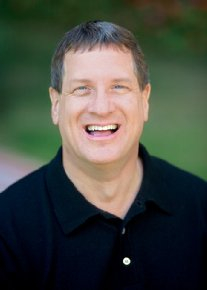
Atheist-turned-Christian Lee Strobel, the former award-winning legal editor of The Chicago Tribune, is a New York Times best-selling author of more than twenty books and has been interviewed on numerous national TV programs, including ABC, Fox, PBS, and CNN.

Described in the Washington Post as “one of the evangelical community’s most popular apologists,” Lee shared the Christian Book of the Year award in 2005 for a curriculum he co-authored with Garry Poole about the movie The Passion of the Christ. He also won Gold Medallions for his books The Case for Christ, The Case for Faith, and the The Case for a Creator, all of which have been made into documentaries distributed by Lionsgate.

His latest books include The Case for the Real Jesus, The Unexpected Adventure (co-authored with Mark Mittelberg) and The Case for Christ Study Bible, which includes hundreds of notes and articles on why Christians believe what they believe. His first novel, a legal thriller called The Ambition, came out in the Spring of 2011.

Lee was educated at the University of Missouri (Bachelor of Journalism degree, 1974) and Yale Law School (Master of Studies in Law degree, 1979). He was a professional journalist for 14 years at The Chicago Tribune and other newspapers, winning Illinois’ top honors for investigative reporting (which he shared with a team he led) and public service journalism from United Press International.

After a nearly two-year investigation of the evidence for Jesus, Lee became a Christian in 1981. He joined the staff of Willow Creek Community Church in South Barrington, IL, in 1987, and later became a teaching pastor there. He joined Saddleback Valley Community Church in Lake Forest, CA, as a teaching pastor in 2000. He left Saddleback’s staff to focus on writing.

Lee’s other books include God’s Outrageous Claims, The Case for Christmas, The Case for Easter, and Surviving a Spiritual Mismatch in Marriage, which he wrote with his wife, Leslie.

For two seasons, Lee was executive producer and host of the weekly national TV program Faith Under Fire.

Lee also is co-author of the Becoming a Contagious Christian course, which has trained more than a million Christians on how to naturally and effectively talk with others about Jesus. His articles have been published in a variety of magazines, including Discipleship Journal, Marriage Partnership, The Christian Research Journal, and Decision. He has appeared on such national radio programs as The Bible Answer Man and Focus on the Family. In addition, he has taught First Amendment law at Roosevelt University.

In recognition of his extensive research for his books, Southern Evangelical Seminary honored Lee with the conferring of a Doctor of Divinity degree in 2007.

Lee and Leslie have been married for 38 years and live in Colorado. Their daughter, Alison, is a novelist and co-author, with her husband Dan, of the children’s book, That’s Where God Is. Lee’s son, Kyle, holds two master’s degrees from the Talbot School of Theology and a PhD in theology from the University of Aberdeen in Scotland. His first book was Metamorpha: Jesus as a Way of Life.

About Dr. J.P. Moreland (in his own words: http://www.jpmoreland.com/about/bio/)


I am the Distinguished Professor of Philosophy at Talbot School of Theology, Biola University in La Mirada, California. I have four earned degrees: a B.S. in chemistry from the University of Missouri, a Th.M. in theology from Dallas Theological Seminary, an M. A. in philosophy from the University of California-Riverside, and a Ph.D. in philosophy from the University of Southern California.

During the course of my life, I have co-planted three churches, spoken and debated on over 175 college campuses around the country, and served with Campus Crusade for Christ for 10 years. For eight years, I served as a bioethicist for PersonaCare Nursing Homes, Inc. headquartered in Baltimore, Maryland.

My ideas have been covered by both popular religious and non-religious outlets, including the New Scientist and PBS’s “Closer to Truth,” Christianity TodayandWORLD magazine. I have authored or co-authored 30 books, including Kingdom Triangle, Scaling the Secular City, Consciousness and the Existence of God, The Recalcitrant Imago Dei, Love Your God With All Your Mind, The God Question, and Body and Soul. I have also published over 70 articles in journals, which include Philosophy and PhenomenologicalResearch,American Philosophical Quarterly, Australasian Journal of Philosophy, Metaphilosophy, Philosophia Christi, andFaith and Philosophy.

Personal Interests

My hobbies are exercising, following the Kansas City Chiefs, and being fixated by really great TV dramas like 24 and Lost. With my dear wife and ministry partner, Hope, we have two married daughters, Ashley and Allison, and as of 2010, four grandchildren! We attend Vineyard Anaheim church and are deeply committed to the body of believers there.

On Who Has Influenced Me

Besides my family and close friends, three people have had the greatest impact on me during my journey with Jesus: Bill Bright, Howard Hendricks, and Dallas Willard. I first came to Christ in 1968, and joined Campus Crusade staff from 1970-75, and 1979-84. I will never forget being in Dr. Bright’s presence during those years. He exuded intimacy with the Lord, he was full of faith, and he lived a holy life. These values were clearly put in place in my life due to his influence. He set a high bar in these areas, and his life gave me a living hope that significant progress in these areas was clearly within reach. Dr. Bright also died a vibrant, victorious death, and as I age, I very much want to do the same in a Christ-honoring way.

I have the honor of studying under Dr. Hendricks during my years at Dallas Theological Seminary (DTS) from 1975-79. I took several courses from him and was in a small discipleship group with Hendricks my last year at DTS. The values I saw in him were radical commitment to Christ, to reading in general and studying scripture in particular, and to the priority of marriage and family. He also had a commitment not to bore people while teaching the Bible and to exhibiting a keen sense of humor. These have all become my values, due in no small measure to Dr. Hendricks.

However as much as Bright and Hendricks have impacted me, the influence of Dallas Willard towers over everyone else. I was honored to have him as my dissertation supervisor at the University of Southern California and Hope and I have counted Dallas and his wife Jane as dear friends and mentors for twenty-five years. Dallas impacted me in his combination of a rigorous intellect with a vibrant walk with Jesus, his fresh, penetrating ideas about the kingdom and how to live in it, and by the reality of God that pours out of his life. I cannot overstate my debt to him. All three were full of humility. It was and is clear that they are about something much bigger than they.

My Dearest Partner, My Wife

My wife, Hope, has been my friend and partner for now 33 years. We were married in 1977. She has the gifts of evangelism, encouragement, helps/mercy. I have never met someone who is consistently happier than she, who loves to care for and serve others, and who exhibits the warmth and kindness of the Holy Spirit. It may sound canned to say this, but it is the truth, namely, that my life and work simply are inconceivable without her love and care all these years. She simply makes my life possible. Or, as I wrote of her in my 1985 book dedication (Universals, Qualities, and Quality-Instances) to her:

Her gracious life truly fits her name and her soul exemplifies that range of qualities that truly wise persons everywhere know as the moral virtues

Well said, I might add! For I experience her unconditional love in an ongoing way. And God made her to be a mother and grandmother par excellence. It is a joy to see how her children honor, respect and love her. My daughters, Ashley and Allison, have turned out to be good, solid people. What impresses me most about both of them is their genuine concern for others and their ability to be good listeners. It isn’t all about them, and this is refreshing these days. Our girls not only love Hope and me, but they actually like us!! They, and their dear husbands, actually like being around us!! As of this writing, I have two grandchildren around three years old (a girl and a boy), a one-month old grandson, and a granddaughter due to be born October 2010. Does it get any better than this?

My Church

My love for the local church was not something that characterized me for much of my Christian life. I was primarily a parachurch guy and I wanted to get the job done, whether or not the local church was part of the solution. I was always committed to a sense of team, but my friendships were the primary source of fellowship for me and Hope within the body of Christ. But the last several years has been transforming.

My relationship with my local church—the Vineyard Anaheim—has shown me how short-sighted my previous vision was. I am fully committed to my local church’s well-being and absolutely love being a part of the fellowship. I have never been a “Lone Ranger Christian”—quite the opposite—but I now see more than ever the centrality of the local church to my intellectual, affective, and relational maturation. I thank God that He brought me to my senses.

The Spiritual Importance of Becoming an Emotionally Healthy Preacher

KEY ISSUES TO ADDRESS AS WE LOOK BENEATH THE SURFACE

 Preaching Today Interview with Peter Scazzero

[All preachers know that we need to prepare our souls to preach, but what exactly needs to enter into that preparation? Obviously it is not enough simply to punch the clock in prayer for a certain period of time, so what should we pray about? How do we discern the condition of our own souls? In this insightful interview with Peter Scazzero, author of Emotionally Healthy Spirituality (Nelson) and The Emotionally Healthy Church (Zondervan), we learn specifics about essential places to turn our attention as we prepare our hearts to proclaim God’s Word – I believe the two books mentioned above should be MUST reading for elders, pastors, deacons and leadership teams in churches].

PreachingToday.com: You’ve written two books on what you call emotionally healthy spirituality. Could you provide a brief overview of what you mean by that term and why it’s important?

Peter Scazzero: Basically, it’s a paradigm for how ordinary Christians can experience real transformation in Christ. It’s taking people beyond outward changes and moving into the depths of their interior life in order to be transformed.

We look at this process in two broad strokes. First, we say that every Christian should have a contemplative life. Simply put, that means that each follower of Christ needs to cultivate a deep relationship with Christ—without living off other people’s spiritual lives. That requires slowing down and structuring your whole life in such a way that Christ really becomes your Center.

Secondly, emotionally healthy spirituality means that emotional maturity and spiritual maturity go hand in hand. It’s simply not possible to become spiritually mature while you remain emotionally immature. And emotional maturity really boils down to one thing: love. So if you’re critical, defensive, touchy, unapproachable, insecure—telltale signs of emotional immaturity—you can’t be spiritually mature. It doesn’t matter how “anointed” you are or how much Bible knowledge you have. Love is that indispensable mark of maturity. Emotionally healthy spirituality unpacks what that looks like.

Why is there such a glaring need for this approach to our life in Christ?

I think it addresses some missing components in the way we approach discipleship, especially in the West. We can be very intellectually driven. We can also be driven by success and big numbers, so the idea of living contemplatively—sitting at the feet of Jesus like Mary in Luke 10—feels very counter-cultural to many of us. It’s counter to our church culture as well, especially if you’re a pastor. That’s why this has such a huge impact on preaching: it starts with the transformation of the person in the pulpit.

So how does emotionally healthy spirituality change a pastor’s approach to preaching?

That’s probably best summed up by the 13th-century theologian Thomas Aquinas, who said that all of our preaching or teaching should be the fruit of contemplation. In other words, as a preacher I don’t just study and exegete a text; I don’t just find good stories to illustrate the text; I also let it pass through my life in such a significant way that the Word has transformed me—not just on the surface but in the depths of my heart. I am a different person because I’ve been steeping in this text all week long. I’ve sat at the feet of Jesus. That’s the fruit of contemplation.

To me, that’s the foundational issue for preachers. In my travels throughout North America, I think the great problem with preaching today is that most pastors don’t take the biblical text and sit with Jesus. So we’re preaching “great” sermons—clever, interesting sermons—but I’m not sure those sermons are changing people’s lives on a deep level.

So how do we see real transformation in people’s lives through our preaching?

Again, it begins with the preacher. To change people’s lives deeply through the Word, the preacher’s life has to be transformed first by that Word. At this point in my ministry I rarely preach on a text that I haven’t been meditating on all week long—and the goal is to allow God to transform me, not just write a good sermon. So before I get up to preach, the text needs to have changed me first.

For instance, I went for a four-mile walk today, and the whole time I was meditating and praying about my preaching text—the story from Mark about blind Bartimaeus. At times I was struggling with the text, wrestling with how it intersects with my life. By the time I get in the pulpit, I’ve often memorized the passage. Of course I still do my Greek and my Hebrew word studies, but as I enter my 26th year of preaching, I spend a lot more time praying the Word before God. I spend more time asking and listening to him about how he wants me to approach the text.

In your books you say that our lives are often like an iceberg—there’s a lot underneath the surface, but it’s largely hidden from us. How does that apply to what you’re saying about our preparation for preaching?

As preachers the problem is that we usually don’t take the time to look beneath the surface of our lives, at the rest of the iceberg, the 90 percent that people can’t see. I know that I can easily ignore the immaturity and worldliness in my heart. As a result, I can diminish my preaching text because I’m stunted in my own relationship with Jesus. But when we wrestle with a biblical text, when we let it explore the hidden parts of our lives—that’s when real transformation starts to happen.

“If I’m too concerned about what people think of me and how the sermon is going to come off, I don’t think I’m ready to preach.”

For example, a couple of weeks ago I preached on John 21, where Jesus tells Peter, “I tell you the truth, when you were younger, you dressed yourself and went where you wanted, but when you’re older you will stretch forth your hand and someone else will dress you and lead you where you don’t want to go.” Before I preached that verse, I had to let it sink into my own life. As I prayed about that verse, listening to the voice of Jesus to me through that verse, I realized how often I make plans without consulting him. God started peeling off the layers of my false self: Pete, are you really looking for happiness in security, control, and power, like Peter? Like him, are you just trying to do your own thing and go your own way?

I had to wrestle with the fact that a big chunk of my ministry has been focused on my will. In the end, God brought me to a new place of surrender to him and to his will.

Every week I need to listen to the Lord like that. The Word needs to pass deep into my life—underneath the surface. And that will bear fruit in my preaching. I can’t get that from a book. You can’t read that in a commentary.

Do you think part of our emotional-spiritual immaturity comes from getting too wrapped up in the preacher’s role—that our identity is tied too closely to our sermonic success?

Absolutely. Number one, I need to be preaching to myself first. So every week I need to remind myself that I stand before God based on the righteousness of Christ alone, not on whether I preached a good sermon. So if someone says, “That sermon stunk,” or “That sermon didn’t hit the mark for me,” I don’t need to get depressed or defensive. I can just say, “Okay, tell me why it didn’t hit the mark for you.” I don’t expect to hit a home run every week. I offer God the best I have, and I let the rest go.

One of the best things I have to offer people is what God is doing in my life through this text. I look for a clear outline with solid points and good illustrations, but they’re not my highest priority. My highest priority is to be centered in the love of Christ. If I’m too concerned about what people think of me and how the sermon is going to come off, I don’t think I’m ready to preach that sermon.

Since you started focusing more on transformational preaching, what other changes have you seen in your sermon preparation?

I definitely spend a lot more time thinking and praying through the sermon application. What difference will this make in people’s lives? What does this passage say to the single mom, the stressed-out executive, or the questioning teenager? When people walk out the door, what are they going to do with this text?

Often I see two extremes in sermon application. There’s the ultra-practical, how-to, “Four Steps to a Happy Marriage” type of sermon that’s almost all application. Those sermons are often theologically and historically empty. But then there’s also the exegetically correct sermon that has little practical, everyday application. These preachers haven’t allowed the text to pass through their own lives.

For example, when I’m preaching on blind Bartimaeus, I have to think about the fact that we have six blind people in our congregation. How does this passage apply to their lives? My point can’t just be that Jesus heals the blind, so come and get healed right now. I need to wrestle with this text and apply it to the lives of these real people. That’s hard work—whether your church is rural, suburban, or urban. It takes time. Honestly, I’m not sure how I’m going to apply this text, but I know I need to apply it to myself first. At this point in my sermon prep I can sure relate to the people in the crowd who kept telling Bartimaeus to shut up. I also want to be more like Bartimaeus—desperately crying out to Jesus even when everyone around me is telling me to be quiet. Those are definitely points to explore as I seek to apply this text.

In one of your recent blog posts you wrote, “Unknowingly, some pastors use their flock as extensions of their own needs and ambitions.” How do you think pastors can “use their flock” when it comes to preaching?

I’ve often heard preachers say things like, “I have a fire in my bones, and I have to preach.” But if you look underneath the surface of their lives, they’re preaching has a lot to do with their own issues and needs. They are thinking about how they’re performing: What do people think of me? Did people like my sermon today? If that is the case, the whole process of preaching focuses on us, not God and his people.

It happens in subtle ways, too. A while ago I had to pull aside one of the guys in our preaching team and say, “I have to tell you that you crossed a line in your sermon last week. At one point you were really funny, and you had people rolling, but it seemed like you started working the crowd on a level that wasn’t appropriate.” It wasn’t a terrible issue, but it definitely felt show-offy—and it detracted from the flow of what God wanted to do through him.

As I look back on my own preaching, I wish I would have had someone to pull me aside and help me look underneath the surface of my life as a preacher. I learned so many things the hard way. Now I constantly tell younger preachers, “If you want to be a great preacher, learn Greek and Hebrew, learn a lot about church history; but first and foremost, learn to be with Jesus, develop a deep prayer life, know yourself well and learn to love people.” I’ve heard some brilliant sermons, but it didn’t take a rocket scientist to see that the sermon was more focused on the person in the pulpit.

But how do you preach powerful sermons when you know you haven’t arrived yet, when you know your life is still raw or immature? Let’s say you’re preaching on forgiveness, and you’re struggling to forgive someone as you prepare the sermon. How should you approach that as a preacher?

That’s the real beauty of preaching! Those are the most powerful sermons—when we know we’re still in the process of growing in Christ. That’s when God can really show up. You’re going to preach the truth—the truth about Scripture and the truth about your life. Obviously, you’re not going to say, “I’m struggling to forgive Joe Jones in the fourth row because he sent me a nasty letter this week.” But during my sermon prep I’m going to feel the hurts of life—pastors take a lot of hits—and I’m going to feel how impossible it is to forgive anyone. I can’t do it in my own strength. Left to myself, I don’t love my enemies.

That’s why brokenness before God is so crucial in our preaching. Obviously, I hope I have some spiritual maturity, but on the other hand there are probably people in my church who are further ahead of me on the path of forgiveness—or many other issues. I’m not up in the pulpit saying I have this all figured out. In my preaching I’m always communicating: I’m a fellow traveler just like all of you. God has been teaching me some things through this text, and I’m struggling with this truth just as you are. I stand by the grace of God just as you do. You better not put me on a pedestal because I’m not worthy of being on a pedestal. If you put me on a pedestal, you’ll be disappointed.

But you can still speak God’s Word with authority. You can preach on forgiving your enemies, because it’s true. “Jesus told us to forgive those who trespass against us because we’re going to get hurt every day. So choose to do good to those who hurt you, even when you don’t feel like it.” But I can also say, “Friends, this is impossible. I know because I’ve tried. Only God can help you do it. It will take a miracle—but God wants to give us the miracle of forgiveness.”

So preaching from brokenness and weakness isn’t just a technique or a preaching strategy. It has to flow genuinely from your life.

I’ve been a Christian for 36 years, but I’m still such a beginner. “We’re always beginners,” as Karl Barth said. The cross is starting to make more sense to me these days—that the Christian life is all about being crucified with Jesus so that he might live through me. I love the Apostle Paul’s view in 2 Corinthians 10-13. Paul was clear that he was not a super-apostle. He had a thorn in the flesh, yet he delighted in his weaknesses. That’s a counter-cultural, even un-American approach to preaching.

There are some great speakers in the church today. I’m in awe of the gifts that some people have. But I feel like one of my contributions to the preaching conversation is this idea of preaching from our brokenness and weakness—that God’s power flows through that. If God has given you great eloquence, then use that gift; but don’t ever let that gift cloud where true power comes from. Ultimately, it’s the rawness of your life and your encounter with God’s grace that becomes one of your greatest preaching gifts.

Actually, gifted preachers are the most in danger. They can get by, and people love it, but it’s also possible that nothing significant is taking place. You can draw a crowd of people, but in terms of spiritual transformation little is actually happening.

Here’s the key principle behind preaching that leads to transformation in Christ: You can’t bring people on a journey that you haven’t taken. You can tell them about the journey, but they could read that in a book. But if you go on a journey with Jesus that has real depth, it will come out in your preaching. If you’ve been sidetracked from that journey with Christ—building a big church, or gaining people’s approval, or being so busy you can’t even think straight—I would say that God is telling you to slow down so that you can be with Jesus. Your people need you to spend time in prayer. Your people need you to be with God, so you can bring a real Word from God.

Interview with Preaching Today and Peter Scazzero Adapted from the website below on 2/27/2012 http://www.preachingtoday.com/skills/themes/sermonprep/healthypreacher.html

About Pete Scazzero (MDiv, Gordon-Conwell Theological Seminary) is the founder and senior pastor of New Life Fellowship Church in Queens, New York, a large, multicultural, multiracial church with more than fifty-five nations represented. Today this flagship congregation has grown to an association of churches that includes five different congregations across New York City (four in English, one in Spanish) and two overseas (Dominican Republic and Colombia). Scazzero is also the author of Emotionally Healthy Spirituality and of several highly successful Bible study guides, including Love: The Key to Healthy Relationships and New Life in Christ.

From Mecca to Calvary: The Testimony of Thabiti Anyabwile

Interview with Thabiti Anyabwile – on his book “The Gospel for Muslims”

 By Matt Svoboda

From the Bible belt, to Islam, to following Jesus, to going into the ministry, and now he has a nationwide stage. Thabiti Anyabwile is a gospel-centered pastor who has preached at the last several Together for the Gospel conferences.  He served under Mark Dever at Capitol Hill Baptist Church in Washington DC before becoming the Senior Pastor at First Baptist Church in Grand Cayman in the Cayman Islands.  I can’t forget to mention that he doesn’t even like the beach!  He has written a few other books, all of which I have read, and I have been greatly blessed by his preaching and writing ministry.

Thabiti Anyabwile has written a book that I have not read, but have ordered it and am very much looking forward to reading. The Gospel for Muslims appears to be a great book for helping Christians to share Christ with confidence to Muslims. I am grateful that Thabiti agreed to do this interview.  Admittedly, I have not really studied Islam or how to share the gospel with Muslims.  This interview and book will be as beneficial for me as anyone. Enjoy the interview below and you can buy the book at the link above:

1) Could you summarize your testimony of how you converted from Islam to Christianity? What were a couple of “milestones” in your process of conversion?

I grew up in small town North Carolina, smack in the middle of the Bible belt.  My family was nominally Christian, attending church at Easter, Christmas, and few times during the year.  The first turning point came for me when I was arrested after my sophomore year in high school.  I’d never been in trouble before; so I did what my big brothers sometimes did when they got in trouble—I went to church.  But sadly, I didn’t have ears to hear the gospel, and I don’t think the gospel was always preached clearly.

So, I went off to college an angry young man.  There, I began friendships with a number of Muslim men.  By my sophomore year in college, I became a practicing Muslim, zealous for Islam.  I practiced Islam through the rest of undergraduate school and a short time after.  The next turning point came near the end of undergraduate school.  During Ramadan, the Muslim month of prayer and fasting, while reading the Qur’an, I was suddenly aware that the Qur’an admitted too much about Jesus on the one hand (virgin birth, miracles, prophet, gospels are signs from God, etc.) but denied too much on the other hand (not the Son of God, not crucified, etc.).  After a year of trying to find satisfactory answers, I finally concluded that the inconsistencies couldn’t be explained.  Islam was false.

About the same time, a casual conversation with co-workers exposed a nagging problem I’d had all along.  We were discussing various people from world history who we respected.  And a co-worker look at the group and said she couldn’t think of anyone more righteous than me.  After my protests, she continued to insist and to list off the reasons why she thought that.  In that conversation I could see that the righteousness she described was all external behaviors.  But inside, I knew my heart was corrupt and sinful, full of unrighteousness.  I knew I didn’t have the kind of righteousness that would satisfy a holy God.

Rather than turn to Christ, I went further in despair.  Around that time, my wife and I found out we were pregnant with what would have been our first child.  We lost the child three months into the pregnancy.  The Lord dealt us a kind blow.  He humbled us.  And in that period of humbling, we heard the preaching of the gospel with faith for the first time.  The preacher, expounding Exodus 32, explained the sinfulness of sin, and I was deeply convicted.  And the preacher held out Jesus Christ, the only Savior, who not only took God’s wrath against sin but also supplied the perfect righteousness we need to satisfy a holy God.  In God’s amazing kindness, my wife and I both came to faith in the Lord that morning.

2) What is the main reason that you wanted to write this book “The Gospel for Muslims?”

I’m often asked by people who know my testimony, “How can we share the gospel with Muslims?”  When they ask this, they’re really asking, “Is there any special knowledge I need or technique that will be effective in evangelizing Muslims?”  But when you think about it, that’s the wrong question.  The question suggests that we lack confidence in the gospel itself to change the hardest hearts or to save our Muslim neighbors.  So, I wrote the book to remind Christians that “the gospel is the power of God unto salvation for everyone who believes, to the Jew first but also to the Gentile,” including the Muslim.  What we need is fresh confidence in Christ and the news of His salvation through His death, burial, resurrection, and coming.  If we know the gospel, we know everything we need to know to see our Muslim friends, coworkers, and neighbors saved from the coming wrath of God, and saved to love and enjoy the Savior forever.

3) What are some common misconceptions that Christians have about Muslims?

There are many.  We sometimes think that every Muslim is a terrorist.  Television images and our own fear have a lot to do with that.  But the chances are overwhelming that our Muslim friend or neighbor is not a terrorist.  They’re people with the same concerns, ambitions, and needs as our non-Muslim neighbors.

Also, many people tend to think that every Muslim has memorized the Qur’an by three years old and is able to give extended and sophisticated explanations of their faith.  But in reality, most Muslims don’t know the Qur’an very well at all.  And Islam itself is not one thing all over the world.  Arab Islam differs significantly from Islam in Indonesia (the largest Muslim country in the world) and North Africa and North America.  You’re more likely to meet a nominal Muslim, much like my nominal Christian family back in NC, than you are to meet a Muslim with the entire Qur’an committed to memory.

But perhaps the biggest myth is that Muslims do not convert.  That simply is not true.  Many, many Muslims are saved by God’s sovereign grace through faith in Christ all the time!  They pay significant costs—losing family, friends and sometimes jobs.  But this is exactly what Jesus tells His followers to expect, and it’s worth it.  As those who already believe, we should expect that the same gospel that saved us will save our Muslim friends.  And we should be ready to help them pay the costs of following our Lord.

4) What are the key passages in Scripture that you use when sharing the gospel with Muslims?  Is there a certain “method” that you use?

I don’t use a certain method in evangelism.  Rather, I concentrate on explaining the gospel clearly, making distinctions in terms so that things like “repentance” and “faith” are seen to be distinct from those things in Islam.  Also, I want to make sure that distinctively Christian realities—like the Trinity, the crucifixion and resurrection, the necessity of turning from sin, abandoning our righteousness, and trusting Jesus alone to save us—are driven home.  I want to make sure my Muslim friend knows that these are personal issues, not just abstract theological issues.  His sin is real.  He has personally offended the holy God of all creation.  His rejection of Jesus means He is abiding in His sin and in God’s wrath.  And unless he repents and trusts Christ, he will suffer eternal judgment.

In my experience, most Muslims are eager to either hear what we think about Jesus, or to try and disprove the gospel.  To do that, they often turn to the gospels themselves.  That puts us on home turf, familiar ground.  Normally, I start where they start and I make sure to read the five verses before and after the verse they usually misquote.  It’s amazing how often the gospel is right there in the context!  So, simply modeling good Bible reading and explaining what’s there tends to “work” as an evangelistic approach.  The Spirit blesses the word.

5) Along with reading your book, how can Christians get trained in order to better share the gospel with Muslims?

There are many good books out there on evangelism.  Continue to read books that encourage in a biblical approach to evangelism.  I’d recommend Mark Dever’s The Gospel and Personal Evangelism and Mack Stiles’ Marks of the Messenger and Speaking of Jesus (which has a video training resource as well).  Those would be wonderful works to study.  Also, reading good books on the gospel itself, including: Greg Gilbert’s What is the Gospel?, and John Murray’s Redemption Accomplished and Applied.

But there’s really no training like actually sharing your faith.  Don’t worry about “having all the answers.”  In the process of sharing and being questioned, God gives us grace and teaches us things we won’t likely learn any other way.  Consider Philemon 6: “I pray that you may be active in sharing your faith, so that you will have a full understanding of every good thing we have in Christ.”  Isn’t it awesome of God to tie our evangelism together with granting us “a full understanding of every good thing we have in Christ”?  The Lord simultaneously reaches the sinner and rewards the evangelist!

6) Are there any “pitfalls” that Christians often fall into when sharing the gospel with Muslims?

There are several, most of them connected with the misconceptions we have of Muslims.  We sometimes give in to the fear of man.  We sometimes find ourselves playing Bible “ping pong,” lobbing verses back and forth in an effort to win an argument.  Sometimes we try to make unpleasant aspects of the gospel more appealing by leaving them out or softening them.  Or, we’re lured into accepting the claims and premises of Islam as though they were true.  All of these can be pitfalls.

7) What are some “things to avoid” when sharing the gospel with Muslims?

I don’t think it’s helpful to get into discussions of politics, to attack the Qur’an or Prophet Muhammad, or to be disrespectful.  When we’re fearful, feeling under-prepared, and lose sight of the fact that we’re trying to win people to the truth that is in Christ, our flesh exerts enormous control and we tend to do things we’d probably be better off avoiding.

Also, it’s important to avoid serving pork products (or having them in your home) if you’re inviting a Muslim friend or neighbor over.  Avoid immodest clothing and cross-gender conversations.  Many Muslims associate Christianity with the decadence and moral decay of the West.  We want to avoid those associations.

Try your best to avoid assumptions, like: they’d never be interested in attending my church.  Actually, your Muslim neighbor or friend may find themselves with freedoms and interests that they couldn’t pursue in other countries.  Don’t assume they’re not interested in the faith and the church.

8) What are some good ways Christians can lovingly engage Muslims in their community?

Love Muslims the way you’d love anyone.  They’re people made in God’s image, and they experience the same burdens, needs, ambitions, and cares as everyone else.  So, in general, simply move toward them in intentional love.  As we pay attention to them, opportunities for specific acts of kindness and love will emerge.

But some general things also come to mind.  Volunteer in an English-as-Second-Language class or group.  Invite them to your home for a meal or to watch a game.  Most internationals will live in the United States without ever entering an American home.  Practice hospitality.  Also, if you both have children, ask them how they and the kids are adjusting to the culture and ways of the U.S.  Invite your Muslim neighbor and their children to participate in a ball game or some other activity you share with your children.  Be something of a cultural broker, empathizing with their struggles and helping them negotiate life in your community.

9) Any final thoughts or advice that you would like to share with Christians who would like to better engage Muslims with the gospel?

Let the gospel do the work!  Be confident in the power of God encased in the gospel.  Get out there are share the good news and trust the Spirit to use you for the glory of Christ!

More About Thabiti Anyabwile: He is the Senior Pastor of First Baptist Church of Grand Cayman in the Grand Cayman Islands and a Council member with The Gospel Coalition. In his own words, “I love the Lord because He first loved me. I love His people because He has given me a new heart. I have received God’s favor in the form of my wife, Kristie. And together we know His blessing through three children. I was once a Muslim, and by God’s grace I have been saved through faith in Jesus Christ. By God’s unfathomable grace I am a preacher of the Gospel of Jesus Christ, in which I hope to serve Him until He returns or calls me home!”

He earned his B. A. and M. S. degrees in psychology from North Carolina State University in Raleigh, NC. Before moving to minister in the Caribbean, he served with Dr. Mark Dever at Capitol Hill Baptist Church in Washington, D.C. He is married to Kristie and they have three children: Afiya, Eden, and Titus. As a native of Lexington, North Carolina, he has an affinity for Western-NC-BBQ. Thabiti writes regularly at Pure Church as part of The Gospel Coalition blog crew. He has also authored several books, The Gospel for Muslims: An Encouragement to Share Christ with Confidence (Thabiti converted to Christianity from Islam); Finding Faithful Elders and Deacons; Ephesians: God’s Big Plan for Christ’s New People; May We Meet in the Heavenly World: The Piety of Lemuel Haynes; What Is A Healthy Church Member?; The Decline of African American Theology: From Biblical Faith to Cultural Captivity; The Faithful Preacher: Recapturing the Vision of Three Pioneering African American Pastors. He has also contributing chapters to the following books: For the Fame of God’s Name: Essays in Honor of John Piper; Holy, Holy, Holy: Proclaiming the Perfections of God; Proclaiming a Cross-Centered Theology; Glory Road: The Journeys of 10 African-Americans into Reformed Christianity; and John Calvin: A Heart for Devotion, Doctrine & Doxology.

The Interview above took place on About the Author: Thabiti Anyabwile is the Senior Pastor of First Baptist Church of Grand Cayman in the Grand Cayman Islands and a Council member with The Gospel Coalition. In his own words, “I love the Lord because He first loved me. I love His people because He has given me a new heart. I have received God’s favor in the form of my wife, Kristie. And together we know His blessing through three children. I was once a Muslim, and by God’s grace I have been saved through faith in Jesus Christ. By God’s unfathomable grace I am a preacher of the Gospel of Jesus Christ, in which I hope to serve Him until He returns or calls me home!”

He earned his B. A. and M. S. degrees in psychology from North Carolina State University in Raleigh, NC. Before moving to minister in the Caribbean, he served with Dr. Mark Dever at Capitol Hill Baptist Church in Washington, D.C. He is married to Kristie and they have three children: Afiya, Eden, and Titus. As a native of Lexington, North Carolina, he has an affinity for Western-NC-BBQ. Thabiti writes regularly at Pure Church as part of The Gospel Coalition blog crew. He has also authored several books, The Gospel for Muslims: An Encouragement to Share Christ with Confidence (Thabiti converted to Christianity from Islam); Finding Faithful Elders and Deacons; Ephesians: God’s Big Plan for Christ’s New People; May We Meet in the Heavenly World: The Piety of Lemuel Haynes; What Is A Healthy Church Member?; The Decline of African American Theology: From Biblical Faith to Cultural Captivity; The Faithful Preacher: Recapturing the Vision of Three Pioneering African American Pastors. He has also contributing chapters to the following books: For the Fame of God’s Name: Essays in Honor of John Piper; Holy, Holy, Holy: Proclaiming the Perfections of God; Proclaiming a Cross-Centered Theology; Glory Road: The Journeys of 10 African-Americans into Reformed Christianity; and John Calvin: A Heart for Devotion, Doctrine & Doxology.

The interview above took place on May 7, 2010 and can be found on SBC Voices: http://sbcvoices.com/interview-thabiti-anyabwile-the-gospel-for-muslims/

Dr. Daniel B. Wallace: Can We Trust The Text of the New Testament?

AN INTERVIEW WITH DANIEL B. WALLACE ON THE NEW TESTAMENT MANUSCRIPTS

As Craig Blomberg has written, “Dan Wallace has clearly become evangelical Christianity’s premier active textual critic today.” In addition to teaching New Testament at Dallas Theological Seminary, he serves as executive director of the cutting-edge Center for the Study of New Testament Manuscripts (CSNTM). He recently made quite a stir when he announced that next year an academic publication will reveal the discovery of a first-century fragment from the Gospel of Mark. (See, for example, this interview with Hugh Hewitt.)

He was kind enough to answer some questions about the discipline of textual criticism, the number of manuscripts, the earliest manuscripts (including the soon-to-be famous fragment), why the process of copying is nothing like the “telephone game,” and other questions.

What is “textual criticism?”

Textual criticism is the discipline that attempts to determine the original wording of any documents whose original no longer exists. There are other, secondary goals of textual criticism as well, but this is how it has been classically defined.

This discipline is needed for the New Testament, too, because the originals no longer exist and because there are several differences per chapter even between the two closest early manuscripts. All New Testament manuscripts differ from each other to some degree since all are handwritten manuscripts.

How many NT manuscripts do we know of?

As far as Greek manuscripts, over 5800 have been catalogued. The New Testament was translated early on into several other languages as well, such as Latin, Coptic, Syriac, Armenian, Georgian, Gothic, etc. The total number of these versional witnesses has not been counted yet, but it certainly numbers in the tens of thousands.

At the same time, it should be pointed out that most of our manuscripts come from the second millennium AD, and most of our manuscripts do not include the whole New Testament. A fragment of just a verse or two still counts as a manuscript. And yet, theaverage size for a NT manuscript is more than 450 pages.

At the other end of the data pool are the quotations of the NT by church fathers. To date, more than one million quotations of the NT by the church fathers have been tabulated. These fathers come from as early as the late first century all the way to the middle ages.

What’s the earliest manuscript we have?

Up through the end of 2011, the following would be the answer: A papyrus fragment that had been sitting in unprocessed ancient documents at the John Rylands Library of Manchester University, England, is most likely the earliest NT document known today. Known as P52 or Papyrus 52, this scrap of papyrus has John 18:31-33 on one side and John 18:37-38 on the other.

It was discovered in 1934 by C. H. Roberts. He sent photographs of it to the three leading papyrologists in Europe and got their assessment of the date—each said that it was no later than AD 150 and as early as AD 100. A fourth papyrologist thought it could be from the 90s. Since the discovery of this manuscript, as many as eleven NT papyri from the second century have been discovered.

On February 1, 2012, I made the announcement in a debate with Dr. Bart Ehrman at UNC Chapel Hill, that as many as six more second-century papyri had recently been discovered. All of them are fragmentary, having only one leaf or part of a leaf. One of them rivals the date of P52, a fragment from Luke’s Gospel. But the most significant find was a fragment from Mark’s Gospel, which a leading paleographer has dated to the first century!

What makes this so astounding is that no manuscripts of Mark even from the second century has surfaced. But here we may have a document written while some of the first-generation Christians were still alive and before the NT was even completed. All seven of these manuscripts will be published by E. J. Brill sometime in 2013 in a multi-author book. Until then, we should all be patient and have a “wait and see” attitude. When the book comes out it will be fully vetted by textual scholars.

How does the number of NT manuscripts compare to other extant historical documents?

NT scholars face an embarrassment of riches compared to the data the classical Greek and Latin scholars have to contend with. The average classical author’s literary remains number no more than twenty copies. We have more than 1,000 times the manuscript data for the NT than we do for the average Greco-Roman author. Not only this, but the extant manuscripts of the average classical author are no earlier than 500 years after the time he wrote. For the NT, we are waiting mere decades for surviving copies. The very best classical author in terms of extant copies is Homer: manuscripts of Homer number less than 2,400, compared to the NT manuscripts that are approximately ten times that amount.

What are the different kinds of variants, and how do they affect the meaning of the texts?

The variants can be categorized into four kinds:

  • Spelling and nonsense readings
  • Changes that can’t be translated; synonyms
  • Meaningful variants that are not viable
  • Meaningful and viable variants

Let me briefly explain each of these.

Spelling and nonsense readings are the vast majority, accounting for at least 75% of all variants. The most common variant is what’s called a movable nu—that’s an ‘n’ at the end of one word before another word that starts with a vowel. We see the same principle in English with the indefinite article: ‘a book,’ ‘an apple.’ These spelling differences are easy for scholars to detect. They really affect nothing.

The second largest group, changes that can’t be translated and synonyms, also do not affect the meaning of the text. Frequently, the word order in the Greek text is changed from manuscript to manuscript. Yet the word order in Greek is very flexible. For the most part, the only difference is one of emphasis, not meaning.

The third group is meaningful variants that are not viable. By ‘viable’ I mean a variant that can make a good case for reflecting the wording of the original text. This, the third largest group, even though it involves meaningful variants, has no credibility. For example, inLuke 6:22, the ESV reads, “Blessed are you when people hate you and when they exclude you and revile you and spurn your name as evil, on account of the Son of Man!” But one manuscript from the 10th/11th century (codex 2882) lacks the words “on account of the Son of Man.” That’s a very meaningful variant since it seems to say that a person is blessed when he is persecuted, regardless of his allegiance to Christ. Yet it is only in one manuscript, and a relatively late one at that. It has no chance of reflecting the wording of the original text, since all the other manuscripts are against it, including quite a few that are much, much earlier.

The smallest category by far is the last category: meaningful and viable variants. These comprise less than 1% of all textual variants. Yet, even here, no cardinal belief is at stake. These variants do affect what a particular passage teaches, and thus what the Bible says in that place, but they do not jeopardize essential beliefs.

Isn’t the process of copying a copy of a copy somewhat akin to the old “telephone game”?

Hardly. In the telephone game the goal is to garble an original utterance so that by the end of the line it doesn’t resemble the original at all. There’s only one line of transmission, it is oral rather than written, and the oral critic (the person who is trying to figure out what the original utterance was) only has the last person in line to interrogate.

When it comes to the text of the NT, there are multiple lines of transmission, and the original documents were almost surely copied several times (which would best explain why they wore out by the end of the second century).

Further, the textual critic doesn’t rely on just the last person in the transmissional line, but can interrogate many scribes over the centuries, way back to the second century.

And even when the early manuscript testimony is sparse, we have the early church fathers’ testimony as to what the original text said.

Finally, the process is not intended to be a parlor game but is intended to duplicate the original text faithfully—and this process doesn’t rely on people hearing a whole utterance whispered only once, but seeing the text and copying it.

The telephone game is a far cry from the process of copying manuscripts of the NT.

One of Ehrman’s theses is that orthodox scribes tampered with the text in hundreds of places, resulting in alterations of the essential affirmations of the NT. How do you respond?

Ehrman is quite right that orthodox scribes altered the text in hundreds of places. In fact, it’s probably in the thousands. Chief among them are changes to the Gospels to harmonize them in wording with each other.

But to suggest that these alterations change essential affirmations of the NT is going far beyond the evidence. The variants that he produces do not do what he seems to claim. Ever since the 1700s, with Johann Albrecht Bengel who studied the meaningful and viable textual variants, scholars have embraced what is called ‘the orthodoxy of the variants.’ For more than two centuries, most biblical scholars have declared that no essential affirmation has been affected by the variants. Even Ehrman has conceded this point in the three debates I have had with him. (For those interested, they can order the DVD of our second debate, held at the campus of Southern Methodist University. It’s available here.)

For those who want to explore further, could you give us a reading list of some of the chapters/papers you have written on textual criticism, from the most basic on up?

First, I would recommend my chapter, “The Reliability of the New Testament Manuscripts,” in Understanding Scripture: An Overview of the Bible’s Origin, Reliability, and Meaning (published by Crossway). It’s a brief introduction, very user-friendly, to the issues involved. The rest of the book has excellent chapters on various aspects of biblical interpretation, reliability, and canon.

Next, I would recommend Reinventing Jesus, a book I co-authored with Ed Komoszewski and Jim Sawyer. This book wrestles with a number of issues—such as the historical reliability of the Gospels, the reliability of the manuscripts as witnesses to the original text, whether the ancient Church got the canon right (the 27 NT books), and whether they were right about the divinity of Christ. It’s a solid primer on many of the hot topics about the New Testament today.

Finally, a book that came out last October called Revisiting the Corruption of the New Testament, which I edited and contributed to, takes head-on Bart Ehrman’s Orthodox Corruption of Scripture. My essay is essentially the transcript of my debate with him at the Fourth Annual Greer-Heard Forum, held at New Orleans Baptist Seminary in April 2008. (For a more truncated version of my lecture, along with Ehrman’s lecture, see The Reliability of the New Testament: Bart D. Ehrman and Daniel B. Wallace in Dialogue.) The rest of the chapters were written by my students and deal with various aspects of Ehrman’s hypothesis.

Interview with Daniel B. Wallace from Justin Taylor’s blog “Between Two Worlds” @ http://thegospelcoalition.org/blogs/justintaylor/2012/03/21/an-interview-with-daniel-b-wallace-on-the-new-testament-manuscripts/

About Dr. Daniel B. Wallace is a Professor of New Testament Studies at Dallas Theologcal Seminary. He has a B.A., Biola University, 1975; Th.M., Dallas Theological Seminary, 1979; Ph.D., 1995.

Dr. Wallace influences students across the country through his textbook on intermediate Greek grammar. It has become the standard textbook in the English-speaking world on that subject. He is a member of the Society of New Testament Studies, the Institute for Biblical Research, the Society of Biblical Literature, and the Evangelical Theological Society. Dr. Wallace is also the senior New Testament editor of the NET Bible and coeditor of the NET-Nestle Greek-English diglot.

Some of his books include: The Reliability of the New Testament: Bart Ehrman and Daniel Wallace in Dialogue. Fortress Press, 2011; Revisiting the Corruption of the New Testament: Manuscript, Patristic, and Apocryphal Evidence (Text and Canon of the New Testament). Kregel, 20011; Granville Sharp’s Canon and Its Kin: Semantics and Significance. Peter Lang Publishing, Inc: 2009; Dethroning Jesus: Popular Culture and the Quest to Unseat the Biblical Christ. Thomas Nelson, 2007; New Testament Syntax and The Basics of New Testament Syntax. Zondervan, 2007; Greek Reinventing Jesus: How Contemporary Skeptics Miss the Real Jesus and Mislead Popular Culture. Crossway Books, 2006; & Greek Grammar Beyond the Basics. Zondervan, 1997.

He has been a consultant on four different Bible translations. Recently his scholarship has begun to focus on John, Mark, and nascent Christology. He works extensively in textual criticism, and has founded The Center for the Study of New Testament Manuscripts (csntm.org), an institute with an initial purpose of preserving Scripture by taking digital photographs of all known Greek New Testament manuscripts. He has traveled the world in search of biblical manuscripts. His postdoctoral work includes work on Greek grammar at Tyndale House in Cambridge, textual criticism studies at the Institut für neutestamentliche Textforschung in Münster, and the Universität Tübingen, Germany. He is in demand as a speaker at churches, colleges, and conferences. Dr. Wallace and his wife, Pati, have four adult sons, three daughters-in-law, one granddaughter, a Beagle, a Labrador Retriever, and a cat. They enjoy all their children and the dogs.

Wisdom on Bible Study and Biblical Peaching From John R.W. Stott

An Interview With John Stott and Albert Mohler on Preaching Today

John R.W. Stott was arguably one of the most able preachers of the late 2oth into the 21st century until his death in July of 2011. Here is a very good interview with the President of Southern Baptist Seminary – Dr. Albert Mohler (an excellent preacher in his own right) and John Stott. A lot of the material in this interview can be gleaned from Stott’s classic text book on preaching enitled “Between Tow World’s.” Though this interview took place over twenty years ago – it doesn’t change the wisdom herein contained for preachers, and those who love to study, hear, and seek to obey God’s Word – great stuff from Stott and Mohler – enjoy! – Dr. David P. Craig

“Between Two Worlds”

[Albert Mohler: In honor of John Stott (who passed away on July 11, 2011 and would have been 91 on this day – April 27, 2012), I here republish an interview I conducted with the great preacher in 1987. The interview was first published in Preaching magazine, for which I was then Associate Editor.]

John R. W. Stott has emerged in the last half of the twentieth century as one of the leading evangelical preachers in the world. His ministry has spanned decades and continents, combining his missionary zeal with the timeless message of the Gospel.

For many years the Rector of All Souls Church, Langham Place, in London, Stott is also the founder and director of the London Institute for Contemporary Christianity. His preaching ministry stands as a model of the effective communication of biblical truth to secular men and women.

The author of several worthy books, Stott is perhaps best known in the United States through his involvement with the URBANA conferences. His voice and pen have been among the most determinative forces in the development of the contemporary evangelical movement in the Church of England and throughout the world.

Preaching Associate Editor R. Albert Mohler interviewed Stott during one of the British preacher’s frequent visits to the United States.

Mohler: You have staked your ministry on biblical preaching and have established a world-wide reputation for the effective communication of the gospel. How do you define ‘biblical preaching’?

Stott: I believe that to preach or to expound the scripture is to open up the inspired text with such faithfulness and sensitivity that God’s voice is heard and His people obey Him. I gave that definition at the Congress on Biblical Exposition and I stand by it, but let me expand a moment.

My definition deliberately includes several implications concerning the scripture. First, it is a uniquely inspired text. Second, the scripture must be opened up. It comes to us partially closed, with problems which must be opened up.

Beyond this, we must expound it with faithfulness and sensitivity. Faithfulness relates to the scripture itself. Sensitivity relates to the modern world. The preacher must give careful attention to both.

We must always be faithful to the text, and yet ever sensitive to the modern world and its concerns and needs. When this happens the preacher can come with two expectations. First, that God’s voice is heard because He speaks through what He has spoken. Second, that His people will obey Him – that they will respond to His Word as it is preached.

Mohler: You obviously have a very high regard for preaching. In Between Two Worlds you wrote extensively of the glory of preaching, even going so far as to suggest that “preaching is indispensable to Christianity.”

We are now coming out of an era in which preaching was thought less and less relevant to the church and its world. Even in those days you were outspoken in your affirmation of the preaching event and its centrality. Has your mind changed?

Stott: To the contrary! I still believe that preaching is the key to the renewal of the church. I am an impenitent believer in the power of preaching.

I know all the arguments against it: that the television age has rendered it useless; that we are a spectator generation; that people are bored with the spoken word, disenchanted with any communication by spoken words alone. All these things are said these days.

Nevertheless, when a man of God stands before the people of God with the Word of God in his hand and the Spirit of God in his heart, you have a unique opportunity for communication.

I fully agree with Martyn Lloyd-Jones that the decadent periods in the history of the church have always been those periods marked by preaching in decline. That is a negative statement. The positive counterpart is that churches grow to maturity when the Word of God is faithfully and sensitively expounded to them.

If it is true that a human being cannot live by bread only, but by every word which proceeds out of the mouth of God, then it also is true of churches. Churches live, grow, and thrive in response to the Word of God. I have seen congregations come alive by the faithful and systematic unfolding of the Word of God.

The Text Means What the Author Meant

Mohler: You have pictured the great challenge of preaching as creating a bridge between two worlds – the world of the biblical text and the world of the contemporary hearer. That chasm seems ever more imposing in the modern world. How can the preacher really bridge that chasm?

Stott: Any bridge, if it is to be effective, must be firmly grounded on both sides of the canyon. To build a bridge between the modern world and the biblical world we must first be careful students of both. We must be ever engaged in careful biblical exegesis, conscientiously and continually, and yet also involved in careful study of the contemporary context. Only this will allow us to relate one to the other.

I find it helpful in my own study to ask two questions of the text – and in the right order. First, “What does it mean?” and second, “What does it say?”

The answer to the first is determined by the original author. I am fond of citing E. D. Hirsch in his book Validity in Interpretation, when he wrote: “The text means what its author meant.”

That is my major quarrel with the existentialists, who say that the text means what it means to me – the reader – independent of what the author meant. We must say “no” to that. A text means primarily what its author meant. It is the author who establishes the meaning of the text.

Beyond that, we must accept the discipline of grammatical and historical exegesis, of thinking ourselves back into the historical, geographical, cultural, and social situation in which the author was writing. We must do this to understand what the text means. It cannot be neglected.

The second question moves us from the original meaning of the text to its contemporary message – “What does it say?” If we ask the first question without asking the second, we lapse into antiquarianism, unrelated to modern reality.

On the other hand, if we leap to the second question, “What does it say today?,” we lapse into existentialism, unrelated to the reality of biblical revelation. We have to relate the past revelation of God to the present reality of the modern world.

Mohler: That requires a double exegesis – an exegesis of the text and also an exegesis of life. Is it your opinion that most evangelicals are better exegetes of the text than they are of life?

Stott: Oh, I am sure of it. I am myself and always have been a better student of scripture than of the present reality. We love the Bible, read it and study it, and all of our preaching comes out of the Bible. Very often it does not land on the other side of that chasm, it is never earthed in reality.

The attractiveness of liberal or radical preaching, whatever it is called these days, is that it tends to be done by genuinely modern people who live in the modern world, understand it, and relate to it. But their message often does not come from the Bible. Their message is never rooted in the textual side of the chasm. We must combine the two relevant questions.

Mohler: Most of us think of ourselves as modern persons, and yet we may lack a suitable hermeneutic of the contemporary. What have you found to be helpful as you seek to be a better student of the contemporary world?

Stott: I mentioned in Between Two Worlds how very helpful I found involvement in a reading group I founded about fifteen years ago. They are graduates and professional people – doctors, an architect, an attorney, teachers and so on. All are committed to Christ and the Scripture and yet anxious to be modern and contemporary people. We meet every month or so when I am in London.

We decide to read a particular book, or see a particular play or exhibition, and spend the evening discussing it. We give most attention to books. We go around the circle and give our immediate impression before eventually turning and asking “Now, what has the Gospel to say to this?” I have found it enormously helpful to be forced to think biblically about modern issues.

Mohler: So you would point biblical preachers not only to the biblical text, but to a very wide reading?

Stott: Absolutely. I think wide reading is essential. We need to listen to modern men and women and read what they are writing. We need to go to the movies, to watch television, to go to the theater. The modern screen and stage are mirrors of the modern world. I seldom go on my own. I go with friends committed to the same kind of careful understanding.

Mohler: You have made it clear that you see preaching as a glorious calling and vocation. What do you see as the greatest contemporary need in preaching? Where is biblical preaching falling tragically short?

Stott: Well, in the more liberal churches, it falls woefully short of being fully biblical. Amongst the evangelical churches it falls short by being less than fully contemporary. I can only repeat the great need of struggling to understand the issues of the modern world. Nevertheless, there is a tremendous correlation between the issues of the biblical world and the modern world.

People are actively seeking the very answers Jesus provides. People are asking the very questions Jesus can answer, if only we understand the questions the world is asking.

I Began with a Very Strong Commitment to Scripture

Mohler: Your service over many years at All Souls Church in London had a tremendous impact throughout much of the world. There, in the midst of London’s busiest retail area, you presented the gospel with great effectiveness and power. Did your preaching change at all during your ministry at All Souls?

Stott: I began with a very strong commitment to Scripture, a very high view of its authority and inspiration. I have always loved the Word of God – ever since I was converted. Therefore, I have always sought to exercise an expository or exegetical ministry.

In my early days I used to think that my business was to expound and exegete the text; I am afraid I left the application to the Holy Spirit. It is amazing how you can conceal your laziness with a little pious phraseology! The Holy Spirit certainly can and does apply the Word for the people. But it is wrong to deny our own responsibility in the application of the Word.

All great preachers understand this. They focus on the conclusion, on the application of the text. This is what the Puritans called “preaching through to the heart.” This is how my own preaching has changed. I have learned to add application to exposition – and this is the bridge-building across the chasm.

Mohler: You have recently published a major volume on the cross [The Cross of Christ, InterVarsity Press, 1986]. This has always been central to your preaching – and all genuinely Christian preaching. Do you perceive an inadequate focus on the cross in the pulpit today?

Stott: Indeed, so far as I can see, it is inadequate. I think we need to get back to the fact that the cross is the center of biblical Christianity. We must not allow those on the one hand to put the incarnation as primary, nor can we allow those on the other hand to put the primary focus on the resurrection.

Of course, the cross, the incarnation, and the resurrection belong together. There could have been no atonement without the incarnation or without the resurrection. The incarnation prepares for the atonement and the resurrection endorses the atonement, so they belong always together.

Yet the New Testament is very clear that the cross stands at the center. It worries me that some evangelicals do not focus on Christ crucified as the center. Of course, we preach the whole of biblical religion, but with the cross as central.

One of the surprises which came as a product of the research for the book was the discovery that most books on the cross focus only on the atonement. There is much the New Testament has to say about the cross which is not focused on the atonement.

We are told, for example, to take up our cross and follow Christ. Communion is a cross-centered festival. There is the whole question of balance in the modern world. The problems of suffering and self-image are addressed by the cross. These issues appear quite differently when our world-view is dominated by the cross.

We Belong in a Study, Not an Office

Mohler: You are probably as well known in America as in England. Furthermore, you know America – its churches and its preachers. What would be your word to the Servants of the Word on this side of the Atlantic?

Stott: I think my main word to American preachers is, as Stephen Olford has often said, that we belong in a study, not in an office. The symbol of our ministry is a Bible – not a telephone. We are ministers of the Word, not administrators, and we need to relearn the question of priority in every generation.

The Apostles were in danger of being diverted from the ministry to which they had been called by Jesus – the ministry of Word and prayer. They were almost diverted into a social ministry for squabbling widows.

Now both are important, and both are ministries, but the Apostles had been called to the ministry of the Word and not the ministry of tables. They had to delegate the ministry of the tables to other servants. We are not Apostles, but there is the work of teaching that has come to us in the unfolding of the apostolic message of the New Testament. This is our priority as pastors and preachers.

Jesus preached to the crowds, to the group, and to the individual. He had the masses, the disciples, and individuals coming to Him. He preached to crowds, taught the disciples, and counseled individuals. We must also have this focus. It is all in the ministry of the Word.

Adapted from R. Albert Mohler Jr.’s weblog at www.albertmohler.com.

R. Albert Mohler, Jr. is president of The Southern Baptist Theological Seminary in Louisville, Kentucky. For more articles and resources by Dr. Mohler, and for information on The Albert Mohler Program, a daily national radio program broadcast on the Salem Radio Network, go to www.albertmohler.com. For information on The Southern Baptist Theological Seminary, go to www.sbts.edu. Send feedback to mail@albertmohler.com. Original Source: www.albertmohler.com.