Tim Keller Sermon: The Power of The Gospel

SERIES – Bible: The Whole Story—Redemption and Restoration – Part 6

Tim Keller preaching image

Prached on February 8, 2009 in Manhattan, N.Y.

Paul, a servant of Christ Jesus, called to be an apostle and set apart for the gospel of God—the gospel he promised beforehand through his prophets in the Holy Scriptures regarding his Son, who as to his human nature was a descendant of David, and who through the Spirit of holiness was declared with power to be the Son of God by his resurrection from the dead: Jesus Christ our Lord.

Through him and for his name’s sake, we received grace and apostleship to call people from among all the Gentiles to the obedience that comes from faith. And you also are among those who are called to belong to Jesus Christ. To all in Rome who are loved by God and called to be saints: Grace and peace to you from God our Father and from the Lord Jesus Christ.

14 I am obligated both to Greeks and non-Greeks, both to the wise and the foolish. 15 That is why I am so eager to preach the gospel also to you who are at Rome. 16 I am not ashamed of the gospel, because it is the power of God for the salvation of everyone who believes: first for the Jew, then for the Gentile. 17 For in the gospel a righteousness from God is revealed, a righteousness that is by faith from first to last, just as it is written: “The righteous will live by faith.” – Romans 1:1-7, 14-17

Every week we start by saying we are tracing out the storyline of the Bible, because the Bible is not so much a series of disconnected, individual stories, each with a little lesson or moral telling us how to live. It’s primarily a single story telling us what’s wrong with the human race, what God has done to make things right, and how it’s all going to work out in the end.

We’re drilling down into three places in the Bible. We’ve drilled down into Genesis 1 to 4, where we learned something about what the Bible says about what’s wrong with us. Now we’re going to drill down into Romans 1 through 4, perhaps the single most comprehensive and packed place where, through a letter of Saint Paul, we learn what God did about it.

All scholars and students of Romans believe verses 16 and 17 are Paul’s way of putting the gospel in a nutshell, his message in a kind of thesis statement. Therefore, it’s an extremely important statement. I want to meditate on it with you to help you break through. That’s kind of an odd statement (break through). Let me tell you why I use the phrase.

Martin Luther, founder of Protestantism, actually, later in his life told a story. In the preface to one of his collections of writings, he wrote a little reminisce of a great experience he had (it’s also called the “Tower Experience”) as a young man. Many people would call it his conversion experience. It all had to do with Romans and Romans 1:16 and 17.

He wrote, “I greatly longed to understand Paul’s epistle to the Romans, and nothing stood in the way but that one expression ‘the justice of God,’ because I took it to mean that justice whereby God is just and deals justly in punishing the unjust. My situation was that, although an impeccable monk, I stood before God as a sinner troubled in conscience, and I had no confidence that my merit would assuage him.

Therefore, I did not love a just and angry God, but rather hated and murmured against him. […] Night and day I pondered until I saw the connection between the justice of God and the statement that, ‘the just shall live by his faith.’ Then I grasped that … through gift and sheer mercy God justifies us through faith. Thereupon I felt myself to be reborn and to have gone through open doors into paradise.” “When I saw that Law meant one thing and Gospel another, I broke through.”

That’s interesting. He had this breakthrough. What he means is he was completely transformed … his thinking, his heart, his life, everything … by these verses because he pondered and pondered until he broke through. I would like to help everybody here break through. That is to say if you haven’t, if these two verses have never done to you what they did to Luther, I’m going to try to show you three factors you have to grasp if you’re going to break through.

If it has, if the ideas here of these verses have transformed you, I’d like to give you by telling you the same three things (of course, since you’re all in the same room together) how you could help other people who are open have a breakthrough. There are three factors that have to do with breakthrough.

You have to grasp, according to, I think, this text, the form of the gospel, the content of the gospel, and the power of the gospel. The form, the content, and the power. I’ll give you tests along the way. I’m being very focused. How do we break through? You have to understand …

1. The form of the gospel

You can see, especially if you read all the way through Romans 1:1–17, the word gospel shows up more here than any other place in the book. In fact, I think it may be the word gospel shows up more in these verses per phrase than any other place in the Bible. We have to ask ourselves, “What is so important? Why this word?”

The word gospel, as most of you know, is a Greek word we transliterate euaggelion. That is, eu, the good, and aggelos, an angel. We look at the word angel in English, of course. Right away we think of wings and things like that, which is wrong, because the word aggelos means a herald. What actually is at the very heart of the word gospel is the news media. Did you know that? News media? Okay.

How did news about great historic events get distributed back in those days? What was the news media? No print paper. No audio, video, radio, television. Well, then how was news …? What was the media for the news? The answer is it was heralds. That is, everybody is back in the town because they know there’s a great military battle that’s being fought miles away, so they’re behind the barricades. They don’t know what’s going to happen.

What happens when the general achieves a great military victory? How do we spread the news? He would send heralds. The aggelos. An aggelia, which is a message or a herald. The news. The herald would come in to the town and declare the news, “Victory!” Then he would run to the next town square and proclaim “Victory!” Then everyone would go back home with joy.

If that’s at the very, very heart of the word gospel, if that’s what the message is, the essence of the Christian message is news … good, joyful news … then this is the difference between the gospel and every other philosophy or religion. The gospel is not good advice about what you must do. It’s primarily good news about what’s already been done for you, something that’s already happened.

See, other religions say, “If you really want to meet God, do this, this, and this.” It’s good advice. Only Christianity is not good advice but primarily good news about something that’s already been done for you. This is test one. We’ve talked about this actually not too many weeks ago, so I won’t belabor it, but it’s crucial. One of the breakthroughs is to realize how utterly different Christianity is because it’s good news, not good advice.

If I ask somebody here in New York, “What do you think the essence of Christianity is? What does it mean to be a Christian?” the average person on the street would say, “Well, I think it means to try to live like Jesus and try to love your neighbor, try to live by the Golden Rule.” I want you all to know I think that is an incredibly great idea. Let’s all do that. I’m all for it, but that’s not news. That’s not the heart of Christianity. It can’t be, because it’s not news.

Is that news? Is that news about what has been done for you … outside of you, for you … that inflicts in you such joy that you finally can live according to the Golden Rule? See, that’s Christianity. Something has happened outside you, something momentous. It’s happened outside you for you, and that’s what inflicts into you life-changing joy. Now I can live according to the Golden Rule.

To say being a Christian is the Golden Rule, that’s not news. Therefore, there’s no breakthrough. See, breakthrough, transformation, comes like this. If you say to somebody, “Here’s the essence of the Christian message. You need to live like Jesus and love your neighbor according to the Golden Rule,” there are only three responses to that. One is you say, “Sure, I knew that.” Shrug. Indifference.

The second, like Luther, is, “Oh, that’s very hard. I can’t do that.” Crushed. Discouraged. The third is the Pharisees say, “I do that all the time.” So either shrugged or bugged or smug. No breakthrough. No breakthrough! No, “Oh my word! I never thought of that.” See, that’s what happened. When Luther broke through, he said, “This is a paradigm shift.” Sorry, it’s cliché, but it’s far more than that but it’s not less.

Here’s my question. Here’s the first test. I don’t know what you believe, but whatever you believe about God or how you ought to live, is it mainly about you, or is it mainly about what he has done? Is it mainly about you and what you must do, or mainly about him and what he has done? Which is it? See the breakthrough? The gospel is news, not advice.

2. The content of the gospel

The content of the gospel is that very spot where Luther meditated and meditated, where he says, “For in the gospel, a righteousness from God is revealed. A righteousness that comes by (dia, through) faith. Just as it is written, the one who is righteous through faith, that’s the person who lives.” He was thinking and thinking about this until suddenly he realized, “The righteousness of God is a righteousness that comes to me, and I receive by faith.” That opened everything up.

If we want to understand this term, which isn’t a very ordinary term … It’s a technical term in a way. It’s a term Paul uses, though, so we need to try to figure it out. It changed Luther’s life. It changed mine. We’re justified by faith. Let me use two illustrations to show you. The second one is considerably more poignant than the first.

The first one, though, think about this. Whenever we talk about being justified, we’re talking about not a change in the object but a change in the relationship to the object. Not a change inside the object, but relationship to the object. For example, if you’re speaking to me, and you say something, and I say, “Hmm. Justify that statement,” what do I mean?

I’m not saying, “Change the statement.” What I’m actually saying is, “It’s hard for me to accept that. Do something. Say something to change my relationship to the statement, to change my regard for it so I can accept it.” I’m not saying, “Change the statement.” “Help me get into a new relationship with it because I’m about to reject it.” “Justify that statement” means, “Change my regard for it. Do something.”

That is actually what the word means, especially at certain points here but also in Romans 5 where Paul says in verse 2, “Since we’re justified by faith, we have access to this grace in which we stand.” The word stand there means to stand in the presence of a great God or a great king or judge. This is what Paul is saying. Jesus has done something so God, looking at us, in spite of everything wrong with us … Jesus has done something to change God’s regard for us, his relationship to us.

Something has been done. See, that’s the news. Something has been done so now the Father looks at us and loves us and delights in us and accepts us. Our relationship has been changed. It’s not so much something happened inside, because then that would all be about us. That wouldn’t be gospel. It would all be, “Well, you have to do something.” It’s about something that’s happened outside of us that has changed God’s relationship to us. What is that?

To me, the second factor in what brings a breakthrough over the gospel is when you realize the gospel is about more than just forgiveness. Follow me, please. It’s about more than just forgiveness. Please don’t think I’m saying there’s anything wrong with forgiveness, but most people think that’s what this is. That’s what salvation is. That’s what Jesus did.

The idea is because Jesus died on the cross, when I do something wrong, I can ask God for forgiveness, and I’m forgiven. Isn’t that wonderful? Yes, of course it’s wonderful. It’s more than wonderful, but I want to show you here for a second it would not be enough. It’s way less than what’s being promised here. Yeah!

Because, see, if it’s true that that’s really salvation, that because Jesus died on the cross, now when I ask for forgiveness, I’m forgiven … God forgives me, wipes the slate clean. Do you realize what that means? It means that even though he has forgiven me for what I just did wrong, my relationship with him is still up to me because actually, in a sense, God says, “Hey, I just forgave you for what you did. I’m not going to hold that against you, but now you’d better get it right.” If that’s all forgiveness is, it’s not enough.

You know, for example, here’s a man, let’s just say, and he is in prison. What is going to get him a new life? Well, you could say the first thing that’s going to get him a new life is pardon. The governor writes a pardon, and he is out. Wow! He has a new life. No. He is just back to where all the rest of us slobs are. He is not in prison. Now he has to get a job. Now he has to work. It’s a long haul. He doesn’t have a new life yet.

You say, “Well, what more do you want?” I’ll tell you what’s more. The salvation of the gospel is not so much like simply getting a pardon to get out of prison. It’s besides getting a pardon, forgiveness. It’s also like getting the Congressional Medal of Honor on top of it. It’s a negative and a positive.

There’s a TV series called NCIS. It’s about Naval Criminal Investigative Services. It’s a cop show amongst military and criminal investigators. There’s a really great episode that was done about four years ago. The main character was played by Charles Durning, the great actor. The episode is about a poor broken-down old man, a former Marine, played by Charles Durning. He is in his eighties. He is broken down. He is kind of dowdy, and he is accused of murder. He is accused of murder!

At one point, two big, beefy Marines and a snarling Navy lawyer come after this poor little old man. They’re about to arrest him. They’re overshadowing him. Here he is standing in their presence accused. As they stand and they’re about to cuff him, actually, a friend of the old man pulls his tie aside. Under it is the Congressional Medal of Honor, because on Iwo Jima, he had done acts of extraordinary valor and bravery beyond the call of duty and had been given a Congressional Medal of Honor.

When he pulled that aside, the Marines and the snarling lawyer immediately saw what it was. Instead of looking at the poor little old man, the accused, condemned man, they saw that medal of honor, and they immediately snapped to attention and saluted. They were in awe. Just like that. It’s very, very good drama, and it’s very, very kind of moving to see. It is just an image, however faint, of what Paul is talking about here.

You know, one of the verses I always quote to you but I never explain is 2 Corinthians 5:21. “God made him who had no sin to be sin for us, so that in him we might become the righteousness of God.” What does that mean? “God made him who had no sin to be sin for us, so that in him we might become the righteousness of God.” Well, think.

On the cross, what does it mean to say Jesus was made sin? God made him sin. Does that mean God made him sinful, God put sin in his heart so he became greedy and angry and violent? No! He was up there forgiving his enemies. I mean, no! He was up there loving his Father, even when his Father was turning on him. Absolutely it didn’t mean he became sinful. It means he was treated as our sins deserve. He was given the treatment our record deserves.

So what does it mean to say that when you give your life to Christ, our sins are put on him? “God made him who had no sin to be sin for us, so that in him we might become the righteousness of God.” In him! What does that mean? It can’t mean that automatically the minute you become a Christian, you become righteous in your heart any more than he became sinful on the cross. No, no, no, no.

What it must mean is we are covered with his medals. We are covered with his glory. We’re covered with all the awards and the medals of his valor and his cosmic bravery because he took on evil and he went down to death. All that he deserved is now on us. Here’s where the illustration doesn’t quite work because that old man basically was suddenly given all this … Even though he was condemned, they suddenly saw his medal, which he had won in a former life. In our case, the medals on us were won by Jesus in a former life.

Now the whole universe salutes us. Now God himself delights in us. We have become the righteousness of God in him. Now do you see the test? Do you see where the breakthrough comes? The first breakthrough is when you see it’s not advice but news. The second breakthrough is when you see it’s not just forgiveness, but it’s being clothed in the righteousness of Christ. It’s a righteousness from God given to me by a gift.

No wonder Luther said, “Oh my word! That’s incredible.” It is incredible. When you ask somebody (I do all the time), “Hey, are you a Christian?” and the person says, “Well, I’m trying,” that shows they have no idea about what Christianity is about because Christianity is a standing. We have access to this grace in which we stand. See? It means you have no idea about what it means to be a Christian. You’re still stuck back in the idea it’s good advice.

Some people say, “Well, I hate to call myself a Christian, because I don’t feel worthy of the name.” Of course you don’t feel good enough, but you’re in him if you understand the gospel. He is always good enough. He is utterly good enough. Covered with his medals. Covered with his trophies. Covered with his badges and banners and ribbons in glory.

You know, some people will say, “That’s interesting. I guess the Luther types, religious people … Gosh. He was a monk. How much more religious can you get than that? I guess there are people who are always filled with guilt and shame. They’re religious, and they need this. They need this idea.” No, it’s not just them. Oh no!

I have talked to an awful lot of people recently who have lost an awful lot of money. Do you know what? One of the things you can see (in fact, sometimes they tell me) is it was a lot more than money. They didn’t know. They didn’t know! There’s a disorientation at the center of their being. They’re not sure who they are. There’s a complete loss of identity. There’s a complete loss of confidence. Do you know why? Because that money was their righteousness.

See, irreligious people don’t use the word righteousness. As we said a couple of week ago when we were talking about Cain and Abel, no human being can assure themselves … We cannot assure ourselves of our value and worth. We have to get somebody outside approving us, acclaiming us, declaring us worthy, declaring us a people of value.

Some people do it through, “I want to look beautiful.” Some people say, “I want to make money.” Some people say, “I want to achieve.” Whatever. The fact is, everybody is desperately struggling for righteousness. Here’s the weird thing. Everybody’s righteousness, if it’s not God’s, is going to be blown away. Recession is one way, but it’s going to happen. Old age is another way. Everybody’s righteousness is going to blow away unless this is upon you.

The second breakthrough then that you see is not just forgiveness, wiping the slate clean, but getting the cosmic Medal of Honor. You know, being accepted in the beloved, having the righteousness of God put upon us in Jesus. Being legally righteous even when we’re actually unrighteous. We’ll see more about that. Thirdly, the last thing you have to do if you’re really going to understand and break through is you have to have a sense of …

3. The power of the gospel

Not just the form, not just the content, but the power. Paul says, “For I am not ashamed of the gospel, because it is the power of God that brings salvation …” I guess in my case, of all these … You know, even though it’s brief (verses 16 and 17 are brief), this is my favorite part of this nutshell.

Because, see, it’s not saying that the gospel brings the power of God or it results in the power of God or it’s a means to the power of God, does it? Well, no, it doesn’t. What does it say? It says the gospel is the power of God in verbal form. Therefore, when I believe it, when I hear it, when I understand it, when I grasp its propositions, its meanings, its words, to the degree that I actually get this gospel into my life, the power of God is coursing through me.

It is the power of God! Therefore, the way you know you’re beginning to understand the gospel and breaking through is instead of it just being a set of ideas, you begin to sense it being a power. How is that so? Well, here are a couple of ways. First of all, one of the ways you know you’re breaking through (or perhaps breaking through or have a chance of breaking through) is you feel its offensiveness.

Notice connected to this idea of the power of God, he says, “I am not ashamed. I am not ashamed of the gospel.” When you say something like that, “I am not ashamed of her. I am not ashamed of him. I am not ashamed of that,” that means there are whole lot of other people who are, or you wouldn’t have said that. Okay? There are a whole lot of other people who are offended or they think it’s crazy.

I want you to know everybody who hasn’t broken through or isn’t on the verge of breaking through thinks the gospel is crazy. Everybody! I’ve had two churches: one in a very blue collar, traditional, conservative place (a small southern town) and the opposite place. Here’s what’s so interesting. Everybody is offended by the gospel.

In Hopewell, Virginia, where I was pastor, everybody was hard working. They’re all religious. Even the atheists are Baptists. Everybody! I mean, even the atheists, the God they don’t believe in is the Baptist God. Everybody is religious. Everybody is very traditional. Everybody is hard working. Everybody is conservative. They’re offended by the gospel because they think it’s too easy.

I’ll never forget one of the first people I shared the gospel with was a woman. Right across the parking lot behind our church was a very broken down area. You know, rental property. Bad rental property, by the way. Trailers and things like that. There was a woman there. She was a very unhappy woman. Her name was Joy. In a southern town in the late 70s, she was divorced. She had two children. One was, I think, with no husband. One was with her former husband.

She was living essentially in poverty. She was a mess. She was disgraced. She was ashamed. We went in there. Three of us sat down, and we shared what I just shared with you, almost exactly the same thing. She couldn’t believe it. She said, “You mean, in spite of everything, he can accept me?”

I remember one of the things we talked about was I said, “Well, you know, if you really understand the gospel, that means the minute you believe in Christ and ask God to accept you because of what he has done, the minute your sins are put on him and his righteousness is put on you, God loves you and delights in you as much this very second as he will a billion years from now when you’re perfect and glorious and someone can’t even look at you without sunglasses. You see?” I said, “He won’t love you any more then than now, any less now than then.”

She couldn’t believe it. She cried. She thought it was the greatest thing. She embraced it. She believed it. A week later, we came back. You know, followup. We sat down. She was really upset because she had called her sister. Her sister was a very hard-working woman. She had a husband, three or four children. They were upstanding citizens. They went to church. They were good people.

When Joy called her older sister up and told her she was born again, she was saved, God loved her and all that, the sister said, “What are you talking about? It can’t be that easy. You have to work for this sort of thing. You have to work very hard, years of self-discipline, years of moral effort. I don’t know what kind of God that pastor is talking to you about, but I have no respect for him that he would just take somebody like you like that. It’s too easy.”

You see, it sounds really very dignified to say, “I can’t believe in a God. I have higher standards than that,” except do you know what? That sister had built her identity on being the good daughter, and Joy was the bad daughter. It was incredibly self-justifying to say, “It can’t be that easy.” You know, the gospel was in danger of destroying that wonderful dysfunctional family system in which Joy was the sick one. See?

So we had to go right back with the gospel. It did. I think it did. You see, in a traditional conservative culture, it’s too easy. Now we come up here where everybody is liberal and sophisticated and secular. Up here, it’s offensive not because it’s too easy but because it’s too simplistic. Here’s why. Because, you see, everything here is ambiguous and difficult. Nobody is sure.

See, we like philosophy here. We like ethics. We like discussions. Here are the pros and the cons. We get together, and we have discussions and forums. Everybody is a little bit right, and everybody is a little bit wrong. Nobody is really sure. Then we can go home and live anyway we want. It’s a great, great system, because who is to say. The clarity of the gospel, the absolute clarity of it, you know? They even like religion better because in it, you’re always trying, and you’re trying. You’re never quite sure whether you’ve done it. The clarity of it.

Here’s this first-century carpenter. He dies. Everything changes if you believe in that. You believe in that, and then you’re in. You don’t believe in that, and you’re out. Oh my gosh! The clarity of it! The simplicity of it! Don’t you see? Liberal or conservative, blue collar or white collar, north, south, east, west. The gospel is absolutely unique. It’s absolutely on its own. Everybody hates it. It makes absolutely no sense to anyone. It contradicts every system of thought in the world. It contradicts the heart of every culture in the world, every worldview.

It’s completely on its own. It offends everyone. See, whoever you are, you have to come from somewhere. You have to come from north or south or east or west or conservative or liberal. Something! You’re human beings. Therefore, unless you’ve felt the offense of the gospel, you don’t know yet what it even claims. Unless you’ve wrestled with it, struggled with it, you don’t even know what’s in it. You couldn’t know what’s in it.

When you begin to feel it and you begin to wrestle and struggle, then you at least have the possibility of breaking through. By the way, the gospel is not an academic thing. It’s not a set of bullet points we’re trying to get you to memorize. It’s from a person to a person. Therefore, it feels personal. When you’re really beginning to hear the gospel truly and understand the gospel, you start to sense there’s a power dealing with you, disturbing you, upsetting you. Maybe during this sermon, I hope. Maybe when you think about it or talk to a friend about it.

Do you find the gospel upsetting you, kind of dealing with you? Are you wrestling with it? Is it bothering you? I would rather somebody came to Redeemer for a couple of weeks and was so revolted that they had to leave. At least they were feeling the power rather than just saying, “Well, that’s interesting, but I don’t have much time for that.” Then you’re absolutely, absolutely in no position to ever have a breakthrough.

You have to feel the power of it. You have to feel the offensiveness of it. Here’s the other way in which is the power. Some people would say, “Well, all that matters, I suppose, is that you … Now that you’ve received the righteousness of Christ, that’s all that matters. Now you’re fine. It doesn’t matter how you live.” No, no, no, no, no. You know, what’s so amazing about Paul is he is able to get sound gospel theology everywhere.

Look at verse 7. “To all in Rome who are loved by God and called to be saints …” At the beginning of the memo: “To, From, Re:” He already has the gospel in there. Do you know why? He says, “What is a Christian?” “To all … who are loved by God and called to be saints …” Look at that. What is a Christian? Not primarily someone who is living in a certain way. The first is you’re loved by God. Your relationship has been changed. Something has been done to justify you.

You’re loved, but if you’re loved and if you know you’re loved, then you’re called. That means you’re invited. That means you’re attracted to be saints, which means to be holy. You never, ever, ever have the righteousness of God put upon you without, at the same time, finding it’s beginning to develop in you. You never, ever, ever, ever are loved by God in spite of your bad character without that starting to change your character.

You’re never justified except that you automatically begin to get sanctified. The righteousness of God will never be put upon you without it developed within you. If it’s not developed within you, then you haven’t really received it upon you. That’s the reason why Paul could look at Peter in Galatians 2, where Peter’s old racist sensibilities have begun to come back. He is not eating with Gentile Christians. He won’t even eat with them.

What does Paul say? Paul doesn’t say, “Peter, you broke the ‘no racism’ rule.” (Even though there is a ‘no racism’ rule; Christians shouldn’t be racist.) What he says is, “Peter, you say you’re justified by faith, not by works. You say you’re a sinner saved by grace. How can you be superior to any other race? You say you have the righteousness of Christ on you, but you’re not living in righteousness. Therefore, it’s not upon you if it’s not beginning to develop within you.”

If you are loved, then you are called, you’re attracted, into holiness. You want it. You long for it because, “I want to look like the One who did this for me. I want to please the One who did this for me.” If you don’t want to please, if you don’t want to look like the one who did this for you, then it’s still not personal. You really still don’t know what’s happened.

One of the great things I love about … There’s a passage in Matthew 11 where John the Baptist, in prison, about to be beheaded, sends some messengers to Jesus. The messengers say, “Are you the one who is to come, or should we look for another?” John the Baptist is doubting. I can understand why. You know, he declared Jesus the Messiah. He said, “Behold! The Lamb of God who takes away the sins of the world,” but everything is going wrong. He is in prison.

“Wait a minute. You’re the Messiah, and I’m with you. I’m about to get my head chopped off. Are you really the one who is to come, or should we be looking for somebody else?” He is doubting. Jesus so nicely says, “Go back and tell John the Baptist, ‘The blind see … the poor have good news preached to them.’ ” He gives him some arguments why he is the Messiah. Then he says, “Say this to John: ‘And blessed is he who does not take offense at me.’ ”

What I loved about that is instead of Jesus saying, “How dare you question me! I’m the Messiah,” he says, “Let me give you some answers. I want you to know I am not offended by people who are struggling with my offensiveness. Good luck. Hope you get through it. It’s not very easy. I hope you get the blessedness of people who finally get through that offensiveness and break through.”

What a man. He is not offended that we struggle with his offensiveness. He is not at all upset about the fact that it’s hard. He says, “Here are some answers to questions. If you have any more, please come back.” What a Savior. What a man. Go to him. Let us pray.

Our Father, we thank you for the gospel. We thank you that we’re able to look these few weeks together at what Saint Paul has said that has changed so many lives. It’s changed mine. It’s changed so many here. We ask you would help us to break through. We ask you would help us to grasp the form, the content, and the power of the gospel in such a way that we do so that we, knowing we’re loved by you, sense your calling into a whole new life. We pray this in Jesus’ name, amen.

ABOUT THE PREACHER

In 1989 Dr. Timothy J. Keller, his wife and three young sons moved to New York City to begin Redeemer Presbyterian Church. In 20 years it has grown to meeting for five services at three sites with a weekly attendance of over 5,000. Redeemer is notable not only for winning skeptical New Yorkers to faith, but also for partnering with other churches to do both mercy ministry and church planting.  Redeemer City to City is working to help establish hundreds of new multi-ethnic congregations throughout the city and other global cities in the next decades.

Dr. Tim Keller is the author of several phenomenal Christo-centric books including:

Joy for the World: How Christianity Lost Its Cultural Influence and Can Begin Rebuilding It (co-authored with Greg Forster and Collin Hanson (February or March, 2014).

Romans 1-7 For You (God’s Word For You Series). The Good Book Company (2014).

Encounters with Jesus:Unexpected Answers to Life’s Biggest Questions. New York, Dutton (November 2013).

Walking with God through Pain and Suffering. New York, Dutton (October 2013).

Judges For You (God’s Word For You Series). The Good Book Company (August 6, 2013).

Galatians For You (God’s Word For You Series). The Good Book Company (February 11, 2013).

Every Good Endeavor: Connecting Your Work to God’s Plan for the World. New York, Penguin Publishing, November, 2012.

Center ChurchDoing Balanced, Gospel-Centered Ministry in Your City. Grand Rapids: Zondervan, September, 2012.

The Freedom of Self Forgetfulness. New York: 10 Publishing, April 2012.

Generous Justice: How God’s Grace Makes Us Just. New York: Riverhead Trade, August, 2012.

The Gospel As Center: Renewing Our Faith and Reforming Our Ministry Practices (editor and contributor). Wheaton: Crossway, 2012.

The Meaning of Marriage: Facing the Complexities of Commitment with the Wisdom of God. New York, Dutton, 2011.

King’s Cross: The Story of the World in the Life of Jesus (Retitled: Jesus the KIng: Understanding the Life and Death of the Son of God). New York, Dutton, 2011.

Gospel in Life Study Guide: Grace Changes Everything. Grand Rapids, Zondervan, 2010.

The Reason For God: Belief in an Age of Skepticism. New York, Dutton, 2009.

Counterfeit Gods: The Empty Priorities of Money, Sex, and Power, and the Only Hope That Matters. New York, Riverhead Trade, 2009.

Heralds of the King: Christ Centered Sermons in the Tradition of Edmund P. Clowney (contributor). Wheaton: Crossway Books, 2009.

The Prodigal God. New York, Dutton, 2008.

Worship By The Book (contributor). Grand Rapids: Zondervan, 2002.

Ministries of Mercy: The Call of the Jericho Road. Phillipsburg: P&R Publishing, 1997.


John Owen: FOR WHOM DID CHRIST DIE?

The Death of Death John Owen

The Father imposed His wrath due unto, and the Son underwent punishement for, either:

(1) All the sins of all men.

(2) All the sins of some men, or

(3) Some of the sins of all men.

In which case it may be said:

(a) That if the last be true, all men have some sins to answer for, and so none are saved.

(b) That if the second be true, then Christ, in their stead suffered for all the sins of all the elect in the whole world, and this is the truth.

(c) But if the first be the case, why are not all men free from the punishement due unto their sins? You answer, Because of unbelief. I ask, Is this unbelief a sin, or is it not? If it be, then Christ suffered the punishment due unto it, or He did not. If He did, why must that hinder them more than their other sins for which He died? If He did not, He did not die for all their sins.”

SOURCE: A summary of the argument from John Owen’s book Death of Death in the Death of Christ. Covenanter Press, Box 48, Strathpine North, 4500, Queensland, Australia.

What Is Dispensationalism and What Does It Have to Do with Lordship Salvation?

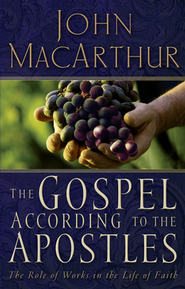
The Gospel According to the Apostles MacArthur

By John MacArthur

One of the most confusing elements of the entire lordship controversy involves dispensationalism. Some have supposed that my attack on no-lordship theology is an all-out assault against dispensationalism. That is not the case. It may surprise some readers to know that the issue of dispensationalism is one area where Charles Ryrie, Zane Hodges, and I share some common ground. We are all dispensationalists.

Many people are understandably confused by the term dispensationalism. I’ve met seminary graduates and many in Christian leadership who haven’t the slightest idea how to define dispensationalism. How does it differ from covenant theology? What does it have to do with lordship salvation? Perhaps we can answer those questions simply and without a lot of theological jargon.

Dispensationalism is a system of biblical interpretation that sees a distinction between God’s program for Israel and His dealings with the church. It’s really as simple as that.

A dispensation is the plan of God by which He administers His rule within a given era in His eternal program. Dispensations are not periods of time, but different administrations in the eternal outworking of God’s purpose. It is especially crucial to note that the way of salvation—by grace through faith—is the same in every dispensation. God’s redemptive plan remains unchanged, but the way He administers it will vary from one dispensation to another. Dispensationalists note that Israel was the focus of God’s redemptive plan in one dispensation. The church, consisting of redeemed people including Jews and Gentiles, is the focus in another. All dispensationalists believe at least one dispensation is still future—during the thousand-year reign of Christ on earth, known as the millennium, in which Israel will once again play a pivotal role.

Dispensationalism teaches that all God’s remaining covenant promises to Israel will be literally fulfilled—including the promises of earthly blessings and an earthly messianic kingdom. God promised Israel, for example, that they would possess the promised land forever ( Gen. 13:14–17 ; Exod. 32:13 ). Scripture declares that Messiah will rule over the kingdoms of the earth from Jerusalem ( Zech. 14:9–11 ). Old Testament prophecy says that all Israel will one day be restored to the promised land ( Amos 9:14–15); the temple will be rebuilt ( Ezek. 37:26–28 ); and the people of Israel will be redeemed ( Jer. 23:6 ; Rom. 11:26–27). Dispensationalists believe all those promised blessings will come to pass as literally as did the promised curses.

Covenant theology, on the other hand, usually views such prophecies as already fulfilled allegorically or symbolically. Covenant theologians believe that the church, not literal Israel, is the recipient of the covenant promises. They believe the church has superseded Israel in God’s eternal program. God’s promises to Israel are therefore fulfilled in spiritual blessings realized by Christians. Since their system does not allow for literal fulfillment of promised blessings to the Jewish nation, covenant theologians allegorize or spiritualize those prophetic passages of God’s Word.

I am a dispensationalist because dispensationalism generally understands and applies Scripture—particularly prophetic Scripture—in a way that is more consistent with the normal, literal approach I believe is God’s design for interpreting Scripture. For example, dispensationalists can take at face value Zechariah 12–14 , Romans 11:25–29 , and Revelation 20:1–6. The covenant theologian, on the other hand, cannot.

So I am convinced that the dispensationalist distinction between the church and Israel is an accurate understanding of God’s eternal plan as revealed in Scripture. I have not abandoned dispensationalism, nor do I intend to.

Note, by the way, that Dr. Ryrie’s description of dispensationalism and his reasons for embracing the system are very similar to what I have written here. Some years ago he wrote, “The essence of dispensationalism, then, is the distinction between Israel and the church. This grows out of the dispensationalist’s consistent employment of normal or plain interpretation” (Charles Ryrie. Dispensationalism Today. Chicago: Moody Press, 1965, 47). On these matters, it seems, Dr. Ryrie and I are in fundamental agreement. It is in the practical outworking of our dispensationalism that we differ. Dr. Ryrie’s system turns out to be somewhat more complex than his own definition might suggest.

The lordship debate has had a devastating effect on dispensationalism. Because no-lordship theology is so closely associated with dispensationalism, many have imagined a cause-and-effect relationship between the two. In The Gospel According to Jesus, I made the point that some early dispensationalists had laid the foundation for no-lordship teaching. I disagreed with dispensational extremists who relegate whole sections of Scripture—including the Sermon on the Mount and the Lord’s Prayer—to a yet-future kingdom era. I was critical of the way some dispensationalists have handled the preaching and teaching of Jesus in a way that erases the evangelistic intent from some of His most important invitations. I decried the methodology of dispensationalists who want to isolate salvation from repentance, justification from sanctification, faith from works, and Christ’s lordship from His role as Savior, in a way that breaks asunder what God has joined together.

Several outspoken anti-dispensationalists hailed the book as a major blow to dispensationalism. They wanted to declare the system dead and hold a celebratory funeral.

Frankly, some mongrel species of dispensationalism ought to die, and I will be happy to join the cortege. But it is wrong to write off dispensationalism as altogether invalid. My purpose is not to attack the roots of dispensationalism, but rather to plead for a purer, more biblical application of the literal, historical, grammatical principle of interpretation. The hermeneutic method that underlies dispensationalism is fundamentally sound and must not be abandoned. That is not the point of the lordship debate.

Who are dispensationalists? Virtually all dispensationalists are theologically conservative evangelicals. Our view of Scripture is typically very high; our method of interpretation is consistently literal; and our zeal for spiritual things is inflamed by our conviction that we are living in the last days.

How does dispensationalism influence our overall theological perspective? Obviously, the central issue in any dispensationalist system is eschatology, or the study of prophecy. All dispensationalists are premillennialists. That is, they believe in a future earthly thousand-year reign of Christ. That’s what a literal approach to prophecy mandates (cf. Rev. 20:1–10 ). Dispensationalists may disagree on the timing of the rapture, the number of dispensations, or other details, but their position on the earthly millennial kingdom is settled by their mode of biblical interpretation.

Dispensationalism also carries implications for ecclesiology, or the doctrine of the church, because of the differentiation between the church and Israel. Many dispensationalists, myself included, agree that there is some continuity between the Old and New Testament people of God in that we share a common salvation purchased by Jesus Christ and appropriated by grace through faith. But dispensationalists do not accept covenant theology’s teaching that the church is spiritual Israel. Covenant theology sees continuity between Jewish ritual and the New Testament sacraments, for example. In their system, baptism and circumcision have similar significance. In fact, many covenant theologians use the analogy of circumcision to argue for infant baptism. Dispensationalists, on the other hand, tend to view baptism as a sacrament for believers only, distinct from the Jewish rite.

So dispensationalism shapes one’s eschatology and ecclesiology. That is the extent of it. Pure dispensationalism has no ramifications for the doctrines of God, man, sin, or sanctification. More significantly, true dispensationalism makes no relevant contribution to soteriology, or the doctrine of salvation. In other words, nothing in a legitimate dispensational approach to Scripture mandates that we define the gospel in any unique or different way. In fact, if the same zealous concern for literal hermeneutics that yields a distinction between Israel and the church were followed consistently in the salvation issue, there would be no such thing as no-lordship soteriology.

What Is the Connection Between Dispensationalism and No-lordship Doctrine?

Yet the fact remains that virtually all the champions of no-lordship doctrine are dispensationalists. No covenant theologian defends the no-lordship gospel. Why?

Understand, first of all, that dispensationalism has not always been well represented by its most enthusiastic advocates. As I have noted, the uniqueness of dispensationalism is that we see a distinction in Scripture between Israel and the church. That singular perspective, common to all dispensationalists, sets us apart from nondispensationalists. It is, by the way, the only element of traditional dispensationalist teaching that is yielded as a result of literal interpretation of biblical texts. It also is the only tenet virtually all dispensationalists hold in common. That is why I have singled it out as the characteristic that defines dispensationalism. When I speak of “pure” dispensationalism, I’m referring to this one common denominator—the Israel-church distinction.

Admittedly, however, most dispensationalists carry far more baggage in their systems than that one feature. Early dispensationalists often packaged their doctrine in complex and esoteric systems illustrated by intricate diagrams. They loaded their repertoire with extraneous ideas and novel teachings, some of which endure today in various strains of dispensationalism. Dispensationalism’s earliest influential spokesmen included J. N. Darby, founder of the Plymouth Brethren and considered by many the father of modern dispensationalism; Cyrus I. Scofield, author of the Scofield Reference Bible; Clarence Larkin, whose book of dispensational charts has been in print and selling briskly since 1918; and Ethelbert W. Bullinger, an Anglican clergyman who took dispensationalism to an unprecedented extreme usually called ultradispensationalism. Many of these men were self-taught in theology and were professionals in secular occupations. Darby and Scofield, for example, were attorneys, and Larkin was a mechanical draftsman. They were laymen whose teachings gained enormous popularity largely through grass-roots enthusiasm.

Unfortunately some of these early framers of dispensationalism were not as precise or discriminating as they might have been had they had the benefit of a more complete theological education. C. I. Scofield, for example, included a note in his reference Bible that contrasted “legal obedience as the condition of [Old Testament] salvation” with “acceptance … of Christ” as the condition of salvation in the current dispensation (The Scofield Reference Bible. New York, : Oxford, 1917, 11115). Nondispensationalist critics have often attacked dispensationalism for teaching that the conditions for salvation differ from dispensation to dispensation. Here, at least, Scofield left himself open to that criticism, though he seemed to acknowledge in other contexts that the law was never a means of salvation for Old Testament saints (In a note at Exodus 19:3, where Moses was being given the law, Scofield wrote, “The law is not proposed as a means of life, but as a means by which Israel might become ‘a peculiar treasure’ and a ‘kingdom of priests” (Ibid, 93).

The maturing of dispensationalism, then, has mainly been a process of refining, distilling, clarifying, paring down, and cutting away what is extraneous or erroneous. Later dispensationalists, including Donald Grey Barnhouse, Wilbur Smith, and H. A. Ironside, were increasingly wary of the fallacies that peppered much early dispensationalist teaching. Ironside’s written works show his determination to confront error within the movement. He attacked Bullinger’s ultradispensationalism (Wrongly Dividing the Word of Truth. New York: Loizeaux, n.d.). He criticized teaching that relegated repentance to some other era (Except Ye Repent. Grand Rapids: Zondervan, 1937). He condemned the “carnal Christian” theology that helped pave the way for today’s radical no-lordship teaching (Eternal Security of Believers. New York: Loizeaux, 1934). Ironside’s writings are replete with warnings against antinomianism (See, for example, Full Assurance. Chicago: Moody, 1937, 64, 77-87; also Holiness: The False and the True. Neptune, N.J.: Loizeaux, 1912, 121-26).

Nondispensationalists have tended to caricature dispensationalism by emphasizing its excesses, and frankly the movement has produced more than its share of abominable teaching. Dispensationalists have often been forced to acknowledge that some of their critics’ points have been valid (Ryrie, for example, conceded in Dispensationalism Today that Scofield had made “unguarded statements” about dispensationalist soteriology and that dispensationalists often give a wrong impression about the role of grace during the Old Testament era (112,117). The biblical distinction between Israel and the church remains unassailed, however, as the essence of pure dispensationalism.

In recent years, dispensationalism has been hit with a blistering onslaught of criticism, mostly focusing on dispensationalism’s love affair with the no-lordship gospel. Evidence of this may be seen in John Gerstner’s Wrongly Dividing the Word of Truth: A Critique of Dispensationalism (Brentwood, Tenn.: Wolgemuth & Hyatt, 1991. Cf. Richard L. Mayhue, “Who Is Wrong? A Review of John Gerstner’s Wrongly Dividing the Word of Truth,” Master’s Seminary Journal 3:1, Spring 1992: 73-94).

Gerstner rightly attacks elements of antinomianism and no-lordship soteriology in some dispensationalists’ teaching. He wrongly assumes, however, that those things are inherent in all dispensationalism. He dismisses the movement altogether because of the shoddy theology he finds in the teaching of several prominent dispensationalists.

It is a gross misunderstanding to assume that antinomianism is at the heart of dispensationalist doctrine. Moreover, it is unfair to portray all dispensationalists as unsophisticated or careless theologians. Many skilled and discerning students of Scripture have embraced dispensationalism and managed to avoid antinomianism, extremism, and other errors. The men who taught me in seminary were all dispensationalists. Yet none of them would have defended no-lordship teaching (Moreover, everyone on The Master’s Seminary faculty is a dispensationalist. None of us holds any of the antinomian views Dr. Gerstner claims are common to all dispensationalists).

Nevertheless, no one can deny that dispensationalism and antinomianism have often been advocated by the same people. All the recent arguments that have been put forth in defense of no-lordship theology are rooted in ideas made popular by dispensationalists. The leading proponents of contemporary no-lordship theology are all dispensationalists. The lordship controversy is merely a bubbling to the surface of tensions that have always existed in and around the dispensationalist community. That point is essential to a clear understanding of the whole controversy.

Thus to appreciate some of the key tenets of the no-lordship gospel, we must comprehend their relationship to the dispensationalist tradition.

Tritely Dividing the Word?

For some dispensationalists, the Israel-church distinction is only a starting point. Their theology is laden with similar contrasts: church and kingdom, believers and disciples, old and new natures, faith and repentance. Obviously, there are many important and legitimate distinctions found in Scripture and sound theology: Old and New Covenants, law and grace, faith and works, justification and sanctification. But dispensationalists often tend to take even the legitimate contrasts too far. Most dispensationalists who have bought into no-lordship doctrine imagine, for example, that law and grace are mutually exclusive opposites, or that faith and works are somehow incompatible.

Some dispensationalists apply 2 Timothy 2:15 (“Study to show thyself approved unto God, a workman that needeth not to be ashamed, rightly dividing the word of truth ”— kjv , emphasis added) as if the key word were dividing rather than rightly. The dispensationalist tendency to divide and contrast has led to some rather inventive exegesis. Some dispensationalists teach, for example, that “the kingdom of heaven” and “the kingdom of God” speak of different domains (Scofield, The Scofield Reference Bible, 1003). The terms are clearly synonymous in Scripture, however, as a comparison of Matthew and Luke shows ( Matt. 5:3 // Luke 6:20 ; Matt. 10:7 // Luke 10:9 ; Matt. 11:11 // Luke 7:28 ; Matt. 11:12 // Luke 16:16 ; Matt. 13:11 // Luke 8:10 ; Matt. 13:31–33 // Luke 13:18–21 ; Matt. 18:4 // Luke 18:17 ; Matt. 19:23 // Luke 18:24 ). Matthew is the only book in the entire Bible that ever uses the expression “kingdom of heaven.” Matthew, writing to a mostly Jewish audience, understood their sensitivity to the use of God’s name. He simply employed the common euphemism heaven. Thus the kingdom of heaven is the kingdom of God.

This tendency to set parallel truths against each other is at the heart of no-lordship theology. Jesus’ lordship and His role as Savior are isolated from one another, making it possible to claim Him as Savior while refusing Him as Lord. Justification is severed from sanctification, legitimizing the notion of salvation without transformation. Mere believers are segregated from disciples, making two classes of Christians, carnal and spiritual. Faith is pitted against obedience, nullifying the moral aspect of believing. Grace becomes the antithesis of law, providing the basis for a system that is inherently antinomian.

The grace-law dichotomy is worth a closer look. Many early dispensationalist systems were unclear on the role of grace in the Mosaic economy and the place of law in the current dispensation. As I noted, Scofield left the unfortunate impression that Old Testament saints were saved by keeping the law. Scofield’s best-known student was Lewis Sperry Chafer, co-founder of Dallas Theological Seminary. Chafer, a prolific author, wrote dispensationalism’s first unabridged systematic theology. Chafer’s system became the standard for several generations of dispensationalists trained at Dallas. Yet Chafer repeated Scofield’s error. In his summary on justification, he wrote,

According to the Old Testament men were just because they were true and faithful in keeping the Mosaic Law. Micah defines such a life after this manner: “He hath shewed thee, O man, what is good; and what doth the Lord require of thee, but to do justly, and to love mercy, and to walk humbly with thy God?” ( 6:8 ). Men were therefore just because of their own works for God, whereas New Testament justification is God’s work for man in answer to faith ( Rom. 5:1 – See Lewis Sperry Chafer, Systematic Theology, 8 vols., Dallas: Seminary Press, 1948, 7:219 [emphasis added] ).

Though Chafer elsewhere denied that he taught multiple ways of salvation, it is clear that he fixed a great gulf between grace and law. He believed the Old Testament law imposed “an obligation to gain merit” with God (Ibid, 7:179). On the other hand, Chafer believed grace delivers the child of God “from every aspect of the law—as a rule of life, as an obligation to make himself acceptable to God, and as a dependence on impotent flesh” (Lewis Sperry Chafer, Grace, Wheaton, Ill.: Van Kampen, 1922, 344). “Grace teachings are not laws; they are suggestions. They are not demands; they are beseechings, ” he wrote (Ibid).

In Chafer’s system, God seems to fluctuate between dispensations of law and dispensations of grace. Grace was the rule of life from Adam to Moses. “Pure law” took over when a new dispensation began at Sinai. In the current dispensation, “pure grace” is the rule. The millennial kingdom will be another dispensation of “pure law.” Chafer evidently believed grace and law could not coexist side by side, and so he seemed to eliminate one or the other from every dispensation. He wrote,

Both the age before the cross and the age following the return of Christ represent the exercise of pure law; while the period between the two ages represents the exercise of pure grace. It is imperative, therefore, that there shall be no careless co-mingling of these great age-characterizing elements, else the preservation of the most important distinctions in the various relationships between God and man are lost, and the recognition of the true force of the death of Christ and His coming again is obscured (Ibid, 124, emphasis added).

No one denies that Scripture clearly contrasts law and grace. John 1:17 says, “The Law was given through Moses; grace and truth were realized through Jesus Christ.” Romans 6:4 says, “You are not under law, but under grace.” So the distinction between law and grace is obvious in Scripture.

But grace and law operate in every dispensation. Grace is and always has been the only means of eternal salvation. The whole point of Romans 4 is that Abraham, David, and all other Old Testament saints were justified by grace through faith, not because they kept the law (Galatians 3 also makes clear that it was never God’s intent that rightoeusness should come through the law or that slavation could be earned through obedience [see especially vv. 7, 11]. The law acted as a tutor, to bring people to Christ (v. 24). Thus even in the Old Testament, people were saved because of faith, not because of obedience to the law [cf. Romans 3:19-20). Did the apostle Paul believe we can nullify the law in this age of pure grace? Paul’s reply to that question was unequivocal: “May it never be! On the contrary, we establish the Law” ( Rom. 3:31 ).

In fairness, it is important to note that when pressed on the issue, Chafer acknowledged that God’s grace and Christ’s blood were the only ground on which sinners in any age could be saved (Lewis Sperry Chafer, “Dispensational Distinctions Denounced,” Bibliotheca Sacra, July 1944: 259). It must be stressed, however, that Chafer, Scofield, and others who have followed their lead have made too much of the differences between Old and New Testament dispensations. Wanting to avoid what he thought was “careless co-mingling” of law and grace, Chafer ended up with an “age of law” that is legalistic and an “age of grace” that smacks of antinomianism.

Chafer himself was a godly man, committed to holiness and high standards of Christian living. In practice, he would never have condoned carnality. But his dispensationalist system—with the hard dichotomies it introduced; its “grace teachings” that were “suggestions,” not demands; and its concept of “pure” grace that stood in opposition to law of any kind—paved the way for a brand of Christianity that has legitimized careless and carnal behavior.

Chafer could rightly be called the father of twentieth-century no-lordship theology. He listed repentance and surrender as two of “the more common features of human responsibility which are too often erroneously added to the one requirement of faith or belief” (Chafer, Systematic Theology, 3:372). He wrote, “to impose a need to surrender the life to God as an added condition of salvation is most unreasonable. God’s call to the unsaved is never said to be unto the Lordship of Christ; it is unto His saving grace” (Ibid, 3:385). “Next to sound doctrine itself, no more important obligation rests on the preacher than that of preaching the Lordship of Christ to Christians exclusively, and the Saviorhood of Christ to those who are unsaved” (Ibid, 3:387).

It is important to note that when Chafer wrote those things, he was arguing against the Oxford Movement, a popular but dangerous heresy that was steering Protestants back into the legalism and works-righteousness of Roman Catholicism. Chafer wrote,

The error of imposing Christ’s Lordship upon the unsaved is disastrous.… A destructive heresy is abroad under the name The Oxford Movement, which specializes in this blasting error, except that the promoters of the Movement omit altogether the idea of believing on Christ for salvation and promote exclusively the obligation to surrender to God. They substitute consecration for conversion, faithfulness for faith, and beauty of daily life for believing unto eternal life. As is easily seen, the plan of this movement is to ignore the need of Christ’s death as the ground of regeneration and forgiveness, and to promote the wretched heresy that it matters nothing what one believes respecting the Saviorhood of Christ if only the daily life is dedicated to God’s service.… The tragedy is that out of such a delusion those who embrace it are likely never to be delivered by a true faith in Christ as Savior. No more complete example could be found today of “the blind leading the blind” than what this Movement presents (Ibid, 3:385-386).

But Chafer prescribed the wrong remedy for the false teachings of the Oxford Movement. To answer a movement that “omit[s] altogether the idea of believing on Christ for salvation and promote[s] exclusively the obligation to surrender to God,” he devised a notion of faith that strips believing of any suggestion of surrender. Although the movement he opposed was indeed an insidious error, Chafer unfortunately laid the foundation for the opposite error, with equally devastating results.

The notion of faith with no repentance and no surrender fit well with Chafer’s concept of an age of “pure grace,” so it was absorbed and expanded by those who developed their theology after his model. It endures today as the basis of all no-lordship teaching.

One other particularly unfortunate outgrowth of Chafer’s rigid partitioning of “the age of law” and “the age of grace” is its effect on Chafer’s view of Scripture. Chafer believed that “The teachings of the law, the teachings of grace, and the teachings of the kingdom are separate and complete systems of divine rule” (Ibid, 4:225). Accordingly, he consigned the Sermon on the Mount and the Lord’s Prayer to the yet-future kingdom age, and concluded that the only Scriptures directly applicable to this age of grace are “portions of the Gospels, portions of the Book of Acts, and the Epistles of the New Testament” (Ibid, 4:206) —the “grace teachings.” How does one know which portions of the Gospels and Acts are “grace teachings” meant for this age? Chafer was vague:

The grace teachings are not, for convenience, isolated in the Sacred Text. The three economies appear in the four Gospels. The grace teachings are rather to be identified by their intrinsic character wherever they are found. Large portions of the New Testament are wholly revelatory of the doctrine of grace. The student, like Timothy, is enjoined to study to be one approved of God in the matter of rightly dividing the Scriptures (Ibid, 4:185).

In other words, there is a lot of law and kingdom teaching mixed into the New Testament. It is not explicitly identified for us, but we can fall into error if we wrongly try to apply it to the present age. Scripture is therefore like a puzzle. We must discern and categorize which portions apply to this age and categorize them accordingly. We can do this only by “their intrinsic character.”

Chafer was certain about one thing: much if not most of Christ’s earthly teaching is not applicable to the Christian in this age:

There is a dangerous and entirely baseless sentiment abroad which assumes that every teaching of Christ must be binding during this age simply because Christ said it. The fact is forgotten that Christ, while living under, keeping, and applying the Law of Moses, also taught the principles of His future kingdom, and, at the end of His ministry and in relation to His cross, He also anticipated the teachings of grace. If this threefold division of the teachings of Christ is not recognized, there can be nothing but confusion of mind and consequent contradiction of truth (Ibid, 4:224).

Dispensationalists who follow Chafer at this point wrongly divide the Word of truth, assigning whole sections of the New Testament to some other dispensation, nullifying the force of major segments of the Gospels and our Lord’s teaching for today (Ultradispensationalists take Chafer’s methodology even a step further. Noting that the apostle Paul called the church a mystery “which in other generations was not made known to the sons of men, as it has now been revealed to His holy apostles and prophets in the Spirit” [Eph. 3:5], they concluded that the church age did not begin until this point in Paul’s ministry. Thus they abrogate all the New Testament except for Paul’s prison epistles).

Which Gospel Should We Preach Today?

Not long ago I received a paper that has been circulated widely by a well-known dispensationalist. He wrote, “Dr. MacArthur was quite correct in titling his book The Gospel According to Jesus. The Gospel that Jesus taught in His pre-Cross humiliation, as Israel’s Messiah and to covenant people under the law was, for all intents and purposes, Lordship salvation.” But, he added, “Lordship salvation is based upon the Gospel according to Jesus, John the Baptist, and the early disciples. This Gospel is directed to the covenant nation of Israel.… The Lord Jesus’ Kingdom Gospel had nothing whatsoever to do with Christians, or the Church.”

The paper quotes heavily from Dr. Chafer’s writings, attempting to demonstrate that Jesus’ gospel “was on the level of the law and the earthly kingdom” and has nothing to do with grace or the current dispensation. The paper’s author notes that I wrote, “On a disturbing number of fronts, the message being proclaimed today is not the gospel according to Jesus.” To that he replies, “How blessedly true! Today we are to minister Paul’s ‘by grace are ye saved through faith’ Gospel … not the Lord Jesus’ Gospel relating to the law-oriented theocratic kingdom.”

He continues, “The convert via the Gospel according to Jesus became a child of the kingdom [not a Christian]. And divine authority will ever be the driving force in his heart—the indwelling Spirit writing the law upon his heart to enable him to surrender to the theocratic kingdom law, under his King.… [But the Christian] is not under authority, he is not seeking to obey—unless he is under law as described in Romans Seven. For him to live is Christ, and that life is not under authority.… Paul was offering an altogether different salvation.”

There, as clearly as can be stated, are all the follies that have ever defiled dispensationalism, synthesized into a single system. Blatant antinomianism: “the Christian … is not under authority, he is not seeking to obey”; multiple ways of salvation: “Paul was offering an altogether different salvation”; a fragmented approach to Scripture: “the Lord Jesus’ Kingdom Gospel had nothing whatsoever to do with Christians, or the Church”; and the tendency to divide and disconnect related ideas: “Today we are to minister Paul’s [Gospel] … not the Lord Jesus’ Gospel.”

Note carefully: This man acknowledges that Jesus’ gospel demanded surrender to His lordship. His point is that Jesus’ message has no relevance to this present age. He believes Christians today ought to proclaim a different gospel than the one Jesus preached. He imagines that Jesus’ invitation to sinners was of a different nature than the message the church is called to proclaim. He believes we should be preaching a different gospel.

None of those ideas is new or unusual within the dispensationalist community. All of them can be traced to one or more of dispensationalism’s early spokesmen. But it is about time all of them were abandoned.

In fairness, we should note that the paper I have quoted expresses some rather extreme views. Most of the principal defenders of no-lordship evangelism would probably not agree with that man’s brand of dispensationalism. But the no-lordship doctrine they defend is the product of precisely that kind of teaching. It is not enough to abandon the rigid forms of extreme dispensationalism; we must abandon the antinomian tendencies as well.

The careful discipline that has marked so much of our post-Reformation theological tradition must be carefully guarded. Defenders of no-lordship salvation lean too heavily on the assumptions of a predetermined theological system. They often draw their support from presupposed dispensationalist distinctions (salvation/discipleship, carnal/spiritual believers, gospel of the kingdom/gospel of grace, faith/repentance). They become entangled in “what-ifs” and illustrations. They tend to fall back on rational, rather than biblical, analysis. When they deal with Scripture, they are too willing to allow their theological system to dictate their understanding of the text. As a result, they regularly adopt novel interpretations of Scripture in order to make it conform to their theology.

A reminder is in order: Our theology must be biblical before it can be systematic. We must start with a proper interpretation of Scripture and build our theology from there, not read into God’s Word unwarranted presuppositions. Scripture is the only appropriate gauge by which we may ultimately measure the correctness of our doctrine.

Dispensationalism is at a crossroads. The lordship controversy represents a signpost where the road forks. One arrow marks the road of biblical orthodoxy. The other arrow, labeled “no-lordship,” points the way to a sub-Christian antinomianism. Dispensationalists who are considering that path would do well to pause and check the map again.

The only reliable map is Scripture, not someone’s dispensational diagrams. Dispensationalism as a movement must arrive at a consensus based solely on God’s Word. We cannot go on preaching different gospels to an already-confused world.

SOURCE: John MacArthur. “Appenidix 2” in The Gospel According to the Apostles. Nashville: Thomas Nelson, 2005.

Tullian Tchividjian on The Tri-Centrality of the Gospel

Tullian T image

There’s a lot of discussion taking place regarding the essence of the Gospel. People are asking questions like “What is the center of the Gospel?” and  “Can (or should) the essence of the Gospel be distinguished from its implications?” Some insist the gospel is just the message of Christ’s substitutionary atonement and that anything else is an “entailment” or a “result.” However, the Bible says the essence of the Gospel is bigger than this.

For instance, in Romans 2:16 Paul says that Christ coming to judge and put the world to rights is part of his gospel. And in Acts 13:32 Paul says that the good news includes the fact that in Christ, the Old Testament promises to Israel are fulfilled. But perhaps the most explicit places where the fullness of the Gospel’s essence is seen is in Mark 1:14-15 and Luke 16:16, where Jesus defines the gospel as the coming of the kingdom of God which includes the restoration of all things. In other words, the Gospel is certainly not less than Christ’s atoning work on the cross work, but it is more.

As I’ve come to understand it, the Gospel is the good news that God’s Kingdom has come from heaven to earth in the person of Jesus. This includes all he accomplished by living a perfect life (fullfilling the law–what theologians call his active obedience), all he accomplished by his substitutionary death on the cross (breaking the curse of sin and absorbing the Father’s wrath–what theologians call his passive obedience) and all he accomplished by being raised from the dead (conquering death and thereby guaranteeing the eventual renewal of all things).

In other words, Christ’s life by itself is not the center of the Gospel, the cross by itself is notthe center of the Gospel, and the resurrection by itself is not the center of the Gospel. Anyone of these without the other two fails to bring about redemption. In a sense, you could say the Gospel has a tri-centrality to it. So, we don’t have to choose between parts of Christ’s finished work as being the center of the Gospel. It’s much more theologically accurate to say that Christ himself (his life, death, and resurrection) is the center of the Gospel.

I think this is basically what Tim Keller is getting at when he says the center of the One Gospel is incarnation, substitution, and restoration. Not one. All three. He puts it like this:

In the person of Jesus, God emptied himself of his glory and became human (incarnation). Through the work of Jesus God substituted himself for us and atoned for our sin, by grace, bringing us into fellowship with him in the church (substitution). At the return of Jesus, God will restore creation and make a new world in which we can enjoy our new life together with him forever (restoration).

I like that.

As I was discussing this with a friend of mine, he shared these helpful insights:

I agree that the essence of evangelism is calling people to repent and believe. What some today are rightly concerned about is that many younger folks are saying that rehabbing houses and feeding the poor is just as much ‘proclaiming the gospel’ as verbal communication. If you study the Biblical texts, ‘preaching the gospel’ is almost always a verbal call to repent and be converted. And I think some today are rightly afraid that simply helping make the world a better place (like in mainline Christianity) will become identical to ‘living out the gospel’ or ‘preaching the gospel.’

But its another thing to say that the gospel content –the good news of what Jesus has accomplished–is only that our individual souls are saved and not that the world is going to be renewed. The good news of the Gospel includes our sins being forgiven and that we are finally going to be given a new heavens and new earth. We must be careful not to imply that some of the benefits of the cross are good news (like pardon and justification) and some are not (like resurrection, restoration of the world, home.) Or, that one is more important than the other. Or, that one is the essence of the Gospel and the other only an implication.

Jesus is the divine curse-remover and creation-renewer. Christ’s law-fulfilling life qualified him alone to be our substitute (which is why I often say that we are not saved apart from the law–rather we are saved in Christ who perfectly kept the law for us). Christ’s substitutionary death on the cross broke the curse of sin and death brought on by Adam’s cosmic rebellion. And his bodily resurrection from the dead three days later dealt death its final blow, guaranteeing the eventual renewal of all things “in Christ.”

The tri-fold dimensions of Christ’s finished work, then, are both individual and cosmic. They range from personal pardon for sin and individual forgiveness to the final resurrection of our bodies and the restoration of the whole world. Now that’s good news—gospel—isn’t it? If we place our trust in the finished work of Christ, sin’s curse will lose its grip on us individually and we will one day be given a renewed creation. The gospel isn’t only about reestablishing a two-way relationship between God and us; it also restores a three-way relationship among God, his people, and the created order. Through Christ’s work, our relationship with God is restored while creation itself is renewed. This is what theologians mean when they talk about redemption. They’re describing this profound, far-reaching work by God.

Of course none of this is available for those who remain disconnected from Jesus. Sin’s acidic curse remains on everything that continues to be separated from Christ. We must be united to Christ by placing our trust in his finished work in order to receive and experience all the newness God has promised. For, as John Calvin said, “As long as Christ remains outside of us, and we are separated from him, all that he has suffered and done for the salvation of the human race remains useless and of no value for us.” But for all that is united to Christ, everything false, bad, and corrupting will one day be consumed by what is true, good, and beautifying—and this includes the material world.

As the beloved Christmas hymn “Joy to the World” puts it:

He comes to make his blessings flow
Far as the curse is found.

In this remarkable line, we broadcast in song a Gospel as large as the universe itself. The good news of the Gospel is that the blessings of redemption “flow as far as the curse is found.” This hymn reminds us that the Gospel is good news to a world that has, in every imaginable way, been twisted away from the intention of the Creator’s design by the powers of sin and death, but that God, in Christ, is putting it back into shape.

Because of our various fears, insecurities, and tendencies to overreact to abuses, we have a real knack for creating dichotomies where dichotomies aren’t supposed to be. I guess I’m just not sure why there’s so much disagreement. Do you?

SOURCE: http://thegospelcoalition.org/blogs/tullian/2010/12/17/the-tri-centrality-of-the-gospel/

 ABOUT THE AUTHOR

William Graham Tullian Tchividjian (pronounced cha-vi-jin), is the senior pastor of one of America’s most well-known churches, Coral Ridge Presbyterian Church in Ft. Lauderdale, Florida, a Lecturer of Pastoral Theology at Knox Theological Seminary, a contributing editor to Leadership Journal, and the grandson of Evangelist Billy Graham. He is a graduate of Columbia International University, where he earned a degree in philosophy, and Reformed Theological Seminary in Orlando, where he earned an M.Div. degree (Master of Divinity). Tullian was the founding pastor of the former New City Church, which merged with Coral Ridge Presbyterian Church in 2009.

Tullian is a best-selling author, having written six books including Jesus + Nothing = Everything which won Christianity Today’s book of the year in 2011. Both Jesus + Nothing = Everything and his most recent book Glorious Ruin: How Suffering Sets You Free were an ECPA finalist for Book of the Year. Tullian travels extensively speaking at conferences, churches, and colleges around the country and is also the founder of LIBERATE—a resource ministry that seeks to “connect God’s inexhaustible grace to an exhausted world” through an annual conference, a website, and a wide range of other media outlets including a daily radio program on Moody Radio called LIBERATE. As a respected pastor, author, and speaker, Tullian is singularly and passionately devoted to seeing people set free by the amazing power of God’s grace.

A South Florida native, Tullian has been married to his wife Kim since 1994 and they have three children: Gabe, Nate, and Genna. He loves the beach, loves to exercise, and when he has time, he loves to surf.


DOES DEFINITE ATONEMENT UNDERMINE OUR ZEAL FOR EVANGELISM?

*The Achilles Heel of Reformed Theology?

FROM HEAVEN HE CAME AND SOUGHT HER

The doctrine of definite atonement, known historically as “limited atonement” or “particular redemption”, has always courted controversy. It has been called a grim and textless doctrine, the Achilles heel of Reformed theology (see, for example, Karl Barth and Broughton Knox). Of the many objections to the doctrine, one of the strongest is that definite atonement undermines a zeal for evangelism. If Christ died only for the elect, can we sincerely offer the gospel to everyone?

However, when definite atonement is placed alongside other biblical truths, the question does not follow. Particularity of grace in election or atonement does not mitigate a universal gospel offer.  This is where we should follow Christ’s example.

Biblical Examples

In Matthew 11, Jesus explains that no one knows the Father except the Son and those to whom the Son chooses to reveal him (v. 27). The particularity is explicit. Yet in the very next verse, Jesus gives a universal offer to everyone to come to him and find rest (v. 28). In John 6, Jesus claims that he has come from heaven to do his Father’s will, which is to lose none of those given to him but to raise them up on the last day (v. 39). This is actually the reason why (“For”) whoever comes to him will never be turned away (v. 38). The Father’s will is that “everyone” who looks to the Son and believes will have eternal life (v. 40). Christ’s purpose in coming was particular; the work he performed in his life, death, resurrection, and ascension was particular (cf. John 17); and yet his invitation was universal. It was also sincere.

Did Christ know all those whom the Father had given him as he encountered the many crowds during his ministry? Of course. Did he still sincerely offer himself to everyone in the crowd? Yes. So we should be like Christ in relation to this issue. Calvin put it well: “Since we do not know who belongs to the number of the predestined, and who does not, it befits us so to feel as to wish that all be saved. So it will come about that, whoever we come across, we shall study to make him a sharer of peace.”

Why It Matters

But here’s the take-home value in definite atonement. When we offer Christ to sinners, we aren’t offering them the mere opportunity or possibility of salvation (as those who hold to an unlimited atonement can only do if they are consistent); rather, we offer them a Christ whose first name really means “Savior” (Matt. 1:21). And this is only so because God presented him as a propitiation for sinners—not potentially or possibly or hypothetically, but actually.

Let’s get even more practical. If one believes in definite atonement, can we say to people, “Christ died for you”? What’s interesting is that the phrase “Christ died for you” does not appear in the NT and yet the Apostles turned the world up-side-down with their preaching, as did many “Calvinist” ministers and missionaries: George Whitefield, Jonathan Edwards, Charles Spurgeon, William Carey, David Brainerd—to name but a few. So the efficacy of gospel preaching is not dependent on including the phrase “Christ died for you”. J. I. Packer is most helpful here:

The gospel is not, ‘believe that Christ died for everybody’s sins, and therefore for yours,’ any more than it is, ‘believe that Christ died only for certain people’s sins, and so perhaps not for yours.’ The gospel is, ‘believe on the Lord Jesus Christ, who died for sins, and now offers you Himself as your Saviour.’ This is the message which we need to take to the world. We have no business to ask them to put their faith in any view of the extent of the atonement; our job is to point them to the living Christ, and summon them to trust in Him.

Embracing the Tension

When it comes to definite atonement and evangelism, it’s not either/or but both/and.  Christ made a definite atoning sacrifice for those whom the Father had given to him; and we are commanded to proclaim Christ indiscriminately to all people.

How should we live between these two points of tension? On our knees, as we plead with our Triune God to do for others what he has so graciously done for us.

*SOURCE: http://www.crossway.org/blog/2014/01/does-definite-atonement-undermine-our-zeal-for-evangelism/


Jonathan Gibson (PhD, Cambridge University) is the is author of historical and biblical articles in Themelios and Journal of Biblical Literature, as well as “Obadiah” in the NIV Proclamation Bible, and is a coeditor of From Heaven He Came and Sought Her: Definite Atonement in Historical, Biblical, Theological, and Pastoral Perspective (excerpt).

GOSPEL GOLD FROM JOHN CALVIN

Edited by Tullian Tchvidjian and Arranged by Justin Taylor

John Calvin

A while back, a friend of mine sent me this nugget of gospel gold from John Calvin. It comes from a stunning preface to Pierre Robert Olivétan’s French translation of the New Testament (1534). Another friend, Justin Taylor, added line breaks to make it easier to read.

Calvin wrote:

Without the gospel

everything is useless and vain;

without the gospel

we are not Christians;

without the gospel

all riches is poverty,
all wisdom folly before God;
strength is weakness,
and all the justice of man is under the condemnation of God.

But by the knowledge of the gospel we are made

children of God,
brothers of Jesus Christ,
fellow townsmen with the saints,
citizens of the Kingdom of Heaven,
heirs of God with Jesus Christ, by whom

the poor are made rich,
the weak strong,
the fools wise,
the sinner justified,
the desolate comforted,
the doubting sure,
and slaves free.

It is the power of God for the salvation of all those who believe.

It follows that every good thing we could think or desire is to be found in this same Jesus Christ alone.

For, he was

sold, to buy us back;
captive, to deliver us;
condemned, to absolve us;

he was

made a curse for our blessing,
[a] sin offering for our righteousness;
marred that we may be made fair;

he died for our life; so that by him

fury is made gentle,
wrath appeased,
darkness turned into light,
fear reassured,
despisal despised,
debt canceled,
labor lightened,
sadness made merry,
misfortune made fortunate,
difficulty easy,
disorder ordered,
division united,
ignominy ennobled,
rebellion subjected,
intimidation intimidated,
ambush uncovered,
assaults assailed,
force forced back,
combat combated,
war warred against,
vengeance avenged,
torment tormented,
damnation damned,
the abyss sunk into the abyss,
hell transfixed,
death dead,
mortality made immortal.

In short,

mercy has swallowed up all misery,
and goodness all misfortune.

For all these things which were to be the weapons of the devil in his battle against us, and the sting of death to pierce us, are turned for us into exercises which we can turn to our profit.

If we are able to boast with the apostle, saying, O hell, where is thy victory? O death, where is thy sting? it is because by the Spirit of Christ promised to the elect, we live no longer, but Christ lives in us; and we are by the same Spirit seated among those who are in heaven, so that for us the world is no more, even while our conversation is in it; but we are content in all things, whether country, place, condition, clothing, meat, and all such things.

And we are

comforted in tribulation,
joyful in sorrow,
glorying under vituperation,
abounding in poverty,
warmed in our nakedness,
patient amongst evils,
living in death.

This is what we should in short seek in the whole of Scripture: truly to know Jesus Christ, and the infinite riches that are comprised in him and are offered to us by him from God the Father.

Do yourself a favor and read this over and over and over. It’s nutritious!

SOURCE: http://thegospelcoalition.org/blogs/tullian/2011/06/06/gospel-gold-from-john-calvin/

THE HOLE IN THE GOSPEL

THITG STEARNS

BY D.A. CARSON

John complains, “I simply cannot resolve this calculus problem.” Sarah offers a solution: “Let’s read some Shakespearean sonnets.”

I’ve got a problem with my car: it won’t start. But no problem: I know what to do. I’ll go and practice my guitar. That will fix it.

My cakes always used to fall when I took them out of the oven. But my friend showed me how to fix the problem. He showed me how to adjust the timing on my car engine.

Ridiculous, of course. But this is merely a farcical way of showing that solutions to problems must be closely tied to the problems themselves. You do not have a valid solution unless that solution resolves the problem comprehensively. A shoddy analysis of a problem may result in a solution that is useful for only a small part of the real problem. Equally failing, one can provide an excellent analysis of a problem yet respond with a limited and restricted solution.

So in the Bible, how are the “problem” of sin and the “solution” of the gospel rightly related to each other?

One of the major theses in Cornelius Plantinga’s stimulating book is that sin “is culpable vandalism of shalom.”1 That’s not bad, provided “shalom” is well-defined. Plantinga holds that shalom resides in a right relation of human beings to God, to other human beings, and to the creation. Perhaps the weakness of this approach is that shalom—rather than God—becomes the fundamental defining element in sin. Of course, God is comprehended within Plantinga’s definition: sin includes the rupture of the relationship between God and human beings. Yet this does not appear to make God quite as central as the Bible makes him. In Lev 19, for example, where God enjoins many laws that constrain and enrich human relationships, the fundamental and frequently repeated motive is “I am the LORD,” not “Do not breach shalom.” When David repents of his wretched sins of adultery, murder, and betrayal, even though he has damaged others, destroyed lives, betrayed his family, and corrupted the military, he dares say, truthfully, “Against you, you only, have I sinned and done what is evil in your sight” (Ps 51:4). The majority of the approximately six hundred OT passages that speak of the wrath of God connect it not to the destruction of shalom, but to idolatry—the de-godding of God.2 Human sin in Gen 3 certainly destroys human relationships and brings a curse on the creation, but treating this comprehensive odium as the vandalism of shalom makes it sound both too slight and too detached from God. After all, the fundamental act was disobeying God, and a central ingredient in the temptation of Eve was the incitement to become as God, knowing good and evil.

To put this another way, the tentacles of sin, the basic “problem” that the Bible’s storyline addresses, embrace guilt (genuine moral guilt, not just guilty feelings), shame, succumbing to the devil’s enticements, the destruction of shalom (and thus broken relationships with God, other human beings, and the created order), entailments in the enchaining power of evil, death (of several kinds),3 and hell itself. However many additional descriptors and entailments one might add (e.g., self-deception, transgression of law, folly over against wisdom, all the social ills from exploitation to cruelty to war, and so forth), the heart of the issue is that by our fallen nature, by our choice, and by God’s judicial decree, we are alienated from God Almighty.

For the Bible to be coherent, then, it follows that the gospel must resolve the problem of sin. What is the gospel? In recent years that question has been answered in numerous books, essays, and blogs. Like the word “sin,” the word “gospel” can be accurately but rather fuzzily defined in a few words, or it can be unpacked at many levels after one undertakes very careful exegetical study of εὐαγγέλιον4 and its cognates and adjacent themes.5 We could begin with a simple formulation such as “The gospel is the great news of what God has done in Jesus Christ.” Then one could adopt an obvious improvement: “The gospel is the great news of what God has done in Jesus Christ, especially in his death and resurrection” (cf. 1 Cor 15). Or we could take several quantum leaps forward, and try again:

The gospel is the great news of what God has graciously done in Jesus Christ, especially in his atoning death and vindicating resurrection, his ascension, session, and high priestly ministry, to reconcile sinful human beings to himself, justifying them by the penal substitute of his Son, and regenerating and sanctifying them by the powerful work of the Holy Spirit, who is given to them as the down payment of their ultimate inheritance. God will save them if they repent and trust in Jesus.

The proper response to this gospel, then, is that people repent, believe, and receive God’s grace by faith alone.

The entailment of this received gospel, that is, the inevitable result, is that those who believe experience forgiveness of sins, are joined together spiritually in the body of Christ, the church, being so transformed that, in measure as they become more Christ-like, they delight to learn obedience to King Jesus and joyfully proclaim the good news that has saved them, and they do good to all men, especially to the household of faith, eager to be good stewards of the grace of God in all the world, in anticipation of the culminating transformation that issues in resurrection existence in the new heaven and the new earth, to the glory of God and the good of his blood-bought people.

Once again, as in our brief treatment of sin, much more could be said to flesh out this potted summary. But observe three things:

1. The gospel is, first and foremost, news—great news, momentous news. That is why it must be announced, proclaimed—that’s what one does with news. Silent proclamation of the gospel is an oxymoron. Godly and generous behavior may bear a kind of witness to the transformed life, but if those who observe such a life hear nothing of the substance of the gospel, it may evoke admiration but cannot call forth faith because in the Bible faith demands faith’s true object, which remains unknown where there is no proclamation of the news.

2. The gospel is, first and foremost, news about what God has done in Christ. It is not law, an ethical system, or a list of human obligations; it is not a code of conduct telling us what we must do: it is news about what God has done in Christ.

3. On the other hand, the gospel has both purposes and entailments in human conduct. The entailments must be preached. But if you preach the entailments as if they were the gospel itself, pretty soon you lose sight of the reality of the gospel—that it is the good news of what God has done, not a description of what we ought to do in consequence. Pretty soon the gospel descends to mere moralism. One cannot too forcefully insist on the distinction between the gospel and its entailments.

So now I come to the fairly recent and certainly very moving book by Richard Stearns, The Hole in Our Gospel: What Does God Expect of Us?6 This frank and appealing book surveys worldwide poverty and argues that the American failure to take up God’s mandate to address poverty is “the hole in our gospel.” Without wanting to diminish the obligation Christians have to help the poor, and with nothing but admiration for Mr Stearns’s personal pilgrimage, his argument would have been far more helpful and compelling had he observed three things:

First, “what God expects of us” (his subtitle) is, by definition, not the gospel. This is not the great news of what God has done for us in Christ Jesus. Had Mr Stearns cast his treatment of poverty as one of the things to be addressed by the second greatest commandment, or as one of several entailments of the gospel, I could have recommended his book with much greater confidence. As it is, the book will contribute to declining clarity as to what the gospel is.

Second, even while acknowledging—indeed, insisting on the importance of highlighting—the genuine needs that Mr Stearns depicts in his book, it is disturbing not to hear similar anguish over human alienation from God. The focus of his book is so narrowly poverty that the sweep of what the gospel addresses is lost to view. Men and women stand under God’s judgment, and this God of love mandates that by the means of heralding the gospel they will be saved not only in this life but in the life to come. Where is the anguish that contemplates a Christ-less eternity, that cries, “Repent! Turn away from all your offenses. . . . Why will you die, people of Israel? For I take no pleasure in the death of anyone” (Ezek 18:30–32). The analysis of the problem is too small, and the gospel is correspondingly reduced.

Third, some studies have shown that Christians spend about five times more mission dollars on issues related to poverty than they do on evangelism and church planting. At one time, “holistic ministry” was an expression intended to move Christians beyond proclamation to include deeds of mercy. Increasingly, however, “holistic ministry” refers to deeds of mercy without any proclamation of the gospel—and that is not holistic. It is not even halfistic, since the deeds of mercy are not the gospel: they are entailments of the gospel. Although I know many Christians who happily combine fidelity to the gospel, evangelism, church planting, and energetic service to the needy, and although I know some who call themselves Christians who formally espouse the gospel but who live out few of its entailments, I also know Christians who, in the name of a “holistic” gospel, focus all their energy on presence, wells in the Sahel, fighting disease, and distributing food to the poor, but who never, or only very rarely, articulate the gospel, preach the gospel, announce the gospel, to anyone. Judging by the distribution of American mission dollars, the biggest hole in our gospel is the gospel itself.

* * * * * * *

SOURCE: THEMELIOS VOLUME 38 ISSUE 3 NOV. 2013 D.A. CARSON http://thegospelcoalition.org/themelios/article/the_hole_in_the_gospel

Charles Anderson began serving as managing editor of Themelios shortly after The Gospel Coalition began producing Themelios in 2008. We announce with regret that he is stepping down and acknowledge with gratitude his singular contribution.

Our new managing editor is Dr Brian Tabb, assistant professor of biblical studies and assistant dean at Bethlehem College and Seminary in Minneapolis. Some readers will recognize his name from the reviews he has already written for Themelios. Dr Tabb may be contacted at brian.tabb@thegospelcoalition.org.

[1] That was the expression he used in a 2011 address he delivered at Trinity Evangelical Divinity School. For analogous expressions, cf. Cornelius Plantinga Jr., Not the Way It’s Supposed to Be: A Breviary of Sin (Grand Rapids: Eerdmans, 1994): “sin is culpable shalom-breaking” (p. 14); “Sin is culpable disturbance of shalom” (p. 18). Cf. idem, Sin: Not the Way It’s Supposed to Be (ed. D. A. Carson; Christ on Campus Initiative; Deerfield, IL: Carl F. H. Henry Center for Theological Understanding, 2010). Cited 1 November 2013. Online: http://tgc-documents.s3.amazonaws.com/cci/Pantinga.pdf.

[2] Cf. D. A. Carson, “The Wrath of God,” in Engaging the Doctrine of God: Contemporary Protestant Perspectives (ed. Bruce L. McCormack; Grand Rapids: Baker, 2008), 37–63; idem, “God’s Love and God’s Wrath,” ch. 4 in The Difficult Doctrine of the Love of God (Wheaton: Crossway, 2000), 65–84, 88.

[3] As Augustine rightly observes in City of God XIII.xii.

[4] E.g., D. A. Carson, “The Biblical Gospel,” in For Such a Time as This: Perspectives on Evangelicalism, Past, Present and Future (ed. Steve Brady and Harold Rowdon; London: Evangelical Alliance, 1996), 75–85; idem, “What Is the Gospel?—Revisited,” in For the Fame of God’s Name: Essays in Honor of John Piper (ed. Sam Storms and Justin Taylor; Wheaton: Crossway, 2010), 147–70.

[5] E.g., the editorial for Themelios 38:2 briefly reflects on what “kingdom” means: D. A. Carson, “Kingdom, Ethics, and Individual Salvation,” Them 38 (2013): 197–201.

[6] Nashville: Nelson, 2009.

Stop Asking Jesus into Your Heart

SAJIYH Greear

By J.D. Greear

If there were a world record for the “number of times asking Jesus into your heart,” I’m pretty sure I would hold it. I’ve probably “prayed the prayer” more than five thousand times. Every time was sincere, but I was never quite sure I had gotten it right. Had I really been sorry enough for my sin that time around? Some wept rivers of tears when they got saved, but I hadn’t done that. Was I really sorry? Was that prayer a moment of total surrender? Did I really “get” grace?

So I would pray the sinner’s prayer again. And again. And again. And maybe get baptized again. Every student camp, every spring revival. Rinse and repeat.

I used to think I was alone in this, that I was just a neurotic oddball. But when I began to talk about this, I would have such a slew of people tell me they had the same experience that I concluded the problem was endemic. Countless people in our churches today are genuinely saved, but they just can’t seem to gain any assurance about their salvation.
The opposite is the case, too. Because of some childhood prayer, tens of thousands of people are absolutely certain of a salvation they do not possess.
Both problems are exacerbated by the clichéd, truncated, and often sloppy ways we present the gospel in shorthand. Now, shorthand is fine insofar as everyone knows what the shorthand refers to. It is obvious, however, that in the case of “the sinner’s prayer,” most people don’t anymore. Surveys show that more than 50 percent of people in the U.S. have prayed a sinner’s prayer and think they’re going to heaven because of it even though there is no detectable difference in their lifestyles from those outside of the church.
On this issue—the most important issue on earth—we have to be absolutely clear. I believe it is time to put the shorthand aside. We need to preach salvation by repentance before God and faith in the finished work of Christ.
This does not mean that we stop pressing for a decision when we preach the gospel. The greatest Reformed evangelists in history—such as George Whitefield, C.H. Spurgeon, and John Bunyan—pressed urgently for immediate decisions and even urged hearers to pray a prayer along with them. Each time the gospel is preached, that invitation ought to be extended and a decision should be called for (Matt. 11:28John 1:12Rev. 22:17). In fact, if we do not urge the hearer to respond personally to God’s o‰ffer in Christ, we have not fully preached the gospel.
Furthermore, repentance and faith in Christ are in themselves a cry to God for salvation. The sinner’s prayer is not wrong in itself—after all, salvation is essentially a cry for mercy to God: “God, be merciful to me, a sinner” (Luke 18:13). In Scripture, those who call on God’s name will be saved. I’m not even categorically opposed to the language of asking Jesus into your heart, because—if understood correctly—it is a biblical concept (Rom. 8:9–11Gal. 2:20Eph. 3:17).
For many, however, the sinner’s prayer has become a Protestant ritual they go through without considering what the prayer is supposed to embody. God doesn’t give salvation in response to mere words; faith is the instrument that lays hold of salvation. You can express faith in a prayer, but it is possible to repent and believe without a formal prayer, and it is possible to pray a sinner’s prayer without repenting and believing.
This finally clicked for me when, almost in desperation, I read Martin Luther’s commentary on Romans. Luther points out that salvation comes by resting on the facts God revealed about the death of Christ. Just as Abraham was counted righteous when he believed that God would keep His promise, we are saved by believing that He has done so in Christ.
The gospel is the declaration that Jesus is Lord and has made an end to our sins. We are saved by submitting to those two truths. Conversion is a posture we take toward the declarations that Scripture makes about Jesus. The point is not how we felt or what we said at the moment of conversion; the point is the posture we are in now.
Think of conversion like sitting down in a chair. If you are seated right now, there was a time at which you transferred the weight of your body from your legs to the chair. You may not remember making that decision, but the fact you are seated now proves that you did. Your decision was necessary, but when trying to discern where your physical trust is— legs or chair—present posture is better proof than past memory.
Does this mean that backsliding Christians are not saved? No, believers can still backslide. Technically, any time you sin you are backsliding. As a believer, you will struggle with indwelling sin for the rest of your life. You will fall often, and sometimes you will fall hard.
But each time you fall, you get up again, looking heavenward. A person in the midst of a backslide may be saved, but assurance is only the possession of those in a present posture of repentance and faith (Heb. 6:9–10).
Ultimately, the world is divided into two categories: many are “standing” in rebellion against the lordship of Jesus, standing in hopes of their own righteousness to merit favor with God; others are “seated” in submission, resting on His finished work. So when it comes to assurance, the only real question is: Where is the weight of your soul resting? Are you still standing in rebellion, or have you sat down in the finished work of Christ?

SOURCE: http://www.ligonier.org/learn/articles/stop-asking-jesus-your-heart/ NOVEMBER, 1, 2013 © Tabletalk magazine

Permissions: You are permitted and encouraged to reproduce and distribute this material in any format provided that you do not alter the wording in any way, you do not charge a fee beyond the cost of reproduction, and you do not make more than 500 physical copies. For web posting, a link to this document on our website is preferred (where applicable). If no such link exists, simply link to http://www.ligonier.org/tabletalk. Any exceptions to the above must be formally approved by Tabletalk.

Please include the following statement on any distributed copy: From Ligonier Ministries and R.C. Sproul. © Tabletalk magazine. Website: http://www.ligonier.org/tabletalk. Email: tabletalk@ligonier.org. Toll free: 1-800-435-4343.

Dr. J.D. Greear is pastor of The Summit Church in Durham,N.C. He is author of the books Stop Asking Jesus into Your Heart and Gospel: Recovering the Power that Made Christianity Revolutionary.

BOOK REVIEW: “FROM HEAVEN HE CAME AND SOUGHT HER”

DEFINITE ATONEMENT in HISTORICAL, BIBLICAL, THEOLOGICAL, and PASTORAL PERSPECTIVE

FHHCASH Gibson

 Book Review by David P. Craig

When I was a student in Bible college and in seminary there were many students who called themselves “4-Point Calvinists.” The doctrine they were repulsed by was the “L” in the acronym TULIP standing for “Limited atonement.” As I talked with my comrades in ministry they had a genuine love for the lost and couldn’t reconcile God’s love for the “world” and how Christ’s death on the cross could in any way be “limited” only to the elect. “Sufficient for all, efficient for the elect” was the mantra of many of the “five-pointers.” In discussions with those who hold to unlimited atonement over the years I have found much of the disagreements not so much over doctrine, but over semantics. The reality is very few students of the Scriptures have taken the time to study (outside of John 3:16) what the Bible has to say about the specific intent of Christ’s death on the cross from Genesis to Revelation.

Seldom have I ever read such a balanced treatment on a subject by multiple authors – 23 of them! I learned something new in each chapter, gleaned wise insights, and appreciated the reverence for Christ and the irenic spirit maintained throughout this book. Clear, comprehensive, pastoral, convincing, thought-provoking, and adoration are the words that came to mind frequently in my reading.

Whether you have wrestled with the atonement (limited vs. unlimited) for years, have landed on a position, or are undecided – this book is definitely worth wrestling with – primarily because it’s teaching is so biblically saturated and cogently argued. All of the author’s have done their homework – their pens ooze theology and adoration.

This is the new go-to work covering all the various aspects of the atonement – historical, exegetical, theological, pastoral, and evangelistic. This massive work by some of Christianity’s finest historians, biblical scholars, theologians, and pastors is a veritable feast for the mind and heart. Those who take the time to read carefully and prayerfully through this meticulous work will (no matter whether you agree or disagree with the argumentation) be drawn to adoringly reflect on Jesus for what he achieved in his atoning death.

I can’t recommend it highly enough. It’s sumptuous theological food for the soul of those who glory in the Person and work of our Lord and Savior who sought and bought us with his precious blood.

DON WHITNEY ON HOW TO PREPARE FOR EVANGELISM

AN OUTLINE TO HAVE IN MIND WHEN SHARING THE GOSPEL

SYSL WHITNEY

MANY CHRISTIANS THINK THEY CANNOT ADEQUATELY SHARE THE gospel unless they’ve had formal training in evangelism. I’m for evangelism training, but training is not necessary before you can tell someone about Jesus and give your own testimony about how you came to know Him. In John 9 we read of a man born blind who, within an hour after his conversion, is witnessing to Ph.D.s in religion (the Pharisees). Obviously, he’d had no evangelism training, but he was able to talk about Jesus and his own conversion. As Martyn Lloyd-Jones used to say, after being saved and after hearing countless presentations of the gospel in sermons, if Christians still believe they cannot evangelize without massive amounts of training, then either they’ve heard very poor preaching or they’ve been very poor listeners. However, it does boost one’s confidence in sharing the gospel to know a general outline of what to say and to have some appropriate verses of Scripture committed to memory. Several years ago I developed an outline to hang my thoughts on, along with at least two key verses for each section. I don’t follow it woodenly in every situation, for each evangelistic encounter is unique. And sometimes I condense it a bit. But having a full presentation of the gospel ready on my lips does give me a sense of direction and a feeling of preparedness. You’re welcome to adapt the outline for use in your own personal evangelism.

1. There is one God, He is the Creator, He is holy, and He is worth knowing. See Deuteronomy 4:39; Isaiah 46:9; Genesis 1: 1; 1 Peter 1: 16. Such a God is worthy of our pursuit!

2. Everyone is a sinner separated from God. See Romans 3:23; Isaiah 59:2. We have no idea how unholy we are in comparison to God.

3. There is a penalty for sin. See Romans 6:23; Hebrews 9:27; Romans 14:10; Matthew 25:46. The penalty is judgment and Hell.

4. Jesus paid that penalty for all who believe. See Romans 5:8; I Peter 3:18. Jesus took God’s judgment so believers could have mercy.

5. No one can earn God’s forgiveness and favor. See Ephesians 2:8-9; Titus 3:5. We’re not saved by our works, but by faith in Jesus’ work.

6. We should respond with repentance and faith. See Mark 1:15; John 3:16. We should turn from sin and turn to Jesus for forgiveness.

7. We can have assurance of eternal life with God. See 1 John 5:13. Jesus’ resurrection and God’s Word assure believers of forgiveness.

Responding to this great message from the Bible

A. It is not only right for you to live for the God who created you and owns you, but you will find your greatest fulfillment only when you fulfill the purpose for which you were made, and that is to know God and live for Him.

B. Do you believe this great message of the Bible? Genuine belief in its truth is demonstrated by turning from living for yourself and believing that because of His death and resurrection Jesus Christ can make you right with God.

C. Are you willing to express repentance and faith in prayer to God right now?

*SOURCE: Donald S. Whitney. Simplify Your Spiritual Life: Disciplines for the Overwhelmed. Colorado Springs: NavPress, 2003.

ABOUT DONALD S. WHITNEY

Donald S. Whitney

Since 2005, Don Whitney has been Associate Professor of Biblical Spirituality at The Southern Baptist Theological Seminary in Louisville, Kentucky, where he also serves as Senior Associate Dean. Before that, he held a similar position (the first such position in the six Southern Baptist seminaries) at Midwestern Baptist Theological Seminary in Kansas City, Missouri, for ten years. He is the founder and president of The Center for Biblical Spirituality.

Don grew up in Osceola, Arkansas, where he came to believe in Jesus Christ as Lord and Savior. He was active in sports throughout high school and college, and worked in the radio station his dad managed.

After graduating from Arkansas State University, Don planned to finish law school and pursue a career in sportscasting. While at the University of Arkansas School of Law, he sensed God’s call to preach the Gospel of Jesus Christ. He then enrolled at Southwestern Baptist Theological Seminary in Fort Worth, Texas, graduating with a Master of Divinity degree in 1979. In 1987, Don completed a Doctor of Ministry degree at Trinity Evangelical Divinity School in Deerfield, Illinois. Currently, he is completing his Doctor of Theology with Specialization in Christian Spirituality at the University of South Africa.

Prior to his ministry as a seminary professor, Don was pastor of Glenfield Baptist Church in Glen Ellyn, Illinois (a suburb of Chicago), for almost fifteen years. Altogether, he has served local churches in pastoral ministry for twenty-four years. His books include: Spiritual Disciplines for the Christian Life; Ten Questions to Diagnose Your Spiritual Health; How Can I Be Sure I’m a Christian?; and Spiritual Disciplines within the Church.