Warren Wiersbe on the Question: How Can We Trust God When Going Through the Furnace of Pain?

“Through The Furnace of Pain”

Nearly two hundred years ago, Thomas Jefferson wrote a letter to his friend Mrs. Cosway, and in it he said, “The art of life is the avoiding of pain.” Thomas Jefferson was a great man and a brilliant thinker, but I disagree. When we first hear that statement, it appears to be true. None of us deliberately looks for pain as we go about our daily activities. When it comes time for our six-month’s dental checkup or our annual visit to the doctor, we really wish we didn’t have to go. After all, the dentist might have to fill a cavity, or the doctor might order an operation or a diet! Generally speaking, all of us do our best to avoid pain.

But when you take a deeper look at the statement, you see that it fails to live up to the facts of history. Thomas Jefferson himself paid a price to help bring the American independence! Many of the patriots of that day lost their names, their homes, their fortunes, and some their lives, in order to win liberty. Our liberty was purchased by pain and death; and our liberty has been protected by pain and death. History itself shows us that human progress can only be made when somebody suffers for that which is true and right.

Even apart from history, our own personal experience teaches us the folly of this statement. The deepest pains are not physical; they are emotional and spiritual. All of us have suffered pain during our pilgrimage of life. We could have avoided the pain, but we have learned that the most important things in life usually involve suffering. If people lived to avoid pain, they would never want to grow up. But just think of what they would miss!

Take the matter of human birth. To be sure, we have modern scientific methods to protect mothers, but there is still a certain amount of pain. Jesus Himself used this as an illustration of His own suffering when He said, “A woman when she is in travail hath sorrow, because her hour is come: but as soon as she is delivered of the child, she remembereth no more the anguish, for joy that a man is born into the world” (John 16:2 1).

Think, too, of the pain and sorrow that the mother and father experience as they seek to raise that child. The old proverb says, “When they are little, children step on your feet; but when they are older, they step on your heart.” Often this is true. In my ministry I have met dedicated Christian parents whose hearts have been broken because of wayward children who failed to heed their instruction and example. If everybody really lived to avoid pain, nobody would get married and raise a family; yet people do it all the time.

We must never think that pain is something sinful. Some suffering comes because of disobedience; but not all pain is the result of sin. If Adam in the Garden of Eden had tripped over a rock, he would have felt it. To be sure, the pain of sickness and physical decline is ultimately caused by sin; but even the pain of sickness can have a good result. If you and I never felt pain when something was wrong in our bodies, we would die from neglect. A pain somewhere in the body is a danger signal, and we ought to be thankful for it. But for the Christian believer, pain has much higher ministries. I often hear people say that Christians suffer more than other people do, but I’m not so sure this can be proved. As I visit hospitals and nursing homes, I meet many unsaved people who are suffering. In fact, I believe that the dedicated Christian probably avoids a lot of the physical suffering that comes to a person who defiles and destroys his body through sin and selfishness.

What are the higher ministries of pain? Well, for one thing, pain can have a purifying power. The apostle Peter writes in 1 Peter 4:1, “For he that hath suffered in the flesh hath ceased from sin.” One of the modern translations puts it, “You must realize then that to be dead to sin inevitably means pain.” I once went through intense physical suffering, and it very definitely had a purifying effect on my heart and mind. It made me see spiritual things a lot more clearly. My priorities were rearranged. Granted, pain by itself can never accomplish this; but when we yield to Christ and ask for His help, pain can purify us.

A secondary ministry of pain is that of fellowship with Christ. In Philippians 3:10 Paul writes about “the fellowship of his [Christ’s] sufferings.” Some people turn against God when they go through suffering, but this need not be so. You and I can be drawn closer to God by faith when we are going through the furnace of pain. None of us has ever experienced all that Jesus experienced on the cross. The unsaved person has no idea of the wonderful joy and peace the believer experiences in his heart even in the midst of constant pain.

A third ministry of pain is bringing glory to God. This doesn’t mean that God deliberately makes us suffer just so He can receive glory. But it does mean that God can use our suffering to glorify His name. When Jesus faced the hour of His death, He said, “Father, glorify thy name.” And God was glorified in the suffering and death of His Son, and God honored Christ and raised Him from the dead in great glory. I have visited Christians in hospitals and homes whose lives were glorifying God even in their suffering.

Pain purifies. Pain draws the Christian closer to Christ. Pain glorifies God. But we must also remember that pain today means glory and honor tomorrow. Paul wrote, “The sufferings of this present time are not worthy to be compared with the glory which shall be revealed in us” (Rom. 8:18). God doesn’t always settle His accounts in this life. In fact, no Christian should expect to receive much reward in this world. Jesus said, “In the world you shall have tribulation.” A man said to me one day, “I don’t believe in hell or heaven. You have your hell or heaven here on earth.” That man was wrong. The unsaved person had better enjoy this world all he can, because it’s the only heaven he will ever see! “It is appointed unto men once to die but after this the judgment.”

But the Christian is looking forward to the glory of heaven. Jim Elliot, one of the martyred missionaries of Ecuador, wrote in his journal: “He is no fool to give what he cannot keep, to gain what he cannot lose.” If we suffer with Christ today, it only means glory with Christ tomorrow. For the Christian, the best is yet to come.

Have you surrendered your pain to Christ and asked Him to use it for your good and His glory? I suggest that you do so by faith. God doesn’t promise to remove our pain, or even to relieve our pain; but He does promise to transform it and use it for His eternal purposes.

The great apostle Paul was in pain. He had a thorn in the flesh, given to him by God to help keep him humble and useful. Paul did what any Christian would have done-he prayed for the pain to be removed. God did not answer his prayer, but He did meet his need. He gave Paul all the grace he needed to transform that weakness into strength, that suffering into glory. And God will give grace to you and me if only we will yield our all to Him.

About the Author:

Warren W. Wiersbe is the Distinguished Professor of Preaching at Grand Rapids Baptist Seminary, and is the author of more than 100 books. Billy Graham calls him “one of the greatest Bible expositors of our generation.” Interestingly, Warren’s earliest works had nothing to do with scriptural interpretation. His interest was in magic, and his first published title was Action with Cards (1944).

“It was sort of imbecilic for a fifteen-year-old amateur magician to have the audacity to write a book and send it to one of the nation’s leading magic houses,” Warren says. But having a total of three books published by the L.L. Ireland Magic Company—before the age of 20—gave him a surge of confidence. In later years, he applied his confidence and writing talent to the Youth for Christ (YFC) ministry.

Warren wrote many articles and guidebooks for YFC over a three-year period, but not all his manuscripts were seen by the public eye. One effort in particular, The Life I Now Live, based on Galatians 2:20, was never published. The reason, Warren explains with his characteristic humor, is simple: it was “a terrible book…Whenever I want to aggravate my wife, all I have to say is, ‘I think I’ll get out that Galatians 2:20 manuscript and work on it.’” Fortunately, Warren’s good manuscripts far outnumbered the “terrible” ones, and he was eventually hired by Moody Press to write three books.

The much-sought-after author then moved on to writing books for Calvary Baptist Church. It was during his ten years at Calvary that Expository Outlines on the New Testament and Expository Outlines on the Old Testament took shape. These two works later became the foundation of Warren’s widely popular Bible studies known as the Be series, featuring such titles as Be Loyal (a study on Matthew) and Be Delivered (a study on Exodus). Several of these books have been translated into Spanish.

His next avenue of ministry was Chicago’s Moody Memorial Church, where he served for seven years. He wrote nearly 20 books at Moody before moving to Lincoln, Nebraska, where he and his wife, Betty, now live. Prior to relocating, he had been the senior pastor of Moody Church, a teacher at Trinity Evangelical Divinity School, and a producer of the Back to the Bible radio program.

During all these years of ministry, Warren held many more posts and took part in other projects too numerous to mention. His accomplishments are extensive, and his catalog of biblical works is indeed impressive and far-reaching (many of his books have been translated into other languages). But Warren has no intention of slowing down any time soon, as he readily explains: “I don’t like it when people ask me how I’m enjoying my ‘retirement,’ because I’m still a very busy person who is not yet living on Social Security or a pension. Since my leaving Back to the Bible, at least a dozen books have been published, and the Lord willing, more are on the way.”

Wiersbe’s recent books include Your Next MiracleThe 20 Essential Qualities of a Child of GodClassic Sermons on the Fruit of the SpiritClassic Sermons on Jesus the ShepherdKey Words of the Christian LifeLonely PeopleA Gallery of GraceReal Peace: Freedom and Conscience in the Christian Life, and On Being a Leader for God.

The article above was adapted from Warren W. Wiersbe’s classic encouraging devotional: The Bumps Are What You Climb On: Encouragement For Difficult Days. Tappan, N.J.: Fleming H. Revell, 1996.

It’s Friday, But Sunday is Coming! By Dr. David P. Craig

“Thank God for Sunday!”

I think the first time I ever heard the phrase, “It’s Friday, but Sunday is Coming!” was from a message that Tony Campolo delivered in Chapel in the mid 1980’s at Multnomah School of the Bible (Now called Multnomah University in Portland, Oregon).

Yesterday, I had a “procedure” a nicer and more sweet sounding term than “surgery” at a hospital in Irvine, CA. I was recently diagnosed with Cancer – Squamous Cell Carcinoma – that started on the back of my tongue and has resulted in a huge mass the size of a lemon in my neck.

I had a “G-tube” inserted in my stomach because doctors and former patients I’ve consulted with say that weeks 3-6 of radiation and chemotherapy will be “brutal” – my throat will hurt “200 times worse than strep throat” (Doctor’s exact words). Also, that I will not be able to eat or drink anything orally during that time because of the pain. I recently talked with a friend of a friend who had the exact same cancer two years ago (and by God’s grace is cancer free now), and he lost 80 pounds during treatment and had the G-tube “procedure” in a weakened state mid-way through treatment. His advice was “get the G-tube NOW!”

So yesterday – with a tube in my nose that went to my stomach and feeling like I was battling in a kick boxing match with Chuck Norris and Jackie Chan I was thinking of the aforementioned phrase by Tony Campolo, “It’s Friday, but Sunday is coming.”

During surgery – I was awake during the “procedure” and in a lot of pain – I tried quoting Bible verses and singing hymns (I can never remember the new songs – only classics like “And Can It Be; “How Great Thou Art”; and “Amazing Grace”); and trying to take my focus off of the pain. Quoting verses or hymns just didn’t seem to work – I couldn’t concentrate on anything other than the pain.

So the Holy Spirit  began take my focus off of my pain and on to Jesus – what He did for me on the cross 2000 years ago. I visualized the torture He endured – the lashes; the insults; the crown of thorns; suffocating; the blood, sweat, and tears. Ultimately being unrecognizable, forsaken, and dying for my sins. He was perfect and never did anything wrong – and yet He volunteered to endure more torture than I could imagine. I endured what seemed like torture for 45 minutes – and now its done. I didn’t accomplish any atoning work for anyone. Yet His righteousness was imputed to me, and His voluntary sacrifice in payment for my sin were absolutely necessary to make me right with a Holy and perfect God.

Jesus was crucified on a Friday, but rose again on Sunday. I can’t even come close to comparing my “torture” with His. However, I do have a deeper appreciation for what He endured in His 33 years on earth: facing temptation without sinning; completely obeying God the Father in every way; and becoming the “Lamb that was slain” so that He could be my Savior and Lord.

I don’t know what will become of my cancer, I hope and pray that God will take it away. One thing I do know, is that He has already wiped away my sin, and that everything He allows is for my good and ultimately for the Glory of His Son.  I hope and pray that God will use my cancer for the furtherance of the glorious Gospel. However, I know that even if I’m silent the rocks will cry out of His glorious works. I know that I am weak and frail and but a mere sinful vessel. I also know that Jesus was weak, suffered, and died in my place, and rose from the dead on Sunday. He is so strong that no one and nothing can defeat Him. Today is Friday. But Sunday is coming! Last time He came as a humble servant. Next time He comes as King!

Today may be a tough day for you my friend. But remember that anyone who comes to Him will not be cast away. Our confession of sin in exchange for His righteousness. We can never earn our salvation – but Jesus has earned the right to be trusted and believed in unto salvation. “The righteous for the unrighteous, to bring us to God.”

Today, I’m doing better, but will continue down a rough road with radiation and chemotherapy ahead. However, I am grateful that because of the righteous life, death, burial, and resurrection of my Lord and Savior Jesus Christ, that no matter how many “Friday’s” I will have in this trial – that because of Jesus finished work on the cross, my future hope is that “Sunday is coming!”

Some Scriptures God The Holy Spirit Used To Comfort Me in my Pain:

“My God, my God, why have you forsaken me? Why are you so far from saving me, from the words of my groaning?” – Psalm 22:1

“For he grew up before him like a young plant, and like a root out of dry ground; he had no form or majesty that we should look at him, and no beauty that we should desire him. He was despised and rejected by men; a man of sorrows, and acquainted with grief; and as one from whom men hide their faces he was despised, and we esteemed him not. Surely he has borne our griefs and carried our sorrows; yet we esteemed him stricken, smitten by God, and afflicted. But he was pierced for our transgressions; he was crushed for our iniquities; upon him was the chastisement that brought us peace, and with his wounds we are healed. All we like sheep have gone astray; we have turned—every one—to his own way; and the Lord has laid on him the iniquity of us all. He was oppressed, and he was afflicted, yet he opened not his mouth; like a lamb that is led to the slaughter, and like a sheep that before its shearers is silent, so he opened not his mouth. – Isaiah 53:2-7

Yet it was the will of the Lord to crush him; he has put him to grief; when his soul makes an offering for guilt, he shall see his offspring; he shall prolong his days; the will of the Lord shall prosper in his hand. Out of the anguish of his soul he shall see and be satisfied; by his knowledge shall the righteous one, my servant, make many to be accounted righteous, and he shall bear their iniquities. Therefore I will divide him a portion with the many, and he shall divide the spoil with the strong, because he poured out his soul to death and was numbered with the transgressors; yet he bore the sin of many, and makes intercession for the transgressors. – Isaiah 53:10-12

Therefore, we are ambassadors for Christ, God making his appeal through us. We implore you on behalf of Christ, be reconciled to God. For our sake he made him to be sin who knew no sin, so that in him we might become the righteousness of God. – 2 Corinthians 5:20-21

Since then we have a great high priest who has passed through the heavens, Jesus, the Son of God, let us hold fast our confession. For we do not have a high priest who is unable to sympathize with our weaknesses, but one who in every respect has been tempted as we are, yet without sin. Let us then with confidence draw near to the throne of grace, that we may receive mercy and find grace to help in time of need. – Hebrews 4:14-16

For to this you have been called, because Christ also suffered for you, leaving you an example, so that you might follow in his steps. He committed no sin, neither was deceit found in his mouth. When he was reviled, he did not revile in return; when he suffered, he did not threaten, but continued entrusting himself to him who judges justly. He himself bore our sins in his body on the tree, that we might die to sin and live to righteousness. By his wounds you have been healed. For you were straying like sheep, but have now returned to the Shepherd and Overseer of your souls. – 1 Peter 2:21-25

For it is better to suffer for doing good, if that should be God’s will, than for doing evil. For Christ also suffered once for sins, the righteous for the unrighteous, that he might bring us to God, being put to death in the flesh but made alive in the spirit. – 1 Peter 3:17-18

Beloved, do not be surprised at the fiery trial when it comes upon you to test you, as though something strange were happening to you. But rejoice insofar as you share Christ’s sufferings, that you may also rejoice and be glad when his glory is revealed…Yet if anyone suffers as a Christian, let him not be ashamed, but let him glorify God in that name [the name of Christ]. – 1 Peter 4:12-13, 16

Since therefore Christ suffered in the flesh, arm yourselves with the same way of thinking, for whoever has suffered in the flesh has ceased from sin, so as to live for the rest of the time in the flesh no longer for human passions but for the will of God. – 1 Peter 4:1-2

My little children, I am writing these things to you so that you may not sin. But if anyone does sin, we have an advocate with the Father, Jesus Christ the righteous. He is the propitiation for our sins, and not for ours only but also for the sins of the whole world. 1 John 2:1-2

The sting of death is sin, and the power of sin is the law. But thanks be to God, who gives us the victory through our Lord Jesus Christ. Therefore, my beloved brothers, be steadfast, immovable, always abounding in the work of the Lord, knowing that in the Lord your labor is not in vain. – 1 Corinthians 15:56-58

Dr. Steve W. Brown on the Question: Why Does God Have Rules?

“God’s Rules”

Someone gave me several great rules of diet. Let me give you some of them:

  • If you eat something and no one sees you eat it, it has no calories.

  • If you drink a diet soda with a candy bar, the diet soda cancels out the calories in the candy bar.

  • When you eat with other people, calories don’t count if don’t eat more than they do.

  • Cookie pieces contain no calories; the process of breaking causes calorie leakage.

Don’t you wish those were true?

You see, there are certain inviolable rules built into the universe, so I’m afraid that wishing for fewer calories won’t make it so. The other rules of God are like that too. He doesn’t have rules to make you unhappy. Just the opposite. His word is simply the way the world works. Someone has said, “You don’t break the Ten Commandments. You break yourself against them.”

We would find life more enjoyable if we stopped fighting against God’s rules.

For Meditation & Application: Read Psalm 119

Circle, highlight, or underline all the benefits of God’s Word and knowing and obeying it as mentioned in Psalm 119. You’ll begin to get a taste of all that awaits those who guide their lives by God’s loving counsel.

About the Author:

Dr. Steve Brown is one of the most sought after preachers and conference speakers in the country. Having had extensive radio experience before entering the ministry, he is now heard weekdays on the national radio program, Key Life, and one minute feature, “Think Spots”. Steve also hosts a weekly radio talk show, “Steve Brown, Etc.”. He served as the senior pastor of Key Biscayne Presbyterian Church for 17 years before joining the Reformed Theological Seminary (RTS) faculty as Professor of Preaching. After teaching full time for almost two decades at RTS, Dr. Brown retired and is Emeritus Professor of Preaching but remains an Adjunct Professor of Preaching teaching occasional classes each year.

Dr. Brown is the author of many (16 and counting) books and also serves on the Board of the National Religious Broadcasters and Harvest USA (He earned his B.A. from High Point College; an S.T.B. from Boston University School of Theology; and an Litt.D. from King College). Steve is one of my favorite writers and speakers because he is authentic, a great story-teller, is a theologian in disguise, and really knows how to address the realities of how sinful humans can experience the amazing grace of God. The article above was adapted from page 176 in his excellent book on surviving and thriving in a tough world: Jumping Hurdles, Hitting Glitches, and Overcoming Setbacks. Colorado Springs: NavPress, 1992.

Steve Brown Has Authored These Outstanding Grace-Filled Books:

Three Free Sins: God’s Not Mad at You. New York: Simon and Schuster/ Howard Books, 2012.

A Scandalous Freedom. New York: Simon and Schuster/ Howard Books, 2009.

What Was I Thinking? Things I’ve learned Since I Knew It All. New York: Simon and Schuster/ Howard Books, 2006.

Follow the Wind: Our Lord, the Holy Spirit. Grand Rapids: Baker, 1999.

Approaching God: How to Pray. New York: Howard, 1996.

Living Free: How to Live a Life of Radical Freedom and Infectious Joy. Grand Rapids: Baker, 1994.

Born Free: How to Find Radical Freedom and Infectious Joy in an Authentic Faith. Grand Rapids: Baker, 1993.

How To Talk So People Will Listen. Grand Rapids: Baker, 1993.

If Jesus Has Come: Thoughts on the Incarnation for Skeptics, Christians and Skeptical Christians by a Former Skeptic. Grand Rapids: Baker, 1992.

Jumping Hurdles, Hitting Glitches, Overcoming Setbacks. Colorado Springs: NavPress, 1992.

No More Mr. Nice Guy! Saying Goodbye to “Doormat” Christianity. Nashville: Thomas Nelson, 1991.

When Being Good Isn’t Good Enough. Nashville: Thomas Nelson, 1990.

Welcome to the Family: A Handbook for Living the Christian Life. Old Tappan, New Jersey: Fleming H. Revell, 1990.

When Your Rope Breaks: Christ-centered advice on how to go on living—when making it through another day is the hardest thing in the world. Nashville: Thomas Nelson, 1988.

Heirs with the Prince. Nashville: Thomas Nelson, 1985.

If God is in Charge: Thoughts On The Nature of God For Skeptics, Christians, and Skeptical Christians. Grand Rapids: Baker 1983.

Dr. Paul David Tripp on God’s Plan For Your LIfe

That I may dwell in the house of the LORD all the days of my life, to gaze upon the beauty of the LORD and to inquire in his temple. – PSALM 27:4

Now, admit it—you love yourself, and you have a wonderful plan for your life. Somehow, someway we all are too focused on our own lives. All of us get captured by what we want, what we feel, and what we have determined we need. Every one of us is a dreamer. We have all been given the amazing capacity to envision the future and to plan toward it. A dream is imagination coupled with desire and projected into the future. There are things that you would love to have as part of your life. There are things that you would like to accomplish. There are locations you would love to experience. There are relationships you would like to enjoy. There are situations you would like to avoid. Every day you get up and you work toward some kind of dream.

But dreamers don’t just dream their dream; they also dream to be sovereign. In some way, at some time, all of us have wished that we had enough control over our lives to guarantee that we could experience the things we have dreamed. We would like to control people and situations just enough to ensure that the “good things” we’ve dreamed would actually come true. What does the Bible call all of this? The Bible calls it worship.

You see, you and I are worshipers. This is one of the things that separates us from the rest of creation. As worshipers we are always living for something. Something is always laying claim to the affection and rulership of our hearts. There is always something that commands our dreams. There is something that we look to for identity, meaning, and purpose, and that inner sense of well-being that everyone seeks.

Scripture says that there are only two choices (Rom. 1:25). Either you are living in pursuit of the creation or you are living in pursuit of the Creator. You are looking for your satisfaction and meaning in the physical, created world, or you are finding it in the Lord.

This means that there is a war of dreams that rages in our hearts, and in the middle of the fog of this war it is so easy to get it wrong. It is so easy to think that because we have our theology in the right place, because we are biblically literate and functioning members of a good church, that our lives are shaped by worship of the Lord. But that may not be the case at all. On closer inspection, it may actually be the case that underneath all of those things we are driven by personal success, or material things, or the respect of others, or power and control. I am deeply persuaded that there’s a whole lot of idolatrous Christianity out there. The most dangerous idols are those that fit well within the culture of external Christianity.

It’s here that Psalm 27 is so helpful and convicting. What is David’s dream for his life? What is his plan? Well, the answer sounds so spiritual as to be impractical, but it gets right to the heart of why we were created in the first place. David says, in Old Testament language, “I want to spend my life in worship of the Lord. I want to dwell in his temple and gaze upon his beauty.” The shekinahglory presence of the Lord filled the holy place of the temple, like a cloud. It was a physical picture of God dwelling with his people. David was saying, “I want to be where God is. I want to do what I was created to do.”

No, David isn’t some super-spiritual mystic. David gets it right. His quest is for a life shaped and directed by a daily worship of the Lord. David knows who he is: a creature created for worship. David knows who God is: the only “thing” in the universe truly worthy of worship. His dream is the best dream that you could ever dream. Far from being impractical, this dream, if lived out at street level, will bring purity and peace to your life.

What is your plan for your life? How close is your plan to the plan God had for you when he gave you life and breath? Is there, perhaps, something in your plan that competes for the place that only God should have?

May your plan for you be identical to his plan for you!

 Take a Moment

1. How close is your dream for your life to the plan for life to which God has called you?

2. Is God calling you to let go of a dream so that his plan for you may flourish?
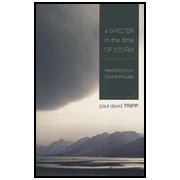
*The article above adapted from the excellent book by Paul David Tripp. A Shelter in the Time of Storm: Meditations on God and Trouble. Wheaton: Good News Publishers/Crossway Books. 2009, pp. 149-150.

 About the Author:

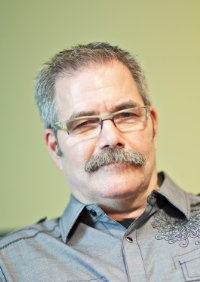
Dr. Paul David Tripp is the president of Paul Tripp Ministries (www.paultrippministries.org), a nonprofit organization, whose mission statement is “Connecting the transforming power of Jesus Christ to everyday life.” This mission leads Paul to weekly speaking engagements around the world. In addition to being a gifted communicator and sought after conference speaker with Paul Tripp Ministries, Paul is the Executive Director of the Center for Pastoral Life and Care in Fort Worth, Texas, and has taught at respected institutions worldwide. As an author, Paul has written many books on Christian Living that are read and distributed internationally. He has been married for many years to Luella and they have four grown children.

 He is the author of the following excellent Christ-centered books:

Dangerous Calling: Confronting The Unique Challenges of Pastoral Ministry. Wheaton: Crossway Books, 2012.

Forever: Why You Can’t Live Without It. Grand Rapids: Zondervan, 2011.

What Did You Expect? Redeeming The Realities of Marriage. Wheaton: Crossway, 2010.

The Power of Words and the Wonder of God (contributor). Wheaton: Crossway, 2009.

A Shelter in the Time of Storm: Meditations on God and Trouble. Wheaton: Crossway, 2009.

Broken Down House: Living Productively in a World Gone Bad. Shepherd Press, 2009.

Helping People Change (with Timothy S. Lane). Greensboro, N.C.: New Growth Press, 2008.

Whiter Than Snow: Meditations on Sin and Mercy. Wheaton: Crossway, 2008.

Helping Your Adopted Child. Greensboro, N.C.: New Growth Press, 2008.

Peer Pressure. Greensboro, N.C.: New Growth Press, 2008.

A Quest for More: Living For Something Bigger Than You. Greensboro, N.C.: New Growth Press, 2007.

Grief: Finding Hope Again. Greensboro, N.C.: New Growth Press, 2005.

Lost in the Middle: Midlife and the Grace of God. Shepherd Press, 2004.

Pastoral Leadership for Manhood and Womanhood (contributor). Wheaton: Crossway, 2003.

Instruments in the Redeemer’s Hands: People in Need of Change Helping People in Need of Change. Phillipsburg, NJ: P&R, 2002.

Age of Opportunity: A Biblical Guide to Parenting Teens. Phillipsburg, NJ: P&R, 2001.

War of Words: Getting to the Heart of Communication Struggles. Phillipsburg, NJ P&R, 2001.

Why and How to Have a “Quiet Time”

How To Have A Daily Quiet Time

A daily quiet time is a private meeting each day between a disciple and the Lord Jesus Christ. It should not be impromptu. We can commune with the Lord on a spur-of-the-moment basis many times each day, but a quiet time is a period of time we set aside in advance for the sole purpose of a personal meeting with our Savior and Lord. A daily quiet time consists of at least three components.

(1) Reading the Bible with the intent not just to study but to meet Christ through the written Word.

(2) Meditating on what we have read so that biblical truth begins to saturate our minds, emotions and wills. “This Book of the Law shall not depart from your mouth, but you shall meditate on it day and night, so that you may be careful to do according to all that is written in it. For then you will make your way prosperous, and then you will have good success” (Joshua 1:8).

(3) Praying to (communing with) God: praising, thanking and adoring him as well as confessing our sins, asking him to supply our needs and interceding for others. 

WHY IS IT IMPORTANT?

Why should we have a daily quiet time? There are at least three reasons:

(1) It pleases the Lord. Even if there were no other consequences, this would be sufficient reason for private daily communion with God. Of all the Old Testament sacrifices there was only one that was daily-the continual burnt offering. What was its purpose? Not to atone for sin but to provide pleasure (a sweet-smelling aroma) to the Lord. The New Testament directs us to continually offer up a sacrifice of praise to God, “the fruit of lips that confess his name” (Hebrews 13:15). It may astonish us to realize that God is seeking people who will do just that: “They are the kind of worshipers the Father seeks” (John 4:23). One indicator of the depth of our relationship with the Lord is our willingness to spend time alone with him not primarily for what we get out of it but for what it means to him as well.

(2) We receive benefits. The psalmist had this in mind when he wrote, “As the deer pants for streams of water, so my soul pants for you, 0 God. My soul thirsts for God, for the living God” (Psalm 42:1-2).

(3) Jesus had a quiet time. “Very early in the morning, while it was still dark, Jesus got up, left the house and went off to a solitary place, where he prayed” (Mark 1:35). If our Lord found it necessary to meet privately with his Father, surely his example gives us a good reason to do likewise. The question is whether we will be mediocre Christians or growing Christians. A major factor in determining the answer is whether or not we develop the discipline of a daily quiet time.

 4 Benefits of a Quiet Time:

(1) Information. We learn about Christ and his truths when we spend time with him and his Word. Before we can obey him we need to know what he commands. Before we can understand what life is all about we need to know what he has taught.

(2) Encouragement. At times we get discouraged. There is no better source for inspiration than the Lord Jesus Christ.

(3) Power. Even when we know what we should be and do we lack the strength to be that kind of person and do those kinds of works. Christ is the source of power, and meeting with him is essential to our receiving it.

(4) Pleasure. Being alone with the person we love is enjoyable, and as we spend time with Christ we experience a joy unavailable anywhere else.

 HOW TO BEGIN A QUIET TIME

 Once you desire to begin a daily quiet time, what can you do to start? – 7 Steps:

(1) Remember the principle of self-discipline: do what you should do when you should, the way you should, where you should and for the correct reasons. In other words, self-discipline is the wise use of your personal resources (such as time and energy).

(2) Set aside time in advance for your quiet time. A daily quiet time should take place each day at the time when you are most alert. For some this will be in the morning, perhaps before breakfast; for others it will be another time of the day or evening. Though it is not a hard and fast rule, the morning is a preferable time since it begins before the rush of thoughts and activities of the day. An orchestra does not tune its instruments after the concert.

How much time should you spend? This will vary from person to person, but a good plan to follow is to start with ten minutes a day and build up to approximately thirty minutes. This regularly scheduled chunk of time can be a major factor in strengthening self-discipline. Here’s a suggestion: pause while reading this and make a decision-now-about when and for how long, beginning tomorrow, you will meet the Lord Jesus Christ for a daily quiet time.

(3) Plan ahead. Go to bed early enough so that you can awaken in a refreshed condition to meet Christ. The battle for the daily quiet time is often lost the night before. Staying up too late hampers our alertness, making us bleary-eyed and numb as we meet the Lord, or else we oversleep and skip the quiet time altogether.

(4) Make your quiet time truly a quiet time. Psalm 46:10 speaks to this: “Be still, and know that I am God.” Turn off your radio or television. Find as quiet a place as possible and make sure your location and position are conducive to alertness. Get out of bed. Sit erect. If you are stretched out in bed or reclining in a chair that is too comfortable you might be lulled into drowsiness.

(5) Pray as you start your time with God. Ask the Holy Spirit to control your investment of time and to guide your praising, confessing, thanking, adoring, interceding, petitioning and meditating, as well as to help you get into the Bible. Open your mind and heart to Scripture.

(6) Keep a notebook/journal handy. Write down ideas you want to remember and questions you can’t answer. Expression deepens impression-and writing is a good mode of expression.

(7) Share your plans and goals with a friend. Tell him or her you are trying to develop the discipline of a daily quiet time. Request his or her prayer that God will enable you to succeed with your objectives.

 COMMON PITFALLS YOU WILL ENCOUNTER

 Following are some common problems that are often encountered along the way:

I know I ought to have a daily quiet time, but I don’t want to.

Solution: Ask the Holy Spirit to plant within you the desire to have a daily quiet time. Nobody else can do this for you. You cannot generate the desire, and no other person can produce it for you.

I don’t feel like having a daily quiet time today.

Solution: Have your quiet time anyway and honestly admit to Christ that you don’t feel like meeting him but that you know he nevertheless is worth the investment of your time. Ask him to improve your feelings and try to figure out why you feel this way. Then work on the factors that produce such failings.

My mind wanders.

Solution: Ask the Holy Spirit to give you strength to set your mind on Christ and his Word. Use your self-discipline to direct your mind so that it wanders less and less. If you are in a quiet place, singing, praying and reading out loud will give a sense of dialogue. Your mind will wander less when you write things down, like making an outline for prayer or study notes while reading the Bible.

I miss too many quiet times.

Solution: Ask the Lord to strengthen your desire and to give you power to discipline your use of time. Share with another Christian friend your desire to have a daily quiet time and allow your friend to hold you accountable for it. Don’t let an overactive conscience or the accusations of the devil play on your guilt. Confess that you have failed to keep your appointment with Jesus, ask his forgiveness and renew your relationship.

My daily quiet time is a drag.

Solution: Pray that the joy of the Lord would be restored to your private meeting with Christ (Psalm 51:12). Put some variety into your approach. Sing a hymn for a change, or try a different form of Bible study.

There are two major reasons it is so difficult to develop the discipline of a daily quiet time.

First is the influence of the flesh. Keep in mind that your old nature is opposed to daily quiet time (and to every other discipline that would please Christ; see Galatians 5:16-17). Pray that the Holy Spirit will enable your new nature to overcome your old nature in this battle.

The second reason is resistance by Satan. The devil opposes your every effort to please Christ. His strategy is to rob you of daily quiet time joy, to complicate your time schedule by keeping you up late at night and making it hard for you to get up in the morning, to make you drowsy during your time with the Lord, to make your mind wander, and otherwise to disrupt your meeting with Christ. Ask the Holy Spirit to restrain the devil.

 DON’T WAIT: DO IT NOW!

Plan now for your daily quiet time tomorrow-and every tomorrow. If you miss a morning, do not quit. Deny the devil the pleasure of defeating you. Ask the Lord to forgive you for missing the meeting and to help you make it next time. You will doubtless miss several times, and it will take repeated beginnings before you succeed in developing this discipline. Indeed, it takes some people months to mature to the point where they develop the habit of a daily quiet time. For some it is a lifelong battle. In any case, don’t quit when you miss. With God’s help determine that you will grow to be a committed disciple who meets Christ regularly in meaningful daily quiet times.

*The article above is adapted from various sources: a pamphlet published in 1973 entitled “Lord of the Universe, Lord of My Life,” published by IVP: Downers Grove, Ill; Richard Foster’s acclaimed book: Celebration of Discipline; Robert Munger’s booklet: My Heart Christ’s Home; and Greg Ogden’s phenomenal workbook: Discipleship Essentials, C3.

Dr. Tim Keller on The Correlation Between the Gospel and Prayer

Prayer and the Gospel

Principles: One of the most basic things that the gospel does is change prayer from mere petition to fellowship and the praise of his glory. Galatians 4:6-7 teaches us that when we believe the gospel, we not only become God’s children legally, but we receive the Spirit in order to experience our sonship. The Spirit leads us to call out passionately to God as our tender and loving Father. The Spirit calls out ‘Abba’ (4:7). In the very next verse Paul refers to this experience as “knowing God” (4:8). We do not just know and believe that God is holy and loving, but we actually experience contact with his holiness and his love in personal communion with him.

No one had a deeper insight into the gospel and prayer than Jonathan Edwards. Edwards concluded the most essential difference between a Christian and a moralist is that a Christian obeys God out of the sheer delight in who he is. The gospel means that we are not obeying God to get anything but to give him pleasure because we see his worth and beauty. Therefore, the Christian is able to draw power out of contemplation of God. Without the gospel, this is impossible. We can only come and ask for things- petition. Without the gospel, we may conceive of a holy God who is intimidating and who can be approached with petitions if we are very good. Or we may conceive of a God who is mainly loving, and regards all positively. To approach the first “God” is fearsome; to approach the second is no big deal. Thus without the gospel, there is no possibility of passion and delight to praise and approach God.

There are two fairly common distortions of prayer that arise from a lack of orientation to the gospel in our prayer lives. Here is a more practical description.

1. On the one hand, our prayer can have “light without heat.”
 There can be long lists of things that we pray for, and long lists of Bible verses we read, and long lists of things we thank him for. Yet there is no fire. Why? If we lose focus on the glory of God in the gospel as the solution to all our problems, then we devolve into a set of “grocery list” prayers, made rather desperately. When we are done, we only feel more anxious than before. The presence of God is not sensed because God is really just being used – he is not being worshipped.

Instead, we should always remember that the first thing we need is a new perspective on our needs and problems. We should always intertwine with repentance over our unbelief and indifference to God’s grace. On the one hand, we must “pray into” ourselves that the thing we are asking for is not our Savior or God or glory! But, (on the other hand) after we repent and refine our desire, we should “pray into” ourselves that God is our Father and wants to give us good things, so we can ask in confidence. Also, intertwined with our petitions should be praise and marveling that we are able to approach God, and be welcomed in Christ.

This is gospel-centered prayer, rather than anxious petitioning. Our desires are always idolatrous to some degree, and when we pray without dealing with that first, we find our prayers only make us more anxious. Instead, we should always say, in effect, “Lord, let me see your glory as I haven’t before, let me be so ravished with your grace that worry and self-pity and anger and indifference melt away!” Then, when we turn to ask God for admission to grad school or healing of an illness, those issues will be put in proper perspective. We will say, “Lord, I ask for this because I think it will glorify you – so help me get it, or support me without it.” If the overall focus of the prayer is on God’s glory and the gospel, our individual petitions will be made with great peace and confidence.

2. On the other hand, our prayer can have “heat without light.”
Unlike the “light without heat” prayer, focused on anxious personal petitions, there is a kind of prayer which is its direct opposite – “heat without light.” This is prayer with lots of “fire” and emotion. It focuses on boldly claiming things in Jesus’ name. A lot of military and conflict imagery is usually used. Often the prayers themselves are said (either in your head or out loud) in a very unnatural, dramatic kind of voice and language.

Now, if (as stated above) prayer focuses on the gospel and glory of God, and if by the Spirit’s help, that glory becomes real to us as we contemplate it, there will be passion, and maybe strong and dramatic emotion. But “heat without light” prayer always begins with a lot of drama and feeling automatically. I think that many people who pray like that are actually reacting against the very limp kind of prayer meetings that result from anxious personal petition. But they respond by simply trying to directly inject emotion and drama into prayer.

This kind of prayer is also not gospel-centered. Just as the anxious-petitioning is often legalistic and fails to base itself on God’s grace, so the bold-claiming is sometimes legalistic and fails to base itself on God’s grace. There is a sense that “if I pray long and without any doubts at all then God will surely hear me.” Many people believe that they must suppress all psychological doubts and work up tremendous confidence if they are to get answered.

In addition, often personal problems are treated abstractly. People may say: “Lord, I ask you to come against the strongholds of worry in my life.” Or “Lord, I claim the victory over bitterness,” instead of realizing that it is faith in the gospel that will heal our worry and bitterness. Ironically, this is the same thing that the “anxious petitioner” does. There is no understanding of how to “bathe” the needs and petitions in contemplating the glory of God in the gospel until the perspective on the very petition is combined with joyful yet profound repentance, e.g. “Lord, I am experiencing such fear – but you are the stronghold of my life. Magnify your name in my sight. Let your love and glory ravish me till my fear subsides. You said you will never forsake me, and it is sheer unbelief that brings me to deny it. Forgive and heal me.”

So, ironically, we see that “heat without light” prayer and “light without heat” prayer both stem from the same root. They come from works-righteousness, a conviction that we can earn God’s favor, and a loss of orientation with respect to our free justification and adoption.

Practice: How can we very practically move toward a gospel-centered prayer life that aims primarily at knowing God? Meditation and communion.

This essential discipline is meditation on the truth. Meditation is a “crossing” of two other disciplines: Bible study and prayer. Meditation is both yet it is not just moving one to another – it is a blending of them. Most of us first study our Bible, and then move to the prayer list, but the prayer is detached from the Bible you just studied. But meditation is praying the truth (just studied) deep into your soul till it catches “fire.” By “fire” we mean – until it makes all sorts of personal connections – with YOU personally, so it shapes the thinking, it moves the feelings, and it changes the actions. Meditation is working out the truth personally.

The closest analogy to meditating on the truth is the way a person eagerly reads a love letter. You tear it open and you weigh every word. You never simply say, “I know that” but “what does this mean? What did he or she really mean by that?” You aren’t reading it quickly just for information – you want to know what lies deep in the clauses and phrases. And more important, you want the letter to sink in and form you.

Augustine saw meditation, “the soul’s ascent into God,” as having three parts: retentio, contemplatio, dilectio.

First, retentio means the distillation of the truths of Scripture and holding them centrally in the mind. This means study and concentration on a passage of scripture to simply understand it, so you see its thrust. “Retentio” is thus learning what a passage says. The many books on Bible study and interpretation can help us here.

Second, contemplatio, means “gazing at God through this truth.” It is to pose and answer questions such as:

What does this tell me about God; what does it reveal about him?

How can I praise him for and through this?

How can I humble myself before him for and through this?

If he is really like this, what difference does this particular truth make to how I live today?

What wrong behavior, harmful emotions, false attitudes result in me when I forget he is like this?

How would my neighborhood, my family, my church, my friends be different if they saw it deeply?

Does my life demonstrate that I am remembering and acting out of this?

Lord, what are you trying to tell me about you, and why do you want me to know it now, today?

Above all, the purpose of contemplatio is to move from a kind of objective analytical view of things to a personal dealing with God as he is. It is to deal with God directly, to stretch every nerve to turn this “knowing about” into knowing – to move from knowing a fact about him to actually “seeing” him with the heart – to adore, to marvel, to rest in, or to be troubled by, to be humbled by him. It is one thing to study a piece of music and another to play it. It is one thing to work on a diamond, cutting and polishing it; it is another to stand back and let it take your breath away.

Third, dilectio means delighting and relishing the God you are looking at. You begin to actually praise and confess and aspire toward him on the basis of the digested and meditated truth. If you have moved from learning to personal meditation, then, depending on your spiritual sharpness, the circumstances of your life at that time, and God’s sovereign Spirit, you begin to experience him. Sometimes it is mild, sometimes strong, and sometimes you are very dry. But whenever you are meditating (“contemplatio”) and you suddenly find new ideas coming to you and flowing in, then write them down and move to direct praising and confessing and delighting. That is (as Luther would say) the “Holy Spirit preaching to you.”

*Original article from 2007. Where the article first appeared unknown.

About The Author:

In 1989 Dr. Timothy J. Keller, his wife and three young sons moved to New York City to begin Redeemer Presbyterian Church. In 20 years it has grown to meeting for five services at three sites with a weekly attendance of over 5,000. Redeemer is notable not only for winning skeptical New Yorkers to faith, but also for partnering with other churches to do both mercy ministry and church planting.  Redeemer City to City is working to help establish hundreds of new multi-ethnic congregations throughout the city and other global cities in the next decades.

Dr. Tim Keller is the author of several phenomenal Christo-centric books including:

Every Good Endeavor: Connecting Your Work to God’s Plan for the World. New York, Penguin Publishing, November, 2012.

Center Church: Doing Balanced, Gospel-Centered Ministry in Your City. Grand Rapids: Zondervan, September, 2012.

The Freedom of Self Forgetfulness. New York: 10 Publishing, April 2012.

Generous Justice: How God’s Grace Makes Us Just. New York: Riverhead Trade, August, 2012.

The Gospel As Center: Renewing Our Faith and Reforming Our Ministry Practices (editor and contributor). Wheaton: Crossway, 2012.

The Meaning of Marriage: Facing the Complexities of Commitment with the Wisdom of God. New York, Dutton, 2011.

The Prodigal God. New York, Dutton, 2011.

King’s Cross: The Story of the World in the Life of Jesus. New York, Dutton, 2011.

Counterfeit Gods: The Empty Priorities of Money, Sex, and Power, and the Only Hope That Matters. New York, Riverhead Trade, 2011.

The Reason For God: Belief in an Age of Skepticism. New York, Dutton, 2009.

Worship By The Book (contributor). Grand Rapids: Zondervan, 2002.

Ministries of Mercy: The Call of the Jericho Road. Phillipsburg: P&R Publishing, 1997.

Paul David Tripp on The Benefits of Waiting

“Caught in the Middle”

Wait for the LORD; be strong, and let your heart take courage; wait for the LORD! – Psalm 27:14

We spend a lot of our lives “caught in the middle.” We head to work and get caught in the middle of a traffic jam. We enter a conversation and get caught in the middle of an argument. We make an investment and get caught in the middle of a market downturn. We join a church and get caught in the middle of a theological con-troversy. We dream of our future and get caught in the middle of things we did not foresee and would not have chosen. We really do spend much of our time caught in the middle of being caught in the middle.

When you are required to wait, it means that you are caught in the middle of something, and when you are caught in the middle of something, it immediately means that you are part of something bigger than you. Being caught in the middle is disconcerting and irritating because we all tend to give into the delusion that we have more power and control over our lives than we actually have. Self-sovereignty is the dream of every sinner. It’s hard for us to trust ourselves to the wisdom, power, and control of another. We want to write our own dramas, and we want to be the central character of the story. But the spiritual reality of the universe is that we are not the authors of our own story.

Our story is a part of a larger story that is part of a larger story that is written by the Lord. In this story we are never on center stage. That is a position to be occupied by the Lord alone. When you recognize that you are caught in the middle of some-thing, you are recognizing something that is profoundly important. Let me detail how practically important this insight is.

First, it means you were meant to live for something bigger than yourself. You are not in control. Your story is not ultimate. You have been created to be part of something that is larger than your wants, your needs, and your feelings. You are connected to something that is bigger than your relationships, your situations, and the locations that you move in every day. You are waiting, because God said you are a part of his kingdom. God, whose timing is always perfect, works according to his wise plan and at the right moment. But as you wait, he is doing something in and for you. He is crafting you into the per-son his grace alone enables you to be.

Second, it means you were created to be dependent. The independent, this-is-my-life-and-this-is-what-I-will-do-with-it view is a delusion. The thought that you have everything you need to be what you are supposed to be and to do what you are supposed to do is a fantasy. Each of us is dependent on God for our physical life. We all know that we do not control the many, many things around us that must work in order for our lives to work. We all know that our life doesn’t work according to our plan. We couldn’t write the story of today and accurately predict what we will face. Contrary to what we often think and how we often act, we all live a life of reliance on God.

Third, it means that the things you need most you cannot provide for yourself. God has controlled the forces of nature and the events of human history in order to give me the one thing I desperately need and could never earn, deserve, or achieve—new birth. Without the intervention of his powerful heart and life and his transforming grace, I would be a dead man walking. But he has given me life, and he is now working to change me into what I, if left to myself, could never be. I wait because his grace is still at work. I wait because he is not done and I am not yet complete.

Fourth, it means the final chapter of your story has been writ-ten but has not yet unfolded. There are more places God has written for me. There are more characters to appear in my story. There are circumstances that he has designed for me to encounter. There are moments of blessing and times of difficulty that have already been written into my story by the One who is not only in control but is also wise, gracious, kind, and good. He already knows the exact path he will cause me to walk and how that path will result in his glory and my good. I could never write an autobiography that would accomplish what his story for me already has and will accomplish.

Fifth, it means that the One you are waiting for is trustworthy. I know that there are times when waiting is painful. I know there are times when it seems as if it is impossible to wait. But you and I must remind ourselves that we wait not because irrational and impersonal forces function as obstructions and interferences in our lives. No, we wait because the world is carefully administered by the one Person who is ultimate in power, ultimate in authority, and ultimate in wisdom, while at the very same time being ultimate in love. You are being asked to wait by One you can trust.

Sixth, it means that in those moments when you are caught, you can rest. Don’t give way to panic. Don’t give into doubt because this is not what you would have planned. Don’t allow yourself to play out all of the “what if’s” and “if only’s” in your mind. You are waiting because there is a plan. You are waiting because your life is under the control of One who is wise and good. You can rest, not because you know what is happening, but because you know the One who is in control of what is happening to you right now. You can rest because you know he has made you a part of something wonderful, and he knows what he is doing in you is good, even though at this moment it feels as if you have been caught in the middle.

 Take a Moment

In what area of your life do you tend to be frustrated and irritated because you are “caught in the middle?”

How would your living change if you embraced the reality that God has already written a better story for you than you could have ever written for yourself?

Article Above adapted from Paul David Trip. A Shelter in the Time of Storm: Meditations on God and Trouble. Wheaton: Crossway Books. 2009.

 About the Author:

Dr. Paul David Tripp is the president of Paul Tripp Ministries (www.paultrippministries.org), a nonprofit organization, whose mission statement is “Connecting the transforming power of Jesus Christ to everyday life.” This mission leads Paul to weekly speaking engagements around the world. In addition to being a gifted communicator and sought after conference speaker with Paul Tripp Ministries, Paul is the Executive Director of the Center for Pastoral Life and Care in Fort Worth, Texas, and has taught at respected institutions worldwide. As an author, Paul has written many books on Christian Living that are read and distributed internationally. He has been married for many years to Luella and they have four grown children.

 He is the author of the following excellent Christ-centered books:

Dangerous Calling: Confronting The Unique Challenges of Pastoral Ministry. Wheaton: Crossway Books, 2012.

Forever: Why You Can’t Live Without It. Grand Rapids: Zondervan, 2011.

What Did You Expect? Redeeming The Realities of Marriage. Wheaton: Crossway, 2010.

The Power of Words and the Wonder of God (contributor). Wheaton: Crossway, 2009.

A Shelter in the Time of Storm: Meditations on God and Trouble. Wheaton: Crossway, 2009.

Broken Down House: Living Productively in a World Gone Bad. Shepherd Press, 2009.

Helping People Change (with Timothy S. Lane). Greensboro, N.C.: New Growth Press, 2008.

Whiter Than Snow: Meditations on Sin and Mercy. Wheaton: Crossway, 2008.

Helping Your Adopted Child. Greensboro, N.C.: New Growth Press, 2008.

Peer Pressure. Greensboro, N.C.: New Growth Press, 2008.

A Quest for More: Living For Something Bigger Than You. Greensboro, N.C.: New Growth Press, 2007.

Grief: Finding Hope Again. Greensboro, N.C.: New Growth Press, 2005.

Lost in the Middle: Midlife and the Grace of God. Shepherd Press, 2004.

Pastoral Leadership for Manhood and Womanhood (contributor). Wheaton: Crossway, 2003.

Instruments in the Redeemer’s Hands: People in Need of Change Helping People in Need of Change. Phillipsburg, NJ: P&R, 2002.

Age of Opportunity: A Biblical Guide to Parenting Teens. Phillipsburg, NJ: P&R, 2001.

War of Words: Getting to the Heart of Communication Struggles. Phillipsburg, NJ P&R, 2001.

A.W. Tozer on Why We Must Think Rightly About God

Great Thoughts By Tozer on Thinking Correctly About God


O, Lord God Almighty, not the God of the philosophers and the wise but the God of the prophets and apostles; and better than all, the God and Father of our Lord Jesus Christ, may I express Thee unblamed? They that know Thee not may call upon Thee as other than Thou art, and so worship not Thee but a creature of their own fancy; therefore enlighten our minds that we may know Thee as Thou art, so that we may perfectly love Thee and worthily praise Thee. In the name of Jesus Christ our Lord. Amen.    

What comes into our minds when we think about God is the most important thing about us. The history of mankind will probably show that no people has ever risen above its religion, and man’s spiritual history will positively demonstrate that no religion has ever been greater than its idea of God. Worship is pure or base as the worshiper entertains high or low thoughts of God.

For this reason the gravest question before the Church is always God Himself, and the most portentous fact about any man is not what he at a given time may say or do, but what he in his deep heart conceives God to be like. We tend by a secret law of the soul to move toward our mental image of God. This is true not only of the individual Christian, but of the company of Christians that composes the Church. Always the most revealing thing about the Church is her idea of God, just as her most significant message is what she says about Him or leaves unsaid, for her silence is often more eloquent than her speech. She can never escape the self-disclosure of her witness concerning God.

Were we able to extract from any man a complete answer to the question, “What comes into your mind when you think about God?” we might predict with certainty the spiritual future of that man. Were we able to know exactly what our most influential religious leaders think of God today, we might be able with some precision to foretell where the Church will stand tomorrow. Without doubt, the mightiest thought the mind can entertain is the thought of God, and the weightiest word in any language is its word for God.

Thought and speech are God’s gifts to creatures made in His image; these are intimately associated with Him and impossible apart from Him. It is highly significant that the first word was the Word: “And the Word was with God, and the Word was God.” We may speak because God spoke. In Him word and idea are indivisible. That our idea of God corresponds as nearly as possible to the true being of God is of immense importance to us. Compared with our actual thoughts about Him, our creedal statements are of little consequence. Our real idea of God may lie buried under the rubbish of conventional religious notions and may require an intelligent and vigorous search before it is finally unearthed and exposed for what it is. Only after an ordeal of painful self-probing are we likely to discover what we actually believe about God.

A right conception of God is basic not only to systematic theology but to practical Christian living as well. It is to worship what the foundation is to the temple; where it is inadequate or out of plumb the whole structure must sooner or later collapse. I believe there is scarcely an error in doctrine or a failure in applying Christian ethics that cannot be traced finally to imperfect and ignoble thoughts about God. It is my opinion that the Christian conception of God current in these middle years of the twentieth century is so decadent as to be utterly beneath the dignity of the Most High God and actually to constitute for professed believers something amounting to a moral calamity.

All the problems of heaven and earth, though they were to confront us together and at once, would be nothing compared with the overwhelming problem of God: That He is; what He is like; and what we as moral beings must do about Him.

The man who comes to a right belief about God is relieved of ten thousand temporal problems, for he sees at once that these have to do with matters which at the most cannot concern him for very long; but even if the multiple burdens of time may be lifted from him, the one mighty single burden of eternity begins to press down upon him with a weight more crushing than all the woes of the world piled one upon another. That mighty burden is his obligation to God. It includes an instant and lifelong duty to love God with every power of mind and soul, to obey Him perfectly, and to worship Him acceptably. And when the man’s laboring conscience tells him that he has done none of these things, but has from childhood been guilty of foul revolt against the Majesty in the heavens, the inner pressure of self-accusation may become too heavy to bear.

The gospel can lift this destroying burden from the mind, give beauty for ashes, and the garment of praise for the spirit of heaviness. But unless the weight of the burden is felt the gospel can mean nothing to the man; and until he sees a vision of God high and lifted up, there will be no woe and no burden. Low views of God destroy the gospel for all who hold them.

Among the sins to which the human heart is prone, hardly any other is more hateful to God than idolatry, for idolatry is at bottom a libel on His character. The idolatrous heart assumes that God is other than He is – in itself a monstrous sin – and substitutes for the true God one made after its own likeness.

Always this God will conform to the image of the one who created it and will be base or pure, cruel or kind, according to the moral state of the mind from which it emerges. A god begotten in the shadows of a fallen heart will quite naturally be no true likeness of the true God. ”Thou thoughtest,” said the Lord to the wicked man in the psalm, “that I was altogether such as one as thyself.” Surely this must be a serious affront to the Most High God before whom cherubim and seraphim continually do cry, “Holy, holy, holy, Lord God of Sabaoth.” Let us beware lest we in our pride accept the erroneous notion that idolatry consists only in kneeling before visible objects of adoration, and that civilized peoples are therefore free from it.

The essence of idolatry is the entertainment of thoughts about God that are unworthy of Him. It begins in the mind and may be present where no overt act of worship has taken place. ”When they knew God,” wrote Paul, “they glorified him not as God, neither were thankful; but became vain in their imaginations, and their foolish heart was darkened.” (Romans 1) Then followed the worship of idols fashioned after the likeness of men and birds and beasts and creeping things. But this series of degrading acts began in the mind.

Wrong ideas about God are not only the fountain from which the polluted waters of idolatry flow; they are themselves idolatrous. The idolater simply imagines things about God and acts as if they were true.

Perverted notions about God soon rot the religion in which they appear. The long career of Israel demonstrates this clearly enough, and the history of the Church confirms it. So necessary to the Church is a lofty concept of God that when that concept in any measure declines, the Church with her worship and her moral standards declines along with it.

The first step down for any church is taken when it surrenders its high opinion of God. Before the Christian Church goes into eclipse anywhere there must first be a corrupting of her simple basic theology. She simply gets a wrong answer to the question, “What is God like?” and goes on from there. Though she may continue to cling to a sound nominal creed, her practical working creed has become false. The masses of her adherents come to believe that God is different from what He actually is; and that is heresy of the most insidious and deadly kind.

The heaviest obligation lying upon the Christian Church today is to purify and elevate her concept of God until it is once more worthy of Him – and of her. In all her prayers and labors this should have first place. We do the greatest service to the next generation of Christians by passing on to them undimmed and undiminished that noble concept of God which we received from our Hebrew and Christian fathers of generations past. This will prove of greater value to them than anything that art or science can devise.

O, God of Bethel, by whose hand Thy people still are fed; Who through this weary pilgrimage Hast all our fathers led! Our vows, our prayers we now present before Thy throne of grace: God of our fathers! Be the God of their succeeding race. – Philip Doddridge

The article above adapted from the classic by A.W. Tozer. The Knowledge of The Holy. New York: Harper & Row. Reprinted 2010 (Chapter 1).

 About the Author (A Mini-Biography of A.W. Tozer):

Aiden Wilson Tozer was born April 21, 1897, on a small farm among the spiny ridges of Western Pennsylvania. Within a few short years, Tozer, as he preferred to be called, would earn the reputation and title of a “20th-century prophet.”

Able to express his thoughts in a simple but forceful manner, Tozer combined the power of God and the power of words to nourish hungry souls, pierce human hearts, and draw earthbound minds toward God.

When he was 15 years old, Tozer’s family moved to Akron, Ohio. One afternoon as he walked home from his job at Goodyear, he overheard a street preacher say, “If you don’t know how to be saved . . . just call on God.” When he got home, he climbed the narrow stairs to the attic where, heeding the preacher’s advice, Tozer was launched into a lifelong pursuit of God.

In 1919, without formal education, Tozer was called to pastor a small storefront church in Nutter Fort, West Virginia. That humble beginning thrust him and his new wife Ada Cecelia Pfautz, into a 44-year ministry with The Christian and Missionary Alliance.

Thirty-one of those years were spent at Chicago’s Southside Alliance Church. The congregation, captivated by Tozer’s preaching, grew from 80 to 800.

In 1950 Tozer was elected editor of the Alliance Weekly now called Alliance Life. The circulation doubled almost immediately. In the first editorial dated June 3, 1950, he set the tone: “It will cost something to walk slow in the parade of the ages while excited men of time rush about confusing motion with progress. But it will pay in the long run and the true Christian is not much interested in anything short of that.”

Tozer’s forte was his prayer life which often found him walking the aisles of a sanctuary or lying face down on the floor. He noted, “As a man prays, so is he.” To him the worship of God was paramount in his life and ministry. “His preaching as well as his writings were but extensions of his prayer life,” comments Tozer biographer James L. Snyder. An earlier biographer noted, “He spent more time on his knees than at his desk.”

Tozer’s love for words also pervaded his family life. He quizzed his children on what they read and made up bedtime stories for them. “The thing I remember most about my father,” reflects his daughter Rebecca, “was those marvelous stories he would tell.”

Son Wendell, one of six boys born before the arrival of Rebecca, remembers that, “We all would rather be treated to the lilac switch by our mother than to have a talking-to by our dad.”

Tozer’s final years of ministry were spent at Avenue Road Church in Toronto, Canada. On May 12, 1963, his earthly pursuit of God ended when he died of a heart attack at age 66. In a small cemetery in Akron, Ohio, his tombstone bears this simple epitaph: “A Man of God.”

Some wonder why Tozer’s writings are as fresh today as when he was alive. It is because, as one friend commented, “He left the superficial, the obvious and the trivial for others to toss around. . . . [His] books reach deep into the heart.”

His humor, written and spoken, has been compared to that of Will Rogers–honest and homespun. Congregations could one moment be swept by gales of laughter and the next sit in a holy hush.

For almost 50 years, Tozer walked with God. Even though he is gone, he continues to speak, ministering to those who are eager to experience God. As someone put it, “This man makes you want to know and feel God.”

Dr. Tim Keller on How To Fight Sin

(The following post has been transcribed and edited from Tim Keller’s sermon “Sin as Slavery,” which can be downloaded for free here.)

Every one of our sinful actions has a suicidal power on the faculties that put that action forth. When you sin with the mind, that sin shrivels the rationality. When you sin with the heart or the emotions, that sin shrivels the emotions. When you sin with the will, that sin destroys and dissolves your willpower and your self-control. Sin is the suicidal action of the self against itself. Sin destroys freedom because sin is an enslaving power.

In other words, sin has a powerful effect in which your own freedom, your freedom to want the good, to will the good, and to think or understand the good, is all being undermined. By sin, you are more and more losing your freedom. Sin undermines your mind, it undermines your emotions, and it undermines your will.

Sin Is Addiction

All sin is addiction. Whether it’s bitterness, whether it’s envy, whether it’s materialism, whether it’s laziness, whether it’s impurity — every sinful action becomes an addiction. And every sinful action brings into your life a power that operates exactly like addiction cycles and addiction dynamics begin to operate.

In other words, in the specific addictions of alcohol or drug addiction, or voyeurism, or exhibitionism, or sexual addictions, you actually have a microcosm of how sin works in general.

You know how addiction works. It starts like this: There’s some kind of disappointment or distress in your life. As a result you choose to deal with that distress with an agent; it might be sex, it might be drugs, it might be alcohol. The agent promises transcendence. The agent promises freedom, a sense of being in control, a sense of being above all this, a sense of being liberated, a sense of escape. And so you do it. But when you do it, when you take the addicting agent as a way of dealing with life, the trap is set.

The trap is set because three things begin to happen:

1. Tolerance. You get trapped into what the experts call the “tolerance effect.” In other words, the tolerance effect is that today this or that amount of alcohol or drugs, or this kind of sexual experience, will pale in comparison to your desires tomorrow. The same activity will not give you that same experience any more, and you will find you need more and more and more. What brought you joy yesterday will not be enough to give you joy tomorrow, because your emotions are shriveling and numbing. There’s a tolerance effect.

2. Denial. Addiction destroys because of denial. We all know part of addiction patterns is that your craving makes you rationalize and justify. It twists your thinking. You become selective in your reasoning, selective about your memory. You’ll do all sorts of tortured rationalizations, but you refuse to think clearly and objectively. You can’t.

3. Defeat. Addictions destroy willpower. You know you are an addict when you are trying to escape your distress with the very thing that brought you your distress. And when you are in that spiral, you are stuck forever — down and down and down and down.

Sin in general operates like that. When you think disobedience to God is going to bring freedom, the very act that promises freedom is taking the freedom. The very act that you think is putting you in the driver’s seat of your life is taking you out of the driver’s seat of your life.

Playing With Fire

The Bible defines sin as craving something more than God. Sin is making something more important than God. If you’re just religious occasionally, if God is on the outskirts of your life, that is the essence of sin, and that sin grows.

Jonathan Edwards says sin turns the heart into a fire. Just as there has never been a fire that said, “Enough fuel, I’m fine now,” so there has never been a sinful heart that said, “I have had enough success. I’ve had enough love. I’ve had enough approval. I’ve had enough comfort.” Oh, no. The more fuel you put into the fire, the hotter it burns, and the hotter it burns, the more it needs, the more oxygen it is sucking and the more fuel it requires.

And this is the heart of the fire. Next time you are crabby, or grumpy, or irritable, or scared to death, or in the pits, ask yourself: What am I telling myself would make me happy if only I had it? There is an if only at the bottom of this. Whatever is your if only, that becomes your slave master. It destroys your will.

This explains how lies necessitate other lies. Envy necessitates more envy. Racism necessitates more racist thoughts. Jealously necessitates more jealous thoughts. Bitterness necessitates more bitter thoughts. In the beginning when you first tell a lie you still have an appetite for the truth, but it won’t take long. Sin is a power. And the things you crave become your slave masters because in your heart those things burn with this idea: if only. Everything would be fine if only I had that. This creates a suction in your life. The more you throw in, the more it wants.

Winning the Firefight

If you are a Christian and you are dealing with enslaving habits, it’s not enough to say, “Bad Christian, stop it.” And it is not enough to beat yourself up or merely try harder and harder and harder.

The real reason that you’re having a problem with an enslaving habit is because you are not tasting God. I’m not talking about believing God or even obeying God, I’m saying tastingtasting God.

The secret to freedom from enslaving patterns of sin is worship. You need worship. You need great worship. You need weeping worship. You need glorious worship. You need to sense God’s greatness and to be moved by it — moved to tears and moved to laughter — moved by who God is and what he has done for you. And this needs to be happening all the time.

This type of worship is the only thing that can replace the little if only fire burning in your heart. We need a new fire that says, “If only I saw the Lord. If only he was close to my heart. If only I could feel him to be as great as I know him to be. If only I could taste his grace as sweet as I know it to be.”

And when that if only fire is burning in your heart, then you are free.

About the Author: Dr. Tim Keller is the founding pastor of Redeemer Presbyterian Church in Manhattan, New York, and the author of numerous books including The Reason for God: Belief in an age of Skepticism (In my opinion the best book to date on apologetics for a postmodern culture—I think this book will do for post moderns what Mere Christianity by C.S. Lewis did for moderns); and The Prodigal God (in my opinion the most clear presentation of the gospel for a post modern culture based on Luke 15). He is also one of the founders of The Gospel Coalition.

Chuck Swindoll on The Only Way to Find Rest for Your Soul

“Man’s Quest”

Greece said…Be wise, know yourself.

Rome said…Be strong, discipline yourself.

Judaism says…Be holy, conform yourself.

Epicureanism says…Be sensuous, enjoy yourself.

Education says…Be resourceful, expand yourself.

Psychology says…Be confident, fulfill yourself.

Pride says…Be superior, promote yourself.

Asceticism says…Be inferior, suppress yourself.

Diplomacy says…Be reasonable, control yourself.

Communism says…Be collective, secure yourself.

Humanism says…Be capable, trust yourself.

Philanthropy says…Be unselfish, give yourself.

And on and on goes the quest of man. No wonder people are confused! Pick any thought-dish from this smorgasbord of human philosophy, then digest it completely…and you will find yourself suffering from the worst case of indigestion imaginable. It may smell good and even satisfy your rhetorical palate during the time you are consuming it…but it will leave you hungry, uneasy, and searching for something else to satisfy.

Rollo May’s word’s often interrupt my thinking as I ponder the plight of searching men and women today: “It is an old and ironic habit of human beings to run faster when we have lost our way.”

And so it is! Look across your office desk tomorrow and chances are you’ll be observing a living example of someone still searching, still running to find inner satisfaction. Step out in front of your apartment or home tomorrow morning and look both ways…listen to the roar of automobiles…study the dwellings around you. Those sights and sounds represent people who have, like Little Bo-Peep’s sheep, “lost their way,” and, tragedy upon tragedy—they don’t know where to find it. Many of them have tried hard to “be religious” or “live by the golden rule” or “tie a knot and hang on” or “be sincere,” but they are still running blind and bored and baffled.

They are attempting to fill the inner vacuum with everything but the only thing. You name it, it’s being tried. As Henry Thoreau declared: “The mass of men lead lives of quiet desperation.”

Robert Ingersol, the bold and brilliant agnostic, spent many years of his life opposing and attacking the Scriptures and Christ’s claims. On his deathbed…at the end of his race, he uttered:

“Life is a narrow veil between the cold and barren peaks of two eternities. We strive in vain to look beyond the heights. We cry aloud, and the only answer is the echo of our wailing cry.”

Ingersol’s pursuit is best described in the bumper sticker I saw on my way to work:

DON’T FOLLOW ME…I’M LOST

Pontius Pilate, Judea’s notorious governor, stood eyeball to eyeball with Jesus of Nazareth. In the judicial process of interrogation, he heard Christ refer to “everyone who is of the truth,” to which Pilate replied, “What is truth?” That question hangs heavily on the thin wire of reason in many a mind in this very hour. Pilate never waited for an answer. Jesus could have told him that He alone had satisfying words of life…for He alone is “the way, the truth, and the life” (John 14:6).

Christianity is not a system of human philosophy nor a religious ritual nor a code of moral ethics—it us the impartation of divine life through Christ. Apart from the Way there is no going…apart from the Truth there is no knowing…apart from the Life there is no living.

God says…Be in Christ, rest yourself.

“Man’s Quest” was written by Chuck Swindoll and is excerpted from the excellent devotional book: Growing Strong in the Seasons of Life. Portland: Multnomah, 1983, pp. 216-217.

About the Author: In the summer of 1977, the sermons that Chuck Swindoll preached at the First Evangelical Free Church in Fullerton, California, were broadcast on twenty-seven stations in the United States. Listeners responded immediately to the lively message of this down-to-earth pastor who could communicate God’s truth in terms they could understand and apply to their lives. In 1979, the radio ministry of Insight for Living was officially born, beginning on just a handful of stations. Today, more than two thousand stations carry the program around the world in seven different languages.

Two passions have directed the life and ministry of Chuck Swindoll: an unwavering commitment to the practical communication and application of God’s Word and an untiring devotion to seeing lives transformed by God’s grace. Chuck has devoted more than four decades to these goals, and he models the contagious joy that springs from enthusiastically following Jesus Christ

While on the island of Okinawa during his tour of duty in the United States Marine Corps, Chuck recognized that the Lord was calling him to devote his life to the gospel ministry. With Cynthia, his partner in life for more than fifty-one years, Chuck has devoted himself to the challenge of communicating practical, biblical truth and its application in the context of God’s grace.

After being honorably discharged from the Marine Corps, Chuck enrolled in Dallas Theological Seminary [DTS]. Chuck’s course of study at DTS and the lifelong mentors he met there have permanently marked his life and the course of his ministry.

Chuck graduated magna cum laude from Dallas Theological Seminary in 1963 with three major honors:

  • Harry A. Ironside Award for Expository Preaching
  • Christian Education Award for the greatest achievement in the field of his academic major
  • Faculty Award for the most outstanding graduate in the opinion of the faculty

Chuck has also received four honorary doctorate degrees in recognition of his outstanding contributions to ministry:

  • Doctor of Divinity, Talbot Theological Seminary, 1977
  • Doctor of Humane Letters, Taylor University, 1986
  • Doctor of Laws, Pepperdine University, 1990
  • Doctor of Literature, Dallas Baptist University, 1997

For more than forty years, Chuck’s pulpit ministry has emphasized the grace of God alongside an uncompromising commitment to practical, biblical truth and its application. He has served the following congregations in his pastoral ministry:

  • Grace Bible Church, Dallas, Texas, Assistant Pastor, 1963–1965
  • Waltham Evangelical Free Church, Waltham, Massachusetts, 1965–1967
  • Irving Bible Church, Irving, Texas, 1967–1971
  • First Evangelical Free Church, Fullerton, California, 1971–1994
  • Stonebriar Community Church, Frisco, Texas. In October of 1998, Chuck founded Stonebriar Community Church, where he continues to serve as senior pastor.

As a pastor, Chuck has received the following awards:

  • Clergyman of the Year, Religious Heritage of America, 1988
  • Named one of the top twelve preachers in the nation by the Effective Preachers Program of Baylor University and George W. Truett Theological Seminary, 1997

Ranked second to Rev. Billy Graham in a 2009 survey which asked 800 Protestant pastors to name the living Christian preachers who most influenced them (survey conducted by LifeWay Research).

Chuck’s congregation extends far beyond the local church body. Through the Insight for Living broadcast, Chuck’s teaching is on the air in every major Christian radio market in all fifty states and  through more than 2,100 outlets worldwide in numerous foreign languages, and it is also available to an exploding Webcast and podcast audience. While Chuck serves as chairman of the board, his wife, Cynthia, serves as president and chief executive officer of Insight for Living. They have directed its expansion to become one of the leading radio programs in Christian broadcasting. Their leadership has made Chuck’s messages accessible to 100 percent of the world’s population. Headquartered in Plano, Texas, Insight for Living now has a staff of over 125 employees. We also maintain offices in Melbourne for our Australian listeners, in Brasilia for our Brazilian listeners, in Vancouver for our Canadian listeners, and in London for our listeners in the United Kingdom.

As teacher on Insight for Living, Chuck has received the following awards:

  • Program of the Year, National Religious Broadcasters, 1994
  • Religious Broadcaster of the Year, National Religious Broadcasters, 1999
  • Hall of Fame Award, National Religious Broadcasters, 2000

Chuck’s prolific writing ministry has blessed the body of Christ for over thirty years. Beginning with You and Your Child in 1977, Chuck has contributed more than seventy titles to a worldwide reading audience. His most popular books in the Christian Bookseller’s Association include: Strengthening Your Grip, Improving Your ServeDropping Your GuardLiving on the Ragged EdgeLiving Above the Level of MediocrityThe Grace AwakeningSimple FaithLaugh AgainThe Finishing TouchIntimacy with the AlmightySuddenly One MorningThe Mystery of God’s WillWisdom for the WayThe Darkness and the DawnA Life Well Lived, and the Great Lives from God’s Word series, which includes JosephDavidEstherMosesElijahPaulJobJesus: The Greatest Life of All, and his most recent addition, The Church Awakening: An Urgent Call for Renewal.

As a writer, Chuck has received the following awards:

  • Gold Medallion Lifetime Achievement Award, Evangelical Press Association, 1997

Twelve Gold Medallion Awards, more than any other Christian author to date

After serving as Dallas Theological Seminary’s fourth president for seven years (1994–2001), Chuck became the seminary’s chancellor in 2001. As the sixth-largest seminary in the world, DTS’s primary goal is to equip godly servant-leaders for the proclamation of God’s Word and the building up of the body of Christ worldwide, a mission Chuck wholeheartedly supports in his life and teaching. He continues to uphold the school’s motto, “Preach the Word,” as he serves in leadership at Dallas Theological Seminary, at Insight for Living, and at Stonebriar Community Church.