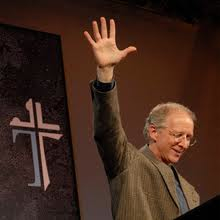
Dr. Tim Keller on Learning Contentment

Editor’s Note: This is a cross-post from Tim Keller’s blog at Redeemer City to City.

It’s remarkable to read David, the Warrior-King of Israel, writing these words from Psalm 131.

My heart is not proud, O LORD, my eyes are not haughty; I do not concern myself with great matters or things too wonderful for me. But I have stilled and quieted my soul; like a weaned child with its mother, like a weaned child is my soul within me.

The metaphor for spiritual maturity here is a “weaned child.” On the one hand, we are a child at the mother’s breast, an image of complete helplessness. We are completely dependent on God. Without him we can do nothing. On the other hand, we are aweaned child, an image of contentment. Unweaned children cry in mother’s arms until they get something from mother — her milk. Only then are they quiet. But a weaned child is satisfied just with mother herself, with her very presence.

Here we see depicted, vividly and compactly, what Job was taught through all his trials. We must love God for himself alone, not just for what he gives us. This is the essence of what, for Jonathan Edwards, distinguished “true grace” from “the experience of devils,” who hold sound doctrine and tremble before God (James 2:19.) Real grace on the heart leads us to see the “beauty and comeliness of divine things, as they are in themselves” (from the sermon by the same name in volume 25 of the Yale edition of Edwards’ works). We become satisfied with God himself. Even his transcendent holiness is enjoyed as a beautiful and magnificent thing, which fills the heart to contemplate, though we certainly get nothing out of it!

If grace has really changed our hearts, we don’t ultimately care if life goes the way we want it, as long as we have him. The joys of acclaim, wealth, and power are nothing compared to the eternal acclaim, wealth, and power we have in him. A “weaned child” is not just someone who knows this in principle, but who has worked gospel truths into his or her soul as spiritually sensed realities. Internally, this quiets the soul into profound contentment and poise. Externally, it means humility, a willingness to learn from others and also to trust God. The believer realizes that the reason God’s actions are often opaque is not because we are wise and he is foolish, but because he is too “great” and “wonderful” for us.

A Christian should never have the attitude toward God, “what have you done for me lately?” Spurgeon said about Psalm 131 that it was “one of the shortest psalms to read, but one of the longest to learn.”

About Dr. Tim Keller: Is the Founding Pastor of Redeemer Presbyterian Church in Manhattan, N.Y. He is has written several best-selling books including: The Reason for God; The Prodigal God; The Meaning of Marriage; and Counterfeit God’s.

God Centered Encouragement With Summer Upon Us from Dr. John Piper

Does God Really Want Us To Be Encouraged?

Holidays are dangerous times of discouragement. The expectations for gladness are higher, so realities of sadness are heavier. You’re supposed to be gloomy in February; so it’s more tolerable then. But Thanksgiving and Christmas are supposed to be festive. Hence the double whammy of discouragement. May I offer some preventative medicine?

When God desired to show more convincingly to the heirs of the promise the unchangeable character of his purpose, he added an oath, so that through two unchangeable things (the promise and the oath), in which it is impossible that God should prove false, we who have fled for refuge might have strong encouragement to seize the hope set before us. (Hebrews 6:17-18)

“…God desired to show more convincingly…”

This text assumes that God had already said enough to give us encouragement. But God is not a God of minimums. His aim is not to speak as few encouraging words as possible. He speaks some words to give us hope. Then, being the effusive God he is, he says to himself, “This is good. I like doing this. I think that I shall do this again.” And so he speaks some more words of encouragement.

But not just more. They are better. He moves from simple promises (which are infallible and infinitely trustworthy!) to oaths. And not just any oaths, but the best and highest kind—oaths based on himself. Why? Not because his word is weak. But because we are weak, and he is patient.

He desires to “show…prove…demonstrate…point out…represent…display…reveal… drive home” the hopefulness of our future. He really wants us to feel this. He goes the second (and third and fourth) mile to help us feel encouraged. This is what he wants. This is what he really wants. “When God desired to show more convincingly…”

“…that we might have strong encouragement…”

How encouraged does God want us to feel? He said, “Strong encouragement!” Note the word! He might have said, “great encouragement” or “big encouragement” or “deep encouragement”. They would all be true. But the word is really “strong”. Encouragement that stands against seasonal downers. Preach this to yourself: “God desires me to have strong encouragement!” “God really desires me to have strong encouragement!”

“…to seize the hope set before us…”

There are good times in this life. But let’s face it: the days are evil, our imperfections frustrate us, and we are getting old, and moving toward the grave. If in this life only we have hoped in Christ we are of all people most to be pitied. There are good times yet to come in this life. But even these are rubbish compared to the surpassing worth of gaining Christ. Even here we can rejoice with joy unspeakable and full of glory. But only because there is a “hope set before us.” Reach out and seize it. God encourages you to. Take it now. Enjoy it now. Be encouraged by it now. Be strongly encouraged. Because your hope is secured with double infiniteness: the promise of God and the oath of God.

Encouraged with you by God’s desire,

Pastor John Piper

About Dr. Piper: John Piper is pastor for preaching and vision at Bethlehem Baptist Church in the Twin Cities of Minnesota. He grew up in Greenville, South Carolina, and studied at Wheaton College, Fuller Theological Seminary (B.D.), and the University of Munich (D.theol.). For six years he taught Biblical Studies at Bethel College in St. Paul, Minnesota, and in 1980 accepted the call to serve as pastor at Bethlehem. John is the author of more than 40 books and more than 30 years of his preaching and teaching is available free at desiringGod.org. John and his wife, Noel, have four sons, one daughter, and twelve grandchildren.

Complaining: Don’t Blame God for Your Problems by Ray Pritchard

“A man’s own folly ruins his life, yet his heart rages against the Lord.” – Proverbs 19:3

Here is a common problem. When things go bad for us, we start to blame God as if He were the source of all our problems. Like Adam in the Garden of Eden, we say, “It was the woman you gave me,” forgetting all along that no one made us eat the fruit.

Complaining is counterproductive in many ways.

First, it may turn us against God and block the flow of His blessing into our lives.

Second, it may cause us to blame others instead of looking within the source of our problems.

Third, it may cause us to miss the lessons God is trying to teach us through the difficulties we encounter.

Hard times provide some of the most important lessons of spiritual growth.

Several years ago a friend shared a statement that revolutionized my thinking in this area. It is deceptively simple: “When hard times come, be a student, not a victim.” The more I ponder those words, the more profound they seem. Many people go through life as professional victims always talking about how unfair life is.

[The chart below will help you identify whether you see yourself as a victim or a student of your circumstances]:

 A VICTIM (IMMATURE) PERSON:                                    A STUDENT (MATURE) PERSON:

Asks, “Why did this happen to me?” Asks, “What can I learn from this?”
Blames others for his problems Asks, “How much of this did I bring on myself?”
Believes hard times have come because God is trying to punish him Understands that God allows hard times in order to help him grow
Looks at everyone else and cries out, “Life isn’t fair.” Looks at life and says, “What’s happened to me could have happened to anybody.”
Would rather complain than find a solution. Has no time to complain because he is making the best of his situation.
Believes the deck of life is forever stacked against him. Believes that God is able to reshuffle the deck anytime He wants to.
Feels so sorry for himself that he has not time for others. Focuses on helping others so that he has no time to feel sorry for himself.
Begs God to remove all the problems of life so that he might be happy. Has learned through the problems of life that God alone is the source of all true happiness.
Worry about what other people think of them. Know that the only thing that matters is what God thinks of them.
Limp through life, complaining about their heavy burdens. Race toward the finish line, looking to their reward.

Many things happen to us beyond our control. In that sense, we are all victims of unexpected circumstances. Unfortunately, some people never rise above the victim mode. But it doesn’t have to be that way. We have the opportunity to choose the way we respond to the things that happen to us. By the grace of God, we can decide to become students, not victims, as we face the trials of life.

Prayer: O Lord, help me to be a student and nor a victim today. Amen.

Evaluation:

Are you a complainer?

What would your friends and family say?

In what areas of life are you most tempted to be a victim?

What can you do to become a student instead?

About the Author: Ray Pritchard (Th.M., Dallas Theological Seminary; D.Min., Talbot School of Theology) is the founder and President of Keep Believing Ministries (http://www.keepbelieving.com/blog/). He was for many years the Senior Pastor of Calvary Memorial Church in Oak Park, Illinois. He has been a professor and guest lecturer at many schools and is a frequent guest on nationally broadcast radio programs. He has ministered extensively overseas, preaching in India, Nepal, Paraguay, Colombia, Haiti, Nigeria, Switzerland, Russia, and Belize. He has written more than twenty books. He has written close to 30 books on the Christian Life. The article above was excerpted and adapted in chart form – from his excellent devotional on the book of Proverbs entitled The ABC’S of Wisdom. Chicago, Moody Press, 1997, 50-52.

Dr. John Piper’s 10 Resolutions For Mental Health

 Psalm 19:1, “The heavens declare the gory of God, and the sky proclaims His handiwork.”

On October 22, 1976, Clyde Kilby, who is now with Christ in Heaven, gave an unforgettable lecture. I went to hear him that night because I loved him. He had been one of my professors in English Literature at Wheaton College. He opened my eyes to more of life than I knew could be seen. O, what eyes he had! He was like his hero, C. S. Lewis, in this regard. When he spoke of the tree he saw on the way to class this morning, you wondered why you had been so blind all your life. Since those days in classes with Clyde Kilby, Psalm 19:1 has been central to my life: “The sky is telling the glory of God.”

That night Dr. Kilby had a pastoral heart and a poet’s eye. He pled with us to stop seeking mental health in the mirror of self-analysis, but instead to drink in the remedies of God in nature. He was not naïve. He knew of sin. He knew of the necessity of redemption in Christ. But he would have said that Christ purchased new eyes for us as well as new hearts. His plea was that we stop being unamazed by the strange glory of ordinary things. He ended that lecture in 1976 with a list of resolutions. As a tribute to my teacher and a blessing to your soul, I offer them for your joy.

1. At least once every day I shall look steadily up at the sky and remember that I, a consciousness with a conscience, am on a planet traveling in space with wonderfully mysterious things above and about me.

2. Instead of the accustomed idea of a mindless and endless evolutionary change to which we can neither add nor subtract, I shall suppose the universe guided by an Intelligence which, as Aristotle said of Greek drama, requires a beginning, a middle, and an end. I think this will save me from the cynicism expressed by Bertrand Russell before his death when he said: “There is darkness without, and when I die there will be darkness within. There is no splendor, no vastness anywhere, only triviality for a moment, and then nothing.”

3. I shall not fall into the falsehood that this day, or any day, is merely another ambiguous and plodding twenty-four hours, but rather a unique event, filled, if I so wish, with worthy potentialities. I shall not be fool enough to suppose that trouble and pain are wholly evil parentheses in my existence, but just as likely ladders to be climbed toward moral and spiritual manhood.

4. I shall not turn my life into a thin, straight line which prefers abstractions to reality. I shall know what I am doing when I abstract, which of course I shall often have to do.

5. I shall not demean my own uniqueness by envy of others. I shall stop boring into myself to discover what psychological or social categories I might belong to. Mostly I shall simply forget about myself and do my work.

6. I shall open my eyes and ears. Once every day I shall simply stare at a tree, a flower, a cloud, or a person. I shall not then be concerned at all to ask what they are but simply be glad that they are. I shall joyfully allow them the mystery of what Lewis calls their “divine, magical, terrifying and ecstatic” existence.

7. I shall sometimes look back at the freshness of vision I had in childhood and try, at least for a little while, to be, in the words of Lewis Carroll, the “child of the pure unclouded brow, and dreaming eyes of wonder.”

8. I shall follow Darwin’s advice and turn frequently to imaginative things such as good literature and good music, preferably, as Lewis suggests, an old book and timeless music.

9. I shall not allow the devilish onrush of this century to usurp all my energies but will instead, as Charles Williams suggested, “fulfill the moment as the moment.” I shall try to live well just now because the only time that exists is now.

10. Even if I turn out to be wrong, I shall bet my life on the assumption that this world is not idiotic, neither run by an absentee landlord, but that today, this very day, some stroke is being added to the cosmic canvas that in due course I shall understand with joy as a stroke made by the architect who calls himself Alpha and Omega.

John Piper was pastor for preaching and vision at Bethlehem Baptist Church in the Twin Cities of Minnesota. He grew up in Greenville, South Carolina, and studied at Wheaton College, Fuller Theological Seminary (B.D.), and the University of Munich (D.theol.). For six years he taught Biblical Studies at Bethel College in St. Paul, Minnesota, and in 1980 accepted the call to serve as pastor at Bethlehem. John is the author of more than 40 books and more than 30 years of his preaching and teaching is available free at desiringGod.org. John and his wife, Noel, have four sons, one daughter, and twelve grandchildren.

The Self-Existence of God by A.W. Tozer

Lord of all being! Thou alone canst affirm I AM THAT I AM; yet we who are made in Thine image may each one repeat ”I am,” so confessing that we derive from Thee and that our words are but an echo of Thine own. We acknowledge Thee to be the great Original of which we through Thy goodness are grateful if imperfect copies. We worship Thee, O Father Everlasting. Amen.

”God has no origin,” said Novatian and it is precisely this concept of no-origin which distinguishes That-which-is-God from whatever is not God.

Origin is a word that can apply only to things created. When we think of anything that has origin we are not thinking of God. God is self-existent, while all created things necessarily originated somewhere at some time. Aside from God, nothing is self-caused.

By our effort to discover the origin of things we confess our belief that everything was made by Someone who was made of none. By familiar experience we are taught that everything ”came from” something else. Whatever exists must have had a cause that antedates it and was at least equal to it, since the lesser cannot produce the greater. Any person or thing may be at once both caused and the cause of someone or something else; and so, back to the One who is the cause of all but is Himself caused by none.

The child by his question, ”Where did God come from?” is unwittingly acknowledging his creaturehood. Already the concept of cause and source and origin is firmly fixed in his mind. He knows that everything around him came from something other than itself, and he simply extends that concept upward to God. The little philosopher is thinking in true creature-idiom and, allowing for his lack of basic information, he is reasoning correctly. He must be told that God has no origin, and he will find this hard to grasp since it introduces a category with which he is wholly unfamiliar and contradicts the bent toward origin-seeking so deeply ingrained in all intelligent beings, a bent that impels them to probe ever back and back toward undiscovered beginnings.

To think steadily of that to which the idea of origin cannot apply is not easy, if indeed it is possible at all. Just as under certain conditions a tiny point of light can be seen, not by looking directly, at it but by focusing the eyes slightly to one side, so it is with the idea of the Uncreated. When we try to focus our thought upon One who is pure uncreated being we may, see nothing at all, for He dwelleth in light that no man can approach unto. Only by faith and love are we able to glimpse Him as he passes by our shelter in the cleft of the rock. ”And although this knowledge is very cloudy, vague and general,” says Michael de Molinos, being supernatural, it produces a far more clear and perfect cognition of God than any sensible or particular apprehension that can be formed in this life; since all corporeal and sensible images are immeasurably remote from God.”

The human mind, being created, has an understandable uneasiness about the Uncreated. We do not find it comfortable to allow for the presence of One who is wholly outside of the circle of our familiar knowledge. We tend to be disquieted by the thought of One who does not account to us for His being, who is responsible to no one, who is self-existent, self-dependent and self-sufficient.

Philosophy and science have not always been friendly toward the idea of God, the reason being that they are dedicated to the task of accounting for things and are impatient with anything that refuses to give an account of itself. The philosopher and the scientist will admit that there is much that they do not know; but that is quite another thing from admitting that there is something which they can never know, which indeed they have no technique for discovering.

To admit that there is One who lies beyond us, who exists outside of all our categories, who will not be dismissed with a name, who will not appear before the bar of our reason, nor submit to our curious inquiries: this requires a great deal of humility, more than most of us possess, so we save face by thinking God down to our level, or at least down to where we can manage Him. Yet how He eludes us! For He is everywhere while He is nowhere, for ”where” has to do with matter and space, and God is independent of both. He is unaffected by time or motion, is wholly self-dependent and owes nothing to the worlds His hands have made.

Timeless, spaceless, single, lonely,

Yet sublimely Three,

Thou art grandly, always, only

God is Unity!

Lone in grandeur,

lone in glory,

Who shall tell Thy wondrous story?

Awful Trinity!

– Frederick W. Faber

It is not a cheerful thought that millions of us who live in a land of Bibles, who belong to churches and labor to promote the Christian religion, may yet pass our whole life on this earth without once having thought or tried to think seriously about the being of God. Few of us have let our hearts gaze in wonder at the I AM, the self-existent Self back of which no creature can think. Such thoughts are too painful for us. We prefer to think where it will do more good – about how to build a better mousetrap, for instance, or how to make two blades of grass grow where one grew before. And for this we are now paying a too heavy price in the secularlzation of our religion and the decay of our inner lives.

Perhaps some sincere but puzzled Christian may at this juncture wish to inquire about the practicality of such concepts as I am trying to set forth here. ”What bearing does this have on my life?” he may ask. ”What possible meaning can the self-existence of God have for me and others like me in a world such as this and in times such as these?”

To this I reply that, because we are the handiwork of God, it follows that all our problems and their solutions are theological. Some knowledge of what kind of God it is that operates the universe is indispensable to a sound philosophy of life and a sane outlook on the world scene.

The much-quoted advice of Alexander Pope,

Know then thyself, presume not God to scan:

The proper study of mankind is man,

if followed literally would destroy any possibility of man’s ever knowing himself in any but the most superficial way. We can never know who or what we are till we know at least something of what God is. For this reason the self-existence of God is not a wisp of dry doctrine, academic and remote; it is in fact as near as our breath and as practical as the latest surgical technique.

For reasons known only to Himself, God honored man above all other beings by creating him in His own image. And let it be understood that the divine image in man is not a poetic fancy, not an idea born of religious longing. It is a solid theological fact, taught plainly throughout the Sacred Scriptures and recognized by the Church as a truth necessary to a right understanding of the Christian faith.

Man is a created being, a derived and contingent self, who of himself possesses nothing but is dependent each moment for his existence upon the One who created him after His own likeness. The fact of God is necessary to the fact of man. Think God away and man has no ground of existence.

That God is everything and man nothing is a basic tenet of Christian faith and devotion; and here the teachings of Christianity coincide with those of the more advanced and philosophical religions of the East. Man for all his genius is but an echo of the original Voice, a reflection of the uncreated Light. As a sunbeam perishes when cut off from the sun, so man apart from God would pass back into the void of nothingness from which he first leaped at the creative call.

Not man only, but everything that exists came out of and is dependent upon the continuing creative impulse. ”In the beginning was the Word, and the Word was with God, and the Word was God…. All things were made by him and without him was not any thing made that was made.” That is how John explains it, and with him agrees the apostle Paul: ”For by him were all things created, that are in heaven and that are in earth, visible and invisible, whether they be thrones, or dominions, or principalities, or powers: all things were created by him, and for him; and he is before all things, and by him all things consist.” To this witness the writer to the Hebrews adds his voice, testifying of Christ that He is the brightness of God’s glory and the express image of His Person, and that He upholds all things by the word of His power.

In this utter dependence of all things upon the creative will of God lies the possibility for both holiness and sin. One of the marks of God’s image in man is his ability to exercise moral choice. The teaching of Christianity is that man chose to be independent of God and confirmed his choice by deliberately disobeying a divine command. This act violated the relationship that normally existed between God and His creature; it rejected God as the ground of existence and threw man back upon himself. Thereafter he became not a planet revolving around the central Sun, but a sun in his own right, around which everything else must revolve.

A more positive assertion of selfhood could not be imagined than those words of God to Moses: I AM THAT I AM. Everything God is, everything that is God, is set forth in that unqualified declaration of independent being. Yet in God, self is not sin but the quintessence of all possible goodness, holiness and truth.

The natural man is a sinner because and only because he challenges God’s selfhood in relation to his own. In all else he may willingly accept the sovereignty of God; in his own life he rejects it. For him, God’s dominion ends where his begins. For him, self becomes Self, and in this he unconsciously imitates Lucifer, that fallen son of the morning who said in his heart, ”I will ascend into heaven, I will exalt my throne above the stars of God. . . . I will be like the Most High.”

Yet so subtle is self that scarcely anyone is conscious of its presence. Because man is born a rebel, he is unaware that he is one. His constant assertion of self, as far as he thinks of it at all, appears to him a perfectly normal thing. He is willing to share himself, sometimes even to sacrifice himself for a desired end, but never to dethrone himself. No matter how far down the scale of social acceptance he may slide, he is still in his own eyes a king on a throne, and no one, not even God, can take that throne from him.

Sin has many manifestations but its essence is one. A moral being, created to worship before the throne of God, sits on the throne of his own selfhood and from that elevated position declares, ”I AM.” That is sin in its concentrated essence; yet because it is natural it appears to be good. It is only when in the gospel the soul is brought before the face of the Most Holy One without the protective shield of ignorance that the frightful moral incongruity is brought home to the conscience. In the language of evangelism the man who is thus confronted by the fiery presence of Almighty God is said to be under conviction. Christ referred to this when He said of the Spirit whom He would send to the world, ”And when he is come, he will reprove the world of sin, and of righteousness, and of judgment.”

The earliest fulfilment of these words of Christ was at Pentecost after Peter had preached the first great Christian sermon. ”Now when they heard this, they were pricked in their heart, and said unto Peter and to the rest of the apostles, Men and brethren, what shall we do?” This ”What shall we do?” is the deep heart cry of every man who suddenly realizes that he is a usurper and sits on a stolen throne. However painful, it is precisely this acute moral consternation that produces true repentance and makes a robust Christian after the penitent has been dethroned and has found forgiveness and peace through the gospel.

”Purity of heart is to will one thing,” said Kierkegaard, and we may with equal truth turn this about and declare, ”The essence of sin is to will one thing,” for to set our will against the will of God is to dethrone God and make ourselves supreme in the little kingdom of Mansoul. This is sin at its evil root. Sins may multiply like the sands by the seashore, but they are yet one. Sins are because sin is. This is the rationale behind the much maligned doctrine of natural depravity which holds that the independent man can do nothing but sin and that his good deeds are really not good at all. His best religious works God rejects as He rejected the offering of Cain. Only when he has restored his stolen throne to God are his works acceptable.

The struggle of the Christian man to be good while the bent toward self-assertion still lives within him as a kind of unconscious moral reflex is vividly described by the apostle Paul in the seventh chapter of his Roman Epistle; and his testimony is in full accord with the teaching of the prophets. Eight hundred years before the advent of Christ the prophet Isaiah identified sin as rebellion against the will of God and the assertion of the right of each man to choose for himself the way he shall go. ”All we like sheep have gone astray,” he said, ”we have turned every one to his own way,” and I believe that no more accurate description of sin has ever been given.

The witness of the saints has been in full harmony with prophet and apostle, that an inward principle of self lies at the source of human conduct, turning everything men do into evil. To save us completely Christ must reverse the bent of our nature; He must plant a new principle within us so that our subsequent conduct will spring out of a desire to promote the honor of God and the good of our fellow men. The old self-sins must die, and the only instrument by which they can be slain is the Cross. ”If any man come after me, let him deny himself, and take up his cross, and follow me,” said our Lord, and years later the victorious Paul could say, ”I am crucified with Christ: nevertheless I live; yet not I, but Christ liveth in me.”

My God, shall sin its power maintain

And in my soul defiant live!

‘Tis not enough that Thou forgive,

The cross must rise and self be slain.

O God of love, Thy power disclose:

‘Tis not enough that Christ should rise,

I, too, must seek the brightening skies,

And rise from death, as Christ arose.

– Greek hymn

Article adapted from Chapter 5 of A.W. Tozer’s classic book on the Attributes of God entitled: The Knowledge of the Holy. Harper, many reprints – most recently 2008.
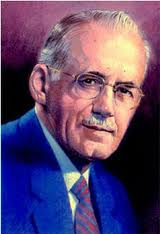
About the Author. Aiden Wilson Tozer was born April 21, 1897, on a small farm among the spiny ridges of Western Pennsylvania. Within a few short years, Tozer, as he preferred to be called, would earn the reputation and title of a “20th-century prophet.”

Able to express his thoughts in a simple but forceful manner, Tozer combined the power of God and the power of words to nourish hungry souls, pierce human hearts, and draw earthbound minds toward God.

When he was 15 years old, Tozer’s family moved to Akron, Ohio. One afternoon as he walked home from his job at Goodyear, he overheard a street preacher say, “If you don’t know how to be saved . . . just call on God.” When he got home, he climbed the narrow stairs to the attic where, heeding the preacher’s advice, Tozer was launched into a lifelong pursuit of God.

In 1919, without formal education, Tozer was called to pastor a small storefront church in Nutter Fort, West Virginia. That humble beginning thrust him and his new wife Ada Cecelia Pfautz, into a 44-year ministry with The Christian and Missionary Alliance.

Thirty-one of those years were spent at Chicago’s Southside Alliance Church. The congregation, captivated by Tozer’s preaching, grew from 80 to 800.

In 1950 Tozer was elected editor of the Alliance Weekly now called Alliance Life. The circulation doubled almost immediately. In the first editorial dated June 3, 1950, he set the tone: “It will cost something to walk slow in the parade of the ages while excited men of time rush about confusing motion with progress. But it will pay in the long run and the true Christian is not much interested in anything short of that.”

Tozer’s forte was his prayer life which often found him walking the aisles of a sanctuary or lying face down on the floor. He noted, “As a man prays, so is he.” To him the worship of God was paramount in his life and ministry. “His preaching as well as his writings were but extensions of his prayer life,” comments Tozer biographer James L. Snyder. An earlier biographer noted, “He spent more time on his knees than at his desk.”

Tozer’s love for words also pervaded his family life. He quizzed his children on what they read and made up bedtime stories for them. “The thing I remember most about my father,” reflects his daughter Rebecca, “was those marvelous stories he would tell.”

Son Wendell, one of six boys born before the arrival of Rebecca, remembers that, “We all would rather be treated to the lilac switch by our mother than to have a talking-to by our dad.”

Tozer’s final years of ministry were spent at Avenue Road Church in Toronto, Canada. On May 12, 1963, his earthly pursuit of God ended when he died of a heart attack at age 66. In a small cemetery in Akron, Ohio, his tombstone bears this simple epitaph: “A Man of God.”

Some wonder why Tozer’s writings are as fresh today as when he was alive. It is because, as one friend commented, “He left the superficial, the obvious and the trivial for others to toss around. . . . [His] books reach deep into the heart.”

His humor, written and spoken, has been compared to that of Will Rogers–honest and homespun. Congregations could one moment be swept by gales of laughter and the next sit in a holy hush.

For almost 50 years, Tozer walked with God. Even though he is gone, he continues to speak, ministering to those who are eager to experience God. As someone put it, “This man makes you want to know and feel God.”


How the A-C-T-S Acronym Can Help Us In Balancing Prayer By Dr. R.C. Sproul

A helpful structure for personal prayer is provided by the acrostic A-C-T-S: Adoration, Confession, Thanksgiving, and Supplication. Adoration as the place where prayer must start. When we begin by adoring God and seeing him in his majesty and holiness, we naturally become aware of our sins. Thus, the next step in prayer is confession of sins.

We should always pray in a spirit of confession. Psalm 66:18 says that if we harbor unconfessed sins in our hearts, God will not hear us. Thus, we may never enter into a conversation with God while we are in a state of sin. Just as believers under the old covenant could only draw near to God by bringing a sacrifice, so we may not draw near without confessing our sins and approaching him through the shed blood of Jesus Christ, the final sacrifice for sins. We are commanded to come boldly, but we must come contritely as well.

The third part of prayer is “supplication with thanksgiving.” We should begin with thanksgiving for what Jesus has done for us and for what God has done in our lives. The attitude of thanksgiving is wanting in our lives. The traditional worship service of the church is called the Eucharist, from the Greek word for “thanksgiving.” The idea of worship is thanksgiving to God. We tend to forget what God has done for us, which is why God set up memorials and rituals for Israel to remind them. We need to make the effort in our prayers to show that we have not forgotten God’s mercies.

Finally, we bring our petitions. The Protestant doctrine of the priesthood of all believers says that we need not go to an ordained clergyman for prayer, and we certainly don’t need to ask dead saints to do it. We can ask any believer.

The other side of this is that, just as we need to ask others to pray for us, so we need to pray for others. The tendency is for us to be self-centered in our petitions, to pray mostly for ourselves. We need to reverse this emphasis and exercise our priesthood properly. We need to be priests for others, and have them be priests for us.

Try this A-C-T-S prayer outline. If you find that you stammer, keep going. Prayer, like learning to talk to anyone else, takes both focused interest and practice. Ask God to help you learn to pray better. Open the psalms and use them to help guide your prayers and your thoughts.

Adapted from Dr. R.C. Sproul. Vol. 4Before the Face of God: Book 4: A daily guide for living from Ephesians, Hebrews, and James. Grand Rapids: Baker Book House; Ligonier Ministries, 1994, 478-479.

One of the ways I like to use the A-C-T-S acronym is to write down on a sheet of paper or journal each letter; then a corresponding verse; and then write down a short prayer on each aspect of adoration, confession, thanksgiving, and supplication based on each verse or passage of Scripture that I am reading through. One of the ways this really helps you grow in the Christian walk is in the area of confession and repentance. It’s easy to say your sorry for a particular sin, but when you write it down and it stares you back in the face – it really forces you to deal with it. For example, if I write down I was short and curt with my wife – and I write down what I said specifically – it helps me not only confess it to God, but also to my spouse, and then ask her to forgive me as well, and then we can work together on how I can speak more kindly to her. Prayer doesn’t change God – He’s perfect and always acts perfectly in accordance with His sovereign plans, but prayer is a wonderful means to help us become more like Jesus, and therefore, prayer is a great medium for us to change and conform into the image of Christ. – Dr. David P. Craig


About the Author: Dr. R.C. Sproul is the founder and chairman of Ligonier Ministries, an international Christian education ministry located near Orlando, Florida. His teaching can be heard on the program Renewing Your Mind, which is broadcast on hundreds of radio outlets in the United States and in 40 countries worldwide. He is the executive editor of Tabletalk Magazine and general editor of The Reformation Study Bible, and the author of more than seventy books (including some of my all time favorites: THE HOLINESS OF GOD; CHOSEN BY GOD; KNOWING SCRIPTURE; WILLING TO BELIEVE; REASON TO BELIEVE; and PLEASING GOD) and scores of articles for national evangelical publications. Dr. Sproul also serves as president of Ligonier Academy of Biblical and Theological Studies and Reformation Bible College. He currently serves as senior minister of preaching and teaching at Saint Andrew’s in Sanford, FL.

Are You Waiting For The Lord?

I don’t know that there is anything more difficult than being blind or in the dark about what God is doing in your life. What I do know is that God is sovereign and is working behind the scenes always working to bring about His purposes for the glory of Christ. One of my favorite Bible teachers is Warren Wiersbe – here is a helpful devotional on the subject of waiting on God based on Psalm 40:1-3 from his wonderful devotional book on the Psalms called Prayer, Praise & Promises: A Daily Walk Through the Psalms. Grand Rapids: Baker, reprinted 2011. – Dr. David P. Craig

“I waited patiently for the LORD; He inclined to me and heard my cry.He drew me up from the pit of destruction, out of the miry bog, and set my feet upon a rock, making my steps secure. He put a new song in my mouth, a song of praise to our God. Many will see and fear,and put their trust in the LORD.” – Psalm 40:1-3 (ESV)

“From Mire To Choir”

 By Warren W. Wiersbe

When we wait for the Lord and wait on Him, we aren’t being idle. In this Psalm David cries out to the Lord and asks for help. He drew me up from the pit of destruction,

out of the miry bog, and set my feet upon a rock, making my steps secure” (v.2). Waiting on the Lord is worthwhile because of what He is going to do for us. It is not idleness, nor is it carelessness. And certainly isn’t complacency. Instead, waiting is that divine activity of expecting God to work. And He never disappoints us.

Figuratively, David had been down in a horrible pit. He was sinking in the mire. But he waited on the Lord. And God not only pulled him out of the pit, but He put him on a rock and established his footing. He said, “David, I’m going to take you out of the mire and put you in the choir.” “He put a new song in my mouth, a song of praise to our God” (v.3).

Are you waiting on the Lord? Are you praying about something and asking, “O God, when are You going to do this? When are You going to work?” Remember, one of these days your praying will turn to singing. Your sinking will turn to standing. Your fear will turn security as He puts you on the rock. Just wait on the Lord. He’s patient with you. Why not be patient with Him and let Him work in His time?

Waiting for the Lord’s help sometimes forces you to your limits. But take comfort in knowing that while you wait on Him, God is working out His purposes in your life. Are you in a difficult situation, waiting for God to do something? Leave your burden with the Lord and trust Him to act. He never disappoints you when wait on Him.

About the Author: Warren W. Wiersbe is the Distinguished Professor of Preaching at Grand Rapids Baptist Seminary, Warren Wiersbe is the author of more than 100 books. Billy Graham calls him “one of the greatest Bible expositors of our generation.” Some of Wiersbe’s recent books include Your Next MiracleThe 20 Essential Qualities of a Child of GodThe Bumps are What You Climb OnClassic Sermons on the Fruit of the SpiritClassic Sermons on Jesus the ShepherdKey Words of the Christian LifeLonely PeopleA Gallery of GraceReal Peace: Freedom and Conscience in the Christian Life, and On Being a Leader for God.

Why Does God Seem To Move So Slowly?

“God Isn’t In A Hurry” By Warren W. Wiersbe

Although I was weary from a long flight, the sign on the mission guesthouse bulletin board made me laugh aloud. It said, “Lord, please make me patient—and do it right now.”

Patience was one of the first lessons we had to learn in childhood. The child who does not learn to be patient is not likely to learn much of anything else. It takes patience to be able to learn to read, to spell, to write, and to master multiplication tables. It even takes patience to grow! God has ordained that maturity is a slow process, not an instant experience; and I am glad that he arranged things that way. It gives me time to get accustomed to growing up.

Impatience is usually a mark of immaturity. At least James felt that way. “But let patience have its perfect work, that you may be perfect and complete, lacking nothing” (James 1:4). Little children think you have arrived at your destination when you stop for the first spotlight. A short wait at the doctor’s office is unbearable. I once asked a lad in Scotland how many years he had left in school, and he replied, “I don’t know, sir. I’m just trying to get through next week.”

But adults have their share of impatience. Abraham got weary of waiting for the promised son; so he hurried and took Hagar as a second wife, and she bore him Ishmael. Moses got impatient and killed a man. This necessitated forty years of postgraduate work in the pastures of Midian. Years later, Moses became impatient again, smote the rock, and lost a trip to the Holy Land.

“Do not be like the horse or as the mule,” warns Psalm 32:9, and it is a warning that we need. The mule is stubborn and has a tendency to hold back. The horse is impulsive and wants to rush ahead. Personality differences may enter in here, but we all have the same problem—it is difficult to wait on God.

Part of the problem is that we are prone to walk by sight and not by faith. God assures us in his Word that he is busy on our behalf, but we still want to see something happen. At the exodus, the Israelites were sure that God had deserted them and destruction was on its way. Listen to that wind! See how dark it is! And yet God was working for his people in the wind and in the darkness. “All these things are against me,” cried Jacob (Gen. 42:36) when, in reality, all things were working for him.

I believe that it was F.B. Meyer who used to say, “God’s delays are not God’s denials.” They are usually the means which God uses to prepare us for something better. God is always at work for the good of his people, and he is working in all things (see Rom. 8:28). This includes the things that perplex us and that pain us. The only way God can teach us patience is to test and try us, and the only way we can learn patience is to surrender and let God have his way.

God can grow a mushroom overnight, but he will take time to grow an oak or a giant sequoia. It took him thirteen years to get Joseph ready for the prime minister’s office in Egypt, and he invested eighty years preparing Moses for forty years of service. David was a youth when Samuel anointed him king of Israel, but David had to experience a great deal of suffering before he finally ascended that throne. We are the richer for it, because out of those years of preparation came many of David’s greatest psalms.

Our Lord spent thirty years getting ready for three years of public ministry. He patiently obeyed the Father’s will as he carried out that ministry. “My hour has not yet come,” he told Mary (John 2:4). “Are there not twelve hours in the day?” he asked his impatient disciples (11:9). God has his times as well as his purposes, and to miss his times is to delay his purposes.

When I was a student in seminary, I was privileged to pastor a church on weekends. God blessed in many ways, and at one point I was tempted to leave school and devote my full-time to the church. My faculty counselor set me straight. “God has waited a long time for you to come along,” he reminded me, “and he can wait until you graduate. Don’t sacrifice the permanent for the immediate.” He was right, and today I am glad I followed his counsel.

Perhaps the hardest place to wait is in the furnace of suffering. God does not always explain what he is doing or why he is doing it. It is in the hour of suffering that we need to “imitate those who through faith and patience inherit the promises” (Heb. 6:12). “For you have need of endurance, so that after you have done the will of God, you may receive the promise” (10:36). Knowing that the Father is near us and that he is working out his wonderful purposes ought to encourage us, but we often get impatient just the same.

“Why has God made me this way?” a suffering saint once bitterly asked her pastor. Gently, he replied, “God has not made you—he is making you.” How true! And how easy it is for us to forget this truth!

If God can make a believer patient, then God can trust that believer with whatever is in his gracious will. But the school of patience never produces any graduates, and it never grants any honorary degrees. We are always learning, always maturing. Sometimes we fail the examination even before we know what the lesson is! No matter; our loving Father is guiding us and making us more like his beloved Son, and that is all that matters.

“Lord, make me patient!” God will answer that prayer, often in ways that will startle us. “And do it right now!” That prayer he cannot answer, for even Almighty God must take time to turn clay into useful vessels. The best thing you and I can do is to stop looking at our watches and calendars and simply look by faith into the face of God and let him have his way—in his time.

About the Author:

Warren W. Wiersbe is the Distinguished Professor of Preaching at Grand Rapids Baptist Seminary, Warren Wiersbe is the author of more than 100 books. Billy Graham calls him “one of the greatest Bible expositors of our generation.” Interestingly, Warren’s earliest works had nothing to do with scriptural interpretation. His interest was in magic, and his first published title was Action with Cards (1944).

“It was sort of imbecilic for a fifteen-year-old amateur magician to have the audacity to write a book and send it to one of the nation’s leading magic houses,” Warren says. But having a total of three books published by the L.L. Ireland Magic Company—before the age of 20—gave him a surge of confidence. In later years, he applied his confidence and writing talent to the Youth for Christ (YFC) ministry.

Warren wrote many articles and guidebooks for YFC over a three-year period, but not all his manuscripts were seen by the public eye. One effort in particular, The Life I Now Live, based on Galatians 2:20, was never published. The reason, Warren explains with his characteristic humor, is simple: it was “a terrible book…Whenever I want to aggravate my wife, all I have to say is, ‘I think I’ll get out that Galatians 2:20 manuscript and work on it.’” Fortunately, Warren’s good manuscripts far outnumbered the “terrible” ones, and he was eventually hired by Moody Press to write three books.

The much-sought-after author then moved on to writing books for Calvary Baptist Church. It was during his ten years at Calvary that Expository Outlines on the New Testament and Expository Outlines on the Old Testament took shape. These two works later became the foundation of Warren’s widely popular Bible studies known as the Be series, featuring such titles as Be Loyal (a study on Matthew) and Be Delivered (a study on Exodus). Several of these books have been translated into Spanish.

His next avenue of ministry was Chicago’s Moody Memorial Church, where he served for seven years. He wrote nearly 20 books at Moody before moving to Lincoln, Nebraska, where he and his wife, Betty, now live. Prior to relocating, he had been the senior pastor of Moody Church, a teacher at Trinity Evangelical Divinity School, and a producer of the Back to the Bible radio program.

During all these years of ministry, Warren held many more posts and took part in other projects too numerous to mention. His accomplishments are extensive, and his catalog of biblical works is indeed impressive and far-reaching (many of his books have been translated into other languages). But Warren has no intention of slowing down any time soon, as he readily explains: “I don’t like it when people ask me how I’m enjoying my ‘retirement,’ because I’m still a very busy person who is not yet living on Social Security or a pension. Since my leaving Back to the Bible, at least a dozen books have been published, and the Lord willing, more are on the way.”

Some of Wiersbe’s recent books include Your Next MiracleThe 20 Essential Qualities of a Child of GodThe Bumps are What You Climb OnClassic Sermons on the Fruit of the SpiritClassic Sermons on Jesus the ShepherdKey Words of the Christian LifeLonely PeopleA Gallery of GraceReal Peace: Freedom and Conscience in the Christian Life, and On Being a Leader for GodThe article above is adapted from Chapter One in his book God Isn’t In A Hurry: Learning to Slow Down and Live. Grand Rapids: Baker, 1994.

What Does it Mean To Glorify God? By Dr. Ray Pritchard

“Glorify God: Enhancing God’s Reputation In The World”

 “Glorify the Lord with me; let us exalt His name together.” – Ps. 34:3

What precisely does it mean to glorify God? The particular word translated “glorify” in this verse is sometimes translated by words such as “magnify,” “exalt,” “pile high,” and “make grow.” It has within it the concept of increasing the size of something. In this context it means to recognize who God really is and how to honor Him for what He has done. You glorify someone when you recognize his true identity and the true worth of his accomplishments.

When our boys were young, we took them on a short vacation to visit relatives in Lexington, Kentucky. During an afternoon trip to a miniature golf course, we noticed an older gentlemen with his grandchildren on another part of the course. “Do you know who that is?” someone asked. We didn’t. “He was the governor of Kentucky.” “You’re just making that up.” But it was true. The older gentlemen turned out to be the distinguished former governor of Kentucky. Our opinion changed instantly from disinterest to great respect.

The most common Old Testament word for glory means to treat something as “heavy” or “weighty” in nature. The word was used in Genesis 31 for animals heavy-laden with gold. The word also refers to the shining light of God’s presence. That glory was the cloud by day and the fiery pillar by night that led the people of God through the wilderness. Later it was the light that filled the tabernacle and the temple. Exodus 24:17 tells us that God’s glory was like a consuming fire on the top of Mount Sinai. Thomas Watson, the great Puritan preacher, called glory “the sparkling of Deity.”

When we pass into the New Testament we meet a Greek word, doxa, from which we get the English word doxology. This word has the idea of honor, dignity, and reputation. The last word—reputation—brings us very close to the meaning of “glory” in Psalm 34:3. I remember hearing Dr. Charles Ryrie explain that God’s glory is His reputation in the world. To live for God’s glory means to live so that God’s reputation is enhanced, not diminished.

That leads me to an important thought. In one sense you cannot diminish God’s glory. It exists forever because God is eternal. To paraphrase C.S. Lewis, you cannot diminish God’s glory any more than a madman can diminish the sun merely by scribbling “darkness” on the walls of his cell. However, you can cause others to see the glory of God or to dismiss it entirely by the personal choices you make every day.

God’s purpose for you and me is that we would glorify Him by recognizing in our daily lives who He is and what great things He has done for us. As we do that, His reputation is enhanced in the world.

Prayer: Lord Jesus, I pray to be the kind of person who makes it easy for others to believe in you. Amen.

A Moment’s Reflection:

Why did God leave His earthly reputation in the hands of His children?

What difference does that make for you?

Name three practical ways you can glorify God this week?

About the Author: Ray Pritchard (Th.M., Dallas Theological Seminary; D.Min., Talbot School of Theology) is the founder and President of Keep Believing Ministries (http://www.keepbelieving.com/blog/). He was for many years the Senior Pastor of Calvary Memorial Church in Oak Park, Illinois. He has been a professor and guest lecturer at many schools and is a frequent guest on nationally broadcast radio programs. He has ministered extensively overseas, preaching in India, Nepal, Paraguay, Colombia, Haiti, Nigeria, Switzerland, Russia, and Belize. He has written more than twenty books. He has written close to 30 books on the Christian Life. The article above was excerpted from his excellent devotional on the Psalms entitled Green Pastures, Quiet Waters: Refreshing Moments from the Psalms. Chicago, Moody Press, 1999, 30-32.

“No Super Christians” by Steve W. Brown

After a week of meetings in Pittsburgh, a man came up to meet me following the service. A former missionary and member of the church for over thirty years, he said something to me I still haven’t been able to classify as either a compliment or something otherwise. “Steve,” he said, “I’ve really appreciated what you’ve said this week.” I told him I was glad. Then he added, “I’ve been in church all my life, and all my life I’ve heard pastors say that they were sinners. You’re the first one I ever really believed.”

Though I still chuckle about that remark, I acknowledge with complete sincerity his observation. You see, I’m not a pastor and radio preacher because I’m good or have abilities or because I’m talented. I’m where I’m at because God put me here. And sometimes I’ll be soft and sometimes I’ll be hard, but you remember, I’m just like you. God must remind me over and over that even when people call me Reverend, I’m not. Christ established an equality in the brotherhood that has direct implications for me as well as for you.

In every congregation of believers, God sets aside brothers and sisters who are called of God to lead. But the problem is, sometimes we get the idea that we are God’s gift to the world, and when that happens, the delicate balance between gifted leadership and ecclesiastical elitism gets shattered. There’s no room in the Body of Christ for elitism of any sort. That’s the world’s way.

After Queen Victoria and Prince Albert had had one of their famous, loud arguments, Prince Albert went to his room and slammed and locked the door. Queen Victoria marched after him and pounded on his door.

“Who is it?” asked Prince Albert.

“It is the Queen of England.”

Dead silence. The again the question: “Who is it?”

“It is your sovereign ruler,” replied the Queen.

Then once again, “Who is it?”

“It is your wife, Victoria, Albert.”

At that point Albert opened the door.

You may be an elder or deacon or a leader in your Sunday school. Perhaps you lead in some of the other groups in your church and conduct Bible studies. Whatever your role, I thank God for you. But remember that you’re doing it (or at least should be) because God told you to do it, not because you’re a super Christian. There are no super Christians in the body of Christ. All of us are just one among equals. So when a Christian brother or sister stands on the pedestal of his or her own status…when a peacock feathers start flying in the breeze…don’t bow. That kind of behavior doesn’t need to be encouraged. Honesty does. The importance of being honest and acknowledging our true condition and coequal status cannot be overstated.

When a Christian gets honest, something exciting happens. We get to the point where God can use us. Evangelist D.L. Moody once said, “I’ve had more trouble with D.L. Moody than with any other man I’ve ever known.” Thomas a Kempis said, “Be not angry that you cannot make others as you wish them to be since you cannot make yourself as you wish yourself to be.” If we don’t get honest with ourselves, then God is going to force it on us.

Let me tell you a prayer that God always answers: “Lord, show me myself.” Don’t pray it unless you mean it because God will surely answer you, and you won’t like what you see. But he’ll make you different through it—I guarantee it.

Super Christians? They don’t exist. There are only sinners saved by the blood of the Lamb. Remember the next time you find yourself enjoying compliments so much. If you listen carefully, you will hear them sound like a cape flapping vainly in the wind.

*Steve Brown is a radio broadcaster, seminary professor and author. He previously served as a pastor for over twenty-five years and now devotes much of his time to the radio broadcast, Key Life.

With such varied experience and unique perspective on life, Steve is an original. He refuses to be a “guru,” doesn’t want to be anyone’s mother and gives, in his teaching, the freedom to think. Overall, Steve has become known for his refreshing and practical Biblical applications.

Steve serves as Professor Emeritus of Preaching and Pastoral Ministry at Reformed Theological Seminary. He sits on the board of the National Religious Broadcasters and Harvest USA. Traveling extensively, Steve is a much-in-demand speaker.

Steve is the author of numerous books including A Scandalous Freedom, Approaching God, When Being God Isn’t Good Enough, What Was I Thinking? And Three Free Sins. His articles appear in such magazines and journals as Leadership, Decision, Plain Truth and Today’s Christian Woman. Article above No Super Christians adapted from Steve Brown, Jumping Hurdles, Hitting Glitches, Overcoming Setbacks, Colorado Springs, NavPress, 1992, 107-108.