Episode One: “Living Vertically in a Horizontal Culture”

Check Out New YouTube Channel: Vertical Living Ministries

Episode One: “Living Vertically in a Horizontal Culture”

April 21, 2025 – Dr. David P. Craig, Founder, Vertical Living Ministries 

This week (God-willing) I will be launching the first of (hopefully) many videos on helping followers of Jesus live a more intentional life of discipleship. I hope that you will check out the brand new YouTube Channel: Vertical Living Ministries. I also hope that you are encouraged by the video and will do three things: hit the like button, subscribe to the channel so you will not miss any upcoming videos, and share it with someone who can benefit from the content.

I want to address the importance of what it means to live vertically in a horizontal culture. Vertical meaning Christ-centered and living for the glory of God and not horizontally centered which means man-centered and living according to the worlds values that conflict with God’s Word!

First, a little about me. I was born in Long Beach, CA in 1965 and lived my formative years (ages 6-27) in Huntington Beach, in Southern California. My parents came to California from Argentina in the mid 1950’s. My parents had a huge impact on me as a child, teenager, and the greater part of my life as an adult as well. I have been very happily married for 33 years to my best friend and partner in ministry and have five adult children and 11 grand children. I am the lead pastor at Marin Bible Church in San Rafael in the heart of Marin County – just 20 miles north of San Francisco and the founder of Vertical Living Ministries. In both of these ministries my greatest passion is to intentionally make and multiply disciples of Jesus in Marin County and beyond for the glory of God.

It’s because of the teaching and modeling of my parents that I am a follower or disciple of the Lord Jesus Christ. At the early age of six I learned that I needed to repent of my sin and trust in Jesus in order to be reconciled to a Holy God. My parents modeled following Jesus with joy and lived life to the fullest. They manifested all of the fruit of the Spirit described in Galatians 5:22: But the fruit of the Spirit is love, joy, peace, patience, kindness, goodness, faithfulness, gentleness, and self-control. They exemplified these characteristics of the Holy Spirit for the 68 years they were married before my dad and mom departed this life to their eternal home to be with Jesus just a few years ago.

I have no recollection in my life of a before and after experience with Jesus. He has always been a huge part of my life. I grew up learning about Jesus daily from the Bible, being part of a vibrant Bible teaching church, and my parents modeling loving and serving Jesus in our home and church along with my two older brothers and sister.

However, I was a pretty typical teenager in that I was selfish and idolatrous – but I was unaware of this until the spring of my junior year of High School. Even though I loved Jesus, His Word, and sharing with others about Him; my highest priority was sports: Football, baseball, basketball, and soccer were really my greatest passion (depending on what season it was) and I played all these sports with great passion – and followed the local Los Angeles sports teams as a diehard fan – the Lakers, Dodgers, Rams, and Aztecs with equal devotion. I definitely spent more time reading the L.A. Times Sports page than I spent in the Bible – knowing much more about standings and statistics than Bible verses.

Like many young men…I had the aspiration of becoming a professional baseball player. This ambition was about to radically change. In hindsight – what appeared to be a tragic day in the spring of my junior year of HS turned out to be the day that God really called me from living in darkness to living in the light. From living for the trivial and temporal, to living for that which will last forever – what the Bible calls making disciples – the great commission in Matthew 28.

I don’t remember the time or exact date – but the event that would change the trajectory of my life transpired after the first day of baseball practice in the spring of 1983. My best friend and teammate – Corey Stejskal and I were driving to a Christian Bookstore in Fountain Valley. I was getting a book for a research paper I was writing for my Bible class at Liberty Christian HS in Huntington Beach. Corey picked me up at my house and about two miles from my house at the intersection of Heil and Bolsa Chica a drunk driver cut us off (we found out later that he was arrested for causing the accident while driving under the influence and fleeing the scene). 

In that accident I experienced what I’ve heard many people express – my life flashed before me in the twinkling of an eye. We were in a jeep and the last thing I knew – my friend turned to the right dodge the driver that was about to slam into us and when we turned away from that car we were about to hit a telephone pole off the side of the road…and that’s the last thing I remember.

The next memory I had was riding in an ambulance on the way to a hospital. When I came to, the Paramedic started asking me questions. I remember the only thing I could see was a puddle of blood on the pillow upon which my head was resting. I was in tremendous pain but I was impressed by the concern and compassion of the Paramedic. He asked me the usual: name, birthday, address, how many fingers he was holding up, and so forth. But what I remember, like it was yesterday, were three things he said.

First of all he asked me if I was a Christian. I immediately said “yes”…and then I said, “Why do you ask?” And he answered, “because I think God intervened on your behalf either directly or He sent an angel to save you.” He then went on to say, “When you get out of the hospital I want you to go see the jeep. I thought for certain that when we arrived at the crash site and saw the jeep – and even told my partner – I hope there were no passengers in that jeep – because if there is – we will have to pull out some dead bodies. He then went on to tell me that with the exception of the the drivers side of the jeep the rest of it was a third of its size due to the impact of it hitting the telephone pole. The passenger side had only half an inch between the glove box and the back of the seat where I was sitting. It was an old early 1970’s model jeep with no seat belts. Had the seat belt law been in effect in 1983 I would have been almost certainly been crushed by the impact and dead.

The next thing he said also stands out in my memory. He said, “God must have some great plans for you … because He obviously and miraculously saved your life!” And he continued, “Don’t waste your life kid. God wants to use you big time…I’m going to pray that He uses your recovery time to make your calling in life to follow and serve jesus as your number one priority.”

While recovering in the hospital (which seemed like forever) I had nothing to do but think. Think about how much time I had wasted in my life; think about how selfish I had been; thinking about how my life was full of idols – things and priorities, I put before God. I also had a recurring nightmare as I tried to sleep with a non-stop continual migraine headache. In the dream I would see (like deja vu) people that had been in my life – neighbors, teammates from my sports teams, and acquaintances that I didn’t really know well, but recognized. In the dream each of these people were in darkness and engulfed in flames and I could see their faces and hear their voices and they all said the same thing to me: “Why didn’t you tell me about Jesus?”

This recurring dream coupled with the time I had wasted absolutely haunted me. I kept rehearsing the words of the paramedic in my mind, and kept thinking to myself: “What if I had died… I know I would be in heaven…but what a shame to have stored up so little treasure there…and left all these useless weeds in my life behind on earth.” For the first time in my life I really felt convicted over my sin and how I had wasted my life and knew that I had not been living for the glory of God. 

I grieved and wept over my sin. Its not like I was doing really bad things, sports aren’t bad in and of themselves. But I came to the belief and conviction that I had mixed up priorities. My priorities selfishly were man-centered and not God-centered – I clearly could see that I was an ego-maniac. I lived for my own glory and not for the glory of Christ. For the first time in my life I was compelled to turn away from the idols in my life that I had been prioritizing over treasuring Jesus and what He deems most important.

The summer between my junior and senior year of High School. God was doing a major overhaul in my thinking and transforming my soul… and this began a journey that continues to this very day – some forty years later. The consuming thought of my life has been – “What does it mean to live for the glory of God?” A verse that I have meditated and thought about deeply and profoundly since the age of 17 has been 1 Corinthians 10:31 where the apostle Paul wrote, “So whether you eat, or drink, or whatever you, do all for the glory of God.”

My senior year I lost my passion for sports – I decided not to play football, basketball, baseball, or soccer. My passion for sports was replaced by a passion to know Jesus and make Him known. Since the age of seventeen my ultimate goal in life has been to learn to live for the glory of God. As a pastor of a local church and life coach to Christian leaders around the world it’s also to help others do the same: the biblical metaphor continually on my mind is to help those I mentor and disciple to eliminate the temporal and trivial weeds and intentionally live for producing wheat by making and multiplying disciples of Jesus for the Kingdom of God which is eternal.

Two of the parables of Jesus are worth exploring in light of this desire I have to live for God’s glory and help others do the same. They involve what I call being a V.I.P. follower or disciple of Jesus. Which I will briefly explain as I wind up this video.

Let me read these two parables and then explain how we can apply these teachings of Jesus by learning how to become V.I.P followers of Jesus – or how we can learn to live vertically in a horizontal world:

In Matthew 13:1-9 and verses 18-30 Jesus gives these two parables: 

That same day Jesus went out of the house and sat beside the sea. And great crowds gathered about Him, so that He got into a boat and sat down. And the whole crowd stood on the beach. And He told them many things in parables, saying: “A sower went out to sow. And as He sowed, some seeds fell along the path, and the birds came and devoured them. Other seeds fell on rocky ground, where they did not have much soil, and immediately they sprang up, since they had no depth of soil, but when the sun rose they were scorched. And since they had no root, they withered away. Other seeds fell among thorns, and the thorns grew up and choked them. Other seeds fell on good soil and produced grain, some a hundredfold, some sixty, some thirty. He who has ears, let him hear.” 

Explanation: “Hear then the parable of the sower: When anyone hears the word of the kingdom and does not understand it, the evil one comes and snatches away what has been sown in his heart. This is what was sown along the path. As for what was sown on rocky ground, this is the one who hears the word and immediately receives it with joy, yet he has no root in himself, but endures for a while, and when tribulation or persecution arises on account of the word, immediately he falls away. As for what was sown among thorns, this is the one who hears the word, but the cares of the world and the deceitfulness of riches choke the word, and it proves unfruitful. As for what was sown on good soil, this is the one who hears the word and understands it. He indeed bears fruit and yields, in one case a hundredfold, in another sixty, and in another thirty.” 

He put another parable before them, saying, “The kingdom of heaven may be compared to a man who sowed good seed in his field, but while his men were sleeping, his enemy came and sowed weeds among the wheat and went away. So when the plants came up and bore grain, then the weeds appeared also. And the servants of the master of the house came and said to him, ‘Master, did you not sow good seed in your field? How then does it have weeds?’ He said to them, ‘An enemy has done this.’ So the servants said to him, ‘Then do you want us to go and gather them?’ But he said, ‘No, lest in gathering the weeds you root up the wheat along with them. Let both grow together until the harvest, and at harvest time I will tell the reapers, “Gather the weeds first and bind them in bundles to be burned, but gather the wheat into my barn.” ’ 

In 2003 I completed my doctoral dissertation with the title: “Living Vertically in a Horizontal Culture.” My thesis was that in order to best live for the glory of God we need to have a vision of Jesus ever before us – and the best way to do that is to spend time in the Bible; we need to intentionally have the same priorities He had – and we find His priorities by daily reading His word and finding out what He’s like and what He wants us be and do; and we need to make plans to integrate that vision by intentionally living for His glory out of obediently applying His word daily.

In 2008 I started a nonprofit ministry helping pastors and Christian leaders learn how to become V.I.P disciples of Jesus. My ultimate goal for myself and others is that we would be men and woman who have a Vision of Jesus, Intentionally live out our calling, and make Intentional Plans and goals to live for the glory of Christ.

I want you to know that I am not an expert in these matters. I don’t always live according to this vision of Jesus…I’m not always intentional in following Jesus, nor does my life always go according to the plans that I want to carry out. However, I do believe that intentional living makes a huge difference in this pursuit of maturing as a follower of Jesus. I am much further along having this vertical vision and I want to help you do the same!

I personally want to eliminate the weeds in my life, and I want to help you do the same. I personally want to invest disciple making – producing wheat that multiplies. I want to be a mature and multiplying wheat producer. In John 15 Jesus says that if we abide in Him we will produce fruit. In these parables Jesus is saying the same thing – we either live for our own glory or His – we either send wheat ahead or leave weeds behind. We either live for ourselves or for the glory of Christ and making disciples who make disciples. 

God saved you and me because of the life, death, burial and resurrection of Christ to live abundant fruit producing lives. In this video and God-willing many videos to come – my goal is to live for Jesus and help you live a Christ centered life. I want to live in intimacy with Jesus and help you do the same. I want to be a fruit producing follower of Jesus who produces spiritual fruit that feeds me and others. I want to produce a hundred fold of wheat and help you do the same. My days and your days are numbered – let’s make them count by storing up our treasures in God’s heavenly barn; rather than an earthly field that will eventually be burned.

Let’s strive to be good soil for God to do His good work in us so we can produce wheat and fruit that will last forever by investing our time with Him and sharing with others out of the overflow of our joyful walk with Jesus. Let’s be fertile soil, with roots that go deep into God’s truth as revealed in His Word. Let’s be intentional about spending time developing a greater vision of Jesus and His glory. Let’s be intentional about doing those things that will bear fruit for the Kingdom that will last forever. In my next video I’m going to help you develop what I call a Vertical Life Plan. We are going to get more specific about developing a vision for Jesus and living for His glory by intentionally planning to invest your thinking, how you spend your time, and use your talents for Jesus and His kingdom.

Until next time: Let me leave you with this amazing promise from Psalm 16:11, ”You make known to me the path of life; in Your presence there is fullness of joy; at Your right hand are pleasures forevermore.”

May God’s presence and peace in your life be foremost, His Spirit fill you to the uttermost, and may your satisfaction and security be in Jesus so that you can   reflect Him in your life so that He gets all the glory! 

In His grip of grace,

Dr. David P. Craig

What Is The Purpose of Life’s Trials?

*“The Bumps Are What You Climb On”

A little boy was leading his sister up a mountain path and the way was not too easy. “Why, this isn’t a path at all,” the little girl complained. “It’s all rocky and bumpy.” And her brother replied, “Sure, the bumps are what you climb on.” That’s a remarkable piece of philosophy. What do you do with the bumps on the path of life?

I have been a reader of biographies for many years, and I have yet to find a successful person whose life was free from problems and difficulties. Looking at these people from a distance, you might think they had it made and that life was easy for them. But when you get closer, you discover that their climb to the top of the mountain was not an easy one. The road was rocky and bumpy, but the bumps were what they climbed on to get to the top. 

We don’t have to read too far in the Bible before we discover the truth. Abraham certainly didn’t become a great man of faith overnight. He had to go through some difficult tests on the road of life before he reached the top of the mountain. No sooner did Abraham arrive in Canaan than a famine came to the land. Imagine facing a famine in the land God has promised you! Then Abraham had problems with his nephew, Lot; and then war came to the land, and Abraham had to go out and fight. His wife led him astray with bad counsel and the result was the birth of Ishmael, a boy who brought sorrow to Abraham’s heart. Finally, Isaac, the promised son, was born, bringing great joy to Abraham and Sarah. Then God asked Abraham to put Isaac on the altar, a sacrifice that would be difficult for any father or mother. Yes, there were many bumps on that road, but Abraham used the bumps to climb higher. 

If anybody walked a rocky road, Joseph did. His father pampered him, hated by his brothers, sold for a slave, falsely accused, put into prison, forgotten, and apparently forsaken. But the bumps on the road helped him to climb higher, and one day Joseph became the second in command of all Egypt. Moses had a similar experience, and so did David, Daniel, and Paul. Here were people who did not complain about the road; they accepted the difficulties of life and used them as stepping-stones to the top of the mountain. 

I don’t know what difficulties you are going through just now, but I know some of the feelings you have, because I have been on this bumpy road myself. You feel like quitting, like giving up. You can’t understand why the road doesn’t get easier, why God doesn’t remove the stones and straighten the path. If God did that, you might never get to the top, because the bumps are what you can climb on

Psalm 91 says, “He that dwelleth in the secret place of the most High shall abide under the shadow of the Almighty.” It is a psalm that magnifies the care that God exercises over His children. Eleven different kinds of dangers are named in this psalm-war, snares, sickness, terrors by night, arrows by day, and others-yet God says that He can protect us from them all. This doesn’t mean that we will never experience accidents or injuries; but it does mean that no matter what happens in the will of God, all things will work together for good

One of the greatest promises found in Psalm 91 has to do with the stones on the path. “For He shall give His angels charge over thee, to keep thee in all thy ways. They shall bear thee up in their hands, lest thou dash thy foot against a stone.” God doesn’t promise to remove the stones from the path, but He does promise to make them stepping-stones and not stumbling blocks. He promises to help us climb higher because of the difficulties of life. 

Most of us respond in a predictable way to the rocks in the path. We complain about them; we kick against them and only hurt ourselves. We try to pick them up and get rid of them, only to discover they are too heavy for us. We can’t always get around them, and we wonder if we can get over them. Some people just stop and go no further. Others give up and turn back. But the child of God does not have to stop or go back; he can use the rocky places in life as stepping-stones to climb higher.

The trouble with most of us is that we are accustomed to paved roads and level sidewalks. But life is not made that way. Sometimes the road is level and easy, and the birds are singing and the way is wonderful. But sometimes the road is rocky and bumpy, and we hear no music and feel no helping hand. Then what? Complain? Give up? No, that’s the time to remember God’s promise: “For He shall give His angels charge over thee, to keep thee in all thy ways.” God’s invisible army is at your service, and God can see you through.

Charlie Brown in the “Peanuts” comic strip is one of my favorite characters. In one particular strip, he is complaining because his team always loses their games. Lucy tries to console him by saying, “Remember, Charlie Brown, you learn more from your defeats than you do from your victories.” And Charlie Brown replies, “That makes me the smartest man in the world!”

If life were nothing but a series of defeats, all of us would get discouraged. God knows how to balance our lives so that we have sunshine and rain, calm and storm, laughter and tears. On the road of life there are level places that delight us, and there are difficult places that challenge us. If we get off the path of God’s will and go on a detour, the way will be rough from start to finish. The detour is always rougher than the main road. But there are rocks and bumps even on the paths of God’s choosing, and we have to learn to accept them and benefit from them. The bumps are what you climb on.

But this takes faith. It is much easier to kick the rock and turn around and go back. The secret to climbing higher is to look away from yourself and your difficulties, and look by faith to Jesus Christ. He knows where you are, how you feel, and what you can do. Turn it all over to Him and start walking by faith. The very rocks that seem like barriers to human eyes will, to the eyes of faith, become blessings. Listen to the promises of Psalm 91:15: “He shall call upon me, and I will answer him: I will be with him in trouble; I will deliver him, and honor him.”

If anybody faced obstacles on the road of life, it was our Lord Jesus Christ. He was born into a poor family, a member of a rejected minority race. He grew up in obscurity in a little town that mentioned only in scorn—“Can any good thing come out of Nazareth?” He gathered about Him a small group of nondescript men, and one of them became a traitor and sold Him for the price of a slave. He was called a liar, a glutton, a drunkard, and a man in league with the devil. Men twisted His words and questioned His motives, yet Jesus Christ continued to do the will of God. Finally, He came to that greatest stone of all—being crucified like a common thief. But He continued to climb that mountain, and God gave Him the victory.

This is why the writer of the Book of Hebrews urges us to look to Jesus Christ and keep on trusting. “Looking unto Jesus the author and finisher of our faith; who for the joy that was set before Him endured the cross, despising the shame, and is set down at the right hand of the throne of God” (12:2). We are to look not at ourselves, our circumstances, our troubles, or the bumps in the road, but unto Jesus. Yes, the bumps are what you climb on!

*The article above was adapted from the very encouraging and practical book by Warren W. Wiersbe. The Bumps Are What You Climb On: Encouragement for Difficult Days. Baker: Grand Rapids, 2003 (Chapter One).*About Warren W. Wiersbe: Was the Distinguished Professor of Preaching at Grand Rapids Baptist Seminary, and is the author of more than 100 books. Billy Graham calls him “one of the greatest Bible expositors of our generation.” Interestingly, Warren’s earliest works had nothing to do with scriptural interpretation. His interest was in magic, and his first published title was Action with Cards (1944). “It was sort of imbecilic for a fifteen-year-old amateur magician to have the audacity to write a book and send it to one of the nation’s leading magic houses,” Warren says. But having a total of three books published by the L.L. Ireland Magic Company—before the age of 20—gave him a surge of confidence. In later years, he applied his confidence and writing talent to the Youth for Christ (YFC) ministry. 

Warren wrote many articles and guidebooks for YFC over a three-year period, but not all his manuscripts were seen by the public eye. One effort in particular, The Life I Now Live, based on Galatians 2:20, was never published. The reason, Warren explains with his characteristic humor, is simple: it was “a terrible book…Whenever I want to aggravate my wife, all I have to say is, ‘I think I’ll get out that Galatians 2:20 manuscript and work on it.’” Fortunately, Warren’s good manuscripts far outnumbered the “terrible” ones, and he was eventually hired by Moody Press to write three books.

The much-sought-after author then moved on to writing books for Calvary Baptist Church. It was during his ten years at Calvary that Expository Outlines on the New Testament and Expository Outlines on the Old Testament took shape. These two works later became the foundation of Warren’s widely popular Bible studies known as the Be series, featuring such titles as Be Loyal (a study on Matthew) and Be Delivered (a study on Exodus). Several of these books have been translated into Spanish. His next avenue of ministry was Chicago’s Moody Memorial Church, where he served for seven years. He wrote nearly 20 books at Moody before moving to Lincoln, Nebraska, where he and his wife, Betty, lived. Prior to relocating, he had been the senior pastor of Moody Church, a teacher at Trinity Evangelical Divinity School, and a producer of the Back to the Bible radio program.

During all these years of ministry, Warren held many more posts and took part in other projects too numerous to mention. His accomplishments are extensive, and his catalog of biblical works is indeed impressive and far-reaching (many of his books have been translated into other languages). Wiersbe wrote over 30 books after the age of 65 and never stoped writing and speaking. He went to be with the Lord on May 2, 2019 at the age of 89. Before his death, Wiersbe and his wife Betty gifted their library of 13,000 volumes to Cedarville University in Ohio.

Charles Stanley on 10 Benefits of Giving Thanks

snoopy-and-charlie-brown-dancing.jpg

Why this tough but life-giving command can change your entire outlook.

Reading the Bible isn’t always Easy

If you’ve ever thought those words but were embarrassed to speak them, you’re not alone. Sure, there’s plenty within Scripture that we comprehend without much difficulty. But at times we come across a passage that baffles us—or worse, makes us feel angry or annoyed. Sometimes it’s because we simply don’t understand what the Lord is saying through the text. But often the reason for our discomfort is that we don’t like what we’re reading. It’s easier to ignore those verses and move on to more appealing topics than to hash it out with God and do what He says. Reading the Bible is hard because, in the end, it challenges us to change.

1 Thessalonians 5:18 is one of those verses that can really get under your skin: “In everything give thanks; for this is God’s will for you in Christ Jesus.” But what about those difficult and painful situations? Being grateful for suffering seems to make no sense.

If I were writing Scripture, I would say, “In most things give thanks, for this is God’s will for you in Christ Jesus.” It’s easy to be grateful for the good things in life—a newborn baby, a raise, a new house, or encouraging news from the doctor. But what if you lose your job, discover your child is on drugs, or are told by the doctor that you have only have six months to live? How can God expect you to be grateful then?

I faced this dilemma some time ago when I hurt my shoulder and experienced excruciating pain. I read this verse and told the Lord, “I know You said this, but it’s not reasonable when I’m hurting so badly. I just don’t feel thankful.” But then I noticed that it didn’t say, In everything give thanks when you feel like it. This command has nothing to do with feelings. It’s a choice to do what God says. Whenever He gives us a command in the Bible, it’s for our benefit.

Gratitude Impacts Every Area of our Lives

By giving us the command to always give thanks, God is not rubbing salt in a wound or calling us to set aside reason. He knows that being thankful in all circumstances has a powerful impact on every area of our Christian life. Here are ten lessons I’ve learned:

1. Gratitude keeps us continually aware that the Lord is close by. Even though gratefulness doesn’t come naturally in difficult circumstances, a decision to thank God for walking with us through life makes us more sensitive to His comforting presence.

2. It motivates us to look for His purpose in our circumstance. Knowing that the Lord allows hurt and trouble for His good purposes takes the edge off the pain. Even if we don’t understand why we’re going through suffering, we can thank God because we know that in His time, He’ll work it all for good. In the meantime, we can rest in the knowledge that He’s using every hardship to transform us into the image of His Son (Rom. 8:28-29).

3. Thanksgiving helps bring our will into submission to God.When the situation we’re experiencing is the last thing we’d ever want, thanking the Lord is a giant step toward being able to follow Christ’s example and say, “Not my will, but Yours be done” (Luke 22:42). Gratitude helps us acknowledge that God’s will is best, even if it’s hard; in that way, we are able to release our hold on what we want. Although the circumstances may remain the same, submission changes our heart.

4. It reminds us of our continual dependence upon the Lord. Pride, adequacy, and independence evaporate whenever we’re trapped in a situation that leaves us helpless and hopeless. If there’s no way out, thanking God for His control over all things reminds us that He alone is our strength.

5. Thankfulness is an essential ingredient for joy. There’s no way to “rejoice always” (1 Thess. 5:16) without giving thanks in everything (v. 18). That’s why ungrateful people are so grumpy. Joy is an inner sense of contentment, which flows from a deep assurance that all God’s purposes are good and He’s in complete control of every situation. With that kind of supernatural joy, it’s easy to be thankful.

6. A grateful attitude strengthens our witness to unbelievers.The world is filled with people who are angry, frustrated, and overwhelmed with the difficulties of life. But a believer with a grateful attitude is like a light shining in a dark place. The people around you will want to know why you don’t grumble and complain the way everyone else does. Then you can tell them about your amazing Savior.

7. Thanking God focuses our attention on Him rather than our circumstances. The key to a grateful heart begins with understanding the Lord’s character because knowing His awesome attributes motivates trust and gratitude. He knows exactly what you’re going through, loves you unconditionally, and understands you perfectly. When you thank Him in tough times, He gets bigger, and the circumstances become smaller.

8. Gratitude gives us eternal perspective. The apostle Paul is an amazing example of a man who suffered extreme hardship yet remained thankful. That’s because he was able to see life from God’s perspective. In 2 Corinthians 4:16-18, he says our present suffering is “momentary light affliction.” If you’re going through a really hard time, those words may sound ridiculous. Maybe you’ve been dealing with pain your entire life, or a difficult trial has dragged on for decades. It hardly seems momentary or light.

But Paul is comparing our situations here on earth with what’s awaiting us in eternity. For him, a 40-year stretch of pain and hardship was no match for the “eternal weight of glory” awaiting him (2 Cor. 4:17). What an amazing thought—your present pain has the potential to produce incomparable glory for you in heaven. Now that’s a big reason to thank God!

9. When we’re wearied by our circumstances, thanksgiving energizes us. Most of us can handle short trials, but if they continue for a long period of time, the emotional and physical strain is exhausting. Should ongoing illness, unresolved relational problems, or continued financial pressures become more than we can bear, it’s time to start thanking God because He has promised to give strength to the weary (Isaiah 40:29-31). He’ll release His supernatural energy within us so we can patiently endure the trial and come out victorious on the other side.

10. Gratitude transforms anxiety into peace, which passes all understanding (Phil. 4:5-7). I learned this principle through a very difficult experience. When I was feeling anxious about the situation, I discovered that complaining, getting angry, and arguing with God didn’t change my circumstances. Finally, in desperation, I began thanking Him. Only then did I receive His incomprehensible peace. My situation didn’t change for quite a while, but God’s peace guarded my heart all the way through that trying time.

What Will You Choose?

The choice isn’t always easy. Most of the time, we’d rather get out of difficulties than thank God through them. But have you ever considered that He may actually want you to stay in a painful situation for a time? I know this may not sound like something a loving God would ever do, but remember, His goal is to do what is best for you, not what’s comfortable, convenient, and enjoyable.

The Lord’s purposes for your life extend beyond your days on earth. He’s working for your eternal good. Begin thanking God today, in whatever circumstance you find yourself. After all, what’s the alternative—bitterness, resentment, and grumbling? God made you for something far better: eternal, sustaining joy. The transformation starts with two simple, small words offered from the heart: thank You.

Say them over and over. And then say them again. Your joy will be radiant—a light shining in a dark and desperate world.

About Charles F. Stanley: Dr. Charles F. Stanley is senior pastor of First Baptist Church in Atlanta, Georgia. He is the author of numerous books, including How To Handle Adversity, Eternal Security, Blessings of Brokenness and many others. His popular radio and TV program In Touch is heard and seen worldwide.

How To Be Victorious Over Fear

81I59LigRwL._AC_UY436_QL65_ML3_.jpg

SERIES: Encouragement for Difficult Days

By *Warren W. Wiersbe

A lady once approached D. L. Moody and told him she had found a wonderful promise in the Bible that helped her overcome fear. Her verse was Psalm 56:3: “What time I am afraid, I will trust in thee.” Mr. Moody replied, “Why I have a better promise than that!” And he quoted Isaiah 12:2: “Behold, God is my salvation; I will trust, and not be afraid.” Mr. Moody did have a greater promise.

These words from Isaiah 12:2 are worth knowing in these days when it is so easy to become frightened. Jesus told us that in the end times men’s hearts will fail them for fear of the things about to happen; and I believe we are seeing some of this take place today. Psychologists are writing books and magazine articles about overcoming fear.

There are some kinds of fear that are good for us. We warn our children not to go near the busy streets, and we put within them a healthy fear of being struck by a car. Eventually, of course, that infantile fear will be replaced by mature common sense; but until that happens, we dare not take any chances. In fact, the fear of punishment is one basis for discipline. It may not be the highest motive for doing good, but at least it helps us to get started.

The Bible often talks about the fear of the Lord. It tells us that the “fear of the Lord is the beginning of knowledge” and that “the fear of the Lord is a fountain of life.” This fear, of course, is a proper respect and reverence for God. It is not the cringing fear of a slave before a brutal master, but the proper respect of a son before a loving Father. It is the kind of fear that opens the way to abundant life in Christ. The kind of fear Isaiah 12:2 is talking about is the fear that paralyzes people-the fear that gets into the heart and mind and creates tension and worry, and that keeps a person from enjoying life and doing his best. I meet people every week who are afraid of life, afraid of death, afraid of the past, afraid of the future-in fact, people whose lives are being enslaved by fear.

Jesus Christ never meant for us to be the slaves of fear. It is exciting to read the Bible and discover how many times God says “Fear not” to people. When the angels appeared to the shepherds to announce the birth of Christ at Bethlehem, their first words were, “Fear not.” When Peter fell at Jesus’ feet and asked Jesus to depart from him because Peter felt he was a sinful man, Jesus said, “Fear not, Peter.” When Jairus received the bad news that his daughter had just died, Jesus said to Jairus, “Fear not, only believe….” Jesus Christ wants us to conquer fear; and He is able to help us win the battle. What causes fear in our lives? Sometimes fear is caused by a guilty conscience. When Adam and Eve sinned, they felt guilty and became afraid; and they tried to hide from God. Shakespeare was right when he said, “Conscience doth make cowards of us all.” Whenever we disobey God, we lose our close fellowship with Him, and that spiritual loneliness creates fear. We wonder if anybody knows what we have done. We worry about being found out and hope no tragic consequences come from our sins. The solution to that problem, of course, is to seek God’s forgiveness. God promises to cleanse our sins if we will but confess them and forsake them.

Often fear is caused by ignorance. Children are afraid in the night because the shadows look like giants and bears and ghosts. But even adults can get frightened when they really don’t know what is going on. Anxiety about the future, either for ourselves or for our loved ones, can sometimes create fear. Another cause is our own feeling of weakness. We are so accustomed to managing things ourselves that when an unmanageable crisis comes along, we feel helpless and afraid.

Sometimes fear comes, not before the battle or even in the midst of the battle, but after we have won the victory. Often there is an emotional letdown, and fear rushes in. Abraham had this experience in Genesis 15 after he had waged war against four powerful kings and won the victory. That night as he lay down to sleep, Abraham wondered if those kings would return and challenge him again, and perhaps bring back superior forces. It was then that God appeared to Abraham and said, “Fear not, Abram: I am thy shield, and thy exceeding great reward” (Gen. 15:1). But when we study all the cases and try to understand the root cause of fear, one truth stands out clearly: the real cause of fear is unbelief. After stilling a storm that had frightened His disciples out of their wits, Jesus said to them, “Why are you so fearful? How is it that you have no faith?” Fear and faith can never be friends; and if we are afraid, it is a sign that we have no faith. This is why Isaiah 12:2 says, “Behold, God is my salvation; I will trust, and not be afraid.”

The secret of victory over fear is faith in God. There is no problem too great for God to solve, no burden too heavy for God to carry, no battle too overwhelming for God to fight and win. God is big enough to conquer the enemies that rob us of our peace and leave paralyzing fears behind. Isaiah 12:2 doesn’t say, “When I am afraid, I will trust”; it says, “I will trust, and not be afraid.” Faith is not simply medicine to kill the disease; faith is spiritual power to keep us from being infected in the first place.

Notice what the prophet puts first: “Behold, God is my salvation.” If you want to overcome fear, get your eyes off yourself and your feelings, and off the problems that have upset you, and get your eyes on God. The Jewish spies in the Old Testament became frightened when they investigated the Promised Land, because they saw giants and high walls and felt like grasshoppers in comparison. The enemy soldiers were big, and the walls were high, but God was far above all of them. Had the spies lifted their eyes just a bit higher and seen God, they would not have been afraid. 

(1) So the first step in overcoming fear is to look by faith at God. Worship God, get a fresh glimpse of His greatness and glory, and realize that He is still on the throne. 

(2) The second step is to lay hold of God’s Word. Faith comes by hearing, and hearing by the Word of God. When you read the Bible, you find your faith growing. You discover that God has always been adequate for the needs of His people.

(3) The third step is to pray and surrender to the Holy Spirit. Tell God about your fears-tell Him that your fears are really evidences of unbelief-and like that concerned man in the Gospel story, ask God to help your unbelief. Surrender yourself to the Holy Spirit of God, because the Spirit can work in you to take away fear and give you peace. Second Timothy 1:7 says, “For God hath not given us the spirit of fear; but of power, and of love, and of a sound mind.” The Holy Spirit within you can give you power for your weakness; He can generate love; He can give order and discipline to your mind. The Holy Spirit is God’s psychologist, so turn yourself over to Him.

One of the ministries of the Spirit of God is making Jesus Christ real to us. As you pray and read the Word, the Spirit will give you a spiritual understanding of Jesus Christ, and He will become very real to you. Even in the midst of storms and trials, Jesus Christ comes with peace and courage for you.

There is no reason for you to be afraid. Fear will only rob you and buffet you and paralyze you. Jesus Christ can take away your fear and give you peace. “Behold, God is my salvation; I will trust, and not be afraid.”

About the Author: Warren W. Wiersbe was the Distinguished Professor of Preaching at Grand Rapids Baptist Seminary, and is the author of more than 100 books. Billy Graham calls him “one of the greatest Bible expositors of our generation.” Interestingly, Warren’s earliest works had nothing to do with scriptural interpretation. His interest was in magic, and his first published title was Action with Cards (1944).

“It was sort of imbecilic for a fifteen-year-old amateur magician to have the audacity to write a book and send it to one of the nation’s leading magic houses,” Warren says. But having a total of three books published by the L.L. Ireland Magic Company—before the age of 20—gave him a surge of confidence. In later years, he applied his confidence and writing talent to the Youth for Christ (YFC) ministry.

Warren wrote many articles and guidebooks for YFC over a three-year period, but not all his manuscripts were seen by the public eye. One effort in particular, The Life I Now Live, based on Galatians 2:20, was never published. The reason, Warren explains with his characteristic humor, is simple: it was “a terrible book…Whenever I want to aggravate my wife, all I have to say is, ‘I think I’ll get out that Galatians 2:20 manuscript and work on it.’” Fortunately, Warren’s good manuscripts far outnumbered the “terrible” ones, and he was eventually hired by Moody Press to write three books.

The much-sought-after author then moved on to writing books for Calvary Baptist Church. It was during his ten years at Calvary that Expository Outlines on the New Testament and Expository Outlines on the Old Testament took shape. These two works later became the foundation of Warren’s widely popular Bible studies known as the Be series, featuring such titles as Be Loyal (a study on Matthew) and Be Delivered (a study on Exodus). Several of these books have been translated into Spanish.

His next avenue of ministry was Chicago’s Moody Memorial Church, where he served for seven years. He wrote nearly 20 books at Moody before moving to Lincoln, Nebraska, where he and his wife, Betty, now live. Prior to relocating, he had been the senior pastor of Moody Church, a teacher at Trinity Evangelical Divinity School, and a producer of the Back to the Bible radio program.

During all these years of ministry, Warren held many more posts and took part in other projects too numerous to mention. His accomplishments are extensive, and his catalog of biblical works is indeed impressive and far-reaching (many of his books have been translated into other languages). But Warren has no intention of slowing down any time soon, as he readily explains: “I don’t like it when people ask me how I’m enjoying my ‘retirement,’ because I’m still a very busy person who is not yet living on Social Security or a pension. Since my leaving Back to the Bible, at least a dozen books have been published, and the Lord willing, more are on the way.”

Wiersbe’s recent books include Your Next Miracle, The 20 Essential Qualities of a Child of GodClassic Sermons on the Fruit of the SpiritClassic Sermons on Jesus the ShepherdKey Words of the Christian LifeLonely PeopleA Gallery of GraceReal Peace: Freedom and Conscience in the Christian Life, and On Being a Leader for God.

*The article above was adapted from Warren W. Wiersbe’s classic encouraging devotional: The Bumps Are What You Climb On: Encouragement For Difficult Days. Tappan, N.J.: Fleming H. Revell, 1996.

Jason Meyer’s Don’t Lose Heart: Gospel Hope For the Discouraged Soul

094422.jpg

A Biblical Guide For Overcoming Despair, Discouragement, and Disappointment

Book Review by David P. Craig

Jason Meyer has written a very concise, and yet helpful book for Christians who battle feeling defeated, depression, discouragement, despair, and disappointment. There are two primary reasons I would recommend this book to those who wrestle with the 5 D’s above:

First, it is thoroughly biblical. Second, it is extremely practical. In Part One: How To Fight For Sight, Meyer deals with what to do when you feel overwhelmed, defeated, and worthless. In Part Two” How To Defeat Despair he tackles what to do when your past paralyzes you; your present disappoints you; and your future scares you.

Full of biblical stories, principles, and personal illustrations Meyer gives sound pastoral advice which reminds the believer of the promises of God in the Gospel. Here are just a few of the great principles in this book to help you with the 5 D’S:

“Discouragement can be defeated only when the full truth of everything that is for us confronts and conquers the half-truth of fear and despair. When the full truth vanquishes those half-truths, our hearts will be comforted and strengthened.”

“The Bible does not pretend that the problems are not there; it simply declares that there is more to see.”

“When we see that the One [Jesus] who is for us is greater than all that is against us, our chains will fall off and our hearts will be free to hope again…Seeing the bigger picture is the key to unlocking the chains of despair.”

“Encouragement does not come from wishful thinking but from seeing the totality of truth and embracing what is truly real.”

“The bottom line in the fight for sight is this: We lose heart when we lose sight of all that we have in Jesus. When we lose sight of Jesus, we see only half the picture, we believe half-truths, and we are robbed of hope. But as believers, we are called to fight back.”

“We lose heart when we buy into the lie that our difficulties are bigger than God, and we lose the fight for sight when we fail to see God correctly. When perception and reality don’t align properly, it is easy to become discouraged.”

“To reset the scales, we must begin by repenting of our false assessment and false measures. repenting involves replacing our human-centered measurements with God-centered ones. Doing that allows us to resize the situation in light of God’s greatness. Instead of saying prayers that turn into a gripe session in which we tell God how big our problems are, we can begin to battle discouragement when we tell our hearts (and our problems) how big our God is.”

“Discouragement grows when we shrink God down to our size.”

“We can either project onto God what we think about ourselves or we can receive from God what he says about us…The opposite of projecting what we think about ourselves onto God is receiving what he says about us from God.”

“Christianity is not about bad people becoming better; it is about dead people becoming alive.”

“Remember, God did not love you and me because we were lovely. He loved us while we were still sinners—morally unlovely. Whenever you feel the talons of discouragement sinking into your heart, look to the cross and see the unchanging, unshakable, irreversible love of God as Jesus bore the burden of sin for you and suffered in your place. He was condemned so that you could be accepted. In Christ, the banner flying high over you says, ‘no condemnation’ (Rom. 8:1).”

“We won’t get to heaven because we love God with all our hearts and souls. We will make it to heaven because God loves us with all his heart and soul.”

I highly recommend this book if you need encouragement. Meyer’s exhortations are Christ-centered, theologically sound, gospel-shaped, and will help you love the Lord more for who He is, what He has done, and what He is doing in your life. You will find all of the 5 D’s mentioned above subsiding and your joy increasing – and that’s a very good thing indeed!

BOOK REVIEW ON WILLIAM P FARLEY’S: “THE SECRET OF SPIRITUAL JOY”

51pvwTw64zL._AC_US320_QL65_.jpg

Pursuing The Path To Biblical Joy

Book Review By Dr. David P. Craig

I’m always looking for good resources to help me and others become more joyful in the Lord. Bill Farley has written an excellent little book that covers the topics of humility, thanksgiving, gratitude, God’s sovereignty, and the work of Christ on the cross and how these realities intersect to bring about deep joy in the follower of Jesus.

Using biblical stories and principles Farley demonstrates what we need to put off (e.g., grumbling, pride and self-pity) and that God ultimately motivates His followers by convincing us that the work of Jesus and all His commands are not burdensome, but for our own good and His ultimate glory.

As I finished this little book I was given practical ways to become more humble, trusting, content, and grateful. My joy significantly increased as I was exposed to the glory of God in His sovereign plans to bring about my salvation and sanctification.

I recommend this book for anyone who wants to deepen their joy in the Lord, or as a great book to give away to those who are battling discouragement, bitterness, or lack the joy of the Lord. In Farley’s book you will find that the secret to joy is found in the gospel and the blessings of living in the gospel realities of your every day life.

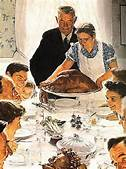
The Christian’s A-Z’s of Thanksgiving By Dr. David P. Craig


norman-rockwell-thanksgiving.jpg

What do Christians have to be thankful for every day and not take for granted as we contemplate the many blessings we have through Christ? Here are my A-Z’s of Thanksgiving:

A = Adoption – I have been chosen unconditionally and eternally into the family of God: Romans 8:15, “For you did not receive the spirit of slavery to fall back into fear, but you have received the Spirit of adoption as sons, by whom we cry, “Abba! Father!”

B = Baptism – I have been cleansed, washed, made new, and am now identified with Christ through the ordinance of baptism an external symbol of an inner reality: Romans 6:4, “We were buried therefore with him by baptism into death, in order that, just as Christ was raised from the dead by the glory of the Father, we too might walk in newness of life.”

C = Christ – I am a new creation in Christ: 2 Corinthians 5:17, “Therefore, if anyone is in Christ, he is a new creation. The old has passed away; behold, the new has come.

D = Disciple – I have a perfect Leader to follow – the Lord Jesus Christ: Luke 6:40, “A disciple is not above his teacher, but everyone when he is fully trained will be like his teacher.”

E = Evangelism – I have good news to share with every human being on the planet: Acts 20:24, “But I do not account my life of any value nor as precious to myself, if only I may finish my course and the ministry that I received from the Lord Jesus, to testify to the gospel of the grace of God.”

F = Father – I have an intimate relationship with a perfect Heavenly Father who loves to answer my prayers: Matthew 6:6, “But when you pray, go into your room and shut the door and pray to your Father who is in secret. And your Father who sees in secret will reward you.”

G = Glory – Everything I do can be done for God’s glory: 1 Corinthians 10:31, “So, whether you eat or drink, or whatever you do, do all to the glory of God.”

H = Heaven – I know that Jesus has prepared a perfect place for me to live when I die: John 14:3, “And if I go and prepare a place for you, I will come again and will take you to myself, that where I am you may be also.”

I = Identity – In Christ my identity is totally secure: Galatians 2:20, “I have been crucified with Christ. It is no longer I who live, but Christ who lives in me. And the life I now live in the flesh I live by faith in the Son of God, who loved me and gave himself for me.”

J = Justified – Because Jesus’ righteousness has been imputed to me in exchange for my sin I am declared sinless and righteous by God the Father forever: Titus 3:6-7, “whom he poured out on us richly through Jesus Christ our Savior, so that being justified by his grace we might become heirs according to the hope of eternal life.”

K = Kingdom – I belong to an everlasting Kingdom ruled by a Perfect King: Matthew 6:33, “But seek first the kingdom of God and his righteousness, and all these things will be added to you.”

L = Love – I am loved by a perfect Lover: John 15:13, “Greater love has no one than this, that someone lay down his life for his friends.”

M = Mission – I have a purpose to live for that matters forever: Philippians 3:13-14, “Brothers, I do not consider that I have made it my own. But one thing I do: forgetting what lies behind and straining forward to what lies ahead, I press on toward the goal for the prize of the upward call of God in Christ Jesus.”

N = New Birth – I have been made alive spiritually in Christ by the regenerating work of the Holy Spirit: Titus 3:5, “he saved us, not because of works done by us in righteousness, but according to his own mercy, by the washing of regeneration and renewal of the Holy Spirit.”

O = Obedience – I have a new inclination to love God and my neighbor with my heart, mind, soul and strength: 1 John 3:23, “And this is his commandment, that we believe in the name of his Son Jesus Christ and love one another, just as he has commanded us.”

P = Peace – I am at peace with God forever by faith in Jesus: Romans 5:1, “Therefore, since we have been justified by faith, we have peace with God through our Lord Jesus Christ.”

Q = Qualities I share character attributes of God: Galatians 5:22-23, “But the fruit of the Spirit is love, joy, peace, patience, kindness, goodness, faithfulness,  gentleness, self-control; against such things there is no law.”

R = Rapture – I will one day meet the saints and Jesus in the air: 1 Thessalonians 4:17, “Then we who are alive, who are left, will be caught up together with them in the clouds to meet the Lord in the air, and so we will always be with the Lord.”

S = Scripture – In the 66 Books of the Bible I have all the revelation from God I need for salvation and sanctification: 2 Timothy 3:16-17, “All Scripture is breathed out by God and profitable for teaching, for reproof, for correction, and for training in righteousness, that the man of God may be complete, equipped for every good work.”

T = Truth – In Scripture I have all the objective truth I need to guide my every thought and decision for living a godly life: John 17:17, “Sanctify them in the truth; your word is truth.”

U = Unity – Just as the members of the Trinity are one; I can be unified with my brothers and sisters in Christ around the world: Ephesians 4:4-6, “There is one body and one Spirit—just as you were called to the one hope that belongs to your call—one Lord, one faith, one baptism, one God and Father of all, who is over all and through all and in all.”

V = Vengeance – I don’t have to worry about my enemies; God will deal justly with those who have hurt or betrayed me: Romans 12:19, “Beloved, never avenge yourselves, but leave it to the wrath of God, for it is written, “Vengeance is mine, I will repay, says the Lord.”

W = Wrath – Thank God He has punished Jesus for my sins and as a result I will never experience His wrath: Romans 3:24-25, “and are justified by his grace as a gift, through the redemption that is in Christ Jesus, whom God put forward as a propitiation by his blood, to be received by faith. This was to show God’s righteousness, because in his divine forbearance he had passed over former sins.”

X = Xenophobia – I no longer need to be afraid of God: Romans 5:10-11, “For if while we were enemies we were reconciled to God by the death of his Son, much more, now that we are reconciled, shall we be saved by his life. More than that, we also rejoice in God through our Lord Jesus Christ, through whom we have now received reconciliation.”

Y = Yahweh – I am grateful that God is the “I AM”. He has the power of being in and of Himself and thus is totally capable of sustaining His creation and carrying out His glorious purposes: Revelation 1:8, “ I am the Alpha and the Omega,” says the Lord God, “who is and who was and who is to come, the Almighty.”

Z = Zion – I can look forward to a fortress – my eternal home – that will never be destroyed, or decay – a perfect city to live with Christ and His family forever: Isaiah 60:14, The sons of those who afflicted you shall come bending low to you, and all who despised you shall bow down at your feet; they shall call you the City of the Lord, the Zion of the Holy One of Israel.”

10 Benefits of Giving Thanks by Charles F. Stanley

“Give Thanks in Everything”

Why this tough but life-giving command can change your entire outlook.

Reading the Bible isn’t always easy.

If you’ve ever thought those words but were embarrassed to speak them, you’re not alone. Sure, there’s plenty within Scripture that we comprehend without much difficulty. But at times we come across a passage that baffles us—or worse, makes us feel angry or annoyed. Sometimes it’s because we simply don’t understand what the Lord is saying through the text. But often the reason for our discomfort is that we don’t like what we’re reading. It’s easier to ignore those verses and move on to more appealing topics than to hash it out with God and do what He says. Reading the Bible is hard because, in the end, it challenges us to change.

1 Thessalonians 5:18 is one of those verses that can really get under your skin: “In everything give thanks; for this is God’s will for you in Christ Jesus.” But what about those difficult and painful situations? Being grateful for suffering seems to make no sense.

If I were writing Scripture, I would say, “In most things give thanks, for this is God’s will for you in Christ Jesus.” It’s easy to be grateful for the good things in life—a newborn baby, a raise, a new house, or encouraging news from the doctor. But what if you lose your job, discover your child is on drugs, or are told by the doctor that you have only have six months to live? How can God expect you to be grateful then?

I faced this dilemma some time ago when I hurt my shoulder and experienced excruciating pain. I read this verse and told the Lord, “I know You said this, but it’s not reasonable when I’m hurting so badly. I just don’t feel thankful.” But then I noticed that it didn’t say, In everything give thanks when you feel like it. This command has nothing to do with feelings. It’s a choice to do what God says. Whenever He gives us a command in the Bible, it’s for our benefit.

Gratitude impacts every area of our lives.

By giving us the command to always give thanks, God is not rubbing salt in a wound or calling us to set aside reason. He knows that being thankful in all circumstances has a powerful impact on every area of our Christian life. Here are ten lessons I’ve learned:

1. Gratitude keeps us continually aware that the Lord is close by.Even though gratefulness doesn’t come naturally in difficult circumstances, a decision to thank God for walking with us through life makes us more sensitive to His comforting presence.

2. It motivates us to look for His purpose in our circumstance. Knowing that the Lord allows hurt and trouble for His good purposes takes the edge off the pain. Even if we don’t understand why we’re going through suffering, we can thank God because we know that in His time, He’ll work it all for good. In the meantime, we can rest in the knowledge that He’s using every hardship to transform us into the image of His Son (Rom. 8:28-29).

3. Thanksgiving helps bring our will into submission to God.When the situation we’re experiencing is the last thing we’d ever want, thanking the Lord is a giant step toward being able to follow Christ’s example and say, “Not my will, but Yours be done” (Luke 22:42). Gratitude helps us acknowledge that God’s will is best, even if it’s hard; in that way, we are able to release our hold on what we want. Although the circumstances may remain the same, submission changes our heart.

4. It reminds us of our continual dependence upon the Lord. Pride, adequacy, and independence evaporate whenever we’re trapped in a situation that leaves us helpless and hopeless. If there’s no way out, thanking God for His control over all things reminds us that He alone is our strength.

5. Thankfulness is an essential ingredient for joy.There’s no way to “rejoice always” (1 Thess. 5:16) without giving thanks in everything (v. 18). That’s why ungrateful people are so grumpy. Joy is an inner sense of contentment, which flows from a deep assurance that all God’s purposes are good and He’s in complete control of every situation. With that kind of supernatural joy, it’s easy to be thankful.

6. A grateful attitude strengthens our witness to unbelievers.The world is filled with people who are angry, frustrated, and overwhelmed with the difficulties of life. But a believer with a grateful attitude is like a light shining in a dark place. The people around you will want to know why you don’t grumble and complain the way everyone else does. Then you can tell them about your amazing Savior.

7. Thanking God focuses our attention on Him rather than our circumstances. The key to a grateful heart begins with understanding the Lord’s character because knowing His awesome attributes motivates trust and gratitude. He knows exactly what you’re going through, loves you unconditionally, and understands you perfectly. When you thank Him in tough times, He gets bigger, and the circumstances become smaller.

8. Gratitude gives us eternal perspective. The apostle Paul is an amazing example of a man who suffered extreme hardship yet remained thankful. That’s because he was able to see life from God’s perspective. In 2 Corinthians 4:16-18, he says our present suffering is “momentary light affliction.” If you’re going through a really hard time, those words may sound ridiculous. Maybe you’ve been dealing with pain your entire life, or a difficult trial has dragged on for decades. It hardly seems momentary or light.

But Paul is comparing our situations here on earth with what’s awaiting us in eternity. For him, a 40-year stretch of pain and hardship was no match for the “eternal weight of glory” awaiting him (2 Cor. 4:17). What an amazing thought—your present pain has the potential to produce incomparable glory for you in heaven. Now that’s a big reason to thank God!

9. When we’re wearied by our circumstances, thanksgiving energizes us. Most of us can handle short trials, but if they continue for a long period of time, the emotional and physical strain is exhausting. Should ongoing illness, unresolved relational problems, or continued financial pressures become more than we can bear, it’s time to start thanking God because He has promised to give strength to the weary (Isaiah 40:29). He’ll release His supernatural energy within us so we can patiently endure the trial and come out victorious on the other side.

10. Gratitude transforms anxiety into peace, which passes all understanding (Phil. 4:6-7). I learned this principle through a very difficult experience. When I was feeling anxious about the situation, I discovered that complaining, getting angry, and arguing with God didn’t change my circumstances. Finally, in desperation, I began thanking Him. Only then did I receive His incomprehensible peace. My situation didn’t change for quite a while, but God’s peace guarded my heart all the way through that trying time.

What will you choose?

The choice isn’t always easy. Most of the time, we’d rather get out of difficulties than thank God through them. But have you ever considered that He may actually want you to stay in a painful situation for a time? I know this may not sound like something a loving God would ever do, but remember, His goal is to do what is best for you, not what’s comfortable, convenient, and enjoyable.

The Lord’s purposes for your life extend beyond your days on earth. He’s working for your eternal good. Begin thanking God today, in whatever circumstance you find yourself. After all, what’s the alternative—bitterness, resentment, and grumbling? God made you for something far better: eternal, sustaining joy. The transformation starts with two simple, small words offered from the heart: thank You.

Say them over and over. And then say them again. Your joy will be radiant—a light shining in a dark and desperate world.


Warren Wiersbe on How To Be Victorious Over Fear

Being Victorious Over Fear (Series: Encouragement for Difficult Days)

A lady once approached D. L. Moody and told him she had found a wonderful promise in the Bible that helped her overcome fear. Her verse was Psalm 56:3: “What time I am afraid, I will trust in thee.” Mr. Moody replied, “Why I have a better promise than that!” And he quoted Isaiah 12:2: “Behold, God is my salvation; I will trust, and not be afraid.” Mr. Moody did have a greater promise.

These words from Isaiah 12:2 are worth knowing in these days when it is so easy to become frightened. Jesus told us that in the end times men’s hearts will fail them for fear of the things about to happen; and I believe we are seeing some of this take place today. Psychologists are writing books and magazine articles about overcoming fear.

There are some kinds of fear that are good for us. We warn our children not to go near the busy streets, and we put within them a healthy fear of being struck by a car. Eventually, of course, that infantile fear will be replaced by mature common sense; but until that happens, we dare not take any chances. In fact, the fear of punishment is one basis for discipline. It may not be the highest motive for doing good, but at least it helps us to get started.

The Bible often talks about the fear of the Lord. It tells us that the “fear of the Lord is the beginning of knowledge” and that “the fear of the Lord is a fountain of life.” This fear, of course, is a proper respect and reverence for God. It is not the cringing fear of a slave before a brutal master, but the proper respect of a son before a loving Father. It is the kind of fear that opens the way to abundant life in Christ. The kind of fear Isaiah 12:2 is talking about is the fear that paralyzes people-the fear that gets into the heart and mind and creates tension and worry, and that keeps a person from enjoying life and doing his best. I meet people every week who are afraid of life, afraid of death, afraid of the past, afraid of the future-in fact, people whose lives are being enslaved by fear.

Jesus Christ never meant for us to be the slaves of fear. It is exciting to read the Bible and discover how many times God says “Fear not” to people. When the angels appeared to the shepherds to announce the birth of Christ at Bethlehem, their first words were, “Fear not.” When Peter fell at Jesus’ feet and asked Jesus to depart from him because Peter felt he was a sinful man, Jesus said, “Fear not, Peter.” When Jairus received the bad news that his daughter had just died, Jesus said to Jairus, “Fear not, only believe….” Jesus Christ wants us to conquer fear; and He is able to help us win the battle. What causes fear in our lives? Sometimes fear is caused by a guilty conscience. When Adam and Eve sinned, they felt guilty and became afraid; and they tried to hide from God. Shakespeare was right when he said, “Conscience doth make cowards of us all.” Whenever we disobey God, we lose our close fellowship with Him, and that spiritual loneliness creates fear. We wonder if anybody knows what we have done. We worry about being found out and hope no tragic consequences come from our sins. The solution to that problem, of course, is to seek God’s forgiveness. God promises to cleanse our sins if we will but confess them and forsake them.

Often fear is caused by ignorance. Children are afraid in the night because the shadows look like giants and bears and ghosts. But even adults can get frightened when they really don’t know what is going on. Anxiety about the future, either for ourselves or for our loved ones, can sometimes create fear. Another cause is our own feeling of weakness. We are so accustomed to managing things ourselves that when an unmanageable crisis comes along, we feel helpless and afraid.

Sometimes fear comes, not before the battle or even in the midst of the battle, but after we have won the victory. Often

there is an emotional letdown, and fear rushes in. Abraham had this experience in Genesis 15 after he had waged war against four powerful kings and won the victory. That night as he lay down to sleep, Abraham wondered if those kings would return and challenge him again, and perhaps bring back superior forces. It was then that God appeared to Abraham and said, “Fear not, Abram: I am thy shield, and thy exceeding great reward” (Gen. 15:1). But when we study all the cases and try to understand the root cause of fear, one truth stands out clearly: the real cause

of fear is unbelief. After stilling a storm that had frightened His disciples out of their wits, Jesus said to them, “Why are you so fearful? How is it that you have no faith?” Fear and faith can never be friends; and if we are afraid, it is a sign that we have no faith. This is why Isaiah 12:2 says, “Behold, God is my salvation; I will trust, and not be afraid.”

The secret of victory over fear is faith in God. There is no problem too great for God to solve, no burden too heavy for God to carry, no battle too overwhelming for God to fight and win. God is big enough to conquer the enemies that rob us of our peace and leave paralyzing fears behind. Isaiah 12:2 doesn’t say, “When I am afraid, I will trust“; it says, “I will trust, and not be afraid.” Faith is not simply medicine to kill the disease; faith is spiritual power to keep us from being infected in the first place.

Notice what the prophet puts first: “Behold, God is my salvation.” If you want to overcome fear, get your eyes off yourself and your feelings, and off the problems that have upset you, and get your eyes on God. The Jewish spies in the Old Testament became frightened when they investigated the Promised Land, because they saw giants and high walls and felt like grasshoppers in comparison. The enemy soldiers were big, and the walls were high, but God was far above all of them. Had the spies lifted their eyes just a bit higher and seen God, they would not have been afraid. So the first step in overcoming fear is to look by faith at God. Worship God, get a fresh glimpse of His greatness and glory, and realize that He is still on the throne. The second step is to lay hold of God’s Word. Faith comes by hearing, and hearing by the Word of God. When you read the Bible, you find your faith growing. You discover that God has always been adequate for the needs of His people.

The third step is to pray and surrender to the Holy Spirit. Tell God about your fears-tell Him that your fears are really evidences of unbelief-and like that concerned man in the Gospel story, ask God to help your unbelief. Surrender yourself to the Holy Spirit of God, because the Spirit can work in you to take away fear

and give you peace. Second Timothy 1:7 says, “For God hath not given us the spirit of fear; but of power, and of love, and of a sound mind.” The Holy Spirit within you can give you power for your weakness; He can generate love; He can give order and discipline to your mind. The Holy Spirit is God’s psychologist, so turn yourself over to Him.

One of the ministries of the Spirit of God is making Jesus Christ real to us. As you pray and read the Word, the Spirit will give you a spiritual understanding of Jesus Christ, and He will become very real to you. Even in the midst of storms and trials, Jesus Christ comes with peace and courage for you.

There is no reason for you to be afraid. Fear will only rob you and buffet you and paralyze you. Jesus Christ can take away your fear and give you peace. “Behold, God is my salvation; I will trust, and not be afraid.”

About the Author:

Warren W. Wiersbe is the Distinguished Professor of Preaching at Grand Rapids Baptist Seminary, and is the author of more than 100 books. Billy Graham calls him “one of the greatest Bible expositors of our generation.” Interestingly, Warren’s earliest works had nothing to do with scriptural interpretation. His interest was in magic, and his first published title was Action with Cards (1944).

“It was sort of imbecilic for a fifteen-year-old amateur magician to have the audacity to write a book and send it to one of the nation’s leading magic houses,” Warren says. But having a total of three books published by the L.L. Ireland Magic Company—before the age of 20—gave him a surge of confidence. In later years, he applied his confidence and writing talent to the Youth for Christ (YFC) ministry.

Warren wrote many articles and guidebooks for YFC over a three-year period, but not all his manuscripts were seen by the public eye. One effort in particular, The Life I Now Live, based on Galatians 2:20, was never published. The reason, Warren explains with his characteristic humor, is simple: it was “a terrible book…Whenever I want to aggravate my wife, all I have to say is, ‘I think I’ll get out that Galatians 2:20 manuscript and work on it.’” Fortunately, Warren’s good manuscripts far outnumbered the “terrible” ones, and he was eventually hired by Moody Press to write three books.

The much-sought-after author then moved on to writing books for Calvary Baptist Church. It was during his ten years at Calvary that Expository Outlines on the New Testament and Expository Outlines on the Old Testament took shape. These two works later became the foundation of Warren’s widely popular Bible studies known as the Be series, featuring such titles as Be Loyal (a study on Matthew) and Be Delivered (a study on Exodus). Several of these books have been translated into Spanish.

His next avenue of ministry was Chicago’s Moody Memorial Church, where he served for seven years. He wrote nearly 20 books at Moody before moving to Lincoln, Nebraska, where he and his wife, Betty, now live. Prior to relocating, he had been the senior pastor of Moody Church, a teacher at Trinity Evangelical Divinity School, and a producer of the Back to the Bible radio program.

During all these years of ministry, Warren held many more posts and took part in other projects too numerous to mention. His accomplishments are extensive, and his catalog of biblical works is indeed impressive and far-reaching (many of his books have been translated into other languages). But Warren has no intention of slowing down any time soon, as he readily explains: “I don’t like it when people ask me how I’m enjoying my ‘retirement,’ because I’m still a very busy person who is not yet living on Social Security or a pension. Since my leaving Back to the Bible, at least a dozen books have been published, and the Lord willing, more are on the way.”

Wiersbe’s recent books include Your Next MiracleThe 20 Essential Qualities of a Child of GodClassic Sermons on the Fruit of the SpiritClassic Sermons on Jesus the ShepherdKey Words of the Christian LifeLonely PeopleA Gallery of GraceReal Peace: Freedom and Conscience in the Christian Life, and On Being a Leader for God.

The article above was adapted from Warren W. Wiersbe’s classic encouraging devotional: The Bumps Are What You Climb On: Encouragement For Difficult Days. Tappan, N.J.: Fleming H. Revell, 1996.

11 Life Lessons From Noah’s Ark

Noahs Ark

Life Lessons I learned from Noah’s Ark…

ONE: Don’t miss the boat.

TWO: Remember that we are all in the same boat.

THREE: Plan ahead. It wasn’t raining when Noah built the Ark.

FOUR: Stay fit. When you’re sixty years old, someone may ask you to do something big.

FIVE: Don’t listen to critics; just get on the job that needs to be done.

SIX: Build your future on high ground.

SEVEN: For safety’s sake, travel in pairs.

EIGHT: Speed isn’t always an advantage. The snails were on board with the cheetahs.

NINE: When you’re stressed, float awhile.

TEN: Remember, the Ark was built by amateurs. The Titanic by professionals.

ELEVEN: No matter the storm, when you are with God, there’s always a rainbow waiting.