
Category: Encouragement

Dr. Ted Engstrom on The Power of a Positive Attitude

Our attitude at the beginning of a job will affect the outcome of the job more than anything else.
Our attitude toward life determines life attitude toward us.
Our attitude toward others will determine their attitude toward us.
Before we can achieve the kind of life we want, we must think, act, walk, talk, and conduct ourselves in ways characteristic of who we ultimately wish to become.
The higher we go in any organization of value, the better the attitude we’ll find.
Holding successful, positive thoughts in our minds will make all the difference in the world.
If we always make a person feel needed, important, and appreciated, he or she will return this attitude to us.
Part of a good attitude is to look for the best in new ideas. So look for good ideas everywhere. We will find them in the most wonderful places: on the bumpers of cars, on restaurant menus, in books, in travel, out of the innocent mouths of children.
Don’t broadcast personal problems. It probably won’t help you, and it cannot help others.
Don’t talk about your health unless it’s good.
Radiate the attitude of well-being. Don’t be embarrassed to share visions, desires, and goals.
Treat everyone with whom you come in contact as a fellow member of the human race—with all the rights, duties, and privileges thereof. The Golden Rule still applies: Do unto others as you would have them do unto you.
ABOUT THE AUTHOR

Dr. Ted W. Engstrom (1916-2006) led several major evangelical institutions – including World Vision, Zondervan Publishing House, Youth For Christ International, and Azusa Pacific University. He wrote or co-authored over 50 books and specialized in mentoring and developing leaders. “His ability to integrate the gospel with everyday life was absolutely inspiring,” said Dean R. Hirsch, head of World Vision International. “Dr. Ted made work and faith walk together.” This excerpt was adapted from Motivation to Last a Lifetime: Grand Rapids: Zondervan, 1983.
John Piper on God’s Sovereign Work in Your Life
The Effect of Your Life in 1,400 Years

Do you think God has purposes for your life that will be realized in 1,400 years?
I do. Your life and mine.
Yes, the new heavens and the new earth may be here by then. I hope so. If so, there are things that are happening to you now that will have reverberations then for your good.
I say that because Paul says, “This light momentary affliction is preparing for us an eternal weight of glory beyond all comparison” (2 Corinthians 4:17). When Paul speaks of “light momentary affliction,” he is referring to all the painful experiences of our lives — the same thing he means by “the sufferings of this present time” in Romans 8:18. All of this present time.
And when he says that these life-long experiences are “preparing for us an eternal weight of glory,” he means that there is a correlation between those experiences now and our experiences of glory later. And that correlation is more than sequential, and more than evidence that we are going to glory.
It would be little comfort to Paul if I said the point was: “How I handle my backache and how you handle your beheading are evidence that we are both going to glory.” That’s true. But it’s not the point of the word “preparing” (katergazetai). His beheading will have a different effect on his glory than my backache will on mine. And I’ll be the happier for his reward.
Everything Relates to Everything
But what if, in 1,400 years Christ has not returned? Will your life make a difference in that world? I think so. In God’s governance of the world, everything relates to everything.
Consider this illustration.
When I was in Ethiopia last November, I was told of an Ethiopian missionary who went to Pakistan. He entered a town with a view to evangelizing and planting a church, even though Pakistan is not open to this kind of missionary work.
But when he went before the town leaders and they found out that he was from Ethiopia they said something to the effect: “You may do your work here. We owe you the gift of openness and hospitality, because your people gave asylum to Mohammed’s family 1,400 years ago.”
The Land of Justice
Since then I have tried to track down the history behind this amazing statement. In 2008 there was a symposium about this very tradition. Scholars from Princeton, Cornell, Rutgers, and the National Museum of Ethiopia met to discuss new historical findings.
In Islamic history and tradition, Ethiopia (Abyssinia) is known as the “Haven of the First Migration” of Muslims. During Mohammed’s lifetime (570 – 632) his followers were being persecuted in the surroundings of Mecca by pagan tribes.
Dr. Said Samatar, Professor of African History at Rutgers, explained “King Armah (Negash) and his decision to grant refuge to the family of the Prophet Mohammad, who arrived at Aksum while fleeing from their pagan persecutors.” King Armah was a Christian and had the reputation of treating people generously. Dr. Samatar described how “a Christian King refused bribes and granted sanctuary to the fleeing Muslims in Aksum.”
“Mohammad didn’t forget the generosity of the Negash,” he said, “and in the sayings (hadith) of the Prophet that have been recorded and passed on for generations, it is noted that ‘Abyssinia [Ethiopia] is a land of justice in which no one is oppressed.’”
Therefore, for many Muslims even today, 1,400 years later, “Ethiopia is synonymous with freedom from persecution and emancipation from fear.”
Consider Your Impact
Do you think that the Christians of Abysinnia, 1,400 years ago thought that what they were doing would have an effect for the glory of Christ and the good of the world fourteen centuries later, when a Pakistani mayor opened his city to a Christian Ethiopian missionary?
Therefore, I conclude that what we do in obedience to Christ in this life is never wasted. Our acts are like pebbles dropped in the pond of history. No matter how small our pebble, God rules the ripples. And he causes the design on the face of the waters to be exactly what he wills.
Your pebbles count. Drop them with daily faithfulness, and leave the ripples to God.
SOURCE: http://www.desiringgod.org/blog/posts/the-effect-of-your-life-in-1-400-years
John Piper (@JohnPiper) is founder and teacher of desiringGod.org and chancellor of Bethlehem College & Seminary. For 33 years, he served as pastor of Bethlehem Baptist Church, Minneapolis, Minnesota. He is author of more than 50 books.
As Christians We Should Be Fresh and Flourishing
A DEVOTIONAL BASED ON PSALM 92:7-15

By Warren W. Wiersbe
Someone has said that there are three stages in life: childhood, adolescence, and “My, you’re looking good.” We can’t stop aging. But no matter how old we grow, we ought to continue growing in the Lord. “The righteous shall flourish like a palm tree; he shall grow like a cedar in Lebanon. Those who are planted in the hous of the Lord shall flourish in the courts of our God. They shall still bear fruit in old age; they shall be fresh and flourishing” (vv. 12-14). I am greatly encouraged by those words, because as I get older, I want my life to count more and more for Jesus.
God tells us to be like palm trees. That means we should be planted–“planted in the house of the Lord.” We must abide in Christ, whose roots are spiritual. What a tragedy it is to get older and move into the world and into sin, abandoning what you were taught from the Word of God.
We should also be productive. “They shall be fresh and floursihing” — fruitful trees to the glory of God. Palm trees stand a lot of abuse, storms, and wind. The wind that breaks other trees bends the palm tree, but then it comes back up. Palm trees have roots that go down deep to draw up the water in the desert area. They can survive when other trees are dying. And palm trees just keep on prodicing fruit. The fruit doesn’t diminish; it gets better and sweeter.
Finally, we should be flourishing “in the courts of our God.” When some people get old, they get grouchy, mean, and critical. Let’s not be like that. Allow the Lord to make you fresh and flourishing. Have roots that go deep. You can stand the storms and still be fruitful, feeding others from the blessing of the Lord.
God wants you to grow strong, productive trees that bear much fruit. He wants your roots to grow deep to draw nourishment from His hidden resources. Are you planted and feeding on the Word of God daily? Are you producing fruit and bringing glory to Him? Are you flourishing and feeding others?
*SOURCE: Warren W. Wiersbe. Prayer, Praise & Promises: A Daily Walk Through the Psalms. Grand Rapids: Baker, 2011.
Creating A Positive Environment With Our Words
ENCOURAGE ONE ANOTHER

By Dane Ortlund
Our words to one another about one another not only describe reality. They also create reality.
“You idiot!” does not simply assess what is objectively true to the speaker. It also produces, in the one spoken to, death and darkness. Not only do our words reveal what is true of us, they also generate reality for another. Specifically, our words are either death-bringing or life-giving. Either depleting or nourishing, draining or filling.
The gospel is a message of life, of nourishing, of filling. Because of Christ’s work in our behalf, we are set free from sin, adopted into God’s family, welcomed in. The “word of truth, the gospel of your salvation” (Eph. 1:13) is a word that gives life. And the great privilege we have when we gather with other believers—other obnoxious believers, other theologically imprecise believers, other spiritually sleepy believers, other frustrating believers, other sinning believers—is of passing on horizontally a taste of what we’ve been given vertically. Amid all my sin and messiness, in Jesus, God has given me a word of welcome, a word of love—“the word of life” (Phil. 2:16; 1 John 1:1). Loved with this word of grace, I love others with words of grace.
After all, when Paul says, “Therefore encourage one another and build one another up,” what is the “therefore” referring to? What is fueling such encouragement? One of the greatest exultations in all the New Testament about the hope of the gospel: “God has not destined us for wrath, but to obtain salvation through our Lord Jesus Christ, who died for us so that whether we are awake or asleep we might live with him” (1 Thess. 5:9–10).
Having been shown life through the word of the gospel, we give life through the words we use.
That’s easier said than done. All day long, words are flowing out of us. Passing another and saying hello in the hallway at work, chatting over lunch, greeting our spouse at the end of the day, tucking a child in with a good night story, speaking with a salesperson at Best Buy, talking on the phone while driving. We also use words without employing the larynx: emails, tweets, Facebook comments, handwritten notes stuck on the fridge. Even in this article I am using words: Are they bringing life?
In the hurricane of words that make up any given day, how do we walk in wisdom such that our words inject sanity, calm, and life rather than destruction? In two ways.
First, by saying nothing.
One major way we give life to others with our words is by not using any. It feels awkward to sit with someone depressed or overwhelmed with life and to say nothing. But what comes out of our mouth as medicine can, in fact, sicken rather than strengthen another’s heart (Prov. 23:8). A sufferer, when the pain is raw, needs warm presence, not fixing words. Paul said, “Weep with those who weep” (Rom. 12:15), not “provide theological answers to those who weep.” That Romans 8:28 comes before Romans 12:15 in the canon does not mean it should in our counseling and friendships.
Second, by saying something.
All our words tumble out impelled by one of two motives. I am using words either for myself or for you. All my speech is either fueled by self (no matter how smiling it is) or by love (no matter how painful it is).
The question, then, is why do you speak the words you do? Why do you speak the way you do? What is the aroma of your words? Are you spraying bullets, forgetting God has set down the gun rightly aimed at you? Do you speak to others the way you wish to be spoken to? What kind of speech has given you life as you consider meaningful relationships in your past? Do you ever—ever—look another human being in the face and say to them the following words: “May I tell you something I admire about you?” (It is one of the great secrets to Christian community that speaking a word of grace to another builds up you as much as the other.)
In your short life, you have a million tiny opportunities, including a hundred today, to inject a small but potent dose of life and light into another. As you consider doing this, you will immediately find a good reason presenting itself that seems to clearly mitigate your impulse to build another up. Some weakness, some corresponding fault, will arise in your mind, cancelling out your reason to encourage that person. Indeed, with some people in our lives, we honestly have difficulty finding anything encouraging to say.
Once more we remember the gospel. God did not allow our own faults to mitigate His word of gospel life to us. We have given Him every reason to withhold that precious word from us. Instead He lavishes us with assurances of undeserved love. We come alive. We breathe again.
John Owen wrote that God “loves life into us.” Will you love life into another?
*SOURCE: July 1st, 2013 @ http://www.ligonier.org/learn/articles/encourage-another/
ABOUT THE AUTHOR

Dr. Dane Ortlund serves as Bible publishing director at Crossway Books in Wheaton, Illinois. He is the author of Defiant Grace: The Surprising Message and Mission of Jesus.
THE RAPTURE: “A MESSAGE OF COMFORT” – 1Thessalonians 4:14-18
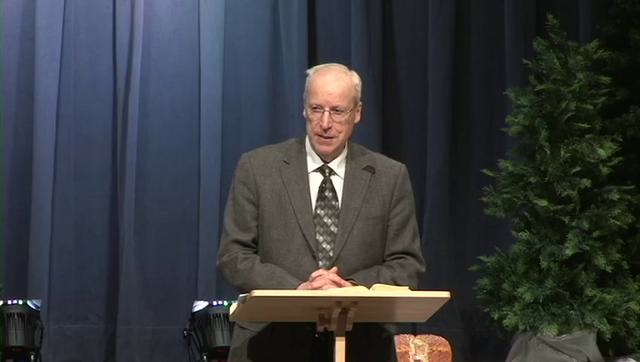
SERIES: THE RAPTURE – PART 1
This article is a lightly edited transcript of Dr. Bill McRae’s audio message on the Rapture. Appreciation for the transcription work goes to Marilyn Fine.
Introduction
Once again, we would like to welcome you to our adult Bible class this morning. We are delighted to have you. If you are here for the first time, we give you a special welcome. You are here at the beginning of a new series. During this month we are going to study together in four Sundays the subject, or part of the subject at least, of the doctrine of the Rapture of the church. So, we are going to begin with this as our first study in a topical, prophetic study. Let us open our Bibles, shall we, to I Thessalonians 4. We shall lean on it as our central passage for our exposition this morning.
Our subject for our first lesson this morning is “The Rapture: a Message of Comfort.” That title, of course, is rooted in what we shall see in I Thessalonians 4. However, before we come to that passage and look at it in detail, there are some preliminaries that we should note. Certainly, one of the surest words in all of the Bible is that Jesus is coming again. Someone has said that there are at least 1,527 Old Testament references and 380 New Testament references to the Second Coming of Jesus Christ. Take the New Testament alone. We are not just limited to the personal testimony of our Lord who said, “I will come again,” but listen to the words of the angels who were present at the moment of His ascension when they announced to those anxious disciples, “This same Jesus which is taken up from you shall so come in light manner as ye have seen Him go.” It is the apostle Paul who refers to the Second Coming as a “blessed hope.” When the apostle Peter writes he reminds us that our faith someday shall be found unto praise and honor and glory at the appearing of our Lord Jesus. When the apostle John writes to us he exhorts us to so live so that we will not be ashamed before Him at His coming. When the writer to the Hebrews pens his epistle, he speaks in a chronological significance and says that unto them that look for Him He shall appear the second time. So, the uniform testimony of the New Testament writers, as well as the Old Testament writers, is that Jesus is coming again.
Now, the Second Coming of our Lord, which is one single event, can be looked upon as taking place in two phases or two aspects. Just at the conclusion of the church period, the first aspect of the Second Coming shall occur and it will be at that first aspect that our Lord shall return from the heavens to the air. He shall come privately and He shall come for His Church. It is at that moment that the Church will be caught up to meet him in the air.
The second aspect of the Second Coming will be when He shall return to the earth and this shall be a public coming and He shall come with His saints or with the Church. Between the two aspects of the Second Coming, there will be a seven-year period or the Great Tribulation period. Now, there are several words— some in the scriptures and some in theological language— that will help us to understand the aspects of the Second Coming of our Lord. What I would like to do by way of introduction is outline for you five major words that are used to delineate certain aspects of the Second Coming or to describe the significance of each of these aspects.
Five Major Words
The first word that we want to talk about very simply and briefly is the word, “coming.” That is a word that comes from a Greek verb that occurs oftentimes through the New Testament and the Old Testament to describe this very significant event. It is a very general term and has no particular technical significance. The verb “the coming” is used to refer to both aspects—the first aspect and the second aspect. The Lord Jesus said in relation to the communion service and the Lord’s Supper, “this do ‘til I come.” On again another occasion He says, “Behold I come quickly.” So, that verb “come” is used many times in relation to the first aspect. He shall come through the air and He shall come for His Church. The same verb is used on many occasions for the second aspect of His coming. Matthew 24 and 25 give us the details of that second aspect and frequently through those two chapters you have the use of that verb “come.” So, when we speak of the Second Coming we are speaking of one single event that has two aspects to it. The verb “coming” neatly ties together these two aspects and they give us the one single event.
The second word that we want to note is really a transliteration of a Greek word and the word is the “Parousia.” The “Parousia” is a transliteration of the Greek word “parosea” which means basically “presence.” This was a cultic expression that was used for the visit of a hidden deity who would come and visit and by his visit make his presence known. In that cult, they would either celebrate his presence in the cult or they would be aware of his presence by some supernatural divine demonstration of power. When they referred to the presence of that deity, they spoke of it in terms of the “Parousia” or the “parosea.” It also was an official term or an official expression for the visit of a person of high rank like a governor or an emperor or a king who would visit a province in an official state visit. The arrival of that official for that official state visit would be described in terms of the “parosea” or the “Parousia”— The Presence of that dignitary.
Now, when you come to the New Testament, that same word is used in relation to the Second Coming of our Lord. What it does is anticipate the arrival of a dignitary. It emphasizes the presence of this dignitary who now has been absent. Strikingly, this word is used of both aspects of the coming of our Lord. In I Thessalonians 4, as we shall read in a few moments, we find it in verse 15 when the apostle Paul speaks of those who shall be alive at the coming, and that is that word “the Parousia”— the coming of our Lord or the presence of our Lord. In II Thessalonians 2:1 and 8, it is used in relation to His coming to the earth with His Church.
So, the Parousia, I believe, is a term that draws together both aspects of the Second Coming and considers the whole advent event as one. The Parousia or the Greek word “parosea” suggests then the presence of a dignitary who has been absent and that is exactly what shall transpire when our Lord returns. He who has been absent for 2,000 years shall become present. The event that will initiate the presence again of our Lord on this earth will be the Second Coming of Jesus Christ. So, when we use that word, “parosea” or “Parousia”, we are thinking particularly of His presence. I think it draws together both aspects and considers it as one event.
The third word that we should know and that will help us in our understanding of this subject is the word, “Rapture.” Now the word “Rapture” is the only one of the five words that we are going to speak on which does not occur in the New Testament. However, the word, Rapture, is an English word derived from a Latin translation of I Thessalonians 4:16-17 where we read that “we who are alive and remain shall be caught up, shall be caught up together with them in the clouds.” The Latin translation of that verb is “rapio.” That is the root verb from which the translation comes and we have derived an English word from that Latin word. The English word that we have derived is “Rapture.”
Now, the Greek word that is used here for “caught up” is a very picturesque word. It is a word that suggests two primary thoughts. The first thought is the idea of a robbery. It is used in Matthew 12 when the Lord talks about thieves breaking into a house and stealing something. That is the idea. There is a connotation of robbery that is involved. Also, the second thought is that of something that is violent, something that is sudden and something that is almost catastrophic. The Lord anticipates that usage when He uses this very word in John 6:15 where we read that when he perceived that they would “take Him by force” to make Him king He departed from them. He uses this same word. So, the word that is used here suggests the idea of a robbery and something that is taken away by force. That, of course, is exactly the significance of the Latin verb “rapio.” It means to come and to seize and to carry off. And, therefore, we have used, we have derived an English word from that— and the English word is “Rapture.”
Now, the Rapture fits in as a descriptive phrase for the first aspect of the Second Coming of our Lord. The first aspect is the Rapture. It is at that moment that He shall come to the earth and He shall seize and carry off those who are believers in Jesus Christ. They shall be caught up together with Him. It is going to be a robbery. It is going to be something that will be violent and sudden and that is why it is described as that which initiates the day of the Lord which, in I Thessalonians 5, is described as coming as a thief in the night. The thing that is going to initiate the day of the Lord will be the Rapture of the church. That will take place as a thief in the night. The Lord shall come in the air and He shall, in an act of sudden robbery, snatch away from the earth those who are believers in Him. So, when we use the word Rapture we are speaking of the first aspect of the Second Coming of our Lord. He shall come in the air privately for His saints in the Rapture.
The fourth word that we want to speak of is a word that is oftentimes attached with the names of churches. That word is “epiphany.” The word “epiphany” is again a transliteration of a Greek word— “Epiphania”— which means appearance. This is used in several occasions in relation to the second aspect of the Second Coming. It is used, for example, in that beautiful text in Titus 2:13 where Paul says, “Looking for that blessed hope and the glorious appearing.” That is the word. It is the appearing of our Lord. It was a technical term that was used in the days of the New Testament for the visible manifestation of a hidden deity.
So, when the apostle Paul and the Spirit of God takes this word out of its secular use and applies it to the coming again of our Lord Jesus, the connotation is that that hidden deity someday shall appear and He shall be seen. That will take place in the second aspect of the Second Coming of our Lord. This will be an “epiphany.” It will be an appearance of the Lord. That makes it in contrast with the Rapture because the Rapture shall be something that will be private. That shall be unseen by the world. In the second aspect, He shall appear and the world shall see Him. Revelation tells us that every eye shall behold Him and so the “epiphany” is the appearance of Jesus Christ on earth before the eyes of the world. This will be the next time that the world sees Him. The last time they saw Him was on a cross and the world never saw the resurrected Christ. The world shall never see Him until that moment when He appears in the second aspect of His Second Coming.
The last word that we should notice also describes the second aspect of His Second Coming and that is the word “revelation.” This is used on many occasions also in the scriptures to refer to the Second Coming of our Lord. One of the most beautiful is in II Thessalonians 1:7 where we read, “And He shall be revealed from Heaven with His mighty angels.” This will be a revelation. He who has been now hidden and unknown by the world shall be revealed to the world. The word “revelation” suggests an unveiling. The unveiling shall take place when Jesus Christ returns to the earth. He who is rejected by the world, He who is unknown by the world shall someday be revealed to the world. That is what the Second Coming shall be. It is in that moment that the “revelation” takes place and the world, then, shall realize He is God. It is at that moment that the Jewish nation shall recognize He is their messiah and they shall mourn over Him whom they have crucified. So, the second aspect of the Second Coming of our Lord will be an appearance. He shall visibly appear and it will be a “revelation.” He who is unknown and hidden from the world shall be revealed to them and they shall know Him to be the Son of God to be the messiah and to be the savior of the world.
Now, if we can keep in our minds these words, then we will be able to use them intelligently when we speak of the Second Coming of our Lord. The Second Coming is one event with two aspects. The first aspect is a Rapture. The second aspect is a revelation and an appearance. Together, they form the Parousia which initiates the presence of the absent God. He shall then become present on the earth and establish his millennial kingdom and reign on earth for 1,000 years.
Now, what we would like to do for these four lessons we have together is to focus our attention upon the first aspect of the Second Coming. That is the Rapture. We would like to do it by studying this morning the Rapture as a message of comfort. Next week we would like to study the Rapture as a subject for controversy. We are going to consider the major controversy related to the Rapture next week whether it takes place at the beginning of the tribulation, at the middle of the tribulation or at the end of the tribulation and who is that will be Raptured when the Rapture takes place whether it will be all of the church or just part of the church. There are four major views in relation to the Rapture. There is the pre-tribulation, the mid-tribulation, the post-tribulation and the partial Rapture theory. What we would like to do next week, then, is to consider these four views and we shall spend our time considering it as a subject of controversy. Then, our last two lessons on this subject will be the signs of His coming. We would like to go through the scriptures and pinpoint many of the signs that indicate, I believe, that we are on the very threshold of the Rapture for the conclusions of the church age and we can well expect, I believe, the Rapture to take place very, very soon.
Message of Comfort
This morning, though, we are going to be studying it as a message of comfort. We will be reading from I Thessalonians 4:13-18. In these verses, the apostle Paul in discussing the Rapture and this is the central passage on the subject, gives us three things. In verses 13 and 14, he gives us a bold declaration. Listen to it.
“But I would not have you to be ignorant, brethren, concerning them who are asleep that ye saw not even as others who have no hope, for if we believe, or because we do believe, that Jesus died and rose again, even so them also who sleep in Jesus, or who sleep through Jesus, as it literally is, those who sleep through Jesus will God bring with Him.”
That is his bold declaration. Now, in verses 15 through 17, you have a very explicit explanation of how this shall take place.
“For this we say unto you, by the Word of the Lord, that we who are alive and remain unto the coming,” (there it is, “Parousia”) “of the Lord shall not precede” (the old King James uses an old English word, prevent, which means precede) “them who are asleep for the Lord Himself shall descend from heaven with a shout, with a voice of the archangel, and with the trump of God. The dead in Christ shall rise first. Then, we who are alive and remain shall be Raptured” (That is the way the Latin translation renders it— shall be Raptured, or shall be seized and carried off) “together with them in the clouds to meet the Lord in the air and so shall we ever be with the Lord.”
Verse 18 gives us His very direct exertion,
“Wherefore, comfort one another with these words.”
What we would like to do then in our exposition of this passage is look at the declaration, at the explanation, and the exhortation as they are given to us in these verses.
THE DECLARATION
The declaration in verses 13 and 14 is based upon a very serious question that has come to the minds of the Thessalonians. It will be obvious to us that this question concerns them who are asleep. That is exactly what we read in verse 13, “But I would not have you to be ignorant, brethren, concerning them who are asleep.” The question they have in their mind is concerning them who are asleep. Now, this verb “to be asleep” is only used in the New Testament of believers. It suggests the peacefulness, the tranquility of a person who has died believing in Jesus Christ. We would speak of it as phenomenal language. That is from our point of view, from the point of view of a person who is alive on earth. One who has died believing in Jesus Christ has fallen asleep. That is, I think, exactly what is implied in the phrase in verse 14 when he speaks of those who “sleep through Jesus.”
The imagery is that of a mother who is rocking her little baby off to sleep in a rocking chair after having given the baby the bottle and singing a song or two and reading a little story. Then, she leans back in her chair and she lulls her baby off to sleep. That is exactly the imagery that Paul is picturing of the death of a believer. He has lulled off to sleep by Jesus. It is these persons that the Thessalonians are very concerned about. Their concern somehow seems to be concerning the relationship of those who have been lulled off to sleep believing in Jesus who have died as believers in Him and their relationship with the Second Coming of Jesus Christ. When Paul was in Thessalonica, he certainly and obviously spoke much of the Second Coming of Christ, but, apparently, he never spoke of the relationship between someone who dies as a believer and that Second Coming of Christ.
Now, in the absence of the apostle Paul many have died. Now the question has come what shall be the relationship of those who have died as believers, those who have been lulled off to sleep by Jesus and His Second Coming to establish the kingdom and to reign on earth? These people had suffered for the sake of the kingdom. Some perhaps had been persecuted and even had been martyred for the cause of Christ. Now, the question in the mind of the Thessalonians is this, “shall they miss out on the kingdom?” “Shall they miss out on all the glory of His Second Coming?” “Shall they have no part in the great honor or seeing Him establish His kingdom and reign on earth?” That was the thing that was concerning them so desperately.
One can imagine a wife or a husband or a parent who has been lulled to sleep by Jesus or has been martyred for the cause of Christ. As soon as they return home after the funeral services the question that would immediately rise in the discussion is what shall be the relationship of that person with the coming of our Lord to establish His kingdom. He preached the kingdom. He suffered for the kingdom. He prayed for the coming of the kingdom. Now, is he going to miss out on it? Shall he not see the Lord establish it and reign on earth? That was the thing that was concerning these Thessalonians. It was a very serious question because it was tending toward a grief or a sorrow that was like the sorrow of a pagan who had no hope. That is why Paul was concerned about this question. Apparently, it had not reached that type of sorrow, but it was tending toward that sorrow. The pagan world in the days of the Thessalonians and Paul had no hope. The Romans and the Greeks had no concept of the resurrection of a body after a person died. They had very little hope for the soul. There was a conditional existence after death, but even that was only temporary. So, to describe the pagan world as having no hope for life after death is very accurate.
Now, Paul recognizes that this question in the minds of the Thessalonians is a very serious question because it is causing them to be grieved and to sorrow so that their grief and their sorrow is tending toward the same type of hopelessness that characterizes the unbelievers who, in fact, have no hope. So, Paul says I do not want you to be like those unbelievers. I do not want you to be grieving and sorrowing as those people who have no hope. Let me tell you exactly what the relationship shall be of those who have been lulled to sleep in Jesus and His Second Coming and establishment of the kingdom. He makes his declaration in the concluding phrase of verse 14 when he says, “Even so them also who sleep through Jesus will God bring with Him.” So, Paul’s declaration is very simple. He has completely answered their question. The answer is that when Jesus returns God will bring with Him those who have slept in Christ. They shall return to the earth with Him and they shall share in the kingdom and they shall see all of the glories of His kingdom reign. That is the answer that Paul offers to the Thessalonians. When He returns to the earth and establishes His kingdom, they shall be with Him and they shall see the glory of the millennial kingdom and they shall share with Him in that glorious millennial reign.
He has answered their question. Only, of course, to raise a hundred other questions. How can it all take place? What will be the sequence of events? They have died, but how shall they come back with Him? So, in order to explain how this shall take place, Paul gives us his explanation in verses 15 through 17. It is in this explanation that he tells us the sequence of events, the course of events that shall take place whereby those who sleep in Jesus shall, indeed, come back with Him. The explanation, then, is covered in verses 15 through 17. I think we can divide the explanation in two. In verse 15, you have a general statement. Then, in verses 16 and 17, you have the explanation in detail. Let us look at his explanation in general in verse 15. “For this we say unto you by the word of the Lord,” so he introduces His explanation with this statement that what he is about now to tell us is by the word of the Lord. “This, we say unto you, by the word of the Lord,” and anyone, of course, who is a reader of the Old Testament scriptures just revels in a phrase like that because the entire connotation of that phrase is that this is a direct revelation that is given by God to the prophet. We read it all through the prophetic books. The word of the Lord came to… and he stood up and he preached. “And the word of the Lord came upon,” and he delivered the message. Paul says what I am about to tell you, the sequence of events that I am about to explore, the revelation that I am about to give to you has come by a direct revelation from God. This we speak unto you by the word of the Lord.
The second thing he gives us in his general statement in verse 15 is that the living saints at the time of the coming of our Lord shall not precede them who are asleep. That is, he is simply telling us that the translation of the living saints shall not precede the resurrection of the dead saints. Now, that is a very important thing for these Thessalonians to realize. If the translation of the living saints preceded the resurrection of the dead saints then it suggested that the dead saints may miss out on the advent to the earth and the establishment of the kingdom. Paul says no such thing is possible and the reason why it could never happen is because the resurrection will take place before the translation. Those who sleep in Jesus shall be raised before those who are alive at that time shall be translated to meet Him. So, in the general statement in verse 15, then, he has said two things. He has told us that what he is going to give us in detail in the next two verses is by direct revelation from God. The second thing is that those who are living will not precede the resurrection of the dead. Rather, the resurrection of the dead shall, in fact, precede the translation of the living saints.
THE EXPLANATION
Now, what does it all mean? Well, let us put it together in verses 16 and 17 as the apostle Paul does for us. In verses 16 and 17, then, we have the specific events, the specific details. Really, you have a sequence of events that will take place whereby when our Lord returns to the earth in His epiphany and revelation those who have died in Christ shall come back with Him. What will be that sequence of events? If you look carefully in these verses you will find there are five events given to us in a sequence of order.
THE DESCENDING
The first event in verse 16, “For the Lord Himself shall descend from heaven with a shout, with the voice of the archangel and with the trump of God.” That is the first event in the sequence. It is, of course, the descending of Jesus Christ. That is what is suggested on our chart here as the Lord Himself shall descend from heaven. Now, we know from the later text that He does not descend to the earth. He descends only into the air, but He shall descend from heaven to the air and the text says it will be the Lord Himself who shall descend to the air. Three things, apparently, will accompany that moment of descending. The first thing is that He shall descend with a shout. That is a very graphic word in the original language. It means a shouted command just as a command would be shouted by the captain of a ship to his oarsmen or as a command would be shouted by a hunter to his dogs or as the command would be shouted by the general to his troops. So, someday Christ is going to descend with a shouted command. What will the command relate to? It shall relate to the resurrection of those who are asleep in Jesus. He shall descend to the air with a shouted command that will command those who are asleep in Jesus, speaking of course of their physical bodies, to be raised again from the dead. This was what was predicted in John 5:28 when our Lord says, “All who are in the tombs will hear His voice and will come out.” This is the moment that it shall take place. I think it was illustrated at the tomb of Lazarus. He had been dead now for some days, Our Lord comes and He stands by the tomb of that man whom he loves so dearly, wiping the tears from His eyes and strengthening His voice. It says in the scriptures that He shouted with a loud shout. That is. A shouted command, “Lazarus, come forth.” And Lazarus came forth. It was the restoration to life. That is a very faint illustration of what shall happen when our Lord descends to the air and He shall issue His shouted command. It will be directed toward those who are asleep in Jesus and it will be His command for them to come forth.
The second thing that will be associated with that descension is it will be with the voice of an archangel. The archangel perhaps is Michael, the only archangel named in scripture. The voice of the archangel I suggest to you perhaps may be the thing that will gather together from all the courts of heaven and all of the corners of the earth, the angelic forces. I argue this because in every massive movement of Jesus Christ, through His life and after His life, as well as on many of the momentous events of the Old Testament, there was angelic accompaniment. Now, there is no specific indication in the scriptures that when the Rapture takes place our Lord shall be accompanied by angels. But, as you know from the life of Christ and in relation to the epiphany and revelation, He shall be accompanied by angels. So, I suggest that that will also be true of the Rapture. The thing that will congregate the angels around Him for the wonderful moment of descension from heaven to the air will be the voice of the archangel. The archangel, Michael, shall give his command and all of the angels in heaven and earth shall all gather around Him and they shall accompany the Lord in that wonderful moment of descend.
The third is the trump of God. Have you ever noticed that whenever God appeared to Israel, especially in moments like Exodus 19 to reveal Himself to them that it was the sound of a trumpet that gathered together the nation of Israel to hear what God would say to them. It was the sound of a trumpet that gave commands to Israel to break camp and to start the procession in their march. In the days of the Roman army it would be the sound of a trumpet that issued the commands for the soldiers to stop or for the soldiers to move forward or for the soldiers to make camp. The sounds of the trumpet. The trump of God shall be sounded and I suggest to you that it will be this trumpet that will be the calling signal for all of the living saints on earth to respond to this moment of our Lord’s descension. When He descends in this first act that comprises the Rapture, when He descends to the air, it will be with a shouted command directed to those who are asleep in the graves. It will be with the voice of the archangel congregating the angels. It will be with the trump of God directed to the living saints, gathering them together and issuing the command for them to come and to meet Him in the air. That will be the first event. It is the descension of our Lord.
THE RESURRECTION
Verse 16 carries us quickly into the second event in this sequence of events. It is stated in the concluding verses of verse 16, “and the dead in Christ shall rise first.” So, after the descension comes secondly the resurrection and this will be the resurrection that will take place in accompaniment with the Rapture. Several things should be noticed about this resurrection. The first is that it is the resurrection of those who are dead in Christ. That is a very technical phrase. It is a phrase which applies only to people who have believed in Christ during the church age. One becomes in Christ by means of the baptizing work of the Holy Spirit, I Corinthians 12:13 and other verses. So, when it says that the dead in Christ shall be raised first, it is referring to persons through this church period, not in the Old Testament period. Persons in the church period who have died believing in Jesus Christ. If you have a mother or father or even a child or a husband or a wife or a loved one who was a believer in Christ and who has been lulled to sleep by Him, then that person is included in this event. It is the resurrection of those who are dead in Christ during this church age. It is a resurrection only of the bodies of these persons as, of course, we must note. When a believer in Jesus Christ today dies, it is for him in his spirit and soul to be absent from the body and to be present with the Lord. It is only the body that is, so to speak, asleep in the grave. The fact of being asleep does not suggest soul sleep. It does not suggest that the soul is asleep. That soul and spirit is with the Lord immediately upon departure from the body. But it will be a resurrection of the body of those who have died in Christ.
It will be a resurrection to a resurrection body. This is going to be, in my estimation, one of the most dramatic demonstrations of divine power anywhere ever to be demonstrated. He shall resurrect those who have died in Christ and give to them a resurrection body. I Corinthians 15describes that resurrection body as being identical in identity with you today, which means that we shall recognize each other in heaven. I do not think there is any question about that, although the body shall be different in essence or different in its qualities, it shall be identical with the identity of a person today. It certainly shall be different in its qualities. It shall be a perfect body. All the marks of sin shall be removed from the body. It shall be a spiritual body. It shall be a body that will take on incorruption and immortality. It will be a new, miraculous work of God. I think this is going to be one of the greatest demonstrations of God’s power ever. He is going to take the ashes that have been sprinkled over the oceans and He is going to resurrect that body. He is going to take the ashes from cremations that are put in little boxes and He is going to resurrect that body so that the identity will be identical, although the qualities will be different. It undoubtedly is going to be one of the greatest demonstrations of the power of God anywhere. I think it is more miraculous than even the work of creation itself. The resurrection of the saints. This is going to be a resurrection that will precede the translation of the church and that is, of course, why He says the dead in the Christ shall rise first. He is again plugging in to the problem of the Thessalonians. Those that you are concerned about shall be raised first before the translation of the saints. They surely shall not miss out on the blessings of the kingdom when He shall return to establish it.
THE TRANSLATION
That brings us to the third event and the third event in the sequence is in verse 17 where we read, “Then, we who are alive and remain shall be caught up together with them in the clouds” and that is the translation of the saints. This is going to be a forceful snatching away of the believers in Jesus Christ from the earth. My friend, if it happened at this moment it would be much like lowering a magnet upon a table that had on that table a sprinkling of matches and nails. That magnet would attract the nails and the matches would be left behind. When our Lord returns, He is going to give a command and the sound of the trumpet so that in response to the command the dead in Christ shall be resurrected and leave in the graves those who have died without believing in Christ for the judgment of God. He shall give the sound of a trumpet to which all of those who are believers in Christ will respond and will be immediately snatched away and will meet the Lord in the air. It is at this moment that they shall receive their transformed body. Paul says that in a moment, in the twinkling of an eye we shall all be changed. If it should happen at this very moment, my friend, those of us who are believers in Christ would respond to the trumpet and in a moment, in the twinkling of an eye, we would be transformed. We would receive bodies that are identical in identity, but that are different in quality and we would have that spiritual resurrected body that would be delivered from all of its sins.
The striking thing, I think, about this whole phrase is that this translation will be accompanied by clouds. Notice, it says, “They shall be caught up together with Him in the clouds.” Have you ever noticed that clouds invariably are associated with divine manifestation? We do not have time to demonstrate it. Clouds oftentimes are associated with the Second Coming of the Lord. Zachariah 1, Daniel 7, Joel 2, Revelation 1, in every case say that when He shall come it will be with clouds. I believe it will be with literal clouds. I do not think there is any reason at all for suggesting anything other than literal clouds at this moment. When He returns one of the things that will characterize the day then will be a cloudy phenomenon. That may explained how the Rapture takes place without the world knowing it. That may be the means whereby the hidden departure of the saints will take place. There will be such a cloudy phenomenon at that time that the Rapture will take place unknowing to the world and every indication is that that is so.
After the Rapture takes place the believers obviously will be missed, just like Elijah was missed. They searched for him, but there is no indication that there will be a repentance on the part of the unbeliever after the Rapture. Salvation during the tribulation period will be as a result of the ministry of the 144,000 to whom the gospel message will be revealed by God. There is no indication that the Rapture will cause a great turning to God so that if it took place today every indication from the scriptures is that our children would not immediately repent or the neighbors that we have been witnessing to would not immediately put their finger on it and identify this as the Rapture and turn and believe the Word of God. There is no indication that that is what shall be the result of it.
Therefore, I am rather inclined to believe, and this is purely speculation, that the Rapture of the church could very well be accompanied by some kind of natural catastrophe that will cause a great cloudy phenomenon to encompass the earth so that the disappearance of the church will be explained away naturalistically, rather than theologically. So that when the world sees that the church is gone, they will explain their disappearance naturalistically rather than recognizing this is the Rapture and, therefore, repent. I do not think that there is going to be a great newscast all over the country saying the church has gone and the believers have all disappeared. There is no indication in my estimation that this will be the response. By the way, we have a good illustration of this.
If you were around in 1947, then you will remember the great tragedy that took place in Texas City when those ships exploded. Do you remember that great tragedy? They did not expect the ships to explode. There were men who were working around the men in the explosion of the ship. There was a great catastrophe. The repercussions of it were felt for hundreds of miles. Four hundred bodies were discovered as a result of that tragedy. Over 500 people were listed as missing. Now how do you explain the discrepancy? It was officially explained that those 100 plus people were blown to pieces and that is why the bodies were not found. But several of the news commentators in writing on this incident said in all likelihood many of that 100 plus people used this catastrophe as an opportunity to drop out of society. Men who had great bills to pay, people whose marriages were on the rocks used that catastrophe to drop out. That has happened since that time in many occasions and we know that is the way the world works. What I am suggesting is this. Just as probably the disappearance and the dropping out of some people was explained naturalistically in relation to the catastrophe of the blowing up of the ship in Texas City so I am rather inclined to believe the disappearance of the church will be explained. Man has a facility to explain naturalistically supernatural things. One of the things that perhaps may permit him for such a naturalistic explanation will be the accompaniment of clouds and I am rather thinking that there just may be some kind of a cloudy phenomenon occurring into which the church will be raptured and disappear and that will be the naturalistic explanation for the disappearance of the church.
THE RENDEZVOUS
Well, I am going to have to close real quickly by pointing out to you that the next event is a great rendezvous. It is for a meeting of the Lord in the air. It is not to meet, but it is for a meeting. That is the Greek text. It is for a meeting of the Lord in the air and the word that is used here is a very technical word that suggests the welcoming committee going out to welcome a dignitary. When Paul came to Rome in Acts 28, the brethren from Rome came out for a meeting. The same word is used. They were an official delegation coming out to welcome him. That is a beautiful picture of the church. Here it shall happen. Those who are dead in Christ and those who are alive believing in Christ shall be caught up together with Him in the air and they shall be caught up for a meeting. So, I picture then the Rapture of the church as an official delegation going out from the earth to be the welcoming committee for the Lord as He returns to the earth. There shall be a seven-year interval during which time the Judgment Seat of Christ shall be held, but the Rapture is a beautiful picture of the faithful, the remnant, on earth and in the grave going out to welcome our Lord as He returns to establish His kingdom.
THE PERMANENT ASSOCIATION
The last is a permanent association and that is what you have in verse 17. “So shall we ever be with the Lord.” The permanent association is that we shall be with Him during the seven-year period in the air. We shall be with Him when He returns to the earth to establish His kingdom. We shall be with Him during the 1,000 years of His kingdom reign on earth. We shall be with Him throughout all of eternity. That, of course, is the great message that Paul has for these Thessalonians. As a result, his exhortation in verse 18 is “wherefore, comfort one another with these words.” Those that you are so anxious about and so concerned about surely shall not miss out in the kingdom. They shall be with Him when He returns to the earth and the way that that shall be accomplished is seven years prior to it they shall be resurrected before the church is translated. The living saints are translated. Together, they will go in the air for a meeting of the Lord and they shall be with Him when He returns to establish His reign on earth. That is the message of the Rapture. It is a message of comfort.
THE EXHORTATION
Down through the years, these chapters and verses have been a message of comfort for untold thousands of believers and that is exactly what the chapter is for us this morning. It is a word of comfort. Imagine for a moment the tremendous comfort that is found here in the prospect of a great reunion with those who have gone on before us, believers in Christ. I have a brother that I am going to meet in that day. It is going to be a grand reunion. Oftentimes when I stand beside a graveside and I commit a body to the earth, those are the words that I read. What great comfort there is if that person was a believer in Jesus Christ. There is going to be a great reunion that shall take place. Imagine the comfort that there is in the prospect of the great joy of being part of the welcoming committee. You are going to be part of that, my friend, if you are a believer. You will be part of a welcoming committee that you will want to welcome Him when He comes back to the earth. Imagine the joy, the comfort that there is in the prospect of the great glory of being with Him while He reigns on earth. Just think of the great joy, the comfort in the prospect of being with Him throughout all eternity. That is the message of the Rapture.
There also is the comfort, I believe, the great comfort that comes in the assurance of a great deliverance from the Tribulation period. That is that the church shall be raptured and delivered from the earth before the great Tribulation breaks upon this earth. That is a message of comfort and we shall demonstrate next week why we believe this is so. Of course, if you are not a believer in Jesus Christ this morning there is no comfort in these words. They seal your eternal doom to be without God and without hope for ever and ever. So, we encourage you this morning, my friend, if you have never believed in Jesus Christ personally as your Savior that you trust Him and accept Him as your Savior so that if it occurred today you would be with Him and like Him forever and ever.
Let us bow and pray, shall we. Father, we do ask thy blessing now upon this message and we thank you for the comfort that there is for us today, as well as for those of old in the great promise of the resurrection of the dead in Christ and the translation of those who are living and believing in Him. We pray that Thou will help us to look for that day and to live this week in the light of the fact that it may be today. For we ask it in Christ’s name, amen.
*SOURCE: Published April 5, 2010 @ https://bible.org/node/18387
ABOUT THE AUTHOR
Dr. Bill McRae graduated from D.T.S. in 1970 (ThM) and 1983 (D.Min). After 5 years of ministry in Dallas at Believer’s Chapel, he returned to his home in Canada where he continued in a pastoral ministry. In 1983 he was appointed President of Tyndale University College and Seminary located in Toronto, Canada. While president, he taught in the Pastoral Theology department and the Bible department. He continues to be their President Emeritus engaging in an itinerant Bible teaching ministry. From 1990 – 2000 he was the chairman of the Vision 2000 evangelism committee of the Evangelical Fellowship of Canada. For several years he taught annually at the Billy Graham Schools of Evangelism. His wife is Marilyn and together they have 4 married children and 13 grandchildren. His books include: Preparing for your Marriage (Zondervan) Dynamics Of Spiritual Gifts (Zondervan) A Book To Die For (Clements) It’s a study of How we Got our Bible with a Prologue containing the story of William Tyndale.
UNDER THE SHELTER OF GOD’S WINGS
ENCOURAGEMENT FOR DIFFICULT DAYS

By Warren W. Wiersbe
In 1892, after a year of intensive work in Great Britain, D. L. Moody sailed for home, eager to get back to his family and his work. The ship left Southampton amid many farewells. About three days out into the ocean, the ship ground to a halt with a broken shaft; and before long, it began to take water. Needless to say, the crew and passengers were desperate, because nobody was sure whether the vessel would sink or not, and nobody knew of any rescue ships in the area. After two days of anxiety, Moody asked for permission to hold a meeting, and to his surprise, nearly every passenger attended. He opened his Bible to Psalm 91 and, holding to a pillar to steady himself, he read: “He that dwelleth in the secret place of the most High shall abide under the shadow of the Almighty.”
Moody wrote later, “It was the darkest hour of my life … relief came in prayer. God heard my cry, and enabled me to say, from the depth of my soul, `Thy will be done.’ I went to bed and fell asleep almost immediately….” Well, God answered prayer and saved the ship and sent another vessel to tow it to port. Psalm 91 became a vibrant new Scripture to D. L. Moody, and he discovered, as you and I must also discover, that the safest place in the world is in the shadow of the Almighty, “under His wings.” “He that dwelleth in the secret place of the most High shall abide under the shadow of the Almighty… He shall cover thee with his feathers, and under his wings shalt thou trust.” So promises the Lord in Psalm 91:1, 4. What does God mean by “under His wings”? Of course, we know that this is symbolical language, because God does not have wings. Some think that this has reference to the way the mother hen shelters and protects her brood. You will remember that Jesus used a similar comparison when He said, “How oft would I have gathered you, as a hen gathers her chickens under her wings, and you would not.”
My own conviction is that Psalm 91 is talking about another kind of wings. Where is that secret place of the Most High? To every Old Testament Jew, there was only one secret place-the holy of holies in the tabernacle. You will recall that the tabernacle was divided into three parts: an outer court where the sacrifices were offered; a holy place where the priests burned the incense; and then the holy of holies where the ark of the covenant was kept. And you will remember that over the ark of the covenant, on the mercy seat, were two cherubim, and their wings overshadowed the ark. This, I believe, is what the psalmist was referring to: the “secret place” is the holy of holies, and “the shadow of the Almighty” is under the wings of the cherubim at the mercy seat.
In Old Testament days, no one was permitted to enter that holy of holies, except the high priest; and he could do it only once a year. If anyone tried to force his way in, he was killed. But today, all of God’s children, saved by faith in Jesus Christ, can enter the holy of holies, because Jesus Christ has opened the way for us. When Jesus died on the cross, the veil in the temple was torn in two and the way was opened into the very presence of God. You and I are privileged to dwell in the holy of holies-to live under the shadow of His wings. We don’t simply make occasional visits into God’s presence; we live there because of Jesus Christ!
Would you believe it if I told you that the safest place in the world is under a shadow? It is–provided that the shadow is the shadow of the Almighty! I would rather be overshadowed by Almighty God than protected by the mightiest army in the world.
As you read Psalm 91, you discover that God makes some marvelous promises to those who will live under His wings, in the holy of holies. For one thing, He promises divine protection. This doesn’t mean that we Christians never experience accidents or sickness, because you and I know that we do. God does not promise to protect us from trials, but to protect us in trials. The dangers of life may hurt us but they can never harm us. We can claim His promise that these things are working for us and not against us.
Listen to one of these promises: “He shall give his angels charge over thee, to keep thee in all thy ways. They shall bear thee up in their hands, lest thou dash thy foot against a stone” (Ps. 9:11-12). A modern scientific world laughs at the idea of angels, but not the child of God. Jesus taught that the angels of God watch over God’s children. The angels don’t run ahead of us and pick up the stones, because sometimes we need these stones in the path to teach us to depend more on the Lord. What the angels do is help us use the stones for stepping-stones, not stumbling blocks. I firmly believe that when we get to heaven, we will discover how many times God’s angels have watched over us and saved our lives. This is not an encouragement to be careless or to tempt God, but it is an encouragement to worry less.
Believers are immortal in the will of God, until their work is done. Out of the will of God there is danger, but in the will of God there is a divine protection that gives us peace in our hearts, no matter how trying life may be. “Under His wings,” abiding in Christ-this is where we are safest during the storms of life. We do not, however, run into the holy of holies to hide from life. I’m afraid too many people misinterpret the Scriptures and the hymns that talk about hiding in God and finding Him a refuge in the storm. We go in for strength and help, and then go back to life to do His will. God’s divine protection is not simply a luxury we enjoy; it is a necessity that we want to share with others. God’s protection is preparation for God’s service. We go in that we might go out. We worship that we might work; we rest that we might serve.
Are you living in the shadow of the Lord, under His wings? Have you trusted Christ as your Savior? Do you spend time daily in worship and prayer? I trust that you do, because the safest life and most satisfying life is under His wings.
The person who lives under His wings not only enjoys the safest life possible, but also the most satisfying life possible. Psalm 91 closes with this promise. “With long life I will satisfy him, and show him my salvation.” This doesn’t mean all Christians will live to be a hundred; the facts prove otherwise. Some of the choicest Christians died before age thirty. A long life refers to quality, not just quantity: it means a full and satisfying life. You can live for eighty years and only exist if you leave Christ out. On the other hand, if you yield to Christ, you can pour into forty years or four lifetimes of service and enjoyment. There is a heart satisfaction that comes only to those who live under His wings, in the the place of surrender and fellowship.
The place of satisfaction is the secret place of the Most High. When you yield to Jesus Christ and link your life with Him, then you find the kind of satisfaction that is worth living for and worth dying for–not the shallow masquerades of this world, but the deep abiding peace and joy that can come only from Jesus Christ.
Turn your back on sin and the cheap trinkets that this world offers, and let me invite you to enter the secret place of the Most High. Surrender to Christ; trust Him as your Savior; answer His gracious invitation. When you do this, you will enter into a new kind of life–a life under the shadow of God–a life in the secret place of safety and satisfaction.
*Source: Warren W. Wiersbe. The Bumps Are What You Climb On. “Under His Wings” – Chapter 10. Grand Rapids: Baker Books, 2006.
LEARNING ABOUT THANKSGIVING FROM THE PSALMS
Eight Themes in Thanksgiving
By James Faris

As our nation reflects more on the nature of gratitude at this November, here are eight themes in thankfulness from the Psalms that guide us to a more God-glorifying gratitude:
(1) We give thanks for who the Lord is. We give thanks “due to his righteousness” (7:17), “to his holy name” (30:4), “for your name is near” (75:1), “for he is good” (118:1), and “to the God of gods” (136:2). Do we know God’s name and his attributes? Grateful hearts do.
(2) We give thanks for what the Lord does. We give thanks saying “I will recount all of your wonderful deeds” (9:1), “thank the LORD for his steadfast love, for his wondrous works to the children of men!” (107:31), and “I thank you that you have answered me and have become my salvation” (118:21). Do we know God’s works – what he has done? Thankful hearts are remembering hearts.
(3) We give thanks vocally. We raise our voices “proclaiming thanksgiving aloud” (26:7), saying “I will praise the name of God with a song; I will magnify him with thanksgiving” (69:30), and “Let us come into his presence with thanksgiving; let us make a joyful noise to him with songs of praise!” (95:2). Can anyone else hear your thanks? They should.
(4) We give thanks wholeheartedly. Our voices only reflect our hearts as we say “my heart exults, and with my song I give thanks to him” (28:7), “I will give thanks to the LORD with my whole heart” (111:1), and “I give you thanks, O LORD, with my whole heart” (138:1). Does our gratitude flow from our inward being? A Spirit-filled heart overflows with thanks.
(5) We give thanks corporately. Individuals say “I will thank you in the great congregation; in the mighty throng I will praise you” (35:18), “With my mouth I will give great thanks to the LORD; I will praise him in the midst of the throng.” (109:30), and “the tribes go up, the tribes of the LORD, as was decreed for Israel, to give thanks to the name of the LORD.” (122:4). Do we gather with the saints to thank him corporately? God delights in his people singing thanks together, and we sound a whole lot better together.
(6) We give thanks evangelistically. We proclaim “I will give thanks to you, O LORD, among the peoples; I will sing praises to you among the nations” (57:9, 108:3). Do we express our thanks to God before those who do not believe in him? When they hear, they just might give thanks, too.
(7) We give thanks eternally. Our heart cries out “O LORD my God, I will give thanks to you forever!” (30:12), “we will give thanks to your name forever” (44:8), and “But we your people, the sheep of your pasture, will give thanks to you forever; from generation to generation we will recount your praise” (79:13). Are we consciously warming up to give thanks eternally? We might as well get started now!
(8) We give thanks actively. Words lead to action: “Offer to God a sacrifice of thanksgiving, and perform your vows to the Most High” (50:14), and “I must perform my vows to you, O God; I will render thank offerings to you” (56:12). Are our sacrifices merely with the lips, or are our sacrifices of thanks living sacrifices? A thankful heart always leads to a changed life.
*SOURCE: http://gentlereformation.org/2013/11/14/eight-themes-in-thanksgiving/
Book Review: “HEART OF THE MATTER”
DAILY REFLECTIONS FOR CHANGING HEARTS AND LIVES

Book Review By David P. Craig
How would you like to spend every day of the year with a wise biblical counselor to encourage you and help you apply the gospel to your life? In this daily devotional that’s exactly what you get. From the writings of Paul David Tripp, Edwin T. Welch, Timothy S. Lane, William P. Smith, Michael R. Emlet, David Powlison, Robert D. Jones, and James C. Petty you will get advice, encouragement, direction, and plenty of gospel centered grace for each day.
The topical meditations in this devotional are all based on passages of Scripture and include a suggested daily reading from the Scriptures to illuminate the subject of the day. All of the authors of this book are a part of the Christian Counseling and Educational Foundation which “exists to teach people how to explore the wisdom and depth of the Bible and apply its grace centered message to the problems of daily living.”
One of the nice features of this devotional is that there is a Scripture index in the back, as well as a source index so you can go to any one of the author’s writings for more study or advice on the particular subjects that are of interest to you. All of the sources include the page numbers from which the meditations are derived so you can track them down easily.
If you are looking for more grace in your life and want to go deeper in your understanding of, and application of the gospel – look no further than this devotional gem. I highly recommend this outstanding devotional as one that will help you grow in intimacy with our awesome God and change you to become more like Him as you daily center your thinking on who He is and what He has done for you in Christ Jesus.
Emergency Numbers in The Bible
“My presence will go with you, and I will give you rest.” – Exodus 33:14b

When in SORROW, call John 14
When people FAIL you, call Psalm 27
When you have SINNED, call Psalm 51
When you WORRY, call Matthew 6:19-34
When you are in DANGER, call Psalm 91
When God seems FAR AWAY, call Psalm 139
When your FAITH needs stirring, call Hebrews 11
When you are LONELY and FEARFUL, call Psalm 23
When you grow BITTER and CRITICAL, call 1 Corinthians 13
When you feel DOWN and OUT, call Romans 8:18-39
When you want REST and PEACE, call Matthew 11:25-30
When the WORLD seems BIGGER than God, call Psalm 90
When you want Christian ASSURANCE, call Romans 8:1-30
When you leave home for LABOR or TRAVEL, call Psalm 121
When your PRAYERS grow narrow or SELFISH, call Psalm 67
When you want COURAGE for a task, call Joshua 1
When you think of INVESTMENTS and RETURNS, call Mark 10
How to get along with DIFFICULT people, call Romans 12
For great INVENTION/OPPORTUNITY, call Isaiah 55
For Paul’s secret to HAPPINESS, call Colossians 3:12-17
For a SUMMARY OF CHRISTIANITY, call 1 Corinthians 5:15-19
If you are DEPRESSED, call Psalm 27
If you want to be FRUITFUL, call John 15
If your FINANCIALLY BROKE, call Psalm 37
If your are LOSING CONFIDENCE in PEOPLE, call 1 Corinthians 13
If people seem UNKIND, call John 15
If your are DISCOURAGED about your WORK, call Psalm 126
If you find the world growing SMALL, and you GREAT, call Psalm 19
 LifeCoach4God