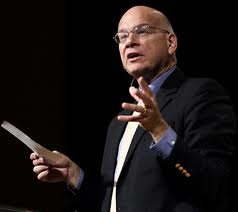
Dr. Tim Keller on The Girl Nobody Wanted: A Christo-centric Gem

The Girl Nobody Wanted by Tim Keller (Genesis 29:15-35)

[15] Then Laban said to Jacob, “Because you are my kinsman [relative], should you therefore serve me for nothing? Tell me, what shall your wages be?” [16] Now Laban had two daughters. The name of the older was Leah, and the name of the younger was Rachel. [17] Leah’s eyes were weak, but Rachel was beautiful in form and appearance. [18] Jacob loved Rachel. And he said, “I will serve you seven years for your younger daughter Rachel.” [19] Laban said, “It is better that I give her to you than that I should give her to any other man; stay with me.” [20] So Jacob served seven years for Rachel, and they seemed to him but a few days because of the love he had for her.

[21] Then Jacob said to Laban, “Give me my wife that I may go in to her, for my time is completed.” [22] So Laban gathered together all the people of the place and made a feast. [23] But in the evening he took his daughter Leah and brought her to Jacob, and he went in to her. [24] (Laban gave his female servant Zilpah to his daughter Leah to be her servant.) [25] And in the morning, behold, it was Leah! And Jacob said to Laban, “What is this you have done to me? Did I not serve with you for Rachel? Why then have you deceived me?” [26] Laban said, “It is not so done in our country, to give the younger before the firstborn. [27] Complete the week of this one, and we will give you the other also in return for serving me another seven years.” [28] Jacob did so, and completed her week. Then Laban gave him his daughter Rachel to be his wife. [29] (Laban gave his female servant Bilhah to his daughter Rachel to be her servant.) [30] So Jacob went in to Rachel also, and he loved Rachel more than Leah, and served Laban for another seven years. [31] When the LORD saw that Leah was hated, he opened her womb, but Rachel was barren. [32] And Leah conceived and bore a son, and she called his name Reuben, for she said, “Because the LORD has looked upon my affliction; for now my husband will love me.” [33] She conceived again and bore a son, and said, “Because the LORD has heard that I am hated, he has given me this son also.” And she called his name Simeon. [34] Again she conceived and bore a son, and said, “Now this time my husband will be attached to me, because I have borne him three sons.” Therefore his name was called Levi. [35] And she conceived again and bore a son, and said, “This time I will praise the LORD.” Therefore she called his name Judah. Then she ceased bearing. Gen. 29:15-35

There is no book, I believe, less sentimental about marriage and the family then the Bible. It is utterly realistic about how hard it is not to be married; and it is utterly realistic about how hard it is to be married. Out in the world, especially in the culture outside the church, there are a lot of people who are cynical about marriage. They don’t trust marriage, so they avoid it altogether or give themselves an easy escape by living together. Then there are people inside the church who are very much the opposite. They think, “Marriage, family, white picket fences—that is what family values are all about. That’s how you find fulfillment. That is what human life is all about.”

The Bible shows us marriage and the family, with all of its joys and all of its difficulties, and points us to Jesus and says, “This is who you need, this is what you need, to have a fulfilled life.” What the Bible says is so nuanced, so different, so off the spectrum. One of the places you see this is in this fascinating story—the account of Jacob’s search for his one true love. I would like you to notice three things in the story:

First, this overpowering human drive to find one true love [Key Theme – a hope];

Secondly, the devastation and disillusionment that ordinarily accompanies the search for true love;

[Third], and finally, what we can do about this longing – what will fulfill it.

 1) THE HUMAN DRIVE TO FIND ONE TRUE LOVE

At the beginning of the passage, Laban says to Jacob, “Just because you are a kinsmen [relative] of mine, should you work for me for nothing? Tell me what your wages should be” (v. 15). Before continuing, let me give you the back-story.

Two generations earlier, God had come to Abraham, Jacob’s grandfather, and said, “Abraham, look at the misery, the death, and the brokenness. I am going to do something about it. I am going to redeem this world, and I am going to do it through your family, through one of your descendents. And therefore, in every generation of your descendents, one child will bear the Messianic line. That child will walk before me and be the head of the clan and pass the true faith on to the next generation. Then there will be another child that bears the Messianic line [seed] and another, until one day, one of your descendents will be the Messiah himself, the King of kings.”

Abraham fathered Isaac, the first in the line Messianic forebears, and when Isaac’s wife, Rebekah, became pregnant with twins, God spoke to Rebekah through and said, “The elder will serve the younger.” That was God’s way of saying that the second twin born would be the chosen one, to carry on the Messianic hope. Esau is born first and then Jacob, but in spite of the prophecy, Isaac set his heart on the oldest son. He set his heart on Esau and favored him all through his life. As a result, he distorted his entire family. Esau grew up proud, spoiled, willful, and impulsive; Jacob grew up rejected and resentful and turned into a schemer; Rebekah favored her younger son and became alienated from her husband Isaac.

Finally, the time came for the aged Isaac to give the blessing to the head of the clan, which was to be Esau; but Jacob dressed up as Esau, went in, and got the blessing. When Esau found out about it, he became determined to kill Jacob, and Jacob had to flee into the wilderness. Now everything was ruined. Jacob’s life was ruined. Not only did he no longer have a family to be the head of; he no longer had a family or an inheritance at all, and he had to flee for his life. Jacob did not know whether Esau messed up or he messed up or Isaac or maybe even God, but now his life was in ruins and he would never fulfill his destiny. Just to survive, he was forced to flee to the other side of the Fertile Crescent.

Jacob escaped to his mother’s family, and they took him in as a kind of charity case. Laban, his uncle, allowed him to be a shepherd. Laban realized that Jacob had tremendous ability as a shepherd and a manager. He figured out that he could make a lot of money if Jacob were in charge of his flocks. That is how we get to this question: “How much can I pay you to be in charge of my flocks?”

Jacob’s answer [vv. 16-18] is basically one word: Rachel.  He wanted Rachel as his bride, and was willing to work seven years for her. What do we know about Rachel? The text comes right out and says that Rachel was lovely in form and beautiful. The Hebrew word translated “form” is quite literal it means exactly what you think. It is talking about her figure. Rachel had a great figure. She had a beautiful face and was absolutely gorgeous. I want to give credit where credit is due and say that Robert Alter, the great Hebrew literature scholar at Berkeley, has helped me understand this text a lot. Alter says there are all sorts of signals in the text about how over-the-top, intensely lovesick and overwhelmed Jacob is with Rachel. There is the poignant but telling statement where the text says, “Jacob served seven years for Rachel, and they seemed to him but a few days because of the love he had for her (v.20).”

More interesting is the next verse: “Then Jacob said to Laban, “Give me my wife that I may go in to her, for my time is completed.” Of course that means he wants to have sex with her. Alter says that this statement is so blunt, so graphic, so sexual, so over-the-top and inappropriate and non-customary that, over the centuries, Jewish commentators have had to do all kinds of backpedaling to explain it. But he says it is not that hard to explain the meaning. He says that the narrator is showing us a man driven by and overwhelmed with emotional and sexual longing for one woman.

What is going on here? Jacob’s life was empty. He never had his father’s love. Now he didn’t even have his mother’s love, and he certainly had no sense of God’s love. He had lost everything—no family, no inheritance, no nothing. And then he saw Rachel, the most beautiful woman he had ever seen, the most beautiful woman for miles around, and he said to himself, “If I had her, finally, something would be right in my lousy life. If I had her, life would have meaning. If I had her, it would fix things.” If he found his one true love, life would finally be okay.

All the longings of the human heart for significance, for security, and for meaning—he had no other object for them—they were all fixed on Rachel.

Jacob was somewhat unusual for his time. Cultural historians will tell you that in ancient times people didn’t generally marry for love (that is actually a relatively recent phenomenon). They married for status. Nevertheless, he is not rare today.

Ernest Becker was a secular man, an atheist, who won the Pulitzer Prize in the 1970’s for his book The Denial of Death. In the book, he talks about how secular people deal with the fact that they don’t believe in God. He says that one of the main ways secular culture has dealt with the God vacuum is through apocalyptic sex and romance. Our secular culture has loaded its desire for transcendence into romance and love. Talking about the modern secular person, he says:

He still needed to feel heroic, to know that his life mattered in the scheme of things…He still had to merge himself with some higher, self-absorbing meaning, in trust and gratitude…If he no longer had God, how was he to do this? One of the first ways that occurred to him, as [Otto] Rank saw, was the “romantic solution.” …The self-glorification that he needed in the innermost nature he now looked for in the love partner. The love partner becomes the divine ideal within which to fulfill one’s life…

After all, what is it that we want when we elevate the love partner to the position of God? We want redemption—nothing less. We want to be rid of our faults, of our feelings of nothingness. We want to be justified, to know that our creation has not been in vain. … That is exactly what Jacob did. And that is what people are doing all over the place. That is what our culture is begging us to do—to load all of the deepest needs of our hearts for significance, security, and transcendence into romance and love, into finding that one true love. That will fix my lousy life!

Let me tell you something you notice when you live in New York City. It is a tough town; everybody looks so cool and pulled together. But the amount of money people spend on their appearance shows they are desperate. They cannot imagine living without apocalyptic romance and love. The human longing for one true love has always been around, but in our culture now, it has been magnified to an astounding degree. But where does it lead?

 2) The Disillusionment That Comes

Secondly, let’s look at the disillusionment and devastation that almost always accompanies a search for that one true love. We begin with Laban’s plot. Laban knew that Jacob offered to serve seven years for Rachel. He knew what that meant. At that time, when you wanted to marry someone, you paid the father a bride price, and it was somewhere around thirty to forty-five shekels. Robert Alter says that a month’s wages was equal to one and a half shekels, and therefore, you can see that Jacob, right out of the box is absolutely lovesick. He is a horrible bargainer; he is immediately offered three to four times the normal bride price. Laban knew he had him. He knew this man was vulnerable.

Commentators say there are indicators in the text that Laban immediately came up with a plan, realizing he could get even more out of this deal. Notice the conversation between Jacob and Laban. The text says, “Jacob loved Rachel. And he said, “I will serve you seven years for your younger daughter Rachel.” (v.18). Look at how Laban responds. He never says, “Yes”! He does not say, “Yes, seven years. It is a deal.” No! Laban said, “It is better that I give her to you than that I should give her to any other man; stay with me” (v.19).

Jacob wants it to be a yes, so he hears a yes. But it is not a yes. Laban is just saying, “Yea, okay, if you want to marry Rachel, it is a good idea.”

Seven years pass; now Jacob says, “Give me my wife.” As customary, there is a great feast. In the middle of the feast, the bride is brought heavily veiled to the groom. She was given to him, and he took her into the tent. He was inebriated, as was also the custom; and in that dark tent, Jacob lay with her. The text tells us, “When morning came, there was Leah!” (v. 25). Jacob looked and discovered that he had married Leah, and had had sex with Leah, and he had consummated the marriage with Leah. Jacob, rightfully angry, goes to Laban and says, “What is this you have done to me? I served you for Rachel, didn’t I? Why have you deceived me? (v. 25). Laban replies that it is customary for the older girl to be married before the younger girl.

I must say I have read this text for thirty years or more and I have never understood why Jacob basically says, “Oh, okay.” I have never figured it out. He is obviously angry and the situation is absolutely ridiculous. Why doesn’t Jacob kill him? Why doesn’t he throttle him? Again, Robert Alter is very helpful here. He suggests something that I think is rather profound.

First of all, what Laban literally says is: “It is not the custom here to put the younger before the older.”

Second, Alter points out that when Jacob said, “Why have you deceived me?” the word translated “deceived” is the same Hebrew word that was used in chapter 27 to describe what Jacob did to Isaac. [What goes around comes around; sowing…and reaping]

Alter says (this is surmise, but what surmise!) that it must have occurred to Jacob that Laban had only done to him what he had done to his father. In the dark, he thought he was touching Rachel, as his father in the dark of his blindness had thought he was touching Esau. Alter then quotes an ancient rabbinical commentator who imagines the conversation the next day between Jacob and Leah. Jacob says to Leah: “I called out ‘Rachel’ in the dark and you answered. Why did you do that to me?” And Leah says to him, “Your father called out ‘Esau’ in the dark and you answered. Why did you do that to him?” Fury dies on his lips. Cut to the quick. Suddenly the evil he has done has come to Jacob. And he sees what it is like to be manipulated and deceived, and meekly he picks up and works another seven years.

We leave Jacob in his devastation (I don’t have a better word for it), and then we see what it has done to Leah. Now, who is Leah? We are told that Leah is the older daughter, but the only detail we are given about her is that she has weak eyes. Nobody quite knows what “weak eyes” means; some commentators have assumed it means she has bad eyesight. But the text does not say that Leah had weak eyes, but Rachel could see a long way. Weakness probably means cross-eyed; it could mean something unsightly. But here is the point: Leah was particularly unattractive, and she had to live all of her life in the shadow of her sister who was absolutely stunning.

As a result, Laban knew no one was ever going to marry her or offer any money for her. He wondered how he was going to get rid of her, how was he going to unload her. And then he saw his chance, he saw an opening and he did it. And now the girl that Laban, her father, did not want has been given to a husband who doesn’t want her either. She is the girl nobody wants. Leah has a hollow in her heart every bit as the hollow in Jacob’s heart. Now she begins to do to Jacob what Jacob had done to Rachel and what Isaac had done to Esau. She set her heart on Jacob. You see the evil and the pathology in these families just ricocheting around again and again from generation to generation.

The last verses here are some of the most plaintive [sad] I have ever read in the Bible (most English translations tell you a little about what the words actually mean). [she uses Hebrew words that express her longing for Jacob] Leah gave birth to her first child, a boy and she named him Reuben. Reuben means, “to see” and she thought, “Now maybe my husband will see me; maybe I won’t be invisible anymore.” But she had a second son, and she named him Simeon, which has to do with hearing: “Now maybe my husband will finally listen to me.” But he didn’t. She had a third son and named him Levi, which means “to be attached,” and she said, “Maybe finally my husband’s heart will be attached to me.”

What was she doing? She was trying to get an identity through traditional family values. Having sons, especially in those days, was the best way to do that; but it was not working. She had set her heart, all of her hopes and dreams, on her husband. She thought, “If I have babies and if I have sons and my husband loves me, then finally something will be fixed in my lousy life.” Instead, she was just going down into hell. And the text says—it is sort of like the summary statement—Jacob loved Rachel more than Leah. That meant she was condemned every single day. This is what I mean by hell—every single day she was condemned to see the man she most longed for in the arms of the one in whose shadow she had lived all her life. Every day was like another knife in the heart.

All we see here is devastation, right? No, that is actually not the way the text ends. But before we look at how the text ends, let me field two objections and draw two lessons.

The first objection has to do with all these ancient practices. Some people who read the text or listen to a sermon on it are thinking, Why are you telling me this story—men buying and selling women, primogeniture [pry-mo-gen-i-turr], sexual slavery—what is this about? I am offended by this kind of old primitive culture. I know they existed, but thank goodness we don’t live in a culture like that anymore. Why do we have to know about it?

First, it is important to see (and this comes from what Robert Alter says), if you read the book of Genesis, and you think it is condoning primogeniture [the right of succession belonging to the firstborn child], polygamy, and bride purchase—if you think it is condoning these things, you have not yet learned how to read. Because in absolutely every single place where you see polygamy or primogeniture, it always wreaks devastation. It never works out. All you ever see is the misery these patriarchal institutions cause in families. Alter says if you think the book of Genesis is promoting those things, you have no idea what is being said. He says these stories are subversive [seeking or intended to subvert an established system or institution] to all those ancient patriarchal institutions. Just read!

You might also be thinking, Thank goodness we don’t live in a culture in which a woman’s value is based on her looks. Thank goodness we don’t live in a culture where a woman looks in a mirror and says, “Look at me I am a size 4, I can get a rich husband.” Hundreds of years ago, people used to do that but nobody does that anymore. Really?

I am sorry, I shouldn’t be sarcastic, but what in the world makes you think that we are in a less brutal culture? We are and we aren’t. Besides that, what the Bible says about the human heart is always true, it is always abiding. If anything, what we are saying is truer today than it was before.

The second objection people have has to do with the moral of the story. They ask, “Where are all the spiritual heroes in this text? Who am I supposed to be emulating? Who is the good guy? What is the moral of the story? I don’t see any! What is going on here?

The answer is: That is absolutely correct. You are starting to get it. You are starting to get the point of the Bible. What do I mean? The Bible doesn’t give us a god at the top of a moral ladder saying, “Look at the people who have found God through their great performance and their moral record. Be like them!” Of course not! Instead, over and over again, the Bible gives us absolutely weak people who don’t seek the grace they need and who don’t deserve the grace they get.

They don’t appreciate it after they get it, and continue to screw up and abuse it even after they have it. And yet, the grace keeps coming! The Bible is not about a god who gives us accounts or moral heroes. It is about grace, and that is what this story is about. So what do we learn from this story? Is there any moral? I wouldn’t put it that way, but here are two things I would want you to see?

First, we learn that through all of life there runs a ground note of cosmic disappointment. You are never going to lead a wise life, no matter who you are, unless you understand that. Here is Jacob, and he says, “If I can just get Rachel, everything will be okay.” And he goes to bed with someone whom he thinks is Rachel, and then, literally, the Hebrew says, “But in the morning, behold, it was Leah.” What does this show us? Listen, I love Leah; I really do. I have been thinking about this text for a long time, and I love her and I want to protect her, so I hope you don’t think I am being mean to her in what I am trying to say. But I want you to know that—  when you get married, no matter how great you think that marriage is going to be; when you get a career, no matter how great you think your career is going to be; when you go off to seminary, no matter how much you think it is going to make you into a man or a woman of God—in the morning, it is always Leah!You think you are going to bed with Rachel, and it in the morning, it is always Leah. Nobody has ever said this better than C. S. Lewis in Mere Christianity:

Most people, if they have really learned to look into their own hearts, would know that they do want, and want acutely, something that cannot be had in this world. There are all sorts of things in this world that offer to give it to you, but they never quite keep their promise. The longings which arise in us when we first fall in love, or first think of some foreign country, or first take up some subject that excites us, are longings which no marriage, no travel, no learning, can really satisfy. I am not now speaking of what would be ordinarily called unsuccessful marriages, or holidays, or learned careers. I am speaking of the best possible ones. There was something we have grasped at, in that first moment of longing, which just fades away in the reality. I think everyone knows what I mean. The souse may be a good spouse, and the hotels and scenery may have been excellent, and chemistry may be a very interesting job: but something has evaded us.

You have got to understand that it is always Leah! Why? Because if you get married, if you have families, if you go into the ministry, and say that “finally this is going to fix my life” (you don’t really think you are doing it until you do it)—those things will never do what you think they will do. In the morning, it is always Leah.

If you get married, and in any way do as Jacob does and put that kind of weight on the person you are marrying, you are going to crush him or her. You are going to kill each other. You are going to think you have gone to bed with Rachel, but you get up and it is Leah. As time goes on, eventually you are going to know that this is the case; that everything disappoints, that there is a note of cosmic disappointment and disillusionment in everything, in all things into which we most put our hopes. When you finally find that out, there are four things you can do.

One, you can blame the things and drop them and go try new ones, better ones. That is the fool’s way.

The second thing you can do is blame yourself and beat yourself up and say, “I have been a failure. I see everybody else happy. I don’t know why I’m not happy. There is something wrong with me.” So you blame yourself and you become a self-hater.

Third, you can blame the world and get cynical and hard. You say, “Curses on the entire opposite sex” or whatever, in which case you dehumanize yourself.

Lastly, you can, as C. S. Lewis says at the end of his great chapter on hope, change the entire focus of your life. He concludes, “If I find in myself a desire which no experience in this world can satisfy, the most probable explanation is that I was made for another world [something supernatural and eternal].

We see that both the liberal mindset and the conservative mindset are wrong when it comes to romance, sex, and love.

Neither serves us well. In fact, you can almost see it in Jacob and Leah. Jacob, with a liberal mindset, is after an apocalyptic hookup. He says, “Give me my wife! I want sex!” he actually says that. On the other hand, here is Leah, and what is she doing? She is the conservative. She is having babies. She is not out having a career. She is trying to find her identity in being a wife—“Now my husband will love me.”

Guess what? They are both wrong. They are not going anywhere. Their lives are a mess. That is the reason why Ernest Becker says so beautifully, “No human relationship can bear the burden of godhood… However much we idolize him [the love partner], he inevitably reflects earthly decay and imperfection. And as he is our ideal measure of value, this imperfection falls back upon us. If your partner is you “All’ then any shortcoming in him becomes a major threat to you.” – Becker, Denial of Death, 166. As Becker said, what we want when we elevate the love partner to the position of God is to be rid of our faults, to be justified to know our existence has not been in vain. We are after redemption. He then adds, “Needless to say, human partners can’t do this.” You might think that is pretty obvious; but we done believe it. We thought the Bible was a source of family values. Well, it is, in a sense, but how realistic it is! So what are we going to do? We are all creatures of our culture. We have this drive in us for one true love. What are we going to do with it? Here is the answer.

3) What We Can Do about This Longing

I want you to see what God does in Leah and for Leah. Leah is the first person to get it; she does begin to see what you are supposed to do.

Look first at what God does in her. As we have said, every time she has a child, she puts all of her hopes in her husband now loving her. And yet, one of the things scholars notice that is very curious is that even though she is clearly making a functional idol out of her husband and her family, she is calling on the Lord. She doesn’t talk about God in some general way or invoke the name of Elohim. She  uses the name Yahweh. In verse 32, it says, “And Leah conceived and bore a son, and she called his name Reuben, for she said, “Because the LORD [Yahweh] has looked upon my affliction.” How does she know about Yahweh?

Elohim was the generic word for God back then. All creatures at that time had some general idea of God or gods; they were gods at the top of a ladder, and you had to get up to the top through rituals or through transformations of consciousness or moral performance. Everyone understood God in that sense, but Yahweh was different. Yahweh was the God who came down the ladder, the one who entered into a personal covenantal relationship and intervened to save. Certainly they didn’t know all he was going to do, but Abraham and Isaac knew something about it, and Jacob would have known about it as well. It is interesting that Leah must have learned about Yahweh from Jacob. Even though she is still in the grip of her functional idolatry, somehow she is trying, she is calling out, she is reaching out to a God of grace. She has grasped the concept.

You might say that she has got a theology of sorts, as advanced as it was at the time, but she is having trouble connecting it. She is calling him the Lord, and yet she is treating him like a “god.” Do you follow me?

She is saying, “God can help me save myself through childbearing. God can help me save myself by getting my husband’s love. So she is using God, and yet she not call him God [Elohim]; she calls him Lord [Yahweh]. She is beginning to get it, and what is intriguing is that, at the very end, something happens. The first time she gives birth she says, ‘Now maybe my husband will see me. Now maybe my husband will love me.” And when she gives birth to her third son, she says, “Now maybe my husband will be attached to me.”

Finally, it says that she conceived for the fourth time, and when she gave birth to Judah, she said, “This time!” Isn’t that defiant? It is totally different; no mention of husband, no mention of child. There is some kind of breakthrough. She says, “This time I will praise the LORD.”

At that point, she has finally taken her heart’s deepest hopes off of the old way, off of her husband and her children, and she has put them in the Lord.

Here is what I believe is going on. Jacob and Laban had stolen Leah’s life, but when she stopped giving her heart to a good thing that she had turned into an ultimate thing and gave it to the Lord, she got her life back.

May I respectfully ask you: What good thing in your life are you treating as an ultimate thing?

What do you need to stop giving your heart to if you are going to get your life back?

There are a lot of things I am certain about, but I am absolutely certain that everybody in this room has got something.

Do you know what it is?

If you have no idea, you need to think about it. Something happened to Leah; God did something in her. There was a breakthrough. She began to understand what you are supposed to do with your desire for one true love. She turned her heart toward the only real beauty, the only real lover who can satisfy those cosmic needs.

But we shouldn’t just look at what God did in her. We have to also look for what God has done for her—because God has done something for her. I believe that she had some consciousness, although it might have been semi-consciousness or just intuition, that there was something special about this last child. It would probably be reading too much into the text to say she understood, but I believe she sensed that God had done something for her. And he had.

The writer of Genesis knows what God has done. This child is Judah, and who is Judah? The writer of Genesis tells us in chapter 49 that it is through Judah that Shiloh will come, and it is through Shiloh that the King will come. This is the line! This is the Messianic line! God has come to the girl that nobody wanted, the unloved, and made her the mother of Jesus—not beautiful Rachel, but the homely one, the unwanted one, the unloved one.

Why did God do that? Does he just like the underdog? He did it because of his person and because of his work.

First, because of his person. It says that when the Lord saw Leah was not loved, he loved her. God is saying, “I am the real bridegroom. I am the husband of the husbandless. I am the father of the fatherless.” What does that  mean?

He is attracted to the people that the world is not attracted to. He loves the unwanted. He loves the unattractive. He loves the weak, the ones the world doesn’t want to be like. God says, “If nobody else is going to be the spouse of Leah, I will be her spouse.”

Guess what? It is not just those of you without spouses who need to see God as your ultimate spouse, but those of us with spouses have got to see God as our ultimate spouse as well. You have to demote the person you are married to out of first place in your heart to second place behind God or you will end up killing each other. You will put all of your freight, all the weight of all your hopes, on that person. And of course, they are human beings, they are sinners, just like you are. God says you must see him as what he is: the great bridegroom, the spouse for the spouseless. He is not just a king and we are the subjects; he is not just a shepherd and we are the sheep. He is a husband and we are his lovers. He loves us! He is ravished with us—even those of us whom no one else is ravished with; especially those of us whom no one else is ravished with. That is his person. But that is not all.

The second reason why he goes after Leah and not Rachel, why he makes the girl who nobody wanted into the mother of Jesus, the bearer of the Messianic line, the bearer of salvation to the world, is not just that he likes the underdog, but because that it the gospel.

When God came to earth in Jesus Christ, he was the son of Leah. Oh yes, he was! He became the man nobody wanted. He was born in a manger. He had no beauty that we should desire him. He came to his own and his own received him not. And at the end, nobody wanted him. Everybody abandoned him. Even his Father in heaven didn’t want him. Jesus cried out on the cross: “My God, my God, why have you forsaken me?”

Why did he become Leah’s son? Why did he become the man nobody wanted? For you and for me! Here is the gospel: God did not save us in spite of the weakness that he experienced as a human being but through it.  And you don’t actually get that salvation into your life through strength; it is only for those who admit they are weak. And if you cannot admit that you are a hopeless moral failure and a sinner and that you are absolutely lost and have no hope apart from the sheer grace of God, then you are not weak enough for Leah and her son and the great salvation that God has brought into the world.

God chose Leah because he is saying, “This is how salvation works. This is the upside-down way that my people will live, at least in relationship to the world, when they receive my salvation.”

Now the way up is down. The way to become rich is to give your money away. The way to become rich is to give your money away. The way to power is to serve God, when he came to earth, as the son of Leah. God made Leah, the girl nobody wanted into the mother of Jesus. Why?

Because he chooses the foolish things to shame the wise; he chooses the weak things to shame the strong; he chooses even the things that are not to bring to nothing the things that are, so that no one will boast in his presence (1 Cor. 1:27-29).

In conclusion, let me give you a few practical applications.

First, if there is anyone with a Laban in their life right now, don’t be bitter and don’t beat them up. Don’t let them take advantage of you either if you can; but remember, God can use that person in your life to make you a better person in your life if you don’t become bitter.

Second, are you somebody who has been rejected, betrayed, maybe recently divorced, and you didn’t want to be? Are you a Leah? Remember, God knows what it is like to be rejected. He didn’t just love Leah, but he actually became Leah. He became the son of Leah. He came to his own and his own received him not.

He understands rejection, and if anything, he is, from what we can tell in the Scripture, attracted to people in your condition. It is his nature, so don’t worry. He knows and he cares.

Third, please don’t let marriage throw you. I have been saying this all along: in the morning, it will always be Leah. And if you understand that, it will make some of you less desperate in your marriage-seeking, and it will make some of you less angry at your spouse for his imperfections.

Last, you may believe you have messed up your life; that your life is on plan B. You should have done this or that, and now it is too late. Think about it:

Should Jacob have deceived Isaac and Esau? No.

Should Isaac have shown the favoritism that turned Jacob into a liar? No.

Everybody sinned. There are no excuses. They shouldn’t have done what they did. They blew up their lives. But if those things hadn’t happened, would Jacob have met the love of his life, Rachel?

Jesus Christ, who is a result of Jacob’s having to flee to the other side of the Fertile Crescent, isn’t plan B! You can’t mess up your life. You can’t mess up God’s plan for you. You will find that no matter how much you do to mess it up, all you are doing is fulfilling his destiny for you.

That does not mean what they did was okay. The devastation and the unhappiness and the misery that happens in your life because of your sins are your fault. You are responsible, you shouldn’t do them; and yet, God is going to work through you. Those two things are together. It is an antinomy, a paradox.

Remember, it is never too late for God to work in your life! Never! You can’t put yourself on plan B. Go to him. Start over now. Say it: “This time, no matter what else I have done, I will praise the Lord!”

*[Delight yourself in the LORD, and He will give you the desires of your heart – Psalm 37:4]

The sermon manuscript by Dr. Timothy Keller above was adapted and excerpted in parts from the original sermon and from the printed manuscript that can be found in the excellent book of sermons edited by Dr. Dennis E. Johnson entitled: Heralds of the King: Christ-Centered Sermons in the Tradition of Edmund P. Clowney. Wheaton: Crossway Books, 2009.

 About The Author/Preacher:

In 1989 Dr. Timothy J. Keller, his wife and three young sons moved to New York City to begin Redeemer Presbyterian Church. In 20 years it has grown to meeting for five services at three sites with a weekly attendance of over 5,000. Redeemer is notable not only for winning skeptical New Yorkers to faith, but also for partnering with other churches to do both mercy ministry and church planting.  Redeemer City to City is working to help establish hundreds of new multi-ethnic congregations throughout the city and other global cities in the next decades.

Dr. Tim Keller is the author of several phenomenal books including:

Every Good Endeavor: Connecting Your Work to God’s Plan for the World. New York, Penguin Publishing, November, 2012.

Center Church: Doing Balanced, Gospel-Centered Ministry in Your City. Grand Rapids: Zondervan, September, 2012.

The Freedom of Self Forgetfulness. New York: 10 Publishing, April 2012.

Generous Justice: How God’s Grace Makes Us Just. New York: Riverhead Trade, August, 2012.

The Gospel As Center: Renewing Our Faith and Reforming Our Ministry Practices (editor and contributor). Wheaton: Crossway, 2012.

The Meaning of Marriage: Facing the Complexities of Commitment with the Wisdom of God. New York, Dutton, 2011.

The Prodigal God. New York, Dutton, 2011.

King’s Cross: The Story of the World in the Life of Jesus. New York, Dutton, 2011.

Counterfeit Gods: The Empty Priorities of Money, Sex, and Power, and the Only Hope That Matters. New York, Riverhead Trade, 2011.

The Reason For God: Belief in an Age of Skepticism. New York, Dutton, 2009.

Worship By The Book (contributor). Grand Rapids: Zondervan, 2002.

Ministries of Mercy: The Call of the Jericho Road. Phillipsburg: P&R Publishing, 1997.

Dr. Gary R. Collins on Six Ways To Find Your Passion

“How To Find Your Passion”

(1)  Ask someone who knows you well to identify your passions.

(2)  Look at your environment. Does this reveal what really interests and excites you?

(3)  If you had no limitations in terms of money or time, what would you do?

(4)  Think of times in your life when you felt exuberant and excited to be alive. What might this say about your passion?

(5)  When you were young and your parents couldn’t find you, what did they assume you were doing? What does this say about your passion?

(6)  Pray that God will reveal His passion and open doors for you to be able to use your passion for His glory in your life.

The six steps above are condensed and adapted from the excellent book on by Gary Collins called Christian Coaching. Colorado Springs: NavPress, 2009 (Revised Edition).

 About the Author:

Gary R. Collins is a licensed clinical psychologist with a Ph.D. in clinical psychology from Purdue University. He is author of numerous articles and over 50 books, including Christian Counseling: A Comprehensive Guide, The Biblical Basis of Christian Counseling, and Christian Coaching: Helping Others Turn Potential into Reality. Gary was general editor of the thirty-volume Resources for Christian Counseling series of professional counseling books mostly published in the 1980s, the Word Christian Counseling Library of cassette tapes, and the twelve-volume Contemporary Christian Counseling series of books that appeared in the early 1990’s.

In December 2001 NavPress published Gary’s book Christian Coaching, a book that has been revised, expanded, updated, and published in 2009. The third edition of Christian Counseling (revised, expanded and completely updated) was published by Thomas Nelson publishers in 2007, followed by an accompanying Casebook of Christian Counseling, also published by Nelson.

Gary Collins grew up in Canada and graduated from McMaster University in Hamilton, Ontario and the University of Toronto before taking a year of study at the University of London. His first teaching occurred during that year as he taught courses for the University of Maryland in Germany and England. Gary spent several years in the Royal Canadian Navy Reserve before moving to the United States to study clinical psychology at Purdue University. He took his clinical psychology internship at the University of Oregon Medical School Hospitals (now University of Oregon Health Sciences University) in Portland and subsequently enrolled at Western Seminary for a year of theological study.

At Western he met his wife Julie. They were married in 1964 and moved to Minnesota where Gary taught psychology at Bethel College in St. Paul. Their two daughters, Lynn and Jan were born in Minnesota. After a year on the faculty of Conwell School of Theology in Philadelphia, the Collins family moved to Illinois where Gary taught psychology and counseling at Trinity Evangelical Divinity School. For much of that time he was department chairman.

In 1991, Gary assumed responsibility for co-leading the fledgling American Association of Christian Counselors. In the seven years that followed, Gary was AACC Executive Director and later the organization’s first President. During that time AACC grew from about 700 paid members to more than 15,000. In addition to these duties, Gary founded Christian Counseling Today, the official AACC magazine which he edited for several years. In October, 1998 Gary Collins resigned from his responsibilities with AACC so he could devote more time to developing Christian counseling and Christian coaching worldwide. In addition to his other responsibilities, he currently holds a position as Distinguished Professor of Coaching and Leadership at Richmont Graduate University (formerly Psychological Studies Institute) in Atlanta and Chattanooga. In addition he is Distinguished Visiting Professor in the School of Psychology and Counseling at Regent University in Virginia where he consults with the faculty and annually teaches an accredited on-line doctoral course in coaching.

Gary has accepted invitations to speak in more than fifty countries and he continues to travel overseas and within North America to give lectures and lead workshops on Christian counseling, leadership, and Christian coaching. Gary also has a small coaching practice, writes the weekly Gary R. Collins Newsletter, and mentors a number of young, emergent leaders. He is active in a local fitness center, is blessed with boundless energy and good health, and has no plans to retire. Gary and Julie Collins live in northern Illinois, not far from their two daughters, their son-in-law, and their grandson Colin Angus McAlister.

Dr. Tim Keller on Suffering

Dr. Tim Keller on Dealing With The Question “Why Me?”

[This article first appeared in edited form on CNN and is printed below in its entirety. The article is adapted from the City to City Blog of Redeemer Presbyterian Church in New York on August 6, 2012: http://redeemercitytocity.com/blog/view.jsp?Blog_param=446%5D

When I was diagnosed with cancer, the question “Why me?” was a natural one. Later, when I survived but others with the same kind of cancer died, I also had to ask, “Why me?”

Suffering and death seem random, senseless. The recent Aurora shootings—in which some people were spared and others lost—is the latest, vivid example of this, but there are plenty of others every day: from casualties in the Syria uprising to victims of accidents on American roads. Tsunamis, tornadoes, household accidents—the list is long. As a minister, I’ve spent countless hours with suffering people crying: “Why did God let this happen?” In general I hear four answers to this question—but each is wrong, or at least inadequate.

The first answer is, “This makes no sense—I guess this proves there is no God.” But the problem of senseless suffering does not go away if you abandon belief in God. Dr. Martin Luther King, Jr., in his Letter from Birmingham Jail, said that if there was no higher divine Law, there would be no way to tell if any particular human law was unjust or not. If there is no God, then why have a sense of outrage and horror when suffering and tragedy occur? The strong eat the weak—that’s life—so why not? When Friedrich Nietzsche heard that a natural disaster had destroyed Java in 1883, he wrote a friend: “Two hundred thousand wiped out at a stroke—how magnificent!” Nietzsche was relentless in his logic. Because if there is no God, all value judgments are arbitrary. All definitions of justice are just the results of your culture or temperament. As different as they were in other ways, King and Nietzsche agreed on this point. If there is no God or higher divine Law, then violence is perfectly natural. So abandoning belief in God doesn’t help with the problem of suffering at all, and as we will see, it removes many resources for facing it.

The second answer is, “If there is a God, senseless suffering proves that God is not completely in control of everything. He couldn’t stop this.”  As many thinkers have pointed out—both devout believers as well as atheists—such a being, whatever it is, doesn’t really fit our definition of God. And this leaves you with the same problems mentioned above. If you don’t believe in a God powerful enough to create and sustain the whole world, then the world came about through natural forces, and that means, again, that violence is natural. Or if you think that God is an impersonal life force and this whole material world is just an illusion, again you remove any reason to be outraged at evil and suffering or to resist it.

The third answer to seemingly sudden, random death is, “God saves some people and lets others die because he favors and rewards good people.” But the Bible forcefully rejects the idea that people who suffer more are worse people than those who are spared suffering. This was the self-righteous premise of Job’s friends in that great Old Testament book. They sat around Job, who was experiencing one sorrow in life after another, and said, “the reason this is happening to you and not us is because we are living right and you are not.” At the end of the book, God expresses his fury at Job’s “miserable comforters.” The world is too fallen and deeply broken to issue in neat patterns of good people having good lives and bad people having bad lives.

The fourth answer is, “God knows what he’s doing, so be quiet and trust him.” This is partly right, but inadequate. It is inadequate because it is cold and because the Bible gives us more with which to face the terrors of life.

God did not create a world with death and evil in it. It is the result of humankind turning away from him. We were put into this world to live wholly for him, and when instead we began to live for ourselves everything in our created reality began to fall apart—physically, socially, and spiritually. Everything became subject to decay. But God did not abandon us. Of all the world’s major religions, only Christianity teaches that God came to earth (in Jesus Christ) and became subject to suffering and death himself—dying on the Cross to take the punishment our sins deserved—so that some day he can return to earth to end all suffering without ending us.

Do you see what this means? Yes, we don’t know the reason God allows evil and suffering to continue, or why it is so random, but now at least we know what the reason isn’t—what it can’t be. It can’t be that he doesn’t love us! It can’t be that he doesn’t care. He is so committed to our ultimate happiness that he was willing to plunge into the greatest depths of suffering himself.

He understands us, he’s been there, and he assures us that he has a plan to eventually to wipe away every tear, to make “everything sad come untrue,” as J.R.R. Tolkien put it at the end of his Christian allegory The Lord of the Rings.

Someone might say, “But that’s only half an answer to the question ‘Why?'” Yes, but it is the half that we need.

If God actually explained all the reasons why he allows things to happen as they do, it would be too much for our finite brains. Think of small children and their relationship to their parents. Three-year-olds can’t understand most of what their parents allow and disallow for them. But though they aren’t capable of comprehending their parents’ reasons, they are capable of knowing their parents’ love, and therefore capable of trusting them and living securely. That is what they really need. Now the difference between God and human beings would be infinitely greater than the difference between a thirty-year-old parent and a three-year-old child. So we should not expect to be able to grasp all God’s purposes, but through the Cross and gospel of Jesus Christ, we can know his love. And that is what we need most.

In Ann Voskamp’s book One Thousand Gifts, she shares her journey to understand the senseless death of her sister, crushed by a truck at the age of two. In the end, she concludes that the primary issue is whether we trust God’s character. Is he really loving? Is he really just? Her conclusion:

“[God] gave us Jesus… If God didn’t withhold from us His very own Son, will God withhold anything we need? If trust must be earned, hasn’t God unequivocally earned our trust with the bark on the raw wounds, the thorns pressed into the brow, your name on the cracked lips? How will he not also graciously give us all things He deems best and right? He’s already given the incomprehensible.”

 About The Author:

In 1989 Dr. Timothy J. Keller, his wife and three young sons moved to New York City to begin Redeemer Presbyterian Church. In 20 years it has grown to meeting for five services at three sites with a weekly attendance of over 5,000. Redeemer is notable not only for winning skeptical New Yorkers to faith, but also for partnering with other churches to do both mercy ministry and church planting.  Redeemer City to City is working to help establish hundreds of new multi-ethnic congregations throughout the city and other global cities in the next decades.

Dr. Tim Keller is the author of several phenomenal books including:

Every Good Endeavor: Connecting Your Work to God’s Plan for the World. New York, Penguin Publishing, November, 2012.

Center Church: Doing Balanced, Gospel-Centered Ministry in Your City. Grand Rapids: Zondervan, September, 2012.

The Freedom of Self Forgetfulness. New York: 10 Publishing, April 2012.

Generous Justice: How God’s Grace Makes Us Just. New York: Riverhead Trade, August, 2012.

The Gospel As Center: Renewing Our Faith and Reforming Our Ministry Practices (editor and contributor). Wheaton: Crossway, 2012.

The Meaning of Marriage: Facing the Complexities of Commitment with the Wisdom of God. New York, Dutton, 2011.

The Prodigal God. New York, Dutton, 2011.

King’s Cross: The Story of the World in the Life of Jesus. New York, Dutton, 2011.

Counterfeit Gods: The Empty Priorities of Money, Sex, and Power, and the Only Hope That Matters. New York, Riverhead Trade, 2011.

The Reason For God: Belief in an Age of Skepticism. New York, Dutton, 2009.

Worship By The Book (contributor). Grand Rapids: Zondervan, 2002.

Ministries of Mercy: The Call of the Jericho Road. Phillipsburg: P&R Publishing, 1997.

Paul David Tripp on The Benefits of Waiting

“Caught in the Middle”

Wait for the LORD; be strong, and let your heart take courage; wait for the LORD! – Psalm 27:14

We spend a lot of our lives “caught in the middle.” We head to work and get caught in the middle of a traffic jam. We enter a conversation and get caught in the middle of an argument. We make an investment and get caught in the middle of a market downturn. We join a church and get caught in the middle of a theological con-troversy. We dream of our future and get caught in the middle of things we did not foresee and would not have chosen. We really do spend much of our time caught in the middle of being caught in the middle.

When you are required to wait, it means that you are caught in the middle of something, and when you are caught in the middle of something, it immediately means that you are part of something bigger than you. Being caught in the middle is disconcerting and irritating because we all tend to give into the delusion that we have more power and control over our lives than we actually have. Self-sovereignty is the dream of every sinner. It’s hard for us to trust ourselves to the wisdom, power, and control of another. We want to write our own dramas, and we want to be the central character of the story. But the spiritual reality of the universe is that we are not the authors of our own story.

Our story is a part of a larger story that is part of a larger story that is written by the Lord. In this story we are never on center stage. That is a position to be occupied by the Lord alone. When you recognize that you are caught in the middle of some-thing, you are recognizing something that is profoundly important. Let me detail how practically important this insight is.

First, it means you were meant to live for something bigger than yourself. You are not in control. Your story is not ultimate. You have been created to be part of something that is larger than your wants, your needs, and your feelings. You are connected to something that is bigger than your relationships, your situations, and the locations that you move in every day. You are waiting, because God said you are a part of his kingdom. God, whose timing is always perfect, works according to his wise plan and at the right moment. But as you wait, he is doing something in and for you. He is crafting you into the per-son his grace alone enables you to be.

Second, it means you were created to be dependent. The independent, this-is-my-life-and-this-is-what-I-will-do-with-it view is a delusion. The thought that you have everything you need to be what you are supposed to be and to do what you are supposed to do is a fantasy. Each of us is dependent on God for our physical life. We all know that we do not control the many, many things around us that must work in order for our lives to work. We all know that our life doesn’t work according to our plan. We couldn’t write the story of today and accurately predict what we will face. Contrary to what we often think and how we often act, we all live a life of reliance on God.

Third, it means that the things you need most you cannot provide for yourself. God has controlled the forces of nature and the events of human history in order to give me the one thing I desperately need and could never earn, deserve, or achieve—new birth. Without the intervention of his powerful heart and life and his transforming grace, I would be a dead man walking. But he has given me life, and he is now working to change me into what I, if left to myself, could never be. I wait because his grace is still at work. I wait because he is not done and I am not yet complete.

Fourth, it means the final chapter of your story has been writ-ten but has not yet unfolded. There are more places God has written for me. There are more characters to appear in my story. There are circumstances that he has designed for me to encounter. There are moments of blessing and times of difficulty that have already been written into my story by the One who is not only in control but is also wise, gracious, kind, and good. He already knows the exact path he will cause me to walk and how that path will result in his glory and my good. I could never write an autobiography that would accomplish what his story for me already has and will accomplish.

Fifth, it means that the One you are waiting for is trustworthy. I know that there are times when waiting is painful. I know there are times when it seems as if it is impossible to wait. But you and I must remind ourselves that we wait not because irrational and impersonal forces function as obstructions and interferences in our lives. No, we wait because the world is carefully administered by the one Person who is ultimate in power, ultimate in authority, and ultimate in wisdom, while at the very same time being ultimate in love. You are being asked to wait by One you can trust.

Sixth, it means that in those moments when you are caught, you can rest. Don’t give way to panic. Don’t give into doubt because this is not what you would have planned. Don’t allow yourself to play out all of the “what if’s” and “if only’s” in your mind. You are waiting because there is a plan. You are waiting because your life is under the control of One who is wise and good. You can rest, not because you know what is happening, but because you know the One who is in control of what is happening to you right now. You can rest because you know he has made you a part of something wonderful, and he knows what he is doing in you is good, even though at this moment it feels as if you have been caught in the middle.

 Take a Moment

In what area of your life do you tend to be frustrated and irritated because you are “caught in the middle?”

How would your living change if you embraced the reality that God has already written a better story for you than you could have ever written for yourself?

Article Above adapted from Paul David Trip. A Shelter in the Time of Storm: Meditations on God and Trouble. Wheaton: Crossway Books. 2009.

 About the Author:

Dr. Paul David Tripp is the president of Paul Tripp Ministries (www.paultrippministries.org), a nonprofit organization, whose mission statement is “Connecting the transforming power of Jesus Christ to everyday life.” This mission leads Paul to weekly speaking engagements around the world. In addition to being a gifted communicator and sought after conference speaker with Paul Tripp Ministries, Paul is the Executive Director of the Center for Pastoral Life and Care in Fort Worth, Texas, and has taught at respected institutions worldwide. As an author, Paul has written many books on Christian Living that are read and distributed internationally. He has been married for many years to Luella and they have four grown children.

 He is the author of the following excellent Christ-centered books:

Dangerous Calling: Confronting The Unique Challenges of Pastoral Ministry. Wheaton: Crossway Books, 2012.

Forever: Why You Can’t Live Without It. Grand Rapids: Zondervan, 2011.

What Did You Expect? Redeeming The Realities of Marriage. Wheaton: Crossway, 2010.

The Power of Words and the Wonder of God (contributor). Wheaton: Crossway, 2009.

A Shelter in the Time of Storm: Meditations on God and Trouble. Wheaton: Crossway, 2009.

Broken Down House: Living Productively in a World Gone Bad. Shepherd Press, 2009.

Helping People Change (with Timothy S. Lane). Greensboro, N.C.: New Growth Press, 2008.

Whiter Than Snow: Meditations on Sin and Mercy. Wheaton: Crossway, 2008.

Helping Your Adopted Child. Greensboro, N.C.: New Growth Press, 2008.

Peer Pressure. Greensboro, N.C.: New Growth Press, 2008.

A Quest for More: Living For Something Bigger Than You. Greensboro, N.C.: New Growth Press, 2007.

Grief: Finding Hope Again. Greensboro, N.C.: New Growth Press, 2005.

Lost in the Middle: Midlife and the Grace of God. Shepherd Press, 2004.

Pastoral Leadership for Manhood and Womanhood (contributor). Wheaton: Crossway, 2003.

Instruments in the Redeemer’s Hands: People in Need of Change Helping People in Need of Change. Phillipsburg, NJ: P&R, 2002.

Age of Opportunity: A Biblical Guide to Parenting Teens. Phillipsburg, NJ: P&R, 2001.

War of Words: Getting to the Heart of Communication Struggles. Phillipsburg, NJ P&R, 2001.

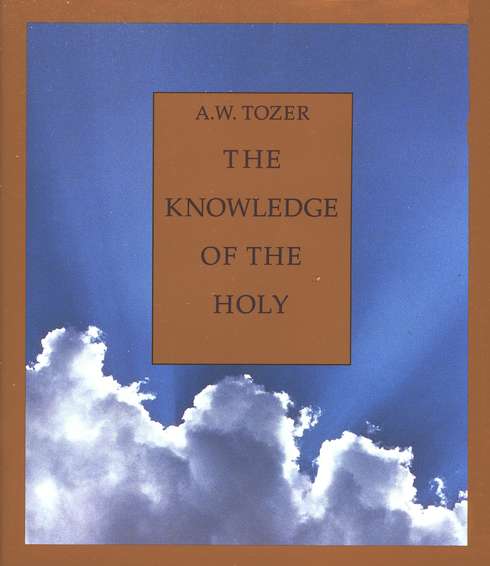
A.W. Tozer on Why We Must Think Rightly About God

Great Thoughts By Tozer on Thinking Correctly About God


O, Lord God Almighty, not the God of the philosophers and the wise but the God of the prophets and apostles; and better than all, the God and Father of our Lord Jesus Christ, may I express Thee unblamed? They that know Thee not may call upon Thee as other than Thou art, and so worship not Thee but a creature of their own fancy; therefore enlighten our minds that we may know Thee as Thou art, so that we may perfectly love Thee and worthily praise Thee. In the name of Jesus Christ our Lord. Amen.    

What comes into our minds when we think about God is the most important thing about us. The history of mankind will probably show that no people has ever risen above its religion, and man’s spiritual history will positively demonstrate that no religion has ever been greater than its idea of God. Worship is pure or base as the worshiper entertains high or low thoughts of God.

For this reason the gravest question before the Church is always God Himself, and the most portentous fact about any man is not what he at a given time may say or do, but what he in his deep heart conceives God to be like. We tend by a secret law of the soul to move toward our mental image of God. This is true not only of the individual Christian, but of the company of Christians that composes the Church. Always the most revealing thing about the Church is her idea of God, just as her most significant message is what she says about Him or leaves unsaid, for her silence is often more eloquent than her speech. She can never escape the self-disclosure of her witness concerning God.

Were we able to extract from any man a complete answer to the question, “What comes into your mind when you think about God?” we might predict with certainty the spiritual future of that man. Were we able to know exactly what our most influential religious leaders think of God today, we might be able with some precision to foretell where the Church will stand tomorrow. Without doubt, the mightiest thought the mind can entertain is the thought of God, and the weightiest word in any language is its word for God.

Thought and speech are God’s gifts to creatures made in His image; these are intimately associated with Him and impossible apart from Him. It is highly significant that the first word was the Word: “And the Word was with God, and the Word was God.” We may speak because God spoke. In Him word and idea are indivisible. That our idea of God corresponds as nearly as possible to the true being of God is of immense importance to us. Compared with our actual thoughts about Him, our creedal statements are of little consequence. Our real idea of God may lie buried under the rubbish of conventional religious notions and may require an intelligent and vigorous search before it is finally unearthed and exposed for what it is. Only after an ordeal of painful self-probing are we likely to discover what we actually believe about God.

A right conception of God is basic not only to systematic theology but to practical Christian living as well. It is to worship what the foundation is to the temple; where it is inadequate or out of plumb the whole structure must sooner or later collapse. I believe there is scarcely an error in doctrine or a failure in applying Christian ethics that cannot be traced finally to imperfect and ignoble thoughts about God. It is my opinion that the Christian conception of God current in these middle years of the twentieth century is so decadent as to be utterly beneath the dignity of the Most High God and actually to constitute for professed believers something amounting to a moral calamity.

All the problems of heaven and earth, though they were to confront us together and at once, would be nothing compared with the overwhelming problem of God: That He is; what He is like; and what we as moral beings must do about Him.

The man who comes to a right belief about God is relieved of ten thousand temporal problems, for he sees at once that these have to do with matters which at the most cannot concern him for very long; but even if the multiple burdens of time may be lifted from him, the one mighty single burden of eternity begins to press down upon him with a weight more crushing than all the woes of the world piled one upon another. That mighty burden is his obligation to God. It includes an instant and lifelong duty to love God with every power of mind and soul, to obey Him perfectly, and to worship Him acceptably. And when the man’s laboring conscience tells him that he has done none of these things, but has from childhood been guilty of foul revolt against the Majesty in the heavens, the inner pressure of self-accusation may become too heavy to bear.

The gospel can lift this destroying burden from the mind, give beauty for ashes, and the garment of praise for the spirit of heaviness. But unless the weight of the burden is felt the gospel can mean nothing to the man; and until he sees a vision of God high and lifted up, there will be no woe and no burden. Low views of God destroy the gospel for all who hold them.

Among the sins to which the human heart is prone, hardly any other is more hateful to God than idolatry, for idolatry is at bottom a libel on His character. The idolatrous heart assumes that God is other than He is – in itself a monstrous sin – and substitutes for the true God one made after its own likeness.

Always this God will conform to the image of the one who created it and will be base or pure, cruel or kind, according to the moral state of the mind from which it emerges. A god begotten in the shadows of a fallen heart will quite naturally be no true likeness of the true God. ”Thou thoughtest,” said the Lord to the wicked man in the psalm, “that I was altogether such as one as thyself.” Surely this must be a serious affront to the Most High God before whom cherubim and seraphim continually do cry, “Holy, holy, holy, Lord God of Sabaoth.” Let us beware lest we in our pride accept the erroneous notion that idolatry consists only in kneeling before visible objects of adoration, and that civilized peoples are therefore free from it.

The essence of idolatry is the entertainment of thoughts about God that are unworthy of Him. It begins in the mind and may be present where no overt act of worship has taken place. ”When they knew God,” wrote Paul, “they glorified him not as God, neither were thankful; but became vain in their imaginations, and their foolish heart was darkened.” (Romans 1) Then followed the worship of idols fashioned after the likeness of men and birds and beasts and creeping things. But this series of degrading acts began in the mind.

Wrong ideas about God are not only the fountain from which the polluted waters of idolatry flow; they are themselves idolatrous. The idolater simply imagines things about God and acts as if they were true.

Perverted notions about God soon rot the religion in which they appear. The long career of Israel demonstrates this clearly enough, and the history of the Church confirms it. So necessary to the Church is a lofty concept of God that when that concept in any measure declines, the Church with her worship and her moral standards declines along with it.

The first step down for any church is taken when it surrenders its high opinion of God. Before the Christian Church goes into eclipse anywhere there must first be a corrupting of her simple basic theology. She simply gets a wrong answer to the question, “What is God like?” and goes on from there. Though she may continue to cling to a sound nominal creed, her practical working creed has become false. The masses of her adherents come to believe that God is different from what He actually is; and that is heresy of the most insidious and deadly kind.

The heaviest obligation lying upon the Christian Church today is to purify and elevate her concept of God until it is once more worthy of Him – and of her. In all her prayers and labors this should have first place. We do the greatest service to the next generation of Christians by passing on to them undimmed and undiminished that noble concept of God which we received from our Hebrew and Christian fathers of generations past. This will prove of greater value to them than anything that art or science can devise.

O, God of Bethel, by whose hand Thy people still are fed; Who through this weary pilgrimage Hast all our fathers led! Our vows, our prayers we now present before Thy throne of grace: God of our fathers! Be the God of their succeeding race. – Philip Doddridge

The article above adapted from the classic by A.W. Tozer. The Knowledge of The Holy. New York: Harper & Row. Reprinted 2010 (Chapter 1).

 About the Author (A Mini-Biography of A.W. Tozer):

Aiden Wilson Tozer was born April 21, 1897, on a small farm among the spiny ridges of Western Pennsylvania. Within a few short years, Tozer, as he preferred to be called, would earn the reputation and title of a “20th-century prophet.”

Able to express his thoughts in a simple but forceful manner, Tozer combined the power of God and the power of words to nourish hungry souls, pierce human hearts, and draw earthbound minds toward God.

When he was 15 years old, Tozer’s family moved to Akron, Ohio. One afternoon as he walked home from his job at Goodyear, he overheard a street preacher say, “If you don’t know how to be saved . . . just call on God.” When he got home, he climbed the narrow stairs to the attic where, heeding the preacher’s advice, Tozer was launched into a lifelong pursuit of God.

In 1919, without formal education, Tozer was called to pastor a small storefront church in Nutter Fort, West Virginia. That humble beginning thrust him and his new wife Ada Cecelia Pfautz, into a 44-year ministry with The Christian and Missionary Alliance.

Thirty-one of those years were spent at Chicago’s Southside Alliance Church. The congregation, captivated by Tozer’s preaching, grew from 80 to 800.

In 1950 Tozer was elected editor of the Alliance Weekly now called Alliance Life. The circulation doubled almost immediately. In the first editorial dated June 3, 1950, he set the tone: “It will cost something to walk slow in the parade of the ages while excited men of time rush about confusing motion with progress. But it will pay in the long run and the true Christian is not much interested in anything short of that.”

Tozer’s forte was his prayer life which often found him walking the aisles of a sanctuary or lying face down on the floor. He noted, “As a man prays, so is he.” To him the worship of God was paramount in his life and ministry. “His preaching as well as his writings were but extensions of his prayer life,” comments Tozer biographer James L. Snyder. An earlier biographer noted, “He spent more time on his knees than at his desk.”

Tozer’s love for words also pervaded his family life. He quizzed his children on what they read and made up bedtime stories for them. “The thing I remember most about my father,” reflects his daughter Rebecca, “was those marvelous stories he would tell.”

Son Wendell, one of six boys born before the arrival of Rebecca, remembers that, “We all would rather be treated to the lilac switch by our mother than to have a talking-to by our dad.”

Tozer’s final years of ministry were spent at Avenue Road Church in Toronto, Canada. On May 12, 1963, his earthly pursuit of God ended when he died of a heart attack at age 66. In a small cemetery in Akron, Ohio, his tombstone bears this simple epitaph: “A Man of God.”

Some wonder why Tozer’s writings are as fresh today as when he was alive. It is because, as one friend commented, “He left the superficial, the obvious and the trivial for others to toss around. . . . [His] books reach deep into the heart.”

His humor, written and spoken, has been compared to that of Will Rogers–honest and homespun. Congregations could one moment be swept by gales of laughter and the next sit in a holy hush.

For almost 50 years, Tozer walked with God. Even though he is gone, he continues to speak, ministering to those who are eager to experience God. As someone put it, “This man makes you want to know and feel God.”

“Fear Not!” by R.C. Sproul

Why Did Jesus Say “Fear Not” So Frequently?

We are fragile mortals, given to fears of every sort. We have a built-in insecurity that no amount of whistling in the dark can mollify. We seek assurance concerning the things that frighten us the most.

The prohibition uttered most frequently by our Lord is the command, “Fear not.” He said this so often to his disciples and others he encountered that it almost came to sound like a greeting. Where most people greet others by saying “Hi” or “Hello,” the first words of Jesus often were “Fear not.”

Why? Perhaps Jesus’ predilection for those words grew out of his acute sense of the thinly veiled fear that grips all who approach the living God. We fear his power, we fear his wrath, and most of all we fear his ultimate rejection.

The assurance we need most is the assurance of salvation. Though we are loathe to think much about it or contemplate it deeply, we know, if only intuitively, that the worst catastrophe that could ever befall us is to be visited by God’s final punitive wrath. Our insecurity is worsened by the certainty that we deserve it.

Many believe that assurance of eternal salvation is neither possible or even to be sought. To claim such assurance is considered a mask of supreme arrogance, the nadir of self-conceit.

Yet, if God declares that it is possible to have full assurance of salvation and even commands that we seek after it, then it would be supremely arrogant to deny our need or neglect the search.

In fact, God does command us to make our election and calling sure: Therefore, my brothers, be all the more eager to make your calling and election sure. For if you do these things, you will never fall (2 Pet. 1:10).

This command admits of no justifiable neglect. It addresses a crucial matter. The question, “Am I saved?” is one of the most important I can ever ask myself. I need to know the answer; I must know the answer. This is not a trifle. Without the assurance of salvation the Christian life is unstable, vulnerable to the debilitating rigors of mood changes. Basing assurance on changing emotions allows the wolf of heresy to camp on the doorstep. Progress in sanctification requires a firm foundation in faith. Assurance is the cement of that foundation. Without it the foundation crumbles.

How, then, do we receive assurance? The Scripture declares that the Holy Spirit bears witness with our spirit that we are the children of God. This inner testimony of the Holy Spirit is as vital as it is complex. It can be subjected to severe distortions, being confused with subjectivism and self-delusion. The Spirit gives his testimony with the Word and through the Word, never without the Word or against the Word.

Since it is possible to have false assurance of salvation it is all the more urgent that we seek the Spirit’s testimony in and through the Word. False assurance usually proceeds from a faulty understanding of salvation. If one fails to understand the necessary conditions for salvation, assurance becomes, at best, a guess.

Therefore, we insist that right doctrine is a crucial element in acquiring a sound basis for assurance. It may even be a necessary condition, though it is by no means a sufficient condition. Without sound doctrine we will have an inadequate understanding of salvation. However, having a sound understanding of salvation is no guarantee that we have the salvation we so soundly understand.

If we think the Bible teaches universal salvation we may arrive at a false sense of assurance by reasoning as follows:

Everybody is saved.

I am a body.

Therefore, I am saved.

Or, if we think salvation is gained by our own good works and we are further deluded into believing that we possess good works, we will have a false assurance of salvation.

To have sound assurance we must understand that our salvation rests upon the merit of Christ alone, which is appropriated to us when we embrace him by genuine faith. If we understand that, the remaining question is, “Do I have the genuine faith necessary for salvation?”

To answer that question two more things must be understood and analyzed properly. The first is doctrinal. We need a clear understanding of what constitutes genuine saving faith. If we conceive of saving faith as a faith that exists in a vacuum, never yielding the fruit of works of obedience, we have confused saving faith with dead faith, which cannot save anyone.

The second requirement involves a sober analysis of our own lives. We must examine ourselves to see if the fruit of regeneration is apparent in us. Do we have a real affection for the biblical Christ? Only the regenerate person possesses real love for the real Jesus. Next we must ask the tough question, “Does my life manifest the fruit of sanctification?” I test my faith by my works.

I call this last question the tough question for various reasons. We can lose assurance if we think perfect obedience is the test. Every sin we commit after conversion can cast doubt upon our assurance. That doubt is exacerbated by Satan’s assault of accusation against us. Satan delights in shaking the true Christian’s assurance.

Or we can delude ourselves by looking at our own works with an exalted view of our goodness, seeing virtue in ourselves when there is none. Here we quake in terror before our Lord’s warning: “Many will say to me on that day, ‘Lord, Lord, did we not prophesy in your name, and in your name drive out demons and perform many miracles?’ Then I will tell them plainly, ‘I never knew you. Away from me, you evildoers!’” (Matt. 7:22–23).

Real assurance rests on a sound understanding of salvation, a sound understanding of justification, a sound understanding of sanctification, and a sound understanding of ourselves. In all these matters we have the comfort and assistance of the Holy Spirit who illumines the text of Scripture for us, who works in us to yield the fruit of sanctification, and who bears witness with our spirit that we are the children of God.

The article above was excerpted from Chapter 7 of Doubt & Assurance edited by R.C. Sproul. Grand Rapids: Baker, 2000.

About the Author:

R.C. Sproul has taught theology to hundreds of thousands of people through books, radio, audiotapes, videotapes, seminars, sermons, seminary classes and other forums.

Sproul has written approximately sixty books (and counting). In addition to many volumes designed to teach theology, apologetics, and ethics to laymen through expository prose, he has written a novel, a biography, and several childrens books. He has also edited several volumes, including a festschrift for John H. Gerstner, a seminary textbook, and the New Geneva Study Bible. He has written one of the top classics of the 20th century – The Holiness of God; and perhaps the best book to explain God’s sovereignty in our salvation for laymen entitled Chosen by God.

Sproul founded Ligonier Ministries in 1971, a teaching ministry to assist the church in nurturing believers and equipping them for the ministries to which God has called them. Ligonier sponsors a radio program, “Renewing Your Mind,” which features Sproul and is broadcast nationally, five days a week.

Ligonier Ministries sponsors several seminars each year, the largest one in Orlando every winter. Ligonier publishes a monthly periodical, Tabletalk, and has its own web site (http://www.gospelcom.net).

Sproul has taught theology and apologetics at several seminaries. He earned a B.A. degree from Westminster College, a B.D. from Pittsburgh Theological Seminary, and a Drs. from the Free University of Amsterdam. He is ordained in the Presbyterian Church in America.

In 1994 Christianity Today asked a select list of “critics,” “What theologian or biblical scholar has most shaped your Christian life?” Third on the list (and the only American in the top four) was R.C. Sproul.

The A to Z’s of the Christian

Our Spiritual ABC’s

Ask the Father daily in prayer and He will answer

Believe God is always sovereign and works all things for our good and His glory!

Christ must be the center of your life

Dare to be a disciple of Jesus

Even you can make a difference in the lives of others by acting out God’s revealed will

Friends are special gifts from God

Give to others cheerfully

Harmony is what you should strive for in your relationships with others

Interest in others will make you a broader minded person

Judge others with love and compassion

Knowledge and wisdom come from the Lord

Live in such a way that others will be attracted to Jesus because of you

Make sure to always love others as Jesus does

New life comes to you via a personal relationship with Jesus by repentance and faith

Obedience of God’s will leads to God’s blessings

Please God in all of your actions

Question your priorities often – make sure God is in the center of all of them

Read God’s Word daily

Shepherd’s protect God’s sheep – be grateful that the Lord is my Shepherd

Talk with God often

Use your heart to show concern for others

Vent feelings, but always with the love of Christ

eXult the Lord always!

Yesterday’s sins are already paid for by the grace of Jesus Christ

Zeal in living my spiritual ABC’s will help me grow in the Lord.

*Author of “Our Spiritual ABC’s” unknown

Dr. R.C. Sproul on Why Study the Bible?

Compelling Reasons For Studying the Bible by Dr. R.C. Sproul

Why study the Bible? It may seem odd and foolish to raise this question since you probably would not be reading this book unless you were already convinced that Bible study is necessary. Our best intentions, however, are often weakened by our moods and caprice. Bible study often falls by the way. So, before we examine the practical guidelines for Bible study, let’s review some of the compelling reasons for studying the Bible at all.

TWO MYTHS

First, we will look at some of the reasons people give for not studying the Bible. These “reasons” often contain myths that are passed off as truisms through much repetition. The myth that claims first place in our hall of excuses is the idea that the Bible is too difficult for the ordinary person to understand.

Myth 1—The Bible is so difficult to understand that only highly skilled theologians with technical training can deal with the Scriptures.

This myth has been repeated many times by sincere people: “I know I can’t study the Bible, because every time I try to read it, I can’t understand it.” When some people say this, they may want to hear, “That’s all right. I understand. It’s really a difficult book, and unless you’ve had seminary training, maybe you shouldn’t try to tackle it.” Or perhaps they want to hear, “I know, it’s too heavy, too deep, too profound. I commend you for your tireless efforts, your strenuous labors in trying to solve the mystifying riddle of God’s Word. It is sad that God has chosen to speak to us in such obscure and esoteric language that only scholars can grasp it.” This, I am afraid, is what many of us want to hear. We feel guilty and want to quiet our consciences for neglecting our duty as Christians.

When we express this myth, we do it with astonishing ease. The myth is so often repeated that we do not expect it to be challenged. Yet we know that as mature, educated adults we can understand the basic message of the Bible. Indeed, the scholars who drafted and signed the Chicago Statement on Biblical Hermeneutics (1982) affirm “that a person is not dependent for understanding of Scripture on the expertise of biblical scholars.” If we can read the newspaper or blogs, we can read the Bible. In fact, I would venture to guess that more difficult words and concepts are expressed on the front page of a newspaper than on most pages of the Bible.

Myth 2—The Bible is boring.

If we press people for an explanation for what they mean when they express the first myth, usually they respond by saying, “Well, I guess I can understand it, but frankly the book bores me to death.” This statement reflects not so much an inability to understand what is read as a taste and preference for what we find interesting and exciting.

The preponderance of boredom that people experience with the Bible came home to me when I was hired to teach the Scriptures in required Bible courses at a Christian college. The president of the institution phoned me and said, “We need someone young and exciting, someone with a dynamic method who will be able to ‘make the Bible come alive.’ ” While I knew what the president was getting at, I nevertheless wanted to say, “You want me to make the Bible come alive? I didn’t know that it had died. In fact, I never even heard that it was ill. Who was the attending physician at the Bible’s demise?” No, I can’t make the Bible come alive for anyone. The Bible is already alive. It makes me come alive.

When people say the Bible is dull, it makes me wonder why. Biblical characters are full of life. There is a unique quality of passion about them. Their lives reveal drama, pathos, lust, crime, devotion and every conceivable aspect of human existence. There is rebuke, remorse, contrition, consolation, practical wisdom, philosophical reflection and, most of all, truth. Perhaps the dullness some experience is due to the antiquity and cultural distance of the material. How does the life of Abraham or of Timothy—lived so long ago and so far away—relate to us? But the characters of biblical history are real. Though their life settings are different from ours, their struggles and concerns are very much like ours.

THE CLARITY OF SCRIPTURE

In the sixteenth century the Reformers declared their total confidence in what they called the perspicuity of Scripture. What they meant by that technical term was the clarity of Scripture. They maintained that the Bible is basically clear and lucid. It is simple enough for any literate person to understand its basic message. This is not to say that all parts of the Bible are equally clear or that there are no difficult passages or sections to be found in it. Laypeople unskilled in the ancient languages and the fine points of exegesis may have difficulty with parts of Scripture, but the essential content is clear enough to be understood easily. Martin Luther, for example, was convinced that what was obscure and difficult in one part of Scripture was stated more clearly and simply in other parts of Scripture.

Some parts of the Bible are so clear and simple that they are offensive to those suffering from intellectual arrogance. I once was lecturing about how Christ’s death on the cross fulfilled the curse motif of the Old Testament. In the middle of my lecture a man in the audience interrupted me, saying loudly, “That’s primitive and obscene.” I asked him to repeat his comment so that everyone present could hear his complaint. When he repeated it, I said, “You are exactly right. I particularly like your choice of words, primitive and obscene.” The entire history of redemption is communicated in primitive terms, from the episode of the encounter of Adam and Eve with the serpent to the devastating destruction that God visits on the chariots of Egypt in the exodus to the crass and brutal murder of Jesus of Nazareth. The Bible reveals that God hears the groans of all of his people, from the peasant to the philosopher, from the dull-witted to the sophisticated scholar. His message is simple enough for the most simplistic of his fallen creatures to understand. What kind of a God would reveal his love and redemption in terms so technical and concepts so profound that only an elite corps of professional scholars could understand them?

God does speak in primitive terms because he is addressing himself to primitives. At the same time, there is enough profundity contained in Scripture to keep the most astute and erudite scholars busily engaged in their theological inquiries for a lifetime.

If primitive is an appropriate word to describe the content of Scripture, obscene is even more so. All of the obscenities of sin are recorded with clear and forthright language in the Scripture. And what is more obscene than the cross? Here we have obscenity on a cosmic scale. On the cross Christ takes upon himself human obscenities in order to redeem them.

If you have been one of those who have clung to the myths of dullness or difficulty, perhaps it is because you have attributed to the whole of Scripture what you have found in some of its parts. Maybe some passages have been peculiarly difficult and obscure. Other passages may have left you bewildered and baffled. Perhaps those should be left for the scholars to unravel. If you find certain portions of the Scripture difficult and complex, need you insist that the whole of Scripture is boring and dull?

Biblical Christianity is not an esoteric religion. Its content is not concealed in vague symbols that require some sort of special “insight” to grasp. There is no special intellectual prowess or spiritual gift that is necessary to under stand the basic message of Scripture. You may find that in Eastern religions where insight is limited to some guru who lives in a shanty high in the Himalayas. Maybe the guru has been thunderstruck by the gods with some profound mystery of the universe. You travel to inquire and he tells you in a hushed whisper that the meaning of life is the sound of “one hand clapping.” That’s esoteric. That’s so esoteric that even the guru does not understand it. He cannot understand it because it’s an absurdity. Absurdities often sound profound because they are incapable of being understood. When we hear things we do not understand, sometimes we think they are simply too deep or weighty for us to grasp when in fact they are merely unintelligible statements like “one hand clapping.” The Bible does not talk like that. The Bible speaks of God in meaningful patterns of speech. Some of those patterns may be more difficult than others, but they are not meant to be nonsense statements that only a guru can fathom.

 THE PROBLEM OF MOTIVATION

It is important to note that the theme of this book is not how to read the Bible but how to study the Bible. There is a great deal of difference between reading and studying. Reading is something we can do in a leisurely way, something that can be done strictly for entertainment in a casual manner. But study suggests labor, serious and diligent work.

Here then is the real problem of our negligence. We fail in our duty to study God’s Word not so much because it is difficult to understand, not so much because it is dull and boring, but because it is work. Our problem is not a lack of intelligence or a lack of passion. Our problem is that we are lazy.

Karl Barth (1886-1968), the famous Swiss theologian, once wrote that all human sin finds its roots in three basic human problems. He included pride (hubris), dishonesty and slothfulness in his list of rudimentary sins. None of these basic evils is instantly eradicated by spiritual regeneration. As Christians we must struggle against these problems through our entire pilgrimage. None of us is immune. If we are going to deal with the discipline of Bible study, we must recognize at the outset that we will need the grace of God to persevere.

The problem of slothfulness has been with us since the curse of the Fall. Our labor is now mixed with sweat. Weeds are easier to grow than grass. Newspapers are easier to read than the Bible is to study. The curse of labor is not magically removed simply because our task is the study of Scripture.

When I lecture to groups on the theme of studying the Bible, I often ask how many of the group members have been Christians for one year or more. Then I ask those people how many have read the entire Bible from cover to cover. In every instance, the overwhelming majority answer in the negative. I would venture to guess that among those who have been Christians for a year or more, at least 80 percent have never read the whole Bible. How is that possible? Only an appeal to the radical Fall of the human race could begin to answer that question. If you have read the whole Bible, you are in a small minority of Christian people.

If you have studied the Bible, you are in an even smaller minority. Isn’t it amazing that almost everyone living in the West has an opinion to offer about the Bible, and yet so few have really studied it? Sometimes it seems as though the only people who take the time to study it are those with the sharpest axes to grind against it. Many people study it to find possible loopholes so they can get out from under the weight of its authority.

Biblical ignorance is not limited to laypeople by any means. I have sat on church boards responsible for the examination of seminarians preparing for the pastoral ministry. The degree of biblical ignorance manifested by many of these students is appalling. Seminary curricula have not done much to alleviate the problem. Every year many churches ordain people who are virtually ignorant of the content of Scripture.

I was shocked when I took a test in biblical knowledge for entrance to the theological seminary from which I graduated. After I completed my exam, I was deeply embarrassed, ashamed to hand in my paper. I had taken several courses in college that I thought would prepare me for such a test, but when the test came I was not ready. I left question after question blank and was certain that I had failed. When the grades were posted, I discovered that I had received one of the highest grades in a group of seventy-five students. Even with the grades scaled, there were several students who scored less than 10 out of a possible grade of 100. My score was poor, yet it was one of the best of the bad.

Biblical illiteracy among the clergy has become so prevalent that I often find pastors getting annoyed and angry when their parishioners ask them to teach them the Bible. In many cases pastors live in mortal fear that their ignorance will be exposed by being thrust into a situation where they are expected to teach the Bible.

THE BIBLICAL BASIS FOR BIBLE STUDY

The Bible itself has much to say about the importance of studying the Bible. We will examine two passages, one from each Testament, in order to catch a glimpse of these mandates.

In Deuteronomy 6 we find a passage that was familiar to every Jew of the Old Testament. Its words were used to call the assembly together for worship. We read: “Hear, O Israel! The LORD is our God, the LORD is one! You shall love the LORD your God with all your heart and with all your soul and with all your might” (vv. 4-5). Most of us are familiar with these words. But what follows them immediately? Read on:

“These words, which I am commanding you today, shall be on your heart. You shall teach them diligently to your sons and shall talk of them when you sit in your house and when you walk by the way and when you lie down and when you rise up. You shall bind them as a sign upon your hand and they shall be as frontals on your forehead. You shall write them on the doorposts of your house and on your gates” (vv. 6-9).

Here God sovereignly commands that his Word be taught so diligently that it penetrates the heart. The content of that Word is not to be mentioned casually and infrequently. Repeated discussion is the order of the day, every day. The call to bind on the hand, the forehead, the doorpost and gate makes it clear that God is saying that the job must be done by whatever method it takes.

Looking at the New Testament we read Paul’s admonition to Timothy:

“You, however, continue in the things you have learned and become convinced of, knowing from whom you have learned them, and that from childhood you have known the sacred writings which are able to give you the wisdom that leads to salvation through faith which is in Christ Jesus. All Scripture is inspired by God and profitable for teaching, for reproof, for correction, for training in righteousness; so that the man of God may be adequate, equipped for every good work” (2 Tim 3:14-17).

This exhortation is so basic to our understanding of the importance of Bible study that it warrants a careful scrutiny.

“Continue in the things you have learned” (v. 14). This part of the admonition lays the accent on continuity. Our study of Scripture is not to be a once-for-all matter. There is no room for the proverbial once-over-lightly. Consistency is necessary for a sound basis of biblical studies.

“Sacred writings which are able to give you the wisdom that leads to salvation” (v. 15). Paul refers to the Scripture’s ability to give wisdom. When the Bible speaks of wisdom, it refers to a special kind of wisdom. The term is not used to connote an ability to be “worldly wise” or to have the cleverness necessary to write a Poor Richard’s Almanack.

In biblical terms, wisdom has to do with the practical matter of learning how to live a life that is pleasing to God. A cursory glance at the Wisdom Literature of the Old Testament makes this emphasis abundantly clear. Proverbs, for example, tells us that wisdom begins with the “fear of the LORD” (Prov 1:7; 9:10). That fear is not a servile fear but a posture of awe and reverence, which is necessary for authentic godliness. The Old Testament distinguishes between wisdom and knowledge. We are commanded to acquire knowledge, but more to acquire wisdom. Knowledge is necessary if wisdom is to be gained, but it is not identical with wisdom. A person can have knowledge without having wisdom, but he or she cannot have wisdom without having knowledge. A person without knowledge is ignorant. A person without wisdom is deemed a fool. In biblical terms foolishness is a moral matter and receives the judgment of God. Wisdom in the highest sense is being wise with respect to salvation. Thus wisdom is a theological matter. Paul is saying that through the Scriptures we can acquire that kind of wisdom that concerns our ultimate fulfillment and destiny as human beings.

“Knowing from whom you have learned them” (v. 14). Who is this “whom” Paul is talking about? Is he referring to Timothy’s grandmother? Or to Paul himself? These options are doubtful. Whom refers to the ultimate source of the knowledge Timothy has acquired, namely, God. This comes out more clearly in the statement “All Scripture is inspired by God.”

“Scripture is inspired by God” (v. 16). This passage has been the focal point of volumes of theological literature that describe and analyze theories of biblical inspiration. The crucial word in the passage is the Greek term theopneustos, which is often translated by the phrase “inspired by God.” The term more precisely means “God-breathed,” which refers not so much to God’s breathing something “in” as to his breathing something “out.” Rather than the term inspiration, we may be better advised to render the Greek by the English expiration. In that case we would see the significance of the passage not so much in providing us with a theory of inspiration—a theory of how God transmitted his Word through human authors—but rather a statement of the origin or source of Scripture. What Paul is saying to Timothy is that the Bible comes from God. He is its ultimate author. It is his word; it comes from him; it carries the weight of all that he is. Thus the injunction to remember “from whom you have learned them [these things].”

“Scripture is profitable for teaching” (v. 16). One of the most important priorities Paul mentions is the preeminent way in which the Bible profits us. The first and indeed foremost profit is the profit of teaching or instruction. We may pick up the Bible and be “inspired” or moved to tears or other poignant emotions. But our greatest profit is in being instructed. Again, our instruction is not in matters of how to build a house or how to multiply and divide or how to employ the science of differential equations; rather we are instructed in the things of God. This instruction is called “profitable” because God himself places an extremely high value on it. The instruction is assigned worth and significance.

Countless times I have heard Christians say, “Why do I need to study doctrine or theology when all I need to know is Jesus?” My immediate reply is, “Who is Jesus?” As soon as we begin to answer this question, we are involved in doctrine and theology. No Christian can avoid theology. Every Christian is a theologian. Perhaps not a theologian in the technical or professional sense, but a theologian nevertheless. The issue for Christians is not whether we are going to be theologians but whether we are going to be good theologians. A good theologian is one who is instructed by God.

“Scripture is profitable for reproof, correction, and training in righteousness” (v. 16). In these words Paul articulates the practical value of Bible study. As fallen creatures we sin, we err, and we are inherently out of shape with respect to righteousness. When we sin, we need to be reproved. When we err, we need to be corrected. When we are out of shape, we need to go into training. The Scriptures function as our chief reprover, our chief corrector and our chief trainer. The bookstores of this world are filled with books on training methods to acquire excellence in sports, to lose weight and get our physical figures into shape, and to acquire skills in all areas. Libraries have stacks of books written to teach us financial management and the nuances of wise investment policies. We can find many books that will teach us how to turn our losses into profits, our liabilities into assets. But where are the books that will train us in righteousness? The question still remains, “What will it profit a man if he gains the whole world and forfeits his soul?” (Mt 16:26).

“That the man of God may be adequate, equipped for every good work” (v. 17). The Christian who is not diligently involved in a serious study of Scripture is simply inadequate as a disciple of Christ. To be an adequate Christian and competent in the things of God we must do more than attend “sharing sessions” and “bless me parties.” We cannot learn competency by osmosis. Biblically illiterate Christians are not only inadequate but unequipped. In fact, they are inadequate because they are not equipped. An NFL star may be able to run barefoot, but when playing a league opponent he will be sure to wear cleats.

THE BIBLE AS REVELATION

One of the most important advantages the Bible gives us is that it provides information that is not available anywhere else. Our universities provide us with a wealth of knowledge acquired by human investigation of the natural world. We learn by observation, analysis and abstract speculation. We compare and contrast varied opinions from notable scholars. But with all the skills of knowledge that we have at our disposal in this world, there is no one who can speak to us from a transcendent perspective, no one who can reason with us, as the philosophers say, sub species aeternitatis (from the eternal perspective).

Only God can provide us with an eternal perspective and speak to us with absolute and final authority. The advantage of the equipment provided by Scripture is that knowledge is made available to us that can be learned from no other source. The Scripture does, of course, talk of matters that can be learned by other means. We are not utterly dependent on the New Testament to learn who Caesar Augustus was or how far it is from Jerusalem to Bethany. But the world’s best geographer cannot show us the way to God, and the world’s best psychiatrist cannot give us a final answer to the problem of our guilt. There are matters contained in Holy Writ that “unveil” for us that which is not exposed to the natural course of human investigation.

Though much can be learned about God from a study of nature, it is his self-revelation in Scripture that is most complete and most valuable for us. There is an analogy between how we get to know people in this world and how we become acquainted with God. If we want to learn something about a human being, let’s say Bill Monroe, there are many ways we can go about it. We could do a search on the Internet, perhaps first Googling his name. If we had the right connections, we might ask the FBI or the CIA for their files on him. We could send for his high school and college transcripts. Through such records we might discover his basic biographical history, medical record, academic and athletic achievement records. We could then interview his friends to get a more personal evaluation. But all these methods are indirect, and many of Bill’s intangible qualities will remain obscured to our scrutiny. All these methods are but secondary sources of information.

If we want more accurate knowledge of Bill Monroe, we should meet him personally, observe his outward appearance, see how he behaves, what mannerisms he employs. We may even be able to guess how he is feeling, what he is thinking, what he values and what displeases him. But if we want to gain intimate knowledge of him we have to engage in some kind of verbal communication with him. No one can express more clearly or more accurately what he believes, feels or thinks than Bill himself. Unless Bill chooses to reveal those things verbally, our knowledge will be limited to guesswork and speculation. Only words will enlighten us.

Likewise, when we speak about the concept of revelation, we are talking about the basic principle of self-disclosure. The Scriptures come to us as divine self-disclosure. Here the mind of God is laid bare on many matters. With a knowledge of Scripture we do not have to rely on secondhand information or bare speculation to learn who God is and what he values. In the Bible he reveals himself.

THEORY AND PRACTICE

Like the Christian who shuns theology, there are those who despise any kind of quest for theoretical knowledge of God, insisting instead on being “practical.” The spirit of America has been defined as the spirit of pragmatism. This spirit is manifested nowhere more clearly than in the arena of politics and in the public school system, which has been informed by the principles and methods of education set down by John Dewey.

Pragmatism may be defined simply as the approach to reality that defines truth as “that which works.” The pragmatist is concerned about results, and the results determine the truth. The problem with this kind of thinking, if left uninformed by the eternal perspective, is that the results tend to be judged in terms of short-range goals.

I experienced this dilemma when my daughter enrolled in kindergarten. She attended a very progressive public school outside of Boston. After a few weeks we received notification from the school that the principal was holding an open meeting for parents in order to explain the program and procedures employed in the kindergarten. At the meeting the principal carefully explained the daily schedule. He said, “Don’t be alarmed if your child comes home and tells you that he was playing with puzzles or modeling clay in school. I can assure you that everything in the daily routine is done with a purpose. From 9:00 to 9:17 a.m. the children play with puzzles that are carefully designed by orthopedic experts to develop the motor muscles of the last three fingers of the left hand.” He went on to explain how every minute of the child’s day was planned with skilled precision to insure that everything was done with a purpose. I was duly impressed.

At the end of his presentation the principal asked for questions. I raised my hand and said, “I am deeply impressed by the careful planning that has gone into this program. I can see that everything is done with a purpose in view. My question is, How do you decide which ‘purposes’ to employ? What final purpose do you use to decide the individual purposes? What is the overall purpose of your purposes? In other words, what kind of a child are you trying to produce?”

The man turned white and then scarlet, and in stumbling terms he replied, “I don’t know; no one ever asked me that question.” I appreciated the candor of his reply and the genuine humility it displayed, yet at the same time, his answer terrified me.

In Your Mind Matters John Stott writes: The modern world breeds pragmatists, whose first question about any idea is not “Is it true?” but “Does it work?” Young people tend to be activists, dedicated supporters of a cause, though without always inquiring too closely whether their cause is a good end to pursue or whether their action is the best means by which to pursue it.

How can we have purposes without purpose? Where can we go to discover the ultimate test for our pragmatism? Here is where transcendent revelation is most critical to our lives. Here is where the content of Scripture is most relevant for our practice. God alone can give us the final evaluation of wisdom and value of our practices.

People who despise theory and call themselves practical are not wise. Those who concern themselves only with short-term goals may have big trouble when it comes to the very long run of eternity. It must also be added that there is no practice without some underlying theory. We do what we do because we have a theory, even if only implicit, about the value of doing it. Nothing betrays our deepest theories more eloquently than our practice. We may never think seriously about our theories or subject them to rigorous critical analysis, but we all have them. As in the case of the Christian who wants Christ without theology, so the person who wants practice without theory will usually wind up with bad theories that lead to bad practice.

Because the theories found in Scripture proceed from God, the Bible is eminently practical. Nothing could be more practical than God’s Word because it proceeds from a theory that is established from the eternal perspective. The fatal weakness of pragmatism is overcome by revelation.

THE SENSUOUS CHRISTIAN

The last quarter of the twentieth century witnessed the public embrace of the “sensuous.” The Sensuous Woman, The Sensuous Man, The Sensuous Couple and The Sensuous Divorcee became bestsellers, and some remain in print decades later! One dictionary defines sensuous as, “pertaining to the senses or sensible objects: highly susceptible to influence through the senses.” In other words, sensuous people live by their feelings rather than through their understanding. Today on television we can see this sensuality prominently displayed. Famous TV talk-show hosts often encourage their guests to “vent,” exposing their private feelings and emotions to millions of viewers.

Sadly, this kind of sensuality has also wormed its way into the church. Many of us have become sensuous Christians, living by our feelings rather than through our understanding of the Word of God. Sensuous Christians cannot be moved to service, prayer or study unless they “feel like it.” Their Christian life is only as effective as the intensity of present feelings. When they experience spiritual euphoria, they are a whirlwind of godly activity; when they are depressed, they are a spiritual incompetent. They constantly seek new and fresh spiritual experiences, and use them to determine the Word of God. Their “inner feelings” become the ultimate test of truth.

Sensuous Christians don’t need to study the Word of God because they already know the will of God by their feelings. They don’t want to know God; they want to experience him. Sensuous Christians equate “childlike faith” with ignorance. They think that when the Bible calls us to childlike faith, it means a faith without content, a faith without understanding. They don’t know the Bible says, “In evil be infants, but in your thinking be mature” (1 Cor. 14:20). They don’t realize that Paul tells us again and again, “My beloved brethren, I would not have you ignorant” (Romans 11:25).

Sensuous Christians go their merry way until they encounter the pain of life that is not so merry—and they fold. They usually end up embracing a kind of “relational theology” (a curse on modern Christianity) where personal relationships and experience take precedence over the Word of God. If the Scripture calls us to action that may jeopardize a personal relationship, then the Scripture must be compromised. The highest law of sensuous Christians is that bad feelings must be avoided at all cost.

The Bible is addressed primarily, though not exclusively, to our understanding. That means the mind. This is difficult to communicate to modern Christians who are living in what may be the most anti-intellectual period of Western civilization. Notice, I did not say anti-academic or anti-technological or anti-scholarly. I said anti-intellectual. There is a strong current of antipathy to the function of the mind in the Christian life.

To be sure, there are historical reasons for this kind of reaction. Many laypeople have felt the result of what one theologian has called “the treason of the intellectual.” So much skepticism, cynicism and negative criticism have spewed forth from the intellectual world of theologians that laypeople have lost their trust in intellectual enterprises. In many cases there is the fear that faith will not hold up under intellectual scrutiny, so the defense becomes the denigration of the human mind. We turn to feelings rather than to our minds to establish and preserve our faith. This is a very serious problem we face in the twenty-first-century church.

Christianity is supremely intellectual though not intellectualistic. That is, Scripture is addressed to the intellect without at the same time embracing a spirit of intellectualism. The Christian life is not to be a life of bare conjecture or cold rationalism but one of vibrant passion. Strong feelings of joy, love and exaltation are called for again and again. But those passionate feelings are a response to what we understand with our minds to be true. When we red in Scripture, “Take courage; I have overcome the world” (Jn. 16:33), “ho hum” is not an appropriate response. We can be of good cheer because we understand that Christ has indeed overcome the world. That thrills our souls and sets our feet to dancing. What is more precious than to experience the sweetness of the presence of Christ or the nearness of the Holy Spirit?

God forbid that we should lose our passion or go through the Christian pilgrimage without any experience of Christ. But what happens when there is a conflict between what God says and what I feel? We must do what God says, like it or not. That is what Christianity is all about.

Reflect for a moment. What happens in your own life when you act according to what you feel like doing rather than what you know and understand God says you should do? Here we encounter the ruthless reality of the difference between happiness and pleasure. How easy it is to confuse the two! The pursuit of happiness is regarded as our “unalienable right.” But happiness and pleasure are not the same thing. Both of them feel good, but only one endures. Sin can bring pleasure, but never happiness. If sin were not so pleasurable, it would hardly represent a temptation. Yet, while sin often “feels good,” it does not produce happiness. If we do not know the difference or, worse yet, do not care about the difference, we have made great strides to becoming the ultimate sensuous Christian.

It is precisely at the point of discerning the difference between pleasure and happiness that knowledge of Scripture is so vital. There is a remarkable relationship between God’s will and human happiness. The fundamental deception of Satan is the lie that obedience can never bring happiness. From the primordial temptation of Adam and Eve to last night’s satanic seduction, the lie has been the same. “If you do what God says, you will not be happy. If you do what I say, you will be ‘liberated’ and know happiness.”

What would have to be true for Satan’s argument to be true? It would seem that God would have to be one of three things: ignorant, malevolent or deceptive. It could be that God’s Word will not work for us because it proceeds from his divine blunderings. God simply doesn’t know enough to tell us what we need to do to achieve happiness. Perhaps he desires our well-being, but simply does not know enough to instruct us properly. He would like to help us out, but the complexities of human life and human situations just boggle his mind.

Perhaps God is infinitely wise and knows what is good for us better than we do. Perhaps he does understand human complexities better than the philosophers, moralists, politicians, school teachers, pastors and psychiatrists, but he hates us. He knows the truth but leads us astray so he can remain the only happy being in the cosmos. Perhaps his law is an expression of his desire to take gleeful delight in our misery. Thus his malevolence toward us leads to the role of great Deceiver. Nonsense! If that were true, then the only conclusion we could come to is that God is the devil and devil is God, and Holy Scripture is really the manual of Satan.

Absurd? Unthinkable? I wish it were. In literally thousands of pastors’ studies, people are being counseled to act against Scripture because the pastor wants them to be happy. “Yes, Mrs. Jones, go ahead and divorce your husband (despite the fact that she is without biblical warrant), for I am sure you will never find happiness married to a man like that.”

If there is a secret, a carefully guarded secret, to human happiness, it is that one expressed in a seventeenth-century catechism that says, “Man’s chief end is to glorify God and to enjoy Him forever.” The secret to happiness is found in obedience to God. How can we be happy if we are not obedient? How can we be obedient if we do not know what it is we are to obey? Thus the top and the tail of it is that happiness cannot be fully discovered as long as we remain ignorant of God’s Word.

To be sure, knowledge of God’s Word does not guarantee that we will do what it says, but at least we will know what we are supposed to be doing in our quest for human fulfillment. The issue of faith is not so much whether we believe in God, but whether we believe the God we believe in.

A MATTER OF DUTY

Why should we study the Bible? I have mentioned briefly the practical value, the ethical importance and the way of happiness. We have looked at some of the myths that are given why people do not study the Bible. We have examined something of the spirit of pragmatism and the anti-intellectual climate of our day. There are many facets to the question and countless reasons why we ought to study the Bible.

I could plead with you to study the Bible for personal edification; I could try the art of persuasion to stimulate your quest for happiness. I could say that the study of the Bible would probably be the most fulfilling and rewarding educational experience of your life. I could cite numerous reasons why you would benefit from a serious study of Scripture. But ultimately the main reason why we should study the Bible is because it is our duty.

If the Bible were the most boring book in the world—dull, uninteresting and seemingly irrelevant—it would still be our duty to study it. If its literary style were awkward and confusing, the duty would remain. We live as human beings under an obligation by divine mandate to study diligently God’s Word. He is our Sovereign, it is his Word, and He commands that we study it. A duty is not an option. If you have not yet begun to respond to that duty, then you need to ask God to forgive you and to resolve to do your duty from this day forth.

About the Author: Dr. R.C. Sproul (Founder of Ligonier Ministries; Seminary Professor; and Teaching Pastor at Saint Andrews in Sanford, Florida) is an amazingly gifted communicator. Whether he is teaching, preaching, or writing – he has the ability to make the complex easy to understand. He has been used more than any other person in my life to deepen my walk with Christ and help me to be more God-centered than man-centered. His book the Holiness of God has been the most influential book in my life – outside of the Bible. The article above is adapted from Chapter One in another one of his excellent books: Knowing Scripture. Downers Grove: IVP, 2009. Knowing Scripture is an excellent introductory book on how to read, study, and interpret the Bible.

Dwelling In The Gospel by Dr. Tim Keller

There Is Only One Gospel – But Several Ways of Expressing It

There is one gospel that we can outline; but it exists in several forms.

Colossians 1:11-17, 11 Here there is not Greek and Jew, circumcised and uncircumcised, barbarian, Scythian, slave, free; but Christ is all, and in all. 12 Put on then, as God’s chosen ones, holy and beloved, compassion, kindness, humility, meekness, and patience, 13 bearing with one another and, if one has a complaint against another, forgiving each other; as the Lord has forgiven you, so you also must forgive. 14 And above all these put on love, which binds everything together in perfect harmony. 15 And let the peace of Christ rule in your hearts, to which indeed you were called in one body. And be thankful. 16 Let the word of Christ dwell in you richly, teaching and admonishing one another in all wisdom, singing psalms and hymns and spiritual songs, with thankfulness in your hearts to God. 17 And whatever you do, in word or deed, do everything in the name of the Lord Jesus, giving thanks to God the Father through him.”

There is a gospel outline that you see in John, Synoptics, & in Paul.

1 Corinthians 15:1ff – Paul is emphatic that the gospel he presents is the same as the one preached by the Jerusalem apostles. “Whether it was I or they,” Paul says, referring to Peter and the others, “so we preached and so you believed” (1 Cor. 15:10-11). This statement assumes a single body of gospel content.

1)   There is one gospel – Galatians 1:8; compare Mark 10:17, 23-34 with Matthew 25 and John 3:5, 6, 17 identical language is used for entering the kingdom of God – you have to be born again to see the kingdom; also Matthew 18:3 with Mark 10:13-16 and compare it with John 3 it’s the same language.

2)   There are several forms of the gospel – There are different perspectives on the one gospel. After insisting there is only one gospel (Gal. 1:8), he then speaks of being entrusted with “the gospel of the uncircumcised” as opposed to the “gospel of the circumcised” (Gal. 2:7). 
When Paul spoke to Greeks, he confronted their culture’s idol of speculation and philosophy with the “foolishness” of the cross, and then presented Christ’s salvation as true wisdom. When he spoke to Jews, he confronted their culture’s idol of power and accomplishment with the “weakness” of the cross, and then presented the gospel as true power (1 Cor. 1:22-25).

 Paul’s good news was:

First, that Jesus was the promised Messianic King and Son of God come to earth as a servant, in human form. (Rom. 1:3-4; Phil. 2:4ff.)

Second, by his death and resurrection, Jesus atoned for our sin and secured our justification by grace, not by our works (1 Cor. 15:3ff.)

Third, on the cross Jesus broke the dominion of sin and evil over us (Col. 2:13-15) and at his return he will complete what he began by the renewal of the entire material creation and the resurrection of our bodies (Rom 8:18ff.)

 In the Synoptic Gospels:

First, Jesus, the Messiah, is the divine Son of God (Mark 1:1)

Second, who died as a substitutionary ransom for the many (Mark 10:45),

Third, who has conquered the demonic present age with its sin and evil (Mark 1:14-2:10) and will return to regenerate the material world (Matt. 19:28.)

If I had to put this outline in a single statement, I might do it like this:

Through the person and work of Jesus Christ, God fully accomplishes salvation for us, rescuing us from judgment for sin into fellowship with him, and then restores the creation in which we can enjoy our new life together with him forever.

What is the Gospel?

3 Key Points: Manger/Cross/Crown

1) God emptied Himself (incarnation)

2) God substituted Himself  (cross, atonement, propitiation, justification)

3) God is returning to restore this world (restoration)

 Kingdom – the administration or order of how things work:

The upside down kingdom – God emptied Himself of His glory and came down (a reversal of the way of thinking – a church that works this part will put a great emphasis on justice and servanthood and avoiding class superiority and generosity and giving). He saves us not be taking power but by giving away power.

The inside out kingdom – salvation is a regenerated heart – the inner nature/ (legalism is outside in not inside out); the gospel is inside out.

Forward back kingdom – the idea of the already and not yet of the kingdom (John Stott talks about this in his book on the Contemporary Christian – and the dangers of an over realized or underealized eschatology).

How does this influence preaching?

People with religious backgrounds (Catholic, Jewish, Islamic) need the form of the gospel for the circumcised (they have a concept of sin, righteousness, and moral absolutes)

People with non-religious backgrounds who are the uncircumcised (draw on the texts that deal with idolatry; they are moral relativists – you have to treat them as idolater’s and address this idolatry – what they want is typically good, but they put it before God and make an idol out of it)

Kingdom and Eternal Life Gospel – Younger listeners are struggling with identity – speak in terms of the overarching biblical gospel in terms of creation, fall, redemption, resurrection and restoration.

About the Author: Dr. Tim Keller is the founding pastor of Redeemer Presbyterian Church in Manhattan, New York, and the author of numerous books including The Reason for God: Belief in an age of Skepticism (In my opinion the best book to date on apologetics for a postmodern culture—I think this book will do for post moderns what Mere Christianity by C.S. Lewis did for moderns); and The Prodigal God (in my opinion the most clear presentation of the gospel for a post modern culture based on Luke 15).