Dr. R.C. Sproul on the Essence of God’s Sovereignty in Our Salvation

The Pelagian Captivity of the Church

by R.C. Sproul

Shortly after the Reformation began, in the first few years after Martin Luther posted the Ninety-Five Theses on the church door at Wittenberg, he issued some short booklets on a variety of subjects. One of the most provocative was titled The Babylonian Captivity of the Church. In this book Luther was looking back to that period of Old Testament history when Jerusalem was destroyed by the invading armies of Babylon and the elite of the people were carried off into captivity. Luther in the sixteenth century took the image of the historic Babylonian captivity and reapplied it to his era and talked about the new Babylonian captivity of the Church. He was speaking of Rome as the modern Babylon that held the Gospel hostage with its rejection of the biblical understanding of justification. You can understand how fierce the controversy was, how polemical this title would be in that period by saying that the Church had not simply erred or strayed, but had fallen — that it’s actually now Babylonian; it is now in pagan captivity.

I’ve often wondered if Luther were alive today and came to our culture and looked, not at the liberal church community, but at evangelical churches, what would he have to say? Of course I can’t answer that question with any kind of definitive authority, but my guess is this: If Martin Luther lived today and picked up his pen to write, the book he would write in our time would be entitled The Pelagian Captivity of the Evangelical Church. Luther saw the doctrine of justification as fueled by a deeper theological problem. He writes about this extensively in The Bondage of the Will. When we look at the Reformation and we see the solas of the Reformation — sola Scriptura, sola fide, solus Christus, soli Deo gloria, sola gratia — Luther was convinced that the real issue of the Reformation was the issue of grace; and that underlying the doctrine of solo fide, justification by faith alone, was the prior commitment to sola gratia, the concept of justification by grace alone.

In the Fleming Revell edition of The Bondage of the Will, the translators, J. I. Packer and O. R. Johnston, included a somewhat provocative historical and theological introduction to the book itself. This is from the end of that introduction:

These things need to be pondered by Protestants today. With what right may we call ourselves children of the Reformation? Much modern Protestantism would be neither owned nor even recognised by the pioneer Reformers. The Bondage of the Will fairly sets before us what they believed about the salvation of lost mankind. In the light of it, we are forced to ask whether Protestant Christendom has not tragically sold its birthright between Luther’s day and our own. Has not Protestantism today become more Erasmian than Lutheran? Do we not too often try to minimise and gloss over doctrinal differences for the sake of inter-party peace? Are we innocent of the doctrinal indifferentism with which Luther charged Erasmus? Do we still believe that doctrine matters? (J.I. Packer and O.R. Johnston, “Introduction” to the Bondage of the Will. Old Tappan, NJ: Fleming Revell, 1957: pp. 59-60)

Historically, it’s a simple matter of fact that Luther, Calvin, Zwingli, and all the leading Protestant theologians of the first epoch of the Reformation stood on precisely the same ground here. On other points they had their differences. In asserting the helplessness of man in sin and the sovereignty of God in grace, they were entirely at one. To all of them these doctrines were the very lifeblood of the Christian faith. A modern editor of Luther’s works says this:

Whoever puts this book down without having realized that Evangelical theology stands or falls with the doctrine of the bondage of the will has read it in vain. The doctrine of free justification by faith alone, which became the storm center of so much controversy during the Reformation period, is often regarded as the heart of the Reformers’ theology, but this is not accurate. The truth is that their thinking was really centered upon the contention of Paul, echoed by Augustine and others, that the sinner’s entire salvation is by free and sovereign grace only, and that the doctrine of justification by faith was important to them because it safeguarded the principle of sovereign grace. The sovereignty of grace found expression in their thinking at a more profound level still in the doctrine of monergistic regeneration (Ibid).

That is to say, that the faith that receives Christ for justification is itself the free gift of a sovereign God. The principle of sola fide is not rightly understood until it is seen as anchored in the broader principle of sola gratia. What is the source of faith? Is it the God-given means whereby the God-given justification is received, or is it a condition of justification which is left to man to fulfill? Do you hear the difference? Let me put it in simple terms. I heard an evangelist recently say, “If God takes a thousand steps to reach out to you for your redemption, still in the final analysis, you must take the decisive step to be saved.” Consider the statement that has been made by America’s most beloved and leading evangelical of the twentieth century, Billy Graham, who says with great passion, “God does ninety-nine percent of it but you still must do that last one percent.”

What Is Pelagianism?

Now, let’s return briefly to my title, “The Pelagian Captivity of the Church.” What are we talking about? Pelagius was a monk who lived in Britain in the fifth century. He was a contemporary of the greatest theologian of the first millennium of Church history if not of all time, Aurelius Augustine, Bishop of Hippo in North Africa. We have heard of St. Augustine, of his great works in theology, of his City of God, of his Confessions, and so on, which remain Christian classics.

Augustine, in addition to being a titanic theologian and a prodigious intellect, was also a man of deep spirituality and prayer. In one of his famous prayers, Augustine made a seemingly harmless and innocuous statement in the prayer to God in which he says: “O God, command what you wouldst, and grant what thou dost command.” Now, would that give you apoplexy — to hear a prayer like that? Well it certainly set Pelagius, this British monk, into orbit. When he heard that, he protested vociferously, even appealing to Rome to have this ghastly prayer censured from the pen of Augustine. Here’s why. He said, “Are you saying, Augustine, that God has the inherent right to command anything that he so desires from his creatures? Nobody is going to dispute that. God inherently, as the creator of heaven and earth, has the right to impose obligations on his creatures and say, ‘Thou shalt do this, and thou shalt not do that.’ ‘Command whatever thou would’ — it’s a perfectly legitimate prayer.”

It’s the second part of the prayer that Pelagius abhorred when Augustine said, “and grant what thou dost command.” He said, “What are you talking about? If God is just, if God is righteous and God is holy, and God commands of the creature to do something, certainly that creature must have the power within himself, the moral ability within himself, to perform it or God would never require it in the first place.” Now that makes sense, doesn’t it? What Pelagius was saying is that moral responsibility always and everywhere implies moral capability or, simply, moral ability. So why would we have to pray, “God grant me, give me the gift of being able to do what you command me to do”? Pelagius saw in this statement a shadow being cast over the integrity of God himself, who would hold people responsible for doing something they cannot do.

So in the ensuing debate, Augustine made it clear that in creation, God commanded nothing from Adam or Eve that they were incapable of performing. But once transgression entered and mankind became fallen, God’s law was not repealed nor did God adjust his holy requirements downward to accommodate the weakened, fallen condition of his creation. God did punish his creation by visiting upon them the judgment of original sin, so that everyone after Adam and Eve who was born into this world was born already dead in sin. Original sin is not the first sin. It’s the result of the first sin; it refers to our inherent corruption, by which we are born in sin, and in sin did our mothers conceive us. We are not born in a neutral state of innocence, but we are born in a sinful, fallen condition. Virtually every church in the historic World Council of Churches at some point in their history and in their creedal development articulates some doctrine of original sin. So clear is that to the biblical revelation that it would take a repudiation of the biblical view of mankind to deny original sin altogether.

This is precisely what was at issue in the battle between Augustine and Pelagius in the fifth century. Pelagius said there is no such thing as original sin. Adam’s sin affected Adam and only Adam. There is no transmission or transfer of guilt or fallenness or corruption to the progeny of Adam and Eve. Everyone is born in the same state of innocence in which Adam was created. And, he said, for a person to live a life of obedience to God, a life of moral perfection, is possible without any help from Jesus or without any help from the grace of God. Pelagius said that grace — and here’s the key distinction — facilitates righteousness. What does “facilitate” mean?

It helps, it makes it more facile, it makes it easier, but you don’t have to have it. You can be perfect without it. Pelagius further stated that it is not only theoretically possible for some folks to live a perfect life without any assistance from divine grace, but there are in fact people who do it. Augustine said, “No, no, no, no . . . we are infected by sin by nature, to the very depths and core of our being — so much so that no human being has the moral power to incline himself to cooperate with the grace of God. The human will, as a result of original sin, still has the power to choose, but it is in bondage to its evil desires and inclinations. The condition of fallen humanity is one that Augustine would describe as the inability to not sin. In simple English, what Augustine was saying is that in the Fall, man loses his moral ability to do the things of God and he is held captive by his own evil inclinations.

In the fifth century the Church condemned Pelagius as a heretic. Pelagianism was condemned at the Council of Orange, and it was condemned again at the Council of Florence, the Council of Carthage, and also, ironically, at the Council of Trent in the sixteenth century in the first three anathemas of the Canons of the Sixth Session. So, consistently throughout Church history, the Church has roundly and soundly condemned Pelagianism  —  because Pelagianism denies the fallenness of our nature; it denies the doctrine of original sin.

Now what is called semi-Pelagianism, as the prefix “semi” suggests, was a somewhat middle ground between full-orbed Augustinianism and full-orbed Pelagianism. Semi-Pelagianism said this: yes, there was a fall; yes, there is such a thing as original sin; yes, the constituent nature of humanity has been changed by this state of corruption and all parts of our humanity have been significantly weakened by the fall, so much so that without the assistance of divine grace nobody can possibly be redeemed, so that grace is not only helpful but it’s absolutely necessary for salvation. While we are so fallen that we can’t be saved without grace, we are not so fallen that we don’t have the ability to accept or reject the grace when it’s offered to us. The will is weakened but is not enslaved. There remains in the core of our being an island of righteousness that remains untouched by the fall. It’s out of that little island of righteousness, that little parcel of goodness that is still intact in the soul or in the will that is the determinative difference between heaven and hell. It’s that little island that must be exercised when God does his thousand steps of reaching out to us, but in the final analysis it’s that one step that we take that determines whether we go to heaven or hell — whether we exercise that little righteousness that is in the core of our being or whether we don’t. That little island Augustine wouldn’t even recognize as an atoll in the South Pacific. He said it’s a mythical island, that the will is enslaved, and that man is dead in his sin and trespasses.

Ironically, the Church condemned semi-Pelagianism as vehemently as it had condemned original Pelagianism. Yet by the time you get to the sixteenth century and you read the Catholic understanding of what happens in salvation the Church basically repudiated what Augustine taught and Aquinas taught as well. The Church concluded that there still remains this freedom that is intact in the human will and that man must cooperate with — and assent to — the prevenient grace that is offered to them by God. If we exercise that will, if we exercise a cooperation with whatever powers we have left, we will be saved. And so in the sixteenth century the Church reembraced semi-Pelagianism.

At the time of the Reformation, all the reformers agreed on one point: the moral inability of fallen human beings to incline themselves to the things of God; that all people, in order to be saved, are totally dependent, not ninety-nine percent, but one hundred percent dependent upon the monergistic work of regeneration in order to come to faith, and that faith itself is a gift of God. It’s not that we are offered salvation and that we will be born again if we choose to believe. But we can’t even believe until God in his grace and in his mercy first changes the disposition of our souls through his sovereign work of regeneration. In other words, what the reformers all agreed with was, unless a man is born again, he can’t even see the kingdom of God, let alone enter it. Like Jesus says in the sixth chapter of John, “No man can come to me unless it is given to him of the Father” — that the necessary condition for anybody’s faith and anybody’s salvation is regeneration.

Evangelicals and Faith

Modern Evangelicalism almost uniformly and universally teaches that in order for a person to be born again, he must first exercise faith. You have to choose to be born again. Isn’t that what you hear? In a George Barna poll, more than seventy percent of “professing evangelical Christians” in America expressed the belief that man is basically good. And more than eighty percent articulated the view that God helps those who help themselves. These positions — or let me say it negatively — neither of these positions is semi-Pelagian. They’re both Pelagian. To say that we’re basically good is the Pelagian view. I would be willing to assume that in at least thirty percent of the people who are reading this issue, and probably more, if we really examine their thinking in depth, we would find hearts that are beating Pelagianism. We’re overwhelmed with it. We’re surrounded by it. We’re immersed in it. We hear it every day. We hear it every day in the secular culture. And not only do we hear it every day in the secular culture, we hear it every day on Christian television and on Christian radio.

In the nineteenth century, there was a preacher who became very popular in America, who wrote a book on theology, coming out of his own training in law, in which he made no bones about his Pelagianism. He rejected not only Augustinianism, but he also rejected semi-Pelagianism and stood clearly on the subject of unvarnished Pelagianism, saying in no uncertain terms, without any ambiguity, that there was no Fall and that there is no such thing as original sin. This man went on to attack viciously the doctrine of the substitutionary atonement of Christ, and in addition to that, to repudiate as clearly and as loudly as he could the doctrine of justification by faith alone by the imputation of the righteousness of Christ. This man’s basic thesis was, we don’t need the imputation of the righteousness of Christ because we have the capacity in and of ourselves to become righteous. His name: Charles Finney, one of America’s most revered evangelists. Now, if Luther was correct in saying that sola fide is the article upon which the Church stands or falls, if what the reformers were saying is that justification by faith alone is an essential truth of Christianity, who also argued that the substitutionary atonement is an essential truth of Christianity; if they’re correct in their assessment that those doctrines are essential truths of Christianity, the only conclusion we can come to is that Charles Finney was not a Christian. I read his writings and I say, “I don’t see how any Christian person could write this.” And yet, he is in the Hall of Fame of Evangelical Christianity in America. He is the patron saint of twentieth-century Evangelicalism. And he is not semi-Pelagian; he is unvarnished in his Pelagianism.

The Island of Righteousness

One thing is clear: that you can be purely Pelagian and be completely welcome in the evangelical movement today. It’s not simply that the camel sticks his nose into the tent; he doesn’t just come in the tent — he kicks the owner of the tent out. Modern Evangelicalism today looks with suspicion at Reformed theology, which has become sort of the third-class citizen of Evangelicalism. Now you say, “Wait a minute, R. C. Let’s not tar everybody with the extreme brush of Pelagianism, because, after all, Billy Graham and the rest of these people are saying there was a Fall; you’ve got to have grace; there is such a thing as original sin; and semi-Pelagians do not agree with Pelagius’ facile and sanguine view of unfallen human nature.” And that’s true. No question about it. But it’s that little island of righteousness where man still has the ability, in and of himself, to turn, to change, to incline, to dispose, to embrace the offer of grace that reveals why historically semi-Pelagianism is not called semi-Augustinianism, but semi-Pelagianism.

I heard an evangelist use two analogies to describe what happens in our redemption. He said sin has such a strong hold on us, a stranglehold, that it’s like a person who can’t swim, who falls overboard in a raging sea, and he’s going under for the third time and only the tops of his fingers are still above the water; and unless someone intervenes to rescue him, he has no hope of survival, his death is certain. And unless God throws him a life preserver, he can’t possibly be rescued. And not only must God throw him a life preserver in the general vicinity of where he is, but that life preserver has to hit him right where his fingers are still extended out of the water, and hit him so that he can grasp hold of it. It has to be perfectly pitched. But still that man will drown unless he takes his fingers and curls them around the life preserver and God will rescue him. But unless that tiny little human action is done, he will surely perish.

The other analogy is this: A man is desperately ill, sick unto death, lying in his hospital bed with a disease that is fatal. There is no way he can be cured unless somebody from outside comes up with a cure, a medicine that will take care of this fatal disease. And God has the cure and walks into the room with the medicine. But the man is so weak he can’t even help himself to the medicine; God has to pour it on the spoon. The man is so sick he’s almost comatose. He can’t even open his mouth, and God has to lean over and open up his mouth for him. God has to bring the spoon to the man’s lips, but the man still has to swallow it.

Now, if we’re going to use analogies, let’s be accurate. The man isn’t going under for the third time; he is stone cold dead at the bottom of the ocean. That’s where you once were when you were dead in sin and trespasses and walked according to the course of this world, according to the prince of the power of the air. And while you were dead hath God quickened you together with Christ. God dove to the bottom of the sea and took that drowned corpse and breathed into it the breath of his life and raised you from the dead. And it’s not that you were dying in a hospital bed of a certain illness, but rather, when you were born you were born D.O.A. That’s what the Bible says: that we are morally stillborn.

Do we have a will? Yes, of course we have a will. Calvin said, if you mean by a free will a faculty of choosing by which you have the power within yourself to choose what you desire, then we all have free will. If you mean by free will the ability for fallen human beings to incline themselves and exercise that will to choose the things of God without the prior monergistic work of regeneration then, said Calvin, free will is far too grandiose a term to apply to a human being.

The semi-Pelagian doctrine of free will prevalent in the evangelical world today is a pagan view that denies the captivity of the human heart to sin. It underestimates the stranglehold that sin has upon us.

None of us wants to see things as bad as they really are. The biblical doctrine of human corruption is grim. We don’t hear the Apostle Paul say, “You know, it’s sad that we have such a thing as sin in the world; nobody’s perfect. But be of good cheer. We’re basically good.” Do you see that even a cursory reading of Scripture denies this?

Now back to Luther. What is the source and status of faith? Is it the God-given means whereby the God-given justification is received? Or is it a condition of justification which is left to us to fulfill? Is your faith a work? Is it the one work that God leaves for you to do? I had a discussion with some folks in Grand Rapids, Michigan, recently. I was speaking on sola gratia, and one fellow was upset.

He said, “Are you trying to tell me that in the final analysis it’s God who either does or doesn’t sovereignly regenerate a heart?”

And I said, “Yes;” and he was very upset about that. I said, “Let me ask you this: are you a Christian?”

He said, “Yes.”

I said, “Do you have friends who aren’t Christians?”

He said, “Well, of course.”

I said, “Why are you a Christian and your friends aren’t? Is it because you’re more righteous than they are?” He wasn’t stupid. He wasn’t going to say, “Of course it’s because I’m more righteous. I did the right thing and my friend didn’t.” He knew where I was going with that question.

And he said, “Oh, no, no, no.”

I said, “Tell me why. Is it because you are smarter than your friend?”

And he said, “No.”

But he would not agree that the final, decisive issue was the grace of God. He wouldn’t come to that. And after we discussed this for fifteen minutes, he said, “OK! I’ll say it. I’m a Christian because I did the right thing, I made the right response, and my friend didn’t.”

What was this person trusting in for his salvation? Not in his works in general, but in the one work that he performed. And he was a Protestant, an evangelical. But his view of salvation was no different from the Roman view.

God’s Sovereignty in Salvation

This is the issue: Is it a part of God’s gift of salvation, or is it in our own contribution to salvation? Is our salvation wholly of God or does it ultimately depend on something that we do for ourselves? Those who say the latter, that it ultimately depends on something we do for ourselves, thereby deny humanity’s utter helplessness in sin and affirm that a form of semi-Pelagianism is true after all. It is no wonder then that later Reformed theology condemned Arminianism as being, in principle, both a return to Rome because, in effect, it turned faith into a meritorious work, and a betrayal of the Reformation because it denied the sovereignty of God in saving sinners, which was the deepest religious and theological principle of the reformers’ thought. Arminianism was indeed, in Reformed eyes, a renunciation of New Testament Christianity in favor of New Testament Judaism. For to rely on oneself for faith is no different in principle than to rely on oneself for works, and the one is as un-Christian and anti-Christian as the other. In the light of what Luther says to Erasmus there is no doubt that he would have endorsed this judgment.

And yet this view is the overwhelming majority report today in professing evangelical circles. And as long as semi-Pelagianism, which is simply a thinly veiled version of real Pelagianism at its core — as long as it prevails in the Church, I don’t know what’s going to happen. But I know, however, what will not happen: there will not be a new Reformation. Until we humble ourselves and understand that no man is an island and that no man has an island of righteousness, that we are utterly dependent upon the unmixed grace of God for our salvation, we will not begin to rest upon grace and rejoice in the greatness of God’s sovereignty, and we will not be rid of the pagan influence of humanism that exalts and puts man at the center of religion. Until that happens there will not be a new Reformation, because at the heart of Reformation teaching is the central place of the worship and gratitude given to God and God alone. Soli Deo gloria, to God alone be the glory.

About the Author: Dr. R.C. Sproul is the founder and chairman of Ligonier Ministries, an international Christian education ministry located near Orlando, Florida. His teaching can be heard on the program Renewing Your Mind, which is broadcast on hundreds of radio outlets in the United States and in 40 countries worldwide. He is the executive editor of Tabletalk magazine and general editor of The Reformation Study Bible, and the author of more than seventy books (including some of my all time favorites: The Work of ChristThe Holiness of God; Chosen By God; Reason to Believe; Knowing Scripture; Willing to Believe; The Intimate Marriage; Pleasing God; If There’s A God, Why Are There Atheists?, and Defending The Faith) and scores of articles for national evangelical publications. Dr. Sproul also serves as president of Ligonier Academy of Biblical and Theological Studies and Reformation Bible College. He currently serves as Senior Minister of preaching and teaching at Saint Andrew’s in Sanford, FL. The article above was adapted from Modern Reformation, Vol 10, Number 3 (May/June 2001), pp. 22-29.

John Frame on The Importance of Seminary Training

“Learning At Jesus’ Feet: A Case For Seminary Training” 

At some point in their walk with Jesus, many Christians ask whether they should attend seminary — either to earn a degree or just to take a few courses. I’ve been teaching in seminaries for thirty-five years, and I’ve done some thinking about this question. In this article, I’ll encourage you to go to seminary if you can, and I’ll try to help those who are seeking guidance for this important decision.

First of all, what is a seminary? A seminary is, of course, an academic institution that teaches knowledge and skills needed for Christian ministry. By “ministry” here, I mean both the official ministries of the church and ministries independent of churches: “parachurch” campus ministries, missions, mercy ministries, etc. But seminary also offers opportunities for anyone who wants to explore God’s Word in depth. Most seminaries offer master’s programs that are open to people who are not called to full-time ministry, and they offer “special student” status to people who just want to take a course or two, to deepen their knowledge of Scripture.

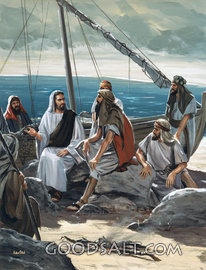
So a seminary is not just for professionals, not just for those who are seeking a credential for ordination. Its purpose is broader than that: it is a place for people to study God’s Word together. And, since Jesus is the Word made flesh (John 1:14), to study in seminary is to study at Jesus’ feet.

What a time it must have been, when Jesus shared His words and heart with His disciples (students) for the three years of His earthly ministry! They saw His compassionate healings, marveled at His miraculous power, listened to His word, saw His glory (Matt. 17:1- 13), and were humbled by His servant-leadership (Matt. 20:25-28, John 13:1-20). But these great events left them perplexed on the fundamental questions: who was Jesus? Why did He come?

Jesus had often told them that He was to die, as a sacrifice for sins (Matt. 20:28, John 12:33, 18:32), but they did not understand (Mark 9:31-32, Luke 8:33-34). After He was raised, however, there was a mysterious meeting between Jesus and two disciples on the road to Emmaus. The disciples had treated reports of His Resurrection as wild rumors. But “beginning with Moses and all the Prophets, [Jesus] interpreted to them in all the Scriptures the things concerning Himself ” (Luke 24:27). What a time that must have been! Now they saw that Jesus’ resurrection was not a wild rumor, but a divine necessity (verse 26). It not only did happen; it had to happen, so that God could save us from our sins. Afterward, the two disciples said to each other, “Did not our hearts burn within us while He talked to us on the road, while He opened to us the Scriptures?” (verse 32; my quotations are from the ESV).

Luke, who tells us about this mysterious meeting, tells us also that Jesus appeared to His disciples “during forty days… speaking about the kingdom of God” (Acts 1:3). During this time, Jesus evidently taught the whole body of apostles, as He had taught the two on the road to Emmaus, how the Old Testament Scriptures pointed to Him. Afterwards, when the Holy Spirit came upon the church in Acts 2, Peter, and later other disciples, began preaching and teaching the Old Testament in a very different way from the Jewish teachers: everything pointed to Christ! Certainly the apostles had learned from Jesus, during the forty days, how to read and teach the Bible.

Seminary is something like those three years and those forty days. In many ways, of course, it is different. Jesus didn’t need to teach His disciples how to read Hebrew and Greek. He didn’t need to teach them post-canonical church history, because at the time there wasn’t any. Nor, most likely, did He give reading and writing assignments. He knew their hearts, so He knew how much they had learned. And although He didn’t give letter grades, He regularly evaluated their progress, often negatively. To the two on the road to Emmaus, He said, “O foolish ones, and slow of heart to believe all that the prophets have spoken!” (Luke 24:25).

Nor, of course, did Jesus charge tuition in any formal way. But the disciples and Jesus shared expenses and the generosity of supporters in a common fund — managed, unfortunately, by Judas Iscariot, (John 12:6, 13:29). Seminaries also must have money to survive, and they too live from the contributions of students and the generosity of supporters, mostly the latter.

Of course the main difference between Jesus’ teaching and a modern seminary is that most seminaries require college degrees for admission. Seminary, therefore, is not for everybody. It is for those who are intellectually prepared to learn from Jesus at a scholarly level. Does Jesus, then, restrict his teaching to academic types? Certainly not. Jesus today teaches people of all ages, nationalities, educational backgrounds, and socio-economic levels. He teaches through sermons, Sunday schools, missionaries, evangelists, TV and radio ministries, the internet, personal Bible study, and through godly families teaching their children. But He also teaches His church through the discipline of academic courses, and seminary is one place to get teaching at that level.

This is not to say that everything in seminary is abstract and theoretical. Seminaries also teach preaching, counseling, evangelism and church planting, subjects we call “practical theology.” And seminaries usually require students to do “field work,” getting experience in actual ministry, with evaluation. Further, seminaries try their best to maintain a Christian community, where people love and support one another through prayer, communal worship, counseling, and modeling Christ. Seminary, of course, is not the church. Students, like all Christians, should turn to the church as their main place of worship and nurture. But a good seminary will understand that Christians should nurture one another wherever they are, so that even an academic institution, if it is Christian, should be a community of love. So even with tuition and exams and papers, the essence of seminary will be sitting at the feet of Jesus. We learn from Him as He teaches us through His brothers and sisters.

So I ask you to consider the privilege of sitting at Jesus’ feet. Once when He lived on earth, Jesus visited His friends, sisters Mary and Martha, in the town of Bethany. Martha was preoccupied with serving her guests, but Mary “sat at the Lord’s feet and listened to His teaching” (Luke 10:39). Martha was upset that Mary was not helping. That seemed to be a legitimate complaint. But Jesus surprises us by commending Mary. She had “chosen the good portion, which will not be taken away from her” (verse 42). Now normally sisters should help one another out in household tasks. But this was a special occasion. If the Lord were to come to your house, would you want to miss anything? Martha was doing a good thing by working to serve Jesus and her other guests. But she didn’t quite understand what she was missing: the eternal Son of God, teaching in her own living room!

Don’t miss the opportunity to sit at the feet of Jesus. Many other things are important, such as housework, employment, and ministry itself. But we all need to take time away from it all to meditate on the Word.

Facing the temptations of Satan, Jesus said, quoting Deuteronomy 8:3, “Man shall not live by bread alone, but by every word that comes from the mouth of God” (Matt. 4:4). We need to understand that the Word of God is every bit as important to us as food and drink. It is God Himself speaking to us, the words that He has breathed out (2 Tim. 3:16). Without it, we die. But blessed are those who delight in the law of the Lord and meditate on it day and night (Psalm 1:2). They are like trees planted by the streams, who bear fruit and prosper in all they do (verse 3).

So the only question remaining is, how will you sit at the feet of Jesus? Personal Bible study is one way, and God honors that. Listening closely to your pastor’s sermons is also a good thing. Attending Sunday school classes and going to Bible conferences will take you still further. But if you have the academic background for more advanced study, and you have opportunity, shouldn’t you take advantage of that also? Just think what it would mean to be able to read God’s Word in its original languages. Imagine spending several years, getting a systematic survey of all the teachings of the Bible and learning how to communicate them persuasively to this dying world. And imagine getting resources for continuing education —tools that will enable you to continue studying God’s Word in depth for the rest of your life.

Think about the relationships that can develop at seminary: with learned and godly professors who will become friends and mentors or life; with other students, with whom you’ll compare notes. Friends you make at seminary tend to stick closer to you than high school and college buddies. You often meet your seminary classmates in church meetings, common ministries, or just traveling around. (Evangelical circles, for better or worse, are a small world.)

In the process, you’ll also learn a lot about yourself. You’ll probably be surprised to find out how much you don’t know about God’s Word, and that will teach you humility. You’ll learn more about your spiritual strengths and weaknesses, where you are gifted and where you are not. Thus you’ll be better able to pinpoint the place in the kingdom where God wants you to be.

Let me now deal with seven problems people often raise about going to seminary:

(1) Can I afford it?

As I said earlier, seminary is not free. Jesus and His disciples also needed funds to support themselves. But God supplied their needs, and in my experience God has supplied the needs of most people who want in a serious way to attend seminary. Sometimes He does not, for His own various reasons. And for some it is certainly a financial stretch. But that shouldn’t discourage those who really want to study God’s Word at seminary level. The tuition can look expensive, but a careful look at financial aid, loan programs, and work-study opportunities can considerably reduce the sticker shock.

(2) Could seminary be a spiritual danger to me?

This objection is not as strange as it may sound at first hearing. For some, seminary can be a trial of faith. One can become so immersed in academic assignments, papers, technical terminology, Hebrew paradigms and such that he comes to feel far from God. I’ve addressed some of these concerns in another pamphlet, Studying Theology as a Servant of Jesus. Seminary does require a devotional discipline to match our academic discipline, but that challenge, on the whole, is a good thing. And what most students find is that once we face that challenge, the academic and the devotional merge in a wonderful way. The dry periods tend to be at the beginning, when you are struggling to master the basics. But when the theology of the Bible starts to come together in your mind, when you start to see the overall shape of it, your academic study will feed your soul. In the end, sitting at the feet of Jesus cannot be anything other than uplifting.

Further, as I mentioned earlier, a good seminary will seek to help students who are going through dry periods, by being a Christian community.

(3) Will seminary reduce my effectiveness?

Sometimes, it is true, people go to seminary and they come back speaking jargon, making fine distinctions that nobody can under- stand, looking down their noses at folks who have less education than they (but who may be more mature in the Lord) generally making nuisances of themselves. Such people are ineffective, even detrimental to the work of the Lord. It is a shame that people like this are found at seminary and at graduation get unleashed to afflict the church. For what it’s worth, let me say that at our seminary we continually warn our students against this sort of thing, but it does happen. I would say, however, that these theological nuisances would probably be nuisances even if they hadn’t attended seminary. If seminary does not sufficiently deter their pride, at least it probably has the effect of knocking them down a notch or two, showing them a few things that they don’t know. And it may also plant some seeds of biblical self-image that may provoke later reflection. But seminary doesn’t do away with original sin. Only the grace of God in Christ can do that. So your planning for seminary should include a lot of prayer — not only for finances and academic success, but also for your relation to God, that the power of the Word that you study will get deep into your heart.

(4) Is it right to leave my present ministry in order to go to seminary?

Every Christian has his own ministry, right where he is — perhaps as a Sunday school teacher, an elder or deacon, a church staff member, a parachurch worker, or simply one who seeks to witness for Christ on the job. Sometimes you can continue such ministries even while you are at seminary. There may be a seminary in your local area where you can schedule classes that don’t interfere with your current labors. There are also some seminaries that have distance education programs in which you can stay home and take classes by tape or webcast. But often students have to pick up stakes and move to a new place in order to attend seminary.

(5) Is it worth it?

I can’t address every situation of this kind. But I think that in many cases the answer is yes. What you learn at seminary can make you a far more effective Sunday school teacher, campus evangelist, or on-the-job witness than you were before. It can make you a better support to your local pastor. And it can qualify you for an even larger sphere of ministry, and that will be good for the kingdom of God.

Your present ministry may be vital in the lives of many people, as you lead them through the spiritual battle. But a spiritual warrior, like a literal soldier, must be well trained and equipped. You should ask whether you are now able to use the sword of the Spirit, the Word of God, well enough to deal with the enemy. Some time at seminary may make you far better able to continue your ministry at a later point in time. And as for now, remember that if God is calling you to seminary, He is sovereignly able to care for those you have been ministering to.

(6) But I have opportunities for training with my church or ministry organization. Isn’t that sufficient?

For some people it may be. And I would hope that someday, somehow, seminary-level training might be available through every local church and ministry organization. But, as of now, most of them just aren’t at that point. In most cases, seminary training takes you to a whole new level of understanding, beyond local ministry training.

You might think that you can get this level of understanding just by reading books by seminary professors. But if you go to seminary, you’ll be studying with the people who write the books. You can ask them questions, which will help you not only to get answers, but also (and more important) to learn how they think. You’ll get frameworks, paradigms and ways of bringing Bible truth together that just aren’t available elsewhere. Consider these examples:

a. Do you understand the covenant? Jesus came to put the “new covenant” into effect. But what is the new covenant, and how is it different from the old? When we present the Gospel, we teach people to believe in Christ as their personal “Lord and Savior.” But both Lord and Savior are covenantal terms. Lord is the name of God that designates Him as the head of the covenant, and Savior tells us what He does in that office. I’ve written an 850- page book, The Doctrine of God, to show that covenant Lordship is the key to what the Bible says about God and about Jesus. Do you know what covenant Lordship means? If not, are you sure you can present the Gospel as the apostles did? You can learn about this in seminary — at least in the seminary where I teach! I don’t know where else you can study this doctrine in depth.

b. When the apostles were filled with the Spirit to evangelize the world, they presented Jesus as the fulfillment of the Old Testament Scriptures. As Jesus taught the two disciples in Luke 24, the apostles proclaimed from the Old Testament that the death and Resurrection of Christ had to happen. It was not just an accident. So they preached that anyone who really believes the Old Testament must believe in Jesus. Can you do that? That’s a basic part of preaching the Gospel, according to Scripture, but almost nobody knows how to do that today. After His Resurrection, Jesus taught His disciples how to do it (Luke 24:27). You can learn how to do that at seminary, and maybe nowhere else.

c. Do you understand how Jesus fulfills the Old Testament offices of prophet, priest, and king, and what difference this makes to church government and to your personal Christian life? Do you understand why the church is so important to God, as His people, the body of Christ, the bride of Christ, and not just a collection of individuals? Learning about this can revolutionize your mission strategy and the priorities of your own life. But where can you study this in depth other than in seminary?

d. What about just reading and teaching the Bible? Can you imagine how much richer your teaching could be if you could read Scripture in the original languages and learn how to interpret the Greek and Hebrew texts? You could learn the basic grammar from going through a book. But you need also to learn idioms and literary styles. You need to learn about the literary genres in the Bible. You need to learn the difference between synonymous and antithetical parallelism, and where the emphasis falls in a chiastic structure (note: it doesn’t fall at the beginning or the end). Well, I don’t know where you can learn this sort of thing except in seminary.

e. How much do you know about the history of the church? It’s true that Scripture, not church history, is our final authority. But it’s also true that “those who don’t know history are doomed to repeat it,” and “we should not try to re-invent the wheel.” Many of the heresies appearing today are just repetitions of heresies that have appeared before in church history. Many of our questions about worship, nurture, and evangelism have appeared before as well. It’s good to know how the church dealt with these issues in the past. Sometimes they’ve been wrong, sometimes right. But we need to be able to avoid their mistakes and to build on their achievements. Where can you get that kind of knowledge other than in seminary?

(7) But isn’t it better to prepare for ministry while doing ministry?

Yes it is. That is why every seminarian should be involved in ministry while he is at seminary. That is why field work is a requirement in most seminary curricula. There should be a regular dialogue between what you learn in class and what you do in ministry. Your studies should help you to minister, as God drives the Word into your heart and increases your effectiveness. And your ministry should help you to ask good questions in your classes and to tailor your program to be relevant to your ministry. You should not think of seminary as a time-out from ministry.

But of course if you go to seminary you will probably spend less time than you do now in actual ministry. You will have to make time for your classes and assignments. I think that for most of us this temporary change in priorities is a good thing.

Remember the biblical metaphor of warfare. A soldier should always be ready to fight for his country. But good soldiers need periods of training, even classroom instruction, to be at their best, ready for the more difficult challenges. The disciples experienced that training at Jesus’ feet. They ministered with Him and served Him. But like Mary of Bethany, they sometimes just listened, as when Jesus took them away from the crowds for time alone with Him (Matt. 8:18, 13:36, 14:22-23). And for forty days they listened to Jesus’ teaching, waiting for the fullness of the Holy Spirit, before they went on to the great ministry to which God had called them. Remember also that the Apostle Paul spent three years in Arabia and But is God calling me to seminary?

God’s calling can sometimes be spectacular, as when Moses met God in the burning bush and when Paul met the Lord Jesus on the road to Damascus. Isaiah’s calling in Chapter 6 of his prophecy is another case in point. But often God’s calling is spectacularly unspectacular. In 1 Cor. 7, Paul tells the church, “Only let each person lead the life that the Lord has assigned to him, and to which God has called him” (verse 17). Some, when God called them to believe in Christ, were single, others married, some Jews, some Gentiles, some slave, some free. Those were their callings. I doubt that many of them had dramatic encounters with God, telling them what to do with their lives. Their calling was simply to serve God in the place where they were.

So at one level, your calling is to serve Christ wherever you find yourself. That doesn’t mean you can never do anything different from what you’re doing now, though Paul tells the Corinthians generally to avoid major changes in their lives (such as marriage), due to “the present distress” in Corinth (verse 26), (perhaps persecution or famine). Your calling may well change, for any number of reasons. But don’t wait for a dream, a vision, or a sign from heaven. Look prayerfully at your gifts and opportunities, and see how you can best serve the Lord. That will be His calling for you. And that calling may well include seminary.

I hope you will consider what I’ve said prayerfully and that you will search the Scriptures yourself to determine whether what I’ve said is true (see Acts 17:11). Not all of you should conclude that seminary is the right place for you, but I believe many of you should. I think it would be a great benefit to the church, and to the lost, if many more Christians attended good seminaries. That would do much to reduce the appalling ignorance and immaturity in many Christian circles, which brings such discredit on the name of Christ.

Most of all, I want you to have the burning heart that the two disciples had when the risen Christ explained the Scriptures to them (Luke 24:32). I want you to have, at the deepest possible level, the sense that Jesus Himself is speaking to you in His Word, revealing His secrets, renewing your mind, showing you how to love as He loved. Seminary is not the only place where you can experience that burning heart. But at seminary you can sit at Jesus’ feet for several years, immersing yourself in His Word, and thereby getting to know Him personally. If God opens this door to you, you will have a tremendous privilege, one open to few other Christians. I have never known anyone who was not profoundly changed by his seminary experience, most of them very much for the better. I pray that God will help you in making this decision and that He will open the door to bring you to seminary, to sit at Jesus’ feet.

About John Frame: (A.B., Princeton University; B.D., Westminster Theological Seminary; A.M. and M.Phil., Yale University; D.D., Belhaven College) is Professor of Systematic Theology and Apologetics at Reformed Theological Seminary in Orlando, Florida. He is author of The Doctrine of God; Doctrine of the Knowledge of God; The Christian Life; Salvation Belongs to the Lord; Contemporary Worship Music; Worship in Spirit & Truth; Cornelius VanTil: Analysis of His Thought; The Doctrine of the Knowledge of God; Apologetics to the Glory of God and Medical Ethics: Principles, Persons and Problems.

How To Build a Church “Of” Rather Than Just “With” Small Groups

BUILDING A CHURCH OF SMALL GROUPS – Willow Creek Community Church: A Case Study

(These are notes I [DPC]  took from the excellent book pictured above – Building A Church of Small Groups co-authored by Bill Donahue & Russ Robinson. Grand Rapids: Zondervan, 2005)

A PLACE WHERE NOBODY STANDS ALONE – By Bill Donahue & Russ Robinson

Willow Creek CC story –  “The people that we had worked with so hard to win to Christ were having an increasingly difficult time making the church a part of their life and making themselves a part of the church’s life. In many cases people couldn’t connect meaningfully to the church, but only about 10-15% of our congregation could get connected into one of those smaller settings (p. 11).”

Community – “It means first, that a Christian needs others because of Jesus Christ. It means second, that a Christian comes to others only through Jesus Christ. It means, third, that in Jesus Christ we have been chosen from eternity, accepted in time, and united for eternity.” ([Dietrich Bonhoeffer from Life Together, p.21] quoted on pp. 11-12)

New Vision for WCCC: “We began moving from a church where small groups were optional to a church where small groups defined the core organizational strategy (p. 12).”

Elder’s Comment: “We loved the movement of the HS, the changed lives, the catalytic energy, the sense of awe as we saw God at work; but we hated the disorderly organizational dynamics, burned-out staff and lay leadership, displaced people, and undisciplined masses (p. 13).”

The End Result:  “WCCC since 1992 (as of 2001) has gone from a church with small groups—that is, small groups being one of our programs—to being a church of small groups. Instead of 10-15% of the congregation connected into a small group, we have become a place where over 18,000 individuals are connected in 2,700 small groups (p. 14).”

 Part 1: Making the Case for Community

C1 – In the Beginning God: The Theological Evidence

  • “The Theological case for community depends on three basic ideas: First, God exists in community; He has forever existed as and will into eternity remain three persons in One. Second, God was incarnate in Jesus, whose transformational relationships offer a model you cannot ignore. Third, Jesus dreams of oneness for all Christians, which is why you must move your church toward His vision (P. 21).”
  • God is a plurality of oneness – “Then God said, ‘Let us make man in our image, in our likeness…(Gen. 1:26).” And … “The LORD our God, the LORD is one (Deut. 6:4).”
  • The Small Group is a generic form of human community that is transcultural, trans-generational and even transcendent. The call to human gathering in groups is a God-created (ontological) and God-directed (theological) ministry, birthed out of the very nature and purpose of God’s being. God as Being exists in community. The natural and simple demonstration of God’s communal image for humanity is the gathering of the small group (p. 22 quoting Garth Icenogle, from Biblical Foundations for Small Group Ministry, p. 13)
  • True community is both horizontal and vertical – like the bars on the cross…they meet in the center, when we experience God and all of His fullness and His people in all their fullness.
  • The Importance of Jesus’ prayer in John 17:20-21, “I do not ask for these only, but also for those who will believe in me through their word, that they all may be one, just as you, Father, are in me, and I in You, that they also may be in us, so that the world may believe that you have sent me.”
  • “This concern for the survival of the church down through the ages provides the explanation for the anguished tones of Jesus’ prayer. He knew that if the church should fail to demonstrate community to the world. It would fail to accomplish its mission, because the world would have reason to disbelieve the gospel (vv. 21, 23). According to that prayer, the most convincing proof of the truth of the gospel is the perceptible oneness of his followers (Quoting from Gilbert Bilezekian’s, Community 101, p. 37 [p. 32])

C2 – Created for Community: The Sociological Evidence

1)   SG’s provide strength for life’s storms – Many of the heroes of the faith (e.g. David @ Jonathan) survived adversity through faith and community.

  • Ecclesiastes 4:9-10, “Two are better than one…if one falls down, his friend can pick him up.” ; John 16:33, “In this world you will have trouble;” Romans 12:15, “Weep with those who weep;” Galatians 6:2, “Carry each other’s burdens, and in this way you will fulfill the law of Christ;” Leviticus 19:18, “Love your neighbor as yourself.”

2)    SG’s provide wisdom when we face important decisions.

  • Proverbs 15:22, “Plans fail for lack of counsel, but with many advisors they succeed.”

3)   SG’s provide accountability and offer us acceptance while we change.

  • Proverbs 27:17, “Iron sharpens iron, and one man sharpens another.”

4)   SG’s provides acceptance that help heal our wounds.

  • Interesting point: “When you talk to people about their families, you’ll discover a startling truth few want to admit. Many people experience more pain than love and acceptance in their families (p. 42).”
  • John 15:12-13, “My command is this: Love each other as I have loved you. Greater love has no one than this, that he lay down his life for his friends.

C3 – What the Church Needs to Grow: The Organizational Evidence

  • Two Principles: 1) Your church will best meet each member’s needs by honoring each leaders “span of care” (i.e. this principle insures that everyone is cared for, but no one cares for too many people); 2) the church cannot function as God intends unless people see themselves as members of one body.
  • “Reorganizing your congregation into a church of small groups is hard work. You need to present the organizational case to every segment of your church, including your ministries to children and adults, couples and singles, men and women, jocks and computer geeks, the mature and the emotionally unstable, the leaders and the newly converted. But span of care  (Exodus 18) can help your church achieve reorganization.
  • “Coach” is the term that WCCC uses for their leaders of small groups…
  • “We at WC had no way to achieve this level of care until we put span of care to work by organizing everyone into small groups. We designated leaders to care for groups of children, women, men, couples, and families. Coaches care for leaders, and coaches receive care from staff leaders (p.49).”
  •  “As everyone works together, God transforms individual lives, creating the kind of oneness experienced in the Trinity, the kind of community Christ dreams for us (p. 49).” Two key passages: 1 Corinthians 12:12-13 & Ephesians 4:3-7, 11-16
  • “I can tell you this: sizzling services, extra ministry programs, or new curricula will not transform yours into a church where people really do build each other up in love, ‘as each part does its work.’ The churches that come closest to this ideal share a common vision and practice. Their leaders—senior pastor, staff, elders, key volunteers—our bold enough to imagine the seemingly impossible. They believe the church can experience oneness by transforming people through community. And these leaders have recognized that small groups are the key, the common practice, for realizing the vision. They have taken action (p. 51).”

Part 2: Pursuing Community in Small Groups

C4 – Small Groups Are Built on Authentic Relationships

  • “Small groups are microcosms of God’s creation community. Wherever two or more persons come together, they become an actual reflection of the image and likeness of God. Small groups are the basic arena for either imaging the redeeming presence of God or projecting destructive human systems. Every small or large gathering of humanity exists in this tension of manifesting an inhuman structure or embodying divinely redemptive relationships.” – Gareth Icenogle, Biblical Foundations of SG Ministry
  • Key elements of authenticity: Growing in community; Self-disclosure; Care-giving; humility; truth-telling; & affirmation

C5 – Small Groups Are Places Where Truth Meets Life

  • Truth-Focused Groups = Know the right answers to the right questions; Focus on information—“What does it mean? Reward members for being right; Community is built on the principle of agreement; the goal is a well-informed student.
  • Life-Focused Groups = Know the right answers to personal problems; focus on introspection—“How do I feel?” Reward members for being real; Community is built on the principle of acceptance; The goal is a well-understood self
  • Transformation-Focused Groups = Know the truth about God and me; Focus on transformation—How am I becoming like Christ? Reward members for being on honest with God and others; Community is built on the principle of authenticity; The goal is a well-ordered heart.

C6 – Small Groups Experience Healthy Conflict

  • Setting Boundaries for Managing Group Conflict:

1)   If it happens in the Group, Process it in the group.

2)   The Leader is responsible for Process, Not Outcomes

3)   Validate the conflict

4)   The conflict does not need to be resolved at this meeting

5)   Conflict Must be processed with trust and confidentiality

  • Confronting an individual:

1)   Start as soon as possible

2)   Meet face to face

3)   Affirm the relationship

4)   Make observations, not accusations

5)   Get the facts

6)   Promote resolution

  • The “A” Guidelines for Confession:

1)   Address everyone involved (Ps. 32:5; Luke 19:8; James 5:16)

2)   Avoid using “if,” “but,” and “maybe.” What excuses or blaming do you need to avoid?

3)   Admit specifically what was done or said (Ezra 9:5-15)

4)   Apologize: How might others feel as a result of your sin?

5)   Accept the consequences (Luke 15:9; 19:8)

6)   After your behavior. What changes do you intend to make, with God’s help, in the way you think, speak, and behave in the future? (Matt. 3:8; Acts 26:20)

7)   Ask for forgiveness and allow time. What might make the person whom you have wronged reluctant to forgive you?

C7 – Small Groups Provide Well-Balanced Shepherding

  • Bill Hybels, “Of all the things Jesus could have said concerning Peter’s ministry (referring to John 21:15-19), he said, ‘Tend my sheep.’ He told Peter to get some people and train them up in the school of life, to nurture them, and to guide them. Jesus made time in his life to tend a little flock. And if he were here today, above all else, he would make the time to tend a little flock. So, if you are a small group leader, or a leader of leaders, and you are making time to tend a little flock, you are doing Jesus’ work. Any time you wonder whether you are having any impact on the kingdom, remember that tending a flock reflects the very heart of God and his plan of redemption for the world (p. 109).”

Part 3: Developing Leaders of Small Groups

C8 – Enlisting Small Group Leaders

  • Look at who they ARE: Affections; Reputation; & Expectations
  • Affections: People suited to leadership love God, people, truth, and the church. The greatest gifts a leader can give to a small group are a relationship with Christ and the passion to be more like Him.
  • Reputation: A person’s reputation offers clues to that person’s preparation for leadership. Make it a point to meet people close to the potential leader. Inquire what they think of the person’s character, trustworthiness, and way of relating to others. Ask people to assess a candidate’s leadership potential. Do they believe the person could grow toward leadership? Why or why not? Have they served others or the church in ways that produce effective fruits of ministry?
  • Expectations: Make sure candidates understand and support expectations for service. As you discuss what senior staff, elders, or other key lay leaders expect form a small group leader, look especially for people who commit themselves to participating in membership, respect spiritual authority, and pursue life-long learning.
  • Where do you look for leaders? This is a trick question. Rather than look for leaders, we encourage churches to look for people. There’s always a greater supply of people than of obvious leaders. Some of these people will eventually emerge as leaders.

C9 – Training Small Group Leaders

During Meetings:           Between Meetings:

Gather – invite current or potential members into community Build intimacy, transparency, and authentic relationships in the group Build friends with existing group members and seek to invite new ones
Develop – Take each person the next step in spiritual growth or leadership Create a place where truth meets life Shepherd members and develop apprentice leaders
Serve – Complete ministry tasks together Plan and prepare for strategic serving opportunities Serve personally outside the group or serve together as a group

C10 – Coaching and Supporting Leaders

The Role of the Coach


Huddle

Visiting the Group

One-on-One

Leadership Development:

  • Vision casting
  • Skills
  • Apprentices

Lead

Affirm

Care

Pastoral Care:

  • Spiritual
  • Relational
  • Personal

and

and

and

Ministry Support & Expansion:

  • Prayer
  • Affirmation
  • Resources

Model

Observe

Develop

C11 – Make Decisions

5 Questions that Must Be Asked in order to Become a Church of Small Groups:

1)   Will we become a church of small groups?

2)   Who will be the point leader?

3)   What will be our long-term structure?

4)   How will we develop enough leaders?

5)   From where are we starting?

Regardless of your design, you will find that you need a number of leaders equal to 25-30% of the number of people connected in groups. That high percentage includes those who are apprentices or rising apprentices, people who are intentionally being developed as emerging leaders. Thus, a group of 10 will have a leader, an apprentice, and maybe one or two others the leader hopes to develop as future leaders.

  • A church built on SG’s will need a lot of volunteers.
  • You need to invest in many volunteer leaders.
  • You will give away ministry to an increasing corps of lay ministers.
  • There is good news: the ownership of the congregation’s life will expand.

What Are Our Core Values?

  • Building relationships: How much do parishioners naturally care for each other?
  • Loving lost people: Are people inclined toward outsiders?
  • Truth telling: Does your congregation acknowledge and deal with conflict?
  • Mutual ministry: What is the current lay ministry quotient?
  • Accountability: Is there enough vulnerability and submission to grow?
  • Commitment: Do people own the church’s mission and act like it? 

Five Major Types of Small Groups:

Disciple-Making Groups Community Groups Service Groups Seeker Groups Support Groups
Members Believers in a structured discipleship process Believers & non-believers Believers & non-believers Predominantly nonbelievers Believers & non-believers
Curriculum A set curriculum Leaders work with Coaches to choose curriculum Leaders work with Coaches to choose curriculum Determined by questions from the group Determined by the ministry leaders
Open Chair Used at breaks in curriculum Used regularly to add members Used regularly to add members Always has an open chair Used primarily to form new groups
Emphasis Develop spiritual disciplines, memorize Scripture, disciple others Build community, invite new members Complete the task, invite new members Lead people to Christ, disciple new converts To support members as they work through personal difficulties
Multiplication Apprentice leads new disciple-making group Groups grow and birth after 24 to 36 months Groups grow and birth at variable rates depending on the task Apprentice leads new seeker group or new believers group Apprentices are trained to form new groups
Duration 18 to 24 months Continue to grow and birth Continue to grow and birth Average length is about one year Varies depending on personal needs and the purpose of the group
  • “In SG ministry, your strategy must account for span of care. Open groups will aid your journey. Varied entry points will give everyone ways to connect in an aligned ministry. A self-perpetuating leadership corps will grow into shepherding the whole flock effectively, especially as you intentionally cultivate spiritual growth and contextualize your growth model (p. 193).” 

C12 – Choose a Strategy

Stephen Bartman, Hyperculture, “When we come home at the end of the day, it may not be just work we bring with us, but also our high-speed frustrations and electronic expectations. In short, we may come to expect the imperfect human beings in our lives to operate as efficiently as our equipment, quickly losing patience with those we might otherwise love because they do not answer as swiftly, or respond as rapidly, or obey as readily as the machines we know.

Four Lessons for Ministry Alignment (p. 186):

First, communication is critical. “We failed to communicate adequately with leaders of the “church with” version of small groups. We didn’t explain often enough or deeply enough about how they would fit within the new infrastructure. Instead of building on our strong foundation, we alienated a key audience—then we had to win them back.”

Second, stay flexible. “Whatever strategy you choose needs a ‘loose-tight balance.’ You need a uniform set of standards and definite understanding of what constitutes group life and what does not. Yet, the ministry-by-ministry expression of groups must permit increased variety in meeting every person’s need and readiness for community.”

Third, balance patience with restlessness. “It took us seven years to organize every part of the church on a full small groups foundation. Sometimes we made partial gains, backed off until change was accepted, then returned to chip away again. As one minister observed: ‘We are in year twelve of a twenty-year vision, and we are going to have to extend it beyond that.’ Alignment takes time.”

Fourth, Confrontation is essential. Speak the truth in love.

C13 – Phasing in the Small Group Ministry 

The Model Phase: The best way to embed community values into a small group ministry is to model them yourself. If your church is just beginning small groups, start with a few model groups, led (ideally) by the senior pastor and/or other key church leaders.

Turbo Groups: ratchet up the model group concept. Turbo groups are SG’s filled with apprentice leaders. In other words, everyone in the group is expected to someday lead his or her own group. Thus a turbo group functions as both a real small group and a training group. 

The following will help your turbo groups succeed:

  • Turbo groups must build authentic community. This is not simply a training group. These people must understand and practice community or they will never reproduce it in their own groups.
  • Turbo groups must experience all components of a regular group. They need to practice the open chair, identify apprentice leaders, create places where truth meets life, build authentic relationships, and appropriately handle conflict—so that the same things will take place in the next set of groups.
  • Turbo groups must seize teachable moments. In these groups, leadership lessons are often caught, not taught. It is appropriate in the context of a turbo group to pause and say, “Let’s talk about what just happened—and why—in the last ten minutes.” Or, leaders might ask, “Why did I do this? What did you see me doing that was good or needs improving?”
  • Turbo groups take time. Turbo groups probably need at least 9-12 months to appropriately train new leaders. It can happen more quickly if the group meets weekly or if leaders have prior small group experience. However, brand new leaders may need as long as eighteen to twenty-four months of preparation.

The Pilot Phase: After firmly establishing your core values and clarifying your small group development model, you are ready for the pilot group phase. This is a learning phase for a limited number of groups. New to the nature and meaning of small group community, many people will be wary of long-term commitments. During this phase, you start a limited number of small groups that last just 9-12 months. The time limit is a safety net; it gives everyone a chance to pause, evaluate, and redesign.

The Start-Up Group Phase: Your leaders have modeled appropriate values during the model/turbo group phase. You’ve run new groups through a pilot phase to discover difficulties. Now you can give the “green light” to starting small groups throughout the church. The start-up group phase is the final phase before going public. You are now giving permission for interested people to develop groups and explore leadership.

  • During the start-up phase, you will need a training strategy so emerging groups and leaders can learn more skills. You will need regular leadership gatherings and an annual retreat. But this is still not the time to go public. It’s too soon for weekly pulpit exhortations about joining small groups, because your structure isn’t ready for the potential response.

Going Public:

  • Don’t go public until you have enough leaders and infrastructure in place to handle the response.
  • For the traditional groups transition from big groups to more communal and relationally oriented groups.

Dr. Erwin W. Lutzer on the Great Need For Revival in America Today

“America’s Spiritual Crisis”

Despite its foundational Christian heritage, America is rapidly degenerating into a godless society. The church in America, although highly visible and active, appears powerless to redirect the rushing secular currents. Mired in a moral and spiritual crisis, America’s only hope is a national revival, like God has graciously bestowed in the past.

The Removal of God. From the beginning, Christian values ingrained America’s political and social fabric. Its democratic form of government was founded on faith in God. To this day United States currency bears the inscription, “In God We Trust.” America flourished while Christianity permeated all aspects of life, including the laws, education, and culture.

The powers in America today, however, have chosen a path of rejecting God and His ways. Federal courts have interpreted our constitution as requiring that the Bible, prayer and religious discussion be removed from classrooms, community buildings and places of public gatherings. Government officials and educators across the country are systematically eliminating any vestiges of God from society. Militant secularists will not be satisfied until God is expunged from every facet of American life.

American laws are being reinterpreted and rewritten to sanction what is abominable to a holy God. In 1973 the Supreme Court legalized abortion for any reason, and Congress subsequently passed a law providing government funds for such barbarous acts. Old laws making homosexual practices criminal are being repealed, and new legislation is being enacted requiring society to support such lifestyles. While religious discussion is gagged, pornography is permitted to saturate our culture.

Our society is fast becoming openly hostile to Christian values. The media trivializes and ridicules Christianity in the name of humanistic and pluralistic concerns. American culture is dominated by television and movies, whose profanity and lewdness tramp God’s honor into the mud, inculcating non -Christian values from infancy. Public schools teach our children how to practice various forms of immorality. One school curriculum in America teaches acceptance of homosexuality in the first grade and mutual masturbation in junior high.

America is reaping the dire consequences of rejecting God. Our society is morally bankrupt, and the problems seem resistant to government cures. William J. Bennet, in his Index of Leading Cultural Indicators, provides the following statistics for the past 30 years. Despite increased funding and stricter laws, violent crime has increased more than 500 percent. While sex education programs have proliferated, illegitimate births have increased over 400 percent, significantly among teenagers. The divorce rate has quadrupled, and single parent homes have become the majority. Our young people today exhibit a hopelessness, with a more than 200 percent increase in the teenage suicide rate. And America appears helpless before its great problems.

The Church’s Ineffectiveness. The church in America, despite its many activities and apparent successfulness, has had no measurable affect in reversing this downward spiral. We must candidly admit that no country has had more Christian organizations, more radio stations, more books, more seminars, and more churches with proportionately less impact on society. We are confounded with the pollsters who tell us that religion is up but morality is down.

Sadly, the influence has been in the wrong direction, as we see evidence that our culture has begun to permeate our churches. The church is seduced by the social agenda of wealth and pleasure, and has condoned sinful compromises. There is moral decay within the church, with highly publicized scandals involving ministers, and divorce statistics which are not much better than those outside the church. Think of all that we and our churches would have to repent of if a spirit of holiness began to captivate us. How can America be influenced by an inconsistent and hypocritical church?

If the strength of the church should be determined by its impact on its surrounding culture, we desperately need an injection of spiritual life. The present powerlessness of the church may be a sign that God has withdrawn His blessing that we might seek Him.

A National Revival Needed. There is reason to believe that only a national revival can pull us out of the ditch into which we have slid. I am convinced ‘ as all of us must be ‘ that every human resource is now inadequate and only the direct intervention of God can reverse our country’s spiritual decay. If America will really be given another chance, at least some kingdoms of darkness will have to fall like dominoes. That can only happen if God chooses to show us the mercy we most assuredly do not deserve.

America has experienced three great periods of revival in the previous two centuries, during which all of society was dramatically affected. There was a widespread restoration of the people of God, that resulted in tens of thousands of conversions greatly affecting the culture of the day. America returned to its Christian roots. Taverns were closed, families were reconciled, and young people became sober in their pursuit of God.

From our past, we learn the clear lesson that a genuine spiritual revival can do more to transform culture than all of our political/social activism. We need a renewal that can only be effected by widespread repentance before the Almighty whom we have so grievously offended. The forces of evil are so deeply entrenched that any cultural shifts will only be cosmetic unless they are accompanied by a spiritual awakening that affects large segments of our population.

When Ephesus experienced revival, the people brought their occult books and artifacts, and publicly burned them (Acts 19:18-19). What bonfires of pornography, rock music, artifacts, and books of occultism we would have if God’s presence was manifestly felt!

There is Hope. Revival is possible as long as God is God. Jonathan Edwards, a leader during the First Great Awakening in America, argued that God grants light when the darkness is the greatest, and it was in just such times that the glorious periods of revival occurred in America’s history. When there was disinterest in religion, gross immorality and rampant unbelief, God poured out His undeserved gracious blessing.

So let’s dream for a while: Catch the vision of crowded churches from coast to coast, shops closing during the noon hours for special prayer, and our legislators turning to God for wisdom in making decisions. Think of the nightly news telling the story of tens of thousands of believers making restitution for past wrongs, and reports of thousands of conversions to Christ.

Imagine a country where abortion would become rare, not just through legislation but because mothers valued their children and immorality was on the decline. Imagine a country in which homosexuals repented and sought God for help in overcoming their lifestyles rather than imposing their values on society. Imagine a country where the courts would reflect America’s Christian roots.

We must believe God for something more than our generation has seen. May our sights be raised and our faith increased, to fervently seek God for a national revival. What God has done in the past, He can do again!

About the Author: Since 1980, Erwin W. Lutzer has served as senior pastor of the world-famous Moody Church in Chicago, where he provides leadership to Chicago pastors. Dr. Lutzer earned his B.Th. from Winnipeg Bible College, a Th.M. from Dallas Theological Seminary, an M.A. in philosophy from Loyola University, an LL.D. from Simon Greenleaf School of Law, and a D.D. from Western Conservative Baptist Seminary.

Dr. Lutzer is a featured radio speaker on the Moody Broadcasting Network and the author of numerous books, including The Vanishing Power of Death, Cries from the Cross, the best-selling One Minute Before You Die and Hitler’s Cross, which received the Evangelical Christian Publishers Association (EPCA) Gold Medallion Book Award. He speaks both nationally and internationally at Bible conferences and tours and has led tours of the cities of the Protestant Reformation in Europe.

Dr. Lutzer and his wife, Rebecca, live in the Chicago area and are the parents of three grown children.The article above was adapted from: http://articles.ochristian.com/article3157.shtml. If you would like to read more on the theme of this article check out his short book Is God on America’s Side? The Surprising Answer and How It Affects Our Future.

Dr. Tim Keller on Learning Contentment

Editor’s Note: This is a cross-post from Tim Keller’s blog at Redeemer City to City.

It’s remarkable to read David, the Warrior-King of Israel, writing these words from Psalm 131.

My heart is not proud, O LORD, my eyes are not haughty; I do not concern myself with great matters or things too wonderful for me. But I have stilled and quieted my soul; like a weaned child with its mother, like a weaned child is my soul within me.

The metaphor for spiritual maturity here is a “weaned child.” On the one hand, we are a child at the mother’s breast, an image of complete helplessness. We are completely dependent on God. Without him we can do nothing. On the other hand, we are aweaned child, an image of contentment. Unweaned children cry in mother’s arms until they get something from mother — her milk. Only then are they quiet. But a weaned child is satisfied just with mother herself, with her very presence.

Here we see depicted, vividly and compactly, what Job was taught through all his trials. We must love God for himself alone, not just for what he gives us. This is the essence of what, for Jonathan Edwards, distinguished “true grace” from “the experience of devils,” who hold sound doctrine and tremble before God (James 2:19.) Real grace on the heart leads us to see the “beauty and comeliness of divine things, as they are in themselves” (from the sermon by the same name in volume 25 of the Yale edition of Edwards’ works). We become satisfied with God himself. Even his transcendent holiness is enjoyed as a beautiful and magnificent thing, which fills the heart to contemplate, though we certainly get nothing out of it!

If grace has really changed our hearts, we don’t ultimately care if life goes the way we want it, as long as we have him. The joys of acclaim, wealth, and power are nothing compared to the eternal acclaim, wealth, and power we have in him. A “weaned child” is not just someone who knows this in principle, but who has worked gospel truths into his or her soul as spiritually sensed realities. Internally, this quiets the soul into profound contentment and poise. Externally, it means humility, a willingness to learn from others and also to trust God. The believer realizes that the reason God’s actions are often opaque is not because we are wise and he is foolish, but because he is too “great” and “wonderful” for us.

A Christian should never have the attitude toward God, “what have you done for me lately?” Spurgeon said about Psalm 131 that it was “one of the shortest psalms to read, but one of the longest to learn.”

About Dr. Tim Keller: Is the Founding Pastor of Redeemer Presbyterian Church in Manhattan, N.Y. He is has written several best-selling books including: The Reason for God; The Prodigal God; The Meaning of Marriage; and Counterfeit God’s.

Dr. Russell D. Moore on What Satan Fears Most

What was at Stake in the Third Temptation by Satan?

by Dr. Russel D. Moore

What was at stake in the third temptation was the gospel. Think about the implications of this offer. If Jesus had accepted it, Satan would have surrendered his reign of terror. Jesus could have directed the kingdoms of the world however he wanted. No more babies would be miscarried. No more women would die in childbirth. Ended immediately would be all human slavery, all genocide, all disease, all poverty, all torture, and all ecological catastrophes. The rows and rows of crosses across the highway of the Roman Empire would suddenly be gone. There would never be a Nero or a Napoleon or a Hitler or a Stalin, or at least you would never hear the infamy of those names. There would be no world of divorce courts and abortion clinics and electric chairs and pornographic images.

Whatever is troubling you right now would be gone, centuries before you were ever conceived. This sounds like paradise. Satan was willing to give all of this up because he doesn’t fear Christianity. He certainly doesn’t fear “Christian values.” Satan fears Christ. Remember that Satan holds power only through accusation and condemnation. As long as there is no atoning sacrifice for sin, Satan is quite willing to allow conformity to the external law, even to the law of Christ ruling visibly over the nations from Jerusalem. The accuser simply wants his opportunity to indict his human would-be supplanting powers before the judgment seat, with no shed blood to redeem them back. This is what Jesus’ followers couldn’t understand as he moved down the Roman roads toward the place of the skull. It was there, and only there, as Jesus carried on himself the sins of the world, that he could say, “Now is the judgment of this world; now will the ruler of this world be cast out” (John 12:31). It is only in his triumphant resurrection from the demonic grip of death that Jesus could have “angels, authorities, and powers” subjected to his rule (1 Pet. 3:21–22). A crossless Christianity isn’t just a deficient Christianity; it’s the same old satanism of human striving.

In every generation the church faces cross-evading liberation theologies of both the Left and the Right. The liberation theology of the Left wants a Barabbas to fight off the oppressors, as though the ultimate problem is the reign of Rome and not the reign of death. The liberation theology of the Right wants a golden calf to represent religion and “traditional values” in the public square and to remind us of all the economic security we could have in Egypt. Both want a Caesar or a Pharaoh, not a Messiah. We will always be tempted to bypass the problem behind the problems—captivity to sin, bondage to the accusations of the demonic powers, the sentence of death. Where there is no gospel, something else will fill the void—therapy, consumerism, racial resentment, utopian politics, crazy conspiracy theories of the Left, crazy conspiracy theories of the Right; anything will do. Where there is something other than Christ preached, there is no freedom.

There may be shouts of affirmation or silently nodding heads. There may be left-wing politics or right-wing politics. There may be culturally liberal psychotherapy or culturally conservative psychotherapy. There may be almost anything people think they want, but there’s nothing but judgment in the air. The Devil doesn’t mind “family values” as long as what you ultimately value is the family. Satan doesn’t mind “social justice” as long as you see justice as most importantly social. Satan does not tremble at a “Christian worldview” as long as your ultimate goal is to view the world. Satan doesn’t even mind born-again Christianity as long as the new birth is preached apart from the blood of the cross and the life of the resurrection. Pastor, Satan doesn’t mind if you preach on the decrees of God with fervor and passion, reconciling all the tensions between sovereignty and freedom, as long as you don’t preach the gospel. Homeschooling mom, Satan doesn’t mind if your children can recite the catechism and translate the “Battle Hymn of the Republic” from English to Latin, as long as they don’t hear the gospel. Churches, Satan doesn’t care if your people vote for pro-life candidates, stay married, have sex with whom they’re supposed to, and tear up at all the praise choruses, as long as they don’t see the only power that cancels condemnation—the gospel of Christ crucified. Satan so fears that gospel, he was willing to surrender his entire empire just to stave it off. He still is.

The first step of any kind of Christian engagement with the outside world then is to focus on the primary arena of Christ’s reign—his church. We threaten the rulers and authorities in the heavenly places by our life together, by being the kind of alternative community that demonstrates that the blood of Christ has triumphed, making those who were at odds into one new reality in Christ …

Excerpt above: From the excellent book Tempted and Tried: Temptation and the Triumph of Christ by Russell D. Moore. Wheaton: Crossway Books. 2011.

About the Author: Russell D. Moore is the dean of the School of Theology and senior vice-president for academic administration at The Southern Baptist Theological Seminary in Louisville, Kentucky. The grandson of a Mississippi Baptist preacher, Dr. Moore also serves as a preaching pastor at Highview Baptist Church, where he ministers weekly at the congregation’s Fegenbush location.

Dr. Moore writes and speaks frequently on topics ranging from the kingdom of God to the mission of adoption to a theology of country music. He is a senior editor of Touchstone: A Journal of Mere Christianity, and also blogs regularly at Moore to the Point (www.russellmoore.com). He is the author of several books, including “The Kingdom of Christ,” “Adopted for Life,” and most recently of “Tempted and Tried.”

Dr. Walt Russell on the Corporate Dimension of Biblical Interpretation: An Exegetical Study of Romans 7:7-25

Insights From Postmodernism’s Emphasis On Interpretive Communities In The Interpretation of Romans 7

In reaction to modernism’s radical individualism and lack of emphasis on group identities, the recent rise of postmodernism has helped to regain an appreciation for both the corporate dimension of the self and the influence of one’s group or interpretive community on the interpretive process (The term “postmodernism” is notoriously difficult and slippery to define. The existence of numerous and conflicting definitions adds to this confusion. The definition that I will work with in this essay is from D. Harvey, The Condition of Postmodernity. Cambridge/Oxford: Basil Blackwell, 1990. 44- 45. Harvey notes that postmodernism is at root a metaphysical and epistemological skepticism: “To begin with, we find writers like Foucault and Lyotard explicitly attacking any notion that there might be a meta-language, meta-narrative, or meta-theory through which all things can be connected or represented. Universal and eternal truths, if they exist at all, cannot be specified. Condemning meta-narratives [broad interpretative schemas like those deployed by Marx or Freud] as ‘totalizing,’ they insist upon the plurality of ‘power-discourse’ formations [Foucault], or of ‘language games’ [Lyotard]. Lyotard in fact defines the postmodern condition simply as ‘incredulity towards meta-narratives.’”).  This essay is an attempt to glean some of the positive benefits from this postmodern emphasis and to apply these insights to the interpretation of the notorious crux interpretum, Romans 7:7–25.

I. The Conception Of Interpretive Communities

Within the diverse and multidisciplinary reaction to modernism known as postmodernism there are various and sundry expressions of the concept of interpretive communities. Certainly two of the best known and most influential expressions are those set forth by Thomas S. Kuhn in the history of science and Stanley Fish in literary criticism (T. S. Kuhn, The Structure of Scientific Revolutions. 2d ed.; University of Chicago, 1970; The Essential Tension: Selected Studies in a Scientific Tradition and Change. Chicago: University of Chicago, 1977; S. Fish, Is There a Text in This Class? Cambridge: Harvard University, 1980; Doing What Comes Naturally: Change, Rhetoric, and the Practice of Theory in Literary and Legal Studies. Oxford: Clarendon, 1989).   While others have added their voices to this perspective, Kuhn’s and Fish’s have been the most formative. Kuhn has helped us see the importance of the interpretive paradigm within which scientists work and carry out their scientific research. In other words, Kuhn has asserted that there is a sociology of knowledge that is a significant interpretive factor in the handling of the data of science. In this sense no data are raw, uninterpreted data. Rather, scientists interpret the data with some sense of a preunderstanding or paradigm that significantly affects their perceptions. This nuancing of the role of scientists regarding their network of relations corrects the mechanistic Enlightenment view of the totally objective scientist/interpreter. It also adds appropriate weight to the role of one’s interpretive community in the scientific enterprise.

In a parallel manner, Fish has made the same point about the perceptions of the interpreters of texts. He thereby dislodges texts from the center of authority in favor of readers within their respective interpretive communities:

The notion of “interpretive communities,” which had surfaced occasionally in my discourse before, now becomes central to it. Indeed, it is interpretive communities, rather than either the text or the reader, that produce meanings and are responsible for the emergence of formal features. Interpretive communities are made up of those who share interpretive strategies not for reading but for writing texts, for constituting their properties. In other words these strategies exist prior to the act of reading and therefore determine the shape of what is read rather than, as is usually assumed, the other way around (Fish, Is There a Text).

While Kuhn and Fish have provoked significant discussion in their respective fields, in a very real sense they simply joined the ongoing dialogue among those working within the field of the sociology of knowledge. In particular, almost thirty years ago Berger and Luckmann made a definitive statement about the social dimension of the interpretive process (P. L. Berger and T. Luckmann, The Social Construction of Reality. Garden City: Doubleday, 1966).  This perspective has now been present within academia for over a generation (Kuhn’s first edition was in 1962). But the full effects of these interpretive insights are only now being felt.

It is beyond the scope of this paper to critique the fundamental flaws of this emphasis on interpretive communities. Others have done that far more eloquently elsewhere (In particular see J. F. Harris, Against Relativism: A Philosophical Defense of Method. LaSalle: Open Court, 1992, esp. 73-94 on Kuhn and 95–122 on hermeneutics).  Therefore let me simply note the weaknesses of this perspective regarding its problematic philosophy of language, its inconsistent treatment of the conventional basis of words and meanings, and the enormous leap that is made from legitimate interpretive impediments to epistemological dogma about perception and reality. Such difficulties make unwise the wholesale adoption of the relativistic stance of Kuhn, Fish and others (For a devastating and insightful treatment of Fish’s theories and those of other socio-pragmatic hermeneutical advocates see A. C. Thiselton, New Horizons in Hermeneutics. Grand Rapids: Zondervan, 1992, 535-5500. Note also that Kuhn modified his earlier views in his later work, Essential Tension).

In enumerating these criticisms of the perspective of interpretive communities, however, I would not want to say that significant insights into the interpretive process are not to be gained from attending to this viewpoint. Since interpretation does involve a network of relations that encompasses interpreters and their communities, these must be addressed in the interpretive process. Additionally, since there is a corporate dimension to the self and no person interprets as a self in individualistic isolation, this adds a corporate dimension to meaning (For a defense of the corporate dimension of the self see Selves, People, and Person: What Does It Mean to Be a Self ? (ed. L. S. Rouner; Notre Dame: University of Notre Dame, 1992).  Also, it is beyond question that our individual perceptions are enormously influenced by our social settings. Therefore as I turn to the formation of the traditional interpretation of Romans 7 it is inevitable that I must address the formation of the interpretive community (or communities) that shaped and sustained this interpretation for well over a millennium.

II. The Traditional Interpretation Of Rom 7:7-25

 7What shall we say then? Is the Law sin? May it never be! On the contrary, I would not have come to know sin except through the Law; for I would not have known about coveting if the Law had not said, “You shall not covet.” 8But sin, taking opportunity through the commandment, produced in me coveting of every kind; for apart from the Law sin is dead. 9And I was once alive apart from the Law; but when the commandment came, sin became alive, and I died; 10and this commandment, which was to result in life, proved to result in death for me; 11for sin, taking opportunity through the commandment, deceived me, and through it killed me. 12So then, the Law is holy, and the commandment is holy and righteous and good. 

13Therefore, did that which is good become a cause of death for me? May it never be! Rather, it was sin, in order that it might be shown to be sin by effecting my death through that which is good, that through the commandment sin might become utterly sinful. 14For we know that the Law is spiritual; but I am of flesh, sold into bondage to sin. 15For that which I am doing, I do not understand; for I am not practicing what I would like to do, but I am doing the very thing I hate. 16But if I do the very thing I do not wish to do, I agree with the Law, confessing that it is good. 17So now, no longer am I the one doing it, but sin which indwells me. 18For I know that nothing good dwells in me, that is, in my flesh; for the wishing is present in me, but the doing of the good is not. 19For the good that I wish, I do not do; but I practice the very evil that I do not wish. 20But if I am doing the very thing I do not wish, I am no longer doing it, but sin which dwells in me. 21I find then the principle that evil is present in me, the one who wishes to do good. 22For I joyfully concur with the Law of God in the inner man, 23but I see a different law in the members of my body, waging war against the law of my mind, and making me a prisoner of the law of sin which is in my members. 24Wretched man that I am! Who will set me free from the body of this death? 25Thanks be to God through Jesus Christ our Lord! So then, on the one hand I myself with my mind am serving the Law of God, but on the other, with my flesh the law of sin (This translation follows the NASB except for three exceptions: I follow the paragraph divisions of UBSGNT, I start a new paragraph at v. 13, and I capitalize the “L” in the “law” of God in vv. 22, 25).

The issue that Paul addresses in Romans 7 is the Jewish issue of the authority of the Law (Torah) over a person now that the Messiah has come and died and been resurrected (e.g. 7:4–6). These kinds of Jewish issues and their relevance to Gentile believers in Christ were of great significance during the NT era and demanded the Church’s intense attention from time to time (e.g. Matthew 5–7; Acts 15; Galatians). But after the two Jewish revolts in AD 66–74 and AD 135, very few Jewish people believed in Jesus as the Messiah for several hundred years. This is why writings like the Dialogue with Trypho by Justin Martyr (AD 110–165) are somewhat rare by the second century of the Church era.

The resulting shift among Christian interpreters was away from a perspective that was sensitive to Jewish-Gentile relations within the Church to a perspective that was essentially Gentile in its orientation. While it is perfectly normal that certain issues may become culturally irrelevant as time passes, it appears that much of the apostle Paul’s concern about Jewish-Gentile relations quickly became archaic because of the essential disappearance of the Jewish part of the Church. Consequently issues involving Jewish-Gentile relationships became uninteresting and irrelevant. When this kind of cultural irrelevance sets in, it seems to demand a change in the perspective of the interpretive community if the ongoing relevance of the Word of God is to be maintained in various passages. This appears to be the case from early in the second century onward.

For example, it appears that in the second century the main interpretive question that was asked on Romans 7 was whether Paul was describing his experience as a non-Christian (i.e., in his Jewish, pre-converted state) or as a Christian. Obviously, such an interpretive question only gives two possible answers. Therefore it is understandable that the early Church was divided in its interpretation primarily between these two views.

The early Greek fathers generally followed the view that Paul’s autobiographical language referred to his pre-converted, Jewish state. This interpretation has generally been championed by German interpreters in this century who have largely followed the lead of W. G. Kümmel (W. G. Kümmel, Römer 7 und die Bekehrung des Paulus (UNT 17; Leipzig: J. D. Hinrichs, 1929. For a lengthy list of German interpreters see D. B. Garlington, “Romans 7:14–25 and the Creation Theology of Paul,” Trinity Journal. 1990, 198, n. 5).

The interpretation that the “I” of Romans 7 refers to Paul as a Christian was championed by the Greek father Methodius (Methodius Ex libro resurrectione. PG 18 cols. 299) and the Latin fathers Ambrose and Ambrosiaster (Ambrose De Abraham 2.6.27. PL 14 col. 467; Ambrosiaster Commentaria in XIII epistolas beati Pauli. PL 17 col. 111–116).   But it was Augustine’s later view that Paul was describing himself as a Christian (a clear retraction of his earlier view of Paul speaking in the name of unregenerate persons) that was so powerful in helping to form the broad-based medieval view (For Augustine’s earlier, unregenerate view see PL 35 col. 2071; for his later, Christian view see PL 32 cols. 620 ff., 629 ff).  This is the view that Thomas Aquinas championed (T. Aquinas, Super epistolas S. Pauli lectura. 8th ed.; ed. R. Cai; Turin: 1953).  It is also the view adopted by the majority of the sixteenth-century Reformers, especially Martin Luther and John Calvin (M. Luther, Lectures on Romans. London: 1961: 200 ff.; J. Calvin, The Epistles of Paul the Apostle to the Romans and to the Thessalonians. Edinburgh: 1961).

At present there are at least five major views of Rom 7:7–25 that have flowed out of the two ancient interpretations. While there is some disparity among these views, they nevertheless are products of the same ancient interpretive community that was formed during the second century. These views are in continuity with one another because of their relationship to the major interpretive question asked of Romans 7: “Is Paul describing his pre-Christian or Christian state?”

(1) The “I” is Paul as a non-Christian viewed from his later Christian perspective (Cf. e.g. H. Ridderbos, Paul: An Outline of His Theology. Grand Rapids: Eerdmans, 1975: 126-130).

(2) The “I” is the representative experience of all, Christian or non-Christian, who try to live under law (i.e. try to be righteous and holy by their own efforts – (Cf. e.g. R. N. Longenecker, Paul: Apostle of Liberty. New York: Harper, 1964: 88-95).

(3) The “I” refers to Adam, or to humanity in Adam, with the Genesis 3 narrative being viewed as paradigmatic (Cf. e.g. E. Käsemann, Commentary on Romans. Grand Rapids: Eerdmans, 1982: 192-197).

(4) The “I” refers to Paul in the years immediately following his conversion when he still tried to live under the Law before learning to live by the Spirit (this view is often called “the victorious Christian life” view – Cf. e.g. W. D. Lawrence, “The Traitor in the Gates: The Christian’s Conflict with the Flesh,” Essays in Honor of J. Dwight Pentecost (ed. S. D. Toussaint and C. H. Dyer; Chicago: Moody, 1986: 115-131).

(5) The “I” is representative of Paul and any normal Christian who is simultaneously justified, yet still a sinner and struggling with the normal tension between living in two ages at the same time (Many who hold this view understand Rom 7:7–13 as Paul’s description of himself in his pre conversion Jewish state – aorist tense; and 7:14–25 as his description of himself in his present Christian condition – present tense).

Central to the ancient paradigm or interpretive community of Paul’s theology in general (and Romans 7 in particular) is the understanding of Paul from the perspective of guilt and legalism. In other words Paul was viewed as a typical first-century Pharisee in that he struggled with a sense of guilt before God and sought to allay his guilt by doing the works of Torah in a legalistic manner. In particular the late-medieval and Reformation understanding developed this interpretive paradigm to its fullest form. Luther’s introductory comments in his 1535 lectures on Galatians vividly express this interpretive grid in his inimitable style:

But such is human weakness and misery that in the terrors of conscience and in the danger of death we look at nothing except our own works, our worthiness, and the Law. When the Law shows us our sin, our past life immediately comes to our mind. Then the sinner, in his great anguish of mind, groans and says to himself: “Oh, how damnably I have lived! If only I could live longer! Then I would amend my life.” Thus human reason cannot refrain from looking at active righteousness, that is, its own righteousness; nor can it shift its gaze to passive, that is, Christian righteousness. So deeply is this evil rooted in us, and so completely have we acquired this unhappy habit! Taking advantage of the weakness of our nature, Satan increases and aggravates these thoughts in us (Luther’s Works. St. Louis: Concordia, 1963).

The Reformers advanced the medieval paradigm by emphasizing the divine antidote to humanity’s guilt problem: justification by faith, rather than justification by works. Of course Luther and others were powerfully impacted by Paul’s emphasis on faith-righteousness versus works-righteousness. In fact those epistles that emphasized justification by faith (Galatians and Romans) became the lens through which the rest of Paul’s epistles, the remainder of the NT, and even the whole Bible was viewed and interpreted. As many have noted, this perspective became Luther’s “canon within the canon.”

The vulnerability of paradigms, according to Kuhn, is that they can be overturned when they are no longer sufficient to deal with an overwhelming number of anomalies. We are presently witnessing the subverting of the traditional interpretive paradigm of Paul’s theology and the attempt to replace it with a new perspective on the apostle. My goal is to demonstrate that the traditional interpretation of Rom 7:7–25 is one of the anomalies that supports this replacement.

III. The Formation Of The New Pauline Interpretive Community

If Augustine of Hippo (AD 354–430) is viewed as the informal yet primary shaper of the traditional interpretive community for Pauline theology (This is K. Stendahl’s opinion in “The Apostle Paul and the Introspective Conscience of the West,” HTR 56. 1963: 199-215, reprinted in Stendahl, Paul Among Jews and Gentiles. Philadelphia: Fortress, 1976: 78-96), then his formative work has certainly withstood the rigors of centuries of theologizing. The last twenty-five years, however, have brought profound changes in the very foundations of Pauline theology.

The primary change that has occurred in interpreting Pauline theology does not even directly deal with Paul but with first-century Judaism. Specifically, recent scholars have asserted that “Judaism of the first century was not a religion based on earning acceptance with God through the merit of righteousness based on the works of Law-obedience” (I am indebted to D. A. Hagner for his insights into the new perspective on Paul in “Paul and Judaism—The Jewish Matrix of Early Christianity: Issues in the Current Debate,” Bulletin for Biblical Research 3. 1993: 111-130).  In other words the legalistic context in which Paul was supposed to have been immersed as a Pharisee is now being hotly contested. Interestingly enough, earlier scholars had made this point with great fervor (Cf. e.g. G. F. Moore, Judaism in the First Centuries of the Christian Era. Cambridge: Harvard University, 1927–30, esp. 1.110–121, 520–545; R. T. Herford, Judaism in the New Testament Period. London: Lindsey, 1928; C. G. Montefiore, Rabbinic Literature and Gospel Teaching. 1930; reprinted, New York: Ktav, 1970).  But it was not until the recent works by E. P. Sanders appeared that the so-called Copernican revolution in Pauline studies began.

Those who are reshaping our understanding of Paul’s theology assert not only that first-century Judaism was not the legalistic religion that Christians for centuries have believed it was but that justification by faith is not the center of Paul’s theology (nor the center of the NT nor of the whole Bible). Rather, they follow the earlier conclusion of Albert Schweitzer: “The doctrine of righteousness by faith is therefore a subsidiary crater, which has formed within the rim of the main crater—the mystical doctrine of redemption through being-in-Christ” (A. Schweitzer, The Mysticism of Paul the Apostle. New York: Seabury, 1931: 225).

The answer to the question “How could the Church so fundamentally have misunderstood and misinterpreted Paul’s theology and first-century Judaism for over a millennium and a half?” brings us back to the issue of interpretive communities. The beginning of this misunderstanding of Paul and first-century Judaism is rooted in the disappearance of Jewish believers from the Church and the redefining of Paul’s concerns in largely Gentile categories. In other words the early Church formed a distorted interpretive community regarding these issues because of the seeming irrelevance of Paul’s original categories. In the words of E. D. Hirsch, Jr., they formed a generic conception of the whole of Paul’s theology and of the matrix of first-century Judaism, which then entrapped them in a hermeneutical circle:

Thus, the distressing unwillingness of many interpreters to relinquish their sense of certainty is the result not of native close-mindedness but of imprisonment in a hermeneutic circle. Literary and biblical interpreters are not by nature more willful and un-self-critical than other men. On the contrary, they very often listen patiently to contrary opinions, and after careful consideration, they often decide that the contrary hypotheses “do not correspond to the text.” And of course they are right. The meanings they reject could not possibly arise except on the basis of a quite alien conception of the text. It is very difficult to dislodge or relinquish one’s own genre idea, since that idea seems so totally adequate to the text. After all, since the text is largely constituted by the hypothesis, how could the hypothesis fail to seem inevitable and certain? (E. D. Hirsch, Jr., Validity in Interpretation. New Haven: Yale University, 1967: 166)

Given the early Church’s comfort with its Gentile conception of Paul’s theology, it is not difficult to imagine how Luther could build on this interpretive foundation and found his theology upon the long-standing view of Paul and the Judaism that spawned him. In fact this is now one of the primary critiques of the traditional interpretive community of Pauline theology. Specifically the criticism is that Paul’s theology has been misunderstood in recent centuries because it has been read through the lens of Luther and the Reformation. In this context the term “the Lutheran view of Paul” has a pejorative ring to it. As Krister Stendahl and others have noted, Luther’s view of Paul as a person struggling with agonizing personal guilt and the burden of self-justification probably tells us more about late medieval piety than it does about the apostle (Stendahl, Paul Among Jews).

While there are several major corollaries that flow out of this revised view of Paul and first-century Judaism, one is particularly important for our purposes. This has to do with Paul’s main concern. Rather than being focused on the universal human problem with guilt (as understood by Augustine and Luther), it appears that Paul’s main concern was the terms of conversion for the Gentiles and how they would relate to Jews within the body of Christ. Again, given the disappearance of Jewish believers in Christ after the two Jewish revolts in AD 66–74 and 135, this central concern of Paul soon became a nonissue in the ancient Church. Therefore the very core of Pauline theology was reshaped according to more culturally relevant concerns. The Jewish Christian missionary Paul was reshaped in the image of the Gentile Christian interpretive community. It is this ancient distortion that Luther and the other Reformers simply enhanced and extended.

When applied to the interpretation of Romans 7, the traditional paradigm assumed that Paul’s main categories were that of “Christian” and “non-Christian,” and the major interpretations have fallen on one side or the other of this divide. Additionally the focus has tended to center on the guilt that Paul expresses in the passage, not just regarding the Mosaic Law but now in relation to God’s demands in general. In other words the passage’s very specific concern with obedience to the Mosaic Law is generally broadened to any kind of legalistic efforts on the part of religious persons to justify themselves before God. The centrality of the works-righteousness/justification-by-faith lens is readily observable in this interpretation. For those who interpret Paul’s remarks in Romans 7 as representative of a Christian, “the Law” is also assumed to be something more generic than the Mosaic Law. It is usually understood as God’s more general demands and the Christian’s agonizing struggle to satisfy divine expectations. Since Augustine’s time the focus is generally on the inner turmoil that this struggle engenders.

IV. Romans 7:7-25 And The New Pauline Interpretive Community

While I would not go so far as many in the newly-emerging Pauline interpretive community who cast out any concern by Paul about Jewish legalism (Cf. e.g. Sanders, Paul and Palestinian Judaism), I would agree with the new paradigm that this is not Paul’s primary focus in Romans 7. Rather, Paul’s concern in this passage more closely aligns with those one would expect from a Jewish Christian missionary and pioneer church planter among the Gentiles (For a development of this perspective within the whole epistle to the Romans see P. S. Minear, The Obedience of Faith: The Purposes of Paul in the Epistle to the Romans. SBT 18; Naperville: Allenson, 1971).  This is why Paul’s bifurcation of humanity in this epistle is not into Christians and non-Christians but into Jews and Gentiles. In fact this latter set of terms occurs more in Romans than in all the rest of Paul’s epistles combined. Central to Paul’s understanding of “the gospel”—the main theme of Romans—is how this good news distinctly intersects Jewish and Gentile cultures and yet unites these diverse racial and cultural entities into the one people of God.

This uniting of Jewish and Gentile believers in Christ was of immediate interest to the Christians in Rome when Paul wrote his epistle. Most agree that Paul is writing from Greece (probably Corinth) as Acts 20:1–3 records. The three months Paul spent there were during the winter of AD 56–57. This date is significant because it was only two years after the Jews (including Jewish Christians) had been allowed to assemble again within the confines of Rome. Claudius Caesar had issued an edict in 49 that essentially expelled all Jews from Rome (e.g. Acts 18:1–2 – According to the Roman historian Suetonius, Claudius did this because of “Jews who persisted in rioting at the instigation of Chrestus” – Life of Claudius 25.2).  It was not until Nero became Caesar that this edict was lifted in 54. These events were immensely significant to the church in Rome because it had apparently been started by Roman Jews who may have been converted at Pentecost (Acts 2:10). This means that the Jewish Christians in Rome were probably the senior members of the church, and it probably reflected a large amount of Jewish culture. In fact the church in Rome may still have been meeting in a number of the Roman synagogues on the first day of the week until the Jews were expelled.

During the five years of Jewish absence (AD 49–54) the Roman church was apparently “gentilized,” perhaps even dispersing into the homes of some of the wealthier Gentile members (e.g. Rom 16:3–16 – See W. Marxsen, Introduction to the New Testament: An Approach to Its Problems. Oxford: Basil Blackwell, 1968: 95-104).  When some of the Jewish Christians returned, one can imagine their horror at how the church had been changed or, from their perspective, ruined. Additionally, many of the more culturally conservative Jewish Christians may never have set foot in a Gentile home. Therefore they were doubly horrified at the new setting of the assembly. By the time Paul wrote his epistle the Roman Christians have had two years of racial and cultural tension. Therefore a significant part of Paul’s intention in this letter is to address this internal tension and defuse the Jew/Gentile polarization (The Gentile Christians in Rome also had to contend with a particularly rabid anti-Semitism that was erupting in the Roman empire at this time. See W. Wiefel, “The Jewish Community in Ancient Rome and the Origins of Roman Christianity,” The Romans Debate. rev. ed.; ed. K. P. Donfried; Peabody: Hendrickson, 1991: 85-101). Some even see this as the main purpose of the epistle.  This helps explain why Paul’s bifurcation of humanity in Romans is one of Jews and Gentiles, not Christians and non-Christians.

Within the struggle between Jewish and Gentile Christians in Rome, the Jewish Christians may have believed that they had the ultimate equalizer because they were the ones who knew the Law and would therefore always be needed to teach Torah to the Gentile Christians. In the first six chapters of Romans, Paul addressed this issue only obliquely. But he made some statements that must have raised concern among his fellow Jewish Christians. In particular he asserted that the gospel (not Torah) is both the power of God and the righteousness of God that is presently being revealed (1:16–17; 3:21–23). He leveled the ground under both Jewish and Gentile peoples in 2:11–16 by emphasizing doing the Law, not just possessing it. He also asserted that by works of the Law would no flesh be justified (3:19–20). Paul also spoke of the Law bringing wrath (4:13–16) and being introduced so that transgression might increase (5:20). The most disturbing thing that Paul may have said, however, was that sin was master over his readers when they were under Torah, but that mastery had now been broken because they are now under grace, not Torah (6:14). The time had now arrived for Paul to address this issue of the present role of the Mosaic Law in the life of God’s people in a straightforward and systematic manner.

Romans 7 is, in fact, Paul’s clarification to the Jewish Christians in Rome about what role Torah is to play in the restraining of God’s people from sinning. This topic had been rhetorically introduced in Rom 6:1. The issue is “What restrains God’s people from sinning willfully?” The Jewish Christians had a ready answer: Torah. Paul turns to them in 7:1 and forthrightly addresses this issue.

We know that Paul is addressing the Jewish Christians on this issue because of three factors. (1) The vocative address of 7:1 is to the “brethren,” whom Paul then specifies in a partitive manner: “For I am speaking to those who know the Law.” (2) This law must be Torah, not Roman law or law in general, because the specific example in 7:2–3 was a debated point of Torah. Additionally, Paul’s use of the Torah to make the point that death immediately severs the marriage bond was not true under Roman law. Widows were required by Roman law to mourn and remain unmarried for one year after their husband’s death, lest they lose all that was to come to them from their husband’s estate (See P. E. Corbett, The Roman Law of Marriage. Oxford: Clarendon, 1930; reprinted 1969: 249).  Also, Paul’s previous forty uses of the term “law” all directly refer to the Mosaic Law or play off of that obvious identity that had already been established within the context (e.g. 2:12–15). (3) Paul’s application about the Law in 7:4–6 clearly points to the Mosaic covenant because this is Paul’s typical old-covenant/new-covenant contrast (cf. 2 Cor 3:1–11). In other words the marriage illustration is underscoring that God’s people have moved from one covenant relationship (the Mosaic covenant) to another under Christ (the new covenant) by dying to the first. The first relationship bore fruit to death (7:5), and now the second offers the hope of bearing fruit for God (7:4). But this will only happen when they serve in newness of the Spirit, not in oldness of the letter of the Law (7:6).

What is the specific point that Paul makes with his Jewish Christian recipients in Rom 7:1–6? It is that to advocate the use of the Mosaic Law as a restraint or guide in the Christian life is inappropriate. It is as inappropriate as continuing to live under a previous mate’s authority after he is dead and the covenantal relationship has been dissolved. Hence for them to advocate that they and the Gentile Christians must live under the authority of the Mosaic Torah is totally inappropriate. In fact, why would they want to continue to live under the authority of Torah, given the inadequacy of Torah’s restraining abilities when they were in the flesh? “For while we were in the flesh, the sinful passions, which were aroused by the Law, were at work in the members of our body to bear fruit to death” (Rom 7:5 NASB). Life under the new covenant, however, stands in vivid contrast to life under the old: “But now we have been released from the Law, having died to that by which we were bound, so that we serve in newness of the Spirit and not in oldness of the letter” (7:6 NASB; italics mine).

Paul now turns to successive development of these brief capsulizations of life under the old and new covenants. The old covenant lifestyle is described in Rom 7:7–25, and the new covenant way of life is expanded upon in 8:1–7. It is to his revealing depiction of the Mosaic Law’s inadequacy to control the flesh in 7:7–25 that we now turn.

V. Romans 7:7-25: A Different Interpretation

Paul’s basic point about life under the oldness of the Mosaic Law in Rom 7:7–25 is not that Torah is sinful (for it is holy and spiritual) but that the Law is nevertheless an inadequate means for bodily restraint because of its designed purpose and its powerlessness over the flesh. In 7:7–13 Paul reminds his recipients that the Mosaic law’s designed purpose was to show how utterly sinful sin was through Torah’s holy standard and to make the Israelites constantly aware that indwelling sin brought death. In 7:14–25 Paul vividly portrays how the Law’s powerlessness over flesh was obvious to pious Israelites during the era of the Mosaic Law because of the wretched dividedness they experienced between their inner persons and their bodies, due to the latter being under indwelling sin’s mastery.

These two subdivisions of Rom 7:7–25 are marked off by a shift from the undefined Greek aorist tense in 7:7–13 (these events are simply noted as having happened) to the Greek present tense in 7:14–25 (giving these struggles a certain timelessness). This shift also creates a certain backgrounding and foregrounding sense. Specifically the coming of the Mosaic Law in 7:7–13 is established as the background with the use of the unspecified aorist tense (Among those who interpret “when the commandment came” in Rom 7:9 as the coming of the Mosaic Law to Israel at Mount Sinai is D. J. Moo, “Israel and Paul in Romans 7:7–12, ” NTS 32. 1986: 122-135).  This sets the stage for the more vivid present tense in 7:14–25, which places in the foreground the consistent struggle that occurred among pious Israelites throughout Israel’s post-Sinai history.

Additionally, the entire section of 7:7–25 is characterized by a rather rare use of the first-person-singular voice. But it is interesting to note thatthe two paragraphs within this “I” section are each begun with a first-person plural (“we” in 7:7, 14). Such a shifting between the first-person singular and plural also exists in Gal 2:14–22, where Paul begins in the plural (2:14–17) and adroitly shifts to the singular (2:18–21). It is no coincidence that both of these passages are dealing with Jewish Christians’ use of the Mosaic Law. This then raises the issue of the meaning of Paul’s use of “I” in Romans 7.

Since the monograph on Romans 7 by Kümmel in 1929,  most interpreters have understood Paul’s use of “I” as representational language. In other words he is not just describing his own experience under the Mosaic Law but is speaking as a representative of a larger group of people. Of course the debate centers around what group of people Paul is representing. There have been two main identifications that have come out of the traditional interpretive community. The first is that Paul is representing “non-Christians”: either all humans who try to live under law/legalism, or all Jews seeking to justify themselves by works of the Law. The second identification is that Paul is representing “Christians”: either those who are abnormally failing in living the Christian life because of relying upon the law, or those who are experiencing the normal struggles of the “two-age tension” of the Christian life. This latter view is the predominant one and can be traced back to Augustine, Aquinas, Luther and Calvin among its main adherents.

Three points are worth noting in response to the reasoning of the traditional interpretive community:

(1) The representational language is an accurate understanding according to first-century standards. First-century Mediterranean cultures were not individualistic in their orientation, as western cultures have increasingly become in recent generations. Rather, they derived their identity from the group in which they were embedded:

To such a social pattern, a concept of selfhood which marks public identity contextually and relativistically, but yet does so in terms—tribal, territorial, linguistic, religious, familial—which grow out of the more private and settled arenas of life and have a deep and permanent resonance there, would seem particularly appropriate. Indeed the social pattern would seem virtually to create this concept of selfhood (C. Geertz, “From the Native’s Point of View’: On the Nature of Anthropological Understanding,” Meaning in Anthropology. ed. K. H. Basso and H. A. Selby; Albuquerque: University of New Mexico, 1976: 234).

(2) In such a culture, individual experience that is unique is uninteresting and irrelevant since both identity and appropriate standards of behavior are derived from group, not individual, norms. While this does not eliminate the possibility that Paul was describing his individual experience, it does demand that his experience be representative of his group identity if it is to be meaningful to his recipients. Therefore the most likely group identification that Paul would have in light of those he is addressing in Romans 7 (“those who know the Law” in 7:1) is that of an Israelite who also knows the Law and has lived under its authority. Therefore Paul’s “I” in Rom 7:7–25 is most likely representative of both his experience and that of all pious Israelites. This is why Paul apparently felt the freedom to move back and forth between his individual experience and that of his group in both Romans 7 and Galatians 2.

(3) If Paul is speaking as a representative of his people Israel’s reception of the Law at Sinai (7:7–13) and as a representative of their struggle under its diagnostic and condemning function throughout their history (7:14–25), then the experience of Rom 7:7–25 transcends Paul’s own personal experience. Clearly Paul was only representationally present when the commandment came at Sinai (7:9). Therefore the death he experienced at that time was through solidarity with the generation of Israelites that left Egypt. This is an obvious but important point to make about this passage because it reveals the emphasis of Paul’s focus. While recent western interpretation of Romans 7 has tended to focus upon the psychology of the struggle of the “I” in 7:14–25, this is a misplaced emphasis. Granted, it is a possible interpretation of the data, but an unlikely one. Paul’s transcendent emphasis points in a different direction.

Our interest in the west in the internal struggle of the persons represented in this passage has caused us to make rather facile leaps in interpreting key terms within the passage. For example, those who see the Genesis 3 narrative in the background nimbly expand the sense of “law” to include God’s instruction to Adam and Eve. Those who see all humanity represented in the struggle with law/legalism make the same leap beyond Israel’s Law in this context. The same expansion of “law” to any kind of divine restriction or any kind of legalism is made by those who see Christians represented in the struggle of Romans 7. In other words an implicit universalizing of Paul’s terminology is rather widespread. There seems to be little hesitation in abstracting Paul’s use of “law” in any one of several directions. Of course this flies in the face of his previous forty uses of nomos in Romans 1–6 that focused on the Mosaic Law and in the face of the Mosaic Law focus in 8:1–4. But it appears that such context-specific information is ignored when confronted with a broader interpretive paradigm. Again, our Gentile eyes have not seen the Jewish elements within this passage.

Equally problematic are the theological problems that accompany the traditional interpretive paradigm. For one thing, the interpretations that see non-Christians represented in Rom 7:7–25 are hard-pressed to explain how 7:21–22 can describe the innermost desires of non-Christians: “I find then the principle that evil is present in me, the one who wishes to do good. For I joyfully concur with the Law of God in the inner man.” Is this how Paul would describe those apart from God—even the most earnest of unbelievers? Is this what the very core (inner person) of those who do not know God is like? If this is so, then it is very difficult to square with Paul’s overt discussion of Jews and Gentiles under sin in Rom 3:9–20.

The same theological incredulity surfaces, however, when one encounters those interpretations that see Christians represented in Romans 7. Is it really likely that Paul can be describing the experience of Christians when he describes the person of 7:14 as being “of flesh, sold into bondage to sin”? This is particularly difficult to accept following the robust declaration of the opposite in Romans 6: Christians are freed from sin’s bondage (6:2, 4, 6–7, 11, 14–15, 17–18, 20, 22). Additionally, Paul follows the morose description of spiritual bondage and impotence in 7:7–25 with an equally antithetical statement of the Christians’ freedom from sin’s bondage in Romans 8 (e.g. vv. 2–4, 9, 11, 12–13). Is the apostle swinging schizophrenically between contradictory descriptions of the spiritual state of Christians? Is he “nuancing” the freedom from sin that he asserts Christians possess in Romans 6 and 8 by stating that they really do not possess such freedom at all in Romans 7? I find such explanations both untenable and unconvincing.

Therefore the most satisfying conclusion to the identity of the persons represented in Rom 7:7–25 is that they are neither non-Christians nor Christians but pious, believing Israelites. They are not unbelievers because they represent the best and truest believers in Israel during the old- covenant era. They are true believers during the Mosaic Law era who did earnestly wish to do good (7:21) and did joyfully concur with the Law of God in the core of their being (7:22). But the difficulty they experienced was that they were still under the mastery of sin because they were still under the Law (6:14). They were true, old-covenant believers before Christ, but they were still “of flesh, sold in bondage to sin” (7:14b). This is because sin’s bondage over human beings was not broken until Jesus came and died substitutionally for his people and rose again (8:1–4). It is only in his saving acts that sin’s mastery was broken (cf. 6:1–11). The Mosaic Law could not do this because of the weakness of the flesh (8:31). Therefore God did it in the sending of his Son in the likeness of sinful flesh (8:3b).

Paul’s twofold point in Romans 7 to “those who know the Law” is that it is inappropriate as a new-covenant restraint for God’s people (7:1–6) and it was always inadequate as an old-covenant constraint for God’s people (7:7–25). The problem was not with the Law’s lack of holiness but with the power of sin’s mastery over God’s people during the Law era. This is why Paul’s main point in 7:7–25 is not so much about the psychological frustration of those being represented as about the broader contours of that era regarding sin’s dominion. Sin’s dominion paralleled Law’s dominion in the Mosaic era. Those who were “in Moses” were, unfortunately, still “in Adam.” Therefore being “in Moses” was not enough to offset being “in Adam.” This is why Paul’s declaration in 8:1 is so triumphant: “There is therefore now no condemnation for those who are in Christ Jesus.” Therefore the Jewish Christians in Rome should not attempt to foist the Mosaic Law as a means of Christian constraint upon the Gentile Christians. God has provided a far more appropriate and adequate way to deal with our struggle to control our bodies.

Paul’s point in Rom 8:1–17 is that “in Christ” we have been freed from the wretchedness and condemnation that characterized life in the flesh under the Mosaic Law. We have been given the appropriate and adequate means for bodily discipline in the person of the indwelling Holy Spirit. In 8:1–11 Paul asserts that bodily discipline is appropriately achieved by walking according to the standard of the Spirit, not according to the standard of the Mosaic Law of the flesh, because only the resurrecting Spirit of God can give life to our mortal body. In 8:12–17 the apostle concludes that we adequately achieve bodily discipline by putting to death the deeds of our body by depending upon the Holy Spirit who leads the children of God and produces an inner sense of family intimacy with God our Father.

To heighten the contrast between life in the flesh/under the Mosaic covenant (7:5/7:7–25) and life in the Spirit/under the new covenant (7:6/8:1–17), Paul scrupulously avoids any mention of the ministry of the Holy Spirit in 7:7–25. It is not that the Spirit was not involved in the life of God’s people during the whole Mosaic Law era. Reading the OT testifies to his presence and ministry in the life of Israel. But the old-covenant era is not characterized by the work of the Holy Spirit like the new-covenant era is (e.g. Ezek 36:24–27). Rather, by contrast, the old-covenant era is characterized by Paul as an era of bodily frailty and weakness. The tandem term to “Law” that Paul uses to express this frailty is “flesh” (sarx). The Law era was the flesh era, and Paul uses these two terms interchangeably throughout these types of discussion (e.g. Rom 8:3–4; cf. Gal 5:16–18). Therefore to be under the Mosaic Law was to be “in the flesh.” The believer in Jesus Christ has been delivered from both the authority of the Law and from the frailty of the sphere of the flesh: “However, you are not in the flesh but in the spirit, if indeed the Spirit of God dwells in you. But if anyone does not have the Spirit of Christ, he does not belong to Him” (Rom 8:9, NASB).

In contexts such as Romans 7–8 and Galatians 3–6, which center on the classification of the contrast between the old and new covenants for Jewish Christians, “flesh/Law” and “Spirit” are representative of these respective covenants/eras. This is why Paul can definitively state in Rom 8:9 that Christians have their identity in the sphere or era of the Spirit, not in the sphere or era of the flesh. One cannot have it both ways. The distinctive mark of our sonship is having the Spirit of God (8:14). Christians have left behind the identity of bodily frailty that “flesh” connotes. We have entered a new covenant and thereby a new era in God’s program. Our lives are not to be characterized primarily by human frailty but by divine enablement.

These are classic Pauline distinctions, and he is remarkably consistent in his usage of this antithesis between flesh and Spirit. This is why Paul’s statement in 7:14b (“but I am of flesh, sold into bondage to sin”) cannot possibly be true of the new-covenant believer. Rather, it is a definitive description that repeats Paul’s description in 7:5 of life under the old covenant: “For while we were in the flesh, the sinful passions, which were aroused by the Law, were at work in the members of our body to bear fruit to death.” The contrast in 7:6 is of life under the new covenant, which is life apart from the flesh and the Law: “But now we have been released from the Law, having died to that by which we were bound, so that we served in newness of the Spirit and not in oldness of the letter.” But once again our ignorance of the significance of this whole discussion for the Jewish Christians whom it addresses leads us in wrong interpretive directions.

VI. The Significance Of Interpretive Communities
In The Interpretation Of Romans 7

We have now reached the end of this lengthy discussion of the role of interpretive communities in the understanding of Rom 7:7–25. My premise has been that the early Church took a wrong turn on this significant passage because of a change in the cultural makeup of the people of God. The result has been over 1500 years of theologizing that seems to have been wrongheaded. This is a bold statement. But if it is accurate it should be vindicated. This vindication should be underscored by the further establishing of the new paradigm or interpretive community of Pauline theology, which should give us better insights into the racial and cultural concerns of the apostle Paul.

In saying this, however, one should not get the idea that the interpretation advocated here is a very recent one in the history of the Church. On the contrary, it is a very ancient, though a scant minority, understanding of this passage. Standing virtually alone in the ancient Church, John Chrysostom (AD 344/354–407), the bishop of Constantinople and most distinguished of the Greek patristic preachers, understood the “I” of Rom 7:7–13 as referring to Israel in its encounter with the Law at Mount Sinai (Saint Chrysostom: Homilies on the Acts of the Apostles and the Epistle to the Romans. NPNF 9.416- 439).  A few other Pauline scholars have followed in his path (Cf. e.g. E. Stauffer, “ego,” TDNT 2.358–362; J. Lambrecht, “Man before and without Christ: Romans 7 and Pauline Anthropology,” LS 5. 1974: 18-33; N. T. Wright, The Messiah and the People of God: A Study in Pauline Theology with Particular Reference to the Argument of the Epistle to the Romans. dissertation; Oxford: Oxford University, 1980: 145-146). But the vast majority of those in the Church have followed the traditional interpretive community and have filtered Israel out of their interpretation.

The existence of this traditional interpretive community for over a millennium and a half warrants two final observations about the dynamic of interpretive communities. (1) Without embracing a relativistic understanding of texts and meaning we should nevertheless be far more sensitive and healthily self-conscious about our interpretive assumptions. These assumptions are a major factor in the interpretive process, and we can no longer pretend that they do not exist. Rather, we should accept their existence as a very real part of our finite human experience. Nowhere is this truer than in the interpretation of very ancient and culturally distant texts like the Bible. This does not place the understanding of these texts beyond our reach. But it does demand a stronger emphasis on understanding those means that bridge these temporal and cultural gaps—that is, the genres of the Bible and the generic conceptions of each Biblical book and its various sections. This places a significant educational burden on the teachers of the Church to prepare God’s people to read the Bible with these kinds of sensitivities and with these kinds of interpretive skills. This task is complicated when many in the Church do not realize or value the need for such skills.

(2) Perhaps God’s people can be persuaded more readily of the value of understanding the genres of the Bible and the structure of a Biblical book’s argument if these insights provide even greater edification of the Church. Hopefully this has been demonstrated in my treatment of Rom 7:7–25. Contrary to the predominant interpretation that understands the Christian life to be characterized by a divided and debilitating struggle with sin, I believe that Romans 7 teaches that such a struggle has been superseded by the work of Jesus Christ and by the indwelling Holy Spirit. This is not to say that Christians no longer struggle with sin in their lives (e.g. Rom 6:12–14; 8:12–13). But it is to say that this struggle is a battle that we are well equipped to win because of our definitive break with the mastery of sin and because of the indwelling Holy Spirit. If this understanding of the passage is correct, then the experience of Rom 7:7–25 is not worthy to be brought under the banner of the new covenant. Rather, it is a depiction of an earlier, preparatory era in God’s program. To confuse this with life in Christ is to impoverish the Church theologically. As in the case with the ancient Church and this passage, such an interpretation tells us more about the interpreters than it does about the text. Such problems are legion when we ignore the role that our interpretive communities play in the interpretive process.

About the Author: Dr. Walt Russell is associate professor of New Testament at Talbot School of Theology, 13800 Biola Avenue, La Mirada, CA 90639. The article above “Insights From Postmodernism’s Emphasis On Interpretive Communities In The Interpretation of Romans 7” was adapted from Vol. 37: Journal of the Evangelical Theological Society Volume 37. 1994 (4) (510). Lynchburg, VA: The Evangelical Theological Society.

God Centered Encouragement With Summer Upon Us from Dr. John Piper

Does God Really Want Us To Be Encouraged?

Holidays are dangerous times of discouragement. The expectations for gladness are higher, so realities of sadness are heavier. You’re supposed to be gloomy in February; so it’s more tolerable then. But Thanksgiving and Christmas are supposed to be festive. Hence the double whammy of discouragement. May I offer some preventative medicine?

When God desired to show more convincingly to the heirs of the promise the unchangeable character of his purpose, he added an oath, so that through two unchangeable things (the promise and the oath), in which it is impossible that God should prove false, we who have fled for refuge might have strong encouragement to seize the hope set before us. (Hebrews 6:17-18)

“…God desired to show more convincingly…”

This text assumes that God had already said enough to give us encouragement. But God is not a God of minimums. His aim is not to speak as few encouraging words as possible. He speaks some words to give us hope. Then, being the effusive God he is, he says to himself, “This is good. I like doing this. I think that I shall do this again.” And so he speaks some more words of encouragement.

But not just more. They are better. He moves from simple promises (which are infallible and infinitely trustworthy!) to oaths. And not just any oaths, but the best and highest kind—oaths based on himself. Why? Not because his word is weak. But because we are weak, and he is patient.

He desires to “show…prove…demonstrate…point out…represent…display…reveal… drive home” the hopefulness of our future. He really wants us to feel this. He goes the second (and third and fourth) mile to help us feel encouraged. This is what he wants. This is what he really wants. “When God desired to show more convincingly…”

“…that we might have strong encouragement…”

How encouraged does God want us to feel? He said, “Strong encouragement!” Note the word! He might have said, “great encouragement” or “big encouragement” or “deep encouragement”. They would all be true. But the word is really “strong”. Encouragement that stands against seasonal downers. Preach this to yourself: “God desires me to have strong encouragement!” “God really desires me to have strong encouragement!”

“…to seize the hope set before us…”

There are good times in this life. But let’s face it: the days are evil, our imperfections frustrate us, and we are getting old, and moving toward the grave. If in this life only we have hoped in Christ we are of all people most to be pitied. There are good times yet to come in this life. But even these are rubbish compared to the surpassing worth of gaining Christ. Even here we can rejoice with joy unspeakable and full of glory. But only because there is a “hope set before us.” Reach out and seize it. God encourages you to. Take it now. Enjoy it now. Be encouraged by it now. Be strongly encouraged. Because your hope is secured with double infiniteness: the promise of God and the oath of God.

Encouraged with you by God’s desire,

Pastor John Piper

About Dr. Piper: John Piper is pastor for preaching and vision at Bethlehem Baptist Church in the Twin Cities of Minnesota. He grew up in Greenville, South Carolina, and studied at Wheaton College, Fuller Theological Seminary (B.D.), and the University of Munich (D.theol.). For six years he taught Biblical Studies at Bethel College in St. Paul, Minnesota, and in 1980 accepted the call to serve as pastor at Bethlehem. John is the author of more than 40 books and more than 30 years of his preaching and teaching is available free at desiringGod.org. John and his wife, Noel, have four sons, one daughter, and twelve grandchildren.

Dr. John Feinberg on “Why I Still Believe in Christ, in Spite of Evil and Suffering”

The Problem of Evil Is A Problem For Everyone

Probe an atheist or agnostic deeply enough about why they doubt God’s existence, and he or she will likely recount for you the problem of evil. This problem keeps many from faith in God altogether and rattles the faith of even the staunchest believers. It is an intellectual problem that has occupied much of my attention for all of my adult life. Even more, for the last thirteen years, wrestling with the reality of evil has been a personal challenge for me and my family. Things have happened that I must deal with every day for the rest of my life.

Though many religious believers and nonbelievers struggle with this problem, it is especially acute for adherents of a religion such as evangelical Christianity, which believes in an all-powerful and all-loving God. How can a God with those traits allow evil to beset his creatures? If evil is retribution for some horrendous sin, then perhaps its presence in the world is understandable. But even in cases of the most egregious sinners, some punishments seem to exceed the crime by quite a bit. For those who live a godly life, suffering from certain afflictions seems especially unjustified. In light of these things and my own experiences with suffering, you may wonder why I still believe in God at all, let alone remain a Christian. In the pages that follow, I want to explain why, but before I can, I must raise several preliminary items.

Preliminary Considerations

I have argued at length elsewhere that the usual conception of the problem of evil is too simplistic. Traditionally, this problem is portrayed as a dilemma centering on the logical consistency of three propositions: (1) God is all-loving; (2) God is all-powerful; and (3) evil exists in a world created by this God. Philosophers and theologians have assumed that this problem is the only problem of evil and that it confronts equally all theological systems that believe in an omnipotent and all-loving God. I have argued that this is not so, for there are many different problems of evil. I needn’t recount all of them here, but I should distinguish several of them.

First, there is a difference between the strictly intellectual questions that evil raises and the more personal crises of faith it precipitates. Those dealing with the intellectual questions of evil usually question whether evil’s existence is logically consistent with Christian doctrine about God. One could pose such questions in complete abstraction from actual evils being suffered. One could even ask these questions if one didn’t believe there is a God or that evil exists in our world. These are the problems that professional theologians and philosophers write about and debate. There are distinct intellectual questions raised by the existence of any evil, the amounts of evil in our world, the intensity of certain evils, and the apparent purposelessness of some evils. If theists cannot successfully answer such questions, continuing to believe in God (and holding to theologies that cannot solve these problems) seems unwarranted.

In contrast to the intellectual questions is the personal struggle that people have with suffering and affliction. Such experienced evils precipitate a crisis of faith. The afflicted person asks how a God of love can allow this to happen when he or she has faithfully followed God all of his or her life. Since God doesn’t remove the evil, it is difficult to worship him and even more difficult to serve him. Clearly, the relationship this person has with God is strained, and it isn’t likely that it can be restored merely by offering the afflicted information about how the experienced evil is consistent with an all-loving, all-powerful God, let alone simple platitudes about how God knows that this is ultimately for the best.

A further distinction relates to the intellectual problems. In recent decades, philosophers have argued that these questions can be posed in either a logical form or an evidential form. The former is the more traditional way the problem of evil has been conceived. In that case, the critic accuses a theistic system of containing views that collectively contradict one another. If any two of the three key propositions for theism mentioned above are true, the third must be false. Of course, any set of ideas that is internally self-contradictory cannot as a whole be true. Hence, if theistic systems are guilty of this error, they are false and should be abandoned. Since the charge of contradiction means there is no possible way the set of propositions can all be true, the theist needs only to show that there is a possible way for the three central propositions about God and evil to be true. Thus, it hasn’t been shown that the theist contradicts himself.

In recent years, largely because of the work of Alvin Plantinga in elaborating and defending the freewill defense, many atheists as well as theists have agreed that it is possible to hold the three propositions central to theism without contradicting oneself. However, critics have launched the attack on a second front. Even if a theological system isn’t guilty of contradicting itself over its views on God and evil, critics still argue that the mere facts of evil in our world make it unlikely that theism is true. Because instances of evil are seen as evidence against theism, this form of the problem of evil is called the evidential problem. Moreover, because the evidential problem claims that evil makes theism improbable, this form of the problem is also called the probabilistic problem of evil. In contrast to the logical problem of evil, one doesn’t explain why one’s theology is self-consistent. Instead, the theist must explain why, despite the evil in our world, theism isn’t improbable.

As shown elsewhere, the kind of answers appropriate for the logical problem are different from those needed to solve the evidential problem. Due to space limitations, I cannot respond to both forms of the problem in this essay. Since the logical problem is the one with the longest history and is most frequently discussed, I will focus on it. Moreover, the problem most frequently raised throughout the history of this discussion is the problem of moral evil. That question asks why an all-loving and omnipotent God allows moral evil, sin, in our world. Exactly how this problem confronts a given theological system depends on its account of metaphysics and ethics. Before turning to that matter, however, I should pause to clarify the basic strategy that most defenses and theodicies follow when attempting to solve the various intellectual problems of evil in their logical form. It is a fourfold strategy.

Strategy of Defenses and Theodicies

First, for the theist divine omnipotence means that God has power to do all things logically possible for a being with his attributes. Actualizing contradictory states of affairs isn’t logically possible. Moreover, given God’s nature, he can’t sin, catch a cold, fail a test, and so on. But the crucial point in defining omnipotence is to exclude the logically impossible. If a theist believes that God can actualize contradictory states of affairs, then the language used to describe our world (the theist’s theology) will, of course, contain contradictions, but that will in no way prove that his system succumbs to the problem of evil. Hence, in order for the logical problem to be a significant challenge to the theist’s views, the theist must hold that no one, including God, can do the logically contradictory.

Second, the theist appeals to a commonly held moral principle: No one can be held morally accountable for failing to do what they couldn’t do or for doing what they couldn’t fail to do. That is, moral praise or blame can be correctly assessed only to someone who acts freely. In God’s case, if he can’t do something, he can’t be held morally culpable for failing to do it.

Third, the theist offers an explanation as to why God can’t (isn’t free to) both remove moral evil and accomplish some other valuable goal in our world. In other words, when contemplating which world to create, God could have chosen either a world with no moral evil or a world with some other value. According to the theist, God couldn’t have done both conjointly without generating a contradiction. The two options were mutually exclusive. Therefore, God could have done one or the other but not both. Depending on the theology in question, this other value might be creating the best of a possible world, making creatures with libertarian free will, or building the souls of his human creatures so that they grow from mere creaturehood to children of God.

The definition of omnipotence excludes the logically contradictory. God can’t actualize both of these values (removing moral evil and the other value) at the same time. But the ethical principle says that if one can’t do something, one isn’t guilty for failing to do it. It appears, therefore, that God is justified, but not quite. Critics may grant that God couldn’t conjointly remove evil and put some other value in our world, but they may complain that God chose the lesser of the two values for our world, and hence, he still isn’t justified. At that point, the theist adds the final element in the strategy. He argues that the item God put in our world is a value of such great magnitude that it either counterbalances or outweighs the moral evil that accompanies that value. Hence, God has done nothing wrong in creating our world; it is a good world.

Answers to the Logical Problem of Moral Evil

Given this strategy, how might one solve the problem of moral evil in its logical form? As suggested above, the problem confronts each theology differently. There are as many of these problems of moral evil as there are theological systems committed to the ideas that God is all-loving and omnipotent and that evil exists. Each theology has its own account of God and evil, and since the problem in its logical form is about whether the theist’s system contradicts itself, we must first clarify the system’s views on God and evil (i.e., its metaphysic and ethics).

While many distinct theologies fall under the rubric of evangelical Christianity, for our purposes I want to show how a traditional Arminian system and a moderate Calvinistic system (my own) would solve the logical problem of moral evil. Both theologies have the same general metaphysic and account of ethics, which I have elsewhere labeled modified rationalism, though they do differ in their understanding of free will.

Modified rationalism holds that God’s existence is the highest good in and of itself. Hence, by creating a world, God in no way enhances his value, for he is already the supreme value. On the other hand, God is free either to create or not create a world. Creating is a fitting thing for God to do, but not the only fitting thing; a decision to create nothing would in no way have decreased God’s value. In addition, modified rationalists believe that there is an infinite number of contingent, finite, possible worlds. Some are inherently evil, and God had better not create any of them, but more than one of those possible worlds is a good world. God is free either to create one of the good worlds or refrain from creating altogether. Modified rationalists reject the idea of a best possible world. Finally, according to modified rationalism, some things can be known by pure reason alone, whereas others can be known only by revelation. Many forms of evangelical Christianity incorporate a system of modified rationalist metaphysics.

As to ethics, modified rationalist systems hold one of two broad kinds, consequentialism or non-consequentialism. Consequentialist theories determine which acts are right or wrong on the basis of the results of the action. Non-consequentialist theories hold that something other than consequences (e.g., God commands it; therefore, it is our duty) makes an act morally right or wrong. As this relates to the problem of evil, a consequentialist theory says that the world as created had evil in it. However, that produces no moral stain on God, for he will ultimately use evil to maximize good. Non-consequentialism demands that the world as created contained no evil. Evil was introduced instead by the actions of God’s creatures.

Given such a metaphysic and an account of ethics, we can now specify exactly how the logical problem of moral evil would arise for a modified rationalist theology. The problem can be posed as the following question: Is the evil in our world (“evil” as the modified rationalist defines it) such as to refute the claim that our world is one of the good possible worlds God could have created? If the answer is yes, then the theological system is guilty of contradicting itself. On the other hand, if ours is a good world, despite the evil in it, then God’s goodness and power are consistent with the existence of evil.

Modified rationalists defend their theology by pointing to some feature of our world that shows it is one of the good possible worlds God could have created. In line with the four-step strategy already described, the modified rationalist argues that the aspect of our world that makes it a good world also makes it logically impossible for God to remove moral evil. Since he can’t both remove evil and create a world with the positive value to which the theologian points, he isn’t guilty for failing to do so. In what follows, I will present two such defenses to show that modified rationalists can in fact solve this problem in its logical form. One will be a defense a theological Arminian could use, and the other a defense a Calvinist could use.

The Freewill Defense

Perhaps the most frequently used Christian defense is the freewill defense. In contemporary discussions, its ablest defender has been Alvin Plantinga. Though this defense has its detractors, it successfully answers the problem of moral evil that confronts an Arminian theology. Many Calvinists have also invoked the freewill defense, but its notion of free will doesn’t fit Calvinistic systems committed to a strong sense of divine sovereignty.

The freewill defense presupposes a modified rationalist metaphysic and is nonconsequentialist in its ethics. Hence, it holds that God didn’t originate evil—the introduction of sin into our world is entirely due to God’s creatures, human and angelic. These evil deeds weren’t done or caused by God but were performed by the free acts of his creatures.

Some critics complain that even though humans in particular are responsible for sin in our world, God must also bear some responsibility, for he must have foreseen that we would abuse our free will to do evil, and yet he gave it to us anyway. Freewill defenders have a ready reply. For one thing, it is possible that free creatures will use their freedom to choose good, but there are no guarantees with creatures who possess genuine freedom. Good or evil acts must always be possible, and sadly, humans have frequently chosen to do evil. However, God knew when he gave us freedom that we could also use our freedom to do good. God reasoned that it is better to have creatures who do what is right (including love and obey him) freely because they want to, rather than doing right because they are forced or determined to do what is right. Hence, free will is a value of the highest order, one that God was surely right in putting into this world. Free will makes ours a good world, but, of course, if humans are genuinely free, there are no guarantees that they will never use their freedom to sin. God, therefore, cannot both give us free will and guarantee that there will be no sin, and since he can’t do both, he isn’t guilty for failing to do both.

Atheists such as J. L. Mackie aren’t convinced that the freewill defense succeeds. Since Mackie’s objection helps us understand the freewill defense better, it is worth raising. The freewill defense rests on the idea that there are no guarantees that humans will not sin if humans have genuine freedom. Mackie thinks otherwise. It is possible that someone will do moral good on one occasion. Freewill defenders grant this, but Mackie adds that it must also be possible that someone will use his or her free will on every occasion to do moral good. This is also possible, but then Mackie adds that this is possible for all human beings. If so, however, then an omnipotent God should be able to make it the case that all of us always freely choose to do what is morally good. The freewill defense says that if humans are truly free, there are no guarantees that they will do only good. Mackie’s objection says otherwise.

Though the answers to Mackie offered by Plantinga and other freewill defenders are quite intricate, they rest on a fundamental idea that seems difficult to resist. If God makes it the case or brings it about that we do anything, then we don’t do it freely. In essence, this suggests that Mackie’s proposal doesn’t incorporate “real” freedom (or that somehow he has misunderstood what freedom means). We might be inclined to leave the matter, merely thinking that Mackie has incorrectly defined “free will,” but the issue is more subtle than this. The fact is that Mackie’s notion of freedom differs from the freewill defender’s concept.

The concept of freedom espoused by the freewill defense is known as libertarian, contra-causal, or incompatibilistic free will. This notion of freedom holds that genuine free human action is incompatible with causal determinism. Hence, in spite of the direction causal forces point in a given situation, and in spite of how strong or weak the causes are, the agent can always do other than he or she does. The only way to guarantee a particular outcome is to causally determine the agent to do one thing or another. Since determinism rules out libertarian free will, however, no one, including God, can guarantee that someone will do moral good freely. Therefore, assuming that God gave us libertarian free will, without overturning our freedom, he can’t also guarantee that we will never sin. Did God do something wrong in giving us this kind of freedom? Not at all, since we can use it to love and obey him. Further, since nothing moves us to do good but ourselves, we know that our good deeds are what we really want to do. They aren’t forced upon us.

In contrast to libertarian free will, Mackie’s brand of freedom is known as compatibilism or soft deterministic free will. According to this definition of freedom, genuine free human action is compatible with causal conditions that decisively incline the will, so long as those conditions don’t constrain the will. To act without constraint means that one acts in accord with one’s wishes or desires. Acting under constraint means that one acts contrary to one’s wishes. It should be clear now why Mackie thinks God could bring it about that humans freely do good. According to compatibilism, factors decisively incline the will in one direction or another; there can be guarantees about what we do. But as long as we act in agreement with our wishes or desires, our act is free even though causally determined.

Based on the preceding, several things should be clear. First, compatibilism and incompatibilism contradict one another. Second, any theological position that holds that God is absolutely sovereign and exercises that sovereignty to decree and accomplish whatever he wills cannot at the same time hold that our actions are done with libertarian free will. If God exercises his sovereign power to guarantee certain outcomes, then many actions must be causally determined, which rules out libertarian free will. Most typically, Calvinistic theologies hold this strong notion of divine sovereign control over the world.

This discussion of different notions of free will raises another issue, and it is crucial for the logical problem of evil. Since the logical problem is about whether the theist contradicts himself, we must ask what views freewill defenders hold. Do they hold Mackie’s compatibilistic free will? Not at all; they are incompatibilists. But then it should be clear that if one defines freedom as freewill defenders do, Mackie’s objection has broken the ground rules for handling the logical problem of evil. Mackie attributes his notion of freedom to the freewill defense and then accuses it of failing. Indeed, if freewill defenders are compatibilists, their freewill defense doesn’t work for precisely the reason Mackie stated. But since Mackie’s view of freedom isn’t the same as that of the freewill defender, Mackie hasn’t shown that freewill defenders contradict themselves. The message is clear: If one holds incompatibilism and offers the freewill defense as the answer to the logical problem of moral evil, one’s system is logically consistent. The freewill defense solves this problem for systems committed to libertarian free will.

Integrity of Humans Defense

The freewill defense answers the logical problem of moral evil for theologies that incorporate libertarian free will, but what if one’s theology is Calvinistic and/or incorporates compatibilistic free will? My Calvinistic theology presupposes modified rationalism and non-consequentialist ethics. There are three stages to this defense.

I begin by asking what sort of beings God intended to create when he made humans. Here I am referring to the basic abilities and capacities God gave human beings. At a minimum, I believe he intended to create beings with the ability to reason, with emotions, with wills that are compatibilistically free (although freedom isn’t the emphasis of this defense), with desires, with intentions, and with the capacity for bodily movement. God did not intend for individuals to be identical in respect to these capacities. God also intended to make beings who are finite both metaphysically and morally (as to the moral aspect, our finitude doesn’t necessitate doing evil but only that we don’t have God’s infinite moral perfection). Thus, human beings are not superhuman beings or even gods. Moreover, God intended for us to use our capacities to live and function in a world suited to beings like us. Hence, he created our world, which is run according to the natural laws we observe, and he evidently didn’t intend to annihilate what he had created once he created it.

None of these features were removed by the race’s fall into sin, but because of our fall into sin, these capacities don’t function as well as they would have without sin. Likewise, the fall didn’t overturn the basic laws of nature and physics by which our world runs. The fundamental features of humanity and the world are still as God created them.

How do I know this is what God intended? By looking at the sort of being he created when he created us, and by noting that the world in which we live is suited to our capacities. Some might think this same line of thinking could be used to show that God also intended to create moral evil, because it exists. However, that is not so. Moral evil is not something God created. God created substances, including the world and the people in it. God intended for us to act, for he made us capable of acting. But he neither created our actions nor does he perform them. Hence, we cannot say God intended for moral evil to exist. God intended to create and did create agents who can act; he didn’t create their acts (good or evil).

How do we know, though, by looking at what God did that he really intended to do it? Don’t people at times act without fully understanding their intentions? While human beings don’t always know what they intend to do, that is not true of an omniscient being. By seeing what God did, we can be sure what he intended to do.

If humans are the type of creatures I have described, how do they come to do moral evil (sin)? This brings us to the second stage of the defense: consideration of the ultimate source of evil actions. In accord with James 1:13–15, I hold that morally evil actions stem from human desires. Desires in and of themselves aren’t evil, nor do they perform the evil. James says, however, that desires (epithumia) are carried away (exelkomenos) and enticed (deleazomenos) to the point where sin is actually committed (conceived). Many moral philosophers would agree that the point of “conception” is when a person wills to do the act if he or she could. Once that choice is made, it remains only for that person to translate the choice into overt public action.

Morally evil acts, then, ultimately begin with our desires. Desires in and of themselves aren’t evil, but when they are aroused to lead us to disobey God’s prescribed moral norms, then we have sinned. Desires are not the only culprit, however, for will, reason, and emotion, for example, also enter into the process. But James says that individual acts of sin ultimately stem from desires that go astray.

If humans are the sort of creatures described, and if moral evil arises as suggested, what would God have to do to get rid of moral evil? This brings us to the final stage of the defense. Clearly, if removing moral evil is God’s only goal, he can accomplish it. However, my view of divine omnipotence doesn’t allow God to actualize contradictions. Hence, if by removing evil God contradicts some other goal(s) he wants to accomplish, that explains why God can’t remove evil.

It is my contention that if God did what is necessary to remove moral evil from the world, he would (1) contradict his intentions to create human beings and the world as he has, causing us to wonder if he has one or more of the attributes ascribed to him, and/or (2) do something we would not expect or want him to do, because it would produce greater evil than there already is. To see this, let’s consider how God might get rid of moral evil.

Some may think all God needs to do to remove moral evil is arrange affairs so that his compatibilistically free creatures are causally determined to have desires only for good and to choose only good without being constrained at all. For each of us, God should know what it would take, and he should be powerful enough to do it.

However, this isn’t as simple as it sounds. If people are naturally inclined to do what God wants, God may need to do very little rearranging of our world to accomplish this goal. If people are stubborn and resist his will, it may take a great deal more rearranging. God would have to do this for every one of us every time we resist his will. But changes in circumstances for one of us would affect circumstances for others. What might be necessary to get us to do good might disrupt others’ lives, constrain them to do something that serves God’s purposes in regard to us, and perhaps even turn them toward doing evil. Upholding everyone’s freedom may be more difficult than we suppose. It is likely that the free will of many will be abridged as a result of God’s attempts to convince certain people to do good.

There is another reason why it may be more difficult than we think for God to get us to do right. God didn’t create us with an inclination toward sin, but even Adam in ideal surroundings and circumstances sinned. According to biblical teaching, the race inherited from Adam a sin nature that disposes us toward evil. In light of that sin nature, it isn’t likely that a minimal rearranging of events, actions, and circumstances would achieve the goal of getting us to do good without constraining us. God would have to constrain many people in order to rearrange circumstances to convince a few of us to do the right thing without constraining us. Of course, that would contradict compatibilistic free will. We may begin to wonder how wise this God is if he must do all this just to bring it about that his human creatures do good. Why not make a different creature who would be unable to do evil? But, of course, this would contradict God’s decision to make humans, not subhumans or superhumans.

There is yet a further problem with this method of getting rid of evil. It assumes that if God rearranged the world, all of us would draw the right conclusion from our circumstances and do right. Our desires, intentions, emotions, and will would all fall into place as they should without abridging freedom at all. This is most dubious, given our finite minds and wills as well as the sin nature within us that inclines us toward evil.

Perhaps there is a simpler, more direct way for God to get rid of evil. First, he could remove moral evil by doing away with humankind. Not only is this a drastic solution none of us would think acceptable, but it would also contradict his intention to create humans who aren’t annihilated by his further actions.

Second, God could eliminate all objects of desire. Without objects of desire, humans would not be led astray to do moral evil. However, to eradicate all objects of desire, God would have to destroy the world and everything in it.

Since sin ultimately stems from desires, a third way for God to remove moral evil would be to remove human desires. Problems with this solution again are obvious. God intended to create creatures who have desires, but if he removed all human desires, such an act would contradict his intentions about the creature he wanted to create. Moreover, removing desires would also remove the ultimate basis of action so that people wouldn’t act. This would contradict God’s intention to create beings who perform the various actions necessary to remain alive.

Fourth, God could allow us to have desires but never allow them to be aroused to the point at which we would do moral evil. If God chose this option, he could accomplish it in one of two ways. He could perform a miracle to stop our desires whenever they started to run rampant, or he could give us the capacity to have desires that can be aroused only to a certain degree, a degree that would never be or lead to evil.

I shall address the former option when I discuss in general the option of God removing evil by performing a miracle. As for the second option, there are several problems. For one thing, it contradicts God’s intention to create people who aren’t stereotypes of one another. Whenever someone’s desires would be allured in regard to something forbidden, those desires could be enticed only up to a point that would not be or lead to evil. What would be true of one person would be true of all. In every case, we would have to be preprogrammed to squelch the desire before it went too far.

There is another problem with God making us this way. When a desire would start to run amuck, one would have to stop having the desire (or at least not follow it), change desires, and begin a new course of action. A person’s daily routine would be constantly interrupted (if not stopped altogether) and new courses of action implemented only to be interrupted again. Life as we know it would come to a standstill, contradicting God’s intention to create us so as to function in this world.

Perhaps the greatest objection to this option is that for us to function this way God would have to make us superhuman both morally and intellectually. We would have to be willing to squelch our desires whenever they would lead to evil, and we would also need to know when desires would lead to evil so that we could stop them from being overly enticed. To do so, we would need to be more than human. Of course, such a situation would contradict God’s intention to make non-glorified human beings, not superhuman beings.

Fifth, God could remove evil by removing intentions that lead to evil in either of the ways mentioned for handling evil-producing desires (by miracles or by making us so we would never develop intentions that lead to evil). However, this option creates the same problems raised with respect to desires.

Sixth, God could eliminate evil by removing any act of the will that would produce evil. We could will good things freely, but whenever we willed evil, the willing would be eliminated. God could do this either by miraculous intervention or by making us so we would never will evil. However, this option again faces the same objections that confront the desire and intention options.

Seventh, God could eliminate moral evil by stopping our bodily movement whenever we try to carry out evil. He could do this either by a miracle or by making us in such a way that we would stop our bodily movement when it would lead to evil. The same problems result as with the desire, intention, and will options.

If all of these options are problematic, perhaps God could remove evil through miraculous intervention. Several problems beset this method, however. First, if God did this, it would greatly change life as we know it. At any moment, God could miraculously stop desires, intentions, acts of the will, or bodily movements if he knew they would lead to evil. Since we wouldn’t always know when our actions would lead to evil, we wouldn’t always know when to expect God to interfere. We might become too afraid to do, try, or even think anything, realizing that at any moment our movements or thoughts could be eliminated. Under those circumstances, life as we know it would come to a standstill, contradicting God’s desire to create people who live and function in this world.

Second, it is one thing to speak of God miraculously intervening to prevent evil, but it is another to specify exactly what that means. Take bodily movement, for instance. God would probably have to paralyze a person as long as necessary to stop bodily movements that would carry out an evil act. Of course, such an act would alter the nature of life altogether and again contradict God’s intention to make creatures who can live and function in this world.

In addition, it is difficult to imagine what miracle God would have to perform to remove a desire, an intention, or an act of willing that would lead to evil. Would God have to knock us unconscious or take away our memory for as long and as often as needed to remove evil-producing thoughts? Such acts would bring life to a standstill and be inconsistent with God’s intention to make us so that we can live and function in this world.

A final objection to removing evil miraculously is that it would give us reason to question God’s wisdom. Would a wise God go to all the trouble to make human beings as they are and then perform miracles to counteract them when they express that humanness in ways that would produce evil? Of course, had God made us differently so that he wouldn’t have to remove evil by miracles, that would contradict his intention to make the sort of beings he has made. So either God must perform miracles and thereby cause us to question his wisdom, or he must change our nature as human beings. But that would contradict his goal of making humans rather than superhumans or subhumans.

This discussion about what God would have to do to remove moral evil shows that God cannot remove it without contradicting his intentions to make the kind of creatures and world he has made, which would cause us to doubt his wisdom.

Someone may suggest that God could avoid these problems if he made creatures without desires, intentions, will, and bodily movement. This would likely remove moral evil, but it would also remove human beings as we know them. Anyone who thinks there is any worth in being human would find this option unacceptable.

Someone else might suggest that moral evil could be avoided if God made us superhuman. But humans as we know them are a value of the first order. Scripture says humans are created in God’s image (Gen. 1:26–27). When God finished his creative work, he saw that all of it, including human beings, was very good (Gen. 1:31). Psalm 8:5–8 speaks of God crowning us with glory and honor and giving us dominion over his creation. In light of this evaluation by God, who are we to say that human beings as created by God aren’t valuable?

As a modified rationalist, all I need to show is that our world is one of those good possible worlds God could have created. It seems clear that a world with human beings in it is a good world. Neither I nor any other modified rationalist needs to show that our world is the best or even better than some other good world God might have created. We need only show that ours is one of those good worlds God could have created. I have done that by pointing to human beings and arguing that God cannot both create them and remove evil. Hence, I have solved my theology’s logical problem of moral evil.

Can God remove moral evil from our world? I believe he can, if he creates creatures different from human beings. He also can if he creates humans and then removes evil in any of the ways described above. But we have seen the problems that arise if God follows any of those options.

Has God done something wrong in creating human beings? Not at all, when we consider the great value human beings have and the great worth God places on us. We can say that moral evil has come as a concomitant of a world populated with non-glorified human beings. Still, it is one of those good possible worlds God could have created. God is a good God. Our world with human beings demonstrates his goodness.

The Religious Problem of Evil

In the preceding pages, we have seen that it is possible to solve the intellectual problem of moral evil in its logical form and to do so for more than one theology. Because this and other intellectual problems of evil are capable of solution, I see no reason to reject Christianity on the grounds that it succumbs to these intellectual problems. However, that isn’t the end of the story. What about the experience of evil? Is Christianity sufficient to see someone through even the most difficult of trials? Is Christianity religiously bankrupt at a moment of personal crisis?

These questions have confronted me in vivid and unpleasant ways over the last ten to fifteen years. I have been interested in the problem of evil for much of my life, and in various degree programs I wrote theses and dissertations addressing the intellectual problems evil raises for a theist. For many years, I thought the intellectual answers I had constructed would be sufficient for someone in the midst of trials and afflictions. All of that changed for me in 1987 when my wife was diagnosed with Huntington’s disease.

Huntington’s disease is a genetically transmitted disease that attacks both mind and body and involves the premature deterioration of the caudate nucleus of the brain. On the physical side, the symptoms involve a growing inability to control voluntary movements. Among other things, this results in a loss of balance, difficulty in swallowing, slurred speech, and involuntary twitches in various parts of the body. Psychological symptoms can include memory loss, deterioration of attention span and mental function, depression, hallucination, and finally paranoid schizophrenia. The disease develops slowly, but over a period of decades it takes its toll, and it is fatal. In my wife’s case, symptoms first appeared when she was twenty-eight. As bad as this is, however, just as bad is the fact that Huntington’s is controlled by a dominant gene, so each of our children has a 50–50 chance of getting the disease. At the time we received this diagnosis, we already had three children. Since that time, progress has been made in research about this disease, but to date there is still no cure.

When news of this disease came, a host of emotions came with it: bewilderment, a sense of hopelessness and helplessness, a feeling of abandonment, and anger. As a Christian, I knew we aren’t promised exemption from problems and trials, but I never expected something like this. With one diagnosis, a dark cloud had formed above my family that would not dissipate for the rest of our lives. At that point, the problem of evil moved from an intellectual problem that I could calmly reflect on in the solitude of my study to a real-life trauma that has to be confronted every day of my life.

One of the reasons for my confusion over what was happening was the previous thinking and writing I had done about the problem of evil. If anyone should have been ready for this crisis, it was I. But during this time of emotional and spiritual turmoil, none of the intellectual answers proved to be even the least comforting. As I thought about that, I came to an important realization. The religious problem of evil, the crisis of faith precipitated by suffering, at rock bottom is not primarily an intellectual question but an emotional problem. There are, of course, intellectual questions that the sufferer asks, and at an appropriate point in the grieving process when the afflicted is ready to hear the answers, it is appropriate to offer them. However, that point rarely comes during the shock of the terrible news. At that point, the sufferer needs comfort and care, not a dissertation on the logical consistency of God’s existence and evil.

While there are many things one can say and do that won’t help the afflicted cope with trials, other things can and do help. In what follows, I will present what helped in my case, not as a how-to for comforting the afflicted but rather as a personal testimony and explanation of why I am still a Christian in spite of the evil that has befallen my family.

One of the first things that helped came in a conversation with my father. I was bemoaning the fact that this had happened and that I had no idea how I would be able to cope as my wife’s condition became progressively worse. My dad responded, “John, God never promises us tomorrow’s grace for today. He only promises today’s grace, and that is all you need.” Though at the time I wasn’t handling well the reality of my wife’s situation, I hadn’t completely collapsed. More importantly, my wife was still quite capable of functioning. Part of the grace for those early days was finding out the diagnosis at a time when the full burden of my wife’s care didn’t fall on me.

With this reminder from my dad, I began to readjust my focus from imagining what the disease would be like in the future to dealing with it in the present. I began to ask God each morning for the grace I would need to make it through that day. As I saw those prayers answered each day, I became more confident that when things got worse, I would still need only one day’s grace at a time, and it would be there.

At other times during my struggles with this disease, I am reminded that despite what is happening, God has been gracious to us in other ways. First Peter 5:7 tells us to cast our problems on God, because he cares for us. At times it doesn’t seem this is true, but it is. In our case, I realize that despite my wife’s disease, there are other problems that God has kept from us. Some people lose their spouse to cancer or a heart attack or in an automobile accident, but that has not happened to us. God doesn’t owe us such protection, but he has graciously given it to us. That is a sign that he really does care.

There is another realization that is difficult to swallow, but it is true. When tragedy strikes, we often blame God, but God didn’t give my wife this disease. In Romans 5:12, Paul explains that through Adam sin entered the human race, and death resulted from sin. In other words, people die as a consequence of sin. I am not suggesting that this has happened to my wife as recompense for being a horrendous sinner. Rather, we live in a fallen world, and death is a consequence of sin. The particular death that befalls a person doesn’t come from a specific sin he or she commits, but rather from the fact that the human race as a whole has fallen into sin. But if people die because of sin, they must die of something. One of the causes is disease, and some of those diseases are genetically controlled.

So while it is human nature to blame God for what happens, Scripture is clear that these things happen because we live in a fallen, sinful world. If we are going to be angry, our anger should be directed toward sin, not God. Our problem ultimately stems from not seeing the gravity of sin. But when we stand at the graveside of a relative or friend, or when we receive a diagnosis, we begin to see just how serious a matter sin is. The realization that something bad has happened because we live in a fallen world is not likely to comfort the afflicted, but it can help to assuage our anger at God, and it should help us redirect that anger to the proper target.

Some may grant the point about the cause of affliction but still object that an all-loving, all-powerful, all-gracious God should prevent evil from happening. Such a suggestion reflects a misunderstanding of what God’s attributes obligate him to do. Many think that because God is all-loving, he is obligated to do every loving thing possible. His grace obligates him to do every gracious thing possible, and so on. However, this is an incorrect assessment of God’s obligations. In my judgment, it would be very loving for God to make us all multimillionaires, but I can’t think of anything that obligates him to do so. God’s love doesn’t obligate him to do every loving thing possible. Rather, everything he chooses to do (though he isn’t obliged to do everything he can do) must exhibit his attribute of love. As to God’s grace, at most it means that the things he chooses to do will exhibit his grace, but even here we must be careful. Grace as undeserved favor is by definition never owed, so we can hardly demand that God act graciously toward us. The key point is that before we mount a case against God for failing to do what his character requires, we must be sure that we understand what he is obligated to do.

In spite of this point about God’s attributes, I still felt something was amiss. Granted, my wife’s disease resulted from the sinfulness of the human race, and granted, God didn’t owe us exemption from this problem because of his attributes, but still, not everyone has to deal with such a burden, so why should we? It seems God has been unfair in letting this burden fall on us when others escape such problems.

I believe this complaint is at the heart of why many believers and nonbelievers alike turn from God in the midst of affliction and feel justified in doing so. God hasn’t treated them fairly, so he doesn’t deserve their worship and devotion. As I reflected on this matter, several things came to mind. First, as I reflected on God’s fairness or justice, I began to think of my philosophical training about matters of justice. Philosophers often distinguish between distributive and egalitarian justice. Distributive justice gives to each person exactly what they are owed, reward or punishment. Egalitarian justice requires that each person receive exactly the same thing.

With this distinction in hand, I realized the nature of my complaint. I was angry because God gave me something different from what he gave others. Egalitarian justice requires that each of us get the same thing. Others escape such problems, so we should have too. As logical as this sounds, no matter how hard I tried, I couldn’t think of any biblical or nonbiblical principle that requires God to deal with us according to egalitarian justice.

In contrast, Scripture teaches that God functions in his relations with us in accord with distributive justice. Distributive justice is about what we have earned—what we deserve and what is owed to us. If we want God to treat us justly, that means we want what we deserve. But what do we deserve? Given God’s moral governance of our world and the fact that we have broken his laws, we deserve punishment. None of us deserves exemption from problems and punishment for sin, for all of us have sinned against God. We may chafe under this system of moral government, but God as Creator has a right to set things up this way. And given this setup, he has done nothing unjust by not exempting my family from this affliction. If we are speaking in terms of justice, God owes none of us egalitarian justice, and in terms of distributive justice, he owes none of us blessing.

Still, I harbored residual anger toward God. Though I came to see that my desire for egalitarian justice was wrong and that according to distributive justice I didn’t merit exemption from affliction, it seemed unfair that others who don’t deserve exemption from problems have not been asked to bear this burden. Eventually I came to see that my complaint was that God has dealt with others in grace, and I felt that I should get the same grace.

As I pondered such thoughts, however, I came to see how wrong they are. I was demanding grace as though God owed it to me because he gave it to others. But grace is unmerited, undeserved, unearned favor. That is, you get something good that you don’t deserve, haven’t merited, and aren’t owed. Grace is not given to reward good deeds or upright character; it’s not a reward at all. It is given out of the generosity of God’s heart. As unmerited blessing, grace is never owed—that’s why it’s grace and not justice. So God has done nothing wrong if he gives you grace that he doesn’t give me.

One of Jesus’ parables beautifully illustrates this principle. In the parable of the workers in the vineyard (Matt. 20:1–16), a landowner hired workers at various times in the day. Those hired early in the day were promised a denarius for the day’s work. Others were promised only that the owner would do right by them, and still other workers were simply told to go to work. At quitting time, those hired last were paid first. The landowner paid them each a denarius, even though they had been hired a mere hour or two before the end of the day. In fact, he paid every worker a denarius. When the landowner paid those hired first the denarius he had promised, they were angry. They had worked the entire day, but those hired near the end of the day had received the same wage. Their complaint amounted to the following: Somebody got a better deal than I did, and that’s not fair!

The landowner replied that he had not treated them unfairly. They had made a deal, and he had given them exactly what he had promised. Justice says you give people what they earn and what you owe. But if the landowner wanted to be generous with the others, what’s wrong with that? If he wanted to extend them grace, why is that wrong? Whose money (whose grace) is it anyway? The message of the parable is clear: Our standing in the kingdom of heaven depends on God’s grace, and God has a right to give grace and withhold it as he chooses. Never begrudge someone the grace that God gives them, especially when he doesn’t give you the same grace.

Coming to this realization about whether God owed me exemption from this trial was a major breakthrough in my experience. It made me realize that if I were to mount a complaint against God over what he had or hadn’t done, I had no ground for such a case. I had been angry at God without adequate reason. While this realization did not remove the affliction, it made me feel more comfortable with God. After all, he had not caused the affliction, and he didn’t owe me release from it. But he hadn’t abandoned me either. He gives me grace to sustain me through each day. I don’t deserve that either, but it is there!

A final major factor in helping me adjust to what had happened and removing my anger were the many tangible signs of God’s love and care for us. Many people displayed generosity and kindness, showing us that there are people who care and who will help when things grow worse. But why do these people show us this love and concern? I know it is ultimately because God moves them to do so, and hence, we have periodic reminders that God cares for us and loves us.

There is much more to our story and many other things that also helped me cope with this affliction. I would not delude myself into thinking that everyone’s situation is like mine or that what I have said will solve the personal crises of faith others confront. However, much of what I have said touches on very common, human themes, so others may find it helpful.

Though the intellectual problems of evil and the experience of affliction can be major detriments to belief in God, they needn’t be. Of course, one can choose to remain angry at God, but I hope this chapter will help you to see that in the face of the intellectual and personal problems of evil, one need not sacrifice intellect to continue believing in God, nor does one need to hold on to God in blind faith without any explanation as to why afflictions happen and without any comfort or relief of the pain. Undoubtedly, it is easier to write about these things than to live them, but through God’s sustaining grace, it is possible to cope with evils and to do so in ways that are pleasing to God and a positive testimony to others.

About the Author: Dr. John S. Feinberg is Professor of Biblical and Systematic Theology and Chairman of that department at Trinity Evangelical Divinity School. He is the author of several books, including Crossway’s No One Like Him: The Doctrine of God; Ethics for a Brave New World (with Paul D. Feinberg) and The Many Faces of Evil (For a  more thorough treatment of what is covered in this article see this EXCELLENT BOOK – pictured above), and is general editor of Crossway’s Foundations of Evangelical Theology series. The article above was excepted from the book edited by Norman L. Geisler and P.K. Hoffman entitled Why I am a Christian: Leading thinkers explain why they believe (237-254). Grand Rapids: Baker Books, 2006.

7 Reasons to Believe The Bible is God’s Word and Inerrant

7 REASONS FOR BELIEVING THE BIBLE IS THE WORD OF GOD AND TOTALLY TRUSTWORTHY

ACRONYM: “H.I.S. L.A.W.S” – Developed By Pastor Bob Sears

Harmony Though written over 1600 years by 40 plus authors in different locations and in 3 different languages about scores of controversial subjects, the Bible’s teachings are supernaturally harmonious from cover to cover.
Impact Countless millions of people from diverse cultures all over the world have had their personal lives changed forever for the good and found spiritual meaning in life from the message of the Bible.
Seers The Old and New Testament prophets (“seers”) spoke dozens of general and specific predictions which have been historically fulfilled. Among the most significant are Isaiah 53 (O.T) and Matthew 24 (N.T).
Longevity In spite of repeated attempts throughout history both to destroy and discredit the Bible, it still exists in virtually its original form and is still revered and circulated more widely than any other book on earth.
Accuracy The Bible’s detailed record of historical data has been repeatedly shown (by other writings and archeological discoveries) to be accurate to an exact degree. This testifies to its writers’ reliability.
Writers The biblical writers obviously meant their readers to accept their writings as a message from God (e.g.: O.T.: the repeated instances of “Thus says the LORD…” N.T.: 1 Th. 2:13; 2 Tim. 3:16; 2 Pet. 1:20-21).
Son of God Jesus, reported to be the authoritative Son of God by the biblical writers, plainly taught the full inspiration of both the Old and New Testaments (e.g.: O.T.: Matthew 5:17-18. N.T.: John 14:23-26, and 16:13).