
Category: Spiritual Life

Zig Ziglar: Having Your Best Attitude
“The Best News”

There are many different attitudes. Roberto De Vincenzo, a golfer from Argentina, beautifully displayed one of the best ones many years ago when he won the Masters golf tournament but was denied the coveted green jacket.
I say he won it because he had the lowest score at the end of four days. But his playing partner who kept the score had inadvertently written that he had made a five in on one of the holes when in reality he had made a four.
De Vincenzo signed the card, and when an incorrect card is signed, the player is disqualified. He had not cheated, but the rules stood. What was his reaction when he learned he was disqualified? Did he blame his playing partner? No, he said he made a stupid mistake. He accepted full responsibility himself. Now what kind of man is he?
Some time later he won another tournament. After they gave him the check, he spent a great deal of time in the dressing room. He was in no particular hurry. When he got out to the parking lot, it was empty except for a young woman. She approached him saying she didn’t have a job, her sick baby was at the point of death, and she didn’t have the money to pay the hospital or the doctors. De Vincenzo signed his tournament winnings over to the young woman and went on his way.
The next week he was in a country club. One of the PGA officials told him he had been a victim of fraud—that the woman didn’t have a baby and was not even married. De Vincenzo said, “You mean there is not a sick baby at all?” The official said, “That’s right.” De Vincenzo said, “You have just given me the best news I’ve heard all year.”
Where’s your heart? What’s your attitude? How would you have felt under those circumstances? Who had the greater problem—the golfer or the young woman? I think it is obvious isn’t it? How many of you think De Vincenzo really brooded the rest of his life over that woman who had beaten him out of that check? I don’t think he gave it another thought. He was truly glad that there had not been an ill child. Now that takes compassion, it takes heart, but it also takes wisdom.
When is maturity in attitude reached? Is attitude a head thing, a heart thing, or both? Maturity in attitude is reached when you fully understand what you can change and what you can’t change, and you respond accordingly. De Vincenzo couldn’t change the figures on his score card retrieve the money he had signed over to the lying woman. Fussing and fuming would not change the reality of either mistake. He chose to accept what had happened and move forward. By doing so he saved his partner any further embarrassment and grief over the mistake. He showed everyone who witnessed the other incident his true character and was not made to look like a naïve fool by an official who was all too proud to have the scoop.
People with a good heart are exposed most readily in times of stress and ill fortune. De Vincenzo was more interested in the needs of his golfing partner and the wlfare of a baby than he was in claiming to have been wronged. A heart like his, one that is honest, expects the best and holds no malice. It is developed over a lifetime.
Roberto De Vincenzo at some point decided he was responsible for his circumstances in life, that he had control over how he responded to disappointment, and that a good attitude and a trusting heart offered many more rewards than their counterparts. Make the same decisions for yourself and relax into a more fulfilling life.
Message!
It’s not what happens to you; it’s how you handle it that will determine whether you are happy or miserable.
About Zig Ziglar:
Zig Ziglar was born in Coffee County, Alabama on November 26, 1926 and was the tenth of 12 children. In 1931, when Ziglar was five years old, his father took a management position at a Mississippi farm, and family moved to Yazoo City, Mississippi, where he spent his early childhood. In 1932, his father died of a stroke, and his younger sister died two days later.
Zigler served in the Navy during World War II (circa 1943-1945). He was in the Navy V-12 College Training Program, attending the University of South Carolina. In 1944 he met his wife Jean, in Jackson, Mississippi; he was 17 and she was 16. They married in late 1946.
Ziglar later worked as a salesman in a succession of companies. In 1968 he became the vice president and training director for the Automotive Performance company, moving to Dallas, Texas.
In 1970, Ziglar went into the business of motivational speaking full-time, with an emphasis on Christian values. Until then, he called himself by his given name, Hilary, but now satarted using his nickname, Zig, instead.
Until 2010 (aged 86) Ziglar traveled around the world taking part in motivational seminars, but has been somewhat limited recently due to a fall down a flight of stairs in 2007 that has impaired his short-term memory and physical abilities.
Through the ups and downs of life Ziglar has maintained his optimism and encouraged thousands of people to be their best in the particular endeavors to which God has called them. Zig Ziglar is one of the most inspirational people on the planet today and is a terrific example of someone who has embraced the struggle of life giving God the glory each step of the way.
The article above was adapted from Chapter 5 in the very encouraging book by Zig Ziglar entitled Zig Ziglar’s Life Lifters: Moments of Inspiration for Living Life Better. Nashville, TN.: B&H, 2003.
Zig Ziglar’s Books:
Ziglar, Zig; Ziglar, Tom. Born to Win: Find Your Success Code. Dallas: SUCCESS Media (2012).
Something Else To Smile About: More Encouragement and Inspiration for Life’s Ups and Downs. Nashville: Thomas Nelson (2010).
Ziglar, Zig; Norman, Julie Ziglar. Embrace the Struggle: Living Life on Life’s Terms. New York: Howard Books (2009).
The One-Year Daily Insights with Zig Ziglar. Tyndale House Publishers (2009)
Inspiration 365 Days a Year with Zig Ziglar. SIM (2008)
God’s Way is Still the Best Way. Nashville: Thomas Nelson (2007).
Better Than Good: Creating a Life You Can’t Wait to Live. Nashville: Thomas Nelson Publishers (2006).
Conversations with My Dog. B&H Books (2005).
The Autobiography of Zig Ziglar. New York: Random House (2004).
Confessions of a Grieving Christian. Nashville: B&H Publishing Group 2004).
Courtship After Marriage: Romance Can Last a Lifetime. Nashville: Thomas Nelson (2004).
Staying Up, Up, Up in a Down, Down World. Nashville: Thomas Nelson (2004).
Zig Ziglar’s Life Lifters: Moments of Inspiration for Living Life Better. B&H (2003).
Selling 101: What Every Successful Sales Professional Needs to Know. Nashville: Thomas Nelson Publishers (2003).
Ziglar, Zig and Hayes, John P. Network Marketing For Dummies. Foster City, Calif: IDG Books (2001).
Success for Dummies. Foster City, Calif: IDG Books (1998).
Something to Smile About: Encouragement and Inspiration for Life’s UPS and DOWNS. Nashville: Thomas Nelson (1997).
Great Quotes from Zig Ziglar. Career Press (1997)
Over the Top. Nashville: Thomas Nelson Publishers (1994).
Five Steps to Successful Selling. Nigtingale-Conant Corp. (1987).
Top Performance: How to Develop Excellence in Yourself and Others. New York: Berkley Books (1986).
Raising Positive Kids in a Negative World. Nashville: Oliver Nelson (1985).
Zig Ziglar’s Secrets of Closing the Sale. New York: Berkley Books (1982).
See You at the Top. Gretna: Pelican (1975).
About Golfer Roberto De Vincenzo
The world will always remember Roberto De Vicenzo for what he lost, not for what he won-for that careless mistake he made at the 1968 Masters, signing an incorrect scorecard that had him making a par and not a birdie on the 17th hole that Sunday afternoon-and, thus, his uttering of the immortal golf quote, “What a stupid I am.” Yet there is so much more to De Vicenzo’s career and the contributions he made to golf around the world than what occurred in the scorer’s tent at Augusta National that should not overshadow the man’s legacy. Roberto De Vicenzo won more than 230 golf tournaments, including the 1967 Open Championship at Hoylake, where he held off the Sunday charges of Jack Nicklaus and Gary Player to become, at 44, the oldest winner of the world’s oldest golf championship.
Facing success and catastrophe and treating those twin imposters the same inspired British golf writer Peter Dobereiner to use the Rudyard Kipling quote when giving De Vicenzo his due. In Dobereiner’s words, “By that standard, De Vicenzo is a giant of a man because he faced the greatest triumph and the most devastating disaster which the game of golf can provide.” The United States Golf Association and the Golf Writers Association of America agreed, presenting De Vicenzo with the Bob Jones and William Richardson Awards, respectively, in 1970.
All the trophies he captured didn’t mean as much to De Vicenzo as the friends he made traveling the globe. He won national opens in Belgium, Brazil, Chile, Colombia, Holland, France, Germany, Jamaica, Mexico, Panama, Peru, Spain, Uruguay, Venezuela and Argentina, a country he represented 17 times in the World Cup. Essayist Jack Whitaker once said that if golf were war, Roberto would have conquered more countries than Alexander the Great. But golf was not war to De Vicenzo. And that is what made him so loved.
Born in Buenos Aires April 14, 1923, De Vicenzo learned the game as a caddy’s assistant. He turned professional at age 15 and won his first of nine Argentine Open titles six years later. Three-time Open Championship winner Henry Cotton once said there were very few professionals in the business who would not take the play through the green of Argentine golfing master Roberto De Vicenzo, and his game never left him. At 51 he won the PGA Seniors’ Championship and in 1980, at age 57, the inaugural U.S. Senior Open.
He believed in hard practice, routinely hitting 400 balls a day and maintaining a slow pace. “If you hurry,” he would say, “then nothing seems to go right.” He’d visualize a shot, pick a club and hit. His method was simple to watch, and it held up under pressure.
It did that final round at the Masters in 1968. What’s lost behind that staggering mistake made by fellow competitor Tommy Aaron and signed for by De Vicenzo is that Roberto shot what has been called one of the greatest rounds in major championship history. He took only 65 strokes around Augusta National that day, including a bogey at the 18th, on his 45th birthday. His 31 on the front side started with an eagle 2 at the first and tied the course record. It should have been good enough to tie Bob Goalby and set up a playoff which, had he won, would have given Roberto De Vicenzo both the Open Championship and Masters titles at the same time.
Warren Wiersbe: The Power of God’s Name

“From the rising of the sun, even to its going down, My name shall be great among the Gentiles; in every place incense shall be offered to My name, and a pure offering; for My name shall be great among the nations,” says the LORD of hosts.” – Malachi 1:11
The first step down for any church is taken when it surrenders its high view of God, wrote A.W. Tozer in his excellent book The Knowledge of the Holy. For “church” you may substitute “Christian” or “Sunday school teacher” or “missionary.” The prophet Malachi ministered to the Jewish exiles who had returned to their land from Babylon to rebuild Jerusalem and the temple. Unfortunately, the level of their spiritual life was not very high. They could have glorified the name of the Lord before the Gentiles, but instead they chose to argue with the Lord. Believers today have three responsibilities when it comes to the names of God.
(1) We must know God’s name. In Bible times, names were indications of character and ability, and the names of God tell us who he is and what he can do. Jehovah means “I Am Who I Am” (Exodus 3:13-14). He is the self-existent, eternal God who always was, always is, and always will be. Jehovah-Sabaoth is “the LORD of hosts, the LORD of the armies of heaven” (1 Samuel 1:3,11), while Jehovah-Rapha is “the LORD who heals” (Exodus 15:22-27). For the battles in life, we must know Jehovah-Nissi, “the LORD our banner” (Exodus 17:8-15), who can give us victory. Jehovah-Shalom is “the LORD our peace” (Judges 6:24), and Jehovah Ra-ah is “the LORD our shepherd” (Psalm 23:1). I could go on, but I suggest you pursue this study yourself with the help of a good study Bible. To know God’s names is to know him better and be able to call on him for the help we need. “Those who know Your name will put their trust in You; for You, LORD have not forsaken those who seek You” (Psalm 9:10).
(2) We must honor God’s name. The priests in the temple were not honoring God’s name but were despising it by performing their ministries carelessly and offering the Lord sacrifices unacceptable to him (Malachi 1:6-10). Malachi used the word “contemptible” to describe their work (1:7,12; 2:9). God demands that we give him our best and serve him in a way that honors his name (1 Chronicles 21:24). The Lord would rather that someone close the temple doors than allow such cheap sacrifices to be offered on his altar (Mal. 1:10; Lev. 22:20). The priests were not rejoicing in their ministry but were weary of the whole thing (Mal. 1:13). “Serve the LORD with gladness; come before His presence with singing” (Ps. 100:2). We must give glory to his name (Mal. 2:2) and fear his name (1:14; 4:2). There was a godly remnant that did fear the Lord and honor his name (3:16-19), and they were the hope of the nation.
(3) We must spread his name abroad. The Lord wanted his name to be “magnified beyond the border of Israel” (1:5). The prophet saw a day when Jews and Gentiles would be one people of faith in Jesus Christ (Eph. 2:11-22). When he died on the cross, Jesus tore the veil of the temple, opening the way to God for all people and breaking down the wall that separated Jews and Gentiles (Eph. 2:14) so that we are “all one in Christ Jesus” (Gal. 3:28). The name of Jesus Christ and his gospel must be shared with the world, for there are no borders that must confine us. “Therefore those who were scattered went everywhere preaching the word” (Acts 8:4). Are we doing our part?
*SOURCE: Adapted from Warren Wiersbe. Old Testament Words For Today. Grand Rapids: Baker, 2013, Chapter 95.
Dr. Ted Engstrom on The Power of a Positive Attitude

Our attitude at the beginning of a job will affect the outcome of the job more than anything else.
Our attitude toward life determines life attitude toward us.
Our attitude toward others will determine their attitude toward us.
Before we can achieve the kind of life we want, we must think, act, walk, talk, and conduct ourselves in ways characteristic of who we ultimately wish to become.
The higher we go in any organization of value, the better the attitude we’ll find.
Holding successful, positive thoughts in our minds will make all the difference in the world.
If we always make a person feel needed, important, and appreciated, he or she will return this attitude to us.
Part of a good attitude is to look for the best in new ideas. So look for good ideas everywhere. We will find them in the most wonderful places: on the bumpers of cars, on restaurant menus, in books, in travel, out of the innocent mouths of children.
Don’t broadcast personal problems. It probably won’t help you, and it cannot help others.
Don’t talk about your health unless it’s good.
Radiate the attitude of well-being. Don’t be embarrassed to share visions, desires, and goals.
Treat everyone with whom you come in contact as a fellow member of the human race—with all the rights, duties, and privileges thereof. The Golden Rule still applies: Do unto others as you would have them do unto you.
ABOUT THE AUTHOR

Dr. Ted W. Engstrom (1916-2006) led several major evangelical institutions – including World Vision, Zondervan Publishing House, Youth For Christ International, and Azusa Pacific University. He wrote or co-authored over 50 books and specialized in mentoring and developing leaders. “His ability to integrate the gospel with everyday life was absolutely inspiring,” said Dean R. Hirsch, head of World Vision International. “Dr. Ted made work and faith walk together.” This excerpt was adapted from Motivation to Last a Lifetime: Grand Rapids: Zondervan, 1983.
John Piper on God’s Sovereign Work in Your Life
The Effect of Your Life in 1,400 Years

Do you think God has purposes for your life that will be realized in 1,400 years?
I do. Your life and mine.
Yes, the new heavens and the new earth may be here by then. I hope so. If so, there are things that are happening to you now that will have reverberations then for your good.
I say that because Paul says, “This light momentary affliction is preparing for us an eternal weight of glory beyond all comparison” (2 Corinthians 4:17). When Paul speaks of “light momentary affliction,” he is referring to all the painful experiences of our lives — the same thing he means by “the sufferings of this present time” in Romans 8:18. All of this present time.
And when he says that these life-long experiences are “preparing for us an eternal weight of glory,” he means that there is a correlation between those experiences now and our experiences of glory later. And that correlation is more than sequential, and more than evidence that we are going to glory.
It would be little comfort to Paul if I said the point was: “How I handle my backache and how you handle your beheading are evidence that we are both going to glory.” That’s true. But it’s not the point of the word “preparing” (katergazetai). His beheading will have a different effect on his glory than my backache will on mine. And I’ll be the happier for his reward.
Everything Relates to Everything
But what if, in 1,400 years Christ has not returned? Will your life make a difference in that world? I think so. In God’s governance of the world, everything relates to everything.
Consider this illustration.
When I was in Ethiopia last November, I was told of an Ethiopian missionary who went to Pakistan. He entered a town with a view to evangelizing and planting a church, even though Pakistan is not open to this kind of missionary work.
But when he went before the town leaders and they found out that he was from Ethiopia they said something to the effect: “You may do your work here. We owe you the gift of openness and hospitality, because your people gave asylum to Mohammed’s family 1,400 years ago.”
The Land of Justice
Since then I have tried to track down the history behind this amazing statement. In 2008 there was a symposium about this very tradition. Scholars from Princeton, Cornell, Rutgers, and the National Museum of Ethiopia met to discuss new historical findings.
In Islamic history and tradition, Ethiopia (Abyssinia) is known as the “Haven of the First Migration” of Muslims. During Mohammed’s lifetime (570 – 632) his followers were being persecuted in the surroundings of Mecca by pagan tribes.
Dr. Said Samatar, Professor of African History at Rutgers, explained “King Armah (Negash) and his decision to grant refuge to the family of the Prophet Mohammad, who arrived at Aksum while fleeing from their pagan persecutors.” King Armah was a Christian and had the reputation of treating people generously. Dr. Samatar described how “a Christian King refused bribes and granted sanctuary to the fleeing Muslims in Aksum.”
“Mohammad didn’t forget the generosity of the Negash,” he said, “and in the sayings (hadith) of the Prophet that have been recorded and passed on for generations, it is noted that ‘Abyssinia [Ethiopia] is a land of justice in which no one is oppressed.’”
Therefore, for many Muslims even today, 1,400 years later, “Ethiopia is synonymous with freedom from persecution and emancipation from fear.”
Consider Your Impact
Do you think that the Christians of Abysinnia, 1,400 years ago thought that what they were doing would have an effect for the glory of Christ and the good of the world fourteen centuries later, when a Pakistani mayor opened his city to a Christian Ethiopian missionary?
Therefore, I conclude that what we do in obedience to Christ in this life is never wasted. Our acts are like pebbles dropped in the pond of history. No matter how small our pebble, God rules the ripples. And he causes the design on the face of the waters to be exactly what he wills.
Your pebbles count. Drop them with daily faithfulness, and leave the ripples to God.
SOURCE: http://www.desiringgod.org/blog/posts/the-effect-of-your-life-in-1-400-years
John Piper (@JohnPiper) is founder and teacher of desiringGod.org and chancellor of Bethlehem College & Seminary. For 33 years, he served as pastor of Bethlehem Baptist Church, Minneapolis, Minnesota. He is author of more than 50 books.
As Christians We Should Be Fresh and Flourishing
A DEVOTIONAL BASED ON PSALM 92:7-15

By Warren W. Wiersbe
Someone has said that there are three stages in life: childhood, adolescence, and “My, you’re looking good.” We can’t stop aging. But no matter how old we grow, we ought to continue growing in the Lord. “The righteous shall flourish like a palm tree; he shall grow like a cedar in Lebanon. Those who are planted in the hous of the Lord shall flourish in the courts of our God. They shall still bear fruit in old age; they shall be fresh and flourishing” (vv. 12-14). I am greatly encouraged by those words, because as I get older, I want my life to count more and more for Jesus.
God tells us to be like palm trees. That means we should be planted–“planted in the house of the Lord.” We must abide in Christ, whose roots are spiritual. What a tragedy it is to get older and move into the world and into sin, abandoning what you were taught from the Word of God.
We should also be productive. “They shall be fresh and floursihing” — fruitful trees to the glory of God. Palm trees stand a lot of abuse, storms, and wind. The wind that breaks other trees bends the palm tree, but then it comes back up. Palm trees have roots that go down deep to draw up the water in the desert area. They can survive when other trees are dying. And palm trees just keep on prodicing fruit. The fruit doesn’t diminish; it gets better and sweeter.
Finally, we should be flourishing “in the courts of our God.” When some people get old, they get grouchy, mean, and critical. Let’s not be like that. Allow the Lord to make you fresh and flourishing. Have roots that go deep. You can stand the storms and still be fruitful, feeding others from the blessing of the Lord.
God wants you to grow strong, productive trees that bear much fruit. He wants your roots to grow deep to draw nourishment from His hidden resources. Are you planted and feeding on the Word of God daily? Are you producing fruit and bringing glory to Him? Are you flourishing and feeding others?
*SOURCE: Warren W. Wiersbe. Prayer, Praise & Promises: A Daily Walk Through the Psalms. Grand Rapids: Baker, 2011.
How Should Christians Respond to Hate?
HOW SHOULD CHRISTIANS REACT TO HATE?

By Dan Darling
It’s no secret that the biblical sexual ethic, a beautiful monogamous relationship reserved for marriage between a man and a woman, has swiftly fallen out of favor in our culture. The recent declaration that Jason Collins, a veteran NBA center, has exposed the deep rifts in our society on the issue of homosexuality. While most of the world celebrated Collin’s courage, ESPN NBA reporter, Chris Broussard, a committed evangelical Christian, had his own courage to say, into a stiff wind of opposition, that Collin’s lifestyle choices conflict with the Christian faith.
Nothing in this story should surprise us. Society has been moving this direction for some time now. But what caught me off guard, I guess, was the public shaming of the Christian position on marriage. I heard many, well-respected sports commentators, guys I’ve listened to and followed for many years, seemingly equate Christians like Broussard with bigots and with the ignorant and unlearned. The sweeping intolerance of Christianity, the crude names leveled at Broussard and others seems to mark a new moment in our country. The reality is that holding the biblical sexual ethic will now invite open scorn. I only expect it to get worse. I only expect those who stand firm on the Scriptures to experience further persecution and hostility. And we shouldn’t be surprised. Jesus himself promised that his followers would endure some level of persecution. “They hated me, they will hate you,” he predicted (John 15:18).
So the question is this: how now shall we live? What should our reaction be? In my view there are two wrong responses and one right one.
1) We can cave in and seek the approval of men rather than the approval of God. There is a growing movement in the evangelical world that is seeking to make complicated what the Scriptures make plain, namely that perhaps the Bible is not so explicitly condemning of homosexuality as we think. As a person wired to avoid conflict I’m sympathetic to the desire to find this in the Bible, but it is just not there. Jesus himself affirmed the law of Moses when he repeated the words from Genesis, “For this cause a man will leave his father and mother and cleave to His wife” (Matthew 19:5). And while Jesus offered grace to the women who violated the biblical marriage ethic and condemned the Pharisees who wanted to stone her, he also told her, “Go and sin no more.” He didn’t act as if her sexual activity out of marriage was okay. He said it was sin. Sin that brought him to this earth and nailed him to a cross. Sin he graciously has forgiven. Sin which invites the grace and holiness of God. As much as we want to cave in on marriage, because to do so would make our lives as Christians much, much easier, to do so is to abandon the way of Christ. I’m reminded of Peter’s words to the persecuted believers of the 1st Century, “Stand firm in the faith” (1 Peter 5:19).
2) We can ratchet up the angry, hateful, personal rhetoric. As shameful it is to cave in on Scriptural truth, it’s equally sinful to sort of use our position as an increasingly marginalized minority to lash out at those who don’t agree with us. But if we’re to take serious the truth we claim to uphold, we have to listen to all the words of Jesus, including his words, “Love your enemies” (Matthew 5:43-48). And we have to listen to the words of that same Apostle Peter. The same guy who told us to “stand firm” also told us to do it with civility and respect (1 Peter 3:15). I find it interesting that Peter, speaking to an increasingly marginalized, persecuted group of Christians, found it important to say, essentially, “Make sure you suffer, not for your own evil, but for doing good” (1 Peter 2:20; 1 Peter 3:17). In other words, we are to speak firmly, but with kindness, winsomeness, charity, and grace. If we are honest, we would admit that the Christian community does not always do this well. We should disagree with Jason Collin’s choices, but we should not mock him, we should not post crude or hurtful slurs online. We should not slander those who disagree with us. We should lead with grace, remembering that Jesus didn’t come to condemn, but to offer salvation and life. Jesus came for sinners and so we should seek to love sinners as much as He did. We should, like Paul, remember that we are counted in that group: we are as much sinners in need of grace as the unrepentant homosexual. I find it interesting that Paul, at the end of his life, nearing the time of his martyrdom at the hands of a cruel despot, surveyed the entire landscape and said, “I am the chief of sinners” (1 Timothy 1:15). Imagine that. Paul looked around the entire world, saw wicked men like Nero and the soft Christians who betrayed him and yet said, “They may be sinners, but I’m worse.” What a spirit of humility! This is the spirit that should inform our engagement on these issues where most of the culture resists. We should as the Spirit to help us fight the urge to return rhetorical evil with rhetorical evil (1 Peter 3:9). We should reject the sort of knee-jerk, crude, mean-spirited kind of speaking that seems to characterize much of our public discourse. Civility is not unimportant and it’s not overrated and it’s not the enemy of courage.
3) We can respond with love and grace.
2 Timothy 3:12 reminds us that “all who live godly in Christ will suffer persecution.” The level of persecution we face today in America is low-level at best. Much of what we think is persecution is simply consequences of our own inability to treat people with grace. But we’re moving into an era where our positions on the issues may invite charges of bigotry. This is where we must not react with surprise or fear–remembering that trials are an opportunity for joy (James 1:2) and occasions for growth and Christlikeness (John 15; James 1:2-4). Fear stems from a lack of faith and fear causes us to react in unloving ways. But if we believe that God is completely sovereign and that we have been tasked by Him to the ministry of reconciliation (2 Corinthians 5:18), it is incumbent on us to model Jesus’ behavior and react to hatred and intolerance with grace and love. We should be wise about responding to every charge with a countercharge. We should hold our fire sometimes, as Jesus did in the face of false accusations (John 18:33-38). We should forgive others, looking to Christ’s own forgiveness of us (Ephesians 4:32) and His forgiveness of those who crucified him, “Forgive them, for they know not what they do” (Luke 23:42). We should not be defensive, whiny, petulant. We should work hard to see every human as someone worthy of respect (1 Peter 2:17), created in the image of God (James 3:9). We should not make our fight personal or political (Ephesians 6:12). The real enemy doesn’t have a human face, but is our adversary (1 Peter 5:8). And our real hope is not in a short-term victory, but in the future hope of a coming kingdom, another world, a city whose builder and maker is God (Matthew 6:10; Hebrews 11:10).
As followers of Jesus, we’re not simply called to be counter-cultural with our sexual ethics, but also in the way we talk, speak, and articulate these things. If we are called to suffer for our faith, let’s pray God gives us the courage and grace to endure and that our lives are but a small glimpse of Christ within.
SOURCE: http://www.crosswalk.com/blogs/daniel-darling/how-should-christians-react-to-hate.html
ABOUT THE AUTHOR

Daniel Darling is the Vice President for Communications for the Ethics and Religious Liberty Commission of the Southern Baptist Convention (ERLC). For five years, Dan served as Senior Pastor of Gages Lake Bible Church in the northwest suburbs of Chicago and is the author of several books, including Teen People of the Bible, Crash Course, iFaith, Real, and his latest, Activist Faith. He is a weekly contributor to Out of Ur, the blog of Leadership Journal. His work has been featured in evangelical publications such as Relevant Magazine, Homelife, Focus on the Family, Marriage Partnership, In Touch with Dr. Charles Stanley. He has guest-posted on leading blogs such as Michael Hyatt, The Gospel Coalition, OnFaith (Washington Post), and others. He is a contributing writer for many publications including Stand Firm, Enrichment Journal and others. Dan’s op-eds have appeared in Washington Posts’ On Faith, CNN.com’s Belief Blog, and other newspapers and opinion sites. He is a featured blogger for Crosswalk.com, Churchleaders.com and Believe.com, Covenant Eyes, G92, and others. Publisher’s Weekly called his writing style “substantive and punchy.” Dan is a sought-after speaker and has been interviewed on TV and radio outlets across the country, including CNN, 100 Huntley Street, Moody Broadcasting Network, Harvest Television, The Sandy Rios Show, American Family Radio, the Salem Radio Network, and a host of other local and national Christian media. He holds a bachelor’s degree in pastoral ministry from Dayspring Bible College and is pursuing a Masters of Divinity degree from Trinity Evangelical Divinity School. He and his wife Angela have four children and reside in the Nashville area. Daniel is represented by Tamela Hancock Murray of The Steve Laube Literary Agency
Creating A Positive Environment With Our Words
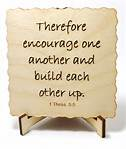
ENCOURAGE ONE ANOTHER
By Dane Ortlund
Our words to one another about one another not only describe reality. They also create reality.
“You idiot!” does not simply assess what is objectively true to the speaker. It also produces, in the one spoken to, death and darkness. Not only do our words reveal what is true of us, they also generate reality for another. Specifically, our words are either death-bringing or life-giving. Either depleting or nourishing, draining or filling.
The gospel is a message of life, of nourishing, of filling. Because of Christ’s work in our behalf, we are set free from sin, adopted into God’s family, welcomed in. The “word of truth, the gospel of your salvation” (Eph. 1:13) is a word that gives life. And the great privilege we have when we gather with other believers—other obnoxious believers, other theologically imprecise believers, other spiritually sleepy believers, other frustrating believers, other sinning believers—is of passing on horizontally a taste of what we’ve been given vertically. Amid all my sin and messiness, in Jesus, God has given me a word of welcome, a word of love—“the word of life” (Phil. 2:16; 1 John 1:1). Loved with this word of grace, I love others with words of grace.
After all, when Paul says, “Therefore encourage one another and build one another up,” what is the “therefore” referring to? What is fueling such encouragement? One of the greatest exultations in all the New Testament about the hope of the gospel: “God has not destined us for wrath, but to obtain salvation through our Lord Jesus Christ, who died for us so that whether we are awake or asleep we might live with him” (1 Thess. 5:9–10).
Having been shown life through the word of the gospel, we give life through the words we use.
That’s easier said than done. All day long, words are flowing out of us. Passing another and saying hello in the hallway at work, chatting over lunch, greeting our spouse at the end of the day, tucking a child in with a good night story, speaking with a salesperson at Best Buy, talking on the phone while driving. We also use words without employing the larynx: emails, tweets, Facebook comments, handwritten notes stuck on the fridge. Even in this article I am using words: Are they bringing life?
In the hurricane of words that make up any given day, how do we walk in wisdom such that our words inject sanity, calm, and life rather than destruction? In two ways.
First, by saying nothing.
One major way we give life to others with our words is by not using any. It feels awkward to sit with someone depressed or overwhelmed with life and to say nothing. But what comes out of our mouth as medicine can, in fact, sicken rather than strengthen another’s heart (Prov. 23:8). A sufferer, when the pain is raw, needs warm presence, not fixing words. Paul said, “Weep with those who weep” (Rom. 12:15), not “provide theological answers to those who weep.” That Romans 8:28 comes before Romans 12:15 in the canon does not mean it should in our counseling and friendships.
Second, by saying something.
All our words tumble out impelled by one of two motives. I am using words either for myself or for you. All my speech is either fueled by self (no matter how smiling it is) or by love (no matter how painful it is).
The question, then, is why do you speak the words you do? Why do you speak the way you do? What is the aroma of your words? Are you spraying bullets, forgetting God has set down the gun rightly aimed at you? Do you speak to others the way you wish to be spoken to? What kind of speech has given you life as you consider meaningful relationships in your past? Do you ever—ever—look another human being in the face and say to them the following words: “May I tell you something I admire about you?” (It is one of the great secrets to Christian community that speaking a word of grace to another builds up you as much as the other.)
In your short life, you have a million tiny opportunities, including a hundred today, to inject a small but potent dose of life and light into another. As you consider doing this, you will immediately find a good reason presenting itself that seems to clearly mitigate your impulse to build another up. Some weakness, some corresponding fault, will arise in your mind, cancelling out your reason to encourage that person. Indeed, with some people in our lives, we honestly have difficulty finding anything encouraging to say.
Once more we remember the gospel. God did not allow our own faults to mitigate His word of gospel life to us. We have given Him every reason to withhold that precious word from us. Instead He lavishes us with assurances of undeserved love. We come alive. We breathe again.
John Owen wrote that God “loves life into us.” Will you love life into another?
*SOURCE: July 1st, 2013 @ http://www.ligonier.org/learn/articles/encourage-another/
ABOUT THE AUTHOR

Dr. Dane Ortlund serves as Bible publishing director at Crossway Books in Wheaton, Illinois. He is the author of Defiant Grace: The Surprising Message and Mission of Jesus.
Brad Johnston on The “Learning” in Contentment

My favorite weekly meeting is Wednesday at 6 a.m. at Perkins Restaurant.
There I recently had one of those jump-off-the-page-of-your-Bible experiences. Call me dumb, but I had never processed the fact that three times in Paul’s famous “contentment passage” in Philippians 4 – which I have quoted anecdotally dozens of times – the Apostle specifically uses the word “learned” (in Philippians 4:9 and 11, 12 ).
The men’s prayer breakfast is not a big one, as prayer breakfasts go. But it is a faithful one, an intimate one. Men from our church gather like clockwork each week for the sole purpose of lifting our hearts together before the Throne of Grace. We make 3-4 specific prayer requests for the week, and then lift one another’s burdens to the Lord in prayer before a hearty breakfast. Our prayers are far ranging, kingdom focused prayers for the advance of God’s reign in this world. It is not a place where we sit on our hands, but where we take the Kingdom by storm.
But recently God has landed the prayer breakfast guys in the school of contentment. He has simply overwhelmed us with his presence and blessings and pressed us to “come back” to a place of joy and satisfaction — of thanksgiving! In my analysis, the Lord has been teaching us a contentment that can be described as intense pleasure in who Jesus is, and what he has done/is doing/will do for his people. We have been discovering something of the end that Paul has in mind when he calls to learn contentment. Three observations about how God leads us into biblical contentment.
First, he has called each one of us to action. Contentment is not passivity. Each of the men at prayer breakfast wear various hats: in the church, as the head their families, and in their professional labors. Men must sometimes leave early because of pressing matters on their plate. We aspire to be like the Apostle Paul, who was engaged in the work to which he was called. What he believed was visible in his lifestyle and he called those to whom he ministered to “learn by practice” what they had seen Paul practice.
Second, God has called each of us to flexibility. In a variety of ways each of us has had unexpected developments in our lives recently. It has really pushed us to understand better what Paul meant in Phil. 4:11 that “whatever situation” is a place where God will minister his grace by prompting me to trust in his wisdom and rest in his provision. The guys have discussed in recent weeks the places of apparent chaos and of disappointment. The wonder of Paul’s Calvinistic convictions is that he could never step outside of God’s personal and transformative gaze. Whether in Tarsus, Jerusalem, or the far flung wilderness of Asia Minor Paul knew that because God was God, therefore Paul could never step off his grid. His heavenly Father was intent on teaching him the positive aspects of the Tenth Commandment every day and in every — at a very personal level!
Finally, God has called us to be fixated on Christ. Paul no doubt had specific episodes from his ministry in mind when he said “I have learned the secret of facing plenty and hunger, abundance and need” (Phil. 4:12). As he pushed forward in his itinerant ministry year after year things didn’t always go as planned. Colleagues abandoned him. Logistics did not work out. Travel plans were stymied. And yet through it all the Apostle’s faith shone through: “all things through Christ who strengthens me.”
It has been such an intense pleasure to explore this theme of contentment with the guys over our waffles and eggs recently. Through different circumstances and at different times he has brought each of us to that place of peaceful contentment. We are simply overwhelmed at the blessings the Lord has poured out into our lives. It doesn’t usually mean we stay there. But we are learning, learning, learning that instead of grasping and fighting for what we desire, we can rest contentedly in God’s absolute sovereignty. Instead of fixating on something material, or urgent, or created, we can reorient our fixation upon Jesus Christ. Then we can quietly do what we can in God’s kingdom, and leave the results up to him.
Soli Deo gloria.
SOURCE” http://gentlereformation.com/?p=336235
BOOK REVIEW: Jerry Sittser’s “A GRACE DISGUISED”
RECOGNIZING GOD’S GRACE IN YOUR LOSS

 LifeCoach4God