
Category: Spiritual Life

THE SECRET TO DEALING WITH FEAR AND ANXIETY

By Ed Welch
“Humble yourselves.” That’s the secret. It has been there all along, but we rarely use it.
Humble yourselves, therefore, under the mighty hand of God so that at the proper time he may exalt you, casting all your anxieties on him, because he cares for you. (1 Peter 5:6-7)
Fear and anxiety sufferers like myself have tried on a number of Scripture passages over the years. We might start with Jesus’ words from the Sermon on the Mount, “Therefore I tell you, do not be anxious about your life . . .” (Matthew 6:26). When we need something easier to memorize we move on to Philippians 4:6, “do not be anxious about anything, but in everything by prayer and supplication with thanksgiving let your requests be made known to God.”
These passages work very well as counters to low-level anxiety. But, in the face of an anxiety assault—they aren’t enough. At those times, they can sound like mantras that are devoid of power, which is actually a good thing. Anxious and fearful people can easily slip into taking Scripture as a pill. Take one passage twice a day for two weeks and your symptoms will be gone. When the pill doesn’t work we have two choices. We search for another treatment, or we confess that we are using Scripture as a self-help book for symptom relief, in which case it is time to get back to basics. If you choose to get back to biblical basics, Peter’s exhortation to humble ourselves is a great place to start.
I had an anxiety assault recently. I was facing perhaps the worst fear I could imagine, and there was nothing I could do about it. What a mercy that I was confronted with the call to be humbled before the Lord. It resulted in a simple prayer.
“Lord, you are God and King. I am your servant. I know you owe me nothing. For some reason you have given me everything in Jesus. I trust you. And please give me grace to trust you.”
A few minutes later, my prayer moved even closer to Scripture.
“Father, forgive me for always wanting things my way. By your mighty hand you have created all things. And by your mighty hand you have rescued your people. I want to live under your mighty hand. Please have mercy.”
It sounds very simple—and it is—but it changes everything. This is the secret to dealing with fears and anxiety. The words of God, and the comfort of the Spirit, become much more obvious when we are repentant and humble before him. No deals—“if you spare me from this suffering then I will . . .” Just simple trust. We trust him because he is God, not because he is going to immediately remove our anxieties or our fear-provoking situation.
This passage has been a secret because we have typically entered it at verse 7, “cast all your anxieties on him because he cares for you.” But to understand its meaning, you need to start with the preceding verse, “Humble yourselves.”
“Humble yourselves” is the only exhortation in the passage. This is what Peter wants us to hear (and obey). If we jump in at the middle—it makes no sense. We can’t cast our cares on him until we have recognized that he is God and we are his servants who have also been elevated to become his children. A paraphrase could read like this (and I highly recommend putting Scripture into your own words.)
Humble yourself before the Lord. This shouldn’t be too difficult. After all, he is God and King, Lord of all. He is the Creator. You belong to him. The creature is the possession of the Creator. Humble yourself before your King. And here is one way to express this new-found posture of humility: cast your cares on him. Did you catch that? When you come humbly before the King he reveals his unlimited love. Who would have thought? He actually wants you to cast your burden on him. You were never intended to carry those burdens alone. He is the mighty God who never leaves. You can trust him. And this casting is no mere act of your will. It comes as you know that he is God and you are not. Oh, and you can be sure that he will lift you up from your kneeling position and give you more than you ever expected.
A little wordy, in contrast to Peter’s more succinct version, but rambling and embellishment give us more time to meditate on the logic of the passage.
The secret is to
…pause before you head into your favorite passage on fear,
…consider the greatness of God,
…add some of your own confession and repentance as a way to drive the message of humility home, and then
…remember some of those sweet words of God to fearful people.
*Source: http://www.ccef.org/blog/secret-dealing-fear-and-anxiety – April 19, 2011
If you want to read more on fear, Ed has written two books on the subject: Running Scared andWhen I Am Afraid.
Edward T. Welch, M.Div., Ph.D., is a counselor and faculty member at CCEF and holds a Ph.D. in Counseling Psychology with a neuro-psychology specialty from the University of Utah as well as a Master of Divinity degree from Biblical Theological Seminary. Ed has been counseling for over twenty-six years and has written many books and articles on biblical counseling.
John Piper on “Thanksgiving Toward the Past, Faith Toward the Future”

A Parable: The Anvil
Isaiah 40:8, “The grass withers, the flower fades, but the word of our God will stand forever.”
Let’s begin with a parable today. Once upon a time in land before there were any cars or modern machines – a time when horses and carriages and wagons were common on the dirt roads – there was a blacksmith shop with a large, heavy, well-worn anvil. One day a little farm boy, who had never left the farm, came with his father to town for the first time. Everything was new and different. As he walked with his father down the unpaved main street, he heard a loud clang . . . clang . . . clang. He said to his father, “What’s that?” His father said, “Come, I’ll show you.” He took his son to the door of the blacksmith’s shop. And there the boy saw a huge man, a strong man, lifting a big, heavy hammer with a long handle and a large head on it high in the air, as if to chop down a tree, and then crashing it down on a glowing piece of metal on top of the anvil. He hit the anvil so hard that it made the boy wince with every blow. His father explained to him that this was a blacksmith who made all kinds of metal pieces for wagons and carriages and plows and tools and horseshoes.
But the little boy was fixed on one thing: the long, heavy hammer and the great metal anvil. They met each other with such a loud sound and with such a force that he thought surely this anvil could not last long. The big, strong blacksmith paused for a moment to catch his breath, and saw the boy standing in the doorway. “Aren’t you going to break that thing?” the boy asked, pointing at the anvil. But the blacksmith smiled and said, “This anvil is a hundred years old and has worn out many hammers.”
The Bible: Forged in the Furnace of Truth
Here’s the point of the parable. The Bible is an anvil that has worn out a thousand hammers. In every generation, new, huge, heavy hammers are forged against the truth of the Bible. And strong men lift the hammers and pound on the Scriptures. People with no historical perspective – like little boys who’ve never been to town – see it and say, “Surely the Bible will be destroyed.” But others who know their history a little better say, “This Bible was forged in the furnace of divine truth and has worn out many hammers.”
In the Old Testament, the prophet Isaiah said, “The grass withers, the flower fades, but the word of our God stands forever” (Isaiah 40:8). And Jesus said, “Heaven and earth will pass away, but My words will not pass away” (Matthew 24:35).
Why is this? Why has the Bible worn out a thousand hammers? Why does the Bible survive generation after generation as a living and powerful book in the lives of millions of people? The answer can be found in two observations: one is that God endures from generation to generation. And the other is that the Bible is the Word of God.
In Psalm 90:1-2 Moses says, “Lord, You have been our dwelling place in all generations. Before the mountains were born, or You gave birth to the earth and the world, even from everlasting to everlasting, You are God.” And in the New Testament, Hebrews 13:8 says, “Jesus Christ is the same yesterday and today and forever.” The reason the Bible has worn out a thousand hammers is because it is the Word of God who endures from everlasting to everlasting, and because its central character is Jesus Christ who is the same yesterday, today and forever.
Bubbles and Fads
There are two reasons why I point this out. One is that I want to build my life on something that lasts. And I think most of you would share this desire. I don’t want to build my life on sand. I don’t want to spend my life chasing bubbles that shimmer with beauty and pop as soon as you catch them. I want to build my life on something durable – something like an anvil that breaks a thousand hammers.
The other reason why I point out the indestructible toughness of the Bible is to contrast it with the incredibly short shelf-life of the ever-changing remedies and treatments and schemes of hope in our day. Schemes of hope that leave out of account God and Christ and sin and salvation and repentance and death and heaven and hell. They leave these great realities out of consideration as if they were non-realities or inconsequential, like unicorns and Cyclopses and flat-earth theories. These treatments and remedies and schemes of hope put themselves forward with great forcefulness. But how many people notice how short is the life of God-neglecting promises of hope?
Let me illustrate what I mean, and I give credit here to David Powlison in an article titled “Biological Psychiatry” (The Journal of Biblical Counseling, 17/3, Spring, 1999, pp. 2-8). I don’t know if you have noticed yet, but there has been a sea change in the world of mental health in the last five years or so. When was the last time you heard anybody talking about codependency? Just twelve years ago this was all the rage. Melody Beattie’s Codependent No More and John Bradshaw’s Homecoming were best-sellers. Wherever you turned, from books to talk shows to seminars, the diagnosis of our problems was the same: dysfunctional families of origin. Past emotional pain and emptiness were the primal causes of our present misery and misbehavior. And the remedy? Psychotherapy with sensitive non-judgmental counselors and support groups with those who felt your pain and understood your woundedness.
That was in its heyday of the eighties. But then something changed. Something always changes. Diagnoses and remedies that are not built on the full embrace of God’s Word must always fade. These things slip up on you. And you suddenly realize: hmm, those kinds of books aren’t being written any more. People don’t seem to be talking with the same confidence they used to about the dynamics of the wounded soul. What ever became of codependency?
What’s happened? Well, there’s a new excitement, a new scheme of hope. The new scheme is more biological and less psychological. In the place of the needy, hurting, wounded soul has now arisen the dysfunctional brain. It’s not the family of origin now that has center stage, but hormones and genes and chemicals and neurotransmitters. And what are the new books today? Harold Koplewicz’s It’s Nobody’s Fault, that explains the problems of human life in terms of neurotransmitter shortages; and Peter Kramer’s Listening to Prozac, that says we have entered an era of “cosmetic psychopharmacology.”
Here’s the way David Powlison describes the shift:
The world did change in the mid-90s. The action is now in your body. It’s what you got from Mom and Dad, not what they did to you. The excitement is about brain functions, not family dysfunctions. The cutting edge is in the hard science medical research and psychiatry, not squishy soft, philosophy-of-life, feel-your-pain psychologies.
Psychiatry’s back. . . . Biology is suddenly hot. Psychiatry has suddenly broken forth, a blitzkrieg sweeping away all opposition. The insurance companies love it because drugs seem more like “medicine,” seem to be cheaper than talk, and promise more predictable results. Psychotherapy professionals are on the defensive. (Powlison, “Biological Psychiatry,” p. 3)
The point is this: I want my life to be built on something more durable than a 15-year-long therapeutic fad. And make no mistake: the present craze with genes and hormones and neurotransmitters and the Human Genome Project and genomic mapping and chemical therapies – this excitement too will fade and we will move on to something else. And in its wake will be left vast disillusionment. No fulfilled life. No fountain of youth. No utopia. No comfort at death. And millions of people will be left with the question: is there a more durable hope to build my life on? Is there a diagnosis of my condition and a remedy for my flaws and a promise for the future that will not pass by like a fad in one generation, and leave me feeling like an out-of-date fool using leeches to cure my headache?
Or to ask it another way: When Ritalin has calmed you down and Prozac has cheered you up, then what? The promise of these things seems so big, when it fact the pay-off is so small. All the things that never change, all the things that last, all the really big things in life and eternity still wait to be addressed: God, Christ, sin, redemption, repentance, faith, forgiveness, death, heaven, hell, eternal life.
The Eternal Realities of the Bible
Which brings us back to where we started: there is a rugged, unchanging, solid anvil called the Bible. It has outlived all fads and broken a thousand hammers of criticism. It doesn’t sweat the small stuff very much; its message deals with the big things that never change from generation to generation. And what is the message?
The message of the Bible is this. It has to do with four great realities: God, sin, Christ, faith.
1. God
“In the beginning God . . .” – the first verse of the Bible: “In the beginning God created the heavens and the earth” (Genesis 1:1). There is a personal, infinite, eternal, just, loving, holy God who made this universe and everything in it to reflect his glory – his greatness and beauty and power and wisdom and justice and mercy. He had no beginning. He is absolute Reality. He depends on nothing. He says that his name is simply, “I am” (Exodus 3:14). This great, personal, eternal God made you to know him and to enjoy him and display him in the world. The prophet Isaiah said, “Bring My sons from afar and My daughters from the ends of the earth, everyone who is called by My name, and whom I have created for My glory, whom I have formed, even whom I have made” (Isaiah 43:7). The first great reality is God, who made us to enjoy and display his glory.
2. Sin
But the second great reality that the Bible teaches us about is sin. If the purpose of our existence is to know and enjoy and reflect the glory of God as our highest value, then sin is our failure to do that. The apostle Paul puts it like this in the greatest letter ever written, “All have sinned and fall short of the glory of God” (Romans 3:23). Notice two things: sin is about everybody and sin is about God. All of us have sinned. There is no exception. And sin mainly has to do with our relationship to God, not man. Sin hurts people. But that’s not the main reason it is evil. The main reason is that God is worthy of our trust and obedience and worship and our joy, but we treat him like a raincoat, leaving him in the closet forgotten until it rains hard enough outside. God is not a raincoat for bad days. He is the Giver of the sunlight and the Creator of the clouds and the Sustainer of every breath you take and the Judge of all the living and the dead.
Therefore, our neglect of God is a great evil and we are guilty of sin in his presence. The Bible says, “The wages of sin is death” (Romans 6:23). We are under the sentence of God’s eternal judgment. And we will perish unless God himself provides a Redeemer to save us from our sin and from his wrath.
3. Christ
Which brings us to the third great reality of the Scriptures: the central character of history, Jesus Christ. O for a thousand tongues to describe the greatness of the God-Man Christ Jesus! “In the beginning was the Word, and the Word was with God, and the Word was God. He was in the beginning with God; all things were made through him, and without him was not anything made that was made. . . . And the Word became flesh and dwelt among us, full of grace and truth; we have beheld his glory, glory as of the only Son from the Father” (John 1:1-3, 14).
Jesus Christ is the Son of God, eternal, without beginning, but with the Father from everlasting to everlasting, truly God. And yet, he was made flesh, that is, became human. Why? Because without a human nature he couldn’t die. But his aim in coming was to die. He lived to die. Why? Why would God send his Son to die? Because God’s heart toward us is not only wrath flowing from his justice, but also mercy flowing from his love. And to satisfy both justice and love, God substituted his Son to die in our place. Jesus said, “The Son of Man did not come to be served, but to serve, and to give His life a ransom for many” (Mark 10:45). He came to give his life as a ransom to rescue sinners from hell.
This is the center of Christianity. God sent his own Son to provide a substitute for all who would be saved from sin. A substitute life, and a substitute death. Jesus Christ lived a perfect life of faith and obedience to God. And he died a totally undeserved, horrific, and obedient death by crucifixion. Therefore, all of us who are saved by him from the wrath of God are saved because our sin is laid on him, and his righteousness is credited to us. “All we like sheep have gone astray; we have turned every one to his own way; and the LORD has laid on him the iniquity of us all” (Isaiah 53:6). “For our sake [God] made him to be sin who knew no sin, so that in him we might become the righteousness of God” (2 Corinthians 5:21).
This is the center and heart of Christianity. This is the deepest need of every human being that no medicine and no therapy will ever touch.
4. Faith
Which leaves one last great Biblical reality to mention. What must I do to be saved by Jesus Christ from my sin? How can I obtain forgiveness and acceptance with God? How can I prepare to die so that on the other side of this life I will have everlasting joy in the presence of God – and in that hope become the kind of risk-taking, humble, loving, sacrificial person that the world so desperately needs?
The answer of the Bible is: Trust Christ. “For God so loved the world that he gave his only Son, that whoever believes in him [that is, trusts in him] should not perish but have eternal life” (John 3:16). Trust him that everything he says he has done, he has done; and everything he says he will do, he will do; and everything he says he is, he is. Trust him, and you will be saved.
And you will live the rest of your life in the place of greatest healing. Where is that? It is the solid, durable, invincible, anvil-like place between thankfulness toward the past and faith toward the future. The aim of psychotherapy and the aim of medicine is to give us healing. But there is no place of greater, deeper, more lasting healing than to be in Christ with sins forgiven and heaven secured, living moment by moment looking back with thankfulness on all that God has done for us, and looking forward at all God promises to do for us because of Christ.
It’s a great place to live. I invite you, I urge you, trust Christ and take your eternal place between bygone grace and future grace where gratitude and faith, thankfulness and confidence fill the soul and make it well.
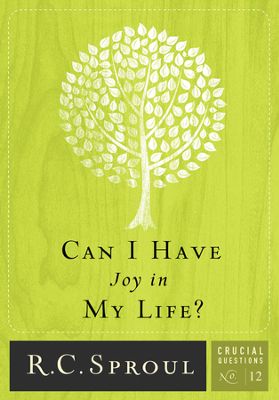
BOOK REVIEW: R.C. SPROUL’S “CAN I HAVE JOY IN MY LIFE?”
WHY PUTTING JESUS FIRST RESULTS IN JOY
Book Review by David P. Craig
In this insightful book Sproul helps the reader discern what true biblical joy consists of. It is not based on our circumstances, or even our personality. Sproul writes, “The key to the Christian’s joy is its source, which is the Lord. If Christ is in me and I am in Him, that relationship is not a sometimes experience. The Christian is always in the Lord and Lord is always in the Christian, and that is always a reason for joy. Even if the Christian cannot rejoice in his circumstances, if he finds himself passing through pain, sorrow, or grief, he still can rejoice in the Lord, and since He never leaves us or forsakes us, we can rejoice always.”
R.C. helps the reader by taking you to key passages of Scripture from Philippians, James, Romans, and the Gospel of John and gleans principles on the ground and source of our joy as being in Christ – who never changes and will never leave nor forsake us. The primary enemy of our joy is anxiety. Fear and anxiety rob us of our joy. However, if we understand who Christ is, and what he has done for us it deepens and opens up a new dimension of joy in us.
The acronym J-O-Y is used to demonstrate that Jesus first, then others, and then you – is actually a good way to practice the habit of joy in our lives. If we focus on Jesus – who is perfect, never changing, loving, and so forth – instead of our imperfect selves, or the imperfections of others and changing circumstances we can maintain and equilibrium of and growth in the genuine joy of the Holy Spirit who dwells within us as Christians. According to Sproul the reason that joy is often so elusive s because we put ourselves first, and Jesus last.
I love what Sproul has to say about Jesus’ own joy: “Jesus is the only person in history who spelled the word joy without putting the letter ‘j’ first. He put Himself last in order to make it possible for us to participate in joy.” The greatest joy anyone can possibly have is knowing and being like Jesus – trusting and believing in His redemptive work on our behalf. By participating (abiding) in our new life with Christ as forgiven, reconciled, children of God we have everything we need to live in peace and joy with God, others, and ourselves. Joy is possible because of Jesus alone. Even our continued struggles with sin, doubts, guilt, and so forth can never take away His righteousness in exchange for our sins and His gift of eternal life. Since our names our written in the Lamb’s Book of Life we have reason to rejoice no matter what our circumstances are – because ultimately we win in Him. We can always rejoice “in the Lord” – because the Lord has an infinite supply of unchanging perfections for us to delight in.
Book Review: “HEART OF THE MATTER”
DAILY REFLECTIONS FOR CHANGING HEARTS AND LIVES

Book Review By David P. Craig
How would you like to spend every day of the year with a wise biblical counselor to encourage you and help you apply the gospel to your life? In this daily devotional that’s exactly what you get. From the writings of Paul David Tripp, Edwin T. Welch, Timothy S. Lane, William P. Smith, Michael R. Emlet, David Powlison, Robert D. Jones, and James C. Petty you will get advice, encouragement, direction, and plenty of gospel centered grace for each day.
The topical meditations in this devotional are all based on passages of Scripture and include a suggested daily reading from the Scriptures to illuminate the subject of the day. All of the authors of this book are a part of the Christian Counseling and Educational Foundation which “exists to teach people how to explore the wisdom and depth of the Bible and apply its grace centered message to the problems of daily living.”
One of the nice features of this devotional is that there is a Scripture index in the back, as well as a source index so you can go to any one of the author’s writings for more study or advice on the particular subjects that are of interest to you. All of the sources include the page numbers from which the meditations are derived so you can track them down easily.
If you are looking for more grace in your life and want to go deeper in your understanding of, and application of the gospel – look no further than this devotional gem. I highly recommend this outstanding devotional as one that will help you grow in intimacy with our awesome God and change you to become more like Him as you daily center your thinking on who He is and what He has done for you in Christ Jesus.
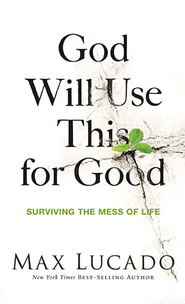
BOOK REVIEW: Max Lucado’s “GOD WILL USE THIS FOR GOOD”
TRUSTING GOD TO TRUMP EVIL
 Book Review by David P. Craig
Oftentimes when we are going through tough times we need some short and quick reminders that everything is going to be okay. In this short treatment of the life of Joseph from the Old Testament Lucado reminds us: “”You’ll get through this. It won’t be painless. It won’t be quick. But God will use this mess for good. In the meantime don’t be foolish or naive. But don’t despair either. With God’s help you will get through this.”
In retelling the story of Joseph the author takes time to provide ample applications (contemporary and ancient) to bring forth the principles that help us as we wait for God to bring forth good out of the messes in our lives whether we made them, inherited them, or we were the object of someone’s evil plans. Ultimately nothing can thwart the plans that God has for us, and that means that all things will work out for our good and God’s glory. The main idea brought out by Lucado in this book is that “in God’s hands intended evil becomes eventual good.”
This short book would make a good gift or recommendation for Christians that are currently going through a rough time. Lucado’s story telling connects well with readers by continually making connections between the biblical subject and the relevant points to our own lives. Lucado has written a helpful manual for believers who need guidance in their pain by helping us trust in the God who always trumps evil for our own good.
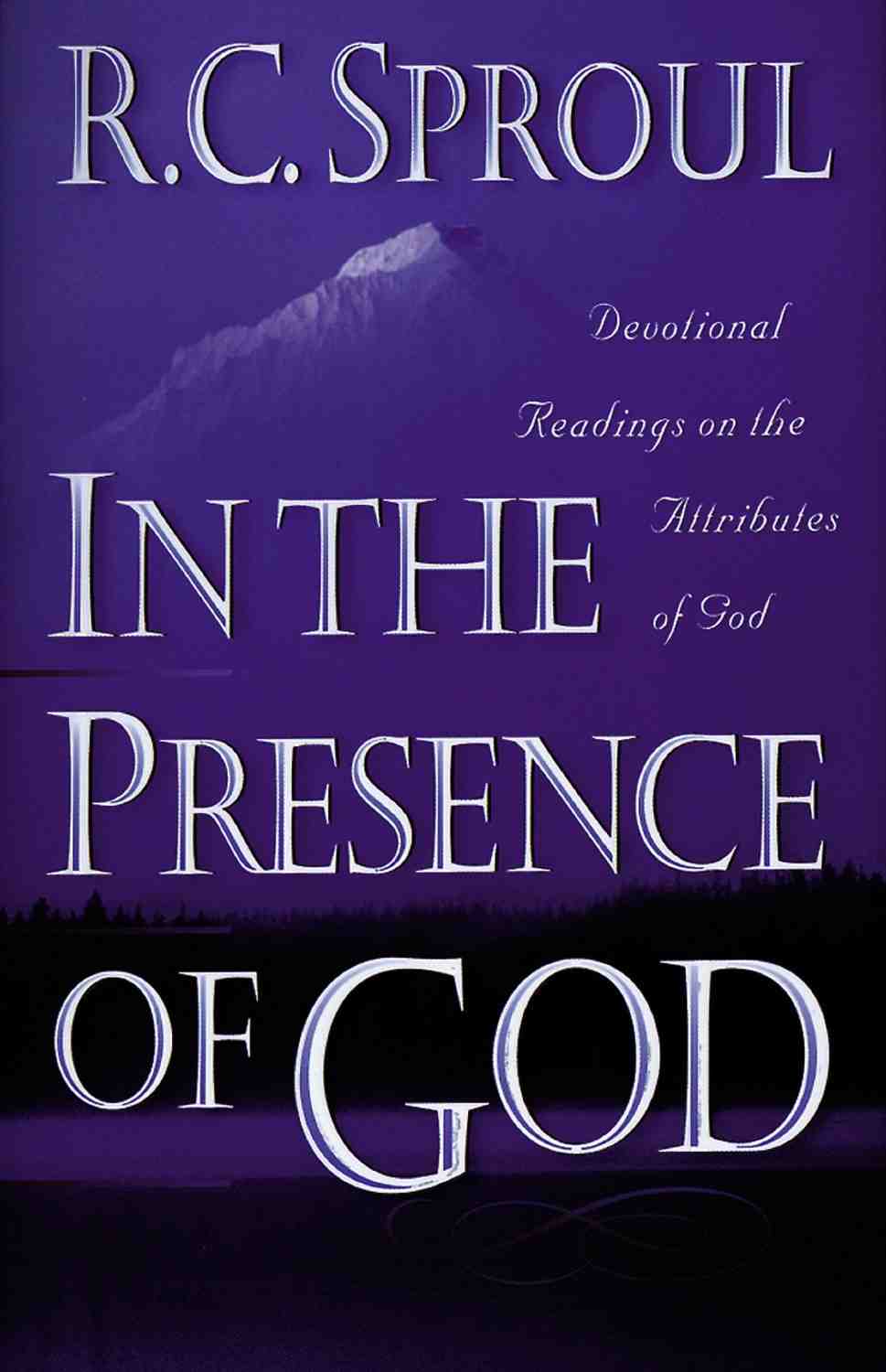
BOOK REVIEW: R.C. Sproul’s “INTO THE PRESENCE OF GOD”
GOD-CENTERED MEDITATIONS
Book Review by David P. Craig
Over the past 30 years I’ve enjoyed the books, lectures, sermons, and writings of R.C. Sproul. This book gathers some of the best devotionals from Ligonier Ministries Magazine – Table Talk. Coram Deo–which means “in the presence of God” is the name of one of the feature columns written by R.C. Sproul. In The Presence of God takes some of the best devotionals from Coram Deo over the past several decades and makes the collection available here in this book.
The devotions selected are encouraging, inspiring, and always based on Scripture. According to R.C. Sproul all of life is to be lived out in the presence of God and for the glory of God. These devotionals remind us daily that God is sovereign, transcendent, and immanent. “To live Coram Deo is to live a life of integrity. It is a life of wholeness that finds unity and coherency in the majesty of God. A fragmented life is a life of disintegration. It is marked by inconsistency, disharmony, confusion, conflict, contradiction, and chaos.” On the other hand, a life of “integrity is found when men and women live their lives in a pattern of consistency. It is a pattern that functions the same way in church and out of church. It is a life in which all that is done is done unto the Lord. It is a life lived by principle, not expediency; by humility before God, not defiance. It is a life lived under the tutelage of a conscience that is held captive by the Word of God.”
There are approximately 150 devotions in this book. Each only a page in length with a short meditation by Sproul, and either a word of encouragement, an application, or a reflection based on each subject. There are 15 Sections in the book with each section containing between 5 and 18 chapters. Here are the subjects addressed by Sproul: (1) Knowing God; (2) Learning God’s Laws; (3) Facing Life’s Challenges with God; (4) Getting Acquainted with God’s Son; (5) Meeting with God; (6) Discerning God’s Will; (7) Understanding God’s Purpose; (8) Becoming Part of God’s Body; (9) Experiencing God’s Best; (10) Journeying with God; (11) Developing a Godly Lifestyle; (12) Using Your Time for God; (13) Confronting the Enemy in God’s Strength; (14) Doing God’s Work; and (15) Facing the Future with God.
You would be hardpressed to find a devotional that is more God-centered and will help you truly live a life that is well-pleasing to God than Sproul’s. I highly recommend this excellent collection as one that will increase your awareness of God, and help you become more intimate in your walk with Him for His glory whether you eat, drink, or whatever you do as you live in His presence.
CHUCK SWINDOLL ON “WHY DO WE SUFFER?”
WHY CHRISTIANS SUFFER – A MEDITATION ON 2 CORINTHIANS 1:3-11

2 Corinthians 1:3-11, “Blessed be the God and Father of our Lord Jesus Christ, the Father of mercies and God of all comfort, who comforts us in all our affliction, so that we may be able to comfort those who are in any affliction, with the comfort with which we ourselves are comforted by God. For as we share abundantly in Christ’s sufferings, so through Christ we share abundantly in comfort too. If we are afflicted, it is for your comfort and salvation; and if we are comforted, it is for your comfort, which you experience when you patiently endure the same sufferings that we suffer. Our hope for you is unshaken, for we know that as you share in our sufferings, you will also share in our comfort.
For we do not want you to be unaware, brothers, of the affliction we experienced in Asia. For we were so utterly burdened beyond our strength that we despaired of life itself. Indeed, we felt that we had received the sentence of death. But that was to make us rely not on ourselves but on God who raises the dead. He delivered us from such a deadly peril, and he will deliver us. On him we have set our hope that he will deliver us again. You also must help us by prayer, so that many will give thanks on our behalf for the blessing granted us through the prayers of many.
Of all the letters Paul wrote, Second Corinthians is the most autobiographical. In it the great apostle lifts the veil of his private life and allows us to catch a glimpse of his human frailties and needs. You need to read that letter in one sitting to capture the moving emotion that surged through his soul.
It is in this letter alone that he records the specifics of his anguish, tears, affliction, and satanic opposition. In this letter alone he spells out the details of his persecution, loneliness, imprisonments, beatings, feelings of despair, hunger, shipwrecks, sleepless nights, and that “thorn in the flesh”–his companion of pain. How close it makes us feel to him when we picture him as a man with real, honest-to-goodness problems…just like you and me!
It is not surprising, then, that he begins the letter with words of comfort–especially verses 3 through 11. Now, then, having read those nine verses, please observe his frequent use of the term comfort in verses 3-7. I count ten times in five verses that the same root word is employed by Paul. This word is para-kaleo, meaning literally, “to call alongside.” It involves more than a shallow “pat on the back” with the tired expression, “the Lord bless you…” No, this word involves genuine in-depth understanding…deep-down compassion and sympathy. This seems especially appropriate since it says that God, our Father, is the “God of all comfort” who “comforts us in all our affliction.” Our loving Father is never preoccupied or removed when we are enduring sadness and affliction! Read Hebrews 4:14-16 and Matthew 6:31-32 as further proof.
There is yet another observation worth noting in 2 Corinthians, chapter 1. No less than three reasons are given for suffering–each one introduced with the term “that” in verses 4, 9, and 11. Quietly and without a lot of fanfare, the Holy Spirit states the reasons we suffer:
(1) “That we may be able to comfort those who are in any affliction…” (v. 4). God allows suffering so that we might have the capacity to enter into others’ sorrow and affliction. Isn’t that true? If you have suffered a broken leg and been confined to crutches for weeks–you are in complete sympathy with someone else on crutches, even years after your affliction. The same is true for the loss of a child…emotional depression…an auto accident…undergoing unfair criticism…financial burdens. God gives His children the capacity to understand by bringing similar sufferings into our lives. Bruises attract one another.
(2) “That we should not trust in ourselves…” (v. 9). God also allows suffering so that we might learn what it means to depend on Him, not on our own strength and resources. Doesn’t suffering do that? It forces us to lean on Him totally, absolutely. Over and over He reminds us of the danger of pride…but it frequently takes suffering to make the lesson stick. Pride is smashed most effectively when the suffering comes suddenly, surprisingly. The express trains of heaven are seldom announced by a warning bell; they dash suddenly and abruptly into the station of the soul. Perhaps that has been your experience recently. Don’t resent the affliction as an intruder–welcome it as God’s message to stop trusting in your flesh…and start leaning on Him.
(3) “That thanks may be given…” (v. 11). Honestly–have you said, Thanks, Lord for this test”? Have you finally stopped struggling and expressed to Him how much you appreciate His loving sovereignty over your life? I submit that one of the reasons our suffering is prolonged is that we take so long saying “Thank you, Lord” with an attitude of genuine appreciation.
How unfinished and rebellious and proud and unconcerned we be without suffering! Here are two statements on suffering I heard years ago and shall never forget:
Pain plants the flag of reality in the fortress of a rebel heart.
When God wants to do an impossible task, He takes an impossible individual–and crushes him.
May these things encourage you the next time God heats up the furnace.
Source: Chuck Swindoll. Come Before Winter…And Share My Hope. Multnomah Press, Portland, OR.: 1985, pp. 202-203.
About the Author:
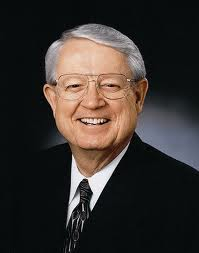
Dr. Charles R. Swindoll is senior pastor of Stonebriar Community Church, chancellor of Dallas Theological Seminary, and the Bible teacher on the internationally syndicated radio program Insight for Living.
Charles Swindoll’s Books:
-
You And Your Child, Thomas Nelson (1977)
-
Hand Me Another Brick, Thomas Nelson (1978)
-
Three Steps Forward, Two Steps Back: Persevering Through Pressure, Thomas Nelson (1980)
-
Strike The Original Match, Multnomah (1980)
-
Improving Your Serve: The Art Of Unselfish Living, Word (1981)
-
Strengthening Your Grip: Essentials In An Aimless World, Word (1982)
-
Growing Strong In The Seasons Of Life, Multnomah (1983)
-
Dropping Your Guard: The Value Of Open Relationships, Word (1983)
-
Come Before Winter – And Share My Hope, Multnomah (1985)
-
Living On The Ragged Edge: Coming To Terms With Reality, Word (1985)
-
Growing Deep In The Christian Life: Returning To Our Roots, Multnomah (1986)
-
The Quest For Character, Multnomah (1987)
-
Living Above The Level Of Mediocrity : A Commitment To Excellence, Word (1987)
-
Growing Wise In Family Life, Multnomah (1988)
-
Living Beyond The Daily Grind: Reflections On The Songs And Sayings In Scripture, Word (1988)
-
Rise & Shine: A Wake-Up Call, Multnomah (1989)
-
The Grace Awakening, Word (1990)
-
Sanctity Of Life: The Inescapable Issue, Word (1990)
-
Stress Fractures, Multnomah (1990)
-
Simple Faith, Word (1991)
-
Laugh Again, Word (1992)
-
Flying Closer To The Flame (Re-issued as Embraced by The Spirit: The Untold Blessings of Intimacy with God, Word in 1993 & Zondervan in 2010)
-
The Finishing Touch, Word (1994)
-
Paw Paw Chuck’s Big Ideas in the Bible, Word (1995)
-
Hope Again, Word (1996)
-
The Road To Armageddon (with John F Walvoord; J Dwight Pentecost), Word (1999)
-
Start Where You Are: Catch A Fresh Vision For Your Life, Word (1999)
-
The Mystery Of God’s Will: What Does He Want For Me?, Word (1999)
-
Perfect Trust: Ears To Hear, Hearts To Trust, And Minds To Rest In Him, J. Countryman (2000 & 2012)
-
The Darkness And The Dawn : Empowered By The Tragedy And Triumph Of The Cross, Word (2001)
-
Why, God?: Calming Words For Chaotic Times, Word (2001)
-
Wisdom For The Way: Wise Words For Busy People, J. Countryman (2001)
-
Understanding Christian Theology (with Roy B Zuck), Thomas Nelson (2003)
-
Behold—The Man!: The Pathway Of His Passion, Word (2004)
-
Getting Through the Tough Stuff: It’s Always Something! Thomas Nelson (2004)
-
So, You Want To Be Like Christ?: Eight Essentials To Get You There, Word (2005)
-
When God Is Silent (Choosing To Trust In Life’s Trials), J. Countryman (2005)
-
Great Attitudes For Graduates!: 10 Choices For Success In Life (with Terri A Gibbs), J. Countryman (2006)
-
Encouragement For Life: Words Of Hope And Inspiration, J. Countryman (2006)
-
The Strength Of Character: 7 Essential Traits Of A Remarkable Life (with Terri A Gibbs), J. Countryman (2007)
-
A Bethlehem Christmas: Celebrating The Joyful Season, Thomas Nelson (2007
-
The Owner’s Manual for Christians: The Essential Guide for a God-Honoring Life, Thomas Nelson (2009)
-
The Church Awakening: An Urgent Call for Renewal, FaithWords (2010 & 2012)
-
Meet Me In The Library: Readings From 8 Writers Who Shaped My Life, IFL (2011)
-
Saying It Well: Touching Others with Your Words, FaithWords (2012)
-
Living the Psalms: Encouragement for the Daily Grind, Worthy (2012)
-
Living the Proverbs: Living in the Daily Grind, Worthy (2013)
Swindoll’s New Testament Insights Commentary Series
-
Insights on Romans, Zondervan (2010)
-
Insights on John, Zondervan (2010)
-
Insights on James and 1 & 2 Peter, Zondervan (2010)
-
Insights on 1 & 2 Timothy and Titus, Zondervan (2011)
-
Insights on Revelation, Zondervan (2012)
-
Insights on Luke, Zondervan (2012)
-
Insights on Galatians & Ephesians, Zondervan (2013)
Profiles in Character series
-
David: A Man Of Passion & Destiny, Word (1997)
-
Esther: A Woman Of Strength & Dignity, Word (1997)
-
Joseph: A Man Of Integrity And Forgiveness, Word (1998)
-
Moses: A Man Of Selfless Dedication, Word (1999)
-
Elijah: A Man Of Heroism And Humility, Word (2000)
-
Paul: A Man Of Grace And Grit, Word (2002)
-
Job: A Man Of Heroic Endurance, Word (2004)
-
Fascinating Stories Of Forgotten Lives: Rediscovering Some Old Testament Characters, Word (2005)
-
Jesus: The Greatest Life Of All, Thomas Nelson (2008)
Honors and Awards
-
Harry A. Ironside Award for Expository Preaching – Dallas Theological Seminary, 1963
-
Christian Education Award – Dallas Theological Seminary, 1963
-
Faculty Award – Dallas Theological Seminary, 1963
-
Doctor of Divinity – Talbot School of Theology, 1977
-
Doctor of Human Letters – Taylor University, 1986
-
Clergyman of the Year – Religious Heritage of America, 1988
-
Doctor of Laws – Pepperdine University, 1990
-
Doctor of Literature – Dallas Baptist University, 1999
-
Lifetime Achievement Award – [Catalyst Conference], 2009
BOOK REVIEW: “COVERING YOUR LIFE IN PRAYER” BY ERWIN W. LUTZER
DISCOVER A LIFE-CHANGING CONVERSATION WITH GOD

LEARNING HOW TO PRAY THE SCRIPTURES FOR YOUR LOVED ONES
Book Review By David P. Craig
Nothing has revolutionized my own prayer life more than learning how to pray the Scriptures. In this very practical book Lutzer was inspired to pray more intentionally and biblically for his 8 grandchildren. He decided to pray through the Scriptures for them, rather than just making a list of needs and praying these needs back to God in a ritual-like format day after day. He wanted to avoid the “meaningless repetition” of prayer that Jesus describes in Matthew 6:7.
Lutzer asks and answers these two important questions (1) What if I changed my perspective on prayer and began to pray Scripture? and (2) What if I echoed back to God that which I know is His will? – Wouldn’t that stimulate more faith and bring God more glory?
Praying the Scriptures has many advantages over “list” oriented prayer: Here are just a few: (1) It gives a freshness to your prayer life – because you don’t know exactly what you will be praying for on a daily basis; (2) It aligns your prayers with God’s will – it’s more difficult to pray errantly when you are speaking the truth from God’s Word back to the truth Giver; (3) It reminds you daily of requirements and promises of God; (4) It helps you to hear from and communicate intimately with God as He reveals His heart to you from His very words. (5) It aligns you with the will and sovereign plans of God. (6) It brings God’s purposes and intentions to bear on your life each time you pray.
Lutzer divides the book up into 52 weeks or prayer sessions. In each session there is a passage of Scripture, a brief explanation of the passage, and a prayer to pray based on the passage. An individual can pray these prayers for a loved one, a friend, a child, a parent, co-worker, and so forth. The prayers are about two to three paragraphs in length and cover such passages and topics as: overcoming fear; hope; worshiping God in trials; identity in Christ; purity; resisting temptation; and resting confidently in God’s love. There are 52 subjects covered. Lutzer (and his wife) prays these Scriptures over his children and grandchildren (one each day, two on Saturday’s) seven days a week.
I have been praying these prayers for my spouse, children, and grandchildren and it has helped make my prayers more focused, spontaneous, and well-rounded. Since you are praying specific prayers instead of just praying “God bless so and so” it is more intimate, personal, and intentional. I find that it has helped my prayer life to be less wooden and ritualistic and much more exciting as I am learning to pray the whole counsel of God over my loved ones. Daily covering my loved ones with God’s promises, and purposes from the whole counsel of God is an exciting way to pray that benefits my loved ones immensely.
I sincerely believe that this book will help renew, refresh, and rekindle your prayer life, invigorate your walk with our Heavenly Father, and help you to pray balanced prayers for the good of your loved ones so that God’s will is done on “Earth as it is in Haven.”

 LifeCoach4God