Faith, Reason & Rationality by Greg Koukl

“So let’s set the record straight. Faith is not the opposite of reason. The opposite of faith is unbelief. And reason is not the opposite of faith. The opposite of reason is irrationality. Do some Christians have irrational faith? Sure. Do some skeptics have unreasonable faith? You bet. It works both ways.” – Greg Koukl

– Quoted from the book edited by Sean McDowell & Jonathan Morrow, Is God Just a Human Invention? And Seventeen Other Questions Raised by the New Atheists, p. 30.

*Greg Koukl is the founder and president of Stand to Reason (www.str.org). Greg started out thinking he was too smart to become a Christian and ended up giving his life for the defense of the Christian faith. A central theme of Greg’s speaking and writing is that Christianity can compete in the marketplace of ideas when it’s properly understood and properly articulated.

Greg’s teaching has been featured on Focus on the Family radio, he’s been interviewed for the BBC, and did a one-hour national television debate with Deepak Chopra on Lee Strobel’s “Faith Under Fire.” Greg has been quoted in U.S. News & World Report, The Philadelphia Inquirer, and the L.A. Times. An award-winning writer, Greg is the author of Tactics: A Gameplan to Discuss Your Christian Convictions, Relativism: Feet Firmly Planted in Mid-Air with Francis J. Beckwith, and Precious Unborn Human Persons. Greg has spoken on more than 50 university and college campuses both in the U.S. and abroad.

Greg received his Masters in Philosophy of Religion and Ethics at Talbot School of Theology, graduating with high honors, and his Masters in Christian Apologetics from Simon Greenleaf University. He is an adjunct professor in Christian apologetics at Biola University.

He hosts Stand to Reason’s radio talk show advocating clear-thinking Christianity and defending the Christian worldview. Find more of Greg Koukl’s resources at http://www.str.org.

John Harper – The Unsung Hero of The Titanic – April 15, 1912

Series: On This Day in Christian History

 “John Harper’s Last Words as the Titanic Sank”

John Harper was born in Scotland in 1872 to a Christian family. When he was presented with the message of John 3:16 at the age of thirteen, he believed in Jesus and received everlasting life. When he was eighteen, he had a powerful vision of the cross of Christ. At that moment he committed his life to bringing the message of the cross to others. The very next day he began to preach in his village, urging all his hearers to be reconciled to God. He made every street corner his pulpit.

His desire to win souls to Christ was unmatched, becoming his all-consuming purpose. An evangelist friend, W.D. Dunn, recalled often seeing Harper lying on his face before God, pleading with him to “give me souls, or I die,” sobbing as if his heart would break.

At the age of thirty-two he had a near-drowning experience when he was caught on a leaky ship in the Mediterranean. He said of the experience, “The fear of death did not for one minute disturb me. I believed that sudden death would be sudden glory.”

In 1911 he spent three months preaching at Moody Memorial Church in Chicago during a revival and received an enthusiastic response. He was asked to return for three months of meetings beginning in April 1912. Originally scheduled to sail on the Lusitania, he sailed on the Titanic after a schedule change.

When he informed his church of intent to return to Chicago, a parishioner begged him not to go, saying that he had been praying and felt strongly that something ominous would happen if he went. He pleaded with Harper but to no avail. Harper felt there was a divine purpose for his trip, and Harper went ahead with his plans. The night before the ship sank, Harper was seen leading a man to Christ on the deck. Afterward, he looked to the west, and seeing a glint of red in the sunset he said, “It will be beautiful in the morning.”

The clear April night sky was filled with sparkling stars as the largest and finest steamship in the world sped through the calm waters of the icy North Atlantic. Many of the passengers had gone to bed, but some were still in the lounges, enjoying the Titanic’s many luxuries. No one was alarmed by the slight jar felt around 11:15 p.m., but many noticed when they no longer felt the vibration of the engines.

The crew of the Titanic had ignored iceberg warnings and had the ship steaming full speed ahead. Suddenly, the great vessel struck a large iceberg, which ripped the ship’s side open. Within fifteen minutes the captain realized the danger of the situation, and he had the wireless operator put out a call for assistance. Lifeboats were quickly made ready, and women and children were ordered to get to them first (Christian culture had stamped the ideas of chivalry into men, making them willing to give up their lives for women and children). There were twelve honeymooning couples aboard the ship. Though all of the new wives were saved, only one of the husbands survived.

The captain ordered the band to play to keep up the spirits of the passengers. It began playing a ragtime tune, but the musicians soon changed to playing hymns.

There were only twenty lifeboats on the huge ocean liner—barely enough for one-third of the passengers and crew. Not even all of them could be lowered. All eighty-five of the ship’s engineers continued to work to keep the ship afloat as long as possible. At the end, many people knelt together in prayer until the waters covered them.

Throughout the mournful evacuation, as loved ones were tearfully separated, the band continued to play. There is some dispute about what they played that night. Several people in the lifeboats heard “Nearer, My God, to Thee.”

One of the passengers traveling on the ship was evangelist John Harper. He put his six-year-old daughter into a lifeboat and then ran through the ship warning others of the danger and talking to them about the eternal destiny of their souls. When he was finally forced to jump into the icy water, he clung to a piece of wreckage and asked another man, “Are you saved?” When the man answered “no,” Harper said to him, “Believe on the Lord Jesus Christ and you will be saved” (quoting Acts 16:31). The man did not respond, and they lost sight of each other. Harper asked the same question again, urging the man to believe in Jesus, and received the same answer again. Harper then slipped beneath the water, never to resurface. The man did put his faith in Jesus Christ and was later rescued by a lifeboat. He testified that he was John Harper’s last convert.

When the Titanic sank early in the morning on this day in 1912, Harper was among the 1,522 people who died. The band went down with the ship. The last hymn they played was “Autumn,” which concludes with this prayer:

Hold me up in mighty waters

Keep my eyes on things above

Righteousness, divine Atonement,

Peace, and everlasting Love.

After the sinking of the ship, relatives and friends of the passengers gathered outside the White Star office in Liverpool, England. As news came in about the passengers, names were placed on one of two lists, “Known to Be Saved” or “Known to be Lost.” The voyage had begun with three classes of passengers, but now it was reduced to only two—saved or lost. John Harper’s name was placed on the list for those “Known to Be Lost,” but it was on the “Saved” list in heaven.

For Reflection:

John Harper faced death heroically and without fear because he never lost sight of his passionate purpose in life—to win souls for Christ. Imagine those last horrifying moments aboard the Titanic. If you had been there, what do you think you would have done?

“Perfect love expels all fear…” -1 John 4:18


*Significant Events on April 15th in Church History:

1729: Johann Sebastian Bach produced his St. Matthew Passion for its first and only performance during his lifetime (unless it was also performed in 1727 as some scholars think). The piece is considered his greatest work, possibly the pinnacle of Baroque music because it fused spirituality and art. Even Nietzche praised it for having the power to convey the gospel afresh to one who had forgotten it.

1950: Thirty-six leading members of religious orders in Hungary sent a protest letter to their government for abuses done to their orders.

1958: Dayuma, An Auca woman, was baptized. Her people had killed the missionaries who came to bring them the gospel.

1983: Corrie Ten Boom died on this day, her ninety-first. She protected Jews from the Nazis and was incarcerated in a concentration camp. After the war, she became an internationally known evangelist.

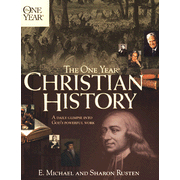
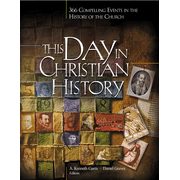
*Adapted from the April 15th entries in This Day In Christian History, edited by A Kenneth Curtis and Daniel Graves, Camp Hill, PA: Christian Publications. And Mike and Sharon Rusten, The One Year Book of Christian History, Carol Stream, IL: Tyndale, 2003.

Dr. James M. Boice on “Whatever Happened To God?”

A Strong Call To Reformation in Our Churches By Dr. James Boice

In any discussion of reformation in doctrine one must come to the realization that the real problem of our time is that there is hardly any doctrine at all to reform. So when we talk about reformation we must focus on a recovery of theology, period. Certainly in the liberal churches there is a lack of exposition of Scripture and sound doctrine, and unfortunately, this is rapidly becoming the case in evangelical circles as well.

Now you might ask which doctrines are missing? I argue that primarily what we need is a recovery of the doctrine of God. You have to have some kind of starting point and that’s the point where I think we should begin. People have lost any real sense of the fact that when we come to church we come to worship and learn about God. Years ago I spoke at a conference and my topic was on a number of the attributes of God. Later I got some feedback from a gentleman who was listening to my presentation. He had been in the church for thirty years, and in fact was now an elder, and that was the first time that he ever heard a series of messages on the attributes of God. And after hearing this his friend asked him, ‘Well, whom did you think you were worshiping all that time?’ But he hadn’t really thought about those things and I’m convinced that we have literally thousands of people in our churches today who really seldom, if ever, think about who it is they are worshiping, if they think about God at all.

Now, I think there are some reasons for this. One reason is the terrible impact of television on our culture which has produced a virtually mindless age. Television is not a medium which shares information well, it is primarily an entertainment medium. It puts pictures on the screen onto which people project their own aspirations and desires, and because it works so powerfully and is so pervasive it has the tendency to transform anything it touches into entertainment, and it does it very quickly. One of the most significant books I’ve read in the last few years in terms of what is actually happening to the mind is Neil Postman’s, Amusing Ourselves to Death: Public Discourse in the Age of Show-Business. It’s not that entertainment itself is bad. But television is most damaging when it tries to be serious. So when you put news on TV, you get brief little sound bites encased in slick images, and this is not really information, it is entertainment.

This happens to politics, it happens to education, and according to Postman, it happens to religion. Postman even raises the question of what one loses when one puts religion on television. It is obvious what there is to gain: a mass audience, money. But what do you lose? He argues you lose everything that is important: tradition, creeds, theology, etc. And he says above all, you lose a sense of the transcendent. And what he means is that you lose a sense of the presence of God. When Christians meet together to worship God, whether it is in a cathedral or a simple chapel, typically there will be prayers and open Bibles for the study of God’s Word. There is a sense that God is present in these activities. And you lose that when religion is put on TV. All you have on television is the picture of the star of the show who is the ‘entertainer.’ Postman says God necessarily, in that kind of medium, comes out second banana. And when the preacher becomes the star of the show he begins to think and act as if he is a Hollywood star then you have the kind of tragedies that we’ve seen in the industry. Postman has a very serious comment at this point. He says, ‘Now, I’m not a theologian and maybe I don’t have the right word for it, but I think the word for it is ‘blasphemy.”

All of this would be irrelevant if it were not for the fact that all this has a significant impact on our churches. So just as God is absent from televised religion, there is tremendous pressure to push him out of our church services in favor of a more upbeat entertainment-oriented Sunday morning visit. We do all kinds of things to fill in that vacuum, but as Augustine said, “we are made for God and our hearts are restless until they rest in him.” In my judgment, we have a hollow core at the heart of evangelicalism, and that is the cause of all the restlessness.

 The Sovereignty of God

If we want to recover the doctrine of God we have to recover the attributes of God, and one attribute that is sorely missing in our time is the attribute of God’s sovereignty. What happens in the Christian world if you don’t give attention to the sovereign God? Human sovereignty comes in to take the true God’s place. Idols always replace the true if the true is not kept there. So you have human beings becoming sovereign in their own estimation in a variety of ways.

Theologically: we are the ones who elect God rather than God electing us.

Programmatically: we are the ones who determine what should be done in our worship rather than following the statements of Scripture.

In this sort of business God gets relegated to the sidelines, we really don’t need him. But really, when you think about it, this is secularism.

I think the best illustration of this in the Bible is the story of Nebuchadnezzar when he stood on the roof of his palace in Babylon and he looked over that magnificent city with its famous hanging gardens and he said, ‘Is not this the great Babylon I have built as the royal residence, by my mighty power and for the glory of my majesty?’ That is probably the best statement in all of literature of what we call secular humanism, because he is claiming that the world he observed was of him, by him and for his own glory. But the sad thing is that it is not just secular humanism, but is becoming ‘evangelical’ humanism as well. If we’re the ones who conceive of what should be done and we’re the ones who accomplish it by our skills, whatever they may be, often without prayer (because we are not a prayerful people), then I guess the glory should go to ourselves. So we find ourselves right back where Nebuchadnezzar was, right around the time God judged him with insanity. And as I look at the evangelical world I’d say a lot of it is insane. In addition, Nebuchadnezzar was driven out to live with the animals to behave in a bestial way. And when I read the polls that tell me that evangelicals behave virtually no different from their secular counter-parts, and I recognize the bestial manner that the world around us is behaving, I think that maybe the judgment of Nebuchadnezzar has come home to us as well.

Fortunately, Nebuchadnezzar got the message. For his final testimony reads:

At the end of that time, I, Nebuchadnezzar, raised my eyes toward heaven, and my sanity was restored. Then I praised the Most High; I honored and glorified him who lives forever. His dominion is an eternal dominion; his kingdom endures from generation to generation. All the peoples of the earth are regarded as nothing. He does as he pleases with the powers of heaven and the peoples of the earth. No one can hold back his hand or say to him: ‘What have you done?’ …Now I, Nebuchadnezzar, praise and exalt and glorify the King of heaven, because everything he does is right and all his ways are just. And those who walk in pride he is able to humble. (Dan 4:34-35, 37)

God is not only able to humble them. He does humble them, and perhaps that ought to be a good starting point for renewal in our churches. We evangelicals need it especially.

The Holiness of God

If there is any doctrine that rivals God’s sovereignty in importance it is the holiness of God. But do we have any sense or appreciation of the holiness of God in our churches today? David Wells writes that God’s holiness weighs ‘lightly upon us.’ Why? Holiness involves God’s transcendence. It involves majesty, the authority of sovereign power, stateliness or grandeur. It embraces the idea of God’s sovereign majestic will, a will that is set upon proclaiming himself to be who he truly is: God alone, who will not allow his glory to be diminished by another. Yet we live in an age when everything is exposed, where there are no mysteries and no surprises, where even the most intimate personal secrets of our lives are blurted out over television to entertain the masses. We are contributing to this frivolity when we treat God as our celestial buddy who indulges us in the banalities of our day-to-day lives.

Perhaps the greatest problem of all in regard to our neglect of God’s holiness is that holiness is a standard against which human sin is exposed, which is why in Scripture exposure to God always produces feelings of shame, guilt, embarrassment and terror in the worshiper. These are all painful emotions, and we are doing everything possible in our culture to avoid them. One evidence of this is the way we have eliminated sin as a serious category for describing human actions. Karl Menninger asked the question years ago with his classic book, Whatever Became of Sin? He answered his own question by arguing that when we banished God from our cultural landscape we changed sin into crime (because it is now no longer an offense against God but rather an offense against the state) and then we changed crimes into symptoms. Sin is now something that is someone else’s fault. It is caused by my environment, my parents or my genes.

But once again, this is not simply a problem outside the church. We too have bought into today’s therapeutic approach so that we no longer call our many and manifold transgressions sin or confront sin directly, calling for repentance before God. Instead we send our people to counselors to work through why they are acting in an ‘unhealthy’ manner, to find ‘healing.’

David Wells claims that ‘holiness fundamentally defines the character of God.’ But ‘robbed of such a God, worship loses its awe, the truth of his Word loses its ability to compel, obedience loses its virtue, and the church loses its moral authority.’ It is time for the evangelical churches to recover the Bible’s insistence that God is holy above all things and explore what that must mean for our individual and corporate lives. To begin with we need to preach from those great passages of the Bible in which people were exposed to God’s awe-inspiring majesty and holiness. If nothing else, we need to preach the Law without which preaching the Gospel loses its power and eventually even its meaning.

Reformation in Worship

John R. W. Stott has written a book on some essentials of evangelical religion in which he affirms “that true worship is the highest and noblest activity of which man, by the grace of God, is capable.” But that highlights our weakness, namely, that for large segments of the evangelical church, perhaps the majority, true worship is almost non-existent.

A. W. Tozer, a wise pastor and perceptive Bible student, saw the problem nearly fifty years ago. He wrote in 1948, “Thanks to our splendid Bible societies and to other effective agencies for the dissemination of the Word, there are today many millions of people who hold ‘right opinions,’ probably more than ever before in the history of the church. Yet I wonder if there was ever a time when true spiritual worship was at a lower ebb. To great sections of the church the art of worship has been lost entirely, and in its place has come that strange and foreign thing called the ‘program.’ This word has been borrowed from the stage and applied with sad wisdom to the type of public service which now passes for worship among us.”

It is not unusual to read in books dealing with worship that worship is hard to define, but I do not find that actually to be the case. I think it is very easy to define. The problems-and there are many of them-are in different areas.

To worship God is to ascribe to Him supreme worth, for He alone is supremely worthy. Therefore, the first thing to be said about worship is that it is to honor God. Worship also has bearing on the worshiper. It changes him or her, which is the second important thing to be said about it.

William Temple defined worship very well:

“To worship is to quicken the conscience by the holiness of God,

to feed the mind with the truth of God,

to purge the imagination by the beauty of God,

to open the heart to the love of God,

to devote the will to the purpose of God.”

In defining worship, William Temple also gives us a good description of the true godliness throughout the Christian life.

John H. Armstrong is editor of a journal called Reformation and Revival, and he devoted the 1993 winter issue to worship. In the introduction Armstrong calls what passes for the worship of God today ‘Mc-Worship,’ meaning that worship has been made common, cheap or trivial. What is the problem? Why is so little of that strong worship that characterized past ages seen among us? There are several reasons.

First, ours is a trivial age, and the church has been deeply affected by this pervasive triviality. Ours is not an age for great thoughts or even great actions. Our age has no heroes. It is a technological age, and the ultimate objective of our popular technological culture is entertainment.

I argue that the chief cause of today’s mindlessness is television, as I discussed earlier. Because it is so pervasive-the average American household has the television on more than seven hours a day-it is programming us to think that the chief end of man is to be entertained. How can people whose minds are filled with the brainless babble of the evening sitcoms have anything but trivial thoughts when they come to God’s house on Sundays morning if, in fact, they have thoughts of God at all? How can they appreciate his holiness if their heads are full of the moral muck of the afternoon talk shows? All they can look for in church, if they look for anything, is something to make them feel good for a short while before they go back to the television culture.

Second, ours is a self-absorbed, man-centered age, and the church has become sadly, even treasonously, self-centered. We have seen something like a Copernican revolution. In the past true worship may not have taken place all the time or even often. It may have been crowded out by the ‘program,’ as Tozer maintained it was in his day. But worship was at least understood to be the praise of God and to be something worth aiming at. Today we do not even aim at it, at least not much or in many places.

Pastor R. Kent Hughes, the former Senior Pastor of the College Church in Wheaton, is on target when he says, “The unspoken but increasingly common assumption of today’s Christendom is that worship is primarily for us-to meet our needs. Such worship services are entertainment focused, and the worshipers are uncommitted spectators who are silently grading the performance.”

From this perspective preaching becomes a homiletics of consensus-preaching to felt needs-man’s conscious agenda instead of God’s. Such preaching is always topical and never textual. Biblical information is minimized, and the sermons are short and full of stories. Anything and everything that is suspected of making the marginal attender uncomfortable is removed from the service, whether it be a registration card or a ‘mere’ creed. Taken to the nth degree, this philosophy instills a tragic self-centeredness. That is, everything is judged by how it affects man. This terribly corrupts one’s theology.

As I have been arguing all along, we are oblivious to God. In recent years, as I have traveled around the country speaking in various churches, I have noticed the decreasing presence and in some cases the total absence of service elements that have always been associated with the worship of God. These desperately need to be recovered.

Whatever Happened to Prayer?

It is almost inconceivable to me that something that is called a worship service can be held without any significant prayer, but that is precisely what is happening. I mean really, what do you go to a church service for if it is not to pray? And yet, you can go to evangelical services filled with thousands of people and hear virtually no prayers at all. There is usually a very short prayer at the beginning of the service and another prayer at the time the offering is received. But longer prayers-pastoral prayers-have all but vanished. Whatever happened to the ACTS acrostic in which ‘A’ stands for adoration, ‘C’ for confession of sin, ‘T’ for thanksgiving, and ‘S’ for supplication? Now and then a few supplications are tacked onto the offering prayer, but most all other prayers have been thrown out. How can we say we are worshipping when we do not even pray?

The Reading of the Word

The reading of any substantial portion of the Bible is also vanishing. In the Puritan age ministers regularly read one long chapter of the Old Testament and one chapter of the New Testament in every service. In some services I’ve attended there are no Scripture readings at all, other times it is a reading of only one or two verses. Sometimes it just precedes the sermon and very often it is only a pretext because the sermon has nothing whatsoever to do with the passage. I’m not talking about liberal churches, mind you. I’m talking about the lack of Scripture readings in our evangelical churches. We must again recover the apostle’s command to ‘devote [ourselves] to the public reading of Scripture’ (1Tim. 4:13).

The Exposition of the Word

In this television age of ours, preachers are expected to be charming and entertaining. And so your sermons have to be shortened because people have short attention spans, they are funny if they can be, and you have to eliminate any theological material that would cause people to think, and you most certainly do not bring up negative theological material like sin because that makes people feel uncomfortable. Preachers want to be liked, and in order to be liked today you have to be entertaining. I am reminded of Jesus’ harsh words to the Pharisees about wanting to be popular, seeing the smiles from the folks in the market place. As our Lord said, ‘They have their reward.’ But for pastors who are looking for more than smiles, and parishioners who are looking for more than to have their ears tickled, our Lord gave a very simple explanation of what the exposition of the Word is really all about. ‘You search the Scriptures thinking that in them you have eternal life: yet these are they which testify of me’ (John 5:39). The preaching of God’s Word is about Christ, and him crucified. This central message is food for our souls. But we are settling for junk food.

Confession of Sin

Who confesses sin today-anywhere, not to mention in church as God’s humble, repentant people? It is not happening, because there is so little awareness of both God and sin. Instead of coming to church to admit our transgressions and seek forgiveness, we come to church to be told that we are really all right, we want to be affirmed.

Hymns

One of the saddest features of contemporary worship is that the great hymns of the church are on the way out. They are not gone entirely, but they are going. And in their place have come trite jingles that have more in common with contemporary advertising ditties than the psalms. Now, not all of them are bad and I would even argue that there is a place for some of them, like when you’re having a fun night with the Jr. High. But what place do they have in serious worship? The problem here is not so much the style of the music, though trite words fit best with trite tunes and harmonies. Rather it is with the content of the songs. The old hymns expressed the theology of the church in profound and perceptive ways and with winsome memorable language. Today’s songs reflect only our shallow or non-existent theology and do almost nothing to elevate one’s thoughts about God.

Worst of all are songs that merely repeat a trite idea, word or phrase over and over again. Songs like this are not worship, though they may give the churchgoer a religious feeling. They are mantras, which belong more in a gathering of New Agers than among the worshipping people of the triune God.

Reformation in The Church

The disaster that has overtaken the church in our day in regard to worship is not going to be cured overnight. But we ought to make a beginning, and one way to begin is to study what Jesus said about worship. He had been traveling with his disciples and had stopped at the well of Sychar while the disciples went into the city to buy food. A woman came to draw water and Jesus got into a discussion with her. As the discussion progressed he touched on her loose moral life, revealing his insight into her way of living, and she tried to change the topic by asking him a religious question. ‘Sir,’ she said, ‘I can see that you are a prophet. Our fathers worshipped on this mountain, but you Jews claim that the place where we must worship is in Jerusalem’ (John 4:20).

Jesus’ answer is the classic biblical statement of what worship is all about: ‘Believe me, woman, a time is coming when you will worship the Father neither on this mountain nor in Jerusalem. You Samaritans worship what you do not know; we worship what we do know, for salvation is from the Jews. Yet a time is coming and has now come when the true worshipers will worship the Father in spirit and truth, for they are the kind of worshipers the Father seeks. God is spirit, and his worshipers must worship in spirit and in truth’ (vv. 21-24). There are several important things about this.

First, there is but one true God, and true worship must be of this true God and none other. This is the point of Jesus saying that the Samaritans did not know whom they were worshipping but that the Jews did, that ‘salvation is from the Jews.’ He meant that the true God is the God who had revealed himself to Israel at Mount Sinai and who established the only acceptable way of worshipping him, which is what much of the Old Testament is about. Other worship is invalid, because it is worship of an imaginary god.

We need to think about this carefully because we live in an age in which everyone’s opinion about anything, especially his or her opinion about God, is thought to be as valid as any other. That is patently impossible. If there is a God, which is basic to any discussion about worship, then God is what he is. That is, he is one thing and not another. So the question is not whether any or all opinions are valid but rather what this one true existing God is like. Who is he? What is his name? What kind of a God is he? Christianity teaches that this one true God has made himself known through creation, at Mount Sinai, through the subsequent history of the Jewish people, and in the incarnation, life, death and resurrection of his Son Jesus Christ. In addition, he has given us a definitive revelation of what he is like and what he requires of us in the Bible. So that is the point at which we start. There is one God, and he has revealed himself to us. That is why there can be no true worship of God without a faithful teaching of the Bible.

Second, the only way this one true God can be truly worshipped is ‘in spirit and in truth.’ Jesus was indicating a change in worship when he said this. Before this time worship was centered in the temple at Jerusalem. Every Jew had to make his way there three times annually for the festivals. What took place in the local synagogues was more like a Bible school class than a worship service. But this has been changed. Jesus has come. He has fulfilled all that the temple worship symbolized. Therefore, until the end of the age worship is not to be by location, either in Jerusalem or Samaria, but in spirit and according to the truth of God.

Worship should not be confused with feelings. It is true that the worship of God will affect us, and one thing it will frequently affect is our emotions. At times tears will fill our eyes as we become aware of God’s great love and grace toward us. Yet it is possible for our eyes to fill with tears and for there still to be no real worship simply because we have not come to a genuine awareness of God and a fuller praise of God’s nature and ways.

True worship occurs only when we actually meet with God and find ourselves praising him for his love, wisdom, beauty, truth, holiness, compassion, mercy, grace, power, and all his other attributes.

Reformation in Life

Surveys of contemporary Christian conduct tell us that most Christians do not act significantly different from non-Christian people. This is not surprising since little contemporary preaching teaches anything that might actually make a difference. But we obviously should be different, at least if we take the Bible seriously. Christians are to be the new humanity, a community of those who “love…God, even to the contempt of self’ as opposed to those who ‘love…self, even to the contempt of God” (Augustine).

Where should we start? The scope of this subject is analogous to that of the reformation of the church in doctrine with which this article began. I asked what doctrines needed to be recovered, and I answered ‘all the major doctrines of all the creeds.’ Here I ask, what areas of Christian life and conduct need to be recovered, and the answer is: all areas of life both for ourselves as individuals and the church. We need the Ten Commandments, the Sermon on the Mount and the ethical teaching of the epistles. It is all needed. In short, we need to recover what it means to ‘love the Lord your God with all your heart and with all your soul and with all your mind’ and to ‘love your neighbor as yourself’ since ‘all the Law and the Prophets hang on these two commandments’ (Matt. 22:37-40). We need to live out our faith, not to obtain grace, but because we have obtained God’s grace in Christ.

To God Alone Be Glory

This article began with God, and it is appropriate that it end with God, too, for a recovery of the sense of the reality, presence, will and glory of God is what it is about. It is significant that Paul’s conclusion to the great doctrinal section of the book of Romans ends with a doxology. The last words are: “For from him and through him and to him are all things. To him be the glory forever! Amen (Rom. 11:36).

Moreover, after the closing application section of the letter, the entire epistle ends similarly: “To the only wise God be glory forever through Jesus Christ! Amen” (Rom. 16:27).

I would argue that the reason the evangelical church is so weak today and why we do not experience renewal, though we talk about our need for it, is that the glory of God has been largely forgotten by the church. We are not likely to see revival again until the truths that exalt and glorify God in salvation are recovered. How can we expect God to move among us until we can again truthfully say, ‘To God alone be the glory’?

The world cannot say this. It is concerned for its own glory instead. Like Nebuchadnezzar, it says, ‘Look at this great Babylon I have built by my power and for my glory.’ Arminians cannot say it. They can say, ‘to God be glory,’ but they cannot say, ‘to God alone be glory,’ since Arminian theology takes some of the glory of God in salvation and gives it to man. Even those in the Reformed camp cannot say it if what they are chiefly trying to do in their ministries is build their own kingdoms and become important people on the religious scene. We will never experience renewal in doctrine, worship and life until we are honestly able to say, ‘to God alone be glory’ in all that we do.

To those who do not know God that is perhaps the most foolish of all statements. But to those who do know God, to those who are being saved, it is not only a right statement, it is a happy, true, inescapable, necessary and highly desirable confession.


Author: *James Montgomery Boice, Th.D., (July 7, 1938 – June 15, 2000) was a Reformed theologian, Bible teacher, and pastor of Tenth Presbyterian Church in Philadelphia from 1968 until his death. He is heard on The Bible Study Hour radio broadcast and was a well known author and speaker in evangelical and Reformed circles. He also served as Chairman of the International Council on Biblical Inerrancy for over ten years and was a founding member of the Alliance of Confessing Evangelicals. He is the author of numerous Bible expositions and one of my favorite Systematic Theologies called Foundations of the Christian Faith.

©1996, 1999 Alliance of Confessing Evangelicals

12 Benefits of Attending Church Each Week: By Dr. David P Craig

(1) It shows respect for the best day of the week – the Lord’s Day, the day on which Jesus rose from the dead.

(2) It is a great step toward spiritual growth and Christ-likeness.

(3) It makes you a covenant keeper in your commitment to God and to the local church where you are a member.

(4) It demonstrates your strong support for the future of your church.

(5) It is an excellent example and witness to unbelievers when they see your consistency in church attendance.

(6) It is an encouragement to others in the body when they see how changed and energized you are through Christ and fellowship in His body.

(7) It is an encouragement to the leaders and workers in the church who serve you.

(8) It encourages and pleases God the Holy Spirit who has equipped us to serve in His church.

(9) It provides hope and strength to press on for Christ throughout the week.

(10) It shows a spirit of submission and obedience to God.

(11) It shows love and affection for God by wanting to spend the first day of the week with Him.

(12) It makes the family of God more effective and complete when all the members of the family are present.

(Not to mention all the Biblical references to giving, hearing the preaching of the Word, baptism, participating in the ordinances of baptism and the Lord’s Supper, fellowship, using your spiritual gifts, making disciples, etc.)

Also this is perhaps one of the best reasons I’ve heard from Dr. Paul Tripp: “Why should you go to church this morning? Because corporate worship is designed to counteract the false gospels you hear every day with the true gospel of the Lord Jesus Christ.”

Andrew Duncan’s Last Will And Testament – My How Times Have Changed!

On This Day in Christian History – April 14th – By Mike and Sharon Rusten

“Don’t worry about having enough food or drink or clothing. Why be like the pagans who are so deeply concerned about these things? Your heavenly Father already knows all your needs, and he will give you all you need from day to day if you live for him and make the Kingdom of God your primary concern.” – Matthew 6:31-33

Andrew Duncan was ordained to the Presbyterian ministry in Scotland in 1597, a difficult time to be a Presbyterian. In 1603 James I of England began a campaign to place Anglican bishops over the Church of Scotland, which was Presbyterian. In 1605 Duncan and five other prominent Presbyterian ministers were arrested for defying the king by attending a general assembly of the Church of Scotland in Aberdeen. They were imprisoned for fourteen months and then banished to France. After about six years Duncan was allowed to return to his church in Scotland but soon fell in disfavor again, suffering multiple imprisonments and finally exile.

Once while living in lonely exile, Duncan and his family ran out of food. With his wife in and children in tears, Duncan prayed and then told them that God would provide. After his family went to bed that night, a stranger came to the house and gave Duncan a sack of food for the family. He left without giving his name. Duncan brought the sack to his wife saying, “See what a good Master I serve.”

Andrew Duncan and his family suffered great hardships for their faith, but Duncan remained steadfast. Nearing the end of his life, he wrote his last will and testament:

“I, Andrew Duncan,…set down the declaration of my latter will, concerning these things, which God hath lent me in this world; in manner following,–First, as touching myself, body and soul; my soul I leave to Christ Jesus, who gave it, and when it was lost, redeemed it, that He may send His holy angels to transport it to the bosom of Abraham, there to enjoy all happiness and contentment; and as for this frail body, I commend it to the grave, there to sleep and rest, as in a sweet bed, until the day of refreshment, when it shall be reunited to the soul, and shall be set down at the table with the holy patriarchs, prophets, and apostles; yea, shall be placed on the throne with Christ, and get the crown of glory on my head. As for the children whom God hath given me, for which I thank His Majesty, I leave them to His providence, to be governed and cared for by Him, beseeching Him to be the tutor, curator, and agent, in all their adoes, yea, and a father; and that He would lead them by His gracious Spirit, through this evil world; that they may be profitable instruments…holding their course to heaven, and comforting themselves with the glorious and fair-to-look-on heritage, which Christ hath conquered for them, and all that love Him. Under God, I leave John Duncan, my eldest son, to be tutor to my youngest daughter, Bessie Duncan, his youngest sister, to take a care of her, and to see that all turns go right, touching her person and gear. My executors I leave my three sons, John, William, and David Duncan, to do my turns after me, and to put in practice my directions; requesting them to be good and comfortable to their sisters, but chiefly to the two that are at home, as they would have God’s blessing and mine. As concerning my temporal goods, the baggage and blathrie of the earth, as I have gotten them in the world off God’s liberal hand, so I leave them behind me in the world; giving most humble and hearty thanks unto my heavenly Father for so long and comfortable loan of the same.” – 14th April, 1626

 For Reflection:

How do you regard your possessions? Do you see them as something you own, or do you see yourself as a steward of what God has entrusted to you?

*Mike and Sharon Rusten are not only marriage and business partners; they also share a love for history. Mike studied at Princeton (B.A.), the University of Minnesota (M.A.), Westminster Theological Seminary (M.Div.), Trinity Evangelical Divinity School (Th.M.), and New York University (Ph.D.). Sharon studied at Beaver College, Lake Forest College, and the University of Minnesota (B.A.), and together with Mike has attended the American Institute of Holy Land Studies (now Jerusalem University College). The Rustens have two grown children and live in Minnetonka, Minnesota. This article was adapted from the April 14 entry in their wonderful book The One Year Book of Christian History, Carol Stream, IL: Tyndale, 2003.

*Significant Events on April 14th in Church History:

1521: After landing in the Philippines, Spanish explorer Ferdinand Magellan began giving instruction and baptism to more than 800 Filipinos.

1570: The Consensus of Sendomir unified the Lutherans, Calvinists, and Moravians of Poland.

1950: Mitsuo Fuchida, the Japanese commander who led the World War II attack on Pearl Harbor, converted to Christianity.

1950: Agreement was reached between the Catholic Church and the Communist government of Poland. The agreement included nineteen articles and a protocol.

1951: Bishop Francis X. Ford was arrested by the Chinese Communists as they cracked down on the Church. Accused of espionage and the recruitment of resistance forces, he was executed a few months later. Many other Catholics were arrested this time as well.

*Adapted from This Day In Christian History, edited by A Kenneth Curtis and Daniel Graves, Camp Hill, PA: Christian Publications.

“6 Distinctions Between Israel and the Church” By Floyd H. Barackman

*A Contrast Between the Church and Israel

Covenant theology considers the Church to be the seed of Abraham under the new covenant. Many subscribers of this theology hold that “all prophecies concerning Israel not yet fulfilled and still to be fulfilled must be fulfilled in her (the Church), leaving nothing at all of either promise or prophecy for those who are merely descendants of Abraham after the flesh” (Albert Pieters, The Seed of Abraham, Grand Rapids: Eerdmans, 1950, 121). While the apostle Paul identified gospel believers as “the children of Abraham” and “his seed” (Gal. 3:6-7, 29), this does not necessarily mean that saved Gentiles are the patriarch’s actual posterity. Whether Jews or Gentiles, the apostles characterized save people, who are people of the faith (c.p. Eph. 1:1), as beginning to a class of persons with Abraham as their exemplar (Gal. 3:9). In this case, to be a child of someone is to be like him in some way (cp. Matt. 5:45). Consider the following [six] contrasts between the Church and Israel:

(1) Their Constituencies

The Church consists of all saved people from the Day of Pentecost after Jesus’ return to heaven until His return to receive her to Himself (Acts 2; 1 Thess. 4:13-17).

Historically, Israel has consisted of the descendents of Jacob. In the future, the prophetic, true Israel will consist of the elect remnant of these descendants, who will be saved at Jesus’ second coming to earth (Rom. 9; Deut. 30:1-10; Ezek. 36:16-38).

(2) Their Divine Covenant Relationships

The Church is related to God by the new birth (John 1:12-13), based on the new covenant that Jesus mediated by His atoning death (Heb. 8:6; 12:24; 1 Cor. 11:25).

Israel was related to God by the Mosaic covenant (Exod. 19:5), which they broke (Jer. 31:32) by their idolatry (Jer. 3; Hos. 2:1-5; 4:12-13). The elect remnant of Israel will be restored to God, as promised by the new covenant (Jer. 31:31-40; Ezek. 36:21-38).

(3) Their Nuptial Relationships

Being espoused to Jesus (2 Cor. 11:2), all who compose the Church corporately constitute His bride (Eph. 5:23-32).

Having been God’s wife (Jer. 3:14), Israel will be restored to this relationship in the coming earthly kingdom (Isa. 54:1-8; Hos. 2:6-7, 14-23)

(4) Their Inheritances

That of the Church is Jesus and His universal wealth (Eph. 1:3, 11; Rom. 8:17; Heb. 1:2).

That of Israel is the land God promised to Abraham, Isaac, and Jacob (Gen. 15:18; 35:12; Deut. 30:5; Jer. 16:14-15) and its rejuvenation (Isa. 35).

 (5) Their Histories

The Church could not have existed in OT times because of the time and nature of her formation. Her formation did not begin until after Jesus’ return to heaven (Matt. 16:18; Acts 1:5; 2; 11:15). She is being formed by the Holy Spirit’s baptism, a Church Age work (Acts 1:5; 1 Cor. 12:13, 27; Eph. 1:22-23) and is built upon the teachings of the Lord’s apostles and the NT prophets, now recorded in the New Testament, with Jesus as her chief cornerstone (Eph. 2:20).

Israel was a nation from their departure out of Egypt and their receiving the Mosaic Law, c. 1491 B.C. (Exod. 19:1-6) until their final dispersion by the Romans in A.D. 70. She was revived as a nation on May 14, 1948. The divinely elected remnant of her people will be saved at Jesus’ second coming to earth and will continue forever (Jer. 31:36; Amos 9:11-15; Ezek. 37:19-28). See Romans 11:1-6, 11-12, 15-17, 26-27, 30-31 (Note that “All Israel” v. 26, is a synecdoche – a figure of association – for the elect remnant of Israel).

 (6) Their Places in Jesus’ Millennial Kingdom

The Church is presently a part of our Lord’s nonpolitical, spiritual kingdom (Col. 1:13). As His wife, she will also have a nonnational place in His earthly, millennial kingdom, with Church members and other saved people ruling with Him (Rev. 2:26-27).

Israel will be the foremost nation in or Lord’s earthly, millennial kingdom (Ps. 47; Isa. 55:5; chap. 60; Zech 8:23; Mal. 3:12). Jerusalem will be the capital of Jesus’ world government (Isa. 24:23; Zech. 14:16-17; Matt. 5:35).

*Floyd H. Barackman (March 20, 1923- September 11, 2007) was Instructor of Systematic Theology at Practical Bible Training School (Now Davis College), Bible School Park, New York, where he taught for twenty-five years. He pastored Calvary Baptist Church in Meadville, Pennsylvania, Grace Baptist Church of Maine, New York. He is the author of numerous Bible study materials as well as How to Interpret the Bible and his very helpful work on Biblical Doctrine entitled Practical Christian Theology (PCT) published in Grand Rapids by Kregel, 2001. PCT is complete, concise, and nontechnical, Barackman’s handy one-volume text explores the great doctrines of our faith, including the Bible, God the Father, the Lord Jesus Christ, God the Holy Spirit, angels, man, sin, and salvation. Easy-to-follow outlines for each chapter organize the material for systematic study. Charts, notes, and subject indexes make this a great reference tool. The article above is adapted from PCTAppendix Q”, 524-525.

Evan Roberts’ – “4 Point Sermon” that Sparked the Last Great Revival

The Last Widespread Revival in America Over 100 Years Ago*

 By Dr. Walter C. Kaiser Jr.

Just over one hundred years ago, a college student in Wales named Evan Roberts, aged twenty-six, obtained permission to leave college to return to his home village of Lougher to preach his first sermon. Seventeen people showed up to listen to his four points (Evan Roberts – pictured on left at the age of 26):

(1) Confess any known sin to God and put away any wrong done to others;

(2) Put away any doubtful habit;

(3) Obey the Holy Spirit promptly; and

(4) Confess Christ openly.

No one could have predicted the nationwide impact that event would have. J. Edwin Orr related that “within three months a hundred thousand converts had been added to the churches of Wales. Five years later a book debunking the revival was published and the main point made by the scholarly author was that of the 100,000 added to the churches, only 80,000 remained after five years (DPC – I’ll take that kind of conversion growth any day! – see J. Edwin Orr, Campus Aflame, Glendale, Calif.: Regal, 1971, 101).

That same revival jumped the ocean and spread to America’s shores and was the last major revival we have seen since 1905.

“Will you not revive us again, that your people may rejoice in you?” – Psalm 85:6

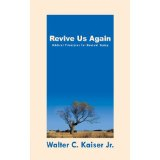
*Walter C. Kaiser Jr. (PhD, Brandeis University) is the distinguished professor emeritus of Old Testament and president emeritus of Gordon-Conwell Theological Seminary in South Hamilton, Massachusetts. Dr. Kaiser has written over 40 books, including Toward an Exegetical Theology: Biblical Exegesis for Preaching and Teaching; A History of Israel; The Messiah in the Old Testament; Recovering the Unity of the Bible; The Promise-Plan of God; Preaching and Teaching The Last Things; and coauthored (with Moises Silva) An Introduction to Biblical Hermeneutics. Dr. Kaiser and his wife, Marge, currently reside at Kerith Farm in Cedar Grove, Wisconsin. Dr. Kaiser’s website is www.walterckaiserjr.com. This article is adapted from the Preface in his outstanding book Revive Us Again, Nashville, B&H, 1999.

Dr. Tim Keller – On Why People Are Spiritual but not Religious

“Religion-Less Spirituality”

By Dr. Tim Keller*

“Growing numbers of Americans say they are spiritual but not religious,” says Robert Wuthnow in After Heaven, his assessment of American spiritual development since 1950.

It is a spirituality without truth or authority but filled with belief in the supernatural. It is a trend born of the modern fears of religion.

The powerful critiques of Freud, Marx, and Nietzsche have penetrated our popular psyche. Freud saw religious performance as a way that guilt-ridden people cleanse themselves and force God to bless them. Marx saw religious principle used by one class of people to oppress another. Neitzsche asserted that anyone claiming to have the truth is making a power play. He asked the powerful: “Why do you call for love? Is it not just a way to keep anyone from revolting against your authority?” He asked the powerless: “Why do you call for justice? Is it not just a way for you to get on top?”

These critiques are powerful because they have the ring of truth. They’re the reasons many who seek spirituality reject religion.

What shall we do then? We must address the real issues of self-righteousness, exclusion, and power-plays. The church must echo Jesus’ own powerful critique of religion and visibly demonstrate the difference between religion and the gospel.

Right word, right time

First, we must do it in word—in our preaching and communication. Even more than Freud, Jesus condemned self-justification through moral performance, at one point claiming that religion was more spiritually dangerous than overt immorality.

Jesus gives us the classic picture of the failure of both religion and irreligion in his parable of the two sons in Luke 15. The elder brother represents the religious leaders; he never disobeys any of the father’s laws. As a result, he tries to control his father and exclude his brother. In the end, he is the one who misses the feast of salvation rather than his profligate brother.

There could not be a more powerful warning: The elder brother is not lost despite his obedience to the father but because of it.

Jesus shows us that the problem is self-justification, the belief that we can win blessing through our virtue. In Luther’s terminology, religion is just another form of works-righteousness, which leads to profound internal instability. We are never sure of our worthiness, yet we need to feel superior to those who do not conform in order to bolster our insecurity.

Following Jesus, we must agree with our critics about the danger of religion, but show them that they are wrong about their solution to it. Secular people see religion as a body of fixed doctrine and ethics that one must adhere to in order to acquire rights to blessing and heaven. They see how often religion leads to self-righteousness, exclusion, and oppression. Modern culture, however, wrongly identifies fixed doctrine (the idea of absolute truth) as the poisonous element.

Both traditional religion and the new spirituality are forms of self-salvation. The religious way of being our own savior leads us to keep God’s laws, while the irreligious way of being our own savior leads us to break his laws. The solution is the gospel.

The gospel shows us a God far more holy than a conservative moralist can imagine—for he can never be pleased by our moral performance. Yet it also shows us a God far more loving than the liberal relativist can imagine—for his Son bore all the weight of eternal justice. His love for us cost him dearly.

Practically speaking, this means in our preaching we must be extremely careful to distinguish between general moral virtue and the unique humility, confidence, and love that flow from the gospel. I’m convinced we must learn carefully from Jonathan Edwards: “An experience of God’s grace is the only basis for ultimate and enduring … true virtue.”

Religion is outside-in; 
the gospel is inside-out.

Edwards says that most virtue is secondary virtue, based on self-love, and therefore on fear (of punishment) and pride (in our superior decency). Edwards appreciates that common morality makes the world a liveable place, but he essentially agrees with Neitzsche that it is really a power play. General moral virtue does not come from a heart that has given up its need to feel superior to others.

Only an experience of grace and free justification can create a heart that does good out of delight in God himself, out of delight in goodness itself, and out of love for our neighbors in themselves. Without the gospel, we can restrain the human heart, but not change the human heart. The gospel calls for repentance over our self-righteousness. The true virtue that results creates an attitude of acceptance toward the poor, the outsider, and the opponent that neither religion nor secularism can produce.

Show me your faith

Second, we must demonstrate the difference between religion and the gospel in our deeds—how we embody the gospel in our community and service. Even more than Marx, Jesus condemned religion as a pretext for oppression: “If you only greet your brothers, what do ye more than others?” (Matt. 5:47).

Lesslie Newbigin makes the bold case that Christianity is a better basis for true tolerance of opposing beliefs than any other religion or even secularism. Saved only by grace, Christians true to the gospel will not feel superior to those with whom they differ.

This must be more than rhetoric. Only when Christians non-condescendingly serve the poor, only when Christians are more firm yet open to their opponents will the world understand the difference between religion and the gospel.

What does this mean practically?

We will be careful with the order in which we communicate the parts of the faith.

Pushing moral behaviors before we lift up Christ is religion. The church today is calling people to God with a tone of voice that seems to confirm their worst fears. Religion has always been outside-in—”if I behave out here in all these ways, then I will have God’s blessing and love inside.” But the gospel is inside-out—”if I know the blessing and grace of God inside, then I can behave out here in all these ways.”

A woman who had been attending our church for several months came to see me. “Do you think abortion is wrong?” she asked. I said that I did. “I’m coming now to see that maybe there is something wrong with it,” she replied, “now that I have become a Christian here and have started studying the faith in the classes.”

As we spoke, I discovered that she was an Ivy League graduate, a lawyer, a long-time Manhattan resident, and an active member of the ACLU. She volunteered that she had experienced three abortions.

“I want you to know,” she said, “that if I had seen any literature or reference to the ‘pro-life’ movement, I would not have stayed through the first service. But I did stay, and I found faith in Christ. If abortion is wrong, you should certainly speak out against it, but I’m glad about the order in which you do it.”

This woman had had her faith incubated into birth our Sunday services. In worship, we center on the question “what is truth?” and the one who had the audacity to say, “I am the truth.” That is the big issue for postmodern people, and it’s hard to swallow. Nothing is more subversive and prophetic than to say Truth has become a real person!

Jesus calls both younger brothers and elder brothers to come into the Father’s arms. He calls the church to grasp the gospel for ourselves and share it those who are desperately seeking true spirituality.

We, of all people, ought to understand and agree with fears about religion, for Jesus himself warned us to be wary of it, and not to mistake a call for moral virtue for the good news of God’s salvation provided in Christ.

Tim Keller is pastor of 
Redeemer Presbyterian Church
New York, New York
RPCNYC@aol.com 

*DR. TIMOTHY KELLER was born and raised in Pennsylvania, and educated at Bucknell University, Gordon-Conwell Theological Seminary, and Westminster Theological Seminary. He was first a pastor in Hopewell, Virginia. In 1989 he started Redeemer Presbyterian Church in Manhattan with his wife, Kathy, and their three sons. Today, Redeemer has more than five thousand regular attendees at five services, a host of daughter churches, and is planting churches in large cities throughout the world. He is the author of KING’S CROSS, COUNTERFEIT GODS, THE PRODIGAL GOD, and the New York Times bestseller THE REASON FOR GOD & the forthcoming CENTER CHURCH (August 2012).

ARTICLE ABOVE Copyright © 1999 by the author or Christianity Today/Leadership Journal, Friday, October 1, 1999.


On April 13, 1742 The World First Heard Handel’s Masterpiece – “Messiah”

 On This Day in Church History – April 13th

At twelve noon on this day in 1742, the world first heard the lovely strains of the overture of the most famous oratorio ever written. There has not been a year since then that George Frederick Handel’s Messiah, with its memorable arias and majestic choruses, has not been performed in a concert hall somewhere.

The performance took place in Dublin, in the Fishamble Street Musick Hall (Original spellingentrance today pictured at right). Dubliners received it with enthusiasm. The Dublin Gazette wrote, “The best judges allowed it to be the most finished piece of music,” and “Words are wanting to express the exquisite delight it afforded.” Two years later, annual performances were established in Dublin. London, however, did not receive the oratorio as readily. Because of criticism, it did not catch on in the capital until 1749.

Handel had turned to oratorios, most of them on religious themes, only after he could not make go of opera with his English audiences. Messiah was special even within the genre of oratorio. Handel deliberately wrote it so that it could be performed by as few as four singers with strings, continuo (bass line played by keyboard or stringed instrument), two drums and two trumpets.

The idea was to produce a work that could be staged almost anywhere. This was a great boon to Handel, who was often near destitution. A piece like Messiah, which could be performed by small ensembles, offered more than the usual number of opportunities to raise desperately needed cash.

Charles Jennens pulled together the text of Messiah from fragments of Scripture relating to Christ. The power of the Scriptures comes by laying them forth almost as translated (he used more than one translation where it suited his purpose), joining them so that they built on and clarified one another without comment. Old and New Testament passages that belonged together were put side-by-side.

Where Jennens modified passages, he did so to make them scan better and to keep the texts in the third person throughout. Handel, who claimed to know the Bible as well as any bishop, made a few alterations himself. Jennens, a devout Anglican, intended through his lebretto to challenge the Deists, who denied Christ’s divinity: “And His name shall be called, Wonderful, Counselor, the Mighty God, the Everlasting Father, the Prince of Peace.”

He certainly succeeded in presenting the challenge, for Messiah portrays Christ as son of God, the fulfillment of prophecy, Savior of the world and coming King.  John Newton (author of the hymn “Amazing Grace”), slaver turned Anglican clergyman, preached fifty sermons on the text. Although Newton preached his series as a rebuke to those who glorified the music to those who glorified the music above God’s Word, he said the piece covered all the principle truths of the gospel. That Jennens fused the words together without once backtracking or repeating a passage demonstrates a great deal of perfectionism.

Handel brought the whole to a magnificent completion, writing the work in twenty-three fervent days despite already suffered a stroke. The music often rises to great loveliness and power. Passion builds until the climactic Hallelujah chorus: “Hallelujah, Hallelujah, for the Lord God Omnipotent reigneth.” Of the chorus, Handel said in his broken English, “I did think I did see all heaven before me and the great God Himself!” [DPC – If only modern composers could say the same of their music!]


 *Significant Events on April 13th in Church History:

 799: Paulus Diaconis, a monk, died. Diaconis was called to Charlemagne’s court, where he complied a book of homilies from the Church fathers that received wide circulation throughout the empire. He prepared an accurate and useful history of the Lombards and wrote other historical works.

1055: Victor II, a reform-minded pope, was enthroned. Holy Roman Emperor Henry II opposed his friend’s election because he didn’t want to lose Victor as a counselor.

1059: In an attempt to normalize papal elections, Pope Nicholas II issued a decree limiting elections to cardinals.

1598: King Henry IV, whose mother, Jeanne d’ Albret, was a prominent French Protestant (Huguenot), issued an edict in Nantes granting toleration to the Huguenots.

1829: In an Emancipation Act, the English Parliament granted freedom of religion to Roman Catholics after 200 years of suppression. Within a few weeks, a Catholic was elected to Parliament.

1950: Monasteries and convents in Czechoslovakia were attacked by communists this night and their monks and nuns were carted off.

1986: Pope John Paul II visited a synagogue in Rome as a goodwill gesture toward Jews. His visit was the first recorded incident of a pope visiting a Jewish house of worship.

*Adapted from This Day In Christian History, edited by A Kenneth Curtis and Daniel Graves, Camp Hill, PA: Christian Publications.

How Would You Like to Have “A New Life?” By C. John Miller

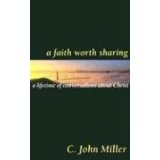
(Presented by C. John Miller in A Faith Worth Sharing)

Have you ever felt there was something missing in your life? Something important but you didn’t know what? That may be the new life God wants you to have. A life of joy, peace, and fulfillment. A life…which you can receive today. Carefully consider these Five Important Facts…and find out how you can get that new life and become a brand-new person.

FACT 1 – A loving God sent His Son Jesus into the world to bring you a new and abundant life.

Jesus said, “If anyone thirsts, let him come to me and drink. Whoever believes in me, as the Scripture has said, ‘Out of his heart will flow rivers of living water” (John 7:37b-38).

Jesus also said concerning those He loves, “I came that they may have life and have it abundantly” (John 10:10b).

This new life brings you the fruit of the Spirit: “love, joy, peace, patience, kindness, goodness, faithfulness, gentleness, and self-control (Galatians 5:22).” It also gives POWER!

God’s Holy Spirit gives you the power to overcome…feelings of loneliness, stress, fear of people and the future (1 John 4:18).

And the power to break habits like…selfishness, depression, uncontrolled anger, prejudice, sexual lust, overeating, overdrinking, and drug abuse (1 Corinthians 6:9-11).

But Why Are So Many People Without This New Life?

FACT 2 – Because…people are self-centered, not God-centered.

This means that by nature you are spiritually dead and deceived (Ephesians 2:1a: “You were dead through your trespasses and sins.”

TO BE SPIRITUALLY DEAD AND DECEIVED is to be centered on yourself and not on your Creator, and to believe…

A BIG LIE

People show this, according to Romans 1:21-31 by being…unthankful to God, perverted, greedy, jealous, bitter, proud, mean, devious, and foolish.

Since man’s first sin. He has tried to be INDEPENDENT of God. Actually each human being is entirely DEPENDENT on God for breath, food, health, shelter, physical and mental abilities. THE BIG LIE: SELFISH INDEPENDENCE: self-trust, self-boasting, self-reliance, self-analysis, self-hating, self-seeking.

FACT 3 – Self-centered man is separated from a holy God by three barriers.

A Bad Record – Romans 3:23, “All have sinned and have fallen short of the glory of God.”

A Bad Heart – Mark 7:21, “From the heart of man come evil thoughts.”

A Bad Master – John 8:34, “everyone who commits sin is a slave to sin.”

The consequences of sin result in eternal separation from God. “The wages of sin is death (Romans 6:23a)…whoever does not obey the Son shall not see life, but the wrath of God remains on him (John 3:36b).”

NOW:

A dry, thirsty, unsatisfied life.

A guilty, accusing conscience (depression, fears, anxiety).

An aging body that must shortly die.

FUTURE:

Loss of friendship and earthly joys forever (Matthew 8:12).

Frightful pains of body and conscience forever (Mark 9:48).

Dreadful thirst of soul and body forever (Luke 16:19-31).

FACT 4 – God’s Solution! No barriers!

A Perfect Record – 1 Corinthians 1:30, “Christ…is made our righteousness.”

A New Heart – Ezekiel 36:25-26, “A new heart I will give you.”

A Good Master – Matthew 11:28-30, “Come to me, all who labor and are heavy laden, and I will give you rest. Take my yoke upon you, and learn from me, for I am gentle and lowly in heart, and you will find rest for your souls. For my yoke is easy and my burden is light.”

“The blood of Jesus, God’s Son, cleanses us from all sin” (1 John 1:7b).

The Benefit of Jesus’ Death…Love’s Biggest Gift

“The free gift of God is eternal life through Christ Jesus” (Romans 6:23b). Jesus, the God-man, is the biggest gift of the Father’s love. On the cross Jesus suffered all the torments of hell as a substitute for His people (John 3:16; 10:15). He was legally condemned by God as their representative, removing the barriers of a bad record, a bad heat, and a bad master. The Father’s love can do no more. Risen from the dead, Jesus now lives to give you a new record, a new heart, Himself as a new master—and the free gift of eternal life now!

You Need to Make Sure

God says you either have a NEW LIFE or you are a lawbreaker DEAD in your self-centeredness. Are you personally alive or dead? If you are still dead, you need to know…

FACT 5 – How to receive the Lord Jesus into your life…

  1. Turn…In sorrow from your sins: “Seek the LORD while he may be found; call upon Him while He is near; let the wicked forsake his way, and the unrighteousness man his thoughts; let him return to the LORD, that he may have compassion on him, and to our God for he will abundantly pardon” (Is. 55:6-7).
  1. Trust…in Jesus alone to save you:Believe in the Lord Jesus, and you will be saved (Acts 16:31a)…I am the way the truth and the life, no one comes to the Father except through me” (John 14:6).

Repentance is…not our suffering or our good works to earn our salvation, but a turning from our sins to the living God through Jesus Christ.

Trust in the Lord Jesus is…accepting, receiving, and resting on Him alone as the Savior from our sins.

Begin a NEW LIFE

Will you surrender your life to Christ by turning from your self-centered way and trust in Him alone? Here is a guideline to help you confess your sins and come to know God through taking the Lord Jesus Christ as your own personal Savior.

Make this Verbal Profession & Confession of Faith:

“Heavenly Father, I am really a selfish person. I have wanted my own way—not Yours. I have often been jealous, proud, and rebellious. You are my Creator, but I have acted as though I was lord of all. I have not been thankful to You. I have not listened to Your Word the Bible and have not loved Your Son. But now I see that all my sin is against You. I now repent of this evil attitude. I turn from all of my sins and trust that Jesus has shed His precious blood to cleanse me from all my guilt. I now receive Him as mu Savior and the Lord of my life.”

I, ______________, turn from my sins and take Christ as my Lord and Savior. By His help I promise to obey Him in every part of my life.

How Does This New Life Continue? The same way it began—in faith and prayer.

  1. Pray constantly. Prayer is talking to God. Keep doing it all the time. Include in it praise, thanksgiving, confession of sins, petitions for others’ salvation, and requests for help.
  1. Read your Bible. Study your Bible every day. It is the food for your new life and your sure guide. In it you meet Jesus and learn to claim His promises for your life.
  1. Worship with others. Meet with a church where the Bible is taught and obeyed and where Jesus Christ is Lord and Savior.
  1. Witness to others. Tell your friends what Christ has done for you—and wants to do for them. Be tactful and back up your words by improvement in manners and doing deeds of kindness.

World Harvest Mission – 100 West Ave. W960 – Jenkintown, PA 19046-2697