|
Christ-Focus in Proverbs |
Implications from Proverbs |
Hooks from Proverbs |
|
Christ shows us what it means to live wisely. And because of him you are in Christ Jesus, who became to us wisdom from God, righteousness and sanctification and redemption, so that, as it is written, “Let the one who boasts, boast in the Lord.” – 1 Corinthians 1:30-31 |
We become wise when we let our lives be transformed by Christ’s Spirit. “I appeal to you therefore, brothers, by the mercies of God, to present your bodies as a living sacrifice, holy and acceptable to God, which is your spiritual worship. Do not be conformed to this world, but be transformed by the renewal of your mind, that by testing you may discern what is the will of God, what is good and acceptable and perfect.” – Romans 12:1-2 |
How do we go about developing the wisdom that finds its fulfillment in Christ? Do your Christian habits indicate that this is important to you? Why would we want to become like Christ? Is it foolish to live according to biblical guidelines in today’s world? How do you react to movies and television shows that portray Christians as mentally deficient? Do you find it humorous or tragic, and why? |
Book Review – Heralds of the King: Christ-Centered Sermons in the Tradition of Edmund P. Clowney, Edited by Dennis E. Johnson
Sermons that Manifest the Centrality of the Person, Work, and Presence of Christ
One of my greatest concerns in the times in which we are living is seeing more pastors, theologians, and the rank and file Christian allowing cultural pressures to influence them more than the influence of Christ from the Scriptures. As I am currently looking for a church to become a part of I am astounded by how many “protestant” pastors can preach a sermon that neither begins or ends with Christ. As a matter of fact, most of the sermons I’m hearing could be preached by a non-Christian, and in what even passes for “church” God doesn’t even have to show up at all.
I would urge, plead, and even pay preachers to read this book. What people need – including Christians – is more of Jesus – His death, life, teachings, work as Prophet, Priest, and King – in short His person and work. Jesus said that all of the Scriptures pointed to Him (that means all of the Old Testament and New Testament, see John 5 and Luke 24).
In this book we have some excellent examples of former students of Dr. Edmund P. Clowney who preach in the Christ-centered mold. The book has a good balance in that it incorporates sermons from the Law, the Prophets, the Psalms, and Several New Covenant genres. Before each sermon begins there is a brief tribute to Edmund Clowney demonstrating how he influenced the preacher in his pursuit of personally loving Christ and preaching sermons that show us the Savior’s Person and work on our behalf.
In Part 1: “The Law” we have the following sermons –
“Living in the Gap” based on Genesis 17:1-14 by Joseph V. Novenson
“The Girl Nobody Wanted” based on Genesis 29:15-35 by Tim Keller (this is my favorite sermon in the book – it is a masterpiece on how to preach Christ from the Old Testament and how to apply it to our lives in the 21st century)
“Lord and Servant” from Genesis 43 by Brian Vos
“Rock of Ages” based on Exodus 17:1-7 by Julius J. Kim
In Part 2: “The Prophets” we have these sermons –
“Surprising Love:” on 2 Samuel 9 by Charles D. Drew
“Thorns and Fir Trees” based on Isaiah 55:13 by the late Harvie M. Conn
“No Condemnation” from Zechariah 3 by Iain M. Duguid
In Part 3: “The Psalms” we have only one sermon (I would have liked to have had at least two or three from this large section of Scripture including “Lament” and “Praise” genres) –
“Beauty in the Sand” by William Edgar based on Psalm 90
Part 4: “The New Covenant” we have the following sermons –
From Luke 1:5-25 “When God Promises the Impossible” by Dennis E. Johnson
“Soul-Ravishing Sightings” based on Luke 9:28-36 by Joseph F. Ryan
Arturo G. Azurdia III preaches the final sermon in the book based on Hebrews 1:1-3 entitled “The Greatness of God’s Ultimate Word.”
I highly recommend this book for all preachers, and for those who listen to preachers and love Jesus. I would encourage you if you are reading this review, to ask your pastor if he has read this book, and if not, to get him a copy – to encourage him in preaching in a more Christ-centered manner. Christ-centered preaching is hard work. However, when you hear it, or do it – you sense the presence of God in a powerful way. When I started preaching in Christ-centered manner it was as if a huge millstone was taken off my back. I think most preachers want to please God and help their flock from God’s Word – but they have not been well trained in Biblical Theology, or in Christo-centric preaching.
Edmund Clowney and all the preachers represented in this book are preaching to give glory to God and to let their hearers experience Jesus in worship. I think most preachers today are preaching to be liked, and meet felt needs – but no one can meet our needs like Jesus – and what we need more than anything is what these preachers do in this book – lead us to worshipping Jesus!
I constantly find myself when listening to modern preachers asking the question, “Where’s Jesus in this message?” Edmund Clowney always asked, “Where is my Savior?” His primary concern was always to reveal the presence of Christ in all of the Scriptures – since this is what Jesus mandated. I believe that if you ask these questions of yourself, or your preacher and Jesus is nowhere to be found, then it is not “Christian” preaching. What we desperately need today is to hear Jesus speaking to us from the Word of God by the voice of his heralds. All the preachers in this book do a wonderful job of leading us to the presence of Jesus and to worshipping Him.
Other Books that I would recommend to help you in Christo-centric preaching are:
Edmund P. Clowney’s: “Preaching Christ in All of Scripture;” “The Unfolding Mystery: Discovering Christ in the Old Testament;” and “How Jesus Transforms The Ten Commandments.”
Alec Motyer’s “Look to the Rock: An Old Testament Background to Our Understanding of Christ.”
All of Tim Keller’s books (e.g. “King’s Cross” based on his expositions on the Gospel of Mark). And anything by Sidney Greidanus (e.g., “Preaching Christ from the Old Testament”), or Graeme Goldsworthy (e.g.,“Preaching the Whole Bible as Christian Scripture”).
I hope that this movement of Christ-centered preaching continues to spread, and grow and bring about a new reformation of the gospel, and the desperately needed revival that is needed around the globe.
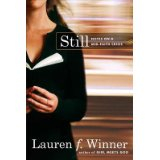
Book Review: Still – Notes On A Mid-Faith Crisis by Lauren F. Winner
Would Be Much More Helpful if Centered on Christ, and Not on Self
Every once in a while I randomly pick a book simply because the topic intrigues me. As a Christian pastor and professional life coach, one of the issues I specialize in is helping Christians transition into what’s been termed as the “new normal.” In other words, what used to be normal in one’s life is gone and lost forever, and for some it becomes a very serious conundrum. What do I do now that I lost my job? My marriage? My kids? My health? My money? And the list and litany of life changing questions demand answers and solutions.
I was hoping that this book would be helpful to me – as a pastor who is transitioning myself – from being a senior pastor – to a life coach; from having five kids at home – to being an empty nester; from having a very comfortable life – to one that is very financially uncertain. As well as a help to those I counsel, disciple, and coach in transition.
The book was interesting, transparent and authentic, well written, worth reading, but in the final analysis – unhelpful and leaves you without the hope that we are offered in Jesus Christ. The most disappointing thing to me was the that the writer never really arrives at answers, nor the hope, and help of the gospel that is found in Jesus Christ. She finds her “answers” in the community of faith, poetry, daily meanderings to varied places, and various encounters with strangers.
Winner drew me in to her world and when I finished the book I wanted to help her. Instead of helping me, I was drawn to come alongside her as a friend, counselor, pastor, and coach. Her understanding of what it means to have a relationship with Jesus appears to be much like that of a teenager trying to get into the “cool” group of peers. I believe that Lauren is sincere, smart, a very talented writer, but she appears to be directionless and lost – and a lost person who has no directions – is ill equipped to genuinely help people who are “lost and directionless.”
I can sympathize and empathize with Winner. I like her – I think we would be good friends. I think she would make a good listener, and empathizer herself. What’s missing is her own security in Christ, in the truth, in the authority of God’s Word, and in the gospel.
The book I would recommend that Winner and anyone else reading this review would devour on the topic Winner addresses is Paul David Tripp’s book “Lost in the Middle: Midlife and the Grace of God.” Whether you are in mid-life or mid-faith crises, Tripp’s book wonderfully articulates the realities of sin, redemption, reconciliation, and redemption in such a way that you can find real grace, hope, and solutions by putting your trust in Jesus Christ and in Him alone for your salvation, and sanctification – resulting in significance, present and eternal security, and life long solutions – for the “new normals” of your life.
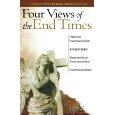
Booklet Review: Four Views of the End Times by Timothy Paul Jones
Comprehensive and Concise Primer on End Time Events
There are so many differing views and interpretations related to Biblical prophecy and the end times. Dr. Jones has provided a great service to the church by providing a clear, short, and very complete guide to the key Bible passages, definition of terms, key views, and the strengths and insights on four of the most popular views on the end times: Dispensational Premillennialism, Historical Premillennialism, Amillennialism, and Postmillennialism and objectively gives the answers the following questions for each view:
What does this view emphasize?
What does this view teach according to the main proponents (historically and modern) of the view?
What Scriptures are used to support this view?
When has this particular view been popular in church history?
Who are the most prominent Biblical Scholars (past and current) who hold to this particular view?
How does this particular view interpret the book of Revelation?
There is also a printable PDF available that charts each particular view, as well as a concluding section that answers how each of the four views answer the following crucial questions related to the end times:
Will Jesus return physically?
When will Jesus return?
Do the rapture and second coming occur at the same time?
Will there be a great tribulation?
Will Christians suffer during the tribulation?
Will there be a literal 1,000-year millennium?
Who is saved during the millennial period?
When was this particular view most held historically?
If you are looking for an objective, concise, and comprehensive overview of the end time views – this is a great place to start. I especially recommend this little booklet for people who have never studied “eschatology” (the study of the end times) before. It will be a good objective guide for you to see the “big picture” and then be able to hone in on more specific studies related to eschatology when you see the major players (scholars) that hole to the particular views, so you can do more study on your own.
The “Jesus Focus” in the Psalms
|
Christ-Focus in Psalms |
Implications from Psalms |
Hooks from Psalms |
|
Christ is the embodiment and means for our appropriate response to the Great King. “He is the image of the invisible God, the firstborn of all creation, in heaven and on earth, visible and invisible, whether thrones or dominions or rulers or authorities—all things were created through him and for him. And he is before all things, and in him all things hold together. And he is the head of the body, the church. He is the beginning, the firstborn from the dead, that in everything he might be preeminent. – Colossians 1:15-18
|
We can talk to God about everything as we grow in the unbreakable relationship with the Father that Jesus secured for us. “do not be anxious about anything, but in everything by prayer and supplication with thanksgiving let your requests be made known to God. And the peace of God, which surpasses all understanding, will guard your hearts and your minds in Christ Jesus.” – Philippians 4:6-7 |
Is your faith strong enough for you to be honest with God? Are you trying to hide things from him? Do you share only the joyful and happy parts of your life with God, or also the darker parts of doubt, fear, and sadness? Is there room in your faith community for you to express these feelings? How would you rate the communication in your faith community’s relationship with God? What is your motivation for prayer? Do you primarily want God to give you things or do things for you, like some great cosmic concierge? Or do you want to open up your life to God as you get to know him better? Have you spent some time lately thanking God for your relationship with Him, which cost Him so much to bring about?
|
Book Review – Jan Karon’s Mitford Years: The First Five Novels
Finally – All Together in One Volume!
I first read this series of books about a decade ago while I was (at that time) a solo pastor in a setting much like the central character in the series – “Father Tim.” Father Tim is the beloved rector of an Episcopal church in the small town of Mitford. In the series you are introduced to wonderful characters that you will recognize with different names from your own life. It’s sort of a “Pollyanna” type setting that will bring you to joy, laughter, sadness, and tears, and will take you on a journey where you are whisked into the arms of your loving Savior.
I would say that this is definitely my favorite series of novels by far. Jan Karon has a way of writing that takes your imagination away into Mitford and allows you to experience the stories as if you were really there. I recommend that you read this series while on vacation if possible, but if you can’t get away – you will feel like you are on vacation when you read this series. I think that Karon has a very good grasp of grace and redemption and conveys these great theological truths in the characters of these books in a wonderful way. Reading Karon will enlarge your view of God’s love, and how He sovereignly works in the lives of individuals to carry out His purposes. You will have a greater appreciation of the “church” and an enlarged worldview of all things theological via reading these books.
The best compliment I can give of Karon’s Mitford series is that in reading them you will be relaxed by her stories. She has a way of writing that calms and takes away your anxiety. You are truly able to bask in the realities of a world that truly is controlled by a loving God – even when you don’t see or understand it. These books are filled with stories that soothe the soul and bring hope into how you can make a difference in the lives of those around you for the sake of Christ and His glory.
The “Jesus Focus” in the Book of Esther
|
Christ-Focus in Esther |
Implications from Esther |
Hooks from Esther |
|
The Father provides Christ to deliver His people “when the set time had fully come.” “But when the fullness of time had come, God sent forth his Son, born of woman, born under the law, to redeem those who were under the law, so that we might receive adoption as sons.” – Galatians 4:4-5
|
As Christ’s ambassadors, we have been providentially provided to proclaim deliverance through him to those who are perishing. “Therefore, we are ambassadors for Christ, God making his appeal through us. We implore you on behalf of Christ, be reconciled to God. For our sake he made him to be sin who knew no sin, so that in him we might become the unrighteousness of God.” – 2 Corinthians 5:20-21 |
What does it mean to be Christ’s ambassador? What does an ambassador do? Do you speak to others in the King’s name and authority or in your own? How does your worshiping community work together to make the good news known? How could you be an agent of God’s deliverance in the place where he has put you? What are the ways you could make the good news known to those who are perishing? How far are you willing to go to be used by God to bring about the deliverance of his people?
|
The “Jesus Focus” in the Book of Job
|
Christ-Focus in Job |
Implications from Job |
Hooks from Job |
|
Christ gives us the ultimate picture of the righteous sufferer as he accomplishes God’s saving purposes. “For Christ also suffered once for sins, the righteous for the unrighteous, that he might bring us to God, being put to death in the flesh but made alive in the spirit” – 1 Peter 3:18
|
We can believe that God is with us even during the hard times, just as he was with his own Son. “Beloved, do not be surprised at the fiery trial when it comes upon you to test you, as though something strange where happening to you. But rejoice insofar as you share Christ’s sufferings, that you may also rejoice and be glad when his glory is revealed. If you are insulted for the name of Christ, you are blessed, because the Spirit of glory and of God rests upon you. But let none of you suffer as a murderer or a thief or an evildoer or a meddler. Yet if anyone suffers as a Christian, let him glorify God in that name. For it is time for judgment to begin at the household of God; and if it begins with us, what will be the outcome for those who do not obey the gospel of God? And if the righteous is scarcely saved, what will become of the ungodly and sinner? Therefore let those who suffer according to God’s will entrust their souls to a faithful Creator while doing good.” – 1 Peter 4:12-19 |
Where is God when it hurts? Are pain and suffering always bad? Was God wrong for allowing His own Son to suffer? What is the ultimate cause of suffering? Do you believe that God knows what He is doing? When things go the way you want, does that mean God is blessing you? Does the lack of any suffering mean that you are living a godly life?
|
The “Jesus Focus” in Nehemiah
|
Christ-Focus in Nehemiah |
Implications from Nehemiah |
Hooks from Nehemiah |
|
Christ’s true home (and that of His disciples) is not of this world. “I have given them your word, and the world has hated them because they are not of the world, just as I am not of the world. I do not ask that you take them out of the world, but that you keep them from the evil one.” – John 17:14-15 |
Let the world see what it means to be distinctively Christian. Do not be unequally yoked with unbelievers. For what partnership has righteousness with lawlessness? Or what fellowship has light with darkness? What accord has Christ with Belial? Or what portion does a believer share with an unbeliever? What agreement has the temple of God with idols? For we are the temple of the living God; as God said, “I will make my dwelling among them and walk among them, and I will be their God, and they shall be my people. Therefore go out from their midst, and be separate from them, says the Lord, and touch no unclean thing; then I will welcome you, and I will be a father to you, and you shall be sons and daughters to me, says the Lord Almighty.” Since we have these promises, beloved, let us cleanse ourselves from every defilement of body and spirit, brining holiness to completion in the fear of God.” – 2 Corinthians 6:14-7:1 |
What a difference, if any, does your relationship with Christ make in your marriage, friendships, career, student life, or entertainment choices? Do you regard distinctiveness as God’s own child a source of joy or of disgrace? Is there a visible distinction between your life and that of an unbeliever? Would anyone looking at your life be able to see that you are a believer, or are you a stealth Christian—remaining largely undetected until you drop a gospel bomb? How do you maintain your distinctiveness as a Christian without putting off those who need to hear and see the good news?
|
The “Jesus Focus” in the Book of Ezra
|
Christ-Focus in Ezra |
Implications from Ezra |
Hooks from Ezra |
|
Through Christ, God is building a living a living temple. “So then you are no longer strangers and aliens, but you are fellow citizens with the saints and members of the household of God, built on the foundation of the apostles and prophets, Christ Jesus himself being the cornerstone, in whom the whole structure, being joined together, grows into a holy temple in the Lord. In him you also are being built together into a dwelling place for God by the Spirit.” – Ephesians 2:19-22 |
Let us join God’s construction crew. “According to the grace of God given me, like a skilled master builder I laid a foundation, and someone else is building on it. Let each one take care how he builds upon it. For no one can lay a foundation other than that which is laid, which is Jesus Christ. Now if anyone builds on the foundation with gold, silver, precious stones, wood, hay, straw—each one’s work will become manifest, for the Day will disclose it, because it will be revealed by fire, and the fire will test what sort of work each has done. If the work that anyone has built on the foundation survives, he will receive a reward. If anyone’s work is burned up, he will suffer loss, though he himself will be saved, but only as through fire. Do you not know that you are God’s temple and that God’s Spirit dwells in you? If anyone destroys God’s temple, God will destroy him. For God’s temple is holy, and you are that temple.” – 1 Corinthians 3:10-17 |
What are you building with your life? Are your efforts focused on God’s kingdom or on your own? Are you aware that building of some sort is always going on? Wouldn’t it be better to expend your efforts on something that lasts? What are the tools that God has given you to participate in the building process? What kind of life does this building demand? Have you committed yourself to something that is draining the life from you? Are you happy with how you’ve spent your years? Why not commit yourself to something that infuses you with life?
|