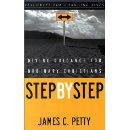
Book Review – Step by Step: Divine Guidance for Ordinary Christians by James C. Petty

Good Pastoral Wisdom For Biblical Decision Making

If you are looking for a non-charismatic, non-traditional, presentation of the wisdom view articulated in a more condensed format than Gary Friesen’s book – “Decision Making and the Will of God” – this book is an excellent choice. Even if you disagree with some of Petty’s conclusions, his understanding of God’s sovereignty and providential working in the Bible, history, and our individual lives is very insightful and exegetically sound.

Some of the helpful statements Petty makes on divine guidance are as follows:

“I believe that guidance comes when you learn to apply the Word of God to your life in the wisdom provided by the Holy Spirit.”

“Knowing God’s will is the fruit of a transformed mind.”

“God, I believe, does far more than reveal his general purposes and then leave us to link ourselves to them or pragmatically calculate the most edifying outcomes”

“Guidance is given by God when he gives us insight into issues and choices so that we make the decisions with divinely inspired wisdom. Guidance comes, in short, by God making us wise.”

“He chooses to guide mediately because of the illuminating power of that Spirit.”

“The Bible, properly understood and applied by the Holy Spirit, is completely sufficient for the guidance of the believer.”

“Guidance is knowledge of the will of God, which comes by wisdom and understanding.”

One of the most helpful sections in the book is in part four where he delineates seven ways to apply biblical wisdom in the process of decision-making. There is a very solid emphasis on obeying the delineated moral will of God, and when you do that – it’s much easier to narrow our choices and decide. He gives some very practical illustrations of how to handle real life decisions that we all have to make. Petty is very pastoral, and comes across as a wise counselor himself in this book. I highly recommend that you make this one of your top reads as you seek to be wiser in the process of seeking God’s guidance and direction in your life – especially in the “hard” decisions you need to make.

The “Jesus Focus” in The Books of 1& 2 Chronicles by *M. J. Williams

*After my conversion in the U. S. Navy (in a submarine beneath the North Atlantic!), I entered Columbia Bible College, where I received a B.A. (1985). This was followed by an M.A. in Religion at Westminster Theological Seminary (1987) and a Ph.D. in Biblical Studies at the University of Pennsylvania (1999). In 2000, I was ordained in the Christian Reformed Church, and since 1995 have been teaching at Calvin Theological Seminary. I have also taught courses at Westminster Theological Seminary, the University of Pennsylvania, and brief stints in Limuru, Kenya; Donetsk, Ukraine; and Warsaw, Poland. In addition to articles on Old Testament topics in various reference works and academic journals, and contributing to and editing “Mishneh Todah: Studies in Deuteronomy and Its Cultural Environment in Honor of Jeffrey H. Tigay” (2009); I have authored “Deception in Genesis: A Comprehensive Analysis of a Unique Biblical Phenomenon” (2001); “The Prophet and His Message: Reading Old Testament Prophecy Today” (2003); and, most recently, “How to Read the Bible through the Jesus Lens: A Guide to Christ-Focused Reading of Scripture” (2012). My amazing wife, Dawn, and I enjoy hiking and all things outdoors.

 Reading The Bible Through The Jesus Lens in 1&2 Chronicles

From Biblical Book to Biblical Hook

Chart adapted from Dr. Michael James Williams Book

Title for 1&2 Chronicles

1&2 Chronicles: Theme

2 Chronicles 7:17-18

 “Encouragement”

 God encourages postexilic Israel by means of an account of Davidic kings who acknowledge the Lord’s rule.

 “And as for you, if you will walk before me as David your father walked, doing according to all that I have commanded you and keeping my statutes and my rules, then I will establish your royal throne, as I covenanted with David your father, saying, ‘You shall not lack a man to rule Israel.’”

Christ-Focus in

1&2 Chronicles

God encourages us by means of an account of Jesus, in the line of David, who has perfectly done all that the Father has commanded.

 And one of the elders said to me, “Weep no more; behold, the Lion of the tribe of Judah, the Root of David, has conquered, so that he can open the scroll and its seven seals.”

 – Revelation 5:5


Implications from

1&2 Chronicles

 Be encouraged by the fact that Christ has perfectly kept the covenant and accomplished our salvation.

 “For Christ is the end of the law for righteousness to everyone who believes.”

 – Romans 10:4

Hooks from

1&2 Chronicles

 Are you good enough to go to heaven?

Do you behave as though you were?

Do you expect other Christians to behave as though they were?

 If you are relying on your own righteousness (whatever that is) to bring about or maintain your relationship with God, then what do you think Christ’s righteousness accomplished?

 How do you acknowledge the Lord’s rule in your own circumstances?

 Do you regard yourself as a subject of King Jesus?

 If someone watched you during the day, who would they say really ruled your life? Jesus? Public opinion? You?

The “Jesus Focus” in The Books of 1&2 Kings

 Reading The Bible Through The Jesus Lens in 1&2 Kings

From Biblical Book to Biblical Hook

Chart adapted from Dr. Michael Williams Book

Title for 1&2 Kings

1&2 Kings: Theme

2 Kings 17:20

 “Turning Away”

 God expels Israel and Judah from His presence in the Promised Land when their kings turn away from Torah.

 “and the LORD rejected all the descendants of Israel and afflicted them and gave them into the hand of plunderers, until he cast them out of his sight.”  

Christ-Focus in

1&2 Kings

Implications from

1&2 Kings

Hooks from

1&2 Kings

 God turns away from Jesus on the cross as judgment against those who have turned away from him.

 as it is written:

“None is righteous, 

no, not one;

no one understands; no one seeks for God.

 All have turned aside; together they have become worthless; no one does good, not even one.”

 – Roman 3:10-12

 Now from the sixth hour there was darkness over all the land until the ninth hour. 

 And at about the ninth hour Jesus cried out with a loud voice, saying,

 “Eli, Eli, lema sabachani?” that is, “My God, my God, why have you forsaken me?”

 – Matthew 27:45-46

 We need to rely on God’s strength and the encouragement of each other to keep from turning away from the path of life.

 “Take care, brothers lest there be in any of you an evil, unbelieving heart, leading you to fall away from the living God.

 But exhort one another every day, as long as it is called ‘today,’ that none of you may be hardened by the deceitfulness of sin.”

 – Hebrews 3:12-13

 What is your “rule of life?”

 What spiritual disciplines can help you know the life God wants for you in relationship with Him?

What are you more likely to do: what you know is right or what you want to do at the time?

 Have you considered the long-term consequences of your choices?

 What are you doing to guard against turning away from God?

 Are you trying to stay faithful on your own, or are you drawing on the strength of God and His people?

The “Jesus Focus” in 1&2 Samuel

 Reading The Bible Through The Jesus Lens in 1&2 Samuel

From Biblical Book to Biblical Hook

Charts adapted from Dr. Michael Williams Book

Title for 1&2 Samuel

1&2 Samuel: Theme

1 Samuel 2:7-8

 “Exalted and Humbled”

 God exalts the weak and humbles the proud.

 “The LORD makes poor and makes rich; he brings low and he exalts. He raises up the poor from the dust; he lifts the needy from the ash heap to make them sit with princes and inherit a seat of honor. For the pillars of the earth are LORD’s, and them he has set the world.”

Christ-Focus in 1&2 Samuel

Implications from 1&2 Samuel

Hooks from 1&2 Samuel

 God has exalted the humbled Christ.

 “Have this mind among yourselves, which is yours in Christ Jesus, who, though he was in the form of God, did not count equality with God a thing to be grasped, but made himself nothing, taking the form of a servant, being born in the likeness of men. And being found in human form, he humbled himself by becoming obedient to the point of death, even death on a cross. Therefore God has highly exalted him and bestowed on him the name that is above every name, so that at the name of Jesus every knee should bow, in heaven and on earth, and every tongue confess that Jesus Christ is Lord, to the glory of God the Father.

 – Philippians 2:5-11

 We should serve God in humility while we await our exaltation in Christ.

 “Humble yourselves before the Lord, and he will exalt you.”

–       James 4:10

 “Humble yourselves, therefore, under the mighty hand of God so that at the proper time he may exalt you.” –       1 Peter 5:6

 What have you bragged about lately?

 Do you consider humility a weakness or a strength?

 Do you regard Jesus as weak or powerful?

 Who are some humble people whom you admire?

 Is it harder to come up with names for these people than it is for self-promoting people?

 Does the source of your pride focus on God, or on yourself?

 Where do you turn first when things get tough?

 To whom do you give credit when things go well?

Excellent Article from The Gospel Coalition on Why Christians Should Not Marry an Unbeliever by Kathy Keller

Don’t Take It from Me: Reasons You Should Not Marry an Unbeliever

Over the course of our ministry, the most common pastoral issue that Tim and I have confronted is probably marriages—either actual or proposed—between Christians and non-Christians. I have often thought how much simpler it would be if I could remove myself from the conversation and invite those already married to unbelievers do the talking to singles who are desperately trying to find a loophole that would allow them to marry someone who does not share their faith.

That way, I could skip all the Bible passages that urge singles only to “marry in the Lord” (1 Corinthians 7:39) and not “be unequally yoked” (2 Corinthians 6:14) and the Old Testament proscriptions against marrying the foreigner, a worshiper of a god other than the God of Israel (see Numbers 12 where Moses marries a woman of another race but the same faith). You can find those passages in abundance, but when someone has already allowed his or her heart to become engaged with a person outside the faith, I find that the Bible has already been devalued as the non-negotiable rule of faith and practice.

Instead, variants of the serpent’s question to Eve—“Did God really say?” are floated, as if somehow this case might be eligible for an exemption, considering how much they love each other, how the unbeliever supports and understands the Christian’s faith, how they are soul-mates despite the absence of a shared soul-faith.

Having grown weary and impatient, I want to snap and say, “It won’t work, not in the long run. Marriage is hard enough when you have two believers who are completely in harmony spiritually. Just spare yourself the heartache and get over it.” Yet such harshness is neither in line with the gentleness of Christ, nor convincing.

Sadder and Wiser

If only I could pair those sadder and wiser women—and men—who have found themselves in unequal marriages (either by their own foolishness or due to one person finding Christ after the marriage had already occurred) with the blithely optimistic singles who are convinced that their passion and commitment will overcome all obstacles. Even the obstacle of bald disobedience need not apply to them. Only ten minutes of conversation—one minute if the person is really succinct–would be necessary. In the words of one woman who was married to a perfectly nice man who did not share her faith: “If you think you are lonely before you get married, it’s nothing compared to how lonely you can be AFTER you are married!”

Really, this might be the only effective pastoral approach: to find a man or woman who is willing to talk honestly about the difficulties of the situation and invite them into a counseling ministry with the about-to-make-a-big-mistake unequal couple. As an alternative, perhaps some creative filmmaker would be willing to run around the country, filming individuals who are living with the pain of being married to an unbeliever, and create a montage of 40 or 50 short (< 5 minutes) first-hand accounts. The collective weight of their stories would be powerful in a way that no second-hand lecture ever would be.

Three True Outcomes

For the moment, though, here goes: There are only three ways an unequal marriage can turn out, (and by unequal I am willing to stretch a point and include genuine, warm Christians who want to marry an in-name-only Christian, or someone very, very far behind them in Christian experience and growth):

  1. In order to be more in sync with your spouse, the Christian will have to push Christ to the margins of his or her life. This may not involve actually repudiating the faith, but in matters such as devotional life, hospitality to believers (small group meetings, emergency hosting of people in need), missionary support, tithing, raising children in the faith, fellowship with other believers—those things will have to be minimized or avoided in order to preserve peace in the home.
  2. Alternatively, if the believer in the marriage holds on to a robust Christian life and practice, the non-believing PARTNER will have to be marginalized. If he or she can’t understand the point of Bible study and prayer, or missions trips, or hospitality, then he or she can’t or won’t participate alongside the believing spouse in those activities. The deep unity and oneness of a marriage cannot flourish when one partner cannot fully participate in the other person’s most important commitments.
  3. So either the marriage experiences stress and breaks up; or it experiences stress and stays together, achieving some kind of truce that involves one spouse or the other capitulating in some areas, but which leaves both parties feeling lonely and unhappy.

Does this sound like the kind of marriage you want? One that strangles your growth in Christ or strangles your growth as a couple, or does both? Think back to that off-cited passage in 2 Corinthians 6:14 about being “unequally yoked.” Most of us no longer live in an agrarian culture, but try to visualize what would happen if a farmer yoked together, say, an ox and a donkey. The heavy wooden yoke, designed to harness the strength of the team, would be askew, as the animals are of different heights, weights, walk at different speeds and with different gaits. The yoke, instead of harnessing the power of the team to complete the task, would rub and chafe BOTH animals, since the load would be distributed unequally. An unequal marriage is not just unwise for the Christian, it is also unfair to the non-Christian, and will end up being a trial for them both.

Our Experience

Full disclosure: One of our sons began spending time a few years back with a secular woman from a Jewish background. He heard us talk about the sorrows (and disobedience) of being married to a non-Christian for years, so he knew it wasn’t an option (something we reminded him of quite forcefully). Nevertheless, their friendship grew and developed into something more. To his credit, our son told her: “I can’t marry you unless you are a Christian, and you can’t become a Christian just to marry me. I’ll sit with you in church, but if you are serious about exploring Christianity you will have to do it on your own—find your own small group, read books, talk to people other than me.”

Fortunately, she is a woman of great integrity and grit, and she set herself to looking into the truth claims of the Bible. As she grew closer to saving faith, to our surprise our son began growing in his faith in order to keep up with her! She said to me one day, “You know, your son should never have been seeing me!”

She did come to faith, and he held the water when she was baptized. The next week he proposed, and they have been married for two and a half years, both growing, both struggling, both repenting. We love them both and are so grateful that she is both in our family and also in the body of Christ.

I only mention the above personal history because so many of our friends in the ministry have seen different outcomes—children who marry outside the faith. The takeaway lesson for me is that even in pastoral homes, where the things of God are taught and discussed, and where children have a pretty good window on seeing their parents counsel broken marriages, believing children toy with relationships that grow deeper than they expect, ending in marriages that don’t always have happy endings. If this is true in the families of Christian leaders, what of the flock?

We need to hear the voices of men and women who are in unequal marriages and know to their sorrow why it is not merely a disobedient choice, but an unwise one.

Kathy Keller serves as assistant director of communications for Redeemer Presbyterian Church in New York City. She is co-author with her husband, Tim, of The Meaning of Marriage: Facing the Complexities of Commitment with the Wisdom of God.

Is Jesus Christ – Lord, Liar, or a Lunatic? by *C.S. Lewis

This Famous Quote is Taken from The Book “Mere Christianity” – It is perhaps the most famous quote on Jesus outside of the Bible! 

“I am trying here to prevent anyone saying the really foolish thing that people often say about Him: ‘I’m ready to accept Jesus as a great moral teacher, but I don’t accept His claim to be God.’ That is the one thing we must not say. A man who was merely a man and said the sort of things Jesus said would not be a great moral teacher. He would be either a lunatic — on a level with the man who says he is a poached egg — or else he would be the Devil of Hell. You must make your choice. Either this man was, and is, the Son of God: or else a madman or something worse. You can shut Him up for a fool, you can spit at Him and kill Him as a demon; or you can fall at His feet and call Him Lord and God. But let us not come with any patronising nonsense about His being a great human teacher. He has not left that open to us. He did not intend to.” – C.S. Lewis

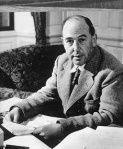
ABOUT CLIVE STAPLES LEWIS

*”Paging through 40 years of Christianity Today . . . one author’s books indisputably affected American evangelicals during this period more than any other. And that author was neither American nor quintessentially evangelical . . . C.S. Lewis.” (Christianity Today 9/16/96). Lewis had an enormous impact on more than a generation of readers who sought “practical wisdom, digestible theology, wit, verve, logic, and imagination.”

Clive Staples (“Jack”) Lewis was born in Belfast, Northern Ireland, on November 29, 1898. Raised in a bookish home, Lewis and his older brother, Warren, were more at home in the world of ideas of the past, than with the real world of the 20th century. Coping with the tragedy of his mother’s death when he was 10, Jack sought refuge in composing stories and studying. The rest of his life might have been a sad search for the security he felt as a child before his mother’s death, if not for the joy he experienced in his conversion to Christianity in September of 1931. After long conversations with J.R.R. Tolkien (a devout Catholic), Lewis records in his spiritual autobiography, Surprised by Joy (1950), “When we [Warren and Jack] set out [by motorcycle to the Whipsnade Zoo] I did not believe that Jesus Christ was the Son of God, and when we reached the zoo I did.”

In 1933, he published his first theological work, The Pilgrim’s Regress, a lively allegory detailing his flight from skepticism to faith and a parody of John Bunyan’s The Pilgrim’s Progress. In a varied and comprehensive career, C.S. Lewis wrote with three very different voices. There was Lewis, the distinguished Oxbridge literary scholar and critic; Lewis, the highly acclaimed author of science fiction and children’s literature; and Lewis, the popular writer and broadcaster of Christian apologetics. Although his most notable critical and commercial success is certainly his seven-volume Chronicles of Narnia, published between 1950 and 1956, he is at his most articulate, and winsome in his theological works: The Problem of Pain (1940), a defense of pain — and the doctrine of hell — as evidence of an ordered universe; and The Screwtape Letters (1942), a senior devil’s correspondence with a junior devil who is fighting Christ the Enemy for the soul of an unsuspecting believer.

During World War II, he emerged as a religious broadcaster and became famous as the “apostle to skeptics.” Mere Christianity is a compilation of his wartime radio essays defending and explaining the Christian faith. C.S. Lewis died on November 22, 1963, a week before his 65th birthday and on the same day President John F. Kennedy was assassinated. His grave is in the yard of Holy Trinity Church in Headington Quarry, Oxford. The headstone bears the inscription from Shakespeare, “Men must endure their going hence.” All who read, both evangelical and skeptic, are richer for Jack Lewis having come.

The “Jesus Focus” in the Book of Ruth

 Reading The Bible Through The Jesus Lens in Ruth

From Biblical Book to Biblical Hook

Charts adapted from Dr. Michael Williams Book

Title for Ruth

Ruth: Theme

Ruth 4:14-15

“Empty to Full”

God uses Ruth and Boaz to fill Naomi’s emptiness by providing her with food and a son.

Then the women aid to Naomi, “Blessed be the LORD, who has not left you this day without a redeemer, and may his name be renowned in Israel! He shall be to you a restorer of life and a nourisher of your old age, for your daughter-in-law who loves you, who is more to you than seven sons, has given birth to him.” 

Christ-Focus in Ruth

Implications from Ruth

Hooks from Ruth

God became flesh in order to be our guardian-redeemer and provide us with fullness of life.

 “The thief comes only to steal and kill and destroy. I came that they may have life and have it abundantly.”

 – John 10:10

We can embrace the fullness of life in Christ.

 (14) For this reason I bow my knees before the Father, (15) from whom every family in heaven and on earth is named, (16) that according to the riches of his glory he may grant you to be strengthened with power through his Spirit in your inner being, (17) so that Christ may dwell in your hearts through faith—that you, being rooted and grounded in love, (18) may have strength to comprehend with all the saints what is the breadth and length and height and depth, (19) and to know the love of Christ that surpasses knowledge, that you may be filled with all the fullness of God. (20) Now to him who is able to do far more abundantly than all that we ask or think, according to the power at work within us, (21) to him be glory in the church and in Christ Jesus throughout all generations, forever and ever. Amen

 – Ephesians 3:14-21

Are the things you are relying on for fulfillment only leaving you empty instead?

 Do you really believe that other people would know how to meet your deepest needs and desires better than the One who created you?

 Isn’t it time for you to choose fullness over emptiness?

 Is your Christ-card maxed out?

 Are you cashing in on all the fullness of life in Christ?

 Do you know the contentment that God wants for you whatever your circumstances may be?

 How could you raise your credit limit?

Book Review: Why Men Hate Going to Church by David Murrow

Weak Theologically, Decent Practically

From the time I started this book, until the time I finished it – I read and reviewed 25 other books. I just couldn’t get into it at all. I think it’s because though the subject is important – Why do more women than men go and participate in church? I think the theological underpinnings of the book were so weak that the book just couldn’t hold my interest. I think he actually totally missed the point of why men don’t go to church, and it’s the same reason why women, or even teenagers don’t go to church – the Bible calls it “idolatry.”

In this book the author spends most of the time giving statistics, talking about the feminization of the church, and issues related to gender, masculinity, and men’s needs.

The book is one that I think most Christians or marketers could have written, and Murrow has capitalized on it. However, I don’t think that he has really given foundational solutions. The solution isn’t just about growing churches by giving men what they want; it’s focusing on the gospel and loving men by applying the gospel to men’s idolatries – what they really need. It’s offering what Jesus offered men and women in the New Testament – the abundant life in Him that’s better than anything the world has to offer. In other words, what difference does it make if you have a lot of men coming to church, but they aren’t being told to repent and have faith in Christ – change from the inside out. You don’t get men into church by feeding their idolatries, but by giving them the gospel and showing how Jesus is better than their idolatries.

On a positive note I do think Murrow gives some good practical suggestions and statistics to spark discussion among pastors or church staffs that are seeking to be effective in their outreach and discipleship of men. Over this book I would recommend the following books for men and reaching men: “Disciplines of a Godly Man” by R. Kent Hughes, “Tender Warrior” by Stu Weber, “No Man Left Behind” and “The Man in the Mirror” by Patrick Morley (anything by Morley on or for Men), “The Masculine Mandate” by Richard D. Phillips, or “Men of God” edited by Trevor Archer and Tim Thornborough.

I received this book free from Thomas Nelson Publishers as part of their BookSneeze.com book review bloggers program. I am under no compulsion to write a positive or negative review of this book. The opinions expressed are exclusively my own. I am disclosing this in accordance with the Federal Trade Commission’s 16 CFR, Part 255.


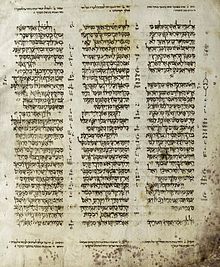
The Amazing Accuracy & Care of the Old Testament Manuscripts

No book in history has been copied as many times with as much care as has been the Word of God. The Talmud lists the following rules for copying the Old Testament.

1) The parchment had to be made from the skin of a clean animal, prepared by a Jew only, and be fastened by strings from clean animals.

2) Each column must have no less than 48 or more than 60 lines.

3) The ink must be of no other color than black, and had to be prepared according to a special recipe.

4) no word nor letter could be written from memory; the scribe must have an authentic copy before him, and he had to read and pronounce aloud each word before writing it.

5) He had to reverently wipe his pen each time before writing the Word of God, and had to wash his whole body before writing the sacred name “Jehovah!”

6) One mistake on a sheet condemned the sheet; if three mistakes were found on any page, the entire manuscript was condemned.

7) Every word and every letter was counted, and if a letter were omitted, an extra letter inserted, or if one letter touched another, the manuscript was condemned and destroyed at once.

The old Rabbi gave the solemn warning to each young scribe: “Take heed how thou dost thy work, for thy work is the work of Heaven; lest thou drop or add a letter of a manuscript and so become a destroyer of the world!”

The scribe was also told that while  he was writing if even a king would enter the room and speak with him, the scribe was to ignore him until he finished the page he was working on, lest he make a mistake!

In fact, some texts were actually annotated–that is, each letter was individually counted! Thus in copying the Old Testament they would note the letter aleph (first letter in the Hebrew alphabet) occurred 42,377 times, the letter beth 38,218 times, and so on.

According to scholars Westcott and Hort, the points in which we cannot be sure of the original words are microscopic in proportion to the bulk of the whole, some 1/1000. This only one letter out of 1580 in the Old Testament is open to speculation.

*This article is from some notes I took in a “Textual Criticism” class taught by Dr. Donald Brake back in the mid 1980’s at Multnomah School of the Bible in Portland, OR.

Dr. J. P Moreland On The Unlikely Formation of Christianity

“The disciples had nothing to gain by lying and starting a new religion. They faced hardship, ridicule, hostility, and martyr’s deaths. In light of this, they could never have sustained such unwavering motivation if they knew what they were preaching was a lie. The disciples were not fools and Paul was a cool-headed intellectual of the first rank. There would have been several opportunities over three to four decades of ministry to reconsider and renounce a lie.”

– Dr. J.P. Moreland of Talbot School of Theology
Scaling the Secular City, pp. 171-172.