The “Jesus Focus” in the Book of Judges

 Reading The Bible Through The Jesus Lens in Judges

From Biblical Book to Biblical Hook

Chart adapted from Dr. Michael Williams Book

Judges Title

Judges: Theme

Judges 2:16-17

 “Rebellion and Rescue”

 God raises up judges to rescue His errant people from the consequences of their rebellion.

 “Then the LORD raised up judges, who saved them out of the hand of those who plundered them. Yet they did not listen to their judges, for they whored after other gods and bowed down to them. They soon turned aside from the way in which their fathers had walked, who had obeyed the commandments of the LORD, and they did not do so.”

Christ-Focus in Judges

Implications from Judges

Hooks from Judges

 God raised up Christ, the ultimate judge, to rescue us from our sin and it’s consequences.

 “O death, where is your victory? O death, where is your sting?.”

 The sting of death is sin, and the power of sin is the law.

 But thanks be to God, who gives us the victory through our Lord Jesus Christ.”

 – 1 Corinthians 15:55-57

 By the power of the Spirit of Christ, we may count ourselves dead to sin but alive to God in Christ Jesus.

 “So you also must consider yourselves dead to sin and alive to God in Christ Jesus.

 Let not sin therefore reign in your mortal body, to make you obey its passions.

 Do not present your members to sin as instruments for unrighteousness, but present yourselves to God as instruments for righteousness.

 For sin will have no dominion over you, since you are not under law but under grace.”

 – Romans 6:11-14

 Are you overcoming the world, or do you feel like the world is overcoming you?

 What aspects of life do you believe are richer outside of your relationship to God?

 What might you be relying on for victory instead of Christ?

 In what areas are you most in need of divine rescue?

 To what temptations are you particularly drawn?

 How can you realize God’s deliverance over these?

 What steps can you take preventing you from relapsing?

The “Jesus Focus” in the Book of Joshua

 Reading The Bible Through The Jesus Lens in Joshua

From Biblical Book to Biblical Hook

Charts adapted from Dr. Michael Williams Book

Joshua Title

Joshua: Theme

Joshua 11:23

 “Victorious Rest”

 God uses Joshua to lead his people to victorious rest in the Promised Land

 “So Joshua took the whole land, according to all that the LORD had spoken to Moses. And Joshua gave it for an inheritance to Israel according to their tribal allotments. And the land had rest from war.” 

Christ-Focus in Joshua

Implications from Joshua

Hooks from Joshua

 Christ brings His people victory over the challenges of this life.

“I have said these things to you, that in me you may have peace. In the world you will have tribulation. But take heart; I have overcome the world.”


 – John 16:33

 We may now serve God confidently in the power of the Spirit of the one who fulfills the law, without fear of the penalty of the law.

 “Blessed be the God and Father of our Lord Jesus Christ!

According to his great mercy, he has caused us to be born again to a living hope through the resurrection of Jesus Christ from the dead, to an inheritance that is imperishable, undefiled, and unfading, kept in heaven for you, who by God’s power are being guarded through faith for a salvation ready to be revealed in the last time.”

 – 1 Peter 1:3-5

 What battles are you fighting today?

 Did Jesus have battles to fight?

 Where do you look for strength?

 How do you keep your focus on Jesus who is the only one who can bring about victory for you?

 What counts as victory?

 Is the rest you seek the same as that of those who don’t know God?

 How do you know when you have the rest that God intends for you?

Book Review: The Holy Trinity by Robert Letham

The Complex Made Simpler

One of the long standing “cardinal” doctrines of Orthodox Christianity is the teaching that God is one in essence and three in person, and yet it is one of the most difficult of doctrines to comprehend of the whole lot. Robert Letham writes, “For the vast majority of Christians, including most ministers and theological students, the Trinity is still a mathematical conundrum, full of imposing philosophical jargon, relegated to an obscure alcove, remote from daily life.”

However, due to this lack of understanding and grappling with the ramifications of this doctrine most Christians view God in the abstract and as a result have a detached and almost deistic relationship with the God of the Bible who is actually transcendent and immanent in our world. In this book the author seeks to bring about a new revitalization to the church and its witness to the world by having a deeper understanding of the Triune God as revealed in the Scriptures.

In this very cogent book Dr. Letham seeks to give a broad overview of the Triune doctrine by canvassing the Scriptures, church history, modern discussions with contemporary theologians of the past few centuries (their orthodox and unorthodox views), and Critical Issues – including the incarnation, worship, prayer, missions, and union with Christ.

This book is a challenging read, but I think Dr. Letham maintains a good balance between the scholarly aspects of the discussion and its practical applications – which ultimately lead us to worship. Many of the chapters end in prayer and focus on actually worshipping God, not just discussing Him. Two excellent articles reviewing books by Gilbert Bilezikian and Kevin Giles on the Trinity conclude the work as appendixes. A helpful glossary and bibliography conclude the work.

I am grateful to the Triune God of Scripture for Dr. Letham’s excellent contribution to theological reflection in this book. It is a readable and comprehensive study of the doctrine of the Trinity in the unfolding revelation of the Bible, in its breadth of reflection from church history, amid the loci of influential systematic theologians, and in the life and application of the evangelical community. I think anyone will benefit from reading this book. It will definitely sharpen your understanding of the Triune God we worship and inform and influence the way you relate to Him in your daily life.

How Then Should We Choose? Three Views on God’s Will and Decision Making edited by Douglas S. Huffman

Balanced and Helpful Discussion of God-Centered Decision-Making

One of the most practical things we can learn as Christians is to know how God’s revelation in the Scriptures, the guidance of the Holy Spirit, and our walk with Christ help us to make decisions that are well-pleasing to God. This thought provoking multi-view book contains three distinct and sometimes overlapping views on how to know and do God’s will. This book is “about Christians making decisions in the light of God’s guidance, that is, in accordance with God’s will…and encouraging Christians toward greater freedom in their decision-making responsibilities to the glory of God who is with us.”

The strategy of this book is that each writer presents his view using biblical, historical, personal, and various practical articulations of it. At the end of each presentation the writer shows the practical ramifications of their view by articulating how they would advise people in seeking out God’s will and make the best decisions possible with reference to three case studies:

Case 1: A Career/College Decision

Case 2: A Relationship Decision

Case 3: A Stewardship Decision

The three views presented are as follows:

View #1 – The Specific-Will View – This view is presented by Henry (earned a ThM and BD from Golden Gate Baptist Seminary & has received four honorary doctorates) and his son Richard Blackaby (PhD in church history from Southwestern Baptist Theological Seminary).

The essence of this view as articulated by the Blackaby’s is this: “We have presented what some call the traditional view of God’s will. Simply put, it holds that God does have a specific will for your life and He will guide you to find it.”

View #2 – The Wisdom View – This view is offered by Garry Friesen (ThD from Dallas Theological Seminary and currently teaching at Multnomah University in Portland, OR).

The way of wisdom (in decision making) is summarized in four principles:

(1)  Where God commands, we must obey.

(2)  Where there is no command, God gives us freedom (and responsibility) to choose.

(3)  Where there is no command, God gives us wisdom to choose.

(4)  When we have chosen what is moral and wise, we must trust the sovereign God to work all the details together for good.

View #3 – The Relationship View – This view is articulated by Gordon T. Smith, president of ReSource Leadership International (PhD from Loyola School of Theology).

Gordon T. Smith Summarizes his view in these seven “Working Principles:”

(1) There must be clarity about one’s ultimate allegiance.

(2) It is essential that we attend to what is happening to us emotionally, as the history of the spiritual practice of discernment reminds us.

(3) God leads one step at a time.

(4) We need to sequence our decision making, attending to what needs to be decided first.

(5) We need to be clear about our circumstances.

(6) We need time and space to choose well.

(7) We need accountability – “We need other voices and perspectives, in part because we recognize our capacity for self-deception and rationalization.”

In concluding these seven principles Smith writes, “In all of this, nothing is so pivotal to our capacity to discern well, and then to choose well, as the character and quality of our relationship with Christ.”

I was hoping I would wholeheartedly buy into one of the views presented in this book when I began wrestling with it. After a careful reading I lean toward a blend of the Wisdom and Relational views. I think that Dr. Friesen did the most thorough job of articulating his view – especially with careful exegetical support from the Scriptures, and many practical illustrations of how the “Wisdom View” actually works in decision making. Smith’s “Relational View” was strong in its application of history and in developing a Biblical Theology of Christ and our intimacy with Him in the relational process. I thought the Blackaby’s did a better job in explaining their position and critiquing the other positions in their responses to the Wisdom and Relational Views. However, I was not convinced in any way shape or form that we can know God’s “Specific” will for us – especially in the case studies given.

Douglas S. Huffman (the editor) writes the final two chapters of the book. He does an amazing job of summarizing and articulating the views – their strengths and weaknesses, how they compliment one another, and what can learn from each of them. He also gives a very helpful chart of over 100 books on decision making from the past century and has a geometric way of showing how they are all similar or different to the three views presented in this book. He also makes a very strong case for striving for balance in the positions, and showing how different factors come into play depending on various variables (personality, maturity, emotions, etc.) and circumstances for each individual.

A Christian can’t help but benefiting immensely from reading this book. I highly recommend this book primarily because it is very helpful in at least five specific ways:

1)    Helping you understand the process of decision-making – as opposed to making rash or whimsical decisions. I especially enjoyed the exegetical discussions from the Scriptures and the way each writer demonstrated how the principles from their unique views were used in the very practical case studies.

2)    Seeing the value of each of the writer’s views. I learned something new from each of them – in order to help me better make decisions that are pleasing to God. I was particularly helped in seeing how the emotions, how the Holy Spirit, and our relationship with Jesus are involved in the process of decision-making.

3)    They all did a good job articulating and critiquing one another’s views. It helped me to see that personalities, experiences, education, emotions, spiritual maturity, God’s plans for us, our unique relationship with Him and other elements all play major factors in decision-making – so there is no “one-size-fits-all” process of decision-making that works for all believers across the board. However, various principles and suggestions by each of the writers were very helpful.

4)    It challenged me to continue to read more especially in some of the views that I had not been exposed to before. I witnessed that oftentimes agreement and blending in the various views can help you be more balanced and less rigid in the decision-making process.

5)    I could see how sometimes I’ve made some bad decisions that could have been avoided had I previously read this book (e.g. In the “Relational View” chapter Dr. Smith talked about not making important decisions when you are highly emotional, discouraged or angry). I had a lot of my good decisions confirmed by some of the wisdom shared in this book. I was encouraged that for the most part, I’ve made a lot more good decisions than bad decisions and could see that I have used elements of each author in the process.


The “Jesus Focus” in the Book of Deuteronomy

Reading The Bible Through The Jesus Lens in Deuteronomy

From Biblical Book to Biblical Hook

Charts adapted from Dr. Michael Williams Book

Deuteronomy Title

Deuteronomy: Theme

Deuteronomy 10:12-13

 “Instruction”

 God gives Moses instructions for the second generation of Israel regarding faithful living in the Promised land.

 “And now, Israel, what does the LORD your God require of you, but to fear the LORD your God, to walk in all his ways, to love him, to serve the LORD your God with all your heart and with all your soul, and to keep the commandments and statutes of the LORD, which I am commanding you today for your God?” 

Christ-Focus in Deuteronomy

Implications from Deuteronomy

Hooks from Deuteronomy

Christ perfectly fulfills the law, and so secures our relationship with God.

“Do not think that I have come to abolish the Law or the Prophets; I have not come to abolish them but to fulfill them.”

 – Matthew 5:17

We may now serve God confidently in the power of the Spirit of the one who fulfills the law, without fear of the penalty of the law.

“Likewise, my brothers, you also have died to the law through the body of Christ, so that you may belong to another, to him who has been raised from the dead, in order that we may bear fruit for God. For while we were living in the flesh, our sinful passions, aroused by the law, were at work in our members to bear fruit for death. But now we are released from the law, having died to that which held us captive, so that we serve in the new way of the Spirit and not in the old way of written code.”

– Romans 7:4-6

What drives your relationship with God, fear or gratitude?

Do you want to know your Creator better, or are you just trying to avoid His anger?

Do you view God’s instructions as restrictive or freeing?

How does your view of God affect your answer to the the question?

Who would know best how a human being should live in order to experience life most fully?

Whose effort secures your relationship with God?

Where does the Spirit of Christ dwell?

The “Jesus Focus” in the Book of Numbers

Reading The Bible Through The Jesus Lens in Numbers

From Biblical Book to Biblical Hook

Charts adapted from Dr. Michael Williams Book

Numbers Title

Numbers: Theme

Numbers 14:18

 “Promised Rest”

 God chastens His disobedient people but reaffirms His intent to bring them into the Promised Land.

 “The LORD is slow to anger and abounding in steadfast love, forgiving iniquity and transgression, but he will by no means clear the guilty, visiting the iniquity of the fathers on the children, to the third and fourth generation.” 

Christ-Focus in Numbers

Implications from Numbers

Hooks from Numbers

Because Christ bore the penalty for our sin, we may enter into God’s promised rest.

“For we who have believed enter that rest, as he has said, ‘As I swore in my wrath, ‘They shall not enter my rest,’ although his works were finished from the foundation of the world.” – Hebrews 4:3

We must let God’s discipline guide us to the peace and rest he intends for us.

“And have you forgotten the exhortation that addresses you as sons? ‘My son, do not regard lightly the discipline of the Lord, nor be weary when reproved by him. For the Lord disciplines the one he loves, and chastises every son whom he receives.’ It is for discipline that you have to endure. God is treating you as sons. For what son is there whom his father does not discipline? If you are left without discipline, in which all have participated, then you are illegitimate children and not sons. Besides this, we have had earthly fathers who disciplined us and we respected them. Shall we not much more be subject to the Father of spirits and live? For they disciplined us for a short time as it seemed best to them, but he disciplines us for our good, that we may share his holiness. For the moment all discipline seems painful rather than pleasant, but later it yields the peaceful fruit of righteousness to those who have been trained by it.” – Hebrews 12:5-11

In what ways have you already begun to know God’s rest?

How would you explain this rest to someone else?

Can others see in you a peace, security, and fulfillment in life that they don’t have?

Do you see these things in other believers?

What is keeping you from knowing God’s rest more fully?

What are the biggest challenges in your life that threaten to cause you to forget how great God is?

Where have you turned for rest and fulfillment in life instead of to God?

Are you satisfied with the results of doing that?

Book Review: The Elements of Preaching by Warren W. Wiersbe and David Wiersbe

Very Helpful Primer on the Basics of Preaching

 This helpful handbook by father and son preaching veterans – Warren and David Wiersbe is divided into two sections. There are twenty-six preaching principles and fourteen preaching prohibitions that are developed. Each chapter is only one to two pages in length. They really pack this book in with great quotes, wisdom, and the type of advice that you can only get from preachers that have put a lot of mileage in the pulpit.

In the preaching principles section the Wiersbe’s remind us  “Methods are many, principles are few. Methods always change, Principles never do.” Here are just ten of the twenty-six topics they develop:

Preaching is the communicating of God’s truth by God’s servant to meet the needs of people.

The Preacher is a part of the message.

Preaching is an act of worship.

A sermon must have both intent and content if it is to be effective.

The sermon should be based on the essentials of the text and not the accidentals of the translation you are using.

Build your outline on the unique features of the text.

Keep your preaching within the bounds of what the text says and what the people can receive.

Preach to express, not to impress.

Sermons preached as part of a series must be independent and yet related.

Speak the truth in love.

Never be satisfied with your preaching.

At the end of the book they include a very helpful checklist for “Taking Inventory of the Message:”

  1. Is the message solidly based on Scripture?
  2. Does it exalt the Person and work of Jesus Christ?
  3. Will it meet the needs of the people?
  4. Is the theme a timeless truth worth talking about?
  5. Is the message organized so that I can preach it clearly and the people understand it easily? Is there a concise and clear statement of purpose? Is there a clear plan of development? Is there practical application that makes the message personal?
  6. Are all Scripture references and historical facts accurate?
  7. Is the message real to me personally so that I may make it real to others?
  8. Does the message fit into the total “preaching plan” for this church and into the context of the church’s ministry at this time?
  9. Does the message fit into the ministry of the Church at large and Christ’s concern to save a lost world?
  10. Is the message worth preaching again?

I have used this little book (approximately 100 pages) as a refresher, idea generator, and kick-starter for years. It’s well worth having for beginning, intermediate and experienced preachers of the Word. Perhaps the most important asset of this book is the encouragement it will give you from two men who have been faithfully delivering God-centered sermons in the trenches for years.

*Warren W. Wiersbe is the Distinguished Professor of Preaching at Grand Rapids Baptist Seminary, Warren Wiersbe is the author of more than 100 books. Billy Graham calls him “one of the greatest Bible expositors of our generation.” Interestingly, Warren’s earliest works had nothing to do with scriptural interpretation. His interest was in magic, and his first published title was Action with Cards (1944).

“It was sort of imbecilic for a fifteen-year-old amateur magician to have the audacity to write a book and send it to one of the nation’s leading magic houses,” Warren says. But having a total of three books published by the L.L. Ireland Magic Company—before the age of 20—gave him a surge of confidence. In later years, he applied his confidence and writing talent to the Youth for Christ (YFC) ministry.

Warren wrote many articles and guidebooks for YFC over a three-year period, but not all his manuscripts were seen by the public eye. One effort in particular, The Life I Now Live, based on Galations 2:20, was never published. The reason, Warren explains with his characteristic humor, is simple: it was “a terrible book…Whenever I want to aggravate my wife, all I have to say is, ‘I think I’ll get out that Galations 2:20 manuscript and work on it.’” Fortunately, Warren’s good manuscripts far outnumbered the “terrible” ones, and he was eventually hired by Moody Press to write three books.

The much-sought-after author then moved on to writing books for Calvary Baptist Church. It was during his ten years at Calvary that Expository Outlines on the New Testament and Expository Outlines on the Old Testament took shape. These two works later became the foundation of Warren’s widely popular Bible studies known as the Be series, featuring such titles as Be Loyal (a study on Matthew) and Be Delivered (a study on Exodus). Several of these books have been translated into Spanish.

His next avenue of ministry was Chicago’s Moody Memorial Church, where he served for seven years. He wrote nearly 20 books at Moody before moving to Lincoln, Nebraska, where he and his wife, Betty, now live. Prior to relocating, he had been the senior pastor of Moody Church, a teacher at Trinity Evangelical Divinity School, and a producer of the Back to the Bible radio program.

During all these years of ministry, Warren held many more posts and took part in other projects too numerous to mention. His accomplishments are extensive, and his catalog of biblical works is indeed impressive and far-reaching (many of his books have been translated into other languages). But Warren has no intention of slowing down any time soon, as he readily explains: “I don’t like it when people ask me how I’m enjoying my ‘retirement,’ because I’m still a very busy person who is not yet living on Social Security or a pension. Since my leaving Back to the Bible, at least a dozen books have been published, and the Lord willing, more are on the way.”

Wiersbe’s recent books include Your Next MiracleThe 20 Essential Qualities of a Child of GodThe Bumps are What You Climb OnClassic Sermons on the Fruit of the SpiritClassic Sermons on Jesus the ShepherdKey Words of the Christian LifeLonely PeopleA Gallery of GraceReal Peace: Freedom and Conscience in the Christian Life, and On Being a Leader for God.

The “Jesus Focus” In the Book of Leviticus

Reading The Bible Through The Jesus Lens in Leviticus

From Biblical Book to Biblical Hook

Charts adapted from Dr. Michael Williams Book

Leviticus Title

Leviticus: Theme

Leviticus 20:26

 Life in God’s Presence

 “God instructs His people how to live in His presence”

 “You shall be holy to me, for I the LORD am holy and have separated you from the peoples, that you should be mine.”

Christ-Focus in Leviticus

Implications from Leviticus

Hooks from Leviticus

The holiness of Christ admits us into God’s holy presence.

“He has no need, like those high priests, to offer sacrifices daily, first for his own sins and then for those of the people, since he did this once for all when he offered up himself .” – Hebrews 7:27

We must grow in grace and knowledge of our Lord and Savior Jesus Christ as we live in God’s presence.

“Since all these things are thus to be dissolved, what sort of people ought you to be in lives of holiness and godliness, waiting for and hastening the coming of the day of God, because of which the heavens will be set on fire and dissolved, and the heavenly bodies will melt as they burn!

But according to his promise we are waiting for new heavens and a new earth in which righteousness dwells. Therefore, beloved, since you are waiting for these, be diligent to be found in him without spot or blemish, and at peace. And count the patience of our Lord as salvation, just as our beloved brother Paul also wrote to you according to the wisdom given him, as he does in all his letters when he speaks in them of these matters.

There are some things in them that are hard to understand, which the ignorant and unstable twist to their own destruction, as they do the other Scriptures. You therefore, beloved, knowing this beforehand, take care that you are not carried away with the error of lawless people and lose your own stability.

But grow in the grace and knowledge of our Lord and Savior Jesus Christ. To him be the glory both now and to the day of eternity. Amen.”

– 2 Peter 3:11-18

Are you cultivating a life of holiness?

 What practices in your life remind you of your special relationship with God and His special purposes for you?

 How are the purposes of the various sacrifices in Leviticus realized in your own experience?

 How are they realized in the life of your community of faith?

 What does such a life look like today?

 How would anyone recognize that you are set apart to God and His purposes for you?

 Do you recognize those things?

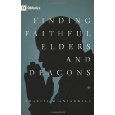
Book Review: Finding Faithful Elders and Deacons by Thabiti M. Anyabwile

A Useful Primer For Biblical Leadership in the Church

 In this book experienced pastor Thabiti Anyabwile writes three sections on how to find deacons, elders, and specify what their roles are in the church. Pastor Anyabwile gives the pertinent biblical requirements for deacons and elders, and gives numerous helps on biblical qualifications, traits to watch for, and questions and observations for examining whether or not those under consideration are wise choices for the respective offices of elder and deacon.

I think the best way to use this book is to use it as Thabiti Anyabwile intended it to be used:

 “First, use it prayerfully. Pray for pastors and elders as they shepherd and serve the sheep. Pray for more men to be raised up in the congregation for this important work. Pray that the Lord would pour out his grace on those serving these tasks. Pray that the members of the church would show genuine appreciation, love, and care for their shepherds. Pray that all the men in the church would grow in the qualities that elders should possess. Pray that men would have a godly desire to give their lives in serving the body of Christ as servant-leaders.

Second, use this book practically. The book does not delve into a lot of detailed argumentation, hoping instead to make application easily and quickly. I want the book to help in actually doing something—identifying and training elders—not just considering something. Put the suggestions into practice, and improve them with the experience and wisdom that come from your particular church setting and other faithful leaders.

Finally, use the book pedagogically. That is, use it to teach and instruct. Perhaps a church needs to select its first elders after a period of planning and study. Pastors may wish to use these brief chapters to ‘flesh out’ for the average church member which qualities the congregation as a whole needs to be looking and praying for in their prospective elders. Examination and pastoral search committees may find similar help.”

Take it from my own experience in over twenty years of pastoring – you want to get all the help you can in the wise selection of, praying for, training of, and role implementation of your elders and deacons – because the church will ultimately rise to great heights or fall to low depths based on the quality, character, and biblical execution of it’s leaders.

I highly recommend this book for church planters, existing leadership teams, solo pastors, deacons, and elders. It serves as a concise handbook that you can use to strengthen your existing leadership, develop future leaders, and most certainly add health and value to Christ’s church as you seek to be a good steward of its most valuable resources.

The “Jesus Focus” in The Book of Exodus

Reading The Bible Through The Jesus Lens in Exodus

From Biblical Book to Biblical Hook

Charts adapted from Dr. Michael Williams Book

Exodus Title

Exodus: Theme

Exodus 29:46

 “Deliverance into Presence”

 God delivers His people from slavery into His presence.

 “And they shall know that I am the LORD their God, who brought them out of the land of Egypt that I might dwell among them. I am the LORD their God.” 

Christ-Focus in Exodus

Implications from Exodus

Hooks from Exodus

In Christ, God delivers His people from slavery to sin into fellowship with Him.

“So I find it to be a law that when I want to do right, evil lies close at hand. For I delight in the law of God, in my inner being, but I see in my members another law waging war against the law of my mind and making me captive to the law of sin that dwells in my members. Wretched man that I am! Who will deliver me from this body of death? Thanks be to God through Jesus Christ our Lord! So then, I myself serve the law of God with my mind, but with my flesh I serve the law of sin.” – Romans 7:21-25

We can trust in God’s saving power to deliver us from sin’s grip and into His saving presence.

“Since, therefore, we have now been justified by his blood, much more shall we be saved by him from the wrath of God. For if while we were enemies we were reconciled to God by the death of his Son, much more, now that we are reconciled, shall we be saved by his life.” – Romans 5:9-10

Does the fact that you are a Christian feel like a burden (something to be delivered from) or deliverance?

 Are your eyes open to the wonders of the presence of God into which you have been brought, or are you still focused on the features of your life in captivity?

 What could you do to change your perspective? What could you do to help others to change their perspective?

 Do you feel like you’re in the grip of God, or of sin?

 On whose strength are you relying to free yourself from sin’s power?

 What can you do to make others aware of the freedom from their captivity to sin and its horrible effects that is available to them in Christ? Can they see evidence of that freedom in you?

 What can you do to make others aware of the rich life of fellowship with God himself that is available to them in Christ?

 Can they see evidence of that rich life of fellowship with God in you?