

Noah Was NOT a Righteous Man

By Mark Driscoll
Many people butcher the story of Noah because they misread what the Bible actually says. Did God choose Noah because he was a righteous man?
This post is about one of my pet peeves.
It bugs me so much that I have gone through my kids’ picture Bibles over the years with a Sharpie, scratching out the error so my kids can get the story straight. With all the buzz about Noah lately, it seemed like a good time to connect Noah to the gospel of Jesus Christ.
THE WRONG MORAL
The most common way Christians butcher the story of Noah is by misreading what the Bible actually says. The story is wrongly told that there were a bunch of bad guys who drowned and one good guy who got a boat. The moral of the story is that if you are a good guy then God will save you from death and wrath.
The problem?
This is not the gospel.
This is just good old-fashioned works. “Be a good person and you can get saved, otherwise you can just die.”
NOT A GOOD GUY
Slow and careful Bible reading is really important everywhere, including here. The order of events is very important and deliberate.
Genesis 6:5–9 says,
The Lord saw that the wickedness of man was great in the earth, and that every intention of the thoughts of his heart was only evil continually. And the Lord regretted that he had made man on the earth, and it grieved him to his heart. So the Lord said, “I will blot out man whom I have created from the face of the land, man and animals and creeping things and birds of the heavens, for I am sorry that I have made them.” But Noah found favor in the eyes of the Lord.
These are the generations of Noah. Noah was a righteous man, blameless in his generation. Noah walked with God.
First, Genesis 6:5–7 states the total depravity of everyone on the earth with one of the most negative declarations about human sin in all of Scripture. We are told that God saw that every person was only evil all of the time. God was grieved that he had made humanity because they filled his heart with pain. This statement does include Noah, who was simply one of the sinfully wicked men on the earth who grieved God.
Everyone was a sinner in Noah’s day, just like everyone is a sinner in our day.
Second, Genesis 6:8 then explains the process by which God chose to save and bless Noah. It says, “But Noah found favor [grace] in the eyes of the LORD.”
Noah did not begin as a righteous man, but rather he began as a sinner not unlike everyone else on the earth in his day. The only difference between Noah and the other sinners who died in the flood of judgment was that God gave grace to Noah.
Noah was not a good guy, but a graced guy.
GRACE AND FAVOR
Beautifully, the word “favor” is the same Hebrew word for grace that appears here for the first time in the Bible. It’s the same word that is echoed repeatedly by Paul and other authors throughout the New Testament as they proclaim that salvation is by grace through faith alone.
Everyone was a sinner in Noah’s day, just like everyone is a sinner in our day. God had no good person to work through to accomplish his plan of redemption. God worked, as he always has, by saving an undeserving sinner through grace, thereby enabling them to live a righteous life by grace, as is taught in the next verse.
The only difference between Noah and the other sinners who died in the flood of judgment was that God gave grace to Noah.
Genesis 6:9 then explains the effects of God’s grace to Noah saying, “This is the account of Noah. Noah was a righteous man, blameless among the people of his time, and he walked with God.”
Indeed, Noah was a blameless and righteous man who, like Enoch, “walked with God” (Gen. 5:24). But Noah was only this sort of man because God saved him by grace and empowered him to live a new life of obedience to God by that same grace.
The good news of Noah is that a bad guy received God’s good grace, and that same God still saves the same way today.
Source: the resurgence.com
The Fault Lines Before the Evangelical Earthquake
By Trevin Wax
 The recent controversy surrounding World Vision USA’s decision to open employment to same-sex couples and the organization’s subsequent reversal reveals the fault lines in evangelicalism today.

For the evangelicals distraught by World Vision’s initial decision, the controversy was never about the legitimacy or worthiness of people with differing views of marriage doing good work around the world. We should applaud good deeds of relief and compassion wherever we see them and wherever they come from. No, this particular controversy was about the meaning of evangelical.
Can an institution with an historic evangelical identity be divided on an issue as central as marriage and family and still be evangelical? Related to this discussion are questions about the authority and interpretation of Scripture, cultural engagement, and institutional power. All sides of the debate recognize that the definition of evangelical is at stake, which is why some are now publicly casting off the term altogether.
The World Vision decision was a tremor that warns us of a coming earthquake in which churches and leaders historically identified with evangelicalism will divide along all-too-familiar fault lines.
Here are the three camps I see right now:
Revisionists
“The Church’s interpretation of Scripture and our consensus on Christian sexual ethics have been wrong and unjust. Just as we made adjustments in our treatment of women or in our position on slavery, Christians must be willing to revise our beliefs in light of ongoing Scriptural reflection and personal experience. Faithful Christians can and must celebrate and affirm same-sex relationships; otherwise, Christianity will lose its influence in the culture and bring disgrace to Jesus.”
Moderates
“One’s position on homosexuality or gay marriage is not an essential point of theology. There are faithful Christians who disagree on these matters, just as faithful Christians disagree on baptism, the Holy Spirit, church structure, etc. The gospel is not at stake in whichever position you take. What is at stake is our unity before the world and how we love each other. We can agree to disagree on these issues and still partner in missions and relief work.”
Evangelicals
“The Bible is clear in its teaching that (1) homosexuals are created in the image of God and have innate worth and value and (2) homosexual practice is condemned as sin, one of many sins from which humanity needs deliverance. Marriage is between one man and one woman. Any other arrangement is not marriage at all, but a distortion of one of Scripture’s most beautiful pictures of the gospel. To abandon Christianity’s distinctive sexual ethic is to bow before the prevailing idol of our time and dismiss the authority of Scripture.”
Other Issues
Same-sex marriage is just the tip of the iceberg. Below the surface are a number of issues related to traditional Christian belief and practice. The same fault lines find people divided over issues such as the authority and interpretation of Scripture, the exclusivity of the gospel, the reality of hell, and the nature of truth.
Sometimes I wonder if we are watching a replay of the Fundamentalist-Modernist controversy that took place a century ago. Last time, the revisionists wanted to hold on to the essence of Christian morality while minimizing the cultural embarrassment of the Bible’s miracles. The moderates believed they could be personally conservative and yet forge a middle way and partner with people on both sides. The fundamentalists separated and withdrew from Protestant denominations, paving the way for neo-evangelicalism to rise in the middle of the 20th century. This century, the revisionists want to hold on to the essence of Christian miracles while minimizing the cultural embarrassment of the Bible’s morality.
What’s Next
Learning from history, what will be next for each of these groups?
The Revisionists will continue to shrink and lose influence over time. There are three reasons why.
1. The converts to revisionism are typically disaffected evangelical churchgoers who find cultural accommodation appealing, not lost people finding salvation through Christ. Because of this pattern, it will be challenging to sustain consistent growth over time.
2. Those who revise Christianity’s sexual ethics are often the same people who deny that Jesus is the only way to God, that there is a hell, that the Bible is fully inspired and trustworthy, etc. A liberal doctrine is never an only child.
3. Revisionists are culturally captive to the demands of a shrinking subset of affluent, Western churches. Though global evangelicalism is much more united on the authority of Scripture and the distinctiveness of Christianity’s sexual ethic, revisionists lecture global churches on why they should adopt the same beliefs and practices that emptied their own.
The Moderates hold to an unsustainable position. They uphold a traditional understanding of marriage and sexual ethics, and yet they downplay the significance of these issues by taking the “agree to disagree” posture or a quiet agnosticism (“since people disagree on this, who can really know?”). I sympathize with those who feel like the culture has thrust upon us an issue we didn’t ask for and those who are weary of the constant cultural clashes between evangelicals and revisionists. That said, this category will shrink the fastest. The revisionists will challenge moderates to stop linking arms with people who affirm traditional marriage because they are “hateful” and “bigoted.” The evangelicals will challenge moderates to recognize the underlying authority of Scripture issues that accompany this debate. Moderates today will be forced to choose sides tomorrow. Those who remain on the fence will see their children, or the next generation, move steadily into the revisionist camp in response to increasing cultural pressure. “If marriage isn’t a big deal, Mom, then why are we holding the line on this?”
Among Evangelicals we can see two subsets:
-
Combative
Some evangelicals speak to the issue of homosexuality in ways that are needlessly inflammatory. They look primarily to political action as the strategy for bringing culture change in these areas and overlook the flesh-and-blood people in their congregations who are struggling with this sin. The combatives are the minority, but they routinely make headlines. -
Conciliatory
Other evangelicals speak to this issue more pastorally, not shying away from Christianity’s distinctiveness but utilizing a tone that takes into consideration the common sinfulness and brokenness of all humanity. They are often publicly silent on the issue because of their desire to not be lumped in with their combative counterparts.
It is possible that evangelicals could repeat the mistake of last century’s fundamentalists by choosing to withdraw from societal and cultural engagement in order to preserve purity of identity. The result would be the inevitable downplaying of the public implications of the gospel we preach. Our kids will then be the ones with the “uneasy conscience” of last century’s Carl Henry, urging us out of our ghettos and back into the public square.
Another possibility would be that this issue paralyzes the church, leaving people to fear cultural backlash to the point we are silent in our witness.
There is also a third way: as society’s marriage culture crumbles further, we witness to the world, not only in our stated positions but also in our families to the beauty of God’s original design.
Loving People, Not Positions
Twenty years ago, the pro-life movement was derided for caring only about babies and not about women in distress. Since the rise of crisis pregnancy centers, few say such things anymore, and when they do, the slander doesn’t stick. It’s clear that evangelical opposition to abortion is coupled with acts of love and compassion toward women facing an awful choice.
Today, evangelicals are derided for caring more about marriage laws than gay and lesbian people. There’s a kernel of truth in this assertion. Too often, we’ve turned people into positions that volley back and forth as a political football – even sometimes trying to protect our rights so much that we fail to call out true discrimination when we should. We can do better. Indeed, we must not only do better, but be better.
What can evangelicals do to show that our belief in the sanctity of true marriage is just as uncompromising and unwavering as our love for gay and lesbian people created in the image of God? How can we be simultaneously committed to upholding biblical marriage and loving our gay and lesbian neighbors? I don’t know all the answers to that question. Nor am I sure of the best way forward, but I do know that we stand in a long line of Christians who often stood against the world for the good of the world. May it be said of us that our opposition to certain cultural developments is always motivated for the good of the world we’ve been called to reach.
Source: Trevin Wax @ thegospelcoalition.org April 2, 2014.
How Sinful Is Man?

By Dr. R.C. Sproul
Imagine a circle that represents the character of mankind. Now imagine that if someone sins, a spot—a moral blemish of sorts—appears in the circle, marring the character of man. If other sins occur, more blemishes appear in the circle. Well, if sins continue to multiply, eventually the entire circle will be filled with spots and blemishes. But have things reached that point? Human character is clearly tainted by sin, but the debate is about the extent of that taint. The Roman Catholic Church holds the position that man’s character is not completely tainted, but that he retains a little island of righteousness. However, the Protestant Reformers of the sixteenth century affirmed that the sinful pollution and corruption of fallen man is complete, rendering us totally corrupt.
There’s a lot of misunderstanding about just what the Reformers meant by that affirmation. The term that is often used for the human predicament in classical Reformed theology is total depravity. People have a tendency to wince whenever we use that term because there’s very widespread confusion between the concept of total depravity and the concept of utter depravity. Utter depravity would mean that man is as bad, as corrupt, as he possibly could be. I don’t think that there’s a human being in this world who is utterly corrupt, but that’s only by the grace of God and by the restraining power of His common grace. As many sins as we have committed individually, we could have done worse. We could have sinned more often. We could have committed sins that were more heinous. Or we could have committed a greater number of sins. Total depravity, then, does not mean that men are as bad as they conceivably could be.
When the Protestant Reformers talked about total depravity, they meant that sin—its power, its influence, its inclination—affects the whole person. Our bodies are fallen, our hearts are fallen, and our minds are fallen—there’s no part of us that escapes the ravages of our sinful human nature. Sin affects our behavior, our thought life, and even our conversation. The whole person is fallen. That is the true extent of our sinfulness when judged by the standard and the norm of God’s perfection and holiness.
Source: This excerpt is from R.C. Sproul’s The Truth of the Cross.
Albert Mohlers Response to Matthew Vines: “God and The Gay Christian”

Evangelical Christians in the United States now face an inevitable moment of decision. While Christians in other movements and in other nations face similar questions, the question of homosexuality now presents evangelicals in the United States with a decision that cannot be avoided. Within a very short time, we will know where everyone stands on this question. There will be no place to hide, and there will be no way to remain silent. To be silent will answer the question.
The question is whether evangelicals will remain true to the teachings of Scripture and the unbroken teaching of the Christian church for over two thousand years on the morality of same-sex acts and the institution of marriage.
The world is pressing this question upon us, but so are a number of voices from within the larger evangelical circle — voices that are calling for a radical revision of the church’s understanding of the Bible, sexual morality, and the meaning of marriage. We are living in the midst of a massive revolution in morality, and sexual morality is at the center of this revolution. But the question of same-sex relationships and sexuality is at the very center of the debate over sexual morality, and our answer to this question will both determine or reveal what we understand about everything the Bible reveals and everything the church teaches — even the gospel itself.
Others are watching, and they see the moment of decision at hand. Anthropologist Tanya Luhrmann of Stanford University has remarked that “it is clear to an observer like me that evangelical Christianity is at a crossroad.” What is that crossroad? “The question of whether gay Christians should be married within the church.” Journalist Terry Mattingly sees the same issue looming on the evangelical horizon — “There is no way to avoid the showdown that is coming.”
Into this context now comes God and the Gay Christian, a book by Matthew Vines. Just a couple of years ago Vines made waves with the video of a lecture in which he attempted to argue that being a gay Christian in a committed same-sex relationship (and eventual marriage) is compatible with biblical Christianity. His video went viral. Even though Matthew Vines did not make new arguments, the young Harvard student synthesized arguments made by revisionist Bible scholars and presented a very winsome case for overthrowing the church’s moral teachings on same-sex relationships.
His new book flows from that startling ambition — to overthrow two millennia of Christian moral wisdom and biblical understanding.
Given the audacity of that ambition, why does this book deserve close attention? The most important reason lies outside the book itself. There are a great host of people, considered to be within the larger evangelical movement, who are desperately seeking a way to make peace with the moral revolution and endorse the acceptance of openly-gay individuals and couples within the life of the church. Given the excruciating pressures now exerted on evangelical Christianity, many people — including some high-profile leaders — are desperately seeking an argument they can claim as both persuasive and biblical. The seams in the evangelical fabric are beginning to break and Matthew Vines now comes along with a book that he claims will make the argument so many have been seeking.
In God and the Gay Christian Vines argues that “Christians who affirm the full authority of Scripture can also affirm committed, monogamous same-sex relationships.” He announces that, once his argument is accepted: “The fiercest objections to LGBT equality — those based on religious beliefs — can begin to fall away. The tremendous pain endured by LGBT youth in many Christian homes can become a relic of the past. Christianity’s reputation in much of the Western world can begin to rebound. Together we can reclaim our light” (3).
That promise drives Vines’s work from beginning to end. He identifies himself as both gay and Christian and claims to hold to a “high view” of the Bible. “That means,” he says, “I believe all of Scripture is inspired by God and authoritative for my life” (2).
Well, that is exactly what we would hope for a Christian believer to say about the Bible. And who could fault the ambition of any young and thoughtful Christian who seeks to recover the reputation of Christianity in the Western world. If Matthew Vines were to be truly successful in simultaneously making his case and remaining true to the Scriptures, we would indeed have to overturn two thousand years of the church’s teaching on sex and marriage and apologize for the horrible embarrassment of being wrong for so long.
Readers of his book who are looking for an off-ramp from the current cultural predicament will no doubt try to accept his argument. But the real question is whether what Vines claims is true and faithful to the Bible as the Word of God. But his argument is neither true nor faithful to Scripture. It is, nonetheless, a prototype of the kind of argument we can now expect.
What Does the Bible Really Say?
The most important sections of Vines’s book deal with the Bible itself and with what he identifies as the six passages in the Bible that “have stood in the way of countless gay people who long for acceptance from their Christian parents, friends, and churches” (11). Those six passages (Genesis 19:5; Leviticus 18:22; Leviticus 20:13; Romans 1:26-27; 1 Corinthians 6:9; and 1 Timothy 1:10) are indeed key and crucial passages for understanding God’s expressed and revealed message on the question of same-sex acts, desires, and relationships, but they are hardly the whole story.
The most radical proposal Vines actually makes is to sever each of these passages from the flow of the biblical narrative and the Bible’s most fundamental revelation about what it means to be human, both male and female. He does not do this merely by omission, but by the explicit argument that the church has misunderstood the doctrine of creation as much as the question of human sexuality. He specifically seeks to argue that the basic sexual complementarity of the human male and the female — each made in God’s image — is neither essential to Genesis chapters 1 and 2 or to any biblical text that follows.
In other words, he argues that same-sex sexuality can be part of the goodness of God’s original creation, and that when God declared that it is not good for man to be alone, the answer to man’s isolation could be a sexual relationship with someone of either sex. But that massive misrepresentation of Genesis 1 and 2 — a misinterpretation with virtually unlimited theological consequences — actually becomes Vines’s way of relativizing the meaning of the six passages he primarily considers.
His main argument is that the Bible simply has no category of sexual orientation. Thus, when the Bible condemns same-sex acts, it is actually condemning “sexual excess,” hierarchy, oppression, or abuse — not the possibility of permanent, monogamous, same-sex unions.
In addressing the passages in Genesis and Leviticus, Vines argues that the sin of Sodom was primarily inhospitality, not same-sex love or sexuality. The law of Moses condemns same-sex acts in so far as they violate social status or a holiness code, not in and of themselves, he asserts. His argument with regard to Leviticus is especially contorted, since he has to argue that the text’s explicit condemnation of male-male intercourse as an abomination is neither categorical or related to sinfulness. He allows that “abomination is a negative word,” but insists that “it doesn’t necessarily correspond to Christian views of sin” (85).
Finally, he argues that, even if the Levitical condemnations are categorical, this would not mean that the law remains binding on believers today.
In dealing with the most significant single passage in the Bible on same-sex acts and desire, Romans 1:26-27, Vines actually argues that the passage “is not of central importance to Paul’s message in Romans.” Instead, Vines argues that the passage is used by Paul only as “a brief example to drive home a point he was making about idolatry.” Nevertheless, Paul’s words on same-sex acts are, he admits, “starkly negative” (96).
“There is no question that Romans 1:26-27 is the most significant biblical passage in this debate,” Vines acknowledges (96). In order to relativize it, he makes this case: “Paul’s description of same-sex behavior in this passage is indisputably negative. But he also explicitly described the behavior he condemned as lustful. He made no mention of love, fidelity, monogamy, or commitment. So how should we understand Paul’s words? Do they apply to all same-sex relationships? Or only to lustful, fleeting ones?” (99).
In asking these questions, Vines makes his case that Paul is merely ignorant of the reality of sexual orientation. He had no idea that some people are naturally attracted to people of the same sex. Therefore, Paul misunderstands what today would be considered culturally normative in many highly-developed nations — that some persons are naturally attracted to others of the same sex and it would be therefore “unnatural” for them to be attracted sexually to anyone else.
Astonishingly, Vines then argues that the very notion of “against nature” as used by Paul in Romans 1 is tied to patriarchy, not sexual complementarity. Same-sex relationships, Vines argues, “disrupted a social order that required a strict hierarchy between the sexes” (109).
But to get anywhere near to Vines’s argument one has to sever Romans 1 from any natural reading of the text, from the flow of the Bible’s message from Genesis 1 forward, from the basic structure of sexual complementarity, and from the church’s faithful reading of the Bible for two millennia. Furthermore, his argument provides direct evidence of that Paul warns of in this very chapter, “suppressing the truth in unrighteousness” (Romans 1:18).
Finally, the actual language of Romans 1, specifically dealing with male same-sex desire, speaks of “men consumed with passion for one another” (Romans 1:27). This directly contradicts Vines’s claim that only oppressive, pederastic, or socially mixed same-sex acts are condemned. Paul describes men consumed with passion for one another — not merely the abuse of the powerless by the powerful. In other words, in Romans 1:26-27 Paul condemns same-sex acts by both men and women, and he condemns the sexual desires described as unnatural passions as well.
In his attempt to relativize 1 Corinthians 6: 9, Vines actually undermines more of his argument. Paul’s careful use of language (perhaps even inventing a term by combining two words from Leviticus 18) is specifically intended to deny what Vines proposes — that the text really does not condemn consensual same-sex acts by individuals with a same-sex sexual orientation. Paul so carefully argues his case that he makes the point that both the active and the passive participants in male intercourse will not inherit the kingdom of God. Desperate to argue his case nonetheless, Vines asserts that, once again, it is exploitative sex that Paul condemns. But this requires that Paul be severed from his Jewish identify and from his own obedience to Scripture. Vines must attempt to marshal evidence that the primary background issue is the Greco-Roman cultural context rather than Paul’s Jewish context — but that would make Paul incomprehensible.
One other aspect of Vines’s consideration of the Bible should be noted. He acknowledges that he is “not a biblical scholar,” but he claims to “have relied on the work of scholars whose expertise is far greater than my own.” But the scholars upon whom he relies do not operate on the assumption that “all of Scripture is inspired by God and authoritative for my life.” To the contrary, most of his cited scholars are from the far left of modern biblical scholarship or on the fringes of the evangelical world. He does not reveal their deeper understandings of Scripture and its authority.
The Authority of Scripture and the Question of Sexual Orientation
Again and again, Vines comes back to sexual orientation as the key issue. ‘”The Bible doesn’t directly address the issue of same-sexorientation,” he insists. The concept of sexual orientation “didn’t exist in the ancient world.” Amazingly, he then concedes that the Bible’s “six references to same-sex behavior are negative,” but insists, again, that “the concept of same-sex behavior in the Bible is sexual excess, not sexual orientation.”
Here we face the most tragic aspect of Matthew Vines’s argument. If the modern concept of sexual orientation is to be taken as a brute fact, then the Bible simply cannot be trusted to understand what it means to be human, to reveal what God intends for us sexually, or to define sin in any coherent manner. The modern notion of sexual orientation is, as a matter of fact, exceedingly modern. it is also a concept without any definitive meaning. Effectively, it is used now both culturally and morally to argue about sexual attraction and desire. As a matter of fact, attraction and desire are the only indicators upon which the modern notion of sexual orientation are premised.
When he begins his book, Matthew Vines argues that experience should not drive our interpretation of the Bible. But it is his experience of what he calls a gay sexual orientation that drives every word of this book. It is this experiential issue that drives him to relativize text after text and to argue that the Bible really doesn’t speak directly to his sexual identity at all, since the inspired human authors of Scripture were ignorant of the modern gay experience.
Of what else were they ignorant? Vines claims to hold to a “high view” of the Bible and to believe that “all of Scripture is inspired by God and authoritative for my life,” but the modern concept of sexual orientation functions as a much higher authority in his thinking and in his argument.
This leads to a haunting question. What else does the Bible not know about what it means to be human? If the Bible cannot be trusted to reveal the truth about us in every respect, how can we trust it to reveal our salvation?
This points to the greater issue at stake here — the Gospel. Matthew Vines’s argument does not merely relativize the Bible’s authority, it leaves us without any authoritative revelation of what sin is. And without an authoritative (and clearly understandable) revelation of human sin, we cannot know why we need a Savior, or why Christ died. Furthermore, to tell someone that what the Bible reveals as sin is notsin, we tell them that they do not need Christ for that. Is that not exactly what Paul was determined not to do when he wrote to the Corinthians in 1 Corinthians 6:9-11? Could the stakes be any higher than that? This controversy is not merely about sex, it is about salvation.
Matthew Vines’s Wedge Argument — Gender and the Bible
There is another really interesting and revealing aspect of Matthew Vine’s argument yet to come. In terms of how his argument is likely to be received within the evangelical world, Vines clearly has a strategy, and that strategy is to persuade those who have rejected gender complementarity to take the next logical step and deny sexual complementarity as well.
Gender complementarity is the belief that the Bible’s teachings on gender and gender roles is to be understood in terms of the fact that men and women are equally made in God’s image (status) but different in terms of assignment (roles). This has been the belief and conviction of virtually all Christians throughout the centuries, and it is the view held by the vast majority of those identified as Christians in the world even today. But a denial of this conviction, hand in hand with the argument that sameness of role is necessary to affirm equality of status, has led some to argue that difference in gender roles must be rejected. The first impediment to making this argument is the fact that the Bible insists on a difference in roles. In order to overcome this impediment, biblical scholars and theologians committed to egalitarianism have made arguments that are hauntingly similar to those now made by Matthew Vines in favor of relativizing the Bible’s texts on same-sex behaviors.
Matthew Vines knows this. He also knows that, at least until recently, most of those who have rejected gender complementarity have maintained an affirmation of sexual complementarity — the belief that sexual behavior is to be limited to marriage as the union of a man and a woman. He sees this as his opening. At several points in the book, he makes this argument straightforwardly, even as he calls both “gender complementarity” and denies that the Bible requires or reveals it.
But we have to give Matthew Vines credit for seeing this wedge issue better than most egalitarians have seen it. He knows that the denial of gender complementarity is a huge step toward denying sexual complementarity. The evangelicals who have committed themselves to an egalitarian understanding of gender roles as revealed in the Bible are those who are most vulnerable to his argument. In effect, they must resist his argument more by force of will than by force of logic.
Same-Sex Marriage, Celibacy, and the Gospel
Matthew Vines writes with personal passion and he tells us much of his own story. Raised in an evangelical Presbyterian church by Christian parents, he came relatively late to understand his own sexual desires and pattern of attraction. He wants to be acknowledged as a faithful Christian, and he wants to be married … to a man. He argues that the Bible simply has no concept of sexual orientation and that to deny him access to marriage is to deny him justice and happiness. He argues that celibacy cannot be mandated for same-sex individuals within the church, for this would be unjust and wrong. He argues that same-sex unions can fulfill the “one-flesh” promise of Genesis 2:24.
Thus, he argues that the Christian church should accept and celebrate same-sex marriage. He also argues, just like the Protestant liberals of the early twentieth century, that Christianity must revise its beliefs or face the massive loss of reputation before the watching world (meaning, we should note, the watching world of the secular West).
But the believing church is left with no option but to deny the revisionist and relativizing proposals Vines brings to the evangelical argument. The consequences of accepting his argument would include misleading people about their sin and about their need for Christ, about what obedience to Christ requires and what faithfulness to Christ demands.
Matthew Vines demands that we love him enough to give him what he desperately wants, and that would certainly be the path of least cultural resistance. If we accept his argument we can simply remove this controversy from our midst, apologize to the world, and move on. But we cannot do that without counting the cost, and that cost includes the loss of all confidence in the Bible, in the Church’s ability to understand and obey the Scriptures, and in the Gospel as good news to all sinners.
Biblical Christianity cannot endorse same-sex marriage nor accept the claim that a believer can be obedient to Christ and remain or persist in same-sex behaviors. The church is the assembly of the redeemed, saved from our sins and learning obedience in the School of Christ. Every single one of us is a sexual sinner in need of redemption, but we are called to holiness, to obedience, and to honoring marriage as one of God’s most precious gifts and as a picture of the relationship between Christ and the church.
God and the Gay Christian demands an answer, but Christ demands our obedience. We can only pray — with fervent urgency — that this moment of decision for evangelical Christianity will be answered with a firm assertion of biblical authority, respect for marriage as the union of a man and a woman, passion for the Gospel of Christ, and prayer for the faithfulness and health of Christ’s church.
I do not write this response as Matthew Vines’s moral superior, but as one who must be obedient to Scripture. And so, I must counter his argument with conviction and urgency. I am concerned for him, and for the thousands who struggle as he does. The church has often failed people with same-sex attractions, and failed them horribly. We must not fail them now by forfeiting the only message that leads to salvation, holiness, and faithfulness. That is the real question before us.
 This morning we released God and the Gay Christian? A Response to Matthew Vines, a free e-book, and it is the first in the Conversant series I am editing. This free e-book, in which I am joined by colleagues James Hamilton, Denny Burk, Owen Strachan, and Heath Lambert, addresses the biblical, theological, historical, and pastoral issues raised by Vines’s new book. To download a copy, go to sbts.me/ebook The book will be available in formats for Kindle, Nook, and iBook within the week.

Matthew Vines, God and the Gay Christian (New York: Convergent Books, 2014).
Tanya Luhrmann, foreword to Ken Wilson, A Letter to My Congregation: An Evangelical Pastor’s Path to Embracing People Who Are Gay, Lesbian, and Transgender in the Company of Jesus ([Version 1.0)] (Amazon.com, 2014).
Terry Mattingly, “About Those Evangelical Whispers on Same-Sex Marriage,” Patheos.com, Thursday, April 17, 2014.
ARTICLE SOURCE: WWW.ALBERTMOHLER.COM
Praying and Preparing For A Sermon

The Preacher’s Cheat-Sheet
By Tim Challies
Preparing a sermon is one of the most gratifying and the most difficult tasks you’ll ever face. There is joy in finding meaning in the text, in finding structure, in developing just the right outline, in discovering the perfect illustration. But there is also labor and, at times, intense spiritual warfare. I am a relative newcomer to preaching and as I’ve prepared sermons I’ve relied on others to teach me how to pray and how to prepare. Here are two lists that have been very helpful to me. I combine them into what I affectionately call my Preacher’s Cheat-Sheet.
PRAYING FOR A SERMON
A couple of years ago Mike McKinley shared 8 Ways to Pray During Sermon Preparation. I found those 8 ways to pray tremendously helpful and have been following them ever since. I pray in these ways at the beginning, middle and end of my time of preparation.
- Lord, please help me to understand the meaning of this text and how it points to Christ.
- Lord, please increase my love for the people who will hear this sermon.
- Lord, please give me wisdom to apply this text to the lives of the people in our congregation.
- Lord, please use this passage to help me grasp and love the gospel more so that I might help my hearers do the same.
- Lord, please help me to see how this passage confronts the unbelief of my hearers.
- Lord, please help me to be obedient to the demands of this passage. Help me to enter the pulpit having already submitted my life to this truth before I preach it.
- Lord, by your Spirit please help me to preach this sermon with the necessary power and with appropriate affections.
- Lord, please use this sermon to bring glory to your name, joy to your people, and salvation to the lost.
PREPARING FOR A SERMON
Along with praying during sermon preparation, I also wanted to develop a checklist of sorts—not a guide to help me exegete the text or make sure I have properly found and preached Christ from it. Rather, I wanted something to use as I near the end of my preparation and want to ensure that what I have prepared is well-structured and that it will avoid missteps that may prove hindrances to my listeners. I spoke to seasoned pastors to find what they do and developed this checklist which I like to run through when the sermon is nearly complete, and return to shortly before I preach the sermon.
- Have you prayed for yourself and your listeners?
- In one sentence, what is the point of the sermon?
- Does the sermon have a clear, easy-to-follow outline?
- Can you express your outline in a way that makes sense and explains the big point?
- Has every theological concept or term been defined or explained?
- Is there a clear gospel call that expresses the gospel in a fresh way?
- Have you spoken to the children?
- Are there places you have planned to pause, or to decrease or increase volume?
- Is there anything that can be removed for the sake of clarity and concision?
- Does every point have at least one helpful illustration?
- Have you included some good turns-of-phrase?
- Have you considered how the sermon will speak to people who are: discontent, divorced, abused, addicted, mourning, in a difficult marriage, or other difficult circumstances?
- Is there something to jolt the regular, committed sermon-listener?
Why the Resurrection Changes Everything
By Dr. Matthew Barrett
Does the resurrection of Christ matter? Does it truly make a difference? The apostle Paul sure thought so. In writing to the Corinthians, Paul was faced with the startling news that some in Corinth denied the future resurrection of the body. Such a view was adopted by many in the Greco-Roman world. Death was the end. Actually, not much has changed since the first century. Today, the same view is held by skeptics of the faith.

What was so shocking, however, is that in Paul’s day, some Christians, who affirmed the bodily resurrection of Jesus, nonetheless denied the future resurrection of the body. Paul responds with boldness, arguing that you cannot have one without the other. If there is no future resurrection for believers, then Christ himself has not been raised! And if Christ has not been raised, then everything changes. Let’s explore the consequences of the resurrection of Christ for the Christian life.
1. The resurrection of Christ is inseparable from the gospel of Christ.
In 1 Corinthians 15 Paul begins by reminding his brothers of the “gospel I preached to you . . . by which you are being saved” (15:2). This gospel, Paul says, revolves around the death of Christ, who “died for our sins in accordance with the Scripture” (15:3). But notice, Paul does not end there. Christ did not remain dead, but he was also “raised on the third day in accordance with the Scriptures” (15:4), before appearing to his disciples.
Have we, as gospel-centered, gospel-saturated believers, left the resurrection out of our gospel message? I know I am guilty. After reflecting on an opportunity I had to share the gospel with an unbeliever, I suddenly realized that not once had I mentioned, at least in any depth, the resurrection of Christ. I fear that my experience is not my own, but that of evangelicals everywhere. But Paul teaches us that we must come to grips with the biblical reality that the resurrection of Christ cannot be divorced from the death of Christ when we speak about the gospel. Should we separate the two, we will seriously miss the significance of the resurrection for our salvation. As Thomas Schreiner states, “Christ’s death and resurrection are inseparable in effecting salvation.”
2. The resurrection of Christ is the fuel that ignites our preaching to a lost world.
Ask yourself this: Would your preaching look any different if Christ had not risen from the dead? If your answer to that question is no, then there is a serious problem. For Paul, the resurrection of Christ made all the difference in the world when it came to preaching. If Christ has not been raised, Paul says, “then our preaching is in vain” (15:14).
The reason is simple: you are misrepresenting God, for you are preaching that he raised Christ when he did no such thing (15:15). In short, if Christ did not rise from the grave, we have no good news.
3. The resurrection of Christ saves.
Perhaps the most sobering statement Paul makes in 1 Corinthians 15 is that “if Christ has not been raised, your faith is futile and you are still in your sins” (15:17). So often we limit our understanding of salvation to the death of Christ. And certainly the death of Christ, as Paul says in Romans 3:25-26, is the very basis of our justification. It is through his “one act of righteousness” (Rom. 5:18), the “propitiation by his blood” (Rom. 3:25-26), that sinners are declared righteous in God’s sight. But there is more, much more, to be said. Not only does the substitutionary death of Christ save, but so also does his resurrection. For example, Paul states in Romans 4:24-25 that like Abraham we are counted righteous for we believe in him “who raised from the dead Jesus our Lord, who was delivered up for our trespasses and raised for our justification.”
By raising Jesus from the dead, God declared his satisfaction and approval of the payment Christ made on our behalf, for our sins, on the cross. And as those who are in Christ (Rom. 6:6-11; Eph. 2:6; Col. 2:12; 3:1), God’s approval of Christ’s substitutionary death, demonstrated in raising Jesus from the dead, is likewise directed towards us, so that when we believe we receive the favor of God. Therefore, our justification is a real consequence of Christ’s resurrection. No wonder Paul can say that “if Christ has not been raised, your faith is futile and you are still in your sins” (1 Cor. 15:17). And if we are still in our sins, we have no confidence, no assurance of our salvation whatsoever. It is no overstatement to say, then, that the resurrection of Christ saves.
4. The resurrection of Christ is the basis for future hope.
How practical Christ’s resurrection is—precisely because Christ has been raised, we can tell those looking into the casket of their loved ones that this is not the end of the story.
If your loved ones believe in Christ then even though they have “fallen asleep” they have fallen asleep “in Christ” (1 Cor. 15:18). And since they are united to this resurrected Christ, they have not perished but their soul has gone to be with Christ (Phil. 1:23), and they await that day when they will receive their resurrected body. As Paul tells the Corinthians, Christ’s resurrection is the firstfruits of that great harvest to come. Though death came by the first Adam, in the second Adam “shall all be made alive” (15:22).
Apart from the resurrection of Christ, we have no future hope. As Paul says in no uncertain terms, if Christ has not been raised then we, out of all people, are to be “pitied,” for our hope in Christ fails to extend beyond this present life (1 Cor. 15:19). But since Christ has been raised, we are those who can look death in the face knowing that it has no final victory, no lasting sting (1 Cor. 15:54-55).
I love how Paul ends 1 Corinthians 15. “Therefore, my beloved brothers, be steadfast, immovable, always abounding in the work of the Lord, knowing that in the Lord your labor is not in vain” (15:58). Because Christ is risen, we, as those who are in Christ, have every assurance that our labor in sharing this gospel of the risen Christ is not pointless or without purpose, but will matter for all eternity. Therefore, do not forget this Easter that the resurrection of Christ changes everything. Without it, we have no gospel, no salvation, no saving message, and certainly no future hope.
Source: http://www.thegospelcoalition.org March 29, 2013
Matthew Barrett (PhD, The Southern Baptist Theological Seminary) is assistant professor of Christian studies at California Baptist University (OPS), as well as the founder and executive editor of Credo Magazine. He is the author of Salvation by Grace: The Case for Effectual Calling and Regeneration (P&R) and co-editor of Four Views on the Historical Adam (Zondervan). He also edited Whomever He Wills: A Surprising Display of Sovereign Mercy. He is the author of several other forthcoming books, which you can read about at matthewmbarrett.com.
Same-Sex Marriage and The Future

By Dr. Russell Moore
The Bible tells us that the king of Israel once wanted to hear from the prophets, as to whether he would be victorious over his enemies. All the court prophets told him exactly what he wanted to hear. Yet the king of Judah, wisely, asked whether there might be another voice to hear from, and Israel’s king said that, yes, there was, but that he hated this prophet “because he never prophesies good concerning me” (1 Kings 22:8).
Once found, this prophet refused to speak the consensus word the king wanted to hear. “As the Lord lives, what the Lord says to me, that I will speak” (1 Kings 22:14). And, as it turned out, it was a hard word.
When it comes to what people want to hear, it seems to me that the church faces a similar situation as we look to the future of marriage in this country. Many want the sort of prophetic witness that will spin the situation to look favorable, regardless of whether that favor is from the Lord or in touch with reality.
Some people want a court of prophets who will take a surgeon’s scalpel to the Word of God. They want those who will say in light of what the Bible clearly calls immorality, “Has God really said?” Following the trajectory of every old liberalism of the past, they want to do with a Christian sexual ethic what the old liberals did with the virgin birth—claim that contemporary people just won’t have this, and if we want to rescue Christianity, this will have to go overboard. All the while they’ll tell us they’re doing it for the children (or for the Millennials).
This is infidelity to the gospel we’ve received. First of all, no one refusing to repent of sin—be it homosexuality or fornication or anything else—will inherit the kingdom of God (1 Cor. 6:9-10). This strategy leaves people in condemnation before the Judgment Seat of Christ, without reconciliation and without hope.
Second, it doesn’t even work. Look at the empty cathedrals of the Episcopal Church, the vacated pews of the Presbyterian Church (USA), and right down the line. Let me be clear. Even if embracing same-sex marriage—or any other endorsement of what the Bible calls sexual immorality—“worked” in church-building, we still wouldn’t do it. If we have to choose between Jesus and Millennials, we choose Jesus. But history shows us that those who want a different Jesus—the one who says, “Do whatever you want with your body, it’s okay by me”—don’t want Christianity at all.
But there will be those who want prophets who will say that the gospel doesn’t call for repentance, or at least not repentance from this sin. These prophets will apply a selective universalism that denies that judgment is coming, or that the blood of Christ is needed. But these prophets don’t speak for God. And, quite frankly, we have no one to blame but ourselves since, for too long, too many of us have tolerated among us those who have substituted a cheap and easy false gospel for the gospel of Jesus Christ. Too many have been called gospel preachers who preach decision without faith, regeneration without repentance, justification without lordship, deliverance by walking an aisle but without carrying a cross. That gospel is different from the one Jesus and his apostles delivered to us. That gospel doesn’t save.
So when these prophets emerge to tell people they can stay in their sins and still be saved, we must thunder back with the old gospel that calls all of us to repentance and to cross-bearing, the gospel that calls sin what it is in order to call grace what it is. J. Gresham Machen warned us that our Lord Jesus himself never attempted to preach the gospel to the righteous but only to sinners. Those who follow him must start by acknowledging themselves to be in need of mercy, to be in need of grace that can pardon and cleanse within.
There’s also another form of court prophet of these times. This one has no problem identifying homosexuality as sin. He may do so with all sorts of bluster and outrage, but he still does what court prophets always do—he speaks a word that people want to hear. What some people want to hear is that sexual immorality is moral after all, and what other people want to hear is that same-sex marriage is simply a matter of some elites on the coasts of the country. This prophet implies that if we just sign checks to the right radio talk-show hosts, and have a good election cycle or two, we’ll be right back where we were, back when carpets were shag and marriages were strong.
I don’t know anyone in any advocacy organization in Washington DC—and there are many fighting the good fight on this one—that is saying that. As a matter of fact, the organizations closest to the ground know just how dark the hour is. The courts are hell-bent on redefining marriage, which is why state definitions of marriage, put in place by the citizens of those states, are being struck down. This isn’t happening simply in blue states but in the reddest of red states—Utah, Oklahoma, Kentucky, Tennessee, and so on.
The Supreme Court said last year, in a shocking ruling, that essentially the only reason anyone could have for defining marriage the way every human civilization has for millennia is hostility toward gay and lesbian persons. The answer is not a simple constitutional amendment—though that would be optimal—because any constitutional amendment would require a super-majority in both houses, that, apart from a miracle, no one sees happening in the next several years, now that the Democratic Party is firmly behind same-sex marriage.
What several of us have been saying for quite a while is that, in some form or another, your church will have to address the marriage revolution. My friend Jeff Iorg, president of Golden Gate Seminary in California, has courageously called the church to see that everyone will soon have to be standing where he is standing now. He’s exactly right. The cultural trends are such that the red–blue divide will not ultimately isolate any congregation from this Sexual Revolution, and all it entails.
Moreover, the situation isn’t as easy as just an election or two, given the vast cultural changes that have happened. I—and my co-laborers in other organizations—are fighting every single week in court cases, in hearings, in state disputes for the most basic of conscience protections for those who dissent from the High Church of the Sexual Revolution. Look at the way Louie Giglio was deemed too toxic to pray at the President’s inauguration in 2013. Look at the way the CEO of Mozilla was hounded out of office simply for supporting a ballot measure defining marriage as between one man and one woman. Look at the way photographers and florists are being forced, under penalty of law, to participate in same-sex weddings. And look at the way that even the most base-level religious liberty provisions are deemed discriminatory.
If the church doesn’t read the signs of the times, we will be right where we evangelicals were after Roe v. Wade—caught flat-footed and unprepared. Thankfully, the Catholics were there to supply an ethical framework and a sense of justice until some evangelicals—such as Francis Schaeffer and Jerry Falwell—emerged to rally for the lives of the unborn and their mothers.
So what should we do? Well, precisely what we should have done before and after Roe. We should recognize where the courts and the culture are, and we should work for justice. That means not simply assuming that most people agree with us on marriage. We must articulate, both in and out of the church, why marriage matters, and why its definition isn’t infinitely elastic.
We must—like the pro-life movement has done—seek not only to engage our base, those who already agree with us, but to persuade others who don’t. That doesn’t mean less talk about marriage and sexuality but more—and not just in sound bytes and slogans but in a robust theology of why sexual complementarity and the one-flesh union are rooted in the mystery of the gospel (Eph. 5:22-33).
We must—also like the pro-life movement—understand the importance of a Supreme Court that won’t will into existence constitutional planks by force of its own will. That requires a persuasive public witness, and a long-term as well as a short-term strategy. That means fighting—as we are doing—for the Court not to invalidate state definitions of marriage and for the culture to recognize that a state that can force people to participate in what they believe to be sin is a state that is too big for the common good.
Above all, we must prepare people for what the future holds, when Christian beliefs about marriage and sexuality aren’t part of the cultural consensus but are seen to be strange and freakish and even subversive. If our people assume that everything goes back to normal with the right President and a quick constitutional amendment, they are not being equipped for a world that views evangelical Protestants and traditional Roman Catholics and Orthodox Jews and others as bigots or freaks.
Jesus told us we would have hard times. He never promised us a prosperity gospel. He said we would face opposition, but he said he would be with us. If we are going to be faithful to his gospel, we must preach repentance—even when that repentance is culturally unwelcome. And we must preach that any sinner can be forgiven through the blood of Jesus Christ. That means courage and that means kindness. Sexual revolutionaries will hate the repentance. Buffoonish heretics, who want only to vent paranoia and rally their troops, will hate the kindness. So be it.
Our churches must be ready to call out the revisionists who wish to do away with a Christian sexual ethic. And we must be ready to call out those who tell us that acknowledging the signs of the times is forbidden, and we should just keep doing what we’ve been doing. An issue this culturally powerful cannot be addressed by a halfway-gospel or by talk-radio sloganeering.
The marriage revolution around us means we must do a better job articulating a theology of marriage to our people, as well as a theology of suffering and marginalization. It means we must do a better job articulating to those on the outside why children need both a Mom and a Dad, not just “parents,” and why marriage isn’t simply a matter of court decree. It means we must start teaching our children about marriage “from the beginning” as male and female when they’re in Sunday school. It means we may have to decide if and when the day will come in which we will refuse to sign the state’s marriage licenses.
Long term the prospects for marriage are good. Sexual revolutions always disappoint, and God has designed marriage, biblically defined, to be resilient. But, short term, the culture of marriage is dark indeed. That’s why we have a gospel that is the power of God.
Source: Adapted from: http://www.russellmoore.com (Moore to the Point – April 15, 2014)
About Dr. Moore:
Russell D. Moore serves as the eighth president of the Ethics & Religious Liberty Commission of the Southern Baptist Convention, the moral and public policy agency of the nation’s largest Protestant denomination.
Prior to his election to this role in 2013, Moore served as provost and dean of The Southern Baptist Theological Seminary, where he also taught as professor of theology and ethics.
A widely-sought cultural commentator, Dr. Moore has been recognized by a number of influential organizations. The Wall Street Journal has called him “vigorous, cheerful, and fiercely articulate” while The Gospel Coalition has referred to him “one of the most astute ethicists in contemporary evangelicalism.
Dr. Moore blogs frequently at his Moore to the Point website, and hosts a program calledQuestions & Ethics—a wide-ranging podcast in which Dr. Moore answers listener-generated questions on the difficult moral and ethical issues of the day. In addition, he is the author of several books, including Tempted and Tried: Temptation and the Triumph of Christ.
A native Mississippian, he and his wife Maria are the parents of five sons.
Why Theology Is For Everyone
By Jared Wilson
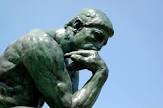
Every Christian must be a theologian. In a variety of ways, this is something I tell my church often. And the looks I get from some surprised souls are the evidence that I have not yet adequately communicated that the purposeful theological study of God by lay people is important.
Many times the confused responses come from a misunderstanding of what is meant in this context by theology. So I tell my church what I don’t mean. When I say every Christian must be a theologian, I don’t mean that every Christian must be an academic or that every Christian must be a scholar or that every Christian must work hard at giving the impression of being a know-it-all. We all basically understand what is meant in the biblical warning that “knowledge puffs up” (1 Cor. 8:1). Nobody likes an egghead.
But the answer to formal scholasticism or dry intellectualism is not a neglect of theological study. Laypeople have no biblical warrant to leave the duty of doctrine up to pastors and professors alone. Therefore, I remind my church that theology—coming from the Greek words theos (God) and logos(word)—simply means “the knowledge (or study) of God.” If you’re a Christian, you must by definition know God. Christians are disciples of Jesus; they are student-followers of Jesus. The longer we follow Him, the more we learn about Him and, consequently, the more deeply we come to know Him.
There are at least three primary reasons why every Christian ought to be a theologian.
First, theological study of God is commanded. Having a mind lovingly dedicated to God is required most notably in the great commandment: “You shall love the Lord your God with all your heart and with all your soul and with all your mind” (Matt. 22:37). Loving God with all of our minds certainly means more than theological study, but it certainly does not mean less than that.
Second, the theological study of God is vital to salvation. Now, of course, I do not mean that intellectual pursuit merits salvation. We are saved by grace alone through faith alone (Eph. 2:8) totally apart from any works of our own (Rom. 3:28), which includes any intellectual exertion. But at the same time, the faith by which we are justified, the faith that receives the completeness of Christ’s finished work and thus His perfect righteousness, is a reasonable faith. Faith may not be the same as rationality, but this does not mean that faith in God is irrational.
Saving faith is a gift from God (Eph. 2:8; Rom. 12:3), but it is not some amorphous, information-free spiritual vacuum. The exercise of faith is predicated on information—initially, the historical announcement of the good news of what Jesus has done—and the strengthening of faith is built on information, as well.
Our continued growth in the grace of God, our perseverance as saints, is vitally connected to our pursuit of the knowledge of God’s character and God’s works as revealed in God’s Word. Contrary to the way some idolaters of doubt would have you believe, the Christian faith is founded on facts.Hebrews 11:1 reminds us that for the Christian, faith is not some leap into the dark. Instead, it is inextricably connected to assurance and conviction. It stands to reason that the more theological facts we feast on in the Word, the more assurance and conviction—and thus the more faith—we will cultivate.
Paul tells his young protégé Timothy, “Keep a close watch on yourself and on the teaching. Persist in this, for by so doing you will save both yourself and your hearers” (1 Tim. 4:16). He is reminding Timothy that the sanctification resulting in continual discipleship to Christ necessarily includes intense study of God’s Word.
Third, the study of God authenticates and fuels worship. True Christians are not those who believe in some vague God nor trust in vague spiritual platitudes. True Christians are those who believe in the triune God of the holy Scriptures and have placed their trust by the real Spirit in the real Savior—Jesus—as proclaimed in the specific words of the historical gospel.
Knowing the right information about God is just one way we authenticate our Christianity. Intentionally or consistently err in the vital facts about God, and you jeopardize the veracity of your claim truly to know God. This is why we must pursue theological robustness not just in our pastor’s preaching but in our church’s music and in our church’s prayers, both corporate and private.
But theological study goes deeper than simply authenticating our worship as true and godly—it also fuels this worship. We must remember what Jesus explained to the Samaritan woman at the well:
True worshipers will worship the Father in spirit and truth, for the Father is seeking such people to worship him. God is spirit, and those who worship him must worship in spirit and truth. (John 4:23–24)
We are changed deeply in heart and, therefore, our behavior when we seek deeply after the things of God with our brains. The Bible says so: “Do not be conformed to this world,” Paul writes. “Be transformed by the renewal of your mind, that by testing you may discern what is the will of God, what is good and acceptable and perfect” (Rom. 12:2). The transformation begins with a renewing of our minds. As John Piper has said, “The theological mind exists to throw logs into the furnace of our affections for Christ.”
Purposeful theological study of God, as an expression of love for God, cannot help but deepen our love for God. The more we read, study, meditate on, and prayerfully apply the word of God, the more we will find ourselves in awe of Him. Like a great ship on the horizon, the closer we get, the larger He looms.
SOURCE: Jared Wilson in Tabletalk Magazine. April 1, 2014/ http://www.ligonier.org
God’s Not Dead: Movie Review

I just went to see the Movie “God’s Not Dead” today with my wife and 18 year-old son. I think the movie was done very well; with excellent acting, a good plot, and an encouraging message – especially to Christians to stand up for what and why they believe in God. In looking over the internet I couldn’t find a review to express exactly how I would explain the movie, but the review below from Focus on the Families “Pluggedin.com” does a pretty good job of objectively evaluating the film. Overall, I think that it’s an especially good movie for Christians to see (especially older high schoolers and college-aged students), and will result in some good discussion about faith, convictions, and how to share the gospel with others. There are some questionable theological elements (discussed below – the devil is made to seem sovereign over God’s work in one part of the movie – which is never the case – God always holds Satan on a tight leash and can never do anything that God does not allow for His own glorious ends). The movie is very well done – the producers, actors, and directors have produced a film definitely worth seeing and supporting. Here is the article from Pluggedin.com (DPC):
“What is your humanities elective?” asks a helpful registration assistant at Hadleigh University.
The object of his inquiry? Freshman Josh Wheaton, who replies, “Uh, Philosophy 150. Radisson, 11:00 on Monday, Wednesday and Friday.”
Noticing the cross and the Newsboys T-shirt the first-year student is wearing, the registrar suggests, “You might want to think about a different instructor.”
“Yes?” Josh responds, confused.
“Let’s just say you’re wandering into the snake pit. … Think Roman Colosseum. Lions. People cheering for your death.”
No one ends up actually cheering for Josh’s death in this movie. Still, the guy gets it mostly right, because Prof. Jeffrey Radisson isn’t just interested in teaching freshman why famous atheist philosophers such as Michael Foucault, Richard Dawkins and Albert Camus don’t believe in God. No, he’s an evangelistfor unbelief and the complete repudiation of faith. And on the first day of class he makes his students write “God is dead” on a piece of paper, sign it and hand it in.
“I can’t,” Josh says, the lone dissenter. “I can’t do what you want. I’m a Christian.”
“All right, Mr. Wheaton,” Radisson retorts. “Allow me to explain the alternative: If you cannot bring yourself to admit that God is dead for the purposes of this class, then you will need to defend the antithesis: that God is not dead. And you’ll need to do it in front of this class, from the podium. And if you fail—as you shall—you will fail this section and lose 30% of your final grade right off the bat. Are you ready to accept that?”
He is. And Josh even ups the ante, suggesting that his classmates be the judges of how well he argues God’s case.
Positive Elements
Josh’s dramatic, high-stakes stand against his professor is not only the right thing for him to do, it bears almost immediate fruit. Chinese foreign exchange student Martin Yip, for example, is moved by Josh’s courage to consider Christianity. And despite Martin’s father’s objections, the young man soon professes faith in Christ. A Muslim girl named Ayisha also seems to borrow some of Josh’s strength as she struggles with whether or not to admit her own conversion to Christianity.
More generally, we’re shown that Josh’s stalwart commitment to not letting God down inspires hundreds if not thousands of others who learn about what he’s doing by way of a Newsboys concert.
And in a parallel stand, a young woman named Mina, a former student of Radisson’s who became his girlfriend, decides to leave him because of his continuous belittling of her faith.
Helping Josh, Ayisha and Mina navigate their winding, at times agonizing, spiritual journeys is Pastor Dave. He’s a reverend who harbors his own deep doubts about whether he’s making much of a difference in people’s lives. But he ultimately sees that he is indeed having a significant impact.
Spiritual Content
When Josh has second thoughts about what he’s gotten himself into, Pastor Dave gives him two passages of Scripture to look up: Matthew 10:32-33 and Luke 12:48. The former—which Josh quotes out loud—deals with acknowledging God before men, something Josh does with his whole heart for the balance of the movie.
We see quite a lot of the in-class debate between Josh and Radisson, and some of the point-counterpoint gets pretty detailed. Josh, for instance, takes apart the famous quote from Richard Dawkins, who said, “If you tell me that God created the universe, then I have the right to ask you, Who created God?” Josh responds, “Even leaving God out of the equation, I then have a right to turn Mr. Dawkins’ question back ’round on him and ask, ‘If the universe created you, then who created the universe?’ You see, both the theist and the atheist are burdened with the same question of how did things start. What I’m hoping you’ll pick up from all this is that you don’t have to commit intellectual suicide to believe in a Creator behind the creation.”
Several other long scenes include similar theological and philosophical expositions explaining the reasonableness of faith.
It’s renewed faith that at least partially prompts Mina to leave Radisson. An ambush-style reporter, Amy, tries to stick it to the Newsboys backstage … and ends up on the receiving end of prayers by the group instead when they learn that she’s been stricken by cancer. As mentioned, Martin tells Josh that he’s become a Christian. And Ayisha risks everything to follow Jesus.
Speaking of Ayisha, we’re shown how bad it can get for some people when they profess faith in Christ. Namely that her conversion spurs her traditional Islamist father to disown her and kick her out of the house. And Josh’s girlfriend, Kara, works overtime trying to convince him to give up on trying to convince the class that God is alive, finally leaving him over the matter. Mina’s dementia-afflicted mother serves to stimulate thought about how serving God doesn’t always iron out all of life’s wrinkles.
“You prayed and believed your whole life,” Mina’s brother says to their mother, almost as an accusation. “Never done anything wrong. And here you are. You’re the nicest person I know. I am the meanest. You have dementia. My life is perfect. Explain that to me!” Then, in a moment of unexpected spiritual clarity, she does. “Sometimes the devil allows people to live a life free of trouble because he doesn’t want them turning to God,” she tells her shocked son. “Their sin is like a jail cell, except it is all nice and comfy and there doesn’t seem to be any reason to leave. The door’s wide open. Till one day, time runs out, and the cell door slams shut, and suddenly it’s too late.”
Indeed, in the face of difficulty, we hear a lot about God always being good, and having a plan for our lives.
When Amy waylays Duck Dynasty stars Willie and Korie Robertson on their way to church, she suggests that some viewers might be offended by the family’s Christian faith. Willie responds, “Hey, we’re not trying to offend anybody. If they don’t want to watch the show, they can turn the channel. As far as my praying to Jesus, my life and my whole eternity belongs to God. All this stuff is temporary. The money, the fame, the success, temporary. Even life is temporary. Jesus—that’s eternal.”
[Spoiler Warning] Even Prof. Radisson eventually admits that he hates God so much because of the pain he experienced when his mother died of cancer when he was 12. And he comes to Christ in the end … as he himself is on the brink of death.
Sexual Content
Kara’s tops reveal cleavage. It can be inferred that Radisson and Mina are living together.
Violent Content
Ayisha’s father hits her twice in the face, then, in a rage, throttles her, marches her down the stairs of the family’s house and throws her out. She collapses, crying, outside the slammed door.
Somebody gets hit by a car. We see his body flip into the air before landing with a sickening thud on the pavement. Help arrives, but it’s clear that the victim’s ribs are crushed and that he’s bleeding to death.
Crude or Profane Language
“Dork” is used as an insult.
Drug and Alcohol Content
Mina buys wine, then serves it to guests—who complain that it’s ruined from being overheated in her trunk. A conversation references merlot and chardonnay.
Other Negative Elements
Pretty much everyone who’s not a Christian in this story is villainized for being mean, abusive, grouchy or narrow-minded. Several such sinners are condemned to either death or terminal illness, as if they’re being punished for their attitudes.
Conclusion
What would you do if someone in a position of authority and influence in your life demanded that you renounce your faith? That’s the central question God’s Not Dead forces viewers to grapple with. And Josh Wheaton’s answer is to refuse. And then to explain exactly why he’s refusing.
When Martin asks Josh why he’s willing to risk Radisson’s destroying his law school dreams, the freshman says simply, “I just think of Jesus as my friend. I don’t want to disappoint Him, even if everyone else thinks I should. See, to me, He’s not dead. He’s alive. I don’t want anyone to get talked out of believing in Him because some professor thinks they should.”
The story is sometimes melodramatic. And there are moments of implausibility that emerge as the list of non-Christians behaving badly lengthens. But God’s Not Dead can always be seen focusing on the simple power of testifying to the Truth, no matter the cost. Josh makes a decision to let the chips fall where they may, delivering the gospel message bravely and boldly in a hostile environment. He carefully prepares to give his answers. And he always puts God first.

