

God Centered Encouragement With Summer Upon Us from Dr. John Piper
Does God Really Want Us To Be Encouraged?

Holidays are dangerous times of discouragement. The expectations for gladness are higher, so realities of sadness are heavier. You’re supposed to be gloomy in February; so it’s more tolerable then. But Thanksgiving and Christmas are supposed to be festive. Hence the double whammy of discouragement. May I offer some preventative medicine?
When God desired to show more convincingly to the heirs of the promise the unchangeable character of his purpose, he added an oath, so that through two unchangeable things (the promise and the oath), in which it is impossible that God should prove false, we who have fled for refuge might have strong encouragement to seize the hope set before us. (Hebrews 6:17-18)
“…God desired to show more convincingly…”
This text assumes that God had already said enough to give us encouragement. But God is not a God of minimums. His aim is not to speak as few encouraging words as possible. He speaks some words to give us hope. Then, being the effusive God he is, he says to himself, “This is good. I like doing this. I think that I shall do this again.” And so he speaks some more words of encouragement.
But not just more. They are better. He moves from simple promises (which are infallible and infinitely trustworthy!) to oaths. And not just any oaths, but the best and highest kind—oaths based on himself. Why? Not because his word is weak. But because we are weak, and he is patient.
He desires to “show…prove…demonstrate…point out…represent…display…reveal… drive home” the hopefulness of our future. He really wants us to feel this. He goes the second (and third and fourth) mile to help us feel encouraged. This is what he wants. This is what he really wants. “When God desired to show more convincingly…”
“…that we might have strong encouragement…”
How encouraged does God want us to feel? He said, “Strong encouragement!” Note the word! He might have said, “great encouragement” or “big encouragement” or “deep encouragement”. They would all be true. But the word is really “strong”. Encouragement that stands against seasonal downers. Preach this to yourself: “God desires me to have strong encouragement!” “God really desires me to have strong encouragement!”
“…to seize the hope set before us…”
There are good times in this life. But let’s face it: the days are evil, our imperfections frustrate us, and we are getting old, and moving toward the grave. If in this life only we have hoped in Christ we are of all people most to be pitied. There are good times yet to come in this life. But even these are rubbish compared to the surpassing worth of gaining Christ. Even here we can rejoice with joy unspeakable and full of glory. But only because there is a “hope set before us.” Reach out and seize it. God encourages you to. Take it now. Enjoy it now. Be encouraged by it now. Be strongly encouraged. Because your hope is secured with double infiniteness: the promise of God and the oath of God.
Encouraged with you by God’s desire,
Pastor John Piper
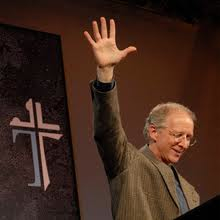
About Dr. Piper: John Piper is pastor for preaching and vision at Bethlehem Baptist Church in the Twin Cities of Minnesota. He grew up in Greenville, South Carolina, and studied at Wheaton College, Fuller Theological Seminary (B.D.), and the University of Munich (D.theol.). For six years he taught Biblical Studies at Bethel College in St. Paul, Minnesota, and in 1980 accepted the call to serve as pastor at Bethlehem. John is the author of more than 40 books and more than 30 years of his preaching and teaching is available free at desiringGod.org. John and his wife, Noel, have four sons, one daughter, and twelve grandchildren.
Dr. John Feinberg on “Why I Still Believe in Christ, in Spite of Evil and Suffering”
The Problem of Evil Is A Problem For Everyone

Probe an atheist or agnostic deeply enough about why they doubt God’s existence, and he or she will likely recount for you the problem of evil. This problem keeps many from faith in God altogether and rattles the faith of even the staunchest believers. It is an intellectual problem that has occupied much of my attention for all of my adult life. Even more, for the last thirteen years, wrestling with the reality of evil has been a personal challenge for me and my family. Things have happened that I must deal with every day for the rest of my life.
Though many religious believers and nonbelievers struggle with this problem, it is especially acute for adherents of a religion such as evangelical Christianity, which believes in an all-powerful and all-loving God. How can a God with those traits allow evil to beset his creatures? If evil is retribution for some horrendous sin, then perhaps its presence in the world is understandable. But even in cases of the most egregious sinners, some punishments seem to exceed the crime by quite a bit. For those who live a godly life, suffering from certain afflictions seems especially unjustified. In light of these things and my own experiences with suffering, you may wonder why I still believe in God at all, let alone remain a Christian. In the pages that follow, I want to explain why, but before I can, I must raise several preliminary items.
Preliminary Considerations
I have argued at length elsewhere that the usual conception of the problem of evil is too simplistic. Traditionally, this problem is portrayed as a dilemma centering on the logical consistency of three propositions: (1) God is all-loving; (2) God is all-powerful; and (3) evil exists in a world created by this God. Philosophers and theologians have assumed that this problem is the only problem of evil and that it confronts equally all theological systems that believe in an omnipotent and all-loving God. I have argued that this is not so, for there are many different problems of evil. I needn’t recount all of them here, but I should distinguish several of them.
First, there is a difference between the strictly intellectual questions that evil raises and the more personal crises of faith it precipitates. Those dealing with the intellectual questions of evil usually question whether evil’s existence is logically consistent with Christian doctrine about God. One could pose such questions in complete abstraction from actual evils being suffered. One could even ask these questions if one didn’t believe there is a God or that evil exists in our world. These are the problems that professional theologians and philosophers write about and debate. There are distinct intellectual questions raised by the existence of any evil, the amounts of evil in our world, the intensity of certain evils, and the apparent purposelessness of some evils. If theists cannot successfully answer such questions, continuing to believe in God (and holding to theologies that cannot solve these problems) seems unwarranted.
In contrast to the intellectual questions is the personal struggle that people have with suffering and affliction. Such experienced evils precipitate a crisis of faith. The afflicted person asks how a God of love can allow this to happen when he or she has faithfully followed God all of his or her life. Since God doesn’t remove the evil, it is difficult to worship him and even more difficult to serve him. Clearly, the relationship this person has with God is strained, and it isn’t likely that it can be restored merely by offering the afflicted information about how the experienced evil is consistent with an all-loving, all-powerful God, let alone simple platitudes about how God knows that this is ultimately for the best.
A further distinction relates to the intellectual problems. In recent decades, philosophers have argued that these questions can be posed in either a logical form or an evidential form. The former is the more traditional way the problem of evil has been conceived. In that case, the critic accuses a theistic system of containing views that collectively contradict one another. If any two of the three key propositions for theism mentioned above are true, the third must be false. Of course, any set of ideas that is internally self-contradictory cannot as a whole be true. Hence, if theistic systems are guilty of this error, they are false and should be abandoned. Since the charge of contradiction means there is no possible way the set of propositions can all be true, the theist needs only to show that there is a possible way for the three central propositions about God and evil to be true. Thus, it hasn’t been shown that the theist contradicts himself.
In recent years, largely because of the work of Alvin Plantinga in elaborating and defending the freewill defense, many atheists as well as theists have agreed that it is possible to hold the three propositions central to theism without contradicting oneself. However, critics have launched the attack on a second front. Even if a theological system isn’t guilty of contradicting itself over its views on God and evil, critics still argue that the mere facts of evil in our world make it unlikely that theism is true. Because instances of evil are seen as evidence against theism, this form of the problem of evil is called the evidential problem. Moreover, because the evidential problem claims that evil makes theism improbable, this form of the problem is also called the probabilistic problem of evil. In contrast to the logical problem of evil, one doesn’t explain why one’s theology is self-consistent. Instead, the theist must explain why, despite the evil in our world, theism isn’t improbable.
As shown elsewhere, the kind of answers appropriate for the logical problem are different from those needed to solve the evidential problem. Due to space limitations, I cannot respond to both forms of the problem in this essay. Since the logical problem is the one with the longest history and is most frequently discussed, I will focus on it. Moreover, the problem most frequently raised throughout the history of this discussion is the problem of moral evil. That question asks why an all-loving and omnipotent God allows moral evil, sin, in our world. Exactly how this problem confronts a given theological system depends on its account of metaphysics and ethics. Before turning to that matter, however, I should pause to clarify the basic strategy that most defenses and theodicies follow when attempting to solve the various intellectual problems of evil in their logical form. It is a fourfold strategy.
Strategy of Defenses and Theodicies
First, for the theist divine omnipotence means that God has power to do all things logically possible for a being with his attributes. Actualizing contradictory states of affairs isn’t logically possible. Moreover, given God’s nature, he can’t sin, catch a cold, fail a test, and so on. But the crucial point in defining omnipotence is to exclude the logically impossible. If a theist believes that God can actualize contradictory states of affairs, then the language used to describe our world (the theist’s theology) will, of course, contain contradictions, but that will in no way prove that his system succumbs to the problem of evil. Hence, in order for the logical problem to be a significant challenge to the theist’s views, the theist must hold that no one, including God, can do the logically contradictory.
Second, the theist appeals to a commonly held moral principle: No one can be held morally accountable for failing to do what they couldn’t do or for doing what they couldn’t fail to do. That is, moral praise or blame can be correctly assessed only to someone who acts freely. In God’s case, if he can’t do something, he can’t be held morally culpable for failing to do it.
Third, the theist offers an explanation as to why God can’t (isn’t free to) both remove moral evil and accomplish some other valuable goal in our world. In other words, when contemplating which world to create, God could have chosen either a world with no moral evil or a world with some other value. According to the theist, God couldn’t have done both conjointly without generating a contradiction. The two options were mutually exclusive. Therefore, God could have done one or the other but not both. Depending on the theology in question, this other value might be creating the best of a possible world, making creatures with libertarian free will, or building the souls of his human creatures so that they grow from mere creaturehood to children of God.
The definition of omnipotence excludes the logically contradictory. God can’t actualize both of these values (removing moral evil and the other value) at the same time. But the ethical principle says that if one can’t do something, one isn’t guilty for failing to do it. It appears, therefore, that God is justified, but not quite. Critics may grant that God couldn’t conjointly remove evil and put some other value in our world, but they may complain that God chose the lesser of the two values for our world, and hence, he still isn’t justified. At that point, the theist adds the final element in the strategy. He argues that the item God put in our world is a value of such great magnitude that it either counterbalances or outweighs the moral evil that accompanies that value. Hence, God has done nothing wrong in creating our world; it is a good world.
Answers to the Logical Problem of Moral Evil
Given this strategy, how might one solve the problem of moral evil in its logical form? As suggested above, the problem confronts each theology differently. There are as many of these problems of moral evil as there are theological systems committed to the ideas that God is all-loving and omnipotent and that evil exists. Each theology has its own account of God and evil, and since the problem in its logical form is about whether the theist’s system contradicts itself, we must first clarify the system’s views on God and evil (i.e., its metaphysic and ethics).
While many distinct theologies fall under the rubric of evangelical Christianity, for our purposes I want to show how a traditional Arminian system and a moderate Calvinistic system (my own) would solve the logical problem of moral evil. Both theologies have the same general metaphysic and account of ethics, which I have elsewhere labeled modified rationalism, though they do differ in their understanding of free will.
Modified rationalism holds that God’s existence is the highest good in and of itself. Hence, by creating a world, God in no way enhances his value, for he is already the supreme value. On the other hand, God is free either to create or not create a world. Creating is a fitting thing for God to do, but not the only fitting thing; a decision to create nothing would in no way have decreased God’s value. In addition, modified rationalists believe that there is an infinite number of contingent, finite, possible worlds. Some are inherently evil, and God had better not create any of them, but more than one of those possible worlds is a good world. God is free either to create one of the good worlds or refrain from creating altogether. Modified rationalists reject the idea of a best possible world. Finally, according to modified rationalism, some things can be known by pure reason alone, whereas others can be known only by revelation. Many forms of evangelical Christianity incorporate a system of modified rationalist metaphysics.
As to ethics, modified rationalist systems hold one of two broad kinds, consequentialism or non-consequentialism. Consequentialist theories determine which acts are right or wrong on the basis of the results of the action. Non-consequentialist theories hold that something other than consequences (e.g., God commands it; therefore, it is our duty) makes an act morally right or wrong. As this relates to the problem of evil, a consequentialist theory says that the world as created had evil in it. However, that produces no moral stain on God, for he will ultimately use evil to maximize good. Non-consequentialism demands that the world as created contained no evil. Evil was introduced instead by the actions of God’s creatures.
Given such a metaphysic and an account of ethics, we can now specify exactly how the logical problem of moral evil would arise for a modified rationalist theology. The problem can be posed as the following question: Is the evil in our world (“evil” as the modified rationalist defines it) such as to refute the claim that our world is one of the good possible worlds God could have created? If the answer is yes, then the theological system is guilty of contradicting itself. On the other hand, if ours is a good world, despite the evil in it, then God’s goodness and power are consistent with the existence of evil.
Modified rationalists defend their theology by pointing to some feature of our world that shows it is one of the good possible worlds God could have created. In line with the four-step strategy already described, the modified rationalist argues that the aspect of our world that makes it a good world also makes it logically impossible for God to remove moral evil. Since he can’t both remove evil and create a world with the positive value to which the theologian points, he isn’t guilty for failing to do so. In what follows, I will present two such defenses to show that modified rationalists can in fact solve this problem in its logical form. One will be a defense a theological Arminian could use, and the other a defense a Calvinist could use.
The Freewill Defense
Perhaps the most frequently used Christian defense is the freewill defense. In contemporary discussions, its ablest defender has been Alvin Plantinga. Though this defense has its detractors, it successfully answers the problem of moral evil that confronts an Arminian theology. Many Calvinists have also invoked the freewill defense, but its notion of free will doesn’t fit Calvinistic systems committed to a strong sense of divine sovereignty.
The freewill defense presupposes a modified rationalist metaphysic and is nonconsequentialist in its ethics. Hence, it holds that God didn’t originate evil—the introduction of sin into our world is entirely due to God’s creatures, human and angelic. These evil deeds weren’t done or caused by God but were performed by the free acts of his creatures.
Some critics complain that even though humans in particular are responsible for sin in our world, God must also bear some responsibility, for he must have foreseen that we would abuse our free will to do evil, and yet he gave it to us anyway. Freewill defenders have a ready reply. For one thing, it is possible that free creatures will use their freedom to choose good, but there are no guarantees with creatures who possess genuine freedom. Good or evil acts must always be possible, and sadly, humans have frequently chosen to do evil. However, God knew when he gave us freedom that we could also use our freedom to do good. God reasoned that it is better to have creatures who do what is right (including love and obey him) freely because they want to, rather than doing right because they are forced or determined to do what is right. Hence, free will is a value of the highest order, one that God was surely right in putting into this world. Free will makes ours a good world, but, of course, if humans are genuinely free, there are no guarantees that they will never use their freedom to sin. God, therefore, cannot both give us free will and guarantee that there will be no sin, and since he can’t do both, he isn’t guilty for failing to do both.
Atheists such as J. L. Mackie aren’t convinced that the freewill defense succeeds. Since Mackie’s objection helps us understand the freewill defense better, it is worth raising. The freewill defense rests on the idea that there are no guarantees that humans will not sin if humans have genuine freedom. Mackie thinks otherwise. It is possible that someone will do moral good on one occasion. Freewill defenders grant this, but Mackie adds that it must also be possible that someone will use his or her free will on every occasion to do moral good. This is also possible, but then Mackie adds that this is possible for all human beings. If so, however, then an omnipotent God should be able to make it the case that all of us always freely choose to do what is morally good. The freewill defense says that if humans are truly free, there are no guarantees that they will do only good. Mackie’s objection says otherwise.
Though the answers to Mackie offered by Plantinga and other freewill defenders are quite intricate, they rest on a fundamental idea that seems difficult to resist. If God makes it the case or brings it about that we do anything, then we don’t do it freely. In essence, this suggests that Mackie’s proposal doesn’t incorporate “real” freedom (or that somehow he has misunderstood what freedom means). We might be inclined to leave the matter, merely thinking that Mackie has incorrectly defined “free will,” but the issue is more subtle than this. The fact is that Mackie’s notion of freedom differs from the freewill defender’s concept.
The concept of freedom espoused by the freewill defense is known as libertarian, contra-causal, or incompatibilistic free will. This notion of freedom holds that genuine free human action is incompatible with causal determinism. Hence, in spite of the direction causal forces point in a given situation, and in spite of how strong or weak the causes are, the agent can always do other than he or she does. The only way to guarantee a particular outcome is to causally determine the agent to do one thing or another. Since determinism rules out libertarian free will, however, no one, including God, can guarantee that someone will do moral good freely. Therefore, assuming that God gave us libertarian free will, without overturning our freedom, he can’t also guarantee that we will never sin. Did God do something wrong in giving us this kind of freedom? Not at all, since we can use it to love and obey him. Further, since nothing moves us to do good but ourselves, we know that our good deeds are what we really want to do. They aren’t forced upon us.
In contrast to libertarian free will, Mackie’s brand of freedom is known as compatibilism or soft deterministic free will. According to this definition of freedom, genuine free human action is compatible with causal conditions that decisively incline the will, so long as those conditions don’t constrain the will. To act without constraint means that one acts in accord with one’s wishes or desires. Acting under constraint means that one acts contrary to one’s wishes. It should be clear now why Mackie thinks God could bring it about that humans freely do good. According to compatibilism, factors decisively incline the will in one direction or another; there can be guarantees about what we do. But as long as we act in agreement with our wishes or desires, our act is free even though causally determined.
Based on the preceding, several things should be clear. First, compatibilism and incompatibilism contradict one another. Second, any theological position that holds that God is absolutely sovereign and exercises that sovereignty to decree and accomplish whatever he wills cannot at the same time hold that our actions are done with libertarian free will. If God exercises his sovereign power to guarantee certain outcomes, then many actions must be causally determined, which rules out libertarian free will. Most typically, Calvinistic theologies hold this strong notion of divine sovereign control over the world.
This discussion of different notions of free will raises another issue, and it is crucial for the logical problem of evil. Since the logical problem is about whether the theist contradicts himself, we must ask what views freewill defenders hold. Do they hold Mackie’s compatibilistic free will? Not at all; they are incompatibilists. But then it should be clear that if one defines freedom as freewill defenders do, Mackie’s objection has broken the ground rules for handling the logical problem of evil. Mackie attributes his notion of freedom to the freewill defense and then accuses it of failing. Indeed, if freewill defenders are compatibilists, their freewill defense doesn’t work for precisely the reason Mackie stated. But since Mackie’s view of freedom isn’t the same as that of the freewill defender, Mackie hasn’t shown that freewill defenders contradict themselves. The message is clear: If one holds incompatibilism and offers the freewill defense as the answer to the logical problem of moral evil, one’s system is logically consistent. The freewill defense solves this problem for systems committed to libertarian free will.
Integrity of Humans Defense
The freewill defense answers the logical problem of moral evil for theologies that incorporate libertarian free will, but what if one’s theology is Calvinistic and/or incorporates compatibilistic free will? My Calvinistic theology presupposes modified rationalism and non-consequentialist ethics. There are three stages to this defense.
I begin by asking what sort of beings God intended to create when he made humans. Here I am referring to the basic abilities and capacities God gave human beings. At a minimum, I believe he intended to create beings with the ability to reason, with emotions, with wills that are compatibilistically free (although freedom isn’t the emphasis of this defense), with desires, with intentions, and with the capacity for bodily movement. God did not intend for individuals to be identical in respect to these capacities. God also intended to make beings who are finite both metaphysically and morally (as to the moral aspect, our finitude doesn’t necessitate doing evil but only that we don’t have God’s infinite moral perfection). Thus, human beings are not superhuman beings or even gods. Moreover, God intended for us to use our capacities to live and function in a world suited to beings like us. Hence, he created our world, which is run according to the natural laws we observe, and he evidently didn’t intend to annihilate what he had created once he created it.
None of these features were removed by the race’s fall into sin, but because of our fall into sin, these capacities don’t function as well as they would have without sin. Likewise, the fall didn’t overturn the basic laws of nature and physics by which our world runs. The fundamental features of humanity and the world are still as God created them.
How do I know this is what God intended? By looking at the sort of being he created when he created us, and by noting that the world in which we live is suited to our capacities. Some might think this same line of thinking could be used to show that God also intended to create moral evil, because it exists. However, that is not so. Moral evil is not something God created. God created substances, including the world and the people in it. God intended for us to act, for he made us capable of acting. But he neither created our actions nor does he perform them. Hence, we cannot say God intended for moral evil to exist. God intended to create and did create agents who can act; he didn’t create their acts (good or evil).
How do we know, though, by looking at what God did that he really intended to do it? Don’t people at times act without fully understanding their intentions? While human beings don’t always know what they intend to do, that is not true of an omniscient being. By seeing what God did, we can be sure what he intended to do.
If humans are the type of creatures I have described, how do they come to do moral evil (sin)? This brings us to the second stage of the defense: consideration of the ultimate source of evil actions. In accord with James 1:13–15, I hold that morally evil actions stem from human desires. Desires in and of themselves aren’t evil, nor do they perform the evil. James says, however, that desires (epithumia) are carried away (exelkomenos) and enticed (deleazomenos) to the point where sin is actually committed (conceived). Many moral philosophers would agree that the point of “conception” is when a person wills to do the act if he or she could. Once that choice is made, it remains only for that person to translate the choice into overt public action.
Morally evil acts, then, ultimately begin with our desires. Desires in and of themselves aren’t evil, but when they are aroused to lead us to disobey God’s prescribed moral norms, then we have sinned. Desires are not the only culprit, however, for will, reason, and emotion, for example, also enter into the process. But James says that individual acts of sin ultimately stem from desires that go astray.
If humans are the sort of creatures described, and if moral evil arises as suggested, what would God have to do to get rid of moral evil? This brings us to the final stage of the defense. Clearly, if removing moral evil is God’s only goal, he can accomplish it. However, my view of divine omnipotence doesn’t allow God to actualize contradictions. Hence, if by removing evil God contradicts some other goal(s) he wants to accomplish, that explains why God can’t remove evil.
It is my contention that if God did what is necessary to remove moral evil from the world, he would (1) contradict his intentions to create human beings and the world as he has, causing us to wonder if he has one or more of the attributes ascribed to him, and/or (2) do something we would not expect or want him to do, because it would produce greater evil than there already is. To see this, let’s consider how God might get rid of moral evil.
Some may think all God needs to do to remove moral evil is arrange affairs so that his compatibilistically free creatures are causally determined to have desires only for good and to choose only good without being constrained at all. For each of us, God should know what it would take, and he should be powerful enough to do it.
However, this isn’t as simple as it sounds. If people are naturally inclined to do what God wants, God may need to do very little rearranging of our world to accomplish this goal. If people are stubborn and resist his will, it may take a great deal more rearranging. God would have to do this for every one of us every time we resist his will. But changes in circumstances for one of us would affect circumstances for others. What might be necessary to get us to do good might disrupt others’ lives, constrain them to do something that serves God’s purposes in regard to us, and perhaps even turn them toward doing evil. Upholding everyone’s freedom may be more difficult than we suppose. It is likely that the free will of many will be abridged as a result of God’s attempts to convince certain people to do good.
There is another reason why it may be more difficult than we think for God to get us to do right. God didn’t create us with an inclination toward sin, but even Adam in ideal surroundings and circumstances sinned. According to biblical teaching, the race inherited from Adam a sin nature that disposes us toward evil. In light of that sin nature, it isn’t likely that a minimal rearranging of events, actions, and circumstances would achieve the goal of getting us to do good without constraining us. God would have to constrain many people in order to rearrange circumstances to convince a few of us to do the right thing without constraining us. Of course, that would contradict compatibilistic free will. We may begin to wonder how wise this God is if he must do all this just to bring it about that his human creatures do good. Why not make a different creature who would be unable to do evil? But, of course, this would contradict God’s decision to make humans, not subhumans or superhumans.
There is yet a further problem with this method of getting rid of evil. It assumes that if God rearranged the world, all of us would draw the right conclusion from our circumstances and do right. Our desires, intentions, emotions, and will would all fall into place as they should without abridging freedom at all. This is most dubious, given our finite minds and wills as well as the sin nature within us that inclines us toward evil.
Perhaps there is a simpler, more direct way for God to get rid of evil. First, he could remove moral evil by doing away with humankind. Not only is this a drastic solution none of us would think acceptable, but it would also contradict his intention to create humans who aren’t annihilated by his further actions.
Second, God could eliminate all objects of desire. Without objects of desire, humans would not be led astray to do moral evil. However, to eradicate all objects of desire, God would have to destroy the world and everything in it.
Since sin ultimately stems from desires, a third way for God to remove moral evil would be to remove human desires. Problems with this solution again are obvious. God intended to create creatures who have desires, but if he removed all human desires, such an act would contradict his intentions about the creature he wanted to create. Moreover, removing desires would also remove the ultimate basis of action so that people wouldn’t act. This would contradict God’s intention to create beings who perform the various actions necessary to remain alive.
Fourth, God could allow us to have desires but never allow them to be aroused to the point at which we would do moral evil. If God chose this option, he could accomplish it in one of two ways. He could perform a miracle to stop our desires whenever they started to run rampant, or he could give us the capacity to have desires that can be aroused only to a certain degree, a degree that would never be or lead to evil.
I shall address the former option when I discuss in general the option of God removing evil by performing a miracle. As for the second option, there are several problems. For one thing, it contradicts God’s intention to create people who aren’t stereotypes of one another. Whenever someone’s desires would be allured in regard to something forbidden, those desires could be enticed only up to a point that would not be or lead to evil. What would be true of one person would be true of all. In every case, we would have to be preprogrammed to squelch the desire before it went too far.
There is another problem with God making us this way. When a desire would start to run amuck, one would have to stop having the desire (or at least not follow it), change desires, and begin a new course of action. A person’s daily routine would be constantly interrupted (if not stopped altogether) and new courses of action implemented only to be interrupted again. Life as we know it would come to a standstill, contradicting God’s intention to create us so as to function in this world.
Perhaps the greatest objection to this option is that for us to function this way God would have to make us superhuman both morally and intellectually. We would have to be willing to squelch our desires whenever they would lead to evil, and we would also need to know when desires would lead to evil so that we could stop them from being overly enticed. To do so, we would need to be more than human. Of course, such a situation would contradict God’s intention to make non-glorified human beings, not superhuman beings.
Fifth, God could remove evil by removing intentions that lead to evil in either of the ways mentioned for handling evil-producing desires (by miracles or by making us so we would never develop intentions that lead to evil). However, this option creates the same problems raised with respect to desires.
Sixth, God could eliminate evil by removing any act of the will that would produce evil. We could will good things freely, but whenever we willed evil, the willing would be eliminated. God could do this either by miraculous intervention or by making us so we would never will evil. However, this option again faces the same objections that confront the desire and intention options.
Seventh, God could eliminate moral evil by stopping our bodily movement whenever we try to carry out evil. He could do this either by a miracle or by making us in such a way that we would stop our bodily movement when it would lead to evil. The same problems result as with the desire, intention, and will options.
If all of these options are problematic, perhaps God could remove evil through miraculous intervention. Several problems beset this method, however. First, if God did this, it would greatly change life as we know it. At any moment, God could miraculously stop desires, intentions, acts of the will, or bodily movements if he knew they would lead to evil. Since we wouldn’t always know when our actions would lead to evil, we wouldn’t always know when to expect God to interfere. We might become too afraid to do, try, or even think anything, realizing that at any moment our movements or thoughts could be eliminated. Under those circumstances, life as we know it would come to a standstill, contradicting God’s desire to create people who live and function in this world.
Second, it is one thing to speak of God miraculously intervening to prevent evil, but it is another to specify exactly what that means. Take bodily movement, for instance. God would probably have to paralyze a person as long as necessary to stop bodily movements that would carry out an evil act. Of course, such an act would alter the nature of life altogether and again contradict God’s intention to make creatures who can live and function in this world.
In addition, it is difficult to imagine what miracle God would have to perform to remove a desire, an intention, or an act of willing that would lead to evil. Would God have to knock us unconscious or take away our memory for as long and as often as needed to remove evil-producing thoughts? Such acts would bring life to a standstill and be inconsistent with God’s intention to make us so that we can live and function in this world.
A final objection to removing evil miraculously is that it would give us reason to question God’s wisdom. Would a wise God go to all the trouble to make human beings as they are and then perform miracles to counteract them when they express that humanness in ways that would produce evil? Of course, had God made us differently so that he wouldn’t have to remove evil by miracles, that would contradict his intention to make the sort of beings he has made. So either God must perform miracles and thereby cause us to question his wisdom, or he must change our nature as human beings. But that would contradict his goal of making humans rather than superhumans or subhumans.
This discussion about what God would have to do to remove moral evil shows that God cannot remove it without contradicting his intentions to make the kind of creatures and world he has made, which would cause us to doubt his wisdom.
Someone may suggest that God could avoid these problems if he made creatures without desires, intentions, will, and bodily movement. This would likely remove moral evil, but it would also remove human beings as we know them. Anyone who thinks there is any worth in being human would find this option unacceptable.
Someone else might suggest that moral evil could be avoided if God made us superhuman. But humans as we know them are a value of the first order. Scripture says humans are created in God’s image (Gen. 1:26–27). When God finished his creative work, he saw that all of it, including human beings, was very good (Gen. 1:31). Psalm 8:5–8 speaks of God crowning us with glory and honor and giving us dominion over his creation. In light of this evaluation by God, who are we to say that human beings as created by God aren’t valuable?
As a modified rationalist, all I need to show is that our world is one of those good possible worlds God could have created. It seems clear that a world with human beings in it is a good world. Neither I nor any other modified rationalist needs to show that our world is the best or even better than some other good world God might have created. We need only show that ours is one of those good worlds God could have created. I have done that by pointing to human beings and arguing that God cannot both create them and remove evil. Hence, I have solved my theology’s logical problem of moral evil.
Can God remove moral evil from our world? I believe he can, if he creates creatures different from human beings. He also can if he creates humans and then removes evil in any of the ways described above. But we have seen the problems that arise if God follows any of those options.
Has God done something wrong in creating human beings? Not at all, when we consider the great value human beings have and the great worth God places on us. We can say that moral evil has come as a concomitant of a world populated with non-glorified human beings. Still, it is one of those good possible worlds God could have created. God is a good God. Our world with human beings demonstrates his goodness.
The Religious Problem of Evil
In the preceding pages, we have seen that it is possible to solve the intellectual problem of moral evil in its logical form and to do so for more than one theology. Because this and other intellectual problems of evil are capable of solution, I see no reason to reject Christianity on the grounds that it succumbs to these intellectual problems. However, that isn’t the end of the story. What about the experience of evil? Is Christianity sufficient to see someone through even the most difficult of trials? Is Christianity religiously bankrupt at a moment of personal crisis?
These questions have confronted me in vivid and unpleasant ways over the last ten to fifteen years. I have been interested in the problem of evil for much of my life, and in various degree programs I wrote theses and dissertations addressing the intellectual problems evil raises for a theist. For many years, I thought the intellectual answers I had constructed would be sufficient for someone in the midst of trials and afflictions. All of that changed for me in 1987 when my wife was diagnosed with Huntington’s disease.
Huntington’s disease is a genetically transmitted disease that attacks both mind and body and involves the premature deterioration of the caudate nucleus of the brain. On the physical side, the symptoms involve a growing inability to control voluntary movements. Among other things, this results in a loss of balance, difficulty in swallowing, slurred speech, and involuntary twitches in various parts of the body. Psychological symptoms can include memory loss, deterioration of attention span and mental function, depression, hallucination, and finally paranoid schizophrenia. The disease develops slowly, but over a period of decades it takes its toll, and it is fatal. In my wife’s case, symptoms first appeared when she was twenty-eight. As bad as this is, however, just as bad is the fact that Huntington’s is controlled by a dominant gene, so each of our children has a 50–50 chance of getting the disease. At the time we received this diagnosis, we already had three children. Since that time, progress has been made in research about this disease, but to date there is still no cure.
When news of this disease came, a host of emotions came with it: bewilderment, a sense of hopelessness and helplessness, a feeling of abandonment, and anger. As a Christian, I knew we aren’t promised exemption from problems and trials, but I never expected something like this. With one diagnosis, a dark cloud had formed above my family that would not dissipate for the rest of our lives. At that point, the problem of evil moved from an intellectual problem that I could calmly reflect on in the solitude of my study to a real-life trauma that has to be confronted every day of my life.
One of the reasons for my confusion over what was happening was the previous thinking and writing I had done about the problem of evil. If anyone should have been ready for this crisis, it was I. But during this time of emotional and spiritual turmoil, none of the intellectual answers proved to be even the least comforting. As I thought about that, I came to an important realization. The religious problem of evil, the crisis of faith precipitated by suffering, at rock bottom is not primarily an intellectual question but an emotional problem. There are, of course, intellectual questions that the sufferer asks, and at an appropriate point in the grieving process when the afflicted is ready to hear the answers, it is appropriate to offer them. However, that point rarely comes during the shock of the terrible news. At that point, the sufferer needs comfort and care, not a dissertation on the logical consistency of God’s existence and evil.
While there are many things one can say and do that won’t help the afflicted cope with trials, other things can and do help. In what follows, I will present what helped in my case, not as a how-to for comforting the afflicted but rather as a personal testimony and explanation of why I am still a Christian in spite of the evil that has befallen my family.
One of the first things that helped came in a conversation with my father. I was bemoaning the fact that this had happened and that I had no idea how I would be able to cope as my wife’s condition became progressively worse. My dad responded, “John, God never promises us tomorrow’s grace for today. He only promises today’s grace, and that is all you need.” Though at the time I wasn’t handling well the reality of my wife’s situation, I hadn’t completely collapsed. More importantly, my wife was still quite capable of functioning. Part of the grace for those early days was finding out the diagnosis at a time when the full burden of my wife’s care didn’t fall on me.
With this reminder from my dad, I began to readjust my focus from imagining what the disease would be like in the future to dealing with it in the present. I began to ask God each morning for the grace I would need to make it through that day. As I saw those prayers answered each day, I became more confident that when things got worse, I would still need only one day’s grace at a time, and it would be there.
At other times during my struggles with this disease, I am reminded that despite what is happening, God has been gracious to us in other ways. First Peter 5:7 tells us to cast our problems on God, because he cares for us. At times it doesn’t seem this is true, but it is. In our case, I realize that despite my wife’s disease, there are other problems that God has kept from us. Some people lose their spouse to cancer or a heart attack or in an automobile accident, but that has not happened to us. God doesn’t owe us such protection, but he has graciously given it to us. That is a sign that he really does care.
There is another realization that is difficult to swallow, but it is true. When tragedy strikes, we often blame God, but God didn’t give my wife this disease. In Romans 5:12, Paul explains that through Adam sin entered the human race, and death resulted from sin. In other words, people die as a consequence of sin. I am not suggesting that this has happened to my wife as recompense for being a horrendous sinner. Rather, we live in a fallen world, and death is a consequence of sin. The particular death that befalls a person doesn’t come from a specific sin he or she commits, but rather from the fact that the human race as a whole has fallen into sin. But if people die because of sin, they must die of something. One of the causes is disease, and some of those diseases are genetically controlled.
So while it is human nature to blame God for what happens, Scripture is clear that these things happen because we live in a fallen, sinful world. If we are going to be angry, our anger should be directed toward sin, not God. Our problem ultimately stems from not seeing the gravity of sin. But when we stand at the graveside of a relative or friend, or when we receive a diagnosis, we begin to see just how serious a matter sin is. The realization that something bad has happened because we live in a fallen world is not likely to comfort the afflicted, but it can help to assuage our anger at God, and it should help us redirect that anger to the proper target.
Some may grant the point about the cause of affliction but still object that an all-loving, all-powerful, all-gracious God should prevent evil from happening. Such a suggestion reflects a misunderstanding of what God’s attributes obligate him to do. Many think that because God is all-loving, he is obligated to do every loving thing possible. His grace obligates him to do every gracious thing possible, and so on. However, this is an incorrect assessment of God’s obligations. In my judgment, it would be very loving for God to make us all multimillionaires, but I can’t think of anything that obligates him to do so. God’s love doesn’t obligate him to do every loving thing possible. Rather, everything he chooses to do (though he isn’t obliged to do everything he can do) must exhibit his attribute of love. As to God’s grace, at most it means that the things he chooses to do will exhibit his grace, but even here we must be careful. Grace as undeserved favor is by definition never owed, so we can hardly demand that God act graciously toward us. The key point is that before we mount a case against God for failing to do what his character requires, we must be sure that we understand what he is obligated to do.
In spite of this point about God’s attributes, I still felt something was amiss. Granted, my wife’s disease resulted from the sinfulness of the human race, and granted, God didn’t owe us exemption from this problem because of his attributes, but still, not everyone has to deal with such a burden, so why should we? It seems God has been unfair in letting this burden fall on us when others escape such problems.
I believe this complaint is at the heart of why many believers and nonbelievers alike turn from God in the midst of affliction and feel justified in doing so. God hasn’t treated them fairly, so he doesn’t deserve their worship and devotion. As I reflected on this matter, several things came to mind. First, as I reflected on God’s fairness or justice, I began to think of my philosophical training about matters of justice. Philosophers often distinguish between distributive and egalitarian justice. Distributive justice gives to each person exactly what they are owed, reward or punishment. Egalitarian justice requires that each person receive exactly the same thing.
With this distinction in hand, I realized the nature of my complaint. I was angry because God gave me something different from what he gave others. Egalitarian justice requires that each of us get the same thing. Others escape such problems, so we should have too. As logical as this sounds, no matter how hard I tried, I couldn’t think of any biblical or nonbiblical principle that requires God to deal with us according to egalitarian justice.
In contrast, Scripture teaches that God functions in his relations with us in accord with distributive justice. Distributive justice is about what we have earned—what we deserve and what is owed to us. If we want God to treat us justly, that means we want what we deserve. But what do we deserve? Given God’s moral governance of our world and the fact that we have broken his laws, we deserve punishment. None of us deserves exemption from problems and punishment for sin, for all of us have sinned against God. We may chafe under this system of moral government, but God as Creator has a right to set things up this way. And given this setup, he has done nothing unjust by not exempting my family from this affliction. If we are speaking in terms of justice, God owes none of us egalitarian justice, and in terms of distributive justice, he owes none of us blessing.
Still, I harbored residual anger toward God. Though I came to see that my desire for egalitarian justice was wrong and that according to distributive justice I didn’t merit exemption from affliction, it seemed unfair that others who don’t deserve exemption from problems have not been asked to bear this burden. Eventually I came to see that my complaint was that God has dealt with others in grace, and I felt that I should get the same grace.
As I pondered such thoughts, however, I came to see how wrong they are. I was demanding grace as though God owed it to me because he gave it to others. But grace is unmerited, undeserved, unearned favor. That is, you get something good that you don’t deserve, haven’t merited, and aren’t owed. Grace is not given to reward good deeds or upright character; it’s not a reward at all. It is given out of the generosity of God’s heart. As unmerited blessing, grace is never owed—that’s why it’s grace and not justice. So God has done nothing wrong if he gives you grace that he doesn’t give me.
One of Jesus’ parables beautifully illustrates this principle. In the parable of the workers in the vineyard (Matt. 20:1–16), a landowner hired workers at various times in the day. Those hired early in the day were promised a denarius for the day’s work. Others were promised only that the owner would do right by them, and still other workers were simply told to go to work. At quitting time, those hired last were paid first. The landowner paid them each a denarius, even though they had been hired a mere hour or two before the end of the day. In fact, he paid every worker a denarius. When the landowner paid those hired first the denarius he had promised, they were angry. They had worked the entire day, but those hired near the end of the day had received the same wage. Their complaint amounted to the following: Somebody got a better deal than I did, and that’s not fair!
The landowner replied that he had not treated them unfairly. They had made a deal, and he had given them exactly what he had promised. Justice says you give people what they earn and what you owe. But if the landowner wanted to be generous with the others, what’s wrong with that? If he wanted to extend them grace, why is that wrong? Whose money (whose grace) is it anyway? The message of the parable is clear: Our standing in the kingdom of heaven depends on God’s grace, and God has a right to give grace and withhold it as he chooses. Never begrudge someone the grace that God gives them, especially when he doesn’t give you the same grace.
Coming to this realization about whether God owed me exemption from this trial was a major breakthrough in my experience. It made me realize that if I were to mount a complaint against God over what he had or hadn’t done, I had no ground for such a case. I had been angry at God without adequate reason. While this realization did not remove the affliction, it made me feel more comfortable with God. After all, he had not caused the affliction, and he didn’t owe me release from it. But he hadn’t abandoned me either. He gives me grace to sustain me through each day. I don’t deserve that either, but it is there!
A final major factor in helping me adjust to what had happened and removing my anger were the many tangible signs of God’s love and care for us. Many people displayed generosity and kindness, showing us that there are people who care and who will help when things grow worse. But why do these people show us this love and concern? I know it is ultimately because God moves them to do so, and hence, we have periodic reminders that God cares for us and loves us.
There is much more to our story and many other things that also helped me cope with this affliction. I would not delude myself into thinking that everyone’s situation is like mine or that what I have said will solve the personal crises of faith others confront. However, much of what I have said touches on very common, human themes, so others may find it helpful.
Though the intellectual problems of evil and the experience of affliction can be major detriments to belief in God, they needn’t be. Of course, one can choose to remain angry at God, but I hope this chapter will help you to see that in the face of the intellectual and personal problems of evil, one need not sacrifice intellect to continue believing in God, nor does one need to hold on to God in blind faith without any explanation as to why afflictions happen and without any comfort or relief of the pain. Undoubtedly, it is easier to write about these things than to live them, but through God’s sustaining grace, it is possible to cope with evils and to do so in ways that are pleasing to God and a positive testimony to others.

About the Author: Dr. John S. Feinberg is Professor of Biblical and Systematic Theology and Chairman of that department at Trinity Evangelical Divinity School. He is the author of several books, including Crossway’s No One Like Him: The Doctrine of God; Ethics for a Brave New World (with Paul D. Feinberg) and The Many Faces of Evil (For a more thorough treatment of what is covered in this article see this EXCELLENT BOOK – pictured above), and is general editor of Crossway’s Foundations of Evangelical Theology series. The article above was excepted from the book edited by Norman L. Geisler and P.K. Hoffman entitled Why I am a Christian: Leading thinkers explain why they believe (237-254). Grand Rapids: Baker Books, 2006.
7 Reasons to Believe The Bible is God’s Word and Inerrant
7 REASONS FOR BELIEVING THE BIBLE IS THE WORD OF GOD AND TOTALLY TRUSTWORTHY

ACRONYM: “H.I.S. L.A.W.S” – Developed By Pastor Bob Sears
| Harmony | Though written over 1600 years by 40 plus authors in different locations and in 3 different languages about scores of controversial subjects, the Bible’s teachings are supernaturally harmonious from cover to cover. |
| Impact | Countless millions of people from diverse cultures all over the world have had their personal lives changed forever for the good and found spiritual meaning in life from the message of the Bible. |
| Seers | The Old and New Testament prophets (“seers”) spoke dozens of general and specific predictions which have been historically fulfilled. Among the most significant are Isaiah 53 (O.T) and Matthew 24 (N.T). |
| Longevity | In spite of repeated attempts throughout history both to destroy and discredit the Bible, it still exists in virtually its original form and is still revered and circulated more widely than any other book on earth. |
| Accuracy | The Bible’s detailed record of historical data has been repeatedly shown (by other writings and archeological discoveries) to be accurate to an exact degree. This testifies to its writers’ reliability. |
| Writers | The biblical writers obviously meant their readers to accept their writings as a message from God (e.g.: O.T.: the repeated instances of “Thus says the LORD…” N.T.: 1 Th. 2:13; 2 Tim. 3:16; 2 Pet. 1:20-21). |
| Son of God | Jesus, reported to be the authoritative Son of God by the biblical writers, plainly taught the full inspiration of both the Old and New Testaments (e.g.: O.T.: Matthew 5:17-18. N.T.: John 14:23-26, and 16:13). |
4 Reasons Why Situational Ethics Doesn’t Work In The Case of Abortion
Would you consider abortion in any of the following four situations?

1. There’s a preacher and wife who are very, very poor. They already have fourteen children, and now she finds out she’s pregnant with the fifteenth. They’re living in tremendous poverty. Considering their poverty and the excessive world population, would you consider recommending an abortion?
2. The father is sick with a bad cold, the mother has tuberculosis (TB). They have four children. The first is blind, second is dead, third is deaf, fourth has TB. She finds that she’s pregnant again. Given their extreme situation, would you consider recommending an abortion?
3. A white man has raped a thirteen-year-old black girl, and she became pregnant. If you were her parents, would you consider recommending an abortion?
4. A teenage girl is pregnant. She’s not married. Her fiancé is not the father of the baby, and he’s concerned. Would you consider recommending an abortion?
If you said yes to the first case, you just killed John Wesley, one of the great evangelists in the nineteenth century. If you said yes to the second case, you killed Ludwig van Beethoven. If you said yes to the third case, you killed Ethel Waters, the great black gospel singer who thrilled audiences for many years at Billy Graham Crusades around the world. And, if you said yes to the fourth case, you killed Jesus Christ.
Dr. D.A. Carson on 12 Principles of Biblical Interpretation
MUST I LEARN HOW TO INTERPRET THE BIBLE?
by D. A. Carson

Hermeneutics is the art and science of interpretation; biblical hermeneutics is the art and science of interpreting the Bible. At the time of the Reformation, debates over interpretation played an enormously important role. These were debates over ―interpretation, not just over ―interpretations. In other words, the Reformers disagreed with their opponents not only over what this or that passage meant, but over the nature of interpretation, the locus of authority in interpretation, the role of the church and of the Spirit in interpretation, and much more.
During the last half century, so many developments have taken place in the realm of hermeneutics that it would take a very long article even to sketch them in lightly. Sad to say, nowadays many scholars are more interested in the challenges of the discipline of hermeneutics than in the interpretation of the Bible—the very Bible that hermeneutics should help us handle more responsibly. On the other hand, rather ironically there are still some people who think that there is something slightly sleazy about interpretation. Without being crass enough to say so, they secretly harbor the opinion that what others offer are interpretations, but what they themselves offer is just what the Bible says.
Carl F. H. Henry is fond of saying that there are two kinds of presuppositionalists: those who admit it and those who don‘t. We might adapt his analysis to our topic: There are two kinds of practitioners of hermeneutics: those who admit it and those who don‘t. For the fact of the matter is that every time we find something in the Bible (whether it is there or not!), we have interpreted the Bible. There are good interpretations and there are bad interpretations; there are faithful interpretations and there are unfaithful interpretations. But there is no escape from interpretation.
This is not the place to lay out foundational principles, or to wrestle with the ―new hermeneutic (now becoming long in the tooth) and with ―radical hermeneutics and ―postmodern hermeneutics. [For more information and bibliography on these topics, and especially their relation to postmodernism and how to respond to it, see my book The Gagging of God: Christianity Confronts Pluralism, esp. chaps. 2 and 3 (Grand Rapids: Zondervan, 1996 – in this article will be referred to as GOG).] I shall focus instead on one ―simple problem, one with which every serious Bible reader is occasionally confronted. The issue is this: What parts of the Bible are binding mandates for us, and what parts are not?
Consider some examples. “Greet one another with a holy kiss”: the French do it, Arab believers do it, but by and large we do not. Are we therefore unbiblical? Jesus tells his disciples that they should wash one another‘s feet (John 13:14), yet most of us have never done so. Why do we “disobey” that plain injunction, yet obey his injunction regarding the Lord‘s Table (“This do, in remembrance of me”)? If we find reasons to be flexible about the “holy kiss” (GOG, 19), how flexible may we be in other domains? May we replace the bread and wine at the Lord‘s Supper with yams and goat‘s milk if we are in a village church in Papua New Guinea? If not, why not? And what about the broader questions circulating among theonomists regarding the continuing legal force of law set down under the Mosaic covenant? Should we as a nation, on the assumption that God graciously grants widespread revival and reformation, pass laws to execute adulterers by stoning? If not, why not? Is the injunction for women to keep silent in the church absolute (1 Cor. 14:33–36)? If not, why not? Jesus tells Nicodemus that he must be born again if he is to enter the kingdom; he tells the rich young man that he is to sell all that he has and give it to the poor. Why do we make the former demand absolute for all persons, and apparently fudge a little on the second?
Obviously I have raised enough questions for a dissertation or two. What follows in this article is not a comprehensive key to answering all difficult interpretive questions, but some preliminary guidelines to sorting such matters out. The apostolic number of points that follow are not put into any order of importance.
(1) As conscientiously as possible, seek the balance of Scripture, and avoid succumbing to historical and theological disjunctions.
Liberals have often provided us with nasty disjunctions: Jesus or Paul, the charismatic community or the ―early catholic‖ church, and so forth. Protestants sometimes drop a wedge between Paul‘s faith apart from works (Rom. 3:28) and James‘s faith and works (Jas. 2:4); others absolutize Gal. 3:28 as if it were the controlling passage on all matters to do with women, and spend countless hours explaining away 1 Tim. 2:12 (or the reverse!).
Historically, many Reformed Baptists in England between the middle of the eighteenth century and the middle of the twentieth so emphasized God‘s sovereign grace in election that they became uncomfortable with general declarations of the gospel. Unbelievers should not be told to repent and believe the gospel: how could that be, since they are dead in trespasses and sin, and may not in any case belong to the elect? They should rather be encouraged to examine themselves to see if they have within themselves any of the first signs of the Spirit‘s work, any conviction of sin, any stirrings of shame. On the face of it, this is a long way from the Bible, but a large number of churches thought it was the hallmark of faithfulness. What has gone wrong, of course, is that the balance of Scripture has been lost. One element of biblical truth has been elevated to a position where it is allowed to destroy or domesticate some other element of biblical truth.
In fact, the “balance of Scripture” is not an easy thing to maintain, in part because there are different kinds of balance in Scripture. For example, there is the balance of diverse responsibilities laid on us (e.g. praying, being reliable at work, being a biblically faithful spouse and parent, evangelizing a neighbor, taking an orphan or widow under our wing, and so forth): these amount to balancing priorities within the limits of time and energy. There is the balance of Scripture‘s emphases as established by observing their relation to the Bible‘s central plot-line (more on this in the 12th point); there is also the balance of truths which we cannot at this point ultimately reconcile, but which we can easily distort if do not listen carefully to the text (e.g. Jesus is both God and man; God is both the transcendent sovereign and yet personal; the elect alone are saved, and yet in some sense God loves horrible rebels so much that Jesus weeps over Jerusalem and God cries, “Turn, turn, why will you die? For the Lord has no pleasure in the death of the wicked”). In each case, a slightly different kind of biblical balance comes into play, but there is no escaping the fact that biblical balance is what we need.
(2) Recognize that the antithetical nature of certain parts of the Bible, not least some of Jesus’ preaching, is a rhetorical device, not an absolute. The context must decide where this is the case.
Of course, there are absolute antitheses in Scripture that must not be watered down in any way. For example, the disjunctions between the curses and the blessings in Deut. 27–28 are not mutually delimiting: the conduct that calls down the curses of God and the conduct that wins his approval stand in opposite camps, and must not be intermingled or diluted. But on the other hand, when eight centuries before Christ, God says, “For I desire mercy, not sacrifice, and acknowledgment of God rather than burnt offerings” (Hos. 6:6), the sacrifical system of the Mosaic covenant is not thereby being destroyed. Rather, the Hebrew antithesis is a pointed way of saying, “If push comes to shove, mercy is more important than sacrifice. Whatever you do, you must not rank the marks of formal religion—in this case, burnt offerings and other mandated ritual sacrifices—with fundamental acknowledgment of God, or confuse the extent to which God cherishes compassion and mercy with the firmness with which he demands the observance of the formalities of the sacrificial system” (GOG, 20).
Similarly, when Jesus insists that if anyone is to become his disciple, he must hate his parents (Lk. 14:26), we must not think Jesus is sanctioning raw hatred of family members. What is at issue is that the claims of Jesus are more urgent and binding than even the most precious and prized human relationships (as the parallel in Mt. 10:37 makes clear).
Sometimes the apparent antithesis is formed by comparing utterances from two distant passages. On the one hand, Jesus insists that the praying of his followers should not be like the babbling of the pagans who think they are heard because of their many words (Mt. 6:7). On the other hand, Jesus can elsewhere tell a parable with the pointed lesson that his disciples should pray perseveringly and not give up (Lk. 18:1–8). Yet if we imagine that the formal clash between these two injunctions is more than superficial, we betray not only our ignorance of Jesus‘ preaching style, but also our insensitivity to pastoral demands. The first injunction is vital against those who think they can wheedle things out of God by their interminable prayers; the second is vital against those whose spiritual commitments are so shallow that their mumbled one-liners constitute the whole of their prayer life.
(3) Be cautious about absolutizing what is said or commanded only once.
The reason is not that God must say things more than once for them to be true or binding. The reason, rather, is that if something is said only once it is easily misunderstood or misapplied. When something is repeated on several occasions and in slightly different contexts, readers will enjoy a better grasp of what is meant and what is at stake.
That is why the famous “baptism for the dead” passage (1 Cor.15:29) is not unpacked at length and made a major plank in, say, the Heidelberg Catechism or the Westminster Confession. Over forty interpretations of that passage have been offered in the history of the church. Mormons are quite sure what it means, of course, but the reason why they are sure is because they are reading it in the context of other books that they claim are inspired and authoritative.
This principle also underlies one of the reasons why most Christians do not view Christ‘s command to wash one another‘s feet as a third sacrament or ordinance. Baptism and the Lord‘s Supper are certainly treated more than once, and there is ample evidence that the early church observed both, but neither can be said about footwashing. But there is more to be said.
(4) Carefully examine the biblical rationale for any saying or command.
The purpose of this counsel is not to suggest that if you cannot discern the rationale you should flout the command. It is to insist that God is neither arbitrary nor whimsical, and by and large he provides reasons and structures of thought behind the truths he discloses and the demands he makes. Trying to uncover this rationale can be a help in understanding what is of the essence of what God is saying, and what is the peculiar cultural expression of it.
Before I give a couple of examples, it is important to recognize that all of Scripture is culturally bound. For a start, it is given in human languages (Hebrew, Aramaic, Greek), and languages are a cultural phenomenon. Nor are the words God speaks to be thought of as, say, generic Greek. Rather, they belong to the Greek of the Hellenistic period (it isn‘t Homeric Greek or Attic Greek or modern Greek). Indeed, this Greek changes somewhat from writer to writer (Paul does not always use words the same way that Matthew does) and from genre to genre (apocalyptic does not sound exactly like an epistle). None of this should frighten us. It is part of the glory of our great God that he has accommodated himself to human speech, which is necessarily time-bound and therefore changing. Despite some postmodern philosophers, this does not jeopardize God‘s capacity for speaking truth. It does mean that we finite human beings shall never know truth exhaustively (that would require omniscience), but there is no reason why we cannot know some truth truly. Nevertheless, all such truth as God discloses to us in words comes dressed in cultural forms. Careful and godly interpretation does not mean stripping away such forms to find absolute truth beneath, for that is not possible: we can never escape our finiteness. It does mean understanding those cultural forms, and by God‘s grace discovering the truth that God has disclosed through them.
So when God commands people to rend their clothes and put on sackcloth and ashes, are these precise actions so much of the essence of repentance (GOG, 21) that there is no true repentance without them? When Paul tells us to greet one another with a holy kiss, does he mean that there is no true Christian greeting without such a kiss?
When we examine the rationale for these actions, and ask whether or not ashes and kissing are integratively related to God‘s revelation, we see the way forward. There is no theology of kissing; there is a theology of mutual love and committed fellowship among the members of the church. There is no theology of sackcloth and ashes; there is a theology of repentance that demands both radical sorrow and profound change.
If this reasoning is right, it has a bearing on both footwashing and on head-coverings. Apart from the fact that footwashing appears only once in the New Testament as something commanded by the Lord, the act itself is theologically tied, in John 13, to the urgent need for humility among God‘s people, and to the cross. Similarly, there is no theology of head- coverings, but there is a profound and recurrent theology of that of which the head-coverings were a first-century Corinthian expression: the proper relationships between men and women, between husbands and wives.
(5) Carefully observe that the formal universality of proverbs and of proverbial sayings is only rarely an absolute universality. If proverbs are treated as statutes or case law, major interpretive—and pastoral!—errors will inevitably ensue.
Compare these two sayings of Jesus: (a) “He who is not with me is against me, and he who does not gather with me scatters” (Mt.12:30). (b) “. . . for whoever is not against us is for us”(Mk. 9:40; cf. Lk. 9:50). As has often been noted, the sayings are not contradictory if the first is uttered to indifferent people against themselves, and the second to the disciples about others whose zeal outstrips their knowledge. But the two statements are certainly difficult to reconcile if each is taken absolutely, without thinking through such matters.
Or consider two adjacent proverbs in Prov. 26. (a) “Do not answer a fool according to his folly . . .”(26:4). (b) “Answer a fool according to his folly . . .” (26:5). If these are statutes or examples of case law, there is unavoidable contradiction. On the other hand, the second line of each proverb provides enough of a rationale that we glimpse what we should have seen anyway: proverbs are not statutes. They are distilled wisdom, frequently put into pungent, aphoristic forms that demand reflection, or that describe effects in society at large (but not necessarily in every individual), or that demand consideration of just how and when they apply.
Let us spell out these two proverbs again, this time with the second line included in each case: (a) “Do not answer a fool according to his folly, or you will be like him yourself.” (b) “Answer a fool according to his folly, or he will be wise in his own eyes.” Side by side as they are, these two proverbs demand reflection on when it is the part of prudence to refrain from answering fools, lest we be dragged down to their level, and when it is the part of wisdom to offer a sharp, “foolish” rejoinder that has the effect of pricking the pretensions of the fool. The text does not spell this out explicitly, but if the rationales of the two cases are kept in mind, we will have a solid principle of discrimination.
So when a well-known para-church organization keeps quoting “Train up a child in the way he should go, and when he is old he will not depart from it” as if it were case law, what are we to think? This proverbial utterance must not be stripped of its force: it is a powerful incentive to responsible, God-fearing, child-rearing. Nevertheless, it is a proverb; it is not a covenantal promise. Nor does it specify at what point the children will be brought into line. Of course, many children from Christian homes go astray because the parents really have been very foolish or unbiblical or downright sinful; but many of us have witnessed the burdens of unnecessary guilt and shame borne by really godly parents when their grown (GOG, 22) children are, say, 40 years of age and demonstrably unconverted. To apply the proverb in such a way as to engender or reinforce such guilt is not only pastorally incompetent, it is hermeneutically incompetent: it is making the Scriptures say something a little different from what can safely be inferred. Aphorisms and proverbs give insight as to how culture under God works, how relationships work, what are priorities should be; they do not put in all the footnotes as to whether there are any individual exceptions, and under what circumstances, and so forth.
(6) The application of some themes and subjects must be handled with special care, not only because of their intrinsic complexity, but also because of essential shifts in social structures between biblical times and our own day.
“Everyone must submit himself to the governing authorities, for there is no authority except that which God has established. The authorities that exist have been established by God. Consequently, he who rebels against the authority is rebelling against what God has instituted, and those who do so will bring judgment on themselves” (Rom.13:1–2). Some Christians have reasoned from this passage that we must always submit to the governing authorities, except in matters of conscience before God (Acts 4:19). Even then, we “submit”to the authorities by patiently bearing the sanctions they impose on us in this fallen world. Other Christians have reasoned from this passage that since Paul goes on to say that the purpose of rulers is to uphold justice (Rom.13:3–4), then if rulers are no longer upholding justice the time may come when righteous people should oppose them, and even, if necessary, overthrow them. The issues are exceedingly complex, and were thought through in some detail by the Reformers.
But there is of course a new wrinkle added to the fabric of debate when one moves from a totalitarian régime, or from an oligarchy, or from a view of government bound up with an inherited monarchy, to some form of democracy. This is not to elevate democracy to heights it must not occupy. It is to say, rather, that in theory at least a democracy allows you to “overthrow” a government without violence or bloodshed. And if the causes of justice cannot do so, it is because the country as a whole has slid into a miasma that lacks the will, courage, and vision to do what it has the power to do, but chooses not to do (for whatever reason). What, precisely, are the Christian‘s responsibilities in that case (whatever your view of the meaning of Rom.13 in its own context)?
In other words, new social structures beyond anything Paul could have imagined, though they cannot overturn what he said, may force us to see that valid, thoughtful, application demands that we bring into the discussion some considerations he could not have foreseen. It is a great comfort, and epistemologically important, to remember that God did foresee them—but that does not itself reduce the hermeneutical responsibilities we have.
(7) Determine not only how symbols, customs, metaphors, and models function in Scripture, but also to what else they are tied.
We may agree with conclusions already drawn about sackcloth and ashes, and about holy kissing. But is it then acceptable to lead a group of young people in a California church in a celebration of the Lord‘s Table using coke and chips? And how about yams and goat‘s milk in Papua New Guinea? If in the latter case we use bread and wine, are we not subtly insisting that only the food of white foreigners is acceptable to God?
The problem is one not only of churchmanship, but of linguistic theory: Bible translators face it continuously. How should we translate “bread” and “wine” in the words of institution? Or consider a text such as Isa.1:18: “Though your sins are like scarlet, they shall be as white as snow; though they are red as crimson, they shall be like wool.”Suppose the target group for which you are translating the Bible lives in equatorial rain forests and has never seen snow: would it be better to change the simile? Suppose that the only “wool” they have seen is the dirty dun-colored stuff from village goats: could not “faithful’ translation be misleading, while culturally sensitive translation that is nevertheless more distant from the original succeed in communicating the point that God speaking through Isaiah was getting across?
A lot can be said in favor of this sort of flexibility. Certainly in the case of “snow,” not a lot seems to be at stake. You might want to check out the other seven biblical occurrences of “white as snow” to make sure you are not unwittingly running into some awkward clash or other. But in the case of bread and wine at the Lord‘s Supper, the situation is more complicated. This is because the elements are tied in with other strands of the Bible, and it is almost impossible to disentangle them. Having changed “bread” to, say, “yams” in order to avoid any cultural imperialism, what shall we do with the connections between the Lord‘s Supper and the Passover, where only “unleavened bread” was to be eaten: can we speak of “unleavened yams”?! How about the connection between bread and manna, and then the further connection drawn between bread/manna and Jesus (John.6)? Is Jesus (I say this reverently) now to become the yam of God? And I have not yet begun to exhaust the complications connected with this one.
So what begins as a charitable effort in cross-cultural communication is leading toward major interpretive problems a little farther down the road. Moreover, Bible translations have a much longer shelf-life than the original translators usually think. Fifty years later, once the tribe has become a little more familiar with cultures beyond their own forests, and it seems best in a revision to return to a greater degree of literalism, try and change “yams” to “bread” and see what kind of ecclesiastical squabbles will break out. The “KJV” of the rain forests has “yams”. . . .
All of these sorts of problems are bound up with the fact that God has not given us a culturally neutral revelation. What he has revealed in words is necessarily tied to specific places and cultures. Every other culture is going to have to do some work to understand what God meant when he said certain things in a particular language at a specific time and place and in a shifting idiom. In the case of some expressions, an analogous idiom may be the best way to render something; in other expressions, especially those that are deeply tied to other elements in the Bible‘s story-line, it is best to render things more literally, and then perhaps include an explanatory note. In this case, for example, it might be wise to say that “bread” was a staple food of the people at the time, as yams are to us. A slightly different note would have to be included when leaven or yeast is introduced.
There is almost nothing to be said in favor of California young people using chips and coke as the elements. (I‘m afraid this is not a fictitious example.) Unlike the people of the rain forests, they do not even have in their favor that they have never heard of bread. Nor can it be said that chips and coke are their staples (though doubtless some of them move in that direction). What this represents is the whimsy of what is novel, the love of the iconoclastic, the spirituality of the cutesy—with no connections with either the Lord‘s words or with two thousand years of church history.
(8) Thoughtfully limit comparisons and analogies by observing near and far contexts.
“Jesus Christ is the same yesterday and today and forever” (Heb.13:8). Since he never finally refused to heal anyone who approached him during the days of his flesh, and since he is the same yesterday and today and forever, therefore he will heal all who approach him for healing today. I have had that argument put to me more than once. By the same token, of course, Heb.13:8 could be used to prove that since he was mortal before the cross, he must still be mortal today; or since he was crucified by the Romans, and he is the same yesterday and today and forever, he must still be being crucified by the Romans today.
The fact of the matter is that comparisons and analogies are always self-limiting in some respect or other. Otherwise, you would not be dealing with comparisons and analogies, but with two or more things that are identical. What makes a comparison or an analogy possible is that two different things are similar in certain respects. It is always crucial to discover the planes on which the parallels operate—something that is usually made clear by the context—and to refuse further generalization.
A disciple is to be like his master; we are to imitate Paul, as Paul imitates Christ. In what respects? Should we walk on water? Should we clean the local temple with a whip? Should we infallibly heal those who are ill and who petition us for help? Should we miraculously provide food for thousands out of some little boy‘s lunch? Should we be crucified? Such questions cannot all be answered with a simple “yes” or “no.” It is worth observing that most of the injunctions in the Gospels to follow Jesus or to do what he does are bound up with his self- abnegation: e.g. as he is hated, so we must expect to be hated (Jn.15:18); as he takes the place of a servant and washes his disciples‘ feet, so we are to wash one another‘s feet (Jn.13); as he goes to the cross, so we are to take our cross and follow him (Mt.10:38; 16:24; Lk.14:27). Thus the answer to the question, “Should we be crucified?”, is surely ‘yes” and “no”: no, not literally, most of us will have to say, and yet that does not warrant complete escape from the demand to take up our cross and follow him. So in this case the answer is “yes,” but not literally.
(9) Many mandates are pastorally limited by the occasion or people being addressed.
For example, Jesus unambiguously insists, “Do not swear at all: either by heaven, for it is God‘s throne; or by the earth, for it is his footstool; or by Jerusalem, for it is the city of the Great King. . . . Simply let your ‘Yes‘ be ‘Yes,‘ and your ‘No,‘ ‘No‘; anything beyond this comes from the evil one”(Mt. 6:34–36). Yet we find Paul going well beyond a simple “Yes” or “No” (e.g. Rom. 9:1; 2 Cor. 11:10; Gal. 1:20). In fact, God puts himself under an oath (Heb. 6:17–18). Won‘t pedants have a wonderful time with this?
Yet the particular language of Jesus‘ prohibition, not to mention the expanded parallel in Mt. 23:16–22, shows that what Jesus was going after was the sophisticated use of oaths that became an occasion for evasive lying—a bit like the schoolboy who tells whoppers with his fingers crossed behind his back, as if this device exonerated him from the obligation to tell the truth. At some point, it is best to get to the heart of the issue: simply tell the truth, and let your “Yes” be “Yes” and your “No” be “No.” In other words, the pastoral context is vital. By contrast, the context of Heb. 6–7 shows that when God puts himself under an oath, it is not because otherwise he might lie, but for two reasons: first, to maintain the typological pattern of a priesthood established by oath, and second, to offer special reassurance to the weak faith of human beings who otherwise might be too little inclined to take God‘s wonderful promises seriously.
There are many examples in Scripture of the importance of pastoral context. Paul can say it is good for a man not to touch a woman (1 Cor. 7:1—NIV‘s “not to marry” is an unwarranted softening of the Greek). But (he goes on to say) there are also good reasons to marry, and finally concludes that both celibacy and marriage are gifts from God, charismata (1 Cor. 7:7—which I suppose makes us all charismatics). It does not take much reading between the lines to perceive that the church in Corinth included some who were given to asceticism, and others in danger of promiscuity (cf. 1 Cor. 6:12–20). There is a pastoral sensitivity to Paul‘s “Yes, but” argument, one that he deploys more than once in this letter (e.g. 1 Cor. 14:18–19). In other words, there are pastoral limitations to the course advocated, limitations made clear by the context.
In the same way, what Paul says to encourage Christian assurance to the Romans at the end of chap. 8 is not what he says to the Corinthians in 2 Cor. 13:5. Which particular elements of a full-blooded, nuanced, and even complex doctrine need to be stressed at any particular time will be determined, in part, by a pastoral diagnosis of the predominant current ailments.
(10) Always be careful how you apply narratives.
Nowadays most of us are familiar with “postmodern” voices that advocate open-ended meaning—meaning, finally, that you or your interpretive community “finds,” not meaning that is necessarily in the text, and only accidentally what the author intended. Not surprisingly, when these postmodern voices turn to the Bible, they are often attracted to narrative portions, since narratives are generically more open to diverse interpretation than discourse. Admittedly, these narrative portions are usually pulled out of their contexts in the books in which they are embedded, and made to stand on their own. Without the contextual constraints, the interpretive possibilities seem to multiply—which is, of course, what the postmodernists want. Narratives have other virtues, of course: they are evocative, affective, image-enhancing, memorable. But unless care is taken, they are more easily misinterpreted than discourse.
In fact, little narratives should not only be interpreted within the framework of the book in which they are embedded, but within the corpus, and ultimately within the canon. Take, for instance, Gen. 39, the account of Joseph‘s early years in Egypt. One can read that narrative and draw from it excellent lessons on how to resist temptation (e.g. Joseph refers to sexual sin to which he is enticed by Potiphar‘s wife as “sin against God,” not some mere weakness or foible; he avoids the woman‘s company, at the crunch, because his purity is more important to him than his prospects). But a careful reading of the opening and closing verses of the chapter also shows that one of the important points of the narrative is that God is with Joseph and blesses him even in the midst of the most appalling circumstances: neither the presence of God nor the blessing of God are restricted to happy lifestyles. Then read the chapter in the context of the preceding narrative: now Judah becomes a foil for Joseph. The one is tempted in circumstances of comfort and plenty, and succumbs to incest; the other is tempted in circumstances of slavery and injustice, and retains his integrity. Now read the same chapter in the context of the book of Genesis. Joseph‘s integrity is bound up with the way God providentially provides famine relief not only for countless thousands, but for the covenant people of God in particular. Now read it within the context of the Pentateuch. The narrative is part of the explanation for how the people of God find themselves in Egypt, which leads to the Exodus. Joseph‘s bones are brought out when the people leave. Enlarge the horizon now to embrace the whole canon: suddenly Joseph‘s fidelity in small matters is part of the providential wisdom that preserves the people of God, leads to the exodus that serves as a type of a still greater release, and ultimately leads to Judah‘s (!) distant son David, and his still more distant son, Jesus.
So if you are applying Gen. 39, although it may be appropriate to apply it simply as a moralizing account that tells us how to deal with temptation, the perspective gained by admitting the widening contexts discloses scores of further connections and significances that thoughtful readers (and preachers) should not ignore.
(11) Remember that you, too, are culturally and theologically located.
In other words, it is not simply a case of each part of the Bible being culturally located, while you and I are neutral and dispassionate observers. Rather, thoughtful readers will acknowledge that they, too, are located in specific culture—they are awash in specific language, unacknowledged assumptions, perspectives on time and race and education and humor, notions of truth and honor and wealth. In postmodern hands, of course, these realities become part of the reason for arguing that all interpretations are relative. I have argued elsewhere that although no finite and sinful human being can ever know exhaustive truth about anything (that would require omniscience), they can know some truth truly. But often this requires some self-distancing of ourselves from inherited assumptions and perspectives.
Sometimes this is achieved unknowingly. The person who has read her Bible right through once or twice a year, loves it dearly, and now in her eightieth year reads it no less, may never have self-consciously engaged in some process of self-distancing from cultural prejudice. But she may now be so steeped in biblical outlooks and perspectives that she lives in a different “world” from her pagan neighbors, and perhaps even from many of her more shallow and less well-informed Christian neighbors. But the process can be accelerated by reading meditatively, self-critically, humbly, honestly, thereby discovering where the Word challenges the outlooks and values of our time and place. It is accelerated by the right kinds of small-group Bible studies (e.g. those that include devout Christians from other cultures), and from the best of sermons.
Does our Western culture place so much stress on individualism that we find it hard to perceive, not only the biblical emphasis on the family and on the body of the church, but also the ways in which God judges entire cultures and nations for the accumulating corruptions of her people? Are the biblical interpretations advanced by ―evangelical feminists‖ compromised by their indebtedness to the current focus on women‘s liberation, or are the interpretations of more traditional exegetes compromised by unwitting enslavement to patriarchal assumptions? Do we overlook some of the ―hard‖ sayings about poverty simply because most of us live in relative wealth?
The examples are legion. But the place to begin is by acknowledging that no interpreter, including you and me, approaches the text tabula rasa, like a razed slate just waiting to have the truth inscribed on them. There is always a need for honest recognition of our biases and assumptions, and progressive willingness to reform them and challenge them as we perceive that the Word of God takes us in quite a different direction. As our culture becomes progressively more secular, the need for this sort of reading is becoming more urgent. How it is done—both theoretically and practically—cannot be elucidated here. But that it must be done if we are not to domesticate Scripture to our own worlds cannot be doubted.
(12) Frankly admit that many interpretive decisions are nestled within a large theological system, which in principle we must be willing to modify if the Bible is to have the final word.
This is, of course, a subset of the preceding point, yet it deserves separate treatment.
Some Christians give the impression that if you learn Greek and Hebrew and get your basic hermeneutics sorted out, then you can forget about historical theology and systematic theology: simply do your exegesis and you will come out with the truth straight from the Word of God. But of course, it is not quite that simple. Inevitably, you are doing your exegesis as an Arminian, or as a Reformed Presbyterian, or as a dispensationalist, or as a theonomist, or as a Lutheran—and these are only some of the predominant systems among believers. Even if you are so ignorant of any one tradition that you are a bit of an eclectic, that simply means your exegesis is likely to be a little more inconsistent than that of others.
Systems are not inherently evil things. They function to make interpretation a little easier and a little more realistic: they mean that you do not have to go back to basics at each point (i.e. inevitably you assume a whole lot of other exegesis at any particular instance of exegesis). If the tradition is broadly orthodox, then the system helps to direct you away from interpretations that are heterodox. But a system can be so tightly controlling that it does not allow itself to be corrected by Scripture, modified by Scripture, or even overturned by Scripture. Moreover, not a few interpretative points of dispute are tied to such massive interlocking structures that to change one‘s mind about the detail would require a change of mind on massive structures, and that is inevitably far more challenging a prospect. This is also why a devout Reformed Presbyterian and a devout Reformed Baptist are not going to sort out what Scripture says about, say, baptism or church government, simply by taking out a couple of lexica and working over a few texts together during free moments some Friday afternoon. What is at stake, for both of them, is how these matters are nestled into a large number of other points, which are themselves related to an entire structure of theology.
And yet, and yet. . . . If this is all that could be said, then the postmodernists would be right: the interpretive community determines everything. But if believers are in principle willing to change their minds (i.e. their systems!), and are humbly willing to bring everything, including their systems, to the test of Scripture, and are willing to enter courteous discussion and debate with brothers and sisters who are similarly unthreatened and are similarly eager to let Scripture have final authority, then systems can be modified, abandoned, reformed.
The number of topics affected by such considerations is very large—not only the old chestnuts (e.g. baptism, the significance of Holy Communion, the understanding of covenant, Sabbath/Sunday issues) but more recent questions as well (e.g. theonomy, the place of “charismatic” gifts). For our purposes, we note that some of these manifold topics have to do with what is mandated of believers today.
Let us take a simple example. In recent years, a number of Christians have appealed to Acts 15:28 (“It seemed good to the Holy Spirit and to us . . .”) to serve as a model for how the church comes to difficult decisions involving change in disputed areas—in the case of Acts, circumcision and its significance, and in the modern case, the ordination of women. Is this a fair usage of Acts 15:28? Does it provide a definitive model for how to change things formerly accepted in the church?
But believers with any firm views on the exclusive authority of the canon, or with any sophisticated views on how the new covenant believers were led in the progress of redemption history to re-think the place of circumcision in the light of the cross and resurrection, will not be easily persuaded by this logic. Has every change introduced by various churches across the centuries been justified, simply because it was blessed with the words “it seemed good to the Holy Spirit and to us”? Does the church now have the right to change things established in and by the canon in the way that the early church changed things established in and by the Old Testament canon, as if we were similarly located at a strategic turning point in redemptive history? The mind boggles at the suggestions. But what is clear in any case is that such issues cannot properly be resolved without thinking through, in considerable detail, how the parameters of the interpretive decisions are tied to much more substantial theological matters.
One final word: By advancing these dozen points, am I in danger of elevating certain hermeneutical controls above Scripture, controls which themselves serve to domesticate Scripture? Had I time and space, I think I could demonstrate that each of these twelve points is itself mandated by Scripture, whether explicitly or as a function of what Scripture is. It might be a useful exercise to work through the twelve points and think through why this is so. But that would be another essay.
 About the Author: Dr. D. A. Carson teaches New Testament at Trinity Evangelical Divinity School and has more than twenty books to his credit. Among them are Showing the Spirit, Exegetical Fallacies, Divine Sovereignty and Human Responsibility, How Long O Lord: Reflections on Suffering and Evil, and Matthew in The Expositor’s Bible Commentary. Article above adapted from: “Must I Learn How to Interpret the Bible?” Modern Reformation 5:3 (May/June 1996): 18–22. Updated 2003.
Notes
1. Allan Bloom, The Closing of The American Mind (Simon & Schuster, 1987), p. 56–57
2. J. Gresham Machen, What Is Faith? (Banner of Truth, 1925), p. 21.
REFLECTIONS ON THE RESPONSE TO THE BOOK “FUTURE ISRAEL” By Barry E. Horner
(As someone who is both an Augustinian and a Premillennialist in the ilk of S. Lewis Johnson, John Hannah, John MacArthur, Steven Lawson, Erwin Lutzer, John Feinberg, Robert Saucy, James Montgomery Boice, Donald Grey Barnhouse, C.I. Scofield, J.N. Darby, Thomas Ice, Eric Raymond, and several others – I highly enjoyed and unflinchingly endorse Barry Horner’s book “Future Israel” and his response to it below…I certainly hope that those of a Pelagian persuasion will continue to move into the Augustinian camp in their soteriology, and those in the replacement theology camp will move into the pre-millennial realm in their eschatology – May Barry Horner’s Tribe increase! – DPC)
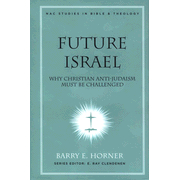
I. Introduction
To begin with, let me supply some brief background material concerning myself. Over the years as a pastor, my area of specialty has been that of John Bunyan and his setting in the turbulent seventeenth century (Refer to www.bunyanministries.org). I am an Australian, Sovereign Grace in doctrine, and premillennial in my eschatology. This is important since a large part of those with Reformed and Sovereign Grace convictions, with whom I am well acquainted, are quite strenuously amillennial. As a result they have tended to be a- Judaic or anti-Judaic in their eschatology, which is merely indifferent or militantly opposed to the Jews and modern Israel. Specifically I am premillennial, sympathetic with dispensationalism, and restorationist regarding the divine destiny of the Jews and Israel, that is concerning their eschatological return to the land as a nation. Then will follow their climactic conversion to Jesus as their Messiah at His return, when “they will look upon Him whom they have pierced” (Zech. 12:10). At the same time, Christ’s church having been raptured and gathered together, there will follow His messianic, millennial reign from Jerusalem over a renewed earth. At that time Israel will be gloriously elevated from its humiliation. Israel does indeed have a glorious future (Refer to www.futureisraelministries.org)
II. The challenge of two questions concerning Israel during the church age.
Over ten years ago, while a pastor in North Brunswick, New Jersey, and having access to the fine library of Princeton Theological Seminary, two questions challenged me in expounding through Ezekiel, Hosea, Zechariah, and Romans.
A. First, does God have a covenantal interest in the unbelieving Jewish people today, along with the nation and the land, which is as distinct from the believing Jewish remnant. The answer, which I now believe to be beyond serious challenge, came with a strong impression in my study of Romans 11, but especially v. 28. “From the standpoint of the gospel they [the unbelieving Jews] are enemies for your [the Gentiles’] sake, but from the standpoint of God’s choice [the election, τν κλογν, tēn ekloēn – Most commentators believe that here “the election,” especially in the light of the logic of vs. 26-28, is concerned with the elect nation, according to the sovereign calling and promise of God. Though Lenski, true to his amillennialism, believes that here Paul writes about the remnant of v. 5] they [unbelieving Jews] are beloved for the sake of the fathers.” Unbelieving Jews today remain God’s “beloved enemies.” For a sample of this contemporary unbelief, consider Prime Minister, Benjamin Netanyahu, who I greatly respect and certainly esteem way beyond the preceding Prime Minister, Ehud Olmert. Nevertheless he writes in his enlightening volume, A Durable Peace: Israel and its Place among the Nations:
The final guarantor of the viability of a small nation in such times of turbulence is its capacity to direct its own destiny, something that has eluded the Jewish people during its long centuries of exile. Restoring that capacity is the central task of the Jewish people today (Benjamin Netanyahu, A Durable Peace, p. xxiii).
However, in spite of all of the Jews’ carnality today, they remain God’s elect people. And this being the case, for the Christian they should also be “beloved,” even if they remain militantly opposed to Jesus as the Christ.
B. The second question that challenged me was how Christianity in general, over the centuries, had treated the Jewish people. The answer came to me as if being hit over the head with a mallet of truth. Various authors, whether liberal, conservative evangelical, Roman Catholic, Eastern Orthodox, Reform or Orthodox Jewish, even secular, came up with the same basic assessment. The church, especially after the Bar Cochbar rebellion of 135-136 AD and the influence of Marcionism, then the united patristic voice from Justin onward, but especially the authoritative formulation of Augustine, led to centuries of humiliation toward the Jew, and right on through the Reformation up to today. So having read and heard of many amillennialists who boasted in their Augustinian eschatology, it suddenly became shamefully clear that they had nothing to boast in. Indeed, their trumpeted belief in replacement theology and supercessionism, via centuries of vaunted proclamation that the church is the new Israel, was something that they ought to weep about! Hence, a vital principle came as a result, and it is this. A good eschatology cannot produce unethical fruit of the magnitude that has come about by means of replacement theology. This blot upon Christianity in general is the result of bad eschatology that has made the Jews fear, and not be jealous, as Paul exhorts should be the case. It is at this point that historic amillennialism is proven to be fundamentally flawed.
Some have attempted to avoid the painful truth of history in this regard by declaring that they would only discuss the issues, with regard to the Jews, by considering the exegesis of Scripture. Yes, we regard what God means by what He says as of vital, fundamental importance. However church history is the response, the lifestyle of Christianity that is derived from biblical truth, and cannot be disregarded, especially in terms of broad movements. We sense that some, in knowing the truth, would prefer to avoid it. We also believe that the right embrace of biblical truth ought consistently to result in biblical virtue. However ungodliness evident in a professing Christian is recognized as hypocrisy. Orthodoxy cannot be divorced from orthopraxy. Hence centuries of church history up to today, the disgraceful record of it all, should cause us to blush in reflecting upon an eschatology that is so terribly stained and so inconsistent with practical righteousness, especially as Paul exhorts us in Romans 11.
III. The publication of Future Israel, October, 2007.
Initially Future Israel was accepted for publication by Paternoster Press in England.
However I became unhappy about the editing process and asked for a release from the contract. Among other things, an editor suggested that one comment be taken out because Colin Chapman, a leading supercessionist who lived nearby, would not like it. However I am particularly grateful to David Brickner of Jews for Jesus who, at this stage, suggested approaching Broadman & Holman. How grateful I am for this new arrangement that worked out so well. They proved to be in sympathy with the basic thesis. Certainly the commendation of John MacArthur was helpful, though there was no collusion. He was preaching on this very matter while the manuscript was being edited. Then, through a friend, we had mutually sympathetic communication.
Certain other thrusts within Future Israel worth mentioning.
A. The importance of a Judeo-centric eschatology. The early church was Jewish. According to Eusebius, the first fifteen bishops at Jerusalem up to 135 AD were Jewish, and surely restorationist in their eschatology. They all proclaimed the gospel from Jewish Scriptures concerning a Jewish Savior, who will return while still being Jewish. As an example refer to Matthew 5:5 – “Blessed are the gentle, for they shall inherit the earth [τν γν, ten gen],” which should more likely read, “the land.” Of course, by way of application, “the earth” is appropriate. A helpful booklet would be David Stern’s Restoring the Jewishness of the Gospel. Also consider the prophetic revelation of the reversal of roles when the humiliation of the Jewish people will be followed by their exaltation after their conversion and participation in the millennium (Isa. 60:14; Zech. 8:22-23; 14:1). It seems that the Gentile Christian ought to joyfully accept this, but in fact many may not like this prospect.
B. The importance of a Judeo-centric hermeneutic. Over the centuries, a Gentile- focused hermeneutic has predominated within Christendom. However a Judeo- centric hermeneutic is the answer to the problem that we Gentiles have had when attempting to understand, disparate in meaning, quotations of the Old Testament in the New Testament (e.g. Matt. 2:14-15; cf. Hos. 11:1). This difficulty caused George Eldon Ladd to suggest the need of “re-interpretation” of Old Testament prophetic passages by means of a Christo-centric hermeneutic. However the Hebrew writer of the New Testament can quote the Old Testament, giving it an applicatory, nuanced shade of meaning, as with Midrash, without at all nullifying the literal meaning of the original Old Testament passage (David Stern, Restoring the Jewishness of the Gospel, pp. 31-33). This principle will also help in our understanding of such passages as Acts 2:16-21, cf. Joel 2:28-32 in context, and John 19:37, cf. Rev. 1:7; Zech. 12:10 in context.
C. The importance of the continuity of replacement theology before and after the Reformation. Modern replacement theology is not a recent phenomenon (Refer to R.E. Deprose. Israel and the Church. Waynesboro, GA: Authentic Media, 2000; Michael J. Vlach, The Church as a Replacement of Israel: An Analysis of Supercessionism. Ph.D. diss., Southeastern Baptist Theological Seminary, 2004). It goes back as far as the second century, especially after Gentile bishops took the ascendency after 135-136 AD, the result being development of Gentile dominance that ignored the exhortations of Paul in Romans 11. So the Reformation, in general, perpetuated replacement theology according to the authoritative legacy of Augustine. Thus Martin Luther, an Augustinian monk, John Calvin, Francis Turretin, Patrick Fairbairn, Herman Bavinck, and Geerhardus Vos, to name but a few of this eschatological lineage, exercised tremendous influence over Protestantism. They perpetuated the eschatology of Augustine, and thus at best the indifference of a-Semitism.
D. The importance of not confusing the bilateral Mosaic covenant with the unilateral Abrahamic covenant. It is astonishing to find that leading scholars promoting replacement theology are so confused at this point. An example would be from W. D. Davies, Emeritus Professor, Duke University, who is widely quoted by scholars in support of Replacement Theology.
In this way [of universalizing in Christ the covenant made with Abraham], “the territory” promised was transformed into and fulfilled by the life “in Christ.” All this is not made explicit, because Paul did not directly apply himself to the question of the land, but it is implied. In the Christological logic of Paul, the land, like the Law, particular and provisional, had become irrelevant (W.D. Davies, The Gospel and the Land, p. 179).
The unilateral nature of the Abrahamic covenant, in which the land is such an intrinsic component, is simply ignored or incorporated within the bilateral Mosaic covenant. Yes, the Jew and the Gentile only have hope of salvation, through Jesus Christ since He is the promised seed of Abraham, which promise is one of pure sovereign grace. Yet this same promise upholds the distinction between Jew and Gentile within the one people of God (Romans 11).
E. The importance of diversity within unity. It is astonishing that while there is diversity within the unity of the Godhead, diversity with the twelve tribes of Israel within one nation, diversity according to spiritual gifts within the one body of Christ, yet Augustinianism is so adamant that there cannot be diversity with Israel and the church distinctively comprising the one people of God. Scripture knows nothing of a future clone-like homogeneity, and especially within the economy of the Millennium. There, Moses and David and Elijah and Paul will still be their own individual selves. This is one of the great strengths of Premillennial and Dispensational eschatology.
F. The importance of Romans 11. It is written by a highly educated Messianic Jew.
1. Paul declares himself to be “an Israelite, a descendant of Abraham, of the tribe of Benjamin,” v. 1. He really means it, and not with some tongue in cheek attitude. He also confirms it, again using the present tense, in Acts 21:39; 22:3. As a Benjamite he asserts both demographic and territorial association. Consequently he upholds Jewish ethnicity, nationality, and territory.
2. The remnant according to God’s gracious choice is Israel’s guarantee of a future, v. 5. But God is not ultimately satisfied with a remnant, as the climactic development indicates in vs. 12, and v. 15 which surely alludes to Ezekiel 37. So v. 26 is also climactic. It is not, “And so/in this manner Israel is being saved,” through the accumulation of relatively small additions to the remnant over the centuries; rather it is, “And so/in this manner all Israel will be saved [future tense of σζω, sozo], in a consummate sense.” It is this climactic grandeur of the saving power of the gospel, especially the final triumph of mercy toward Israel, that so excites Paul. However the Augustinian suppresses this because of centuries of a misplaced eschatology.
3. The Christian church is built upon the Jewish remnant. This is something to ponder in the light of the arrogance of the mainly Gentile church over the centuries. Paul seems to suggest this very point in v. 18. The New Covenant was anticipated in the upper room before Jewish disciples (Luke 22:19-20). Then it was cut, according to Jeremiah 31:27, before “the house of Israel and the house of Judah,” that is a large number of Jews gathered in Jerusalem. So the initial, believing remnant branches that sprouted from the cultivated olive tree were wholly Jewish. The Gentiles were later grafted in according to pure grace. For this reason they have no reason for “conceit,” v. 20.
4. So Paul is primarily addressing Gentile Christians who need exhortation about a bad attitude toward the Jews. Rather they ought to make them jealous, vs. 11, 14. Yet over the centuries the Christian church has pompously ignored this exhortation while claiming to be the new spiritual Israel. Paul’s stern warning in vs. 17-20, concerning arrogance, has been largely ignored. Perhaps during the last of the last days a gentle and sympathetic spirit will come to the fore from repentant Gentiles; if it does, evangelistic outreach toward the Jewish people is certain to accelerate and flourish.
5. The significance of v. 28 that indicates God’s covenantal interest in unbelieving national Israel, and its related connection with v. 26. Here is clinching proof that God continues to have unfailing interest in unbelieving Israel today that is comprised of His “beloved enemies.” Further, working back from v. 28 to v. 27, then v. 27 to v. 26, it becomes virtually incontestable that “all Israel” refers to the eschatological saving of the nation of Israel (Matt Weymeyer has well exegeted this point in, “The Dual Status of Israel in Romans 11:28,” The Master’s Seminary Journal. Spring 2005, pp. 57-71). And all of this is because of “the sake of the fathers,” Abraham, Isaac and Jacob, which promises are irrevocable, v. 29.
6. The significance of vs. 30-32 concerning the mercy of God being poured out upon Gentile and Jew. There is surely Gentile arrogance in the suggestion that Israel has lost its covenant relationship with God on account of disobedience concerning the old Mosaic covenant, while the New Testament church boasts in the sovereignty of grace through faith alone. But here: “God has shut up all in disobedience so that He may show mercy to all,” v. 32. The “these” of v. 31 cannot refer merely to the remnant, but to the unbelieving nation.
IV. Responses:
A. The response to Future Israel has been overwhelmingly favorable. None of those who have responded unfavorably have attempted to deal with the essential arguments. In England, Steven Sizer, a rabid supercessionist, reluctantly agreed in March of this year to provide a review for Evangelicals Now. He wrote: “O dear. I really don’t want to have to review this unpleasant little book but those nice people at Evangelicals Now have asked me to, so I will, eventually” (Refer to the Stephen Sizer web site: http://www.stephensizer.com/2009/03/christian-zionism-achronological-and-annotated-bibliography/Referenced, November, 2009). As of today, no review has been forthcoming.
B. There have been many blog responses such as from Dr. Sam Waldron, Professor of Systematic Theology at Midwest Center for Theological Studies. Staunchly Reformed Baptist and amillennial, he commented: “I had to pray for grace and patience not to fire it across the room. . . . [I] had over three weeks [during a trip overseas] to calm down and regain my sanctification.” A month later, because I had upheld God’s distinctive, contemporary covenantal regard for unbelieving national Israel, and at the same time am critical of Gentile bias, therefore I was said to be guilty of “a kind of reverse racism. . . .This kind of language seems to be somewhat ‘racist’ in its own way. It conveys prejudice against Gentiles. It is like Rev. Jeremiah Wright’s rantings against ‘White America’ which have been all over the news lately (Refer to the Mid-Western Center for Theological Studies web site. http://www.mctsowensboro.org/- blog/?-p=307 Not currently accessible). Is Paul guilty of “reverse racism” in Romans 1:16?
C. However what a delight it was to receive an email from Jeroen Bol, the Netherlands (Holland). He has bought fifty copies of Future Israel and distributed them to Christian leaders in Europe. More recently he has described some of the positive effects of this outreach, specifically some who have been persuaded to embrace a Judeo-centric eschatology.
V. Reflections.
A. The importance of Judeo-centric ministry. In Horatius Bonar’s significant book, Prophetical Landmarks, he makes the vital introductory comment:
The prophecies concerning Israel are the key to all the rest. True principles of interpretation, in regard to them, will aid us in disentangling and illustrating all prophecy together. False principles as to them will most thoroughly perplex and over cloud the whole Word of God (Horatius Bonar, Prophetical Landmarks: Concerning Christ’s Premillennial Advent, p. 228. Also go to http://www.futureisraelministries.org/horatius_bonar.html.).
By way of illustration, only a month ago I conducted a seminar on the issues raised by Future Israel at Twin Cities Bible Church, St. Paul. A week before, my daughter in San Jose told me of a forthcoming gathering at Bethlehem Baptist Church, Minneapolis, titled An Evening of Eschatology. Dr. John Piper chaired the meeting which included three other participants. They were, Jim Hamilton (professor of New Testament at Southern Seminary in Louisville), premillennial, Sam Storms (pastor of Bridgeway Church in Oklahoma City), amillennial, and Doug Wilson (pastor of Christ Church, Moscow, Idaho), postmillennial. Having arrived at St. Paul, the pastor told me that he attended the meeting. He concluded, that to be quite frank, those who attended would probably have left more confused upon leaving than when they first arrived. However there appears to be a reason for this. I watched the whole two hour session on the internet and was surprised to note that in all of it, there was not so much as one mention of Israel or the Jews, whether with regard to Scripture, history or the present. Horatius Bonar was right! Israel is central to eschatology.
B. The importance of Judeo-centric godliness. While being critical of the ethics of amillennial Augustinianism, we also need to consider the ethics of restorationist premillennialism and dispensationalism. We are by no means blameless, even if more eschatologically biblical. So Peter exhorts us: “Since all these things [with regard to the coming day of the Lord] are to be destroyed [dissolved] in this way, what sort of people ought you to be in holy conduct and godliness” (II Pet. 3:11). It is godly ethics emanating from our eschatology, not prophetic glibness and sensationalism, which pleases God. Certainly it is more likely to make our Jewish friends and enemies both jealous and curious.
C. The importance of Judeo-centric evangelism. I have often heard the suggestion: “Let us put aside our eschatological differences and agree to focus on the evangelization of the Jews.” It may sound a good proposal, but how can the Augustinian honestly face it? Will he tell the Jew that after believing in the Lord Jesus as his Messiah, then he will be absorbed into the Christian church and lose all of his Jewish identity? Surely in Paul declaring that he remained an Israelite, he never disowned Jewish ethnicity, nationality and territory in all of his outreach to the Jews. Rather he proclaimed to them “the hope of Israel” (Acts 28:20). Could the Augustinian evangelize in Israel and tell the Jew that in reality, which is in the sight of God, the land is now passé, an anachronism? It takes a Judeo-centric eschatology to reach out to the Jews and at least gain their attention.
Hence there is the need for opposing replacement theology on account of the cause of Jewish evangelism; it saps the life out of it. The modern awakening of evangelism, especially directed toward the Jewish people, commenced toward the end of the nineteenth century. Ever since, up to the present time, this flourishing movement has had premillennial, dispensational, restorationist underpinning. I also believe that Christian restorationists made a significant contribution toward the formation of the modern state of Israel. By and large, the Augustinians opposed it. Where is there one missionary agency today, based upon Augustinian eschatology, which thrives in its distinctive outreach toward the modern nation of Israel and the Diaspora? Why is this so? Because the Augustinian gospel results in Jewish converts losing their Jewish identity while the Gentiles retain their distinctiveness. Believe me, I say this while being a happy and contented Gentile.
Hence the answer for today is the proclamation of the gospel, to both Jew and Gentile, in its full Jewish context. The reason is that, “salvation is from the Jews” (John 4:22). I believe that God will especially be pleased to honor this priority.
About the Author: Dr. Barry Horner, an Australian, is a graduate of George Fox College and Western Conservative Baptist Seminary in Oregon. His Doctor of Ministry degree from Westminster Theological  Seminary in California focused on the biblical/theological content of The Pilgrim’s Progress as well as its validity as an appropriate means for the communication of the Word of God. Ordained in Melbourne in 1976, Barry has pastored churches in Australia and the United States. The reflections above are from his excellent book in the New American Commentary Studies in Bible and Theology entitled: Future Israel. B&H Group, 2007. The article above is adapted from http://www.pre-trib.org/data/pdf/Horner-ReflectionsonRespons.pdf
Dr. Tim Keller on the Consistency of the Biblical Message in the Old and New Testaments
“Old Testament Law and The Charge of Inconsistency”

I find it frustrating when I read or hear columnists, pundits, or journalists dismiss Christians as inconsistent because “they pick and choose which of the rules in the Bible to obey.” What I hear most often is “Christians ignore lots of Old Testament texts—about not eating raw meat or pork or shellfish, not executing people for breaking the Sabbath, not wearing garments woven with two kinds of material and so on. Then they condemn homosexuality. Aren’t you just picking and choosing what they want to believe from the Bible?”
It is not that I expect everyone to have the capability of understanding that the whole Bible is about Jesus and God’s plan to redeem his people, but I vainly hope that one day someone will access their common sense (or at least talk to an informed theological advisor) before leveling the charge of inconsistency.
First of all, let’s be clear that it’s not only the Old Testament that has proscriptions about homosexuality. The New Testament has plenty to say about it, as well. Even Jesus says, in his discussion of divorce in Matthew 19:3-12 that the original design of God was for one man and one woman to be united as one flesh, and failing that, (v. 12) persons should abstain from marriage and from sex.
However, let’s get back to considering the larger issue of inconsistency regarding things mentioned in the OT that are no longer practiced by the New Testament people of God. Most Christians don’t know what to say when confronted about this. Here’s a short course on the relationship of the Old Testament to the New Testament:
The Old Testament devotes a good amount of space to describing the various sacrifices that were to be offered in the tabernacle (and later temple) to atone for sin so that worshippers could approach a holy God. As part of that sacrificial system there was also a complex set of rules for ceremonial purity and cleanness. You could only approach God in worship if you ate certain foods and not others, wore certain forms of dress, refrained from touching a variety of objects, and so on. This vividly conveyed, over and over, that human beings are spiritually unclean and can’t go into God’s presence without purification.
But even in the Old Testament, many writers hinted that the sacrifices and the temple worship regulations pointed forward to something beyond them. (cf. 1 Samuel 15:21-22; Psalm 50:12-15; 51:17; Hosea 6:6). When Christ appeared he declared all foods ‘clean’ (Mark 7:19) and he ignored the Old Testament clean laws in other ways, touching lepers and dead bodies.
But the reason is made clear. When he died on the cross the veil in the temple was ripped through, showing that the need for the entire sacrificial system with all its clean laws had been done away with. Jesus is the ultimate sacrifice for sin, and now Jesus makes us “clean.”
The entire book of Hebrews explains that the Old Testament ceremonial laws were not so much abolished as fulfilled by Christ. Whenever we pray ‘in Jesus name’, we ‘have confidence to enter the Most Holy Place by the blood of Jesus’ (Hebrews 10:19). It would, therefore, be deeply inconsistent with the teaching of the Bible as a whole if we were to continue to follow the ceremonial laws.
The New Testament gives us further guidance about how to read the Old Testament. Paul makes it clear in places like Romans 13:8ff that the apostles understood the Old Testament moral law to still be binding on us. In short, the coming of Christ changed how we worship but not how we live. The moral law is an outline of God’s own character—his integrity, love, and faithfulness. And so all the Old Testament says about loving our neighbor, caring for the poor, generosity with our possessions, social relationships, and commitment to our family is still in force. The New Testament continues to forbid killing or committing adultery, and all the sex ethic of the Old Testament is re-stated throughout the New Testament (Matthew 5:27-30; 1 Corinthians 6:9-20; 1 Timothy 1:8-11.) If the New Testament has reaffirmed a commandment, then it is still in force for us today.
Further, the New Testament explains another change between the Testaments. Sins continue to be sins—but the penalties change. In the Old Testament things like adultery or incest were punishable with civil sanctions like execution. This is because at that time God’s people existed in the form of a nation-state and so all sins had civil penalties.
But in the New Testament the people of God are an assembly of churches all over the world, living under many different governments. The church is not a civil government, and so sins are dealt with by exhortation and, at worst, exclusion from membership. This is how a case of incest in the Corinthian church is dealt with by Paul (1 Corinthians 5:1ff. and 2 Corinthians 2:7-11.) Why this change? Under Christ, the gospel is not confined to a single nation—it has been released to go into all cultures and peoples.
Once you grant the main premise of the Bible—about the surpassing significance of Christ and his salvation—then all the various parts of the Bible make sense. Because of Christ, the ceremonial law is repealed. Because of Christ the church is no longer a nation-state imposing civil penalties. It all falls into place. However, if you reject the idea of Christ as Son of God and Savior, then, of course, the Bible is at best a mish-mash containing some inspiration and wisdom, but most of it would have to be rejected as foolish or erroneous.
So where does this leave us? There are only two possibilities. If Christ is God, then this way of reading the Bible makes sense and is perfectly consistent with its premise. The other possibility is that you reject Christianity’s basic thesis—you don’t believe Jesus was the resurrected Son of God—and then the Bible is no sure guide for you about much of anything. But the one thing you can’t really say in fairness is that Christians are being inconsistent with their beliefs to accept the moral statements in the Old Testament while not practicing other ones.
One way to respond to the charge of inconsistency may be to ask a counter-question—“Are you asking me to deny the very heart of my Christian beliefs?” If you are asked, “Why do you say that?” you could respond, “If I believe Jesus is the resurrected Son of God, I can’t follow all the ‘clean laws’ of diet and practice, and I can’t offer animal sacrifices. All that would be to deny the power of Christ’s death on the cross. And so those who really believe in Christ must follow some Old Testament texts and not others.”
About the Author: Dr. Tim Keller was born and raised in Pennsylvania, and educated at Bucknell University, Gordon-Conwell Theological Seminary, and Westminster Theological Seminary. He was first a pastor in  Hopewell, Virginia. In 1989 he started Redeemer Presbyterian Church in Manhattan with his wife, Kathy, and their three sons. Today, Redeemer has more than five thousand regular attendees at five services, a host of daughter churches, and is planting churches in large cities throughout the world. He is the author of The Prodigal God, Counterfeit Gods, and the New York Times bestseller The Reason for God. The article above was adapted from the June, 2012 Newsletter of Redeemer Presbyterian Church in Manhatten, N.Y.: http://redeemer.com/new
Garbage in, Garbage Out!
An Excellent Illustration of Philippians 4:8
“Finally, brothers, whatever is true, whatever is honorable, whatever is just, whatever is pure, whatever is lovely, whatever is commendable, if there is any excellence, if there is anything worthy of praise, think about these things.”

Leslie Flynn tells of a mother who was peeling vegetables for a salad when her daughter, home from college, casually mentioned she was going to a questionable movie that evening. The mother suddenly picked up a handful of garbage and threw it in the salad. “Mother!” said the shocked girl. “You’re putting garbage in the salad.”
“I know,” replied the mother, “but I thought that if you didn’t mind garbage in your mind, you certainly wouldn’t mind a little in your stomach.”
What Did Jesus Say About Divorce?
“Jesus’ Teaching on Divorce” in Matthew 5:31-32
(This excellent sermon has been excerpted from Chapter 14 in R. Kent Hughes excellent book of sermons [pictured below] from Matthew 5-7 entitled: The Sermon On The Mount: The Message of the KIngdom. Wheaton: Crossway Books, 2001.
A Sermon From R. Kent Hughes
“It was also said, ‘Whoever divorces his wife, let him give her a certificate of divorce.’ But I say to you that everyone who divorces his wife, except on the ground of sexual immorality, makes her commit adultery, and whoever marries a divorced woman commits adultery.” – Matthew 5:31–32
The February 1973 issue of McCall’s magazine carried an article entitled, “Is Anyone Faithful Anymore?” in which the author included the following story. A young wife was at lunch with eleven of her friends, who had been meeting together regularly to study French since their children had been in nursery school. As they conversed, one of the women, the group’s leader, asked, “How many of you have been faithful throughout your marriage?” Only one woman at the table raised her hand. That evening when the young wife told her husband about the conversation, she revealed that she was not the one who had raised her hand. He was shocked and devastated. “But I have been faithful,” she added. “Then why didn’t you raise your hand?” She replied, “I was ashamed.”
Times have changed, have they not? It used to be that most people would go to extremes to hide their infidelity, but today many people are ashamed of their fidelity. We live in a day when some experts speak of “healthy adultery” and the married faithful are less vocal than the unfaithful in promoting their ways.
I think no one would disagree that our contemporary culture is not intrinsically receptive to Biblical teaching regarding sexual relationships, marriage, and divorce. Because of this hostility, some preachers seem reluctant to speak out on these issues. Other ministers hesitate to address these topics because there is major disagreement about divorce in the church. Because there are numerous opinions as to what the Bible means, because the subject is complex, and because contemporary marital relationships are often incredibly tangled mazes, the subject becomes overwhelming. Sadly, we sometimes find it easier to just leave it unaddressed.
Some surveys indicate that eight of ten people are either directly or indirectly affected by divorce. The mere mention of the word divorce is painful to some. Many have been deeply wounded by broken marriages, and a discussion of the subject brings up memories and feelings they would like to forget. For these reasons preachers find little joy in preaching on the subject. But since Jesus brought it up right in the middle of the Sermon on the Mount, the greatest sermon ever preached, he obviously thinks it is an important subject, one we dare not ignore. To see this matter through Jesus’ eyes is good for us as individuals, good for the church, and good for society.
What is to be the Christian’s attitude regarding divorce? Is divorce always forbidden? Or is it sometimes allowable? What is the Christian position amidst the marital tragedy that surrounds us? As we answer these questions, I will try to be sensitive to those who are hurting. But at the same time I will do my best to be Biblical. The bottom line in all of this is, what does God’s Word say?
To understand our Lord’s statements on divorce, we must know something of the controversial social and theological context in which he made them. The controversy centered over the interpretation of a phrase in Deuteronomy 24:1, the stated ground of divorce: “If a man marries a woman who becomes displeasing to him because he finds something indecent about her, and he writes her a certificate of divorce …”
That verse taught that a husband could divorce his wife if he found “something indecent” in her, and that is where the controversy lay. The burning question in Jesus’ day was, what does “something indecent” mean?” Those in the very liberal rabbinical school of Hillel interpreted “indecent” in the widest manner possible. They said a man could divorce his wife if she spoiled his dinner! They also extended “indecent” to mean a wife’s walking around with her hair down, speaking to men in the streets, or speaking disrespectfully of her husband’s parents in his presence. A wrong word about a mother-in-law and a woman could be out on the street! Rabbi Akiba, who was of this school of thought, went even further, saying that the phrase “becomes displeasing to him” (“she find no favor in his eyes,” kjv) meant that a man could divorce his wife if he found a woman who was more beautiful. Such husbands were bigoted and arrogant.
Fortunately, they were opposed by the school of Shammai, which limited “indecent” to offenses of marital impropriety short of adultery. “Indecent” did not refer to adultery, which was punished by execution, but rather suggested other types of sexual misconduct such as shameful exposure.
This conservative-liberal controversy over the meaning of “indecent” as a grounds for divorce was the backdrop of the Pharisees’ coming to Jesus about this matter. Matthew 19:3 describes the situation: “Some Pharisees came to test him. They asked, ‘Is it lawful for a man to divorce his wife for any and every reason?’ ” They were obviously trying to draw Jesus into the long-standing debate and then exploit his response for their own ends. Some even think they were hoping to use Jesus’ answer to get him in trouble with Herod because a negative answer would publicly align him with the point of view that caused John the Baptist to be beheaded. Significantly, Jesus did not begin by directly answering their question but took the conversation back to God’s creation design, giving us the most extensive teaching on divorce in the New Testament.
Jesus’ Teaching on Divorce (Matthew 19:4–12)
Jesus began by stating the ideal:
“Haven’t you read,” he replied, “that at the beginning the Creator ‘made them male and female,’ and said, ‘For this reason a man will leave his father and mother and be united to his wife, and the two will become one flesh’?” (vv. 4, 5)
In the beginning divorce was inconceivable—and impossible. Jesus quoted lines from Genesis 2:23, 24 to emphasize two things. First, the intimacy of the marriage relationship. He says “the two will become one flesh.” There is no other intimacy like it. It is deeper than one’s relationship to one’s own children. When my children were born, there was an amazing bonding that took place when I saw those babies. In the ensuing months and years the bonding increased, and my wife and I are close to our children, interwoven with them. But we are not one flesh with them. The Scripture says that a man becomes “one flesh” with his wife. Marriage is the deepest human relationship.
After intimacy, the emphasis is on permanence. There was no thought of divorce—ever! God’s ideal was, and is, monogamous, intimate, enduring marriage. This is what he approves of. Anything less is a departure from the divine model. And the Fall did not change that ideal. We all know that some things possible before the Fall were not possible afterward. But regarding divorce, God’s standard did not change. We not only see this in the very first book of the Old Testament but also in the very last one:
“Why has God abandoned us?” you cry. I’ll tell you why; it is because the Lord has seen your treachery in divorcing your wives who have been faithful to you through the years, the companions you promised to care for and keep. You were united to your wife by the Lord. In God’s wise plan, when you married, the two of you became one person in his sight. And what does he want? Godly children from your union. Therefore guard your passions! Keep faith with the wife of your youth. For the Lord, the God of Israel, says he hates divorce.… (Malachi 2:14–16, tlb)
God hates divorce! Whenever divorce occurs, it is an aberration. It is something that was not meant to be. All of this talk about “creative divorce” is pseudoscientific and pseudo-liberated baloney. Those who become tired of their marriage because it is solid, predictable, and not very exciting should cast away their fantasies. Besides, there is nothing more boring than evil and its fruit.
The conversation between the Pharisees and Jesus is most enlightening. The Pharisees have alluded to the controversy in Deuteronomy 24, asking if a man may divorce his wife for any reason at all. Jesus has responded by saying divorce is not God’s ideal. Now the Pharisees respond with another reference to Deuteronomy 24: “ ‘Why then,’ they asked, ‘did Moses command that a man give his wife a certificate of divorce and send her away?’ ” (Matthew 19:7). The idea is this: “Moses made provision for divorce in Deuteronomy 24:1. How then can you say it is not part of the ideal?” Note Jesus’ answer in verse 8: “Jesus replied, ‘Moses permitted you to divorce your wives because your hearts were hard. But it was not this way from the beginning.’ ”
Jesus’ answer corrects the Pharisees, for Moses only permitted divorce—he didn’t command it as the Pharisees asserted. What Moses did command was the granting of a divorce certificate for the woman’s protection. Without a certificate she could be subject to exploitation, even recrimination. The certificate also prevented the man from marrying her again. Thus she could not be treated like chattel. Marriage was not something one could walk in and out of. The reason God allowed divorce was the hardness of heart to which the men of Israel had succumbed. It was a divine concession to human weakness—reluctant permission at best!
Understanding this, we come to the very center of Christ’s teaching and the heart of our study—Jesus’ explanation as to when and why divorce is permitted: “And I say to you, whoever divorces his wife, except for immorality, and marries another woman commits adultery” (Matthew 19:9, nasb, emphasis mine).
Here everything rests upon the correct interpretation of the phrase “except for immorality”—and especially the single word, “immorality.” The Greek word here is porneia, from which we derive the English word pornography. The Greek dictionaries tell us that porneia means unchastity, fornication, prostitution, or other kinds of unlawful intercourse. When porneia is applied to married persons, it means marital unfaithfulness, illicit intercourse that may involve adultery, homosexuality, bestiality, and the like. We should note (and this is very important!) that all these offenses were originally punished by death under Mosaic Law. These sins terminated marriage not by divorce but by death. However, by Jesus’ time the Roman occupation of the country and its legal system had made the death sentence very difficult to obtain. Jewish practice had therefore substituted divorce for death. Thus the rabbinical schools of Hillel and Shammai were not discussing whether divorce was permissible for adultery. That was taken for granted by everyone. The point is, Jesus was far stricter than Hillel and Shammai because he superseded the teaching of Deuteronomy 24 and said that the only ground for which one may divorce his or her spouse is marital unfaithfulness. This is the simple, plain meaning of Jesus’ words in verse 9: “And I say to you, whoever divorces his wife, except for immorality, and marries another woman commits adultery.” That is, divorce is allowed if your mate is guilty of marital unfaithfulness. But if you divorce for any other reason and remarry, it is you who commits adultery. This is likewise the meaning of Jesus’ similar statement in the Sermon on the Mount:
“But I tell you that anyone who divorces his wife, except for marital unfaithfulness, causes her to become an adulteress [if she remarries], and anyone who marries the divorced woman [a woman who has been divorced for something short of unchastity] commits adultery.” (Matthew 5:32)
Jesus’ teaching is clear. Some of the interpretations of these texts are unbelievably convoluted, but we must hold to the plain, unadorned sense of the text. Jesus meant what he said!
Some object that these exception clauses don’t jibe with Jesus’ teaching in two other Gospel passages, Mark 10:11, 12 and Luke 16:18, which contain no exception clauses. For instance, Mark records:
He answered, “Anyone who divorces his wife and marries another woman commits adultery against her. And if she divorces her husband and marries another man, she commits adultery.”
No exception clauses! Because of this, some have argued that Mark represents the earlier and pure teaching of Jesus, but Matthew contains a scribal addition of the exception clause and is thus unauthentic. However, we must hold that it is authentic because none of the ancient manuscripts omit it—all of them have it. Why the difference between the Gospels of Matthew and Mark then? John Stott gives the answer:
It seems far more likely that its [the exception clause’s] absence from Mark and Luke is due not to their ignorance of it but to their acceptance of it as something taken for granted. After all, under the Mosaic Law adultery was punishable by death (although the death penalty for this offense seems to have fallen into disuse by the time of Jesus); so nobody would have questioned that marital unfaithfulness was a just ground for divorce.
The Lord Jesus Christ permitted divorce and remarriage on one ground and one ground only—marital unfaithfulness.
But notice that he permitted it—he did not command it. If you learn that your mate has been having an adulterous affair, it does not follow that you have license to seek a divorce. Too often men and women eagerly pounce on the infidelity of their mates as the opportunity to get out of a relationship they wanted to end anyway. It is so easy to minimize one’s own behavior and to maximize the sins of the other party. Many look for a way out instead of a way through the problems. I want to be careful not to minimize the sin of adultery like the man who said to his wife, “I don’t understand why you’re so disturbed. All I did was have an affair.” Yet I believe (this is my personal opinion) that we should not regard a one-time affair in the same way as a mate who persists in his or her adulterous ways and refuses to repent. Jesus’ exception clauses should be viewed like this: No matter how rough things are, regardless of the stress and strain, whatever is said about compatibility and temperament, nothing allows for divorce except unfaithfulness—and even then it is not to be used as an excuse to get out of the relationship.
The Radicalness of Jesus’ Teaching (Matthew 19:10–12)
Jesus’ teaching was radical. He had done away completely with the Mosaic divorce provision (Deuteronomy 24:1). This was revolutionary. The disciples’ response indicates just how radical Jesus’ teaching was: “The disciples said to him, ‘If this is the situation between a husband and wife, it is better not to marry.’ ” They were blown away. If the only ground for divorce was unfaithfulness, if none of the exceptions suggested by Hillel and Shammai were valid, it was better to stay single! The radicalness of what Jesus taught is further underlined in Matthew 5 by its being one of the six statements that begin with variations of “You have heard it said, but I tell you,” demonstrating the superior righteousness of Christ. The point of these statements is: This is the way a righteous person lives! Thus his or her marital relationship is supremely sacred. Nothing can sever it but unrepentant unfaithfulness—and then it is not an excuse for ending the marriage but is the sorrowful ground of divorce.
Such teaching is radical today. It is out of sync with our culture. Today even Christian counselors are recommending divorce and remarriage on grounds that are in opposition to the clear teachings of Christ. The sanctity of marriage has been corrupted by Christ’s own church and his authority flouted. Marriage has been trivialized into a provisional sexual union that dissolves when our puny love gives out. But this is not the way the righteous person approaches marriage. According to Christ, marriage demands total commitment that only death or the most flagrant, ongoing sexual infidelity can bring to an end.
Having seen Christ’s teaching, the question now is, does the Bible say anything else about divorce? The answer is yes.
Jesus’ Teaching and Paul’s (1 Corinthians 7:8–16)
In 1 Corinthians 7:8–16 the Apostle Paul gives consecutive advice, first to the unmarried (vv. 8, 9), then to married believers (vv. 10, 11), and finally to those who have mixed marriages—when one’s spouse is not a believer (vv. 12–16). It is on this final category that we will focus.
Paul begins his teaching by saying in verse 12, “To the rest I say this (I, not the Lord) …” which has been misunderstood by some as meaning that Paul is saying that his teaching is not as authoritative as Christ’s. What he really means, however, is that what he is going to say was not said by Jesus in his earthly ministry but is now being said by Paul as part of his apostolic teaching. “He is saying in effect, ‘I am now going to deal with cases on which the Lord Himself did not give a verdict.’ ” Paul speaks with full apostolic authority. Notice what he says:
To the rest I say this (I, not the Lord): If any brother has a wife who is not a believer and she is willing to live with him, he must not divorce her. And if a woman has a husband who is not a believer and he is willing to live with her, she must not divorce him. (vv. 12, 13)
Paul knew that in Corinth there were many marriages in which either the husband or wife had become a Christian after marriage, thus producing a spiritually mixed marriage. His advice was that the Christian must not leave his or her pagan spouse—it was not permitted. Then in verse 14 he gives the reason:
For the unbelieving husband has been sanctified through his wife, and the unbelieving wife has been sanctified through her believing husband. Otherwise your children would be unclean, but as it is, they are holy.
The reason for staying together is that the unbeliever and the children will be influenced toward Christ by the life of the believer. I find this fascinating because we often think of the believer being corrupted by the unbeliever, and indeed sometimes this happens. But Paul lays down that it is generally otherwise! If you are in an unequal union, take heart! The general thrust is that you and your faith will prevail—though, sadly, not always.
Then in verse 15 we have Paul’s new teaching: “But if the unbeliever leaves, let him do so. A believing man or woman is not bound in such circumstances; God has called us to live in peace.”
The sense is, if the unbeliever deserts and is determined not to come back, let him or her go. The Christian is “not bound in such circumstances,” which means that the believer is free from the marriage because the unbeliever has broken the marriage bond. The result is that the believer is free to divorce and remarry. The consistent use of the word “bound” in this passage and others means “is not bound in marriage.” There is no need to seek some other interpretation. This is the plain sense—this is what it means.
A Summation of Biblical Teaching
So we see that the Bible allows divorce for two reasons—marital unfaithfulness such as adultery and homosexuality, and the desertion of a believer by an unbelieving spouse.
As to the question of remarriage, the Scriptures allow it in three instances.
First, if one’s mate is guilty of sexual immorality and is unwilling to repent and live faithfully with the marriage partner, divorce and remarriage are permissible.
Second, when a believer is deserted by an unbelieving spouse, divorce and remarriage are again permitted.
And third, as an extension of the allowance for divorce and remarriage when deserted by an unbeliever, I personally believe that when someone has been married and divorced before coming to Christ, remarriage is allowed. Second Corinthians 5:17 says, “Therefore, if anyone is in Christ, he is a new creation; the old has gone, the new has come!” “New” here (kainos) means new in quality. “New” means what it says—really new, as contrasted to the old. The same word is used of the “new man” in Ephesians 2:15 and the “new self” in Ephesians 4:24. Not only are believers really new, but Paul says that “the old has gone, the new has come.” A new believer is completely forgiven. I believe that among the old things that have passed away are all sins, including divorce prior to salvation. If it were otherwise, divorce would be the only sin for which Christ did not atone, and that would be inconceivable.
I hope no one misunderstands me, for divorce is not the ideal. It is a divine concession to human weakness. God hates divorce! We must realize that divorce (and remarriage) according to the Biblical guidelines is not sin—though it is due to sin. We must mourn every divorce!
How foreign to the Biblical mind are phrases like “creative divorce” or “the magic of divorce” or the ad that appeared on the back of a TV Guide: “Order your DIVORCE RING BAND today.… Now is the time to celebrate your new beginning.”
We have discussed the issues primarily with the non-offending party in view. What advice is there for the offending party? Here I can do no better than quote the concluding words of Dr. Martyn Lloyd-Jones:
“Have you nothing to say about others?” asks someone. All I would say about them is this, and I say it carefully and advisedly, and almost in fear lest I give even a semblance of a suggestion that I am saying anything that may encourage anyone to sin. But on the basis of the gospel and in the interest of truth I am compelled to say this: Even adultery is not the unforgivable sin. It is a terrible sin, but God forbid that there should be anyone who feels that he or she has sinned himself or herself outside the love of God or outside His kingdom because of adultery. No; if you truly repent and realize the enormity of your sin and cast yourself upon the boundless love and mercy and grace of God, you can be forgiven and I assure you of pardon. But hear the words of our blessed Lord: “Go and sin no more.”
Finally, what do we say to the church, to ourselves?
First, we must resist the permissiveness of our culture and solidly take our stand against divorce or remarriage on any grounds other than those taught in God’s Word.
Next, we must refrain from self-righteous judgmentalism. All of us are adulterers in heart. We must exercise our dealings with those who have fallen, realizing that we are ourselves under Christ’s omniscient dictum: “But I tell you that anyone who looks at a woman lustfully has already committed adultery with her in his heart” (Matthew 5:28).
Finally, toward those who have fallen to or suffered divorce, we must be forgiving, like our Lord. We must not call unclean that which he has called clean (Acts 10:15). We must endeavor to share the suffering of those ravaged by divorce. And lastly, the church should make provision for the remarriage of those who have Biblically divorced.
About The Preacher: Dr. Kent Hughes |
|
 Dr. Hughes’s thirty-five years of ministry divides evenly into ten years as a youth pastor, five years as a church planter, and twenty years as senior pastor of College Church in Wheaton, IL. He is the author of more than twenty-five books, among which are Disciplines of a Godly Man and Liberating Ministry From the Success Syndrome. He is in the midst of a life-long project of completing the Preaching the Word commentary series of the entire New Testament, and is the editor of the Old Testament for the same series. College Church is noted for its world-wide missions outreach, because half of its total budget goes to world missions. The Hughes are the parents of four children and fourteen grandchildren. Dr. Hughes’s thirty-five years of ministry divides evenly into ten years as a youth pastor, five years as a church planter, and twenty years as senior pastor of College Church in Wheaton, IL. He is the author of more than twenty-five books, among which are Disciplines of a Godly Man and Liberating Ministry From the Success Syndrome. He is in the midst of a life-long project of completing the Preaching the Word commentary series of the entire New Testament, and is the editor of the Old Testament for the same series. College Church is noted for its world-wide missions outreach, because half of its total budget goes to world missions. The Hughes are the parents of four children and fourteen grandchildren.
Education
Professional Experience
In addition to regular pastoral, administrative and preaching duties at College Church, Pastor Hughes ministers to several outside conferences each year. He is a Staley lecturer, and in addition speaks at spiritual emphasis weeks for many Christian colleges and universities. Pastor and Mrs. Hughes speak regularly at pastors’ conferences. Pastor Hughes has served on the Board of Americans United for Life (the legal arm of the pro-life movement), the Board of Trustees of World Radio Missionary Fellowship (HCJB), and the board of Operation Mobilization. Presently he is a member of the Board of Crossway Books. Dr. Hughes is also a Former senior editor of Christianity Today. Books Published
Preaching the Word Series, Crossway Books
|
|
 LifeCoach4God