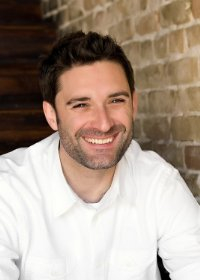
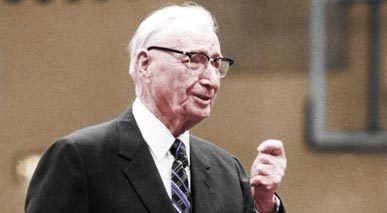
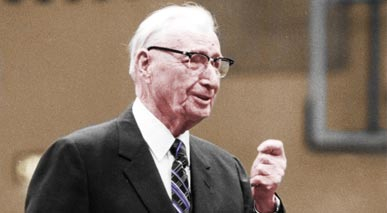
Dr. Roger Nicole – One of the Finest Theologians of the 20th Century You Probably Never Heard Of

A Mini-Biography of Dr. Roger Nicole (1915-2010) by Justin Taylor

December 10, 2010, was the 95th birthday of Roger Nicole, the great Reformed-Baptist theologian.

This evening was his homegoing to be with his Lord. He has completed his earthly race. Having fought the good fight of faith, he entered into the joy of his Master. And undoubtedly he heard the words we all long to hear: “Well done, good and faithful servant.”

He was, by common consent, a theological giant. (See these brief reflections by Don Carson, Tim Keller, and Mark Dever.) But because he never wrote a book and didn’t travel the conference circuit, many evangelicals have not heard of him, to our detriment. As Timothy George has written:

Roger Nicole is one of European Christianity’s greatest gifts to the American church. His role in the shaping of American evangelical theology in the latter half of the twentieth century was enormous and deserves to be better known.

J. I. Packer has a gift not only for summarizing theological truth in a concise, compact way, but also for getting to the heart of a friend’s character and legacy. A few years ago he was able to summarize Roger Nicole in a sentence:

Awesome for brain power, learning, and wisdom; endlessly patient and courteous in his gentle geniality; and beloved by a multitude as pastor, mentor, and friend.

In his introduction to a biography of Dr. Nicole, Packer expands the tribute with regard to the man’s graciousness:

For a man of such power of mind, clarity of thought, range of knowledge and strength in argument, Roger’s patience and courtesy toward the less well favored is a marvel that has become a legend. He was said when first I knew him to have learned to greet people in something like fifty different languages so that he could always welcome overseas students and make them feel at home. Such sweet pastoral care in the conventional coolness of academia is also the stuff of legend, and deservedly so. No one could ever accuse Roger of throwing his weight about; very much a Swiss gentlemen in style, he is also a gentle man and a great encourager, overflowing with goodwill at all times. He has been a model for me in this, as in so much more. Roger stands at the head of my private list of persons worth celebrating, and I am sure I am not the only one who would say that.

Roger R. Nicole was born December 10, 1915, a natural-born Swiss citizen, in Charlottenburg (greater Berlin), Germany. His father was a pastor, and the family moved back to Switzerland when Roger was four and a half years old. He lived there until the age of twenty.

His education was extensive. He received a BA from Gymnase Classique in Lausanne, Switzerland. In 1935 he moved to France and received an MA from the Sorbonne in Paris; and a diploma from the Bible Institute of Nogent Marne in France, where Roger’s older brother Jules was his principal and teacher.

In 1938 he moved to the United States and entered Gordon Divinity School in Boston and would earn three degrees from the school: BD in 1939; STM in 1940; ThD in 1943. In 1944, at the age of 29, he began teaching at Gordon and became professor of theology in 1949.

In the 1940s he met Annette Cyr. She had left home at the age of 16 due to family difficulties, worked in a factory until she was 26, and then became one of the first women to join the Coast Guard. She received her first Bible from Roger when he was pastoring a local church. They would marry in 1946, a union that would last for 61 years. An obituary of Mrs. Nicole would note:

The couple did not have biological children but there are 19 people in the U.S., Africa and Asia who call them Mama and Papa. “These are some of the students we sort of ‘adopted’ throughout my career who regard us as their parents,” Roger Nicole said.

John Piper has written that “One clear mark of Christlike tenderness is love for children,” and several of Roger Nicole’s friends have noted his love of children. David Bailey says, “He converses as effortlessly with a five-year old child as with an academic colleague.”

Timothy George writes of Roger and Annette, “For many decades they have modeled the graces of Christian hospitality. Several generations of students and colleagues have known the largesse of their table and the conviviality of their home.”

Packer recalls meeting the couple for the first time:

One of my cherished memories is of the day, nearly half a century ago, when they lunched in our home and Annette laid into me with passion for being an Anglican and not a Baptist while Roger, beaming all over his face (and how that man can beam!) sat silent enjoying the fun. They are two of the most warm-hearted, free-spirited, and altogether delightful believers that it has been my privilege to know.

In 1947 he gave his first lecture on the atonement, at Western Conservative Baptist Theological Seminary in Portland. He provided a biblical theology of the atonement from Genesis to Revelation, arguing for its centrality. His work on the atonement remains one of his lasting legacies today. He was still writing on the topic into his 90s. (For a classroom definition of the gospel, achieved by the atonement, click here.)

He was a founding member of the Evangelical Theological Society (ETS), established in 1949. Dr. Nicole served as Vice President in 1955 and President in 1956.

In 1967 he would receive his second doctorate, a research PhD from Harvard University. Wheaton College would grant him the D.D. in 1978.

In the 1970s he served as an assistant translator for the New International Version, and as a founding member of the International Council on Biblical Inerrancy, which produced the Chicago Statement, among other documents.

In 1986, after 41 years of teaching at Gordon-Conwell, the Nicoles moved to Orlando where he continued teaching at Reformed Theological Seminary. They would spend their remaining decades in Central Florida.

In 1987 he worked with other egalitarians to form the organization Christians for Biblical Equality, to the disappointment of many and the delight of others.

During the 1980s he also served as an associate editor for the New Geneva Study Bible, which has today been revised as the Reformation Study Bible.

In 2001—at the age of 86—Dr. Nicole wrote a review of Greg Boyd’s God of the Possible, a defense of “open theism,” and in 2002 he presented charges against Clark Pinnock and John Sanders for their advocacy of “open theism,” saying, “I present this motion with a heavy heart.” In his correspondence with these men—whom he thought were undermining the very character of God as revealed in Holy Scripture—he would sign his letters with typical graciousnessness: simply, “Love, Roger.”

He was a collector by nature. As an avid stamp collector, he amassed over 1 million stamps throughout his lifetime. And as a bibliophile, his personal library consisted of over 26,000 volumes—not including 6,000 mystery novels! Reformed Theological Seminary in Orlando now houses the Roger Nicole Collection, consisting of 25,000 theological works, including many rare volumes from the 16th and 17th centuries.

In 2004 his friends and colleagues honored him with a Festchrift: The Glory of the Atonement: Biblical, Historical & Practical Perspectives: Essays in Honor of Roger R. Nicole, edited by Charles Hill and Frank James. Keeping a Festchrift from an honoree is no easy task—and in this case it proved unsuccessful! When Dr. Nicole saw pre-publication mention of the book in IVP’s academic catalog, he boldly approached one of the editors asking if he could contribute, given that the book’s theme aligned so closely with one of his great passions! The editors confessed the nature of the project, and Dr. Nicole was able to include a brief post-script on penal substitution.

David W. Bailey, who took classes with Dr. Nicole at an extension site of New Orleans Baptist Theological Seminary and would later write his authorized biography, recalls:

During his lectures, several of the students, on occasion, would weep. His keen mind (as an octogenerian!) was demonstrated in his total lack of notes (just an NIV Bible and a Greek New Testament!) and his ability to teach for nearly four hours solid at night (from 6:00 p.m. to 10:00 p.m.) with only a 20-minute nap in between, from which he did not need to be awakened. He was gracious in handling questions from “difficult students.” We were deeply impressed by his complete transparency regarding his own Christian pilgrimage, his manifest godliness, his willingness to share with the students volumes from his own library due to the limitations of an extension center library. Such obvious brilliance was coupled with a love for stamp-collecting and mystery novels and an incredible knowledge of books. One feels both more intellectual and more Christ-like just spending time with Roger Nicole.

David Wells, his Gordon-Conwell colleague, dedicated a collection of essays on Reformed theology to Roger Nicole, and tried to get at the “center” of his theological vision:

The sovereignty of God, expressed in grace and in judgment, has always been at the center of Roger’s vision. It has led him to think globally. He has always been a strong supporter of missions because he is confident that God is great enough to accomplish his saving purposes worldwide. It has also led him to walk humbly because he knows that in our human fallenness resides no spiritual life. To know this is to be liberated from the clutches of that exaggerated and false sense of self-importance, which, in the end, undermines all human well-being. And it has given his life a serenity and stability that have been an example to his colleagues, students, and the administrators with whom he has worked. In times of crisis, he has been a source of wisdom; in turbulence, a source of strength. His unerring instinct for what is noble has touched those who have known him and has ever pointed to Jesus Christ, “the pioneer and perfecter of our faith.”

For an inspiring taste of the man’s careful, insightful thinking, take a look at John Muether’s interview with Dr. Nicole in 2008, when he was 92 years old (two weeks before his wife went to be with the Lord). They cover topics of atonement, inerrancy, New Perspective, and polemics.

One would be remiss not to highlight in particular a very important essay he wrote, originally delivered upon his 30th anniversary of teaching at Gordon-Conwell: “Polemic Theology: How to Deal with Those Who Differ from Us.” (A slighter fuller version may be found at ThirdMill.org: parts 1, 2, 3, and 4.) It remains a deeply relevant and timely piece for all of us to read and heed, and a model of grace.

Those interested in good, foundational essays—many of which helped to shape evangelical theology—to look at a copy of Standing Forth: Collected Writings of Roger Nicole, published in 2002 by Christian Focus.

For some sample lectures by Dr. Nicole, you can listen to this set of three talks online from the 1989 Bethlehem Conference for Pastors, on the achievement of the cross.

Below are a few of his 100+ articles and reviews—some scholarly and some popular—which are available online. Note the number that were written in his 90s.

Don Sweeting, President of RTS-Orlando, was able to visit with Dr. Nicole a few weeks ago and wrote a blog post about it. The close of that post is a fitting tribute to a man who has entered glory, seeing his Savior face to face:

Dr. Nicole spoke of his own retrenchment, not with deep complaint, but with a proper sense of realism and lament that comes from any loss. There was melancholy in his voice as he reminisced about days gone by and noted what he no longer had.  But then he paused in the conversation. And with all the vigor of his French accented English emphatically exclaimed—“but I have joy.” And this, he said, could not be taken away! Not only that, but Dr. Nicole clearly understood that his present retrenchment is a season as well.

We ended our visit by opening up the Scriptures and reading together from Psalm 16. That great psalm begin—“Keep my safe, O God, for in you I take refuge. . . . I said to the LORD, ‘You are my LORD, apart from you I have no good thing. . . . You have assigned me my portion and my cup. . . . Therefore my heart is glad and my tongue rejoices.’”

It was with particular eagerness that Dr. Nicole recited from memory as I read the last part of the psalm.  “My body also will rest secure, because you will not abandon me to the grave, nor will you let your Holy One see decay. . . . You have made known to me the path of life; you will fill me with joy in your presence, with eternal pleasures at your right hand.”

Seeing beyond our seasons of accumulation and retrenchment, Dr. Nicole clearly had his eye on yet another season, which for him, seemed just around the corner.

This Article was written by Justin Taylor on December 11, 2010 @ http://thegospelcoalition.org/blogs/justintaylor/2010/12/11/roger-nicole-1915-2010/

Missional Discipleship by Jonathan Dodson

“Missional Discipleship: Reinterpreting the Great Commission”

In evangelical subculture the ubiquity of the Great Commission is matched by the poverty of its interpretation. Matthew 28:18-20 — the command to make disciples of all nations — is frequently summoned to validate countless and sundry discipleship and evangelism programs, ideas and practices, often ignoring the interpretive wealth of the text. It’s as if we expect that planting the Great Commission flag at end of a sentence will immediately summit our discipleship agendas.

One way to remedy this poverty of our interpretation is by reading the Great Commission in light of other biblical commissions. Depending on how we count them we there are at least five commissions, one in the Old Testament and four in the New (It is certainly possible that there are more commissions. In fact, the Abrahamic covenant in Gen 12:1-3 contains a programmatic mandate for all of Scripture: Go and God will make you a blessing to the nations, which is progressively manifested in making a new people of God, comprised of Jews and Gentiles).

The four commissions in the NT are actually variations of the same mandate (Matt. 28:18-20; Mark 16:15; Luke 24:48-49/Acts 1:8; John 20:21), each issued by Jesus, emphasizing a slightly different aspect of what it means to be a disciple. The operative verbs in these NT commissions are: make disciples, preach, witness, and send. They are gospel-driven commands. The OT commission, frequently referred to as the creation or cultural mandate, was issued by God before the Fall of humanity, emphasizing creative activity with the following verbs: be fruitful, multiply, rule, and subdue (Gen 1.27-28 – it is variously repeated in the Old Testament e.g. Gen. 9:1,7; 17:2-6; 26:3; 28:3; Ex. 1:7; Ezek. 36:11; Jer. 23:3).By producing more creators who rule and subdue the elements of the earth, the creation mandate is a command to produce peoples and cultures.

A surface reading of these Old and New Testament texts places them at odds with one another. In Genesis it would seem that the purpose of humanity is to produce people and culture, whereas the Gospels appear to advocate pulling away from people and culture. As a result, many have chosen one reading over the other, soul-winning or culture-making, disciple-making or social action. These impoverished readings call for reinterpretation, one that that allows both Genesis and the Gospels to speak. In fact, reading the gospel commissions in light of the cultural mandate will reveal a multi-layered, missional mandate.

Moving beyond poverty-ridden proof texts and into the wealth of the biblical commissions, we will reflect on the differences between the texts. This will require confrontation with the Bible’s demands to make culture and disciples, to care for creation and be agents of new creation. As a result, we will be challenged to understand and embrace discipleship as more than “spiritual disciplines” or an evangelistic program. We will see that Scripture calls us to missional discipleship, a following after Jesus that requires redemptive engagement not just with souls but with creation and culture.

Gospel of Matthew: Distinctive Discipleship

Part of what makes the Great Commission great is its scope. When Jesus said: “Go therefore and make disciples of all nations” he was orienting a primarily Jewish audience to a distinctly multi-ethnic mission. As Ralph Winter has advanced, the commission is not calling Christians to Christianize nation-states, but to evangelize ethnic groups. We get the word, “ethnic” from the Greek word for nations, which refers not to modernist geo-political states, but instead to non-Jewish ethnic groups. Christ does not advocate Christendom, a top-down political Christianity. Instead, in affirmation of the cultural mandate, he calls his followers to transmit a bottom-up, indigenous Christianity, to all peoples in all cultures.

As Andrew Walls has pointed out, the command is to make disciples of all nations not from all nations. The Great Commission is not about soul-extraction, to remove the disciple from his culture, but instead, to make disciples within their cultural context. Walls comments:

Conversion to Christ does not produce a bland universal citizenship: it produces distinctive discipleship, as diverse and variegated as human life itself. Christ in redeeming humanity brings, by the process of discipleship, all the richness of humanity’s infinitude of cultures and subcultures into the variegated splendor of the Full Grown Humanity to which the apostolic literature points (Eph 4.8-13 [Andrew Walls, The Missionary Movement in Christian History, Maryknoll: Orbis, 1996, 51. The original Greek reading of Matt. 28:18 is literally “disciple all ethne” or “make disciples all nations” and does not contain a preposition. However, the grammatical construction of the phrase leads to an “of” reading, not a “from” or “in” reading]).

What we should strive for is distinctive discipleship, discipleship that uniquely expresses personal faith in our cultural context. Disciples in urban Manhattan will look different than disciples in rural Maehongson. These differences allow for a flourishing of the gospel that contributes to the many-splendored new humanity of Christ.

According to the Gospel of Matthew, distinctive disciples are those who who, in following Jesus, refuse a one-sided, soul-centered gospel, and instead live out faith in context. The distinctive disciple retains the image of Adam — a culture maker — while growing in the image of Christ and becoming a disciple-maker.

Gospel of Mark: A Worldly Gospel

Mark’s commission reads: “Go into all the world and proclaim the gospel to the whole creation” (Mk. 16:15, It is widely recognized that this verse and the latter portion of Mark’s gospel (16:9-20) is absent from many Marcan manuscripts. However, we cannot be certain that the ending is missing from the original text. If it was absent, our point concerning the “worldly gospel” of Mark still stands in that Mark repeatedly depicts Jesus as the Restorer of creation: driving out demons, healing the sick, resurrecting the dead, calming the sea). Where Matthew emphasizes the action of making distinctive disciples, Mark stresses the importance of preaching to all creation.

When Jesus used the word “preach” he did not mean converse. The Greek word for preach always carries a sense of urgency and gravity, as though what is to be proclaimed is of great importance. In this case, it is the gospel that is of utmost importance. This gospel is a worldly gospel — a message that is culturally relevant and creation renewing.

The Greek word for “creation” can be used both broadly and narrowly, referring to the cosmos or to people. Here it should be taken broadly, referring to the world, its peoples and its cultures. Preaching the gospel of Christ has cosmic implications. So it is with Paul: “this gospel has been proclaimed in all creation under heaven, and of which I, Paul, became a minister” (Col. 1:23). Thus, Paul perceives himself as an announcer of a worldly Christ-centered gospel, that through Jesus all things are reconciled to himself, whether on earth or in heaven (Col. 1:20). Paul preaches with Mark’s great commission emphasis — preaching for the redemption of all creation.

While this worldly gospel saves, it also condemns. In Mark, Jesus explains that not all will believe this grand Story or receive its great Savior: “Whoever believes and is baptized will be saved, but whoever does not believe will be condemned” (Mk. 16:16). Mark’s commission reveals the divisive nature of the gospel. For some it brings life; for others it brings death, but all are to be given the opportunity to be written into the story of God’s redemption of all creation.

As with Matthew, the scope of God’s redemptive activity is important. From the beginning, God’s design for creation was for it to flourish and become inhabitable. Outside of Eden, the earth was uninhabitable. Humanity was charged with the task of caring for the earth and creating culture, making the uninhabitable habitable.

Adam failed to trust God with this task and sought to rule not only over creation, but also over God. As a result, the creation project was subjected to sin and calamity (Rom. 8:20). Israel would follow in Adam’s footsteps. Then came Jesus. Jesus preached a worldly gospel, a restorative message that put the creation project back on track. His glorified, resurrection body is clearly proof of the new creation to come.

Just prior to ascending to heaven, Jesus told those who believe that they will be given power to heal the sick, restore the demon-possessed, and to speak new languages (Mk. 16:17-18). This worldly gospel is for the redemption and renewal of the earth, the body, the heart, the mind, and the cultures of the world. It is a saving message that rescues people from their unbelief, not their world, and reconciles their alienation from one another, their world, and their Creator.

According to the Gospel of Mark, Jesus died to bring life to all creation, to restore the environment, renew cultures and remake peoples, spiritually and physically. We are called to preach a worldly gospel.

Gospel of Luke: Resurrection Stories

Luke’s commission also emphasizes preaching the gospel: “repentance and forgiveness of sins should be proclaimed in his name to all nations, beginning from Jerusalem. You are witnesses of these things” (Luke 24:47-48). In particular, we are called to preach “repentance and forgiveness of sins.” A social gospel will not suffice. Christ calls us to repent — to turn our heart allegiances away from all things other, and to receive forgiveness for betraying our Creator. But a forgiven and repentant person is not idle; they are compelled to witness — to tell the story of their transformation.

Where Matthew and Mark respectively emphasize distinctive discipleship and preaching a worldly gospel, Luke calls us to witness — to tell our distinct gospel stories. No two stories are alike, but all share the same Savior. What does it mean to be “witnesses of all these things”? Well, at the very least it means sharing Jesus’ self-sacrificing offer of forgiveness, but that is just one thing. What of the other things?

We are to tell of Jesus’ death, but we are also to tell of His resurrection.

Consider the context of Luke’s commission. The eleven disciples were discussing the reliability of Jesus sightings, when suddenly Christ appeared in the room. Thinking he was a ghost, they were filled with fright. Jesus responded: “See my hands and my feet, that it is I myself. Touch me, and see. For a spirit does not have flesh and bones as you see that I have” (24:39). To make his point, Jesus proved he had a body by eating some fish and chips. In flesh and bone, Jesus charges his follower to be witnesses of his resurrection.

The problem with many of our stories is that they contain all spirit and very little flesh. We communicate our mystical encounters with God, our mountain top experiences with Jesus, and our superhuman victories over sin. Many people see right through our spiritual stories, precisely because our witness is too good to be true. We fail to mention our bad, unless it is in the past, failing further to witness of resurrection, in the present. People want to touch redemption, which means they need to see resurrection power in our personal struggles.

Jesus’ body was resurrected as an expression of God’s commitment to creation (1 Cor. 15). God does not jettison the body for the soul. His gospel of redemption is for the whole world, beginning with enfleshed people. His resurrection is a bright reminder of new creation in the midst of bleak darkness, of tangible transformation in gross dilapidation. The stories we tell should boast of Jesus’ death and resurrection, of his forgiveness of sin and of his restoration of sinners — reconciled families and marriages, restored and housed homeless, renewed life among AIDS orphans, and so on.

According to the Gospel of Luke, we are to be witnesses of death and resurrection, to live and recount the stories of a resurrected, fleshly Jesus who lives in the midst of broken humanity offering healing and hope.

Gospel of John: Humble and Cultural Accommodation

John’s commission is short and sweet: “As the Father sent me, I am also sending you” (John 20:21). Whereas the previous gospel writers emphasized Jesus’ command to make distinctive disciples, preach a worldly gospel, and witness a fleshly Jesus, John stresses Jesus sending his disciples. As the text continues, Jesus makes plain that the disciples are sent as a forgiving community, offering the grace they have received from him to others.

According to John Piper, we are either goers, senders, or disobedient, but according to Jesus we are all the sent. Missionary activity is not the exclusive task of people who sell all their possessions and move overseas. All followers of Jesus are called to live as missionaries in their culture. If we are all sent into our cultures as distinctive disciples to share a worldly gospel about a fleshly Christ, how then are we to live as the sent? Jesus said, “As the Father sent me, I am also sending you.” Our paradigm for living a sent life, a missionary life, is the sending of the Son by the Father.

When the Father sent the Son, Jesus left the glory of his trinitarian abode and became a helpless infant in the care of humans he created. This required an accommodating humility. Jesus grew up and became a first century, toga-wearing, sandal-sporting, temple-frequenting Jew. He accommodated first century Jewish culture (also known as contextualization). So, within reason we should take on the trappings of our culture in order to contextually relate the gospel. This can entail wearing broken-in jeans, togas, hand-made sandals or a suit and tie.

However, our accommodation is not purely cultural; it is missional. It leads us to immerse ourselves into the humanity of our neighborhoods and cities in order relate the gospel to people and their needs. Being a local missionary requires more than relevant attire; it demands humility of heart to listen to the stories of others, to empathize with their frustration, suffering, and brokenness and to redemptively retell their stories through the gospel. To be sent by God is to follow the example of the incarnation, to redemptively engage others with a humble heart and cultural accommodation.

In John’s commission, the paradigm of accommodating humility is accompanied by the power of the Holy Spirit. The Spirit is not too holy for distinctive discipleship. After sending his disciples, Jesus breathed on them and they received the Holy Spirit (John 20:22). The power of missional living does not spring from cultural savvy or social sensitivity; it requires the otherworldly, utterly personal power of the Holy Spirit. Only the Spirit of God can make men new.

According to the Gospel of John, we have been sent as missionaries to humbly demonstrate and culturally accommodate the gospel of Christ through the power of the Spirit. In being sent, we do not abandon the cultural commission, but instead, unite it with our redemptive mission.

The Gospel of Genesis: Creation Mandate

The “good news” of Genesis 1-2 is that God created all things to be enjoyed, managed, cultivated, and recreated by humanity. The gospel of Genesis 3 is that, though Adam rejected God, God did not reject Adam. Still possessing the creation mandate, Adam was expelled from Eden, but clothed with the hope of a new creation (Gen 3:15, 21).

The creation mandate charges us to be fruitful and multiply, to rule and subdue the earth. This fruitful multiplication continues both physically and spiritually through the reproducing ministry of missional disciples, who increase in number and good works (Acts 6:7; Col. 1:6, 10). These good works include ruling and subduing creation through the careful, creative arrangement of the elements of the earth into art, technology, infrastructure etc. for the flourishing of humanity. The basis for our cultural activity is found in Genesis.

Retaining the cultural impulse of Genesis, the Gospels call us to a missional discipleship that entails creation care, cultural engagement, social action, and gospel proclamation. Missional disciples will not content themselves by preaching a culturally irrelevant, creation indifferent, resurrection neglecting message. Instead, they redemptively engage peoples and cultures through Christ for the renewal of his creation.

By digging deeper into the great commissions, we have unearthed a wealth of cultural and theological insight. This rereading of familiar evangelistic texts has demonstrated that God in Christ has called us not to mere soul-winning, but to distinctive discipleship, to heralding a worldly gospel of a fleshly Christ who humbly accommodates human culture and understands the human condition. These commissions call us to missional discipleship — to redemptive engagement with all peoples and cultures.

About the Author: Jonathan Dodson (M. Div; Th.M, Gordon-Conwell Theological Seminary) serves as a pastor of Austin City Life in Austin, Texas. He has written articles in numerous blogs and journals such as The Resurgence, The Journal of Biblical Counseling, and Boundless. Dodson has discipled men and women abroad and at home for almost two decades, taking great delight in communicating the gospel and seeing Christ formed in others. His first book – and its fantastic – was published by Crossway Books and is called Gospel-Centered Discipleship. This article originally appeared on http://www.boundless.org on February 12, 2008.

6 Destructive Mistakes People Make: Observed by Cicero

(1)  The delusion that personal gain is made by crushing others.

(2)  The tendency to worry about things that cannot be changed or corrected.

(3)  Insisting that a thing is impossible because we cannot accomplish it.

(4)  Refusing to set aside trivial preferences.

(5)  Neglecting development and refinement of the mind, and not acquiring the habit of reading and studying.

(6)  Attempting to compel others to believe and live as we do.

Marcus Tullius Cicero was born in 106 B.C. in Arpino, Italy and died on December 7, 43 B.C. He was a statesmen, philosopher, and orator.

Homosexuality from God’s Perspective

“What the Bible Really Still Says About Homosexuality” by Kevin DeYoung

On Tuesday afternoon, CNN ran an article on its Belief Blog by Catholic priest (sort of) Daniel Helminiak entitled “My Take: What the Bible really says about homosexuality.”  The article is amazing for including so many bad arguments in so little space. A quick trip through the piece will show you what I mean. Helminiak’s writing will be in bold and then my response will follow.

President Barack Obama’s support of same-sex marriage, like blood in the water, has conservative sharks circling for a kill. In a nation that touts separation of religion and government, religious-based arguments command this battle. Lurking beneath anti-gay forays, you inevitably find religion and, above all, the Bible.

We now face religious jingoism, the imposition of personal beliefs on the whole pluralistic society. Worse still, these beliefs are irrational, just a fiction of blind conviction. Nowhere does the Bible actually oppose homosexuality.

These two paragraphs perfectly depict how many see any Christian opposition to homosexuality or gay marriage. We are undercover (or not!) theocrats trying to impose our personal preferences on the rest of the country. But the charge of legislating our morality is not as simple as it sounds. For starters, the government legislates plenty of morality already—morality about killing, stealing, polluting and a thousand other things we’ve decided are bad for society or just plain wrong. Moreover, the arguments being made in favor of gay marriage are fundamentally about morality. That’s why you hear words like justice, love, and equality. Most gay marriage advocates are making their case based on moral categories, if not religious and biblical.

What’s more, the pro-gay marriage side would like to see the state reject a conjugal view of marriage in favor of a new, heretofore unknown, definition of marriage. And in insisting upon the state’s involvement, they want this new definition to be imposed on all. We may not all have to like gay marriage, but the government will tell us what marriage means whether we like it or not.

In the past 60 years, we have learned more about sex, by far, than in preceding millennia. Is it likely that an ancient people, who thought the male was the basic biological model and the world flat, understood homosexuality as we do today? Could they have even addressed the questions about homosexuality that we grapple with today? Of course not.

Here we have an example of progressive prejudice, the kind that assumes we have little to learn from the benighted masses who lived long ago. Whether they thought the world was flat has nothing to do with whether ancient people can teach us anything about sexuality. Such a tidbit is thrown in, it seems to me, as a rhetorical cue that these people were as dumb as doorknobs and can’t be trusted. More importantly, Helminiak distances himself from an orthodox understanding of biblical inspiration. Instead of approaching the Scriptures as the word of God, his first step is to position the Bible as a book by ancient people who don’t know all the things we know.

Hard evidence supports this commonsensical expectation. Taken on its own terms, read in the original languages, placed back into its historical context, the Bible is ho-hum on homosexuality, unless – as with heterosexuality – injustice and abuse are involved.

That, in fact, was the case among the Sodomites (Genesis 19), whose experience is frequently cited by modern anti-gay critics. The Sodomites wanted to rape the visitors whom Lot, the one just man in the city, welcomed in hospitality for the night.

The Bible itself is lucid on the sin of Sodom: pride, lack of concern for the poor and needy (Ezekiel 16:48-49); hatred of strangers and cruelty to guests (Wisdom 19:13); arrogance (Sirach/Ecclesiaticus 16:8); evildoing, injustice, oppression of the widow and orphan (Isaiah 1:17); adultery (in those days, the use of another man’s property), and lying (Jeremiah 23:12).

But nowhere are same-sex acts named as the sin of Sodom. That intended gang rape only expressed the greater sin, condemned in the Bible from cover to cover: hatred, injustice, cruelty, lack of concern for others. Hence, Jesus says “Love your neighbor as yourself” (Matthew 19:19; Mark 12:31); and “By this will they know you are my disciples” (John 13:35).

How inverted these values have become! In the name of Jesus, evangelicals and Catholic bishops make sex the Christian litmus test and are willing to sacrifice the social safety net in return.

There is really only one argument in the foregoing paragraphs: the sin of Sodom was about social injustice not about sexual immorality. No doubt, there were many other sins involved, as Helminiak rightly observes. But there is no reason to think homosexuality per se wasn’t also to blame for Sodom’s judgment. For example, Jude 7 states that Sodom and Gomorrah and the surrounding cities “indulged in sexual immorality and pursued unnatural desire.” Even the NRSV, translation of choice for the mainline (and the version Helminiak seems to be using), says “pursued unnatural lust.” Clearly, the sins of Sodom lived in infamy not simply because of violent aggression or the lack of hospitality, but because men pursued sex with other men.

The longest biblical passage on male-male sex is Romans 1:26-27: “Their women exchanged natural intercourse for unnatural, and in the same way also the men, giving up natural intercourse with women, were consumed with passion for one another.”

The Greek term para physin has been translated unnatural; it should read atypical or unusual. In the technical sense, yes, the Stoic philosophers did use para physin to mean unnatural, but this term also had a widespread popular meaning. It is this latter meaning that informs Paul’s writing. It carries no ethical condemnation.

Compare the passage on male-male sex to Romans 11:24. There, Paul applies the term para physin to God. God grafted the Gentiles into the Jewish people, a wild branch into a cultivated vine. Not your standard practice! An unusual thing to do — atypical, nothing more. The anti-gay “unnatural” hullabaloo rests on a mistranslation.

Besides, Paul used two other words to describe male-male sex: dishonorable (1:24, 26) and unseemly (1:27). But for Paul, neither carried ethical weight. In 2 Corinthians 6:8 and 11:21, Paul says that even he was held in dishonor — for preaching Christ. Clearly, these words merely indicate social disrepute, not truly unethical behavior.

This line of reasoning is also common among revisionists. There is little to say in its favor, however, and Helminiak’s argument—that para physin “carries no ethical condemnation”–is particularly weak.

1) He makes the rudimentary error of forgetting that words have a semantic range of meaning. Just because Paul used “against nature” or “dishonorable” in non-ethical settings (sort of), doesn’t mean those words and phrases cannot carry ethical weight in another context. It’s like suggesting that if FDR once said “this soup is terrible” and later said “what the Nazis are doing is terrible” that he couldn’t possibly mean anything more than “what the Nazis did was kind of strange and not my personal preference.”

2) The context in Romans 1 tells us how to understand para physin. Paul has already explained how the unrighteous suppress the truth about God seen in nature and how they exchange the glory of the immortal God for images of created things. In both cases Paul contends that people believe a lie which prevents them from seeing things as they really are (1:25). Then in the very next verse he singles out homosexuality as “contrary to nature.” He is not thinking merely of things that are unusual, but of acts that violate the divine design and the ways things ought to be. For Paul, the biological complementarity of the male-female union is the obvious order of things. A male-male or female-female sexual pairing violates the anatomical and procreative design inherent in the one flesh union of a man and a woman. That Jewish writers of the period used comparable expressions to describe same-sex intercourse only confirms that this is what Paul meant by the construction.

3) Even more obviously, we know Paul considered same-sex intercourse an ethical violation, and not simply something uncommon, because of what he says in the very next sentence. Helminiak conveniently cuts off Paul’s thought halfway through verse 27. Notice what Paul goes on to say: “Men committed shameless acts with men and received in their own persons the due penalty for their error” (NRSV). When you read the whole verse, Helminiak’s “non-ethical” argument becomes implausible. Paul thought homosexuality not just unusual, but wrong, a sinful error deserving of a “due penalty.”

In this passage Paul is referring to the ancient Jewish Law: Leviticus 18:22, the “abomination” of a man’s lying with another man. Paul sees male-male sex as an impurity, a taboo, uncleanness — in other words, “abomination.” Introducing this discussion in 1:24, he says so outright: “God gave them up … to impurity.”

But Jesus taught lucidly that Jewish requirements for purity — varied cultural traditions — do not matter before God. What matters is purity of heart.

“It is not what goes into the mouth that defiles a person, but it is what comes out of the mouth that defiles,” reads Matthew 15. “What comes out of the mouth proceeds from the heart, and this is what defiles. For out of the heart come evil intentions, murder, adultery, fornication, theft, false witness, slander. These are what defile a person, but to eat with unwashed hands does not defile.”

Or again, Jesus taught, “Everyone who looks at a women with lust has already committed adultery with her in his heart” (Matthew 5:28). Jesus rejected the purity requirements of the Jewish Law.

In calling it unclean, Paul was not condemning male-male sex. He had terms to express condemnation. Before and after his section on sex, he used truly condemnatory terms: godless, evil, wicked or unjust, not to be done. But he never used ethical terms around that issue of sex.

Helminiak’s argument seems to be: Paul said homosexuality was an impurity; Jesus set people free from the purity requirements of the Jewish law; therefore, homosexuality is not wrong. This reasoning is so specious that it’s hard to know where to begin. Jesus did recalibrate the purity laws, but Mark 7:19 makes clear that the episode in question was about declaring all foods clean. Jesus was not saying for a second that anything previously called “unclean” or “impure” was now no big deal. Helminiak again connects words in a facile manner, suggesting that because Jesus fulfilled certain aspects of the ceremonial code, now anything described with the language of impurity cannot be condemned. Nine times in his epistles Paul references “impurity” and it is always in the context of vice and immorality (Rom. 1:24; 6:19; 2 Cor. 12:21; Gal. 5:19; Eph. 4:19; 5:3; Col. 3:5; 1 Thess. 2:3; 4:7). Besides all this, Jesus explicitly lists “sexual immorality” (in the passage Helminiak quotes) as one of the things that defiles a person. The Greek word is porneia which refers to “unlawful sexual intercourse” (BDAG), especially, for the Jew, anything condemned by the Law of Moses.

It is simply not true that Paul, or Jesus for that matter, never considered homosexuality an ethical matter. To cite just one more example: in 1 Corinthians 6:9-10 and 1 Timothy 1:9-10 Paul uses a rare Greek word, arsenokoites, which is a compound from two words found in Leviticus 18:22 and 20:13. Paul thought the prohibition against homosexuality in the Old Testament was still relevant and the sin was still serious.

As for marriage, again, the Bible is more liberal than we hear today. The Jewish patriarchs had many wives and concubines. David and Jonathan, Ruth and Naomi, and Daniel and the palace master were probably lovers.

The Bible’s Song of Songs is a paean to romantic love with no mention of children or a married couple. Jesus never mentioned same-sex behaviors, although he did heal the “servant” — pais, a Greek term for male lover — of the Roman Centurion.

These are wild assertions without any corroborating evidence. Whatever one thinks of Leviticus 18 and 20 for today, it’s obvious that the Torah considered homosexual activity an abomination. It’s absurd to think that any ancient Israelite would have any celebrated David or Jonathan or Ruth or Naomi or Daniel if they were homosexual. It is the worst kind of special pleading and reader response to conclude against all exegetical, theological, and historical evidence that any of these Old Testament heroes were gay.

Likewise, there is no evidence to suggest that the centurion’s servant was his lover. The leading New Testament lexicon (BDAG) gives three definitions of pais: a young person, one’s own offspring, one who is in total obedience to another. If the word somehow means “male lover” in the Gospels, we need evidence greater than Helminiak’s bald assertion.

Paul discouraged marriage because he believed the world would soon end. Still, he encouraged people with sexual needs to marry, and he never linked sex and procreation.

Were God-given reason to prevail, rather than knee-jerk religion, we would not be having a heated debate over gay marriage. “Liberty and justice for all,” marvel at the diversity of creation, welcome for one another: these, alas, are true biblical values.

The link between sex and procreation did not have to be articulated by Paul because it was already assumed. God’s design from the beginning had been one man and one woman coming together as one flesh. This design is reaffirmed throughout Scripture, not least of all by Jesus (Matt. 19:4-6) and by Paul (Eph. 5:31). An important aspect of this union is the potential blessing of children. The prophet Malachi made clear that procreation is one of the aims of marriage when he said about a husband and wife, “Did he not make them one, with a portion of the Spirit in their union? And what was the one God seeking? Godly offspring” (Mal. 2:15).

None of this proves the case against gay marriage as a government injunction (though that case can be made as well). What careful attention to the Bible does show is that the revisionists do not have a Scriptural leg to stand on. From the first chapter of the Bible to the Law of Moses to the New Testament, there is no hint that homosexuality is acceptable behavior for God’s people and every indication that it is a serious sin.

This is why I appreciate the candor of honest pro-gay advocates like Luke Timothy Johnson:

The task demands intellectual honesty. I have little patience with efforts to make Scripture say something other than what it says, through appeals to linguistic or cultural subtleties. The exegetical situation is straightforward: we know what the text says…I think it important to state clearly that we do, in fact, reject the straightforward commands of Scripture, and appeal instead to another authority when we declare that same-sex unions can be holy and good. And what exactly is that authority? We appeal explicitly to the weight of our own experience and the experience thousands of others have witnessed to, which tells us that to claim our own sexual orientation is in fact to accept the way in which God has created us. By so doing, we explicitly reject as well the premises of the scriptural statements condemning homosexuality-namely, that it is a vice freely chosen, a symptom of human corruption, and disobedience to God’s created order.

Of course, I disagree with Johnson’s approach to the authority of Scripture and his liberal deference to experience. But I commend him for acknowledging what should be plain: the Bible really really calls homosexuality a sin. A sin that can be forgiven in Christ like a million other sins, and a sin that can be fought against by the power of the Holy Spirit, but still a sin. That’s what the Bible says. And as the CNN article demonstrates, it takes a lot of contorted creativity to make it say something else.

About the Author: Kevin DeYoung is the Senior Pastor at University Reformed Church (RCA) in East Lansing, Michigan, right across the street from Michigan State University.  DeYoung has been the pastor there since 2004.  He was born in Chicagoland, but grew up mostly in the Grand Rapids, Michigan area.  He roots for da Bears, da Bulls, da Blackhawks, the White Sox, and the Spartans. He is married to Trisha, lives in Lansing and has five young children, and, for some reason, a bunny. He is the author of numerous excellent books including: Freedom and Boundaries: A Pastoral Primer on the Role of Women in the Church; What is the Mission of the Church? (co-authored with Greg Gilbert); Why We Love the Church and Why We Are Not Emergent (both co-authored with Ted Kluck); and The Good News We Almost Forgot and the forthcoming The Hole in Our Holiness: Filling the Gap between Gospel Passion and the Pursuit of Godliness.

The article above is adapted from Kevin DeYoung’s blog on The Gospel Coalition’s website:  “DeYoung, Restless, and Reformed” – May 16, 2012 blog entry at http://thegospelcoaliton.org/blogs/kevindeyoung/

How to Share the Gospel With Muslims by J.T. Smith

Editors’ Note: Christians didn’t discover the need for missions in the Muslim world on September 11, 2001. The Middle East is the homeland of our faith, too, the site of many great acts of God’s miraculous redemption. Long before the Twin Towers fell in Manhattan that clear fall day, Christians debated why the church has struggled to gain a hearing for the gospel where the call once sounded freely. Yet in the last decade, debate has intensified as we agonized over the depth of many Muslims’ hostility toward Christianity. Missionaries and academics have wondered aloud whether the problem extends beyond Western politics, military intervention, and spiritual bondage to the very way we present the gospel. Could our methods be to blame? Could more sophisticated contextualization unlock many more hearts for Christ?

These are the questions we asked experienced pastors and missionaries to answer this week. Whether you’re planning to take the gospel overseas yourself or supporting those who do, we hope these articles will help you make wise, informed decisions about this great missionary challenge of our generation.

“How do you pray?”

Ahmed and I had been sitting at a little teashop talking about various things when he asked this question. Like many other Muslims, he was curious about how Christians pray. I began to explain how our hearts need to be purified in order for us to approach God in prayer. He agreed and wanted to know more. “What do you say when you pray?” he asked. I told him that we can speak to God as a loving father. I then went on to show him the Lord’s Prayer from Matthew 6.

“Is that from the Bible?” he asked. “Yes it is,” I answered. He responded, “That’s beautiful! Can I get one?” From the beginning, it was obvious that God was working in Ahmed’s life to draw him to Jesus. It was a blessing to introduce him to Jesus the savior—whom he had only known as Jesus the prophet.

As we talk about Insider Movements and how we should or shouldn’t be sharing Christ with Muslims, two dangers can emerge. First, people can become a leery of Muslim evangelism out of fear of doing so incorrectly. We should have no fear in sharing the gospel with Muslims. It is the gospel that we are sharing, after all. It is powerful to save!

Second, we must remember that Muslim evangelism should not be merely talked about and debated on blogs or in academic circles. It is something that should be done wherever we find Muslims. In that endeavor let me offer some words of counsel to all who seek to make Christ supreme among Muslims.

Ground yourself in the fact that God is sovereign in salvation.

Muslims come to faith by a supernatural work of God, by which the Holy Spirit opens their hearts (Acts 16:14) and grants them the gift of repentance (2 Tim. 2:25). We believe that a Muslim coming to faith is not intrinsically connected to our form of contextualization, but rests solely on God’s divine intervention (Dan. 4:35; Ps. 115:3; John 6:64-65) and our humble obedience to proclaim the gospel (Acts 1:8; Matt. 9:38, 28:19-20). God is not concerned with glorifying a method; he is concerned with glorifying his Son. Strategies are useful and necessary, but none of them offers the “key” to Muslim evangelism.

Be diligent in working to understand the local culture and determine the best way to present the gospel.

God’s sovereignty is not meant to make us lazy, careless, or vague in our evangelism. It gives us hope, because our finite attempts to share the gospel are backed by an infinitely powerful Savior who has “ransomed people for God from every tribe and language and people and nation” (Rev. 5:9). Wanting to present the gospel clearly and knowing that God’s grace is irresistible are not mutually exclusive.

When it comes to understanding the local culture, we should seek to do two things:

(1) Know Islam. We need to ask ourselves, What are Muslims longing for? What keeps Muslims from attaining this? Don’t be afraid to read the Qur’an or other religious sources. These things will give you great insight into Muslims hearts and minds.

(2) Use their language. When I say “language” I’m referring to two things. First, speak their actual language. If you want to see a church planted among Arabic-speaking Muslims, learn Arabic. If you’re working among Pakistanis, learn Urdu. If among Bengalis, learn Bengali. Second, speak the language (figuratively) that communicates to them. My wife and I lived and worked among Arabic speakers. We learned early on that we could not get people to listen by presenting a beautiful apologetic syllogism proving Jesus is God. We had to use stories, parables, and passages from their religious books.

Center your gospel presentation on Jesus and the Bible.

The degree to which Muslim-background believers seek to retain their previous religion correlates with how we present the gospel to them. In other words, if we use the Qur’an extensively in our evangelism, we risk encouraging a sentimental attachment to it. Muslim-background believers may see the Qur’an as the means by which they understood the gospel and therefore have a harder time letting it go. If we present the gospel as fulfilling their previous religion, we open ourselves up to future problems.

I am not against the proper use of the Qur’an in evangelism. I am concerned with how much we use it. We should not give it center place in our gospel presentation. Jesus is the only way to the Father. Muslims must believe Jesus is their savior, and this belief can only come from the Scriptures. The story of redemption cannot be told from the Qur’an.

Don’t force your ideas on them.

Muslim evangelism can be messy; discipleship can be even worse. Each convert I worked with was different. I made it a point to preach the gospel and let it linger, giving them the time and freedom to think through the implications and determine how they should be applied in that particular culture. We should not attempt to impose our ideas or forms on Muslim-background believers. This means we shouldn’t impose either Western or Islamic expressions of Christianity on them. This is where much of the tension comes from.

We all have an idea of what we hope to see, and how we do Muslim ministry will be determined by our desired outcome. Insider Movement advocates envision implanting the gospel in a Muslim culture with the hopes that it will grow like yeast and lead to transformation from the inside out. In order to do this, they believe, the message must take on Islamic form. Anything less will be viewed as foreign and suspect. Others argue that Muslims need to be called out of Islam and gathered into a separate body with a clear Christ-centered identity. Anything less, they claim, would be viewed as syncretistic.

I would argue that both are correct. The gospel will take on a form of the culture that it is speaking to; if it doesn’t, it will not be understood. But the gospel will also speak with a prophetic voice within the culture that calls for transformation. It goes in and calls out. Our goal is to preach the gospel of Christ from the Scriptures and let the Spirit transform lives and communities.

In the end, expressions of the church or faith communities among Muslims may challenge all our views at some point. However, if these expressions are orthodox in their beliefs, Christ-centered in their view of the gospel, and not deceptive in their practices, we have cause for rejoicing. May God give us wisdom, grace, patience, and boldness as we seek to share the gospel with Muslims.

J.T. Smith and his wife have been ministering to Muslims for the past ten years. They have spent the last four and a half years in the Arabian Peninsula seeking to plant churches among Arabs. This article originally appeared on http://thegospelcoalition.org/blogs/tgc/2012/05/15/how-to-share-the-gospel-with-muslims/

Homosexuality and Its Quest to be the New Normal by Eric Raymond

President Obama’s recent statement concerning his views of same sex marriage has generated no small amount of discussion and controversy. In what was doubtlessly a political calculation the President made that statement couched in political and attitudinal terms. That is, this new take is his personal view. He has personally has come to a place where he can now accept and stand behind same sex marriage.

This change is not restricted solely to the President. Advocates for Gay rights have tirelessly worked to change the public perception of same sex couples. Over the last 15-25 years America has done a near 180 on the issue. The attempt has been to sanitize and normalize homosexuality.

There have been countless actors, musicians, athletes, and politicians who have publicly spoken out in favor of Gay rights. Many from these same spheres have themselves disclosed that they themselves are gay. It has become commonplace to have television shows and movies with gay characters. Characters like Oscar on The Office have helped to gradually move the meter on public opinion.

Now NBC is set to debut a new show this fall entitled The New Normal. What is the premise? Two guys are married and of course can’t have a child of their own. They hire a surrogate to begin their family.

This is not simply an attempt at normalization from Hollywood it is a realization of it on Main Street. In a short period of time recently my wife and I saw a gay couple walking on our block, my son saw two guys kissing at their lockers at school, we visited a potential home purchase owned by two men, and have seen many (many) gay couples at the grocery store. And listen, we are in Omaha! This is, after all, “somewhere in Middle America.” While it may not yet be “The New Normal” homosexuality is surely becoming more or prevalent and more accepted.

Now, what does this mean for Christians? What does this mean for missions?

Among other things,

It means that we better get justification and sanctification clear. This is such an epidemic in evangelicalism; we aim to justify the church and sanctify the world. The world is not going to keep the Ten Commandments, walk in the Spirit, or glorify Christ…they can’t! They are unbelievers and they will act like it. This should not surprise us. We can recall our own unbelieving lives and we have read passages like Romans 3. The transformation into Christ likeness comes out of being declared not guilty and righteous in God’s eyes (Rom. 5.1). This comes by the merit of Christ in his doing and dying for sinners like us. We cannot expect unbelievers to look and act like believers. Having our these theological categories straight will greatly aid our interaction with the new normal.

It means that we better be clear about the character of God. The repeated theme is that “God made me this way and he would not want me to be unhappy.” The issue is not as much about the morality of the unbeliever but the character of God. Who is God? How did he create? Why did he create? How does he communicate what morality is? How do we know what he values? All of these questions drive us back to the Word of God for objectivity rather than subjectivity. God’s love is characterized by holiness and truth. You cannot know or experience the love of God apart from truth. In order to feel his love we must know him. Before we go about arguing about the cultural usages and understanding of particular Greek words there is priority to understand and communicate who God is.

It means that we better be clear about the problem. Far too many times I have heard evangelicals talk about homosexuality like our job was to get them to become heterosexual. If we can just get them to be straight then our work is done. The Christian objective in missions is to see people become Christians! This means that we want to see all sexual sinners become worshipers of Jesus. This includes fornicators, adulterers, porn-addicts, homosexuals, or whatever other category you can think up. The goal is to become a believer who turns from the worship of self to the worship of God. It is to turn from rebellion that is characterized by the suppression of truth to the submission that is characterized by obedience to the truth (Rom. 1.18-25; 3.19-27). The central issue is worship, or idolatry. The central answer is always the gospel.

It means that we better be clear about our tone. Can you lovingly engage a homosexual with the gospel in a winsome, tactful and still faithful way? Can you love them? This is really a question that I think evangelicals need to wrestle with and decidedly answer “yes, we must!” Pivoting out of the points above, that is out of the gospel, we have to see our own weakness and neediness. Who among us is not needy of the grace of Christ? Then we must lovingly and faithfully talk to others about it. If you can’t get control of yourself and speak the words of grace and truth to someone who is straight or gay then you need to ask God to give you a bigger heart. Ask him to shake you of pride and work gospel compassion down into you. I know that God is saving a lot of people from a gay lifestyle and I pray that he will continue to do so. As missionaries we need to speak and act like we actually want him to.

CONCLUSION–Be Prophetic from the Center!

The “new normal” is upon us. How will we respond? D.A. Carson has rightly said, “It is easy to sound prophetic from the margins, what we need is to be prophetic from the center.” That is, preaching against issues that flow out of a rejection of the gospel (sexual sin, abortion, etc) are peripheral and must be addressed by means of the core gospel, that which is of first importance.” (1 Cor. 15.3-5) In light of these ever-changing times, may this timeless charge become the “new normal” for us as evangelicals.

About the Author: Erik Raymond has been writing at Ordinary Pastor since 2006. He lives in Omaha with his wife and kids while pastoring at Emmaus Bible Church. Follow regular updates on Twitter at www.twitter.com/erikraymond. This excellent article was adapted from his website http://www.ordinarypastor.com on May 15, 2012.

Praying For the Positives in People

CHART FOR POSITIVELY PRAYING INTO PEOPLE’S LIVES

“Let no corrupting talk come out of your mouths, but only such as is good for building up, as fits the occasion, that it may give grace to those who hear.” – Ephesians 4:29 

Using the following chart, pray that God will bless him or her with the positive when we have a tendency to see only the negatives in others. 

WHAT QUALITIES WE SEE NEGATIVELY

WHAT WE CAN THANK GOD FOR POSITIVELY

WHAT QUALITIES WE SEE NEGATIVELY

WHAT WE CAN THANK GOD FOR POSITIVELY

Blunt, outspoken

Honesty

Money squanderer, wasteful

Generosity

Cliquish, social climber

Hospitality

Nonchalant, indifferent

Patient

Competitive, over-ambition

Aspiration

Nosy

Inquisitive

Compromising, conniving

Cooperative

Nervous

Alert

Conceited, proud

Confident

No convictions

Amiable

Crabby, picky

Detailed

One-track-mind

Diligence

Dependency, subservient

Respectful

Opinionated

Strong convictions

Distractible

Spontaneous

Over-attention to detail

Analytical

Flatterer

Gratefulness

Overzealous, fanatical

Sincere

Harsh, overbearing

Truthful

Perfectionist

Neat

Holier-than-thou, self-righteous

Spiritual

Possessive

Loyalty

Impatient

Efficiency

Pushy, smooth-tongued

Persuasive

Independent

Resoluteness

Reckless, brash

Courage

Indecisive, wishy-washy

Flexibility

Rigid, tyrannical

Discipline

Inferiority

Meekness

Secretive

Loyal

Inflexibility

Decisive

Self-willed, inflexible

Persistence

Insensitive, unloving

Objectivity

Sentiment, gushy

Compassion

Insulting, tactless

Frankness

Serious

Earnestness

Intense

Focused

Stingy, miserly, tightwad

Frugal

Judgmental

Fair-minded

Stubborn, hard-headed, inflexible

Determined

Legalist

Respect rules

Superiority, sophistication

Positive

Low self-esteem, self-abasement

Humility

Talkative, chatterbox

Expressive

Manipulative, scheming

Planner

Tight-fisted

Frugal

Meticulous, scrupulous

Specialist

Timid, cautious, careful

Discretion

Mischievous, crafty

Creative

Touchy, easily  offended

Sensitive

 *The Navigators developed this chart

R.C. Sproul on Thomas Aquinas – Was He The Most Brilliant of All the Theologians?

Recently I was asked to identify my favorite theologians of all time. I quickly named them: Augustine, Aquinas, Luther, Calvin, and Edwards. Then I was asked to rate them according to their brilliance. Being asked a question such as that is like being asked to compare Babe Ruth with Mickey Mantle, or Johnny Unitas with Dan Marino.

How does one rank the greatest minds of Christendom? Scholars tend to differ in style and scope. The magnitude of their brightness is as the stars in the Big Dipper. Luther was not systematic, yet he gave awesome flashes of insight, powerful vignettes of vision that changed the course of church history. Calvin possessed a systematic mind with the comprehensive grasp of theology that was unprecedented. Augustine was surely the greatest theologian of the first millennium of church history. Though his inconsistencies are well documented, he is distinguished by being one who didn’t have the shoulders of giants to stand on. Rather, his shoulders bore the weight of later giants, and some dwarfs as well.

Though it is fashionable to contrast Aquinas and Augustine as following the disparate paths of Aristotle and Plato, it is vital to remember that Aquinas leaned heavily on Augustine. It is probable that Aquinas quoted Augustine more frequently than he quoted any other theologian. Which theologian did Calvin quote more often than Augustine? None. Luther was an Augustianian monk and Edwards is sometimes referred to as a neo-Augustinian.

The historic debt of all these men to Augustine is so evident that it guarantees a special place to the bishop of Hippo in the gallery of stellar theologians. But who, we ask, was the brightest? Whose mind was most acute, most keen, most penetrating? If the question is posed in this manner, then I am forced into a corner with a two-forked exit. I cannot choose between the two men whose intellects most intimidate me, Edwards and Aquinas. To choose between them is to choose between Plato and Aristotle, of whom it was said that in the realm of philosophy all subsequent work achieved by men like Descartes, Locke, Hume, Kant, Wittgenstein, and others, is but a succession of footnotes.

So who was the most brilliant ever? I don’t know. I know the question cannot be raised without the name of Thomas Aquinas being brought to the fore. And I know that he deserves my salute.

Those individuals whom history honors tend to receive awards or titles never pursued or coveted. Such a man was Aquinas. Of the many titles lavished on him, the D.A. degree stands out in particular. We are familiar with degrees and titles of Doctor of Philosophy, Doctor of Laws, and Doctor of Literature. We have Ph.D.’s, D.D.’s, M.D.’s, and Th.D.’s. But Thomas Aquinas alone bears the title Doctor Angelicus.
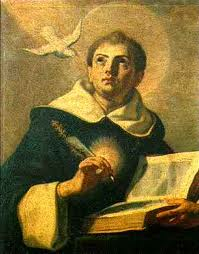
That Thomas was to be the Doctor of the Angels was not readily apparent to his school chums. His physique was unlike that of the stereotype theologian. Scholars are supposed to fit the mold of the frail, diminutive recluse, with bodies underdeveloped because of a sedentary life. Not so Thomas Aquinas. He was a big man, portly, suntanned, with a large head. He towered over his companions, no less in his massive physical bulk than in his titanic intellect. His appearance was so ungainly as a youth that he was dubbed “The big dumb ox of Sicily.”

The best estimates of historians set the date of Aquinas’ birth early in the year 1225. He was born in a castle near Naples, of noble parentage. He was the seventh son of Count Landulf of Aquino and Theodora of Theate.

His early years show indications that the hand of Providence was on his life. His predilection for theology was marked in childhood. At the tender age of five, an age when the modern child would be glued to the television set watching “Sesame Street,” Aquinas was placed as an oblate in the abbey of Monte Cassino. There he mused on the nascent questions of ontology that gripped his mind for his entire life.

Thomas’ father had big plans for his precocious son. Deeply embroiled in the political machinations between the Emperor and the princes of the church, Count Landulf sought the title of abbot for his son. Thomas politely but steadfastly refused. He borrowed a page from the life of his Lord and said, “It is better to obey the Father of spirits, in order that we may live, than the parents of our flesh.” Thomas was committed to the service of God through the pursuit of an intellectual life. He was driven by an almost monomaniacal passion to answer the question, “What is God?”

At age fourteen Aquinas left the Benedictine abbey at Monte Cassino and was sent to Naples to study at the Faculty of Arts. There he came under the influence of the Dominicans and entered their order in 1244. His parents were not pleased by this decision and were further agitated when the Dominican General sought to send him to the University of Paris. On the way, Thomas was kidnapped by his own brothers and forced to return home. He was held captive by his own family for a year, during which he refused to abandon his habit and diligently kept the observances of his order every day. His zeal was so contagious that his sister was converted and his mother so impressed that, like the biblical Rebekah, she assisted her son in escaping from a window.

Thomas made his way to Paris where he first came under the tutelage of Albert the Great. Albert (Albertus Magnus) was to Aquinas what Socrates was to Plato. Albert poured his own titanic knowledge into the head of his most able disciple and followed his career with fatherly love. At the death of Saint Thomas, Albert was deeply grieved. Thereafter when Thomas’ name was mentioned in Albert’s presence, Albert would exclaim, “He was the flower and the glory of the world.”

After three years of study in Paris, Albert took Thomas with him to begin a house of studies in Cologne. In 1252 Thomas returned to Paris. In 1256 he received his licentiate to teach in the faculty of theology. In 1259 he went to Italy and taught theology at the studium curiae, attached to the papal court until 1268. In 1268 he returned to Paris to take up the mighty controversy of his day, the controversy with Arab philosophy. In 1274 Pope Gregory X summoned him to assist in the Council of Lyons. On the journey Thomas’s mission was interrupted by the angels. They came to take their Doctor home. At age forty-nine the earthly ministry of the dumb ox of Aquino had ended.

The most familiar title given Thomas Aquinas is that of “Saint.” Though Protestants are likely to use the word “saint” as a synonym for any believer, following the New Testament usage, there are times when the most zealous Protestant will make use of the term to refer to someone who has achieved an extra level of spiritual maturity. In Rome the title is conferred by the church to a highly select few who have achieved a godliness considered above and beyond the call of duty.

When we think of Aquinas, our first thoughts are usually of his extraordinary gifts of scholarship. His was indeed a prodigious intellect, but his greatness at this point should not overshadow the spiritual power of the man. We might conjecture that his canonization was prompted by his intellectual contributions alone, but the record belies such an idea. Thomas was as noteworthy as a spiritual leader as he was for his theological acumen.

Within fifty years of the death of Aquinas the church conducted careful investigations into his personal life and teachings. Strong opposition to Aquinas’ teaching set in early, and insults were hurled against his memory. But on July 18, 1323, at Avignon, Pope John XXII proclaimed Thomas a saint. The Pope said of Aquinas, “Thomas, alone, has illumined the Church more than all the other doctors.”

The modern theologian-philosopher, Jacques Maritain, was jealous to restore a high regard for Aquinas in the twentieth-century church. In his book titled simply St. Thomas Aquinas, Maritain rehearses the traditions of Aquinas’ spiritual power and provides several anecdotes of alleged miracles that surrounded the saint. It was said of Thomas that though he contended fiercely in theological debates, he was able to bear personal attacks with a tranquil humility. Maritain relates the following:

One day a Friar in a jovial mood cries out: “Friar Thomas, come see the flying ox!” Friar Thomas goes over the window. The other laughs. “It is better,” the Saint says to him “to believe that an ox can fly than to think that a religious can lie.”

Witnesses who were summoned to testify at the canonization process of Saint Thomas described him as “soft-spoken, affable, cheerful, and agreeable of countenance, good in soul, generous in his acts; very patient, very prudent; all radiant with charity and tender piety; marvelously compassionate towards the poor.” If we examine these virtues carefully, we see in them a litany of what the New Testament calls the fruit of the Holy Spirit.

Saint Thomas was also a gifted preacher. He would sometimes become so moved during his own preaching that he was forced to pause while he wept. During a Lenten series that he preached in Naples, he had to stop in the middle of his sermon so that the congregation could have time to recover from their weeping.

It is the mystical life of Saint Thomas, however, that has sparked the interest of biographers. Immediately after Thomas’ death, his disciple Reginald returned to Naples and declared:

As long as he was living my Master prevented me from revealing the marvels that I witnessed. He owed his knowledge less to the effort of his mind than to the power of his prayer. Every time he wanted to study, discuss, teach, write or dictate, he first had recourse to the privacy of prayer, weeping before God in order to discover in the truth the divine secrets … he would go to the altar and would stay there weeping many tears and uttering great sobs, then return to his room and continue his writings.

A similar testimony comes from Tocco. He said of Aquinas, “His gift of prayer exceeded every measure; he elevated himself to God as freely as though no burden of flesh held him down. Hardly a day passed that he was not rapt out of his senses.”

Being daily “rapt out one’s senses” is hardly the routine we expect from abstract scholars and philosophers, particularly from someone like Aquinas who was given to the pursuit of logic.

The habit of passionate prayer is crowned by the extraordinary claims of miraculous visitations granted to Saint Thomas. Such incidents raise the eyebrows of Reformed theologians and we mention these accounts with the due reservations of our trade. Maritain recites the following episode as part of the Catholic record of Thomas’ sainthood.

Another time it was the saints who came to help him with his commentary of Isaias. An obscure passage stopped him; for a long time he fasted and prayed to obtain an understanding of it. And behold one night Reginald heard him speaking with someone in his room. When the sound of conversation had ceased, Friar Thomas called him, telling him to light the candle and take the manuscript On Isaias. Then he dictated for an hour, after which he sent Reginald back to bed. But Reginald fell upon his knees: “I will not rise from here until you have told me the name of him or of them with whom you have spoken for such a long time tonight.” Finally Friar Thomas began to weep and, forbidding him in the name of God to reveal the thing during Thomas’ life, confessed that the apostles Peter and Paul had come to instruct him.

Another event occurred in Paris when Thomas was lecturing on the Eucharist. As he went to the altar the brethren suddenly saw Christ standing before him and heard Him speak aloud: “You have written well of the Sacrament of My Body and you have well and truthfully resolved the question which was proposed to you, to the extent that it is possible to have an understanding of it on earth and to ascertain it humanly.”

That sober philosophers like Jacques Maritain report such incidences as simple historical fact is itself testimony to the extraordinary impact Aquinas’ spiritual power had on his contemporaries as well as his future disciples.

One anecdote about St. Thomas is virtually beyond dispute. Toward the end of his life he had a powerful mystical experience that dramatically affected his work. Again we turn to Maritain for his account of it:

Having returned to Italy after Easter of 1272, Friar Thomas took part in the General Chapter of the Order, at Florence, and then he went to Naples again to continue his teaching there. One day, December 6, 1273, while he was celebrating Mass in the chapel of Saint Nicholas, a great change came over him. From that moment he ceased writing and dictating. Was the Summa then, with its thirty-eight treatises, its three thousand articles and ten thousand objections, to remain unfinished? As Reginald was complaining about it, his master said to him, “I can do no more.” But the other was insistent. “Reginald, I can do no more; such things have been revealed to me that all that I have written seems to me as so much straw. Now, I await the end of my life after that of my works.”

After this experience Thomas Aquinas wrote no more. On his final journey he asked to be taken to the monastery of Santa Maria. As he was dying he asked for Viaticum. When he saw the consecrated Host, he threw himself on the floor and cried out:

I receive Thee, Price of my redemption … Viaticum of my pilgrimage, for love of Whom I have studied and watched, toiled, preached, and taught. Never have I said anything against Thee; but if I have done so, it is through ignorance, and I do not persist in my opinions, and if I have done anything wrong, I leave all to the correction of the Roman Church. It is in this obedience to Her that I depart from this life.

There is a strange progression in the achievement of titles of honor and status in the theological world. A freshman student begins his pursuit of knowledge simply with his given name. When he graduates from college, some may now call him “Mister.” When he graduates from seminary and passes his trials for ordination, he is granted the title “Reverend” or “Father.” If he continues his education and achieves a doctorate, he is called “Doctor.” If he is fortunate enough to secure a teaching position on a faculty, he must wait to progress to a full professorship. Then he can preface his name with the coveted title of “Professor.” The irony is this: if he makes it really big and achieves a widespread reputation for his learning, he will achieve the highest honor, that of being known simply by his name. We do not usually speak of Professor Barth or of Doctor Calvin or Professor Kung. The leaders in the field of theology are known by their names. We speak of Barth, Bultmann, Brunner, Kung, Calvin, Luther, Edwards, and Rahner. A man doesn’t seem to make it until his title returns to where he started, with his own name.

There is a special sense in which this strange progression reaches its acme with the titular honor paid to Aquinas. He is known not only by his famous last name, but in the world of theology and philosophy is recognized by his first name. No one speaks of Aquinasism. We talk about Calvinism, Lutheranism, Augustinianism, but with Aquinas it is Thomism. One need merely mention the name “Thomas’ and every scholar of theology knows of whom we speak.

Think of all the Thomases there have been in the world. Think even of the Thomases who have been famous in Christendom. There is “Doubting Thomas,” Thomas a Kempis, Sir Thomas More, and a host of others. But only one theological giant is recognized instantly by the simple mention of the name “Thomas.”

In 1879 a papal encyclical was issued in Rome by Leo XIII that praised the contribution of Thomas Aquinas. Leo declared:

Now far above all other Scholastic Doctors towers Thomas Aquinas, their master and prince. Cajetan says truly of him: “So great was his veneration for the ancient and sacred Doctors that he may be said to have gained a perfect understanding of them all.” Thomas gathered together their doctrines like the scattered limbs of a body, and moulded them into a whole. He arranged them in so wonderful an order, and increased them with such great additions, that rightly and deservedly he is reckoned a singular safeguard and glory of the Catholic Church. His intellect was docile and subtle; his memory was ready and tenacious; his life was most holy; and he loved the truth alone. Greatly enriched as he was with the science of God and the science of man, he is likened to the sun; for he warmed the whole earth with the fire of his holiness, and filled the whole earth with the splendor of his teaching. There is no part of philosophy which he did not handle with acuteness and solidity.

In the Code of Canon Law promulgated by Benedict XV, Catholic school teachers were ordered to “treat in every particular the studies of rational philosophy and theology, and the formation of students in these sciences, according to the method, the doctrine, and the principles of the Angelic Doctor, and to adhere religiously to them.” Here Thomism is elevated to a supreme theological role in the church. Thomas moves beyond the scope of being Doctor Angelicus to the realm of being the Doctor of the Church par excellence, the Common Doctor of the faithful.

What then, is Thomism, the philosophy attached to the name of Aquinas? Is Thomism a philosophy or a theology? Was Thomas himself primarily an apologist or a theologian? Was he a biblical thinker or a speculative scholar who merely warmed over Aristotle and baptized his pagan philosophy? These are some of the questions that are evoked by the sound of Thomas’ name.

The twentieth century has ushered in a revival of interest in Saint Thomas among Roman Catholic scholars. At the same time there has been a deepening cleavage between Roman Catholic Thomists and Evangelical Protestants. As Vatican Council I in 1870 looked to Protestantism as the fountain from which all modern heresies and distortions of truth flow, so modern Evangelicals have looked to the work of Thomas as being the poison that embittered the springs of truth.

The Protestant apologist, Norman Geisler (who at crucial points is pro-Thomas) is fond of quipping that “the new theme song of Evangelicalism is ‘Should Old Aquinas Be Forgot, and Never Brought to Mind.’” On the other hand the late Francis Schaeffer was sharply critical of Saint Thomas, seeing in his work the foundations of secular humanism. He sees in Thomas’ development of natural theology the magna charta of philosophy. With Thomas, philosophy was liberated from the controls of theology and became autonomous. Once philosophy became autonomous, separated and freed from revelation, it was free to take wings and fly off wherever it wished. Since Aquinas let the bird out of the trap, it has flown in the face of the faith. No longer is philosophy regarded as the handmaiden of Queen Theology but as her rival and possibly her destroyer.

Such an evaluation of Aquinas meets with resistance in some quarters of Protestantism. But the debate goes on. I, for one, am persuaded that the Protestant Church owes a profound debt to Saint Thomas and the benefit of a second glance at his contributions. I remind my Evangelical friends that when Saint Thomas defended the place of natural theology, he appealed primarily to the Apostle Paul and to Romans 1 for its classical foundation.

There is a sense in which every Christian owes a profound debt to Saint Thomas. To understand his contribution we must know something of the historical context in which he wrote. To gain a fair reading of any thinker, past or present, we must ask such questions as “What problems was he trying to solve? Why? What were the vibrant issues at stake in his day? What were the dominant controversies?” We know, for example, that throughout church history the development of theology has been prodded in large part by the threat of serious heresies. It was the heretic Marcion who made it necessary for the church to define the canon of sacred scripture. It was the heresy of Arius that provoked the council of Nicaea. It was the distortions of Nestorius and Eutyches that made the Council of Chalcedon necessary. The heat of controversy has been the crucible by which the truth of theology has been made more sharp, more lucid.

The threat to the church that awakened Saint Thomas from his own dogmatic slumber was one of the most serious challenges that Christendom has ever had to endure. Our present condition in the western world makes it a bit difficult to imagine the enormity of the threat. It was the rise and sweeping expansion of Islam that threatened Christianity in the thirteenth century. Our awareness of the threat tends to be limited to the more colorful and adventuresome element of it chronicled in the Crusades. Knights with crosses emblazoned on their chests riding out to free the Holy Land from infidels has a certain romance to it.

Saint Thomas also sought to rescue the Holy Land. Its walls were made of philosophical mortar. His lance was his pen and his coat of armor a monk’s garb. For Thomas the war was a war of ideas, a battle of concepts.

Islamic philosophy had achieved a remarkable synthesis between Islamic religion and the philosophy of Aristotle. The powerful categories of Aristotelian thought became weapons in the arsenal of the two great Arab philosophers, Averroes and Avicenna.

The Islamic philosophers produced a system of thought called “integral Aristotelianism.” One of the key points that flowed out of this was the concept of “double truths.” The double truth theory allowed that certain ideas could, at the same time, be true in philosophy and false in theology. It was a remarkable achievement: the Arab philosophers were able to accomplish what no schoolboy could ever do despite the universal desire of schoolboys to do it—to have their cake and eat it too.

The problem with having one’s cake and eating it too is obvious. If I save my cake, I cannot enjoy the taste of it while I am saving it. But if I eat it, then it is gone. I cannot save what is already gone. Seems simple enough. Philosophers, however, like lawyers, often have astonishing powers of making simple matters extremely complex, to the point that they think they can actually transcend the cake eating-saving dilemma. What’s worse is they often have the rhetorical power to convince other people of their magic.

To translate the double truth notion into modern categories would look something like this: a Christian might try to believe on Sunday that he is a creature created in the image of God by the sovereign purposive act of a Divine Being. The rest of the week he believes that he is a cosmic accident, a grown-up germ that emerged fortuitously from the slime. On Wednesdays, however, he adopts a different standpoint. Wednesday is “Double-Truth Day.” At a prayer meeting on Wednesday, the Christian attempts to believe both viewpoints at the same time. One day a week he devotes himself to intellectual schizophrenia. He tries to believe and to live a contradiction. If he enjoys the game he might shoot for a long weekend of it until he gains the ultimate bliss and security of permanent residence in a lunatic asylum.

Aquinas was concerned not only to protect the Christian church from the attacks of Islam, but to protect mankind from intellectual suicide. He insisted that all truth is coherent. Reality is not ultimately chaotic. What is true in philosophy must also be true in theology. What is true in science must also be true in religion. Truth may be analyzed from different perspectives. Various disciplines may have specialized fields of inquiry, but Aquinas insisted that all truth meets at the top.

This cardinal principle of Aquinas presupposes some rather basic, though vitally important, axioms. It is based upon the prior conclusion that there is a God and that he is the creator of this world. The world is a universe. That is, the world is marked by diversity which finds its ultimate unity in God’s sovereign creation and rule. The word “universe” as well as the term “university” comes from this mongrelized union of the two terms “unity” and “diversity.”

The double truth theory destroys in principle the fundamental notion of a universe. The universe becomes a multiverse with no ultimate harmony or cohesion. Chaos is ultimate. Truth, as an objective commodity, becomes impossible. Here contradiction may be freely embraced at any time, and every day becomes Double-Truth Day.

One of Francis Schaeffers’ most serious charges against Saint Thomas is the allegation that Thomas separated philosophy and theology. The charge is heard from other quarters as well, that Thomas separated nature and grace. Schaeffer’s lament is that, since the work of Aquinas, philosophy has been liberated from her role as handmaiden to the Queen of the Sciences (Theology) and has now become theology’s chief antagonist.

It is the prerogative of the theologian to make fine distinctions. One of the most important distinctions a theologian can ever make is the distinction between a distinction and a separation. (This is the kind of distinction that yields Excedrin headaches.) There is a crucial difference between distinguishing things and separating them. We distinguish between our bodies and our souls. If we separate them, we die. We distinguish between the two natures of Christ. If we separate them, we fall into gross heresy.

To separate philosophy and theology, nature and grace, was the last thing Thomas Aquinas ever sought to do. It was precisely the issue he was combatting. The double-truth theory separates nature and grace. Such a separation was the dragon Aquinas set out to slay. Aquinas was concerned to distinguish philosophy and theology, nature and grace, not to separate them. He came to bury Averroes, not to praise him.

Aquinas maintained consistently that ultimately there is no conflict between nature and grace. His posture was that grace does not destroy nature but fulfills it. What God reveals in the Bible does not cancel out what he reveals in nature. To be sure it adds to the knowledge we can glean from a study of this world, but it does not contradict it.

Thomas taught that there are certain truths that can be discovered in nature that are not found in the Bible. To use a modern example, we cannot discover a blueprint for the circulatory system of the bloodstream in the Bible. Second Chronicles tells us very little about microchip computers. On the other hand, science can never teach us of the Trinity or of God’s plan of redemption. The work of the Holy Spirit in the regeneration of a human soul cannot be detected with a microscope or x-ray machine.

Saint Thomas was simply stating what should be obvious, that we learn some things from nature that we can’t learn from the Bible and we learn some things from the Bible that we cannot learn from nature. The two sources of information can never be ultimately contradictory. If they seem to contradict each other, then a warning buzzer should sound in our heads to alert us that we have made an error somewhere. Either we have misinterpreted nature, or misinterpreted the Bible, or perhaps we have misinterpreted both.

So far, so good. What has really raised the hackles of many modern Evangelicals is what Thomas said next. Thomas insisted that in addition to the specific information one can learn from nature and the information found only in the Bible, there is a field of knowledge that overlaps. There are truths that Saint Thomas called “mixed articles.” The mixed articles refer to truths that can be learned either by nature or by grace.

The most controversial of the mixed articles is the issue of the existence of God. Clearly the Bible teaches that there is a God. Aquinas argues, however, that nature also teaches there is a God. There can be, therefore, a kind of natural theology. Natural theology means that nature yields a knowledge of God.

The question of natural theology and of proofs of God’s existence drawn from nature has been a raging controversy in the twentieth century. We recall, for example, Karl Barth’s rigorous rejection of natural theology in his debate with Emil Brunner. Theology in general and evangelical theology in particular has reacted severely to natural theology, seeing in it an intrusion of Greek philosophy into the household of faith. The dominant approach in our day is that of some variety of fideism. Fideism, which means literally “faithism,” maintains that God can be known only by faith. God’s existence cannot be established by philosophy. Nature yields no theology. The heavens may declare the glory of God, but such glory is never perceived except through the eyeglasses of faith.

Thomas appealed to the Bible for his defense of natural theology. He carefully reminded the Christians of his day that the Bible not only teaches us that there is a God, but that same Bible also teaches us that it is not the only source of that information. The Bible clearly and unambiguously teaches that men in fact not only can know, but do know, that God exists from his self-revelation in nature. Thomas simply reminded the church what the Apostle Paul labored to teach in the first chapter of the Epistle to the Romans.

When the modern Evangelical rejects natural theology in toto and adopts fideism as his standpoint, he becomes guilty of the very thing for which Aquinas is accused; he becomes guilty of separating nature and grace.

What is at stake here? Aquinas understood that fallen men and women will repeatedly seek to use the tools of philosophy and science against the truth of the Bible. However, he refused to surrender nature to the pagan. He refused to negotiate philosophy and science. Fideism is a policy of retreat. It hides behind a fortress of faith while surrendering reason to the pagan. It separates nature and grace in the worst possible way. The church becomes a cultural dropout; it seeks the sanctuary of the Christian ghetto. It seeks to reserve a safe place for the practice of worship, prayer, Bible study, and the like. In the meantime, art, music, literature, science, the university, and philosophy are surrendered to the pagan. If a Christian happens to be laboring in those endeavors, he is politely asked to live by a double-truth standard. Like the scientist who can’t decide whether light is a wave or a particle, he is asked to believe that it is a “wavicle” or to believe that on Monday, Wednesday, and Friday light is a wave; on Tuesday, Thursday, and Saturday it is a particle. (Of course on Sunday it rests.)

We are acutely aware that the church in our day has staggered under the assault of philosophers and scientists. There are few philosophers who see their task as being servants to the truth of God. There are few scientists today who see their task as “thinking God’s thoughts after Him.” Secular universities are not known for their gentle nurturing of Christian faith. The popular music charts do little to promote the kingdom of God. Modern art and literature are not communicating the beauty of holiness. No wonder that the church seeks a safe place of solace far removed from the battleground of culture.

We need an Aquinas. We need a titanic thinker who will not abandon truth for safety. We need men and women who are willing to compete with secularists in defense of Christ and of his truth. In this regard, the dumb ox of Aquino was heroic.
About the Author: Dr. R.C. Sproul is the founder and chairman of Ligonier Ministries, an international Christian education ministry located near Orlando, Florida. His teaching can be heard on the program Renewing Your Mind, which is broadcast on hundreds of radio outlets in the United States and in 40 countries worldwide. He is the executive editor of Tabletalk magazine and general editor of The Reformation Study Bible, and the author of more than seventy books (including some of my all time favorites: The Holiness of God; Chosen By God; Reason to Believe;  Knowing Scripture; Willing to Believe;  Intimate Marriage; Pleasing God; If There’s A God, Why Are There Atheists?, and Defending The Faith) and scores of articles for national evangelical publications. Dr. Sproul also serves as president of Ligonier Academy of Biblical and Theological Studies and Reformation Bible College. He currently serves as Senior Minister of preaching and teaching at Saint Andrew’s in Sanford, FL.  The article above was adapted from the chapter entitled “Thomas Aquinas” in the book Chosen Vessels: Portraits of Ten Outstanding Christian Men. Charles Turner, ed. Ann Arbor, Michigan: Servant Publications, 1985.

Learning Scripture Memory From One Who Mastered The Bible: Dr. John G. Mitchell

I had the privilege of attending Multnomah University (was Multnomah School of the Bible) from 1985-1988. I went there at the recommendation of Luis Palau and was drawn by their motto, “If it’s Bible you want, then you want Multnomah.” One of the highlights for me as a student at Multnomah was taking classes like “Spiritual Life,” and “Acts and Romans” from an old Scottish preacher (and the founder of the school) by the name of Dr. John G. Mitchell. I had never been around a man that was so in love with Jesus, and that loved the Bible like him. I was glad to see the article below by a fellow Multnomah and Talbot alumnus on memorizing Scripture based on advice from Dr. Mitchell. I had the same conversation with Dr. Mitchell that Dr. Berding had as a student. I don’t know that there is any greater need of the moment than the two things that Dr. Mitchell stood for and modeled: a love for Jesus and for his Word. I hope that you will join me in heeding these words of wisdom by one of the greatest men of God who ever walked on this planet (and that’s no exaggeration whatsoever). He was great because he was humbled and awed by the greatness of His God – and he lived to tell others of His Majesty. Dr. Mitchell was very special to me because he not only mastered the Bible, but more importantly, the Bible for God’s glory mastered him. Dr. Berding gives a very helpful strategy for memorizing Scripture based on principles gleaned from Dr. Mitchell in this excellent article. (Dr. Mitchell pictured above). – Dr. David P. Craig

 “The Easiest Way to Memorize the Bible”

One of my professors in college was really old. I can hear everyone asking: “How old was he?” (No, his social security number wasn’t 7 …) Let’s put it this way: he was the founder of the college at which I was studying (Multnomah in Portland, Ore.), and the school was celebrating the half-century mark of its founding while I was there! In fact, Dr. John Mitchell was over the age of 90 when he taught the two classes I took from him. He continued to teach well into his mid-90’s.

Not surprisingly, he was getting forgetful about some things by the time I had him as a teacher, but what he definitely was not forgetting were the Bible verses he had memorized. His ability to recall Bible verses was astounding. I do not know this for a fact, but I would guess that he had all of the New Testament and large sections of the Old Testament committed to memory. All of his students were profoundly impacted by his immersion in the Scriptures.

I only had one opportunity to sit and talk with him while I was a student. I had a single question to ask him that day: “How did you come to memorize so much of the Bible?” he answered, “Well, I never really tried to memorize.” (Oh no, I thought, this isn’t going to be very helpful …) “But before I prepare to preach a series of sermons on a book of the Bible, I first read it aloud *50 times before preaching it.” (OK, this might be helpful.) “Since I preached a lot in my younger years,” (now that is an understatement; read his biography! [Dick Bohrer. Lion of God: A biography of John G. Mitchell, D.D. Portland, OR: Multnomah Bible College, 1994], book cover and Dr. Mitchell pictured on left). “I had lots of opportunities to read passages over and over again.”

Dr. Mitchell’s comments that day were a helpful turning point for me in my own commitment to memorize the Scriptures. I had already tackled some large chunks of the Bible and committed them to memory, but the process of getting there had been rather painful. Rote memory (“look at the verse, cover it with your hand, look into the air and try to quote it by memory, uncover the verse with your hand to see what you missed, fix whatever mistakes you made, try again”) was hard work, and the results were not always satisfying from a long-term, remember-what-you-memorized standpoint.

After that single conversation with Dr. Mitchell, I changed tactics. From then on, before traveling down the “rote road,” I would read the passage I wanted to memorize 50 times out loud with great emphasis. Then – and only then – I would try the rote method.

I learned three things by doing it this way:

(1) I discovered that I had already memorized most of the passage I was trying to learn  before I ever really started to try to memorize it.

(2) I found out that the process of reading a passage over and over again in-and-of itself became a wonderful means of God working his grace in my life. I wasn’t just learning words, I was thinking about where the passage was going. God used it to help me understand the passage better, to think about its implications in my life, and to impact my actions and affections.

(3) I discovered that this process helped immensely in holding in my long-term memory the passages I had memorized. It is a far better process for retention. So, why don’t you try it yourself? Here is a summary of the process.

STEP 1: Begin by selecting a passage of Scripture that takes approximately 15 minutes to read out loud. Here is a short list of New Testament passages that would fall into this category that also would probably yield you a lot of personal spiritual fruit: Matthew 5-7; John 14-17; Romans 6-8; Philippians (all); Colossians (all); 2 Timothy (all); Hebrews 11-13; James (all); 1 Peter (all); 1 John (though this one is tough because of how cyclical it is).

STEP 2: Read your passage through once or twice a day aloud. Keep track of how how many times you have read it through.

STEP 3: Once you have read it aloud 50 times, then try to rote memorize it. Keep working on it faithfully until you can get through the entire passage by memory.

STEP 4: Quote through it at least 25 times without looking to fix it in your memory. An additional step you can take that would ease the process would be to read your passage onto a digital recorder and listen to it whenever you can as you drive, walk, cook or wait for something. Your own recorded voice will work a little better than someone else’s voice, since it will match the intonation of your daily oral readings, but you can use a prerecorded section if you prefer.

I’ll close with this thought: If you started today, red aloud through Philippians once a day for 50 days, spent the following 15 days doing the rote-memory thing, reviewed for another 25 days, you could have all of Philippians memorized in three or four months by only spending a relatively painless 15 minutes a day doing it. Wouldn’t that be amazing?

This column [adapted] above was first published in thegoodbookblog.com on January 28, 2012 & again in the Biola University Magazine, Spring Edition 2012, 39.

About the Author: Ken Berding is a professor of New Testament at Talbot School of Theology and the author of several books, most recently Walking in the Spirit (Crossway, 2011). He holds an M.A from Talbot, and a Ph.D. in hermeneutical and biblical interpretation from Westminster Seminary in Philadelphia.

*Note: Dr. Mitchell told me when I was at Multnomah that he learned this from the great preacher from Westminster Chapel in London – G. Campbell Morgan – the great preacher that preceded and handpicked Dr. David Martyn Lloyd-Jones [DPC])

A Short Tribute to Dr. John G. Mitchell by Dr. Joe Aldrich

John Greenwood Mitchell (1892-1990)

“Don’t you folks ever read your Bibles?” He did. Few knew it better, though for John G. Mitchell, knowledge of the Bible was not an end in itself. He like few others went regularly beyond the printers ink to the Prince of Peace. He not only talked incessantly about “loving the Savior,” he did and it showed. If ever hauled into court charged with loving the Lord, he would be convicted immediately.

His eyes would get a far away look in them as he reflected on his early years of ministry as an itinerant evangelist on the Canadian prairies. Saved as a machinist, a tool and die maker, God called him to preach. His first sermon lasted all of three minutes. I can see him walking the prairies, praying all night. God alone knows how many trees, stumps, and stones, were evangelized as he practiced preaching. It was not unusual for him to sit up all night reading and rereading the Bible. God’s Word became such a part of him, he knew it so well, that he’d quote whole sections from memory.

With no financial support, trusting God alone, he’d travel to the most remote communities to tell of his Savior’s love. There were times when he had no other option but to head his little black Ford out toward another preaching point with the gas gauge on empty. He had not money, and the Canadian Depression was at its peak. Fully trusting his Lord to provide all his needs, he’d log mile after mile with no gas in his car. Sometimes appreciative farmers would give him a milk pail full of gasoline to help him on his way.

He’d pull into a tiny town, head for the telephone operator, and pay her a quarter to place a general call to all those who had phones in the area. His booming voice would come on the line and invite them to a revival service, often held in a Grange hall. Compelled to come, they’d hitch up their teams and come from miles around. The service would last several hours. Sometimes there was no light available, and he’d end up preaching in darkness.

Some threatened him. In the town of Radville they nailed the church door shut while he was preaching. Teaching in a remote area of Oregon, he found himself in the midst of a nest of suspicious moonshiners. Fearlessly he preached, and lives and destinies were changed.

Besides being one of the founders of Multnomah School of the Bible, (Now Multnomah University and Biblical Seminary), Dr. Mitchell founded and served as pastor of the Central Bible Church in Portland, Oregon. He was a pioneer radio speaker who was heard live, daily, on area radio stations. In those days there were no tape recorders. He and his organist had to be at the station five evenings of the week. The “Know Your Bible Hour” touched the hearts of countless thousands of listeners.

Dr. Mitchell and my father, Willard Aldrich, served together as partners in ministry for over fifty years. Their devotion to the Lord and to each other provided an outstanding illustration of what it means to dwell together in unity. Also standing with Dr. Mitchell through these decades of ministry was his beloved wife, Mary.

Everywhere he went the Savior was uplifted and people were drawn to Him. Throughout the years, Jesus was the main topic of his conversation. Finally, at ninety-seven years of age, the Lord he’s served so faithfully called him home. What a home coming it must have been! His “Jordy” accent, his knowledge of the Word, and his love for the Lord will not soon be forgotten.

“It is better,” Solomon writes, “To go to a house of mourning than to go to a house of feasting, for death is the destiny of every man, the living should take this to heart” (Ecclesiastes 7:2). And so we should. Spiritual success leaves clues. It is for us who remain to ponder–to reflect upon those who have gone before and to imitate their faith. “Remember your leaders, who spoke the word of God to you. Consider the outcome of their way of life and imitate their faith” (Hebrews 13:7).

– Joseph C. Aldrich, President (deceased)

Multnomah School of the Bible

*Taken from the foreword to An Everlasting Love: A Devotional Study of the Gospel of John by John G. Mitchell with Dick Bohrer, Multnomah Press, 1982.