The Connection Between Words and Character in the Book of Proverbs By Gordon Cheng

The Connection Between Words and Character in the Book of Proverbs

Chart Adapted From *Gordon Cheng

WORDS USED FOR HARM, SPOKEN BY

PEOPLE WITH FOOLISH CHARACTER

WORDS USED FOR GOOD, SPOKEN BY

PEOPLE OF GOOD CHARACTER

Adulterers use words as traps for fools

(Proverbs 7:10-21)

“The teaching of the wise is a fountain of life” (Proverbs 13:14)

“When words are many, transgression is not lacking” (Proverbs10:19)

“The heart of the righteous ponders how to answer” (Proverbs 15:28)

“The words of the wicked lie in wait for blood” (Proverbs 12:6)

“…the mouth of the upright delivers them” (Proverbs 12:6)

“There is one whose rash words are like sword thrusts” (Proverbs 12:18)

“…the tongue of the wise brings healing” (Proverbs 12:18)

“The words of a whisperer are like delicious morsels; they go down into the inner parts of the body” (Proverbs 18:8)

“Gracious words are like a honeycomb, sweetness to the soul and health to the body” (Proverbs 16:24)

“Do you see a man who is hasty in his words? There is more hope for a fool than for him” (Proverbs 29:20)

“Whoever restrains his words has knowledge.” (Proverbs 17:10-27)

 Chart Adapted from the fantastic book by Gordon Cheng. Encouragement: How Words Change Lives. Kingsford, Australia: Matthias Media, 2006, 19-20.

About *Gordon Cheng: He is the author of the popular course, Six Steps to Encouragement. He is married to Fiona and has three daughters. He has studied in psychology and theology, and worked with university students and as a minister to several parishes in Melbourne and Sydney, Australia. He is interested in choral and pian music, writing letters to newspapers, and reading church history.

“How Can I Become a Christian?” By Dr. James Montgomery Boice

The ABC’s of Salvation

How does a person become a Christian? There are three points—two things we must believe and one thing we must do. They are as simple as ABC.

A stands for “admit.” We must admit that we are sinners and that we are therefore under God’s judgment.

B stands for “believe.” We must believe that God loves us in spite of our sin and that he has acted in Jesus Christ to remove sin and restore us to himself.

C stands for “commit.” This is an act of faith by which we give up trying to run our own life and instead place ourselves in the hands of the Lord Jesus Christ, who died for us and rose again.

Admitting Sin

First, God demands that we admit without reservation that we are sinners and that we should therefore be separated from his presence forever. We are in rebellion against him, either consciously or unconsciously, and we deserve not grace but judgment.

Sin is an everyday experience and the number one problem of mankind. What is more, they recognize that the Bible everywhere insists upon this.

The Scripture declares that the whole world is a prisoner of sin,” wrote Paul in the book of Galatians (Gal. 3:22).

In 1 Kings, chapter 8, King Solomon declared, “There is no one who does not sin” (v. 46).

Psalm 143:2 says, “No one living is righteous before you.”

Isaiah observed, “We all, like sheep, have gone astray, each of us has turned to his own way” (Isa. 53:6).

In the first letter of the apostle John, we are admonished, “If we claim we have not sinned, we make him out to be a liar and his word has no place in our lives” (I John 1:10).

This is also the burden of the first chapters of Paul’s letter to the Romans, where we find the doctrine of the universality of man’s sin stated in its most comprehensive form.

According to the first three chapters of Romans there are three types of people.

The first type is what we would call hedonists, those whose basis for life is materialism. Paul discusses them in Romans 1:18-32. Hedonists have determined to live for their own enjoyment and for whatever pleasures they can find. “Why is this man a sinner?” Paul asks. “He is a sinner because he is on a path that is leading him away from God and therefore away from any real beauty, truth or inner satisfaction.” As Paul describes it, this path is marked by empty imaginings, darkened intellects, a profession of wisdom by one who is actually foolish and, finally, a perversion of the worship of God which leads to a final debasement (vv. 21-23).

The second type of person, the type discussed in Romans 2:1-16, is what we would call a moral man. In Paul’s day, this was the Greek philosopher or professor of ethics. In our day, it would be anyone who has high ethical standards but who does not believe in the Lord Jesus Christ as his Savior. Why does God consider this person a sinner? The answer has two parts. First, he is a sinner because he has come short of God’s standard of righteousness. God’s standard is perfection. It is the standard of the life of the Lord Jesus Christ, the only perfect man who ever lived. All fall short of it. Second, he is a sinner because he falls short of his own standards no matter how high or low they may be.

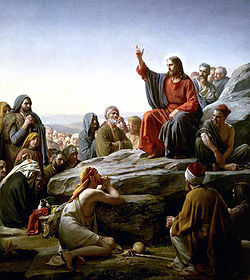
What is your standard of morality? You may say, “My standard is the Sermon on the Mount. Isn’t that a good standard?” Yes, that is a good standard; but the question is: Do you live up to it? In the Sermon on the Mount Jesus said, “Be perfect, therefore, as your heavenly Father is perfect” (Matt. 5:48). Are you perfect? Of course not! In that case, you are condemned by the standard of your own choosing.

You may not like that conclusion, or course. So you may say, “Well, I’ll just lower my standard and make it the Golden Rule—‘In everything, do to others what you would have them do to you.’” Do you keep that standard? Do you always do to other people all that you would like done by them to yourself? Once again, the answer is no! The point is that all of us are condemned by whatever standard we erect, for none of us is able to live up to even the lowest standards of morality. We are all sinners, and deep within we know it.

There is one more type of person. Paul describes him in Romans 2:17-29. This is the man who would admit most if not all of what Paul has been saying and yet who would attempt to escape the conclusions by pleading his religion. “I have been baptized,” he would say. “I am confirmed. I have given large sums of money to the church’s support and have served on its committees.”

“Good for you,” Paul answers. “But you are still a sinner, because God’s requirement of perfection includes a change of the heart, and none of the outward things of religion—church membership, the sacraments, service or stewardship—can do anything about this most basic problem.” At the end of this section of Romans Paul sums his teaching up by saying, “There is no one righteous, not even one; there is no one who understands, no one who seeks God. All have turned away, they have together become worthless; there is not one who does good, not even one” (Rom 3:10-12).

 Believing on Jesus

The second point to becoming a Christian is to believe that God loves you in spite of your sin and that he has acted in Jesus Christ to remove that sin and to begin to make you perfect once more by conforming you to Christ’s image.

“God demonstrates his own love for us in this: While we were still sinners, Christ died for us” (Rom. 5:8).

“For God so loved the world that he gave his one and only Son, that whoever believes in him shall not perish but have eternal life” (John 3:16).

In the Bible, there are three great terms for what God does in salvation. The first is propitiation, a word that occurs in Romans 3:23-26, Hebrews 2:17, 1 John 2:2 and 4:10 (the NIV translates this as sacrifice of atonement”). Propitiation is the act of performing a sacrifice by which the wrath of God against sin is averted. It refers to what Jesus accomplished in relation to God by his death.

Propitiation presupposes the wrath of God. Right here many modern thinkers would stop, arguing that the term should not be used. “We can understand,” such a person might say, “how the idea of propitiation would be appropriate in paganism where God was assumed to be capricious, easily offended and therefore often angry. But this is not the biblical picture of God. According to the Christian revelation, God is not angry. Rather, he is gracious and loving. Moreover, it is not God who is separated from us because of sin, but rather we who are separated from God.” Those who have argued this way have either rejected the idea of propitiation entirely, considering its presence in the Bible to be merely a carry-over from paganism, or they have interpreted the basic Greek word for propitiation to mean, not Christ’s propitiation of the wrath of God, but rather the covering over or expiation of our guilt by his sacrifice.

We must be appreciative of those who have distinguished the pagan idea of propitiation from the Christian idea. For it is quite true that God is not capricious. We do not propitiate him in order to keep in his good graces, for God is a God of grace and love.

Still, this is not the whole of the matter. In the first place, we do not want to forget what the Bible tells us about God’s just wrath against sin in accordance with which sin will be punished either in Christ or in the person of the sinner. We may feel that the wrath of God and the love of God are incompatible. But this is not the biblical perspective. Rather, the Bible teaches that God is wrath and love at the same time. What is more, the wrath is not just a small and insignificant element that somehow is there alongside the far more significant and overwhelming love of God. Actually, it is a major element that may be traced all the way from God’s judgment against sin in the Garden of Eden to the final cataclysmic judgments prophesied in the Book of Revelation.

Second, although the word “propitiation” is used in biblical writings, it is not used in precisely the same way it is used in pagan writings. In pagan rituals, sacrifice was the means by which man placated an offended deity. But in Christianity, it is never the man who takes the initiative or makes the sacrifice, but God himself who out of his great love for the sinner provides the way by which his own wrath against sin may be averted. Moreover, he is himself the way—in Jesus. This is the true explanation of why God is never the explicit object of the propitiation in the biblical writings. He is not the object because he is, even more importantly, the subject. In other words, God himself placates his wrath against sin so that his love may go out to embrace and fully save the sinner.

The second great term for God’s work of salvation is redemption. Redemption speaks of what Jesus Christ did for us in salvation and of what it cost him to do it. It also occurs in Romans 3:23-26, and in many other places.

The Greek word translated as “redeem,” “Redeemer” or “redemption” in our Bibles has to do with loosing someone’s bonds so that, for example, a prisoner becomes free. At times it was used of procuring the release of a prisoner by means of a ransom. Spiritually, the idea is that, though we have fallen into desperate slavery through sin and are held as by a cruel tyrant, Christ has nevertheless purchased our freedom from sin by his own blood. He paid the price to free us.

We have what is perhaps the greatest biblical illustration of redemption in the story of Hosea. Hosea was a minor prophet whose marriage was unfortunate from a human viewpoint, for the woman proved unfaithful to him. But it was a special marriage from the viewpoint of God. God had told Hosea that the marriage would work out in this fashion. Nevertheless, he was to go through with it in order to provide an illustration of how God loves his people, even when they prove unfaithful by committing spiritual adultery with the world and its gods. The marriage was to be a pageant in which Hosea was to play the part of God and his wife would play the part of unfaithful Israel.

The climax comes at the point at which Gomer fell into slavery, probably because of debt. Hosea was told to buy her back as a demonstration of the way by which the faithful God loves and saves his people. Slaves were always sold naked in the ancient world, and this would have been true of Gomer as she was put up on the auction block in the city of Samaria. She apparently was a beautiful woman. So when the bidding started the offers were high, as the men of the city bid for the body of the female slave.

The bidding was competitive. But as the low bidders dropped out, someone added, “Fifteen pieces of silver and a bushel of barley.” “Fifteen pieces of silver and a bushel and a half of barley,” said Hosea. The auctioneer must have looked around for a higher bid and seeing none, would have said, “Sold to Hosea for fifteen pieces of silver and a bushel and a half of barley.” Now Hosea owned his wife. He could have killed her if he had wished. He could have made a public spectacle of her in any way he might have chosen. But instead, he put her clothes back on her, led her away into the anonymity of the crowd, and demanded love of her while promising the same from himself. Here is the way he tells it. “The LORD said to me, ‘Go, show your love to your wife again, though she is loved by another and is an adulteress. Love her as the LORD loves the Israelites, though they turn to other gods and love the sacred raisin-cakes.’ So I bought her for fifteen shekels of silver and about a homer and a lethech of barley” (a “shekel” was about 2/5 ounce or 11 grams; a “homer” was about 6 bushels or 220 liters; a “lethech” was about 3 bushels or 110 liters).

Then I told her, ‘You are to live with me many days; you must not be a prostitute or be intimate with any man, and I will live with you’” (Hos. 3:1-3). Hosea had the right to demand what she had formerly been unwilling to give. But as he demands it he promises love from himself. For it is thus that God loves all who are his true spiritual children.

The third word for describing God’s work in salvation is justification, the central doctrine of Christianity. Why is it central? Because justification by faith is God’s answer to the most basic of all religious questions, namely, “How can a man or woman become right with God?”

We are not right with him in ourselves; this is what the doctrine of sin means. Sin means that we are in rebellion against God, and if we are against God we cannot be right with God. We are all transgressors. The doctrine of justification by faith is the most important of all Christian doctrines because it tells how one who is in rebellion against God may become right with him. It says that we may be justified by the work of Christ alone received by faith, and not by our own works-righteousness.

Paul puts it like this: “All who believe . . . are justified freely by his [that is, God’s] grace through the redemption that came by Christ Jesus” (Rom. 3:22-24); “A man is justified by faith apart from observing the law” (v. 28); “To the man who does not work but trusts God who justifies the wicked, his faith is credited as righteousness” (Rom. 4:5). These verses teach that justification is God’s work and that it flows from God’s grace.

The Christian doctrine of justification is, therefore, actually God’s declaring the believing individual to be righteous, not on the basis of his own works or irrespective of works, but on the basis of Christ’s sacrifice. In justification, God declares that he has accepted the sacrifice of Christ as the payment of our debt to the divine justice and his imputed Christ’s righteousness to us in place of the sin.

Paul’s own conversion is an illustration of these points. He was not a hedonist; far from it. He was better than that, having effected in his life a combination of the second and third types of men he described in the opening chapters of Romans. He was religious and moral, and he trusted for his salvation to what he could achieve in these areas. He tells about it in Philippians 3:4-8: “If anyone else thinks he has reasons to put confidence in the flesh, I have more: circumcised on the eighth day, of the people of Israel, of the tribe of Benjamin, a Hebrew of Hebrews; in regard to the law, a Pharisee; as for zeal, persecuting the church; as for legalistic righteousness, faultless. But whatever was to my profit I now consider loss for the sake of Christ.”

What Paul is saying is that in the days before he met Christ, he had something like a balance sheet in his life. It had assets and liabilities, and he thought that being saved consisted in having more in the column of assets than in the column of liabilities. Moreover, he thought there were considerable assets, some inherited and some earned. Among the inherited assets was the fact that Paul had been born into a Jewish family and had been circumcised according to Jewish law on the eighth day of life. He was a pure-blooded Jew, born of Jewish parents (“a Hebrew of Hebrews”). He was also an Israelite, that is, a member of God’s covenant people. Moreover, he was of the loyal tribe of Benjamin. Then, too, Paul had advantages that he had won for himself. In regard to the law, he was a Pharisee, the most faithful of all Jewish sects in adherence to the law. Moreover, he had been a zealous Pharisee, which he had proved by his persecution of the infant church.

These were real assets from a man’s point of view. But the day came when Paul saw to what these amounted in the sight of the righteous God. It was the day Jesus appeared to him on the road to Damascus. Before that time, Paul thought he was attaining righteousness by keeping the law. But when he saw Christ, he discerned that these acts of righteousness were actually like filthy rags. Before this, he had said, “As for legalistic righteousness, faultless.” Now he said, “I am the worst of sinners,” and he rejected any attempts to justify himself. He turned to God who on the basis of Christ’s death freely justifies the ungodly. So far as his balance sheet was concerned, Paul recognized that all he had accumulated as an asset was in reality not an asset at all. It was a liability, for it had kept him from Christ. This is where he placed it. He called it “loss.” Then, under assets he entered: “Jesus Christ alone.”

It is the glory of the Christian gospel that when a person who has been made alive by God turns from his own works, which can only condemn him, and instead by faith embraces the Lord Jesus Christ as his Savior, God declares his sins to have been punished at Calvary and imputes the righteousness of Christ to his account.

Commitment

Finally, there must be an act by which you actually commit yourself to Christ. Or, to put it another way, you open the gate of your heart and admit him. This does not mean that you are responsible for your own salvation. If you do open the door, it is only because Christ is there beforehand moving you to do it. Still, from your own point of view, the act itself is absolutely indispensable.

What matters is the reality of your own personal commitment to Jesus. Are you a Christian? That is the question. Is it real? The answer to that question does not depend upon your good works but rather upon your relationship to the Savior. Have you asked Jesus Christ to be your Savior?

You must say,

“Lord Jesus Christ, I admit that I am a sinner and stand under your judgment, that I deserve nothing, that I have no claims upon you. Nevertheless, I believe that you love me and died for me, and that now by grace I can stand before you clothed in your righteousness. I commit my life to you. Receive me now as one of your followers.”

This has been the heart of Christian experience. It has been embodied in many of our hymns. One of them says:

Nothing in my hand I bring,

Simply to thy cross I cling;

Naked, come to thee for dress,

Helpless, look to thee for grace;

Foul, I to the Fountain fly;

Wash me, Savior, or I die.

 Rock of ages, cleft for me,

Let me hide myself in thee.

If you will pray that prayer, God will wash you, and he will give you that righteousness which is above anything you can personally attain.

Author: James Montgomery Boice, Th.D., (July 7, 1938 – June 15, 2000) was a Reformed theologian, Bible teacher, and pastor of Tenth Presbyterian Church in Philadelphia from 1968 until his death. He is heard on The Bible Study Hour radio broadcast and was a well known author and speaker in evangelical and Reformed circles. He also served as Chairman of the International Council on Biblical Inerrancy for over ten years and was a founding member of the Alliance of Confessing Evangelicals. He is the author of numerous Bible expositions and one of my favorite Systematic Theologies called Foundations of the Christian Faith. The article above “How To Become a Christian?” was adapted from Chapter One in the book How to Live the Christian Life, Chicago: Moody Press, 1982.

Dr. George Sweeting on 7 Steps To Personal Revival

“7 Steps to Revival”

(1) Develop the desire to know Jesus better. Develop a holy dissatisfaction. The contented Christian is the sterile Christian. Paul said in substance, “Jesus arrested me on the Damascus road. Now I want to lay hold of all that for which I was arrested by God.” Be thoroughly dissatisfied with your spiritual posture.

(2) Pray for a revolutionary change in your life. I think of Jacob wrestling with God. He wanted blessing. He wouldn’t be denied. Throw your entire life into the will of God. Seek God’s very best.

(3) Do what you know to do. If we pray for revival and neglect prayer, that’s hypocrisy. To pray for growth and neglect the local church is foolishness. To pray that you’ll mature and neglect the Word of God is incongruous. Put yourself in the way of blessing.

(4) Totally Repent. “Create in me a clean heart!” David sobbed. For a whole year David was out of fellowship. But he confessed his sin; he turned from that sin, and then he could sing again; he could write again; he could pray again.

(5) Make the crooked straight. If you owe a debt, pay it. Or have an undertanding with the people you owe. Zacchaeus said, “Lord, the half of my goods I give to the poor; and f I have taken anything from and man by false accusation, I restore him fourfold” (Luke 19:8). As much as possible, make the crooked straight.

(6) Develop a seriousness of purpose. Keep off the detours. Let nothing deflect that magnetic needle of your calling. If there is anything that is a Trojan horse in our day, it is the television set. Beware lest it rob you of your passion and your purpose.

(7) Major in majors. The Christian life requires specialists. Jesus said in effect, “Be a one-eyed man” (cf. Luke 11:34-36). Paul said, “This one thing I do.” Too many of us burn up too much energy without engaging in things that bring us nearer to God.

Refuse to rust out. Start sharing your faith. Make yourself available. Back your decision with your time and talent and dollars. Finally, ask God for great faith in Him. Begin to expect great things.

About the author: Dr. George Sweeting is a former president and chancellor of the Moody Bible Institute He received a diploma from Moody Bible Institute, his B.A. from Gordon College, and his Doctor of Divinity from Gordon-Conwell Theological Seminary. Dr. Sweeting has served as a pastor in several churches, including Grace Church, Madison Avenue Baptist Church, and The Moody Church and also spent nine years traveling the world as an evangelist. Dr. Sweeting has written numerous books, including How To Begin the Christian Life, The Joys of Successful AgingToo Soon to QuitLessons from the Life of Moody, and Don’t Doubt in the Dark. He is the host of the radio program Climbing Higher and a former columnist for Moody Magazine. The above seven points were adapted from his book Who Said That? Chicago: Moody Press, 1995, 382.

Did Jesus Rise From the Grave on April 23rd in A.D. 33?

Series: On This Day in Christian History – April 23rd

 “The Most Important Day to Christianity” By A. Kenneth Curtis & Daniel Graves

Many scholars believe that Christ died and rose from the dead again in A.D. 30. Others prefer a date in AD 33, although champions of several other dates can be found. If the events recorded in the Gospels took place in AD 33, then this day in the year 33 is the probable date for Christ’s resurrection.

The witness of the Christian Church and of convinced believers across the centuries has affirmed that without the Resurrection, there could be no Christianity. The cross of Christ makes no sense without His triumphant restoration to life, for it is the Resurrection that explains His death as a sacrifice for sins. It is the Resurrection that proves Christ was no liar. It is the Resurrection that gives us hope of a new, eternal life, showing to us that as Christ rose, so will we.

The Resurrection is the one fact that the apostles and early Church constantly held forth as the vindication of their message. It is the oldest traceable doctrine of the early Christian liturgy. Even notable anti-Christian scholars admit that the early church held the Resurrection as fact, however much those same scholars hope to show that the Church was mistaken in its belief.

The records we have tell us that Christ was buried, His tomb sealed and soldiers posted around it. At about dawn of the first day of the new week (Sunday), there was an earthquake because an angel came down from heaven and rolled back the stone. The guards were so frightened that they fell senseless to the ground. At that time, some of Christ’s female followers were on their way to the tomb to anoint His body. They were no doubt wondering how they would roll way the stone. Imagine their surprise when they found it rolled back and Christ’s body gone! Thinking that His body had been removed, they began weeping. One of them asked a gardener if he knew where the body had been taken. Then she recognized the “gardener” as Jesus himself.

The women rushed back to tell the disciples what they had witnessed. Peter and John raced to the tomb and found that all was as the women had said. An angel assured the men that Christ was indeed risen (see Matthew 28:1-20; Mark 16:1-20; Luke 24:1-49; John 20:1-30). Afterward, Jesus appeared several times to His disciples and to His brother James.

All arguments against the Resurrection must deal with the eyewitness testimony of the early disciples, the great Church that sprang from it, the witness of changed lives around the world and the empty tomb. Modern dimensional mathematics suggests the plausibility of Christ’s appearances, and modern physics demonstrates the necessity of additional dimensions, bringing the account into the sphere of scientific plausibility.

The Church has historically insisted that our Christian life would be impossible without the Resurrection, for through it Christ has removed the sting of death from all those who believe in Him.

“When the perishable puts on the imperishable, and the mortal puts on immortality, then shall come to pass the saying that is written: ‘Death is swallowed up in victory.’ ‘O death, where is your sting?’ The sting of death is sin, and the power of sin is the law. But thanks be to God, who gives us the victory through our Lord Jesus Christ. Therefore, my beloved brothers, be steadfast, immovable, always abounding in the work of the Lord, knowing that in the Lord your labor is not in vain” (1 Corinthians 15:54-58).

 *Other Significant Events on April 23rd in Church History:

1616: William Shakespeare died. The great poet-playwright quoted from or alluded to the Bible hundreds of times in his plays and other works.

1849: The young Fyodor Dostoevsky was arrested and accused of plotting to overthrow the Russian government. After a terrifying appearance at a fake execution, he was exiled to Siberia, where he took comfort in the Bible. Later he wove Christian themes into his novels.

1950: Lutheran Bishop Otto Dibelius of Germany issued a protest against teaching materialism as a substitute for religion in state-sponsored youth movements.

1959: The communists of Poland confiscated Church properties. The congregations were required to lease the properties back for their use.

1960: Japanese Christian Socialist Toyohiko Kagawa died on this day. Kagawa sought to literally apply God’s words by embracing the lowest orders and slum populace.

1982: Cameron Townsend, founder of Wycliffe Bible Translators, died. Wycliffe Bible Translators is one of the world’s largest missions organizations.

*Adapted from Did Jesus Rise From the Grave on April 23rd in A.D. 33?, in the book This Day In Christian History edited by A Kenneth Curtis and Daniel Graves, Camp Hill, PA: Christian Publications.

Daniel The Prophet of God – World History in Advance – April 23, 536 B.C.

Series: On This Day in Christian History – April 23 – By Mike and Sharon Rusten*

 “God sometimes tells us ahead of time what is going to happen”

In 536 B.C. Daniel was a very old man living in Persia. He had been deported from Jerusalem sixty-nine years earlier with the first group of captives and taken to Babylon. In Babylon Daniel rose to the top in government service, serving under Nebuchadnezzar, Darius the Mede, and perhaps also Cyrus the king of Persia. Under Nebuchadnezzar Daniel became the governor of the province of Babylon. Belshazzar, son of Nebuchadnezzar, appointed him to be third ruler in his kingdom, and Darius made him one of three presidents to whom his 120 satraps reported.

Three years earlier, after a time of prayer and mourning over the sins of his people, Daniel had received a vision from the angel Gabriel who gave him a message that included the timing of the future events in the history of God’s people (Daniel 9:20-27).

Now once again Daniel was in prayer and mourning. In particular he prayed for greater understanding of the visions he had already received. For three weeks as he prayed, he ate no rich food or meat and drank no wine. Then suddenly on April 23, 536 B.C., as the old man was standing beside the Tigris River, he looked up and saw a vision of “a man dressed in linen clothing, with a belt of pure gold around his waist. His body looked like a dazzling gem. From his face came flashes like lightning, and his eyes were like flaming torches. His arms and feet shone like polished bronze, and his voice was like the roaring of a vast multitude of people” (10:4-6).

Daniel was the only person who saw this vision. The men who were with him saw nothing but became so terrified that they ran away to hide. So Daniel was left all alone to watch the awesome vision. He began feeling very weak, and when the man began to speak, Daniel fainted, falling facedown on the ground. Then the man’s hand touched Daniel and lifted him, still trembling, to his hands and knees. The man said, “O Daniel, greatly loved of God, listen carefully to what I have to say. Stand up, for I have been sent to you” (10:11). When he said this, Daniel stood up, still trembling in fear.

Then the man said, “Do not be afraid, Daniel. Since the first day you began to pray for understanding and to humble yourself before your God, your request has been heard in heaven. I have come to answer to your prayer. But for twenty-one days the spirit prince of the kingdom of Persia blocked my way. Then Michael, one of the archangels, came to help me, and I left him there with the spirit prince of the kingdom of Persia. Now I am here to explain what will happen to your people in the future, for the vision concerns a time yet to come” (10:12-14).

Daniel was then given a summary of the future kings of the Persian Empire (11:2) and told of the appearance of Alexander the Great (11:3) and the division of Alexander’s kingdom into four lesser kingdoms (11:4). Daniel is next told of the continuing struggle between Syria (the king of the north) and Egypt (the king of the south) from 323 B.C. to 167 B.C. when Antiochus IV Epiphanes, the Syrian ruler, erected an altar to Zeus on top of the brazen altar in the temple in Jerusalem and there offered a pig as a sacrifice (11:5-32). This is followed by a description of the Maccabean revolt in which the Jews were able to win independence from Syria (11:35).

The vision then fast forwards to the future Antichrist, a person similar to Antiochus Epiphanes in many ways, and describes the battles of the end times (11:36-12:13).

The message to Daniel and the book itself ended with the words “You will rest, and then at the end of the days, you will rise again to receive the inheritance set aside for you” (12:13).

 For Reflection:

When God describes the future, what does that tell you about Him? God is not only the author of the Bible but also the author of history—past, present, and future.

“God rules the kingdoms of the world and appoints anyone he desires to rule over them.” – Daniel 5:21

Author’s of the Article Above: Mike and Sharon Rusten are not only marriage and business partners; they also share a love for history. Mike studied at Princeton (B.A.), the University of Minnesota (M.A.), Westminster Theological Seminary (M.Div.), Trinity Evangelical Divinity School (Th.M.), and New York University (Ph.D.). Sharon studied at Beaver College, Lake Forest College, and the University of Minnesota (B.A.), and together with Mike has attended the American Institute of Holy Land Studies (now Jerusalem University College). The Rustens have two grown children and live in Minnetonka, Minnesota. This article was adapted from the April 23rd entry in their wonderful book The One Year Book of Christian History, Carol Stream, IL: Tyndale, 2003.

14 Things To Pray For – By Dr. David P. Craig

(1) Pray for the glory of the LORD and that His glory may fill our land:

“Ascribe to the LORD, O clans of the peoples, ascribe to the LORD glory and strength! Ascribe to the LORD the glory due His name; bring an offering and come before Him! Ascribe to the LORD the glory due his name and worship the LORD in the splendor of holiness…Surely His salvation is near those who fear Him, that glory may dwell in our land”  (1 Chronicles 16:28-29; Psalm 29:2; 85:9).

(2) Pray that God’s name would be made Holy:

“Our Father in heaven, hallowed be your name” (Matthew 6:9).

(3) Pray that God’s kingdom will come:

“Your kingdom come” (Matthew 6:10a).

(4) Pray that God’s people would do God’s will on earth:

“Your will be done, on earth as it is in heaven” (Matthew 6:10b).

(5) Pray for God to meet your daily provision:

“Give us this day our daily bread” (Matthew 6:11).

(6) Pray that God will forgive you of your sins:

“And forgive us our debts, as we also have forgiven our debtors…if we confess our sins He is faithful and just to forgive us of our sins and to cleanse us from all unrighteousness” (Matthew 6:12 & 1 John 1:9).

(7) Pray that God will deliver you from doing evil:

“And lead us not into temptation but deliver us from evil” (Matthew 6:13).

(8) Pray that God would open doors and empower believers to declare the gospel:

“At the same time, pray also for us, that God may open to us a door for the word, to declare the mystery of Christ…that I may make it clear, which is how I ought to speak…and also for me, that words may be given to me in opening my mouth boldly to proclaim the mystery of the gospel…that I may declare it boldly, as I ought” (Colossians 4:3-4 & Ephesians 6:19, 20b).

(9) Pray that all kinds of people (from rulers to servants) will be saved:

“First of all, then, I urge that supplications, prayers, intercessions, and thanksgivings be made for all people, for kings and all who are in high positions, that we may lead a peaceful and quiet life, godly and dignified in every way. This is good, and it is pleasing in the sight of God our Savior, who desires all people to be saved and to come to the knowledge of the truth” (1 Timothy 2:1-4).

(10) Pray for your enemies:

“But I [Jesus] say to you, Love your enemies and pray for those who persecute you” (Matthew 5:44; see Stephen’s example in Acts 7:59-60; and Jesus’ example in Luke 23:34).

(11) Pray for sick believers to be healed:

“He heals the brokenhearted and binds up their wounds…Is anyone among you sick? Let him call for the elders of the church, and let him pray over him, anointing him with oil in the name of the Lord. And the prayer of faith will save the one who is sick, and the Lord will raise him up. And if he has committed sins, he will be forgiven” (Psalm 147:3; James 5:14-15).

(12) Pray for one another’s sins:

“Therefore, confess your sins to one another and pray for one another, that you may be healed. The prayer of a righteous person has great power as it is working” (James 5:16).

(13) Pray for Israel:

“Pray for the peace of Jerusalem! May they be secure who love you!” (Psalm 122:6)

(14) Pray for justice and deliverance for Christian martyrs:

“They cried out with a loud voice, “O Sovereign Lord, holy and true, how long before you will judge and avenge our blood on those who dwell on the land?” (Revelation 6:10)

John Calvin: He Went Where He Didn’t Want To Go – April 22, 1538

Series: On This Day in Christian History – April 22 – By Mike and Sharon Rusten*

In 1536 John Calvin no longer felt safe in his native France, so he left for Strasbourg, a free city situated between France and Germany that had declared itself Protestant. On his way there he stopped for the night in Geneva, Switzerland. Just two months earlier Geneva had given its allegiance to Protestantism as a result of the labors of William Farel, who had been ministering there for three years. That evening Farel met with Calvin and immediately asked him to join in leading the church in Geneva. Calvin declined, saying he wanted to go to Strasbourg to study and write. Farel thundered at him that unless Calvin joined him in Geneva, God would bring down curses upon him. Somewhat intimidated by Farel’s pronouncement, twenty-eight-year-old Calvin agreed to stay, even though his preference was to go to Strasbourg.

Calvin’s initial stay in Geneva, however, was short. In January 1537 Geneva’s Council of Two Hundred zealously enacted a series of ordinances prohibiting immoral behavior, gambling, foolish songs, and desecration of Sunday with no thought as to how they would be enforced. In July the council ordered all citizens to assent to a confession of faith. In November the council ordered banishment for anyone who refused to swear to the confession. This was more than the man on the street could stomach, and in the city council election three days later, a majority of anticlerical councilmen were elected.

The Council of Two Hundred met the following day, April 22, 1538, to decide their fate. The meeting stretched into a second day, at which time the order was given to Calvin and Farel to leave Geneva within three days. Farel went to Neuchatel, and Calvin returned to his original plan and went to Strasbourg.

In Strasbourg Calvin became pastor of the Church of the Strangers, a French refugee church. There he met and married Idelette deBure, the widow of an Anabaptist. Calvin was content in Strasbourg and probably would have spent the rest of his life there had it not been for the Roman Catholic cardinal’s efforts to bring Geneva back into the fold of the Catholic Church. In 1539 the cardinal write to the Genevans, inviting them to return to the pope. No one in Geneva felt qualified to answer the letter, so it was sent to Calvin to respond, which he did very effectively.

Meanwhile Geneva was not doing well in his absence. A new election had placed the city government back in the hands of friends who feared that the only way to save the city from anarchy was to bring Calvin back. As a result, in October 1540 the Council of Two Hundred voted to invite him back to Geneva.

Once again Calvin’s personal desire was not to go to Geneva. He wrote to a friend, “There is no place in the world which I fear more; not because I hat it; but because I feel unequal to the difficulties which await me there.” And once again it was through the counsel and persuasion of Farel, who himself was not invited back, that Calvin was convinced to return.

He returned to Geneva in September 1541 and ministered there the rest of his life, making Geneva the center for the Reformed faith.”

  For Reflection:

John Calvin spent most of his life in a place where he would rather not have been. Yet he was convinced that God wanted him in Geneva, so that is where he ministered. Do you put geographical limitations on where you will serve God? We will always be happiest where we are in the center of God’s will, regardless of where that may be.

“With my authority, take this message of repentance to all the nations, beginning in Jerusalem.” – Luke 24:47

Author’s of the Article Above: Mike and Sharon Rusten are not only marriage and business partners; they also share a love for history. Mike studied at Princeton (B.A.), the University of Minnesota (M.A.), Westminster Theological Seminary (M.Div.), Trinity Evangelical Divinity School (Th.M.), and New York University (Ph.D.). Sharon studied at Beaver College, Lake Forest College, and the University of Minnesota (B.A.), and together with Mike has attended the American Institute of Holy Land Studies (now Jerusalem University College). The Rustens have two grown children and live in Minnetonka, Minnesota. This article was adapted from the April 22nd entry in their wonderful book The One Year Book of Christian History, Carol Stream, IL: Tyndale, 2003.

 *Other Significant Events on April 22nd in Church History:

 536: Pope St. Agapetus died in the eastern empire, where he had gone in a vain attempt to prevent General Belisarius from coming to Italy. He failed at that but succeeded in moving Justinian away from the Monphysite heresy. After his death, his body was brought back to Rome.

1538: John Calvin and William Farel (see above) were fired by the town council of Geneva and ordered to leave the city within three days. The day before they had refused to administer the Lord’s Supper unless the townsfolk repented.

1723: J.S. Bach was elected cantor of St. Thomas in Leipzig. This was the last post that he held before his death. Bach had a rule never to convert Christian works to secular use, although he often converted secular works to Christian use.

1987: Dr. J. Edwin Orr died on this day. He was a historian of revivals and showed that no revival ever began without prayer.

*Adapted from This Day In Christian History, edited by A Kenneth Curtis and Daniel Graves, Camp Hill, PA: Christian Publications.

What Does it Mean To Glorify God? By Dr. Ray Pritchard

“Glorify God: Enhancing God’s Reputation In The World”

 “Glorify the Lord with me; let us exalt His name together.” – Ps. 34:3

What precisely does it mean to glorify God? The particular word translated “glorify” in this verse is sometimes translated by words such as “magnify,” “exalt,” “pile high,” and “make grow.” It has within it the concept of increasing the size of something. In this context it means to recognize who God really is and how to honor Him for what He has done. You glorify someone when you recognize his true identity and the true worth of his accomplishments.

When our boys were young, we took them on a short vacation to visit relatives in Lexington, Kentucky. During an afternoon trip to a miniature golf course, we noticed an older gentlemen with his grandchildren on another part of the course. “Do you know who that is?” someone asked. We didn’t. “He was the governor of Kentucky.” “You’re just making that up.” But it was true. The older gentlemen turned out to be the distinguished former governor of Kentucky. Our opinion changed instantly from disinterest to great respect.

The most common Old Testament word for glory means to treat something as “heavy” or “weighty” in nature. The word was used in Genesis 31 for animals heavy-laden with gold. The word also refers to the shining light of God’s presence. That glory was the cloud by day and the fiery pillar by night that led the people of God through the wilderness. Later it was the light that filled the tabernacle and the temple. Exodus 24:17 tells us that God’s glory was like a consuming fire on the top of Mount Sinai. Thomas Watson, the great Puritan preacher, called glory “the sparkling of Deity.”

When we pass into the New Testament we meet a Greek word, doxa, from which we get the English word doxology. This word has the idea of honor, dignity, and reputation. The last word—reputation—brings us very close to the meaning of “glory” in Psalm 34:3. I remember hearing Dr. Charles Ryrie explain that God’s glory is His reputation in the world. To live for God’s glory means to live so that God’s reputation is enhanced, not diminished.

That leads me to an important thought. In one sense you cannot diminish God’s glory. It exists forever because God is eternal. To paraphrase C.S. Lewis, you cannot diminish God’s glory any more than a madman can diminish the sun merely by scribbling “darkness” on the walls of his cell. However, you can cause others to see the glory of God or to dismiss it entirely by the personal choices you make every day.

God’s purpose for you and me is that we would glorify Him by recognizing in our daily lives who He is and what great things He has done for us. As we do that, His reputation is enhanced in the world.

Prayer: Lord Jesus, I pray to be the kind of person who makes it easy for others to believe in you. Amen.

A Moment’s Reflection:

Why did God leave His earthly reputation in the hands of His children?

What difference does that make for you?

Name three practical ways you can glorify God this week?

About the Author: Ray Pritchard (Th.M., Dallas Theological Seminary; D.Min., Talbot School of Theology) is the founder and President of Keep Believing Ministries (http://www.keepbelieving.com/blog/). He was for many years the Senior Pastor of Calvary Memorial Church in Oak Park, Illinois. He has been a professor and guest lecturer at many schools and is a frequent guest on nationally broadcast radio programs. He has ministered extensively overseas, preaching in India, Nepal, Paraguay, Colombia, Haiti, Nigeria, Switzerland, Russia, and Belize. He has written more than twenty books. He has written close to 30 books on the Christian Life. The article above was excerpted from his excellent devotional on the Psalms entitled Green Pastures, Quiet Waters: Refreshing Moments from the Psalms. Chicago, Moody Press, 1999, 30-32.

St. Anselm on Proving That Which Is Said Cannot Be Proven

Series: On This Day in Christian History – April 21st, 1109

 By A. Kenneth Curtis, Daniel Graves, and Robert J. Morgan

“God’s eternal power and character cannot be seen. But from the beginning of creation, God has shown what these are like by all he has made” (Rom. 1:20). Many miss the majesty of God’s creation, but one boy on the Swiss-Italian border got the message.

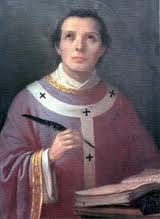
Anselm grew up on the breathtaking St. Bernard. His mother frequently reminded him of the Creator, and Anselm imagined God living among the Alps. In his mid-teens Anselm, quarreling with his father, entered a French monastery where he expanded his knowledge of God through study of Scripture. His keen mind and mature faith led to repeated calls from England, and eventually Anselm crossed the channel to become the archbishop of Canterbury.

Anselm won a name as a reformer because he attempted to end abuses such as the slave trade. He urged the holding of regular synods and, while h was archbishop, enforced clerical celibacy within his see. Through his learning and methodology, he became one of the creators of scholasticism. But his most notable gift to history has become known as the ontological proof for the existence of God.

Can the existence of God be proven? Anselm thought so. Modern philosophers and theologians disagree. However, it is Anselm’s argument, the ontological proof, which remains the slipperiest for modern logic to deal with and is though to be impossible to refute.

Anselm’s argument went something like this: When we discuss the existence of God, we define Him as a perfect being, greater than anything else that can be conceived. If God does not exist, then the name “God” refers to an imaginary being. This makes the definition of “God” contradictory, for to be real, to be living, to have power is greater than to be imaginary. It is clear that the word God cannot be discussed as defined if He does not exist, because He must be conceived as really existing in order for Him to be greater than anything else, for a God who does not exist is not greater than anything else.

In short, no philosopher can legitimately argue that God does not exist if he defines “God” as a perfect being that is greater than any that can be imagined; for to be perfect, God must have real existence. Those who acknowledge that He exists do not have a problem with self-contradiction when they affirm His existence, whereas those who deny His existence do. Since we can indeed raise the question of God’s existence and argue the point, then God must exist.

His life and teaching breathed of Christ. Belief in God, Anselm felt, was rational and logical, not a blind leap of mindless faith. The beauty of creation evidenced God’s existence; and furthermore, the very fact that our minds could imagine and infinite, loving God gave evidence that he existed. Anselm’s famous argument for God’s existence said that if God could exist in our minds, he could exist in reality.

But Anselm’s deepest writings were on the atonement, which he defined as Christ’s blood being a “satisfaction” made to God by the Lord Jesus. Love of Christ’s atonement brought Anselm comfort when he found himself in the crossfire between the pope and English king. The redheaded King William (Rufus the red) was profane and violent. He reputedly arose a worse man every morning, and went to bed a worse man every night. He enjoyed seeing animals and men tortured, while Anselm would go out of his way to save a hare.

As archbishop of Canterbury, the zealous Anselm continually struggled with King William for church rights. As a result of the struggle he was exiled. As a theologian, Anselm was most remembered for his book Why did God Become Man? In it he argued that each of us has run up such a debt of sin that there is no way we can repay God. Christ, as infinite God, has merit enough and plenty to spare for our debts. Anselm argued that we must first believe in order to understand. In modern terms we might say that truth only begins to come clear when one is committed to it: You cannot see around a bend in a trail unless you walk toward it.

I look to the hills! Where will I find my help?

It will come from the LORD,

Who created the heavens and the earth.

The LORD is your protector,

And he won’t go to sleep or let you stumble.

The protector of Israel doesn’t doze or ever get drowsy. – Psalm 121:1-4

On this day April 21, 1109 Anselm died surrounded by friends who placed his body in ashes on the floor. He was probably canonized in 1494, although there is debate as o whether this occurred at all. Anselm will be long remembered for his ontological proof for the existence of God, and his defense of the atonement and deity of Christ.

*Other Significant Events on April 21st in Church History:

1073: Pope Alexander II died. He became the first pope elected under the new electoral system by the college of cardinals.

1142: Peter Abelard died on this day His conceptualism (a way of describing how the mind knows ideas) tried to resolve difference between two schools of philosophy called Nominalism and Realism. But Abelard may better be remembered as the man who seduced his student Heloise than as a thinker who tried to ground theology in reason. He was often accused of heresy, but he remained one f the most popular teachers of his day and was cofounder of schools that were later incorporated into the University of Paris.

1621: William Bradford was chosen governor of Massachusetts when John Carver died.

1855: Dwight L. Moody was converted to Christianity. His Sunday school teacher Edward Kimball, said, “My plea was a very weak one, but I was sincere.” Moody became a powerful evangelist.

*Adapted from the April 21st entries in This Day In Christian History, edited by A Kenneth Curtis and Daniel Graves, Camp Hill, PA: Christian Publications & Robert J. Morgan. On This Day. Nashville: Thomas Nelson, 1997.

3 Principles To Remember Concerning Trials By George Sweeting

“Count it all joy, my brothers, when you meet trials of various kinds, for you know that the testing of your faith produces steadfastness. And let steadfastness have its full effect, that you may be perfect and complete, lacking in nothing.” – James 1:2-4

“When you pass through the waters, I will be with you; and through the rivers, they shall not overwhelm you; when you walk through fire you shall not be burned, and the flame shall not consume you. For I am the LORD your God, the Holy One of Israel, your Savior.” – Isaiah 43:2-3a

“In this you rejoice, though now for a little while, if necessary, you have been grieved by various trials, so that the tested genuineness of your faith–more precious than gold that perishes though it is tested by fire–may be found to result in praise and glory and honor at the revelation of Jesus Christ.” – 1 Peter 1:6-7

(1) Trials are a common experience of all of us. No one is immune. Trials are a part of living.

(2) Trials are transitory. Greek scholar C.B. Williams translates 1 Peter 1:6 this way: “In such a hope keep on rejoicing, although for a little while you must be sorrow-stricken with various trials.” Trials, though difficult, are “for a little while.”

(3) Trials are lessons that shouldn’t be wasted. Though not enjoyable or necessarily good in themselves, trials constitute a divine work for our ultimate good. Jesus never promised an easy journey, but He did promise a safe landing.

“God incarnate is the end of fear; and the heart that realizes that He is in the midst…will be quiet in the middle of alarm.” – F.B. Meyer

“Adversities do not make a man frail. They show what sort of man he is.” – Thomas A Kempis

“Sometimes your medicine bottle has on it, “Shake well before using.” That is what God has to do with some of His people. He has to shake them well before they are ever usable.” – Vance Havner

“We are always on the anvil; by trials God is shaping us for higher things.” H. W. Beecher

“Pressure produces! As we face the pressures of life, let it not just be a passive acceptance, but rather a positive cooperation with God’s purpose for our lives.” – George Sweeting


About the author: DR. GEORGE SWEETING is a former president and chancellor of the Moody Bible Institute He received a diploma from Moody Bible Institute, his B.A. from Gordon College, and his Doctor of Divinity from Gordon-Conwell Theological Seminary. Dr. Sweeting has served as a pastor in several churches, including Grace Church, Madison Avenue Baptist Church, and The Moody Church and also spent nine years traveling the world as an evangelist. Dr. Sweeting has written numerous books, including The Joys of Successful Aging, Too Soon to Quit, Lessons from the Life of Moody, and Don’t Doubt in the Dark. He is the host of the radio program Climbing Higher and a former columnist for Moody Magazine. The above three points were adapted from one of his sermons on the purpose of trials in a Christian’s life.