Book Review on D.A. Carson and Tim Keller’s “Gospel-Centered Ministry”

How The Gospel is Central to Everything: Review by David P. Craig

GCM Carson and Keller

One of the most exciting developments in the Twenty-first century has been the development of the Gospel Coalition. The Gospel Coalition provides blogs, audio and video resources, books, provides conferences, and a plethora of various helps for believers and churches that desire to be gospel centered and gospel driven.

In this brief introduction to the whats and whys of the Gospel Coalition – Tim Keller and D.A. Carson have written a wonderful primer of why this organization was established, and what makes it tick. It’s really an amazing phenomenon that has brought together pastors, missionaries, and lay workers from many different non-denominational and denominational evangelical churches and ministries.

The common denominator that makes up the Gospel Coalition is a biblically robust view that the Gospel from Genesis to Revelation is the central theme of the Bible and that all ministry endeavors are to be bathed in Gospel waters. The gospel is focuses on the necessity of the new birth, justification by faith alone, atonement through propitiation, the substitutionary death of Christ on the cross, and His resurrection from the dead. However, it’s more than that. The gospel is more than what’s tacked on at the end of the sermon, or a devotional that’s shared once a month before we partake of the Lord’s Supper.

Carson and Keller contend that all of ministry must operate from and lead to, and everything in-between is saturated by the Gospel. For example, in our preaching, they write, “Expository preaching fails if it does not tie every text, even the most discursive, into the great story of the gospel and mission of Jesus Christ.” Another example is in ministering to the poor, where they use the example of Jonathan Edwards’ ministry, “Edwards saw a concern for the poor that was rooted not only in a doctrine of creation and the imago Dei but also in the doctrine of the substitutionary death of Christ and justification by faith alone….We  should be willing to give our funds even to the ‘undeserving poor’ since we are the spiritually undeserving poor who receive the free mercy of God.”

The theological vision of the Gospel Coalition is huge in stating that the gospel should: “produce churches filled with winsome and theologically substantial preaching, dynamic evangelism and apologetics, and church growth and church planting. They will emphasize repentance, personal renewal, and holiness of life. At the same time, and in the same congregations, there will be an engagement with the social structures of ordinary people, and cultural engagement with art, business, scholarship, and government. There will be calls for radical Christian community in which all members share wealth and resources and make room for the poor and marginalized. These priorities will all mutually strengthen one another in each local church.”

Carson and Keller make a great case for why the gospel at the center of all of ministry brings balance to our churches, and how “everything is secured by Jesus’ death and resurrection; everything is empowered by the Spirit, whom God bequeaths; and how everything unfolds as God Himself has ordained.” Ultimately, “gospel-centered ministry is biblically mandated. It is the only ministry that simultaneously addresses human need as God sees it, reaches out in unbroken lines to gospel-ministry in other centuries and cultures, and makes central what Jesus himself establishes as central.”

This is a short read but theologically dense, insightful, and thought provoking. I am so grateful for the development of the Gospel Coalition and have and continue to be the beneficiary of their wonderful resources for the church and for the glory of Christ and His gospel. I can’t recommend Gospel Coalition resources like this booklet enough. It well definitely lead you to be more gospel saturated, and Christ focused in all aspects of your life.

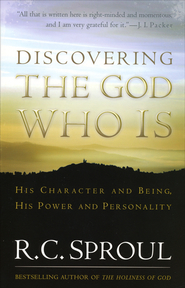
Book Review on R.C. Sproul’s “Discovering the God Who Is”

‘One Holy Passion” Book Review by David P. Craig

DTGWI Sproul

One of the highlights of my life as a follower of Christ has been learning from the teaching and writing ministry of Dr. R.C. Sproul. R.C. has an amazing ability to make complex truths simple and comprehensible. The first book that R.C. Sproul wrote on the character and nature of God was entitled “The Holiness of God.” I think that book and J.I. Packer’s “Knowing God” and A.W. Tozer’s “The Knowledge of the Holy” were the three best practical books on the character and nature of God in the twentieth century. “Discovering The God Who Is” is a reprint of Sproul’s second book on the character and nature of God originally entitled “One Holy Passion.”

In my opinion it is the finest book on the major attributes of God ever written for a general Christian audience. There is simply no grandeur theme in life than that of Theology Proper (the study of God). Sproul takes 12 attributes of God including His omnipotence, self-existence, omnipresence, omniscience – and 8 others – and gives penetrating insight and practical applications concerning each one. R.C. does a masterful job of heightening, illuminating, and glorifying our understanding of God. He has the ability to write with penetrating insight and skillfully stretch one’s thinking on the greatness of God, without delving into the abstract or obscure. He keeps you on the edge of your seat as you read about our amazing relational and yet totally transcendent God.

If you have never read a book on God’s attributes before this is a wonderful place to start. However, even if you’ve read Charnock’s massive treatise on the “Attributes of God” you will still be instructed and encouraged by Sproul’s practical theology. I have read this book several times over the years, and it is one of a few books I come to again and again. I think the reason I love this book so much is because Sproul has an ability to convey the realities of God’s nature in such an attractive way. He writes in a way that makes God warm up to you, and you to Him. Sproul is passionate about God and when he writes about God he stirs in the reader a passion for God as well. He conveys the “warmth” of God and the “Holy otherness” of God without watering down His immanence (nearness) or transcendence (otherness).

I think Sproul and C.S. Lewis are similar in this fashion. They have a way of taking you deep and into complex waters of truth, without sinking you. You always feel safe and grounded while they take you into the depths of reality. There are no greater depths to delve into, than the depths of God’s nature and character. R.C. is a wise, trustworthy, and safe guide who takes you into the deep waters of truth where you will find the infinite treasures of a Holy God, and he will help you to develop your own holy passion to know Him and to make Him known.

Book Review on E.K. Bailey’s “The Preacher and the Prostitute”

God Loves The Unlovely – Book Review by David P. Craig

TPATP Bailey

One of the most amazing stories in the Bible is where God asks his prophet Hosea to marry the prostitute Gomer. In this first person narrative story of Hosea, Bailey does a masterful job of bringing this theologically rich story to life in the 21st century. Bailey does a wonderful job of telling the story from Hosea’s perspective as he involves the reader in his thought process as he wrestles with God’s sovereignty and trying to make sense on his own life in light of it.

At one point Hosea asks the question “What glory would you get from a prophet marrying a prostitute?” Hosea says to God, “What glory would You get when there is a union between piety and promiscuity? What glory would You get when there is confluence of the devilish and the divine? What glory would You get from joining the sacred and the secular? What glory would You get from an intercourse of the celestial and the terrestrial? What glory would You get from an allegiance between the horizontal and the perpendicular, from a coupling of the heavenly and the hellish?”

Hosea comes to realize his own sinfulness before a holy God, “As I walked in the illuminating light of obedience, God quickly began to unravel the seemingly nonsensical nature of this paradoxical command. God told me that this improbable partnership that wedded the prophet and the prostitute was a dramatization of the extraordinary reality that God loves the unlovely.”

Hosea continues, “God chose Gomer so that He could point to one of the most debased and despicable of all human activities to show us that His unfailing love is never ending and the reach of His love has no limits. God would use the life of an unfaithful wife to demonstrate the reality that you can break God’s heart byt you can never break His love.”

The narrator goes on to demonstrate the beauty of the gospel. “The good news of the Gospel that your New Testament declares is that no Gomer, regardless how godless her (or his) sin, can fall so deep and hard that they fall outside the realms and reach of God’s love. Hosea and Gomer represent Israel and her unfaithfulness to God. God uses Hosea and Gomer as a real life analogy of sinners and how God can forgive us through a mediator – Jesus Christ.

Hosea and Gomer is a story of love, adultery, betrayal, forgiveness and restoration. It leads to the big story of the Bible – our unfaithfulness and betrayal toward God, and yet how He sent His son Jesus to pay for our sins and purchase our redemption as Hosea did with Gomer. E.K. Bailey does a wonderful job tying in our story with the story of the Bible and makes you marvel at the mercy and grace of a God who gives us second chances and never gives up on us because of His everlasting love.

Book Review on Will Metzger’s “Tell The Truth”

How To Share the Gospel in Truth and with Love: Book Review by David P. Craig

TTT Metzger

Tell the Truth fills a huge void in the literature on the subject of evangelism – sharing the good news of Jesus Christ with others. Most books on evangelism focus on techniques and methods. Metzger on the other hand focuses primarily on developing a theology of evangelism. Metzger does a phenomenal job of tackling the question: What truth or key truths are essential to the gospel message? After spending time on the key elements of doctrinal truth of our message (understanding the gospel) – Metzger gives abundant examples of how to share the truth/s of the gospel message with others.

In this thorough handbook on evangelism Metzger addresses the following issues with great theological depth, biblical support and commentary, and practical applications: The importance of doctrine and theology in evangelism; Distinguishing our role from God’s role in evangelism; Man-centered verses God-centered methods in evangelism; The five primary points of evangelism; Myths and facts about God’s grace; God’s sovereignty and our responsibility; How worship is the motivation for evangelism; Challenges for evangelism amid pluralism; How to communicate the gospel personally with different types of people; and how to bloom with the gospel where you are planted.

This book also contains a plethora of resources for training material on every aspect of evangelism including: How to prepare your testimony; How to develop a theological methodology of evangelism; How to say what you mean; How to ask good questions; Doing friendship evangelism; Questions non-Christians ask; Sharing the gospel using stories; and many other helpful templates, Charts, outlines, guides, questions to ask, and so forth. There is also a schedule for doing a God-centered evangelism training seminar in your church, school, or small group; and a study guide containing twelve sessions for individuals or groups.

I believe Metzger’s book is arguably the best resource on evangelism available today from a God-centered perspective. It is the equivalent of a seminary course in evangelism and is a book that you will come to again and again for its depth of insight and practical wisdom as you seek to better understand and declare the good news of the gospel for life. I am so grateful for this exceptional resource that guides the beginner or seasoned veteran in “speaking the truth in love.”

Book Review on Tim Keller’s The Wedding Party

Booklet Review By David P. Craig: Jesus Knows How To Party!

TWP Keller

The Wedding Party is the fourth essay in the Encounters with Jesus Series – based on several lectures given to students by Tim Keller at Oxford Town Hall, London, in 2012. In the previous three essays Keller has tackled some of the most important questions one can ever ask. In this essay Keller tackles the question: “What did Jesus come to do?” He answers this question by giving us an exposition of Jesus’ first recorded miracle, or sign at a wedding feast in Cana as recorded in chapter two of the Gospel of John.

The miracle of Jesus’ turning water into wine was ultimately a symbol or a signifier of something greater to come. Keller masterfully gives three future signs that Jesus’ miracle at the wedding banquet point to. There are three symbols or types in this wedding encounter that all ultimately point to our future with Christ. This story is a picture of how Jesus enjoyed the joy at the wedding feast by providing more wine, and yet how He became our substitute on the cross by receiving the cup of God’s wrath that we deserve so that we can one day receive the coming joy provided by Him.

Keller unfolds the big story of all of the Scriptures in this one story from John 2. He shows our need to be reconciled to God, how Jesus provides what we need, and how Jesus is the provider of the feast that we all ultimately long for. We can face anything in life knowing what awaits us at the Lamb’s party that is to come in the Kingdom of Heaven.

Book Review on Tim Keller’s The Grieving Sisters

Two Grieving Sisters Encounter the Vulnerable God: Book Review by David P. Craig

TGS Keller

This booklet is the third in a series of essays based on some lectures that Tim Keller gave to students in Oxford, England at the Oxford Town Hall, England in 2012. This essay is an exposition of Jesus’ encounter with May and Martha and the death and resurrection of their brother Lazarus in John 11.

The encounters that Jesus has with Martha and Mary demonstrate both the supreme power of Jesus in His Divinity, and the humble humanity of Jesus in his weakness displayed in His grief over the death of Lazarus. Jesus is portrayed in this story as both fully God, and fully man simultaneously. Jesus gives Martha and Mary exactly what they need in their extreme loss over their brother – He is empathetic toward their suffering and suffers with them, and He is omnipotent and reveals His compassion in raising Lazarus from the dead.

Tim Keller shows in this short booklet why it was necessary for Jesus to take on flesh in order to save us. He needed to become powerless, and vulnerable in order to go to the cross to obtain our salvation. He writes, “The founders of every other major religion said, ‘I’m a prophet who shows you how to find God,’ but Jesus taught, ‘I’m God, come to find you.'”

We ultimately have no reason to despair because Jesus is the “resurrection and the life.” He is able to sympathize with our weaknesses because He became weak unto death, and He is able to grant us eternal life because He is able to raise the dead. What Keller drives home in this exposition of John 11 was how He loved Mary, Martha, and Lazarus – but also how Jesus “became human, mortal, vulnerable, killable–all out of love for us.”

I would recommend this booklet especially for those who have lost loved ones, or are experiencing great suffering. Keller’s essay will give you hope in your grief and show you how to be comforted by the sacrificial love of Jesus. The gospel is powerful for believers to strengthen their faith, and for non-believers to begin their journey of faith. Tim Keller addresses the man or woman with faith, as well as the doubting and grieving with compassion, guidance, and compellingly presents how in the Lord Jesus Christ we can find our satisfaction and abundant joy.

Book Review on John Piper’s Risk is Right

Risk Makes Sense for the Christian – A Book Review on “Risk is Right” by David P. Craig

RIR Piper

I have to own up to the fact that I own every book that John Piper has written and yet find that I have a hard time reading most of his books. He writes with such depth and verbosity that I often have started his books and left many of them unfinished. I do better with his devotionals and shorter works like this one. This is a very short book that can be read by slow readers like me in less than four hours (I read at the speed of the spoken word – due to 3 detached retinas in my right eye in the last several months). One of the common denominators that make Piper’s books and preaching so compelling is that he is a man who walks the talk. John Piper has addressed virtually all of the so-called “Politically Correct” issues of the day like abortion, homosexuality, racism, and numerous other issues head on in his ministry and has never veered to the left or to the right to teach, preach, and write on the whole counsel of God no matter what the cost or consequences.

If anyone has earned the right to speak on “risk” in the Christian community its John Piper. He owns up to his own sin and imperfections and always exults in the cross, forgiveness of sins, and God’s glorious grace. This book is to sanctification what Pascal’s wager is to justification. The gist of Piper’s writing in this book is that everyone is risking their life in one way or another. Therefore, the greatest use of one’s life is to risk it for and in Christ. The greatest risk of all is to not live for Christ – that is a tragic risk that is not worth taking.

In the Introduction David Platt writes,

“This [risk] is the picture of Jesus in the gospel. He is something–someone–worth losing for. When we really believe this, then risking everything we are and everything we have, to know and obey Christ is no longer a matter of sacrifice. It’s just common sense. To let go of the pursuits, possessions, pleasures, safety, and security of this world in order to follow Jesus wherever he leads, no matter what it costs, is not sacrificial as much as it is smart. In the words of Jim Elliott, “He is no fool who gives what he cannot keep to gain what he cannot lost.”

The truth of the matter is that Jesus risked his own relationship with the Father and the Spirit in going to the cross. He was totally forsaken so that we could be forgiven and accepted by the Father. However, He did this for the joy that was set before Him (Hebrews 12:2). What makes this book powerful is that John Piper has modeled a life of risk – in his faithfulness to God’s Word; entrusting his finances totally to God (he doesn’t earn a penny from his writings), and in his sold out total dedication to his tireless endeavors of spreading the gospel for the glory of God – so that everything he says about risk carries the weight of his own integrity (1 Timothy 4:16).

Giving examples from both the Old and New Testaments on risk, and honing in on the greatest risk taker of them all – the Lord Jesus Christ – Piper does an excellent job of tackling the objections we all have to taking risks. He then demonstrates the tremendous joy and how ironically low the risk actually is for the life of the Christian.  When we fully entrust our lives to living in faith on the promises of God in Christ there is ultimately nothing to lose, but everything to gain. In Piper-esque fashion at the end of the book one is left being satisfied in Christ and in the glory of God and with a desire and passion to spread the gospel among the nations so that they like us may live to worship Him in all His splendor. Piper motivates and stirs up a passion for Christ and His gospel in the soul like few others – and for that this book is definitely recommended and worth your time, mediation, and application of the truths explicated.

How To Shape Your Life With Intentionality by Dr. David P. Craig

A TEMPLATE FOR SHAPING MY LIFE WITH INTENTIONALITY

Developed by Dr. David Craig – Pastor and Life Coach – Vertical Living Ministries

prayer in field w sunset

 “So whether you eat or drink, or whatever you do. Do all to the glory of God.” – 1 Corinthians 10:31

Head –            Convictions                          What do I need to Know?                         Personal

Heart –       Communication                         What do I need to Say/Convey?               Relational

Hands –       Contribution                             What do I need to Do?                            Practical

For each of the nine areas below set goals in light of the above 3 questions: What will I study or need to know about_____; What will I feel or communicate about _____; and what will I do or what actions shall I take about ______. Each goal is meant to turn what you value into an intentional habit that will make a great difference cumulatively in others lives, your own life, and for the sake of God’s ultimate glory.

 Nine Primary Areas of Living Intentionally:

(1) SpirituallyYour Relationship to God through The Lordship of Jesus Christ. Psalm 37:3-7; 1 Peter 1:3-11; 2 Tim. 2:15; 1 Thess. 5:17

(2) MarriageYour triune covenantal relationship with Christ at the center. Gen. 2:18-25; 1 Cor. 7:1-7; 13:1-8; Eph. 5:22-31

(3) Family/ParentingHow to be a Christ-centered family and raise Children that love Jesus above all else. Deut. 6:1-9; Proverbs; Eph. 6:1-4; 1 Tim. 5:8

(4) VocationallyYour Work in the World and with the Church. Genesis 2:15; Colossians 3:23-25; 1 Cor. 3:5-23

(5) HealthTaking care of the Temple that God will use on this earth until the day of your final glorification. 1 Tim. 4:7-8; 1 Cor. 6:19-20; 10:31; Philippians 4:4-9

(6) FriendshipYour connections and building bridges with others as you reflect Christ in your community. Matt. 5:13-16; Gal. 6:9-10; Eph. 5:15-18; Col. 4:5-6; Lk. 6:27-31

(7) FinanciallyYour stewardship of God’s resources. Matt. 6:19-24; 1 Tim. 6:6-11, 17-19; 1 Cor. 16:1; 2 Cor. 9:6-8

(8) MentoringYour investing in Others Using your Unique Skills, Gifting, Talents, and Personality. Prov. 27:17; 2 Tim. 2:2; Titus 2:4; 1 Thess. 5:11

(9) DiscipleshipYour Investing in the Spiritual Growth of other followers and would-be followers of Christ. Lk. 6:40; Matt. 28:19-20; 1 Tim. 4:16; 2 Tim. 3:10


It’s Friday, But Sunday is Coming! By Dr. David P. Craig

“Thank God for Sunday!”

I think the first time I ever heard the phrase, “It’s Friday, but Sunday is Coming!” was from a message that Tony Campolo delivered in Chapel in the mid 1980’s at Multnomah School of the Bible (Now called Multnomah University in Portland, Oregon).

Yesterday, I had a “procedure” a nicer and more sweet sounding term than “surgery” at a hospital in Irvine, CA. I was recently diagnosed with Cancer – Squamous Cell Carcinoma – that started on the back of my tongue and has resulted in a huge mass the size of a lemon in my neck.

I had a “G-tube” inserted in my stomach because doctors and former patients I’ve consulted with say that weeks 3-6 of radiation and chemotherapy will be “brutal” – my throat will hurt “200 times worse than strep throat” (Doctor’s exact words). Also, that I will not be able to eat or drink anything orally during that time because of the pain. I recently talked with a friend of a friend who had the exact same cancer two years ago (and by God’s grace is cancer free now), and he lost 80 pounds during treatment and had the G-tube “procedure” in a weakened state mid-way through treatment. His advice was “get the G-tube NOW!”

So yesterday – with a tube in my nose that went to my stomach and feeling like I was battling in a kick boxing match with Chuck Norris and Jackie Chan I was thinking of the aforementioned phrase by Tony Campolo, “It’s Friday, but Sunday is coming.”

During surgery – I was awake during the “procedure” and in a lot of pain – I tried quoting Bible verses and singing hymns (I can never remember the new songs – only classics like “And Can It Be; “How Great Thou Art”; and “Amazing Grace”); and trying to take my focus off of the pain. Quoting verses or hymns just didn’t seem to work – I couldn’t concentrate on anything other than the pain.

So the Holy Spirit  began take my focus off of my pain and on to Jesus – what He did for me on the cross 2000 years ago. I visualized the torture He endured – the lashes; the insults; the crown of thorns; suffocating; the blood, sweat, and tears. Ultimately being unrecognizable, forsaken, and dying for my sins. He was perfect and never did anything wrong – and yet He volunteered to endure more torture than I could imagine. I endured what seemed like torture for 45 minutes – and now its done. I didn’t accomplish any atoning work for anyone. Yet His righteousness was imputed to me, and His voluntary sacrifice in payment for my sin were absolutely necessary to make me right with a Holy and perfect God.

Jesus was crucified on a Friday, but rose again on Sunday. I can’t even come close to comparing my “torture” with His. However, I do have a deeper appreciation for what He endured in His 33 years on earth: facing temptation without sinning; completely obeying God the Father in every way; and becoming the “Lamb that was slain” so that He could be my Savior and Lord.

I don’t know what will become of my cancer, I hope and pray that God will take it away. One thing I do know, is that He has already wiped away my sin, and that everything He allows is for my good and ultimately for the Glory of His Son.  I hope and pray that God will use my cancer for the furtherance of the glorious Gospel. However, I know that even if I’m silent the rocks will cry out of His glorious works. I know that I am weak and frail and but a mere sinful vessel. I also know that Jesus was weak, suffered, and died in my place, and rose from the dead on Sunday. He is so strong that no one and nothing can defeat Him. Today is Friday. But Sunday is coming! Last time He came as a humble servant. Next time He comes as King!

Today may be a tough day for you my friend. But remember that anyone who comes to Him will not be cast away. Our confession of sin in exchange for His righteousness. We can never earn our salvation – but Jesus has earned the right to be trusted and believed in unto salvation. “The righteous for the unrighteous, to bring us to God.”

Today, I’m doing better, but will continue down a rough road with radiation and chemotherapy ahead. However, I am grateful that because of the righteous life, death, burial, and resurrection of my Lord and Savior Jesus Christ, that no matter how many “Friday’s” I will have in this trial – that because of Jesus finished work on the cross, my future hope is that “Sunday is coming!”

Some Scriptures God The Holy Spirit Used To Comfort Me in my Pain:

“My God, my God, why have you forsaken me? Why are you so far from saving me, from the words of my groaning?” – Psalm 22:1

“For he grew up before him like a young plant, and like a root out of dry ground; he had no form or majesty that we should look at him, and no beauty that we should desire him. He was despised and rejected by men; a man of sorrows, and acquainted with grief; and as one from whom men hide their faces he was despised, and we esteemed him not. Surely he has borne our griefs and carried our sorrows; yet we esteemed him stricken, smitten by God, and afflicted. But he was pierced for our transgressions; he was crushed for our iniquities; upon him was the chastisement that brought us peace, and with his wounds we are healed. All we like sheep have gone astray; we have turned—every one—to his own way; and the Lord has laid on him the iniquity of us all. He was oppressed, and he was afflicted, yet he opened not his mouth; like a lamb that is led to the slaughter, and like a sheep that before its shearers is silent, so he opened not his mouth. – Isaiah 53:2-7

Yet it was the will of the Lord to crush him; he has put him to grief; when his soul makes an offering for guilt, he shall see his offspring; he shall prolong his days; the will of the Lord shall prosper in his hand. Out of the anguish of his soul he shall see and be satisfied; by his knowledge shall the righteous one, my servant, make many to be accounted righteous, and he shall bear their iniquities. Therefore I will divide him a portion with the many, and he shall divide the spoil with the strong, because he poured out his soul to death and was numbered with the transgressors; yet he bore the sin of many, and makes intercession for the transgressors. – Isaiah 53:10-12

Therefore, we are ambassadors for Christ, God making his appeal through us. We implore you on behalf of Christ, be reconciled to God. For our sake he made him to be sin who knew no sin, so that in him we might become the righteousness of God. – 2 Corinthians 5:20-21

Since then we have a great high priest who has passed through the heavens, Jesus, the Son of God, let us hold fast our confession. For we do not have a high priest who is unable to sympathize with our weaknesses, but one who in every respect has been tempted as we are, yet without sin. Let us then with confidence draw near to the throne of grace, that we may receive mercy and find grace to help in time of need. – Hebrews 4:14-16

For to this you have been called, because Christ also suffered for you, leaving you an example, so that you might follow in his steps. He committed no sin, neither was deceit found in his mouth. When he was reviled, he did not revile in return; when he suffered, he did not threaten, but continued entrusting himself to him who judges justly. He himself bore our sins in his body on the tree, that we might die to sin and live to righteousness. By his wounds you have been healed. For you were straying like sheep, but have now returned to the Shepherd and Overseer of your souls. – 1 Peter 2:21-25

For it is better to suffer for doing good, if that should be God’s will, than for doing evil. For Christ also suffered once for sins, the righteous for the unrighteous, that he might bring us to God, being put to death in the flesh but made alive in the spirit. – 1 Peter 3:17-18

Beloved, do not be surprised at the fiery trial when it comes upon you to test you, as though something strange were happening to you. But rejoice insofar as you share Christ’s sufferings, that you may also rejoice and be glad when his glory is revealed…Yet if anyone suffers as a Christian, let him not be ashamed, but let him glorify God in that name [the name of Christ]. – 1 Peter 4:12-13, 16

Since therefore Christ suffered in the flesh, arm yourselves with the same way of thinking, for whoever has suffered in the flesh has ceased from sin, so as to live for the rest of the time in the flesh no longer for human passions but for the will of God. – 1 Peter 4:1-2

My little children, I am writing these things to you so that you may not sin. But if anyone does sin, we have an advocate with the Father, Jesus Christ the righteous. He is the propitiation for our sins, and not for ours only but also for the sins of the whole world. 1 John 2:1-2

The sting of death is sin, and the power of sin is the law. But thanks be to God, who gives us the victory through our Lord Jesus Christ. Therefore, my beloved brothers, be steadfast, immovable, always abounding in the work of the Lord, knowing that in the Lord your labor is not in vain. – 1 Corinthians 15:56-58

6 Reasons I’m Grateful for My Cancer by Dr. David P. Craig

A Positive Acronym for C.A.N.C.E.R.

C – is for Christ – Jesus Christ chose to be my cancer. He chose to be the spiritual good cells I needed to make me right with the Father – his righteousness in exchange for my sin (justification); and He chose to be the bad cells (cancer cells – my sin) that were rightly punished by a Holy God (propitiation). In short Jesus took my chemotherapy (His Goodness killed my idolatrous religiosity and evil thoughts and deeds) on Himself so I can have the righteousness of God imputed to my account.

2 Corinthians 5:21, “For our sake he made him to be sin (cancerous cells) who knew no sin (good and perfect cells), so that in him we might become the righteousness of God.

A – is for Attitude – I truly believe that there are too many benefits to list in regards to having cancer. However, maybe the best benefit is that I know God is sovereign and good. He has demonstrated this time and again throughout my life and all throughout the Scriptures. I know two big things about God – He’s sovereign and has a plan in my cancer; and secondly He is always good. I know that cancer is evil and that the cancer wants to kill me. I also know that to God cancer is evil and He will use it for His purpose and for my good and the good of others.

Genesis 50:20, “As for you, you meant evil (cancer) against me, but God meant it (cancer) for good, to bring it about that many people should be kept alive, as they are today.”

N – is for New Focus – The Christian life is a continuous battle against the world, the flesh, and the devil. I like to illustrate my cancer this way – If you ever played the Atari Classic video game “Asteroids,” you have these big asteroids coming at you and you are in a little space ship that moves about killing the asteroids and they break up into more asteroids coming at you quickly until you kill them all. I feel like with cancer, my past concerns of finding work, overcoming financial setbacks, and so forth were like a bunch of little asteroids coming at me. Now I have the ability to focus on a big asteroid (cancer) coming at me slowly. However, I have a God that’s bigger and in control of how He chooses to use that cancer for His glory. He can and will destroy it in His perfect time. My job right now is to seek His glory and it’s easier to hone in and focus on the battle with the cancer.

1 Corinthians 10:31, “So, whether you eat or drink, or whatever you do (fight cancer), do all to the glory of God.”

C – is for Community – I am so grateful for the body of Christ and the community of cancer over comers and those in the fight with me. I have never experienced such care and concern from others and the outpouring of love from family and friends who are going to battle for and with me in prayer.

James 5:15, “And the prayer of faith will save the one who is sick (with cancer), and the Lord will raise him up. And if he has committed sins, he will be forgiven.”

E – is for Encouragement – I am daily receiving cards, emails, and calls that display an outpouring of camaraderie and the urge to be courageous in my plight. I am spurred on to want to live well for my Lord and Savior and do well for His glory while I have breath.

Hebrews 6:10 and 10:23-25, “For God is not unjust so as to overlook your work and the love that you have shown for his name in serving the saints, as you still do…Let us hold fast the confession of our hope without wavering, for he who promised is faithful. And let us consider how to stir up one another to love and good works, not neglecting to meet together, as is the habit of some, but encouraging one another, and all the more as you see the Day drawing near.”

R – is for Repentance and Restoration. I believe that I am a huge idolater. God is continually bringing to mind things that I’ve put before Him – even good things like food and family. However, with cancer I have no idols that can save me. Only the love of God can deliver me from fear. Only the worship of God satisfies my cravings. Only the promises of God give me hope. Only the Gospel gives me pleasure all day long. Only the Word of God sustains me and gives me courage. Only the Holy Spirit convicts me of my sin and comforts and counsels me. I am a sinner in desperate need of God’s grace and endless pleasures that in He alone satisfy my soul. I repent of my worthless and powerless idolatries and I find my satisfaction in Christ my Lord and Savior – my Healer and restorer! He will make me strong when I am weak and He will use my total dependence on Him to point others to His glory in Christ!

Acts 3:19, “Repent therefore, and turn again, that your sins may be blotted out.”

Hebrews 12:11-13, “Being disciplined isn’t enjoyable while it’s happening – it hurts! But afterwards we can see the result, a quiet growth in grace and character. So take a new grip with your tired hands, stand firm on your shaky legs, and mark out a straight, smooth path for your feet so that those who follow you, though weak and lame, will not fall and hurt themselves, but become STRONG.”  (Living Translation)

Jeremiah 30:17a, “For I will restore health to you, and your wounds I will heal, declares the LORD.”

*I am not taking these verses and exegeting and interpreting them in context – that’s not my purpose here. I’m merely applying them to my circumstances. I believe that God speaks to us corporately and individually – and I take comfort in and through the Holy Spirit through the various amazing applications of the Gospel found throughout the Scriptures daily!