 How To Seek His Kingdom and Do God’s Will
Right off the bat I have to say that one of the highlights of my academic career was taking a class from the author of this book on “Proverbs” about a decade ago. I was inspired to read everything Bruce Waltke writes, not only because he is one of the finest Hebrew Scholars and teachers of the Old Testament in the world, but also because he is a humble bible scholar who exudes the fruit of the Spirit as Paul describes it in Galatians 5:22-23. I will never forget his kindness shown to me as I picked his brain over theological and ministry issues I was wrestling with at the time, and how he patiently and wisely counseled me. I will forever be indebted to his wise advise, and believe that his counsel will continue to pay many dividends for others – as much of what he shared with me in that class on Proverbs are principles for the many who will read and apply in his very helpful book on decision making for followers of Jesus.
The Book is simply divided up into two parts. Part one is the shorter of the two parts and consists of chapters on: 1) Is Finding God’s Will a Biblical Idea? 2) How Pagans Divine the Will of God; and 3) God’s Will in the Old Testament. In summary Waltke does an excellent job of demonstrating that much of what passes for “finding” God’s will is sheer laziness and what the Bible condemns as the practice of divination. Waltke writes, “When we seek to ‘find’ God’s will, we are attempting to discover hidden knowledge by supernatural activity. If we are going to find his will on one specific choice, we will have to penetrate the divine mind to get his decision. ‘Finding’ in this sense is really a form of divination.”
Dr. Waltke gives a compelling case for Christians thinking in terms that are more Biblical – instead of trying to find God’s specific will – “Far too many Christians rely on faulty logic to divine the will of God. Their thinking goes like this: ‘God has a plan, and therefore He intends that I find it.’ That is a non sequitur, a conclusion that cannot logically follow the premise. Simply because God has a plan does not mean that He necessarily has any intention of sharing it with you; as a matter of fact the message of Job is in part that the Lord in His sovereignty may allow terrible things to happen to you, and you may never know why.”
Rather humorously (yet on a serious note related to how faith is manifested in a variety of ways for all believers) he continues, “Instructively, the outcomes of faith for the first three heroes of faith celebrated in Hebrews 11 vary considerably. Abel believed God, and he died; Enoch believed God, and he did not die; Noah believed God, and everybody else died! The only thing they all had in common is that they believed God and it pleased Him.”
Practically, Waltke states, “So when I wonder about what job offer to take, I don’t go through a divination process to discover the hidden message of God. Instead I examine how God has called me to live my life, what my motives are, what he has given me a heart for, where I am in my walk with Christ, and what God is saying to me through His Word and His people.”
He carefully evaluates many of the instances of Divine guidance recorded in the Old Testament and then shows what does, and does not carry over into the New Covenant. Which brings us to part two.
In part two Dr. Waltke breaks down how God guides us first through His Word, then through heartfelt desires, followed by the wise counsel of others, through our circumstances, and ultimately why we must rely on sound judgment based on all these previous factors.
Dr. Waltke says there are five primary factors to consider when seeking to be obedient and guided by the Holy Spirit in our decision making process:
1) Make your decision in light of Scripture (our decision should be affirmed by and never contradict the teaching of the Bible – e.g. – Acts 15; Acts 13:46-47; Malachi 2:16 cf. with Matthew 5:32 & 1 Corinthians 7 with Galatians 2:14).
2) Make your decision in light of your giftedness (In other words seek to operate in areas of your God-given strengths – e.g. – Acts 6:2-3; Rom. 12:3).
3) Make your decision according to your ability (“Know who you are. Evaluate your abilities and talents. Don’t try to be what you’re not, because if you do you will live in a constant state of anxiety” – e.g. – Moses in Deuteronomy 34:10-12).
4) Make your decision according to your circumstances (e.g. – Paul in Acts 16 & 1 Cor. 16:5-9 – he based his decisions on sound judgment in light of the circumstances he was in).
5) Make your decision according to an Overall Strategy (e.g. – Paul in 2 Cor. 1:15-18, 23-24; 2:1).
The essence of Waltke’s thesis is summarized close to the end of the book where he writes, “He [God] never calls us in the New Testament to ‘seek His will,’ but rather to seek His kingdom and do His will. We ought to stamp out of our vocabulary the nonbiblical and misleading expression ‘finding God’s will.’ Rather than talk about ‘seeking the will of God,’ we ought to speak of following the guidance of God. This is not just semantically different, since He is calling us to draw close to Himself and to live holy lives. God’s will for us is that we be holy; there is no mystery to His will. As for questions about changing jobs, getting married, going to school, and the like, finding answers will require growing close to God [author’s emphasis in italics].”
Overall, I highly recommend this book for its theological and biblical foundations, it’s dismantling of the notion of divining God’s secretive will for us, it’s emphasis on closeness and intimacy with God as a key to His guidance, and for the excellent illustrations, practical applications, and how Dr. Waltke shares how God guides biblical characters and modern followers of Christ today throughout the book.
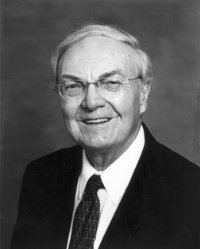 *Bruce K. Waltke (PhD, Dallas Theological Seminary; PhD, Harvard Divinity School), acknowledged to be one of the outstanding contemporary Old Testament scholars, is professor of Old Testament at Reformed Theological Seminary in Orlando, Florida, and professor emeritus of biblical studies at Regent College in Vancouver. He has authored and coauthored numerous books, commentaries, and articles, and contributed to dictionaries and encyclopedias.

 Good Pastoral Wisdom For Biblical Decision Making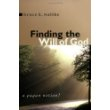

 LifeCoach4God