What Can We Learn About the Resurrection of Jesus from the Life of Job? By Dr. James M. Boice

 *“He Lives!”

I do not know if you have had the experience of gaining an insight or receiving a revelation so important that you wished it could be preserved forever. If you have, or if you have even experienced that in a partial way, you will understand the tone in which Job spoke his most widely quoted lines, beginning, I know my Redeemer lives.” We hear something said in a particularly vivid way, and we say, “If I could just remember that!” Or we have an insight and say, “If I could just get that written down so I won’t forget it!”

That was the feeling that Job experienced. He had suffered a great deal, first by the loss of his possessions, then by the loss of his ten children and eventually his own health. His friends came to comfort but actually abused him, charging that his misfortunes were the result of some particularly outstanding sin in his life. In the midst of one reply Job gave vent to the insight to which I am referring.

Job perceived that his story was not being told completely in this life and that a later day would vindicate him. In fact, he perceived that there was an individual who would vindicate him, even Jesus Christ, whom Job calls “my Redeemer.” This individual would stand on the earth in some future day, would raise Job from death, and would enable him to see God.

Can you imagine Job’s excitement as he gave expression to this hope? There were many who shared it in Job’s day; few understood it. So Job said that he wished his words might be preserved. “Oh, that my words were recorded, that they were written on a scroll, that they were inscribed with an iron tool on lead, or engraved in rock forever!” (Job 19:23-24). Fortunately for us, Job’s wish was fulfilled. Not only were his words preserved in a book; they have been preserved in the Book of books, the Bible.

A Kinsman-Redeemer

“I know that my Redeemer lives, and that in the end he will stand upon the earth” (Job 19:25).

The first thing we shall look at in Job’s statement is its key word: “Redeemer.” This is a rich and particularly illuminating term. In Hebrew the word is goel, which refers to a relative who performs the office of a redeemer for his kin. We must visualize a situation in which a Hebrew has lost his inheritance through debt. He has mortgaged his estate and, because of a lack of money to meet the debt, is about to lose it. This happened in the case of Naomi and Ruth so that, although they had once possessed the land, they had become impoverished. In such a situation was the goel’s duty, as the next of kin, to buy the inheritance; that is to pay the mortgage and restore the land to his relative. Boaz did that for Ruth.

That custom is what Job refers to in his expression of faith in a divine Redeemer, and it is why this passage must refer to Job’s own resurrection. As Job spoke those words he was in a dire physical condition. He had lost his family and health. He must have imagined that he was about to lose his life, too. He would die. Worms would destroy his body. But that was not the end of the story. For his body, like the land, was his inheritance; and there is one who will redeem it for him. Years may go by, but at the latter day the Redeemer will stand upon the earth and will perform the office of a goel in raising his body. He will bring Job into the presence of God.

I recognize that there are different ways of translating the phrase “Yet in my flesh I will see God” (19:26). Some versions read, “Yet without my flesh.” But those fail to make full sense of the passage. What is redeemed if it is not Job’s body? Not the soul or the spirit certainly, for those are never forfeited. And not Job’s physical possessions, for the passage is not even considering them. It is the body that will be redeemed. Consequently, it is in this body and with his own physical eyes that Job expects to see God.

A second duty of the goel was to redeem by power, if that should be necessary. Abraham performed this duty when Lot had been captured by the four kings who made war against the king of Sodom and his allies. Abraham armed his household, pursued the four kings and their prisoners, and then, attacking by night, recovered both prisoners and spoil. That is what the Lord Jesus Christ did, was it not? He attacked in power—we speak rightly of resurrection power—and broke death’s hold.

Finally, the goal had a duty to avenge a death. Imagine that an Israelite has been attacked and is dying. The goal learns who has struck his relative. He snatches up his own sword and dashes off to avenge his own sword and dashes off to avenge the murder. Our Christ is likewise our avenger. We are dying people, but we have a Redeemer. We read of Him: “For he must reign until he has put all his enemies under his feet. The last enemy to be destroyed is death…Where, O death, is your victory? Where, O death, is your sting? The sting of death is sin, and the power of sin is the law. But thanks be to God! He gives us the victory through our Lord Jesus Christ” (1 Corinthians 15:25-26, 55-57).

A Living Redeemer

As we think about his words in greater detail, we discover next that Job took confidence, not only in the fact that he had a Redeemer, but that he had a living Redeemer. That is important, because a redeemer must be living to perform his function.

If Job had been able to say merely that he had a Redeemer, that would have been wonderful. If he could have said further that the Redeemer of whom he was speaking was the Christ, that would have been even more wonderful. To have known such a one, to have been related to him, to have been able to look back to what he had done—all that would have been both pleasant and comforting. But so far as the present need was concerned it would have been inadequate. A person in that position could say, “I had a Redeemer, and I value that.” But he would undoubtedly add, “But I wish I had him now.” A redeemer must be living if he is to buy back the estate, recover the prisoners, and defeat the enemy.

Job does not say that he had a Redeemer. He says that he has a Redeemer and he is living. We too have a living Redeemer, the same Redeemer, who is Jesus.

That is the thrust of our testimony on Easter Sunday. And indeed on every other Lord’s Day. We testify that Jesus rose from the dead and that he ever lives to help all who call upon him. The evidences for this are overwhelming. There is the evidence of the narratives themselves. They are quite evidently four separate and independent accounts, for if they were not, there would not be so many apparent discrepancies—the time at which the women went to the tomb, the number of angels and so on. At the same time, it is also obvious that there is a deep harmony among them—not a superficial harmony but rather a detailed harmony that is increasingly evident as the accounts are analyzed. In fact, the situation is precisely what we would expect if the accounts are four independent records of those who were eyewitnesses.

One writer summarized the evidence like this:

It is plain that these accounts must be either a record of facts that actually occurred, or else fictions. If fictions, they must have been fabricated in one of two ways, either independently of one another, or in collusion with one another. They cannot have been made up independently; the agreements are too marked and too many. They cannot have been made up in collusion…the apparent discrepancies are too numerous and too noticeable. Not made up independently, not made up in collusion, therefore, it is evident they were not made up at all. They are a true relation of facts as they actually occurred (R.A. Torrey, The Bible and Its Christ: Being Noonday Talks with Business Men on Faith and Unbelief, New York: Revell, 1904-1906, pp. 60-61).

The resurrection of the Lord Jesus Christ is also proved by the transformed lives of the disciples. Before the resurrection two negative charges could be made against them; and these by their own confession. First, they had failed to understand Jesus’ teaching about the crucifixion and resurrection. Second, they were cowardly. Peter had said that he would defend Jesus to the death and never deny him. But on the night of the arrest he did deny Him. He abandoned Him, as did the other disciples. On the day of the resurrection, but before Jesus had appeared to them in the upper room, we find them hiding in fear of the Jews. Yet hours later they were standing up boldly in Jerusalem to denounce the execution of Jesus and call for faith in Him. Moreover, when they were arrested later we do not find them cowering in fear of the future but rather giving full testimony to Christian faith and doctrine. What made the difference? What made cowards bold, a scattering body of individuals a cohesive force, a disillusioned following evangelists? Only one thing accounts for it: the resurrection of Jesus Christ.

There are many evidences, but I cannot help but mention a third—the change in the day of worship. Before the resurrection the followers of Christ worshipped, as did all Jews, on Saturday. The need to do this would not even have been questioned—it had been practiced for centuries. Yet from that time on we find the newly formed body of Christians meeting, not on Saturday, but on the first day of the week, Sunday. Clearly it was because of Jesus’ resurrection.

A Personal Redeemer

There is a third point to Job’s statement. Not only does Job declare that he has a Redeemer, not only does he affirm that He is living Redeemer—he adds, quite properly, that He is his Redeemer. “My” is the word he uses. “I know that my Redeemer lives.” Do you know that “my” in relationship to Jesus Christ? It is a reminder of the need for personal religion.

This is what we desire, is it not? We are persons, and we desire personal relationships. We are made in God’s image, as persons; so we desire a personal relationship with God.

In my church I notice that the young people often have a great deal of appreciation for one another. There are young women, for instance, who greatly appreciate certain young men. And there are young men who appreciate certain young women, even though they sometimes fail to say so. That is a wonderful thing. I am glad that virtue and good looks are noticed. But I have observed that in addition there are also many young women who would like to be able to say, not only, “Look at that fellow; how handsome he is!” but also, “Look at my fellow.” And some of the young men would like to say, “Look at my girl.” Admiration is good, but personal involvement is better.

That is our privilege in relation to Christ. It is good to admire Him. He is the risen Lord of glory after all; it would be foolish not to do so. But how much better to know Him personally, as Job did. Jesus came to earth to die for sin and to rise again. Can you say, “My God came as my Redeemer to die for my sin and to rise again for my justification? You give no real evidence of being a Christian until you can.

Do not delay. Do not say, “I’ll do it next year.” I can give no guarantee that you will be here next year. On the contrary, some who read these words will not be. Even tomorrow may be too late. The Bible says, “Now is the time of God’s favor, now is the day of salvation” (2 Corinthians 6:2).

Assurance

I would also like you to possess Job’s assurance. That is the fourth point. Not only does Job refer to his Redeemer and declare that he is both a living and personal Redeemer, he also says that he knows all these things: “I know that my Redeemer lives, and that in the end he will stand upon the earth.”  You should possess such assurance if you are a Christian.

I do not know why some people think that it is meritorious to express doubt in matters of religion. They think that it is somehow vain or impolite to be certain and that it is humble and therefore desirable to say, “I do not know…I hope so…I would like to believe…I think…” Nothing could be more faulty. The humble person is the one who bows before God’s revelation and accepts it because of who God is. It is the proud man who thinks he knows enough about anything to doubt God. Besides, God says that doubt is the equivalent of calling Him a liar; it is as much to say that His word is untrustworthy (cf. 1 John 5:10). Jesus lives! Believe it! Declare it! Act upon it! Say with Job, “I know that my Redeemer lives, we shall live. His resurrection is the pledge of our own.

Then, too, we shall see God. This is the second benefit. We shall live again and in that living form shall see God. What a wonderful thought. And how much more wonderful than anything else that might be said. Notice that Job did not say, “I shall see heaven.” That was true, but it was relatively unimportant compared to the fact that he would see God. Spurgeon wrote, “He does not say, ‘I shall see the pearly gates, I shall see the walls of jasper, I shall see the crowns of gold and the harps of harmony,’ but ‘I shall see God’; as if that were the sub and substance of heaven” (Charles Haddon Spurgeon, “I know that My Redeemer Lives,” in the Metropolitan Tabernacle Pulpit, vol.9, Pasadena, Tex.: Pilgrim, Tex.: Pilgrim Publications, 1969, 214.) Nor does he say, “I shall see the holy angels.” That would have been a magnificent sight, at least it seems so to us we look through the eyes of John the evangelist, who wrote the book of Revelation. I find  few scenes more thrilling than John’s description. But that too pales beside the gaze of the soul on God. Notice, finally, that Job did not even say, ”I shall see those of this world who have gone before me,” even though that would be a great joy and his departed children would be among them. Job would see all these things: the pearly gates, the holy angels, and his children. But over and above and infinitely more glorious than any of those, he would see God.

Do not think that this is a narrow vista, wonderful but small, like looking at one of those old-fashioned pastoral scenes within a candy egg. God is infinite. To see God is to experience perfect contentment and to be satisfied in all one’s faculties.

 Living Memorials

Our conclusion is this: If Job, who lived at the dawn of recorded history, centuries before the time of the Lord Jesus Christ—if Job knew these things, how much more should we know them, we who are aware of Christ’s resurrection and have witnessed his power in our lives. Job lived in a dark and misty time, before the dawning of the Lord Jesus Christ, that sun of righteousness. Job lived in an age before Jesus brought life and immortality to light through the gospel. If he had failed to understand about the resurrection and had failed to believe in it, who could blame him? Nobody. Yet he believed. How much more than should we?

Can you say with Job, “I know that my Redeemer lives, and that in the end he will stand upon the earth. And after my skin has been destroyed, yet in my flesh I will see God”? If so, then live in that assurance. Do not fear death. During the next twelve months death will certainly come for some, but there will also be a resurrection. Besides, Jesus is also coming; and if that should happen soon, He will receive us all.

I add one more thought. We believe these truths, yes. But let us not only believe them; let us pass them on so that others may share in this resurrection faith also. What was Job’s desire after all? It was that his words might be preserved and that his faith in the resurrection might be saved for coming generations. The resurrection hope has come down to us through many centuries of church history. Let it pass to our children and to our children’s children until the living Lord Jesus Christ returns in His glory. Jesus Christ lives. He lives! Then let us tell others, and let us shout with Job, “I know that my Redeemer lives, and that in the end he will stand upon the earth.”

*”He Lives” is an Easter Sermon excerpted from Chapter One in James Boice, The Christ of the Empty Tomb, Chicago, Moody Press, 1985; reprinted in 2008. James Montgomery Boice, Th.D., (July 7, 1938 – June 15, 2000) was a Reformed theologian, Bible teacher, and pastor of Tenth Presbyterian Church in Philadelphia from 1968 until his death. He is heard on The Bible Study Hour radio broadcast and was a well known author and speaker in evangelical and Reformed circles. He also served as Chairman of the International Council on Biblical Inerrancy for over ten years and was a founding member of the Alliance of Confessing Evangelicals.

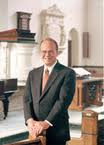
6 Evidences Verifying The Resurrection of Jesus by Dr. James Boice

Solid Evidence For The Bodily Resurrection of Jesus Christ

(Article adapted from: Foundations of the Christian Faith. *James Montgomery Boice, Downers Grove, IL: Inter Varsity Press. 1986. Chapter 17, pages 348-360)

If the bodily resurrection of Jesus Christ is true it is obviously the best news the world has ever heard. But we ask, “Can any news that good be believed?” That question leads to an investigation of the evidences for the resurrection.

Some modern theologians maintain that we have no need for historical evidences for the resurrection of Jesus Christ or evidences of any other point of Christian belief for that matter. Such things are supposed to be authenticated by the logic of faith alone. There is, of course, a sense in which that is true. Christians know that their faith rests not on their ability to demonstrate the truthfulness of the biblical narratives but rather on supernatural activity of the Holy Spirit within their hearts leading them to faith. Yet many come to faith through the various evidences for the resurrection, and the substance and form of the Christian faith rests upon those evidences. Apart from them our experiences of Christ could be mystical and even quite wrong.

We have every right to investigate the evidences, for the Bible itself speaks of “many infallible proofs” of the resurrection (Acts 1:3 KJV). We want to look at six of them here:

(1) The Resurrection Narratives

A first important evidence for the resurrection of Jesus Christ is that of the resurrection narratives themselves. There are four of them, one in each Gospel; they are more or less independent. Yet they are also harmonious, and that suggests their reliability as historical documents.

That the accounts are basically independent is evident from the considerable variations of detail. Of course there might be some overlap simply be-cause reports of a given incident would have been circulating throughout the Christian church when these books were being written. An account could have been told by different people at times in nearly identical language. But the four writers obviously did not sit down together and conspire to make up the story of Christ’s resurrection. If four people had sat down together and said, “Let’s invent an account of a resurrection of Jesus Christ” and had then worked out the details of their stories, there would be far more agreement than we find. We would not find the many small apparent contradictions. Yet if the story were not true and they had somehow separately made it up, it is impossible that we should have the essential agreement we find. In other words, the nature of the narratives is what we would expect from four separate accounts prepared by eyewitnesses.

Here are two examples. First, there is the variety of statements about the moment at which the women first arrived at the tomb. Matthew says that it was “toward the dawn of the first day of the week” (Mt. 28:1). Mark says that it was “very early on the first day of the week … when the sun had risen” (Mk. 16:2). Luke says that it was “at early dawn” (Lk. 24:1). John says that “it was still dark” (Jn. 20:1). These phrases are the kind of thing the authors would have standardized if they had been working on their accounts together. But they are in no real contradiction. For one thing, although John says that it was “still dark,” he obviously does not mean that it was pitch black; the next phrase says that Mary Magdalene “saw that the stone had been taken away from the tomb.” Presumably, the women started out while it was yet dark but arrived at the garden as day was breaking.

A second example of variation in detail in the midst of essential harmony is the listing of the women who made the first visit to the garden. Matthew says there were two Marys, “Mary Magdalene and the other Mary” (Mt. 28:1). Mark writes, “Mary Magdalene, and Mary the mother of James, and Salome” (Mk. 16:1). Luke refers to “Mary Magdalene and Jo–Anna and Mary the mother of James and the other women with them” (Lk. 24:10). John mentions only “Mary Magdalene” (Jn. 20:1). Actually, one reference throws light on the others. Mark and Luke, for example, explain who Matthew’s “other Mary” was. When we put them together we find that on that first Easter morning, when it was still dark, at least five women set out for the tomb: Mary Magdalene (who is mentioned by each of the writers), Mary the mother of James, Salome, Jo-Anna, and at least one other unnamed woman (who fits into Luke’s reference to “other women,” which includes Salome). The purpose of their trip is to anoint Christ’s body. They already know of the difficulty they face, for the tomb had been sealed by a large stone and they have no idea how they can move it. It begins to lighten a bit as they travel, so when they finally draw close to the tomb they see that the stone has been moved. That is something they were not expecting; so, although it suits their purpose, they are nevertheless upset and uncertain what to do. Apparently, they send Mary Magdalene back to tell Peter and John about the new development, which John himself records, although he does not mention the presence of the other women (Jn. 20:2). As the women wait for her to return, the morning grows lighter; eventually, emboldened by daybreak, the women go forward. Now they see the angels and are sent back into the city by them to tell the other disciples (Mt. 28:5-7; Mk. 16:5-7; Lk. 24:4-7).

In the meantime, Mary Magdalene has found Peter and John, who immediately leave her behind them and run to the tomb. John records their view of the graveclothes and points out that it was at this moment that he personally believed (Jn. 20:3-9). Finally, Mary Magdalene arrives back at the tomb again and is the first to see Jesus (Jn. 20:11-18; compare Mk. 16:9). On the same day Jesus also appears to the other women as they are returning from the tomb, to Peter, to the Emmaus disciples, and to the others as they are gathered together that evening in Jerusalem.

Two other factors also strongly suggest that these are accurate historical accounts. The first is that they leave problems for the reader that would have been eliminated were they fictitious. For example, there is the problem, repeated several times over, that the disciples did not always recognize Jesus when he appeared to them. Mary did not recognize him in the garden (Jn. 20:14). The Emmaus disciples did not know who he was (Lk. 24:16). Even much later, when he appeared to many of the disciples in Galilee, we are told that “some doubted” (Mt. 28:17). From the point of view of persuasion, the inclusion of such details is foolish. The skeptic who reads them will say, “It is obvious that the reason why the disciples did not immediately recognize Jesus is that he was actually someone else. Only the gullible believed, and that was because they wanted to believe. They were self-deluded.” Whatever can be said for that argument, the point is that the reason why such problems were allowed to remain in the narrative is that they are, in fact, the way the appearances happened. Consequently, they at least provide strong evidence that these are honest reports of what the writers believed to have transpired.

Another example of a problem is Christ’s statement to Mary that she was not to touch him because he was “not yet ascended to the Father” (Jn. 20:17). Yet Matthew tells us that, when Jesus appeared to the other women, presumably within minutes of his appearance to Mary, they “took hold of his feet and worshiped him” (Mt. 28:9). In the whole history of the Christian church no one has given a thoroughly convincing explanation of that anomaly. But it is allowed to stand because, whatever the reason, that is what happened.

Finally, the accounts evidence a fundamental honesty and accuracy through what we can only call their natural simplicity. If we were setting out to write an account of Christ’s resurrection and resurrection appearances, could we have resisted the urge to describe the resurrection itself-the descent of the angel, the moving of the stone, the appearance of the Lord from within the recesses of the tomb? Could we have resisted the urge to recount how he appeared to Pilate and confounded him? Or how he appeared to Caiaphas and the other members of the Jewish Sanhedrin? The various apocryphal Gospels (the Gospel according to the Hebrews, the Gospel of Peter, the Acts of Pilate and others) contain these elements. Yet the Gospel writers include none, because either they did not happen or else the writers themselves did not witness them. The Gospels do not describe the resurrection because no one actually witnessed it. It would have made good copy, but the disciples all arrived at the tomb after Jesus had been raised.

(2) The Empty Tomb

A second major evidence for the resurrection of Jesus Christ is the empty tomb. We might deny that an actual resurrection took place, but we can hardly deny that the tomb was empty. The disciples began soon after the crucifixion and burial to preach about the resurrection, at a time when those to whom they preached could simply walk to the tomb to see if the body of the supposedly resurrected Lord still lay there.

The empty tomb has been so formidable an argument for the resurrection throughout history that unbelievers have invented a number of theories to account for it. One theory is that the women and later the disciples went to the wrong place. It is conceivable that in the dark the women might have made such an error. But, as we have seen, it was not entirely dark, and besides they had been there earlier and thus were acquainted with its location. Again, we cannot suppose that John and Peter and then all the others would make an identical error.

Another theory is the so-called swoon theory. According to that view, Jesus did not die on the cross but rather swooned––as a result of which he was taken for dead and then buried alive. In the cool of the tomb he revived, moved the stone, and went forth to appear as resurrected. But that explanation has numerous problems. There are the difficulties in believing that a Roman guard entrusted with an execution could be fooled in such a manner; or that the spear thrust into Christ’s side would not have killed him even if he had been swooning; or that a weak, barely surviving Christ could have had the strength to move the large stone and overcome Roman guards. Further, one would have to suppose that a Christ in such a condition could convince his disciples that he had overcome death triumphantly.

Finally, there are the views that someone either stole or simply moved the body. But who? Certainly not the disciples, for if they had removed the body, they would later hardly have been willing to die for what they knew to be a fabrication. Nor would the Jewish or Roman authorities have taken the body. We might imagine that they could have moved it initially in order better to guard it––for the same reasons they sealed the tomb and posted a watch: “We remember how that imposter said, while he was still alive, ‘After three days I will rise again.’ Therefore order the sepulcher to be made secure until the third day, lest his disciples go and steal him away, and tell the people, ‘He has risen from the dead'” (Mt. 27:63-64). If that had happened, they would certainly have produced the body later when the disciples began their preaching. The authorities hated the gospel and did everything in their power to stop its spread. They arrested the apostles, threatened them and eventually killed some of them. None of that would have been necessary if they could have produced the body. The obvious reason why they did not is that they could not. The tomb was empty. The body was gone (The evidence of the empty tomb is discussed by John Stott, Basic Christianity, Downers Grove, IL: IVP,  pp.46-50; Merrill C. Tenney, The Reality of the Resurrection, Chicago: Moody Press. 1963, pp. 113-16; James Orr, The Resurrection of Jesus, London: Hodder and Stoughton, n.d., pp. 111-39; and others).

(3) A Not Quite Empty Tomb

According to John, the tomb was not quite empty. The body of Jesus was gone but the graveclothes remained behind. The narrative suggests that there was something about them so striking that at least John saw them and believed in Jesus’ resurrection.

Every society has its distinct modes of burial, and that was true in ancient cultures as today. In Egypt bodies were embalmed. In Italy and Greece they were often cremated. In Palestine they were wrapped in linen bands that enclosed dry spices and were placed face up without a coffin in tombs generally cut from the rock in the Judean and Galilean hills. Many such tombs still exist and can be seen by any visitor to Palestine.

Another aspect of Jewish burial in ancient times is of special interest for understanding John’s account of Jesus’ resurrection. In a book called The Risen Master (1901), Henry Latham calls attention to a unique feature of Eastern burials, which he noticed when in Constantinople during the last century. He says that the funerals he witnessed there varied in many respects, depending upon whether the funeral was for a poor or rich person. But in one respect all the arrangements were identical. Latham noticed that the bodies were wrapped in linen cloths in such a manner as to leave the face, neck and upper part of the shoulders bare. The upper part of the head was covered by a cloth that had been twirled about it like a turban. Latham concluded that since burial styles change slowly, particularly in the East, that mode of burial may well have been practiced in Jesus’ time.

Luke tells us that when Jesus was approaching the village of Nain earlier in his ministry, he met a funeral procession leaving the city. The only son of a widow had died. Luke says that when Jesus raised him from death two things happened. First, the young man sat up, that is, he was lying on his back on the bier without a coffin. And second, he at once began to speak. Hence, the graveclothes did not cover his face. Separate coverings for the head and body were also used in the burial of Lazarus (Jn. 11:44).

It must have been in a similar manner that Joseph of Arimathea and Nicodemus buried Jesus Christ. The body of Jesus was removed from the cross before the beginning of the Jewish Sabbath, was washed, and then was wrapped in linen bands. One hundred pounds of dry spices were carefully inserted into the folds of the linen. One of them, aloes, was a powdered wood like fine sawdust with an aromatic fragrance; another, myrrh, was a fragrant gum that would be carefully mixed with the powder. Jesus’ body was thus encased. His head, neck and upper shoulders were left bare. A linen cloth was wrapped about the upper part of his head like a turban. The body was then placed within the tomb where it lay until sometime on Saturday night or Sunday morning.

What would we have seen had we been there at the moment at which Jesus was raised from the dead? Would we have seen him stir, open his eyes, sit up, and begin to struggle out of the bandages? We must remember that it would have been difficult to escape from the bandages. Is that what we would have seen? Not at all. That would have been a resuscitation, not a resurrection. It would have been the same as if he had recovered from a swoon. Jesus would have been raised in a natural body rather than a spiritual body, and that was not what happened.

If we had been present in the tomb at the moment of the resurrection, we would have noticed that all at once the body of Jesus seemed to disappear. John Stott says that the body was” ‘vaporized,’ being transmuted into something new and different and wonderful” (Stott, Basic Christianity, p.52). Latham says that the body had been “exhaled,” passing “into a phase of being like that of Moses and Elias on the Mount” (Henry Latham, The Risen Master. Cambridge Deighton Bell and Company, 1901, pp.36, 54). We would have seen only that it was gone.

What would have happened then? The linen cloths would have collapsed once the body was removed, because of the weight of the spices, and would have been lying undisturbed where the body of Jesus had been. The cloth which surrounded the head, without the weight of spices, might well have retained its concave shape and have lain by itself separated from the other cloths by the space where the neck and shoulders of the Lord had been.

That is exactly what John and Peter saw when they entered the sepulcher, and the eyewitness account reveals it perfectly. John was the first at the tomb, and as he reached the open sepulcher in the murky light of early dawn he saw the graveclothes lying there. Something about them attracted his attention. First, it was significant that they were lying there at all. John places the word for “lying” at an emphatic position in the Greek sentence. We might translate it, “He saw, lying there, the graveclothes” (Jn 20 5) further the cloths were undisturbed. The word that John uses (keimena) is used in the Greek papyri of things that have been carefully placed in order. (One document speaks of legal papers saying, “I have not yet obtained the documents, but they are lying collated.” Another speaks of clothes that are “lying [in order] until you send me word.”) Certainly John noticed that there had been no disturbance at the tomb.

At that point Peter arrived and went into the sepulcher. Undoubtedly Peter saw what John saw, but in addition he was struck by something else. The cloth that had been around the head was not with the other cloths. It was lying in a place by itself (Jn. 20:7). And what was more striking, it had retained a circular shape. John says that it was “wrapped together” (KJV). We might say that it was “twirled about itself.” And there was a space between it and the cloths that had enveloped the body. The narrative says, “Then Simon Peter came, following him and went into the tomb he saw the linen cloths lying, and the napkin, which had been on his head not lying with the linen cloths but rolled up in a place by itself” (20 6 7) Finally John too entered the sepulcher and saw what Peter saw. When he saw it he believed.

What did John believe? He might have explained it to Peter like this “Don’t you see, Peter, that no one has moved the body or disturbed the graveclothes? They are lying exactly as Nicodemus and Joseph of Arimathea left the eve of the Sabbath. Yet the body is gone. It has not been stolen. It has not been moved. Clearly it must have passed through the clothes, leaving them as we see them now. Jesus must be risen.” Stott says, “A glance at these graveclothes proved the reality, and indicated the nature, of the resurrection” ((Stott, Basic Christianity, p. 53).

(4) The Post Resurrection Appearances

A fourth evidence for the resurrection is the obvious fact that Jesus was seen by the disciples. According to the various accounts he appeared to Mary Magdalene first of all, then to the other women who were returning from the tomb, afterward to Peter, to the Emmaus disciples, to the ten gathered in the upper room, then (a week later) to the eleven disciples including Thomas, to James, to five hundred brethren at once (1 Cor. 15:6, perhaps on a mountainside in Galilee), to a band of disciples who had been fishing on the lake of Galilee, to those who witnessed the ascension from the Mount of Olives near Jerusalem, and last of all to Paul, who claimed to have seen Christ in his vision on the road to Damascus. During the days following the resurrection, all these persons moved from blank, enervating despair to firm conviction and joy. Nothing accounts for that but the fact that they had indeed seen Jesus.

During the last century a well-known critic of the Gospels, Ernest Renan, wrote that belief in Christ’s resurrection arose from the passion of a hallucinating woman, meaning that Mary Magdalene was in love with Jesus and deluded herself into thinking that she had seen him alive when she had actually only seen the gardener. That is preposterous. The last person in the world that Mary (or any of the others) expected to see was Jesus. The only reason she was in the garden was to anoint his body. Moreover, even if Mary had believed in some sort of resurrection through the power of love, there is no evidence that the disciples could have been so deluded or that they anticipated anything of the kind. Many despaired; some, like the Emmaus disciples, were scattering. Thomas, for one, was adamant in his disbelief. Yet we find that within a matter of days after the Lord’s alleged resurrection, all of them were convinced of what beforehand they would have judged impossible. And they went forth to tell about it, persisting in their conviction even in the face of threats, persecution and death.

One clear example of unbelieving disciples being convinced of the resurrection solely by the appearance of Jesus is that of the Emmaus disciples. One of them is identified. He is Cleopas (Lk. 24:18). If he is to be identified with the Clopas (slight variation in spelling) mentioned in John 19:25, then we know that his wife’s name was Mary, that she was in Jerusalem, had witnessed the crucifixion along with the other women and was therefore probably the one returning to Emmaus with him on the first Easter morning.

The importance of this identification lies in the fact that Mary, and perhaps Cleopas too, had witnessed the crucifixion and therefore had not the slightest doubt that Jesus was dead. Mary had seen the nails driven into Christ’s hands. She had seen the cross erected. She saw the blood. Finally, she saw the spear driven into his side. Afterwards Mary undoubtedly went back to where she was staying. The Passover came, and Mary and Cleopas observed it like good Jews. They waited in sadness over the holidays––from the day of the crucifixion until the day of the resurrection––for the same Sabbath restraints on travel that had kept the women from going to the sepulcher to anoint the body would also have kept Cleopas and Mary from returning home to Emmaus. The morning after the Saturday Sabbath finally came. It is possible that Mary is one who went to the tomb to anoint the body. If that is the case, she saw the angels, returned to tell Cleopas about it, and then––look how remarkable this is––joined him in preparing to leave. So far from their thinking was any idea of the literal truth of Christ’s bodily resurrection!

What is more, during the time that Cleopas and Mary were getting ready to leave, Peter and John set out for the sepulcher. They entered the tomb. Right then John believed in some sense, although he may not have understood all that the resurrection meant. Peter and John returned, told Cleopas, Mary and the others what they had seen. And then––again this is most remarkable––Cleopas and Mary went right on packing. As soon as they were ready, they left Jerusalem. Did that Palestinian peasant couple believe in Christ’s resurrection? Certainly not. Did they come to believe, as they eventually did, because of their own or someone else’s wishful thinking or a hallucination? No. They were so sad at the loss of Jesus, so miserable, so preoccupied with the reality of his death, that they would not even take twenty or thirty minutes personally to investigate the reports of his resurrection.

If someone should say, “But surely they must not have heard the reports; you are making that part of the story up,” the objection is answered by the words of Cleopas. When Jesus appeared to them on the road and asked why they were so sad, Cleopas answered by telling him first about the crucifixion and then adding, “Moreover, some women of our company amazed us. They were at the tomb early in the morning and did not find his body; and they came back saying that they had even seen a vision of angels, who said that he was alive. Some of those who were with us [Peter and John] went to the tomb, and found it just as the women had said; but him they did not see” (Lk. 24:22-24).

What accounts for a belief in the resurrection on the part of Christ’s disciples? Nothing but the resurrection itself. If we cannot account for the belief of the disciples in that way, we are faced with the greatest enigma in history. If we account for it by a real resurrection and real appearances of the risen Lord, then Christianity is understandable and offers a sure hope to all.

(5) The Transformed Disciples

A fifth evidence for the resurrection flows from what has just been said: the transformed character of the disciples.

Take Peter as an example. Before the resurrection Peter is in Jerusalem going along quietly behind the arresting party. That night he denies Jesus three times. Later he is in Jerusalem, fearful, shut up behind closed doors along with the other disciples. Yet all is changed following the resurrection. Then Peter is preaching boldly. He says in his first sermon on the day of Pentecost, “Men of Israel, hear these words: Jesus of Nazareth, a man attested to you by God with mighty works and wonders and signs which God did through him in your midst, as you yourselves know––this Jesus, delivered up according to the definite plan and foreknowledge of God, you crucified and killed by the hands of lawless men. But God raised him up, having loosed the pangs of death, because it was not possible for him to be held by it” (Acts 2:22-24). A few chapters farther on in Acts we find him before the Jewish Sanhedrin (the body that condemned Jesus to death), saying, “Whether it is right in the sight of God to listen to you rather than to God, you must judge; for we cannot but speak of what we have seen and heard” (Acts 4:19-20).

“Something tremendous must have happened to account for such a radical and astounding moral transformation as this. Nothing short of the fact of the resurrection, of their having seen the risen Lord, will explain it” (R. A. Torrey, The Bible and Its Christ, p. 92).

Another example is James, Jesus’ brother. At one point none of Jesus brothers believed in him (Jn. 7:5). Jesus once declared, “A prophet is not without honor except in his own country and in his own house” (Mt. 13:57). But later James does believe (compare Acts 1:14). What made the difference? Obviously, only the appearance of Jesus to him, which is recorded in 1 Corinthians 15:7.

(6) The New Day of Christian Worship

The final though often overlooked evidence for the resurrection of Jesus Christ is the change of the day of regular Christian worship from the Jewish Sabbath (Saturday) to Sunday, the first day of the week Could anything be more fixed in religious tradition than the setting aside of the seventh day for worship as practiced in Judaism? Hardly. The sanctification of the seventh day was embodied in the Law of Moses and had been practiced for centuries. Yet from the very beginning we see Christians though Jews disregarding the Sabbath as their day of worship and instead worshiping on Sunday. What can account for that? There is no prophecy to that effect, no declaration of an early church council. The only adequate cause is the resurrection of Jesus Christ, an event so significant that it immediately produced the most profound changes, not only in the moral character of the early believers, but in their habits of life and forms of worship as well.

I was once speaking to another minister about his spiritual experience when the conversation turned to the resurrection. The minister said that when he came out of seminary he possessed no real convictions concerning the gospel of Christ. He probably believed some things intellectually, but they had not gripped his heart. He said that he began to reflect on the resurrection. I asked, “What did you find?” First of all, he replied, he discovered a strange happiness and internal rest as he struggled with the accounts and the questions that they forced to his mind. That indicated to him that, although he did not have the answers yet, at least he was on the right track. As he studied he came to see the importance of the issue. He saw that if Jesus really rose from the dead, everything else recorded about him in the New Testament is true––at least there is no sound reason for rejecting it. And he concluded that if Jesus was not raised from the dead, he should leave the ministry.

So he read books. He visited the seminary where he had studied. He talked with his professors. He said that he became convinced that Jesus is indeed risen, as the Bible declares, and that all the other doctrines of the faith stand with it. Interestingly enough, he came to that conclusion several weeks before Easter that particular year, and on Easter he therefore stood up in church to proclaim his personal faith in these things. Afterward members of his congregation said that they had never heard preaching like that before, and several believed in Christ as a result of his preaching.

That has happened to many: to jurists like Frank Morison, Gilbert West, Edward Clark and J.N.D. Anderson; to scholars like James Orr, Michael Ramsey, Arnold H.M. Lunn, Wolfhart Pannenburg and Michael Green. Green says that “the evidence in favor of this astonishing fact is overwhelming” (Michael Green, Runaway World, Downer Grove Ill.: InterVarsity Press, 1968, p. 09. Michael Ramsey wrote, “So utterly new and foreign to the expectations of men was this doctrine, that it seems hard to doubt that only historical events could have created it” (A.M. Ramsey, The Resurrection of Christ, London: Geoffrey Bles, 1945, p.19).

Did Jesus rise from the dead? If he did, then he is the Son of God and our Savior. It is for us to believe and follow him.

*James Montgomery Boice, Th.D., (July 7, 1938 – June 15, 2000) was a Reformed theologian, Bible teacher, and pastor of Tenth Presbyterian Church in Philadelphia from 1968 until his death. He is heard on The Bible Study Hour radio broadcast and was a well known author and speaker in evangelical and Reformed circles. He also served as Chairman of the International Council on Biblical Inerrancy for over ten years and was a founding member of the Alliance of Confessing Evangelicals. He is the author of numerous Bible expositions on Genesis, Joshua, Nehemiah, Daniel, The Minor Prophets, Matthew, John, Romans and one of my favorite Systematic Theologies called Foundations of the Christian Faith from which this article is derived.

The World’s Theology and Where it Leads

“The world’s theology is easy to define – man is basically good – no one is really lost – Jesus is not necessary for salvation… Hell is full of human righteousness.” – James Montgomery Boice

Book Review: Foundations of the Christian Faith by James Montgomery Boice

First of all – *Dr. James Montgomery Boice (He could have easily been a theologian – with degrees from Harvard and Basel – but chose to be the senior pastor at the Historic Tenth Presbyterian Church in Philadelphia, PA) was a theologian/pastor extraordinaire. All his writings are worth reading for their clarity, depth of theological insight and precision, cogent exposition of the Scriptures, and exaltation of Christ. I have read everything Dr. Boice has written and I can’t recommend him highly enough. Heaven’s gain was certainly our loss (he died of cancer in 2000) – but at least we can still benefit from his many books on theology and various books of the Bible that have been left behind.

This “Systematic Theology” was originally released as four distinct books on: 1) The Sovereignty of God; 2) God the Redeemer; 3) Awakening to God; and 4) God and History. Dr. Boice was a tremendous gift to the Body of Christ. He was one of the few Biblical Expositors and Scholars that had the ability to build bridges among the Dispensational and Reformed camps and do so with scholarly and pastoral integrity. There is virtually no discussion of angels, demons, or Satan in this book. The weakest part of this book is in the area of eschatology – but I think his intent was merely to focus on the Sovereignty of God in salvation and history with the emphasis on being primarily on God’s redemptive plan for mankind. I hope that IVP or some other publishing company reprints this book – its simply too good to miss – it’s God-centered; practical; concise; clear and elevates and exalts Jesus Christ like few theologies today. I can’t recommend Boice’s theology highly enough. I have included below all that Dr. Boice covers in these four books in one place, so you can see what a big bang for your buck you are getting.

BOOK 1: THE SOVEREIGN GOD

PART I – The Knowledge of God

Chapter 1 – On Knowing God

Chapter 2 – The Unknown God

PART II: The Word of God

Chapter 3 – The Bible

Chapter 4 – The Authority of the Scriptures

Chapter 5 – The Proof of the Scriptures

Chapter 6 – How True is the Bible?

Chapter 7 – Modern Biblical Criticism

Chapter 8 – How To Interpret the Bible

PART III: The Attributes of God

Chapter 9 – The True God

Chapter 10 – God in Three Persons

Chapter 11 – Our Sovereign God

Chapter 12 – Holy, Holy, Holy

Chapter 13 – The God Who Knows

Chapter 14 – God Who Changes Not

PART IV: God’s Creation

Chapter 15 – The Creation of Man

Chapter 16 – Nature

Chapter 17 – The Spirit World

Chapter 18 – God’s Providence

BOOK 2: GOD THE REDEEMER

PART I – The Fall of the Race

Chapter 1 – The Fall

Chapter 2 – The Results of the Fall

Chapter 3 – The Bondage of the Will

PART II – Law And Grace

Chapter 4 – The Purpose of God’s Law

Chapter 5 – The Ten Commandments: Love of God

Chapter 6 – The Ten Commandments: Love of Others

Chapter 7 – The Wrath of God

Chapter 8 – Salvation in the Old Testament

PART III – The Person of Christ

Chapter 9 – The Deity of Jesus Christ

Chapter 10 – The Humanity of Jesus Christ

Chapter 11 – Why Christ Became Man

PART IV – The Work of Christ

Chapter 12 – Prophet, Priest, and King

Chapter 13 – Quenching God’s Wrath

Chapter 14 – Paid In Full

Chapter 15 – The Greatness of God’s Love

Chapter 16 – The Pivotal Doctrine: Resurrection

Chapter 17 – Verifying The Resurrection

Chapter 18 – He Ascended Into Heaven

BOOK 3: AWAKENING TO GOD

PART I – The Spirit of God

Chapter 1 – Personal Christianity

Chapter 2 – The Work of the Holy Spirit

Chapter 3 – Union With Christ

PART II – How God Saves Sinners

Chapter 4 – The New Birth

Chapter 5 – Faith And Repentance

Chapter 6 – Justification By Faith: The Hinge of Salvation

Chapter 7 – Justification By Faith: The Place of Works

Chapter 8 – The Tests of Faith

Chapter 9 – A New Family

Chapter 10 – The Upward Way

PART III – The Life of the Christian

Chapter 11 – Embrace The Negative

Chapter 12 – Freedom, Freedom

Chapter 13 – Knowing The Will of God

Chapter 14 – Talking To God

Chapter 15 – God Talking To Us

Chapter 16 – Serving

PART IV: The Work of God

Chapter 17 – Called By God

Chapter 18 – The Keeping Power of God

 BOOK 4: GOD AND HISTORY

PART I – Time And History

Chapter 1 – What’s Wrong With Me?

Chapter 2 – The March Of Time

Chapter 3 – Christ, The Focal Point of History

PART II: The Church of God

Chapter 4 – Christ’s Church

Chapter 5 – The Marks Of The Church

Chapter 6 – How To Worship God

Chapter 7 – Salvation’s Signs And Seals

Chapter 8 – Spiritual Gifts

Chapter 9 – Equipping The Saints

Chapter 10 – Church Government

Chapter 11 – Body Life

Chapter 12 – The Great Commission

PART III: A Tale Of Two Cities

Chapter 13 – The Secular City

Chapter 14 – The Secular Church

Chapter 15 – God’s City

Chapter 16 – Church And State

PART IV: The End of History

Chapter 17 – How Will It End

Chapter 18 – Home At Last

Subject Index

Scripture Index

*Dr. James Montgomery Boice, just 8 weeks after being diagnosed with a fatal liver cancer, died in his sleep on June 15, 2000. The senior pastor of Tenth Presbyterian Church in Philadelphia, he was a world-famous Bible teacher, author, and statesman for Reformed theology. He informed his congregation of 32 years of his condition on May 7, proclaiming his complete confidence in God’s sovereignty and goodness.

In the past 72 years, historic Tenth Presbyterian Church has had two senior pastors, Donald Grey Barnhouse and James Montgomery Boice. Founded in 1828, the church itself predates their tenure by another hundred years. Tenth Presbyterian Church lies in the very heart of the city and today has about 1,200 members.

James Montgomery Boice accepted the position as senior pastor in 1968, and was the teacher of the Bible Study Hour since 1969 and the more recent God’s Word Today broadcast as well. Dr. Boice held degrees from Harvard, Princeton Theological Seminary, and the University of Basel, Switzerland. He had written or contributed to nearly 50 books, including Foundations of the Christian FaithLiving by the Book, and exegetical commentaries on Genesis, Psalms, Acts, and Romans.

He was no less involved in the preserving of the fundamentals of the faith than his predecessor, Dr. Barnhouse. In 1985, Boice assumed the presidency of Evangelical Ministries, Inc., the parent organization of the Bible Study Hour, Bible Study Seminars, Bible Studies magazine, and other teaching ministries. In 1997, Evangelical Ministries merged with Christians United for Reformation and the Alliance of Confessing Evangelicals, taking the latter as the new organization’s name, and Dr. Boice assumed the presidency. In 1997, he was a founding member of, and chaired, the International Council on Biblical Inerrancy.

Of particular concern to Boice was the matter of the church and her relationship to and engagement of society. His recent book, Two Cities, Two Loves, maintains that Christians are citizens of the kingdom of this world and the kingdom of heaven and that they have responsibilities in each. He urged Christians to “participate in secular life rather than merely shoot from the sidelines at secular people.”

Dr. Boice is survived by his wife, Linda, and three daughters. Characteristic of his ministry was his pushing Christians to commit themselves to staying in one place. He lived what he preached, committing to the church and his downtown neighborhood for 30 years. A gifted pastor and leader, he turned down many attractive opportunities in order to build a sense of permanence and belonging. And he urged his parishioners to do the same.