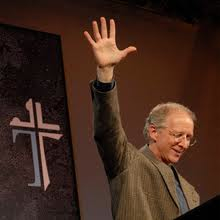
Is God Responsible for Natural Disasters? By Dr. Erwin Lutzer

Why let the nations say, “Where is their God?” Our God is in the heavens, and he does as he wishes. – Psalm 115:2-3

I’m told that after an earthquake in California a group of ministers met for a prayer breakfast. As they discussed impassable expressways and ruined buildings, they agreed that God had very little to do with the disaster. They concluded that since the earth is under the Curse from Creation, earthquakes and other natural disasters simply happen according to laws of nature. But even after they made that conclusion, one of the ministers closed in prayer, thanking God for the timing of the earthquake that came at five o’clock in the morning when there were fewer people out on the roads.

So did God have anything to do with that earthquake or didn’t He? How can a person conclude that God is not involved and then thank Him for His involvement? It can’t be both ways.

Hurricanes, tornadoes, tsunamis, earthquakes. Our earth is not immune to disasters. So how does God fit in? Intuitively, people know God is in charge. When tragedy strikes, people call out to Him. We know that when something is outside of our control, we need to call upon a higher power for help. But if people intuitively know that God is in charge, how do we explain the heart-wrenching suffering that accompanies such disasters?

 Who Is Responsible?

There’s no doubt about it—natural disasters aren’t very good for God’s reputation. As a result, many Christians try to absolve Him of any and all responsibility for these horrific events. They want to “get Him off the hook” in order to help Him maintain His loving image. Some do this by saying that God is weak—He can’t really stop these disasters from happening, but He will work really hard to bring something good out of them. Others try to give the devil all the blame, saying God is not involved at all in any of the bad things that happen—He’s just a bystander.

Is God Weak?

Let’s begin with people who try to protect God’s reputation by claiming that He is unable to prevent our planet from getting pounded by one calamity after another. These folks fear that if we say God is responsible for natural disasters or that He allows them because of a higher purpose, we will drive people away from the Christian faith. “Why would people want to come to a God who would do such horrible things?” they ask. When we glibly say that “God will bring good out of it” or that “in the end we win,” it does little to comfort those who have lost loved ones or possessions in a disaster.

I agree that glib statements about suffering being part of God’s plan will not immediately comfort the grieving. In fact, it probably is true that giving such answers without any compassion or understanding could indeed drive people away from God rather than toward Him. As Christians, we do need to be very careful what we say to those who are grieving from great loss. Sometimes it is best to remain silent, not pretending that we have the right to speak on God’s behalf, but to act benevolently on His behalf instead. I will talk more about this later in this chapter.

To take the approach that God is weak, unable to handle the forces of nature, is to believe that God is finite. If it is true that God is not all-powerful and must deal with natural disasters as best as He can after they happen, how can a God like that be trusted? If God is helpless in the face of a hurricane, how confident can we be that He can one day subdue all evil? To believe that God is finite might get Him off the hook for natural disasters, but it also puts end-time victories in jeopardy. The Bible does not describe a weak God, however. In fact, just the opposite. God is omnipotent—all-powerful. Consider just a sampling of Scripture that focuses on God’s power over His creation:

In the beginning God created the heavens and the earth. – Genesis 1:1

You formed the mountains by your power and armed yourself with mighty strength. You quieted the raging oceans with their pounding waves and silenced the shouting of the nations. – Psalm 65:6-7

The heavens are yours, and the earth is yours; everything in the world is yours—you created it all. You created north and south. Mount Tabor and Mount Hermon praise your name. Powerful is your arm! Strong is your hand! Your right hand is lifted high in glorious strength. – Psalm 89:11-13

Look up into the heavens. Who created all the stars? He brings them out like an army, one after another, calling each by its name. Because of his great power and incomparable strength, not a single one is missing. – Isaiah 40:26

[Jesus] got up and rebuked the wind and waves, and suddenly there was a great calm. – Matthew 8:26

For ever since the world was created, people have seen the earth and sky. Through everything God made, they can clearly see his invisible qualities—his eternal power and divine nature. So they have no excuse for not knowing God. – Romans 1:20

It would be strange indeed if the God who created the world were unable to control it. To describe God as too weak to handle natural disasters doesn’t help God’s reputation, it doesn’t get Him off the hook, and it isn’t biblical. The answer to the question, “Is God weak?” is a resounding no! God is all-powerful and completely able to control nature.

 Are Disasters the Devil’s Fault?

The second way some Christians try to exempt God from involvement in natural disasters is to simply blame everything on the devil. God is not responsible for what happens, they say. He created the world and lets it run; nature is fallen, and Satan, who is the god of this world, wreaks havoc with the natural order.

Scripture clearly tells us that nature is under a curse just as people are: “The ground is cursed because of you. All your life you will struggle to scratch a living from it” (Genesis 3:17). It follows, then, that Satan might indeed be involved in natural disasters. We have an example of this in the book of Job, when God gave Satan the power to destroy Job’s children. Acting under God’s direction and within certain set limitations, Satan used lightning to kill the sheep and the servants and a powerful wind to kill all ten of Job’s children (Job 1). Clearly the devil takes great pleasure in causing havoc and destruction. Take a moment to look at the wretched life of the demon-possessed man before Jesus commanded the legion of demons to leave him. The Gospel of Luke describes him as homeless and naked, living in a cemetery, shrieking, breaking chains and shackles, completely alone, and without hope (Luke 8:26-29). This is a snapshot of Satan’s ultimate goal for living things. Here is proof, if proof is needed, that satanic powers might indeed be connected to the natural disasters that afflict our planet.

So if the devil is involved, does this mean that God is removed from Does He really have a “hands-off policy” when it comes to disasters? Does this absolve God of responsibility? Is it all the devil’s fault? Clearly the answer to all of these questions is no. God has not relegated calamities to His hapless archrival the devil without maintaining strict supervision and ultimate control of nature. No earthquake comes, no tornado rages, and no tsunami washes villages away but that God signs
off on it.

But that conclusion creates its own set of questions…

So What Does It Mean That God Is in Control?

If God isn’t too weak to deal with His creation, and if we cannot put all the blame on Satan, then where does that leave us? It leaves us with the fact that God is all-powerful and in control—and that applies to natural disasters. We must think carefully at this point.

We must distinguish between the secondary cause of disastrous events and their ultimate cause. The secondary cause of the lightning and the wind that killed Job’s children was the power of Satan. But follow carefully: it was God who gave Satan the power to wreak the havoc. It was God who set the limits of what Satan could or could not do. In effect, God said, “Satan, you can go this far, no further. I’m setting the boundaries here.” That’s why Job, quite rightly, did not say that the death of his children was the devil’s doing. Instead, Job said, “The LORD gave me what I had, and the LORD has taken it away. Praise the name of the LORD!” (Job 1:21).

Scientifically speaking, we know that the secondary cause of an earthquake is due to a fault beneath the earth’s crust; the top of the earth’s crust moves in one direction while the levels under the earth’s crust gradually move in the opposite direction. The secondary causes of a tornado are unstable atmospheric conditions combined with warm, moist air. The secondary cause of a hurricane is a large air mass heated and fueled by the warmth of the ocean. All of these weather patterns might or might not receive their momentum from Satan, yet we can be sure that the ultimate cause of these events is God. He rules through intermediate causes and at times by direct intervention, but either way, He is in charge. After all, He is the Creator, the Sustainer, of all things. We sing with Isaac Watts,

There’s not a plant or flower below,

But makes Thy glories known;

And clouds arise, and tempests blow,

By order from Thy throne.

So what does it mean for us that God is in control, even when natural disasters occur? How do we begin to process this?

First, many theologians who agree that God is in charge of nature emphasize that God does not decree natural disasters but only permits them to happen. Understanding the difference between these words is helpful, especially since in the book of Job God permitted Satan to bring about disasters to test Job. However, keep in mind that the God who permits natural disasters to happen could choose to not permit them to happen. In the very act of allowing them, He demonstrates that they fall within the boundaries of His providence and will. The devil is not allowed to act beyond the boundaries God sets.

Second—and this is important—God is sometimes pictured as being in control of nature even without secondary or natural causes. When the disciples were at their wits’ end, expecting to drown in a stormy sea, Christ woke up from a nap and said to the waves, “Silence! Be still!” The effect was immediate: “Suddenly the wind stopped, and there was a great calm” (Mark 4:39). Christ could have spoken similar words to the tidal wave in Papua New Guinea or the rain that triggered the mudslides in Venezuela, and they would have obeyed Him. At the word of Christ, the tsunami in Southeast Asia would have ended before it hit the coastlines. Notice how the Scriptures credit tidal waves and tsunamis to God: “The LORD’s home reaches up to the heavens, while its foundation is on the earth. He draws up water from the oceans and pours it down as rain on the land. The LORD is his name!” (Amos 9:6).

Third, if the heavens declare the glory of God, if it is true that the Lord reveals His character through the positive side of nature, doesn’t it make sense that the calamities of nature also reveal something about Him too? If nature is to give us a balanced picture of God, we must see His judgment, too. “The LORD does whatever pleases him throughout all heaven and earth, and on the seas and in their depths. He causes the clouds to rise over the whole earth. He sends the lightning with the rain and releases the wind from his storehouses” (Psalm 135:6-7).

 God’s Signature

After the tsunami in Southeast Asia, a supposed Christian cleric was asked whether God had anything to do with the disaster. “No,” he replied. “The question as to why it happened demands a geological answer, not a theological answer.” Is he reading the same Bible I am? Or has he read the Bible and simply chosen not to believe it?

Who sent the Flood during the time of Noah? God said, “I am about to cover the earth with a flood that will destroy every living thing that breathes. Everything on earth will die” (Genesis 6:17).

God determined the timing, the duration, and the intensity of the rain. And it happened according to His word. It would have been difficult to convince Noah that God had nothing to do with the weather, that all He could do was weep when the Flood came.

Who sent the plagues on Egypt? Who caused the sun to stand still so that Joshua could win a battle? Who first sealed the heavens and then brought rain in response to Elijah’s prayer? Who sent the earthquake when the sons of Korah rebelled against Moses? This event recorded in the Bible is of special interest:

[Moses] had hardly finished speaking the words when the ground suddenly split open beneath them. The earth opened its mouth and swallowed the men, along with their households and all their followers who were standing with them, and everything they owned. So they went down alive into the grave, along with all their belongings. The earth closed over them, and they all vanished from among the people of Israel (Numbers 16:31-33).

Can anyone say that God is not the ultimate cause of these disasters? In the story of Jonah, the biblical writer leaves no doubt as to who caused the storm that forced the sailors to throw the stowaway overboard. “The LORD hurled a powerful wind over the sea, causing a violent storm that threatened to break the ship apart” (Jonah 1:4, italics added). The sailors agonized about unloading their unwanted cargo, but we read that they “picked Jonah up and threw him into the raging sea, and the storm stopped at once!” (Jonah 1:15). It appears that the Bible is not as concerned about God’s reputation as some theologians are. It puts God clearly in charge of the wind, the rain, and the calamities of the earth.

What do all these stories have in common? Notice that God is meticulously involved. Whether an earthquake, a raging wind, or a rainstorm, the events came and left according to God’s word. In addition, many of these calamities were acts of judgment by which God expressed how much He hated disobedience. In Old Testament times, these judgments generally separated godly people from wicked people (this is not the case today, as we shall see in the next chapter). However, even back then, sometimes the godly were also victims of these judgments. Job’s children were killed not because they were wicked, but because God wanted to test their father.

On the other hand, we should also note that in both the Old and New Testaments God sometimes sent a natural disaster to help His people. During a battle when Saul’s son Jonathan killed a Philistine, we read, “Then panic struck the whole [enemy] army—those in the camp and field, and those in the outposts and raiding parties—and the ground shook. It was a panic sent by God” (1 Samuel 14:15, NIV, italics added). And in the New Testament, an earthquake delivered Paul and Silas from prison: “Around midnight Paul and Silas were praying and singing hymns to God, and the other prisoners were listening. Suddenly, there was a massive earthquake, and the prison was shaken to its foundations. All the doors immediately flew open, and the chains of every prisoner fell off!” (Acts 16:25-26).

Both of these earthquakes had God’s signature on them.

God uses nature to do His bidding. Directly or indirectly, He can cause an earthquake to happen at five in the morning. God does as He wills.

Is Our God Really Good?

If God is the ultimate cause of all things and if He does as He wills on this earth—including with nature and natural disasters—can we put the blame on Him for the evil and suffering that these disasters cause? How can God be good when He permits (or does) things that seem so destructive and hurtful to human beings? Surely if we had the power to prevent an earthquake, if we could have stopped the tsunami, we would have done so.

Natural disasters are not “evil” in the usual sense of the word. If a tsunami took place in the middle of the ocean and did not affect any people, we would not think of it as evil. It’s when humans are affected, and when death and suffering occur, that such disasters become “evil.”

In light of what I’ve said, should God be blamed for such destructive disasters that create unfathomable human suffering? The word blame implies wrongdoing, and I don’t believe such a word should ever be applied to God. But even asking if God is responsible for natural disasters also might not be best, since the word responsibility usually implies accountability, and God is accountable to no one: “Our God is in the heavens, and he does as he wishes” (Psalm 115:3).

Let’s begin by agreeing that God plays by a different set of rules. If you were standing beside a swimming pool and watched a toddler fall in and did nothing to help, you could be facing a lawsuit for negligence. Yet God watches children drown—or, for that matter, starve—every day and does not intervene. He sends drought to countries in Africa, creating scarcity of food; He sends tsunamis, wiping out homes and crops.

We are obligated to keep people alive as long as possible, but if God were held to that standard, no one would ever die. Death is a part of the Curse: “You were made from dust, and to dust you will return” (Genesis 3:19). What for us would be criminal is an everyday occurrence for God.

Why the difference? God is the Creator; we are the creatures. Because God is the giver of life, He also has the right to take life. He has a long-term agenda that is much more complex than keeping people alive as long as possible. Death and destruction are a part of His plan. “‘My thoughts are nothing like your thoughts,’ says the LORD. ‘And my ways are far beyond anything you could imagine. For just as the heavens are higher than the earth, so my ways are higher than your ways and my thoughts higher than your thoughts’” (Isaiah 55:8-9).

The philosopher John Stuart Mill wrote that natural disasters prove that God cannot be both good and all-powerful. If He were, suffering and happiness would be carefully meted out to all people, each person getting exactly what he or she deserved. Since natural disasters appear to be random, affecting both good and evil people, God therefore cannot be both good and all-powerful. Mill forgets, however, that we don’t receive our final rewards and punishments in this life. Indeed, the Scriptures teach that the godly often endure the most fearful calamities. God always acts from the standpoint of eternity rather than time; His decisions are made with an infinite perspective. Therefore, it comes down to this: we believe that God has a good and all-wise purpose for the heartrending tragedies disasters bring.

Speaking of the earthquake in Turkey that took thousands of lives, pastor and author John Piper says, “[God] has hundreds of thousands of purposes, most of which will remain hidden to us until we are able to grasp them at the end of the age” (John Piper, “Whence and Why?” World Magazine, September 4, 1993, 33). God has a purpose for each individual. For some, His purpose is that their days on earth end when disaster strikes; for the survivors there are other opportunities to rearrange priorities and focus on what really matters. The woman who said she lost everything but God during Hurricane Katrina probably spoke for thousands of people who turned to Him in their utter despair. God does not delight in the suffering of humanity. He cares about the world and its people: “But you, O Lord, are a God of compassion and mercy, slow to get angry and filled with unfailing love and faithfulness” (Psalm 86:15). God does not delight in the death of the wicked but is pleased when they turn from their wicked ways (Ezekiel 18:23). We finite beings cannot judge our infinite God. He is not obligated to tell us everything He is up to. As Paul described it, the clay has no right to tell the potter what to do (Romans 9:19-21). It is not necessary for us to know God’s purposes before we bow to His authority. And the fact that we trust God even though He has not revealed the details is exactly the kind of faith that delights His heart. “It is impossible to please God without faith” (Hebrews 11:6). In chapter 5 we shall see that this sovereign God has given us reasons to trust Him. Faith will always be necessary, but our faith has strong supports. We do not believe clever fables but rather a credible account of God’s will, God’s power, and God’s dealings with us in the Bible.

Responding to the Hurting with Compassion

The God who created the laws of nature and allows them to “take their course” is the very same God who commands us to fight against these natural forces. Before the Fall, God gave Adam and Eve the mandate to rule over nature. After the Fall, the mandate continued even though the ground would yield thorns and thistles and childbearing would mean struggling with pain. The desire to live would become the fight to live.

We’ve seen it over and over—the relentless compassion of people reaching out to help others who have been faced with calamity. People offer money, goods, services, and their time and labor to bring aid where it is most needed. Charitable giving to the American Red Cross for Haiti relief set a record for mobile-generated donations, raising seven million dollars in twenty-four hours when Red Cross allowed people to send ten-dollar donations by text messages (Doug Gross, “Digital Fundraising Still Pushing Haiti Relief,” CNN, January 15, 2010, http://articles.cnn.com/2010-01-15/tech/online.donations.haiti_1_earthquake-haiti-haiti-relief-twitter-andfacebook?_s=PM:TECH). This is when God’s glory shines through even in the darkest times.

God uses nature both to bless and challenge us, to feed and instruct us. He wants us to fight against the devastation of natural disasters, even as we fight against the devil, so that we might become overcomers in this fallen world. Although nature is under God’s supervision, we are invited to fight disease and plagues.

We can and should strive for better medical care and clean water and food for the starving in Third World countries. We should be willing to help those who are in distress—even at great personal risk.

Martin Luther, when asked whether Christians should help the sick and dying when the plague came to Wittenberg, said that each individual would have to answer the question for himself. He believed that the epidemic was spread by evil spirits, but added, “Nevertheless, this is God’s decree and punishment to which we must patiently to which we must patiently submit and serve our neighbor, risking our lives in this manner John the apostle teaches, “If Christ laid down his life for us, we ought to lay down our lives for the brethren’” (1 John 3:16 and for more on Martin Luther see Timothy Lull, ed., Martin Luther’s Basic Theological Writings. Minneapolis, MN: Augsburg Fortress Publishers, 1989, 744).

In recent years, the news media have carried stories of virulent flu viruses that have infected humans in epidemic proportions. Some Christians might wonder if they should help those who are sick, risking their own lives for the sake of others. Disasters such as these make Luther’s comments about Wittenberg plague relevant. Martin Luther continued:

If it be God’s will that evil come upon us, none of our precautions will help us. Everybody must take this to heart: first of all, if he feels bound to remain where death rages in order to serve his neighbor, let him commend himself to God and say, “Lord, I am in thy hands; thou hast kept me here; they will be done. I am thy lowly creature. Thou canst kill me or preserve me in the pestilence in the same way if I were in fire, water, drought or any other danger”  (Ibid, 742).

Yes the plague was “God’s decree,” but we also must do what we can to save the lives of the sick and minister to the dying, We should thank God when He gives us the opportunity to rescue the wounded when a disaster strikes. Tragedies give us the opportunity to serve the living and comfort the dying all around us. Through the tragedies of others, we have the opportunity to leave our comfortable lifestyles and enter the suffering of the world.

Historically, the church has always responded to tragedies with sacrifice and courage. During the third century, the writer Tertullian recorded that when plagues deserted their nearest relatives in the plague, Christians stayed and ministered to the sick.

When Hurricane Katrina hit the Gulf Coast, churches rose to the occasion to help the victims. Church members prepared tens of thousands of meals for people left homeless and scattered in shelters. One church would help another begin the painful process of relocation and reconstruction. Even the secular press had to admit that governmental red tape did not stop the churches from sacrificially helping in time of need. What the government and the Red Cross could not do, the people of God did. This is how it should be. This is how we become Jesus’ hands and feet in the world.

In the days after the 2011 Joplin tornado, one pastor’s wife wrote to a friend, “It [the tornado and its aftermath] has certainly stretched us. All the things that pastors deal with on a day-today basis—marriages in crisis, pettiness, misunderstandings, sins of all varieties—do not go away when the storms come. They do get put on the back burner. They catch fire. Other things that pastors deal with on a day-today basis—tireless, selfless, tenderhearted servants who are constantly seeking to please God and serve His church—do not go away either. They catch fire. I am amazed at these people.”

Jesus was touched by the plight that the curse of sin brought to this world. We see Him weep at the tomb of Lazarus, and we hear His groans. “Jesus, once more deeply moved, came to the tomb. It was a cave with a stone laid across the entrance” (John 11:38). After the stone was removed, Jesus shouted, “Lazarus, come out!” (v. 43) and the dead man came to life in the presence of the astonished onlookers. The Jesus who stayed away for a few extra days so Lazarus would die is the very same Jesus who raised him from the dead.

Like Jesus, we mourn for the horrendous pain people experience on this planet. Like the weeping prophet Jeremiah, we find ourselves saying, “Rise during the night and cry out. Pour out your hearts like water to the Lord. Lift up your hands to him in prayer, pleading for your children, for in every street they are faint with hunger” (Lamentations 2:19).

Although modern medicine and technology allow us to stave off death as long as possible, eventually we will all be overcome by its power. Yet in the end, we sin! Christ has conquered death.

Responding to God in Faith

If there is still some doubt in your mind that ultimately God has control of nature, let me ask you: Have you ever prayed for beautiful weather for a wedding? Have you ever prayed for rain at a time of drought? Have you ever asked God to protect you during a severe storm? Many people who claim God has no control over the weather change their minds when a funnel cloud comes toward them. The moment we call out to Him in desperate prayer, we are admitting that He is in charge.

It is also vital to understand that if nature is out of God’s hands, then we are also out of God’s hands. We should be nothing more than victims of nature and thus die apart from His will. Jesus, however, assures His children that He will take care of us. “What is the price of five sparrows—two copper coins? Yet God does not forget a single one of them. And the very hairs on your head are all numbered. So don’t be afraid; you are more valuable to God than a whole flock of sparrows” (Luke 12:6-7). The God who cares for the tiny sparrows and counts the hairs on our heads is in charge of nature.

The ministers in California were right in thanking God that the earthquake came early in the morning when there was little traffic on the expressways. They were wrong, however, for saying that God was not in charge of the tragedy. Of course He was—both biblically and logically.

There is, perhaps, no greater mystery than human suffering, so let us humbly admit that we can’t determine God’s ways.

The eighteenth-century English poet William Cowper put the mysteries of God in perspective:

God moves in a mysterious way

His wonders to perform;

He plants His footsteps in the sea,

And rides upon the storm.

Deep in unfathomable mines

Of never-failing skill

He treasures up His bright designs,

And works His sovereign will.

Ye fearful saints, fresh courage take;

The clouds ye so much dread

Are big with mercy, and shall break

In blessing on your head.

Judge not the Lord by feeble sense,

But trust Him for His grace;

Behind a frowning providence

He hides a smiling face.

His purposes will ripen fast,

Unfolding every hour;

The bud may have a bitter taste,

But sweet will be the flower.

Blind unbelief is sure to err,

And scan His work in vain;

God is His own interpreter,

And He will make it plain (William Cowper, “God Moves in a Mysterious Way,” Cowper’s Poems, ed. Hugh I’Anson Fausset. New York: Everyman’s Library, 1966, 188-189).

“Grieve not because thou understand not life’s mystery,” wrote a wise man. “Behind the veil is concealed many a delight” (Quoted in Charles Swindoll, The Mystery of God’s Will. Nashville, TN: Thomas Nelson, 1999, 115).

The trusting believer knows this is so.

 About the Author:

Since 1980, Erwin W. Lutzer has served as senior pastor of the world-famous Moody Church in Chicago, where he provides leadership to Chicago pastors. Dr. Lutzer earned his B.Th. from Winnipeg Bible College, a Th.M. from Dallas Theological Seminary, an M.A. in philosophy from Loyola University, an LL.D. from Simon Greenleaf School of Law, and a D.D. from Western Conservative Baptist Seminary.

Dr. Lutzer is a featured radio speaker on the Moody Broadcasting Network and the author of numerous books, including The Vanishing Power of Death, Cries from the Cross, the best-selling One Minute Before You Die and Hitler’s Cross, which received the Evangelical Christian Publishers Association (EPCA) Gold Medallion Book Award. He speaks both nationally and internationally at Bible conferences and tours and has led tours of the cities of the Protestant Reformation in Europe.

Dr. Lutzer and his wife, Rebecca, live in the Chicago area and are the parents of three grown children. The article above was adapted from Chapter 2 in the short and insightful book by Erwin W. Lutzer. An Act of God: Answers to Tough Questions about God’s Role in Natural Disasters. Wheaton: Illinois, Tyndale House Publishers, 2011.

John Piper on 10 Ways NOT to Waste Your CANCER

“Don’t Waste Your Cancer” by John Piper

[Editor’s Note: Our friend, David Powlison, of the Christian Counseling and Education Foundation, who also was recently diagnosed with prostate cancer, has added some helpful expansions to John Piper’s ten points. Indented paragraphs beginning with “DP:” are written by David Powlison]

I write this on the eve of prostate surgery. I believe in God’s power to heal—by miracle and by medicine. I believe it is right and good to pray for both kinds of healing. Cancer is not wasted when it is healed by God. He gets the glory and that is why cancer exists. So not to pray for healing may waste your cancer. But healing is not God’s plan for everyone. And there are many other ways to waste your cancer. I am praying for myself and for you that we will not waste this pain.

DP: I (David Powlison) add these reflections on John Piper’s words the morning after receiving news that I have been diagnosed with prostate cancer (March 3, 2006). The ten main points and first paragraphs are his; the second paragraphs are mine.

1. You will waste your cancer if you do not believe it is designed for you by God.

It will not do to say that God only uses our cancer but does not design it. What God permits, he permits for a reason. And that reason is his design. If God foresees molecular developments becoming cancer, he can stop it or not. If he does not, he has a purpose. Since he is infinitely wise, it is right to call this purpose a design. Satan is real and causes many pleasures and pains. But he is not ultimate. So when he strikes Job with boils (Job 2:7), Job attributes it ultimately to God (2:10) and the inspired writer agrees: “They . . . comforted him for all the evil that the Lord had brought upon him” (Job 42:11). If you don’t believe your cancer is designed for you by God, you will waste it.

DP: Recognizing his designing hand does not make you stoic or dishonest or artificially buoyant. Instead, the reality of God’s design elicits and channels your honest outcry to your one true Savior. God’s design invites honest speech, rather than silencing us into resignation. Consider the honesty of the Psalms, of King Hezekiah (Isaiah 38), of Habakkuk 3. These people are bluntly, believingly honest because they know that God is God and set their hopes in him. Psalm 28 teaches you passionate, direct prayer to God. He must hear you. He will hear you. He will continue to work in you and your situation. This outcry comes from your sense of need for help (28:1-2). Then name your particular troubles to God (28:3-5). You are free to personalize with your own particulars. Often in life’s ‘various trials’ (James 1:2), what you face does not exactly map on to the particulars that David or Jesus faced – but the dynamic of faith is the same. Having cast your cares on him who cares for you, then voice your joy (28:6-7): the God-given peace that is beyond understanding. Finally, because faith always works out into love, your personal need and joy will branch out into loving concern for others (28:8-9). Illness can sharpen your awareness of how thoroughly God has already and always been at work in every detail of your life.

2. You will waste your cancer if you believe it is a curse and not a gift.

“There is therefore now no condemnation for those who are in Christ Jesus” (Romans 8:1). “Christ redeemed us from the curse of the law by becoming a curse for us” (Galatians 3:13). “There is no enchantment against Jacob, no divination against Israel” (Numbers 23:23). “The Lord God is a sun and shield; the Lord bestows favor and honor. No good thing does he withhold from those who walk uprightly” (Psalm 84:11).

DP: The blessing comes in what God does for us, with us, through us. He brings his great and merciful redemption onto the stage of the curse. Your cancer, in itself, is one of those 10,000 ‘shadows of death’ (Psalm 23:4) that come upon each of us: all the threats, losses, pains, incompletion, disappointment, evils. But in his beloved children, our Father works a most kind good through our most grievous losses: sometimes healing and restoring the body (temporarily, until the resurrection of the dead to eternal life), always sustaining and teaching us that we might know and love him more simply. In the testing ground of evils, your faith becomes deep and real, and your love becomes purposeful and wise: James 1:2-5, 1 Peter 1:3-9, Romans 5:1-5, Romans 8:18-39.

3. You will waste your cancer if you seek comfort from your odds rather than from God.

The design of God in your cancer is not to train you in the rationalistic, human calculation of odds. The world gets comfort from their odds. Not Christians. Some count their chariots (percentages of survival) and some count their horses (side effects of treatment), but we trust in the name of the Lord our God (Psalm 20:7). God’s design is clear from 2 Corinthians 1:9, “We felt that we had received the sentence of death. But that was to make us rely not on ourselves but on God who raises the dead.” The aim of God in your cancer (among a thousand other good things) is to knock props out from under our hearts so that we rely utterly on him.

DP: God himself is your comfort. He gives himself. The hymn “Be Still My Soul” (by Katerina von Schlegel) reckons the odds the right way: we are 100% certain to suffer, and Christ is 100% certain to meet us, to come for us, comfort us, and restore love’s purest joys. The hymn “How Firm a Foundation” reckons the odds the same way: you are 100% certain to pass through grave distresses, and your Savior is 100% certain to “be with you, your troubles to bless, and sanctify to you your deepest distress.” With God, you aren’t playing percentages, but living within certainties.

4. You will waste your cancer if you refuse to think about death.

We will all die, if Jesus postpones his return. Not to think about what it will be like to leave this life and meet God is folly. Ecclesiastes 7:2 says, “It is better to go to the house of mourning [a funeral] than to go to the house of feasting, for this is the end of all mankind, and the living will lay it to heart.” How can you lay it to heart if you won’t think about it? Psalm 90:12 says, “Teach us to number our days that we may get a heart of wisdom.” Numbering your days means thinking about how few there are and that they will end. How will you get a heart of wisdom if you refuse to think about this? What a waste, if we do not think about death.

DP: Paul describes the Holy Spirit is the unseen, inner ‘downpayment’ on the certainty of life. By faith, the Lord gives a sweet taste of the face-to-face reality of eternal life in the presence of our God and Christ. We might also say that cancer is one ‘downpayment’ on inevitable death, giving one bad taste of the reality of of our mortality. Cancer is a signpost pointing to something far bigger: the last enemy that you must face. But Christ has defeated this last enemy: 1 Corinthians 15. Death is swallowed up in victory. Cancer is merely one of the enemy’s scouting parties, out on patrol. It has no final power if you are a child of the resurrection, so you can look it in the eye.

5. You will waste your cancer if you think that “beating” cancer means staying alive rather than cherishing Christ.

Satan’s and God’s designs in your cancer are not the same. Satan designs to destroy your love for Christ. God designs to deepen your love for Christ. Cancer does not win if you die. It wins if you fail to cherish Christ. God’s design is to wean you off the breast of the world and feast you on the sufficiency of Christ. It is meant to help you say and feel, “I count everything as loss because of the surpassing worth of knowing Christ Jesus my Lord.” And to know that therefore, “To live is Christ, and to die is gain” (Philippians 3:8; 1:21).

DP: Cherishing Christ expresses the two core activities of faith: dire need and utter joy. Many psalms cry out in a ‘minor key’: we cherish our Savior by needing him to save us from real troubles, real sins, real sufferings, real anguish. Many psalms sing out in a ‘major key’: we cherish our Savior by delighting in him, loving him, thanking him for all his benefits to us, rejoicing that his salvation is the weightiest thing in the world and that he gets last say. And many psalms start out in one key and end up in the other. Cherishing Christ is not monochromatic; you live the whole spectrum of human experience with him. To ‘beat’ cancer is to live knowing how your Father has compassion on his beloved child, because he knows your frame, that you are but dust. Jesus Christ is the way, the truth, and the life. To live is to know him, whom to know is to love.

6. You will waste your cancer if you spend too much time reading about cancer and not enough time reading about God.

It is not wrong to know about cancer. Ignorance is not a virtue. But the lure to know more and more and the lack of zeal to know God more and more is symptomatic of unbelief. Cancer is meant to waken us to the reality of God. It is meant to put feeling and force behind the command, “Let us know; let us press on to know the Lord” (Hosea 6:3). It is meant to waken us to the truth of Daniel 11:32, “The people who know their God shall stand firm and take action.” It is meant to make unshakable, indestructible oak trees out of us: “His delight is in the law of the Lord, and on his law he meditates day and night. He is like a tree planted by streams of water that yields its fruit in its season, and its leaf does not wither. In all that he does, he prospers” (Psalm 1:2). What a waste of cancer if we read day and night about cancer and not about God.

DP: What is so for your reading is also true for your conversations with others. Other people will often express their care and concern by inquiring about your health. That’s good, but the conversation easily gets stuck there. So tell them openly about your sickness, seeking their prayers and counsel, but then change the direction of the conversation by telling them what your God is doing to faithfully sustain you with 10,000 mercies. Robert Murray McCheyne wisely said, “For every one look at your sins, take ten looks at Christ.” He was countering our tendency to reverse that 10:1 ratio by brooding over our failings and forgetting the Lord of mercy. What McCheyne says about our sins we can also apply to our sufferings. For every one sentence you say to others about your cancer, say ten sentences about your God, and your hope, and what he is teaching you, and the small blessings of each day. For every hour you spend researching or discussing your cancer, spend 10 hours researching and discussing and serving your Lord. Relate all that you are learning about cancer back to him and his purposes, and you won’t become obsessed.

7. You will waste your cancer if you let it drive you into solitude instead of deepen your relationships with manifest affection.

When Epaphroditus brought the gifts to Paul sent by the Philippian church he became ill and almost died. Paul tells the Philippians, “He has been longing for you all and has been distressed because you heard that he was ill” (Philippians 2:26-27). What an amazing response! It does not say they were distressed that he was ill, but that he was distressed because they heard he was ill. That is the kind of heart God is aiming to create with cancer: a deeply affectionate, caring heart for people. Don’t waste your cancer by retreating into yourself.

DP: Our culture is terrified of facing death. It is obsessed with medicine. It idolizes youth, health and energy. It tries to hide any signs of weakness or imperfection. You will bring huge blessing to others by living openly, believingly and lovingly within your weaknesses. Paradoxically, moving out into relationships when you are hurting and weak will actually strengthen others. ‘One anothering’ is a two-way street of generous giving and grateful receiving. Your need gives others an opportunity to love. And since love is always God’s highest purpose in you, too, you will learn his finest and most joyous lessons as you find small ways to express concern for others even when you are most weak. A great, life-threatening weakness can prove amazingly freeing. Nothing is left for you to do except to be loved by God and others, and to love God and others.

8. You will waste your cancer if you grieve as those who have no hope.

Paul used this phrase in relation to those whose loved ones had died: “We do not want you to be uninformed, brothers, about those who are asleep, that you may not grieve as others do who have no hope” (1 Thessalonians 4:13). There is a grief at death. Even for the believer who dies, there is temporary loss—loss of body, and loss of loved ones here, and loss of earthly ministry. But the grief is different—it is permeated with hope. “We would rather be away from the body and at home with the Lord” (2 Corinthians 5:8). Don’t waste your cancer grieving as those who don’t have this hope.

DP: Show the world this different way of grieving. Paul said that he would have had “grief upon grief” if his friend Epaphroditus had died. He had been grieving, feeling the painful weight of his friend’s illness. He would have doubly grieved if his friend had died. But this loving, honest, God-oriented grief coexisted with “rejoice always” and “the peace of God that passes understanding” and “showing a genuine concern for your welfare.” How on earth can heartache coexist with love, joy, peace, and an indestructible sense of life purpose? In the inner logic of faith, this makes perfect sense.

In fact, because you have hope, you may feel the sufferings of this life more keenly: grief upon grief. In contrast, the grieving that has no hope often chooses denial or escape or busyness because it can’t face reality without becoming distraught. In Christ, you know what’s at stake, and so you keenly feel the wrong of this fallen world. You don’t take pain and death for granted. You love what is good, and hate what is evil. After all, you follow in the image of “a man of sorrows, acquainted with grief.” But this Jesus chose his cross willingly “for the joy set before him.” He lived and died in hopes that all come true. His pain was not muted by denial or medication, nor was it tainted with despair, fear, or thrashing about for any straw of hope that might change his circumstances. Jesus’ final promises overflow with the gladness of solid hope amid sorrows: “My joy will be in you, and your joy will be made full. Your grief will be turned to joy. No one will take your joy away from you. Ask, and you will receive, so that your joy will be made full. These things I speak in the world, so that they may have my joy made full in themselves” (selection from John 15-17).

9. You will waste your cancer if you treat sin as casually as before.

Are your besetting sins as attractive as they were before you had cancer? If so you are wasting your cancer. Cancer is designed to destroy the appetite for sin. Pride, greed, lust, hatred, unforgiveness, impatience, laziness, procrastination—all these are the adversaries that cancer is meant to attack. Don’t just think of battling against cancer. Also think of battling with cancer. All these things are worse enemies than cancer. Don’t waste the power of cancer to crush these foes. Let the presence of eternity make the sins of time look as futile as they really are. “What does it profit a man if he gains the whole world and loses or forfeits himself?” (Luke 9:25).

DP: Suffering really is meant to wean you from sin and strengthen your faith. If you are God-less, then suffering magnifies sin. Will you become more bitter, despairing, addictive, fearful, frenzied, avoidant, sentimental, godless in how you go about life? Will you pretend it’s business as usual? Will you come to terms with death, on your terms? But if you are God’s, then suffering in Christ’s hands will change you, always slowly, sometimes quickly. You come to terms with life and death on his terms. He will gentle you, purify you, cleanse you of vanities. He will make you need him and love him. He rearranges your priorities, so first things come first more often. He will walk with you. Of course you’ll fail at times, perhaps seized by irritability or brooding, escapism or fears. But he will always pick you up when you stumble. Your inner enemy – a moral cancer 10,000 times more deadly than your physical cancer – will be dying as you continue seeking and finding your Savior: “For your name’s sake, O Lord, pardon my iniquity, for it is very great. Who is the man who fears the Lord? He will instruct him in the way he should choose” (Psalm 25).

10. You will waste your cancer if you fail to use it as a means of witness to the truth and glory of Christ.

Christians are never anywhere by divine accident. There are reasons for why we wind up where we do. Consider what Jesus said about painful, unplanned circumstances: “They will lay their hands on you and persecute you, delivering you up to the synagogues and prisons, and you will be brought before kings and governors for my name’s sake. This will be your opportunity to bear witness” (Luke 21:12 -13). So it is with cancer. This will be an opportunity to bear witness. Christ is infinitely worthy. Here is a golden opportunity to show that he is worth more than life. Don’t waste it.

DP: Jesus is your life. He is the man before whom every knee will bow. He has defeated death once for all. He will finish what he has begun. Let your light so shine as you live in him, by him, through him, for him. One of the church’s ancient hymns puts it this way:

Christ be with me, 
Christ within me, 
Christ behind me, 
Christ before me, 
Christ beside me, 
Christ to win me, 
Christ to comfort and restore me, 
Christ beneath me, 
Christ above me, 
Christ in quiet, 
Christ in danger, 
Christ in hearts of all that love me, 
Christ in mouth of friend and stranger
(from “I bind unto myself the name”).

In your cancer, you will need your brothers and sisters to witness to the truth and glory of Christ, to walk with you, to live out their faith beside you, to love you. And you can do same with them and with all others, becoming the heart that loves with the love of Christ, the mouth filled with hope to both friends and strangers.

Remember you are not left alone. You will have the help you need. “My God will supply every need of yours according to his riches in glory in Christ Jesus” (Philippians 4:19).

Pastor John Piper

Material is from Don’t Waste Your Cancer by John Piper, copyright©2012 Desiring God Foundation. Website: desiringGod.org

 About the Author:

Dr. John Piper is the Pastor for Preaching at Bethlehem Baptist Church in Minneapolis, Minnesota. He grew up in Greenville, South Carolina, and studied at Wheaton College, where he first sensed God’s call to enter the ministry. He went on to earn degrees from Fuller Theological Seminary (B.D.) and the University of Munich (D.theol.). For six years he taught Biblical Studies at Bethel College in St. Paul, Minnesota, and in 1980 accepted the call to serve as pastor at Bethlehem. John is the author of more than 30 books, including Desiring God, The Pleasures of God, Recovering Biblical Manhood and Womanhood, What Jesus Demands from the World, and Don’t Waste Your Life. DesiringGod.org provides a huge selection of God-centered resources from the prolific ministry of John Piper with free audio and video sermons, books, conference teachings, and articles like this one.

John Piper on How To Pray For a Desolate Church

A Sermon Based on Daniel 9:1-23
In the first year of Darius the son of Ahasuerus, by descent a Mede, who was made king over the realm of the Chaldeans— 2 in the first year of his reign, I, Daniel, perceived in the books the number of years that, according to the word of the Lord to Jeremiah the prophet, must pass before the end of the desolations of Jerusalem, namely, seventy years.

3 Then I turned my face to the Lord God, seeking him by prayer and pleas for mercy with fasting and sackcloth and ashes. 4 I prayed to the Lord my God and made confession, saying, “O Lord, the great and awesome God, who keeps covenant and steadfast love with those who love him and keep his commandments, 5 we have sinned and done wrong and acted wickedly and rebelled, turning aside from your commandments and rules. 6 We have not listened to your servants the prophets, who spoke in your name to our kings, our princes, and our fathers, and to all the people of the land. 7 To you, O Lord, belongs righteousness, but to us open shame, as at this day, to the men of Judah, to the inhabitants of Jerusalem, and to all Israel, those who are near and those who are far away, in all the lands to which you have driven them, because of the treachery that they have committed against you. 8 To us, O Lord, belongs open shame, to our kings, to our princes, and to our fathers, because we have sinned against you. 9 To the Lord our God belong mercy and forgiveness, for we have rebelled against him 10 and have not obeyed the voice of the Lord our God by walking in his laws, which he set before us by his servants the prophets. 11 All Israel has transgressed your law and turned aside, refusing to obey your voice. And the curse and oath that are written in the Law of Moses the servant of God have been poured out upon us, because we have sinned against him. 12 He has confirmed his words, which he spoke against us and against our rulers who ruled us, by bringing upon us a great calamity. For under the whole heaven there has not been done anything like what has been done against Jerusalem. 13 As it is written in the Law of Moses, all this calamity has come upon us; yet we have not entreated the favor of the Lord our God, turning from our iniquities and gaining insight by your truth. 14 Therefore the Lord has kept ready the calamity and has brought it upon us, for the Lord our God is righteous in all the works that he has done, and we have not obeyed his voice. 15 And now, O Lord our God, who brought your people out of the land of Egypt with a mighty hand, and have made a name for yourself, as at this day, we have sinned, we have done wickedly.

16 “O Lord, according to all your righteous acts, let your anger and your wrath turn away from your city Jerusalem, your holy hill, because for our sins, and for the iniquities of our fathers, Jerusalem and your people have become a byword among all who are around us. 17 Now therefore, O our God, listen to the prayer of your servant and to his pleas for mercy, and for your own sake, O Lord, make your face to shine upon your sanctuary, which is desolate. 18 O my God, incline your ear and hear. Open your eyes and see our desolations, and the city that is called by your name. For we do not present our pleas before you because of our righteousness, but because of your great mercy. 19 O Lord, hear; O Lord, forgive. O Lord, pay attention and act. Delay not, for your own sake, O my God, because your city and your people are called by your name.”

20 While I was speaking and praying, confessing my sin and the sin of my people Israel, and presenting my plea before the Lord my God for the holy hill of my God, 21 while I was speaking in prayer, the man Gabriel, whom I had seen in the vision at the first, came to me in swift flight at the time of the evening sacrifice. 22 He made me understand, speaking with me and saying, “O Daniel, I have now come out to give you insight and understanding. 23 At the beginning of your pleas for mercy a word went out, and I have come to tell it to you, for you are greatly loved. Therefore consider the word and understand the vision (ESV).

The reason I titled this message “How to Pray for a Desolate Church” is that I see much of the Christian church today as desolate. The ruin of Jerusalem and the captivity of Israel in Babylon are pictures of the church today in many places around the world. There are pockets of life and purity and depth and faithfulness and power and zeal around the world. God will never give up on his people and he will get his global purposes done, even if he has to use a remnant to do it.

But much of the Christian movement today has become a desolation of disobedience and disunity and dishonor to the name of Christ. So the way Daniel prays for the desolation of his people is a pointer for how we can pray for the desolation of ours.

Three Aspects of the Desolation of God’s People

Let me mention three aspects of the desolation of God’s people in this text to see if you won’t agree that it sounds like much of the Christian movement today.

1. The People Are Captive to Godless Forces

Two times, verses 11 and 13, Daniel says that this calamity of Babylonian captivity was warned against in the law of Moses. For example, in Deuteronomy 28:36 Moses says that if the people forsake God, “The Lord will bring you . . . to a nation that neither you nor your fathers have known; and there you shall serve other gods.” Now that had come true in Babylon.

In 1520, Martin Luther wrote an essay which he called “The Babylonian Captivity of the Church.” What he meant was that forces and powers that were foreign to Christ and to his Word had captured the mind and heart of the church. She was in bondage to godless forces.

That is the situation in much of the church today. Millions of church-goers today think the way the world thinks. The simple assumptions that govern behavior and choices come more from what is absorbed from our culture than from the Word of God. The church shares the love affair of the world with prosperity and ease and self. Many groups of Christians are just not that different from the spirit of Babylon, even though the Lord says that we are aliens and exiles and that we are not to be conformed to this age. So, like Israel of old, much of God’s church today is captive to godless forces.

2. The People Are Guilty and Ashamed

Daniel spends most of his prayer confessing the sin of the people. For example, verse 5: “We have sinned and done wrong and acted wickedly and rebelled, turning aside from thy commandments.” In other words, we have great guilt before God. And because of this real guilt there is real shame. This is mentioned in verses 7 and 8. The RSV has the phrase “confusion of face”—”To us belongs confusion of face.” Literally it means, “To us belongs shame of face.” What we have done is so terrible and so known that our face turns red and we want to cover it and run away. That is the way Daniel felt about the people of God. Their guilt and their shame were great.

Today in the church there is an uneasy conscience. There is the deep sense that we are to be radically different, living on the brink of eternity with counter-cultural values and behaviors of love and justice and risk-taking service that show our citizenship is in heaven. But then, we look in the mirror and we see that the church does not look that way. And the result is a sense of shame based on the real guilt of unbelief and disobedience. So we slink through our days with faces covered, and scarcely anyone knows we are disciples of Jesus.

3. The People Were a Byword Among the Nations

Verse 16b: “Jerusalem and thy people have become a byword among all who are round about us.” “Byword” (in the RSV) means reproach, or object of scorn. It means that the nations look at the defeated and scattered Israelites and they laugh. They mock Israel’s God.

That is the way it is with the Christian church in many places. She has made the name of Jesus an object of scorn by her duplicity—trying to go by the name Christian and yet marching to the drum of the world. So the world sees the name “Christian” as nothing radically different—perhaps a nice way to add a little component of spirituality to the other parts of life that basically stay the same.

So when Daniel prays for the desolations of the people of Israel, I hear a prayer for the desolations of the Christian church—captive to godless forces, guilty and ashamed, and a byword among the nations.

Four Ways to Pray for a Desolate Church

Now how do we pray for such a church?

1. Go to the Bible

First, we pray for a desolate church by beginning where Daniel began. We go to the books.

Verse 2: “In the first year of [Darius’s] reign, I, Daniel, perceived in the books . . . ” The books are the prophet Jeremiah and other biblical books. Prayer begins with the Bible.

George Mueller said that for years he tried to pray without starting in the Bible in the morning. And inevitably his mind wandered. Then he started with the Book, and turned the Book into prayer as he read, and for 40 years he was able to stay focused and powerful in prayer.

Without the Bible in our prayers, they will be just as worldly as the church we are trying to free from worldliness. Daniel’s prayer begins with the Bible and it is saturated with the Bible. Phrase after phrase comes right out of the Scriptures. There are allusions to Leviticus (26:40) and Deuteronomy (28:64) and Exodus (34:6) and Psalms (44:14) and Jeremiah (25:11). The prayer brims with a biblical view of reality, because it brims with the Bible.

What I have seen is that those whose prayers are most saturated with Scripture are generally most fervent and most effective in prayer. And where the mind isn’t brimming with the Bible, the heart is not generally brimming with prayer. This is not my idea. Jesus was pointing to it in John 15:7 when he said, “If you abide in me, and my words abide in you, ask whatever you will, and it shall be done for you” (John 5:7). When he says, “If my words abide in you . . . ,” he means, “If my words saturate your mind . . . if my words shape your way if thinking . . . if my words are memorized and just as likely to come to your mind as advertising jingles . . . then you will pray so as to heal the desolations of the church.”

So the first way to pray for a desolate church is to go to the Book. Saturate your mind with the Bible. Pray the Scripture.

2. Confess Our Sin

The second way to pray for a desolate church is to confess our sin.

About 12 verses of Daniel’s prayer is confession: verses 4–15. This means being truthful about God and about sin.

It means recognizing sin as sin and calling it bad names, not soft names: things like wickedness and rebellion and wrong (v. 5) and treachery and shameful (v. 7) and disobedience (v. 10). It means recognizing God as righteous (v. 7) and great and fearful (v. 4) and merciful and forgiving (v. 9). It means feeling broken and remorseful and guilty (v. 8) before God.

Before God! There is a difference between feeling miserable because sin has made our life miserable and feeling broken because our sin has offended the holiness of God and brought reproach on his name. Daniel’s confession—biblical confession—is God-centered. The issue is not admitting that we have made our life miserable. The issue is admitting that there is something much worse than our misery, namely, the offended holiness and glory of God.

So we pray for a desolate church by going to the Book and by confessing our sins.

3. Remember Past Mercies Knowing God Never Changes

The way to pray for a desolate church is to remember past mercies, and be encouraged that God never changes.

Verse 15: “And now, O Lord our God, who didst bring thy people out of the land of Egypt with a mighty hand . . . ” Daniel knew that the reason God saved Israel from Egypt was not because Israel was so good. Psalm 106:7–8,

Our fathers, when they were in Egypt, did not consider thy wonderful works; they did not remember the abundance of thy steadfast love, but rebelled against the Most High at the Red Sea. Yet he saved them for his name’s sake, that he might make known his mighty power.

Prayer for a desolate church is sustained by the memory of past mercies. Jesus Christ is the same yesterday, today, and forever (Hebrews 13:8). If God saved a rebellious people once at the Red Sea, he can save them again. So when we pray for a desolate church, we can remember brighter days that the church has known, and darker days from which she was saved.

This is why church history is so valuable. There have been bad days before that God had turned around. The papers this week have been full of statistics of America’s downward spiral into violence and corruption. Church history is a great antidote to despair at times like this. For example, to read about the moral decadence and violence of 18th century England before God sent George Whitefield and John Wesley is like reading today’s newspapers. For example,

Only five or six members of parliament even went to church . . . The plague, small pox, and countless diseases we call minor today had no cures . . . Clothing was expensive, so many of the cities’ poor wore rags that were like their bedding, full of lice . . . The penalties for crimes seem barbaric today (hanging for petty thievery) . . . Young boys, and sometimes girls, were bound over to a master for seven years of training. They worked six days a week, every day from dawn to dusk and often beyond . . . If you were unlucky and starving, you might fall foul of the law and be packed off to the stench of New Gate Prison. From there, you might have the chance to go to the New World in a boat loaded with prisoners of all sorts . . . [Drunkenness was rampant] and gin was fed to the babies too, to keep them quiet, with blindness and often death as a result [did you think crack babies were a new thing?] . . . The people’s love of tormenting animals at bull-baitings was equaled only by their delight in a public execution. (“Revival and Revolution,” Christian History 2, pp. 7–8)

All that and more, including a desolate and corrupt and powerless church. Yet God moved with a great awakening. And to add hope upon hope for our prayers, he used two men who could not agree on some significant theological points and one of them was overweight and the other was 5′ 3″ tall and weighed 128 pounds.

We pray for a desolate church by remembering past mercies, past triumphs of grace. We remember that history is not a straight line down any more than it is a straight line up.

4. Appeal to God’s Zeal for the Glory of His Own Name

Finally, we pray for a desolate church by appealing to God’s zeal for the glory of his own name.

Look how the prayer comes to its climax in verses 18b–19: “We do not present our supplications before thee on the ground of our righteousness but on the ground of thy great mercy. 19) O Lord, hear; O Lord, forgive; O Lord, give heed and act; delay not, for thy own sake, O my God, because thy city and thy people are called by thy name.”

The people of God are known by his name. And God has an infinite zeal for his own name. He will not let it be reproached and made a byword indefinitely. That is our deepest confidence. God is committed to God. God is committed with explosive passion to the glory of his name and the truth of his reputation.

So that’s the bottom of our prayer for a desolate church. We are called by your name. We live by your name. Not to us, O Lord, not to us, but to your name give glory. For your name’s sake, O Lord, save. For your name’s sake, revive. For your name’s sake purify and heal and empower your church, O Lord. For we are called by your name.

Sermon above: By Dr. John Piper, January 5, 1992. ©2012 Desiring God Foundation. Website: desiringGod.org.

About the Author: John Piper is pastor for preaching and vision at Bethlehem Baptist Church in the Twin Cities of Minnesota. He grew up in Greenville, South Carolina, and studied at Wheaton College, Fuller Theological Seminary (B.D.), and the University of Munich (D.theol.). For six years he taught Biblical Studies at Bethel College in St. Paul, Minnesota, and in 1980 accepted the call to serve as pastor at Bethlehem. John is the author of more than 40 books and more than 30 years of his preaching and teaching is available free at desiringGod.org. John and his wife, Noel, have four sons, one daughter, and twelve grandchildren.

Dr. John Piper on the question “Is Being Born Again Up to Us?”

John 3:3 Jesus answering Nicodemus – “Truly, truly, I say to you, unless one is born again he cannot see the kingdom of God.”

The following is an edited transcription of the audio.

Is being born again up to us?

It’s no more up to us than it was up to my grandson, who was born two days ago, to get out of the womb. In other words, birth is something done to us. It’s not something that we do.

It is, however, something that we react to. The first cry of a newborn in Christ is faith. I would never write a book on how to be born again—because that is like writing a book for babies on how to get out of the womb—but I would write a book on how to be saved, because that is about faith in Jesus Christ.

I’ve never met a believer who, when you ask how they came to Christ, really wants to take credit for it. I’ve never talked to anybody who wants to say that they were the one who really provided the decisive initiative and the decisive work behind their salvation. Almost every believer, because of the work of God within them, wants to give God the credit for their salvation.

When you have two brothers listening to a sermon together, and one is awakened to see the spiritual beauty of Christ while the other isn’t, can this awakening in the one be attributed to any innate wisdom or sensitivity to spiritual things? No! These things are not innate. The Bible says that we are all dead in our trespasses and sins and that it is God who makes us alive together with Christ. God, in his sovereign mercy, is the one who quickens people and causes them to be born again.

The new birth is the prior, miraculous, subconscious work by which people are enabled to see and savor and embrace Jesus Christ. Therefore we must pray accordingly.

I’ve prayed for my own children, before they were born again, that God would do a decisive, regenerating work in their hearts. I didn’t pray that God would keep his distance and leave it up to my son to come to Christ. I prayed, “Break in! Crash in! Take out the heart of stone and give a heart of tenderness!”

We pray for regeneration—we pray for new birth—so that people can believe. They don’t believe so that they can be born again. They’re born unto a living hope so that they can believe. People don’t believe unless God breaks into their lives, raises them from the dead, gives them a new heart, and enables them to see the beauty of Christ.

Do you think we’ll ever be able to resolve the tension between God’s sovereignty and man’s responsibility?

Yes, in heaven. I think it can be resolved to a significant measure here, if you read the very best analyses of it. (Jonathan Edward’s book The Freedom of the Will is as good as they get, and I think he comes to a pretty close solution. But practically I find that lay people, by and large, are not going to read such a heavy-duty book).

In the end, however, we have to live with mystery because we are finite. And we must make sure that we draw the line for mystery in the right place. I find that a lot of people agree that there is mystery, but they don’t agree on what that mystery is.

The mystery is not between the sovereignty of God that governs all things (including the will of man) and the absolutely self-determining free will of man. That is not the biblical mystery.

The biblical mystery is between God, who is sovereign over all things and governs all things (including the will of man), and our accountability and responsibility to will what we ought to even though we don’t have absolute self-determination. That’s the mystery. And I’m willing to live with that because the Bible teaches both of those things.

What is the first step in our responsibility?

If we read Jesus in John 3 we see that the new birth is God’s work. The wind of God’s Spirit blows where he wills. And if was talking to another person who showed some interest in spiritual things, I would say to them, “There is evidence that the wind is blowing here because of your concern, interest, and conviction. Therefore, take this initiative that God has wrought in your life and use it to close with Christ. Come to Christ. Come to the cross, and reach out with the arms of your heart and will, and embrace Christ as Savior and Lord.”

Then the person must admit, “I was brought to this point by the Spirit of God. Yet now I must use my will, enabled by God, to embrace him, to receive him” (John 1:12).

So I would plead with people to come to Christ as the fountain of living water and as the bread of heaven (Isaiah 55:1-3). And when people come and embrace Christ with faith they are saved, their sins are forgiven, and they have the hope of eternal life. Then they’ll look back some day and say, “I came because he drew me. I came because I was born again. He opened my eyes. He gave me ears to hear. He enabled me to taste and see that the Lord is good.”

Article above: By Dr. John Piper, Novmeber 9, 2007. ©2012 Desiring God Foundation. Website: desiringGod.org. He has written an outstanding book on the topic of Regeneration called Finally Alive: What Happens When We Are Born Again? Published by the British Publishers – Christian Focus, 2009 (Pictured at the beginning of the article above).

About the Author: John Piper is pastor for preaching and vision at Bethlehem Baptist Church in the Twin Cities of Minnesota. He grew up in Greenville, South Carolina, and studied at Wheaton College, Fuller Theological Seminary (B.D.), and the University of Munich (D.theol.). For six years he taught Biblical Studies at Bethel College in St. Paul, Minnesota, and in 1980 accepted the call to serve as pastor at Bethlehem. John is the author of more than 40 books and more than 30 years of his preaching and teaching is available free at desiringGod.org. John and his wife, Noel, have four sons, one daughter, and twelve grandchildren.

Preacher: Do You Have A Theology of Preaching?

“A Theology of Preaching”

By Dr. R. Albert Mohler, Jr.,

“Preach the word!” That simple imperative frames the act of preaching as an act of obedience (see 2 Tim. 4:2, NIV). That is where any theology of preaching must begin.

Preaching did not emerge from the church’s experimentation with communication techniques. The church does not preach because preaching is thought to be a good idea or an effective technique. The sermon has not earned its place in Christian worship by proving its utility in comparison with other means of communication or aspects of worship. Rather, we preach because we have been commanded to preach.

Preaching is a commission—a charge. As Paul stated boldly, it is the task of the minister of the gospel to “preach the Word, … in season and out of season” (2 Tim. 4:2,  NIV). Paul begins with the humble acknowledgment that preaching is not a human invention but a gracious creation of God and a central part of His revealed will for the church. Furthermore, preaching is distinctively Christian in its origin and practice. Other religions may include teaching, or even public speech and calls to prayer. However, the preaching act is sui generis, a function of the church established by Jesus Christ.

As John A. Broadus stated: “Preaching is characteristic of Christianity. No other religion has made the regular and frequent assembling of groups of people, to hear religious instruction and exhortation, an integral part of divine worship” (John A. Broadus, On the Preparation and Delivery of Sermons, rev. Vernon L. Stanfield. San Francisco: Harper and Row, 1979, iv.). The importance of preaching is rooted in Scripture and revealed in the unfolding story of the church. The church has never been faithful when it has lacked fidelity in the pulpit. In the words of P. T. Forsyth: “With preaching Christianity stands or falls, because it is the declaration of the gospel” (P. T. Forsyth, Positive Preaching and the Modern Mind. Grand Rapids: Eerdmans, 1964, 5).

The church cannot but preach lest it deny its own identity and abdicate its ordained purpose. Preaching is communication, but not mere communication. It is human speech, but much more than speech. As Ian Pitt-Watson notes, preaching is not even “a kind of speech communication that happens to be about God” (Ian Pitt-Watson, A Primer for Preachers. Grand Rapids: Baker Book House, 1986, 14). Its ground, its goal, and its glory are all located in the sovereign will of God.

The act of preaching brings forth a combination of exposition, testimony, exhortation, and teaching. Still, preaching cannot be reduced to any of these, or even to the sum total of its individual parts combined.

The primary Greek form of the word “preach” (kērusso) reveals its intrinsic rootage in the kerygma—the gospel itself. Preaching is an inescapably theological act, for the preacher dares to speak of God and, in a very real sense, for God. A theology of preaching should take trinitarian form, reflecting the very nature of the self-revealing God. In so doing, it bears witness to the God who speaks, the Son who saves, and the Spirit who illuminates.

The God Who Speaks

True preaching begins with this confession: we preach because God has spoken. That fundamental conviction is the fulcrum of the Christian faith and of Christian preaching. The Creator God of the universe, the omniscient, omnipotent, omnipresent Lord chose of His own sovereign will to reveal Himself to us. Supreme and complete in His holiness, needing in nothing and hidden from our view, God condescended to speak to us—even to reveal Himself to us.

As Carl F. H. Henry suggests, revelation is “a divinely initiated activity, God’s free communication by which He alone turns His personal privacy into a deliberate disclosure of His reality” (Carl F. H. Henry, God, Revelation and Authority, Vol. 2. Waco: Word Books, 1976, 17). In an act of holy graciousness, God gave up His comprehensive privacy that we might know Him. God’s revelation is the radical claim upon which we dare to speak of God—He has spoken!

Our God-talk must therefore begin and end with what God has spoken concerning Himself. Preaching is not the business of speculating about God’s nature, will, or ways, but is bearing witness to what God has spoken concerning Himself. Preaching does not consist of speculation but of exposition.

The preacher dares to speak the Word of truth to a generation which rejects the very notion of objective, public truth. This is not rooted in the preacher’s arrogant claim to have discovered worldly wisdom or to have penetrated the secrets of the universe. To the contrary, the preacher dares to proclaim truth on the basis of God’s sovereign self-disclosure. God has spoken, and He has commanded us to speak of Him.

The Bible bears witness to itself as the written Word of God. This springs from the fact that God has spoken. In the Old Testament alone, the phrases “the Lord said,” “the Lord spoke,” and “the word of the Lord came” appear at least 3,808 times (As cited in Martyn Lloyd-Jones, Authority. London: InterVarsity Press, 1958, 50). This confession brings the preacher face to face with Scripture as divine revelation. The authority of Scripture is none other than the authority of God Himself. As the Reformation formula testifies, “where Scripture speaks, God speaks.” The authority of the preacher is intrinsically rooted in the authority of the Bible as the church’s Book and the unblemished Word of God. Its total truthfulness is a witness to God’s own holiness. We speak because God has spoken, and because He has given us His Word.

As Scripture itself records, God has called the church to speak of Him on the basis of His Word and deeds. All Christian preaching is biblical preaching. That formula is axiomatic. Those who preach from some other authority or text may speak with great effect and attractiveness, but they are preaching “another gospel,” and their words will betray them. Christian preaching is not an easy task. Those who are called to preach bear a heavy duty. As Martin Luther confessed “If I could come down with a good conscience, I would rather be stretched out on a wheel and carry stones than preach one sermon.” Speaking on the basis of what God has spoken is both arduous and glorious.

A theology of preaching begins with the confession that the God who speaks has ultimate claim upon us. He who spoke a word and brought a world into being created us from the dust. God has chosen enlivened dust—and all creation—to bear testimony to His glory.

In preaching, finite, frail, and fault-ridden human beings bear bold witness to the infinite, all-powerful, and perfect Lord. Such an endeavor would smack of unmitigated arrogance and over-reaching were it not for the fact that God Himself has set us to the task. In this light, preaching is not an act of arrogance, but of humility. True preaching is not an exhibition of the brilliance or intellect of the preacher, but an exposition of the wisdom and power of God.

This is possible only when the preacher stands in submission to the text of Scripture. The issue of authority is inescapable. Either the preacher or the text will be the operant authority. A theology of preaching serves to remind those who preach of the danger of confusing our own authority with that of the biblical text. We are called, not only to preach, but to preach the Word.

Acknowledging the God who speaks as Lord is to surrender the preaching event in an act of glad submission. Preaching thus becomes the occasion for the Word of the Lord to break forth anew. This occasion itself represents the divine initiative, for it is God Himself, and not the preacher, who controls His Word.

John Calvin understood this truth when he affirmed that “The Word goeth out of the mouth of God in such a manner that it likewise goeth out of the mouth of men; for God does not speak openly from heaven but employs men as His instruments” (John Calvin, Commentary on Isaiah [55:11], Corpus Reformatorum 37.291, cited in Ronald S. Wallace, “The Preached Word as the Word of God,” in Readings in Calvin’s Theology, ed. Donald McKim. Grand Rapids: Baker Book House, 1984, 231). Calvin understood preaching to be the process by which God uses human instruments to speak what He Himself has spoken. This He accomplishes through the preaching of Scripture under the illumination and testimonium of the Holy Spirit. God uses preachers, Calvin offered, “rather than to thunder at us and drive us away” (John Calvin, Institutes of the Christian Religion, IV.1.5, tr. Floyd Lewis Battles, ed. John T. McNeill, 2 vols. Philadelphia: Westminster Press, 1960, 1018). Further, “it is a singular privilege that He deigns to consecrate to Himself the mouths and toungues [sic] of men in order that His voice may resound in them” (Ibid).

Thus, preaching springs from the truth that God has spoken in word and deed and that He has chosen human vessels to bear witness to Himself and His gospel. We speak because we cannot be silent. We speak because God has spoken.

The Son Who Saves

“In the past,” wrote the author of Hebrews, “God spoke to our forefathers through the prophets at many times and in various ways, but in these last days He has spoken to us by His Son, whom He appointed heir of all things, and through whom He made the universe” (Heb. 1:1–2, NIV). The God who reveals Himself (Deus Revelatus) has spoken supremely and definitively through His Son.

Carl F. H. Henry once stated that only a theology “abreast of divine invasion” could lay claim upon the church. The same holds true for a theology of preaching. All Christian preaching is unabashedly Christological.

Christian preaching points to the incarnation of God in Christ as the stackpole of truth and the core of Christian confession. “God was in Christ, reconciling the world unto Himself” (2 Cor. 5:19). Thus, preaching is itself an act of grace, making clear God’s initiative toward us in Christ. Preaching is one means by which the redeemed bear witness to the Son who saves. That message of divine salvation, the unmerited act of God in Christ, is the criterion by which all preaching is to be judged.

With this in mind, all preaching is understood to be rooted in the incarnation. As the apostle John declared, God spoke to us by means of His Son, the Word, and that Word was made flesh and dwelt among us (1:14). All human speech is rendered mute by the incarnate Word of God. Yet, at the same time, the incarnation allows us to speak of God in the terms He has set for Himself—in the identity of Jesus the Christ.

Preaching is itself incarnational. In the preaching event a human being stands before a congregation of fellow humans to speak the most audacious words ever encountered or uttered by the human species: God has made Himself known in His Son, through whom He has also made provision for our salvation.

As Karl Barth insisted, all preaching must have a thrust. The thrust cannot come from the energy, earnestness, or even the conviction of the preacher. “The sermon,” asserted Barth, “takes its thrust when it begins: The Word became flesh … once and for all, and when account of this is taken in every thought” (Karl Barth, Homiletics, tr. Geoffrey Bromiley and Donald W. Daniels. Louisville: Westminster/John Knox Press, 1991, 52). The power of the sermon does not lie in the domain of the preacher, but in the providence of God. Preaching does not demonstrate the power of the human instrument, but of the biblical message of God’s words and deeds.

Jesus serves as our model, as well as the content of our preaching. As Mark recorded in his Gospel, “Jesus came preaching” (1:14), and His model of preaching as the unflinching forth-telling of God’s gracious salvation is the ultimate standard by which all human preaching is to be judged. Jesus Himself sent His disciples out to preach repentance (Mark 6:12). The church received its charge to “preach the good news to all creation” (Mark 16:15). Preaching is, as Christ made clear, an extension of His own will and work. The church preaches because it has been commanded to do so.

If preaching takes its ground and derives its power from God’s revelation in the Son, then the cross looms as the paramount symbol and event of Christian proclamation. “We preach not ourselves,” pressed Paul, “but Jesus Christ as Lord” (2 Cor. 4:5). That message was centered on the cross as the definitive criterion of preaching. Paul understood that the cross is simultaneously the most divisive and the most unifying event in human history. The preaching of the cross—the proclamation of the substitutionary atonement wrought by the sinless Son of God—“is foolishness to those who are perishing, but to those of us who are being saved, it is the power of God” (1 Cor. 1:18).

Any honest and faithful theology of preaching must acknowledge that charges of foolishness are not incidental to the homiletical task. They are central. Those seeking worldly wisdom or secret signs will be frustrated with what we preach, for the cross is the abolition of both. The Christian preacher dares not speak a message which will appeal to the sign-seekers and wisdom-lovers, “lest the cross of Christ be emptied of its power” (1 Cor. 1:17). As James Denney stated plainly, “No man can give at once the impression that he himself is clever and that Jesus Christ is mighty to save.”

Beyond this, Paul indicated the danger of ideological temptations and the allure of “technique” as threats to the preaching of the gospel. Writing to the church at Corinth, Paul explained: “My message and my preaching were not with wise and persuasive words, but with a demonstration of the Spirit’s power, so that your faith might not rest on men’s wisdom, but on God’s power” (1 Cor. 2:4–5, NIV).

To preach the gospel of the Son who saves is to forfeit all claim or aim to make communication technique or human persuasion the measure of homiletical effectiveness. Preaching is effective when it is faithful. The effect is in the hands of God.

The preacher dares to speak for God, on the basis of what God has spoken concerning Himself and His ways, and that means speaking the word of the cross. That underscores the humility of preaching. As John Piper suggests, the act of preaching is “both a past event of substitution and a present event of execution” (John Piper, The Supremacy of Christ in Preaching. Grand Rapids: Baker Book House, 1990, 35). Only the redeemed, those who know the cross as the power and wisdom of God, understand the glory and the burden of preaching. To the world of unbelief, such words are senseless prattle.

To preach the message of the Son who saves is to spread the world’s most hopeful message. All Christian preaching is resurrection preaching. A theology of preaching includes both a “theology of the cross” and a “theology of glory.” The glory is not the possession of the church, much less the preacher, but of God Himself.

The cross brings the eclipse of all human pretensions and enlightenment, but the empty tomb reveals the radiant sunrise of God’s personal glory. If Christ has not been raised, asserted Paul, “our preaching is useless” (1 Cor. 15:14, NIV). This glimpse of God’s glory does not afford the church or the preacher a sense of triumphalism or self-sufficiency. To the contrary, it points to the sufficiency of God and to the glory only He enjoys—a glory He has shared with us in the person and work of Jesus Christ. The reflection of that revelation is the radiance and glory of preaching.

The Spirit Who Illuminates

The preacher stands before the congregation as the external minister of the Word, but the Holy Spirit works as the internal minister of that same Word. A theology of preaching must take the role of the Spirit into full view, for without an understanding of the work of the Spirit, the task of preaching is robbed of its balance and power.

The neglect of the work of the Spirit is one evidence of the decline of biblical trinitarianism in our midst. Charles H. Spurgeon warned, “You might as well expect to raise the dead by whispering in their ears, as hope to save souls by preaching to them, if it were not for the agency of the Holy Spirit” (Charles H. Spurgeon, New Park Street Pulpit, 5.211). The Spirit performs His work of inspiration, indwelling, regeneration, and sanctification as the inner minister of the Word; it is the Spirit’s ministry of illumination that allows the Word of the Lord to break forth.

Both the preacher and the hearers are dependent upon the illumination granted by the Holy Spirit for any understanding of the text. As Calvin warned, “No one should now hesitate to confess that he is able to understand God’s mysteries only in so far as he is illumined by God’s grace. He who attributes any more understanding to himself is all the more blind because he does not recognize his own blindness” (Calvin, Institutes, II.2.21, 281). This has been the confession of great preachers from the first century to the present, and it will ever remain. Tertullian, for example, called the Spirit his “Vicar” who ministered the Word to himself and his congregation.

The Reformation saw a new acknowledgement of the union of Word and Spirit. This testimonium was understood to be the crucial means by which the Spirit imparted understanding. This trinitarian doctrine produced preaching that was both bold and humble; bold in its content but uttered forth by humble humans who knew their utter dependence upon God.

The same God who called forth human vessels and set them to preach also promised the power of the Spirit. Martyn Lloyd-Jones was aware that preachers often forget this promise:

Seek Him always. But go beyond seeking Him; expect Him. Do you expect anything to happen when you get up to preach in a pulpit? Or do you just say to yourself, “Well, I have prepared my address, I am going to give them this address; some of them will appreciate it and some will not”? Are you expecting it to be the turning point in someone’s life? That is what preaching is meant to do … Seek this power, expect this power, yearn for this power; and when the power comes, yield to Him (Martyn Lloyd-Jones, Preaching and Preachers. Grand Rapids: Zondervan, 1971, 325).

To preach “in the Spirit” is to preach with the acknowledgement that the human instrument has no control over the message—and no control over the Word as it is set loose within the congregation. The Spirit, as John declared, testifies, “because the Spirit is the truth” (1 John 5:6b, NIV).

Conclusion

J. I. Packer defined preaching as “the event of God bringing to an audience a Bible-based, Christ-related, life-impacting message of instruction and direction from Himself through the words of a spokesperson” (J. I. Packer, “Authority in Preaching,” The Gospel in the Modern World, ed. Martyn Eden and David F. Wells. London: InterVarsity Press). That rather comprehensive definition depicts the process of God speaking forth His Word, using human instruments to proclaim His message, and then calling men and women unto Himself. A theological analysis reveals that preaching is deadly business. As Spurgeon confirmed, “Life, death, hell, and worlds unknown may hang on the preaching and hearing of a sermon” (Charles H. Spurgeon, Metropolitan Tabernacle Pulpit 39. London: Alabaster and Passmore, 1862–1917: 170).

The apostle Paul revealed the logic of preaching when he asked, “How, then, can they call upon the one they have not believed in? And how can they believe in the one of whom they have not heard? And how can they hear without someone preaching to them?” (Rom. 10:14, NIV).

The preacher is a commissioned agent whose task is to speak because God has spoken, because the preacher has been entrusted with the telling of the gospel of the Son who saves, and because God has promised the power of the Spirit as the seal and efficacy of the preacher’s calling.

The ground of preaching is none other than the revelation which God has addressed to us in Scripture. The goal of preaching is no more and no less than faithfulness to this calling. The glory of preaching is that God has promised to use preachers and preaching to accomplish His purpose and bring glory unto Himself.

Therefore, a theology of preaching is essentially doxology. The ultimate purpose of the sermon is to glorify God and to reveal a glimpse of His glory to His creation. This is the sum and substance of the preaching task. That God would choose such a means to express His own glory is beyond our understanding; it is rooted in the mystery of the will and wisdom of God.

Yet, God has called out preachers and commanded them to preach. Preaching is not an act the church is called to defend but a ministry preachers are called to perform. Thus, whatever the season, the imperative stands: Preach the Word!


About the Author: R. Albert Mohler Jr. (PhD, Southern Baptist Theological Seminary) serves as the ninth president of Southern Seminary and as the Joseph Emerson Brown Professor of Christian Theology. Considered a leader among American evangelicals by Time and Christianity Today magazines, Dr. Mohler hosts a daily radio program for the Salem Radio Network and also writes a popular daily commentary on moral, cultural, and theological issues. Both can be accessed at http://www.albertmohler.com.

The Article above was adapted from the Handbook of Contemporary Preaching (Chapter One, pp. 13-20) edited by Michael Duduit. Nashville, TN: Broadman and Holman Press, 1992. Dr. Mohler is the author of several excellent books including: He is Not Silent: Preaching in a Postmodern World; Culture Shift: The Battle for the Moral Heart of America; Words From the Fire: Hearing the Voice of God in the 10 Commandments; and The Disappearance of God: Dangerous Beliefs in the New Spiritual Openness.

God Centered Encouragement With Summer Upon Us from Dr. John Piper

Does God Really Want Us To Be Encouraged?

Holidays are dangerous times of discouragement. The expectations for gladness are higher, so realities of sadness are heavier. You’re supposed to be gloomy in February; so it’s more tolerable then. But Thanksgiving and Christmas are supposed to be festive. Hence the double whammy of discouragement. May I offer some preventative medicine?

When God desired to show more convincingly to the heirs of the promise the unchangeable character of his purpose, he added an oath, so that through two unchangeable things (the promise and the oath), in which it is impossible that God should prove false, we who have fled for refuge might have strong encouragement to seize the hope set before us. (Hebrews 6:17-18)

“…God desired to show more convincingly…”

This text assumes that God had already said enough to give us encouragement. But God is not a God of minimums. His aim is not to speak as few encouraging words as possible. He speaks some words to give us hope. Then, being the effusive God he is, he says to himself, “This is good. I like doing this. I think that I shall do this again.” And so he speaks some more words of encouragement.

But not just more. They are better. He moves from simple promises (which are infallible and infinitely trustworthy!) to oaths. And not just any oaths, but the best and highest kind—oaths based on himself. Why? Not because his word is weak. But because we are weak, and he is patient.

He desires to “show…prove…demonstrate…point out…represent…display…reveal… drive home” the hopefulness of our future. He really wants us to feel this. He goes the second (and third and fourth) mile to help us feel encouraged. This is what he wants. This is what he really wants. “When God desired to show more convincingly…”

“…that we might have strong encouragement…”

How encouraged does God want us to feel? He said, “Strong encouragement!” Note the word! He might have said, “great encouragement” or “big encouragement” or “deep encouragement”. They would all be true. But the word is really “strong”. Encouragement that stands against seasonal downers. Preach this to yourself: “God desires me to have strong encouragement!” “God really desires me to have strong encouragement!”

“…to seize the hope set before us…”

There are good times in this life. But let’s face it: the days are evil, our imperfections frustrate us, and we are getting old, and moving toward the grave. If in this life only we have hoped in Christ we are of all people most to be pitied. There are good times yet to come in this life. But even these are rubbish compared to the surpassing worth of gaining Christ. Even here we can rejoice with joy unspeakable and full of glory. But only because there is a “hope set before us.” Reach out and seize it. God encourages you to. Take it now. Enjoy it now. Be encouraged by it now. Be strongly encouraged. Because your hope is secured with double infiniteness: the promise of God and the oath of God.

Encouraged with you by God’s desire,

Pastor John Piper

About Dr. Piper: John Piper is pastor for preaching and vision at Bethlehem Baptist Church in the Twin Cities of Minnesota. He grew up in Greenville, South Carolina, and studied at Wheaton College, Fuller Theological Seminary (B.D.), and the University of Munich (D.theol.). For six years he taught Biblical Studies at Bethel College in St. Paul, Minnesota, and in 1980 accepted the call to serve as pastor at Bethlehem. John is the author of more than 40 books and more than 30 years of his preaching and teaching is available free at desiringGod.org. John and his wife, Noel, have four sons, one daughter, and twelve grandchildren.

Dr. John PIper on God’s Design for Marriage: 4 Biblical Realities

4 Reasons Why Marriage Is God’s Doing – by Jonathan Parnell

(Summarizing John Piper)

The most foundational thing we can say about marriage is that it is God’s doing. John Piper explains, “A glimpse into the magnificence of marriage comes from seeing in God’s word that God himself is the great doer. Marriage is his doing. It is from him and through him” (24).

In his book This Momentary Marriage, Pastor John Piper gives four reasons why marriage is God’s doing:

First, marriage was God’s design.

While Genesis 1:27–28 makes clear that marriage is meant for male and female, the logic of Genesis 2 also confirms it.

In [Genesis 2:18], it is God himself who decrees that man’s solitude is not good, and it is God himself who sets out to complete one of the central designs of creation, namely, man and woman in marriage. “It is not good that the man should be alone; I will make him a helper fit for him. Don’t miss that central and all-important statement: God himself will make a being perfectly suited for him — a wife. (p. 21)

Second, God gave away the first bride.

God took the role as the first Father to give away the bride. “Genesis 2:22: ‘And the rib that the Lord God had taken from the man he made into a woman and brought her to the man.’ He didn’t hide her and make Adam seek. He made her; then he brought her.” (p. 22)

Third, God spoke the design of marriage into existence.

We can see this if we look carefully at Matthew 19:4–5: “[Jesus] answered, ‘Have you not read that he [God] who created them from the beginning made them male and female, and said [Note: God said!], “Therefore a man shall leave his father and his mother and hold fast to his wife, and the two shall become one flesh”‘?” Jesus said that the words of Genesis 2:24 are God’s words, even though they were written by Moses. (p. 22)

Fourth, God performs the one-flesh union.

The one-flesh union between a man and woman is the heart of what marriage is.

Genesis 2:24 is God’s word of institution for marriage. But just as it was God who took the woman from the flesh of man (Genesis 2:21), it is God who in each marriage ordains and performs a uniting called one flesh. Man does not create this. God does. And it is not in man’s power to destroy. This is implicit here in Genesis 2:24, but Jesus makes it explicit in Mark 10:8–9. He quotes Genesis 2:24, then adds a comment that explodes like thunder with the glory of marriage. “‘The two shall become one flesh.’ So they are no longer two but one flesh. What therefore God has joined together, let not man separate.”

When a couple speaks their vows, it is not a man or a woman or a pastor or parent who is the main actor — the main doer. God is. God joins a husband and a wife into a one-flesh union. God does that. The world does not know this. Which is one of the reasons why marriage is treated so casually. And Christians often act like they don’t know it, which is one of the reasons marriage in the church is not seen as the wonder it is. Marriage is God’s doing because it is a one-flesh union that God himself performs. (p. 23)

Article adapted from: http://www.desiringgod.org/blog/posts/four-reasons-why-marriage-is-gods-doing posted on May 21, 2012.

Dr. John Piper’s 10 Resolutions For Mental Health

 Psalm 19:1, “The heavens declare the gory of God, and the sky proclaims His handiwork.”

On October 22, 1976, Clyde Kilby, who is now with Christ in Heaven, gave an unforgettable lecture. I went to hear him that night because I loved him. He had been one of my professors in English Literature at Wheaton College. He opened my eyes to more of life than I knew could be seen. O, what eyes he had! He was like his hero, C. S. Lewis, in this regard. When he spoke of the tree he saw on the way to class this morning, you wondered why you had been so blind all your life. Since those days in classes with Clyde Kilby, Psalm 19:1 has been central to my life: “The sky is telling the glory of God.”

That night Dr. Kilby had a pastoral heart and a poet’s eye. He pled with us to stop seeking mental health in the mirror of self-analysis, but instead to drink in the remedies of God in nature. He was not naïve. He knew of sin. He knew of the necessity of redemption in Christ. But he would have said that Christ purchased new eyes for us as well as new hearts. His plea was that we stop being unamazed by the strange glory of ordinary things. He ended that lecture in 1976 with a list of resolutions. As a tribute to my teacher and a blessing to your soul, I offer them for your joy.

1. At least once every day I shall look steadily up at the sky and remember that I, a consciousness with a conscience, am on a planet traveling in space with wonderfully mysterious things above and about me.

2. Instead of the accustomed idea of a mindless and endless evolutionary change to which we can neither add nor subtract, I shall suppose the universe guided by an Intelligence which, as Aristotle said of Greek drama, requires a beginning, a middle, and an end. I think this will save me from the cynicism expressed by Bertrand Russell before his death when he said: “There is darkness without, and when I die there will be darkness within. There is no splendor, no vastness anywhere, only triviality for a moment, and then nothing.”

3. I shall not fall into the falsehood that this day, or any day, is merely another ambiguous and plodding twenty-four hours, but rather a unique event, filled, if I so wish, with worthy potentialities. I shall not be fool enough to suppose that trouble and pain are wholly evil parentheses in my existence, but just as likely ladders to be climbed toward moral and spiritual manhood.

4. I shall not turn my life into a thin, straight line which prefers abstractions to reality. I shall know what I am doing when I abstract, which of course I shall often have to do.

5. I shall not demean my own uniqueness by envy of others. I shall stop boring into myself to discover what psychological or social categories I might belong to. Mostly I shall simply forget about myself and do my work.

6. I shall open my eyes and ears. Once every day I shall simply stare at a tree, a flower, a cloud, or a person. I shall not then be concerned at all to ask what they are but simply be glad that they are. I shall joyfully allow them the mystery of what Lewis calls their “divine, magical, terrifying and ecstatic” existence.

7. I shall sometimes look back at the freshness of vision I had in childhood and try, at least for a little while, to be, in the words of Lewis Carroll, the “child of the pure unclouded brow, and dreaming eyes of wonder.”

8. I shall follow Darwin’s advice and turn frequently to imaginative things such as good literature and good music, preferably, as Lewis suggests, an old book and timeless music.

9. I shall not allow the devilish onrush of this century to usurp all my energies but will instead, as Charles Williams suggested, “fulfill the moment as the moment.” I shall try to live well just now because the only time that exists is now.

10. Even if I turn out to be wrong, I shall bet my life on the assumption that this world is not idiotic, neither run by an absentee landlord, but that today, this very day, some stroke is being added to the cosmic canvas that in due course I shall understand with joy as a stroke made by the architect who calls himself Alpha and Omega.

John Piper was pastor for preaching and vision at Bethlehem Baptist Church in the Twin Cities of Minnesota. He grew up in Greenville, South Carolina, and studied at Wheaton College, Fuller Theological Seminary (B.D.), and the University of Munich (D.theol.). For six years he taught Biblical Studies at Bethel College in St. Paul, Minnesota, and in 1980 accepted the call to serve as pastor at Bethlehem. John is the author of more than 40 books and more than 30 years of his preaching and teaching is available free at desiringGod.org. John and his wife, Noel, have four sons, one daughter, and twelve grandchildren.

John Piper on What Is the Christian Gospel?

“Exploring What Makes the “Good News” Good News”

The gospel is not just a sequence of steps (say, the “Four Laws” of Campus Crusade or the “Six Biblical Truths” of Quest for Joy). Those are essential. But what makes the gospel “good news” is that it connects a person with the “unsearchable riches of Christ.”

There is nothing in itself that makes “forgiveness of sins” good news. Whether being forgiven is good news depends on what it leads to. You could walk out of a courtroom innocent of a crime and get killed on the street. Forgiveness may or may not lead to joy. Even escaping hell is not in itself the good news we long for—not if we find heaven to be massively boring.

Nor is justification in itself good news. Where does it lead? That is the question. Whether justification will be good news depends on the award we receive because of our imputed righteousness. What do we receive because we are counted righteous in Christ? The answer is fellowship with Jesus.

Forgiveness of sins and justification are good news because they remove obstacles to the only lasting, all-satisfying source of joy: Jesus Christ. Jesus Christ is not merely the means of our rescue from damnation; he is the goal of our salvation. If he is not satisfying to be with, there is no salvation. He is not merely the rope that pulls us from the threatening waves; he is the solid beach under our feet, and the air in our lungs, and the beat of our heart, and the warm sun on our skin, and the song in our ears, and the arms of our beloved.

This is why the New Testament often defines the gospel as, simply, Christ. The gospel is the “gospel of Christ” (Romans 15:19; 1 Corinthians 9:12; 2 Corinthians 2:12; 9:13; 10:14; Galatians 1:7; Philippians 1:27; etc.). Or, more specifically, the gospel is “the gospel of the glory of Christ” (2 Corinthians 4:4). And even more wonderfully, perhaps, Paul says that the preaching of the gospel is the preaching of “the unsearchable riches of Christ” (Ephesians 3:8).

Therefore to believe the gospel is not only to accept the awesome truths that

1) God is holy,

2) we are hopeless sinners,

3) Christ died and rose again for sinners, and

4) this great salvation is enjoyed by faith in Christ—but believing the gospel is also to treasure Jesus Christ as your unsearchable riches.

What makes the gospel Gospel [good news] is that it brings a person into the everlasting and ever-increasing joy of Jesus Christ.

The words Jesus will speak when we come to heaven are: “Enter into the joy of your Master” (Matthew 25:21). The prayer he prayed for us ended on this note: “Father, I desire that they also, whom you have given me, may be with me where I am, to see my glory” (John 17:24). The glory he wants us to see is the “unsearchable riches of Christ.” It is “the immeasurable riches of [God’s] grace in kindness toward us in Christ Jesus” (Ephesians 2:7).

The superlatives “unsearchable” and “immeasurable” mean that there will be no end to our discovery and enjoyment. There will be no boredom. Every day will bring forth new and stunning things about Christ which will cause yesterday’s wonder to be seen in new light, so that not only will there be new sights of glory every day, but the accumulated glory will become more glorious with every new revelation.

The gospel is the good news that the everlasting and ever-increasing joy of the never-boring, ever-satisfying Christ is ours freely and eternally by faith in the sin-forgiving death and hope-giving resurrection of Jesus Christ.

May God give you “strength to comprehend with all the saints what is the breadth and length and height and depth, and to know the love of Christ that surpasses knowledge” (Ephesians 3:18–19).

About the Author: John Piper was the Pastor for Preaching at Bethlehem Baptist Church in Minneapolis, Minnesota for over 30 years. He grew up in Greenville, South Carolina, and studied at Wheaton College, where he first sensed God’s call to enter the ministry. He went on to earn degrees from Fuller Theological Seminary (B.D.) and the University of Munich (D.theol.). For six years he taught Biblical Studies at Bethel College in St. Paul, Minnesota, and in 1980 accepted the call to serve as pastor at Bethlehem. John is the author of more than 40 books, including Desiring God, The Pleasures of God, Recovering Biblical Manhood and Womanhood, What Jesus Demands from the World, and Don’t Waste Your Life. He is the founder of Desiring God Ministries, and is currently transitioning from the pastorate into speaking and writing full time with DGM. DesiringGod.org provides a huge selection of God-centered resources from the prolific ministry of John Piper with free sermons, books, conference teachings, and articles like this one. The excerpt above is from his book Taste and See: Savoring the Supremacy of God in All of Life. Sisters, Or.: Multnomah Publishers, 2005, 406-407.

Four Ways God Leads His People By John Piper

“Thoughts on How to Know God’s Will”

I see at least four methods that God uses to lead us in his will. I put them in four D’s to help me remember them.

The 4 D’s

(1) Decree. God sovereignly decrees and designs circumstances so that we end up where he wants us to be even if we don’t have any conscious part in getting there. For example, Paul and Silas found themselves in jail, and the result was the salvation of the jailer and his household (Acts 16:24–34). This was God’s plan, not Paul’s. God does this often—putting us in places we did not plan or decide to be. This is the leading of decree. It is unique above the other three leadings because it includes them (since God’s decrees include all our decisions) and because it happens infallibly (since “no purpose of [God’s] can be thwarted” [Job 42:2]). The other three leadings of God involve our being consciously led.

(2) Direction. This is simply what God does for us by giving us the commands and teachings of the Bible. They direct us specifically what to do and what not to do. The Ten Commandments are one example. Don’t steal. Don’t kill. Don’t lie. The Sermon on the Mount is another: Love your enemies. The Epistles are another: Be filled with the Holy Spirit. Put on humility. This is the leading of direction. God reveals his directions in the Bible.

(3) Discernment. Most of the decisions we make are not spelled out specifically in the Bible. Discernment is how we follow God’s leading through the process of spiritually sensitive application of biblical truth to the specifics of our situation. Romans 12:2 describes this: “Do not be conformed to this world, but be transformed by the renewing of your mind, so that you may prove what the will of God is, that which is good and acceptable and perfect.” In this case, God does not declare a specific word about what to do, but his Spirit shapes the mind and heart through the Word and prayer so that we have inclinations toward what would be most glorifying to him and helpful to others.

(4) Declaration. This is the least-common means of God’s leading. He simply declares to us what we should do. For example, according to Acts 8:26, “An angel of the Lord spoke to Philip saying, ‘Get up and go south to the road that descends from Jerusalem to Gaza.’ ” And according to Acts 8:29, “The Spirit said to Philip, ‘Go up and join this chariot.’ ”

Notice three implications:

First, we should always rest in the decrees of God. They will always be for our good if we love him and are called according to his purpose (Romans 8:28). This should remove worry from our lives and put us at peace as we seek the directed, discerned, and declared leading of the Lord.

Second, there is the implication that God’s leading of decree may bring about acts that are contrary to his leading of direction, discernment, or declaration. In other words, he may direct, “Thou shalt not kill,” but decree the murderous death of his Son (Acts 4:28). There are mysteries here, but it is manifest in dozens of places in the Bible that God wills that some things come to pass which he forbids in his Word.

Finally, our confidence that we are tracking accurately with God in each of these leadings increases as we move from the bottom to the top of this list. Subjectively perceived declarations from God are the least common and most easily abused of all the ways God leads. Our confidence that we have known the will of God in this method will not be as great as in the other methods that relate directly to God’s written Word. Discerning what to do on the basis of biblical principle when we do not have a specific command for our exact decision will yield less confidence than when we have an explicit direction in the Bible. And the truth that God is sovereign and guides all things is the rock-bottom confidence under all others.

It is a good place to rest.

About the Author: Dr. John Piper is the Pastor for Preaching at Bethlehem Baptist Church in Minneapolis, Minnesota. He grew up in Greenville, South Carolina, and studied at Wheaton College, where he first sensed God’s call to enter the ministry. He went on to earn degrees from Fuller Theological Seminary (B.D.) and the University of Munich (D.theol.). For six years he taught Biblical Studies at Bethel College in St. Paul, Minnesota, and in 1980 accepted the call to serve as pastor at Bethlehem. John is the author of more than 30 books, including Desiring God, The Pleasures of God, Recovering Biblical Manhood and Womanhood, What Jesus Demands from the World, and Don’t Waste Your Life. DesiringGod.org provides a huge selection of God-centered resources from the prolific ministry of John Piper with free sermons, books, conference teachings, and articles like this one. Article Above adapted from John Piper. A Godward Life: Savoring the Supremacy of God in All Life. Sisters, Or.: Multnomah Publishers, 1997, 217-219.