Remembering John R.W. Stott on his Birthday – One of The Greatest Evangelicals of Our Time

Remembering John R.W. Stott Who Would Have Been 91 on April 27, 2012

I first met John Stott in 1985 after he had given a message at a Chapel service at what was then called Multnomah School of the Bible (Multnomah University) in Portland, Oregon. After he spoke he stayed for lunch and ate in the cafeteria. I was privileged to sit with him and hear his wisdom for over an hour. I was impressed with his humility, knowledge of the Scriptures, and genuine concern for us students. Two years later I was returning from spending two months in Spain on a missions trip and met up with my parents in London for a few days. While there we went to All Souls Church in London and worshiped there with John Stott delivering a wonderful Christo-centric sermon from Isaiah. Afterwards while waiting in a very long line to greet “Uncle John” he said to me without hesitation, “Hello David, how is your ministry at Multnomah going?” I couldn’t believe that he remembered my name, my ministry (with junior highers at the time), and where I was going to school! Needless to say, I was dumbfounded. I have always held Stott’s commentaries, books, and ministry in high regard – but what I loved most about Stott – was his genuine love for, and ability to shepherd like the Chief Shepherd – not just his local sheep, but around the world. I have taken random samples of tribute from Stott in this short article – many are from memorial services held for him around the globe, and some are from tributes in various venues. May John Stott’s tribe increase! We miss you Uncle John! – Dr. David P. Craig

“He (John Stott) truly was, in some ways, the first person who spoke the word of God to me through his literature and I also heard him in person,” proclaimed Tim Keller, senior pastor of Redeemer Presbyterian Church in New York City and whom Newsweek magazine described as a “C.S. Lewis for the twenty-first century.”

Keller delivered the sermon at John Stott’s U.S. memorial service Friday (Wheaton Bible Church, November, 11, 2011) and shared that Stott’s bestselling book, Basic Christianity (1958), which has sold well over a million copies and has been translated into 25 languages, had a “profound informative influence” on him.

“Therefore, I needed to rethink. I need to do what Hebrews 13:7 says I should do. I need to rethink my life in light of the results of his (Stott’s) life,” recalled Keller about his thinking several months ago when he was invited to speak at Stott’s memorial service.

He is the author of over 50 books translated into 65 languages, and was named by Time magazine in 2005 as one of the “100 most influential people” in the world.

But despite the influence and recognition he received during his life, Stott is remembered for his humbleness and dedication in serving the Lord.

“The greatest gifts in John’s life were not his talents, it was actually his character,” remarked the Rev. Dr. Mark Labberton, a former study assistant of Stott who is now a professor at Fuller Theological Seminary in California.

Keller, who said he read six volumes on the life of John Stott over the past two months, stated that he uncovered five findings about Stott’s life that should make Christians rethink their own life.

First, Christians should be convicted by Stott’s Kingdom vision and zeal for God’s Kingdom.

“Everything I have read, known, and by all accounts, John Stott’s motives were about as pure as a human being’s motives can be,” asserted Keller. “He was not an ambitious man for his own glory. He did not want power. It was obvious he did not want status. He did not want wealth, he gave it away.” 

“But there was something driving him,” said the influential American preacher.

Although Stott was considered the greatest student evangelist of his generation and foresaw the rise of Christianity in the global South before most anyone else, he was not satisfied with his accomplishments.

“Here is my point. Most of the rest of us would be very happy being told you are the best. You are the best preacher, you’re the best of this or that. But he didn’t care about that. He wanted to change the world for Christ,” Keller explained. “I looked at his motives, I looked at his labors, how he spent himself, and how he gave himself. Why wasn’t he ever satisfied? It really was not worldly ambition. He really wanted to really change the world for Christ. We should be convicted by that.”

Stott’s life, according to Keller, should also make Christians reflect on their cultural learning curve in terms of the cultural blinders on their eyes, and believers should be chastened by his leadership controversy. If even a man as gracious as Stott could not avoid controversy and fall-outs with other Christian leaders, people should “realize that it (controversy) is going to happen. If you want to do something for Christ, someone will be mad.”

Keller also found that Stott was a great innovator, including his reinvention of expository preaching, invention of the modern city-centered church, his role as a Christian statesman who uses institutions to further the work of God, and his forcing evangelicals to deal with social justice issues.

Finally, the evangelical scholar, while studying Stott’s life, found that the English clergyman essentially created evangelicalism, which Keller sees as “the greatest center between fundamentalism and liberalism.”

The Rev. Dr. Christopher Wright, the so-called “successor” of Stott and the international director of Langham Partnership in London, remarked that Stott was way ahead of his time.

“From the early stages of his ministry, he reached out to the whole world. Starting here in the United States, his first international trip, and so many other countries … his thinking, his world was global,” said Wright. “Long before the Internet, John Stott had created a world wide web from relationships and friendships and ministries. Long before the iMac, or the iPhone, or the iPad, there was iFrances (Stott’s long-time secretary), reaching out to the world on behalf of John, by letters, faxes, and eventually, through emails… “He always spoke of himself as just an ordinary follower of Jesus. He once said we should not get used to adulation … he never reveled in being famous. I think he would want to be remembered as a disciple of Jesus.”

Dr. Joshua Moody, senior pastor of College Church, recalled Stott saying decades ago to a group of undergraduate students that included himself, “If I had to live life over, I would live for Christ.” After a pause, Stott added, “You know, if I had to live a thousand lives, I would live them all for Christ.” “We come here to honor a man whose preeminent purpose is to honor Christ,” declared the pastor of the host church of the U.S. memorial service for John Stott.

“I’m not certain that John Stott would want people to remember him,” said John Stott Ministries President Benjamin Homan. Those puzzling words about the man described as the architect of the evangelical movement in the 20th century make sense when you talk to more people who knew him. One of the most popular words used to describe Stott, who passed away Wednesday aged 90, is humble.

“Over and over again as people have described their interactions with John Stott, it is one of humility, and one of not pointing people to himself but to Jesus,” Homan said from Colorado. “The ministries that he began were never about promoting his works or his teachings. They have been about drawing the Church’s attention to the work of Christ around the world, how the Church is growing and how it needs to grow in depth and maturity around the world. I think he will be remembered as a global Christian.”

Not only was Stott’s daily routine strict, but his year was structured with a razor-sharp focus on maximizing his effectiveness in various ministries. For 25 years, Stott spent three months in every 12 travelling for international missions, speaking at conferences and preaching around the world. Another three months of each year would be devoted to writing, and six months dedicated to ministry.

“He was extremely disciplined in his personal life and very simple in his habits. He lived in a one bedroom, one living room with a small kitchenette, and that was his life. He did not have any great wealth or style. He was very simple and frugal,” Wright recalled.

His mentor taught him how to engage in ministry publicly as well as in a pastoral capacity while maintaining equal integrity in both.

“I find him to be a man of genuine humility, not just fake humility, but genuine, through and through humility. He was able to mix with what we might call the ‘rich and famous’ on one hand, or with the ‘poorest of poor’ in other parts of the world, and do so with equal integrity and simply be himself.”

Stott died peacefully at 3:15 p.m. local time on July 27, 2011, at his Christian assisted living home at St. Barnabas College in Lingfield, Surrey, England. At his bedside were his niece and close friends, who read 2 Timothy 2 to him, and listened to Handel’s “Messiah” with him in his final moments on earth.

In 2006, Stott broke his hip and had increasingly become incapacitated. Wright said the elderly clergyman did not suffer dementia, but was weak and in pain in the time leading up to his death. Stott will perhaps be best known for being the chief drafter of the 1974 Lausanne Covenant, the evangelical manifesto on evangelism and theology.

He also was the primary author of the Preamble to the 1951 constitution of the World Evangelical Alliance, the world’s largest evangelical organization, now representing some 600 million evangelicals in 128 countries.

“I can’t think of another evangelical theologian who would come close to Stott in both the depth of his diligent scholarship and the breadth of his unifying work in the global body of Christ – especially through the Lausanne Movement,” said Greg Parsons, global director of the U.S. Center for World Mission, in an email.

“It is probably his involvement in guiding and crafting the masterful document known as the Lausanne Covenant that will be the best single thing for which he is known,” remarked Parsons, who was a member of the Statement Working Group at Lausanne III in Cape Town, South Africa, in 2010. Parsons shared that Stott’s talk at the Urbana Student Missions Conference in 1976, titled, “The Loving God is a Missionary God,” became the first chapter of USCWM’s Perspectives reader.

John Robert Walmsley Stott was born to Sir Arnold W. Stott, an accomplished physician and an agnostic, and Emily, a Lutheran who took her youngest son to All Souls Church in Langham Place, London, as a young boy. Stott later became rector of All Souls in 1950, then rector emeritus in 1975.

In 1959, Stott was appointed chaplain to the queen and served in that position until 1991. He retired from public ministry in 2007 at the age of 86, two years after being named by Time magazine as one of the world’s “100 Most Influential People.”
Fond memories of Stott include his passion for bird watching and his affection for chocolates.

John Stott Ministries President Benjamin Homan recalled that the month before Stott passed away, a friend had visited and told Stott that a black bird was outside his window. Stott, who had lost much of his eyesight by then, corrected his friend, saying that it was a nightingale, which he knew from the bird’s chirp.

“John Piper on John Stott – Year One In Heaven”

Today is John Stott’s first birthday in heaven.

Coming toward the end of my (32-year) ministry as Pastor for Preaching and Vision at Bethlehem Baptist Church, I read Alister Chapman’s new biography of John Stott with special interest. I wanted to see how he finished at All Soul’s and how he shaped the rest of his life.

Stott became Rector at All Souls in 1950 at the age of 29. Just shy of 20 years later he told the church council on September 20, 1969 that “he wanted to stand down.” The church was not prospering as it once had. He felt his calling was to “wider responsibilities.”

The council accepted the proposal and 15 months later Michael Baughen took the helm. “Within a few years All Souls was bursting again” (75). But, Chapman observes, “by almost any measure, Stott’s ministry at All Souls was a success” (77).

Stott was still on the ministerial team at All Souls for another five years. When the severance was complete in September, 1975, he wrote, “I find myself pulled and pushed in various directions these days, and need divine wisdom to know how to establish priorities” (Timothy Dudley-Smith, John Stott, A Biography: The Later Years, IVP, 2001, 248).

I found this comforting. It is remarkable how many good things there are to do. And if one is ambitious to live an unwasted life for the glory of Christ, discernment is crucial. Sudden release from decades of familiar pastoral expectations can easily lead to sloth or superficial busy-ness.

Stott’s discovery was that his calling was a remarkable global ministry. “As with Jim Packer, Stott gave himself to Anglican politics but in the end tired of them. Neither had an obvious, appealing role to fill in England. Both were in demand elsewhere. The result was that two of England’s most gifted evangelicals spent most of the end of their careers serving the church beyond England’s shores” (Godly Ambition, 111).

The thesis of Chapman’s book, Godly Ambition: John Stott and the Evangelical Movement (Oxford, 2012), is that Stott “was both a Christian seeking to honor God and a very talented man who believed he had key roles to play in God’s work in the world and wanted to play them. In short, he combined two things that might seem incongruous: godliness and ambition” (8). With that double drive, “few did more than John Stott to shape global Christianity in the twentieth century” (160).

This ambition was as vital to the end of Stott’s days as his mental and physical life would sustain. One reason is that it was biblically grounded. Explaining his own understanding of ambition he said,

Ambitions for God, if they are to be worthy, can never be modest. There is something inherently inappropriate about cherishing small ambitions for God. How can we ever be content that he should acquire just a little more honour in the world?

Christians should be eager to develop their gifts, widen their opportunities, extend their influence and be given promotion in their work — not now to boost their own ego or build their own empire, but rather through everything they do to bring glory to God. (156)

May every one of us, in the transitions of our lives, seek the kind of holy fire that gives both the light of discernment and the heat of ambition. All of it for the glory of God. This is my deep longing as I face whatever future God gives.

In remembering the humble preacher, author, and theologian, here are a few of his lasting words:

“His authority on earth allows us to dare to go to all the nations. His authority in heaven gives us our only hope of success. And His presence with us leaves us with no other choice.”

“The truth is that there are such things as Christian tears, and too few of us ever weep them.”

“Every Christian should be both conservative and radical; conservative in preserving the faith and radical in applying it.”

“I believe that to preach or to expound the scripture is to open up the inspired text with such faithfulness and sensitivity that God’s voice is heard and His people obey Him” (His definition of expository preaching).

“When it comes to preaching – Theology is more important than methodology.”

“The gospel is NOT preached if Christ is not preached.”

“Before we can begin to see the cross as something done for us, we have to see it as something done by us.”

“We should not ask, ‘What is wrong with the world?’ for that diagnosis has already been given. Rather we should ask, “What has happened to salt and light?”

“Social responsibility becomes an aspect not of Christian mission only, but also of Christian conversion. It is impossible to be truly converted to God without being thereby converted to our neighbor.”

“Sin and child of God are incompatible. They may occasionally meet; they cannot live together in harmony.”

“Good conduct arises out of good doctrine.”

“Every powerful movement has had its philosophy which has gripped the mind, fired the imagination and captured the devotion of its adherents.”

“The Christian’s chief operational hazards are depression and discouragement.”

“Faith is a reasoning trust, a trust which reckons thoughtfully and confidently upon the trustworthiness of God.”

“Knowledge is indispensable to Christian life and service. If we do not use the mind that God has given us, we condemn ourselves to spiritual superficiality and cut ourselves off from many of the riches of God’s grace.”

“Christianity is in its very essence a resurrection religion. The concept of the resurrection lies at its heart. If you remove it, Christianity is destroyed.”

“Writing a book or a manifesto, is the nearest a man gets to having a baby.”

“The very first thing which needs to be said about Christian ministers of all kinds is that they are “under” people as their servants rather than “over” them (as their leaders, let alone their lords). Jesus made this absolutely plain. The chief characteristic of Christian leaders, he insisted, is humility not authority, and gentleness not power.”

“We must allow the Word of God to confront us, to disturb our security, to undermine our complacency and to overthrow our patterns of thought and behavior.”

Did You Know? 
Stott daily woke up at 5:00 a.m. to read the Bible and pray for hundreds of people before breakfast. For over 50 years, he would read the entire Bible annually.

The Quest for Joy Can Only Be Found in Jesus Christ by John Piper

Did you know that God commands us to be glad?

 “Delight yourself in the Lord and he will give you the desires of your heart.” (Psalm 37:4)

1) God created us for his glory

“Bring my sons from afar and my daughters from the ends of the earth,… whom I created for my glory.” (Isaiah 43:6-7)

God made us to magnify his greatness – the way telescopes magnify stars. He created us to put his goodness and truth and beauty and wisdom and justice on display. The greatest display of God’s glory comes from deep delight in all that he is. This means that God gets the praise and we get the pleasure. God created us so that he is most glorified in us when we are most satisfied in him.

2) Every human should live for God’s glory

“So whether you eat or drink or whatever you do, do it all for the glory of God.” (1 Corinthians 10:31)

If God made us for his glory, it is clear that we should live for his glory. Our duty comes from his design. So our first obligation is to show God’s value by being satisfied with all that he is for us. This is the essence of loving God (Matthew 22:37) and trusting him (1 John 5:3-4) and being thankful to him (Psalm 100:2-4) It is the root of all true obedience, especially loving others (Colossians 1:4-5).

3) All of us have failed to glorify God as we should

“All have sinned and fall short of the glory of God.” (Romans 3:23)

What does it mean to “fall short of the glory of God?” It means that none of us has trusted and treasured God the way we should. We have not been satisfied with his greatness and walked in his ways. We have sought our satisfaction in other things, and treated them as more valuable than God, which is the essence of idolatry (Romans 1:21-23). Since sin came into the world we have all been deeply resistant to having God as our all-satisfying treasure (Ephesians 2:3). This is an appalling offense to the greatness of God (Jeremiah 2:12-13).

4) All of us are subject to God’s just condemnation

“The wages of sin is death…” (Romans 6:23)

We have all belittled the glory of God. How? By preferring other things above him. By our ingratitude, distrust and disobedience. So God is just in shutting us out from the enjoyment of his glory forever. “They will suffer the punishment of eternal destruction and exclusion from the presence of the Lord and from the glory of his might” (2 Thessalonians 1:9).

The word “hell” is used in the New Testament fourteen times1—twelve times by Jesus himself. It is not a myth created by dismal and angry preachers. It is a solemn warning from the Son of God who died to deliver sinners from its curse. We ignore it at great risk.

If the Bible stopped here in its analysis of the human condition, we would be doomed to a hopeless future. However, this is not where it stops…

5) God sent his only son Jesus to provide eternal life and joy

“Here is a trustworthy saying that deserves full acceptance: Christ Jesus came into the world to save sinners…” (1 Timothy 1:15)

The good news is that Christ died for sinners like us. And he rose physically from the dead to validate the saving power of his death and to open the gates of eternal life and joy (1 Corinthians 15:20). This means God can acquit guilty sinners and still be just (Romans 3:25-26). “For Christ died for sins once for all, the righteous for the unrighteous, to bring us to God” (1 Peter 3:18). Coming home to God is where all deep and lasting satisfaction is found.

6) The benefits purchased by the death of Christ belong to those who repent and trust him

“Repent, then, and turn to God, so that your sins may be wiped out” (Acts 3:19). “Believe in the Lord Jesus and you will be saved” (Acts 16:31).

“Repent” means to turn from all the deceitful promises of sin. “Faith” means being satisfied with all that God promises to be for us in Jesus. “He who believes in me,” Jesus says, “shall never thirst” (John 6:35). We do not earn our salvation. We cannot merit it (Romans 4:4-5). It is by grace through faith (Ephesians 2:8-9). It is a free gift (Romans 3:24). We will have it if we cherish it above all things (Matthew 13:44). When we do that, God’s aim in creation is accomplished: He is glorified in us and we are satisfied in him – forever.

Does this make sense to you?

Do you desire the kind of gladness that comes from being satisfied with all that God is for you in Jesus? If so, then God is at work in your life.

What should you do?

Turn from the deceitful promises of sin. Call upon Jesus to save you from the guilt and punishment and bondage. “All who call upon the name of the Lord will be saved” (Romans 10:13). Start banking your hope on all that God is for you in Jesus. Break the power of sin’s promises by faith in the superior satisfaction of God’s promises. Begin reading the Bible to find his precious and very great promises, which can set you free (2 Peter 1:3-4). Find a Bible-believing church and begin to worship and grow together with other people who treasure Christ above all things (Philippians 3:7).

The best news in the world is that there is no necessary conflict between our happiness and God’s holiness. Being satisfied with all that God is for us in Jesus magnifies him as a great Treasure.

“You have made known to me the path of life; you will fill me with joy in your presence, with eternal pleasures at your right hand.” (Psalm 16:11)


*John Piper is the Pastor for Preaching at Bethlehem Baptist Church in Minneapolis, Minnesota. He grew up in Greenville, South Carolina, and studied at Wheaton College, where he first sensed God’s call to enter the ministry. He went on to earn degrees from Fuller Theological Seminary (B.D.) and the University of Munich (D.theol.). For six years he taught Biblical Studies at Bethel College in St. Paul, Minnesota, and in 1980 accepted the call to serve as pastor at Bethlehem. John is the author of more than 30 books, including Desiring God, The Pleasures of God, Recovering Biblical Manhood and Womanhood, What Jesus Demands from the World, and Don’t Waste Your Life. DesiringGod.org provides a huge selection of God-centered resources from the prolific ministry of John Piper with free audio and video sermons, books, conference teachings, and articles like this one.

10 Reasons Why I Am Thankful for the God-Breathed Bible by John Piper

*Just a Few Reasons Why Reading the Bible is SO Important!

1. The Bible awakens faith, the source of all obedience.

So faith comes from hearing, and hearing by the word of Christ. (Romans 10:17)

2. The Bible frees from sin.

You will know the truth, and the truth will make you free. (John 8:32)

3. The Bible frees from Satan.

The Lord’s bond-servant must not be quarrelsome, but be kind to all, able to teach, patient when wronged, with gentleness correcting those who are in opposition, if perhaps God may grant them repentance leading to the knowledge of the truth, and they may come to their senses and escape from the snare of the devil, having been held captive by him to do his will. (2 Timothy 2:24-26)

4. The Bible sanctifies.

Sanctify them in the truth; Your word is truth. (John 17:17)

5. The Bible frees from corruption and empowers godliness.

His divine power has granted to us everything pertaining to life and godliness, through the true knowledge of Him who called us by His own glory and excellence. For by these He has granted to us His precious and magnificent promises, so that by them you may become partakers of the divine nature, having escaped the corruption that is in the world by lust. (2 Peter 1:3-4)

6. The Bible serves love.

And this I pray, that your love may abound still more and more in real knowledge and all discernment. (Philippians 1:9)

But the goal of our instruction is love from a pure heart and a good conscience and a sincere faith. (1 Timothy 1:5)

7. The Bible saves.

Pay close attention to yourself and to your teaching; persevere in these things, for as you do this you will ensure salvation both for yourself and for those who hear you. (1 Timothy 4:16)

Therefore, I testify to you this day that I am innocent of the blood of all men. For I did not shrink from declaring to you the whole purpose of God. (Acts 20:26)

[They will] perish, because they did not receive the love of the truth so as to be saved. (2 Thessalonians 2:10)

8. The Bible gives joy.

These things I have spoken to you, that my joy may be in you, and that your joy may be full. (John 15:11)

9. The Bible reveals the Lord.

And the Lord appeared again at Shiloh, for the Lord revealed himself to Samuel at Shiloh by the word of the Lord. (1 Samuel 3:21)

10. Therefore, the Bible is the foundation of my happy home and life and ministry and hope of eternity with God.

*John Piper is the Pastor for Preaching at Bethlehem Baptist Church in Minneapolis, Minnesota. He grew up in Greenville, South Carolina, and studied at Wheaton College, where he first sensed God’s call to enter the ministry. He went on to earn degrees from Fuller Theological Seminary (B.D.) and the University of Munich (D.theol.). For six years he taught Biblical Studies at Bethel College in St. Paul, Minnesota, and in 1980 accepted the call to serve as pastor at Bethlehem. John is the author of more than 30 books, including Desiring God, The Pleasures of God, Recovering Biblical Manhood and Womanhood, What Jesus Demands from the World, and Don’t Waste Your Life. DesiringGod.org provides a huge selection of God-centered resources from the prolific ministry of John Piper with free sermons, books, conference teachings, and articles like this one.

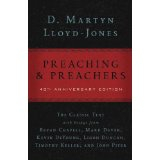
Book Review: Preaching and Preachers (40th Anniversary Edition) by *D. Martyn Lloyd-Jones

A Preaching Classic Just Got Even Better

 In order to introduce a new generation of preachers to “the Doctor” this book published in 1972 has been reissued. All the material from a series of lectures the Doctor gave in 1969 at Westminster Theological Seminary in Philadelphia – and is still very relevant to the times in which we are living in the 21st century. The Doctor was one who knew his cultural climate and ministered in a setting in London, that (especially in comparison with big cities in America) was ahead of its time in terms of a naturalistic worldview and skepticism toward religion and the gospel. However, he never backed down from the primacy and centrality of preaching the gospel of Jesus Christ from the Scriptures.

It’s doubtful that very many preachers will agree with everything Lloyd-Jones has to say in this book, but it’s also very probable that you will gain profound insight, wisdom, and be encouraged in your preaching. You will most certainly be convinced of the importance of preaching, the relevance of preaching, and become a better gospel empowered preacher as a result of reading this book.

What’s different about the 40th edition? Well, the 1972 version has been left in tact, but there are several very welcome features:

Several new essays by modern preachers who share what they have learned and applied from the Doctor – Ligon Duncan writes an essay entitled, “Some things to Look For and Wrestle With;” Tim Keller writes an essay called “A Tract for the Times;” John Piper writes on “Martyn Lloyd-Jones: The Preacher;” Kevin DeYoung writes an essay on “Preaching for Brand New and Tired Old Preachers;” Mark Dever writes on “What I’ve Learned about Preaching From Martyn Lloyd-Jones;” and lastly Bryan Chapell pens “Martyn Lloyd-Jones: An Uncommon Zeal.”

Another new feature is that each chapter contains several questions for study and discussion that can be useful for students, pastors, or church staffs to use in discussion or small group study. I am so glad that this new edition is finally here, and hope that it will inspire a new generation of preachers to proclaim the gospel from Genesis to Revelation with the unction of the Spirit, knowledge of the Scriptures, love for Christ, and passion of “the Doctor.”


*J.I. Packer first heard Dr. D. Martyn Lloyd-Jones preach when he was a 22-year-old student in London. Upon hearing Lloyd-Jones, Packer remarked that he had “never heard such preaching…[delivered] with the force of electric shock, bringing to at least one of his listeners more of a sense of God than any other man.” As Packer’s statement suggests, Lloyd-Jones’s life-long ministry had a profound impact not only on lay-people, but on the very leaders of the Christian church as well.

Although Lloyd-Jones was to become one of the great Christian thinkers of the twentieth century, his career began far removed from the Church. Born in Cardiff, Wales in 1899, Lloyd-Jones moved to London with his family at the age of 14. He was driven by a strong desire to be a doctor and attended medical school at St. Bartholomew’s Teaching Hospital in London. A remarkably bright student, Lloyd-Jones earned his M.D. at the age of 22 and immediately began working as the chief clinical assistant to Sir Thomas Horder, who referred to Lloyd-Jones as, “The most accurate thinker that I ever knew.”

However, at beginning his medical career, Lloyd-Jones began reading the Bible and was soon gripped by the logic of the Christian gospel. In his early twenties, he underwent a quiet but profound conversion to Christianity. Feeling propelled by a new desire to share his faith with others, Lloyd-Jones began to think that preaching would provide the best avenue for him to promote the gospel of Christ. But, at the same time, Lloyd-Jones had fallen in love with a young medical student named Bethan Phillips. He felt torn, knowing that if she were to marry him she would need to share his vision of abandoning medicine to pursue the ministry, and he prayed hard for God to work in her heart. Bethan did come to share Martyn’s vision for preaching and she married him in 1927. Together they shocked the press by making a dramatic move from the elite medical community of Harley Street to a small house in Lloyd-Jones’s native country. There, Dr. D. Martyn Lloyd Jones began his preaching career at the Bethlehem Forward Movement Mission Church in Aberavon, Wales.

In 1938, G. Campbell Morgan, the Minister of Westminster Chapel, heard Lloyd-Jones preach and decided that he wanted to have him as his successor in London. In the following year, Lloyd-Jones, his wife, and two daughters, Elizabeth and Ann, moved to London. Although Lloyd-Jones began his ministry at Westminster on a temporary basis, his stay there would be anything but temporary. His preaching drew in thousands of people and the congregation responded enthusiastically to his sharp, analytical presentation of the Christian faith. He remained at Westminster for thirty years, faithfully preaching through even the bomb raids of the World War II, and retired from there in 1968. While in London, Lloyd-Jones also had a formative influence on the InterVarsity Fellowship of Evangelical Unions by serving as its President for many years. Even today InterVarsity is a thriving world-wide ministry and it owes a large portion of its success to the influential work of Lloyd-Jones.

After leaving the church at the age of 69, Lloyd-Jones was unwilling to simply relax in retirement and he continued to work as hard as he had while he was at Westminster. He published some of his best work during that time and he continued to travel and preach at various engagements. Dr. D. Martyn Lloyd-Jones worked until in 1981, weakened by illness, he died quietly in his sleep at the age of 82.

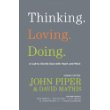
Book Review: Thinking, Loving, Doing edited by John Piper & David Mathis

Theological and Practical Help For Balancing the Mind, Heart, and Hands

This book is a compilation of several outstanding pastoral addresses from experienced Christian leaders from a recent Desiring God Conference on the theme of balancing the mind, the heart (emotions), and the hands. I will seek to summarize what each chapter/leader addresses in their specific topic of choice and what I benefited from in my reading of each chapter:

The Introduction is written by David Mathis (an elder at Bethlehem Baptist Church in Minneapolis). He makes a helpful distinction between churches that focus on being pure and those that focus on unity and encourages those who lean one way or the other to learn from the other side. He then proceeds to use Dr. John Frames helpful distinctions of tri-perspectivalism, whereby some churches emphasis The Kingly role, some the Priestly role, and others the Prophetic role of Christ. He then sets up the following chapters in the book and shows how each contributes to bring balance to how we can love Christ with our minds, hearts, and hands.

I personally really enjoyed this chapter as it caused me to reflect on my own strengths and weaknesses in my personal and corporate involvement in the body of Christ and what I have to offer others and what I can learn from others in becoming more Christ-like in balancing the tri-perspectivalism as described in the chapter via John Frames helpful schema.

Chapter Two is entitled “The Battle for Your Mind” by Rick Warren (everyone knows who he is – if you are on planet Earth). He does a topical study from the Scriptures on the pitfalls we wrestle with in the battle between our ears, and then proceeds to give four principles on thinking; five levels of learning; and five things to remember when we are teaching others.

As usual, Warren is very practical, and gives some good acronyms whereby one can remember easily his various points. What I liked about this chapter is that it was very thorough and broad and it is a chapter I will go back to again and again in my teaching others, and being reminded myself how to win the battle for the mind utilizing distinct principles in taking every thought captive for Christ.

Chapter Three is the most intellectually demanding chapter written by Albert Mohler – the President of the Southern Baptist Seminary in Louisville. He gives a very thought provoking analysis of our present state of thinking in light of Romans 1:18-32 and postmodernism. He gives 14 insightful noetic effects on the mind due to the fall; five precepts of the modern mind, 12 features of the natural mind, and three practical ways to combat the blind spots that we all have due to the fall.

Dr. Mohler has an amazing mind and what this chapter did for me primarily is to help me think more theologically about how thinking must be reformed and renewed by the Scriptures and the amazing effects of the fall upon our minds. It really motivated me to study the Scriptures and Culture more thouroughly then I typically do, so that I give more thought to how to declare the gospel the “natural” mind, and well as to the “spiritual” mind of those I seek to reach and grow in the gospel.

My favorite modern theologian – Dr. RC Sproul – founder of Ligonier Ministries writes about how Paul addresses the secular mind from Acts 17 and what we can learn from what he did, in our own approach to skeptics today.

Dr. Sproul makes the case for how we can never find “an explanation for being, for life, or for motion if we try to find it outside the being and character of God.” I was encouraged by this reminder of how amazing it is to have the perspective of God in my worldview, when so many have suppressed this, and are thus in great need of modern “Paul’s” to address the issues of the day from a Theo and Christo-centric perspective.

In Chapter Four Thabiti Anyabwile (Pastor in the Cayman Islands) addresses how we may encounter Islam by using the mind of Christ as opposed to being driven by fear where he rightly says, “where fear takes control, thinking does not.”

Pastor Anyabwile (a former Muslim who converted to Christianity as a young adult) does a fantastic job of giving an overview of pluralism, Islam, and how we should respond to Muslims. His chapter helped me to fear Islam less, and gave me a bigger heart to share the good news with the many Muslims who live in my community.

In Chapter Five, Francis Chan (Pastor and Writer in San Francisco) addresses how to think hard, combat pride and stay humble based on an exposition of 1 Corinthians 8. In this chapter Chan really does a great job showing how we can love more like Jesus by thinking more like him.

The Concluding chapter is by John Piper (Preaching Pastor of Bethlehem Baptist Church) and addresses how love flows out of us when we love God with all of our minds. He gives 8 points that he hopes this book will prevent in Christians, and then what he hopes that this book will awaken and increase: ‘Thinking for the sake of loving.”

I really enjoyed this book because it was deep theologically, and gave helpful applications from the Scriptures in how to love God and others with our minds, emotions, and actions. I highly recommend it and give it 5 stars because it’s a book I will come to again and again for my own personal walk with the Lord, and because it will help me to be more balanced in my own teaching, and coaching ministries.

*Note: I was provided a copy of this book from the publisher and was not required to give a favorable review.

God’s Greatness

“If you go to church with a to-do list, you will exhaust your people. Teach them about God’s greatness.” – John Piper

Book Review: Don’t Waste Your Cancer by John Piper

Highly Recommended for Any Believer Facing or Preparing for a Terminal Illness

God-centered Pastor-Theologian wrote this booklet on the evening when he had prostate-cancer surgery. I think his high view of God’s sovereignty and goodness is essential for anyone facing a terminal illness whether cancer or something else. In reality this booklet is excellent for all people to read and reflect on because as the writer to Hebrews says, “it is appointed for man to die once, and after that comes judgment (9:27).”

Dr. Piper elaborates on the following eleven principles with supporting Scriptures, and the compassion of a man who knows what it is like to look death in the face, and be able to kiss it – knowing that a loving God is in control of all things for His glory, and our ultimate good:

1)    “We waste our cancer if we don’t hear in our own groanings the hope-filled labor pains of a fallen world.

2)    We waste our cancer if we do not believe it is designed for us by God.

3)    We waste our cancer if we believe it is a curse and not a gift.

4)    We waste our cancer if we seek comfort from our odds rather than from God.

5)    We waste our cancer if we refuse to think about death.

6)    We waste our cancer if we think that ‘beating’ cancer means staying alive rather than cherishing Christ.

7)    We waste our cancer if we spend too much time reading about cancer and not enough time reading about God.

8)    We waste our cancer if we let it drive us into solitude instead of deepen our relationships with manifest affection.

9)    We waste our cancer if we grieve as those who have no hope.

10) We waste our cancer if we treat sin as casually as before.

11) We waste our cancer if we fail to use it as a means of witness to the truth and glory of Christ.”

I highly recommend this little booklet for any Christian in preparation for suffering for a terminal illness; in the midst of a terminal illness; or to give away to someone who has been diagnosed with a terminal illness. If you want God-centered and Biblical guidance in the midst of your suffering – look no further than Piper’s primer.

Book Review: The Pastor as Scholar and The Scholar as Pastor – John Piper and D.A. Carson (2011)

Two Men Focused on A Sovereign God and a Saving Gospel:

 This is a short book that I wish every pastor and theologian on the planet would read – especially American pastors and theologians. As an American pastor for over twenty years I have been, and am growing even more concerned over how pragmatism rather than theological foundations dominate our approach to life and ministry. The greatest movements throughout Church History have always occurred when godly men were consumed with the glory of God and through that focus were able to under gird their flocks with a solid foundation that prepared them for life via a robust belief in the Sovereignty of God and His glorious gospel and how that connects to all of life. This book demonstrates how two of the finest scholar-pastors in the 20-21st century make it happen. I long for a day when Theology will once again not be marginalized in our Institutions or Churches, but once again be deemed the “Queen of the Sciences” due to the efforts of men like John Piper, D.A. Carson, and those who will follow their lead – through their example as articulated in this wonderful book.

 The book consists of four chapters entitled:

1) “The Return of the Pastor Scholar” by Owen Strachan. In this brief introduction Strachan shows how history is replete with pastor-scholars, and scholar-pastors who demonstrate “that robust theology, so far from hindering the practice of ministry, actually enriches it, even as the practice of ministry enhances and increases one’s appreciation for theology.” John Piper and D. A. Carson fit this mold and he calls for pastors and scholars to be a “realistic combination” of both – scholarly and pastoral (practicing a theology of the heart, mind, and hands is the way I would put it).

 2) “A Personal Journey and the Joyful Place of Scholarship” by John Piper. Here Piper shares how his life and educational experiences combined to bring about the overarching theme of his life and ministry – “that God is most glorified in us when we are most satisfied in him.” He makes the point that he seeks to be like the apostle Paul in his ministry by “talking about his personal life and experience with God with a view to helping his listeners.” He then spends the large portion of the chapter answering the question: “What were the impulses toward scholarship and the pastorate?” Piper writes about the major writers, pastors, teachers, and experiences in his life that shaped him to study hard (he was not a naturally gifted student and shares his struggles) in order to communicate with sound logic and passion the glories of our all satisfying Savior and Lord. Piper gives us a fascinating glimpse into his personal life and what drew him into the pastorate after initially becoming a New Testament scholar. He calls pastors to strive for balance in their calling as scholars and the pastorate by becoming Christian Hedonists – bringing the head and heart in harmony by living for and declaring the glories of Christ in truth and passionate love for one’s flock. He articulates balancing the pastoral/scholarly life in this way, “Right thinking about God exists to serve right feelings for God. Logic exists for the sake of love. Reasoning exists for the sake of rejoicing. Doctrine exists for the sake of delight…If I were to claim the role of pastor-scholar, this is what I would mean by it. Think rightly and deeply about Word and the world with a view to seeing the greatness of God and his works (especially the work of Christ) so that the affections of our hearts might rest on a true foundation and God might be honored by how we feel toward him and by the behaviors that flow from his heart…If I am scholarly, it is not in the sense because I try to stay on the cutting edge in the discipline of biblical and theological studies. I am far too limited for that. What ‘scholarly’ would mean for me is that the greatest object of knowledge is God and that he has revealed himself authoritatively in a book; and that I should work with all my might and all my heart and all my soul and all my mind to know and enjoy him and to make him known for the joy of others…Surely this is the goal of every pastor.”

 3) “The Scholar as Pastor: Lessons from the Church and Academy” by D.A. Carson. Carson warns early on in this chapter, “Nothing is quite as deceitful as an evangelical scholarly mind that thinks it is especially close to God because of its scholarship rather than because of Jesus.” In other words, scholarship is not an end in and of itself but its pursuit must be out of love for Jesus and for what Jesus loves. There must be a balance of loving God with our minds and our hearts. Carson proceeds to give a dozen cautions, warnings, and vignettes of advice to scholars with the theme of accurately handling the Word and realizing the impact of lives that you influence for the sake of the church and culture via your research, writing, and mentoring influence for the generations to come.

4) “The Preacher, the Professor, and the True Pastor Scholar” by David Mathis. David Mathis shares how our Lord and Savior Jesus Christ is the perfect example of a pastor-scholar. Jesus perfectly models the function of the mind, heart, and hands in the Gospels. He is the one that all Christians want to emulate. Mathis gives some other examples of modern-day pastor scholars and calls those in the ministry to emulate their calling using our skills and talents to bring about a new reformation and concludes with a prayer with which I wholeheartedly concur, “So in charging pastors to be more serious about the life of the mind, and in challenging scholars to be more engaged with the life of the church, we conclude with this prayer, that all our thoughtful shepherding and all our pastoral scholarship may be to the great end of having the gospel message about Jesus dwell richly (Col. 3:16) both in us and in our people; that knowing Jesus would be the great end of all our pasturing and our scholarship; that we ourselves, in all our preaching, writing, studying, and counseling, would continue to see ourselves as the great beneficiaries of his great grace; that into eternity we would be followers of Jesus more and more shaped, saturated, and transformed by his person and work. To Jesus, the great pastor-scholar, be the glory. Amen”

This book was simply a delight to read by two of the men that have in the past, and in the present continue to radically shape and influence my developing Christological world-view and how thinking in a God-centered manner lays the foundation for everything in life. As a preaching pastor I owe a great debt to John Piper in helping me to find my joy and satisfaction in Christ above all things, and to D.A. Carson for helping me interpret the Scriptures so as to teach accurately the Christological significance of the Bible. Together – through their speaking and writing – they have allowed me to delve into the depths of God and helped me to better communicate His majestic sovereignty as exemplified in the glorious gospel.

Continuing in a long line of Scholar-Pastors in the mold of Augustine, Calvin, Luther, Edwards, Spurgeon, and David Martyn Lloyd-Jones – Carson and Piper are a tremendous gift to the Church, and those who have yet to believe and follow Christ (even though they don’t know it). Through their prolific writing and speaking ministries in the Theological Institutions, Conferences, and the Church’s where they have served, Carson and Piper’s influence in promoting a robust Christo-Centric Theology is incalculable. My hope is that this book will be used by God to inspire pastors to be more scholarly in their endeavors, and for scholars to be more pastoral in their endeavors so that together we can stand on the shoulders of the pastor-scholars who have gone before us – so as to magnify the glory of God in Christ in our churches and penetrate the world with the soul satisfying gospel declared in the Scriptures.

Disclosure of Material Connection: I received this book free from the publisher – Crossway Books – book review bloggers program. I was not required to write a positive review. The opinions I have expressed are my own. I am disclosing this in accordance with the Federal Trade Commission’s 16 CFR Part 255: “Guides Concerning the Use of Endorsements and Testimonials in Advertising.”