Vertical Christianity: Valuing Marriage


Ep. 4: “How To Develop A Vertical Life Plan” – Part 4 – “Valuing Marriage”


May 10, 2025 – Dr. David P. Craig, Founder, Vertical Living Ministries 


Review: In our developing a written Vertical Life Plan we have already looked at the first three steps: (1) Writing out your life Calling, Mission, or Vision statement. (2) Writing out key verses and quotes to remind you of why this vision statement is biblical and aligned with God’s purpose for your life. And (3A) we learned the importance of valuing what Jesus values from His life and teachings in the Gospels. Now we look at our next most important value in life if we are married. 


VALUE 2: MY RELATIONSHIP WITH MY WIFE


KEY VERSES:


Ephesians 5:22-33,  Wives, be subject to your own husbands, as to the Lord. For the husband is the head of the wife, as Christ also is the head of the church, He Himself being the Savior of the body. But as the church is subject to Christ, so also the wives ought to be to their husbands in everything. Husbands, love your wives, just as Christ also loved the church and gave Himself up for her. So that He might sanctify her, having cleansed her by the washing of water with the word, that He might present to Himself the church in all her glory, having no spot or wrinkle or any such thing, but that she would be holy and blameless. So husbands ought also to love their own wives as their own bodies. He who loves his own wife loves himself; for no one ever hated his own flesh, but nourishes and cherishes it, just as Christ also does the church, because we are members of His body. For this reason a man shall leave his father and mother and be joined to his wife, and the two shall become one flesh. This mystery is great, but I am speaking with reference to Christ and the church. Nevertheless, each individual among you also is to love his own wife even as himself, and the wife must see to it that she respects her husband. (LSB)


VALUE EXPRESSED:


I married Dana on April 4, 1992. On that day I vowed to love, cherish, honor, provide, protect, and be her spiritual leader as her covenant partner for life. No matter what life throws our way – sickness, trials, financial setbacks, conflicts, and all manner of suffering – we are committed to being covenant allies until death do us part. We made this covenant before God and over 500 witnesses. I am committed to living out these vows to the fullest. It is my desire to have a great marriage and one that is exemplary for my family, church and community. I believe that one of the greatest gifts I can give my five children and eleven grandchildren is to love their mother (“Grammie”) as Christ loves His bride—the Church. This love is unconditional, sacrificial, and never fails (1 Corinthians 13:8). I am wholeheartedly committed to show Dana by my words and actions that next to God she is the one person I love and value or treasure the most.


Quotes That Affirm How I Need to Value My Wife

  • “According to the Bible, God devised marriage to reflect His saving love for us in Christ, to refine our character, to create stable human community for the birth and maturation of children, and to accomplish all this by bringing the complementary sexes into an enduring whole-life union…The purpose of your marriage is to reenact the gospel.” – Tim Keller

  • “What we believe about God determines the quality of our marriage.” – Dave Harvey

  • “A happy marriage is the union of two forgivers.” (Ruth and Billy Graham were married 63 years before she went home to be with the Lord first) Ruth Graham Bell

  • “Love is not maximum emotion. Love is maximum commitment.”Sinclair Ferguson

  • “Marriage is a call to die [to self]… Christian marriage vows are the inception of a lifelong practice of death, of giving over not only all you have, but all you are. Is this a grim gallows call? Not at all! It is no more grim than dying to self and following Christ. In fact, those who lovingly die for their [spouses] are those who know the most joy, have the most fulfilling marriages, and experience the most love.” – R. Kent Hughes

  • “In marriage, the goal is holiness, not happiness. Happiness comes as a result of holiness.” – Erwin Lutzer

  • “Three Guidelines for Christian Marriage: (1) First of all, and foundational to a biblical understanding of marriage, is the truth that marriage is a permanent relationship. In Mark 10:6-8, Jesus said, ‘But from the beginning of creation, ‘God made them male and female.’ ‘Therefore a man shall leave his father and mother and cleave to his wife, and the two shall become one flesh.’ So they are no longer two but one flesh.” And then in verse nine we read, “What therefore God has joined together, let not man separate.’” (2) A second biblical guideline is that marriage is a harmonious partnership. The Bible speaks of the union of the husband and wife as harmonious. Jesus said, ‘Therefore a man shall leave his father and mother and hold fast to his wife, and the two shall become one flesh.’ So they are no longer two but one flesh. What therefore God has joined together, let not man separate” (Mark 10:7-9). ..I have never known of a broken marriage where the husband and wife had enjoyed a true partnership that had been harmonious and mutually sacrificial. But God established marriage to be just that, and His Word gives guidelines about how to keep harmony in the home…But there is a truth that is even greater than the truths that marriage is a permanent relationship and a harmonious partnership. (3) And that is the biblical teaching that marriage is a spiritual companionship. Christian marriage should be a companionship where each helps the other grow in Christ. The Bible tells us that in the marriage relationship, the husband and wife become one. It is my conviction that that speaks not only of physical union, but of a spiritual union as well.”  ~ George Sweeting

  • VALUING MARRIAGE PUT INTO ACTION:

    1. Daily Connections – Whether when we were first married and already had three kids at home; when we had five kids in the home, or even now as empty nesters we have always had a time or times throughout the day to connect together as husband and wife. This can involve playing a game of backgammon, sitting down face to face, praying together, sharing a meal together, reading scripture and discussing it, or going on a walk. It is a time to just commune together, laugh together, enjoy one another’s company and continue to learn from one another, about each other, and go deeper in our relationship.

    1. Weekly Taking Care of Business Date. Dana and I started doing this pretty early in our marriage because we had so much going on with kids school events and activities: sports, dance, plays, church activities, and work. With so many responsibilities we wanted to make sure we didn’t “double-book” ourselves – and strive for balance in the way we spent our time, and developed meaningful relationships with the Lord, one another, family, and loving others as Christ loves us.

    2. Weekly Fun Date. We live in a beautiful area Marin County – north of San Francisco that has a plethora of things to do, places to go, and amazing scenery and great places to eat. Two places we frequent regularly are Healdsburg and Sonoma – both a half an hour away. We look forward to just spending time together without all the responsibilities and distractions of our busy lives. We feel like these dates are rejuvenating mini-vacations that we cherish each week. It gives us something to look forward to and revives and rekindles our relationship. We have made these fun dates a priority from when we had little children and now into the stage of life where we can spend more time together. It has always been a highlight for us – and has contributed largely to what we would both describe as a key to having a great marriage.

    3. Yearly Renewal – Once or twice a year we plan a getaway to just rekindle our romance and grow in our relationship with Jesus and one another. We have been on various marriage retreats – like the Family Life conference “A Weekend to Remember.” We have been to numerous conferences. However, we have most enjoyed traveling to destinations and exploring together – just the two of us. We have been to New Zealand, Argentina, England, France, and explored cities all over the USA like Boston, Seattle, San Diego, San Antonio, and many other beautiful places in various parts of the country – and especially close to home in California. These times are like mini9-honeymoons that rekindle and rejuvenate our relationship because we have no other responsibilities or commitments to attend to, but can just enjoy one another fully.

    4. Marriage Reading – It’s really amazing that so few people prepare for marriage, and many do not continue to grow in the subject of marriage after marriage. A doctor will spend about a dozen years of schooling and interning to become a Doctor; Engineers, Lawyers, and many other students will spend years of education for their professions. Dana and I have always lived by the motto, “If you’re going to be married why not make it a great marriage.” This means that we are committed to learning and growing in our relationship and are constantly reading and listening to teaching on marriage. To truly value your marriage it means being a wife long student of the subject of marriage as well as of one another. Some of our favorite books on marriage that have helped us are Love and Respect: The Love She Most Desires; The Respect He Desperately Needs by Emerson Eggerichs, His Needs, Her Needs: Making Romantic Love Last by Willard Harley, and The Intimate Marriage: A Practical Guide to Building a Great Marriage by R.C. Sproul. The Meaning of Marriage by Tim Keller.
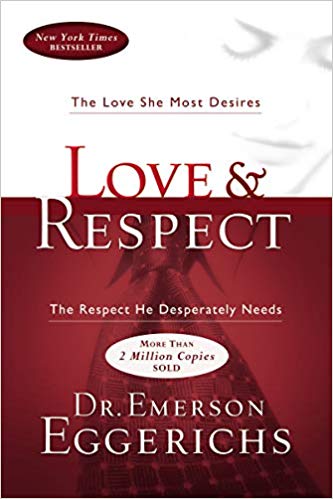

    Book Review on Dr. Emerson Eggerichs – “Love and Respect”

    41xodAvnpPL._SX331_BO1,204,203,200_.jpg

    Your One-Stop Handbook for a Biblically Based Marriage

    Book Reviewed by Dr. David P. Craig 

    As someone who has been happily married for 28 years my wife and I have made a habit on reading and discussing at least one book on marriage a year. It’s a shame that so many people will spend 8-11 years getting graduate degrees and studying for thousands of hours and yet do not make the slightest effort to prepare for and make the best of their marriages. This was our third time reading through this book – which I can say without hesitation is the best single book on marriage I’ve ever read (and I’ve read around 50 books on marriage).

    What makes this book worth reading? It’s based on a biblical principle from Ephesians 5:22-33. The principle is that what a husband needs most from his wife is respect; and what a wife needs most from her husband is love. Eggerichs fleshes this principle out thoroughly, clearly, and practically. He was a pastor who after writing this book ended up devoting his whole ministry to teaching the principle of “Love and Respect.” 

    In Part One of the Book Eggerichs discusses what he calls the “Crazy Cycle.” The crazy cycle is what happens to a couple when the wife is not respecting her husband and the husband is not loving his wife. This results in a habitual punishing cycle where lack of love (what the wife most needs) and a lack of respect (what the husband most needs) are perpetuated in a vicious circle. In seven chapters Eggerichs discusses why, how, and when this happens. He gives an abundant amount of real life examples to show how both husbands and wives get on the crazy cycle and how this cycle spins around and around as a result.

    In Part Two Eggerichs discusses how to get off the crazy cycle and onto the “Energizing Cycle.” In chapters 8-14 he uses the acronym: C-O-U-P-L-E to show the husband how he can get off the crazy cycle by specific ways to meet her greatest need to be loved. Each chapter takes each letter of C-O-U-P-L-E to help the man practically and actively love his wife. The letters stand for: (1) Closeness – She wants you to be close; (2) Openness – She wants you to open up to her; (3) Understanding – Don’t try to “fix” her, just listen to her; (4) Peacemaking – She wants you to say, “I’m sorry” (5) Loyalty – She needs to know you are committed; (6) Esteem – She wants you to honor and cherish her.

    In chapters 15-22 Eggerichs specifically addresses the wife and how by using the acronym C-H-A-I-R-S she can demonstrate respect to her husband (what he most needs from her). The letters in C-H-A-I-R-S stand for (1) Conquest – Appreciate his desire to work and achieve; (2) Hierarchy – Appreciate his desire to protect and provide for you; (3) Authority – Appreciate his desire to serve and lead ; (4) Insight – Appreciate his desire to analyze and counsel; (5) Relationship – Appreciate his desire for shoulder-to-shoulder friendship ; (6). Sexuality – Appreciate his desire for sexual intimacy.

    The book closes with what he calls the “Rewarded Cycle”. Ultimately, as a Christian whether you are single or married you live in submission and obedience to Jesus. He encourages those in lousy marriages to be obedient to Jesus in unconditionally loving or respecting your spouse regardless of whether or not your spouse responds to you. In most cases spouses do respond better when we unconditionally and habitually love or respect them. However, no matter how our spouse reacts or responds to the way we treat them, it’s important to know that God is pleased with our obedience to Him.

    Love and Respect in my opinion is the best book on marriage available today. If you only read and apply one book on marriage, this is your one-stop handbook for taking a bad marriage to good, and a good marriage to great! I can give testimony after 28 great years of marriage that God’s principles work – a husband was designed by God to need respect and a wife was designed by her Maker to need love. Eggerichs gives a plethora of illustrations, examples, and biblically fleshes out how to do these things in a way that is pleasing to God and beneficial to the flourishing health of a biblical marriage based on God’s perfect design of “Love and Respect.”

    How Should Christians Respond to Hate?

    HOW SHOULD CHRISTIANS REACT TO HATE?

    Chris Broussard

    By Dan Darling

    It’s no secret that the biblical sexual ethic, a beautiful monogamous relationship reserved for marriage between a man and a woman, has swiftly fallen out of favor in our culture. The recent declaration that Jason Collins, a veteran NBA center, has exposed the deep rifts in our society on the issue of homosexuality. While most of the world celebrated Collin’s courage, ESPN NBA reporter, Chris Broussard, a committed evangelical Christian, had his own courage to say, into a stiff wind of opposition, that Collin’s lifestyle choices conflict with the Christian faith

    Nothing in this story should surprise us. Society has been moving this direction for some time now. But what caught me off guard, I guess, was the public shaming of the Christian position on marriage. I heard many, well-respected sports commentators, guys I’ve listened to and followed for many years, seemingly equate Christians like Broussard with bigots and with the ignorant and unlearned. The sweeping intolerance of Christianity, the crude names leveled at Broussard and others seems to mark a new moment in our country. The reality is that holding the biblical sexual ethic will now invite open scorn. I only expect it to get worse. I only expect those who stand firm on the Scriptures to experience further persecution and hostility. And we shouldn’t be surprised. Jesus himself promised that his followers would endure some level of persecution. “They hated me, they will hate you,” he predicted (John 15:18).

    So the question is this: how now shall we live? What should our reaction be? In my view there are two wrong responses and one right one.

    1) We can cave in and seek the approval of men rather than the approval of God. There is a growing movement in the evangelical world that is seeking to make complicated what the Scriptures make plain, namely that perhaps the Bible is not so explicitly condemning of homosexuality as we think. As a person wired to avoid conflict I’m sympathetic to the desire to find this in the Bible, but it is just not there. Jesus himself affirmed the law of Moses when he repeated the words from Genesis, “For this cause a man will leave his father and mother and cleave to His wife” (Matthew 19:5). And while Jesus offered grace to the women who violated the biblical marriage ethic and condemned the Pharisees who wanted to stone her, he also told her, “Go and sin no more.” He didn’t act as if her sexual activity out of marriage was okay. He said it was sin. Sin that brought him to this earth and nailed him to a cross. Sin he graciously has forgiven. Sin which invites the grace and holiness of God. As much as we want to cave in on marriage, because to do so would make our lives as Christians much, much easier, to do so is to abandon the way of Christ. I’m reminded of Peter’s words to the persecuted believers of the 1st Century, “Stand firm in the faith” (1 Peter 5:19).

    2) We can ratchet up the angry, hateful, personal rhetoric. As shameful it is to cave in on Scriptural truth, it’s equally sinful to sort of use our position as an increasingly marginalized minority to lash out at those who don’t agree with us. But if we’re to take serious the truth we claim to uphold, we have to listen to all the words of Jesus, including his words, “Love your enemies” (Matthew 5:43-48). And we have to listen to the words of that same Apostle Peter. The same guy who told us to “stand firm” also told us to do it with civility and respect (1 Peter 3:15). I find it interesting that Peter, speaking to an increasingly marginalized, persecuted group of Christians, found it important to say, essentially, “Make sure you suffer, not for your own evil, but for doing good” (1 Peter 2:20; 1 Peter 3:17). In other words, we are to speak firmly, but with kindness, winsomeness, charity, and grace. If we are honest, we would admit that the Christian community does not always do this well. We should disagree with Jason Collin’s choices, but we should not mock him, we should not post crude or hurtful slurs online. We should not slander those who disagree with us. We should lead with grace, remembering that Jesus didn’t come to condemn, but to offer salvation and life. Jesus came for sinners and so we should seek to love sinners as much as He did. We should, like Paul, remember that we are counted in that group: we are as much sinners in need of grace as the unrepentant homosexual. I find it interesting that Paul, at the end of his life, nearing the time of his martyrdom at the hands of a cruel despot, surveyed the entire landscape and said, “I am the chief of sinners” (1 Timothy 1:15). Imagine that. Paul looked around the entire world, saw wicked men like Nero and the soft Christians who betrayed him and yet said, “They may be sinners, but I’m worse.” What a spirit of humility! This is the spirit that should inform our engagement on these issues where most of the culture resists. We should as the Spirit to help us fight the urge to return rhetorical evil with rhetorical evil (1 Peter 3:9). We should reject the sort of knee-jerk, crude, mean-spirited kind of speaking that seems to characterize much of our public discourse. Civility is not unimportant and it’s not overrated and it’s not the enemy of courage.

    3) We can respond with love and grace. 

    2 Timothy 3:12 reminds us that “all who live godly in Christ will suffer persecution.” The level of persecution we face today in America is low-level at best. Much of what we think is persecution is simply consequences of our own inability to treat people with grace. But we’re moving into an era where our positions on the issues may invite charges of bigotry. This is where we must not react with surprise or fear–remembering that trials are an opportunity for joy (James 1:2) and occasions for growth and Christlikeness (John 15; James 1:2-4). Fear stems from a lack of faith and fear causes us to react in unloving ways. But if we believe that God is completely sovereign and that we have been tasked by Him to the ministry of reconciliation (2 Corinthians 5:18), it is incumbent on us to model Jesus’ behavior and react to hatred and intolerance with grace and love. We should be wise about responding to every charge with a countercharge. We should hold our fire sometimes, as Jesus did in the face of false accusations (John 18:33-38). We should forgive others, looking to Christ’s own forgiveness of us (Ephesians 4:32) and His forgiveness of those who crucified him, “Forgive them, for they know not what they do” (Luke 23:42). We should not be defensive, whiny, petulant. We should work hard to  see every human as someone worthy of respect (1 Peter 2:17), created in the image of God (James 3:9). We should not make our fight personal or political (Ephesians 6:12). The real enemy doesn’t have a human face, but is our adversary (1 Peter 5:8). And our real hope is not in a short-term victory, but in the future hope of a coming kingdom, another world, a city whose builder and maker is God (Matthew 6:10; Hebrews 11:10).

    As followers of Jesus, we’re not simply called to be counter-cultural with our sexual ethics, but also in the way we talk, speak, and articulate these things. If we are called to suffer for our faith, let’s pray God gives us the courage and grace to endure and that our lives are but a small glimpse of Christ within.

    SOURCE: http://www.crosswalk.com/blogs/daniel-darling/how-should-christians-react-to-hate.html

    ABOUT THE AUTHOR

    Daniel Darling is the Vice President for Communications for the Ethics and Religious Liberty Commission of the Southern Baptist Convention (ERLC). For five years, Dan served as Senior Pastor of Gages Lake Bible Church in the northwest suburbs of Chicago and is the author of several books, including Teen People of the Bible, Crash Course, iFaith, Real, and his latest, Activist Faith. He is a weekly contributor to Out of Ur, the blog of Leadership Journal. His work has been featured in evangelical publications such as Relevant Magazine, Homelife, Focus on the Family, Marriage Partnership, In Touch with Dr. Charles Stanley. He has guest-posted on leading blogs such as Michael Hyatt, The Gospel Coalition, OnFaith (Washington Post), and others. He is a contributing writer for many publications including Stand Firm, Enrichment Journal and others. Dan’s op-eds have appeared in Washington Posts’ On Faith, CNN.com’s Belief Blog, and other newspapers and opinion sites. He is a featured blogger for Crosswalk.com, Churchleaders.com and Believe.com, Covenant Eyes, G92, and others. Publisher’s Weekly called his writing style “substantive and punchy.” Dan is a sought-after speaker and has been interviewed on TV and radio outlets across the country, including CNN, 100 Huntley Street, Moody Broadcasting Network, Harvest Television, The Sandy Rios Show, American Family Radio, the Salem Radio Network, and a host of other local and national Christian media. He holds a bachelor’s degree in pastoral ministry from Dayspring Bible College and is pursuing a Masters of Divinity degree from Trinity Evangelical Divinity School. He and his wife Angela have four children and reside in the Nashville area. Daniel is represented by Tamela Hancock Murray of The Steve Laube Literary Agency

    Book Review: Loving the Way Jesus Loves by Phil Ryken

    Jesus’ Loves Like No One Else – Perfectly! 

    One of the biggest battles that we all face (if we are honest with ourselves) is that we are incurably selfish, self-absorbed, and idolatrous at the very core of our hearts. In Paul’s letter to the Corinthians he addresses this core reality that leads to all the problems or symptoms affecting the church due to this foundational problem – a lack of love for God and for one another. Phil Ryken has written a very convicting, and yet practically helpful book that exegetes from the context of 1 Corinthians 13 (Biblical Exegesis) but also walks you through the Gospels (giving a Biblical theology of love) and demonstrates how Jesus exemplifies the genuine love that is being described in Corinthians.

    The reason that this book and applying this book and the Bible is so challenging is captured well by Ryken mid-way through the book where he writes:

    “Unfortunately, many of our attitudes and actions are exactly the opposite of what they ought to be, and as a result, our hearts are constricted. This is one of the reasons why 1 Corinthians 13 is such a challenge for us. All of the things it tells us that love does are almost impossible for us to do, whereas all of the things it tells us that love never does are things we do all the time. This is because we love ourselves more than we love other people or even God.”

    Ryken brilliantly and helpfully shows how Jesus does what we can’t do – love perfectly like Him. He shows how each aspect of love in 1 Corinthians 13 (e.g., patience, kindness, not envious, etc.,) is modeled from the Gospels in the life, death, resurrection, and future coming of Christ and how we can be receivers and reciprocators of this kind of love. Though the book is very convicting, it is also very encouraging because it demonstrates that in the gospel – even when we fail to love like Him – he never fails to love us in the deep ways described in 1 Corinthians 13.

    I highly recommend this book in order to come to a deeper understanding of godly love, Christ’s love for us, and how to grow more in your love for God and others. Ryken has given us a Biblical Theology of love manifested in Christ, and reiterated in Paul’s letter to the church at Corinth – something we desperately need to apply in today’s church as well. One of the great features of the book is that it contains a very thorough study guide in the back of the book for discipleship or small group discussion.

    *I received a free copy of this book by Crossway Publishers and was not required to write a positive review.