“A Land of Hills and Valleys”
Excerpt from Chapter 1: From the Wonderful Devotional book Turning Mountains into Molehills by Warren W. Wiersbe (Grand Rapids: Baker, 1987 – Only changes are that the Scriptures are from KJV to ESV)
For some reason, I have never enjoyed geography. Perhaps I didn’t study hard enough in school. But as I study my Bible, I find myself becoming greatly interested in God’s geography, particularly something that God said about the Promised Land He was giving to His people, Israel. “But the land that you are going over to possess is a land of hills and valleys, which drinks water by the rain from heaven (Deuteronomy 11:11).” I can’t think of a better description of the Christian life—a land of hills and valleys.
 Christians today have a great deal in common with the nation of Israel back in Moses’ day, even though there are some radical differences. For example, there was a time when the people were in bondage; and God set them free. Once you and I were in bondage to sin; but God has set us free. God set Israel free by the blood of the lamb; and God has set us free by the blood of Jesus Christ, God’s Lamb without spot or blemish. God led the nation with a cloud by day and a pillar of fire by night; and God leads us today through His Holy Word. God brought His people to the border of their inheritance and told them to go in and possess the land by faith; but, unfortunately they fell into unbelief and failed to posses the land.
The Lord has given Christians today a wonderful spiritual inheritance in Christ, and all we have to do is possess it by faith. The Bible is the divine road map that describes our inheritance for us; and God says that our inheritance is “a land of hills and valleys.”
Now, this fact may come as a surprise to some of you. Many people have the idea that the Christian life is an easy life—that once you are saved, your troubles are over. Well, once you are saved, many problems are solved; but many new ones appear. Jesus never promised that it would be easy for us to claim our inheritance. “In this world you will have tribulation,” He warned His disciples. “If they have hated me, they will hate you.” The Christian life is a land of hills and valleys.
Let’s begin with the valleys. Have you ever noticed that most of the great people in the Bible went through valley experiences? In Genesis 15 I find Abraham going through “the horror of a great darkness.” I find Isaac trembling because one of his sons has tricked him. I see Jacob wrestling all night until he is willing to surrender to God. I hear Moses crying out to God, “I am not able to bear all this people alone…kill me, I beg you.” I see David hiding in a cave a wondering if the crown would ever be on his head. I hear the prophet Isaiah lamenting, “I have labored in vain; I have spent my strength for nothing and in vain!” (Isa. 49:4). I watch John the Baptist in prison as he sends his disciples to Jesus to ask, “Are you the Messiah, or should we look for another?” Yes, I even hear the great apostle Paul saying, “For we would not have you ignorant, brothers, or our trouble which came to us in Asia, that we were pressed out of measure, above strength, insomuch that we despaired even of life.” These men knew what it was to go through the valley.
Why does God permit these valleys to come into our lives? For one thing we learn some lessons in the valleys  that we could never learn on the mountaintop. Do you think that David could have written those wonderful psalms if had never known the trials in the valley? How could he have written ‘Even though I walk through the valley of the shadow of death, I will fear no evil, for I know that you are with me,” if he had not gone through the valley himself? Suppose Jeremiah had never gone through that terrible valley that made him the “Weeping Prophet”? Could he ever have written, “His compassions never fail; they are new every morning; great is your faithfulness” (Lam. 3:22,23)? Suppose Paul had never gone through the valley with his thorn in the flesh? Could he have written, “My grace is sufficient for you”? When we go through the valley, we learn lessons we could never learn any other way.
And, we grow in character in a way we could never grow apart from the valley. Great Christians are made by great trials. A man does not become patient simply by reading a book or praying a prayer. He becomes patient by going through the valley. Faith is cultivated in the darkness of the valley. God may teach us in the light, but he tests us in the darkness. This is why Paul wrote: “But we had the sentence of death in ourselves, that we should not trust in ourselves, but in God who raises the dead.” The Christian graces are developed as we walk through the valley.
But God has another purpose for the valley: as we go through the valley, we learn to help others. Psalm 84:6 puts it this way: “Who passing through the valley of weeping makes it a place of springs.” Here is a pilgrim going through a difficult valley, so difficult he is even weeping; but he leaves behind a well to refresh the pilgrims that will follow him. Perhaps the reason you are in the valley today is that God may comfort you so you in turn may comfort someone else. He wants you to leave a well behind. Paul had this in mind when he wrote, “God comforts us in all our tribulation that we may comfort them which are in any trouble, by the comfort we have received from God” (2 Cor. 1:4).
The Christian life is a land of hills and valleys. God ordains the valleys that He might teach us lessons we could never learn any other way. He leads us through the valleys so that we may grow in our Christian character, and so that we may help others when they go through the valley. But there’s a fourth reason He permits valleys, and it’s this: you cannot have hills unless you have valleys.
Wouldn’t it be wonderful if life were just a series of mountaintop experiences? Wouldn’t we be happier if there were no valleys in our lives? The Christian life is a land of hills and valleys, but we must never forget that you cannot have hills unless you have valleys.
God knows how to balance our lives. All sunshine makes the desert, says the old proverb; and all hills, without valleys, will make an immature and shallow life. If you and I want to enjoy the hilltops of happiness, we must be willing to experience the valleys of trial. It’s comforting and encouraging to know that at the end of every valley there is a hill, and atop that hill is a new experience of blessing from the Lord.
 I can’t help but notice that the lives of God’s people in the Bible were made up of both hills and valleys. Abraham received a great promise from God one day, and the next day the land was plunged into drought and famine. Isaac was born, and Abraham’s joy was complete. A few years later, God told him to offer his beloved son on the altar. The great prophet Moses experienced his hills and valleys. No sooner had he led the nation out of Egypt when they began to complain and ask to go back to bondage! Moses met God on the mountaintop and saw His glory; then he came down and discovered Israel dancing before a golden idol. Hills and valleys!
It was true even in the earthly life of our Lord. When Jesus was baptized in the Jordan River, the Father spoke from heaven and the Spirit came down on Jesus like a dove. What a mountaintop experience! But then the Spirit drove Jesus into the wilderness to be tempted by the devil. What a valley to go through! See Him as He enters Gethsemane, as he prays and sweats great drops of blood. See Him hanging on a cross! What a valley He endured! But then, see Him risen from the dead—radiant in the glorified body! What a mountaintop experience! Then He ascends to the highest heaven and sits at the right hand of God!
This is God’s word of encouragement to you as you go through the valley. He has a glorious blessing waiting for you at the end of the valley. The Christian life is a land of hills and valleys; and wherever you find a valley, you will always find a mountaintop at the other end. This is true because our Lord Jesus Christ has already gone before us to prepare a way. Every valley that we go through, Christ has already traveled before us.
I’m glad the Christian life is a land of hills and valleys. There is nothing monotonous about it. Every day presents a new challenge to grow in grace, a new opportunity to help others, a new privilege to receive grace and strength from Jesus Christ. It is a land of hills and valleys, and our God is a God of the hills and a God of the valleys.
*Warren W. Wiersbe is the Distinguished Professor of Preaching at Grand Rapids Baptist Seminary, Warren Wiersbe is the author of more than 100 books. Billy Graham calls him “one of the greatest Bible expositors of our generation.” Interestingly, Warren’s earliest works had nothing to do with scriptural interpretation. His interest was in magic, and his first published title was Action with Cards (1944).
“It was sort of imbecilic for a fifteen-year-old amateur magician to have the audacity to write a book and send it to one of the nation’s leading magic houses,” Warren says. But having a total of three books published by the L.L. Ireland Magic Company—before the age of 20—gave him a surge of confidence. In later years, he applied his confidence and writing talent to the Youth for Christ (YFC) ministry.
Warren wrote many articles and guidebooks for YFC over a three-year period, but not all his manuscripts were seen by the public eye. One effort in particular, The Life I Now Live, based on Galations 2:20, was never published. The reason, Warren explains with his characteristic humor, is simple: it was “a terrible book…Whenever I want to aggravate my wife, all I have to say is, ‘I think I’ll get out that Galations 2:20 manuscript and work on it.’” Fortunately, Warren’s good manuscripts far outnumbered the “terrible” ones, and he was eventually hired by Moody Press to write three books.
 The much-sought-after author then moved on to writing books for Calvary Baptist Church. It was during his ten years at Calvary that Expository Outlines on the New Testament and Expository Outlines on the Old Testament took shape. These two works later became the foundation of Warren’s widely popular Bible studies known as the Be series, featuring such titles as Be Loyal (a study on Matthew) and Be Delivered (a study on Exodus). Several of these books have been translated into Spanish.
His next avenue of ministry was Chicago’s Moody Memorial Church, where he served for seven years. He wrote nearly 20 books at Moody before moving to Lincoln, Nebraska, where he and his wife, Betty, now live. Prior to relocating, he had been the senior pastor of Moody Church, a teacher at Trinity Evangelical Divinity School, and a producer of the Back to the Bible radio program.
During all these years of ministry, Warren held many more posts and took part in other projects too numerous to mention. His accomplishments are extensive, and his catalog of biblical works is indeed impressive and far-reaching (many of his books have been translated into other languages). But Warren has no intention of slowing down any time soon, as he readily explains: “I don’t like it when people ask me how I’m enjoying my ‘retirement,’ because I’m still a very busy person who is not yet living on Social Security or a pension. Since my leaving Back to the Bible, at least a dozen books have been published, and the Lord willing, more are on the way.”
Wiersbe’s recent books include Your Next Miracle, The 20 Essential Qualities of a Child of God, The Bumps are What You Climb On, Classic Sermons on the Fruit of the Spirit, Classic Sermons on Jesus the Shepherd, Key Words of the Christian Life, Lonely People, A Gallery of Grace, Real Peace: Freedom and Conscience in the Christian Life, and On Being a Leader for God.

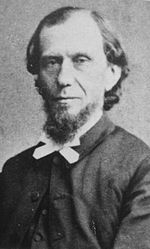 *From a Sermon by Andrew Murray on Acts 27:28-29 entitled “Anchors to Throw in a Time of Testing.” Andrew Murray was a Dutch Reformed Church missionary sent from Scotland to South Africa. Andrew pastored churches in Bloemfontein, Worcester, Cape Town and Wellington, all in South Africa. He was a champion of the South African Revival of 1860.




 LifeCoach4God