 The ABC’s of Salvation
How does a person become a Christian? There are three points—two things we must believe and one thing we must do. They are as simple as ABC.
A stands for “admit.” We must admit that we are sinners and that we are therefore under God’s judgment.
B stands for “believe.” We must believe that God loves us in spite of our sin and that he has acted in Jesus Christ to remove sin and restore us to himself.
C stands for “commit.” This is an act of faith by which we give up trying to run our own life and instead place ourselves in the hands of the Lord Jesus Christ, who died for us and rose again.
Admitting Sin
First, God demands that we admit without reservation that we are sinners and that we should therefore be separated from his presence forever. We are in rebellion against him, either consciously or unconsciously, and we deserve not grace but judgment.
Sin is an everyday experience and the number one problem of mankind. What is more, they recognize that the Bible everywhere insists upon this.
“The Scripture declares that the whole world is a prisoner of sin,” wrote Paul in the book of Galatians (Gal. 3:22).
In 1 Kings, chapter 8, King Solomon declared, “There is no one who does not sin” (v. 46).
Psalm 143:2 says, “No one living is righteous before you.”
Isaiah observed, “We all, like sheep, have gone astray, each of us has turned to his own way” (Isa. 53:6).
In the first letter of the apostle John, we are admonished, “If we claim we have not sinned, we make him out to be a liar and his word has no place in our lives” (I John 1:10).
This is also the burden of the first chapters of Paul’s letter to the Romans, where we find the doctrine of the universality of man’s sin stated in its most comprehensive form.
According to the first three chapters of Romans there are three types of people.
The first type is what we would call hedonists, those whose basis for life is materialism. Paul discusses them in Romans 1:18-32. Hedonists have determined to live for their own enjoyment and for whatever pleasures they can find. “Why is this man a sinner?” Paul asks. “He is a sinner because he is on a path that is leading him away from God and therefore away from any real beauty, truth or inner satisfaction.” As Paul describes it, this path is marked by empty imaginings, darkened intellects, a profession of wisdom by one who is actually foolish and, finally, a perversion of the worship of God which leads to a final debasement (vv. 21-23).
The second type of person, the type discussed in Romans 2:1-16, is what we would call a moral man. In Paul’s day, this was the Greek philosopher or professor of ethics. In our day, it would be anyone who has high ethical standards but who does not believe in the Lord Jesus Christ as his Savior. Why does God consider this person a sinner? The answer has two parts. First, he is a sinner because he has come short of God’s standard of righteousness. God’s standard is perfection. It is the standard of the life of the Lord Jesus Christ, the only perfect man who ever lived. All fall short of it. Second, he is a sinner because he falls short of his own standards no matter how high or low they may be.
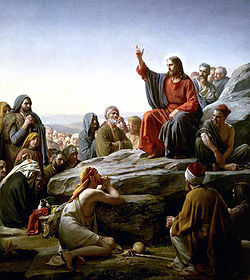
What is your standard of morality? You may say, “My standard is the Sermon on the Mount. Isn’t that a good standard?” Yes, that is a good standard; but the question is: Do you live up to it? In the Sermon on the Mount Jesus said, “Be perfect, therefore, as your heavenly Father is perfect” (Matt. 5:48). Are you perfect? Of course not! In that case, you are condemned by the standard of your own choosing.
You may not like that conclusion, or course. So you may say, “Well, I’ll just lower my standard and make it the Golden Rule—‘In everything, do to others what you would have them do to you.’” Do you keep that standard? Do you always do to other people all that you would like done by them to yourself? Once again, the answer is no! The point is that all of us are condemned by whatever standard we erect, for none of us is able to live up to even the lowest standards of morality. We are all sinners, and deep within we know it.
There is one more type of person. Paul describes him in Romans 2:17-29. This is the man who would admit most if not all of what Paul has been saying and yet who would attempt to escape the conclusions by pleading his religion. “I have been baptized,” he would say. “I am confirmed. I have given large sums of money to the church’s support and have served on its committees.”
“Good for you,” Paul answers. “But you are still a sinner, because God’s requirement of perfection includes a change of the heart, and none of the outward things of religion—church membership, the sacraments, service or stewardship—can do anything about this most basic problem.” At the end of this section of Romans Paul sums his teaching up by saying, “There is no one righteous, not even one; there is no one who understands, no one who seeks God. All have turned away, they have together become worthless; there is not one who does good, not even one” (Rom 3:10-12).
Believing on Jesus
The second point to becoming a Christian is to believe that God loves you in spite of your sin and that he has acted in Jesus Christ to remove that sin and to begin to make you perfect once more by conforming you to Christ’s image.
“God demonstrates his own love for us in this: While we were still sinners, Christ died for us” (Rom. 5:8).
“For God so loved the world that he gave his one and only Son, that whoever believes in him shall not perish but have eternal life” (John 3:16).
In the Bible, there are three great terms for what God does in salvation. The first is propitiation, a word that occurs in Romans 3:23-26, Hebrews 2:17, 1 John 2:2 and 4:10 (the NIV translates this as “sacrifice of atonement”). Propitiation is the act of performing a sacrifice by which the wrath of God against sin is averted. It refers to what Jesus accomplished in relation to God by his death.
Propitiation presupposes the wrath of God. Right here many modern thinkers would stop, arguing that the term should not be used. “We can understand,” such a person might say, “how the idea of propitiation would be appropriate in paganism where God was assumed to be capricious, easily offended and therefore often angry. But this is not the biblical picture of God. According to the Christian revelation, God is not angry. Rather, he is gracious and loving. Moreover, it is not God who is separated from us because of sin, but rather we who are separated from God.” Those who have argued this way have either rejected the idea of propitiation entirely, considering its presence in the Bible to be merely a carry-over from paganism, or they have interpreted the basic Greek word for propitiation to mean, not Christ’s propitiation of the wrath of God, but rather the covering over or expiation of our guilt by his sacrifice.
We must be appreciative of those who have distinguished the pagan idea of propitiation from the Christian idea. For it is quite true that God is not capricious. We do not propitiate him in order to keep in his good graces, for God is a God of grace and love.
Still, this is not the whole of the matter. In the first place, we do not want to forget what the Bible tells us about God’s just wrath against sin in accordance with which sin will be punished either in Christ or in the person of the sinner. We may feel that the wrath of God and the love of God are incompatible. But this is not the biblical perspective. Rather, the Bible teaches that God is wrath and love at the same time. What is more, the wrath is not just a small and insignificant element that somehow is there alongside the far more significant and overwhelming love of God. Actually, it is a major element that may be traced all the way from God’s judgment against sin in the Garden of Eden to the final cataclysmic judgments prophesied in the Book of Revelation.
Second, although the word “propitiation” is used in biblical writings, it is not used in precisely the same way it is used in pagan writings. In pagan rituals, sacrifice was the means by which man placated an offended deity. But in Christianity, it is never the man who takes the initiative or makes the sacrifice, but God himself who out of his great love for the sinner provides the way by which his own wrath against sin may be averted. Moreover, he is himself the way—in Jesus. This is the true explanation of why God is never the explicit object of the propitiation in the biblical writings. He is not the object because he is, even more importantly, the subject. In other words, God himself placates his wrath against sin so that his love may go out to embrace and fully save the sinner.
The second great term for God’s work of salvation is redemption. Redemption speaks of what Jesus Christ did for us in salvation and of what it cost him to do it. It also occurs in Romans 3:23-26, and in many other places.
The Greek word translated as “redeem,” “Redeemer” or “redemption” in our Bibles has to do with loosing someone’s bonds so that, for example, a prisoner becomes free. At times it was used of procuring the release of a prisoner by means of a ransom. Spiritually, the idea is that, though we have fallen into desperate slavery through sin and are held as by a cruel tyrant, Christ has nevertheless purchased our freedom from sin by his own blood. He paid the price to free us.
We have what is perhaps the greatest biblical illustration of redemption in the story of Hosea. Hosea was a minor prophet whose marriage was unfortunate from a human viewpoint, for the woman proved unfaithful to him. But it was a special marriage from the viewpoint of God. God had told Hosea that the marriage would work out in this fashion. Nevertheless, he was to go through with it in order to provide an illustration of how God loves his people, even when they prove unfaithful by committing spiritual adultery with the world and its gods. The marriage was to be a pageant in which Hosea was to play the part of God and his wife would play the part of unfaithful Israel.
The climax comes at the point at which Gomer fell into slavery, probably because of debt. Hosea was told to buy her back as a demonstration of the way by which the faithful God loves and saves his people. Slaves were always sold naked in the ancient world, and this would have been true of Gomer as she was put up on the auction block in the city of Samaria. She apparently was a beautiful woman. So when the bidding started the offers were high, as the men of the city bid for the body of the female slave.
The bidding was competitive. But as the low bidders dropped out, someone added, “Fifteen pieces of silver and a bushel of barley.” “Fifteen pieces of silver and a bushel and a half of barley,” said Hosea. The auctioneer must have looked around for a higher bid and seeing none, would have said, “Sold to Hosea for fifteen pieces of silver and a bushel and a half of barley.” Now Hosea owned his wife. He could have killed her if he had wished. He could have made a public spectacle of her in any way he might have chosen. But instead, he put her clothes back on her, led her away into the anonymity of the crowd, and demanded love of her while promising the same from himself. Here is the way he tells it. “The LORD said to me, ‘Go, show your love to your wife again, though she is loved by another and is an adulteress. Love her as the LORD loves the Israelites, though they turn to other gods and love the sacred raisin-cakes.’ So I bought her for fifteen shekels of silver and about a homer and a lethech of barley” (a “shekel” was about 2/5 ounce or 11 grams; a “homer” was about 6 bushels or 220 liters; a “lethech” was about 3 bushels or 110 liters).
Then I told her, ‘You are to live with me many days; you must not be a prostitute or be intimate with any man, and I will live with you’” (Hos. 3:1-3). Hosea had the right to demand what she had formerly been unwilling to give. But as he demands it he promises love from himself. For it is thus that God loves all who are his true spiritual children.
The third word for describing God’s work in salvation is justification, the central doctrine of Christianity. Why is it central? Because justification by faith is God’s answer to the most basic of all religious questions, namely, “How can a man or woman become right with God?”
We are not right with him in ourselves; this is what the doctrine of sin means. Sin means that we are in rebellion against God, and if we are against God we cannot be right with God. We are all transgressors. The doctrine of justification by faith is the most important of all Christian doctrines because it tells how one who is in rebellion against God may become right with him. It says that we may be justified by the work of Christ alone received by faith, and not by our own works-righteousness.
Paul puts it like this: “All who believe . . . are justified freely by his [that is, God’s] grace through the redemption that came by Christ Jesus” (Rom. 3:22-24); “A man is justified by faith apart from observing the law” (v. 28); “To the man who does not work but trusts God who justifies the wicked, his faith is credited as righteousness” (Rom. 4:5). These verses teach that justification is God’s work and that it flows from God’s grace.
The Christian doctrine of justification is, therefore, actually God’s declaring the believing individual to be righteous, not on the basis of his own works or irrespective of works, but on the basis of Christ’s sacrifice. In justification, God declares that he has accepted the sacrifice of Christ as the payment of our debt to the divine justice and his imputed Christ’s righteousness to us in place of the sin.
Paul’s own conversion is an illustration of these points. He was not a hedonist; far from it. He was better than that, having effected in his life a combination of the second and third types of men he described in the opening chapters of Romans. He was religious and moral, and he trusted for his salvation to what he could achieve in these areas. He tells about it in Philippians 3:4-8: “If anyone else thinks he has reasons to put confidence in the flesh, I have more: circumcised on the eighth day, of the people of Israel, of the tribe of Benjamin, a Hebrew of Hebrews; in regard to the law, a Pharisee; as for zeal, persecuting the church; as for legalistic righteousness, faultless. But whatever was to my profit I now consider loss for the sake of Christ.”
What Paul is saying is that in the days before he met Christ, he had something like a balance sheet in his life. It had assets and liabilities, and he thought that being saved consisted in having more in the column of assets than in the column of liabilities. Moreover, he thought there were considerable assets, some inherited and some earned. Among the inherited assets was the fact that Paul had been born into a Jewish family and had been circumcised according to Jewish law on the eighth day of life. He was a pure-blooded Jew, born of Jewish parents (“a Hebrew of Hebrews”). He was also an Israelite, that is, a member of God’s covenant people. Moreover, he was of the loyal tribe of Benjamin. Then, too, Paul had advantages that he had won for himself. In regard to the law, he was a Pharisee, the most faithful of all Jewish sects in adherence to the law. Moreover, he had been a zealous Pharisee, which he had proved by his persecution of the infant church.
These were real assets from a man’s point of view. But the day came when Paul saw to what these amounted in the sight of the righteous God. It was the day Jesus appeared to him on the road to Damascus. Before that time, Paul thought he was attaining righteousness by keeping the law. But when he saw Christ, he discerned that these acts of righteousness were actually like filthy rags. Before this, he had said, “As for legalistic righteousness, faultless.” Now he said, “I am the worst of sinners,” and he rejected any attempts to justify himself. He turned to God who on the basis of Christ’s death freely justifies the ungodly. So far as his balance sheet was concerned, Paul recognized that all he had accumulated as an asset was in reality not an asset at all. It was a liability, for it had kept him from Christ. This is where he placed it. He called it “loss.” Then, under assets he entered: “Jesus Christ alone.”
It is the glory of the Christian gospel that when a person who has been made alive by God turns from his own works, which can only condemn him, and instead by faith embraces the Lord Jesus Christ as his Savior, God declares his sins to have been punished at Calvary and imputes the righteousness of Christ to his account.
Commitment
Finally, there must be an act by which you actually commit yourself to Christ. Or, to put it another way, you open the gate of your heart and admit him. This does not mean that you are responsible for your own salvation. If you do open the door, it is only because Christ is there beforehand moving you to do it. Still, from your own point of view, the act itself is absolutely indispensable.
What matters is the reality of your own personal commitment to Jesus. Are you a Christian? That is the question. Is it real? The answer to that question does not depend upon your good works but rather upon your relationship to the Savior. Have you asked Jesus Christ to be your Savior?
You must say,
“Lord Jesus Christ, I admit that I am a sinner and stand under your judgment, that I deserve nothing, that I have no claims upon you. Nevertheless, I believe that you love me and died for me, and that now by grace I can stand before you clothed in your righteousness. I commit my life to you. Receive me now as one of your followers.”
This has been the heart of Christian experience. It has been embodied in many of our hymns. One of them says:
Nothing in my hand I bring,
Simply to thy cross I cling;
Naked, come to thee for dress,
Helpless, look to thee for grace;
Foul, I to the Fountain fly;
Wash me, Savior, or I die.
Rock of ages, cleft for me,
Let me hide myself in thee.
If you will pray that prayer, God will wash you, and he will give you that righteousness which is above anything you can personally attain.
 Author: James Montgomery Boice, Th.D., (July 7, 1938 – June 15, 2000) was a Reformed theologian, Bible teacher, and pastor of Tenth Presbyterian Church in Philadelphia from 1968 until his death. He is heard on The Bible Study Hour radio broadcast and was a well known author and speaker in evangelical and Reformed circles. He also served as Chairman of the International Council on Biblical Inerrancy for over ten years and was a founding member of the Alliance of Confessing Evangelicals. He is the author of numerous Bible expositions and one of my favorite Systematic Theologies called Foundations of the Christian Faith. The article above “How To Become a Christian?” was adapted from Chapter One in the book How to Live the Christian Life, Chicago: Moody Press, 1982.

 The gospel is not just a sequence of steps (say, the “Four Laws” of Campus Crusade or the “Six Biblical Truths” of Quest for Joy). Those are essential. But what makes the gospel “good news” is that it connects a person with the “unsearchable riches of Christ.”
 (B.D.) and the University of Munich (D.theol.). For six years he taught Biblical Studies at Bethel College in St. Paul, Minnesota, and in 1980 accepted the call to serve as pastor at Bethlehem. John is the author of more than 40 books, including Desiring God, The Pleasures of God, Recovering Biblical Manhood and Womanhood, What Jesus Demands from the World, and Don’t Waste Your Life. He is the founder of Desiring God Ministries, and is currently transitioning from the pastorate into speaking and writing full time with DGM. DesiringGod.org provides a huge selection of God-centered resources from the prolific ministry of John Piper with free sermons, books, conference teachings, and articles like this one. The excerpt above is from his book Taste and See: Savoring the Supremacy of God in All of Life. Sisters, Or.: Multnomah Publishers, 2005, 406-407.

 LifeCoach4God