

Category: Gospel Presentations
In Greek the gospel comes from the word euangelion, “good news.” In Anglo-Saxon “godspell,” means “good story.” The gospel is the central message of the Christian church to the world, centered on God’s provision of salvation for the world through repentance from sin and belief in Jesus Christ as Lord and Savior.

James Montgomery Boice on the Distinction Between the Rapture and the Lord’s Day
Two Great Days: The Day of the Lord and the Day of Christ

What The Bible Has To Say About The Future: Part 3 in a Series of 9 – By Dr. James M. Boice
To the people of the ancient east the stars had great significance. They were the means by which people determined the hours of the night and the seasons of the year. The morning star was particularly important for it heralded the rising of the sun and the coming of a new day. The Lord Jesus Christ is our morning star, according to the book of Revelation (Revelation 22:16). He is coming. The dark night of human history may be long and filled with grim terrors, but the Daystar is coming and with Him the dawning of a new age.
We will consider the importance of this theme in biblical prophecy, to distinguish between two important aspects of Christ’s coming under the descriptive phrases “the day of the Lord” and “the day of Jesus Christ,” and to develop the relevance of the theme of the Lord’s return.
A Prominent Doctrine
It is unfortunate that in our day the second coming of Jesus Christ has faded to a remote and sometimes irrelevant doctrine in the opinion of many persons, even, it seems, within large segments of the evangelical church. That may be true in part because many extravagant, foolish, and utterly unscriptural teachings have been linked to the doctrine of the Lord’s return. But that has been true of all biblical doctrines at some point of history, and that alone should not deter us from seeking to appreciate a theme which is prominent in the Word of God.
How prominent is this doctrine? In the New Testament 1 verse in 25 deals with the Lord’s return. It is mentioned 318 times in the 260 chapters of the New Testament. It occupies a prominent place in the Old Testament, inasmuch as the greater part of the prophecies concerning the coming of Christ in the Old Testament deal, not with His first advent in which He died as our sin-bearer, but with His second advent in which He is to rule as King. The return of Jesus Christ is mentioned in every one of the New Testament books except Galatians (which deals with a particular problem that had emerged within the churches of Galatia) and the very short books of the New Testament such as 2 and 3 John and Philemon.
The various New Testament writers obviously believed in the Lord’s return. Mark traced the origins of his belief to the very words of Jesus. The first reference to the return of Jesus in Mark occurs in chapter 8. There is recorded Peter’s great confession of faith – “You are the Christ” – which was in turn the occasion of a greater revelation by Christ of the most important events that were to come in His ministry. First, He foretold His death and resurrection. He spoke of discipleship. Then, at the very end of the chapter, He spoke of His coming again. Jesus said, “For whoever is ashamed of me and my words in this adulterous and sinful generation, of him will the Son of Man also be ashamed when he comes in the glory of his Father with the holy angels.”
Mark 13, where Jesus outlined what would come in the last days, is also full of this doctrine. Jesus spoke of the horror of the days immediately preceding His return, then added, “And then they will see the Son of Man coming in the clouds with great power and glory. And then he will send out the angels and gather his elect from the four winds, from the ends of the earth to the ends of heaven.” At this point the discourse moved on to teach that the disciples should be watching for this return; Jesus emphasized the point by an illustration: “It is like a man going on a journey, when he leaves home and puts his servants in charge, each with his work, and commands the doorkeeper to stay awake. Therefore stay awake — for you do not know when the master of the house will come, in the evening, or at midnight, or when the rooster crows, or in the morning– lest he come suddenly and find you asleep” (34-36).
Finally, this doctrine is mentioned in the account of Christ’s trial before the Jewish high priest (Mark 14). Jesus answered a question about whether or not He was the Messiah by saying, “I am, and you will see the Son of Man seated at the right hand of Power, and coming with the clouds of heaven” (Mark 14:62). Here are three expressions of the truth of Christ’s return in a book which most scholars consider to be the oldest of the four gospels.
In the other three gospels the same doctrine is prominent. Matthew and Luke repeated most of the sayings about the second coming given by Mark, sometimes with additions and variations, and John added others. For instance, John recorded a number of lengthy farewell discourses given by Jesus just before His crucifixion. In one of these Jesus declared, “Let not your hearts be troubled. Believe in God; believe also in me. In my Father’s house are many rooms. If it were not so, would I have told you that I go to prepare a place for you? And if I go and prepare a place for you, I will come again and will take you to myself, that where I am you may be also” (John 14:1-3). Christ’s return is also referred to in the last chapter of John’s gospel, in the record of Jesus’ conversation with Peter after His resurrection. The reference is incidental to Jesus’ point, but is all the more authentic on that account. Jesus had been encouraging Peter to faithfulness in discipleship, but Peter with his usual impetuosness turned and saw John. He asked Jesus, “Lord, what about this man?’ Jesus said to him, “If it is my will that he remain until I come, what is that to you? You follow me!” (John 21:21-22). John himself then points out that although many of the Christians of his day had interpreted that to mean that John would not die until Christ came back, that was not what Jesus had said. He had said only that even if that were the case, it should not affect Peter’s call to faithful service.
In all four gospels, then, there are unmistakable quotations from Jesus Christ to the effect that He would return to this earth a second time in glory, and these are quoted in such a way that we cannot doubt that the early church believed that these promises were to be fulfilled literally and in detail, possibly within its lifetime.
Paul’s letters are also full of this doctrine. To the church at Thessalonica he wrote, “For the Lord himself will descend from heaven with a cry of command, with the voice of an archangel, and with the sound of the trumpet of God. And the dead in Christ will rise first. Then we who are alive, who are left, will be caught up together with them in the clouds to meet the Lord in the air, and so we will always be with the Lord” (1 Thessalonians 4:16-17). To the Philippians Paul wrote: “But our citizenship is in heaven, and from it we await a Savior, the Lord Jesus Christ, who will transform our lowly body to be like his glorious body, by the power that enables him even to subject all things to himself” (Philippians 3:2–21).
Peter called the return of Jesus Christ our “living hope” (1 Pet. 1:3). Paul called it our “blessed hope” (Titus 2:13), John declared with conviction: “Behold, he is coming with the clouds, and every eye will see him” (Rev. 1:7a). The same author ended the New Testament with the words, “He who testifies to these things says, ‘Surely I am coming soon.’ Amen. Come, Lord Jesus!” (Revelation 22:20).
In these verses and in many others the early Christians expressed their belief in a personal return of Jesus Christ, a return which would be the first of the unfolding events prophesied in the end time. The return of Jesus would be associated with a time of great wickedness on earth, the resurrection and transformation of their own bodies, an earthly rule of Jesus, and a final concluding judgment upon all men and nations. They comforted themselves with these truths in the midst of persecution or some while attempting to live their lives on a moral plane that would be honoring to the returning One.
The Day of the Lord
In the picture I have just presented, however, two important ideas have been merged. Therefore, to paint the prophetic picture for the end times in clearer detail and to have a basis for understanding some of the most important New Testament prophesies we must distinguish between them.
The first idea is associated with the phrase “the day of the Lord.” This phrase is quite prominent in the Old Testament, but it occurs frequently in the New Testament too, even in the context of some of the passages I have been quoting. This phrase is a technical phrase used initially by the Old Testament prophets to designate a future period of catastrophic judgment. Literally, it the day of Jehovah, the day in which Jehovah will break silence and intervene in history to judge Israel and the Gentile nations. The characteristics of this day can be seen in the following quotations:
“For the LORD of hosts has a day against all that is proud and lofty, against all that is lifted up–and it shall be brought low” (Isaiah 2:12).
“Wail, for the day of the LORD is near; as destruction from the Almighty it will come!…Behold, the day of the LORD comes, cruel, with wrath and fierce anger, to make the land a desolation and to destroy its sinners from it. For the stars of the heavens and their constellations will not give their light; the sun will be dark at its rising, and the moon will not shed its light” (Isaiah 13:6, 9-10).
“Woe to you who desire the day of the LORD! Why would you have the day of the LORD? It is darkness, and not light, as if a man fled from a lion, and a bear met him, or went into the house and leaned his hand against the wall, and a serpent bit him. Is not the day of the LORD darkness, and not light, and gloom with no brightness in it?” (Amos 5:18-20).
It is obvious from the reference to the darkening of the sun, moon, and stars that this is the event referred to by Jesus in Matthew 24, where Jesus taught that He would exercise judgment. It is also the event of which Peter spoke when he wrote,
“But the day of the Lord will come like a thief, and then the heavens will pass away with a roar, and the heavenly bodies will be burned up and dissolved, and the earth and the works that are done on it will be exposed” (2 Peter 3:10).
In the liturgy of the church this is expressed by the Dies Irae, which means the day of the wrath of God. From an examination of these and other texts (Jer. 46:10; Lam. 2:22; Ezek. 30:3ff.; Joel 1:15; 2:1-11; 3:14-16; Zeph. 1:7-2:3; Zech. 14:1-7; Mal. 4:5) several things are clear.
- First, the day of the Lord is the day of God’s judgment.
- Second, the day is still future.
- Third, it is preceded by a time of great trouble on earth.
- Fourth, it is followed by the earthly rule of the Messiah.
- Fifth, it has nothing to do with the church of Jesus Christ, for the church is not in these prophecies and was, in fact, completely unknown to the Old Testament writers who compiled them.
To be sure, as Kenneth S. Wuest, who summarized much of the data in his collection of Word Studies in the Greek New Testament, observed, “Some of the references to the day of the Lord in the Old Testament have a fulfillment in the past, and are precursors of the day of the Lord to follow (Kenneth S. Wuest, Wuest’s Word Studies From the Greek New Testament, vol. 3 [Grand Rapids: Eerdmans, 1966, p. 35]). But that does not alter the fact that the strict fulfillment of most of these prophecies awaits a future day.
That day is coming. The disasters of this life — pestilence, famine, wars, natural catastrophes — are only little judgments which come in the most part from man’s activities. When the day of God’s wrath is revealed, these things will pale by comparison, and no one who is not united to Christ by faith will be able to stand against Him.
No one can be sure of defending himself even from man-made destruction. For instance, there is an extensive military radar network called DEW line (Distant Early Waning), which stretches across the North American Continent. This line of defense has cost the United States billions of dollars. It was designed to limit to a minimum the breakthrough of Soviet long-range bombers coming to wreak nuclear destruction on the United States; but today it is outmoded by missiles. Man can never defend himself adequately against the possibility of future destruction.
Thus, too, does he stand before God. Man has run away from God, and God has pursued him. God came to die for him in Jesus Christ. God has warned us of judgment — distant warnings and near warnings, early warnings, and late warnings — and He has warned us that He can penetrate any defense which we may try to throw up against Him. Man stands naked before God. The day of judgment is near. If you are not yet a believer, let me encourage you to turn to Christ. Martin Luther looked at this day and wrote for those of his time:
Great God, what do I see and hear!
The end of things created!
The Judge of mankind doth appear
On clouds of glory seated!
The trumpet sounds, the graves restore
The dead which they contained before:
Prepare, my soul, to meet him.
If you are a believer in Christ, let me encourage you to look up and be faithful to Him.
The Day of Christ (The Rapture)
The second major idea is associated with the phrase “the day of Jesus Christ.” That is not the same as “The day of the Lord.” The day of Jesus Christ is a happy day rather than a day of judgment. Moreover, far from warning men to fear it, the New Testament actually speaks of it as an event to be warmly anticipated. Christians are to be ready and watching, and they are to encourage one another because of it.
What is the nature of this day? The clearest answer to this question is in the verses already quoted from Paul’s first letter to the Christians at Thessalonica. They were in sorrow over certain of their number who had died, and Paul wrote to them to comfort them with the thought that they would see their departed friends once again at the day of Jesus Christ. He describes it thus:
“For the Lord himself will descend from heaven with a cry of command, with the voice of an archangel, and with the sound of the trumpet of God. And the dead in Christ will rise first. Then we are alive, who are left, will be caught up together with them in the clouds to meet the Lord in the air, and so we will always be with the Lord” (1 Thessalonians 4:16-17).
Quite obviously, this day does not concern Christ’s earthly rule. It is an aspect of His coming to draw believers out of this world to Himself. He will come in the air and gather His church up to meet Him, first those who have died and then — almost in the same instant — those who are living.
Jesus described this event, also stressing its unexpected and selective nature:
“Then two men will be in the field; one will be taken and one left. Two women will be grinding at the mill; one will be taken and one left. Therefore, stay awake, for you do not know on what day your Lord is coming” (Matthew 24:40-42).
In biblical theology this event is generally called the rapture. It is the first in the whole series of events prophesied for the end times. It is possible that at this point some of this teaching has become confusing. So let me elaborate upon the distinction between the day of Jesus Christ and the day of the Lord by looking at the way the Apostle Paul dealt with a similar confusion in his day.
Wherever he went, Paul apparently preached the full body of Christian doctrine as it had been revealed to him. And that included, quite naturally, the doctrine of the Lord’s imminent return to be followed, after certain events, by God’s judgment. These events included persecution and great tribulation. We know that this doctrine had been accepted by the church at Thessalonica, for Paul alluded to it in his first letter, reminding the Christians there that they were to be comforted by the doctrine of the Lord’s return in face of the death of their friends. Some time after he had written this letter, however, a time of persecution broke out in the church at Thessalonica. Because the persecution seemed terrible and intense, someone began to teach that the persecutions were those leading to the day of the Lord, with its ultimate judgements, and that the Christians in Thessalonica, therefore, had missed the rapture. The Thessalonians may actually have received a letter purporting to be from Paul which affirmed this idea (2 Thessalonians 2:2).
News of their distress reached Paul, and he immediately wrote to the Thessalonians again, attempting to explain the meaning of their present persecution assuring them that they had not missed the coming again of the Lord Jesus Christ for those who believe in Him. First, he dealt with the meaning of present persecution. This occupies the first chapter. Then, in the second chapter, he begins to deal with the view that Christians might already be going through days of tribulation.
“Now concerning the coming of our Lord Jesus Christ and our being gathered together to him, we ask you, brothers, not to be quickly shaken in mind or alarmed, either by a spirit or a spoken word, or a letter seeming to be from us, to the effect that the day of the Lord has come. Let no one deceive you in any way. For that day will not come, unless the rebellion comes first, and the man of lawlessness is revealed, the son of destruction, who opposes and exalts himself against every so-called god or object of worship, so that he takes his seat in the temple of God, proclaiming to be God. Do you not remember that when I was still with you I told you these things?” (2 Thessalonians 2:1-5).
Paul’s main points clearly were that the present suffering of the Christians at Thessalonica was not the tribulation prophesied in the Old Testament and taught by himself, that the final tribulation would not come until after the Christians were caught up to meet the Lord Jesus Christ in the air, therefore, that the coming of Christ rather than the final judgment should be uppermost in the minds of believers.
(Note: There is a view in prophetic theology known at “posttribulationism.” According to this view, the church of Jesus Christ will go through the great tribulation, after which Jesus will return for those believers who are remaining. In reply, it is enough to note that, although the church has gone through periods of great persecution in the past and undoubtedly may go through intense persecutions before Christ’s return, nevertheless, the view of a posttribulation rapture is impossible for the simple reason that it makes meaningless the very argument that Paul was presenting in the Thessalonian letters. Paul was arguing for the imminence of Christ’s return. That is to be a major source of comfort for suffering believers. If Christ will not come until after the great tribulation [that is, a specific time of unusual and intense suffering still in the future], then the return of the Lord is not imminent and tribulation rather than deliverance is what we must anticipate. In view of the Bible’s message we must be careful not to adopt any view which turns our minds from Christ. If anything must occur before we see Christ personally, then the anticipation of that event will turn our eyes from Him to it. We may even guess that Satan will try to turn the believers’ eyes from Christ to events or signs that are supposed to precede Him and we should be warned accordingly).
All these themes will be treated in later articles, but even at this point we need to note the importance of the two events which Paul says must take place before the day of God’s judgment. The second event is the appearance of one whom he calls “the man of lawlessness” (2 Thess. 2:3). This person will attempt to centralize all human worship in himself, and will actually sit in the temple at Jerusalem, claiming that he is God. Since that has not happened, says Paul, the day of the Lord is yet future.
The first event that must take place before the day of the Lord comes is called “the falling away” in the Authorized Version of the Bible (2 Thess. 2:3). This is an unfortunate translation. The basis for this translation lies in the fact that elsewhere in the Bible a time of great apostasy or “falling away” from true Christian doctrine is prophesied for the time preceding the Lord’s return. Although this is true in itself, however, it is not the meaning of the Greek word here. The word apostasia, preceded by the definite article. Apostasia has given us our word “apostasy,” but the word itself simply means “a departure.” In a context where the truth or falsity of doctrine is in view, the word would naturally mean, “a departure from true doctrine” or “apostasy.” But here, where the issue is the past or future coming of Jesus Christ for his saints and where a particular event is specified by the use of the article, the word can mean equally well “the departure of believers to be with Jesus” or “the rapture.”
In Kenneth S. Wuest’s study, referred to earlier, these following additional facts are elaborated. Apostasia occurs in the New Testament only twice. But it is based on the verb aphistemi which occurs fifteen times. Eleven times it is translated “depart,” never “a falling away.” Unfortunately, most of the English versions follow the leading of the Authorized text (The ESV translates apostasia as “rebellion”). But it is significant that in the versions that precede the publication of the King James Bible — those of Tyndale (1534), Coverdale (1535), Cranmer (1539), and the Geneva Bible (1560) — apostasia was translated as “departure,” and the reference was obviously to the much-anticipated rapture of God’s saints.
It is worth pointing out that precisely the same order of events is presented in 1 Thessalonians. Once again the two different days — the day of the Lord and the day of Jesus Christ — are in view, as well as two distinct classes of people. The day of the Lord is a day that should concern unbelievers. Paul speaks of this group as “they” and “them.” The day of Jesus Christ is for believers only. Paul speaks of this class as “us” and “you.”
“For you yourselves are fully aware that the day of the Lord will come like a thief in the night. While people are saying, ‘There is peace and security,’ then sudden destruction will come upon them as labor pains come upon a pregnant woman, and they will not escape. But you are not in darkness, brothers, for that day to surprise you like a thief…So then let us not sleep, as others do, but let us keep awake and be sober…For God has not destined us for wrath, but to obtain salvation through our Lord Jesus Christ” (1 Thessalonians 5:2-4, 6, 9).
Paul’s teaching clearly indicates that the rapture, “the day of Jesus Christ,” must come first. Then will come the unfolding of the other events of prophecy, beginning with a period of great tribulation and continuing though Christ’s return to earth to judge Israel and the nations, the millennium, the final judgment, and a complete transition from the life of this world to the life of eternity.
These are the two greatest days of future world history — the day of Jesus Christ and the day of the Lord. Every man who has ever lived must stand before the Lord Jesus Christ on one of these two days. Which will it be in your case? Will it be the day of the Lord with its judgments? Or will it be the day of Jesus Christ with the joy of seeing Him and the glorification and rewarding of believers? Believers wait only for the coming of Jesus Christ, and they rejoice, knowing that this the next event in the unfolding of God’s prophetic timetable.
A Practical Doctrine
Thus far in our study of the return of Jesus Christ we have dealt with the importance of the doctrine of the New Testament books and with the precise meaning of His return as it is related to the catching away of believers first and to God’s judgment. It would be wrong to stop at this point, however, for we must go on to see that the doctrine of the Lord’s return is practical. In other words, it should have a bearing on our lives.
(1) First of all, the imminent return of the Lord Jesus Christ should be an incentive to godly living. That is the point Jesus Himself made when talking about His return in Matthew 24. The chapter is filled with imperatives: “See that no one leads you astray” (v. 4); “See that you are not alarmed” (v. 6), “flee to the mountains” (v. 16); “pray” (v. 20); “do not believe it” (vv. 23, 26); “learn” (v. 32); “know” (v. 33). Jesus concluded with the warning, “Therefore you also must be ready, for the Son of Man is coming at an hour you do not expect” (Matthew 24:44). The apostle John, who undoubtedly heard the Lord on this occasion, later made the identical point in one of his letters, “Beloved, we are God’s children now, and what we will be has not yet appeared; but we know that when he appears we shall be like him, because we shall see him as he is. And everyone who this hopes in him purifies himself as he is pure” (1 John 3:2-3).
This thought should affect every aspect of your personal life — your prayer life, your choices in the area of ethics and morals, even your social concerns. Lord Shaftesbury, the great English social reformer and a mature Christian, said near the end of his life, “I do not think that in the last forty years I have ever lived one conscious hour that was not influenced by the thought of our Lord’s return.” In his case, the expectation of meeting Jesus was undoubtedly one of the strongest motives behind his social programs.
Are you looking for Christ’s return? In an earlier study of this same subject I once wrote:
If you are motivated by prejudice against other Christians or others in general, whether they are black or white, rich or poor, cultured or culturally naive, or whatever they may be–then the return of Jesus Christ has not made its proper impression on you. If you are contemplating some sin, perhaps a dishonest act in business, perhaps trifling with sex outside marriage, perhaps cheating on your income tax return–then the return of Jesus Christ has not made its proper impression on you. If your life is marked by a contentious, divisive spirit in which you seek to tear down the work of another person instead of building it up–then the return of Jesus Christ has not made its proper impression on you. If you first protect your own interests and neglect to give food, water, or nothing to the needy as we are instructed to do in Christ’s name–then the return of Jesus Christ has not made its proper impression on you (James Montgomery Boice, Philippians: An Expositional Commentary [Grand Rapids: Zondervan, 1971], p. 249).
(2) The second result of a belief in the imminent return of the Lord Jesus Christ should be an effort on our part to comfort Christians who are suffering, particularly those who are suffering the close loss of a friend or relative. We have already seen how the Apostle Paul did this in the case of his friends at Thessalonica. They suffered persecution. They had lost friends through death. Paul wrote to them, reminding them of the blessed hope of Christians. He then observed, “Therefore encourage one another with these words” (1 Thessalonians 4:18).
Dr. R.A. Torrey, a former president of the Bible Institute of Los Angeles (BIOLA) and a great Bible teacher, wrote along the same line: “Time and again in writing those who have lost for a time those whom they love, I have obeyed God’s commandment and used the truth of our Lord’s return to comfort them, and many have told me afterwards how full of comfort this truth has proven when everything else has failed” (R.A. Torrey, The Return of the Lord Jesus [Grand Rapids: Baker, 1966], p. 15). The return of the Lord Jesus Christ is the one doctrine with which God commands us to comfort suffering saints.
(3) Finally, the return of the Lord Jesus Christ should make us more and more energetic in evangelism. If it is true that the Lord is coming, then it is not true, as scoffers say, that all things will “continue as they were from the beginning” (2 Peter 3:4). The end is in sight. The days for evangelism are numbered. Is it not a lesson for our own time that, when the disciples began to ask Jesus Christ for specific details of the time of His coming after His resurrection and before His ascension, He brushed their requests aside and instead reiterated the church’s great commission to evangelize throughout the duration of this age? They were not to look for a precise timetable. They were to go into the world with the Gospel.
He said to them “It is not for you to know times or seasons that the Father has fixed by his own authority. But you will receive power when the Holy Spirit has come upon you, and you will be my witnesses in Jerusalem and in all Judea and Samaria, and to the end of the earth” (Acts 1:7-8).
These were Jesus’ last words on earth. The next words we hear may well be the question: “How well have you carried out my commission?”

James Montgomery Boice, Th.D., (July 7, 1938 – June 15, 2000) was a Reformed theologian, Bible teacher, and pastor of Tenth Presbyterian Church in Philadelphia from 1968 until his death. He is heard on The Bible Study Hour radio broadcast and was a well-known author and speaker in evangelical and Reformed circles. He also served as Chairman of the International Council on Biblical Inerrancy for over ten years and was a founding member of the Alliance of Confessing Evangelicals.James Boice was one of my favorite Bible teachers. Thankfully – many of his books and expositions of Scripture are still in print and more are becoming available. He was one of only a handful of reformed theologians that was premillennial in his eschatology (Steven J. Lawson, John MacArthur, Erwin W. Lutzer, S. Lewis Johnson, Rodney Stordtz, John Hannah and John Piper also come to mind). However, what makes him really unique is that he was not Historic Premillennial – but leaned Dispensational (Held to a pre-tribulation rapture) as well. This article was adapted from Chapter Three in one of the first of James Boice’s plethora of books, and is entitled: The Last and Future World, Grand Rapids, MI.: Zondervan, 1974 (currently out of print). This book is based on 9 sermons that Dr. Boice preached at Tenth Presbyterian Church in Philadelphia in 1972. Though this book was written almost 40 years ago – it is just as relevant as when it was first written since many of the prophecies taught in the Scriptures and addressed by Dr. Boice in this book have yet to be fulfilled. Scripture verses are quoted from the more modern English Standard Version – DPC.
The G-O-S-P-E-L in a Nutshell
An Acronym for the GOSPEL

The Gospel is:
G-ood news of
G-od’s grace to
G-uilty men
O-ffered to all and
O-beyed by faith
S-alvation by a
S-ubstitutionary Sacrifice
P-eace and pardoned proclaimed through
P-ropitiation
E-ternal life given to
E-veryone that repents of their sins and believes in Jesus, with
L-ight,
L-iberty and
L-ove.
The 7 Major Bodily Resurrections in the Bible
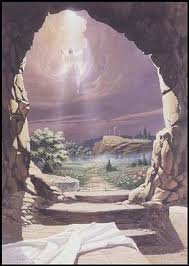
(1) The Bodily Resurrection of Jesus Christ
Now after the Sabbath, toward the dawn of the first day of the week, Mary Magdalene and the other Mary went to see the tomb. And behold, there was a great earthquake, for an angel of the Lord descended from heaven and came and rolled back the stone and sat on it. His appearance was like lightning, and his clothing white as snow. And for fear of him the guards trembled and became like dead men. But the angel said to the women, “Do not be afraid, for I know that you seek Jesus who was crucified. He is not here, for he has risen, as he said. Come, see the place where he lay. Then go quickly and tell his disciples that he has risen from the dead, and behold, he is going before you to Galilee; there you will see him. See, I have told you.” (Matt. 28:1–7)
When the Sabbath was past, Mary Magdalene, Mary the mother of James, and Salome bought spices, so that they might go and anoint him. And very early on the first day of the week, when the sun had risen, they went to the tomb. And they were saying to one another, “Who will roll away the stone for us from the entrance of the tomb?” And looking up, they saw that the stone had been rolled back—it was very large. And entering the tomb, they saw a young man sitting on the right side, dressed in a white robe, and they were alarmed. And he said to them, “Do not be alarmed. You seek Jesus of Nazareth, who was crucified. He has risen; he is not here. See the place where they laid him.But go, tell his disciples and Peter that he is going before you to Galilee. There you will see him, just as he told you.” (Mark 16:1–7)
But on the first day of the week, at early dawn, they went to the tomb, taking the spices they had prepared. And they found the stone rolled away from the tomb, but when they went in they did not find the body of the Lord Jesus. While they were perplexed about this, behold, two men stood by them in dazzling apparel. And as they were frightened and bowed their faces to the ground, the men said to them, “Why do you seek the living among the dead? He is not here, but has risen. Remember how he told you, while he was still in Galilee, that the Son of Man must be delivered into the hands of sinful men and be crucified and on the third day rise.” And they remembered his words (Luke 24:1–8)
Now on the first day of the week Mary Magdalene came to the tomb early, while it was still dark, and saw that the stone had been taken away from the tomb. So she ran and went to Simon Peter and the other disciple, the one whom Jesus loved, and said to them, “They have taken the Lord out of the tomb, and we do not know where they have laid him.” So Peter went out with the other disciple, and they were going toward the tomb. Both of them were running together, but the other disciple outran Peter and reached the tomb first. And stooping to look in, he saw the linen cloths lying there, but he did not go in. Then Simon Peter came, following him, and went into the tomb. He saw the linen cloths lying there, and the face cloth, which had been on Jesus’ head, not lying with the linen cloths but folded up in a place by itself. Then the other disciple, who had reached the tomb first, also went in, and he saw and believed; (John 20:1–8)
God raised him up, loosing the pangs of death, because it was not possible for him to be held by it… and you killed the Author of life, whom God raised from the dead. To this we are witnesses… And with great power the apostles were giving their testimony to the resurrection of the Lord Jesus, and great grace was upon them all… but God raised him on the third day and made him to appear…explaining and proving that it was necessary for the Christ to suffer and to rise from the dead, and saying, “This Jesus, whom I proclaim to you, is the Christ.” (Acts 2:24; 3:15; 4:33; 10:40; 17:3)
and was declared to be the Son of God in power according to the Spirit of holiness by his resurrection from the dead, Jesus Christ our Lord… who was delivered up for our trespasses and raised for our justification… because, if you confess with your mouth that Jesus is Lord and believe in your heart that God raised him from the dead, you will be saved.” (Rom. 1:4; 4:25; 10:9)
For I delivered to you as of first importance what I also received: that Christ died for our sins in accordance with the Scriptures, that he was buried, that he was raised on the third day in accordance with the Scriptures, and that he appeared to Cephas, then to the twelve. Then he appeared to more than five hundred brothers at one time, most of whom are still alive, though some have fallen asleep. Then he appeared to James, then to all the apostles. Last of all, as to one untimely born, he appeared also to me. For I am the least of the apostles, unworthy to be called an apostle, because I persecuted the church of God. (1 Cor. 15:3-9)
That he worked in Christ when he raised him from the dead and seated him at his right hand in the heavenly places (Eph. 1:20)
For since we believe that Jesus died and rose again, even so, through Jesus, God will bring with him those who have fallen asleep. (1 Thess. 4:14)
For Christ also suffered once for sins, the righteous for the unrighteous, that he might bring us to God, being put to death in the flesh but made alive in the spirit. (1 Peter 3:18).
(2) The token resurrection of some saints at the time of the resurrection of Christ
And Jesus cried out again with a loud voice and yielded up his spirit. And behold, the curtain of the temple was torn in two, from top to bottom. And the earth shook, and the rocks were split. The tombs also were opened. And many bodies of the saints who had fallen asleep were raised, and coming out of the tombs after his resurrection they went into the holy city and appeared to many. When the centurion and those who were with him, keeping watch over Jesus, saw the earthquake and what took place, they were filled with awe and said, “Truly this was the Son of God!” (Matt. 27:50–54).
(3) The resurrection at the rapture
Behold! I tell you a mystery. We shall not all sleep, but we shall all be changed, in a moment, in the twinkling of an eye, at the last trumpet. For the trumpet will sound, and the dead will be raised imperishable, and we shall be changed. For this perishable body must put on the imperishable, and this mortal body must put on immortality. When the perishable puts on the imperishable, and the mortal puts on immortality, then shall come to pass the saying that is written:
“Death is swallowed up in victory.” “O death, where is your victory? O death, where is your sting?” The sting of death is sin, and the power of sin is the law. But thanks be to God, who gives us the victory through our Lord Jesus Christ. Therefore, my beloved brothers, be steadfast, immovable, always abounding in the work of the Lord, knowing that in the Lord your labor is not in vain. (1 Cor. 15:51–58)
For since we believe that Jesus died and rose again, even so, through Jesus, God will bring with him those who have fallen asleep. For this we declare to you by a word from the Lord, that we who are alive, who are left until the coming of the Lord, will not precede those who have fallen asleep. For the Lord himself will descend from heaven with a cry of command, with the voice of an archangel, and with the sound of the trumpet of God. And the dead in Christ will rise first. Then we who are alive, who are left, will be caught up together with them in the clouds to meet the Lord in the air, and so we will always be with the Lord. (1 Thess. 4:14–17).
(4) The resurrection of the two witnesses
And I will grant authority to my two witnesses, and they will prophesy for 1,260 days, clothed in sackcloth.” These are the two olive trees and the two lampstands that stand before the Lord of the earth. And if anyone would harm them, fire pours from their mouth and consumes their foes. If anyone would harm them, this is how he is doomed to be killed.They have the power to shut the sky, that no rain may fall during the days of their prophesying, and they have power over the waters to turn them into blood and to strike the earth with every kind of plague, as often as they desire. And when they have finished their testimony, the beast that rises from the bottomless pit will make war on them and conquer them and kill them, and their dead bodies will lie in the street of the great city that symbolically is called Sodom and Egypt, where their Lord was crucified. For three and a half days some from the peoples and tribes and languages and nations will gaze at their dead bodies and refuse to let them be placed in a tomb, and those who dwell on the earth will rejoice over them and make merry and exchange presents, because these two prophets had been a torment to those who dwell on the earth. But after the three and a half days a breath of life from God entered them, and they stood up on their feet, and great fear fell on those who saw them. Then they heard a loud voice from heaven saying to them, “Come up here!” And they went up to heaven in a cloud, and their enemies watched them. And at that hour there was a great earthquake, and a tenth of the city fell. Seven thousand people were killed in the earthquake, and the rest were terrified and gave glory to the God of heaven. (Rev. 11:3–13).
(5) The resurrection of the Old Testament saints
Your dead shall live; their bodies shall rise. You who dwell in the dust, awake and sing for joy! For your dew is a dew of light, and the earth will give birth to the dead. Come, my people, enter your chambers, and shut your doors behind you; hide yourselves for a little while until the fury has passed by. For behold, the Lord is coming out from his place to punish the inhabitants of the earth for their iniquity, and the earth will disclose the blood shed on it, and will no more cover its slain. (Isa. 26:19–21)
Therefore prophesy, and say to them, Thus says the Lord God: Behold, I will open your graves and raise you from your graves, O my people. And I will bring you into the land of Israel. And you shall know that I am the Lord, when I open your graves, and raise you from your graves, O my people. And I will put my Spirit within you, and you shall live, and I will place you in your own land. Then you shall know that I am the Lord; I have spoken, and I will do it, declares the Lord.” (Ezek. 37:12–14)
“At that time shall arise Michael, the great prince who has charge of your people. And there shall be a time of trouble, such as never has been since there was a nation till that time. But at that time your people shall be delivered, everyone whose name shall be found written in the book. And many of those who sleep in the dust of the earth shall awake, some to everlasting life, and some to shame and everlasting contempt. And those who are wise shall shine like the brightness of the sky above; and those who turn many to righteousness, like the stars forever and ever.” (Dan. 12:1–3).
(6) The resurrection of the tribulation saints
Then I saw thrones, and seated on them were those to whom the authority to judge was committed. Also I saw the souls of those who had been beheaded for the testimony of Jesus and for the word of God, and those who had not worshiped the beast or its image and had not received its mark on their foreheads or their hands. They came to life and reigned with Christ for a thousand years. The rest of the dead did not come to life until the thousand years were ended. This is the first resurrection. Blessed and holy is the one who shares in the first resurrection! Over such the second death has no power, but they will be priests of God and of Christ, and they will reign with him for a thousand years. (Rev. 20:4–6).
(7) The resurrection of the wicked dead
Then I saw a great white throne and him who was seated on it. From his presence earth and sky fled away, and no place was found for them. And I saw the dead, great and small, standing before the throne, and books were opened. Then another book was opened, which is the book of life. And the dead were judged by what was written in the books, according to what they had done. And the sea gave up the dead who were in it, Death and Hades gave up the dead who were in them, and they were judged, each one of them, according to what they had done. Then Death and Hades were thrown into the lake of fire. This is the second death, the lake of fire. And if anyone’s name was not found written in the book of life, he was thrown into the lake of fire. (Rev. 20:11–15).
Scriptures taken from ESV. Major Headings adapted from: Walvoord, John F. (2011-09-01). Every Prophecy of the Bible: Clear Explanations for Uncertain Times (p. 452). David C Cook. Kindle Edition.
Why the Incarnation of Jesus Was Necessary by Dr. Gordon Wenham

The Blood of the Lamb of God by Gordon Wenham
“Without the shedding of blood there is no forgiveness of sins,” says the epistle to the Hebrews (9:22). Most of that epistle is taken up with showing how Christ fulfilled the hopes and aspirations of the Old Testament, especially in regard to the sacrificial system of ancient Israel. But for modern readers who have never seen a sacrifice and do not think in Old Testament categories, this is all double Dutch: What has the killing of animals to do with the forgiveness of sins?
It is explained at length in the book of Leviticus, which begins with a long section setting out just how to offer the different kinds of sacrifice and what each achieves (chap. 1–7). However, we need to start further back than this to understand Leviticus and the basic notion of sacrifice.
Genesis 18 tells how Abraham was visited one day by three men. He had no idea who they were, but being a very hospitable man, Abraham laid on a splendid feast for them. His wife Sarah made a pile of fresh bread, while he offered a tender young calf, which his servants killed and cooked for the visitors. We are not told that he gave them wine, but, doubtless where that was available, it too would be served to important guests. Subsequently Abraham discovered who his visitors were — the Lord and two angels!
Though this episode is not seen as a sacrifice, it does give us an insight into the basic dynamics of sacrifice. At a sacrifice, God is the most important guest: His presence is honored by offering Him those items — meat, bread, and wine — that were served only on very special occasions. Meat eating was a rare luxury in Old Testament times, and doubtless wine was reserved for big occasions too.
Israel’s ancient neighbors saw sacrifices as meals for the gods, but the Old Testament indignantly rejects this idea. It is God who provides food for man (Gen. 1:29), not the other way around. Psalm 50:10, 12 puts it well:
Every beast of the forest is mine,
the cattle on a thousand hills… .
If I were hungry, I would not tell you,
for the world and its fullness are mine.
So what was the point of these massive feasts in front of the tabernacle and later in the temple precincts? The first sacrifices in the Bible are those offered by Cain and Abel. These are mentioned straight after Adam and Eve’s expulsion from the Garden of Eden, where they had enjoyed walking with God in the cool of the day. Excluded from the garden, they were deprived of this privilege of intimacy with God. So one motive for sacrifice suggested by this story is that sacrifice allows man to renew fellowship with God.
But it must be offered in the right spirit. Cain offered only some of the fruit of the ground, whereas Abel “brought of the firstlings of his flock and their fat portions” (Gen. 4:4), that is, the very best bits of his most valued animals. God accepted the latter but not the former. Here we realize one of the most important features of sacrifice: the animals must be young and healthy, not decrepit and elderly. The Passover lamb had to be without blemish and one year old. Repeatedly, the sacrificial laws in Leviticus insist that the animals involved must be “without blemish.” The Cain and Abel story shows what will happen if this is ignored: “they will not be accepted” (Lev. 22:25; see also 19:7; 22:20).
After the fall, an avalanche of sin, especially murder and violence, engulfed the world. God complains that sin is built into man: “every intention of the thoughts of his heart was only evil continually” (Gen. 6:5). “The earth was corrupt in God’s sight, and the earth was filled with violence” (6:11). So God sent the flood to wipe out sinful humanity and start afresh with Noah, the one man “who was righteous, blameless in his generation” (6:9).
When Noah eventually emerged from the ark, his first act was to build an altar and offer sacrifice. One might suppose that this was just an act of thanksgiving for being saved from destruction himself, but the text indicates it achieved much more. “When the Lord smelled the pleasing aroma, the Lord said in heart, ‘I will never again curse the ground because of man, for the intention of man’s heart is evil from his youth’” (8:21). In other words, though man’s evil character has not been changed (see 6:9), God’s attitude to human sin has: He will never again punish the world with a flood. Why? Because of the pleasing aroma of the sacrifices offered by Noah (8:21). Sacrifice according to Genesis 8 thus cools God’s anger at human sin. That animal sacrifices produce a pleasing aroma for God is a frequent refrain in Leviticus 1–7.
But why is animal sacrifice so effective in appeasing God’s wrath? The account of Abraham’s offering of Isaac gives some insight into this. Genesis 22 tells how God tested Abraham by asking him to sacrifice his most precious possession, namely, his only son Isaac. Abraham did not know that this was a test — for him it was deadly earnest. So at the last minute, just as Abraham was about to cut Isaac’s throat, the angel of the Lord told him to stop: “for now I know that you fear God” (22:12). Then Abraham looked up, saw a ram, and offered it up instead of Isaac.
This story shows that if someone is ready to obey God totally, God will accept an animal instead of the worshiper. Isaac was Abraham’s future, and Abraham was willing to give him to God, yet God was satisfied with a ram. Here the doctrine of substitutionary atonement is illustrated for us. It is even clearer in the laws in Leviticus, where an essential feature of every sacrifice is the placing of the worshiper’s hand on the animal’s head. This action declares that the animal is taking the place of the worshiper. The worshiper is giving himself entirely to God by identifying himself with the animal; the animal is dying instead of the worshiper.
In Leviticus 1–7, four different types of animal sacrifice are discussed. The emphasis in these chapters is on how to carry out the different types of sacrifice. We must now focus on the features that distinguish one type of sacrifice from another. The burnt offering (Lev. 1) was unique in that it was the only sacrifice in which the entire animal was burnt on the altar. In this, the total consecration of the worshiper to the service of God was represented. At the same time, it made atonement (Lev. 1:4) for the worshiper. “Make atonement” is more exactly “pay a ransom,” a phrase used elsewhere in the Law, where an offender who might otherwise face the death penalty was let off by the payment of damages (for example, Ex. 21:30).
The peace offering (Lev. 3) was probably the most popular of Old Testament sacrifices, as it was the only one in which the worshiper who donated the animal had a share of the meat (usually, only the priests ate the sacrificial meat). The peace offering could be offered spontaneously as an act of thanksgiving to God, but it might be offered when you made a vow asking for God to do something for you, or when that prayer was answered.
The sin offering (Lev. 4) was peculiar in that some of the animal’s blood was smeared on the altar or sprinkled inside the tabernacle or temple. This blood cleansed the tabernacle from the pollution of sin. Sin does not just make one guilty before God or make Him angry, it also makes places and people unclean and thus unfit for God to dwell in. By smearing blood on the altar or sprinkling the interior of the temple with blood, these objects were cleansed of pollution. At the same time, the sinner who had caused the pollution by his misdeeds was forgiven his sins and cleansed from its pollution. This cleansing made it possible for God to re-enter the temple and indwell the believer.
Finally, there was the guilt offering (Lev. 5:14–6:7), which expressed the idea that certain deeds put us in God’s debt. These sins can only be atoned for by the sacrifice of an expensive ram. Though discussed relatively briefly in Leviticus, the sacrifice is of great importance in Isaiah 53, where the suffering servant is called the guilt offering (v. 10; see the ESV, “offering for sin”), who suffers for our transgressions (vv. 5–6). As this chapter describes most fully the atoning role of Christ, it is central to the New Testament’s understanding of Christ’s death.
The imagery of sacrifice in general pervades the New Testament’s interpretation of the cross. When John the Baptist said “Behold, the lamb of God, who takes away the sin of the world” (John 1:29), he was most likely seeing Christ as the perfect Passover lamb, an image that Paul also uses when he speaks of “Christ, our Passover lamb” (1 Cor. 5:7). He is also seen as the supreme burnt offering, a sacrifice superior to Isaac, an idea alluded to in such well-known passages as John 3:16 and Romans 8:32: “He who did not spare his own Son but gave him up for us all.” Mark 10:45 describes the Son of Man as the ultimate servant, who gave “his life as a ransom for many.” 1 John 1:7 takes up the imagery of the sin offering when he says that “the blood of Jesus his Son cleanses us from all sin.” For the epistle to the Hebrews Jesus is the supreme High Priest, who through His death achieves all the goals to which the Old Testament sacrificial system pointed (see Heb. 9:1–14).
Finally, we should note that the death of Christ does not exhaust the significance of the sacrificial system for the Christian. We too are expected to walk in Christ’s footsteps and share His suffering (1 Peter 2:21–24). So we too are encouraged “to present our bodies as a living sacrifice” (Rom. 12:1). Paul, anticipating his own death, compared it to being “poured out as a drink offering,” that is, like the wine that was poured over the altar with every animal sacrifice (see also Phil. 2:17; 2 Tim. 4:6). In this way the old modes of worship should still inspire our consecration today.
About the Author: Dr. Gordon Wenham is senior professor of Old Testament at the University of Gloucestershire, England, and he served on the translation oversight committee for the English Standard Version Bible.
Article Information: From Tabletalk Magazine, September 1, 2005. © Tabletalk magazine Permissions: You are permitted and encouraged to reproduce and distribute this material in any format provided that you do not alter the wording in any way, you do not charge a fee beyond the cost of reproduction, and you do not make more than 500 physical copies. For web posting, a link to this document on our website is preferred (where applicable). If no such link exists, simply link to http://www.ligonier.org/tabletalk. Any exceptions to the above must be formally approved by Tabletalk.
Please include the following statement on any distributed copy: From Ligonier Ministries and R.C. Sproul. © Tabletalk magazine. Website: http://www.ligonier.org/tabletalk. Email: tabletalk@ligonier.org. Toll free: 1-800-435-4343.
Dr. John Piper on the question: “How Does God Save Us According the Scriptures?”
A Summary of the Sovereignty of God in Salvation

Salvation is not finally in the hands of man to determine. His choices are crucial, but they are not the final, decisive power in bringing him to glory, God’s sovereign grace is.
1. God elects, chooses, before the foundation of the world whom he will save and whom he will pass by and leave to unbelief and sin and rebellion. He does this unconditionally, not on the basis of foreseen faith that humans produce by a supposed power of ultimate self-determination (= “free will”).
Acts 13:48, “When the gentiles heard this they were glad and glorified the word of God. And as many as were for ordained to eternal life believed.”
Romans 11:7, “Israel failed to obtain what is sought. The elect obtained it, but the rest were hardened.”
John 6:37, “All that the Father gives to me will come to me; and him who comes to me I will not cast out.”
John 17:6, “I have manifested my name to them whom thou gavest me out of the world; thine they were, and thou gavest them to me.” (John 6:44, 65).
2. The Atonement applies to the elect in a unique, particular way, although the death of Christ is sufficient to propitiate the sins of the whole world. The death of Christ effectually accomplished the salvation for all God’s people.
Eph. 5:25, “Christ loved the church and gave himself up for her.”
Heb. 10:14, “By a single offering he perfected for all time those who are being sanctified.”
John 10:15, “I lay down my life for the sheep.”
Rom. 8:32, “He who did not spare his own Son but gave him up for us all, how shall he not with him freely give us all things?”
3. Because of the Fall, humans are incapable of any saving good apart from the regenerating work of the Holy Spirit. We are helpless and dead in sin. We have a mindset that “cannot submit to God without divine enabling.
Rom. 8:7-8, “The mind that is set on the flesh is hostile to God, it does not submit to God’s law; indeed it cannot. But you are not in the flesh; you are in the Spirit if in fact the Spirit of God dwells in you.”
Eph. 2:1,5, “You were dead through your trespasses and sins.”
4. God’s call to salvation is effectual, and, hence His grace cannot be ultimately thwarted by human resistance. God’s regenerating call can overcome all human resistance.
Acts 16:14, “The Lord opened her heart to give heed to what was said by Paul.”
John 6:65, “This is why I told you that no one can come to me unless it is granted to him by my Father.” (Matt. 16:17; Luke 10:21)
1 Cor. 1:23-24, “We preach Christ crucified, a stumbling block to Jews and folly to gentiles, but to those who are called, both Jews and Greeks, Christ, the power of God and the wisdom of God.”
5. Those whom God calls and regenerates He also keeps, so that they do not totally and finally fall away from faith and grace.
Rom. 8:30, “Those whom he predestined, he also called and those whom he called he also justified and those whom he justified he also glorified.”
John 10:27-29, “My sheep hear my voice and I know them and they follow me; and I give them eternal life and they shall never perish, and no one shall snatch them out of my hand.”
Phil. 1:6, “I am sure that he who began a good work in you will bring it to completion at the day of Christ Jesus.” (1 Cor. 1:8).
1 Thess. 5:23, “May the God of peace himself sanctify you wholly, and may your spirit and soul and body be kept sound and blameless at the coming of our Lord Jesus Christ. He who calls you is faithful and he will do it.”
Conclusion
Romans 11:36, “From him, through him, and to him are all things, to him be glory forever amen!”
By John Piper ©2012 Desiring God Foundation. December 10, 1997. Used by Permission. Website: desiringGod.org
Permissions: You are permitted and encouraged to reproduce and distribute this material in any format provided that you do not alter the wording in any way and do not charge a fee beyond the cost of reproduction. For web posting, a link to this document on our website is preferred. Any exceptions to the above must be approved by Desiring God.
About John Piper:
John Piper was pastor for preaching and vision for over thirty years at Bethlehem Baptist Church in the Twin Cities of Minnesota. He grew up in Greenville, South Carolina, and studied at Wheaton College, Fuller Theological Seminary (B.D.), and the University of Munich (D.theol.). For six years he taught Biblical Studies at Bethel College in St. Paul, Minnesota, and in 1980 accepted the call to serve as pastor at Bethlehem. John is the author of more than 40 books and more than 30 years of his preaching and teaching is available free at desiringGod.org. John and his wife, Noel, have four sons, one daughter, and twelve grandchildren.
R.C. Sproul on What is The Most Serious of all Questions?
(The Gospel in a Nutshell) What Is the Gospel?
There is no greater message to be heard than that which we call the Gospel. But as important as that is, it is often given to massive distortions or over simplifications. People think they’re preaching the Gospel to you when they tell you, ‘you can have a purpose to your life’, or that ‘you can have meaning to your life’, or that ‘you can have a personal relationship with Jesus.’ All of those things are true, and they’re all important, but they don’t get to the heart of the Gospel.
The Gospel is called the ‘good news’ because it addresses the most serious problem that you and I have as human beings, and that problem is simply this: God is holy and He is just, and I’m not. And at the end of my life, I’m going to stand before a just and holy God, and I’ll be judged. And I’ll be judged either on the basis of my own righteousness – or lack of it – or the righteousness of another. The good news of the Gospel is that Jesus lived a life of perfect righteousness, of perfect obedience to God, not for His own well-being but for His people. He has done for me what I couldn’t possibly do for myself. But not only has He lived that life of perfect obedience, He offered Himself as a perfect sacrifice to satisfy the justice and the righteousness of God.
The great misconception in our day is this: that God isn’t concerned to protect His own integrity. He’s a kind of wishy-washy deity, who just waves a wand of forgiveness over everybody. No. For God to forgive you is a very costly matter. It cost the sacrifice of His own Son. So valuable was that sacrifice that God pronounced it valuable by raising Him from the dead – so that Christ died for us, He was raised for our justification. So the Gospel is something objective. It is the message of who Jesus is and what He did. And it also has a subjective dimension. How are the benefits of Jesus subjectively appropriated to us? How do I get it? The Bible makes it clear that we are justified not by our works, not by our efforts, not by our deeds, but by faith – and by faith alone. The only way you can receive the benefit of Christ’s life and death is by putting your trust in Him – and in Him alone. You do that, you’re declared just by God, you’re adopted into His family, you’re forgiven of all of your sins, and you have begun your pilgrimage for eternity.
*Article adapted from Tabletalk Magazine April 10, 2010 http://www.ligonier.org/blog/what-gospel/
About Dr. Sproul

Dr. Robert Charles Sproul (born 1939 in Pittsburgh, Pennsylvania) is an American, Calvinist theologian, and pastor. He is the founder and chairman of Ligonier Ministries (named after the Ligonier Valley just outside of Pittsburgh, where the ministry started as a study center for college and seminary students) and can be heard daily on the Renewing Your Mind radio broadcast in the United States and throughout 60 countries. Ligonier hosts several theological conferences each year, including the main conference held each year in Orlando, Florida, at which Sproul is one of the primary speakers. Sproul holds degrees from Westminster College, Pennsylvania, Pittsburgh Theological Seminary, the Free University of Amsterdam, and Whitefield Theological Seminary, and he has taught at numerous colleges and seminaries, including Reformed Theological Seminary in Orlando and Knox Theological Seminary in Ft. Lauderdale. Currently, he is Senior Minister of Preaching and Teaching at Saint Andrew’s Chapel in Sanford, Florida, where he began preaching in 1997. Sproul has been an ardent advocate of Calvinism in his many books and audio and video publications, and he is also known for his advocacy of the Thomistic approach to Christian apologetics and his rejection of both evidentialism and presuppositionalism.
R. C. Sproul was ordained to the gospel ministry by the Pittsburgh Presbytery (UPUSA) on July 18, 1965. From 1965 to 1966 he served as Instructor in Philosophy and Theology at Westminster College. From 1966 to 1968 he served as Assistant Professor of Theological Studies at Gordon College. From 1968 to 1969 he served as Assistant Professor of Philosophical Theology at Conwell School of Theology. From 1969 to 1971 he served as Minister of Theology at College Hill United Presbyterian Church. From 1971 to 1981 he served at Gordon Conwell Theological Seminary as Visiting Professor of Apologetics. Also, starting in 1971, he served as Director for The Coalition for Christian Outreach, Inc. until 1976. 1971 was also the year that Ligonier Ministries was founded, and he has served as Chairman of that ministry from that time through the present. Starting in 1977, he was an executive committee member of the International Council on Biblical Inerrancy, until 1983. He also served as Director of Prison Fellowship, Inc. from 1979 through 1984 and Director of Evangelism Explosion III, International from 1980 through 1981. From 1980 to 1995 he served as Professor of Systematic Theology at Reformed Theological Seminary. During this time at Reformed Theological Seminary, he held the John Dyer Trimble, Sr. Chair of Systematic Theology from 1987 to 1995. He also served as Director of the Foundation for Reformation from 1990 through 1999 and from 1982 through the present has served as Director of Serve International, Inc. From 1995 to 2004 he served as Distinguished Professor of Systematic Theology and Apologetics at Knox Theological Seminary.
R. C. Sproul is married to Vesta Ann of Pittsburgh, PA. They have two grown children – a daughter, Sherrie Sproul Dick, and a son, R. C. Sproul, Jr. Dr. R. C. Sproul, Jr., is a theologian and a strong supporter of homeschooling, traditional family roles, and limited government. He founded the Highlands Study Center in Meadowview, Virginia. R. C. Sproul, Sr. and his wife currently reside in Orlando, Florida. In addition to being an excellent Theologian and Author, Sproul also enjoys reading, golf, sketching and painting, music (piano and violin), and hunting. He has a keen interest in a modern Christian Reformation. May God grant that we would have such a Reformation.
Sources – Ligonier Ministries and Wikipedia. Much thanks to John Cobb and Toni Roth of Ligonier Ministries for their provision of Dr. Sproul’s biographical and bibliographical information.
Publications Sproul is a prolific author who has written more than 60 books and many articles for evangelical publications. He signed the 1978 Chicago Statement on Biblical Inerrancy, which affirmed the traditional view of Biblical inerrancy, and he wrote a commentary on that document titled Explaining Inerrancy. He also served as the editor of the Reformation Study Bible which has appeared in several editions and was also known as the New Geneva Study Bible.Sproul’s work The Holiness of God is considered a modern classic on the subject of God’s character, and his book Not a Chance: The Myth of Chance in Modern Science and Cosmology was highly praised by those who reject the materialism advocated by some in the scientific community. Other works include:
Don’t Waste Your Cancer: An Interview With Matt Chandler
Tabletalk (The Monthly Magazine of R.C. Sproul’s – Ligonier Ministries) And Matt Chandler on His Battle with Brain Cancer

Tabletalk: By way of offering a brief introduction of yourself and your family, when was God’s call to serve His people confirmed for you (Matt, cancer free, recently pictured above with his wife Lauren and their three children)?
Matt Chandler: I think my story is a bit strange in that my awareness of God’s call on my life to serve His people was a bit lost in me serving His people. I’ll try and explain that. I was very frustrated with my church experiences heading into college. I loved sharing the gospel and loved the God of the Bible, but it appeared to me (probably my immaturity) that my church and I were seeing different things in the Scriptures. I saw atonement and the fear of the Lord, and at church they were teaching us not to drink beer and not to have sex. To be truthful, I wasn’t drinking beer or having sex, and could see that drunkenness was sinful and that God had a plan for sex in marriage. Yet it appeared to me that those were secondary issues that should be addressed after the atoning work of Christ was communicated and understood. I started teaching at an ecumenical gathering while I was in college and assumed I would finish school, become a good lawyer, and teach Sunday school at the local Baptist church wherever I settled (I was hoping for the West Coast). The Bible study blew up numerically, and we were running around one thousand to fifteen hundred students every week. A young woman from that study asked me when I received the “call of ministry.” I was honestly confused by her question. I thought she was asking if the Baptists had literally called me on the phone and let me teach the Bible study. She clarified her question, and it sent all my dreams and plans into another direction altogether. It was at this time that I came to understand that I wouldn’t be spending my life doing law and teaching Sunday school but rather teaching and leading God’s people into maturity by the Spirit’s power and by the proclamation of the Word.
TT: What counsel would you give to a believer on the day he or she is diagnosed with cancer? How about six months after the diagnosis?
MC: One of God’s big mercies in all of this has been allowing me to pastor a young church. I have done multiple funerals every year I have been here, and only one has been for a person over the age of fifty. I learned very early that people need to have a good grasp of God’s goodness and God’s sovereignty. On the day that a person is diagnosed, I try to encourage them in God’s knowledge — that this hasn’t surprised Him or caught Him off guard. I want to remind them that this isn’t punitive, but rather that God is on the move and He can be trusted. Six months after the diagnosis is harder to answer because cancer can go one of two ways. If the man or woman is still in a real fight, I want to draw his or her attention to Hebrews 11 or the story of Abraham being promised a son or even David being anointed king and then running from Saul for all those years before sitting on the throne. I think it’s important to remind people after the initial shock of diagnosis wears off and the wear and tear of treatment settles in that victory for those who are children of God is guaranteed, although difficulty, pain, and waiting might all be very present.
TT: In what ways has your cancer sanctified you?
MC: It’s made me look long and hard at my motives and has drawn me deeply into God in prayer. I am an excellent studier and researcher, and before all this began, I would say a decent man of prayer; but I learned after they told me I only had two to three years left that I knew much more about God than I actually knew Him. The bulk of my sanctification through this ordeal has been the birth of a deep desire for intimacy with our great God and King.
TT: How do you counsel Christians to face death and disease (both those who are personally facing such crises and those who are currently enjoying robust health)?
MC: I simply have tried to point out that we shouldn’t be surprised by death and disease because the Bible is filled with it. As I stated above, an understanding of God’s goodness and His sovereign power are necessary to cope with life in a fallen world. I want to teach people that life is extremely fragile and that there isn’t a person in our sanctuary or listening to a podcast who can’t have his or her whole world change with a phone call or, as in my case, getting up one morning and getting a cup of coffee. Those are heavy truths, and I know they don’t make for feel-good sermons, but it’s better to know these truths than to pretend it’s not reality.
TT: You’ve written that if you had not heard John Piper’s answer to the question “For whom did Christ die?” at the 1997 Passion conference, you would not have had ground to stand on years later when you heard the words “brain cancer.” How did your understanding of the atonement help you deal with such a devastating diagnosis?
MC: Actually, I think my wife, Lauren, said that in a blog she wrote after my prognosis was given to us. That sermon was significant for both of us because up until that point, I’m not sure we grasped the size and holiness of God. That sermon changed the trajectory of both our lives in that it shifted how we saw God and understood Him.
TT: You’ve also written that there were moments last year when you felt you were “punched in the soul” but that you were reminded nevertheless that the disease with which you’re dealing “isn’t punitive but somehow redemptive.” Could you unpack that a little?
MC: I have been very blessed by God in my life. My cancer has honestly been one of the more difficult things to deal with. Lauren and I have tried to trust the Lord in everything, and when we’ve stepped out in faith He has been beyond gracious to us. People come to hear; they give generously to the church, and almost every “idea” we’ve had God has blessed and grown. I can honestly say that ministry and life were pretty easy for us up until Thanksgiving 2009. After I had the seizure and they found the tumor, I thought it would be like everything else had been — easy and would end well. When I first met my neurosurgeon on the Tuesday after Thanksgiving, I was ignorantly and maybe even arrogantly thinking that nothing would come of it and that we would just need to watch this thing and see.
I was caught completely off guard when Dr. Barnett told me that it didn’t look good and that we needed to do surgery immediately. That was one of the first times in my life, if not the first time, that things went “worst-case scenario” on me. The Holy Spirit was quick to remind me of great passages on God’s sovereignty and goodness in difficulty. I thought of Romans 8, Hebrews 11, and several others. I wasn’t being punished with brain cancer because I didn’t tell that guy at the gym about Jesus or because I hadn’t read Piper’s latest book, but rather God was at work. He was doing something, and I could be sure that He loved me and in the end I would have increased joy and He would be glorified. Here we are over a year later and that’s exactly what’s happened.
TT: How has dealing with your disease affected your view of God’s sovereignty (or, how has your view of God’s sovereignty affected how you view your disease)?

MC: (Pictured above Matt on a video update to his church after chemo treatment – having lost his hair – which has since grown back) I believe the Scriptures teach that God is aware of every act at every level of the universe. From a star exploding to the rate at which our planet spins to a cell dividing, He knows. I don’t believe in the end that God gave me cancer, but He certainly could have stopped it and didn’t. So I have to believe like Joseph, John the Baptist, and Paul had to believe when they were in prison — that God is working, and what the enemy means for evil, He will turn to good. There have been multiple occasions when God has used this tremendously. The Associated Press let me preach the gospel in an article that ran worldwide. The story has caught the imagination of the media here in Dallas, and we’ve been able to talk about the atoning work of Christ on TV as well as in newspaper articles. That has led to a ton of men and women surrendering their lives to Christ after wanting to talk with me through their own sufferings. If my life gets “cut short” but we get to see new births in the kingdom, then I don’t feel slighted or robbed in the least.
TT: In the late summer/early fall of 2010, you went to Sudan. How did that trip impact your life?
MC: I was deeply moved by my trip to Sudan. I’ve traveled quite a bit internationally but have never seen anything like it. It isn’t even a Third World country. That’s what they want to be. We are connected with some extremely godly men there, and the opportunities for the advancement of a Christ-centered, biblically-strong faith growing in southern Sudan are very real. On a side note, if I had not been diagnosed with cancer, I would not have been able to make the trip. The original diagnosis had us clear my external speaking schedule and opened that time frame for us to go.
Article Information:
From: Tabletalk Magazine – From Ligonier Ministries and R.C. Sproul. © Tabletalk magazine. Website: http://www.ligonier.org/tabletalk. Email: tabletalk@ligonier.org. Toll free: 1-800-435-4343. Interview published on July 1st, 2011.
About Matt Chandler:
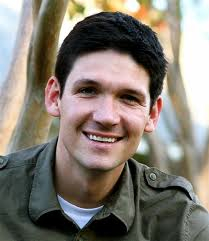
Matt Chandler serves as lead pastor of the Village Church in Flower Mound, Texas. He has become a leader in the evangelical world through his ministry at the Village Church, the Acts 29 Church Planting Network, and his teaching at multiple conferences. Matt is known to a wider audience most recently through his faithful witness to Jesus Christ while battling a malignant brain tumor. Chandler is also the author of the teaching series Philippians: To Live Is Christ & to Die Is Gain; and his excellent first book published by Crossway, entitled: The Explicit Gospel.
“Every Day With Jesus is Like A Thanksgiving Holiday” By Dr. David P. Craig
“Thank God It’s Thanksgiving Everyday – Especially on Thursday’s!”

I have always loved the Thanksgiving Holiday. It’s one of the few times of the year where our very large family can come together from all over the United States and enjoy giving thanks for our many blessings. This year more than likely I’ll be having liquid formula through a feeding tube in my stomach. I already had the G-Tube surgically implanted in my stomach this past week. During chemotherapy and radiation around Thanksgiving time will be a time of great testing for me, when according to my Doctors I will be unable to swallow and chew due to the severity of my treatment for throat and neck cancer. Watching every one I love dearest passing around the turkey with all the trimmings will be something my eyes will enjoy, but not my taste buds. However, I’m good with that. I’m good with whatever comes my way because I can choose whether I’m a “reactor” or a “responder.” Let me explain.
Over the past decade I’ve had eye problems off and on – a cataract surgery and lattice degeneration in both eyes, which required laser surgery to repair numerous tiny little “tears” in the back of my eyes. A few days ago the Eye Doctor discovered I have a Vitreous Detachment and a Vitreous Hemorrhage in my right eye. After seeing a cataract specialist I was referred to another specialist who confirmed these diagnoses. All I know is that it is difficult for me to read, and that I see flashes of light at night, and what looks like a “blob” during the day out of my right eye. The Ophthalmologist thinks it should go away – but for now, I’m hoping and praying the “blob” will clear up.
I have also had an off-and-on battle with “Gout” (Charles Haddon Spurgeon had Gout as well – which makes me feel a little bit better about it – at least I’m in good company). They say Gout is a “rich man’s disease” (well one out of two ain’t bad – and “rich” isn’t the one). The first time I experienced Gout was after coaching one of my daughter’s soccer practices. I remember lying on the bed at night after soccer practice and feeling like someone took my right big toe and pounded it with a hammer as if they were really mad at the nail – and it just so happened my big “toe” represented the nail. It was excruciating. I’ve finally (after years of hopping, limping, and crawling through various “Gout” attacks) resorted to taking medication a few months ago – so far so good. The reality is I get “Gout” not because I’m rich, but because my body is missing an enzyme and therefore I manufacture too much uric acid which builds up “crystals” (more like little torturous demons) in weak areas of the body – joints in the extremities – and inflames them, so that even a bed sheet touching the inflamed joint hurts like you just got stepped on by a really upset “Chuck Norris.”
Today I am on my way to the hospital to get my face fitted for a mask that I will wear for radiation treatment. I will also have a CT-Scan to see if I’m ready to start chemotherapy and radiation for the Stage 3, throat and neck cancer I’ve recently been diagnosed with. God-willing I will begin treatment early next week (the sooner the treatment begins – the better). So what’s with all the grim news? Well, honestly, I truly believe that some tough days are ahead – but they will go a lot better if I have a thankful heart.
I also have learned something about life – We are either coming out of tough times, going through tough times, or about to go through tough times! The good news – is that as Christians we know that God “God is faithful, and he will not let you be tempted beyond your ability, but with the temptation he will also provide a way of escape that you may be able to endure it” (1 Corinthians 10:13b). Warren W. Wiersbe calls the Christian life a “land of hills and valleys.” We journey from low points to high points and everything in between.
Why Lord? What’s with All the Tough Stuff?
James puts it this way, “Count it all joy, my brothers, when you meet trials of various kinds, for you know that the testing of your faith produces steadfastness. And let steadfastness have its full effect, that you may be perfect and complete, lacking nothing” (James 1:2-4). In other words, if you want to lack nothing, be spiritually mature, and satisfied – the only way to do it, is by meeting all kinds of trials with “joy.” Why? Because God designed it that way! If you’ve got a problem with it…He’s got a bigger problem! He took our sin problem head-on and voluntarily. He sent His perfect Son to die in your and my place and exchanged His perfect record of righteousness for your (and my) heinous record of unrighteousness.
I didn’t choose to have a cataract or lattice degeneration in my eyes; Gout, or Squamous Cell Carcinoma Cancer. But, I do know for a fact that God has allowed me to have these ailments, and I can either react to, (negative thinking) or respond to (positive thinking) God’s sovereign will and plans. I know that God works everything out for my good, and more importantly, for His glory. I know that God can heal me if He chooses to do so. I know that He can use medicine and the skill of excellent Physicians, medications, diet, and the prayers of His people to rid me of my cancer if He so desires. I also know, that we live in a fallen world, and one out of one people die. As a pastor I’ve easily performed over 100 funerals, and I’ve also witnessed miraculous healings. However, I do not presume to know what God’s sovereign hidden will happens to be in my cancer. I only know that I must decide whether God is good or evil – and the track record is that I’m very evil, and He is very good – as a matter of fact Perfect and immutably so. Only God is infinitely Wise in His plans. I simply want to trust and obey Him in the midst of this trial.
God is Good and Sovereign:
Lamentations 3:21-26 – But this I call to mind, and therefore I have hope: The steadfast love of the Lord never ceases; his mercies never come to an end; they are new every morning; great is your faithfulness. “The Lord is my portion,” says my soul, “therefore I will hope in him.” The Lord is good to those who wait for him, to the soul who seeks him. It is good that one should wait quietly for the salvation of the LORD.”
Psalm 90:12 – Moses prays, “so teach us to number our days that we may get a heart of wisdom.”
Proverbs 16:9 – Solomon says, “Man plans His ways, but the LORD determines His steps.”
Psalm 139:16 “Your eyes saw my unformed substance; in your book were written, every one of them, the days that were formed for me, when as yet there was none of them”– in paraphrase: “All of our days are numbered before one of them came to be.”
Romans 8:18, 28-29, 32 – “For I consider that the sufferings of this present time are not worth comparing with the glory that is to be revealed to us…And we know that for those who love God all things work together for good, for those who are called according to his purpose. For those whom he foreknew he also predestined to be conformed to the image of his Son, in order that he might be the firstborn among many brothers…He who did not spare his own Son but gave him up for us all, how will he not also with him graciously give us all things?”
In summary: God has given me a certain number of days to suffer and grow in wisdom. He has always been faithful to provide for all my needs. If He didn’t spare His own Son – how could He possibly abandon me now? In the days He entrusts to me I can either react or respond to everything that He allows in my life. He promises that everything that comes my way is ultimately for my good and His glory. Ultimately all of my suffering is not worth comparing with the glories to come. God has predestined and purposed for me in His infinite wisdom and love that through suffering my character would conform to the image of Jesus – so that I would look like His brother – an heir with Christ, adopted into the family of God! God will give me an allotted time known only to Him to make much of Jesus and to bring Him glory – nothing else really matters.
Are You a “Reactor” or a “Responder”?
Here is an example of the difference and importance of “reacting” to circumstances, and “responding” to them: If I begin radiation and chemotherapy on Monday and within a few weeks my tumor shrinks from 7 to 5 cm, and the cancer cells are disappearing – then that’s a positive “response” to the treatment – it’s working! My body is responding to the treatment. If the tumor and cancer cells metastasize to another part of my body and the tumor grows to 8-9 cm then that’s called a “reaction” to the treatment – it’s not working. My body would be “reacting” to the treatment. The treatment will either cause my body to “react,” (negatively) or “respond” (positively) to the treatment. Responding is good. Reacting is bad.
The good news of the gospel is that even when you or I “react” negatively in our thinking, Christ has us covered! Even when you or I “respond” it’s only by His grace that we’re able to respond the way we should. I thank God that my salvation is NOT based on the way I react or respond to everything in life. I thank God that it is solely by repentance and faith – God’s gift to me – sola gratia, sola fide, solus Christus, Soli Deo Gloria – that I’m accepted, adopted, and saved by my beloved Triune God.
I truly believe that we can respond to circumstances by responding by having a greater understanding of the incredible mercy and grace of God in saving us. Read carefully just a sampling of God’s amazing Triune grace and mercy in saving us:
“But to all who did receive him, who believed in his name, he gave the right to become children of God, who were born, not of blood nor of the will of the flesh nor of the will of man, but of God” (John 1:12-13).
“No one can come to me unless the Father who sent me draws him. And I will raise him up on the last day” (John 6:44).
“And you were dead in the trespasses and sins in which you once walked, following the course of this world, following the prince of the power of the air, the spirit that is now at work in the sons of disobedience—among whom we all once lived in the passions of our flesh, carrying out the desires of the body and the mind, and were by nature children of wrath, like the rest of mankind. But God, being rich in mercy, because of the great love with which he loved us, even when we were dead in our trespasses, made us alive together with Christ—by grace you have been saved” (Ephesians 2:1-5).
“For by grace you have been saved through faith. And this is not your own doing; it is the gift of God, not a result of works, so that no one may boast. For we are his workmanship, created in Christ Jesus for good works, which God prepared beforehand, that we should walk in them.” (Ephesians 2:8-10).
“Therefore you have no excuse, O man, every one of you who judges. For in passing judgment on another you condemn yourself, because you, the judge, practice the very same things. We know that the judgment of God rightly falls on those who practice such things. Do you suppose, O man—you who judge those who practice such things and yet do them yourself—that you will escape the judgment of God? Or do you presume on the riches of his kindness and forbearance and patience, not knowing that God’s kindness is meant to lead you to repentance?” (Romans 2:1-4).
For he says to Moses, “I will have mercy on whom I have mercy, and I will have compassion on whom I have compassion.” So then it depends not on human will or exertion, but on God, who has mercy.” (Romans 9:15-16).
“But when the goodness and loving kindness of God our Savior appeared, he saved us, not because of works done by us in righteousness, but according to his own mercy, by the washing of regeneration and renewal of the Holy Spirit, whom he poured out on us richly through Jesus Christ our Savior, so that being justified by his grace we might become heirs according to the hope of eternal life” (Titus 3:4-7).
I like the way Pastor David Platt puts it, “Salvation has absolutely nothing to do with human merit and absolutely everything to do with divine mercy.” John MacArthur says it like this, ““There are basically only two kinds of religion in the world: those based on human achievement and those based on divine accomplishment. One says you can earn your way to heaven; the other says you must trust in Jesus Christ alone.” Tullian Tchividijian makes the same point this way, ““The Bible doesn’t tell the story of good people who do great things; it tells the story of great sin that is met with a greater Savior.”
Paul David Tripp writes, ““Because we sin specifically, the gospel intends us to grow in grace specifically…We must emphasize again and again the nowism of the gospel…Jesus didn’t just die for your past and future, He died for you’re here and now! To die for you, Jesus had to first live for you. He lived a perfect life in your place so he would be an acceptable sacrifice for your sin.”
When trials come into our lives in the form of a long traffic light that makes us late for work, an unexpected tax increase, or in the form of a pink slip from our boss, small or large trial – we all have them – where we differ and show what we are made of is in the arena of our character. Character is made in the shade of trials – the inner being. Our character is manifest in the light of the fight. It is in the heat of the hottest fire where the gold is most refined. Gold is never made without heat. Our purity came at a huge cost – the life of the perfect One – crucified (the greatest suffering), buried (the greatest abandonment), risen (the greatest triumph), and coming again (our greatest hope)!
Therefore, I am going to do something I’ve never done before starting this Thursday – Today. I’m going to make it a “Day of Thanks” – no matter what comes my way. I am going to choose to “respond” and not “react” – be positive and not negative – praise God and not whine to Him. I’m going to spend my entire day choosing joy over sorrow, and to focus on the Grandeur of the God of the Gospel.
Thursday’s for me – from this Thursday on – by God’s grace will be a day of responding to God in gratitude and thanks all day long. October 18, 2012 is going to be a day dedicated to Thanksgiving. I will not ask for anything of God. I will spend my day delighting in what He has already done and will continue to do for me. I will choose to delight in His nature and attributes. I will respond to Him by rejoicing in His plans that are ultimately always for His glory and for my good. As a Christian I know that even my suffering has a purpose – I know that behind every pain there is a plan by a loving God who suffered and was in more pain than I’ll ever know, in order to spare me from His wrath that I so rightly deserved. Now all I know is that because of the Triune work and plan of God I will never be punished for my wretched sin – Jesus took care of it, and stated “It is finished” two thousand years ago.
The new normal for me may consist of a lot of pain – but that’s ok because Jesus has been through the greatest pain on my behalf – out of love for the Father and love for me as His adopted heir in the family of God. His goal for me whether He gives me many more years or just a few more days is spelled out clearly by the Apostle Paul in Romans 5:1-8,
“Therefore, since we have been justified by faith, we have peace with God through our Lord Jesus Christ. Through him we have also obtained access by faith into this grace in which we stand, and we rejoice in hope of the glory of God. Not only that, but we rejoice in our sufferings, knowing that suffering produces endurance, and endurance produces character, and character produces hope, and hope does not put us to shame, because God’s love has been poured into our hearts through the Holy Spirit who has been given to us. For while we were still weak, at the right time Christ died for the ungodly. For one will scarcely die for a righteous person—though perhaps for a good person one would dare even to die—but God shows his love for us in that while we were still sinners, Christ died for us.”
Today is a Day of Thanksgiving because I’ve been:
(1) Justified by faith (not my works – but the perfect works of Jesus on my behalf);
(2) I have peace with Jesus – He’s not mad at me even though He died for “my” sins;
(3) I stand in grace – undeserved, free, and infinite – accessed solely by faith in Jesus Person and Work on my behalf in his life, death, burial, and resurrection;
(4) I can rejoice in the hope of the glory of God – I will see Him in His perfect glory forever – no blinders and no barriers because I am his child forever;
(5) I can rejoice in my sufferings – because they have purpose – they aren’t by “chance” or “luck” – they are carefully designed by an infinitely wise and loving God to conform me to the image of Jesus;
(6) My character will be produced by endurance, strength, and hope by choosing to respond and not react in the midst of the hardships – because the more I become like Jesus – the more prepared I will be to bring gratitude and glory to Him;
(7) I have God’s love in my heart because He poured it there via the Holy Spirit – no more guilt or shame, because I’m covered by the blood of Christ, and the Spirit has taken up residence in my life forever – never to leave me nor forsake me;
(8) No matter how weak I am – Jesus the risen one who conquered death – who died for my sin – who rose from the dead and will return and reign as King – the righteous for the unrighteous – how can I doubt His love or plans for me;
(9) He can never love me more than he already has demonstrated – for while I was a sinner He died for me. I can never do anything to make Him love me more. So whether I “react” or “respond” because of my repenting of my sins past, present, and future – He’s got me covered by His blood shed for me.
Thursdays from this day forth will be “Days of Thanksgiving.” Not the all-you-can eat Turkey and gravy fests The focus on my prayers will be to be express my gratitude and “respond” to God’s amazing graces in my life. And if He never did another thing for me – only He would be worthy of all of my praise for Who He is, what He has done, and what He has promised to do for His glory and His Eternal Kingdom.
Today I Start with this Simple Prayer of Thanks – “Response”:
“Father thank you for orchestrating my election in eternity past. If you never did anything else than to pick me on your team – adopt me into your family and not make me pay forever for my sin – that would be enough for me to thank you each millisecond for the next billion years. Jesus, thank you for coming after me courageously and unflinchingly receiving the Father’s wrath for my sin – if it were only my sin it would have been brutal enough. But you also took on the sins of the world. You are the Man – there is no one who can be named in the same breath with the name of Jesus. At your name every knee will bow and every tongue will confess that You are Lord. I do so now willingly, with gratitude, humbly, and filled with joy – that you would exchange your righteousness for my righteousness which to you are only as “filthy rags.” Holy Spirit, I am grateful that you regenerated me. You took a dead man with no ability whatsoever to trust in Jesus, and made me alive spiritually. You gave me the gift of faith in the One you pointed me to – the Holy Lamb of God who takes away the sins of the world – and who took away all my sins – past, present, and future. Thank you Triune God for your plan to save me; your perfect execution to save me in totally fulfilling the righteous requirements of the law; and the reconciliatory requirements in order to forgive me on the basis of the name that above all other names, and You will reign as King forever and ever! – Amen!
I hope that you will join me in committing to making one day a week – it doesn’t have to be a Thursday; the date isn’t as important as your becoming focused on the Gospel – seeking to conform to being more like Jesus. I encourage you to join me in becoming a “responder” to the Gospel and not a “reactor” that doubts the goodness of our loving God. Please join me in giving God the Father, Son, and Spirit the gratitude and glory due Him for the great things He has done – let’s strive to be “responders” to His grace, and not “reactors” because of our foolish idolatries. Soli Deo Gloria!
About Dr. David P. Craig

I am first and foremost a great sinner, saved by an even Greater Savior – Jesus Christ. I have been a pastor for over 23 years and working as a Pastoral Life Coach for the past year. There is nothing I enjoy more than teaching from God’s Word and pointing others to the focal point of the Scriptures and the Universe – it’s all about Jesus. I have no greater passion than to make disciples who make disciples of my Lord and Savior Jesus Christ! Whether I make disciples by teaching large groups, coaching one-on-one, or in discipleship – the formate doesn’t matter to me. I love seeing and experiencing the Spirit of God come upon and transform lives through the power of the Gospel. I love to help people get more balance in their lives by identifying and delivering them from their idolatries and discovering that Jesus is always better than anything else. I have been blessed with a wonderful wife, five outstanding children, two amazing grand sons, and my only claim to fame is that I know where to find lasting satisfaction and joy – and it’s to be found only in knowing Jesus personally and intimately.
John Piper on the Question: How Can We Be Thankful In The Midst of Suffering?
Thanksgiving in Suffering
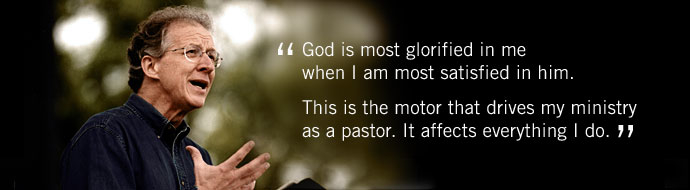
“Since we have a great high priest, Jesus, the Son of God, who has passed through the heavens [or: gone into heaven], let us hold fast our confession. For we do not have a high priest who is unable to sympathize with our weaknesses, but one who in every respect has been tested as we are, yet without sin. Let us then with confidence draw near to the throne of grace, that we may receive mercy and find grace to help in time of need” (Hebrews 4:14-16).
I want to present Jesus to you as a sympathetic Go-between for you and God. I want you to understand how Jesus, the Son of God, is alive today, and stands ready to serve you as your advocate with God the Father. I want you to see why you can draw near to the throne of God with Jesus as your Go-between and Advocate, and expect to find mercy and grace to help in times of need. If it’s true that we can always go to God’s throne and find mercy and help in times of need, then there can always be thanksgiving, even in suffering—and that’s my theme, “Thanksgiving in Suffering.”
A Wrong Way to View Jesus as a Go-Between
Now when I call Jesus a “Go-between” for you and God, I realize that I might be creating a false picture in your mind. You might take me to mean that God is the bad guy and we are the victims and Jesus is the good guy, and Jesus comes between us and God the way a level-headed son comes in between a furious father and a helpless child and rescues the child by grabbing the father’s arms and saying, “Cool it! Cool it, dad.”
We Are Not Victims but Sinners
There are three things wrong with that picture. You and I are not victims of God, we are sinners against God. The Bible says, “All have sinned and fallen short of God’s glory” (Romans 3:23). Our consciences tell us plainly that we have not even lived up to our own standards, let alone God’s.
Sending Jesus Was God’s Idea
The second thing wrong with that picture is that Jesus did not intrude himself between us and God. He didn’t jump in to wrestle God away from us against God’s will. God put Jesus between us and himself. “For God so love the world that he GAVE his only begotten Son, that whoever believes on him might have everlasting life” (John 3:16). The Go-between was God’s idea. He took the initiative to make a way for sinners to come to him through Jesus.
God Is Never Impulsive or Rash or Reckless
The third thing wrong with that picture is that God does not lose his cool. He is not impulsive or rash or reckless. He is perfectly righteous and unswervingly just and infinitely holy and pure. He never plays fast and loose with truth or with virtue. He upholds his law with unimpeachable equity and integrity. No shady deals. No bribery. No skeletons in the closet. “God is light and in him is no darkness at all” (1 John 1:5).
The Right Understanding of Jesus as a Go-Between
That’s why we need a Go-between. The Bible says, “Your iniquities have made a separation between you and your God, and your sins have hid his face from you” (Isaiah 59:2). God is like a blazing fire of light and truth and righteousness, and I am like a broken, dark, dead, dry piece of wood. If I get near him, I will be consumed.
And so God sends a Go-between—his Son. He takes on human nature, he lives a perfect life, he dies to bear the sins of many, and he rises to vindicate the saving power of his death. Now Jesus says, “I am the way the truth and the life, no one comes to the Father but by me” (John 14:6). Jesus is the only true Go-between with God. The apostle Peter said, “Christ died for sins once for all, the righteous for the unrighteous, that he might bring us to God” (1 Peter 3:18). Only Jesus can bring us to God. The apostle Paul said, “We were reconciled to God by the death of his Son” (Romans 5:10). Only Jesus can save us from the separation and alienation that cuts us off from the Father. “There is salvation in no one else, for there is no other name under heaven given among men by which we must be saved” (Acts 4:12). It’s Jesus or alienation.
He came into the world and took on himself our human nature, our weaknesses, our pain, and our death. He was tested in every way like we are, and yet he didn’t sin. Since he didn’t sin, he can be a perfect High Priest—a Go-between—for us. And since he suffered and was tested and tempted, he can be a sympathetic Go-between.
The Amazing Invitation of Hebrews 4:16
I say all of this just to lay the foundation for the amazing invitation that God gives to us in Hebrews 4:16. He says, “Therefore, let us with confidence [not hesitation, not reluctance, but with confidence let us] draw near to the throne of grace, that we may receive mercy and find grace to help in time of need.” When Jesus is your Go-between, the throne of God is a throne of grace, not judgment, and what you find there is mercy and grace to help in time of need.
What this means is that when Jesus, the perfect Go-between, has met your need for forgiveness and acceptance with God, he doesn’t take off and say, “You’re on your own now; see you in heaven.” Instead, he stands ready to serve you all the rest of your life.
The Christian life begins with forgiveness and reconciliation with God. It’s like a great homecoming, with tears of repentance and hope and joy and acceptance. For some it’s almost too good to be true. But then the Christian life continues, and it’s a life of ongoing dependence on the grace of God. We don’t escape the pain and stress and disappointments and suffering and calamities and tragedies and frustrations and pressures of life in this world.
In fact, sometimes becoming a Christian and obeying the Word of the Lord increases our troubles rather than lessening them. But the difference now is, first, that the outcome of life is settled—it will be eternal life with infinite happiness (Romans 8:17–18)—and, second, all along the way in this world God helps us in times of need through our Go-between, Jesus. God’s invitation to everyone is, first, come to Jesus for forgiveness and reconciliation with me, and then, second, “Draw near to the throne of grace, that you may receive mercy and find grace to help in time of need.”
The Story of Sandra Tarlen
I want to illustrate this power and willingness of God to help you in time of need by introducing you to one more person who is living evidence that God gives mercy and grace to help in time of need.
This person is Sandra Tarlen. She has been part of our fellowship since early this year. Her story goes like this.
My major crisis started when I was four years old! I was burned in a gasoline fire. A little boy threw a can of gasoline into a fire and I was standing on the other side. The gas went through the fire and into my face and the flames followed. My face suffered 1st, 2nd, and 3rd degree burns. These burns left ugly, disfiguring scars. When I started school it was very difficult. I felt different from the rest of the children and a lot of them were very cruel to me. I didn’t like school much, but I didn’t like summers either, because that always meant I would have to have another surgery on my face.
My father became an alcoholic and the word love or any action of love was not heard or seen in my family that I can ever remember. An old man who lived next door to us was always very nice and would buy or make me things—but there was a price to pay for gifts. He fondled and molested me repeatedly. One night when I was 13 years old, I was walking home from the show, and a gang of young men picked me up and raped me.
Although these things caused me to feel dirty and empty inside, they also gave me the feeling that at least somebody wanted me for something. I began to fill a lot of loneliness with sexual relationships. My heart began to get hard and bitter and full of hate. The hate began to eat at me from the inside out.
I became anorexic, then bulimic. I had chronic migraine headaches, ulcers, a hysterectomy, and other major surgeries. I was in and out of doctor’s offices constantly looking for a remedy. I experimented with alcohol, drugs and a couple of times even suicide! By the time I was 17 I already had two children and by the time I was 25 I had been married four times. Life seemed pretty hopeless.
I knew there had to be more to life than what I was living. In search for that, I went with my best friend Sherry to a Victorious Christian Living Conference. There I heard David Ritzenthaler talk about the Gospel. He explained how much God loved me, enough to send His own Son to die for me and save me from my sins. I knew that this God David was talking about was not the God of my life and I desperately wanted to know Him. Five days after hearing this, I called David. I went to his office and he shared with me the “Four Spiritual Laws.” That night on March 12, 1982, at 7:30 PM, I prayed and confessed I was a sinner in need of a Savior, I invited Jesus into my heart to be Lord of my life. At that very moment God gave me new life.
That was just the beginning of new life for Sandra. We will give her time to tell her story early next year. But there remained 11 more surgeries to bring the total to 32 in her life. She speaks of surgeries and scar tissue on the inside too. Broken relationships and broken dreams being healed. Amazingly Sandra writes,
He gave me new dreams as I continued to seek Him. Today after all those surgeries, I can honestly say with a joyful heart that I am thankful for the experiences I’ve gained as a result of them all. God has used each one to strengthen me and my relationship with Him and when I share my experience, it has helped to strengthen others.
The point of Sandra Tarlen’s story and the point of God’s word in Scripture is that Jesus is a very sympathetic, caring, and powerful Go-between with God. Because he loved us and died for us and rose from the dead, anyone—any one of you—who trusts him can draw near to the throne of grace to receive mercy and grace to help in time of need.
Sermon/ Article Above Used by Permission. By Dr. John Piper. © 2012 Desiring God Foundation. Website: desiringGod.org. Thanksgiving in Suffering is a synopisis of John Piper’s sermon in a Celebration of Thanksgiving at Maranatha Hall on November 18,1990.
About Dr. John Piper
John Piper was pastor for preaching and vision for over thirty years at Bethlehem Baptist Church in the Twin Cities of Minnesota. He grew up in Greenville, South Carolina, and studied at Wheaton College, Fuller Theological Seminary (B.D.), and the University of Munich (D.theol.). For six years he taught Biblical Studies at Bethel College in St. Paul, Minnesota, and in 1980 accepted the call to serve as pastor at Bethlehem. John is the author of more than 40 books and more than 30 years of his preaching and teaching is available free at desiringGod.org. John and his wife, Noel, have four sons, one daughter, and twelve grandchildren.
 LifeCoach4God