Category: Apologetics
When Christians Disagree: Some Positive Steps To Take
There are certain positive actions that all of us as adult Christians can and should take if we are determined to help ease the tension over issues like the future unfolding of God’s plan or the age of the earth (areas that we disagree on):
POSITIVE ACTIONS
(1) Determine to understand opposing views better and why they are held.
(2) Determine to be less caustic about other evangelicals and their views when they differ from your own.
(3) Determine not to suspect a person’s orthodoxy because he or she doesn’t agree with you.
(4) Determine to cooperate and build fellowship whenever and wherever possible with those evangleicals who hold different views than your own.
NEGATIVE ACTIONS NEEDED
(1) Avoid majoring on minors.
(2) Avoid unwanted dogmatism and conclusions.
(3) Avoid a holier-than-thou attitude.
(4) Avoid giving the impression that you have all the answers and others have all the problems.
(5) Avoid thinking a view must be without problems or it can’t be right.
An epithet appears in a Latin treatise designed to uphold Lutheranism and at the same time call for peace in that church. This treatise reportedly was published in Germany sometime between 1615 and 1630. The message of the poem is most fitting for our day as well, especially in regard to differences over God’s plan for the future. I can’t think of a better suggestion for action than this. Translated into English it reads:
“In essentials unity. In uncertainties freedom, In all things love.”
*SOURCE: Adapted from pp. 185-86 in The Last Days Handbook by Robert P. Lightner. Nashville: Thomas Nelson, 1990.
How Dr. R.C. Sproul Met Jesus Personally
*R.C. Sproul’s Christian Testimony: A Personal Pilgrimage
The quest for the meaning of life was a troublesome problem for me from an early age. The “why” questions were the ones that gripped my mind—not so much physical questions but metaphysical questions. Many children are fascinated by “how” things work. They may even pester their parents with questions like, What makes a car run? How does a clock work? How does a seed turn into a flower? I had childhood friends like that, forever tinkering with cars and lawnmowers and skeletons. Some became engineers, some doctors, one a geologist and one a physicist. But I was bored with those questions. I knew they were very important questions, but they simply were not the ones on my mind.
As a youth I had two consuming passions. One was sports and the other the “why” questions. I saw no relationship between them at the time but in present reflection I think I can see how they fit together in my own circumstances.
I was a wartime child. The earliest question that plagued me was the question of war. I wanted to know why there were wars. They seemed pretty silly to me at the age of four. I couldn’t sit at a table and resolve their differences without using tanks and bombs and ships. Of course I had a personal vested interest in the question. What the war meant to me personally was the absence of my father. From the age of two to age six my father was a picture of a man in uniform. He was the one who wrote air letters to us. He was the one my mother talked about and typed letters to every night. She let me punch the X and O keys at the end of every letter. For some strange reason none of my childhood friends’ fathers were away at war. I kept wondering, “Why does everyone else have a dad at home and I don’t?
The plaguing question of war evaporated for me with a happy ending. Playing stickball on the streets of Chicago I was startled by a sound of people screaming and beating on pots and pans. I watched them hug each other and behave in a strange manner. I was upset that their antics interrupted the stickball game until I understood what it was all about—V.J. Day, 1945.
The full implications of their jubilation did not hit me until I stood in a railroad terminal that looked as if it was filled with a million men in uniform and a lot of weeping women. Then the troop trains came in. In the midst of a multitude of soldiers who all looked the same, one of them caught my eye. Fifty feet away he dropped his duffle bag, dropped to his knees and threw open his arms with a flashing grin on his face. I broke from my mother’s hand and covered fifty feet in Guinness record time. Dodging servicemen and running around duffle bags I flew into the arms of my father. The war didn’t matter anymore.
Then came school. From day one I didn’t like school. It is still something of a mystery to me how I ever ended up in an academic vocation. I remember walking to school on Mondays dreaming about Fridays. The thought that plagued me was why do I have to go to school five days a week and get to play only two? It didn’t make sense to me. My father’s schedule looked even worse. It seemed like he was always working. I wondered what life was all about when you had to spend so much time doing what you don’t like so you could spend so little time doing what you do like.
I was a good student but my heart wasn’t in it. Sports were my passion. Sports made sense to me. I took a sensuous and intellectual pleasure in them. I liked the feel of my body responding to action moves: dodging a would-be tackler, driving through the key for an “unmakeable” lay-up; skirting across the bag at second and firing to first for a double play. I was consumed by sports. I read every book in the town library on sports. I was a walking encyclopedia of sports “trivia.” My hero was the fictional Chip Hilton. He excelled at everything; he was a pristine model of fair play; he was a champion.
Practice for sports was never work. I was never so tired that I wanted practice to end. I loved every second of it. There was a reason for practice. The game. Victory. The game had a starting point, a goal, and an end point. Victory was a real possibility; defeat never entered my mind. When we were behind my thoughts were never “What if we lose?” but rather, “How can we win?” Like Vince Lombardi, I never lost a game but just ran our of time on a few occasions. My coaches were my real life idols because they always pointed ways to victory. We would be willing to die for them on the field as a matter of obvious course.
But something happened that changed all that and changed me so radically that I’m not over it yet. I was 16 years old when my mother came to me and said, “Son, your father has an incurable disease. There is nothing the doctors can do for him. You can still play some sports but you’ll have to cut back and get a part time job. Dad is dying and you have to be the man of the house.” I took the message outwardly with stoic heroism. Inwardly I was enraged. I could not believe there was something as an unsolvable problem. We won the war, didn’t we? We always found a way to win ball games. Why can’t we beat this? There must be a cure. The doctors are wrong. But there was no cure. The doctors were right. Dad didn’t die right away. He died a day at a time. Every night I fireman-dragged his emaciated body to the dinner table.
I still played sports for a while but it was different. They were foolishness. The coach said, “Sproul, I want you to take this football and carry it with you everywhere you go. I want you to take it to dinner ad sleep with it. You have to eat, drink, and sleep football.”
Two weeks earlier if had said that to me I would have loved him for it. Now I wanted to scream at him, “You idiot!” Don’t you know this stuff doesn’t matter at all!” Practice was misery. The games became a nightmare. Sports, like life, were an exercise in futility. Chip Hilton was a myth and life a bitter joke. When the referee blew his whistle and called a foul I pushed his whistle in his mouth. When the umpire called me out I took a swing at him. Bitter, frustrated, confused, I knew only defeat. Now there was no way to win. I quit.
The last time my father fell I picked him up and carried him to bed, unconscious. Twenty hours later he was dead. No tears from me—no emotion. I “quarter-backed” the funeral arrangements. When we put him in the ground my soul went under with him. The next year was a year of unrestrained degeneracy. (Anger can do a lot of things to a young man.) I became the paradigm of the angry young man. In junior high I graduated second in my class, legitimately; from senior high I was one hundred fifty-seventh by every crooked means available.
Sandlot football won me a scholarship to college. Then came radicalizing number two. One week on campus and my life was turned upside down again. The star of the football team called me aside and told me about Jesus. I couldn’t believe this guy. In my eyes ministers were “pansies,” and “Christian” was a synonym for “sissy.” I don’t remember what he said to me; but it drove me to the New Testament. Truth breathed from every page. It was my virgin experience with the Bible. It was a spiritual experience of revolution. I always knew there was a God but I hated Him. In this week my anger and bitterness dissolved into repentance. The result was forgiveness and life.
It would perhaps be appropriate to relate a story of coming to Christ via the route of intellectual inquiry. But that’s not how it happened with me. The intellectual drive came later. For one year I had a consummate passion to learn the Scriptures. I couldn’t understand why everyone didn’t believe them. Most of my professors were skeptics. The campus atmosphere was mostly secular. I was quickly faced with every conceivable objection to Christianity. I was most vulnerable, in light of my past history, to the charge that my faith grew out of my emotional trauma and psychological need for Jesus to be my “Father” and to give me hope in my despair and bitterness.
I wasn’t a Christian long until I had to face the question squarely: Was my conversion rooted in objective reality or was it merely an expression of my own subjective needs? I began to experience what Saint Augustine called, “Faith seeking understanding.” Thus I turned my attention to the study of philosophy as my major academic pursuit.
The study of the history of philosophy exposed me to virtually every serious alternative to Christianity the world has brought forth. I began to see the bankruptcy of secular world views. I found valuable insights in Spinoza, Kant, Sartre, and others. But no one seemed to have a consistent and coherent life and world view. The philosophers themselves were their own best critics. Hume critiqued Locke; Kant critiqued Hume; Hegel critiqued Kant, and so on it went. There emerged no “sure results” of speculative thought. The study of philosophy did provide very important tools for critical analysis which proved very helpful for my own pilgrimage. The more I studied philosophy the more intellectually credible and satisfying Christianity became.
After college came seminary. Naively I expected seminary to be a citadel of scholarly interpretation and defense of Christianity. Instead I found it to be a fortress of skepticism and unbelief. A negative posture toward classical Christianity prevailed which exposed me to a wide variety of contemporary critical theories that rejected orthodox Christianity. Thus seminary exposed me to a wide variety of scholarly criticisms of the Bible. This forced me to face the question of the trustworthiness of Scripture. Fortunately I was blessed with two crucial support systems. On the one hand I was well enough equipped with the tools of analytical philosophy to spot the philosophical assumptions that the negative critics were using. Through philosophical tools I was able, to some degree, to critique the critics. I was intellectually unimpressed by the weak philosophical assumptions of the “liberal” professors. On the other hand I was fortunate to study under one professor who did affirm classical Christianity. He was our toughest professor and most academically demanding. His “bear-trap” mind and singular ability for “close” and “tight” reasoning impressed me. He seemed to tower over the rest of the professors both in knowledge and analytical brilliance.
From seminary I went on to a doctoral program in Europe. It was a difficult and exhilarating experience. Almost al of my work had to be done in foreign languages which required a new kind of intellectual discipline for me. Studying under G. C. Berkouwer of the Free University of Amsterdam exposed me to all the latest theories of theology and biblical studies. The European system exposed me to the method of approaching theology and biblical studies as a technical science. Studying the primary sources in original languages such as Dutch, German and Latin gave new tools for scholarship.
From Europe I returned to America and began my teaching career. Teaching in both college and seminary I had an unusual pattern of teaching assignments. At one college I taught almost exclusively in the field of philosophy. In another college I was responsible to teach theology and biblical studies. My first seminary appointment had me teaching philosophical theology which combined both philosophy and theology. Oddly enough I was also asked to teach New Testament theology. In an age of specialization I was forced into being a “generalist,” working in several different but related fields.
The science of apologetics which offers intellectual defense of the credibility of Christianity finally became my point of “specialty.” That is usually what happens to generalists.
My training was not in a conservative “hothouse.” I have been through the gamut of liberal scholarship. I am a first-generation conservative—by conviction, not heritage or training.
The teaching arena has been the crucible of my thinking. The more I study and the more I teach and engage in dialogue with unbelievers and critics the more confident I have become in the rock-solid intellectual integrity and truth of Christianity. In fact, I am overwhelmed by the profundity, coherency, and intricate internal consistency of Christianity. I am awed by the majesty and brilliance, not to mention the power, of the Scriptures. Take away the Scriptures and you take away Christ. Take away the Christ and you take away life. My conviction is one with that of Luther: Spiritus Sanctus non scepticus: “The Holy Spirit is not a skeptic and the assertions He has given us are surer and more certain than sense and life itself.”
*This article was published in the Introduction to the book Reason To Believe (originally published in 1978 as
Objections Answered) by R. C. Sproul, pp. 11-18.
Dr. R.C. Sproul is the founder and chairman of Ligonier Ministries, an international Christian education ministry located near Orlando, Florida. His teaching can be heard on the program Renewing Your Mind, which is broadcast on hundreds of radio outlets in the United States and in 40 countries worldwide. He is the executive editor of Tabletalk magazine and general editor of The Reformation Study Bible, and the author of more than seventy books (including some of my all time favorites: THE HOLINESS OF GOD; CHOSEN BY GOD; KNOWING SCRIPTURE; REASON TO BELIEVE; and PLEASING GOD) and scores of articles for national evangelical publications. Dr. Sproul also serves as president of Ligonier Academy of Biblical and Theological Studies and Reformation Bible College. He currently serves as senior minister of preaching and teaching at Saint Andrew’s in Sanford, FL. (The picture to the left was taken approximately around the time of Sproul’s conversion as a College student).
WOMEN IN MINISTRY: What Does the Bible Say?
By S. Michael Houdmann
Question: “Complementarianism vs. egalitarianism—which view is biblically correct?”
Answer: Summarized by “The Council on Biblical Manhood and Womanhood,” complementarianism is the viewpoint that God restricts women from serving in church leadership roles and instead calls women to serve in equally important, but complementary roles. Summarized by “Christians for Biblical Equality,” egalitarianism is the viewpoint that there are no biblical gender-based restrictions on ministry in the church. With both positions claiming to be biblically based, it is crucially important to fully examine what exactly the Bible does say on the issue of complementarianism vs. egalitarianism.
Again, to summarize, on the one side are the egalitarians who believe there are no gender distinctions and that since we are all one in Christ, women and men are interchangeable when it comes to functional roles in leadership and in the household. The opposing view is held by those who refer to themselves as complementarians. The complementarian view believes in the essential equality of men and women as persons (i.e., as human beings created in God’s image), but complementarians hold to gender distinctions when it comes to functional roles in society, the church and the home.
An argument in favor of complementarianism can be made from 1 Timothy 2:9-15. The verse in particular that seems to argue against the egalitarian view is 1 Timothy 2:12, which reads, “I do not permit a woman to teach or to exercise authority over a man; rather, she is to remain quiet.” Paul makes a similar argument in 1 Corinthians 14 where he writes, “The women should keep silent in the churches. For they are not permitted to speak, but should be in submission, as the Law also says” (1 Corinthians 14:34). Paul makes the argument that women are not allowed to teach and/or exercise authority over men within the church setting. Passages such as 1 Timothy 3:1-13 and Titus 1:6-9 seem to limit church leadership “offices” to men, as well.
Egalitarianism essentially makes its case based on Galatians 3:28. In that verse Paul writes, “There is neither Jew nor Greek, there is neither slave nor free, there is no male and female, for you are all one in Christ Jesus.” The egalitarian view argues that in Christ the gender distinctions that characterized fallen relationships have been removed. However, is this how Galatians 3:28 should be understood? Does the context warrant such an interpretation? It is abundantly clear that this interpretation does damage to the context of the verse. In Galatians, Paul is demonstrating the great truth of justification by faith alone and not by works (Galatians 2:16). In Galatians 3:15-29, Paul argues for justification on the differences between the law and the promise. Galatians 3:28 fits into Paul’s argument that all who are in Christ are Abraham’s offspring by faith and heirs to the promise (Galatians 3:29). The context of this passage makes it clear Paul is referring to salvation, not roles in the church. In other words, salvation is given freely to all without respect to external factors such as ethnicity, economic status, or gender. To stretch this context to also apply to gender roles in the church goes far beyond and outside of the argument Paul was making.
What is truly the crux of this argument, and what many egalitarians fail to understand, is that a difference in role does not equate to a difference in quality, importance, or value. Men and women are equally valued in God’s sight and plan. Women are not inferior to men. Rather, God assigns different roles to men and women in the church and the home because that is how He designed us to function. The truth of differentiation and equality can be seen in the functional hierarchy within the Trinity (cf. 1 Corinthians 11:3). The Son submits to the Father, and the Holy Spirit submits to the Father and the Son. This functional submission does not imply an equivalent inferiority of essence; all three Persons are equally God, but they differ in their function. Likewise, men and women are equally human beings and equally share the image of God, but they have God-ordained roles and functions that mirror the functional hierarchy within the Trinity.
While he is not the author of every article on GotQuestions.org, for citation purposes, you may reference our CEO AT LOGOS, S. Michael Houdmann.
*SOURCE: Read more:http://www.gotquestions.org/complementarianism-vs-egalitarianism.html#ixzz2sfAGBJYL
Recommended Resources for Further Study:
Two Views on Women in Ministry. Edited by Stanley N. Gundry, and James R. Beck. Grand Rapids: Zondervan, 2005.
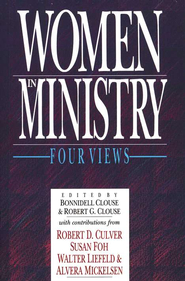
Women in Ministry: Four Views. Edited by Bonnidell Clouse and Robert G. Clouse. Downers Grove, IL.: IVP, 1989.
Women and Men In Ministry: A Complementary Persepective. Edited by Judy TenElshof and Robert L. Saucy. Chicago: Moody Press, 2001.
Recovering Biblical Manhood and Womanhood: A Response to Evangelical Feminism. Edited by John Piper and Wayne Grudem. Wheaton: Crossway Books, 2012.
Albert Mohler: On the Bill Nye vs. Ken Ham Debate
Bill Nye’s Reasonable Man—The Central Worldview Clash of the Ham-Nye Debate

Last night’s debate between Bill Nye and Ken Ham attracted a huge international audience and no shortage of controversy—even before it began. Bill Nye, whose main media presence is as “The Science Guy,” and Ken Ham, co-founder of Answers in Genesis and founder of the Creation Museum, squared off in a true debate over one of the most important questions that the human mind can contemplate. That is no small achievement.
I enjoyed a front row seat at the debate, which took place even as a major winter storm raged outside, dumping considerable amounts of snow and ice and causing what the local police announced as a “Class Two” weather emergency. Inside the Creation Museum there was quite enough heat, and the debate took place without a hitch. Thankfully, it also took place without acrimony.
The initial controversy about the debate centered in criticism of Bill Nye for even accepting the invitation. Many evolutionary scientists, such as Richard Dawkins and Jerry Coyne, refuse to debate the issue, believing that any public debate offers legitimacy to those who deny evolution. Nye was criticized by many leading evolutionists, who argued publicly that nothing good could come of the debate.
Interestingly, this points back to the famous debates over evolution that took place in nineteenth century England, when Anglican churchmen faced early evolutionary scientists in (mostly) civil public exchanges. Back then, it was the churchmen who were criticized by their peers for participation in the debate. Now, the table has turned, indicating something of the distance between the intellectual conditions then and now.
Of course, Bill Nye might have felt some moral obligation to debate the question, since he had launched a unilateral attack on creationist parents in a video that went viral last year. In that video, Nye told creationist parents:
“[I]f you want to deny evolution and live in your world, in your world that’s completely inconsistent with everything we observe in the universe, that’s fine, but don’t make your kids do it because we need them. We need scientifically literate voters and taxpayers for the future. We need people that can—we need engineers that can build stuff, solve problems.”
But if Nye had launched the attack, he did not arrive at the debate in a defensive mode. A protege of the late Carl Sagan and the current CEO of the Planetary Society, Nye was in full form last night, wearing his customary bow-tie, and immaculately dressed in a very expensive suit. He took notes with a very fine writing instrument. I like his style.
Ken Ham is a veteran debater on the issue of origins, and he was clearly prepared for the debate. Ham’s arguments were tight and focused, and his demeanor was uniformly calm and professional. The format allowed for a full expression of both arguments, along with spirited exchanges and questions submitted from the audience. What the 150 minute event lacked was any requirement that the debaters answer each other’s questions. That would have changed the way the debate concluded.
The central question of the debate was this: “Is creation a viable model of origins in today’s modern scientific era?” Ham stuck to the question tenaciously. Nye, on the other hand, tried to personalize the debate and kept changing the question from creation to “Ken Ham’s creationism.” Ham was unfazed, and kept to his argument.
As the debate began, it was clear that Ham and Nye do not even agree on definitions. The most friction on definition came when Nye rejected Ham’s distinction between “historical science” and “observational science” out of hand. Nye maintained his argument that science is a unitary method, without any distinction between historical and observational modes. Ham pressed his case that science cannot begin without making certain assumptions about the past, which cannot be observed. Furthermore, Ham rightly insisted that observational science generally does not require any specific commitment to a model of historical science. In other words, both evolutionists and creationists do similar experimental science, and sometimes even side-by-side.
Nye’s main presentation contained a clear rejection of biblical Christianity. At several points in the debate, he dismissed the Bible’s account of Noah and the ark as unbelievable. Oddly, he even made this a major point in his most lengthy argument. As any informed observer would have anticipated, Nye based his argument on the modern consensus and went to the customary lines of evidence, from fossils to ice rods. Ham argued back with fossil and geological arguments of his own. Those portions of the debate did not advance the arguments much past where they were left in the late nineteenth century, with both sides attempting to keep score by rocks and fossils.
In this light, the debate proved both sides right on one central point: If you agreed with Bill Nye you would agree with his reading of the evidence. The same was equally true for those who entered the room agreeing with Ken Ham; they would agree with his interpretation of the evidence.
That’s because the argument was never really about ice rods and sediment layers. It was about the most basic of all intellectual presuppositions: How do we know anything at all? On what basis do we grant intellectual authority? Is the universe self-contained and self-explanatory? Is there a Creator, and can we know him?
On those questions, Ham and Nye were separated by infinite intellectual space. They shared the stage, but they do not live in the same intellectual world. Nye is truly committed to a materialistic and naturalistic worldview. Ham is an evangelical Christian committed to the authority of the Bible. The clash of ultimate worldview questions was vividly displayed for all to see.
When asked how matter came to exist and how consciousness arose, Nye responded simply and honestly: “I don’t know.” Responding to the same questions, Ham went straight to the Bible, pointing to the Genesis narrative as a full and singular answer to these questions. Nye went on the attack whenever Ham cited the Bible, referring to the implausibility of believing what he kept describing as “Ken Ham’s interpretation of a 3,000 year old book translated into American English.”
To Bill Nye, the idea of divine revelation is apparently nonsensical. He ridiculed the very idea.
This is where the debate was most important. Both men were asked if any evidence could ever force them to change their basic understanding. Ham said no, pointing to the authority of Scripture. Nye said that evidence for creation would change his mind. But Nye made clear that he was unconditionally committed to a naturalistic worldview, which would make such evidence impossible. Neither man is actually willing to allow for any dispositive evidence to change his mind. Both operate in basically closed intellectual systems. The main problem is that Ken Ham knows this to be the case, but Bill Nye apparently does not. Ham was consistently bold in citing his confidence in God, in the gospel of Jesus Christ, and in the full authority and divine inspiration of the Bible. He never pulled a punch or hid behind an argument. Nye seems to believe that he is genuinely open to any and all new information, but it is clear that his ultimate intellectual authority is the prevailing scientific consensus. More than once he asserted a virtually unblemished confidence in the ability of modern science to correct itself. He steadfastly refused to admit that any intellectual presuppositions color his own judgment.
But the single most defining moments in the debate came as Bill Nye repeatedly cited the “reasonable man” argument in his presentation and responses. He cited Adolphe Quetelet’s famed l’homme moyen—“a reasonable man”—as the measure of his intellectual authority. Writing in 1835, Quetelet, a French intellectual, made his “reasonable man” famous. The “reasonable man” is a man of intellect and education and knowledge who can judge evidence and arguments and function as an intellectual authority on his own two feet. The “reasonable man” is a truly modern man. Very quickly, jurists seized on the “reasonable man” to define the law and lawyers used him to make arguments before juries. A “reasonable man” would interpret the evidence and make a reasoned judgment, free from intellectual pressure.
Bill Nye repeatedly cited the reasonable man in making his arguments. He is a firm believer in autonomous human reason and the ability of the human intellect to solve the great problems of existence without any need of divine revelation. He spoke of modern science revealing “what we all can know” as it operates on the basis of natural laws. As Nye sees it, Ken Ham has a worldview, but Nye does not. He referred to “Ken Ham’s worldview,” but claimed that science merely provides knowledge. He sees himself as the quintessential “reasonable man,” and he repeatedly dismissed Christian arguments as “not reasonable.”
In an unexpected turn, near the end of the event, Nye even turned to make an argument against Christianity on grounds of theodicy. He asked Ham if it was “reasonable” to believe that God had privileged a personal revelation that was not equally accessible to all. Nye’s weakest argument had to do with his claim—made twice—that billions of religious people accept modern science. He provided a chart that included vast millions of adherents of other world religions and announced that they are religious but accept modern science. That is nonsense, of course. At least it is nonsense if he meant to suggest that these billions believe in evolution. That is hardly the case. Later, he lowered his argument to assert that these billions of people use modern technology. So, of course, do creationists. There are few facilities in the world more high-tech than the Creation Museum.
Nye is clearly not a fan of theistic evolution, since he argued that a purely natural argument should be quite enough for the “reasonable man.” He seemed to affirm a methodological agnosticism, since he sees the question of a “higher power” or “spiritual being” to be one of little intellectual consequence. He did argue that nature is a closed system and that natural selection can allow for absolutely no supernatural interference or influence. In this respect, he sounded much like Stephen Hawking, who has argued that God may exist, but that there is nothing for him to do.
Ken Ham is a Young Earth Creationist (as am I), but the larger argument was over worldviews, and the debate revealed the direct collision between evolution and the recognition of any historical authority within Genesis 1-11. As if to make that clear, in making one of his closing arguments, Bill Nye actually went back to cite “this problem of the ark.”
The ark is not the real problem; autonomous human reason is. Bill Nye is a true believer in human reason and the ability of modern science to deliver us. Humanity is just “one germ away” from extinction, he said. But science provides him with the joy of discovery and understanding.
The problem with autonomous human reason is made clear by the Apostle Paul in Romans chapter 1:
“For the wrath of God is revealed from heaven against all ungodliness and unrighteousness of men, who by their unrighteousness suppress the truth. For what can be known about God is plain to them, because God has shown it to them. For his invisible attributes, namely, his eternal power and divine nature, have been clearly perceived, ever since the creation of the world, in the things that have been made. So they are without excuse. For although they knew God, they did not honor him as God or give thanks to him, but they became futile in their thinking, and their foolish hearts were darkened. Claiming to be wise, they became fools, and exchanged the glory of the immortal God for images resembling mortal man and birds and animals and creeping things” (Rom 1:18-23 ESV).
The problem with human reason is that it, along with every other aspect of our humanity, was corrupted by the fall. This is what theologians refer to as the “noetic effects of the fall.” We have not lost the ability to know all things, but we have lost the ability to know them on our own authority and power. We are completely dependent upon divine revelation for the answers to the most important questions of life. Our sin keeps us from seeing what is right before our eyes in nature. We are dependent upon the God who loves us enough to reveal himself to us—and to give us his Word.
As it turns out, the reality and authority of divine revelation, more than any other issue, was what the debate last night was all about. As the closing statements made very clear, Ken Ham understood that fact, but Bill Nye did not.
The central issue last night was really not the age of the earth or the claims of modern science. The question was not really about the ark or sediment layers or fossils. It was about the central worldview clash of our times, and of any time: the clash between the worldview of the self-declared “reasonable man” and the worldview of the sinner saved by grace.
SOURCE: http://www.albertmohler.com/2014/02/05/bill-nyes-reasonable-man-the-central-worldview-clash-of-the-ham-nye-debate/
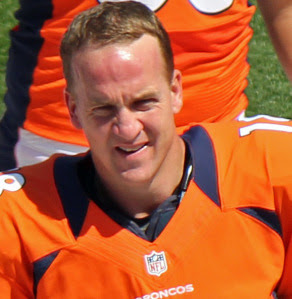
PEYTON MANNING: Actions Speak Louder Than Words
This season Peyton Manning, the quarterback of the Super Bowl bound Denver Broncos, completed the greatest statistical regular season at the quarterback position in the 94-year history of the National Football League (NFL). This regular season saw Manning set records in yards passed in a season (5,477) and touchdowns thrown in a season (55), and he led his team to accumulate more points (606) in a regular season than had ever been done before. Manning also tied the record for touchdowns thrown in a game (7) in the Broncos Week 1 win over the defending Super Bowl champions, the Baltimore Ravens.
Any fan of Peyton Manning or the NFL generally knows that Manning is the consummate professional. He treats the fans, media personnel, teammates, and opponents with respect. He works as hard–and probably harder–at his craft than any other player in the league. And he produces one fun, family friendly commercial after another, showing his sense of humor and a humble assessment of his own importance. But what many fans of Manning and the NFL may not be aware of is Manning’s Christian faith. In the excerpt below from Peyton’s book Manning (available on Amazon), which he co=wrote with his father Archie Manning in 2001, the record-breaking quarterback gives a rare description of his faith and its importance to him. The description is a rare one, not because Peyton’s faith is an insignificant part of his life, but because, as Peyton explains in the excerpt, he has intentionally chosen to speak more by his actions than by his words.
Here is the excerpt:
Like my dad, I make it a point when I speak to groups to talk about priorities, and when it’s schoolkids, I rank those priorities as: faith, family, and education, then football. And I tell all of them that as important as football is to me, it can never be higher than fourth. My faith is number one since I was thirteen years old and heard from the pulpit on a Sunday morning in New Orleans a simple question: “If you died today, are you one hundred percent sure you’d go to heaven?” Cooper was there and Eli (Peyton;s two brothers) but it didn’t hit them at the time the way that it hit me. It was a big church, and I felt very small, but my heart was pounding. The minister invited those who would like assurance through Jesus Christ to raise their hands, and I did. Then he invited us to come forward and take a stand, and my heart really started pounding. And from where we sat, it looked like a mile to the front.
But I got up and did it. And I committed my life to Christ, and that faith has been the most important thing to me ever since. Some players get more vocal about it–the Reggie Whites, for example–and some point to Heaven after scoring a touchdown and praise God after games. I have no problem with that. But I don’t do it, and don’t think it makes me less of a Christian. I just want my actions to speak louder, and I don’t want to be more of a target for criticism than I already am. Somebody sees you drinking a beer, which I do, and they think, “Hmmm, Peyton says he’s this, that, or the other, and there he is drinking alcohol. What’s that all about?”
Christians drink beer. So do non-Christians. Christians also make mistakes, just as non-Christians do. My faith doesn’t make me perfect, it makes me forgiven, and provides me with the assurance I looked for half my life ago. I think God answered our prayers with Cooper, and that was a test of our faith. But I also think I’ve been blessed–having so little go wrong in my life, and being given so much. I pray every night, sometimes long prayers about a lot of things and a lot of people, but I don’t talk about it or brag about it because that’s between God and me, and I’m no better than anybody else in God’s sight.
But I consider myself fortunate to be able to ask Him for guidance, and I hope (and pray) I don’t do too many things that displease Him before I go to Heaven myself. I believe, too, that life is much better and freer when you’re committed to God in that way. I find being with others whose faith is the same has made me stronger. J.C. Watts and Steve Largent, for example. They’re both in Congress now. We had a voluntary pregame chapel at Tennessee, and I attended chapel every Sunday with players on the team at Indianapolis. I have spoken to church youth groups, and at Christian high schools. And then simply as a Christian, and not as good a one as I’d like to be.
How do I justify football in the context of “love your enemy?” I say to kids, well, football is most definitely a “collision sport,” and I can’t deny it jars your teeth and at the extreme can break your bones. But I’ve never seen it as a “violent game,” there are rules to prevent that, and I know I don’t have to hate anybody on the other side to play as hard as I can within the rules. I think you’d have to get inside my head to appreciate it, but I do love football. And yes,, I’d play it for nothing if that was the only way, even now when I’m no longer a child. I find no contradiction in football and my faith.
Ah, but do I “pray for victory?” No, except as a generic thing. I pray to keep both teams injury free, and personally, that I use whatever talent I have to the best of my ability. But I don’t think God really cares about who wins football games, except as winning might influence the character of some person or group. Besides. If the Colts were playing the Cowboys and I prayed for the Colts and Troy Aikman prayed for the Cowboys, wouldn’t that make it a standoff?
I do feel this way about it. Dad says it can take twenty years to make a reputation, and five minutes to ruin it. I want my reputation to be able to make it through whatever five-minute crises I run into. And I’m a lot more comfortable knowing where my help is.
How Should Christians Respond to Hate?
HOW SHOULD CHRISTIANS REACT TO HATE?
By Dan Darling
It’s no secret that the biblical sexual ethic, a beautiful monogamous relationship reserved for marriage between a man and a woman, has swiftly fallen out of favor in our culture. The recent declaration that Jason Collins, a veteran NBA center, has exposed the deep rifts in our society on the issue of homosexuality. While most of the world celebrated Collin’s courage, ESPN NBA reporter, Chris Broussard, a committed evangelical Christian, had his own courage to say, into a stiff wind of opposition, that Collin’s lifestyle choices conflict with the Christian faith.
Nothing in this story should surprise us. Society has been moving this direction for some time now. But what caught me off guard, I guess, was the public shaming of the Christian position on marriage. I heard many, well-respected sports commentators, guys I’ve listened to and followed for many years, seemingly equate Christians like Broussard with bigots and with the ignorant and unlearned. The sweeping intolerance of Christianity, the crude names leveled at Broussard and others seems to mark a new moment in our country. The reality is that holding the biblical sexual ethic will now invite open scorn. I only expect it to get worse. I only expect those who stand firm on the Scriptures to experience further persecution and hostility. And we shouldn’t be surprised. Jesus himself promised that his followers would endure some level of persecution. “They hated me, they will hate you,” he predicted (John 15:18).
So the question is this: how now shall we live? What should our reaction be? In my view there are two wrong responses and one right one.
1) We can cave in and seek the approval of men rather than the approval of God. There is a growing movement in the evangelical world that is seeking to make complicated what the Scriptures make plain, namely that perhaps the Bible is not so explicitly condemning of homosexuality as we think. As a person wired to avoid conflict I’m sympathetic to the desire to find this in the Bible, but it is just not there. Jesus himself affirmed the law of Moses when he repeated the words from Genesis, “For this cause a man will leave his father and mother and cleave to His wife” (Matthew 19:5). And while Jesus offered grace to the women who violated the biblical marriage ethic and condemned the Pharisees who wanted to stone her, he also told her, “Go and sin no more.” He didn’t act as if her sexual activity out of marriage was okay. He said it was sin. Sin that brought him to this earth and nailed him to a cross. Sin he graciously has forgiven. Sin which invites the grace and holiness of God. As much as we want to cave in on marriage, because to do so would make our lives as Christians much, much easier, to do so is to abandon the way of Christ. I’m reminded of Peter’s words to the persecuted believers of the 1st Century, “Stand firm in the faith” (1 Peter 5:19).
2) We can ratchet up the angry, hateful, personal rhetoric. As shameful it is to cave in on Scriptural truth, it’s equally sinful to sort of use our position as an increasingly marginalized minority to lash out at those who don’t agree with us. But if we’re to take serious the truth we claim to uphold, we have to listen to all the words of Jesus, including his words, “Love your enemies” (Matthew 5:43-48). And we have to listen to the words of that same Apostle Peter. The same guy who told us to “stand firm” also told us to do it with civility and respect (1 Peter 3:15). I find it interesting that Peter, speaking to an increasingly marginalized, persecuted group of Christians, found it important to say, essentially, “Make sure you suffer, not for your own evil, but for doing good” (1 Peter 2:20; 1 Peter 3:17). In other words, we are to speak firmly, but with kindness, winsomeness, charity, and grace. If we are honest, we would admit that the Christian community does not always do this well. We should disagree with Jason Collin’s choices, but we should not mock him, we should not post crude or hurtful slurs online. We should not slander those who disagree with us. We should lead with grace, remembering that Jesus didn’t come to condemn, but to offer salvation and life. Jesus came for sinners and so we should seek to love sinners as much as He did. We should, like Paul, remember that we are counted in that group: we are as much sinners in need of grace as the unrepentant homosexual. I find it interesting that Paul, at the end of his life, nearing the time of his martyrdom at the hands of a cruel despot, surveyed the entire landscape and said, “I am the chief of sinners” (1 Timothy 1:15). Imagine that. Paul looked around the entire world, saw wicked men like Nero and the soft Christians who betrayed him and yet said, “They may be sinners, but I’m worse.” What a spirit of humility! This is the spirit that should inform our engagement on these issues where most of the culture resists. We should as the Spirit to help us fight the urge to return rhetorical evil with rhetorical evil (1 Peter 3:9). We should reject the sort of knee-jerk, crude, mean-spirited kind of speaking that seems to characterize much of our public discourse. Civility is not unimportant and it’s not overrated and it’s not the enemy of courage.
3) We can respond with love and grace.
2 Timothy 3:12 reminds us that “all who live godly in Christ will suffer persecution.” The level of persecution we face today in America is low-level at best. Much of what we think is persecution is simply consequences of our own inability to treat people with grace. But we’re moving into an era where our positions on the issues may invite charges of bigotry. This is where we must not react with surprise or fear–remembering that trials are an opportunity for joy (James 1:2) and occasions for growth and Christlikeness (John 15; James 1:2-4). Fear stems from a lack of faith and fear causes us to react in unloving ways. But if we believe that God is completely sovereign and that we have been tasked by Him to the ministry of reconciliation (2 Corinthians 5:18), it is incumbent on us to model Jesus’ behavior and react to hatred and intolerance with grace and love. We should be wise about responding to every charge with a countercharge. We should hold our fire sometimes, as Jesus did in the face of false accusations (John 18:33-38). We should forgive others, looking to Christ’s own forgiveness of us (Ephesians 4:32) and His forgiveness of those who crucified him, “Forgive them, for they know not what they do” (Luke 23:42). We should not be defensive, whiny, petulant. We should work hard to see every human as someone worthy of respect (1 Peter 2:17), created in the image of God (James 3:9). We should not make our fight personal or political (Ephesians 6:12). The real enemy doesn’t have a human face, but is our adversary (1 Peter 5:8). And our real hope is not in a short-term victory, but in the future hope of a coming kingdom, another world, a city whose builder and maker is God (Matthew 6:10; Hebrews 11:10).
As followers of Jesus, we’re not simply called to be counter-cultural with our sexual ethics, but also in the way we talk, speak, and articulate these things. If we are called to suffer for our faith, let’s pray God gives us the courage and grace to endure and that our lives are but a small glimpse of Christ within.
SOURCE: http://www.crosswalk.com/blogs/daniel-darling/how-should-christians-react-to-hate.html
ABOUT THE AUTHOR

Daniel Darling is the Vice President for Communications for the Ethics and Religious Liberty Commission of the Southern Baptist Convention (ERLC). For five years, Dan served as Senior Pastor of Gages Lake Bible Church in the northwest suburbs of Chicago and is the author of several books, including Teen People of the Bible, Crash Course, iFaith, Real, and his latest, Activist Faith. He is a weekly contributor to Out of Ur, the blog of Leadership Journal. His work has been featured in evangelical publications such as Relevant Magazine, Homelife, Focus on the Family, Marriage Partnership, In Touch with Dr. Charles Stanley. He has guest-posted on leading blogs such as Michael Hyatt, The Gospel Coalition, OnFaith (Washington Post), and others. He is a contributing writer for many publications including Stand Firm, Enrichment Journal and others. Dan’s op-eds have appeared in Washington Posts’ On Faith, CNN.com’s Belief Blog, and other newspapers and opinion sites. He is a featured blogger for Crosswalk.com, Churchleaders.com and Believe.com, Covenant Eyes, G92, and others. Publisher’s Weekly called his writing style “substantive and punchy.” Dan is a sought-after speaker and has been interviewed on TV and radio outlets across the country, including CNN, 100 Huntley Street, Moody Broadcasting Network, Harvest Television, The Sandy Rios Show, American Family Radio, the Salem Radio Network, and a host of other local and national Christian media. He holds a bachelor’s degree in pastoral ministry from Dayspring Bible College and is pursuing a Masters of Divinity degree from Trinity Evangelical Divinity School. He and his wife Angela have four children and reside in the Nashville area. Daniel is represented by Tamela Hancock Murray of The Steve Laube Literary Agency

DOES DEFINITE ATONEMENT UNDERMINE OUR ZEAL FOR EVANGELISM?
*The Achilles Heel of Reformed Theology?
The doctrine of definite atonement, known historically as “limited atonement” or “particular redemption”, has always courted controversy. It has been called a grim and textless doctrine, the Achilles heel of Reformed theology (see, for example, Karl Barth and Broughton Knox). Of the many objections to the doctrine, one of the strongest is that definite atonement undermines a zeal for evangelism. If Christ died only for the elect, can we sincerely offer the gospel to everyone?
However, when definite atonement is placed alongside other biblical truths, the question does not follow. Particularity of grace in election or atonement does not mitigate a universal gospel offer. This is where we should follow Christ’s example.
Biblical Examples
In Matthew 11, Jesus explains that no one knows the Father except the Son and those to whom the Son chooses to reveal him (v. 27). The particularity is explicit. Yet in the very next verse, Jesus gives a universal offer to everyone to come to him and find rest (v. 28). In John 6, Jesus claims that he has come from heaven to do his Father’s will, which is to lose none of those given to him but to raise them up on the last day (v. 39). This is actually the reason why (“For”) whoever comes to him will never be turned away (v. 38). The Father’s will is that “everyone” who looks to the Son and believes will have eternal life (v. 40). Christ’s purpose in coming was particular; the work he performed in his life, death, resurrection, and ascension was particular (cf. John 17); and yet his invitation was universal. It was also sincere.
Did Christ know all those whom the Father had given him as he encountered the many crowds during his ministry? Of course. Did he still sincerely offer himself to everyone in the crowd? Yes. So we should be like Christ in relation to this issue. Calvin put it well: “Since we do not know who belongs to the number of the predestined, and who does not, it befits us so to feel as to wish that all be saved. So it will come about that, whoever we come across, we shall study to make him a sharer of peace.”
Why It Matters
But here’s the take-home value in definite atonement. When we offer Christ to sinners, we aren’t offering them the mere opportunity or possibility of salvation (as those who hold to an unlimited atonement can only do if they are consistent); rather, we offer them a Christ whose first name really means “Savior” (Matt. 1:21). And this is only so because God presented him as a propitiation for sinners—not potentially or possibly or hypothetically, but actually.
Let’s get even more practical. If one believes in definite atonement, can we say to people, “Christ died for you”? What’s interesting is that the phrase “Christ died for you” does not appear in the NT and yet the Apostles turned the world up-side-down with their preaching, as did many “Calvinist” ministers and missionaries: George Whitefield, Jonathan Edwards, Charles Spurgeon, William Carey, David Brainerd—to name but a few. So the efficacy of gospel preaching is not dependent on including the phrase “Christ died for you”. J. I. Packer is most helpful here:
The gospel is not, ‘believe that Christ died for everybody’s sins, and therefore for yours,’ any more than it is, ‘believe that Christ died only for certain people’s sins, and so perhaps not for yours.’ The gospel is, ‘believe on the Lord Jesus Christ, who died for sins, and now offers you Himself as your Saviour.’ This is the message which we need to take to the world. We have no business to ask them to put their faith in any view of the extent of the atonement; our job is to point them to the living Christ, and summon them to trust in Him.
Embracing the Tension
When it comes to definite atonement and evangelism, it’s not either/or but both/and. Christ made a definite atoning sacrifice for those whom the Father had given to him; and we are commanded to proclaim Christ indiscriminately to all people.
How should we live between these two points of tension? On our knees, as we plead with our Triune God to do for others what he has so graciously done for us.
*SOURCE: http://www.crossway.org/blog/2014/01/does-definite-atonement-undermine-our-zeal-for-evangelism/

Jonathan Gibson (PhD, Cambridge University) is the is author of historical and biblical articles in Themelios and Journal of Biblical Literature, as well as “Obadiah” in the NIV Proclamation Bible, and is a coeditor of From Heaven He Came and Sought Her: Definite Atonement in Historical, Biblical, Theological, and Pastoral Perspective (excerpt).
AN ATHEIST’S VIEW VS. A CHRISTIAN’S VIEW OF LIFE
9 Things You Should Know About The Hobbit
Now that the second part of the epic films series based on The Hobbit has been released in theaters. Here are nine things you should know about the original book and its author, J.R.R. Tolkien.
1. Tolkien started to create Middle Earth long before he thought up the story that would be set in that locale. Tolkien, who had an academic background in Germanic and Norse language and religions, started creating a mythology and elven languages in 1917 — over a decade before he ever thought about the characters that would appear in his stories.
2. Tolkien claims the idea for The Hobbit came to him suddenly while he was grading student essay exams. He took out a blank piece of paper and wrote, “In a hole in the ground there lived a hobbit.” When he began writing the story, Tolkien believed he had invented the word “hobbit.” (It was revealed years after his death that the word predated Tolkien’s usage, though with a different meaning). Tolkien’s concept of hobbits were inspired by Edward Wyke Smith’s 1927 children’s book The Marvellous Land of Snergs, and by Sinclair Lewis’s 1922 novel Babbitt (like hobbits, George Babbitt enjoys the comforts of his home).
3. Released on September 21, 1937 with a print run of 1,500 copies, the book was already sold out by December. Since Nielsen started tracking books with their BookScan service in 1995, The Hobbit has not once fallen off of their list of the top 5,000 books. Because the book did so well, publishers requested a sequel in December of 1937. Originally, Tolkien presented them with drafts for The Silmarillion, but they were rejected on the grounds that the public wanted “more about hobbits.” Tolkein’s answer was the three-book series,The Lord of the Rings.
4. In 1960, Tolkien started rewriting the story to better match the tone of Lord of the Rings, which was written for an adult audience that grew up after reading the original version of The Hobbit. However, the publishers told him to forget about the revisions since the new version lost the original quick pace and light-hearted tone that everyone loved about the original.
5. There isn’t a single female character in The Hobbit, and the only woman mentioned by name is Bilbo’s mother, Belladonna Took.
6. Although “dwarfs” had appeared in pop culture before (e.g., Snow White and the Seven Dwarfs), Tolkien was the one who invented the word “dwarves.” Tolkien thought that the word “dwarves” paired better with “elves.” He later told a friend, “I use throughout the ‘incorrect’ plural dwarves. I am afraid it is just a piece of private bad grammar, rather shocking in a philologist; but I shall have to go on with it.”
7. “Possession” is a unifying theme in Tolkien’s Middle Earth. Melkor wanted to have God’s power of creation, Gollum was twisted by his possessive love of his “Precious,” and Smaug was a dragon obsessed with material goods. In The Hobbit, Thorin explains his contempt for the possession-loving creatures: “Dragons . . . guard their plunder . . . and never enjoy a brass ring of it. Indeed they hardly know a good bit of work from a bad, though they usually have a good notion of the current market value; and they can’t make a thing for themselves. . . . “
8. In Tolkien’s posthumously published story “The Quest of Erebor,” Gandalf explains the reason he chose Bilbo to join Thorin’s expedition to the Lonely Mountain: Smaug the dragon would not be able to identify the aroma of one of the Shire-folk. Smaug was a great connoisseur of Dwarves, however. After eating six of their pack animals the dragon instantly recognizes the taste of a Dwarf-ridden-pony.
9. Tolkien denied that his stories were written for children:
That’s all sob stuff. No, of course, I didn’t… The Hobbit was written in what I should now regard as bad style, as if one were talking to children. There’s nothing my children loathed more. They taught me a lesson. Anything that in any way marked out The Hobbit as for children instead of just for people, they disliked-instinctively. I did too, now that I think about it. All this ‘I won’t tell you any more, you think about it’ stuff. Oh no, they loathe it; it’s awful. Children aren’t a class. They are merely human beings at different stages of maturity. All of them have a human intelligence which even at its lowest is a pretty wonderful thing, and the entire world in front of them. It remains to be seen if they rise above that.
*SOURCE – WRITTEN ON DECEMBER 9, 2012 BY JOE CARTER http://thegospelcoalition.org/blogs/tgc/2013/12/12/9-things-you-should-know-about-the-hobbit/