The G-O-S-P-E-L in a Nutshell

An Acronym for the GOSPEL

GTGR

 The Gospel is:

G-ood news of
G-od’s grace to
G-uilty men
O-ffered to all and
O-beyed by faith
S-alvation by a
S-ubstitutionary Sacrifice
P-eace and pardoned proclaimed through
P-ropitiation
E-ternal life given to
E-veryone that repents of their sins and believes in Jesus, with
L-ight,
L-iberty and
L-ove.

The 7 Major Bodily Resurrections in the Bible

Jesus' empty tomb and resurrection image

(1) The Bodily Resurrection of Jesus Christ

Now after the Sabbath, toward the dawn of the first day of the week, Mary Magdalene and the other Mary went to see the tomb. And behold, there was a great earthquake, for an angel of the Lord descended from heaven and came and rolled back the stone and sat on it. His appearance was like lightning, and his clothing white as snow. And for fear of him the guards trembled and became like dead men. But the angel said to the women, “Do not be afraid, for I know that you seek Jesus who was crucified. He is not here, for he has risen, as he said. Come, see the place where he lay. Then go quickly and tell his disciples that he has risen from the dead, and behold, he is going before you to Galilee; there you will see him. See, I have told you.” (Matt. 28:1–7)

When the Sabbath was past, Mary Magdalene, Mary the mother of James, and Salome bought spices, so that they might go and anoint him. And very early on the first day of the week, when the sun had risen, they went to the tomb. And they were saying to one another, “Who will roll away the stone for us from the entrance of the tomb?” And looking up, they saw that the stone had been rolled back—it was very large. And entering the tomb, they saw a young man sitting on the right side, dressed in a white robe, and they were alarmed. And he said to them, “Do not be alarmed. You seek Jesus of Nazareth, who was crucified. He has risen; he is not here. See the place where they laid him.But go, tell his disciples and Peter that he is going before you to Galilee. There you will see him, just as he told you.” (Mark 16:1–7)

But on the first day of the week, at early dawn, they went to the tomb, taking the spices they had prepared. And they found the stone rolled away from the tomb, but when they went in they did not find the body of the Lord Jesus. While they were perplexed about this, behold, two men stood by them in dazzling apparel. And as they were frightened and bowed their faces to the ground, the men said to them, “Why do you seek the living among the dead? He is not here, but has risen. Remember how he told you, while he was still in Galilee, that the Son of Man must be delivered into the hands of sinful men and be crucified and on the third day rise.” And they remembered his words (Luke 24:1–8)

Now on the first day of the week Mary Magdalene came to the tomb early, while it was still dark, and saw that the stone had been taken away from the tomb. So she ran and went to Simon Peter and the other disciple, the one whom Jesus loved, and said to them, “They have taken the Lord out of the tomb, and we do not know where they have laid him.” So Peter went out with the other disciple, and they were going toward the tomb. Both of them were running together, but the other disciple outran Peter and reached the tomb first. And stooping to look in, he saw the linen cloths lying there, but he did not go in. Then Simon Peter came, following him, and went into the tomb. He saw the linen cloths lying there, and the face cloth, which had been on Jesus’ head, not lying with the linen cloths but folded up in a place by itself. Then the other disciple, who had reached the tomb first, also went in, and he saw and believed; (John 20:1–8)

God raised him up, loosing the pangs of death, because it was not possible for him to be held by it… and you killed the Author of life, whom God raised from the dead. To this we are witnesses… And with great power the apostles were giving their testimony to the resurrection of the Lord Jesus, and great grace was upon them all… but God raised him on the third day and made him to appear…explaining and proving that it was necessary for the Christ to suffer and to rise from the dead, and saying, “This Jesus, whom I proclaim to you, is the Christ.” (Acts 2:24; 3:15; 4:33; 10:40; 17:3)

and was declared to be the Son of God in power according to the Spirit of holiness by his resurrection from the dead, Jesus Christ our Lord… who was delivered up for our trespasses and raised for our justification… because, if you confess with your mouth that Jesus is Lord and believe in your heart that God raised him from the dead, you will be saved.” (Rom. 1:4; 4:25; 10:9)

For I delivered to you as of first importance what I also received: that Christ died for our sins in accordance with the Scriptures, that he was buried, that he was raised on the third day in accordance with the Scriptures, and that he appeared to Cephas, then to the twelve. Then he appeared to more than five hundred brothers at one time, most of whom are still alive, though some have fallen asleep. Then he appeared to James, then to all the apostles. Last of all, as to one untimely born, he appeared also to me. For I am the least of the apostles, unworthy to be called an apostle, because I persecuted the church of God. (1 Cor. 15:3-9)

That he worked in Christ when he raised him from the dead and seated him at his right hand in the heavenly places (Eph. 1:20)

For since we believe that Jesus died and rose again, even so, through Jesus, God will bring with him those who have fallen asleep. (1 Thess. 4:14)

For Christ also suffered once for sins, the righteous for the unrighteous, that he might bring us to God, being put to death in the flesh but made alive in the spirit. (1 Peter 3:18).

(2) The token resurrection of some saints at the time of the resurrection of Christ

And Jesus cried out again with a loud voice and yielded up his spirit. And behold, the curtain of the temple was torn in two, from top to bottom. And the earth shook, and the rocks were split. The tombs also were opened. And many bodies of the saints who had fallen asleep were raised, and coming out of the tombs after his resurrection they went into the holy city and appeared to many. When the centurion and those who were with him, keeping watch over Jesus, saw the earthquake and what took place, they were filled with awe and said, “Truly this was the Son of God!” (Matt. 27:50–54).

(3) The resurrection at the rapture

Behold! I tell you a mystery. We shall not all sleep, but we shall all be changed, in a moment, in the twinkling of an eye, at the last trumpet. For the trumpet will sound, and the dead will be raised imperishable, and we shall be changed. For this perishable body must put on the imperishable, and this mortal body must put on immortality. When the perishable puts on the imperishable, and the mortal puts on immortality, then shall come to pass the saying that is written:


“Death is swallowed up in victory.” “O death, where is your victory? O death, where is your sting?” The sting of death is sin, and the power of sin is the law. But thanks be to God, who gives us the victory through our Lord Jesus Christ. Therefore, my beloved brothers, be steadfast, immovable, always abounding in the work of the Lord, knowing that in the Lord your labor is not in vain. (1 Cor. 15:51–58)

For since we believe that Jesus died and rose again, even so, through Jesus, God will bring with him those who have fallen asleep. For this we declare to you by a word from the Lord, that we who are alive, who are left until the coming of the Lord, will not precede those who have fallen asleep. For the Lord himself will descend from heaven with a cry of command, with the voice of an archangel, and with the sound of the trumpet of God. And the dead in Christ will rise first. Then we who are alive, who are left, will be caught up together with them in the clouds to meet the Lord in the air, and so we will always be with the Lord. (1 Thess. 4:14–17).

(4) The resurrection of the two witnesses

And I will grant authority to my two witnesses, and they will prophesy for 1,260 days, clothed in sackcloth.” These are the two olive trees and the two lampstands that stand before the Lord of the earth. And if anyone would harm them, fire pours from their mouth and consumes their foes. If anyone would harm them, this is how he is doomed to be killed.They have the power to shut the sky, that no rain may fall during the days of their prophesying, and they have power over the waters to turn them into blood and to strike the earth with every kind of plague, as often as they desire. And when they have finished their testimony, the beast that rises from the bottomless pit will make war on them and conquer them and kill them, and their dead bodies will lie in the street of the great city that symbolically is called Sodom and Egypt, where their Lord was crucified. For three and a half days some from the peoples and tribes and languages and nations will gaze at their dead bodies and refuse to let them be placed in a tomb, and those who dwell on the earth will rejoice over them and make merry and exchange presents, because these two prophets had been a torment to those who dwell on the earth. But after the three and a half days a breath of life from God entered them, and they stood up on their feet, and great fear fell on those who saw them. Then they heard a loud voice from heaven saying to them, “Come up here!” And they went up to heaven in a cloud, and their enemies watched them. And at that hour there was a great earthquake, and a tenth of the city fell. Seven thousand people were killed in the earthquake, and the rest were terrified and gave glory to the God of heaven. (Rev. 11:3–13).

(5) The resurrection of the Old Testament saints

Your dead shall live; their bodies shall rise. You who dwell in the dust, awake and sing for joy! For your dew is a dew of light, and the earth will give birth to the dead. Come, my people, enter your chambers, and shut your doors behind you; hide yourselves for a little while until the fury has passed by. For behold, the Lord is coming out from his place to punish the inhabitants of the earth for their iniquity, and the earth will disclose the blood shed on it, and will no more cover its slain. (Isa. 26:19–21)

Therefore prophesy, and say to them, Thus says the Lord God: Behold, I will open your graves and raise you from your graves, O my people. And I will bring you into the land of Israel. And you shall know that I am the Lord, when I open your graves, and raise you from your graves, O my people. And I will put my Spirit within you, and you shall live, and I will place you in your own land. Then you shall know that I am the Lord; I have spoken, and I will do it, declares the Lord.” (Ezek. 37:12–14)

“At that time shall arise Michael, the great prince who has charge of your people. And there shall be a time of trouble, such as never has been since there was a nation till that time. But at that time your people shall be delivered, everyone whose name shall be found written in the book. And many of those who sleep in the dust of the earth shall awake, some to everlasting life, and some to shame and everlasting contempt. And those who are wise shall shine like the brightness of the sky above; and those who turn many to righteousness, like the stars forever and ever.” (Dan. 12:1–3).

(6) The resurrection of the tribulation saints

Then I saw thrones, and seated on them were those to whom the authority to judge was committed. Also I saw the souls of those who had been beheaded for the testimony of Jesus and for the word of God, and those who had not worshiped the beast or its image and had not received its mark on their foreheads or their hands. They came to life and reigned with Christ for a thousand years. The rest of the dead did not come to life until the thousand years were ended. This is the first resurrection. Blessed and holy is the one who shares in the first resurrection! Over such the second death has no power, but they will be priests of God and of Christ, and they will reign with him for a thousand years. (Rev. 20:4–6).

(7) The resurrection of the wicked dead

Then I saw a great white throne and him who was seated on it. From his presence earth and sky fled away, and no place was found for them. And I saw the dead, great and small, standing before the throne, and books were opened. Then another book was opened, which is the book of life. And the dead were judged by what was written in the books, according to what they had done. And the sea gave up the dead who were in it, Death and Hades gave up the dead who were in them, and they were judged, each one of them, according to what they had done. Then Death and Hades were thrown into the lake of fire. This is the second death, the lake of fire. And if anyone’s name was not found written in the book of life, he was thrown into the lake of fire. (Rev. 20:11–15).

Scriptures taken from ESV. Major Headings adapted from: Walvoord, John F. (2011-09-01). Every Prophecy of the Bible: Clear Explanations for Uncertain Times (p. 452). David C Cook. Kindle Edition.

John MacArthur on Being Above Reproach

MacArthur John image


A small item I read in the news twenty years ago has stuck in my mind ever since. The Rockdale County High School Bulldogs basketball team of Conyers, Georgia, won their first-ever state championship in March of 1987, rolling over all their opponents. After eighteen years of coaching the team without a championship, coach Cleveland Stroud was ecstatic.

But a few weeks after the championship game, Coach Stroud was doing a routine review of his players’ grades when he discovered that one of his third‑string players had failed some courses, rendering the player academically ineligible for the basketball team.

The struggling student was by no means a factor in the team’s victory. He was an underclassman who suited up for games but hadn’t actually seen any playing time all season. During one of the semifinal matches, however, with the team leading by more than 20 points, Coach Stroud wanted to give every player an opportunity to participate. He had put that player in the game for less than 45 seconds. The ineligible man had scored no points. His participation had in no way affected the outcome of the game. But it was, technically, a violation of state eligibility standards.

Coach Stroud was in a distressing predicament. If he revealed the infraction, his team would be disqualified and stripped of their championship. If he kept quiet, it was highly unlikely anyone outside the school would ever discover the offense.

Yet the coach realized that at the very least, the player involved was aware of the breach of rules. It was also possible that other students on the team knew and thought their coach had purposely ignored the eligibility guidelines. But more important still, Coach Stroud himself knew, and if he deliberately tried to keep the facts from coming to light, his greatest coaching victory would be forever tainted with an ugly secret.

Coach Stroud said from the moment he discovered the violation, he knew what he had to do. He never even pondered any alternatives. His priorities had been set long before this. He realized that his team’s championship was not as important as their character. “People forget the scores of basketball games,” he said. “They don’t ever forget what you’re made of.”

He reported the infraction and forfeited the only state championship his team had ever won.

But both coach and team won a far more important kind of honor than they forfeited. They kept their integrity intact and gained an immeasurable amount of trust and respect. The coach was recognized with numerous teacher-of-the-year, coach-of-the-year, and citizen-of-the-year awards, as well as a formal commendation from the Georgia State Legislature. A few years later he was elected to Conyers City council, where he still serves. He was right. People who would have long ago forgotten about the Bulldogs’ victory in the state championship have never forgotten about this coach’s integrity.

Ethical integrity is one of the indispensable attributes of Christlike character. As vital as it is to be sound in doctrine and faithful in teaching the truth of Scripture, it is by no means less crucial for Christians to be upright in heart and consistent in our obedience to the moral and ethical principles of God’s law.

That is no simple duty, by the way. The moral standard God’s people are supposed to live by far surpasses even the highest principles of normal human ethics.

This was one of the main points of Jesus’ Sermon on the Mount: “I tell you, unless your righteousness exceeds that of the scribes and Pharisees, you will never enter the kingdom of heaven” (Matt. 5:20). The whole sermon was an exposition of the Law’s moral meaning. The heart of Jesus’ message was an extended discourse against the notion that the Law’s moral principles apply only to behavior that others can see.

Jesus taught, for example, that the sixth commandment forbids not only acts of killing, but a murderous heart as well (vv. 21–22). The seventh commandment, which forbids adultery, also implicitly condemns even adulterous desires (vv. 27–28). And the command to love our neighbors applies even to those who are our enemies (vv. 43–44).

How high is the moral and ethical standard set by God’s law? Unimaginably high. Jesus equates it with God’s own perfection: “You therefore must be perfect, as your heavenly Father is perfect” (v. 48).

That sets an unattainable standard, of course. But it is our duty to pursue integrity relentlessly nonetheless. Perfect ethical consistency is a vital aspect of that consummate goal — absolute Christlikeness — toward which every Christian should continually be striving (Phil. 3:12–14). No believer, therefore, should ever knowingly sacrifice his or her ethical integrity.

Here are three powerful reasons why:

First, for the sake of our reputation. Of course, Christians should not be concerned with issues like status, class, caste, or economic prestige. In that sense, we need to be like Christ, who made Himself of no reputation and took on the form of a servant (Phil. 2:7).

There is a true sense, however, in which we do need to be concerned about maintaining a good reputation — and that is especially true in the matter of ethical integrity. One of the basic requirements for an elder is this: “He must have a good reputation with those outside the church, so that he will not fall into reproach and the snare of the devil” (1 Tim. 3:7 nasb).

Nothing will ruin a good reputation faster or more permanently than a deliberate breach of ethical integrity. People will forgive practically any other kind of error, negligence, or failure — but ethical bankruptcy carries a stigma that is almost impossible to rise above.

Several years ago, a parishioner told me something no pastor ever wants to hear. He had invited a business acquaintance to our church. The man replied, “You go to that church? I wouldn’t go to that church. The most corrupt lawyer in town goes to that church.”

I didn’t — and still don’t — have any idea whom he was talking about. There are dozens of attorneys in our church. My hope is that it was a case of mistaken identity and that the person he had in mind was not a member of our church. But the following Sunday I recounted the incident from the pulpit and said, “If the lawyer that man described is here this morning, please take a lesson from Zaccheus: repent and do whatever you can to restore your reputation in the community. In the meantime, stop representing yourself as a Christian. You’re destroying the whole church’s reputation.”

According to Proverbs 22:1, “A good name is to be chosen rather than great riches, and favor is better than silver or gold.” You don’t have a good name at all unless your ethical integrity is intact and above reproach.

Second, for the sake of our character. More important still is the issue of personal character. There’s a good reason why Jesus’ exposition of the moral law in Matthew 5 focused so much on uprightness of heart as opposed to external behavior. That’s because the real barometer of who we are is reflected in what we do when no one else is looking, how we think in the privacy of our own thoughts, and how we respond to the promptings of our own consciences. Those things are the true measure of your moral and ethical fiber.

As important as it is to keep a good reputation in the community, it is a thousand times more important to safeguard our own personal character. That is why Jesus dealt with the issues of morality and ethics beginning with the innermost thoughts of our hearts. “For out of the heart come evil thoughts, murder, adultery, sexual immorality, theft, false witness, slander” (Matt. 15:19).

It’s probably not overstating the case at all to say that the single most important battlefield in the struggle for integrity is your own mind. That’s where everything will actually be won or lost. And if you lose there, you have already ruined your character. A corrupt character inevitably spoils the reputation, too, because a bad tree can’t bring forth good fruit (Matt. 7:18).

That brings to mind a third reason why it is so vital to guard our moral and ethical integrity: for the sake of our testimony. Your reputation reflects what people say about you. Your testimony is what your character, your behavior, and your words say about God.

Consider what is being communicated when a Christian lacks ethical integrity. That person is saying he doesn’t truly believe what Scripture plainly says is true of God: That “to do righteousness and justice is more acceptable to the Lord than sacrifice” (Prov. 21:3). That “the sacrifice of the wicked is an abomination to the Lord, but the prayer of the upright is acceptable to him” (15:8). And that God “delight[s] in truth in the inward being” 
(Ps. 51:6).

In other words, the person who neglects ethical integrity is telling a lie about God with his life and his attitude. If he calls himself a Christian and professes to be a child of God, he is in fact taking God’s name in vain at the most fundamental level. That puts the issue of ethical integrity in perspective, doesn’t it?

That’s what we need to call to mind whenever we are tempted to adapt our ethical principles for convenience’ sake. It isn’t worth the high cost to our reputation, our character, or our testimony.

About the Author:

Dr. John MacArthur is pastor-teacher of Grace Community Church in Sun Valley, California, and president of The Master’s College and Seminary. He is also the featured teacher for the Grace to You media ministry.


Article from September 1, 2007 © Tabletalk magazine 
Permissions: You are permitted and encouraged to reproduce and distribute this material in any format provided that you do not alter the wording in any way, you do not charge a fee beyond the cost of reproduction, and you do not make more than 500 physical copies. For web posting, a link to this document on our website is preferred (where applicable). If no such link exists, simply link to http://www.ligonier.org/tabletalk. Any exceptions to the above must be formally approved by Tabletalk.

Please include the following statement on any distributed copy: From Ligonier Ministries and R.C. Sproul. © Tabletalk magazine. Website: http://www.ligonier.org/tabletalk. Email: tabletalk@ligonier.org. Toll free: 1-800-435-4343

“Aslan and Jesus” Louis A. Markos with C.S. Lewis

Aslan and Narnia

Aslan


As an English professor, I have spent the last two decades guiding college students through the great books of the western intellectual tradition.   And yet, though I have taught (and loved) the works of Homer, Sophocles, Virgil, Dante, Chaucer, Shakespeare, Milton, and Dickens, I do not hesitate to assert that Aslan is one of the supreme characters in all of literature.   Though many readers assume that Aslan, the lion king of Narnia who dies and rises again, is an allegory for Christ, Lewis himself disagreed.

According to his creator, Aslan is not an allegory for Christ but the Christ of Narnia.   The distinction is vital.   Were Aslan only an allegory, a mere stand-in for the hero of the gospels, he would not engage the reader as he does.   In fact, as Lewis explained, Aslan is what the Second Person of the Trinity (God the Son) might have been like had he been incarnated in a magical world of talking animals and living trees.   As such, Aslan takes on a force and a reality that speaks to us through the pages of the Chronicles of Narnia.

In Aslan, we experience all the mighty paradoxes of the Incarnate Son: he is powerful yet gentle, filled with righteous anger yet rich with compassion; he inspires awe and even terror (for he is not a tame lion), yet he is as beautiful as he is good; The modern world has ripped apart the Old and New Testament, leaving us with two seemingly irreconcilable deities:

an angry, wrathful Yahweh who cannot be approached, and a meek and mild Jesus who is too timid to defend his followers from evil. Aslan allows us to reintegrate—not just intellectually and theologically, but emotionally and viscerally as well—the two sides of the Triune God who calls out to us on every page of the Bible, from Genesis to Revelation.

Every time a character comes into the presence of Aslan, he learns, to his great surprise, that something can be both terrible and beautiful, that it can provoke, simultaneously, feelings of fear and joy. Borrowing a word from Rudolph Otto, Lewis referred to this dual feeling as the numinous. The numinous is what Isaiah and John felt when they were carried, trembling and awe-struck, into the throne room of God, and heard the four-faced cherubim cry out “holy, holy, holy!”   It is what Moses felt as he stood before the Burning Bush, or Jacob when he wrestled all night with God, or Job when Jehovah spoke to him from the whirlwind, or David when he was convicted of his sin with Bathsheba and experienced (all at once) the wrathful judgment and infinite mercy of the Holy One of Israel.

Our age has lost its sense of the numinous, for it has lost its sense of the sacred.   Through the character of Aslan, Lewis not only instructs us in the nature of the numinous, but trains us how to react when we are in its presence.   When we finish the Chronicles, we may not be able to define the numinous, but we know we have felt it: each and every time Aslan appears on the page.

Jesus

No person has ever had a greater impact on the history of the world, and yet no person has been the focal point of more controversy and strife.   No person has ever been worshipped with such devotion or manipulated with such selfish ingenuity.   For well over a century, an ever-changing band of biblical “scholars” (some of them genuine, but most of them self-appointed) have organized themselves under the rubric of the Jesus Seminar and have taken as their goal the grail-like search for the “historical Jesus.”   Sadly, though the majority of their findings are based on their readings of Matthew, Mark, Luke, and John (with an occasional gnostic gospel thrown in),

most members of the Jesus Seminar refuse to treat the canonical gospels with the respect they deserve.   And that despite the growing number of historians and textual critics who have judged the gospels to be reliable historical documents based on eyewitness accounts that corroborate, rather than duplicate, one another.

Though C. S. Lewis was not a trained biblical scholar, he was an expert reader of literature with a fine eye for the distinctions between genres.   Long before modern scholarship confirmed the historical accuracy of the gospels, Lewis had already explained to his readers that the Jesus of the gospels and the “historical Jesus” of revisionist scholarship were one and the same.

Anyone who reads the gospels alongside other ancient texts will immediately see the difference.   There is nothing legendary about the gospels.   They are, Lewis asserts, sober biographies grounded in real, down-to-earth details— the kind of details that do not appear in literature until the 19th century.   As for Jesus himself, he emerges from the gospels with a concrete
As for Jesus himself, he emerges from the gospels with a concrete reality that surpasses all other figures in the ancient world (only Socrates comes close).   When we read the gospels, we know Jesus in a way we do not know anyone else before the modern period.

As for the claims Jesus makes in the gospels, Lewis, in what is perhaps his best known apologetical argument, defuses all those critics who would treat Jesus as a good teacher or prophet and nothing more.   In Mere Christianity (II. 3), Lewis gives the lie to this attempt to domesticate and defang the historical Jesus of the gospels.

Again and again, Lewis reminds us, Jesus makes incredible claims about himself: he is the Way, the Truth and the Life; he is the Resurrection and the Life; he is one with the Father; he has the authority to forgive sins; he calls on people to follow him (and not just his teachings); he takes upon himself the power to reinterpret the Law.

A person who made these claims and was not the Son of God would not be a prophet or even a good man. He would either be a deceiver on a grand scale or a certifiable maniac. Yet the overwhelming consensus of the gospels and of those who knew Jesus rule out the possibility that he was either a liar or a lunatic. Once these two options are eliminated, however, we are left with only one possibility: that he was who he claimed to be.

And that is why Lewis concludes that we can shut Jesus up as a lunatic, kill him as a devil, or fall at his feet in worship—but “let us not come with any patronizing nonsense about His being a great human teacher. He has not left that open to us. He did not intend to.”

Articles adapted from Markos, Louis A. (2012-10-01). A To Z With C. S. Lewis (Kindle Locations 74-79 & 377-379).  . Kindle Edition.

Why the Incarnation of Jesus Was Necessary by Dr. Gordon Wenham

Christmas Incarnation


The Blood of the Lamb of God by Gordon Wenham


“Without the shedding of blood there is no forgiveness of sins,” says the epistle to the Hebrews (9:22). Most of that epistle is taken up with showing how Christ fulfilled the hopes and aspirations of the Old Testament, especially in regard to the sacrificial system of ancient Israel. But for modern readers who have never seen a sacrifice and do not think in Old Testament categories, this is all double Dutch: What has the killing of animals to do with the forgiveness of sins?

It is explained at length in the book of Leviticus, which begins with a long section setting out just how to offer the different kinds of sacrifice and what each achieves (chap. 1–7). However, we need to start further back than this to understand Leviticus and the basic notion of sacrifice.

Genesis 18 tells how Abraham was visited one day by three men. He had no idea who they were, but being a very hospitable man, Abraham laid on a splendid feast for them. His wife Sarah made a pile of fresh bread, while he offered a tender young calf, which his servants killed and cooked for the visitors. We are not told that he gave them wine, but, doubtless where that was available, it too would be served to important guests. Subsequently Abraham discovered who his visitors were — the Lord and two angels!

Though this episode is not seen as a sacrifice, it does give us an insight into the basic dynamics of sacrifice. At a sacrifice, God is the most important guest: His presence is honored by offering Him those items — meat, bread, and wine — that were served only on very special occasions. Meat eating was a rare luxury in Old Testament times, and doubtless wine was reserved for big occasions too.

Israel’s ancient neighbors saw sacrifices as meals for the gods, but the Old Testament indignantly rejects this idea. It is God who provides food for man (Gen. 1:29), not the other way around. Psalm 50:10, 12 puts it well:

Every beast of the forest is mine,

the cattle on a thousand hills… .

If I were hungry, I would not tell you,

for the world and its fullness are mine.

So what was the point of these massive feasts in front of the tabernacle and later in the temple precincts? The first sacrifices in the Bible are those offered by Cain and Abel. These are mentioned straight after Adam and Eve’s expulsion from the Garden of Eden, where they had enjoyed walking with God in the cool of the day. Excluded from the garden, they were deprived of this privilege of intimacy with God. So one motive for sacrifice suggested by this story is that sacrifice allows man to renew fellowship with God.

But it must be offered in the right spirit. Cain offered only some of the fruit of the ground, whereas Abel “brought of the firstlings of his flock and their fat portions” (Gen. 4:4), that is, the very best bits of his most valued animals. God accepted the latter but not the former. Here we realize one of the most important features of sacrifice: the animals must be young and healthy, not decrepit and elderly. The Passover lamb had to be without blemish and one year old. Repeatedly, the sacrificial laws in Leviticus insist that the animals involved must be “without blemish.” The Cain and Abel story shows what will happen if this is ignored: “they will not be accepted” (Lev. 22:25; see also 19:7; 22:20).

After the fall, an avalanche of sin, especially murder and violence, engulfed the world. God complains that sin is built into man: “every intention of the thoughts of his heart was only evil continually” (Gen. 6:5). “The earth was corrupt in God’s sight, and the earth was filled with violence” (6:11). So God sent the flood to wipe out sinful humanity and start afresh with Noah, the one man “who was righteous, blameless in his generation” (6:9).

When Noah eventually emerged from the ark, his first act was to build an altar and offer sacrifice. One might suppose that this was just an act of thanksgiving for being saved from destruction himself, but the text indicates it achieved much more. “When the Lord smelled the pleasing aroma, the Lord said in heart, ‘I will never again curse the ground because of man, for the intention of man’s heart is evil from his youth’” (8:21). In other words, though man’s evil character has not been changed (see 6:9), God’s attitude to human sin has: He will never again punish the world with a flood. Why? Because of the pleasing aroma of the sacrifices offered by Noah (8:21). Sacrifice according to Genesis 8 thus cools God’s anger at human sin. That animal sacrifices produce a pleasing aroma for God is a frequent refrain in Leviticus 1–7.

But why is animal sacrifice so effective in appeasing God’s wrath? The account of Abraham’s offering of Isaac gives some insight into this. Genesis 22 tells how God tested Abraham by asking him to sacrifice his most precious possession, namely, his only son Isaac. Abraham did not know that this was a test — for him it was deadly earnest. So at the last minute, just as Abraham was about to cut Isaac’s throat, the angel of the Lord told him to stop: “for now I know that you fear God” (22:12). Then Abraham looked up, saw a ram, and offered it up instead of Isaac.

This story shows that if someone is ready to obey God totally, God will accept an animal instead of the worshiper. Isaac was Abraham’s future, and Abraham was willing to give him to God, yet God was satisfied with a ram. Here the doctrine of substitutionary atonement is illustrated for us. It is even clearer in the laws in Leviticus, where an essential feature of every sacrifice is the placing of the worshiper’s hand on the animal’s head. This action declares that the animal is taking the place of the worshiper. The worshiper is giving himself entirely to God by identifying himself with the animal; the animal is dying instead of the worshiper.

In Leviticus 1–7, four different types of animal sacrifice are discussed. The emphasis in these chapters is on how to carry out the different types of sacrifice. We must now focus on the features that distinguish one type of sacrifice from another. The burnt offering (Lev. 1) was unique in that it was the only sacrifice in which the entire animal was burnt on the altar. In this, the total consecration of the worshiper to the service of God was represented. At the same time, it made atonement (Lev. 1:4) for the worshiper. “Make atonement” is more exactly “pay a ransom,” a phrase used elsewhere in the Law, where an offender who might otherwise face the death penalty was let off by the payment of damages (for example, Ex. 21:30).

The peace offering (Lev. 3) was probably the most popular of Old Testament sacrifices, as it was the only one in which the worshiper who donated the animal had a share of the meat (usually, only the priests ate the sacrificial meat). The peace offering could be offered spontaneously as an act of thanksgiving to God, but it might be offered when you made a vow asking for God to do something for you, or when that prayer was answered.

The sin offering (Lev. 4) was peculiar in that some of the animal’s blood was smeared on the altar or sprinkled inside the tabernacle or temple. This blood cleansed the tabernacle from the pollution of sin. Sin does not just make one guilty before God or make Him angry, it also makes places and people unclean and thus unfit for God to dwell in. By smearing blood on the altar or sprinkling the interior of the temple with blood, these objects were cleansed of pollution. At the same time, the sinner who had caused the pollution by his misdeeds was forgiven his sins and cleansed from its pollution. This cleansing made it possible for God to re-enter the temple and indwell the believer.

Finally, there was the guilt offering (Lev. 5:14–6:7), which expressed the idea that certain deeds put us in God’s debt. These sins can only be atoned for by the sacrifice of an expensive ram. Though discussed relatively briefly in Leviticus, the sacrifice is of great importance in Isaiah 53, where the suffering servant is called the guilt offering (v. 10; see the ESV, “offering for sin”), who suffers for our transgressions (vv. 5–6). As this chapter describes most fully the atoning role of Christ, it is central to the New Testament’s understanding of Christ’s death.

The imagery of sacrifice in general pervades the New Testament’s interpretation of the cross. When John the Baptist said “Behold, the lamb of God, who takes away the sin of the world” (John 1:29), he was most likely seeing Christ as the perfect Passover lamb, an image that Paul also uses when he speaks of “Christ, our Passover lamb” (1 Cor. 5:7). He is also seen as the supreme burnt offering, a sacrifice superior to Isaac, an idea alluded to in such well-known passages as John 3:16 and Romans 8:32: “He who did not spare his own Son but gave him up for us all.” Mark 10:45 describes the Son of Man as the ultimate servant, who gave “his life as a ransom for many.” 1 John 1:7 takes up the imagery of the sin offering when he says that “the blood of Jesus his Son cleanses us from all sin.” For the epistle to the Hebrews Jesus is the supreme High Priest, who through His death achieves all the goals to which the Old Testament sacrificial system pointed (see Heb. 9:1–14).

Finally, we should note that the death of Christ does not exhaust the significance of the sacrificial system for the Christian. We too are expected to walk in Christ’s footsteps and share His suffering (1 Peter 2:21–24). So we too are encouraged “to present our bodies as a living sacrifice” (Rom. 12:1). Paul, anticipating his own death, compared it to being “poured out as a drink offering,” that is, like the wine that was poured over the altar with every animal sacrifice (see also Phil. 2:17; 2 Tim. 4:6). In this way the old modes of worship should still inspire our consecration today.


About the Author: Dr. Gordon Wenham is senior professor of Old Testament at the University of Gloucestershire, England, and he served on the translation oversight committee for the English Standard Version Bible.

Article Information: From Tabletalk Magazine, September 1, 2005. © Tabletalk magazine 
Permissions: You are permitted and encouraged to reproduce and distribute this material in any format provided that you do not alter the wording in any way, you do not charge a fee beyond the cost of reproduction, and you do not make more than 500 physical copies. For web posting, a link to this document on our website is preferred (where applicable). If no such link exists, simply link to http://www.ligonier.org/tabletalk. Any exceptions to the above must be formally approved by Tabletalk.

Please include the following statement on any distributed copy: From Ligonier Ministries and R.C. Sproul. © Tabletalk magazine. Website: http://www.ligonier.org/tabletalk. Email: tabletalk@ligonier.org. Toll free: 1-800-435-4343.

Are Christians to “Pursue Happiness?” by Ken Myers

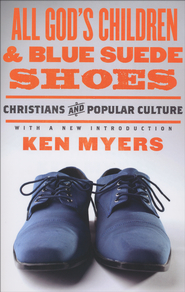
AGCABSS Ken Myers


The Pursuit of Happiness


When Thomas Jefferson selected the phrase “the pursuit of happiness” to describe one of the unalienable rights of man, he was appropriating an idea with a very long history. Since the time of Aristotle and before, happiness was understood as a condition to which all people properly aspire. But for the Greeks, as for the biblical writers, happiness was an objective reality, not just a feeling or an emotional state. The phrase “whatever makes you happy,” so commonly uttered today, would have been nonsense to Hebrews, Greeks, and Christians alike, since it implies no fixed moral order in which happiness resides.

Happiness is roughly synonymous with the biblical idea of “blessedness.” In classical and medieval Christian ethics happiness referred to a state of human flourishing or well-being that aligned the life of a person with the truest good. Actions, thoughts, desires, and ambitions had to be ordered in light of the proper end of mankind for a person to be truly happy. Happiness was thus an ethical, not a psychological project. To pursue happiness was to pursue the whole reason for one’s being, but that meant recognizing that one’s desires and actions were in need of correction. It meant accounting for the fact that human beings did not instinctively pursue the truest good, that some very attractive pleasures were not truly in keeping with the most essential contours of our nature. In Christian terms, the pursuit of happiness meant recognizing that God had created us to flourish in the context of obedience to Him so that our image-bearing nature might display His glory. Since our sin and consequent waywardness alienated us from our deepest, truest identity, the pursuit of happiness was only possible by grace, since we cannot by our own strength resist the disordering effects of sin in our lives.

So happiness on this historic account is really a function of sanctification, of growth in holy obedience. That formulation would no doubt come as a shock to most of our contemporaries, perhaps even to many Christians, though it would have probably caused a nod of affirmation from most pagan philosophers. How has it come about that a nation often assumed to be Christian, a nation also obsessed with pursuing happiness, has acquired such an anti-Christian understanding of what it means to be happy?

Part of the answer is tied up with the radical innovations in ethical thought that took shape during the eighteenth-century, the Enlightenment culture in which Jefferson was at home. It was a time in which philosophers were abandoning the idea of an essential human nature that defined human ends. It was, in a sense, an abandonment of the idea of sin, since these Enlightenment thinkers were quite willing to talk about (in Alasdair MacIntyre’s words) “untutored-human-nature-as-it-is,” and base their understanding of ethics and politics on a picture of an intrinsically innocent human nature. This was a time in which the freedom of the individual was becoming the ultimate good, for individuals and societies. The philosophies of the time when our nation was founded were committed to the idea of the individual as sovereign in his moral authority (see MacIntyre, After Virtue, p. 62).

In such a context, the venerable idea of the pursuit of happiness took on a whole new meaning. Happiness came to be understood as whatever any individual conceives it to be. Since it could no longer be objectively defined in terms of a fixed purpose for human nature, the pursuit of happiness soon came to mean the pursuit of pleasure, the relentless quest for fun, for an emotional state of carefree bliss. And this state need have no correlation to the ethical choices one has made, to the way one has ordered one’s life. In fact, many Americans seem committed to pursuing this kind of happiness by means of making bad ethical choices: committing adultery, dishonoring their parents, killing their unborn children, abusing their own bodies. When happiness becomes merely a mood, the sustaining of which is the highest good, rules tend to get broken, like eggs in Lenin’s omelet.

In the twentieth century, aided by the rise of mass media and ubiquitous forms of entertainment, the pursuit of happiness-as-fun came to be felt as a kind of moral imperative. Writing in the mid-1950s, psychologist Martha Wolfenstein noted the emergence of what she called “fun morality,” an ethic that displaced the old-fashioned goodness morality “which stressed interference with impulses. Not having fun is an occasion for self-examination: ‘What is wrong with me?’ …Whereas gratification of forbidden impulses traditionally aroused guilt, failure to have fun now lowers one’s self-esteem.” Not only has happiness been detached from objective human ends and identified uncritically with personal pleasure, the pleasures assumed to be the source of happiness are increasingly the most trivial and fleeting. Submitting to the dictates of fun morality makes the passive consumption of entertainment a more plausible road to happiness than subtler, more demanding pleasures like learning to play the violin, acquiring a love of literature, or cultivating a beautiful garden.

As it happens, the dominant assumption that happiness is a custom-built project with potentially instant payoffs does not seem to have made most people that much happier. In a recent essay entitled “The Pursuit of Emptiness,” John Perry Barlow observes: “Of my legion friends and acquaintances who have become citizens of Prozac Nation, I have never heard any of them claim that these drugs bring them any closer to actual happiness. Rather, they murmur with listless gratitude, anti-depressants have pulled them back from The Abyss. They are not pursuing happiness. They are fleeing suicide.” Barlow reports on an experiment in looking for smiles on the faces of people in the “upscale organic supermarket” in San Francisco in which he regularly shops. In eleven months, seeing thousands of faces, “nearly all of them healthy, beautiful, and very expensively groomed,” he counted seven smiles, three of which he judged insincere. Instead, in supermarkets and elsewhere, he sees a characteristic “expression of troubled self-absorption [which] has become a nearly universal mask.” Trying to find happiness on our own terms, rather than on the terms our Creator has built into our nature, is an exhausting and disappointing undertaking.

Carl Elliott, author of the book Better than Well, perceptively documents how many Americans use various “enhancement technologies” in the effort to feel better about themselves (which may be the working definition of happiness for many of our contemporaries). Elliot senses that the American project of pursuing happiness has become so desperate that it now seems to require “not only that I pursue happiness, but that I pursue it aggressively, club it into unconsciousness, and drag it back bound and gagged to my basement.” The lengths to which people go to nab happiness are astonishing: the drugs they take; the fantasies they sustain; the money they spend; the relationships they poison.

There is something of a backlash against this militant happiness-seeking, this regime of relentless perkiness. Earlier this year, Eric Wilson’s slim manifesto, Against Happiness: In Praise of Melancholy, was greeted by a chorus of sympathy. Wilson questioned the virtue of striving to be perpetually upbeat, reminding readers that it is sometimes quite emotionally healthy to respond to the tragedies of life with darker sentiments. Other recent books have questioned the tendency to treat sadness as a mental illness. These protests are fine as far as they go, but they are still working with the assumption that happiness is a subjective state.

The recovery of a richer vision for human happiness is a project for which Christians are uniquely situated. We believe, unlike most of our contemporaries, that we are made to delight in the knowledge and love of God, to find our fulfillment as creatures only as we walk in His ways. Knowing also that we live in a world disordered by sin, we recognize that true blessedness will often, until Christ returns, involve suffering, persecution, and sacrifice. Our happiness is not a right, but a gift from one who was a man of sorrows, acquainted with grief. To the best of our knowledge, Jesus never asked the disciples: “Are we having fun yet?” But He did teach them that faithful servants would enter into the joy of their master. Happiness is the fruit of aligning our lives with God’s purposes for us. “If you keep my commandments,” Jesus promised, “you will abide in my love, just as I have kept my Father’s commandments and abide in his love. These things I have spoken to you, that my joy may be in you, and that your joy may be full” (John 15:10–11). The pursuit of such single-minded faithfulness, not simple-minded fun, is the true road to human happiness.


About Ken Myers: is host and producer of Mars Hill Audio in Quinque, Virginia. He is author of All God’s Children and Blue Suede Shoes: Christians and Popular Culture.

© Tabletalk magazine – September 1st, 2008. 
Permissions: You are permitted and encouraged to reproduce and distribute this material in any format provided that you do not alter the wording in any way, you do not charge a fee beyond the cost of reproduction, and you do not make more than 500 physical copies. For web posting, a link to this document on our website is preferred (where applicable). If no such link exists, simply link to http://www.ligonier.org/tabletalk. Any exceptions to the above must be formally approved by Tabletalk.

Please include the following statement on any distributed copy: From Ligonier Ministries and R.C. Sproul. © Tabletalk magazine. Website: http://www.ligonier.org/tabletalk. Email: tabletalk@ligonier.org. Toll free: 1-800

Jesus: Our Perfect High Priest by Nancy Guthrie


OYBODJITOT Guthrie 

None of Israel’s high priests ever lived up to what God intended for those he set apart to serve him in his Temple. Aaron sinned by leading the people in false worship. His sons sinned by offering unholy fire on God’s altar. Eli sinned by failing to discipline his sons who were such wicked priests that God struck them both down on the same day. Eventually the priesthood broke down altogether, so that the Old Testament ends with this warning: “The words of a priest’s lips should preserve knowledge of God, and people should go to him for instruction, for the priest is the messenger of the LORD of Heaven’s Armies. But you priests have left God’s paths. Your instructions have caused many to stumble into sin. You have corrupted the covenant I made with the Levites,” says the LORD of Heaven’s Armies. (Malachi 2: 7-8)

While the priesthood was responsible for its sinful failure, it was never meant to last forever, but rather to prepare God’s people for the perfect Priest God would send. Jesus came, not to fit into the earthly system of priestly ministry, but to fulfill and put an end to that human priesthood, and to orient our attention to his ministry on our behalf in heaven. As our perfect High Priest, Jesus ministers in a superior place— not in the Temple, but in heaven itself. “For Christ did not enter into a holy place made with human hands, which was only a copy of the true one in heaven. He entered into heaven itself to appear now before God on our behalf” (Hebrews 9: 24).

Jesus ministers to us with superior righteousness— not external, like a holy set of clothes, but intrinsic to his own holy person. “He is holy and blameless, unstained by sin” (Hebrews 7:26).

Jesus ministers to us with superior sympathy— he “understands our weaknesses, for he faced all of the same testings we do, yet he did not sin” (Hebrews 4:15).

Jesus ministers to us with superior longevity“There were many priests under the old system, for death prevented them from remaining in office. But because Jesus lives forever, his priesthood lasts forever” (Hebrews 7: 23-24).

And Jesus ministers to us, offering a superior sacrifice— not by the repeated sacrifices of animals, but with the once-for-all sacrifice of himself. “With his own blood— not the blood of goats and calves— he entered the Most Holy

Place once for all time and secured our redemption forever” (Hebrews 9:12).

Prayer: Jesus, my merciful and faithful High Priest, you are the kind of priest I need because you are holy and blameless, unstained by sin.

Article adapted from the FABULOUS RESOURCE by Nancy Guthrie (2012-10-08). The One Year Book of Discovering Jesus in the Old Testament (Kindle Locations 7946-7965). Tyndale House Publishers. Kindle Edition.

Guthrie Nancy image

About Nancy Guthrie (In Her Own Words):

“God has been preparing me my whole life for teaching his Word,” says Nancy Guthrie. “He has blessed me with so many sound Bible teachers to sit under–from my days as a college student in Bible classes, to terrific Bible Study Fellowship leaders, gifted pastors — as well as several teachers like Tim Keller and John Piper that I listen to almost daily on my ipod.”

Nancy’s life experience–dealing with the loss of two of her children–has significantly affected her teaching substance and style. “I’ve had to dig into God’s Word in search of answers to hard questions about how he works, and I and that my listeners usually have the same struggles and questions. And while I openly share the deep hurts in my life, I also like to laugh. People who hear me teach say that I’m very real, and that is certainly what I want to be.” “To me, God’s Word is a treasure to be mined,” Nancy says. “The deeper I go in it, the more I see its wisdom, the more it authenticates itself, the more it reveals to me the amazing mystery of God.”

Nancy is the author of six books including Holding on to Hope, The One Year Book of Hope, Hoping for Something Better, Dinner Table Devotions, Hearing Jesus Speak Into Your Sorrow, and When Your Family’s Lost a Loved One (co-written with her husband, David). She is also the editor of several anthologies published by Crossway, collections of great writing by noted classic and contemporary Bible teachers and theologians including Come Thou Long Expected Jesus, Jesus, Keep Me Near the Cross, Be Still My Soul, and O Love That Will Not Let Me Go.

She is currently working on another book for Tyndale’s One Year line that will be One Year of Discovering Jesus in the Old Testament.

Nancy and her husband David live in Nashville, Tennessee while their son, Matt is off to Western Kentucky University.In addition to teaching opportunities at her church, Christ Presbyterian Church in Nashville, Nancy speaks regularly at conferences and events around the country such as the Ravi Zacharias International Ministries Conference, The Brooklyn Tabernacle, Second Baptist Church of Houston, Taylor University, Covenant College, and in countries including Scotland and Colombia.

A Christian Harvard Law Professor Speaks Wisely About His Stage 4 Cancer

Dr. Bill Stuntz Godly Response to His Cancer Diagnosis

William Stuntz 1958 to 2011

My cancer has been promoted: I’m officially in stage 4. My doctors have found two can- cerous nodules—a euphemism for “small tumors”—one on each of my lungs. I started chemo this week. Next week, I’ll see a thoracic surgeon who will, sometime this summer, cut those tumors out. Needless to say, this isn’t good news—though, thanks to medical advances (especially, thanks to those evil drug companies that politicians regularly attack), it isn’t disastrous news either. We’ll see what the future brings.

I don’t have any previous experience with this sort of thing, but judging from what I hear and read, I’m supposed to be asking why all this is happening, and why it’s happening to me. Honestly, those questions are about the farthest thing from my mind.

Partly, that’s because they aren’t hard questions. Why does our world have gravity? Why does the sun rise in the East? There are technical answers, but the meta- physical answer is simple: that’s how reality works. So too here. Only in the richest parts of the rich world of the twenty-first century could anyone entertain the thought that we should expect long, pain-free lives. Suffering and premature death (an odd phrase: what does it mean to call death “premature”?) are constant presences in the lives of most of the peoples of the Earth, and were routine parts of life for generations of our predecessors in this country—as they still are today, for those with their eyes open. Stage 4 cancers happen to middle-aged men and women, seemingly out of the blue, because that’s how reality works.

As for why this is happening to me in particular, the implicit point of the question is an argument: I deserve better than this. There are two responses. First, I don’t—I have no greater moral claim to be free from unwanted pain and loss than anyone else. Plenty of people more virtuous than I am suffer worse than I have, and some who don’t seem virtuous at all skate through life with surprising ease. Welcome to the world.

Once again, it seems to me that this claim arises from the incredibly unusual experience of a small class of wealthy professionals in the wealthiest parts of the world today. We think we live in a world governed by merit and moral desert. It isn’t so. Luck, fortune, fate, providence—call it what you will, but whatever your preferred label, it has far more to do with the successes of the successful than what any of us deserves. Aristocracies of the past awarded wealth and position based on the accident of birth. Today’s meritoc- racies award wealth and position based on the accident of being in the right place at the right time. The difference is smaller than we tend to think. Once you under- stand that, it’s hard to maintain a sense of grievance in the face of even the ugliest medical news. I’ve won more than my share of life’s lotteries. It would seem churlish to rail at the unfairness of losing this one—if indeed I do lose it: which I may not.

The second response is sim- pler; it comes from the movie “Unforgiven.” Gene Hackman is dying, and says to Clint Eastwood: “I don’t deserve this. To die like this. I was building a house.” Eastwood responds: “Deserve’s got nothing to do with it.”

That gets it right, I think. It’s a messed-up world, upside-down as often as it’s rightside up. Bad things happen; future plans (that house Hackman was building) come to naught. Deserve’s got nothing to do with it.

Why, then, are we so prone to think otherwise? This is one of the biggest reasons I believe my faith is true: something deep within us expects, even demands moral order—in a world that shouts from the rooftops that no such order exists. Any good metaphysical theory must explain both of those phenomena: both the expectation and the lack of supporting evidence for the thing expected. The only persuasive way to get there, I think, is to begin with a world made good that was twisted, corrupted, bent. Buried deep in our hearts are hints of the way things ought to be; the ugliest reality can’t snuff them out. Still, that reality exists; it can’t be denied. Christianity sees that reality, recognizes it for what it is—but also sees the expectation, and recognizes where it comes from.

Bottom line: I don’t need anyone to tell me why I’m in the situation I’m in, and I certainly don’t think I merit an exemption from the rottenness to which the rest of the world is subject.

But I do need to know some things. Three, to be precise: first, that I’m not alone; second, that my disease has not made me ugly to those I love and to the God who made me; and third, that somehow, something good can come from this. My faith tells me that the God of the universe suf- fered everything I suffer and infinitely worse. Death and suffering don’t separate human beings from our Creator—on the contrary: those things unite us with our Creator. The barrier became the bridge: that is the great miracle of the Incarnation, the Cross, and the Resurrection. So I need never suffer alone. Job’s story confirms that, far from rejecting the ugli- ness of disease and pain, God embraces those who suffer and takes on their suffering. Beauty and ugliness are turned inside-out. Joseph’s story and the gospels alike show a God who delights to use the worst things to produce the best things. That doesn’t make life’s hells less than hellish. But it does make them bearable.

This isn’t just whistling in the dark—at least, I hope it isn’t. It all makes sense to me: it fits the world I see and feel, with all its shades of glory and misery. And it answers the questions my soul cries out. “Why” isn’t one of those questions.

Article adapted from: http://www.law.upenn.edu/blogs/dskeel/archives/2008/04/ more_cancerstuntz.html#more

[In Dr. Fritzt own words: “I’m a law professor—I teach criminal law and criminal procedure at Harvard—and also an evangelical Christian.That puts [me] in a pretty small, and maybe pretty weird, demo- graphic. I’m also a political junkie and a registered Republican, though I’ve cast as many Democratic votes as Republican ones. I’m interested in all those things—law and legal theory, crime and criminal justice, everything about American politics and political culture, the culture of evangelical Protestantism, and the intersections of various items on that list.] From: http://www.law.upenn.edu/ blogs/dskeel/archives/2008/02/ welcome.html]

 Harvard Law School: Obituary for Dr. Stuntz

William Stuntz, a renowned scholar of criminal justice at Harvard Law School,  an evangelical Christian and a teacher much beloved by students and colleagues, died March 15 after a long battle with cancer.

Stuntz, 52, joined the HLS faculty in 2000 and was named the Henry J. Friendly Professor of Law in 2006. His influential scholarship over the past three decades addressed the full spectrum of issues related to criminal justice and procedure, from the overcrowding of prisons and racial disparities in incarceration to the appropriate role of faith, emotion and mercy in the penal system. He authored three dozen law review articles and essays on criminal law, and published articles and op-eds in the New York Times, Christianity Today, First Things, The New Republic and The Weekly Standard.  This fall,  Harvard University Press will publish a book he authored on the collapse of the criminal justice system.

In a statement to the Harvard Law School community today, Dean Martha Minow observed: “Bill was extraordinary; his wisdom and compassion touched our lives in so many ways, large and small.  His gifts to society through his scholarship and teaching on criminal law and justice changed and improved academic inquiry and policies on the ground.  His scholarship and teaching of Christian legal theory and of confronting life’s burdens inspire people in our community and well beyond it.  He imbued his work and his life with a vision of mercy and compassion.  The Harvard Law School, the larger community of scholars, and the communities connected through Bill’s writings are better, wiser, kinder because of Bill.”

That kindness—and a personal style marked also by good humor and generosity—profoundly affected those who knew Stuntz or knew of him through his writing. As Minow wrote: “Among his many gifts to us was the grace with which he lived his life.  In knowing Bill, we couldn’t help but be reminded to live life as our better selves.  Bill once wrote, ‘We understand that the world is not what it should be, and that our own capacities to understand it are severely limited.’  He described and lived his life in recognition of the need for humility and also for judgment and work to repair what we find around us.  His devotion to family and friends remains legendary. Those of us lucky enough to have been able to consult with him for personal or professional advice will never forget his insights and generosity.”

Carol Steiker, the Howard J. and Katherine W. Aibel Professor of Law at HLS, and a criminal justice scholar who was a close colleague of Stuntz, said: “He was an extraordinary and unforgettable teacher, scholar, colleague and friend. He was someone we’ll all miss, more than we can really say.”

Celebrated for his unusual ability to appeal to a wide variety of legal scholars and others of all political and methodological perspectives, Stuntz was generous with his time and guidance. Colleagues and students were especially struck by his open-mindedness, as reflected in his willingness to listen to a variety of opinions and to change his own when he felt it appropriate. Many observed that his style served as a model for civil discourse.

Extremely popular among his students for his compassion and accessibility, Stuntz was the 2004 recipient of the HLS Sacks-Freund Teaching Award, given by the graduating class to honor a professor for his or her contributions to teaching. In the upcoming week, the the Harvard Law & Policy Review will be publishing a series of student reflections on Professor Stuntz (Read the introduction to the collection at http://hlpronline.com/2011/03/professor-bill-stuntz-in-memoriam/).

From his perspective as a legal scholar and also an evangelical Protestant, Stuntz co-authored a blog that addressed law, politics, and other topics, “Less Than the Least,” with fellow evangelical David Skeel, a law professor at the University of Pennsylvania Law School. As they noted in their blog, “We are both law professors and evangelical Protestants – a weird combination in our time. We hope it’s also an interesting combination.” Stuntz wrote honestly and lyrically, with humor and wisdom, about his struggles with chronic pain and his long battle with cancer, as well as the role of his religious faith in helping him deal with his illnesses.

Said Skeel: “Although Bill was an enormously influential scholar, and was widely viewed as the leading criminal procedure scholar of the past generation, he may have had an even broader impact writing and speaking about his struggles with cancer the past three years, and with debilitating back pain before that. His blog posts and other writings have been reprinted in numerous church bulletins and widely circulated elsewhere. I’ve never known anyone who lived out the Christian call to love one’s neighbor as oneself the way Bill did. He was an inspiration to everyone who came into contact with him.”

Many readers of the blog, including fellow cancer patients, wrote of being deeply touched by the honesty and compassion that imbued his writing.

A year ago, in March 2010, a large group of his many admirers, including legal scholars, colleagues, friends, and students—“a simply dazzling array of conference participants,” as Dean Martha Minow said in opening remarks—gathered at HLS for a two-day conference, “A Celebration of the Career of Bill Stuntz.” In tribute after tribute, they noted that Stuntz had exerted a tremendous influence on the fields of American criminal justice and criminal procedure while at the same time having a profound effect, professionally and personally, on so many who worked with or were taught by him.

Present at the conference, Stuntz described factors that had led to what he called the “disaster of criminal justice in our time,” in particular, the massive and “racially unfair” prison population in the U.S., but held out hope that the system might become fairer.

HLS Professor Jeannie Suk ’02, a former student of Stuntz, and a moderator of one of the panels at the conference, said after learning of Stuntz’s death: “He was a wonderful mentor to me since my time as a student at Harvard Law School. He was the one, when I was a student, who looked me right in the eye and told me not to worry about seeing things that might be unconventional or that might surprise or anger people, that it was a good thing if I had those instincts. He encouraged me to develop that and to be unafraid.”

She added, “The whole time I was an assistant professor, he was very ill, yet … he would stop by my office, he would read all my drafts [of articles] and have something to say about them, with great insight. I really think he was one of the main reasons, the primary reason, I became a professor, that I became a criminal law scholar.”

Born on July 3, 1958, Stuntz grew up in Annapolis, then attended the College of William and Mary and the University of Virginia School of Law.  After two judicial clerkships, he was a professor at the University of Virginia for 14 years until he joined the Harvard Law faculty in 2000.

Stuntz was the loving husband of Ruth Stuntz of Belmont, and devoted father of Sarah Stuntz, Andrew Stuntz, and Samuel Cook-Stuntz, all of Cambridge. He also leaves his parents, John and Sandy Stuntz of Annapolis, Md., and siblings, Linda Adamson of Annapolis, Michael Stuntz of Silver Spring, Md., Richard Stuntz of Annapolis, and David Stuntz of Durham, NC, as well as many nieces and nephews, and a daughter-in-law, Elizabeth Cook-Stuntz.

A memorial service will be held at Park Street Church in Boston on Saturday, March 19 at 5:00 p.m. In lieu of flowers, guests should feel free to make donations to International Justice Mission (www.ijm.org) or the Cancer Center Priorities Fund at Massachusetts General Hospital (165 Cambridge Street, Suite 600, Boston, MA 02114-2792).

“Every Day With Jesus is Like A Thanksgiving Holiday” By Dr. David P. Craig

I have so much to be thankful for – now 15 treatments into Chemo and Radiation – almost half way done with my 33 treatments here are my reflections on Thanksgiving Day. DPC

lifecoach4God's avatarLifeCoach4God

“Thank God It’s Thanksgiving Everyday – Especially on Thursday’s!”

I have always loved the Thanksgiving Holiday. It’s one of the few times of the year where our very large family can come together from all over the United States and enjoy giving thanks for our many blessings. This year more than likely I’ll be having liquid formula through a feeding tube in my stomach. I already had the G-Tube surgically implanted in my stomach this past week. During chemotherapy and radiation around Thanksgiving time will be a time of great testing for me, when according to my Doctors I will be unable to swallow and chew due to the severity of my treatment for throat and neck cancer. Watching every one I love dearest passing around the turkey with all the trimmings will be something my eyes will enjoy, but not my taste buds. However, I’m good with that. I’m…

View original post 3,962 more words

Dr. John Piper on the question: “How Does God Save Us According the Scriptures?”

A Summary of the Sovereignty of God in Salvation

Salvation is not finally in the hands of man to determine. His choices are crucial, but they are not the final, decisive power in bringing him to glory, God’s sovereign grace is.

1. God elects, chooses, before the foundation of the world whom he will save and whom he will pass by and leave to unbelief and sin and rebellion. He does this unconditionally, not on the basis of foreseen faith that humans produce by a supposed power of ultimate self-determination (= “free will”).

Acts 13:48, “When the gentiles heard this they were glad and glorified the word of God. And as many as were for ordained to eternal life believed.”

Romans 11:7, “Israel failed to obtain what is sought. The elect obtained it, but the rest were hardened.”

John 6:37, “All that the Father gives to me will come to me; and him who comes to me I will not cast out.”

John 17:6, “I have manifested my name to them whom thou gavest me out of the world; thine they were, and thou gavest them to me.” (John 6:44, 65).

2. The Atonement applies to the elect in a unique, particular way, although the death of Christ is sufficient to propitiate the sins of the whole world. The death of Christ effectually accomplished the salvation for all God’s people.

Eph. 5:25, “Christ loved the church and gave himself up for her.”

Heb. 10:14, “By a single offering he perfected for all time those who are being sanctified.”

John 10:15, “I lay down my life for the sheep.”

Rom. 8:32, “He who did not spare his own Son but gave him up for us all, how shall he not with him freely give us all things?”

3. Because of the Fall, humans are incapable of any saving good apart from the regenerating work of the Holy Spirit. We are helpless and dead in sin. We have a mindset that “cannot submit to God without divine enabling.

Rom. 8:7-8, “The mind that is set on the flesh is hostile to God, it does not submit to God’s law; indeed it cannot. But you are not in the flesh; you are in the Spirit if in fact the Spirit of God dwells in you.”

Eph. 2:1,5, “You were dead through your trespasses and sins.”

4. God’s call to salvation is effectual, and, hence His grace cannot be ultimately thwarted by human resistance. God’s regenerating call can overcome all human resistance.

Acts 16:14, “The Lord opened her heart to give heed to what was said by Paul.”

John 6:65, “This is why I told you that no one can come to me unless it is granted to him by my Father.” (Matt. 16:17; Luke 10:21)

1 Cor. 1:23-24, “We preach Christ crucified, a stumbling block to Jews and folly to gentiles, but to those who are called, both Jews and Greeks, Christ, the power of God and the wisdom of God.”

5. Those whom God calls and regenerates He also keeps, so that they do not totally and finally fall away from faith and grace.

Rom. 8:30, “Those whom he predestined, he also called and those whom he called he also justified and those whom he justified he also glorified.”

John 10:27-29, “My sheep hear my voice and I know them and they follow me; and I give them eternal life and they shall never perish, and no one shall snatch them out of my hand.”

Phil. 1:6, “I am sure that he who began a good work in you will bring it to completion at the day of Christ Jesus.” (1 Cor. 1:8).

1 Thess. 5:23, “May the God of peace himself sanctify you wholly, and may your spirit and soul and body be kept sound and blameless at the coming of our Lord Jesus Christ. He who calls you is faithful and he will do it.”

Conclusion

Romans 11:36, “From him, through him, and to him are all things, to him be glory forever amen!”

By John Piper ©2012 Desiring God Foundation. December 10, 1997. Used by Permission. Website: desiringGod.org

Permissions: You are permitted and encouraged to reproduce and distribute this material in any format provided that you do not alter the wording in any way and do not charge a fee beyond the cost of reproduction. For web posting, a link to this document on our website is preferred. Any exceptions to the above must be approved by Desiring God.

About John Piper:

John Piper was pastor for preaching and vision for over thirty years at Bethlehem Baptist Church in the Twin Cities of Minnesota. He grew up in Greenville, South Carolina, and studied at Wheaton College, Fuller Theological Seminary (B.D.), and the University of Munich (D.theol.). For six years he taught Biblical Studies at Bethel College in St. Paul, Minnesota, and in 1980 accepted the call to serve as pastor at Bethlehem. John is the author of more than 40 books and more than 30 years of his preaching and teaching is available free at desiringGod.org. John and his wife, Noel, have four sons, one daughter, and twelve grandchildren.