What is R.C. Sproul’s View on Creation?

What-Is-RC-Sprouls-Position-on-Creation_555

(Excerpted from R.C. Sproul’s, Truths We Confess: A Layman’s Guide to the Westminster Confession of Faith [Volume 1]. In other settings, Dr. Sproul has also made a point of highlighting Dr. Douglas Kelly’s book, Creation and Change, as formative in his position on the subject of Creation).

We (Ligonier Ministries – see http://www.ligonier.org/blog/what-rc-sprouls-position-creation/) are commonly asked for a clarification of R.C. Sproul’s position on Creation. Here is his commentary on the Westminster Confession’s phrase “…in the space of six days.”

In the beginning, to create, or make of nothing, the world, and all things therein whether visible or invisible, in the space of six days; and all very good. In the Genesis account of creation, we read; “So the evening and the morning were the first day” (Gen. 1:5). This narrative proceeds from the first day to the sixth, each time referring to “the evening and the morning” and numbering the day. On the seventh day, God rested (Gen. 2:2). 

In our time a considerable number of theories have arisen denying that the creation, as we know it, took place in twenty-four hour days. Common to these theories is the acceptance of the dominant scientific view that the earth and life on it are very old. Many consider the biblical account to be primitive, mythological, and untenable in light of modern scientific knowledge.

This crisis has resulted in several attempts to reinterpret the Genesis account of creation. We are reminded of the sixteenth century, when Copernicus and his followers repudiated the old Ptolemaic view of astronomy. They argued that the center of the solar system is not the earth (geocentricity), but the sun (heliocentricity). It was a sad chapter in the history of the church, which had believed for more than fifteen hundred years that the Bible teaches geocentricity, when it condemned Galileo for believing and teaching heliocentricity. Both Luther and Calvin opposed Copernicus’s views, believing them to undermine Scripture’s authority.

Actually the Bible does not explicitly teach geocentricity anywhere. Scripture describes the movements of the heavens from the perspective of someone standing on earth: the sun moves across the sky, rising in the east and setting in the west. We use that same language today. The church thought that because the Bible uses this kind of descriptive language, it was therefore teaching something about the relationship between the sun and the earth. This is a clear case of scientific knowledge correcting the church’s interpretation of the Bible.

There are two spheres of revelation; the Bible (special revelation) and nature (general revelation). In the latter, God manifests himself through the created order. What God reveals in nature can never contradict what he reveals in Scripture, and what he reveals in Scripture can never contradict what he reveals in nature. He is the author of both forms of revelation, and God does not contradict himself.

The church has always taken the position that all truth meets at the top, and that science should never contradict Scripture. Scientific discoveries, however, can correct the theologian’s faulty understanding of Scripture, just as biblical revelation can correct faulty speculations drawn from the natural order. When the scientific consensus on a particular point is on a collision course with the unmistakable teaching of Scripture, I trust Scripture before I trust the speculations and inferences of scientists. That is consistent with the history of the church and Christianity. We believe that sacred Scripture is nothing less than the Creator’s truth revealed.

We have a problem not only with a six-day creation, but also with the age of the earth. Is the earth a few thousand years old or billions of years old (as scientists today insist)? Although the Bible clearly says that the world was created in six days, it gives no date for the beginning of that work. It would be a mistake to become embroiled in too much controversy about the date of creation.

In a Massachusetts college I taught Introduction to the Old Testament to two hundred and fifty students. Because the class was so large, we met in the chapel. Once I opened the old pulpit Bible to Genesis 1, and at the top of the page I read “4004 B.C.” I did some research to see how that date had been determined. In the seventeenth century an archbishop, James Ussher, made some calculations based on the genealogies in Genesis 5 and 11 and other chronological clues in the Old Testament. He even pinned down the day of the week and the time of day when creation occurred. I hasten to tell my students that we must be very careful to distinguish between the text of Scripture and additions to the text. In defending the biblical authority, we are not obligated to defend a theory based on the speculations of a bishop in times past.

If we take the genealogies that go back to Adam, however, and if we make allowances for certain gaps in them (which could certainly be there), it remains a big stretch from 4004 B.C. to 4.6 billion years ago. We also have the problem of the antiquity of the human race. It seems as if every time a new skeleton or skull is discovered, scientists push back the date of man’s origin another million years.

Scholars have proposed four basic theories to explain the time from of Genesis 1–2:

– the gap theory,

– the day-age theory,

– the framework hypothesis, and

– six-day creation.

Gap Theory

The gap theory was made popular by the Scofield Reference Bible (1909), which more than any other single edition of Scripture swept through this country and informed the theology of an entire generation of evangelicals. It became the principal instrument for propagating dispensational theology throughout America. In this Bible, Genesis 1:1 reads, “In the beginning, God created the heavens and the earth,” and verse 2 reads, “And the earth became without form, and void; and darkness was upon the face of the deep.” Other Bibles read, “And the earth was without form, and void; and darkness was upon the face of the deep.” Verse 2 describes what most scholars consider to be the as-yet-unordered, basic structure of the universe—darkness, emptiness. Then the Holy Spirit hovers over the waters (v.2) and God says, “Let there be light” (v.3). Thus came the light and then the creation of the heavens, fish, birds, animals, and so on.

The Hebrew word in verse 2 translated “was” is the very common verb hayah,which ordinarily means “to be.” Hayah means “to become” only in special circumstances, which are not present here. The Scofield Reference Bible translates verse 2 as “became” instead of “was” in order to facilitate the gap theory. As a result, only verse 1 refers to the original creation. Verse 2 then refers to a cosmic catastrophe in which the originally good and properly ordered creation became chaotic, dark, and fallen. After this period of darkness (the “gap”), God recreates the universe which could have been created billions of years ago, followed by a gap of billions of years (including the “geologic column” of immense ages), after which God returned to his distorted creation and renovated or reconstituted it relatively recently. The gap theory has also been called the restitution hypothesis, meaning that the creation narrative in Genesis is not about the original creation, but about the restitution of a fallen creation.

An entire generation was fed this theory through the Scofield Reference Bible. However, Scripture nowhere explicitly teaches that the original creation was marred and then after many years reconstituted. The broader context of the whole of Scripture militates against the gap theory.

Day-Age Theory

According to the second approach, the day-age theory, each “day” of Genesis 1 may be an age. After all, one day in the Lord’s sight is like a thousand years (2 Peter 3:8). Also, expressions like “in the days of Noah” and “in Abraham’s day” can refer to open-ended periods. The Hebrew word yom, translated “day” in Genesis, can mean something other than a twenty-four-hour period, as it must in Genesis 2:4, which refers to “the day that the LORD God made the earth and the heavens.” Accordingly, each “day” in Genesis 1 may refer to a thousand years, and perhaps even to millions of years. This will at least ameliorate some of the difficulties we have with those who argue for a gradual evolution of life-forms on this earth.

However, the day-age theory, like the gap theory, ignores the immediate context as well as the large biblical context. It ignores the fact that each of the six days of creation consists of an evening and a morning. If yom here means something like ten million years, then we need to give the words evening and morning the same kind of metaphorical meaning. From a literary, exegetical, and linguistic perspective, the day-age theory is weak. As a Christian apologist, I would not want to defend it.

The day-age theory tends to accommodate a theory of biological macroevolution that is incompatible with the Bible and purposive creation—the creation of all living things by the immediate agency of the sovereign God. Macroevolution teaches that all life has developed from a single, original cell, and that this happened through a somewhat fortuitous, chance collision of atoms, without an intelligent planner or Creator orchestrating the emergence of these species. Those who favor the day-age theory often link themselves with a position called theistic evolution, which grants the basic premises of biological evolution, but says that God, not chance, guided the process of evolution.

Macroevolution differs from microevolution. While the former teaches that all living things have developed from one original cell, the latter teaches that, over period of time, species undergo slight changes in order to adapt to their environment. Microevolution is not in dispute, either biblically or scientifically. Macroevolution has never been substantiated by observation or experiment, and it places its faith in an endless string of extremely improbable, yet beneficial chance mutations.

A frequent argument for macroevolution is the principle of common structure. All forms of life are made up of the same basic substances: amino acids, proteins, DNA, and that sort of thing. Because all living things have similar constituent parts, the argument goes, they must have developed from common ancestors. A common substance or structure, however, does not necessarily imply a common source. The fact that all forms of life are made of the same basic building blocks neither negates the possibility of evolution nor substantiates it. One would expect an intelligent Creator to have made all life-forms with a similar design—one that works on this earth.

When teaching a university course to thirty upper-level philosophy students, I asked who believed in macroevolution. Almost all the students raised their hands. I then asked them to explain why they believed in it. Their only argument was “common substance, therefore common source.” Most said they believed it because they had been taught in school, and they assumed their teachers knew what they were talking about.

Macroevolution, in the final analysis, is not a question of biology or natural science, which rely upon experimented verification, but of history, which tries to interpret evidence left from the past in a coherent fashion. The discipline of paleontology, which studies the fossil record, claims to put evolution on a scientific footing, but it performs no experiments to substantiate evolutionary processes. It simply lines up similar fossils and infers that one creature must be related to another by common decent.

In the recent past in Russia, leading international scholars who favor macroevolution met. While comparing notes, they found that the weakest evidence for their theories is the fossil record. I remember reading the Royal Society’s bulletin at that time and thinking, “What other source matters?” The fossil record is the one that counts, and yet that is the one that militates against their theory. I read an essay recently in which a professor argued for macroevolution on the basis of certain geological formations. He argued for an old earth on the ground that stratifications in the rocks contain fossils, which indicates a uniformitarian process that took millions of years to produce the whole formation. He then determined the age of each stratum by determining the kinds of fossils contained in each. This is a blatant example of what logicians call begging the question. It is circular reasoning to date the fossils by the rocks, and then date the rocks by the fossils. That just will not work.

We now have good evidence that stratification of rocks proves the antiquity of nothing. Within days after the Mount St. Helens explosion had subsided, scientists discovered that the cataclysmic upheaval of that volcanic explosion had laid down exactly the same rock stratification that had been assumed would take millions of years to develop. In other words, Mount St. Helens proved that catastrophic upheavals can produce the same empirical data as twenty million years of gradual deposition. We will not get into uniformitarianism or catastrophism here, except to say that they have been attempts to accommodate macroevolution. This tends to support and popularize the theory of theistic evolution, and it also uses the day-age theory of Genesis—a dangerous thing to do.

Framework Hypothesis

The third approach, called the framework hypothesis, was originally developed by the Dutch scholar Nicholas Ridderbos. He argued that the literary form of the book’s first few chapters differs from that of its later chapters. Certain basic characteristics found in poetry are missing from historical narrative, and certain characteristics found in historical narrative are missing from poetry. For example, the book of Exodus, with its account of the Jewish captivity in Egypt, has genealogies, family names, real historical places, and an unmetered literary style (i.e., lacking a particular rhythm), making it clearly prose and historical narrative. After the account of the exodus, the book’s author inserts the song of Miriam, which is in metered rhythm and is therefore clearly poetry. The literary structure before the song manifests all the characteristics of historical narrative, as does the structure following the poem.

Therefore, it is usually not difficult to distinguish between poetry and historical narrative in the Old Testament. But the opening chapters of Genesis, according to Ridderbos, exhibit a strange combination of literary forms. On the one hand is a discussion of the creation of a man and a woman who are given names that thereafter appear in genealogical accounts. In Hebrew literature this clearly signals historicity. The Garden of Eden is said to be set among four rivers, two of which we know were real rivers: the Tigris and the Euphrates. The style of writing is not metered or rhythmic, as Hebrew poetry normally is. All this indicates that the opening chapters of Genesis are historical narrative.

There are some anomalies, however. We find trees in this garden with strange names: “the tree of the knowledge of good and evil” and “the tree of life” (Gen. 2:9). Had they been apple or pear trees, there would have been no problem. But what does a tree of life look like? Is the author of Genesis telling us that a real tree was off limits, giving it a metaphorical meaning as the tree of life? We are also introduced to a serpent who speaks. Because of these two features, some have argued that the literary structure of the opening chapters of Genesis was self consciously and intentionally mythological, or at least filled with legend and saga.

Ridderbos contended that the beginning chapters of Genesis are a mixture of historical narrative and poetry, with part of the poetic structure being the repeated refrain, “So the evening and the morning were the first day” (Gen. 1:5), and so on. Ridderbos concluded that Genesis gives us not a historical narrative of the when or the how of divine creation, but a drama in seven acts. The first act ends with the statement, “So the evening and the morning were the first day.” The author of Genesis, then, is trying to show that God’s work of creation took place in seven distinct stages, which incidentally fit remarkably well into the stages identified by the modern theories of cosmic evolution.

Therefore, the framework hypothesis allows one to step into a Big Bang cosmology while maintaining the credibility and inspiration of Genesis 1-2. This is not history, but drama. The days are simply artistic literary devices to create a framework for a lengthy period of development.

In America Ridderbos’s work was widely disseminated by Meredith Kline, who for many years taught Old Testament at Westminster Theological Seminary, then at Gordon-Conwell Theological Seminary, and then at Westminster Seminary California. Because Kline endorsed the framework hypothesis, many people, particularly in the Reformed community, have embraced it, provoking a serious crisis in some circles. Some Reformed pastors today hold to a literal six-day creation, while others hold to the framework hypothesis, and yet they otherwise hold to the same system of orthodox theology.

ONE MUST DO A GREAT DEAL OF HERMENEUTICAL GYMNASTICS TO ESCAPE THE PLAIN MEANING OF GENESIS 1-2.

Six-Day Creation

For most of my teaching career, I considered the framework hypothesis to be a possibility. But I have now changed my mind. I now hold to a literal six-day creation, the fourth alternative and the traditional one. Genesis says that God created the universe and everything in it in six twenty-four-hour periods. According to the Reformation hermeneutic, the first option is to follow the plain sense of the text. One must do a great deal of hermeneutical gymnastics to escape the plain meaning of Genesis 1-2. The confession makes it a point of faith that God created the world in the space of six days.


Matt Mantry on Evangelism and The Church of Darwin

Unknown

Evangelizing the Church of Darwin

Neo-Darwinian materialism [1] prevails as the orthodoxy of science and secularism that reigns supreme. Neo-Darwinian materialists tend to believe that the miracle of consciousness and subjectivity can simply be explained by material causes that arose during the evolutionary processes without any divine intervention. Physical matter is all that there is. Scientific naturalism is seen as Sacred Doctrine that cannot be challenged. If you even dare to utter anything that contradicts current neo-Darwin materialism, be prepared to face excommunication from the Church of Darwin. Prominent philosopher Thomas Nagel once dared to question Darwinian papal authority, and he was declared to be a heretic, blasphemer, and shoddy reasoner. Questioning the Church of Darwin can lead you down a one-way street to becoming an apostate. It is clear that Darwinian dogma promotes a worldview that makes much of materialism, humanism, and free-thought.

With this in mind, Christians must now ask themselves:

– How can we infiltrate the walls of the Church of Darwin and establish a voice in promoting the gospel of Jesus?

– How can Christians evangelize to those who are neo-Darwinian materialists?

– Is there a common ground that needs to be found?

– Or does each side need to double-down on their beliefs, and get comfortable in their doctrinal trenches?

In this article, I am going to try and give a few suggestions to Christians on how to evangelize to those who attend the Church of Darwin.

1. OPENLY DISCUSS THE CONFLICTING WORLDVIEW

There is no doubt that Christians and neo-Darwinians do not see eye-to-eye on the origin of species. However, there are also a number of other conflicting beliefs that need to be discussed. For example, Christians believe in a material and spiritual world, while neo-Darwinists only believe in the material world. According to neo-Darwinists everything that exists has come to be through a mindless process, whereas Christians believe that God has created everything that we see in the world. Neo-Darwinists believe that the chief goal of man is to create his own purpose and find his meaning through human autonomy, while Christians believe that the chief goal of man is to glorify God and enjoy him forever. The list could go on and on. However, the main point is simply the fact that the way that Christians and neo-Darwinians see the world is extremely different. With that in mind, it is clear that Christians must try to begin building bridges with neo-Darwin materialists by openly discussing their different worldview. This will encourage helpful dialogue, and perhaps open the door for the gospel message to be proclaimed.

2. POINT OUT THE FATAL FLAW IN THE NEO-DARWINIST DOCTRINE

I want to distill a brilliant argument by philosopher Alvin Plantinga and make it accessible to laymen. His evolutionary argument against naturalism is cogent and effective argument. It is a philosophically rigorous argument and it points out a fatal flaw in the reasoning of neo-Darwinians.

It is important to understand evolution. What does evolution entail? Philosopher Patricia Churchland once said:

“A nervous system enables the organism to succeed in the four F’s: feeding, fleeing, fighting, and reproducing. . . . A fancier style of representing [the external world] is advantageous so long as it is geared to the organism’s way of life and enhances the organism’s chances of survival. Truth, whatever that is, definitely takes the hindmost.”

What I want Christians to take away is that the evolutionary process is not concerned with forming true beliefs. It is only concerned with survival. Therefore, why should  neo-Darwinists expect (if human beings are the product of a mindless evolutionary process) their cognitive faculties to produce true beliefs? Our minds have simply developed through an accidental process. Why should a Christian believe anything that a neo-Darwinian claims to know? What Plantinga demonstrates is that believing in both evolution and materialism is simply irrational. Christians must remember to always point out this chink in the neo-Darwinian’s armor.

3. PUTTING DARWIN ON TRIAL

Perhaps one of the most important things Christians can do when evangelizing neo-Darwinists is to simply conduct a trial and place Darwin on the stand. Here’s what I mean. Does evolutionary naturalism answer the most important questions about life? Why are we here? Where did we come from? What is my purpose? Can a neo-Darwinist explain why human beings have such longings for transcendence?

Asking pointed questions demonstrates to the Darwinist the inadequacy of his views. Of course, you can also give reasons as to why Christianity is the supreme philosophy during your interactions as well. Tell the irrefutable story of Jesus’ life, death, resurrection, and ascension. Explain what it looks like to live a gospel-centered life. Go into detail about how God brought you from death to life. Above all, make sure that you make much of Christ, and trust the Holy Spirit will give you the right words to say. Do not let Darwin off the stand without first conducting a thorough examination of his presuppositions and failures at answering the big questions.

CONCLUSION

It is important for Christians to have a game plan when evangelizing the Church of Darwin, and I hope I’ve provided a few launching points to utilize when conversing with neo-Darwinians. Evangelism must always be contextualized to fit the particular individual and situation. However, there is a certain foundation that all evangelists must have before entering into discussion with neo-Darwinists. My hope is that the Lord will continue to open up the eyes of Christians to the need of evangelizing at the Church of Darwin and remove the fear in pursuing disciples in this context.

[1] Neo-Darwinian materialism can be defined as a belief that all species evolved by natural selection acting on random genetic mutation. Everything that exists can be explained by material manifestations and there is nothing immaterial that exists.

About the Author: Matt Manry is the Director of Discipleship at Life Bible Church in Canton, Georgia. He is a student at Reformed Theological Seminary and Knox Theological Seminary. He also works on the editorial team for Credo Magazine and Gospel-Centered Discipleship. He blogs regularly at gospelglory.net. This article was adapted from: http://gcdiscipleship.com/evangelizing-the-church-of-darwin/

John Piper on “What is The Christian Gospel?”

What Is the Christian Gospel?

Piper J famous quote

The gospel is not just a sequence of steps (say, the “Four Laws” of Campus Crusade or the “Six Biblical Truths” of Quest For Joy).Those are essential. But what makes the gospel “good news” is that it connects a person with the “unsearchable riches of Christ.”

There is nothing in itself that makes “forgiveness of sins” good news. Whether being forgiven is good news depends on what it leads to. You could walk out of a courtroom innocent of a crime and get killed on the street. Forgiveness may or may not lead to joy. Even escaping hell is not in itself the good news we long for – not if we find heaven to be massively boring.

Nor is justification in itself good news. Where does it lead? That is the question. Whether justification will be good news, depends on the award we receive because of our imputed righteousness. What do we receive because we are counted righteous in Christ? The answer is fellowship with Jesus.

Forgiveness of sins and justification are good news because they remove obstacles to the only lasting, all-satisfying source of joy: Jesus Christ. Jesus Christ is not merely the means of our rescue from damnation; he is the goal of our salvation. If he is not satisfying to be with, there is no salvation. He is not merely the rope that pulls us from the threatening waves; he is the solid beach under our feet, and the air in our lungs, and the beat of our heart, and the warm sun on our skin, and the song in our ears, and the arms of our beloved.

This is why the New Testament often defines the gospel as, simply, Christ. The gospel is the “gospel of Christ” (Romans 15:191 Corinthians 9:122 Corinthians 2:129:1310:14Galatians 1:7Philippians 1:27; etc.). Or, more specifically, the gospel is “the gospel of the glory of Christ” (2 Corinthians 4:4). And even more wonderfully, perhaps, Paul says that the preaching of the gospel is the preaching of “the unsearchable riches of Christ” (Ephesians 3:8).

Therefore to believe the gospel is not only to accept the awesome truths that 1) God is holy, 2) we are hopeless sinners, 3) Christ died and rose again for sinners, and 4) this great salvation is enjoyed by faith in Christ-but believing the gospel is also to treasure Jesus Christ as your unsearchable riches. What makes the gospel Gospel is that it brings a person into the everlasting and ever-increasing joy of Jesus Christ.

The words Jesus will speak when we come to heaven are: “Enter into the joy of your Master” (Matthew 25:21). The prayer he prayed for us ended on this note: “Father, I desire that they also, whom you have given me, may be with me where I am, to see my glory” (John 17:24). The glory he wants us to see is the “unsearchable riches of Christ.” It is “the immeasurable riches of [God’s] grace in kindness toward us in Christ Jesus” (Ephesians 2:7).

The superlatives “unsearchable” and “immeasurable” mean that there will be no end to our discovery and enjoyment. There will be no boredom. Every day will bring forth new and stunning things about Christ which will cause yesterday’s wonder to be seen in new light, so that not only will there be new sights of glory everyday, but the accumulated glory will become more glorious with every new revelation.

The gospel is the good news that the everlasting and ever-increasing joy of the never-boring, ever-satisfying Christ is ours freely and eternally by faith in the sin-forgiving death and hope-giving resurrection of Jesus Christ.

May God give you “strength to comprehend with all the saints what is the breadth and length and height and depth, and to know the love of Christ that surpasses knowledge” (Ephesians 3:18-19).

Savoring and waiting,

Pastor John

©2014 Desiring God Foundation. Used by Permission.

Permissions: You are permitted and encouraged to reproduce and distribute this material in physical form, in its entirety or in unaltered excerpts, as long as you do not charge a fee. For posting online, please use only unaltered excerpts (not the content in its entirety) and provide a hyperlink to this page. For videos, please embed from the original source. Any exceptions to the above must be approved by Desiring God.

Please include the following statement on any distributed copy: By John Piper. ©2014 Desiring God Foundation. Website: desiringGod.org

What is The Ultimate Purpose of Evangelism?

Evangelism for God’s Glory

Two surfers walking on the beach

by Burk Parsons

To borrow a theme from John Piper’s classic book Let the Nations Be Glad!, evangelism isn’t the ultimate goal of the church: worship is. Evangelism exists because worship doesn’t. Worship is ultimate, not evangelism. Evangelism isn’t the end but a means to the end, which is God’s glorious rescue of His people to know Him truly, worship Him purely, enjoy Him fully, and glorify Him eternally. We evangelize in order that God might gather for Himself worshipers from every tribe, tongue, and nation for His glory. Evangelism is a temporary necessity, but worship abides forever.

Although we certainly need to be discipled in our knowledge of the gospel and equipped to proclaim the gospel, we must not forget that gospel proclamation isn’t first and foremost a program, it’s a way of life. It’s not something we only do on a particular day of the week when our schedules allow it; it’s something we do every day of our lives. Like children who cannot help but express their tender love for their mother and father, or like a married couple who cannot help but express their love for each other in daily words and deeds, we are the born-again, adopted children of God. Moreover, we are the redeemed bride of Christ who cannot help but proclaim the beautifully adorned narrow way, the liberating truth, and the abundant life that all men in all nations can have if they put their trust in Jesus Christ.

The life of the Christian is the daily life of gospel proclamation to our own stubborn hearts when we sin; to our spouses whenever they need to hear our repentance and God’s forgiveness in Christ; to our children whenever we discipline them and point them to their desperate need for Christ; and to our coworkers, colleagues, classmates, communities, and to the ends of the earth. We don’t just enter the mission field when we drive out of our church parking lots each Lord’s Day, we enter the mission field when we get out of bed each morning. Our proclamation of the gospel takes place around the kitchen table in our homes, across the tracks in our communities, and around the world — wherever God has us presently and wherever He might call us in the future.

God has called us out of darkness into his marvelous light and has now called us to go into the darkness and shine, being always ready to give an answer to anyone who asks us a reason for the hope within us, with gentleness and respect (1 Peter 3:15). For those whom the Spirit is seeking will, indeed, be found as we reflect Christ’s light by following Him in His mission to a dark and hell-bound world. They will see our good works and they will ask, so let us be ready to proclaim the gospel that they might give all glory to God.

Article Adapted from Tabletalk Magazine, June 1st, 2012 http://www.ligonier.org/learn/articles/evangelism-for-gods-glory/

Burk Parsons is the editor of Tabletalk magazine and serves as co-pastor of Saint Andrew’s Chapel in Sanford, Florida. He is editor of the book John Calvin: A heart for Devotion, Doctrine, and Doxology. He is on twitter @BurkParsons © Tabletalk magazine 

Permissions: You are permitted and encouraged to reproduce and distribute this material in any format provided that you do not alter the wording in any way, you do not charge a fee beyond the cost of reproduction, and you do not make more than 500 physical copies. For web posting, a link to this document on our website is preferred (where applicable). If no such link exists, simply link to http://www.ligonier.org/tabletalk. Any exceptions to the above must be formally approved by Tabletalk.

Please include the following statement on any distributed copy: From Ligonier Ministries and R.C. Sproul. © Tabletalk magazine. Website: http://www.ligonier.org/tabletalk. Email: tabletalk@ligonier.org. Toll free: 1-800-435-4343.

Book Review: Greg Forster’s “Joy For The World: How Christianity Lost Its Cultural Influence and Can Begin Rebuilding It

Renewing Your Vision for Cultural Change

538000

Book Review By Dr. David P. Craig

As a Senior Pastor one of the most difficult challenges I’ve faced over the years is how to keep and shepherd a flock in holiness and influence the world without being contaminated by it at the same time. Tim Keller is a pastor who has been able to do both. Tim writes the forward to this book and his own churches vision statement is as follows: “We at Redeemer Church (Manhattan, New York) seek to build a great city for all people through a gospel movement that brings about personal conversion, community formation, social justice, and cultural renewal in New York City and the world.”

What Dr. Forster does in this book is show how this type of vision is desperately needed in the Western Church today. He shows historically how churches in Europe and America were once the primary influencers in culture and how that now they are more influenced by the culture than influencing culture. Forster’s knowledge of history and theology allows him to make penetrating insights into how Christianity has lost ground in influencing society, and yet offers hope in how to turn this paradigm around.

According to Forster the “exilic challenge of the Israelites in Babylon is the permanent state of the New Testament church. If so, we should consider the Lord’s instructions to His people during the Babylonian Exile: “But seek the welfare of the city where I have sent you into exile, and pray to the LORD on its behalf, for in its welfare you will find your welfare” (Jeremiah 29:7). Forster uses this passage as a stepping stone to develop the idea of “whole-life” discipleship which encompasses the walls inside and outside of our churches. He forges practical ways and examples to penetrate our communities with the gospel in the context of our families, workplace, educationally, socially, and politically.

In the final analysis Forster has written a book that is especially helpful for Christians and Churches that have become “ingrown”, “inward-focused,” “isolated,” and “self-absorbed.” He gleans principles from the Bible and the Reformation that are particularly helpful in getting the Church back on track in the balancing act that is theologically deep and practically relevant. I highly recommend this book for pastors, lay-leaders, and Christians of all stripes that seek to become ambassadors for Christ who make a difference in our communities and in our world for our joy and God’s glory.


Dr. Daniel L. Akin Answers The Question: Why Does Theology Matter?

Why Theology Matters
An Interview with Daniel L. Akin
President, Southeastern Baptist Theological Seminary, Wake Forest, North CarolinaThis summer, Broadman & Holman released a new textbook on theology entitled A Theology for the Church. The book was edited by Danny Akin, president of Southeastern Baptist Theological Seminary, and it has contributions from some of the best known names in Southern Baptist life in the field of theology. This is the first compendium of theological topics produced by Broadman & Holman and written by Southern Baptists in more than fifty years. What follows is an interview between SBC LIFE and Dr. Akin. SBC LIFE wanted to know why Dr. Akin and the contributors to this book believe theology is important for the church and why it is especially crucial at this particular juncture in Southern Baptist life.SBC LIFE Why do you feel it is necessary for churches to focus on theology?

Akin Theology enables God’s people to think correctly and live rightly. What we do always flows from what we believe, and a sound theology helps us think clearly, rightly, and, most importantly, biblically about God.

SBC LIFE What difference does theology really make? Is it not enough that we worship the Lord with our hearts and enjoy warm and affirming fellowship?

Akin It is important that we love God with our heart, but it is also imperative that we love the Lord with our mind as well. Most of the time, Southern Baptists do a good job of loving God with their heart. However, I am not sure that we always do a good job at loving God with our mind. Peter reminds us to set apart the Messiah as Lord in your hearts and always be ready to give a defense to anyone who asks you a reason for the hope that is in you (1 Peter 3:15). Jesus instructed us in Matthew 22:37, that you shall love the Lord your God with all your heart, with all your soul, and with all your mind. Theology is one means whereby we love God with our minds.

SBC LIFE How would you respond to those who suggest that studying theology tends to reduce God in the Christian life to an “ivory tower” academic exercise?

Akin Studying theology can certainly run that risk, but we do not have to fall into this trap. That is why Jesus challenges us to love the Lord both with our heart and with our mind. I am convinced that the best theology is done within the context of a passion for the Great Commission. I often tell our students that the model in this area is the Apostle Paul who was both the great missionary and the great theologian. When you wed solid theology to a commitment to the Great Commission, you will bring a balance to your theology that will be healthy and fruitful. We must remember that the best missionaries are capable theologians, and the best theologians are passionate missionaries. The two must never be separated. This is imperative for the future of our convention of churches.

SBC LIFE Many people believe that theology is a discipline best left to seminary professors and the seminary classroom. They would say that pastors and their churches are better served to be about Kingdom priorities of spreading the Gospel and not getting distracted by all of this “heady” material. How would you respond to that?

Akin The title of this book explains what we believe is the case. Theology is a discipline for the church, not just the academy. Indeed, it is primarily a task for the church. The fact of the matter is that defining the Gospel is inherently a theological task. You cannot define the Gospel without doing theology. You cannot define the Kingdom of God without doing theology. You can’t really even define the Great Commission without doing theology. In other words, we do theology whether we realize it or not. Therefore, we are either going to do theology well or we are going to do theology poorly. Pastors need to set the standard in this area by emphasizing and modeling the importance of good theology for their people.

Further, I believe pastors need to regain a renewed understanding of what it means to be a pastor/theologian and to challenge their people likewise to grow in the discipline of studying theology. Reading popular Christian works is fine and good, but it is certainly not enough. Just as a child (and adults for that matter!) needs to have a balanced diet to grow and stay healthy, we also need to take in spiritual food from various sources to ensure that we have a balanced diet. I am personally convinced, as are all the contributors of this theology, that our people are far more interested in, and capable of, thinking theologically than many of us believe. My experience has been when people are challenged to study theology, they respond in a wonderful manner. This has especially been true in what I have seen in teaching high school and college students over the last decade. Let’s raise the theological bar and see what happens! I think the response will be awesome to behold.

SBC LIFE So you believe a pastor could take this work, A Theology for the Church, and lead his people through a study of it over an extended period of time with great fruit resulting.

Akin Absolutely! I know of a Southern Baptist church in which the pastor began five years ago working through a basic systematic theology textbook with ten men. This past year there were 480 men and women who met weekly to study theology! I am convinced more than ever that there is a deep hunger in Southern Baptist churches for a steady diet of good, sound, biblical theology. I also believe that the need has never been greater. It is the prayer of all the contributors of this work that this book might bring about something of a revival and renaissance of the study of theology within the Southern Baptist Convention. Given so much of the conversation and controversy recently in our Convention over the Baptist Faith and Message, I believe the need is self evident.

SBC LIFE Theologians are sometimes viewed as being out of touch with the churches. Further, sometimes they can even come across as being almost “papal,” speaking down to the common people in the pew concerning what they should believe and how they should think. How would you respond to someone who raises this concern, as well as to those who even hold that the doctrine of the Priesthood of all Believers would argue against the validity of theological instruction?

Akin That is a really good question. I would begin by saying that we as Southern Baptists affirm wholeheartedly the doctrine of the Priesthood of Believers. We also believe that this doctrine is primarily one of accountability and responsibility which fits perfectly into the study of theology. We are responsible to hold one another accountable in defending the faith once and for all delivered to the saints (Jude 3).

It is also the case that God raises up men in the body of Christ to be pastor/teachers to lead us and to help us in thinking biblically and theologically. Some of these men find their place of service in our seminaries and colleges. However, even these men are accountable within and to the churches.

There is no place for a Baptist pope or ecclesiastical magisterium in Southern Baptist life. There is also no place for sloppy and unbiblical thinking either. I can say this. Southern Baptist seminaries are not interested in being theological peeping-toms nor are we interested in conducting theological witch hunts. Rather, we honor all those that God raises up who have the ability to help us think well theologically, and we also recognize that every believer in the body of Christ is responsible to be a capable and competent theologian. Therefore, when a Baptist church, and for that matter a convention, is functioning as it ought, there is a wonderful and healthy accountability that exists between the academy and the local church. Our six Southern Baptist seminaries serve the churches. We are accountable to the churches. We recognize that we will do a better job because of that accountability and responsibility. It is not something that we wish to negate or run from. Rather, it is something we gladly embrace. We are partners in service to King Jesus.

SBC LIFE In looking at the list of contributors, it is clear that there is a broad spectrum of representation among the authors. Some are known for being Calvinistic in their theology, while others are not. Was that intentional and did it present any problems?

Akin You are accurate in your observation. I believe the contributors to this volume represent the best thinkers in Southern Baptist life. And it is true that the contributors are not lock step in all of their theological positions. However, and I think that this is crucially important at this particular time in our history, each of these men is a confessional Baptist committed to evangelical theology and theBaptist Faith and Message. We are in 100 percent agreement on the essentials of the faith, as well as those distinctives that mark and identify us as Baptists. There may be differing views on the number of points of Calvinism, plurality of elders versus a single pastor, or a particular perspective on eschatology. Yet, we are united in what constitutes historic orthodox Christianity, and we are united in the distinctive marks of what constitutes a Baptist. I think A Theology for the Churchmodels well what could be a consensus for Southern Baptists in terms of confessional theology. At least that is a hope that I believe the Lord has placed deep within my heart.

SBC LIFE Is there anything else you would add to our interview?

Akin I would simply want to challenge pastors to take the lead in helping their people once again become good students of theology. I would challenge them to start a study group focusing on theology. Use this book and see what God does. I think many will be pleasantly surprised. I think they will also discover that they will cultivate better listeners of their preaching as well as a cohort of fellow followers of Jesus Christ who will come along side of them to ensure that their people are not tossed to and fro by every wind of doctrine, but instead they are growing up in Christ to a mature man who is capable of rightly dividing the Word of Truth and holding in trust the wonderful mysteries of the Christian faith.

Original Source: http://www.sbclife.net/Articles/2007/09/sla7

Os Guiness on Church Growth

Church Growth—First Things First

crowd

When all is said and done, the church-growth movement will stand or fall by one question: In implementing its vision of church growth, is the church of Christ primarily guided and shaped by its own character and calling—or by considerations and circumstances alien to itself? Or, to put the question differently, is the church of Christ a social reality truly shaped by a theological cause, namely the Word and Spirit of God?

Behind this question lies the fact that the church of God only “lets God be God,” and is only the church, and is free when she lives and thrives finally by God’s truths and God’s resources. If the church makes anything else the principle of her existence, Christians risk living unauthorized lives of faith, exercising unauthorized ministries, and proclaiming an unauthorized Gospel.

Yet, that is precisely the temptation modernity gives to us—the very brilliance and power of its tools and insights mean that eventually, there is no need to let God be God. In fact, there is no need for God at all in order to achieve measurable success. Modernity creates the illusion that when God commanded us not to live by bread alone but by every word that comes from His mouth, He was not aware of the twentieth century. The very success of modernity undercuts the authority and driving power of faith until religion becomes merely religious rhetoric, or organizational growth without spiritual reality.

In light of this, it is curious that the church-growth movement’s use of modernity is one of its most prominent but least examined features. Modernity poses the greatest problem for the church-growth movement— because it appears to be no problem at all. It is most dangerous at its best—not its worst—when its benefits and blessings are unarguable. No civilization in history has amplified the temptation of living “by bread alone” with such power and variety and to such effect. In today’s convenient, climate-controlled spiritual world created by the managerial and therapeutic revolutions, nothing is easier than living apart from God.

One Christian advertising agent, who represented both the Coca-Cola Corporation and engineered the “I Found It” campaign, stated the point brazenly: “Back in Jerusalem where the church started, God performed a miracle there on the day of Pentecost. They didn’t have the benefits of buttons and media, so God had to do a little supernatural work there. But today, with our technology, we have available to us the opportunity to create the same kind of interest in a secular society.”

This warning should not be confused with the superspiritual fallacy that flatters the church as being purely spiritual and theological, turning up its nose at all lesser, “unspiritual” insights or techniques. That error is simply the opposite extreme. Just as Christians are flesh and blood as well as spirit, so the church of Christ is in the business of pews, parking lots, and planning committees as well as prayer and preaching.

There is, therefore, a place for the latest scientific study on parking lots. But we are told by church-growth gurus that “the No. 1 rule of church growth is that a church will never get bigger than its parking lot.”

No. 1? Above growth in faith? Before growth in the Word and Spirit? God forbid. For the church of Christ, the latest sociological study never has more than a low-level place—even in a “freeway fellowship” culture such as California. What truly matters after the accumulated wisdom of modernity has been put to good use is that the real character of the church remains to be demonstrated, the real growth of the church remains to be seen. Otherwise we fall foul of the charge leveled by rock star Michael Been of The Call: “Everything that goes on in every major corporation goes on inside the church, except as a sideline the church teaches religion.”

If Jesus Christ is true, the church is more than just another human institution. He alone is her head. He is her sole source and single goal. His grace uniquely is her effective principle. What moves her is not finally interchangeable with the dynamics of even the closest of sister institutions. When the best of modern insights and tools are in full swing, there should always be a remainder, an irreducible character that is more than the sum of all the human, the natural, and the organizational.

Hans Kung writes: “Given that Jesus Christ is the head of the church and hence the origin and goal of its growth, growth is only possible in obedience to its head. If the church is disobedient to its head and His Word, it cannot grow however busy and active it may seem to be; it can only wither. Its development, no matter how spectacular, will prove basically misdirected; its progress, no matter how grandiose, will prove ultimately a disastrous retrogression. The valid movements in the church are those that are set in motion by God’s grace.”

The notion of the remainder, the irreducible, the noninterchangeable, and the unquantifiable is fundamental to grace and to the church. The church of Christ is more than spiritual and theological, but never less. Only when first things are truly first, over even the best and most attractive of second things, will the church be free of idols, free to let God be God, free to be herself, and free to experience the growth that matters.

© Tabletalk magazine
Permissions: You are permitted and encouraged to reproduce and distribute this material in any format provided that you do not alter the wording in any way, you do not charge a fee beyond the cost of reproduction, and you do not make more than 500 physical copies. For web posting, a link to this document on our website is preferred (where applicable). If no such link exists, simply link to http://www.ligonier.org/tabletalk. Any exceptions to the above must be formally approved by Tabletalk.

Please include the following statement on any distributed copy: From Ligonier Ministries and R.C. Sproul. © Tabletalk magazine. Website: http://www.ligonier.org/tabletalk. Email: tabletalk@ligonier.org. Toll free: 1-800-435-4343.

Tim Keller: 7 Applications of the Gospel in Ministry

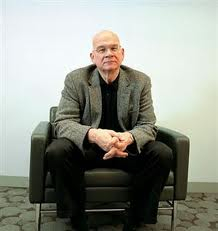
Tim Keller seated image

These wonderful excerpts from a sermon on 1 Peter 1:1-12 and 1:22-2:12 were given in “The Spurgeon Fellowship Journal – Spring 2008.” I appreciate the wonderful abilities that Tim Keller has to explain, elucidate, and illuminate on the gospel of our Lord and Savior Jesus Christ. There is great food for thought here, and wonderful implications for living out the gospel in ministry – enjoy! – Dr. David P. Craig

Tim Keller on Gospel-Centered Ministry

I am here to talk to you about what ministry shaped by the gospel, profoundly shaped by the gospel, really looks like . . .

In this letter, Peter was not writing to the same type of situation Paul addressed in his letter to the Corinthians. Paul was writing into a situation where there were doctrinal fractions, divisions, and party divisiveness . . . Peter was speaking to a persecuted church – a church which was both passively and actively persecuted . . . they were being beset by a culture around them with very different values that they do not know how to relate to. So, of course, you can never divide the doctrinal from the practical issues. However, I would say that Peter here was less concerned about expounding on the content of the gospel as Paul was in 1 Corinthians 15. I’ll show how the gospel should shape the way in which we live, our ministry, and how the church operates as a community.

When I was looking through 1 Peter 1 and 2, I found seven features that Peter uses to describe the gospel . . . Since everything in these seven points has already been explicated in the previous sermon, I am simply going to draw out the implications for ministry. I am going to read a nice long section: 1 Peter 1:1-12, 1:22-2:12. Chapters one and two are remarkable at giving you all the features of the gospel and helping us to understand the ministry implications:

“Peter, an apostle of Jesus Christ, to those who are elect exiles of the dispersion in Pontus, Galatia, Cappadocia, Asia, and Bithynia, according to the foreknowledge of God the Father, in the sanctification of the Spirit, for obedience to Jesus Christ and for sprinkling with his blood: may grace and peace be multiplied to you. Blessed be the God and Father of our Lord Jesus Christ!

According to his great mercy, he has caused us to be born again to a living hope through the resurrection of Jesus Christ from the dead, to an inheritance that is imperishable, undefiled, and unfading, kept in heaven for you, who by God’s power are being guarded through faith for a salvation ready to be revealed in the last time. In this you rejoice, though now for a little while, if necessary, you have been grieved by various trials, so that the tested genuineness of your faith— more precious than gold that perishes though it is tested by fire—may be found to result in praise and glory and honor at the revelation of Jesus Christ.

 Though you have not seen him, you love him. Though you do not now see him, you believe in him and rejoice with joy that is inexpressible and filled with glory, obtaining the outcome of your faith, the salvation of your souls. Concerning this salvation, the prophets who prophesied about the grace that was to be yours searched and inquired carefully, inquiring what person or time the Spirit of Christ in them was indicating when he predicted the sufferings of Christ and the subsequent glories. It was revealed to them that they were serving not themselves but you, in the things that have now been announced to you through those who preached the good news to you by the Holy Spirit sent from heaven, things into which angels long to look. 

Having purified your souls by your obedience to the truth for a sincere brotherly love, love one another earnestly from a pure heart, since you have been born again, not of perishable seed but of imperishable, through the living and abiding word of God; for “All flesh is like grass and all its glory like the flower of grass. The grass withers, and the flower falls, but the word of the Lord remains forever.” And this word is the good news that was preached to you. So put away all malice and all deceit and hypocrisy and envy and all slander. Like newborn infants, long for the pure spiritual milk, that by it you may grow up into salvation— if indeed you have tasted that the Lord is good. As you come to him, a living stone rejected by men but in the sight of God chosen and precious, you yourselves like living stones are being built up as a spiritual house, to be a holy priesthood, to offer spiritual sacrifices acceptable to God through Jesus Christ. For it stands in Scripture:

 “Behold, I am laying in Zion a stone, a cornerstone chosen and precious, and whoever believes in him will not be put to shame.” So the honor is for you who believe, but for those who do not believe, “The stone that the builders rejected has become the cornerstone,” and “A stone of stumbling, and a rock of offense.” They stumble because they disobey the word, as they were destined to do. But you are a chosen race, a royal priesthood, a holy nation, a people for his own possession, that you may proclaim the excellencies of him who called you out of darkness into his marvelous light. Once you were not a people, but now you are God’s people; once you had not received mercy, but now you have received mercy. Beloved, I urge you as sojourners and exiles to abstain from the passions of the flesh, which wage war against your soul. Keep your conduct among the Gentiles honorable, so that when they speak against you as evildoers, they may see your good deeds and glorify God on the day of visitation.”

I hate to do what I am about to do, which is a “fly-over.” I hate to go by some of these verses. These verses are deep wells, as we know. I know at least three or four men of God who would probably base their entire lives on one or two of these verses. I thought of Ed Clowney as I went by verses 2 and 9. Nevertheless, we are here for an overview. And therefore, I would suggest to you that Peter shows us in these two chapters that there are seven features of the gospel that we have to tease out of the ministry. I will say them here so you can write them down.

The gospel is: (1) historical, (2) doxological, (3) Christocentrical, (4) personal, (5) cultural, to quote Don Carson, (6) “massively transformational,” and (7) wonderful. Each one has a ministry implication.

(1) The gospel is historical . . . The word “gospel” shows up twice. Gospel actually means “good news.” You see it spelled out a little bit when it says “he has caused us to be born again to a living hope through the resurrection of Jesus Christ”. Why do we say that the gospel is good news? Some years ago, I heard a tape series I am sure was never put into print by Dr. Martin Lloyd-Jones. It was an evening sermon series on 1 Corinthians 15. He clarified how the Gospel is based on historical events in how the religion got its start. He said there was a big difference between advice and news. The Gospel, he would say, is good news, but not good advice. Here’s what he said about that: “Advice is counsel about something that hasn’t happened yet, but you can do something about it. News is a report about something that has happened which you can’t do anything about because it has been done for you and all you can do is to respond to it.”

So he says think this out: here’s a king, and he goes into a battle against an invading army to defend his land. If the king defeats the invading army, he sends back to the capital city messengers, envoys, and very happy envoys. He sends back good newsers. And what they come back with is a report. They come back and they say: It’s been defeated and it’s been all done. Therefore respond with joy and now go about your lives in this peace which has been achieved for you. But if he doesn’t defeat the invading army, and the invading army breaks through, the king sends back military advisers and says . . . “Marksmen over here and the horseman over there, and we will have to fight for our lives.”

Dr. Martin Lloyd-Jones says that every other religion sends military advisers to people. Every other religion says that if you want to achieve salvation, you will have to fight for your life. Every other religion is sending advice saying, “here are the rites, here are the rituals, here’s the transformation of the consciousness and here are the laws and the regulations. Marksmen over here and horsemen over there and we are going to fight for our lives.” We send heralds; we send messengers and not military advisers. Isn’t that clarifying? It’s just incredibly clarifying. And it’s not like there’s nothing to do about it, my goodness. Both the messenger and the military adviser get an enormous response. One is a response of joy and the other one is a response of fear. All other religions give advice and they drive everything you do with fear . . . as you know, when you hear the gospel, when you hear the message that it’s all been done for you, it’s a historical event that has happened, your salvation is accomplished for you, what do you want to do? You

want to obey the Ten Commandments, you want to pray, and you want to please the one that did this for you.

If, on the other hand, military advisers say you have to live a really good life if you want to get into heaven, what do you do? You want to pray and you want to obey the Ten Commandments. It looks the same, doesn’t it? But for two radically different reasons: One is joy and the other one is fear. In the short run, they look alike. But in the long run, over here we have burn out and self-righteousness and guilt and all sorts of problems. And that’s fascinating.

But having said that, what’s the ministry implication? The ministry implication is this: the significance of preaching, of proclamation, of declarative preaching, is irreplaceably central in Gospel ministry. Declarative preaching is irreplaceably central.

Why? If basically we are sending people “how to”, if we are saying here’s the “how to” to live the right way, if that’s the primary message, I am not sure words are necessarily the best thing to send. You want to send a model. If I were to teach an advanced seminar on preaching (and I never have) I would make everybody read CS Lewis’ Studies in Words. It’s amazing because we are wordsmiths and he shows you how important it is to craft your words properly. The last chapter is called “At the Fringe of Language” and he says language can’t do everything. He says that one of the things language cannot do is describe complex operations. On the other hand, when it comes to describing how, to explain to somebody that Joshua Chamberlain, without any ammunition, charged down Little Round Top in an incredible, risky adventure at the height of the Battle of Gettysburg, and as a result changed the course of history. You don’t show people that, you tell them that. It’s something that happened, you describe it. You tell them that. If you are going to give them how-tos, very often what you want is modeling and dialogue, action and reflection and so forth.

Therefore, if you believe the gospel is good news, declarative preaching (verbal proclaiming) will always be irreplaceably central to what we do. However, if you subscribe to the assertion that the gospel is simply good advice on how to live a life that changes people and connects to God . . . dialogue would be alright. Stories and modeling and reflection would be more important. In other words, you would believe what some people would quip: “proclaim the gospel, use words if necessary”. You’ve probably heard that. That shows, I think, that they don’t quite understand what the gospel is all about.

(2) The gospel is Doxological. The purpose of the gospel is not merely forgiveness of individuals, but to bring people to full flourishing through glorious worship. Now where do you see that?

Karen Jobs, in her commentary of 1 Peter, points out what all commentators point out, but I like the way she titled it. Chapter 1 verse 3 to verse 12 is all one sentence in Greek. Therefore, there is a main clause. All that follows are subordinate clauses to the main clause. Here is the main clause: “Praise be to the God and Father and our Lord Jesus Christ”. She entitled the whole section, (and that’s what I like about it), “Doxology and Basis for the Christian Life,” because everything in there, even the new birth, is to the praise of the glory of God. Now why is this so important?

One of the most life-changing and especially ministry-changing things in my life was reading Martin Luther’s “Larger Catechism” a few years ago. In “Larger Catechism,” he lays out his understanding of the Ten Commandments. Luther says that the first commandment is first because (he thinks) all the other commandments are based on it. In other words, when you break any of the commandments two through ten, you have already broken or are in the process of breaking commandment one. So, Martin Luther says you don’t lie unless you have already made something else more than God your functional savior; something else is your greatest joy. Why do you lie? You lie either because the approval of other people is more important than God’s or because money is more than the security you have in God. So you wouldn’t lie unless you already have first made something else more important than God in your life . . . something more fundamental to your meaningless in life or happiness or joy. And then Luther went one step further and said underneath every sin is idolatry in general. And underneath every idolatry in general is always some form of work-righteousness in general, in particular some kind of self-salvation project . . . whenever you make something more important than God, that thing is essentially a savior of your making.

Martin Luther says of the first commandment, you have to believe the Gospel. You can’t look to anything else for your justification . . . you have to believe in the Gospel and you can’t look to anything else for your justification . . . If he were here today, he would say that underneath everything from eating disorders to racism is a self-salvation project, a failure to believe in the Gospel, and is some form of idolatry. You have either made an idol of thinness . . . or of your race and your blood . . . your heart’s imagination is captured. Your heart is essentially adoring and dotting on something other than God . . .

Some years ago . . . I was talking to a young woman, a fifteen year-old girl in my church in Virginia . . . she was really struggling and said this: “I really understand this, I am a Christian. I have clothed myself in the righteousness of Christ, I have a guaranteed place in heaven, and I am the delight of the Father. But what good is that when the boys in high school won’t even look at me?” She was absolutely honest. You might say: is she even a Christian? Of course she was a Christian, as far as I can tell. If I look back on it and she looks back on it, there have been changes. Here’s the point: boys were on video, and God was on audio . . . if you have an audio and video happening at the same time, you know which one wins. Right?

Jonathan Edwards would say that the ultimate purpose of preaching is not just to make the truth clear, but also to make it real. Of course for it to be real, it’s got to be clear. If it’s confused . . . sorry, no worship happens. But you can’t stop there. We are, I think, afraid of the spirit of the age, of subjectivism, because we believe in objective truth. As a result, our expository messages are too cognitive. Jonathan Edwards did not tell stories, he was incredibly rational. But he was also unbelievably vivid. He was incredibly logical, and precise, and clear because he knew that unless the truth is clear, it will never be real. It’s got to be crystal clear, amazingly clear. But it also has to be vivid.

I don’t think this is going to be very easy. I see the narrative preaching approach which works superficially on people’s emotions. And you have a kind of an expository preaching that tends to be like a Bible commentary that works more on the head. But the heart is not exclusively the emotions, and certainly not just the intellect . . . Therefore, the preaching has to be gripping . . .

What I love about Edwards is how incredibly rational he is, how logical and persuasive he is and yet at the same time, so vivid. You go into his messages and there’s the sun, the moon, and the stars. There are mountains and dandelions . . . it’s just astounding . . . he understood that telling stories to tweak the emotions, is like putting dynamite on the face of the rock, blowing it up and shearing off the face but not really changing the life.

One the other hand, if you bore down into it with the truth, and put dynamite in there, if you are able to preach Christ vividly, and you are able to preach the truth practically and you are able to preach it out of a changed life and heart in yourself (which obviously isn’t the easiest thing by any means) then when there is an explosion, it really changes people’s lives. I don’t think we have the right end of the stick in general, either in the movement of the people who are working towards telling stories because they want to get people emotionally or working towards giving people the truth because they want to be sure that people are doctrinally sound.

The Doctor, Martyn Lloyd-Jones, was not a touchy-feely type . . . based on his understanding of Edwards, he asserts that the first and primary object of preaching is not to give information. It is, as Jonathan Edwards said, to produce an impression. This is the Doctor, now. It is the impression at the time that matters, even more than what you can remember subsequently. Edwards, in my opinion, understood the true notion of preaching. It is not primarily to impart information . . . while you write your notes, you may be missing something that will impact your spirit.

As preachers, we must not forget this. We should tell our people to read books at home and to take notes at home; the business of preaching is to make such knowledge live. Now, by the way, I don’t mind if people are taking notes in my sermons, in the first part of the sermon. But if you are still taking notes at the end of the sermon, I don’t think that I have made it home . . .

Thomas Chalmers puts it like this:

“It is seldom that any of our bad habits or flaws disappear by a mere nature process of natural extinction. At least it is very seldom it is done by the instrumentality of reasoning or by the force of mental determination. What cannot be destroyed however may be dispossessed. One case may be made to give away to another and to lose its power entirely has the reigning affect of the mind. Here’s an example: A youth may cease to idolize sensual pleasure but it is because of the idol of wealth. The desire to make money has gotten ascendancy, so he becomes disciplined. But the love of money might have ceased to be in his heart if he was draw to ideology and politics. Now he is lorded over by the love of power and moral superiority instead of wealth. But there is not one of these transformations in which the heart is left without an object. The human heart’s desire for one particular object is conquered. But its desire to have some object of adoration is unconquerable. The only way to dispossess the heart of all its affection is by the explosive power of a new one. Thus is it not enough to hold out to the world the mirror of its own imperfections, it is not enough to come forth with the demonstration . . . of the character of their enjoyment, it is not enough to just simply speak the conscience, to speak its follies. Rather, you must seek, as a preacher, every legitimate method of finding access to the heart for the love of Him who is greater than the world.”

(3) The gospel is Christocentrical. The gospel, as Don [D.A. Carson] pointed out, in a certain sense, the gospel is just Jesus. What is the gospel? It is who Jesus is and what He did for us. The Gospel is Jesus. Of course, you see this in 1 Peter 1:10 where it says, “About which salvation the prophets sought out and searched out, prophesying concerning the grace for you; searching for what, or what manner of time, the Spirit of Christ made clear within them, testifying beforehand of the sufferings of Christ, and the glories that should follow.”

What’s intriguing to me is this: reading in Luke and Acts how Jesus got His disciples together during the forty days before He ascended after He was resurrected. What was He doing? I am sure He was doing more than what we are told. But if you look in Luke 24, it looks like He was giving them a New Testament hermeneutical seminar. This should give professors a lot of hope . . . even Jesus thought running a seminar on hermeneutics was a good idea! If he was running them in those forty days, maybe it is a good idea to run them now. Basically, He was saying that everything in the Old Testament points to Him . . .

He told Cleopas and the other disciples on the road to Emmaus and in the upper room that everything in the Prophets and the Psalms and the Law points to Him. It’s intriguing, we see that in Luke and now here in 1 Peter we have an echo of it. Peter was in on that seminar . . . now he is explaining that concerning this salvation, the salvation of the gospel of Christ, the Prophets had the Holy Spirit in them pointing them towards Jesus . . . Peter is saying what Jesus was saying . . . that everything pointed towards Jesus. Every text in the Old Testament was pointing toward Jesus.

Now my ministry implication is this: The basic subject of every sermon ought to be Jesus, regardless of what passage is at hand. It doesn’t matter whether it is Old or New Testament; it’s got to be about Jesus. By the way, you might say this is only about Old Testament hermeneutics; no, you need to know that my friend Sinclair Ferguson says most evangelical ministers don’t preach Christ. Not only do they not preach Christ in the Old Testament . . . they don’t preach Christ in the New Testament. I will get back to this in a second.

I know this is somewhat of an internal debate here and I’ve got to be careful. I don’t want to be a party guy and say, “I follow Chapell, or I follow Goldsworthy.” And you know there are people who say that you preach everything in the Bible pointing to Jesus and there are other good men that just don’t think that’s right. You shouldn’t preach Christ from Jacob wrestling with God . . . you should preach about wrestling with God in prayer or suffering or something like that. Honestly, I believe those good and sincere men are wrong on the basis of reading the Bible and the understanding of hermeneutics and so on.

But part of this goes back, I remember, some years ago, to when I sat down with my wife. You know what that’s like – on the way home – after the sermon. First you are hoping she will say: “Great sermon, honey.” But if she doesn’t say anything, you fear the worst. I remember one day we really got into it. I said, “Let me ask you, how often do you think it was a great sermon? How many weeks out of the month?” And she said “no more than one in every four or five weeks.” So, we sat down and here’s what she said: “For a good part of your sermon, your sermons are great. They are rational and biblical, and they are exegetical. They show me how I should live, and what I should believe. But every so often – suddenly at the end – Jesus shows up. And when Jesus shows up, it suddenly becomes not a lecture but a sermon for me, because when you say this is what you ought to do, I think to myself, ‘I know, I know, okay. Now I am a little clearer about it and I am a little more guilty about it. Fine.’ But sometimes you get to the place where you say, ‘This is what you ought to do, though you really probably can’t do it; but there is one who did. And because He did it on our behalf, and because He did it in our place, we believe in Him. We will begin to be able to do it.’” This is true only to the degree that we understand what He did for us. And she says: “That’s different. One time out of four or five, your lecture becomes a sermon when Jesus shows up and I want to do that. I have hope. And I begin to see how I can do it.”

I really didn’t understand . . . but basically, now I do. Here’s the thing. Your preaching will never be doxological and it won’t be central unless it is Christocentric. Here’s why: if you tell people they need to be generous, and ask why they aren’t being more generous . . . I happen to know about people being generous. Sometimes you don’t know about the lust in someone’s heart week to week, but you know if people are being generous week to week.

Why aren’t people being more generous? Are they just being sinners? Let’s go back to Martin Luther. Let’s go back to the catechism. If you are not being generous, then there is something going on there, is there not? You are saying your status or your security, which is based on money, is very important to you. You need to be able to buy certain cloths and live in certain circles and go to certain places. Human approval, security, there’s idols underneath the lack of generosity. The money is more than just money. It’s security, it’s significance, it’s status. You’ve got to make more money, and then you will give it away.

How do you do that? You have to show that Jesus Christ is their true wealth. You have to show them what their idols are. You have to get to Jesus. As a result, if you don’t get there, you are going to find that you are wailing on people’s wills. You are beating on wills. Sinclair Ferguson wrote a book . . . called Preaching Christ in the Old Testament. And this is what he says: Not only do most ministers not preach Christ in the Old Testament; they don’t preach Christ from the New Testament. The preacher has looked into the text, even in the New Testament, to find himself and the congregation . . . not to find Christ. You can do this even in the New Testament, in the Gospels. The sermon, therefore, is consequently about the people in the Gospels and not the Christ in that Gospel. The more fundamental issue is this question: What is the Bible really about? Is the Bible basically about me and what I must do or is it about Jesus and what He has done? Is the Bible about the objective and indicative?

Here’s an example. Hermeneutics is important. You can’t just find Jesus in every little twig. And there needs to be a way where you are following the trajectory of the text no matter what that text is to Jesus. You have to show how Jesus is the ultimate fulfillment of that particular trajectory of the text. You’ve got to be responsible. And yet, like Sinclair said, it’s more like an instinct. It’s not so much just the right hermeneutical principles; it’s an instinct. Do you believe the Bible is basically about you or basically about Him? Is David and Goliath basically about you and how you can be like David and Goliath or about Him, the One that took on the only giants in life who can kill us? You see. And His victory is imputed on us. Who is this all about? That’s the fundamental question.

And when that happens, you start to read the bible anew. Jesus is the true and better Adam who passed the test in the garden. His garden is a much tougher garden and his obedience is imputed on us. Jesus is the true and better Abel, who though innocently slain has blood that cries out: not for our condemnation but for our acquittal. Jesus is the true and better Abraham, who answers the call of God, who leaves all the familiar comforts of the world into the void, not knowing where He went. Jesus is the true and better Isaac who is not only offered by his father on the mount but who was truly sacrificed for us all. While God said to Abraham: “Now I know you truly love me, because you did not withhold your son, your only son, from me.” Now we, at the foot of the cross, can say to God: “Now we know you love us because you did not withhold your Son, your only Son, whom you love, from us.”

Jesus is the true and better Jacob, who wrestled and took the blows of justice that we deserved so we like Jacob only receive the wounds of grace that wake us up and disciple us. Jesus is the true and better Joseph, who is at the right hand of the king, and forgives those who betrayed and sold him and uses his power to save them. Jesus is the true and better Moses, who stands in the gap between the people and the LORD and mediates the new covenant. Jesus is the true and better rock of Moses who struck with the rod of God’s justice now gives us water in the desert. Jesus is the true and better Job, He is the truly innocent sufferer who then intercedes for and saves His stupid friends. Is that a type? That’s not typology. That’s an instinct.

Jesus is the true and better David, whose victory becomes the people’s victory even though they didn’t lift a stone to accomplish it themselves. Jesus is the true and better Esther, who didn’t just risk losing an earthly palace but lost ultimately the heavenly one, who didn’t just risk His life but gave His life, who didn’t say if I perish I perish but when I perish, I perish for them . . . to save my people. Jesus is the true and better Jonah who was cast out into the storm so we can be brought in. He’s the real Passover Lamb; He’s the true temple, the true prophet, the true priest, the true king, the true sacrifice, the true lamb, the true life, the true bread. The Bible is not about you. And that’s an instinct.

Until that shows up in your sermons, it will be lectures and not sermons. It won’t be doxological, it won’t be central.

(4) The gospel is personal and individual. Don [D.A. Carson] already said this. In 1 Peter 1 and 2, we see a lot of references to the new birth. What does the new birth mean – think about the metaphor of the birth – you can’t make yourself a Christian? You can make yourself a Buddhist. You can make yourself a Muslim. You can make yourself an Atheist. But you can’t make yourself a Christian. To become a Christian, you have to be converted . . . notice that’s a passive. You don’t convert yourself, something happens to you. Through faith you’re born again. You are confronted with you sin in front of a holy and jealous God. And you see the provision. Now, that’s individual conversion. This is very important, at this moment, in all our lives as Christians, especially in North America, but I am sure in other places as well. There is an erosion in the confidence of the thing that I just said. It is the idea that we have sinned against a holy and jealous God, the wrath of God has to be satisfied, Jesus Christ stood in our place, substitutionary atonement is provided, and when we believe in this, both in His suffering and obedience is imputed to us . . .

J.I. Packer, in his little chapter on grace in Knowing God, said there are two things you have to know in order to understand the concept of grace. Grace isn’t the opposite of Law. First of all, you have to understand how lost you are, how bad you are, how dire your condition is, and how big the debt is. You have to understand that . . .

Now if somebody says, “I believe Jesus died for me, He shed His blood for me and I have given my life to Christ. I accepted Him; I walked forward and invited Him into my life,” but you don’t see any change in that person’s life, you don’t see identify shifting, behavior transformation and joy, what’s the problem? It’s clear that this person doesn’t understand the size of the debt, and therefore the size of the payment . . . Jim Packer used to say to understand grace, and for grace to be transforming, first you have to understand the debt.

The second thing you have to understand, besides the size of the debt, is the magnitude of the provision. There are people who do understand that they are pretty bad. They do understand how flawed they are. They do understand how far short they fall. But they aren’t convinced of the magnitude, sufficiency, freeness, and fullness of the provision. They may only believe that Jesus died the death that we should have died. And maybe they also don’t believe Jesus lived the life that we should have lived . . . And you also see Pharisees – people who are really under the burden of guilt. As a result, they are withdrawn and hostile and moralistic and legalistic. And we look at these two groups of people and the evangelical world is filled with them. Easy-Believeism is really deadly. The Cost of Discipleship book by Bonhoeffer explains why Easy-Believeism was the reason Nazism could come into power. That’s pretty dangerous. Why Easy-Believesim? Why the Moralism? Because they don’t understand the gospel; the old gospel, the historic gospel. The gospel of salvation by grace through faith and the work of Jesus Christ alone, and substitutionary atonement . . . they don’t get it.

So what’s the solution to all the Easy-Believeism? Why is it that we don’t have people living the life they ought to live? Why do we see people culturally withdraw, being really negative and narrow? Because people think the solution is “let’s change the gospel” . . . I can’t imagine that anybody is going to write a hymn that goes like this: “my chains fell off and my heart was free, I rose forth and followed thee.” It’s just not going to happen . . .

(5) The gospel is cultural. What do I mean by cultural? The gospel creates a culture called The Church. It’s not just an aggregation of saved individuals. It’s a culture. The gospel is so different in what it says about God, you, and your standing with God. It’s so identity transforming; every other religion or system motivates you through fear and pride to do the right thing. Only the gospel motivates you through joy . . . the fear and trembling joy . . . the fear of God joy. That doesn’t mean that now we are a bunch of saved individuals with wonderful internal fulfillment. It means that when we get together we want to do things differently. We will do everything differently. The gospel is massively transformational and it creates a counter culture but it also makes us as people relate to the culture around us. And this comes out especially in 1 Peter 2. I will be brief on this but it’s crucial.

Those of us who believe in that individual gospel often miss the communal aspects of the gospel. And in 1 Peter 2:12, he says “Keep your conduct among the Gentiles honorable, so that when they speak against you as evildoers, they may see your good deeds and glorify God on the day of visitation.” Right before this, he says, “Beloved, I urge you as aliens and strangers.” In 1 Peter 1:1, “Peter, an apostle of Jesus Christ, To God’s elect, strangers in the world.” There’s been a lot of discussion about this. There’s pretty much a consensus. The word “strangers” there means not a tourist who’s just passing through the world briefly, but not a citizen of the world either. Somebody who’s going to be there a long time whose true citizenship and value belongs somewhere else.

Peter makes an amazingly balanced statement and we have to understand this. The gospel, I believe, is radical. The nature of the gospel, on the one hand, does say “you need to engage” to the legalists who are afraid to be polluted by the culture and have the tendency to bolster their fragile sense of righteousness by feeling superior to the sinners around them. On the other hand, the gospel also confronts the secular, irreligious, liberal Christian, who asserts that we really can’t believe in sin or the holiness of God and hell because it offends people.

The gospel says that there are dangers on both sides: cultural accommodation, culture withdrawal. Most of us as Christians today think that most of the dangers today are on one side. We tend to get together with a group of people and say: the main danger, the main danger today is cultural accommodation. On the other side, there are Christians who think the main danger is cultural isolation and irrelevance. No one will see the good deeds of those who withdraw from the world and just hate the world. They don’t glorify God. They are not involved with caring for the poor; they are not engaged. On the other hand, people who accommodate the culture are never persecuted. How do we know that the radical gospel is turning us into a counter-culture for the common good? This counter-culture should be distinct, very different from the side we have inside of us, but a side that shows that we love the world and care about the world. We love our enemies because we are saved by a man who died loving His enemies.

Therefore, this balance is awfully hard to maintain. In Jeremiah 29, the exiles, wanted to stay outside of Babylon and remain pure. The Babylonians wanted to come in to Babylon, and lose their cultural identity. God told them through Jeremiah to do the hardest thing possible. In a sense, He said, “I don’t want you to stay out and be different. I don’t want you to go in and become like them. I want you to go deeply in and stay very different.” And that’s exactly what 1 Peter is talking about. Peter calls them exiles. He knows that the relationship with the culture around them has to be the same relationship as the Jewish exiles had with the Babylonians. We need to seek the welfares of the city. We need to care about that. We need to follow in the footsteps of the one who serves His enemies and forgave His enemies and died for His enemies.

At the same time, we have to be telling people that they are going to hell. Now, generally speaking, by and large, the people who want to be prophetic don’t want to be priestly. The people that want to talk about going to hell do not just sacrificially pour out themselves and say we are going to love you and we are going to serve you, whether you really like what we do or not. And the people who are serving like that are afraid of talking about things like hell or wrath. I don’t know whether we can become a movement of people who understand what 1 Peter is saying: that the gospel creates a counter culture, but a culture that engages the community around us at the expense of persecution . . .

New Yorkers love what the Bible says about forgiveness and reconciliation and caring about the poor. They hate what it says about sex and gender and family. Go on to the Middle East and find people who love what the Bible says about sex and gender and family, but abhor the idea of forgiving people, 70 times 7. I think what 1 Peter 2:12 is trying to say is in every single culture, if you actually live distinctively in an engaged way, you will get persecution AND you will get approval. It will always be different depending on the culture. You will attract people, you will influence people. You will be salt and light and at the same time you will get punched in the mouth.

If you are only getting punched in the mouth, or if you are only getting praise, you are not living the gospel life. Either you are falling into legalism and withdrawal or you are falling into accommodation.

(6) The gospel is massively transformational. When I say the gospel is massively transformational, I am just saying the gospel creates a worldview, a basis of worldview that actually touches every area of life; the way you do business, the way you do art, the way you conduct your family life. What do I mean when I say the gospel is wonderful? 1 Peter 1:12, “It was revealed to them that they were not serving themselves but you, when they spoke of the things that have now been told you by those who have preached the gospel to you by the Holy Spirit sent from heaven. Even angels long to look into these things.”

Angels love to look into the gospel. They never get tired of it. So what does that mean? It means gospel ministry is endlessly creative. It means you can preach the gospel and never have to be afraid of boring people . . .

(7) The gospel is wonderful. Isn’t that amazing? The gospel is not the ABC’s of Christianity, it’s A to Z. It’s not just the elementary and introductory truths. The gospel is what drives everything that we do. The gospel is pretty much the solution to every problem. The gospel is what every theological category should be expounding when we do our systematic theology. It should be very much a part of everything.

Even angels long to look into it. And you should. Let’s pray.

About Dr. Tim Keller: He was born and raised in Pennsylvania, and educated at Bucknell University, Gordon-Conwell Theological Seminary, and Westminster Theological Seminary. He was first a pastor in Hopewell, Virginia. In 1989 he started Redeemer Presbyterian Church in Manhattan with his wife, Kathy, and their three sons. Today, Redeemer has more than five thousand regular attendees at five services, a host of daughter churches, and is planting churches in large cities throughout the world. He is the author of a study of Mark entitled King’s Cross; The Prodigal God based on Luke 15; The Freedom of Self-Forgetfulness; Generous Justice; Counterfeit Gods; Ministries of Mercy: The Call of the Jericho RoadThe Meaning of Marriage; a wonderful small group study entitled Gospel In Life; and the New York Times bestseller The Reason for God; & the forthcoming Center Church (August 2012). Tim has a passion for Jesus Christ, making the Gospel clear, church planting, and reaching cities for Christ. If you really want to understand the gospel, and how grace applies to all of life I urge you to devour his books and sermons!

Tim Keller on Mars Hill Preaching, Homosexuality, and Transgender Identity

Tim Keller in office image

Owen Strachan with Tim Keller

I recently had the privilege of interviewing Manhattan pastor Tim Keller for Christianity Today. The interview was about Keller’s new book Encounters with Jesus: Unexpected Answers to Life’s Biggest Questions (Dutton, Nov. 2013). It’s a book that would be marvelous to read whether for one’s own edification or for the purposes of discipleship or evangelism. If you’re in college ministry, and in particular ministry to thoughtful students on a secular college campus, this book will be very valuable.

In the course of my free-ranging conversation with Keller, we touched on some matters that were not directly related to the book and thus weren’t included in the CT interview. I was helped and heartened by Keller’s characteristically winsome, gracious, and convictional thoughts on these topics, and I’m glad to share them.

Keller on quoting cultural authorities in his preaching to “bring people along”:

The only reason to do so is if you’re in an Acts 17 setting. In Acts 13, Paul goes to a synagogue and expounds the Bible. But these are people who trust the Bible…so Paul does a very simple exposition. In Acts 17, Paul’s talking to people with no faith. There’s disagreement over how much he’s quoting, but he quotes poets and pagan authors and makes a more common appeal to natural reason, as it were.

What I try to do since I have people in a spectrum—people who don’t trust the Bible at all or people who trust it a lot—so what I do is expound Scripture, and then I add sources where people agree. I’m not basing my authority on Dylan Thomas, but when I’m able to bring in someone that the broader culture really trusts, it helps the people who doubt biblical authority to see how the Bible is true.

If I was speaking in a Mars Hill situation, I might give a topical talk like Paul did. So most of my preaching is somewhere in the middle. I’m supplementing my points to make it a little easier for the skeptic to accept my point. I’m trying to bring people along; I want the person to come with me. In the earlier parts of my sermon I’m trying to fortify—this psychologist says that, and so on. But at the end, I’m bringing in Jesus as the solution to the problem, and I’m not using those sources anymore.

Keller on how the church should speak to the issue of homosexuality:

You always want to speak in the most disarming way, but still be very truthful. Both disarming and truthful. I’m not sure most of us speak in that way—trying to be both. Ed Clowney, former President of Westminster Theological Seminary, said this many years ago: We tend to say we preach the Bible, but you tend to preach the answers to the questions you’ve posed to the Bible. Whether you know it or not, you read the Bible with certain questions. A Korean might have a question in mind when he reads that an African wouldn’t have. Right now our culture asks certain questions and we can’t help but respond to them. We do that in the most disarming way, but to some degree we can’t ignore the culture’s questions. We need to give biblical answers to the culture’s questions. You don’t give them the answers they want, you give them the answers they need. You can’t be a responsible pastor if you don’t.

If we are going to shepherd and teach, we must give the most disarming and truthful answers.

Keller on how the church should handle the shift to transgender identity in the broader culture:

Jerome Kagan in The Atlantic has talked about how we’re all wired—there are three basic ways to deal with threats. Some run, some fight, some stop and get philosophical. You find this insight in neurochemistry—across 36 cultures, these instincts are wired into us. These are very much who we are. In only a small percentage of the threatening situations is our habitual approach the right one. The worst thing parents can do is listen to the culture when it says, “Let your child be who that child is. Don’t try to change him.” Kagan says that’s the worst thing you can do. Children need to be pulled out of their natural instincts. Parents need to intervene and not let their natures run them. Doing so is a form of child neglect.

I’ve never forgotten that with the transgender question. We’re told we can only affirm [this identity] today. The lack of wisdom in this response will become more evident over time. We’re now a radical individualistic culture. If you do anything against it, you’re sacrilegious. I think we’ll see 20 years of mistakes, and then we’ll realize it wasn’t a good idea.

Keller on the state of the complementarian movement:

The arguments are pretty well made now. At this point, complementarians need to get our own house in order and show that our families and churches are thriving places. That’s more important than anything right now….Kathy and I are very committed to saying that Christians are committed to complementarianism.

Read more: http://www.patheos.com/blogs/thoughtlife/2014/06/tim-keller-on-mars-hill-preaching-homosexuality-and-transgender-identity/#ixzz34R1n4Myf

God-Centered “Mission” Vs. Man-centered “Missions”: Chart by Bradford Hunter

Categories God-Centered Mission Man-Centered-Missions
The Goal The Chief purpose of the Church’s Mission is to bring glory to God. Glory is brought to God when every nation, tribe, and tongue find their delight in worshipping God.The salvation of souls is certainly a goal in mission. When we look at souls, however, we desire not only that they are saved from Hell, but saved for Heaven. In man-centered missions’ the salvation of the lost is seen as the main purpose of missions. Men and Women are dying without Christ, and so we must bring them the good news.
What drives us? “People deserve to be damned, but Jesus, the suffering Lamb of God, deserves the reward of His suffering” (John Piper, Let The Nations Be Glad, p. 39). We go out because we love Christ, and we desire that others would love Him too (Of course we are also to desire that the lost would be saved and that they find true fulfillment in God). Man deserves Hell. It is often difficult to develop a love for the lost world, as the lost are so unlovely. To love the sinner who hates God and Christians is very difficult.
Worship Worship of the Triune God is both the fuel and the goal of missions. Missions exist because worship does not. In Heaven there will be no need for missions, but we will be worshipping God for eternity (Rev. 5:8-14). In man-centered missions, worship is often seen as only a secondary activity, not as important as missions.
Missions? Or Mission? There is only ONE mission of the Church: to bring glory to God by proclaiming the Gospel and reaping the harvest of souls which will worship and delight in God forever. There are numerous missions’ (plural), because there are numerous souls to save.
Bricks or Cathedrals? The big-picture’ bricklayer constantly envisions the cathedral that he has a privilege to play a part in building. So the God-centered missionary envisions the Kingdom of God which he is engaged in building. The little-picture’ bricklayer only sees the bricks and the mortar. So it is with the man-centered missionary, who when he is rejected or encounters trials or failures, cannot look beyond to see the hand of God in it all.
Work with or for Christ We are not working for Christ as much as we are working with Christ (Matthew 28:20b) In this view, we focus on our job, what we can, focus on our job, what we can do for Christ.
Human Worth Human worth is not diminished by being God-centered. Instead, it is established. That is, when we focus on God who alone has worth in Himself, and we understand that we are created in His image, this brings us great worth. Man has no worth in and of himself, and being man-centered in one’s approach to anything is ultimately futile.
 Humility Vs. Pride Though he thanks God for the opportunity to serve Him and desires to accomplish great things for God, the God-centered missionary knows that he is replaceable. He is a tool in God’s hand, and God can choose to discard him when God pleases. This brings about humility. Again, the man-centered missionary is on his own mission or various missions, and without him the venture would fall apart. The tendency is toward a Lone Ranger’ mentality. This fosters pride.
Prayer Colossians 4:2-4. Only God can open man’s hearts, so we must ever be in prayer when we are engaged in mission work. Methods are important, but only after you pray and get the message straight. Man is pursued with any method or technique that will get him to listen, to ‘open his heart’. The problem, only God can open man’s heart.Prayer takes a back seat so the methods, and the message is often compromised.
 Evangelism We focus on our faithfulness to the message, allowing God to change hearts (1 Cor. 3:5-8). We have no reason to boast for our successes’ except to boast in the Lord. Those who reject the Gospel are not rejecting us, but God.A side note: though we must allow the Gospel to be offensive (the innocent God-man dying for wretched sinners), we must not add our own offensiveness to the mix. The focus is on persuasion & results, because anyone’s heart can be opened ‘if we have the right key’.  We are seen as failures if the person doesn’t choose Christ. Method and delivery are exalted above content. Offensive doctrines like ‘eternal judgment’ and ‘total depravity’ are avoided, so as not to drive away seekers. (Obviously there is no true gospel where sin and judgment aren’t preached).
 Success & Failure  Success is guaranteed, because it is God who will build the church.(1 Cor. 3:4-6, Matt. 16:18)This is not to say that man has no role in God’s mission. Man is used as an instrument in the hands of God.Isaiah 18:6; 2 Corinthians 4:7)Even our failures are used by God as successes (Genesis 50:20; Romans 11:33-36) Success is questionable, since in missions it is seen as man’s mission, and humans make mistakes.With a man-centered viewpoint, when we succeed, we tend to become prideful, and when we fail, we tend to get defeated.
How Great a Sacrifice?  Though to the word it appears as if you have made a great sacrifice, when we focus on the sacrifice that Christ paid for us and the benefits that He gave to us, our sacrifice is minimal (See Matthew 13:44-46). With the wrong perspective, the sacrifice becomes unbearable, and when too much rejection, and too much hardship comes, the man-centered missionary is more likely to give up.