
Category: Authors
All of the author’s on this site have a few things in common – they are evangelical; have a High view of God; believe in the literal bodily resurrection and future return of the Lord Jesus Christ; adhere to the inerrancy, authority, and sufficiency of the Scriptures; hold to the vicarious and substitutionary atonement of Jesus Christ; hold to the solas of the reformation – sola gratia; sola fide; sola scriptura; solus Christus; and soli deo gloria; and love the Church for whom Christ died. Almost all of them adhere to the “Doctrines of Grace”

C.S. Lewis and His Legacy: An Interview with Christopher Mitchell

What do you think the most important aspect of C.S. Lewis’s legacy is?
From a historical perspective, the most important legacy of Lewis is as an advocate of the Christian faith. There are other things to be said that were important: he was a great writer, a great literary critic, literary historian, a great writer of children’s fantasy literature. But at the center of his being after he became a Christian was a desire to promote Christianity. He wanted to clear away the intellectual prejudices against it and to expose fallacies in the objections to it. He sought to clear away the intellectual rubble and prepare minds and the imagination to receive the Christian message.
What made Lewis’s approach unique, though, was the way he brought together the intellect and the imagination. He was brilliant at finding illustrations and metaphors that got to the heart of the matter, and those are ways of writing that engage both hearts and minds simultaneously. J.I. Packer once observed both lobes of Lewis’ brain were so thoroughly developed “that he was as strong in fantasy and fiction as he was in analysis and argument. That made him in his day, and makes him still, a powerful and haunting communicator in both departments.”
And it struck people as unique even in his own time, when theology was generally considered a musty, irrelevant subject. In 1944, the Times Literary Supplement said that observed: “Mr. Lewis has a quite unique power of making Theology attractive, exciting and (one might almost say) an uproariously fascinating quest.” Only three years later, Time would call him the one of the most influential spokesman for Christianity in the English-speaking world and said he had a “talent for putting old-fashioned truths into a modern idiom” and giving “a strictly unorthodox presentation of strict orthodoxy.”
Where are the C.S. Lewis’s of today? Do you think we should look for another?
That’s a question that I’ve been asked routinely for the past two decades. People want to know who is doing for our generation what Lewis did for his. But I never remember being asked where the Augustines, the Luthers, the Bunyans, the Dantes are. The deep hunger for more of what Lewis had to offer is very real.
I think expecting the same unique combination of intellect and imagination is probably asking too much. It’s easy to find people who can do one or the other, but bringing them together as Lewis did is extraordinary. God never leaves his people without a witness and there are plenty of individuals who are today working creatively and engagingly on one side of the equation or the other.
What do you think those who admire the legacy of Lewis should do next?
For more than a decade I have been saying that if a person were to simply read the books C.S. Lewis mentions in his autobiography, Surprised By Joy, they would receive a first rate education. Milton, Aristotle, Dante, George Bernard Shaw and G.K. Chesterton–they all make an appearance in one way or the other. The exercise of having to think through and to digest the thinking of others is the first step in our training to think through a thing for ourselves.
In the course of my nearly twenty-years as Director of the Wade Center, and now as a Professor at Biola’s Torrey Honors Institute, I have seen the enormous educational and spiritual value of a broad and deep reading of critical works of literature over a wide range of topics, periods, and cultures alongside an equally critical reading of biblical texts.
I also think we should be on constant guard against what C.S. Lewis famously called “chronological snobbery,” or the conviction that the thinking of the past no longer holds any real significance for the present. Deepening our knowledge of how people from previous generations thought helps us discern and avoid our own blind spots. And it helps in the face of the challenges of globalization, too. Encountering thinking from the diverse cultures and ages of the past places us in a position to think openly and rightly about contemporary situations that are different from our own context.
Dr. Christopher Mitchell is Associate Professor at Biola University’s Torrey Honors Institute. He was Director of the Marion E. Wade Center, which is devoted to supporting the legacy of C.S. Lewis, J.R.R. Tolkien, and others for nearly twenty years. Interview originally appeared on Trinity Forum’s Website: http://www.ttf.org/cs-lewis-and-his-legacy-interview-christopher-mitchell
Sinclair Ferguson: Remembering C.S. Lewis – On The 50-Year Anniversary of His Death

WHO WAS C.S. LEWIS?
November 22, 1963, the date of President Kennedy’s assassination, was also the day C.S. Lewis died. Seven years earlier he had thus described death: “The term is over: the holidays have begun. The dream is ended: this is the morning.” The metaphor inherent in these words is striking. It comes from the world of students and pupils, but only a teacher would employ it as a metaphor for death. The words (from The Last Battle) bring down the curtain — or perhaps better, close the wardrobe door — on Lewis’ Chronicles of Narnia. But they also open a window into who C.S. Lewis really was.
The Student
Clive Staples Lewis (“Jack” to his friends) was born on 29 November 1898 in Belfast, Northern Ireland, the second son of Albert Lewis, a promising attorney and his wife, Florence (“Flora”), daughter of an Anglican clergyman and one of the earliest female graduates (in Mathematics and Logic) from what is now Queen’s University, Belfast. She was probably the sharper of the parents, although “Jack” did not inherit her mathematical gifts. Were it not for a military service waiver from the Oxford University mathematics entrance examination hislife might have been very different.
Flora died of abdominal cancer in 1908. Lewis was a motherless son. Sent off to boarding school, his teenage years were generally miserable. Latterly he was privately tutored by his father’s former headmaster, the remarkable W.T.Kirkpatrick (known by “Jack” and his brother Warren as “The Great Knock”). Kirkpatrick had earlier abandoned aspirations to the Presbyterian ministry and was by this time an avowed atheist (yet, still with a decidedly Presbyterian work ethic!). His influence was substantial, both religiously (sadly) and intellectually. Lewis had probably completed the required reading for his Oxford Bachelor’s degree even before entering University College, Oxford. He sailed through his studies with “firsts” in classics, then in philosophy and history, and then in literature, and after some time he became a Fellow of Magdalen College, Oxford.
The “Mere” Christian
Lewis tells the complex story of his pilgrimage to the Christian faith in genres ranging from the philosophical The Pilgrim’s Regress (1933) to the autobiographical Surprised by Joy (1955). Doubtless, elements of it are also reflected in his works of imagination — his “science-fiction,” his children’s books, and in The Great Divorce (1945).
Immersed in ancient, medieval, and modern literature Lewis was inevitably confronted by Christianity. He was helped by various other scholars like Neville Coghill (1899–1980, a Chaucer expert), J.R.R. Tolkien (1892–1973, already professor of Anglo-Saxon at Oxford), and Hugo Dyson (1896–1975), and he was influenced by writers like G.K. Chesterton and George MacDonald (whom he began to read as a teenager) — all of whom made a Christian profession.
Lewis came first to theism — and some time later to faith in Christ. Thereafter his thinking often expressed the common motif that the Christ-story was the ultimate story in which alone the longings and redemption-patterns in all great stories and myths were historically realized. Thus the need for the dying and rising divine figure would be echoed in as different literature as the ancient myths on the one hand to the Narnian Chronicles on the other.
In a sense (probably unwittingly), the Narnian Chronicles do in story form what Anselm of Canterbury (1033–1109) had done in dialogue form in Cur Deus Homo(Why God Became Man). Using what he called the “remoto Christo” principle (that is, without specific reference to the revelation of Christ in Scripture), he had attempted to show how the Gospel is necessary for our salvation.
Academic and Author
Lewis was an academic. An Oxford education was, and remains, one of the most rigorous and privileged in the world. While lectures are offered, the student is supervised by a tutor who is a scholar of distinction in his own right. Thus Lewis for many years listened to his students as they came weekly or fortnightly to “read” their papers to him. Many loved it — although not all: John Betjeman (1906–1984), later British Poet Laureate, was none-too-keen on Lewis. (He also failed to graduate.) Lewis, however, found it a trial. Being appointed to a professorship (an appointment of high distinction in the Oxford system) would have multiplied his salary and eased his tutorial work load. But the likelihood of this was probably in inverse proportion to the growth of his reputation as a popular Christian writer (the adjective “popular” being as damningas “Christian”).
Yet by any measure Lewis was an outstanding scholar. His best known academic works include a study of the literature of the Middle Ages, The Allegory of Love(1936), and his scintillating monograph on John Milton’s epic poem A Preface to Paradise Lost (1942). The eminence of his scholarship led to an invitation to write the volume on English Literature in the Sixteenth Century (1954) in the prestigious Oxford History of English Literature series. By the time of its publication, Oxford’s academic rival had claimed him, and in 1954 he became professor of Medieval and Renaissance Literature at Cambridge, resigning only shortly before his death.
Companions on the Way
Any account of Lewis’ life would be incomplete without reference to a number of other influences, including (and especially) two women.
Chief among the influences on Lewis’ way of “doing” Christian theology was George MacDonald (1824–1905). In 1946 he published an anthology of MacDonald’s writings, noting that he had virtually never written on the Christian faith without reflecting his influence: “I know hardly any other writer who seems to be closer, or more continually close, to the Spirit of Christ Himself.” Certainly anyone who has read MacDonald’s fantasies such as Phantastes and Lilith will soon realize the source of many ideas that might otherwise be thought of as uniquely Lewisian. MacDonald, it should be noted, was deeply influenced by the world of Romanticism, and this impacted his view of the Gospel. Lewis on the other hand employed his imaginative genius in the cause of a more mainstream orthodox, if not consistently evangelical, Christianity.
Lewis’ name is virtually synonymous with the group of scholars and others who met regularly in Oxford in an informal literary brotherhood called (brilliantly) “The Inklings.” Here they would share one another’s work. It is remarkable that this little group included the authors both of The Chronicles of Narnia and The Lord of the Rings.
The two women whose lives were intertwined with Lewis’ were very different indeed. The first was Jane Moore, the mother of “Paddy” Moore, a young cadet with whom Lewis had trained for the army. They apparently promised to look after each other’s parent in the event of the other’s death. Moore was killed.
The relationship between Lewis and Mrs. Moore (which continued to her death in 1951) is one of the most enigmatic elements in the Lewis saga. Much has been made of it by both critical and sympathetic scholars. Was Jane Moore surrogate mother, sometime lover, or perhaps both? Whatever the truth, following his conversion, Lewis felt bound to provide support for her for the rest of her days, and he did this with an extraordinary sense of duty and single-mindedness.
In January 1950, Joy Davidman Gresham, an American writer, began corresponding with Lewis. Estranged (later divorced) from her husband, in 1952 she visited England with her two sons. Lewis enjoyed the challenge of her company, and in 1956 formally married her, thus enabling the Greshams to remain in England. In time, the relationship blossomed into love — which it may well already have been without Lewis clearly recognizing it. Joy died of cancer in 1960, and this led to Lewis publishing (originally under the nom-de-plume N.W.Clark) A Grief Observed (1961). After three years of mixed health, Lewis himself died on November 22, 1963.
The Lewis corpus has, of course, become a minor industry in its own right. His books have sold over 200 million copies. The Problem of Pain (1940), The Screwtape Letters (1942), Mere Christianity (1952, based on radio talks from 1941–1944), and The Four Loves (1960) have been particularly widely read, as have some of his sermons, notably “The Weight of Glory.” Perhaps more than any other twentieth-century author, C.S. Lewis has played a role in people’s understanding of the Christian faith akin to the one that hymns used to play. His strength lay in his use of the imagination rather than his expertise as either exegete or theologian. Interestingly, he himself found it somewhat tiresome to be paraded as the great popular apologist for the Christian faith.
The most widely-read Christian author of his time, Lewis left behind not only his many academic and popular works but also a substantial collection of correspondence and papers, which have guaranteed the continuation of the Lewis industry to the present day. It is an indication of his impact that while “the holidays” began for him, a vast plethora of articles, research theses, books, institutes, journals, fan clubs, documentaries and screenplays — not to mention movies — have now occupied a term that has lasted more than forty years.
This post was originally published by Tabletalk magazine in an issue dedicated to the life and significance of C.S. Lewis.
BOOK REVIEW: James Hamilton’s – “WHAT IS BIBLICAL THEOLOGY?”
A GUIDE TO THE BIBLE’S STORY, SYMBOLISM, AND PATTERNS

Book Review by David P. Craig
My wife and I have a tradition that we have practiced over our 21 years of marriage. Once every two to three years we plan a trip somewhere in the United States we’ve never been to before. We have gone to Boston, Washington D.C., New York, Seattle, Honolulu, Minneapolis, Orlando, Austin, San Diego, and several others. Before we go to the city we buy a really good map that gives us the lay of the land. Once we are there the first thing we do is go on a city-wide bus tour. In doing these two things it helps us to appreciate the history of the city, landmarks, and highlights we don’t want to miss during our stay. We get an overview and the big picture of the city before we enjoy its constituent parts.
Hamiton’s book is like a map or tour of the Bible. He helps you not to miss the most important stories, symbols, and patterns that are featured in the Scriptures. All of the biblical authors do “biblical theology.” They have a framework or world-view through which they interpret and describe the events, stories, and principles through this lens. All of the authors interpret Scripture in three ways (1) They interpret the words or accounts of God’s words and deeds that have been passed down to him; (2) They interpret world history from its creation to its final consummation; and (3) They interpret events and statements that they describe. According to Hamilton biblical theology in essence “means the interpretive perspective reflected in the way the biblical authors have presented their understanding of earlier Scripture, redemptive history, and the events they are describing, recounting, celebrating, or addressing in narratives, poems, proverbs, letters, and apocalypses.”
By taking into account the different genres of Scripture and their various themes, Hamilton helps the reader appreciate the biblical “lay of the land” in it’s varied history, and its consummation centered around the gospel and the glory of God in Christ. I think the thesis of this book is wonderfully expressed by Hamilton in the second chapter: “Our aim is to trace out the contours of the network of assumptions reflected in the writings of the biblical authors. If we can see what the biblical authors assumed about story, symbol, and church, we will glimpse the world as they saw it. To catch a glimpse of the world as they saw it is to see the real world.”
I believe this book is indeed a fantastic guide in helping all Bible students to understand, appreciate, and enjoy the biblical message intended by the author of the word – the Word – Jesus himself. We learn how to read, understand, and interpret the Bible from the perspective of the biblical authors, which is to learn a divinely inspired perspective. I believe that Hamilton achieves his hope and desired purpose for everyone who reads this book: “My hope is that you cross the bridge into their [the biblical authors] thought-world and never come back. I hope you will breathe the air of the Bible’s world, recognize it as the real Narnia, and never want to leave.”
BOOK REVIEW: “FROM HEAVEN HE CAME AND SOUGHT HER”
DEFINITE ATONEMENT in HISTORICAL, BIBLICAL, THEOLOGICAL, and PASTORAL PERSPECTIVE

Book Review by David P. Craig
When I was a student in Bible college and in seminary there were many students who called themselves “4-Point Calvinists.” The doctrine they were repulsed by was the “L” in the acronym TULIP standing for “Limited atonement.” As I talked with my comrades in ministry they had a genuine love for the lost and couldn’t reconcile God’s love for the “world” and how Christ’s death on the cross could in any way be “limited” only to the elect. “Sufficient for all, efficient for the elect” was the mantra of many of the “five-pointers.” In discussions with those who hold to unlimited atonement over the years I have found much of the disagreements not so much over doctrine, but over semantics. The reality is very few students of the Scriptures have taken the time to study (outside of John 3:16) what the Bible has to say about the specific intent of Christ’s death on the cross from Genesis to Revelation.
Seldom have I ever read such a balanced treatment on a subject by multiple authors – 23 of them! I learned something new in each chapter, gleaned wise insights, and appreciated the reverence for Christ and the irenic spirit maintained throughout this book. Clear, comprehensive, pastoral, convincing, thought-provoking, and adoration are the words that came to mind frequently in my reading.
Whether you have wrestled with the atonement (limited vs. unlimited) for years, have landed on a position, or are undecided – this book is definitely worth wrestling with – primarily because it’s teaching is so biblically saturated and cogently argued. All of the author’s have done their homework – their pens ooze theology and adoration.
This is the new go-to work covering all the various aspects of the atonement – historical, exegetical, theological, pastoral, and evangelistic. This massive work by some of Christianity’s finest historians, biblical scholars, theologians, and pastors is a veritable feast for the mind and heart. Those who take the time to read carefully and prayerfully through this meticulous work will (no matter whether you agree or disagree with the argumentation) be drawn to adoringly reflect on Jesus for what he achieved in his atoning death.
I can’t recommend it highly enough. It’s sumptuous theological food for the soul of those who glory in the Person and work of our Lord and Savior who sought and bought us with his precious blood.
BOOK REVIEW: TIM KELLER’S “ENCOUNTERS WITH JESUS”
UNEXPECTED ANSWERS TO LIFE’S BIGGEST QUESTIONS

Book Review by David P. Craig
The foundation for this book was laid when Tim Keller was in college. He had recently come into a personal relationship with Christ and learned how to study the Bible guided by a book entitled Conversations with Jesus Christ from the Gospel of John by Marilyn Kunz and Catherine Schell. In close proximity to this study he learned how to read and study the Bible inductively. He attended a conference for Bible study leaders where one of the instructors had each student take 30 minutes to make 30 observations from Mark 1:17, “And Jesus said to them, ‘Follow me, and I will make you fishers of men.” In the first 10 minutes he thought he wrote down everything he had observed about the surrounding passage from the text. However, the gold was mined in minutes 20-30. It was through the patient and inductive wrestling with the text where the gold was found.
In this book of encounters with Jesus Tim Keller mines spiritual gold.The first five chapters are based on talks given by Keller to students – most of whom were spiritual skeptics – at the Town Hall in Oxford, England in 2012. These first five chapters reveal the foundational teachings of Christianity and the astonishing character of Jesus in particular as he encounters Nathanael, the Samaritan Woman and a Pharisee, Mary and Martha, Guests at a Wedding Party, and Mary Magdalene. In each of these encounters important questions are addressed to and by Jesus and one learns how to read the Scriptures copiously and glean the answers to life’s greatest questions. Questions such as: What is the world for? What’s wrong with the world? Can anything or person make the world right? How can we be part of the solution to making the world right?
Keller’s thesis is that “if you want to be sure that you are developing sound, thoughtful answers to the fundamental questions, you need at the very least to become acquainted with the teachings of Christianity. The best way to do that is to see how Jesus explained himself and his purposes to people he met–and how their lives were changed by his answers to their questions.” Therefore, the first half of this book is devoted to encounters “others” had with Jesus.
The second half of the book is devoted to how we can encounter Jesus today in the 21st century. How can we be changed by Jesus? How can we know Jesus intimately and personally? How can we discover what the people discovered in the biblical encounters with Jesus in my own life? The second half of the book is based on talks that Keller delivered at the Harvard Club of New York City over a period of several years. Keller was addressing business, cultural, and governmental leaders – highly educated individuals who shared their doubts and questions with Keller. Therefore, by highlighting pivotal events’ in Jesus’ life – his temptation with Satan, his sending of the Holy Spirit, his road to the cross, his ascension, and his incarnation – we learn of the significance of the Person and work of Jesus Christ in the Gospel.
I think this book is an especially good book to give to spiritual skeptics. With the holidays coming upon us it would make a great gift for friends, people you work with, and loved ones whom you desire to know Jesus personally and intimately. Keller writes cogently, concisely, and compellingly. He wisely interprets and applies each encounter with Jesus and highlights why we all need Jesus in our lives. For each human being there is no greater encounter that we can have than with the person and work of Jesus in and on our behalf. I highly recommend this book to quench your thirst for the only One who can satisfy our thirst – the Lord Jesus Christ.
SUNDAY NT SERMON: Tim Keller on “The Presence of the King”
Series: The King and the Kingdom Part 3 – Acts 4:23–37

Preached in Manhattan, NY on August 6, 1989
Our Scripture reading is found in the book of Acts 4, and we’re going to read from verses 23–37. Just keep in mind the apostles have just been interrogated by the civil authorities, and they’ve been warned not to preach the gospel upon the peril of their lives. We pick it up at verse 23.
23 On their release, Peter and John went back to their own people and reported all that the chief priests and elders had said to them. 24 When they heard this, they raised their voices together in prayer to God. “Sovereign Lord,” they said, “you made the heaven and the earth and the sea, and everything in them.
25 You spoke by the Holy Spirit through the mouth of your servant, our father David: ‘Why do the nations rage and the peoples plot in vain? 26 The kings of the earth take their stand and the rulers gather together against the Lord and against his Anointed One.’ 27 Indeed Herod and Pontius Pilate met together with the Gentiles and the people of Israel in this city to conspire against your holy servant Jesus, whom you anointed.
28 They did what your power and will had decided beforehand should happen. 29 Now, Lord, consider their threats and enable your servants to speak your word with great boldness. 30 Stretch out your hand to heal and perform miraculous signs and wonders through the name of your holy servant Jesus.”
31 After they prayed, the place where they were meeting was shaken. And they were all filled with the Holy Spirit and spoke the word of God boldly. 32 All the believers were one in heart and mind. No one claimed that any of his possessions was his own, but they shared everything they had. 33 With great power the apostles continued to testify to the resurrection of the Lord Jesus, and much grace was upon them all.
34 There were no needy persons among them. For from time to time those who owned lands or houses sold them, brought the money from the sales 35 and put it at the apostles’ feet, and it was distributed to anyone as he had need. 36 Joseph, a Levite from Cyprus, whom the apostles called Barnabas (which means Son of Encouragement), 37 sold a field he owned and brought the money and put it at the apostles’ feet.
In just a few weeks, we’re going to be launching a new church, and I believe it’s fair and right that these last weeks of the summer we would spend our time looking at what the church is, see what it ought to be, and see what it can be. Now what I’d like to do tonight is very simple, and it had better be. There is one central fact, one central principle, one great essence of the church, and when you’re talking about the church, it is so easy to run and immediately begin discussing what the church should do. What does the church do?
When we talk about what the church does, we immediately get into the lists of functions and duties and responsibilities, and that’s all important, but before we talk about what the church does, we have to understand very clearly what it is, because you see, if you look at what it does and not what it is, you can really go astray. If you define a human being in terms of what he or she does, you might come up with an android. You know, an android can do everything a human being does, but it’s not a human being because the android doesn’t have the essence of a human being, whatever that is.
In the same way, it is very possible to have very busy churches; the only thing I can call them is robotic. Robotic churches that have focused in on the functions, and they’ve learned and decided what the church is supposed to do, but they haven’t got a good grip on what it is, and that’s very important. I think we need to be very honest about the condition of the church today, and it’s very easy when a church is brand new or when a church hasn’t even started to throw rocks at the way other churches are, and I don’t want to do that.
It’s a little bit like running for office when you have no record. It’s very easy to lash the incumbent, you see. Yet, we have to see what the Scripture says. In 1 Peter 1:8, Peter writes to a church and he says, “Though you have not seen him … you rejoice [in him] with joy unspeakable and full of glory.” Now here is Peter and he’s writing to a whole congregation, and he’s able to confidently assume every one of them has a joy in Christ that leaves them speechless. He can write them, and he says, “I know you’re in that condition. Why? You’re the church.”
Or you go to Acts 2, which we’re going to look at next week, and at the very end of Acts 2, it says the church was “enjoying the favor of all the people [of the city]. And the Lord added to their number daily those who were being saved.” Here was a church full of people and those people were so radiant, so compassionate, so responsible, and yet so unassuming the church was the praise of the whole city. Every day the church added people. Now how many churches are like that?
The normal church Peter was writing to … the normal church Acts 2:47 is talking about … how many churches are like that? Maybe those of you who have come and are either intending to come or just considering coming to this church are very happy because you might have found a church (and it’s only maybe; I admit it) you can bring friends to and not be embarrassed, and you think you’ve come across something cool. (Well, not tonight.) You’re excited. Friends, give up your small ambitions.
The glory, the brilliance, and the stupendous nature of what the church is … That is what I want to look at tonight and the next few weeks. The thing that’s going to be so hard is every one of us is going to look at what the Bible says the church is supposed to be through spectacles, and do you know what those spectacles are? They’re the spectacles of your own experience in the church. Some of you have had bad experiences. Many of you (most of us) have had mediocre experiences.
We’ve been stifled by mediocrity for years in the church, so when you read what the Bible says the church ought to be, you have these spectacles on, and what you tend to do is twist it and make it look like what you already expect. You see things the Bible says, and you whittle it down and say, “Well, I know what it’s talking about.” No, we don’t! We don’t, or what Peter said would be normal. The Acts church would be normal. It’s not, so I want to ask you tonight and the next few weeks if you’re able to come not to be passive.
If I just lay out what the Bible says here, you’re going to read it through the spectacles of your own experience and you’re going to filter out half of what is there. You have to help me. You have to help yourselves. You have to listen, grasp, and get a vision for what the church is supposed to be. Tonight, one thing I want to show you is the essence of the church. It’s in verse 31. This is the heart. This is the essence of what the church is. This is the central fact without which all the rest of the ministries and functions of the church are nothing but android operations.
Do you know what the central fact of the church is? It’s in verse 31. No, it’s not what you think. You think I’m going to say they were filled with the Spirit. That’s not what I’m going to say. That’s a symptom. That’s a result. What was the cause? The shaking. Realize that was the answer. In verse 29 (in fact, that whole passage) what are the apostles praying for? They’re praying that they might do the church’s ministry. They’re saying, “Oh, Lord, make us your servants,” they say in verse 29. They say, “Help us to preach the Word.” They say, “Help us to do all the things the church is supposed to do.”
How does God answer that? He answers it with the shaking. They prayed, and here is the answer. “… the place where they were meeting was shaken. And [as a result] they were all filled with the Holy Spirit and they spoke the word of God boldly.” Now what is the shaking? That’s a very important thing. Is this a Steven Spielberg special effect? Is it just a nice touch God put in there? Maybe it was a thunderclap. Maybe it was a bolt of lightning. That would be a nice effect. No. It’s not an effect. It’s the heart of things.
The shaking is a theophany. It means a visible representation of the presence of God. In Exodus 19, when God came down on Mount Sinai, his presence came down on the mountain, the mountain was crowned with smoke and fire, and the mountain shook. Hebrews 12:26 says on that day the earth shook with his voice. Whenever God comes down there is an earthquake. Israel never forgot him coming down on Mount Sinai, and they constantly prayed, “Oh, Lord, come back.”
For example, Isaiah 64:1. Listen to this prayer. “Oh that thou wouldest rend the heavens, that thou wouldest come down, that the mountains might flow down at thy presence.” The presence of God is so powerful, Isaiah is saying, that the timelessness of the mountains looks like brevity compared to this presence. The solidity of the mountains looks like liquid compared to the presence. Whenever God comes down, he shakes things. In Hebrews 12 we read about a commentary on Exodus 19. Listen to this.
It’s talking about Mount Sinai. The Hebrew writer says, “At that time his voice shook the earth, but now he has promised, ‘Once more I will shake not only the earth but also the heavens.’ The words ‘once more’ indicate the removing of what can be shaken—that is, created things—so that what cannot be shaken may remain. Therefore, since we are receiving a kingdom that cannot be shaken, let us be thankful, and so worship God acceptably with reverence and awe, for our ‘God is a consuming fire.’ ”
What is that saying? It’s saying whenever God shows up (when his presence descends) there is a shaking because next to God everything else that looks so strong and so solid is revealed as being shaky. Do you see? When the presence of God comes down, when his reality is clear, when we’re seeing him face to face, then things that look solid suddenly appear very shaky. Now that’s very important. Next to God’s power, all other things that impressed you as power are just popguns. Next to God’s love, all the things that look like love are very pale.
Why do you think the people who experienced the presence of God, like David, like Moses, like Jacob, were so bold? Why do you think people are able to die for their faith? Why is it that many of us in this room, if we were honest, would say, “I’m not sure I would die for my faith?” David, who saw the presence of God, had a very interesting verse that explained it. He said, “… thy loving kindness is better than life …” You’ve heard that. There is a song that says, “Thy loving kindness is better than life.”
Do you know what you’re saying when you sing that? You’re singing the loving kindness of God (the love of God) is that solid, and that’s more important than anything else in my physical life, my prosperity, and my goods. Everything else is shaky. It’s expendable. In the light of God’s face, I see what is really solid and what is shaky, and that’s why in the Old Testament Isaiah was saying, “Oh, I want your presence.” That’s why Moses was saying, “I want to see your face.” That’s why they prayed for that presence, because anyone who saw the face of God became unshakable.
Their love couldn’t be broken. Their courage couldn’t be broken. They wanted that! Some of you, if you’re thinking, and I hope some of you are thinking still, might say, “Now wait a minute. This presence of God stuff … I thought God was everywhere. How can you talk about coming into the presence of God? You might say, The only time I have felt the presence of God was when I was on the lip of the Grand Canyon and I was just overwhelmed with the beauty of nature, and I recognized God was in all of this, and I felt close to God. Isn’t that experiencing the presence of God?”
Not really. There is an Eastern concept of God that says, “God is everywhere. God is in everything.” The presence of God means coming to see that you are part of God and God is everything. Now friends, the Bible says that is only half true. The Bible says God is definitely everywhere because he’s a spirit, but the Bible also teaches God is not only a spirit, but a person. The Eastern view of God says he’s a spirit. Period. The biblical view says he’s not only a spirit; he’s a person, which means you can’t experience him at the Grand Canyon.
But because he’s a person, you don’t want to just experience God; you want to meet him. You don’t want to just experience God; you want to see him. You want to know him face to face. I’m not a computer expert, but maybe somebody out here is. Suppose I said to you, “Hey, listen. I have a friend named Jack, who is a terrific computer expert, and he designed this computer.” You started to look into it, and you noticed the design, and you began to say, “Man, this was a brilliant guy. I have never seen anything like this. Oh, look! He must be into this, and he must have read so and so. Oh, look! He’s done this.”
You’re deciphering this computer in a way I can’t. When you’re done, do you know anything about my friend, Jack? A lot. Have you learned about him? Have you experienced him? Yes, you know a whole lot about him. Do you know him face to face? Absolutely not. You can stick your head in there with the microchips and say, “Jack, Jack. Are you in there, Jack?” You can stick your head in the Grand Canyon but you won’t meet the Creator that way. You can’t!
The glory of the gospel is just this: Yes, God is everywhere because he’s a spirit, but there is also a royal throne-room presence. Everybody in this room is in the presence of everybody else. I don’t know how many people are in here. It looks like 90 or 100 people. You’re in the presence of 90 or 100 other people, and yet, the only person you’re facing right now (I think) is me. So because I’m a person, the fact that you’re facing me means there is a sense in which you’re in the presence of everyone else in the room, and yet you’re in my presence to a heightened degree?
There is greater communication, except some of you are poking each other and saying, “Gee, what do you think of that?” But most of you are looking at me, and if somebody would walk up here and sit down so our faces were closer together and we were talking one to one, you’d have to move our face-to-face knowledge, our communication, our intimacy up another notch. If you’re a person, face-to-face meeting is subject to degrees. The Bible says though you can kind of know God from the backside, from a distance, sort of the way I know there are a lot of people out there in New York …
I’m living in the presence of 18 million people, but I don’t know them. You can live in the presence of God in a general, backside way, but the Bible says there is a way to know him personally, and that’s what the Old Testament saints wanted. That’s what Jacob wanted, and when Jacob woke up after he had his dream and there was a stairway and the angels came back and forth, that was a theophany, because wherever the angels are there is the presence of God. God came down the stairway and talked with Jacob, and when Jacob woke up, what did he say?
“Boy, that was fun?” “Boy, he promised me a wife and kids. I always wanted to know if I was going to get married.” No. He said, “How awesome is this place!” “This is the [very] gate of heaven.” “This is Bethel, the house of God.” Now do you know why he talked like that? Because all the ancient people in Mesopotamia built these pyramids. They were called ziggurats, and the ziggurats had steps on them. You probably have seen pictures of them, but do you know archaeologists have dug those things up and found the steps were far too big for human beings to use?
What were they there for? Well, they were landing pads for the gods. They were trying to establish a link between heaven and earth. See, even the pagans wanted to come into the presence of the gods. When Jacob woke up, what did he say? He said, “Guess what? This is the stairway to heaven. This is Bethel. I’ve seen God face to face, and I’ll never be the same,” and yet, sad to say, if any of us had gone back to that spot to try to see God, would we have done it? Could we have met him face to face? No.
This is where the New Testament comes in. The New Testament makes a claim that is astonishing, and that is … now listen … the presence of God that was available sporadically, occasionally to the great men of the Old Testament (Moses, David, Jacob) … The presence of God that was fatal to people …
When God came down on Mount Sinai, no one could touch the mountain because his holiness and power and majesty were so great. They couldn’t even listen to him. That power, that presence, that reality which was available sporadically is now available continually to all those who know Christ as Savior and who gather in his name for worship.
When Jesus Christ was gathering his disciples, he talked to Nathaniel. Nathaniel had never met Christ. He went to Nathaniel and said, “Nathaniel, I saw you under the fig tree.” Now Nathaniel falls off his chair, but we don’t know why. Nobody really knows why. Obviously, Nathaniel was doing something under that fig tree that was either very bad or something very, very important happened to him there. Whatever it was, Jesus was showing Nathaniel he knew what really made him tick.
What did Nathaniel do? Nathaniel said, “Rabbi, you are the Son of God; you are the King of Israel.” “I can’t believe it. You’re clairvoyant. It’s a miracle.” What did Jesus say? A weird thing. He said, “You believe because I told you I saw you under the fig tree. You shall see greater things than that.” “I tell you the truth, you shall see heaven open, and the angels of God ascending and descending on the Son of Man.” Real clear, right? Do you know what he’s saying? “You get excited by a miracle. Big deal. Wait till you see. I am the gate. I am the stairway of heaven.
The thing Jacob had for a moment, I am the axis mundi, the axis of the world. I am the link between heaven and earth. I bring the presence of God into your midst. You will see angels ascending and descending on the Son of Man.” In John 3, Jesus told Nicodemus, “You must be born again.” Nicodemus said, “How? How can you be born again?” He said, “You must believe me because I’m the only one who both descended and ascended to heaven.” Do you know what he’s saying?
He’s again saying, “The reason you can be born again is I’m the stairway. Through me, the presence of God that made Mount Sinai smoke and tremble, that killed cattle and killed people, can come right into your life, transforming you, and you can know it continually.” Then in the book of Hebrews, you have this absolutely, incredible passage without which you can’t understand the gospel, really. Hebrews 12. It’s the latter part of chapter 12 and goes like this:
“You have not come to a mountain that can be touched and that is burning with fire …” “The sight was so terrifying that Moses said, ‘I am trembling with fear.’ But you have come to Mount Zion, to the heavenly Jerusalem, the city of the living God. You have come to thousands upon thousands of angels in joyful assembly … You have come to God … to the spirits of righteous men made perfect, to Jesus the mediator of a new covenant … and to the sprinkled blood that speaks a better word than the blood of Abel.”
Do you get that? Can I translate? It says there was a mountain that could be touched, and it was burning and smoking with the presence of God, but now you’ve come to a mountain just as real, a presence just as real, though you can’t touch the mountain. You come right into God’s presence. You’re right there with the angels.
Every time Christians meet to worship, the same presence of God that was on the mountain that could be touched is present here. It’s available. How could that be? Because of the mediator, Jesus Christ, whose blood speaks more graciously than the blood of Abel. You remember when Cain killed Abel, his blood spilled on the ground, and God came to Cain and said, “Your brother’s blood cries out to me from the ground.”
It cries out vengeance and revenge. But Jesus’ blood cries out grace, and the minute Jesus died, the veil in the temple that separated the presence of God in the Holy of Holies from the people outside was ripped. It’s the death of Christ. Those of us who have come in under his blood, those of us who have just asked him to be our Savior, the presence of God is now safe for us.
It’s no longer a terrific thing. It’s no longer a terrible thing because we’re covered by the blood. Because of the mediation of Christ, we can come right into the presence of God, and that is the central fact of the church. Aren’t you glad I only have one point tonight? This is it. Everything the Bible says about the church hinges on this, and you’re going to be a cynic if you don’t understand this, and if you understand this, you cannot live in cynicism. How many of you are cynics? “What do you mean? I live in New York.”
First Corinthians 14:24–25 says when an unbeliever comes into your worship and sees us worshipping, “he will be convinced by all that he is a sinner … the secrets of his heart will be laid bare. So he will fall down and worship God, exclaiming, ‘God is really among you!’ ” That is saying in worship the presence of God is so real, even an unbeliever walking in, though he cannot account for it, will be forced to acknowledge it. Does that happen? You see, there’s the claim for ministry.
Paul, the apostle, writes the Ephesians. The Ephesians were Greek people, and they lived far away from Palestine, and he said Christ, “… came and preached peace to you …,” therefore, you believed. Now we know for a fact Jesus Christ did not come and preach to the Ephesians while he was on earth. Then what could Paul mean? What he means is when any of us who are Christians receive the presence of God into us, when we go minister we’re not ministering out of our own power, but Christ is ministering through us.
That’s the only reason Christ could say to people when he was on earth, “You will do greater works than I.” That is a promise. “You will do greater works than I.” That is only possible if the very presence of God is in our midst. That’s the thing that is promised, and because of the shaking, which happens again and again (not once) in Acts 2, 4, 12, 13, 14, and so on (then again 400 years like in the Old Testament), continually. God descended. In verse 31, it says when that happens the result is people are filled with the Holy Spirit.
Fortunately, those of you who don’t have much of a church background (there are plenty of you, and that’s great) haven’t heard about all those controversies, but, you know, Christians argue a whole lot about what it means to be filled with the Spirit. Let me tell you what I think. People who are aware of the presence of God, who are living in the presence of God, are filled with the Spirit. Period. To be in the presence of God means reality.
When I’m talking to my kids and I’m driving along (I just did 10 hours of that yesterday) and I want to say something to one of my children … “You have to stop picking on your brother.” My face is looking out the windshield. The kids are back there. Maybe they don’t get the point. I stop the car. I turn around. I put my face in the child’s face, and I say, “Go ahead. Make my day.” Now what I’ve done at that point is I’ve filled his vision and filled his attention and filled his focus and attention with me and my word. What I say has more reality than any of his little impulses.
My friends, to be in the presence of God means always his power is so real you’re not intimidated by anything else. His love is so real you’re not swayed or wooed by any higher loyalty. Now the fact is the presence of God is subject to degrees. I said so. Some of you are in my presence now, but you could walk forward and be more in my presence. It’s natural. An experience in the presence of God, which is available to all Christians, is something we have to seek continually because it’s available continually.
Sometimes it comes through with incredible power. Jonathan Edwards, some of you have heard of him. He was a Congregational minister in New England 200 years ago. Listen to this little note from his prayer diary: “Once, as I rode out into the woods for my health, in 1737 … I had a view that was for me extraordinary. [The inward eyes of my heart were opened and I saw the] glory of the Son of God … and his wonderful, great … pure and sweet grace and love.
The person of Christ appeared ineffably excellent with an excellency great enough to swallow up all thought and conception, which continued as near as I could judge [as a condition of me, for] about an hour, which kept me the greater part of the time in a flood of tears and weeping aloud. I felt an ardency of soul to be … full of Christ alone; to love him with a holy and pure love; to trust in him; to live upon him; to serve … him.”
Now I don’t know about you, but when I read a statement like that, this is what I think. “Is this guy in the same religion I’m in?” Maybe I’m in the international league, and he’s in the big leagues or something. Don’t be discouraged. He was experiencing the presence of God at a heightened degree, and the presence of God is something you cannot push buttons and experience to the same degree when you go before him in your private prayer or when you come together and go before him corporately, but what the Scripture teaches is we expect far too little of this. We expect so little reality in our lives.
The people of the church experienced this, and you see in verses 33 and 37 a lot of interesting descriptions, but they all boil down to two things, and they’re both in verse 33: Great power and great grace. Power and grace. If you see God’s power, if it’s real to you (you know, it’s up in your face) first of all you will stop being a coward about a lot of things. You’re not afraid. That’s why every time in the book of Acts where it says they were filled with the Spirit, they got bold. Because you see God and you say, “What in the heck am I afraid of? This is for me.” It also means, when you see the power of God, you stop being cynical.
I warned you I was going to get to this. Let me push this button. Cynicism is a condition where shaky things look solid to you. Things that are shaky, things that can come down, the habits in your life you haven’t been able to kick, the people in your life you know you’ve given up on … they’ll never change … who are either too powerful and together to ever, ever be reached for Christ or the people who are too messed up and weird and twisted to ever be helped by Christ, the cultural trends that will never, never change and reverse.
All these things make you cynical. You don’t expect much. You are not living in the presence of God. It’s impossible to have any kind of a grip on his power and be cynical. Repent! I know starting up here, at least 80 to 90 percent of us tonight ought to respond to this passage by going home and repenting for the cynicism we have in our lives. Do you hear that? If you don’t do that, if you don’t even think about it … You can always say, “Oh, well, it was awfully hot and it was hard to really concentrate that night.”
The other thing that always is a result of being in the presence of God besides great power is great grace. You see, there is a hardness and a toughness that come from seeing God, and there is an intimacy, because to be in the presence of God means his love washes over you. The effect of that is to make you generous. That’s why these people were incredibly generous with their money and with their time. In fact, I want you to know the early Romans thought Christians were unbelievably strange in two major ways.
Christians stood out completely in the Roman Empire because of their sexual purity and because of their incredible financial generosity. Those were the two things that set them completely apart from their society. On the one hand, they believed sex was something exclusively for the marriage covenant. Period. On the other hand, they were anti-materialistic, incredibly generous, and deeply involved in helping the needs of the poor.
You see, I think when you see somebody who is incredibly licentious in their personal life but wonderfully altruistic in their social action or when you see somebody who is unbelievably upright and moral in their personal life but proud and greedy and materialistic when it comes to their social ethics, you cannot see in either of those mirrors God, because anyone who sees God is both full of great power and great grace. Without God, you can be a barbarian or you can be a wimp, but you can’t be …
A person who is being transformed into the image of Jesus Christ … The more we look at him face to face … You know, the medieval concept of chivalry (the Knights of the Round Table) was a Christian concept, because knights were not just supposed to be fierce; they were also supposed to be meek and cultured. They weren’t a compromise between fierceness and meekness, sort of a happy medium; they were fierce to the nth degree and they were meek to the nth degree.
That is a picture of what a Christian is. It’s a picture of what the church is, and a church that is continually living in the presence of God will constantly be looked at as weird, because on the one hand, we won’t be a legalistic church, always talking about repentance without any talk of grace and compassion, nor will we be an inspirational church always talking about positive, wonderful self-esteem without ever calling people to the bad news of the gospel. Do you see that? If we live in the presence of God, we’ll be weird.
All right. In the next few weeks, I’ll talk to you a quite a bit more about how you get there, but let me just say this. If you look to see how the apostles got into this condition, I will challenge you to look at two things. First, they did not form a committee. They prayed, and it’s a long prayer. It takes up the whole chapter. You know, when I was getting ready to preach on this thing, I wanted to find points in this. You see, a good preacher wants to find points in his text.
Well, the whole point is they prayed, and they prayed, and they prayed, and they prayed. It goes on verse after verse, and then God came down. I said, “Gosh! There is only one point.” Actually, there are two. They prayed and they prayed. They didn’t form a committee. They didn’t jump to what the church does. They started with what the church is, and they filled their minds with it and they prayed. The prayer is completely unselfish. They’re not praying for themselves at all. They don’t say, “Oh, Lord, protect us. Protect our kids.”
They don’t say, “Oh, Lord, when the new election comes in, bring a mayor in and an administration that will be more open to religious freedom.” They say, “Oh, Lord, just don’t let us chicken out.” They pray. It is kingdom centered. It’s corporate. It’s prevailing. But the other thing they do is they make themselves a living sacrifice. Now this is another sermon, so I can just summarize. In the Old Testament, whenever God’s fire came down it was because somebody put a sacrifice there, and the bigger the sacrifice (the more goats and sheep and oxen, and all that) the bigger the fire.
The lavish sacrifices, the most extravagant and expensive sacrifices, brought down the biggest fire. These apostles made themselves living sacrifices in that prayer. If you look carefully, what they’re saying is, “Oh, Lord, take us. We don’t care if we’re killed. We go flat-out for you. We make ourselves a living sacrifice.” Do you know how they did it? They said, “We’re going to obey you, and we’re going to trust you, and no matter what happens, we’re going to obey and trust you and make our lives a sacrifice.”
Until you do that, you can forget about experiencing the presence of God and being people of power and grace. Until a group of people does this, you can forget about the church ever being anything remarkable. Don’t you see? What does it mean to make yourself a sacrifice? What does it mean to put yourself on the altar? It means, number one, to give him your agenda. Some of you have agendas you won’t give up. You believe the basic Christian principles, you come to church, you try to be moral, but do you know what your agenda is?
You’ve decided your life has to go a certain way, and if God is going to be loving and kind and good to you, he’s going to give you that agenda you have set, and you’re going to take that agenda or nothing at all. You’re watching God to see whether he does it, and some of you are pretty upset because he’s way behind your schedule. You sacrifice your agenda or you’re not a sacrifice. You have to say, “Lord, your agenda, not mine.” You have to say, “My time, my money, my will,” and if you give him those things, he turns it to gold.
I’ll just finish with a story. It was an old beggar … (This can’t be a true story. Who cares?) Years ago, there was an old beggar who lived back when there was a king. The king came to town, and the beggar lifted his plate to him. It was full of foodstuffs and things that had been put in there by people who had been donating all day. He lifted it to the king, and the king said, “Oh, no. I’m not going to give you anything. I want you to give me something.”
The beggar said, “Wait a minute. This isn’t very democratic,” but he put his head down and reached in and pulled out all the rice that was in there: five grains. There were a lot of other things in there, but he pulled out five grains of rice and put it in the king’s hand. The king said, “Thank you.”
That night, the fairy tale goes, the beggar came back and looked into his bowl, and he found five nuggets of gold in there with the carrots and potatoes, and he looked down and said … This is how the fairy tale ends, and it’s not a Christian fairy tale, but I’m making it that, you know. “Oh, that I had given him all!” No sacrifice, no fire. No power, no grace. The only way to receive a King into your life is to give him the key to the house, to the life. Let’s bow in prayer.
Our Father, all we ask is that you would enable us to see we cannot lose anything worth keeping if we give ourselves to you totally. Corporately, we need to do that as a body, but individually, first of all, we need to do that. Many of us are holding on to our agendas. Many of us are holding on to our time, holding on to many things we believe we cannot lose, but Father, we have to put everything on that altar and then we will gain you yourself. Enable every person here to do that. We pray it in Jesus’ name, amen.
ABOUT THE PREACHER
In 1989 Dr. Timothy J. Keller, his wife and three young sons moved to New York City to begin Redeemer Presbyterian Church. In 20 years it has grown to meeting for five services at three sites with a weekly attendance of over 5,000. Redeemer is notable not only for winning skeptical New Yorkers to faith, but also for partnering with other churches to do both mercy ministry and church planting. Redeemer City to City is working to help establish hundreds of new multi-ethnic congregations throughout the city and other global cities in the next decades.
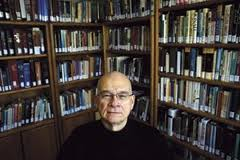
Dr. Tim Keller is the author of several phenomenal Christo-centric books including:
Joy for the World: How Christianity Lost Its Cultural Influence and Can Begin Rebuilding It (co-authored with Greg Forster and Collin Hanson (February or March, 2014).
Encounters with Jesus:Unexpected Answers to Life’s Biggest Questions. New York, Dutton (November 2013).
Walking with God through Pain and Suffering. New York, Dutton (October 2013).
Judges For You (God’s Word For You Series). The Good Book Company (August 6, 2013).
Galatians For You (God’s Word For You Series). The Good Book Company (February 11, 2013).
Every Good Endeavor: Connecting Your Work to God’s Plan for the World. New York, Penguin Publishing, November, 2012.
Center Church: Doing Balanced, Gospel-Centered Ministry in Your City. Grand Rapids: Zondervan, September, 2012.
The Freedom of Self Forgetfulness. New York: 10 Publishing, April 2012.
Generous Justice: How God’s Grace Makes Us Just. New York: Riverhead Trade, August, 2012.
The Gospel As Center: Renewing Our Faith and Reforming Our Ministry Practices (editor and contributor). Wheaton: Crossway, 2012.
The Meaning of Marriage: Facing the Complexities of Commitment with the Wisdom of God. New York, Dutton, 2011.
King’s Cross: The Story of the World in the Life of Jesus (Retitled: Jesus the KIng: Understanding the Life and Death of the Son of God). New York, Dutton, 2011.
Gospel in Life Study Guide: Grace Changes Everything. Grand Rapids, Zondervan, 2010.
The Reason For God: Belief in an Age of Skepticism. New York, Dutton, 2009.
Counterfeit Gods: The Empty Priorities of Money, Sex, and Power, and the Only Hope That Matters. New York, Riverhead Trade, 2009.
Heralds of the King: Christ Centered Sermons in the Tradition of Edmund P. Clowney (contributor). Wheaton: Crossway Books, 2009.
The Prodigal God. New York, Dutton, 2008.
Worship By The Book (contributor). Grand Rapids: Zondervan, 2002.
Ministries of Mercy: The Call of the Jericho Road. Phillipsburg: P&R Publishing, 1997.
SUNDAY OT SERMON: Dr. James Montgomery Boice “In The Beginning God”

SERIES: GENESIS – PART 3
In the beginning God created the heavens and the earth.
When we say that Genesis is to be understood historically—as fact rather than fiction—we do not mean that we can understand it fully just because we are historical creatures. Genesis is history, but some of it is beyond us. This is nowhere more apparent than in its first four words.
I say “four words.” But in the Hebrew the words corresponding to our phrase “In the beginning God” are just two: Berasheth … Elohim. Yet, as the late distinguished physicist Arthur Compton once said, these words are “the most tremendous ever penned” (Quoted by Herschel H. Hobbs. The Origin of All Things: Studies in Genesis. Waco, Texas: Word, 1975, 9). Another scholar, John Gerstner, of Pittsburgh Theological Seminary, has written that even if all other evidences for the doctrine were lacking, “the first four words of the Book of Genesis are sufficient proof of the Bible’s inspiration” (John Gerstner, “Man as God Made Him,” in Our Savior: Man, Christ, and the Atonement, ed. James Boice. Grand Rapids: Baker, 1980, 20). Why? It is because of the statement’s profundity. The ancient Jewish people were not scientists. They were not even profound theologians or philosophers. So the fact that a relatively primitive people have bequeathed us a book embodying the most profound wisdom—the case with these opening words, as well as other passages—should convince us at the beginning that the book has been given to us by God.
In his study of this verse, Gerstner reflects on a statement made one day in his high school physics class. The professor said, “The greatest question which has ever been asked is why there is something rather than nothing.” At the time the young student was impressed. But he gradually came to see that this is not a profound question at all. In fact, it is not even a true question. Because if nothing really is nothing, then nothing defies conception and the choice vanishes. What is “nothing”? If you think you can answer that question, you are the person least qualified to answer it. As soon as you say, “Nothing is … ,” nothing ceases to be nothing and becomes something. “Nothing is what the sleeping rocks dream of,” said Jonathan Edwards. Therefore, as Gerstner observes, “Anyone who thinks he knows what nothing is must have those rocks in his head” (Ibid).
What was “in the beginning”? If the alternative is between God and nothing, there is really no choice. For nothing is nothing, and we are left with the statement “In the beginning God.”
An Objection
We must deal with an objection. Some modern translations of Genesis begin differently from the New International Version and the King James Version, and the casual reader as well as the technical scholar might therefore ask whether everything we have said so far is wrongheaded. In some modern translations the opening words of Genesis are treated as a dependent or temporal clause rather than an independent clause, which changes the statement from an affirmation that God was in the beginning before all things to a statement that at some indefinite point in the past both God and matter existed and that God then began to form matter into the universe we know today. We see this translation in a footnote to the Revised Standard Version, which reads, “When God began to create. …” We see it in the New English Bible: “In the beginning of creation, when God made heaven and earth. …” Even the Living Bible says, “When God began creating the heavens and the earth, the earth was at first a shapeless, chaotic mass. …”
The implications of these translations are clear. Whether or not they are accurate—we will come to that question in a moment—they clearly deny (or at least overlook) an absolute creation. They make matter preexistent and therefore do not give us an absolute beginning at all.
What shall we say about this interpretation? It is a possible translation, otherwise we would not have it in even some of our Bibles. The word bereʾshith can be taken as a construct. But the fact that this is a possible translation does not mean that it is correct. In fact, when we begin to look into the matter deeply there are several reasons why the older translation should be preferred.
First, there is the normal simplicity of the Hebrew sentence. If the opening clause of Genesis 1 is dependent, then the sentence actually concludes in verse 3 where God speaks and light comes into existence. This means that the sentence is quite long, possessing not one but two subordinate parts (the second being a multiple subordinate clause), and the real flow of the sentence would be: “When God began to create the heavens and the earth—the earth being at that time formless and empty, darkness being over the surface of the deep, and the spirit of God hovering over the waters—God said, ‘Let there be light,’ and there was light.” This is unlike a true Hebrew sentence, especially an introductory sentence. It is often the case in German that a series of dependent clauses will begin a sentence and the verb will come twenty or thirty words later at the end, a feature of the language that Mark Twain once described as “falling down stairs.” But this is not the case with Hebrew. Certainly there are dependent clauses. But these are not complex, and one is hard-pressed to believe that, in this case especially, a complicated initial sentence is intended to begin the simple and classically straightforward account of creation that occurs in this chapter. Julius Wellhausen was no conservative—he was, in fact, one of the key figures in the development of the documentary theory of the Pentateuch—but he called the translation we are objecting to “desperate” (E.J. Young, In The Beginning. Young discusses the translation on pages 20-25. He offers a more technical treatment in Studies in Genesis One, “An International Library of Philosophy and Theology,” Philadelphia: P&R, 1976, 1-14).
Second, as has often been shown, the word “create” (the second word of the sentence in Hebrew) is used of God alone and characteristically refers to his bringing into being something that is entirely new. Of course, God also forms things from existing material, but when that happens another word (usually “make” or “made”) is used. “Create” refers to the production of new things from nothing. It is an inappropriate word if the creation referred to in these verses is merely the formation of the earth from preexistent matter.
Third, Genesis is a book of beginnings. But in telling us of these beginnings it has clearly failed at the most crucial point if, in fact, the best it can say is that at the very start matter just happened to be around.
Why is it that so many modern scholars and even some translators prefer to subordinate the first clause? E. J. Young suggests that the real reason is that the Babylonian Epic of Creation, which I referred to in the last sermon, begins this way and that these scholars have a prejudicial desire to have the Genesis account conform to it. The Babylonian account begins: “When on high the heavens were not named, and below the earth had not a name. …” It goes on in that vein for seven lines, introduces another temporal clause, and then gets to the main clause. By subordinating the opening clauses of Genesis 1, the scholars succeed in making Genesis somewhat parallel to the Babylonian account. But, as I have argued, Genesis does not begin that way. It begins by speaking of that absolute beginning of all things, which is God, and then provides us with the most profound insight into the question of origins. It overwhelms us with the profoundly simple statement: “In the beginning God.”
A Set of Denials
The phrase also instructs us concerning the nature of God who alone is the origin of all things. It suggests some negative statements and some positive statements.
The clearest negative statement is the denial of atheism. If God was in the beginning, then there was and is a God. How can it be otherwise? To say less would be to say God is dependent on creation, being subject to the same laws, and therefore could not be at the beginning of creation as Genesis says he was.
A second denial is materialism. When the text says that God was in the beginning, before creation, it sets him apart from creation and therefore apart from the matter of which all else is made. Ours is not an entirely materialistic universe. Moreover, since God created matter, matter did not always exist, which is what a true philosophy of materialism teaches.
Finally, the opening statements of Genesis deny pantheism. Pantheism is the philosophy that God is in matter or is matter. It underlies most pagan or animalistic religions. But if God created matter, then he is separate from it and is superior to it. Any religion that worships matter is idolatrous.
These and many other false philosophies err because they begin with man or matter and work up to God, if indeed they go so far. But Genesis stands against them all when it begins with God and sets him forth as the originator of all things.
The Bible’s God
It is not only through the suggestion of these negatives about God that Genesis 1:1 instructs us. It also suggests some very important positive characteristics.
First, when Genesis begins with the words “In the beginning God,” it is telling us that God is self-existent. This is not true of anything else. Everything else depends on some other thing or person and ultimately on God. Without these prior causes, the thing would not exist. We recognize this truth when we speak of the laws of “cause and effect.” Every effect must have an adequate cause. But God is the ultimate cause and is himself uncaused. God has no origins; this means: first, that as he is in himself he is unknowable, and second, that he is answerable to no one.
Why should God’s self-existence mean he is unknowable? It is because everything we see, smell, hear, taste, or touch has origins and consequently we can hardly think of anything except in these categories. We argue that anything we observe must have a cause adequate to explain it, and we look for such causes. But if God is the cause beyond everything, then he cannot be explained or known as other objects can. Like Robert Jastrow, whom we quoted in the sermon two weeks ago, A. W. Tozer has pointed out that this is one reason why philosophy and science have not always been friendly toward the idea of God. These disciplines are dedicated to the task of accounting for things and are impatient with anything that refuses to give an account of itself. The scientist will admit that there is much he or she does not know. But it is quite another thing to admit that there is something that we can never know and which, in fact, we do not even have a technique for discovering. To avoid this the scientist may attempt to bring God down to his level, defining him as “natural law,” “evolution,” or some such principle. But God eludes him.
Perhaps, too, this is why even Bible-believing people seem to spend so little time thinking about God’s person and character. Tozer writes, “Few of us have let our hearts gaze in wonder at the I AM, the self-existent Self, back of which no creature can think. Such thoughts are too painful for us. We prefer to think where it will do more good—about how to build a better mousetrap, for instance, or how to make two blades of grass grow where one grew before. And for this we are now paying a too heavy price in the secularization of our religion and the decay of our inner lives” (A.W. Tozer, The Knowledge of the Holy. New York: Harper & Row, 1961, 34).
God’s self-existence also means that he is not answerable to us, and we do not like that. We want God to give an account of himself, to defend his actions. But while he sometimes explains things to us, he does not have to and often does not. God does not have to explain himself to anyone.
Second, that God existed “in the beginning” means that he is self-sufficient. Self-existence means that God has no origins. Self-sufficiency means that God has no needs and therefore depends on no one. This is not true of us. We depend on countless other things—oxygen, for example. If our supply of oxygen is cut off, even for a few moments, we die. We are also dependent on light and heat and gravity and the laws of nature. If even one of these laws should cease to operate, we would all die immediately. But this is not true of God. These things could go—in fact, everything could go—yet God would still exist.
Here we run counter to a widespread and popular idea of God that says God cooperates with man and man with God, each thereby supplying something lacking in the other. It is imagined, for example, that God lacked glory and created us to supply it. Or again, that God needed love and therefore created us to love him. Some talk about creation as if God were lonely and created us to keep him company. But God does not need us.
God does not need worshipers. Arthur W. Pink, who writes on this theme in The Attributes of God, says, “God was under no constraint, no obligation, no necessity to create. That he chose to do so was purely a sovereign act on his part, caused by nothing outside himself, determined by nothing but his own mere good pleasure; for he ‘worketh all things after the counsel of his own good will’ (Eph. 1:11). That he did create was simply for his manifestative glory. … God is no gainer even from our worship. He was in no need of that external glory of his grace which arises from his redeemed, for he is glorious enough in himself without that. What was it [that] moved him to predestinate his elect to the praise of the glory of his grace? It was, Ephesians 1:5 tells us, ‘according to the good pleasure of his will.’ … The force of this is [that] it is impossible to bring the Almighty under obligations to the creature; God gains nothing from us” (A.W. Pink, The Attributes of God. Grand Rapids: Baker, n.d., 2-3).
Some will conclude that the value of men and women is thereby lessened, but this is not the case. It is merely located where alone it is possible to sustain our value. According to our way of thinking, we have value because of what we imagine we can do for God. This is prideful, foolish, and vain. According to the biblical perspective, we have value because God grants it to us. Our worth is according to the grace of God in creation and to his election of us to salvation.
God does not need helpers. This truth is probably harder for us to accept than almost any other, for we imagine God as a friendly, but almost pathetic grandfather figure, bustling about to see whom he can find to help him in managing the world and saving the world’s race. This is a travesty. To be sure, God has entrusted a work of management to us. He said to the original pair in Eden, “Be fruitful and increase in number; fill the earth and subdue it. Rule over the fish of the sea and the birds of the air and over every living creature that moves on the ground” (Gen. 1:28). He has given those who believe on him a commission to “go and make disciples of all nations, baptizing them in the name of the Father and of the Son and of the Holy Spirit, and teaching them to obey everything I have commanded you” (Matt. 28:19–20). But none of these aspects of God’s ordering of his creation has a necessary grounding in himself. He has chosen to do things in this way, but he did not have to. Indeed, he could have done them in any one of a million other ways. That he did choose to do things thus is solely dependent on his own free will and does not give us any inherent value to him.
God does not need defenders. We have opportunities to speak for God before those who would dishonor his name and malign his character. We ought to do so. But even if we do not, we must not think that God is deprived by it. God does not need to be defended, for he is as he is and will remain so regardless of the sinful and arrogant attacks of evil men. A God who needs to be defended is a God who can defend us only when someone is defending him. He is of no use at all. The God of the Bible is the self-existent One who is the true defender of his people.
All this is of great importance, for when we notice that God is the only truly self-sufficient One, we may begin to understand why the Bible has so much to say about the need for faith in God alone and why unbelief in God is such sin. Tozer writes: “Among all created beings, not one dare trust in itself. God alone trusts in himself; all other beings must trust in him. Unbelief is actually perverted faith, for it puts its trust not in the living God but in dying men” (Tozer, KOTH, 42). If we refuse to trust God, what we are actually saying is that either we or some other person or thing is more trustworthy. This is a slander against the character of God, and it is folly, for nothing else is all-sufficient. On the other hand, if we begin by trusting God (by believing on him), then we have a solid foundation for all of life.
Because God is sufficient, we may begin by resting in that sufficiency and so work effectively for him. God does not need us. But the joy of coming to know him is in learning that he nevertheless stoops to work in and through his children.
Third, the truth that God was “in the beginning” means that he is eternal. It means that God is, has always been, and will always be, and that he is ever the same in his eternal being. We discover this attribute of God everywhere in the Bible. Abraham knew God as “the Eternal God” (Gen. 21:33). Moses wrote, “Lord, you have been our dwelling place throughout all generations. Before the mountains were born or you brought forth the earth and the world, from everlasting to everlasting you are God” (Ps. 90:1–2). The Book of Revelation describes him as “the Alpha and the Omega, the Beginning and the End” (Rev. 21:6; cf. 1:8; 22:13). The same book tells us that the four living creatures that surround the throne of God call out day and night, “Holy, holy, holy is the Lord God Almighty, who was, and is, and is to come” (Rev. 4:8).
That God is eternal has two major consequences for us. First, he can be trusted to remain as he has revealed himself to be. God is unchangeable in his attributes. So we need not fear, for example, that although he has shown his love towards us once in Christ he may nevertheless somehow change his mind and cease to love us in the future. God is always love. Similarly, we must not think that although he has shown himself to be holy he may nevertheless somehow cease to be holy and therefore change his attitude toward our transgressions. Sin will always be sin, because it is “any want of conformity unto, or transgression of, the law of God” (Westminster Shorter Catechism, A. 14), who is unchangeable. We may extend this by saying that God will always be holy, wise, gracious, just, and everything else that he reveals himself to be. Nothing that we do will ever change him. Again, God is unchangeable in his eternal counsel or will. He does what he has determined beforehand to do, and his will never varies. This is a source of great comfort to God’s people. If God were like us, he could not be relied on. He would change, and as a result of that his will and promises would change. We could not depend on him. But God is not like us. He does not change. Consequently, his purposes remain fixed from generation to generation.
The second major consequence for us of God being eternal is that he is inescapable. If he were a mere man and if we did not like either him or what he was doing, we might ignore him, knowing that he might change his mind, move away from us, or die. But God does not change his mind. He does not move away. He will not die. Consequently, we cannot escape him. If we ignore him now, we must reckon with him in the life to come. If we reject him now, we must eventually face the One we have rejected and come to know his own eternal rejection of us.
The God Who is There
In this lies the profundity of the first verse in the Bible. Indeed, we can go farther and say that in some sense this verse may even be the most important verse in the Bible, for at the outset it brings us face-to-face with the God with whom we have to do. This God is not an imaginary god. He is not a god of our own inventions. He is the God who is—the One who is “infinite, eternal, and unchangeable, in his being, wisdom, power, holiness, justice, goodness, and truth” (Westminster Shorter Catechism, A. 4).
Sometimes we wish we could change him. We are like the man who was climbing up a steep mountain on his way to the summit when he began to slip. Unable to stop himself, he slid back down the treacherous incline toward a cliff that plunged a thousand feet to the canyon floor. He was sure he would be killed. But just as he was about to go over the edge he threw his hands out and managed to catch a small branch. There he hung. He had saved himself. But he could not get back onto the incline, and he knew it was just a matter of time until his grip loosened and he fell. He was not a very religious man. But this was obviously the time to become one, if ever. So he looked up to heaven and called out, “Is there anyone up there who can help me?”
He did not expect an answer. So he was greatly surprised when a deep voice came back, saying, “Yes, I am here, and I can help you. But first you are going to have to let go of that branch.”
A long pause! Then the man looked up and called out again, “Is there anybody else up there who can help me?”
There is no one else. There is only God, the One who was in the beginning and who ever shall be. But he is able to help. More than that, he is willing to help and even urges his help on us. How wonderful it is that we meet him at the beginning. Genesis 1 gives us a chance to come to terms with him and receive the help he offers, knowing that we will certainly meet him at the end.
About the Preacher

James Montgomery Boice, Th.D., (July 7, 1938 – June 15, 2000) was a Reformed theologian, Bible teacher, and pastor of Tenth Presbyterian Church in Philadelphia from 1968 until his death. He is heard on The Bible Study Hour radio broadcast and was a well-known author and speaker in evangelical and Reformed circles. He also served as Chairman of the International Council on Biblical Inerrancy for over ten years and was a founding member of the Alliance of Confessing Evangelicals. James Boice was one of my favorite Bible teachers. Thankfully – many of his books and expositions of Scripture are still in print and more are becoming available. The sermon above was adapted from Chapter 3 in Genesis 1-11: An Expositional Commentary. vol. 1: Creation and Fall. Grand Rapids: Baker, 2006.
Under Dr. Boice’s leadership, Tenth Presbyterian Church became a model for ministry in America’s northeastern inner cities. When he assumed the pastorate of Tenth Church there were 350 people in regular attendance. At his death the church had grown to a regular Sunday attendance in three services of more than 1,200 persons, a total membership of 1,150 persons. Under his leadership, the church established a pre-school for children ages 3-5 (now defunct), a high school known as City Center Academy, a full range of adult fellowship groups and classes, and specialized outreach ministries to international students, women with crisis pregnancies, homosexual and HIV-positive clients, and the homeless. Many of these ministries are now free-standing from the church.Dr. Boice gave leadership to groups beyond his own organization. For ten years he served as Chairman of the International Council on Biblical Inerrancy, from its founding in 1977 until the completion of its work in 1988. ICBI produced three classic, creedal documents: “The Chicago Statement on Biblical Inerrancy,” “The Chicago Statement on Biblical Hermeneutics” and “The Chicago Statement on the Application of the Bible to Contemporary Issues.” The organization published many books, held regional “Authority of Scripture” seminars across the country, and sponsored the large lay “Congress on the Bible I,” which met in Washington, D.C., in September 1987. He also served on the Board of Bible Study Fellowship. He founded the Alliance of Confessing Evangelicals (Alliance) in 1994, initially a group of pastors and theologians who were focused on bringing the 20th and now 21st century church to a new reformation. In 1996 this group met and wrote the Cambridge Declaration. Following the Cambridge meetings, the Alliance assumed leadership of the programs and publications formerly under Evangelical Ministries, Inc. (Dr. Boice) and Christians United for Reformation (Horton) in late 1996. Dr. Boice was a prodigious world traveler. He journeyed to more than thirty countries in most of the world’s continents, and he taught the Bible in such countries as England, France, Canada, Japan, Australia, Guatemala, Korea and Saudi Arabia. He lived in Switzerland for three years while pursuing his doctoral studies. Dr. Boice held degrees from Harvard University (A.B.), Princeton Theological Seminary (B.D.), the University of Basel, Switzerland (D. Theol.) and the Theological Seminary of the Reformed Episcopal Church (D.D., honorary). A prolific author, Dr. Boice had contributed nearly forty books on a wide variety of Bible related themes. Most are in the form of expositional commentaries, growing out of his preaching: Psalms (1 volume), Romans (4 volumes), Genesis (3 volumes), Daniel, The Minor Prophets (2 volumes), The Sermon on the Mount, John (5 volumes, reissued in one), Ephesians, Phillippians and The Epistles of John. Many more popular volumes: Hearing God When You Hurt, Mind Renewal in a Mindless Christian Life, Standing on the Rock, The Parables of Jesus, The Christ of Christmas, The Christ of the Open Tomb and Christ’s Call to Discipleship. He also authored Foundations of the Christian Faith a 740-page book of theology for laypersons. Many of these books have been translated into other languages, such as: French, Spanish, German, Japanese, Chinese and Korean. He was married to Linda Ann Boice (born McNamara), who continues to teach at the high school they co-founded. Sources: Taken directly from the Aliance of Confessing Evangelicals’ Website |
Boice’s Books:from the Tenth Presbyterian Church website Chapters1985 “The Future of Reformed Theology” in David F. Wells, editor,
|
FRIDAY HUMOR: IS ANYBODY UP THERE?
SERIES: FRIDAY HUMOR #34

Sometimes we wish we could change God. We are like the man who was climbing up a steep mountain on his way to the summit when he began to slip. Unable to stop himself, he slid back down the treacherous incline toward a cliff that plunged a thousand feet to the canyon floor. He was sure he would be killed. But just as he was about to go over the edge he threw his hands out and managed to catch a small branch. There he hung. He had saved himself. But he could not get back onto the incline, and he knew it was just a matter of time until his grip loosened and he fell. He was not a very religious man. But this was obviously the time to become one, if ever. So he looked up to heaven and called out, “Is there anyone up there who can help me?”
He did not expect an answer. So he was greatly surprised when a deep voice came back, saying, “Yes, I am here, and I can help you. But first you are going to have to let go of that branch.”
A long pause! Then the man looked up and called out again, “Is there anybody else up there who can help me?”
*SOURCE: James Montgomery Boice. Expositions in Genesis. Baker: Grand Rapids, 2005. Volume 1. Chapter 3.
Book Review: “HEART OF THE MATTER”
DAILY REFLECTIONS FOR CHANGING HEARTS AND LIVES

Book Review By David P. Craig
How would you like to spend every day of the year with a wise biblical counselor to encourage you and help you apply the gospel to your life? In this daily devotional that’s exactly what you get. From the writings of Paul David Tripp, Edwin T. Welch, Timothy S. Lane, William P. Smith, Michael R. Emlet, David Powlison, Robert D. Jones, and James C. Petty you will get advice, encouragement, direction, and plenty of gospel centered grace for each day.
The topical meditations in this devotional are all based on passages of Scripture and include a suggested daily reading from the Scriptures to illuminate the subject of the day. All of the authors of this book are a part of the Christian Counseling and Educational Foundation which “exists to teach people how to explore the wisdom and depth of the Bible and apply its grace centered message to the problems of daily living.”
One of the nice features of this devotional is that there is a Scripture index in the back, as well as a source index so you can go to any one of the author’s writings for more study or advice on the particular subjects that are of interest to you. All of the sources include the page numbers from which the meditations are derived so you can track them down easily.
If you are looking for more grace in your life and want to go deeper in your understanding of, and application of the gospel – look no further than this devotional gem. I highly recommend this outstanding devotional as one that will help you grow in intimacy with our awesome God and change you to become more like Him as you daily center your thinking on who He is and what He has done for you in Christ Jesus.
 LifeCoach4God