Book Review on Tim Keller’s “The Obedient Master”

“The Only Love That Can’t Let You Down” Reviewed by David P. Craig

TOM Keller

Here we have a beautiful essay by Tim Keller on the practical ramifications of the active and passive obedience of Christ in the Garden of Gethsemane before He went to the cross. The passive obedience of Christ explores how Jesus took the penalty that we deserved for our sin. Dr. Keller masterfully articulates how Jesus suffered privately in the Garden before His public suffering on the cross. Jesus willingly endured the cup of God’s wrath poured out on Him – He died the death we should have died. Jesus received the penalty for our disobedience to the Law of God. Since Jesus paid our debt, we are totally free from all condemnation for our sins (Romans 8:1).

Keller also explores Christ’s active obedience. Jesus lived the life we should have lived. He perfectly obeyed the Law’s requirements and thus fulfilled the righteous requirements demanded by God in the Old Testament. Keller writes, “Jesus not only died the death we should have died in order to take the law’s curse for us, he also lived the great life of love and fidelity we should have lived in order to earn God’s blessing for us…And because Jesus not only fulfilled the law of God passively but actively–in our place, as our substitute–it means not only that he got the penalty we deserved, we get the reward from God that he deserved.”

In this essay we see the practical ramifications of Christ’s suffering in the Garden: (1) Jesus’ is a model of integrity – He does the right thing when no one is looking; just as He does the right thing publicly when He goes to the cross; (2) He models authentic prayer by demonstrating that the purpose of prayer is not to bend God’s will to ours, but our will to His; (3) In the Garden Jesus models His amazing patience with people – who are failures (they couldn’t keep watch with him for one hour). Keller remarks, “Jesus came not to just be a model but a Savior. He changes us on the inside so that we can be slowly but surely made over into his image. He does not just tell us how to live; he gives us the power to live that way.”

Keller’s essay is a motivational reminder of Christ’s amazing love for us. Jesus’ love didn’t fail or falter in the Garden, nor did it fail or falter on the cross; and His love assures us that when we falter and fail Him; He will never falter or fail to endure in His love for us. As Jesus says in Romans 8:38 and Hebrews 13:5, “Nothing can separate us from the love of Christ…I will never leave you nor forsake you.”

R.C. Sproul on What Happens To The Person Who Never Heard of Jesus?

Objection #3 To Christianity Answered: “What About the Poor Native Who Never Heard of Christ?”

Objections Answered image

As a teacher of theology I am regularly faced with a plethora of questions raised by inquiring students. Though I’ve never tabulated these queries with a computer, I am convinced there is one question that heads the list in terms of numerical frequency. The question most often raised is, “What happens to the poor innocent native in Africa who has never heard of Christ?” The query expresses a deep concern for the person who dwells in remote parts of the earth, far removed from the exposure of modern media or communication. This person lives and dies without hearing a single word of the biblical message. Where does that person stand with God?

Why is this question asked so frequently? Why are so many students plagued by it? Perhaps there are several factors that stimulate the inquiry. First of all, people in the Western world are acquainted enough with Christianity to have some idea of the central motif of the love of God. Add to that the common understanding that at the core of the Christian faith is the assertion of the unique importance of the person and work of Christ. If Christ is unique and necessary for redemption, how can one avail himself of this redemption if he has no knowledge of it? If God is so loving, why does He not light up the skies with a celestial message that is broadcast so clearly that none could possibly miss it? Why is the “good news” of redemption in Christ limited to those living in cultures that have access to it?

The question is stimulated not only by matters of speculative theology but also by a spirit of human compassion. if compassion resides within us at all, we must be ever sensitive to those who live in less privileged circumstances than we. We are not concerned here with a paternalistic or imperialistic sense of cultural privilege but with an ultimate sense of redemptive privilege. There can be found no intrinsic sense of righteousness within us that would induce God to make the means of redemption available to us in a privileged way. It might even be argued that our “privilege” is rooted in our greater need for redemption owing to our greater corruption. However, since sin is universal and not restricted to either civilized or uncivilized, Western or non-Western humanity, we can hardly find the answer there.

What Happens to the Innocent Person Who Never Heard of Christ?

Regardless of the motivations for it, we are still faced with the question. What does happen to the innocent person who has never heard of Christ? The way the question is phrased will affect the answer given. When we ask, “What happens to the innocent person who has never heard?” we are loading the question with significant assumptions. If the question, however, is asked in this manner the answer is easy and is obvious. The innocent native who never hears of Christ is in excellent shape, and we need not be anxious about his redemption. The innocent person does not need to hear of Christ. He has no need of redemption. God never punishes innocent people. The innocent person needs no Savior; he can save himself by his innocence.

When the question is framed in this way, however, it betrays the assumption that there are innocent people in this world. If that is so (an assumption which Christianity emphatically denies), then we need not be concerned about them. But we are faced still with the larger question, “What happens to the guilty person who has never heard?”

The question of innocence often slips into the question unnoticed. What is often meant is not a perfect innocence, but a relative innocence. We observe that some persons are more wicked than others. The wickedness appears all the more wicked when it occurs within a context of privilege. When a person lives wickedly knowing the details of God’s commandments and has been instructed in them repeatedly, his wickedness appears heinous when measured against those who live in relative ignorance.

On the other hand, if the remote native is guilty, wherein lies his guilt? Is he punished for not believing in a Christ of whom he has never heard? If God is just, that cannot be the case. If God were to punish a person for not responding to a message he had no possibility of hearing, that would be a gross injustice; it would be radically inconsistent with God’s own revealed justice. We can rest assured that no one is ever punished for rejecting Christ if they’ve never heard of Him.

Before we sigh too deep a breath of relief, let us keep in mind that the native is still not off the hook. Some have stopped at this point in their consideration of the question and allowed their sigh of relief to lull them too quickly into a comfortable ease about the question. The unspoken assumption at this point is that the only damnable offense against God is rejection of Christ. Since the native is not guilty of this we ought to let him alone. In fact letting him alone would be the most helpful and redemptive thing we could do for him. If we go to the native and inform him of Christ, we place his soul in eternal jeopardy. For now he knows of Christ, and if he refuses to respond to Him, he can no longer claim ignorance as an excuse. Hence, the best service we can render is silence.

But what if the assumption above is incorrect? What if there are damnable offenses against God? That would change the situation and rouse us from our dogmatic slumbers. What if the person who has never heard of Christ has heard of God the Father and has rejected Him? Is rejection of God the Father as serious as a rejection of God the Son? It would seem to be at least as serious if not more serious.

What About the Person Who Knows About God?

It is precisely at this point that the New Testament locates the universal guilt of man. The New Testament announces the coming of Christ to a world that had already rejected God the Father. Christ Himself said, “I came not to call the righteous, but the sinner to repentance. Those who are well have no need of a physician” (see Matthew 9:12-13).

The biblical response to the question of the person who never heard of Christ is found in Romans 1, beginning with verse 18. The section begins with an awesome announcement of the wrath of God:

For the wrath of God is revealed from heaven against all the ungodliness and unrighteousness of men, who by their unrighteousness suppress the truth.

Notice that God’s wrath is revealed not against innocence or ignorance but against ungodliness and wickedness. What kind of wickedness? Both the word “ungodliness” and the word “wickedness” are generic terms describing general classes of activity. What is the specific act that is provoking the divine wrath? The answer is clear, the suppressing of truth. We must ask, “What truth i being suppressed?” The rest of the text provides the answer:

For what can be known about God is plain to them, because God has shown it to them. For his invisible attributes, namely, his eternal power and divine nature, have been clearly perceived, ever since the creation of the world, in the things that have been made. So they are without excuse. For although they knew God, they did not honor him as God or give thanks to him, but they became futile in their thinking, and their foolish hearts were darkened (Romans 1:19-21).

Here the apostle gives us a description of what theologians call “general revelation.” This means simply that God has revealed something generally. The “general” character of the revelation refers to two things, content and audience. The content is general in that it does not provide a detailed description of God. The trinity is not a part of this revelation. God reveals that He is, that He has eternal power and deity. The audience is general in  that all men receive this revelation. God does not reveal Himself only to a small elite group of scholars or priests but to all mankind.

What else does this text teach about general revelation?

First, we learn that it is clear and unambiguous. This knowledge is said to be plain (manifest) to them; that God has shown it to them; that it has been clearly perceived. Thus, this knowledge is not obscure.

Secondly, we learn that the knowledge “gets through” and finds its mark. God does not merely provide an available objective revelation of Himself that may or may not be subjectively received. We read “they knew God.” Man’s problem is not that he doesn’t know God but that he refuses to acknowledge what he knows to be true.

Thirdly, we learn that this revelation has been going on since the foundation of the world. It is not a once-for-all event but continues in a constant way.

Fourthly, we learn that revelation comes by way of creation. God’s invisible nature is revealed “through the things that are made.” The whole creation is a glorious theater which gives a magnificent display of its creation.

Fifthly, we learn that the revelation is sufficient to render man inexcusable. The passage says, “So they are without excuse.” What excuse do you suppose the apostle had in mind? What excuse does general revelation eliminate? Obviously the excuse eliminated is that of ignorance. If the apostle is correct about general revelation then none will ever say to God, “I’m sorry I didn’t worship and serve you. I didn’t know you existed. If only I had known I most certainly would have been your obedient servant. I wasn’t a militant atheist; I was an agnostic. I didn’t think there was sufficient evidence to affirm your existence.” If God has in fact clearly revealed Himself to all men, no man can plead ignorance as an excuse for not worshiping Him.

Ignorance may function as an excuse for certain things under certain circumstances. The Roman Catholic Church, in developing their moral theology, adopted a distinction between vincible ignorance and invincible ignorance. Vincible ignorance is that ignorance which could and should be overcome. It does not excuse. Invincible ignorance is that ignorance which could not possibly be overcome. It does excuse.

Suppose a person from Texas drove his care to California and came to San Francisco. Upon entering the city limits of San Francisco the motorist promptly ran a red light. A police officer accosted him and gave him a ticket for going through a red light. The motorist protested saying, “I did not know it was against the law to go through a red light in California. I am from Texas.” Would this appeal to ignorance excuse the man? Certainly not. If the Texan presumes to drive his car in California, he is responsible to know the traffic laws. The laws are readily available and are not concealed by being locked up in a secret vault. This man’s ignorance would be vincible, leaving him without excuse.

Suppose on the other hand, that the city council of San Francisco were desperate for accumulating money quickly. Hence they meet in a secret conclave and pass a local municipal ordinance that outlaws driving through green lights and stopping at red lights. They decide the penalty for violating the law is a $100 fine. The catch is they decide not to notify the press or make any mention of the new secret law. The plan is to have a policeman at every intersection arresting motorists who stop on red and go on green. Could the arrested motorists plead ignorance as an excuse? Yes, their ignorance would be invincible and should excuse them.

Thus, the person who has never heard of Christ can plead ignorance at that point but cannot plead ignorance with respect to God the Father.

But aren’t the people who live in remote areas of the world religious? Doesn’t their religious activity remove them from any danger of the wrath of God? Isn’t it true that many anthropologists tell us that man is homo religiosus, that religion is universal? Such people may not be educated or sophisticated in their religious activity. Perhaps they worship totem poles, cows, or bee trees. But at least they are trying and doing the best they can. They surely don’t know any better. If they are born and raised in a culture that worships cows, how can they be expected to do any differently?

It is precisely at this point that the notion of general revelation is devastating. If Paul is correct, the practice of religion does not excuse the pagan but in fact compounds his guilt. How can that be? Paul continues his treatment of general revelation by saying:

Claiming to be wise, they became fools, and exchanged the glory of the immortal God for images resembling mortal man and birds and animals and creeping things. Therefore God gave them up in the lusts of their hearts to impurity, to the dishonoring of their bodies among themselves, because they exchanged the truth about God for a lie and worshiped and served the creature rather than the Creator, who is blessed forever! Amen (Romans 1:22-25).

Here the apostle examines pagan religion. He views it as a distortion of truth. An “exchange” takes place between the truth of God and the lie. God’s glory is replaced by the substitution of the “glory” of the creature. Creature worship is religion, but it is the religion of idolatry. To be zealous in the worship of idols is to be zealous in the insulting of the glory and dignity of God. If God clearly reveals His glory and that glory is replaced by the worship of creatures, the ensuing religion is not pleasing, but displeasing to God.
Thus the fact that people are religious does not in itself mean that God is pleased with them. Idolatry represents the ultimate insult to God. To reduce God to the level of a creature is to strip God of His deity. This is particularly odious to God in light of the fact that all men have received enough revelation about Him to know that He is not a creature. Pagan religion is viewed then not as growing out of an honest attempt to search for God, but out of a fundamental rejection of God’s self-revelation.
How Are the Pagans Judged?
The New Testament makes it clear that people will be judged according to the light that they have. All the elements of the Old Testament Law are not known by people living in remote parts of the world. But we read that they do have a law “written on their hearts” (Romans 2:15). They are judged by the law they do not know and are found wanting. No one keeps the ethic he has even if he invents it himself.
I counseled once with a college student who was in my office as a “captive audience.” He had come at his mother’s insistence. His mother was a zealous Christian who continuously sought to persuade her son to become a Christian. The son was deeply alienated and resisted her persuasion. His rebellion was radical as he opted for a life-style that was on a collision course with his family values. As he spoke to me he argued that everyone had the right to develop his own ethic. He believed in a “do your own thing” morality. He complained that his mother had no right to “shove religion down my throat.”
I asked him why he objected to his mother’s tactics. If his mother followed his ethic she would have every right to shove religion down his throat. His mother’s “thing” was shoving religion down people’s throats. I explained to him that his mother was not being consistent with her own Christian ethic because she was so insensitive to her son. Yet she was being consistent with her son’s ethic. As we talked, he came to realize that what he really believed was that people could do their own thing as long as their own thing did not impinge on his own thing. He wanted one ethic for himself but quite another for everybody else. It is when we complain about other people’s behavior that we reveal what our deepest views of ethics are.
The pagan in Africa has an ethic. But even that ethic is violated. Thus, he remains exposed to the judgment of God. So often the primitive is idealized as being untainted by the corruption of civilization. Such idealized descriptions, however, do not fit the facts.
Thus if a person in a remote area has never heard of Christ, he will not be punished for that. What he will be punished for is the rejection of the Father of whom he has heard and for the disobedience to the law that is written on his heart. Again, we must remember that people are not rejected for what they haven’t heard but for what they have heard.
If all men have heard of the Father but naturally reject Him, then it follows that all men need to know of the redemption offered in Christ. To have no knowledge of Christ is to be in jeopardy because of the prior rejection of the revelation of the Father. But to hear of Christ and reject Him is to be in a state of double jeopardy. Now not only has the Father been rejected but the Son as well. Thus every time the gospel is proclaimed it bears a two-edged sword. To those who believe, it is the savor of glory. To those who reject, it is death.
How Can the Native Hear?
If the person who never heard of Christ is in serious jeopardy, how can his plight be alleviated? The answer comes in a simple statement made by the apostle Paul:
How then will they call on him in whom they have not believed? And how are they to believe in him of whom they have never heard? And how are they to hear without someone preaching? And how are they to preach unless they are sent? As it is written, “How beautiful are the feet of those who preach the good news!” (Romans 10:14-15).
Here the apostle reiterates the need for the mission of the church. Mission (from the Latin “to send”) begins with the love of God. It is because God so loved the world that He “sent” His Son into the world. The mission of Christ was in behalf of those who rejected the Father. The rejected Father sent the Son sent His church. That is the basis for the world mission of the church. It is the mandate of Christ that those who have not heard do hear. They cannot hear without a preacher, and there cannot be a preacher without a “sending.” The mandate of Christ is that the gospel be preached in every land and nation, to every tribe and tongue, to every living person. If this mandate were carried out by the church, the question of what happens to those who never heard would be a moot one.
The Christian must ask a second question after he has dealt with the question of those who have never heard. The Christian must ask, “What happens to me if I never do anything to promote the world mission of the church?” If the Christian takes this question seriously then his response must be equally serious. His concern for the remote native must begin with compassion, and it must also culminate in a response of compassion.
The question of the fate of the person who never hears of Christ is one that must not only be answered with words but by action as well. The action of mission must be prompted not by paternalism nor by imperialism but by obedience to the “sending” of Christ. All men need Christ, and it is the duty of the church to meet the need.

Key Points to Remember:

(1) All men know God the Father (Romans 1:18ff). The problem of the pagan who has never heard the gospel is the problem of our universal fallenness. We must emphasize that God has revealed Himself to all men. All men know there is a God. Thus, no one can plead ignorance as an excuse for denying God.

(2) All men distort and reject true knowledge of God. Since all men know God and all distort or reject that knowledge, they are not innocent.

(3) There are no innocent people in the world. People who die without hearing the gospel  will be judged according to the knowledge they have. They will be judged guilty for rejecting God the Father. God never condemns innocent people.

(4) God judges according to the knowledge people have. Idolatry as a “religion” does not please God but adds insult to injury to the glory of God (see Isa. 42:8). Idolatry does not represent man’s search for God but rather man’s flight from God.

(5) The gospel is God’s gift of redemption for the lost. God sends Christ to give people an opportunity for redemption from the guilt  they already have. If men reject Christ they face the double judgment of rejecting both the Father and the Son (see Colossians 1:13-17).

(6) The pagan needs Christ to reconcile him to God the Father. Christ Himself viewed the pagan as being in a “lost” condition.

(7) Christ commands the Church to make sure everyone hears the gospel (see Mark 16:15).

(8) Rejection of Christ brings a double judgment (see 2 Tim. 4:1).

(9) “Religion” does not redeem people but may add to their guilt.

About The Author:

Sproul R C image seated with Bible

Dr. R.C. Sproul has been a professor of Apologetics, Philosophy, and Theology at numerous Seminaries. He is the Founder of Ligonier Ministries, President of Reformation Bible College, and the Senior Minister of St. Andrews Presbyterian Church in Sanford, Fl. He has authored over 70 books including the following books on Apologetics: The Psychology of AtheismDefending the FaithNot a Chance; and a contributor to Classical Apologetics. The article above was adapted from Chapter 3 in his book Reason to Believe (previously – Objections Answered. Grand Rapids: Zondervan, 1982).

James Montgomery Boice on “The Return of Jesus Christ”

An Exposition of Matthew 24:29–35

TTOTK Matthew 18-28 Boice

“Immediately after the distress of those days ‘the sun will be darkened, and the moon will not give its light;the stars will fall from the sky, and the heavenly bodies will be shaken.’

“At that time the sign of the Son of Man will appear in the sky, and all the nations of the earth will mourn. They will see the Son of Man coming on the clouds of the sky, with power and great glory. And he will send his angels with a loud trumpet call, and they will gather his elect from the four winds, from one end of the heavens to the other.

“Now learn this lesson from the fig tree: As soon as its twigs get tender and its leaves come out, you know that summer is near. Even so, when you see all these things, you know that it is near, right at the door. I tell you the truth, this generation will certainly not pass away until all these things have happened. Heaven and earth will pass away, but my words will never pass away.”

I do not think there is any great difficulty understanding what Jesus says in the Olivet Discourse up to verse 28 of chapter 24. He has warned the disciples about disruptive world events that will not be signs of his return, and he has predicted the fall of Jerusalem, which, though an exceptionally traumatic event, would be merely another example of the kind of tragedies that will occur throughout history. But the easy part is over. Now we come to the part of the discourse that has given the most trouble to Bible students and commentators.

Was Jesus Mistaken?

The difficulties mostly have to do with timing. Jesus has spoken of the destruction of Jerusalem, which occurred in a.d. 70 by the Roman armies under the command of Titus. But then he continues, “Immediately after the distress of those days ‘the sun will be darkened, and the moon will not give its light; the stars will fall from the sky, and the heavenly bodies will be shaken’ ” (v. 29). This could refer to something in the future, but if that is the case, why did Jesus use the word immediately, as in “immediately after the distress of those days”? Immediately should mean close in time to the destruction of Jerusalem. But if these portents are tied to the destruction of Jerusalem, we must admit candidly that they do not seem to have happened.

Nor is that all. The next verses begin “at that time” and go on to describe how the Son of Man will come in the clouds, with power and great glory, accompanied by the blast of a trumpet and the appearance of angels to gather the elect from the far corners of the earth. Again, that could be future. Most people have assumed it is. But if that is the case, why does Jesus say, “at that time”? And if he meant what he said, that he would return at the time of or soon after the destruction of Jerusalem, what he predicted did not happen.

We have a nearly identical problem in verse 33, where Jesus says, “When you see all these things, you know that it is near, right at the door.” His second coming cannot be the sign of itself. “These things” must refer to things that will precede his return. But what can they be? If they are the tragedies leading up to the fall of Jerusalem, the second coming of the Lord did not follow those events, and Jesus would seem to have been mistaken.

The most apparent and (for some) the worst problem of all is Jesus’ solemn affirmation: “I tell you the truth, this generation will certainly not pass away until all these things have happened” (v. 34). What can “this generation” be but the generation then living? Yet if that is what the words mean, Jesus must have been wrong, since many generations have come and gone since that time and Jesus has still not returned. The acclaimed English philosopher and social critic Bertrand Russell said Jesus’ teaching about his return was one reason why he could not be a Christian. “He certainly thought that his second coming would occur in clouds of glory before the death of all the people who were living at that time,” wrote Russell. But he added, “In that respect, clearly he was not so wise as some other people have been, and he was certainly not superlatively wise.”  (Bertrand Russell, Why I Am Not a Christian: And Other Essays on Religion and Related Subjects, ed. Paul Edwards [New York: Simon & Schuster, 1957], 16–17).

Attempts at a Solution

There are two easy ways to solve these problems, but they have not been accepted by all commentators.

First, we can place all these events together at one point in time and locate that point at the end of history. One advantage of this view is that we can take the time references literally. The fall of Jerusalem, the signs in the sky, and the return of Jesus occur in tight chronological sequence. All are yet future, and the fall of Jerusalem fits events outlined in other biblical books such as Revelation. This is an understanding common among dispensationalists, for whom the distress of Jerusalem is linked to the great tribulation and precedes the battle of Armageddon and the subsequent reign of Jesus Christ on earth for a thousand years, the millennium. In this view, “this generation” refers to the generation living at the time of the final attack on Jerusalem or is understood to mean “this race,” meaning that the Jews will not cease to exist as a race until this happens.

The main reason many people have not been persuaded by this handling of the details of Matthew 24 is that they believe verses 15–22 describe the destruction of Jerusalem by the Romans in a.d. 70. But they also have a problem with “this generation.” Most commentators believe this can hardly mean anything other than the generation living at the time Jesus spoke these words.

The other easy way to solve the problem of the time references in Matthew 24 is to put these events together but to place them in the first Christian century in connection with the fall of Jerusalem to the Romans. In this view, the coming of Christ mentioned in verses 30 and 31 refers to his return in judgment on Jerusalem, and the signs of his coming are understood as Old Testament images of historical but earthshaking events. The “end of the age” (v. 3) means the end of the Jewish age, which is followed by the age of the church. This means that nearly everything in Matthew 24 and 25 is about God’s judgment on Jerusalem, even Jesus’ strong, reiterated warnings to watch and be ready for his return. The same is true for nearly the whole of the Book of Revelation. This view is known as preterism, which means “what has already taken place.” Preterism has been affirmed recently in a guarded way by R. C. Sproul, but it has a history of defenders going back quite a few years. One early proponent is J. Stuart Russell, on whose work Sproul largely depends (R. C. Sproul, The Last Days according to Jesus [Grand Rapids: Baker, 1998]; J. Stuart Russell, The Parousia: A Study of the New Testament Doctrine of Our Lord’s Second Coming [Grand Rapids: Baker, 1983]).

Why hasn’t everyone accepted this view? One obvious reason is that it is difficult to see how Christ’s coming on the clouds, with power and great glory, with the angels gathering his elect from the far corners of the earth, was fulfilled at the time of the destruction of Jerusalem.

There is this problem too—probably the most significant of all. If everything (or nearly everything) in these chapters is about the fall of Jerusalem, then the disciples’ question about the end of the age is not really answered, at least not as almost anyone, including the disciples, would have understood it. The chapters most Christians have always looked to for assurance of the Lord’s return and encouragement to be ready and watch for it are not about the Lord’s future return at all. In fact, Jesus has virtually nothing to say about his second coming. Nor do any of the other biblical writers, including the author of Revelation.

The Flow of the Chapter

How do we solve these difficulties? History suggests that we probably cannot, at least not to everyone’s satisfaction, since disagreements about this chapter have existed throughout church history. But let me try anyway, starting with the flow of thought in the chapter.

Verse 3. As I pointed out in the last study, Matthew 24 begins with the disciples’ two important questions: (1) “When will this happen?” and (2) “What will be the sign of your coming and of the end of the age?” (v. 3). The first question was about the destruction of Jerusalem, which Jesus had predicted, and the second was about his glorious return, which he had also predicted—two events, though the disciples probably held them together in their minds. Jesus began by answering the second: “What will be the sign of your coming and of the end of the age?”

Verses 4–14. The first thing he told them is that there will be many earth-shaking events that might be thought of as signs, but they will not be. The disciples were not to be troubled by them. They will include false messiahs, wars and rumors of wars, famines and earthquakes, persecutions, apostasy, and false prophets. These are “the beginnings of birth pains” (v. 8), but they are not signs of his return. This is because the gospel of the kingdom must be preached in the whole world before the end will come.

Verses 15–22. The next point Jesus makes is that there is going to be one particularly dreadful event, the destruction of Jerusalem, but even this will not be a sign of his return. The disciples should flee the city when they see these things beginning to happen, but this is still not the end.

Verses 23–28. At this point Jesus makes clear that the destruction of Jerusalem is only one example of the bad things that will happen to people in the course of world history. He does so by returning to what he said earlier about false messiahs. They will appear at this time, as at other times. They will not be true messiahs, and the disciples are not to be taken in by them. How will the disciples know that these pretenders are not the true Messiah? By the fact that they will appear in secret (“in the desert” or “in the inner rooms”), while Jesus’ appearance will be sudden, unannounced, and immediately visible to all, just like lightning that flashes suddenly and is seen at once by everyone.

Verses 29–35. This leads to Jesus’ specific teaching about the second coming. There will be signs in the sky, including “the sign of the Son of Man” (whatever that may be), a loud trumpet call, and the work of angels in gathering the elect from the far reaches of the earth. But the point of these “signs” is not that they will precede Jesus’ coming, as if they will be given to enable people to see them and get ready. On the contrary, they will coincide with Christ’s coming and will be sudden. If a person is not ready beforehand, there will be nothing he or she will be able to do when Jesus actually returns. Such a person will be lost.

Verses 36–51. In the last section of the chapter, Jesus stresses the suddenness of his return by a historical reference and several images. His coming will be like the flood in the days of Noah, or like a thief that enters a house at an unexpected time, or a master who suddenly returns home. Jesus’ servants must be ready since “the master of that servant will come on a day when he does not expect him and at an hour he is not aware of” (v. 50).

The Difficult Time References

So far so good. But what about the time references, the problem that has led some commentators to the dispensational or preterist positions? I would argue that these must be fitted to the other statements, namely, that distressful times are not signs of Christ’s second coming and that his coming will be so unexpected that no one, not even the angels in heaven nor Jesus himself, can say when it will be. Let’s take the references one at a time.

1. What do we do with the words “immediately after the distress of those days” (v. 29)? The answer is that “the distress of those days” must refer to all the many distressful times throughout history, though perhaps culminating in a time of unusual distress just prior to the Lord’s return. Certainly the earlier statements about false Christs, false prophets, and apostasy support what other Bible writers have to say about the end of history. In fact, when we read passages such as 2 Peter 3:3–13, we hear deliberate echoes of what Jesus taught in Matthew. And why not? It was from Jesus that Peter and the other writers learned it.

What about the sun being darkened, the moon failing to give light, and the stars falling from heaven? Although preterists rightly point out that this is common Old Testament imagery for any cataclysmic historical event—drawn from texts such as Isaiah 13:9–10; Ezekiel 32:7–8; Joel 2:30, 31; 3:15; Amos 8:9—it is also the case that words such as these occur in New Testament passages where they are clearly associated with Christ’s coming at the end of the age. D. A. Carson cites as examples texts such as Matthew 13:40–41; 16:27; 25:31; 1 Corinthians 15:52; 1 Thessalonians 4:14–17; 2 Thessalonians 1:7; 2:1–8; 2 Peter 3:10–12; Revelation 1:7 (D. A. Carson, “Matthew,” in The Expositor’s Bible Commentary, vol. 8, Matthew, Mark, Luke [Grand Rapids: Zondervan, 1984], 493).

Moreover, in the parallel passage in Luke 21, the reference to the sun, moon, and stars is prefaced by the prediction that “Jerusalem will be trampled on by the Gentiles until the times of the Gentiles are fulfilled” (v. 24). That must refer to the Gentile domination of Jerusalem from the time of its fall until at least the present age. But it is only after this that Jesus says he will appear the second time. Paul expresses similar ideas about the Gentile age in Romans 11:11–25.

2. “At that time the sign of the Son of Man will appear in the sky” (v. 30). I haven’t the faintest idea what the sign of the Son of Man is, nor should I. That is something only those who actually see it will know. But if what I have said about the word immediately is correct, this particular time reference is not difficult. It simply links the actual appearance of Jesus to the astronomical irregularities described in verse 29. At the end of the times of distress, which is all of human history, the sun, moon, and stars will be darkened, and at that time Jesus will appear in heaven with his holy angels. That is when the angels will gather the elect.

3. “When you see all these things” and “this generation will certainly not pass away until all these things have happened” (vv. 33–34). These two references go together because they are part of the same paragraph and occur one right after the other. There is a slight change of tone with verse 32. Jesus has spoken of his sudden return in glory, but now he is giving a lesson for those who will be living in the period between his first coming and his second. They are to learn from the fig tree, which signals summer by developing tender twigs and by putting out leaves. “All these things” are compared to those tender twigs and leaves, which means that the distressful things of verses 2–28 show that the Lord’s return is imminent, which it always is!

What about “this generation”? In this view it really is the generation living at the time Christ spoke these words, because that generation actually did see “all these things.”

(NOTE: There are three ways to understand “this generation.”

(1) It can be the generation then living, which is what I maintain.

(2) It might refer to the Jews or to “this kind of people,” the view of most dispensationalists.

(3) Or it can refer to the generation living at the end of history. John Broadus, like most modern commentators, argues that it must refer to the people living in Jesus’ day, though he still regards verses 29–31 as referring to the final, second coming of Christ. “All the things predicted in vv. 4–31 would occur before or in immediate connection with the destruction of Jerusalem. But like events might again occur in connection with another and greater coming of the Lord, and such seems evidently to be his meaning” (John A. Broadus, Commentary on Matthew [Grand Rapids: Kregel, 1990], 492).

William Hendriksen regards “this generation” as the Jews, and one reason he gives is that “things that will take place” are things spread out over the centuries, such as the preaching of the gospel throughout the whole world. The following section, which clearly describes the final return of Jesus, picks up on the coming in verses 29–31; hence, Jesus must be talking about a generation living at least at that time (William Hendriksen, New Testament Commentary: Exposition of the Gospel according to Matthew [Grand Rapids: Baker, 1985], 868–69).

They knew of many false Christs, heard of wars and rumors of wars, experienced famines and earthquakes, witnessed apostasy, and heard of false prophets. So has every generation since. Therefore, we have all seen everything we need to see or can see prior to Jesus’ return. We have nothing to look forward to except the second coming. The bottom line of this is that we need to be ready, because “no one knows about that day or hour” when the Lord will come (v. 36).

The Lessons to Be Drawn

Let me go back and review the lessons we should draw from the first thirty-five verses of Matthew 24. The coming of Christ and the end of the world are imminent, meaning that they can occur at any moment. Therefore, our present responsibilities must be:

1. To watch out that no one deceives us (vv. 4, 26). Jesus has a great deal to say about deception in this discourse. In fact, having warned against false Christs at the very beginning of the chapter, he returns to this same point after speaking of the fall of Jerusalem, saying, “If anyone says to you, ‘Look, here is the Christ!’ or ‘There he is!’ do not believe it. For false Christs and false prophets will appear and perform great signs and miracles to deceive even the elect—if that were possible” (vv. 23–24). He repeats this again in verse 26, where he warns against expecting to find the Christ “out in the desert” or “in the inner rooms.”

It would be possible to write a history of the church in terms of the errors that have been foisted upon it, sometimes from without but more often from within, and of how believers have either resisted such errors or have been taken in by them. We have deceivers today, but we are warned here not to be fooled by them.

2. To be settled even in times of war or threats of war (v. 6). This warning includes all political and historical events and is a reminder that the city of God is distinct from man’s city and will survive regardless of what happens in the world. We are not to be unduly encouraged by political events, nor unduly frightened by them. Charles Colson once wisely reminded the delegates to one of the Christian Booksellers conventions after the president of the United States had spoken and they were cheering wildly, “We must remember that the kingdom of God does not arrive on Air Force One.”

3. To stand firm to the end (v. 13). We speak of the perseverance of the saints, meaning that God perseveres with his people so that none of those he has elected to salvation will be lost. Jesus taught this clearly in John 10, saying, “My sheep listen to my voice; I know them, and they follow me. I give them eternal life, and they shall never perish; no one can snatch them out of my hand” (vv. 27–28). But while it is true that God perseveres with us, it is also true that we must persevere. That is what Jesus is speaking of here. He is encouraging us to keep on keeping on, since there is no promise of salvation for those who abandon the faith or deny Christ.

The apostle Paul certainly believed in and taught the security of every genuine believer, but he also wrote, “If we endure, we will also reign with him. If we disown him, he will also disown us” (2 Tim. 2:12). Those words seem to have been based on Jesus’ teaching in Matthew 10:32–33.

4. To preach the gospel throughout the world (v. 14). This is the chief task of the church in the present age. The followers of Christ will be persecuted, and the love of many will grow cold. But throughout the ages of church history, however long they may be, Christians must be strong, faithful, and determined in the task of carrying the gospel to the lost. In fact, this is the note on which the Gospel ends. Jesus’ last words to his disciples were, “Therefore go and make disciples of all nations, baptizing them in the name of the Father and of the Son and of the Holy Spirit, and teaching them to obey everything I have commanded you. And surely I am with you always, to the very end of the age” (Matt. 28:19–20).

As we read this chapter, rather than wondering about the specific moment when Jesus will return, we should be asking ourselves if we are ready for it, whenever it might be. The next section of the chapter warns us to be ready precisely because we do not know the time of Jesus’ return.

About the Author

Boice JM in pulpit

James Montgomery Boice, Th.D., (July 7, 1938 – June 15, 2000) was a Reformed theologian, Bible teacher, and pastor of Tenth Presbyterian Church in Philadelphia from 1968 until his death. He is heard on The Bible Study Hour radio broadcast and was a well-known author and speaker in evangelical and Reformed circles. He also served as Chairman of the International Council on Biblical Inerrancy for over ten years and was a founding member of the Alliance of Confessing Evangelicals.James Boice was one of my favorite Bible teachers. Thankfully – many of his books and expositions of Scripture are still in print and more are becoming available. He was one of only a handful of reformed pastor/theologians that was premillennial in his eschatology (Steven J. Lawson, John MacArthur, Erwin W. Lutzer, S. Lewis Johnson, Rodney Stordtz, John Hannah and John Piper also come to mind). The sermon above was adapted from Chapter 56 in The Gospel of Matthew: The Triumph of the King, Matthew 18-28. Grand Rapids: Baker, 2006.

Charles C. Ryrie on The Significance of Pentecost

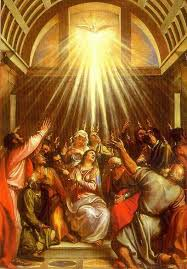
Pentecost image

By anyone’s standards Pentecost was a significant day. It is the purpose of this article to treat the significant aspects of the day in relation to certain major areas of theological studies.

Significance in Relation to Typology

Typology has suffered a great deal at the hands of both its friends and its enemies, since for many the study of types is still an uncertain science. Some, it is true, have found types in everything, while others in their reaction against this give little or no place for typological studies. My own definition of a type is that it is a divinely purposed illustration which prefigures its corresponding reality. This definition not only covers types which are expressly designated so by the New Testament (e.g., 1 Cor 10) but also allows for types not so designated (e.g., Joseph as a type of Christ). Yet in the definition the phrase “divinely purposed” should guard against an allegorical or pseudo-spiritual interpretation of types which sees chiefly the resemblances between Old Testament events and New Testament truths to the neglect of the historical, geographical, and local parts of those events. While all things are in a sense divinely purposed, not all details in all stories were divinely purposed illustrations of subsequently revealed truth. Pentecost is a good example of this, for although there is a clear type-antitype relationship, not all the details of the Old Testament feast find a corresponding reality in the events recorded in Acts 2.

As the antitype of one of the annual feasts of the Jews Pentecost has significance. This feast (Lev 23:15–21) was characterized by an offering of two loaves marking the close of harvest. The corresponding reality of this ceremony was the joining on the day of Pentecost by the Holy Spirit Jew and Gentile as one loaf in the one body of Christ (1 Cor 12:13). Pentecost is sometimes called the feast of weeks because it fell seven (a week of) weeks after Firstfruits. No date could be set for the observance of Firstfruits, for that depended on the ripening of the grain for harvest. However, when the time did arrive a small amount of grain was gathered, threshed, ground into flour, and presented to the Lord as a token of the harvest yet to be gathered. The corresponding reality is, of course, “Christ the firstfruits” (1 Cor 15:23). The fifty days interval between the two feasts was divinely purposed in the Old Testament type and finds exact correspondence in the New Testament antitype.

Significance in Relation to Theology

The theological significance of Pentecost concerns chiefly the doctrine of the Holy Spirit. The third person of the Trinity, not Peter, played the leading role in the drama of that day; He is the power of Pentecost; and in a very special sense the era which followed is His age. Obviously the Spirit of God has always been present in this world, but He has not always been a resident as one who permanently indwells the church. This was a new relationship which did not obtain even during the days of our Lord’s earthly ministry, for He said to His disciples concerning the Spirit, “He dwelleth with you, and shall be in you” (John 14:17).

The Evidences of His Coming (Acts 2:1-4)

Wind. A sound as of a rushing mighty wind was the first evidence of the Spirit’s coming. It came suddenly so that it could not be attributed to any natural cause, and it came from heaven, which probably refers both to the impression given of its origin and also to its actual supernatural origin. It was not actually wind but rather a roar or reverberation, for verse two  should be literally translated “an echoing sound as of a mighty wind borne violently.” It filled all the house which means that all of the 120 would have experienced the sensation since so many people would of necessity have been scattered throughout the house. This was a fitting evidence of the Spirit’s coming, for the Lord had used this very symbol when He spoke of the things of the Spirit to Nicodemus (John 3:8).

Fire. The audible sign, wind, was followed by a visible one, fire. Actually the tongues which, looked like fire divided themselves over the company, a tongue settling upon the head of each one. This, too, was an appropriate sign for the presence of the Holy Spirit, for fire had long been to the Jews a symbol of the divine presence (Exod 3:2; Deut 5:4). The form of the original text makes one doubt the presence of material fire though the appearance of the tongues was clearly as if they had been composed of fire.

Languages. Finally, each began to speak in a real language which was new to the speaker but which was understood by those from the various lands who were familiar with them. This was the third piece of evidence, and although some have assumed that this miracle was wrought on the ears of the hearers, this certainly forces the plain and natural sense of the narrative. These tongues were evidently real languages (vv. 6–8) which were spoken, and the imperfect tense, “was giving” (v. 4), indicates that they were spoken in turn, one after another.

The Effects of His Coming (Acts 2:5-13)

Baptism. The most important effect of the Spirit’s coming at Pentecost was the placing of men and women into the body of Christ by His baptism. Our Lord spoke of this baptizing work of the Holy Spirit just before His ascension (Acts 1:5), and it is clear from His words that this was a ministry of the Spirit thus far unknown even to those to whom He had said, “Receive ye the Holy Ghost” (John 20:22). If the baptism of the Holy Spirit was not something new to men until the day of Pentecost, then the Lord’s words in Acts 1:5—and especially the future tense of the verb “ye shall be baptized”—mean nothing. Although it is not specifically recorded in Acts 2 that the baptism of the Spirit occurred on the day of Pentecost, it is recorded in Acts 11:15–16 that this happened then, and Peter states there that what happened at Pentecost was the fulfillment of the promise of Acts 1:5. However, it is Paul who explains what this baptism (not to be confused with what is meant in Acts 2:38) accomplishes when he writes, “For by one Spirit are we all baptized into one body, whether we be Jews or Gentiles, whether we be bond or free; and have been made to drink into one Spirit” (1 Cor 12:13). In other words, on the day of Pentecost men were first placed into the body of Christ and that by the baptism of the Holy Spirit. Since the church is the body of Christ (Col 1:18), the church could not have begun until Pentecost. Furthermore, since no reference to the baptism of the Spirit is found in the Old Testament, since all references in the gospels are prophetic, and since in all prophecies of the future kingdom age there is no reference to the Spirit’s baptism, we may conclude that this work of His is peculiar to this dispensation and peculiar to the church (which, it follows, must also be limited to this dispensation) in forming it and uniting the members to the body of Christ forever.

Bewilderment. Certain visible effects of the Spirit’s coming were evident in the crowd which gathered as a result of the phenomena connected with His coming. At first the people (including Eastern or Babylonian Jews, Syrian Jews, Egyptian Jews, Roman Jews, Cretes and Arabians) were amazed. Literally the text says that they stood out of themselves with wide-open astonishment (v. 7). This is a mental reaction showing that their minds were arrested by what they observed. Next they were perplexed (v. 12). This is a strong compound word from an adjective which means impassable and hence the word comes to mean to be wholly and utterly at a loss. This was mental defeat. “The amazement meant that they did not know. The perplexity meant that they knew they did not know.”  Not knowing is always a blow to man’s pride; consequently this crowd, driven to find an answer to what they had seen and heard, replaced their ignorance with criticism (v. 13). These are merely normal reactions of Satanically-blinded minds to which the things of God are foolishness (2 Cor 4:4; 1 Cor 2:14) and should not surprise us if they occur today. The offense of the cross has not ceased.

Its Signficance in Relation to Homiletics

The Sermon (Acts 2:14-36)

Introduction—Explanation. Peter, spokesman for the eleven, seized the opportunity for a witness by answering the charge of drunkenness which had been levelled at the apostles. He thus wisely introduced his sermon by using the local situation, and taking that which was uppermost in his hearers’ thoughts. He formulated his introduction as an explanation of that which they had just seen and heard (v. 15). Strangely enough he did not introduce his message with a story or joke. Nothing in the situation seemed to remind Peter of a certain story, etc. Peter’s mind was full of Scripture, not stories; Peter’s concern was for the people, not pleasantries. The disciples could not be drunk, he told them, for it was only nine o’clock in the morning. Pentecost was a feast day, and the Jews who were engaged in the services of the synagogues of Jerusalem would have abstained from eating and drinking until at least 10 a.m. and more likely noon.

From this categorical denial of the charge of drunkenness Peter passed easily and naturally to the explanation of what the phenomenon was. It was not wine but the Holy Spirit who was causing these things, and to prove this Peter quoted Joel 2:28–32. This is a very definite prophecy of the Holy Spirit’s being poured out when Israel is again established in her own land. The problem here is not one of interpretation but of usage only. Clearly Joel’s prophecy was not fulfilled at Pentecost, for (1) Peter does not use the usual Scriptural formula for fulfilled prophecy as he does in Acts 1:16 (cf. Matt 1:22; 2:17; 4:14 ); (2) the original prophecy of Joel will clearly not be fulfilled until Israel is restored to her land, converted, and enjoying the presence of the Lord in her midst (Joel 2:26–28); (3) the events prophesied by Joel simply did not come to pass. If language means anything Pentecost did not fulfill this prophecy nor did Peter think that it did. The usage need not raise theological questions at all, for the matter is primarily homiletical and any problems should be solved in that light. Peter’s point was that the Holy Spirit and not wine was responsible for what these Jews had seen. He quotes Joel to point out that as Jews who knew the Old Testament Scriptures they should have recognized this as the Spirit’s work. In other words, their own Scriptures should have reminded them that the Spirit was able to do what they had just seen. Why then, someone may ask, did Peter include the words from Joel recorded in Acts 2:19–20? Why did he not stop with verse 18? The answer is simple. Peter not only wanted to show his audience that they should have known from the Scriptures that the Spirit could do what they had seen, but he also wanted to invite them to accept Jesus as their Messiah by using Joel’s invitation “whosoever shall call on the name of the Lord shall be saved” (v. 21). Thus what is recorded in Acts 2:19–20 is simply a connecting link between the two key points in his argument. “The remainder of the quotation from Joel, verses 19, 20, has no bearing on Peter’s argument, but was probably made in order to complete the connection of that which his argument demanded.” (J. W. McGarvey, New Commentary on Acts of Apostles, p. 28).

Theme—Jesus is Messiah. To us today it does not mean much to say that Jesus is Christ or Messiah. To a Jew of that day this was an assertion which required convincing proof, and it was the theme of Peter’s sermon. Peter’s proof is built along very simple lines. First he paints a picture of the Messiah from the Old Testament Scriptures. Then from contemporary facts he presents a picture of Jesus of Nazareth. Finally, he superimposes these two pictures on each other to prove conclusively that Jesus is Messiah. The center of each picture is the resurrection. In verses 22–24  there is a proclamation of the resurrection of Jesus of Nazareth. Then there follows (vv. 25–31) the prediction of resurrection from Psalm 16:8–11 which Peter applies to the Messiah. Finally, the Messiah is identified as Jesus whom they crucified and of whose resurrection they were witnesses. It is important to notice that the truth of Jesus’ resurrection was not challenged but was well attested by the conviction of these thousands of people who were in the very city where it had occurred less than two months before.

Conclusion—Application. Peter now puts it up to his hearers to decide about Jesus, and yet there is really no

choice, so conclusive has been his argument. How gracious of God to appeal once again to the very people who had crucified His Son. The application was personal. Peter did not say “someone” but “ye.”

The Results (Acts 2:37-41)

Conviction. Peter’s sermon brought conviction of heart. The word translated “prick” is a rare one which means to pierce, stun or smite. Outside the Scriptures it is used of horses dinting the earth with their hoofs. In like manner the hearts of his hearers were smitten by Peter’s message as the Spirit of God applied it.

Conversion. To the group of 120 (which included men and women, Acts 1:14) were added 3000 souls (Acts 2:41). They repented or changed their minds, for that is the meaning of repentance. It is not mere sorrow which is related to the emotions, for one can be sorry for sin without being repentant. Neither is it mere mental assent to certain facts, for genuine repentance involves the heart as well.  For the Jews gathered at Pentecost it involved a change of relationship toward Him whom they had considered as merely the carpenter’s son of Nazareth and an imposter by receiving Jesus as Lord and Messiah.

The Spirit of God must always do the work of enlightening and converting, but men are still His method of heralding the message. May our sermons be like Peter’s—doctrinally sound, homiletically excellent, filled with and explanatory of the Word of God, and aimed at those to whom we speak.

Its Significance in Relation to Practical Theology 

In the realm of practical theology two things command attention from among the many events of Pentecost and the days which immediately followed.

The Ordinance of Baptism

To the question “What shall we do?” Peter replied, “Repent and be baptized.” That this refers to the new converts’ being baptized by the Spirit is untenable for several reasons.

(1) It is doubtful that Peter himself and much less probable that his hearers understood yet the truth concerning the baptism of the Spirit even though it did first occur at Pentecost. (2) If this were referring to that automatic ministry of the Spirit then there would be no need for the report of verse 41: “Then they that gladly received his word was baptized.” (3) What would this audience have understood by Peter’s answer? His words meant that they were to submit to a rite performed with water which would be a sign of their identification with this new group. They would have thought immediately of Jewish, proselyte baptism which signified entrance of the proselyte into Judaism (Cf. Alfred Edersheim, The Life and Times of Jesus the Messiah, II, 745–47, for a concise discussion of the baptism of proselytes).

They would have thought of John’s baptism, submission to which meant identification with John’s message in a very definite way; for John was the first person to baptize other people (all proselyte baptisms were self-imposed), which was a striking way to ask people to identify themselves with all that he stood for. They would have realized that they were being asked to identify and associate themselves with this new group who believed Jesus was the Messiah, and Christian baptism at the hands of these disciples signified this association as nothing else could.

(NOTE: The language of verse 41  implies that the 3000 converts were all baptized on the same day. There were numerous pools and reservoirs in Jerusalem which would have provided the facilities for this even by immersion. If all the 120 disciples assisted in administering the ordinance it could easily have been done in a very short time. The magazine Life in its August 14, 1950, issue reported a modern instance where 34 men immersed 3381 converts in 4 hours).

Even today for a Jew it is not his profession of Christianity nor his attendance at Christian services nor his belief in the New Testament but his partaking of water baptism that definitely and finally excludes him from Judaism and sets him off as a Christian. And there is no reason why it should not be the same line of demarcation for all converts to Christianity, signifying the separation from the old life and association with the new.

(NOTE: A. T. Robertson explains well the meaning of the words “unto the remission of your sins” (v. 38), and his words are here quoted lest any misinterpret the words of Peter to teach baptismal regeneration. “In themselves the words can express aim or purpose for that use of eis does exist as in 1 Cor 2:7…. But then another usage exists which is just as good Greek as the use of eis for aim or purpose. It is seen in Matt 10:41…where it cannot be purpose or aim, but rather the basis or ground, on the basis of the name of prophet, righteous man, disciple, because one is, etc. It is seen again in Matt 12:41 about the preaching of Jonah…. They repented because of (or at) the preaching of Jonah. The illustrations of both usages are numerous in the N.T. and the Koine generally…. I understand Peter to be urging baptism on each of them who had already turned (repented) and for it to be done in the name of Jesus Christ on the basis of the forgiveness of sins which they had already received.” [Word Pictures in the New Testament, III, 35–36]).

The Organization of Believers

Its commencement. We have already noted how the church as an organism, the body of Christ, began on the day of Pentecost. But the church as an organization also began that day as the Lord added 3000 souls.

Its continuance. The power of the early church, humanly speaking, was due largely to the facts recorded in Acts 2:42. There was no rapid falling away from the newly-embraced faith. Indeed, just the opposite was true, for membership in the early church involved persevering adherance. They continued in the apostles’ doctrine. “The church is apostolic because it cleaves to the apostles….”  Teaching had always had a prominent place among the Jews, and it is not strange to find the Christian group appearing as a school. The apostles were the first teachers, and the bulk of their teaching we now have in the gospels. It consisted of the facts of the Lord’s life as well as His doctrine and teaching. The church today could well afford to emulate the early church in this. Instead of capitalizing on new converts and exploiting them, we should teach them even if that means keeping them in the background for a while.

Furthermore they continued steadfastly in fellowship, and this is evidently to be understood in the broadest sense of the word, for the text says “the fellowship.” This means partnership with God, partnership with others in the common salvation and in the sharing of material goods. They also continued in the breaking of bread which refers to the Lord’s Supper though not isolated but as the climax of the agapé or love feast. At the very first this was evidently observed daily (v. 46) though afterward it seemed to form the great act of worship on the Lord’s Day (20:7). At least we must say that the early church remembered her Lord with great frequency and with great freedom, for it was observed in homes without distinction between ordained clergy and laity (no service of ordination having yet occurred in the church).

Finally the record says that they continued in prayers. Again the definite article is used with this word and probably indicates definite times for prayer. Further, this is a word that is used exclusively for prayer to God and indicates the offering up of the wishes and desires to God in the frame of mind of devotion.

Its characterization. The early organization was characterized by fear (v. 43), favor (v. 47), and fellowship (vv. 44–46). Fear kept coming on this new group as signs and wonders kept on being done through the apostles (both verbs are in the imperfect tense). This fear was not alarm or dread of injury but a prevailing sense of awe in the manifest presence of the power of God. Favor was also their portion with the people at this time although times changed very quickly. Finally, fellowship in spiritual things demonstrated itself in fellowship of goods and worship. No doubt many of the pilgrims to the feast of Pentecost lingered in Jerusalem after their conversion to learn more of their new faith, and this created a pressing economic need. Providing for them through the sale and distribution of goods was God’s way of meeting this emergency. The necessity for this was probably shortlived though we know that the saints in Jerusalem remained a poor group.

This is the significance of Pentecost—the type fulfilled, the Holy Spirit baptizing men for the first time into the body of Christ, the sermon built on the resurrection and bringing conviction and conversion, and the young church marked off and established in the word and ways of the Lord.

Article adapted from BSac 112:448 (October 1955) pp. 331-340.

About the Author:

Ryrie

Charles Caldwell Ryrie (born 1925) is a Christian writer and theologian. He graduated from Haverford College (B.A.), Dallas Theological Seminary (Th.M., Th.D.) and the University of Edinburgh, Scotland (Ph.D.). For many years he served as professor of systematic theology and dean of doctoral studies at Dallas Theological Seminary and as president and professor at Philadelphia College of Bible, now Philadelphia Biblical University. He is a premillennial dispensationalist, though irenic in his approach. He is also the editor of the popular Ryrie Study Bible.

Book Review on Richard D. Phillips’ “Can We Know Truth?”

Truth Starts With God Himself: Review by David P. Craig

CWKTT Phillips

There is a crisis of truth in our postmodern times. However, as Phillips points out, “our society dogmatically rejects truth in theory but cannot live that way in practice…The crisis of the postmodern position is that it cannot believe or live out its own claims. Postmodernity has nothing to believe, including its own unbelief, despite the aching need of humans to know and believe.”

Phillips proceeds to give several practical examples of how modernism defined and developed its own epistemology (theory of knowledge), and how postmoderns struggled with modernistic thought and what has resulted from that is a full-blown relativism where “we can’t know truth.” Instead of downright playing down the postmodern critique of truth, Phillips argues that Christians can apply some of the strengths of postmodernism in four ways:

First, Christians should acknowledge the role that context plays in anyone’s understanding and belief. “Truth” is always held by actual persons, and those persons are deeply shaped by culture, language, heritage, and community.

Second, we should share postmodernity’s concern that truth may become more an object of power than a mans for enlightenment.

Third, if postmodern critiques cause Christians (among others) to challenge doctrines and views that have become traditional, we can be thankful for the opportunity to reconsider, reformulate, and restate teachings that may have become stale in our practice.

Fourth, Christians may be cobelligerent with postmodernity’s assaults against modernism.

The problems with both modernism and postmodernism essentially boils down to the same thing: they both deny the existence of God – Who is truth, reveals the truth, and is the way to truth through Jesus Christ (John 14:6).

Phillips writes, “Evangelical Christians, in particular, believe that truth derives from and is revealed by God. Thus, truth is authoritative. Here is where postmodernity parts company with historic Christianity, for the postmodern view rejects the reality of truth, positing an implicit (and in some cases, explicit) relativism in which nothing is really and finally true.” The author gives several examples of how this theory does not work in actual practice. Here is one example from the book:

“One professor made this point after his college class had united against him in insisting that nothing is ultimately true or morally wrong in an objective sense. The next day the professor informed the students that regardless of their performance on the exam they were all going to receive an F. The students objected in unison, ‘But that’s wrong!’ and the professor’s point against relativism was made. No one can live it, and therefore no one really believes it.”

The author articulates and expands on a third way of understanding truth based on what God has revealed to us in the Bible that is consistent with our experience – i.e., it corresponds to reality. He writes, “Christianity presents a legitimate third way over against the modern and the postmodern. With the moderns we believe that truth exists and is accessible, though we steadfastly reject that we can exhaustively know truth by our unaided reason. With the postmoderns we are skeptical that finite, fallible humans are the agents of truth, though we insist that truth is real and that we can know it. A successful Christian epistemology, then, not only responds to evangelical Christian belief but also enables us to communicate our doctrine of knowing to a world that both doubts and greatly desires to know truth.”

In this essay Phillips has brilliantly and cogently argued for the reality of truth, how one can know the truth, defend truth, and live by and for the truth. You will find many examples of how modernism and postmodernism fall short in their theories of epistemology, and how a Christian epistemology is simply the most logical way of discovering the truth – because our belief and practice emanates from the Way, the Truth, and the Life – the Lord Jesus Christ. The salient point is made by Phillips, “Love divorced from truth is not love, and truth divorced from love is not truth.” As Jesus perfectly modeled, spoke, and loved in truth, so must we. We are called to “speak the truth in love” just as we have heard it and experienced it in the person and work of Jesus Christ.

Alva J. McClain on The Greatness of the Kingdom Part 2

PART 2: THE MEDIATORIAL KINGDOM IN OLD TESTAMENT PROPHECY
TGOTK McClain

[EDITOR’s NOTE: This article is the 2nd in the series by Dr. McClain, Former President of Grace Theological Seminary, which constituted the W. H. Griffith Thomas Memorial Lectureship at Dallas Theological Seminary, November 9–12, 1954]

Since this area which we are about to enter is in certain respects the most important one of the entire investigation, something by the way of introduction should be said regarding the nature, interpretation and extent of kingdom prophecy.

The Nature of Kingdom Prophecy

a. Viewed from one standpoint, kingdom prophecy arises out of definite historical situation existing immediately before the eyes of the prophet. There is probably no exception to this rule. Even in purely predictive prophecy, or what some have called apocalyptic prediction, although the prophet may say nothing about the immediate historical situation, it nevertheless provides the background of what he has to say about the future. There is no such thing as predictive prophecy totally unrelated to history.

b. Sometimes prophecies of the kingdom have what has been called a “double reference,” or which might be more accurately called an “apotelesmatic” character. As Delitzsch has written, “All prophecy is complex, i.e., it sees together what history outrolls as separate: and all prophecy is apotelesmatic, i.e., it sees close behind the nearest-coming, epoch-making turn in history, the summit of the end.”  That is, somewhat as a picture lacks the dimension of depth, the prophecy often lacks the dimension of time: events appear on the screen of prophecy which in their fulfillment may be widely separated in time. Thus the student may find a prophecy referring to some event in the near future connected with the historical phase of the kingdom, and also to some far off event connected with the Messiah and his millennial kingdom. When the first event arrives it becomes the earnest and divine forecast of the more distant and final event. An excellent example may be found in Isaiah 13:17—14:4, a prediction which begins with the defeat of Babylon by the Medes, and moves from that point immediately to a Babylon of the end-time. The same phenomenon may be observed in prophecies of the coming of the Messianic King, which New Testament history “outrolls” into two advents greatly separated in time. Such a view of prophecy does not mean an abandonment of its literality, as some have argued. The double prediction is literal, and is to be literally fulfilled: The Medes have destroyed historic Babylon, and God will also literally destroy a future Babylon. Christ has come once literally; and He will again break into the stream of history with no less literality.

Interpretation of Kingdom Prophecy

Without paying too much attention to individual variations, I have reduced the important methods now current to three, which I have named the literal, the eclectical, and the critical; being deeply conscious of the inadequacy of mere names. As I am in the habit of saying to my classes, you should feel at liberty to improve upon my suggestions—but be sure that yours are better than mine.

The literal method. Probably this method has never been stated better than by Ellicott: “The true and honest method of interpreting the Word of God [is] the literal, historical, and grammatical.”  This method, as its adherents have explained times without number, leaves room for all the devices and nuances of language, including the use of figure, metaphor, simile, symbol and allegory. in their criticism of this literal method, most of its critics have been guilty of a “crasser literalism” than ever used by any reputable adherent of the method in its application to the Word of God. Certainly the literal method is not without its problems, but these problems are only such as naturally arise out of the nature of human language. Basically the method is extremely simple. For example, Psalm 72:6 speaks of the Messianic King as follows: “He shall come down like rain upon the mown grass.” Here we have a literal coming—the Lord “shall come down.” Also the effect of his coming is literal, although in this case it is described by a simile—”like rain upon the mown grass.” If you have ever seen the glorious effect of a summer shower coming down on a field of grass which, has been cut, then you will have some idea of what the literal effect of our Lord’s coming will be upon a troubled world. Of course, if you wish to depart from simple common sense, you can say that in this text “grass” stands for the church at Pentecost; “mown” stands for the unsanctified state of the disciples upon that occasion; and, the “rain” stands for the gift of the Holy Spirit. Once launched on the sea of conjecture, it is not surprising that interpreters finally arrive at strange ports, as far removed from reality as the “beautiful isle of somewhere.”

In a comparatively recent book written by Oswald T. Allis under the title Prophecy and the Church, the author in the course of his anti-millennial argument makes a curious attack upon the literal method of prophetical interpretation. First he criticizes severely some premillennial writers for being more concerned about “typical interpretation” than about the Old Testament history from which the alleged types are gathered. This criticism might well be taken to heart. But then Allis goes on to complain that, “If Ruth can give ‘a foreview of the Church,’ if ‘the larger interpretation’ of the Songs of Solomon concerns the Church, why must the Church be absent from the glorious visions of Isaiah?”  Now it is hard for me to believe that the very able and intelligent writer of these words does not know exactly what he is doing, even though a careless reader might miss the point. Reduced to a simple statement, his argument is that if we premillennialists are willing to take Old Testament history typically, we should not object to the taking of Old Testament prophecy typically. “In dealing with prophecy,” Allis writes, our premillennial “treatment is marked by a literalism which refuses to recognize types.”  This seems to Allis “strikingly inconsistent” on our past.

As a matter of fact, the inconsistency is in Allis and in his fallacious argument. Our answer is as follows: First, premillennialists take both history and prophecy literally. We may indeed, within proper limits, find in history certain types and shadows of things to come, but no one among us in his right senses ever questioned the literality of the history. But what about the author of Prophecy and the Church? Well, Allis accepts the history as literal, but denies the literality of the prophecy, at least in certain areas of the Old Testament, and insists that a typical interpretation is the only one! If Allis were as willing to accept the literality of Old Testament prophecy as he is of its history, I for one would raise no serious objection if he should find some legitimate “types” in both. I would insist, however, that just as in any proper interpretation of Old Testament history Joseph is always Joseph and not Christ, even so in prophecy Israel is always Israel and never the church. This does not mean that the preacher must never take a prophecy concerning Israel and apply it to the church. But he should always know what he is talking about, and make certain that his hearers know.

There is, after all, a fundamental difference between Biblical history and prophecy which must not be overlooked. History deals with a literal event, which may or may not be a type pointing to some future event. Thus a type seems to be always prophetic in nature. As the late William G. Moorehead once wrote, “A type always prefigures something future. A Scriptural type and predictive prophecy are in substance the same, differing only in form.”  On the other hand, prophecy (predictive) deals directly with the future reality. To talk about a “typical interpretation” of prophecy, therefore, is something like saying that prophecy should be interpreted prophetically! Perhaps it would help to clear the air if we could get rid of all the adjectives, and simply use the term interpretation alone in its first and original sense, “to give the meaning of.” We could then go on from there and talk about other things, such as types and applications. This is what we mean by literal interpretation.

The eclectic method. This is sometimes called the “spiritual” method, for the reason that “spiritualizing” is its most distinctive feature. The great church father Origen is generally regarded as the originator of this method, although in his better moments he insisted on…an exact grammatical interpretation of the text as the basis of all exegesis.”  Origen was a Platonist in philosophy, which explains much in his theology. In his hands the spiritualizing method of Biblical interpretation became a useful tool in opposing the doctrine of a literal millennial rule of Christ on earth, something which no consistent Platonist could possibly accept.

The term spiritual should be rejected, I feel strongly, as a proper name for the anti-literal method of interpretation, for at least two reasons: First, the word spiritual is much too fine to be surrendered without protest for wrong uses; and second, no one of any consequence was ever known to employ the “spiritualizing” scheme consistently and exclusively. For example, Dr. Shedd speaks disparagingly of what he calls “the blooming age of Millenarianism,” and finds that this age was mainly caused by the adoption of “the literal interpretation of the Old Testament prophecies” as opposed to the spiritual method.  But it must be said to the credit of this able scholar that he himself did not use the “spiritualizing” method exclusively, not even in his approach to Old Testament prophecy. He only resorted to it under the spell of his very narrow and inadequate notions about the kingdom. At other times in his Biblical interpretations Dr. Shedd became just as literal as the “literalists” whom he criticizes. Doubtless we should thank God that not all men are logically consistent in holding their erroneous opinions. What can happen when men cut loose from literality may be seen in Gregory the Great’s exposition of the book of Job, where we learn that the partiarch’s three friends denote the heretics; his seven sons are the twelve apostles; his seven thousand sheep are God’s faithful people; and his three thousand humpbacked camels are the depraved Gentiles!

Actually therefore the anti-millenarian scheme of prophetical interpretation is eclectic, employing both the spiritualizing and literal methods.

The critical method. Adherents of this method regard the Bible for the most part as a collection of human writings setting forth the religious experiences of men in their search for God. Since it was written by men, they argue, the Bible should be treated like other books written by men. Feeling no compulsion to defend any doctrine of Biblical inspiration or infallibility, they move through the Biblical literature dropping burning matches anywhere and everywhere, regardless of what may be burned up. The one good thing in this attitude is that the Bible is permitted to speak for itself literally. If the Bible says something which to these men seems to contradict history or science, so much the worse for the Bible. They simply reject what it says. Among the more moderate members of this school of interpretation is the late A. B. Davidson, who leaves no question whatever about his attitude toward the Old Testament prophecies concerning Israel and the coming kingdom. The question of interpretation here, he argues, is a “double one.” The first question is, what did the prophets mean? “And to this question there can be one answer,” writes Davidson, “Their meaning is the literal sense of their words” (Italics are mine). The second question has to do with the fulfilment of the prophecies. Again let Davidson answer his own question in his own words: “There is no question as to the meaning of the Old Testament prophecies; the question is how far this meaning is now valid” (Italics mine – “Eschatology,” Hastings Bible Dictionary, I, 73).  Although we may regret his conclusion, at least Davidson’s candor is refreshing.

The Extent of Kingdom Prophecy

In a very real sense, all Messianic prophecy in the Old Testament is kingdom prophecy. Even those predictions which deal with Messiah’s humiliation and sufferings cannot be separated from the context of regal glory. As Archibald M’Caig has rightfully observed concerning the great prophetic period in Old Testament history, “The prophecies all more or less have a regal tint, and the coming one is preeminently the coming king” (M’Caig, “King, Christ as,” International Standard Bible Encyclopaedia, III, 1802).

Generally we may say that Old Testament prophecy of the future mediatorial kingdom of God begins with a few scattered references in the Pentateuch; opens up clearly in the records of the historical kingdom; grows in volume and brilliance as the historical kingdom declines; and comes to its close in Malachi.

This material is so extensive that no attempt can be made in these lectures to present an exhaustive list of references; nor shall I try to deal with the ideas in the order of their historical utterance. I can only set forth in very much condensed form a series of generalizations, supported by selected but representative material from the inspired text as time permits. The question before us is, therefore, What do the Old Testament prophets say about the future kingdom? Whether their conception is identical or not with the kingdom announced in the gospel records is a question to be dealt with in a later lecture.

The Literality of the Coming Kingdom

This kingdom of Old Testament prophecy is not merely an ideal kingdom like the Kantian “kingdom of ends,” something toward which man must ever strive but never attain. On the contrary, it will be as real and literal in the realm of sense experience as the historical kingdom of Israel or the kingdom of Great Britain today. All prophecy from first to last asserts and implies this literality: in such details as its ruler (Isa 33:17), its geographical location (Isa 14:1–2), its citizens (Jer 23:3–6), its capital city (Isa 2:5), the nations involved (Isa 11:11), and numerous other details which will appear in the progress of this study.

Worthy of special notice here is the fact that the prophets picture the coming kingdom as one which will destroy and supplant other kingdoms which are literal (Dan 2, 7). The divine kingdom does indeed come down from heaven, but the arena of action is on earth where the heavenly kingdom supplants literal kingdoms and functions in their stead. There is no place left for an unfilled vacuum in human history. Furthermore, the prophets insist that the coming kingdom will actually be a revival and restoration of the Old Testament kingdom of history: “the former dominion” shall be returned to the nation of Israel in the city of Jerusalem (Mic 4:1, 7, 8); the tabernacle of David, which is fallen, shall again be raised up by divine power, “as in the days of old” (Amos 9:11). In all these and a thousand other details there is the unmistakable flavor of literality.

And lest there be some misunderstanding on this point, let me say that I am not using the term literal as absolutely opposed to the term spiritual. Even spiritual things are literal; in fact, they are the most literal of all in the whole realm of reality. By literality here I mean that the prophetical details of the coming kingdom will be tangible in the world of sense experience: “Thine eyes shall see the King…they shall behold the land” (Isa 33:17); and “All flesh shall see it together” (Isa 40:5). With such words before us, therefore, we should not be too quick to criticize the literal-mindedness of the early apostles when they asked of the risen Christ, “Lord, wilt thou at this time restore again the kingdom to Israel?” (Acts 1:6).

The Future Establishment of the Kingdom

The time of its establishment, to the prophets, sometimes seems to be very near at hand: Haggai says it will come in it “a little while” (2:6–9 ); Isaiah says, “a very little while” (29:17). Yet other predictions indicate that the kingdom is far in the future, after the lapse of “many days” (Hos 3:4, 5), or in the “latter days” (Isa 2:2). Doubtless the reconciliation of these forecasts may be found in the divine mind to which our many days are only a very little while.

The establishment of the kingdom is always preceded by divine judgments. There will be world-wide military preparation and devastating wars among the nations (Joel 3:9–16; Isa 3:25—4:1): great cosmic disturbances affecting the heavenly bodies (Joel 2:30–31); a special judgment upon the nation of Israel which will attend their regathering back into the land of the promised kingdom (Ezek 20:35, 33, ASV); and also a special judgment upon the living Gentile nations, based primarily upon their treatment of Israel whom they have scattered among the nations and robbed of their silver and gold (Joel 3:1–8). Some of these divine judgments will fall upon the earth itself, causing it to “reel to and fro like a drunkard”—all this to precede that glorious day “When the Lord of hosts shall reign in mount Zion, and in Jerusalem” (Isa 24:17–23).

Thus the coming of the kingdom in established form will be a world-shaking event. Although the divine work of preparation may seem at times almost interminable, its actual establishment will not be a long and gradual process, so imperceptible at times that sceptics will be able to dispute whether there even be such a thing as a kingdom of God. On the contrary, the coming of the kingdom will be sudden, comparable only to the falling of a great stone from heaven; supernatural in its descent as a stone “cut out without hands”; and catastrophic in its immediate effects, destroying the governments of earth so completely that no trace of them can be found (see Dan 2, 7).

The Ruler of This Future Kingdom

The names and titles applied to the coming King indicate that ‘he will be both human and divine in nature. He is called “a man” (Isa 32:1, 2), one like unto a “son of man” (Dan 7:13, 14), the “son” of God (Ps 2:7), a “rod of the stem of Jesse” (Isa 11:1), a “righteous branch of David” (Jer 23:5), “God” and “the Lord Jehovah” (Isa 40:9, 10, ASV), “Wonderful, Counsellor, The mighty God, The everlasting Father, The Prince of Peace” (Isa 9:6, 7).

He will be perfect in character, wisdom and ability. The Spirit of God rests upon him in wisdom, understanding, counsel, might, knowledge, and fear of the Lord; righteousness is the girdle of his loins, and faithfulness the girdle of his reins (Isa 11:1–5). He does not win his way to power by the ordinary means of demagoguery or military force; his voice is not heard in the street and a bruised reed shall he not break; yet unlike other rulers and statesmen he “shall not fail or be discouraged till he have set judgment in the earth” (Isa 42:1–4).

But over against this clearly revealed glory, there is a deep note of mystery in the career of the coming King. He is presented in Old Testament prophecy as a man of sorrow, despised and rejected of men; wounded, bruised, afflicted and dying for the iniquities of men (Isa 53). He is the great shepherd of Israel, yet he is smitten by the sword of God, and the sheep are scattered (Zech 13:7; cf. Isa 40:9–11). He is “Messiah the Prince” of Israel, ruler of the nations, yet he is “cut off” and has nothing which belongs to his regal glory (Dan 9:25, 26).

This mysterious problem did not go altogether unnoticed by the Jewish rabbins; some thought there might be two Messiahs, one the “son of Joseph” who would die, the other the “son of David” who would reign in glory. Other Jewish scholars applied the prophecies of the suffering to the nation of Israel personified, a view favored by modern Jewish interpretation. These proposed solutions, however, seem to be deflnitely post-Christian in origin, and were motivated probably by Jewish antagonism toward the Christian interpretation of Old Testament prophecy. It is highly doubtful whether anyone, having the Old Testament Scriptures alone and with no knowledge of Christian history, could or ever did arrive at a correct solution of the problem: that is, not two Messiahs, but one Messiah with two comings separated by a vast gulf in time.

We do know, however, that the problem was given serious consideration in pre-Christian times by the Old Testament prophets themselves. These men saw clearly the sufferings and glory of Messiah; they also understood the sequence of events—the sufferings would be first, and the glory would “follow.” But the time relation between the two was an unsolved problem to the Old Testament prophets, although they searched their own inspired writings to discover “what time or what manner of time” was signified (1 Pet 1:9–11, ASV). If this time relationship was ever revealed exactly to the prophets, Scripture is wholly silent as to any such revelation. And this silence will become a fact of high importance when we come later to the gospel records and ask, Was the kingdom in any sense postponed?

The Nature of Government in the Kingdom

The Mediatorial Kingdom as set forth in Old Testament prophecy is monarchical in form. The ruler will sit upon a “throne,” and the government will be “upon his shoulder” (Isa 9:6, 7). He receives his authority and holds it by divine grant: he is God’s king, established upon his throne by God himself (Ps 2:6; Dan 7:14). His rule will be characterized by severity, but a severity based upon absolute justice and righteousness (Ps 2:7–9; Isa 11:4a). And although he will rule the nations with a rod of iron, yet with infinite tenderness he will deal with the meek and the needy, gathering the lambs in his arms and carrying them in his bosom (Isa 40:10, 11).

In its external organization, the prophets picture the kingdom with the mediatorial king at its head; associated with him are those who are called “princes” (Isa 32:1); the “saints” possess the kingdom, doubtless the saved of Old Testament days (Dan 7:18, 22, 27); the living nation of Israel is given first place of favor and authority on earth, and the nation which rebels against it will perish (Isa 60:3, 10, 12). The subjects of this kingdom will include “all people, nations, and languages” (Dan 7:14), though certain passages suggest an unwilling subjection on the part of some, a point I shall discuss later.

All the functions of government are centered in the person of the mediatorial king. The prophet Isaiah sees him and names him as “judge,” “lawgiver,” and “King”—remarkable forecast of the conventional divisions of modern government: judicial, legislative, and executive (Isa 33:22). The founding fathers of our own American government, approaching their task with a deep suspicion of human nature, designed a system of checks and balances to separate these three departments and keep any one of them from getting too much power. Although it seems clumsy, wasteful and inefficient at times, our government has provided a welcome refuge for personal liberty in such a world as this, and will continue to do so—if we can keep it. But this is not the most ideal form of government. When God’s own glorious King takes over the kingdoms of the earth, it will be safe at last to concentrate all the functions of government in one Person. This does not mean that he will do everything, but rather that he will be the directing head and final authority; thus providing a unifying center, both infinitely wise and good, for all the activities of government, something which no government on earth has ever had.

The Extent and Duration of the Kingdom

“In that day,” the prophet Zechariah declares, “The Lord shall be king over all the earth” (14:9). And the Psalmist describes the scope of his government with still greater detail, “He shall have dominion also from sea to sea, and from the River unto the ends of the earth. They that dwell in the wilderness shall bow before him; and his enemies shall lick the dust…. Yea, all kings shall fall down before him; all nations shall serve him” (72:8–11). Instead of regarding government as a necessary evil—the less of it, the better—the beneficent rule of the mediatorial kingdom will permeate and affect every department of human life: “In that day shall there be upon the bells of the horses, HOLINESS UNTO THE LORD…. Yea, every pot in Jerusalem and in Judah shall be holiness unto the Lord of hosts” (Zech 14:20–21). That artificial and popular distinction between the secular and the sacred will disappear in the immediate presence of the King who is the giver and sustainer of all that exists.

The rule and power of this kingdom will never suffer any diminution or reverses, such as are common with ordinary governments: “Of the increase of his government and peace there shall be no end, upon the throne of David, and upon his kingdom, to order it, and to establish it with judgment and with justice from henceforth even forever.” This is because its foundation is not in man but in God: “The zeal of the Lord of hosts will accomplish this” (Isa 9:7). And joining together in a single passage the two ideas of universality and eternity, Daniel describes the rule of the mediatorial King as a dominion extending over all, and also “an everlasting dominion, which shall not pass away,” and “which shall not be destroyed” (7:14). The throne of this kingdom endures forever because, as the Psalmist declares, it is “Thy throne, O God” (45:6).

The Extensive Nature of the Kingdom

An examination of how and where the kingdom functions in human life will shed light upon its vast extension. Its establishment will bring about sweeping changes in every department of man’s activity, so far-reaching that Isaiah speaks of its arena as “a new earth” (65:17). Every need of humanity will be anticipated and provided for: “Before they call,” God says, “I will answer” (Isa 65:24). For the most part, the various current views of the kingdom are too narrow; in concentrating upon some one aspect, men have missed the richness and greatness of the kingdom. Nowhere in all Scripture is its great variety revealed so clearly as in the Old Testament prophets, who saw the coming kingdom functioning in at least six important realms:

The kingdom will be spiritual in nature. It will bring personal salvation from the hand of God (Isa 12:1–6), divine forgiveness for sin (Jer 31:34), provision of God’s own righteousness for men (Jer 23:3–6), moral and spiritual cleansing, a new heart and a new spirit (Ezek 36:24–28), inward harmony with the laws of the kingdom (Jer 31:33), recognition by men of all nations that Jehovah is the true God, the God who is able to answer prayer (Zech 8:20–23), the restoration of genuine joy and gladness to human life (Isa 35:10), and the pouring out of God’s Spirit “upon all flesh” (Joel 2:28).

The spiritual blessings enumerated above are only a few out of the many which the kingdom brings to a sinful and needy world. I have no quarrel with the dictum of writers who insist that the kingdom is “spiritual,” unless they insist upon a definition of the term which is exclusively Platonic, or unless they should be so foolish as to deny that a spiritual kingdom can function in a world of sense experience. As a matter of fact, it would not be wrong to say that the kingdom of Old Testament prophecy is basically “spiritual,” yet a kingdom producing tangible effects in every department of human life.

The kingdom will be ethical in its effects. At last there will be a proper estimate of moral values in human life; the fool will no longer be called noble (Isa 32:5); darkness will not be called light. An adjustment of moral inequalities will sweep through every department of human relationships (Isa 40:3–5). Moral retribution at last will become an individual matter: men shall no longer say, “The fathers have eaten a sour grape, and the children’s teeth are set on edge. But every one shall die for his own iniquity” (Jer 31:29–30): thus removing one of the greatest present stumbling blocks to rational belief in a moral universe.

The kingdom will bring great social and economic changes. All wars will be eliminated (Zech 9:10). But instead of abolishing the arts and sciences which today are contributing to the horrors and destruction of warfare, these things will be turned to economic uses: the sword becomes a plowshare and the spear a pruninghook; and, I suppose, the stuff of the atomic bomb will generate power and light up the darkness (Isa 2:4). An era of worldwide peace will be ushered in by divine sanctions, never to end again (Isa 9:7). Social justice at last will become a reality, not merely something to be talked about by self-seeking politicians: Men will actually get and enjoy what they produce; one shall not build a house and another live in it (Isa 65:21–22). No longer will the weak, the poor, and the ignorant, be subject to economic exploitation; but they shall be redeemed from “deceit and violence” because they are “precious” in the sight of the great King (Ps 72:1–4, 12–14). With complete social and economic justice for all, everything in human life will be tenderly fostered. The hopeless invalid will not be consigned to the tragic comfort of euthanasia; neither will the backward child be finally and rigidly classified at a fixed capacity-level; “a bruised reed will he not break, and a dimly burning wick will he not quench” (Isa 42:3, ASV). Even that stubborn obstacle to human understanding and international accord, the barrier of languages, will apparently be broken down. “The discord of Babel shall, as it were, give place to unity of language.”  Philosophy, science and religion will dwell together in harmony, abundantly available to all (Isa 33:6, ASV).

The kingdom will have political effects. With its establishment on earth, a central authority will be set up for the adjudication and settlement of international disputes; and this authority will have not only the requisite wisdom to make just and impartial decisions but also the power to enforce them: “Out of Zion shall go forth the law, and the word of the Lord from Jerusalem; and he shall judge among the nations” (Isa 2:3–4). Thus resort to war will become both unnecessary and useless. National security, that political mirage of uneasy statesmen, will be guaranteed to all. Military science will become obsolete-”Neither shall they learn war any more” (Isa 2:4). The international problem of the Jew, which is certainly political in part, will be solved permanently by the divine restoration of this people to their own land (Amos 9:14–15), and by the reestablishment and unification of the Jewish state: “One nation in the land…and one king shall be king of them all; and they shall be no more two nations, neither shall they be divided into two kingdoms any more at all” (Ezek 37:22–24). The present Jewish State in Palestine indicates a trend toward the fulfilment of prophecy, but no permanent solution can ever be reached apart from divine intervention on the part of the mediatorial King (Zech 12:3–9).

The kingdom will have ecclesiastical effects. Its ruler will combine in his own person the offices of both King and Priest (Ps 110; cf. Zech 6:13). Thus both church and state become one in purpose and action; which is certainly the ideal combination if, as the Word of God teaches, there is but one true religion. The American policy of complete separation of church and state, which I fully approve under the present conditions, is not however the ideal policy, but rather a policy of safety in a sinful world where political and ecclesiastical power too often get into the wrong hands. In the days of the coming kingdom a central sanctuary will be established on earth, to which men from all nations will come to worship the one true God whose glory will be visibly revealed in the mediatorial King (Ezek 37:26–28; 43:1–7). With this revelation, what we call “religious freedom” will come to an end, and man’s dream of religious unity will become a reality, secured by divinely imposed sanctions wherever actively opposed (Zech 14:16–19).

It has been objected (carelessly, I think) that a central sanctuary at Jerusalem for worship would be a backward step, reversing the spiritual and universal principle laid down by our Lord when he said to the Samaritan woman, “The hour cometh when ye shall neither in this mountain, nor yet at Jerusalem, worship the Father…. They that worship him must worship him in spirit and in truth” (John 4:21–24). The objection misses the point of the passage entirely. Our Lord was not abolishing worship in the city of Jerusalem (There are churches there today), but he was adding the idea of universality to the historical idea of localized worship. The reestablishment of a central sanctuary in Jerusalem for international worship will no more detract from the principle of universality than the going of Bishop Oxnam up to the First Methodist Church of his city next Sunday morning. The assumption that universality and locality in worship are mutually exclusive ideas is certainly unwarranted either in reason or revelation. Objections like this arise out of prejudice not logic.

The kingdom will be physical in its effects. Bodily infirmities will be healed, and disease controlled by divine prevention (Isa 35:5–6; 33:24). Longevity of life will be restored: in fact, it is suggested that the crisis of physical death will be experienced only by those incorrigible individualists who rebel against the laws of the kingdom (Isa 65:20, 22). The ordinary hazards of physical life, so tragic and heartbreaking today, will then be under supernatural control (Isa 65:23; Ezek 34:23–31). In that day some modern books on ethics will be largely obsolete: as for example, Durant Drake has written, “When we have done our best we are still at the mercy of fortune…. If all men were perfectly virtuous, we should still be at the mercy of flood and lightning, poisonous snakes, icebergs and fog at sea, a thousand forms of accident and disease, old age and death. The millennium will not bring pure happiness to man; he is too feeble a creature in the presence of forces with which he cannot cope” (Problems of Conduct, Revised Edition, 1920, p. 168).

The answer of the prophets to all this is that in the coming kingdom men “shall not labor in vain, nor bring forth for calamity” (Isa 65:23, ASV). For the earth in that day will be under the direct control of One whose voice even the “winds and the waves obey.”

The inauguration of the kingdom will, furthermore, be signalized by tremendous geological changes (Zech 14:3–4; Ezek 38:19–20); and these changes could very naturally bring about corresponding climatic alterations, causing the waste regions of the earth to become fruitful and “blossom as the rose” (Isa 35:1, 6, 7). At the same time there will come a great increase in the fertility and productiveness of the soil, so that “the plowman shall overtake the reaper” (Amos 9:13). Even in the animal world some remarkable changes will come to pass: “The wolf also shall dwell with the lamb…and a little child shall lead them…. They shall not hurt nor destroy in all my holy mountain, saith the Lord” (Isa 11:6, 9).

Such is the extensive nature of the mediatorial kingdom as presented by the Old Testament prophets. And in closing, I would like to suggest that it satisfies and reconciles all legitimate viewpoints. The kingdom is spiritual; with effects which are ethical, social, economic, political, ecclesiastical, and physical. To single out any one of these important aspects, and deny validity to the others, is to narrow unwisely the breadth of the prophetic vision and to set limits upon the possibilities of human life on earth under God.

Article above adapted from BSac 112:446 (April 1955), pp. 108-124.

 About Alva J. McClain (1888-1968)

Alva J. McClain

Alva J. McClain, the founder and first president of Grace Theological Seminary and Grace College, was born in Iowa and later grew up in Sunnyside, Washington. Shortly after his marriage to Josephine Gingrich in 1911, he and his wife were saved under the preaching of Dr. L.S. Bauman. He had been attending the University of Washington, but removed to Los Angeles, where he attended the Bible Institute of Los Angeles and sat under the teaching of Dr. R.A. Torrey.

Upon graduating from Biola, he enrolled in Xenia Theological Seminary and completed work for the B.D. and Th.M. degrees–following which he was called to the First Brethren Church of Philadelphia, where he served from 1918 to 1923. During the pastorate he taught at the Philadelphia School of the Bible. Because of ill health, he resigned and removed to California, where he finished his work for the A.B. degree at Occidental College, graduating as valedictorian. Later he was awarded the honorary degree of LL.D. at Bob Jones University, and the D.D. degree at the Bible Institute of Los Angeles.

In 1925 and 1926, he served as professor of Bible at Ashland College. In 1927-1929 he taught Christian theology at the Bible Institute of Los Angeles. In 1930, the first graduate school of theology in the Brethren Church was organized at Ashland College under his leadership, where he served as its first academic dean and professor of Christian theology.

In 1937 Grace Theological Seminary was organized under his direction, and as first president and professor of Christian theology, he served from 1937 to 1962. Dr. McClain authored many short treatises, but will be remembered for his monumental work on Christian theology, The Greatness of the Kingdom, one of seven volumes he had projected concerning the entire scope of Christian faith. He will long be remembered as scholar, theologian, educator, master teacher, and Christian gentleman.

Book Review on Bear Grylls “To My Sons: Lessons For the Wild Adventure Called LIfe”

Inspiring Quotes From an Inspirational Dad – Reviewed by David P. Craig

TMS Grylls

Anyone who has ever watched Bear Grylls’ adventures on “Man vs. Wild” can’t help but amazed at his spirit of adventure, ingenuity, courage, wisdom, and passion for life. In this little book Bear Grylls gives his favorite Bible verses, life quotes, and wisdom and dedicates this collection to his boys. It is a wonderful compilation for any Father to seek to implement in his own life and emulate for the lives of his children. Grylls emphasizes a love for Jesus Christ, a love for others, and maximizing your time in life by serving others. Let me share some of my favorite quotes from the book:

“Aim to live a wild, generous, full, exciting life–blessing those around you and seeing the good in all.”

“Have a few close friends who you see often–their friendship matters more than having many shallow acquaintances.”

“Choose your job carefully–do work that excites you. It is where you will spend so much of your time.”

“Cheerfulness in adversity is a key character trait in the game of life.”

“Moments of doubt are part of life. Accept them and remember that Jesus Himself said, ‘My power is made perfect in weakness’ (2 Corinthians 12:9).”

“Understand that failure is an essential stepping-stone on the road to success.”

“Give more than you take, especially with friends and family. See the best in people–as Christ does with you.”

“Spend more time with your family and less at work–no one on their deathbed says they wish thye had spent more time in the office!”

“No one cares how much you know until they know how much you care.”

“You have two ears and one mouth–use them in proportion: Listen twice as much as you speak!

“But remember the LORD your God, for it is he who gives you the ability to produce wealth” (Deuteronomy 8:18).

Thank God for your many blessings; then go out there and blossom. It is okay to succeed.”

I recommend this little book – especially for dads to share with their children. It would make an excellent gift for Father’s day, and a great gift for father’s to give to their sons when they become dads someday.

Alva J. McClain on The Greatness of the Kingdom – Part 1

PART 1: THE UNIVERSAL AND MEDIATORIAL KINGDOMS OF GOD

[EDITOR’s NOTE: This article begins the series by Dr. McClain, Former President of Grace Theological Seminary, which constituted the W. H. Griffith Thomas Memorial Lectureship at Dallas Theological Seminary, November 9–12, 1954]

TGOTK McClain

The title chosen for these lectures, a phrase found in the seventh chapter of the book of Daniel, will indicate the general thesis which I hope to establish, namely, “The Greatness of the Kingdom.” For a long time I have had a growing conviction that much of the disagreement over the subject of the kingdom of God has arisen out of narrow views as to its character. This situation obtains, of course, in more than one department of Biblical theology. Men have gone wrong, not so much in what they affirmed, but rather in what they denied or neglected.

This tendency has been given impetus by that natural bent of the human mind, best represented by the philosophers, which impels men to search for one principle or idea that will explain everything else. While this motive, held under legitimate restraints, has often led to fruitful results; it nevertheless is always attended with certain hazards. In the first place, there is the danger of omitting matters of importance which may stand outside our neat little formulas. In the second place, thinking now of the field of Christian theology, this passion for oversimplification may cause men to miss the richness and infinite variety of Christian truth in the interest of a barren unity. It was William James who once suggested that, considered from a certain abstract viewpoint, even a masterpiece of violin music might be described as “the scraping of horses’ tails over cats’ bowels!” Such a definition of course has the merit of simplicity; it gets rid of all the mystery of personality and genius, but the residue is not very interesting.

Now I feel strongly that the Biblical doctrine of the kingdom of God has suffered considerably from this tendency toward oversimplification. Men have forgotten the greatness of the kingdom, its richness and complexity, in the interest of their own partial and inadequate explanations. What I am saying is underscored by the very small place given to the subject of the kingdom in some well-known and honored works by conservative theologians. For example, in the books on Systematic Theology by A. H. Strong, Wm. G. T. Shedd and A. A. Hodge one looks in vain for even any mention of the term kingdom in their indexes. It is to the everlasting credit and honor of my dear friend, the late President of Dallas Theological Seminary [Dr. Lewis Sperry Chafer] that in his own excellent Systematic Theology he was able to make such a large and important contribution to this particularly needy field of theological science.

It should be axiomatic that any conception of the kingdom of God which rests in large part upon a certain interpretation of a single text or passage of the Bible is to be regarded with deep suspicion. In this category are the systems built around such passages as “the kingdom of God is within you” (Luke 17:21), or “I will give thee the keys of the kingdom of heaven” (Matt 16:19), or the parable of the leaven (Matt 13:33), or the ethical precepts of the sermon on the mount (Matt 5—7), or even Revelation 20. The doctrine of the kingdom should be determined by an inductive examination of all the Biblical material on the subject, and it should not have to stand or fall by the inclusion or exclusion of isolated passages where interpretations may be in serious dispute. To me there is no question as to the general meaning of Revelation 20, but I maintain that the essential outline of the Biblical doctrine of the kingdom can be established without it. And this doctrine, once established, should be our surest guide in our approach to the passage under controversy.

Definition of the Kingdom of God

Let me begin the discussion with a tentative definition. A kingdom involves at least three things: first, a king who rules; second, subjects who are ruled; and third, the actual exercise of the function of rulership. I do not think that much attention need be paid to the effort to show that the term kingdom refers to a bare divine sovereignty. The great ideas of the Bible are concrete rather than abstract, and such terms as the kingdom of God are intended to convey meanings which are pertinent to actual situations in the world of reality with which men are somewhat familiar. On the basis of the above analysis, the kingdom of God may be defined broadly as the rule of God over his creation.

Now it should be clear that this phrase the kingdom of God has no precise meaning or authority apart from the content assigned to it in the Holy Scriptures. Therefore, passing over for the moment the various theories (and they are many), let us attempt to establish its content on the basis of an inductive study on the Biblical material out of which the original idea arose. In examining the very extensive array of references, especially in the Old Testament, we are immediately impressed by a series of differences which at first seem almost contradictory.

In the first place, it appears that the kingdom is something which has always existed; yet it also seems to have a definite historical beginning among men.

Second, the kingdom appears as something universal outside of which there lies no created thing; yet again the kingdom is revealed as a local affair beginning on earth.

Third, the Kingdom appears in Scripture as the rule of God directly; yet it is often pictured as the rule of God through a mediator who serves as a channel between God and man.

Fourth, the divine kingdom is set forth as an unconditioned rule arising out of the sovereign nature of Deity itself; yet on the other hand it often appears as a kingdom based on a covenant made by God with man.

Some of these distinctions, if not all, have been noticed by various Biblical scholars, and attempts have been made to explain them; either by asserting the existence of one kingdom with two aspects or phases, or by the assumption of two separate kingdoms. For example, Hengstenberg distinguishes between a “kingdom of power” and a “kingdom of grace.”  And Peters speaks of the one as “God’s universal, general sovereignty exercised by virtue of his being the creator,” while the other is the “Theocracy” or “Theocratic Kingdom.”  Recently we have seen the rise of a school of opinion, somewhat anti-intellectual in character, which, rejoicing apparently in the existence of religious paradox and tension for their own sake, is content to leave all such antinomies permanently unresolved.

For myself, while recognizing the reality of these Biblical distinctions, I am also convinced that the Scriptures offer a reasonable explanation. In one sense it would not be wholly wrong to speak of two kingdoms revealed in Scripture. But we must at the same time guard carefully against the notion that these two kingdoms are absolutely distinct one from the other. There is value and instruction in thinking of them as two aspects or phases of the one rule of our sovereign God. In seeking for terms which might best designate these two things, I have found nothing better than the adjectives universal and mediatorial. They are not commensurate terms, of course, but describe different qualities, the first referring to extent, the latter to method. Nevertheless, in each case the designated quality seems to be the most important one from a descriptive standpoint. As we proceed with the discussion, therefore, the terms used will be the universal kingdom and the mediatorial kingdom.

The Universal Kingdom of God

My treatment of the universal kingdom must be very brief, not much more than a summary of its chief characteristics. In any conventional system of theology this universal rule or control of God would be dealt with in part under the head of his work in providence. But it should not be ignored here. I shall ask you to note at least six things about it:

This universal kingdom is something which has always existed. Thus we read that Jehovah is “King forever and ever” (Ps 10:16). Again, describing the progress of a storm sweeping in from the sea across the land, breaking down the cedars of Lebanon, the Psalmist declares that God is in this violence of nature sitting as “King forever” (Ps 29:10). As a precious comfort in the midst of desolations brought by judgment, the Old Testament saint could say, “God is my King of old” (Ps 74:12). And the prophet Jeremiah bears a like testimony to the everlasting character of the divine rule, affirming that “The Lord is the true God, he is the living God, and an everlasting king” (Jer 10:10). And in the midst of his lamentations the same prophet finds a kingdom of God grounded in the eternal nature of God himself, saying, “Thou, O Lord, remainest forever; thy throne from generation to generation” (Lam 5:19).

This kingdom is universal in the most complete sense of that term. Nothing lies outside its reach and scope. It includes all things in space and time, in earth, in heaven and in hell. Jehovah is the “King of the nations” (Jer 10:7). Witnessing to the present reality of that universal kingdom in his own day, the Psalmist writes, “The Lord hath prepared his throne in the heavens; and his kingdom ruleth over all” (Ps 103:19). Nebuchadnezzar, golden head of an ancient world empire, is cut down from his throne by divine judgment in order that “the living may know that the most High ruleth in the kingdom of men, and giveth it to whomsoever he will, and setteth up over it the basest of men” (Dan 4:17, 25, 32). David the king, although reigning over a small nation in a small land, sees and speaks of a greater kingdom, “Thine, O Lord, is the greatness, and the power, and the glory, and the victory, and the majesty; for all that is in the heaven and in the earth is thine; thine is the kingdom, O Lord, and thou art exalted above all. Thou reignest over all” (1 Chron 29:11–12).

The rule of this kingdom operates generally through second causes; that is, what theologians have sometimes called the rule of ordinary providence. Thus the Assyrian monarch is a “rod” in the hand of Jehovah to accomplish his divine purpose in judgment against Jerusalem, though the king knows it not and has no intention to serve God (Isa 10:5–15). Likewise, the King of Babylon is God’s “servant” for the accomplishment of his will (Jer 25:9). In the sequence of the rise and fall of world empires, it is Jehovah who raises up and prepares the “Kings of the Medes” for the destruction of Babylon (Jer 51:11, 28–37). Long before his birth, the great Cyrus is named prophetically and then “anointed” to fulfill the purpose of Jehovah in rebuilding, his holy temple (Isa 44:28–45:4). At exactly the crucial moment a fit of insomnia disturbs the rest of the Persian Xerxes, causes him to call for the chronicles of his kingdom (something like our own Congressional Record), and the outcome of this seemingly insignificant incident is the rescue of Israel from national extermination, together with all the irreparable losses such a disaster would have entailed (Esth 6:1–8:17 ).

Upon special occasions and under certain circumstances the rule of God in this universal kingdom may operate directly through divine miracles. Without attempting just now to draw the precise line between what is called the natural and the supernatural, I mean that God.may break into the so-called closed system of nature (which of course He upholds and controls) with great exhibitions of his unveiled power. The Bible writers are never conscious of any necessary conflict between the divine rule through the system of nature and that through the miraculous. In both they recognize the hand of the same sovereign God who is transcendent as well as immanent. Thus we read that “Whatsoever the Lord pleased, that did he in heaven, and in earth, in the seas, and all deep places. He causeth the vapours to ascend from the ends of the earth; he maketh lightnings for the rain; he bringeth the wind out of his treasuries. Who smote the firstborn of Egypt, both of man and beast. Who sent tokens and wonders into the midst of thee, O Egypt, upon Pharoah, and upon all his servants” (Ps 135:6–9). Here we have both nature and miracle. But in general, especially with reference to the earth, the method of divine control in this universal kingdom is through second causes—”Fire and hail; snow and vapour; stormy wind fulfilling his word” (Ps 148:8).

The kingdom of God in this universal sense exists regardless of the attitude of those under its rule. Some personal beings, the elect angels and the true people of God, have bowed in submission. Others, as in the case of the Egyptian king, are actively opposed to the revealed will of God. Still others, as the Assyrian of Biblical history, know nothing about the divine rule of such a kingdom. Nevertheless, we are told in Scripture, the Lord worketh all things after the counsel of his own will. Even if there were in all the universe not one solitary personal being not in rebellion against God, (whether angel or demon or man); even if there were no heaven of the redeemed but only a hell of the lost—it would still be true of this universal kingdom that “The Lord hath prepared his throne in the heavens; and his kingdom ruleth over all.” This kingdom is an ever-present reality from which there can be no escape.

In the light of these facts, it becomes clear that this universal kingdom could not have been precisely that kingdom of God for which our Lord taught his disciples to pray, Thy kingdom come.” For in the universal and providential sense, the kingdom of God has already come and the will of God is being done on earth. This rule of God, in fact, has always existed and has never been abrogated or interrupted. The key to the real meaning of the so-called Lord’s Prayer must be found in the clause, “as it is in heaven.” Although the kingdom of God ruleth over all, there is a profound difference between the exercise of its rule “in heaven” and “in earth.” This difference arises out of the fact that rebellion and sin exist upon the earth, sin which is to be dealt with in a way not known in any other spot in the universe, not even among the angels that fell. And it is precisely at this point that the great purpose of the mediatorial kingdom appears: On the basis of blood redemption it will put down at last all rebellion with all its evil results, thus finally bringing the kingdom and will of God on earth as it is in heaven. When this purpose has been accomplished, the mediatorial phase of the kingdom will finally disappear as a separate entity, being merged with the universal kingdom of God.

With this rather brief survey, of the universal kingdom, I shall now turn to a consideration of the mediatorial phase to which the Biblical writings give the vast, preponderance of attention. You should understand that during the remainder of our study, to save repetition, the term kingdom will invariably refer to its mediatorial phase,unless otherwise stated.

The Mediatorial Kingdom of God

The mediatorial kingdom may be defined tentatively as the rule of God through a divinely chosen representative who not only speaks and acts for God but also represents the people before God; a rule which has especial reference to the human race (although it finally embraces the universe); and its mediatorial ruler is always a member of the human race.

I shall trace the development of this kingdom as it appears imperfectly realized in Old Testament history; present its future form as forecast in Old Testament prophecy; its character as announced by our Lord in the period of the Gospel records; its place in the history of the apostolic period covered by the book of Acts; the peculiar form in which it exists during the present Christian church era; its visible and established form in the millennial age; and finally its mergence in and complete identification with the eternal and universal kingdom of God.

The Mediatorial Kingdom in Old Testament History

Attempts have been made to erect an absolute separation between the historical kingdom and the future kingdom of prophecy; but that there is a vital connection between the two should be clear from many passages with which we shall deal in later lectures. Certainly, the future kingdom is to be a revival and continuation of the “throne of David.” In a very real sense there is but one mediatorial kingdom of God. But where historically did this idea of mediatorial rule originate?

Let us review briefly its background. In Eden the newly created man cast off the rule of his Creator, arrogating to himself the perilous right to decide for himself what was good for him and his posterity. This attitude seems to characterize the early pages of human history, brief as the record is, so that Cain the fratricidal killer is not brought to the bar of human government to answer for his terrible deed. And Genesis 6:5 records the only possible end to such an era—universal, wilful and unrestrained wickedness. Following the divine judgment of the flood we have something new: the institution of human government by divine decree. Here again the record is brief, but its basic principle lays the foundation for all human law and government—”Whoso sheddeth man’s blood, by man, shall his blood be shed, for in the image of God made he man” (Gen 9:6). This is not a law of personal vengeance, as some have claimed. The punishment of the murderer is to be inflicted “by man” in the collective sense. The moral justification for capital punishment is found in the very argument sometimes used to oppose it, namely, the preciousness of human life in God’s sight. Human government exists for only one reason—the protection, conservation and fostering of human life. But the establishment of human government by divine decree with its salutary principle for the conservation of life did not succeed. Things did not grow better but worse in certain respects, resulting finally in the judgment at Babel.

The mediatorial idea appears incipiently among the patriarchs. Following the confusion of tongues and the scattering of mankind throughout the earth, God turns away from “man” in the collective sense and calls out one man through whom he will accomplish his will on earth (Gen 12:1–4). In Abraham and Isaac and Jacob the mediatorial idea begins to take form historically in miniature. God speaks to these men and they in turn mediate the divine will, although often very imperfectly. The Genesis record indicates that within the scope of their own families the patriarchs were genuine mediators through whom God ruled in the chosen line of humanity. These men were almost absolute monarchs in their own households which included not only their own progeny but also servants, retainers, and fighting men( Gen 14:14).

In their hands rested the power of life and death, as may be seen in the offering of Isaac (Gen 22).

The mediatorial kingdom began in historical form with Moses and continued under the early great leaders who followed. This period is marked by the mediation of God’s rule through Moses, Joshua, the judges, and Samuel. At first thought it may seem strange to have a kingdom without a king. But we must remember that in this kingdom it is God, not man, who rules. Crude as were some of his ideas, Gideon was right about one thing: “I will not rule over you,” he said to the men of Israel, “the Lord shall rule over you” (Judg 8:23). And speaking of that long and remarkable period extending from Moses to Saul, Samuel characterizes it to Israel as an era “when the Lord your God was your king” (1 Sam 12:12). During this period the great leaders of Israel were in all cases chosen by divine appointment and invested with authority to speak and act for God within the scope of their prescribed responsibilities. Moses was to be to Aaron and the people “as God” (Exod 4:16, A.S.V.), a divinely appointed authority which was underscored in terrible fashion by the judgment upon Korah and the rebels who questioned it (Num 16). Joshua was invested with the same mediatorial authority by the word of Jehovah: “As I was with Moses, so I will be with thee” (Josh 1:5). Of the great leaders who followed, it was said, “The Lord raised up judges,” and judgment fell upon Israel because “they would not hearken unto their judges” (Judg 2:16–17). Of Samuel it was written, “The Lord was with him, and did let none of his words fall to the ground,” and his word “came to all Israel” (1 Sam 3:10–4:1). In Samuel we have the connecting link between the period of Israel’s great leaders and the period of her kings. But through it all there is a kingdom, and this kingdom is God’s.

The constitution and laws of the kingdom were given at Sinai. Altogether too little attention has been given to the many faceted nature of the mediatorial kingdom in history as revealed by the Mosaic code. The limits of these lectures do not permit an adequate discussion of its bearing on matters which are ethical, social, ecclesiastical, political and physical; save to remark that these provisions could still be studied with great profit by modern political and social scientists. This will not surprise the informed premillennialist, of course, since he knows that we have here the foundations of a future millennial kingdom. But there is one thing which is often overlooked, namely, the spiritual aspect. For it is not wrong to say that the historical kingdom was also a spiritual kingdom. This can be shown by a study of the Pentateuchal material in the light of the Biblical meaning of the term spiritual. It is high time that this perfectly good term should be rescued from the abuse it has suffered at the hands of theologians who, either consciously or otherwise, are under the spell of Platonic philosophy. This point will be discussed in a later lecture.

The mediatorial kingdom in history reached the pinnacle of its glory under the first three kings. Each, one of these men held his throne by the decree and appointment of Jehovah. The entire monarchical career of Saul is summarized by the prophet Samuel in two brief statements, both addressed to the king: first, “The Lord anointed thee king over Israel,” and second, “The Lord hath rejected thee from being king over Israel” (1 Sam 15:17, 26). In the stead of Saul, it is Jehovah again who exercises his right of sovereign choice in the case of David (1 Sam 16:1, 13). And David, speaking as a prophet to whom the word of the Lord had come, thus indicates the divinely chosen line of succession, “Of all my sons (for the Lord hath given me many sons) he hath chosen Solomon my son to sit upon the throne of the kingdom of the Lord over Israel” (1 Chron 28:5). It is significant that Solomon, the last of the kings directly chosen by Jehovah, is also the last king of the united kingdom of Israel.

Now it has been suggested that the setting up of kings over Israel meant not only a popular rejection of theocratic rule but also its end in history. Such a view cannot be sustained by any careful study of the Biblical record. As a matter of fact, the monarchical form of the mediatorial kingdom had been clearly delineated in prophecy. To Abraham, and also later to Jacob, it was said, “Kings shall come out of thee” (Gen 17:6; 35:11). Not only so, but in Deuteronomy some important rules were laid down for the selection of the kings as well as for their conduct politically, morally, socially, and spiritually (17:14–20). Still further, in giving prophetic directions for the succession of Solomon on the throne of Israel, David carefully guards against any misunderstanding. Solomon may indeed sit upon the throne, but the kingdom is still “the kingdom of the Lord over Israel” (1 Chron 27:5).

Let us now review quickly the events leading to the monarchical form. Following the death of Joshua and the elders that outlived him, there was a swift moral and spiritual deterioration in Israel. But after the manner of sinful men in all ages, instead of seeing the source of the trouble within themselves, they made the mistake of supposing that a change of governmental form would solve their problems. First, they tried to set up Gideon as a king, but their proposal was rejected by Gideon who insisted that “The Lord shall rule over you” (Judg 8:22–23). Their folly persisted, however, and finally they demanded a king (1 Sam 8:5); to which demand the God of Samuel assented (8:19–22), only reserving to himself the right to choose the king (10:17–24 ).

Now the key to the understanding of this rather curious situation is found in the words, “Make us a king to judge us like all the nations.” Viewed from the divine standpoint, the setting up of kings “like the other nations” was wholly unnecessary. The theocratic kingdom could have continued to be mediated through prophets and leaders like Moses and Joshua. Even David might have mediated the rule of God in Israel without all the trappings and splendors of a court like the other nations. Such an arrangement was not only unnecessary but could only add to the burdens of the people. Therefore, although God assented to their demand, he rebuked them for making it, and at the same time solemnly warned them of what they were getting into (1 Sam 8:4–18). This eighth chapter of First Samuel  is so important

that it deserves fuller attention than can be given in these lectures. In this brief record we are told how God gave the people their own desire for a government like the nations, and at the same time outlined prophetically the inevitable trend of all such government. The real point does not so much concern the mere political form of government, but rather the desire of the people to exchange a simple theocratic government, based on moral principles and dedicated to the general welfare, for what would become a great top-heavy governmental machine dedicated chiefly to its own perpetuation.

Consider a brief summary of the things, which, according to 1 Sam 8, would rise to plague the nation of Israel:

First, in wanting a government like the other nations, they took the first step toward the wrong kind of internationalism.

Second, a permanent government service would begin, both civil and military in character.

Third, this would lead to a bureaucracy swollen by job-making.

Fourth, the unnecessary expansion of government service would produce labor shortages in productive pursuits.

Fifth, after this they would get government for its own sake.

Sixth, such government would demand heavy taxation to support it.

Seventh, increasing taxation would lead to the confiscation of private property.

Eighth, much of this wealth would go to the partisans of the government.

Ninth, at last all the people would become servants of the state.

Tenth, the end result would be intolerable oppression and deep distress.

Can any thoughtful student of government in our times fail to see these very trends in the world of nations—yes, even in our own land of the free?

The decline of the mediatorial kingdom in Old Testament history. With the death of Solomon catastrophe struck the chosen nation. Israel was ruptured by a secession of the northern tribes which established their own government. But this did not mean the end of the kingdom in history. As H. C. von Orelli rightfully observes, “The smaller and often overpowered kingdom of Judah, which faithfully adhered to the royal line of David, passed through many crises and had many unworthy rulers. But the legitimate royal house, which had been selected by Jehovah, constituted spiritually a firm bond which kept the people united, as is seen, e.g., by a glance at the addresses of Isaiah, who is thoroughly filled with the conviction of the importance of the House of David, no matter how unworthy the king who happened to rule appeared to him.”  As the dying Jacob had said, “The sceptre shall not depart from Judah” (Gen 49:10).

But the period of decline had begun, a period characterized by a more indirect mediation of the rule of God. There had been prophets before, but now they appear with greater frequency. Whereas Jehovah had often spoken directly to the great leaders and kings of Israel down to Solomon, now prophets become the immediate spokesmen of Deity, communicating his will to the kings, who sometimes obey. In the divided nation the kings take the throne either by inheritance or by force, and there is swift degeneration with notable exceptions. At the same time the prophets predict disaster and a future kingdom where God will mediate his rule through a righteous king who, like Moses, will be invested with the functions of both prophet and ruler.

The close of the mediatorial kingdom in history is dramatically recorded in the book of Ezekiel. The Glory of Jehovah, often referred to in the Old Testament, and called the Shekinah in non-Biblical Jewish writings, was more than a mere symbol of God’s presence. It was indeed a “sign and manifestation of his presence” but it also described “the form” in which God revealed himself.  Doubtless we are justified in seeing manifestations of this glory in such phenomena as the burning bush and the pillar of cloud and fire, but there can be no question as to its appearance on the Mount of Sinai where, we are told, “The Lord descended upon it in fire” (Exod 19:18). And when Moses went up by divine command, the inspired record declares that “the glory of the Lord abode upon Mount Sinai” (Exod 24:15–16). It was here that the historical kingdom received its divine constitution and laws, and when the tabernacle had been completed according to directions, we read that “the glory of the Lord filled the tabernacle” (Exod 40:34). Thus the glory became the visible evidence of God’s presence and rule in the kingdom of Israel.

The departure of this same glory is described by Ezekiel under the most dramatic of circumstances, and indicates, I think, the definite close of God’s mediatorial kingdom in history (cf. 8, 9, 10  and 11). The prophet is sitting among his people captive in Babylon on the banks of the Chebar, when he is lifted up by the Spirit and brought in his visions to Jerusalem. There, in spite of the dreadful apostasy unfolded before his eyes, he sees “the glory of God” still in the city of David in its proper place (8:4). A little later an the vision, the prophet sees that “the glory of the God of Israel was gone up…to the threshold of the house” (9:3). There, he writes, “the glory of the Lord…stood over the threshold” for a moment, illuminating even the court with the ineffable “brightness” of Deity (10:4). “Then the glory of the Lord departed from off the threshold of the house” and stood above the cherubim “at the door of the east gate” (10:18–20). Finally the cherubim lifted up their wings and the prophet records the tragic end: “The glory of the Lord went up from the midst of the city, and stood upon the mountain which is on the east side of the city” (11:23). Later on the city of Jerusalem was rebuilt, and within its walls successively two temples were built, but you will read of no glory therein. The immediate presence of Jehovah was departed.

But there was something wonderfully gracious in the circumstances of God’s withdrawal. Not suddenly, but slowly, with tender reluctance, as if God were actually yearning to remain. But there was no entreaty or repentance on the part of the people as a nation. The elders of Israel go on bowing down to their idols, the women weep for Tammuz, the priests stand with their backs toward the temple of God and worship the rising sun (8:4–16). God is forgotten. And when God is forgotten, the glory is departed. Yet even in the midst of this melancholy vision, we may read the inspired promise that God will be a refuge to Israel during her scattered and dispersed condition (Ezek 11:16). This promise, however, is not something wholly apart from moral and spiritual attitudes. If God will continue to be a “sanctuary” to Israel, it is also true that to many in the nation He will also be a “stone of stumbling” and a “rock of offence” (Isa 8:14).

Furthermore, to the same prophet who saw the departure of the glory and the end of the kingdom in history, the Lord graciously gave a vision of the future return of the glory (Ezek 43:1–7). Just as the Lord’s glory departed by way of “the door of the east gate,” even so the glory will again return: “Behold, the glory of the God of Israel came from the way of the east,” and “the glory of the Lord came into the house by the way of the gate whose prospect is toward the east” (43:2, 4). As to the general meaning of all this there can be no misunderstanding—the glory will return, the kingdom will again be established on earth, in the city of Jerusalem. Here, the voice of Jehovah declares, is “the place of my throne…where I will dwell in the midst of the children of Israel forever” (43:7). And if historically the final appearance of the glory was “upon the mountain which is on the east side of the city” (Ezek 11:23), even so the glory will return in the Person of our Lord Jesus Christ. “His feet shall stand in that day upon the Mount of Olives, which is before Jerusalem on the east…and the Lord shall be king over all the earth” (Zech 14:4, 9).

Why did the historical kingdom decline and apparently fail? In reply to this question, at least two things should be mentioned:

First, there was a lack of spiritual preparation on the part of the people. No government can wholly succeed among men unless there exists a sufficient body of its citizens who are in inward harmony with its laws. We are constantly in danger of forgetting the importance of this principle. To cite a rather recent instance—many of the people who helped to pass the 18th Amendment, because they thought it would be good for the nation, were personally not in harmony with the law for themselves. And so the end was dismal failure and repeal. I am not suggesting the possibility of any ultimate failure of the divine government. But even in the kingdom of God, its citizens are not all robots to be controlled mechanically by irresistible power.

A second defect of the historical kingdom was the imperfection of those through whom the rule of God was mediated. It is an axiom of political science that no government can be more perfect than its rulers. It will not be necessary to review the lamentable record of even the best of Israel’s leaders and kings: David with his double crime against society and against God; Solomon with his final violation of the most important regulations of the mediatorial economy. The important fact is that in the midst of the darkness of failure on the part of both people and rulers in the historical kingdom, the prophets bid us look forward to a better age when these two defects shall be remedied; an age when the laws of the kingdom will be written in the hearts of its citizens (Jer 31:33), and its mediatorial Ruler will be perfect in his character, wisdom and ways (Isa 11:1–4).

It should be observed that the independence and success of the Jewish state is inseparably bound up with the divine re-establishment of the mediatorial kingdom. The Maccabees made one of the most desperate and heroic attempts recorded in all human history to re-establish the Jewish state, and failed. All other attempts, through political and military means alone, will also fail. It must wait for a supernatural intervention on the part of God, just as it began in history with such an intervention at Sinai. “The children of Israel shall abide many days without a king” (Hos 3:4).

Article above adapted from BSac 112:445 (January 1955), pp.12-28.

 About Alva J. McClain (1888-1968)

Alva J. McClain

Alva J. McClain, the founder and first president of Grace Theological Seminary and Grace College, was born in Iowa and later grew up in Sunnyside, Washington. Shortly after his marriage to Josephine Gingrich in 1911, he and his wife were saved under the preaching of Dr. L.S. Bauman. He had been attending the University of Washington, but removed to Los Angeles, where he attended the Bible Institute of Los Angeles and sat under the teaching of Dr. R.A. Torrey.

Upon graduating from Biola, he enrolled in Xenia Theological Seminary and completed work for the B.D. and Th.M. degrees–following which he was called to the First Brethren Church of Philadelphia, where he served from 1918 to 1923. During the pastorate he taught at the Philadelphia School of the Bible. Because of ill health, he resigned and removed to California, where he finished his work for the A.B. degree at Occidental College, graduating as valedictorian. Later he was awarded the honorary degree of LL.D. at Bob Jones University, and the D.D. degree at the Bible Institute of Los Angeles.

In 1925 and 1926, he served as professor of Bible at Ashland College. In 1927-1929 he taught Christian theology at the Bible Institute of Los Angeles. In 1930, the first graduate school of theology in the Brethren Church was organized at Ashland College under his leadership, where he served as its first academic dean and professor of Christian theology.

In 1937 Grace Theological Seminary was organized under his direction, and as first president and professor of Christian theology, he served from 1937 to 1962. Dr. McClain authored many short treatises, but will be remembered for his monumental work on Christian theology, The Greatness of the Kingdom, one of seven volumes he had projected concerning the entire scope of Christian faith. He will long be remembered as scholar, theologian, educator, master teacher, and Christian gentleman.

Book Review on D.A. Carson and Tim Keller’s “Gospel-Centered Ministry”

How The Gospel is Central to Everything: Review by David P. Craig

GCM Carson and Keller

One of the most exciting developments in the Twenty-first century has been the development of the Gospel Coalition. The Gospel Coalition provides blogs, audio and video resources, books, provides conferences, and a plethora of various helps for believers and churches that desire to be gospel centered and gospel driven.

In this brief introduction to the whats and whys of the Gospel Coalition – Tim Keller and D.A. Carson have written a wonderful primer of why this organization was established, and what makes it tick. It’s really an amazing phenomenon that has brought together pastors, missionaries, and lay workers from many different non-denominational and denominational evangelical churches and ministries.

The common denominator that makes up the Gospel Coalition is a biblically robust view that the Gospel from Genesis to Revelation is the central theme of the Bible and that all ministry endeavors are to be bathed in Gospel waters. The gospel is focuses on the necessity of the new birth, justification by faith alone, atonement through propitiation, the substitutionary death of Christ on the cross, and His resurrection from the dead. However, it’s more than that. The gospel is more than what’s tacked on at the end of the sermon, or a devotional that’s shared once a month before we partake of the Lord’s Supper.

Carson and Keller contend that all of ministry must operate from and lead to, and everything in-between is saturated by the Gospel. For example, in our preaching, they write, “Expository preaching fails if it does not tie every text, even the most discursive, into the great story of the gospel and mission of Jesus Christ.” Another example is in ministering to the poor, where they use the example of Jonathan Edwards’ ministry, “Edwards saw a concern for the poor that was rooted not only in a doctrine of creation and the imago Dei but also in the doctrine of the substitutionary death of Christ and justification by faith alone….We  should be willing to give our funds even to the ‘undeserving poor’ since we are the spiritually undeserving poor who receive the free mercy of God.”

The theological vision of the Gospel Coalition is huge in stating that the gospel should: “produce churches filled with winsome and theologically substantial preaching, dynamic evangelism and apologetics, and church growth and church planting. They will emphasize repentance, personal renewal, and holiness of life. At the same time, and in the same congregations, there will be an engagement with the social structures of ordinary people, and cultural engagement with art, business, scholarship, and government. There will be calls for radical Christian community in which all members share wealth and resources and make room for the poor and marginalized. These priorities will all mutually strengthen one another in each local church.”

Carson and Keller make a great case for why the gospel at the center of all of ministry brings balance to our churches, and how “everything is secured by Jesus’ death and resurrection; everything is empowered by the Spirit, whom God bequeaths; and how everything unfolds as God Himself has ordained.” Ultimately, “gospel-centered ministry is biblically mandated. It is the only ministry that simultaneously addresses human need as God sees it, reaches out in unbroken lines to gospel-ministry in other centuries and cultures, and makes central what Jesus himself establishes as central.”

This is a short read but theologically dense, insightful, and thought provoking. I am so grateful for the development of the Gospel Coalition and have and continue to be the beneficiary of their wonderful resources for the church and for the glory of Christ and His gospel. I can’t recommend Gospel Coalition resources like this booklet enough. It well definitely lead you to be more gospel saturated, and Christ focused in all aspects of your life.

Book Review on R.C. Sproul’s “Discovering the God Who Is”

‘One Holy Passion” Book Review by David P. Craig

DTGWI Sproul

One of the highlights of my life as a follower of Christ has been learning from the teaching and writing ministry of Dr. R.C. Sproul. R.C. has an amazing ability to make complex truths simple and comprehensible. The first book that R.C. Sproul wrote on the character and nature of God was entitled “The Holiness of God.” I think that book and J.I. Packer’s “Knowing God” and A.W. Tozer’s “The Knowledge of the Holy” were the three best practical books on the character and nature of God in the twentieth century. “Discovering The God Who Is” is a reprint of Sproul’s second book on the character and nature of God originally entitled “One Holy Passion.”

In my opinion it is the finest book on the major attributes of God ever written for a general Christian audience. There is simply no grandeur theme in life than that of Theology Proper (the study of God). Sproul takes 12 attributes of God including His omnipotence, self-existence, omnipresence, omniscience – and 8 others – and gives penetrating insight and practical applications concerning each one. R.C. does a masterful job of heightening, illuminating, and glorifying our understanding of God. He has the ability to write with penetrating insight and skillfully stretch one’s thinking on the greatness of God, without delving into the abstract or obscure. He keeps you on the edge of your seat as you read about our amazing relational and yet totally transcendent God.

If you have never read a book on God’s attributes before this is a wonderful place to start. However, even if you’ve read Charnock’s massive treatise on the “Attributes of God” you will still be instructed and encouraged by Sproul’s practical theology. I have read this book several times over the years, and it is one of a few books I come to again and again. I think the reason I love this book so much is because Sproul has an ability to convey the realities of God’s nature in such an attractive way. He writes in a way that makes God warm up to you, and you to Him. Sproul is passionate about God and when he writes about God he stirs in the reader a passion for God as well. He conveys the “warmth” of God and the “Holy otherness” of God without watering down His immanence (nearness) or transcendence (otherness).

I think Sproul and C.S. Lewis are similar in this fashion. They have a way of taking you deep and into complex waters of truth, without sinking you. You always feel safe and grounded while they take you into the depths of reality. There are no greater depths to delve into, than the depths of God’s nature and character. R.C. is a wise, trustworthy, and safe guide who takes you into the deep waters of truth where you will find the infinite treasures of a Holy God, and he will help you to develop your own holy passion to know Him and to make Him known.