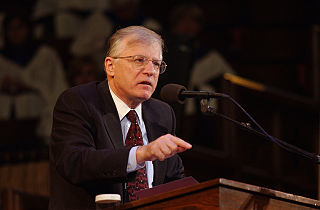
Dr. R.C. Sproul on the Essence of God’s Sovereignty in Our Salvation

The Pelagian Captivity of the Church

by R.C. Sproul

Shortly after the Reformation began, in the first few years after Martin Luther posted the Ninety-Five Theses on the church door at Wittenberg, he issued some short booklets on a variety of subjects. One of the most provocative was titled The Babylonian Captivity of the Church. In this book Luther was looking back to that period of Old Testament history when Jerusalem was destroyed by the invading armies of Babylon and the elite of the people were carried off into captivity. Luther in the sixteenth century took the image of the historic Babylonian captivity and reapplied it to his era and talked about the new Babylonian captivity of the Church. He was speaking of Rome as the modern Babylon that held the Gospel hostage with its rejection of the biblical understanding of justification. You can understand how fierce the controversy was, how polemical this title would be in that period by saying that the Church had not simply erred or strayed, but had fallen — that it’s actually now Babylonian; it is now in pagan captivity.

I’ve often wondered if Luther were alive today and came to our culture and looked, not at the liberal church community, but at evangelical churches, what would he have to say? Of course I can’t answer that question with any kind of definitive authority, but my guess is this: If Martin Luther lived today and picked up his pen to write, the book he would write in our time would be entitled The Pelagian Captivity of the Evangelical Church. Luther saw the doctrine of justification as fueled by a deeper theological problem. He writes about this extensively in The Bondage of the Will. When we look at the Reformation and we see the solas of the Reformation — sola Scriptura, sola fide, solus Christus, soli Deo gloria, sola gratia — Luther was convinced that the real issue of the Reformation was the issue of grace; and that underlying the doctrine of solo fide, justification by faith alone, was the prior commitment to sola gratia, the concept of justification by grace alone.

In the Fleming Revell edition of The Bondage of the Will, the translators, J. I. Packer and O. R. Johnston, included a somewhat provocative historical and theological introduction to the book itself. This is from the end of that introduction:

These things need to be pondered by Protestants today. With what right may we call ourselves children of the Reformation? Much modern Protestantism would be neither owned nor even recognised by the pioneer Reformers. The Bondage of the Will fairly sets before us what they believed about the salvation of lost mankind. In the light of it, we are forced to ask whether Protestant Christendom has not tragically sold its birthright between Luther’s day and our own. Has not Protestantism today become more Erasmian than Lutheran? Do we not too often try to minimise and gloss over doctrinal differences for the sake of inter-party peace? Are we innocent of the doctrinal indifferentism with which Luther charged Erasmus? Do we still believe that doctrine matters? (J.I. Packer and O.R. Johnston, “Introduction” to the Bondage of the Will. Old Tappan, NJ: Fleming Revell, 1957: pp. 59-60)

Historically, it’s a simple matter of fact that Luther, Calvin, Zwingli, and all the leading Protestant theologians of the first epoch of the Reformation stood on precisely the same ground here. On other points they had their differences. In asserting the helplessness of man in sin and the sovereignty of God in grace, they were entirely at one. To all of them these doctrines were the very lifeblood of the Christian faith. A modern editor of Luther’s works says this:

Whoever puts this book down without having realized that Evangelical theology stands or falls with the doctrine of the bondage of the will has read it in vain. The doctrine of free justification by faith alone, which became the storm center of so much controversy during the Reformation period, is often regarded as the heart of the Reformers’ theology, but this is not accurate. The truth is that their thinking was really centered upon the contention of Paul, echoed by Augustine and others, that the sinner’s entire salvation is by free and sovereign grace only, and that the doctrine of justification by faith was important to them because it safeguarded the principle of sovereign grace. The sovereignty of grace found expression in their thinking at a more profound level still in the doctrine of monergistic regeneration (Ibid).

That is to say, that the faith that receives Christ for justification is itself the free gift of a sovereign God. The principle of sola fide is not rightly understood until it is seen as anchored in the broader principle of sola gratia. What is the source of faith? Is it the God-given means whereby the God-given justification is received, or is it a condition of justification which is left to man to fulfill? Do you hear the difference? Let me put it in simple terms. I heard an evangelist recently say, “If God takes a thousand steps to reach out to you for your redemption, still in the final analysis, you must take the decisive step to be saved.” Consider the statement that has been made by America’s most beloved and leading evangelical of the twentieth century, Billy Graham, who says with great passion, “God does ninety-nine percent of it but you still must do that last one percent.”

What Is Pelagianism?

Now, let’s return briefly to my title, “The Pelagian Captivity of the Church.” What are we talking about? Pelagius was a monk who lived in Britain in the fifth century. He was a contemporary of the greatest theologian of the first millennium of Church history if not of all time, Aurelius Augustine, Bishop of Hippo in North Africa. We have heard of St. Augustine, of his great works in theology, of his City of God, of his Confessions, and so on, which remain Christian classics.

Augustine, in addition to being a titanic theologian and a prodigious intellect, was also a man of deep spirituality and prayer. In one of his famous prayers, Augustine made a seemingly harmless and innocuous statement in the prayer to God in which he says: “O God, command what you wouldst, and grant what thou dost command.” Now, would that give you apoplexy — to hear a prayer like that? Well it certainly set Pelagius, this British monk, into orbit. When he heard that, he protested vociferously, even appealing to Rome to have this ghastly prayer censured from the pen of Augustine. Here’s why. He said, “Are you saying, Augustine, that God has the inherent right to command anything that he so desires from his creatures? Nobody is going to dispute that. God inherently, as the creator of heaven and earth, has the right to impose obligations on his creatures and say, ‘Thou shalt do this, and thou shalt not do that.’ ‘Command whatever thou would’ — it’s a perfectly legitimate prayer.”

It’s the second part of the prayer that Pelagius abhorred when Augustine said, “and grant what thou dost command.” He said, “What are you talking about? If God is just, if God is righteous and God is holy, and God commands of the creature to do something, certainly that creature must have the power within himself, the moral ability within himself, to perform it or God would never require it in the first place.” Now that makes sense, doesn’t it? What Pelagius was saying is that moral responsibility always and everywhere implies moral capability or, simply, moral ability. So why would we have to pray, “God grant me, give me the gift of being able to do what you command me to do”? Pelagius saw in this statement a shadow being cast over the integrity of God himself, who would hold people responsible for doing something they cannot do.

So in the ensuing debate, Augustine made it clear that in creation, God commanded nothing from Adam or Eve that they were incapable of performing. But once transgression entered and mankind became fallen, God’s law was not repealed nor did God adjust his holy requirements downward to accommodate the weakened, fallen condition of his creation. God did punish his creation by visiting upon them the judgment of original sin, so that everyone after Adam and Eve who was born into this world was born already dead in sin. Original sin is not the first sin. It’s the result of the first sin; it refers to our inherent corruption, by which we are born in sin, and in sin did our mothers conceive us. We are not born in a neutral state of innocence, but we are born in a sinful, fallen condition. Virtually every church in the historic World Council of Churches at some point in their history and in their creedal development articulates some doctrine of original sin. So clear is that to the biblical revelation that it would take a repudiation of the biblical view of mankind to deny original sin altogether.

This is precisely what was at issue in the battle between Augustine and Pelagius in the fifth century. Pelagius said there is no such thing as original sin. Adam’s sin affected Adam and only Adam. There is no transmission or transfer of guilt or fallenness or corruption to the progeny of Adam and Eve. Everyone is born in the same state of innocence in which Adam was created. And, he said, for a person to live a life of obedience to God, a life of moral perfection, is possible without any help from Jesus or without any help from the grace of God. Pelagius said that grace — and here’s the key distinction — facilitates righteousness. What does “facilitate” mean?

It helps, it makes it more facile, it makes it easier, but you don’t have to have it. You can be perfect without it. Pelagius further stated that it is not only theoretically possible for some folks to live a perfect life without any assistance from divine grace, but there are in fact people who do it. Augustine said, “No, no, no, no . . . we are infected by sin by nature, to the very depths and core of our being — so much so that no human being has the moral power to incline himself to cooperate with the grace of God. The human will, as a result of original sin, still has the power to choose, but it is in bondage to its evil desires and inclinations. The condition of fallen humanity is one that Augustine would describe as the inability to not sin. In simple English, what Augustine was saying is that in the Fall, man loses his moral ability to do the things of God and he is held captive by his own evil inclinations.

In the fifth century the Church condemned Pelagius as a heretic. Pelagianism was condemned at the Council of Orange, and it was condemned again at the Council of Florence, the Council of Carthage, and also, ironically, at the Council of Trent in the sixteenth century in the first three anathemas of the Canons of the Sixth Session. So, consistently throughout Church history, the Church has roundly and soundly condemned Pelagianism  —  because Pelagianism denies the fallenness of our nature; it denies the doctrine of original sin.

Now what is called semi-Pelagianism, as the prefix “semi” suggests, was a somewhat middle ground between full-orbed Augustinianism and full-orbed Pelagianism. Semi-Pelagianism said this: yes, there was a fall; yes, there is such a thing as original sin; yes, the constituent nature of humanity has been changed by this state of corruption and all parts of our humanity have been significantly weakened by the fall, so much so that without the assistance of divine grace nobody can possibly be redeemed, so that grace is not only helpful but it’s absolutely necessary for salvation. While we are so fallen that we can’t be saved without grace, we are not so fallen that we don’t have the ability to accept or reject the grace when it’s offered to us. The will is weakened but is not enslaved. There remains in the core of our being an island of righteousness that remains untouched by the fall. It’s out of that little island of righteousness, that little parcel of goodness that is still intact in the soul or in the will that is the determinative difference between heaven and hell. It’s that little island that must be exercised when God does his thousand steps of reaching out to us, but in the final analysis it’s that one step that we take that determines whether we go to heaven or hell — whether we exercise that little righteousness that is in the core of our being or whether we don’t. That little island Augustine wouldn’t even recognize as an atoll in the South Pacific. He said it’s a mythical island, that the will is enslaved, and that man is dead in his sin and trespasses.

Ironically, the Church condemned semi-Pelagianism as vehemently as it had condemned original Pelagianism. Yet by the time you get to the sixteenth century and you read the Catholic understanding of what happens in salvation the Church basically repudiated what Augustine taught and Aquinas taught as well. The Church concluded that there still remains this freedom that is intact in the human will and that man must cooperate with — and assent to — the prevenient grace that is offered to them by God. If we exercise that will, if we exercise a cooperation with whatever powers we have left, we will be saved. And so in the sixteenth century the Church reembraced semi-Pelagianism.

At the time of the Reformation, all the reformers agreed on one point: the moral inability of fallen human beings to incline themselves to the things of God; that all people, in order to be saved, are totally dependent, not ninety-nine percent, but one hundred percent dependent upon the monergistic work of regeneration in order to come to faith, and that faith itself is a gift of God. It’s not that we are offered salvation and that we will be born again if we choose to believe. But we can’t even believe until God in his grace and in his mercy first changes the disposition of our souls through his sovereign work of regeneration. In other words, what the reformers all agreed with was, unless a man is born again, he can’t even see the kingdom of God, let alone enter it. Like Jesus says in the sixth chapter of John, “No man can come to me unless it is given to him of the Father” — that the necessary condition for anybody’s faith and anybody’s salvation is regeneration.

Evangelicals and Faith

Modern Evangelicalism almost uniformly and universally teaches that in order for a person to be born again, he must first exercise faith. You have to choose to be born again. Isn’t that what you hear? In a George Barna poll, more than seventy percent of “professing evangelical Christians” in America expressed the belief that man is basically good. And more than eighty percent articulated the view that God helps those who help themselves. These positions — or let me say it negatively — neither of these positions is semi-Pelagian. They’re both Pelagian. To say that we’re basically good is the Pelagian view. I would be willing to assume that in at least thirty percent of the people who are reading this issue, and probably more, if we really examine their thinking in depth, we would find hearts that are beating Pelagianism. We’re overwhelmed with it. We’re surrounded by it. We’re immersed in it. We hear it every day. We hear it every day in the secular culture. And not only do we hear it every day in the secular culture, we hear it every day on Christian television and on Christian radio.

In the nineteenth century, there was a preacher who became very popular in America, who wrote a book on theology, coming out of his own training in law, in which he made no bones about his Pelagianism. He rejected not only Augustinianism, but he also rejected semi-Pelagianism and stood clearly on the subject of unvarnished Pelagianism, saying in no uncertain terms, without any ambiguity, that there was no Fall and that there is no such thing as original sin. This man went on to attack viciously the doctrine of the substitutionary atonement of Christ, and in addition to that, to repudiate as clearly and as loudly as he could the doctrine of justification by faith alone by the imputation of the righteousness of Christ. This man’s basic thesis was, we don’t need the imputation of the righteousness of Christ because we have the capacity in and of ourselves to become righteous. His name: Charles Finney, one of America’s most revered evangelists. Now, if Luther was correct in saying that sola fide is the article upon which the Church stands or falls, if what the reformers were saying is that justification by faith alone is an essential truth of Christianity, who also argued that the substitutionary atonement is an essential truth of Christianity; if they’re correct in their assessment that those doctrines are essential truths of Christianity, the only conclusion we can come to is that Charles Finney was not a Christian. I read his writings and I say, “I don’t see how any Christian person could write this.” And yet, he is in the Hall of Fame of Evangelical Christianity in America. He is the patron saint of twentieth-century Evangelicalism. And he is not semi-Pelagian; he is unvarnished in his Pelagianism.

The Island of Righteousness

One thing is clear: that you can be purely Pelagian and be completely welcome in the evangelical movement today. It’s not simply that the camel sticks his nose into the tent; he doesn’t just come in the tent — he kicks the owner of the tent out. Modern Evangelicalism today looks with suspicion at Reformed theology, which has become sort of the third-class citizen of Evangelicalism. Now you say, “Wait a minute, R. C. Let’s not tar everybody with the extreme brush of Pelagianism, because, after all, Billy Graham and the rest of these people are saying there was a Fall; you’ve got to have grace; there is such a thing as original sin; and semi-Pelagians do not agree with Pelagius’ facile and sanguine view of unfallen human nature.” And that’s true. No question about it. But it’s that little island of righteousness where man still has the ability, in and of himself, to turn, to change, to incline, to dispose, to embrace the offer of grace that reveals why historically semi-Pelagianism is not called semi-Augustinianism, but semi-Pelagianism.

I heard an evangelist use two analogies to describe what happens in our redemption. He said sin has such a strong hold on us, a stranglehold, that it’s like a person who can’t swim, who falls overboard in a raging sea, and he’s going under for the third time and only the tops of his fingers are still above the water; and unless someone intervenes to rescue him, he has no hope of survival, his death is certain. And unless God throws him a life preserver, he can’t possibly be rescued. And not only must God throw him a life preserver in the general vicinity of where he is, but that life preserver has to hit him right where his fingers are still extended out of the water, and hit him so that he can grasp hold of it. It has to be perfectly pitched. But still that man will drown unless he takes his fingers and curls them around the life preserver and God will rescue him. But unless that tiny little human action is done, he will surely perish.

The other analogy is this: A man is desperately ill, sick unto death, lying in his hospital bed with a disease that is fatal. There is no way he can be cured unless somebody from outside comes up with a cure, a medicine that will take care of this fatal disease. And God has the cure and walks into the room with the medicine. But the man is so weak he can’t even help himself to the medicine; God has to pour it on the spoon. The man is so sick he’s almost comatose. He can’t even open his mouth, and God has to lean over and open up his mouth for him. God has to bring the spoon to the man’s lips, but the man still has to swallow it.

Now, if we’re going to use analogies, let’s be accurate. The man isn’t going under for the third time; he is stone cold dead at the bottom of the ocean. That’s where you once were when you were dead in sin and trespasses and walked according to the course of this world, according to the prince of the power of the air. And while you were dead hath God quickened you together with Christ. God dove to the bottom of the sea and took that drowned corpse and breathed into it the breath of his life and raised you from the dead. And it’s not that you were dying in a hospital bed of a certain illness, but rather, when you were born you were born D.O.A. That’s what the Bible says: that we are morally stillborn.

Do we have a will? Yes, of course we have a will. Calvin said, if you mean by a free will a faculty of choosing by which you have the power within yourself to choose what you desire, then we all have free will. If you mean by free will the ability for fallen human beings to incline themselves and exercise that will to choose the things of God without the prior monergistic work of regeneration then, said Calvin, free will is far too grandiose a term to apply to a human being.

The semi-Pelagian doctrine of free will prevalent in the evangelical world today is a pagan view that denies the captivity of the human heart to sin. It underestimates the stranglehold that sin has upon us.

None of us wants to see things as bad as they really are. The biblical doctrine of human corruption is grim. We don’t hear the Apostle Paul say, “You know, it’s sad that we have such a thing as sin in the world; nobody’s perfect. But be of good cheer. We’re basically good.” Do you see that even a cursory reading of Scripture denies this?

Now back to Luther. What is the source and status of faith? Is it the God-given means whereby the God-given justification is received? Or is it a condition of justification which is left to us to fulfill? Is your faith a work? Is it the one work that God leaves for you to do? I had a discussion with some folks in Grand Rapids, Michigan, recently. I was speaking on sola gratia, and one fellow was upset.

He said, “Are you trying to tell me that in the final analysis it’s God who either does or doesn’t sovereignly regenerate a heart?”

And I said, “Yes;” and he was very upset about that. I said, “Let me ask you this: are you a Christian?”

He said, “Yes.”

I said, “Do you have friends who aren’t Christians?”

He said, “Well, of course.”

I said, “Why are you a Christian and your friends aren’t? Is it because you’re more righteous than they are?” He wasn’t stupid. He wasn’t going to say, “Of course it’s because I’m more righteous. I did the right thing and my friend didn’t.” He knew where I was going with that question.

And he said, “Oh, no, no, no.”

I said, “Tell me why. Is it because you are smarter than your friend?”

And he said, “No.”

But he would not agree that the final, decisive issue was the grace of God. He wouldn’t come to that. And after we discussed this for fifteen minutes, he said, “OK! I’ll say it. I’m a Christian because I did the right thing, I made the right response, and my friend didn’t.”

What was this person trusting in for his salvation? Not in his works in general, but in the one work that he performed. And he was a Protestant, an evangelical. But his view of salvation was no different from the Roman view.

God’s Sovereignty in Salvation

This is the issue: Is it a part of God’s gift of salvation, or is it in our own contribution to salvation? Is our salvation wholly of God or does it ultimately depend on something that we do for ourselves? Those who say the latter, that it ultimately depends on something we do for ourselves, thereby deny humanity’s utter helplessness in sin and affirm that a form of semi-Pelagianism is true after all. It is no wonder then that later Reformed theology condemned Arminianism as being, in principle, both a return to Rome because, in effect, it turned faith into a meritorious work, and a betrayal of the Reformation because it denied the sovereignty of God in saving sinners, which was the deepest religious and theological principle of the reformers’ thought. Arminianism was indeed, in Reformed eyes, a renunciation of New Testament Christianity in favor of New Testament Judaism. For to rely on oneself for faith is no different in principle than to rely on oneself for works, and the one is as un-Christian and anti-Christian as the other. In the light of what Luther says to Erasmus there is no doubt that he would have endorsed this judgment.

And yet this view is the overwhelming majority report today in professing evangelical circles. And as long as semi-Pelagianism, which is simply a thinly veiled version of real Pelagianism at its core — as long as it prevails in the Church, I don’t know what’s going to happen. But I know, however, what will not happen: there will not be a new Reformation. Until we humble ourselves and understand that no man is an island and that no man has an island of righteousness, that we are utterly dependent upon the unmixed grace of God for our salvation, we will not begin to rest upon grace and rejoice in the greatness of God’s sovereignty, and we will not be rid of the pagan influence of humanism that exalts and puts man at the center of religion. Until that happens there will not be a new Reformation, because at the heart of Reformation teaching is the central place of the worship and gratitude given to God and God alone. Soli Deo gloria, to God alone be the glory.

About the Author: Dr. R.C. Sproul is the founder and chairman of Ligonier Ministries, an international Christian education ministry located near Orlando, Florida. His teaching can be heard on the program Renewing Your Mind, which is broadcast on hundreds of radio outlets in the United States and in 40 countries worldwide. He is the executive editor of Tabletalk magazine and general editor of The Reformation Study Bible, and the author of more than seventy books (including some of my all time favorites: The Work of ChristThe Holiness of God; Chosen By God; Reason to Believe; Knowing Scripture; Willing to Believe; The Intimate Marriage; Pleasing God; If There’s A God, Why Are There Atheists?, and Defending The Faith) and scores of articles for national evangelical publications. Dr. Sproul also serves as president of Ligonier Academy of Biblical and Theological Studies and Reformation Bible College. He currently serves as Senior Minister of preaching and teaching at Saint Andrew’s in Sanford, FL. The article above was adapted from Modern Reformation, Vol 10, Number 3 (May/June 2001), pp. 22-29.

Dr. Erwin W. Lutzer on the Great Need For Revival in America Today

“America’s Spiritual Crisis”

Despite its foundational Christian heritage, America is rapidly degenerating into a godless society. The church in America, although highly visible and active, appears powerless to redirect the rushing secular currents. Mired in a moral and spiritual crisis, America’s only hope is a national revival, like God has graciously bestowed in the past.

The Removal of God. From the beginning, Christian values ingrained America’s political and social fabric. Its democratic form of government was founded on faith in God. To this day United States currency bears the inscription, “In God We Trust.” America flourished while Christianity permeated all aspects of life, including the laws, education, and culture.

The powers in America today, however, have chosen a path of rejecting God and His ways. Federal courts have interpreted our constitution as requiring that the Bible, prayer and religious discussion be removed from classrooms, community buildings and places of public gatherings. Government officials and educators across the country are systematically eliminating any vestiges of God from society. Militant secularists will not be satisfied until God is expunged from every facet of American life.

American laws are being reinterpreted and rewritten to sanction what is abominable to a holy God. In 1973 the Supreme Court legalized abortion for any reason, and Congress subsequently passed a law providing government funds for such barbarous acts. Old laws making homosexual practices criminal are being repealed, and new legislation is being enacted requiring society to support such lifestyles. While religious discussion is gagged, pornography is permitted to saturate our culture.

Our society is fast becoming openly hostile to Christian values. The media trivializes and ridicules Christianity in the name of humanistic and pluralistic concerns. American culture is dominated by television and movies, whose profanity and lewdness tramp God’s honor into the mud, inculcating non -Christian values from infancy. Public schools teach our children how to practice various forms of immorality. One school curriculum in America teaches acceptance of homosexuality in the first grade and mutual masturbation in junior high.

America is reaping the dire consequences of rejecting God. Our society is morally bankrupt, and the problems seem resistant to government cures. William J. Bennet, in his Index of Leading Cultural Indicators, provides the following statistics for the past 30 years. Despite increased funding and stricter laws, violent crime has increased more than 500 percent. While sex education programs have proliferated, illegitimate births have increased over 400 percent, significantly among teenagers. The divorce rate has quadrupled, and single parent homes have become the majority. Our young people today exhibit a hopelessness, with a more than 200 percent increase in the teenage suicide rate. And America appears helpless before its great problems.

The Church’s Ineffectiveness. The church in America, despite its many activities and apparent successfulness, has had no measurable affect in reversing this downward spiral. We must candidly admit that no country has had more Christian organizations, more radio stations, more books, more seminars, and more churches with proportionately less impact on society. We are confounded with the pollsters who tell us that religion is up but morality is down.

Sadly, the influence has been in the wrong direction, as we see evidence that our culture has begun to permeate our churches. The church is seduced by the social agenda of wealth and pleasure, and has condoned sinful compromises. There is moral decay within the church, with highly publicized scandals involving ministers, and divorce statistics which are not much better than those outside the church. Think of all that we and our churches would have to repent of if a spirit of holiness began to captivate us. How can America be influenced by an inconsistent and hypocritical church?

If the strength of the church should be determined by its impact on its surrounding culture, we desperately need an injection of spiritual life. The present powerlessness of the church may be a sign that God has withdrawn His blessing that we might seek Him.

A National Revival Needed. There is reason to believe that only a national revival can pull us out of the ditch into which we have slid. I am convinced ‘ as all of us must be ‘ that every human resource is now inadequate and only the direct intervention of God can reverse our country’s spiritual decay. If America will really be given another chance, at least some kingdoms of darkness will have to fall like dominoes. That can only happen if God chooses to show us the mercy we most assuredly do not deserve.

America has experienced three great periods of revival in the previous two centuries, during which all of society was dramatically affected. There was a widespread restoration of the people of God, that resulted in tens of thousands of conversions greatly affecting the culture of the day. America returned to its Christian roots. Taverns were closed, families were reconciled, and young people became sober in their pursuit of God.

From our past, we learn the clear lesson that a genuine spiritual revival can do more to transform culture than all of our political/social activism. We need a renewal that can only be effected by widespread repentance before the Almighty whom we have so grievously offended. The forces of evil are so deeply entrenched that any cultural shifts will only be cosmetic unless they are accompanied by a spiritual awakening that affects large segments of our population.

When Ephesus experienced revival, the people brought their occult books and artifacts, and publicly burned them (Acts 19:18-19). What bonfires of pornography, rock music, artifacts, and books of occultism we would have if God’s presence was manifestly felt!

There is Hope. Revival is possible as long as God is God. Jonathan Edwards, a leader during the First Great Awakening in America, argued that God grants light when the darkness is the greatest, and it was in just such times that the glorious periods of revival occurred in America’s history. When there was disinterest in religion, gross immorality and rampant unbelief, God poured out His undeserved gracious blessing.

So let’s dream for a while: Catch the vision of crowded churches from coast to coast, shops closing during the noon hours for special prayer, and our legislators turning to God for wisdom in making decisions. Think of the nightly news telling the story of tens of thousands of believers making restitution for past wrongs, and reports of thousands of conversions to Christ.

Imagine a country where abortion would become rare, not just through legislation but because mothers valued their children and immorality was on the decline. Imagine a country in which homosexuals repented and sought God for help in overcoming their lifestyles rather than imposing their values on society. Imagine a country where the courts would reflect America’s Christian roots.

We must believe God for something more than our generation has seen. May our sights be raised and our faith increased, to fervently seek God for a national revival. What God has done in the past, He can do again!

About the Author: Since 1980, Erwin W. Lutzer has served as senior pastor of the world-famous Moody Church in Chicago, where he provides leadership to Chicago pastors. Dr. Lutzer earned his B.Th. from Winnipeg Bible College, a Th.M. from Dallas Theological Seminary, an M.A. in philosophy from Loyola University, an LL.D. from Simon Greenleaf School of Law, and a D.D. from Western Conservative Baptist Seminary.

Dr. Lutzer is a featured radio speaker on the Moody Broadcasting Network and the author of numerous books, including The Vanishing Power of Death, Cries from the Cross, the best-selling One Minute Before You Die and Hitler’s Cross, which received the Evangelical Christian Publishers Association (EPCA) Gold Medallion Book Award. He speaks both nationally and internationally at Bible conferences and tours and has led tours of the cities of the Protestant Reformation in Europe.

Dr. Lutzer and his wife, Rebecca, live in the Chicago area and are the parents of three grown children.The article above was adapted from: http://articles.ochristian.com/article3157.shtml. If you would like to read more on the theme of this article check out his short book Is God on America’s Side? The Surprising Answer and How It Affects Our Future.

Preacher: Do You Have A Theology of Preaching?

“A Theology of Preaching”

By Dr. R. Albert Mohler, Jr.,

“Preach the word!” That simple imperative frames the act of preaching as an act of obedience (see 2 Tim. 4:2, NIV). That is where any theology of preaching must begin.

Preaching did not emerge from the church’s experimentation with communication techniques. The church does not preach because preaching is thought to be a good idea or an effective technique. The sermon has not earned its place in Christian worship by proving its utility in comparison with other means of communication or aspects of worship. Rather, we preach because we have been commanded to preach.

Preaching is a commission—a charge. As Paul stated boldly, it is the task of the minister of the gospel to “preach the Word, … in season and out of season” (2 Tim. 4:2,  NIV). Paul begins with the humble acknowledgment that preaching is not a human invention but a gracious creation of God and a central part of His revealed will for the church. Furthermore, preaching is distinctively Christian in its origin and practice. Other religions may include teaching, or even public speech and calls to prayer. However, the preaching act is sui generis, a function of the church established by Jesus Christ.

As John A. Broadus stated: “Preaching is characteristic of Christianity. No other religion has made the regular and frequent assembling of groups of people, to hear religious instruction and exhortation, an integral part of divine worship” (John A. Broadus, On the Preparation and Delivery of Sermons, rev. Vernon L. Stanfield. San Francisco: Harper and Row, 1979, iv.). The importance of preaching is rooted in Scripture and revealed in the unfolding story of the church. The church has never been faithful when it has lacked fidelity in the pulpit. In the words of P. T. Forsyth: “With preaching Christianity stands or falls, because it is the declaration of the gospel” (P. T. Forsyth, Positive Preaching and the Modern Mind. Grand Rapids: Eerdmans, 1964, 5).

The church cannot but preach lest it deny its own identity and abdicate its ordained purpose. Preaching is communication, but not mere communication. It is human speech, but much more than speech. As Ian Pitt-Watson notes, preaching is not even “a kind of speech communication that happens to be about God” (Ian Pitt-Watson, A Primer for Preachers. Grand Rapids: Baker Book House, 1986, 14). Its ground, its goal, and its glory are all located in the sovereign will of God.

The act of preaching brings forth a combination of exposition, testimony, exhortation, and teaching. Still, preaching cannot be reduced to any of these, or even to the sum total of its individual parts combined.

The primary Greek form of the word “preach” (kērusso) reveals its intrinsic rootage in the kerygma—the gospel itself. Preaching is an inescapably theological act, for the preacher dares to speak of God and, in a very real sense, for God. A theology of preaching should take trinitarian form, reflecting the very nature of the self-revealing God. In so doing, it bears witness to the God who speaks, the Son who saves, and the Spirit who illuminates.

The God Who Speaks

True preaching begins with this confession: we preach because God has spoken. That fundamental conviction is the fulcrum of the Christian faith and of Christian preaching. The Creator God of the universe, the omniscient, omnipotent, omnipresent Lord chose of His own sovereign will to reveal Himself to us. Supreme and complete in His holiness, needing in nothing and hidden from our view, God condescended to speak to us—even to reveal Himself to us.

As Carl F. H. Henry suggests, revelation is “a divinely initiated activity, God’s free communication by which He alone turns His personal privacy into a deliberate disclosure of His reality” (Carl F. H. Henry, God, Revelation and Authority, Vol. 2. Waco: Word Books, 1976, 17). In an act of holy graciousness, God gave up His comprehensive privacy that we might know Him. God’s revelation is the radical claim upon which we dare to speak of God—He has spoken!

Our God-talk must therefore begin and end with what God has spoken concerning Himself. Preaching is not the business of speculating about God’s nature, will, or ways, but is bearing witness to what God has spoken concerning Himself. Preaching does not consist of speculation but of exposition.

The preacher dares to speak the Word of truth to a generation which rejects the very notion of objective, public truth. This is not rooted in the preacher’s arrogant claim to have discovered worldly wisdom or to have penetrated the secrets of the universe. To the contrary, the preacher dares to proclaim truth on the basis of God’s sovereign self-disclosure. God has spoken, and He has commanded us to speak of Him.

The Bible bears witness to itself as the written Word of God. This springs from the fact that God has spoken. In the Old Testament alone, the phrases “the Lord said,” “the Lord spoke,” and “the word of the Lord came” appear at least 3,808 times (As cited in Martyn Lloyd-Jones, Authority. London: InterVarsity Press, 1958, 50). This confession brings the preacher face to face with Scripture as divine revelation. The authority of Scripture is none other than the authority of God Himself. As the Reformation formula testifies, “where Scripture speaks, God speaks.” The authority of the preacher is intrinsically rooted in the authority of the Bible as the church’s Book and the unblemished Word of God. Its total truthfulness is a witness to God’s own holiness. We speak because God has spoken, and because He has given us His Word.

As Scripture itself records, God has called the church to speak of Him on the basis of His Word and deeds. All Christian preaching is biblical preaching. That formula is axiomatic. Those who preach from some other authority or text may speak with great effect and attractiveness, but they are preaching “another gospel,” and their words will betray them. Christian preaching is not an easy task. Those who are called to preach bear a heavy duty. As Martin Luther confessed “If I could come down with a good conscience, I would rather be stretched out on a wheel and carry stones than preach one sermon.” Speaking on the basis of what God has spoken is both arduous and glorious.

A theology of preaching begins with the confession that the God who speaks has ultimate claim upon us. He who spoke a word and brought a world into being created us from the dust. God has chosen enlivened dust—and all creation—to bear testimony to His glory.

In preaching, finite, frail, and fault-ridden human beings bear bold witness to the infinite, all-powerful, and perfect Lord. Such an endeavor would smack of unmitigated arrogance and over-reaching were it not for the fact that God Himself has set us to the task. In this light, preaching is not an act of arrogance, but of humility. True preaching is not an exhibition of the brilliance or intellect of the preacher, but an exposition of the wisdom and power of God.

This is possible only when the preacher stands in submission to the text of Scripture. The issue of authority is inescapable. Either the preacher or the text will be the operant authority. A theology of preaching serves to remind those who preach of the danger of confusing our own authority with that of the biblical text. We are called, not only to preach, but to preach the Word.

Acknowledging the God who speaks as Lord is to surrender the preaching event in an act of glad submission. Preaching thus becomes the occasion for the Word of the Lord to break forth anew. This occasion itself represents the divine initiative, for it is God Himself, and not the preacher, who controls His Word.

John Calvin understood this truth when he affirmed that “The Word goeth out of the mouth of God in such a manner that it likewise goeth out of the mouth of men; for God does not speak openly from heaven but employs men as His instruments” (John Calvin, Commentary on Isaiah [55:11], Corpus Reformatorum 37.291, cited in Ronald S. Wallace, “The Preached Word as the Word of God,” in Readings in Calvin’s Theology, ed. Donald McKim. Grand Rapids: Baker Book House, 1984, 231). Calvin understood preaching to be the process by which God uses human instruments to speak what He Himself has spoken. This He accomplishes through the preaching of Scripture under the illumination and testimonium of the Holy Spirit. God uses preachers, Calvin offered, “rather than to thunder at us and drive us away” (John Calvin, Institutes of the Christian Religion, IV.1.5, tr. Floyd Lewis Battles, ed. John T. McNeill, 2 vols. Philadelphia: Westminster Press, 1960, 1018). Further, “it is a singular privilege that He deigns to consecrate to Himself the mouths and toungues [sic] of men in order that His voice may resound in them” (Ibid).

Thus, preaching springs from the truth that God has spoken in word and deed and that He has chosen human vessels to bear witness to Himself and His gospel. We speak because we cannot be silent. We speak because God has spoken.

The Son Who Saves

“In the past,” wrote the author of Hebrews, “God spoke to our forefathers through the prophets at many times and in various ways, but in these last days He has spoken to us by His Son, whom He appointed heir of all things, and through whom He made the universe” (Heb. 1:1–2, NIV). The God who reveals Himself (Deus Revelatus) has spoken supremely and definitively through His Son.

Carl F. H. Henry once stated that only a theology “abreast of divine invasion” could lay claim upon the church. The same holds true for a theology of preaching. All Christian preaching is unabashedly Christological.

Christian preaching points to the incarnation of God in Christ as the stackpole of truth and the core of Christian confession. “God was in Christ, reconciling the world unto Himself” (2 Cor. 5:19). Thus, preaching is itself an act of grace, making clear God’s initiative toward us in Christ. Preaching is one means by which the redeemed bear witness to the Son who saves. That message of divine salvation, the unmerited act of God in Christ, is the criterion by which all preaching is to be judged.

With this in mind, all preaching is understood to be rooted in the incarnation. As the apostle John declared, God spoke to us by means of His Son, the Word, and that Word was made flesh and dwelt among us (1:14). All human speech is rendered mute by the incarnate Word of God. Yet, at the same time, the incarnation allows us to speak of God in the terms He has set for Himself—in the identity of Jesus the Christ.

Preaching is itself incarnational. In the preaching event a human being stands before a congregation of fellow humans to speak the most audacious words ever encountered or uttered by the human species: God has made Himself known in His Son, through whom He has also made provision for our salvation.

As Karl Barth insisted, all preaching must have a thrust. The thrust cannot come from the energy, earnestness, or even the conviction of the preacher. “The sermon,” asserted Barth, “takes its thrust when it begins: The Word became flesh … once and for all, and when account of this is taken in every thought” (Karl Barth, Homiletics, tr. Geoffrey Bromiley and Donald W. Daniels. Louisville: Westminster/John Knox Press, 1991, 52). The power of the sermon does not lie in the domain of the preacher, but in the providence of God. Preaching does not demonstrate the power of the human instrument, but of the biblical message of God’s words and deeds.

Jesus serves as our model, as well as the content of our preaching. As Mark recorded in his Gospel, “Jesus came preaching” (1:14), and His model of preaching as the unflinching forth-telling of God’s gracious salvation is the ultimate standard by which all human preaching is to be judged. Jesus Himself sent His disciples out to preach repentance (Mark 6:12). The church received its charge to “preach the good news to all creation” (Mark 16:15). Preaching is, as Christ made clear, an extension of His own will and work. The church preaches because it has been commanded to do so.

If preaching takes its ground and derives its power from God’s revelation in the Son, then the cross looms as the paramount symbol and event of Christian proclamation. “We preach not ourselves,” pressed Paul, “but Jesus Christ as Lord” (2 Cor. 4:5). That message was centered on the cross as the definitive criterion of preaching. Paul understood that the cross is simultaneously the most divisive and the most unifying event in human history. The preaching of the cross—the proclamation of the substitutionary atonement wrought by the sinless Son of God—“is foolishness to those who are perishing, but to those of us who are being saved, it is the power of God” (1 Cor. 1:18).

Any honest and faithful theology of preaching must acknowledge that charges of foolishness are not incidental to the homiletical task. They are central. Those seeking worldly wisdom or secret signs will be frustrated with what we preach, for the cross is the abolition of both. The Christian preacher dares not speak a message which will appeal to the sign-seekers and wisdom-lovers, “lest the cross of Christ be emptied of its power” (1 Cor. 1:17). As James Denney stated plainly, “No man can give at once the impression that he himself is clever and that Jesus Christ is mighty to save.”

Beyond this, Paul indicated the danger of ideological temptations and the allure of “technique” as threats to the preaching of the gospel. Writing to the church at Corinth, Paul explained: “My message and my preaching were not with wise and persuasive words, but with a demonstration of the Spirit’s power, so that your faith might not rest on men’s wisdom, but on God’s power” (1 Cor. 2:4–5, NIV).

To preach the gospel of the Son who saves is to forfeit all claim or aim to make communication technique or human persuasion the measure of homiletical effectiveness. Preaching is effective when it is faithful. The effect is in the hands of God.

The preacher dares to speak for God, on the basis of what God has spoken concerning Himself and His ways, and that means speaking the word of the cross. That underscores the humility of preaching. As John Piper suggests, the act of preaching is “both a past event of substitution and a present event of execution” (John Piper, The Supremacy of Christ in Preaching. Grand Rapids: Baker Book House, 1990, 35). Only the redeemed, those who know the cross as the power and wisdom of God, understand the glory and the burden of preaching. To the world of unbelief, such words are senseless prattle.

To preach the message of the Son who saves is to spread the world’s most hopeful message. All Christian preaching is resurrection preaching. A theology of preaching includes both a “theology of the cross” and a “theology of glory.” The glory is not the possession of the church, much less the preacher, but of God Himself.

The cross brings the eclipse of all human pretensions and enlightenment, but the empty tomb reveals the radiant sunrise of God’s personal glory. If Christ has not been raised, asserted Paul, “our preaching is useless” (1 Cor. 15:14, NIV). This glimpse of God’s glory does not afford the church or the preacher a sense of triumphalism or self-sufficiency. To the contrary, it points to the sufficiency of God and to the glory only He enjoys—a glory He has shared with us in the person and work of Jesus Christ. The reflection of that revelation is the radiance and glory of preaching.

The Spirit Who Illuminates

The preacher stands before the congregation as the external minister of the Word, but the Holy Spirit works as the internal minister of that same Word. A theology of preaching must take the role of the Spirit into full view, for without an understanding of the work of the Spirit, the task of preaching is robbed of its balance and power.

The neglect of the work of the Spirit is one evidence of the decline of biblical trinitarianism in our midst. Charles H. Spurgeon warned, “You might as well expect to raise the dead by whispering in their ears, as hope to save souls by preaching to them, if it were not for the agency of the Holy Spirit” (Charles H. Spurgeon, New Park Street Pulpit, 5.211). The Spirit performs His work of inspiration, indwelling, regeneration, and sanctification as the inner minister of the Word; it is the Spirit’s ministry of illumination that allows the Word of the Lord to break forth.

Both the preacher and the hearers are dependent upon the illumination granted by the Holy Spirit for any understanding of the text. As Calvin warned, “No one should now hesitate to confess that he is able to understand God’s mysteries only in so far as he is illumined by God’s grace. He who attributes any more understanding to himself is all the more blind because he does not recognize his own blindness” (Calvin, Institutes, II.2.21, 281). This has been the confession of great preachers from the first century to the present, and it will ever remain. Tertullian, for example, called the Spirit his “Vicar” who ministered the Word to himself and his congregation.

The Reformation saw a new acknowledgement of the union of Word and Spirit. This testimonium was understood to be the crucial means by which the Spirit imparted understanding. This trinitarian doctrine produced preaching that was both bold and humble; bold in its content but uttered forth by humble humans who knew their utter dependence upon God.

The same God who called forth human vessels and set them to preach also promised the power of the Spirit. Martyn Lloyd-Jones was aware that preachers often forget this promise:

Seek Him always. But go beyond seeking Him; expect Him. Do you expect anything to happen when you get up to preach in a pulpit? Or do you just say to yourself, “Well, I have prepared my address, I am going to give them this address; some of them will appreciate it and some will not”? Are you expecting it to be the turning point in someone’s life? That is what preaching is meant to do … Seek this power, expect this power, yearn for this power; and when the power comes, yield to Him (Martyn Lloyd-Jones, Preaching and Preachers. Grand Rapids: Zondervan, 1971, 325).

To preach “in the Spirit” is to preach with the acknowledgement that the human instrument has no control over the message—and no control over the Word as it is set loose within the congregation. The Spirit, as John declared, testifies, “because the Spirit is the truth” (1 John 5:6b, NIV).

Conclusion

J. I. Packer defined preaching as “the event of God bringing to an audience a Bible-based, Christ-related, life-impacting message of instruction and direction from Himself through the words of a spokesperson” (J. I. Packer, “Authority in Preaching,” The Gospel in the Modern World, ed. Martyn Eden and David F. Wells. London: InterVarsity Press). That rather comprehensive definition depicts the process of God speaking forth His Word, using human instruments to proclaim His message, and then calling men and women unto Himself. A theological analysis reveals that preaching is deadly business. As Spurgeon confirmed, “Life, death, hell, and worlds unknown may hang on the preaching and hearing of a sermon” (Charles H. Spurgeon, Metropolitan Tabernacle Pulpit 39. London: Alabaster and Passmore, 1862–1917: 170).

The apostle Paul revealed the logic of preaching when he asked, “How, then, can they call upon the one they have not believed in? And how can they believe in the one of whom they have not heard? And how can they hear without someone preaching to them?” (Rom. 10:14, NIV).

The preacher is a commissioned agent whose task is to speak because God has spoken, because the preacher has been entrusted with the telling of the gospel of the Son who saves, and because God has promised the power of the Spirit as the seal and efficacy of the preacher’s calling.

The ground of preaching is none other than the revelation which God has addressed to us in Scripture. The goal of preaching is no more and no less than faithfulness to this calling. The glory of preaching is that God has promised to use preachers and preaching to accomplish His purpose and bring glory unto Himself.

Therefore, a theology of preaching is essentially doxology. The ultimate purpose of the sermon is to glorify God and to reveal a glimpse of His glory to His creation. This is the sum and substance of the preaching task. That God would choose such a means to express His own glory is beyond our understanding; it is rooted in the mystery of the will and wisdom of God.

Yet, God has called out preachers and commanded them to preach. Preaching is not an act the church is called to defend but a ministry preachers are called to perform. Thus, whatever the season, the imperative stands: Preach the Word!


About the Author: R. Albert Mohler Jr. (PhD, Southern Baptist Theological Seminary) serves as the ninth president of Southern Seminary and as the Joseph Emerson Brown Professor of Christian Theology. Considered a leader among American evangelicals by Time and Christianity Today magazines, Dr. Mohler hosts a daily radio program for the Salem Radio Network and also writes a popular daily commentary on moral, cultural, and theological issues. Both can be accessed at http://www.albertmohler.com.

The Article above was adapted from the Handbook of Contemporary Preaching (Chapter One, pp. 13-20) edited by Michael Duduit. Nashville, TN: Broadman and Holman Press, 1992. Dr. Mohler is the author of several excellent books including: He is Not Silent: Preaching in a Postmodern World; Culture Shift: The Battle for the Moral Heart of America; Words From the Fire: Hearing the Voice of God in the 10 Commandments; and The Disappearance of God: Dangerous Beliefs in the New Spiritual Openness.

Dr. Tim Keller on Learning Contentment

Editor’s Note: This is a cross-post from Tim Keller’s blog at Redeemer City to City.

It’s remarkable to read David, the Warrior-King of Israel, writing these words from Psalm 131.

My heart is not proud, O LORD, my eyes are not haughty; I do not concern myself with great matters or things too wonderful for me. But I have stilled and quieted my soul; like a weaned child with its mother, like a weaned child is my soul within me.

The metaphor for spiritual maturity here is a “weaned child.” On the one hand, we are a child at the mother’s breast, an image of complete helplessness. We are completely dependent on God. Without him we can do nothing. On the other hand, we are aweaned child, an image of contentment. Unweaned children cry in mother’s arms until they get something from mother — her milk. Only then are they quiet. But a weaned child is satisfied just with mother herself, with her very presence.

Here we see depicted, vividly and compactly, what Job was taught through all his trials. We must love God for himself alone, not just for what he gives us. This is the essence of what, for Jonathan Edwards, distinguished “true grace” from “the experience of devils,” who hold sound doctrine and tremble before God (James 2:19.) Real grace on the heart leads us to see the “beauty and comeliness of divine things, as they are in themselves” (from the sermon by the same name in volume 25 of the Yale edition of Edwards’ works). We become satisfied with God himself. Even his transcendent holiness is enjoyed as a beautiful and magnificent thing, which fills the heart to contemplate, though we certainly get nothing out of it!

If grace has really changed our hearts, we don’t ultimately care if life goes the way we want it, as long as we have him. The joys of acclaim, wealth, and power are nothing compared to the eternal acclaim, wealth, and power we have in him. A “weaned child” is not just someone who knows this in principle, but who has worked gospel truths into his or her soul as spiritually sensed realities. Internally, this quiets the soul into profound contentment and poise. Externally, it means humility, a willingness to learn from others and also to trust God. The believer realizes that the reason God’s actions are often opaque is not because we are wise and he is foolish, but because he is too “great” and “wonderful” for us.

A Christian should never have the attitude toward God, “what have you done for me lately?” Spurgeon said about Psalm 131 that it was “one of the shortest psalms to read, but one of the longest to learn.”

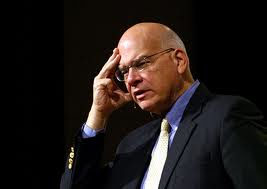
About Dr. Tim Keller: Is the Founding Pastor of Redeemer Presbyterian Church in Manhattan, N.Y. He is has written several best-selling books including: The Reason for God; The Prodigal God; The Meaning of Marriage; and Counterfeit God’s.

God Centered Encouragement With Summer Upon Us from Dr. John Piper

Does God Really Want Us To Be Encouraged?

Holidays are dangerous times of discouragement. The expectations for gladness are higher, so realities of sadness are heavier. You’re supposed to be gloomy in February; so it’s more tolerable then. But Thanksgiving and Christmas are supposed to be festive. Hence the double whammy of discouragement. May I offer some preventative medicine?

When God desired to show more convincingly to the heirs of the promise the unchangeable character of his purpose, he added an oath, so that through two unchangeable things (the promise and the oath), in which it is impossible that God should prove false, we who have fled for refuge might have strong encouragement to seize the hope set before us. (Hebrews 6:17-18)

“…God desired to show more convincingly…”

This text assumes that God had already said enough to give us encouragement. But God is not a God of minimums. His aim is not to speak as few encouraging words as possible. He speaks some words to give us hope. Then, being the effusive God he is, he says to himself, “This is good. I like doing this. I think that I shall do this again.” And so he speaks some more words of encouragement.

But not just more. They are better. He moves from simple promises (which are infallible and infinitely trustworthy!) to oaths. And not just any oaths, but the best and highest kind—oaths based on himself. Why? Not because his word is weak. But because we are weak, and he is patient.

He desires to “show…prove…demonstrate…point out…represent…display…reveal… drive home” the hopefulness of our future. He really wants us to feel this. He goes the second (and third and fourth) mile to help us feel encouraged. This is what he wants. This is what he really wants. “When God desired to show more convincingly…”

“…that we might have strong encouragement…”

How encouraged does God want us to feel? He said, “Strong encouragement!” Note the word! He might have said, “great encouragement” or “big encouragement” or “deep encouragement”. They would all be true. But the word is really “strong”. Encouragement that stands against seasonal downers. Preach this to yourself: “God desires me to have strong encouragement!” “God really desires me to have strong encouragement!”

“…to seize the hope set before us…”

There are good times in this life. But let’s face it: the days are evil, our imperfections frustrate us, and we are getting old, and moving toward the grave. If in this life only we have hoped in Christ we are of all people most to be pitied. There are good times yet to come in this life. But even these are rubbish compared to the surpassing worth of gaining Christ. Even here we can rejoice with joy unspeakable and full of glory. But only because there is a “hope set before us.” Reach out and seize it. God encourages you to. Take it now. Enjoy it now. Be encouraged by it now. Be strongly encouraged. Because your hope is secured with double infiniteness: the promise of God and the oath of God.

Encouraged with you by God’s desire,

Pastor John Piper

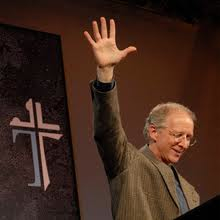
About Dr. Piper: John Piper is pastor for preaching and vision at Bethlehem Baptist Church in the Twin Cities of Minnesota. He grew up in Greenville, South Carolina, and studied at Wheaton College, Fuller Theological Seminary (B.D.), and the University of Munich (D.theol.). For six years he taught Biblical Studies at Bethel College in St. Paul, Minnesota, and in 1980 accepted the call to serve as pastor at Bethlehem. John is the author of more than 40 books and more than 30 years of his preaching and teaching is available free at desiringGod.org. John and his wife, Noel, have four sons, one daughter, and twelve grandchildren.

Dr. D.A. Carson on 12 Principles of Biblical Interpretation

MUST I LEARN HOW TO INTERPRET THE BIBLE?

 by D. A. Carson

Hermeneutics is the art and science of interpretation; biblical hermeneutics is the art and science of interpreting the Bible. At the time of the Reformation, debates over interpretation played an enormously important role. These were debates over ―interpretation, not just over ―interpretations. In other words, the Reformers disagreed with their opponents not only over what this or that passage meant, but over the nature of interpretation, the locus of authority in interpretation, the role of the church and of the Spirit in interpretation, and much more.

During the last half century, so many developments have taken place in the realm of hermeneutics that it would take a very long article even to sketch them in lightly. Sad to say, nowadays many scholars are more interested in the challenges of the discipline of hermeneutics than in the interpretation of the Bible—the very Bible that hermeneutics should help us handle more responsibly. On the other hand, rather ironically there are still some people who think that there is something slightly sleazy about interpretation. Without being crass enough to say so, they secretly harbor the opinion that what others offer are interpretations, but what they themselves offer is just what the Bible says.

Carl F. H. Henry is fond of saying that there are two kinds of presuppositionalists: those who admit it and those who don‘t. We might adapt his analysis to our topic: There are two kinds of practitioners of hermeneutics: those who admit it and those who don‘t. For the fact of the matter is that every time we find something in the Bible (whether it is there or not!), we have interpreted the Bible. There are good interpretations and there are bad interpretations; there are faithful interpretations and there are unfaithful interpretations. But there is no escape from interpretation.

This is not the place to lay out foundational principles, or to wrestle with the ―new hermeneutic (now becoming long in the tooth) and with ―radical hermeneutics and ―postmodern hermeneutics. [For more information and bibliography on these topics, and especially their relation to postmodernism and how to respond to it, see my book The Gagging of God: Christianity Confronts Pluralism, esp. chaps. 2 and 3 (Grand Rapids: Zondervan, 1996 – in this article will be referred to as GOG).] I shall focus instead on one ―simple problem, one with which every serious Bible reader is occasionally confronted. The issue is this: What parts of the Bible are binding mandates for us, and what parts are not?

Consider some examples. “Greet one another with a holy kiss: the French do it, Arab believers do it, but by and large we do not. Are we therefore unbiblical? Jesus tells his disciples that they should wash one another‘s feet (John 13:14), yet most of us have never done so. Why do we “disobey” that plain injunction, yet obey his injunction regarding the Lord‘s Table (“This do, in remembrance of me)? If we find reasons to be flexible about the “holy kiss (GOG, 19), how flexible may we be in other domains? May we replace the bread and wine at the Lord‘s Supper with yams and goat‘s milk if we are in a village church in Papua New Guinea? If not, why not? And what about the broader questions circulating among theonomists regarding the continuing legal force of law set down under the Mosaic covenant? Should we as a nation, on the assumption that God graciously grants widespread revival and reformation, pass laws to execute adulterers by stoning? If not, why not? Is the injunction for women to keep silent in the church absolute (1 Cor. 14:33–36)? If not, why not? Jesus tells Nicodemus that he must be born again if he is to enter the kingdom; he tells the rich young man that he is to sell all that he has and give it to the poor. Why do we make the former demand absolute for all persons, and apparently fudge a little on the second?

Obviously I have raised enough questions for a dissertation or two. What follows in this article is not a comprehensive key to answering all difficult interpretive questions, but some preliminary guidelines to sorting such matters out. The apostolic number of points that follow are not put into any order of importance.

(1) As conscientiously as possible, seek the balance of Scripture, and avoid succumbing to historical and theological disjunctions.

Liberals have often provided us with nasty disjunctions: Jesus or Paul, the charismatic community or the ―early catholic‖ church, and so forth. Protestants sometimes drop a wedge between Paul‘s faith apart from works (Rom. 3:28) and James‘s faith and works (Jas. 2:4); others absolutize Gal. 3:28 as if it were the controlling passage on all matters to do with women, and spend countless hours explaining away 1 Tim. 2:12 (or the reverse!).

Historically, many Reformed Baptists in England between the middle of the eighteenth century and the middle of the twentieth so emphasized God‘s sovereign grace in election that they became uncomfortable with general declarations of the gospel. Unbelievers should not be told to repent and believe the gospel: how could that be, since they are dead in trespasses and sin, and may not in any case belong to the elect? They should rather be encouraged to examine themselves to see if they have within themselves any of the first signs of the Spirit‘s work, any conviction of sin, any stirrings of shame. On the face of it, this is a long way from the Bible, but a large number of churches thought it was the hallmark of faithfulness. What has gone wrong, of course, is that the balance of Scripture has been lost. One element of biblical truth has been elevated to a position where it is allowed to destroy or domesticate some other element of biblical truth.

In fact, the “balance of Scripture” is not an easy thing to maintain, in part because there are different kinds of balance in Scripture. For example, there is the balance of diverse responsibilities laid on us (e.g. praying, being reliable at work, being a biblically faithful spouse and parent, evangelizing a neighbor, taking an orphan or widow under our wing, and so forth): these amount to balancing priorities within the limits of time and energy. There is the balance of Scripture‘s emphases as established by observing their relation to the Bible‘s central plot-line (more on this in the 12th point); there is also the balance of truths which we cannot at this point ultimately reconcile, but which we can easily distort if do not listen carefully to the text (e.g. Jesus is both God and man; God is both the transcendent sovereign and yet personal; the elect alone are saved, and yet in some sense God loves horrible rebels so much that Jesus weeps over Jerusalem and God cries, “Turn, turn, why will you die? For the Lord has no pleasure in the death of the wicked). In each case, a slightly different kind of biblical balance comes into play, but there is no escaping the fact that biblical balance is what we need.

(2) Recognize that the antithetical nature of certain parts of the Bible, not least some of Jesus’ preaching, is a rhetorical device, not an absolute. The context must decide where this is the case.

Of course, there are absolute antitheses in Scripture that must not be watered down in any way. For example, the disjunctions between the curses and the blessings in Deut. 27–28 are not mutually delimiting: the conduct that calls down the curses of God and the conduct that wins his approval stand in opposite camps, and must not be intermingled or diluted. But on the other hand, when eight centuries before Christ, God says, “For I desire mercy, not sacrifice, and acknowledgment of God rather than burnt offerings” (Hos. 6:6), the sacrifical system of the Mosaic covenant is not thereby being destroyed. Rather, the Hebrew antithesis is a pointed way of saying, “If push comes to shove, mercy is more important than sacrifice. Whatever you do, you must not rank the marks of formal religion—in this case, burnt offerings and other mandated ritual sacrifices—with fundamental acknowledgment of God, or confuse the extent to which God cherishes compassion and mercy with the firmness with which he demands the observance of the formalities of the sacrificial system” (GOG, 20).

Similarly, when Jesus insists that if anyone is to become his disciple, he must hate his parents (Lk. 14:26), we must not think Jesus is sanctioning raw hatred of family members. What is at issue is that the claims of Jesus are more urgent and binding than even the most precious and prized human relationships (as the parallel in Mt. 10:37 makes clear).

Sometimes the apparent antithesis is formed by comparing utterances from two distant passages. On the one hand, Jesus insists that the praying of his followers should not be like the babbling of the pagans who think they are heard because of their many words (Mt. 6:7). On the other hand, Jesus can elsewhere tell a parable with the pointed lesson that his disciples should pray perseveringly and not give up (Lk. 18:1–8). Yet if we imagine that the formal clash between these two injunctions is more than superficial, we betray not only our ignorance of Jesus‘ preaching style, but also our insensitivity to pastoral demands. The first injunction is vital against those who think they can wheedle things out of God by their interminable prayers; the second is vital against those whose spiritual commitments are so shallow that their mumbled one-liners constitute the whole of their prayer life.

(3) Be cautious about absolutizing what is said or commanded only once.

The reason is not that God must say things more than once for them to be true or binding. The reason, rather, is that if something is said only once it is easily misunderstood or misapplied. When something is repeated on several occasions and in slightly different contexts, readers will enjoy a better grasp of what is meant and what is at stake.

That is why the famous “baptism for the dead passage (1 Cor.15:29) is not unpacked at length and made a major plank in, say, the Heidelberg Catechism or the Westminster Confession. Over forty interpretations of that passage have been offered in the history of the church. Mormons are quite sure what it means, of course, but the reason why they are sure is because they are reading it in the context of other books that they claim are inspired and authoritative.

This principle also underlies one of the reasons why most Christians do not view Christ‘s command to wash one another‘s feet as a third sacrament or ordinance. Baptism and the Lord‘s Supper are certainly treated more than once, and there is ample evidence that the early church observed both, but neither can be said about footwashing. But there is more to be said.

(4) Carefully examine the biblical rationale for any saying or command.

The purpose of this counsel is not to suggest that if you cannot discern the rationale you should flout the command. It is to insist that God is neither arbitrary nor whimsical, and by and large he provides reasons and structures of thought behind the truths he discloses and the demands he makes. Trying to uncover this rationale can be a help in understanding what is of the essence of what God is saying, and what is the peculiar cultural expression of it.

Before I give a couple of examples, it is important to recognize that all of Scripture is culturally bound. For a start, it is given in human languages (Hebrew, Aramaic, Greek), and languages are a cultural phenomenon. Nor are the words God speaks to be thought of as, say, generic Greek. Rather, they belong to the Greek of the Hellenistic period (it isn‘t Homeric Greek or Attic Greek or modern Greek). Indeed, this Greek changes somewhat from writer to writer (Paul does not always use words the same way that Matthew does) and from genre to genre (apocalyptic does not sound exactly like an epistle). None of this should frighten us. It is part of the glory of our great God that he has accommodated himself to human speech, which is necessarily time-bound and therefore changing. Despite some postmodern philosophers, this does not jeopardize God‘s capacity for speaking truth. It does mean that we finite human beings shall never know truth exhaustively (that would require omniscience), but there is no reason why we cannot know some truth truly. Nevertheless, all such truth as God discloses to us in words comes dressed in cultural forms. Careful and godly interpretation does not mean stripping away such forms to find absolute truth beneath, for that is not possible: we can never escape our finiteness. It does mean understanding those cultural forms, and by God‘s grace discovering the truth that God has disclosed through them.

So when God commands people to rend their clothes and put on sackcloth and ashes, are these precise actions so much of the essence of repentance (GOG, 21) that there is no true repentance without them? When Paul tells us to greet one another with a holy kiss, does he mean that there is no true Christian greeting without such a kiss?

When we examine the rationale for these actions, and ask whether or not ashes and kissing are integratively related to God‘s revelation, we see the way forward. There is no theology of kissing; there is a theology of mutual love and committed fellowship among the members of the church. There is no theology of sackcloth and ashes; there is a theology of repentance that demands both radical sorrow and profound change.

If this reasoning is right, it has a bearing on both footwashing and on head-coverings. Apart from the fact that footwashing appears only once in the New Testament as something commanded by the Lord, the act itself is theologically tied, in John 13, to the urgent need for humility among God‘s people, and to the cross. Similarly, there is no theology of head- coverings, but there is a profound and recurrent theology of that of which the head-coverings were a first-century Corinthian expression: the proper relationships between men and women, between husbands and wives.

(5) Carefully observe that the formal universality of proverbs and of proverbial sayings is only rarely an absolute universality. If proverbs are treated as statutes or case law, major interpretive—and pastoral!—errors will inevitably ensue.

Compare these two sayings of Jesus: (a) “He who is not with me is against me, and he who does not gather with me scatters (Mt.12:30). (b) “. . . for whoever is not against us is for us(Mk. 9:40; cf. Lk. 9:50). As has often been noted, the sayings are not contradictory if the first is uttered to indifferent people against themselves, and the second to the disciples about others whose zeal outstrips their knowledge. But the two statements are certainly difficult to reconcile if each is taken absolutely, without thinking through such matters.

Or consider two adjacent proverbs in Prov. 26. (a) “Do not answer a fool according to his folly . . .(26:4). (b) “Answer a fool according to his folly . . . (26:5). If these are statutes or examples of case law, there is unavoidable contradiction. On the other hand, the second line of each proverb provides enough of a rationale that we glimpse what we should have seen anyway: proverbs are not statutes. They are distilled wisdom, frequently put into pungent, aphoristic forms that demand reflection, or that describe effects in society at large (but not necessarily in every individual), or that demand consideration of just how and when they apply.

Let us spell out these two proverbs again, this time with the second line included in each case: (a) “Do not answer a fool according to his folly, or you will be like him yourself. (b) “Answer a fool according to his folly, or he will be wise in his own eyes. Side by side as they are, these two proverbs demand reflection on when it is the part of prudence to refrain from answering fools, lest we be dragged down to their level, and when it is the part of wisdom to offer a sharp, “foolish rejoinder that has the effect of pricking the pretensions of the fool. The text does not spell this out explicitly, but if the rationales of the two cases are kept in mind, we will have a solid principle of discrimination.

So when a well-known para-church organization keeps quoting “Train up a child in the way he should go, and when he is old he will not depart from it as if it were case law, what are we to think? This proverbial utterance must not be stripped of its force: it is a powerful incentive to responsible, God-fearing, child-rearing. Nevertheless, it is a proverb; it is not a covenantal promise. Nor does it specify at what point the children will be brought into line. Of course, many children from Christian homes go astray because the parents really have been very foolish or unbiblical or downright sinful; but many of us have witnessed the burdens of unnecessary guilt and shame borne by really godly parents when their grown (GOG, 22) children are, say, 40 years of age and demonstrably unconverted. To apply the proverb in such a way as to engender or reinforce such guilt is not only pastorally incompetent, it is hermeneutically incompetent: it is making the Scriptures say something a little different from what can safely be inferred. Aphorisms and proverbs give insight as to how culture under God works, how relationships work, what are priorities should be; they do not put in all the footnotes as to whether there are any individual exceptions, and under what circumstances, and so forth.

(6) The application of some themes and subjects must be handled with special care, not only because of their intrinsic complexity, but also because of essential shifts in social structures between biblical times and our own day.

“Everyone must submit himself to the governing authorities, for there is no authority except that which God has established. The authorities that exist have been established by God. Consequently, he who rebels against the authority is rebelling against what God has instituted, and those who do so will bring judgment on themselves (Rom.13:1–2). Some Christians have reasoned from this passage that we must always submit to the governing authorities, except in matters of conscience before God (Acts 4:19). Even then, we “submitto the authorities by patiently bearing the sanctions they impose on us in this fallen world. Other Christians have reasoned from this passage that since Paul goes on to say that the purpose of rulers is to uphold justice (Rom.13:3–4), then if rulers are no longer upholding justice the time may come when righteous people should oppose them, and even, if necessary, overthrow them. The issues are exceedingly complex, and were thought through in some detail by the Reformers.

But there is of course a new wrinkle added to the fabric of debate when one moves from a totalitarian régime, or from an oligarchy, or from a view of government bound up with an inherited monarchy, to some form of democracy. This is not to elevate democracy to heights it must not occupy. It is to say, rather, that in theory at least a democracy allows you to “overthrow” a government without violence or bloodshed. And if the causes of justice cannot do so, it is because the country as a whole has slid into a miasma that lacks the will, courage, and vision to do what it has the power to do, but chooses not to do (for whatever reason). What, precisely, are the Christian‘s responsibilities in that case (whatever your view of the meaning of Rom.13 in its own context)?

In other words, new social structures beyond anything Paul could have imagined, though they cannot overturn what he said, may force us to see that valid, thoughtful, application demands that we bring into the discussion some considerations he could not have foreseen. It is a great comfort, and epistemologically important, to remember that God did foresee them—but that does not itself reduce the hermeneutical responsibilities we have.

(7) Determine not only how symbols, customs, metaphors, and models function in Scripture, but also to what else they are tied.

We may agree with conclusions already drawn about sackcloth and ashes, and about holy kissing. But is it then acceptable to lead a group of young people in a California church in a celebration of the Lord‘s Table using coke and chips? And how about yams and goat‘s milk in Papua New Guinea? If in the latter case we use bread and wine, are we not subtly insisting that only the food of white foreigners is acceptable to God?

The problem is one not only of churchmanship, but of linguistic theory: Bible translators face it continuously. How should we translate “bread and “wine in the words of institution? Or consider a text such as Isa.1:18: “Though your sins are like scarlet, they shall be as white as snow; though they are red as crimson, they shall be like wool.Suppose the target group for which you are translating the Bible lives in equatorial rain forests and has never seen snow: would it be better to change the simile? Suppose that the only “wool they have seen is the dirty dun-colored stuff from village goats: could not “faithful’ translation be misleading, while culturally sensitive translation that is nevertheless more distant from the original succeed in communicating the point that God speaking through Isaiah was getting across?

A lot can be said in favor of this sort of flexibility. Certainly in the case of “snow, not a lot seems to be at stake. You might want to check out the other seven biblical occurrences of “white as snow to make sure you are not unwittingly running into some awkward clash or other. But in the case of bread and wine at the Lord‘s Supper, the situation is more complicated. This is because the elements are tied in with other strands of the Bible, and it is almost impossible to disentangle them. Having changed “bread to, say, “yams” in order to avoid any cultural imperialism, what shall we do with the connections between the Lord‘s Supper and the Passover, where only “unleavened bread was to be eaten: can we speak of “unleavened yams?! How about the connection between bread and manna, and then the further connection drawn between bread/manna and Jesus (John.6)? Is Jesus (I say this reverently) now to become the yam of God? And I have not yet begun to exhaust the complications connected with this one.

So what begins as a charitable effort in cross-cultural communication is leading toward major interpretive problems a little farther down the road. Moreover, Bible translations have a much longer shelf-life than the original translators usually think. Fifty years later, once the tribe has become a little more familiar with cultures beyond their own forests, and it seems best in a revision to return to a greater degree of literalism, try and change “yams to “bread and see what kind of ecclesiastical squabbles will break out. The “KJV” of the rain forests has “yams”. . . .

All of these sorts of problems are bound up with the fact that God has not given us a culturally neutral revelation. What he has revealed in words is necessarily tied to specific places and cultures. Every other culture is going to have to do some work to understand what God meant when he said certain things in a particular language at a specific time and place and in a shifting idiom. In the case of some expressions, an analogous idiom may be the best way to render something; in other expressions, especially those that are deeply tied to other elements in the Bible‘s story-line, it is best to render things more literally, and then perhaps include an explanatory note. In this case, for example, it might be wise to say that “bread was a staple food of the people at the time, as yams are to us. A slightly different note would have to be included when leaven or yeast is introduced.

There is almost nothing to be said in favor of California young people using chips and coke as the elements. (I‘m afraid this is not a fictitious example.) Unlike the people of the rain forests, they do not even have in their favor that they have never heard of bread. Nor can it be said that chips and coke are their staples (though doubtless some of them move in that direction). What this represents is the whimsy of what is novel, the love of the iconoclastic, the spirituality of the cutesy—with no connections with either the Lord‘s words or with two thousand years of church history.

(8) Thoughtfully limit comparisons and analogies by observing near and far contexts.

“Jesus Christ is the same yesterday and today and forever (Heb.13:8). Since he never finally refused to heal anyone who approached him during the days of his flesh, and since he is the same yesterday and today and forever, therefore he will heal all who approach him for healing today. I have had that argument put to me more than once. By the same token, of course, Heb.13:8 could be used to prove that since he was mortal before the cross, he must still be mortal today; or since he was crucified by the Romans, and he is the same yesterday and today and forever, he must still be being crucified by the Romans today.

The fact of the matter is that comparisons and analogies are always self-limiting in some respect or other. Otherwise, you would not be dealing with comparisons and analogies, but with two or more things that are identical. What makes a comparison or an analogy possible is that two different things are similar in certain respects. It is always crucial to discover the planes on which the parallels operate—something that is usually made clear by the context—and to refuse further generalization.

A disciple is to be like his master; we are to imitate Paul, as Paul imitates Christ. In what respects? Should we walk on water? Should we clean the local temple with a whip? Should we infallibly heal those who are ill and who petition us for help? Should we miraculously provide food for thousands out of some little boy‘s lunch? Should we be crucified? Such questions cannot all be answered with a simple “yes” or “no.” It is worth observing that most of the injunctions in the Gospels to follow Jesus or to do what he does are bound up with his self- abnegation: e.g. as he is hated, so we must expect to be hated (Jn.15:18); as he takes the place of a servant and washes his disciples‘ feet, so we are to wash one another‘s feet (Jn.13); as he goes to the cross, so we are to take our cross and follow him (Mt.10:38; 16:24; Lk.14:27). Thus the answer to the question, “Should we be crucified?”, is surely ‘yes” and “no”: no, not literally, most of us will have to say, and yet that does not warrant complete escape from the demand to take up our cross and follow him. So in this case the answer is “yes,” but not literally.

(9) Many mandates are pastorally limited by the occasion or people being addressed.

For example, Jesus unambiguously insists, “Do not swear at all: either by heaven, for it is God‘s throne; or by the earth, for it is his footstool; or by Jerusalem, for it is the city of the Great King. . . . Simply let your Yes‘ be ‘Yes,‘ and your  No,‘  No‘; anything beyond this comes from the evil one(Mt. 6:34–36). Yet we find Paul going well beyond a simple “Yes or “No (e.g. Rom. 9:1; 2 Cor. 11:10; Gal. 1:20). In fact, God puts himself under an oath (Heb. 6:17–18). Won‘t pedants have a wonderful time with this?

Yet the particular language of Jesus‘ prohibition, not to mention the expanded parallel in Mt. 23:16–22, shows that what Jesus was going after was the sophisticated use of oaths that became an occasion for evasive lying—a bit like the schoolboy who tells whoppers with his fingers crossed behind his back, as if this device exonerated him from the obligation to tell the truth. At some point, it is best to get to the heart of the issue: simply tell the truth, and let your “Yes” be “Yes” and your “No” be “No.” In other words, the pastoral context is vital. By contrast, the context of Heb. 6–7 shows that when God puts himself under an oath, it is not because otherwise he might lie, but for two reasons: first, to maintain the typological pattern of a priesthood established by oath, and second, to offer special reassurance to the weak faith of human beings who otherwise might be too little inclined to take God‘s wonderful promises seriously.

There are many examples in Scripture of the importance of pastoral context. Paul can say it is good for a man not to touch a woman (1 Cor. 7:1—NIV‘s “not to marry is an unwarranted softening of the Greek). But (he goes on to say) there are also good reasons to marry, and finally concludes that both celibacy and marriage are gifts from God, charismata (1 Cor. 7:7—which I suppose makes us all charismatics). It does not take much reading between the lines to perceive that the church in Corinth included some who were given to asceticism, and others in danger of promiscuity (cf. 1 Cor. 6:12–20). There is a pastoral sensitivity to Paul‘s “Yes, but” argument, one that he deploys more than once in this letter (e.g. 1 Cor. 14:18–19). In other words, there are pastoral limitations to the course advocated, limitations made clear by the context.

In the same way, what Paul says to encourage Christian assurance to the Romans at the end of chap. 8 is not what he says to the Corinthians in 2 Cor. 13:5. Which particular elements of a full-blooded, nuanced, and even complex doctrine need to be stressed at any particular time will be determined, in part, by a pastoral diagnosis of the predominant current ailments.

(10) Always be careful how you apply narratives.

Nowadays most of us are familiar with “postmodern” voices that advocate open-ended meaning—meaning, finally, that you or your interpretive community “finds,” not meaning that is necessarily in the text, and only accidentally what the author intended. Not surprisingly, when these postmodern voices turn to the Bible, they are often attracted to narrative portions, since narratives are generically more open to diverse interpretation than discourse. Admittedly, these narrative portions are usually pulled out of their contexts in the books in which they are embedded, and made to stand on their own. Without the contextual constraints, the interpretive possibilities seem to multiply—which is, of course, what the postmodernists want. Narratives have other virtues, of course: they are evocative, affective, image-enhancing, memorable. But unless care is taken, they are more easily misinterpreted than discourse.

In fact, little narratives should not only be interpreted within the framework of the book in which they are embedded, but within the corpus, and ultimately within the canon. Take, for instance, Gen. 39, the account of Joseph‘s early years in Egypt. One can read that narrative and draw from it excellent lessons on how to resist temptation (e.g. Joseph refers to sexual sin to which he is enticed by Potiphar‘s wife as “sin against God, not some mere weakness or foible; he avoids the woman‘s company, at the crunch, because his purity is more important to him than his prospects). But a careful reading of the opening and closing verses of the chapter also shows that one of the important points of the narrative is that God is with Joseph and blesses him even in the midst of the most appalling circumstances: neither the presence of God nor the blessing of God are restricted to happy lifestyles. Then read the chapter in the context of the preceding narrative: now Judah becomes a foil for Joseph. The one is tempted in circumstances of comfort and plenty, and succumbs to incest; the other is tempted in circumstances of slavery and injustice, and retains his integrity. Now read the same chapter in the context of the book of Genesis. Joseph‘s integrity is bound up with the way God providentially provides famine relief not only for countless thousands, but for the covenant people of God in particular. Now read it within the context of the Pentateuch. The narrative is part of the explanation for how the people of God find themselves in Egypt, which leads to the Exodus. Joseph‘s bones are brought out when the people leave. Enlarge the horizon now to embrace the whole canon: suddenly Joseph‘s fidelity in small matters is part of the providential wisdom that preserves the people of God, leads to the exodus that serves as a type of a still greater release, and ultimately leads to Judah‘s (!) distant son David, and his still more distant son, Jesus.

So if you are applying Gen. 39, although it may be appropriate to apply it simply as a moralizing account that tells us how to deal with temptation, the perspective gained by admitting the widening contexts discloses scores of further connections and significances that thoughtful readers (and preachers) should not ignore.

(11) Remember that you, too, are culturally and theologically located.

In other words, it is not simply a case of each part of the Bible being culturally located, while you and I are neutral and dispassionate observers. Rather, thoughtful readers will acknowledge that they, too, are located in specific culture—they are awash in specific language, unacknowledged assumptions, perspectives on time and race and education and humor, notions of truth and honor and wealth. In postmodern hands, of course, these realities become part of the reason for arguing that all interpretations are relative. I have argued elsewhere that although no finite and sinful human being can ever know exhaustive truth about anything (that would require omniscience), they can know some truth truly. But often this requires some self-distancing of ourselves from inherited assumptions and perspectives.

Sometimes this is achieved unknowingly. The person who has read her Bible right through once or twice a year, loves it dearly, and now in her eightieth year reads it no less, may never have self-consciously engaged in some process of self-distancing from cultural prejudice. But she may now be so steeped in biblical outlooks and perspectives that she lives in a different “world” from her pagan neighbors, and perhaps even from many of her more shallow and less well-informed Christian neighbors. But the process can be accelerated by reading meditatively, self-critically, humbly, honestly, thereby discovering where the Word challenges the outlooks and values of our time and place. It is accelerated by the right kinds of small-group Bible studies (e.g. those that include devout Christians from other cultures), and from the best of sermons.

Does our Western culture place so much stress on individualism that we find it hard to perceive, not only the biblical emphasis on the family and on the body of the church, but also the ways in which God judges entire cultures and nations for the accumulating corruptions of her people? Are the biblical interpretations advanced by ―evangelical feminists‖ compromised by their indebtedness to the current focus on women‘s liberation, or are the interpretations of more traditional exegetes compromised by unwitting enslavement to patriarchal assumptions? Do we overlook some of the ―hard‖ sayings about poverty simply because most of us live in relative wealth?

The examples are legion. But the place to begin is by acknowledging that no interpreter, including you and me, approaches the text tabula rasa, like a razed slate just waiting to have the truth inscribed on them. There is always a need for honest recognition of our biases and assumptions, and progressive willingness to reform them and challenge them as we perceive that the Word of God takes us in quite a different direction. As our culture becomes progressively more secular, the need for this sort of reading is becoming more urgent. How it is done—both theoretically and practically—cannot be elucidated here. But that it must be done if we are not to domesticate Scripture to our own worlds cannot be doubted.

(12) Frankly admit that many interpretive decisions are nestled within a large theological system, which in principle we must be willing to modify if the Bible is to have the final word.

This is, of course, a subset of the preceding point, yet it deserves separate treatment.

Some Christians give the impression that if you learn Greek and Hebrew and get your basic hermeneutics sorted out, then you can forget about historical theology and systematic theology: simply do your exegesis and you will come out with the truth straight from the Word of God. But of course, it is not quite that simple. Inevitably, you are doing your exegesis as an Arminian, or as a Reformed Presbyterian, or as a dispensationalist, or as a theonomist, or as a Lutheran—and these are only some of the predominant systems among believers. Even if you are so ignorant of any one tradition that you are a bit of an eclectic, that simply means your exegesis is likely to be a little more inconsistent than that of others.

Systems are not inherently evil things. They function to make interpretation a little easier and a little more realistic: they mean that you do not have to go back to basics at each point (i.e. inevitably you assume a whole lot of other exegesis at any particular instance of exegesis). If the tradition is broadly orthodox, then the system helps to direct you away from interpretations that are heterodox. But a system can be so tightly controlling that it does not allow itself to be corrected by Scripture, modified by Scripture, or even overturned by Scripture. Moreover, not a few interpretative points of dispute are tied to such massive interlocking structures that to change one‘s mind about the detail would require a change of mind on massive structures, and that is inevitably far more challenging a prospect. This is also why a devout Reformed Presbyterian and a devout Reformed Baptist are not going to sort out what Scripture says about, say, baptism or church government, simply by taking out a couple of lexica and working over a few texts together during free moments some Friday afternoon. What is at stake, for both of them, is how these matters are nestled into a large number of other points, which are themselves related to an entire structure of theology.

And yet, and yet. . . . If this is all that could be said, then the postmodernists would be right: the interpretive community determines everything. But if believers are in principle willing to change their minds (i.e. their systems!), and are humbly willing to bring everything, including their systems, to the test of Scripture, and are willing to enter courteous discussion and debate with brothers and sisters who are similarly unthreatened and are similarly eager to let Scripture have final authority, then systems can be modified, abandoned, reformed.

The number of topics affected by such considerations is very large—not only the old chestnuts (e.g. baptism, the significance of Holy Communion, the understanding of covenant, Sabbath/Sunday issues) but more recent questions as well (e.g. theonomy, the place of “charismatic” gifts). For our purposes, we note that some of these manifold topics have to do with what is mandated of believers today.

Let us take a simple example. In recent years, a number of Christians have appealed to Acts 15:28 (“It seemed good to the Holy Spirit and to us . . .) to serve as a model for how the church comes to difficult decisions involving change in disputed areas—in the case of Acts, circumcision and its significance, and in the modern case, the ordination of women. Is this a fair usage of Acts 15:28? Does it provide a definitive model for how to change things formerly accepted in the church?

But believers with any firm views on the exclusive authority of the canon, or with any sophisticated views on how the new covenant believers were led in the progress of redemption history to re-think the place of circumcision in the light of the cross and resurrection, will not be easily persuaded by this logic. Has every change introduced by various churches across the centuries been justified, simply because it was blessed with the words “it seemed good to the Holy Spirit and to us? Does the church now have the right to change things established in and by the canon in the way that the early church changed things established in and by the Old Testament canon, as if we were similarly located at a strategic turning point in redemptive history? The mind boggles at the suggestions. But what is clear in any case is that such issues cannot properly be resolved without thinking through, in considerable detail, how the parameters of the interpretive decisions are tied to much more substantial theological matters.

One final word: By advancing these dozen points, am I in danger of elevating certain hermeneutical controls above Scripture, controls which themselves serve to domesticate Scripture? Had I time and space, I think I could demonstrate that each of these twelve points is itself mandated by Scripture, whether explicitly or as a function of what Scripture is. It might be a useful exercise to work through the twelve points and think through why this is so. But that would be another essay.

About the Author: Dr. D. A. Carson teaches New Testament at Trinity Evangelical Divinity School and has more than twenty books to his credit. Among them are Showing the Spirit, Exegetical Fallacies, Divine Sovereignty and Human Responsibility, How Long O Lord: Reflections on Suffering and Evil, and Matthew in The Expositor’s Bible Commentary. Article above adapted from: “Must I Learn How to Interpret the Bible?” Modern Reformation 5:3 (May/June 1996): 18–22. Updated 2003.

Notes

1. Allan Bloom, The Closing of The American Mind (Simon & Schuster, 1987), p. 56–57

2. J. Gresham Machen, What Is Faith? (Banner of Truth, 1925), p. 21.

Dr. Tim Keller on the Consistency of the Biblical Message in the Old and New Testaments

“Old Testament Law and The Charge of Inconsistency”

I find it frustrating when I read or hear columnists, pundits, or journalists dismiss Christians as inconsistent because “they pick and choose which of the rules in the Bible to obey.” What I hear most often is “Christians ignore lots of Old Testament texts—about not eating raw meat or pork or shellfish, not executing people for breaking the Sabbath, not wearing garments woven with two kinds of material and so on. Then they condemn homosexuality. Aren’t you just picking and choosing what they want to believe from the Bible?”

It is not that I expect everyone to have the capability of understanding that the whole Bible is about Jesus and God’s plan to redeem his people, but I vainly hope that one day someone will access their common sense (or at least talk to an informed theological advisor) before leveling the charge of inconsistency.

First of all, let’s be clear that it’s not only the Old Testament that has proscriptions about homosexuality. The New Testament has plenty to say about it, as well. Even Jesus says, in his discussion of divorce in Matthew 19:3-12 that the original design of God was for one man and one woman to be united as one flesh, and failing that, (v. 12) persons should abstain from marriage and from sex.

However, let’s get back to considering the larger issue of inconsistency regarding things mentioned in the OT that are no longer practiced by the New Testament people of God. Most Christians don’t know what to say when confronted about this. Here’s a short course on the relationship of the Old Testament to the New Testament:

The Old Testament devotes a good amount of space to describing the various sacrifices that were to be offered in the tabernacle (and later temple) to atone for sin so that worshippers could approach a holy God. As part of that sacrificial system there was also a complex set of rules for ceremonial purity and cleanness. You could only approach God in worship if you ate certain foods and not others, wore certain forms of dress, refrained from touching a variety of objects, and so on. This vividly conveyed, over and over, that human beings are spiritually unclean and can’t go into God’s presence without purification.

But even in the Old Testament, many writers hinted that the sacrifices and the temple worship regulations pointed forward to something beyond them. (cf. 1 Samuel 15:21-22; Psalm 50:12-15; 51:17; Hosea 6:6). When Christ appeared he declared all foods ‘clean’ (Mark 7:19) and he ignored the Old Testament clean laws in other ways, touching lepers and dead bodies.

But the reason is made clear. When he died on the cross the veil in the temple was ripped through, showing that the need for the entire sacrificial system with all its clean laws had been done away with. Jesus is the ultimate sacrifice for sin, and now Jesus makes us “clean.”

The entire book of Hebrews explains that the Old Testament ceremonial laws were not so much abolished as fulfilled by Christ. Whenever we pray ‘in Jesus name’, we ‘have confidence to enter the Most Holy Place by the blood of Jesus’ (Hebrews 10:19). It would, therefore, be deeply inconsistent with the teaching of the Bible as a whole if we were to continue to follow the ceremonial laws.

The New Testament gives us further guidance about how to read the Old Testament. Paul makes it clear in places like Romans 13:8ff that the apostles understood the Old Testament moral law to still be binding on us. In short, the coming of Christ changed how we worship but not how we live. The moral law is an outline of God’s own character—his integrity, love, and faithfulness. And so all the Old Testament says about loving our neighbor, caring for the poor, generosity with our possessions, social relationships, and commitment to our family is still in force. The New Testament continues to forbid killing or committing adultery, and all the sex ethic of the Old Testament is re-stated throughout the New Testament (Matthew 5:27-30; 1 Corinthians 6:9-20; 1 Timothy 1:8-11.) If the New Testament has reaffirmed a commandment, then it is still in force for us today.

Further, the New Testament explains another change between the Testaments. Sins continue to be sins—but the penalties change. In the Old Testament things like adultery or incest were punishable with civil sanctions like execution. This is because at that time God’s people existed in the form of a nation-state and so all sins had civil penalties.

But in the New Testament the people of God are an assembly of churches all over the world, living under many different governments. The church is not a civil government, and so sins are dealt with by exhortation and, at worst, exclusion from membership. This is how a case of incest in the Corinthian church is dealt with by Paul (1 Corinthians 5:1ff. and 2 Corinthians 2:7-11.) Why this change? Under Christ, the gospel is not confined to a single nation—it has been released to go into all cultures and peoples.

Once you grant the main premise of the Bible—about the surpassing significance of Christ and his salvation—then all the various parts of the Bible make sense. Because of Christ, the ceremonial law is repealed. Because of Christ the church is no longer a nation-state imposing civil penalties. It all falls into place. However, if you reject the idea of Christ as Son of God and Savior, then, of course, the Bible is at best a mish-mash containing some inspiration and wisdom, but most of it would have to be rejected as foolish or erroneous.

So where does this leave us? There are only two possibilities. If Christ is God, then this way of reading the Bible makes sense and is perfectly consistent with its premise. The other possibility is that you reject Christianity’s basic thesis—you don’t believe Jesus was the resurrected Son of God—and then the Bible is no sure guide for you about much of anything. But the one thing you can’t really say in fairness is that Christians are being inconsistent with their beliefs to accept the moral statements in the Old Testament while not practicing other ones.

One way to respond to the charge of inconsistency may be to ask a counter-question—“Are you asking me to deny the very heart of my Christian beliefs?” If you are asked, “Why do you say that?” you could respond, “If I believe Jesus is the resurrected Son of God, I can’t follow all the ‘clean laws’ of diet and practice, and I can’t offer animal sacrifices. All that would be to deny the power of Christ’s death on the cross. And so those who really believe in Christ must follow some Old Testament texts and not others.”

About the Author: Dr. Tim Keller was born and raised in Pennsylvania, and educated at Bucknell University, Gordon-Conwell Theological Seminary, and Westminster Theological Seminary. He was first a pastor in Hopewell, Virginia. In 1989 he started Redeemer Presbyterian Church in Manhattan with his wife, Kathy, and their three sons. Today, Redeemer has more than five thousand regular attendees at five services, a host of daughter churches, and is planting churches in large cities throughout the world. He is the author of The Prodigal God, Counterfeit Gods, and the New York Times bestseller The Reason for God. The article above was adapted from the June, 2012 Newsletter of Redeemer Presbyterian Church in Manhatten, N.Y.: http://redeemer.com/new

R.C. Sproul on How The Scriptures Use The Phrase “Will of God”

“Discerning God’s Will” by R.C. Sproul

“It is the will of God.”

How easily these words fall from the lips or flow from the pen. How difficult it is to penetrate exactly what they mean. Few concepts in theology generate more confusion than the will of God.

One problem we face is rooted in the multifaceted way in which the term “will” functions in biblical expressions. The Bible uses the expression “will of God” in various ways. We encounter two different Greek words in the New Testament (boulē and thēlema), both of which are capable of several nuances. They encompass such ideas as the counsel of God, the plan of God, the decrees of God, the disposition or attitude of God, as well as other nuances. Further distinctions in historical theology add to the labyrinth of meanings attached to the simple formula “the will of God.”

Augustine once remarked, “In some sense, God wills everything that happens.” The immediate question raised by this comment is, In what sense? How does God “will” the presence of evil and suffering? Is He the immediate cause of evil? Does He do evil? God forbid. Yet evil is a part of His creation. If He is sovereign over the whole of His creation, we must face the conundrum, How is evil related to the divine will?

Questions like this one make distinctions necessary—sometimes fine distinctions, even technical distinctions—with respect to will of God. Some of those distinctions made by theologians include the following:

(1) The Decretive Will of God

This is sometimes described as the sovereign efficacious will, by which God brings to pass whatever He pleases by His divine decree. An example of this may be seen in God’s work of creation. When God said, “Let there be light,” He issued a divine imperative. He exercised His sovereign efficacious will. It was impossible for the light not to appear. It appeared by the sheer necessity of consequence. That is, the decretive will can have no other effect, no other consequence than what God sovereignly commands. He did not request the light to shine. Nor did He coax, cajole, or woo it into existence. It was a matter of the authority and power vainly sought by the king of Siam when he said to Anna (to no avail), “So let it be said; so let it be done.” No creature enjoys this power of will. No man’s will is that efficacious. Men issue decrees and then hope they will bring about their desired effects. God alone can decree with the necessity of consequence.

(2) The Preceptive Will of God

The preceptive will of God relates to the revealed commandments of God’s published law. When God commands us not to steal, this “decree” does not carry with it the immediate necessity of consequence. Where it was not possible for the light to refuse to shine in creation, it is possible for us to refuse to obey this command. In a word, we steal.

We must be careful not to make too much of this distinction. We must not be lulled into thinking that the preceptive will of God is divorced from His decretive will. It is not as though the preceptive will has no effect or no necessity of consequence. We may have the power to disobey the precept. We do not have the power to disobey it with impunity. Nor can we annul it by our disregard. His law remains intact whether we obey it or disobey it. Even this law cannot ultimately be frustrated. There will come a time when no one will steal. The sinner in hell will be forcibly restrained from stealing. The saint in heaven, in the glorified state of perfected sanctification, will be totally disinclined to theft.

In one sense the preceptive will is part of the decretive will. God sovereignly and efficaciously decrees that His law be established. It is established and nothing can disestablish it. His law exists as surely as the light by which we read it.

Yet we still observe the acute difference between the light’s obedience to God’s creative decree and our disobedience to God’s moral, preceptive decree. How do we account for this?

A common way to resolve this conundrum is by appeal to a distinction between the sovereign will of God and His permissive will.

(3) The Permissive Will of God

The distinction between the sovereign will of God and the permissive will of God is fraught with peril, and it tends to generate untold confusion.

In ordinary language the term permission suggests some sort of positive sanction. To say that God “allows” or “permits” evil does not mean that He sanctions it in the sense that He grants approval to it. It is easy to discern that God never permits sin in the sense that He sanctions it in His creatures.

What is usually meant by divine permission is that God simply lets it happen. That is, He does not directly intervene to prevent its happening. Here is where grave danger lurks. Some theologies view this drama as if God were impotent to do anything about human sin. This view makes man sovereign, not God. God is reduced to the roll of spectator or cheerleader, by which God’s exercise in providence is that of a helpless Father who having done all He can do, must now sit back and simply hope for the best. He permits what He cannot help but permit because He has no sovereign power over it. This ghastly view is not merely a defective view of theism; it is unvarnished atheism.

Obviously the motive behind this specious theology is virtuous. It is fueled by a desire to exonerate God from any culpability for the presence of evil in the world. I am sure God is pleased by the sentiment but repulsed by a theory that would strip Him of His very deity. Calvin said of this:

“Hence the distinction was devised between doing and permitting because to many this difficulty seemed inexplicable, that Satan and all the impious are so under God’s hand and power that He directs their malice to whatever end seems good to Him, and uses their wicked deeds to carry out His judgments. And perhaps the moderation of those whom the appearance of absurdity alarms would be excusable, except that they wrongly try to clear God’s justice of every sinister mark by upholding a falsehood” (Institutes I.xviii.1).

Calvin locates the scurrilous untruth in the faulty distinction between willing and permitting:

“It seems absurd to them for man, who will soon be punished for his blindness, to be blinded by God’s will and command. Therefore they escape by the shift that this is done only with God’s permission, not also by His will; but He, openly declaring that He is the doer, repudiates that evasion. However, that men can accomplish nothing … except what He has already decreed with Himself and determines by His secret direction, is proved by innumerable and clear testimonies” (Ibid.).

Calvin goes on to enumerate several passages that support his thesis, looking to Job, Satan and the Sabeans, the role of Pilate and Judas in the execution of Christ, the role of Absalom in Jewish history, etc.

The key phrase is this: “Therefore they escape by the shift that this is done only with God’s permission, not also by His will.”

Here the operative word is only. If we are in any just way to speak of God’s permissive will, we must be careful to notice not only the word permissive but also the word will. Whatever God “permits” He sovereignly and efficaciously wills to permit. If I have a choice to sin or not sin, God also has a choice in the matter. He always has the ability and the authority to stop me from exercising my will. He has absolute power to restrain me. He can vaporize me instantly if it is His pleasure. Or He can keep me on a long leash and let me do my worst. He will only permit me to do my worst if my worst coincides with His perfect providential plan.

In the treachery perpetrated by Joseph’s brothers, it was said, “You meant it for evil; God meant it for good.” God’s good will was served through the bad will of Joseph’s brothers. This does not mean that since they were only doing the will of God the acts of the brothers were virtues in disguise. Their acts are judged together with their intentions, and they were rightly judged by God to be evil. That God brings good out of evil only underscores the power and the excellence of His sovereign decretive will.

We sometimes get at this same problem by distinguishing between God’s active will and His passive will. Again we face difficulties. When God is “passive,” He is, in a sense, actively passive. I do not mean to speak nonsense but merely to show that God is never totally passive. When He seems to be passive, He is actively choosing not to intercede directly.

Augustine addressed the problem this way: “Man sometimes with a good will wishes something which God does not will, as when a good son wishes his father to live, while God wishes him to die. Again it may happen that man with a bad will wishes what God wills righteously, as when a bad son wishes his father to die, and God also wills it.… For the things which God rightly wills, He accomplishes by the evil wills of bad men.”

About the Author: Dr. R.C. Sproul is the founder and chairman of Ligonier Ministries, an international Christian education ministry located near Orlando, Florida. His teaching can be heard on the program Renewing Your Mind, which is broadcast on hundreds of radio outlets in the United States and in 40 countries worldwide. He is the executive editor of Tabletalk magazine and general editor of The Reformation Study Bible, and the author of more than seventy books (including some of my all time favorites: The Work of Christ; The Holiness of God; Chosen By God; Reason to Believe; Knowing Scripture; Willing to Believe; The Intimate Marriage; Pleasing God; If There’s A God, Why Are There Atheists?, and Defending The Faith) and scores of articles for national evangelical publications. Dr. Sproul also serves as president of Ligonier Academy of Biblical and Theological Studies and Reformation Bible College. He currently serves as Senior Minister of preaching and teaching at Saint Andrew’s in Sanford, FL. The article above was adapted from Ligonier Ministries Tabletalk magazine – August, 1993.

Book Review: Change Your Life Not Your Wife – Marriage Saving Advice for Success Driven People by Tony Ferretti and Peter J. Weiss

Good Solutions to Common Marriage Problems By Dr. David P. Craig

Tony Ferretti and Peter J. Weiss have combined their efforts to write a very readable and practically helpful handbook on marriage for success driven people. Early into the book the author’s write their thesis: “The power failure syndrome happens because the same traits that propel people to the top in business cause turmoil in their personal lives.”

I’ve witnessed this reality time and time again as a pastor and life coach. It’s mind boggling to me how many men and women are successful in their careers and woefully unsuccessful in their relationships at home with their spouse and children. The bulk of this book is designed to counteract this trend by honing in on four key areas in a marriage: 1) Working toward the marriage you want to have – it does take work; 2) Achieving balance between your career and your relationships; 3) Establishing an ease in your relationships; and 4) All you need to do is change yourself!

The main aspects of deteriorization in a marriage result from trying to bring two personalities together; having differing expectations; and being unable to talk through conflict resolution. This results in conflicts growing, frustration being built; chronic anger being developed; resentments being formed and intensified; and ultimately detachment and crisis.

The author’s give many real life examples of how marriages deteriorate, as well as steps that can be taken in order to avert a crisis, and even develop a successful and happy marriage. They talk about relational killers, and give wonderful advice in the areas of communication and nurturing your marriage. I recommend this book as a good guidebook for couples to detect their emotional and character blind spots. They have provided many practical questions, assessments, and strategies throughout the book.

The one weakness of the book relates to not addressing the worldview of the couple. For example – My wife and I are Christians and thus share the same Biblical values, goals, purposes, objectives, etc. So in our roles as a husband and wife, as well as in our parenting, and balancing all aspects of life we have the same worldview foundation. I think the danger of this book is that it focuses too much on behavioral changes (symptoms – fruit) without getting at the cause or the foundations of behavior (cause/sin/idolatry/selfishness/root of all problems).

Therefore, my recommendation would be to read this book along with a marriage book that has a good basis and foundation for marriage like R.C. Sproul’s “The Intimate Marriage,” or Tim Keller’s “The Meaning of Marriage.” Overall, it’s well written, full of practical help, and recommended for pre and post married couples of all ages.

About the Author’s of Change Your Life, Not Your Wife:

Dr. Tony Ferretti is a licensed psychologist who has helped clients recognize the addictive nature of power, control, and “success” for over twenty years. A Ph.D. graduate of the University of Southern Mississippi, he’s appeared on Dr. Phil and hosted his own popular radio talk show, “Talk to Tony.”

Dr. Peter Weiss is a physician and healthcare executive with a passion for helping others to health and wellness. A graduate of Washington University in St. Louis, Dr. Weiss currently serves as an executive for the Adventist Health System in Orlando, Florida.

Dr. Paul David Tripp on “Why Does God Ask Us To Wait?”

Spiritual Muscle Development by Paul David Tripp

So, what happens inside of you when you are asked to wait? Is waiting, for you, a time of strengthening or weakening? Have you ever stopped to consider why God asks you to wait?  Let me point you to one of his purposes.

Waiting Is Giving You Time

When God asks you to wait, what happens to your spiritual muscles? While you wait, do your spiritual muscles grow bigger and stronger or do they grow flaccid and atrophied? Waiting for the Lord isn’t about God forgetting you, forsaking you, or being unfaithful to his promises. It’s actually God giving you time to consider his glory and to grow stronger in faith. Remember, waiting isn’t just about what you are hoping for at the end of the wait, but also about what you will become as you wait.

Waiting always presents me with a spiritual choice-point. Will I allow myself to question God’s goodness and progressively grow weaker in faith, or will I embrace the opportunity of faith that God is giving me and build my spiritual muscles? (see Psalm 27:4)

It’s so easy to question your belief system when you are not sure what God is doing. It’s so easy to give way to doubt when you are being called to wait. It’s so easy to forsake good habits and to take up habits of unfaith that weaken the muscles of the heart. Let me suggest some habits of unfaith that cause waiting to be a time of increasing weakness rather than of building strength. These are bad habits that all of us are tempted to give way to.

Habits of Unfaith

Giving way to doubt. There’s a fine line between the struggle to wait and giving way to doubt. When you are called to wait, you are being called to do something that wasn’t part of your plan and is therefore something that you struggle to see as good. Because you are naturally convinced that what you want is right and good, it doesn’t seem loving that you are being asked to wait. You can see how tempting it is then to begin to consider questions of God’s wisdom, goodness, and love.  It is tempting, in the frustration of waiting, to actually begin to believe that you are smarter than God.

Giving way to anger. It’s very easy to look around and begin to think that the bad guys are being blessed and the good guys are getting hammered (see Psalm 73). There will be times when it simply doesn’t seem right that you have to wait for something that seems so obviously good to you. It will feel that you are being wronged, and when it does, it seems right to be angry. Because of this, it’s important to understand that the anger you feel in these moments is more than anger with the people or circumstances that are the visible cause for your waiting. No, your anger is actually anger with the One who is in control of those people and those circumstances. You are actually giving way to thinking that you have been wronged by God.

Giving way to discouragement. This is where I begin to let my heart run away with the “If only_____,” the “What if_____,” and the “What will happen if_____.” I begin to give my mind to thinking about what will happen if my request isn’t answered soon, or what in the world will happen if it’s not answered at all. This kind of meditation makes me feel that my life is out of control. And I am able to think my life is out of control because I have forgotten God’s wise and gracious contol over very part of my existence. Rather than my heart being filled with joy, my heart gets flooded with worry and dread. Free mental time is spent considering my dark future, with all the resulting discouragement that will always follow.

Giving way to envy. When I am waiting, it’s very tempting to look over the fence and wish for the life of someone who doesn’t appear to have been called to wait. It’s very easy to take on an “I wish I were that guy” way of living. You can’t give way to envy without questioning God’s wisdom and his love. Here is the logic: if God really loves you as much as he loves that other guy, you would have what the other guy has. Envy is about feeling forgotten and forsaken, coupled with a craving to have what your neighbor enjoys.

Giving way to inactivity. The result of giving way to all of these things is inactivity. If God isn’t as good and wise as I once thought he was, if he withholds good things from his children, and if he plays favorites, then why would I continue to pursue him? Maybe all those habits of faith aren’t helping me after all; maybe I’ve been kidding myself.

Sadly, this is the course that many people take as they wait. Rather than growing in faith, their motivation for spiritual exercise is destroyed by doubt, anger, discouragement, and envy, and the muscles of faith that were once robust and strong are now atrophied and weak.

One of His Primary Shaping Tools

The reality of waiting is that it’s an expression of God’s goodness not empirical evidence against it. He is wise and loving. His timing is always right, and his focus isn’t so much on what you will experience and enjoy, but on what you will become. He is committed to using every tool at his disposal to rescue you from yourself and to shape you into the likeness of his Son. The fact is that waiting is one of his primary shaping tools.

So, how do you build your spiritual muscles during the wait? Well, you must commit yourself to resisting those habits of unfaith and with discipline pursue a rigorous routine of spiritual exercise.

What is the equipment in God’s gym of faith? Here are the things that he has designed for you to build the muscles of your heart and strengthen your resolve: the regular study of his Word; consistent godly fellowship; looking for God’s glory in creation every day; putting yourself under excellent preaching and teaching of Scripture; investing your quiet mental time in meditating on the goodness of God (e.g., as you are going off to sleep); reading excellent Christian books; and spending ample time in prayer. All of these things will result in spiritual strength and vitality.

Is God asking you to wait? So, what is happening to your muscles?

About the Author: Paul David Tripp is the president of Paul Tripp Ministries, a nonprofit organization whose mission statement is “Connecting the transforming power of Jesus Christ to everyday life.” Tripp is also professor of pastoral life and care at Redeemer Seminary in Dallas, Texas, and executive director of the Center for Pastoral Life and Care in Fort Worth, Texas. Tripp has written many books on Christian living that are read and distributed internationally. He has been married for many years to Luella, and they have four grown children. There are very few people today who can apply the gospel to every aspect of life as practically as Dr. Tripp. The article above is adapted from: http://www.desiringgod.org/blog/posts/spiritual-muscle-development, January 26, 2011.