DAVID JEREMIAH: 7 Ways To Study The Bible Effectively

David Jeremiah SB

(1) READ IT – Find time every day to read the Bible. Build this into your routine each morning, Pray as you read, asking God for insight.

(2) LOOK FOR A NEW VERSE EACH DAY – As you read, ask God for a special verse to meet that day’s need. Read until you arrive at that verse, and then write down and carry it with you. You’ll discover new strength!

(3) STUDY BOOK-TO-VERSE-TO-WORD – One of the best methods of Bible study is book-to-verse-to-word, some times called inductive Bible study. Choose the book you want to study, then read through the book introduction and the Bible text several times for a sweep of its contents. Then read all you can about the background of that book. Next…

(4) LOOK FOR THE OUTLINE OR THEME OF THE BOOK – After that, you’re ready to study chapter by chapter. Read through each chapter, making notes, underlining verses, and looking for key thoughts. When you have a good idea of what each chapter says, study the individual verses themselves, down to the various words that are used. Then…

(5) READ THE BIBLE WITH PEN IN HAND – Underline, circle, and draw lines from verse to verse. Thoroughly read (A good study Bible – like the Jeremiah Study Bible) notes and their cross references. Scribble comments and insights in the margins, and post dates besides verses that God gives you on particular days. Someone once said, “A well-marked Bible means a well-fed soul.” You can also use a journal to analyze sentences, paraphrase verses, and condense passages, list points, and record observations.

(6) MEMORIZE SCRIPTURE AND MEDITATE ON IT – Memorized Scripture is the fodder for meditation, and meditating on God’s Word opens the door of our hearts to the real riches of Scripture. When we memorize God’s Word, we can think about it all the time, mulling it over as we eat breakfast, as we drive to work, as we fall asleep at night. We digest its meaning, and it becomes part of us.

(7) JOIN A BIBLE STUDY GROUP – One of the most exciting developments in many churches has been the proliferation of Bible study groups. Find a good group and sign up. The right small group can make a big difference in your appreciation of Scripture.

SOURCE: *Adapted from “Ways To Study The Bible Effectively” in The Jeremiah Study Bible. Worthy Media, 2013. xv.

ABOUT THE AUTHOR

David Jeremiah

Dr. David Jeremiah is the senior pastor of Shadow Mountain Community Church in El Cajon, California, and chancellor of San Diego Christian College. He is also the founder of Turning Point, a ministry committed to providing sound Bible teaching through national radio and television broadcasting. Dr. Jeremiah has authored numerous books, including the best-selling “Captured by Grace,” “Life Wide Open,” “My Heart’s Desire,” and “Sanctuary.”

SUNDAY NT SERMON: Tim Keller “Decrees of the King” – Ephesians 2:19-22

Series: The King and the Kingdom – Part 9

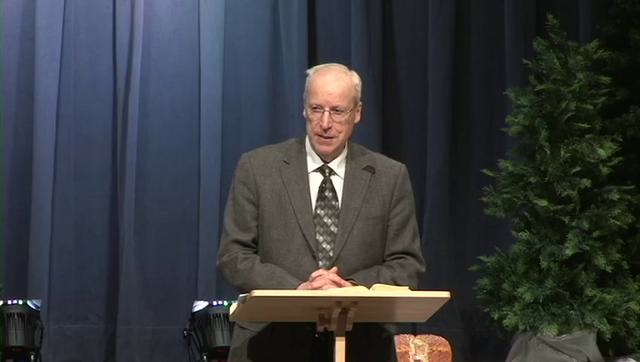
Tim Keller preaching image

Preached in Manhattan, NY on September 17, 1989

How many weeks have I been on Ephesians 2? I’m not sure, but what we’ve been doing is looking at what the Bible says the church should be, what the church can be, and what the church is. Ephesians 2. I’m going to read verses 19-22.

19 Consequently, you are no longer foreigners and aliens, but fellow citizens with God’s people and members of God’s household, 20 built on the foundation of the apostles and prophets, with Christ Jesus himself as the chief cornerstone. 21 In him the whole building is joined together and rises to become a holy temple in the Lord. 22 And in him you too are being built together to become a dwelling in which God lives by his Spirit. – Ephesians 2:19–22

The last thing I want to say in this series about what the church is, is about this phrase: the church is “built on the foundation of the apostles and prophets, with Christ Jesus himself as the chief cornerstone.” The foundation of the church, the foundation of all of our lives is the apostles and the prophets.

A lot of you know I live on Roosevelt Island. That’s just 300 yards from Manhattan. We live right around 74th Street. We can look up East 74th Street. What was happening one Saturday is I was noticing you can go … Did you know you can go east in a car on 73rd Street? You can drive from York to the FDR Drive, which, of course, is the expressway down the eastern part of Manhattan. You can come out on 73rd, and as soon as you turn the corner, you get into a little chute. It’s one lane, and it moves you for about two blocks.

You go in front of 71st Street and then you come right out onto the traffic and you’re gone. You’re out. One day I noticed there was a truck backing up at 71st Street, some kind of maintenance truck. As a result, the chute was stopped. The people couldn’t go by 71st Street, and the cars were stopped up, all the way up the chute, all the way onto 73rd. There was even a line of people on 73rd waiting to get into the chute.

I could see with my binoculars that the truck was ready to back up. In fact, as the truck backed up, all the people in the chute started clearing out. Now if you were at 73rd Street and you hadn’t turned the corner yet, and you were about to go into the chute, you could not see what was going. You could see that it was backed up, but you could not see what the problem was or what the prospects were.

What intrigued me was, as the chute emptied out, the first man at the top of 73rd, who could not see … hesitated. He didn’t come on out, and I knew what he was saying to himself. He was saying, “If I get out in that chute and it’s really stopped up in some way … You can’t go backwards. You can’t go forwards. You can’t turn right or left … I’m dead. I’ll be there for who knows long. After all, this is New York.”

So what he did was, even though the chute had cleared out, he began to back up. Now there were tons of cars behind him, and there was at least a 15-minute mess as a result. He backed up. Other people started yelling and screaming. I was watching through the binoculars. It was great … a great show. What intrigued me was he got out, and he began to talk to the people about what he was doing.

Instead of anybody else coming around him, he convinced them. They could’ve come around him and out, but instead he convinced them. I don’t know what he was saying, but he was saying, “Let’s get out of here. Let’s back up.” So there was at least a 15-minute pileup, basically, of cars trying to back away and not going into that chute. They were this close to freedom, but they couldn’t see it.

You know why. What was the basis? What was the foundation for their decision? What was the basis for their course of action? Their foundation was their own perspective. They could only see this far. I guess they were going on their experience. They probably all had been stuck in chutes for two hours in New York City, and on the basis of their experience, on the basis of their perception, on the basis of their reason, they made their decision. It was a faulty foundation.

What they needed was someone with transcendent knowledge. They needed somebody who was above and outside. It wasn’t a driver. It wasn’t someone on the highway but somebody above and outside the highway who could see the whole picture, who could know what the best course of action was, a transcendent person (like me), someone who was above and beyond it all looking at it.

As he was backing away, if I had this great transmitter, what I could’ve done is I could’ve beamed into his car radio and said, “Don’t do what you’re doing. Don’t follow your feelings. Don’t follow your perceptions. Don’t follow your experience. I know, from my perspective, the right thing is for you to go straight down and into that chute. I know it seems like suicide. It’s the only way out.” What that man needed was revelation. Revelation means outside knowledge, knowledge outside of himself, knowledge outside even of his little world, which was the highway.

What God is saying here is it is not a proper foundation for the church; it’s not a proper foundation for any human life to only rely on your own experience, your own wisdom. Anything less than the revelation God has brought to us through apostles and prophets, which is in the Word of God. The only legitimate foundation, the only worthy foundation for any life at all, the only appropriate “bottom” is the Word of God. Everybody in this room has a foundation for your decisions. What is it? I don’t think you’ll get out of here tonight until you know what it is.

If we’re going to understand what our foundation is and what it should be, we have to look at the passage. We’re just looking at these little words right here in verse 20. We should be “built on the foundation of the apostles and prophets, with Christ Jesus himself as the chief cornerstone.” Okay, let’s examine that phrase by asking some questions. Number one, What is the foundation? Then number two, How can we be sure we’re laid on it?

1. What is the foundation?

The apostles and the prophets were people through whom God spoke, and their revelations from God are written down in this Word. The most intriguing thing about the prophets and apostles, to the human mind, is an incredible incongruity because on the one hand, these men, these apostles and prophets, were tremendously humble people. You have Paul saying, “I am the chief of sinners.” If you read the Bible, you’ll see the people who wrote it were quite willing to tell all about the worst parts of their life, all about their flaws.

You know, one of the most intriguing books to me is the book of Jonah. How again and again and again, God called him to preach to Nineveh. He ran away, and then he was swallowed by a fish. He comes up. He goes to Nineveh, and he’s angry when he has a revival and people start to turn to Christ. His racism comes out. He begins to say, “This is what I was afraid of. The reason I didn’t go to Nineveh the first time was I afraid these people might get converted, and I hate them. I want to see them as dust under my feet.”

The only way we could have possibly ever known what happened between Jonah and God, and Jonah and the whale, Jonah and all that stuff, is if Jonah told somebody. Who would’ve told anybody about that? We all have things in our lives where we were just absolute fools, but we would never want to have it written down, let alone in a book that millions of people are going to read the rest of the history of the world.

You see, the apostles and the prophets were like that. They were willing to say, “This is what I am. This is my weakness. This is what I am,” and yet when they were overshadowed by the Spirit of God, they knew their words were not their words, but they were God’s words, and they acted that way. They said, “Thus saith the Lord.”

Here’s Paul, for example, who says, “I am the chief of sinners,” and yet when he writes, at the end of 1 Corinthians, at the end of 1Thessalonians, he says, “Anyone who doesn’t listen to these words, have nothing to do with them because these words are the words of God.” It doesn’t seem right, because the people who act like that, that say, “What I have said is the word of God.” These are demagogues, you know, the people we have met in the history who talk like that.

They’re demagogues. They’re not humble people. They’re not servants. On the other hand, humble servant people don’t say, “This is the word of God.” But the reason is that the prophets and the apostles were godly people who knew God was giving them a gift for all mankind, and that was the gift of his truth. Basically, again and again and again, these men say, “Thus saith the Lord,” which means, “This is not my idea, friends. You have to listen. It’s not my idea.”

Jeremiah said, “The Word of God is a fire in my bones, and I have to get it out.” They understood what was going on. Because the biblical writers knew these were God’s words, not their words, not their ideas about God, not their experiences of God, but God’s words, as a result, they could talk about themselves as a foundation, because a foundation is something that does not shift. It’s something that does not change. It’s something that is absolutely solid. It’s absolute truth.

You must understand the Bible was just a record of a lot of godly people who had great experiences of God, and therefore, they were able to tell us a lot of good things. Yet, like any other book, there are good things in here and there are bad things. If that’s what the Bible is, it can’t be a foundation, because a foundation can’t have some good stones and others not. You can’t build a house if you have 10 foundation stones, and you say, “Well eight of them will hold the house up. That’s good enough.” No, it isn’t good enough. Every part of the foundation has to be solid and changeless.

This is how the Scripture writers thought of themselves. They said, “We’re a foundation.” For example, Peter says this about Scripture. Peter, in 2 Peter 1, he says, “… no prophecy of Scripture came about by the prophet’s own interpretation.” Did you hear that? “… no prophecy of Scripture came about by the prophet’s own interpretation. For prophecy never had its origin in the will of man, but men spoke from God as they were carried along by the Holy Spirit.”

This was not just the biblical writers’ view of it. All of the church has always seen it that way, for example, Martin Luther. Luther says, “A man’s word is a little sound, that flies in the air, and soon vanishes; but the Word of God is greater than heaven and earth, yea greater than heaven and hell, for it forms part of the power of God and endures everlastingly …” Foundation. That means anything the Bible says is true; otherwise, we cannot talk about it being a foundation. Before we move on (and I want to talk about, How do you make sure you lay on the foundation?), I can’t leave without a couple of words to people who doubt what I’m saying.

Some people say, “Well, I just don’t buy that, and most enlightened pastors and churches don’t buy that anymore, and what we believe is the Bible is one authority, but there are certain things in the Bible we may not be able to accept anymore. Therefore, the Bible is an authority, but we also have other authorities. We have cultural attitudes and the wisdom of modern research. We have a lot of authorities, so the Bible is just one authority. It’s not the only authority. It’s one part of the foundation. It’s not the whole foundation. Does that make sense?”

It doesn’t. You’ve misspoken, my friend. Because when you say the Bible is just one of our authorities, but we might find things in it we can’t accept, you’ve actually shifted to a whole new foundation, because now the foundation is your own judgment. Do you see? When you say, “Well, the Bible is an authority, but it’s only one authority,” what you mean is, “I’m the authority, and I scan through the Word of God. I decide, on the basis of my own judgment and my own sagacity and my own wisdom which things look like they’re great and which things look like they’re a little weird, and I don’t know whether I can buy that.”

You see, it’s a whole new foundation. Don’t say the Bible is your foundation anymore. It’s not even part of your foundation. Your own judgment is your foundation, and it’s a very dangerous condition to be in. Very dangerous. Stop and think about it just for a moment. In the middle of the book of Job, Job begins to question God. He begins to say, “God, I don’t like the way things are going.”

In other words, he begins to find fault with God. God appears. What does he say? He says, “Job, where were you when I stretched out the heavens? Where were you when I scattered the stars? Where were you when I laid the foundation for the earth? In your three score and 10 years, in your few years, have you become wiser than me?” Let me apply that to our understanding of the Word. If you believe there are any parts of the Word of God that are shaky, that you can’t accept, that you believe have mistakes in them, if you believe that, don’t you see what you’ve done is you shifted completely to another foundation?

Look what your foundation is. Your own wisdom. Don’t you remember what you were like 10 years ago? Do you remember the stupid mistakes you made 10 years ago? Do you remember how naïve you were in this and that? Do you remember what a fool you were? You were. You know that. Anybody in this room who has any kind of normal adult-maturation process going on, you’ll look back at 10 years ago, and you’ll say, “I was an absolute idiot 10 years ago.” What do you think you’re going to say about yourself 10 years from now? You’re a fool now! We’re all fools now! We’re fools now. Yes, we are.

As you read through Word of God and you say, “There’s this thing I just can’t stand. This part of the Old Testament is awfully harsh. This part of what Paul says in the New Testament is sexist. I don’t like this.” Ten years ago, you wouldn’t have even known that. You know, it’s maybe in the last 10 years you even came to these great conclusions that now put you in a position to be the foundation, to go through the Word of God and decide where he’s right and where he’s wrong.

My friends, that’s what God was saying to Job. Are you kidding me? Do you really, really believe you’re in a position to be a two-edged sword and to go through the Word of God and scan it and to say, “I like this,” and to take other things out? My friends, the Word of God is a two-edged sword. It should be scanning through us, and it should be saying, “This is what I affirm, and this is what is wrong.” I mean, this is role reversal of the worst kind.

So first of all, if you say, “I’m a believer. I’m a Christian, but I cannot say the Word of God is my absolute authority, and the Word of God is the foundation of the church,” don’t you see what a contradictory position you’re in? Don’t you see how arrogant it is? I’ll go one step further, and that is if you don’t believe the Bible is an authority, if, instead, your foundation is your own wisdom and your own feelings and your own discernment or modern research or cultural opinion or public opinion or whatever, I want you to see you’re in a state of eternal and utter vertigo. I hope you will live with the consequences and be honest enough about it.

Some years ago, my sister’s husband, my brother-in-law, Larry, who is a doctor, was going through residency. This is a different brother-in-law than the one who watched the guy go through the windshield. Remember that one? Yes, those of you with your “perfect attendance” pins and have come to all the evening services will know all about my family, but the rest of you have very spotty knowledge.

Anyway, Larry was in his residency as a doctor. At one point, I guess he did psychiatric rounds, and he was working in a psychiatric unit of a hospital. There was one man who he was consulting with the head resident about (the teacher, the guy over him), and this resident and Larry were talking, “What are we going to do about this guy?”

Now Larry knew this resident just didn’t like the guy. He was a psychiatric patient, but Larry realized the doctor, the resident, didn’t like him. The man rubbed him the wrong way. In the discussion, Larry was sitting there, and he says, “Well, here’s what I think: I think, in some ways, it’s hard but simple what we have to do. We have to convince this man he actually is a worthwhile person. Just let him know he is a valuable, valued, worthwhile person. That’s what we have to do.”

The doctor, the teaching doctor over Larry, looked at him and said, “How do you know that?” Larry just about went back. Larry was a believer, and as he was about to turn to this doctor, he suddenly realized something. He suddenly realized that whereas he could say, “Well, even though I don’t like this young guy either, I have a foundation. I have an authority who tells me he is (regardless of how I feel, regardless of how I perceive him) a valuable human being. He’s not just a piece of rock that has fallen to the bottom of the river, and I have to treat him that way,” he couldn’t appeal to that in this man because this man was his own foundation.

Don’t you see? If every person is their own foundation and you just choose what you want to believe about what’s right and wrong, and you put your own religion together, fine, you have a right to do that. But never call anybody else, never call a country, never call a society, never call anybody else to moral behavior because you have no basis.

Just like that guy said, “How do you know he’s worthwhile? In my estimation, he’s nothing.” In other words, what’s right for you might be right for you, but what’s right for me might be right for me. There’s no basis. We have no basis for society. You certainly don’t have a basis for calling other people to moral behavior.

Larry realized, at that moment, what the consequences were of abandoning the foundation. Don’t you see, friends, if you abandon the foundation, not only have you no basis for church, you don’t have any basis for life? You’re in a state of utter vertigo, never, ever, ever being able to call people to moral behavior.

I see the placards out there that say, “Get your laws off my body.” You don’t have a right to tell me what to do with my own body. I spent 10 years in the South, and I know there are a lot of shop owners who really, really, really bristled under the anti-segregation laws. Why? They said, “I built this shop. It’s mine. It’s private property, and if I don’t want certain kinds of people in here … Get your laws off my shop!” “Get your laws off my body,” basically, they said.

“Well,” the New Yorkers say, “but that’s different. That’s racism. That’s immoral.” On whose basis? How are you going to call anything immoral if everybody is their own foundation, if there’s no transcendent authority, if there’s no revelation from God? You can forget about saying, “Well, racism is immoral.” You can’t say that. But if your foundation is the Word of God, if you believe in revelation, and you accept revelation, then you have a basis for moving on. Then there’s a bottom to life. Do you understand that? That’s what the foundation is.

2. How can you be sure you’re laid on it?

How can you be sure? Well, if you’re going to build on a foundation, you can’t just put a wing of the house on the foundation and the rest somewhere else. The whole house, everything has to be on there. Let me just suggest to you that could be a very long sermon if I tried to take every part of us and put it on there, but let’s just do three. Let’s talk about our minds, our wills, and our hearts. If you want to be built on the foundation, you have to have your mind, your will, and your heart built on it, okay?

First, mind. Do you know what that means? Maybe you think, “Well that means I’m supposed to believe everything the Bible says.” Well, of course, but it goes a lot deeper than that. If you’re built on the foundation, you are thinking biblically about everything. You saturate your mind with the Word of God to the place where you’re thinking biblically about all things. It’s almost like you’re taking the Word of God, and you’re making it like spectacles, like glasses. You put the Word on so everything you see, you’re seeing through it.

Somebody might be saying as they’re hearing me talk, “Am I hearing you right up there? I think I’ve come into a time machine, not a Presbyterian church. Do you honestly want modern New Yorkers to believe everything the Bible says? Never question anything? Are you telling me I have to check my brain at the door with the usher? Are you telling me I have to just accept everything you say dogmatically? What kind of Christians would this sort of view produce? Obviously, it would just be little people who walk along like robots and do everything they’re told. You can have it. I don’t want a religion like that?”

You completely misunderstand the ramification of biblical authority, completely and utterly. First of all, my friends, to think biblically means you are now in a position, finally, to be creative and independent. Absolutely. Look, for example, suppose you become part of this church, and I come in, and I say, “Well, this is how we do things in a Presbyterian church.”

Very politely now, you don’t have to say, “Oh, well, hey, if that’s the way Presbyterians do it, and I’m a Presbyterian, I guess I …” You have to say, “Would you please explain to me … is that the biblical way? Show me in the Bible. I don’t care if you’re Presbyterian. I don’t care if you’re Episcopalian. I don’t care what you are. Show me in the Bible. That’s my basis.” You see, you’re not gullible anymore.

You’re a law student, for example, and you’re reading a legal textbook. It’s a philosophy of law. What do you say? If you’re not built on the foundation of the Word, you have to say, “Well, this man is an expert. This man is the leading thinker in the philosophy of law. Who am I to question him?” But if you’re built on the foundation, you can say, “How does this square with the Word of God?”

Don’t you see? It makes you extremely independent because no longer are you a slave to tradition. You don’t have to do things because that’s the way they’ve done them anymore, because that’s not the basis for your authority. No longer can you be intimidated by experts. If you’re not a Christian, or certainly if you’re not built on the foundation of the apostles and prophets, and you go to law school, and you read philosophy of law, what are you going to do? You’ve never worked on a philosophy of law. Who knows? You say, “Well, heck, I mean, why should I question this? This person has studied for 50 years.”

But the Word of God endures everlastingly. It’s transcendent knowledge, and you can say, “How does this square with the Word of God?” No longer are you cowed by experts. Now longer are you cowed by preachers. No longer are you cowed by anybody, tradition. It’s the end of gullibility, friends. Finally, you can be creative.

On the other hand, here’s what is so interesting: Even as it makes you so independent and much more open-minded than you’ve ever been before, to have this view of the Word of God, to be a biblical thinker, makes you humble too. Because if you don’t trust experts, you don’t trust your own expertise either. If you’re not going to listen to anything I say unless you make sure you believe this is biblical, on the other hand, you also have to say, “Hey, why should I even believe myself and my own prejudices and my own views? Let me check out whether I am right on the foundation.”

You see, there’s a humility this view points out, because your expertise, your feelings, your opinions, your prejudices, are no longer authoritative. What your parents told you is no longer authoritative. Nothing is but this, and that gives incredible freedom. Now before anybody says, “Great. Fantastic. I believe that. I want to think biblically. I want to put myself, my mind … Intellectually, cognitively, I want to be right on the Word of God, and that’s where I stand,” or maybe some of you say, “Well, that’s great. You’re convincing me I want to try that,” let me warn you it’s not easy.

Because what we have a tendency to do is to bring in the baggage of our ideologies. Unless you’re constantly reforming your mind, and we’re constantly reforming our church according to the Word of God, we can just, without knowing it, bring the ideologies of the world in. You know what I mean? For example, Christians who are based on the Word of God are always creative and distinctive, and therefore, they stand apart.

Let me give you a quick example: Catholic bishop of New York, Mr. O’Connor. I was reading his position on AIDS. It’s intriguing because there’s a conservative ideology in this country, and I know a lot about it because evangelical Christians, unfortunately, in many, many cases have bought into conservative ideology that says, “Well, you know, the people who get AIDS have gotten AIDS through homosexuality and through drug abuse, and therefore, we never liked those people anyway, so let them suffer.” That’s the conservative ideology. Oh, it’s never, never put out there in print, but it’s there, and it’s thick in many parts of the country.

Then there’s a liberal ideology that says, on the one hand, “There is nothing wrong with this behavior, and we need to fight for these folks and really help these people out.” Then you have O’Connor who has a biblical position in this case and, therefore, is getting creamed by everybody, because what he’s saying is, “We have to go all out, open all the stops to get a cure for AIDS. We have to help AIDS victims against discrimination. We have to be advocates for them. We have to help them. We have to love them. We have to do all that, but homosexuality is a sin.”

He’s getting creamed because anybody who’s biblical steps outside of conservative and liberal ideologies and doesn’t belong to either of them. “Now you’re going to tell me that this view of the Word of God, this view of revelation, makes you … what … a mindless a person? Does this mean you just check your mind at the door?” My friends, finally, you’re free. Finally, you’re free from party spirit, from ideologies, from totalitarian philosophies, from demagogic Presbyterian ministers. Finally, you see that.

Okay, but that’s not enough. Not enough. It’s not enough just to think biblically and get your mind on the foundation. Secondly, there’s the will. The will. Oh, gee. Unconditional obedience. That’s what it means to put yourself completely on the foundation of the Word of God. There’s a big, big difference between 99 percent obedience and unconditional obedience. A huge difference.

Many of us obey Christian principles most of the time. Why? Because most of the time it looks practical, right? You’ve heard since you were little, “Honesty is the best policy,” so most of the time you don’t lie, because when you do, you feel bad. Besides that, you’re afraid somebody might find you out. Most of the time, you obey; 98 percent of the time. Most of the time, you obey, but there are places where what the Word of God says, what Christian principles say, you delay your obedience. Why? Because it looks like it might not be practical.

Let me give you an example. The Bible says a believer should not wittingly marry an unbeliever. That sounds like a pretty impractical thing for a lot of people, doesn’t it? They say, “Are you kidding me? Do you realize how that narrows the field, which already looks like a bottleneck to me?” I just use that illustration, because in a place like New York where everybody is single, it looks like suicide. It looks stupid.

I want you to know all those other places where you’re obeying don’t tell you whether or not your will, your volition is built, on the Word of God. It’s at those places where it looks impractical that you can see what your real foundation is. Because, you see, God came to Abraham several times. The first time he says, “Abraham, get out and go to another land.” Abraham says, “Where?” God says, “I’ll tell you later.”

Then later on, he says, “Abraham, wait for a child to be born. Your whole life you must wait, put on hold, until your child is born.” Abraham says, “How? We’re in our 90s.” God says, “I’ll show you later.” Then after the child’s born, God comes and says, “Abraham, Abraham, take your son, your only son, whom you love, and kill him.” Abraham says, “Why?” God says, “I’ll tell you later.”

At every one of those places, what if God had said to Abraham, “Abraham, I want you to obey, but let me explain, before you do this, all that I’m going to show you, all that’s going to happen. You’re going to go up the hill, and you’re going to raise the dagger over Isaac, but at the last minute, I’m going to say, ‘No, you don’t have to do it.’ Or when I told you to get out of Ur of the Chaldees, I could show you this great little suburb I have all laid out for you.”

He could have done that. He says, “So I’ll show you exactly how it’ll work out, Abraham, and then you can obey.” Why didn’t God do that? Because it’s impossible to do that and still have obedience. It’s not obedience anymore, because if your foundation is you, if you were in the position of deciding which of God’s commands look practical and which ones don’t, then the Bible is not part of your foundation. It’s not your foundation at all. Your judgment again, your interest, your comfort, your goals, your schedule, your agenda for your life, that’s the basis, and you’re judging what God has to say?

Don’t you see, those of you who, right now, are disobeying God because you think to obey him would hurt? Or those of you who are delaying obedience because you think to go ahead and obey will be impractical, will be stupid, don’t you see your foundation isn’t the Word of God at all, even though 98 percent of the rest of your life you’re in conformity with God’s Word? It’s just an accident, because the foundation is you.

As long as you find all these areas where it looks practical, yes, you’ll obey, but my friends, you’re not on the foundation. I tell you, you are not a good foundation. All other ground is sinking sand. All other ground is sinking sand. Are you going to be like Abraham who obeyed the bare Word of God? God’s Word and nothing else was enough to get obedience from him.

You know what? What is so lovely is in Romans 4, when it tells us that Abraham listened to God and obeyed, it says in the King James (it doesn’t use this phrase in the modern translations, and, oh, I long for it), “He staggered not at the promise of God …” Isn’t that intriguing? Paul says Abraham “… staggered not at the promise …” What promise? God said, “Take your son and kill him.”

But every command is a promise. It has this promise. Again and again and again, the Bible says, in one way or another, “Blessed are those who hunger and thirst for …” what? Blessedness? No. Righteousness. Don’t try to find blessedness. Do the right thing, and you’ll get all the blessedness you could possibly want. “Seek first his kingdom, and all these other things will be added unto you.” “Obey my Word, and you will know the truth, and the truth will set you free.” That’s the promise.

Friends, the reason we disobey is not because God’s commands are too hard. It’s because we’re too cynical. We don’t believe the promise. We don’t believe when God says, “Obey me, and you’ll get what you need.” We don’t believe it, so don’t you dare say, “The reason I’m not standing on the foundation is because it’s too hard.” Oh, no, my friends. It’s because you don’t believe God. You may believe in God, but do you believe God? A lot of you believe in God, but how many of you believe God? How many of us?

Lastly … this is the end … it’s not enough to simply put your mind and your will, you also have to put your heart on the foundation. By that, I mean this: It says here that Jesus Christ is the Chief Cornerstone. Unfortunately, today, cornerstones are almost what? Embellishments. They’re like decoration.

But in the good ol’ days, when the Bible was written, your cornerstone was very important because your cornerstone was the big stone in the house, and all the rest of the foundation stones were basically pushed up against it. If the cornerstone was left out or brought out, everything else would crumble, and that means, in a sense, the foundation is just an extension of the cornerstone.

Let’s draw that analogy out. If you know the Bible so well, if you’ve memorized the Bible so you could win every Bible test or Bible quiz in the world, and if you have been very diligent to know all those regulations and you’re following them every day, what does that make you? Well, you’re on the way, but if you stop there you’re a Pharisee, because the Pharisees knew the Bible by heart, and the Pharisees did all these things, and yet Jesus comes to them and says, “… you know neither the Scriptures nor the power of God?” It’s an amazing thing to say.

“You don’t know the Scriptures? How could he say that of the Pharisees?” I’ll tell you why. Because the purpose of the Bible is to bring you to put your faith in Christ as Savior and Lord. That’s the purpose of all of the Bible. If you just know a lot about the Bible, and if you’re just trying to obey diligently, but you have missed the point of it, you haven’t built on the foundation yet. The point of the foundation is the Cornerstone.

After Jesus Christ had risen from the dead, there were, one day, two disciples, two followers of Jesus, on the road to Emmaus. This is recorded at the end of the book of Luke, and Jesus Christ appears to them at one point. When they do not recognize him, he begins to explain about the Messiah. It says in Luke 24:27, “And beginning with Moses and all the Prophets, he explained to them what was said in all the Scriptures concerning himself.”

Did you hear that? “And beginning with Moses and all the Prophets …” Every one of them; even Obadiah. “… he explained to them what was said in all the Scriptures concerning himself.” What this means is every part of the Bible, one way or another, the purpose of it is to bring you to Christ, to bring you to put your faith in Christ as Savior and Lord. If you haven’t done that, you have not built on the foundation, because Jesus isn’t your Cornerstone. He’s not the thing you’ve built on.

Why is Jesus the Cornerstone? Because if you are relying on your self-discipline or your thoughtful and cognizant spirit that you have, having lived in New York for so long and gone to all the literary cafes, or on your moral record, or just on how true you are to your principles, if those things are your cornerstone, you still aren’t on the foundation.

What does it mean to make Jesus your Cornerstone? Charles Spurgeon, a great Baptist preacher in London in the nineteenth century, wrote about a conversation he had with a man who worked as a longshoreman on the dock. This is the conversation, and this is a perfect example of what it means to make Jesus your Cornerstone. Listen carefully.

Spurgeon says to the longshoreman, “Do you, my friend, have a good hope that if you die, God will accept you? What is your hope?” The longshoreman says, “Well, sir, I do. I believe I’m as good as most folk I know.” Spurgeon: “Oh, dear. Oh, dear. My friend, my friend, I’m very concerned for you. Is this the best you have to rely on?” The longshoreman, now a little bit shaken: “Well, I’m also very, very charitable to the needy.”

Spurgeon: “Oh, dear. Oh, dear. My friend, my friend, I’m concerned for you. Is this the best you have to rely on?” Then he turns to the man and says, “Have you sinned?” The man says, “Yes.” Then he says, “Well, what gives you hope you will be forgiven?” The longshoreman says, “I am very, very sorry for my sins, and I have stopped them.”

Spurgeon says, “That’s what you’re relying on for forgiveness? Now friend, suppose you get in debt to your grocer, and you go to her, and you say, ‘Look, ma’am, I’m sorry I can’t pay all these goods I have bought, but I’ll tell you what. I’m very sorry for all the debts, and I’ll never get into debt anymore.’ Do you think she would accept that? Of course not. Would you even try that with her? Of course not. Do you suppose you can treat the Great God that way, as you would never do to your own grocer?”

Now the longshoreman says, “Well, my dear pastor, what should I be relying on?” Spurgeon says, “Then I told him, as plainly as I could, how the Lord Jesus had taken the place of sinners, and how those who trusted in him and rested on his blood and righteousness would find pardon and peace.” Cornerstone. Your heart is not built on the foundation if you just know a lot about the Bible, but have you transferred your trust from all these other cornerstones to him?

Well, here’s where we are, at the end. My friends, let me just suggest … the Bible, the Scriptures … Jesus says, “Search the Scriptures …” I’ll just end with the two things that are there at the bottom of your outline anyway, two final admonitions.

1. Search the Scriptures

Do you know what that means? “Search the Scriptures …” A lot of you read the Bible like you walk down a path and you notice some flowers. That’s strolling. If you’re searching, you’re down on your hands and knees like you’re looking for a contact lens. That’s how you’re supposed to read the Scripture.

My life was changed forever 15 years ago when I went on a retreat, and a lady who was teaching the Bible said, “Tomorrow I want you all to study one verse for 30 minutes.” One verse. “Follow me, and I will make you become fishers of men,” she said. “I don’t want you to stop after five minutes, but for 30 minutes I want you to write down everything you see in that verse, everything you believe you can learn from that verse. I want at least 100 things.”

Let me tell you something. I’ve never been the same, because after five minutes you had four or five things down, and you said, “This is ridiculous. Thirty minutes?” But after you pray, and you look, and you think, and next thing you know, they come, and they come. Everybody came back that day with 100 things. She started saying, “Okay, circle the one thing that was probably the most life-changing, the most thrilling, the most important thing you learned from the verse,” and we all circled it.

“How many of you,” then she said, “found that in the first five minutes?” Nobody raised their hand. “How many of you found it in the first 10 minutes?” Nobody raised their hand. “How many of you found it in the first 15 minutes?” One or two. “How many of you found it in the first 20, then 30?” Almost everybody raised their hands. Search the Scriptures. Look at the diligence you put in to making a living.

Yet I think on the last day, a lot of our possessions are going to get up, and they’re going to speak to us. They’re going to say, “You broke your back for us, and now we’re rust and dust. Here was the Word of God in which imperishable treasure lay, and you hardly broke the cover.” But don’t just stop with that. Don’t just search the Scriptures …

2. Let the Scriptures search you

Let it search you. One of the reasons we’re so confused today is because we don’t know the Word of God. We don’t let it search us. We don’t find ourselves, every day, looking at it and saying, “Lord, let it be a sword that comes through and does surgery on me.”

Remember when Jesus vanished from those two disciples who were on the road to Emmaus? Remember that? He left. They turned to each other, and they said, “Didn’t our hearts burn within us when he opened the Scriptures to us?” When is the last time your heart burned within you as you opened the Scripture? Jesus will open the Scripture. He’ll speak to you if you come to him and say, “I want to be on the foundation, heart, will, and mind, every part of me.” Are you ready to do that? Are you ready to put the time in that it takes, or not? Let’s pray.

Father, we see on the one hand, the gist of this passage is that there is much work we can do. We need to put forth the effort to do the study. We need to put forth the effort to find the time. We need to be diligent in saturating our minds in the Word of God and trusting it and believing it and obeying it, but we also see it’s your Son who will come to us and open the Scriptures for us because we’re too dense, oh, Father. We’re fools, and yet it’s a promise.

Father, we want our hearts to burn within us. We want our hearts to warm up and mountains of ice and snow melt because your Son is teaching us the Word. Father, we want that, and I pray every person in this room will know this soon, but especially those here who need to make Jesus, you, oh, Lord Jesus, their Cornerstone. Enable us all to build on that foundation. For we pray it in Jesus’ name, amen.

ABOUT THE PREACHER

In 1989 Dr. Timothy J. Keller, his wife and three young sons moved to New York City to begin Redeemer Presbyterian Church. In 20 years it has grown to meeting for five services at three sites with a weekly attendance of over 5,000. Redeemer is notable not only for winning skeptical New Yorkers to faith, but also for partnering with other churches to do both mercy ministry and church planting.  Redeemer City to City is working to help establish hundreds of new multi-ethnic congregations throughout the city and other global cities in the next decades.

Dr. Tim Keller is the author of several phenomenal Christo-centric books including:

Joy for the World: How Christianity Lost Its Cultural Influence and Can Begin Rebuilding It (co-authored with Greg Forster and Collin Hanson (February or March, 2014).

Encounters with Jesus:Unexpected Answers to Life’s Biggest Questions. New York, Dutton (November 2013).

Walking with God through Pain and Suffering. New York, Dutton (October 2013).

Judges For You (God’s Word For You Series). The Good Book Company (August 6, 2013).

Galatians For You (God’s Word For You Series). The Good Book Company (February 11, 2013).

Every Good Endeavor: Connecting Your Work to God’s Plan for the World. New York, Penguin Publishing, November, 2012.

Center ChurchDoing Balanced, Gospel-Centered Ministry in Your City. Grand Rapids: Zondervan, September, 2012.

The Freedom of Self Forgetfulness. New York: 10 Publishing, April 2012.

Generous Justice: How God’s Grace Makes Us Just. New York: Riverhead Trade, August, 2012.

The Gospel As Center: Renewing Our Faith and Reforming Our Ministry Practices (editor and contributor). Wheaton: Crossway, 2012.

The Meaning of Marriage: Facing the Complexities of Commitment with the Wisdom of God. New York, Dutton, 2011.

King’s Cross: The Story of the World in the Life of Jesus (Retitled: Jesus the KIng: Understanding the Life and Death of the Son of God). New York, Dutton, 2011.

Gospel in Life Study Guide: Grace Changes Everything. Grand Rapids, Zondervan, 2010.

The Reason For God: Belief in an Age of Skepticism. New York, Dutton, 2009.

Counterfeit Gods: The Empty Priorities of Money, Sex, and Power, and the Only Hope That Matters. New York, Riverhead Trade, 2009.

Heralds of the King: Christ Centered Sermons in the Tradition of Edmund P. Clowney (contributor). Wheaton: Crossway Books, 2009.

The Prodigal God. New York, Dutton, 2008.

Worship By The Book (contributor). Grand Rapids: Zondervan, 2002.

Ministries of Mercy: The Call of the Jericho Road. Phillipsburg: P&R Publishing, 1997.

THE RAPTURE: “A MESSAGE OF COMFORT” – 1Thessalonians 4:14-18

DR. BILL MCRAE

SERIES: THE RAPTURE – PART 1

This article is a lightly edited transcript of Dr. Bill McRae’s audio message on the Rapture. Appreciation for the transcription work goes to Marilyn Fine.

Introduction

Once again, we would like to welcome you to our adult Bible class this morning. We are delighted to have you. If you are here for the first time, we give you a special welcome. You are here at the beginning of a new series. During this month we are going to study together in four Sundays the subject, or part of the subject at least, of the doctrine of the Rapture of the church. So, we are going to begin with this as our first study in a topical, prophetic study. Let us open our Bibles, shall we, to I Thessalonians 4. We shall lean on it as our central passage for our exposition this morning.

Our subject for our first lesson this morning is “The Rapture: a Message of Comfort.” That title, of course, is rooted in what we shall see in I Thessalonians 4. However, before we come to that passage and look at it in detail, there are some preliminaries that we should note. Certainly, one of the surest words in all of the Bible is that Jesus is coming again. Someone has said that there are at least 1,527 Old Testament references and 380 New Testament references to the Second Coming of Jesus Christ. Take the New Testament alone. We are not just limited to the personal testimony of our Lord who said, “I will come again,” but listen to the words of the angels who were present at the moment of His ascension when they announced to those anxious disciples, “This same Jesus which is taken up from you shall so come in light manner as ye have seen Him go.” It is the apostle Paul who refers to the Second Coming as a “blessed hope.” When the apostle Peter writes he reminds us that our faith someday shall be found unto praise and honor and glory at the appearing of our Lord Jesus. When the apostle John writes to us he exhorts us to so live so that we will not be ashamed before Him at His coming. When the writer to the Hebrews pens his epistle, he speaks in a chronological significance and says that unto them that look for Him He shall appear the second time. So, the uniform testimony of the New Testament writers, as well as the Old Testament writers, is that Jesus is coming again.

Now, the Second Coming of our Lord, which is one single event, can be looked upon as taking place in two phases or two aspects. Just at the conclusion of the church period, the first aspect of the Second Coming shall occur and it will be at that first aspect that our Lord shall return from the heavens to the air. He shall come privately and He shall come for His Church. It is at that moment that the Church will be caught up to meet him in the air.

The second aspect of the Second Coming will be when He shall return to the earth and this shall be a public coming and He shall come with His saints or with the Church. Between the two aspects of the Second Coming, there will be a seven-year period or the Great Tribulation period. Now, there are several words— some in the scriptures and some in theological language— that will help us to understand the aspects of the Second Coming of our Lord. What I would like to do by way of introduction is outline for you five major words that are used to delineate certain aspects of the Second Coming or to describe the significance of each of these aspects.

Five Major Words

The first word that we want to talk about very simply and briefly is the word, coming. That is a word that comes from a Greek verb that occurs oftentimes through the New Testament and the Old Testament to describe this very significant event. It is a very general term and has no particular technical significance. The verb “the coming” is used to refer to both aspects—the first aspect and the second aspect. The Lord Jesus said in relation to the communion service and the Lord’s Supper, “this do ‘til I come.” On again another occasion He says, “Behold I come quickly.” So, that verb “come” is used many times in relation to the first aspect. He shall come through the air and He shall come for His Church. The same verb is used on many occasions for the second aspect of His coming. Matthew 24 and 25 give us the details of that second aspect and frequently through those two chapters you have the use of that verb “come.” So, when we speak of the Second Coming we are speaking of one single event that has two aspects to it. The verb “coming” neatly ties together these two aspects and they give us the one single event.

The second word that we want to note is really a transliteration of a Greek word and the word is the Parousia. The “Parousia” is a transliteration of the Greek word “parosea” which means basically “presence.” This was a cultic expression that was used for the visit of a hidden deity who would come and visit and by his visit make his presence known. In that cult, they would either celebrate his presence in the cult or they would be aware of his presence by some supernatural divine demonstration of power. When they referred to the presence of that deity, they spoke of it in terms of the “Parousia” or the “parosea.” It also was an official term or an official expression for the visit of a person of high rank like a governor or an emperor or a king who would visit a province in an official state visit. The arrival of that official for that official state visit would be described in terms of the “parosea” or the “Parousia”— The Presence of that dignitary.

Now, when you come to the New Testament, that same word is used in relation to the Second Coming of our Lord. What it does is anticipate the arrival of a dignitary. It emphasizes the presence of this dignitary who now has been absent. Strikingly, this word is used of both aspects of the coming of our Lord. In I Thessalonians 4, as we shall read in a few moments, we find it in verse 15 when the apostle Paul speaks of those who shall be alive at the coming, and that is that word “the Parousia”— the coming of our Lord or the presence of our Lord. In II Thessalonians 2:1 and 8, it is used in relation to His coming to the earth with His Church.

So, the Parousia, I believe, is a term that draws together both aspects of the Second Coming and considers the whole advent event as one. The Parousia or the Greek word “parosea” suggests then the presence of a dignitary who has been absent and that is exactly what shall transpire when our Lord returns. He who has been absent for 2,000 years shall become present. The event that will initiate the presence again of our Lord on this earth will be the Second Coming of Jesus Christ. So, when we use that word, “parosea” or “Parousia”, we are thinking particularly of His presence. I think it draws together both aspects and considers it as one event.

The third word that we should know and that will help us in our understanding of this subject is the word, Rapture. Now the word “Rapture” is the only one of the five words that we are going to speak on which does not occur in the New Testament. However, the word, Rapture, is an English word derived from a Latin translation of I Thessalonians 4:16-17 where we read that “we who are alive and remain shall be caught up, shall be caught up together with them in the clouds.” The Latin translation of that verb is “rapio.” That is the root verb from which the translation comes and we have derived an English word from that Latin word. The English word that we have derived is “Rapture.”

Now, the Greek word that is used here for “caught up” is a very picturesque word. It is a word that suggests two primary thoughts. The first thought is the idea of a robbery. It is used in Matthew 12 when the Lord talks about thieves breaking into a house and stealing something. That is the idea. There is a connotation of robbery that is involved. Also, the second thought is that of something that is violent, something that is sudden and something that is almost catastrophic. The Lord anticipates that usage when He uses this very word in John 6:15 where we read that when he perceived that they would “take Him by force” to make Him king He departed from them. He uses this same word. So, the word that is used here suggests the idea of a robbery and something that is taken away by force. That, of course, is exactly the significance of the Latin verb “rapio.” It means to come and to seize and to carry off. And, therefore, we have used, we have derived an English word from that— and the English word is “Rapture.”

Now, the Rapture fits in as a descriptive phrase for the first aspect of the Second Coming of our Lord. The first aspect is the Rapture. It is at that moment that He shall come to the earth and He shall seize and carry off those who are believers in Jesus Christ. They shall be caught up together with Him. It is going to be a robbery. It is going to be something that will be violent and sudden and that is why it is described as that which initiates the day of the Lord which, in I Thessalonians 5, is described as coming as a thief in the night. The thing that is going to initiate the day of the Lord will be the Rapture of the church. That will take place as a thief in the night. The Lord shall come in the air and He shall, in an act of sudden robbery, snatch away from the earth those who are believers in Him. So, when we use the word Rapture we are speaking of the first aspect of the Second Coming of our Lord. He shall come in the air privately for His saints in the Rapture.

The fourth word that we want to speak of is a word that is oftentimes attached with the names of churches. That word is epiphany. The word “epiphany” is again a transliteration of a Greek word— “Epiphania”— which means appearance. This is used in several occasions in relation to the second aspect of the Second Coming. It is used, for example, in that beautiful text in Titus 2:13 where Paul says, “Looking for that blessed hope and the glorious appearing.” That is the word. It is the appearing of our Lord. It was a technical term that was used in the days of the New Testament for the visible manifestation of a hidden deity.

So, when the apostle Paul and the Spirit of God takes this word out of its secular use and applies it to the coming again of our Lord Jesus, the connotation is that that hidden deity someday shall appear and He shall be seen. That will take place in the second aspect of the Second Coming of our Lord. This will be an “epiphany.” It will be an appearance of the Lord. That makes it in contrast with the Rapture because the Rapture shall be something that will be private. That shall be unseen by the world. In the second aspect, He shall appear and the world shall see Him. Revelation tells us that every eye shall behold Him and so the “epiphany” is the appearance of Jesus Christ on earth before the eyes of the world. This will be the next time that the world sees Him. The last time they saw Him was on a cross and the world never saw the resurrected Christ. The world shall never see Him until that moment when He appears in the second aspect of His Second Coming.

The last word that we should notice also describes the second aspect of His Second Coming and that is the word revelation. This is used on many occasions also in the scriptures to refer to the Second Coming of our Lord. One of the most beautiful is in II Thessalonians 1:7 where we read, “And He shall be revealed from Heaven with His mighty angels.” This will be a revelation. He who has been now hidden and unknown by the world shall be revealed to the world. The word “revelation” suggests an unveiling. The unveiling shall take place when Jesus Christ returns to the earth. He who is rejected by the world, He who is unknown by the world shall someday be revealed to the world. That is what the Second Coming shall be. It is in that moment that the “revelation” takes place and the world, then, shall realize He is God. It is at that moment that the Jewish nation shall recognize He is their messiah and they shall mourn over Him whom they have crucified. So, the second aspect of the Second Coming of our Lord will be an appearance. He shall visibly appear and it will be a “revelation.” He who is unknown and hidden from the world shall be revealed to them and they shall know Him to be the Son of God to be the messiah and to be the savior of the world.

Now, if we can keep in our minds these words, then we will be able to use them intelligently when we speak of the Second Coming of our Lord. The Second Coming is one event with two aspects. The first aspect is a Rapture. The second aspect is a revelation and an appearance. Together, they form the Parousia which initiates the presence of the absent God. He shall then become present on the earth and establish his millennial kingdom and reign on earth for 1,000 years.

Now, what we would like to do for these four lessons we have together is to focus our attention upon the first aspect of the Second Coming. That is the Rapture. We would like to do it by studying this morning the Rapture as a message of comfort. Next week we would like to study the Rapture as a subject for controversy. We are going to consider the major controversy related to the Rapture next week whether it takes place at the beginning of the tribulation, at the middle of the tribulation or at the end of the tribulation and who is that will be Raptured when the Rapture takes place whether it will be all of the church or just part of the church. There are four major views in relation to the Rapture. There is the pre-tribulation, the mid-tribulation, the post-tribulation and the partial Rapture theory. What we would like to do next week, then, is to consider these four views and we shall spend our time considering it as a subject of controversy. Then, our last two lessons on this subject will be the signs of His coming. We would like to go through the scriptures and pinpoint many of the signs that indicate, I believe, that we are on the very threshold of the Rapture for the conclusions of the church age and we can well expect, I believe, the Rapture to take place very, very soon.

Message of Comfort

This morning, though, we are going to be studying it as a message of comfort. We will be reading from I Thessalonians 4:13-18. In these verses, the apostle Paul in discussing the Rapture and this is the central passage on the subject, gives us three things. In verses 13 and 14, he gives us a bold declaration. Listen to it.

“But I would not have you to be ignorant, brethren, concerning them who are asleep that ye saw not even as others who have no hope, for if we believe, or because we do believe, that Jesus died and rose again, even so them also who sleep in Jesus, or who sleep through Jesus, as it literally is, those who sleep through Jesus will God bring with Him.”

That is his bold declaration. Now, in verses 15 through 17, you have a very explicit explanation of how this shall take place.

“For this we say unto you, by the Word of the Lord, that we who are alive and remain unto the coming,” (there it is, “Parousia”) “of the Lord shall not precede” (the old King James uses an old English word, prevent, which means precede) “them who are asleep for the Lord Himself shall descend from heaven with a shout, with a voice of the archangel, and with the trump of God. The dead in Christ shall rise first. Then, we who are alive and remain shall be Raptured” (That is the way the Latin translation renders it— shall be Raptured, or shall be seized and carried off) “together with them in the clouds to meet the Lord in the air and so shall we ever be with the Lord.”

Verse 18 gives us His very direct exertion,

“Wherefore, comfort one another with these words.”

What we would like to do then in our exposition of this passage is look at the declaration, at the explanation, and the exhortation as they are given to us in these verses.

THE DECLARATION

The declaration in verses 13 and 14 is based upon a very serious question that has come to the minds of the Thessalonians. It will be obvious to us that this question concerns them who are asleep. That is exactly what we read in verse 13, “But I would not have you to be ignorant, brethren, concerning them who are asleep.” The question they have in their mind is concerning them who are asleep. Now, this verb “to be asleep” is only used in the New Testament of believers. It suggests the peacefulness, the tranquility of a person who has died believing in Jesus Christ. We would speak of it as phenomenal language. That is from our point of view, from the point of view of a person who is alive on earth. One who has died believing in Jesus Christ has fallen asleep. That is, I think, exactly what is implied in the phrase in verse 14 when he speaks of those who “sleep through Jesus.”

The imagery is that of a mother who is rocking her little baby off to sleep in a rocking chair after having given the baby the bottle and singing a song or two and reading a little story. Then, she leans back in her chair and she lulls her baby off to sleep. That is exactly the imagery that Paul is picturing of the death of a believer. He has lulled off to sleep by Jesus. It is these persons that the Thessalonians are very concerned about. Their concern somehow seems to be concerning the relationship of those who have been lulled off to sleep believing in Jesus who have died as believers in Him and their relationship with the Second Coming of Jesus Christ. When Paul was in Thessalonica, he certainly and obviously spoke much of the Second Coming of Christ, but, apparently, he never spoke of the relationship between someone who dies as a believer and that Second Coming of Christ.

Now, in the absence of the apostle Paul many have died. Now the question has come what shall be the relationship of those who have died as believers, those who have been lulled off to sleep by Jesus and His Second Coming to establish the kingdom and to reign on earth? These people had suffered for the sake of the kingdom. Some perhaps had been persecuted and even had been martyred for the cause of Christ. Now, the question in the mind of the Thessalonians is this, “shall they miss out on the kingdom?” “Shall they miss out on all the glory of His Second Coming?” “Shall they have no part in the great honor or seeing Him establish His kingdom and reign on earth?” That was the thing that was concerning them so desperately.

One can imagine a wife or a husband or a parent who has been lulled to sleep by Jesus or has been martyred for the cause of Christ. As soon as they return home after the funeral services the question that would immediately rise in the discussion is what shall be the relationship of that person with the coming of our Lord to establish His kingdom. He preached the kingdom. He suffered for the kingdom. He prayed for the coming of the kingdom. Now, is he going to miss out on it? Shall he not see the Lord establish it and reign on earth? That was the thing that was concerning these Thessalonians. It was a very serious question because it was tending toward a grief or a sorrow that was like the sorrow of a pagan who had no hope. That is why Paul was concerned about this question. Apparently, it had not reached that type of sorrow, but it was tending toward that sorrow. The pagan world in the days of the Thessalonians and Paul had no hope. The Romans and the Greeks had no concept of the resurrection of a body after a person died. They had very little hope for the soul. There was a conditional existence after death, but even that was only temporary. So, to describe the pagan world as having no hope for life after death is very accurate.

Now, Paul recognizes that this question in the minds of the Thessalonians is a very serious question because it is causing them to be grieved and to sorrow so that their grief and their sorrow is tending toward the same type of hopelessness that characterizes the unbelievers who, in fact, have no hope. So, Paul says I do not want you to be like those unbelievers. I do not want you to be grieving and sorrowing as those people who have no hope. Let me tell you exactly what the relationship shall be of those who have been lulled to sleep in Jesus and His Second Coming and establishment of the kingdom. He makes his declaration in the concluding phrase of verse 14 when he says, “Even so them also who sleep through Jesus will God bring with Him.” So, Paul’s declaration is very simple. He has completely answered their question. The answer is that when Jesus returns God will bring with Him those who have slept in Christ. They shall return to the earth with Him and they shall share in the kingdom and they shall see all of the glories of His kingdom reign. That is the answer that Paul offers to the Thessalonians. When He returns to the earth and establishes His kingdom, they shall be with Him and they shall see the glory of the millennial kingdom and they shall share with Him in that glorious millennial reign.

He has answered their question. Only, of course, to raise a hundred other questions. How can it all take place? What will be the sequence of events? They have died, but how shall they come back with Him? So, in order to explain how this shall take place, Paul gives us his explanation in verses 15 through 17. It is in this explanation that he tells us the sequence of events, the course of events that shall take place whereby those who sleep in Jesus shall, indeed, come back with Him. The explanation, then, is covered in verses 15 through 17. I think we can divide the explanation in two. In verse 15, you have a general statement. Then, in verses 16 and 17, you have the explanation in detail. Let us look at his explanation in general in verse 15. “For this we say unto you by the word of the Lord,” so he introduces His explanation with this statement that what he is about now to tell us is by the word of the Lord. “This, we say unto you, by the word of the Lord,” and anyone, of course, who is a reader of the Old Testament scriptures just revels in a phrase like that because the entire connotation of that phrase is that this is a direct revelation that is given by God to the prophet. We read it all through the prophetic books. The word of the Lord came to… and he stood up and he preached. “And the word of the Lord came upon,” and he delivered the message. Paul says what I am about to tell you, the sequence of events that I am about to explore, the revelation that I am about to give to you has come by a direct revelation from God. This we speak unto you by the word of the Lord.

The second thing he gives us in his general statement in verse 15 is that the living saints at the time of the coming of our Lord shall not precede them who are asleep. That is, he is simply telling us that the translation of the living saints shall not precede the resurrection of the dead saints. Now, that is a very important thing for these Thessalonians to realize. If the translation of the living saints preceded the resurrection of the dead saints then it suggested that the dead saints may miss out on the advent to the earth and the establishment of the kingdom. Paul says no such thing is possible and the reason why it could never happen is because the resurrection will take place before the translation. Those who sleep in Jesus shall be raised before those who are alive at that time shall be translated to meet Him. So, in the general statement in verse 15, then, he has said two things. He has told us that what he is going to give us in detail in the next two verses is by direct revelation from God. The second thing is that those who are living will not precede the resurrection of the dead. Rather, the resurrection of the dead shall, in fact, precede the translation of the living saints.

THE EXPLANATION

Now, what does it all mean? Well, let us put it together in verses 16 and 17 as the apostle Paul does for us. In verses 16 and 17, then, we have the specific events, the specific details. Really, you have a sequence of events that will take place whereby when our Lord returns to the earth in His epiphany and revelation those who have died in Christ shall come back with Him. What will be that sequence of events? If you look carefully in these verses you will find there are five events given to us in a sequence of order.

THE DESCENDING

The first event in verse 16, “For the Lord Himself shall descend from heaven with a shout, with the voice of the archangel and with the trump of God.” That is the first event in the sequence. It is, of course, the descending of Jesus Christ. That is what is suggested on our chart here as the Lord Himself shall descend from heaven. Now, we know from the later text that He does not descend to the earth. He descends only into the air, but He shall descend from heaven to the air and the text says it will be the Lord Himself who shall descend to the air. Three things, apparently, will accompany that moment of descending. The first thing is that He shall descend with a shout. That is a very graphic word in the original language. It means a shouted command just as a command would be shouted by the captain of a ship to his oarsmen or as a command would be shouted by a hunter to his dogs or as the command would be shouted by the general to his troops. So, someday Christ is going to descend with a shouted command. What will the command relate to? It shall relate to the resurrection of those who are asleep in Jesus. He shall descend to the air with a shouted command that will command those who are asleep in Jesus, speaking of course of their physical bodies, to be raised again from the dead. This was what was predicted in John 5:28 when our Lord says, “All who are in the tombs will hear His voice and will come out.” This is the moment that it shall take place. I think it was illustrated at the tomb of Lazarus. He had been dead now for some days, Our Lord comes and He stands by the tomb of that man whom he loves so dearly, wiping the tears from His eyes and strengthening His voice. It says in the scriptures that He shouted with a loud shout. That is. A shouted command, “Lazarus, come forth.” And Lazarus came forth. It was the restoration to life. That is a very faint illustration of what shall happen when our Lord descends to the air and He shall issue His shouted command. It will be directed toward those who are asleep in Jesus and it will be His command for them to come forth.

The second thing that will be associated with that descension is it will be with the voice of an archangel. The archangel perhaps is Michael, the only archangel named in scripture. The voice of the archangel I suggest to you perhaps may be the thing that will gather together from all the courts of heaven and all of the corners of the earth, the angelic forces. I argue this because in every massive movement of Jesus Christ, through His life and after His life, as well as on many of the momentous events of the Old Testament, there was angelic accompaniment. Now, there is no specific indication in the scriptures that when the Rapture takes place our Lord shall be accompanied by angels. But, as you know from the life of Christ and in relation to the epiphany and revelation, He shall be accompanied by angels. So, I suggest that that will also be true of the Rapture. The thing that will congregate the angels around Him for the wonderful moment of descension from heaven to the air will be the voice of the archangel. The archangel, Michael, shall give his command and all of the angels in heaven and earth shall all gather around Him and they shall accompany the Lord in that wonderful moment of descend.

The third is the trump of God. Have you ever noticed that whenever God appeared to Israel, especially in moments like Exodus 19 to reveal Himself to them that it was the sound of a trumpet that gathered together the nation of Israel to hear what God would say to them. It was the sound of a trumpet that gave commands to Israel to break camp and to start the procession in their march. In the days of the Roman army it would be the sound of a trumpet that issued the commands for the soldiers to stop or for the soldiers to move forward or for the soldiers to make camp. The sounds of the trumpet. The trump of God shall be sounded and I suggest to you that it will be this trumpet that will be the calling signal for all of the living saints on earth to respond to this moment of our Lord’s descension. When He descends in this first act that comprises the Rapture, when He descends to the air, it will be with a shouted command directed to those who are asleep in the graves. It will be with the voice of the archangel congregating the angels. It will be with the trump of God directed to the living saints, gathering them together and issuing the command for them to come and to meet Him in the air. That will be the first event. It is the descension of our Lord.

THE RESURRECTION

Verse 16 carries us quickly into the second event in this sequence of events. It is stated in the concluding verses of verse 16, “and the dead in Christ shall rise first.” So, after the descension comes secondly the resurrection and this will be the resurrection that will take place in accompaniment with the Rapture. Several things should be noticed about this resurrection. The first is that it is the resurrection of those who are dead in Christ. That is a very technical phrase. It is a phrase which applies only to people who have believed in Christ during the church age. One becomes in Christ by means of the baptizing work of the Holy Spirit, I Corinthians 12:13 and other verses. So, when it says that the dead in Christ shall be raised first, it is referring to persons through this church period, not in the Old Testament period. Persons in the church period who have died believing in Jesus Christ. If you have a mother or father or even a child or a husband or a wife or a loved one who was a believer in Christ and who has been lulled to sleep by Him, then that person is included in this event. It is the resurrection of those who are dead in Christ during this church age. It is a resurrection only of the bodies of these persons as, of course, we must note. When a believer in Jesus Christ today dies, it is for him in his spirit and soul to be absent from the body and to be present with the Lord. It is only the body that is, so to speak, asleep in the grave. The fact of being asleep does not suggest soul sleep. It does not suggest that the soul is asleep. That soul and spirit is with the Lord immediately upon departure from the body. But it will be a resurrection of the body of those who have died in Christ.

It will be a resurrection to a resurrection body. This is going to be, in my estimation, one of the most dramatic demonstrations of divine power anywhere ever to be demonstrated. He shall resurrect those who have died in Christ and give to them a resurrection body. I Corinthians 15describes that resurrection body as being identical in identity with you today, which means that we shall recognize each other in heaven. I do not think there is any question about that, although the body shall be different in essence or different in its qualities, it shall be identical with the identity of a person today. It certainly shall be different in its qualities. It shall be a perfect body. All the marks of sin shall be removed from the body. It shall be a spiritual body. It shall be a body that will take on incorruption and immortality. It will be a new, miraculous work of God. I think this is going to be one of the greatest demonstrations of God’s power ever. He is going to take the ashes that have been sprinkled over the oceans and He is going to resurrect that body. He is going to take the ashes from cremations that are put in little boxes and He is going to resurrect that body so that the identity will be identical, although the qualities will be different. It undoubtedly is going to be one of the greatest demonstrations of the power of God anywhere. I think it is more miraculous than even the work of creation itself. The resurrection of the saints. This is going to be a resurrection that will precede the translation of the church and that is, of course, why He says the dead in the Christ shall rise first. He is again plugging in to the problem of the Thessalonians. Those that you are concerned about shall be raised first before the translation of the saints. They surely shall not miss out on the blessings of the kingdom when He shall return to establish it.

THE TRANSLATION

That brings us to the third event and the third event in the sequence is in verse 17 where we read, “Then, we who are alive and remain shall be caught up together with them in the clouds” and that is the translation of the saints. This is going to be a forceful snatching away of the believers in Jesus Christ from the earth. My friend, if it happened at this moment it would be much like lowering a magnet upon a table that had on that table a sprinkling of matches and nails. That magnet would attract the nails and the matches would be left behind. When our Lord returns, He is going to give a command and the sound of the trumpet so that in response to the command the dead in Christ shall be resurrected and leave in the graves those who have died without believing in Christ for the judgment of God. He shall give the sound of a trumpet to which all of those who are believers in Christ will respond and will be immediately snatched away and will meet the Lord in the air. It is at this moment that they shall receive their transformed body. Paul says that in a moment, in the twinkling of an eye we shall all be changed. If it should happen at this very moment, my friend, those of us who are believers in Christ would respond to the trumpet and in a moment, in the twinkling of an eye, we would be transformed. We would receive bodies that are identical in identity, but that are different in quality and we would have that spiritual resurrected body that would be delivered from all of its sins.

The striking thing, I think, about this whole phrase is that this translation will be accompanied by clouds. Notice, it says, “They shall be caught up together with Him in the clouds.” Have you ever noticed that clouds invariably are associated with divine manifestation? We do not have time to demonstrate it. Clouds oftentimes are associated with the Second Coming of the Lord. Zachariah 1, Daniel 7Joel 2Revelation 1, in every case say that when He shall come it will be with clouds. I believe it will be with literal clouds. I do not think there is any reason at all for suggesting anything other than literal clouds at this moment. When He returns one of the things that will characterize the day then will be a cloudy phenomenon. That may explained how the Rapture takes place without the world knowing it. That may be the means whereby the hidden departure of the saints will take place. There will be such a cloudy phenomenon at that time that the Rapture will take place unknowing to the world and every indication is that that is so.

After the Rapture takes place the believers obviously will be missed, just like Elijah was missed. They searched for him, but there is no indication that there will be a repentance on the part of the unbeliever after the Rapture. Salvation during the tribulation period will be as a result of the ministry of the 144,000 to whom the gospel message will be revealed by God. There is no indication that the Rapture will cause a great turning to God so that if it took place today every indication from the scriptures is that our children would not immediately repent or the neighbors that we have been witnessing to would not immediately put their finger on it and identify this as the Rapture and turn and believe the Word of God. There is no indication that that is what shall be the result of it.

Therefore, I am rather inclined to believe, and this is purely speculation, that the Rapture of the church could very well be accompanied by some kind of natural catastrophe that will cause a great cloudy phenomenon to encompass the earth so that the disappearance of the church will be explained away naturalistically, rather than theologically. So that when the world sees that the church is gone, they will explain their disappearance naturalistically rather than recognizing this is the Rapture and, therefore, repent. I do not think that there is going to be a great newscast all over the country saying the church has gone and the believers have all disappeared. There is no indication in my estimation that this will be the response. By the way, we have a good illustration of this.

If you were around in 1947, then you will remember the great tragedy that took place in Texas City when those ships exploded. Do you remember that great tragedy? They did not expect the ships to explode. There were men who were working around the men in the explosion of the ship. There was a great catastrophe. The repercussions of it were felt for hundreds of miles. Four hundred bodies were discovered as a result of that tragedy. Over 500 people were listed as missing. Now how do you explain the discrepancy? It was officially explained that those 100 plus people were blown to pieces and that is why the bodies were not found. But several of the news commentators in writing on this incident said in all likelihood many of that 100 plus people used this catastrophe as an opportunity to drop out of society. Men who had great bills to pay, people whose marriages were on the rocks used that catastrophe to drop out. That has happened since that time in many occasions and we know that is the way the world works. What I am suggesting is this. Just as probably the disappearance and the dropping out of some people was explained naturalistically in relation to the catastrophe of the blowing up of the ship in Texas City so I am rather inclined to believe the disappearance of the church will be explained. Man has a facility to explain naturalistically supernatural things. One of the things that perhaps may permit him for such a naturalistic explanation will be the accompaniment of clouds and I am rather thinking that there just may be some kind of a cloudy phenomenon occurring into which the church will be raptured and disappear and that will be the naturalistic explanation for the disappearance of the church.

THE RENDEZVOUS

Well, I am going to have to close real quickly by pointing out to you that the next event is a great rendezvous. It is for a meeting of the Lord in the air. It is not to meet, but it is for a meeting. That is the Greek text. It is for a meeting of the Lord in the air and the word that is used here is a very technical word that suggests the welcoming committee going out to welcome a dignitary. When Paul came to Rome in Acts 28, the brethren from Rome came out for a meeting. The same word is used. They were an official delegation coming out to welcome him. That is a beautiful picture of the church. Here it shall happen. Those who are dead in Christ and those who are alive believing in Christ shall be caught up together with Him in the air and they shall be caught up for a meeting. So, I picture then the Rapture of the church as an official delegation going out from the earth to be the welcoming committee for the Lord as He returns to the earth. There shall be a seven-year interval during which time the Judgment Seat of Christ shall be held, but the Rapture is a beautiful picture of the faithful, the remnant, on earth and in the grave going out to welcome our Lord as He returns to establish His kingdom.

THE PERMANENT ASSOCIATION

The last is a permanent association and that is what you have in verse 17. “So shall we ever be with the Lord.” The permanent association is that we shall be with Him during the seven-year period in the air. We shall be with Him when He returns to the earth to establish His kingdom. We shall be with Him during the 1,000 years of His kingdom reign on earth. We shall be with Him throughout all of eternity. That, of course, is the great message that Paul has for these Thessalonians. As a result, his exhortation in verse 18 is “wherefore, comfort one another with these words.” Those that you are so anxious about and so concerned about surely shall not miss out in the kingdom. They shall be with Him when He returns to the earth and the way that that shall be accomplished is seven years prior to it they shall be resurrected before the church is translated. The living saints are translated. Together, they will go in the air for a meeting of the Lord and they shall be with Him when He returns to establish His reign on earth. That is the message of the Rapture. It is a message of comfort.

THE EXHORTATION

Down through the years, these chapters and verses have been a message of comfort for untold thousands of believers and that is exactly what the chapter is for us this morning. It is a word of comfort. Imagine for a moment the tremendous comfort that is found here in the prospect of a great reunion with those who have gone on before us, believers in Christ. I have a brother that I am going to meet in that day. It is going to be a grand reunion. Oftentimes when I stand beside a graveside and I commit a body to the earth, those are the words that I read. What great comfort there is if that person was a believer in Jesus Christ. There is going to be a great reunion that shall take place. Imagine the comfort that there is in the prospect of the great joy of being part of the welcoming committee. You are going to be part of that, my friend, if you are a believer. You will be part of a welcoming committee that you will want to welcome Him when He comes back to the earth. Imagine the joy, the comfort that there is in the prospect of the great glory of being with Him while He reigns on earth. Just think of the great joy, the comfort in the prospect of being with Him throughout all eternity. That is the message of the Rapture.

There also is the comfort, I believe, the great comfort that comes in the assurance of a great deliverance from the Tribulation period. That is that the church shall be raptured and delivered from the earth before the great Tribulation breaks upon this earth. That is a message of comfort and we shall demonstrate next week why we believe this is so. Of course, if you are not a believer in Jesus Christ this morning there is no comfort in these words. They seal your eternal doom to be without God and without hope for ever and ever. So, we encourage you this morning, my friend, if you have never believed in Jesus Christ personally as your Savior that you trust Him and accept Him as your Savior so that if it occurred today you would be with Him and like Him forever and ever.

Let us bow and pray, shall we. Father, we do ask thy blessing now upon this message and we thank you for the comfort that there is for us today, as well as for those of old in the great promise of the resurrection of the dead in Christ and the translation of those who are living and believing in Him. We pray that Thou will help us to look for that day and to live this week in the light of the fact that it may be today. For we ask it in Christ’s name, amen.

*SOURCE: Published April 5, 2010 @ https://bible.org/node/18387

ABOUT THE AUTHOR

Dr. Bill McRae graduated from D.T.S. in 1970 (ThM) and 1983 (D.Min). After 5 years of ministry in Dallas at Believer’s Chapel, he returned to his home in Canada where he continued in a pastoral ministry. In 1983 he was appointed President of Tyndale University College and Seminary located in Toronto, Canada. While president, he taught in the Pastoral Theology department and the Bible department. He continues to be their President Emeritus engaging in an itinerant Bible teaching ministry. From 1990 – 2000 he was the chairman of the Vision 2000 evangelism committee of the Evangelical Fellowship of Canada. For several years he taught annually at the Billy Graham Schools of Evangelism. His wife is Marilyn and together they have 4 married children and 13 grandchildren. His books include: Preparing for your Marriage (Zondervan) Dynamics Of Spiritual Gifts (Zondervan) A Book To Die For (Clements) It’s a study of How we Got our Bible with a Prologue containing the story of William Tyndale.

BOOK REVIEW: FIVE VIEWS ON BIBLICAL INERRANCY

IS THE BIBLE TRULY WITHOUT ERROR?

FIVE VIEWS ON BIBLICAL INERRANCY

Reviewed By David P. Craig

Four primary topics are treated in this multi-view book: (1) God and his relationship to his creatures, (2) the doctrine of inspiration, (3) the nature of Scripture, and (4) the nature of truth.

Instead of allowing the author’s to simply give a defense of their positions – each scholar tackles the same outline and passages from their own perspective with reference to the Chicago Statement of Biblical Inerrancy (ISBI). Therefore, specific scriptures are handled to demonstrate each view along the lines of three specific categories: (1) The factuality of Scripture, (2) canonical coherence, and (3) theological coherence.

The scholars therefore all interact with the following texts: Joshua 6, Acts 9:9 compared with Acts 22:9, and Deuteronomy 20 in relation to Matthew 5. Joshua 6 was chosen since current details of historical and archaeological evidence have called into question the accuracy of the text’s account of the destruction of of Jericho. The Acts passage which describes Paul’s conversion was chosen due to the apparent discrepancy between what the witnesses saw and heard during this event. For theological coherence the author’s grapple with the question “How is it that Deuteronomy 20 instructs Israel that the complete extermination of Yahweh’s enemies is a matter of Israel’s purity before and obedience to Yaweh, while Jesus subsequently says faithfulness to God requires nonretaliation and sacrificial love of enemeies (Matthew 5:38-48)?”

The scholars addressing these biblical, theological, and historical concerns are two biblical scholars (Michael Bird and Peter Enns), two systematic theologians (John Franke and Kevin Vanhoozer), and one historical theologian (Albert Mohler). Part one consists of Mohler’s and Enns’ essays in a section entitled “Perspectives on Inerrancy and the Past.” In part 2 Michael Bird (hailing from Australia) addresses “Inerrancy from an International Perspective.” In part 3 Kevin Vanhoozer and John Franke represent “Perspectives on Renewing and Recasting Inerrancy Today.” Each essay is then responded to by the other four scholars.

Albert Mohler’s essay was disappointing in that his argumentation was circular and sophomoric. Of all the essays in the book I was looking forward to his the most. It seems that he didn’t put the time into the essay that was necessary. He simply wholeheartedly agreed with ISBI and did a poor job with the biblical material. His historical study of inerrancy was limited to the mid-late 1900’s.  Mohler’s essay was answered in broad strokes and an a priori apologetic that was redundant and unconvincing. Mohler does a much better job in his essays of response – especially in his response to Enns. I wish that the editors would have chosen a biblical scholar in place of Mohler (with his same postion) – because his handling of the biblical material was particularly simplistic and weak. It just seemed like Mohler’s schedule was too busy to put the necessary scholarship into his essay. However, I wholeheartedly agree with Mohler’s assessment of biblical inerancy when he says, “I do not believe that evangelicalism can survive without the explicit and complete assertion of biblical inerrancy…The afirmation of biblical inerrancy means nothing more, and nothing less, than this: When the Bible speaks, God speaks.”

Peter Enns came across as just plain “ticked off” at the whole idea of biblical inerrancy. He gave a plethora of reasons why he doesn’t think ISBI is a fair or accurate document. He does not adhere to inerrancy (as defined by ISBI) and calls it “erroneous.” The closest he comes to arriving at any position on the Bible is when he writes: “Scripture is a collection of a variety of writings that necessarily and unashamedly reflects the worlds in which those writings were produced. The implication of this metaphor is that an understanding of those historical settings can and should affect interpretive conclusions.”

Enns handling of the biblical material was influenced primarily by liberal scholarship. He believes the Jericho episode didn’t happen due to the archaeological evidence. He believes Paul’s conversion reports are blatant contradictions. Lastly, he thinks that the God of the Old Testament as described in Deuteronomy is different than the God portrayed in the New Testament. He writes, “Israel’s depiction of God vis-a-vis the nations unmistakably, and understandably, reflects the ubiquitous tribal culture at the time.”

Mohler writes of Enns, “So, taking Peter Enns at his word the Bible contains numerous passages that not only fail the test of historical accuracy (even to the point of questioning whether the exodus took place), but also present a false and dangerous misrepresentation of God’s very character and will.” The overall response of the other essayists was similar to my own own response. I felt that Enns was overly critical of Scripture, and didn’t really give a constructive or positive view of Scripture at all. It felt like his whole essay was reactionary and destructive. There was really no positive argument given. It was a lot like reading the “new atheists” – a lot of attack and very little evidence or support for their own view.

Michael Bird’s essay was perhaps the most interesting of the five. If he ever loses his job as a theologian he could become a night club comic. He provides humor in his essay and in his responses to the other essayists (especially humorous is his response to Enns). Bird has the difficult task of reflecting the idea of inerrancy outside of the USA. He covers a lot of ground and shares where he agrees and disagrees with ISBI. He provides a very balanced essay in his response to ISBI, his historical reflections on inerrancy around the globe, and his biblical argumentation – brief but very cogent and clear. One of the highlights of Bird’s essay was this gem, “The goal of revelation is not knowing facts about God but also enjoying fellowship with God.” Overall Bird’s essay is very witty, theologically insightful, and interesting.

Kevin Vanhoozer’s essay argues for what he terms “A Well-versed inerrancy.” He basis his definition largely on the historic tradition of Augustine. Vanhoozer proposes this definition of inerrancy, “to say that the Scripture is inerrant is to confess faith that the authors speak the truth in all things they affirm (when they make affirmations), and will eventually be seen to have spoken truly (when right readers read rightly).” The bulk of Vanhoozer’s essay buttresses his definition of inerrancy with a particular interest in the terms “truth” and “language” and he ties these concepts to the writings and concepts developed by Augustine. His essay utilizes careful language and sophisticated theological and philosophical depth that one would expect of a top-notch systematic theologian. Vanhoozer handles the biblical passages with tremendous theological and exegetical skill.

Vanhoozer gives the practical importance of a well-versed inerrancy with these words: “Implicit in my definition of inerrancy is that we be not only literate readers who rightly see what proposition an author is proposing (the literal sense) and what kind of attention to this proposition is required (literary sensibility) but also right-minded and right-hearted readers who respond rightly to each and every communicative act of Scripture (Spirit-given literacy) Ultimately, a well-versed approach to inerrancy constitutes nothing less than a standing requirement that the community of Scripture’s interpreters become persons capable of understanding, loving, and participating in the truth.”

I love the conclusion to Vanhoozer’s essay where he quotes Augustine’s approach to the veracity of the Scriptures: “And if in these writings I am perplexed by anything which appears to me opposed to the truth, I do not hesitate to suppose that either the manuscript is faulty, or the translator has not caught the meaning of what was said, or I myself have failed to understand.” Of all the essays, I found Vanhoozer’s to be the most theologically profound and exegetically sound.

John Franke does not believe that the ICBI should serve as the standard-bearer for inerrancy. He offers an alternative model – what he calls a fallibilist perspective, “inerrancy functions only within the limits of language alone. It applies to Scripture only in the context of the original settings in which the texts that we have were constructed, and its affirmations and teachings cannot be abstracted from those contexts and offered as absolute truth, because only God knows and is Truth…this means that the ultimate truth and inerrancy of the Bible are finally contained not in the particular narratives and teachings of individual texts but rather in relation to its intended purpose and function in the economy of God…the Bible is that language the Spirit appropriates and employs to effect the social construction of the Christian community.”

Therefore, for Franke, the Bible is essentially fallible because it was written by fallible human beings. He expects that the Scriptures will contain errors and in his discussion of the biblical passages he is not troubled in the slightest by the historicity of the conquest of Jericho, nor the historic details of Paul’s Damascus Road vision. He seems more concerned about the big picture than the little details of the Bible. In doing so – he never quite tells us what inerrancy is. He never tells us what truth is. I found his essay to be confusing, fragmented, and unconvincing in regards to his theology, epistemology, and exegesis.

On the whole this is a fascinating multi-view book. The terrain covered is theologically rich, historically insightful, and exegetically helpful. The final chapter written by Stephen M. Garrett and J. Merrick was just what the doctor ordered. It helped bring synthesis, clarification, as well as a much needed explanation of the continuity and discontinuity on the spectrum of issues presented throughout the book. I highly recommend this book for everyone who loves God’s Word and is seeking to know, love, and live out His truth as revealed in the Scriptures.

JESUS, SCRIPTURE, AND ERROR: An Implication of Theistic Evolution

By Simon Turpin

Bible opened image

Abstract

Within the church, the creation vs. evolution debate is often looked upon as a side issue or as unimportant. However, nothing could be further from the truth. Because of the acceptance of evolutionary theory, many have chosen to re-interpret the Bible with regards to its teaching on creation, the history of Adam and the global catastrophic flood in Noah’s day. Consequently, the very teachings of Jesus are being attacked by those who state that, because of His human nature, there is error in some of His teaching regarding earthly things such as creation. While scholars admit that Jesus affirmed such things as Adam, Eve, Noah and the Flood, they believe that Jesus was wrong on these matters.

The problem with this theory is that it raises the question of Jesus’s reliability, not only as a prophet, but more importantly as our sinless Savior. These critics go too far when they say that because of Jesus’s human nature and cultural context, He taught and believed erroneous ideas.


Keywords: Jesus, deity, humanity, prophet, truth, teaching, creation, kenosis, error, accommodation.

IntroductionIn His humanity, Jesus was subject to everything that humans are subject to, such as tiredness, hunger, and temptation. But does this mean that like all humans He was subject to error? Much of the focus on the person of Jesus in the church today is on His divinity, to the point where, often, aspects of His humanity are overlooked, which can in turn lead to a lack of understanding of this critical part of His nature. For example, it is argued that in His humanity Jesus was not omniscient and that this limited knowledge would have made Him capable of error. It is also believed that Jesus accommodated Himself to the prejudices and erroneous views of the Jewish people of the first century AD, accepting some of the untrue traditions of that time. This, therefore, nullifies His authority on critical questions. For the same reasons, it is not only certain aspects of Jesus’s teaching, but also those of the apostles that are seen as erroneous. Writing for the theistic evolutionist organization Biologos, Kenton Sparks argues that because Jesus, as a human, operated within His finite human horizon, then He would have made errors:

If Jesus as a finite human being erred from time to time, there is no reason at all to suppose that Moses, Paul, John [sic] wrote Scripture without error. Rather, we are wise to assume that the biblical authors expressed themselves as human beings writing from the perspectives of their own finite, broken horizons. (Sparks 2010, p. 7)

To believe our Lord was able to err—and did err in the things He taught—is a severe accusation and needs to be taken seriously. In order to demonstrate that the claim that Jesus erred in His teaching is itself erroneous, it is necessary to evaluate different aspects of Jesus’s nature and ministry. First, this paper will look at the divine nature of Jesus and whether He emptied Himself of that nature, followed by the importance of Jesus’s ministry as a prophet and His claims of the teaching the truth. It will then consider whether Jesus erred in His human nature, and whether as a result of error in Scripture (since humans were involved in its writing) Christ erred in His view of the Old Testament. Finally, the paper will explore the implications of Jesus’s teaching allegedly being false.

The Divine Nature of Jesus—He Existed Before CreationGenesis 1:1 tells us thatIn the beginning God created the heavens and the earth. In John 1:1we read the same words,In the beginning . . . which follows the Septuagint, the Greek translation of the Old Testament. John informs us in John 1:1 that in the beginning was the Word (logos) and that the Word was not only with God but was God. This Word is the one who brought all things into being at creation (John 1:3). Several verses later, John writes that the Word who was with God in the beginning became flesh and dwelt among us (John 1:14). Notice that John does not say that the Word stopped being God. The verb “. . . ‘became’ [egeneto] here does not entail any change in the essence of the Son. His deity was not converted into our humanity. Rather, he assumed our human nature” (Horton 2011, p. 468). In fact, John uses a very particular term here, skenoo “dwelt”, which means he “pitched his tent” or “tabernacled” among us. This is a direct parallel to the Old Testament record of when God “dwelt” in the tabernacle that Moses told the Israelites to construct (Exodus 25:8–933:7). John is telling us that God “dwelt” or “pitched his tent” in the physical body of Jesus.

In the incarnation, it is important to understand that Jesus’s human nature did not replace His divine nature. Rather, His divine nature dwelt in a human body. This is affirmed by Paul in Colossians 1:15–20, especially in verse 19, For it pleased the Father that in Him all the fullness should dwell,” Jesus was fully God and fully man in one person.

The New Testament not only explicitly states that Jesus was fully God, it also recounts events that demonstrate Jesus’ divine nature. For example, while Jesus was on earth, He healed the sick (Matthew 8–9) and forgave sins (Mark 2). What is more, He accepted worship from people (Matthew 2:214:3328:9). One of the greatest examples of this comes from the lips of Thomas when he exclaims in worship before Jesus, My Lord and my God! (John 20:28). The confession of deity here is unmistakable, as worship is only meant to be given to God (Revelation 22:9); yet Jesus never rebuked Thomas, or others, for this. He also did many miraculous signs (John 2; 6; 11) and had the prerogative to judge people (John 5:27) because He is the Creator of the world (John 1:1–31 Corinthians 8:6Ephesians 3:9Colossians 1:16;Hebrews 1:2Revelation 4:11).

Furthermore, the reactions of those around Jesus demonstrated that He viewed Himself as divine and truly claimed to be divine. In John 8:58, Jesus said to the Jewish religious leaders, Most assuredly, I say to you, before Abraham was, I am”. This “I am” statement was Jesus’s clearest example of His proclamation “I am Yahweh,” from its background in the book of Isaiah (41:4; 43:10–13, 25; 48:12—see also Exodus 3:14). This divine self-disclosure of Jesus’s explicit identification of Himself with Yahweh of the Old Testament is what led the Jewish leaders to pick up stones to throw at Him. They understood what Jesus was saying, and that is why they wanted to stone Him for blasphemy. A similar incident takes place in John 10:31. The leaders again wanted to stone Jesus after He saidI and the Father are one, because they knew He was making Himself equal with God. Equality indicates His deity, for who can be equal to God? Isaiah 46:9 says: Remember the former things of old, For I am God, and there is no other; I am God, and there is none like Me. If there is no one like God and yet Jesus is equal to God (Philippians 2:6), what does this say of Him, except that He must be God? The only thing that is equal to God is God.

In the Incarnation Did Jesus Empty Himself of His Divine Nature?Kenotic Theology—(Philippians 2:5–8)

A question that needs to be asked is whether Jesus emptied Himself of His divine nature in His incarnation. In the seventeenth century, German scholars debated the issue of Christ’s divine attributes while He was on earth. They argued that because there is no reference in the gospels to Christ making use of all of His divine attributes (such as omniscience) that He abandoned the attributes of His divinity in His incarnation (McGrath 2011, p. 293). Gottfried Thomasius (1802–1875) was one of the main proponents of this view who explained the incarnation as “the self-limitation of the Son of God” (Thomasius, Dorner, and Biedermann 1965, p. 46). He reasoned that the Son could not have maintained His full divinity during the incarnation (Thomasius, Dorner, and Biedermann 1965, pp. 46–47). Thomasius believed that the only way for a true incarnation to take place was if the Son “‘gave himself over into the form of human limitation.”’ (Thomasius, Dorner, and Biedermann 1965, pp. 47–48). He found his support for this in Philippians 2:7, defining the kenosis as:

[T]he exchange of the one form of existence for the other; Christ emptied of the one and assumed the other. It is thus an act of free self-denial, which has as its two moments the renunciation of the divine condition of glory, due him as God, and the assumption of the humanly limited and conditioned pattern of life. (Thomasius, Dorner, and Biedermann 1965, p. 53)

Thomasius separated the moral attributes of God: truth, love, and holiness, from the metaphysical attributes: omnipotence, omnipresence, and omniscience. Thomasius not only believed that Christ gave up the use of these attributes, (omnipotence, omnipresence, omniscience) but that He did not even possess them during the incarnation (Thomasius, Dorner, and Biedermann 1965, pp. 70–71). Because of Christ’s self-emptying in Philippians 2:7, it was believed that Jesus was limited essentially by the opinions of His time. Robert Culver comments on the belief of Thomasius and other scholars who held to a kenotic theology:

Jesus’ testimony to the inerrant authority of the Old Testament . . . is negated. He simply had given up divine omniscience and omnipotence and hence didn’t know any better. Some of these scholars earnestly desired a way to remain orthodox and to go with the flow of what was deemed to be scientific truth about nature and about the Bible as an inspired book not necessarily true in every respect. (Culver 2006, p. 510)

It is critical, therefore, to ask what Paul means when he says that Jesus emptied Himself. Philippians 2:5–8 says:

In your relationships with one another, have the same mindset as Christ Jesus: Who, being in very nature God, did not consider equality with God something to be used to his own advantage; rather, he made himself nothing by taking the very nature of a servant, being made in human likeness. And being found in appearance as a man, he humbled himself by becoming obedient to death—even death on a cross!

There are two key words in these verses that help in understanding the nature of Jesus. The first key word is the Greek morphē (form). Morphē

covers a broad range of meanings and therefore we are heavily dependent on the immediate context to discover its specific nuance. (Silva 2005, p. 101)

In Philippians 2:6 we are helped by two factors to discover the meaning of morphē.

In the first place, we have the correspondence of morphē theou with isa theō. . . . “in the form of God” is equivalent to being “equal with God.” . . . In the second place, and most important, morphē theou is set in antithetical parallelism to μορφην δουλου (morphēn doulou, form of a servant), an expression further defined by the phrase εν ομοιωματι ανθρωπων (en homoiōmati anthrōpōn, in the likeness of men). (Silva 2005, p. 101)

The parallel phrases show that morphē refers to outward appearance. In Greek literature the term morphē has to do with “external appearance” (Behm 1967, pp. 742–743) which is visible to human observation. “Similarly, the word form in the Greek OT (LXX) refers to something that can be seen [Judges 8:18Job 4:16Isaiah 44:13]” (Hansen 2009, p. 135). Christ did not cease to be in the form of God in the incarnation, but taking on the form of a servant He became the God-man.

The second key word is ekenosen from which we get the kenosis doctrine. Modern English Bibles translate verse 7 differently:

New International Version/Today’s New International Version: rather, he made himself nothing by taking the very nature of a servant being made in human likeness.

English Standard Version: but emptied himself, by taking the form of a servant, being born in the likeness of men.

New American Standard Bible: but emptied Himself, taking the form of a bond-servant, and being made in the likeness of men.

New King James Version: but made Himself of no reputation, taking the form of a bondservant, and coming in the likeness of men.

New Living Translation: Instead, he gave up his divine privileges; he took the humble position of a slave and was born as a human being. When he appeared in human form.”

It is debatable from a lexical standpoint whether “emptied himself,” “made Himself of no reputation,” or “gave up his divine privileges” are even the best translations. The New International Version/Today’s New International Version translation “made himself nothing” is probably more supportable (Hansen 2009, p. 149; Silva 2005, p. 105; Ware 2013). Philippians 2:7, however, does not say that Jesus emptied Himself of anything in particular; all it says is that he emptied Himself. New Testament scholar George Ladd comments:

The text does not say that he emptied himself of the morphē theou [form of God] or of equality with God . . . All that the text states is that “he emptied himself by taking something else to himself, namely, the manner of being, the nature or form of a servant or slave.” By becoming human, by entering on a path of humiliation that led to death, the divine Son of God emptied himself. (Ladd 1994, p. 460)

It is pure conjecture to argue from this verse that Jesus gave up any or all of His divine nature. He may have given up or suspended the use of some of His divine privileges, perhaps, for example, His omnipresence or the glory that He had with the Father in heaven (John 17:5), but not His divine power or knowledge. “The humiliation,” of Jesus is not therefore seen in His becoming man (anthropos) or a man (aner) but that “as man” (hos anthropos) “‘he humbled himself by becoming obedient to the point of death, even death on a cross (Philippians 2:8)” (Culver 2006, p. 514).

The fact that Jesus did not give up His divine nature can be seen when He was on the Mount of Transfiguration and the disciples saw His glory (Luke 9:28–35) since here there is an association with the glory of God’s presence in Exodus 34:29–35. In the incarnation Jesus was not exchanging His deity for humanity but suspending the use of some of His divine powers and attributes (cf. 2 Corinthians 8:9). Jesus’s emptying of Himself was a refusal to cling to His advantages and privileges as God. We can also compare how Paul uses this same term, kenoo, which only appears four other times in the New Testament (Romans 4:141 Corinthians 1:17;9:152 Corinthians 9:3). In Romans 4:14 and 1 Corinthians 1:17, it means to make void, that is, deprive of force, render vain, useless, or of no effect. In 1 Corinthians 9:15 and 2 Corinthians 9:3it means to make void, that is, to cause a thing to be seen to be empty, hollow, false (Thayer 2007, p. 344). In these instances it is clear that Paul’s use of kenoo is used figuratively rather than literally (Berkhof 1958, p. 328; Fee 1995, p. 210; Silva 2005, p. 105). Additionally, in Philippians 2:7 “to press for a literal meaning of ‘emptying’ ignores the poetic context and nuance of the word” (Hansen 2009, p. 147). Therefore, in Philippians 2:7 it is perhaps more accurate to see “emptying” as Jesus pouring Himself out, in service, in an expression of divine self-denial (2 Corinthians 8:9). Jesus’s service is explained in Mark 10:45: “For even the Son of Man did not come to be served, but to serve, and to give His life a ransom for many.” In practise, this meant in the incarnation that Jesus:

  1. Took the form of a servant

  2. Was made in the likeness of men

  3. Humbled himself becoming obedient to death on the cross.

In His incarnation Jesus did not cease to be God, or cease in any way to have the authority and knowledge of God.

Jesus as a ProphetIn His state of humiliation, part of Jesus’s ministry was to speak God’s message to the people. Jesus referred to Himself as a prophet (Matthew 13:57Mark 6:4Luke 13:33) and was declared to have done a prophet’s work (Matthew 13:57Luke 13:33John 6:14). Even those who did not understand that Jesus was God accepted Him as a prophet, (Luke 7:15–17Luke 24:19John 4:196:147:409:17). Furthermore, Jesus introduced many of His sayings by “amen” or “truly” (Matthew 6:2516). I. Howard Marshall says of Jesus:

[Jesus] made no claim to prophetic inspiration; no “thus says the Lord” fell from his lips, but rather he spoke in terms of his own authority. He claimed the right to give the authoritative interpretation of the law, and he did so in a way that went beyond that of the prophets. He thus spoke as if he were God. (Marshall 1976, pp. 49–50)

In the Old Testament, Deuteronomy 13:1–5 and 18:21–22 provided the people of Israel with two tests to discern true prophets from false prophets.

First, a true prophet’s message had to be consistent with earlier revelation.

Second, a true prophet’s predictions always had to come true.

Deuteronomy 18:18–19 foretells of a prophet whom God would raise up from His own people after Moses died:I will raise up for them a Prophet like you from among their brethren, and will put My words in His mouth, and He shall speak to them all that I command Him (Deuteronomy 18:18). This is properly referred to in the New Testament as having been fulfilled in Jesus Christ (John 1:45Acts 3:22–237:37). Jesus’s teaching had no origin in human ideas but came entirely from God. In His role as prophet, Jesus had to speak God’s word to God’s people. Therefore He was subject to God’s rules concerning prophets. In the Old Testament, if a prophet was not correct in his predictions he would be stoned to death as a false prophet by order of God (Deuteronomy 13:1–518:20). For a prophet to have credibility with the people, his message must be true, as he has no message of his own but can only report what God has given him. This is because prophecy had its origin in God and not man (Habakkuk 2:2–32 Peter 1:21).

In His prophetic role, Christ represents God the Father to mankind. He came as a light to the world (John 1:98:12) to show us God and bring us out of darkness (John 14:9–10). In John 8:28–29 Jesus also showed evidence of being a true prophet—that of living in close relation with His Father, passing on His teaching (cf. Jeremiah 23:21–23):

When you lift up the Son of Man, then you will know that I am He, and that I do nothing of Myself; but as My Father taught Me, I speak these things. And He who sent Me is with Me. The Father has not left Me alone, for I always do those things that please Him.

Jesus had the absolute knowledge that everything He did was from God. What He said and did is absolute truth because His Father is “truthful” (John 8:26). Jesus only spoke that which His Father told Him to say (John 12:49–50), so it had to be correct in every way. If Jesus as a prophet was wrong in the things He said, then why would we acclaim Him as the Son of God? If Jesus is a true prophet, then His teaching regarding Scripture must be taken seriously as absolute truth.

Jesus’s Teaching and Truth

Since God himself is the measure of all truth and Jesus was co-equal with God, he himself was the yardstick by which truth was to be measured and understood. (Letham 1993, p. 92)

In John 14:6 we are told that Jesus not only told the truth but that He was, and is, truth. Scripture portrays Jesus as the truth incarnate (John 1:17). Therefore, if He is the truth, He must always tell the truth and it would have been impossible for Him to speak or think falsehood. Much of Jesus’s teaching began with the phrase “Truly, truly I say . . .” If Jesus taught anything in error, even if it was from ignorance (for example, the Mosaic authorship of the Pentateuch), He would not be the truth.

To err may be human for us. Falsehood, however, is rooted in the nature of the devil (John 8:44), not the nature of Jesus who speaks the truth (John 8:45–46). The Father is the only true God (John 7:288:2617:3) and Jesus taught only what the Father had given to Him (John 3:32–338:4018:37). Jesus testifies about the Father, who in turn testifies concerning the Son (John 8:18–191 John 5:10–11), and they are one (John 10:30). The gospel of John shows emphatically that Jesus’s teaching and words are the teaching and words of God. Three clear examples of this are:

And the Jews marveled, saying, “How does this Man know letters, having never studied?” Jesus answered them and said, “My doctrine is not Mine, but His who sent Me. If anyone wills to do His will, he shall know concerning the doctrine, whether it is from God or whether I speak on My own authority. (John 7:15–17)

I know that you are Abraham’s descendants, but you seek to kill Me, because My word has no place in you. I speak what I have seen with My Father, and you do what you have seen with your father. . . . But now you seek to kill Me, a Man who has told you the truth which I heard from God. Abraham did not do this. (John 8:37–3840)

For I have not spoken on My own authority; but the Father who sent Me gave Me a command, what I should say and what I should speak. And I know that His command is everlasting life. Therefore, whatever I speak, just as the Father has told Me, so I speak.(John 12:49–50)

In John 12:49–50 “Not only is what Jesus says just what the Father has told him to say, but he himself is the Word of God, God’s self-expression (1:1)” (Carson 1991, p. 453). The authority behind Jesus’s words are the commands that are given to Him by the Father (and Jesus always obeyed the Father’s commands; John 14:31). Jesus’s teaching did not originate in human ideas but came from God the Father, which is why it is authoritative. His very own words were spoken in full authorization from the Father who sent Him. The authority of Jesus’s teaching then rests upon the unity between Himself and the Father. Jesus is the embodiment, revelation, and messenger of truth to mankind; and it is the Holy Spirit who conveys truth about Jesus to the unbelieving world through believers (John 15:26–2716:8–11). Again, the point is that if there was error in Jesus’s teaching, then He is a false and unreliable teacher. However, Jesus was God incarnate, and God and falsehood can never be reconciled with each other (Titus 1:2;Hebrews 6:18).

Jesus’s Human NatureIt is important to understand that in the incarnation, not only did Jesus retain His divine nature, He also took on a human nature. With respect to His divine nature, Jesus was omniscient (John 1:47–514:16–1929), having all the attributes of God, yet in His human nature He had all the limitations of being human, which included limitations in knowing. The true humanity of Jesus is expressed throughout the gospels, which tell us that Jesus was wrapped in ordinary infant clothing (Luke 2:7), grew in wisdom as a child (Luke 2:4052), and was weary (John 4:6), was hungry (Matthew 4:4), was thirsty (John 19:28), was tempted by the devil (Mark 4:38), and was sorrowful (Matthew 26:38a). The incarnation should be viewed as an act of addition and not as an act of subtraction of Jesus’s nature:

When we think about the Incarnation, we don’t want to get the two natures mixed up and think that Jesus had a deified human nature or a humanized divine nature. We can distinguish them, but we can’t tear them apart because they exist in perfect unity. (Sproul 1996)

For example, in Mark 13:32 where Jesus is talking about His return, He says, But of that day and hour no one knows, not even the angels in heaven, nor the Son, but only the Father.” Does this mean that Jesus was somehow limited? How should we handle this statement by Jesus? The text seems straightforward in saying there was something Jesus did not know. Jesus’s teaching shows that what He knew or did not know was a conscious self-limitation. The God-man possessed divine attributes, or He would have ceased to be God, but He chose not always to employ them. The fact that Jesus told His disciples that He did not know something is an indication that He did not teach untruths and this is confirmed by His statement, if it were not so, I would have told you (John 14:2). Furthermore, ignorance of the future is not the same as making an erroneous statement. If Jesus had predicted something that did not take place, then that would be an error.

The question that now needs to be asked is this: Was Jesus in His humanity capable of error in the things he taught? Does our human capacity to err apply to the teaching of Jesus? Because of His human nature, questions are raised about Jesus’s beliefs concerning certain events in Scripture. The Chicago Statement on Biblical Hermeneutics (1982) states: “We deny that the humble, human form of Scripture entails errancy any more than the humanity of Christ, even in His humiliation, entails sin.” Arguing against the position, Kenton Sparks, Professor of Biblical Studies at Eastern University, in his book God’s Word in Human Words, states:

First, the Christological argument fails because, though Jesus was indeed sinless, he was also human and finite. He would have erred in the usual way that other people err because of their finite perspectives. He misremembered this event or that, and mistook this person for someone else, and thought—like everyone else—that the sun was literally rising. To err in these ways simply goes with the human territory. (Sparks 2008, pp. 252–253)

First of all, it should be noted that nowhere in the gospels is there any evidence that Jesus either misremembered any event or mistook any person for another, nor does Sparks provide evidence for this. Secondly, the language used in Scripture to describe the sun’s rising (for example, Psalm 104:22) and movement of the earth are literal only in a phenomenological sense as it is described from the viewpoint of the observer. Moreover, this is still done today in weather reports when the reporter uses terminology such as “sunrise tomorrow will be at 5 a.m.”

Because of the impact evolutionary ideology has had in the scientific realm as well as in theology, it is reasoned that Jesus’s teaching on things such as creation and the Mosaic authorship of the Pentateuch was simply wrong. Jesus would have been unaware of evolution as it relates to the critical approach to the authorship of the Old Testament, the Documentary Hypothesis. It is reasoned that in His humanity He was limited by the opinions of His time. Therefore, He could not be held accountable for holding to a view of Scripture that was prevalent in the culture. It is argued that Jesus erred in what He taught because He was accommodating the erroneous Jewish traditions of His time. For example, Peter Enns objects to idea that Jesus’s belief in the Mosaic authorship of the Pentateuch is valid, since He simply accepted the cultural tradition of His day:

Jesus seems to attribute authorship of the Pentateuch to Moses (e.g., John 5:46–47). I do not think, however, that this presents a clear counterpoint, mainly because even the most ardent defenders of Mosaic authorship today acknowledge that some of the Pentateuch reflects updating, but taken at face value this is not a position that Jesus seems to leave room for. But more important, I do not think that Jesus’s status as the incarnate Son of God requires that statements such as John 5:46–47 be understood as binding historical judgments of authorship. Rather, Jesus here reflects the tradition that he himself inherited as a first-century Jew and that his hearers assumed to be the case. (Enns 2012, p. 153)

Like Enns, Sparks also uses the accommodation theory to argue for human errors in Scripture (Sparks 2008, pp. 242–259). He believes that the Christological argument cannot serve as an objection to the implications of accommodation (Sparks 2008, p. 253) and that God does not err in the Bible when He accommodates the errant views of Scripture’s human audience (Sparks 2008, p. 256).

In his objection to the validity of Jesus’s belief in the Mosaic authorship of the Pentateuch, Enns is too quick in downplaying the divine status of Jesus in relation to His knowledge of the authorship of the Pentateuch. This overlooks whether the divinity of Christ meant anything in terms of an epistemological relevance to His humanity, and raises the question of how the divine nature relates to the human nature in the one person. We are told on several occasions, for example, that Jesus knew what people were thinking (Matthew 9:412:25) which is a clear reference to His divine attributes. A. H. Strong gives a good explanation as to how the personality of Jesus’s human nature existed in union with His divine nature:

[T]he Logos did not take into union with himself an already developed human person, such as James, Peter, or John, but human nature before it had become personal or was capable of receiving a name. It reached its personality only in union with his own divine nature. Therefore we see in Christ not two persons—a human person and a divine person—but one person, and that person possessed of a human nature as well as a divine. (Strong 1907, p. 679)

There is a personal union between the divine and human nature with each nature entirely preserved in its distinctness, yet in and as one person. Although, some appeal to Jesus’s divinity in order to affirm Mosaic authorship of the Pentateuch (Packer 1958, pp. 58–59), it is not necessary to do so, since:

There is no mention in the Gospels of Jesus’ divinity overwhelming his humanity. Nor do the Gospels refer his miracles to his divinity and refer his temptation or sorrow to his humanity, as if he switched back and forth from operating according to one nature to operating according to another. Rather, the Gospels routinely refer Christ’s miracles to the Father and the Spirit . . . [Jesus] spoke what he heard from the Father and as he was empowered by the Spirit. (Horton 2011, p. 469)

The context of John 5:45–47 is important in understanding the conclusions we draw concerning the truthfulness of what Jesus taught. In John 5:19 we are told that Jesus can do nothing of Himself. In other words, He does not act independently of the Father, but He only does what He sees the Father doing. Jesus has been sent into the world by God to reveal truth (John 5:3036) and it is this revelation from the Father that enabled Him to do “greater works.” Elsewhere in John we are told that the Father teaches the Son (John 3:32–337:15–178:2837–3812:49–50). Jesus is not only one with the Father but is also dependent upon Him. Since the Father cannot be in error or lie (Numbers 23:19Titus 1:2), and because Jesus and the Father are one (John 10:30), to accuse Jesus of error or falsehood in what He knew or taught is to accuse God of the same thing.

Jesus went on to acknowledge that the Old Testament required a minimum of two or three witnesses to establish the truthfulness of one’s claim (Deuteronomy 17:619:15). Jesus produces several witnesses corroborating His claim of equality with God:

Jesus told the Jewish leaders that it is Moses, one of the witnesses, who will hold them accountable for their unbelief in what he wrote concerning Him, and that it is he who will be their accuser before God. New Testament scholar Craig Keener comments:

In Palestinian Judaism, “accusers” were witnesses against the defendant rather than official prosecutors (cf. 18:29), an image which would be consistent with other images used in the gospel tradition (Matt 12:41–42Luke 11:31–32). The irony of being accused by a person or document in which one trusted for vindication would not be lost on an ancient audience. (Keener 2003, pp. 661–662)

In order for the accusation to hold up, however, the document or witnesses need to be reliable (Deuteronomy 19:16–19) and if Moses did not write the Pentateuch, how then can the Jews be held accountable by him and his writings? It was Moses who brought the people of Israel out of Egypt (Acts 7:40), gave them the Law (John 7:19), and brought them to the Promised Land (Acts 7:45). It was Moses who wrote about the coming prophet that God would send Israel to whom they should listen (Deuteronomy 18:15Acts 7:37). What is more, it is God who puts the words into the mouth of this prophet (Deuteronomy 18:18). Moreover, Jesus

opposed the pseudo-authority of untrue Jewish traditions . . . . [and] disagrees with a pseudo-oral source [Mark 7:1–13], the false attribution of Jewish oral tradition to Moses. (Beale 2008, p. 145)

The basis for the truthfulness and inerrancy of what Jesus taught does not have to be resolved by appealing to His divine knowledge (although it can be), but can be understood from His humanity through His unity with the Father, which is why His teaching is true.

Furthermore, the New Testament strongly favors the Mosaic authorship of the Pentateuch (Matthew 8:423:2Luke 16:29–31John 1:1745Acts 15:1Romans 9:1510:5). However, because of their belief in the “overwhelming evidence” for the documentary hypothesis, scholars (for example, Sparks 2008, p. 165) seem to come to the New Testament believing that the evidence of the Mosaic authorship of the Pentateuch must be explained away in order to be consistent with their conclusions. The simple fact is that scholars who reject the Mosaic authorship of the Pentateuch, and embrace an accommodation approach to the evidence of the New Testament, are as unwilling as the Jewish leaders (John 5:40) in not wanting to listen to the words of Jesus on this subject.

The accommodation approach to the teaching of Jesus also raises the issue of whether He was mistaken on other such issues, as Gleason Archer explains:

Such an error as this, in matters of historical fact that can be verified, raises a serious question as to whether any of the theological teaching, dealing with metaphysical matters beyond our powers of verification, can be received as either trustworthy or authoritative. (Archer 1982, p. 46)

The accommodation approach also leaves us with a Christological problem. Since Jesus clearly understood that Moses wrote about Him, this creates a serious moral problem for Christians, as we are told to follow the example set by Christ (John 13:151 Peter 2:21) and have his attitude (Philippians 2:5). Yet, if Christ is shown to be approving falsehood in some areas of His teaching, it opens a door for us to affirm falsehood in some areas as well. The belief that Jesus accommodated His teaching to the beliefs of his first century hearers does not square with the facts. New Testament scholar John Wenham in his book Christ and the Bible comments on the idea that Jesus accommodated His teaching to the beliefs of His first century hearers:

He is not slow to repudiate nationalist conceptions of Messiahship; He is prepared to face the cross for defying current misconceptions . . . Surely He would have been prepared to explain clearly the mingling of divine truth and human error in the Bible, if He had known such to exist. (Wenham 1994, p. 27)

For those who hold to an accommodation position, this overlooks the fact that Jesus never hesitated to correct erroneous views common in the culture (Matthew 7:6–1329). Jesus was never constrained by the culture of his day if it went against God’s Word. He opposed those who claimed to be experts on the Law of God, if they were teaching error. His numerous disputes with the Pharisees are testament to this (Matthew 15:1–923:13–36). The truth of Christ’s teaching is not culturally bound, but transcends all cultures and remains unaltered by cultural beliefs (Matthew 24:351 Peter 1:24–25). Those who claim that Jesus in His humanity was susceptible to error and therefore merely repeated the ignorant beliefs of His culture are claiming to have more authority, and to be wiser and more truthful than Jesus.

Much of Christian teaching focuses, rightly, on the death of Jesus. However, in focusing on the death of Christ we often neglect the teaching that Jesus lived a life of perfect obedience to the Father. Jesus not only died for us; He also lived for us. If all Jesus had to do was to die for us, then He could have descended from heaven on Good Friday, gone straight to the cross, risen from the dead and ascended back into heaven. Jesus did not live for 33 years for no reason. Whilst on earth Christ did the Father’s will (John 5:30), taking specific actions, teaching, miracle-working, obeying the Law in order to fulfill all righteousness” (Matthew 3:15). Jesus, the last Adam (1 Corinthians 15:45), came to succeed where the first Adam had failed in keeping the law of God. Jesus had to do what Adam failed to do in order to fulfill the required sinless life of perfection. Jesus did this so that His righteousness could be transferred to those who put their faith in Him for the forgiveness of sins (2 Corinthians 5:21Philippians 3:9).

We must remember that in His humanity, Jesus, was not superman but a real man. The humanity of Jesus and the deity of Jesus do not mix directly with one another. If they did, then that would mean that the humanity of Jesus would actually become super-humanity. And if it is super-humanity, it is not our humanity. And if it is not our humanity, then He cannot be our substitute since He must be like us (Hebrews 2:14–17). Although the genuine humanity of Jesus did involve tiredness and hunger, it did not prevent Him from doing what pleased His Father (John 8:29) and speaking the truth He heard from God (John 8:40). Jesus did nothing on His own authority (John 5:19306:387:16288:16). He had the absolute knowledge that everything He did was from God, including speaking what He had heard and had been taught by the Father. In John 8:28 Jesus said:“I do nothing of Myself; but as My Father taught Me, I speak these things.” New Testament scholar Andreas Kostenberger notes that,

Jesus as the sent Son, again affirms his dependence on the Father, in keeping with the Jewish maxim that “a man’s agent [šālîah] is like the man himself.” (Kostenberger 2004, p. 260)

Just as God speaks the truth and no error can be found in Him, so it was with His sent Son. Jesus was not self-taught; rather His message came directly from God and, therefore, it was ultimately truth (John 7:16–17).

Scripture and Human ErrorIt has long been recognized that both Jesus and the apostles accepted Scripture as the flawless Word of the living God (John 10:3517:17Matthew 5:182 Timothy 3:162 Peter 1:21). Unfortunately, this view of Scripture is attacked by many today, mainly because critics assume that since humans were involved in the process of writing Scripture, their capacity to err would result in the presence of errors in Scripture. The question that needs to be asked is whether the Bible contains error because it was written by human authors.

Many people are familiar with the Latin adage errare humanum est—to err is human. For instance, what person would ever claim to be without error? For this reason, the Swiss, neo-orthodox, theologian Karl Barth (1886–1968), whose view of Scripture is still influential in certain circles within the evangelical community, believed that: “we must dare to face the humanity of the biblical texts and therefore their fallibility . . .” (Barth 1963, p. 533). Barth believed that Scripture contained error because human nature was involved in the process:

As truly as Jesus died on the cross, as Lazarus died in Jn. 11, as the lame were lame, as the blind were blind . . . so, too, the prophets and apostles as such, even in their office, even in their function as witnesses, even in the act of writing down their witness, were real, historical men as we are, and therefore sinful in their action, and capable and actually guilty of error in their spoken and written word. (Barth 1963, p. 529)

Barth’s ideas, as well as the end results of higher criticism, are still making an impression today, as can be seen in Kenton Sparks’s work (Sparks 2008, p. 205). Sparks believes that although God is inerrant, because he spoke through human authors their “finitude and fallenness” resulted in a flawed biblical text (Sparks 2008, pp. 243–244).

In classic postmodern language Sparks states:

Orthodoxy demands that God does not err, and this implies, of course, that God does not err in Scripture. But it is one thing to argue that God does not err in Scripture; it is quite another thing that the human authors of Scripture did not err. Perhaps what we need is a way of understanding Scripture that paradoxically affirms inerrancy while admitting the human errors in Scripture. (Sparks 2008, p. 139)

Sparks’s claim of an inerrant Scripture that is errant is founded

in contemporary postmodern hermeneutical theories which emphasize the roll [sic] of the reader in the interpretive process and human fallibility as agents and receptors of communication. (Baugh 2008)

Sparks attributes the “errors” in Scripture to the fact that humans err: the Bible is written by humans, therefore its statements often reflect “human limitations and foibles” (Sparks 2008, p. 226). For both Barth and Sparks, an inerrant Bible is worthy of the charge of docetism (Barth 1963, pp. 509–510; Sparks 2008, p. 373).

Barth’s view of inspiration seems to be influencing many today in how they understand Scripture. Barth believed that God’s revelation takes place through His actions and activity in history; revelation then for Barth is seen as an “‘event”’ rather than coming through propositions (a proposition is a statement describing some reality that is either true or false; Beale 2008, p. 20). For Barth, the Bible is a witness to revelation but is not revelation itself (Barth 1963, p. 507) and, although there are propositional statements in Scripture, they are fallible human pointers to revelation-in-encounter. Michael Horton explains Barth’s idea of revelation:

For Barth, the Word of God (i.e., the event of God’s self-revelation) is always a new work, a free decision of God that cannot be bound to a creaturely form of mediation, including Scripture. This Word never belongs to history but is always an eternal event that confronts us in our contemporary existence. (Horton 2011, p. 128)

In his book Encountering Scripture: A Scientist Explores the Bible, one of the leading theistic evolutionists of today, John Polkinghorne, explains his view of Scripture:

I believe that the nature of divine revelation is not the mysterious transmission of infallible propositions . . . but the record of persons and events through which the divine will and nature have been most transparently made known . . . The Word of God uttered to humanity is not a written text but a life lived . . . Scripture contains witness to the incarnate Word, but it is not the Word himself. (Polkinghorne 2010, pp. 1, 3)

Like Sparks, Polkinghorne seems to be following Barth in his view of the inspiration of Scripture (misrepresenting the orthodox view in the process), which is opposed to the idea of revelation to divinely accredited messengers (the prophets and apostles). Therefore, in his view the Bible is not God’s Word but is only a witness to it with revelation seen as an event rather than the written Word of God (propositional truth statements). In other words, the Bible is a flawed record of God’s revelation to human beings, but it is not revelation itself. This view is not based on anything within the Bible, but is based upon extra-biblical, philosophical, critical grounds with which Polkinghorne is comfortable. Unfortunately, Polkinghorne offers a straw-man argument regarding the inspiration of Scripture as being “divinely dictated” (Polkinghorne 2010, p. 1). For him, the idea of the Bible being inerrant is “inappropriately idolatrous” (Polkinghorne 2010, p. 9), and so he believes he has a right to judge Scripture with his own autonomous intellect.

However, contra Barth and Polkinghorne, the Bible is not merely a record of events, but also gives us God’s interpretation of the meaning and significance of the events. We do not only have the gospel, but we also have the epistles which interpret the significance of the events of the gospel for us propositionally. This can be seen, for example, in the event of the crucifixion of Christ. At the time of Jesus’s ministry, the high priest Caiaphas saw the event of the death of Jesus as a historical expedient in that it was necessary for the good of the nation for one man to die (John 18:14). Meanwhile the Roman centurion standing underneath the cross came to believe that Jesus was truly was the Son of God (Mark 15:39). Yet, Caiaphas and the Centurion could not have known apart from divine revelation that the death of Christ was ultimately an atoning sacrifice made to satisfy the demands of God’s justice (Romans 3:25). We need more than an event in the Bible, we must also have the revelation of the meaning of the event or the meaning simply becomes subjective. God has given us the meaning and significance of these events through His chosen medium of the prophets and the apostles.

Furthermore, the charge of biblical docetism (that it denies the true humanity of Scripture), moves too quickly in presuming genuine humanity necessitates error:

Given an understanding of the Spirit’s work that superintends the production of the text without bypassing the human author’s personality, mind or will, and given that truth can be expressed perspectivally—that is, we do not need to know everything or to speak from a position of absolute objectivity or neutrality in order to speak truly—what exactly would be doecetic about an infallible text should we be given one? (Thompson 2008, p. 195)

What is more, the adage “to err is human” is simply assumed to be true. It may be true that humans err but it is not true that it is intrinsic for humanity to necessarily always err. There are many things we can do as humans and not err (examinations for example) and we must remember God created humanity at the beginning of creation as sinless and therefore with the capacity not to err. Also, the incarnation of Jesus Christ shows sin, and therefore error, not to be normal. Jesus

who is impeccable was made in the likeness of sinful flesh, but being in “fashion as a man” still “holy harmless and undefiled.” To err is human is a false statement. (Culver 2006, p. 500)

One could argue that both Barth’s and Sparks’s view of Scripture is in fact “Arian” (denial of the true deity of Christ). What is more, Sparks’s contention that God is inerrant but accommodates Himself through human authors (which is where the errors in Scripture come from), fails to see that if what he says is true, then it is also possible that the biblical authors were in error in stating that God is inerrant. How in their erroneous humanity then would they know God is inerrant unless He revealed it to them?

Furthermore, orthodox Christianity does not deny the true humanity of Scripture; rather it properly recognizes that to be human does not necessarily entail error, and that the Holy Spirit kept the biblical writers from making errors they might otherwise have made. The assertion of a mechanical view of inspiration (God dictates the words to human authors) is simply a canard. Rather, orthodox Christianity embraces a theory of organic inspiration. “That is, God sanctifies the natural gifts, personalities, histories, languages, and cultural inheritance of the biblical writers” (Horton 2011, p. 163). The orthodox view of the inspiration of Scripture, as opposed to the neoorthodox view, is that revelation comes from God in and through words. In 2 Peter 1:21we are told that: “for prophecy never came by the will of man, but holy men of God spoke as they were moved by the Holy Spirit.” Prophecy was not motivated by man’s will in that it did not come from human impulse. Peter tells us how the prophets were able to speak from God by the fact that they were being continually “moved” (pheromenoi, present passive participle) by the Holy Spirit as they spoke or wrote. The Holy Spirit moved the human authors of Scripture in such a way that they were moved not by their own “will” but by the Holy Spirit. This does not mean that human authors of Scripture were automatons; they were active rather than passive in the process of writing Scripture, as can be seen in their style of writing and the vocabulary they used. The role of the Holy Spirit was to teach the authors of Scripture (John 14:2616:12–15). In the New Testament it was the apostles or those closely associated with them whom the Spirit led to write truth and overcome their human tendency to err. The apostles shared Jesus’s view of Scripture, presenting their message as God’s Word (1 Thessalonians 2:13) and proclaiming that it was not in words which man’s wisdom teaches but which the Holy Spirit teaches (1 Corinthians 2:13). Revelation then did not come about within the apostle or prophet, but it has its source in the Triune God (2 Peter 1:21). The relationship between the inspiration of the biblical text through the Holy Spirit and human authorship is too intimate to allow for errors in the text, as New Testament scholar S. M. Baugh demonstrates from the book of Hebrews:

God speaks to us directly and personally (Heb. 1:1–2) in promises (12:26) and comfort (13:5) with divine testimony (10:15) to and through the great “cloud of witnesses” of OT revelation . . . In Scripture, the Father speaks to the Son (1:5–6; 5:5), the Son to the Father (2:11–12; 10:5) and the Holy Spirit to us (3:7; 10:15–16). This speaking of God in the words of Scripture has the character of testimony which has been legally validated (2:1–4; so Greek bebaios in v. 2) which one ignores to his peril (4:12–13; 12:25). This immediate identification of the biblical text with God’s speech (cf. Gal. 3:822) is hard to jibe with the reputed feebleness of the biblical authors. (Baugh 2008)

In the same way Jesus can assume our full humanity without sin so it is that God can speak through the fully human words of prophets and apostles without error. The major problem with seeing Scripture as erroneous is summed up by Robert Reymond:

We must not forget that the only reliable source of knowledge that we have of Christ is the Holy Scripture. If the Scripture is erroneous anywhere, then we have no assurance that it is inerrantly truthful in what it teaches about him. And if we have no reliable information about him, then it is precarious indeed to worship the Christ of Scripture, since we may be entertaining an erroneous representation of Christ and thus may be committing idolatry. (Reymond 1996, p. 72)

Jesus’s View of ScriptureIf Jesus’s acceptance and teaching of the reliability and truthfulness of Scripture were false, then this would mean that He was a false teacher and not to be trusted in the things He taught. Jesus clearly believed, however, that Scripture was God’s Word and therefore truth (John 17:17). In John 17:17, notice that Jesus says: Sanctify them by Your truth. Your word is truth.” He did not say that “your word is true” (adjective), rather He says “your word is truth” (noun). The implication is that Scripture does not just happen to be true; rather the very nature of Scripture is truth, and it is the very standard of truth to which everything else must be tested and compared. Similarly, in John 10:35 Jesus declared that Scripture cannot be broken the “term ‘broken’ . . . means that Scripture cannot be emptied of its force by being shown to be erroneous” (Morris 1995, p. 468). Jesus was telling the Jewish leaders that the authority of Scripture could not be denied. Jesus’s own view of the Scripture was that of verbal inspiration, which can be seen from His statement in Matthew 5:18:

For assuredly, I say to you, till heaven and earth pass away, one jot or one tittle will by no means pass from the law till all is fulfilled.

For Jesus, Scripture is not merely inspired in its general ideas or its broad claims or in its general meaning, but is inspired down to its very words. Jesus settled many theological disputes with His contemporaries by a single word. In Luke 20:37–38 Jesus “exploits an absent verb in the Old Testament passage” (Bock 1994, p. 327) to argue that God continues to be the God of Abraham. His argument presupposes the reliability of the words recorded in the book of Exodus (3:2–6). Furthermore, in Matthew 4, Jesus’s response to being tempted by Satan was to quote sections of Scripture from Deuteronomy (8:3; 6:13, 16) demonstrating His belief in the final authority of the Old Testament. Jesus overcame Satan’s temptations by quoting Scripture to him “It is written . . .” which has the force of or is equivalent to “that settles it”; and Jesus understood that the Word of God was sufficient for this.

Jesus’s use of Scripture was authoritative and infallible (Matthew 5:17–20John 10:34–35) as He spoke with the authority of God the Father (John 5:308:28). Jesus taught that the Scriptures testify about Him (John 5:39), and He showed their fulfilment in the sight of the people of Israel (Luke 4:17–21). He even declared to His disciples that what is written in the prophets about the Son of Man will be fulfilled (Luke 18:31). Furthermore, He placed the importance of the fulfillment of the prophetic Scriptures over escaping His own death (Matthew 26:53–56). After His death and resurrection He told His disciples that everything that was written about Him in Moses, the Prophets, and the Psalms must be fulfilled (Luke 24:44–47), and rebuked them for not believing all that the prophets have spoken concerning Him (Luke 24:25–27). The question then is how could Jesus fulfill all that the Old Testament spoke about Him if it is filled with error?

Jesus also regarded the Old Testament’s historicity as impeccable, accurate, and reliable. He often chose for illustrations in his teaching the very persons and events that are the least acceptable today to critical scholars. This can be seen from his reference to: Adam (Matthew 19:4–5), Abel (Matthew 23:35), Noah (Matthew 24:37–39), Abraham (John 8:39–4156–58), Lot and Sodom and Gomorrah (Luke 17:28–32). If Sodom and Gomorrah were fictional accounts, then how could they serve as a warning for future judgement? This also applies to Jesus’s understanding of Jonah (Matthew 12:39–41). Jesus did not see Jonah as a myth or legend; the meaning of the passage would lose its force, if it was. How could Jesus’s death and resurrection serve as a sign, if the events of Jonah did not take place? Furthermore, Jesus says that the men of Nineveh will stand at the last judgement because they repented at the preaching of Jonah, but if the account of Jonah is a myth or symbolic, then how can the men of Nineveh stand at the last judgement?

Jesus and the Age of the UniverseFig. 1. Jesus’s view of the creation of man at the beginning of creation is directly opposed to the evolutionary timeline of the age of the earth.

Moreover, there are multiple passages in the New Testament where Jesus quotes from the early chapters of Genesis in a straightforward, historical manner. Matthew 19:4–6 is especially significant as Jesus quotes from both Genesis 1:27 and Genesis 2:24. Jesus’s use of Scripture here is authoritative in settling a dispute over the question of divorce, as it is grounded in the creation of the first marriage and the purpose thereof (Malachi 2:14–15). The passage is also striking in understanding Jesus’s use of Scripture as He attributes the words spoken as coming from the Creator (Matthew 19:4). More importantly, there is no indication in the passage that He understood it figuratively or as an allegory. If Christ were mistaken about the account of creation and its importance to marriage, then why should He be trusted when it comes to other aspects of His teaching? Furthermore, in a parallel passage in Mark 10:6 Jesus said, ‘But from the beginning of creation, God ‘made them male and female’.” The statement “from the beginning of creation” (‘άπό άρχñς κτíσεως;’—see John 8:441 John 3:8, where “from the beginning” refers to the beginning of creation) is a reference to the beginning of creation and not simply to the beginning of the human race (Mortenson 2009, pp. 318–325). Jesus was saying that Adam and Eve were there at the beginning of creation, on Day Six, not billions of years after the beginning (fig. 1).

In Luke 11:49–51 Jesus states:

Therefore the wisdom of God also said, “I will send them prophets and apostles, and some of them they will kill and persecute,” that the blood of all the prophets which was shed from the foundation of the world may be required of this generation, from the blood of Abel to the blood of Zechariah who perished between the altar and the temple. Yes, I say to you, it shall be required of this generation.

The phrase “from the foundation of the world” is also used in Hebrews 4:3, where it tells us God’s creation works were finished from the foundation of the world. However, verse 4 says that “God rested on the seventh day from all His works.” Mortenson points out:

The two statements are clearly synonymous: God finished and rested at the same time. This implies that the seventh day (when God finished creating, Gen. 2:1–3) was the end of the foundation period. So, the foundation does not refer simply to the first moment or first day of creation week, but the whole week. (Mortenson 2009, p. 323)

Jesus clearly understood that Abel lived at the foundation of the world. This means that as the parents of Abel, Adam and Eve, must also have been historical. Jesus also spoke of the devil as being a murderer “from the beginning” (John 8:44). It is clear that Jesus accepted the book of Genesis as historical and reliable. Jesus also made a strong connection between Moses’s teaching and his own (John 5:45–47) and Moses made some very astounding claims about six-day creation in the Ten Commandments, which He says were penned by God’s own hand (Exodus 20:9–11 and Exodus 31:18).

To question the basic historical authenticity and integrity of Genesis 1–11 is to assault the integrity of Christ’s own teaching. (Reymond 1996, p. 118)

Moreover, if Jesus was wrong about Genesis, then He could be wrong about anything, and none of His teaching would have any authority. The importance of all this is summed up by Jesus in declaring that if someone did not believe in Moses and the prophets (the Old Testament) then they would not believe God on the basis of a miraculous resurrection (Luke 16:31). Those who make the charge that the Scriptures contain error find themselves in the same position as the Sadducees who were rebuked by Jesus in Matthew 22:29: Jesus answered and said to them, ‘You are mistaken, not knowing the Scriptures nor the power of God’.” The implication by Jesus here is that the Scriptures themselves do not err, as they speak accurately concerning history and theology (in context the Patriarchs and the resurrection).

The apostle Paul issued a warning to the Corinthian Church:

But I fear, lest somehow, as the serpent deceived Eve by his craftiness, so your minds may be corrupted from the simplicity that is in Christ. (2 Corinthians 11:3).

Satan’s method of deception with Eve was to get her to question God’s Word (Genesis 3:1). Unfortunately, many scholars and Christian lay people today are falling for this deception and are questioning the authority of God’s Word. We must remember, however, that Paul exhorts us that we are to have “the mind” (1 Corinthians 2:16) and “attitude” of Christ (Philippians 2:5). Therefore, as Christians, whatever Jesus’s belief was concerning the truthfulness of Scripture should be what we believe; and He clearly believed that Scripture was the perfect Word of God and, therefore, truth (Matthew 5:18John 10:3517:17).

Jesus as Saviour and the Implications of His Teaching being FalseThe fatal flaw in the idea that Jesus’s teaching contained error is that, if Jesus in His humanity claimed to know more or less than He actually did, then such a claim would have profound ethical and theological implications (Sproul 2003, p. 185) concerning Jesus’s claims of being the truth (John 14:6), speaking the truth (John 8:45), and bearing witness to the truth (John 18:37). The critical point in all of this is that Jesus did not have to be omniscient to save us from our sins, but He certainly had to be sinless, which includes never telling a falsehood.

Scripture is clear is that Jesus was sinless in the life he lived, keeping God’s law perfectly (Luke 4:13John 8:2915:102 Corinthians 5:21Hebrews 4:151 Peter 2:221 John 3:5). Jesus was confident in His challenge to His opponents to convict Him of sin (John 8:46), but His opponents were unable to answer His challenge; and even Pilate found no guilt in him (John 18:38). The belief that Jesus was truly human and yet sinless has been a universal conviction of the Christian church (Osterhaven 2001, p. 1109). However, did Christ’s true humanity require sinfulness?

The answer to that must be no. Just as Adam, when created, was fully human and yet sinless, so the second Adam who took Adam’s place not only started his life without sin but continued to do so. (Letham 1993, p. 114)

Whereas Adam failed in his temptation by the Devil (Genesis 3), Christ succeeded in His temptation, fulfilling what Adam had failed to do (Matthew 4: 1–10). Strictly speaking, the question of whether Christ was able to sin or not (impeccability)

means not merely that Christ could avoid sinning, and did actually avoid it, but also that is was impossible for Him to sin because of the essential bond between the human and the divine natures. (Berkhof 1959, p. 318)

If Jesus in his teaching had pretended or proclaimed to have more knowledge than he actually had, then this would have been sinful. The Bible tells us that “we who teach will be judged more strictly” (James 3:1). Scripture also says that it would be better for a person to have a millstone hung around his neck and to be drowned than to lead someone astray (Matthew 18:6). Jesus made statements such as “I do not speak on my own authority. Rather, it is the Father, living in me” (John 14:10) and “I am . . . the truth” (John 14:6). Now if Jesus claimed to teach these things and then taught erroneous information (for example, regarding Creation, the Flood, or the age of the earth), then His claims would be falsified, He would be sinning, and this would disqualify Him from being our Saviour. The falsehood He would be teaching is that He knows something that He actually does not know. Once Jesus makes the astonishing claim to be speaking the truth, He had better not be teaching mistakes. In His human nature, because Jesus was sinless, and as such the “fullness of the Deity” dwelt in Him (Colossians 2:9), then everything Jesus taught was true; and one of the things that Jesus taught was that the Old Testament Scripture was God’s Word (truth) and, therefore, so was His teaching on creation.

When it comes to Jesus’s view on creation, if we claim Him to be Lord, then what He believed should be extremely important to us. How can we have a different view than the one who is our Saviour as well as our Creator! If Jesus was wrong concerning His views on creation, then we can argue that maybe He was wrong in other areas too—which is what is being argued by scholars such as Peter Enns and Kenton Sparks.

ConclusionOne of the reasons today for believing that Jesus erred in His teaching is driven by a desire to syncretize evolutionary thinking with the Bible. In our own day, it has become customary for theistic evolutionists to reinterpret the Bible in light of modern scientific theory. However, this always ends in disaster because syncretism is based on a type of synthesis—blending together the theory of naturalism with historic Christianity, which is antithetical to naturalism.

The issue for Christians is what one has to concede theologically in order to hold to a belief in evolution. Many theistic evolutionists inconsistently reject the supernatural creation of the world, yet nevertheless accept the reality of the virgin birth, the miracles of Christ, the resurrection of Christ, and the divine inspiration of Scripture. However, these are all equally at odds with secular interpretations of science. Theistic evolutionists have to tie themselves up in knots in order to ignore the obvious implications of what they believe. The term “blessed inconsistency” should be applied here, as many Christians who believe in evolution do not take it to its logical conclusions. However, some do, as can be seen from those that affirm Christ and the authors of Scripture erred in matters of what they taught and wrote.

People say, “they do not accept the Bible’s account of origins in Genesis when it speaks of God creating supernaturally in six consecutive days and destroying the world in a global catastrophic flood.” This cannot be said, however, without overlooking the clear teaching of our Lord Jesus on the matter (Mark 10:6Matthew 24:37–39) and the clear testimony of Scripture (Genesis 1:1–2;3:6–9Exodus 20:112 Peter 3:3–6), which He affirmed as truth (Matthew 5:17–18John 10:25;17:17). Jesus said to His own disciples that those “who receives you (accepting the apostles’ teaching) receives me” (Matthew 10:40). If we confess Jesus is our Lord, we must be willing to submit to Him as the teacher of the Church.

ABOUT THE AUTHOR: Simon Turpin has a B.A in Theology and Inter-cultural Studies from All Nations Bible College UK (2010) and works full-time for an Evangelical Church in St. Albans. Previous to his studies Simon spent a year as part of a missions team working in North America, India and Germany sharing the gospel. Through his time in the church in England and overseas he saw the increasing need to use the creation message to share not only the truth of the Bible, but the full story of the message of redemption through our Creator and Saviour Jesus.Acknowledgment

The author is grateful for the helpful comments from AiG Research Assistant Lee Anderson, Jr., which were used to improve this paper.

References

Archer, G. L. 1982. New international encyclopedia of Bible difficulties. Grand Rapids, Michigan: Zondervan.

Barth, K. 1963. Church dogmatics: The doctrine of the Word of God. Vol. 1. Part 2. Edinburgh, Scotland: T&T Clark.

Baugh. S. M. 2008. Book review: God’s Word in human words. Retrieved from http://www.reformation21.org/shelf-life/review-gods-word-in-human-words.php on July 12, 2013.

Beale, G. K. 2008. The erosion of inerrancy in evangelicalism: Responding to new challenges to biblical authority. Wheaton, Illinois: Crossway.

Behm, J 1967. μορφή. In Theological dictionary of the New Testament, ed. G. Kittel. Vol. 4. Grand Rapids, Michigan: W. B. Eerdmans Publishing Company.

Berkhof, L. 1958. Systematic theology. Edinburgh: Scotland: Banner of Truth.

Bock, D. L. 1994. Luke: The IVP New Testament commentary series. Downers Grove, Illinois: InterVarsity Press.

Carson, D. A. 1991. The Gospel according to John. (The Pillar New Testament Commentary). Grand Rapids, Michigan: W. B. Eerdmans Publishing Company.

Culver, R. D. 2006. Systematic theology: Biblical and historical. Fearn, Ross-Shire: Christian Focus Publications Ltd.

Enns, P. 2012. The evolution of Adam: What the Bible does and doesn’t say about human origins. Grand Rapids, Michigan: Brazos Press.

Fee, G. D. 1995. Paul’s letter to the Philippians: The New International Commentary on the New Testament. Grand Rapids, Michigan: W. B. Eerdmans Publishing.

Hansen, G. W. 2009. The letter to the Philippians: The pillar New Testament commentary. Grand Rapids, Michigan: W. B. Eerdmans Publishing.

Horton, M. 2011. The Christian faith: A systematic theology for pilgrims on the way. Grand Rapids, Michigan: Zondervan.

Keener, C. S. 2003. The gospel of John: A commentary. Vol. 1. Peabody, Massachusetts: Hendrickson Publishers.

Kostenberger, A. J. 2004. John: Baker exegetical commentary on the New Testament. Grand Rapids, Michigan: Baker.

Ladd, G. E. 1994. A theology of the New Testament. Rev. D. A. Hagner. Cambridge, United Kingdom: The Lutterworth Press.

Letham, R. 1993. The work of Christ: Contours of Christian theology. Downers Grove, Illinois: InterVarsity Press.

Marshall, I. H. 1976. The origins of the New Testament christology. Downers Grove: Illinois: InterVarsity Press.

McGrath, A. E. 2011. Christian theology: An introduction. 5th ed. Oxford, United Kingdom: Blackwell Publishing Limited.

Morris, L. 1995. The gospel according to John: The new international commentary on the New Testament. Rev. ed. Grand Rapids, Michigan: Eerdmans.

Mortenson, T. 2009. Jesus’ view of the age of the earth. In Coming to grips with Genesis: Biblical authority and the age of the earth, ed. T Mortenson and T. H. Ury. Green Forest, Arkansas: Master Books.

Osterhaven, M. E. 2001. Sinlessness of Christ. In Evangelical dictionary of theology, ed. W. Elwell. 2nd ed. Grand Rapids, Michigan: Baker Academic.

Packer, J. I. 1958. “Fundamentalism” and the Word of God. Grand Rapids, Michigan: W. B. Eerdmans Publishing.

Polkinghorne, J. 2010. Encountering Scripture: A scientist explores the Bible. London, England: SPCK.

Reymond, R. L. 1998. A new systematic theology of the Christian faith. 2nd ed. Nashville, Tennessee: Thomas Nelson.

Silva, M. 2005. Philippians: Baker exegetical commentary on the New Testament. 2nd ed. Grand Rapids, Michigan: Baker Academics.

Sparks, K. L. 2008. God’s Word in human words: An evangelical appropriation of critical biblical scholarship. Grand Rapids, Michigan: Baker Academic.

Sparks, K. 2010. After inerrancy, evangelicals and the Bible in the postmodern age. Part 4. Retrieved from http://biologos.org/uploads/static-content/sparks_scholarly_essay.pdf on October 10, 2012.

Sproul, R. C. 1996. How can a person have a divine nature and a human nature at the same time in the way that we believe Jesus Christ did? Retrieved from http://www.ligonier.org/learn/qas/how-can-person-have-divine-nature-and-humannature on August 10, 2012.

Sproul, R. C. 2003. Defending your faith: An introduction to apologetics. Wheaton, Illinois: Crossway Books.

Strong, A. H. 1907. Systematic theology: The doctrine of man. Vol. 2. Valley Forge, Pennsylvania: Judson Press.

Thayer, J. H. 2007. Thayer’s Greek-English lexicon of the New Testament. 8th ed. Peabody, Massachusetts: Hendrickson Publishers.

Thomasius, G., I. A. Dorner, and A. E. Biedermann. 1965. God and incarnation in mid-nineteenth century German theology (A library of protestant thought). Trans. and ed. C. Welch. New York, New York: Oxford University Press.

Thompson, M. D. 2008. Witness to the Word: On Barth’s doctrine of Scripture. In Engaging with Barth: Contemporary evangelical critiques, ed. D. Gibson and D. Strange. Nottingham, United Kingdom: Apollos.

Ware, B. 2013. The humanity of Jesus Christ. Retrieved from http://www.biblicaltraining.org/library/humanity-jesuschrist/systematic-theology-ii/bruce-ware on June 12, 2013.

Wenham, J. 1994. Christ and the Bible. 3rd ed. Eugene, Oregon: Wipf and Stock Publishers.

SOURCE: (OCTOBER 30, 2013) http://www.answersingenesis.org/articles/arj/v6/n1/jesus-scripture-and-error

ISSN: 1937-9056 Copyright © 2013 Answers in Genesis. All rights reserved. Consent is given to unlimited copying, downloading, quoting from, and distribution of this article for non-commercial, non-sale purposes only, provided the following conditions are met: the author of the article is clearly identified; Answers in Genesis is acknowledged as the copyright owner; Answers Research Journal and its website, http://www.answersresearchjournal.org, are acknowledged as the publication source; and the integrity of the work is not compromised in any way. For more information write to: Answers in Genesis, PO Box 510, Hebron, KY 41048, Attn: Editor, Answers Research Journal. The views expressed are those of the writer(s) and not necessarily those of the Answers Research Journal Editor or of Answers in Genesis.

John Piper on “Thanksgiving Toward the Past, Faith Toward the Future”

Piper J famous quote

A Parable: The Anvil

Isaiah 40:8, “The grass withers, the flower fades, but the word of our God will stand forever.”

Let’s begin with a parable today. Once upon a time in land before there were any cars or modern machines – a time when horses and carriages and wagons were common on the dirt roads – there was a blacksmith shop with a large, heavy, well-worn anvil. One day a little farm boy, who had never left the farm, came with his father to town for the first time. Everything was new and different. As he walked with his father down the unpaved main street, he heard a loud clang . . . clang . . . clang. He said to his father, “What’s that?” His father said, “Come, I’ll show you.” He took his son to the door of the blacksmith’s shop. And there the boy saw a huge man, a strong man, lifting a big, heavy hammer with a long handle and a large head on it high in the air, as if to chop down a tree, and then crashing it down on a glowing piece of metal on top of the anvil. He hit the anvil so hard that it made the boy wince with every blow. His father explained to him that this was a blacksmith who made all kinds of metal pieces for wagons and carriages and plows and tools and horseshoes.

But the little boy was fixed on one thing: the long, heavy hammer and the great metal anvil. They met each other with such a loud sound and with such a force that he thought surely this anvil could not last long. The big, strong blacksmith paused for a moment to catch his breath, and saw the boy standing in the doorway. “Aren’t you going to break that thing?” the boy asked, pointing at the anvil. But the blacksmith smiled and said, “This anvil is a hundred years old and has worn out many hammers.”

The Bible: Forged in the Furnace of Truth

Here’s the point of the parable. The Bible is an anvil that has worn out a thousand hammers. In every generation, new, huge, heavy hammers are forged against the truth of the Bible. And strong men lift the hammers and pound on the Scriptures. People with no historical perspective – like little boys who’ve never been to town – see it and say, “Surely the Bible will be destroyed.” But others who know their history a little better say, “This Bible was forged in the furnace of divine truth and has worn out many hammers.”

In the Old Testament, the prophet Isaiah said, “The grass withers, the flower fades, but the word of our God stands forever” (Isaiah 40:8). And Jesus said, “Heaven and earth will pass away, but My words will not pass away” (Matthew 24:35).

Why is this? Why has the Bible worn out a thousand hammers? Why does the Bible survive generation after generation as a living and powerful book in the lives of millions of people? The answer can be found in two observations: one is that God endures from generation to generation. And the other is that the Bible is the Word of God.

In Psalm 90:1-2 Moses says, “Lord, You have been our dwelling place in all generations. Before the mountains were born, or You gave birth to the earth and the world, even from everlasting to everlasting, You are God.” And in the New Testament, Hebrews 13:8 says, “Jesus Christ is the same yesterday and today and forever.” The reason the Bible has worn out a thousand hammers is because it is the Word of God who endures from everlasting to everlasting, and because its central character is Jesus Christ who is the same yesterday, today and forever.

Bubbles and Fads

There are two reasons why I point this out. One is that I want to build my life on something that lasts. And I think most of you would share this desire. I don’t want to build my life on sand. I don’t want to spend my life chasing bubbles that shimmer with beauty and pop as soon as you catch them. I want to build my life on something durable – something like an anvil that breaks a thousand hammers.

The other reason why I point out the indestructible toughness of the Bible is to contrast it with the incredibly short shelf-life of the ever-changing remedies and treatments and schemes of hope in our day. Schemes of hope that leave out of account God and Christ and sin and salvation and repentance and death and heaven and hell. They leave these great realities out of consideration as if they were non-realities or inconsequential, like unicorns and Cyclopses and flat-earth theories. These treatments and remedies and schemes of hope put themselves forward with great forcefulness. But how many people notice how short is the life of God-neglecting promises of hope?

Let me illustrate what I mean, and I give credit here to David Powlison in an article titled “Biological Psychiatry” (The Journal of Biblical Counseling, 17/3, Spring, 1999, pp. 2-8). I don’t know if you have noticed yet, but there has been a sea change in the world of mental health in the last five years or so. When was the last time you heard anybody talking about codependency? Just twelve years ago this was all the rage. Melody Beattie’s Codependent No More and John Bradshaw’s Homecoming were best-sellers. Wherever you turned, from books to talk shows to seminars, the diagnosis of our problems was the same: dysfunctional families of origin. Past emotional pain and emptiness were the primal causes of our present misery and misbehavior. And the remedy? Psychotherapy with sensitive non-judgmental counselors and support groups with those who felt your pain and understood your woundedness.

That was in its heyday of the eighties. But then something changed. Something always changes. Diagnoses and remedies that are not built on the full embrace of God’s Word must always fade. These things slip up on you. And you suddenly realize: hmm, those kinds of books aren’t being written any more. People don’t seem to be talking with the same confidence they used to about the dynamics of the wounded soul. What ever became of codependency?

What’s happened? Well, there’s a new excitement, a new scheme of hope. The new scheme is more biological and less psychological. In the place of the needy, hurting, wounded soul has now arisen the dysfunctional brain. It’s not the family of origin now that has center stage, but hormones and genes and chemicals and neurotransmitters. And what are the new books today? Harold Koplewicz’s It’s Nobody’s Fault, that explains the problems of human life in terms of neurotransmitter shortages; and Peter Kramer’s Listening to Prozac, that says we have entered an era of “cosmetic psychopharmacology.”

Here’s the way David Powlison describes the shift:

The world did change in the mid-90s. The action is now in your body. It’s what you got from Mom and Dad, not what they did to you. The excitement is about brain functions, not family dysfunctions. The cutting edge is in the hard science medical research and psychiatry, not squishy soft, philosophy-of-life, feel-your-pain psychologies.

Psychiatry’s back. . . . Biology is suddenly hot. Psychiatry has suddenly broken forth, a blitzkrieg sweeping away all opposition. The insurance companies love it because drugs seem more like “medicine,” seem to be cheaper than talk, and promise more predictable results. Psychotherapy professionals are on the defensive. (Powlison, “Biological Psychiatry,” p. 3)

The point is this: I want my life to be built on something more durable than a 15-year-long therapeutic fad. And make no mistake: the present craze with genes and hormones and neurotransmitters and the Human Genome Project and genomic mapping and chemical therapies – this excitement too will fade and we will move on to something else. And in its wake will be left vast disillusionment. No fulfilled life. No fountain of youth. No utopia. No comfort at death. And millions of people will be left with the question: is there a more durable hope to build my life on? Is there a diagnosis of my condition and a remedy for my flaws and a promise for the future that will not pass by like a fad in one generation, and leave me feeling like an out-of-date fool using leeches to cure my headache?

Or to ask it another way: When Ritalin has calmed you down and Prozac has cheered you up, then what? The promise of these things seems so big, when it fact the pay-off is so small. All the things that never change, all the things that last, all the really big things in life and eternity still wait to be addressed: God, Christ, sin, redemption, repentance, faith, forgiveness, death, heaven, hell, eternal life.

The Eternal Realities of the Bible

Which brings us back to where we started: there is a rugged, unchanging, solid anvil called the Bible. It has outlived all fads and broken a thousand hammers of criticism. It doesn’t sweat the small stuff very much; its message deals with the big things that never change from generation to generation. And what is the message?

The message of the Bible is this. It has to do with four great realities: God, sin, Christ, faith.

1. God

“In the beginning God . . .” – the first verse of the Bible: “In the beginning God created the heavens and the earth” (Genesis 1:1). There is a personal, infinite, eternal, just, loving, holy God who made this universe and everything in it to reflect his glory – his greatness and beauty and power and wisdom and justice and mercy. He had no beginning. He is absolute Reality. He depends on nothing. He says that his name is simply, “I am” (Exodus 3:14). This great, personal, eternal God made you to know him and to enjoy him and display him in the world. The prophet Isaiah said, “Bring My sons from afar and My daughters from the ends of the earth, everyone who is called by My name, and whom I have created for My glory, whom I have formed, even whom I have made” (Isaiah 43:7). The first great reality is God, who made us to enjoy and display his glory.

2. Sin

But the second great reality that the Bible teaches us about is sin. If the purpose of our existence is to know and enjoy and reflect the glory of God as our highest value, then sin is our failure to do that. The apostle Paul puts it like this in the greatest letter ever written, “All have sinned and fall short of the glory of God” (Romans 3:23). Notice two things: sin is about everybody and sin is about God. All of us have sinned. There is no exception. And sin mainly has to do with our relationship to God, not man. Sin hurts people. But that’s not the main reason it is evil. The main reason is that God is worthy of our trust and obedience and worship and our joy, but we treat him like a raincoat, leaving him in the closet forgotten until it rains hard enough outside. God is not a raincoat for bad days. He is the Giver of the sunlight and the Creator of the clouds and the Sustainer of every breath you take and the Judge of all the living and the dead.

Therefore, our neglect of God is a great evil and we are guilty of sin in his presence. The Bible says, “The wages of sin is death” (Romans 6:23). We are under the sentence of God’s eternal judgment. And we will perish unless God himself provides a Redeemer to save us from our sin and from his wrath.

3. Christ

Which brings us to the third great reality of the Scriptures: the central character of history, Jesus Christ. O for a thousand tongues to describe the greatness of the God-Man Christ Jesus! “In the beginning was the Word, and the Word was with God, and the Word was God. He was in the beginning with God; all things were made through him, and without him was not anything made that was made. . . . And the Word became flesh and dwelt among us, full of grace and truth; we have beheld his glory, glory as of the only Son from the Father” (John 1:1-3, 14).

Jesus Christ is the Son of God, eternal, without beginning, but with the Father from everlasting to everlasting, truly God. And yet, he was made flesh, that is, became human. Why? Because without a human nature he couldn’t die. But his aim in coming was to die. He lived to die. Why? Why would God send his Son to die? Because God’s heart toward us is not only wrath flowing from his justice, but also mercy flowing from his love. And to satisfy both justice and love, God substituted his Son to die in our place. Jesus said, “The Son of Man did not come to be served, but to serve, and to give His life a ransom for many” (Mark 10:45). He came to give his life as a ransom to rescue sinners from hell.

This is the center of Christianity. God sent his own Son to provide a substitute for all who would be saved from sin. A substitute life, and a substitute death. Jesus Christ lived a perfect life of faith and obedience to God. And he died a totally undeserved, horrific, and obedient death by crucifixion. Therefore, all of us who are saved by him from the wrath of God are saved because our sin is laid on him, and his righteousness is credited to us. “All we like sheep have gone astray; we have turned every one to his own way; and the LORD has laid on him the iniquity of us all” (Isaiah 53:6). “For our sake [God] made him to be sin who knew no sin, so that in him we might become the righteousness of God” (2 Corinthians 5:21).

This is the center and heart of Christianity. This is the deepest need of every human being that no medicine and no therapy will ever touch.

4. Faith

Which leaves one last great Biblical reality to mention. What must I do to be saved by Jesus Christ from my sin? How can I obtain forgiveness and acceptance with God? How can I prepare to die so that on the other side of this life I will have everlasting joy in the presence of God – and in that hope become the kind of risk-taking, humble, loving, sacrificial person that the world so desperately needs?

The answer of the Bible is: Trust Christ. “For God so loved the world that he gave his only Son, that whoever believes in him [that is, trusts in him] should not perish but have eternal life” (John 3:16). Trust him that everything he says he has done, he has done; and everything he says he will do, he will do; and everything he says he is, he is. Trust him, and you will be saved.

And you will live the rest of your life in the place of greatest healing. Where is that? It is the solid, durable, invincible, anvil-like place between thankfulness toward the past and faith toward the future. The aim of psychotherapy and the aim of medicine is to give us healing. But there is no place of greater, deeper, more lasting healing than to be in Christ with sins forgiven and heaven secured, living moment by moment looking back with thankfulness on all that God has done for us, and looking forward at all God promises to do for us because of Christ.

It’s a great place to live. I invite you, I urge you, trust Christ and take your eternal place between bygone grace and future grace where gratitude and faith, thankfulness and confidence fill the soul and make it well.

©2013 Desiring God Foundation. Used by Permission. SERMON PREACHED ON NOVEMBER, 21, 1999

SOURCE: http://www.desiringgod.org/resource-library/sermons/thanksgiving-toward-the-past-faith-toward-the-future

Permissions: You are permitted and encouraged to reproduce and distribute this material in its entirety or in unaltered excerpts, as long as you do not charge a fee. For Internet posting, please use only unaltered excerpts (not the content in its entirety) and provide a hyperlink to this page. Any exceptions to the above must be approved by Desiring God.

Please include the following statement on any distributed copy: By John Piper. ©2013 Desiring God Foundation. Website: desiringGod.org

BOOK REVIEW: James Hamilton’s – “WHAT IS BIBLICAL THEOLOGY?”

A GUIDE TO THE BIBLE’S STORY, SYMBOLISM, AND PATTERNS

WIBT? Hamilton

Book Review by David P. Craig

My wife and I have a tradition that we have practiced over our 21 years of marriage. Once every two to three years we plan a trip somewhere in the United States we’ve never been to before. We have gone to Boston, Washington D.C., New York, Seattle, Honolulu, Minneapolis, Orlando, Austin, San Diego, and several others. Before we go to the city we buy a really good map that gives us the lay of the land. Once we are there the first thing we do is go on a city-wide bus tour. In doing these two things it helps us to appreciate the history of the city, landmarks, and highlights we don’t want to miss during our stay. We get an overview and the big picture of the city before we enjoy its constituent parts.

Hamiton’s book is like a map or tour of the Bible. He helps you not to miss the most important stories, symbols, and patterns that are featured in the Scriptures. All of the biblical authors do “biblical theology.” They have a framework or world-view through which they interpret and describe the events, stories, and principles through this lens. All of the authors interpret Scripture in three ways (1) They interpret the words or accounts of God’s words and deeds that have been passed down to him; (2) They interpret world history from its creation to its final consummation; and (3) They interpret events and statements that they describe. According to Hamilton biblical theology in essence “means the interpretive perspective reflected in the way the biblical authors have presented their understanding of earlier Scripture, redemptive history, and the events they are describing, recounting, celebrating, or addressing in narratives, poems, proverbs, letters, and apocalypses.”

By taking into account the different genres of Scripture and their various themes, Hamilton helps the reader appreciate the biblical “lay of the land” in it’s varied history, and its consummation centered around the gospel and the glory of God in Christ. I think the thesis of this book is wonderfully expressed by Hamilton in the second chapter: “Our aim is to trace out the contours of the network of assumptions reflected in the writings of the biblical authors. If we can see what the biblical authors assumed about story, symbol, and church, we will glimpse the world as they saw it. To catch a glimpse of the world as they saw it is to see the real world.”

I believe this book is indeed a fantastic guide in helping all Bible students to understand, appreciate, and enjoy the biblical message intended by the author of the word – the Word – Jesus himself. We learn how to read, understand, and interpret the Bible from the perspective of the biblical authors, which is to learn a divinely inspired perspective. I believe that Hamilton achieves his hope and desired purpose for everyone who reads this book: “My hope is that you cross the bridge into their [the biblical authors] thought-world and never come back. I hope you will breathe the air of the Bible’s world, recognize it as the real Narnia, and never want to leave.”

BOOK REVIEW: B. TYLER ELLIS’ “QUESTION EVERYTHING”

A GREAT WAY TO INTERACT WITH THE BIBLE

QE ELLIS

Book Review by David P. Craig

The Bible is without question the best selling book of all-time. However, it’s also perhaps the most un-read or neglected book of all time as well. J.H. Smith has said, “If all the Christians were to dust their Bibles at the same time, we would have the greatest dust storm in history.” In my opinion nothing is more important than daily intake and interaction with the Bible. As Vance Havner has stated, “If you see a Bible that is falling apart, it probably belongs to someone who isn’t!”

The problem for many people when coming to the Scriptures is they get bogged down with names they can’t pronounce, places they are unfamiliar with, and concepts that are sometimes obtuse and abstract. What Ellis has provided in this very helpful book is a question for every single verse in the New Testament. In other words, he has provided a way for the reader to interact and dialogue with God. He has provided a resource that keeps your mind, heart, and will focused because it is a means of studying the Scriptures relationally by asking great questions of the text.

Ellis has structured the book in several helpful ways:

(1) Each chapter has a question for each verse of the New Testament. For example for Matthew 1:1 the question asked is “Who is Jesus identified as?” There are either “What?”, “Why?”, “Whose?”, “When?”, “How?”, or “Where?” questions for each verse and for every chapter of the New Testament. There is ample room provided for you to write your answer down for each question in the space provided.

(2) The actual verses aren’t included so you can read from whatever translation you prefer and answer the questions accordingly.

(3) At the end of each chapter there is a place to write answers to the following 4 questions: (a) What does the chapter reveal to you about God? (b) What does the chapter reveal to you about yourself? (c) What does the chapter reveal to you about your relationship with others? (d) What difference does it make?

There are several great strengths to studying the Bible in this manner of asking questions:

(1) It is more like a dialogue than a monologue. You are actually interacting and connecting with God in your reading of the Scriptures. It is as though you are sitting across the table from Jesus Himself – listening, asking questions, in relationship with Him through the text.

(2) It helps your mind not to wander off. You are constantly thinking about what the text is saying – making observations; interpreting; and applying the text to your life.

(3) It’s a great way to read the Bible with your family, friends, or in a group Bible study. It allows you to discuss what the Bible is actually saying in the context of community, fellowship, and getting different perspectives on the questions being asked of the text.

(4) It teaches you how to ask good questions and how to become a more observant and obedient student of the Scriptures.

(5) It will bring to the forefront of your life the deepest and profoundest questions and answers of eternal importance: Why did God create humanity? Why am I here? How can I know God personally? And many others.

(6) Simply by learning to ask good questions you will become a better student in all the great subjects of life. It will help you to become a better reader so that your reading and comprehension will improve in whatever subject you take on.

(7) It will remind you daily of how relevant the Scriptures are to your own life and those you work, study, live, and recreate with.

(8) You will become more like Jesus in your thinking and speech – because one of the most brilliant things about Jesus was He was a master of asking great questions. The more you read this book the better you will become at wisely asking questions of Scripture, of others, and of life itself.

(9) My mentor Bobb Biehl has said, “If you ask shallow questions you get shallow answers, if you ask profound questions you get profound answers.” Therefore, this book does a great job of helping you ask profoundly great questions so that you will get profoundly great answers to your questions of the most profound book in the Universe.

(10) Perhaps the greatest aspect of this book is that it helps you to listen to what God has to say to you through the text. So many studies today focus on the question: “What does this mean to me?” rather than focusing on “What does God mean by saying this to me?” It helps us to listen to what God is actually saying, not what we want Him to say. I think that’s the most important aspect of this practical book.

I highly recommend this resource for students, teachers, pastors, and anyone who wants to have a deeper intimacy with God, understanding of His Word, and greater desire to obey Him in all aspects of life. Ellis has provided an outstanding resource that will only enhance and enrich your experience with God through His Word as revealed in the New Testament.

*B. Tyler Ellis is a College Minister in Newark, DE and you can follow him on Twitter @BTylerEllis and has a website: btylerellis.com/tyler-3/

SUNDAY SERMON: “HATH GOD SAID?” BY DR. R.C. SPROUL

One of the biggest issues of our day revolves around the trustworthiness and the authority of the Scriptures for all of life – private and public. This is a classic sermon by one of the most influential theologians living today. Though given in the late 70′s during the beginning stages of the development of the International Council of Biblical Inerrancy – it is just as pertinent, relevant, and needed today. R.C. teaches with absolute clarity and expositional and theological precision that the Scriptures are indeed authoritative and sufficient for all of life and practice privately and publicly. Enjoy this wonderful sermon by Dr. R.C. Sproul [DPC].

Now the serpent was more crafty than any other beast of the field that the LORD God had made. He said to the woman, “Did God actually say, (“hath God said” in KJV) ‘You shall not eat of any tree in the garden’?” – Genesis 3:1

Serpent and the fruit

“Hath God Said?” By Dr. R.C. Sproul

I think that we are all not only aware, but in many cases painfully aware, of the continued academic, technical, and intellectual difficulties that we face when we make an affirmation of the inerrancy of Holy Scripture. I trust that we have not been bathed in obscurantism to a degree that makes us ignorant of the avalanche of criticism that has been directed toward the church’s classic position over the last two hundred years. And I hope that we recognize that much of that criticism may not be lightly dismissed. To do so, of course, would not be wise.

I think we are aware that it is our duty and the urgent need of the Christian community of our day, not to rest merely on the splendid statements of our fathers in defense of the authority of Scripture. Surely our generation is called to face the new issues that have been raised in academic circles. What I am saying simply is this: that there exist problems of an academic and intellectual nature with respect to the confessions that we are so bold to make. But that’s not what I am concerned to focus our attention on this morning.

For in addition to these questions of an intellectual nature, which at times indeed may be excruciating, there are other facets to this question that must never be overlooked. There is an emotional dimension. There is a psychological dimension. There is a theological, or perhaps what we may call a religious dimension that touches the heart of this issue.

As you recall a few months ago, I had the privilege in behalf of the International Council on Biblical Inerrancy to be involved in dialogue with a group of very respected theologians and biblical scholars in this country. It was a behind-closed-door session of question and discussion, clarification of our position, vis-à-vis theirs. The discussions went for an intense period of seven hours. And at no time during that discussion did it become one of vituperative or vitriolic exchange. It was a sanguine atmosphere and the discussion was carried on in the spirit of cordiality. But it was intensely academic in nature, and I believe that we were all weary at the end of it. What I recall was that after the discussions were over and we were moving to the parking lot, one of the elder statesmen of the other group who has been a friend and colleague of mine for years came up to me, not in a paternalistic way, but in a genuine fatherly gesture. He put his arm around me and said, “R.C., why do you get so exercised over this question? Why are you devoting so much of your time to the question of biblical inerrancy? Why can’t we leave that aside and move on the real issues of reaching the fallen people of this generation?”

I’m sure that this man’s primary concern was precisely that we get on with the business of the work of the church and of Christ and not be paralyzed by internal disputes and debates about matters like these. He was expressing genuine concern over my particular career as a teacher. And he was almost weeping as he raised that question.

As I stepped out of the academic and intellectual atmosphere that had characterized the previous hours and looked at him, I answered his question as emotionally as he asked it. And I said, “I can’t help it. Scriptures are my life. I am not a second generation Christian. I came to Jesus Christ from the streets, and that’s what brought me into the kingdom of God, the words from this Book. I love it. The contents, the message broke through the recalcitrance of my pagan heart and brought me into the kingdom of God and showed me the loveliness and sweetness of Christ.”

And then in a statement of perhaps characteristic belligerence, I said to him, “No one will ever take this Book from me.” And I had to admit candidly that I am somewhat prejudiced and emotionally involved in this question. I raised this point with him. “I understand,” I said, “the difficulties that criticism has raised, and I know that many feel that as a matter of intellectual integrity they must set aside this doctrine, that they cannot cling to it merely for emotional or sentimental reasons. I must agree with the integrity of that.” But I said to him, “What I would like to see when that happens, is that our Christian brothers and scholars who have abandoned this point lay it down with tears. And I haven’t seen that.”

I would think that if we came to the conclusion that this point of the faith of our fathers indicates an error of our tradition, and that we must abandon inerrancy, that if we did, in fact, come to that conclusion, that we would do it with tears, rather than in the attitude or spirit we have seen in some circles. I don’t see this in evangelical circles, but in some circles there seems to be a certain delight and glee in finding difficulties in the text of Scripture. At that point it becomes religious, moral, and I think that we are facing the problem not only of the academic but the problem of enormous pressure to conform to contemporary drifts of opinion. Many have said quite candidly, “It is not expedient for us to take such a stand in this day and age.”

Again another candid and private conversation I had with a pastor for whom I have great respect and love. He said, “R.C., I am not a scholar. I am not an academician. I am not a trained and skilled apologist. I am a pastor and my concerns are pastoral in nature. Now, R.C., in my heart I believe in the inerrancy of Scripture, but I simply cannot defend it. I do not have the tools, the erudition necessary in this sophisticated era to make a good defense. And so I prefer not to stand for the doctrine.” It was only a few months later that this pastor was asked in a public situation, “Do you, sir, affirm the inerrancy of Scripture?” and his response publicly was, “I do not.”

Now it’s possible that the man changed his mind in the intervening months between our private conversation and his public statement. But I am also recognizing the real possibility that the intimidation that he was experiencing was more than he could bear in his humanity. And who of us has not had to face that kind of pressure? Who of us has not succumbed to it at one point or another in our lives? We have sinned and do sin, my brothers and sisters, and we must be careful in this concern that we not give the idea that we are the ones who maintain a pristine purity of Christian life and obedience, while others have easily and quickly capitulated and negotiated the faith of Jesus Christ. We all have participated at one time or another in such capitulation.

We are often put to the test, and the test of our faith is very infrequently couched in terms of strict theological affirmation such as, “Do you believe in God?” We all confess that we believe in God, but the point at which we negotiate is a different question. “Do you believe God?” That’s the issue. And that’s where the point of testing is focused in our day. Now the idea of a test at the point of believing God is nothing new. And it’s not an experience that we are facing as a first generation of the tested, but rather to God that is the test of fidelity.

Let me say it another way. The two greatest tests in the history of mankind focus the term of the test precisely on the point of whether or not the ones being tested believed God. I am referring, of course, to the test of our original parents in paradise and the test of our Redeemer in the wilderness. And I would like to direct your attention in the time that is remaining to an examination again of the terms and the circumstances and the outcome of those two critically important moments of test.

Let’s look at the third chapter of Genesis. It begins with three words that appear to be innocuous in the text, but which the late E. J. Young throws into bold relief in his commentary as having interesting and significant import. Those three words are, “Now the serpent … ” E. J. Young rhapsodizes on the significance of those three words as they introduce the third chapter of Genesis. Everything that has preceded those three words is a majestic statement of God’s acts of creation. Everything is so positive and so lovely and so good and so true about God and his created order, until that note of dissonance is introduced into biblical history.

“Now the serpent … ” It sort of suggests that something sinister and negative is about to be unfolded. And the words continue, “Now the serpent was more subtle than any of the other of the wild beasts of the field that God had created.” This draws attention to the subtlety or craftiness of the creature being introduced. We read that this subtle serpent comes and speaks to the woman and asks what appears to be at the outset a harmless question, a request for information.

“Did God say, ‘You shall not eat of any of the trees in the garden’?” The question again in the ancient version is, “Hath God said, ‘You shall not eat of any of the trees in the garden’?” It’s a very, very interesting question. You might wonder why the serpent raised the question in the first place. Was he just saying in “Columbo” fashion, “There’s just one thing that I’m not quite sure about; do you mind if I ask you a personal question? Let’s see if I have it right here. Did God say that you shall not eat of any of the trees of the garden? Is that what he said? Just wanted to get the record straight.” Perhaps Adam and Eve were to assume that the serpent was doing a job of recording the facts for posterity.

I don’t think that’s what it was about here. But before I suggest what it was about, let me indicate another alternative. Do you think that the serpent did not know what God had said? Do you think that the serpent was ignorant of the terms of the probationary test that God had put before his creatures? I think the serpent knew very well what God had said. But listen to the subtlety of the question. “Hath God said, ‘You shall not eat of any of the trees of the garden’?” What’s the suggestion there? Satan knew very well that was not the case. They say, “No. In fact, God said we could eat freely of all the trees of the garden, but one. And that one, of course, he said if we touched, we would surely die.”

Existentialist Jean Paul Sartre in the twentieth century has made it a matter of evangelistic zeal to maintain that unless man is utterly and completely autonomous, he is not, in fact, free. Sartre gives one of the most fascinating and clever arguments against the existence of God I have ever read. Traditionally we have argued, if there is man, and we have to explain and account for his creation, then there must be a God. Sartre turns that around; he says, “If man is, God cannot be. Because intrinsic to our notion of humanity is the concept of human subjectivity and freedom. And if there is a God to whom we are ultimately accountable and responsible, a God who has sovereignty over us, then we do not have autonomy. If we do not have autonomy, we do not have freedom. If we do not have freedom, we do not have subjectivity. If we do not have subjectivity, we do not have humanity.” Ergo. “Since we do have these things, there is no God.”

The point is very subtle; unless you are utterly and completely free you are not free at all, and Satan is raising that very point here. “Hath God said, ‘You shall not eat of any of the trees of the garden’?” Every one of us has encountered this question of freedom in our own lives, particularly those of us who are parents. My daughter comes and asks, “Daddy, can I go to this rock concert in Pittsburgh on Friday night?” I say, “I’m sorry, honey, I have to say, ‘No.’” And what do you suppose her response is? “You never let me do anything!” Put that one restriction there and the natural reaction is, “I’m not free at all.” Unless I can have total freedom, absolute autonomy, I’m not really free; and that’s the subtlety of the serpent that is being repeated again and again and again, even down to this very day.

But the test shifts from matters of subtlety to a direct contradiction and denial of what God in fact had said. Now the serpent leaves his “Columbo” methodology, becomes very straightforward, and says, “You shall not die, but you shall be as gods.” I say that because so frequently I have heard it said that the initial slogan of humanism was the famous statement from Protagoras: Homo neusura—Man, the measure. Man is the measure of all things. No, my friends, the irony of history is that humanism’s slogan does not begin with Protagoras; it begins with the serpent in Genesis who said, “You shall be as gods.” An irony of ironies: the father of humanism was not even human.

Now it becomes a test of whom to believe. God says, “You’ll die.” The serpent says, “You will not die.”Today some have said that’s all right; they contradict but contradiction is the hallmark of truth. We say contradiction is the hallmark of the lie. Imagine the theory that contradiction is the hallmark of truth in this situation. Adam and Eve are wrestling with the dialectic. “God says, ‘You will die,’ whatever that means. This one says “we will not die.”

“Now that’s a contradiction,” says Adam. “And contradiction’s a hallmark of truth, so this serpent must be the ambassador of the truth. And if God is the truth, then this must be God’s ambassador who is now abrogating and setting aside the earlier prohibition. So let’s go to the tree. It looks sweet; it’s delightful; let’s help ourselves.” The issue in the Fall was the issue of believing God’s Word.

Now let’s go to the New Testament to the new Adam, and to the work that he performs immediately following his baptism. We read, “Jesus, full of the Holy Spirit, returned from the Jordan and was driven (or led) by the Spirit into the wilderness.” Now, before we consider the content of the test of Jesus, let’s take a moment to examine the scenario in terms of the differences between the temptation of the second Adam and the conditions under which the first Adam received his test.

The first Adam was subjected to a test of righteousness and obedience in the midst of a lush garden, a garden that provided for him all of the resources and benefits that he required to sustain his bodily needs. In fact, if I understand the test correctly, he was in a gourmet’s paradise. Whatever he wanted to eat was there, readily available to him.

But the circumstance and the context of the test of Jesus was that of a fast. Not a three-day fast, but a forty-day fast during which Jesus ate nothing.

Jesus is not in paradise, but he was driven into the wilderness, outside the camp into the outer darkness into that desert place, which to be sure in one sense is the traditional meeting place between God and his people; yet at the same time, it symbolizes that threatening, ominous state of fear and solitude. Solitude is quite significant for our consideration, because the test that is given to Adam and Eve is given to them in the context of a supportive community, indeed the most supportive community that God has ever instituted, namely that of marriage. When Adam underwent a test, he had at least the support of a helpmate that was suitable for him, who stood next to him, shoulder to shoulder. And as the evil one came to seduce them, to cause them to negotiate and compromise their loyalty and devotion to God, they had each other for mutual consolation and support. But Jesus was alone.

Again I take you back to the original account of creation where in every aspect of creation, after God does his work, he pronounces a benediction: “That’s good.” And yet the first malediction of biblical history comes when God sees something that is not good.

It is not good that man should be alone. God understands the anguish that is involved with one who is sentenced to solitude. Kierkegaard is eloquent on this point when he discusses the problem of existential solitude, pointing out that one of the worst punitive measures we can enact against a criminal is to place him in a situation of solitary confinement. Yes, indeed, there are moments when we crave our privacy, and even Jesus at times sought the respite of solitude, but how many of us could stand it for day after day after day? And then have to face temptation when we are alone.

But when we as Christians come together and sing together and work together, I feel a sense of encouragement welling up, a challenge to stand firm where I might, if left to myself, be quite willing to compromise my faith. And most of the sins of which we are most deeply ashamed are done in secret, things we would keep from the scrutiny and the knowledge of the community. There is a sense in which solitude gives us a certain freedom to do things that we might not do publicly.

This is not the sense in which Jesus is saying, “OK. I’ve just come out of the Jordan River and here publicly John the Baptist has sung the Agnus Dei. He has declared me to be the Lamb of God who taketh away the sins of the world. He said such marvelous things: that he is not worthy to untie my shoe laces. And now I’m being put to the test in front of the public.” In that situation it would be difficult for Jesus to compromise. But now, it’s off in the wilderness, by himself, no wife, no support system, utterly alone, no one there to offer restraints in terms of public opinion, and along comes that same serpent. And the point is not so much the contrast, but the similarity.

But … the issue is precisely the same. I have heard sermons on this many, many times, and I hear the text frequently read like this, “If you are the Son of God, change these stones into bread.” The preacher focuses on the agony and anguish of Jesus’ hunger, which, indeed, must have been great, but I think the point is in the beginning of this thing. “If you are the Son of God, change the stones into bread.” Jesus is not confronted with the statement by Satan, “Jesus, since you are the Son of God, go ahead and change the stones into bread,” or “Because you are the Son of God, go ahead and change the stones into bread.” But he says, “If you are the Son of God.”

Ah, there’s that subtlety again. What were the last words, as far as we know from the biblical record, that Jesus had heard from the mouth of God? When he came up out of the Jordan River after his baptism, the heavens opened and the dove descended and a voice was heard saying, “This is my beloved Son.” God had declared it. He had made an utterance to the effect that Jesus of Nazareth was his son. Now I suspect that if God, in this day, in this room, opened up the heavens and spoke to us directly and immediately, not through the medium of human authorship of the Scriptures or anything like that, but directly and immediately, and said, “This Book is the inerrant Word of God,” the debates would be over.

But it wasn’t over with Christ, because Satan came and said, “If you are the Son of God.” I wonder. I don’t want to be a heretic here and maybe wander to the rim of heresy to even ask the question, but I wonder if during that ordeal that Jesus suffered, the thought may have come into his mind, “If I am the Son of God, why am I going through this hunger? I am happy to do it, Lord, I’ll hold out to the end, and I won’t play with the stones; I won’t eat; I won’t break the fast. I’ll do all those things, but this seems to be a very strange way for the Son of God to have to live.” But that’s the way Satan comes on. “If you are the Son of God.” He is suddenly suggesting that maybe what God said at Jesus’ baptism was not altogether true.

But Jesus responded quite differently from Adam and Eve. He said, “Satan, it is written.” (I think it has been demonstrated once and for all that this has the force of a technical formula, by which the biblical authors are referring to sacred Scripture.) “It is written, ‘Man shall not live by bread alone, but by every Word that proceedeth forth from the mouth of God.’ Satan, the Bible says that I am not to live merely by bread. Now I am hungry. I would love to have a piece of bread. There is nothing I would like better than a piece of bread. but I don’t live by bread alone, and you’ve forgotten that it is my duty to live by every word that proceeds from the mouth of God.”

Our doctrine of inspiration confesses that the words of Scripture proceed ultimately from the mouth of God. We grant the mediation of human authorship and all the qualifications that are made, but we are speaking in terms of inspiration of the origin of this Word, as having been breathed out by God. And it is my duty, says the Lord, to live by that Word. Now let’s look at Luke’s version of the temptation rather than Matthew’s—the progression is different. (It’s one of those problems we have to deal with.) “And the devil took him up, and showed him all the kingdoms of the world in a moment of time, and said to him, ‘To you I will give all this authority and their glory; for it has been delivered to me, and I give it to whom I will. If you, then, will worship me, it shall all be yours’” (Luke 4:5–7).

The devil is saying: “I know the Father has promised you a blessing, if you go through your humiliation. You probably have some idea that exultation is at the end of the road, that all glory and power and dominion will be yours. But you have to go the via dolorosa, and this would make it so much easier, so much more expedient for you, since the end is the same. What difference does it make what means we use to get there? I can give you the same thing that God can give you: the kingdom. I can give you a kingdom here and all you have to do is genuflect ever so slightly. Bow one knee, that’s all; we are out here in the wilderness and nobody’s going to see you. John the Baptist will never know it. The multitudes who are to hear your sermon on the mount will have no report of it. Just one slight action of homage and it’s yours.”

And Jesus said, “That sounds so easy. But there’s something you have overlooked. You’ll have to excuse me, Satan, if I tend to be a bit rigid on this point, but it is written, it is written. You see, Satan, it says here, ‘you shall worship the Lord your God and him only shall you serve.’”

And Satan says, “That’s all right, you can still serve him. I’m not asking you to quit serving God; I am just asking you momentarily to give me a little homage. Why can’t you serve us both? Oh, I guess I didn’t read that text right, did I? ‘Him only shall you serve.’”

“Satan, I can’t serve two masters, and what you’ve asked me to do is to choose this day whom I will serve, and the choice is clear. I go by what is written.”

Satan responds, “But that was written so long ago. Is it really relevant to this live situation in which you are finding yourself today? Come on, certainly, Jesus, you have been a victim of the errors of your day and you are restricted by your human knowledge and living on the basis of Midrashic tradition and the like; certainly we don’t have to enforce that ancient prohibition that wasn’t written by Moses in the first place.”

Now very shortly Satan began to get the idea that this tactic was not working, so his subtlety became even more intense. “And he took him to Jerusalem, and set him on the pinnacle of the temple” (v. 9). For you see, Satan perceived that Jesus was a very religious man. So he took him out of that isolated circumstance of the wilderness, out of the arena of profanity, and brought him into the temple’s dominion itself. Indeed, to the pinnacle of the temple. It was comfortable, his Father’s house. And then Satan says again, “If you are the Son of God, throw yourself down from here, for it is written … OK, Jesus, you have come after me all the time with this ‘It-is-written’ stuff, so let me give it back to you. I read the Bible too. I know what it says. Now look.” Now it becomes a question of hermeneutics. “It is written,” says Satan, “‘He will give his angels charge of you, to guard you,’ and ‘On their hands they will bear you up, lest you strike your foot against a stone’” (vv. 10, 11).

Jesus said, “I know what’s in that Book. But does it not also say, ‘You shall not tempt the Lord your God’? And, Satan, we must not set Scripture against Scripture.”

What’s Jesus saying here? He is saying that the Scripture prohibits us from putting God to a test of fidelity.“God has said as you have pointed out, Satan, that he will give his angels charge over me. Now at the present time I can look all around the temple and I can go back to the wilderness and look behind every bush, and I have to confess I haven’t seen an angel in the whole forty days I have been here. I know that God says that he will give his angels charge, and I haven’t seen any. So you want me really to see if God meant what he said. You want me to see if God’s Word is trustworthy for this particular life situation I am in. You want me to jump off the temple and see if the angels catch me in their arms. Well, you see, there is something that you don’t understand, Satan. What’s going on here is not a test of God, but God is testing me.”

Some have interpreted this text to suggest that Jesus is saying that Satan is inappropriate in testing Jesus, as touching his divine nature. And this is cryptically a confession of Jesus’ deity by Jesus himself, saying, “You should not tempt the Lord your God, and since you are here tempting, or testing me, you are doing something that is quite diabolical which is your nature, namely: to suggest that I as the Lord God incarnate, may be tempted.” I don’t think that is the point at all in the context. Remember that this test is being done to Christ as the second Adam. Jesus is representing man. I don’t want to divide the two natures obviously, but I think that we can safely distinguish them at times, and here Jesus is saying, “I have no right touching my humanity, as one undergoing a test, as the second Adam, to turn that test around and throw it in God’s lap. Why should God be put to the test? Has not the whole redemptive history demonstrated again and again that our God is a God of truth? Our God never violates his covenant. Our God never breaks his Word. The question of loyalty is not one that we can raise about God. The question that history raises is the loyalty of man. I am the one who is to be tested, not the Father. So go away, with your distorted applications of Scripture.”

And we read that, “Satan departed from him until he could find a more opportune or convenient moment.”

I want to conclude with one more contrast between them. Jesus believed God’s Word indicating that he was the Son of God. Jesus believed God that angels would be given charge over him. Now we read in the Scriptures in Matthew’s account that as soon as Satan departed, what happened? The angels appeared and embraced Jesus. They nourished his broken, mutilated physical body that had gone through this struggle and trial. I suggest that Jesus’ physical appearance by the end of that forty days must have resembled that of a Mahatma Gandhi after a hunger strike. He must have experienced the ravages of the lack of food on his frame, and the angels came and embraced him and nourished him and applauded his triumph.

What happened when the tempter left the original Adam? There we read that the serpent left, and “God came back into the garden.” Before, when our parents heard the voice, they walked in the cool of the evening. They were delighted and their souls were thrilled. They couldn’t wait to go up and speak and have direct and intimate fellowship with God, but after their test, God came into their presence, and they fled and hid. They were naked; they were aware of their nakedness. They were ashamed. They were embarrassed to be in the presence of God because they had denied God.

Do you remember Peter standing outside of the judgment hall where his test came? Even after he had been warned as to what was at hand and prepared for it, when the test came, not by the princes of the church or the accrediting educational institutions … but some washerwoman came up and said, “Do you know the man?”not only did Peter say, “I don’t know the man,” but he began to swear he didn’t know him.

And just as Jesus was being led from one of the places of judgment, as they were escorting him under arrest, the Scriptures tell us, “His eyes fell upon Peter.” He didn’t say anything. He just looked at him. That was the most painful moment of Peter’s life, when he looked into the eyes of Christ, who even at that moment was going to deliver himself to the forces of hell rather than betray his Father. And Jesus looked at him and knew that Peter had failed the test.

“Do you believe God?” This must never be seen as a purely academic question. This is a matter that touches our faith in Jesus Christ. Faith, not in the sense of assent, but faith in the sense of fidelity. Do we live, or do we not live by every word that proceeds forth from the mouth of God?

I am weak, and you are weak. We are all too susceptible to subtle pressures and temptations to compromise on this point. But it is a real test. And it requires in our lives nothing less than a dependence on the grace of God from moment to moment and a clear recognition that we understand that our feet are of clay and that our frames are of dust and that we must cling tenaciously to that grace that God has given us. If left to ourselves, there would be no perseverance. And not only do we need the grace of God, but part of that grace and its outworking in this world is the support of the Christian brotherhood, the fellowship of the church, the communion of the saints. We are told again and again in Scripture, “Encourage one another.” What we need in this hour is not simply knowledge and erudition, but I am convinced what we need is moral courage. And so I ask you to encourage me and to encourage each other and to encourage the church and even the world that God’s Word is true.

*Source: Sermon adapted from R.C. Sproul’s chapter entitled “Hath God Said? Genesis 3:1” in the book Can We Trust the Bible? Earl D. Radmacher, ed. Wheaton: Tyndale, 1979.

 About the Preacher:

RC Sproul teaching in red tie image

Dr. R.C. Sproul is the founder and chairman of Ligonier Ministries, an international Christian education ministry located near Orlando, Florida. His teaching can be heard on the programRenewing Your Mind, which is broadcast on hundreds of radio outlets in the United States and in 40 countries worldwide. He is the executive editor of Tabletalk Magazine and general editor of The Reformation Study Bible, and the author of more than seventy books (including some of my all time favorites: THE HOLINESS OF GOD; CHOSEN BY GOD; KNOWING SCRIPTURE; WILLING TO BELIEVE; REASON TO BELIEVE; andPLEASING GOD) and scores of articles for national evangelical publications. Dr. Sproul also serves as president of Ligonier Academy of Biblical and Theological Studies and Reformation Bible College. He currently serves as senior minister of preaching and teaching at Saint Andrew’s in Sanford, FL.T

Book Review: The Gospel Transformation Bible

How The Gospel is Revealed in All 66 Books of the Bible

Book Review By David P. Craig

Gospel Transformation Bible

What’s Unique About the Gospel Transformation Bible’s Notes?

(1) It’s unique in how it handles applying the Scriptures. There are many good application study Bibles on the market today. Most of these Bibles focus on two aspects of application: (a) What should we do according to what this passage is teaching? and (b) Where should we be applying these truths? The Gospel Transformation Bible is unique in that it helps you focus on two other important elements of application: (c) Why we should apply the gospel daily; and (d) How we can apply the gospel daily. It guides us in having a proper motivation for obeying God – out of gratitude for His amazing grace. It also demonstrates how we are enabled by the power of the gospel to do what God calls us to do.

(2) It’s unique in the fact that it shows how all the major themes of the Scriptures are integrated and how all these themes ultimately point to or find their fulfillment in the Lord Jesus Christ.

(3) It’s unique in that it shows how each passage is a part of the flow of the gospel in the immediate context, but also in the over all thrust of redemptive history in the rest of the Bible.

(4) It’s unique in that it demonstrates how the good news of the gospel is just as evident in the Old Testament as in the New Testament.

(5) It’s unique in demonstrating how the message of the Bible about God’s love promises, points to, and culminates in Jesus.

(6) It’s unique in showing how the finished work of Christ matters not only in relationship to our past and our future, but especially in the present. We need the power of the gospel to help us in all the difficult realities of life – suffering, pain, decision making, identity issues, and so forth.

(7) It’s unique in that it demonstrate how the grace God pervades all of Scripture and empowers us to stand firm in the gospel over the attacks we face daily with the world, the flesh, and the Devil.

(8) It’s unique in that it gives us pointers to Christ and to the gospel in places that we wouldn’t be naturally inclined to see them (Much like the Ethiopian eunuch in Acts 8 who didn’t understand how Isaiah was talking about Jesus).

(9) It’s unique in that it helps you focus on the big idea that the comprehensive theme that ties the 66 books of the Bible all together is the unfolding narrative of God’s commitment to redeem a family from every language, tribe, and people group and make all things new through Jesus. The notes show how every passage in every chapter of every book in the Bible unfolds the plan of redemption through the gospel.

(10) It’s unique in that it helps you delight in finding Christ for yourself in the text, and seek to be transformed into his likeness out of gratitude for His amazing grace displayed time and again in the gospel. In other words the notes focus on information (knowledge) that transforms the heart (emotions and the will). It isn’t about duty, so much as delight over who God is and what He has provided for us in the gospel of Christ.

(11) It’s unique in that the scholar’s who write the introductions and notes to each book of the Bible articulate how each author  focuses on  how the particulars of each book reveals and unfolds the grace of God and how their message transforms the heart.

(12) It’s unique in that the notes are targeted at the heart so that your heart is transformed by the Knowldge of the greatness of the gospel. It’s about our identity in Christ and that we serve Him out of our renewed affections for Who God is and what He has done for us through Christ’s Person and work. It is not so much about what you do, or what you know, but about who you “are” in Christ.

The Book of Daniel As An Example

Our temptation or inclination is to typically focus on the prophetic aspects (controversies) of the book of Daniel, or the heroism of Daniel and his friends as exiles in Babylon. The Bible in other words is about information or about us. However, Daniel is really about the people of God who are in exile in a pagan environment. However, in the midst of that exile Daniel and his friends remember that God has given them His Word and that He will be faithful to His promises. Daniel and his friends trust God even when they can’t take care of themselves. The message of Daniel is a message of grace. It is the message that God provides for Daniel and his friends what they can’t provide for themselves. Daniel’s trust and hope lie not in his own wisdom and strength, but in the wisdom, promises, and character of his God. It is in believing in God’s promises and grace that Daniel gets his strength.

What we learn from Daniel is that as the grace of God was revealed to him in the past, present, and future, so can we hope in the promises of God which are ultimately fulfilled in Christ. God demonstrates his faithfulness to Daniel and to us through His revealed prophecies and promises which are found in the coming of Christ. Daniel isn’t primarily about heroism or prophecy, but about the grace of God that culminates in the gospel of Christ. Our hope as exiles in this world is the same. Our hope is in the gospel which frees us from our past, empowers us for today, and gives us hope for the future.

10 Reasons I Recommend The Gospel Transformation Bible

(1) It will help you see the types, promises, and promises of God in the Old Testament that are ultimately fulfilled in Jesus Christ.

(2) It will give you guiding principles for studying how each passage, book, and period of the Bible unfolds the theme of redemption from Genesis to Revelation.

(3) It will impact your affections for Christ and the gospel. You will be touched by the majestic and intimate grace of God for you.

(4) It will motivate you to share the gospel with others. It will re-ignite an excitement in you for the gospel that will overflow out of your heart to your mouth with those who don’t know about Jesus.

(5) It will help you to see that all of the Scriptures are about Jesus. You will learn how to see Jesus through the “Jesus lens” as you read the Old and New Testament’s.

(7) It will help you become less legalistic or irreligious. It will help you to understand God’s grace in such a way that you become a more gracious and balanced individual.

(8) It will help you see the big picture of the Bible. It’s kind of like putting a bunch of pieces together of a large puzzle without the picture. When you read through all the notes in this Bible you will see a beautiful tapestry of Christ – and that He was there all along. He longs for you to discover and bask in His grace.

(9) It will renew and excitement in you for Bible study – and not just to know more doctrine, but because you will find yourself becoming more like Jesus. It will help to transform your character as you are conforming to the image of Christ.

(10) It will help you to personally know God more intimately. You may fall in love with God for the first time, or may rekindle your love for Him. Because you will find in the notes how the message of the Bible and all of history, and meaning itself finds its culmination in a love relationship with God through Christ Jesus.

*I was provided with a Bible to read and review by the publisher. I was not required to write a positive review.