From LSD to PH.D By Michael L. Brown

How A Rebellious, Heroin-Shooting, Rock-Drumming Jewish Teen Found Out That Jesus Was the Messiah – By *Dr. Michael L. Brown

 “I’m, burning in hell! I’m, burning in hell!”

 It was 1:30 in the morning, the first week of September 1971. I was only sixteen years old, but already I had earned the nicknames “Drug Bear” and “Iron Man.” I could do greater quantities of drugs than any of my friends — and live to brag about it! Whether I was shooting heroin or using hallucinogenics like LSD and mescaline, taking mega doses of drugs had become my lifestyle. But this time I went too far. I took enough mescaline for thirty people, and my friends put me on a bus alone, sending me home to fend for myself. They thought it was a big joke! Actually it was a matter of life and death.

I became delirious on the bus and got off too soon, more than a mile from my family’s home on Long Island, New York. As I walked slowly towards the house, I thought the journey would never end. I became disoriented and got lost just two blocks from home. I sat down on the ground in mental torment, feeling like I had entered a maze from which I could never get out. I thought I had died and gone to hell.

Then, at that late hour of the night, a friend of my parents came by, walking his dog. He looked at me with shock as I screamed, “I’m burning in hell!” I was shocked too. “Why is he walking his dog in hell?” I wondered.

As soon as he walked away, I made a decision: “I’m going to jump in front of the next car that comes by. I can’t take it any longer.” I was losing my mind.

Within minutes, a car came racing around the corner. I jumped into the road directly in front of the car and threw my hands in the air. The car came to screeching halt just inches from my body. It was my parents! The man with the dog had gone to my house and, deeply shaken, told them what he had seen. They came looking for me. They were ready to stop at that very corner. If it had been any other car I would have been killed.

But what was I doing there anyway, stoned out of my head? How did a nice Jewish boy like me get so messed up? And why was I thinking about hell? Let me tell you the story. I think you’ll be interested to hear what happened!

I was born in New York City in 1955. My father was the senior lawyer in the New York Supreme Court, and he and my mother were as happily married as any couple that I have ever known. My upbringing was typical of many New York, Conservative Jewish children. We moved to Long Island, I did well in school, I played lots of sports, and, like all my friends, and I basically stayed out of trouble. But something changed. It all began innocently enough . . .

When I was eight years old I started to play drums. There was no question that I had ability. In fact by the time I was fifteen I had played on a studio album. But my favorite music was rock, and after my Bar Mitzvah in 1968, I got interested in playing in a band. I wanted to be a rock drummer, and all my role models were known for their heavy drug use, rebellion, and flagrant immorality. I wanted to be like them!

In 1969, at the age of fourteen, when I was asked if I wanted to try smoking pot, I was only too happy to oblige. Soon I tried smoking hash too. But neither one had any effect on me. So I tried harder drugs until I started using ups, downs, and LSD. “But I’ll never do anything worse than that,” I thought. Yet I was deceived. Soon I starting using speed, then I started shooting speed. (Of course, I had been sure I would never put a needle in my arm!). Then, I got the opportunity to try heroin. I loved it! I was fifteen years old.

By the time I was sixteen, my grades began to go down in school, and drugs, rock music, and filthy living were my daily portion. For fun, my friends and I even broke into some homes and a doctor’s office. We experimented with the drugs we found and almost killed ourselves. But after all, we were cool! We were doing “our thing.” And one day we would be famous rock stars!

Less than one year later, I was living for God and telling people about Jesus, the Messiah and Lord of both Gentile and Jew. Today, I have traveled around the world preaching and teaching. I have had the privilege of speaking on university campuses (including Harvard and Yale), written books and articles that have been translated into more than a dozen languages, debated and dialogued with rabbis on radio and TV, and earned a Ph.D. in Near Eastern Languages and Literatures from New York University, lectured as a visiting professor at leading theological institutes, and served as president of two Bible colleges. The Creator of the universe is now my Father, Jesus the Messiah is my best and closest Friend, I live my life free of anxiety and fear, and the peace and joy of God renew me every day.

“Well,” you might say, “you were just messed up. You were looking for something. You needed to change.”

To be perfectly truthful, I was messed up, and I was looking for something — but it was not God! And I absolutely did not want to change. I had found my lifestyle, and I loved it! I enjoyed using drugs. I enjoyed my music. I enjoyed fulfilling the lusts of the flesh. What I was looking for was more sinful pleasure and more musical excellence, leading to more recognition as a rock drummer.

As for Jesus, he was no more important to me than Muhammad or any other foreign religious figure. After all, I was Jewish! And, I thought, if there really is a God, He knows that, deep down, I have a good heart. If there is a heaven, He’ll surely accept me. In spite of my lying, my drugs, my drinking, my pride, my rebellion, my stealing, my immorality, my filthy mouth and mind, I thought that I really was a pretty good person. Little did I know then that the Bible said: “All a man’s ways seem innocent to him, but it is the LORD who weighs the hearts.” And, “There is a way that seems right to a man, but in the end it leads to death.” Human nature always tries to justify itself!

During the spring of 1971, my two best friends (and members of my band) began attending a little gospel-preaching church. Why? Because they liked two girls who went there! And why did the girls go? Because their uncle was the pastor and their father was praying for them. Then, in August, I went to the church too. Why? Because I wanted to pull my friends out! They were beginning to change, and I didn’t like that. They weren’t partying the way they used to. I had to stop them before it was too late. You can guess what happened. I lost the fight! The love of the people began to break down my stubborn pride, and, totally unknown to me, their prayers began to have an impact. Something started to get under my skin! I actually began to feel guilty about the filthy things I was doing.

Amazingly enough, until that time, I had never experienced the slightest remorse for stealing money from my own father, or putting my parents through all kinds of grief because of my drug use, or double-crossing my best friends, or viciously cutting down anyone I didn’t like with my sharp, cruel sharp tongue. Now, something was happening. When I couldn’t sleep at night after pumping myself up with methadrine or swallowing several tabs of amphetamine-laced LSD, I started to feel uncomfortable with my lifestyle, seeing myself as more of a jerk than a cool teenager, and I began to dread those long night hours, alone with a feeling of being unclean, alone with my sin.

Of course, at that time, I had no idea that this was something called “conviction,” a wonderful process through which God shows us just how sick we really are – in order to make us whole. And I made no connection between this sudden change in my attitude and the prayers of these sincere Christians. Instead, I made a decision: I won’t use any drugs that keep me up at night! And I stayed away from the church for the next three months.

When I finally returned there in November, something completely unexpected happened to me. It was not what I was anticipating! For the first time in my life I believed that Jesus died for me (in other words, He paid the penalty that I deserved, He died in my place) and that He rose from the dead.

This did not strike me as especially good news! How can I say that? Simple. It was one thing for my friends to truly put their faith in Jesus. After all, one was Methodist and the other was Russian Orthodox. Even though they were only Christian in name, becoming a Christian in truth didn’t seem to me like such a big religious jump. I thought the different Christian religions were close enough!

But for me, a Jew (even a non-religious Jew), how could I believe in Jesus? (Please remember: At that time, I didn’t realize that his Hebrew name was Yeshua and that his mother’s Hebrew name was Miriam, or that “Christ” meant “Messiah,” or that he came into the world to save his Jewish people, or that he lived and died as a faithful Jew.) For me, Jesus was only for the Gentiles. (Again, you have to excuse my ignorance!)

But there was a much bigger problem I faced: Following Jesus and getting into a right relationship with God meant I had to turn away from my sins. I didn’t want to do that! There was too much pleasure in my sin. And how could I be a famous rock drummer and a good, clean churchgoer at the same time? Plus, I was too proud to admit that I could be wrong. (Some people would rather die than admit they are wrong.) I was as stubborn as they come. And how I loved to argue. (After all, I was the son of an excellent lawyer!) Yet somehow, God’s goodness and patience overcame my stubbornness, my pride, my sinful habits, and my religious misunderstandings. By the end of 1971 I was a new man! The heavenly Father intervened in my affairs, making me to know that I was guilty in his sight, exposing the corruption of my heart, and showing me a new and better way.

What does all this have to do with you? Let me explain. You see, I was not a sinner because I was shooting heroin. I was shooting heroin because I was a sinner. Sin takes on many forms. But in God’s sight, all of us are sinners. In other words, all of us stand guilty in the light of His standards and laws. And, deep down, most of recognize His laws are right. Yet we still break them. Why? Because by nature we are a fallen race. No one had to teach us to lie, to lust, to be selfish, to hate, to hold a grudge, to deceive, to cheat, to be greedy, to envy. These things came naturally to us — even to the best of us!

According to the Scriptures, the first and greatest commandment is, “Love the Lord your God with all your heart, all your soul, all your mind, and all your strength.” Instead, we find time for business, or pleasure, or family, or friends, or sports, or entertainment, or relaxation, or hobbies, or education, or whatever else is important to us. But God is not that important to us! He is certainly not the one around whom our lives revolve. If He were, we would find more time and energy for Him. He is supposed to come first.

What about the second commandment? Both Moses and Jesus taught that the next great commandment was, “Love your neighbor as yourself.” We have failed here too! Think of all the murderers, and rapists, and drug pushers, and child abusers, and warlords, and crime bosses, and thieves — the list goes on and on. It is clear that they have not loved their neighbors as themselves. But let’s not be so quick to condemn. You can get a speeding ticket for going 100 miles per hour in a 40 mph zone, or you can get a ticket for going 70 in that same zone. Either way, you’re guilty. And you can drown in 20 feet of water just as easily as you can drown in the ocean. Either way, you’re dead.

It’s the same with God’s laws. Maybe you haven’t killed someone. But have you hated them? Then you’re guilty of not loving your neighbor as yourself! Maybe you haven’t committed adultery with that good-looking spouse of your friend or boss. But if you’re burning with lust for them, then you’ve committed adultery in your heart. In the sight of God, you’re guilty! And the penalty for those guilty of breaking God’s laws is death.

“In that case,” you say, “we’re in trouble! Everyone is guilty.” Exactly. That’s why God sent His Son into the world. Although we didn’t deserve it, and although it is more than we could ever ask for or imagine, God did something incredible. The Bible says He loved this world so much — and that means He loved you — that He gave His one and only Son, that whoever believes in Him should not perish but have eternal life.

Jesus died for you! Instead of you and I having to pay for our sins (and it would be perfectly fair if God required us to pay up), Jesus paid for our sins. Instead of you and I having to suffer the death penalty, Jesus suffered it for us. That’s what He meant when He said, “Greater love has no one than this, that he lay down his life for his friends.” He also said, “I am the good shepherd. The good shepherd lays down His life for His sheep.”

And that’s what the Jewish prophet Isaiah meant when he wrote about the Messiah’s death hundreds of years in advance:

He was pierced because of our rebellious deeds, He was crushed for our sins; the punishment that brought us peace was upon Him, and at the cost of His wounds there is healing for us. All of us like sheep have gone astray, but the LORD has laid on Him (Jesus!) the sins of us all.

Is this making sense to you now? Do you understand why Jesus died on the cross? He carried your sins so that you don’t have to carry them any more!

Turn back to God and ask Him to forgive you. Acknowledge your guilt and say, “God, have mercy on me! I turn away from my sins.” Ask Him to cleanse you and wash you through the blood that Jesus shed. Put your faith in the Son of God. He died for you and rose from the dead. Believe in Him and submit to Him as your Lord. You will never be the same! And you will never have a regret.

What He did for me – in a unique and personal way – He can do for you. He died so you could live. He became guilty so you could go free. He came down to earth so that one day you could go to heaven. But if you refuse Him, the door will be shut. You will die in your guilt, without excuse. Almighty God will say to you, “Depart from Me into eternal fire!” Then it will be too late!

That’s why I took the time to tell you my story. It can become your story too! You can experience the greatest love the world has ever seen. Through Jesus, you can know the God who made you. Then you will truly live — in this world, and in the world to come. Serving God is worth it all!

*Michael L. Brown, (PhD, New York University) is president and professor of practical theology at Fellowship for International Revival and Evangelism School of Ministry. He has also served as adjunct professor of Old Testament at Trinity Evangelical Divinity School in Deerfield and adjunct professor of Jewish apologetics at Fuller Theological Seminary School of World Mission. He has contributed to the Oxford Dictionary of Jewish Religion, and the Theological Dictionary of the Old Testament. He has written scores of books – my favorites are his four volume series (soon to be five) on Answering Jewish Objections to Jesus (all published recently by Baker Books in Grand Rapids):

Volume 1: General and Historical Objections

Volume 2: Theological Objections

Volume 3: Messianic Prophecy Objections

Volume 4: New Testament Objections

Volume 5: Objections Raised By Traditional Judaism (forthcoming)

You can watch Dr. Brown share his testimony on Video at http://askdrbrown.org/about-dr-brown/personal-testimony

He also has an outstanding web site jam packed with terrific resources: www.realmessiah.org

How Jesus Transformed An Intellectual Philosophy Major Named R.C. Sproul

*R.C. Sproul’s Christian Testimony: A Personal Pilgrimage

The quest for the meaning of life was a troublesome problem for me from an early age. The “why” questions were the ones that gripped my mind—not so much physical questions but metaphysical questions. Many children are fascinated by “how” things work. They may even pester their parents with questions like, What makes a car run? How does a clock work? How does a seed turn into a flower? I had childhood friends like that, forever tinkering with cars and lawnmowers and skeletons. Some became engineers, some doctors, one a geologist and one a physicist. But I was bored with those questions. I knew they were very important questions, but they simply were not the ones on my mind.

As a youth I had two consuming passions. One was sports and the other the “why” questions. I saw no relationship between them at the time but in present reflection I think I can see how they fit together in my own circumstances.

I was a wartime child. The earliest question that plagued me was the question of war. I wanted to know why there were wars. They seemed pretty silly to me at the age of four. I couldn’t sit at a table and resolve their differences without using tanks and bombs and ships. Of course I had a personal vested interest in the question. What the war meant to me personally was the absence of my father. From the age of two to age six my father was a picture of a man in uniform. He was the one who wrote air letters to us. He was the one my mother talked about and typed letters to every night. She let me punch the X and O keys at the end of every letter. For some strange reason none of my childhood friends’ fathers were away at war. I kept wondering, “Why does everyone else have a dad at home and I don’t?

The plaguing question of war evaporated for me with a happy ending. Playing stickball on the streets of Chicago I was startled by a sound of people screaming and beating on pots and pans. I watched them hug each other and behave in a strange manner. I was upset that their antics interrupted the stickball game until I understood what it was all about—V.J. Day, 1945.

The full implications of their jubilation did not hit me until I stood in a railroad terminal that looked as if it was filled with a million men in uniform and a lot of weeping women. Then the troop trains came in. In the midst of a multitude of soldiers who all looked the same, one of them caught my eye. Fifty feet away he dropped his duffle bag, dropped to his knees and threw open his arms with a flashing grin on his face. I broke from my mother’s hand and covered fifty feet in Guinness record time. Dodging servicemen and running around duffle bags I flew into the arms of my father. The war didn’t matter anymore.

Then came school. From day one I didn’t like school. It is still something of a mystery to me how I ever ended up in an academic vocation. I remember walking to school on Mondays dreaming about Fridays. The thought that plagued me was why do I have to go to school five days a week and get to play only two? It didn’t make sense to me. My father’s schedule looked even worse. It seemed like he was always working. I wondered what life was all about when you had to spend so much time doing what you don’t like so you could spend so little time doing what you do like.

I was a good student but my heart wasn’t in it. Sports were my passion. Sports made sense to me. I took a sensuous and intellectual pleasure in them. I liked the feel of my body responding to action moves: dodging a would-be tackler, driving through the key for an “unmakeable” lay-up; skirting across the bag at second and firing to first for a double play. I was consumed by sports. I read every book in the town library on sports. I was a walking encyclopedia of sports “trivia.” My hero was the fictional Chip Hilton. He excelled at everything; he was a pristine model of fair play; he was a champion.

Practice for sports was never work. I was never so tired that I wanted practice to end. I loved every second of it. There was a reason for practice. The game. Victory. The game had a starting point, a goal, and an end point. Victory was a real possibility; defeat never entered my mind. When we were behind my thoughts were never “What if we lose?” but rather, “How can we win?” Like Vince Lombardi, I never lost a game but just ran our of time on a few occasions. My coaches were my real life idols because they always pointed ways to victory. We would be willing to die for them on the field as a matter of obvious course.

But something happened that changed all that and changed me so radically that I’m not over it yet. I was 16 years old when my mother came to me and said, “Son, your father has an incurable disease. There is nothing the doctors can do for him. You can still play some sports but you’ll have to cut back and get a part time job. Dad is dying and you have to be the man of the house.” I took the message outwardly with stoic heroism. Inwardly I was enraged. I could not believe there was something as an unsolvable problem. We won the war, didn’t we? We always found a way to win ball games. Why can’t we beat this? There must be a cure. The doctors are wrong. But there was no cure. The doctors were right. Dad didn’t die right away. He died a day at a time. Every night I fireman-dragged his emaciated body to the dinner table.

I still played sports for a while but it was different. They were foolishness. The coach said, “Sproul, I want you to take this football and carry it with you everywhere you go. I want you to take it to dinner ad sleep with it. You have to eat, drink, and sleep football.”

Two weeks earlier if had said that to me I would have loved him for it. Now I wanted to scream at him, “You idiot!” Don’t you know this stuff doesn’t matter at all!” Practice was misery. The games became a nightmare. Sports, like life, were an exercise in futility. Chip Hilton was a myth and life a bitter joke. When the referee blew his whistle and called a foul I pushed his whistle in his mouth. When the umpire called me out I took a swing at him. Bitter, frustrated, confused, I knew only defeat. Now there was no way to win. I quit.

The last time my father fell I picked him up and carried him to bed, unconscious. Twenty hours later he was dead. No tears from me—no emotion. I “quarter-backed” the funeral arrangements. When we put him in the ground my soul went under with him. The next year was a year of unrestrained degeneracy. (Anger can do a lot of things to a young man.) I became the paradigm of the angry young man. In junior high I graduated second in my class, legitimately; from senior high I was one hundred fifty-seventh by every crooked means available.

Sandlot football won me a scholarship to college. Then came radicalizing number two. One week on campus and my life was turned upside down again. The star of the football team called me aside and told me about Jesus. I couldn’t believe this guy. In my eyes ministers were “pansies,” and “Christian” was a synonym for “sissy.” I don’t remember what he said to me; but it drove me to the New Testament. Truth breathed from every page. It was my virgin experience with the Bible. It was a spiritual experience of revolution. I always knew there was a God but I hated Him. In this week my anger and bitterness dissolved into repentance. The result was forgiveness and life.

It would perhaps be appropriate to relate a story of coming to Christ via the route of intellectual inquiry. But that’s not how it happened with me. The intellectual drive came later. For one year I had a consummate passion to learn the Scriptures. I couldn’t understand why everyone didn’t believe them. Most of my professors were skeptics. The campus atmosphere was mostly secular. I was quickly faced with every conceivable objection to Christianity. I was most vulnerable, in light of my past history, to the charge that my faith grew out of my emotional trauma and psychological need for Jesus to be my “Father” and to give me hope in my despair and bitterness.

I wasn’t a Christian long until I had to face the question squarely: Was my conversion rooted in objective reality or was it merely an expression of my own subjective needs? I began to experience what Saint Augustine called, “Faith seeking understanding.” Thus I turned my attention to the study of philosophy as my major academic pursuit.

The study of the history of philosophy exposed me to virtually every serious alternative to Christianity the world has brought forth. I began to see the bankruptcy of secular world views. I found valuable insights in Spinoza, Kant, Sartre, and others. But no one seemed to have a consistent and coherent life and world view. The philosophers themselves were their own best critics. Hume critiqued Locke; Kant critiqued Hume; Hegel critiqued Kant, and so on it went. There emerged no “sure results” of speculative thought. The study of philosophy did provide very important tools for critical analysis which proved very helpful for my own pilgrimage. The more I studied philosophy the more intellectually credible and satisfying Christianity became.

After college came seminary. Naively I expected seminary to be a citadel of scholarly interpretation and defense of Christianity. Instead I found it to be a fortress of skepticism and unbelief. A negative posture toward classical Christianity prevailed which exposed me to a wide variety of contemporary critical theories that rejected orthodox Christianity. Thus seminary exposed me to a wide variety of scholarly criticisms of the Bible. This forced me to face the question of the trustworthiness of Scripture. Fortunately I was blessed with two crucial support systems. On the one hand I was well enough equipped with the tools of analytical philosophy to spot the philosophical assumptions that the negative critics were using. Through philosophical tools I was able, to some degree, to critique the critics. I was intellectually unimpressed by the weak philosophical assumptions of the “liberal” professors. On the other hand I was fortunate to study under one professor who did affirm classical Christianity. He was our toughest professor and most academically demanding. His “bear-trap” mind and singular ability for “close” and “tight” reasoning impressed me. He seemed to tower over the rest of the professors both in knowledge and analytical brilliance.

From seminary I went on to a doctoral program in Europe. It was a difficult and exhilarating experience. Almost al of my work had to be done in foreign languages which required a new kind of intellectual discipline for me. Studying under G. C. Berkouwer of the Free University of Amsterdam exposed me to all the latest theories of theology and biblical studies. The European system exposed me to the method of approaching theology and biblical studies as a technical science. Studying the primary sources in original languages such as Dutch, German and Latin gave new tools for scholarship.

From Europe I returned to America and began my teaching career. Teaching in both college and seminary I had an unusual pattern of teaching assignments. At one college I taught almost exclusively in the field of philosophy. In another college I was responsible to teach theology and biblical studies. My first seminary appointment had me teaching philosophical theology which combined both philosophy and theology. Oddly enough I was also asked to teach New Testament theology. In an age of specialization I was forced into being a “generalist,” working in several different but related fields.

The science of apologetics which offers intellectual defense of the credibility of Christianity finally became my point of “specialty.” That is usually what happens to generalists.

My training was not in a conservative “hothouse.” I have been through the gamut of liberal scholarship. I am a first-generation conservative—by conviction, not heritage or training.

The teaching arena has been the crucible of my thinking. The more I study and the more I teach and engage in dialogue with unbelievers and critics the more confident I have become in the rock-solid intellectual integrity and truth of Christianity. In fact, I am overwhelmed by the profundity, coherency, and intricate internal consistency of Christianity. I am awed by the majesty and brilliance, not to mention the power, of the Scriptures. Take away the Scriptures and you take away Christ. Take away the Christ and you take away life. My conviction is one with that of Luther: Spiritus Sanctus non scepticus: “The Holy Spirit is not a skeptic and the assertions He has given us are surer and more certain than sense and life itself.”

*This article was published in the Introduction to the book Reason To Believe (originally published in 1978 as Objections Answered) by R. C. Sproul, pp. 11-18.

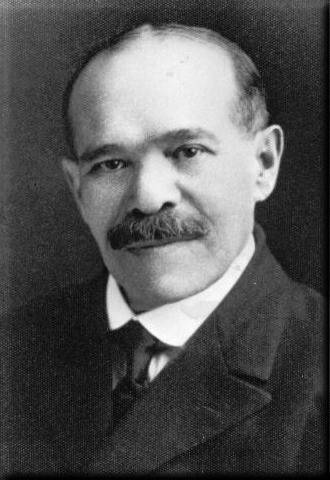
Dr. R.C. Sproul is the founder and chairman of Ligonier Ministries, an international Christian education ministry located near Orlando, Florida. His teaching can be heard on the program Renewing Your Mind, which is broadcast on hundreds of radio outlets in the United States and in 40 countries worldwide. He is the executive editor of Tabletalk magazine and general editor of The Reformation Study Bible, and the author of more than seventy books (including some of my all time favorites: THE HOLINESS OF GOD; CHOSEN BY GOD; KNOWING SCRIPTURE; REASON TO BELIEVE; and PLEASING GOD) and scores of articles for national evangelical publications. Dr. Sproul also serves as president of Ligonier Academy of Biblical and Theological Studies and Reformation Bible College. He currently serves as senior minister of preaching and teaching at Saint Andrew’s in Sanford, FL. (The picture to the left was taken approximately around the time of Sproul’s conversion as a College student).

How a Rabbi Found Peace: Personal Testimony of Dr. Max Wertheimer

Born of orthodox Jewish parents, my earliest childhood impression was of my parents rising in the morning very early in order to spend a long time reading the Hebrew prayers. Even in the cold winter, before fires were kindled for their physical comfort, they carried on faithfully these early devotions. Insofar as their knowledge of God was concerned, they were a devout and God-fearing couple.

From the age of five to fifteen my training was in a Jewish school, in orthodox Judaism. A scholarly Hebrew instructed me in the five books of Moses. I went to the Gymnasium for my classical training and later was apprenticed to a manufacturer, doing office work. My associates at that time led me into the sinful pleasures of the world, and although I attended synagogue and read my Hebrew prayers on the Sabbath, I drifted from the faith of my fathers.

A parental decision to send me to America to pursue my classical education brought me to Hebrew Union College in Cincinnati, Ohio. I graduated in seven years, having meanwhile taken my degrees in letters and Hebrew literature, and four years later my Master’s degree. We studied the Old Testament, translated it from Hebrew into the vernacular, went through Jewish history from beginning to the present day, and learned the oral laws.

After finishing the rabbinical course we were publicly ordained and inducted into the rabbinical office. My first call was to Dayton, Ohio, where I officiated as rabbi for ten years, during which I made many friends and received many tokens of love which I treasure highly. In my Friday evening lectures I spoke on social, industrial and economic questions, monotheism, ethical culture, the moral systems of the Jews, etc. In the Saturday morning addresses I took weekly sections of the Pentateuch, followed by a corresponding section of the prophets. On Sunday I taught Sunday School from eight in the morning until five in the evening, with one hour intermission for dinner.

In 1895, a series of meetings was held in the Christian Church of Dayton, with various denominational pastors giving addresses on their religion. I stood proudly before that audience of professing Christians and told them why I was a Jew and would not believe in their Christ as my Messiah and Savior. I gloried in Reform Judaism that acknowledged no need of an atoning sacrifice for sin, a religion of ethics which quieted qualms of conscience through a smug self-righteousness. In the audience sat an humble aged woman, a devout Christian, who was deeply stirred as she listened. “O God,” she prayed, “bring Dr. Wertheimer to realize his utter need of that Savior he so boastingly rejects. Bring him if necessary to the very depths in order that he may know his need of my Lord Jesus Christ.”

What unforeseen forces were brought into action as a result of that unknown woman’s heart-cry! How perfectly satisfied with life I was that day: I had a young, attractive, accomplished wife, was rabbi of the B’nai Yeshorun Synagogue, had a beautiful home, a comfortable income, a place of prominence in the community, had become an honorary member of the ministerial association, was a member of the Present-Day Club, served as chaplain in the Masonic lodge, and was a popular speaker before women’s clubs, schools, civic organizations, etc. Had you visited my library at that time you would have found a wide range of reading. I had every book Bob Ingersoll wrote, read them, and corresponded with the author. I was an oft-invited guest speaker in every denominational church in the city. I was satisfied with life! My wife and I enjoyed the musical treats, we had a large home, two servants, and a beautiful baby boy and daughter, Rose.

Suddenly there came a change! My wife was taken seriously ill, and in spite of many physicians and specialists, she died, leaving me a distraught widower with two little children. After the funeral I put Rose in the care of my mother-in-law, advertised for a housekeeper for myself and boy, and found myself the most miserable of men. I could not sleep. I walked the streets, striving to forget the void, the vacancy in my heart and life. My dreams of a successful career and serene domestic life were all shattered. Where was comfort to be found? The heavens were brass when I called on the God of my fathers! How could I speak as a rabbi words of comfort to others when my own sorrow had brought me to despair? I investigated Spiritism but found it utter fallacy. I attended meetings and read the literature of Theosophy and Christian Science, only to find it futile and hopeless. My experience was comparable to Job’s when he cried, “My days are swifter than a weaver’s shuttle, and are spent without hope” (Job 7:6). The tenth year of my rabbinical office drew to its close. I decided not to accept re-election, and resigned. I wanted to think over things! I would study! Where is the spirit and soul of one who was such a gifted pianist, who gave charm to life, who made existence so sweet? What had become of all the faculties, the intents and purposes of that active, keen mind? I turned to my Bible!

I studied about Judaism, but it answered no questions, satisfied no craving of my heart. Then I began reading the New Testament and comparing it with the Old Testament. Many passages were read, pondered, meditated upon. One made a definite impression: the fifty-third chapter of Isaiah, eleventh verse, last clause: “By his knowledge shall my righteous servant justify many; for he shall bear their iniquities” (Isaiah 53:11). Here was the only mention of that phrase “My righteous servant” I could find. It is found nowhere else in the Word of God, in either testament. We have “David my servant,” “Isaiah my servant,” “Daniel my servant,” but here it is “my righteous servant.” I said to myself: “Who is that righteous servant? To whom does the prophet refer?” I argued, “Whoever that ‘righteous servant’ of Jehovah is, of one thing I am sure: he is not Israel, because the prophet declares Israel to be a sinful nation, a people laden with iniquity, a leprous nation. The righteous servant of Jehovah must be One Who is holy. If it isn’t Israel, who could it be?” I decided it must be Isaiah. But in Isaiah 6 I found it could never be the prophet, for he confesses himself to be a guilty sinner and a man of unclean lips in God’s sight. “My righteous servant.” Who could it be? Then I began to study the context of the fifty-third chapter and in Isaiah 50:6 I found, “I gave my back to the smiters.” I pondered that: Who gave his back to the smiters? In the beginning of the chapter it says, “Thus saith Jehovah.” Jehovah is the only speaker in the chapter. Jehovah gave His back to the smiters? Had God a back? When and why was it smitten? Who smote it? Further I read: “Who gave his cheeks to them that plucked off the hair.” And still further: “I hid not my face from shame and spitting.” What did all this mean? Who had been so abused? When? Why? Did Jehovah have all these human characteristics?

I studied more and more various prophetic utterances. In Psalm 110:1 it is written: “The LORD said unto my Lord, Sit thou at my right hand, until I make thine enemies thy footstool.” Here was David himself, speaking of his own seed and calling Him “Lord.” How did He get up there? Why didn’t God specify? Why didn’t He speak so plainly to Israel that every Jew could understand?

In confusion I decided to begin at the first chapter of Isaiah and read the book through. I was stopped at the ninth: “For unto us a child is born, unto us a son is given: and the government shall be upon his shoulder: and his name shall be called Wonderful, Counsellor, The mighty God, The everlasting Father, The Prince of Peace” (Isaiah 9:6). Here was a most incomprehensible thing!

I was faced with the doctrine of the trinity. We Jews have a popular monotheistic slogan: “Sh’ma Yisroel, Adonai Eloheynu, Adonai echod” (Hear, O Israel, the LORD our God is one LORD, Deuteronomy 6:4). The word echod means one. Upon that word the doctrine of unity of Jehovah is rooted and grounded, the entire philosophy of Judaism is based. Taught by the rabbis for ages, that word echod means absolute unity. Now I could not believe it; my teaching was wrong! I began to study the word and I discovered it meant not absolute unity but composite unity. Let me illustrate: Adam and Eve became one flesh; the Hebrew for one flesh is bosor echod, a composite unity. Moses sent twelve spies into Canaan, and they returned bearing a gigantic bunch of grapes. That cluster of grapes is called in Hebrew eschol-echod. With hundreds of grapes on the stem it could not have been an absolute unity; they are called in Hebrew “one cluster,” composite unity. There was wickedness committed in Gibeah of Benjamin which disgraced Jehovah and His name and character. The other tribes were indignant and “all the people arose as one man.” That is what I want you to see: at that time the men of Israel, beside Benjamin, were 400,000 men of war, yet they were “knit together as one man” (in Hebrew: ish echod). Here again composite unity: thousands acted as one! These and other Scriptures showed conclusively that echod cannot be an absolute unity.

God revealed Himself to Abraham as Almighty (El Shaddai). The first letter of this word is schin; it has three strokes joined as one. This letter is on the top of the phylacteries and on the casing of the door posts. Jews have always taken this letter as symbolical of the godhead because it had three strokes (one for each Person in the trinity), joined together as one to show unity. But another question troubled me: if He Who was on the cross was truly an incarnation of Jehovah, then who was in heaven? I turned to the eighteenth of Genesis. Abraham had three visitors; two angels, and the third he addressed fourteen times as Jehovah. Later, two went away, but the third said to Abraham: “Shall I hide from Abraham that which I shall do? I am going down to Sodom and Gommorah to see whether or not they have done altogether according to the report which has come to me. If not, I will know I am going to destroy the cities.” Abraham interceded for them, the Lord went His way, and Abraham went home. Now here is the point: We find Jehovah inspecting the moral condition of Sodom and Gomorrah and refusing to spare them because not even ten righteous citizens could be found within their borders. But in this same chapter we have this statement: “Then Jehovah rained upon Sodom and upon Gomorrah brimstone and fire from Jehovah out of heaven.” How and why could there be two Jehovahs, one walking the streets of Sodom and another in heavenly places? It must be one omnipresent Jehovah! Then if that were true, He could be simultaneously both in heaven and with and in Jesus on the cross.

Another problem succeeded it: “Why is the name Jesus never mentioned in the Hebrew Scriptures?” I studied this question. Imagine my surprise when I found that 275 years before Christ, King Ptolemy Philadelphus summoned men from Palestine and bade them translate the Hebrew Scriptures into Greek vernacular. They took the Pentateuch first and when they came to the name “Joshua” they translated it the book of “Yesous,” written with a circumflex over it to show there had been a suppression of Hebrew that could not be expressed in Greek. When Joshua went into Canaan with the other eleven spies he was called “Yehoshua” (Jehovah is the Savior). That is exactly what the word “Jesus” means.

I could hold out in unbelief no longer; I was convinced of the truth of God as it is in Christ Jesus. I cried, “Lord, I believe that Thou as Jehovah Yesous hast made the atonement for me. I believe that Jehovah Yesous died for me! I believe Thou hast made provision for me! I believe Thou hast the ability and power! From henceforth I will publicly confess Yeshua as my Savior and Lord!” Thus after months of searching I was convinced that Jesus was the righteous servant of Jehovah—Jehovah-tsidkenu, “The LORD our righteousness!”

On March 30, 1904, I publicly confessed Christ in the Central Baptist Church, and having been licensed to preach, doors readily opened to me. I was persuaded to enter Southern Baptist Seminary in Louisville, Kentucky, from which I graduated after a year of study. Mr. Icenbarger, at my request, called a council of Dayton Association of ministers, and 35 Baptist pastors assembled in Central Church questioned me relative to my personal faith and doctrine. My ordination took place that evening, and my first call came from Ada, Ohio, where I served as pastor for five years. From there the New Covenant Mission in Pittsburgh, of which Maurice Ruben was founder and superintendent for many years, called me to be their pastor-evangelist. After two and a half years of this ministry I was convinced that God was calling me to a wider sphere in preaching the Gospel to both Jew and Gentile, depending upon the Lord for the support of myself and family. In 1913 we returned to Ada, the little flock over which I had been under-shepherd for five years being very dear to our hearts.

I started out in Bible teaching, and God was ever faithful. Were I to write of all the manifestations of His goodness and grace, it would fill a book. Critical operations, publication of my books, supplying all our needs—He never failed to care and provide. In Christ I have found my only abiding comfort for every sorrow.

As a rabbi I had yearned to give the bereaved some hope on which to lean, but how could I give that which I did not possess? I gave sympathy, but in times of heart-aching grief and tragedy, sympathy is of little comfort. But to the heartbroken how satisfying and glorious are the words of our Lord Jesus Christ, “I am the resurrection, and the life: he that believeth in me, though he were dead, yet shall he live” (John 11:25). And again, “Verily, verily, I say unto you, He that heareth my word, and believeth on him that sent me, hath [possesses now] everlasting life, and shall not come into condemnation; but is passed from death unto life” (John 5:24).

There is but one eternal life. There is but one source of eternal life; that is God’s Son. What a great and glorious message we, His redeemed ones, are commissioned to deliver today!

*Max Wertheimer (1863-1941) was born in the province of Baden, Germany, to an Orthodox Jewish family. He received a strictly Jewish education, and beginning the age of five was required to study the Torah in Hebrew with Rashi’s commentary as well as parts of the Talmud. He eventually immigrated to the United States to Buffalo, New York, where he met the rabbi of the local synagogue who was instrumental in his attending Hebrew Union College (HUC) in the fall of 1882.

Wertheimer became an outstanding student, finishing the eight year program in only seven years. He also won the favor of the president who took the young man under his wing. Wertheimer graduated with his doctorate from Cincinnati University in 1887 and from the rabbinical seminary in 1889. Following graduation he became the rabbi of Bnai Yeshurun Temple in Dayton, Ohio – the first American-trained rabbi of the congregation, where he served for 10 years.

Dr. Wertheimer’s reputation as a lecturer, teacher, and preacher led him to be frequently called upon to speak in literary societies and in schools. As a distinguished rabbi he also addressed Christian gatherings of various denominations, including some Roman Catholic institutions. In short, he was loved and esteemed not only by Jews, but also by Christians.

Despite his success, however, Rabbi Wertheimer was still searching for something he felt was missing. He often locked himself in his library studying and praying to HaShem for light. As he searched the Scriptures his thoughts were repeatedly directed to Isaiah 53. Again and again his attention focused on the central figure of the chapter—“the righteous servant.”

On March 30, 1904, Dr. Wertheimer publicly confessed his faith in Yeshua and for the remainder of his life traveled around the country as a speaker and teacher.

Patrick: Missionary to Ireland by George Grant

A small body of Christian believers has faithfully maintained a century-long Gospel legacy in the heart of the teeming city of Jakarta. Planted by Dutch missionaries during the colonial era, the Reformed Chapel has gracefully shown forth the love of Christ to the world’s largest Muslim nation in both word and deed. Though many of the members of the congregation had only recently been oppressed, tyrannized, and sent fleeing from their family homes on the island of Sumatra, they responded quickly to the tsunami disaster that swept many of their former persecutors into a horror of death, destruction, and loss. They have collected money for relief. They have sent doctors, nurses, technicians, and engineers to help. They have mobilized whatever help they could possibly muster. They have been quick in such a time of need to care for men and women they knew to be their enemies — and the enemies of God.

That is the Gospel in action. It is the very essence of the missionary impulse. It always has been. It always will be. It was the sort of thing that Patrick of Ireland would have understood only too well. Indeed, it was in fact, the story of his life.

Patrick was a younger contemporary of Augustine of Hippo and Martin of Tours — the fifth century heroes of the faith who laid the foundations for the great civilization of Christendom. He was apparently born into a patrician Roman family in one of the little Christian towns near present day Glasglow — either Bonavern or Belhaven. Although his pious parents, Calphurnius and Conchessa, nurtured him in the Christian faith, he later confessed that he much preferred the passing pleasures of sin. One day while playing by the sea as a teen, marauding pirates captured Patrick and sold him into slavery to a petty Celtic tribal king, named Milchu. During the next six years of captivity he suffered great adversity, hunger, nakedness, loneliness, and sorrow while tending his master’s flocks in the valley of the Braid and on the slopes of the Slemish.

It was amidst such dire straits that Patrick began to remember the Word of God his mother had taught him. Regretting his past life of selfish pleasure-seeking, he turned to Christ as his Savior. Of his conversion he later wrote, “I was sixteen years old and knew not the true God and was carried away captive; but in that strange land the Lord opened my unbelieving eyes, and although late I called my sins to mind, and was converted with my whole heart to the Lord my God, who regarded my low estate, had pity on my youth and ignorance, and consoled me as a father consoles his children. Every day I used to look after sheep and I used to pray often during the day, the love of God and a holy fear of Him increased more and more in me. My faith began to grow and my spirit was ardently stirred. Often, I would pray as many as a hundred times in a single day — and nearly as many at night. Even when I was staying out in the woods or on the mountain, I would rise before dawn for prayer, in snow and frost and rain. I felt no ill effect and there was no slackness in me. As I now realize, it was because the Spirit was maturing and preparing me for a work yet to come.”

Amazingly, Patrick came to love the very people who humiliated him, abused him, and taunted him. He yearned for them to know the blessed peace he had found in the Gospel of Christ. Eventually rescued through a remarkable turn of events, Patrick returned to his family in Britain. But his heart increasingly dwelt upon the fierce Celtic peoples he had come to know so well. He was stunned to realize that he actually longed to return to Ireland and share the Gospel with them.

Though his parents were grieved to see him leave home once again, they reluctantly supported his efforts to gain theological training on the continent. His classical education had been interrupted by his captivity, so he was far behind his peers academically. But what he lacked in knowledge, he made up for in zeal. Before long he had secured a warrant to evangelize his former captors.

Thus, Patrick returned to Ireland. He preached to the pagan tribes in the Irish language he had learned as a slave. His willingness to take the Gospel to the least likely and the least lovely people imaginable was met with extraordinary success. And that success would continue for over the course of nearly half a century of evangelization, church planting, and social reform. He would later write that God’s grace had so blessed his efforts that “many thousands were born again unto God.” Indeed, according to the early-church chronicler W. D. Killen: “There can be no reasonable doubt that Patrick preached the Gospel, that he was a most zealous and efficient evangelist, and that he is entitled to be called the Apostle of Ireland” (Ecclesiastical History of Ireland, London, 1875).

We know that the kingdom of heaven belongs to “those who have been persecuted for the sake of righteousness” (Matt. 5:10) and that great “blessings” and “rewards” eventually await those who have been “insulted,” “slandered,” and “sore vexed” who nevertheless persevere in their high callings (Matt. 5:12–13). We know that often it is in “afflictions, hardships, calamities, beatings, imprisonments, tumults, labors, sleeplessness, and hunger” (2 Cor. 6:4–5) that our real mettle is proven. Nevertheless, we often forget that these things are not simply to be endured. They actually frame our greatest calling. They lay the foundations for our most effective ministries. It is when, like Patrick, we come to love God’s enemies and ours that we are set free for great effectiveness.

Jesus said, “Bless those who curse you, do good to those who hate you and pray for those who persecute you (Matt. 5:44); and again, “Love your enemies, do good to those who hate you.” (Luke 6:27). Therein is the missionary impulse. Patrick’s life, like that of those selfless believers in Jakarta, provides us with a stunning reminder of that remarkable Gospel paradox.

*Dr. George Grant is senior minister of Parish Presbyterian Church in Franklin, Tennessee, and director of the King’s Meadow Study Center.  This article first appeared in Tabletalk, August 2005.

Book Review – F.F. Bruce: A Life by Tim Grass

Possibly the Most Influential New Testament Scholar of the 20th Century

Shortly after being “called” to the ministry at the age of seventeen I remember talking with a Christian bookstore owner and asked him, “of all these books in the store – which authors would you recommend?” He answered quickly and without hesitation, “Anything by F.F. Bruce, you simply can’t go wrong with F.F. Bruce.” That short little conversation took place in 1985, just five years before Professor Bruce went home to be with the Lord. Since then, I’ve gone on to purchase 40 of Bruce’s 50 published books (25 are still in print as of this review).

In reading F.F. Bruce’s books I always found him to be clear, textually illuminating, and always helping me in understanding the context and cultural factors elucidating my interpretation of the text. In reading this book the author highlights three aspects of Bruce’s life: his influence on the worldwide Brethren movement, his academic achievements, and his overall influence in the evangelical movement – especially as a world class scholar who was respected by liberals and conservatives alike.

It is very likely that my forefathers on my paternal side came in contact or ran in similar circles with F.F. Bruce’s family who were very heavily involved in ministry and missions throughout Scotland. My grandfather was a Plymouth Brethren “faith missionary” who grew up in Scotland, immigrated to Belfast in Ireland, and then was a life long missionary in Argentina. I personally have never been involved in an “assembly” as they call their gatherings – but have had the opportunity to speak at their gatherings on several occasions in Argentina.

One of the things I am personally grateful for is the Brethren’s focus on reading, studying, memorizing, and teaching the Scriptures. I believe that Grass brings this out early in the book and it was Bruce’s knowledge of, and love for the Scriptures that made him such an outstanding Biblical scholar. One of the things I will be eternally grateful for is that the love for the Scriptures that the Brethren have passed down from generation to generation. Peter Bruce passed down to his son this advice that served him well for his entire life, “never accept anything offered in the way of the Christian faith unless you see it clearly for yourself in the Scriptures.”

Bruce was known not for being a theologian, but a classicist, linguist, and biblical scholar. He was a prolific author, editor, and reviewer of over 2,000 books – mostly technical. He was the doctoral advisor to some of the finest scholars of the 20th century on into the 21st century.

In reading this book there were three primary lessons I learned from F.F. Bruce.

He was what former student Ward Gasque (and great NT scholar in his own right) called an “unhyphenated evangelical.” Even though he was brought up, and involved in Brethren Assemblies he did not tow-the-line in any particular system or practice. He was leery of buying into any system of theology. He was more concerned with being “biblical” in getting at the sense of the author’s original and cultural intent. Tim Grass writes, “The issues which, for Bruce, were non-negotiable may be summarized as the reliability of the New Testament, the person and work of Christ, the Christian life as one of forgiveness and liberty as befits those who are being led by the Spirit, and the right and duty of every believer to use whatever gifts God has given them.”

F.F. Bruce was very charitable, gentle, and respected those he disagreed with, and those who disagreed with him. He seemed to be genuinely humble, teachable, and diplomatic (in a loving sense, not in a political sense). Therefore, as a result of reading about Bruce, in my own reviews, teaching, writing, I will seek to see the positive side more than the negative side of things. He was a bridge builder in his involvement in the Brethren church, among fellow professors, and in the academic arena.

I love what J.I. Packer had to say about Bruce, “No Christian was ever more free of narrow bigotry, prejudice and eccentricity in the views he held and the way he held them; no man ever did more to demonstrate how evangelical faith and total academic integrity may walk hand in hand.”

F.F. Bruce was passionate about the gospel and for people to read about, hear about, and discover Jesus and for them to have a personal relationship with him. He would spend countless hours answering questions, replying to letters, and speaking, writing, and teaching at every possible opportunity to talk about Jesus. Even though he spoke in a monotone, and often read his lectures and sermons, he had a deep passion to communicate the gospel. From Bruce, we learn to focus on what we can do, not what we can’t do for the sake of Christ. He was a tireless worker as an editor, writer, speaker, involved in the lives of his students, and in the academic world for the cause of Christ.

Lastly, as person, Laurel Gasque (a well respected cultural historian) described Bruce as “the most genuinely free person I have ever known.” I think this is what most stood out to me about F.F. Bruce in this biography. He was brilliant, prolific, and well respected. However, he saw himself as a common man and would do anything that was asked of him by others. He seemed to have had a tremendous amount of confidence in God’s sovereignty and that no little assignment or task was beneath his dignity for him to always do his best.

I am grateful for my heritage and for men like F.F. Bruce who have served the Lord well with his mind and soul. I hope that many young Bible scholars, pastors, and missionaries will be inspired by his life and work. Many consider his biography on the Apostle “Paul: The Heart of the Apostle Set Free” to be his Magnum Opus. He truly was like the Paul the Apostle in so many ways – tireless in his work and love for the churches, expounding on and writing for the cause of the gospel, and at home with students, academics, intellectuals, and lay people. And yet he did all this with great joy and with much freedom – unfettered by anything other than a desire to please his Lord and Savior.

I close this review/tribute with the words of Robert Mounce, who sums up why he believes Bruce was so influential:

“It is evident…that Bruce lays before us no new and innovative perspectives. Concern for historical accuracy coupled with a high view of the Biblical text inevitably restricts the role of the imagination, that prime mover in theological and higher critical ‘breakthroughs.’ Bruce’s lasting contribution to Pauline studies is his careful and informed treatment of the life and the letters of Paul in their historical, social, religious and cultural setting. The fact that his interpretations are traditional has no bearing on the question of their value for Biblical study. We are indebted to F.F. Bruce for his lifelong commitment to a balanced and biblical interpretation of the life and thought of the apostle Paul.”

I am indebted to Tim Grass for this labor of love on F.F. Bruce. I am grateful to have learned more about my own heritage as a beneficiary of the Brethren movement, as an evangelical, and as a lover of the Word, a teacher in the church, and an evangelist with a pastor’s heart for the sake of Christ.

Book Review – Arise: Live Out Your Dreams on Whatever Field You Find Yourself by Clayton and Ellen Kershaw and Ann Higginbottom

The Kershaw ABC’s

I primarily got this book on a whim because I love baseball – especially the Dodgers –and enjoyed watching Clayton Kershaw work his way into the pitching Triple Crown and a CY Young award during the 2011. I enjoyed this book more than I thought I would – to be honest I didn’t expect much depth from a couple that are half my age – in their early twenties. In this book Clayton and Ellen show that they are wise beyond their years, and totally committed to Jesus Christ as their Savior and Lord and to making a huge difference in the lives of people whether on a baseball field or in a field in Africa.

I was pleasantly surprised by what I’ll call the Kershaw ABC’s:

A is for Africa – The book goes back in forth alternating between Ellen and Clayton (there are more chapters written by Clayton) talking about the dreams (goals) that they had as teenagers and how God was at the center of these dreams and how they came to be a reality in each of their lives. Ellen talks of her various trips to Zambia to work with children there and how together in marriage God has allowed them to visit Africa and combine God’s love and gospel message to help children. I found Ellen’s depth in her relationship with Christ to be inspirational and encouraging – and enjoyed what she wrote as much as what Clayton wrote.

B is for Baseball – Clayton walks you through his little league, minor league, and Dodgers career thus far. Any baseball fan will really enjoy what he has to say in these sections – especially the amazing Cy Young performance he had last year with the Dodgers. There is a great story in the book where Clayton talks about a teacher’s advice to him on following his dream in 9th grade to be a pro ball player, “I do want you to understand the odds, Clayton. They are one in a million. But the important thing is that you see yourself as the one. Don’t think about the million. Visualize yourself being the one who makes it. You are the one. Be the one.”

C is for Christ – There is a huge emphasis in this book on what it means to have a personal relationship with our Maker through Jesus Christ, and how to grow, benefit from, and be used in this world by having your identity in Christ and thus giving Him glory. Clayton desires to be known as a “Christian who plays baseball, not as a baseball playing Christian.”

Clayton and Ellen clearly articulate the gospel and how to have a relationship with Jesus Christ by grace through faith in Him:

Clayton, “We are saved through faith in Christ alone. Our words and actions should flow out of a heart that has been changed by the Lord. We can’t earn God’s grace by doing good things. That wouldn’t be grace. Grace means getting something that we really don’t deserve. It’s a relief to remember that God’s grace doesn’t depend on us or on our ability to live a perfect life. Thankfully, it depends on Jesus, who lived a perfect life for us and died in our place.”

Ellen, talking about the father and son in Jesus’ parable in Luke 15, “Rather than punish his son, the father absorbs his son’s guilt and shame so that his son can receive the gift of his love. That’s exactly what Jesus did for us in dying for our sins…When my social life was shaken in middle school, God graciously drew me to Himself…By God’s grace, I have a heart for Africa. By God’s grace, Clayton can throw a baseball. We’re hopeful that we can spend a lifetime figuring out what those two things mean and how to live them out for God’s glory.”

I would say that the target audience of this book is primarily high schoolers, college students, and young people in their twenties. As they say early on in the book, “We want a generation of young people to arise—to hope and believe that their lives are full of purpose.” However, I think anyone who loves the poor and hurting children of the world, baseball, and especially Jesus Christ will really enjoy and benefit from this book. I would especially encourage young people to read this book and emulate the Kershaw’s as they follow Jesus Christ. If you are Christian parent, youth pastor, pastor, or coach I highly recommend that you give this book to a young person in your life – it can be a great motivator for them to follow their dreams and reach them for the sake of Christ and His glory in the world.

Book Review: All In: Jerry Yang with Mark Tabb

Gripping Story From Beginning to End

 I got this book on a whim because I like Mark Tabb’s writing. I don’t claim to be a poker player or a son of a poker player (as a matter of fact – I don’t think my dad’s ever played poker). Anyway, this is a gripping story of a young boy’s life growing up near Laos and the tragedies and joy’s as his family escaped torture and persecution from the North Viet Nam Communists traveling from their small village in Laos to a refugee camp in Thailand and then to the USA. In the USA Jerry Yang tells the story of how he became the 2007 World Series Poker Champ.

There are 24 chapters in the book and Mark Tabb weaves the story of Jerry and his family’s escape and his rise as poker champion of the world. If you love good stories that end well – you will love this book. It gripped me from the beginning. The story has it all – it will grab your emotions and inspire you (it had me crying and laughing throughout). You will see how God’s providence is weaved throughout the story as well. Whether you like poker or not – you will love this book because it will restore your love for the things that have made the USA such a great country – immigrants fleeing for their lives to have opportunities, working hard, and achieving their dreams.

Jerry Yang is a tremendous role model and I think what he has done with his earnings and life since he won the 2007 championship is amazing and inspiring – not in the world of poker – but in helping other refugees like he was at one time. I highly recommend this book for your reading pleasure and to inspire you to once again believe in the American Dream from someone who has shown that you can be and do anything if you put your mind to it and work hard.

Booklet Review: The Tebow Mystique by Patton Dodd

When Hard Work and Faith Go Hand in Hand

 As I write this review with Tim Tebow at the helm as quarterback of the Denver Broncos are 7-1. Almost all of these victories seem to be “miraculous” wins. It’s hard to open the sports page, turn on talk radio, go on the Internet, or watch television without hearing about the latest exploits of Tim Tebow – his faith and his wins.

According to Dodd the Tebow Mystique has two main features: “First, Tim Tebow’s unprecedented popularity; and second, his uncanny on-the-field performance.” The Tebow phenomenon seems to be based on the combination of his work ethic and character based on his faith in Jesus Christ. He has what Max Weber wrote about in how some individuals can inspire “charismatic authority” a leadership style based on integrity of character – when your walk matches your talk.

Dodd makes this excellent observation, “It’s fair to say that Tim Tebow and his siblings were raised to be character savants in the way that Tiger Woods was raised to be a sport savant and Mozart was raised to be a music savant.” All the football analysts keep expecting Tebow and the Broncos to fail, but as Tebow says, “Hard work beats talent when talent doesn’t work hard.”

I for one am enjoying the spotlight on a guy who is passionate for God and helping others on and off the football field. It remains to be seen whether he will win the Super Bowl, or have successful career in the NFL. My hope is that whether Tebow wins or loses he will continue to remain a good role model and example to the myriads of young people who are looking for heroes. It’s nice for a change to see someone walking the talk, and making a difference in people’s lives on and off the field.

I believe in miracles, but I also believe that the hard work and good stewardship of and application of Tebow’s faith will help him to always win in life no matter what the score is at the end of the day. I think this is a good little booklet that shows how integrity of character and hard work in the little things pay off. It’s my hope that Tebow continues to win on the field and turn his critics into fans of hard work and the God who empowers, guides, and gives him wisdom in the face of so many obstacles. May his ilk increase!

Book Review: Being George Washington by Glenn Beck

A Call To Lead in the Ilk of Our First President

 I was encouraged to read this book because of the gaping hole in leadership internationally, nationally, and locally – whether in politics, education, business, or in the church. Simultaneous with my reading of this book I was interested in something that John Gardner (in an essay on leadership) pointed out, “When the United States was formed, the population stood at around 3 million. That 3 million produced at least six leaders of world class—Washington, Adams, Jefferson, Franklin, Madison, and Hamilton.” Today we have a population 90 times larger than that and I can’t name a single leader that comes close to the aforementioned six men. Along with Gardner I ask the question “Where are they?”

Therefore, my curiosity was peaked in reading this book to discover what we can learn from Washington’s life – and whether we can truly produce great leaders today. One of the main points that Beck makes in the book early on is that “for America to achieve the greatness that George Washington achieved, we have to remember that it is achievable.” In story after story Beck brings out some of the keys to great leadership – character (based on a strong faith in God and His good providence); putting others before self – especially what’s best for the whole; having a vision for liberty and fighting for it; focusing on that which will last beyond us. In a nutshell Beck highlights Washington’s character, trust, and honor in story after story and demonstrates how he united America around freedom so that we could be the best we could be.

The primary lesson of this book and of great leadership is stated by Beck in this manner, “Everything we do in life—every battle that we fight and every mountain that we climb, no matter how many times we fall—may be for no other purpose than to prepare us for that moment when we are called upon to make a difference in this world…What Washington did do was accept the responsibility he had been given, beg the grace of God upon himself and his army, and then work relentlessly to accomplish his goals. What he did do was to keep on working, regardless of the personal sacrifices required or the setbacks that he encountered. He kept the faith, no matter who stood against him; regardless of the gossip, the naysayers and sometimes, regardless even of the betrayal of his friends.”

In conclusion Beck states that if you and I are to be like George Washington in today’s world means:

“a daily struggle between your heart and your brain; between instant gratification and enduring greatness.”

“looking out for our families, our neighbors, and our countrymen—standing for them when they can’t stand for themselves.”

“putting country before party.”

“becoming a leader – not of a country or army, but of yourself, your community, and your own family. It means taking personal responsibility for your actions and holding those around you to the same standard.”

“accepting that this country was chosen for Divine protection because the struggle for freedom is worthy of protection.”

In other words, great leadership involves humility before God; responsibility with what He has stewarded unto us, and faithfulness to the task at hand. This book was a pleasure to read, and pointed out both the strengths and weaknesses of Washington. However, the constant reminder was to be what we can be with God’s help, and do what we can do (not focus on what we can’t do), one step or opportunity at a time. Being a great leader like Washington involves great sacrifice, risk, unselfishness, and tremendous dedication. In the final analysis we need to be willing to personally answer the key question that Beck asks, “Are you willing to lose everything to do what is right?” I am grateful that Washington did, hope I will too, and that his tribe will increase abundantly.


Book Review: Johann Sebastian Bach (Christian Encounters Series) by Rick Marschall

In 1 Corinthians 10:31, the apostle Paul writes, “So, whether you eat or drink, or whatever you do, do all to the glory of God (ESV).” The author makes it clear throughout this book that the master musician – Johann Sebastian Bach – set out to do this very thing – make music to the glory of God. I think the author does a good job of balancing the personal, professional, and lasting legacy of arguably the greatest musician who ever walked the face of the earth.

I have listened to a lot of Bach’s music before reading this book (particularly through the masterful guitar playing of Christopher Parkening). However, I really enjoyed everything about the book. I liked hearing some of the technical stuff (as a non-musician), it was very interesting. I also liked the way the author inserted historical and cultural aspects related to Bach’s life. The reading was a little bit choppy and sometimes tangential, but held my attention, because of the man he was writing about.

Overall – I am inspired to learn more, and read more about Bach. I finished the book with a longing for more Bach’s in our own time. Reading this book challenged me to pray for more geniuses and hard workers who will penetrate our culture with master pieces in music, the arts, inventions, all to the glory of God!

I long for those who (like Bach) would pray and write “Jesus help me” (Jesu, Juva) before they begin their work, and “to God alone be the glory” (Soli Deo Gloria) when they finish their work. Bach certainly is an example of someone who took to heart Paul’s words to the Colossians, “Whatever you do, work heartily, as for the Lord and not for men (3:23, ESV).” We would do well to “go and do likewise.”

Disclosure of Material Connection: I received this book free from the publisher through the BookSneeze®.com book review bloggers program. I was not required to write a positive review. The opinions I have expressed are my own. I am disclosing this in accordance with the Federal Trade Commission’s 16 CFR Part 255: “Guides Concerning the Use of Endorsements and Testimonials in Advertising.”