Book Review: Discovering God’s Will by Sinclair B. Ferguson

My Favorite Scottish Theologian/Pastor on God’s Will

 I am partial to pastor theologians (men that teach or have taught in the seminary and are also preaching pastors) like R. C. Sproul, John Piper, Mark Dever, Eugene Peterson, James White and the writer of this book, Sinclair Ferguson, because they are well studied, but as they have a book on one knee, they also have a lamb on the other knee. They know the Scriptures, but they also know people and how the two need the Word and Shepherding.

In this book Ferguson emphasizes the fact that the best way to get guidance in the Christian life is by knowing the Guide – our Lord and Savior Jesus Christ. It’s very important to know about the Guide, but so much more important to know the Guide personally and intimately as your Shepherd, Leader, Supplier, and Restorer. He instills in us the idea that you will only do the will of God insofar as you follow His lead in your life.

In the first chapter of the book Dr. Ferguson develops the ideas that a Christian is one who walks on the paths which God has laid; enjoys the purpose for his life which God has ordained; and looks to the destiny which God has planned. Some of the key questions he grapples with are the following: Why has God made me? What is my life for? Will this course of action tend to further the glory of God? What does it mean that our lives should reflect his glory?

In chapter two Sinclair develops the idea of how God has revealed his character and ways in three specific ways: 1) God’s direct commandments and prohibitions; 2) The numerous principles worked out in the Scriptures; and 3) The illustrations and biographical accounts which reveal how these principles of God’s working with his people turn out in personal experiences. He states, “The chief need we have is that of increased familiarity with sensitivity to the wisdom of his word…But we are not called by God to make the mysterious, the unusual, the inexplicable the rule of our lives, but his word.”

Some practical principles on guidance:

1)    God’s guidance will require patience on our part.

2)    It is essential that we come to see the part which our own thinking should play in the discernment of the will of God.

3)    The discovery of God’s will and its accomplishment involves our own will.

In chapter three he develops the idea of guarding the heart, and deals specifically with our motives and conditions with an excellent treatment of the deceptiveness and transformation of the heart from the Proverbs, Psalms, and the book of James.

In chapter four Ferguson develops the idea that “to live in the will of God is to walk in love, to walk in light and to walk in wisdom.”

The principles of conduct he develops in chapter five are to help us answer six key questions when the Bible doesn’t specifically address something we have to decide about with reference to moral or ethical dilemmas we encounter:

1)    Is it lawful? (1 Corinthians 6:9-11)

2)    Is it beneficial to me? Will it complicate, rather than simplify my life? (1 Tim. 4:4; Rom. 14:14; 1 Cor. 6:12)

3)    Is it enslaving? (1 Cor. 9:27; 2 Tim. 1:7)

4)    Is it consistent with Christ’s Lordship? (1 Cor. 6:19-20; 7:23)

5)    Is it helpful to others? (Rom. 14:20; 1 Cor. 10:33; Jn. 17:19; Rom. 15:3; Heb. 4:12)

6)    Is it consistent with the example of Christ and the apostles? Are there incidents, or is there teaching in Scripture, which can be applied to the situation in which I find myself? Will it give me a clue to the will of God for my life now? Is it for the glory of God? For that matter, am I living for the glory of God? (cf. 1 Cor. 11:1; Phil. 3:17; 2 Thess. 3:7; 2 Tim. 3:20; Heb. 6:12; 13:7)

In chapter six he urges us to consider our calling by considering our gifts, needs, and settled interests.

Chapter seven underscores several principles and questions to ask concerning marriage:

1)    Be realistic in your expectations.

2)    Be biblical in your preparation by answering some of these key questions: What is marriage for? What should I look for in a husband or a wife?

3)    How do we fulfill the different roles of husband and wife? (Eph. 5:21-33)

4)    What is the character of marriage?

5)    What is the ultimate aim of marriage? I love what Ferguson says in answering this particular question, “The ultimate aim of marriage is to reflect God’s image; to reflect the glory of his grace and Being. This means that marriage can never be an end in itself. It exists for a greater purpose than its own fulfillment.”

Chapter 8 develops the theme of waiting on the Lord. He elaborates on issues we wrestle with like impatience, God’s apparent silence, and how to trust in God during these waiting times. Some of the difficulties of waiting are addressed as well like:

1)    We are reluctant to accept our status in this world as pilgrims.

2)    We are sometimes unwilling to bow to the sovereign providences of God in our lives.

3)    We lack faith in the goodness of God.

4)    We are too easily influenced by the attitudes of the age in which we live.

The last chapter of the book hones in on the ways God leads us. He closes by giving a practical exposition of Psalm 23 – God supplies our needs (v.1); God restores His people (v.3); God leads His people (v. 3); God protects His people (v.4); God richly blesses his people (v.5); God preserves to the end with his people (v.6).

I would describe this book as encouraging, Christo-centric, pastoral,  helpful, enriching, and biblically grounded. I highly recommend this book – especially if you don’t like to read a lot – the chapters are short and concise, and Dr. Ferguson does not waste words – short, sweet, and to the point.

Book Review – Found: God’s Will by John MacArthur

Good Biblical Foundation For Understanding the Topic of God’s Will For Your Life

I am currently reading a handful of books on decision making. I figured I would start out with the shortest of them, and work my way to the longest (from the simple to the complex). John Macarthur’s greatest strength is that you can count on him staying close to what the Bible says and not giving any speculation as to what it doesn’t say. He doesn’t delve into the emotional or philosophical realm, but sticks like glue to what the Bible clearly articulates concerning what God’s will is for humanity.

In the first chapter John clearly spells out what he wants to do in this little booklet: “Let’s begin with a simple assumption. Since God has a will for us, He must want us to know it. If so, then we could expect Him to communicate it to us in the most obvious way. How would that be? Through the Bible, His revelation. Therefore, I believe that what one needs to know about the will of God is clearly revealed in the pages of the Word of God. God’s will is, in fact, very explicit in Scripture.”

Therefore, MacArthur proceeds to deal only with what the Bible states explicitly about the Word of God. He gleans six principles from six (actually more – but for the purposes of this review I will only give the key texts he uses) key passages of Scripture.

1)    The first thing about God’s will is that He wants all kinds of people (economic classes, high positions, low positions and all ethnicities) to be saved based on 1 Timothy 2:3,4 – “This is good, and it is pleasing in the sight of God our Savior, who desires all people to be saved and to come to a knowledge of the truth.” (Referencing verses1 & 2 where Paul says “First of all, then, I urge that supplications, prayers, intercessions, and thanksgivings be made for all people, for kings and all who are in high positions, that we may lead a peaceful and quiet life, godly and dignified in every way”).

2)    It is God’s will that we are Spirit-filled (numerous verses). The key verses used in the chapter is Ephesians 5:15-18 where the Apostle Paul says, “Look carefully how you walk, not as unwise but as wise, making the best use of the time, because the days are evil. Therefore, do not be foolish, but understand what the will of the Lord is. And do not get drunk with wine, for that is debauchery, but be filled with the Spirit.” According to MacArthur the Spirit-filled life is “being saturated with the things of Christ with His Word, His Person.”

3)    It is God’s will for us to be sanctified. The key verses here are in 1 Thessalonians 4:3-7, “For this is the will of God, your sanctification: that you abstain from sexual immorality; that each of you know how to control his own body in holiness and honor, not in passionate lust like the Gentiles who do not know God; that no one transgress and wrong his brother in this matter, because the Lord is an avenger in all these things, as we told you beforehand and solemnly warned you. For God has not called us for impurity, but in holiness.”

4)    It is God’s will that we be a submissive and obedient people. Colossians 3; Ephesians 5 & 6; and 1 Peter 2:3-15 all talk about the roles of submission that every believer has with ultimate submission to the Lordship of Jesus over our lives.

5)    It is God’s will that we mature in Christ through suffering. 1 Peter 4:19 & 5:10 specify, “Therefore let those who suffer according to God’s will entrust their souls to a faithful Creator while doing good…And after you have suffered a little while, the God of all grace who has called you to his eternal glory in Christ, will himself restore, confirm, strengthen, and establish you.”

6)    It is God’s will that in all things we give thanks and delight in Him. In Psalm 37:4 David reminds us to “delight yourself in the LORD, and he will give you the desires of your heart.” And the Apostle Paul tells us in 1 Thessalonians 5:16-18, “Rejoice always, pray without ceasing, give thanks in all circumstances; for this is the will of God in Christ Jesus for you.”

In the final analysis if you are saved through the righteousness of Christ imputed to your account in exchange for your sin, and thus Spirit-filled, seeking to be sanctified, are submissive to Christ’s leadership in your life, endure suffering, and are continually giving thanks in all things – then according to MacArthur, and I agree – it doesn’t matter what you do. The foundation for all your decisions has already been established, and now you have great freedom within the parameters of God’s protective boundaries delineated in the Bible.

This book is by no means exhaustive, but is recommended because it lays a solid foundation for what the Bible does say about “finding God’s will for your life.”

Book Review: Mid-Course Correction by Gordon MacDonald

Much Needed Soul Surgery Motivation for Mid-Life

I read this book when I was in my mid thirties (preparing for mid-life) and now I have read it a second time in my mid forties (wrestling and struggling with mid-life). I must admit that I enjoyed it more this time around, because I have been bruised, bent, and broken a lot more than I ever experienced in my thirties or up until that point. I suppose I will probably be reading this book again in my mid fifties too!

I am partial to MacDonald’s writing because he is a deep thinker, good story-teller, and weaves biblical principles in ways that are practical, well thought ought, and go beyond clichés.

This book is beneficial in helping one pause and take stock and evaluate their life. It is especially geared to helping those who aren’t sure what to do with their lives; have had to, or desire to change careers, or are out of work; wrestling with meaning, purpose, and in need of hope and direction. It is thought provoking and doesn’t necessarily give all the answers you may be looking for, but sets you on the right course – and helps to correct taking the wrong course for sure.

In the body of the book MacDonald weaves his own story (and our own) with those of Abraham, Moses, The People of Israel, Paul, and the Disciples and uses the outline of the fact that we need to leave something behind; learn to follow Christ; and reach for higher possibilities. Learning, following, and reaching are well developed emotionally, spiritually, and practically and steeped in a good theology of “being” like Christ, rather than merely “doing” all the time.

Gordon emphasizes the fact that God wants us to have depth of character, and this depth can really only be achieved through suffering, faith when we can’t see, trying when we don’t know if we will succeed. However, all these factors and more are necessary in our lives in order that we may become deep people internally (in and from the soul) with proven character.

I have been helped significantly through MacDonald’s writing as a broken man to another broken man, and have been given more hope through his writing in pointing me to Jesus – the only One worth following, being like, and living for. Gordon writes like a master surgeon on the soul – taking out what needs to be removed and fixes what needs to be fixed. GMAC (I’m told that’s what his friends call him) – thanks again for your writing that goes deep into the mind and heart and for healing wounds and souls for the glory of God.

Book Review: I Never Thought I’d See The Day by David Jeremiah

 What to Believe and Do As We Wait For Our King To Return

This is the fourth book written by Dr. Jeremiah based on a prophetic series given at his church in San Diego over the past several years. The author (who has been in ministry for five decades and counting) writes about what he never thought he’d see happening in America and in the World by way of cultural ramifications that impact Christians and the world.

He bases the book on two specific Bible passages. Hosea 4:6, “My people are destroyed for lack of knowledge; because you have rejected knowledge, I reject you from being a priest to me. And since you have forgotten the law of your God, I also will forget your children. And 1 Chronicles 12:32, “Of Issachar, men who had understanding of the times, to know what Israel ought to do.” In other words, Dr. Jeremiah is concerned that we as Christians are not overwhelmed by the times we find ourselves living in – that we are knowledgeable about what is going on; and encouraged in the truth, so that we can effectively apply the Scriptures and make an impact on an ever increasing attack on God and His people around the globe.

Dr. Jeremiah tackles the following 9 specific developments in these times we are living in:

1)    The rise of angry atheists and how they seek to intimidate believers in God at every level of society.

2)    The intensification of spiritual warfare – the more the gospel spreads – the more the enemy attacks.

3)    The dethroning of Jesus Christ as God come in the flesh and King of Kings and Lord of Lords in whom is salvation and the only hope for the world.

4)    The redefining of marriage as articulated by God’s definition in the Bible.

5)    The moral deterioration of society both privately and publicly – especially among our so-called leaders.

6)    Dr. Jeremiah writes, “Intertwined with this free fall in morality is the growing marginalization of the Bible, which has moved from the center of political and cultural discourse to the far edges—from providing the founding principles of our nation to becoming a resource for token verses as ornamental platitudes. Sadly, many Christians and a growing number of churches have followed the lead of the culture and pushed the Word of God away at the center of their lives.”

7)    The growing irrelevance of the Body of Christ in our society.

8)    The growing influence of rogue nations.

9)    The decline of America’s loyalty and allegiance to Israel.

This book is very relevant, and provides historical and biblical ways to be prepared to know what we believe, why we believe it, and how to stand firm in God’s truth and to be transformed by the renewing of our minds, so that we as Christians may be faithful in serving our Lord and Savior – Jesus Christ – until He returns. I highly recommend this book as informative, alarming, but also full of biblically helpful solutions and encouragement from a brilliant communicator of God’s Word and how it applies to the times in which we are living.

Book Review: Making the Best of a Bad Decision by Erwin Lutzer

 Encouragement and Hope For The Journey Ahead

Book Reviewed By David P. Craig

The subtitle of this book is “how to put your regrets behind you, embrace grace, and move toward a better life.” *Lutzer definitely does that, and much more in this very helpful book on how God’s sovereignty plays out in our lives, even when we sin, fail, make mistakes, and blow it every which way. The good news is that God works things out for our good even when we have messed things up pretty bad.

Using biblical examples like David, Moses, Paul, and numerous others, as well as numerous real life examples from his many years as a pastor, Lutzer shows time and time again that we can have a fresh start, a new hope, and be forgiven of our sins. Nothing we have done is too difficult for God to redeem through the shed blood of Christ, and in His sovereign plans.

Specifically, the author addresses bad decisions we have made in marriage, morally, financially, vocationally, and when we have hurt others. He gives biblical counsel for each of these poor decisions (most of us have and will make), and each chapter always has practical steps in how to deal with the past, the present, and gives much hope for the future. In the final two chapters he tackles how we can learn from our past and make wise decisions in the present and future. And lastly, he deals with the most important decision you can ever make – related to where you will spend your eternity.

The book also features a discussion guide for individual or group study. I highly recommend this book – especially for people who have ever said, or are saying things like: “My life is over;” I’ve sinned so much I could never be forgiven;” “I think I married the wrong person;” “I’m in debt up to my eyeballs, there is no way I can ever get out of this mess;” “I can never forgive ___________ for what they did to me;” “How can I ever repay ____________ back for how much I hurt them?” And any other question you have asked when you feel hopeless.

Lutzer’s book is easy to read, thorough, very applicable, and full of helpful biblical wisdom to help you get back on the right track – no matter where you got off! I believe that this book will help a lot of people recover, find redemption, and hope to help make the journey in the future a lot better than the past.

*Since 1980, Erwin W. Lutzer has served as senior pastor of the world-famous Moody Church in Chicago, where he provide leadership to Chicago pastors. Dr. Lutzer earned his B.Th. from Winnipeg Bible College, a Th.M. from Dallas Theological Seminary, an M.A. in philosophy from Loyola University, an LL.D. from Simon Greenleaf School of Law, and a D.D. from Western Conservative Baptist Seminary.

ABOUT DR. ERWIN LUTZER

Dr. Lutzer is a featured radio speaker on the Moody Broadcasting Network and the author of numerous books, including The Vanishing Power of DeathCries from the Cross, the best-selling One Minute Before You Die and Hitler’s Cross, which received the Evangelical Christian Publishers Association (EPCA) Gold Medallion Book Award. He speaks both nationally and internationally at Bible conferences and tours and has led tours of the cities of the Protestant Reformation in Europe.

Dr. Lutzer and his wife, Rebecca, live in the Chicago area and are the parents of three grown children. (Courtesy of Multnomah Publishers)

Book Review – True Courage: Emboldened By God in a Disheartening World by Steve Farrar

Inspiring Courage For The Faint of Heart

Steve Farrar has written another biblical and practical winner. I have read all of Farrar’s books and this practical exposition on the first 6 chapters of the Book of Daniel does not disappoint. A good friend of mine recommended I read this book because we are both going through a tough time – much like Daniel – feeling like aliens in a foreign land, fearful or our countries direction, and having our faith tested in the fire.

Desperate times sometimes make us desperate, but the reality is that God is still on the throne and sovereign over all and uses his own people through their courage and convictions as thy take a stand for Him. Farrar writes, “In a nutshell, Daniel displayed True Courage by: Fearing God more than man; Trusting God with his future; and Realizing God’s governance over all events.

Farrar develops these themes throughout the book with many excellent illustrations, examples, and applications of how genuine courage is derived from fearing, trusting, and realizing God’s sovereign rule over the universe and our individual lives.

The book of Daniel is a tremendously encouraging book for our own times, and Farrar does a phenomenal job of showing its relevancy and numerous applications from its exposition of it, so that we can overcome our fears, worries, anxieties, and become strengthened because we have an all omniscient, omnipotent, and sovereign God who will give us the courage and grace we need sufficiently for each day – as he did for Daniel several thousand years ago. I highly recommend this book as one that will better equip you to be a courageous man or woman of God in these difficult days.

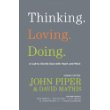
Book Review: Thinking, Loving, Doing edited by John Piper & David Mathis

Theological and Practical Help For Balancing the Mind, Heart, and Hands

This book is a compilation of several outstanding pastoral addresses from experienced Christian leaders from a recent Desiring God Conference on the theme of balancing the mind, the heart (emotions), and the hands. I will seek to summarize what each chapter/leader addresses in their specific topic of choice and what I benefited from in my reading of each chapter:

The Introduction is written by David Mathis (an elder at Bethlehem Baptist Church in Minneapolis). He makes a helpful distinction between churches that focus on being pure and those that focus on unity and encourages those who lean one way or the other to learn from the other side. He then proceeds to use Dr. John Frames helpful distinctions of tri-perspectivalism, whereby some churches emphasis The Kingly role, some the Priestly role, and others the Prophetic role of Christ. He then sets up the following chapters in the book and shows how each contributes to bring balance to how we can love Christ with our minds, hearts, and hands.

I personally really enjoyed this chapter as it caused me to reflect on my own strengths and weaknesses in my personal and corporate involvement in the body of Christ and what I have to offer others and what I can learn from others in becoming more Christ-like in balancing the tri-perspectivalism as described in the chapter via John Frames helpful schema.

Chapter Two is entitled “The Battle for Your Mind” by Rick Warren (everyone knows who he is – if you are on planet Earth). He does a topical study from the Scriptures on the pitfalls we wrestle with in the battle between our ears, and then proceeds to give four principles on thinking; five levels of learning; and five things to remember when we are teaching others.

As usual, Warren is very practical, and gives some good acronyms whereby one can remember easily his various points. What I liked about this chapter is that it was very thorough and broad and it is a chapter I will go back to again and again in my teaching others, and being reminded myself how to win the battle for the mind utilizing distinct principles in taking every thought captive for Christ.

Chapter Three is the most intellectually demanding chapter written by Albert Mohler – the President of the Southern Baptist Seminary in Louisville. He gives a very thought provoking analysis of our present state of thinking in light of Romans 1:18-32 and postmodernism. He gives 14 insightful noetic effects on the mind due to the fall; five precepts of the modern mind, 12 features of the natural mind, and three practical ways to combat the blind spots that we all have due to the fall.

Dr. Mohler has an amazing mind and what this chapter did for me primarily is to help me think more theologically about how thinking must be reformed and renewed by the Scriptures and the amazing effects of the fall upon our minds. It really motivated me to study the Scriptures and Culture more thouroughly then I typically do, so that I give more thought to how to declare the gospel the “natural” mind, and well as to the “spiritual” mind of those I seek to reach and grow in the gospel.

My favorite modern theologian – Dr. RC Sproul – founder of Ligonier Ministries writes about how Paul addresses the secular mind from Acts 17 and what we can learn from what he did, in our own approach to skeptics today.

Dr. Sproul makes the case for how we can never find “an explanation for being, for life, or for motion if we try to find it outside the being and character of God.” I was encouraged by this reminder of how amazing it is to have the perspective of God in my worldview, when so many have suppressed this, and are thus in great need of modern “Paul’s” to address the issues of the day from a Theo and Christo-centric perspective.

In Chapter Four Thabiti Anyabwile (Pastor in the Cayman Islands) addresses how we may encounter Islam by using the mind of Christ as opposed to being driven by fear where he rightly says, “where fear takes control, thinking does not.”

Pastor Anyabwile (a former Muslim who converted to Christianity as a young adult) does a fantastic job of giving an overview of pluralism, Islam, and how we should respond to Muslims. His chapter helped me to fear Islam less, and gave me a bigger heart to share the good news with the many Muslims who live in my community.

In Chapter Five, Francis Chan (Pastor and Writer in San Francisco) addresses how to think hard, combat pride and stay humble based on an exposition of 1 Corinthians 8. In this chapter Chan really does a great job showing how we can love more like Jesus by thinking more like him.

The Concluding chapter is by John Piper (Preaching Pastor of Bethlehem Baptist Church) and addresses how love flows out of us when we love God with all of our minds. He gives 8 points that he hopes this book will prevent in Christians, and then what he hopes that this book will awaken and increase: ‘Thinking for the sake of loving.”

I really enjoyed this book because it was deep theologically, and gave helpful applications from the Scriptures in how to love God and others with our minds, emotions, and actions. I highly recommend it and give it 5 stars because it’s a book I will come to again and again for my own personal walk with the Lord, and because it will help me to be more balanced in my own teaching, and coaching ministries.

*Note: I was provided a copy of this book from the publisher and was not required to give a favorable review.

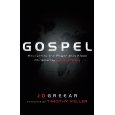
Book Review Gospel: Recovering The Power That Made Christianity Revolutionary by J.D. Greear

 Wow! What a Fantastic Christ-Centered Book!

I never heard of J. D. Greear before reading this book; but after reading this one, I immediately purchased his only other published book called “Breaking the Islam Code” and can’t wait to get started on that one. I’m sure many more books from Greear will follow – because he is an exceptionally gifted theologian/pastor – he is astute, cogent, and practical in his biblical and cultural exposition of the gospel as revealed in the Scriptures.

I’ve been a Christian since I was six years old, but even as a so-called “professional” pastor for the past 25 years and yet I still feel like a baby in my understanding of the depths of the gospel. It has been exciting for me to see how pastors like Tim Keller and a new generation of young pastors have come along who are theologically astute and Christ centered and able to show the relevancy of Christ and the gospel and how it works not only in the past, and in the future, but especially in the NOW. We are the NOW generation, and the best way to live in the NOW is to apply the gospel daily.

It’s hard to improve on Tullian Tchvidjian’s description of the book from the inside cover:

“He [Greear] powerfully and probingly shows the gospel is just as necessary and relevant after you become a Christian as it is before because the gospel doesn’t simply rescue us from the past and rescue us for the future; it also rescues us in the present from being enslaved to things like fear, insecurity, anger, self-reliance, bitterness, entitlement, and igsignificance. J. D. makes the clear case that when the word of the gospel—Christ’s love for us without strings attached—grips our hearts, it sets us free and changes everything.”

In three powerful sections in the book Greear shows how “the gospel can do what religion cannot”; how to daily live out the gospel (the longest section of the book – absolutely fantastic); and how to develop a gospel-centered understanding of life.

Get two copies of this book – one to read year after year – and another to give away. I hope this book receives a wide reading, reception of, and application of the “revolutionary” gospel!

Book Review: How To Lead and Still Have a Life by Dale Burke

Helping You To Go From Surviving to Thriving!

The two books I give away to help people (especially leaders) balance their lives more than any others are this one by Burke and “Life Focus” by Jerry Foster. As a professional Life Coach and Pastor I have found in over 25 years of ministry that most people (even leaders) are merely surviving and very few are actually thriving. The principles and practices articulated in this book by Burke (former pastor of Fullerton Evangelical Free Church for many years) are biblical, logical, practical, and when applied – liberating.

In the first chapter Burke talks about how difficult it is to be a leader today and explicates the following ten facts:

1) The Rules Have Changed
2) Life is Faster
3) Change is Accelerating
4) Expectations Are Higher
5) The Culture Is in Moral Decay
6) Servant-leadership Is Stretching
7) You Are a Limited Resource
8) Leadership Is a Draining Experience
9) More is Not the Answer
10) There Is Hope

In my experience as a leader, pastor, and life coach I see leaders respond to these challenges by trying to do more (like a juggler who drops all the plates because he’s trying to do too much), or they give up – because it’s just too hard.

Burke offers a solution as an antidote to doing more, or giving up, by doing less by utilizing your strengths, your schedule, and by operating in each of these areas when you are at your best in short blocks of time. I for one, and many others I’ve coached have been helped immensely by applying the “less is more” philosophy.

In the rest of the book Burke breaks down leadership into manageable categories and responsibilities:

Section One: The Inner Ring–the Heart of the Leader

Section Two: The Middle Ring–The Heart of Leadership

Section Three: The Outer Ring–The Heart of Execution

Honestly, I am amazed that more people haven’t read this book or heard of Dale Burke. He is a leader who knows what he’s talking about – by knowledge, action, and experience, and he is an excellent communicator. I believe that this book will help any person who desires to be less overwhelmed with the responsibilities of life, and have more balance and effectiveness immensely. Read it and than give a copy away to your disciple, apprentice, or mentoree – you and they will be glad you did and so will those you live and work with – guaranteed!


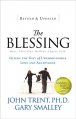
Book Review: The Blessing by John Trent and Gary Smalley

 Would Be Much Better If It Were More Christo-centric and Less Anthropo-centric

The Blessing seeks to be a corrective and preventative guide for parents so that they will foster a high sense of self-esteem, security, and develop children that feel blessed and filled with hope via the loving and positive communication at the heart of God the Father’s love for us. The book is based on the biblical story contrasting the blessing received and not received by the sons of Isaac, and the consequences good and bad thereof.

These are good objectives. According to the author’s this happens best by using meaningful and appropriate touch; spoken words of encouragement; adding value through unconditional love; building in them

Trent and Smalley suggest five vital factors to giving a blessing: Meaningful and appropriate touch; a spoken message; attaching high value to the one being blessed; picturing a special future for him or her; and an active commitment to succeed by fulfilling the blessing you have bestowed upon them.

I experienced all that the author’s talked about from my own parents – for which I am extremely grateful. However, my largest concern about this book isn’t so much what it says – but what it doesn’t say. It is a book that can be equally beneficial to the Christian and the non-Christian (not necessarily a bad thing). What I mean by this is that it is not ultimately helpful in that it is not ultimately Christo-centric in its approach, but behavioristic in its approach. I believe that what children need more than anything else is to know Jesus and to be Christ-centered and not self-centered. The danger of this book is that you make your children and children make you, or themselves an idolatry. I would like to see more balance along the lines of what the author’s suggest with more biblical, theological, and Christo-centric gospel driven focus. A much better approach is offered in Ted Tripp’s “Shepherding A Child’s Heart.”

Disclosure of Material Connection: I received this book free from the publisher through the BookSneeze®.com book review bloggers program. I was not required to write a positive review. The opinions I have expressed are my own. I am disclosing this in accordance with the Federal Trade Commission’s 16 CFR Part 255: “Guides Concerning the Use of Endorsements and Testimonials in Advertising.”