A THOUGHT PROVOKING EXPLORATION ON THE DOCTRINE OF GOD
Book Review By Dr. David P. Craig
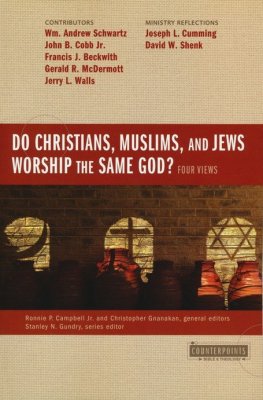
If the latest world religions statistics are accurate the questions and answers that are raised, debated, and defended in this book are of monumental significance. In this “Counterpoints” book (a growing series of books on important topics by Zondervan Publishing in Grand Rapids, MI.) four views are defended and debated by five top notch theologian/philosophers.
The first two views promote the idea that Muslims, Jews, and Christians do indeed worship the same God. In the first essay of this book Wm. Andrew Schwartz (professor of process and comparative theology at Claremont School of Theology) and John Cobb, Jr., (professor emeritus at Claremont School of Theology) give several reasons for why they believe that these three major religions worship the same God by defending what they call the “Religious Pluralistic View.” Some of their main points in defense of their argument our as follows:
(1) Theology is not static. Theology is not uniform. Neither are the world’s traditions. In other words (as they are process theologians) they say that it is impossible to nail down any theological absolutes – because of the continual changes in God and in our studying, knowing, and worship of Him.
(2) The Fallacy of the Perfect Dictionary and Problem of Sameness. In addition to recognizing the complexity of Jewish, Muslim, and Christian identity, we should take note of the same ambiguity surrounding the words worship, same, and God. In other words the author’s suggest that it is impossible to agree upon the exactness of what or who God is when there is no perfect definition to be agreed upon. They write, “We should assume that YHWH of Judaism, Allah of Islam, and the God of Christianity are different ways of referring to one and the same divine ultimate…So, in one sense ‘same’ can imply no difference, and in another sense it can incorporate difference.”
(3) They articulate that from a historical perspective all three religions worship the God of Abraham.
(4) Schwartz and Cobb also argue that all three religions worship a “Loving Creator” – what they call “The Divine Character Argument.” They affirm that in all three religions it is agreed upon that (a) God is One; (b) God is knowledgeable and relational; (c) God is loving and merciful; (d) God is creator; and (e) God is mysterious. They conclude in this section: “we find that parallel descriptions of God across the traditions greatly strengthen the likelihood that the God described and revered in Islam, Christianity, and Judaism is one in the same—the one and only loving and merciful Creator who knows our innermost beings.”
(5) Schwartz and Cobb defend the Ontological Argument – that there is only one being we call God. Here’s there summation of this reality, “If we begin with this declaration, the question as to whether all three worship the same God is strange indeed. After all, what would it mean for them to worship different Gods if there is only one God? From an ontological perspective, if there is, in fact, only one God available to worship, then it is reasonable to conclude that Muslims, Christians, and Jews worship the same God—that is, the only God…If there is only one God, then, for Christians, Muslims, and Jews to worship some God is to worship the same God.”
(6) The Singular Ultimate Reality. Scwartz and Cobb say that all three religions worship the same ultimate reality that they all call “God.”
(7) Lastly, Schwartz and Cobb write that if Muslims, Jews, and Christians were to agree that we worship the same God it would result in the following: (a) A more peaceful world; (b) Generosity and humility; (c) Mutual transformation; and the (d) Importance of dialogue.
As with most of the Counterpoint books each essay is then responded to by the other essay writers, followed by a rejoinder in response to the other essayists critiques. I have to say that I thought the essayists in the first view wrote well and used some good analogies and arguments and yet I found their argument unpersuasive for two primary reasons: (1) I think their own view of “God” was defective and lacking. It was the equivalent of describing an object in only one dimension – when in reality God is multi-faceted. (2) It articulated a relativistic approach to truth and reality. In honing in on the “sameness” of beliefs of the three religions they left out the multiplicity of “differences” and contradictions of the three religions – which the final two essayists brought into play so very well.
The second view (essay) is presented by Francis Beckwith (professor of philosophy at Baylor University) and is entitled: “All Worship The Same God: Referring to the Same God View.” Beckwith bases his whole essay on a fictional group of students who are atheists and then who ultimately become a Jew, Muslim, and Christian for different reasons based on believing more or less the same things about God: “He is the absolute, uncaused, perfect, rational, unchanging, self-subsistent, eternal creator and sustainer of all that which receives its being from another…He who is metaphysically ultimate and has underived existence.”
Beckwith proceeds to give some historical and biblical points of agreement between the three religions and concludes: “because Christianity, Judaism, and Islam get the divine nature right (based on his definition of God above)—the absolute underived unconditional source of all contingent existence—their disagreements over the Trinity and the incarnation are appropriately viewed as contrary beliefs about the same God to which each faith refers…I am arguing that because there can only in principle be one God——the absolute underived unconditional source of all contingent existence—and because the theologies of each of these faith conditions refer to that one God, it stands to reason that they all worship the same God, even though they disagree about aspects of that God as a result of what each believes is special revelation.” In the final analysis Beckwith concludes his essay: “in recognizing that the three distinct religious traditions refer to the same God one is not contending that they share the same faith.”
Between the first two essays I would be more inclined to say that Beckwith’s was more logical and less abstract – yet still found that he made the same mistake as Schwartz and Cobb. He emphasized that which was similar in the beliefs of the three religions and minimized their radical differences. His last sentence was very telling: “the three distinct religious traditions refer to the same God one is not contending that they share the same faith.” However, those differences in faith most definitely point to a very different God – especially the “God” of Muslims and that of Jews and Christians – which we find defended in the last two essays.
The third essay by Gerald R. McDermott (Chair of Divinity at Beeson Divinity School) is called “Jews and Christians Worship The Same God: Shared Revelation View.” I found this essay to be the most profound and interesting of the four.
McDermott straight away emphasizes the differences of beliefs related to the character and nature of God between Muslims and Jews/Christians:
(1) The first thing that must be said is that the love for God is never commanded by the Qur’an and rarely even mentioned. McDermott writes, “Daud Rahbar and other scholars agree that the Qur’an mentions love for God, it never commands it. Instead of love, fear of God is commanded by the Qur’an…Rahbar argued that the central theme of the Qur’an is God’s justice, and its most common exhortation is to ‘guard yourselves fearfully against God’s wrath.’” On the other hand the emphasis in the Bible is that God is love. According to both Sufi and non-Sufi Muslims, God does not have unconditional love for humans generally. God’s love is conditional, expressed only toward those who do righteous deeds.
(2) Another huge difference is the contrast of love for one’s neighbor in the Qur’an and what the Bible consistently teaches. The first is that the Qur’an contains repeated admonitions to Muslim believers not to make friends with non-Muslims (3:118). Whereas the greatest commandment in the Bible is to love God and love your neighbor as yourself (Mark 12:30-31). God models love for us in the Bible especially in the greatest act of history where the second person of the Trinity is sent by the Father to model the ultimate act of love – to be punished for our sin in exchange for His righteousness “In this is love, not that we have loved God but that he loved us and sent his Son to be the propitiation for our sins.” ~ 1 John 4:10
(3) At the heart of the dispute between Muslims and Christians in particular is the deity of Jesus Christ. The triune nature of God helps us understand the essence of God as One and yet the distinction of God in His persons. McDermott writes, “the works of the triune God are not divided [among the persons] is helpful. It reminds us that the Father’s works are not to be divided from the Son’s. The Son helps identify the character of the Father, for the Father’s character is revealed by the Son: ‘Whoever has seen me has seen the Father’ (John 14:9). If the Son told his disciples that God loved the world (John 3:16), that they should love God with all their hearts (Matt. 22:37), and that they should love everyone including their enemies (Matt. 5:44), we can infer that the Father has said and commanded the same. This Father is clearly different, then, from Allah of the Qur’an.”
(4) McDermott then goes on to talk about the Jewishness of Jesus and Paul. With reference to Jesus he writes, “In sum, Jesus was not rejecting the Judaism of his day but illustrating its inner meaning. Therefore the Gospels do not support the notion that Christians worshiping Jesus as the Son of God are worshiping a God different from the God of biblical Judaism.” In respect to Paul he writes, “In one respect, Paul was even more Jewish than Jesus: he took a more positive approach to Pharisees than we see in the Gospels. He proudly presented himself as a Pharisee (Acts 23:6).
(5) Christianity is not a new religion but the continuation or fulfillment of Judaism. The whole Old Testament. McDermott states, “I have tried to show that Jesus and Paul did not think they were starting a new religion to replace the Judaism they grew up with. They did indeed teach that the Messiah had finally come in Jesus, and that for that reason the Judaism of the first century had reached an epochal moment when the greatest promises had begun to be fulfilled.”
Continuing in this vein he writes, “Judaism was finding its inner meaning and great climax because the perfect Israelite [Jesus] had appeared as the embodiment of the Law and of Israel herself. But this does not mean that Judaism was being replaced by another religion of a fundamentally different character, it means instead that the God of Israel was bringing the people of Israel to their promised apogee when their messiah was revealed as the Son of God, the meaning of all they had ever known. Rather than opposing Jewish law, Jesus and Paul observed it, even as they testified that Jesus was its living embodiment.”
In the final part of the essay McDermott talks about how some rabbi’s and Jewish traditions allow for the possibilities of the distinct doctrines related to God as revealed in the New Testament: the incarnation, resurrection, and Trinity. He concludes, “The God of Israel had long been known to be one being with internal differentiation. Hence the early church could claim that it was worshiping the God of Israel, but with new clarity about the identities within that differentiation….”
He closes his provocative essay in this manner, “Yet Paul regarded even those Jews who differed on Jesus but worshiped the God of Israel as having a zeal for the same God but ‘without knowledge’ (Rom. 10:2). They needed to hear and receive the gospel (Rom. 1:16), but they were worshipping the same God…
While the God of Israel is the Father of Jesus Christ and shares the same being and character as Jesus, Allah does not. YHWH forgives and saves through sacrifice as prescribed by Torah, and then through the perfect Sacrifice that was foreshadowed in the sacrifices of Torah. He shows in both Testaments that his people should forgive and love their enemies. He is Father to his people, love in his essence. This is true of the God revealed in both Testaments. None of this character can be found in Allah. While Christians and Jews share all (for Jews) or the vast majority (for Christians) of their scriptures, Christians and Muslims share none. For all these reasons, we must say that Christians do not worship the same God designated by Allah, but that Christians worship the same God as those Jews who regard the Old Testament as the Word of God.”
McDermott has written a very thought provoking and provocative essay. I am inclined to say that I agree with most of what he has written – In essence he is saying that those who are completed Jews – Messianic Jews – like the Apostle Paul, indeed worship the exact same God. Jews who have yet to believe in God as revealed in the New Testament via the explicit teachings of the incarnation, life, death, resurrection, and Triune nature of God have the genesis of these teachings in the Old Testament but need the New Testament to complete the Painting or Puzzle that centers on the Person and Work of Jesus as divine and thus worthy of worship.
I think the most logical, theologically precise, biblically based and philosophically cogent view is the final essay presented by Jerry L. Walls (professor of philosophy at Houston Baptist University). The view Walls espouses is entitled: “None Worship The Same God: Different Conceptions View.”
Walls grapples with the following questions: (a) Do Muslims and Christians refer to the same God? (b) Is it necessary for Muslims and Christians to refer to the same God in order to worship the same God? (c) Do Jews, Christians, and Muslims believe essentially the same thing about God? (d) If they do not, are these differences of belief about God necessarily reflected in essentially different forms and expressions of worship? (e) Can Jews and Muslims be saved even if they are not worshiping the same God as Christians?
(1) Walls first of all makes a powerful case that if Christianity is true, there had been a reference shift in the Muslim use of “God” from God to fiction. He writes, “just as the name Santa Clause originated with a historical character (Saint Nicholas) and underwent a radical reference shift to a fictional character, in a similar way ‘Allah’ underwent a profound reference shift in Islam to the point that ‘Allah’ no longer referred to God, but rather to fiction, which is to say it refers to nothing at all.”
Walls continues, “As someone who thinks Christianity is true, I am inclined to think there has in fact been a reference shift in the case of Islam but not of Christianity. That is, the dossier for ‘Allah’ includes claims that are so radically at odds with core Christian truth claims that a reference shift has occurred such that ‘Allah’ does not refer to God. Since Christians and Muslims do not even refer to the same God, they do not worship the same God.”
(2) Walls second major point is that “Sameness of Reference Is Not Enough for Sameness of Worship.” He demonstrates this principle in the idolatrous worship of the golden calf and the breaking of the first two commandments from Exodus 20. The point is that to worship a false god – or anything that is not true of God – is idolatry. Only Yahweh is “the one to be praised and worshiped for this signal act of salvation [God’s love revealed in delivering the Israelites from slavery as depicted yearly in the Passover], but Yahweh must never be confused with a golden calf. To worship him and to honor him for this act of salvation requires refraining from even the making of idols, let alone confusing them with Yahweh or bowing down to them and worshiping them.”
(3) The New Testament revelation of God is a game changer. In the New Testament Walls writes, “The God of the Old Testament has revealed to us in the New Testament revelation that he has an eternal Son who was incarnate in Jesus, and who provided salvation on our behalf through his death and resurrection. Indeed, this is God’s supreme act of love on our behalf. Walls continues, “Starting with the resurrection of Jesus and ending with the Trinity, Jews and Muslims deny all distinctively Christian revelation about God. The hard fact of the matter is that the fundamental claims of these three religions are simply logically incompatible, and they cannot all be true. At least two of these religions are profoundly mistaken in what they believe about God and what he requires of us in terms of obedience and worship.”
(4) In the fourth major point of Walls’ essay he states this, “It is noteworthy that the most ecumenically central act of Christian worship, namely, the sacrament of communion, is a celebration of the death of Christ for our salvation and a looking forward to his return.”
(5) Walls goes on to show biblically how impossible it is to worship God unless you are fully worshiping who He is: the Triune God of the New Testament. He explains, “The radically different beliefs that Jews, Christians, and Muslims have about God do entail essentially different forms and expressions of worship. Stressing this point is imperative. It is precisely the fact that these different expressions of worship are praised on radically different beliefs about who God is and how he has revealed himself most clearly that lead us to conclude that Jews, Christians, and Muslims do not worship the same God.”
(6) I will quote Walls at length on his final argument which is very persuasive: “New Testament worship requires that all worshipers of the God who is fully revealed only in the New Testament humbly acknowledge that he has an eternal Son who was incarnate in Jesus, and that Jesus provided salvation in our behalf through his death and resurrection, and they offer grateful praise for this when properly informed of these truths…
The notion that our response to the incarnate Son is decisive for determining whether we truly know and worship God is major theme of the Gospel and Epistles of John…While it is true that the God who is the Father of Jesus is the same God who called Abraham and spoke to Moses, and that those who worship both the Father and Son are worshiping the same God who spoke to Abraham and Moses, it is no less true that those who refuse to believe and worship Jesus are not worshiping the God who called Abraham and revealed himself to Moses. The coming of Jesus has radically altered the terms of what is required to worship and obey the God of Abraham. This is the same point Paul makes in Romans 9-11, where he draws a distinction between ethnic and true Israel. The chief issue is that ethnic Israel has stumbled over the stumbling stone, which is Christ. It is highly significant that in the context of Romans 9:33, Paul is quoting passages from the Old Testament in reference to Yahweh himself and applying them to Christ. So, to reject Christ is to reject Yahweh!
(7) Walls finishes his essay with a formal agreement and then goes on to defend his formal argument. Here is the formal argument he presents:
- No properly informed worshiper who consciously rejects the incarnation and resurrection of Jesus is a worshiper of the God who is fully revealed only in the New Testament.
- All properly informed Jews and Muslims consciously reject the incarnation and resurrection of Jesus.
- No properly informed Jews and Muslims are worshipers of the God who is fully revealed only in the New Testament.
- If no properly informed Jews and Muslims worship the God who is fully revealed only in the New Testament, no properly informed Jews and Muslims worship the same God as those who worship the God who is fully revealed only in the New Testament.
- No properly informed Jews and Muslims worship the same God as those who worship the God who is fully revealed only in the New Testament.
- All properly informed Christians worship the God who is fully revealed only in the New Testament.
- No properly informed Jews and Muslims worship the same God as those who worship the God whom properly informed Christians worship.
In the final analysis one’s salvation hinges on the narrow door and the narrow way that is through Jesus. As Peter preached in Acts 4:12, “And there is salvation in no one else, for there is no other name under heaven given among men by which we must be saved.” Or as the Apostle shared with the Christians in Corinth, “Now I would remind you, brothers, of the gospel I preached to you, which you received, in which you stand, and by which you are being saved, if you hold fast to the word I preached to you—unless you believed in vain. For I delivered to you as of first importance what I also received: that Christ died for our sins in accordance with the Scriptures, that he was buried, that he was raised on the third day in accordance with the Scriptures, and that he appeared to Cephas, then to the twelve. Then he appeared to more than five hundred brothers at one time, most of whom are still alive, though some have fallen asleep” (1 Corinthians 15:1-6); or as Jesus himself said in John 14:6, “I am the way, the truth, and the life. No one comes to the Father except through me.” The only way to really know the God who has made Himself known is to believe the REAL God as He revealed Himself from Genesis to Revelation.
I highly recommend this book as a thought provoking and deep study in the doctrine of God. No matter where you are coming from in your world view, this book will challenge you, make you think, and hopefully help you make a life changing decision leading you into accepting the truth that can change your life both now and for eternity.





 LifeCoach4God