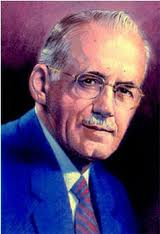
A.W. Tozer on 10 Steps To Experiencing a Radical Spiritual Renaissance

While revivals are usually talked about at the corporate or societal level, they all begin with individuals. One of the spiritual giants in the history of the church addresses the bottom line of individual responsibility.

Any Christian who desires to may at any time experience a radical spiritual renaissance, and this altogether independent of the attitude of his fellow Christians.

The important question now is, How? Well, here are some suggestions which anyone can follow and which, I am convinced, will result in a wonderfully improved Christian life.

(1) Get thoroughly dissatisfied with yourself. Complacency is the deadly enemy of spiritual progress. The contented soul is the stagnant soul. When speaking of earthly goods Paul could say, “for I have learned, in whatsoever state I am, therewith to be content” (Philippians 4:11); but when referring to his spiritual life he testified, “I press toward the mark” (3:14). “Thou stir up the gift of God, which is in thee” (2 Timothy 1:6).

(2) Set your face like a flint toward a sweeping transformation of your life. Timid experimenters are tagged for failure before they start. We must throw our whole soul into our desire for God. “The kingdom of heaven suffereth violence, and the violent take it by force” (Matthew 11:12).

(3) Put yourself in the way of the blessing. It is a mistake to look for grace to visit us as a kind of benign magic, or to expect God’s help to come as a windfall apart from conditions known and met. There are plainly marked paths which lead straight to the green pastures; let us walk in them. To desire revival, for instance, and at the same time to neglect prayer and devotion is to wish one way and walk another.

(4) Do a thorough job of repenting. Do not hurry to get it over with. Hasty repentance means shallow spiritual experience and lack of certainty in the whole life. Let godly sorrow do her healing work. Until we allow the consciousness of sin to wound us, we will never develop a fear of evil. It is our wretched habit of tolerating sin that keeps us in our half-dead condition.

(5) Make restitution whenever possible. If you owe a debt, pay it, or at least have a frank understanding with your creditor about your intention to pay, so your honesty will be above question. If you have quarreled with anyone, go as far as you can in an effort to achieve reconciliation. As fully as possible make the crooked things straight.

(6) Bring your life into accord with the Sermon on the Mount and such other New Testament Scriptures as are designed to instruct us in the way of righteousness. An honest man with an open Bible and a pad and pencil is sure to find out what is wrong with him very quickly. I recommend that the self-examination be made on our knees, rising to obey God’s commandments as they are revealed to us from the Word. There is nothing romantic or colorful about this plain, downright way of dealing with ourselves, but it gets the work done. Isaac’s workmen did not look like heroic figures as they digged in the valley, but they got the wells open, and that was what they had set out to do.

(7) Be serious-minded. You can well afford to see fewer comedy shows on TV. Unless you break away from the funny boys, every spiritual impression will continue to be lost to your heart, and that right in your own living room. The people of the world used to go to the movies to escape serious thinking about God and religion. You would not join them there, but you now enjoy spiritual communion with them in your own home. The devil’s ideals, moral standards and mental attitudes are being accepted by you without your knowing it. And you wonder why you can make no progress in your Christian life. Your interior climate is not favorable to the growth of spiritual graces. There must be a radical change in your habits or there will not be any permanent improvement in your interior life.

(8) Deliberately narrow your interests. The jack-of-all-trades is the master of none. The Christian life requires that we be specialists. Too many projects use up time and energy without bringing us nearer to God. If you will narrow your interests, God will enlarge your heart. “Jesus only” seems to the unconverted man to be the motto of death, but a great company of happy men and women can testify that it became to them a way into a world infinitely wider and richer than anything they had ever known before. Christ is the essence of all wisdom, beauty and virtue. To know Him in growing intimacy is to increase in appreciation of all things good and beautiful. The mansions of the heart will become larger when their doors are thrown open to Christ and closed against the world and sin. Try it.

(9) Begin to witness. Find something to do for God and your fellow men. Refuse to rust out. Make yourself available to your pastor and do anything you are asked to do. Do not insist upon a place of leadership. Learn to obey. Take the low place until such time as God sees fit to set you in a higher one. Back your new intentions with your money and your gifts, such as they are.

(10) Have faith in God. Begin to expect. Look up toward the throne where your Advocate sits at the right hand of God. All heaven is on your side. God will not disappoint you. If you will follow these suggestions you will most surely experience revival in your own heart. And who can tell how far it may spread? God knows how desperately the church needs a spiritual resurrection. And it can only come through the revived individual.

Article adapted from A.W. Tozer & H. Verploegh. The Size of the Soul. Camp Hill, PA.: WingSpread. 1992, 16-19, Chapter 5 “What About Revival?”

About the Author: Aiden Wilson Tozer was born April 21, 1897, on a small farm among the spiny ridges of Western Pennsylvania. Within a few short years, Tozer, as he preferred to be called, would earn the reputation and title of a “20th-century prophet.”

Able to express his thoughts in a simple but forceful manner, Tozer combined the power of God and the power of words to nourish hungry souls, pierce human hearts, and draw earthbound minds toward God.

When he was 15 years old, Tozer’s family moved to Akron, Ohio. One afternoon as he walked home from his job at Goodyear, he overheard a street preacher say, “If you don’t know how to be saved . . . just call on God.” When he got home, he climbed the narrow stairs to the attic where, heeding the preacher’s advice, Tozer was launched into a lifelong pursuit of God.

In 1919, without formal education, Tozer was called to pastor a small storefront church in Nutter Fort, West Virginia. That humble beginning thrust him and his new wife Ada Cecelia Pfautz, into a 44-year ministry with The Christian and Missionary Alliance.

Thirty-one of those years were spent at Chicago’s Southside Alliance Church. The congregation, captivated by Tozer’s preaching, grew from 80 to 800.

In 1950 Tozer was elected editor of the Alliance Weekly now called Alliance Life. The circulation doubled almost immediately. In the first editorial dated June 3, 1950, he set the tone: “It will cost something to walk slow in the parade of the ages while excited men of time rush about confusing motion with progress. But it will pay in the long run and the true Christian is not much interested in anything short of that.”

Tozer’s forte was his prayer life which often found him walking the aisles of a sanctuary or lying face down on the floor. He noted, “As a man prays, so is he.” To him the worship of God was paramount in his life and ministry. “His preaching as well as his writings were but extensions of his prayer life,” comments Tozer biographer James L. Snyder. An earlier biographer noted, “He spent more time on his knees than at his desk.”

Tozer’s love for words also pervaded his family life. He quizzed his children on what they read and made up bedtime stories for them. “The thing I remember most about my father,” reflects his daughter Rebecca, “was those marvelous stories he would tell.”

Son Wendell, one of six boys born before the arrival of Rebecca, remembers that, “We all would rather be treated to the lilac switch by our mother than to have a talking-to by our dad.”

Tozer’s final years of ministry were spent at Avenue Road Church in Toronto, Canada. On May 12, 1963, his earthly pursuit of God ended when he died of a heart attack at age 66. In a small cemetery in Akron, Ohio, his tombstone bears this simple epitaph: “A Man of God.”

Some wonder why Tozer’s writings are as fresh today as when he was alive. It is because, as one friend commented, “He left the superficial, the obvious and the trivial for others to toss around. . . . [His] books reach deep into the heart.”

His humor, written and spoken, has been compared to that of Will Rogers–honest and homespun. Congregations could one moment be swept by gales of laughter and the next sit in a holy hush.

For almost 50 years, Tozer walked with God. Even though he is gone, he continues to speak, ministering to those who are eager to experience God. As someone put it, “This man makes you want to know and feel God.”

If you haven’t read any of his over fifty published books I’d recommend that you start with his classic devotional on the attributes of God entitled: The Knowledge of the Holy (It’s one of those books I go back to time and time again to be renewed and refreshed in my intimacy with God).

Do You Have Assurance of Your Salvation? 5 Indicators from Hebrews 6

“How To KNOW that You KNOW HIM” By Steve W. Brown

The nature of the God of the universe is not to bring you to a saving knowledge of Jesus Christ, then to make you wonder for the rest of your life whether or not you have a saving knowledge of Jesus Christ. God does not say, “Trust me,” then for the rest of your life make you wonder if you really trust him. It is his business and desire for us to have assurance of salvation. How do you know that you know him?

Check out five indicators from the writer of Hebrews 6:

(1) The direction in which your life is going.

(2) The love your life is showing.

(3) The service your life is sharing.

(4) The concern for godliness you are feeling.

(5) The longing in your desire for fellowshiping.

First, if you are looking for assurance check out your life. The writer of Hebrews casts sobering words at those who inhabit the fringes of faith, desiring to taste but never receiving God’s mercy and producing weeds instead of fruits in their lives. The believer’s life, however, holds a far more positive promise:

Even though we speak like this, dear friends, we are confident of better things in your case—things that accompany salvation. God is not unjust; he will not forget your work and the love you have shown him as you have helped his people and continue to help them. We want each of you to show this same diligence to the very end in order to make your hope sure. We do not want you to become lazy, but to imitate those who through faith and patience inherit what has been promised [Heb. 6:9–12].

Most people think that God looks at where you are along the road of life. We do that, but God doesn’t. God asks only two things:

First, he wants to know from where you have come; second he wants to know the direction in which you are going. In other words, I might be a lot more terrible than you, but the point is that we are moving in the same direction. You are just further down the road than I am. God’s pleasure and our assurance come from moving in that right direction. That is how the writer of Hebrews could look at his hearers and be “confident of better things in your case—things that accompany salvation” (vs. 9b).

If you were to wake up tomorrow morning to discover that God does not exist, what difference would it make in your life? I would be devastated. A lot that is happening in my life would be wiped out. If you do not have an answer to that question, aside from the fact that you would not attend church once a week, then you need to read 6:4–8 once again. According to this passage you may have a serious problem.

One time a pastor friend of mine was talking to a girl in New England who had recently become a Christian. She was very angry and bitter. She asked, “Why do I have to go through all this hurt? Why is there all this pain in the world? Why do I have all these problems?” My friend asked a classic question: “Would you rather not have known him?”

She understood. As she thought about her answer to that question she found assurance of her relationship with Jesus Christ.

Second, in looking for assurance you should check out your love. Look again at verse 10: “God is not unjust; he will not forget your work and the love you have shown him as you have helped his people and continue to help them.”

The writer of Hebrews is not just talking about a tingle up your spine or a wonderful love song. He is talking about love in action, the kind of love you show to the saints for his sake. Love is not a noun; it is a verb. What do you do to show love for someone else? When you give a cup of cold water in the name of Christ, regardless of how you feel about that person, the giving is in love. When you reach out to a brother or sister who is in need, no matter how you feel about them, that is love, too. The writer of Hebrews is saying that you, as a Christian, have a love that you have shown, not that you have felt. This is a sign of your relationship with Christ, for that is an indication of your relationship with Christ in your Christlikeness:

Greater love has no one than this, that he lay down his life for his friends [John 15:13].

You see, at just the right time, when we were still powerless, Christ died for the ungodly [Rom. 5:6].

Love is action! Are you acting in obedience to him, showing love to your brothers and sisters? If you are you are on the road to assurance.

Third, make sure to check out your level—the level of a servant. We spent a lot of years in Massachusetts. At least at that time they believed that having a driver’s license is not a right; it is a privilege. So, if the head of the Department of Motor Vehicles decides you are guilty of some offense, whether you are guilty or not, the director can take your license away from you, and you don’t have any recourse.

When you and I became Christians, at that point we gave up every right. We are servants. As a Christian you have privileges, but you should not presume on those privileges. If your Christian faith is used to manipulate other people it is not the real thing. If your Christian faith is a vehicle for being a master it is not the real thing. Jesus said, “Whoever wants to become great among you must be your servant” (Matt. 20:26). When you see yourself willing to be a servant, willing not to take the credit, willing to just stand behind someone else and make them great, then you are on the road to assurance.

Fourth, if you are looking for assurance of your salvation, check out your liveliness. Hebrews 6:11 speaks of the author’s desire for “each of you to show this same diligence to the very end in order to make your hope sure.” We might call this diligence earnestness to realize full assurance. When people asked Charles Spurgeon how they could know if they were of the elect he would answer: “If you are worried about it, then you are.”

Now, if you have been struggling with assurance, plagued with the constant thought that “I may not really belong to God,” the very fact that you are earnestly concerned is a good sign that you may belong to him, when that earnestness stands alongside other evidence of the fruits of the Spirit.

You may remember the demonstration of Solomon’s wisdom in 1 Kings 3:16–28. Two women were brought to him, both claiming to be the mother of one baby. Each of the mothers had had a baby. One of the babies was dead. One mother said to Solomon, “Her baby died, and at night she switched her dead baby for my live one.” The second mother made the same accusation. So they came to Solomon, asking him to determine to whom the baby really belonged. Solomon had one of his servants take a sword and hold the baby up. Then Solomon said, “Cut the living child in two and give half to one and half to the other.” While one of the mothers agreed that his idea sounded reasonable, the other said, “No! Don’t do that. Give the baby to her.” Solomon at that point exercised a principle built into the very nature of things, so that he knew who was the real mother.

The principle was this: Concern is manifested in direct proportion to how much you care.

The same principle works to help you know about your relationship with God. If you are concerned about your relationship with Christ, if you are earnest about it or diligent, that is an indication that you are in Christ. You are on the road to assurance.

Fifth, if you are looking for assurance, check out your longing. The writer of Hebrews is saying: “I desire that you come to the point at which you know that you know that you know that you know.” There are those who say you can never know. They say the only way you can get assurance is to die and find out whether your feet are cold.

If you have heard and believed that, you have believed a lie. It is God’s desire that his people come into a relationship with the Father that is so close we know and feel secure with him.

I have a friend who adopted a teenager who had been shifted from foster home to foster home. When I first visited them I noticed that this boy was jumping to do everything possible to please his new parents. He made up his bed. He wanted to dry dishes and to vacuum the rug. Whenever a teenager gets that good I get uncomfortable. Something is wrong. I didn’t understand it at first, but then I thought about what that boy had been through. He had been kicked out of so many homes, and he was going to hang onto this one by being good.

A year later I visited the home and saw the teenager again. He was the most secure young man I have ever seen. He was relaxed and normal. He had to be nudged to do the things he was supposed to do. What happened? He had achieved assurance, assurance that this mom and dad were not going to kick him out.

We are like that. Maybe right now you are working very hard at being obedient because you don’t have assurance. Maybe right now you are scared that you are not really a Christian. What should you do about that in order to have assurance? My advice is to persevere and “keep on truckin’.” One day you will be so tired of obedience, so tired of holding on with a grip that makes your knuckles turn white. Then you will let go. At that moment you will make a wonderful discovery: He was holding you all along. You will know that you know him. And that is called “assurance.”

About the Author: Steve Brown is a radio broadcaster, seminary professor and author. He previously served as a pastor for over twenty-five years and now devotes much of his time to the radio broadcast, Key Life.

With such varied experience and unique perspective on life, Steve is an original. He refuses to be a “guru,” doesn’t want to be anyone’s mother and gives, in his teaching, the freedom to think. Overall, Steve has become known for his refreshing and practical Biblical applications.

Steve serves as Professor Emeritus of Preaching and Pastoral Ministry at Reformed Theological Seminary. He sits on the board of the National Religious Broadcasters and Harvest USA. Traveling extensively, Steve is a much-in-demand speaker.

Steve is the author of numerous books including A Scandalous Freedom, Approaching God, When Being God Isn’t Good Enough, What Was I Thinking? and Three Free Sins. His articles appear in such magazines and journals as Leadership, Decision, Plain Truth and Today’s Christian Woman. The article above has been adapted from Chapter 11 in the excellent book edited by R.C. Sproul entitled Doubt & Assurance. Grand Rapids, Baker, 2000.

Why Does God Seem To Move So Slowly?

“God Isn’t In A Hurry” By Warren W. Wiersbe

Although I was weary from a long flight, the sign on the mission guesthouse bulletin board made me laugh aloud. It said, “Lord, please make me patient—and do it right now.”

Patience was one of the first lessons we had to learn in childhood. The child who does not learn to be patient is not likely to learn much of anything else. It takes patience to be able to learn to read, to spell, to write, and to master multiplication tables. It even takes patience to grow! God has ordained that maturity is a slow process, not an instant experience; and I am glad that he arranged things that way. It gives me time to get accustomed to growing up.

Impatience is usually a mark of immaturity. At least James felt that way. “But let patience have its perfect work, that you may be perfect and complete, lacking nothing” (James 1:4). Little children think you have arrived at your destination when you stop for the first spotlight. A short wait at the doctor’s office is unbearable. I once asked a lad in Scotland how many years he had left in school, and he replied, “I don’t know, sir. I’m just trying to get through next week.”

But adults have their share of impatience. Abraham got weary of waiting for the promised son; so he hurried and took Hagar as a second wife, and she bore him Ishmael. Moses got impatient and killed a man. This necessitated forty years of postgraduate work in the pastures of Midian. Years later, Moses became impatient again, smote the rock, and lost a trip to the Holy Land.

“Do not be like the horse or as the mule,” warns Psalm 32:9, and it is a warning that we need. The mule is stubborn and has a tendency to hold back. The horse is impulsive and wants to rush ahead. Personality differences may enter in here, but we all have the same problem—it is difficult to wait on God.

Part of the problem is that we are prone to walk by sight and not by faith. God assures us in his Word that he is busy on our behalf, but we still want to see something happen. At the exodus, the Israelites were sure that God had deserted them and destruction was on its way. Listen to that wind! See how dark it is! And yet God was working for his people in the wind and in the darkness. “All these things are against me,” cried Jacob (Gen. 42:36) when, in reality, all things were working for him.

I believe that it was F.B. Meyer who used to say, “God’s delays are not God’s denials.” They are usually the means which God uses to prepare us for something better. God is always at work for the good of his people, and he is working in all things (see Rom. 8:28). This includes the things that perplex us and that pain us. The only way God can teach us patience is to test and try us, and the only way we can learn patience is to surrender and let God have his way.

God can grow a mushroom overnight, but he will take time to grow an oak or a giant sequoia. It took him thirteen years to get Joseph ready for the prime minister’s office in Egypt, and he invested eighty years preparing Moses for forty years of service. David was a youth when Samuel anointed him king of Israel, but David had to experience a great deal of suffering before he finally ascended that throne. We are the richer for it, because out of those years of preparation came many of David’s greatest psalms.

Our Lord spent thirty years getting ready for three years of public ministry. He patiently obeyed the Father’s will as he carried out that ministry. “My hour has not yet come,” he told Mary (John 2:4). “Are there not twelve hours in the day?” he asked his impatient disciples (11:9). God has his times as well as his purposes, and to miss his times is to delay his purposes.

When I was a student in seminary, I was privileged to pastor a church on weekends. God blessed in many ways, and at one point I was tempted to leave school and devote my full-time to the church. My faculty counselor set me straight. “God has waited a long time for you to come along,” he reminded me, “and he can wait until you graduate. Don’t sacrifice the permanent for the immediate.” He was right, and today I am glad I followed his counsel.

Perhaps the hardest place to wait is in the furnace of suffering. God does not always explain what he is doing or why he is doing it. It is in the hour of suffering that we need to “imitate those who through faith and patience inherit the promises” (Heb. 6:12). “For you have need of endurance, so that after you have done the will of God, you may receive the promise” (10:36). Knowing that the Father is near us and that he is working out his wonderful purposes ought to encourage us, but we often get impatient just the same.

“Why has God made me this way?” a suffering saint once bitterly asked her pastor. Gently, he replied, “God has not made you—he is making you.” How true! And how easy it is for us to forget this truth!

If God can make a believer patient, then God can trust that believer with whatever is in his gracious will. But the school of patience never produces any graduates, and it never grants any honorary degrees. We are always learning, always maturing. Sometimes we fail the examination even before we know what the lesson is! No matter; our loving Father is guiding us and making us more like his beloved Son, and that is all that matters.

“Lord, make me patient!” God will answer that prayer, often in ways that will startle us. “And do it right now!” That prayer he cannot answer, for even Almighty God must take time to turn clay into useful vessels. The best thing you and I can do is to stop looking at our watches and calendars and simply look by faith into the face of God and let him have his way—in his time.

About the Author:

Warren W. Wiersbe is the Distinguished Professor of Preaching at Grand Rapids Baptist Seminary, Warren Wiersbe is the author of more than 100 books. Billy Graham calls him “one of the greatest Bible expositors of our generation.” Interestingly, Warren’s earliest works had nothing to do with scriptural interpretation. His interest was in magic, and his first published title was Action with Cards (1944).

“It was sort of imbecilic for a fifteen-year-old amateur magician to have the audacity to write a book and send it to one of the nation’s leading magic houses,” Warren says. But having a total of three books published by the L.L. Ireland Magic Company—before the age of 20—gave him a surge of confidence. In later years, he applied his confidence and writing talent to the Youth for Christ (YFC) ministry.

Warren wrote many articles and guidebooks for YFC over a three-year period, but not all his manuscripts were seen by the public eye. One effort in particular, The Life I Now Live, based on Galatians 2:20, was never published. The reason, Warren explains with his characteristic humor, is simple: it was “a terrible book…Whenever I want to aggravate my wife, all I have to say is, ‘I think I’ll get out that Galatians 2:20 manuscript and work on it.’” Fortunately, Warren’s good manuscripts far outnumbered the “terrible” ones, and he was eventually hired by Moody Press to write three books.

The much-sought-after author then moved on to writing books for Calvary Baptist Church. It was during his ten years at Calvary that Expository Outlines on the New Testament and Expository Outlines on the Old Testament took shape. These two works later became the foundation of Warren’s widely popular Bible studies known as the Be series, featuring such titles as Be Loyal (a study on Matthew) and Be Delivered (a study on Exodus). Several of these books have been translated into Spanish.

His next avenue of ministry was Chicago’s Moody Memorial Church, where he served for seven years. He wrote nearly 20 books at Moody before moving to Lincoln, Nebraska, where he and his wife, Betty, now live. Prior to relocating, he had been the senior pastor of Moody Church, a teacher at Trinity Evangelical Divinity School, and a producer of the Back to the Bible radio program.

During all these years of ministry, Warren held many more posts and took part in other projects too numerous to mention. His accomplishments are extensive, and his catalog of biblical works is indeed impressive and far-reaching (many of his books have been translated into other languages). But Warren has no intention of slowing down any time soon, as he readily explains: “I don’t like it when people ask me how I’m enjoying my ‘retirement,’ because I’m still a very busy person who is not yet living on Social Security or a pension. Since my leaving Back to the Bible, at least a dozen books have been published, and the Lord willing, more are on the way.”

Some of Wiersbe’s recent books include Your Next MiracleThe 20 Essential Qualities of a Child of GodThe Bumps are What You Climb OnClassic Sermons on the Fruit of the SpiritClassic Sermons on Jesus the ShepherdKey Words of the Christian LifeLonely PeopleA Gallery of GraceReal Peace: Freedom and Conscience in the Christian Life, and On Being a Leader for GodThe article above is adapted from Chapter One in his book God Isn’t In A Hurry: Learning to Slow Down and Live. Grand Rapids: Baker, 1994.

A Tribute To Charles Hodge – One of The Greatest Theologians America Has Ever Produced

Series: On This Day in Christian History – April 24

 “A Gifted Mind and Still Greater Heart”

By Mike and Sharon Rusten

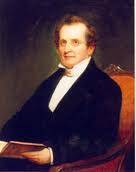
(Princeton University Library – Pictured on left)

Charles Hodge was born in Philadelphia on December 27, 1797, and raised by his mother because his father died six months after Charles’s birth. A gifted student, Charles entered the College of New Jersey, later Princeton University, in 1812 at the age of fourteen. As a senior he publicly confessed his faith in Christ during a campus revival, where over half of the student body gave their allegiance to Jesus. After entering Princeton Seminary in 1816, he excelled in his studies and graduated at age twenty-two. A year later he became professor of biblical languages at the school and the seminary’s third professor.

Hodge taught at Princeton Seminary for over fifty years and became America’s leading Reformed theologian of the nineteenth century. His three-volume Systematic Theology remains in print today.

On April 24, 1872, a unique celebration took place in Princeton to honor Charles Hodge for his fifty years of teaching. On that day all the shops in town closed, and people from near and far gathered in the First Presbyterian Church to honor the town’s most distinguished citizen. Present were Charles’ wife, Mary, their eight children, and a large number of grandchildren. Also in attendance were four hundred graduates of the seminary, almost 15 percent of the total alumni of the school. There were presidents and faculty representatives from many other colleges and seminaries as well as officials from virtually every denomination. (1st Presbyterian of Princeton pictured at left – it was built in 1836 and still stands today)

That day Henry Boardman spoke on behalf of the seminary trustees. He pointed out that celebrations for national heroes were not uncommon, but here was “the spontaneous homage paid to a simple teacher of God’s Word and defender of its truth.” Then addressing Dr. Hodge he said:

What honor, beloved Brother, has God put upon you! For fifty years you have been training men to preach the glorious gospel of grace of God to their fellow-sinners. The teacher of teachers, your pupils have become professors in numerous Colleges and Seminaries at home and abroad. Not to speak of one or two thousand pastors, who are exerting an ameliorating influence upon this nation more potent than that of an equal number of men belonging to any other calling, you are helping, through your students, to educate a great body of Christian ministers, not a few of whom are to be employed in laying the foundations of Christianity on pagan lands.

At that time Charles Hodge had personally taught twenty-seven hundred students—no other seminary in the country had even enrolled that many. In his address Boardman pointed out that there were men scattered around the world who honored Hodge for the gifted mind God had given him and who “love him for his still greater heart.”

During the program the seventy-five-year-old Hodge sat on a sofa off to the side of the platform, out of sight of the audience. Almost overcome by emotion after fifteen men had spoken their words of tribute, he came to the lectern to respond: “When I say thank you for all your respect, confidence and love, I am nothing, I am powerless. I can only bow down before you with tearful gratitude, and call on God to bless you, and to reward you a hundred-fold for all your goodness.”

(pictured at left is the altar at the Princeton University Chapel)

That night before retiring, the tired but grateful Hodge summed up the day by writing in his journal: “April 24th. The apex of my life…altogether affording an imposing and most affecting testimony of the unity of faith, and of common love to the same gospel, and to our common God and Savior Jesus Christ.”

Reflection:

Most of us are not gifted teachers like Charles Hodge, but God intends for us to impact the lives of those around us. God placed thousands of students in Hodge’s life. He may place one or two people in your life to disciple. It isn’t the number that matters; it is the faithfulness with which you invest yourself.

“We are telling you about what we ourselves have actually seen and heard, so that you may have fellowship with us. And our fellowship is with the Father and with his Son, Jesus Christ.” – 1 John 1:3

More on Charles Hodge

Charles Hodge [1797-1898], was an American Presbyterian theologian, was ordained in 1821, and taught at Princeton for almost his whole life. In 1825 he founded the Biblical Repository and Princeton Review, and during forty years was its editor, and the principal contributor to its pages. He received the degree of D.D. from Rutgers College in 1834, and that of LL.D. from Washington College, Pennsylvania, in 1864. In 1840 Dr. Hodge was transferred to the chair of didactic theology, retaining still, however, the department of New Testament exegesis, the duties of which he continued to discharge until his death.

“His most important works are his commentaries on Romans (1835), Ephesians (1856), 1 Corinthians (1857), 2 Corinthians (1859), as well as Constitutional History of the Presbyterian Church in the United States (2 vols., 1839-40), Systematic Theology (3 vols., 1871-3), and What is Darwinism? (1874). He was an outstanding defender of Calvinism, and has a claim to be considered one of the best theologians and Bible commentators America has produced.” Charles Hodge was the father of the influential theologian A.A. Hodge.

The Author’s: Mike and Sharon Rusten are not only marriage and business partners; they also share a love for history. Mike studied at Princeton (B.A.), the University of Minnesota (M.A.), Westminster Theological Seminary (M.Div.), Trinity Evangelical Divinity School (Th.M.), and New York University (Ph.D.). Sharon studied at Beaver College, Lake Forest College, and the University of Minnesota (B.A.), and together with Mike has attended the American Institute of Holy Land Studies (now Jerusalem University College). The Rustens have two grown children and live in Minnetonka, Minnesota. This article was adapted from the April 24th entry in their fantastic book The One Year Book of Christian History, Carol Stream, IL: Tyndale, 2003.

“Revival on God’s Terms” By Dr. Walter C. Kaiser Jr.

An Exposition of 2 Chronicles 7:14 by Dr. Walter Kaiser*

The verb to revive in our English Bibles is almost exclusively an Old Testament word. It occurs in the NIV only five times in the Old Testament (Pss. 80:18; 85:6; Isa. 57:15; and Hos. 6:2). The sole New Testament occurrences were found in the King James Version of Romans 7:9; 14:9. Thus we are mainly limited to the five passages mentioned in the Old Testament where the Hebrew verb hayah to live,” to recover,” or to revive appears.

The major reference to being revived, of course, is Psalm 85:6. But we must not think that all the references to revival in the Bible will mention this word, for, as we have found out, the Scriptures will refer to the concept of revival without using this word more frequently than it does with it.

Each of the sixteen revivals in the Bible had very distinctive characteristics. Most of them began as one or two individuals saw the need for a heavenly visitation. All of them were addressed in the first place to the body of believers. In fact, five out of seven churches addressed in the Book of Revelation were told to repent and return to God. Therefore, revivals are definitely aimed at the believing church and not at the unsaved. The purpose of these revivals is to call the church back to a new hearing of and responding to the Word of God. It must involve a forsaking of sin, a confession of that sin, and a deep desire to reverse the pattern of spiritual declension and apostasy that has begun to typify that ministry, either locally, regionally, or nationally.

Most will agree that the divine response given to Solomon, when he prayed that great dedicatory prayer, after the completion of the temple of God, forms one of the great hallmarks in Scripture for expecting revival in any period of history. Solomon prayed that God would forgive the sins of Israel when they would confess their guilt, after being visited by some future drought, famine, or pestilence as a result of their sin (2 Chronicles 6:26-31).

God’s reply to Solomon’s petition in 2 Chronicles 7:12-16 was put in such formulaic terms that this response would serve forever after as the basis for true revival and renewal to any people in any nation at any time. The heart of this central text, in the gallery of revival texts, was verse 14: “If my people, who are called by my name, will humble themselves and pray and seek my face and turn from their wicked ways, then I will hear from heaven and will forgive their sin and will heal their land.” Note that “my people” are identified by the appositional clause “who are called by my name.” Since this clause is used in both the Old Testament and the New Testament for all believers, the scope of this promise goes far beyond Israel to include any and all believers in all times.

The Promise of 2 Chronicles 7:14

Philip R. Newell noted three great facts about this remarkable promise, we will describe here:

(1) The promise is for us today;

(2) The promise is descriptive of current times; and

(3) The promise of deliverance is conditional

(1)  This Promise Is Intended for Us Today

This promise was originally given to the nation of Israel. However, the qualifying clause that immediately follows the references to my people is one that opens up this promise to more than the Jewish people—it was the clause that read, “who are called by my name.” That phraseology is used to describe everyone who has become part of the family of God and over whom God had put his protective name.

We also have assurance from Romans 15:4 that “everything that was written in the past was written to teach us, so that through endurance and the encouragement of Scriptures [which up to this point, was only the Old Testament] we might have hope.” Likewise, 1 Corinthians 10:11 exhorts, “These things happened to them [i.e.’ to the Old Testament saints] as examples and were written down as warnings for us, on whom the fulfillment of the ages has come.”

It is incumbent on us to apply these same words of 2 Chronicles 7:14 to our own times, nation, churches, and families, as did the ancient Israelites. The principles by which God operates his kingdom remain the same; we dare not assume less.

(2) The Promise Is Descriptive of Current Times

The conditions of 2 Chronicles 7:13 imply that when national disasters begin to afflict a nation, people, or group of believers, it is time to ask what it is that God is trying to say to them or to us. Naturally, one emergency or disaster cannot automatically be converted into the voice of God, for there are more factors at work in this world than reducing them all to a single factor; there is, however, that which is sinful and wicked. Ask Job about his experiences along this line. But when those tragedies start coming in a series, such as Amos 4:6-12 illustrated, then it is high time for the believer to sit up and take notice. Be sure that God is calling a nation away from unrighteousness and back to himself. In Amos’s case, God sent first famine (Amos 4:6), then drought (v.7-8), then locusts, blight, and mildew (v. 9), then plagues similar to the ones that hit Egypt (v. 10), and finally the defeat of some of their cities (v. 11); but in each case the sad refrain was, “yet you have not returned to me, declares the LORD” (vv. 6b, 8b, 9b, 10b, 11b). Not one of the calamities of that day forced any of the people of God to turn back to Him.

And because the people had not returned to the Lord, there would not only be no revival; the nation would exist no longer as well: “Therefore this is what I will do to you, Israel, and because I will do this to you, prepare to meet your God, O Israel” (v. 12). Many have taken this verse to be a salvation text, for one used to see it out in the countryside printed on large oval discs as one drove along: “Prepare to Meet Your God!” Unfortunately, that is not what the prophet of God meant here; he meant that since there was not repentance, or heeding to the national signs of disaster that were lovingly sent to those who had ignored the Word of God written and announced by his messengers, God would be obligated to send his wrath and judgment on that nation.

Likewise, God warned Solomon in 2 Chronicles 7:13, “When I shut up the heavens so that there is no rain, or command locusts to devour the land or send a plague among my people,” then it was time that Israel met the four conditions of the famous verse 14 in 2 Chronicles 7.

The question needs to be asked by every generation and culture: Have we yet reached the point described in verse 13? Only the Lord knows for sure, but one would hardly need the skills of a prophet to conclude that the current pace of evil in America has accelerated to such a rate that it is almost a foregone conclusion that God must intervene with unusual punishment soon, if an immediate repentance to God and a revival from God is to prevent such a judgment from falling on any one of the modern nations of our day.

It is not necessary to spiritualize the drought, famine, or pestilence of verse 13 in order to make the principle of this text applicable to our times, as Newell apparently decided to do. Those spiritual declensions follow the other forms of ethical, moral, and legislative deteriorations already mentioned: both are just as real and of equal importance to our Lord.

(3) The Promise of Deliverance Is Conditional

 It is all too easy in these days of stressing the love and grace of our Lord (which is correct and legitimate in and of itself, of course) to ignore the stipulated conditions attached to our participating in the blessings of God. The four conditions mentioned in this text were not of human origin, but divine. This was God’s word to Solomon but it is nonetheless his word to us as well.

Some will object: “But this is yet another form of legalism.” However, that would be wrong, for legalism is the attempt to earn our salvation by working for it—a form that is totally antithetical to Scripture. Salvation is God’s free gift; it cannot be earned in any shape or form.

But if we are talking about fellowship and communion with our Lord, then let it be noted that God cannot be present or work where sin is present. That is why revival is called for under such circumstances.

The conditionality of “If my people…will humble themselves and pray and seek my face and turn from their wicked ways” is no more offensive than John 14:21, “Whoever has my commands and obeys them, he is the one who loves me”: or John 15:7, “If you remain in me and my words remain in you, ask whatever you wish, and it will be given you.” The conditions, then, were not for entrance into heaven or possessing eternal life, but for the maintenance of fellowship and communion, and for the enjoyment of life to its fullness in these mortal bodies.

The old hymn writer said it best: “Trust and obey, for there’s no other way, to be happy in Jesus, but to trust and obey.” And if that is true of an individual, it is also true for a nation and church denominations as well.

The Four Conditions of 2 Chronicles 7:14

(1) “If My People Humble Themselves”

So large is the topic of humbling ourselves in the Old Testament that there are more than a dozen Hebrew words translating this single word humble, with over eighty references. The one used in 2 Chronicles 7:14 is ‘kana’, meaning to subdue,” as Gideon subdued Midian (Judges 8:28). The picture is one of bending the knee or bending the neck in deference to another.

God calls for his people to render to him complete and voluntary subjection. The precedent for doing this is to be found in the example of our Lord in Philippians 2:8, where Jesus humbled himself.” Those who follow our Lord must be willing to deny themselves and take up his or her cross and follow Christ (Matt. 16:24).

Humbling ourselves, then, is a voluntary denial of every impulse we have to exalt ourselves instead of following the pattern set by the world. We must go into spiritual bankruptcy (“Blessed are the poor in spirit”) if we are to have the mind-set and frame of thinking that was in our Lord Jesus (Phil. 2:5).

The two revivals in 2 Chronicles indicate that more is intended by this condition of humbling ourselves.” Both Rehoboam and Josiah had to come to the point of saying that if God did not extricate them from the trouble they were in, then no one or nothing else would be able to help them.

That is the point to which the modern church must also come. God dwells with those who are of a contrite and humble spirit, reviving their spirits and reviving the hearts of those who are contrite (Isaiah 57:15).

(2) “If My People Will Pray

There are ten different words for payer in the Hebrew text, but the one used here focuses on intercession. It is well illustrated by Samuel, who assures God’s people, “As for me, far be it from me that I should sin against the LORD by failing to pray for you” (1 Sam. 12:23).

S.D. Gordon, in his Quiet Talks on Prayer, combines the various forms of prayer into three groups: petition, communion, and intercession. Most Christians know how to petition God in prayer, for that is what we do best. Like little children, we are always asking—and the Lord does not rebuke us for doing so. Fewer believers have learned about staying in God’s presence in order to commune with him and to meditate on the things of God. The joy of worshipful adoration of the Most High God and Lord of lords often goes unclaimed by many who stay in prayer only for a passing minute or two.

But the work of entering into prayer as a ministry of intercession, praying for the world and its problems and needs, is a task that is rarely entered into by believers. In intercession we participate with God in the great conflict between God and our archenemy, the devil. True intercession takes the persons and places in the world where evil is assaulting the kingdom of God and pleads that the strong hand of God might defeat evil. It prays that the lost might see the glorious offer of grace given by our Lord Jesus and that they might come to trust him personally.

Just as Jehoshaphat was taught to stand still and pray for the defeat of the enemy, so too we need to prepare for the work we attempt to do in God’s name by means of intercessory prayer. When Moses’ hands were held high in prayer by Aaron and Hur, Amalek was vanquished, and forces fell back in defeat. But when Moses dropped his hands out of exhaustion, thereby relaxing in his prayer for Joshua and the troops engaged in the conflict on the valley floor, the enemy surged forward against the forces of good (Exod. 17:8-15). This is the lesson the church needs to learn in all our current skirmishes with evil. This does not mean that this is all we must do, for that could be an easy excuse to exempt us from getting our hands dirty in the various services for Christ. But if this is not the very atmosphere in which God’s work goes forward, then we must count on being soundly thrashed by the present world system in our families, our churches, our courts, and our nations. Mark it well: where intercession goes thin or ceases altogether, there the saints and the churches drift into spiritual lethargy, and the forces of evil have a field day in the culture.

The weapons our Lord gave for our warfare are only two: (1) “the sword of the Spirit, which is the word of God,” and (2) “all kinds of prayer and requests…praying for all the saints…” (Eph. 6:17-18). No other provisions are needed for us to successfully thwart the devil’s attacks.

Newell quoted from both Alexander Whyte and Andrew Murray on this matter of prayer. Cried Whyte,

My brethren, will nothing teach you to pray? Will all His examples, and all His promises, and all your needs, and cares, and distresses, not teach you to pray? Will you not tell your Savior what a dislike, even to downright antipathy, you have at secret prayer; how little you attempt it, and how soon you are weary of it? Only pray, O you prayerless people of His, and Heaven will soon open to you also, and you will hear your Father’s voice, and the Holy Ghost will descend like a dove upon you” (cited in Philip R. Newell, Revival on God’s Terms: A Consideration of Scriptural Conditions Which God Waits for His People to Fulfill. Chicago: Moody Press, 1959).

Andrew Murray, in the introduction to his book The Ministry of Intercession, urged us to consider the fact that our Lord attempted, in this connection, to get two main truths across to us:

[First] that Christ actually meant prayer to be the great power by which His Church should do its work, and that the neglect of prayer is the great reason the Church has not greater power over the masses in Christian and in heathen countries; [and second] that we have far too little conception of the place that intercession, as distinguished from prayer for ourselves, ought to have the Church and the Christian life (cited in Newell).

Murray continued to express amazement that in Israel’s day, God

Often had to wonder and complain that there was no intercessor, none to stir himself up to take hold of His strength. And He still waits and wonders in our day, that there are not more intercessors, that all His children do not give themselves to this highest and holiest work…Ministers of His gospel complain…that their duties do not allow them to find time for this, which He counts their first, their highest, their most delightful, their alone effective work…His sons and daughters, who have forsaken home and friends for His sake and the gospel’s, come…so short in what He meant to e their abiding strength—receiving day by day all they needed to impart to the…heathen. He wonders to find multitudes of His children who have hardly any conception of what intercession is. He wonders to find multitudes who have learned that it is their duty, and seek to obey it, but confess that they know but little of taking hold upon God or prevailing with Him (Cited in Newell).

Is it not clear that we ought to pray, and to pray in an intercessory way? What a wonderful discovery it would be if we should suddenly come to the end of all of our attempts to bypass this most inexorable condition, and if we concluded that the condition of praying was what we needed to meet for God to act in our day on our behalf! The world would be changed like it had never been changed in our lifetime.

(3) “If My People Will Seek My Face”

Some things we long for so much that we can almost taste them. But what of our desire to seek God’s face?

The “face” of God signifies not his literal face, for, as Scripture often reminds us, no one can see God’s face and still live (e.g., Exod. 33:20). What the “face” of God signifies is the joy and the benefits that come from experiencing his presence, his approval, and his communion with the likes of humanity.

So how can we go about seeking his presence, communion, and approval? By drawing near to him, advises James 4:8. That is how God is able to draw near to us.

But how can we draw near to God if we have unclean hands and an impure heart (Ps. 24:3-4)? We must forsake our wicked ways and our unrighteous thought (Isa. 55:7) and ask for the cleansing work of God’s forgiveness to take place (2 John 1:9).

Only as we abide in Christ are we able to bear fruit (John 15). So, if we are raised with Christ, we must seek those things that are above, where Christ is seated at the right hand of the Father (Col. 3:1). That is where we will find fullness of joy (Ps. 16:11), for when we seek our Lord with all our heart, then he will be found, promised Jeremiah (29:13).

(4) “If My People Will Turn from Their Wicked Ways”

The fourth and final condition that would allow revival to take place, in the sovereign plan of God, is if God’s people would turn from their sin by repenting of the evil they have done. If there is no turning from evil, the genuineness of the confession of sin must be doubted. Newell quotes a bit of quaint verse from another century that admonished us about this very need for being authentic and genuine in our request for forgiveness.

‘Tis not to cry God mercy, or to sit

And droop, or to confess that thou hast failed;

‘Tis to bewail the sins thou didst commit –

And not commit those sins thou has bewailed.

He that bewails, and not forsakes them too,

Confesses rather what he means to do.

Jacob was told that he had to put away the idols that were in his household and to be clean if he wished to experience the blessing of God and his reviving power (Gen. 35:1-4). Likewise, Joshua commanded the nation of Israel that they also had to “throw away the gods your forefathers worshiped beyond the River and in Egypt, and serve the LORD” (Josh. 24:14). No less insistent was the prophet Isaiah when he also rebuked Israel by saying, “Take your evil deeds out of my sight! Stop doing wrong, learn to do right!” (Isa. 1:16b-17a). And in the very same train of thought came John the Baptist declaring, “Repent, for the kingdom of heaven is near…Produce fruit in keeping with repentance” (Matt. 3:2a, 8). The whole case built by all of those we have mentioned can be summarized by the apostle Paul’s injunction, “Everyone who confesses the name of the Lord must turn away from wickedness” (2 Tim. 2:19c).

God wants us to be clean persons, channels through which his blessings, witness, and interventions in this sinful world can flow. But if we are to be clean, we must renounce all bitterness, wrath, malice, harshness, unforgiving spirits, filthiness, and immorality; in short, anything that would “give the devil a foothold” (Eph. 4:27) in our lives, in our churches, in our families, and in our nation.

If the constant and key cry of the prophets of the Old Testament was for the people to “turn,” and “return to the Lord,” can the constant cry of our hearts be any less than that in our day?

Conclusion

There is only one conclusion that we can draw from all these matters. We all agree that our nations and we are in desperate need of revival. We also agree that if God does not intervene we are headed for a time of divine judgment; probably, such as we have never seen before. So what is this one logical conclusion to which we believers must all come? It is the one found in John 13:17- “Now that you know these things, you will be blessed if you do them.”

About the Author: Walter C. Kaiser Jr. (PhD, Brandeis University) is the distinguished professor emeritus of Old Testament and president emeritus of Gordon-Conwell Theological Seminary in South Hamilton, Massachusetts. Dr. Kaiser has written over 40 books, including Toward an Exegetical Theology: Biblical Exegesis for Preaching and Teaching; A History of Israel; The Messiah in the Old Testament; Recovering the Unity of the Bible; The Promise-Plan of God; Preaching and Teaching The Last Things; and coauthored (with Moises Silva) An Introduction to Biblical Hermeneutics. Dr. Kaiser and his wife, Marge, currently reside at Kerith Farm in Cedar Grove, Wisconsin. Dr. Kaiser’s website is www.walterckaiserjr.com. This article is adapted from the Epilogue is his outstanding book Revive Us Again, Nashville, B&H, 1999.

“How Can I Become a Christian?” By Dr. James Montgomery Boice

The ABC’s of Salvation

How does a person become a Christian? There are three points—two things we must believe and one thing we must do. They are as simple as ABC.

A stands for “admit.” We must admit that we are sinners and that we are therefore under God’s judgment.

B stands for “believe.” We must believe that God loves us in spite of our sin and that he has acted in Jesus Christ to remove sin and restore us to himself.

C stands for “commit.” This is an act of faith by which we give up trying to run our own life and instead place ourselves in the hands of the Lord Jesus Christ, who died for us and rose again.

Admitting Sin

First, God demands that we admit without reservation that we are sinners and that we should therefore be separated from his presence forever. We are in rebellion against him, either consciously or unconsciously, and we deserve not grace but judgment.

Sin is an everyday experience and the number one problem of mankind. What is more, they recognize that the Bible everywhere insists upon this.

The Scripture declares that the whole world is a prisoner of sin,” wrote Paul in the book of Galatians (Gal. 3:22).

In 1 Kings, chapter 8, King Solomon declared, “There is no one who does not sin” (v. 46).

Psalm 143:2 says, “No one living is righteous before you.”

Isaiah observed, “We all, like sheep, have gone astray, each of us has turned to his own way” (Isa. 53:6).

In the first letter of the apostle John, we are admonished, “If we claim we have not sinned, we make him out to be a liar and his word has no place in our lives” (I John 1:10).

This is also the burden of the first chapters of Paul’s letter to the Romans, where we find the doctrine of the universality of man’s sin stated in its most comprehensive form.

According to the first three chapters of Romans there are three types of people.

The first type is what we would call hedonists, those whose basis for life is materialism. Paul discusses them in Romans 1:18-32. Hedonists have determined to live for their own enjoyment and for whatever pleasures they can find. “Why is this man a sinner?” Paul asks. “He is a sinner because he is on a path that is leading him away from God and therefore away from any real beauty, truth or inner satisfaction.” As Paul describes it, this path is marked by empty imaginings, darkened intellects, a profession of wisdom by one who is actually foolish and, finally, a perversion of the worship of God which leads to a final debasement (vv. 21-23).

The second type of person, the type discussed in Romans 2:1-16, is what we would call a moral man. In Paul’s day, this was the Greek philosopher or professor of ethics. In our day, it would be anyone who has high ethical standards but who does not believe in the Lord Jesus Christ as his Savior. Why does God consider this person a sinner? The answer has two parts. First, he is a sinner because he has come short of God’s standard of righteousness. God’s standard is perfection. It is the standard of the life of the Lord Jesus Christ, the only perfect man who ever lived. All fall short of it. Second, he is a sinner because he falls short of his own standards no matter how high or low they may be.

What is your standard of morality? You may say, “My standard is the Sermon on the Mount. Isn’t that a good standard?” Yes, that is a good standard; but the question is: Do you live up to it? In the Sermon on the Mount Jesus said, “Be perfect, therefore, as your heavenly Father is perfect” (Matt. 5:48). Are you perfect? Of course not! In that case, you are condemned by the standard of your own choosing.

You may not like that conclusion, or course. So you may say, “Well, I’ll just lower my standard and make it the Golden Rule—‘In everything, do to others what you would have them do to you.’” Do you keep that standard? Do you always do to other people all that you would like done by them to yourself? Once again, the answer is no! The point is that all of us are condemned by whatever standard we erect, for none of us is able to live up to even the lowest standards of morality. We are all sinners, and deep within we know it.

There is one more type of person. Paul describes him in Romans 2:17-29. This is the man who would admit most if not all of what Paul has been saying and yet who would attempt to escape the conclusions by pleading his religion. “I have been baptized,” he would say. “I am confirmed. I have given large sums of money to the church’s support and have served on its committees.”

“Good for you,” Paul answers. “But you are still a sinner, because God’s requirement of perfection includes a change of the heart, and none of the outward things of religion—church membership, the sacraments, service or stewardship—can do anything about this most basic problem.” At the end of this section of Romans Paul sums his teaching up by saying, “There is no one righteous, not even one; there is no one who understands, no one who seeks God. All have turned away, they have together become worthless; there is not one who does good, not even one” (Rom 3:10-12).

 Believing on Jesus

The second point to becoming a Christian is to believe that God loves you in spite of your sin and that he has acted in Jesus Christ to remove that sin and to begin to make you perfect once more by conforming you to Christ’s image.

“God demonstrates his own love for us in this: While we were still sinners, Christ died for us” (Rom. 5:8).

“For God so loved the world that he gave his one and only Son, that whoever believes in him shall not perish but have eternal life” (John 3:16).

In the Bible, there are three great terms for what God does in salvation. The first is propitiation, a word that occurs in Romans 3:23-26, Hebrews 2:17, 1 John 2:2 and 4:10 (the NIV translates this as sacrifice of atonement”). Propitiation is the act of performing a sacrifice by which the wrath of God against sin is averted. It refers to what Jesus accomplished in relation to God by his death.

Propitiation presupposes the wrath of God. Right here many modern thinkers would stop, arguing that the term should not be used. “We can understand,” such a person might say, “how the idea of propitiation would be appropriate in paganism where God was assumed to be capricious, easily offended and therefore often angry. But this is not the biblical picture of God. According to the Christian revelation, God is not angry. Rather, he is gracious and loving. Moreover, it is not God who is separated from us because of sin, but rather we who are separated from God.” Those who have argued this way have either rejected the idea of propitiation entirely, considering its presence in the Bible to be merely a carry-over from paganism, or they have interpreted the basic Greek word for propitiation to mean, not Christ’s propitiation of the wrath of God, but rather the covering over or expiation of our guilt by his sacrifice.

We must be appreciative of those who have distinguished the pagan idea of propitiation from the Christian idea. For it is quite true that God is not capricious. We do not propitiate him in order to keep in his good graces, for God is a God of grace and love.

Still, this is not the whole of the matter. In the first place, we do not want to forget what the Bible tells us about God’s just wrath against sin in accordance with which sin will be punished either in Christ or in the person of the sinner. We may feel that the wrath of God and the love of God are incompatible. But this is not the biblical perspective. Rather, the Bible teaches that God is wrath and love at the same time. What is more, the wrath is not just a small and insignificant element that somehow is there alongside the far more significant and overwhelming love of God. Actually, it is a major element that may be traced all the way from God’s judgment against sin in the Garden of Eden to the final cataclysmic judgments prophesied in the Book of Revelation.

Second, although the word “propitiation” is used in biblical writings, it is not used in precisely the same way it is used in pagan writings. In pagan rituals, sacrifice was the means by which man placated an offended deity. But in Christianity, it is never the man who takes the initiative or makes the sacrifice, but God himself who out of his great love for the sinner provides the way by which his own wrath against sin may be averted. Moreover, he is himself the way—in Jesus. This is the true explanation of why God is never the explicit object of the propitiation in the biblical writings. He is not the object because he is, even more importantly, the subject. In other words, God himself placates his wrath against sin so that his love may go out to embrace and fully save the sinner.

The second great term for God’s work of salvation is redemption. Redemption speaks of what Jesus Christ did for us in salvation and of what it cost him to do it. It also occurs in Romans 3:23-26, and in many other places.

The Greek word translated as “redeem,” “Redeemer” or “redemption” in our Bibles has to do with loosing someone’s bonds so that, for example, a prisoner becomes free. At times it was used of procuring the release of a prisoner by means of a ransom. Spiritually, the idea is that, though we have fallen into desperate slavery through sin and are held as by a cruel tyrant, Christ has nevertheless purchased our freedom from sin by his own blood. He paid the price to free us.

We have what is perhaps the greatest biblical illustration of redemption in the story of Hosea. Hosea was a minor prophet whose marriage was unfortunate from a human viewpoint, for the woman proved unfaithful to him. But it was a special marriage from the viewpoint of God. God had told Hosea that the marriage would work out in this fashion. Nevertheless, he was to go through with it in order to provide an illustration of how God loves his people, even when they prove unfaithful by committing spiritual adultery with the world and its gods. The marriage was to be a pageant in which Hosea was to play the part of God and his wife would play the part of unfaithful Israel.

The climax comes at the point at which Gomer fell into slavery, probably because of debt. Hosea was told to buy her back as a demonstration of the way by which the faithful God loves and saves his people. Slaves were always sold naked in the ancient world, and this would have been true of Gomer as she was put up on the auction block in the city of Samaria. She apparently was a beautiful woman. So when the bidding started the offers were high, as the men of the city bid for the body of the female slave.

The bidding was competitive. But as the low bidders dropped out, someone added, “Fifteen pieces of silver and a bushel of barley.” “Fifteen pieces of silver and a bushel and a half of barley,” said Hosea. The auctioneer must have looked around for a higher bid and seeing none, would have said, “Sold to Hosea for fifteen pieces of silver and a bushel and a half of barley.” Now Hosea owned his wife. He could have killed her if he had wished. He could have made a public spectacle of her in any way he might have chosen. But instead, he put her clothes back on her, led her away into the anonymity of the crowd, and demanded love of her while promising the same from himself. Here is the way he tells it. “The LORD said to me, ‘Go, show your love to your wife again, though she is loved by another and is an adulteress. Love her as the LORD loves the Israelites, though they turn to other gods and love the sacred raisin-cakes.’ So I bought her for fifteen shekels of silver and about a homer and a lethech of barley” (a “shekel” was about 2/5 ounce or 11 grams; a “homer” was about 6 bushels or 220 liters; a “lethech” was about 3 bushels or 110 liters).

Then I told her, ‘You are to live with me many days; you must not be a prostitute or be intimate with any man, and I will live with you’” (Hos. 3:1-3). Hosea had the right to demand what she had formerly been unwilling to give. But as he demands it he promises love from himself. For it is thus that God loves all who are his true spiritual children.

The third word for describing God’s work in salvation is justification, the central doctrine of Christianity. Why is it central? Because justification by faith is God’s answer to the most basic of all religious questions, namely, “How can a man or woman become right with God?”

We are not right with him in ourselves; this is what the doctrine of sin means. Sin means that we are in rebellion against God, and if we are against God we cannot be right with God. We are all transgressors. The doctrine of justification by faith is the most important of all Christian doctrines because it tells how one who is in rebellion against God may become right with him. It says that we may be justified by the work of Christ alone received by faith, and not by our own works-righteousness.

Paul puts it like this: “All who believe . . . are justified freely by his [that is, God’s] grace through the redemption that came by Christ Jesus” (Rom. 3:22-24); “A man is justified by faith apart from observing the law” (v. 28); “To the man who does not work but trusts God who justifies the wicked, his faith is credited as righteousness” (Rom. 4:5). These verses teach that justification is God’s work and that it flows from God’s grace.

The Christian doctrine of justification is, therefore, actually God’s declaring the believing individual to be righteous, not on the basis of his own works or irrespective of works, but on the basis of Christ’s sacrifice. In justification, God declares that he has accepted the sacrifice of Christ as the payment of our debt to the divine justice and his imputed Christ’s righteousness to us in place of the sin.

Paul’s own conversion is an illustration of these points. He was not a hedonist; far from it. He was better than that, having effected in his life a combination of the second and third types of men he described in the opening chapters of Romans. He was religious and moral, and he trusted for his salvation to what he could achieve in these areas. He tells about it in Philippians 3:4-8: “If anyone else thinks he has reasons to put confidence in the flesh, I have more: circumcised on the eighth day, of the people of Israel, of the tribe of Benjamin, a Hebrew of Hebrews; in regard to the law, a Pharisee; as for zeal, persecuting the church; as for legalistic righteousness, faultless. But whatever was to my profit I now consider loss for the sake of Christ.”

What Paul is saying is that in the days before he met Christ, he had something like a balance sheet in his life. It had assets and liabilities, and he thought that being saved consisted in having more in the column of assets than in the column of liabilities. Moreover, he thought there were considerable assets, some inherited and some earned. Among the inherited assets was the fact that Paul had been born into a Jewish family and had been circumcised according to Jewish law on the eighth day of life. He was a pure-blooded Jew, born of Jewish parents (“a Hebrew of Hebrews”). He was also an Israelite, that is, a member of God’s covenant people. Moreover, he was of the loyal tribe of Benjamin. Then, too, Paul had advantages that he had won for himself. In regard to the law, he was a Pharisee, the most faithful of all Jewish sects in adherence to the law. Moreover, he had been a zealous Pharisee, which he had proved by his persecution of the infant church.

These were real assets from a man’s point of view. But the day came when Paul saw to what these amounted in the sight of the righteous God. It was the day Jesus appeared to him on the road to Damascus. Before that time, Paul thought he was attaining righteousness by keeping the law. But when he saw Christ, he discerned that these acts of righteousness were actually like filthy rags. Before this, he had said, “As for legalistic righteousness, faultless.” Now he said, “I am the worst of sinners,” and he rejected any attempts to justify himself. He turned to God who on the basis of Christ’s death freely justifies the ungodly. So far as his balance sheet was concerned, Paul recognized that all he had accumulated as an asset was in reality not an asset at all. It was a liability, for it had kept him from Christ. This is where he placed it. He called it “loss.” Then, under assets he entered: “Jesus Christ alone.”

It is the glory of the Christian gospel that when a person who has been made alive by God turns from his own works, which can only condemn him, and instead by faith embraces the Lord Jesus Christ as his Savior, God declares his sins to have been punished at Calvary and imputes the righteousness of Christ to his account.

Commitment

Finally, there must be an act by which you actually commit yourself to Christ. Or, to put it another way, you open the gate of your heart and admit him. This does not mean that you are responsible for your own salvation. If you do open the door, it is only because Christ is there beforehand moving you to do it. Still, from your own point of view, the act itself is absolutely indispensable.

What matters is the reality of your own personal commitment to Jesus. Are you a Christian? That is the question. Is it real? The answer to that question does not depend upon your good works but rather upon your relationship to the Savior. Have you asked Jesus Christ to be your Savior?

You must say,

“Lord Jesus Christ, I admit that I am a sinner and stand under your judgment, that I deserve nothing, that I have no claims upon you. Nevertheless, I believe that you love me and died for me, and that now by grace I can stand before you clothed in your righteousness. I commit my life to you. Receive me now as one of your followers.”

This has been the heart of Christian experience. It has been embodied in many of our hymns. One of them says:

Nothing in my hand I bring,

Simply to thy cross I cling;

Naked, come to thee for dress,

Helpless, look to thee for grace;

Foul, I to the Fountain fly;

Wash me, Savior, or I die.

 Rock of ages, cleft for me,

Let me hide myself in thee.

If you will pray that prayer, God will wash you, and he will give you that righteousness which is above anything you can personally attain.

Author: James Montgomery Boice, Th.D., (July 7, 1938 – June 15, 2000) was a Reformed theologian, Bible teacher, and pastor of Tenth Presbyterian Church in Philadelphia from 1968 until his death. He is heard on The Bible Study Hour radio broadcast and was a well known author and speaker in evangelical and Reformed circles. He also served as Chairman of the International Council on Biblical Inerrancy for over ten years and was a founding member of the Alliance of Confessing Evangelicals. He is the author of numerous Bible expositions and one of my favorite Systematic Theologies called Foundations of the Christian Faith. The article above “How To Become a Christian?” was adapted from Chapter One in the book How to Live the Christian Life, Chicago: Moody Press, 1982.

What Does it Mean To Glorify God? By Dr. Ray Pritchard

“Glorify God: Enhancing God’s Reputation In The World”

 “Glorify the Lord with me; let us exalt His name together.” – Ps. 34:3

What precisely does it mean to glorify God? The particular word translated “glorify” in this verse is sometimes translated by words such as “magnify,” “exalt,” “pile high,” and “make grow.” It has within it the concept of increasing the size of something. In this context it means to recognize who God really is and how to honor Him for what He has done. You glorify someone when you recognize his true identity and the true worth of his accomplishments.

When our boys were young, we took them on a short vacation to visit relatives in Lexington, Kentucky. During an afternoon trip to a miniature golf course, we noticed an older gentlemen with his grandchildren on another part of the course. “Do you know who that is?” someone asked. We didn’t. “He was the governor of Kentucky.” “You’re just making that up.” But it was true. The older gentlemen turned out to be the distinguished former governor of Kentucky. Our opinion changed instantly from disinterest to great respect.

The most common Old Testament word for glory means to treat something as “heavy” or “weighty” in nature. The word was used in Genesis 31 for animals heavy-laden with gold. The word also refers to the shining light of God’s presence. That glory was the cloud by day and the fiery pillar by night that led the people of God through the wilderness. Later it was the light that filled the tabernacle and the temple. Exodus 24:17 tells us that God’s glory was like a consuming fire on the top of Mount Sinai. Thomas Watson, the great Puritan preacher, called glory “the sparkling of Deity.”

When we pass into the New Testament we meet a Greek word, doxa, from which we get the English word doxology. This word has the idea of honor, dignity, and reputation. The last word—reputation—brings us very close to the meaning of “glory” in Psalm 34:3. I remember hearing Dr. Charles Ryrie explain that God’s glory is His reputation in the world. To live for God’s glory means to live so that God’s reputation is enhanced, not diminished.

That leads me to an important thought. In one sense you cannot diminish God’s glory. It exists forever because God is eternal. To paraphrase C.S. Lewis, you cannot diminish God’s glory any more than a madman can diminish the sun merely by scribbling “darkness” on the walls of his cell. However, you can cause others to see the glory of God or to dismiss it entirely by the personal choices you make every day.

God’s purpose for you and me is that we would glorify Him by recognizing in our daily lives who He is and what great things He has done for us. As we do that, His reputation is enhanced in the world.

Prayer: Lord Jesus, I pray to be the kind of person who makes it easy for others to believe in you. Amen.

A Moment’s Reflection:

Why did God leave His earthly reputation in the hands of His children?

What difference does that make for you?

Name three practical ways you can glorify God this week?

About the Author: Ray Pritchard (Th.M., Dallas Theological Seminary; D.Min., Talbot School of Theology) is the founder and President of Keep Believing Ministries (http://www.keepbelieving.com/blog/). He was for many years the Senior Pastor of Calvary Memorial Church in Oak Park, Illinois. He has been a professor and guest lecturer at many schools and is a frequent guest on nationally broadcast radio programs. He has ministered extensively overseas, preaching in India, Nepal, Paraguay, Colombia, Haiti, Nigeria, Switzerland, Russia, and Belize. He has written more than twenty books. He has written close to 30 books on the Christian Life. The article above was excerpted from his excellent devotional on the Psalms entitled Green Pastures, Quiet Waters: Refreshing Moments from the Psalms. Chicago, Moody Press, 1999, 30-32.

St. Anselm on Proving That Which Is Said Cannot Be Proven

Series: On This Day in Christian History – April 21st, 1109

 By A. Kenneth Curtis, Daniel Graves, and Robert J. Morgan

“God’s eternal power and character cannot be seen. But from the beginning of creation, God has shown what these are like by all he has made” (Rom. 1:20). Many miss the majesty of God’s creation, but one boy on the Swiss-Italian border got the message.

Anselm grew up on the breathtaking St. Bernard. His mother frequently reminded him of the Creator, and Anselm imagined God living among the Alps. In his mid-teens Anselm, quarreling with his father, entered a French monastery where he expanded his knowledge of God through study of Scripture. His keen mind and mature faith led to repeated calls from England, and eventually Anselm crossed the channel to become the archbishop of Canterbury.

Anselm won a name as a reformer because he attempted to end abuses such as the slave trade. He urged the holding of regular synods and, while h was archbishop, enforced clerical celibacy within his see. Through his learning and methodology, he became one of the creators of scholasticism. But his most notable gift to history has become known as the ontological proof for the existence of God.

Can the existence of God be proven? Anselm thought so. Modern philosophers and theologians disagree. However, it is Anselm’s argument, the ontological proof, which remains the slipperiest for modern logic to deal with and is though to be impossible to refute.

Anselm’s argument went something like this: When we discuss the existence of God, we define Him as a perfect being, greater than anything else that can be conceived. If God does not exist, then the name “God” refers to an imaginary being. This makes the definition of “God” contradictory, for to be real, to be living, to have power is greater than to be imaginary. It is clear that the word God cannot be discussed as defined if He does not exist, because He must be conceived as really existing in order for Him to be greater than anything else, for a God who does not exist is not greater than anything else.

In short, no philosopher can legitimately argue that God does not exist if he defines “God” as a perfect being that is greater than any that can be imagined; for to be perfect, God must have real existence. Those who acknowledge that He exists do not have a problem with self-contradiction when they affirm His existence, whereas those who deny His existence do. Since we can indeed raise the question of God’s existence and argue the point, then God must exist.

His life and teaching breathed of Christ. Belief in God, Anselm felt, was rational and logical, not a blind leap of mindless faith. The beauty of creation evidenced God’s existence; and furthermore, the very fact that our minds could imagine and infinite, loving God gave evidence that he existed. Anselm’s famous argument for God’s existence said that if God could exist in our minds, he could exist in reality.

But Anselm’s deepest writings were on the atonement, which he defined as Christ’s blood being a “satisfaction” made to God by the Lord Jesus. Love of Christ’s atonement brought Anselm comfort when he found himself in the crossfire between the pope and English king. The redheaded King William (Rufus the red) was profane and violent. He reputedly arose a worse man every morning, and went to bed a worse man every night. He enjoyed seeing animals and men tortured, while Anselm would go out of his way to save a hare.

As archbishop of Canterbury, the zealous Anselm continually struggled with King William for church rights. As a result of the struggle he was exiled. As a theologian, Anselm was most remembered for his book Why did God Become Man? In it he argued that each of us has run up such a debt of sin that there is no way we can repay God. Christ, as infinite God, has merit enough and plenty to spare for our debts. Anselm argued that we must first believe in order to understand. In modern terms we might say that truth only begins to come clear when one is committed to it: You cannot see around a bend in a trail unless you walk toward it.

I look to the hills! Where will I find my help?

It will come from the LORD,

Who created the heavens and the earth.

The LORD is your protector,

And he won’t go to sleep or let you stumble.

The protector of Israel doesn’t doze or ever get drowsy. – Psalm 121:1-4

On this day April 21, 1109 Anselm died surrounded by friends who placed his body in ashes on the floor. He was probably canonized in 1494, although there is debate as o whether this occurred at all. Anselm will be long remembered for his ontological proof for the existence of God, and his defense of the atonement and deity of Christ.

*Other Significant Events on April 21st in Church History:

1073: Pope Alexander II died. He became the first pope elected under the new electoral system by the college of cardinals.

1142: Peter Abelard died on this day His conceptualism (a way of describing how the mind knows ideas) tried to resolve difference between two schools of philosophy called Nominalism and Realism. But Abelard may better be remembered as the man who seduced his student Heloise than as a thinker who tried to ground theology in reason. He was often accused of heresy, but he remained one f the most popular teachers of his day and was cofounder of schools that were later incorporated into the University of Paris.

1621: William Bradford was chosen governor of Massachusetts when John Carver died.

1855: Dwight L. Moody was converted to Christianity. His Sunday school teacher Edward Kimball, said, “My plea was a very weak one, but I was sincere.” Moody became a powerful evangelist.

*Adapted from the April 21st entries in This Day In Christian History, edited by A Kenneth Curtis and Daniel Graves, Camp Hill, PA: Christian Publications & Robert J. Morgan. On This Day. Nashville: Thomas Nelson, 1997.

Chuck Colson: A Tribute from “Hatchet Man” to “Humble Humanitarian Man”

Charles “Chuck” Wendell Colson

(Born in Boston, MA, October 16, 1931 – April   21, 2012)

More than 30 years ago, Charles W. Colson was not thinking about reaching out to prison inmates or reforming the U.S. penal system. In fact, as an aide to President Richard Nixon he was “incapable of humanitarian thought,” according to the media of the mid-1970s. Colson was known as the White House “hatchet man,” a man feared by even the most powerful politicos during his four years of service to President Nixon.

When news of Colson’s conversion to Christianity leaked to the press in 1973, the Boston Globe reported, “If Mr. Colson can repent of his sins, there just has to be hope for everybody.” Colson would agree. He admits he was guilty of political “dirty tricks” and willing to do almost anything for the cause of his president and his party.

In 1974, Colson entered a plea of guilty to Watergate-related charges; although not implicated in the Watergate burglary, he voluntarily pleaded guilty to obstruction of justice in the Daniel Ellsberg case. He entered Alabama’s Maxwell Prison in 1974 as a new Christian and as the first member of the Nixon administration to be incarcerated for Watergate-related charges. He served seven months of a one-to-three year sentence before being released.

But Colson never really left prison. Haunted by the desperation and hopelessness he saw behind bars, Colson knew he had to do something to help the men he left behind. In fact, he had a promise to keep. One day, shortly before leaving prison, Colson was going about his business in the prison dorm while some inmates played cards. Suddenly, one of the players, a six-foot-tall prisoner named Archie, bellowed, “Hey, Colson. You’ll be out of here soon. What are you going to do for us?”

Suddenly, the whole room fell silent. All ears were straining to hear the answer. “I’ll help in some way,” replied Colson. “I’ll never forget you guys or this stinking place.”

“Bull!” roared Archie, slamming down the pack of cards on the table. “You all say that. I’ve seen big shots like you come and go. They all say the same things while they’re inside. Then they get out and forget us fast. There ain’t nobody cares about us. Nobody!”

But today, 35 years later, thousands upon thousands of Christian volunteers and churches do care. They care enough to visit prison, mentor prisoners, help their families, and share the Good News of Christ with them.

That’s because in 1976, Colson founded Prison Fellowship®, which, together with churches of all confessions and denominations, has become the world’s largest outreach to prisoners, ex-prisoners, and their families, with ministry taking place in 113 countries around the globe.

Today Prison Fellowship has numerous ways for Christians to join in ministry that is not only transforming prisoners and their families, but also transforming the criminal justice system, our communities, and the culture itself: From in-prison Bible studies and mentoring programs to helping the children of prisoners understand how much God loves them, from advocating for biblically based justice reforms to promoting a biblical worldview.

In reflecting on his time in prison Colson had this to say, “When the frustration of my helplessness seemed greatest, I discovered God’s grace was more than sufficient. And after my imprisonment, I could look back and see how God used my powerlessness for His purpose. What He has chosen for my most significant witness was not my triumphs or victories, but my defeat…my lowest days as Christian (and there were low ones–seven months’ worth of them in prison, to be exact) have been more fulfilling and rewarding than all my days of glory in the White House.”

Colson sensed God’s calling to comment on the culture through the written and spoken word. He has written more than 30 books, which have collectively sold more than five million copies. His autobiographical book Born Again was one of the nation’s best-selling books of all genres in 1976 and was made into a feature-length film.

Colson faced a health scare in 1987 when he had surgery for stomach cancer and a painful recovery. He was in Georgetown University Hospital when he learned that former CIA director William Casey was in the room next to him. As Casey was on his deathbed, Colson pointed to a crucifix and asked if Casey knew what it meant. According to Jonathan Aitken’s biography, Casey grunted in agreement. “Then you know it means that Christ died for your sins,” Colson said. “It’s important for you to know him personally at this time. Would you like to pray?” It was, Colson said later, “the real reason I was in that hospital.”

During his recovery, Colson corresponded with Nixon, where he wrote, “It takes more than Watergate or a little cancer to hold me down. I’ll be back stronger than ever.”

In 1999, Colson and Nancy Pearcey co-authored the groundbreaking book How Now Shall We Live?, challenging Christians to understand biblical faith as an entire worldview–a perspective on all of life. In this book, Colson and Pearcey argue that the great battle of the twenty-first century is a struggle between the spiritual and the secular worldviews.

In one of his recent books, The Faith, Colson issues an urgent call to the Church to recapture its passion for the historical, orthodox truths of Christianity–especially in this age when the Church is besieged on all sides by secularism, radical Islam, and militant atheism.

While Colson was one of the Christian community’s most sought-after speakers, he resolutely refused to establish a speaking fee. Perhaps anticipating criticism of any appearance of self-enrichment by a former Watergate figure, Colson donated all speaking honoraria and book royalties to Prison Fellowship, and accepted the salary of a mid-range ministry executive.

In recognition of his work, Colson received the prestigious Templeton Prize for Progress in Religion in 1993, donating the $1 million prize to Prison Fellowship. And in 2008, Colson was honored by President Bush with the Presidential Citizens Medal for his years of work with prisoners and their families, which Colson accepted on behalf of the volunteers and staff of Prison Fellowship. Colson’s other awards have included the Humanitarian Award, Dominos Pizza Corporation (1991); The Others Award, The Salvation Army (1990); several honorary doctorates from various colleges and universities (1982-2000); and the Outstanding Young Man of Boston, Chamber of Commerce (1960).

Despite his work critiquing the culture, Colson’s heart was ever with the prisoner. He clearly never forgot the promise he made to his fellow inmates during his brief stay in prison: that he would “never forget” those behind bars.

Chuck was a model example of someone who used his experience in prison for good, and better yet, for the saving of many lives and the ultimate glory of God!

*Article adapted from the Prison Fellowship website.

If you would like to know more about this amazing Christian leader – Jonathan Aitken wrote an excellent biography on Colson in 2005, Charles W. Colson: A Life Redeemed published by Random House. Product description: Once one of the most despised men in American, Colson went from being Richard Nixon’s “hatchet man” to becoming a leading evangelical. How was a convicted criminal transformed into a Christian servant? Drawing on Colson’s personal papers, Aitken’s biography takes an unprecedented look at the man who continues to influence politics, religion and prison ministry.

 Here is List of Most of Colson’s Outstanding Books

2011: The Sky Is Not Falling: Living Fearlessly in These Turbulent Times (Worthy Publishing). Product description: Yes, the world is an increasingly godless place. And it’s never been as pronounced as it is in this era of 24-hour news cycles. From nasty political power struggles to raunchy reality TV, everywhere we look there is evidence of our culture’s steep decline. But it’s no time for Christians to cower in fear. In The Sky Is Not Falling, bestselling author Chuck Colson equips readers with the truth about the most difficult cultural and moral issues of our day and brings clarity and sanity to a world that seems to have gone mad. His message is that Christians must be informed of the truth of today’s confusing social and political issues so that we can live with the confidence and certainty that God has the future in his hands. Every concerned Christian needs to arm themselves with the profound insights in The Sky is Not Falling.

2008: The Faith co-authored with Harold Fickett (Zondervan). Product description: Rightly understood and rightly communicated, the Christian faith is one of great joy. It is an invitation to God’s kingdom, where tears are replaced by laughter and longing hearts find their purpose and their home. This is the heart of the gospel: God’s search to reclaim us and love us as his own. But have we truly grasped this? Those of us who have disdained Christianity as a religion of bigotry—have we repudiated the genuine article or merely demonstrated our own prejudice and ignorance? Those of us who are Christians—have we deeply apprehended the mission of Jesus, and do our ways and character faithfully reflect his beauty? From the nature of God, to the human condition, to the work of Jesus, to God’s coming kingdom, and all that lies between, how well do we understand the foundational truths of Christianity and their implications? The Faith is a book for our troubled times and for decades to come, for Christians and non-Christians alike. It is the most important book Chuck Colson and Harold Fickett have ever written: a thought-provoking, soul-searching, and powerful manifesto of the great, historical central truths of Christianity that have sustained believers through the centuries. Brought to immediacy with vivid, true stories, here is what Christianity is really about and why it is a religion of hope, redemption, and beauty.

2008: Gideon’s Torch with Ellen Vaughn (Thomas Nelson). Product description: Gideon’s Torch is his and coauthor Vaughn’s first novel, a political tale steeped in the details of the White House, the Justice Department, and the K Street maneuverings of those seeking power. As Republican president J. Whitney Lowell takes office, a woman walks into a North Dakota abortion clinic and kills a doctor. Watching the polls, Lowell decides to crack down on every antiabortion group nationwide, whether violent or peaceful, and a civil liberties debate quickly erupts. Before Lowell’s tactics can produce a killer, another group steals a National Institute of Health training video containing shots of a brutal third-trimester abortion and manages to uplink the video to the evening news. And before these terrorists can be apprehended, another group stages an Oklahoma City-style bombing on the first of the sinister-seeming Regeneration Centers, which will use fetuses in AIDS research. They botch their escape and are killed, leaving government prosecutors no case except against an alleged accessory, a Maryland preacher named Daniel Seaton. Seaton’s courtroom testimony and death in prison are linked to the tribulations of St. Paul and give the novel a certain mournful elegance. Colson and Vaughn present every warring faction fairly; the portraits of the president and attorney general are particularly sensitive, and the suicide of Lowell’s chief adviser is quite movingly done.

2007: God & Government (Zondervan). Product description: How should Christians live their faith in the public arena? Twenty years ago, the first edition of Chuck Colson’s Kingdoms in Conflict became a bestseller, a must-read for people interested in politics and the relationship between church and state. Now, with a passion for truth and moved by the urgency of the times we live in, Colson has written God and Government, re-voicing his powerful and enduring message for our post-9/11 world. In an era when Christianity is being attacked from every side—books being written charging Christians with being theocrats and trying to impose their views on an unwilling culture—what is the message of the Christian church? What does the Bible say, and what do we learn from history about the proper relationship between faith and culture? Appealing to scripture, reason, and history, this book tackles society’s most pressing and divisive issues. New stories and examples reflect the realities of today, from the clash with radical Islam to the deep division between ‘reds’ and ‘blues.’ In an era of angry finger pointing, Colson furnishes a unique insider’s perspective that can’t be pigeonholed as either ‘religious right’ or ‘religious left.’ Whatever your political or religious stance, this book will give you a different understanding of Christianity. If you’re a Christian, it will help you to both examine and defend your faith. If you’ve been critical of the new religious right, you’ll be shocked at what you learn. Probing both secular and religious values, God and Government critiques each fairly, sides with neither, and offers a hopeful, fair-minded perspective that is sorely needed in today’s hyper-charged atmosphere.

2005: The Good Life co-authored with Harold Fickett (Tyndale). Product description: Sharing from his own life, as well as the stories of others, Chuck Colson exposes the counterfeits of the good life and leads readers to the only true source of meaning and purpose, Jesus Christ. But he does that in an unusual way, allowing powerful stories to illustrate how people have lived out their beliefs in ways that either satisfy or leave them empty. Colson addresses seekers—people looking for the truth. He shows through stories that the truth is knowable and that the truly good life is one that lives within the truth. Through the book, readers get to understand their own stories and find answers to their own search for meaning, purpose, and truth.

2004: The Design Revolution: Answering the Toughest Questions About Intelligent Design with William A. Dembski (Inter Varsity Press). Product description: Winner of a Christianity Today 2005 Book Award! A 2005 Gold Medallion finalist. Is it science? Is it religion? What exactly is the Design Revolution? Today scientists, mathematicians and philosophers in the intelligent design movement are challenging a certain view of science–one that limits its investigations and procedures to purely law-like and mechanical explanations. They charge that there is no scientific reason to exclude the consideration of intelligence, agency and purpose from truly scientific research. In fact, they say, the practice of science often does already include these factors! As the intelligent design movement has gained momentum, questions have naturally arisen to challenge its provocative claims. In this book William A. Dembski rises to the occasion clearly and concisely answering the most vexing questions posed to the intelligent design program. Writing with non-experts in mind, Dembski responds to more than sixty questions asked by experts and non-experts alike who have attended his many public lectures, as well as objections raised in written reviews. The Design Revolution has begun. Its success depends on how well it answers the questions of its detractors. Read this book and you’ll have a good idea of the prospects and challenges facing this revolution in scientific thinking.

2001: Justice That Restores (Tyndale). Product description: America’s justice system is broken. Offenders repeat and return to jail. Chuck Colson shows why the prevailing systems of criminal justice simply don’t work. The book showcases Colson at his best, including personal stories, historical study, and shocking statistics. Bottom line: only a system that is based on a biblical worldview, a system that restores both the offender and the offended, will have any lasting success. This authoritative work is Colson’s legacy statement about criminal justice. These proven principles can reverse the current criminal decline.

1999 & 2000: How Now Shall We Live with Nancy Pearcey and Harold Fickett (Tyndale revised in 2004). Product description: 2000 Gold Medallion Award winner!

Christianity is more than a personal relationship with Jesus Christ. It is also a worldview that answers life’s basic questions and shows us how we should live as a result of those answers. How Now Shall We Live? equips Christians to confront false worldviews and live redemptively in contemporary culture.

1998: Burden of Truth: Defending the Truth in an Age of Unbelief (Tyndale). Product description: Popular author Charles Colson provides practical help for Christians in understanding difficult issues on which their faith collides with the surrounding culture. Burden of Truth covers topics such as medical ethics, education, crime, science, pop culture, family, art, and government. In Burden of Truth Colson spurs Christians on in confronting the deception of the world with the truth of God’s Word.

1996 (Revised in 2004): Being The Body with Ellen Santilli Vaughn (Thomas Nelson). Product description: Charles Colson has been called, “one of the most important social reformers in a generation.” Ten years ago in The Body, Colson turned his prophetic attention to the church and how it might break out of its cultural captivity and reassert its biblical identity. Today the book’s classic truths have not changed. But the world we live in has. Christians in America have had their complacency shattered and their beliefs challenged. Around the world, the clash of worldviews has never been more strident. Before all of us, daily, are the realities of life and death, terror and hope, light and darkness, brokenness and healing. We cannot withdraw to the comfort of our sanctuaries…we must engage. For, if ever there was a time for Christians to be the Body of Christ in the world, it is now. In this new, revised and expanded edition of The Body, Charles Colson revisits the question, “What is the church and what is its relevance to contemporary culture at large?” Provocative and insightful, Being the Body inspires us to rise above a stunted “Jesus and me” faith to a nobler view of something bigger and grander than ourselves–the glorious, holy vision for which God created the church.

1994: A Dangerous Grace with Nancy R. Pearcey. Product description: In his first book of daily readings, Charles Colson shares truths and warnings on timely and timeless subjects ranging from Aristotle and the Apostles to MTV, the arts and evolution. In this daily devotional Colson presents a full year of cutting edge, “think” pieces sure to motivate Christians to action.

1993: A Dance with Deception: Revealing the truth behind the headlines (Word – revised edition – 2004). Product description: Here are more than 150 commentaries on life in America today, transcribed from Charles Colson’s daily radio program “BreakPoint”. Colson pulls no punches in this confrontation between the myths of modern life and the truth of God’s Word.

1993: The Body: Being Light in Darkness with Ellen Santilli Vaughn (Word). See the Revised Being the Body above.

1991: Why America Doesn’t Work with Jack Eckerd (Word). Product description: In this uncompromising bestseller, two veterans of public service and private business reveal how America’s work ethic has been stripped of its true meaning. Readers are then given the critical steps necessary to halt America’s declining work ethic through an infusion of unique programs, hard work, and a renewed sense of integrity. Colson founded the Board of Prison Fellowship Ministries, and Eckerd founded the Eckerd drugstore chain.

1989: Against the Night: Living in the New Dark Ages (Servant). Product description: Ten years ago when Charles Colson’s top-selling Against the Night appeared, he described the demise of Western culture as the “new dark ages.” The book describes in particular the ominous shadows that have engulfed politics, family life and education. Today as we face the new millennium, the book is still pertinent, as the darkness has not lifted. It seems in many ways to have thickened. Against the Night, however, is not pessimistic. It gives Christians hope that as we regain our vision of living in God’s kingdom and being God’s people, we will be a light in the darkness.

1987: Kingdoms in Conflict with Ellen Santilli Vaughn (William Morrow & Co.). See revised and expanded edition: God and Government above.

1983: Loving God (Harper – Revised in 1997 by Zondervan). Product description: In his magnificent classic, Chuck Colson shakes the church from its complacency with a penetrating look at the cost of being Christian. For those who have wondered whether there isn’t more to Christianity than what they have known—and for those who have never considered the question—Loving God points the way to faith’s cutting edge. Here is a compelling, probing look at the cost of discipleship and the meaning of the first and greatest commandment—one that will strum a deeper, truer chord within even as it strips away the trappings of shallow, cultural Christianity. ‘Looking for the complete volume on Christian living? This is it. And the title sums it up. If you desire life deep, rich, and meaningful, then it is simply Loving God.’ Joni Eareckson Tada President, Joni and Friends

1979: Life Sentence (Chosen Books – Revised in 1999). Product description: The sequel to Colson’s bestseller, Born Again, this book reveals how he began a new life and his struggle to begin a new ministry.

1976: Born Again (Chosen Books – Revised by Hendricksen & Chosen in 2008). Product description: In 1974 Charles W. Colson pleaded guilty to Watergate-related offenses and, after a tumultuous investigation, served seven months in prison. In his search for meaning and purpose in the face of the Watergate scandal, Colson penned Born Again. This unforgettable memoir shows a man who, seeking fulfillment in success and power, found it, paradoxically, in national disgrace and prison. In more than three decades since its initial publication, Born Again has brought hope and encouragement to millions. This remarkable story of new life continues to influence lives around the world. This expanded edition includes a brand-new introduction and a new epilogue by Colson, recounting the writing of his bestselling book and detailing some of the ways his background and ministry have brought hope and encouragement to so many.

Three Essential Qualities of a Disciplemaker by Lee Brase

“Who Me? Make Disciples?”

 By Lee Brase

 THE KEY IS NOT in the technique but in the heart. Who has had a great influence on your life for Christ? What qualities did this person have that enabled him to have such an influence on you?

I’ve asked hundreds of people these questions. No one has ever said he was helped because the person was so intellectual, had a dynamic personality, or was so good-looking! Neither do people mention the syllabus they studied, or the hoops they jumped through.

What they do say is that it was the person’s relationship with people and God that really mattered. “He really cared for me.” “She had such a genuine interest in me.” He believed in me.” “He had a close walk with God.” “She took time to listen to me.” “She was open and honest.”

When the disciples heard Jesus say, “Go and make disciples” (Matthew 28:19), they responded, “Yes, Lord,” and did it. Today when we hear this same command, we respond, “Who, me? I’m not eloquent. I haven’t been trained. No one’s ever shown me how to do this.” However, the qualities of a disciplemaker are available to all of us. To emphasize this truth, our Lord seemed deliberately to train those who were “unschooled, ordinary men” (Acts 4:13) and leave His work in their hands.

I’ve discovered three essential qualities of a disciplemaker. God expects them of any Christian. If you have them, you can expect God to use you to help others grow.

(1) A Walk of Faith

 When God appeared to Moses through the burning bush, He told him he had seen Israel’s misery and wanted Moses to go back and lead them our of Egypt. Moses’ immediate response was to question God’s judgment in selecting him (Exodus 3:11). Forty years earlier, Moses had attempted to help the Israelites and failed miserably. He’d run from Egypt with an Israelite’s question ringing in his mind: “Who made you ruler or judge over us?” (Exodus 2:14).

Most of us, like Moses, have attempted to help people along the way and failed. The second person I tried to disciple dropped me a note after several months of meeting regularly: “I want nothing to do with you or God.” I wanted to do what Moses did—run to the desert and work with sheep. It was hard to get excited about discipling the next person who needed my help.

Where do we find courage to get involved in people’s lives after we’ve failed? Or what about the courage to help that very first person?

The answer lies in God’s response to Moses. He gave the promise, “I will be with you” (Exodus 3:12).

God didn’t try to encourage Moses to rely on his ability and training. He simply assured Moses of His presence. Jesus made the same promise when He commissioned the apostles to go and make disciples. None of these men had a good record of accomplishment. Yet, each risked his life to disciple people all over the world. Jesus backed up their commission to make disciples with two statements: “All authority in heaven and earth has been given to me” and “Surely I am with you always, to the very end of the age” (Matthew 28:18, 20).

If Jesus Christ were here in human form and went with us to help someone, we’d go with great confidence that the person would receive what he needed. That’s exactly what He’s promised to do. Faith is the ability to believe that what God says is more real than what our eyes see. We can rely on the promise of His presence.

People who trust God make excellent disciplemakers. Knowing that only God can change lives, they become people of prayer. They see God work way beyond their natural abilities. God receives the glory only when our ministries go beyond what we could do on our own.

Believing God also frees us to believe in people. I remember a time when my spiritual growth accelerated. Why? The person helping me believed in God and believed in me. He believed God could do things with my life I never dreamed possible. I grew in accordance with his faith.

It was only natural that I should then believe God for the people I was discipling. Some years later, a man I’d discipled said he knew his solid walk with Christ had occurred because, “You believed in me.” He boiled down hundreds of hours together to that one statement.

“The one who calls you is faithful and he will do it” (1 Thessalonians 5:24). A discipler has faith that God will work through him to make disciples.
(2) A Heart For People

A disciplemaker must love those he wants to help. In addition, love sees people the way they are and then serves them.

A disciplemaker’s goal is to build people up in Christ. The Apostle Paul, “Knowledge puffs up, but love builds up” (1 Corinthians 8:1). It was Paul’s love, more than his knowledge and abilities, that established hundreds of Christians throughout Asia Minor and Europe. He was able to write to the Thessalonians, “As apostles of Christ we could have been a burden to you, but we were among you, like a mother caring for her little children. We loved you so much that we were delighted to share with you not only the gospel of God but our lives as well, because you had become so dear to us” (1 Thessalonians 2:6-8).

Love, like faith, expresses itself in action. That’s why Paul went on to say to the Thessalonians, “Surely you remember, brothers, our toil and hardship; we worked night and day in order not to be a burden to anyone while we preached the gospel of God to you” (1 Thessalonians 2:9). Paul called himself a servant to the Corinthians (1 Corinthians 4:1). Serving is love in action.

Several years ago, a Chinese Christian stayed with us for a month. He observed how I tried to train people using my programs. My experience and knowledge limited the training. Finally, he confronted me: “You train a man and he can only become what you are, but if you serve a man, the sky is the limit.”

This liberated me from thinking of discipling as getting people through programs and methods. I began thinking of how to serve each person to help him become more mature in Christ. The person, not my program, became the focus. Those who want to co-labor with Christ in others’ lives are not to “lord it over them” (Matthew 20:25), but to serve them.

Every human being has needs and birdens. They-re necessary for growth. We help people grow when we “carry each other’s burdens” (Galatians 6:2). Doing this takes a servant’s heart.

We have a beautiful picture of serving in Jesus’ life. “Come to me, all you who are weary and burdened, and I will give you rest” (Matthew 11:28). His invitation came at the end of a very difficult day. Jesus had just had to denounce the cities in which most of His miracles had been performed because the people didn’t repent (Matthew 11:20). People who questioned His motives called Him “a glutton and a drunkard” (Matthew 11:19). And John the Baptist had just sent some of his disciples to ask Jesus, “Are you the one who was to come, or should we expect someone else?” (Matthew 11:2).

Jesus had had enough disappointments that day to make most of us withdraw, sulk, and cry. However, He invited others to bring their cares and burdens to Him.

Love gives us the capacity to serve others even when our burdens are heavy. It enables us to put our cares aside for the moment and give ourselves to someone else. Without love, we’ll never truly disciple others. They’ll have to fit into our schedule and needs—and they won’t, and shouldn’t have to.

(3) A Life Patterned After Jesus

A disciple follows Jesus Christ with the intent of becoming like Him. This implies two things: That he focuses on Christ and that he’s a learner.

A Focus on Jesus: Imagine what would have happened if Jesus had called to Peter and Andrew, “Leave your boat and nets and come join my Bible study class” and three years later had said, “Go into all the world and promote my three-year discipleship program.” No one would give his or her lives for a class or a program. These things aren’t worthy of our lives. But Jesus Christ is. Everything in life finds meaning when we properly relate to Him. He leads, we follow. We know we’re disciples when we allow Jesus Christ to order our lives—family, finances, career, pleasures, friendships, possessions, etc.

J.I. Packer was once asked what he saw as the greatest need in the Church in the Western world. His response was that we must get back to the centrality of Jesus Christ. Paul said to the Corinthians, “But I’m afraid that…your minds may somehow be led astray from your sincere and pure devotion to Christ” (2 Cor. 11:3). One of the major reasons many Christians avoid discipling others is that they have lost that pure devotion to Christ. They give themselves to activities, classes, and programs, and that’s all they have to offer others.

One of the best disciplemakers I know was raised as a flower farmer. Because of the needs on the farm, Dirk had to drop out of high school. However, his mind was alert and his heart set on Christ. This drove him to the Bible. He memorized a verse every day and then meditated on it while working. Such a heart for the Lord was contagious. Before long, university students sought him out for help in their lives. It was the Person of Christ in his life that attracted others.

A Teachable Spirit: The disciplemaker is a learner. He is open to change. For him, the entire world is a classroom. He not only teaches the one he’s discipling, but also learns from him. The wisest man on earth said, “Better a poor but wise youth than an old but foolish king who no longer knows how to take warning” (Ecclesiastes 4:13).

The disciplemaker studies people and seeks to become skillful in helping them. Paul said he discipled the Corinthians “as an expert builder” (1 Corinthians 3:10). He became that by observing them so well that he knew just what they needed.

Bob and Dave have a ministry together that reaches into several states. They are both well educated, mature men. They know enough about the Lord, His Word, and ministry techniques to put most of us to shame. Yet, as I have traveled with them, I have seen them constantly put themselves in the position of learners rather than the ones with the answers. As a result, they always have people around them asking questions.

Yes, You!

 Three facts stand out for us as Christ’s people:

The Lord wants us to make disciples. He commissioned us to do it when He said, “Go and make disciples of all nations” (Matthew 28:19).

Plenty of people need to be discipled. “The harvest is plentiful but the workers are few” (Matthew 9:37).

Any of us can disciple others if we believe God, love people, and follow Christ with the intent of becoming like Him.

Don’t wait until you feel capable. The heart of the disciplemaker is his character, not his skills. Step out in faith, invest your life in someone else, and pick up the skills as go along.

 Questions For Reflection:

 Who has had a great influence on you? What were some of the qualities of people who you found inspiring as you were formulating your spiritual path?

Who is someone you tried to influence but failed? As you look back, why do you think you failed?

One Brazilian disciplemaker was asked what he felt was the key to the success of many generations of disciples in his country. After thinking for a few days he replied, “I give you a new commandment – to loveone another. Just as I have loved you, you also are to love one another.Everyonewill know by this that you are my disciples – if you have love for one another” (John 13:34-35). Why do you think he thought this was key?

Article Information: “Who Me? Make Disciples?” Discipleship Journal 60, November/December, 1990, p. 40.

About the Author: Lee and his wife Marilyn, live in Portland, Oregon, where they’re partners in The Navigators’ Prayer Ministry.

Questions For Reflection: From the FANTASTIC book by Ron Bennett and John Purvis, The Adventure of Discipling Others: Training in the Art of Disciplemaking, NavPress, Colorado Springs, 2003, 30.