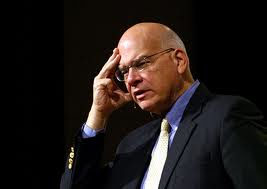
Tim Keller and David Powlison’s Questions For Pastoral Self-Evaluation

Pastor’s Self-Evaluation Questionnaire 

“Pay close attention both to yourself and to your teaching; persevere in these things; for as you do this you will save both yourself and those who hear you.” – 1 Timothy 4:16

The questions that follow help you to pay close attention to yourself and to your teaching. The purpose is to bless you and those you seek to love and serve. For the vast majority of readers, it will help you set a positive, personal agenda for growth as God’s instrument. The Great Shepherd of the sheep will by His grace continue to develop you in His image. Conduct your self-evaluation in the light of His love.

Perhaps for a few readers it will prove to be a pass-fail test for your current ministry. Perhaps God has not given you certain gifts. Perhaps you are walking in some disqualifying pattern of sin. Even in these cases the questionnaire serves a positive purpose. The Lord has another place for those gifts that He has given you. The Lord has a way of repentance and renewal for sins that sabotage pastoral integrity and effectiveness. Remember the grace of the gospel.

So set your heart on Christ, on His gospel of mercy, on His high call, on His abounding riches of grace, on His honor in your life and His church. Here are some suggestions on how to profit from this study.

Read the questions carefully. The questions are posed first, followed by work-sheets. The questions range widely over the pastor’s role. If you are not a pastor, you can still profit. Ignore the questions that do not apply to your situation.

Think hard. Answer each question honestly after taking time to ponder. Set aside a day or several evenings to reflect on your life and ministry. Wherever possible give concrete examples of fruitfulness or failure, of growth or struggle.

Pray. Pray for wisdom to know God and yourself better. Pray for wisdom to serve God more effectively. Pray to know yourself before the eyes of the God who is both light and love.

Seek counsel from others. Many of the questions are difficult to answer about yourself. This self-evaluation questionnaire will be most useful when you combine it with feedback from others. Ask other leaders, friends, spouse, coworkers on a ministry team, and so forth.

Plan. The work-sheets will guide you in practical planning.

Acknowledge that others have gifts that complement yours. The second half of the questionnaire deals with pastoral skills. You may have limitations which God covers by providing others on the pastoral team with complementary gifts. In acknowledging personal weaknesses, ask yourself whether or not your pastoral team as a whole is covering all the bases.

Remember, the goal of this self-evaluation is to guide you in the path of growing holiness and growing pastoral skill. The questions are divided into these two major sections: personal holiness and pastoral skills. Effective ministers demonstrate holiness by humility, love, integrity and spirituality. Effective ministers are skilled in nurture, communication, leadership and mission.

Under each category you will find several questions. Notice that each question is two-sided. This captures that you fail either by omission or by commission. For example, biblical love is neither careless detachment from others nor obsession with others. You will likely find that you tend towards one side of each question. Let the questions stimulate you to ask further questions. They are not exhaustive. Some will apply to you; some won’t.

Part I. Personal Qualifications of Effective Ministers: Holiness

A. Humility

1. Do you acknowledge your limitations and needs out of confidence in Christ’s gracious power?

Are you honest enough? Do you demonstrate a willingness to admit your limits, mistakes, sins and weaknesses? Are you defensive, guarded, hypersensitive? Do you model that the Christian life is the open life? Do you demonstrate that the Christian life is a work in process rather than a completed product? Do you deal forthrightly with the common temptations you face: anger, anxiety, escapism, love of pleasure, self-love, materialism, perfectionism, and the like?

Are you too open? Do you wear your heart on your sleeve, indulging and wallowing in your limits, mistakes, sins and weaknesses? Are you morbidly or ‘exhibitionistically’ confessional? Or have you learned to speak of your weaknesses in ways that (1) point to your confidence in Christ, (2) genuinely seek help from people who can help, and (3) edify others?

2. Do you demonstrate a flexible spirit out of confidence in God’s control over all things, God’s authority over you, and God’s presence with you?

Are you flexible enough? Do you adapt faithfully, flexibly and creatively to the unexpected? Do you value and encourage the ideas and gifts of others? Do you insist on your own way, whether forcefully or through subtle manipulation? Do you exemplify confidence in the sovereign control of God down to the details of life? Are you caught up in the various aggressions and fears produced by a drive to ensure your own control?

Are you willing to try things experimentally and then reevaluate and make changes? Are you evidently a learner?

Are you too flexible? Do you bend too much? Do you blow in the wind of others’ opinions and get overwhelmed by people’s demands and agendas? Do you compromise, under-assert, seek to please, fail to push things that need to be pushed? Do you let people or circumstances control you rather than the Lord?

B. Love

1. Do you have a positive approach to people because of confidence in the power and hope of the Gospel of Jesus Christ?

Do you give grace to others? Do you love and encourage persons, even when under stress or in the face of an attack? Do you exhibit core biblical virtues: love for enemies, gentleness with opponents, patience with people and circumstances when undergoing trial or suffering? Are you able to confront the failings of others—to discipline your children, to admonish wanderers, to conduct church discipline—in a way that is not punitive, irritable, or censorious but breathes the invitations of God’s grace? Can you say hard things lovingly? Is your “speaking the truth” harsh, opinionated, idiosyncratic? Do you create problems by making mountains out of molehills? Do you contribute to destructive conflict or to peacemaking?

Are you too tolerant? Are you naively optimistic about people? Do you massage people’s egos with praise and “unconditional positive regard”? Is your “love” limp and truthless? Do you whitewash or minimize problems rather than tackle them? Because of biblical love are you willing to enter into constructive conflict? Are you a peace-lover and conflict-avoider rather than a peacemaker?

2. Do you show a servant’s heart to people because you are first and foremost a servant of the Lord?

Do you serve willingly? Do you serve yourself or others primarily? Do you truly serve the well-being of others and shepherd them under the Lord? Do you strive for personal glory either aggressively (compulsively driven “on an ego trip”) or passively (preoccupied with your “low self-esteem”)? Do you manifest the combination of forcefulness and sensitivity, commitment and flexibility, which characterizes servants of the Lord’s glory? Do you lord it over other people? Do you resist or avoid serving and loving others?

Do you serve compulsively? Do you serve other people slavishly, kowtowing to their demands, expectations, and whims? Do you let others lord it over you? Are you confused about what it means to serve and love others? Do you know how to say “No” realistically, firmly and graciously? Do you regularly rest and lay aside your work?

C. Integrity

1. Are you responsible to God first and foremost?

Are you irresponsible? Do you follow through on convictions and commitments? Do you speak the truth firmly, confidently, faithfully? Do you “trim” the truth or waffle on your commitments because of convenience or social pressures? Do you fail to demand of yourself and others things that God demands? Do you follow your impulses, moods, and feelings? Are you walking in the grip of a sin: e.g., greed, lust, outbursts of anger, fear of man, drunkenness, pride?

Are you overly demanding? Do you behave in a rigid manner? Do you sledgehammer people because of your commitment to principle? Are you legalistic in your commitments and nit-picking in your convictions? Do you major in minors? Do you make demands of yourself and others which God does not make?

2. Do you demonstrate a disciplined lifestyle under the Lordship of Jesus?

Are you undisciplined? Is your visible life and behavior disciplined, consistent and attractive? Do you manifest the joy, humility, and winsomeness of wisdom and holiness? Would people want to imitate what they see of your faith, your faithfulness, your character? What would people see if they could tag along with you for a week? Do you work diligently or are you lazy?

Are you too rigid? Are you too disciplined, organized, “perfect” on the outside? Does your visible example actually discourage or intimidate people? Are you in effect playing the role of “pastor” or “mature Christian”? Is your visible discipline a mask for hypocrisy, a cover for ignorance of yourself or a denial of a deviant inner life? Are you humbled by conscious awareness that you fight the common besetting temptations of every human heart: pride, fear of man, attachment to money, sexual lust, preoccupation with your own performance, control, judgmentalism, love of various pleasures, and the like? Do you have an active sense of humor? Do you take time to rest or are you consumed with anxious toil?

3. Are your family commitments a proper priority under the Lord?

Do you give yourself to your family? Are you over-committed to your ministry and under-committed to your family? Do you love your family in such a way that they willingly become committed to your ministry and really stand with and behind you? Are they being sacrificed to “ministry”? Are they being dragged along behind you? Do you give to them significantly, substantially, willingly?

Are you over-involved in your family? Are you over-committed to your family so that they provide an improper refuge, distraction and excuse to avoid ministry? Is family life an excuse for selfishness?

D. Spirituality

1. Do you demonstrate personal piety and vigor in your relationship with God?

Is your piety genuine? Is your communion with God rich and growing? Is your personal prayer life both spontaneous and disciplined or are you mostly a public pray-er? Do you apply the Bible searchingly and encouragingly to yourself or only to your hearers? Do you praise, enjoy and thank God with heartfelt integrity? Do you know God, rely on God, seek God, praise God genuinely? What does Christ mean in your life on a day-in, day-out basis? Are you significantly prayer-less, Bible-less, praise-less, God-less, Christ-less?

Are you ‘pietistic’? Do you escape into pious clichés and misuse the spiritual disciplines? Do you use “I’ll pray about it” or “I need to study the Bible” in order to avoid problems for which you feel inadequate? Do you pray too much (Matthew 6:7) or self-centeredly (James 4:3) because you do not know God very well? Is your Bible, praise and prayer life a hypocritical diversion in a life far from God?

2. Do you demonstrate faithfulness to the Bible and sound doctrines?

Are you biblically and theologically careful? Are you orthodox, faithful to the whole counsel of God? Do you have clear, definite, and thought-out biblical positions on the central issues of life? Do you have theological quirks or hobby-horses which upset the balance of truth? Do you articulate core biblical truth clearly and consistently, with a working feel for its personal and pastoral application? Are you ignorant? Fuzzy? In error? Unbalanced?

Are you a theological nit-picker? Are your theological convictions abstract, theoretical, and scholastic? Are you narrowly dogmatic, combative, critical, reductionistic, overly precise in your interpretations and applications of Scripture? Are you simplistic or superficial in your understanding of contemporary life and of human nature? Do you recognize the broad range of questions on which Scripture bears? Do you recognize the many variables which influence the application of Scripture to particular situations?

Part II. Functional Qualifications of Effective Ministers: Pastoral Skill

A. Nurture

1. Do you show involved caring that comes from genuine love in Christ for your brothers and sisters?

Do you involve yourself with the needs of others? Do you keep people at a distance? Are you able to develop relationships of honesty and trust through which you can comfort and challenge persons? Are you approachable? Do you create frequent conflict? Do you approach people warmly? Do you communicate care for people in ways they can sense?

Do you become overly absorbed in people? Do you become overly involved with people, caring too much because of a desire to be liked or a savior-complex or a fear of failure? Do you seek relationships as an end in themselves rather than as a component of pastoring people unto godliness?

2. Do you counsel people the Lord’s way?

Do you counsel biblically? Are you skilled in helping people respond to and solve personal problems using biblical principles? Do you counsel biblically both informally and formally? Do you use unbiblical conceptual categories and methods? Is what you say in your office congruent both with what you say in the pulpit and with how you yourself live? Do you get involved constructively with troubled people, or do you disdain them, refer them, avoid them? Are individuals encouraged in godliness, amid their sufferings and sins, through your personal ministry?

Do you go overboard on counseling? Do you become overly centered on problem people and focus on one-on-one remedial counseling to the detriment of more positive, preventive, building-up and corporate aspects of the ministry? Do you tend to turn the church into a counseling center or therapy group?

3. Do you discipline others into maturity in Christ and use of their gifts?

Do you help others productively serve the Lord? Do you demonstrate skills in nurturing growth in grace in individuals and in developing their gifts? Does your ministry have a positive, equipping thrust to it? Do you develop leaders and team ministries?

Do you focus too much on activism and productivity? Does your focus on gifts and discipleship have an elitist flavor? Are Christians with minimal gifts and energies neglected? Are there certain kinds of gifts which you recognize and encourage to the neglect of other kinds of gifts? Do you tend to move only with the movers?

4. Do you give yourself to discipline and to patrolling the boundaries of the church which God bought with His own blood?

Do you protect Christ’s honor in the church? Are you committed to church discipline? Are you able to confront winsomely and persistently? Do you recognize the limits of the edification ministries of counseling, care and discipling? Do you stand courageously against real errors and falsehoods which encroach into the body of Christ that you shepherd? Are you realistic that the ministry is a savor both of life and death? Do you try to be so positive that you cannot be properly and biblically negative?

Are you over-absorbed in border patrol? Do you demonstrate a nit-picking, sectarian, vigilante spirit? Are you uncompassionate of people’s failings, negativistic rather than upbuilding? Do you create in others a fear of failure and a fear of being found wrong, rather than creating love for ongoing growth in the Lord and love for ever-deepening truth?

B. Communication

1. Do you preach the whole counsel of God?

Are you preaching and teaching the Word of God? Are you skillful in expounding the Word of God publicly so that people are convicted, encouraged, and edified? Do you use the pulpit effectively? Do you downplay the importance of the pulpit and teaching in your attitudes, practice, and theory of ministry? Is what you say in the pulpit congruent both with what you say in your office and with how you yourself live? Do you take adequate time and work hard at preparation, or are you casual and presumptuous?

Are you overly absorbed in your pulpit? Are you overly concerned with pulpit ministry to the detriment of other aspects of pastoral care? Does pride puff you up or does the fear of men tie you in knots? Do you envision yourself as a “pulpiteer,” to the harm of reaching people where they live? Do you take too much time to prepare for public ministry because of perfectionism, self-trust, or fear?

2. Do you provide education for God’s many kinds of people?

Do you educate all? Are you skilled in identifying Christian Education needs and in helping people learn? Does your philosophy of Christian Education reach all age groups and all different kinds of needs? Is biblical and doctrinal knowledge undervalued? Do you tend to ignore, despise, or belittle the educational needs of certain kinds of people? Does your approach to Christian Education effectively combine truth and practice?

Do you overeducate? Do you tend to turn your church into a school? Is education and factual or doctrinal knowledge overvalued in comparison with other aspects of the Christian life? Is the teacher-pupil role the dominant one in the church or only one role among many?

3. Do you lead others to worship the Lord?

Do you lead others to worship God in truth? Do you lead people into the presence of God? Is your worship perfunctory and rote? Do you yourself worship God as you lead, or does worship become a performance and task? Do you undervalue worship, viewing it only as a glorified warm-up for the message?

Are you overly absorbed in worship? Do you over-emphasize the “worship experience” to the detriment of truth and the other aspects of church life? Are you overly subjective, gauging the Christian life by emotions and sentiment? Do you use words, music, and staging to manipulate experience? Is God at the center of your worship or do you worship the worship?

C. Leadership

1. Do you lead God’s people into effective work together?

Do you lead groups of people well? Do you help groups develop a biblical vision, and do you motivate them towards biblical goals? Are you confused about what the goals of groups should be? Are you overly absorbed either in personal one-on-one work with people or in impersonal programs and public ministry? Do you function constructively in groups, or do you hamper and divert groups from achieving God’s ends? Do you value groups and encourage them to take on significant responsibilities?

Are you overly absorbed in groups? Do you tend to see groups, committees, and task forces as a panacea or a substitute for other aspects of ministry? Does a task orientation sabotage other biblical goals such as prayer, worship, caring, and counseling?

2. Do you administer well, creating a church that is wise in its stewardship?

Are you a good administrator? Are you skilled in using time, money, and people efficiently to achieve biblical goals in the church? Do you neglect or despise administration?

Are you overly absorbed in administration? Do you tend to over-administer or retreat to administrative tasks because they are easier or are the squeaky wheel?

3. Do you mediate fellowship among God’s people?

Do you help people come together? Are you skilled in stimulating the congregation to mutual ministry in love? Does your ministry create one-anothering opportunities and activities among God’s people? Do you enhance a family atmosphere in the church? Are you able to teach people how to make significant friendships through your teaching, manner, and example?

Are you overly absorbed with the church’s social life? Are you so oriented towards “fellowship and family feeling” that the church’s fellowship with God and orientation to mission are lost?

4. Do you create cooperative and team ministry within the church and between churches that honor Christ?

Are you a team player? Do you work well as part of a ministry or pastoral team, or do you always insist on leading (in overt or covert ways)? Do you tend to stake out turf? Is your leadership based on true biblical wisdom or on personal drive, clerical status, and political savvy? Do you build unity and mutual respect among different parts of the body of Christ? Can you cooperate with other evangelical churches and pastors, or do you have sectarian instincts? Are you committed in practical ways to see the work of the local congregation as part of the larger work of Christ? Are you too independent and not enough of a “churchman”?

Do you allow the team to shield you from the front lines of ministry? Do you shirk leadership responsibilities out of diffidence or laziness and seek to embed yourself safely within a niche? Do you put your attention too much into the work of presbyteries, synods, general assemblies, conferences, associations, conventions, ministeriums, school boards and the like? Are you a politician and too much a “churchman” rather than a pastor?

D. Mission

1. Do you evangelize those outside of Jesus Christ?

Are you active in evangelism? Are you skilled both in effectively sharing the gospel and in leading the church in outreach? Are you committed in theory and personal practice to evangelize the lost? Do you believe with all your heart that people without Christ remain under the wrath of God? Do you neglect evangelism out of ignorance, love of comfort, fear, prejudice, bad experiences? Do you lead your people to support worldwide missionary efforts?

Are you overly committed to evangelism? Do you overemphasize evangelism or one evangelistic technique to the detriment of the church’s overall ministry? Do you create ministry activists rather than godly people? Do you play a numbers game with evangelism? Do your evangelistic methods hold the message of salvation in Christ in proper balance with God’s sovereignty in grace and with the call for us to demonstrate genuine love for each other and the lost? Are missionaries idolized as a higher species of Christian?

2. Do you show social concern for the many needs of people that God desires to address?

Do you care for the whole person? Are you skilled in applying the resources of the church to the social and material needs of mankind? Do you value diaconal work and the mercy gifts? Do you believe that the gospel addresses the whole man, or do you drift towards a gospel that is a bare verbal message? Do you care in practical ways for justice, or do you tacitly accept the status quo? Can you identify the social needs of your community and mobilize effective modes of addressing these needs?

Are you overly involved in social needs? Do you overemphasize social concerns and drift towards a “social gospel”? Do you ride the hobby-horse or one particular point of view or one particular social policy issue? Do you tend to view people through the eyes of politics, economics or sociology rather than through the eyes of the God of the Bible?

 Application Work Sheet

Part I. Personal Qualifications of Effective Ministers: Holiness

A. Humility

1. Do you acknowledge your limitations and needs out of confidence in Christ’s gracious power?

2. Do you demonstrate a flexible spirit out of confidence in God’s control over all things, God’s authority over you, and God’s presence with you?

B. Love

1. Do you have a positive approach to people because of confidence in the power and hope of the Gospel of Jesus Christ?

2. Do you show a servant’s heart to people because you are first and foremost a servant of the Lord?

C. Integrity

1. Are you responsible to God first and foremost?

2. Do you demonstrate a disciplined lifestyle under the Lordship of Jesus?

3. Are your family commitments a proper priority under the Lord?

D. Spirituality

1. Do you demonstrate personal piety and vigor in your relationship with God?

2. Do you demonstrate faithfulness to the Bible and sound doctrine?

Part II: Functional Qualifications of Effective Ministers: Pastoral Skill

A. Nurture

1. Do you show involved caring that comes from genuine love in Christ for your brothers and sisters?

2. Do you counsel people the Lord’s way?

3. Do you disciple others into maturity in Christ and use of their gifts?

4. Do you give yourself to discipline and to patrolling the boundaries of the church which God bought with His own blood?

B. Communication

1. Do you preach the whole counsel of God?

2. Do you provide education for God’s many kinds of people?

3. Do you lead others to worship the Lord?

C. Leadership

1. Do you lead people into effective work together?

2. Do you administer well, creating a church that is wise in its stewardship?

3. Do you mediate fellowship among God’s people?

4. Do you create cooperative and team ministry within the church and between churches that honor Christ?

D. Mission

1. Do you evangelize those outside of Jesus Christ?

2. Do you show social concern for the many needs of people whom God desires to address?

You have looked at yourself, hopefully through God’s eyes. Now work with what you have seen.

If you could change in one area in the next year, which would it be? Where do you most need to mature in wisdom? What changes in you would bring the greatest glory to God and greatest blessing to other people?

Confess your sins and failings to God. Jesus Christ is your faithful high priest and shepherd. He is the Pastor of pastors. “Come with confidence to the throne of His grace that you may receive mercy and grace to help you in your time of need” (Hebrews 4:16). Believe it and do it. The Lord’s strength is made perfect in your weakness.

Now what must you do? Prayerfully set goals. How will you become a more godly person and pastor? Are there people you must ask to pray for you and hold you accountable? Are there Bible passages or books you must study? Are there plans you must make? Do you need advice from a wise Christian about how to go about changing?

About the Authors: Dr. Tim Keller is the pastor of Redeemer Presbyterian Church in New York City. He is the author of numerous helpful books including: The Prodigal God; Counterfeit Gods; The Meaning of Marriage; The Reason for God & Center Church: Doing Balanced, Gospel-Centered Ministry in Your City. Dr. David Powlison is the editor of The Journal of Biblical Counseling and served for many years as a professor at Westminster Theological Seminary. David is currently faculty member at CCEF and a counselor with over thirty years of experience. He has written many counseling articles, booklets, and books including Seeing with New Eyes; Speaking Truth in Love; and Power Encounters.

Two sources in which these evaluation questions have appeared are The Journal of Biblical Counseling, Vol. XII, No. 1, Fall 1993 & The Appendix in Curtis C. Thomas. Practical Wisdom for Pastors: Words of Encouragement and Counsel for a Lifetime of Ministry. Wheaton: Crossway Books, 2001.

Chuck Swindoll on The Only Way to Find Rest for Your Soul

“Man’s Quest”

Greece said…Be wise, know yourself.

Rome said…Be strong, discipline yourself.

Judaism says…Be holy, conform yourself.

Epicureanism says…Be sensuous, enjoy yourself.

Education says…Be resourceful, expand yourself.

Psychology says…Be confident, fulfill yourself.

Pride says…Be superior, promote yourself.

Asceticism says…Be inferior, suppress yourself.

Diplomacy says…Be reasonable, control yourself.

Communism says…Be collective, secure yourself.

Humanism says…Be capable, trust yourself.

Philanthropy says…Be unselfish, give yourself.

And on and on goes the quest of man. No wonder people are confused! Pick any thought-dish from this smorgasbord of human philosophy, then digest it completely…and you will find yourself suffering from the worst case of indigestion imaginable. It may smell good and even satisfy your rhetorical palate during the time you are consuming it…but it will leave you hungry, uneasy, and searching for something else to satisfy.

Rollo May’s word’s often interrupt my thinking as I ponder the plight of searching men and women today: “It is an old and ironic habit of human beings to run faster when we have lost our way.”

And so it is! Look across your office desk tomorrow and chances are you’ll be observing a living example of someone still searching, still running to find inner satisfaction. Step out in front of your apartment or home tomorrow morning and look both ways…listen to the roar of automobiles…study the dwellings around you. Those sights and sounds represent people who have, like Little Bo-Peep’s sheep, “lost their way,” and, tragedy upon tragedy—they don’t know where to find it. Many of them have tried hard to “be religious” or “live by the golden rule” or “tie a knot and hang on” or “be sincere,” but they are still running blind and bored and baffled.

They are attempting to fill the inner vacuum with everything but the only thing. You name it, it’s being tried. As Henry Thoreau declared: “The mass of men lead lives of quiet desperation.”

Robert Ingersol, the bold and brilliant agnostic, spent many years of his life opposing and attacking the Scriptures and Christ’s claims. On his deathbed…at the end of his race, he uttered:

“Life is a narrow veil between the cold and barren peaks of two eternities. We strive in vain to look beyond the heights. We cry aloud, and the only answer is the echo of our wailing cry.”

Ingersol’s pursuit is best described in the bumper sticker I saw on my way to work:

DON’T FOLLOW ME…I’M LOST

Pontius Pilate, Judea’s notorious governor, stood eyeball to eyeball with Jesus of Nazareth. In the judicial process of interrogation, he heard Christ refer to “everyone who is of the truth,” to which Pilate replied, “What is truth?” That question hangs heavily on the thin wire of reason in many a mind in this very hour. Pilate never waited for an answer. Jesus could have told him that He alone had satisfying words of life…for He alone is “the way, the truth, and the life” (John 14:6).

Christianity is not a system of human philosophy nor a religious ritual nor a code of moral ethics—it us the impartation of divine life through Christ. Apart from the Way there is no going…apart from the Truth there is no knowing…apart from the Life there is no living.

God says…Be in Christ, rest yourself.

“Man’s Quest” was written by Chuck Swindoll and is excerpted from the excellent devotional book: Growing Strong in the Seasons of Life. Portland: Multnomah, 1983, pp. 216-217.

About the Author: In the summer of 1977, the sermons that Chuck Swindoll preached at the First Evangelical Free Church in Fullerton, California, were broadcast on twenty-seven stations in the United States. Listeners responded immediately to the lively message of this down-to-earth pastor who could communicate God’s truth in terms they could understand and apply to their lives. In 1979, the radio ministry of Insight for Living was officially born, beginning on just a handful of stations. Today, more than two thousand stations carry the program around the world in seven different languages.

Two passions have directed the life and ministry of Chuck Swindoll: an unwavering commitment to the practical communication and application of God’s Word and an untiring devotion to seeing lives transformed by God’s grace. Chuck has devoted more than four decades to these goals, and he models the contagious joy that springs from enthusiastically following Jesus Christ

While on the island of Okinawa during his tour of duty in the United States Marine Corps, Chuck recognized that the Lord was calling him to devote his life to the gospel ministry. With Cynthia, his partner in life for more than fifty-one years, Chuck has devoted himself to the challenge of communicating practical, biblical truth and its application in the context of God’s grace.

After being honorably discharged from the Marine Corps, Chuck enrolled in Dallas Theological Seminary [DTS]. Chuck’s course of study at DTS and the lifelong mentors he met there have permanently marked his life and the course of his ministry.

Chuck graduated magna cum laude from Dallas Theological Seminary in 1963 with three major honors:

  • Harry A. Ironside Award for Expository Preaching
  • Christian Education Award for the greatest achievement in the field of his academic major
  • Faculty Award for the most outstanding graduate in the opinion of the faculty

Chuck has also received four honorary doctorate degrees in recognition of his outstanding contributions to ministry:

  • Doctor of Divinity, Talbot Theological Seminary, 1977
  • Doctor of Humane Letters, Taylor University, 1986
  • Doctor of Laws, Pepperdine University, 1990
  • Doctor of Literature, Dallas Baptist University, 1997

For more than forty years, Chuck’s pulpit ministry has emphasized the grace of God alongside an uncompromising commitment to practical, biblical truth and its application. He has served the following congregations in his pastoral ministry:

  • Grace Bible Church, Dallas, Texas, Assistant Pastor, 1963–1965
  • Waltham Evangelical Free Church, Waltham, Massachusetts, 1965–1967
  • Irving Bible Church, Irving, Texas, 1967–1971
  • First Evangelical Free Church, Fullerton, California, 1971–1994
  • Stonebriar Community Church, Frisco, Texas. In October of 1998, Chuck founded Stonebriar Community Church, where he continues to serve as senior pastor.

As a pastor, Chuck has received the following awards:

  • Clergyman of the Year, Religious Heritage of America, 1988
  • Named one of the top twelve preachers in the nation by the Effective Preachers Program of Baylor University and George W. Truett Theological Seminary, 1997

Ranked second to Rev. Billy Graham in a 2009 survey which asked 800 Protestant pastors to name the living Christian preachers who most influenced them (survey conducted by LifeWay Research).

Chuck’s congregation extends far beyond the local church body. Through the Insight for Living broadcast, Chuck’s teaching is on the air in every major Christian radio market in all fifty states and  through more than 2,100 outlets worldwide in numerous foreign languages, and it is also available to an exploding Webcast and podcast audience. While Chuck serves as chairman of the board, his wife, Cynthia, serves as president and chief executive officer of Insight for Living. They have directed its expansion to become one of the leading radio programs in Christian broadcasting. Their leadership has made Chuck’s messages accessible to 100 percent of the world’s population. Headquartered in Plano, Texas, Insight for Living now has a staff of over 125 employees. We also maintain offices in Melbourne for our Australian listeners, in Brasilia for our Brazilian listeners, in Vancouver for our Canadian listeners, and in London for our listeners in the United Kingdom.

As teacher on Insight for Living, Chuck has received the following awards:

  • Program of the Year, National Religious Broadcasters, 1994
  • Religious Broadcaster of the Year, National Religious Broadcasters, 1999
  • Hall of Fame Award, National Religious Broadcasters, 2000

Chuck’s prolific writing ministry has blessed the body of Christ for over thirty years. Beginning with You and Your Child in 1977, Chuck has contributed more than seventy titles to a worldwide reading audience. His most popular books in the Christian Bookseller’s Association include: Strengthening Your Grip, Improving Your ServeDropping Your GuardLiving on the Ragged EdgeLiving Above the Level of MediocrityThe Grace AwakeningSimple FaithLaugh AgainThe Finishing TouchIntimacy with the AlmightySuddenly One MorningThe Mystery of God’s WillWisdom for the WayThe Darkness and the DawnA Life Well Lived, and the Great Lives from God’s Word series, which includes JosephDavidEstherMosesElijahPaulJobJesus: The Greatest Life of All, and his most recent addition, The Church Awakening: An Urgent Call for Renewal.

As a writer, Chuck has received the following awards:

  • Gold Medallion Lifetime Achievement Award, Evangelical Press Association, 1997

Twelve Gold Medallion Awards, more than any other Christian author to date

After serving as Dallas Theological Seminary’s fourth president for seven years (1994–2001), Chuck became the seminary’s chancellor in 2001. As the sixth-largest seminary in the world, DTS’s primary goal is to equip godly servant-leaders for the proclamation of God’s Word and the building up of the body of Christ worldwide, a mission Chuck wholeheartedly supports in his life and teaching. He continues to uphold the school’s motto, “Preach the Word,” as he serves in leadership at Dallas Theological Seminary, at Insight for Living, and at Stonebriar Community Church.

Jesus In Every Book of The Bible

Themes of Jesus in Each Book of The Bible

Genesis – Jesus is the Seed of the Woman

Exodus – Jesus is the Passover Lamb

Leviticus – Jesus is our High Priest

Numbers – Jesus is the Pillar of Cloud by day and the Pillar of Fire by night

Deuteronomy – Jesus is the Prophet like unto Moses

Joshua – Jesus is the Captain of our Salvation

Judges – Jesus is our Judge and Lawgiver

Ruth – Jesus is our Kinsman Redeemer

1 & 2 Samuel – Jesus is our Trusted Prophet

1 & 2 Kings and Chronicles – Jesus is our Reigning King

Ezra & Nehemiah – Jesus is the Rebuilder of the broken down walls of human life

Esther – Jesus is our Mordecai

Job – Jesus is our Ever Living Redeemer

Psalms – Jesus is our Shepherd

Proverbs & Ecclesiastes – Jesus is our Wisdom

Song of Solomon – Jesus is our Loving Bridegroom

Isaiah – Jesus is the Prince of Peace

Jeremiah – Jesus is our Righteous Branch

Lamentations – Jesus is our Weeping Prophet

Ezekiel – Jesus is the Wonderful Four-faced Man

Daniel – Jesus is the Fourth Man in the Fiery Furnace

Hosea – Jesus is the Faithful Husband forever married to the backslider

Joel – Jesus is Baptizer of the Holy Spirit and Fire

Amos – Jesus is our Burden-bearer

Obadiah – Jesus is Mighty to Save

Jonah – Jesus is our great foreign Missionary

Micah – Jesus is the Messenger of beautiful feet

Nahum – Jesus is the Avenger of God’s Way

Habakkuk – Jesus is God’s Evangelist crying, “Revive Thy works in the midst of the years”

Zephaniah – Jesus is our Savior

Haggai – Jesus is the Restorer of God’s lost heritage

Zechariah – Jesus is the Fountain of the House of David

Malachi – He is the Son of Righteousness with healing in his wings

Matthew – Jesus is the King of the Jews

Mark – Jesus is the Servant

Luke – Jesus is the Son of Man

John – Jesus is the Son of God

Acts – Jesus is the Savior of the World

Romans – Jesus is the Righteousness of God

1 Corinthians – Jesus is the Resurrected One

2 Corinthians – Jesus is the Triumphant One giving victory

Galatians – Jesus is our Liberty who sets us free

Ephesians – Jesus is the Head of the Church

Philippians – Jesus is our Joy

Colossians – Jesus is our Completeness

1 & 2 Thessalonians – Jesus is our Hope

1 Timothy – Jesus is our Faith

2 Timothy – Jesus is our Stability

Titus – Jesus is our Benefactor

Philemon – Jesus is Truth

Hebrews – Jesus is our Perfection

James – Jesus is the Power behind our Faith

1 Peter – Jesus is our Example

2 Peter – Jesus is our Purity

1 John – Jesus is our Life

2 John – Jesus is our Pattern

3 John – Jesus is our Motivation

Jude – Jesus is the Foundation of your Faith

Revelation – Jesus is our Coming King

Christ-Centered Expositional Commentary Series Coming in the Spring of 2013!

Dr. Danny Akin Commenting on a New Exciting Biblical Commentary Series

At the SBC in Phoenix last year, David Platt, Tony Merida and I sat down with the great folks at Broadman & Holman to dream and brainstorm about the possibility of an expositor’s preaching commentary that would be both expositional and Christ-centered. In other words we talked about how faithful, verse by verse, exposition of the whole Bible could properly point to Christ as Jesus Himself taught us in text like John 5:39, Luke 24:25-27 and Luke 24:44-47. Well, that vision has come to fruition.

In the spring 2013 the 1st of a 40-volume preacher’s commentary entitled “Christ-Centered Exposition” will be published. David Platt, Tony Merida and I have the great honor of serving as the editors of the project as well as authoring together the first volume. The initial volume will be “Exalting Jesus in the Pastoral Epistles.” David will produce 1 Timothy, Tony will write 2 Timothy and I will pen Titus. The goal is for the entire series to be complete in 10 years! We certainly need your prayers for that goal to be met!!!

By God’s grace we have enlisted an incredible array of contributors for the series. We thought you might be encouraged and excited by the list of authors who are currently assigned to help us in this significant project, so I have listed them below. It will be apparent that the authors are all committed evangelicals, the majority are Southern Baptists, and most are on the younger side when it comes to age. That was by intention. Further, the Southern Baptists contributors represent the healthy diversity of theological perspectives that exist within our convention of churches within the parameters of the BF&M 2000. And, 6 of the contributors are African-Americans which is a real plus in my judgment.

Now, we recognize in a project of this magnitude there may be some adjustments along the way, but as of today those are the men who will participate and the book(s) they have been assigned.

Our goals in all of this are several. Above all we want to exalt and honor King Jesus. Second, we want to model faithful, biblical exposition. In this context we are excited to show the appropriate differences that exist within in this preaching model. Third, we want a strong missional thread running throughout the series. Building Christ’s Church and extending the gospel to all the nations will be a consistent focus of this series. Finally, for all who preach and teach the Bible, it is our hope and prayer you will be helped in your own ministry of the Word. These are exciting days for the Church of the Lord Jesus. The faithful preaching of His Word, as always, is essential to the health and vibrancy of His Body. May our Lord by His grace and for His glory, use this series for the fame of His Name and the great good of His people.

                                      The Old Testament

Genesis  Volume I Russ Moore
Genesis Volume II Russ Moore
Exodus Tony Merida
Leviticus Allan Moseley
Numbers David Prince
Deuteronomy Al Mohler
Joshua Robert Smith
Judges / Ruth Eric Redmond / David Platt
1 & 2 Samuel J. D. Greear / Heath Thomas
1 & 2 Kings Tony Merida / Jim Hamilton
1 & 2 Chronicles Danny Akin / Adam Dooley
Ezra / Nehemiah Tony Merida  / Jim Hamilton
Esther Jimmy Scroggins
Job Tullian Tchvidjian
Psalms  Volume I Danny Akin / Josh Smith
Psalms Volume II David Platt/ Jim Shaddix
Psalms Volume III Danny Akin / Tony Merida/ Johnny Hunt
Proverbs Jon Akin / Danny Akin
Ecclesiastes Darrin Patrick
Song of Solomon Danny Akin
Isaiah Andy Davis
Jeremiah / Lamentations Steven Smith
Ezekiel Landon Dowden
Daniel Danny Akin
Hosea / Joel Kevin Smith
Amos / Obadiah Greg Heisler
Jonah / Micah Eric Redmond / Bill Curtis
Nahum / Habakkuk Ken Fentress
Zephaniah / Haggai Micah Fries
Zechariah / Malachi Stephen Rummage / Robby Gallaty


The New Testament

Matthew David Platt
Sermon on the Mount Tony Merida
Mark Danny Akin
Luke Thabiti Anyabwile
John Matt Carter
Acts David Platt / Jimmy Scroggins
Romans David Platt
1 Corinthians James Merritt / Danny Akin
2 Corinthians Eric Mason
Galatians Tony Merida / David Platt
Ephesians Tony Merida
Philippians Tony Merida
Colossians / Philemon Matt Chandler / Danny Akin
1&2 Thessalonians Mark Howell
1&2 Timothy / Titus Tony Merida / David Platt / Danny Akin
Hebrews Al Mohler
James David Platt / Francis Chan
1 Peter Mark Dever
2 Peter / Jude Mark Dever / Danny Akin
1st, 2nd, 3rd John Danny Akin
Revelation Danny Akin

About Danny Akin: Daniel L. Akin [follow on Twitter] is the president of Southeastern Baptist Theological Seminary, where he teaches courses in theology, preaching, and hermeneutics. Danny was previously the senior vice president for academic administration and dean of the School of Theology at The Southern Baptist Theological Seminary. He is the author or editor of a number of books, including A Theology of the Church, God on Sex, and the volume dedicated to 1, 2, 3 John in the New American Commentary Series. He also contributed a chapter to The Great Commission Resurgence: Fulfilling God’s Mandate in Our Time. Danny is married to Charlotte, is the father of four boys, and is a proud grandfather of four. The Akins are members of Wake Cross Roads Baptist Church in Raleigh, North Carolina. Danny’s personal website can be found at DanielAkin.com. The article above is adapted from the June 12, 2012 edition of http://betweenthetimes.com/index.php/2012/06/12/excited-to-announce-the-launch-of-christ-centered-exposition-exalting-jesus-in-every-book-of-the-bible/

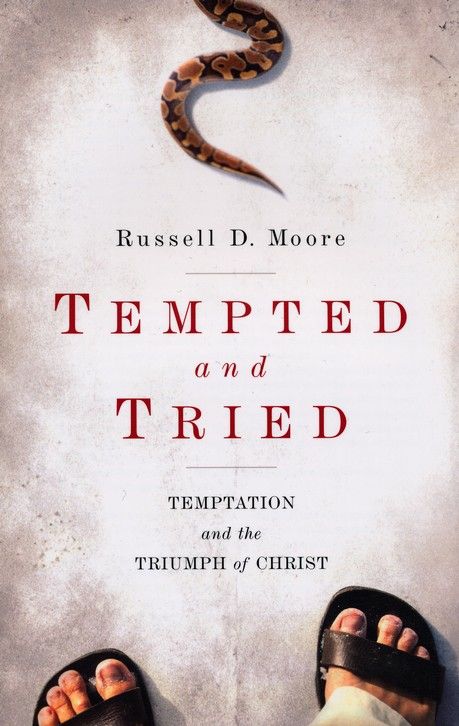
Dr. Russell D. Moore on What Satan Fears Most

What was at Stake in the Third Temptation by Satan?

by Dr. Russel D. Moore

What was at stake in the third temptation was the gospel. Think about the implications of this offer. If Jesus had accepted it, Satan would have surrendered his reign of terror. Jesus could have directed the kingdoms of the world however he wanted. No more babies would be miscarried. No more women would die in childbirth. Ended immediately would be all human slavery, all genocide, all disease, all poverty, all torture, and all ecological catastrophes. The rows and rows of crosses across the highway of the Roman Empire would suddenly be gone. There would never be a Nero or a Napoleon or a Hitler or a Stalin, or at least you would never hear the infamy of those names. There would be no world of divorce courts and abortion clinics and electric chairs and pornographic images.

Whatever is troubling you right now would be gone, centuries before you were ever conceived. This sounds like paradise. Satan was willing to give all of this up because he doesn’t fear Christianity. He certainly doesn’t fear “Christian values.” Satan fears Christ. Remember that Satan holds power only through accusation and condemnation. As long as there is no atoning sacrifice for sin, Satan is quite willing to allow conformity to the external law, even to the law of Christ ruling visibly over the nations from Jerusalem. The accuser simply wants his opportunity to indict his human would-be supplanting powers before the judgment seat, with no shed blood to redeem them back. This is what Jesus’ followers couldn’t understand as he moved down the Roman roads toward the place of the skull. It was there, and only there, as Jesus carried on himself the sins of the world, that he could say, “Now is the judgment of this world; now will the ruler of this world be cast out” (John 12:31). It is only in his triumphant resurrection from the demonic grip of death that Jesus could have “angels, authorities, and powers” subjected to his rule (1 Pet. 3:21–22). A crossless Christianity isn’t just a deficient Christianity; it’s the same old satanism of human striving.

In every generation the church faces cross-evading liberation theologies of both the Left and the Right. The liberation theology of the Left wants a Barabbas to fight off the oppressors, as though the ultimate problem is the reign of Rome and not the reign of death. The liberation theology of the Right wants a golden calf to represent religion and “traditional values” in the public square and to remind us of all the economic security we could have in Egypt. Both want a Caesar or a Pharaoh, not a Messiah. We will always be tempted to bypass the problem behind the problems—captivity to sin, bondage to the accusations of the demonic powers, the sentence of death. Where there is no gospel, something else will fill the void—therapy, consumerism, racial resentment, utopian politics, crazy conspiracy theories of the Left, crazy conspiracy theories of the Right; anything will do. Where there is something other than Christ preached, there is no freedom.

There may be shouts of affirmation or silently nodding heads. There may be left-wing politics or right-wing politics. There may be culturally liberal psychotherapy or culturally conservative psychotherapy. There may be almost anything people think they want, but there’s nothing but judgment in the air. The Devil doesn’t mind “family values” as long as what you ultimately value is the family. Satan doesn’t mind “social justice” as long as you see justice as most importantly social. Satan does not tremble at a “Christian worldview” as long as your ultimate goal is to view the world. Satan doesn’t even mind born-again Christianity as long as the new birth is preached apart from the blood of the cross and the life of the resurrection. Pastor, Satan doesn’t mind if you preach on the decrees of God with fervor and passion, reconciling all the tensions between sovereignty and freedom, as long as you don’t preach the gospel. Homeschooling mom, Satan doesn’t mind if your children can recite the catechism and translate the “Battle Hymn of the Republic” from English to Latin, as long as they don’t hear the gospel. Churches, Satan doesn’t care if your people vote for pro-life candidates, stay married, have sex with whom they’re supposed to, and tear up at all the praise choruses, as long as they don’t see the only power that cancels condemnation—the gospel of Christ crucified. Satan so fears that gospel, he was willing to surrender his entire empire just to stave it off. He still is.

The first step of any kind of Christian engagement with the outside world then is to focus on the primary arena of Christ’s reign—his church. We threaten the rulers and authorities in the heavenly places by our life together, by being the kind of alternative community that demonstrates that the blood of Christ has triumphed, making those who were at odds into one new reality in Christ …

Excerpt above: From the excellent book Tempted and Tried: Temptation and the Triumph of Christ by Russell D. Moore. Wheaton: Crossway Books. 2011.

About the Author: Russell D. Moore is the dean of the School of Theology and senior vice-president for academic administration at The Southern Baptist Theological Seminary in Louisville, Kentucky. The grandson of a Mississippi Baptist preacher, Dr. Moore also serves as a preaching pastor at Highview Baptist Church, where he ministers weekly at the congregation’s Fegenbush location.

Dr. Moore writes and speaks frequently on topics ranging from the kingdom of God to the mission of adoption to a theology of country music. He is a senior editor of Touchstone: A Journal of Mere Christianity, and also blogs regularly at Moore to the Point (www.russellmoore.com). He is the author of several books, including “The Kingdom of Christ,” “Adopted for Life,” and most recently of “Tempted and Tried.”

Dr. John Feinberg on “Why I Still Believe in Christ, in Spite of Evil and Suffering”

The Problem of Evil Is A Problem For Everyone

Probe an atheist or agnostic deeply enough about why they doubt God’s existence, and he or she will likely recount for you the problem of evil. This problem keeps many from faith in God altogether and rattles the faith of even the staunchest believers. It is an intellectual problem that has occupied much of my attention for all of my adult life. Even more, for the last thirteen years, wrestling with the reality of evil has been a personal challenge for me and my family. Things have happened that I must deal with every day for the rest of my life.

Though many religious believers and nonbelievers struggle with this problem, it is especially acute for adherents of a religion such as evangelical Christianity, which believes in an all-powerful and all-loving God. How can a God with those traits allow evil to beset his creatures? If evil is retribution for some horrendous sin, then perhaps its presence in the world is understandable. But even in cases of the most egregious sinners, some punishments seem to exceed the crime by quite a bit. For those who live a godly life, suffering from certain afflictions seems especially unjustified. In light of these things and my own experiences with suffering, you may wonder why I still believe in God at all, let alone remain a Christian. In the pages that follow, I want to explain why, but before I can, I must raise several preliminary items.

Preliminary Considerations

I have argued at length elsewhere that the usual conception of the problem of evil is too simplistic. Traditionally, this problem is portrayed as a dilemma centering on the logical consistency of three propositions: (1) God is all-loving; (2) God is all-powerful; and (3) evil exists in a world created by this God. Philosophers and theologians have assumed that this problem is the only problem of evil and that it confronts equally all theological systems that believe in an omnipotent and all-loving God. I have argued that this is not so, for there are many different problems of evil. I needn’t recount all of them here, but I should distinguish several of them.

First, there is a difference between the strictly intellectual questions that evil raises and the more personal crises of faith it precipitates. Those dealing with the intellectual questions of evil usually question whether evil’s existence is logically consistent with Christian doctrine about God. One could pose such questions in complete abstraction from actual evils being suffered. One could even ask these questions if one didn’t believe there is a God or that evil exists in our world. These are the problems that professional theologians and philosophers write about and debate. There are distinct intellectual questions raised by the existence of any evil, the amounts of evil in our world, the intensity of certain evils, and the apparent purposelessness of some evils. If theists cannot successfully answer such questions, continuing to believe in God (and holding to theologies that cannot solve these problems) seems unwarranted.

In contrast to the intellectual questions is the personal struggle that people have with suffering and affliction. Such experienced evils precipitate a crisis of faith. The afflicted person asks how a God of love can allow this to happen when he or she has faithfully followed God all of his or her life. Since God doesn’t remove the evil, it is difficult to worship him and even more difficult to serve him. Clearly, the relationship this person has with God is strained, and it isn’t likely that it can be restored merely by offering the afflicted information about how the experienced evil is consistent with an all-loving, all-powerful God, let alone simple platitudes about how God knows that this is ultimately for the best.

A further distinction relates to the intellectual problems. In recent decades, philosophers have argued that these questions can be posed in either a logical form or an evidential form. The former is the more traditional way the problem of evil has been conceived. In that case, the critic accuses a theistic system of containing views that collectively contradict one another. If any two of the three key propositions for theism mentioned above are true, the third must be false. Of course, any set of ideas that is internally self-contradictory cannot as a whole be true. Hence, if theistic systems are guilty of this error, they are false and should be abandoned. Since the charge of contradiction means there is no possible way the set of propositions can all be true, the theist needs only to show that there is a possible way for the three central propositions about God and evil to be true. Thus, it hasn’t been shown that the theist contradicts himself.

In recent years, largely because of the work of Alvin Plantinga in elaborating and defending the freewill defense, many atheists as well as theists have agreed that it is possible to hold the three propositions central to theism without contradicting oneself. However, critics have launched the attack on a second front. Even if a theological system isn’t guilty of contradicting itself over its views on God and evil, critics still argue that the mere facts of evil in our world make it unlikely that theism is true. Because instances of evil are seen as evidence against theism, this form of the problem of evil is called the evidential problem. Moreover, because the evidential problem claims that evil makes theism improbable, this form of the problem is also called the probabilistic problem of evil. In contrast to the logical problem of evil, one doesn’t explain why one’s theology is self-consistent. Instead, the theist must explain why, despite the evil in our world, theism isn’t improbable.

As shown elsewhere, the kind of answers appropriate for the logical problem are different from those needed to solve the evidential problem. Due to space limitations, I cannot respond to both forms of the problem in this essay. Since the logical problem is the one with the longest history and is most frequently discussed, I will focus on it. Moreover, the problem most frequently raised throughout the history of this discussion is the problem of moral evil. That question asks why an all-loving and omnipotent God allows moral evil, sin, in our world. Exactly how this problem confronts a given theological system depends on its account of metaphysics and ethics. Before turning to that matter, however, I should pause to clarify the basic strategy that most defenses and theodicies follow when attempting to solve the various intellectual problems of evil in their logical form. It is a fourfold strategy.

Strategy of Defenses and Theodicies

First, for the theist divine omnipotence means that God has power to do all things logically possible for a being with his attributes. Actualizing contradictory states of affairs isn’t logically possible. Moreover, given God’s nature, he can’t sin, catch a cold, fail a test, and so on. But the crucial point in defining omnipotence is to exclude the logically impossible. If a theist believes that God can actualize contradictory states of affairs, then the language used to describe our world (the theist’s theology) will, of course, contain contradictions, but that will in no way prove that his system succumbs to the problem of evil. Hence, in order for the logical problem to be a significant challenge to the theist’s views, the theist must hold that no one, including God, can do the logically contradictory.

Second, the theist appeals to a commonly held moral principle: No one can be held morally accountable for failing to do what they couldn’t do or for doing what they couldn’t fail to do. That is, moral praise or blame can be correctly assessed only to someone who acts freely. In God’s case, if he can’t do something, he can’t be held morally culpable for failing to do it.

Third, the theist offers an explanation as to why God can’t (isn’t free to) both remove moral evil and accomplish some other valuable goal in our world. In other words, when contemplating which world to create, God could have chosen either a world with no moral evil or a world with some other value. According to the theist, God couldn’t have done both conjointly without generating a contradiction. The two options were mutually exclusive. Therefore, God could have done one or the other but not both. Depending on the theology in question, this other value might be creating the best of a possible world, making creatures with libertarian free will, or building the souls of his human creatures so that they grow from mere creaturehood to children of God.

The definition of omnipotence excludes the logically contradictory. God can’t actualize both of these values (removing moral evil and the other value) at the same time. But the ethical principle says that if one can’t do something, one isn’t guilty for failing to do it. It appears, therefore, that God is justified, but not quite. Critics may grant that God couldn’t conjointly remove evil and put some other value in our world, but they may complain that God chose the lesser of the two values for our world, and hence, he still isn’t justified. At that point, the theist adds the final element in the strategy. He argues that the item God put in our world is a value of such great magnitude that it either counterbalances or outweighs the moral evil that accompanies that value. Hence, God has done nothing wrong in creating our world; it is a good world.

Answers to the Logical Problem of Moral Evil

Given this strategy, how might one solve the problem of moral evil in its logical form? As suggested above, the problem confronts each theology differently. There are as many of these problems of moral evil as there are theological systems committed to the ideas that God is all-loving and omnipotent and that evil exists. Each theology has its own account of God and evil, and since the problem in its logical form is about whether the theist’s system contradicts itself, we must first clarify the system’s views on God and evil (i.e., its metaphysic and ethics).

While many distinct theologies fall under the rubric of evangelical Christianity, for our purposes I want to show how a traditional Arminian system and a moderate Calvinistic system (my own) would solve the logical problem of moral evil. Both theologies have the same general metaphysic and account of ethics, which I have elsewhere labeled modified rationalism, though they do differ in their understanding of free will.

Modified rationalism holds that God’s existence is the highest good in and of itself. Hence, by creating a world, God in no way enhances his value, for he is already the supreme value. On the other hand, God is free either to create or not create a world. Creating is a fitting thing for God to do, but not the only fitting thing; a decision to create nothing would in no way have decreased God’s value. In addition, modified rationalists believe that there is an infinite number of contingent, finite, possible worlds. Some are inherently evil, and God had better not create any of them, but more than one of those possible worlds is a good world. God is free either to create one of the good worlds or refrain from creating altogether. Modified rationalists reject the idea of a best possible world. Finally, according to modified rationalism, some things can be known by pure reason alone, whereas others can be known only by revelation. Many forms of evangelical Christianity incorporate a system of modified rationalist metaphysics.

As to ethics, modified rationalist systems hold one of two broad kinds, consequentialism or non-consequentialism. Consequentialist theories determine which acts are right or wrong on the basis of the results of the action. Non-consequentialist theories hold that something other than consequences (e.g., God commands it; therefore, it is our duty) makes an act morally right or wrong. As this relates to the problem of evil, a consequentialist theory says that the world as created had evil in it. However, that produces no moral stain on God, for he will ultimately use evil to maximize good. Non-consequentialism demands that the world as created contained no evil. Evil was introduced instead by the actions of God’s creatures.

Given such a metaphysic and an account of ethics, we can now specify exactly how the logical problem of moral evil would arise for a modified rationalist theology. The problem can be posed as the following question: Is the evil in our world (“evil” as the modified rationalist defines it) such as to refute the claim that our world is one of the good possible worlds God could have created? If the answer is yes, then the theological system is guilty of contradicting itself. On the other hand, if ours is a good world, despite the evil in it, then God’s goodness and power are consistent with the existence of evil.

Modified rationalists defend their theology by pointing to some feature of our world that shows it is one of the good possible worlds God could have created. In line with the four-step strategy already described, the modified rationalist argues that the aspect of our world that makes it a good world also makes it logically impossible for God to remove moral evil. Since he can’t both remove evil and create a world with the positive value to which the theologian points, he isn’t guilty for failing to do so. In what follows, I will present two such defenses to show that modified rationalists can in fact solve this problem in its logical form. One will be a defense a theological Arminian could use, and the other a defense a Calvinist could use.

The Freewill Defense

Perhaps the most frequently used Christian defense is the freewill defense. In contemporary discussions, its ablest defender has been Alvin Plantinga. Though this defense has its detractors, it successfully answers the problem of moral evil that confronts an Arminian theology. Many Calvinists have also invoked the freewill defense, but its notion of free will doesn’t fit Calvinistic systems committed to a strong sense of divine sovereignty.

The freewill defense presupposes a modified rationalist metaphysic and is nonconsequentialist in its ethics. Hence, it holds that God didn’t originate evil—the introduction of sin into our world is entirely due to God’s creatures, human and angelic. These evil deeds weren’t done or caused by God but were performed by the free acts of his creatures.

Some critics complain that even though humans in particular are responsible for sin in our world, God must also bear some responsibility, for he must have foreseen that we would abuse our free will to do evil, and yet he gave it to us anyway. Freewill defenders have a ready reply. For one thing, it is possible that free creatures will use their freedom to choose good, but there are no guarantees with creatures who possess genuine freedom. Good or evil acts must always be possible, and sadly, humans have frequently chosen to do evil. However, God knew when he gave us freedom that we could also use our freedom to do good. God reasoned that it is better to have creatures who do what is right (including love and obey him) freely because they want to, rather than doing right because they are forced or determined to do what is right. Hence, free will is a value of the highest order, one that God was surely right in putting into this world. Free will makes ours a good world, but, of course, if humans are genuinely free, there are no guarantees that they will never use their freedom to sin. God, therefore, cannot both give us free will and guarantee that there will be no sin, and since he can’t do both, he isn’t guilty for failing to do both.

Atheists such as J. L. Mackie aren’t convinced that the freewill defense succeeds. Since Mackie’s objection helps us understand the freewill defense better, it is worth raising. The freewill defense rests on the idea that there are no guarantees that humans will not sin if humans have genuine freedom. Mackie thinks otherwise. It is possible that someone will do moral good on one occasion. Freewill defenders grant this, but Mackie adds that it must also be possible that someone will use his or her free will on every occasion to do moral good. This is also possible, but then Mackie adds that this is possible for all human beings. If so, however, then an omnipotent God should be able to make it the case that all of us always freely choose to do what is morally good. The freewill defense says that if humans are truly free, there are no guarantees that they will do only good. Mackie’s objection says otherwise.

Though the answers to Mackie offered by Plantinga and other freewill defenders are quite intricate, they rest on a fundamental idea that seems difficult to resist. If God makes it the case or brings it about that we do anything, then we don’t do it freely. In essence, this suggests that Mackie’s proposal doesn’t incorporate “real” freedom (or that somehow he has misunderstood what freedom means). We might be inclined to leave the matter, merely thinking that Mackie has incorrectly defined “free will,” but the issue is more subtle than this. The fact is that Mackie’s notion of freedom differs from the freewill defender’s concept.

The concept of freedom espoused by the freewill defense is known as libertarian, contra-causal, or incompatibilistic free will. This notion of freedom holds that genuine free human action is incompatible with causal determinism. Hence, in spite of the direction causal forces point in a given situation, and in spite of how strong or weak the causes are, the agent can always do other than he or she does. The only way to guarantee a particular outcome is to causally determine the agent to do one thing or another. Since determinism rules out libertarian free will, however, no one, including God, can guarantee that someone will do moral good freely. Therefore, assuming that God gave us libertarian free will, without overturning our freedom, he can’t also guarantee that we will never sin. Did God do something wrong in giving us this kind of freedom? Not at all, since we can use it to love and obey him. Further, since nothing moves us to do good but ourselves, we know that our good deeds are what we really want to do. They aren’t forced upon us.

In contrast to libertarian free will, Mackie’s brand of freedom is known as compatibilism or soft deterministic free will. According to this definition of freedom, genuine free human action is compatible with causal conditions that decisively incline the will, so long as those conditions don’t constrain the will. To act without constraint means that one acts in accord with one’s wishes or desires. Acting under constraint means that one acts contrary to one’s wishes. It should be clear now why Mackie thinks God could bring it about that humans freely do good. According to compatibilism, factors decisively incline the will in one direction or another; there can be guarantees about what we do. But as long as we act in agreement with our wishes or desires, our act is free even though causally determined.

Based on the preceding, several things should be clear. First, compatibilism and incompatibilism contradict one another. Second, any theological position that holds that God is absolutely sovereign and exercises that sovereignty to decree and accomplish whatever he wills cannot at the same time hold that our actions are done with libertarian free will. If God exercises his sovereign power to guarantee certain outcomes, then many actions must be causally determined, which rules out libertarian free will. Most typically, Calvinistic theologies hold this strong notion of divine sovereign control over the world.

This discussion of different notions of free will raises another issue, and it is crucial for the logical problem of evil. Since the logical problem is about whether the theist contradicts himself, we must ask what views freewill defenders hold. Do they hold Mackie’s compatibilistic free will? Not at all; they are incompatibilists. But then it should be clear that if one defines freedom as freewill defenders do, Mackie’s objection has broken the ground rules for handling the logical problem of evil. Mackie attributes his notion of freedom to the freewill defense and then accuses it of failing. Indeed, if freewill defenders are compatibilists, their freewill defense doesn’t work for precisely the reason Mackie stated. But since Mackie’s view of freedom isn’t the same as that of the freewill defender, Mackie hasn’t shown that freewill defenders contradict themselves. The message is clear: If one holds incompatibilism and offers the freewill defense as the answer to the logical problem of moral evil, one’s system is logically consistent. The freewill defense solves this problem for systems committed to libertarian free will.

Integrity of Humans Defense

The freewill defense answers the logical problem of moral evil for theologies that incorporate libertarian free will, but what if one’s theology is Calvinistic and/or incorporates compatibilistic free will? My Calvinistic theology presupposes modified rationalism and non-consequentialist ethics. There are three stages to this defense.

I begin by asking what sort of beings God intended to create when he made humans. Here I am referring to the basic abilities and capacities God gave human beings. At a minimum, I believe he intended to create beings with the ability to reason, with emotions, with wills that are compatibilistically free (although freedom isn’t the emphasis of this defense), with desires, with intentions, and with the capacity for bodily movement. God did not intend for individuals to be identical in respect to these capacities. God also intended to make beings who are finite both metaphysically and morally (as to the moral aspect, our finitude doesn’t necessitate doing evil but only that we don’t have God’s infinite moral perfection). Thus, human beings are not superhuman beings or even gods. Moreover, God intended for us to use our capacities to live and function in a world suited to beings like us. Hence, he created our world, which is run according to the natural laws we observe, and he evidently didn’t intend to annihilate what he had created once he created it.

None of these features were removed by the race’s fall into sin, but because of our fall into sin, these capacities don’t function as well as they would have without sin. Likewise, the fall didn’t overturn the basic laws of nature and physics by which our world runs. The fundamental features of humanity and the world are still as God created them.

How do I know this is what God intended? By looking at the sort of being he created when he created us, and by noting that the world in which we live is suited to our capacities. Some might think this same line of thinking could be used to show that God also intended to create moral evil, because it exists. However, that is not so. Moral evil is not something God created. God created substances, including the world and the people in it. God intended for us to act, for he made us capable of acting. But he neither created our actions nor does he perform them. Hence, we cannot say God intended for moral evil to exist. God intended to create and did create agents who can act; he didn’t create their acts (good or evil).

How do we know, though, by looking at what God did that he really intended to do it? Don’t people at times act without fully understanding their intentions? While human beings don’t always know what they intend to do, that is not true of an omniscient being. By seeing what God did, we can be sure what he intended to do.

If humans are the type of creatures I have described, how do they come to do moral evil (sin)? This brings us to the second stage of the defense: consideration of the ultimate source of evil actions. In accord with James 1:13–15, I hold that morally evil actions stem from human desires. Desires in and of themselves aren’t evil, nor do they perform the evil. James says, however, that desires (epithumia) are carried away (exelkomenos) and enticed (deleazomenos) to the point where sin is actually committed (conceived). Many moral philosophers would agree that the point of “conception” is when a person wills to do the act if he or she could. Once that choice is made, it remains only for that person to translate the choice into overt public action.

Morally evil acts, then, ultimately begin with our desires. Desires in and of themselves aren’t evil, but when they are aroused to lead us to disobey God’s prescribed moral norms, then we have sinned. Desires are not the only culprit, however, for will, reason, and emotion, for example, also enter into the process. But James says that individual acts of sin ultimately stem from desires that go astray.

If humans are the sort of creatures described, and if moral evil arises as suggested, what would God have to do to get rid of moral evil? This brings us to the final stage of the defense. Clearly, if removing moral evil is God’s only goal, he can accomplish it. However, my view of divine omnipotence doesn’t allow God to actualize contradictions. Hence, if by removing evil God contradicts some other goal(s) he wants to accomplish, that explains why God can’t remove evil.

It is my contention that if God did what is necessary to remove moral evil from the world, he would (1) contradict his intentions to create human beings and the world as he has, causing us to wonder if he has one or more of the attributes ascribed to him, and/or (2) do something we would not expect or want him to do, because it would produce greater evil than there already is. To see this, let’s consider how God might get rid of moral evil.

Some may think all God needs to do to remove moral evil is arrange affairs so that his compatibilistically free creatures are causally determined to have desires only for good and to choose only good without being constrained at all. For each of us, God should know what it would take, and he should be powerful enough to do it.

However, this isn’t as simple as it sounds. If people are naturally inclined to do what God wants, God may need to do very little rearranging of our world to accomplish this goal. If people are stubborn and resist his will, it may take a great deal more rearranging. God would have to do this for every one of us every time we resist his will. But changes in circumstances for one of us would affect circumstances for others. What might be necessary to get us to do good might disrupt others’ lives, constrain them to do something that serves God’s purposes in regard to us, and perhaps even turn them toward doing evil. Upholding everyone’s freedom may be more difficult than we suppose. It is likely that the free will of many will be abridged as a result of God’s attempts to convince certain people to do good.

There is another reason why it may be more difficult than we think for God to get us to do right. God didn’t create us with an inclination toward sin, but even Adam in ideal surroundings and circumstances sinned. According to biblical teaching, the race inherited from Adam a sin nature that disposes us toward evil. In light of that sin nature, it isn’t likely that a minimal rearranging of events, actions, and circumstances would achieve the goal of getting us to do good without constraining us. God would have to constrain many people in order to rearrange circumstances to convince a few of us to do the right thing without constraining us. Of course, that would contradict compatibilistic free will. We may begin to wonder how wise this God is if he must do all this just to bring it about that his human creatures do good. Why not make a different creature who would be unable to do evil? But, of course, this would contradict God’s decision to make humans, not subhumans or superhumans.

There is yet a further problem with this method of getting rid of evil. It assumes that if God rearranged the world, all of us would draw the right conclusion from our circumstances and do right. Our desires, intentions, emotions, and will would all fall into place as they should without abridging freedom at all. This is most dubious, given our finite minds and wills as well as the sin nature within us that inclines us toward evil.

Perhaps there is a simpler, more direct way for God to get rid of evil. First, he could remove moral evil by doing away with humankind. Not only is this a drastic solution none of us would think acceptable, but it would also contradict his intention to create humans who aren’t annihilated by his further actions.

Second, God could eliminate all objects of desire. Without objects of desire, humans would not be led astray to do moral evil. However, to eradicate all objects of desire, God would have to destroy the world and everything in it.

Since sin ultimately stems from desires, a third way for God to remove moral evil would be to remove human desires. Problems with this solution again are obvious. God intended to create creatures who have desires, but if he removed all human desires, such an act would contradict his intentions about the creature he wanted to create. Moreover, removing desires would also remove the ultimate basis of action so that people wouldn’t act. This would contradict God’s intention to create beings who perform the various actions necessary to remain alive.

Fourth, God could allow us to have desires but never allow them to be aroused to the point at which we would do moral evil. If God chose this option, he could accomplish it in one of two ways. He could perform a miracle to stop our desires whenever they started to run rampant, or he could give us the capacity to have desires that can be aroused only to a certain degree, a degree that would never be or lead to evil.

I shall address the former option when I discuss in general the option of God removing evil by performing a miracle. As for the second option, there are several problems. For one thing, it contradicts God’s intention to create people who aren’t stereotypes of one another. Whenever someone’s desires would be allured in regard to something forbidden, those desires could be enticed only up to a point that would not be or lead to evil. What would be true of one person would be true of all. In every case, we would have to be preprogrammed to squelch the desire before it went too far.

There is another problem with God making us this way. When a desire would start to run amuck, one would have to stop having the desire (or at least not follow it), change desires, and begin a new course of action. A person’s daily routine would be constantly interrupted (if not stopped altogether) and new courses of action implemented only to be interrupted again. Life as we know it would come to a standstill, contradicting God’s intention to create us so as to function in this world.

Perhaps the greatest objection to this option is that for us to function this way God would have to make us superhuman both morally and intellectually. We would have to be willing to squelch our desires whenever they would lead to evil, and we would also need to know when desires would lead to evil so that we could stop them from being overly enticed. To do so, we would need to be more than human. Of course, such a situation would contradict God’s intention to make non-glorified human beings, not superhuman beings.

Fifth, God could remove evil by removing intentions that lead to evil in either of the ways mentioned for handling evil-producing desires (by miracles or by making us so we would never develop intentions that lead to evil). However, this option creates the same problems raised with respect to desires.

Sixth, God could eliminate evil by removing any act of the will that would produce evil. We could will good things freely, but whenever we willed evil, the willing would be eliminated. God could do this either by miraculous intervention or by making us so we would never will evil. However, this option again faces the same objections that confront the desire and intention options.

Seventh, God could eliminate moral evil by stopping our bodily movement whenever we try to carry out evil. He could do this either by a miracle or by making us in such a way that we would stop our bodily movement when it would lead to evil. The same problems result as with the desire, intention, and will options.

If all of these options are problematic, perhaps God could remove evil through miraculous intervention. Several problems beset this method, however. First, if God did this, it would greatly change life as we know it. At any moment, God could miraculously stop desires, intentions, acts of the will, or bodily movements if he knew they would lead to evil. Since we wouldn’t always know when our actions would lead to evil, we wouldn’t always know when to expect God to interfere. We might become too afraid to do, try, or even think anything, realizing that at any moment our movements or thoughts could be eliminated. Under those circumstances, life as we know it would come to a standstill, contradicting God’s desire to create people who live and function in this world.

Second, it is one thing to speak of God miraculously intervening to prevent evil, but it is another to specify exactly what that means. Take bodily movement, for instance. God would probably have to paralyze a person as long as necessary to stop bodily movements that would carry out an evil act. Of course, such an act would alter the nature of life altogether and again contradict God’s intention to make creatures who can live and function in this world.

In addition, it is difficult to imagine what miracle God would have to perform to remove a desire, an intention, or an act of willing that would lead to evil. Would God have to knock us unconscious or take away our memory for as long and as often as needed to remove evil-producing thoughts? Such acts would bring life to a standstill and be inconsistent with God’s intention to make us so that we can live and function in this world.

A final objection to removing evil miraculously is that it would give us reason to question God’s wisdom. Would a wise God go to all the trouble to make human beings as they are and then perform miracles to counteract them when they express that humanness in ways that would produce evil? Of course, had God made us differently so that he wouldn’t have to remove evil by miracles, that would contradict his intention to make the sort of beings he has made. So either God must perform miracles and thereby cause us to question his wisdom, or he must change our nature as human beings. But that would contradict his goal of making humans rather than superhumans or subhumans.

This discussion about what God would have to do to remove moral evil shows that God cannot remove it without contradicting his intentions to make the kind of creatures and world he has made, which would cause us to doubt his wisdom.

Someone may suggest that God could avoid these problems if he made creatures without desires, intentions, will, and bodily movement. This would likely remove moral evil, but it would also remove human beings as we know them. Anyone who thinks there is any worth in being human would find this option unacceptable.

Someone else might suggest that moral evil could be avoided if God made us superhuman. But humans as we know them are a value of the first order. Scripture says humans are created in God’s image (Gen. 1:26–27). When God finished his creative work, he saw that all of it, including human beings, was very good (Gen. 1:31). Psalm 8:5–8 speaks of God crowning us with glory and honor and giving us dominion over his creation. In light of this evaluation by God, who are we to say that human beings as created by God aren’t valuable?

As a modified rationalist, all I need to show is that our world is one of those good possible worlds God could have created. It seems clear that a world with human beings in it is a good world. Neither I nor any other modified rationalist needs to show that our world is the best or even better than some other good world God might have created. We need only show that ours is one of those good worlds God could have created. I have done that by pointing to human beings and arguing that God cannot both create them and remove evil. Hence, I have solved my theology’s logical problem of moral evil.

Can God remove moral evil from our world? I believe he can, if he creates creatures different from human beings. He also can if he creates humans and then removes evil in any of the ways described above. But we have seen the problems that arise if God follows any of those options.

Has God done something wrong in creating human beings? Not at all, when we consider the great value human beings have and the great worth God places on us. We can say that moral evil has come as a concomitant of a world populated with non-glorified human beings. Still, it is one of those good possible worlds God could have created. God is a good God. Our world with human beings demonstrates his goodness.

The Religious Problem of Evil

In the preceding pages, we have seen that it is possible to solve the intellectual problem of moral evil in its logical form and to do so for more than one theology. Because this and other intellectual problems of evil are capable of solution, I see no reason to reject Christianity on the grounds that it succumbs to these intellectual problems. However, that isn’t the end of the story. What about the experience of evil? Is Christianity sufficient to see someone through even the most difficult of trials? Is Christianity religiously bankrupt at a moment of personal crisis?

These questions have confronted me in vivid and unpleasant ways over the last ten to fifteen years. I have been interested in the problem of evil for much of my life, and in various degree programs I wrote theses and dissertations addressing the intellectual problems evil raises for a theist. For many years, I thought the intellectual answers I had constructed would be sufficient for someone in the midst of trials and afflictions. All of that changed for me in 1987 when my wife was diagnosed with Huntington’s disease.

Huntington’s disease is a genetically transmitted disease that attacks both mind and body and involves the premature deterioration of the caudate nucleus of the brain. On the physical side, the symptoms involve a growing inability to control voluntary movements. Among other things, this results in a loss of balance, difficulty in swallowing, slurred speech, and involuntary twitches in various parts of the body. Psychological symptoms can include memory loss, deterioration of attention span and mental function, depression, hallucination, and finally paranoid schizophrenia. The disease develops slowly, but over a period of decades it takes its toll, and it is fatal. In my wife’s case, symptoms first appeared when she was twenty-eight. As bad as this is, however, just as bad is the fact that Huntington’s is controlled by a dominant gene, so each of our children has a 50–50 chance of getting the disease. At the time we received this diagnosis, we already had three children. Since that time, progress has been made in research about this disease, but to date there is still no cure.

When news of this disease came, a host of emotions came with it: bewilderment, a sense of hopelessness and helplessness, a feeling of abandonment, and anger. As a Christian, I knew we aren’t promised exemption from problems and trials, but I never expected something like this. With one diagnosis, a dark cloud had formed above my family that would not dissipate for the rest of our lives. At that point, the problem of evil moved from an intellectual problem that I could calmly reflect on in the solitude of my study to a real-life trauma that has to be confronted every day of my life.

One of the reasons for my confusion over what was happening was the previous thinking and writing I had done about the problem of evil. If anyone should have been ready for this crisis, it was I. But during this time of emotional and spiritual turmoil, none of the intellectual answers proved to be even the least comforting. As I thought about that, I came to an important realization. The religious problem of evil, the crisis of faith precipitated by suffering, at rock bottom is not primarily an intellectual question but an emotional problem. There are, of course, intellectual questions that the sufferer asks, and at an appropriate point in the grieving process when the afflicted is ready to hear the answers, it is appropriate to offer them. However, that point rarely comes during the shock of the terrible news. At that point, the sufferer needs comfort and care, not a dissertation on the logical consistency of God’s existence and evil.

While there are many things one can say and do that won’t help the afflicted cope with trials, other things can and do help. In what follows, I will present what helped in my case, not as a how-to for comforting the afflicted but rather as a personal testimony and explanation of why I am still a Christian in spite of the evil that has befallen my family.

One of the first things that helped came in a conversation with my father. I was bemoaning the fact that this had happened and that I had no idea how I would be able to cope as my wife’s condition became progressively worse. My dad responded, “John, God never promises us tomorrow’s grace for today. He only promises today’s grace, and that is all you need.” Though at the time I wasn’t handling well the reality of my wife’s situation, I hadn’t completely collapsed. More importantly, my wife was still quite capable of functioning. Part of the grace for those early days was finding out the diagnosis at a time when the full burden of my wife’s care didn’t fall on me.

With this reminder from my dad, I began to readjust my focus from imagining what the disease would be like in the future to dealing with it in the present. I began to ask God each morning for the grace I would need to make it through that day. As I saw those prayers answered each day, I became more confident that when things got worse, I would still need only one day’s grace at a time, and it would be there.

At other times during my struggles with this disease, I am reminded that despite what is happening, God has been gracious to us in other ways. First Peter 5:7 tells us to cast our problems on God, because he cares for us. At times it doesn’t seem this is true, but it is. In our case, I realize that despite my wife’s disease, there are other problems that God has kept from us. Some people lose their spouse to cancer or a heart attack or in an automobile accident, but that has not happened to us. God doesn’t owe us such protection, but he has graciously given it to us. That is a sign that he really does care.

There is another realization that is difficult to swallow, but it is true. When tragedy strikes, we often blame God, but God didn’t give my wife this disease. In Romans 5:12, Paul explains that through Adam sin entered the human race, and death resulted from sin. In other words, people die as a consequence of sin. I am not suggesting that this has happened to my wife as recompense for being a horrendous sinner. Rather, we live in a fallen world, and death is a consequence of sin. The particular death that befalls a person doesn’t come from a specific sin he or she commits, but rather from the fact that the human race as a whole has fallen into sin. But if people die because of sin, they must die of something. One of the causes is disease, and some of those diseases are genetically controlled.

So while it is human nature to blame God for what happens, Scripture is clear that these things happen because we live in a fallen, sinful world. If we are going to be angry, our anger should be directed toward sin, not God. Our problem ultimately stems from not seeing the gravity of sin. But when we stand at the graveside of a relative or friend, or when we receive a diagnosis, we begin to see just how serious a matter sin is. The realization that something bad has happened because we live in a fallen world is not likely to comfort the afflicted, but it can help to assuage our anger at God, and it should help us redirect that anger to the proper target.

Some may grant the point about the cause of affliction but still object that an all-loving, all-powerful, all-gracious God should prevent evil from happening. Such a suggestion reflects a misunderstanding of what God’s attributes obligate him to do. Many think that because God is all-loving, he is obligated to do every loving thing possible. His grace obligates him to do every gracious thing possible, and so on. However, this is an incorrect assessment of God’s obligations. In my judgment, it would be very loving for God to make us all multimillionaires, but I can’t think of anything that obligates him to do so. God’s love doesn’t obligate him to do every loving thing possible. Rather, everything he chooses to do (though he isn’t obliged to do everything he can do) must exhibit his attribute of love. As to God’s grace, at most it means that the things he chooses to do will exhibit his grace, but even here we must be careful. Grace as undeserved favor is by definition never owed, so we can hardly demand that God act graciously toward us. The key point is that before we mount a case against God for failing to do what his character requires, we must be sure that we understand what he is obligated to do.

In spite of this point about God’s attributes, I still felt something was amiss. Granted, my wife’s disease resulted from the sinfulness of the human race, and granted, God didn’t owe us exemption from this problem because of his attributes, but still, not everyone has to deal with such a burden, so why should we? It seems God has been unfair in letting this burden fall on us when others escape such problems.

I believe this complaint is at the heart of why many believers and nonbelievers alike turn from God in the midst of affliction and feel justified in doing so. God hasn’t treated them fairly, so he doesn’t deserve their worship and devotion. As I reflected on this matter, several things came to mind. First, as I reflected on God’s fairness or justice, I began to think of my philosophical training about matters of justice. Philosophers often distinguish between distributive and egalitarian justice. Distributive justice gives to each person exactly what they are owed, reward or punishment. Egalitarian justice requires that each person receive exactly the same thing.

With this distinction in hand, I realized the nature of my complaint. I was angry because God gave me something different from what he gave others. Egalitarian justice requires that each of us get the same thing. Others escape such problems, so we should have too. As logical as this sounds, no matter how hard I tried, I couldn’t think of any biblical or nonbiblical principle that requires God to deal with us according to egalitarian justice.

In contrast, Scripture teaches that God functions in his relations with us in accord with distributive justice. Distributive justice is about what we have earned—what we deserve and what is owed to us. If we want God to treat us justly, that means we want what we deserve. But what do we deserve? Given God’s moral governance of our world and the fact that we have broken his laws, we deserve punishment. None of us deserves exemption from problems and punishment for sin, for all of us have sinned against God. We may chafe under this system of moral government, but God as Creator has a right to set things up this way. And given this setup, he has done nothing unjust by not exempting my family from this affliction. If we are speaking in terms of justice, God owes none of us egalitarian justice, and in terms of distributive justice, he owes none of us blessing.

Still, I harbored residual anger toward God. Though I came to see that my desire for egalitarian justice was wrong and that according to distributive justice I didn’t merit exemption from affliction, it seemed unfair that others who don’t deserve exemption from problems have not been asked to bear this burden. Eventually I came to see that my complaint was that God has dealt with others in grace, and I felt that I should get the same grace.

As I pondered such thoughts, however, I came to see how wrong they are. I was demanding grace as though God owed it to me because he gave it to others. But grace is unmerited, undeserved, unearned favor. That is, you get something good that you don’t deserve, haven’t merited, and aren’t owed. Grace is not given to reward good deeds or upright character; it’s not a reward at all. It is given out of the generosity of God’s heart. As unmerited blessing, grace is never owed—that’s why it’s grace and not justice. So God has done nothing wrong if he gives you grace that he doesn’t give me.

One of Jesus’ parables beautifully illustrates this principle. In the parable of the workers in the vineyard (Matt. 20:1–16), a landowner hired workers at various times in the day. Those hired early in the day were promised a denarius for the day’s work. Others were promised only that the owner would do right by them, and still other workers were simply told to go to work. At quitting time, those hired last were paid first. The landowner paid them each a denarius, even though they had been hired a mere hour or two before the end of the day. In fact, he paid every worker a denarius. When the landowner paid those hired first the denarius he had promised, they were angry. They had worked the entire day, but those hired near the end of the day had received the same wage. Their complaint amounted to the following: Somebody got a better deal than I did, and that’s not fair!

The landowner replied that he had not treated them unfairly. They had made a deal, and he had given them exactly what he had promised. Justice says you give people what they earn and what you owe. But if the landowner wanted to be generous with the others, what’s wrong with that? If he wanted to extend them grace, why is that wrong? Whose money (whose grace) is it anyway? The message of the parable is clear: Our standing in the kingdom of heaven depends on God’s grace, and God has a right to give grace and withhold it as he chooses. Never begrudge someone the grace that God gives them, especially when he doesn’t give you the same grace.

Coming to this realization about whether God owed me exemption from this trial was a major breakthrough in my experience. It made me realize that if I were to mount a complaint against God over what he had or hadn’t done, I had no ground for such a case. I had been angry at God without adequate reason. While this realization did not remove the affliction, it made me feel more comfortable with God. After all, he had not caused the affliction, and he didn’t owe me release from it. But he hadn’t abandoned me either. He gives me grace to sustain me through each day. I don’t deserve that either, but it is there!

A final major factor in helping me adjust to what had happened and removing my anger were the many tangible signs of God’s love and care for us. Many people displayed generosity and kindness, showing us that there are people who care and who will help when things grow worse. But why do these people show us this love and concern? I know it is ultimately because God moves them to do so, and hence, we have periodic reminders that God cares for us and loves us.

There is much more to our story and many other things that also helped me cope with this affliction. I would not delude myself into thinking that everyone’s situation is like mine or that what I have said will solve the personal crises of faith others confront. However, much of what I have said touches on very common, human themes, so others may find it helpful.

Though the intellectual problems of evil and the experience of affliction can be major detriments to belief in God, they needn’t be. Of course, one can choose to remain angry at God, but I hope this chapter will help you to see that in the face of the intellectual and personal problems of evil, one need not sacrifice intellect to continue believing in God, nor does one need to hold on to God in blind faith without any explanation as to why afflictions happen and without any comfort or relief of the pain. Undoubtedly, it is easier to write about these things than to live them, but through God’s sustaining grace, it is possible to cope with evils and to do so in ways that are pleasing to God and a positive testimony to others.

About the Author: Dr. John S. Feinberg is Professor of Biblical and Systematic Theology and Chairman of that department at Trinity Evangelical Divinity School. He is the author of several books, including Crossway’s No One Like Him: The Doctrine of God; Ethics for a Brave New World (with Paul D. Feinberg) and The Many Faces of Evil (For a  more thorough treatment of what is covered in this article see this EXCELLENT BOOK – pictured above), and is general editor of Crossway’s Foundations of Evangelical Theology series. The article above was excepted from the book edited by Norman L. Geisler and P.K. Hoffman entitled Why I am a Christian: Leading thinkers explain why they believe (237-254). Grand Rapids: Baker Books, 2006.

Dr. Tim Keller on the Consistency of the Biblical Message in the Old and New Testaments

“Old Testament Law and The Charge of Inconsistency”

I find it frustrating when I read or hear columnists, pundits, or journalists dismiss Christians as inconsistent because “they pick and choose which of the rules in the Bible to obey.” What I hear most often is “Christians ignore lots of Old Testament texts—about not eating raw meat or pork or shellfish, not executing people for breaking the Sabbath, not wearing garments woven with two kinds of material and so on. Then they condemn homosexuality. Aren’t you just picking and choosing what they want to believe from the Bible?”

It is not that I expect everyone to have the capability of understanding that the whole Bible is about Jesus and God’s plan to redeem his people, but I vainly hope that one day someone will access their common sense (or at least talk to an informed theological advisor) before leveling the charge of inconsistency.

First of all, let’s be clear that it’s not only the Old Testament that has proscriptions about homosexuality. The New Testament has plenty to say about it, as well. Even Jesus says, in his discussion of divorce in Matthew 19:3-12 that the original design of God was for one man and one woman to be united as one flesh, and failing that, (v. 12) persons should abstain from marriage and from sex.

However, let’s get back to considering the larger issue of inconsistency regarding things mentioned in the OT that are no longer practiced by the New Testament people of God. Most Christians don’t know what to say when confronted about this. Here’s a short course on the relationship of the Old Testament to the New Testament:

The Old Testament devotes a good amount of space to describing the various sacrifices that were to be offered in the tabernacle (and later temple) to atone for sin so that worshippers could approach a holy God. As part of that sacrificial system there was also a complex set of rules for ceremonial purity and cleanness. You could only approach God in worship if you ate certain foods and not others, wore certain forms of dress, refrained from touching a variety of objects, and so on. This vividly conveyed, over and over, that human beings are spiritually unclean and can’t go into God’s presence without purification.

But even in the Old Testament, many writers hinted that the sacrifices and the temple worship regulations pointed forward to something beyond them. (cf. 1 Samuel 15:21-22; Psalm 50:12-15; 51:17; Hosea 6:6). When Christ appeared he declared all foods ‘clean’ (Mark 7:19) and he ignored the Old Testament clean laws in other ways, touching lepers and dead bodies.

But the reason is made clear. When he died on the cross the veil in the temple was ripped through, showing that the need for the entire sacrificial system with all its clean laws had been done away with. Jesus is the ultimate sacrifice for sin, and now Jesus makes us “clean.”

The entire book of Hebrews explains that the Old Testament ceremonial laws were not so much abolished as fulfilled by Christ. Whenever we pray ‘in Jesus name’, we ‘have confidence to enter the Most Holy Place by the blood of Jesus’ (Hebrews 10:19). It would, therefore, be deeply inconsistent with the teaching of the Bible as a whole if we were to continue to follow the ceremonial laws.

The New Testament gives us further guidance about how to read the Old Testament. Paul makes it clear in places like Romans 13:8ff that the apostles understood the Old Testament moral law to still be binding on us. In short, the coming of Christ changed how we worship but not how we live. The moral law is an outline of God’s own character—his integrity, love, and faithfulness. And so all the Old Testament says about loving our neighbor, caring for the poor, generosity with our possessions, social relationships, and commitment to our family is still in force. The New Testament continues to forbid killing or committing adultery, and all the sex ethic of the Old Testament is re-stated throughout the New Testament (Matthew 5:27-30; 1 Corinthians 6:9-20; 1 Timothy 1:8-11.) If the New Testament has reaffirmed a commandment, then it is still in force for us today.

Further, the New Testament explains another change between the Testaments. Sins continue to be sins—but the penalties change. In the Old Testament things like adultery or incest were punishable with civil sanctions like execution. This is because at that time God’s people existed in the form of a nation-state and so all sins had civil penalties.

But in the New Testament the people of God are an assembly of churches all over the world, living under many different governments. The church is not a civil government, and so sins are dealt with by exhortation and, at worst, exclusion from membership. This is how a case of incest in the Corinthian church is dealt with by Paul (1 Corinthians 5:1ff. and 2 Corinthians 2:7-11.) Why this change? Under Christ, the gospel is not confined to a single nation—it has been released to go into all cultures and peoples.

Once you grant the main premise of the Bible—about the surpassing significance of Christ and his salvation—then all the various parts of the Bible make sense. Because of Christ, the ceremonial law is repealed. Because of Christ the church is no longer a nation-state imposing civil penalties. It all falls into place. However, if you reject the idea of Christ as Son of God and Savior, then, of course, the Bible is at best a mish-mash containing some inspiration and wisdom, but most of it would have to be rejected as foolish or erroneous.

So where does this leave us? There are only two possibilities. If Christ is God, then this way of reading the Bible makes sense and is perfectly consistent with its premise. The other possibility is that you reject Christianity’s basic thesis—you don’t believe Jesus was the resurrected Son of God—and then the Bible is no sure guide for you about much of anything. But the one thing you can’t really say in fairness is that Christians are being inconsistent with their beliefs to accept the moral statements in the Old Testament while not practicing other ones.

One way to respond to the charge of inconsistency may be to ask a counter-question—“Are you asking me to deny the very heart of my Christian beliefs?” If you are asked, “Why do you say that?” you could respond, “If I believe Jesus is the resurrected Son of God, I can’t follow all the ‘clean laws’ of diet and practice, and I can’t offer animal sacrifices. All that would be to deny the power of Christ’s death on the cross. And so those who really believe in Christ must follow some Old Testament texts and not others.”

About the Author: Dr. Tim Keller was born and raised in Pennsylvania, and educated at Bucknell University, Gordon-Conwell Theological Seminary, and Westminster Theological Seminary. He was first a pastor in Hopewell, Virginia. In 1989 he started Redeemer Presbyterian Church in Manhattan with his wife, Kathy, and their three sons. Today, Redeemer has more than five thousand regular attendees at five services, a host of daughter churches, and is planting churches in large cities throughout the world. He is the author of The Prodigal God, Counterfeit Gods, and the New York Times bestseller The Reason for God. The article above was adapted from the June, 2012 Newsletter of Redeemer Presbyterian Church in Manhatten, N.Y.: http://redeemer.com/new

Jesus in 1 Corinthians – Chart by Dr. Michael Williams

Reading The Bible Through The Jesus Lens in the Book of 1 Corinthians

From Biblical Book to Biblical Hook

Chart adapted from *Dr. Michael Williams Book: How To Read The Bible Through The Jesus Lens

Title for 1 Corinthians

1 Corinthians: Theme

1 Corinthians 3:3

“Maturing”

God gives guidance to the spiritually gifted but immature Corinthian church.

“For you are still of the flesh. For while there is jealousy and strife among you, are you not of the flesh and behaving only in a human way?”

Christ-Focus in 1 Corinthians

Implications from 1 Corinthians

Hooks from 1 Corinthians

 Jesus shows us that Christian maturity is other-focused, not self-focused.

 And he gave the apostles, the prophets, the evangelists, the shepherds and teachers,

 to equip the saints for the work of ministry, for building up the body of Christ,

 until we all attain to the unity of the faith and of the knowledge of the Son of God, to mature manhood, to the measure of the stature of the fullness of Christ,

 so that we may no longer be children, tossed to and fro by the waves and carried about by every wind of doctrine, by human cunning, by craftiness in deceitful schemes.

 Rather, speaking the truth in love, we are to grow up in every way into him who is the head, into Christ, 

 from whom the whole body, joined and held together by every joint with which it is equipped, when each part is working properly, makes the body grow so that it builds itself up in love.

 – Ephesians 4:11-16

 Let us grow in spiritual maturity by using our divinely bestowed gifts to build up the body of Christ.

Pursue love, and earnestly desire the spiritual gifts, especially that you may prophesy. For one who speaks in a tongue speaks not to men but to God; for no one understands him, but he utters mysteries in the Spirit. On the other hand, the one who prophesies speaks to people for their upbuilding and encouragement and consolation. The one who speaks in a tongue builds up himself, but the one who prophesies builds up the church.

 Now I want you all to speak in tongues, but even more to prophesy. The one who prophesies is greater than the one who speaks in tongues, unless someone interprets, so that the church may be built up.

 Now, brothers, if I come to you speaking in tongues, how will I benefit you unless I bring you some revelation or knowledge or prophecy or teaching? If even lifeless instruments, such as the flute or the harp, do not give distinct notes, how will anyone know what is played? And if the bugle gives an indistinct sound, who will get ready for battle?

So with yourselves, if with your tongue you utter speech that is not intelligible, how will anyone know what is said? For you will be speaking into the air. There are doubtless many different languages in the world, and none is without meaning, but if I do not know the meaning of the language, I will be a foreigner to the speaker and the speaker a foreigner to me. So with yourselves, since you are eager for manifestations of the Spirit, strive to excel in building up the church.

 – 1 Corinthians 14:1-12


 Are you a mature Christian?

 Do you focus more on satisfying yourself or on the needs of others?

 Which is more important, the presence of spiritual gifts or the use toward which those gifts are put?

 How do you measure maturity?

 How does God measure it?

 Would there even be new life in Christ if Jesus focused His life on the same things you do?

About the Author: Michael James Williams in his own words: “After my conversion in the U. S. Navy (in a submarine beneath the North Atlantic!), I entered Columbia Bible College, where I received a B.A. (1985). This was followed by an M.A. in Religion at Westminster Theological Seminary (1987) and a Ph.D. in Biblical Studies at the University of Pennsylvania (1999). In 2000, I was ordained in the Christian Reformed Church, and since 1995 have been teaching at Calvin Theological Seminary. I have also taught courses at Westminster Theological Seminary, the University of Pennsylvania, and brief stints in Limuru, Kenya; Donetsk, Ukraine; and Warsaw, Poland. In addition to articles on Old Testament topics in various reference works and academic journals, and contributing to and editing Mishneh Todah: Studies in Deuteronomy and Its Cultural Environment in Honor of Jeffrey H. Tigay (2009); I have authored Deception in Genesis: A Comprehensive Analysis of a Unique Biblical Phenomenon (2001); The Prophet and His Message: Reading Old Testament Prophecy Today (2003); and, most recently, How to Read the Bible through the Jesus Lens: A Guide to Christ-Focused Reading of Scripture. Grand Rapids, Zondervan (2012). My amazing wife, Dawn, and I enjoy hiking and all things outdoors.”

“A Kingdom Which Cannot Be Shaken” A Sermon on Hebrews 12:27-29 by Dr. D.M. Lloyd-Jones

[This sermon was preached by Dr. Martyn Lloyd-Jones on 24th May 1978 in Rhymney, Wales, at the induction services of David Norman Jones who now is a minister in Tasmania – It’s hard to believe this sermon was given on this day in May 34 years ago! When you read this sermon you will see that aside from some of the archaic language – Lloyd-Jones spoke ahead of his time, and that his message is just as appropriate and relevant today – well into the 21st century – the Bible contains a timeless message that will be relevant for eternity]

In order that we may remind one another of the ultimate object and purpose of these two gatherings today and the coming together of these two churches under the ministry of our dear friend and brother, I would call your attention to the last three verses in the portion of Scripture that has been read to us.

“And this word, Yet once more, signifies the removing of those things that are shaken, as of things that are made that those things which cannot be shaken may remain. Wherefore we receiving a kingdom which cannot be moved, let us have grace, whereby we may serve God acceptably with reverence and godly fear: For our God is a consuming fire” [Hebrews 12:27-29].

A time of grave and terrible crisis

I need not tell you that we are meeting together tonight in a time of great confusion, a time of grave and terrible crisis. Everybody is aware of this; you cannot read a paper, you cannot listen to a news bulletin without hearing of some added crisis, some new problem, some fresh tragedy. The world is in an alarming state and condition. We are truly in an age of exceptional crisis. But I want to put to you that we are not only in a time and age of crisis, we are living in a time when all of us are being tested, all of us have been sifted and examined and proved. What I mean by that is this, that the state of the world tonight is testing the outlook, the point of view, of every one of us who is in this congregation. indeed of everybody that is in the world. Everybody has got some view of life, even the most thoughtless people, people who scarcely ever think at all, they have got a kind of philosophy and their philosophy is not to think. What is the use of thinking?’ they say. So they have got their point of view, their point of view is ‘Let us eat drink and be merry, for tomorrow we die’. So I am saying that everybody’s point of view, everybody’s attitude towards life, is on trial at the moment.

Questions requiring an answer

Let me show you what I mean. Take this first question: Are you surprised that the world is as it is at this moment?

Are you surprised that we have had two world wars already in this century? Are you surprised at the piling of these horrible armaments? Are you surprised at the confusion, the collapse, of so many institutions at this present time? Does it surprise you? Does it surprise you that in this sophisticated age of ours, in 1978, that the world is in such terrible trouble? I ask my question because there are many people who are very surprised at this; they are amazed at it-and for this reason, that their view of life was that the world is getting better and better. And therefore finding things getting worse and worse, they are confounded, they are surprised, they are amazed and they do not understand it.

So I put that as my first question: Are you surprised at the fact that the world is as it is at this very moment? Or, let me phrase that in a slightly different way: Are you disappointed that the world is as it is? Not only surprised but disappointed, because again there are many people in the world who are grievously disappointed at the present state of affairs. And they are disappointed for this reason, that having adopted the kind of idealistic philosophy, or view of life, which was very popular in the last century – you know that idea that believed in evolution, or progress and development, the view which said that as the result of popular education which came in 1870 and all the marvellous scientific advances and discoveries, more travel, ability to mix with other nations – they were very confident that the twentieth century was going to be the golden century, the crowning century of all the centuries!

Did not Tennyson write about the coming of the parliament of men and the federation of the world, of the days when men would beat their swords into ploughshares and war would be no more? War, we were told – and they taught this, not only the poets but the philosophers and the politicians – war, they said, was due to the fact that people did not know one another. But the moment when they got to know one another as the result of the invention of the steam engine and travel and still more by the coming of the aeroplane, the moment when people got to know one another, they would never fight again, they would realise that we were all brothers. They had forgotten, you see, that Cain and Abel were brothers. They had forgotten all about that, but they were quite sure that as the result of travel and the increase of knowledge and so on and so forth, that the world was going to be paradise-and with William Blake they talked about building the new Jerusalem in England’s green and pleasant land. It was all going to be done by the advance of knowledge and culture, by passing Acts of Parliament and by all the ameliorations that were taking place and were going to take place in social conditions.

Christians who were shaken

Well these men were confident about this. So you see when the First World War came, they were shaken, they were surprised. It was not according to the theory-but they still held on to it. Then when the Second World War came, well they were not only surprised and disappointed, they were aghast. They could not understand it and they were utterly confounded. I can illustrate what I am saying by one man. No man believed so firmly in this idea of development and of progress than the late Mr. H. G. Wells, the popular novelist. He was a great scientific humanist and he really believed that as the result of the advance of knowledge and of culture and of science in particular, that the world really was going to be paradise. So when the Second World War came, he wrote his last book and he gave it a very significant title, Mind At the End of Its Tether. He could not understand it. How was it possible with all our advances and developments that there should be a Second World War in this one century, before the half of the century had passed? So I ask my question to you my friend tonight, Are you disappointed that the world is as it is? Are you astonished and are you amazed at it? Or does it fit in with your philosophy and your outlook and your point of view?

Why Is The World As It is Today?

But let me ask a third question, Do you understand why the world is as it is tonight? Can you explain it? The Christian, the true Christian, is not surprised that the world is as it is and he can understand why it is as it is. Can you? This is a very vital question. You see the trouble is that people refuse to think. They just wring their hands, they say, ‘Is it not terrible!’ But they must explain it, why is it that things are as they are in spite of all our amazing advances and developments in so many realms and spheres. Can you understand it? Can you explain it? If not, there is something wrong with your point of view.

And let me put my last question, Have you any hope at all with regard to the future? Do you see any light anywhere? Is there any message of deliverance? Now I put it to you that if we claim to be thinkers at all, we are bound to face these crucial questions. Here we are in this world with these things happening. Does it tally with what we have always believed, that on which we have pinned our faith?

Now those are the questions I want to consider with you and I want to do so in the light of these verses that I have just read to you. This man was writing to a number of people who were known as Hebrew Christians; that means that they had been brought up as Jews but having heard the Christian Gospel they had left their old religion and the Temple and the ceremonial and the priesthood and they had espoused this new teaching, this new doctrine; they had become Christians. And for a while they were very happy. But then difficulties arose; they were persecuted; they were molested; they were tried grievously in many ways; and the result was that the faith of some of them was being shaken and they were beginning to look back with longing eyes to the old religion of their fathers. And this man writes to them because of that. He says, you are not going back to that! That was only the type, that was only the preliminary, that has been shaken, that has been removed, that was only temporary. Do not go back to the temporary which can be shaken-hold on to the final, the ultimate, that which can never be moved and never be shaken.

A world which will be shaken

But he goes beyond that and he reminds them, and through them he reminds us, that a day is coming when everything in this world that can be shaken is going to be shaken and that we all of us belong either to some kind of kingdom that can be shaken and removed, or we are citizens of a kingdom which cannot be shaken and which can never be moved. And in putting it like that, of course, this man is really giving us a summary of the message of the whole of the Bible from beginning to end. The Bible is a book which calls upon us all to make a decision. It tells us that there are two ways before us in this life and in this world. We can either build upon foundations which can be shaken and removed or else we can build on a foundation which can never be moved. Or its alternative is we can belong to kingdoms that can be shaken and moved or else we can be citizens of this kingdom which can never be moved. Now this is the great message of the Bible and it puts it like this, that all the trouble in the long story of the human race is due to the fact that mankind in its blindness and its folly is misled by the powers of evil, is always making the wrong choice, is holding on to things that can be shaken and rejecting the one thing that can never be shaken and never be moved. And it goes on putting this before us. It says it either has to be God or mammon. You either enter by a strait gate onto a narrow way or you go with the crowd through the wide gate and the broad way that leadeth to destruction. And right the way through it puts the two possibilities before us, shows us the folly of the wrong choice and pleads with us to accept the true, the only way that leads to peace here in this world and a hope of glory for all eternity.

Well now let me put this to you. This is the business of my friend who is going to minister here in Rhymney as well as in Crickhowell. This is the business of all of us worthy of the name of Christian ministers at all – we are here to address people in this age of collapse, this age of confusion, this age in which so many things have been shaken before our eyes, this climactic period through which we are passing. And I want to put it in terms of this biblical message. Man’s ultimate fallacy, as I have said, is that he always chooses to belong to kingdoms that can be shaken and removed. Man is very fond of building kingdoms. The history of mankind, if you like, is a history of men building kingdoms for themselves-refusing the kingdom of God and setting up their own kingdoms, which they think are going to be durable and everlasting and they have done this in many different ways.

The kingdoms of men – in all their variety – come and go

The old way, and it is still true, you find it in the Bible, you find it in secular history, the commonest of all the ways has been that man has tried is to set up military kingdoms, great military kingdoms. You have a number of them described here in the Bible. Think of a great kingdom like the kingdom of Babylon. That was an amazing kingdom, great wealth, great power, great armies and they conquered practically every country and at the head of this great kingdom of Babylon there was a man called Nebuchadnezzar. And he was such a conqueror, such a military genius, that he began to think that he was almost a god. And the people agreed with him. And he set up a great image to himself and commanded his people to bow down and worship. He really believed he was a semi-god if not a god. He had built this great kingdom, you see. But according to the Bible – and this is sheer history – it was not a kingdom that was going to last for ever, as he thought. It began to shake and we are given an account of this mighty dictator in a field one day and his nails had grown into talons and his hair was as long as the hairs of an animal and he was eating grass in a field-humbled by God. This man who had inflated himself to heaven-humbled, his kingdom shaken.

And quite soon it was conquered by another mighty kingdom that came along, called the Medo-Persian kingdom. Now this is biblical and secular history. The Medo-Persian kingdom came along and this again was a mighty kingdom, conquered Babylon, conquered others and it seemed to be invincible and everlasting and people were beginning to worship it.

It did not last very long. Another kingdom came along, the kingdom of Greece and this was an amazing kingdom. The head of this kingdom was a man whom we still know as Alexander the Great and he was of course one of the greatest military geniuses that the world has ever known. He conquered everywhere, conquered Egypt, built Alexandria, named after him; he conquered all the then known and civilised world and he set up this kingdom that really did seem to be indestructible and invincible, great in every respect. But do you know what happened? While he was yet in the thirties, he died and his kingdom was destroyed and divided up. I will never forget reading a book during the last war by a Swiss theologian, on the book of the prophet Daniel. All I remember of the book was this phrase, I have never forgotten it; it was so true, so striking. He said the man whom the world knows as Alexander the Great is known in the Bible as a he-goat. That is the biblical view of him. ‘Great’, says the world: ‘he-goat’ says God, says the Bible. And you and I now read books on the Glory that was Greece and we go and visit the ruins, the kingdom has vanished and has disappeared.

Why? Well another kingdom came up, the kingdom of Rome, the Roman Empire. And again this was one of the most astonishing phenomena that the world has ever seen. You remember how Rome again conquered all the then civilised world; but it was not only great in a military sense but in a legal sense and in every other sense. They came and conquered this country, as they conquered most other countries. Here at last there did seem to be a kingdom that could never be shaken and never removed. And the capital of course was the city of Rome. What did they call Rome? Is it not interesting, they called Rome ‘the Eternal City’? The Eternal City – not for a time – Eternal City. But you remember the story; in a few centuries barbarians, Goths and Vandals from northern Europe came down in hordes; they sacked the Eternal City and they conquered and brought to an end the great Roman Empire.

And so you see it has continued throughout ancient history. Kingdom after kingdom has come up and men have claimed for it that it is everlasting and eternal – suddenly it vanishes and disappears. But, you say, that is ancient history. All right, let us come up to modern times. I am not going to keep you in describing to you great kingdoms in Egypt, the mighty empire that was once governed by Spain and many other mighty kingdoms, mighty empires. Come nearer to our own time. Most of you can still remember a man whose name was Adolf Hitler. He came into power in 1933; what was he going to do? Well, he told us so often – heard him saying it many a time on the wireless – he said he was going to set up the Third Reich which was going to last a thousand years. The Third Reich – and Hitler dominated the world like some Colossus, striding the world like a Colossus. And when we heard he was going to speak on the wireless, we began to tremble – the word of a Hitler, this mighty man with a mighty empire to last a thousand years. How long did it last? Twelve years and Hitler and his empire vanished and disappeared.

But let us be honest, my friends, I suppose most people would say that the greatest empire the world has ever known was the British Empire and this was the empire of which our fathers boasted-that it was the empire on which the sun never set, owning a quarter of the globe. What an empire, the British Empire, on which the sun never sets! Durable, lasting, eternal! Where is it tonight, my friends? There is no such thing as the British Empire. We try to talk feebly about some British Commonwealth of nations but the empire is gone and the man who believed in it most of all, who said that he had not been appointed by destiny to preside over the dissolution of the British Empire, had to do so. The great British Empire has collapsed and vanished before our very eyes. You see the biblical message is being verified. All these kingdoms that men have erected and built up, they have all been shaken and they will all be removed. But that is only one example. This is so important I am going to give you many examples, my friend that we may see the truth of this message.

Take another empire that man has been very fond of building. What is that? Well the empire of the mind, what is called philosophy. What is philosophy? Well it is the love of wisdom – yes, but its idea is this – that what matters most of all is reason. Now you know a hundred years ago the chapels in this town and other towns were full. But then people began to say, Oh, well religion it is sob stuff. It is emotionalism! They meet together, they pull down the blinds, they do not read, they do not think, they are not aware of what is happening in the world. This is all emotionalism, folklore, fairy tale, fantasy. What we need, they said, was reason. They reject revelation, they do not believe in God-reason! We are going to govern the world by reason. And that became very popular towards the middle of the last century. It came over from Germany and it came into this country. Reason, the kingdom of reason. 
What has happened to this?

Now let us face the facts – one of the greatest dangers in this world at this moment is irrationality, which means men and women refusing to think. Do you know where this irrationality has come from? It is most interesting. It started in one of the greatest universities in the United States of America – Harvard University. There was a professor there of the name of Timothy Leary. And Timothy Leary and others began to say the mistake that we have been making is that we have lived too much in the realm of reason and understanding and of mind. We have neglected sensation, we have neglected feel mg and that is where we have been fools and we have brought our world into trouble. He said, we must reason less and less, what we need is experience. How are we to get experience? Well, he said, the quickest way to get experience is take certain drugs and this present wave of drug addiction was started by Professor Timothy Leary in Harvard University in America. There is a revolt against reason. There are students in large numbers saying we must go back to the land, back to a primitive kind of life. Novelists like D H Lawrence thought exactly the same thing. There is a revolt against reason and people are out for sensation. That is why they drink and drug themselves with alcohol and other drugs. That is why they shout and dance in a rhythmical manner with their music. They stop thinking and they have a pleasant feeling. It is one of the major problems in the world at this moment. The kingdom of reason has been shaken.

Let me give you another, it comes under the same category as reason-the kingdom of science. Now I suppose that most people today who are not Christians would give as their reasons for not being Christians that they adopt the scientific attitude and the scientific point of view. They say science says so-and-so, science proves so-and-so-science, the kingdom of science. Men have been very busy erecting this now for two centuries and they were absolutely confident concerning it. You are not going to believe these stories – you must have scientific facts, something that you can really depend upon and live upon. And they were so sure about this that they used the term laws. Now when I was a student, some sixty years ago, we were taught about Newton’s laws, not Newton’s theories but Newton’s laws. Cause and effect, laws of motion, they were absolutes, they were certainties. You cannot name a single great scientist in the world tonight who believes in Newton’s laws. A man called Einstein came along and what did he introduce? Not laws, but a theory of relativity – possibility, probability. Everything is in a state of uncertainty. You see, Newton believed that matter was solid; we know by today that is not; it is energy. It is all energy, it is in constant movement. So you believe now not in certainty and in laws but in possibility and probability. And so these great kingdoms have crashed one after another.

Let me tell you another law that I used to be taught when I was a boy and a young student. We were taught what was called Dalton’s law. What was Dalton’s law? Well, Dalton’s law taught this, that the smallest particle of matter is an atom and that an atom is indivisible. Dalton’s law not his theory – it was a fact, not like this stuff that is in the Bible! No, no, Dalton’s law – smallest particle of matter, the atom and an atom is indivisible. Would to God that Dalton had been right and that the atom was indivisible! You and I have been in the world when they divided the atom, hence the atomic and the hydrogen bombs, hence the possibility of a third World War that will put an end to civilisation and perhaps to the world itself. But they were taught as laws, absolutes, certainties, kingdoms which cannot be moved. They have all been shaken in our own age and generation.

And there are many other kingdoms that I could mention. Another was of course democracy. We were told that the ultimate form of government was democracy. We had got rid of oligarchies, we must get rid of monarchies and so on-and one is in great sympathy with most of these teachings and most of these ideas. Those terrible days of tyranny, of monarchs, of Lords in this country, people with power, money – power, landowners and others. Now, they said, we must get rid of all that. What we need is democracy, government of the people and by the people. This is the ultimate in government, democracy. But somebody said, well what if people do not agree? If you give power to the people what if people do not agree, what happens then? Ah, they said, everybody will respect the rule of law; that is an absolute. Of course if they do not respect the rule of law well then there is going to be a collapse. But everybody, they said, will respect the rule of law – so democracy is going to be the ultimate in society and it is coming in the twentieth century. What of this kingdom? Do you not read constantly of these dictatorships in various parts of the world, some of them on the right, some of them on the left? Democracy is in jeopardy at this very moment, we are in danger of dictatorships in most countries of the world. Democracy as such seems to be breaking down before our eyes.

I must mention one other because it was so popular in this country, the kingdom of industry. The proud boast was not only that the British Empire was a great military empire and kingdom, its greatness really depended upon its industry and its industrial power. The first industrial nation, the great trading nation of the world, the empire of the industry and this was something on which you could bank and on which you could build. This was not the precarious life of the farmer, the agricultural man – industry, it is solid, and we built up our great industry. And we were so sure of it that if we wanted in ordinary conversation to say that something was absolutely safe and sure and certain, what we said was ‘It is as safe as the Bank of England!’ Nothing can be safer. Safe as the Bank of England, safe as the pound sterling. An empire built on the pound sterling and the Bank of England. The pound sterling, what is happening to it? Well, I gather that it is floating at the present time and that the Bank of England has had to borrow money from some sheikhs in the Middle East. Your kingdom which could never be moved, pound sterling, Bank of England, they are shaking they are collapsing-and so it is with every other kingdom.

Even the earth

Wait a minute, says some one, what about the earth round and about us? What about the Beacons, the great mountains and the valleys and the rivers, surely these are durable and certain? Are they? Let off your hydrogen bombs and they will soon have vanished. As the Bible has prophesied centuries ago, ‘the elements shall melt with a fervent heat’ (2 Peter 3:10). Even creation is not durable; everything is being shaken. Man himself who has been worshipping himself, what is he? According to scientists he is nothing but chemistry and physics, he is nothing but a bundle of sensations. All our kingdoms are collapsing before our eyes. They can all be hurt, they can all be moved and yet men bank on them. They laugh at religion, they ignore the Bible, they do not believe in God. These are the kingdoms they believe in and yet they are collapsing before our very eyes. That is the message of the Bible.

But why do they collapse? Sinfulness, finitude and judgment

But why do they collapse? Why is all that I have been saying been so true? And this man tells us. The certainty you see with all these kingdoms is that they are made. ‘And this word, Yet once more, signifieth the removing of those things that are shaken, as of things that are made,’ These are man-made kingdoms and the tragedy of man is that he is too small to be a kingdom builder. Man is finite, he is limited, he is small. This is the final folly of man, that he thinks he knows everything. He thinks he can encompass the whole cosmos with his little mind. How small he is, he is finite, he is limited, he lacks the capacity to see things as a whole. He only sees little sectors of reality. Things that are made-man!

Yes, but even worse than that, according to the Bible, man is not only finite, man is also sinful-and this is what bedevils all his great efforts. Every one of us is sinful. What does that mean? It means that we are selfish. it means that we are self-centred. It means that we are subjects of jealousy and envy and malice and spite and hatred. We want things for ourselves – let the other man get on with it. This is in the heart of man, everything he touches, everything he makes therefore has got the seed of decay in it. That is why our Lord said: ‘Lay not up for yourselves treasures upon earth, where moth and rust doth corrupt, and where thieves break through and steal: But lay up for yourselves treasures in heaven, where neither moth nor rust doth corrupt, and where thieves do not break through nor steal’ [Matthew 6:19-20]. But man keeps on doing this and everything collapses. Why? Moth and rust, this element of evil. You cannot trust anybody. You may think that you have got a man who will fight with you to the end-he will desert you at the very moment that you need him most of all. He is a false friend, he lets you down. You see it in the political parties and everywhere else, they all seem to be carrying a dagger in their hip pockets and they are attacking one another. No man trusts anybody, why? We are all sinners, we are all selfish, we are in no condition to build empires.

But the Bible gives a third and a crowning reason for all this failure and it is this: that God blows upon it. We are living in a universe that we have not made; it is made by God. And God will not give His glory to another. He said so throughout the centuries. And when men rise up and establish their great kingdoms God allows them to go so far and then He suddenly strikes them as He did Nebuchadnezzar and down they go. ‘The wrath of God is revealed from heaven against all ungodliness and unrighteousness of men, who hold down the truth in unrighteousness’ [Romans 1:18]. It is the law and history proves it. Whatever man may do, whatever he may strive to do – it all is shaken and it collapses and disappears. And of course not only is it the Bible that says this, the really great thinkers of every century have seen this and seen it quite clearly.

Take a man like Shakespeare; I do not think Shakespeare was a Christian but he was a great man and he was a deep thinker and he saw this truth that I am putting to you about the fact that all these kingdoms can be shaken. And he put it in those immortal words that he put into the mouth of Prospero, in The Tempest. Here they are-they had been having some kind of revels, some kind of pageantry:

‘Our revels now are ended.
And like the baseless fabric of this vision,
The cloud-capped towers, the gorgeous palaces,
The solemn temples, the great globe itself
Yea, all which it shall inherit, shall dissolve;
And like this insubstantial pageant faded
Leave not a rack behind. We are such stuff
As dreams are made of and our little life
Is rounded with a sleep.’

That is Shakespeare; he had seen it, ‘the cloud capped towers, the gorgeous palaces, the solemn temples, the great globe itself, yea, all which it shall inherit, shall dissolve’ – and we are witnessing it. And he is absolutely right there. He is right until the last statement: ‘We are such stuff as dreams are made of and our little life is rounded with a sleep.’ He thought that death was the end and that is where he is wrong. It is not the end, it is appointed as this man says in chapter nine: ‘it is appointed unto men once to die, but after this the judgment’ [Hebrews 9:27] – God!

Another kingdom based on another word

Very well, there is the great negative message of the Bible, that man will never succeed in building a durable and a lasting and a solid kingdom. These things can all be shaken as we are witnessing it and worse is going to happen. There is one kingdom that cannot be moved, that cannot be shaken. ‘Wherefore we receiving a kingdom which cannot be shaken, let us have grace’. What is this? Here we are now in our proper world. We know not what tomorrow may bring forth. What are we to do? Is there any message? Is there anything that comes anywhere to give me some understanding and a word of hope? There is. What is it, what can I bank on tonight? What should I listen to and hold on to when everything is collapsing round and about me?

This man says, it is a word, ‘this word. Yet once more, He has already 
said: ‘See that ye refuse not him that speaketh’ [Hebrews 12:25]. This man’s message is this, that amidst the babel of voices in our world, there is another word-and the essence of wisdom is to listen to this word. It is the word that was spoken by Jesus Christ and which made him say: ‘Heaven and earth shall pass away, but my words shall not pass away’ [Matthew 24:35]. Or which the Apostle Peter quoted in these words, it is the same thing but in the graphic manner of the Apostle Peter. He tells these Christians that they have become Christians ‘by the word of God, which liveth and abideth forever’ [I Peter 1:23]. Then listen: ‘For all flesh is as grass, and all the glory of man’ – British Empire and every other glory
- ‘all the glory of man as the flower of grass. The grass withereth, and the flower thereof falleth away: But the word of the Lord endureth for ever. And this is the word which by the gospel is preached unto you’ [I Peter 1:24,25]. It is the word I am preaching to you now, it is the word my friend is going to preach, the word, this word.

What is it? Why is this word durable? Why is this word better than the word of the philosophers, the scientists, the politicians, the sociologists, the educationalist? Why is this the only word I should listen to? The answer is, it is the word of the Lord; it is the word of God. My dear friends, are you not tired of the words of men? We have been bombarded with them throughout this century. The promises they have dangled before us, what has happened to them? Are we happy? Are we all at ease? Are we looking forward to a glorious future? The words of men – are you not tired of them? Our business is to invite men and women to listen to the word of God. Why? Well, because God is not a man. We are finite, we are limited, we can put up theories and suppositions and hypotheses and they are falsified and we have nothing-but God, God is from everlasting to everlasting, the great I AM. I am that I am; I am that I shall be; without beginning, without end. The God who at the beginning said, ‘Let there be light and there was light.’ The God who brought these great old mountains and everything into existence and who sustains it by the word of His power. GOD.

Frail as summer ‘s flowers we flourish,
Blows the wind and it is gone,
But while mortals rise and perish,
God endures unchanging on.
We blossom and flourish
Like leaves on the tree;
And wither and perish
But nought changeth Thee.

I have heard some great orators in this present century and we half worshipped them in our folly. And one of them promised us that the First World War was the war to end wars and he was going to give us a land fit for heroes to live in. And the second one said very much the same thing, about some broad uplands on which humanity was going to look for some promised land. The words of men-we have forgotten them, have we not; we have forgotten their words and we are forgetting the men. Like leaves on the tree, they come, they cut a great feather, but they vanish and they go
- but God endures. Unchanging God, the God who spoke to your grandfathers and great-great-grandfathers here in Rhymney, the last century and the one before it. The God of the ages, the God whose history runs through this book and who has been guiding it ever since and who erupts into it, at every moment of crisis saving the possibilities for mankind. It is the Word of God. I am not preaching my own theories, I am submitting myself to this Word. I am expounding this Word, I have not put a single theory of my own before you; it is my business and that of every preacher, not to give you some of my ideas – but to preach this Word until men want what God says about our life – and what does He say?

God the Creator

Well, this Book tells you, this is the word of God. He tells us about God, Himself. As I told you He is the creator, He is the sustainer of everything. Yes, and He made man. Man is not an accident, you know, it is an insult to say that man is a creature that has evolved from the animal. It is not true. The Bible tells me that man has a dignity that makes him the lord of creation. Why? He has been created in the image and the likeness of God. We have an animal part but God has put something of Himself into us. When He came to make man He said, ‘Let us make man in our own image and likeness.’ He gave us reason, understanding, certain faculties and propensities that none of the animals have. And man is able to look on at himself and evaluate himself. Man! Yes and he is a responsible being to God. The popular theory is, as I say, that when a man dies that is the end. He is finished with. No! No! says the Bible. Man is bigger than the universe, he has these qualities and potentialities in him. God has put them there and God holds man responsible and He is going to ask man at the end, ‘What have you done with the soul that I gave you? You may have made a lot of money, you may have garnered a lot of knowledge-what have you done with the soul that part of you that was meant to commune with Me and to be my companion? What have you done with it?’ God is going to ask us-that is the judgment.

God the rule giver

But not only that and we can be certain of this-God not only tells us that He has made us in His own image and likeness and that we are responsible beings, He has told us how to live. Here is the great problem, ‘Why is the world as it is? Why the drunkenness and the immorality and the vice and the dishonesty and the chicanery and the battling? What is the matter, what is the cause of it all? There is a simple answer according to the Bible – that man instead of living according to God’s laws, is living according to His own ideas. But God has told us how to live. Where does He tell us? In what are called the Ten Commandments – if only everybody in the world lived according to the Ten Commandments tonight, our world would be paradise! What are they? Well, we are told that we must start by all submitting to God. We are not gods, that is the trouble in the world, there are too many gods in it. Everyman is a god, everyman sets himself up; he is the authority, he is the god. ‘This is what I say’, he says and he is insubordinate. That is the folly, there is only one God and He has told us that we must live to His glory. ‘And thou shalt love the Lord thy God with all thy heart, and with all thy soul, and with all thy mind, and with all thy strength …. And Thou shalt love thy neighbour as thyself’ [Mark 12:30-31]. And you will never love your neighbour as yourself until you have submitted yourself to God. Then you will see yourself as you are and you will see your neighbour as he is and you will see that you are both failures and you are both helpless and you are both hopeless – and you will love him for the first time, as you love yourself.

But then God goes on and these are the particulars-thou shalt not kill, thou shalt not commit adultery, thou shalt not steal, thou shalt not bear false witness against thy neighbour, thou shalt not covet thy neighbour’s ox, or his ass, or his manservant or his maidservant or his wife (Exodus 20:13-17); Those are the ten commandments – if only everybody lived according to God’s commandments! There would be no infidelity, there would be no promiscuity, there would be no separations, no divorces, no little children breaking their hearts because father and mother have gone their own selfish ways, leaving their little hearts to suffer. There would be an end to that. There would be no theft and dishonesty, there would be no drunkenness, there would be no drug addiction, there would be no atomic bombs, there would be no need of all these conferences to try and produce some precarious peace. There would be peace if only everybody in the world lived as God has told us to live. This Word is still true tonight, that is the way to live.

The Penalties which come with a Broken Law

Then He goes on to say this, that if we do not live according to His commandments – and this is an absolute certainty-if we do not live according to His commandments we shall suffer. ‘The way of transgressors is hard’ [Proverbs 13:15]. ‘There is no peace, saith my God, to the wicked’ [Isaiah 57:21]. And it does not matter how wealthy this wicked man is, how learned he may be – as long as he is wicked he will never know peace. Some of the most miserable restless people in the world tonight are multi-millionaires; these wretched people you read about them in the popular newspapers who get married five, six, seven times – do they know peace, is that the life of the film-star, the pop-star, or your multimillionaire? Oh, the tragedy of these miserable people who think you can buy peace and tranquillity and happiness with money. No, No, God has said that it cannot be done. There is not peace, saith my God, to the wicked. And while the people of this world are wicked there will be wars and rumours of wars. Nations are but individuals writ large and if a man cannot live with his neighbour why do you expect a country to live with its neighbour? God has told us this. These are absolutes, my friends, you cannot get away from them. The world is proving the truth of them tonight. This is God’s Word and there is not peace, saith my God, to the wicked.

God the Judge

Then he goes on, as I have told you already, to say that everyone of us will have to stand before Him in judgment and give an account of the deeds done in the body. ‘That is terrible!’ you say. I say it is a great compliment that God thinks I am such a being that He holds me responsible and accountable and I have to stand before Him – and every one of you will have to stand before Him. And believe me your television will not help you on your deathbed, and your drugs will not help you then, and your drink will not help you then, and your money will not help you then. Your soul will be naked. ‘Naked came I out of my mother’s womb and naked shall I return thither’ [Job 1:21]. We stand stripped before God and He will ask us, ‘What have you done with that precious thing I gave you – the soul?’ There is to be a final judgment upon the whole world of men.

God’s Unshakeable Kingdom

What else does this word tell us? Well thank God it does not leave us at that. If it had left us at that every one of us would be doomed and damned to all eternity. There would be no hope for any one of us – ‘For we have all sinned, and come short of the glory of God’. ‘There is none righteous, no, not one’ [Romans 3:23,10]. Thank God I have a light here, I have a hope here. What is it? Well, it is this that while men in their folly have been vainly trying to build their durable kingdoms and empires, God has been bringing in His kingdom: ‘Wherefore we receiving a kingdom which cannot be moved’, God’s kingdom. This is the way to understand history-forget all about kings and princes and queens and births and marriages and deaths and pomp and ceremony and all the ritual – forget it all! Concentrate on this 
what God has been doing – God has been bringing in His kingdom. Even when man failed at the beginning in the Garden of Eden, Cod came down and He gave him a promise of a kingdom. He said that there is going to be strife between the seed of the woman and the seed of the serpent – but the seed of the woman shall bruise the serpent’s head. God is going to bring order into the disorder, He is going to undo the misery and the folly of man. He is setting up a kingdom.

The Old Testament account is just of God, as this man says in his first chapter, in diverse parts and portions. bits and pieces, bringing in His kingdom to pass. He took hold of a man whose name was Abraham, he was a pagan living in Ur of the Chaldees, and he said, Come out, lam going to turn you into a nation. And from you and your seed all the nations of the world are going to be blessed. That was the origin of the Jews; they are God’s people; while the rest of the world were living in darkness and paganism, these people were given this revelation of the only true and living God. And God said, I am going to make a people of you and I am going to add to it. And He said I am going to send the King of the kingdom into the world amongst men. ‘But when the fulness of the time was come, God sent forth his Son, made of a woman, made under the law, To redeem them that were under the law’ [Galatians 4:4-5]. A babe was born in a stable, not in a king’s palace, in a stable in a place called Bethlehem.

Why was He born in a stable? Because there was no room for them in the inn. Everybody booked their rooms in the hostelries, in the inns and though a poor pregnant woman comes along on the verge of giving birth to a baby, nobody would vacate the room. They would not do it then, they would not do it now! They said, ‘She should have booked her room earlier! Why should I go out!’ The selfishness of mankind. So the babe was born amidst the straw in a stable and the little child was put into a manger because there was no crib. Who is this? This is God’s eternal Son. They called Him Jesus, but He is very God of very God. God has visited and redeemed His people! ‘God so loved the world’ that had rebelled against Him and spat in His face as it were. ‘God so loved the world, that he gave his only begotten Son. that whosoever believeth in him should not perish, but have everlasting life’ [John 3:16]. He is the King of the kingdom and He says so. He heals in the name of the kingdom, He invites people to come into His kingdom. ‘Come unto me’, He says, ‘all ye that labour and are heavy laden, and I will give you rest’ [Matthew 11:28]. And He has and He does and He alone can do so and the whole story of true Christianity is of this kingdom being extended. Men and women in every age and generation being added unto it. The kingdom of God is going on.

There are times like the present when it almost seems to be invisible-but it is still there and when men begin to deliver their obituary orations over the death of the Christian church, God revives her again and on she goes and thousands are added and the kingdom is going on and on and on-and it will go on until it is finally completed and the kingdoms of this world shall have become the kingdoms of our Lord, and of his Christ. (Revelation 11:15). Thank God in spite of all that is happening in this world tonight, and it is black and it is dark, but as certainly as we are here God’s purposes are ever sure and Christ is going to reign over the whole world from shore to shore and pole to pole-and nothing will be able to resist Him. It is an absolute.

I must give you another absolute – there is only one way into this kingdom of God. It is the whole message of this epistle. Only one way. What is it? It is through believing that Jesus of Nazareth is the Son of God. It is by believing that He has taken our sins upon Himself and borne our punishment and thereby reconciled us to God and opened to us the gate of the kingdom, the kingdom of God and the kingdom of heaven. There is no other way. This man says, you foolish people, are you going back to your burnt offerings and sacrifices? Are you still going to believe that the blood of bulls and of goats and the ashes of an heifer can cleanse the conscience from dead works? It is impossible! There is only one, the blood of Jesus Christ His Son. There is only one way, he says in chapter 10, into the holiest of all, it is by the blood of Jesus (v.19). No church can save you. No priest can save you, the virgin Mary cannot save you, no ceremonial can save you. No, No! There is only one way of salvation, only one way to know God and to spend your eternity with Him – it is this – to believe the message concerning His Son, that the babe of Bethlehem is the eternal Son of God and that He died on the cross, not the death of a pacifist, He is the Lamb of God that taketh away the sin of the world. God hath laid on Him the iniquity of us all. He has punished Him instead of us and gives us His righteousness and we are clothed in it and we are children of God and heirs of eternal bliss.

The Only Way

My friends, there is no other way; this is an incomparable gospel. Hinduism will not get you into the kingdom, Confucianism will not, Buddhism will not. These things are coming into this country; none of them will bring you into the kingdom of God. There is only one way. Christ said, I am the light of the world. I am the way, the truth and the life. No man cometh unto the Father but by me. There is none other name under heaven given amongst men whereby we must be saved. It is exclusive, it is God’s own Son. So the world religions are of no value. This and this alone does what it promises to do.

But I must not keep you. This man tells us that if we believe this message and become citizens of the kingdom of God, we will be surrounded by the promises of God. He tells us that God, in order to comfort Abraham, swore an oath. He swore twice over, so that by two immutable things, he might have this certain hope. And we have it, God promises to bless us because we are His children. He won’t until we are; while we rebel against Him He will not bless us. And I describe the state of the world today as being entirely due to the fact that God’s wrath is upon us. In its folly mankind began to say one hundred years ago that we could make a perfect world without God. I believe that what God is saying in this century is this, ‘You say that you can make a perfect world without me! Get on with it! Get on with it!’ and He is withdrawing His restraining influences and He has allowed us to get on with it. And what have we done? Two world wars, atomic bombs, collapse of society at the present time. Oh, my dear friends, until we believe in simplicity this message, we have no right to expect God to bless us. But you become a citizen of His kingdom and you will be surrounded with exceeding great and precious promises. He says in the next chapter, I will never leave thee nor forsake thee-and in the light of that I can say, the Lord is my helper and I will not fear what men shall do unto me. He will be with me in life, He will be with me in death, He will be with me to all eternity.

Very well, what do I do about it all? This man tells us: ‘Wherefore we receiving a kingdom which cannot be moved, let us have grace’, which means this, let us thank Him. Let us thank God that He has not abandoned the world. Why He has not I do not know – I do, it is because His Name is love! I would have abandoned this world long ago, so would you but God is love and it is His world and He has not abandoned it. He sent His only Son into it to teach us, to die for us, to rise for our justification and to lead us on by His Spirit within us. Let us thank Him; let us have grace, which means let us thank Him-and let us serve God acceptably with reverence and godly fear, remembering that our God is a consuming fire.

One or the other – which?

My dear friend you are in some kingdom or other at this moment. Are you in the kingdom of God? If not, you are in one or other of the kingdoms of men. They are already collapsing before your eyes and when you come to die-and we have all got to, every one of us – the National Health Service cannot cure death; we have all got to die. My dear friends, I have got to die. I am older than most of you and I will have to die probably before you but I have got to die and give an account. Those kingdoms of men will have nothing to give you then. H G Wells, as I have quoted, admitted it. Many others have admitted it still more recently. They are getting old and they are failing and their faculties are failing. They no longer have got their good looks, their friends are dying and they are bereft and solitary and hopeless – and they have nothing.

What must I do?

Do you belong to one of those kingdoms? See the unutterable folly of doing so. The whole of history condemns it. Look at this other kingdom, all you have to do is to acknowledge your failure, to acknowledge your desperate need and just as you are without understanding it at first, just to say, ‘I believe, help Thou my unbelief’. Ask God to have mercy upon you and to give you enlightenment and understanding. Ask Him to have pity upon you and He will do so. It is a gospel for anybody-whosoever believeth, it does not postulate any great brain or great wealth or great learning or anything else. The common people heard Him gladly, I read about Jesus Christ. Why? Because He understood them, He sympathized with them, He loved them. He had come into the world, laying aside the insignia of His eternal glory, in order that He might redeem them. This is all He asks of us-and the moment you enter into this kingdom, you will be amazed at the change. Are you ready to say with me
tonight:

My hope is built on nothing less,

Than Jesus’ blood and righteousness;

I dare not trust the sweetest frame,

But wholly lean on Jesus’ Name.

On Christ, the solid Rock, I stand,

All other ground is sinking sand.

When darkness seems to hide His face,

I rest on His unchanging grace;

In every high and stormy gale,

My anchor holds within the veil.

His oath, His cov’nant, and His blood,

Support me in the whelming flood;
When all around my soul gives way,

He only is my hope and stay.

On Christ, the solid Rock, I stand;

All other ground is sinking sand.

Do you know how I look out at life tonight, it is this: ‘Change and decay in all around I see’. I have preached in chapels in Rhymney that are no longer here, the people I knew here when I first came nearly fifty years ago, they have gone. ‘Change and decay in all around I see: Oh Thou who changest not, abide with me.’ And He will, He will be with me in life, in death and He will present me before the presence of God’s glory, with exceeding joy and I look forward to a day that is coming when out of this world and beyond it I shall see Him as He is and be made like unto Him. And I shall dwell with Him in that new heavens and new earth wherein dwelleth righteousness. Make certain my dear friend that you belong to the kingdom of God, which cannot be shaken, which cannot be moved.

Amen

About the Preacher: Dr. David Martyn Lloyd-Jones (1899-1981)[hereafter – DMLJ] was a British evangelical born and brought up within Welsh Calvinistic Methodism, he is most noted for his pastorate and expository preaching career at Westminster Chapel in London.

In addition to his work at Westminster Chapel, he published books and spoke at conferences and, at one point, presided over the Inter-Varsity Fellowship of Students (now known as UCCF). Lloyd-Jones was strongly opposed to the liberal theology that had become a part of many Christian denominations in Wales and England.

DMLJ’s most popular writings are collections of his sermons edited for publication, as typified by his multi-volume series’ on Acts, Romans, Ephesians, 1 John, and Philippians. My favorite writings are his expositions on the Sermon on the Mount; Revival; Joy Unspeakable; Spiritual Depression; and his recently revised 40th Anniversary edition of Preaching and Preachers.

Born in Wales, Lloyd-Jones was schooled in London. He then entered medical training at Saint Bartholomew’s Hospital, better known simply as Bart’s. Bart’s carried the same prestige in the medical community that Oxford did in the intellectual community. Martyn’s career was medicine. He succeeded in his exams so young that he had to wait to take his MD, by which time he was already chief clinical assistant to Sir Thomas Horder, one of the best and most famous doctors of the day. By the age of 26 he also had his MRCP (Member of the Royal College of Physicians).

Although he had considered himself a Christian, the young doctor was soundly converted in 1926. He gave up his medical career in 1927 and returned to Wales to preach and pastor his first church in Sandfields, Aberavon.

In 1935, Lloyd-Jones preached to an assembly at Albert Hall. One of the listeners was 72-year-old Dr. Campbell Morgan, pastor of Westminster Chapel in London. When he heard Martyn Lloyd-Jones, he wanted to have him as his colleague and successor in 1938. But it was not so easy, for there was also a proposal that he be appointed Principal of the Theological College at Bala; and the call of Wales and of training a new generation of ministers for Wales was strong. In the end, however, the call from Westminster Chapel prevailed and the Lloyd-Jones family finally committed to London in April 1939.

After the war, under Lloyd-Jones preaching, the congregation at Westminster Chapel grew quickly. In 1947 the balconies were opened and from 1948 until 1968 when he retired, the congregation averaged perhaps 1500 on Sunday mornings and 2000 on Sunday nights.

In his 68th year, he underwent a major medical operation. Although he fully recovered, he decided to retire from Westminster Chapel. Even in retirement, however, Lloyd-Jones worked as a pastor of pastors an itinerant speaker and evangelist. “The Doctor”, as he became known, was one of the major figureheads of British evangelicalism and his books and published sermons continue to be appreciated by many within the United Kingdom and beyond. DMLJ believed that the greatest need of the church was revival.

Book Review: The Wisdom of God by Nancy Guthrie

Jesus Only Wise – Jesus in the Wisdom Literature

One of the most exciting things about living in the times in which we are living is the anticipation of the return of Christ and the ushering in of His kingdom. Along with this prophetic reality is the intensification of our study of God’s Word to look for Christ from Genesis to Revelation. According to the author this study is “uniquely designed to help you look into the wonder of the wisdom literature of the Old Testament (covering 10 weeks of studies in Job, Psalms, Proverbs, Ecclesiastes, and Song of Solomon) and see how it prepares us for and points us toward Christ.

This book will help you:

(1) Learn how to study the Bible inductively (each chapter contains questions for personal Bible study);

(2) Understand the Bible and how the different books of the Bible fit together as a whole (each lesson contains a teaching chapter on the core truths of the Biblical Book being studied);

(3) Interact with the central truths of each Wisdom Literature Book and how they relate to the whole Bible (each chapter has a discussion starter and a dozen or so questions of exposition based on the passage of study;

(4) Apply the relevant applications from each passage in your life (each chapter has one or more questions to put the passage into action in one’s life);

(5) Love and worship Jesus Christ (each lesson is loaded with cross references, charts, discussion, and a “Looking Forward” section highlighting Jesus as the central figure, hero, and theme of each passage of study and of the entire Scriptures).

I don’t know of a small group study out there today that has more depth, more of Jesus, is more fun to study and discuss than this new series by Nancy Guthrie. It is simply outstanding in its depth of Biblical exposition, helpful in its applications, and highlights the fact that Jesus is what the Bible and life is all about. It’s about time that someone has put together a series of books designed for serious lay people about, by, and for Christ at the center of all of the Scriptures. If you are looking for a phenomenal Bible study that is theologically deep, practically relevant, and will help you to worship and love Jesus more than ever then this is the Bible study for you!

Note: I was provided with a free copy of this book from the publisher for review and was not required to write a positive review.

About the Author: Life can knock the wind out of you, taking with it your confidence in God. Or at least who you thought he was. Perhaps this explains why those who survive heart-breaking tragedy with their hope intact, and their faith expanded, have the power to inspire us. We want to hear from those people, we want to learn what they’ve learned. This may be why so many people love hearing from Nancy Guthrie. In burying two of her three children, Nancy has endured the kind of loss most of us hope we never have to face. Yet her hope has not dimmed, and her easy laugh has not disappeared.

Those who have watched Nancy and David Guthrie walk through the loss of two infant children, and the millions who have read their story worldwide inTIME Magazine and USA Today, have wondered at their ability to emerge from such sorrow with joy for life and passion for God. In reality, this deep place of pain caused Nancy to dig into the scriptures like she never had before, looking for answers to her questions and a deeper relationship to God. She offered many of the lessons she learned from this sorrowful experience in her 2002 book, Holding On to Hope: A Pathway of Suffering to the Heart of God (Tyndale House Publishers) which has helped thousands of people pursue God in the midst of their suffering. She regularly hears from readers book from all around the world who have been touched by the as the book as it has been translated into numerous languages including German, Danish, Norwegian, Korean and Chinese.

Her second book, The One Year Book of Hope (also Tyndale), a daily devotional for people who are hurting or grieving, released in 2005. The Guthries have seen God continue to use their loss to minister to other people going through loss in a variety of ways, including serving as co-hosts for a new production of the GriefShare video series. GriefShare is a 13-week video curriculum series that is used to facilitate weekly grief groups in more than 4,000 churches nationwide.

Today, Nancy’s energies and passions are focused on her growing Bible teaching ministry, Her newest book comes out of the study of Hebrews she taught for the women at her church in the fall of 2005. Hoping for Something Better: Refusing to Settle for Life as Usual (July 2007, Tyndale House Publishers), provides readers and small groups with a 10-week journey through the book of Hebrews and includes study questions for a weekly discussion.

Nancy’s previous books have received significant media coverage includingUSA Today, Christianity Today, Beliefnet, and stories syndicated nationally by Religion News Service and Associated Press. Nancy has been a guest on radio and television programs such as “FamilyLife Today,” “The Bible Answerman,” “Back to the Bible,” Moody Radio, “Life Today with James Robison,” “The 700 Club,” and many more. Her books have been promoted by international ministries including Focus on the Family, New Life Ministries, Insight for Living, the Christian Research Institute, and Rick Warren’s Ministry Toolbox.

In addition to teaching a weekly Bible class at her church, Nancy speaks regularly at women’s retreats and evangelistic events nationally and internationally including recent events at The Brooklyn Tabernacle, Second Baptist Church of Houston, a Ravi Zacharias International Ministries Conference, and a women’s conference in Scotland. Nancy has worked in the Christian publishing industry for over twenty years as a publicist and special project editor. She currently handles media relations for CBA: The Association for Christian Retail, and the ministry of Anne Graham Lotz.

Nancy and her husband, David, and son, Matt, make their home in Nashville, Tennessee, where they attend Christ Presbyterian Church (Presbyterian Church in America).