Jonathan Edwards on the Life of a Christian

5 Things Jonathan Edwards Teaches Us about the Christian Life

9781433535055


This is a guest post by Dane Ortlund. He is the author of Edwards On the Christian Life: Alive to the Beauty of God. Wheaton: Crossway, 2014.originally posted @http://www.crossway.org/blog/2014/08/5-things-jonathan-edwards-teaches-us-about-the-christian-life/

Jonathan Edwards for the Rest of Us

For many of us, Jonathan Edwards is a skinny white guy who never smiled, except when talking about hell. If we know anything more, it’s:

  • that he wrote a lot of really dense books

  • that he talked a lot about the glory of God

  • that he was part of the Great Awakening

  • that John Piper likes him a lot

And that’s about it.

But there are riches to be mined in Jonathan Edwards far beyond what you may have been exposed to. Reading Jonathan Edwards is not for historians and professors mainly, but for the rest of us.

Here are five things Edwards teaches us about the Christian life—your Christian life:

1. If you’re a Christian, you don’t realize how radically different and freshly empowered you now are.

When sinners repent and believe for the first time, it often feels as if nothing much has happened, and it often looks as if nothing much has happened. Our wrinkles don’t go away. Our Myers-Briggs personality profile doesn’t change. Our IQ isn’t improved. Our driver’s license photo looks the same after conversion as before, just a few years older and grayer.

Similarly, a foreigner who has just attained citizenship in their country of residence will not feel or look much different, upon receiving formal declaration of citizenship. Yet they now belong to an entirely new nation. More than this, they now have all the rights and privileges that belong to citizens of that nation.

Edwards teaches us that the quiet, seemingly innocuous change that takes place in the new birth is of eternal—even cosmic—significance. A fallen sinner has just become an invincible heir of the universe. The Holy Spirit has just taken up permanent residence in the temple of this soul. In new birth, Edwards writes, the Christian “is a new creature, he is just as if he were not the same, but were born again, created over a second time.”

For a Christian to wallow in sin and misery is for a butterfly to crawl miserably along the branch as if it were still a caterpillar.

2. Even if you’re a Christian, you don’t realize how radically fallen and blindly dysfunctional you remain.

If we understate the positive change in new birth, we also tend to understate the fallenness that remains. But Edwards knew of the strange dysfunctions that remain among all of us, including true believers. He saw it in himself.

Edwards spoke frequently, for example, of the lurking dangers of pride: “It is a sin that has, as it were, many lives. If you kill it, it will live still. If you suppress it in one shape, it rises in another. If you think it is all gone, it is there still. Like the coats of an onion, if you pull one form of it off, there is another underneath.”

We often don’t feel the weight of our sin. Why? Because of our sin. The disease is itself what prevents us from detecting the disease.

How do we get out? One answer is: read Jonathan Edwards. His sermons will do wonders to re-sharpen your blunted conscience and re-sensitize your heart to its fallenness.

3. Authentic discipleship to Jesus Christ calms and gentle-izes (not radicalizes and excites) Christians.

Edwards is famous for his hellfire sermons, but it is striking to trace the evolution of his preaching over his three decades in the pulpit. Scholars point out that the hellfire sermons were more typical of the young Edwards and gradually decreased over his career, while other themes grew increasingly strong: the beauty of Christ, the loveliness of holiness, the calmness of a justified life, the gentleness of God.

A sermon that nicely sums up the core of Edwards’ ministry is “The Spirit of the True Saints Is a Spirit of Divine Love,” based on 1 John 4:16. There we read statements like:

  • “The very nature of God is love. If it should be enquired what God is, it might be answered that he is an infinite and incomprehensible fountain of love.”

  • “He who has divine love in him has a wellspring of true happiness that he carries about in his own breast, a fountain of sweetness, a spring of the water of life. There is a pleasant calmness and serenity and brightness in the soul that accompanies the exercises of this holy affection.”

  • “God in Christ allows such little, poor creatures as you are to come to him, to love communion with him, and to maintain a communication of love with him. You may go to God and tell him how you love him and open your heart and he will accept of it.”

That, more than anything else, is the pulsating core of Edwards’ ministry. Radical godliness is not obnoxious, showy, or boisterous. It is quiet, gentle, and serene.

4. Christianity is gain, and only gain.

Toward the end of his life, Edwards was kicked out of his church by a vote of ten to one—by professing Christians, upstanding church members. This, and other trials he encountered during his life, lead me to conclude that the lofty vision of Christian living that he has left to us is not naïve idealism. He felt the pain not only of rejection, but of rejection by close friends and family members who were part of his church. And yet, having his eyes opened to present pain did not close his eyes to future glory.

Why? Because we will have God, in heaven, unfiltered, forever. Consider the following breathtaking statement:

The glorious excellencies and beauty of God will be what will forever entertain the minds of the saints, and the love of God will be their everlasting feast. The redeemed will indeed enjoy other things; they will enjoy the angels, and will enjoy one another: but that which they shall enjoy in the angels, or in each other, or in any thing else whatsoever that will yield them delight and happiness, will be what shall be seen of God in them.

Christians leave nothing behind when they die. All is gain.

5. Revival is not what you think it is.

When evangelicals today hear the word “revival,” we generally picture tears, loudness, animated preaching, exuberance, humiliating confession of sin, and so on. Some of these things may be present in revival, perhaps, but Edwards came to long for revival because he saw that it is not a move from the ordinary to the extraordinary so much as a move from the sub-ordinary to the ordinary. We become human again. We breathe once more.

Edwards witnessed two revivals. One was local, contained to New England, in the mid-1730s. The other, six years later, was transatlantic and became known as the Great Awakening. Edwards made the fascinating observation that, in the first revival, God’s people tended “to talk with too much of an air of lightness, and something of laughter,” whereas in the second revival “they seem to have no disposition to it, but rejoice with a more solemn, reverential, humble joy.” The first revival’s joy was real but frothy. The second revival’s joy was deeper and more calm.

Simply put, revival isn’t weird. True revival is rehumanizing. It re-centralizes not the extraordinary gifts of the Spirit so much as the ordinary fruit of the Spirit.


Dane C. Ortlund (PhD, Wheaton College) is Senior Vice President for Bible Publishing at Crossway. He is the author of several books, including Edwards on the Christian Life: Alive to the Beauty of God, and serves as an editor for the Knowing the Bible study series. He lives with his wife, Stacey, and their four kids in Wheaton.

Baptism and Christian Discipleship: The Case for Believer’s Baptism

*A CASE FOR BAPTIZING CHRISTIAN DISCIPLES (CREDO BAPTISM)037930_w185

All Christians throughout history have agreed, on the basis of Scripture, that baptism is important. Historically, baptism has not been understood to be an optional practice. It is commanded by God. But there has often been disagreement about whom baptism is for, how it should be done, and why it is significant. The dominant practice throughout church history has been to baptize infants by sprinkling or pouring water on them. In Catholic theology, this is done primarily to wash away original sin. In the Eastern Orthodox Church, however, baptism is understood primarily as the rite by which a baby or adult is joined to the church, the mystical body of Christ. Many forms of Protestantism also practice infant baptism, but they vary in their understanding as to what this practice accomplishes. For example, the theology of traditional Lutheran churches is similar to the Catholic understanding: Baptism washes away original sin. Presbyterian churches reject this understanding, however, believing instead that baptism is the means by which children are included in the covenant God made with his people, similar to what circumcision signified in the Old Testament.

Other forms of Protestantism believe baptism is reserved for people who have made a personal decision to believe in and follow Jesus. Some groups perform this ordinance by pouring water on a believer’s head, but most carry it out by immersing the person in water. Here, too, there is a variety of understandings. A few groups who practice adult baptism believe that baptism is God’s means of remitting sin in a believer’s life. Others hold to a more Presbyterian view, seeing it as the rite that publicly initiates a person into God’s covenant. The most prevalent understanding among those who practice adult baptism, however, is that it is an outward public testimony of God’s inward work. This is the most common view among Baptists. All of these issues are debated within evangelicalism, but the issue most debated is whether baptism should be performed on children of believing parents or only on people who have made their own decision to believe in and follow Jesus. Hence, this is the issue the two essays in this section address.

The Biblical Argument

Early on in church history, the church began to practice infant baptism. According to adherents of the believer’s baptism view, this was a mistake. Baptism is intended as the initiating rite into Christian discipleship and thus is intended only for people who are old enough to make a decision to believe in and obey Jesus Christ. Baptism is meaningless apart from a personal decision to follow Jesus. The New Testament supports this perspective. In contrast to the Old Testament, in which God entered into a covenant with an entire nation, in the New Testament, God’s covenant is with all believers. The class of those who are in covenant with God changed from a national class (the Jews) to a class of people who personally decide something (believers). Consequently, it made sense in the Old Testament to give the sign of the covenant (circumcision) to infants, since they were part of the nation with which God was covenanting. It makes no sense in regard to New Testament teaching, however, because God’s covenant is with believers, and infants cannot believe.

Throughout the New Testament, salvation is offered to and baptism is commanded of only people who can meet the conditions of repenting, believing, and obeying Jesus Christ. We see this even in the ministry of John the Baptist, who was preparing the way for Jesus Christ. Mark writes: “People from the whole Judean countryside and all the people of Jerusalem were going out to him [John] and were baptized by him in the river Jordan, confessing their sins” (Mark 1:5, emphasis added). The ones who were baptized were the ones who confessed their sins. Infants, of course, cannot do this. Hence, there is no reason to suppose that infants were among those whom John baptized. The same may be said about the ministry of Jesus. Though Jesus did not personally baptize people (John 4:2), his message was essentially the same as John’s. “The kingdom of God has come near,” he taught, so people must “repent, and believe in the good news” (Mark 1:15). What made a person a participant in the kingdom of God was his or her willingness to repent, believe, and obey the gospel. This is why Jesus’ disciples baptized only people who were old enough to be made disciples (John 4:1-2). The same point is reflected in Jesus’ Great Commission when he says, “Go … and make disciples of all nations, baptizing them in the name of the Father and of the Son and of the Holy Spirit, and teaching them to obey everything that I have commanded you” (Matt. 28:19-20). Baptism was intended to be part of the process of making someone a disciple and makes sense only in the context of disciple-making. It was not intended for people too young to be taught and to decide whether they wanted to obey all that Jesus commanded.

The truth that baptism is a part of disciple-making becomes even more evident in the ministry of the earliest disciples. They obeyed Jesus’ command to make disciples and therefore to baptize and teach them. In the first sermon preached after the Holy Spirit was poured out on the day of Pentecost, Peter exclaimed: Repent, and be baptized every one of you in the name of Jesus Christ so that your sins may be forgiven; and you will receive the gift of the Holy Spirit. For the promise is for you, for your children, and for all who are far away, everyone whom the Lord our God calls to him. Acts 2:38-39 Whereas in the Old Testament it meant something to be born a Jew, as opposed to a Gentile, in the New Testament, the only thing that mattered was whether a person repented and submitted to Jesus Christ. This is why the sign of the covenant was different. In the Old Testament, the sign was given to any male born a Jew. In the New Testament, it was given only to those who were born again into Jesus Christ (John 3:5). Only if one repents of sin does baptism into Jesus Christ mean anything. It is true that in this passage Peter promises that the gift of the Holy Spirit is promised not only to adults but also to their children. Those who practice infant baptism argue on this basis that baptism must be administered to children of believing parents. This interpretation reads too much into the text, however. Peter goes on to say that the promise is “for all who are far away,” but no one believes Peter was suggesting that we should baptize all Gentiles. The promise is for them in the sense that God wants to pour out his Spirit on them (Acts 2:17). But they become recipients of the promise-and we should baptize them-only when they make a personal decision to repent and believe in Jesus Christ. This is why Peter immediately adds that the promise is for “everyone whom the Lord our God calls to him.” It is not for everyone in general. It is for everyone who will repent and believe and thus for everyone whom God calls. The same holds true for Peter’s assertion that the promise is not only for adults but also for their children. God wants children to receive the Holy Spirit, but the promise is applied to them and we should baptize them only when they personally repent and believe. Baptism is an act of discipleship that can be entered into only by people old enough to be disciples. This is why every example of baptism in the New Testament involves a person old enough to decide to follow Christ. Never do we read about infants being baptized. For example, it was only after the Samaritans “believed Philip” as he preached the good news that “they were baptized, both men and women” (Acts 8:12). It was only after the Ethiopian eunuch embraced the good news about Jesus that he was baptized (Acts 8:35-38). The apostle Paul was baptized after he encountered Jesus and obeyed the heavenly vision (Acts 9:18). Peter commanded Cornelius and his household to be baptized only after he saw evidence of their faith in Jesus Christ (Acts 10:44-48). It was only after God opened Lydia’s heart and she believed that she and her household were baptized (Acts 16:14-15). And it was only after the disciples of John the Baptist accepted Paul’s teaching about Jesus that they were baptized “in the name of the Lord Jesus” and received the Holy Spirit (Acts 19:5-6). Without exception, baptism follows faith and constitutes the first act of discipleship made by a responsible person who has decided to follow Jesus. Defenders of infant baptism argue that the references in Acts to households being baptized suggest that infants were baptized along with adults (Acts 11:13-14; 16:15, 30-34; 18:8). There is no reason to assume this, however. While all servants were included in a “household” in the ancient Roman world, children generally were not. This seems to be Luke’s perspective, for in the same context in which he speaks about households being baptized, he speaks about households being taught, believing, and rejoicing (Acts 16:32, 34; 18:8). Finally, some of the meanings given to baptism in the New Testament imply that it is intended only for people old enough to be disciples. For example, Paul says that baptism shows that “our old self was crucified with [Christ]” (Rom. 6:6) and that now we should “walk in newness of life” (Rom. 6:4). Infants can hardly do so. Similarly, Peter says that baptism “now saves you” not as a literal washing “of dirt from the body” but “as an appeal to God for a good conscience” (1 Peter 3:2 1). But how can an infant have a good (or bad) conscience? Baptism should be administered only to those who are old enough to make a decision to die to sin, walk in a new life, and enjoy a good conscience before God.

Supporting Argument

The importance of discipleship. History testifies to the truth that infant baptism produces nominal, apathetic Christians. If someone is considered a Christian by virtue of being born to Christian parents (or in a Christian state), then the urgency of stepping out on one’s own and making the radical decision to follow Jesus is compromised. This is not to suggest that all Christians baptized as infants are passionless or that the practice of infant baptism causes one to be passionless. But this practice invariably tends in that direction, and for obvious reasons. By contrast, the practice of adult baptism forces each individual to make his or her own decision to follow Christ.

Responding to Objections

1. Scripture passages oppose this view. Paedobaptists point to several clusters of texts that they believe support their practice. For example, they often point to the New Testament practice of “household” baptism. But as already shown, these passages do not require or even suggest that infants were baptized. Some try to support infant baptism on the basis of Paul’s statement that children are “sanctified” by believing parents (1 Cor. 7:14). But this passage says nothing about baptism. Paul is simply claiming that children are “set apart” -namely, for a unique godly influence-when their parents believe. Finally, some try to support infant baptism on the basis of Jesus’ practice of accepting and blessing little children (e.g., Mark 10:14-16). But again, this passage says nothing about baptism. Of course Jesus loved and accepted children! But he never tried to make disciples out of them. Why should we suppose, therefore, that he would approve of baptizing them?

2. This view ignores the continuity of the old and new covenants. Some argue that believer’s baptism ignores the continuity between the old and new covenants in general and their signs-circumcision and baptism-in particular. Admittedly, the covenant concept does connect the Old and New Tetaments, and the Abrahamic covenant is fulfilled in the new covenant. However, those who baptize infants have failed to see the decisive shift in the new covenant as it relates to the fulfillment of Abraham’s promise. It is no longer a genetic connection that determines a child of Abraham but rather the conscious act of faith. Paul makes this unequivocally clear: Just as Abraham “believed God, and it was reckoned to him as righteousness,” so, you see, those who believe are the descendants of Abraham. And the scripture, foreseeing that God would justify the Gentiles by faith, declared the gospel beforehand to Abraham, saying, “All the Gentiles shall be blessed in you.” For this reason, those who believe are blessed with Abraham who believed (Galatians 3:6-9). God’s elect people are no longer a nationality. They are a people who do something, namely, believe. Hence, while the sign of belonging to the covenantal community could be given to physical newborns under the old covenant, it should be reserved for spiritual newborns under the new covenant.

3. This view has been influenced by modern individualism. Some argue that the practice of believer’s baptism has been unduly influenced by Western individualism, which rejects the biblical view of familial corporateness within the saved community. In the Bible, it is argued, infants of covenant keepers were regarded as members of the covenant because people in biblical times, unlike people today, did not define individuals apart from their association with a community. In reply, it is not Western individualism that drives the believer’s baptism position. Rather, it is the New Testament’s concept of personal salvation. Each individual must be “born from above” just as each individual must be born from the womb (John 3:3-6). Believers are to belong to and be mutually defined by their involvement in the community of God’s covenantal people, but first they must individually decide to become disciples. According to New Testament teaching, the first act of obedience they perform as disciples is to be baptized.

4. This view runs counter to church tradition. Finally, the believer’s baptism position is often rejected on the grounds that it runs counter to the majority view throughout church history. Two things must be said in response. First, evangelicals cannot appeal to church tradition to settle an issue. The affirmation of sola scriptura means that Scripture is the sole authority on matters of faith and practice. Christians should not easily set aside traditional perspectives, but they can and must do so if traditional views disagree with Scripture. Second, while it is true that the infant baptism view has been the primary perspective throughout church history, it is also true that there is no explicit evidence of infant baptism until the second century and no evidence that it was dominant until much later. This is plenty of time for an aberration of Christian practice and theology to take place. Indeed, most evangelicals would agree that the dominant theology of baptism was becoming aberrant by the mid-second century, because Christians at this time were increasingly holding that baptism literally washed away sin and was necessary for salvation, a view almost all evangelicals reject.

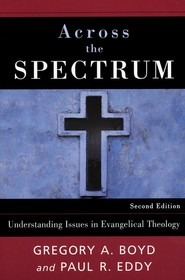
*Article authored by Gregory A. Boyd and Paul R. Eddy. Adapted from Chapter 14: “Baptism and Christian Discipleship (The Believer’s Baptism View) in the Book Across the Spectrum: Understanding Issues in Evangelical Theology. Grand Rapids: Baker, 2002.

God’s Part In Ministry by Dennis McCallum and Gary DeLashmutt

51Si8jFw1IL._AA160_

Christian workers must clearly understand the role God plays in evangelism, discipleship and other aspects of ministry. Unless we consciously operate out of a God-centered model of ministry, we will automatically default to a human-centered model, and all the defeat that comes with it.

A moment’s reflection tells us that what we propose to accomplish in Christian ministry is supernatural. To reach people’s hearts with conviction of their need for Christ, to train them up in the faith, to impart the deep things of God in a life-changing way, to oppose and defeat powerful evil spirits—these are acts that no human can hope to accomplish, no matter how intelligent and competent that person may be. The key to ministry success is always the same: That God moves through us “leading us in his triumph.” (2 Cor. 2:14) Spiritual failure in ministry is predictable when leaders try to supplant the power of God with human charisma, ingenuity, marketing skill, force of will, or social manipulation, even when these are supplied from the best of motives.

Although no real ministry will go forward without the power of God, we should not deny the human part in this process, which would be “super-spirituality.” Paul declares that he and the other apostles are “God’s fellow workers.” (1 Cor. 3:9) Yes, “neither he who plants nor he who reaps are anything but God who causes the growth.” (vs. 7) But this is a figure of speech meaning that compared to God, the planter and reaper are nothing. We should not understand this hyperbole literalistically. Do we really think that everything would have come out the same even if Paul had never gone to Corinth to plant? We hold that his planting did make a difference, and Paul argues this as well, as the whole point of 1Corinthians 3 is that every Christian leader should “take care how he builds.” (vs.10) An honest reading of the Bible reveals a strong doctrine of human agency in ministry. God has elected to work though human beings, and therefore our actions are important.

What, then, should we anticipate God will do from his side in our ministry?

In the first place, God directs our ministries. Leaders are to come to the scriptures, and to the Lord in prayer, seeking to know his will for our ministry. Ministry that departs from the direction God wants may bear some kind of fruit, but becomes “wood hay and stubble” the further we depart from the leading of the Holy Spirit. Interestingly, God seems willing to continue using ministries that are off-target, apparently because he places a higher value on reaching the lost than on complete fidelity to his leading. Paul observed this phenomenon in Rome. (Phil. 1:15-18) This is probably the meaning of Mark 9:38-40 as well. Even in 1 Corinthians 3, the “wood hay and stubble” may be used by God, but it will not be rewarded. In fact, the Bible abounds with examples where God continued to use leaders who went astray, sometimes very badly. What are we to conclude?

On one hand, since it is God’s will to direct our ministries, we should seek that leading often and earnestly. Even though God may continue to use off-target ministries, we assume that we will bear more spiritual fruit the closer we are to God’s ideal. This is increasingly obvious as time goes on. In the short term, human-based ministry may look good, but it tends to deteriorate over time or bring disgrace upon the Lord’s name. On the other hand, we should never become paralyzed by the notion that “Unless I know exactly what God wants in each situation, I can’t move forward.” We can move forward based on the general knowledge of what God wants, and in areas we are unsure, we can remain open to any correction in our course that God may want to show us, knowing that he will not let us come to irreversible harm (Phil. 3:15).

The direction of God extends not only to major issues like whether to preach the word or to practice church discipline, but to more subjective areas like when someone is ready for leadership, or with whom to invest our discipling time and effort. Teachers have to consult God on what slant to take when teaching a particular text. Evangelists must ask when to make a more direct call on the lost. Leaders must plead for insight as to how much to expect from a particular disciple. All believers need discernment as to Satan’s next move. In all, there are thousands of decisions in ministry requiring divine guidance.

Secondly, God empowers our ministries. Jesus’ declaration that “apart from me you can do nothing,” is again a figure of speech. He doesn’t mean we can do nothing at all, but that we can do nothing of spiritual value apart from him. As Christian leaders, we realize that we depend absolutely on God for things like:

Evangelism. While a warm demeanor, patience, good arguments, and heartfelt pleas matter in evangelism, only the Holy Spirit can finally convict a person of their need for Christ and bring them to repentance. (John 6:65)

Conviction. We can preach truth, but we depend on God to convict people’s hearts to follow the truth. Apart from spiritual conviction, people will listen to the truth with passive curiosity. This is likely the power Paul referred to in 1 Cor. 4:19,20.

Development of Christian character. No amount of blustering and Bible thumping will transform human lives, “for it is God who is at work in you, both to will and to work for His good pleasure.” (Philippians 2:13)

Overthrowing demons. How could any human hope to impact a spiritual being like Satan apart from the power of God? (Rom. 16:20)

Filling Christian meetings with spiritual power. Paul asks his friends to pray that he be “given utterance” when preaching. (Eph. 6:19) He knew that preaching must be anointed by the Holy Spirit in order to be effective.

Failure to understand or believe in God’s role in ministry will always have negative results. These results include arrogance during “in season” times, as well as panic, pushiness and discouragement during “out of season” times. On the other hand, reliance on God’s role in ministry will promote thankful humility during “in season” times, and stable perseverance during “out of season” times. Those who depend on God’s part have confidence in God’s adequacy through us.

The effect of a God-Centered Perspective on our Attitude

Consider the likely effect that a proper outlook in the area of God’s role will have in each of the following areas. On a three column grid, describe the outlook and actions of the human effort minister on the left, the God-centered minister in the middle, and the reason for the difference on the right.

A. Witnessing 

1. Less fear of rejection because we know they are not rejecting us, but God. Unlike the man-centered witnesser, we realize God must quicken people’s hearts, and if they don’t respond, there is nothing we can do about it.

2. Less tendency to push because human or social pressure would not result in conversion anyway. The God-centered minister learns to wait on the power of God.

3. More likely to use the Word. God-centered ministers know that God works through his word. While using the Bible with one who doesn’t believe the Bible may seem absurd to the natural mind, God says his word “will not return void.”

B. Discipline

1. No fear of sin. Instead of reacting out of fear that sin will ruin our church, the God-centered minister has a settled confidence that Christ will build his church. We become free to discipline sin for the good of the sinner.

2. No doubting of God’s ability to change lives. Man-centered ministers are tempted to become fatalistic about those in chronic sin, thinking “they’ll never change.” The God-centered minister knows God’s power is great.

3. Less apt to try to force people. Again, human pressure is not an adequate motivation for permanent and real spiritual change. While the Bible does prescribe pressure in certain extreme situations, God-centered leaders are less prone to jumping to this conclusion.

4. More patience. Human-based ministers lose patience because they are waiting on fallen humans to change, rather than waiting on God to bring change.

C. Teaching and preaching

1. More boldness and confidence. God-centered teachers and preachers know that God infuses our utterances with power, and that it is his will to bless the church. Instead of relying on self-confidence, which often withers, these rely on God-confidence which is reliable.

2. More tendency to pray against the Devil. The God-centered speaker knows that each talk is a spiritual battle that must be fought with the weapons of righteousness.

D. Discipleship

1. The God-centered discipler tries to get in line with what God wants to do with particular lives. They realize that God’s gifting of individuals is an indication of his will for their lives.

2. More emphasis on discernment, and less on program. The key becomes recognizing what God is doing, rather than having the ultimate method that can’t fail.

3. More relaxation, leading to more trust from disciples. Since the God-centered minister sees himself as a facilitator of God’s development of another’s life, people sense that they aren’t being made to follow the discipler’s will, but that both are trying to follow God’s will.

4. More willingness to teach in-depth Bible study. Those who conceive of discipleship in sociological terms see little reason to waste large amounts of time learning God’s word. They prefer to teach techniques and formulas and consider deep critical issues in Scripture a waste of time. The God-centered leader knows that people are sanctified through the word of God.

5. Less likelihood of bossing. God-centered disciplers know that convictions to follow the Lord must come from within disciples as they respond to the Holy Spirit. Change that results from external pressure would be pseudo-change.

E. Leadership

1. Easier to admit problems in the church. Unlike the human-based leader, who is ego involved with the well-being of the church, the God-centered ministry has no reason to avoid looking at bad news.

2. Easier to avoid pessimism. At the same time, God-centered leaders don’t become negative, because they know God has the power to handle even severe problems.

3. More inclination to raise up others– less need to “hog the ball.” Human-centered leaders secretly think their own competence is the key to the success of the church. Since they interpret the growth of the church in terms of cause and effect on the natural level, it makes no sense to have a less-experienced, less competent new leader speak and lead. The result is a man-centered ministry, where the significant public roles are always filled by the great man.

4. More time and effort devoted to prayer. The God-centered minister knows that only God can build the church, and that every advance requires his power.

Many more examples could be cited. This perspective affects every area of ministry. As in personal sanctification, learning to rely on God’s power instead of our own power is a process which takes time. No leader can claim to have this area down completely.

One of the main ways we learn to depend on God is by experiencing failure (see II Cor. 11:30-33; 12:9,10). As we respond properly to these failures, we gradually learn to minister in dependence upon God’s power.

– See more at: http://www.xenos.org/classes/leadership/godmin.html#sthash.fJLueUZO.dpuf

Grow a Disciple-Making Culture in Your Church

Growth-300x156

By Godwin Sathianathan

I owe a significant debt to four men and three churches who, over the years, became my spiritual fathers and families. These wonderful people walked alongside me through troubling and joyful times. They prayed with me, mentored me, and laughed with me. They celebrated my victories and wept with me when my dad unexpectedly died. They counseled me when I began to explore pastoral ministry and spoke the Word to me when I became discouraged. They reminded me not to take myself too seriously, and they lovingly pointed out sin in my life. God only knows where I’d be and who I’d be without his grace working through them.

Today I am a pastor and long for my church to grow in this kind of intentional disciple-making. Discipleship at its core is the process of growing as a disciple of Jesus Christ. That sounds simple. But what does it actually look like? And how do pastors lead their churches in discipleship? A good place to begin is Jesus’ last words to his disciples: “go . . . make disciples . . . baptizing them . . . and teaching them” (Matt 28:19-20). Three contours of discipleship culture emerge from this passage.

Clarifying the Contours of Discipleship

1. Disciple-making is an intentional process of evangelizing non-believers, establishing believers in the faith, and equipping leaders. 

“Make disciples” implies intentionality and process. Disciple-making doesn’t just happen because a church exists and people show up. It is a deliberate process. Considering the modifying participles of “going . . . baptizing . . . teaching” help us recognize this process. It must include evangelizing (going to new people and new places), establishing (baptizing new believers and teaching obedience), and equipping (teaching believers to also make disciples). How does your church evangelize, establish, and equip?    

2. Disciple-making happens in the context of a local church

It’s a community project, not just a personal pursuit. And that community must be the local church, because Jesus has given her unique authority to preach the gospel, baptize believers into faith and church membership, and teach obedience to Jesus. Disciple-making doesn’t just happen in coffee shops and living rooms. It also happens in the sanctuary where the Word is sung, prayed, read, preached, and displayed through communion and baptism. Jesus didn’t have in mind maverick disciple-makers; he had in mind a community of believers who, together and under the authority of the local church, seek to transfer the faith to the next generation. Does your church view disciple-making within the context of the church, or only as a solo endeavor?

3. Disciple-making is Word-centered, people-to-people ministry. 

When Jesus said “make disciples” we cannot help but remember how he made disciples: three years of teaching twelve men on the dusty road. Disciple-making, then, is the Word of God shaping men and women within life-on-life relationships. It’s demonstrated in Paul’s relationship with the Thessalonian church: “being so affectionately desirous of you, we were ready to share with you not only the gospel of God but also our own selves, because you had become very dear to us” (1 Thess 2:8). This is gospel-driven, Word-saturated, intentional one-anothering. It is men and women regularly teaching one another to obey what Jesus commanded. And it goes well beyond watching football and having inside jokes with Christian friends. How would you evaluate your church’s Word-centered people-to-people ministry?

Creating a Culture of Discipleship

If these three contours are essential ingredients for a discipleship culture, how do pastors lead their churches in growing that culture? Here are seven ways:

1. Preach disciple-making sermons. Pastors are not called to preach convert-making sermons or scholar-making sermons. They are called to preach disciple-making sermons. This means that they must craft sermons that will evangelize, establish, and equip. This means that they are teachers, pleaders, and coaches from behind the pulpit. Sermons also disciple through modeling careful exegesis, keen application, and prayerful responses to the passage. After we preach, congregants should understand and feel the text at such a level that they long to be more obedient disciples.

2. Shape disciple-making worship services.

Every church has a liturgy, whether you call it that or not, and every liturgy leads the people somewhere or disciples the people toward something. The question is where. The non-sermon elements of a worship service—songs, prayers, scripture reading, testimonies, and tone—contribute to the formative discipling of your congregation. Does your worship service lead people in thanksgiving for God’s gifts and goodness? Does it disciple people in confession and repentance? Is there an element in your worship service that offers assurance of salvation? Does your service lead people in celebrating our future hope? Thinking through these components with your worship director will strengthen your disciple-making services.

3. Invest in a few disciple-makers.

We’ve heard it before, but let me say it again: Jesus and Paul ask their disciples to invest in a few who will in turn invest in others (Matt. 28:18-192 Tim 2:2). Pastors, choose a few men you can pour your life into and intentionally disciple for a period of time. Create a simple but effective format to accomplish this task. For example, meet with a few men twice a month to discuss sections of Wayne Grudem’s Systematic Theology, confess sin, and pray for one another. Keep it relational. At the end of your time together, ask each man to choose a few men with whom he can do the same. The benefits are manifold. You are obeying Jesus’ disciple-making command, you are cultivating a disciple-making culture through strategic multiplication, and you are investing in those who may become your future elders.     

4. Make small group Bible studies central to your disciple-making strategy

Many churches offer small groups like a side item at the buffet, but few offer it as a main course. While Sunday school and other teaching venues certainly disciple people, small group Bible studies are unique in that they achieve multiple discipleship goals. After your corporate worship gathering, consider making small groups ministry your next priority. This means identifying and training mature leaders to shepherd and disciple their members. It also means providing a clear vision for your small groups ministry. For example, our church asks our groups to commit to three disciple-making values: Bible, community, and mission.

5. Raise the bar of church membership

Unfortunately many Christians don’t realize that joining a church is a vital step of discipleship. When you join a church, you are not joining a social club; you are publicly declaring your faith in Jesus and joining yourself to a group of Christians in life and mission. In view of this, pastors should view membership as discipleship and accordingly bolster their membership process and expectations. Instead of making it easy to join your church, make the process more involved. Get your elders teaching multiple sessions on the gospel, central doctrines, the importance of church membership, and your church’s operating convictions (baptism, for example). Broach tough subjects such as divorce and past church history during membership interviews. Finally, ensure membership actually means something for members. What unique privileges, roles, and responsibilities do members have in your church? Are your members actually joined together in Word-centered people-to-people ministry, as they promised when they became members?          

6. Confront sin and practice church discipline. 

Like church membership, discipline is neglected by some churches. Much like encouragement and affirmation are key components of disciple-making, so too are exhortation, confrontation, and if necessary more elevated measures of corrective discipline. God uses all of the above to make disciples and protect disciples within local churches.

7. Read disciple-making books with your leadership. 

Let me recommend four books for your disciple-making arsenal. The Trellis and the Vine by Tony Payne and Colin Marshall outlines a practical vision for disciple-making. One-to-One Bible Reading by David Helm will equip you with the motivation and tools to read the Bible regularly with others. Church Membership by Jonathan Leeman is the best lay-level book on the subject I’ve read and will help you understand how membership rightly practiced is discipleship. And The Shepherd Leader by Timothy Witmer calls elders to lead the way in disciple-making.  

Growing a disciple-making culture at your church might sound daunting. It’s hard enough to make disciples within a small group Bible study, but a church with all its complexities, systems, and baggage? Yikes. Here’s a piece of advice: start small, keep it simple, and focus on areas where a little investment will go a long way. For example, you may want to invest in a few who will do the same with others. Start with your elders. Or perhaps you want to focus on ramping up your small groups ministry. Start by training your current and new leaders around key biblical values that encapsulate discipleship.

Whatever you decide to do, may you find tremendous energy and courage to make disciples from the bookends of the Great Commission: “All authority in heaven and on earth has been given to me . . . and behold, I am with you always, to the end of the age.”

Godwin Sathianathan is an associate pastor at South Shore Baptist Church in Hingham, Massachusetts.

SOURCE: thegospelcoalition.org February 26, 2013


COACHING QUESTIONS WITH YOUR DISCIPLE

GOSPEL COACHING WITH A DISCIPLE

Gospel Coach

PERSONAL LIFE

(1) What are some evidences of grace in your life recently?

(2) What can you tell me about your spouse and family?

(3) How do you relax or what do you do for fun?

(4) How is your spouse doing?

(5) How are you doing as a couple?

(6) Are there any new strains on your relationship that surprised you?

(7) Has your spouse complained about your time together recently?

SPIRITUAL LIFE

(1) How is the condition of your soul?

(2) How would you describe your call to follow Jesus Christ?

(3) What are some of the Christian communities you participate in and how do they encourage your walk with Jesus?

(4) What is God doing in your heart right now?

(5) How have you seen the Holy Spirit produce new fruit in your life?

MISSIONAL LIFE

(1) What opportunities for ministry do you see before you?

(2) What is God calling you to be or do?

(3) What skills or abilities has God-given you that help clarify your calling?

QUESTIONS FOR FEEDING YOUR DISCIPLE

PERSONAL LIFE

(1) What is God teaching you about your role as a husband and father/wife and mother?

(2) What obstacles are you experiencing in your personal life?

(3) How is your health? Are you taking any medications?

(4) What would enhance your relationship with your spouse?

SPIRITUAL LIFE

(1) What information or resources would be helpful to your spiritual growth?

(2) Where have you experienced the most growth lately?

(3) What is the biggest threat to your oneness with Christ?

(4) Where are you most vulnerable to sin?

(5) What sins are you battling?

(6) What compels you to worship God?

MISSIONAL LIFE

(1) When have you had a significant impact on another person?

(2) In what ways are you making disciples?

(3) What are some challenges you are facing in your primary ministry responsibility?

(4) What resources do you need to accomplish your ministry goals?

QUESTIONS FOR LEADING YOUR DISCIPLE

PERSONAL LIFE

(1) How are you leading your family?

(2) What is the greatest need in your personal life (Look for idols, agendas, identity struggles, and selfishness)?

SPIRITUAL LIFE

(1) How is the Lord leading you to respond to Him?

(2) What is the greatest need in your spiritual life (Look for idols, agendas, identity struggles, and selfishness)?

MISSIONAL LIFE

(1) What is the Lord leading you to {pick one} know (head), feel (heart), or do (hands) with regard to ministry?

(2) What is the mission of your ministry?

(3) What is the greatest need of your ministry life?

QUESTIONS FOR PROTECTING YOUR DISCIPLE

PERSONAL LIFE

(1) What challenges do you face personally?

(2) What temptations occur in your personal life?

(3) How are you prone to wander personally (health, finances, time, marriage, etc.)?

SPIRITUAL LIFE

(1) What challenges do you face spiritually?

(2) What temptations occur in your spiritual life?

(3) What kind of priority do you give to Bible reading and prayer in your life?

(4) Where are you prone to wander spiritually?

MISSIONAL LIFE

(1) What challenges do you face missionally?

(2) What temptations occur in your ministry life?

(3) Where are you prone to wander in ministry?

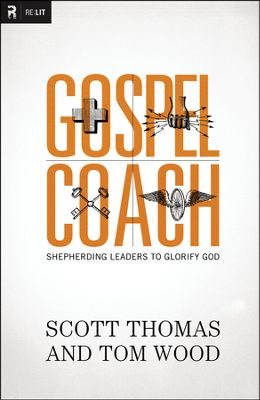
*SOURCE: Adapted from Appendix 4 in Gospel Coach: Shepherding Leaders to Glorify God by Scott Thomas and Tom Wood. Wheaton: Crossway Books, 2013.

Establishing a Gospel Coach and Disciple Relationship

INTAKE FORM FOR GOSPEL COACHING WITH A DISCIPLE

Gospel Coach

This form is helpful in establishing a gospel coach and disciple relationship. It facilitates the coach’s getting to know the disciple and establishes a starting point for the journey toward Jesus and his calling in the disciple’s life. Feel free to revise this form to include only questions that will be beneficial for your particular gospel coaching relationship. This list is quite comprehensive and is meant to be selectively utilized.

PERSONAL LIFE

KNOW

(1) Tell me about your family [spouse, children’s names and ages, etc.].

(2) When is your birthday? Anniversary?

(3) What makes you excited or feel really alive?

(4) What are some skills and talents that God has blessed you with?

(5) What have been lifelong desires and dreams for you? What is going on with these dreams and desires now?

(6) What are you hoping for in the next six months?

(7) How has God saved you personally? How is he saving you daily?

(8) How would you describe a “perfect day”?

(9) How would you describe a “terrible day”?

(10) How is ministry impacting your family?

(11) How is your family impacting your ministry?

(12) How is your ministry impacting your faith?

(13) How is your faith impacting your ministry?

 (14) How is your personality affecting others?

(15) How are others affecting your personality?

(16) How is your integrity impacting others? What people are you influencing both positively and negatively?

(17) How is your character influencing your culture?

(18) How is your character influencing your church community?

(19) How are you developing character in your leaders?

(20) How is your physical health? What does your exercise look like weekly? What do you do for recreation? What does your eating look like daily? What does your sleep and rest look like? Do you have any health issues that affect your life and ministry? How are you dealing with these?

(21) How is your emotional health? How is ministry affecting your emotions? How are your emotions affecting your ministry? What tone are you setting in your home through your emotions? What tone are you setting in your ministry through your emotions?

FEED

(1) What area of your character in your personal life are you most convicted about by the Holy Spirit? What do you envision this developed area to look like? How would you describe this area now? What things could you do to develop or grow in this area? What commitment do you have to grow in this area? What has made it difficult for you to see growth or change in this area?

(2) What is currently confusing you about the gospel on a heart level?

(3) What books are you currently reading? What are you learning?

(4) How can I encourage, help, and support you?

(5) How are you making space to be refreshed in God’s salvation in a personal, practical way?

LEAD

(1) What is holding you back from personal growth in Jesus?

(2) What are you holding on to that is keeping you from being more like Christ?

(3) What current personal failures are most frustrating to you?

(4) What has God accomplished in your character in the last year?

(5) How has God shown faithfulness to you in the last year?

(6) How are you and God doing?

(7) Where do you think God wants you to go in your personal growth in the next six months? Why?

PROTECT

(1) Who do you need to help you?

(2) To whom will you be accountable?

(3) How can I help you?

(4) Where do we really need God to show up?

(5) Where is your heart hard?

(6) What lies do you believe?

(7) What doubts have crept in?

(8) In what ways have you invited unbelief and deception in your personal life? How can I help close those doors?

(9) How will we pray?

MINISTRY CALL

KNOW

(1) How would you describe your personal call?

(2) What people and circumstances are associated with your call to ministry

(3) How and when has your call to ministry been affirmed in your life?

(4) How have others affirmed your call to ministry?

(5) What opportunities do you have to fulfill this calling?

FEED

(1) What leadership gifts or abilities do you need to develop to fulfill your calling or current assignment?

(2) How would you describe your current abilities in this area?

(3) What options do you have to develop your leadership?

(4) What will you do to develop your leadership?

LEAD

(1) When has your call to leadership been challenged?

(2) Under what circumstances have you doubted your call?

(3) Is there anything in this current experience that is causing you to question your call?

(4) What activities or events do you use to anchor, form up, or strengthen your call?

(5) How should your call be focused or clarified?

(6) What does your call’s success look like?

PROTECT

(1) Who have been mentors in your life?

(2) What mentors and coaches do you need now to fulfill your call?

(3) Who else do you need to help you?

(4) What do you need most from God right now?

SPIRITUAL LIFE

KNOW

(1) What are some of the major milestones in your theological development?

(2) What are you reading in Scripture right now? What are you learning about God?

(3) How do you practice abiding in Jesus?

(4) What increases your affections toward God and others?

(5) What deadens your affections toward God and others?

(6) What is causing your anxiety or fear right now?

FEED

(1) What are some areas with which you wrestle theologically?

(2) What information are you missing?

(3) How hungry are you to know God?

(4) How dependent do you feel on Jesus in your life?

LEAD

(1) What discrepancies may be emerging between what your mind knows and what your heart believes in Scripture?

(2) How is the Holy Spirit leading you to grow in your understanding of Jesus?

(3) What does your prayer life look like?

(4) Who are the people in your life you are praying for?

(5) What are you praying for?

(6) What are your prayers revealing about your faith?

(7) Who is effectively bringing you clarity about who Jesus is and about the truth of Scripture? How are you prioritizing these people in your life?

PROTECT

(1) What are you feeding yourself with to feel satisfied outside of Christ?

(2) What current obstacles hinder your spiritual growth?

(3) Who is pulling you away from your relationship with God? How?

(4) Who is planting doubt and discouragement in your heart about Jesus?

(5) What anti-Christian spiritual teaching are you tempted to believe? Why?

(6) What are you allowing to take priority over your relationship with Jesus? Why?

(7) What obedience has Jesus called you to that you have been ignoring or trying to escape?

MISSIONAL LIFE

KNOW

(1) What opportunities for mission are present in your life?

(2) Who are the lost people God has brought into your life? What does your relationship with these people look like?

(3) What percentage of your time is spent with people who do not know Jesus?

(4) What are your spiritual gitfs?

(5) Describe your current ministry and missional responsibilities? Do these match your calling? Are any of these activities being performed under compulsion?

(6) To what degree do you and your church understand the prevailing culture in your city?

(7) How do you and your church engage the culture?

(8) How do you and your church serve the culture?

(9) How and where do you and your church attract the culture?

(10) How and where do you and your church initiate relationships in the culture?

(11) How is your church perceived by the culture?

(12) How do you and your church receive the culture?

(13) How do your leaders impact the culture?

FEED

(1) Where is ignorance in your mission or ministry killing you?

(2) Are you experiencing any physical or emotional burnout? How easily discouraged are you in your mission? How is your patience quotient? Are you easily angered in your ministry? Are yu disconnecting completely from your mission for Sabbath? How?

(3) Which Christian missiologists have influenced and shaped your mission through their writing or preaching?

(4) How would you like to see your church connect with culture?

(5) What can you personally do to connect with culture?

(6) What is working now in connecting with culture?

(7) What other possibilities do you see for you or your fellowship to connect with culture?

LEAD

(1) What does success in your mission look like?

(2) How will you know when you are accomplishing what God has called you to?

(3) How close are you to that success now?

(4) What roadblocks are you experiencing in accomplishing your mission?

(5) Is the direction you are headed the direction to which you have been called?

(6) Where and how have you and your church been effective in reaching into your culture?

(7) Which of your leaders most impact the culture?

(8) Who are the persons of peace with whom you are connecting?

(9) Where has there been a significant network of evangelistic relationships?

(10) What is stopping you or your church from engaging or impacting culture?

(11) What are one or two things could you and your church do to understand, engage, or receive your culture?

PROTECT

(1) What is draining your energy and sapping life from you in your mission?

(2) Who is attacking your mission — intentionally or unintentionally?

(3) What voices of discouragement are you listening to?

(4) What personal sins are hindering your mission and calling?

(5) Where are you allowing cowardice to hinder your mission and leadership?

(6) Where are you charging ahead of the Holy Spirit in your own strength?

(7) Who has sinned against you, and how is it affecting the mission?

(8) Who have you sinned against, and how have you dealt with it?

(9) What keeps rising up to distract you and your people from the mission?

(10) What risks are you willing to take to demonstrate dependence on God?

(11) What can help you understand your culture?

(12) Where do you most need God’s help?

(13) How are you praying for needs in the culture?

*SOURCE: Adapted from Appendix 2 in Gospel Coach: Shepherding Leaders to Glorify God by Scott Thomas and Tom Wood. Wheaton: Crossway Books, 2013.

40 GREAT LEADERSHIP ACCOUNTABILITY QUESTIONS

*By Scott Thomas and Tom Wood

Gospel Coach

The following questions can be used to protect a disciple in his leadership skills and development. Each section can take up to one hour to discuss between a coach and a disciple.

SELF-LEADERSHIP

(1) How are you unique? (calling, gifts, passions, personality, experiences, sin patterns)

(2) How do you stay inspired? How often do you practice this?

(3) How do you apply the gospel to yourself? What is the message in your mind?

(4) What are the rythms of grace in your life? (Scripture, worship, prayer, community, family, time off)

(5) What idols compete for your worship? How do you forsake each idol?

(6) What sinful mental images repeatedly play in your head? How do you take those thoughts captive?

(7) How are you stewarding the gifts you have for the greatest benefit? (time, resources, skills)

INTERPERSONAL LEADERSHIP 

(1) Who understands you best? Other than your family, who are the people with whom you share life together? (2 Timothy 2:2)

(2) Whom do you pray for? What specific petitions are you praying for them?

(3) Who would you like to choose to become one of your influencer friends? What is your plan for making this happen?

(4) How are you telling “truth in love” to the people under your leadership? When do you “spin” something?

(5) How faithful are you in being on time and following through with promises?

(6) Do you say yes and no with clarity so that it builds confidence and trust?

(7) Whom are the people you tend to try to please and why?

(8) How are you discipling each of your children and your spouse (if applicable)?

(9) Who really knows you?

(10) What relationships are broken in your life? What are you doing to bring reconciliation?

ORGANIZATIONAL LEADERSHIP

(1) How has God called you to serve him? How are you fulfilling this calling?

(2) What things nudge you away from following your calling?

(3) What is the most pressing leadership issue you are currently facing?

(4) Do people in your leadership area know with clarity what you expect of them?

(5) What are you doing well in your leadership? What needs your attention?

(6) How do you encourage those you are leading to follow the objectives of your organization?

(7) In what ways do you personify your calling?

(8) What opportunities did you decline for the sake of fulfilling your objectives?

(9) What are the stories that define the culture of your leadership area? How do you capture these stories? How are the stories being shared?

TEAM LEADERSHIP

(1) Who is your team? (roles, styles)

(2) Who is going to replace you?

(3) How do you demonstrate your love for each team member?

(4) What dysfunctions in your team are you addressing?

(5) With whom do you sense the most synergy? How can you maximize this?

(6) With whom do you sense the least synergy? Why? How are you minimizing this?

(7) Whom do you struggle to trust? Why? How do you address issues of distrust with them?

(8) What inspires each team member? (Ask each one, “What aspect of your work brings you the most joy, and what stories do you tend to tell most often?)

(9) How do you empower your team members to exercise their greatest gifts and talents on the team?

PASTORAL LEADERSHIP

(1) What does faithfulness in your calling look like for you?

(2) In which young leaders are you investing your life to develop?

(3) How are you making disciples?

(4) How are you equipping others to serve Jesus’ church more effectively?

(5) How are you living in a missional way?

*SOURCE: Scott Thomas and Tom Wood. Gospel Coach. Grand Rapids: Zondervan, 2013, Appendix 3.

THE BIBLICAL BASIS FOR MENTORING

New Testament Verses in Support of Mentoring

Surfers walking at Dusk image

He appointed twelve-designating them apostles-that they might be with him and that he might send them out to preach. (Mark 3:14)

… but everyone who is fully trained will be like his teacher. (Luke 6:40b) Therefore I urge you to imitate me. (1 Corinthians 4:16)

Follow my example, as I follow the example of Christ. (1 Corinthians 11:1)

Join with others in following my example, brothers, and take note of those who live according to the pattern we gave you. (Philippians 3:17)

Whatever you have learned or received or heard from me, or seen in me-put it into practice. And the God of peace will be with you. (Philippians 4:9)

Let the word of Christ dwell in you richly as you teach and admonish one another with all wisdom, and as you sing psalms, hymns and spiritual songs with gratitude in your hearts to God. (Colossians 3:16)

You became imitators of us and of the Lord; in spite of severe suffering, you welcomed the message with the joy given by the Holy Spirit. And so you became a model to all the believers in Macedonia and Achaia. The Lord’s message rang out from you not only in Macedonia and Achaia-your faith in God has become known everywhere. Therefore we do not need to say anything about it. (1 Thessalonians 1:6-8)

We did this, not because we do not have the right to such help, but in order to make ourselves a model for you to follow. (2 Thessalonians 3:9)

Don’t let anyone look down on you because you are young, but set an example for the believers in speech, in life, in love, in faith and in purity. (1 Timothy 4:12)

You, however, know all about my teaching, my way of life, my purpose, faith, patience, love, endurance…. (2 Timothy 3:10)

In everything set them an example by doing what is good. In your teaching show integrity, seriousness and soundness of speech that cannot be condemned, so that those who oppose you may be ashamed because they have nothing bad to say about us. (Titus 2:7-8)

Remember your leaders, who spoke the word of God to you. Consider the outcome of their way of life and imitate their faith. (Hebrews 13:7)

Not lording it over those entrusted to you, but being examples to the flock. (1 Peter 5:3)

Dear friend, do not imitate what is evil but what is good. Anyone who does what is good is from God. Anyone who does what is evil has not seen God. (3 John 11)

LAST WORDS OF AN AFRICAN MARTYR

UNTO DEATH

Africa

I’m part of the fellowship of the unashamed, the die has been cast, I have stepped over the line, the decision has been made–I’m a disciple of Jesus Christ–I won’t look back, let up, slow down, back away or be still.

My past is redeemed, my present makes sense, my future is secure–I’m finished and done with low living, sight walking, smooth knees, colorless dreams, tamed visions, worldly talking, cheap giving and dwarfed goals.

My pace is set, my gait is fast, my goal is heaven, my road is narrow, my way is rough, my companions are few, my guide is reliable, my mission is clear. I won’t give up, shut up, let up until I have stayed up, stored up, prayed up for the cause of Christ.

I must go till He comes, give till I drop, preach till everyone knows, work till he stops me and when He comes for His own, He will have no trouble recognizing me because my banner will have been clear.

*Excerpt from a writing found in a young African Christian’s room after he was martyred for his faith – Source: Erwin Lutzer. Where Do We Go From Here? Chicago: Moody Press, 2013.

THE POWER OF DISCIPLESHIP GROUPS FOR MULTIPLYING DISCIPLES

*EVANGELISTIC ADDITION VS. DISCIPLEMAKING MULTIPLICATION

crowd

YEAR EVANGELIST DISCIPLER D-GROUP OF 4
1 365 2 3
2 730 4 9
3 1,095 8 27
4 1,460 16 81
5 1,825 32 243
6 2,190 64 729
7 2,555 128 2,187
8 2,920 256 6,561
9 3,285 512 19,683
10 3,650 1,024 59,049
11 4,015 2,048 177,147
12 4,380 4,096 531,441
13 4,745 8,192 1,594,323
14 5,110 16,384 4,782,969
15 5,475 32,768 14,348,907
16 5,840 65,536 43,046,721

**Robby Gallaty on Discipleship Multiplication in D-Groups

God has always been interested in reproduction. In fact, His first command to Adam and Eve in the Garden was not to be spiritual, productive, or upstanding citizens of earth. Rather, it was to “be fruitful and multiply.” (Genesis 1:28). What God commanded the first humans to do physically is what Jesus commanded the first believers to do spiritually. The goal of every *D-Group is for the mentee, the one being discipled, to become a mentor; to multiply–make other disciples [*A D-Group is a closed group of 3-5 members of the same-sex consisting of believers who desire a deeper walk with Christ via intimate and accountable relationships resulting in community and multiplication of more disciples].

In essence, the D-Group is designed for the player to become a coach. If it is not discussed early on, members in the group will adopt a consumer mentality, with a short-sighted, self-serving focus. The heart of discipleship, as Christ modeled and instituted it, is that you are not learning only for yourself. You are learning for the person whom you will mentor in following Him.

The Great Commission is designed to be a team effort. Instead of the pastors/leaders/Sunday school teachers/deacons performing all the duties of ministry in the church, the saints are equipped to carry out the work. The ministers cannot carry out the command alone, as Paul clearly stated: “And he gave the apostles, the prophets, the evangelists, the shepherds and teachers, to equip the saints for the work of ministry” (Ephesians 4:11-12).

Greg Ogden, in his book Discipleship Essentials, expounds this point by graphically illustrating the contrast between someone personally seeing one person come to the Lord every day for a year, as compared to investing in the same two people for an entire year (see chart above). The evangelist hits the streets every day with the goal of sharing the gospel with as many people as needed to see God save one person. In contrast, the disciple-maker walks two people through a year of intensive discipleship.

The slow-moving discipleship process creeps forward with only four people being impacted in two years, compared to 730 converts through the solitary work of the busy evangelist. However, this radically changes with the passing of time. After sixteen years of the same activity, the evangelist would have seen almost 6,000 people come to faith in Christ, while the disciple would have impacted 65,536 people. Every person on the planet would be reached multiple times over after thirty years. It is a ministry shift from a strategy of addition, where the clergy performs the ministerial duties, to one of multiplication, where believers are expected and equipped to personally participate in the Great Commission.

Multiplication–not addition–is Jesus’ plan for reaching the world with gospel. And multiplication is the purpose of the D-Group. If the body of Christ would accept this plan, embrace it, and faithfulness obey it, then the Great Commission would be accomplished.

Nothing Grows under a Banyan Tree

The banyan is a massive tree that develops secondary trunks to support its enormous branches. A full-grown banyan tree can cover an entire acre. The tree provides shade and shelter for many animals with its branches, but nothing is able to grow under its dense foliage. Therefore, the earth beneath is barren.

A banana tree is exactly the opposite. Within six months, small shoots sprout from the ground. Six months later, another set of shoots spring up from the earth to join the others, which are now six months old. At about eighteen months, bananas burst forth from the main trunk of the tree. Humans, birds, and many other creatures benefit from its fruit before it dies. Every six months, the cycle is reproduced, with sprouts forming, fruit bearing, and shoots dying. The end result is a forest of banana trees.

These contrasting trees graphically illustrate a vital discipleship truth. Many people utilize a banyan style of leadership. Mitsuo Fukuda explained, “Banyan-style leaders have a tremendous ministry, but have difficulty finding a successor, because they do not generate leaders, only followers. It’s possible to grow followers in a relatively short space of time, and that’s a useful result on its own. But when the leader goes away, you are left only with a heavily dependent group of people, programmed with a list of instructions” (Mitsuo Fukuda, Upward, Outward, Inward: Passing on the Baton of Discipleship. Gloucester, UK: Wide Margin Books, 2010, p. 100).

Discipleship is about shoots and sprouts. These new sprouts are never a threat to the banana tree, for they ensure growth. In fact, they are expected. The goal of a D-Group is for the mentee to become a mentor, for the player to become a coach. Unless that happens, the group never progresses beyond a small group Bible study.

**Source: Chart is adapted from Greg Ogden, Discipleship Essentials: A Guide to Building Your Life in Christ (Downers Grove: IL.: IVP, 2007), 12. Article adapted from Robby Gallaty. Growing Up: How To Be A Disciple Who Makes Disciples. (Bloomington, IN.: CrossBooks, 2013), pp. 13-16. Thanks to Robby Gallaty for permission to print this article.