

Category: Discipleship
Book Review on “Growing Up” by Robby Gallaty
HOW TO BE A DISCIPLE WHO MAKES DISCIPLES

A Powerful Strategy For Discipleship Multiplication
Book Review By David P. Craig
In the twenty five years that I have been involved in ministry as a pastor I have oftentimes been frustrated with discipleship materials. I have found them to either be too simplistic, or too abstract and academic. I think Robby Gallaty has struck a good balance in “Growing Up” by providing disciples of Jesus with a balanced resource for beginning and advanced disciple-makers. The book is full of biblical principles, powerful illustrations, and practical insights to help disciples of Christ make multiplying disciples of Christ.
In the first four chapters Gallaty gives his own testimonial of how discipleship made a huge impact on his own journey with Christ and gives a passionate biblical argument for discipleship and why being a disciple and the making of more disciples should be at the forefront of a Christian’s life. The strategy of becoming and making disciples articulated in this book is the idea of D-Groups (Discipleship Groups). D-groups ideally consist of a group three to five men or women (gender exclusive) who meet weekly and have three primary purposes: (1) growth in the knowledge and imitation of Christ; (2) growth in the ability to articulate and defend the Christian faith; and (3) and helping to guide others in the faith – sharing what you are learning with others along the discipleship journey.
The ultimate goal of being a disciple is to make more disciples. Gallaty makes a great case for the effectiveness in discipleship groups of 3-5 people. How are D-groups different from a regular small group? Here are some differences: (a) The D-Group is a closed group open by invitation only; (b) consists of believers who desire a deeper walk with Christ; and (c) has the dynamics of community rather than a teacher-pupil or mentor-mentee relationship. Herein lies the key to multiplication.
After twenty-five years of being involved in the process of making disciples I have found this to be true. I haven’t seen a lot of multiplication from one-on-one discipleship, but I’ve seen much more multiplying accomplished in groups of 3-5. I’ve never called them “D-groups” but the principles are the same no matter what you call them. One of the examples Gallaty gives is what if Jesus had discipled Judas one-on-one rather than John, Peter, and James? In other words the disciples knew how to be and build a community of disciples through discipleship. Jesus wasn’t just a teacher who taught pupils – He showed them how to live life with all that it entails.
This is so important because discipleship is more than just information, or just teaching. It is about a radical lifestyle that affects every aspect of life. When 3-5 disciples are growing together there is an organic aspect that takes place in communal growth which one-on-one simply doesn’t usually achieve. The spiritual climate that God uses to bring about growth in our lives involve people, circumstances, and the spiritual disciplines which are best nurtured in the context of communal commitment in a D-Group.
In the second half of the book Gallaty uses the acrostic C.L.O.S.E.R. to talk about six spiritual disciplines that need to be taught, nurtured, and developed in a D-Group. These six chapters focus on six disciplines that Jesus modeled and taught to His disciples: (1) Communicate – how to talk with God through prayer; (2) Learn – to understand and apply God’s Word in your life; (3) Obey – God’s commands; (4) Store – God’s Word in your heart through Scripture memory; (5) Evangelize – how to share Christ with others; (6) Renew – yourself spiritually every day.
Each chapter stands alone, and yet builds on the previous chapter – much like stones making a sturdy wall. All of the chapters have (a) questions to consider for discussion; (b) Points to ponder; and (c) A Scripture verse to memorize on the theme of the chapter. The book is designed to establish D-Groups and is for D-Groups. One of the great features of the Book is the Appendix Section in the back which consists of 11 helpful resources: (1) A Disciple-Making Covenant; (2) Spiritual Journey Inventory; (3) Sample H.E.A.R. Entry (He talks about this in the book – HEAR stands for what to “Highlight” from God’s Word, “Explain” from God’s Word, “Apply” from the passage to your life, and “Respond” to in your life; (4) A Bible Reading Plan Called E100 (from the http://e100challenge.com.; (5) A Prayer Log; (6) A Scripture Memory Card; (7) Accountability Questions; (8) 7 Different avenues for building relationships; (9) 12 Commonly asked questions about D-Groups (e.g., How do I choose disciples?, How many people should be in the group?, Where and how often should we meet? and so forth); (10) Suggested resources for D-groups; and (11) How to pray for lost friends.
I highly recommend this book for five primary reasons: (1) It will fire you up to be a disciple and make disciples in the context of community; (2) It will give you a strategy and plan for making disciples; (3) It will give you all the tools you need for making disciples; (4) It will convince you that discipleship for the Christian is not an option – it’s what it means to be a Christian!; (5) It will make you want to teach and apply the material in your own D-Group.
Robby Galatty’s “Growing Up” is based on Psalm 1:1-2. He plans on writing two more books in this series: “Firmly Planted” based on Psalm 1:3, followed by “Bearing Fruit” based on Psalm 1:3b. I am already looking forward to reading and applying these books with my own D-Group. Gallaty has written a book that is biblical, theologically rich, extremely logical and eminently practical. I predict that it may be one of the most used discipleship training workbooks to ever come along. I am grateful for this book and can’t wait to start a D-Group and apply it!
The Value of Discipleship in Groups

More books and conferences under the banner of disciple-making are available now than ever before. As a result, believers are contemplating the implications of the Great Commission for their lives. With a better understanding of discipleship come questions of how to replicate the process. One important facet is how many people should be discipled together. The size of your discipleship group should be considered before approaching potential group members.
I have found that the most effective discipleship groups, what we call D-Groups, are gender-exclusive. Men should meet with men, and women should meet with women. Some topics and personal problems should not be discussed in a mixed group. While it is wonderful for couples to study God’s Word and grow spiritually together, the crucial dynamic of a D-Group is compromised when couples are involved, particularly in the areas of transparency and accountability.
FIVE REASONS TO DISCIPLE IN GROUPS
While the Bible never prescribes a particular model for discipling others, Jesus invested in groups of varying sizes.[1] Larger groups learned from his teachings and miracles, while his closest followers benefited from personal discipleship and specific instruction. While one-on-one discipling is valid and has it purposes, I want you to consider five reasons to meet in a group of three to five instead of privately with one.
1. Avoid the Ping-Pong Match
First, a group of two can be like a ping-pong match: you, the leader, are responsible to keep the ball in play. “Mike, how was your day?” “Good,” responds Mike. The leader probes deeper by asking, “Any insights from your Scripture reading this week?” “I enjoyed it,” Mike briefly replies. The conversation progresses only as the mentor engages the mentee. The pressure to lead is lessened when others in the group join in on the spiritual journey.
2. One-on-One can be Challenging to Reproduce
Second, a one-on-one model can be challenging to reproduce because the person in whom you are investing has a tendency to look at you in the same manner that Timothy looked at the Apostle Paul. Mentees, after a year or two in a discipling relationship, have said to me, “I could never do with another person what you did with me.” Yet a group takes a journey together. It is worth noting that group members usually don’t feel ready to begin their own groups. Neither did the disciples. But Jesus left them with no choice. Remember, the discipling relationship is not complete until the mentee becomes a mentor, the player becomes a coach.
3. Group of Two Tends to Become a Counseling Session
Third, a group of two tends to become a counseling session, where you spend the majority of your time solving personal problems. Biblical wisdom for personal issues is certainly a part of the discipling relationship, but therapeutic advice every week must not define the group.
4. Jesus Discipled in Groups
Fourth, as mentioned earlier, Jesus utilized the group model. While he spent time investing in a group of twelve, he used teachable moments to shape three—Peter, James, and John—in a unique way. With the exception of Judas, all twelve faithfully followed the Lord, even to the point of death. But these three were the key leaders in the early years of the church.
Solomon, a financial genius and the Warren Buffett of his day, advocated the diversification of assets twenty-five hundred years before Wall Street existed (Eccl. 11:1-2). Wise people invest in a variety of stocks, bonds, and commodities. Jesus, too, believed in diversified investing and modeled it in his discipleship example. Joel Rosenberg and T.E. Koshy pose a thought-provoking question:
What if for three years Jesus had discipled only Judas? Despite his best efforts, Jesus would have wound up with no one to carry on his legacy and his message when he returned to the Father. Jesus didn’t invest in just one man. He invested in a group of men from a wide range of backgrounds, including fishermen, a tax collector, and a Zealot (a political revolutionary).[2]
Jesus poured himself into twelve men, and taught us the importance of the group in disciple-making. Yes, there are times when a one-on-one mentoring relationship is beneficial, but in the New Testament, particularly the Gospels, it is not the norm.
Paul, in similar fashion, used his missionary journeys to train others. He rarely if ever traveled alone, always including Barnabas, Silas, John Mark, Timothy, and others as gospel co-workers. When Paul charged Timothy in his final letter, he stated, “You then, my child, be strengthened by the grace that is in Christ Jesus, and what you have heard from me in the presence of many witnesses entrust to faithful men who will be able to teach others also” (2 Tim. 2:1-2). Notice that Paul says, “Entrust to faithful men”—plural—“who will teach others.” Throughout his ministry, Paul modeled this practice.
5. Built-in Accountability
Finally, a group of three to five provides a built-in accountability system, as well as encouragement from others. In my first D-Group, two of the three men involved came prepared with a Bible-reading journal I had asked them to complete. But one, a skeptic of the system’s value, failed to make any entry. Prior to joining the D-Group, his excuse for not reading the Bible was, “It’s difficult to understand.” Using the other two men to motivate him, I countered, “Can you just try journaling for the next five days? Right now, you have no evidence to prove that it doesn’t work. By trying it, you will know if it works for you or not.” The next week, he arrived with a smile on his face, saying, “Let me share what I heard from God through his Word this week.” Watching the excitement of the others challenged him to contribute to the group, and to his own spiritual development.
What has been your experience in a discipleship group? Does size matter? If so, how?
About Robby Gallaty:

Robby Gallaty (@Rgallaty) is the Senior Pastor of Brainerd Baptist Church in Chattanooga, TN and founder of Replicate Ministries. For more information on discipleship, you can visit replicateministries.org.
[1]The gospels record Jesus ministering in 5 group sizes: the crowd (multitudes), the committed (the 72 in Luke 10), the cell (the twelve disciples), the core (Peter, James, and John), and the close-up encounters (one-on-one). Making disciples cannot be restricted to a particular group meeting; however, a regular gathering time is practically necessary for accountability.
[2] Joel C. Rosenberg and T. E. Koshy, The Invested Life (Carol Stream, IL: Tyndale House Publishers, 2012), 87-88.
*Article adapted from http://www.9marks.org/blog/why-disciple-groups – August 16, 2013
10 Principles of Discipleship

1. Discipleship is about a Relationship
Michael Wilkins has defined a disciple of Jesus as one who “has come to Jesus for eternal life, has claimed Jesus as Savior and God, and has embarked upon the life of following Jesus.”[1] His very presence in my life and his promise to never leave nor forsake me, encourages me to daily follow Him. At the heart of following Him is this undeserved relationship I have with Him.
2. Discipleship is enabled and empowered by the work of the Holy Spirit who transforms us into the image of Christ.
The Holy Spirit indwells and fills believers (Eph. 5:18), guides us into all truth (John 16:13), brings forth fruit in our lives (Gal. 5:22-23) and empowers us for ministry in the church and in the world.[2] The Spirit is God’s presence in us (Rom. 8:11) to confirm that we are indeed children of God (Rom. 8:16) and to convict us of sin for the continuing process of conforming us into the image of Christ. Understanding the role of the Holy Spirit encourages the response of submission to His sanctifying work.
3. Discipleship is grounded and guided by the Word of God
The Bible is our authority in all areas of life. “If you abide in my word, you are truly my disciples, and you will know the truth, and the truth will set you free” (John 8:31-32). Consistent nourishment is a vital component of one’s spiritual growth (Psalm 1, John 15).
4. Discipleship is nurtured in community
Community with other believers is a vital part of our growth as disciples. We were made to be in fellowship with one another. Thus the imagery of the body of Christ portrays how vitally linked we are to one another. In such community we are able to fulfill the command of loving one another and with this community then to love the world.
5. Discipleship is a continuing process of being transformed from the inside-out
“The ultimate goal of the believer’s life is to be conformed to the image of Christ (Ro 8:29).”[3] Jesus described a radical way of life in the sermon on the mount. In a world in which righteousness was very much regarded by one’s outward actions, Jesus emphasized the transformation of the heart.
6. Discipleship produces spiritual fruit
As the Holy Spirit works to transform the individual and change is made from the inside-out, the characteristics of God become evident in the believer’s life: love, joy, peace, patience, kindness, goodness, faithfulness, gentleness, self-control (Gal. 5:22-23).
7. Disciples of Christ who are in the process of inward transformation, yield to the Spirit’s leading in service and mission.
Spiritual formation is both about the inward change of heart and the outward manifestation of that changed heart. Christ modeled the life of service for His disciples and commands us to serve in humility and love while proclaiming His truth in a lost world.
8. Disciples are called to share in the fellowship of Christ’s sufferings
As we live in a sin-cursed world, we bear the effects of sin on a daily basis. With the presence of Christ and the promise of future hope with Him, we are able to endure the pain and even be transformed in the process. Paul writes of this truth in 2 Cor. 4:17: “For this light momentary affliction is preparing for us an eternal weight of glory beyond all comparison.” God invites us to suffer for His sake, for living to honor Christ in a world that is hostile toward Him. In this, we share in his sufferings and bring glory to Him.
9. Disciples Must Count the Cost
Following Christ as His disciple means letting go of one’s own will and seeking the will of God in all things (Luke 9:23). Nothing must take the place of Jesus as the “focus of allegiance,” as Wilkins explains.[4]
10. Discipleship is a Life-long Journey
In my own life, describing my faith and discipleship in terms of the journey metaphor has been vitally important on many different levels. As I come to different forks in the road, or experience difficult trials, knowing that Jesus is my trustworthy Master and Leader, is my sole comfort and motivation to continue in this journey of faith. We must continue to realize and endeavor to endure the trials of faith that come with renewed commitment to following Christ on a daily basis.
[1] Michael J. Wilkins, Following the Master: A Biblical Theology of Discipleship (Grand Rapids: Zondervan, 1992), 40.
[2] Michael Glerup, “The Holy Spirit and Spiritual Formation,” in The Kingdom Life: A Practical Theology of Discipleship and Spiritual Formation, ed. Alan Andrews (Colorado Springs: NavPress, 2010), 251.
[3] Michael J. Wilkins, Following the Master: A Biblical Theology of Discipleship (Grand Rapids: Zondervan, 1992), 133.
[4] Michael J. Wilkins, An Outline Study Guide to “Following the Master: A Biblical Theology of Discipleship,” 69.
*Article above adapted from http://www.thetwocities.com/practical-theology/discipleship-2/discipleship-principles/ Posted by Jeannette Hagen – February 25, 2013
About the Author:
Jeanette Hagan is currently a PhD candidate in New Testament at the University of Durham. Studying under John M.G. Barclay, she is writing her thesis on the relationship between Paul’s doctrine of justification by faith and the continuing participation a believer experiences in the death, resurrection and life of Christ. Previously, she studied English literature for her B.A. at Biola University while being in the first graduating class of the Torrey Honors Institute. In 2011 she completed her M.A. in New Testament at Talbot School of Theology. Her passion is training and equipping disciples to follow the Lord wholeheartedly. She has served in a variety of ministry capacities. Highlights include: organizing summer camps and humanitarian efforts for orphans in Ukraine and Russia, traveling 5 continents sharing the Gospel, helping to facilitate for theological and practical ministry training for believers around the world, and serving in a church plant in Whittier, CA. In her free time she enjoys reading, being outdoors in a variety of recreational capacities, playing piano, and mostly just spending quality time with family and friends.
The Importance of Mentoring for Succession by David P. Craig

Paul instructed Timothy, “You then, my child, be strengthened by the grace that is in Christ Jesus, and what you have heard from me in the presence of many witnesses entrust to faithful men who will be able to teach others also” (2 Timothy 2:1-2, ESV).
Jesus commission to the disciples: “All authority in heaven and on earth has been given to me. Go therefore and make disciples of all nations, baptizing them in the name of the Father and of the Son and of the Holy Spirit, teaching them to observe all that I have commanded you. And behold, I am with you always, to the end of the age” (Matthew 28:18b-20, ESV).
Succession Isn’t An Option
In Joe Aldrich’s excellent book on evangelism he retells this insightful legend on successionism related to the great commission:
There is a legend which recounts the return of Jesus to glory after his time on earth. Even in heaven he bore the marks of his earthly pilgrimage with its cruel cross and shameful death. The angel Gabriel approached him and said, “Master, you must have suffered terribly for men down there.” “I did,” he said. “And,” continued Gabriel, “do they know all about how you loved them and what you did for them?” “Oh, no,” said Jesus, “not yet. Right now only a handful of people in Palestine know.” Gabriel was perplexed. “Then what have you done to let everyone know about your love for them?” Jesus said, “I’ve asked Peter, James, John, and a few more friends to tell other people about me. Those who are told will in turn tell still other people, and my story will be spread to the farthest reaches of the globe. Ultimately, all of mankind will have heard about my life and what I have done.” Gabriel frowned and looked rather skeptical. He knew well what poor stuff men were made of. “Yes,” he said, “but what if Peter and James and John grow weary? What if the people who come after them forget? Haven’t you made any other plans?” Jesus answered, “I have no other plans. I’m counting on them.” Twenty centuries later, he still has no other plan. He’s counting on you and me. High on God’s “To Do” list is the evangelization of the world. His early disciples adopted his priorities and devoted themselves to reaching their world. Christ counted on them, and they delivered. Have we done as well? (Joe Aldrich. Lifestyle Evangelism: Learning to Open Your Life to Those Around You. Portland, OR.: Multnomah Press, pp. 15-16).
It is my contention that what is true of evangelism above is also true of discipleship with particular regard to the succession of developing leaders in the church. There are many ways to go about developing leaders. I would look to share one of the simplest yet incredibly effective ways to make this happen.
If we desire to be effective leaders it’s absolutely essential that we also become effective disciple makers and mentors. I have been helped in the whole idea of succession in leadership by many mentors I have had along the way in my thirty years of ministry in the church. The most beneficial concept I’ve learned will be shared in this chapter from the big idea gleaned from Ron Lee Davis’ wonderful book: Mentoring: The Strategy of the Master (Thomas Nelson: Nashville, 1991). In that book Davis articulates a great strategy for successful succession in leadership based on having a Paul, a Timothy, and a Barnabas in your life. Unfortunately, this book is no longer in print, and many people have never heard about this great idea. In this chapter I will share how you can benefit from the idea of having a Paul in your life – someone more spiritually mature than you in a particular skill or area of character; a Timothy – someone you are investing in – to develop particular strengths in character and skill; and a Barnabas – a colleague that is committed to your success as you seek to invest your life in others.
Mentoring and Discipleship Defined
I once led a Bible study with about twenty men present on a weekly basis. I can remember one night we had over thirty men show up and the topic was on discipleship and mentoring. Most of the men were non-believers or new believers and they all shared they had never been mentored or discipled and wanted to know what the difference was between the two of them. On a whim I asked these men, “how many of you had a father that was a follower of Christ that you would want to emulate in your own life?” To my total shock only one man in over thirty had a dad who was even a believer! I realized right then and there that I needed to get super serious about discipleship and mentoring in my church. I had taken for granted the modeling that I had received from a wonderful Christian dad and presumed that most men in my church had the same. Boy was I wrong!
I have read a lot of books on “mentoring” and “discipleship” in my life. One of the better definitions on mentoring comes from Paul Stanley and J.R. Clinton in their book Connecting where they define mentoring as “a relational experience in which one person empowers another by sharing God-given resources.” They define discipling as “a relational process in which a more experienced follower of Christ shares with a newer believer the commitment, understanding, and basic skills necessary to know and obey Jesus as Lord” (J. Robert Clinton and Paul D. Stanley. Connecting: The Mentoring Relationships You Need To Succeed In Life. Colorado Springs, NavPress, 1992).
Ted Engstrom in his book The Fine Art of Mentoring brings discipleship and mentoring together in this way, “A discipler is one who helps an understudy (1) give up his own will for the will of God the Father, (2) live daily a life of spiritual sacrifice for the glory of Christ, and (3) strive to be consistently obedient to the commands of his Master. A mentor, on the other hand, provides modeling, close supervision on special projects, individualized help in many areas—discipline, encouragement, correction, confrontation, and a calling to accountability” (Ted Engstrom. The Fine Art of Mentoring. Brentwood, TN.: Wolgemuth & Hyatt, 1989, p. 17).
There are many other good definitions in my files on discipleship and mentoring. Sometimes the definitions are almost identical. Usually the definitions of discipleship focus on knowledge of the Scriptures, whereas mentoring focuses on the “how to” or “hands on” application of the Scriptures and various skills and character development. Ron Lee Davis states simply, “mentoring is a process of opening our lives to others, of sharing our lives with others; a process of living for the next generation” (Ron Lee Davis. Mentoring, p.16).
The Search for a New Definition
In my opinion Jesus discipled and mentored the disciples. The word “mentor” is not found in the Bible, but the concept is in all sixty-six books. If ever someone “opened,” “shared,” and “lived” his life for others – Jesus did. If ever someone taught people to love and obey God, and serve others – Jesus did. A word I have made up over the years to help people get the bridge between discipleship and mentoring is “investoring.” The word investoring combines the spiritual, intellectual, emotional, and applicational elements of discipleship and mentoring. Investoring is the process of investing in someone’s eternal future by storing up in them the knowledge, skills, character and obedience of Christ as revealed in the Scriptures to the glory of God. Thus investoring combines all the elements of discipleship and mentoring – the intellect, the heart, and the hands for the sake of Christ’s glory. It involves a conscious and intentional commitment into someone’s life where you are storing Christ in him or her.
Investoring is a Community Project
You may say, “But I’m not Jesus!” And you are 100% correct. That’s why we need a plurality of leaders and disciples working together to help one another conform to the image of Christ. Paul told the Corinthian church, “Be imitators of me, as I am of Christ” (1 Corinthians 11:1, ESV). One of the dangers of being a leader is that you think everyone needs to think like you, be like you, and act like you. It’s no wonder our churches are so dysfunctional. As leaders we need to do all we can to be, look, and act like Christ, but we also need to realize that we need the whole body of Christ to participate if we are going to be effective in investoring for the sake of Christ. It’s no wonder that the Apostle Paul told the Corinthian church to keep on practicing and pursuing the spiritual gifts (1 Corinthians 12-14). It takes a community of personalities, experiences, skills, and character to make healthy multiplying disciples of Christ.
The Trinity is a community in unity. Leadership in the Old Testament and New Testament has involved Prophets, Priests, and Kings, Elders, and Deacons in community and unity. If we take the great commission seriously then it’s important that we think intentionally and strategically about investoring and sucessionism in our ministries.
No Plan B
Investoring should take into consideration reaching the lost, building them up in the faith, and unleashing them for a life long ministry of investoring. We will draw some important principles from the following parable by Win Arn:
Now it came to pass that a group existed who called themselves fishermen. And lo, there were many fish in the waters all around. In fact, the whole area was surrounded by streams and lakes filled with fish. And the fish were hungry. Week after week, month after month, and year after year these, who called themselves fishermen, met in meetings and talked about their call to go about fishing. Continually they searched for new and better methods of fishing and for new and better definitions of fishing. They sponsored costly nationwide and worldwide congresses to discuss fishing and to promote fishing and hear about all the ways of fishing, such as the new fishing equipment, fish calls, and whether any new bait was discovered. These fishermen built large, beautiful buildings called “Fishing Headquarters.” The plea was that everyone should be a fisherman and every fisherman should fish. One thing they didn’t do, however; they didn’t fish. All the fishermen seemed to agree that what is needed is a board which could challenge fishermen to be faithful in fishing. The board was formed by those who had the great vision and courage to speak about fishing, to define fishing, and to promote the idea of fishing in far-away streams and lakes where many other fish of different colors lived. Large, elaborate, and expensive training centers were built whose purpose was to teach fishermen how to fish. Those who taught had doctorates in fishology. But the teachers did not fish. They only taught fishing. Some spent much study and travel to learn the history of fishing and to see far-away places where the founding fathers did great fishing in the centuries past. They lauded the faithful fishermen of years before who handed down the idea of fishing. Many who felt the call to be fishermen responded. They were commissioned and sent to fish. And they went off to foreign lands . . . to teach fishing. Now it’s true that many of the fishermen sacrificed and put up with all kinds of difficulties. Some lived near the water and bore the smell of dead fish every day. They received the ridicule of some who made fun of their fishermen’s clubs. They anguished over those who were not committed enough to attend the weekly meetings to talk about fishing. After all, were they not following the Master who said, “Follow me, and I will make you fishers of men”? Imagine how hurt some were when one day a person suggested that those who don’t catch fish were really not fishermen, no matter how much they claimed to be. Yet it did sound correct. Is a person a fisherman if year after year he/ she never catches a fish? Is one following if he/ she isn’t fishing? (Win Arn, The Pastor’s Church Growth Handbook, vol. 1, Monrovia, California: Church Growth, Inc., 1979, pp. 151-154).
Win Arn is addressing the church’s obsession with talking about evangelism, but doing precious little actual evangelism. I think it’s just as bad in the arena of making multiplying disciples and leaders in the church. We have a lot of programs, meetings, and training sessions, but we actually do very little relational investoring. We need to answers Arn’s question about investoring. “Are we fishing?” “Are we catching any fish?” And may I add, “What are we doing with the fish once we catch them?” How are we really doing at making disciples and raising up, training, and unleashing leaders in the church?
Simple Steps Toward Investoring
Every pastor I know is extremely busy. However, we need to ask the question, “Am I making disciples?” “Am I doing anything that resembles what Jesus did two thousand years ago with his twelve disciples?” Yes, you are preparing sermons. Yes, you are counseling. Yes, you are doing weddings and funerals. But the kicker is “Am I making multiplying disciples?” If you were to die today what would happen to your leadership team? What would happen to your church? Many pastors are very skilled, gifted, and have amassed a large following. However, is this following made up of invested in, stored into, Christ-like leaders? I think it’s of crucial importance that we answer this question with a resounding “YES!” However, you will not be able to answer “Yes” without an intentional plan for successional investoring.
The good news is that every pastor has the three things you need for successful investoring: time, a calendar, and the ability to make your own schedule. As a pastoral life coach one of the main things I help people with is fulfill their vision by scheduling the steps needed to achieve your vision. Here is an example. Many pastors say to me, “I don’t have any non-Christian friends, so how am I supposed to reach non-Christians for Christ?” I then ask them, “When do you intentionally get together with non-believers?” They always say, “What?” And I say when’s the last time you invited a neighbor over for a barbeque or to watch a football game, or to play tennis? In other words what bridges can you build with people in your sphere of influence for the sake of investoring?
I was speaking at a conference for a young church planting team in Argentina about this concept of investoring with the lost and a thirty-year-old businessman came up to me afterwards as if I had just discovered plutonium or something. He said, “You mean I can invite my co-workers on a fishing trip and build a friendship with them, and share my faith with them over time?” “Yes! Absolutely!” This man has since that time led several of his friends to Christ – some of which are now, like him, leaders in the church.
As pastors we expect to be equippers of the saints to do the work of the ministry right? What about Paul’s admonition to Timothy, “As for you, always be sober-minded, endure suffering, do the work of an evangelist, fulfill your ministry” (2 Timothy 4:5). You may say, well I preach the gospel every week – that’s my work in evangelism.” But don’t forget the word “always” in the passage. Evangelism shouldn’t just take place on Sunday’s but “always.”
This is where our schedule comes in. I coach leaders to use their calendars to schedule their investoring. I think the most important thing we need to schedule is our time with God first. Right now as I write these words it’s August. So one of the first things I do with pastors is help them schedule blocks of time with God. Some of those times are one-hour blocks and some two-hour blocks of time – for prayer and devotional time with God. Next to schedule blocks of time with your spouse – dates, prayer time, study time, discussion time, financial discussion and so forth. Then schedule blocks of time for family and individual dates with your kids – sporting events, dates, discipleship, and various intentional meetings for investoring. Lastly, to schedule times with unbelievers – tennis, golf, barbeques and the like. We need to schedule investoring times with men that are investoring in us (Paul’s); encouraging us (Barnabas’); and men we are investoring in (Timothy’s).
The Power of a Paul in Your Life: Investoring Relationship #1
Timothy had a spiritual Father – the Apostle Paul. For me my physical father was also my spiritual father. My dad is ninety years old as I write this, and yet there is no one who has been a greater influence on my spiritual life. He taught me primarily by his actions not by his words. I never woke up without him reading the Bible on his lap in the morning. He instilled in me a love for the Scriptures because he lived them out in real life. My dad was an international businessman and as a result we traveled a lot. There was never a Sunday where we missed church. He loved to hear the word preached and to spend time in worship. He taught me to tithe, study the word, be involved in the church, and have Christo-centric lenses with which to filter all of reality – all through his modeling of these things.
It’s important to have many Paul’s. My dad is a tremendous example to me, but he’s not perfect – he has strengths to imitate and weaknesses to avoid. It’s important as pastors that we recognize this in our heroes. I have a Paul who helps me with finances. We have been friends for many years and I have learned a ton about giving, saving, and investing from my “financial Paul.” I have another Paul who helps me with my attitude. I can always count on this Paul to help me with my thinking when I see the glass half empty rather than half full. He has the ability to steer my thoughts heavenward when they are going wayward!
I’ve approached good preachers to help me with my preaching; others to help me with leadership skills; and still others to help me with counseling, conflict management, and various helps with growth in character and skill development. The main thing to remember is that you constantly schedule times with your Paul’s to grow in Christ-like character and skill.
Here are some specific examples I’ve had with Paul’s over the years. One year I was struggling with creativity in preaching. I had been preaching topically for several years and this well-known preacher was an expositional preacher. I called him and invited him out for coffee and he graciously met with me over a period of several months to teach me how to put together expositional sermons. It was the highlight of my week to meet with this excellent expositor of the Word and learn how to become an expository preacher. He would critique my previous weeks sermon; give me ideas of how to have a stronger introduction, big idea, main points, application, and conclusion. As a result I became a much better Bible student, and preacher. The many ways this “Paul” helped me with my preaching were and are incalculable. I learned how to put together an outline, develop a manuscript, and preach without notes from this individual. He radically changed the way I think, prepare, and preach sermons for the glory of God.
Another year I focused on “joy” in my life as a key element missing in manifesting the fruit of the Spirit. I read books on joy, but found a wise older man to meet with every other week for coffee who was known for his joy. I asked him about his habits, thought process when difficulties come, and many other issues related to joy. He’s since gone home to be with the Lord and I still struggle with joy in my life, but I often reflect on what this man taught me about joy, and just thinking about him – brings joy into my life – because he so reflected the joy of Christ in his own.
A Paul can be a life-long mentor for you, or a short-term relationship. The key is that you are proactive in finding and pursuing relationships with Paul’s. The steps I’ve taken in pursuing Paul’s are these: (1) Ask leaders around me what my blind spots are or areas where I could use some growth (I’ve been told in the past I needed more skill in communication – thus the preaching – and needed to smile more – thus the pursuit of joy); (2) Set a time frame for the particular skill or character development. For example, I spent three months learning how to preach expostionally, and one year learning how to become more joyful. This doesn’t mean I don’t still work on becoming a better preacher or becoming more joyful. As a matter of fact – I’m currently looking for mentors in both of these areas again! (3) Commit to your relationship with your Paul. Write out some goals and a plan that you will both agree to – time; place; boundaries; expectations; and some goals. (4) Don’t break off the relationship – but give a time of closure to the process. Most people that you want to be a “Paul” in your life need to invest in others as well. Thank them for their time and release them and encourage them to invest in other “Timothy’s.” (5) Never stop praying for, looking for, and asking for people to invest in you.
I like to have a new Paul in my life each year. I usually have a Paul for some aspect of my character (e.g. – love, patience, joy), and another in a particular skill area (finances, parenting, preaching). The sky is the limit in your growth with a Paul in your life.
Here is what I look for in a Paul. I primarily look for someone who is Christ-like. I’m looking for an area in my own life where I don’t look like Jesus, but for someone I know who does look like Jesus in a particular area of character or skill. I also want someone that believes in me and will commit to me. Therefore, if they meet these criteria I set up a time to meet with them, and give them a head’s up about why I’m meeting with them. For example, when I met with the expository preacher I told him that I admired his preaching and asked if he would be willing to meet with me over a period of three months to show me how he puts together a sermon. I was going through the book of Philippians at the time, so he worked with me on outlining the book, asking questions of the text, and coming up with illustrations and applications from each pericope.
Do you have someone with excellent skills that can help you to improve in areas where you are weak? Do you have someone who is spiritually mature and models biblical values in your life? Do you have someone who is a Christ-like model worth emulating? Do you have someone to go to for wise counsel and advise? Do you have a Paul who is pouring his life into you as the Apostle did with Timothy? Be proactive – prioritize and pursue your Paul now.
I would also urge you to be a Paul for others. What skills and character traits can you help another Timothy with? Are you being proactive with intentionally developing character traits and skills in the lives of others around you? There is an old Chinese Proverb that says, “If you are planting for a year, plant grain. If you are planting for a decade, plant trees. If you are planting for a century, plant people.” You have areas of strength that will be greatly strengthened when you “investorize” them in others for the glory of God.
The Presence of a Barnabas in Your Life: Investoring Relationship #2
Do you have someone in your life that encourages you regularly? Do you have someone who supports you, believes in you, and guides you? Chuck Swindoll once stated, “A person is never more like Christ than when full of compassion for those who are down, needy, discouraged, or forgotten.”
Enter Barnabas – “the son of encouragement.” Who wouldn’t want to have a Barnabas in their life? He was generous with his finances (Acts 4:32-37); reached out to Paul when everyone else was skeptical about him (Acts 9:26-31 & 11:25-30); spent time with Mark when he had failed (Acts 15:36-39). If it where not for Barnabas we would not have Paul’s epistles not Mark’s gospel. Neither would we have the rapid spread of the gospel as recorded in the Book of Acts. The fact of the matter is nothing empowers good leadership like encouragement.
People like Barnabas are hard to find. The fact of the matter is – they usually find you. Honestly, for every 100 Jezebels and Judas’ out there, you will find a Barnabas. My only advise on finding a Barnabas is to do your best to be a Barnabas. Someone once told me, “Be kind to everyone, because everyone is facing some kind of battle.”
Most the people in my life that have been a Barnabas for me have gone to be with the Lord. I have a few left, but not many. I simply would say to treasure the Barnabas’ in your life. Be around them as much as possible. Also be like Barnabas as much as you possibly can. There were essentially four keys to Barnabas’ life: (1) He was a man of integrity (Acts 11:24); (2) He was full of the Holy Spirit (John 14:16-17, 26); (3) He was full of faith; and (4) he was teachable (Acts 13:43, 50). Constantly be a Barnabas to others and pray that God will bring you a Barnabas by His grace.
Just like your time with God, your spouse, your kids, and your Paul. If you have a Barnabas schedule time with your Barnabas at least once a month. In seasons of dryness schedule more times as needed. Also, please schedule times to be a Barnabas for others – caregivers, people with cancer, and those who are depressed and suffering – they need to be encouraged in Christ desperately.
The Potential of a Timothy in Your Life: Investoring Relationship #3
Do you have someone you’re investoring in? Are you investing in the spiritual life of your children? What about those who don’t know Jesus or are young in the faith? Are you teaching anyone how to study their Bibles or how to share their faith? There are so many Timothy’s and so little time!
Timothy’s are the easiest to find. Paul’s are harder to come by, and Barnabas’ are fewer and far between. However, you can definitely be a Paul to a Timothy right now. There is an area in your character as well as a skill that you can teach and model for someone else. I have found that men in particular need help in how to show love to their wives (desperately); raise their children (ultra-desperately); and in sharing their faith with neighbors and co-workers (ultra-ultra-desperately).
Based on our key verse on investoring in 2 Timothy 2:1-2, “You then, my child, be strengthened by the grace that is in Christ Jesus, and what you have heard from me in the presence of many witnesses entrust to faithful men who will be able to teach others.” – We see in a nutshell that investoring involves five essential aspects:
(1) It’s relational. The “you” in verse one refers to Timothy and the “my” refers to the Apostle Paul. People learn how to better love and follow Jesus in the context of a focused and purposeful friendship. Timothy learned about life and ministry as he spent time observing and learning from Paul – mediated through his unique personality, gifting, and style.
(2) It’s grounded in Theology. The Apostle Paul imparted what he had received “in the presence of many witnesses” (marturon “martyrs”). These were men and women that had died for their beliefs and convictions based on the Scriptures. In the first century a martyr denoted a public witness to the truth. The meaning of the word martyr into its present meaning is evidence that Christian truth telling could be terminally costly. In the Greek the word “entrust” means making a secure run to the bank to deposit a treasure. These “treasures” for the martyrs were not based on anything material, but based on the great doctrinal truths that make up the gospel: Christ’s atonement for sin, His ascension, His resurrection, and soon return.
(3) It’s intentional. All of us are involved in many un-intentional relationships – encounters with the mailman; the checker at the market; and so forth. However, in the case of Paul and Timothy we see a relationship that was established for a specific purpose – The succession of church leadership. Intentional relationships usually don’t happen unintentionally or spontaneously. Therefore, it’s important that we work hard at being creative and specific with our intentions in pursuing Paul’s and finding Timothy’s to invest in. Being a Barnabas can be spontaneous but will be manifested more when we are intentional in seeking to encourage others.
(4) It’s transformational. The people who have made the biggest impact on my life have been up close and personal. We can learn much from audio, video, and books, but there is absolutely no substitute for real life modeling in the midst of the ups and downs of life.
(5) It’s reproducible. Paul specifies that his goal with Timothy is that he “will be able to teach others.” The goal is always multiplication. We are not to be stagnant pools of knowledge, but rivers with many outlets. We want to refresh and renew and revive the leaders around us.
The Bottom Line
Leadership in the Bible is all about succession. God never meant to have great leaders so that we simply remember or follow great leaders. He wants us to be great leaders so that we can point others to and emulate our Great Leader. Ultimately Jesus established the Church as the mission agency for unleashing the gospel through disciple making around the world. There is no plan “B.” God’s plan “A” is that His disciples would make disciples who would make disciples until He returns. Having and being a Paul, Timothy, and Barnabas isn’t the only way to make disciples. It’s a way. It’s a way I highly recommend. It’s intentional, purposeful and strategic. It’s hard work, but well worth the effort. It’s a time-tested and trusted model that we see woven all through the Bible – “Moses mentored Joshua. Naomi mentored her daughter-in-law, Ruth. Ezra mentored Nehemiah. Elijah mentored Elisha. Elizabeth mentored her cousin Mary. Barnabas mentored Paul and John Mark. Paul mentored his spiritual son Timothy. Paul also mentored Priscilla and Aquilla, who in turn mentored Apollos” (Davis, p. 21). The question that remains for us to answer is who will you be “investoring” in for the sake of Christ and the expansion of His Church for His glory until He returns?
How Long Would It Take to Win the Whole World to Christ?

“If you were an outstandingly gifted evangelist with an international reputation, and if, under God, you could win 1,000 persons for Christ every night of every year, how long would it take you to win the whole world for Christ? Answer, ignoring the population explosion, over 10,000 years. But if you are a true disciple for Christ, and if you are able under God to win just one person to Christ each year; and if you could then train that person to win one other person for Christ each year, how long would it take to win the whole world for Christ? Answer, just 32 years!”
– David Watson – speaking of a D. James Kennedy Illustration
The Art of Cultivating a Heart of Gratitude in the Character of Christ by Dr. Ken Boa

Our culture teaches us that people are basically good and that their internal problems are the result of external circumstances. But Jesus taught that no outside-in program will rectify the human condition, since our fundamental problems stem from within (Mark 7:20-23). Holiness is never achieved by acting ourselves into a new way of being. Instead, it is a gift that God graciously implants within the core of those who have trusted in Christ. All holiness is the holiness of God within us—the indwelling life of Christ. Thus, the process of sanctification is the gradual diffusion of this life from the inside (being) to the outside (doing), so that we become in action what we already are in essence. Our efforts faithfully reveal what is within us, so that when we are dominated by the flesh we will do the deeds of the flesh, and when we walk by the Spirit we will bear the fruit of the Spirit (Galatians 5:16-26).
A Process from the Inside to the Outside
Holiness is a new quality of life that progressively flows from the inside to the outside. As J. I. Packer outlines it in Keep in Step with the Spirit, the nature of holiness is transformation through consecration; the context of holiness is justification through Jesus Christ; the root of holiness is co-crucifixion and co-resurrection with Jesus Christ; the agent of holiness is the Holy Spirit; the experience of holiness is one of conflict; the rule of holiness is God’s revealed law; and the heart of holiness is the spirit of love. When we come to know Jesus we are destined for heaven because He has already implanted His heavenly life within us. The inside-out process of the spiritual life is the gradual outworking of this kingdom righteousness. This involves a divine-human synergism of dependence and discipline so that the power of the Spirit is manifested through the formation of holy habits. As Augustine put it, “Without God we cannot; without us, He will not.” Disciplined grace and graceful discipline go together in such a way that God-given holiness is expressed through the actions of obedience. Spiritual formation is not a matter of total passivity or of unaided moral endeavor, but of increasing responsiveness to God’s gracious initiatives. The holy habits of immersion in Scripture, acknowledging God in all things, and learned obedience make us more receptive to the influx of grace and purify our aspirations and actions.
“Beloved, if our heart does not condemn us, we have confidence before God” (1 John 3:21). It is wise to form the habit of inviting God to search your heart and reveal “any hurtful way” (Psalm 139:23) within you. Sustained attention to the heart, the wellspring of action, is essential to the formative process. By inviting Jesus to examine our intentions and priorities, we open ourselves to His good but often painful work of exposing our manipulative and self-seeking strategies, our hardness of heart (often concealed in religious activities), our competitively-driven resentments, and our pride. “A humble understanding of yourself is a surer way to God than a profound searching after knowledge” (Thomas A Kempis, The Imitation of Christ). Self-examining prayer or journaling in the presence of God will enable us to descend below the surface of our emotions and actions and to discern sinful patterns that require repentance and renewal. Since spiritual formation is a process, it is a good practice to compare yourself now with where you have been. Are you progressing in Christlike qualities like love, patience, kindness, forgiveness, compassion, understanding, servanthood, and hope? To assist you, here is a prayer sequence for examination and encouragement that incorporates the ten commandments, the Lord’s prayer, the beatitudes, the seven deadly sins, the four cardinal and three theological virtues, and the fruit of the Spirit. This can serve as a kind of spiritual diagnostic tool:
Search me, O God, and know my heart; Try me and know my anxious thoughts;
And see if there be any hurtful way in me, And lead me in the everlasting way. (Psalm 139:23-24)
Watch over your heart with all diligence, For from it flow the springs of life. (Proverbs 4:23)
The Ten Commandments
- You shall have no other gods before Me.
- You shall not make for yourself an idol.
- You shall not take the name of the Lord your God in vain.
- Remember the sabbath day, to keep it holy.
- Honor your father and your mother.
- You shall not murder.
- You shall not commit adultery.
- You shall not steal.
- You shall not bear false witness against your neighbor.
- You shall not covet.
The Lord’s Prayer
Our Father who is in heaven,
Hallowed be Your name.
Your kingdom come,
Your will be done,
On earth as it is in heaven.
Give us this day our daily bread.
And forgive us our debts, as we also have forgiven our debtors.
And do not lead us into temptation,
But deliver us from evil.
For Yours is the kingdom and the power and the glory forever.
The Beatitudes
Poverty of spirit (nothing apart from God’s grace)
Mourning (contrition)
Gentleness (meekness, humility)
Hunger and thirst for righteousness
Merciful to others
Purity of heart (desiring Christ above all else)
Peacemaking
Bearing persecution for the sake of righteousness
The Seven Deadly Sins
Pride
Avarice
Envy
Wrath
Sloth
Lust
Gluttony
The Four Cardinal and Three Theological Virtues
Prudence (wisdom, discernment, clear thinking, common sense)
Temperance (moderation, self-control)
Justice (fairness, honesty, truthfulness, integrity)
Fortitude (courage, conviction)
Faith (belief and trust in God’s character and work)
Hope (anticipating God’s promises)
Love (willing the highest good for others, compassion)
The Fruit of the Spirit
Love
Joy
Peace
Patience
Kindness
Goodness
Faithfulness
Gentleness
Self-control
Letting Loose of Control and Results
One of the great enemies of process spirituality is the craving to control our environment and the desire to determine the results of our endeavors. Many of us have a natural inclination to be manipulators, grabbers, owners, and controllers. The more we seek to rule our world, the more we will resist the rule of Christ; those who grasp are afraid of being grasped by God. But until we relinquish ownership of our lives, we will not experience the holy relief of surrender to God’s good and loving purposes. Thomas Merton put it this way in New Seeds of Contemplation:
This is one of the chief contradictions that sin has brought into our souls: we have to do violence to ourselves to keep from laboring uselessly for what is bitter and without joy, and we have to compel ourselves to take what is easy and full of happiness as though it were against our interests, because for us the line of least resistance leads in the way of greatest hardship and sometimes for us to do what is, in itself, most easy, can be the hardest thing in the world.
Our resistance to God’s rule even extends to our prayerful attempts to persuade the Lord to bless our plans and to meet our needs in the ways we deem best. Instead of seeking God’s will in prayer, we hope to induce Him to accomplish our will. Thus, even in our prayers, we can adopt the mentality of a consumer rather than a servant.
Perhaps the most painful lesson for believers to learn is the wisdom of being faithful to the process and letting loose of the results.
| Opportunity | Obedience | Outcome |
| Divine Sovereignty | Human Responsibility | Divine Sovereignty |
We have little control over opportunities we encounter and the outcomes of our efforts, but we can be obedient to the process.
Distorted dreams and selfish ambitions must die before we can know the way of resurrection. We cannot be responsive to God’s purposes until we abandon our strategies to control and acknowledge His exclusive ownership of our lives. At the front end, this surrender to the life of Christ in us appears to be the way of renunciation, but on the other side of renunciation we discover that it is actually the way of affirmation. “For whoever wishes to save his life will lose it, but whoever loses his life for My sake, he is the one who will save it” (Luke 9:24). The better we apprehend our spiritual poverty and weakness, the more we will be willing to invite Jesus to increase so that we may decrease (John 3:30).
Another key to staying in the process is learning to receive each day and whatever it brings as from the hand of God. Instead of viewing God’s character in light of our circumstances, we should view our circumstances in light of God’s character. Because God’s character is unchanging and good, whatever circumstances He allows in the life of His children are for their good, even though they may not seem so at the time. Since His will for us is “good and acceptable and perfect” (Romans 12:2), the trials, disappointments, setbacks, tasks, and adversities we encounter are, from an eternal vantage point, the place of God’s kingdom and blessing. This Romans 8:28-39 perspective can change the way we pray. Instead of asking the Lord to change our circumstances to suit us, we can ask Him to use our circumstances to change us. Realizing that “the sufferings of this present time are not worthy to be compared with the glory that is to be revealed to us” (Romans 8:18), we can experience “the fellowship of [Christ’s] sufferings” through “the power of His resurrection” (Philippians 3:10). Thus, Blaise Pascal prayed in his Pensees:
With perfect consistency of mind, help me to receive all manner of events. For we know not what to ask, and we cannot ask for one event rather than another without presumption. We cannot desire a specific action without presuming to be a judge, and assuming responsibility for what in Your wisdom You may hide from me. O Lord, I know only one thing, and that is that it is good to follow You and wicked to offend You. Beyond this, I do not know what is good for me, whether health or sickness, riches or poverty, or anything else in this world. This knowledge surpasses both the wisdom of men and of angels. It lies hidden in the secrets of Your providence, which I adore, and will not dare to pry open.
We are essentially spiritual beings, and each “today” that is received with gratitude from God’s hand contributes to our preparation for our glorious and eternal destiny in His presence. In “the sacrament of the present moment” as Jean-Pierre de Caussade described it, “It is only right that if we are discontented with what God offers us every moment, we should be punished by finding nothing else that will content us” (Abandonment to Divine Providence). It is when we learn to love God’s will that we can embrace the present moment as a source of spiritual formation.
As we grow in dependence on Christ’s life and diminish in dependence on our own, the fulfillment of receiving His life gradually replaces the frustration of trying to create our own. It is in this place of conscious dependence that God shapes us into the image of His Son. Here we must trust Him for the outcome, because we cannot measure or quantify the spiritual life. We know that we are in a formative process and that God is not finished with us yet, but we must also remember that we cannot control or create the product. Furthermore, we cannot measure our ministry or impact on others in this life. If we forget this, we will be in a hurry to accomplish significant things by the world’s standard of reckoning. Frances Felenon noted that “the soul, by the neglect of little things, becomes accustomed to unfaithfulness” (Christian Perfection). It is faithfulness in the little daily things that leads to faithfulness in much (Luke 16:10). Henri Nouwen used to ask God to get rid of his interruptions so he could get on with his ministry. “Then I realized that interruptions are my ministry.” As servants and ambassadors of the King, we must be obedient in the daily process even when we cannot see what difference our obedience makes.
Cultivating a Heart of Gratitude
A young man with a bandaged hand approached the clerk at the post office. “Sir, could you please address this post card for me?” The clerk did so gladly, and then agreed to write a message on the card.
He then asked, “Is there anything else I can do for you?” The young man looked at the card for a moment and then said, “Yes, add a PS: ‘Please excuse the handwriting.’”
We are an ungrateful people. Writing of man in Notes from the Underground, Dostoevsky says, “If he is not stupid, he is monstrously ungrateful! Phenomenally ungrateful. In fact, I believe that the best definition of man is the ungrateful biped.” Luke’s account of the cleansing of the ten lepers underscores the human tendency to expect grace as our due and to forget to thank God for His benefits. “Were there not ten cleansed? But the nine—where are they? Was no one found who turned back to give glory to God, except this foreigner?” (Luke 17:17-18).
Remember: God’s Deliverance in the Past
Our calendar allocates one day to give thanks to God for His many benefits, and even that day is more consumed with gorging than with gratitude. Ancient Israel’s calendar included several annual festivals to remind the people of God’s acts of deliverance and provision so that they would renew their sense of gratitude and reliance upon the Lord.
In spite of this, they forgot: “they became disobedient and rebelled against You . . . . they did not remember Your abundant kindnesses . . . . they quickly forgot His works” (Nehemiah 9:26;Psalm 106:7, 13). The prophet Hosea captured the essence of this decline into ingratitude: “As they had their pasture, they became satisfied, and being satisfied, their heart became proud; therefore, they forgot Me” (13:6). When we are doing well, we tend to think that our prosperity was self-made; this delusion leads us into the folly of pride; pride makes us forget God and prompts us to rely on ourselves in place of our Creator; this forgetfulness always leads to ingratitude.
Centuries earlier, Moses warned the children of Israel that they would be tempted to forget the Lord once they began to enjoy the blessings of the promised land. “Then your heart will become proud and you will forget the Lord your God who brought you out from the land of Egypt, out of the house of slavery. . . . Otherwise, you may say in your heart, ‘My power and the strength of my hand made me this wealth’” (Deuteronomy 8:14, 17). The antidote to this spiritual poison is found in the next verse: “But you shall remember the Lord your God, for it is He who is giving you power to make wealth” (8:18).
Our propensity to forget is a mark of our fallenness. Because of this, we should view remembering and gratitude as a discipline, a daily and intentional act, a conscious choice. If it is limited to spontaneous moments of emotional gratitude, it will gradually erode and we will forget all that God has done for us and take His grace for granted.
Remember: God’s Benefits in the Present
“Rebellion against God does not begin with the clenched fist of atheism but with the self-satisfied heart of the one for whom ‘thank you’ is redundant” (Os Guinness, In Two Minds). The apostle Paul exposes the error of this thinking when he asks, “What do you have that you did not receive? And if you did receive it, why do you boast as if you had not received it?” (1 Corinthians 4:7). Even as believers in Christ, it is quite natural to overlook the fact that all that we have and are—our health, our intelligence, our abilities, our very lives—are gifts from the hand of God, and not our own creation. We understand this, but few of us actively acknowledge our utter reliance upon the Lord throughout the course of the week. We rarely review the many benefits we enjoy in the present. And so we forget.
We tend toward two extremes when we forget to remember God’s benefits in our lives. The first extreme is presumption, and this is the error we have been discussing. When things are going “our way,” we may forget God or acknowledge Him in a shallow or mechanical manner. The other extreme is resentment and bitterness due to difficult circumstances. When we suffer setbacks or losses, we wonder why we are not doing as well as others and develop a mindset of murmuring and complaining. We may attribute it to “bad luck” or “misfortune” or not “getting the breaks,” but it really boils down to dissatisfaction with God’s provision and care. This lack of contentment and gratitude stems in part from our efforts to control the content of our lives in spite of what Christ may or may not desire for us to have. It also stems from our tendency to focus on what we do not possess rather than all the wonderful things we have already received.
“Rejoice always; pray without ceasing; in everything give thanks; for this is God’s will for you in Christ Jesus” (1 Thessalonians 5:16-18). We cannot give thanks and complain at the same time. To give thanks is to remember the spiritual and material blessings we have received and to be content with what our loving Lord provides, even when it does not correspond to what we had in mind. Gratitude is a choice, not merely a feeling, and it requires effort especially in difficult times. But the more we choose to live in the discipline of conscious thanksgiving, the more natural it becomes, and the more our eyes are opened to the little things throughout the course of the day that we previously overlooked. G. K. Chesterton had a way of acknowledging these many little benefits: “You say grace before meals. All right. But I say grace before the concert and the opera, and grace before the play and pantomime, and grace before I open a book, and grace before sketching, painting, swimming, fencing, boxing, walking, playing, dancing and grace before I dip the pen in the ink.” Henri Nouwen observed that “every gift I acknowledge reveals another and another until, finally, even the most normal, obvious, and seemingly mundane event or encounter proves to be filled with grace.”
Remember: God’s Promises for the Future
If we are not grateful for God’s deliverance in the past and His benefits in the present, we will not be grateful for His promises for the future. Scripture exhorts us to lay hold of our hope in Christ and to renew it frequently so that we will maintain God’s perspective on our present journey. His plans for His children exceed our imagination, and it is His intention to make all things new, to wipe away every tear, and to “show the surpassing riches of His grace in kindness toward us in Christ Jesus” in the ages to come (Ephesians 2:7).
Make it a daily exercise, either at the beginning or the end of the day, to review God’s benefits in your past, present, and future. This discipline will be pleasing to God, because it will cultivate a heart of gratitude and ongoing thanksgiving.
The Secret of Contentment
“We want a whole race perpetually in pursuit of the rainbow’s end, never honest, nor kind, nor happy now, but always using as mere fuel wherewith to heap the altar of the future every real gift which is offered them in the Present.” Uncle Screwtape’s diabolical counsel to his nephew Wormwood in C. S. Lewis’ The Screwtape Letters is a reminder that most of us live more in the future than in the present. Somehow we think that the days ahead will make up for what we perceive to be our present lack. We think, “When I get this or when that happens, then I’ll be happy,” but this is an exercise in self-deception that overlooks the fact that even when we get what we want, it never delivers what it promised.
Most of us don’t know precisely what we want, but we are certain we don’t have it. Driven by dissatisfaction, we pursue the treasure at the end of the rainbow and rarely drink deeply at the well of the present moment, which is all we ever have. The truth is that if we are not satisfied with what we have, we will never be satisfied with what we want.
The real issue of contentment is whether it is Christ or ourselves who determine the content (e.g., money, position, family, circumstances) of our lives. When we seek to control the content, we inevitably turn to the criterion of comparison to measure what it should look like. The problem is that comparison is the enemy of contentment—there will always be people who possess a greater quality or quantity of what we think we should have. Because of this, comparison leads to covetousness. Instead of loving our neighbors, we find ourselves loving what they possess.
Covetousness in turn leads to a competitive spirit. We find ourselves competing with others for the limited resources to which we think we are entitled. Competition often becomes a vehicle through which we seek to authenticate our identity or prove our capability. This kind of competition tempts us to compromise our character. When we want something enough, we may be willing to steamroll our convictions in order to attain it. We find ourselves cutting corners, misrepresenting the truth, cheating, or using people as objects to accomplish our self-driven purposes.
It is only when we allow Christ to determine the content of our lives that we can discover the secret of contentment. Instead of comparing ourselves with others, we must realize that the Lord alone knows what is best for us and loves us enough to use our present circumstances to accomplish eternal good. We can be content when we put our hope in His character rather than our own concept of how our lives should appear.
Writing from prison to the believers in Philippi, Paul affirmed that “I have learned to be content in whatever circumstances I am. I know how to get along with humble means, and I also know how to live in prosperity; in any and every circumstance I have learned the secret of being filled and going hungry, both of having abundance and suffering need” (Philippians 4:11-12). Contentment is not found in having everything, but in being satisfied with everything we have. As the Apostle told Timothy, “we have brought nothing into the world, so we cannot take anything out of it either. If we have food and covering, with these we shall be content” (1 Timothy 6:7-8). Paul acknowledged God’s right to determine his circumstances, even if it meant taking him down to nothing. His contentment was grounded not in how much he had but in the One who had him. Job understood this when he said, “Naked I came from my mother’s womb, and naked I shall return there. The Lord gave and the Lord has taken away. Blessed be the name of the Lord” (Job 1:21). The more we release temporal possessions, the more we can grasp eternal treasures. There are times when God may take away our toys to force us to transfer our affections to Christ and His character.
A biblical understanding of contentment leads to a sense of our competency in Christ. “I can do all things through Him who strengthens me” (Philippians 4:13). As Peter put it, “His divine power has granted to us everything pertaining to life and godliness” (2 Peter 1:3). “Not that we are adequate in ourselves to consider anything as coming from ourselves, but our adequacy is from God” (2 Corinthians 3:5). Contentment is not the fulfillment of what we want, but the realization of how much we already possess in Christ.
A vision of our competency in Christ enables us to respond to others with compassion rather than competition, because we understand that our fundamental needs are fulfilled in the security and significance we have found in Him. Since we are complete in Christ, we are free to serve others instead of using them in the quest to meet our needs. Thus we are liberated to pursue character rather than comfort and convictions rather than compromise.
Notice the contrast between the four horizontal pairs in this chart:
| WHO DETERMINES THE CONTENT OF YOUR LIFE? | |
|
SELF |
CHRIST |
|
Comparison Covetousness Competition Compromise |
Contentment Competency Compassion Character |
As we learn the secret of contentment, we will be less impressed by numbers, less driven to achieve, less hurried, and more alive to the grace of the present moment.
Article adapted from several sources on the Internet – most likely originally from Bible.org or Monergism.com. Dr. Ken Boa is an outstanding Bible scholar, and Spiritual director, and author of numerous helpful books including the Outstanding Textbook on the Subject of Sanctification and Spiritual Formation: Conformed To His Image.
Why and How to Have a “Quiet Time”
How To Have A Daily Quiet Time

A daily quiet time is a private meeting each day between a disciple and the Lord Jesus Christ. It should not be impromptu. We can commune with the Lord on a spur-of-the-moment basis many times each day, but a quiet time is a period of time we set aside in advance for the sole purpose of a personal meeting with our Savior and Lord. A daily quiet time consists of at least three components.
(1) Reading the Bible with the intent not just to study but to meet Christ through the written Word.
(2) Meditating on what we have read so that biblical truth begins to saturate our minds, emotions and wills. “This Book of the Law shall not depart from your mouth, but you shall meditate on it day and night, so that you may be careful to do according to all that is written in it. For then you will make your way prosperous, and then you will have good success” (Joshua 1:8).
(3) Praying to (communing with) God: praising, thanking and adoring him as well as confessing our sins, asking him to supply our needs and interceding for others.
WHY IS IT IMPORTANT?
Why should we have a daily quiet time? There are at least three reasons:
(1) It pleases the Lord. Even if there were no other consequences, this would be sufficient reason for private daily communion with God. Of all the Old Testament sacrifices there was only one that was daily-the continual burnt offering. What was its purpose? Not to atone for sin but to provide pleasure (a sweet-smelling aroma) to the Lord. The New Testament directs us to continually offer up a sacrifice of praise to God, “the fruit of lips that confess his name” (Hebrews 13:15). It may astonish us to realize that God is seeking people who will do just that: “They are the kind of worshipers the Father seeks” (John 4:23). One indicator of the depth of our relationship with the Lord is our willingness to spend time alone with him not primarily for what we get out of it but for what it means to him as well.
(2) We receive benefits. The psalmist had this in mind when he wrote, “As the deer pants for streams of water, so my soul pants for you, 0 God. My soul thirsts for God, for the living God” (Psalm 42:1-2).
(3) Jesus had a quiet time. “Very early in the morning, while it was still dark, Jesus got up, left the house and went off to a solitary place, where he prayed” (Mark 1:35). If our Lord found it necessary to meet privately with his Father, surely his example gives us a good reason to do likewise. The question is whether we will be mediocre Christians or growing Christians. A major factor in determining the answer is whether or not we develop the discipline of a daily quiet time.
4 Benefits of a Quiet Time:
(1) Information. We learn about Christ and his truths when we spend time with him and his Word. Before we can obey him we need to know what he commands. Before we can understand what life is all about we need to know what he has taught.
(2) Encouragement. At times we get discouraged. There is no better source for inspiration than the Lord Jesus Christ.
(3) Power. Even when we know what we should be and do we lack the strength to be that kind of person and do those kinds of works. Christ is the source of power, and meeting with him is essential to our receiving it.
(4) Pleasure. Being alone with the person we love is enjoyable, and as we spend time with Christ we experience a joy unavailable anywhere else.
HOW TO BEGIN A QUIET TIME
Once you desire to begin a daily quiet time, what can you do to start? – 7 Steps:
(1) Remember the principle of self-discipline: do what you should do when you should, the way you should, where you should and for the correct reasons. In other words, self-discipline is the wise use of your personal resources (such as time and energy).
(2) Set aside time in advance for your quiet time. A daily quiet time should take place each day at the time when you are most alert. For some this will be in the morning, perhaps before breakfast; for others it will be another time of the day or evening. Though it is not a hard and fast rule, the morning is a preferable time since it begins before the rush of thoughts and activities of the day. An orchestra does not tune its instruments after the concert.
How much time should you spend? This will vary from person to person, but a good plan to follow is to start with ten minutes a day and build up to approximately thirty minutes. This regularly scheduled chunk of time can be a major factor in strengthening self-discipline. Here’s a suggestion: pause while reading this and make a decision-now-about when and for how long, beginning tomorrow, you will meet the Lord Jesus Christ for a daily quiet time.
(3) Plan ahead. Go to bed early enough so that you can awaken in a refreshed condition to meet Christ. The battle for the daily quiet time is often lost the night before. Staying up too late hampers our alertness, making us bleary-eyed and numb as we meet the Lord, or else we oversleep and skip the quiet time altogether.
(4) Make your quiet time truly a quiet time. Psalm 46:10 speaks to this: “Be still, and know that I am God.” Turn off your radio or television. Find as quiet a place as possible and make sure your location and position are conducive to alertness. Get out of bed. Sit erect. If you are stretched out in bed or reclining in a chair that is too comfortable you might be lulled into drowsiness.
(5) Pray as you start your time with God. Ask the Holy Spirit to control your investment of time and to guide your praising, confessing, thanking, adoring, interceding, petitioning and meditating, as well as to help you get into the Bible. Open your mind and heart to Scripture.
(6) Keep a notebook/journal handy. Write down ideas you want to remember and questions you can’t answer. Expression deepens impression-and writing is a good mode of expression.
(7) Share your plans and goals with a friend. Tell him or her you are trying to develop the discipline of a daily quiet time. Request his or her prayer that God will enable you to succeed with your objectives.
COMMON PITFALLS YOU WILL ENCOUNTER
Following are some common problems that are often encountered along the way:
I know I ought to have a daily quiet time, but I don’t want to.
Solution: Ask the Holy Spirit to plant within you the desire to have a daily quiet time. Nobody else can do this for you. You cannot generate the desire, and no other person can produce it for you.
I don’t feel like having a daily quiet time today.
Solution: Have your quiet time anyway and honestly admit to Christ that you don’t feel like meeting him but that you know he nevertheless is worth the investment of your time. Ask him to improve your feelings and try to figure out why you feel this way. Then work on the factors that produce such failings.
My mind wanders.
Solution: Ask the Holy Spirit to give you strength to set your mind on Christ and his Word. Use your self-discipline to direct your mind so that it wanders less and less. If you are in a quiet place, singing, praying and reading out loud will give a sense of dialogue. Your mind will wander less when you write things down, like making an outline for prayer or study notes while reading the Bible.
I miss too many quiet times.
Solution: Ask the Lord to strengthen your desire and to give you power to discipline your use of time. Share with another Christian friend your desire to have a daily quiet time and allow your friend to hold you accountable for it. Don’t let an overactive conscience or the accusations of the devil play on your guilt. Confess that you have failed to keep your appointment with Jesus, ask his forgiveness and renew your relationship.
My daily quiet time is a drag.
Solution: Pray that the joy of the Lord would be restored to your private meeting with Christ (Psalm 51:12). Put some variety into your approach. Sing a hymn for a change, or try a different form of Bible study.
There are two major reasons it is so difficult to develop the discipline of a daily quiet time.
First is the influence of the flesh. Keep in mind that your old nature is opposed to daily quiet time (and to every other discipline that would please Christ; see Galatians 5:16-17). Pray that the Holy Spirit will enable your new nature to overcome your old nature in this battle.
The second reason is resistance by Satan. The devil opposes your every effort to please Christ. His strategy is to rob you of daily quiet time joy, to complicate your time schedule by keeping you up late at night and making it hard for you to get up in the morning, to make you drowsy during your time with the Lord, to make your mind wander, and otherwise to disrupt your meeting with Christ. Ask the Holy Spirit to restrain the devil.
DON’T WAIT: DO IT NOW!
Plan now for your daily quiet time tomorrow-and every tomorrow. If you miss a morning, do not quit. Deny the devil the pleasure of defeating you. Ask the Lord to forgive you for missing the meeting and to help you make it next time. You will doubtless miss several times, and it will take repeated beginnings before you succeed in developing this discipline. Indeed, it takes some people months to mature to the point where they develop the habit of a daily quiet time. For some it is a lifelong battle. In any case, don’t quit when you miss. With God’s help determine that you will grow to be a committed disciple who meets Christ regularly in meaningful daily quiet times.
*The article above is adapted from various sources: a pamphlet published in 1973 entitled “Lord of the Universe, Lord of My Life,” published by IVP: Downers Grove, Ill; Richard Foster’s acclaimed book: Celebration of Discipline; Robert Munger’s booklet: My Heart Christ’s Home; and Greg Ogden’s phenomenal workbook: Discipleship Essentials, C3.
The Road Jesus Walked: The Cost and Rewards of Discipleship
A disciple is one who responds in faith and obedience to the gracious call to follow Jesus Christ. Being a disciple is a lifelong process of dying to self while allowing Jesus Christ to come alive in us. – Greg Ogden

“Life is difficult.” That is the way M. Scott Peck begins his very helpful book The Road Less Traveled.’ Most people do not see this truth. Most people believe that life should be easy. The road most traveled is the road of moaning and grumbling about life’s difficulties. The road less traveled is the road of accepting life’s difficulties and meeting them head-on. What Peck says about life in general is even more true about life with Jesus Christ.
Discipleship is difficult. Following Jesus Christ is costly. In his Sermon on the Mount Jesus made it very clear that living with him meant walking a road less traveled. “Enter through the narrow gate,” he said, “for wide is the gate and broad is the road that leads to destruction, and many enter through it. But small is the gate and narrow the road that leads to life, and only a few find it” (Matthew 7:13-14). Jesus promises to give anyone who will follow him abundant life (John 10:10), but he makes it very clear from the beginning that to follow him is difficult and costly. He calls us to follow him on the road less traveled.
JESUS’ TRUE IDENTITY
Mark 8:27-35 may be the hardest of the hard sayings of Jesus. Jesus and his disciples were traveling through the villages around Caesarea Philippi, a city north of the Sea of Galilee. Caesarea Philippi was a pluralistic city, a city of rich and diverse religious and philosophic heritage. Up to this point in his ministry Jesus had done and said things that had stimulated the question “Who is this man?” In Caesarea Philippi Jesus asked his disciples, “Who do people say I am?” After receiving various answers, Jesus then asked the disciples, “Who do you say I am?” Peter, speaking for the twelve, said, “You are the Christ” (v. 29; Matthew 16:16). Jesus accepted their answer, but he immediately began to fill those terms-Messiah and Son of God-with unexpected meaning. “The Son of Man,” Jesus’ favorite way of referring to himself, “must suffer many things and be rejected by the elders, chief priests and teachers of the law, and that he must be killed and after three days rise again” (v. 31). Jesus knew he must leave Caesarea Philippi and make his way to Jerusalem. And he knew that in Jerusalem he must suffer. And not only suffer but be rejected. And not only be rejected but be killed, crucified. And then be raised.
Peter could not handle Jesus’ words. “Never, Lord!” he said. “This shall never happen to you!” (Matthew 16:22). Suffering and death did not fit Peter’s concept of the Messiah. The Messiah comes in glory and power. Peter also knew the implication for himself of Jesus’ concept of Messiahship. Just as there would be no resurrection for Jesus without crucifixion, so there would be no resurrection for the disciples without crucifixion. Peter had become the mouthpiece of the tempter, repeating the temptation Jesus had resisted in the wilderness.
JESUS’ DIFFICULT ROAD LESS TRAVELED
From that day Jesus walked and taught the road less traveled, the road that leads to Easter but that goes right through the cross. There are all kinds of forks in the road offering another way, a way around the cross, but each of them eventually ends in a cul-de-sac. There is only one road to life. This road ends on the other side of the empty tomb, and we do not get there except through the cross. Jesus gave this hard saying not only to his disciples but also to the multitudes. William Barclay rightly observed, “No one could ever say that he was induced to follow Jesus by false pretenses. Jesus never tried to bribe men by the offer of an easy way.” Jesus was up-front with any would-be follower: “If anyone would follow me-and I hope you will because I can give life abundantly-this is what you are in for” (see Mark 8:34-35).
Notice he uses the word “if.” That if reflects Jesus’ acknowledging our freedom to choose. A certain rich man heard Jesus’ call to discipleship, and he walked away (Mark 10:17-22). He heard what he was in for and judged it too costly. Mark tells us that Jesus looked at the man and loved him (v. 21), still knowing what his choice would be. But Jesus did not run after him or change the terms of the call. Jesus said, “Estimate the cost” (Luke 14:28). “You call Me Messiah, Christ. You wish to follow Me? If so, you should realize quite clearly where I am going, and understand that by following Me, you will be going there too.” Jesus uses three vivid phrases to describe the road less traveled: deny yourself, take up your cross, and lose your life for my sake.
Deny yourself. This is probably one of the most misunderstood and misapplied commands of our Lord. The word Mark uses in 8:34 means “to resist,” “to reject” or “to refuse,” in short, to say no. The phrase deny yourself is used in a number of important New Testament texts. For example, in Mark 14:71 Jesus had been arrested, and Peter was standing outside the courtroom warming himself by a fire. Peter was confronted three times and accused of having known Jesus. He began to curse and swear, saying, “I don’t know this man you’re talking about.” Peter denied that he even knew who Jesus was.
To deny yourself is to say, “I do not know the person.” Denying yourself may involve denying things, but this is not what Jesus is getting at. Neither does it mean denying your self-worth. Denying yourself does not mean denying your feelings.
And although some would say if you are enjoying following Jesus, something must be wrong, in truth it is not about denying yourself happiness. Finally, denying yourself does not mean deny your brains. To deny yourself means to deny your self-lordship. It means saying no to the god who is me, to reject the demands of the god who is me, to refuse to obey the claims of the god who is me. A decisive no-“I do not know Lord Me-I do not bow down to him or her anymore.” Jesus calls us to say no to ourselves so we can say yes to him.
Take up your cross. This phrase has also been misunderstood and misapplied. Many people use it to refer to enduring an illness or disability, a negative experience or bothersome relationship: “This is the cross I must bear.” But Jesus’ words mean much more. “Jesus’ statement must have sounded repugnant to the crowd and the disciples alike.”‘ The phrase would evoke the picture of a criminal forced to carry a cross beam upon which he was to be publicly executed.
A criminal picked up his cross only after receiving the death sentence. When a criminal carried his cross through the streets, for all practical purposes he was a dead man. His life had ended. A man on his way to public crucifixion “was compelled to abandon all earthly hopes and ambitions.” Jesus calls his followers to think of ourselves as already dead, to bury all our earthly hopes and dreams, to bury the plans and agendas we made for ourselves. He will either resurrect our dreams or replace them with dreams and plans of his own.
This is a hard saying, but a liberating saying as well. Human bondage in all its forms is the result of being our own gods. Freedom comes when we lay down the ill-gotten, false crown, when we say no, when we live as though the gods who are us have already died.
Lose your life for my sake. Herein lies the paradox of the road less traveled: we finally find ourselves when we lose ourselves for Jesus’ sake. And how do we lose our lives for him? By investing all that we are and have for him and his gospel. By saying to him, “Here is my home, my checkbook, my talents and gifts, my brain, my heart, my hands, my feet, my mouth. Here-it’s all yours. Use it all to glorify yourself and further your purpose on earth.” This a risky thing to say according to the world’s wisdom. But in the end, when history is completed, what will really matter? Nothing except the kingdom of God. The only investments that pay off in the end are the investments made in the kingdom now. Those who walk the road less traveled, the road of losing everything for Jesus’ sake, end up gaining everything that finally matters. Jim Elliot summarized it well: “He is no fool who gives what he cannot keep to gain what he cannot lose.”
That is why Paul told the Philippians, with great joy, Whatever was to my profit I now consider loss for the sake of Christ…. I consider everything a loss compared to the surpassing greatness of knowing Christ Jesus my Lord, for whose sake I have lost all things. I consider them rubbish, that I may gain Christ…. I want to know Christ and the power of his resurrection and the fellowship of sharing in his sufferings, becoming like him in his death, and so, somehow, to attain to the resurrection from the dead. (Philippians 3:7-11)
ACCEPTING THE CHALLENGE
What are some of the signs that we have not yet met Jesus’ challenge head-on? The signs abound in churches today and manifest themselves as jealousy-not having what others have. competition-trying to achieve more than the next person; argumentative spirits-needing to have our own way; oversensitivity-becoming resentful when not recognized for our work or wanting it to be noticed that we’ve lost it all for Christ. We believe that we deserve the things we have-the nice homes and new cars. We plan our future without reference to the kingdom of God and spend the resources we have to improve our own kingdom. We use the gifts of God to advance our own name, our own reputation. But “unless a kernel of wheat falls to the ground and dies, it remains only a single seed. But if it dies, it produces many seeds” (John 12:24). The road to Easter goes through Good Friday. The road to new life goes through the death of the old. The road to resurrection goes through crucifixion. Jesus calls us to walk that road, the road he walked.
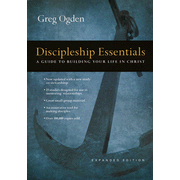
*Some of the readings above were written by Dr. Darrell Johnson – associate professor of pastoral theology, Regent College, Vancouver, B.C. and Dr. Greg Ogden discipleship expert and author of Discipleship Essentials (the article above is adapted from Chapter 2) and Leadership Essentials.
Dr. Aubrey Malphurs on The Meaning of Going and Making Disciples
WHAT DID JESUS MEAN IN MATTHEW 28:19-20 WHEN HE COMMANDED HIS CHURCH TO MAKE DISCIPLES?
Perhaps the most important questions that a church and its leadership can ask are: What does God want us to do? What is our mandate or mission? What are our marching orders? The answer to all three questions isn’t hard to find. More than two thousand years ago, the Savior predetermined the church’s mission-it’s the Great Commission, as found in such texts as Mark 16:15; Luke 24:46-49; John 20:21; and Matthew 28:19-20, where he says, “Make disciples.” This commission raises several important questions, such as what is a disciple and what does it mean to make disciples?
If you asked ten different people in the church (including the pastoral staff) what a disciple is, you might get ten different answers. The same is true at a seminary. If the church is not clear on what Jesus meant, then it will be difficult for it to comply with his expressed will. For the church to understand what the Savior meant in Matthew 28:19-20, we must examine the main verb and its object “make disciples” and then the two participles that follow- “baptizing” and “teaching.” What does all this mean?
“Make Disciples”
First, let’s examine the main verb and its object: “make disciples.” A common view is that a disciple is a committed believer. Thus a disciple is a believer, but a believer isn’t necessarily a disciple. However, that’s not how the New Testament uses this term. I contend that the normative use of the term disciple is of one who is a convert to or a believer in Jesus Christ (though there are some obvious exceptions – Some exceptions are the disciples of Moses [John 9:28], the disciples of the Pharisees [Matt. 22:16; Mark 2:18], the disciples of John [Mark 2:18; John 1:35], and the disciples of Jesus who left him [John 6:60-66]). Thus the Bible teaches that a disciple isn’t necessarily a Christian who has made a deeper commitment to the Savior but simply a Christian. Committed Christians are committed disciples. Uncommitted Christians are uncommitted disciples. This is clearly how Luke uses the term disciple in the book of Acts and his Gospel. It is evident in passages such as the following: Acts 6:1-2, 7; 9:1, 26; 11:26; 14:21-22; 15:10; 18:23; 19:9. For example, Acts 6:7 tells us that God’s Word kept spreading and the number of disciples continued to increase greatly in Jerusalem. Luke isn’t telling us that the number of deeply committed believers was significantly increasing. He’s telling his readers that the church was making numerous converts to the faith. In Acts 9:1 Luke writes that Saul (Paul) was “breathing out murderous threats against the Lord’s disciples.” It’s most doubtful that Saul was threatening only the mature believers. He was persecuting as many believers as he could locate. A great example is Acts 14:21 where Luke says they “won a large number of disciples” in connection with evangelism. Here they preached the gospel and won or made a large number of disciples or converts, not mature or even growing Christians. (Note that the words “won a large number of disciples” is the one Greek word mathateusantes, the same word as in Matthew 28:19!) Disciples, then, were synonymous with believers. Virtually all scholars acknowledge this to be the case in Acts.
So is the command “make disciples” in Matthew 28:19 to be equated with evangelism? Before we can answer this question, we must also examine a second context. The first had to do with the use of the term disciple in the New Testament; the second has to do with the other Great Commission passages: Mark 16:15 and Luke 24:46-49 (with Acts 1:8). In Mark 16:15 Jesus commands the disciples, “Go into all the world and preach the good news to all creation.” Here “preach” like “make disciples” is the main verb (an aorist imperative) preceded by another circumstantial participle of attendant circumstance translated “go.” This is clearly a proactive command to do evangelism.
In Luke 24:46-48 we have much the same message with the gospel defined: “This is what is written: The Christ will suffer and rise from the dead on the third day, and repentance and forgiveness of sins will be preached in his name to all nations, beginning at Jerusalem. You are witnesses of these things.” Jesus presents the gospel message and the necessity that his witnesses preach that gospel to all nations. In these two Great Commission passages, the emphasis is clearly on evangelism and missions.
Finally, John gives us the least information in his statement of the commission. In John 20:21-22 Jesus tells the disciples that he’s sending them and provides them with the Holy Spirit in anticipation of Pentecost.
We must not stop here. There’s a third context. Much of Jesus’s teaching of the Twelve (who are believers, except for Judas) concerns discipleship or the need for the disciple to grow in Christ (Matt. 16:24-26; 20:26-28; Luke 9:23-25). For example, Matthew 16:24 says, “Then Jesus said to his disciples, `If anyone would come after me, he must deny himself and take up his cross and follow me.”‘
So how does this relate to the passages in Acts and the other commission passages in the Gospels? The answer is that the Great Commission has both an evangelism and an edification or spiritual growth component. To make a disciple, first one has to win a person (a nondisciple) to Christ. At that point he or she becomes a disciple. It doesn’t stop there. Now this new disciple needs to grow or mature as a disciple, hence the edification component.
“Baptizing and Teaching”
Having studied the main verb and its object, “make disciples,” we need to examine the two participles in Matthew 28:20- “baptizing” and “teaching.” The interpretation of these will address whether “make disciples” involves both evangelism and edification. While there are two feasible interpretive options, the better one is that they are circumstantial (adverbial) participles of means (The second option is to treat them as circumstantial [adverbial] participles of attendant circumstance. If this is correct, then the participles baptizing and teaching express an idea not subordinate to as above but coordinate to or on a par with the main verb [make disciples]. You would translate the main verb and the participles as a series of coordinate verbs, the mood of which is dictated by the main verb that in this case is imperative [aorist imperative]. The verse would read: “Go, therefore, and make disciples of all nations, baptize them in the name of the Father and of the Son and of the Holy Spirit, and teach them to obey everything that I have commanded you.” A former Dallas Seminary Greek professor, Philip Williams, takes this view in “Grammar Notes on the Noun and the Verb and Certain Other Items” [unpublished class notes, which were used by Dr. Buist Fanning in his course Advanced Greek Grammar, 1977], 53-54. The conclusion here is that the passage addresses a series of separate, coordinate chronological acts or steps. The first is to go, which implies proactivity. The second is to make disciples. The third is to baptize those disciples, and the fourth is to teach them. However, I believe that Dan Wallace makes the better argument for these being circumstantial participles of means. While I don’t believe that baptizontes and didaskontes are circumstantial participles of attendant circumstance, I do believe that the first participle in verse 19 [poreuthentes] is. It draws its mood from or is coordinate to the main verb [mathateusate], which is imperative. Jesus is commanding them to make disciples and to be proactive about it).
The NIV has taken this interpretation: “Therefore go and make disciples of all nations, baptizing them in the name of the Father and of the Son and of the Holy Spirit, and teaching them to obey everything I have commanded you.” Dan Wallace, a Greek scholar and professor of New Testament at Dallas Seminary, writes: “Finally, the other two participles (haptizontes, didaskontes) should not be taken as attendant circumstance. First, they do not fit the normal pattern for
attendant circumstance participles (they are present tense and follow the main verb). And second, they obviously make good sense as participles of means; i.e., the means by which the disciples were to make disciples was to baptize and then to teach” (Daniel B. Wallace, Greek Grammar Beyond the Basics. Grand Rapids: Zondervan, 1996, 645). If this is the case, then the two participles provide us with the means or the how for growing the new disciples. The way the church makes disciples is by baptizing and teaching its people.
But what is the significance of baptism in the life of a new disciple (believer)? Baptism is mentioned eleven times in Acts (Acts 2:38; 8:12, 16, 36, 38; 9:18; 10:48; 16:15, 33; 19:5; 22:16). In every passage except one (19:5) it’s used in close association with evangelism and immediately follows someone’s conversion to Christ. Baptism was the public means or activity that identified the new disciple with Jesus (See Wilkins, Following the Master, 189). Baptism was serious business, as it could mean rejection by one’s parents and family, even resulting in the loss of one’s life. As we have seen, it both implies or is closely associated with evangelism and was a public confession that one had become a disciple of Jesus. Thus Matthew includes evangelism in the context of disciple making.
And finally, what is the significance of teaching? Luke also addresses teaching in Acts (Acts 2:42; 5:25, 28; 15:35; 18:11; 28:31). Michael Wilkins summarizes this best when he says that “`teaching’ introduces the activities by which the new disciple grows in discipleship” (Ibid., 189-90).The object of our teaching is obedience to Jesus’s teaching. The emphasis on teaching isn’t simply for the sake of knowledge. Effective teaching results in a transformed life or a maturing disciple/believer.
The Conclusion
The conclusion from the evidence above is that the two participles are best treated and translated as circumstantial participles of means. The term make disciples (mathateusante) is a clear reference to both evangelism (baptizing) and maturation (teaching). (Note again the use of mathateusantes in Acts 14:21 in the context of evangelism.) Mark and Luke emphasize the evangelism aspect of the Great Commission (and John the sending out of the disciples). Matthew emphasizes both evangelism and the need to grow disciples in their newfound faith, as he adds the need not only to baptize but to teach these new believers as well to other passages in the New Testament, the latter would lead the new converts to spiritual maturity (1 Cor. 3:1-4; Heb. 5:11-6:3). Therefore, the goal is for them to become mature disciples in time. This would result from a combination of being taught and obeying Jesus’s commandments.
Jesus was clear about his intentions for his church. It wasn’t just to teach or preach the Word, as important as those activities are. Nor was it evangelism alone, although the latter is emphasized as much as teaching. He expects his entire church (not simply a few passionate disciple makers) to move people from prebirth (unbelief) to the new birth (belief) and then to maturity. In fact, this is so important that we can measure a church’s spiritual health and its ultimate success by its obedience to the Great Commission. It is fair to ask of every church’s ministry how many people have become disciples (believers) and how many of these disciples are growing toward maturity. In short, it’s imperative that every church make and mature disciples at home and abroad!
Note: I highly recommend Dr. Michael J. Wilkins’s Following the Master: A Biblical Theology of Discipleship (Zondervan, 1992). Wilkins is professor of New Testament language and literature and dean of the faculty at the Talbot School of Theology, Biola University. (Pictured on below)
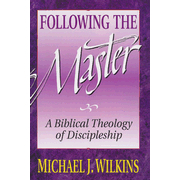
About the Author: Aubrey Malphurs (Ph.D., Dallas Theological Seminary) is professor of pastoral ministries at Dallas Theological Seminary and president of The Malphurs Group. He engages in church consulting and training and is the author of numerous books, including Developing a Vision of Ministry in the Twenty-first Century.
The Article above was adapted from Appendix B: “Make Disciples” by Aubrey Malphurs. Strategic Disciple Making: A Practical Tool for Successful Ministry. Grand Rapids: Baker, 2008 (pp. 159-160). Kindle Edition.
 LifeCoach4God